
Willy Pragher was one of Germany’s most dedicated documentary photographers. Born and trained in Berlin, he studied at the Reimann School — the largest private arts and crafts school in the country. From 1932 onward, he worked as a freelance press photographer for major publications including Ullstein, the Berliner Illustrierte, and Badische Zeitung. Over the course of his career, Pragher built an archive of more than one million photographs covering events, landscapes, notable figures, and everyday life across Germany from the 1950s through the late 1960s.
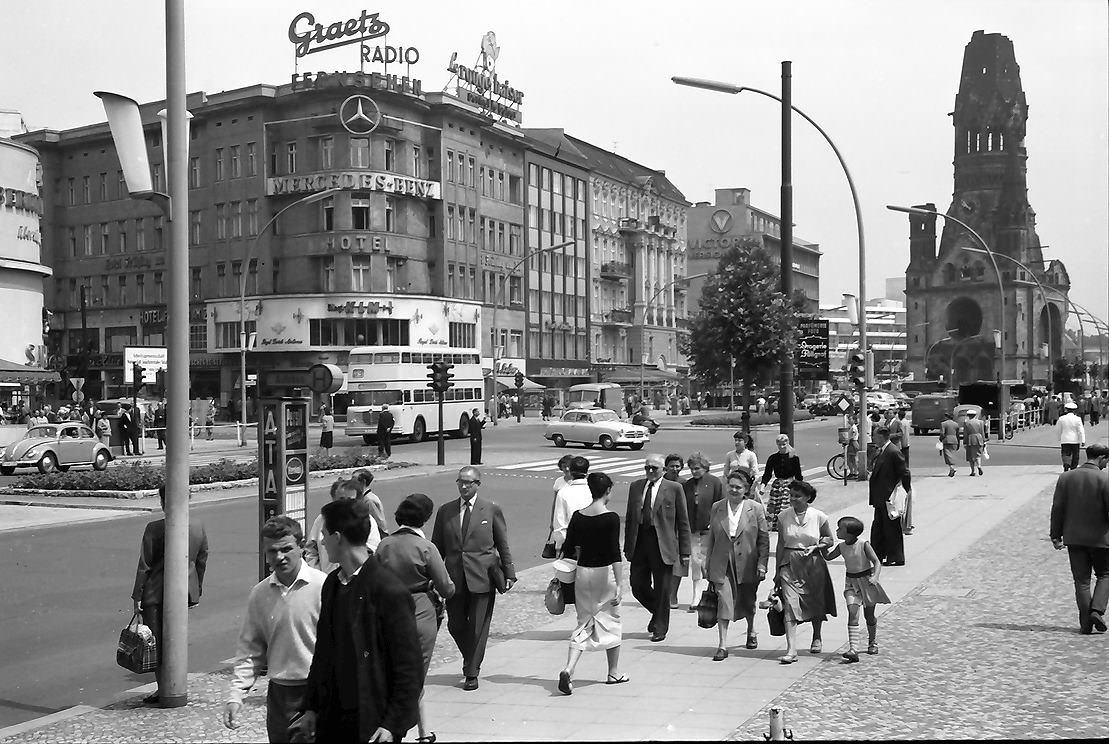
In the summer of 1957, Pragher turned his lens on Berlin. The city was still carrying visible scars from World War II — bombed-out squares, cleared lots, and gutted buildings sat alongside busy commercial streets and bold new architecture. His photographs capture this contrast with remarkable clarity. The Kurfürstendamm, one of Berlin’s most famous boulevards, was buzzing with postwar life, and Pragher was there to document it.
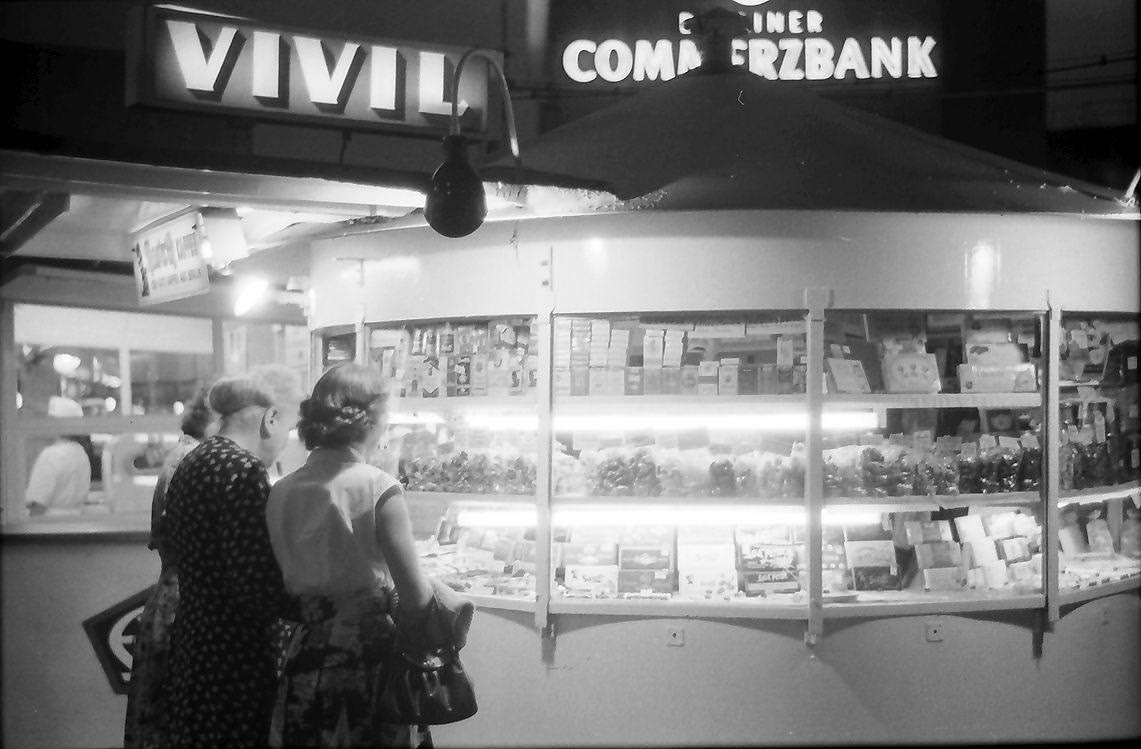
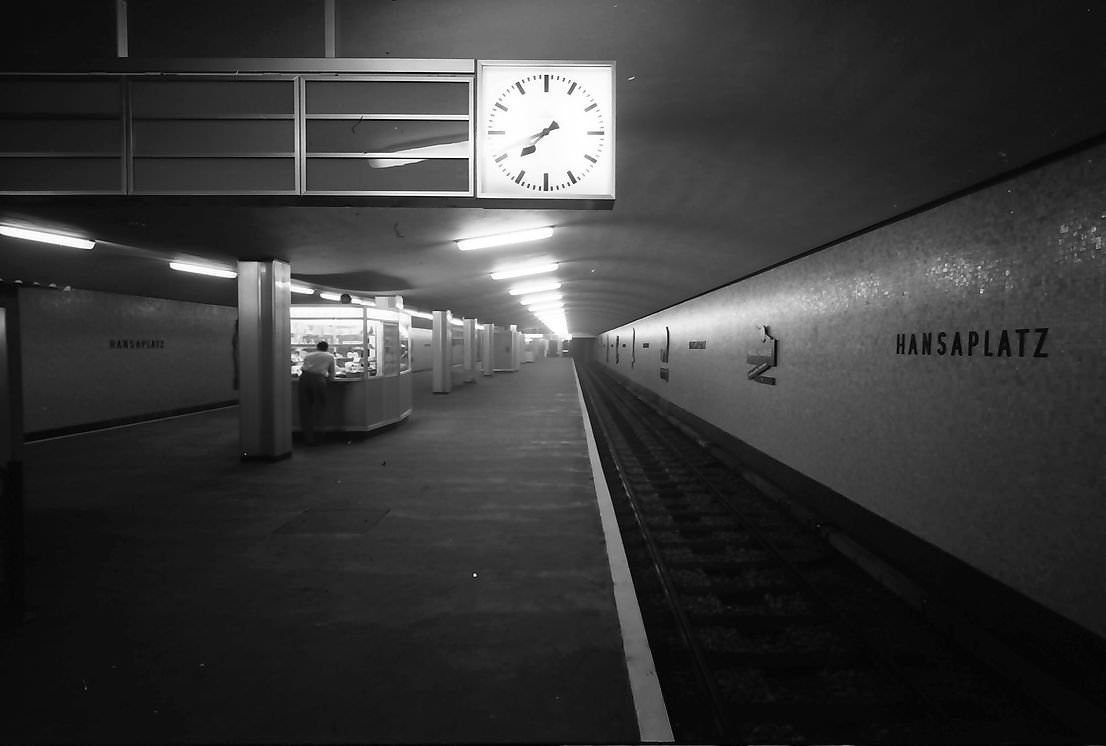
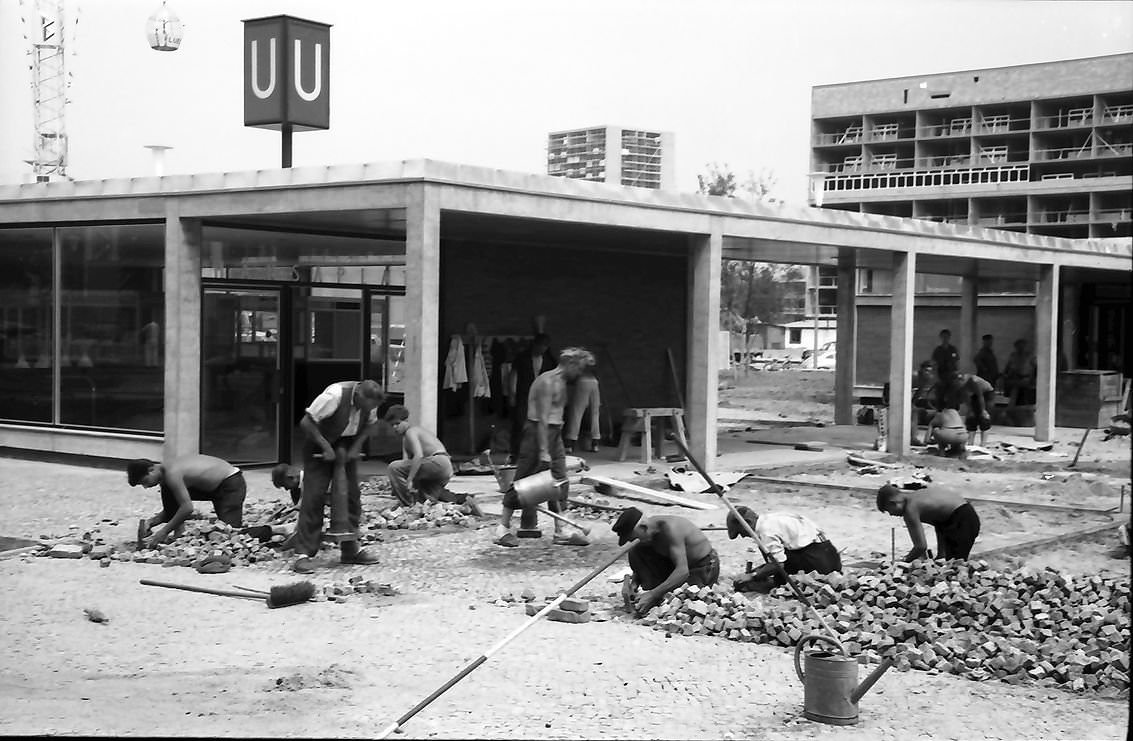
That same year, Berlin hosted the Interbau — an international building exhibition meant to showcase modern West German architecture and urban planning. The Hansaplatz underground station was one of the showcase projects, featuring clean, modernist design that signaled a deliberate break from the past.
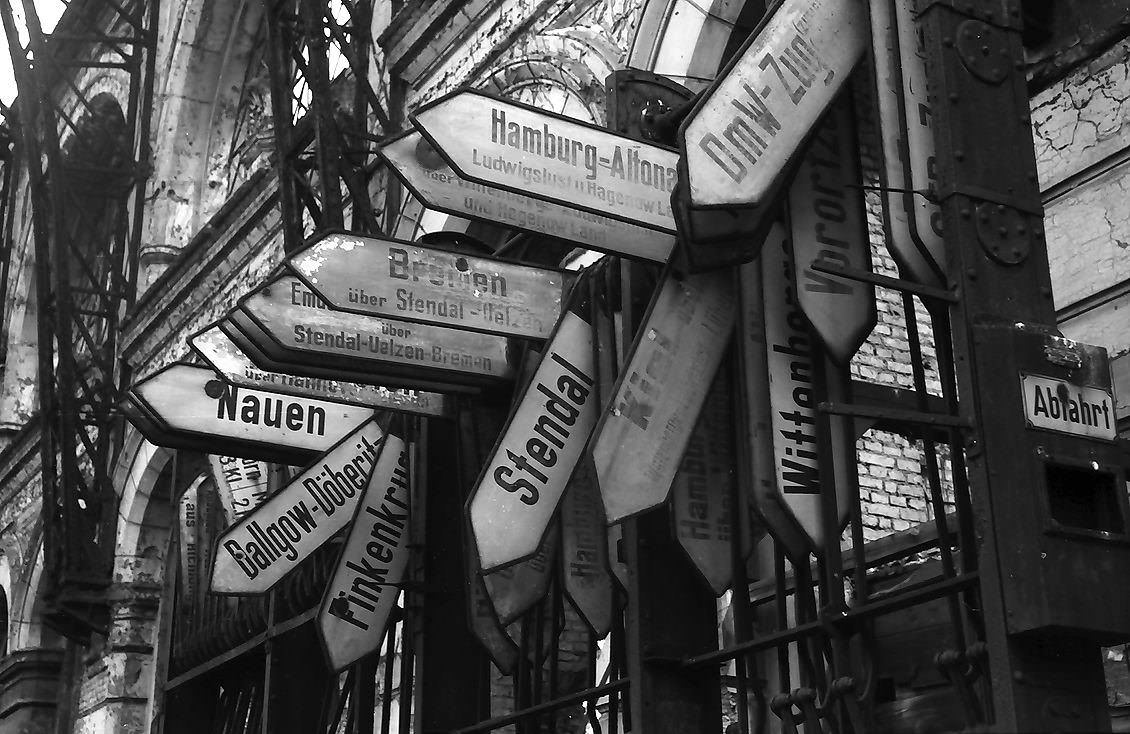
Not all of 1957 Berlin was about renewal. The Lehrter station, photographed just before its demolition, stood as a reminder of the city’s older infrastructure — soon to be erased as the divided city reshaped itself.
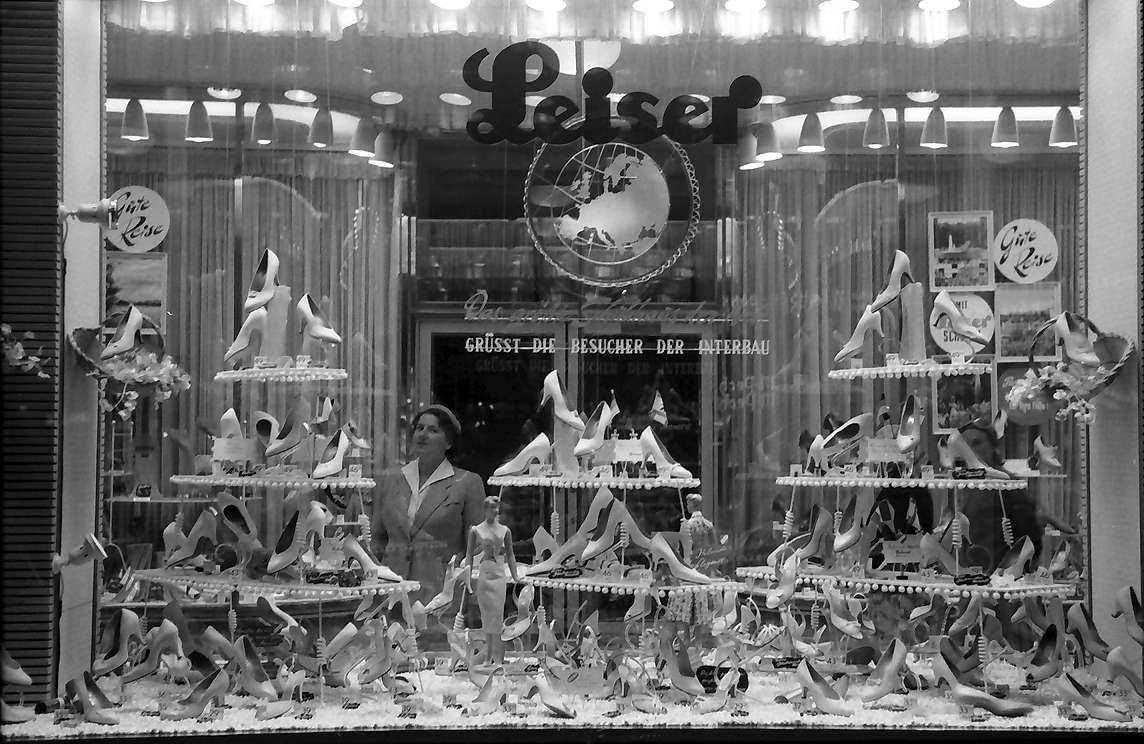
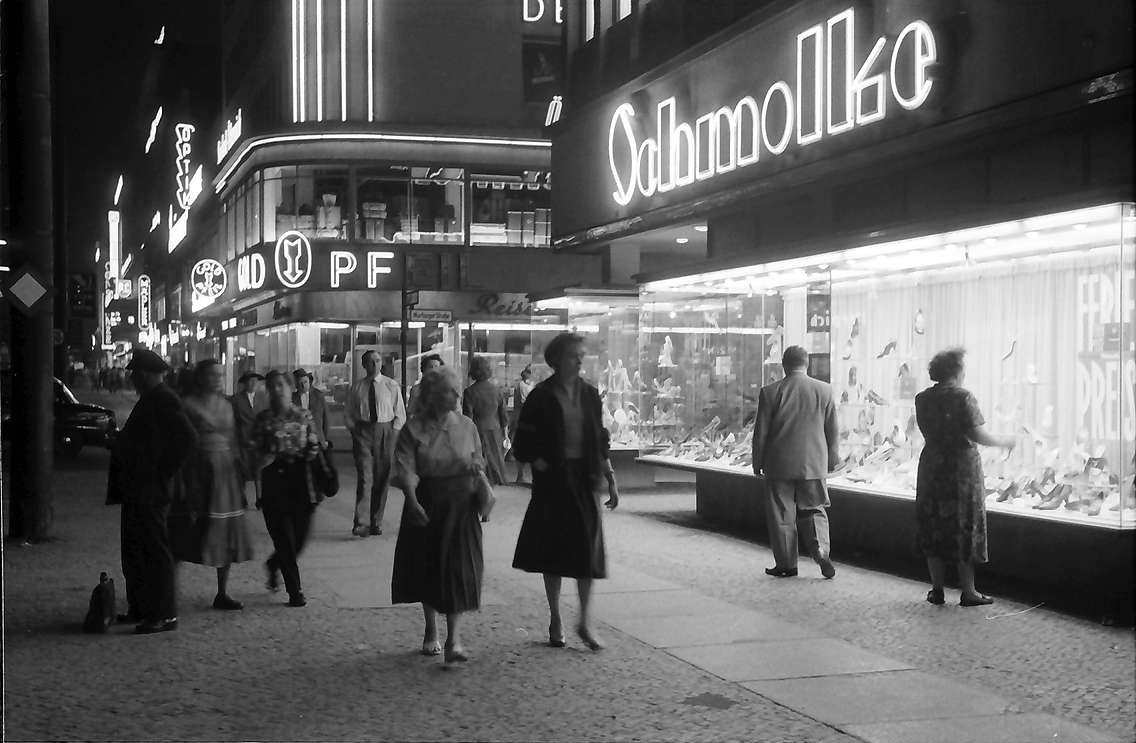
Commerce was very much alive in West Berlin. Along Tauentzienstrasse in Schöneberg, shop windows like that of the Leiser shoe store drew in customers, while the street itself hummed with foot traffic and storefronts competing for attention.
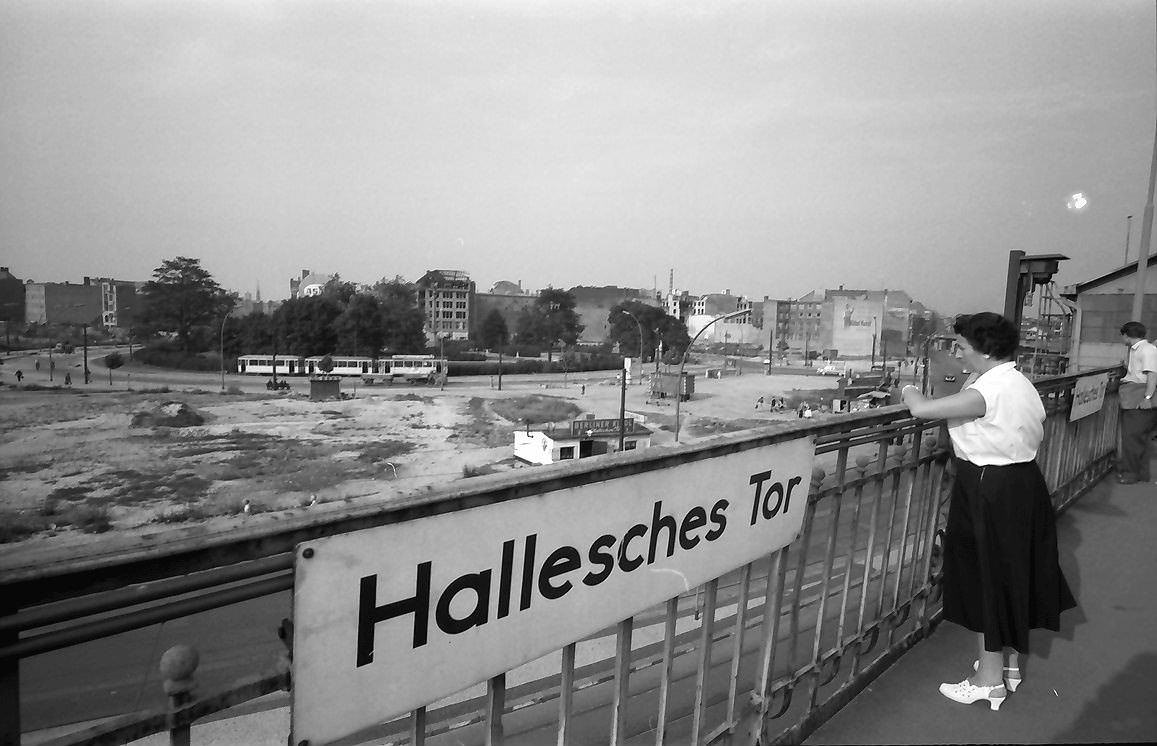
From Hallesches Tor underground station, Pragher photographed a stark view of Mehringplatz in Kreuzberg — a square still in ruins from wartime bombing. The image is a direct window into how much of Berlin remained unhealed more than a decade after the war ended.
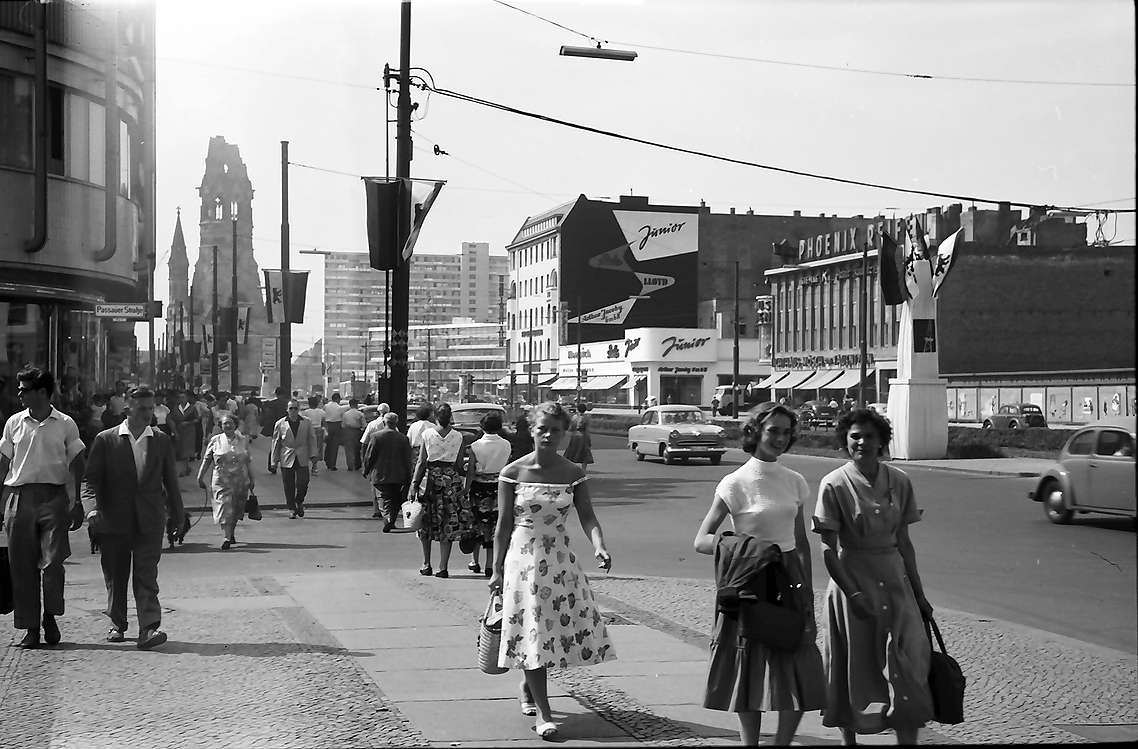
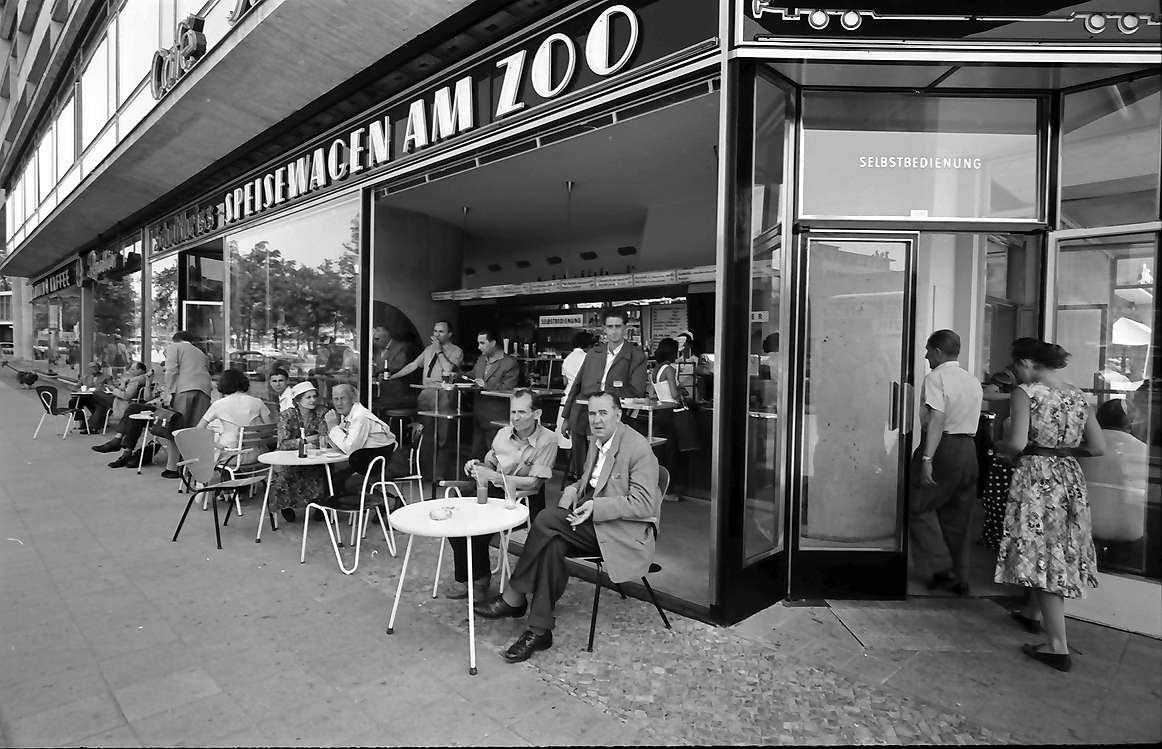
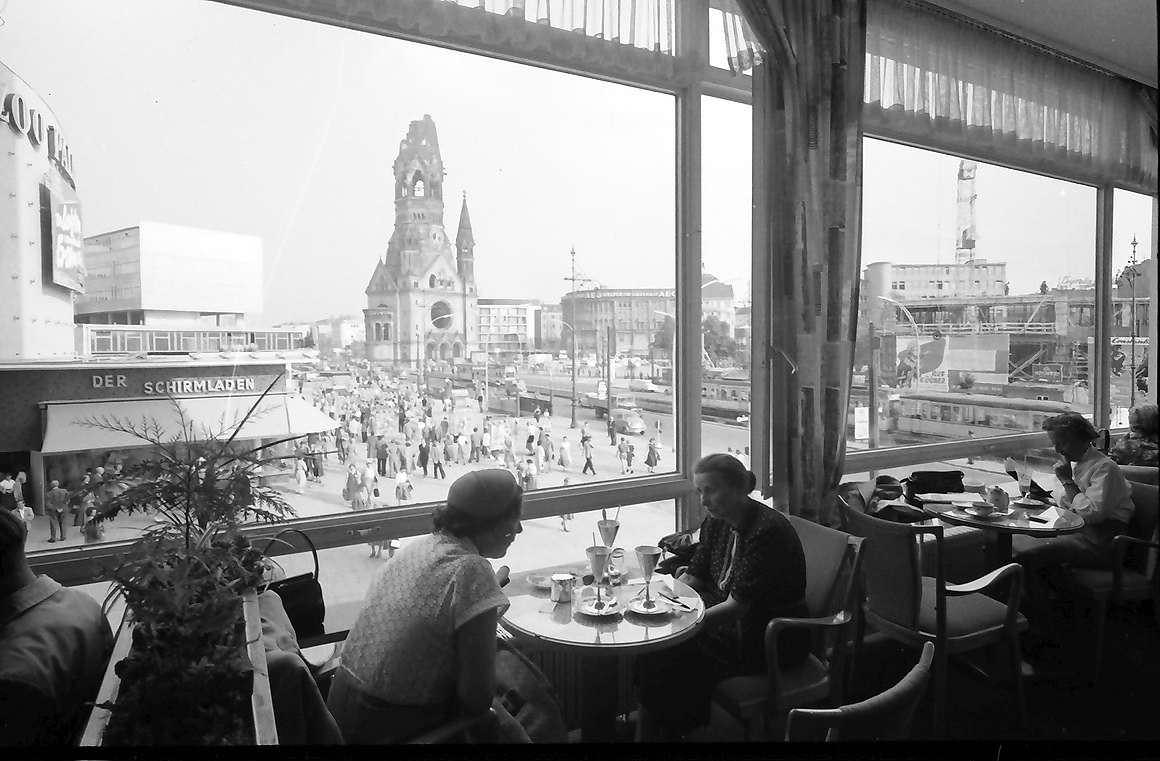
In Berlin-Charlottenburg, a women’s high-rise building stood along Joachimsthaler Strasse — a section that would be renamed Hardenbergplatz the following year in 1958. Pragher also captured views from Café Huthmacher inside that same building, looking out toward the Kaiser Wilhelm Memorial Church.
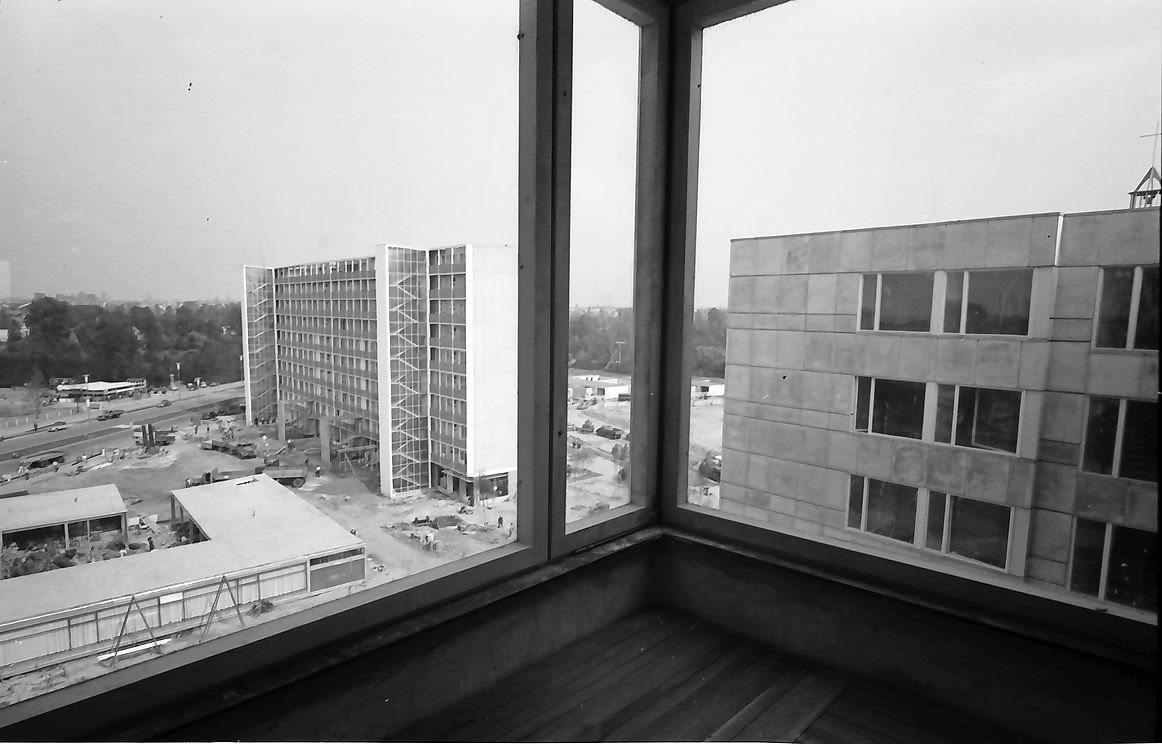
The Interbau exhibition brought international architects to Berlin, and Pragher documented their work in detail. His photos of the Hansaplatz development show both interior and exterior perspectives of the new buildings, including views from Object 16 on Klopstockstraße across to the Schwedenhaus.
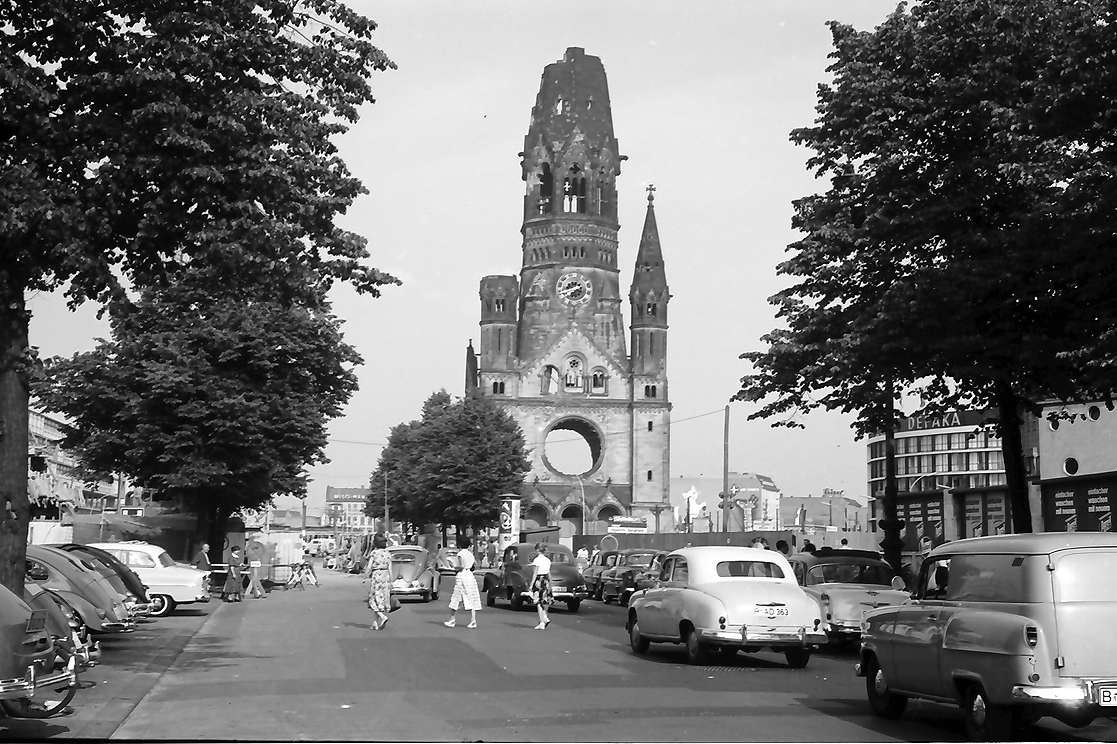
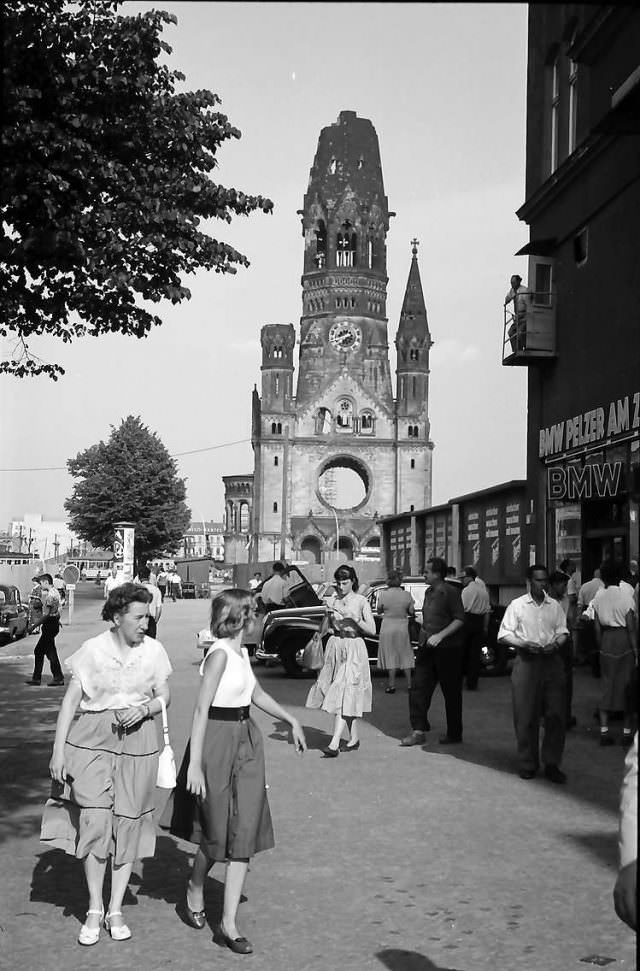
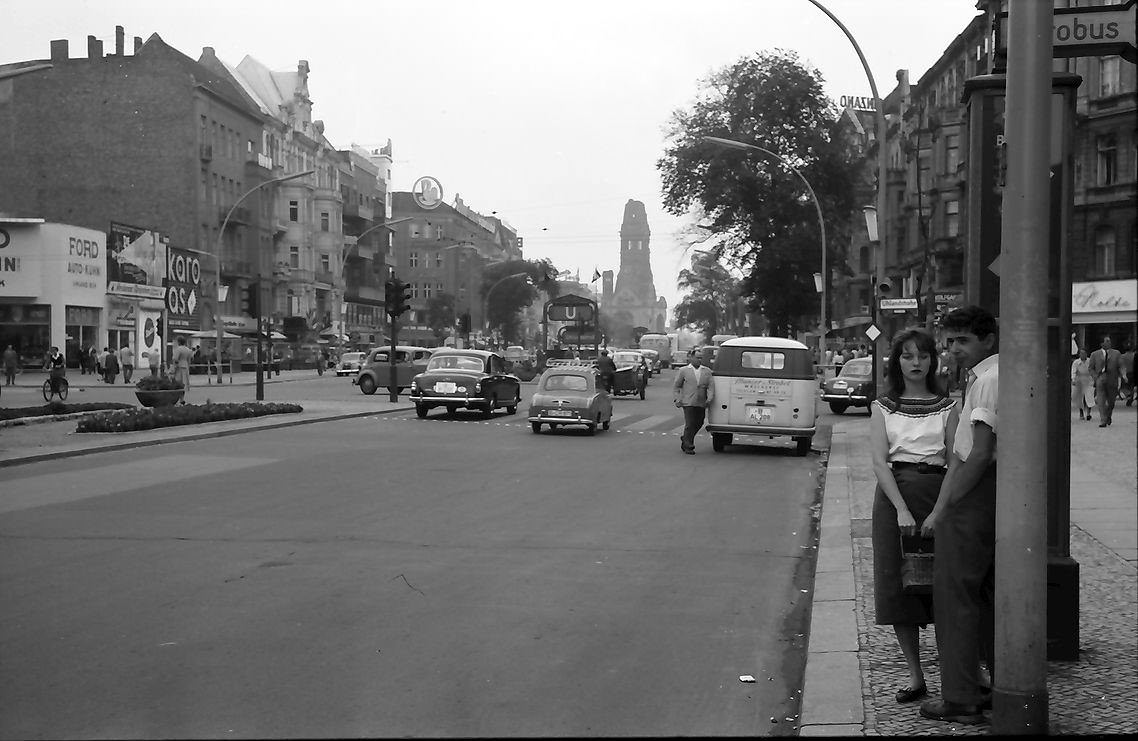
The Kaiser Wilhelm Memorial Church — its bombed-out tower left standing as a war memorial — appears in several of Pragher’s 1957 photographs. He shot it from multiple angles along Kantstrasse, showing the ruined church as a permanent fixture in the Charlottenburg skyline.
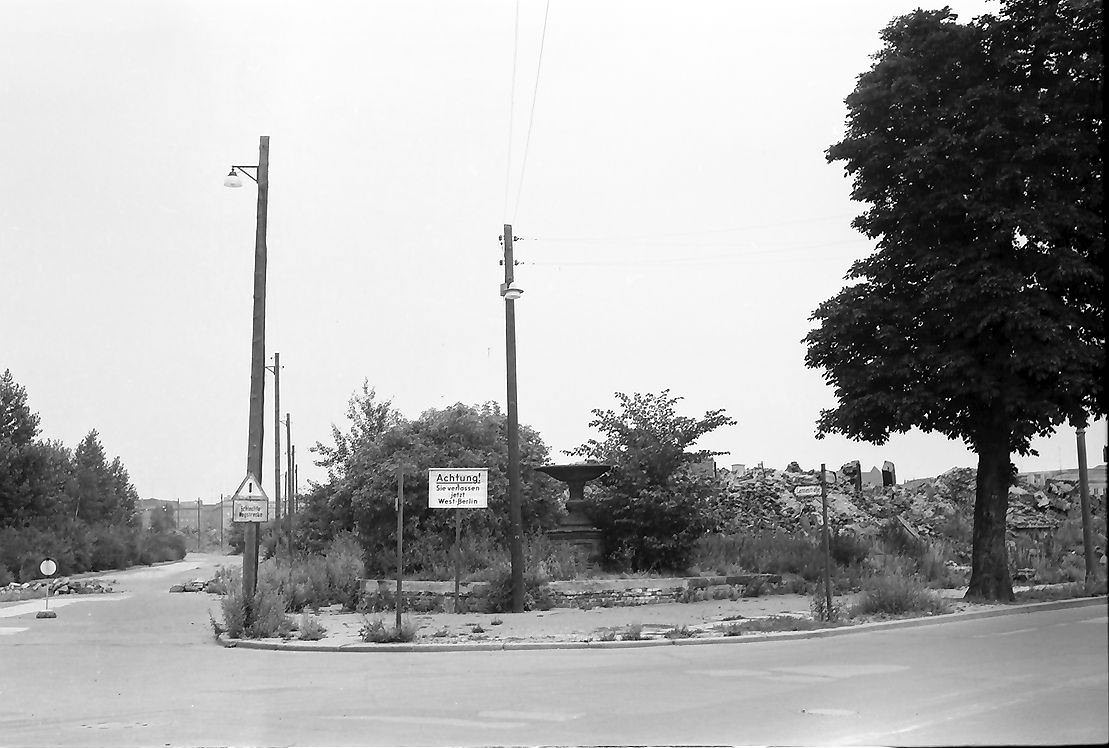
At Kemperplatz, Pragher photographed the sector border near the so-called Lenné triangle. At the center of the image are the remains of a fountain that once stood in front of Bellevuestrasse 10 — the city villa of textile manufacturer Herrmann Gerson. Lennéstrasse runs to the left and Bellevuestrasse to the right, marking a boundary that would soon become far more significant as Berlin’s division hardened.
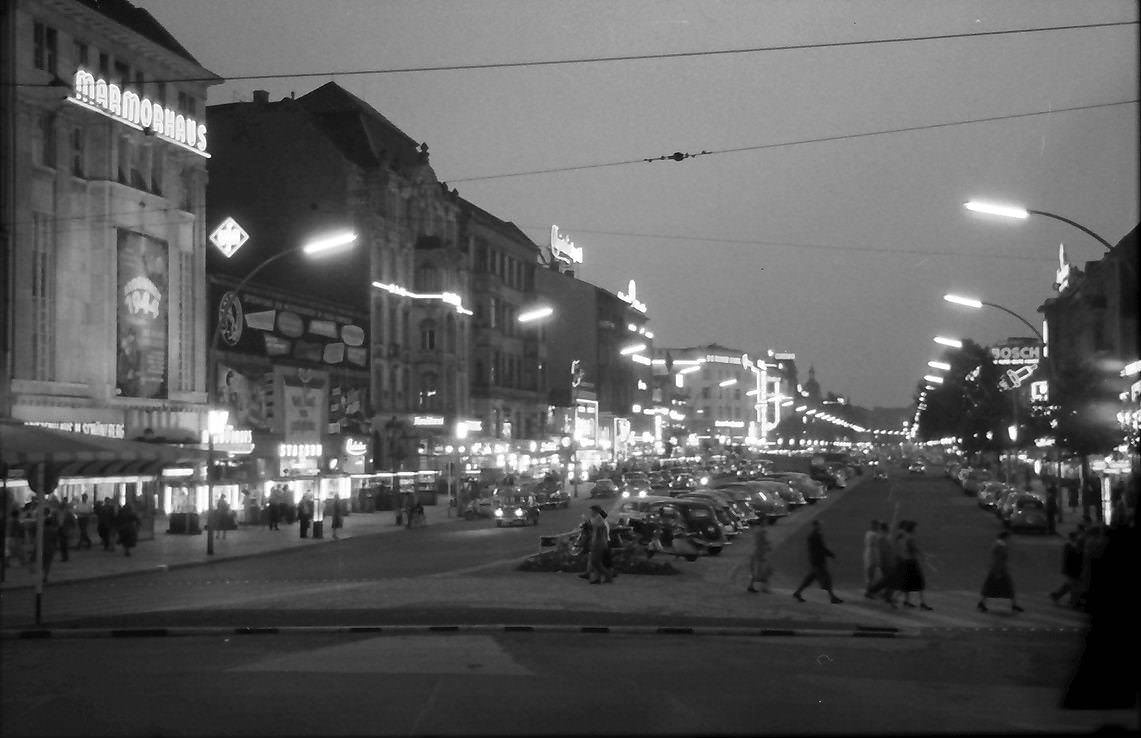
Along the Kurfürstendamm, Pragher captured the boulevard from multiple vantage points — looking west from Joachimsthaler Strasse and east from the Uhlandstrasse intersection. The wide, tree-lined avenue was the commercial heart of West Berlin, lined with cafés, cinemas, and shops.
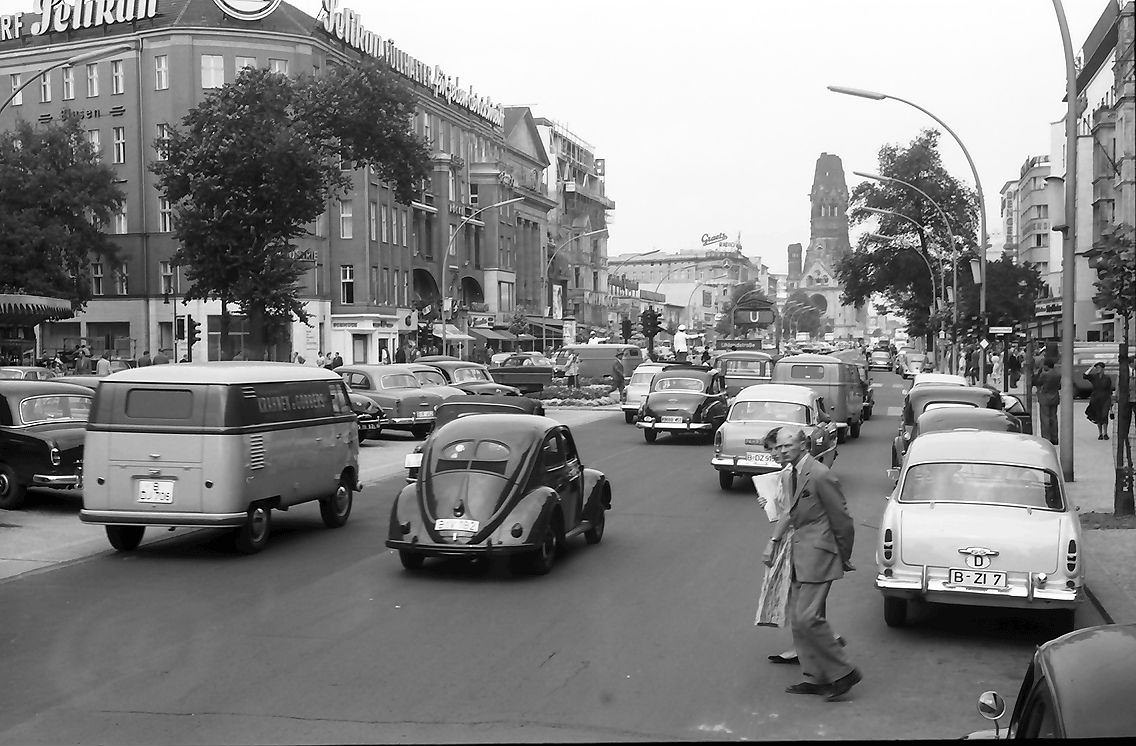
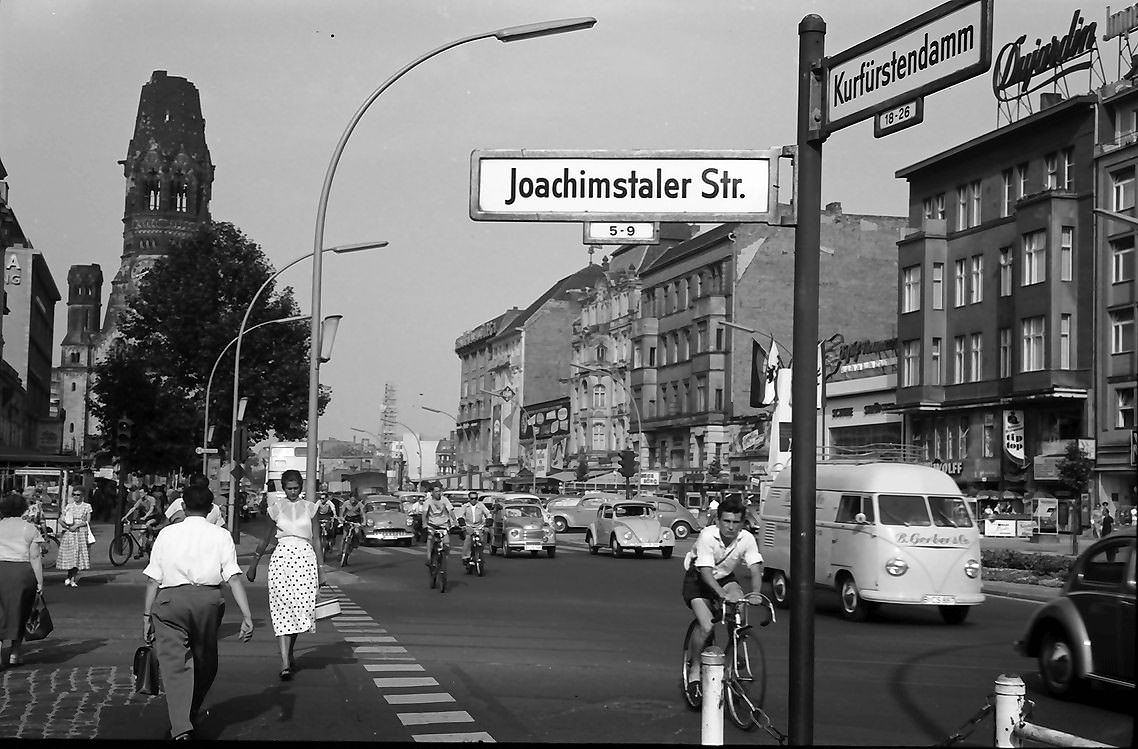
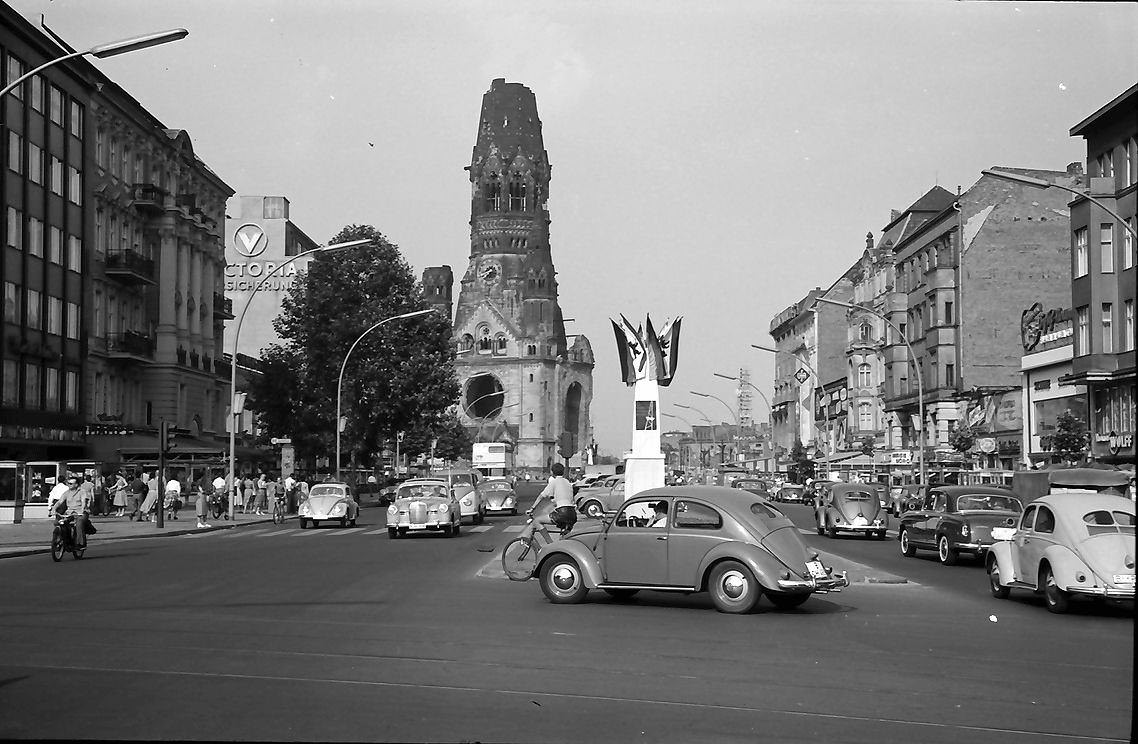
From inside Café Huthmacher, high up in the women’s high-rise, the damaged spire of the Kaiser Wilhelm Memorial Church dominates the view — a striking image of postwar Berlin caught between mourning and rebuilding.
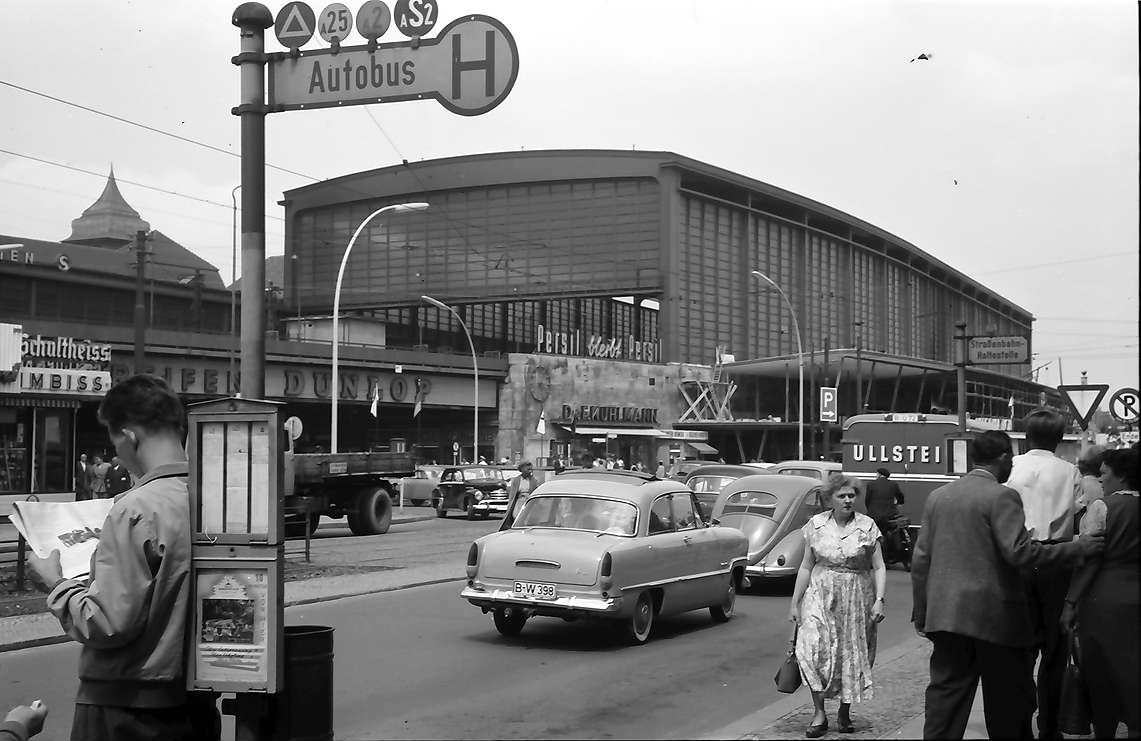
The Zoo station in Charlottenburg was a major transit hub, and Pragher photographed it in July 1957 alongside the surrounding area. Nearby, the future site of the Europa-Center was still undeveloped land in 1957, sitting beside the Bikini-Haus, a small high-rise, and a parking garage that formed the early Zentrum am Zoo complex.
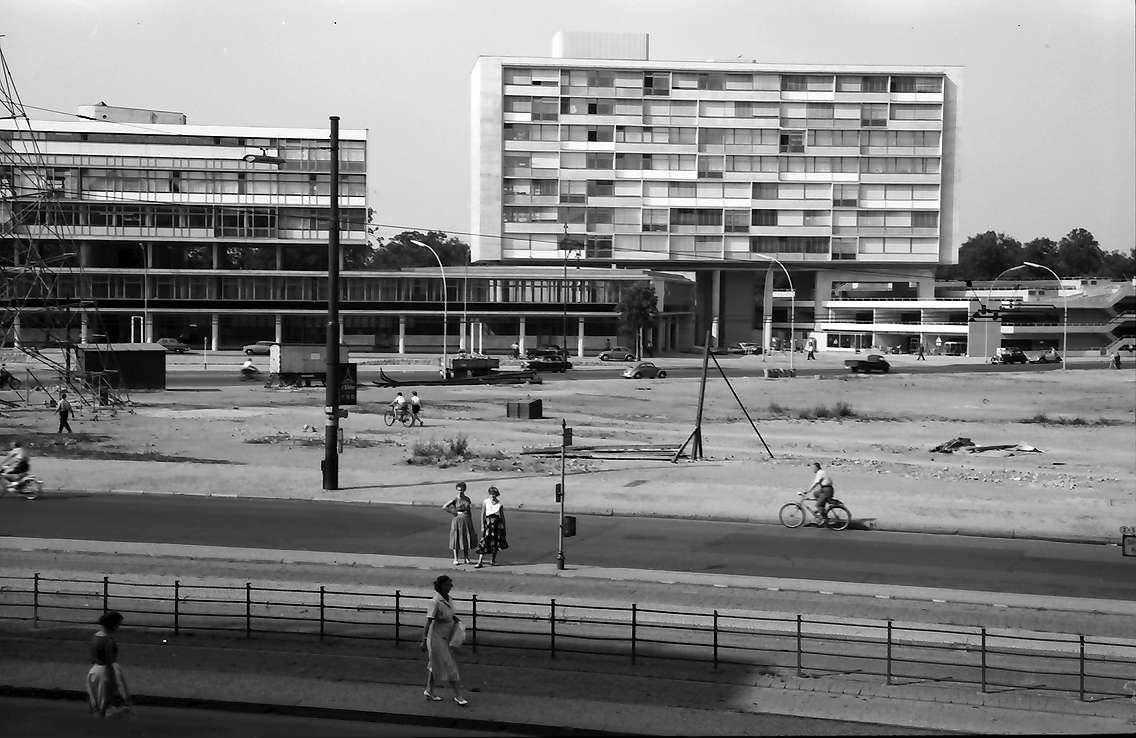
The Bikini-Haus itself — a long horizontal building with open colonnades on its ground floor — was a distinctive piece of postwar West Berlin architecture. Pragher photographed it from street level, from Breitscheidplatz, and from Hardenbergstrasse, where it sat near the Zoo Palast cinema and the DOB skyscraper.
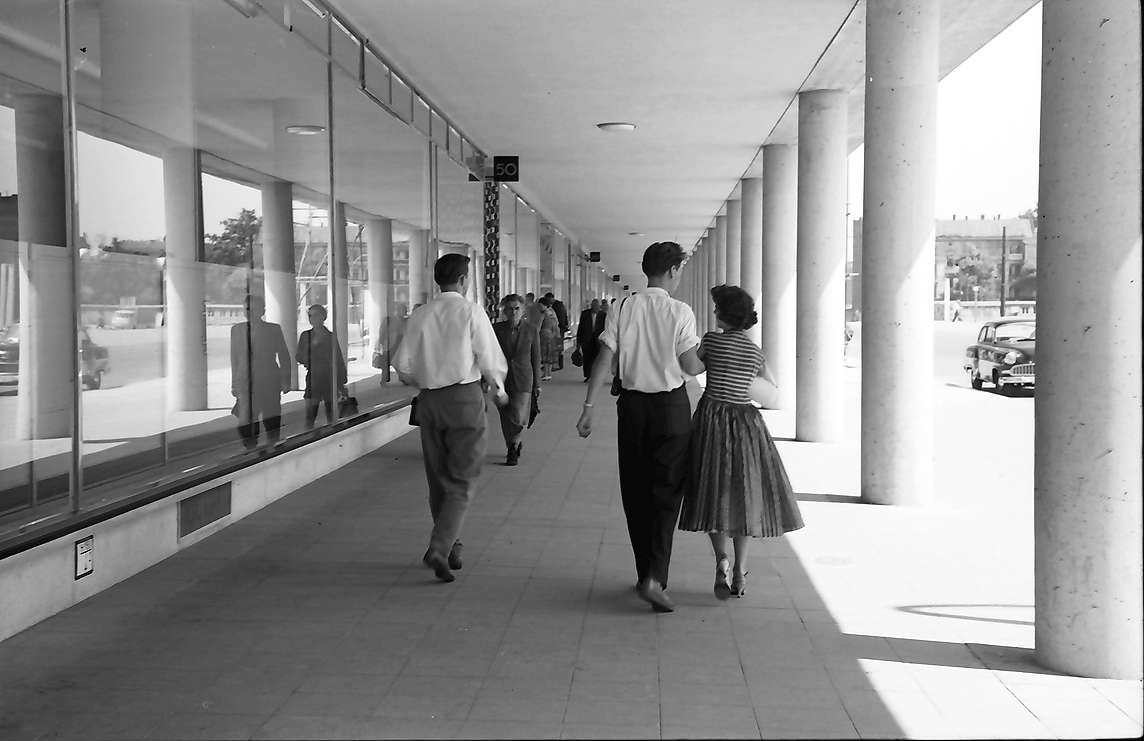
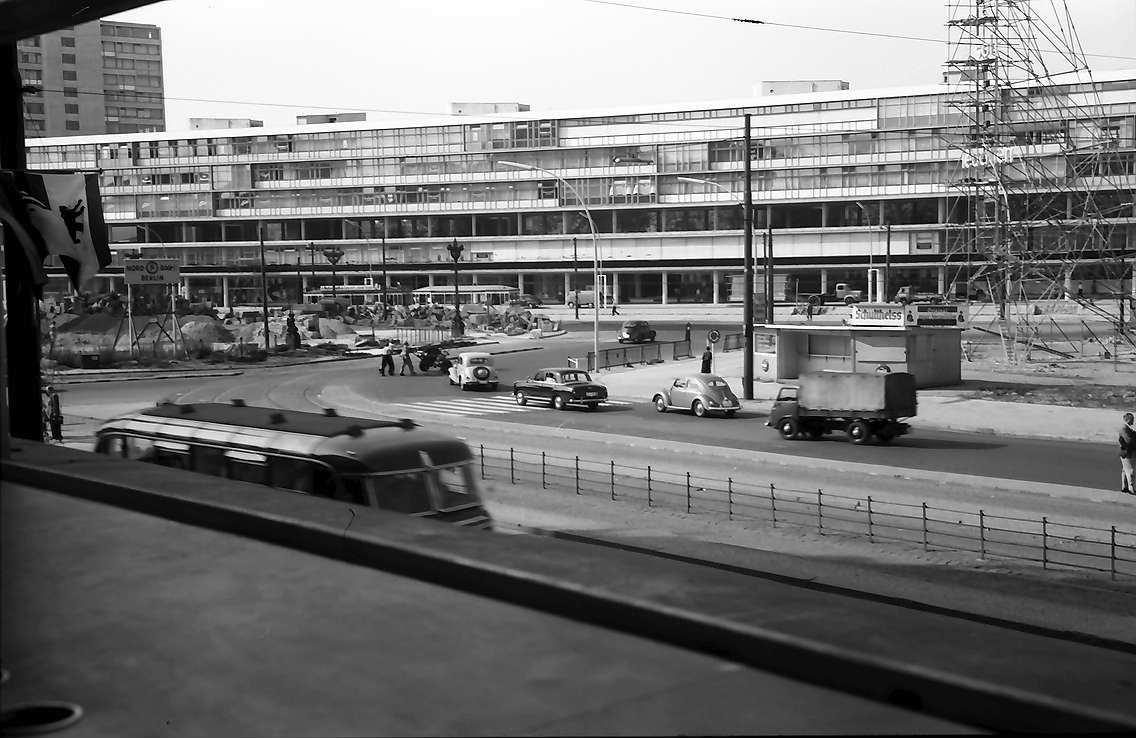
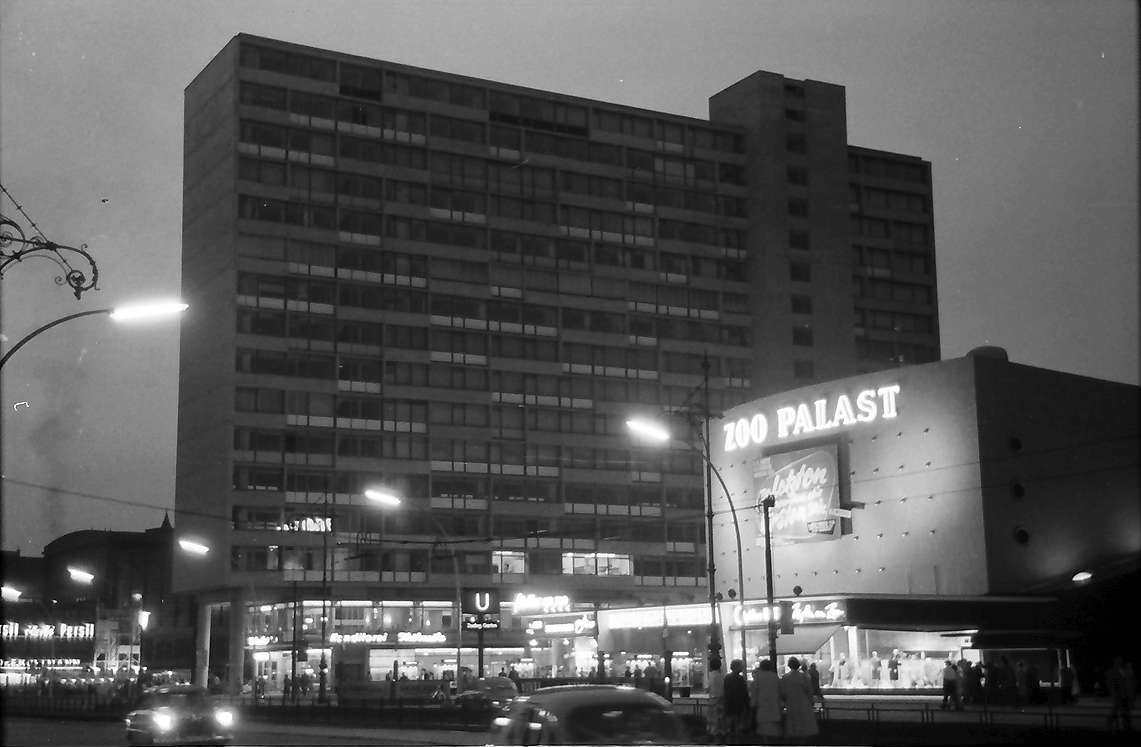
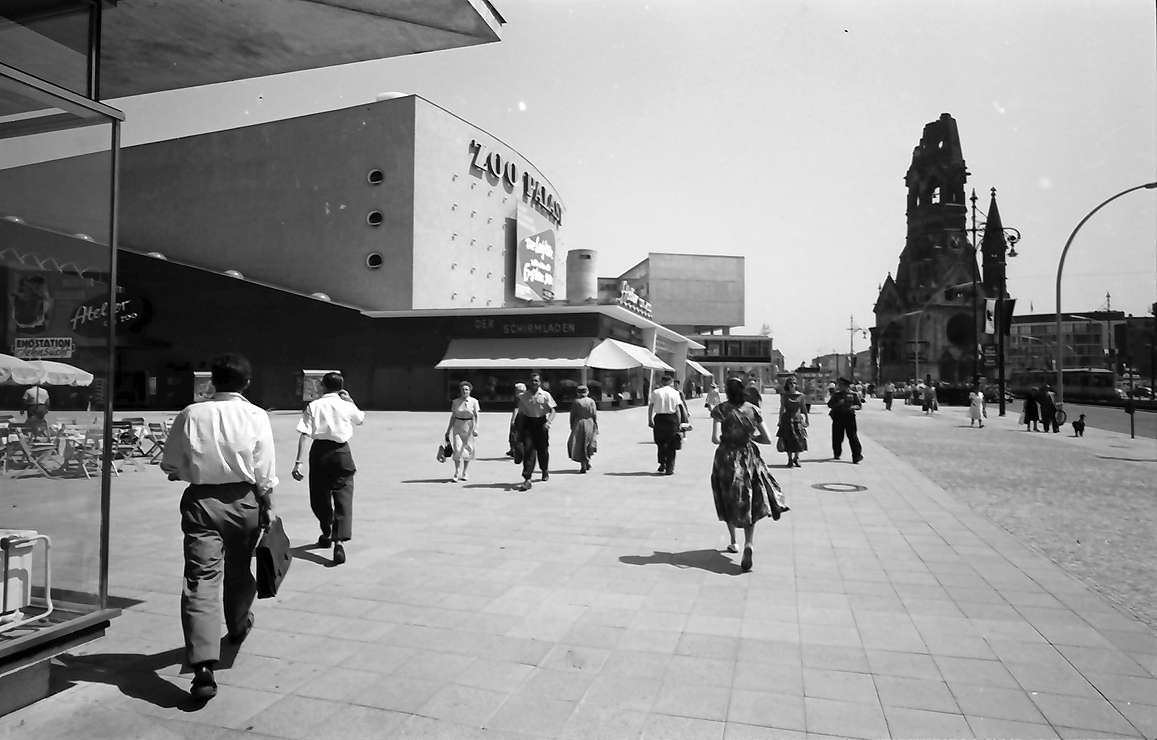
Pragher’s final shots along the Kurfürstendamm, looking out from Breitscheidplatz, close out this summer 1957 series with a sweeping view of the boulevard that defined West Berlin’s identity during the Cold War era.





I’m surprised at how little Bikini Berlin has changed. Also… Street people look much more respectable and more intelligent than they do now.
Isn’t it strange how the least exciting photos become the most exciting decades later? It is common to see pictures of historic boulevards like Ku’damm, but I found that photo of the construction in Kreuzberg exciting. The landmarks are not so important as the fashion.
It’s great to see so many people biking
One was halfway above ordinary, the woman reflected in the window. Today, all of them would be harshly condemned for revealing their faces.