Beijing in the 1940s was a city caught between two worlds. Ancient palaces and temple complexes stood alongside streets filled with tension, soldiers, and rapid political change. The decade opened with the city still under Japanese occupation — a reality that shaped nearly every corner of daily life. Soldiers patrolled roads that had once been filled with merchants and pedestrians. Landmarks that had stood for centuries were overshadowed by the machinery of war.
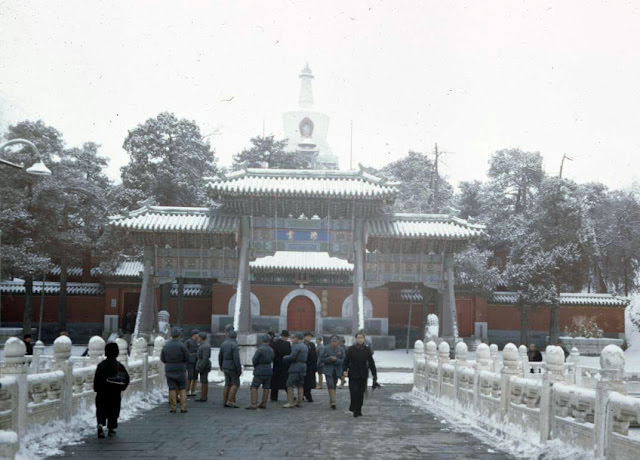
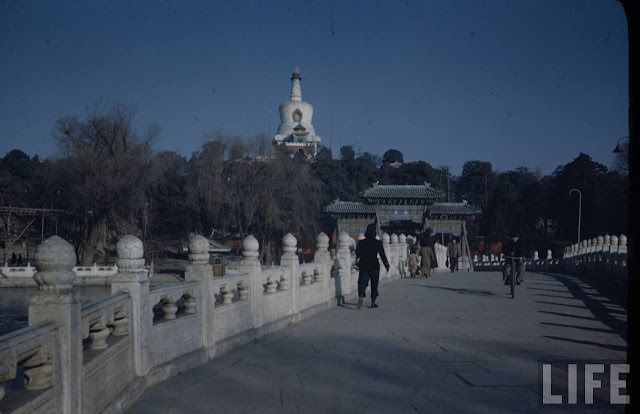
Even in the midst of occupation, Beijing’s parks and open spaces offered residents brief moments of relief. Beihai Park, one of the oldest imperial gardens in China, remained a gathering place. Its white dagoba and calm lake waters were a stark contrast to the political climate outside its walls.
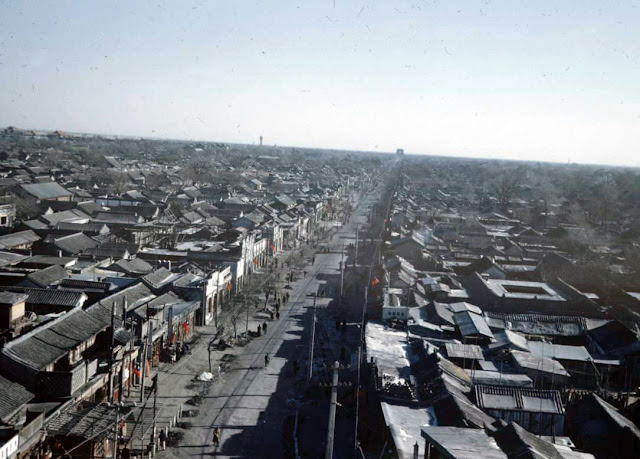
From above, Beijing’s street layout in the 1940s revealed the rigid grid of its imperial past. Hutongs — narrow alleyways lined with courtyard homes — crisscrossed the city. Rickshaws were the dominant form of transport, weaving through crowds alongside the occasional bicycle or military vehicle.
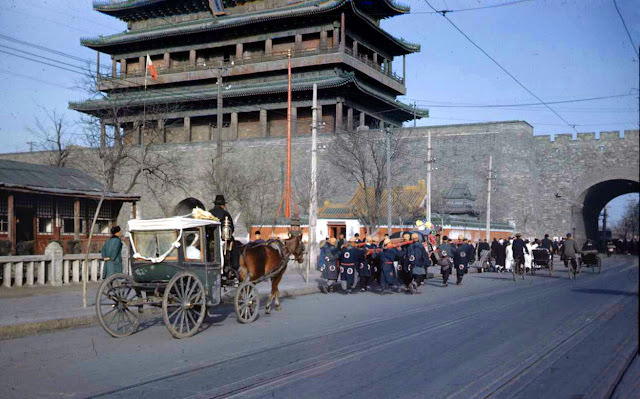
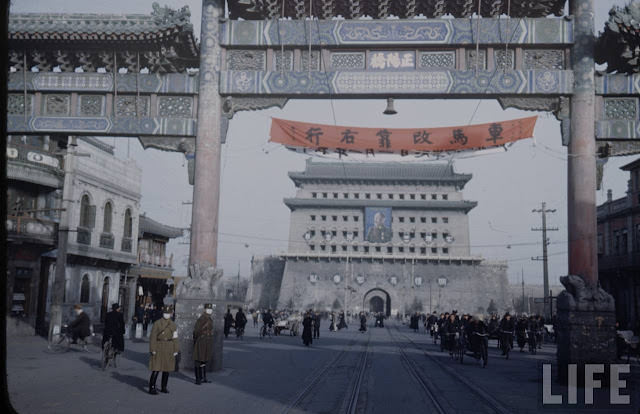
Zhengyangmen, the great gate at the southern end of the Imperial City, was one of Beijing’s most recognizable structures. It stood as a physical symbol of the city’s imperial history, though by the 1940s it had become a public landmark rather than a guarded imperial entrance. The massive city walls that surrounded Beijing were still fully intact during this decade, giving the city a fortress-like appearance that would later disappear as modernization took hold.
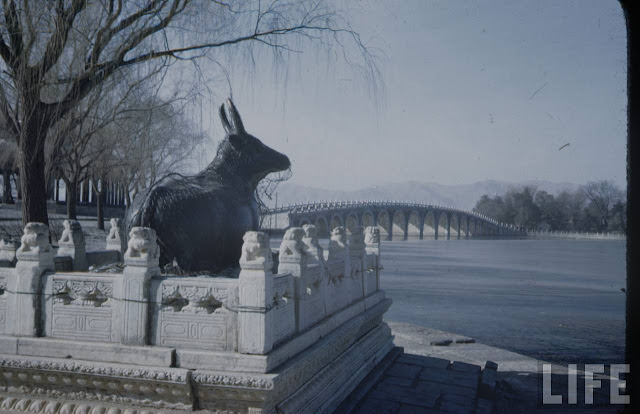
The Summer Palace, located northwest of the city center, remained one of Beijing’s most visited imperial retreats. Kunming Lake stretched wide across the grounds, its surface reflecting the Longevity Hill and the Tower of Buddhist Incense. Visitors in the 1940s still came here to escape the noise of a city in upheaval.
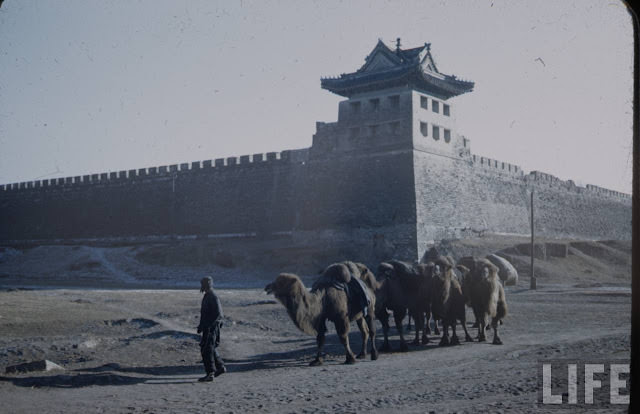
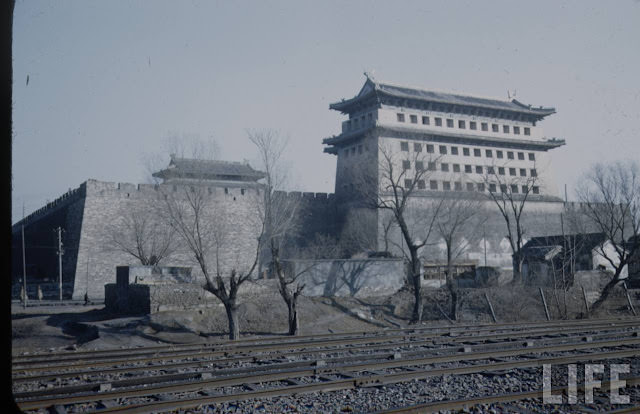
By 1946, World War II had ended and Japan had surrendered, but Beijing was far from peaceful. The Chinese Civil War between the Nationalist government and Mao Zedong’s Communist Party was intensifying. The old city walls, photographed here in that same year, still enclosed the city as they had for centuries — unaware that their days were numbered.
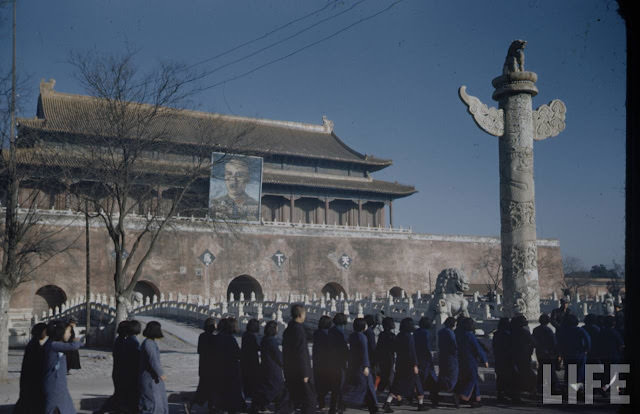
The Forbidden City sat at the heart of Beijing, as it had since the Ming Dynasty. Its vast red-walled complex had served as the imperial palace for nearly 500 years before the last emperor’s reign ended. By the 1940s, it functioned as a museum open to the public, drawing visitors who walked through its gates to see what had once been strictly off-limits.
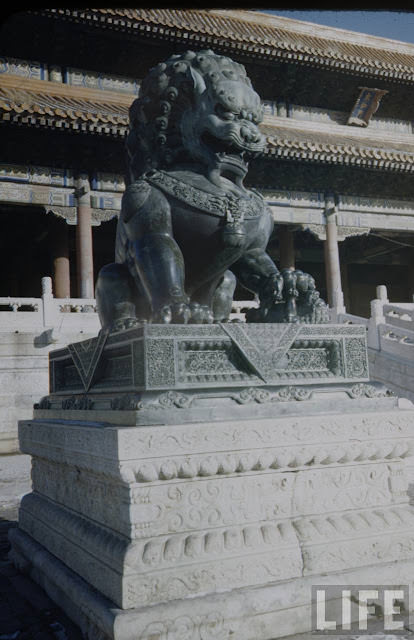
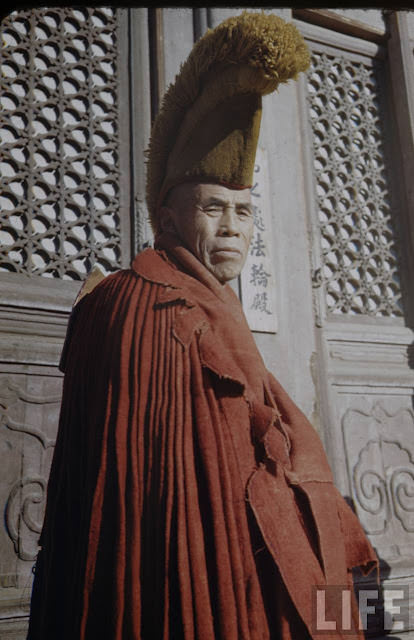
Stone lion sculptures guarded the entrances of many of Beijing’s imperial structures. These lions were placed in pairs — one with a ball under its paw, representing authority, and one with a cub, symbolizing protection. They had flanked these doorways for generations and remained undisturbed even as the political world around them transformed.
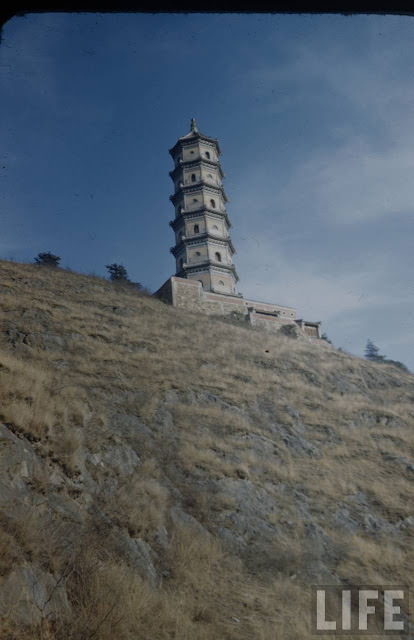
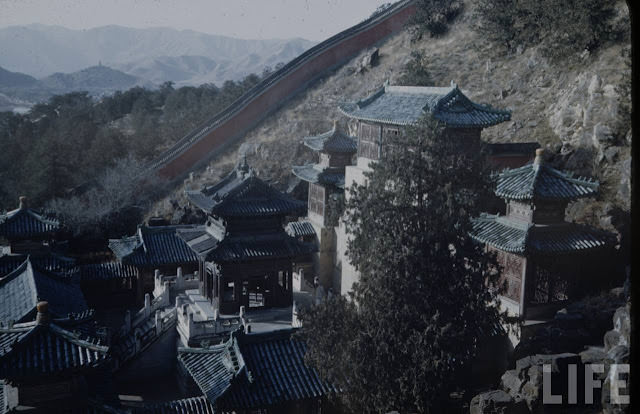
Yuquan Hill, located near the Summer Palace, was known for its spring water and the pagodas that dotted its slopes. The hill had long been a scenic escape for Beijing’s elite. Photos from the 1940s show its pagodas still standing tall, framed by the natural landscape of the western hills.
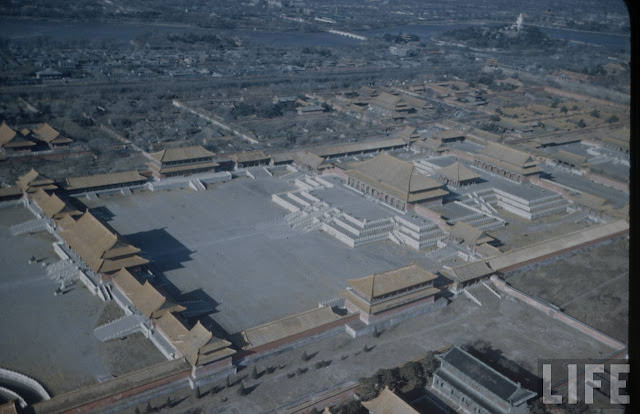
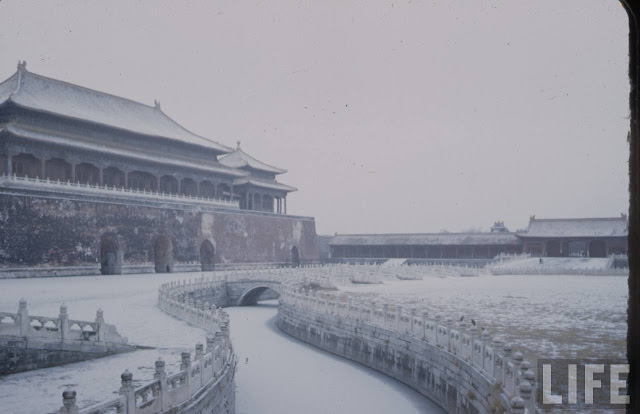
The Hall of Supreme Harmony is the largest structure within the Forbidden City and historically the most important. It was the throne hall where emperors conducted major state ceremonies. In the 1940s, it stood silent but preserved, a reminder of a dynastic system that had collapsed just decades earlier.
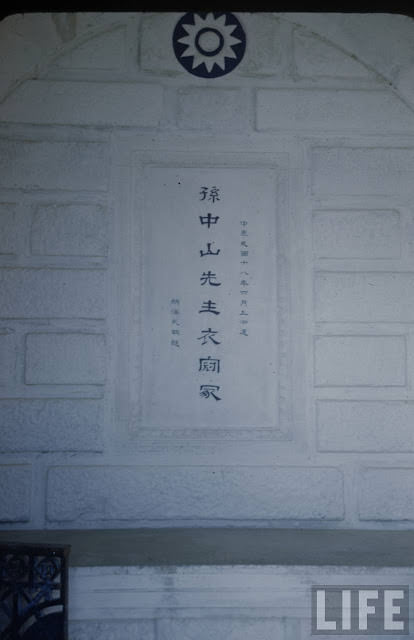
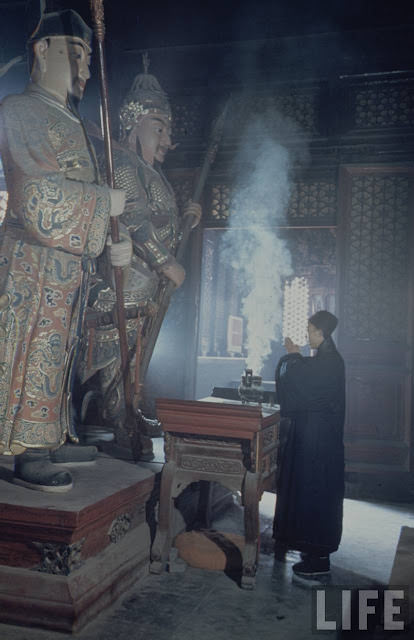
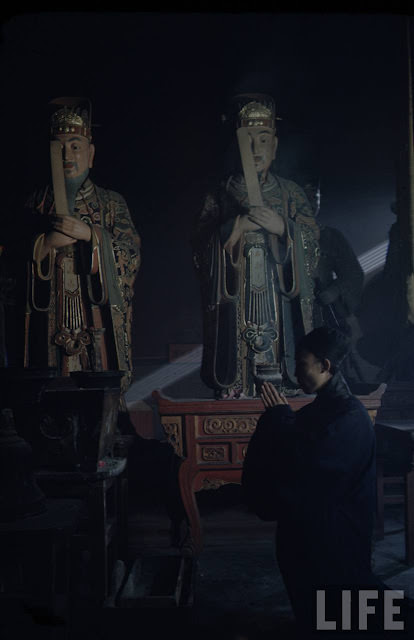
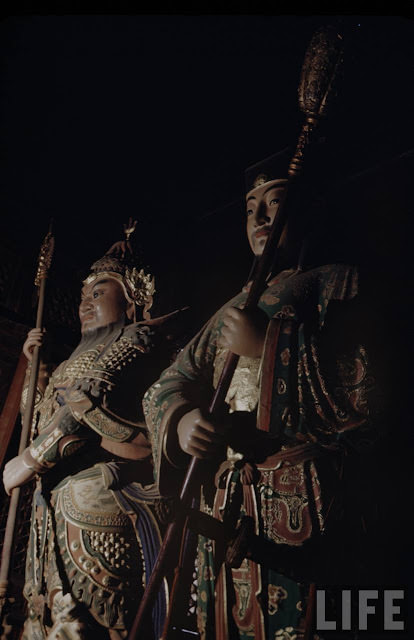
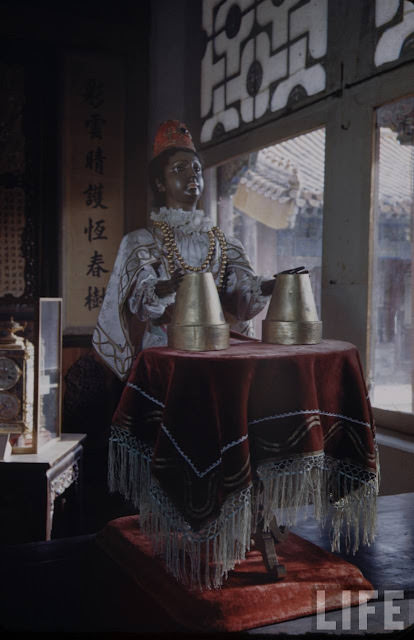
Religious art from the Ming Dynasty was still present throughout Beijing’s temples in the 1940s. Statues of Buddhist and Hindu deities like Brahma had been created with extraordinary detail by craftsmen centuries earlier. These works had survived wars, occupations, and political shifts, holding their place within sacred spaces across the city.
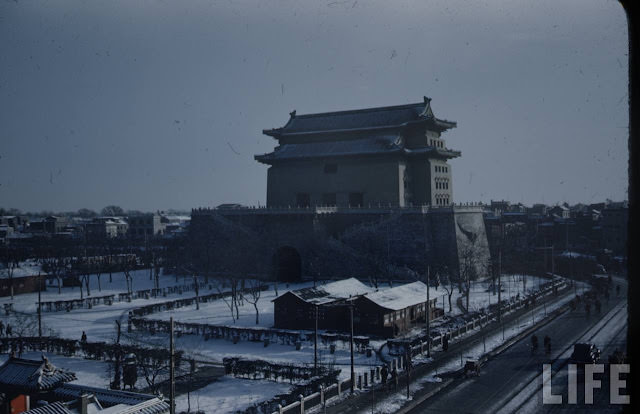
The Bell Tower rose above the northern part of the old city, just behind the Drum Tower. For centuries, the bell inside marked time for Beijing’s residents. By the 1940s, it no longer served that practical function, but it remained a fixture of the city’s skyline and a reference point for navigating the dense urban core.
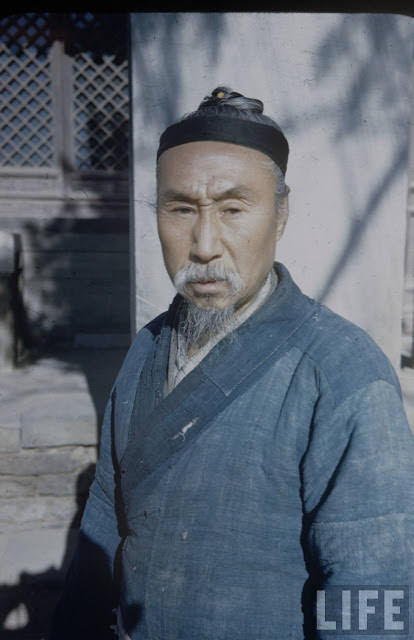
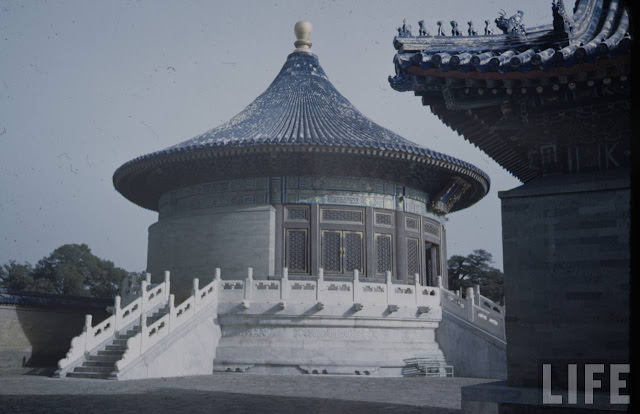
The Temple of Heaven, located south of the Forbidden City, was where Ming and Qing emperors once performed annual ceremonies to pray for good harvests. By the 1940s, it had been converted into a public park following the fall of the Qing Dynasty. Residents used its wide grounds for recreation, a sharp shift from its original ceremonial purpose.
Traditional courtyard homes, known as siheyuan, made up large portions of Beijing’s residential neighborhoods. These enclosed compounds housed extended families and provided privacy behind plain outer walls. Life inside these homes continued with daily routines — cooking, trade, schooling — even as political slogans and military presence defined the streets just outside.
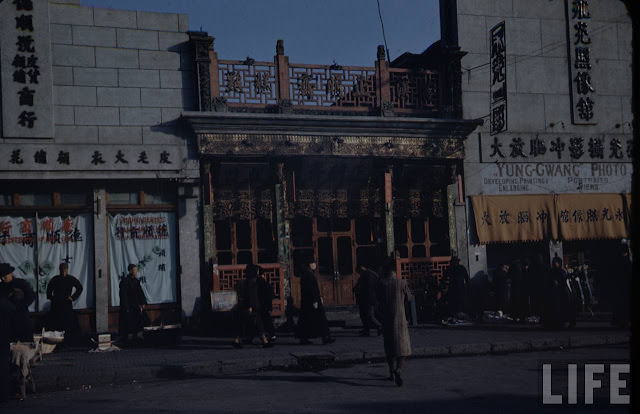
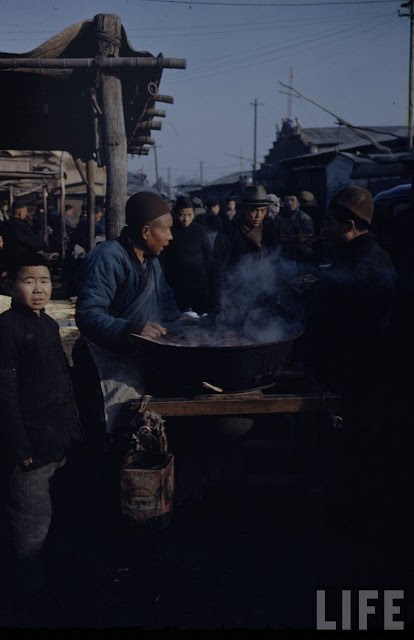
The Desheng area sat near the northern walls of the city and was home to markets and residential blocks that served working-class Beijingers. Street vendors sold food and goods from carts, and the rhythm of commerce carried on as it had for generations. Western clothing had begun to appear in these neighborhoods, worn alongside traditional Chinese garments.
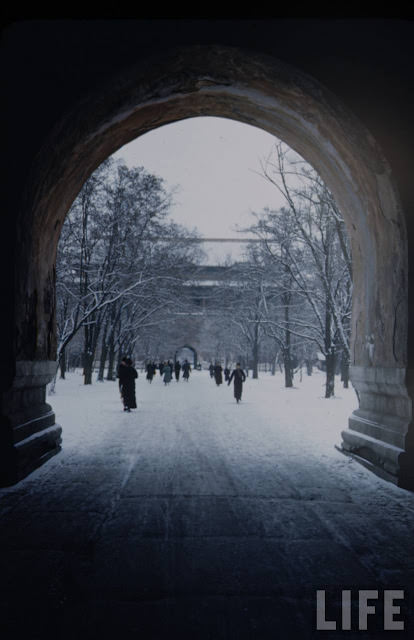
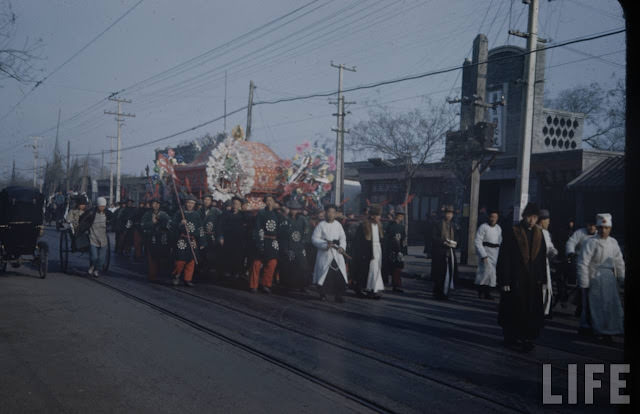
Central Park — known today as Zhongshan Park — was established in 1914 on the grounds of the Sheji Altar, a Ming Dynasty ritual site. By the 1940s, it was a well-established urban green space adjacent to the Forbidden City. Families and individuals gathered here, making use of one of the few open recreational areas in the dense city center.
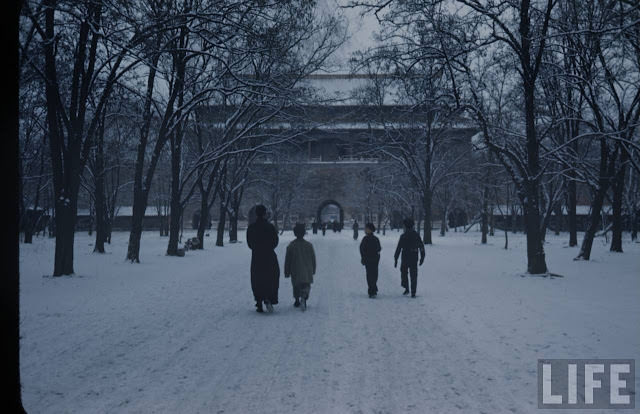
Duanmen is the gate that stands between Tiananmen and the Forbidden City’s main entrance. It formed part of the ceremonial approach to the imperial palace complex. Photographs from the 1940s show its towers and arched passageways largely unchanged from their original Ming Dynasty construction.
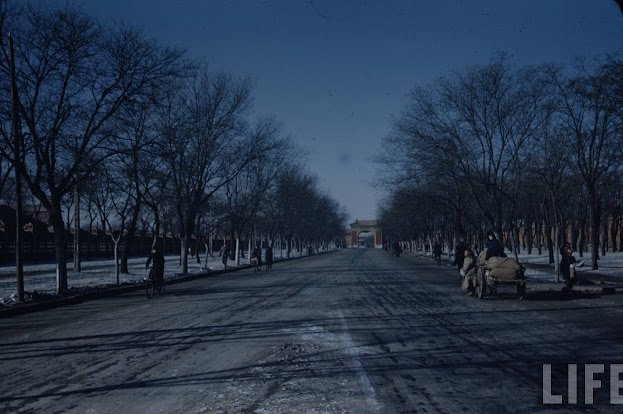
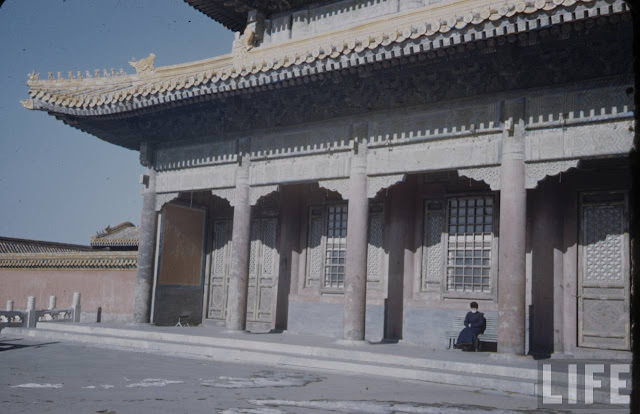
Different sections of the Forbidden City revealed different architectural details — from the glazed yellow roof tiles that covered its main halls to the intricate carvings along its marble terraces. The complex covered over 180 acres and contained nearly 1,000 buildings. Walking through it in the 1940s meant moving through layer after layer of history.
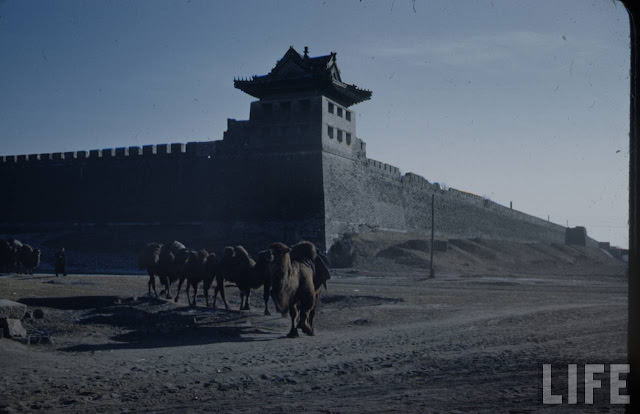
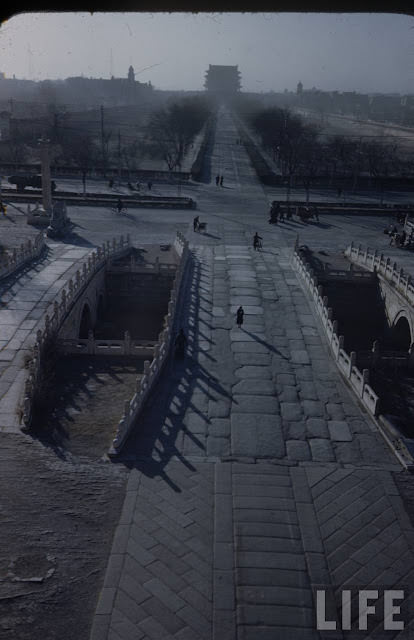
Beijing’s city walls were among the most impressive in all of China. Built during the Ming Dynasty, they stretched for miles around the city and rose to considerable heights. In 1949, when Mao Zedong’s forces approached Beijing, the Nationalist garrison chose to surrender the city rather than fight — meaning the walls suffered no wartime damage during the Communist takeover.
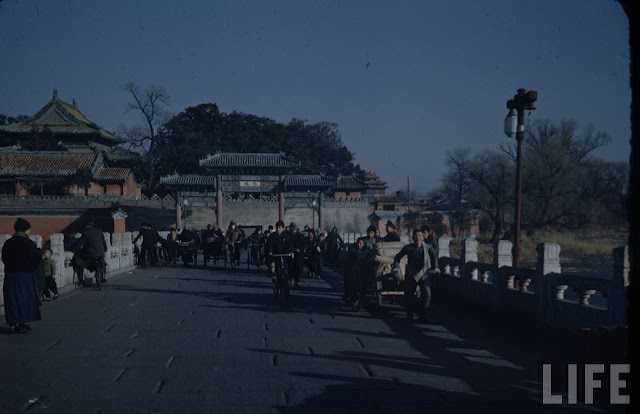
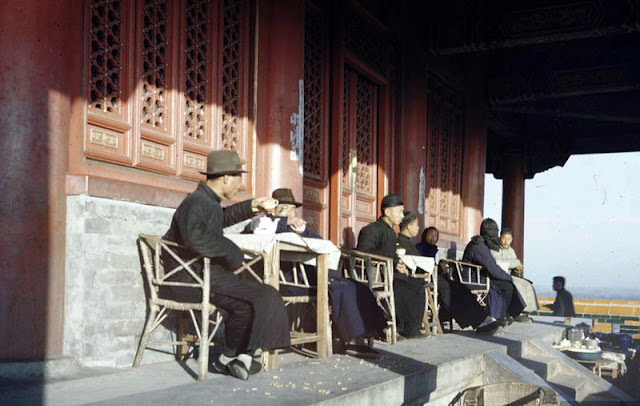
Street life in Beijing during the 1940s was shaped heavily by the civil war’s progression. As the decade neared its end, the Communist Party’s military advances pushed Nationalist forces southward. The mood in Beijing shifted, and by January 1949, the city changed hands without a battle. Red banners began appearing in the streets where Nationalist insignia had hung before.
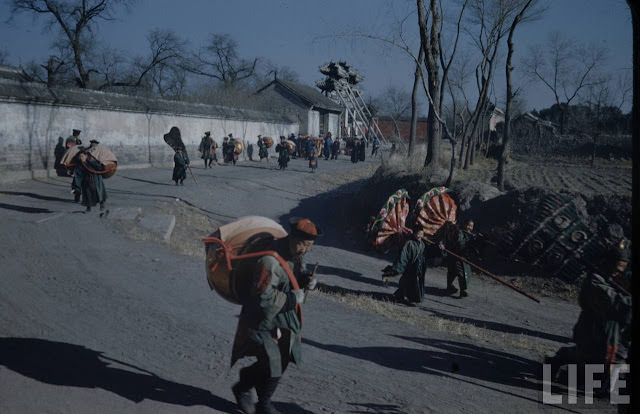
On October 1, 1949, Mao Zedong stood on Tiananmen Gate — the southern entrance to the Forbidden City — and declared the founding of the People’s Republic of China. The Forbidden City directly behind him had been the seat of imperial power. The moment was a deliberate visual statement: a new government claiming the physical and symbolic center of China’s political world.
Temples across Beijing continued to draw worshippers throughout the 1940s. Buddhism and Taoism both had deep roots in the city, and their associated festivals brought large crowds to temple grounds. The Mid-Autumn Festival and Chinese New Year were observed with lanterns, food, and family gatherings — traditions that no change in government had managed to interrupt.
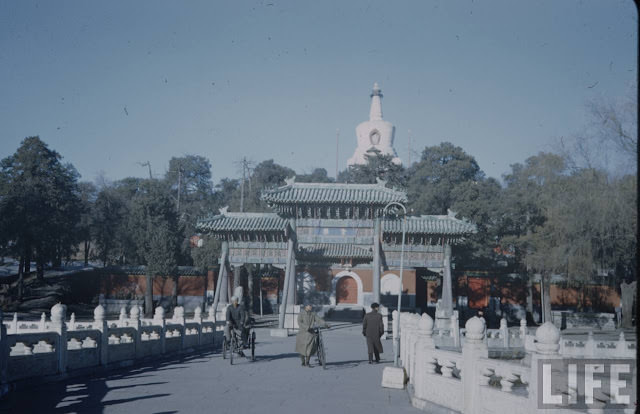
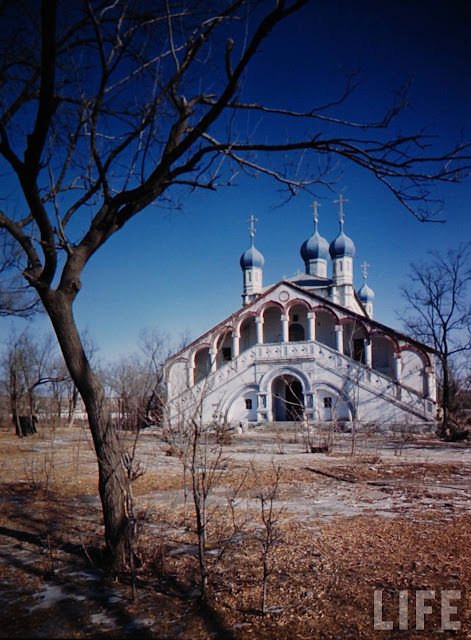
Youth Lake Park, known in Chinese as Qingnian Hu Park, was a public green space that served Beijing’s residents during a period when outdoor gathering had political weight. Parks like this one became sites for organized events as the Communist Party consolidated power, mixing recreation with political messaging in the years immediately following 1949.
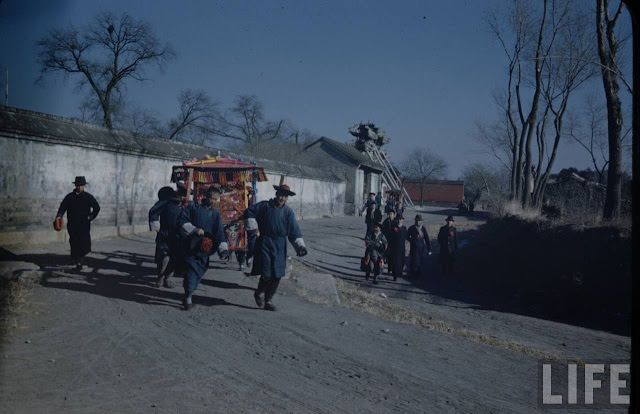
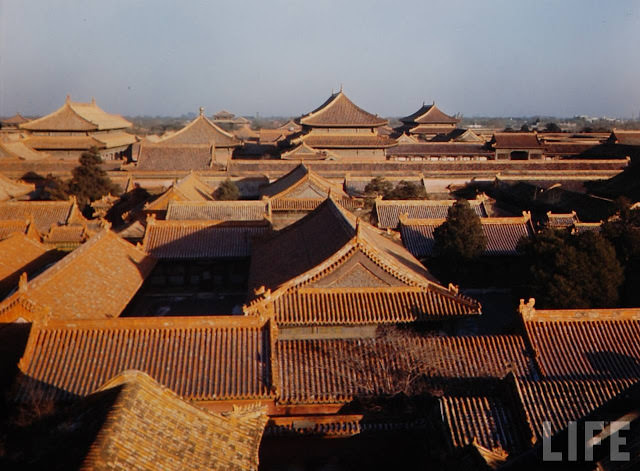
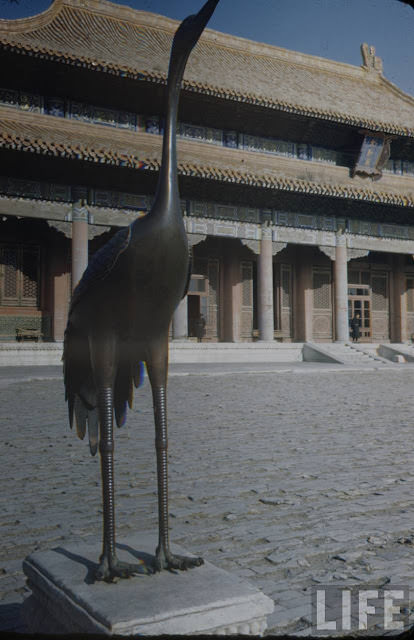
Gugong — the Chinese name for the Palace Museum, which occupies the Forbidden City — was one of the most photographed sites in 1940s Beijing. Its sweeping courtyards and grand ceremonial gates appeared in countless images from the era. Foreign visitors and Chinese citizens alike documented its scale, producing a visual record of a complex that was simultaneously ancient and newly public.
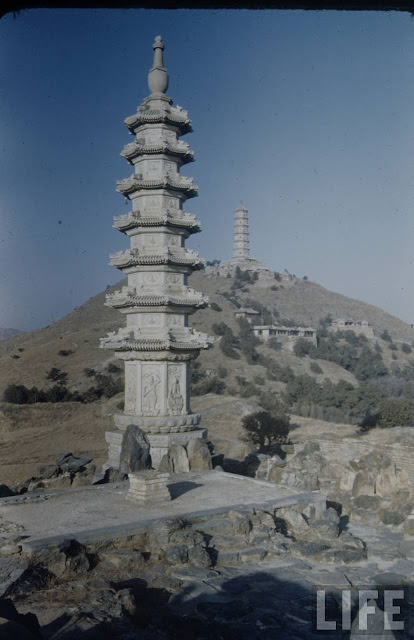
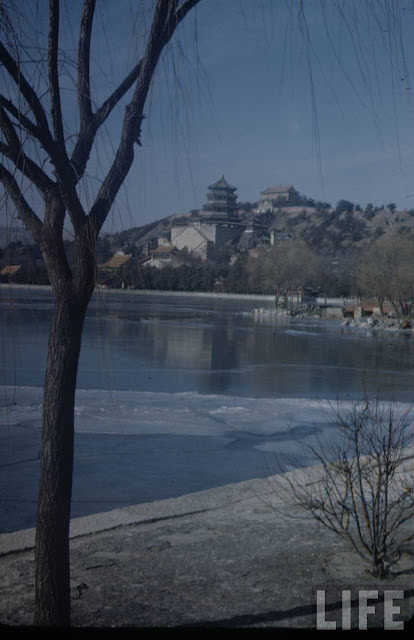
The Summer Palace complex extended well beyond Kunming Lake. Its covered walkway, stretching nearly 2,400 feet along the northern shore, was decorated with thousands of painted scenes from Chinese history and mythology. In the 1940s, this walkway still showed the vivid colors applied during the Qing Dynasty’s restoration of the site.
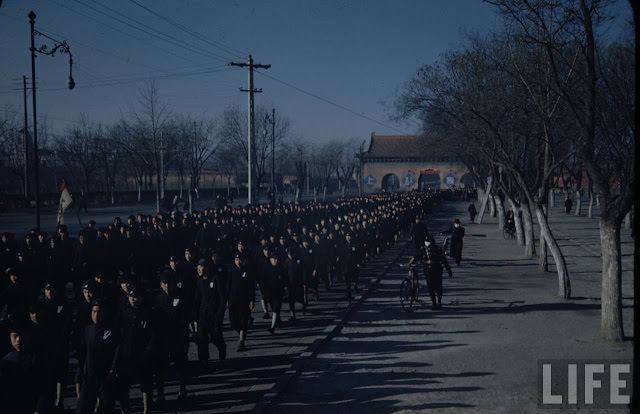
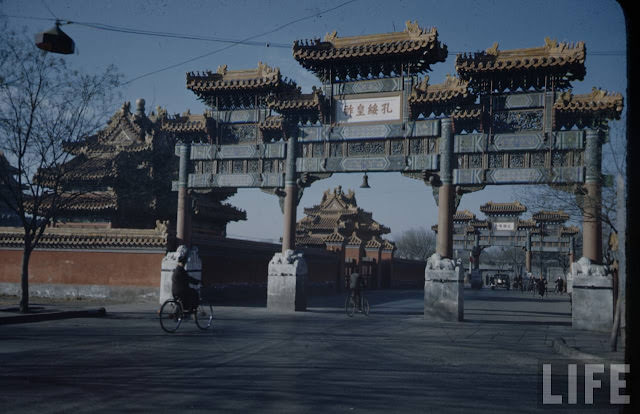
Bicycles became a more common sight in Beijing as the 1940s progressed. They offered a practical alternative to rickshaws for residents navigating the city’s flat terrain. Radios also began appearing in homes, bringing news and, increasingly, Communist Party broadcasts as the political situation changed. These small shifts in technology quietly altered the rhythm of everyday life.
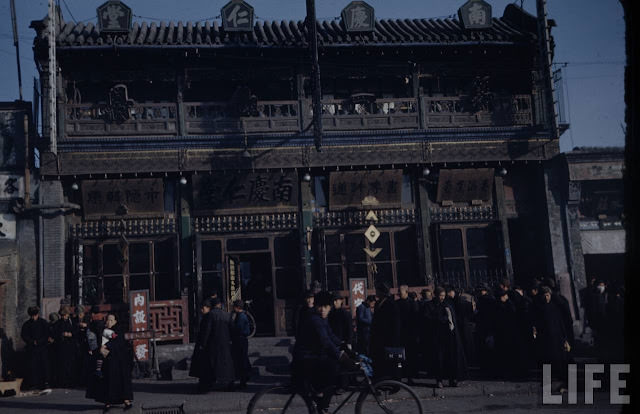
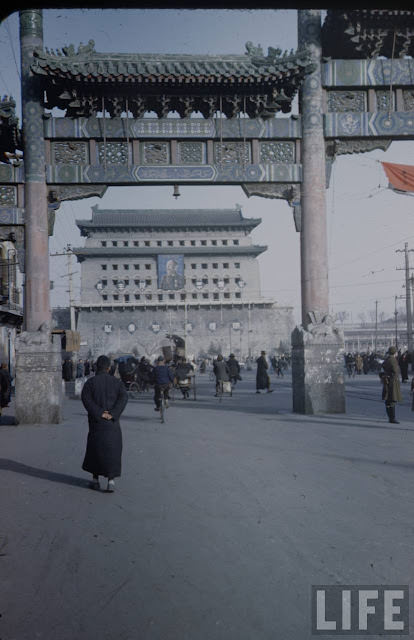
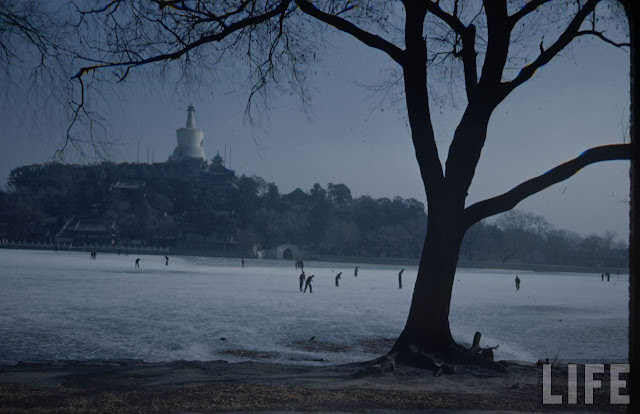
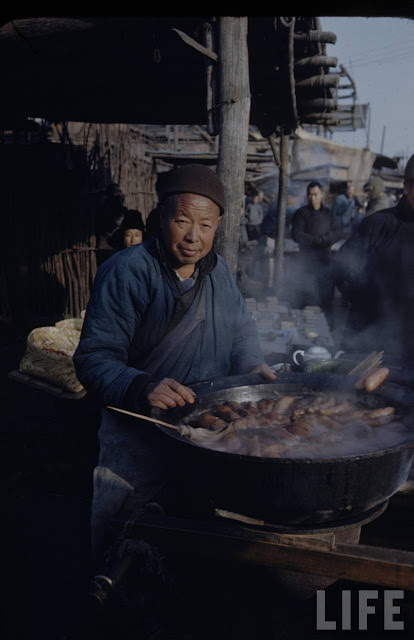
Markets remained the social and economic heart of Beijing’s neighborhoods throughout the decade. Vendors sold everything from fresh produce and street food to fabric, tools, and household goods. The market culture of Beijing was centuries old, and even wartime occupation and civil war had not managed to shut it down entirely. Business adapted to whoever held power.
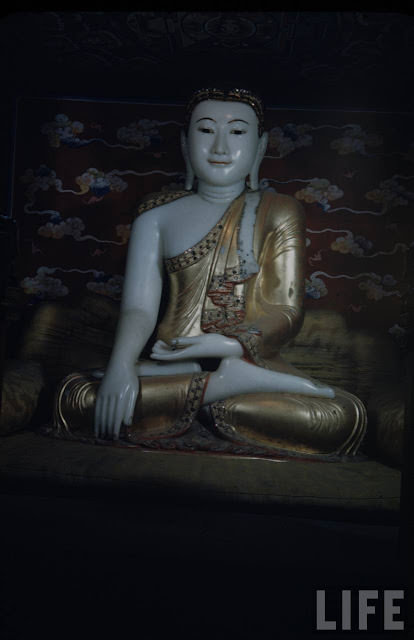
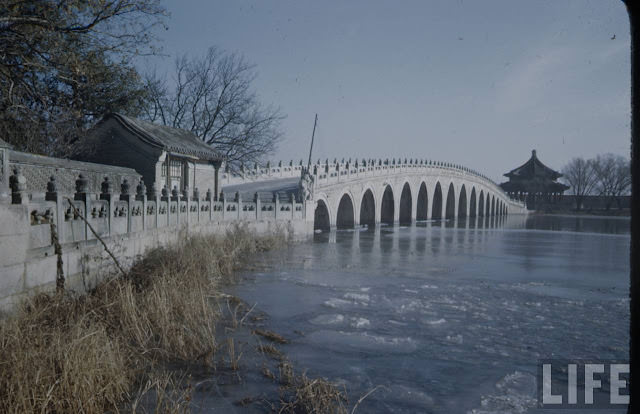
Further views of the Summer Palace show the Marble Boat — a two-story stone structure built at the edge of Kunming Lake — and the ornate bridges connecting its various islands. The site had been restored by Empress Dowager Cixi in the 1880s using funds intended for naval modernization. By the 1940s, that history was already the subject of debate among Chinese historians.
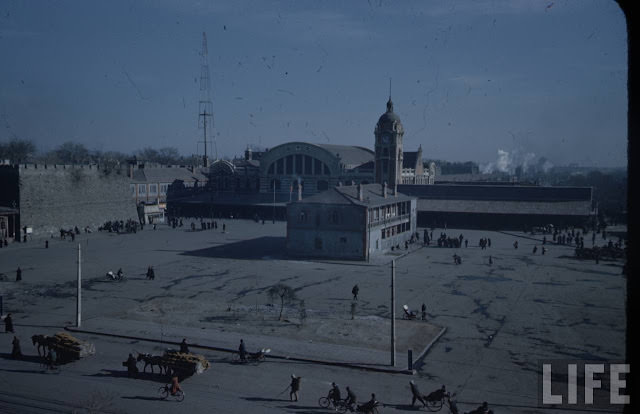
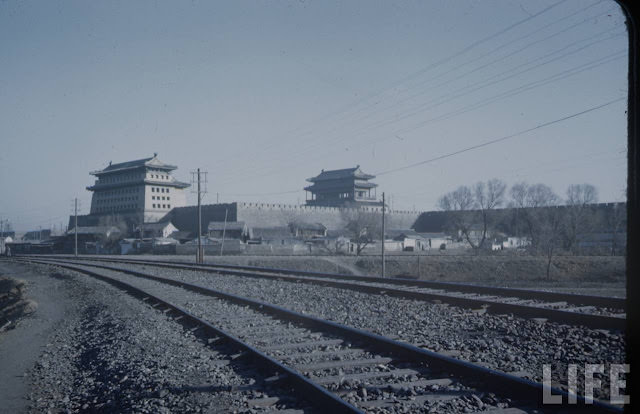
The Zhengyangmen East Railway Station — shown here — was one of Beijing’s main rail terminals during the 1940s. It served the Jing-Feng Railway line connecting Beijing to the northeast. Trains carrying troops, supplies, and civilians passed through this station throughout the decade, making it a key node in both the war effort and everyday movement across the region.
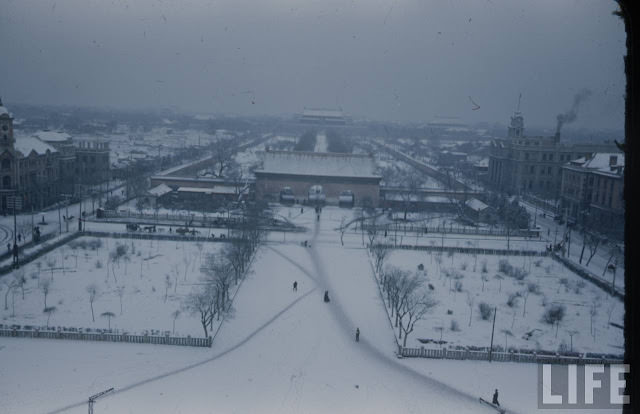
Tiananmen Square in the 1940s looked different from the vast open plaza it became after 1949. The space was smaller and more enclosed, flanked by imperial gates and walls. It became politically charged on October 1, 1949, when Mao Zedong’s proclamation from Tiananmen Gate transformed it into the symbolic center of the new People’s Republic of China.