Muscle Beach, California, was already packed with extraordinary people by the early 1950s. Bodybuilders, acrobats, and gymnasts gathered on the sand near Santa Monica to train, perform, and compete for the attention of large weekend crowds. But in 1954, one figure stopped people in their tracks more than any rippling bodybuilder ever did — a 12-year-old girl named April Atkins.
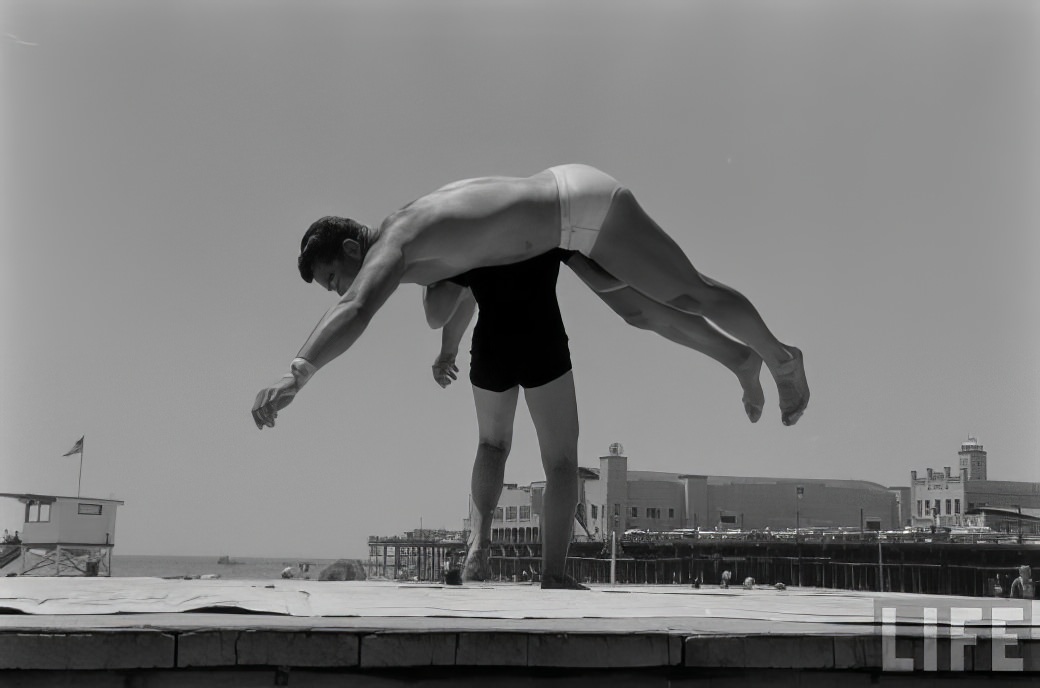
April weighed just 79 pounds and stood barely over four feet tall. She was a seventh-grader. By every outward measure, she was an ordinary kid. But April could lift weights far heavier than her own body, perform gymnastic stunts with clean precision, and carry multiple people on her back at once. The press called her the “World’s Strongest Seventh-Grader,” and the name fit.
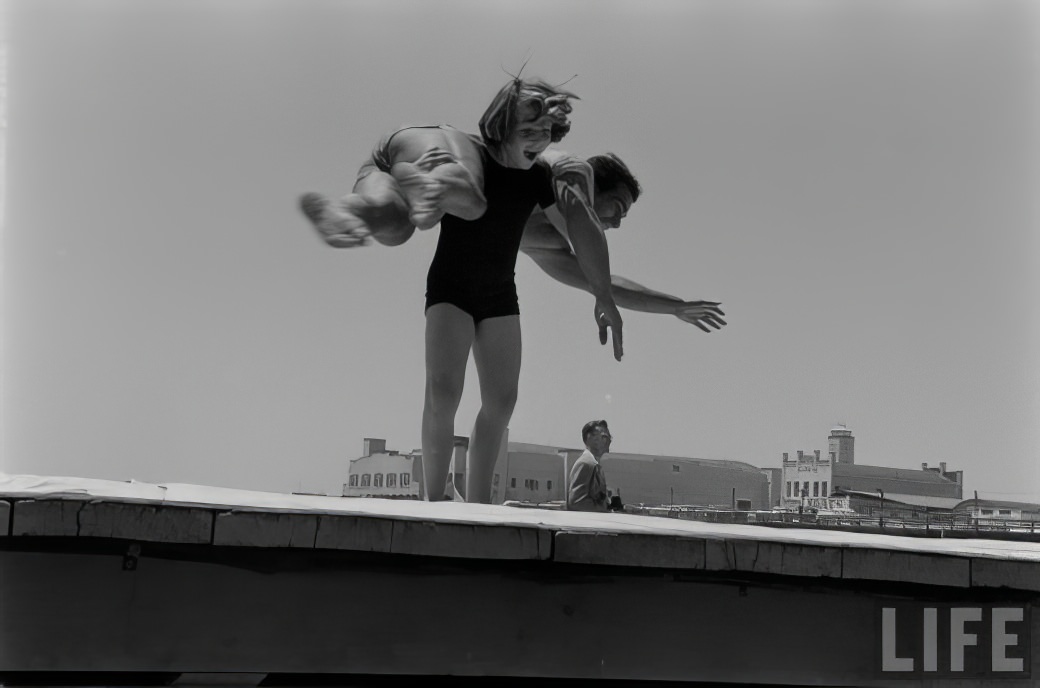
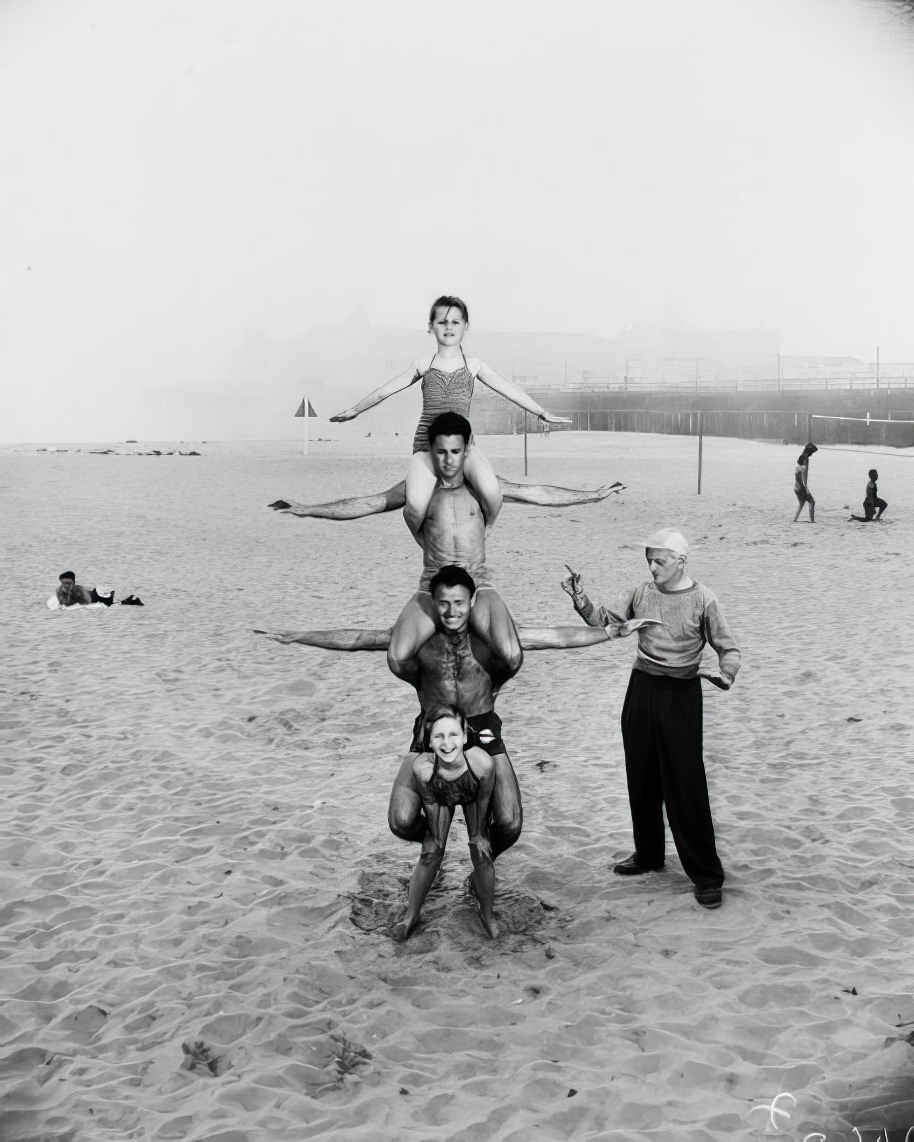
Her most jaw-dropping feat was carrying her entire family on her back — a combined weight of over 425 pounds. That means this 79-pound girl supported more than five times her own body weight in human cargo. The crowd that watched her do it at Muscle Beach was not watching a trick. They were watching a legitimate display of trained, disciplined strength.
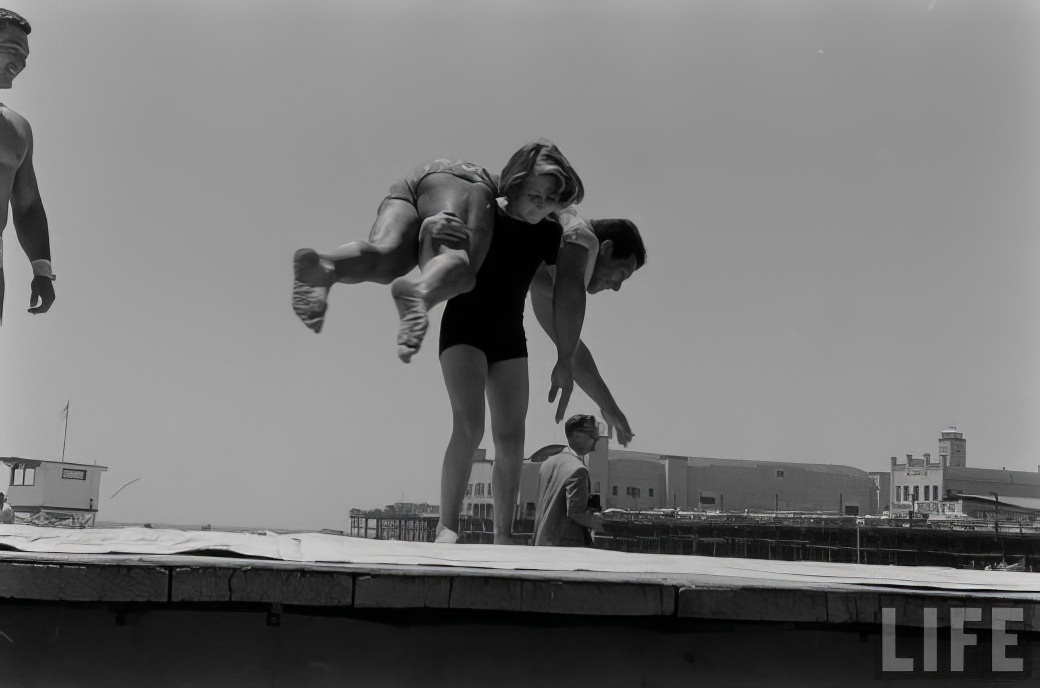
April did not stumble into this ability. She trained hard alongside her family, who were all serious about fitness. Her mother, father, and younger sister were weightlifters and gymnasts themselves. The Atkins family trained together as a unit, which made April’s development as an athlete both structured and consistent from a young age.
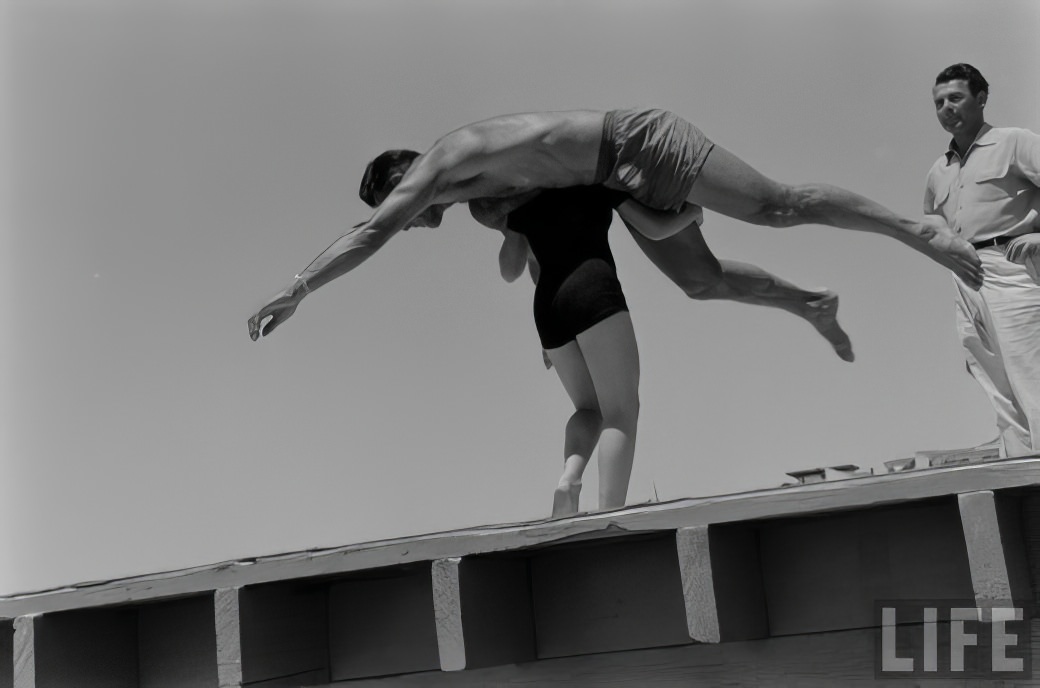
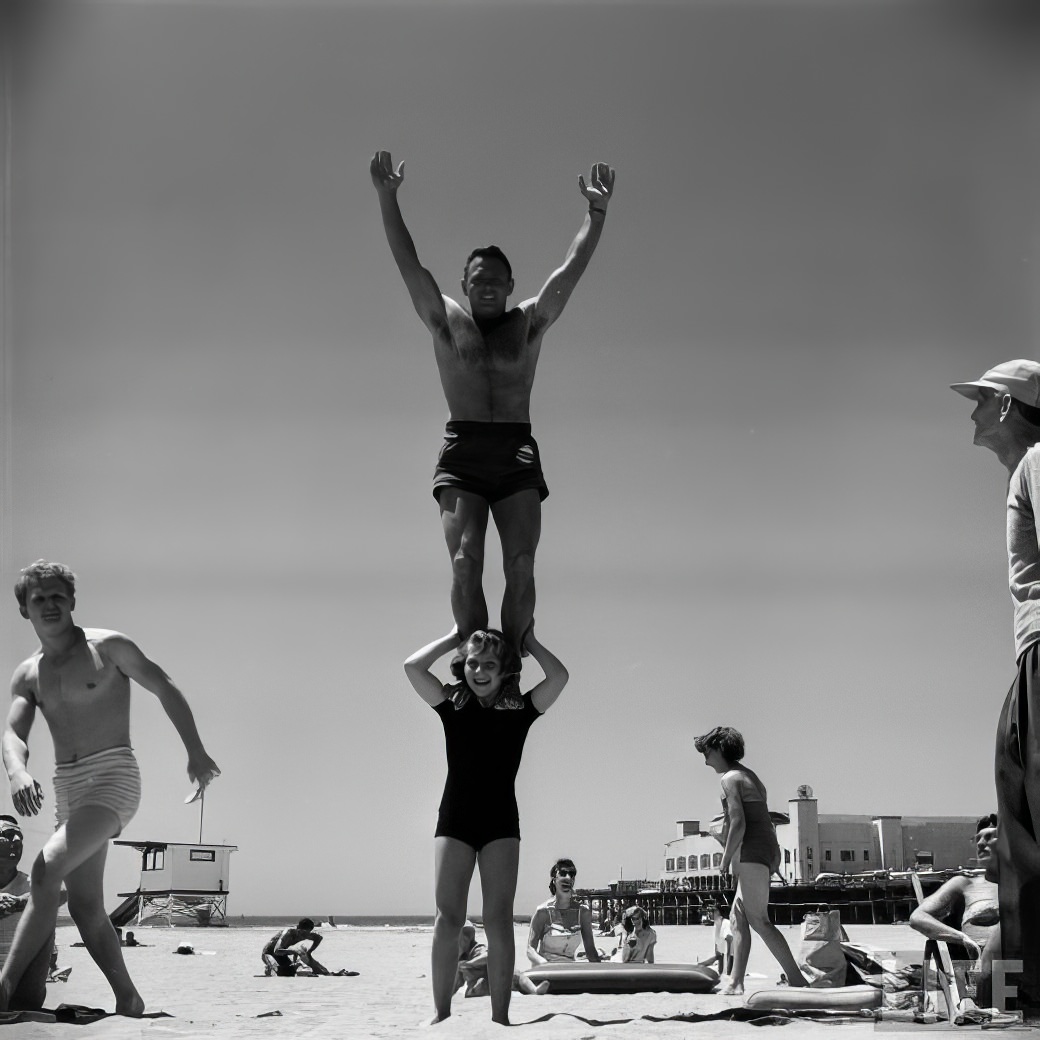
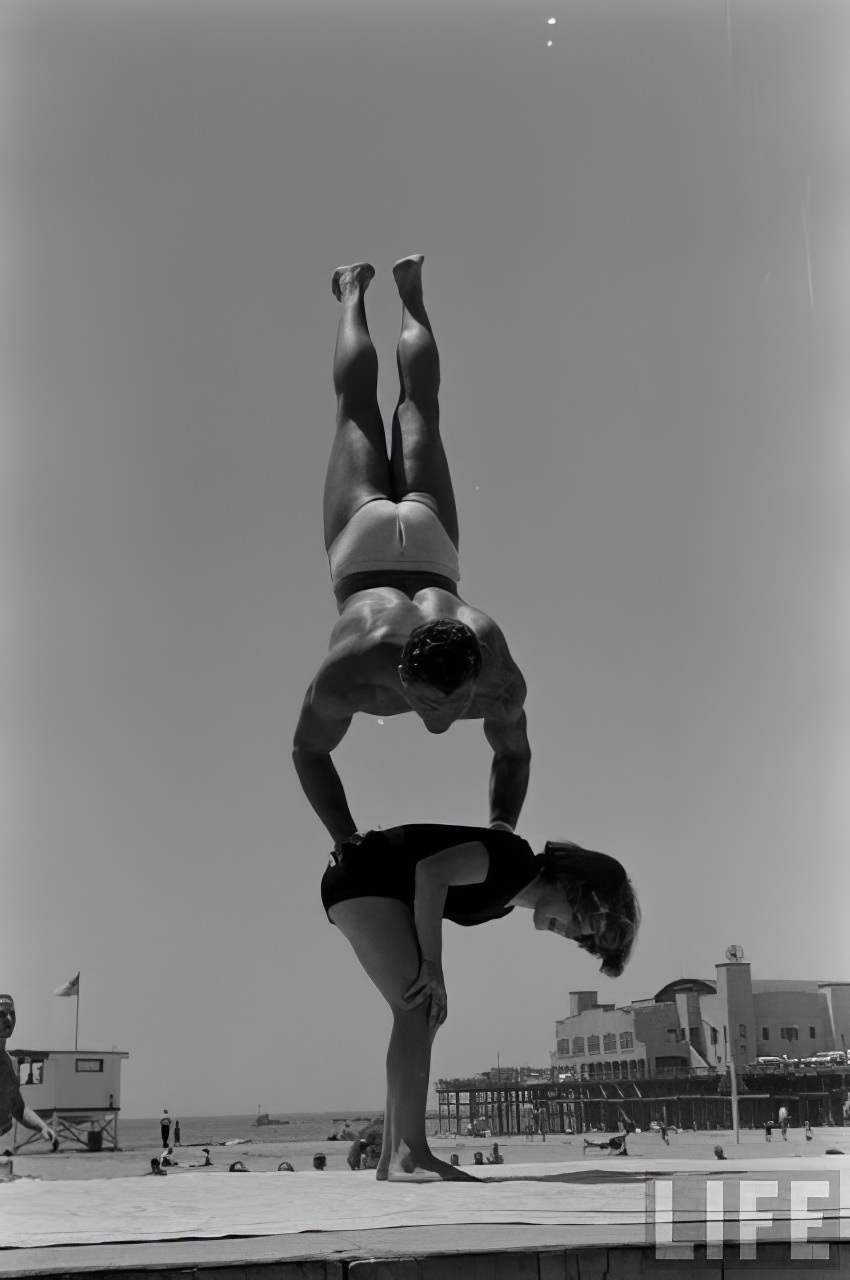
Muscle Beach in the 1950s was the ideal setting for a family like this. The outdoor venue had grown into a serious hub for strength athletes and fitness performers after World War II. People came not just to exercise but to push the known limits of what the human body could do. Crowds gathered on weekends to watch, and the best performers became local celebrities. The Atkins family was very much part of that culture.
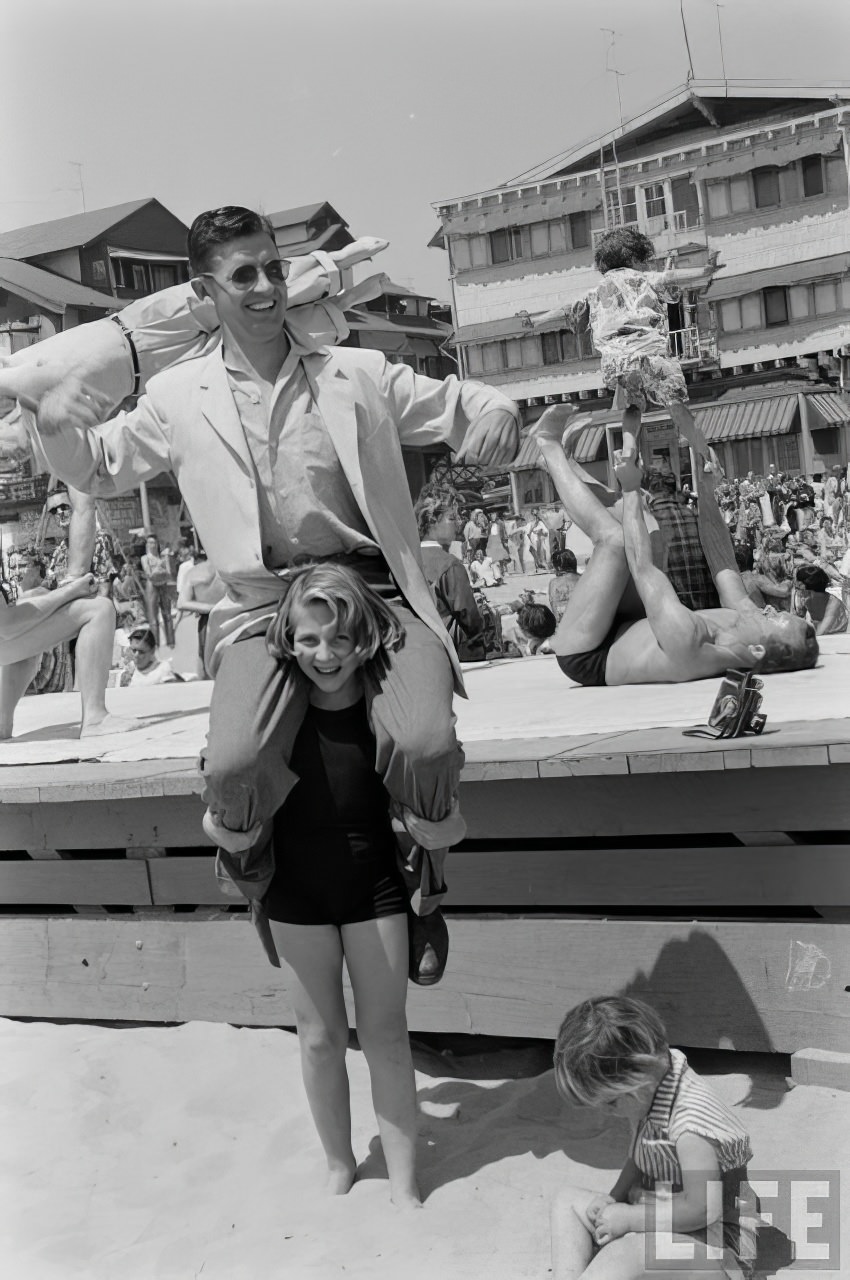
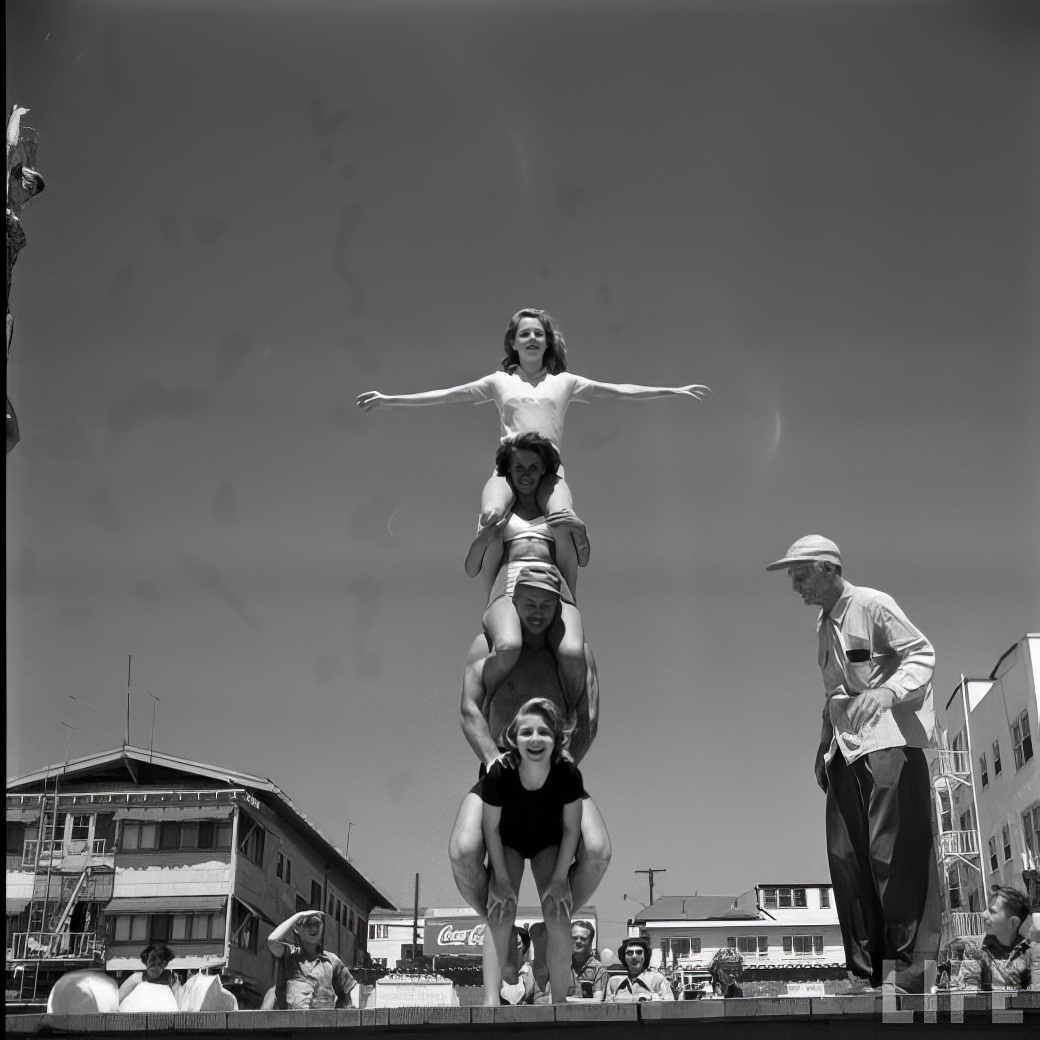
April’s performances drew large audiences at the beach. Spectators who had come to watch seasoned adult athletes found themselves crowding around a girl barely tall enough to see over a kitchen counter. She lifted, she balanced, she carried — and she did it all with the calm focus of someone who had put in real hours of work.
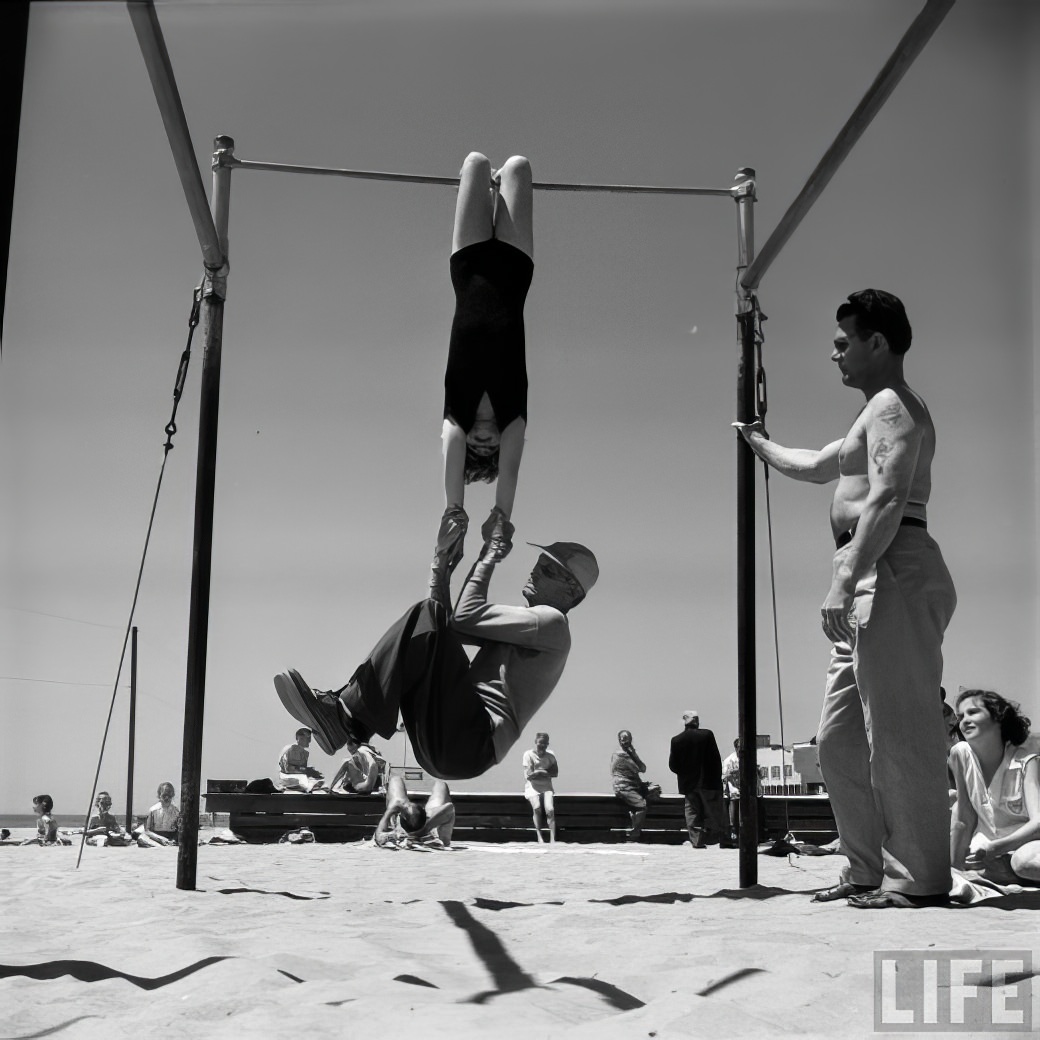
The media picked up her story quickly. LIFE magazine featured her, and newspapers across the country ran her photo and story. She earned nicknames like “Wonder Girl” and “pint-sized powerhouse.” For readers in 1954, the image of a 79-pound twelve-year-old hoisting grown adults into the air was genuinely hard to believe — until they saw the photographs.
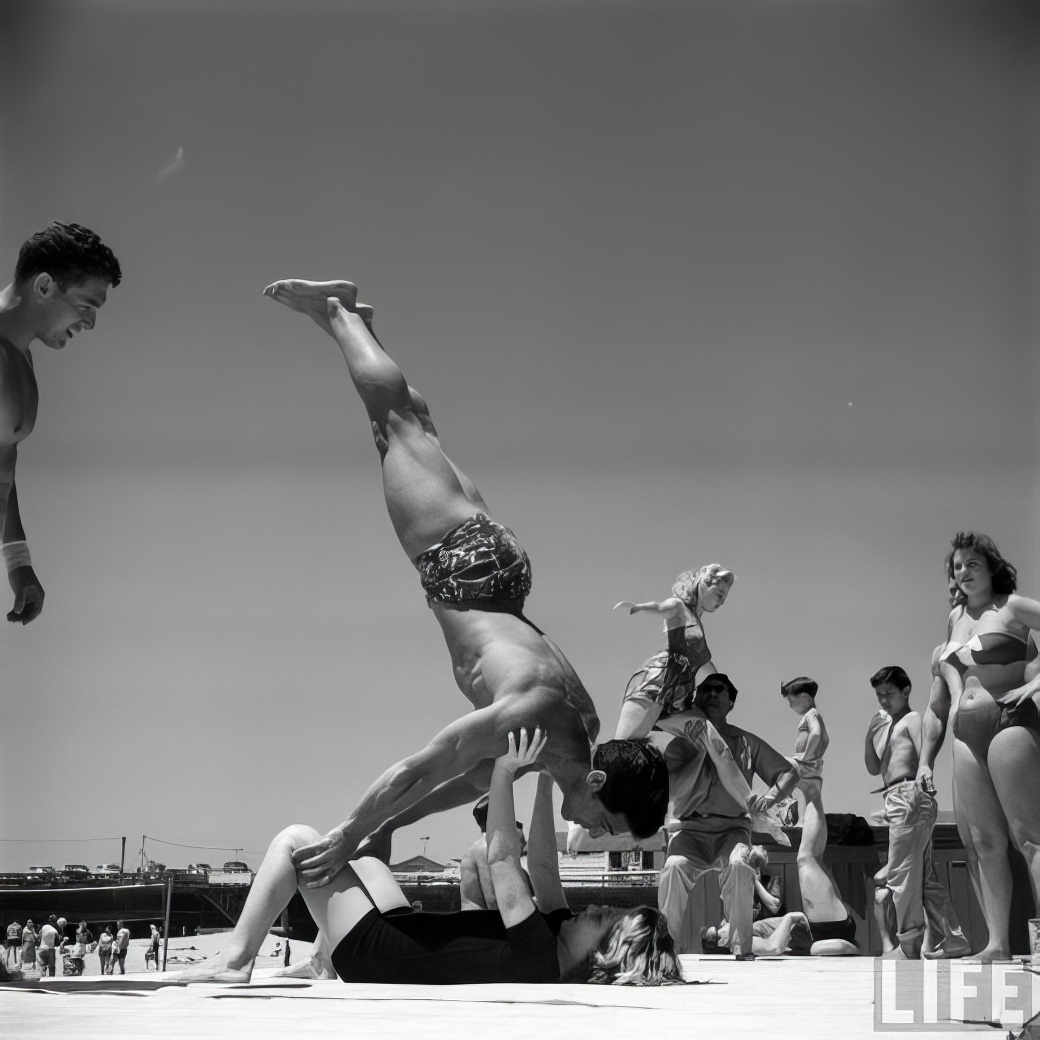
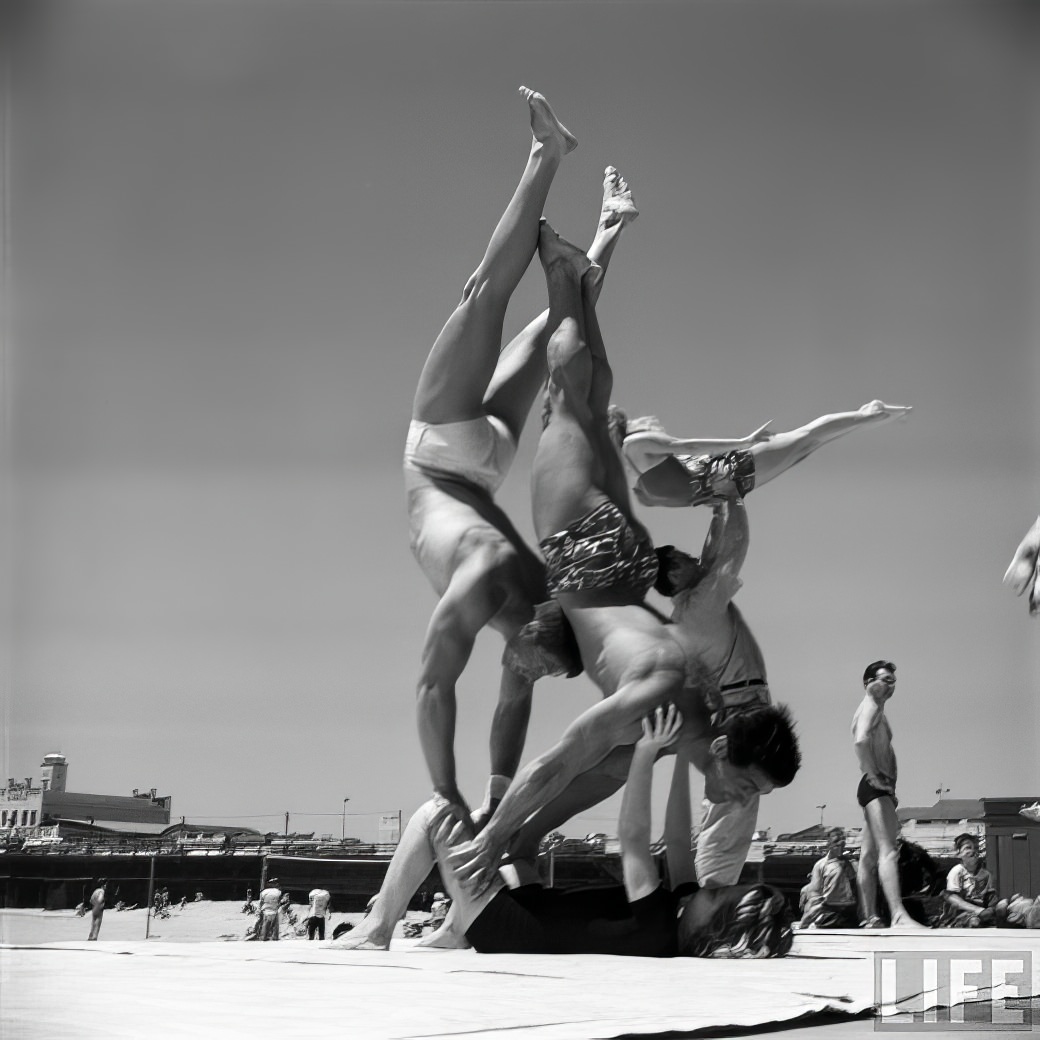
What made April stand out beyond the raw numbers was the combination of strength and gymnastics. She was not simply strong in a static sense. She could move, balance, and control her body while under load — skills that take years to develop even in adult athletes. Her acrobatic training gave her strength a practical, dynamic quality that pure weightlifters often lacked.
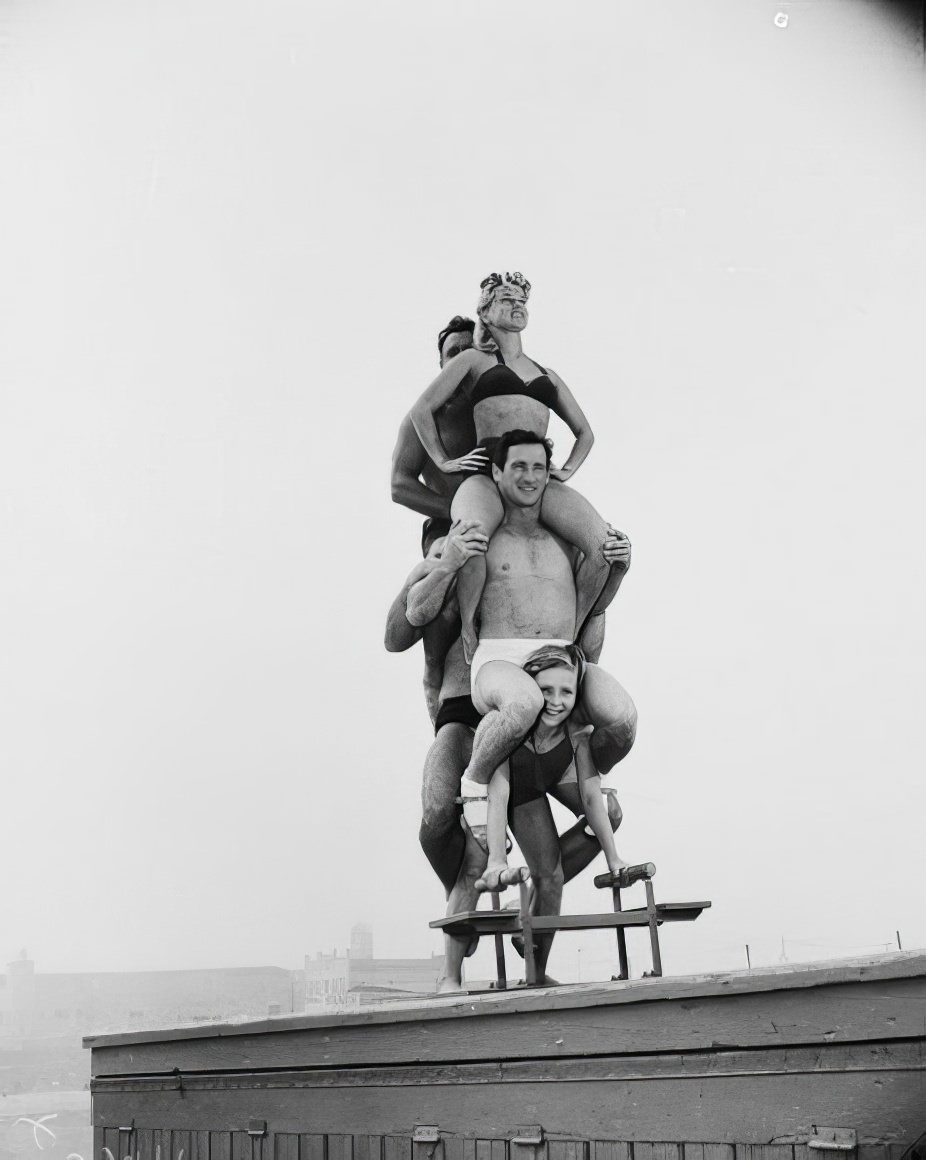
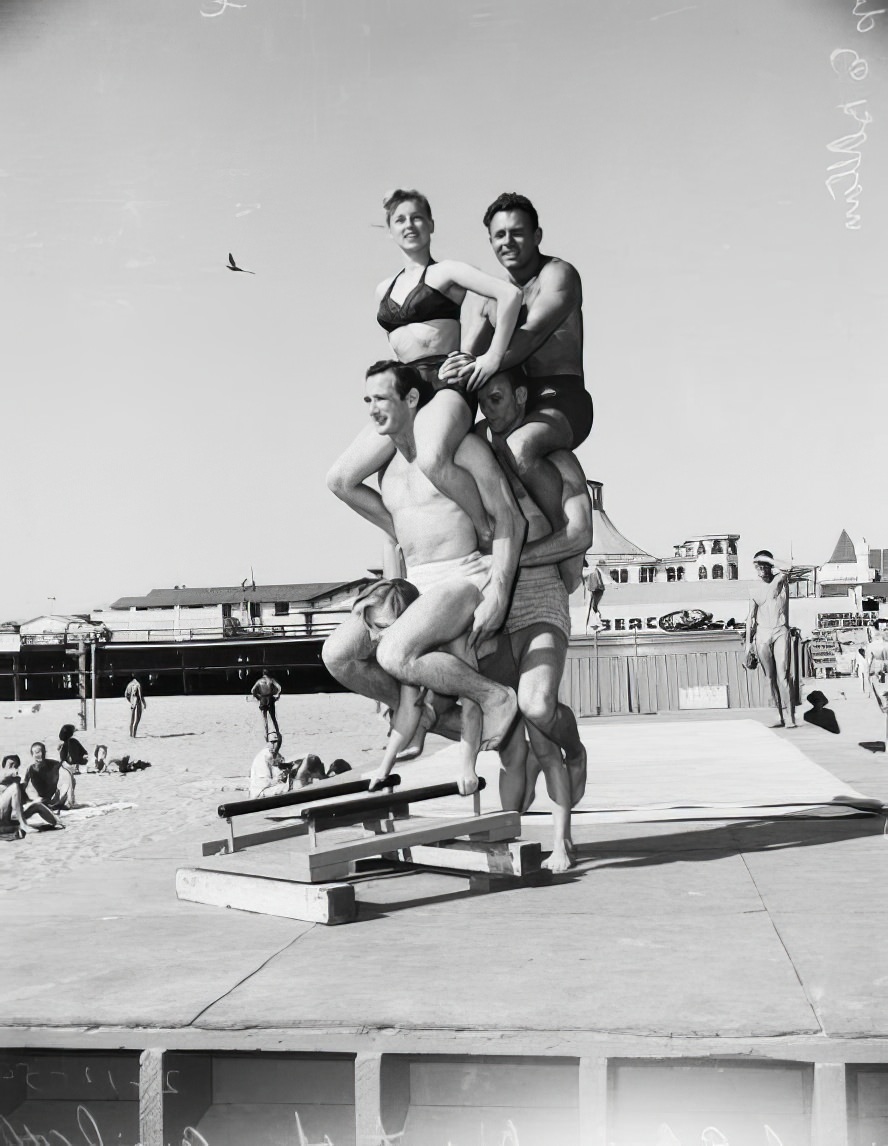
The Atkins family as a whole was a rare thing — a domestic unit built entirely around physical training and performance. While most American families in 1954 were settling into postwar suburban life, the Atkinses were at the beach stacking themselves on top of a seventh-grader and letting her walk.
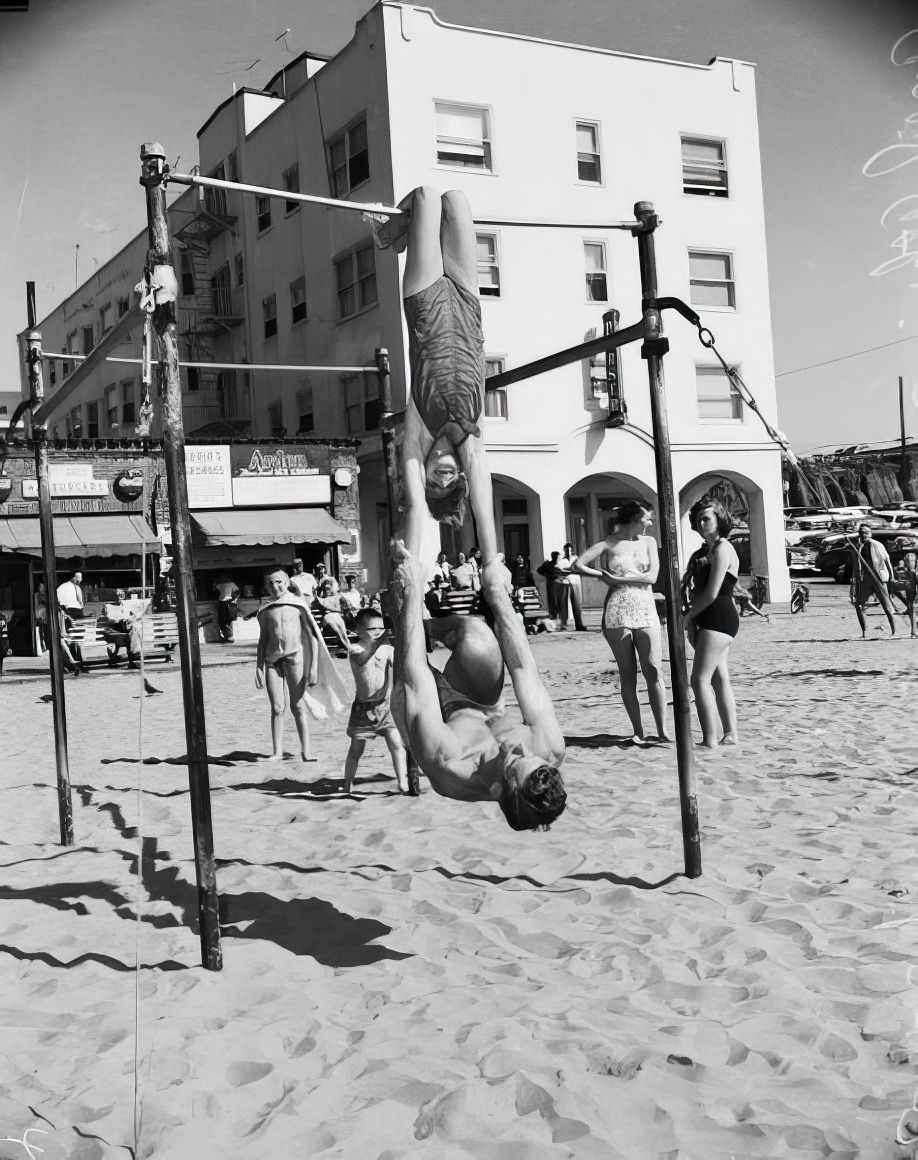
April Atkins represented something specific about Muscle Beach’s golden era. The venue celebrated feats that defied expectation, and few things defied expectation more sharply than a 79-pound girl outperforming athletes twice her age and ten times her size. She was not a novelty act. She was a trained athlete who happened to be twelve years old.