Hey There! Before You Go. 😧
Get the best vintage content straight into your inbox!

Don't worry, we don't spam

The Beginnings of Modern Air Travel: A Look at the 1930s

Flying in the 1930s was nothing like the routine experience most people know today. Commercial air travel was brand new, expensive, and reserved almost entirely for the wealthy. Business travelers, celebrities, and high-society passengers made up the bulk of those who ever stepped onto a plane. For the vast majority of the population, a ticket on a train or a steamship was still the only realistic option. But for those who could afford it, air travel offered something genuinely extraordinary — speed, novelty, and a front-row seat to one of the fastest-moving industries in modern history.
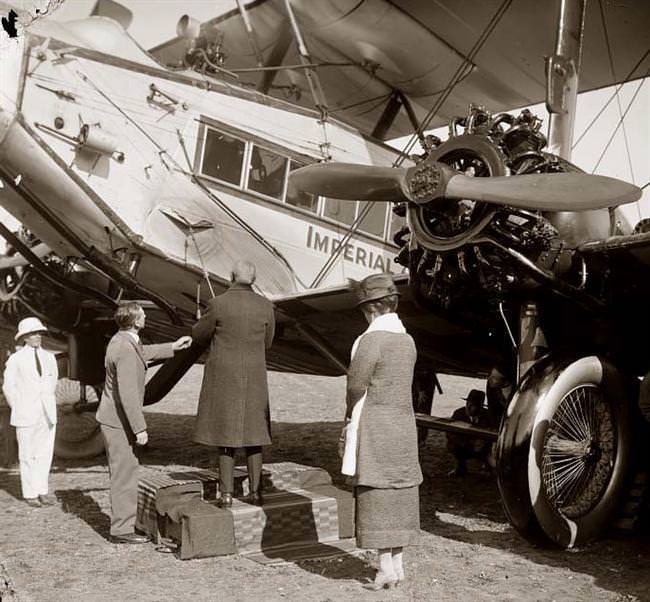
An airplane from British Imperial Airways, taken in the early 1930's
An airplane from British Imperial Airways, taken in the early 1930’s

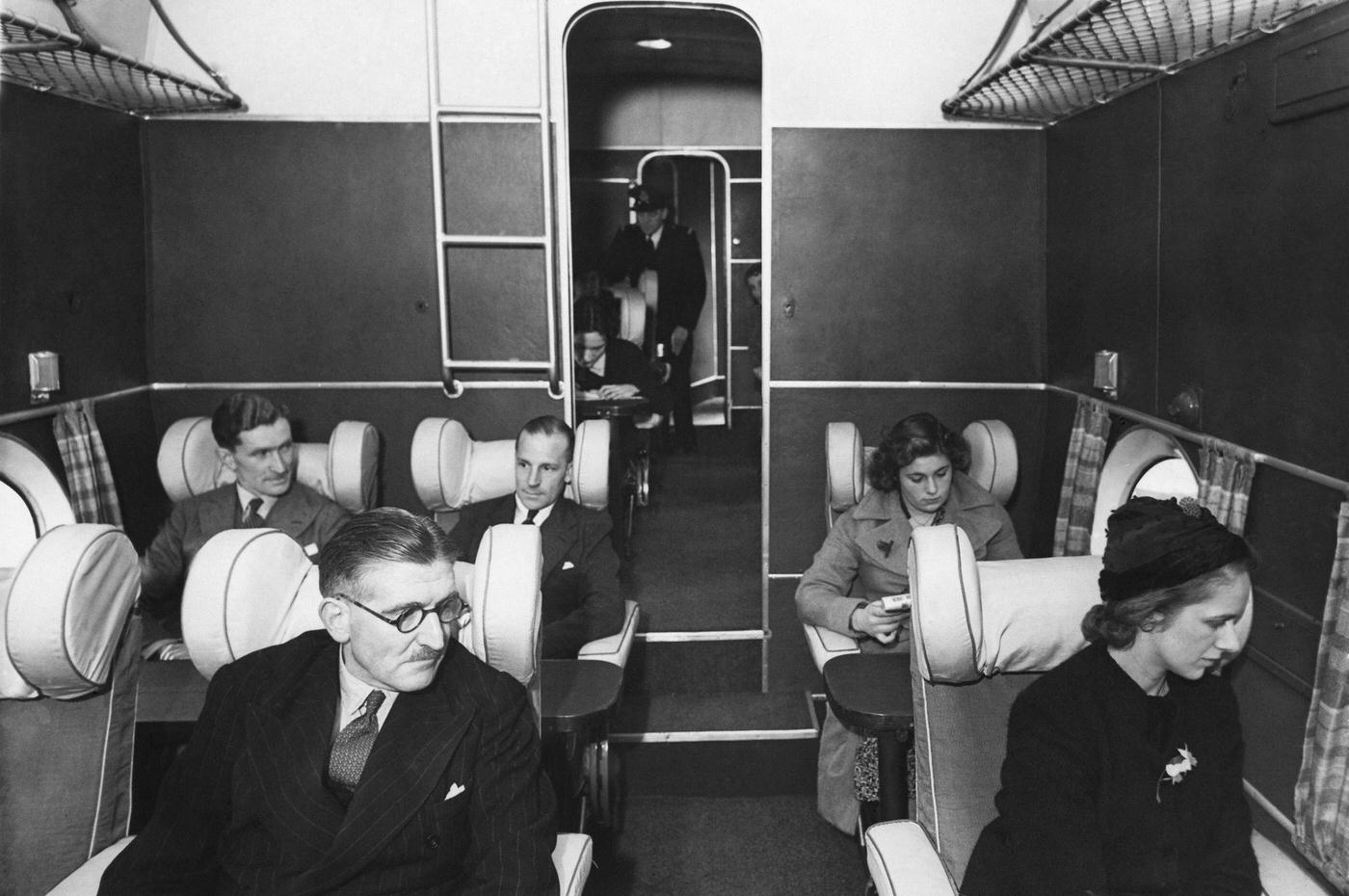
The aircraft of the era were small, propeller-driven machines with a limited range. Cabins were tight, and flights were loud, bumpy, and often uncomfortable. There was no pressurized cabin, which meant flights stayed at lower altitudes and passengers felt every pocket of turbulence. Despite these conditions, airlines worked hard to make the experience feel special — even glamorous.
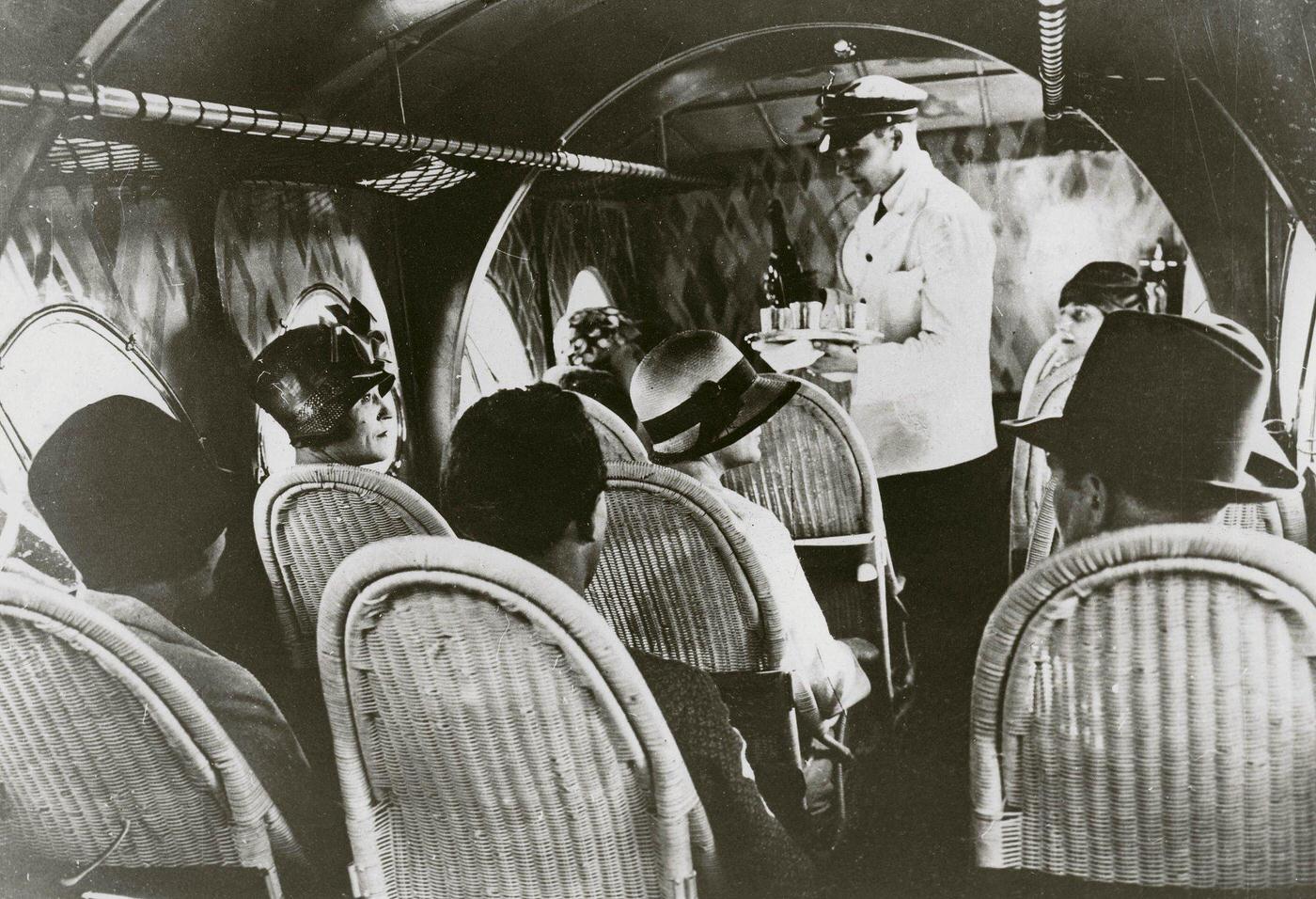
Passengers inside an aircraft, 1930

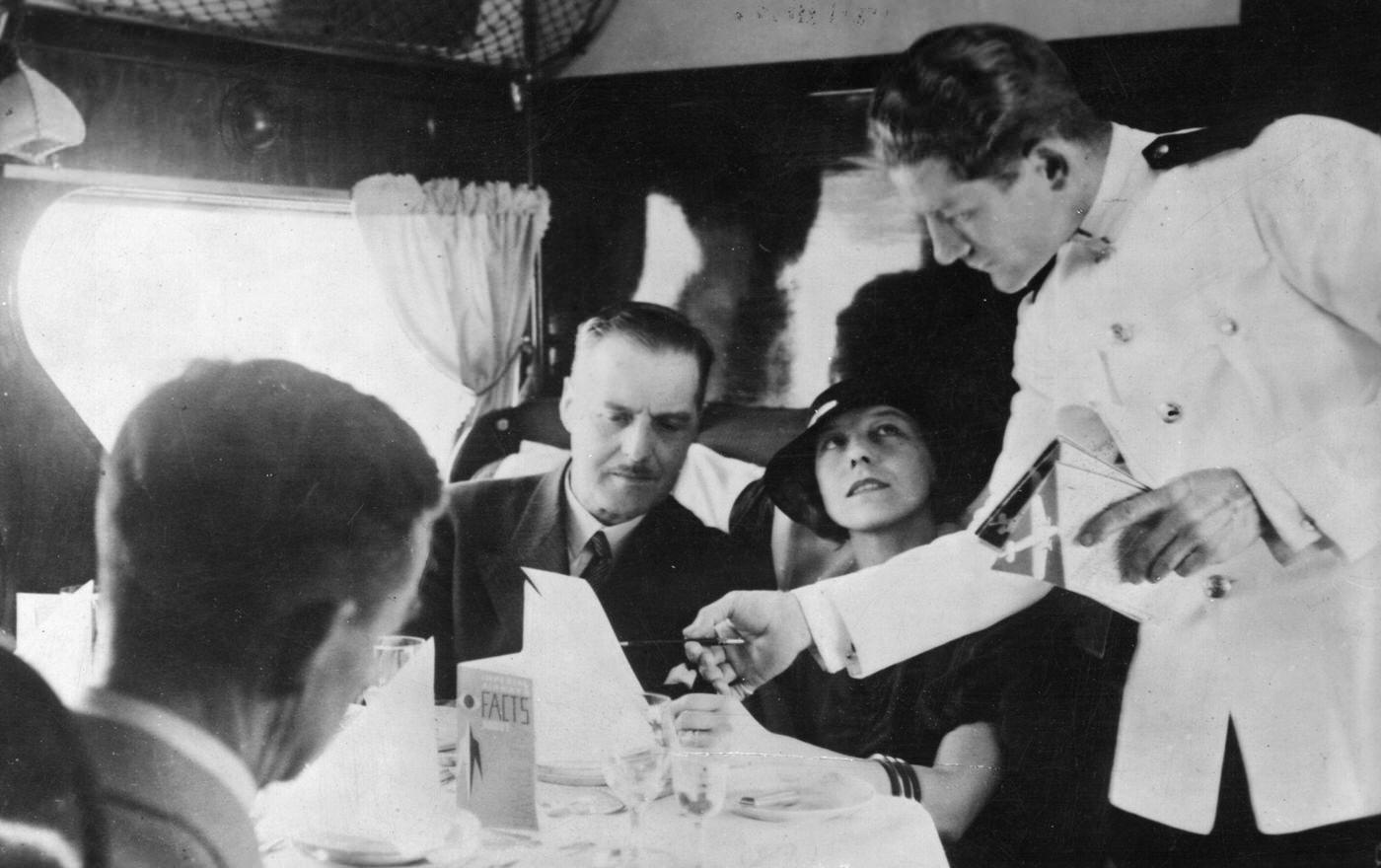
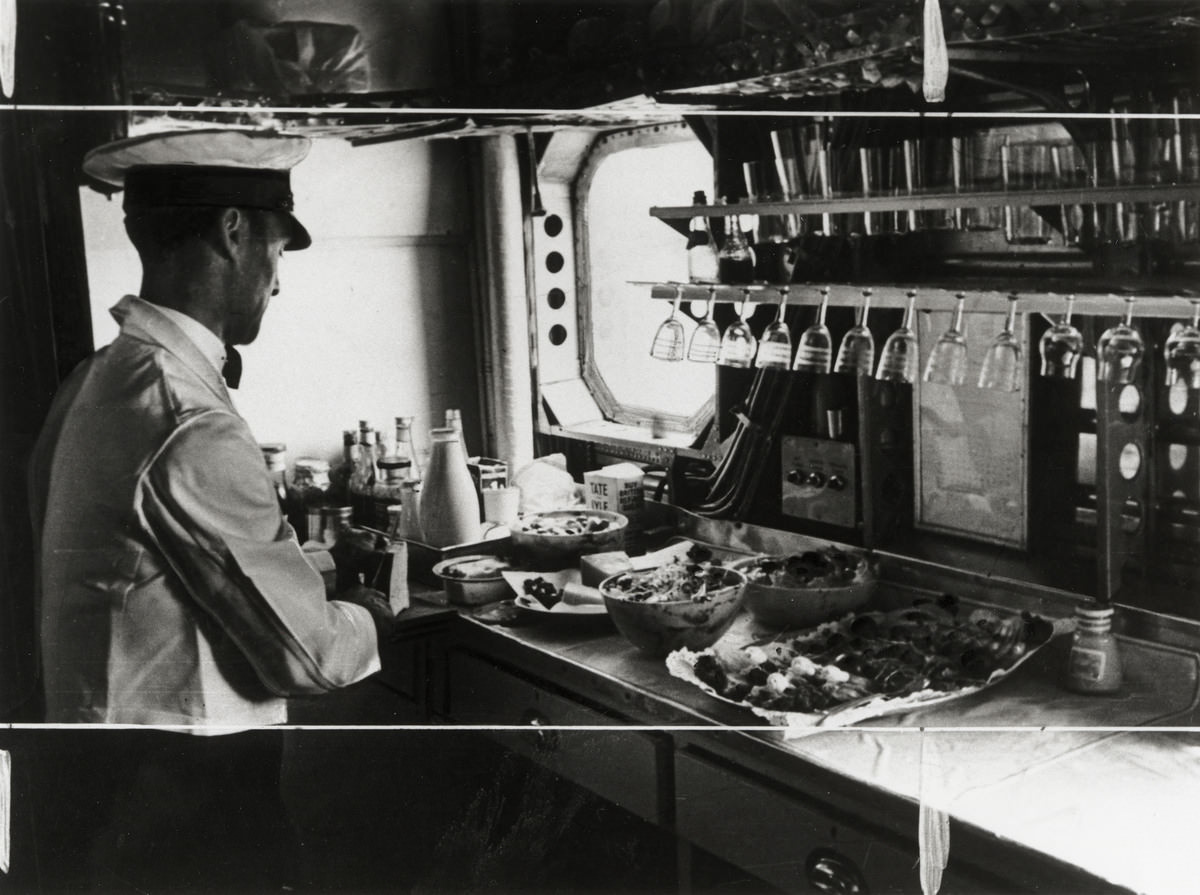
On longer routes, airlines like Britain’s Imperial Airways went to considerable lengths to impress their passengers. Full meal service was offered on board, with professional kitchen staff preparing food in the galley mid-flight. On the London-to-Paris route aboard the Scylla — one of Imperial’s flagship aircraft — waiters served passengers at their seats, much like a restaurant experience at 5,000 feet.
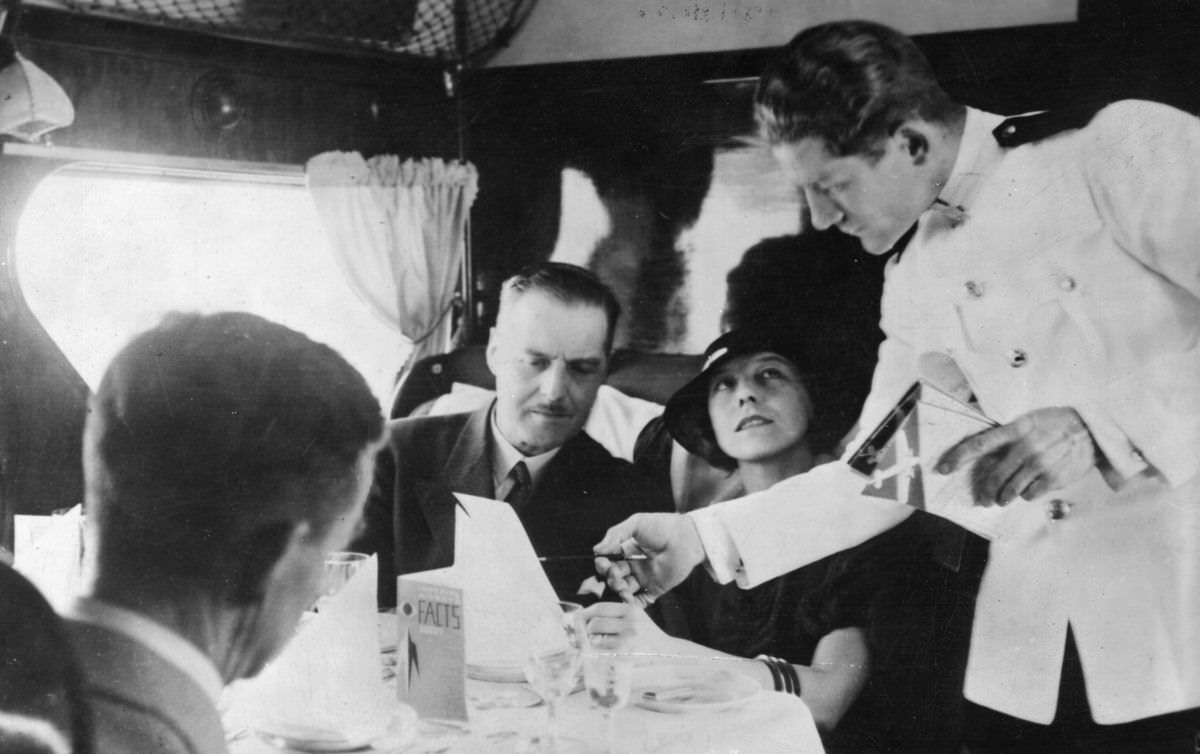
Waiter service aboard Imperial Airways 'Scylla' during its flight from London to Paris, 1935.
Waiter service aboard Imperial Airways ‘Scylla’ during its flight from London to Paris, 1935.
Preparing lunch on the Imperial Airways airplane 'Scylla', 19 November 1936.
Preparing lunch on the Imperial Airways airplane ‘Scylla’, 19 November 1936.

By 1938, some airlines were going even further to impress their passengers. Famous chefs were brought in to prepare elaborate food — including cakes — that would be loaded directly onto aircraft before departure. The idea of in-flight dining wasn’t just practical; it was a marketing statement. Airlines wanted passengers to feel like they were traveling in style.
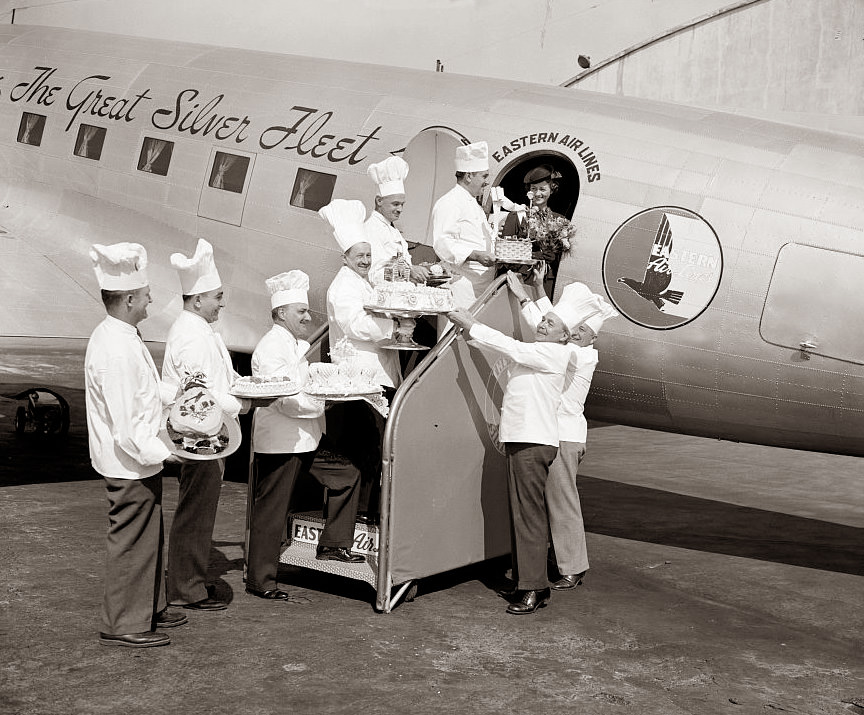
This picture is from 1938, and famous chefs are shown loading cakes onto the airplane for the passengers

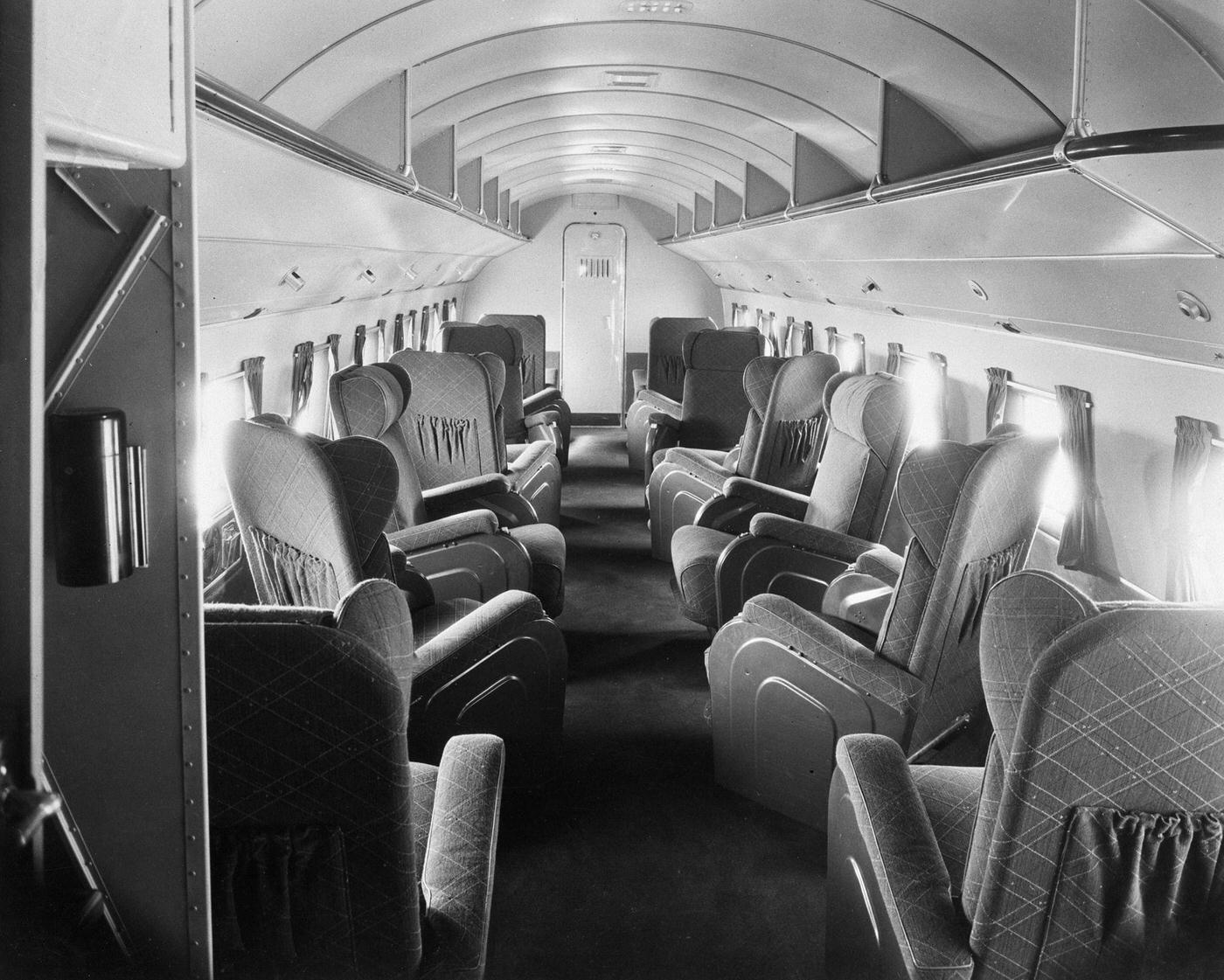
Passenger cabins varied widely depending on the airline and route. Some aircraft offered simple forward-facing seats, while others were fitted out with lounge-style seating where passengers could relax, socialize, and even play card games during the journey.
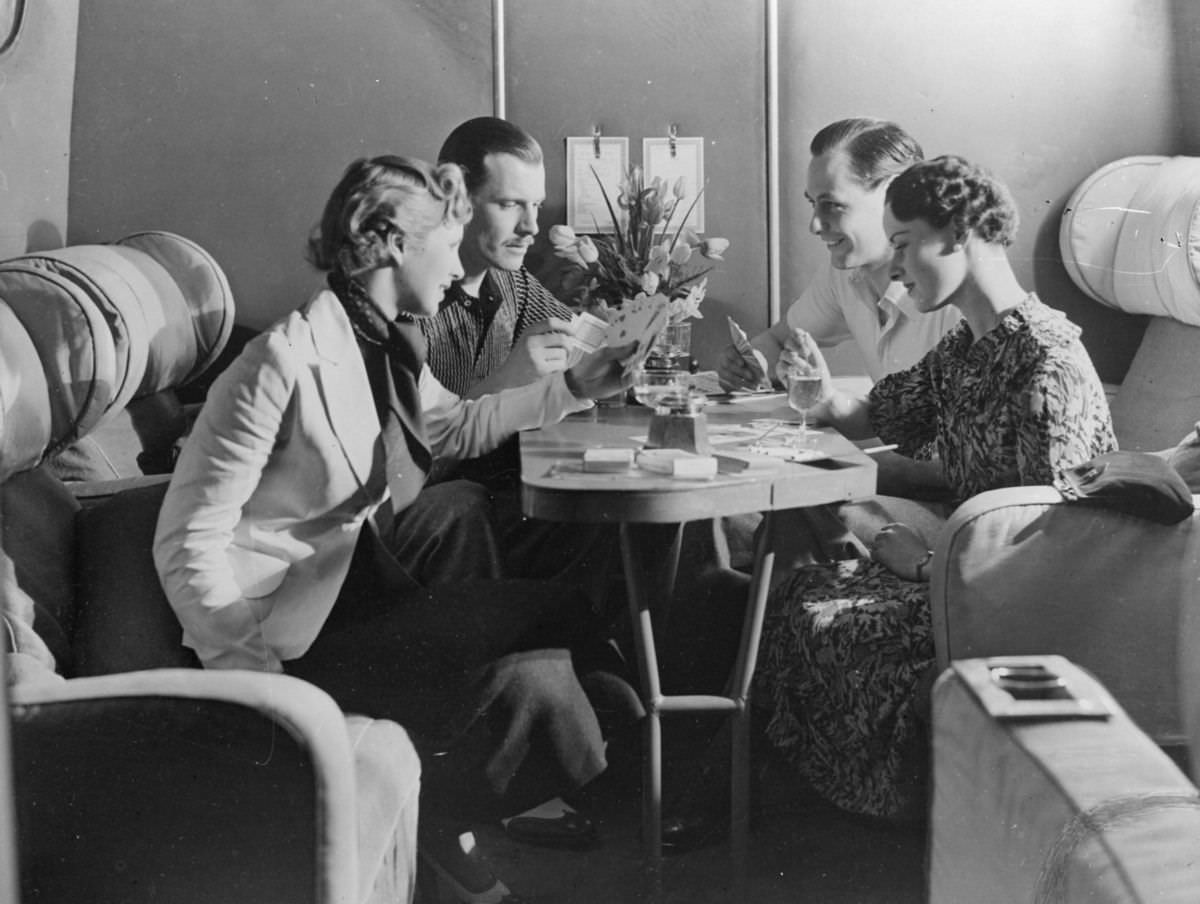
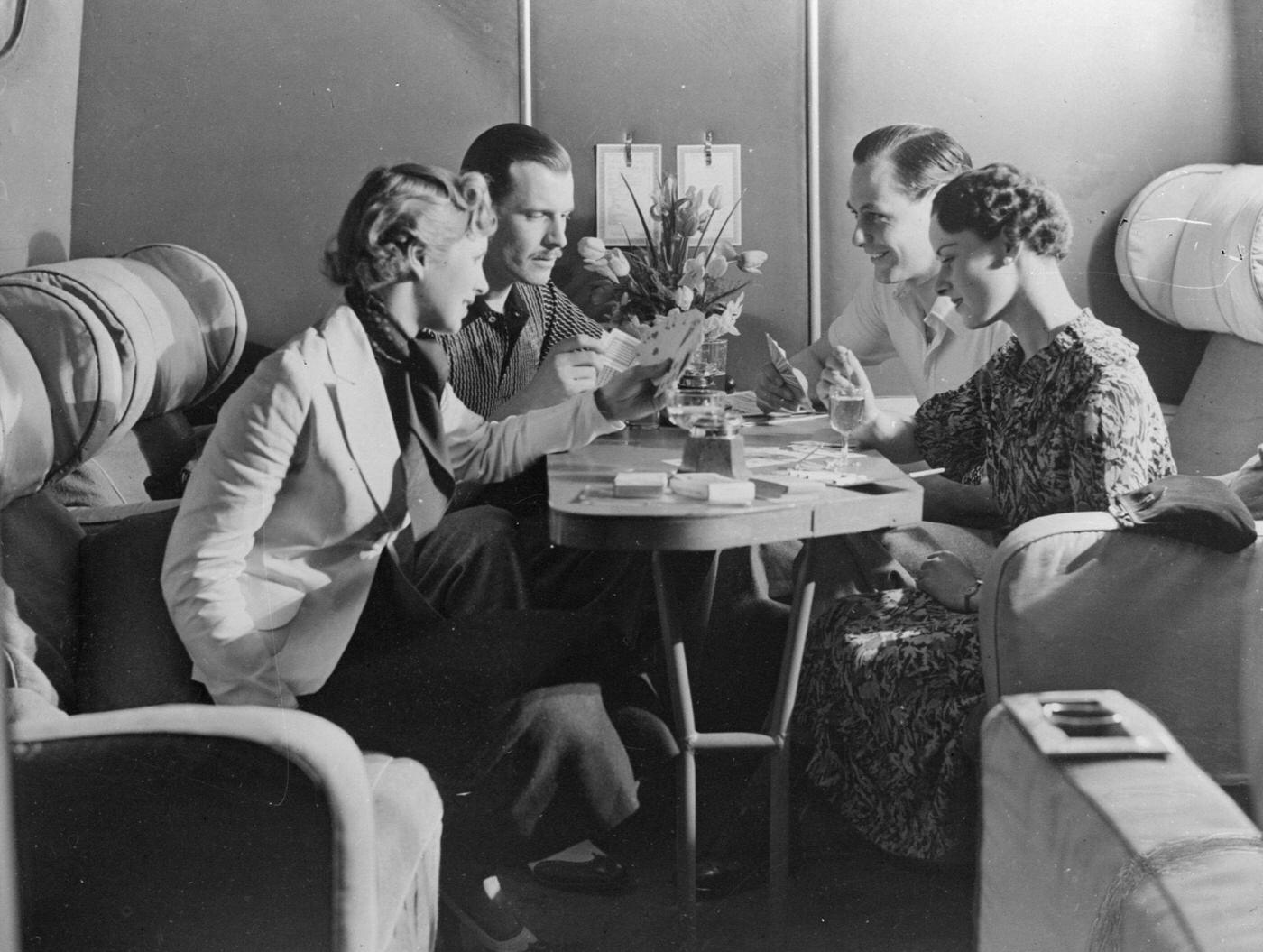
Passengers enjoying a drink and a game of cards in the cabin of an Imperial Airways plane in 1936.
Passengers on an Imperial Airways flight enjoy a drink and a game of cards in the cabin in 1936.

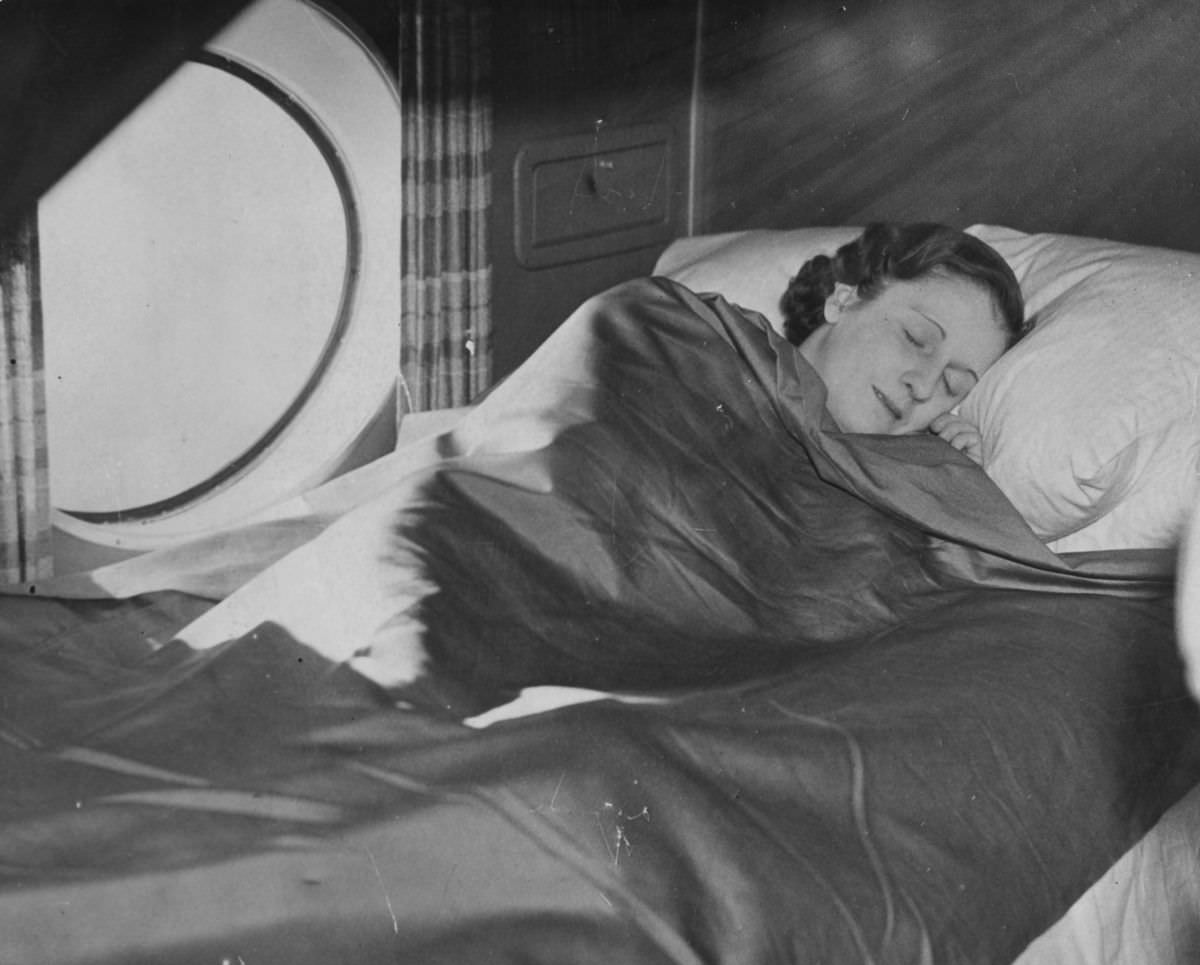
On flying boats — large seaplanes that could land on water — the cabins were particularly spacious. Imperial Airways operated several of these on long-haul Empire routes, and the interior day cabins felt more like a ship’s lounge than anything resembling a modern aircraft. Passengers on overnight routes even had access to sleeping berths, making long journeys significantly more tolerable.
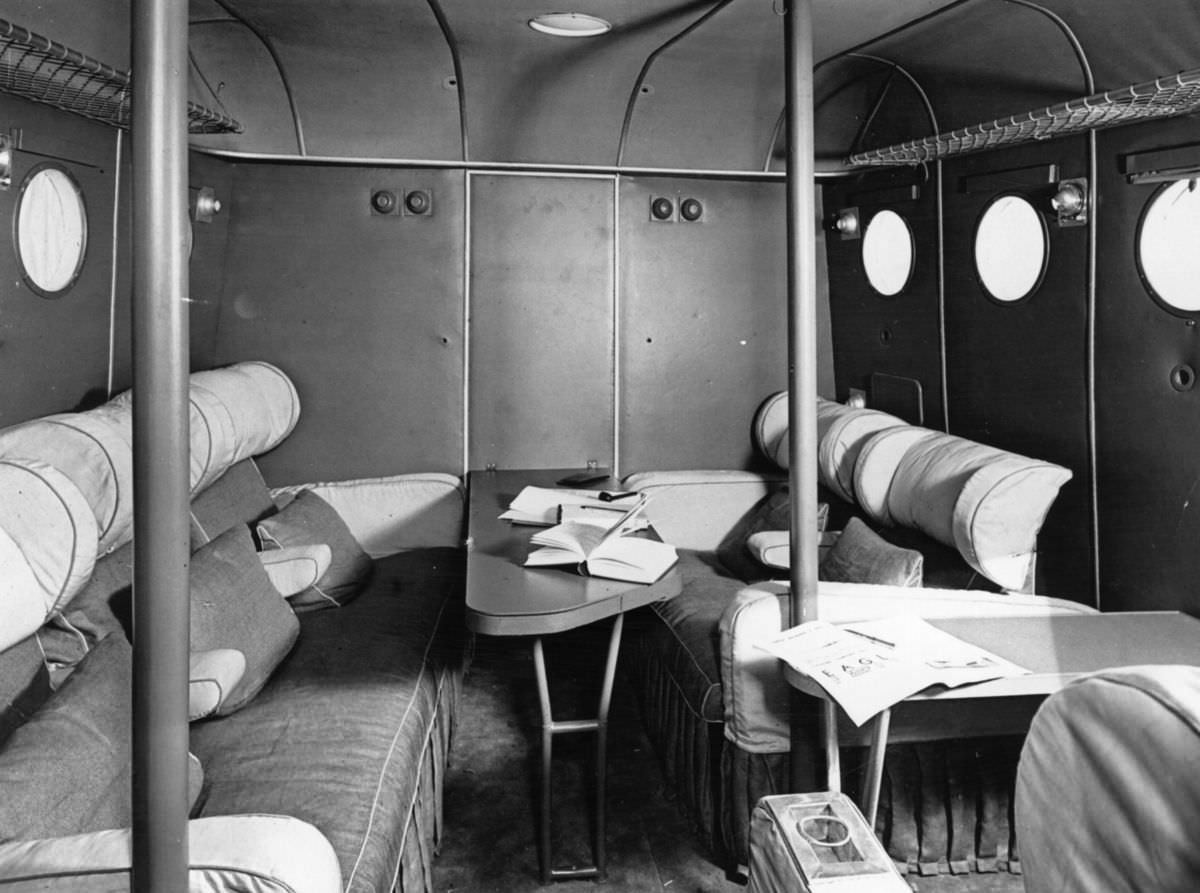
Day cabin of an Imperial Airways flying boat, most likely of the Short Empire class, in August 1936.
A sleeping berth on an Imperial Airways aircraft in March 1937.

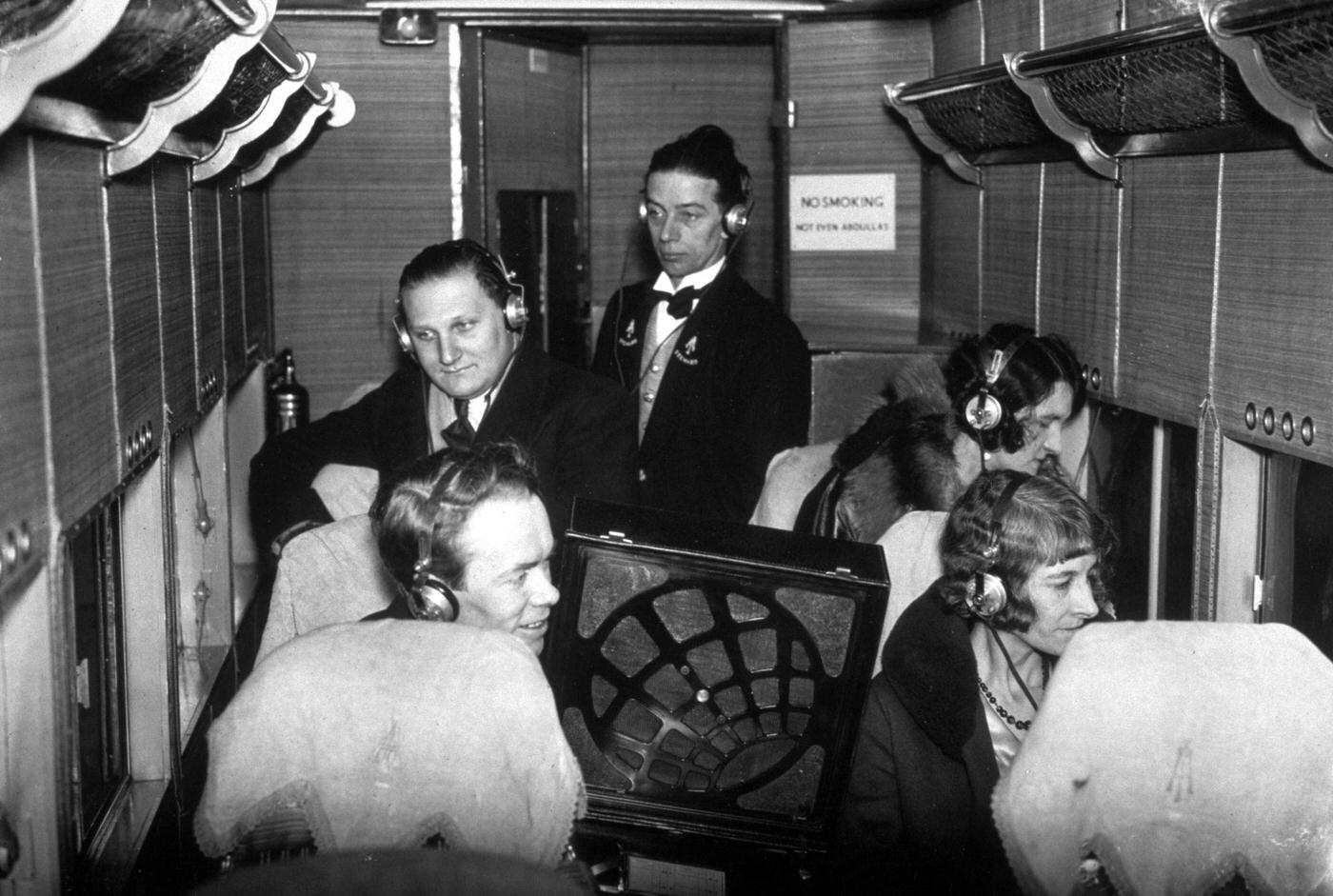
Technology was also finding its way into the cabin experience. By the mid-1930s, Imperial Airways was offering passengers wireless headphones so they could listen to live radio broadcasts — including horse racing results — during flight. This was a remarkable novelty for the time, connecting passengers to events on the ground while they were thousands of feet in the air.
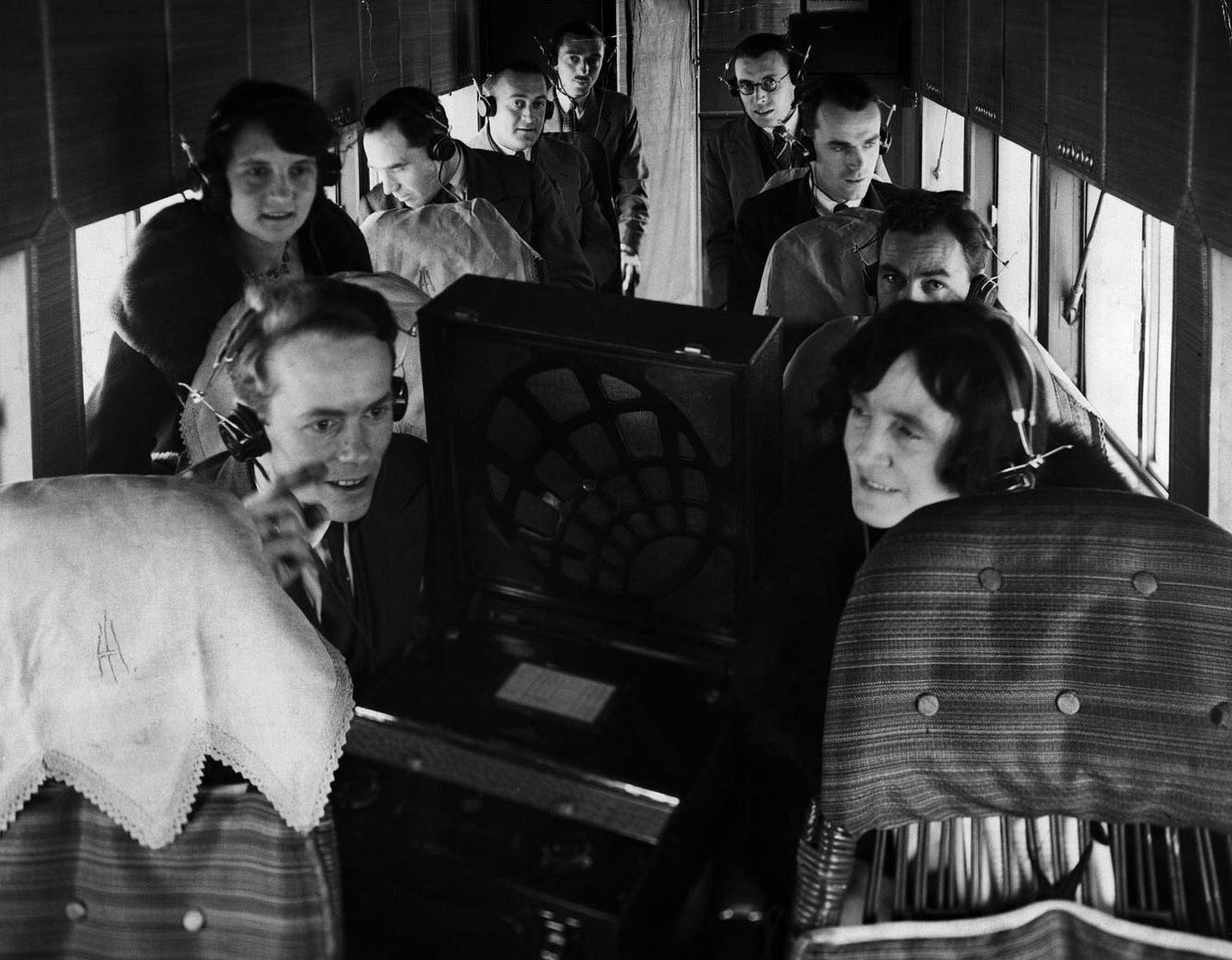
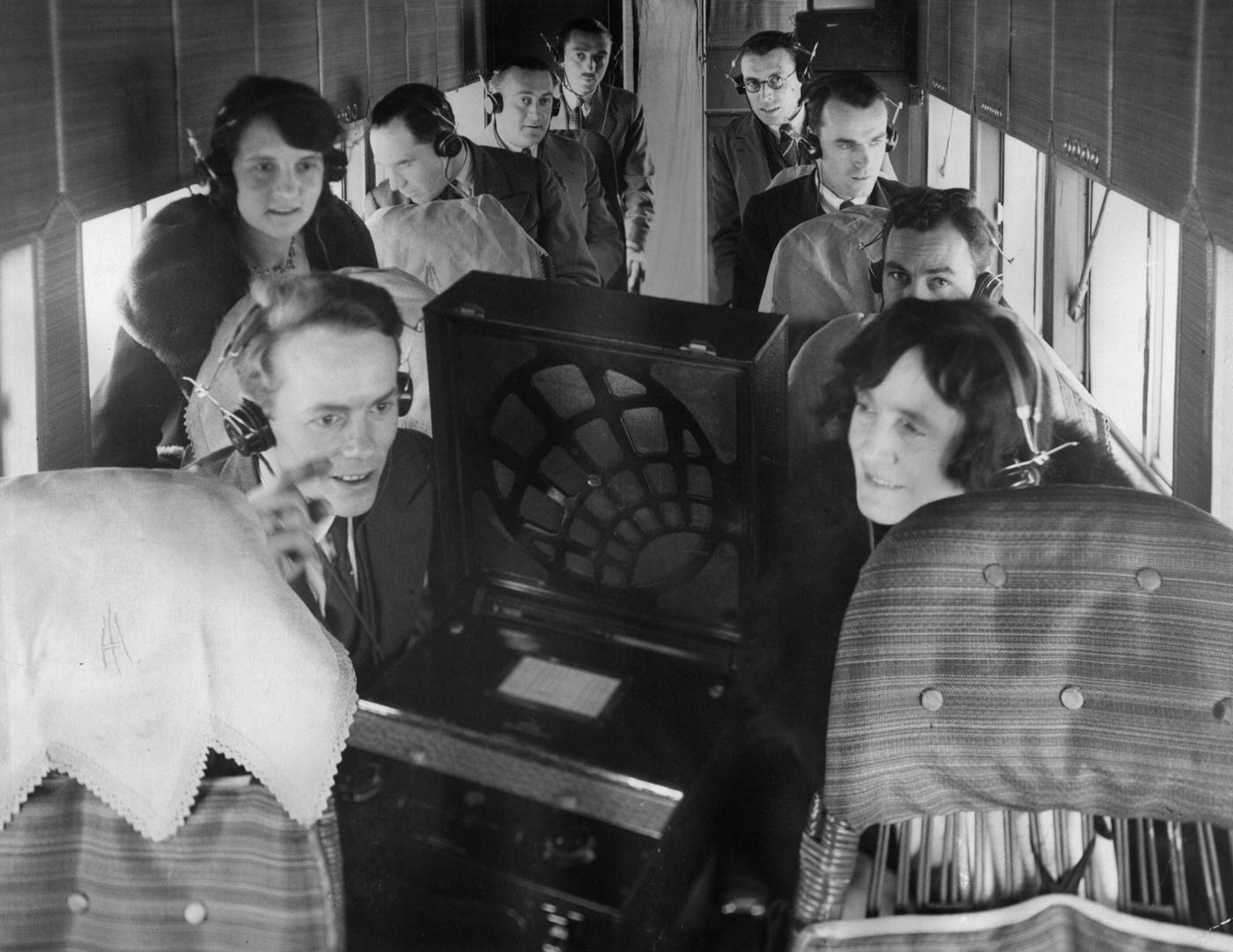
Wireless communications make it possible for passengers aboard an Imperial Airways plane to hear the derby results via headphones.
Passengers listening to a radio on board an airplane.

In-flight entertainment pushed even further by the late 1930s. The first in-flight movie projections appeared in this period, with 1938 marking a documented instance of onboard film projection for passengers. The idea of watching a movie at cruising altitude — something taken for granted today — was completely unprecedented.
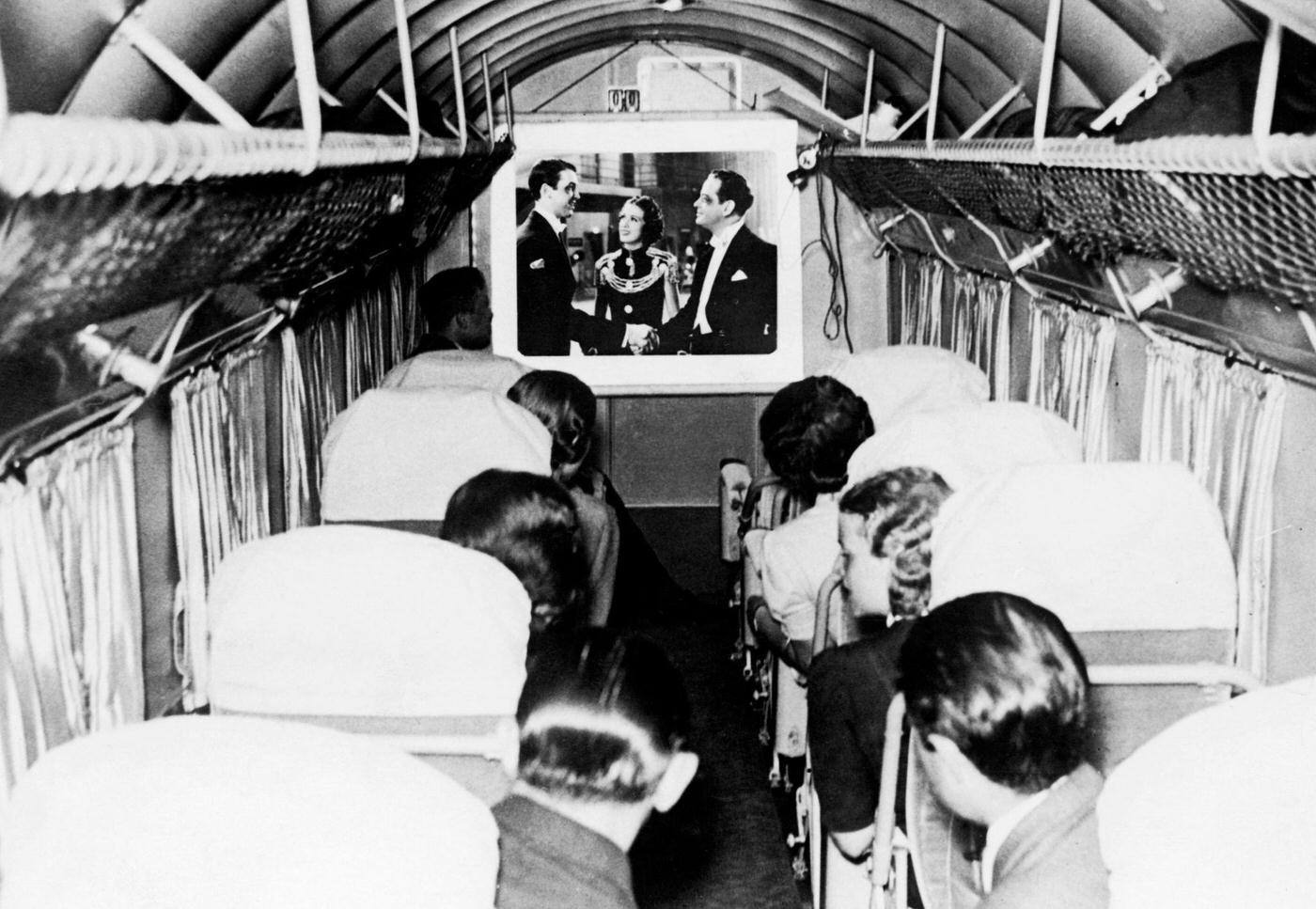
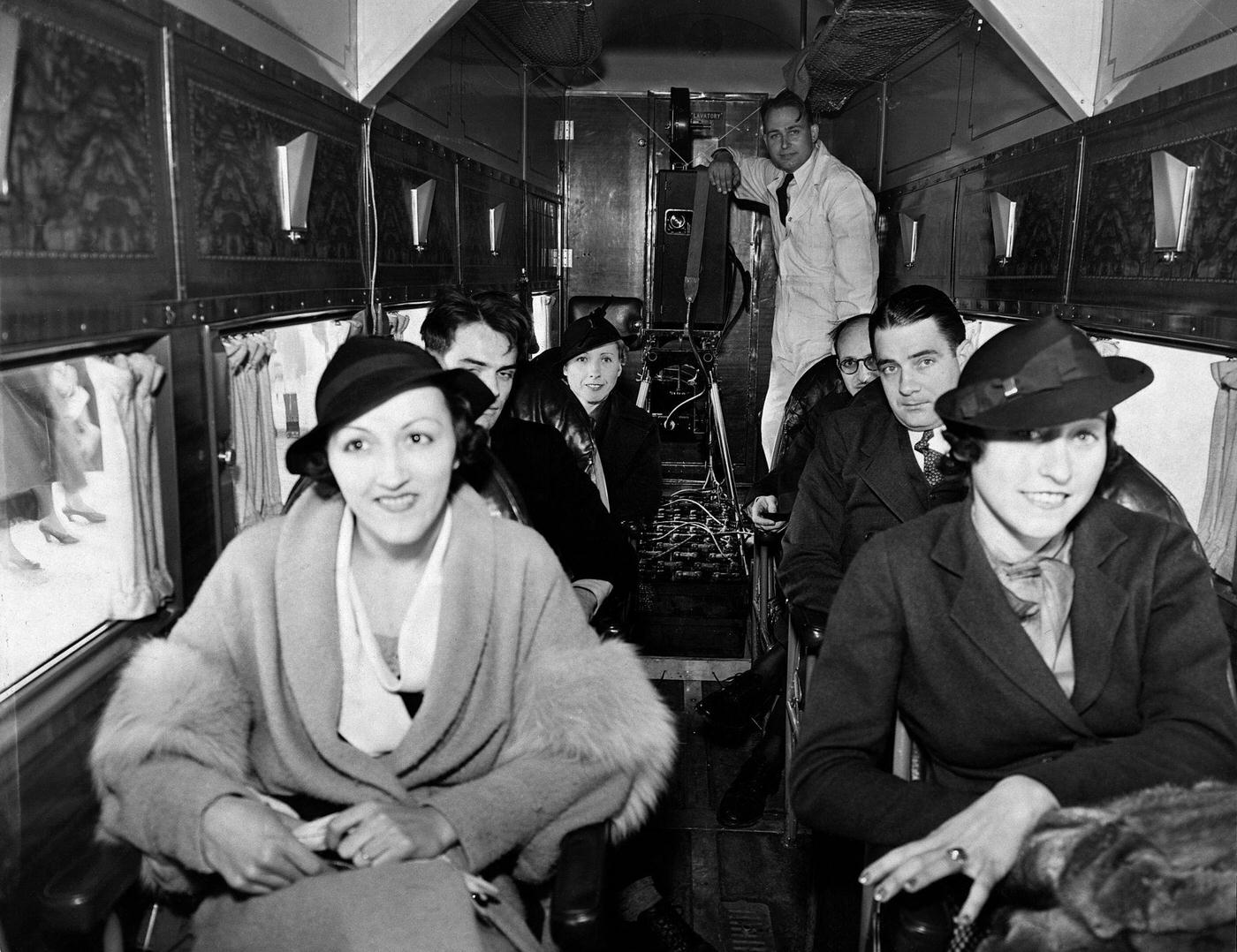
First projection on board, 1938
The First Ever In-Flight Movie, San Francisco, 1930s.

Not all flights were so luxurious. Smaller domestic aircraft offered far simpler accommodations. Cabins like those of the De Havilland DH86B biplane or the Farman tourist airplane were basic, seating a handful of passengers in close quarters with minimal amenities. These shorter routes were more functional than glamorous.
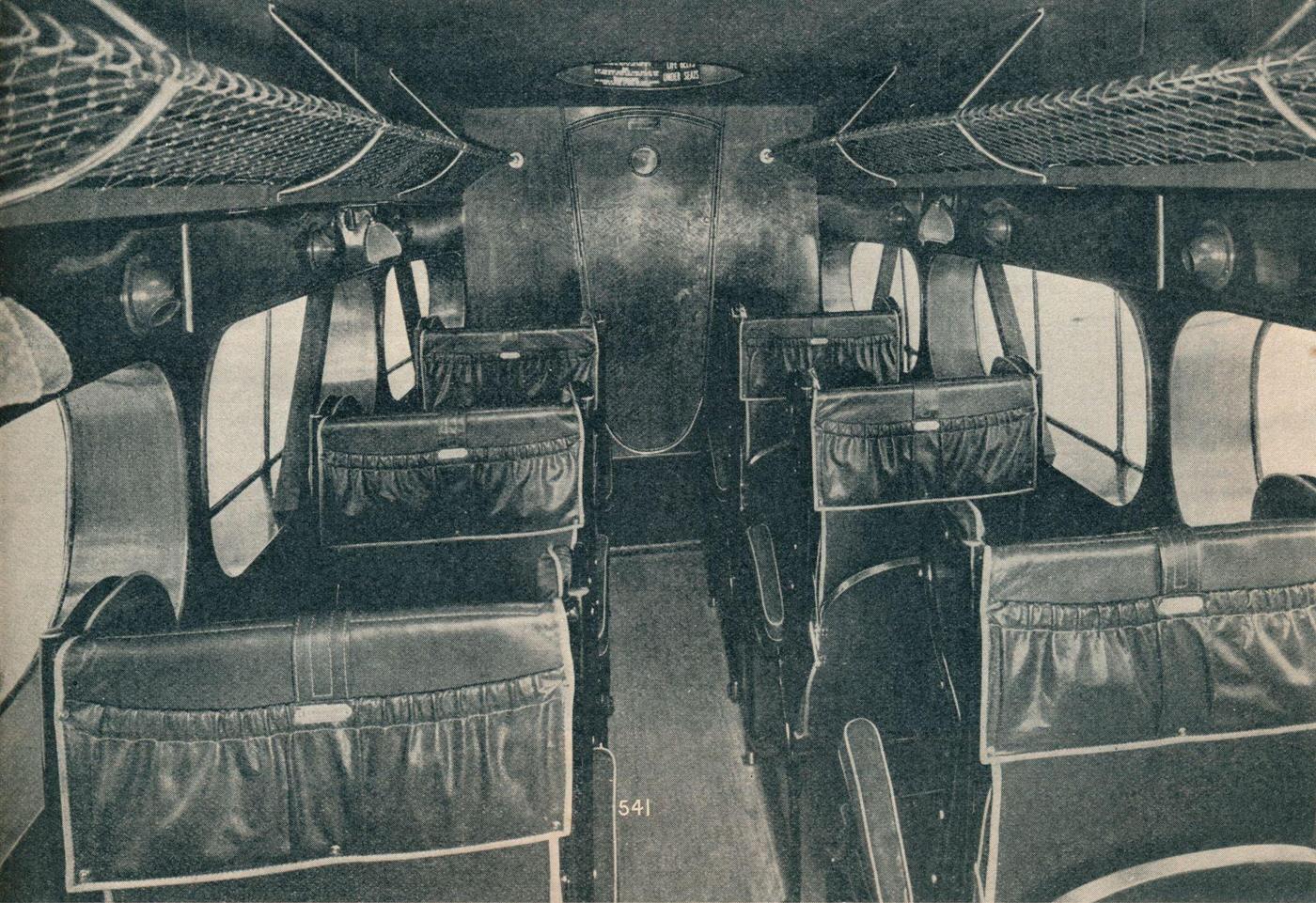
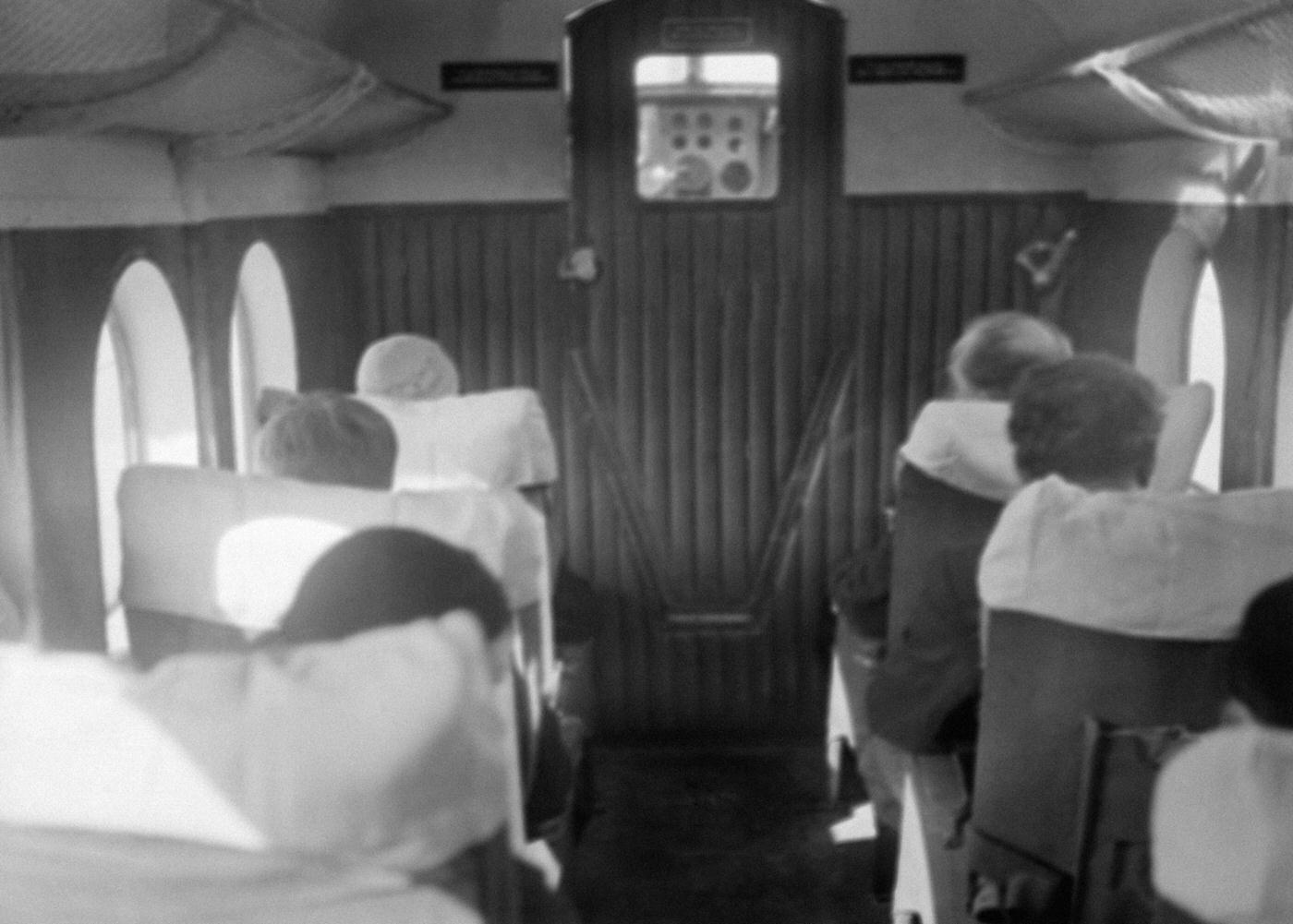
Cabin of a De Havilland DH86B biplane, 1934.
Interior of a Farman tourist airplane during a demonstration, 29th November 1932

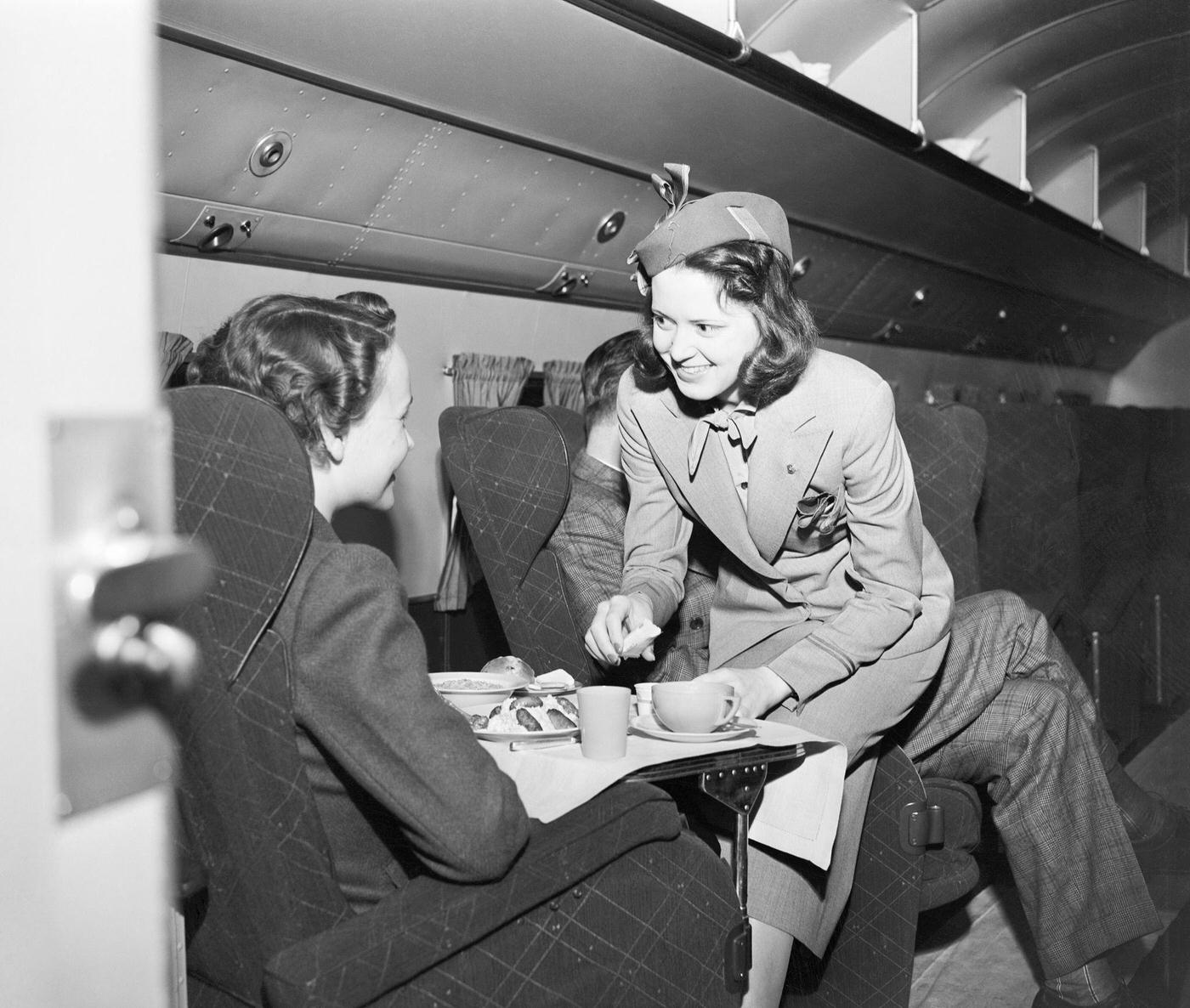
Flight attendants — then often called hostesses — began appearing on U.S. airlines in the early 1930s. Their role at that time was primarily to serve passengers during flight, offering tea, meals, and assistance. Eastern Air Transport was among the first American airlines to employ them, and their presence quickly became a standard part of the passenger experience.
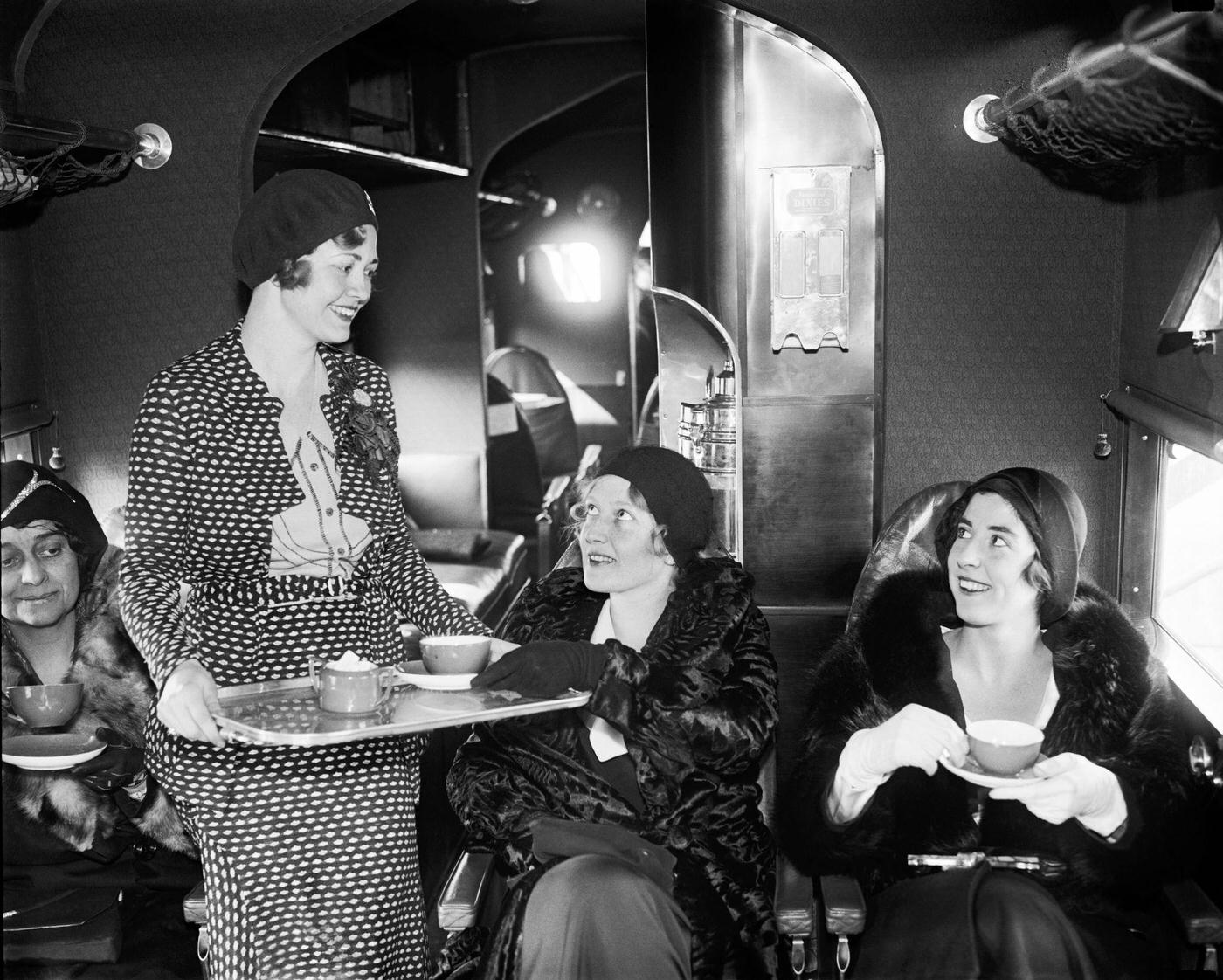
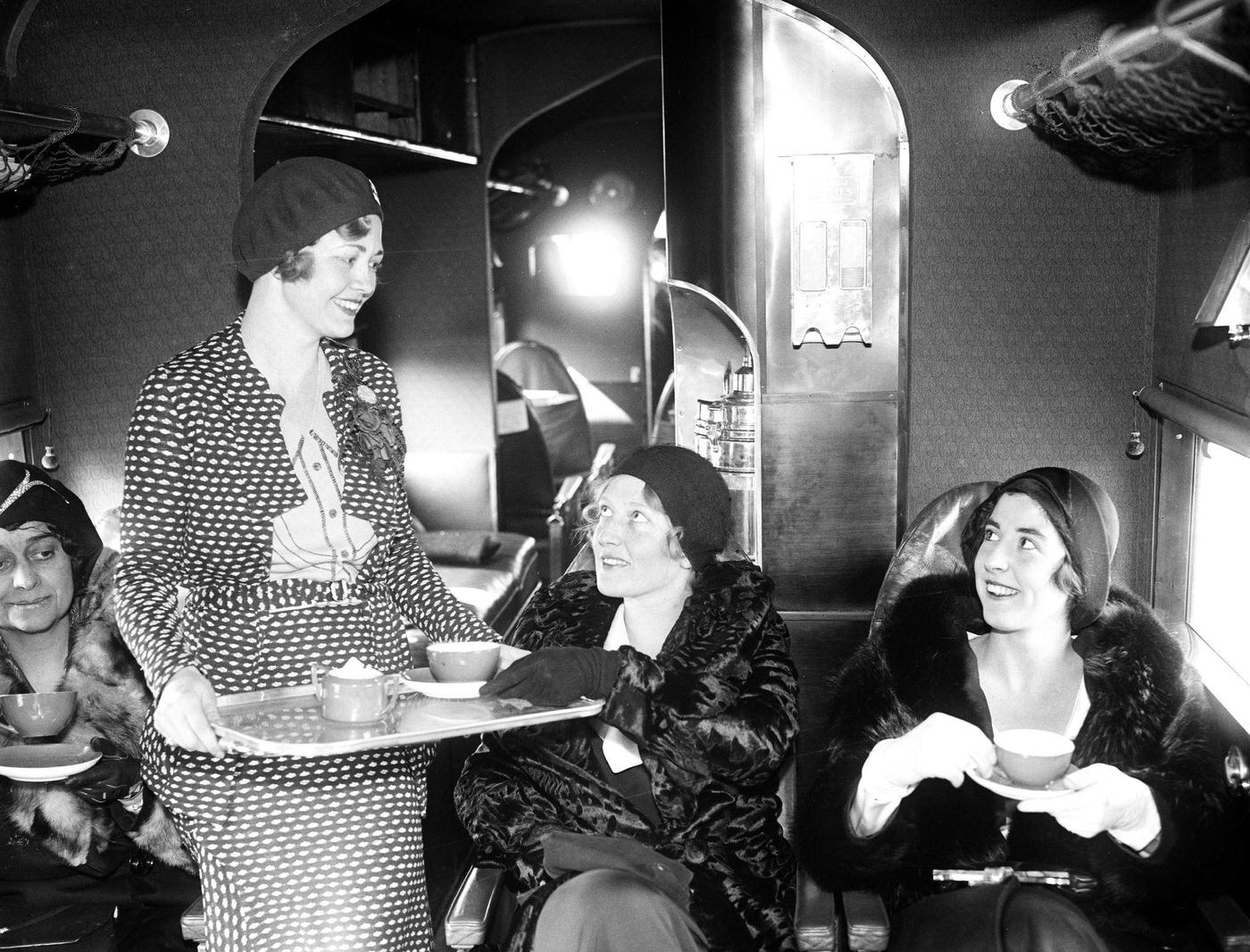
An Eastern Air Transport flight attendant serves tea to passengers, 1931
Miss Wanda Wood, hostess for Eastern Air Transport, serves tea for two, Misses Charlotte Childress and Elizabeth Hume, aboard one of the line's passenger planes 1930.
Miss Wanda Wood, hostess for Eastern Air Transport, serves tea for two, Misses Charlotte Childress and Elizabeth Hume, aboard one of the line’s passenger planes 1930.

The people in the cockpit were equally remarkable. Many pilots of the 1930s were veterans of World War I who had transitioned from military flying into commercial aviation. Others came from barnstorming — the tradition of performing aerial stunts at air shows and county fairs. Formal pilot training programs and government certification standards were still being developed during this period. Crews were lean: typically a pilot, sometimes a co-pilot, and a mechanic.
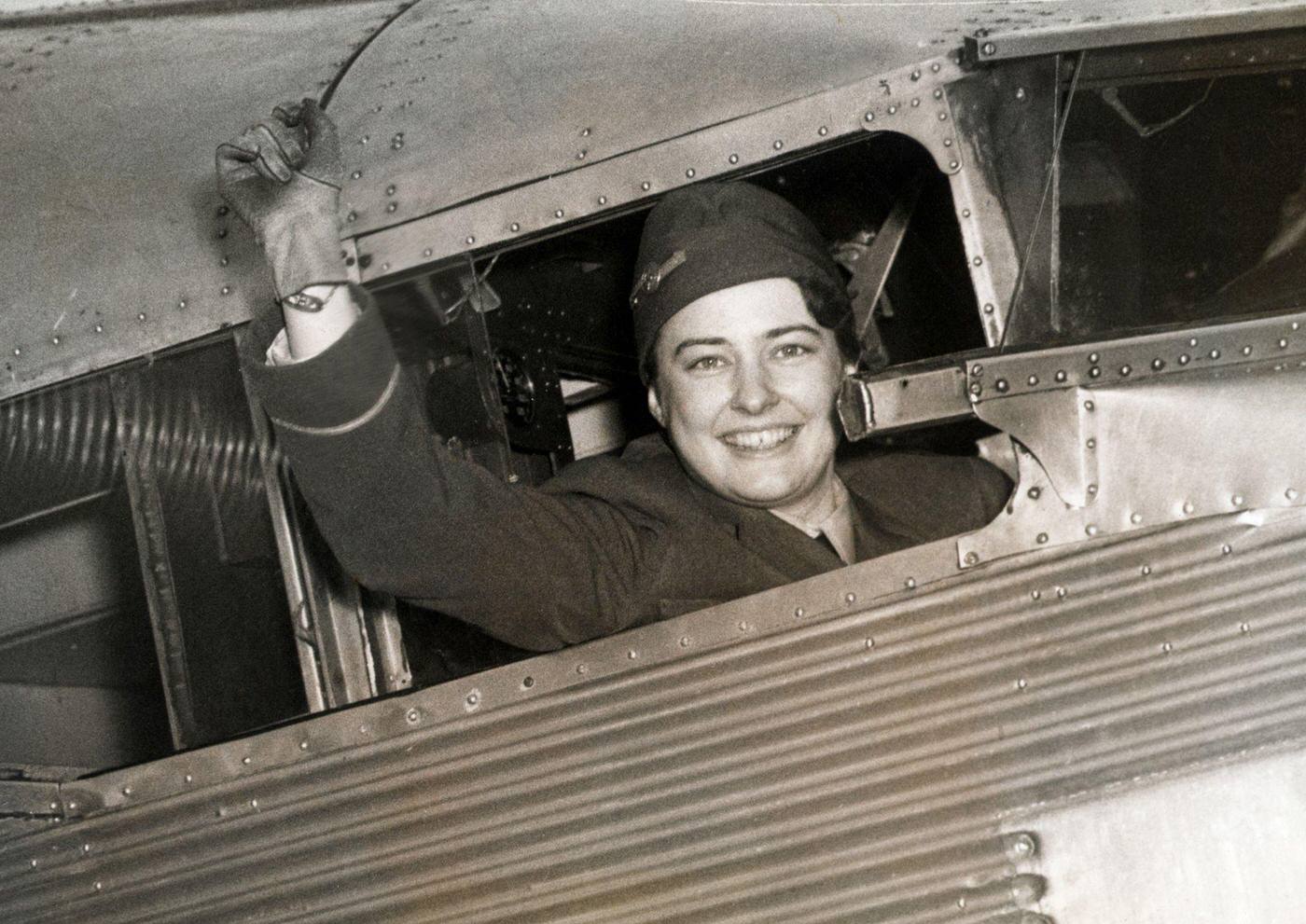
Miss Helen Rickey, first woman to be employed as a pilot of an airline has resigned her position. Photo of Miss Rickey in the pilot's seat of her plane leaving the Washington Airport.
Miss Helen Rickey, first woman to be employed as a pilot of an airline has resigned her position. Photo of Miss Rickey in the pilot’s seat of her plane leaving the Washington Airport.

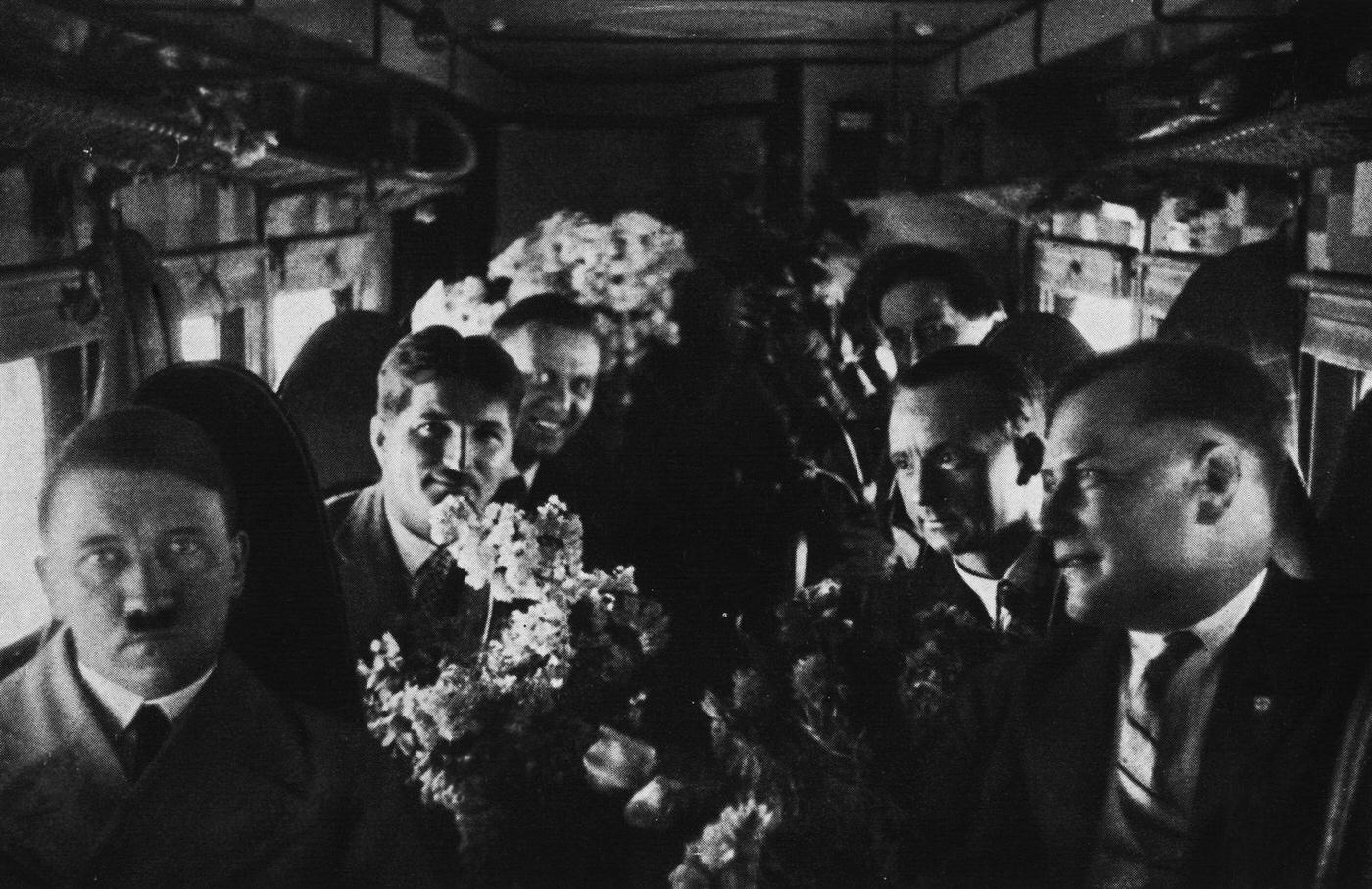
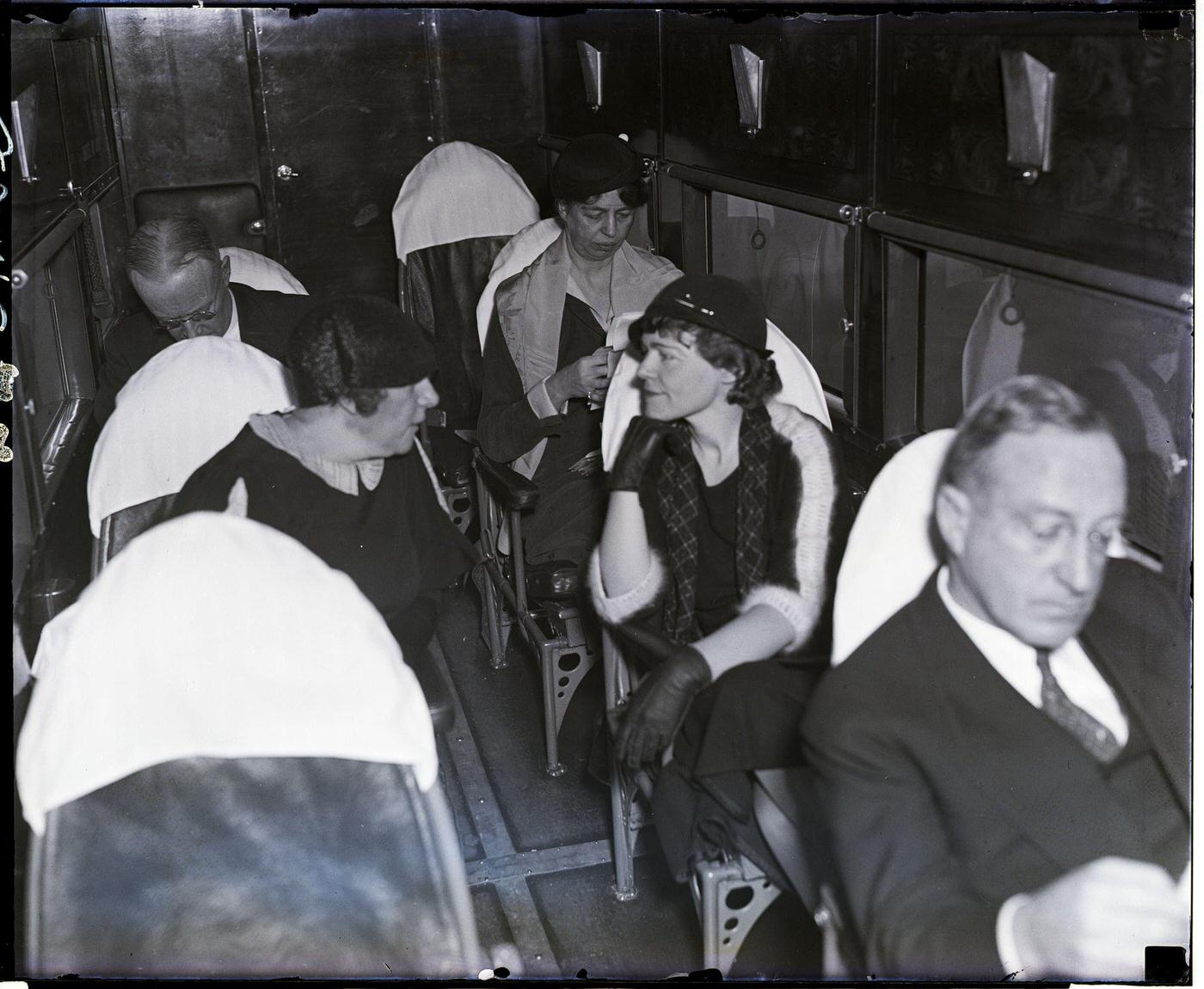
The passengers themselves reflected the era’s social landscape. Political figures, royalty, and celebrities all flew during the 1930s. The Duke and Duchess of York used Imperial Airways for travel between England and the European continent. Eleanor Roosevelt was photographed aboard a commercial aircraft in 1933. Adolf Hitler, a frequent flyer by political necessity, used aircraft extensively during his 1932 election campaign — earning the nickname ‘Hitler over Germany.’ Even on domestic U.S. routes, the passenger list often read like a who’s who of American society.
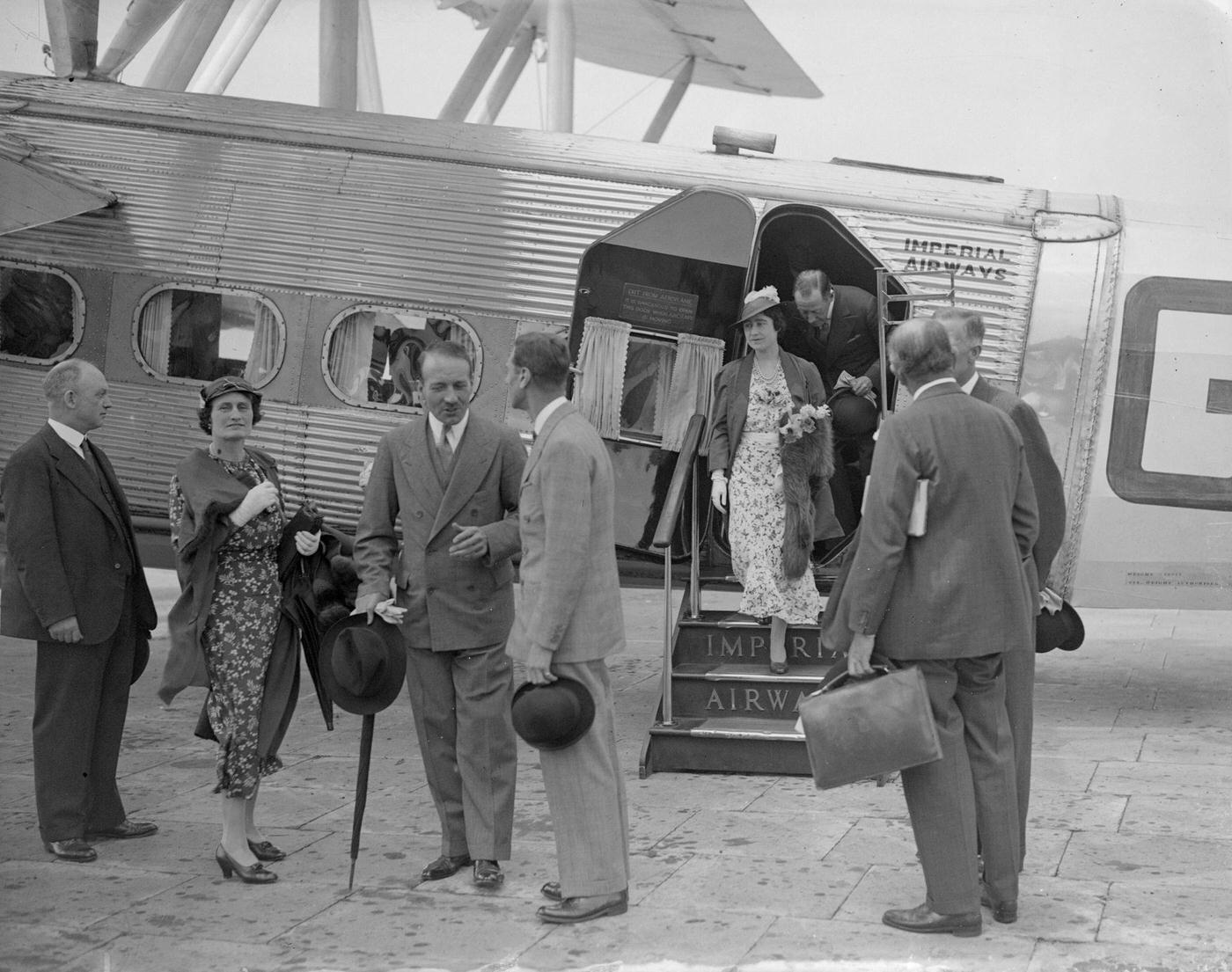
The Duke and Duchess of York alight from an Imperial Airways liner, on their arrival in England from Brussels, 1935
Mrs. F.D.Roosevelt On Plane, 22nd January 1933.
Nazi leader Adolf Hitler takes a flight in an aircraft on his 43rd birthday, 1932

Transcontinental routes within the United States were becoming a reality during this decade. Aircraft like the Douglas DC-1 and later the DC-3 made longer domestic trips more commercially viable. The DC-3 in particular became a workhorse of American aviation, carrying passengers between cities like New York and Chicago on a daily schedule. The Transcontinental & Western Air line — later known as TWA — was among the carriers pushing these longer routes into regular service.
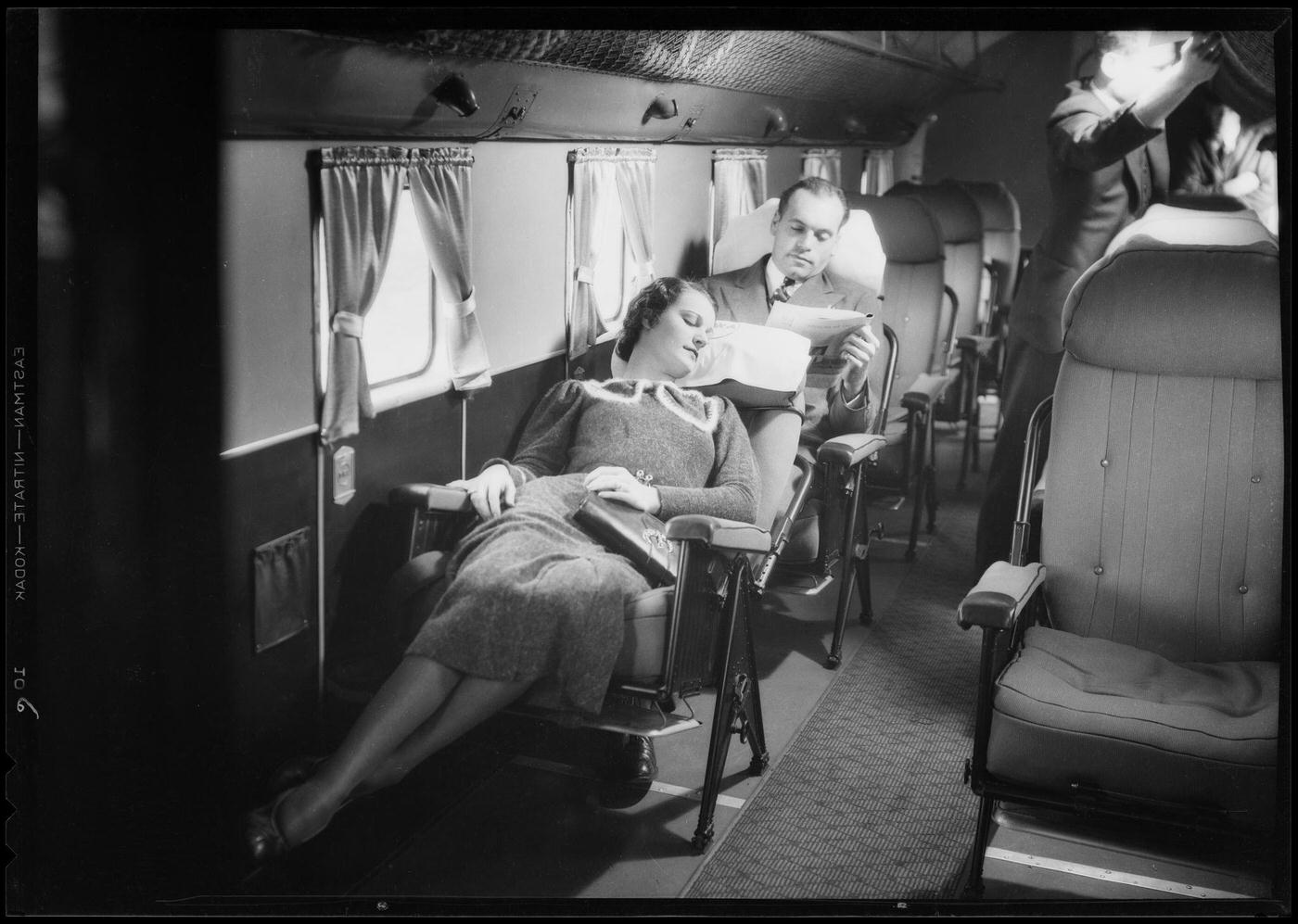
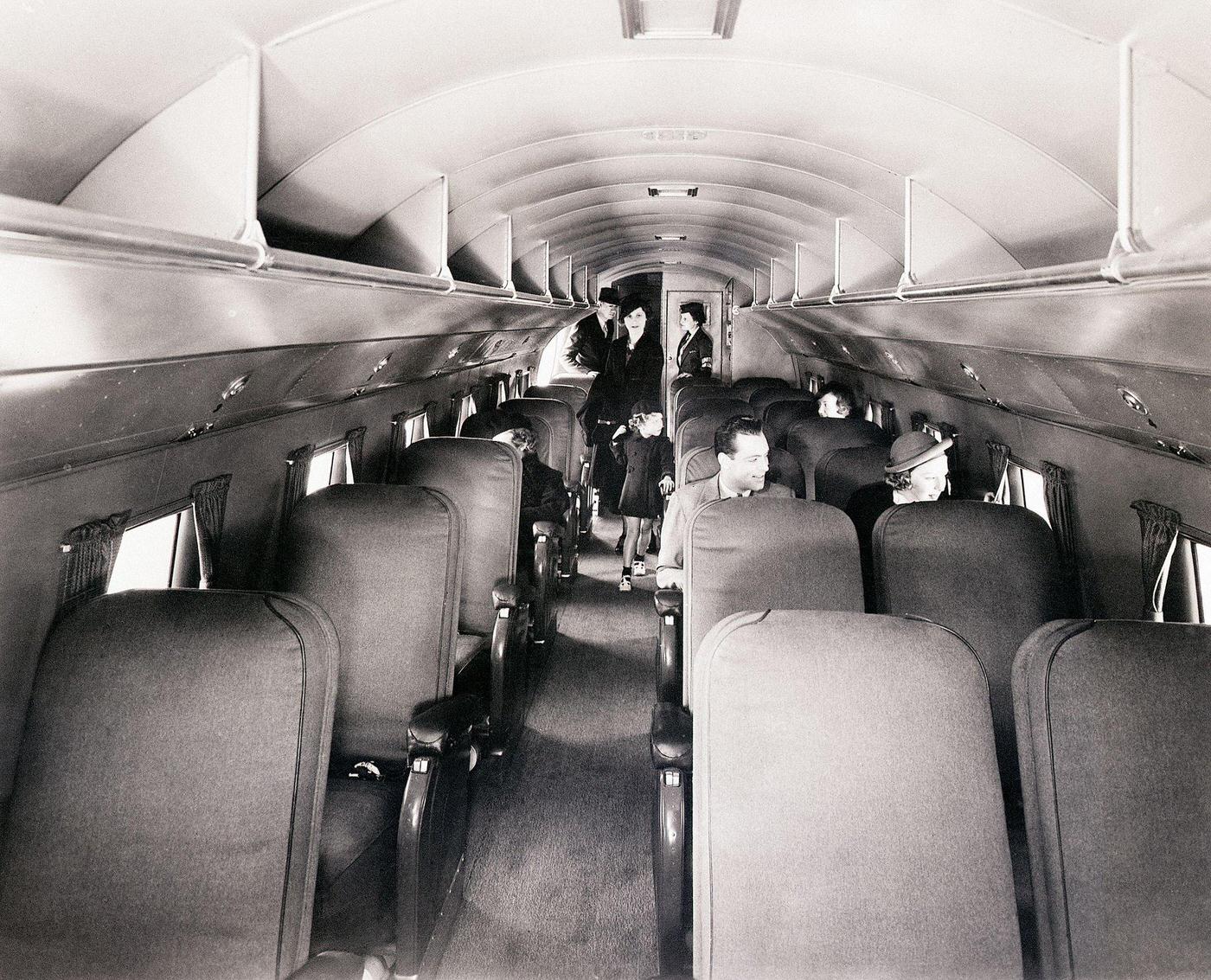
A customer reclines in the cabin of a Transcontinental & Western Air Douglas DC-1 Airplane.
Interior Of A DC-3 Plane, 5th October 1938.

Internationally, airlines were expanding their reach far beyond Europe. Pan American’s Clipper seaplanes connected San Francisco to Hawaii, the Philippines, and Hong Kong — routes that required multiple stops and took days to complete. Passengers on these flights crossed the Pacific in a setting that resembled a luxury ocean liner more than any modern aircraft.
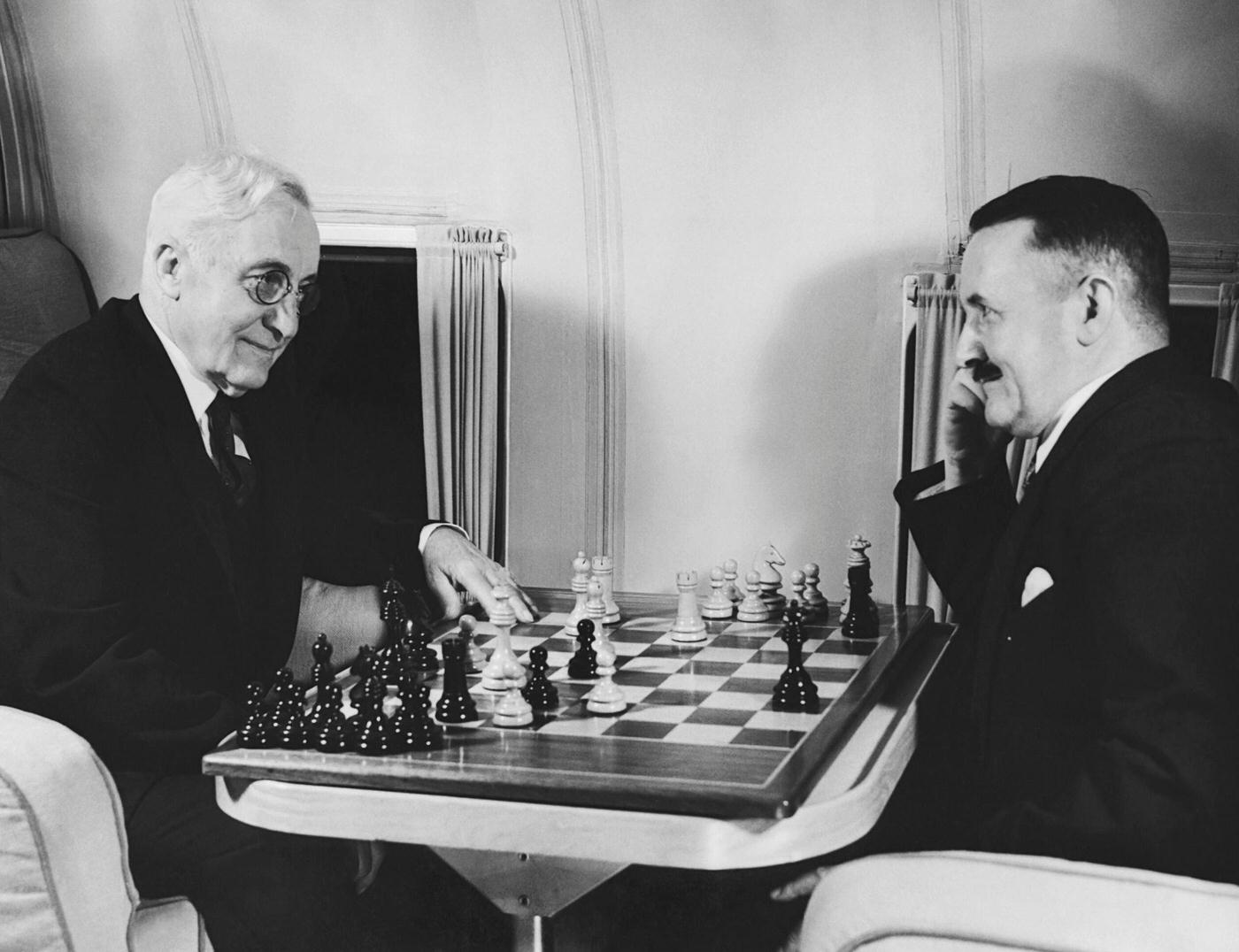
Two male passengers play chess on a Pan American Clipper seaplane flying between San Francisco and Hong Kong, Hawaii, and Manila.

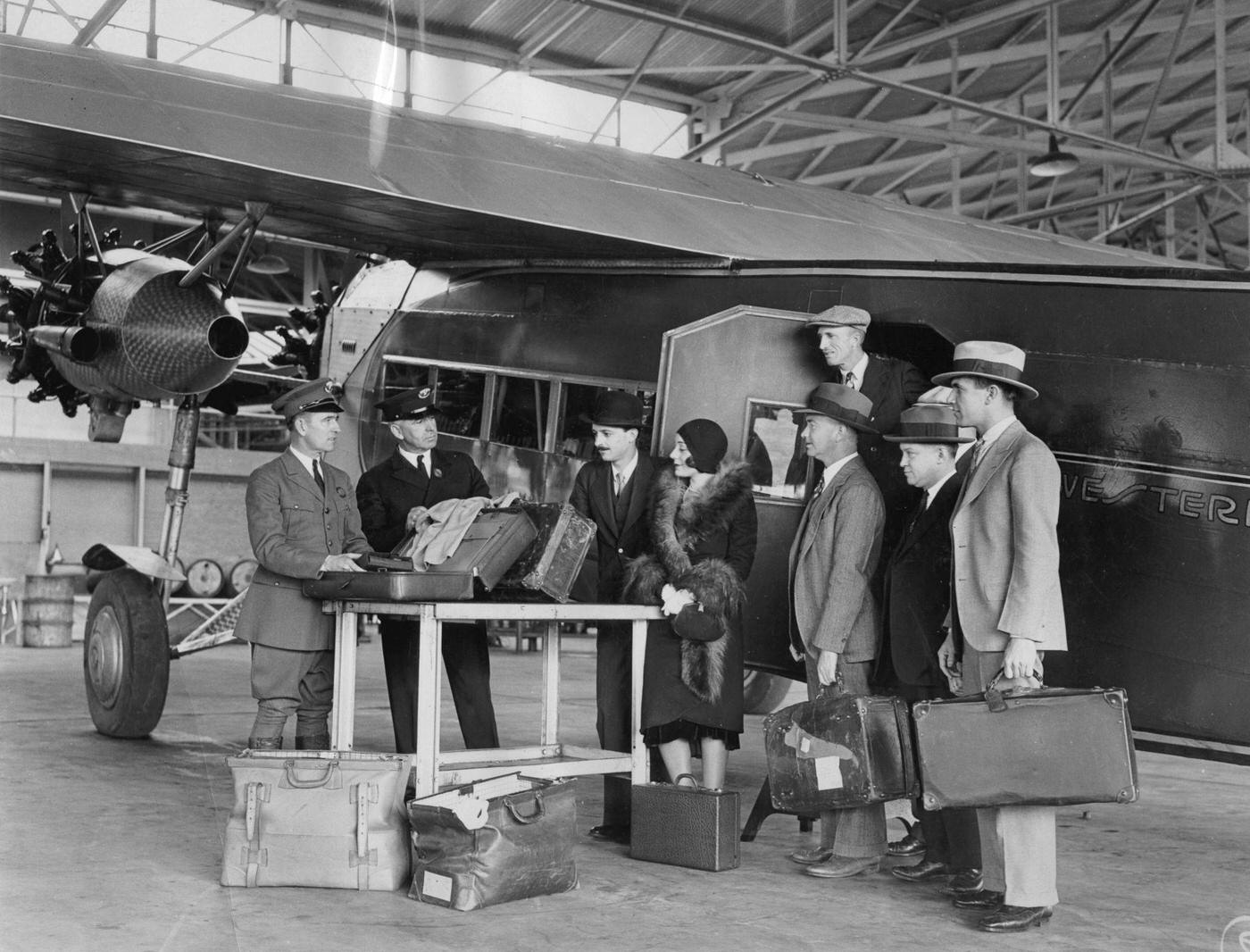
Airports themselves were still rudimentary in many places. Passengers boarded from open tarmacs, often walking directly out to the aircraft with minimal infrastructure around them. Croydon Airport in London was one of the busiest in the world at this time, and photographs from there show passengers dressed formally — suits, hats, and overcoats — treating the experience of boarding a plane as a serious occasion.
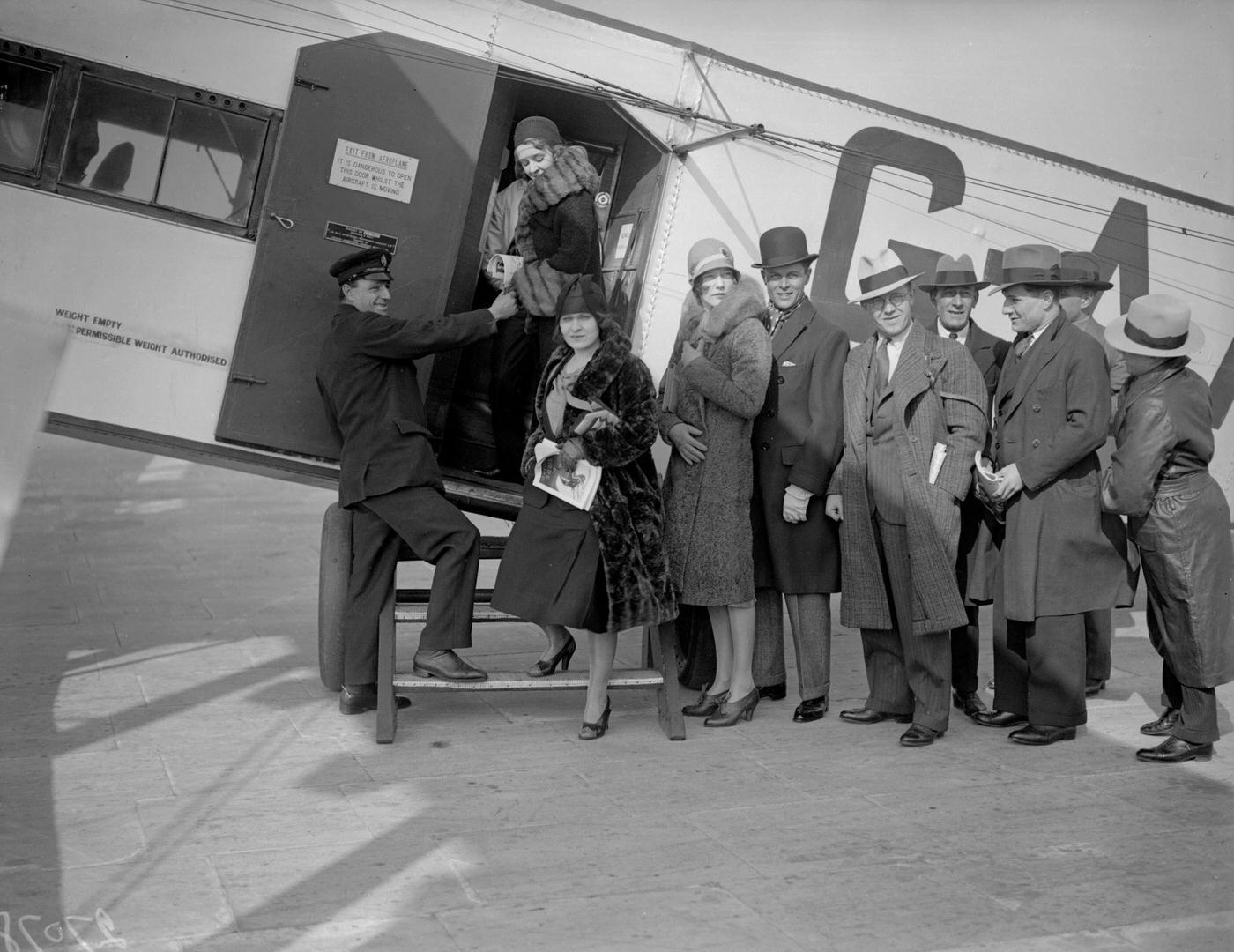
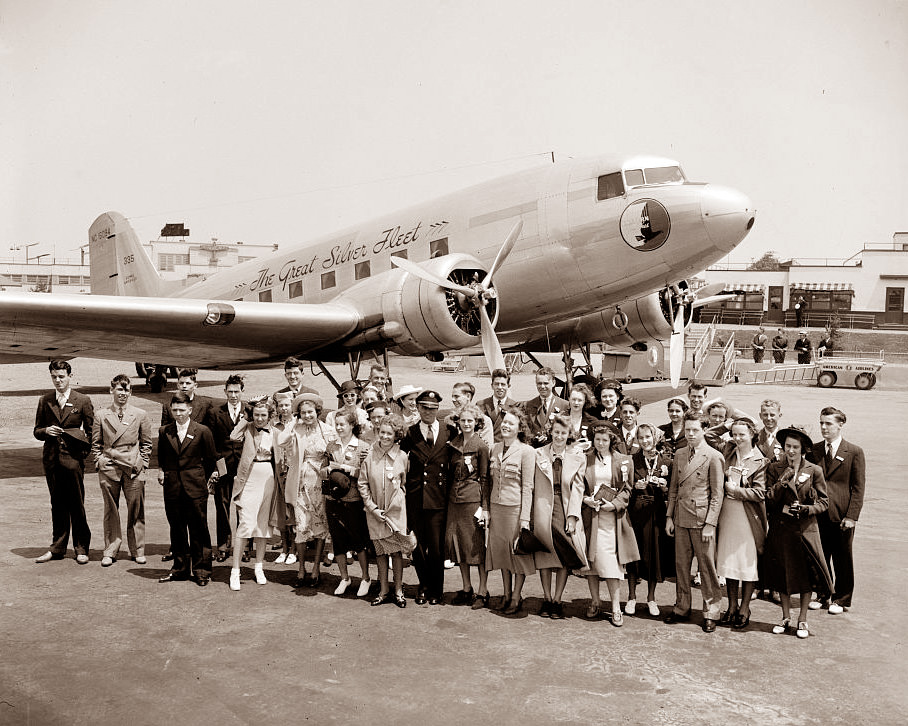
Passengers board an aircraft at Croydon Airport in London, bound for the Grand National horse race in Liverpool.
Passengers at the airport in Washington DC, 1938

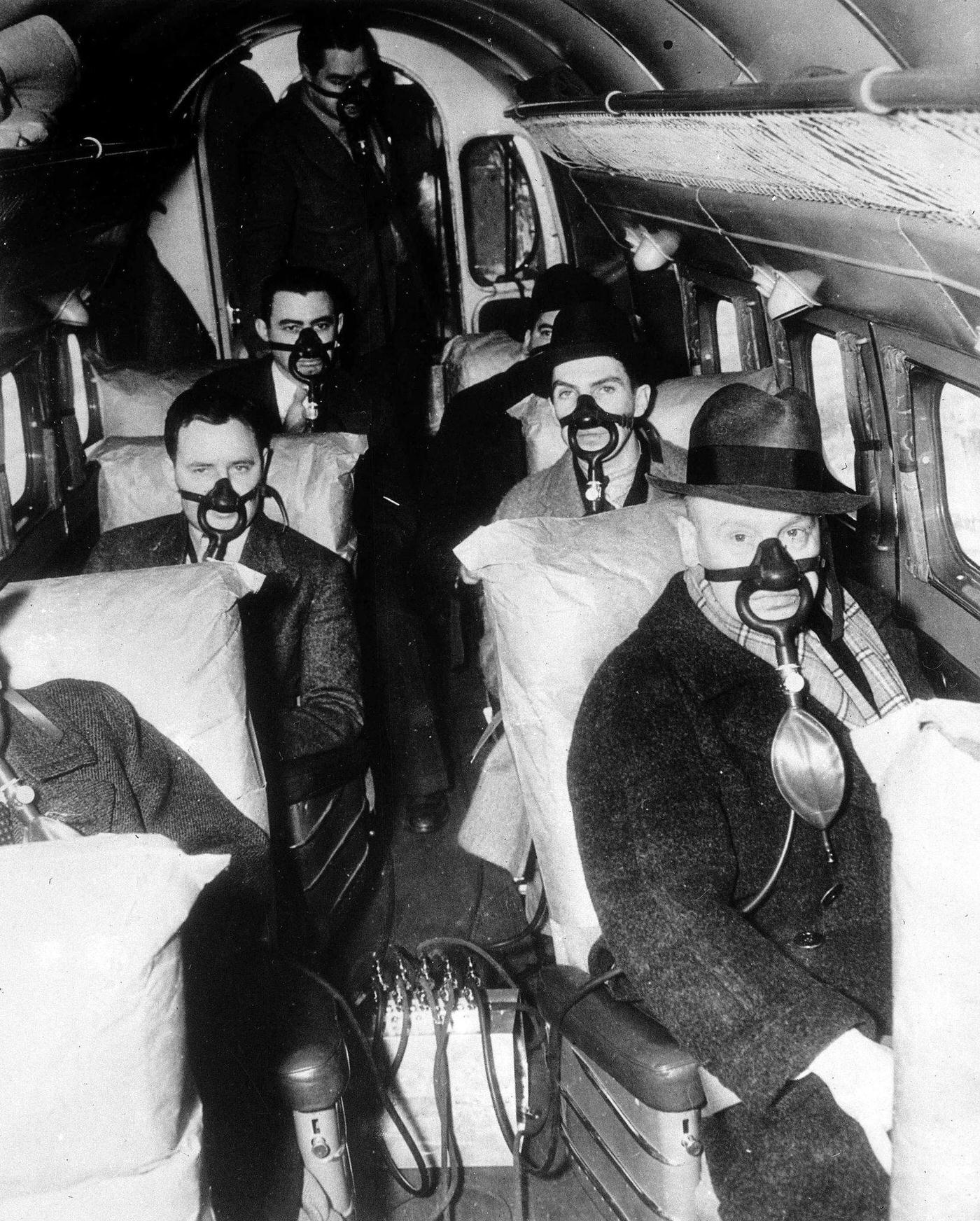
Engineers and aeronautics teams were also actively testing the boundaries of what aircraft could do. Four-engine aircraft were being trialed for commercial use, and experimental high-altitude flights were pushing into the stratosphere. American Airlines conducted early stratosphere flight tests where passengers wore special oxygen masks — a far cry from the pressurized cabins that would follow in the next decade.
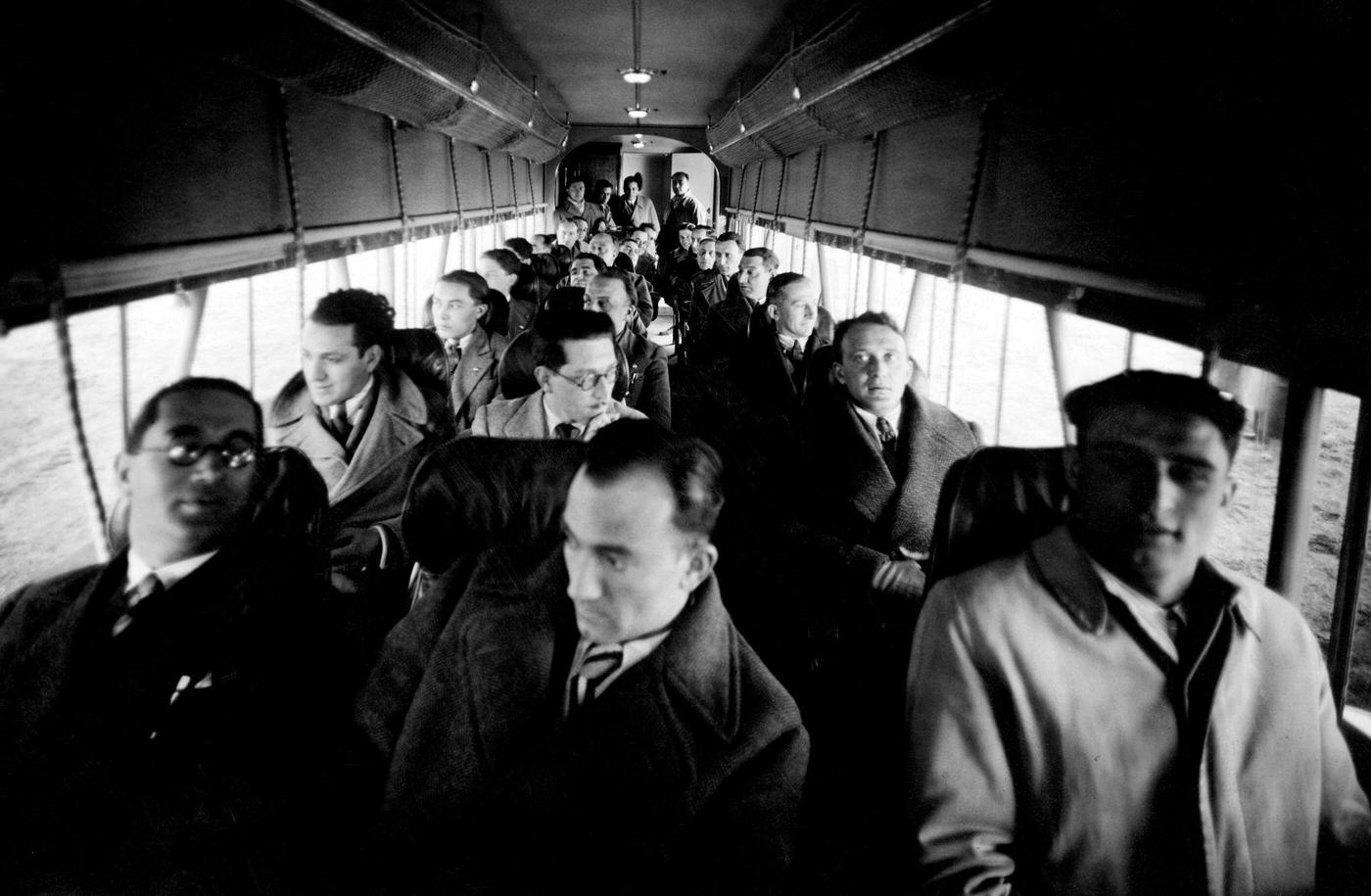
Aeronautics testing a four-engined aircraft, 1934.
American Airline passengers make the first stratosphere flight test. The picture shows passengers breathing through their special masks during the flight.

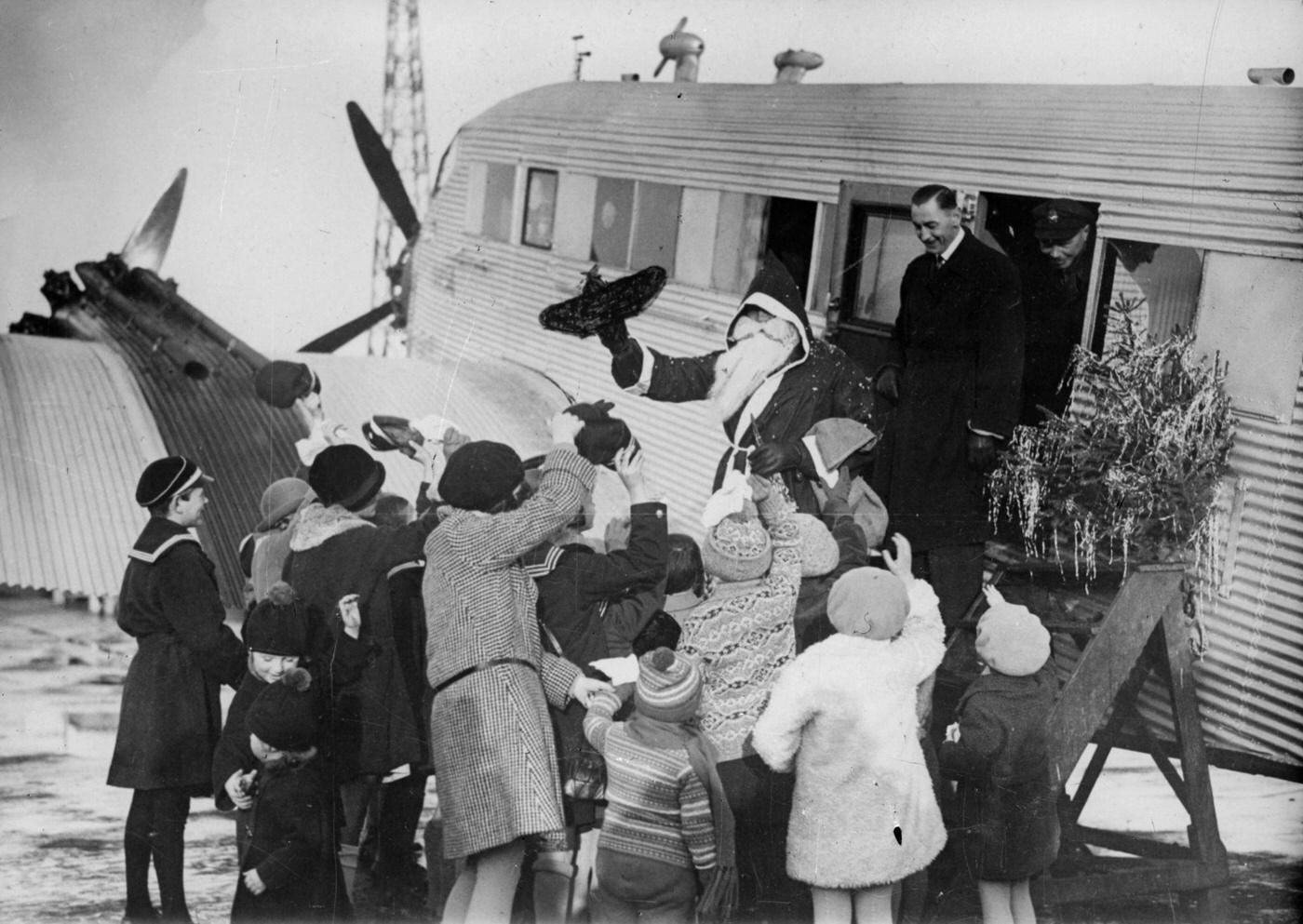
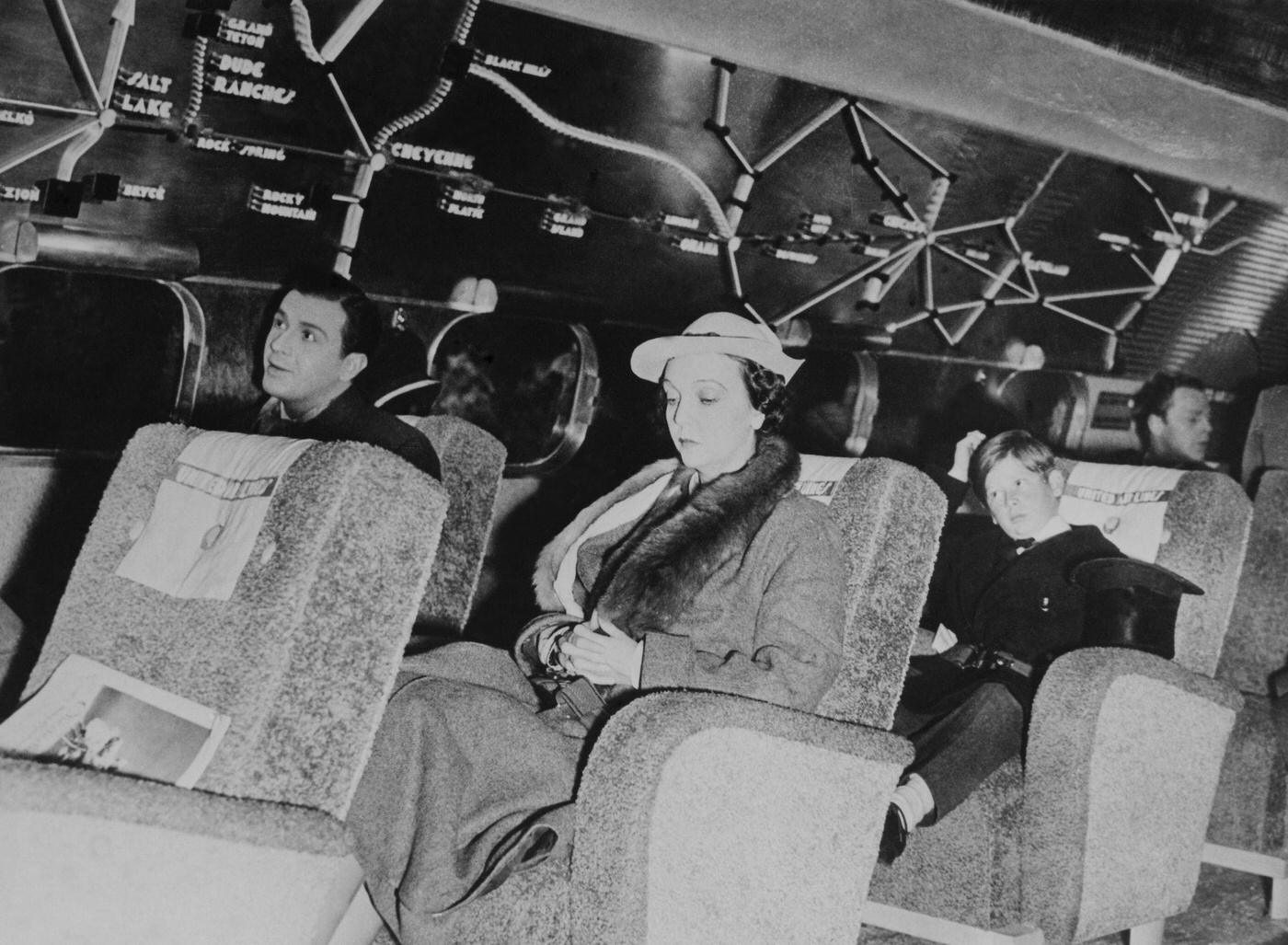
Aviation was already capturing the public imagination in new ways. Hollywood took notice, with studios building full-scale mock-ups of futuristic aircraft interiors for films. Fashion shows were staged mid-flight on routes between New York and Miami. Children greeted a Santa Claus who arrived by plane rather than sleigh. Air travel wasn’t just transportation — it was spectacle.
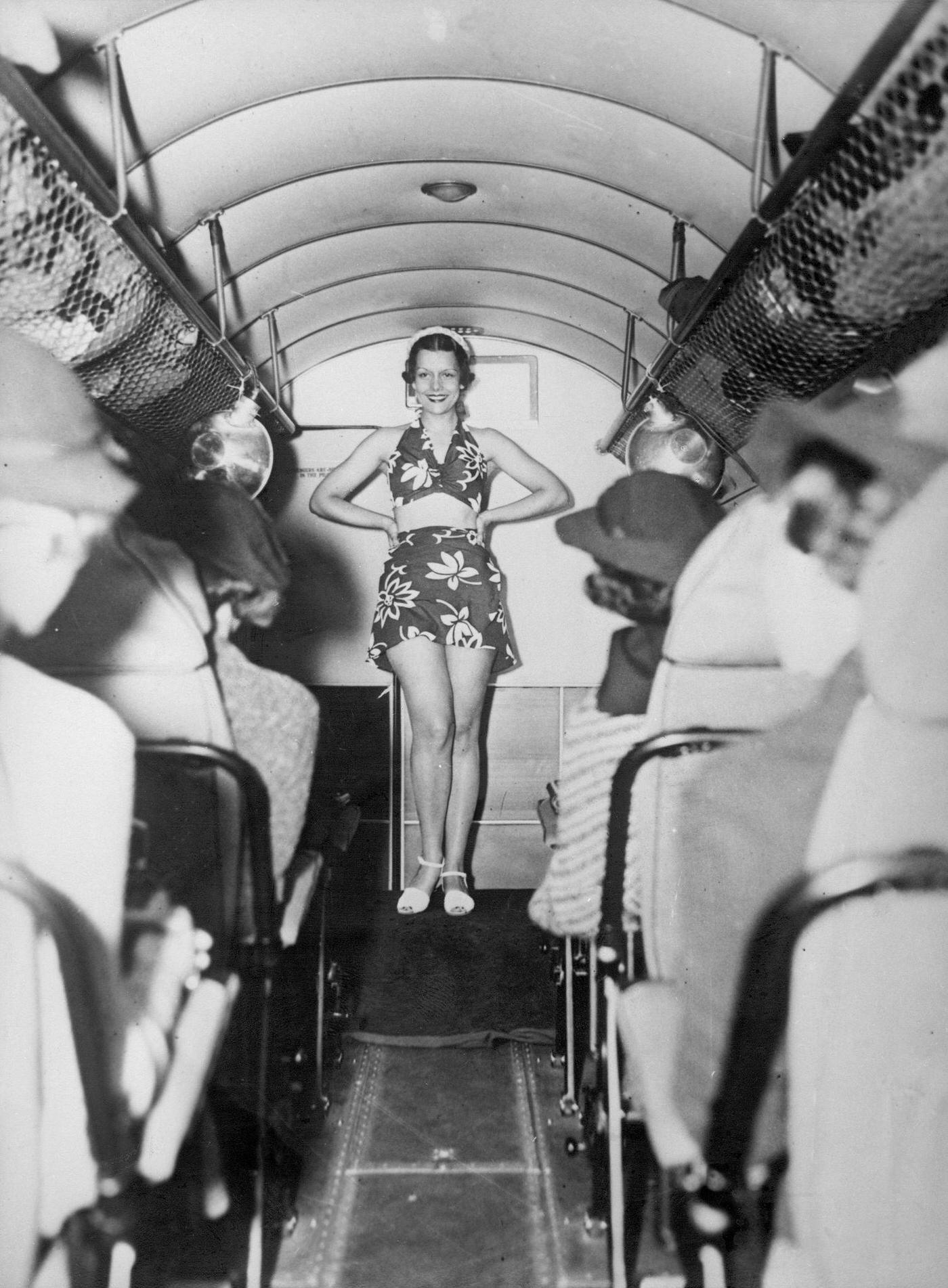
Passengers on a flight from New York to Miami are entertained with a fashion show featuring the latest beachwear in the air, 1930.
Interior of the commercial aircraft of the future in a cinema studio in hollywood on february 1936
Children welcome Santa Claus as he disembarks his plane in a photograph from around 1930.

Airlines around the world — from Air France and Imperial Airways in Europe to emerging carriers in the Middle East — were all racing to establish routes, build fleets, and attract passengers. Airports in locations as far-flung as Israel were already operational by 1935. The global footprint of commercial aviation was expanding rapidly, decade by decade, route by route.
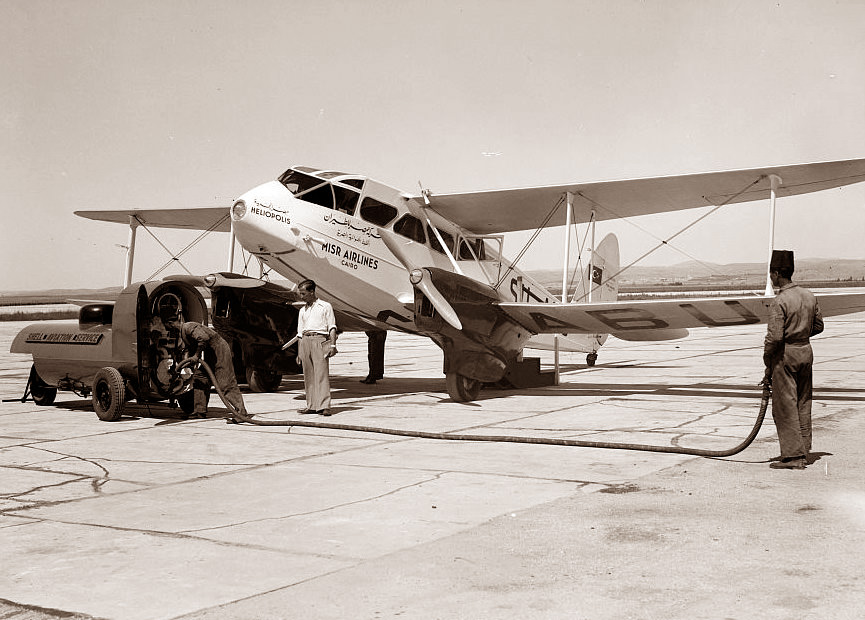
Taken at an airport in Israel, 1935
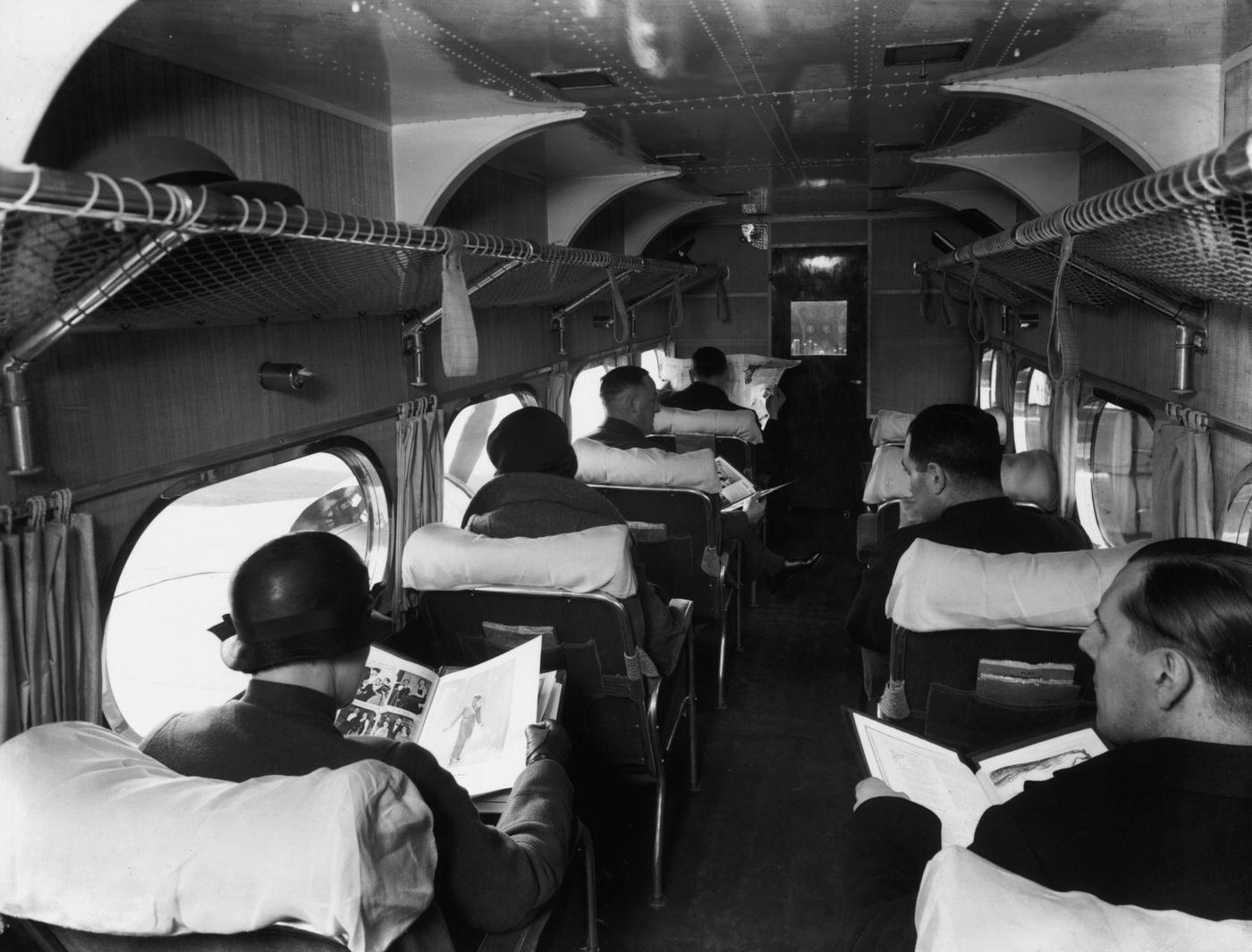
Passengers settling down for their journey on an Air France plane

Back in the United States, the infrastructure of air travel was being quietly assembled. Airmail and air freight services launched during this period, creating the logistical backbone that passenger aviation would eventually rely on. Aircraft like the American Airlines Condor biplane were already running scheduled commercial routes out of Newark, New Jersey, carrying passengers into an industry that was, week by week, figuring out what it wanted to become.
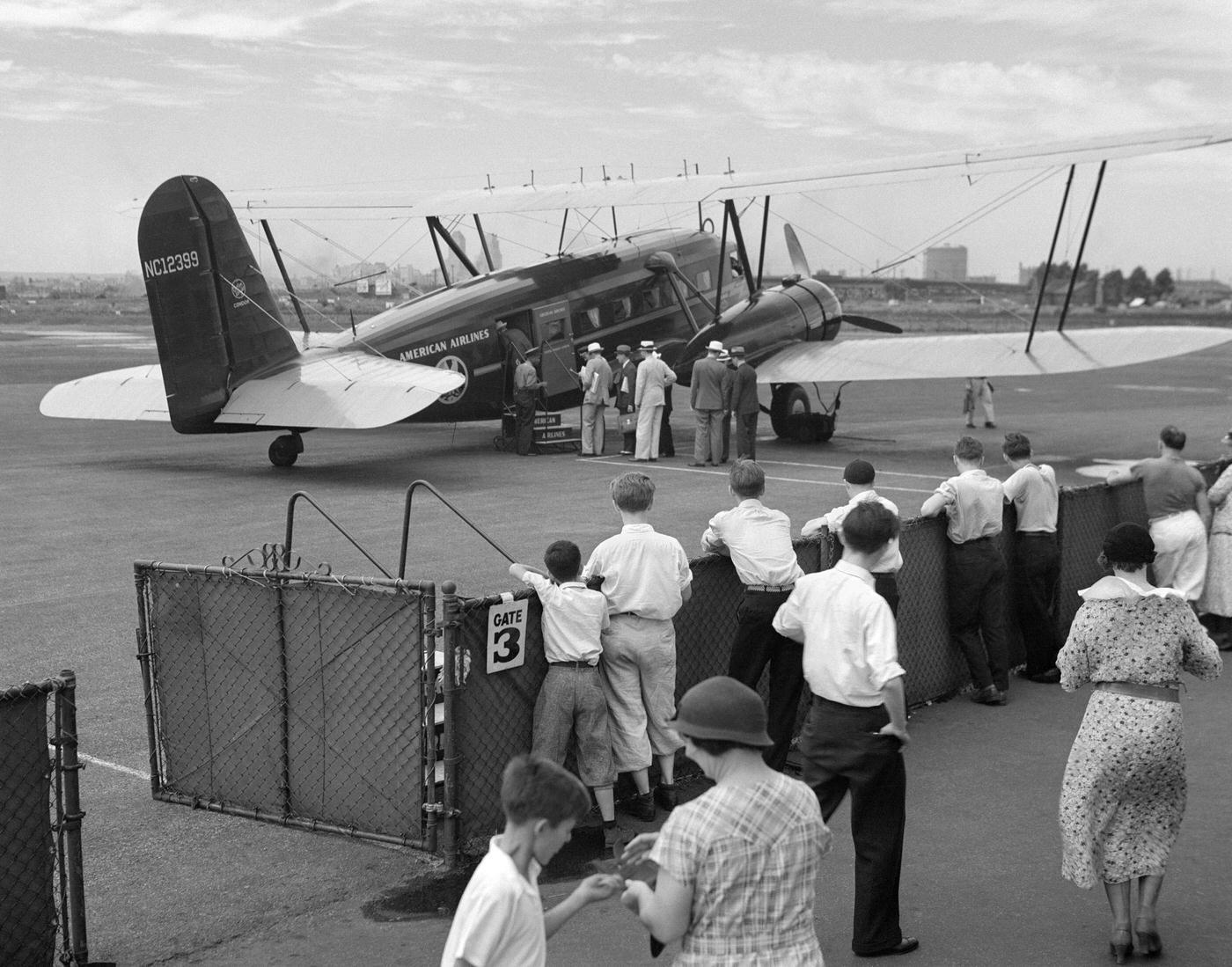
Passengers board an American Airlines Condor biplane airplane for commercial flight from Newark, New Jersey, 1930s
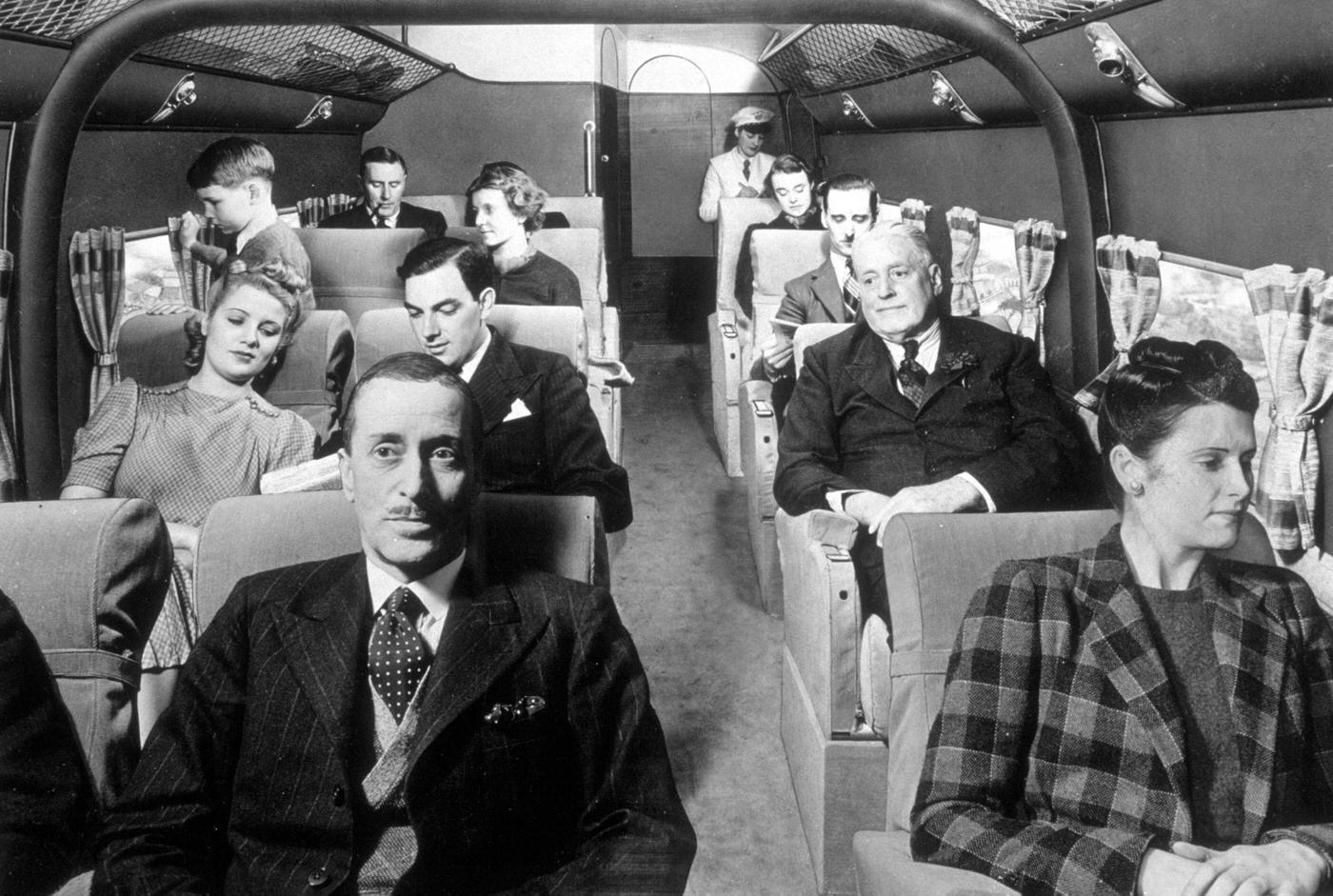
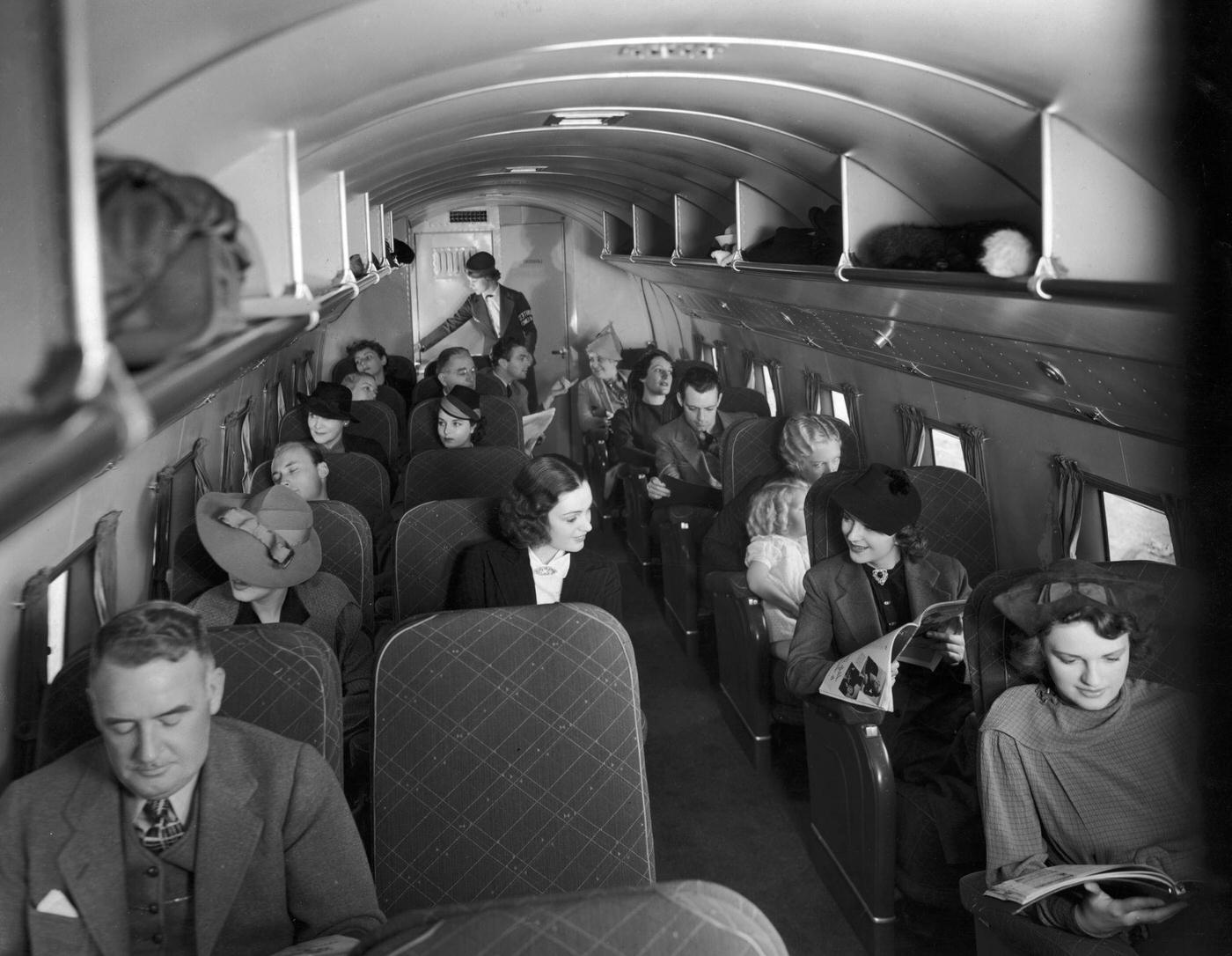
Passengers sitting in their seats inside the cabin of a 21-passenger airplane making daily trips between New York City and Chicago. Several women read magazines.
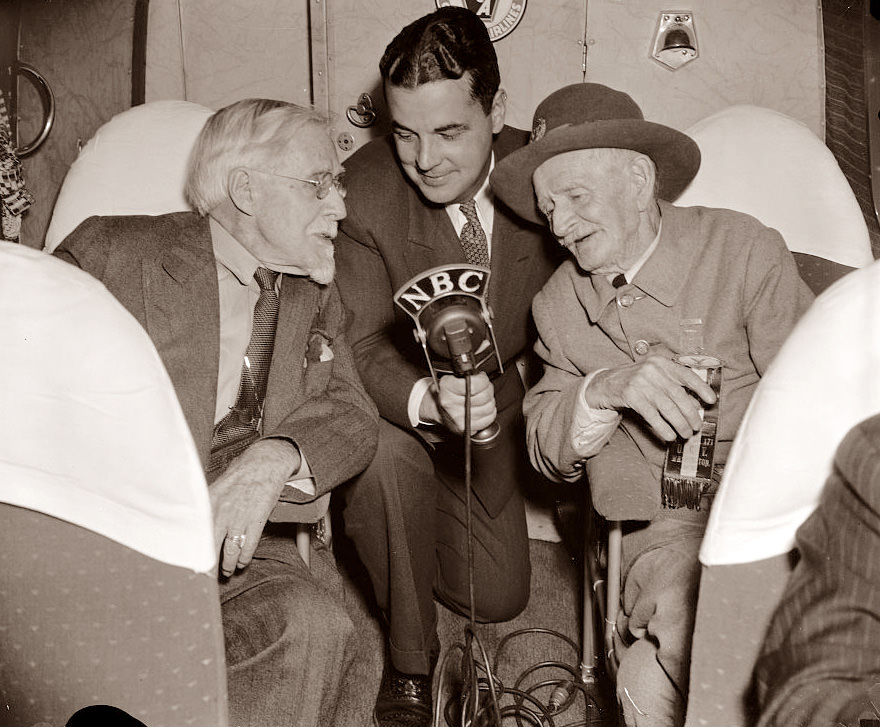
The picture was taken in Pennsylvania in 1938, which would have been the 75th Anniversary of the Battle of Gettysburg
Germany: Passengers in an airplane, 1935.
imperial airways monoplane demonstration at Croydon in London on October 11st 1938
Aeroplane passengers with headphones listening to the first test broadcast of a new service which will enable them to hear and watch the boat race from the air.
Flight Attendant Serving Passenger a Meal
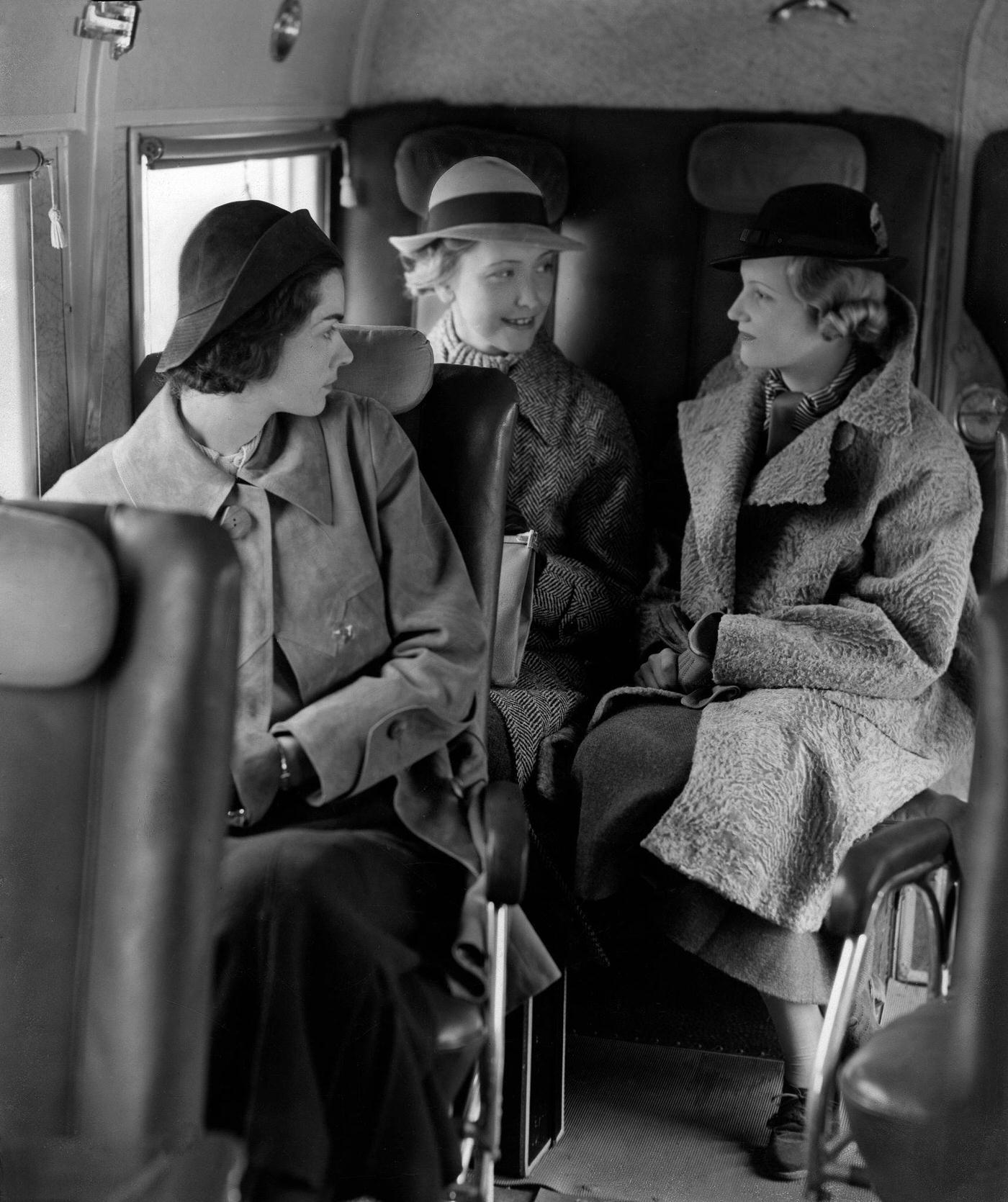
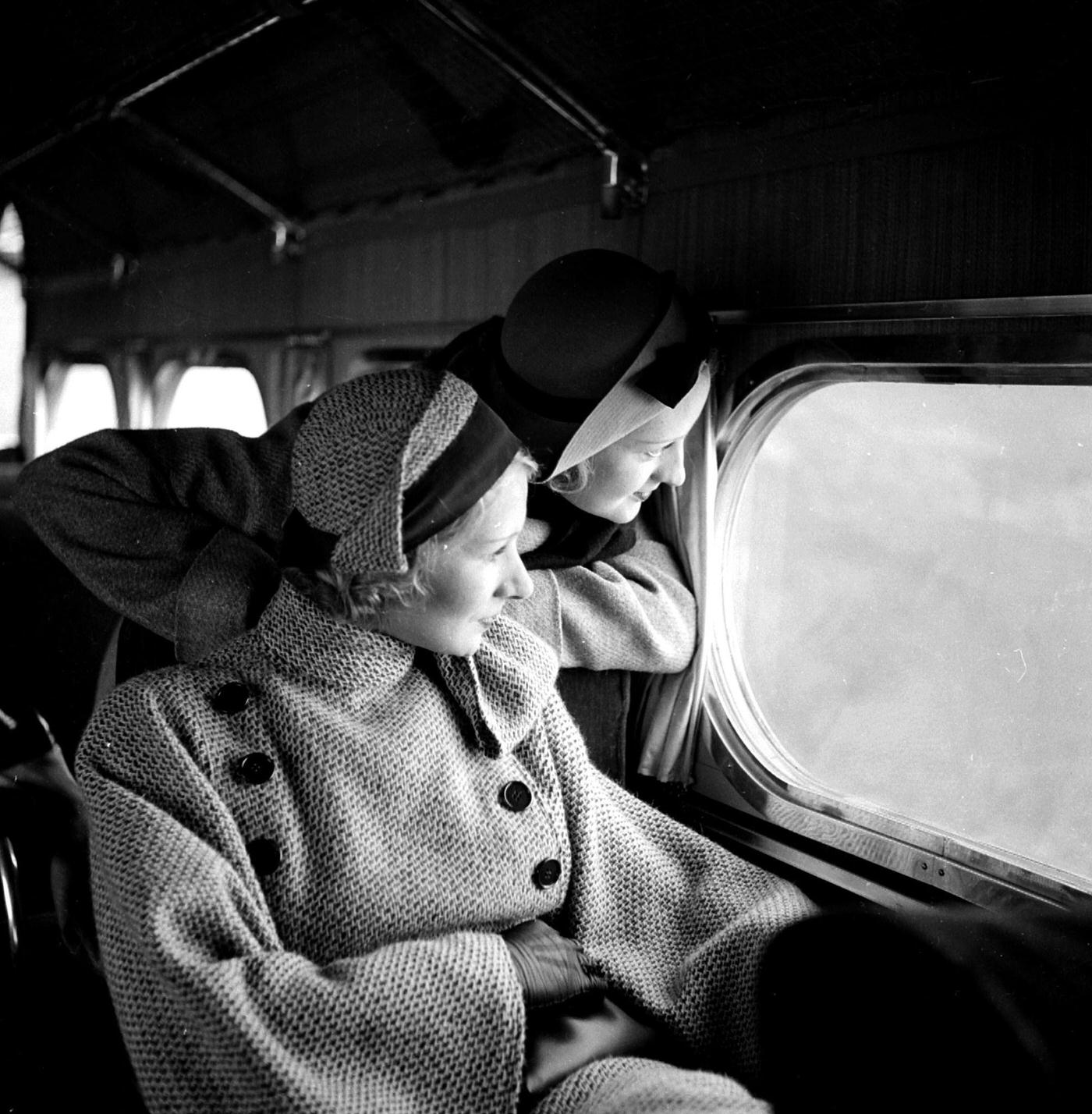
Women aboard an airplane between Paris and London, 1934
Inside Douglas Passenger Plane, October 5, 1938
A waiter serves passengers aboard the Imperial Airways 'Scylla' flight from London to Paris.
A waiter serves passengers aboard the Imperial Airways ‘Scylla’ flight from London to Paris.
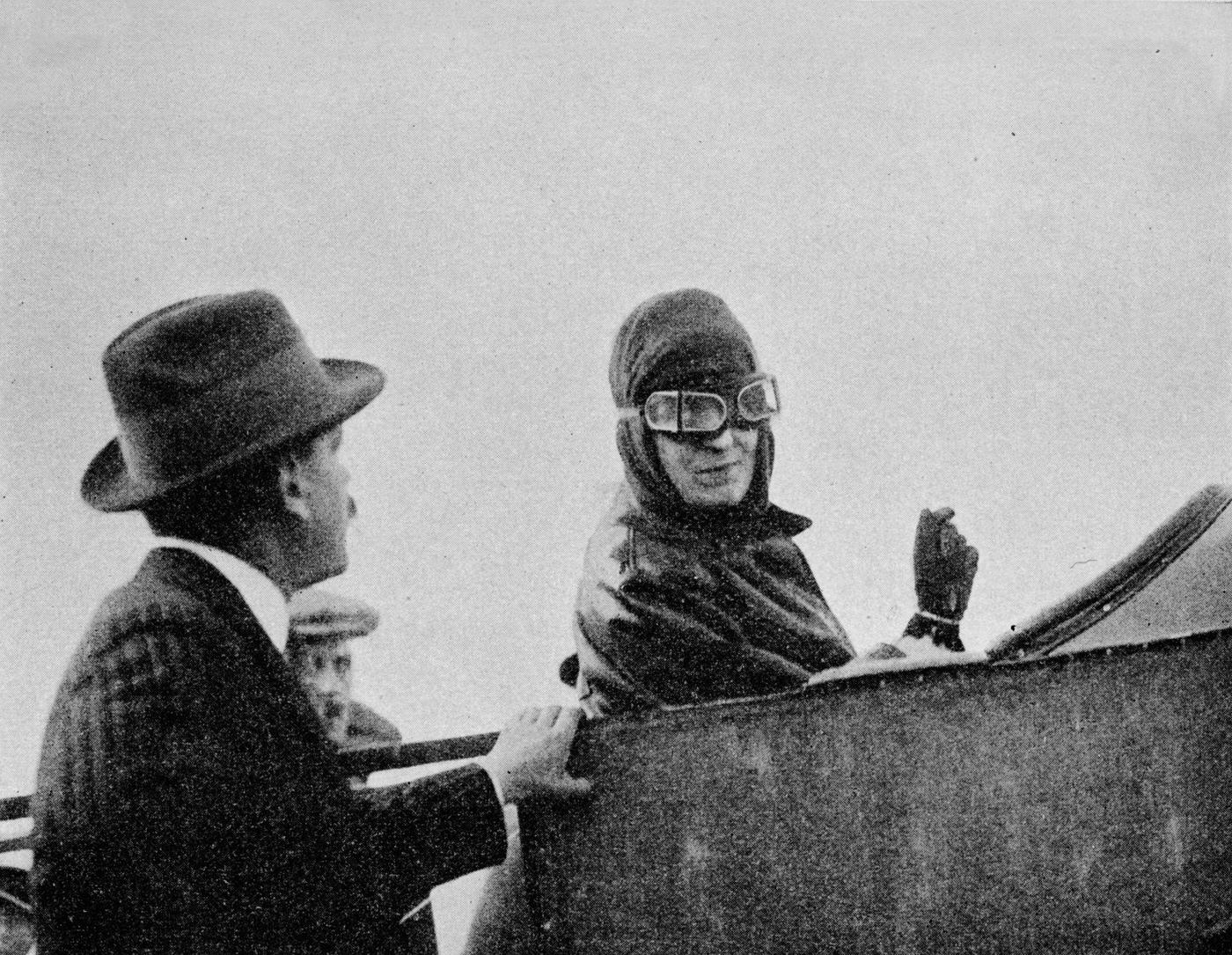
Miss Trehawke-Davies in the passenger's seat of one of her Bleriot monoplanes, 1913
Miss Trehawke-Davies in the passenger’s seat of one of her Bleriot monoplanes, 1913
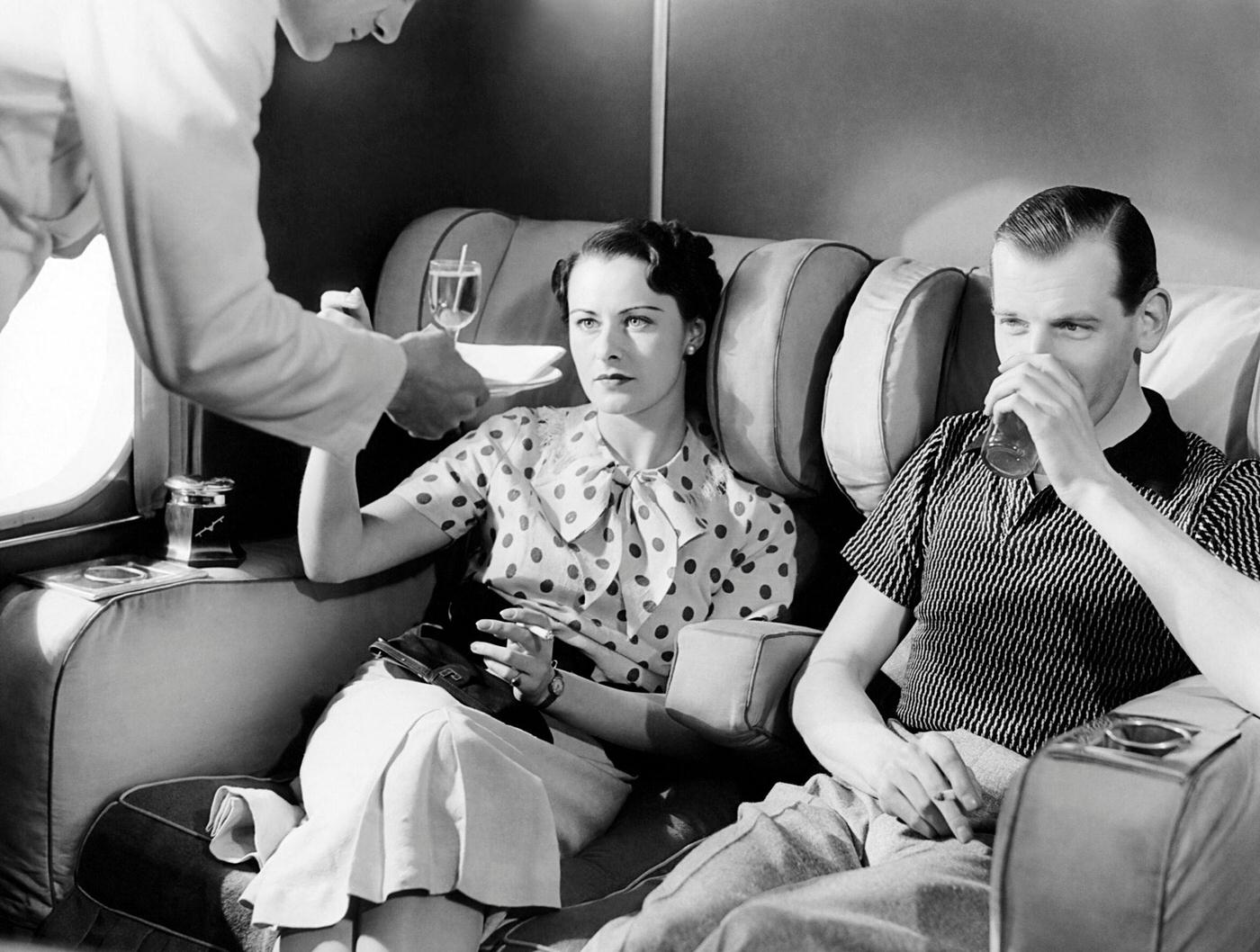
A couple enjoys cocktails in the smoking lounge of the new Imperial Airways Empire flying boat passenger plane in London, 1930
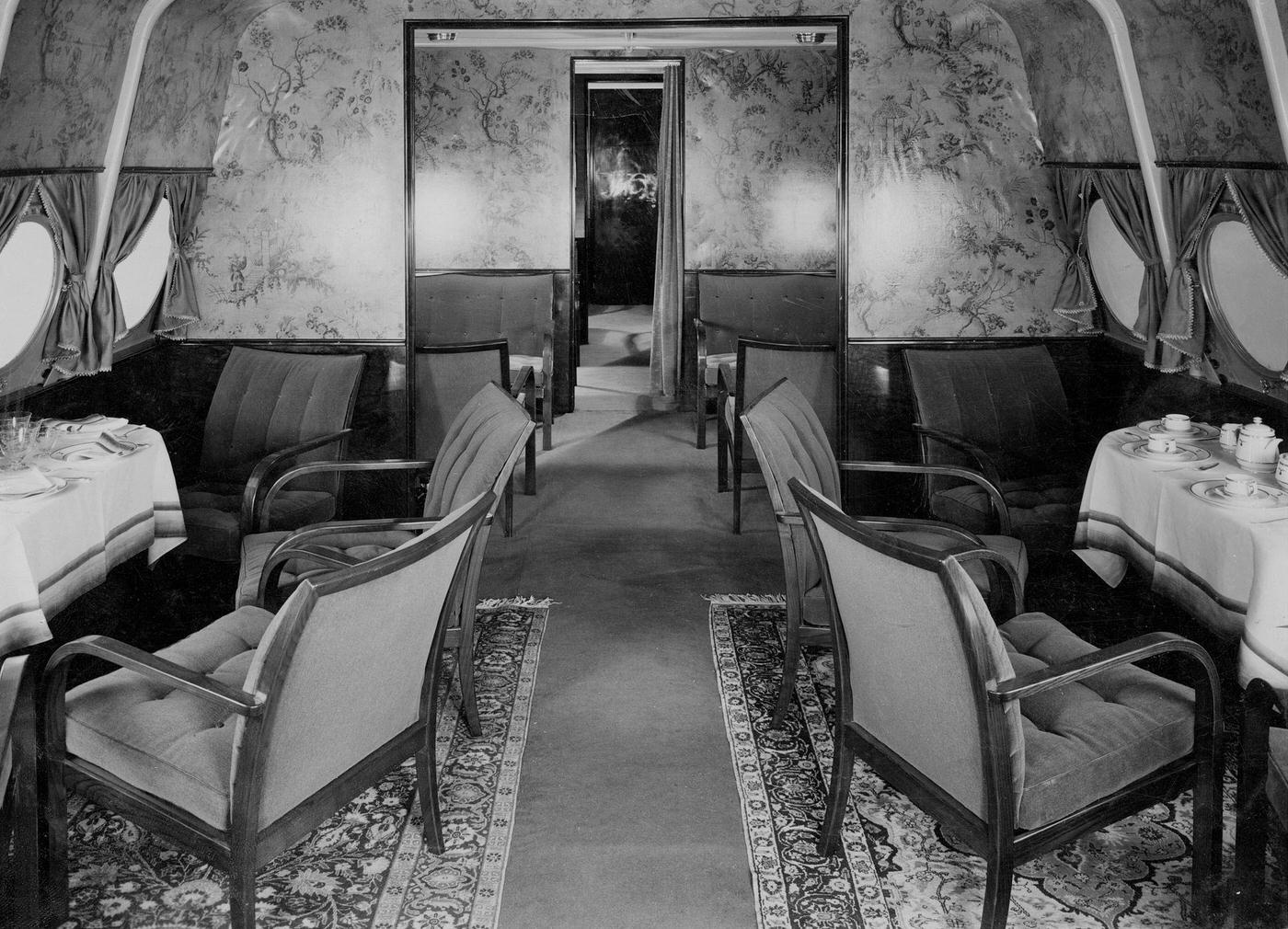
Airliner Dornier Do X is shown with an interior view of the passenger saloon in a vintage photograph from ullstein bild.
Passengers of a plane from Mexico to Los Angeles, 1930
Passengers are seen on board a de Havilland Flamingo aeroplane, 1939
Enjoyed this post? Get new ones in your inbox.

Leave a Comment

Your email address will not be published. Required fields are marked *

Share this Post 🥺

Please take a moment to share this content. Your support is greatly appreciated! 🙌🙏

Share this Post 🥺

Please take a moment to share this content. Your support is greatly appreciated! 🙌🙏
Scroll to Top
 
Hey Friend, Before You Go.. Please like & follow for more interesting content