
Brooklyn Heights sits at the western edge of Brooklyn, New York City, just one subway stop from Manhattan and directly at the foot of the Brooklyn Bridge. In 1958, it was already one of the most distinctive neighborhoods in the entire city — a place where pre-Civil War brownstone rowhouses lined quiet streets, where the waterfront hummed with workers, and where artists, activists, and everyday families all shared the same blocks. A photographer captured daily life there in March of that year, producing a remarkable set of images that show the neighborhood in vivid, unguarded detail.
The neighborhood’s connection to the water ran deep. Before the subway and bridges made commuting easy, ferries were the main link between Brooklyn and Manhattan. Workers, shoppers, and commuters depended on them daily.
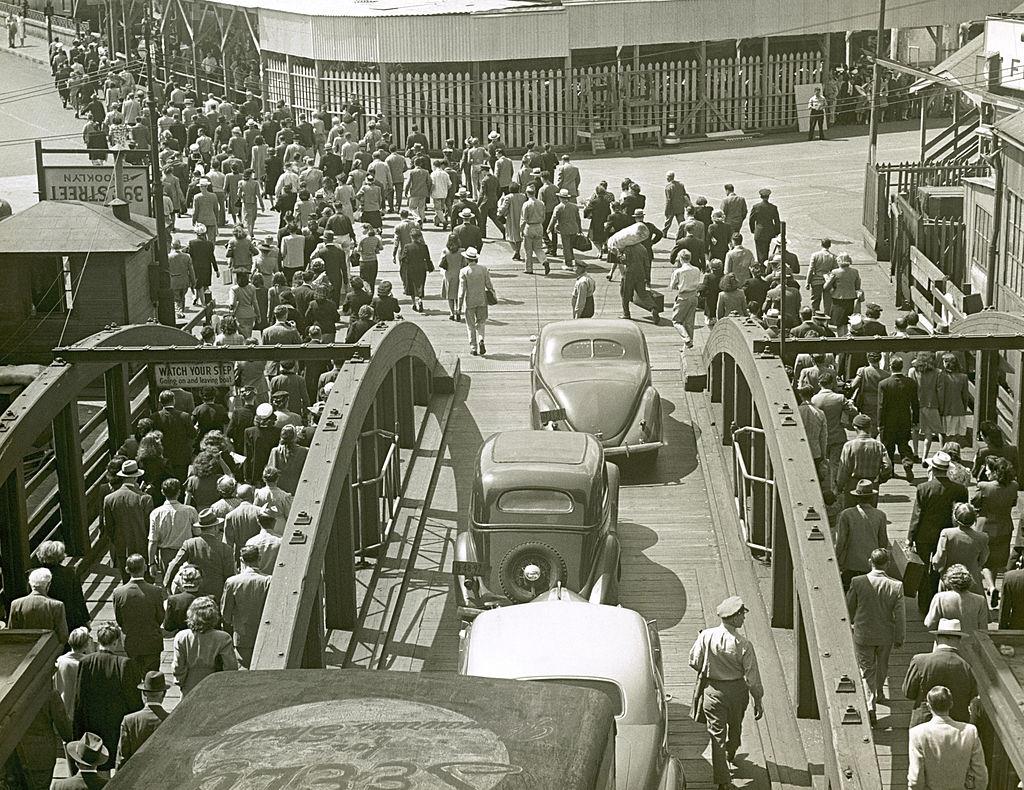
The Brooklyn Bridge, completed in 1883, had long since changed the character of Brooklyn Heights. Greater access to Manhattan brought more residents, and many of the neighborhood’s grand mansions were eventually torn down and replaced with apartment buildings. By 1958, the Heights was a dense, working residential neighborhood with a mix of incomes, ethnicities, and trades all packed onto the same streets.
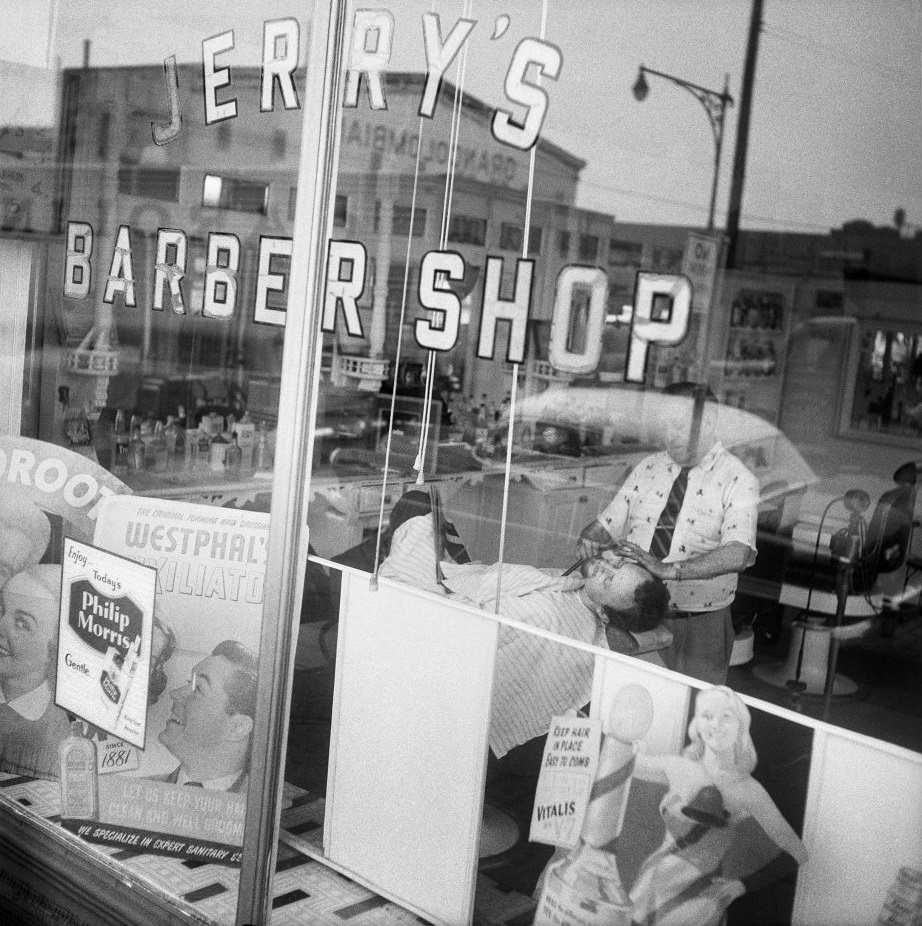
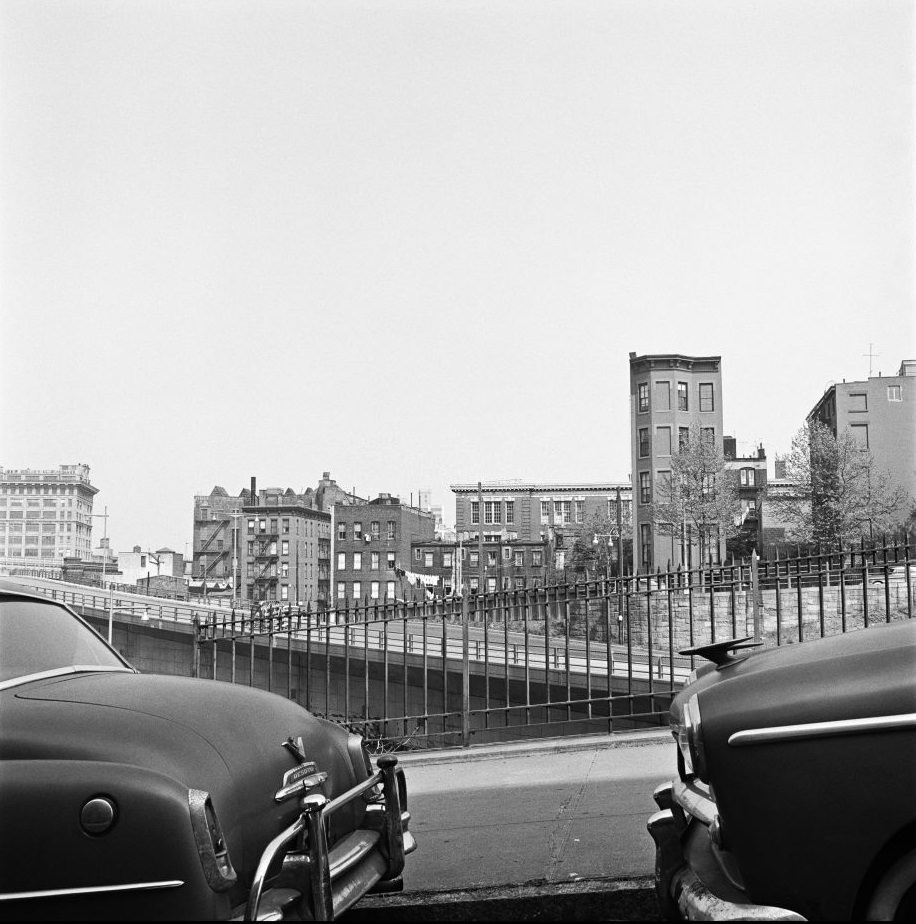
Atlantic Avenue was one of the neighborhood’s busiest commercial corridors. Small, owner-operated businesses defined the strip — barbers, grocers, cobblers, and bars serving the same regular customers week after week. The Promenade, by contrast, offered a quieter escape. Running along the waterfront bluff, it gave residents a sweeping view of Lower Manhattan’s skyline and the harbor beyond.
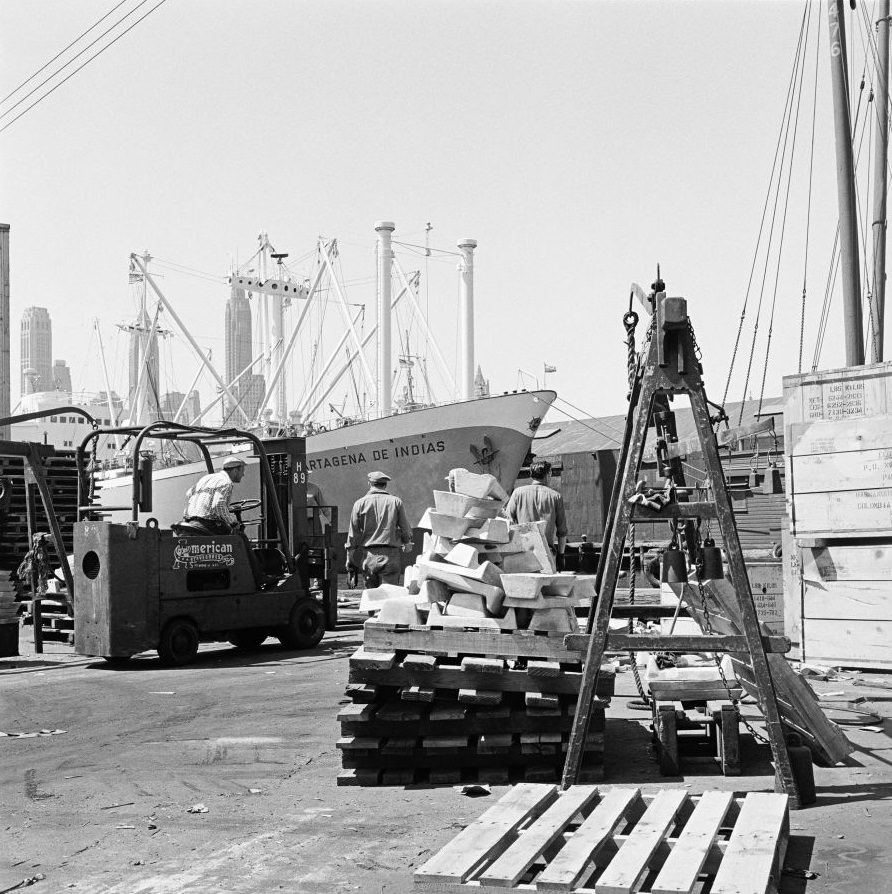
Down at the waterfront itself, the Brooklyn docks were still very much a working industrial zone in 1958. Shipworkers moved cargo, managed vessels, and kept the port running. This was years before containerization would gut the city’s waterfront labor force.
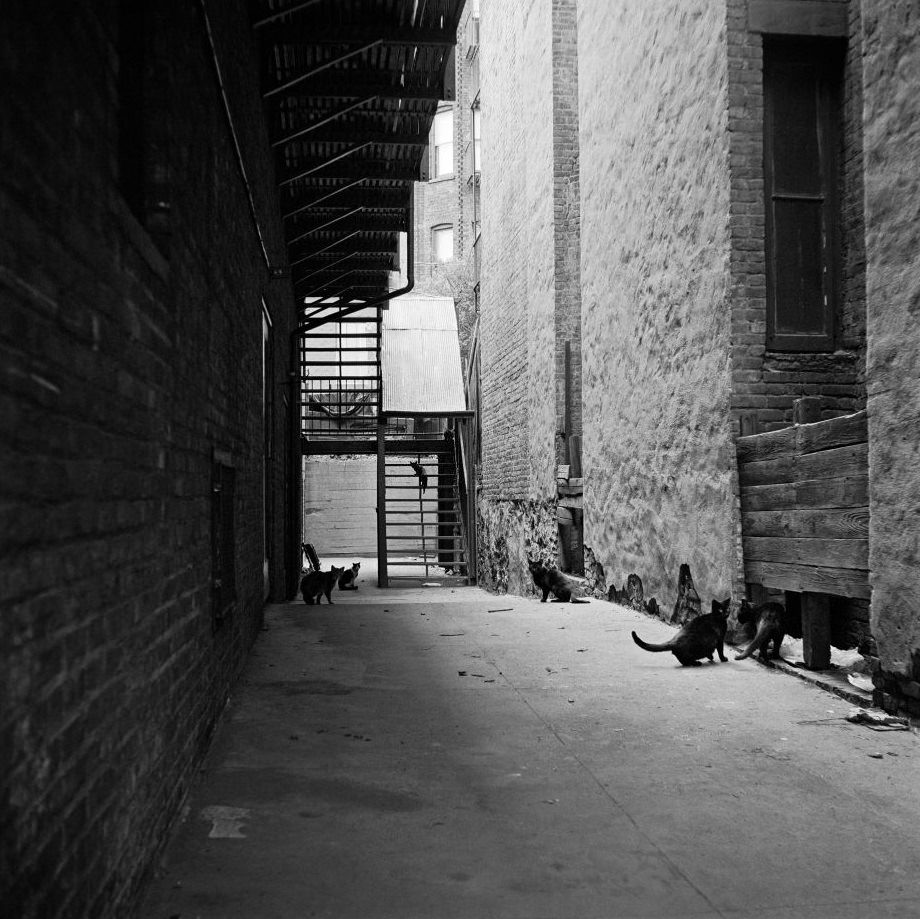
Life in the Heights wasn’t all work and commerce. The neighborhood had a slower rhythm in its back alleys and side streets. Cats claimed the alleyways. Children used stoops as playgrounds. Neighbors gathered on front steps the way others might gather in a town square.
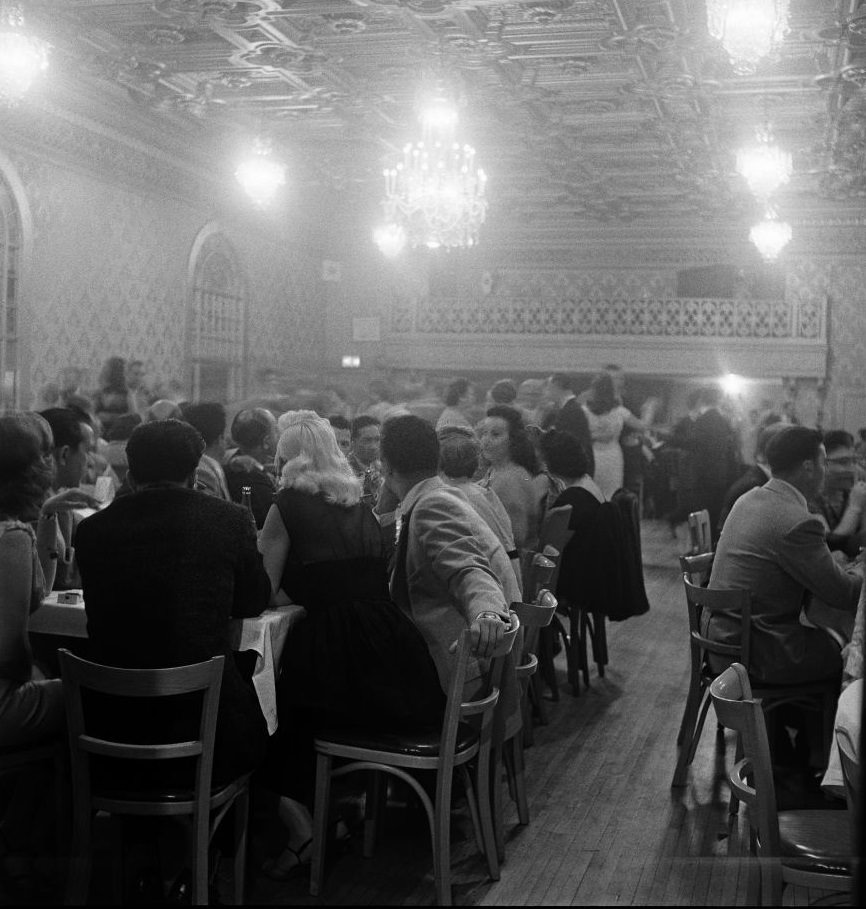
After dark, Brooklyn Heights had a lively nightlife scene. Local clubs drew crowds looking to eat, drink, and dance. These weren’t tourist spots — they were neighborhood institutions where regulars came to unwind on a Friday or Saturday night.
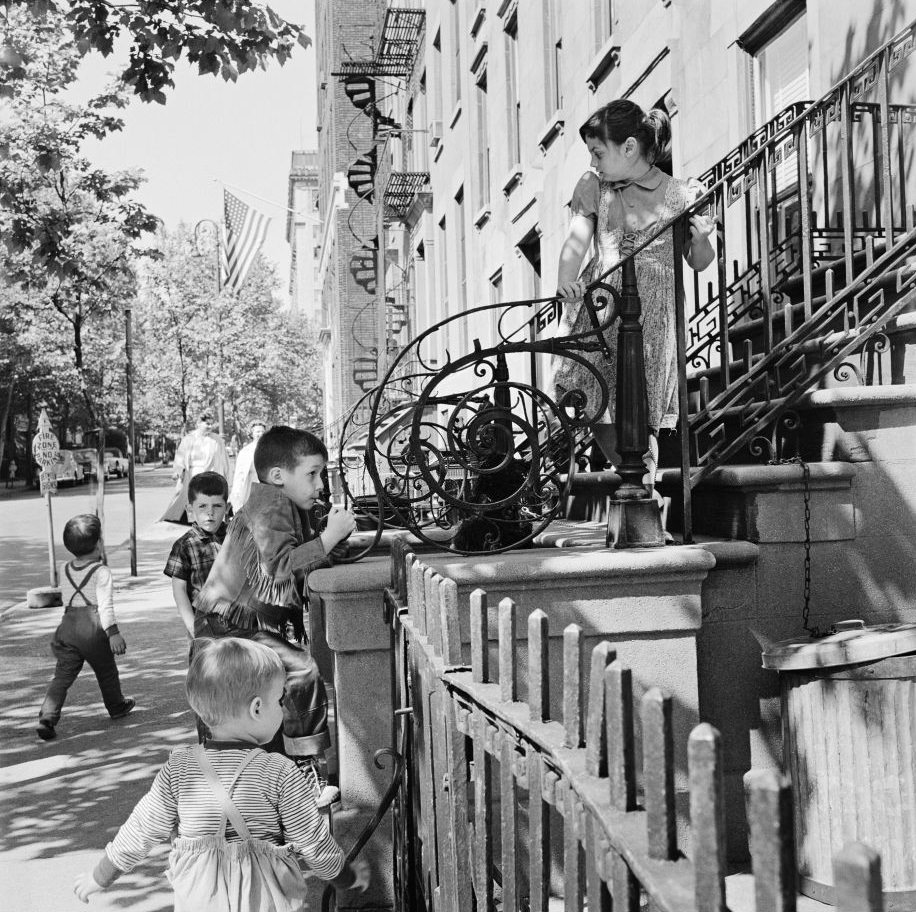
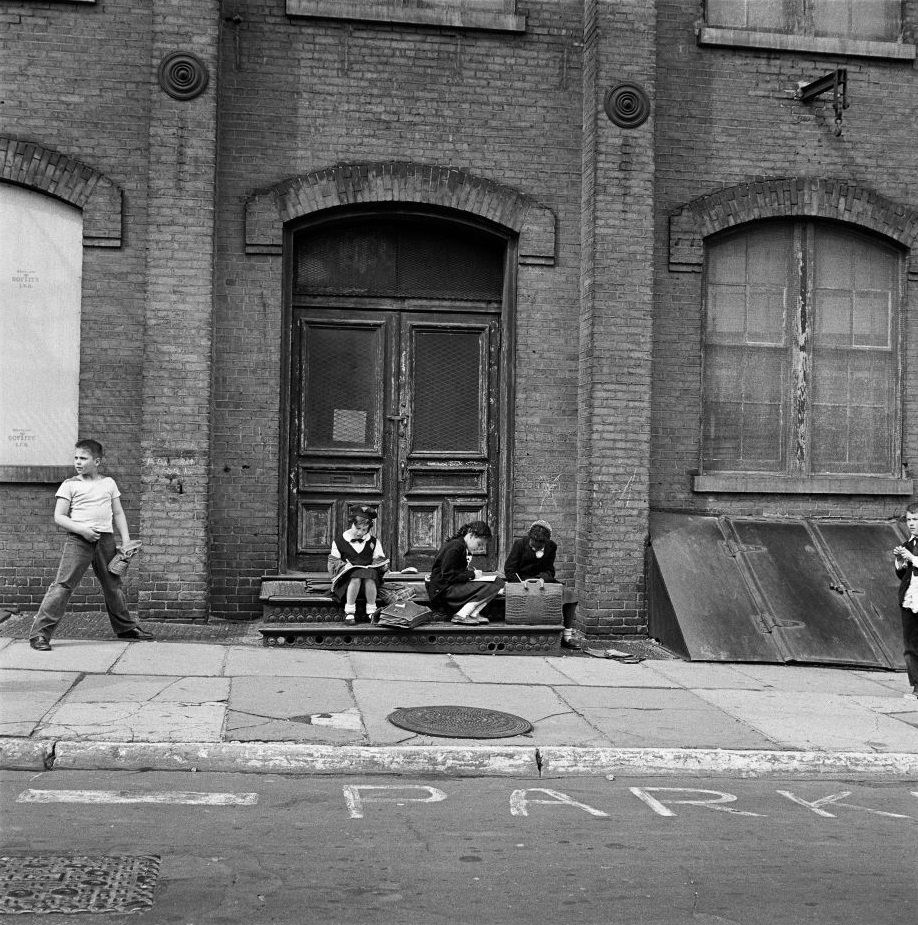
For children growing up in Brooklyn Heights in 1958, the street was the primary playground. Stoops served as gathering points, climbing structures, and social hubs. Kids played in groups, largely unsupervised, in a way that was standard for the era.
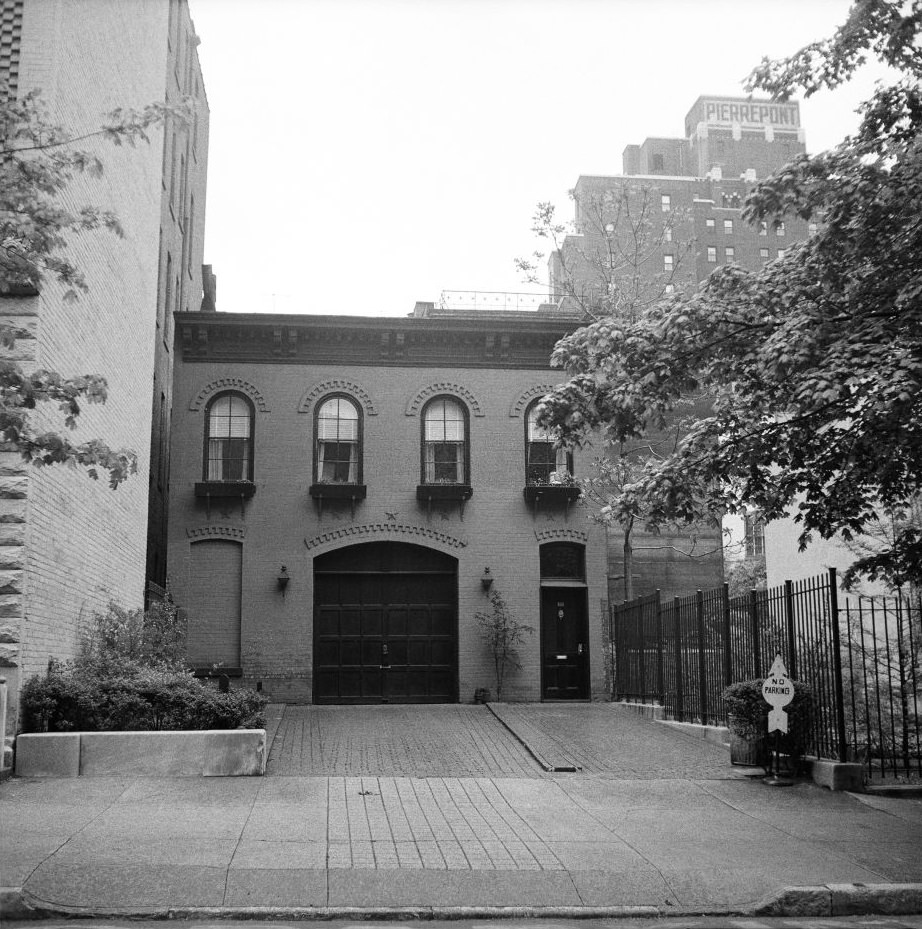
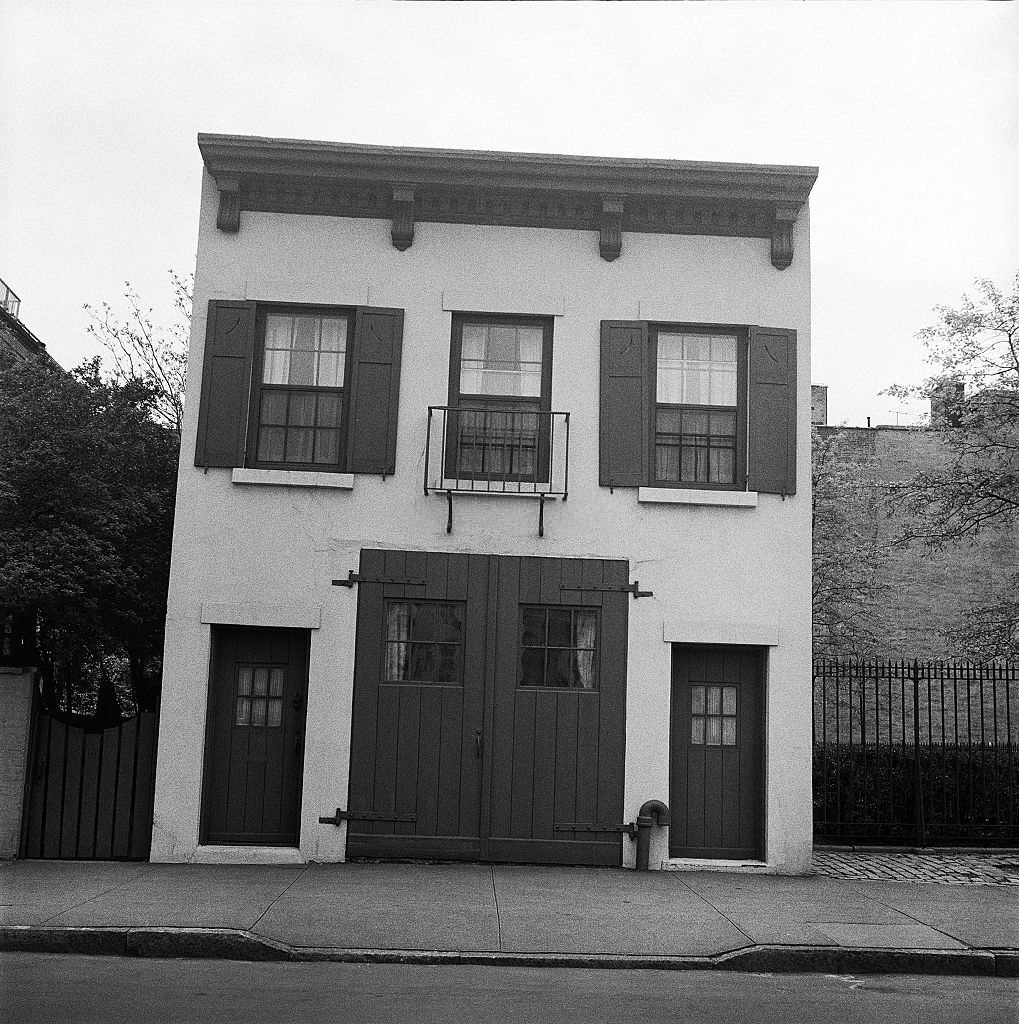
The neighborhood’s architectural history was visible on nearly every block. Willow Street, in particular, contained some of the area’s oldest surviving structures. This carriage house at 151 Willow Street dated back to around 1876, a remnant of an era when horses were still the primary means of moving goods and people through the city.
Stoops were social infrastructure in Brooklyn Heights. They functioned as the front porch of each brownstone, and on mild days, residents came out to sit, talk, and watch the street. The sense of community they generated was a defining feature of neighborhood life.
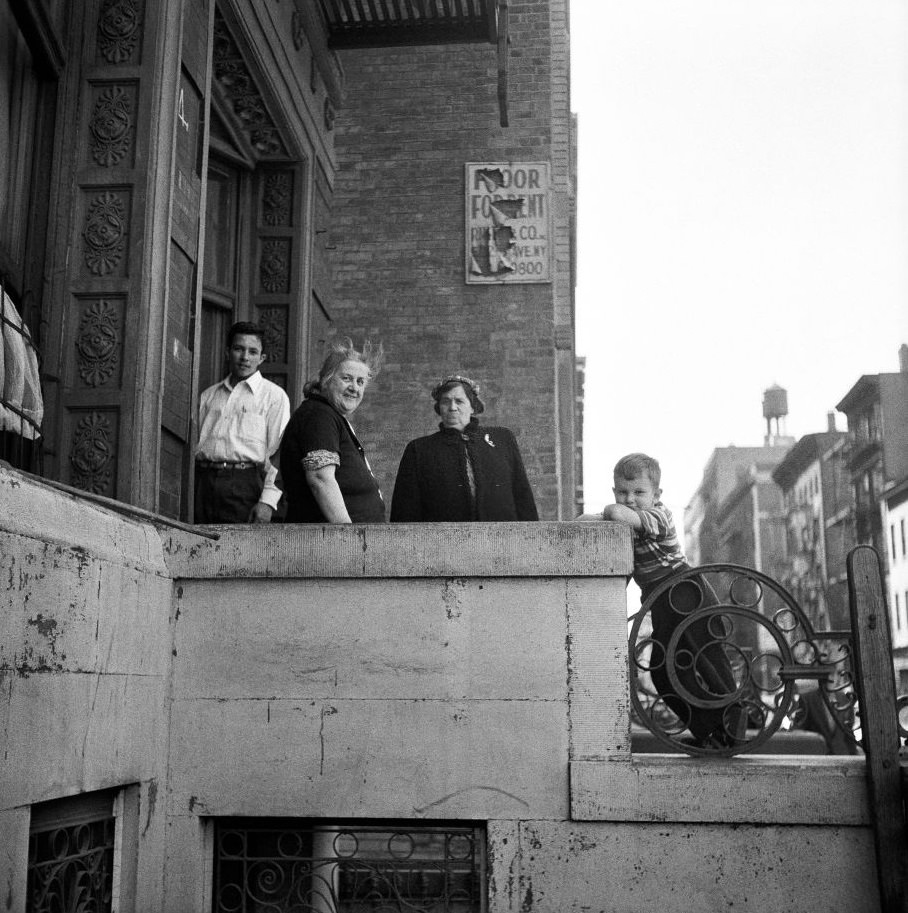
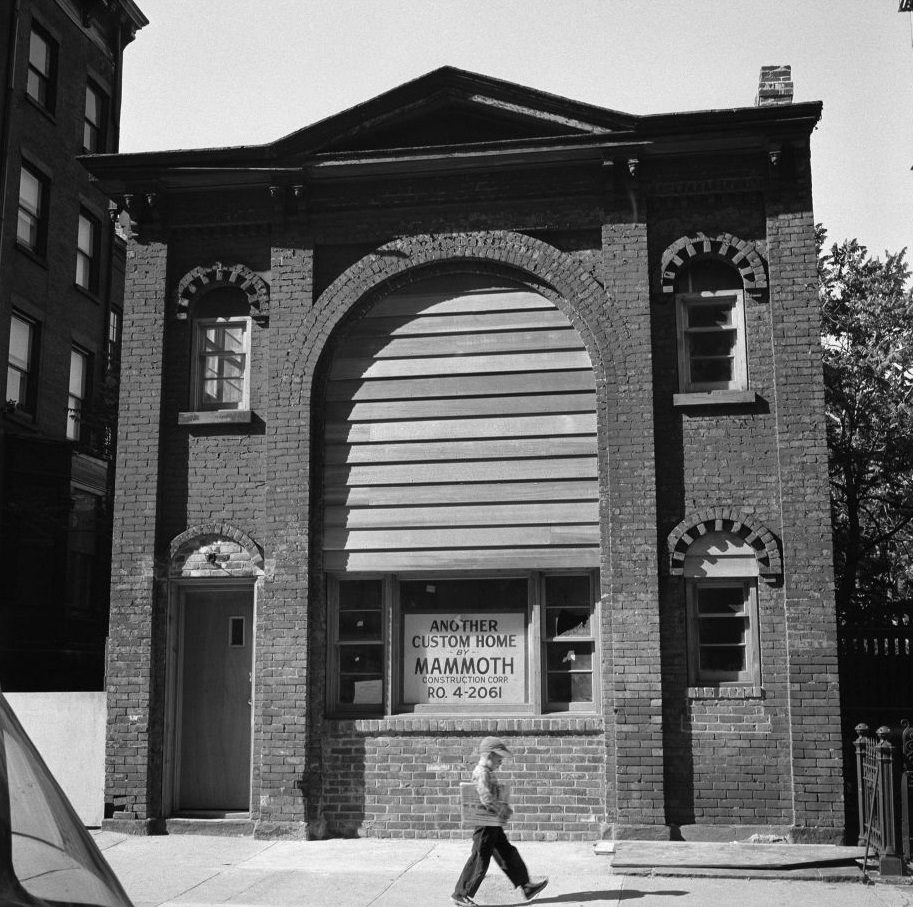
Construction was ongoing across Brooklyn Heights in 1958, as older structures were demolished or renovated and new buildings went up. Residents took notice — sometimes literally stopping to watch work in progress from the sidewalk.
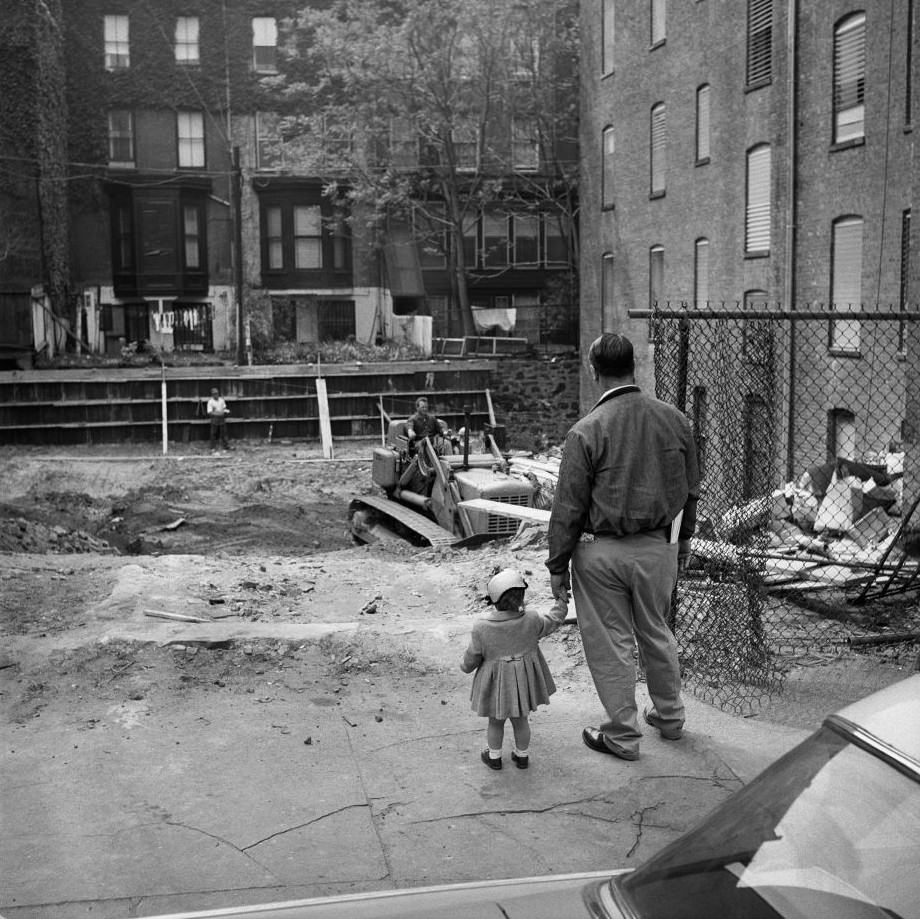
Brooklyn Heights had its share of civic monuments and gathering places. The Henry Ward Beecher Monument in Columbus Park honored the famous abolitionist preacher who had led Plymouth Church on Orange Street for decades. In 1958, it remained a familiar local landmark where people paused and lingered.
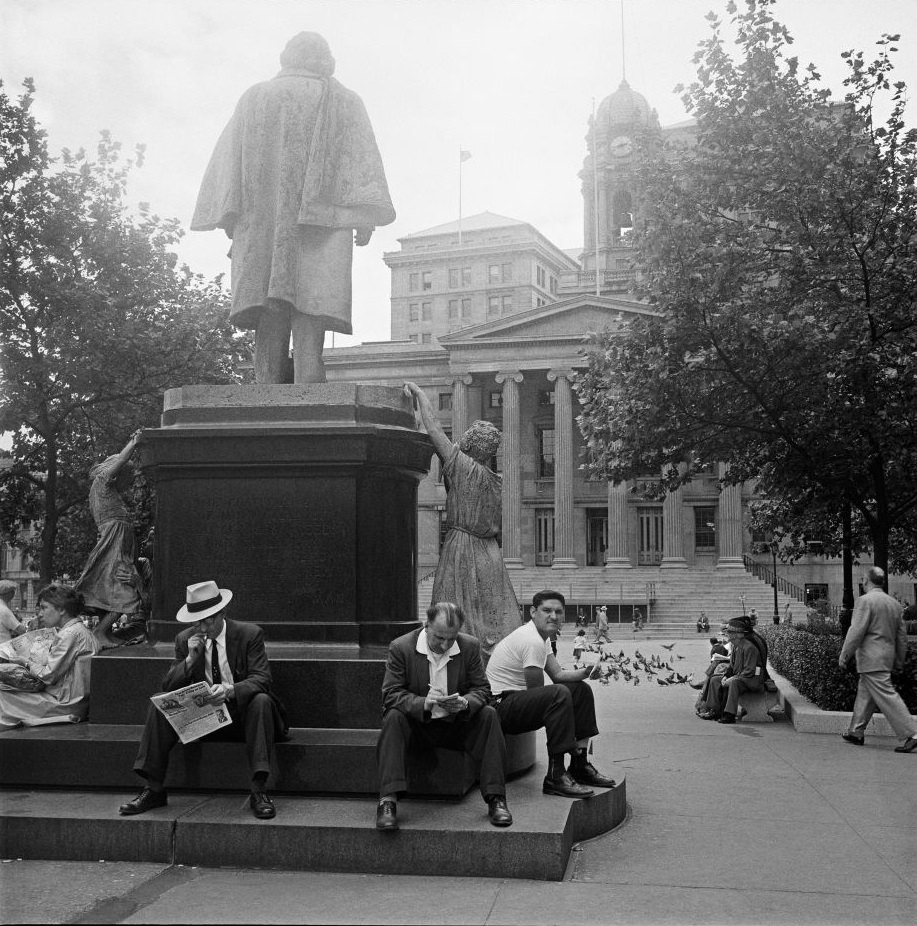
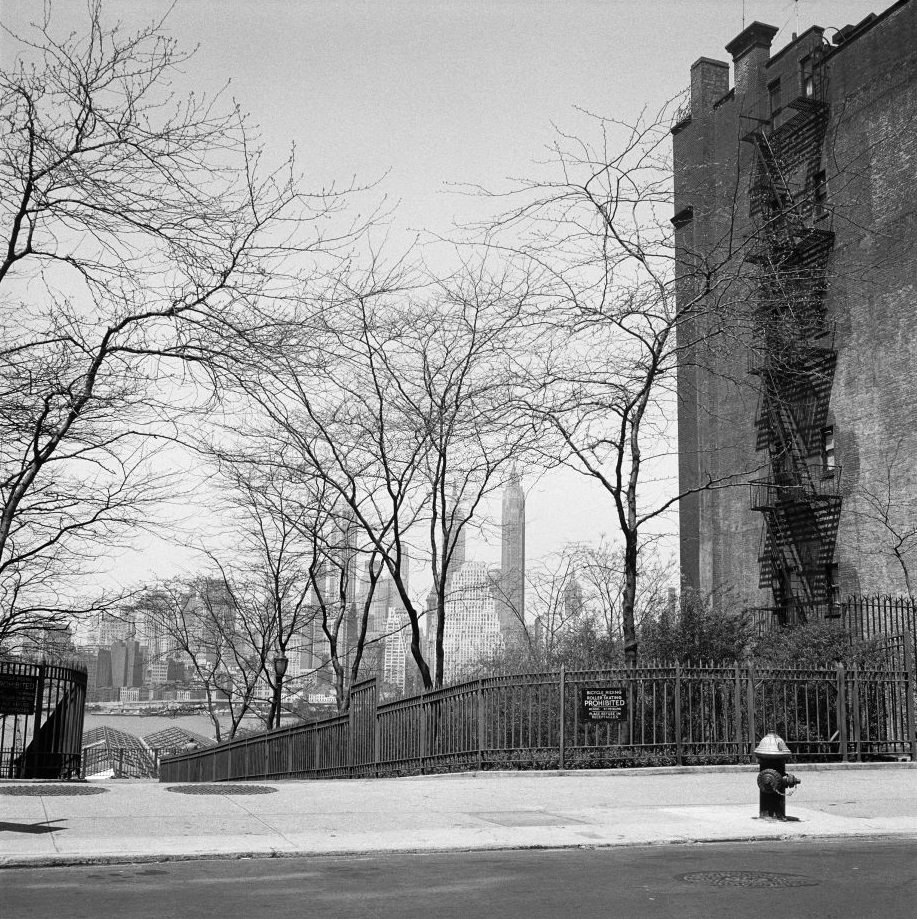
The Brooklyn Bridge framed the neighborhood’s eastern edge, and views of Lower Manhattan from the Brooklyn side were among the most dramatic in all of New York. By 1958, the Manhattan skyline had grown dense with skyscrapers, and the contrast between the old bridge and the soaring towers made for a striking scene.
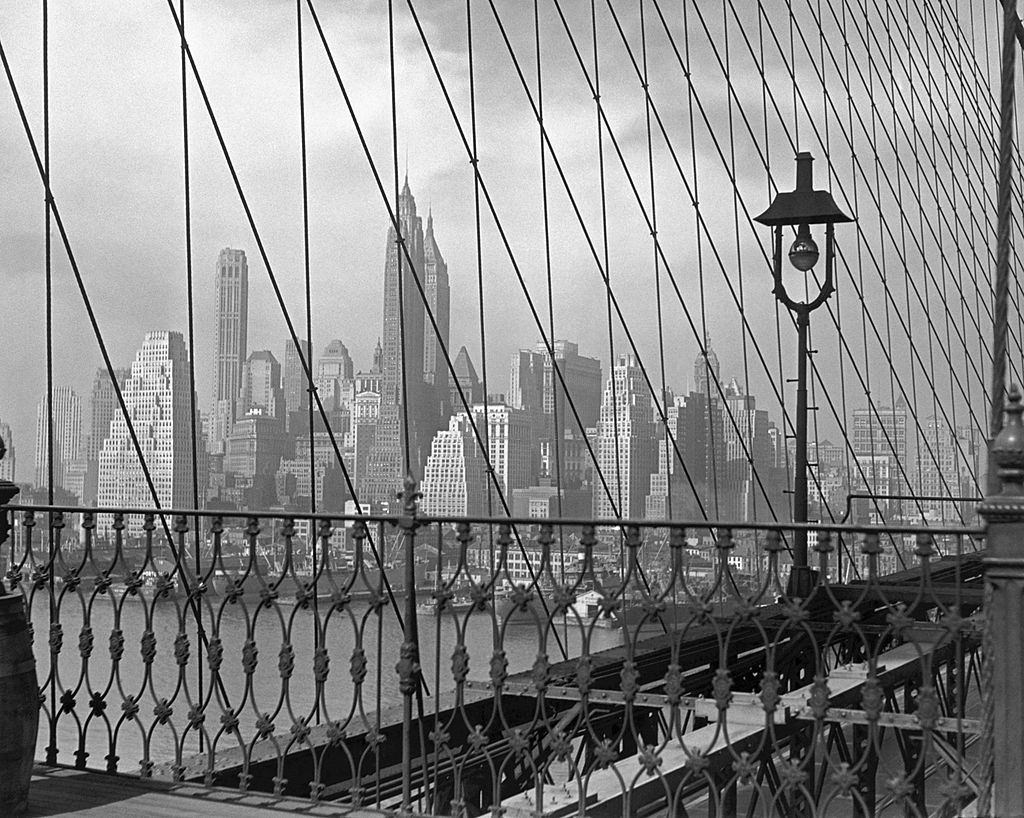
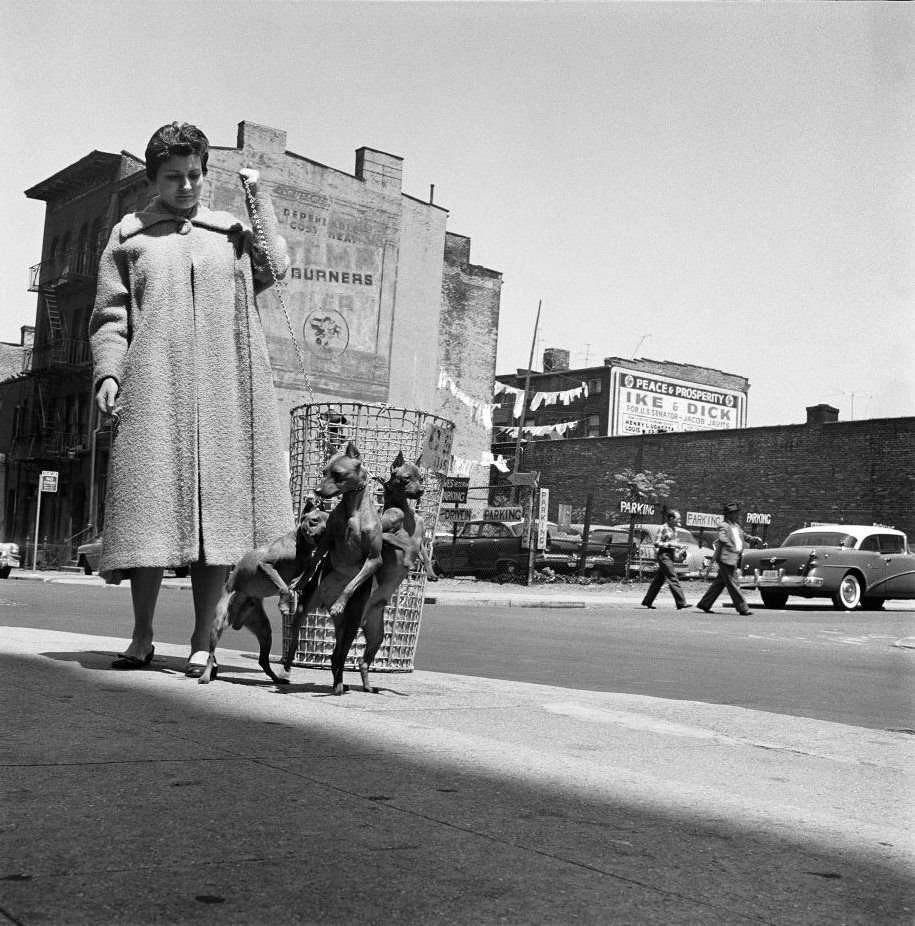
Politics was also visible on the streets. Although Dwight D. Eisenhower and Richard Nixon had already won the 1956 presidential election, their campaign billboards were still posted around the neighborhood in 1958, a lingering presence from the recent electoral cycle.
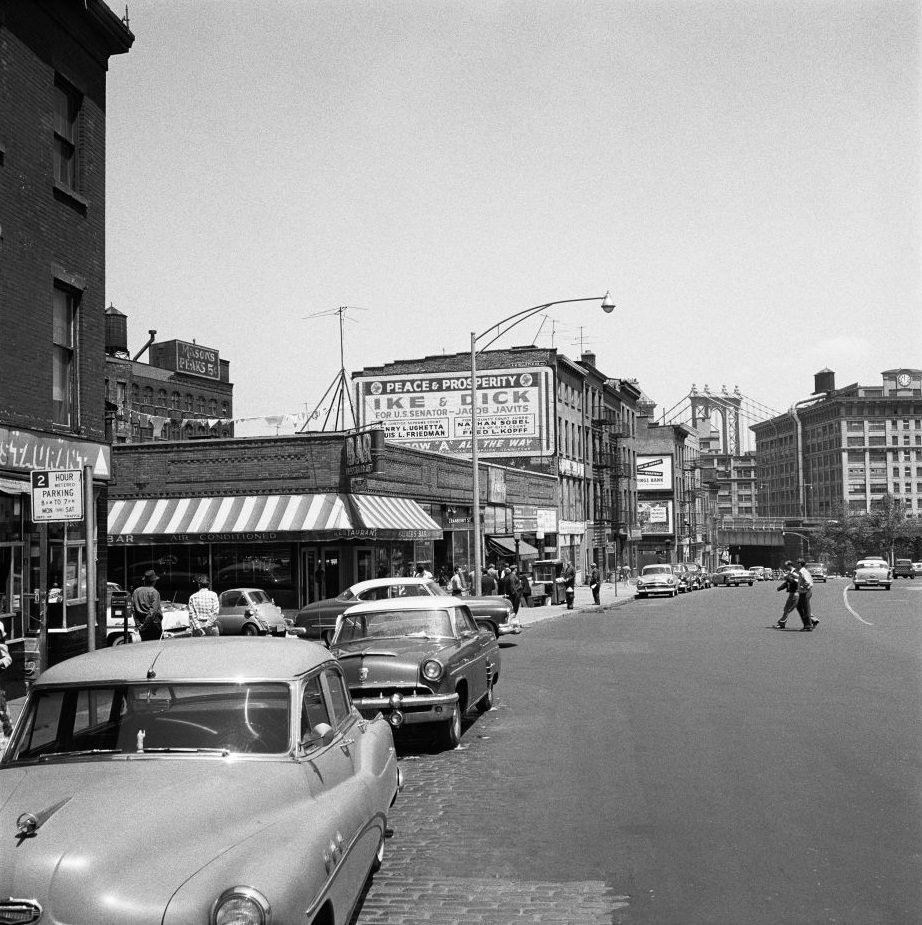
Street corners in Brooklyn Heights were natural gathering spots for men at all hours of the day. Whether waiting for work, taking a break, or simply socializing, these informal clusters were a constant feature of the neighborhood’s street life.
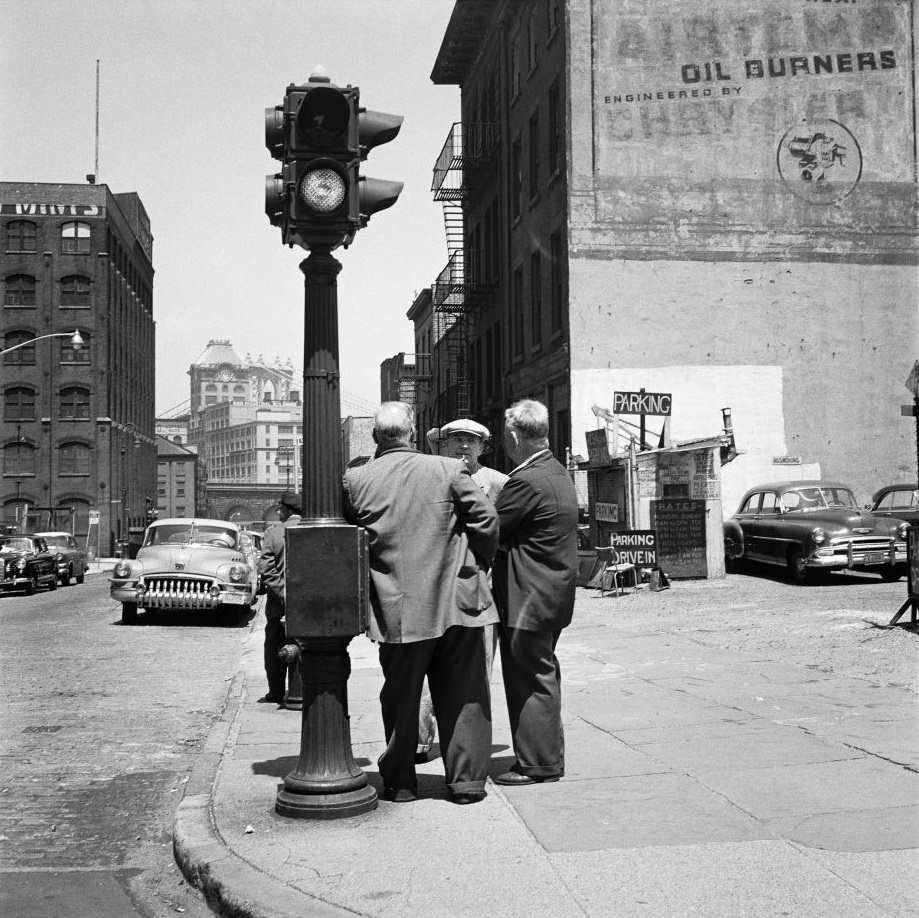
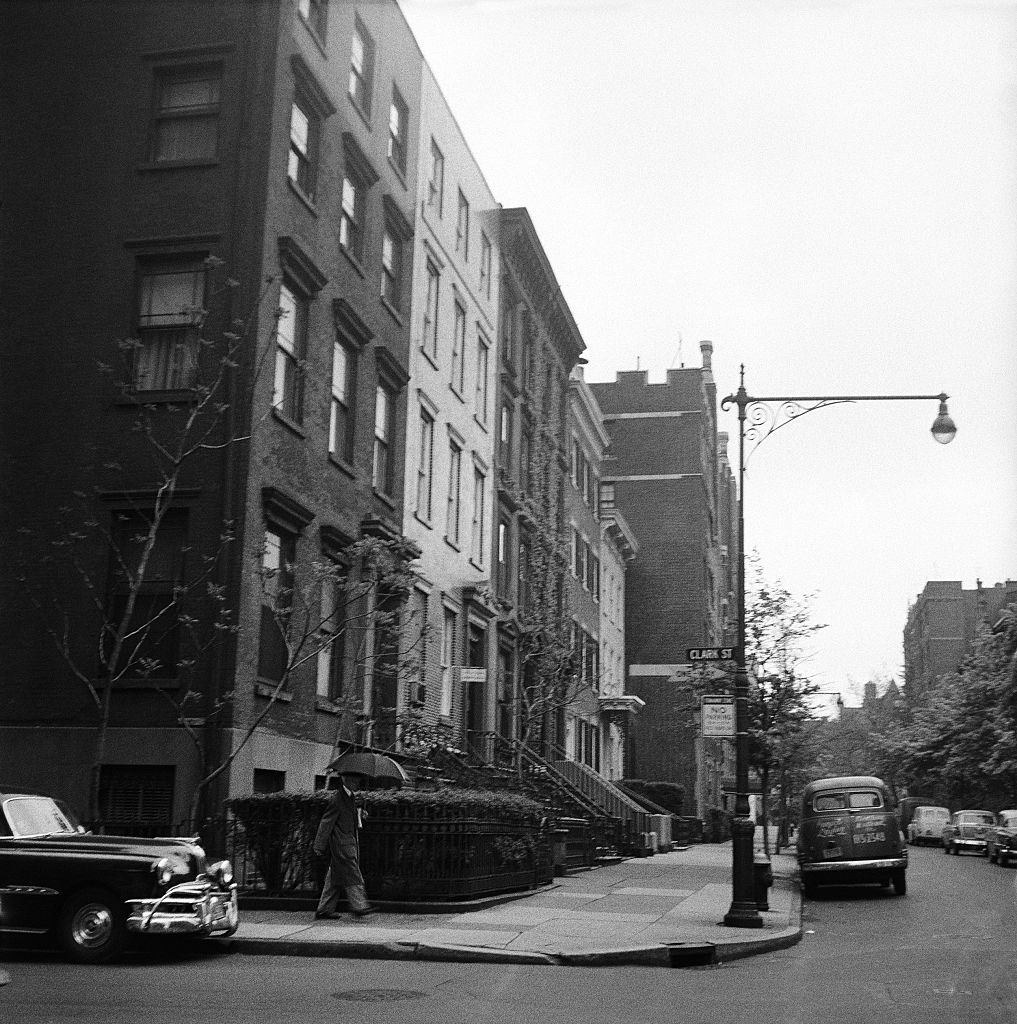
Clark Street was one of the main residential streets cutting through the heart of Brooklyn Heights, connecting the commercial bustle of Atlantic Avenue to the quieter blocks closer to the Promenade. Families walked it daily on errands and school runs.
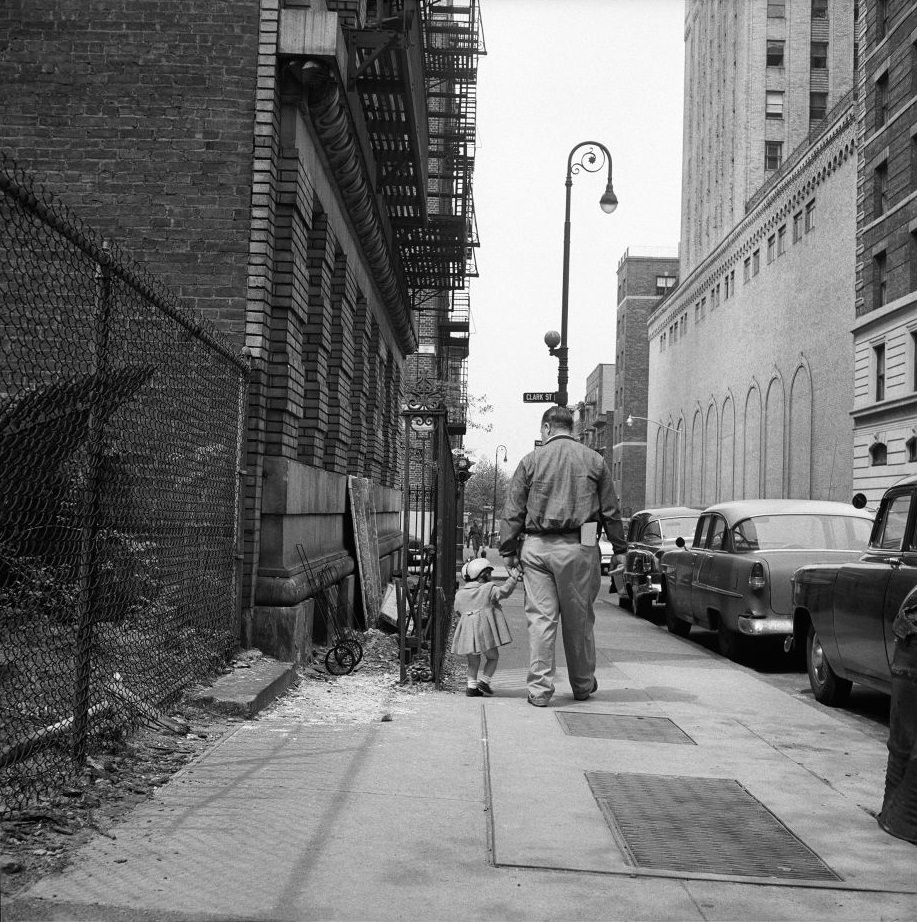
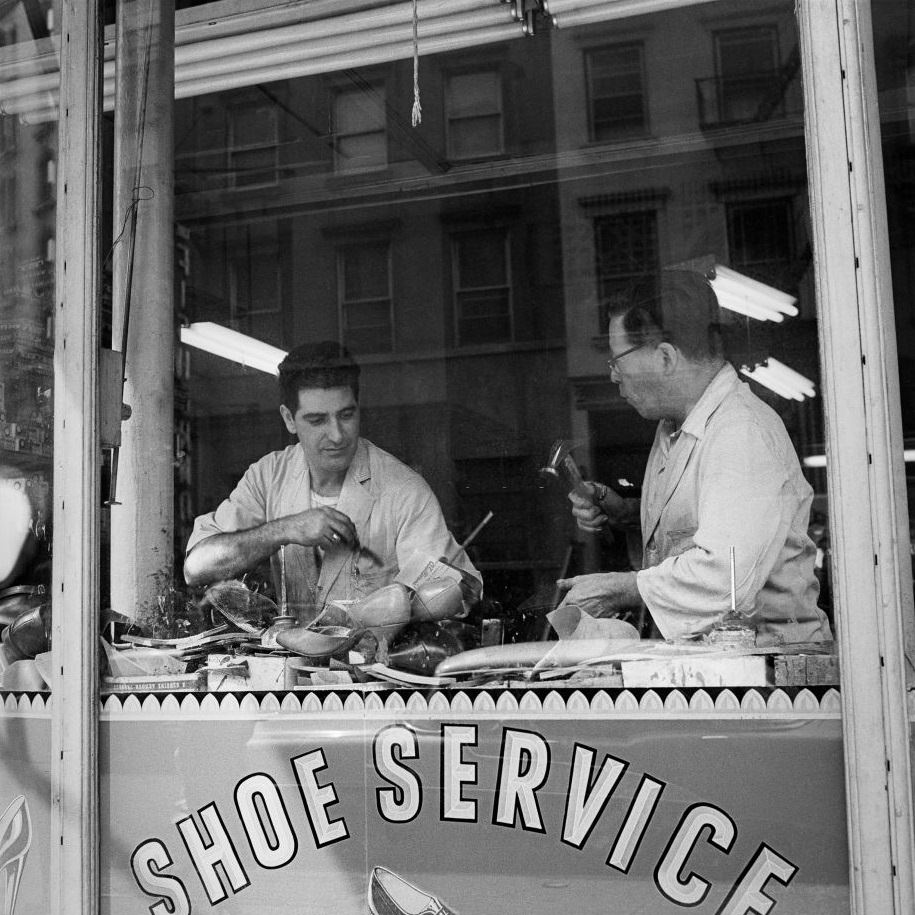
Small service businesses filled almost every block. A shoe shine and repair shop at the corner of Orange and Henry Streets was the kind of establishment that kept working people’s footwear in shape — a practical necessity in a neighborhood where most residents walked everywhere.
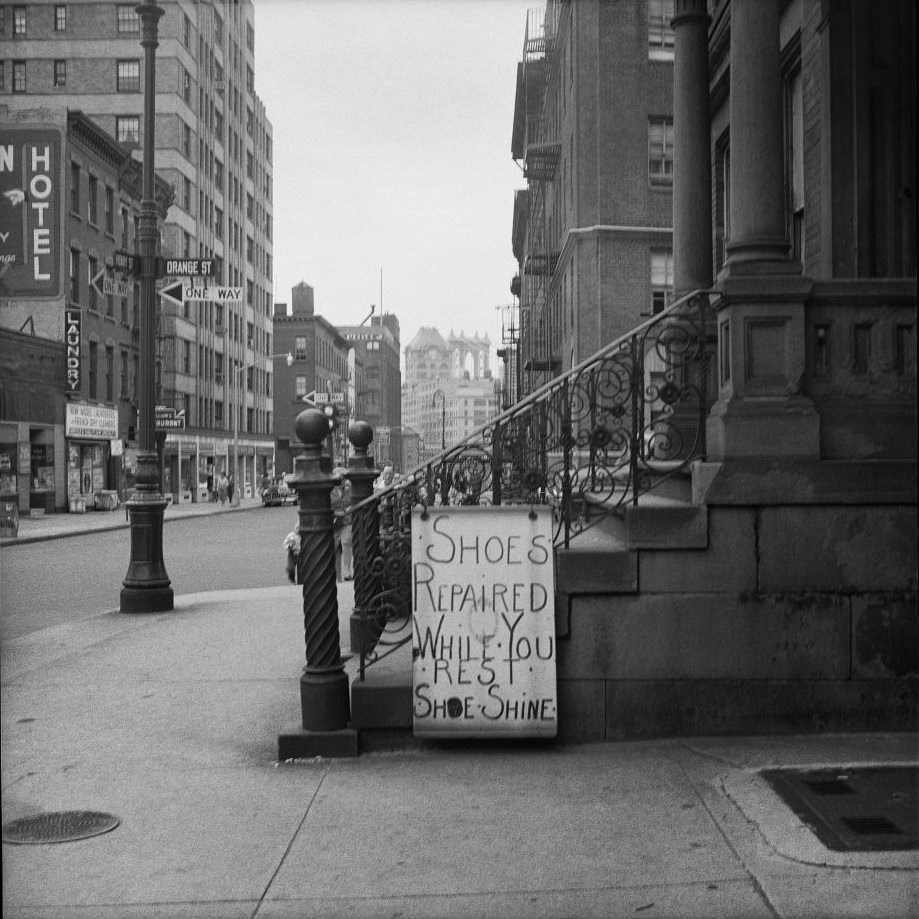
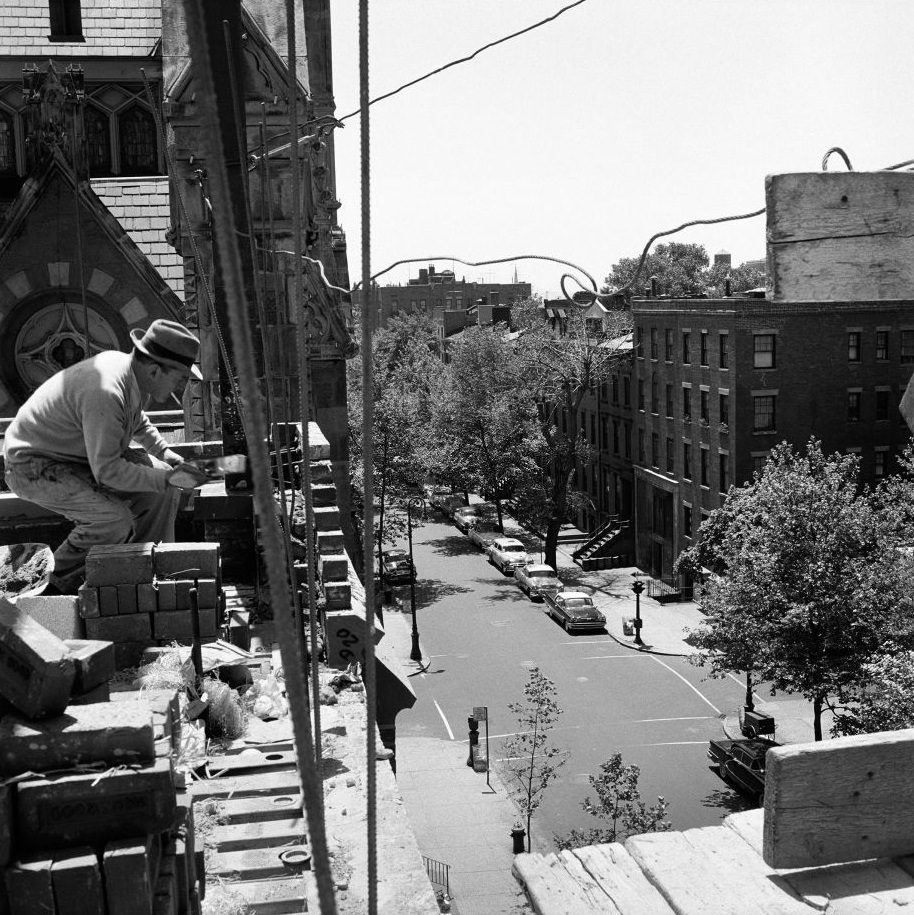
Construction workers were a constant presence on the evolving streetscape of Brooklyn Heights in 1958. Between demolitions and new builds, there was rarely a block without scaffolding or a half-finished structure. Workers took their breaks wherever they could find space.
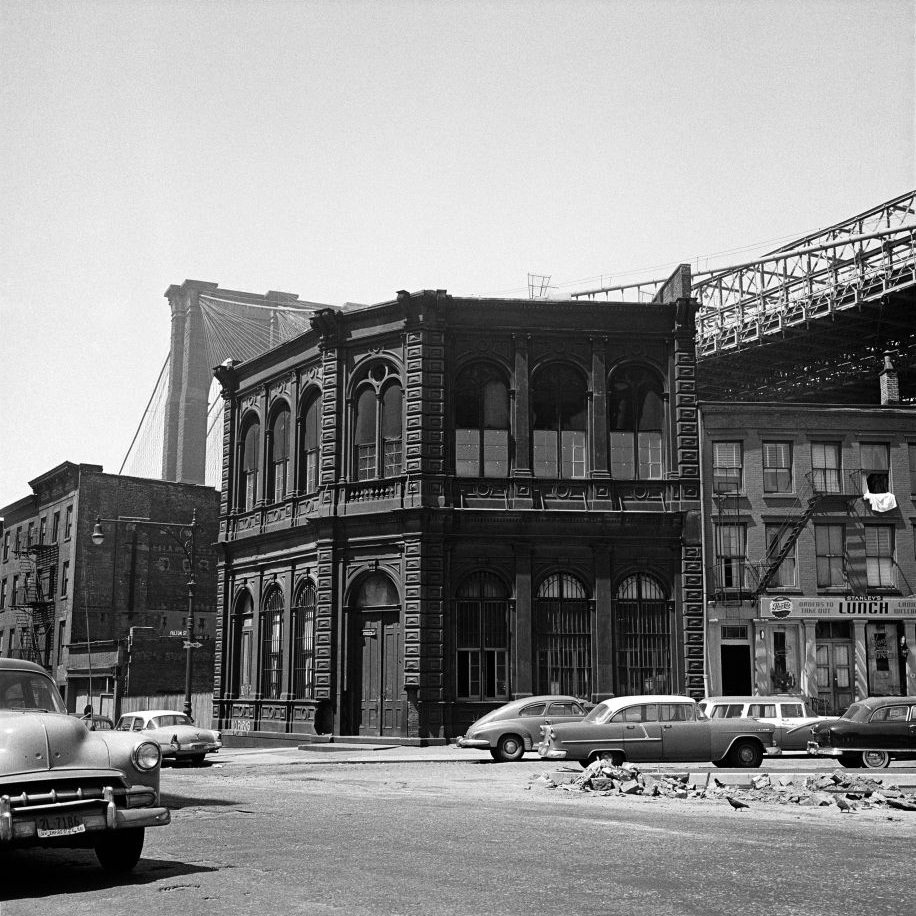
At the corner of Fulton and Front Streets, Stanley’s Lunch was the kind of no-frills diner that served the waterfront workers and local tradespeople. With the Brooklyn Bridge looming in the background, it sat at the boundary between the residential neighborhood and the industrial waterfront.
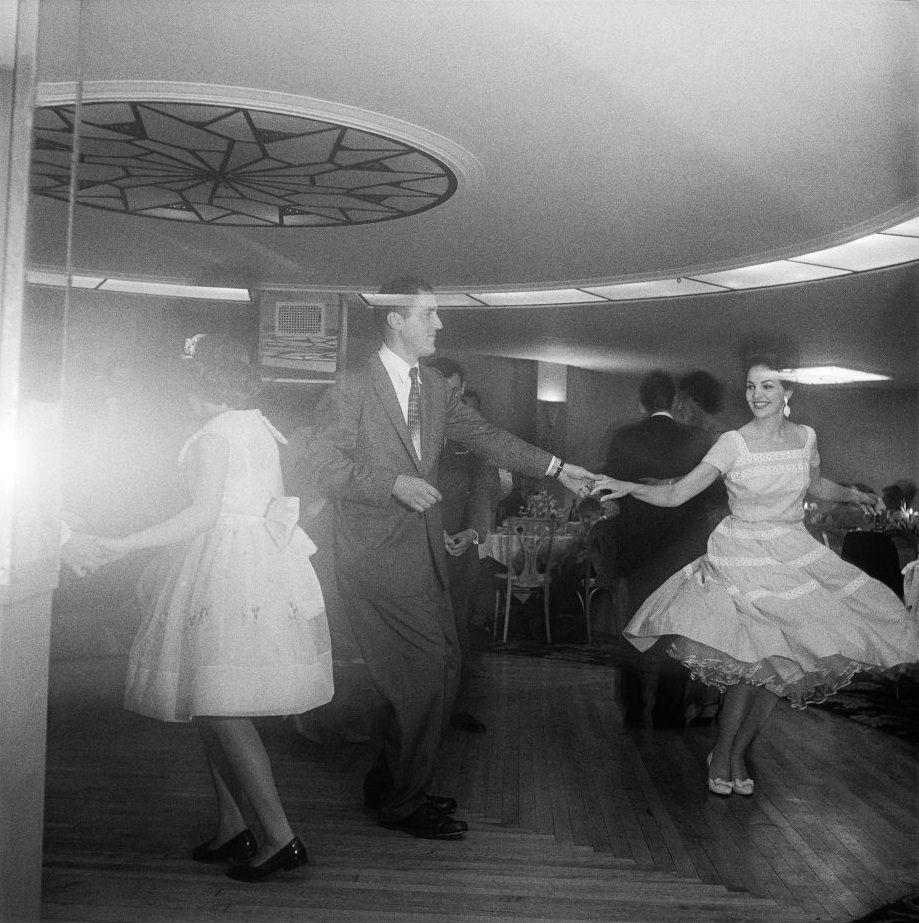
The neighborhood’s nightclubs drew couples out to dance on weekend evenings. Music, close quarters, and dim lighting made these spots a world apart from the brownstone streets just outside their doors.
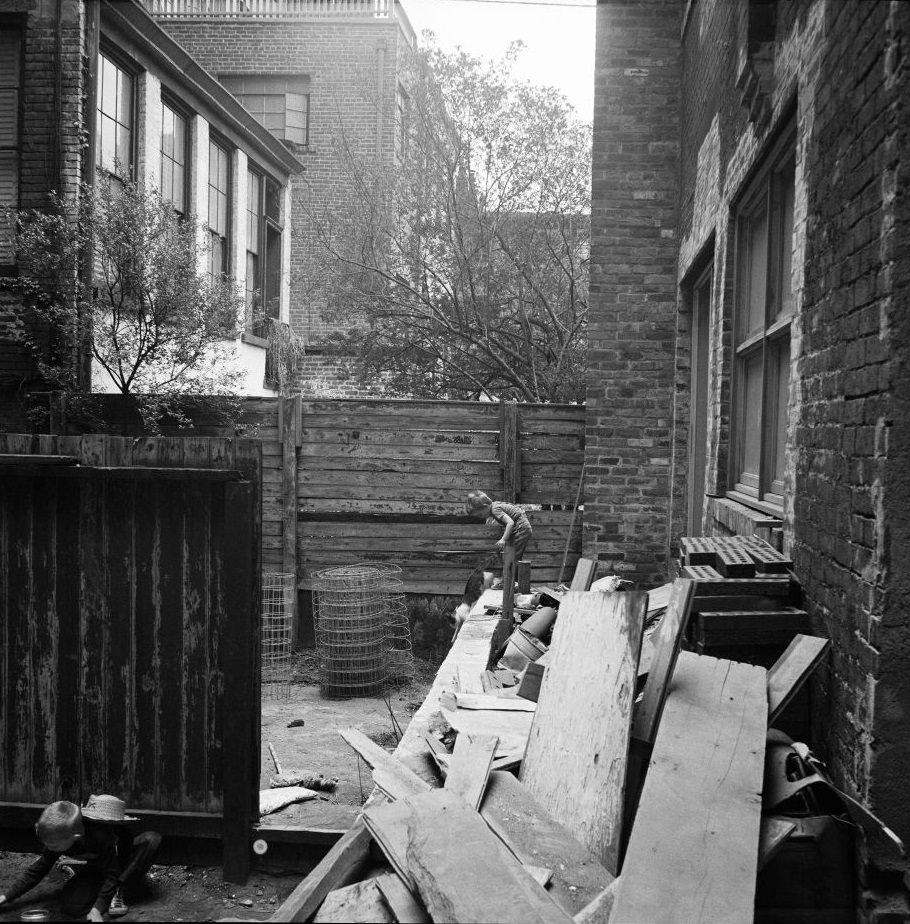
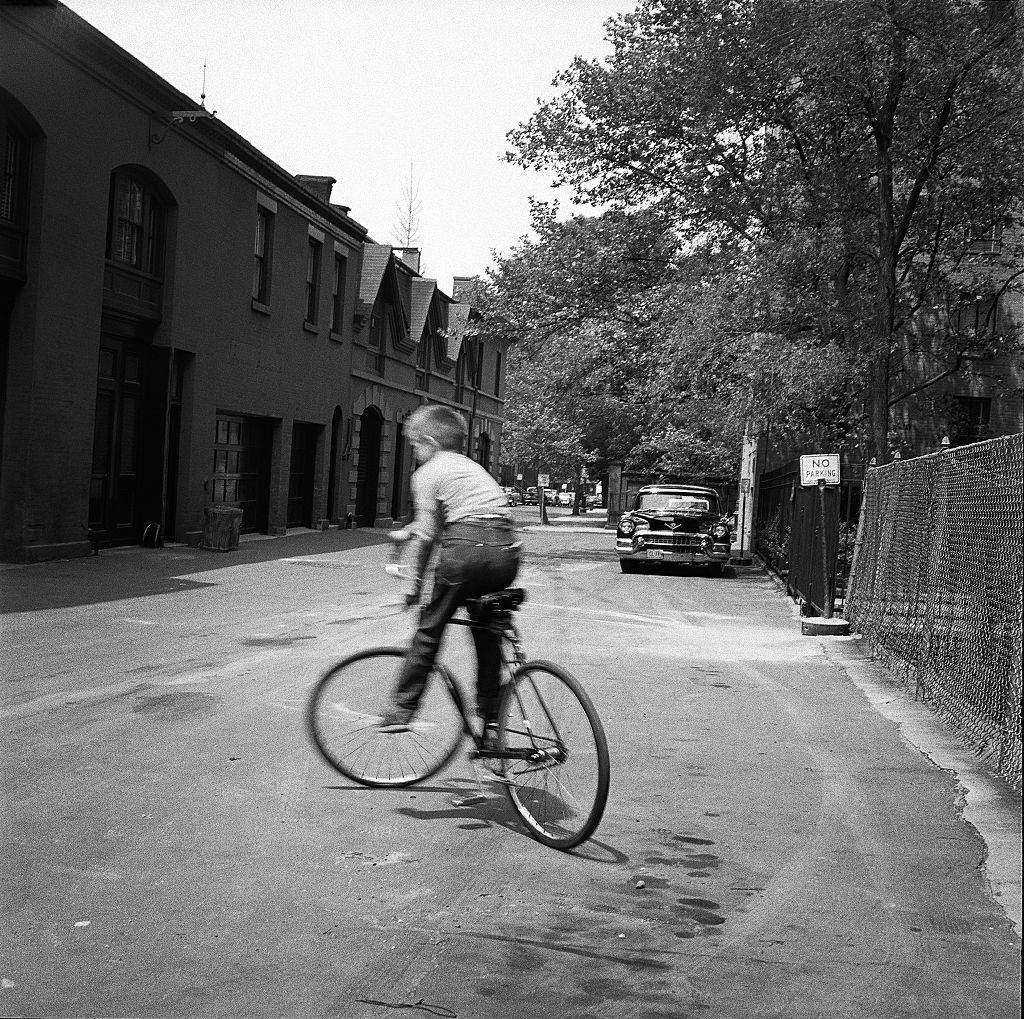
Children in Brooklyn Heights in 1958 were resourceful with what the city gave them. Alleyways, construction sites, and the materials left behind by workers all became part of the play environment. Supervision was minimal and independence was expected early.
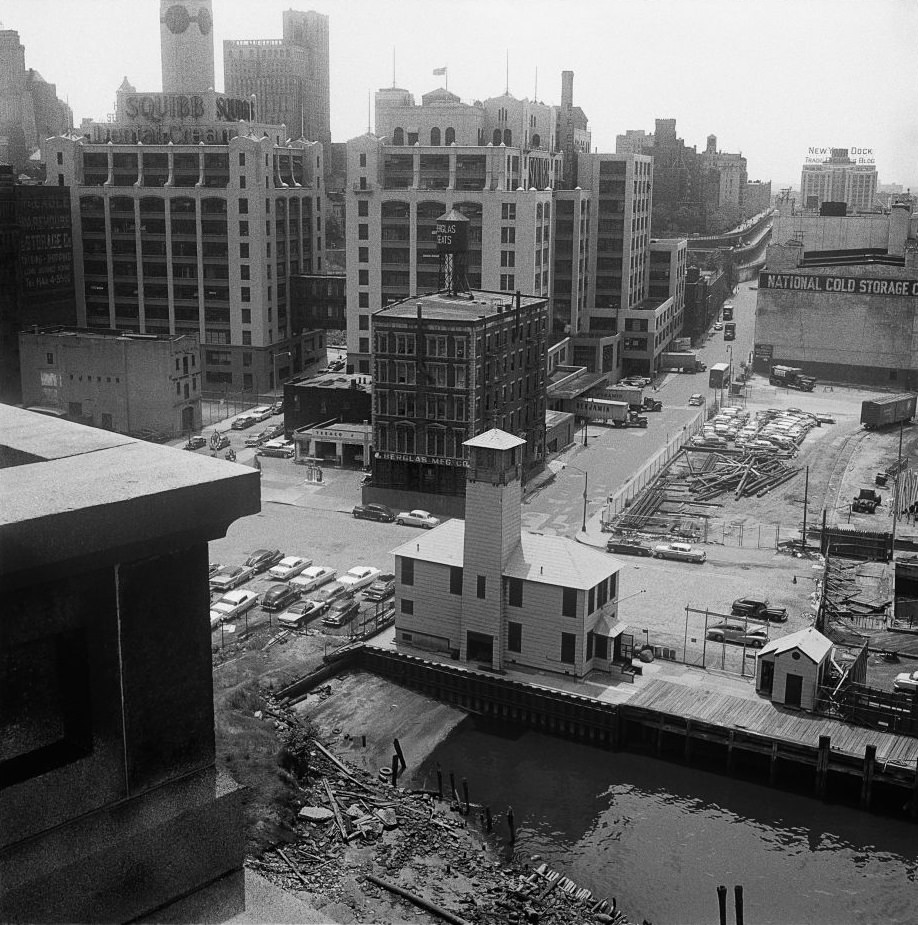
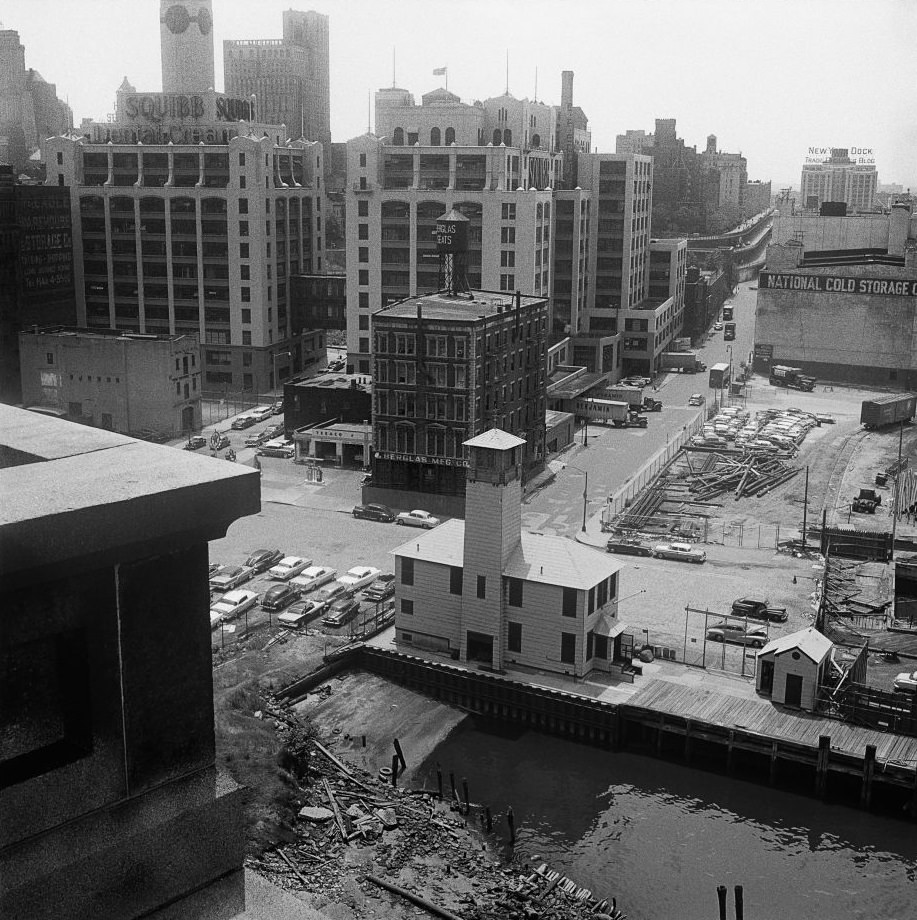
Near the waterfront stood the Fulton Ferry Fireboat House, built in 1926. By 1958 it had already been repurposed — the aerial view reveals its conversion into an ice cream parlor, a curious civilian use for a building originally designed to house firefighting vessels.
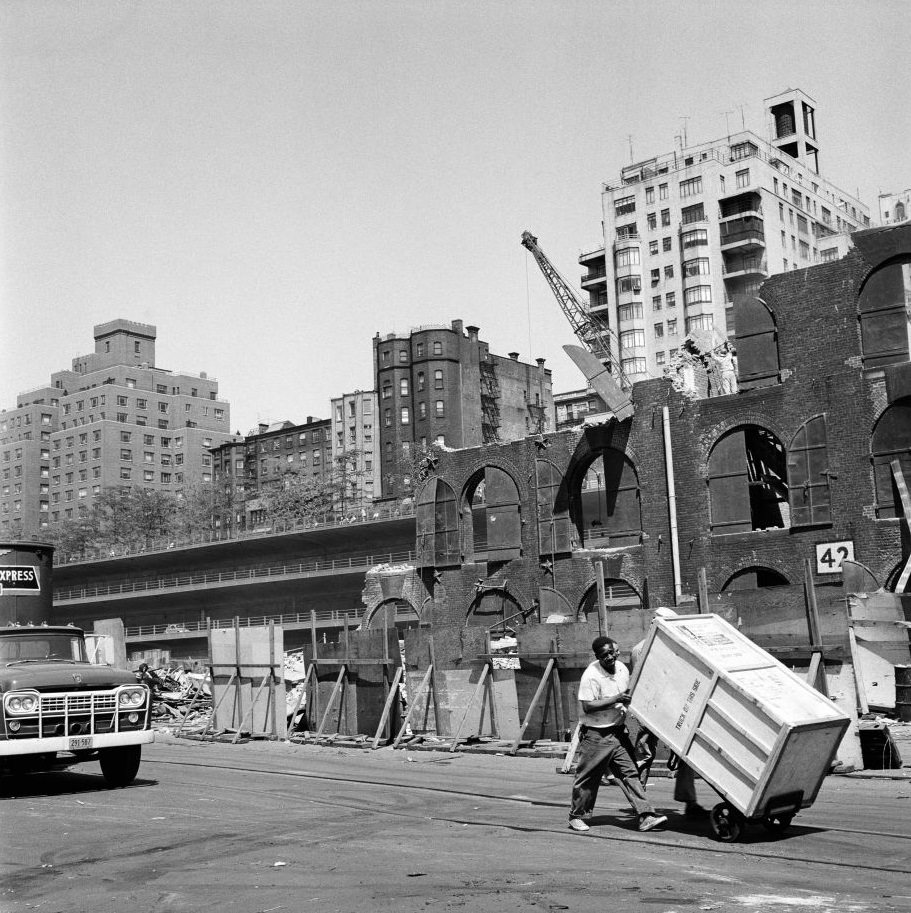
The constant pace of construction in 1958 Brooklyn Heights meant that deliveries were a daily occurrence. Workers brought in materials and supplies to job sites across the neighborhood, navigating narrow streets alongside pedestrians and parked cars.
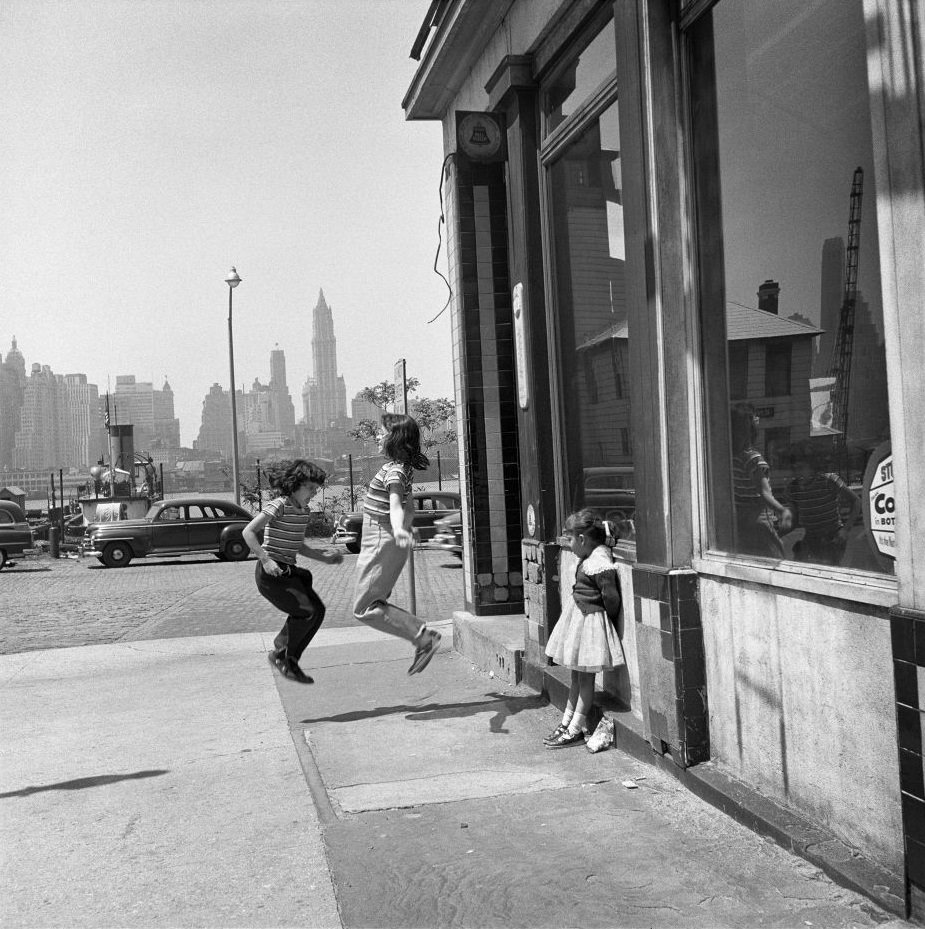
Atlantic Avenue was a hub of children’s street activity as well. Girls jumped and played on the sidewalks, taking advantage of the wide stretches of pavement between storefronts. Street games required no equipment and no special space — just a stretch of concrete and a few friends.
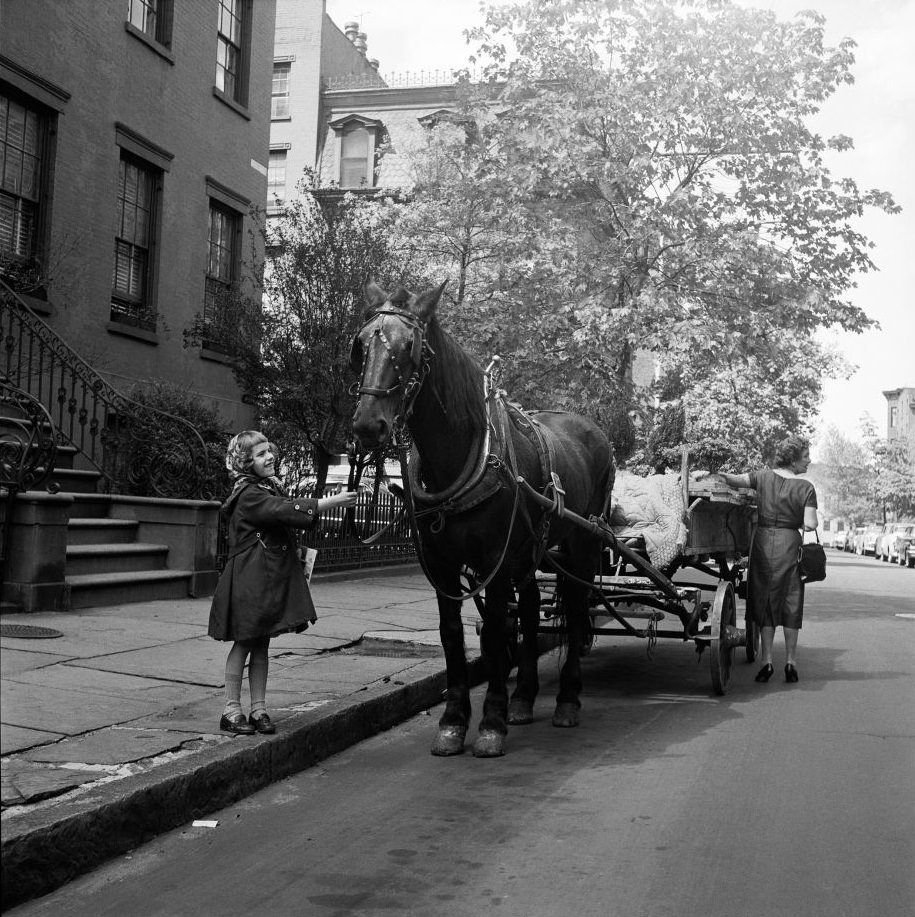
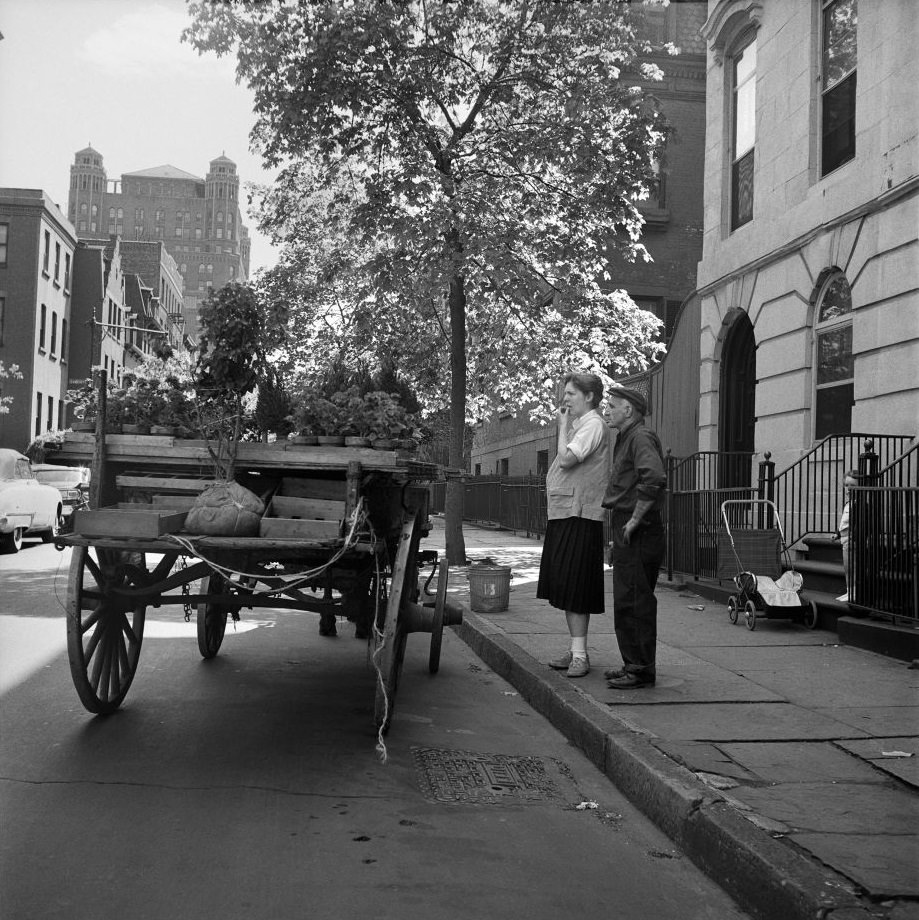
Horse-drawn deliveries were not entirely gone from Brooklyn streets in 1958. Plant vendors still used horses and carriages to make their rounds through the neighborhood, and for children who grew up in a city of cars and subways, the sight of a working horse on the block was a genuine novelty.
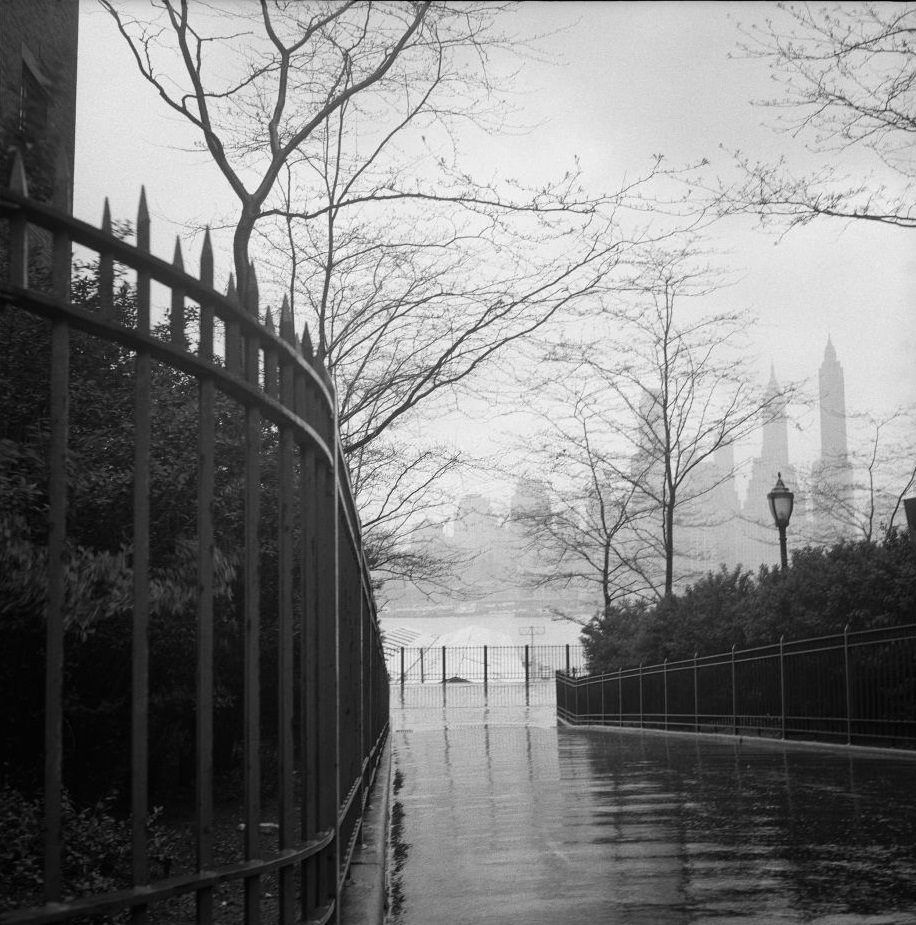
The Brooklyn Heights Promenade was a place for rest and reflection. Residents came to sit on the benches and take in the water and the city skyline across the harbor. It served the neighborhood in much the same way a park would — a public breathing space above the industrial waterfront below.
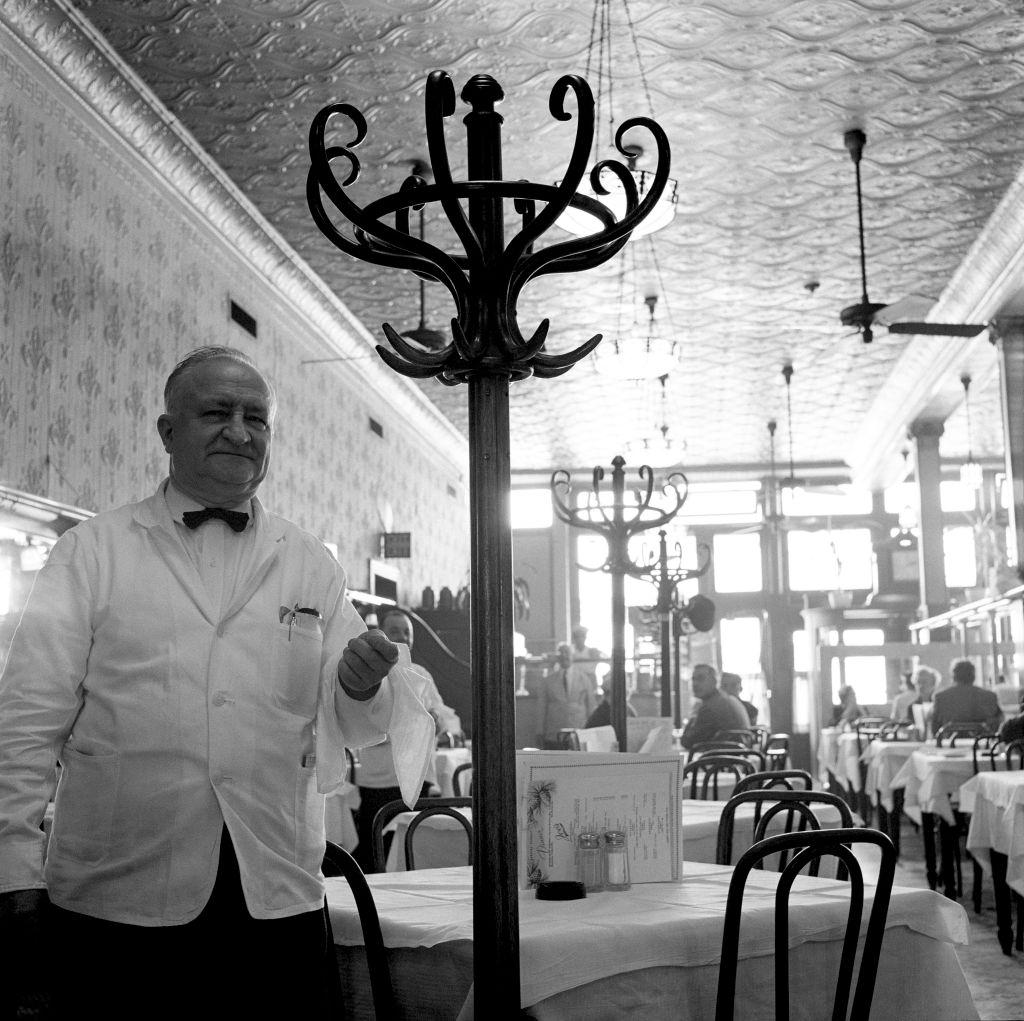
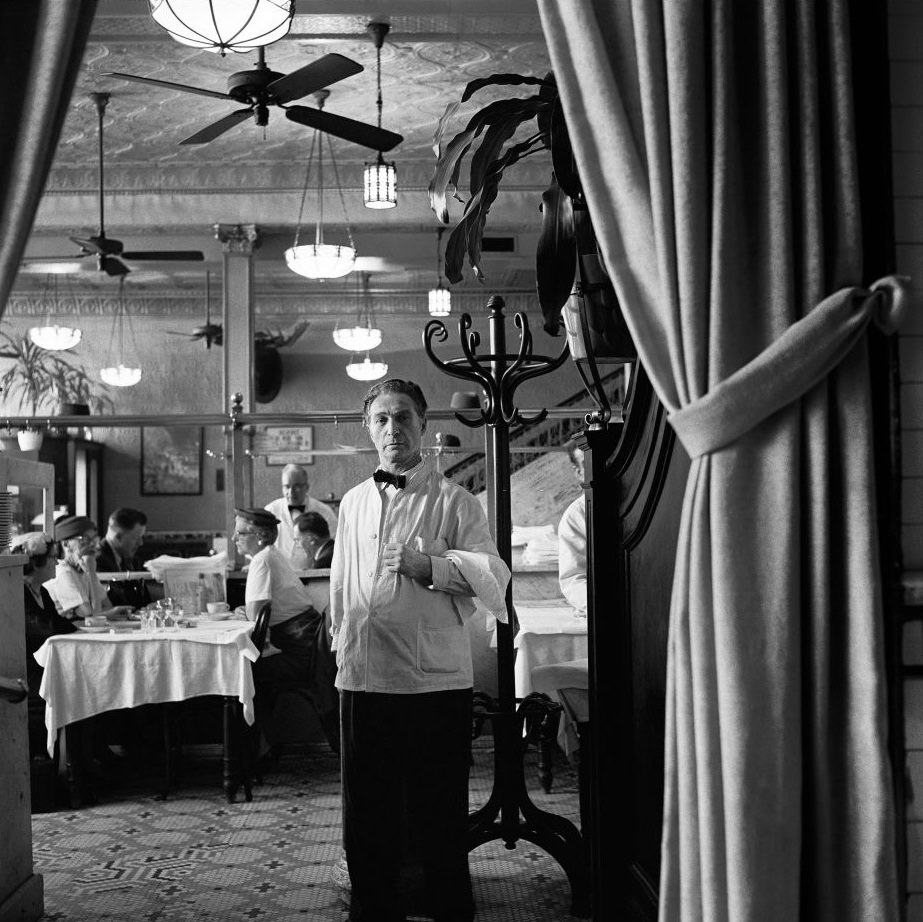
Joe’s Restaurant on Fulton Street was one of the neighborhood’s most well-used dining establishments. Waiters worked the floor while a steady stream of local customers came in for lunch and dinner. It was the kind of place with a regular crowd and a familiar menu — the backbone of the neighborhood’s food culture.
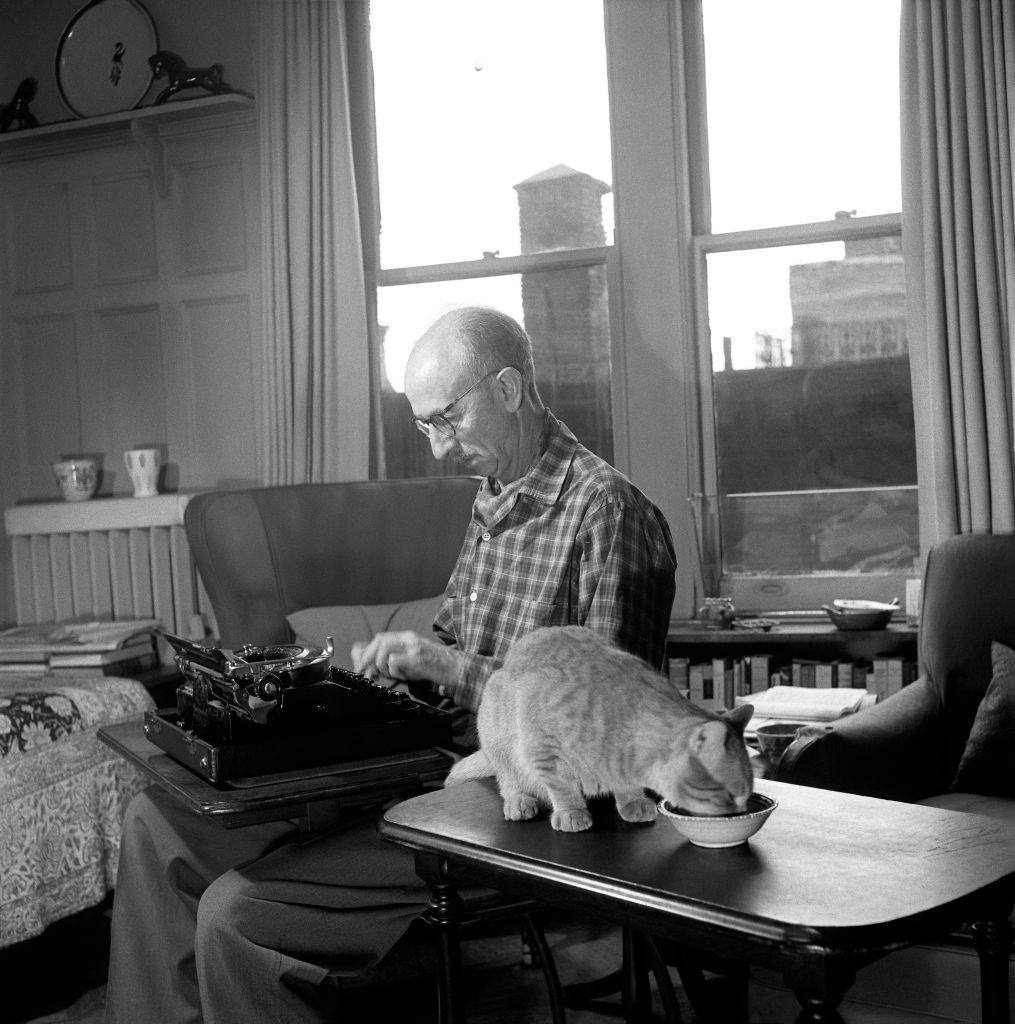
Brooklyn Heights was home to several notable intellectuals and political figures in 1958. Bertram Wolfe, a Soviet historian, biographer of Diego Rivera, and founding member of the Communist Party USA, lived at 68 Montague Street. His apartment at that address placed him squarely in the neighborhood’s mix of thinkers and writers.
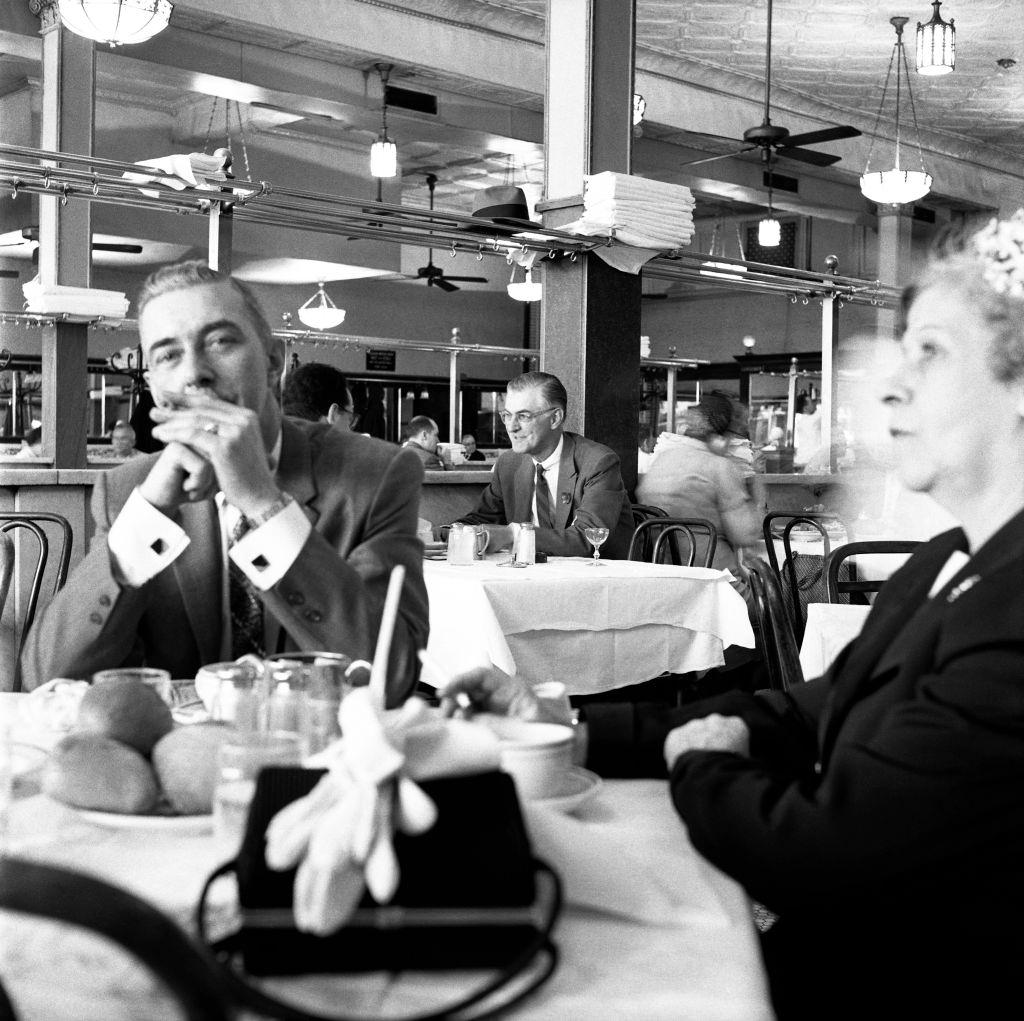
Joe’s Restaurant drew a cross-section of the neighborhood at mealtimes. At lunch, the tables filled quickly with workers, locals, and regulars who came not for anything fancy, but for a reliable meal in a familiar setting.
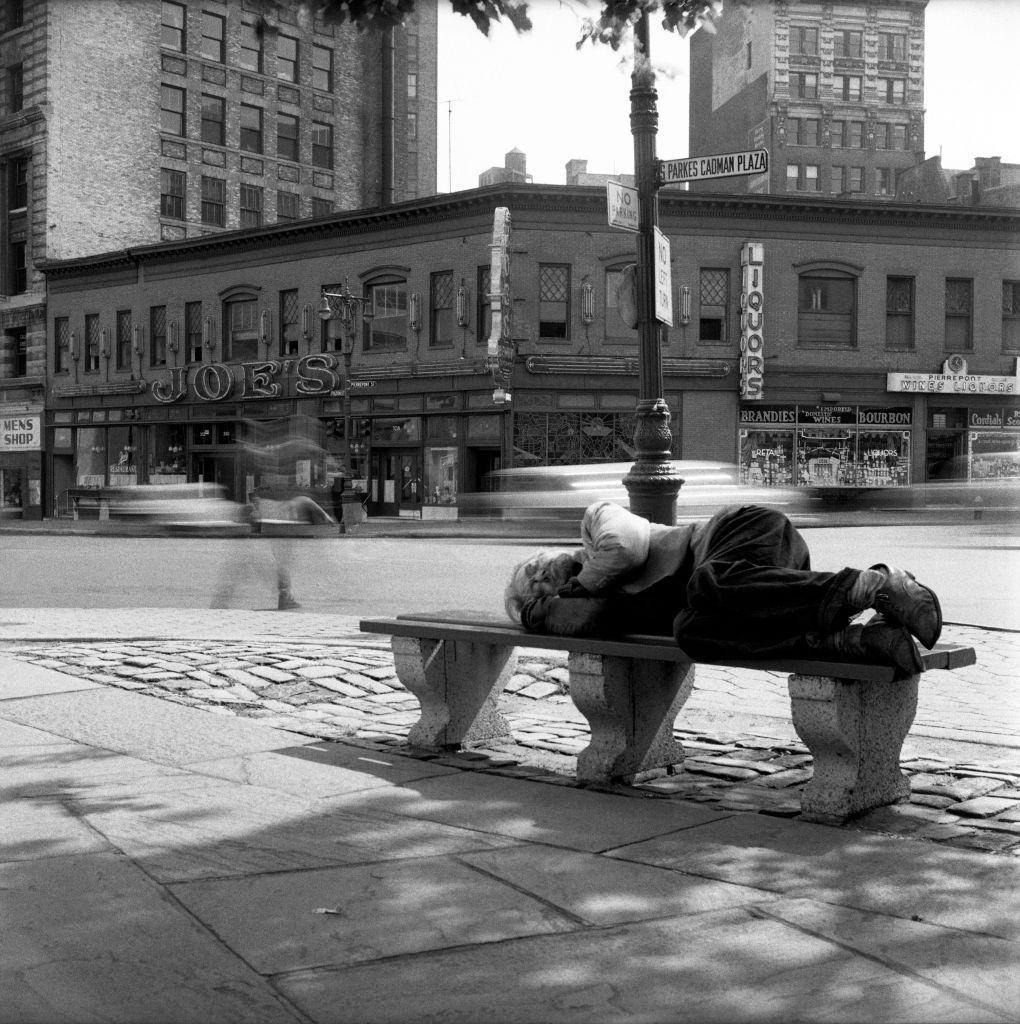
Just outside Joe’s Restaurant on Fulton Street, the contrast between the neighborhood’s working-class vitality and its poverty was on plain display. A homeless man asleep on the sidewalk in front of the restaurant captured in a single frame the economic divide that ran through mid-century Brooklyn.
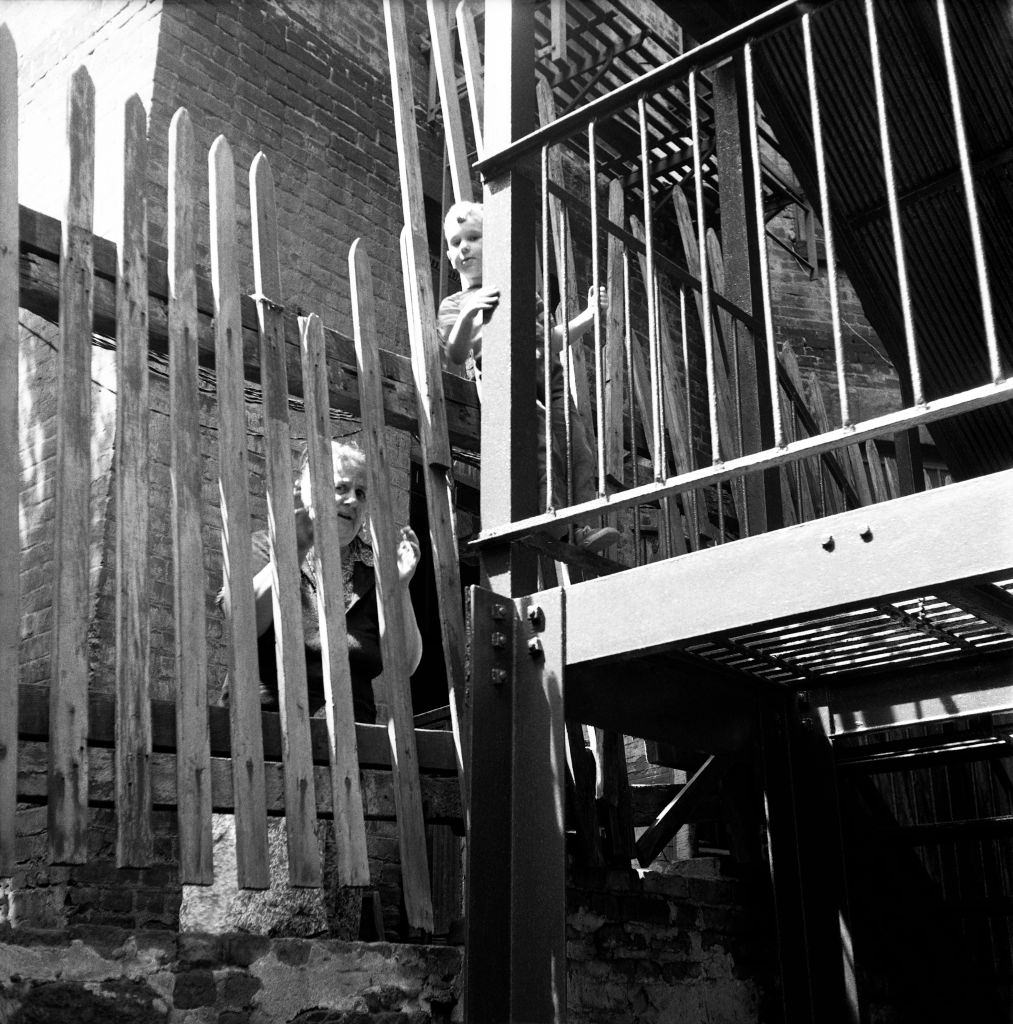
Fire escapes were an architectural constant across Brooklyn’s older apartment buildings, and residents used them for far more than emergencies. In warm weather, they served as balconies, drying racks, and vantage points over the street below.
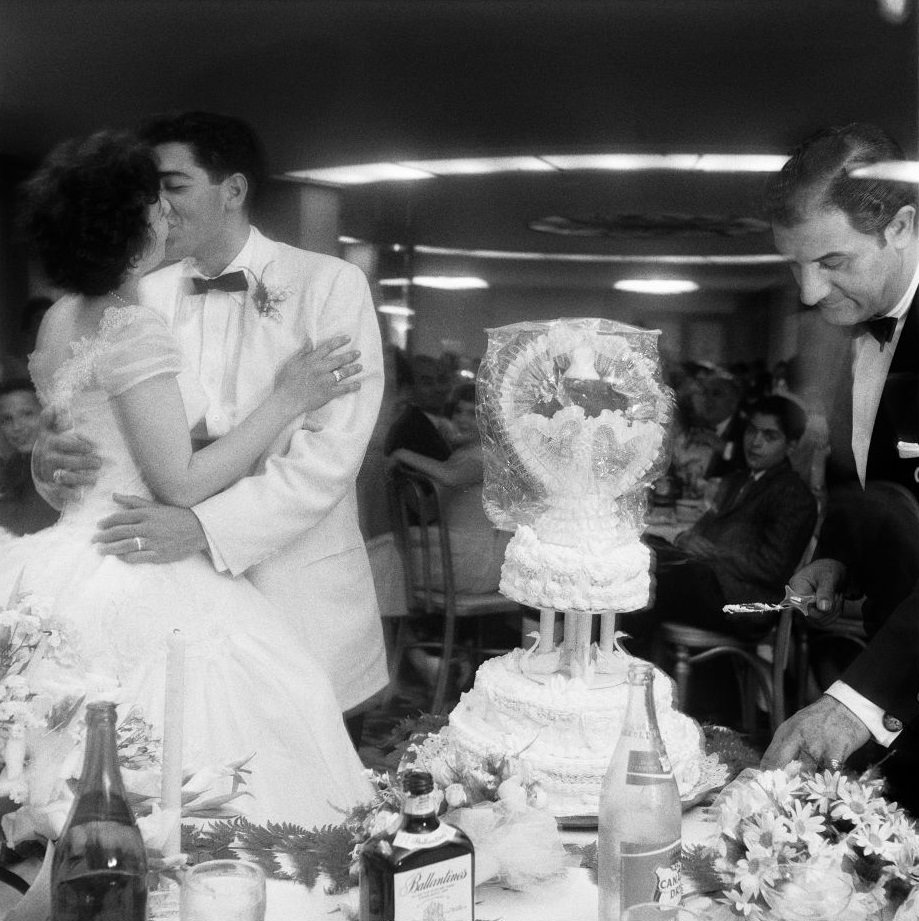
Wedding receptions were community events in Brooklyn Heights — loud, social gatherings that brought extended families and neighbors together. The traditions on display were those of a neighborhood still closely tied to its immigrant and working-class roots.
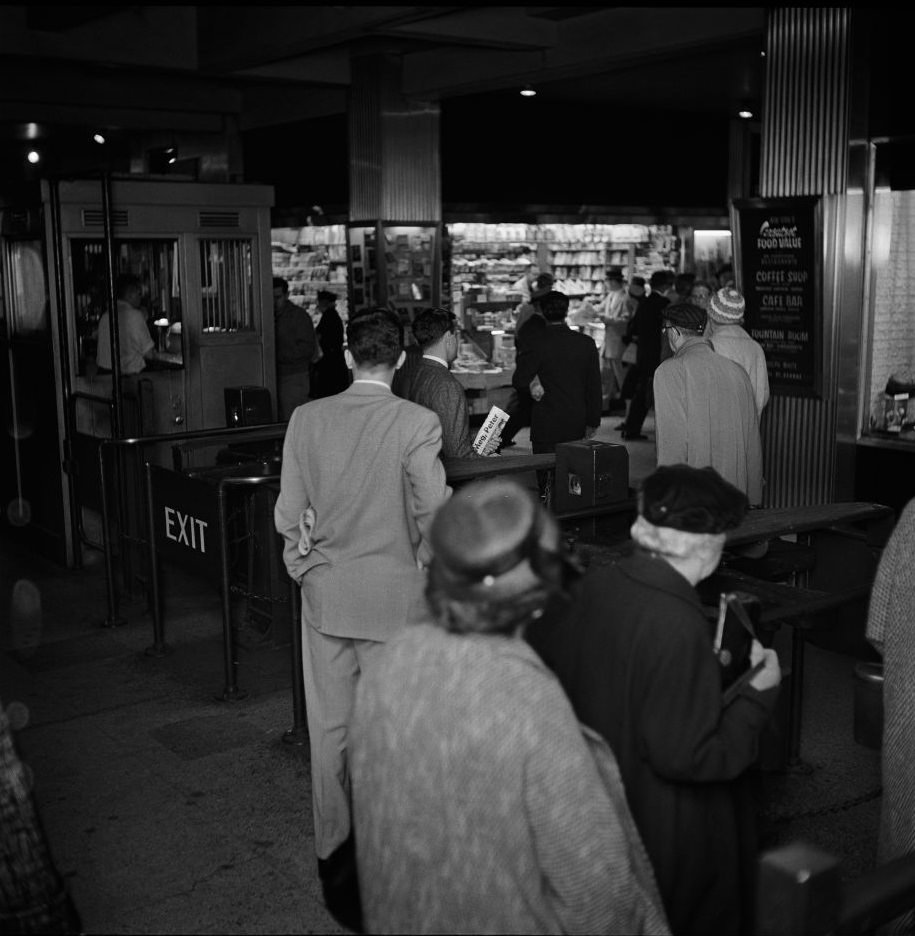
The subway at Brooklyn Heights offered a direct line into Manhattan, and commuters filed in and out of the station throughout the day. For many residents, it was the invisible thread connecting their quiet residential neighborhood to the intensity of Midtown and Downtown Manhattan just minutes away.
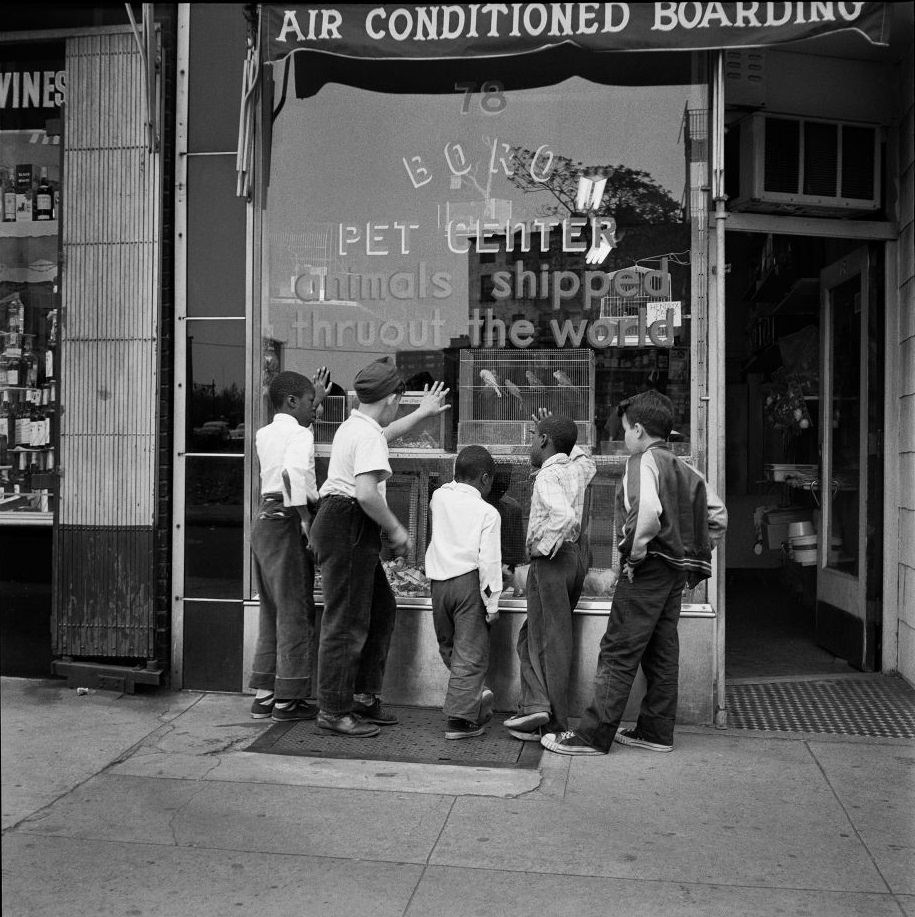
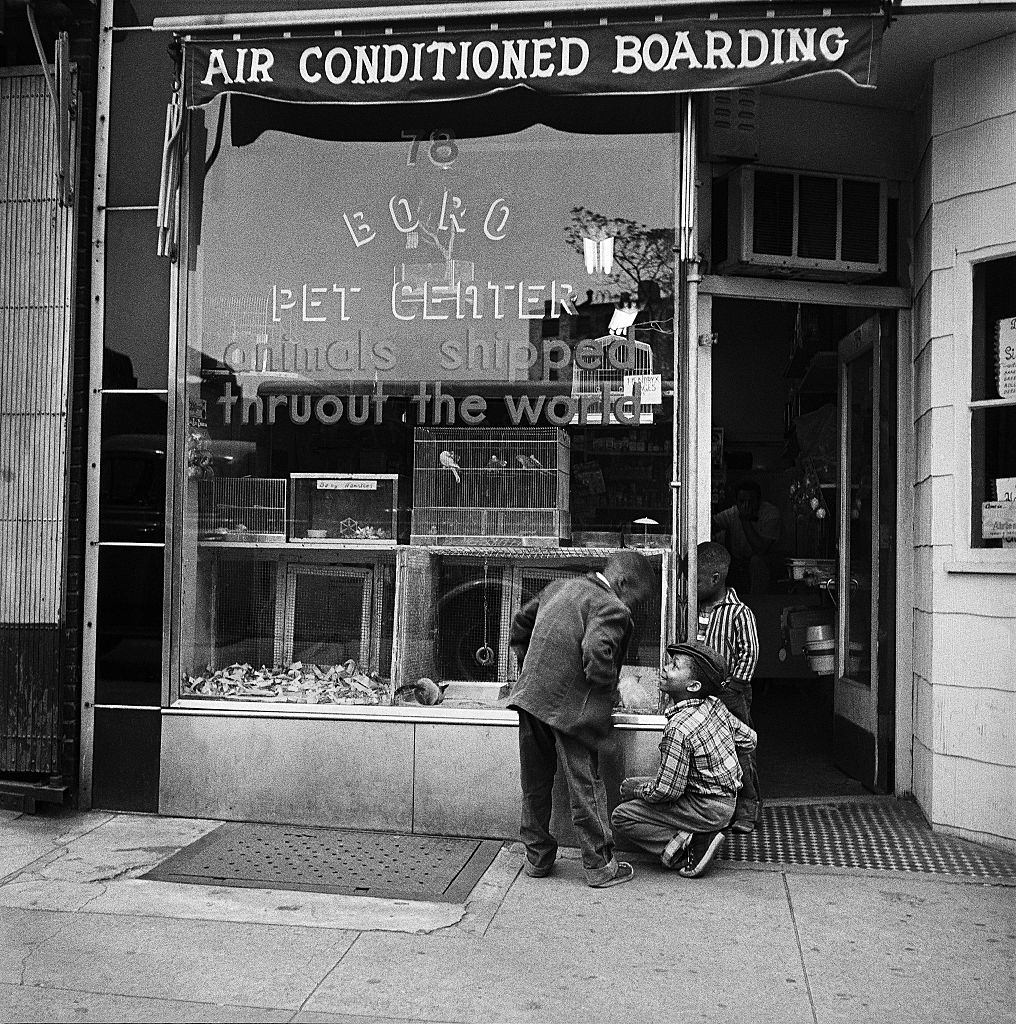
At 78 Henry Street, the Boro Pet Center drew children from across the neighborhood. The storefront windows displaying animals were a reliable magnet for kids of all backgrounds, and the scene outside the shop reflected the ethnic diversity that characterized Brooklyn Heights by the late 1950s.
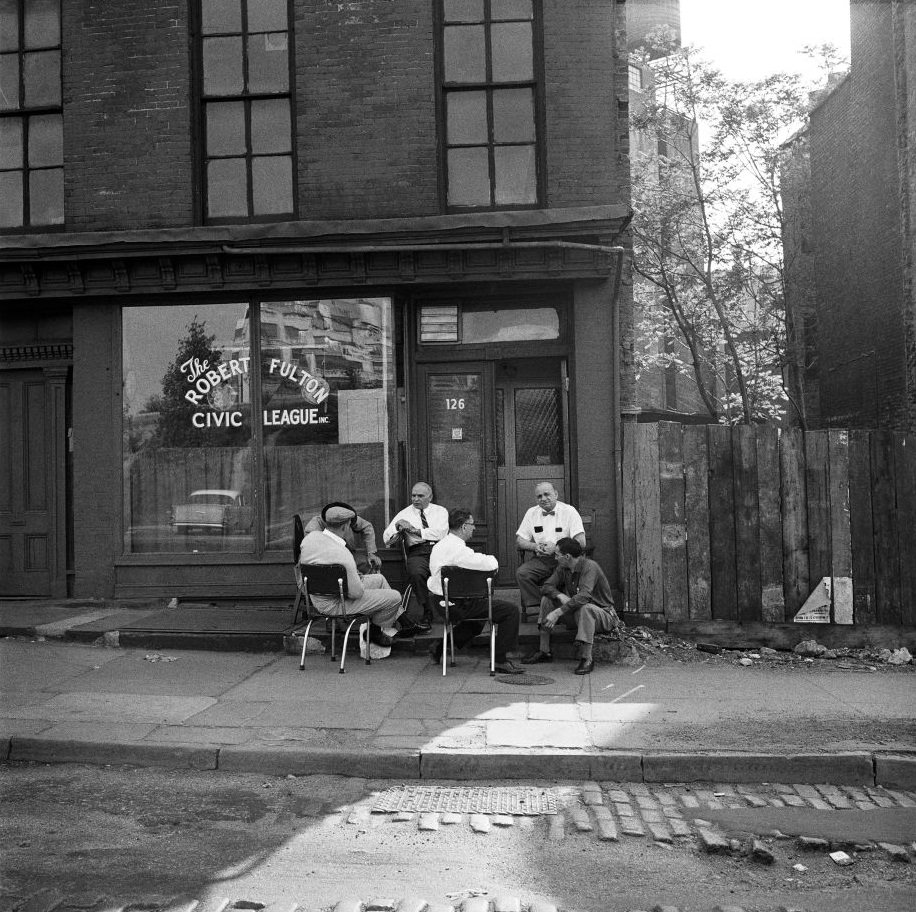
Civic organizations played an important role in neighborhood life. The Robert Fulton Civic League was a local institution, and the men who gathered outside it were the kinds of residents who took an active interest in local politics, zoning, and community affairs.
Pineapple Street held one of the neighborhood’s more unusual historical structures. The carriage house at number 31 was built in the 1880s to serve as a stable for the Brooklyn Fire Department. By 1958, it had long since been converted for other uses, but its original form was still clearly visible.
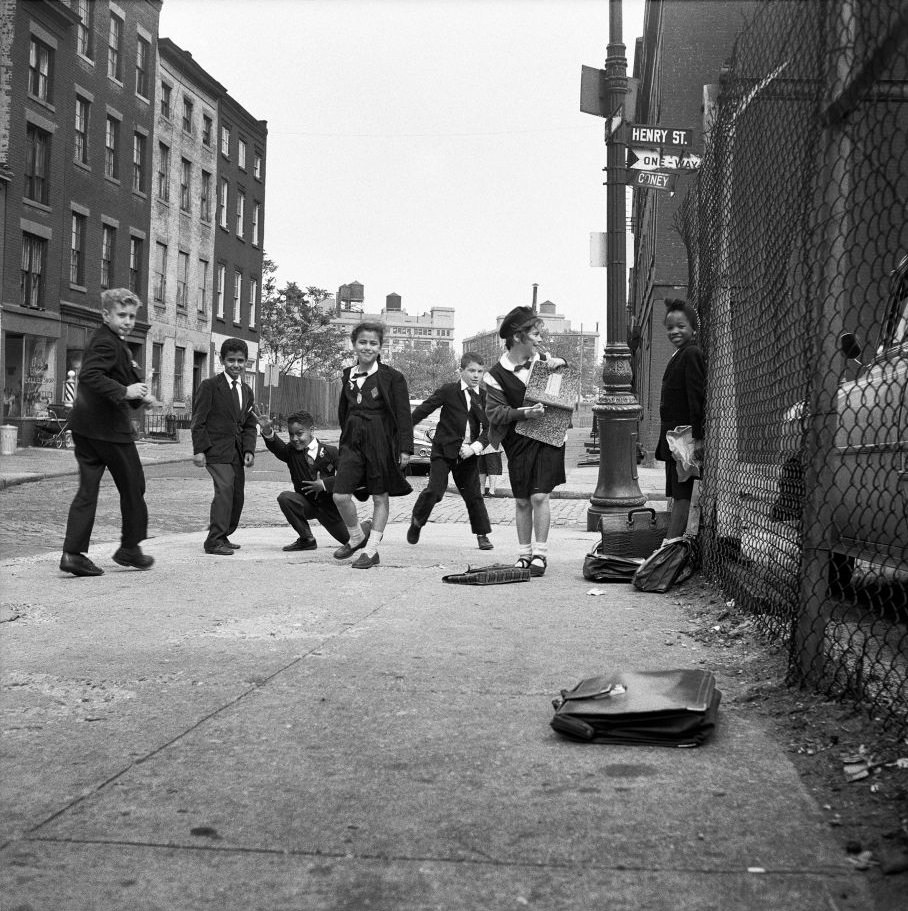
Brooklyn Heights schools in 1958 reflected the neighborhood’s demographic mix. Classrooms and after-school homework sessions brought together children of different racial and ethnic backgrounds — a reality that the photographs document plainly and without comment.
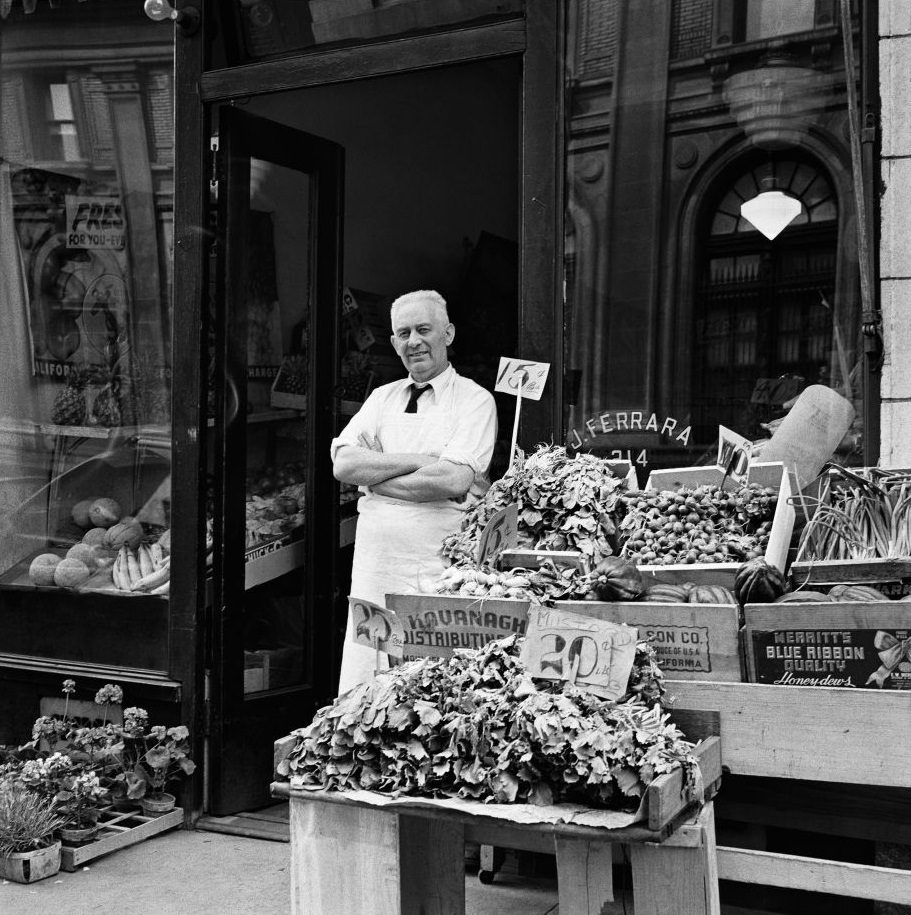
The local grocery at J. Ferrara was the kind of small, family-owned food shop that anchored the neighborhood’s retail life. A grocer who knew his customers by name, who stocked what the neighborhood ate, and who was as much a fixture of the block as the building itself.
The horse-drawn plant deliveries made more than one appearance in the March 1958 photographs, suggesting they were a regular occurrence on Brooklyn Heights streets. For younger children, the sight of a horse pulling a carriage through an urban neighborhood was something worth stopping to watch.
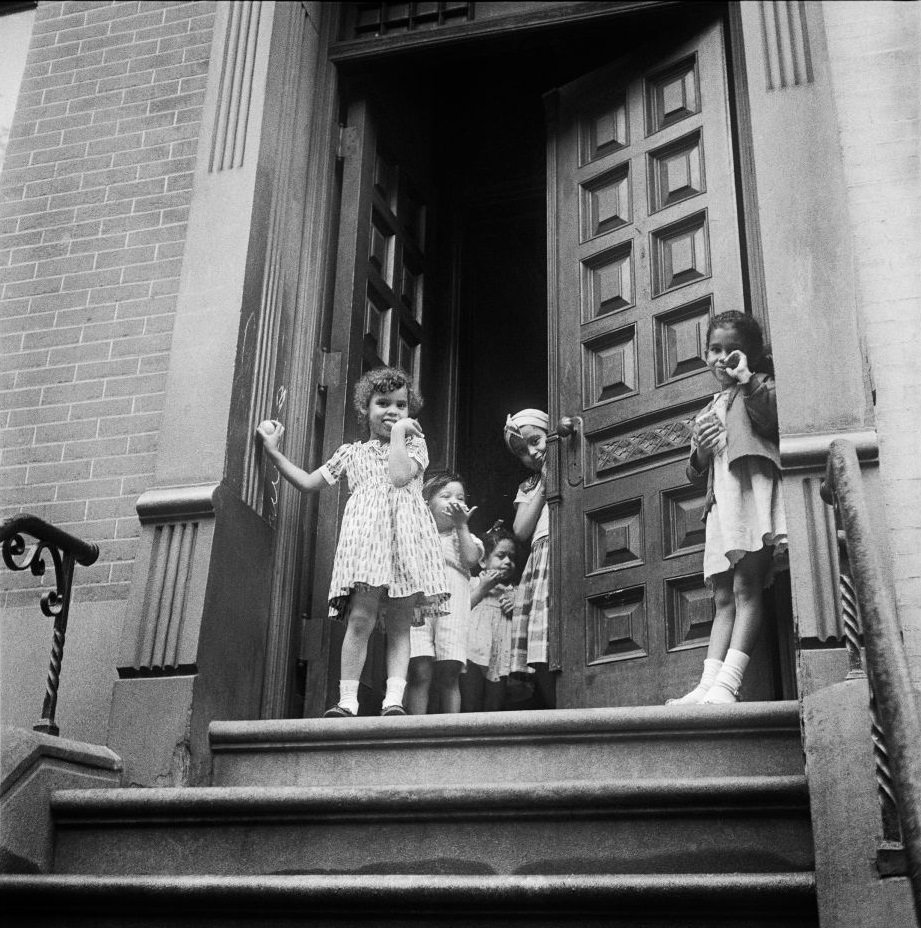
Stoops served as social stages throughout the day. Girls gathered on them before and after school, using the steps as a meeting point, a sitting area, and a place to see and be seen on their block.
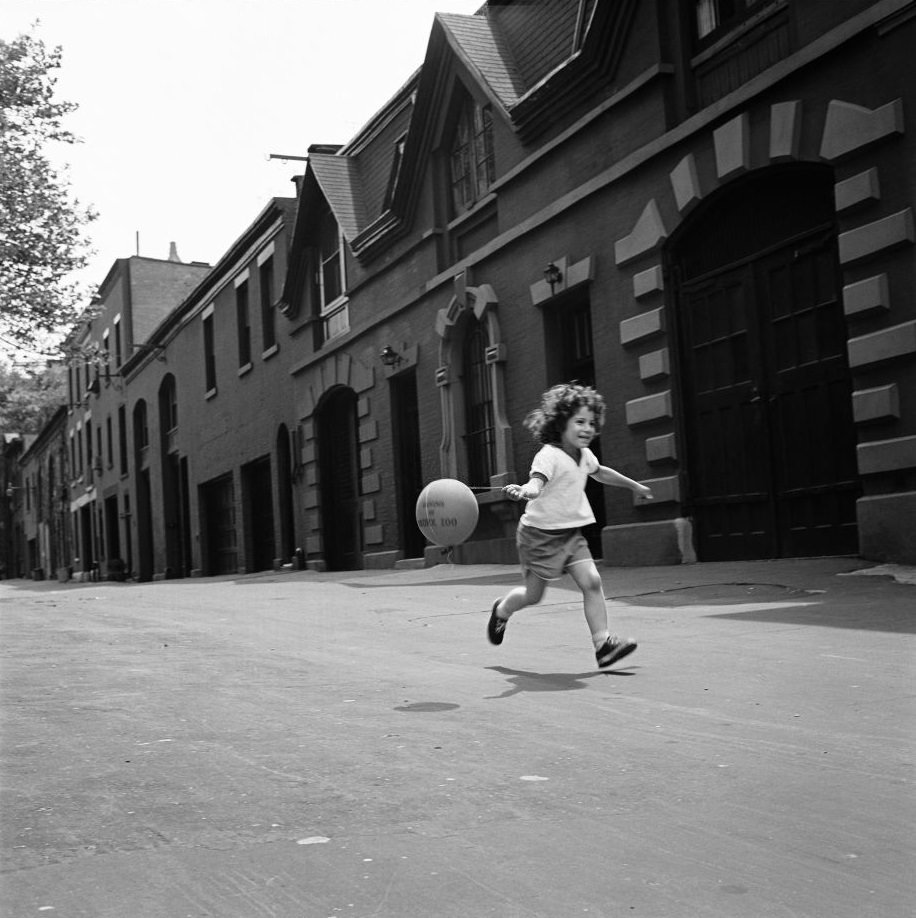
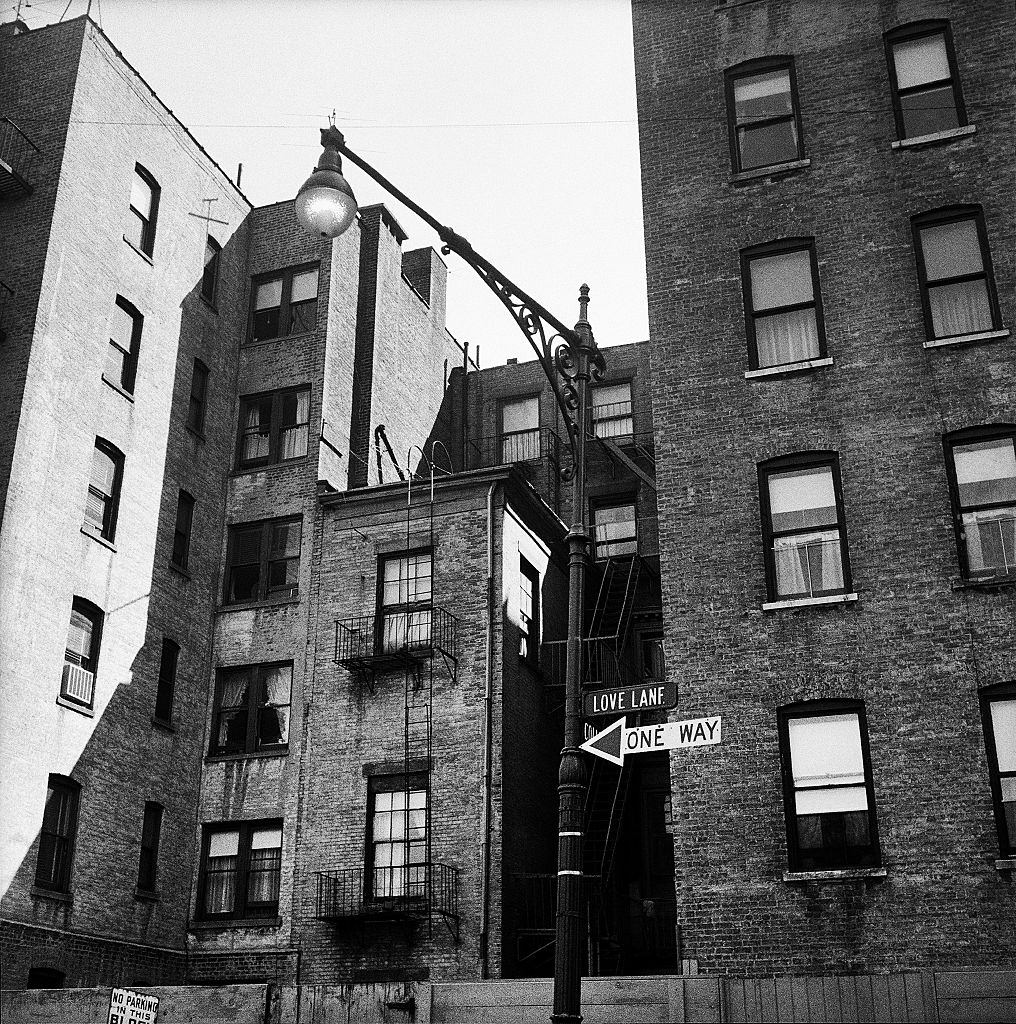
Love Lane was one of Brooklyn Heights’ most charming and best-named streets — a short, narrow passage that felt removed from the busier arteries nearby. Children treated it as a playground, and the lane had a quiet, almost village-like quality in the midst of the larger city.
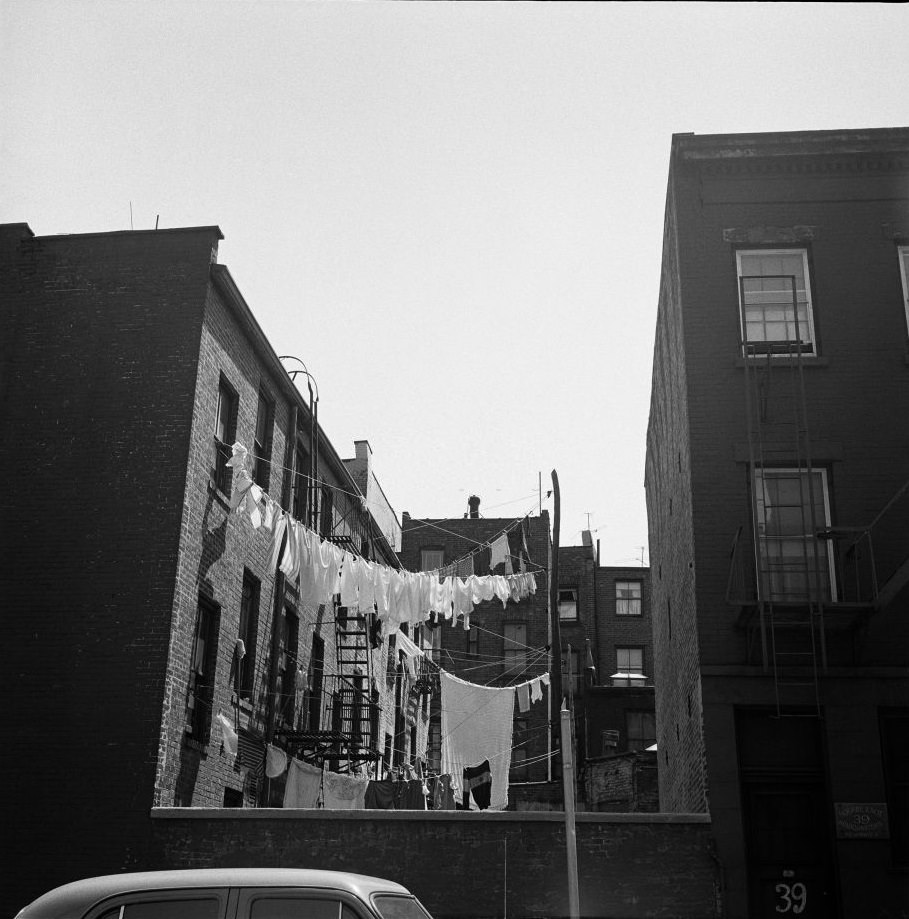
Laundry on clotheslines was a familiar sight in Brooklyn Heights in 1958, strung between buildings in courtyards and along narrow alleys. Next to the P.C. Herwig Co. Square Knotting Design shop, the drying clothes were just part of the everyday landscape of a working residential neighborhood.
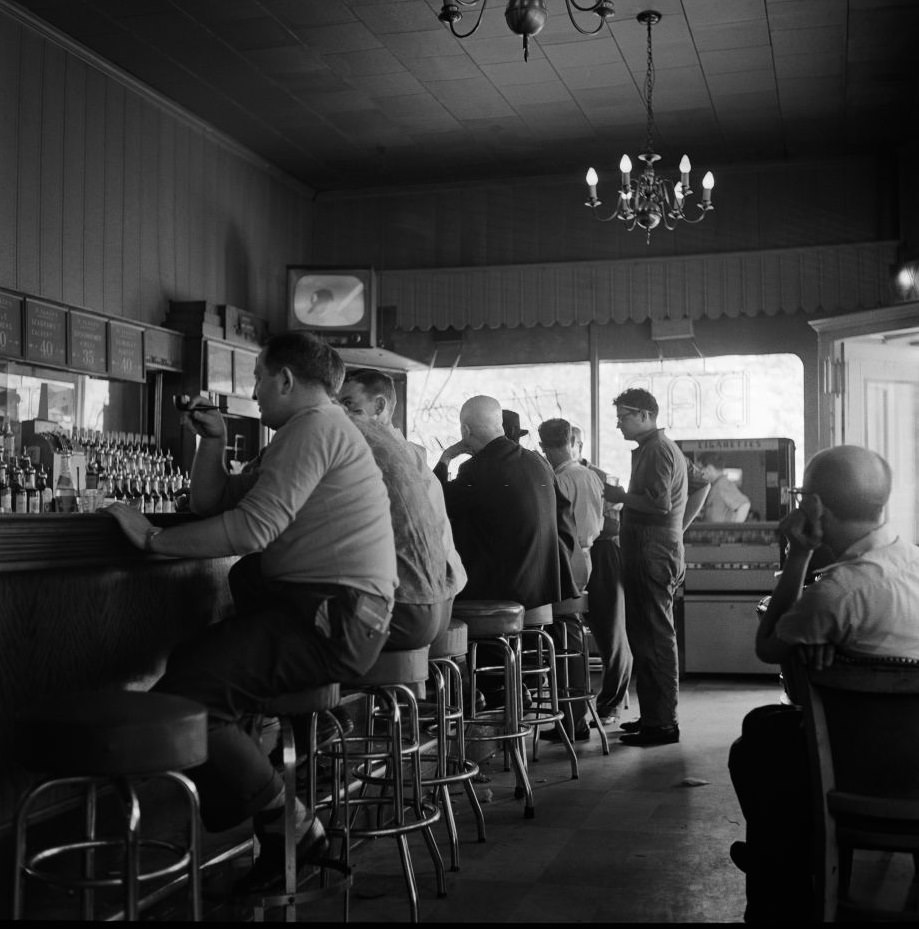
Baseball was the dominant sport in New York in 1958, and bars across Brooklyn Heights set up televisions so regulars could follow the games. The Brooklyn Dodgers had left for Los Angeles just the year before, making the 1958 baseball season the first in decades without a hometown team — a fact that stung many Brooklyn residents deeply.
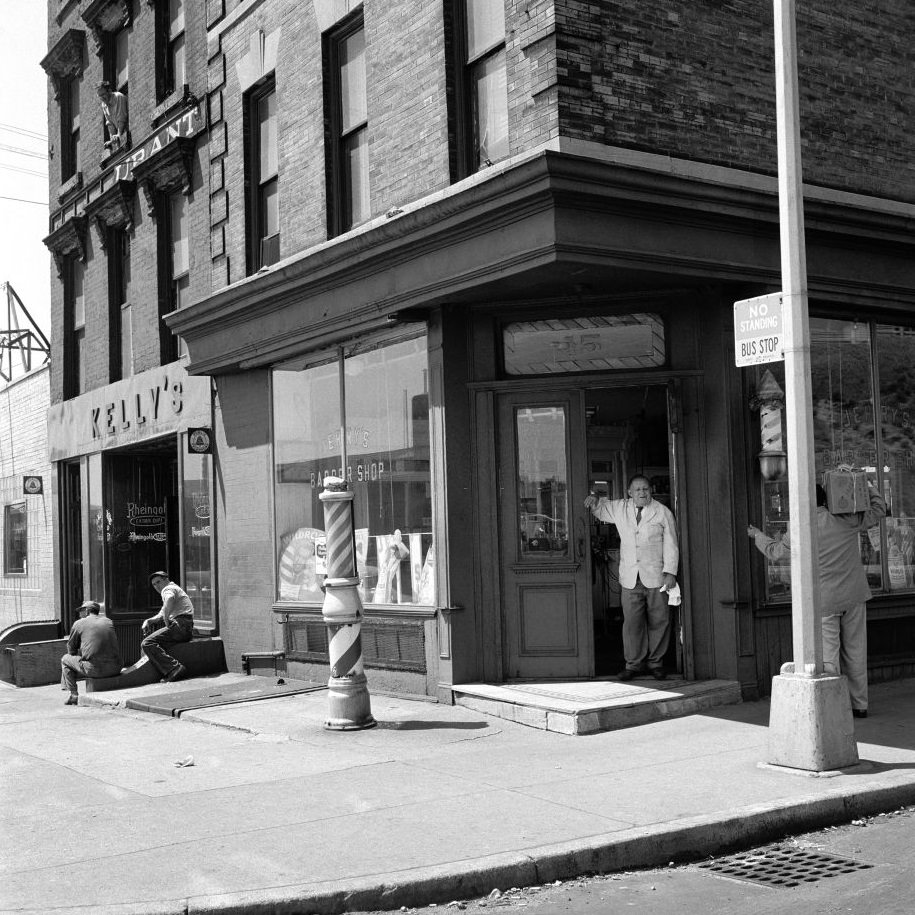
Barber Jerry at 15 Atlantic Avenue was enough of a local personality to appear in the 1958 photographs more than once. His shop was a neighborhood institution, and his interactions on the sidewalk in front of it — with delivery men, passersby, and regulars — illustrated the close-knit social fabric of the commercial strip.
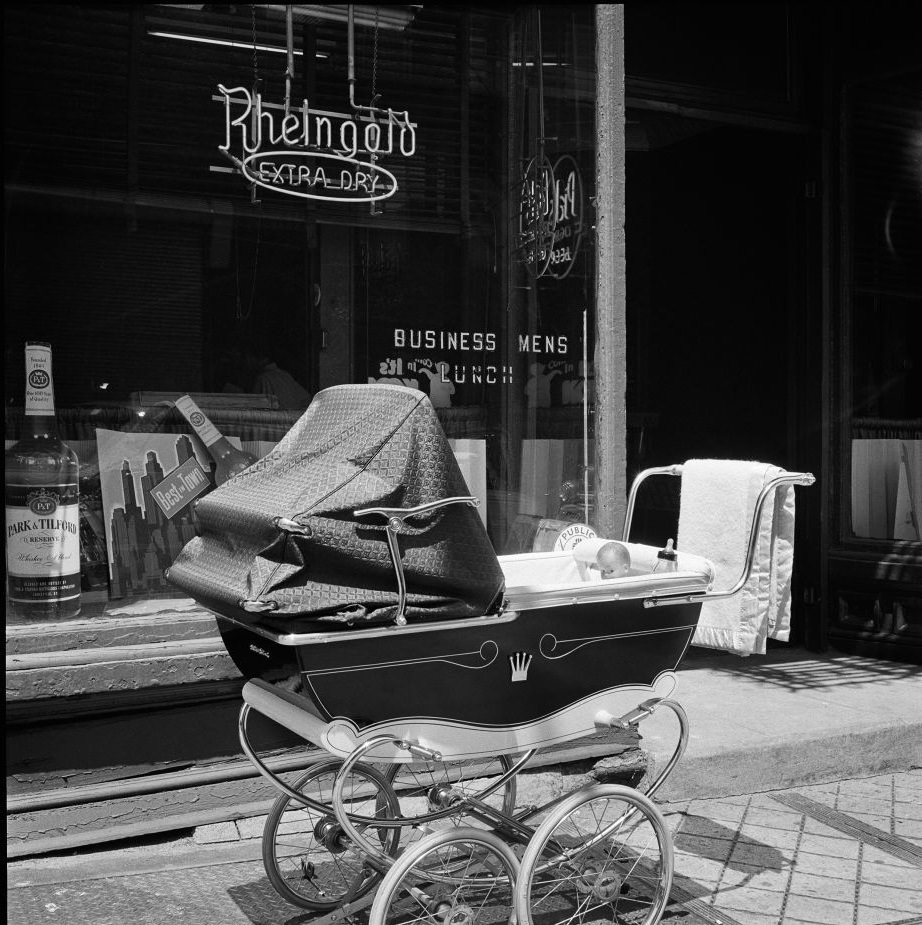
Next door to Jerry’s at number 13 was Kelly’s Bar, another Atlantic Avenue fixture. The baby carriage parked outside while a parent stepped in was a common sight on the street — a small detail that captured how thoroughly these local businesses were woven into the daily routines of neighborhood families.
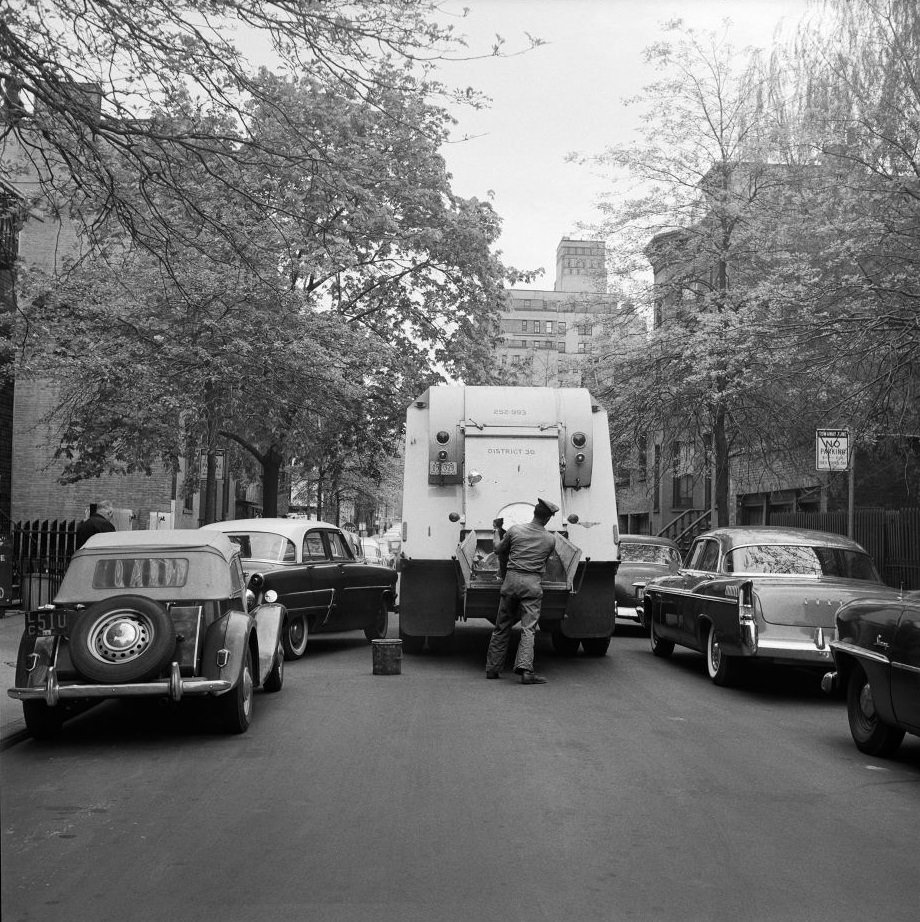
Sanitation work was unglamorous but essential. In a dense neighborhood like Brooklyn Heights, regular garbage collection kept the streets functional. The sanitation worker photographed in 1958 was doing a job that thousands of city employees performed daily, largely unnoticed.
Shoe repair was a thriving trade in 1958. With leather shoes expensive and mass-produced footwear not yet the norm, having a cobbler nearby was a practical necessity. Two cobblers working side by side inside a Brooklyn Heights shop represented a trade that was still very much in demand.
The Eisenhower-Nixon billboards appeared on more than one block. A woman walking her dogs past one of these signs offered a quiet contrast between the scale of national politics and the ordinariness of a morning walk through a residential neighborhood.
Henry Street ran through the heart of the residential neighborhood, and the children photographed there in 1958 reflected the demographic reality of the block. Brooklyn Heights was already a racially and ethnically mixed neighborhood by this point, and its schools and streets showed it.
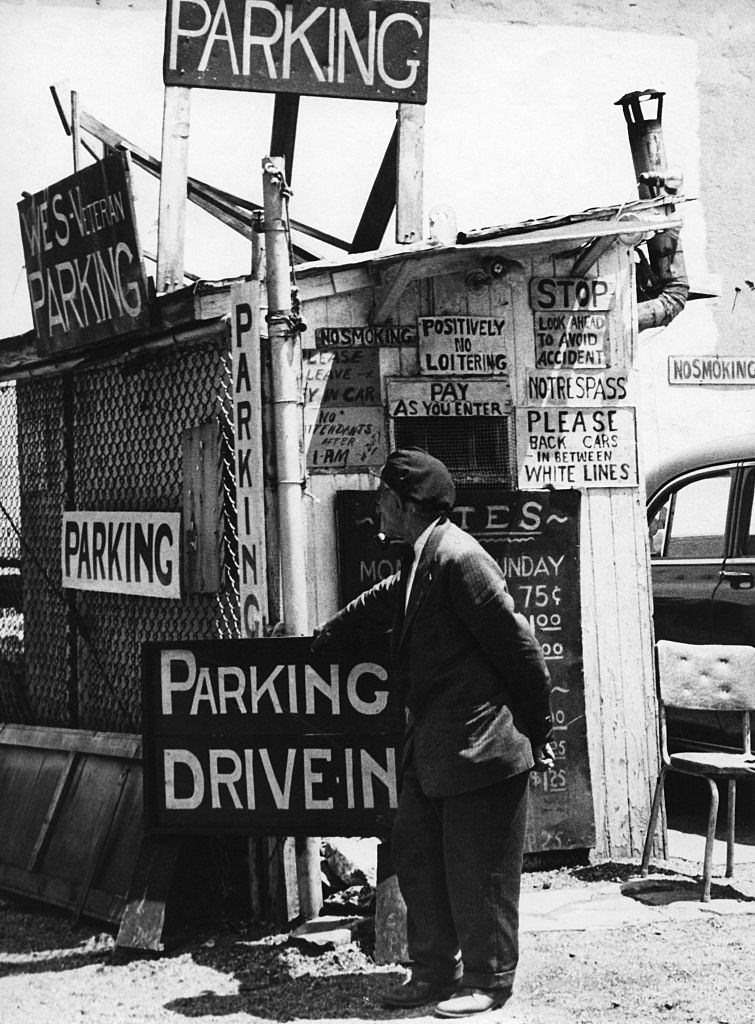
Car ownership was becoming more common in 1958, and parking lots and car parks were filling in gaps in the urban fabric. A car park attendant standing by his hut, surrounded by the signage typical of the era, was a figure who had become as much a part of the street scene as the corner grocer.
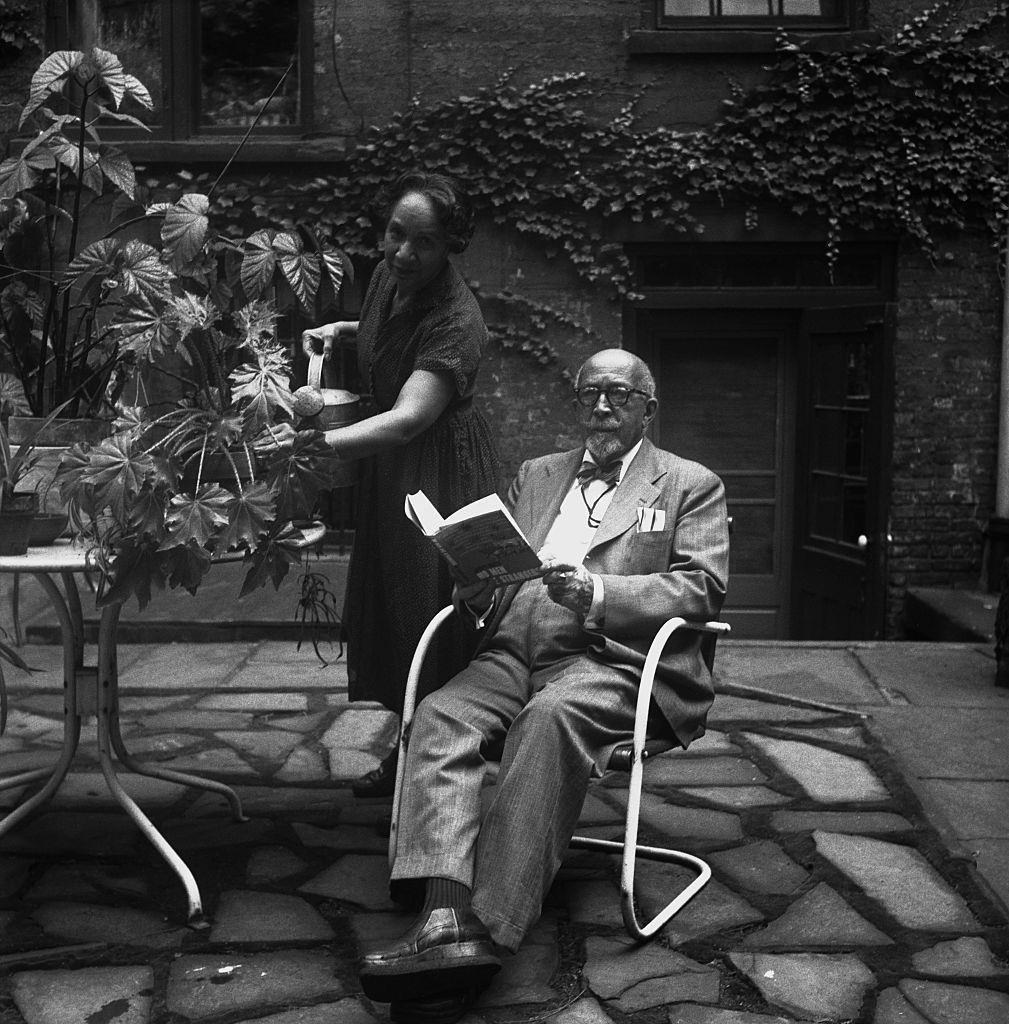
Among Brooklyn Heights’ most distinguished residents in 1958 was W. E. B. Du Bois, the author, sociologist, historian, and civil rights activist who had spent decades at the center of American intellectual and political life. Du Bois and his wife, author and playwright Shirley Graham Du Bois, lived at 31 Grace Court. The photograph of the couple at their home is a remarkable document — Du Bois was 90 years old in 1958, still living and working in a neighborhood that housed some of New York’s most engaged minds.
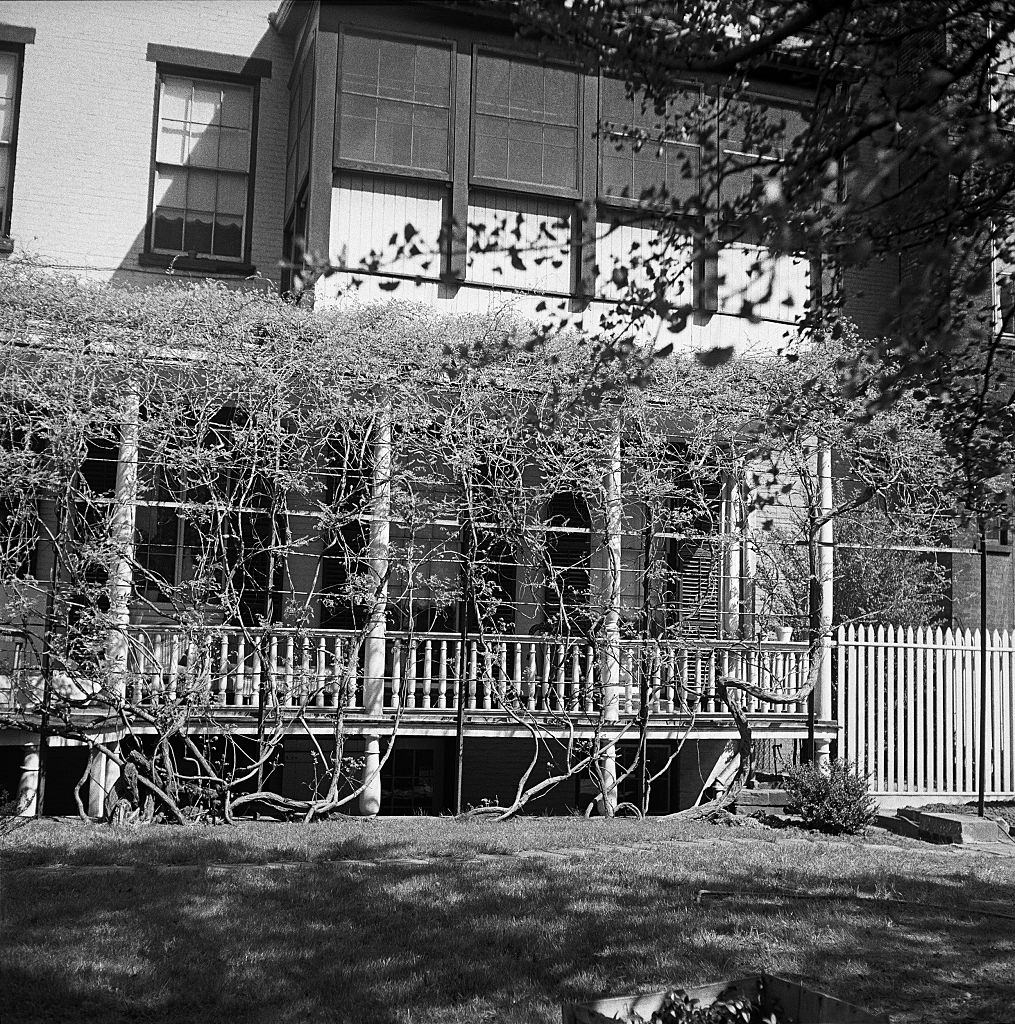
Another famous resident was writer Truman Capote, who lived at 70 Willow Street. Capote had moved to Brooklyn Heights in the early 1950s and wrote some of his most celebrated work there, including “Breakfast at Tiffany’s” and large portions of “In Cold Blood.” The rear view of his house on Willow Street offered a glimpse into the private side of a very public literary life.
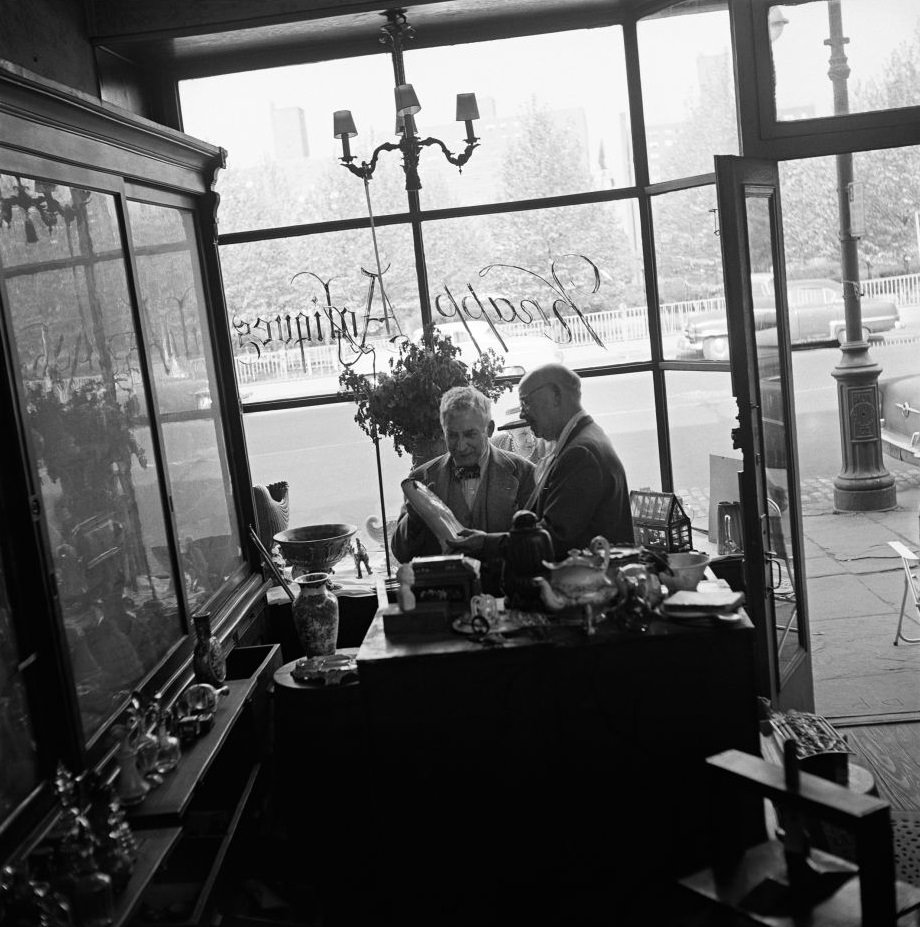
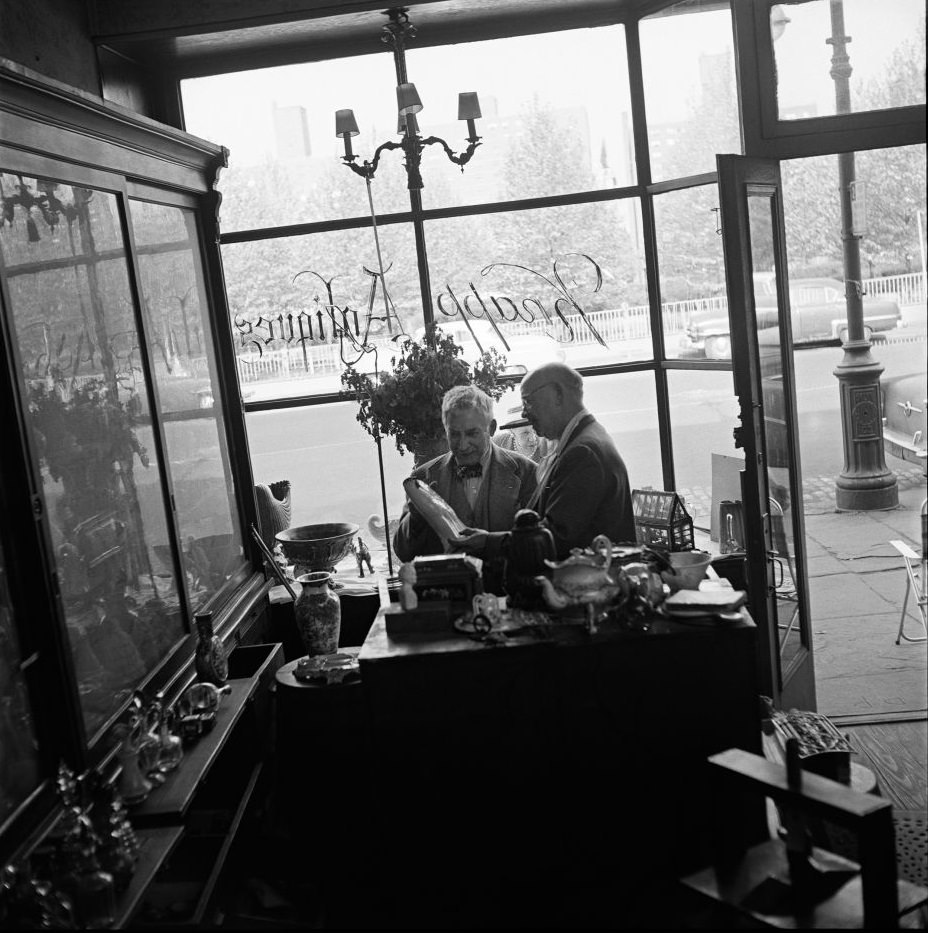
Capote had written about his Brooklyn Heights neighbors in his 1959 essay “A House on the Heights,” and among the characters he described was George Knapp, a legendary antiques dealer whose shop at 224 Fulton Street was packed with curios and collectibles. Knapp, photographed helping a customer, was the kind of local eccentric who gave the neighborhood much of its particular character.
Wedding receptions in Brooklyn Heights in 1958 were full-evening affairs with live music and dancing. Guests dressed up and filled whatever hall or restaurant had been rented for the occasion, listening to bands play the popular music of the day.
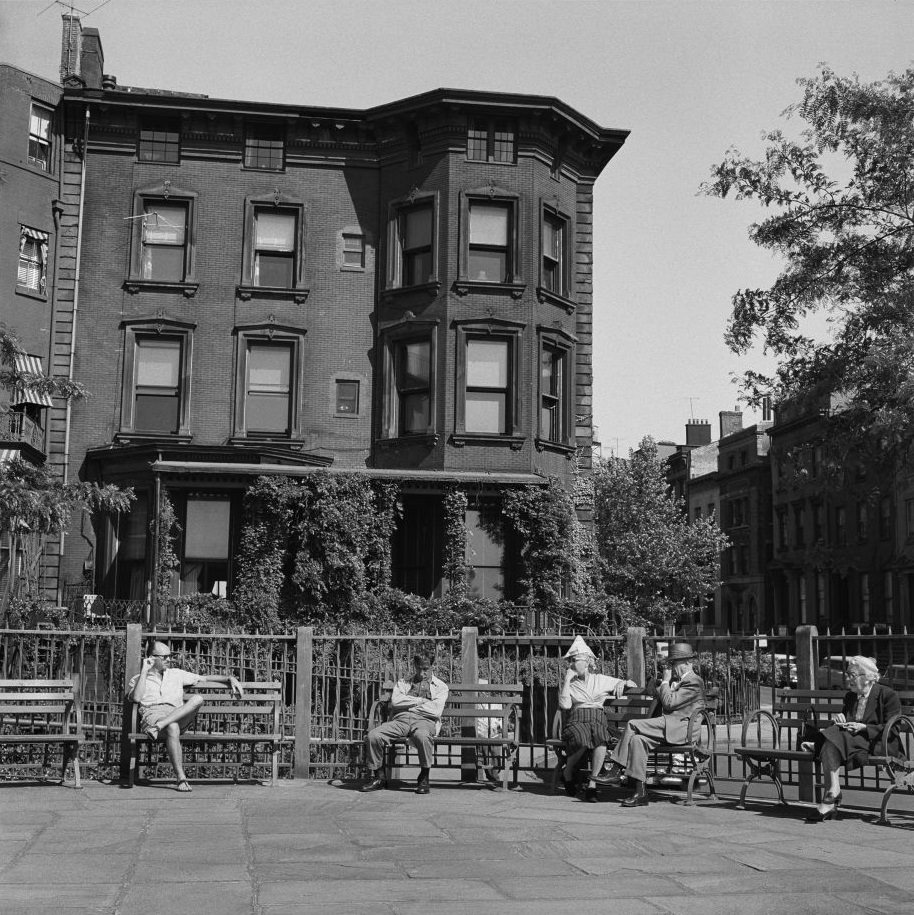
The brownstone rowhouses that defined Brooklyn Heights were well-maintained by 1958, with many of their original architectural details intact. These were not museum pieces — they were lived-in homes on working residential streets, their facades the backdrop for the daily activity happening on the sidewalk in front of them.
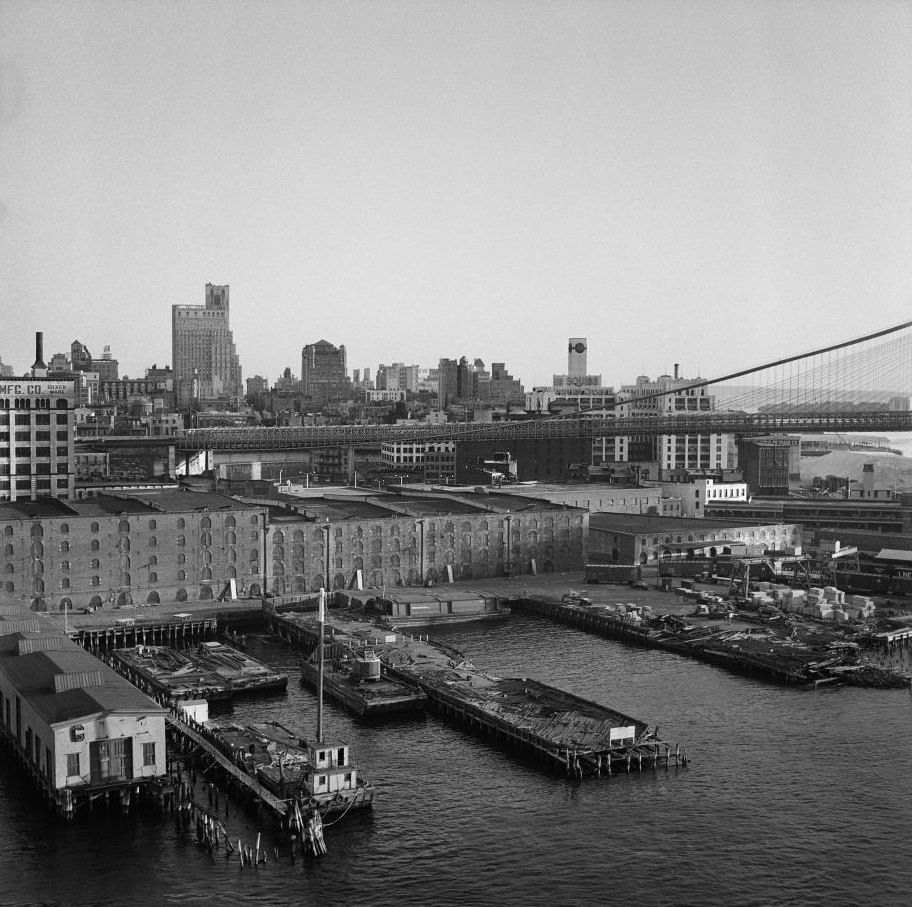
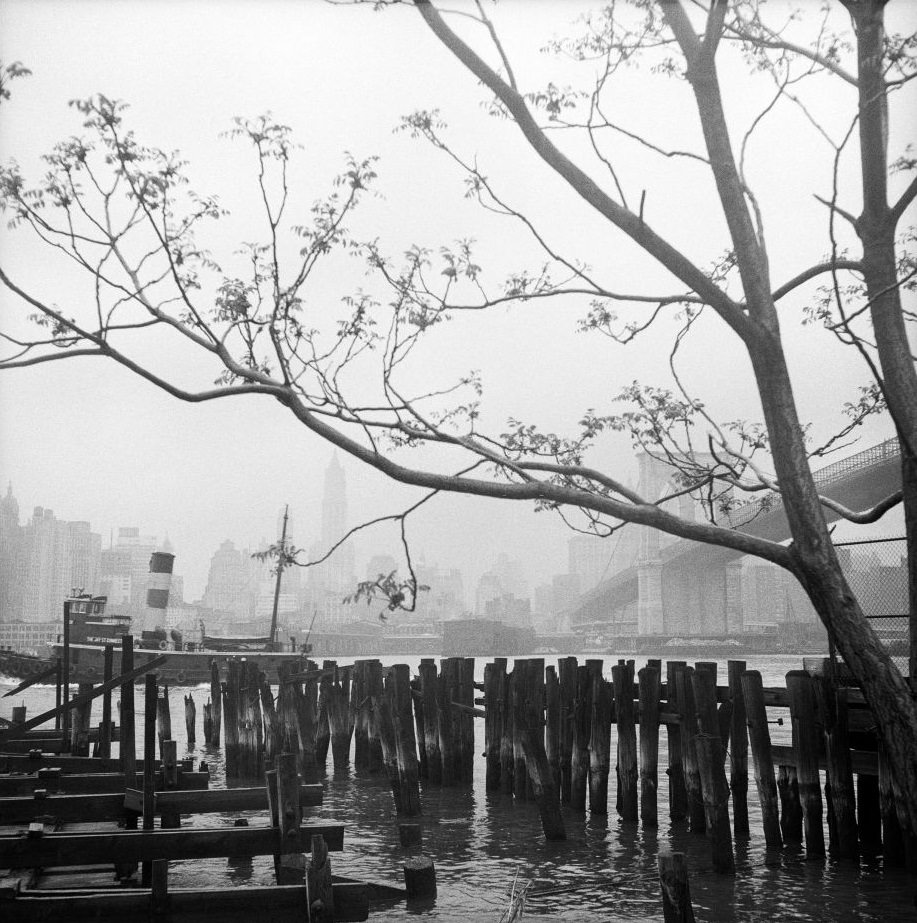
The waterfront area south of Brooklyn Heights — later known as DUMBO — was a purely industrial zone in 1958. Warehouses and piers lined the water, and the Brooklyn Bridge arched overhead. It was a stark contrast to the quiet residential streets just a few blocks uphill.
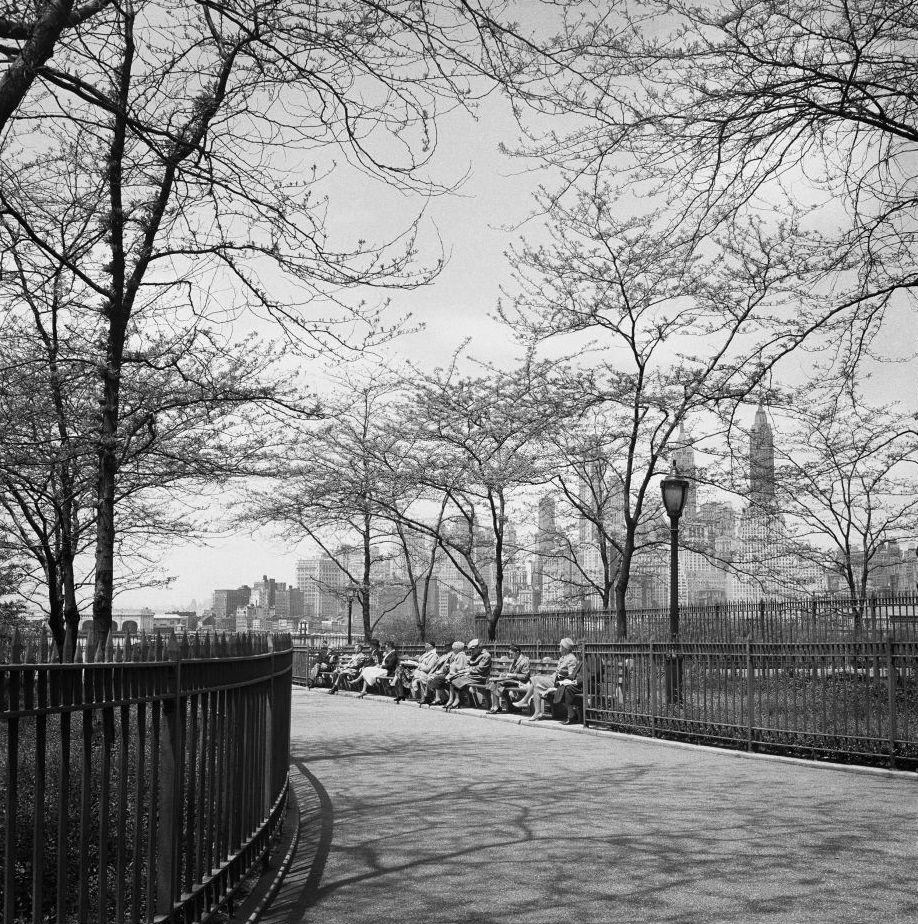
The Promenade remained one of the neighborhood’s most-used public spaces. Residents came at all times of day to sit and look across the harbor at the Manhattan skyline, which by 1958 was as dense and dramatic as any in the world.
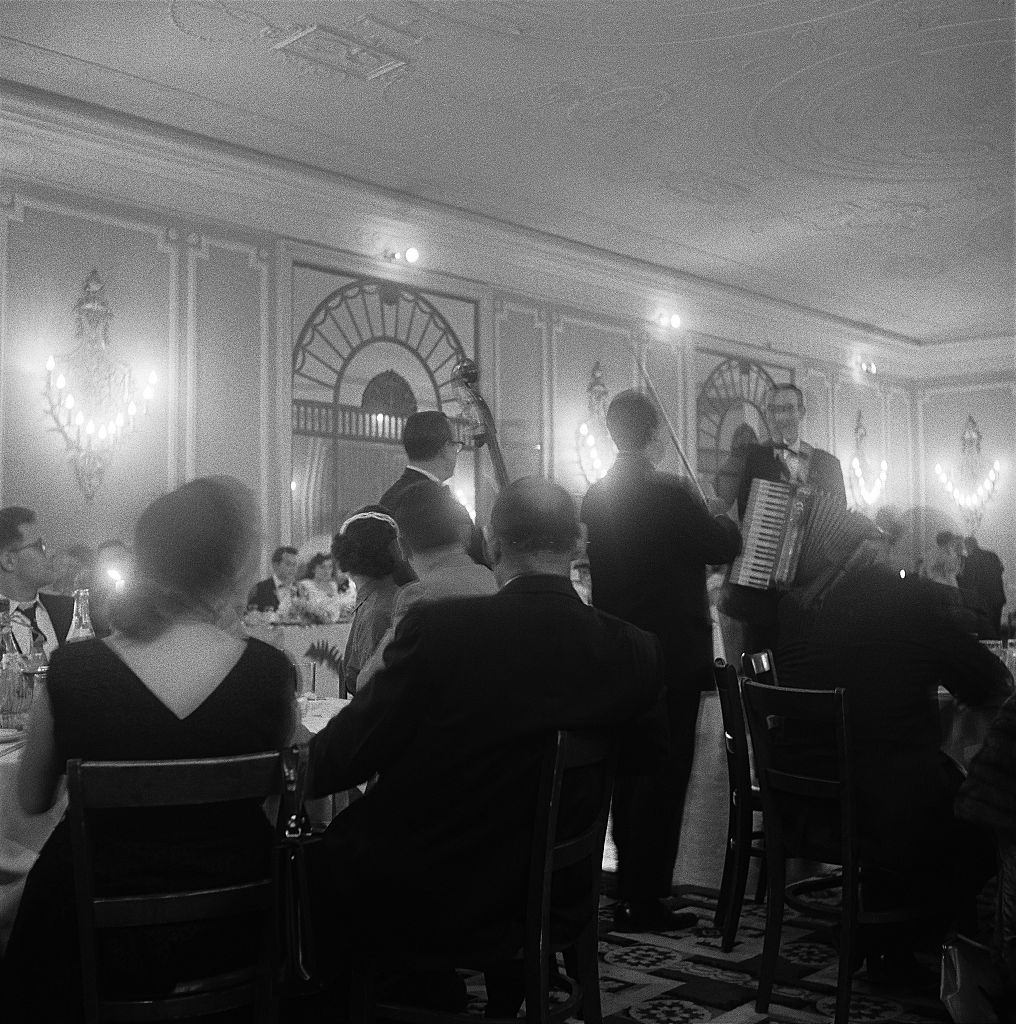
The lunch rush at Joe’s Restaurant on Fulton Street showed a well-run operation with a full dining room and an attentive service staff. The restaurant was clearly a neighborhood anchor — the kind of place that filled up every day without needing to advertise.
From the waterfront, the Manhattan skyline across the East River was impossible to ignore. Lower Manhattan’s towers loomed just beyond the water, close enough to seem within reach, yet a world away from the brownstone-lined streets of Brooklyn Heights.
Children in Brooklyn Heights used the street as freely as any backyard. A boy riding his bicycle through traffic, navigating cars and pedestrians on his own, was a completely ordinary sight in a city where kids were expected to move through the neighborhood independently from an early age.
Truman Capote appeared in person in the March 1958 photographs, posing for a portrait on the waterfront near his Willow Street home. He was at the height of his fame at the time, his literary reputation firmly established and his social life in full swing. Brooklyn Heights was, by his own account, the place where he did his best work.
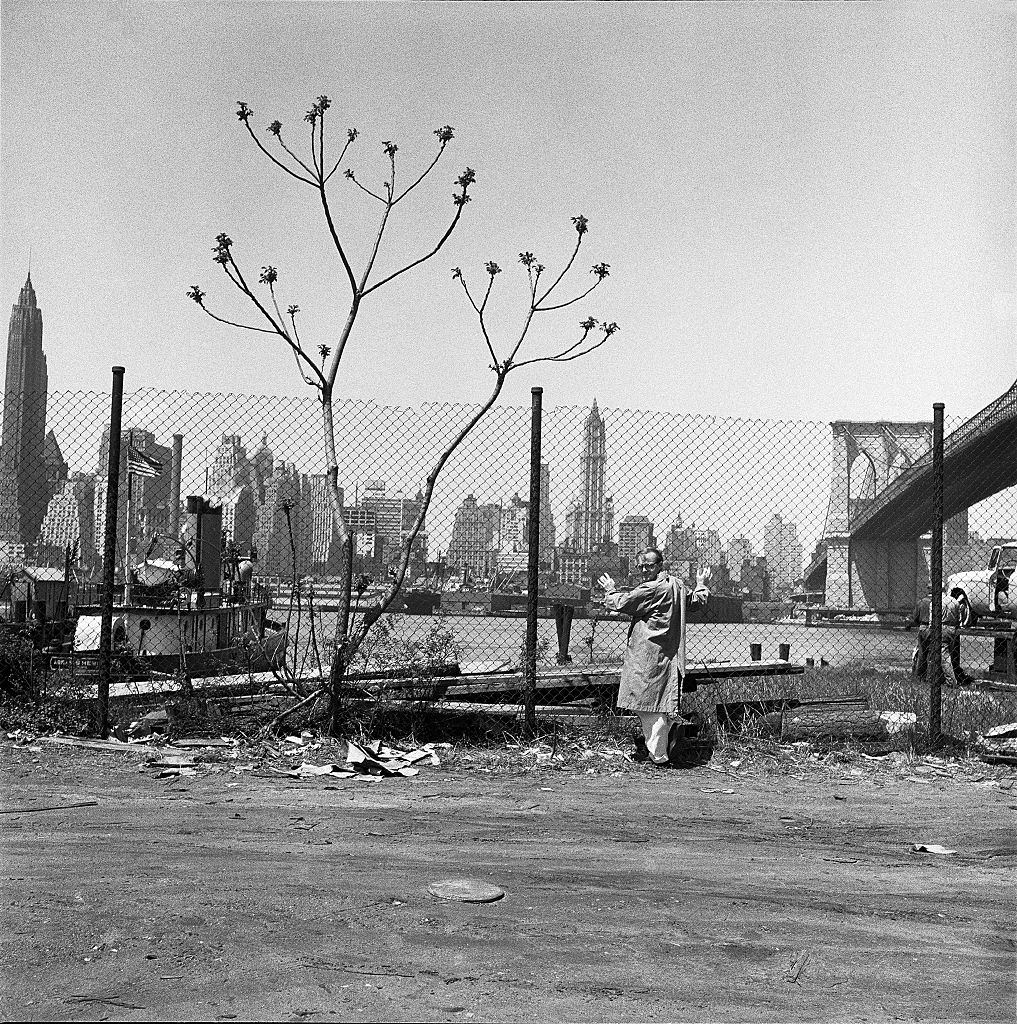
From the waterfront, the Brooklyn Bridge and the Manhattan skyline composed one of the most iconic views in American urban life. In 1958, before the towers of the World Trade Center changed the Lower Manhattan skyline, the view had a particular quality — familiar, yet already historic.
The Promenade in the rain was a different kind of scene. The benches emptied, the view turned grey, and the walkway took on the quiet solitude that comes when a public space briefly clears. March in New York could be cold and wet, and the photographs captured that reality alongside the sunnier days.
The Boro Pet Center appeared in the photographs more than once, confirming its status as a neighborhood draw. Three young African American boys pressed against the window in a separate shot, their attention fixed on the animals inside — the same instinctive pull that the shop had on children of every background.
Rain on Clark Street turned the sidewalks reflective and sent most people under awnings or indoors. A lone man walking through the wet street in a coat and hat was a simple image — but it captured the texture of ordinary urban life in a way that a sunny-day photograph couldn’t.
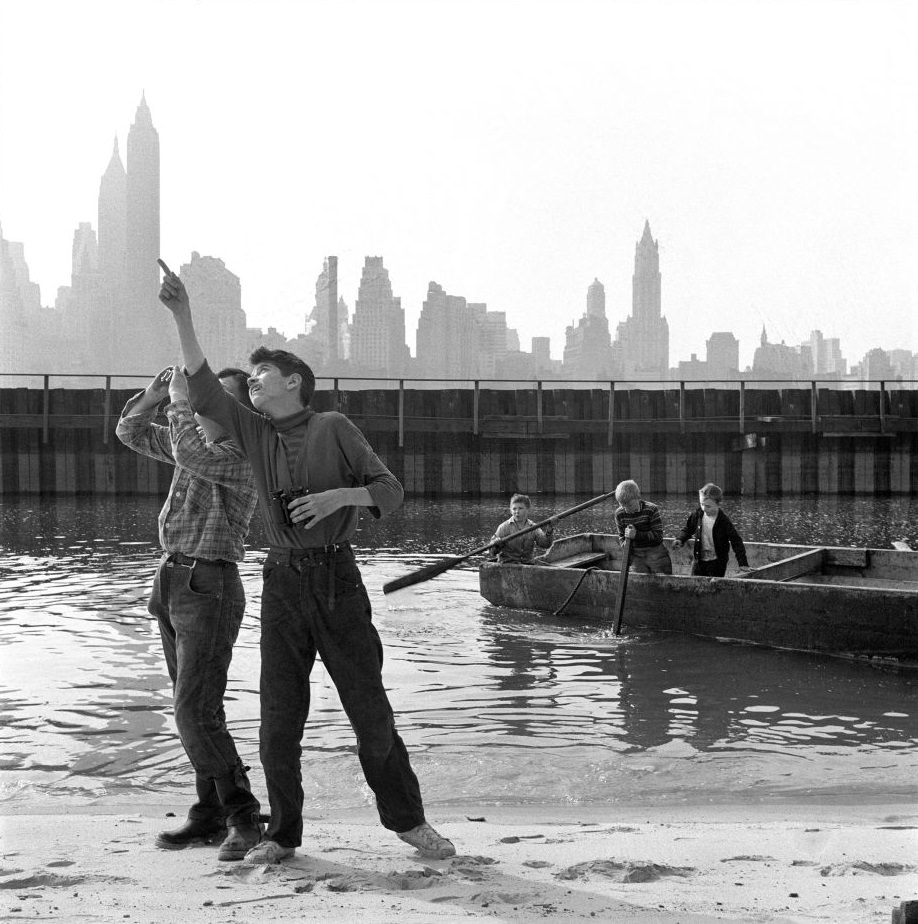
At the East River’s edge, children played near and in the water with the Manhattan skyline behind them. The access to the waterfront was informal and largely unregulated — no fencing, no lifeguards, just kids and the river and the view of the city across the water.
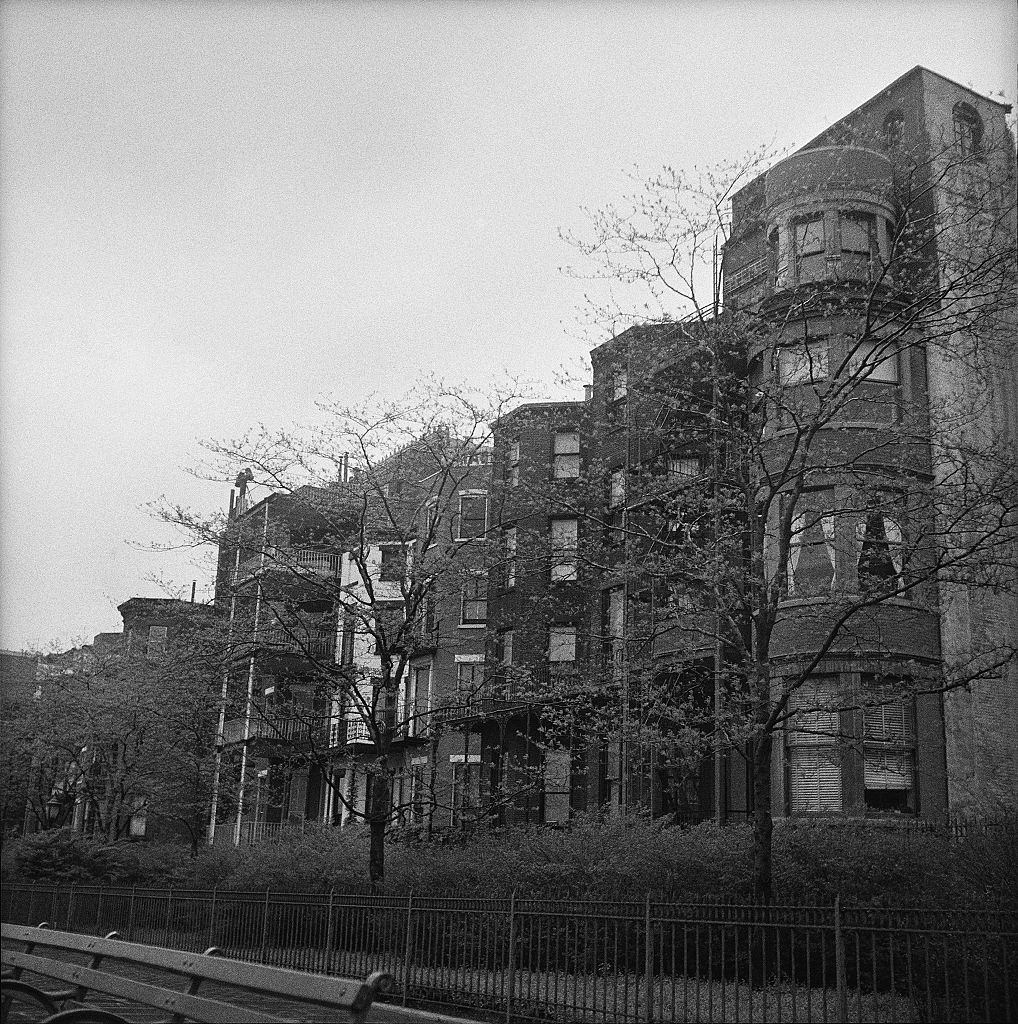
The apartment buildings that had replaced the neighborhood’s earlier mansions were a dominant part of the Brooklyn Heights streetscape by 1958. Some were brick walk-ups from the early 20th century, others were more recent mid-century structures, and they housed the majority of the neighborhood’s growing population.
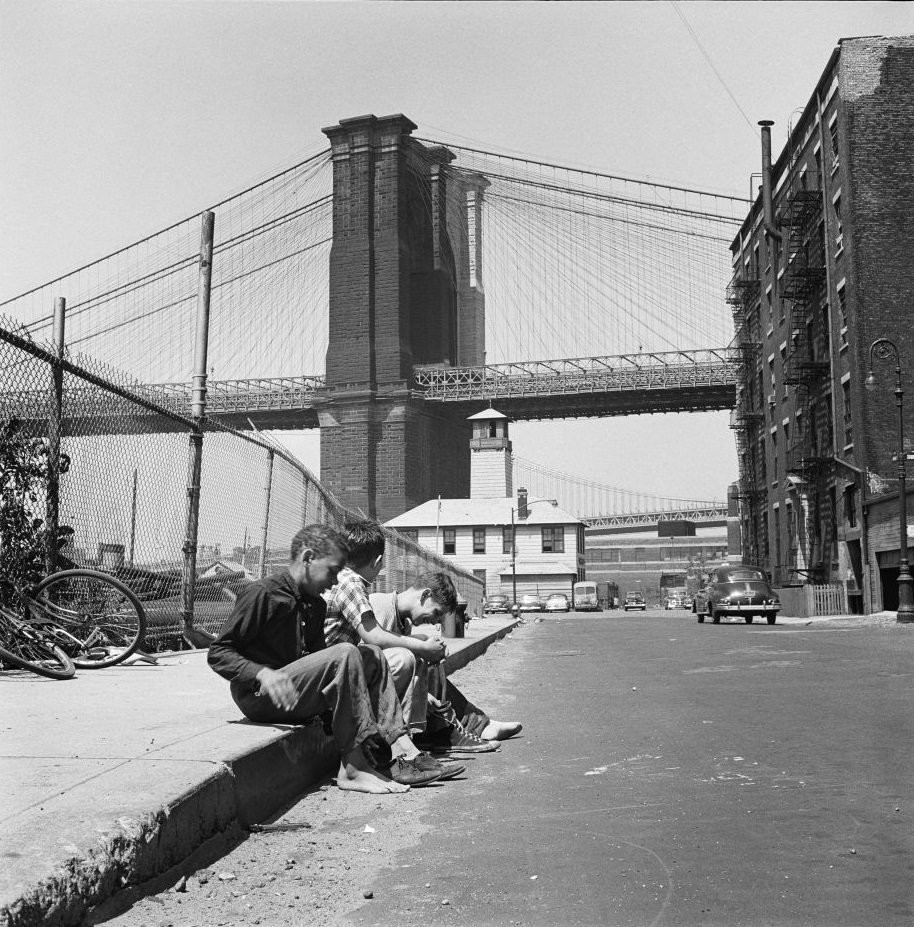
With the Brooklyn Bridge just steps away, children in the neighborhood grew up in the literal shadow of one of the most famous structures in the world. The bridge was simply part of the scenery — as familiar as the brownstones and the corner stores.
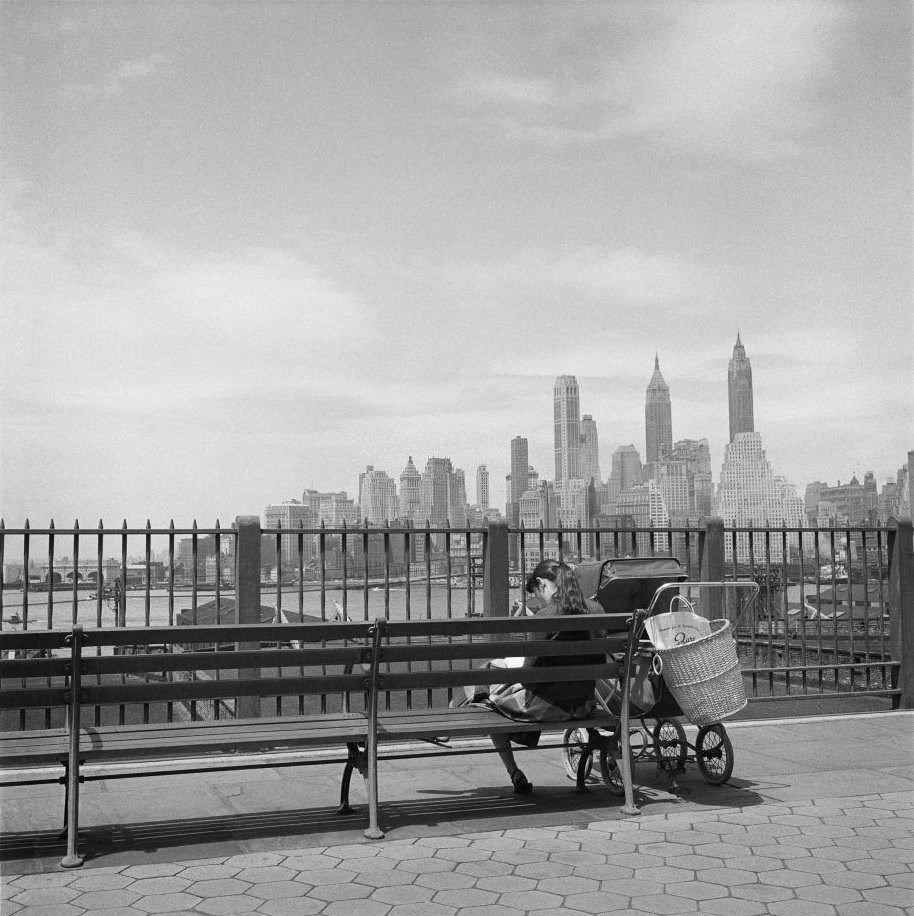
The Promenade drew all kinds of visitors regardless of the weather. A young woman pushing a stroller along its length on a grey March day was a perfectly ordinary scene — the Promenade was part of the daily circuit for parents with young children, not just a destination for sightseers.
Love Lane appeared in the photographs more than once, and its character was unmistakable. Narrow, tree-lined, and set apart from the commercial energy of the larger streets, it was one of those places that made Brooklyn Heights feel less like a borough of New York City and more like a self-contained village.
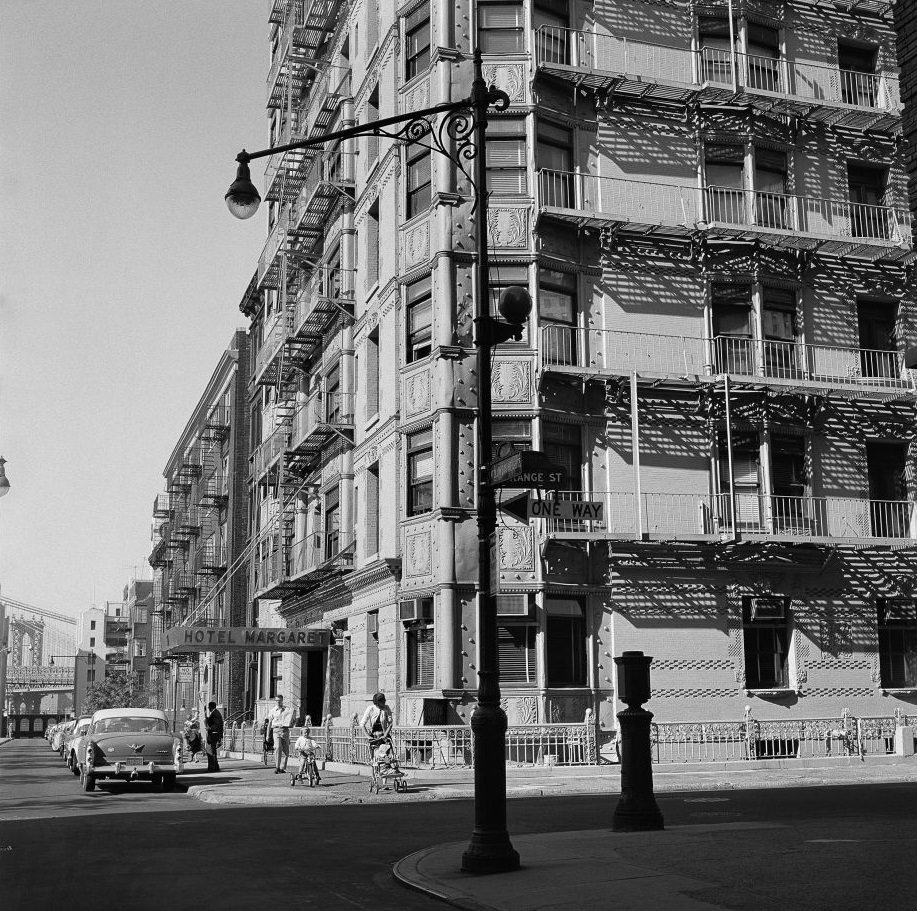
Hotel Margaret on Orange Street was one of the neighborhood’s long-standing lodging institutions. Built decades earlier, it had served generations of visitors and long-term residents, and by 1958 its ornate facade was a familiar landmark on the Brooklyn Heights streetscape.
The Brooklyn Ice Cream Company operated from the waterfront, serving both locals and the workers who passed through the area near the docks. Its position on the water, with views of the bridge and the harbor, made it a natural stopping point for anyone walking the Brooklyn waterfront.
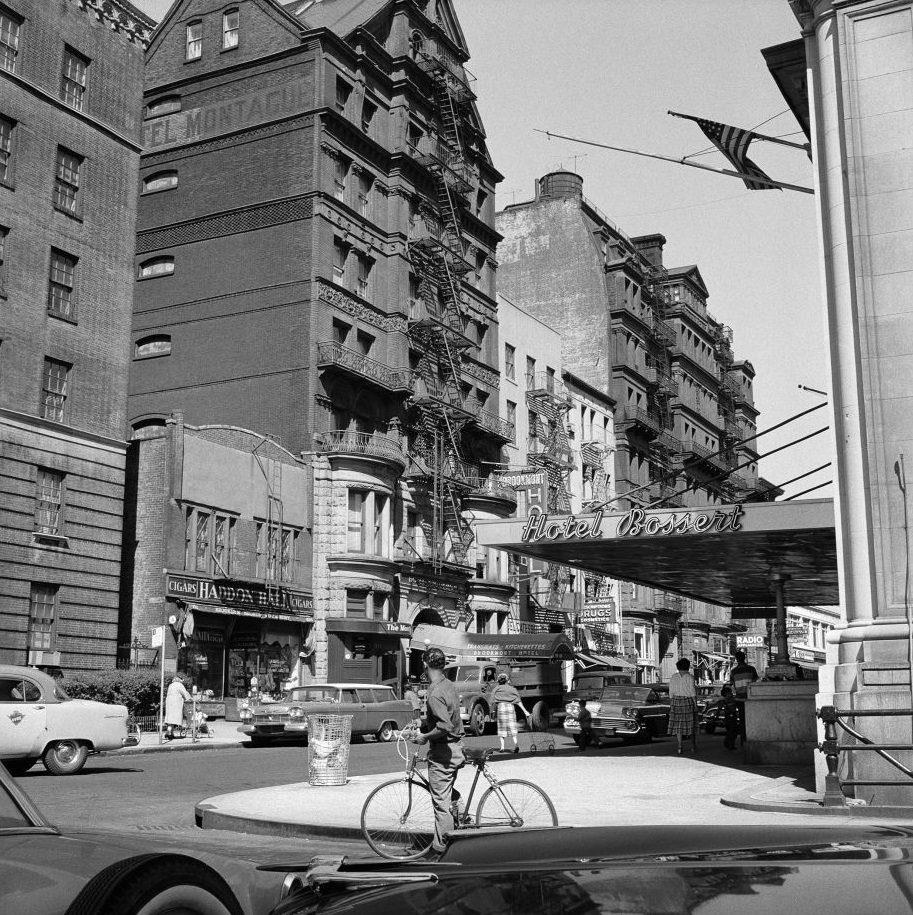
The Hotel Bossert at 98 Montague Street was one of Brooklyn’s grandest hotels. Opened in 1909, it had hosted Brooklyn Dodgers players and visiting celebrities for decades. By 1958, it remained an imposing presence on Montague Street, a symbol of the neighborhood’s more prosperous past.
George Knapp of Knapp Antiques at 224 Fulton Street made another appearance in the photographs, again at work with a customer. His shop was one of those places where the inventory told the story of the neighborhood’s long history — pieces from Brooklyn’s 19th-century heyday sitting alongside more recent acquisitions.
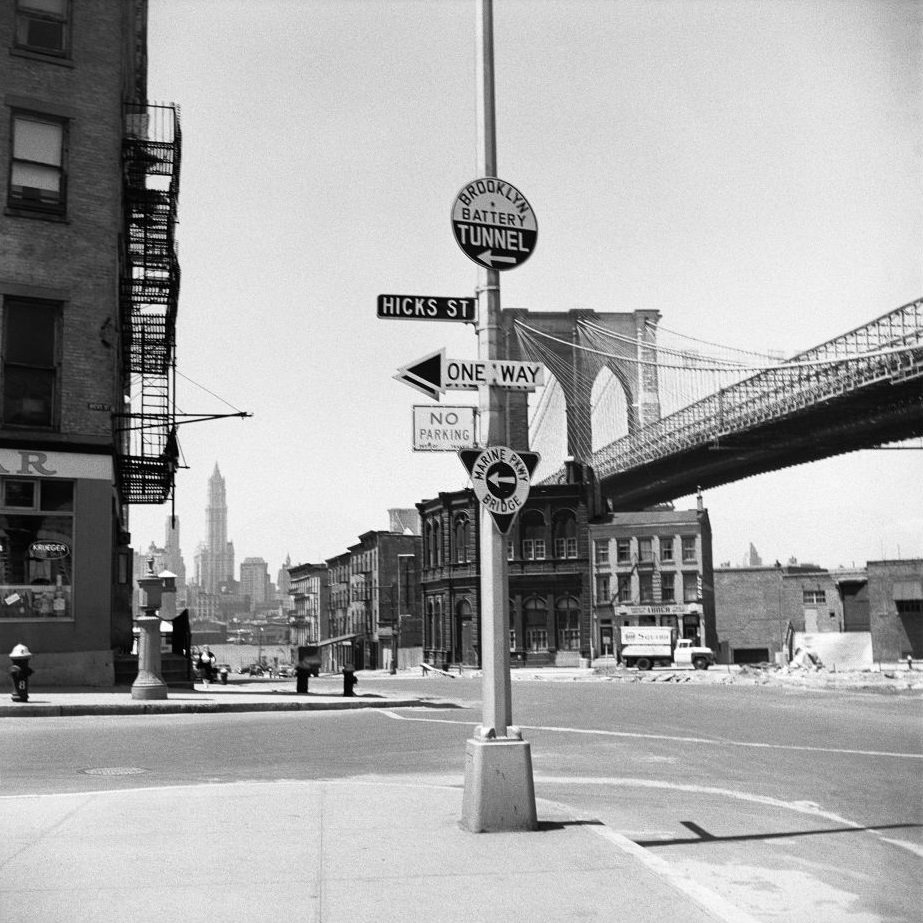
Hicks Street ran through a quieter residential section of Brooklyn Heights, its brownstones and tree canopy giving it a more secluded feel than the busier commercial streets. In March 1958, the street had the still quality of a neighborhood that hadn’t yet been touched by the redevelopment pushing through other parts of Brooklyn.
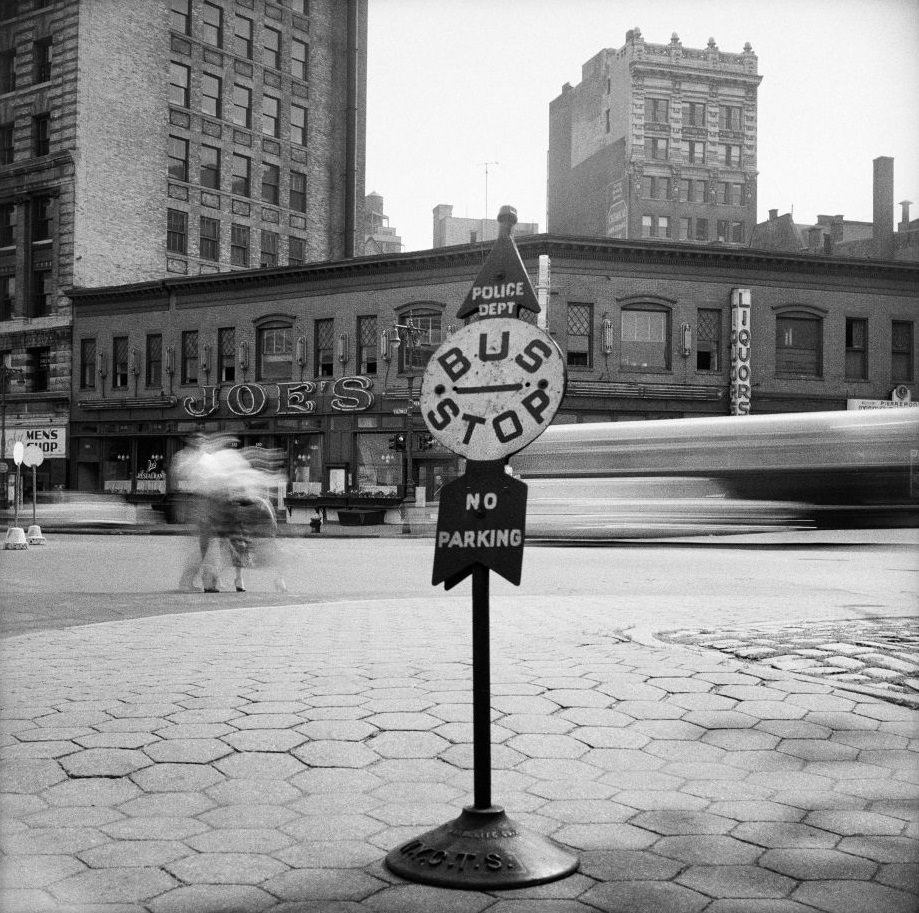
Joe’s Restaurant on Fulton Street anchored the neighborhood’s daily dining scene throughout the 1958 photographs — appearing in exterior and interior shots alike. It was a constant, a fixed point in the changing neighborhood, the kind of place that outlasted trends and ownership changes simply because people needed somewhere reliable to eat.





Brooklyn Heights looked different before the BQE, I’ve always wondered