Every year through the 1960s, Olympia in London transformed into a showcase for tents, sleeping bags, portable stoves, and the full promise of the great outdoors. The Camping and Outdoor Life Exhibition drew thousands of visitors eager to gear up for their next adventure. But the equipment on display was only part of the story. The women hired to demonstrate that gear — often dressed in bikinis, miniskirts, and knee-high boots — became the defining image of the event, perfectly capturing the decade’s restless energy and shifting attitudes.
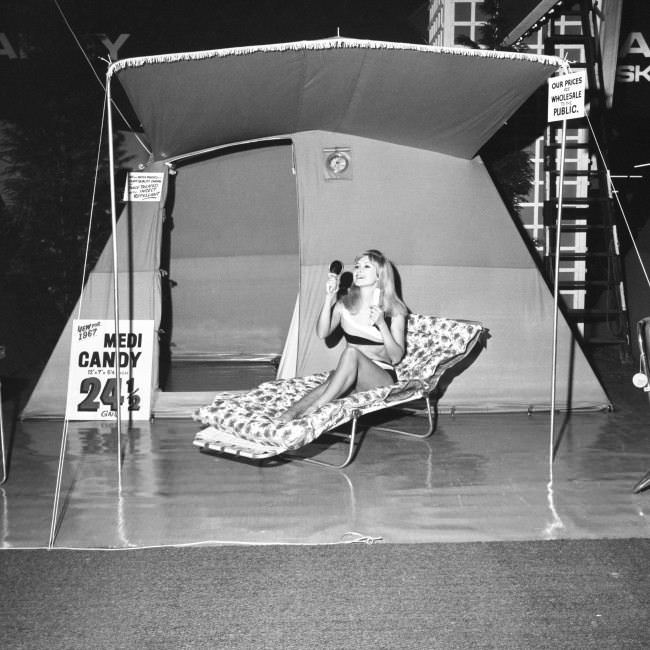
The 1960s brought a dramatic break from the conservative dress codes that had dominated the previous two decades. Bikinis moved from the beach into everyday public spaces. Miniskirts, championed by designers like Mary Quant, became a staple for young women across Britain. This wasn’t simply a fashion trend — it was a visible signal that social norms were being renegotiated in real time. Exhibition organisers understood the moment and leaned into it, placing models in bold, eye-catching outfits alongside the latest camping innovations.
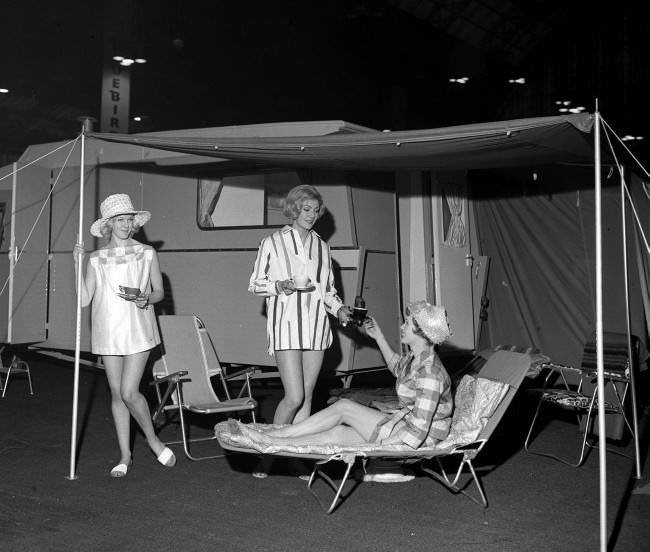
The exhibition itself had serious commercial ambitions. Manufacturers competed fiercely for the attention of a growing market of British families who were discovering the appeal of camping holidays. Companies displayed everything from lightweight frame tents to fully kitted caravans. The Sprite Countryman, for example, offered a clip-on rear tent that turned a caravan into a two-room setup — a practical solution for families who needed more space without buying a larger vehicle. These were genuine innovations, and the exhibition floor was the place to see them first.
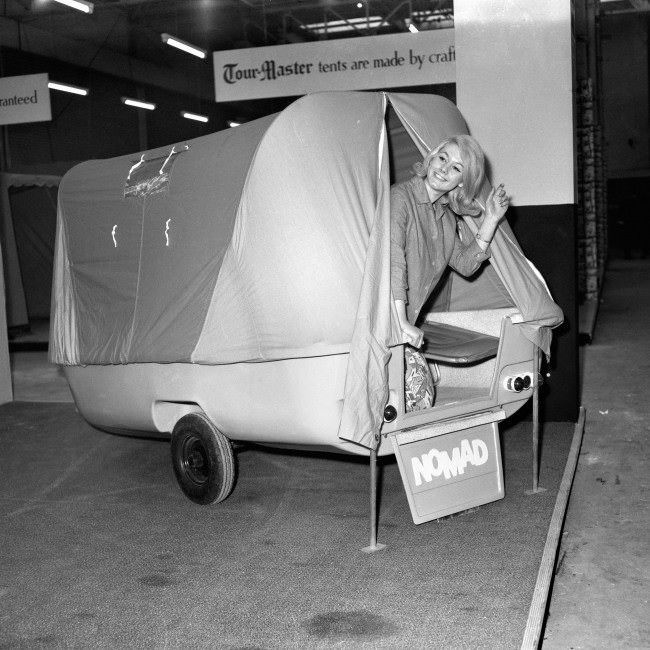
By 1963, tent design had advanced well beyond the simple canvas shelters of earlier decades. The Nomad Tourmaster represented the kind of roomy, structured camping accommodation that appealed to families expecting comfort alongside their fresh air. Manufacturers were targeting buyers who wanted an outdoor lifestyle without sacrificing convenience. Larger tents with separate sleeping compartments and standing room were a direct response to that demand, and the exhibition gave companies a platform to demonstrate exactly what their products could do.
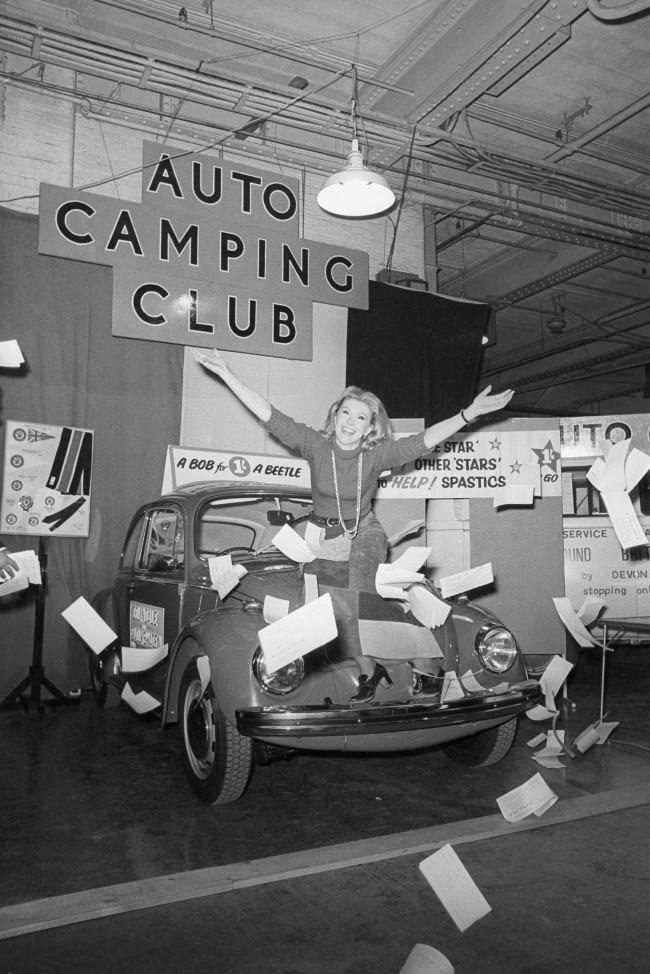
Celebrity appearances added another layer of glamour to the event. Actress Susan Hampshire, one of Britain’s most recognisable faces of the era thanks to her television work, attended the exhibition’s 12th annual edition — by then rebranded as Colex ’70. Her presence drew press coverage and crowds in equal measure. Organisers knew that pairing a well-known public figure with camping products sent a clear message: the outdoor lifestyle was fashionable, aspirational, and accessible to everyone.
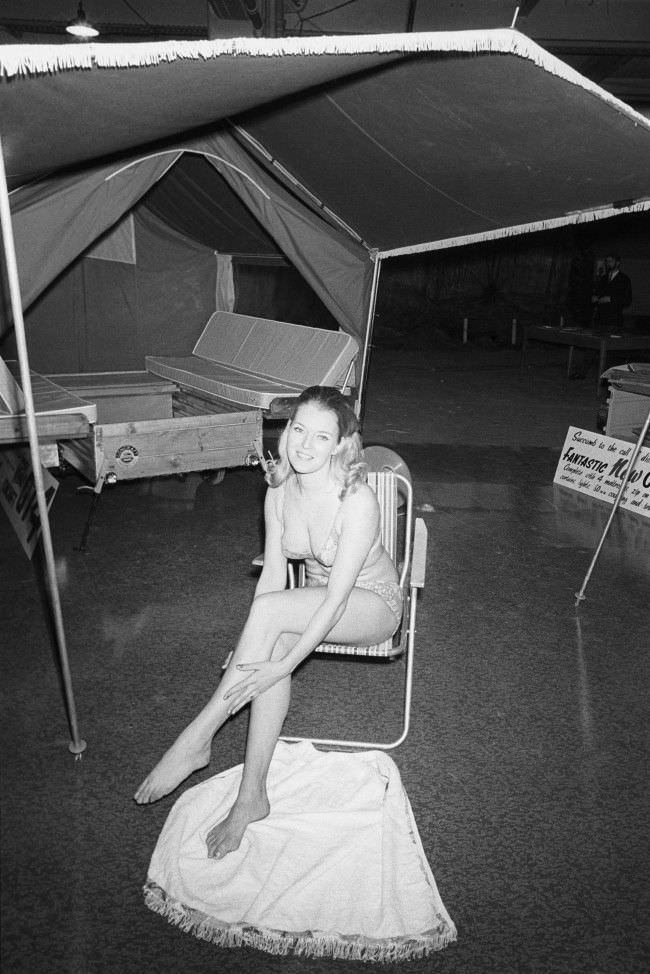
Tent trailers — folding campers that hitched to the back of a car and unfolded into a full sleeping structure — were one of the more exciting new products at Colex ’70. They offered a middle ground between tent camping and caravanning, appealing to drivers who wanted more comfort than a traditional tent but didn’t want to tow a full-sized caravan. Wendy Pattenden’s demonstration of the trailer showed visitors exactly how the setup worked, making an unfamiliar product immediately understandable.
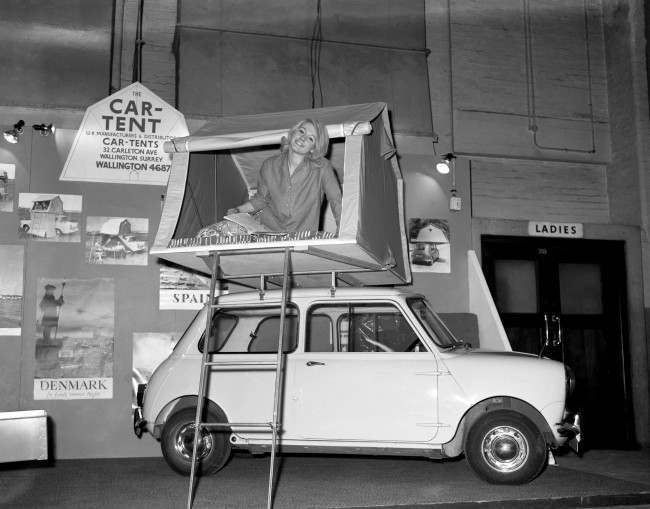
Car tents — awnings or extensions that attached directly to a vehicle — were another practical solution displayed at the 1963 exhibition. They used the car’s body as one wall of the shelter, cutting down on materials and setup time. For motorists making spontaneous stops on road trips, a car tent was a fast and affordable way to sleep under canvas without carrying much extra weight. The model demonstrating the product gave visitors an immediate sense of the tent’s scale and ease of use.
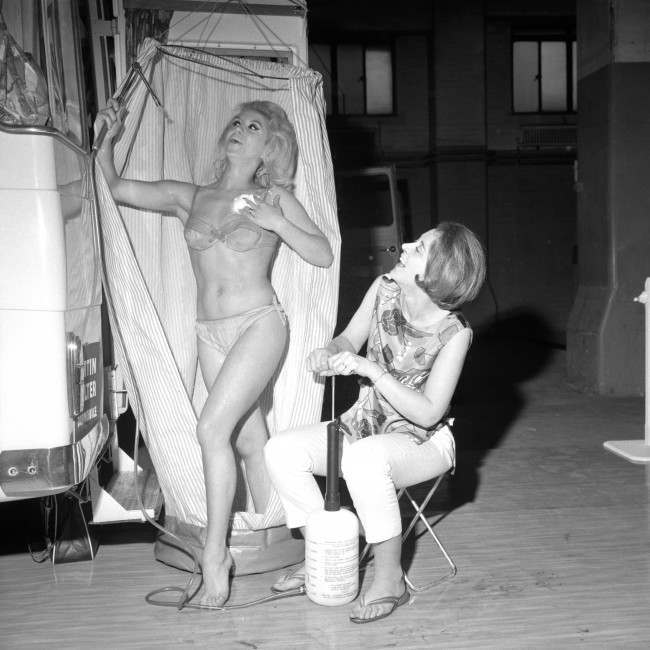
Hygiene on camping trips was a genuine concern for many would-be outdoor enthusiasts, and manufacturers addressed it head-on. At the 1963 exhibition, Diane Langton and Ruth Senior demonstrated a portable shower unit — a product designed to make extended camping trips far more comfortable. The demonstration, with both women in swimwear, was one of the exhibition’s most photographed moments. It also made a practical point: washing facilities no longer had to be a reason to avoid camping.
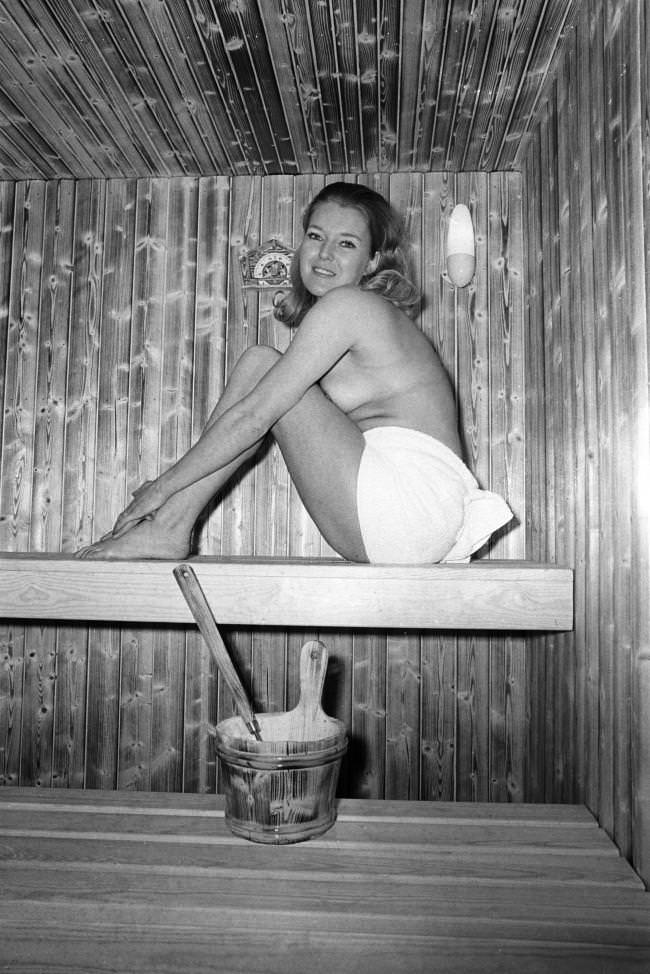
By the end of the decade, camping luxury had reached an entirely new level. A portable sauna — demonstrated at Colex ’70 by Wendy Pattenden — showed just how far the industry had pushed the idea of comfort in the wild. A sauna designed for campsites would have seemed absurd just ten years earlier. By 1969, it was a product on the exhibition floor, drawing curious crowds and generating newspaper coverage. The message from manufacturers was consistent: there was no experience from home life that camping couldn’t replicate.
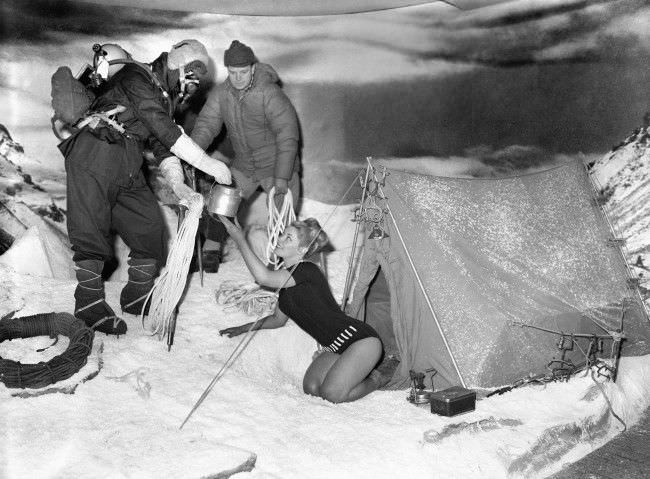
The tent exhibits that lined Olympia’s halls in 1963 illustrated how seriously manufacturers were investing in design. Different shapes, sizes, and materials competed for visitor attention. Pole systems, groundsheets, ventilation panels, and colour schemes all became selling points in a market that was growing fast. British families were taking more holidays at home and abroad, and camping offered an affordable, flexible alternative to hotels. The exhibition floor was the place where manufacturers made their case, and the crowds that showed up year after year proved the formula was working.