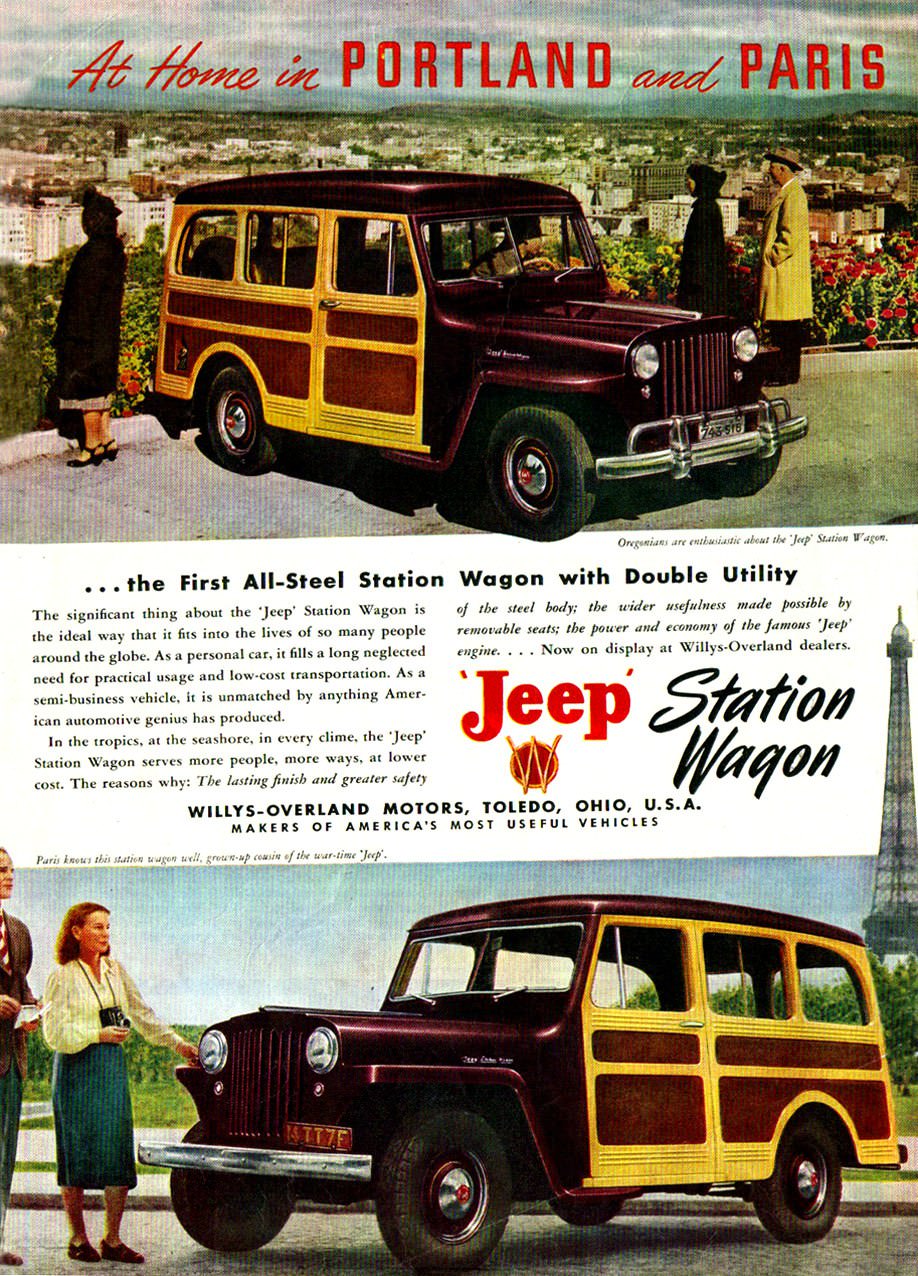

Most vehicles fade into the background of history. A few define it. The 1949 Willys Jeep Station Wagon belongs firmly in the second group. Born out of the post-World War II boom, it arrived at a time when the American auto industry was still clinging to wood-paneled “Woodie” station wagons. Willys threw that tradition out entirely and built something all-metal, all-purpose, and entirely new.
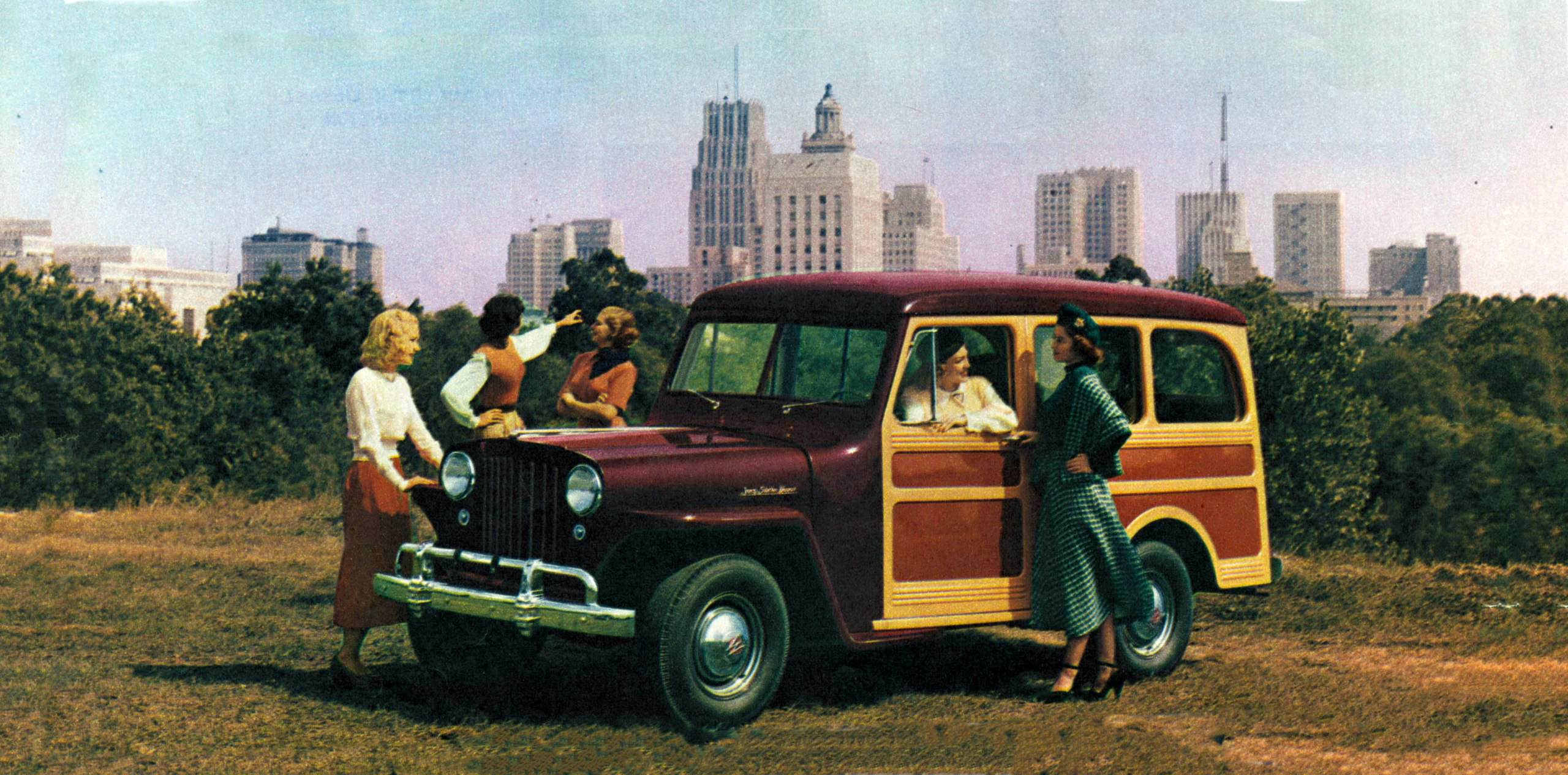
Designer Brooks Stevens introduced the Willys Jeep Station Wagon in 1946, but it was the 1949 model that changed everything. That year, Willys added a four-wheel-drive option to the lineup — a feature no passenger station wagon had ever offered before. That single addition transformed the vehicle from a practical family hauler into something far more capable. Automotive historians widely recognize the 1949 model as the first true sport utility vehicle, or SUV, ever produced.
Under the hood sat the “Go Devil” engine — a 60-horsepower, four-cylinder motor. This was the same engine that powered the Willys MB Jeep during World War II, a unit proven under the harshest wartime conditions. It wasn’t flashy, but it was dependable. Families trusted it. Businesses relied on it for deliveries across rough terrain. That reliability was a core part of the wagon’s appeal from day one.
The exterior design was just as distinctive as what sat beneath it. Vertical grille bars gave the front end a bold, no-nonsense look. Pronounced wheel arches added visual muscle. The side-panel design was clean and recognizable at a glance — something you didn’t need a second look to identify as a Willys.
Inside, the wagon offered flexibility that passenger vehicles of the era simply didn’t have. The rear seats folded flat, opening up a large cargo area. Families could haul groceries, camping gear, or just about anything else that needed moving. This kind of interior versatility was genuinely uncommon in 1949, and it gave the Willys a serious edge over the competition.
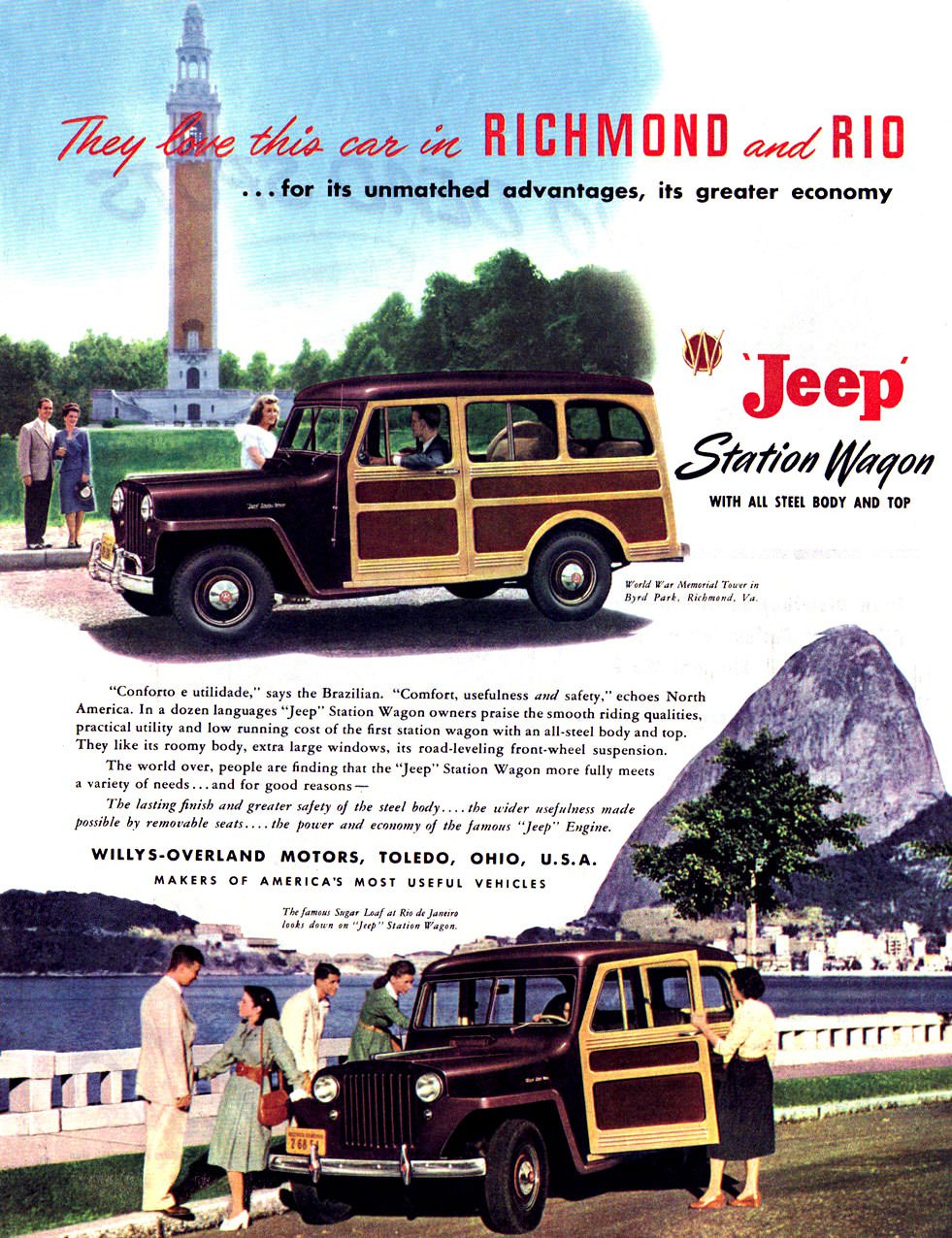
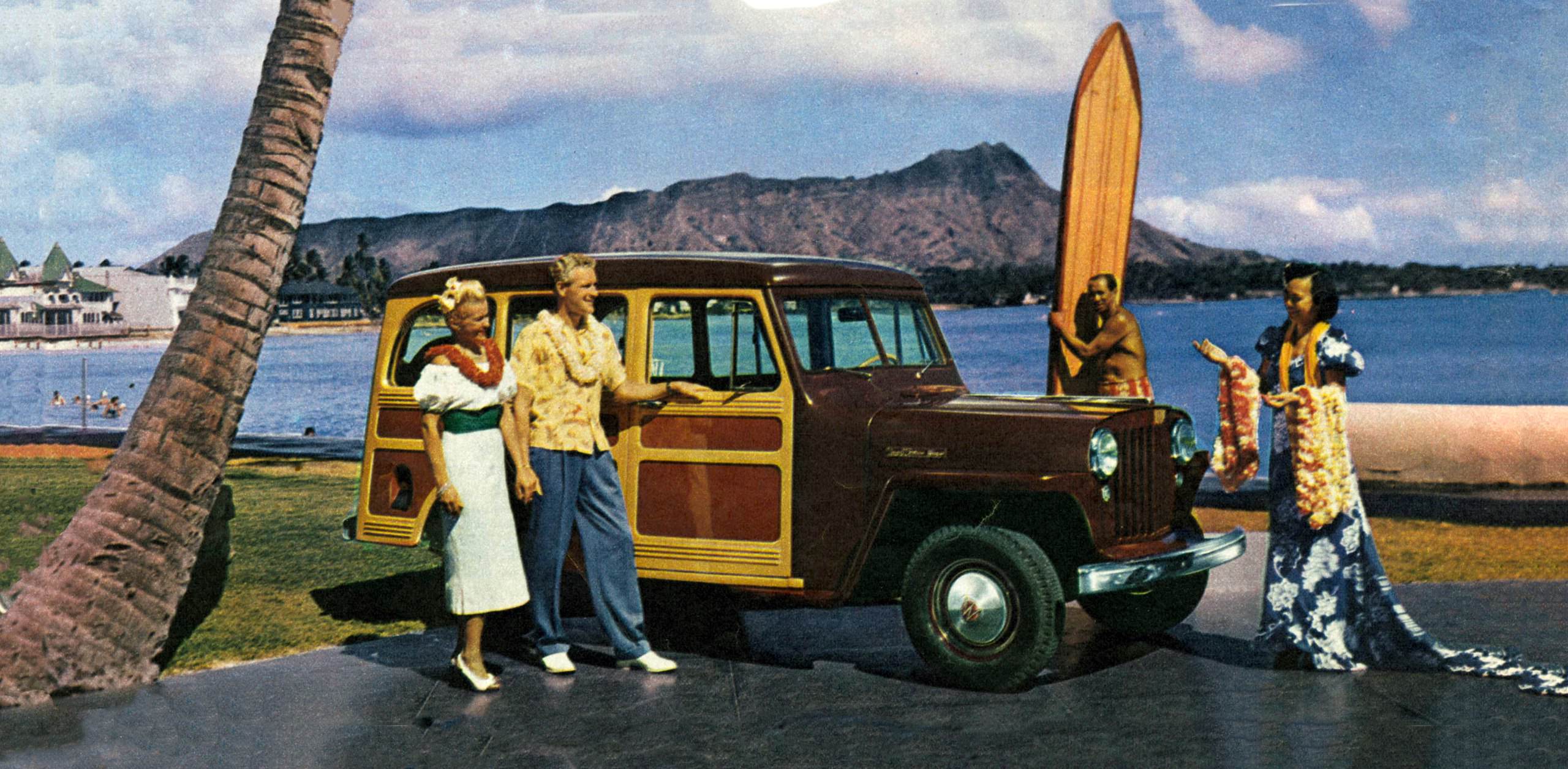
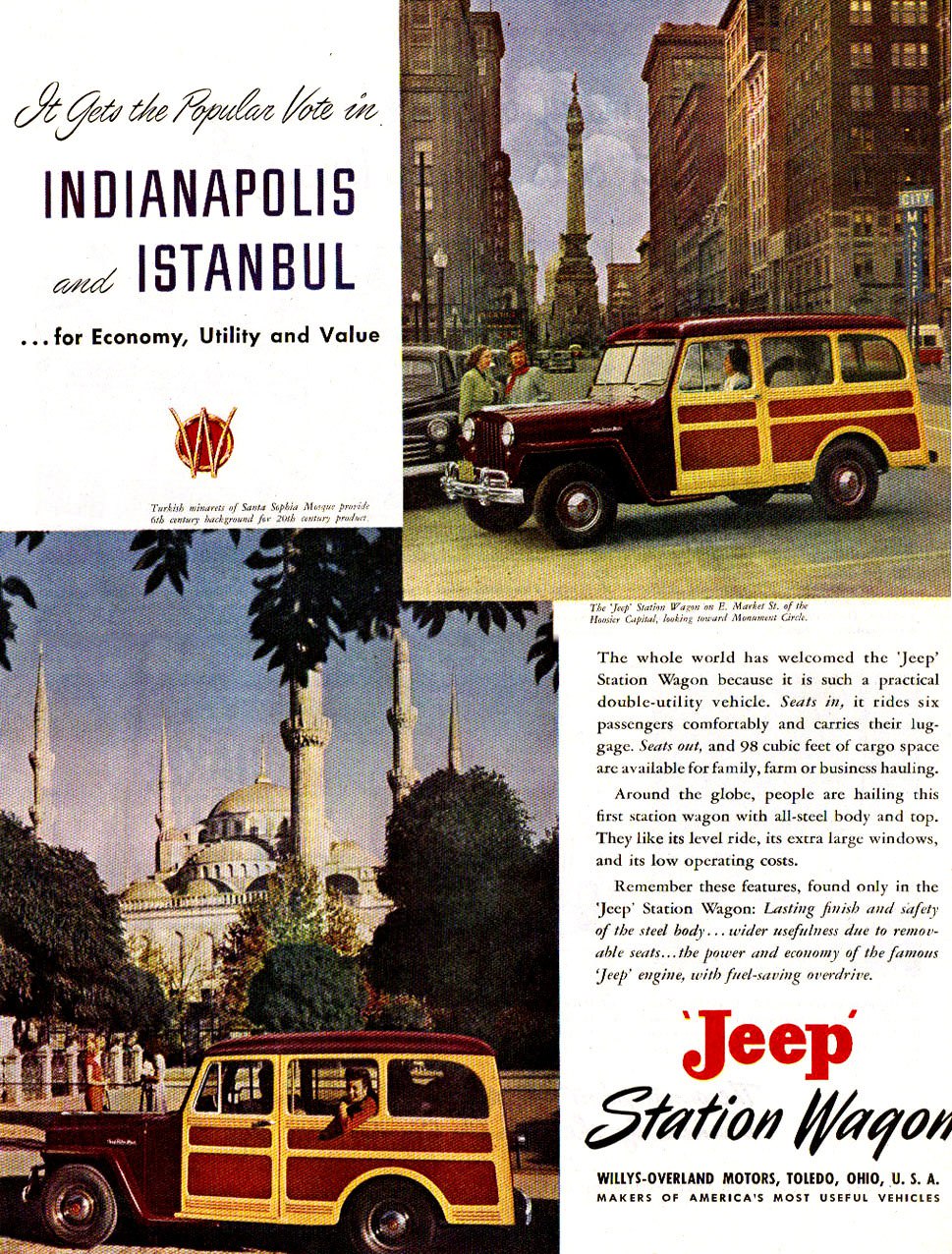
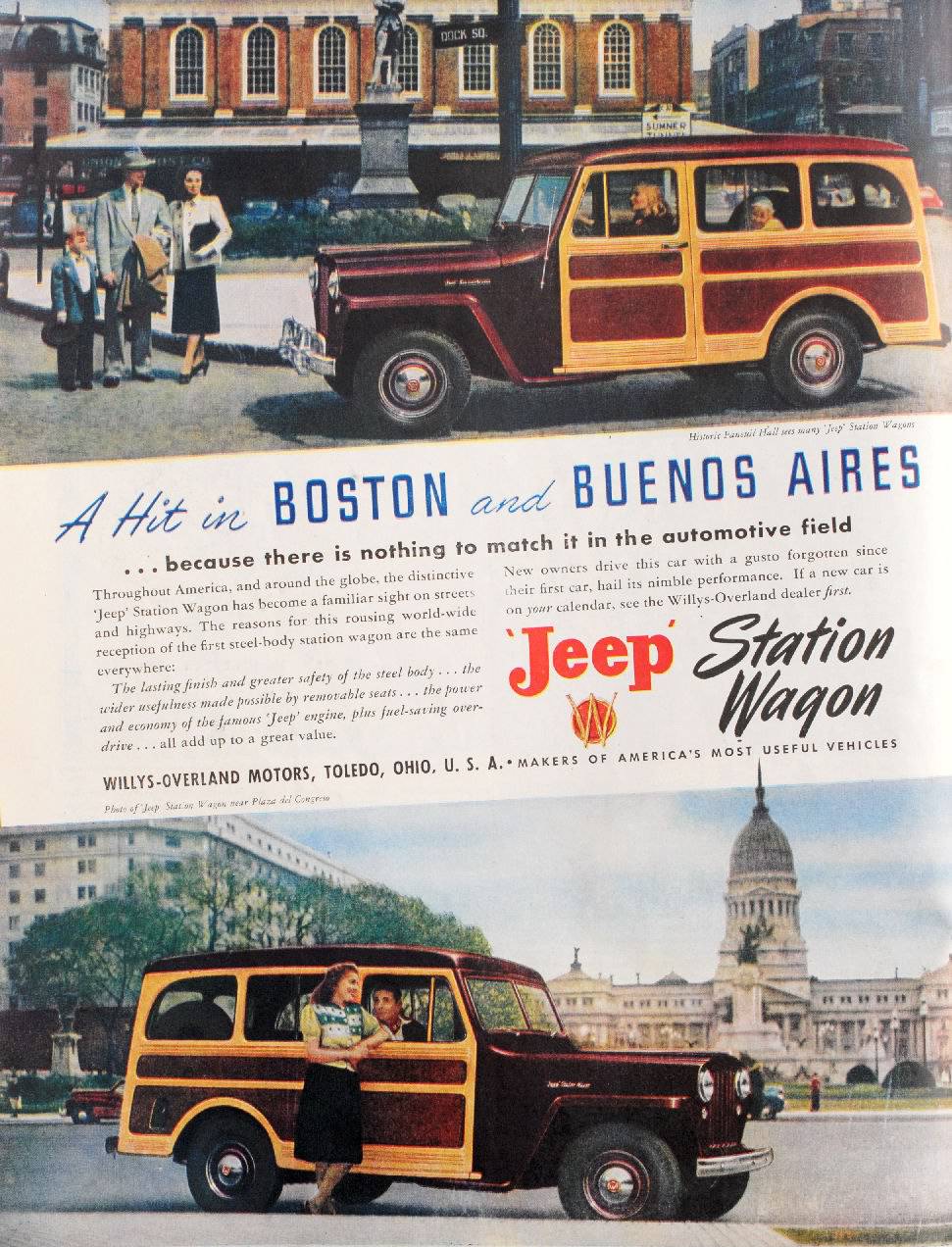
Willys marketed the station wagon aggressively, and the vintage advertisements from that era reflect just how broadly the company pitched it. Ads targeted farmers, suburban families, and outdoor adventurers alike. The messaging was clear: this vehicle could do it all.
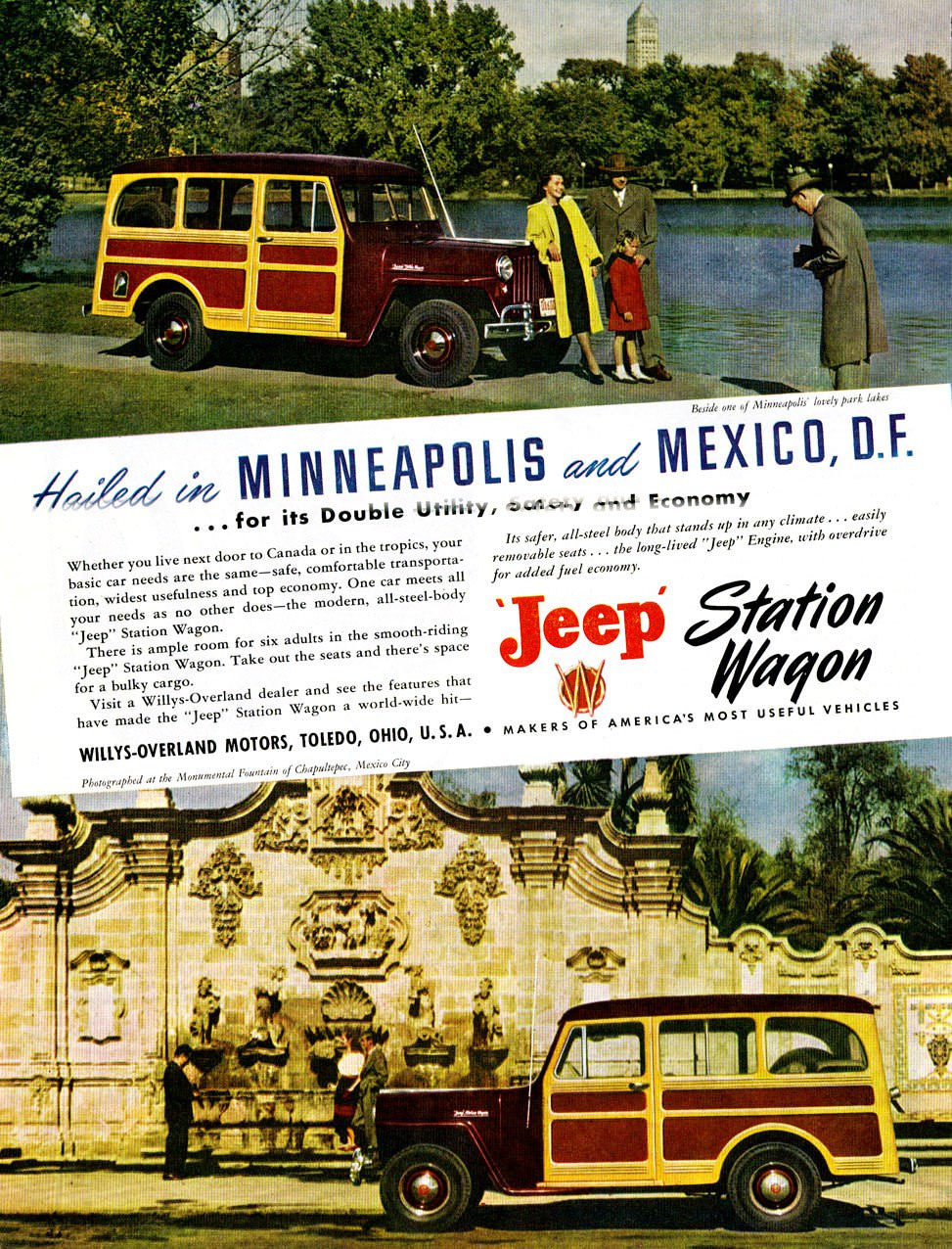
Some ads highlighted the four-wheel-drive capability with images of the wagon navigating muddy trails and open fields. Others leaned into its comfort and cargo space, positioning it squarely as the sensible family choice. The range of those advertisements alone tells you how versatile Willys understood their own product to be.
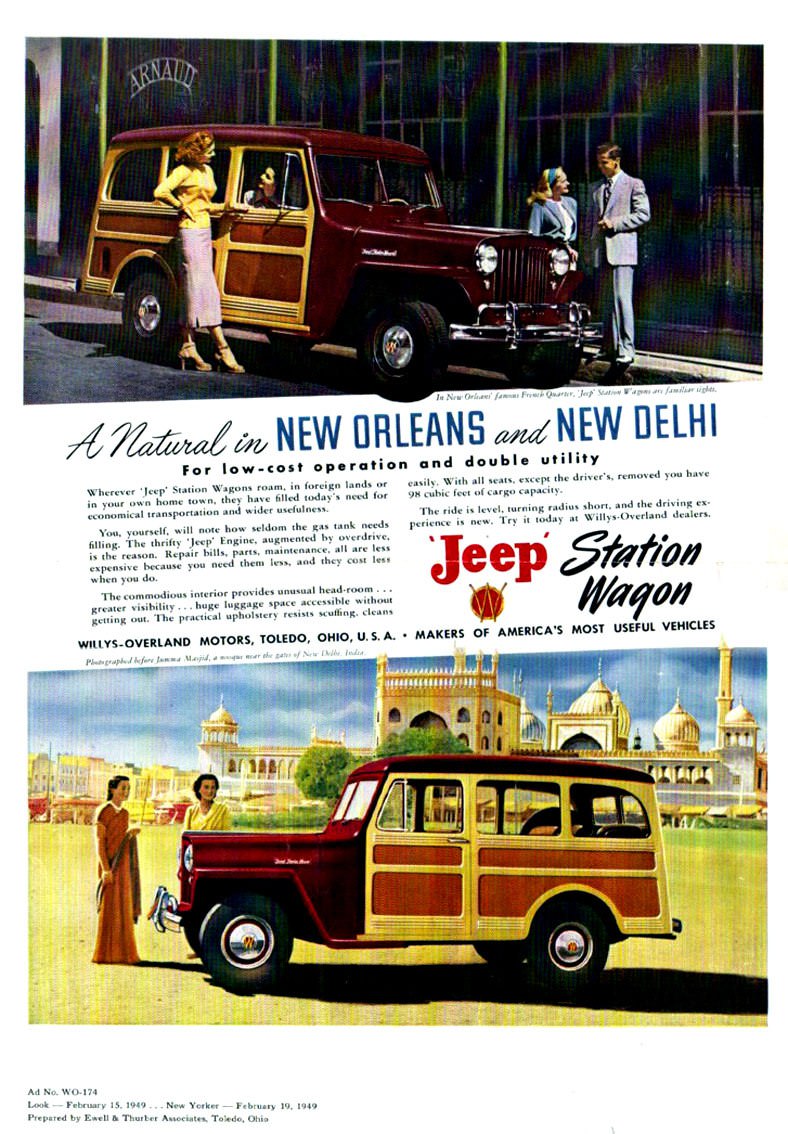
The 1949 Willys also set early standards for what a station wagon could look like structurally. Its all-steel body was a direct response to the aging wooden-bodied wagons that required far more maintenance and were prone to rot and warping. Steel meant durability, and durability meant long-term value — something American buyers in the post-war years understood deeply.
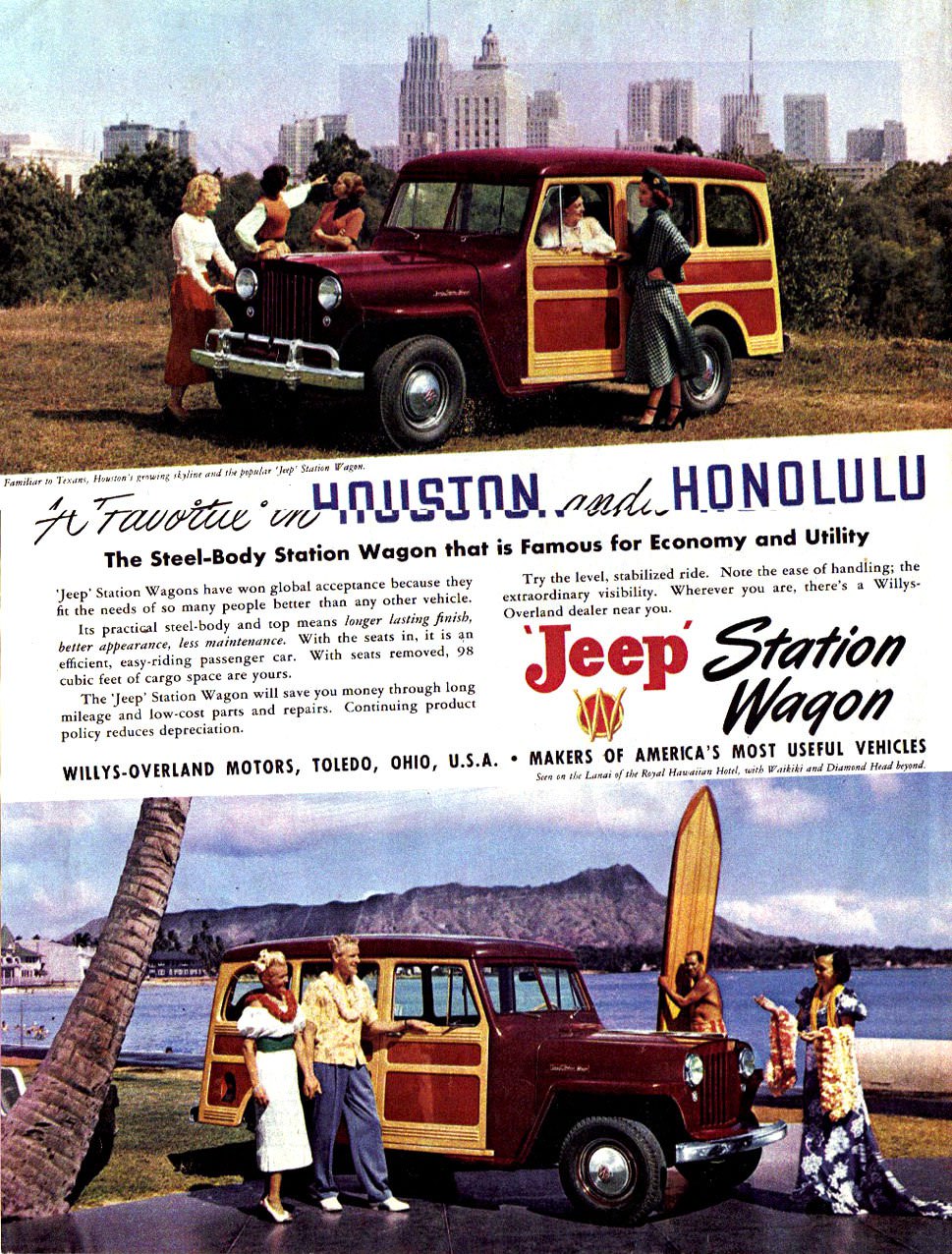
The wagon’s dual role as both an on-road family vehicle and an off-road workhorse had no real precedent. Trucks handled rough terrain. Cars handled families. The 1949 Willys did both, and the vintage print ads captured that duality with striking clarity.
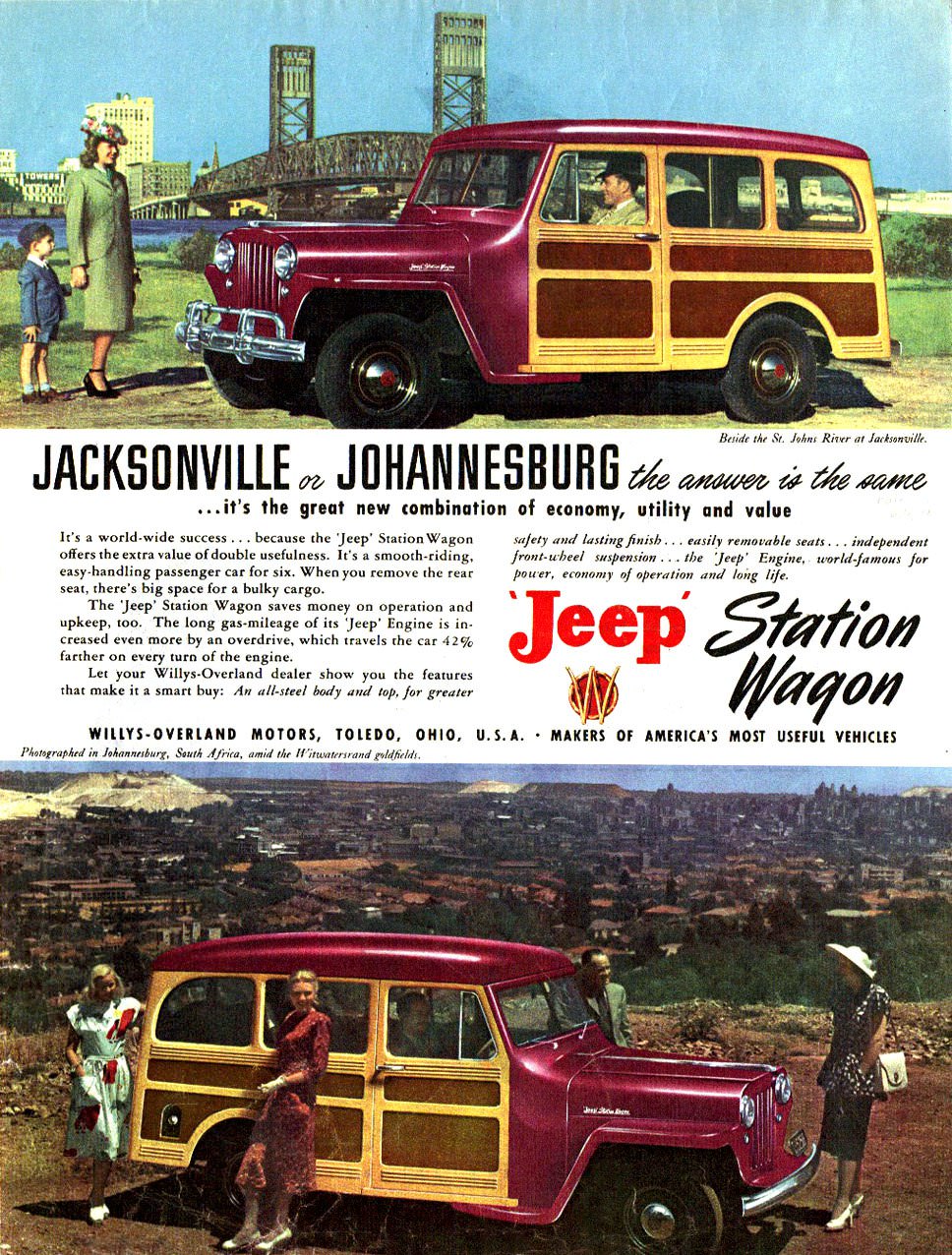
Looking back at these advertisements today, you see more than clever marketing. You see a snapshot of what Americans wanted in 1949 — practicality, freedom, and a vehicle that could keep up with life in all its forms. The 1949 Willys Jeep Station Wagon delivered exactly that, and its vintage adverts remain a vivid record of a machine that rewrote the rules of American driving.