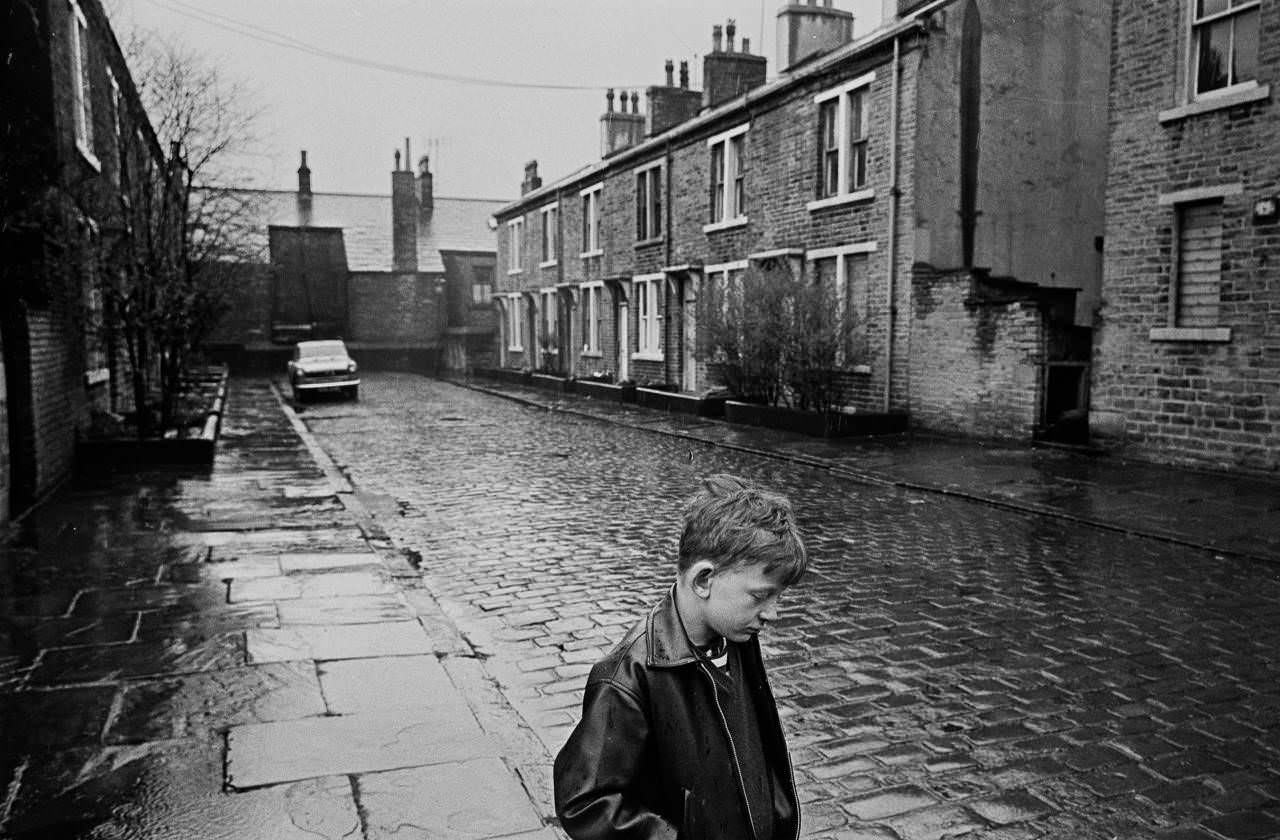
In the late 1960s and into the 1970s, photographer Nick Hedges traveled across Britain documenting some of the worst housing conditions in the country. He was commissioned by Shelter, the national housing charity, to produce a visual record of poverty and deprivation in British cities. His assignment took him into terraced streets, cramped flats, and crumbling backyards — the everyday spaces where working-class families lived, often with no running hot water, no indoor bathroom, and walls that let in the cold. Bradford was one of the cities he returned to repeatedly, and the photographs he made there form one of the most striking records of urban poverty in postwar Britain.
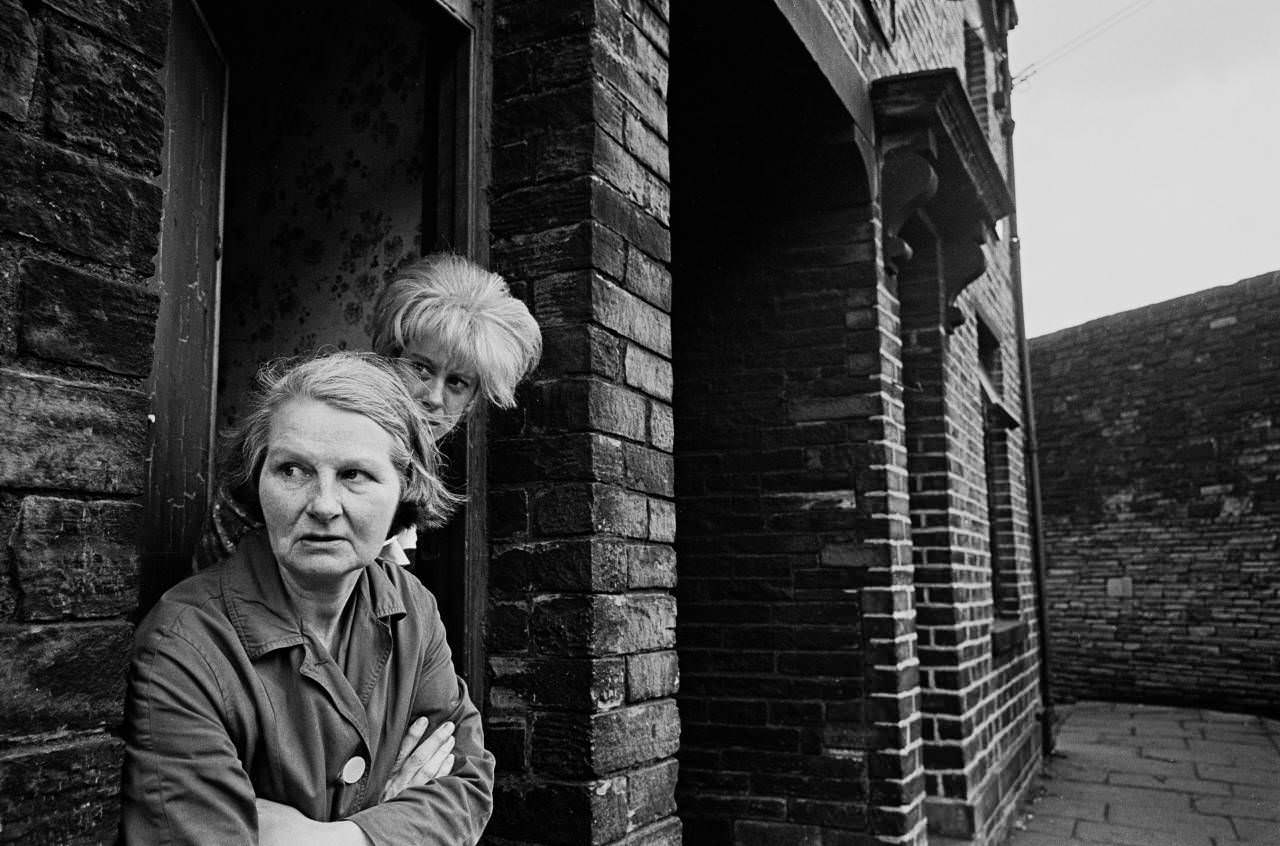
Bradford in the late 1960s was a city still shaped by its industrial past. The textile mills that had made it prosperous in the 19th century had left behind dense rows of back-to-back terraced houses, many of which were well past their useful life by the time Hedges arrived. Large numbers of families lived in conditions that had changed very little since the Victorian era. Damp walls, shared outdoor toilets, and inadequate heating were common features of daily life in these neighborhoods.
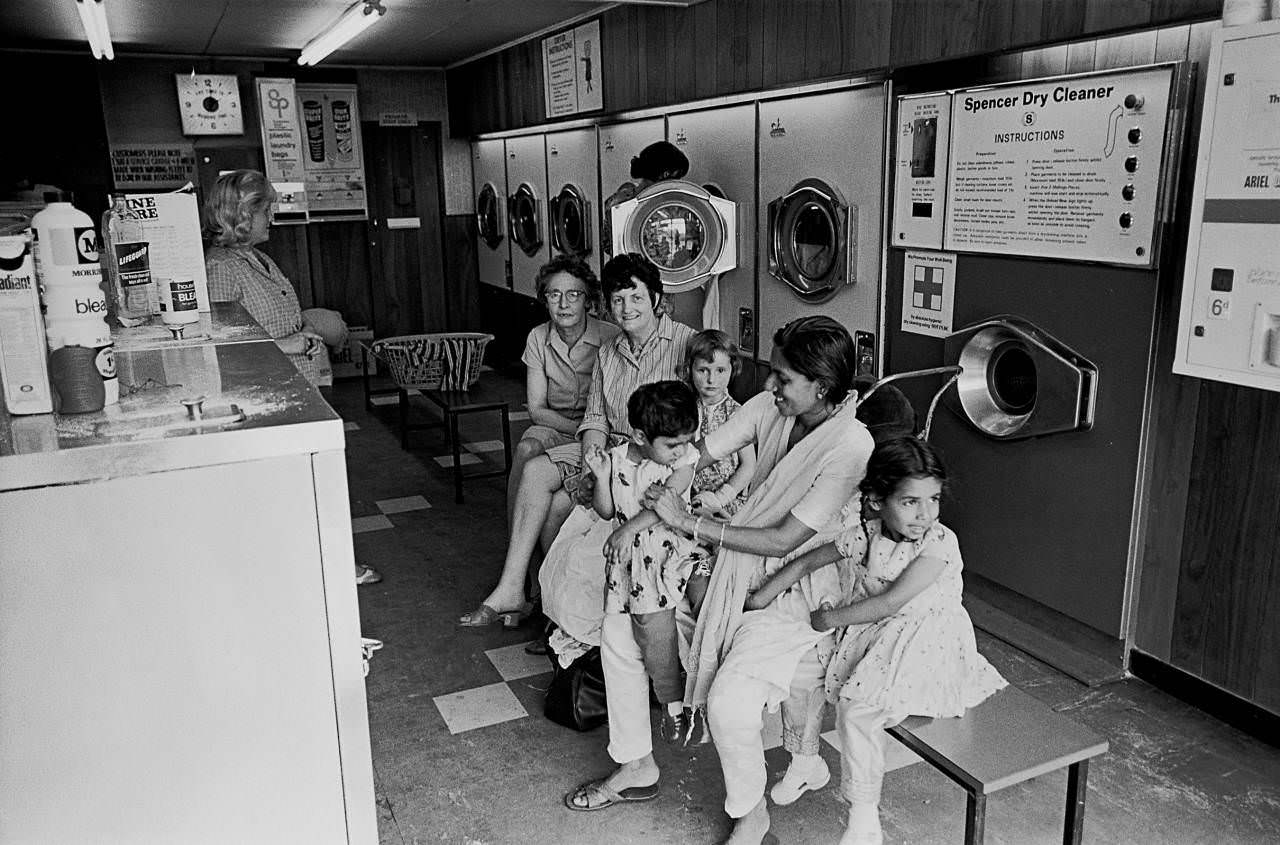
For many residents, basic tasks like doing laundry required leaving home entirely. Without hot water or washing facilities indoors, the local laundrette was a weekly necessity. Hedges captured these moments without staging them — people going about their routines under difficult circumstances. The absence of household amenities that most people today take for granted defined the rhythm of life in these communities.
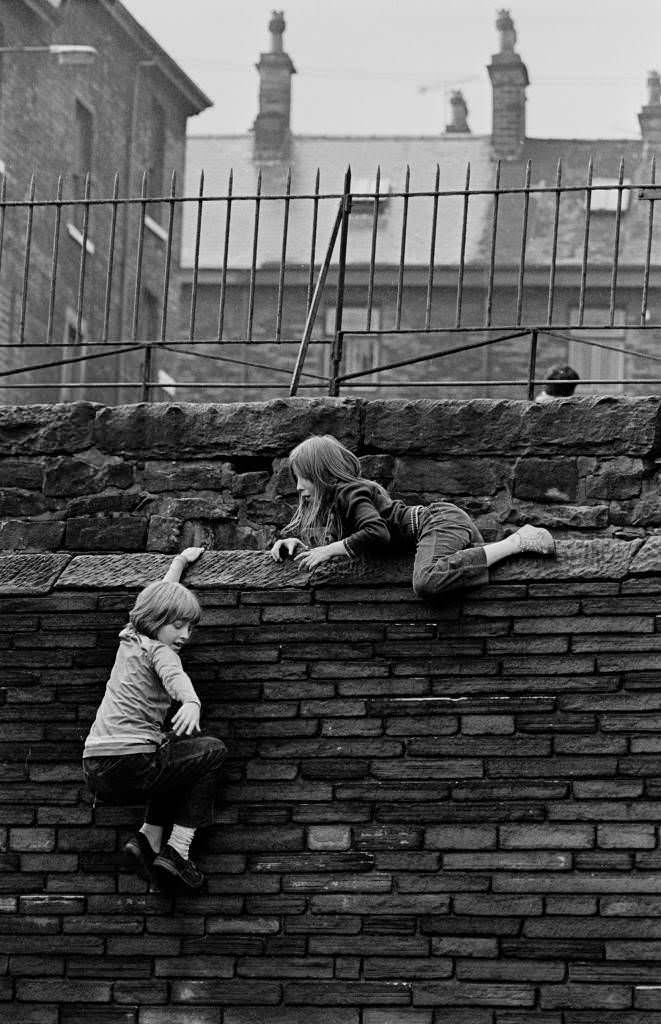
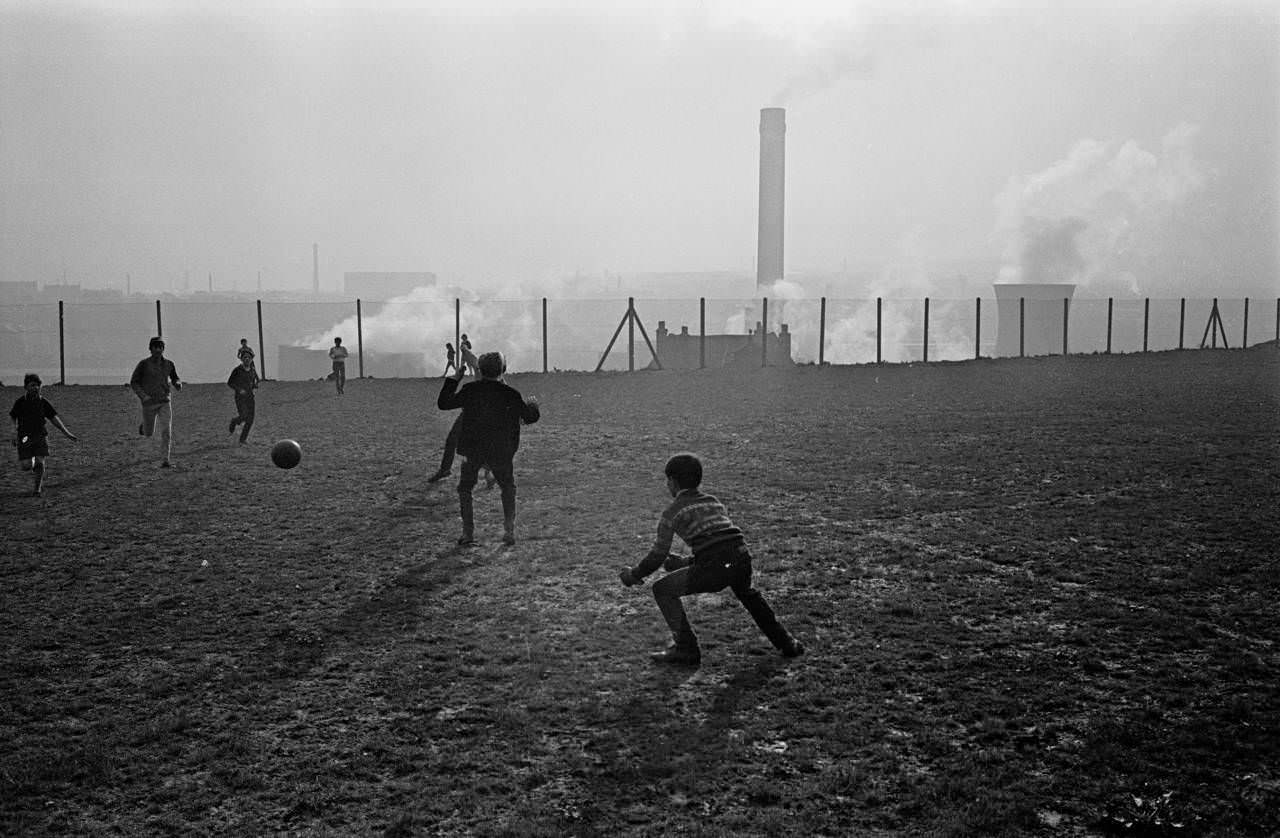
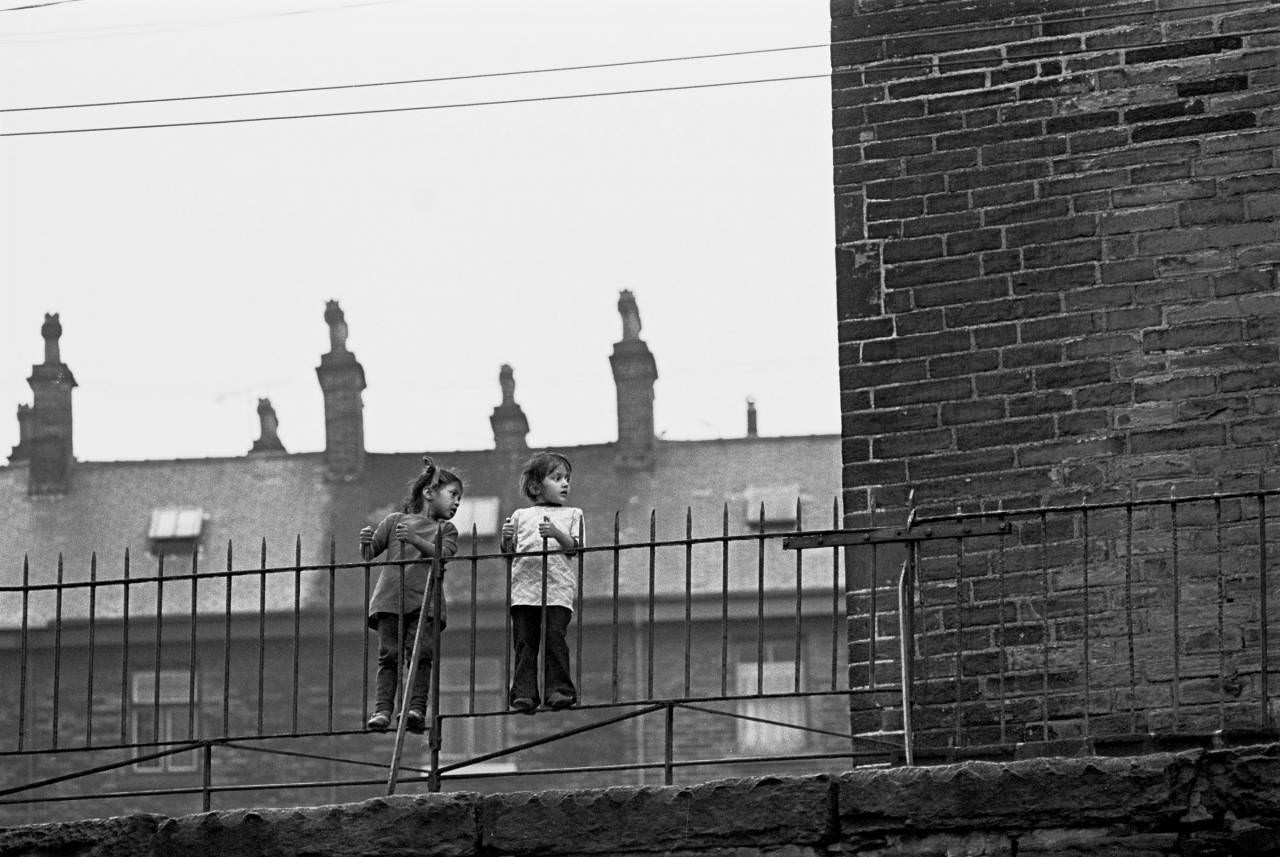
Despite the grim physical environment, children filled the streets and backyards with games and noise. The terraced streets themselves became playgrounds. Kids played football in the shadow of industrial smokestacks, used fences as climbing frames, and turned any flat piece of pavement into a cricket pitch. Hedges photographed them with the same directness he applied to interiors — no sentimentality, just clear-eyed observation.
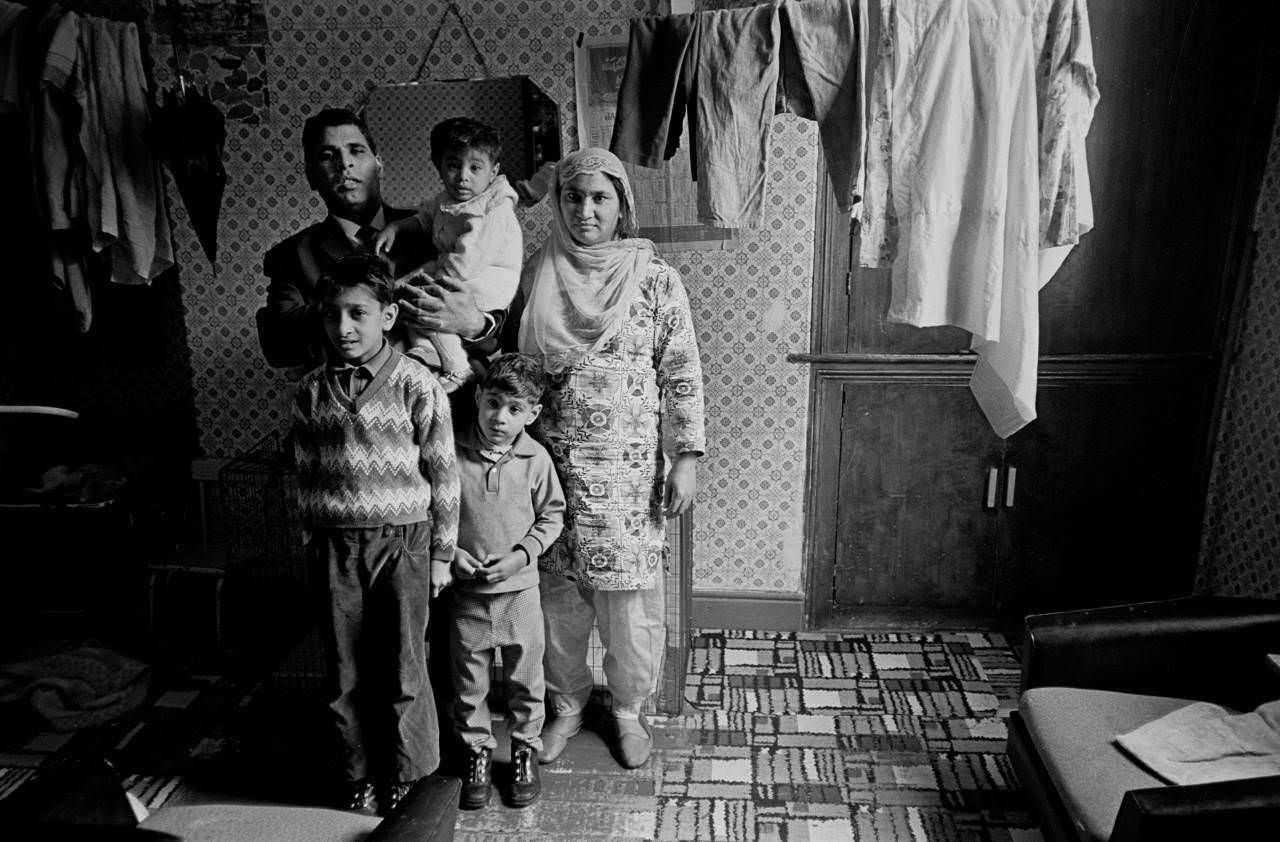
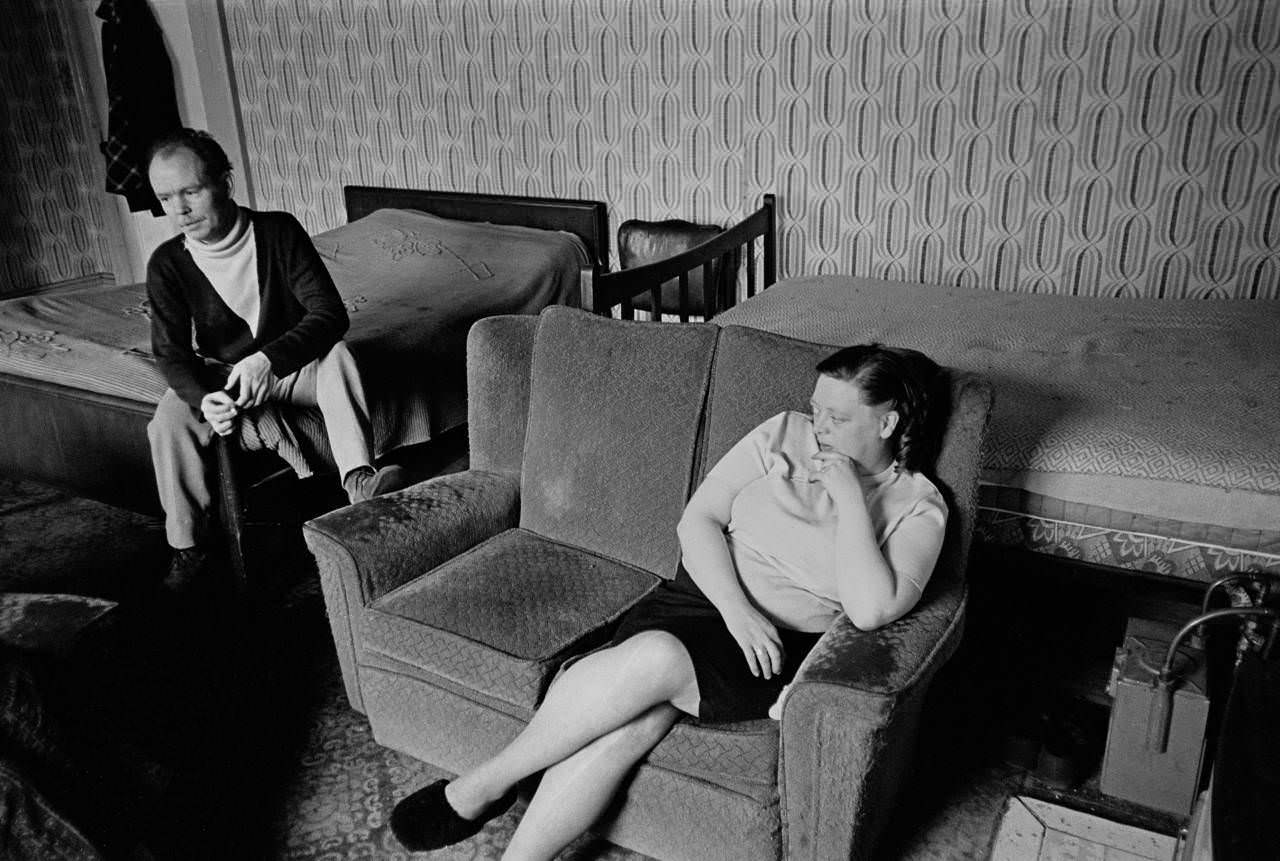
Overcrowding was one of the most persistent problems Shelter documented in Bradford. Multiple family members sharing a single room was not unusual. In some cases, an entire family — parents and several children — occupied one room in a subdivided house with shared access to a single kitchen and toilet. Hedges photographed these interiors closely, showing the density of furniture, the layers of personal belongings, and the faces of people who had no better option available to them.
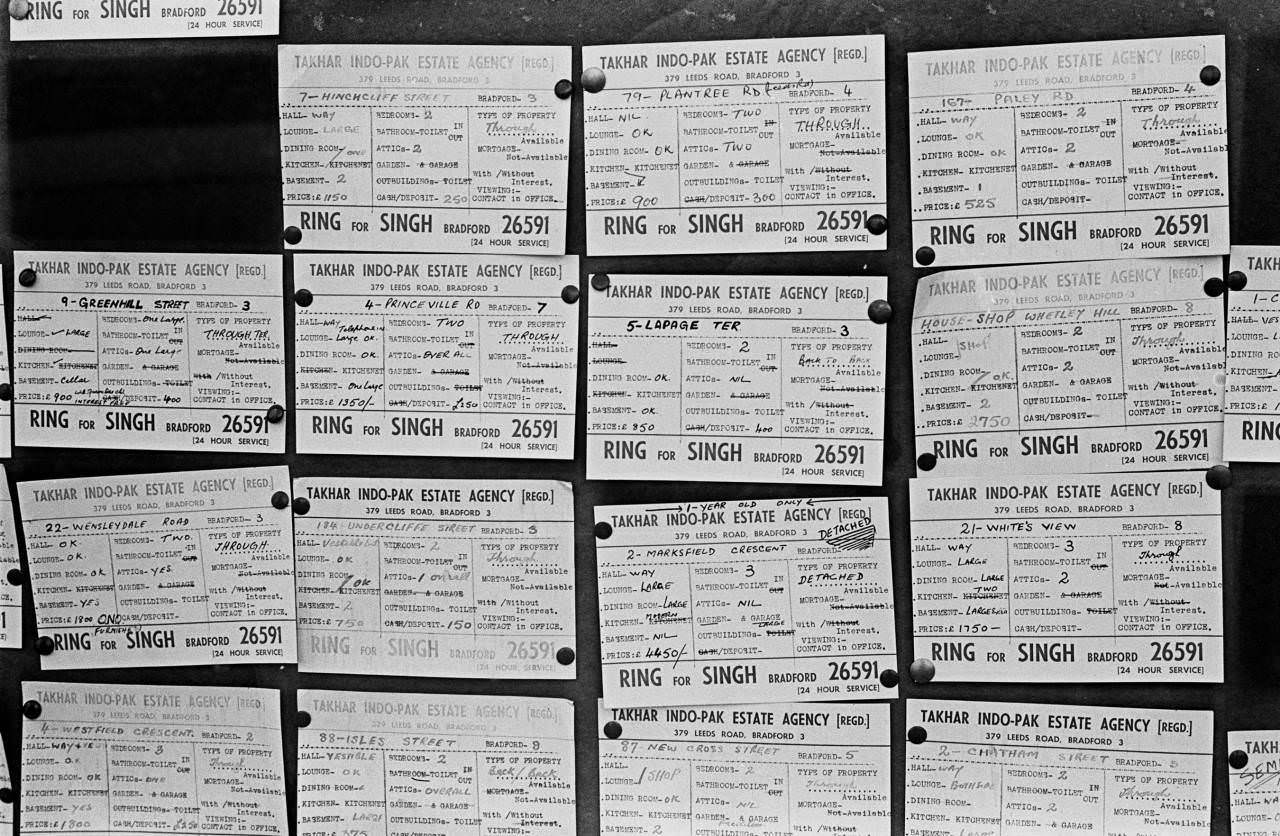
The housing market in Bradford at this time offered little relief to low-income families. Estate agents’ windows listed properties that were barely fit for habitation, yet still out of reach for many working-class tenants. The gap between the available housing stock and the basic needs of residents was precisely what Shelter was campaigning to close. Hedges’ photograph of an estate agent’s window places that tension in plain view.
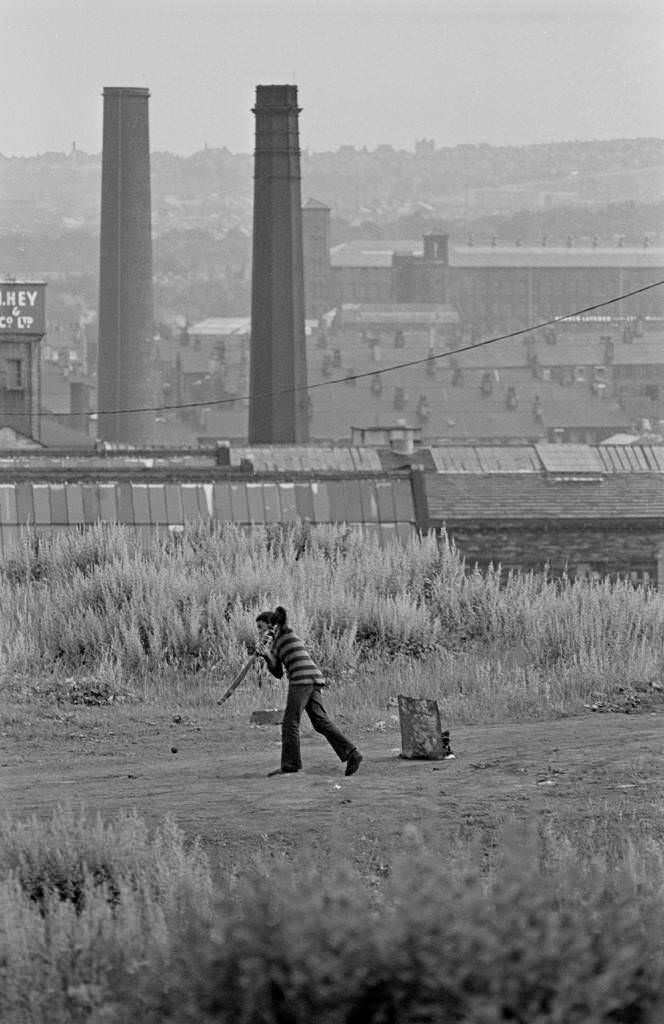
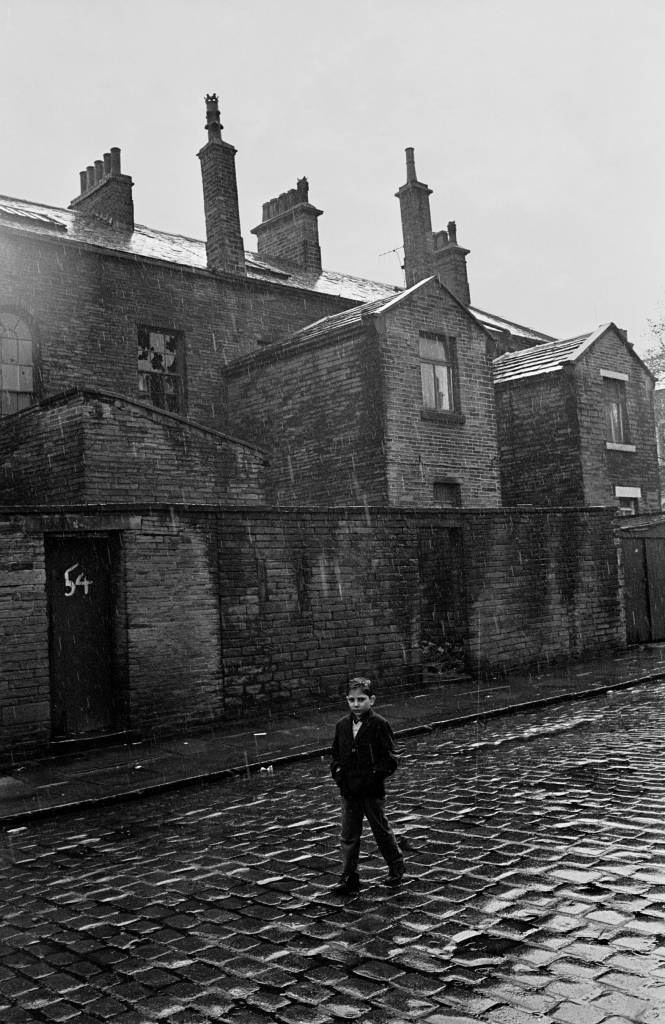
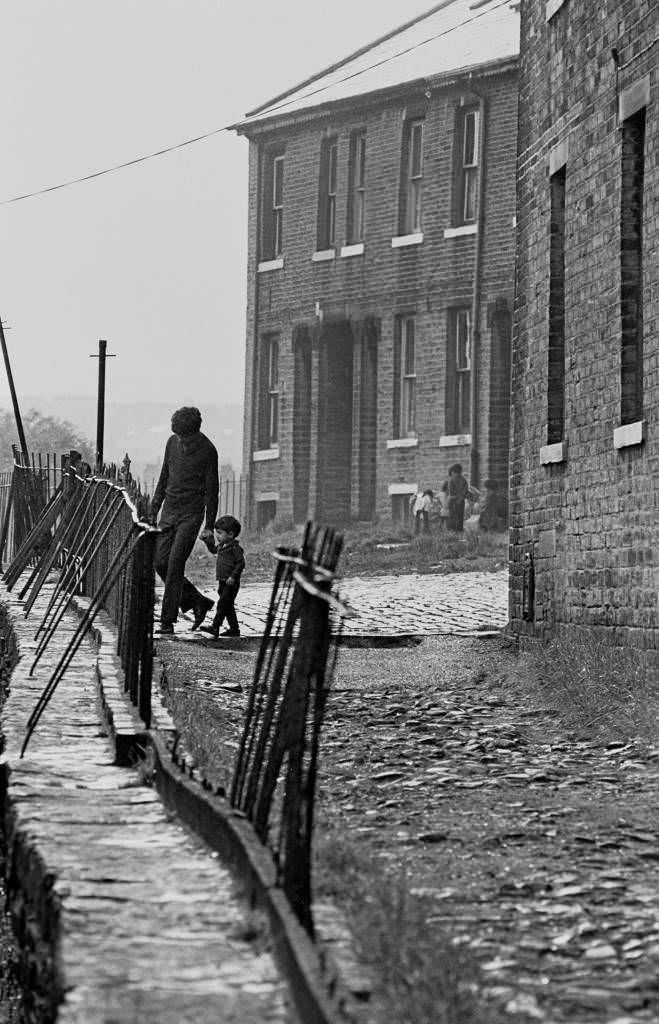
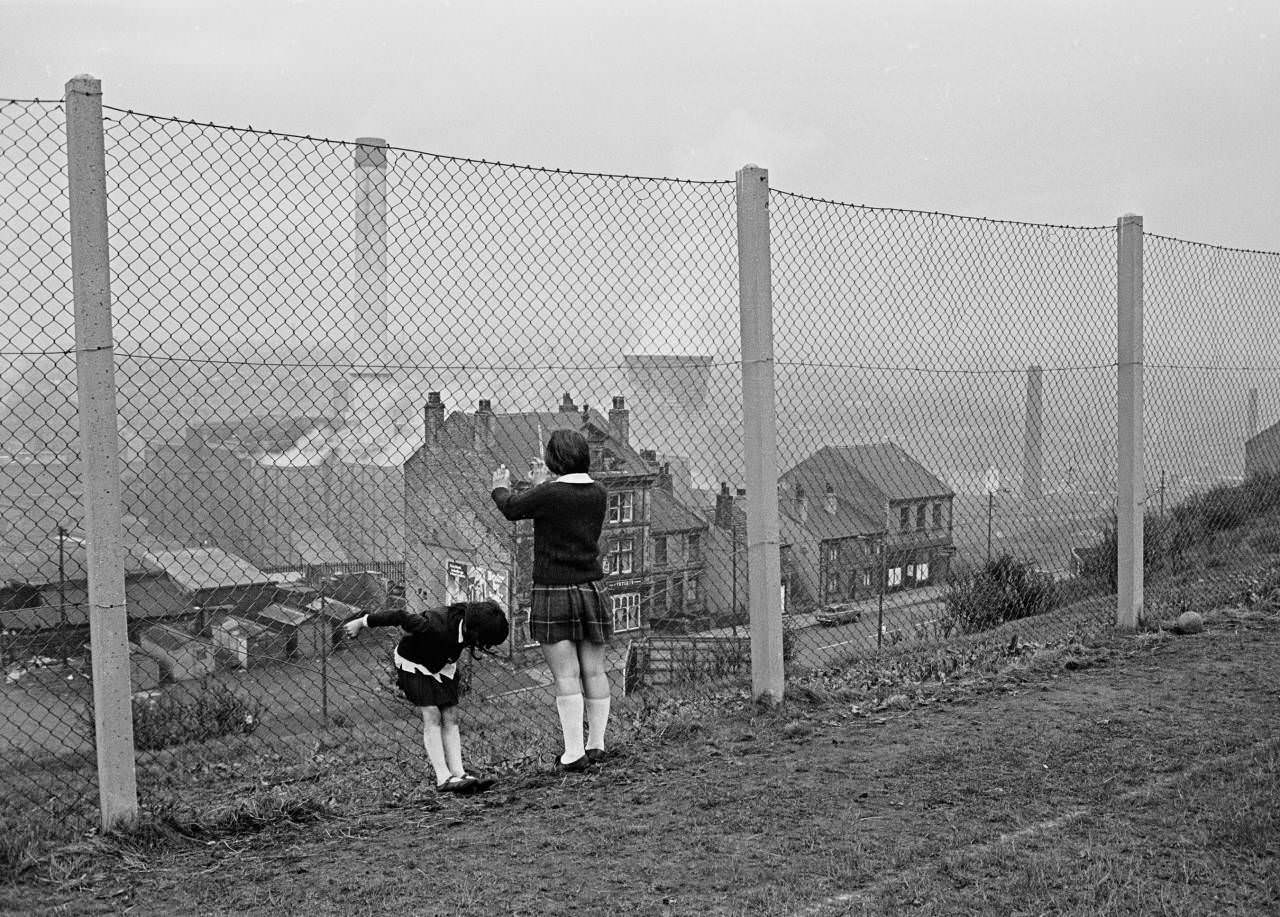
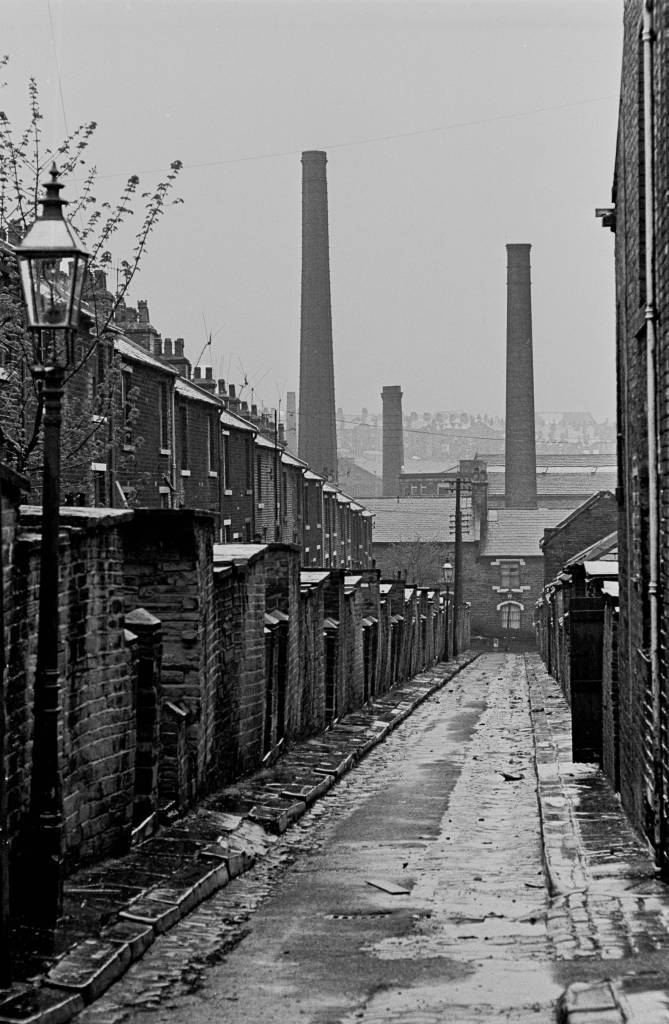
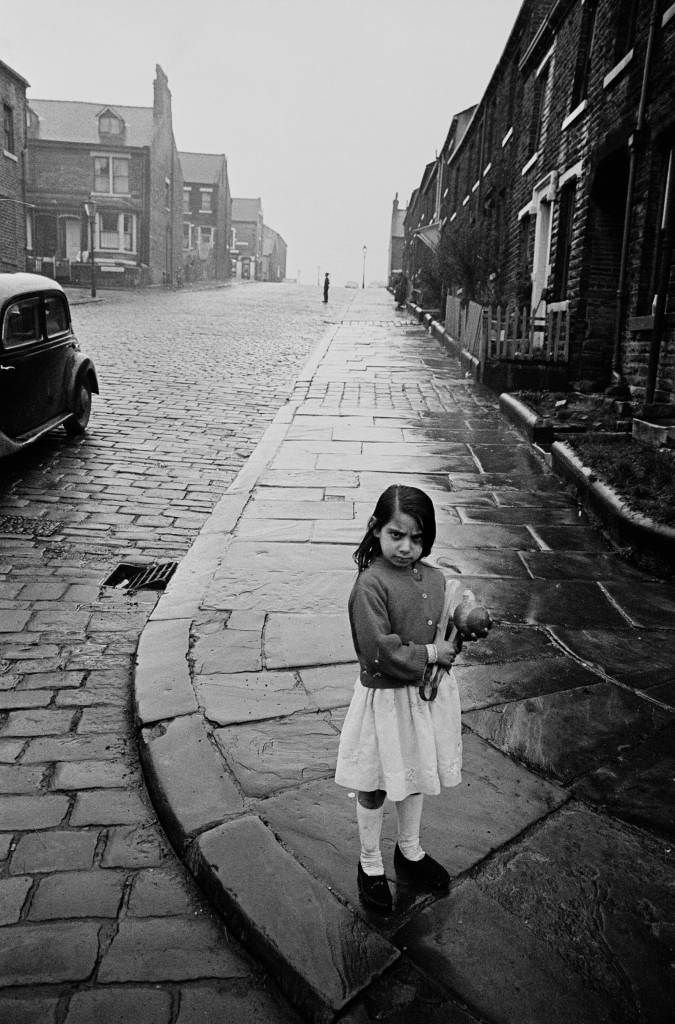
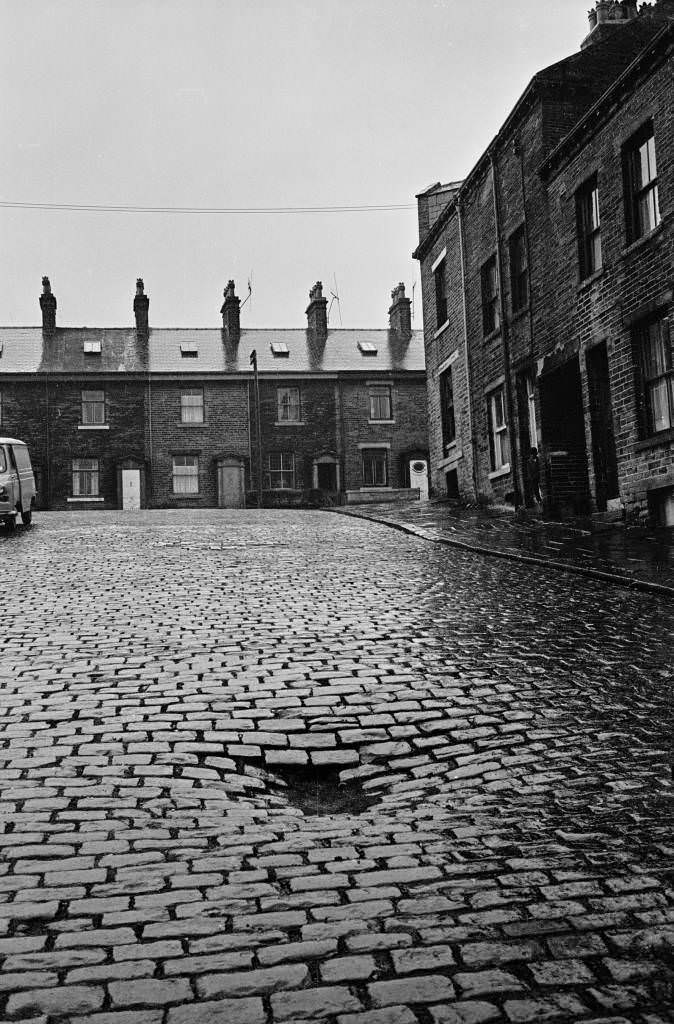
The streets around Bradford’s terraced neighborhoods were busy with children throughout the day. Coming home from school meant walking through cobbled streets flanked by dark brick walls, past gas works and power stations. These were not picturesque surroundings, but they were familiar and lived-in. Hedges photographed the children within that environment, not removed from it — their figures small against the scale of the industrial landscape around them.
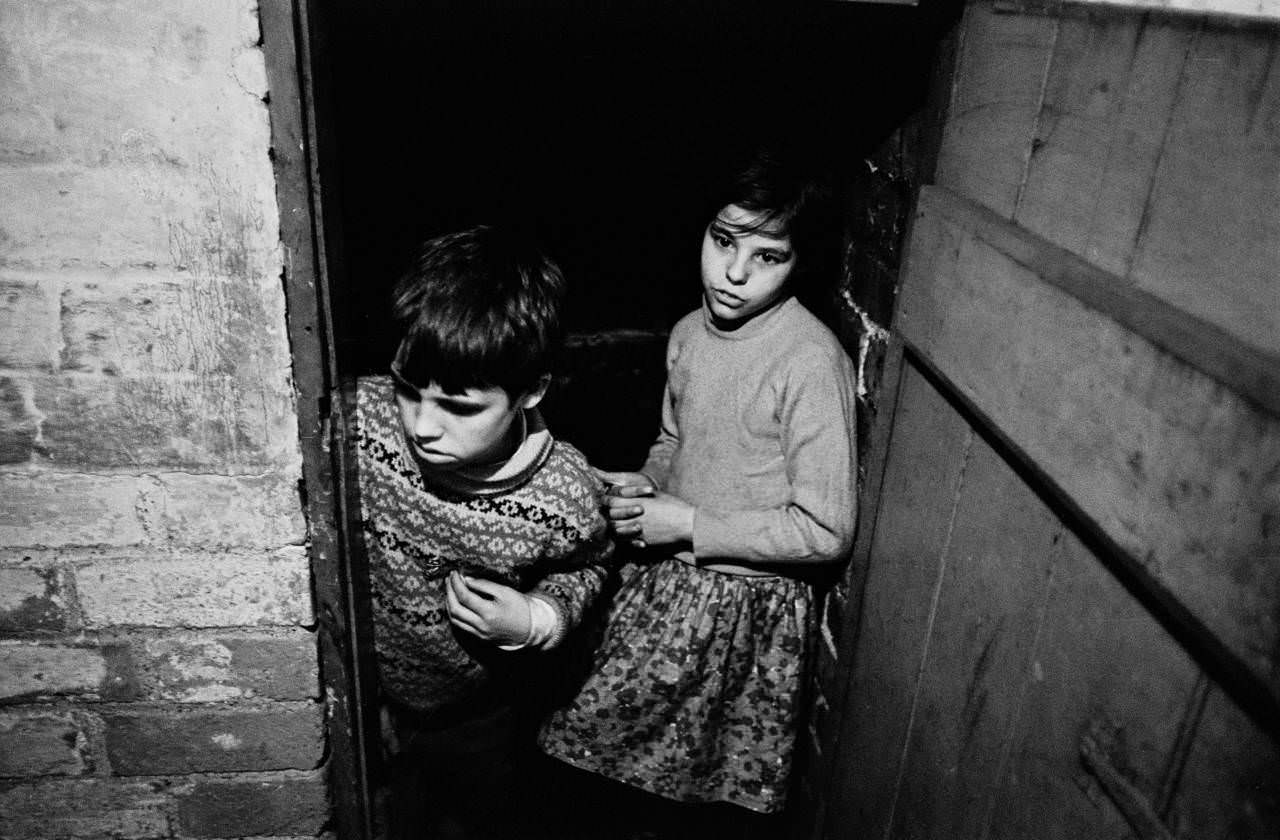
Some of Hedges’ most arresting images were made inside the homes themselves. Cellars in Bradford terraces were often damp and dark, yet in several cases families used them as living or storage spaces. The photograph of a brother and sister in the cellar of their house captures the reality of a childhood spent in conditions that fell well below any reasonable standard of habitation. The structural decay of these buildings — crumbling plaster, exposed brickwork, failing floors — is visible throughout his interior work.
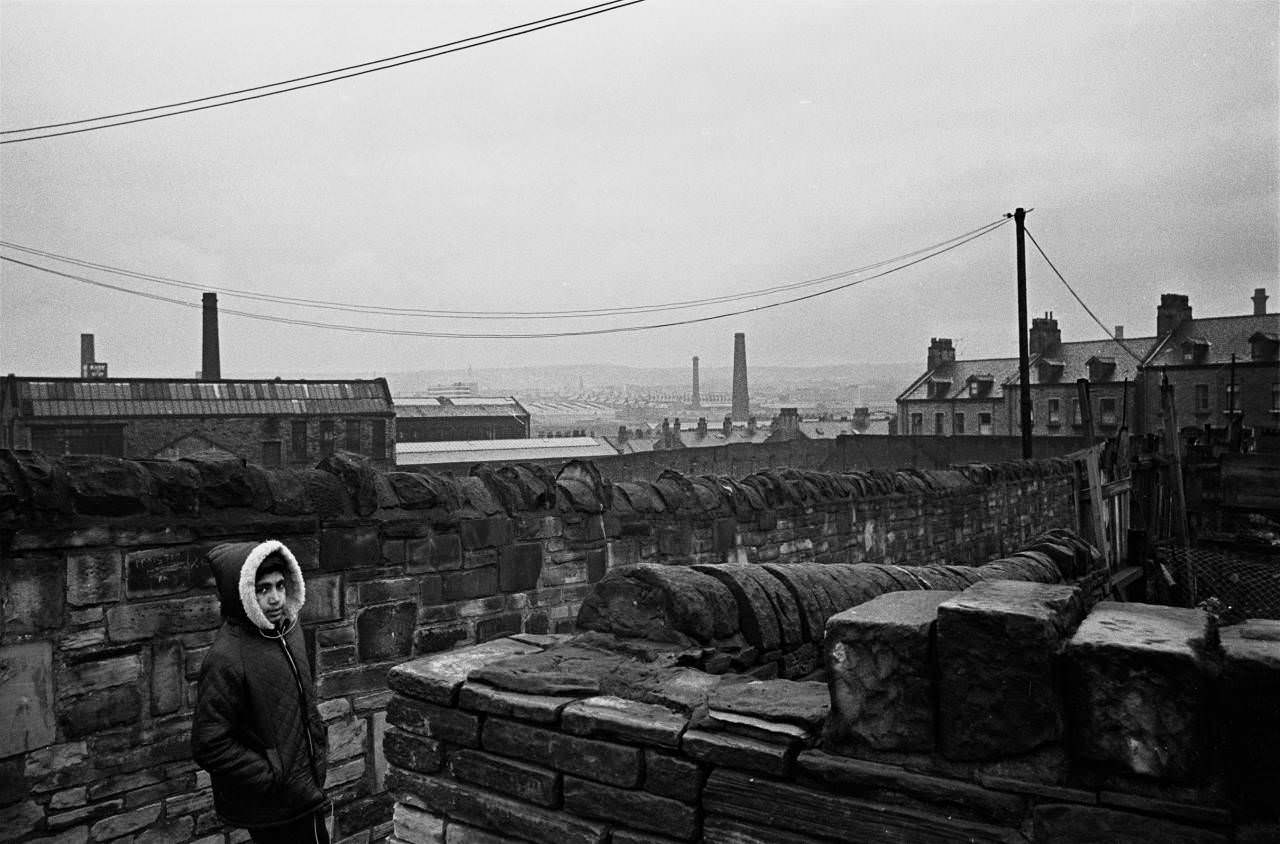
Outside, the backyards of these slum properties showed the same degree of neglect. Broken paving, rubbish, collapsed outbuildings, and shared waste facilities defined the outdoor spaces behind the terraces. Children navigated all of it freely, including the rooftops. A boy photographed on a roof in 1969 is a reminder that for kids in these neighborhoods, the boundaries of the built environment were there to be crossed rather than observed.
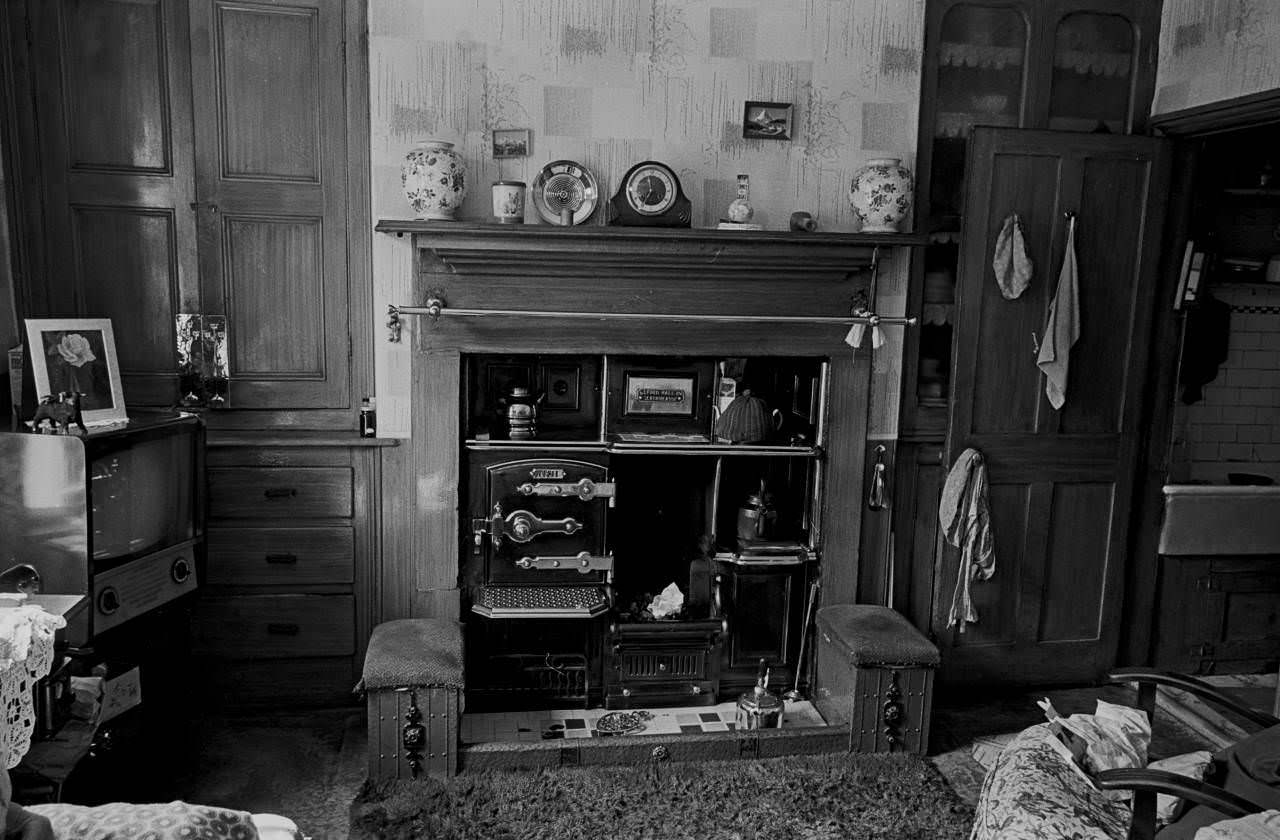
Not every image Hedges made emphasized decay. Some of his most telling photographs showed the efforts residents made to maintain dignity within poor conditions. A clean and well-kept kitchen range — the cast iron stove at the heart of a terraced house — spoke to the pride many families took in their homes, regardless of the state of the building around them. These details matter. They show that poverty was not accompanied by indifference; people worked to keep their households functioning.
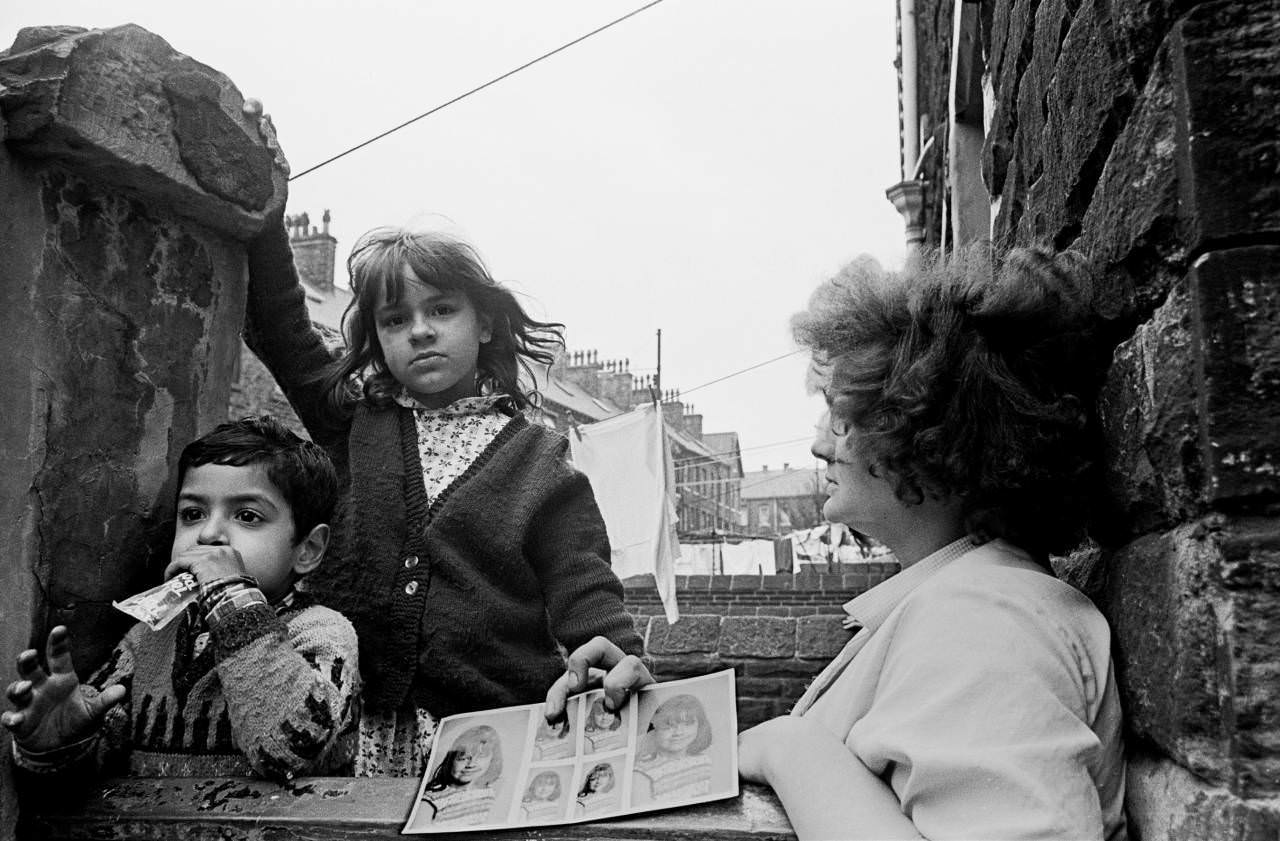
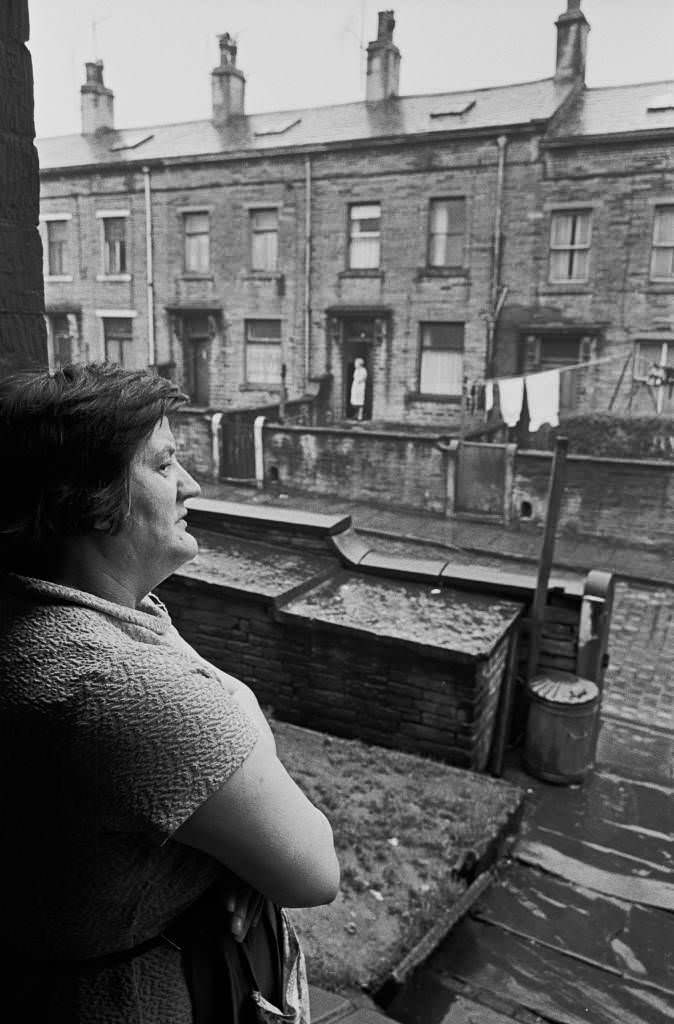
Family life continued in full in these communities. Mothers displayed their children’s school photographs on the walls. Women stood in doorways watching the street, as they had done in those same terraces for generations. Bradford in 1969 was also a city with a growing South Asian population, many of whom had settled in these same overcrowded neighborhoods. Hedges photographed across communities — a Sikh boy reading a comic, children of different backgrounds playing on the same street corners — recording a Bradford that was ethnically diverse but equally affected by poor housing across the board.
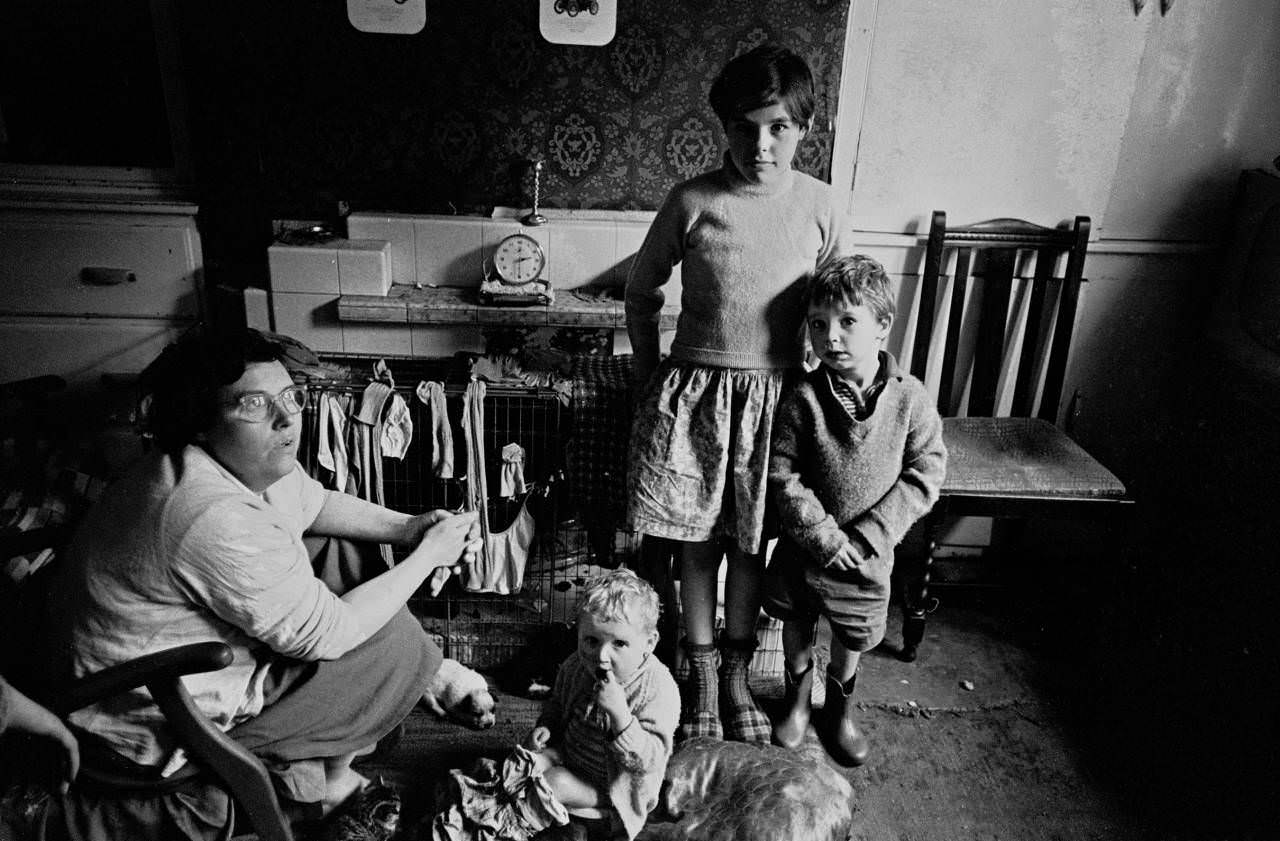
The overcrowding Hedges documented was not limited to any single type of household. Families with several children, elderly residents living alone, and extended family groups all appear across his Bradford photographs. In each case the physical environment — cramped rooms, insufficient furniture, shared facilities — is the constant. The 1969 photographs in particular show households that were already in serious difficulty before the clearance programs of the 1970s began to displace many residents to new council estates on the edges of the city.
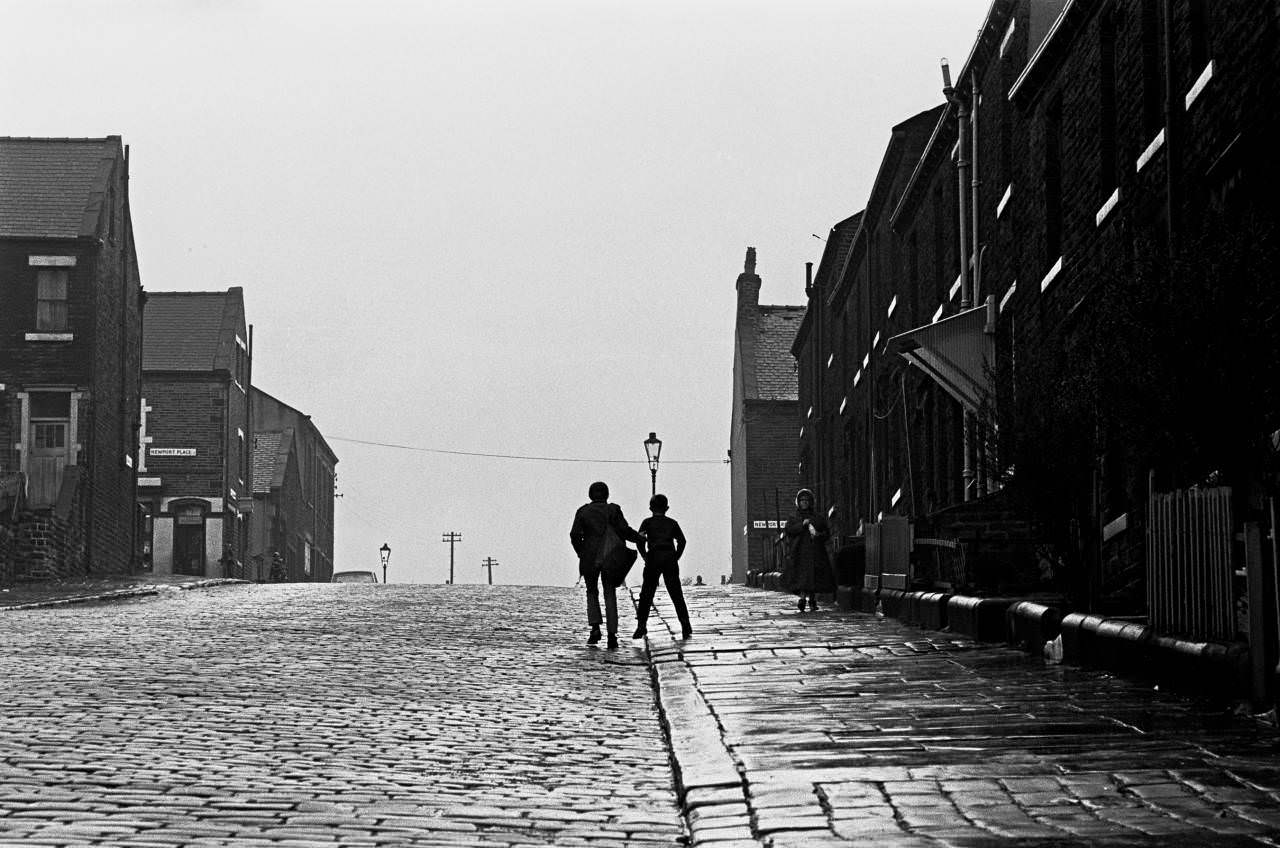
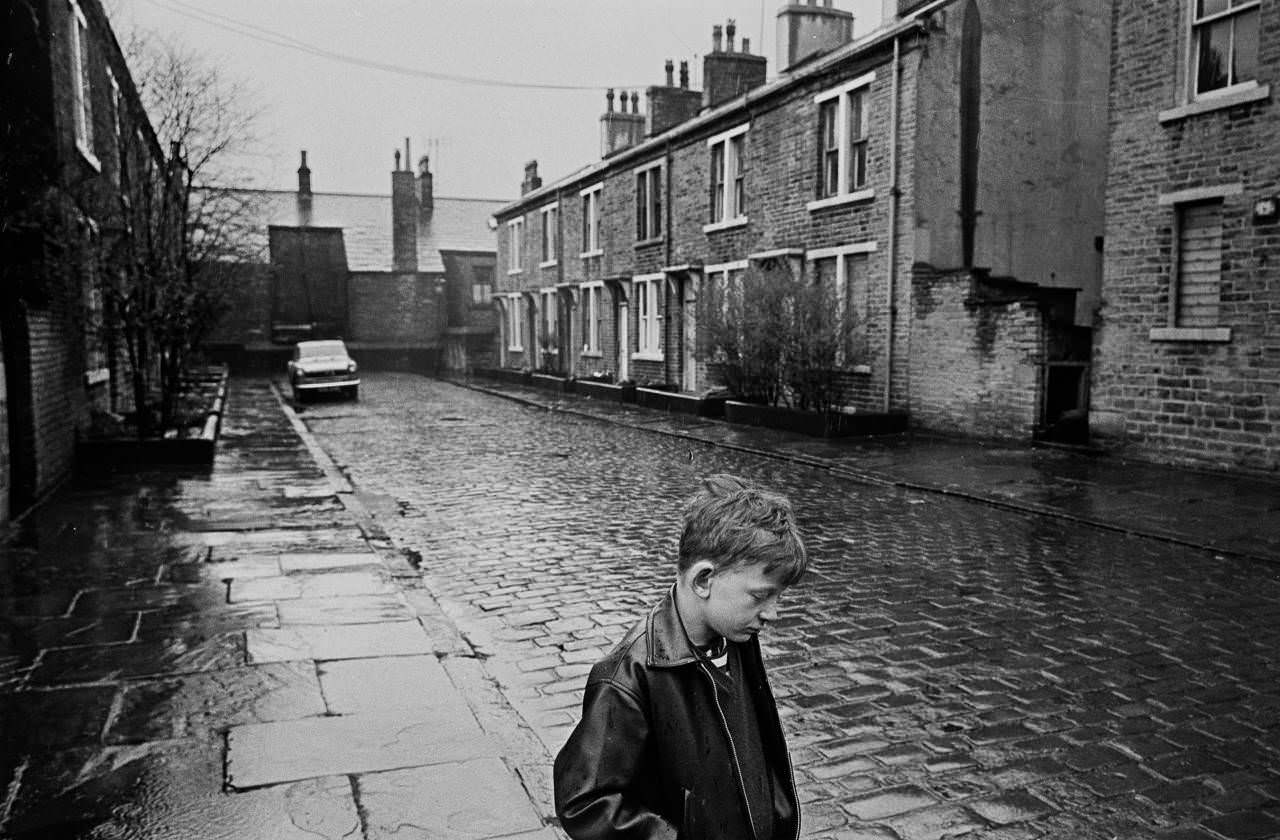
Work was woven into everyday life from an early age. Boys delivered newspapers through these same terraced streets before school. The roads themselves were in poor repair — Hedges photographed road subsidence in Bradford in 1969, showing tarmac that had buckled and cracked under the weight of years without maintenance. The infrastructure of these neighborhoods, like the housing itself, had been neglected for decades.
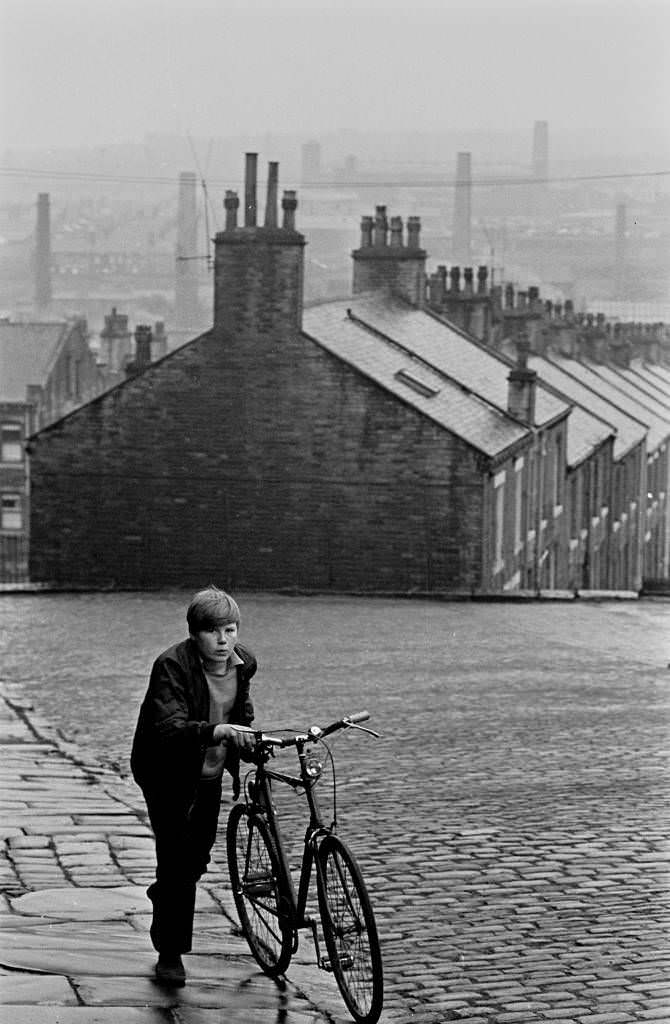
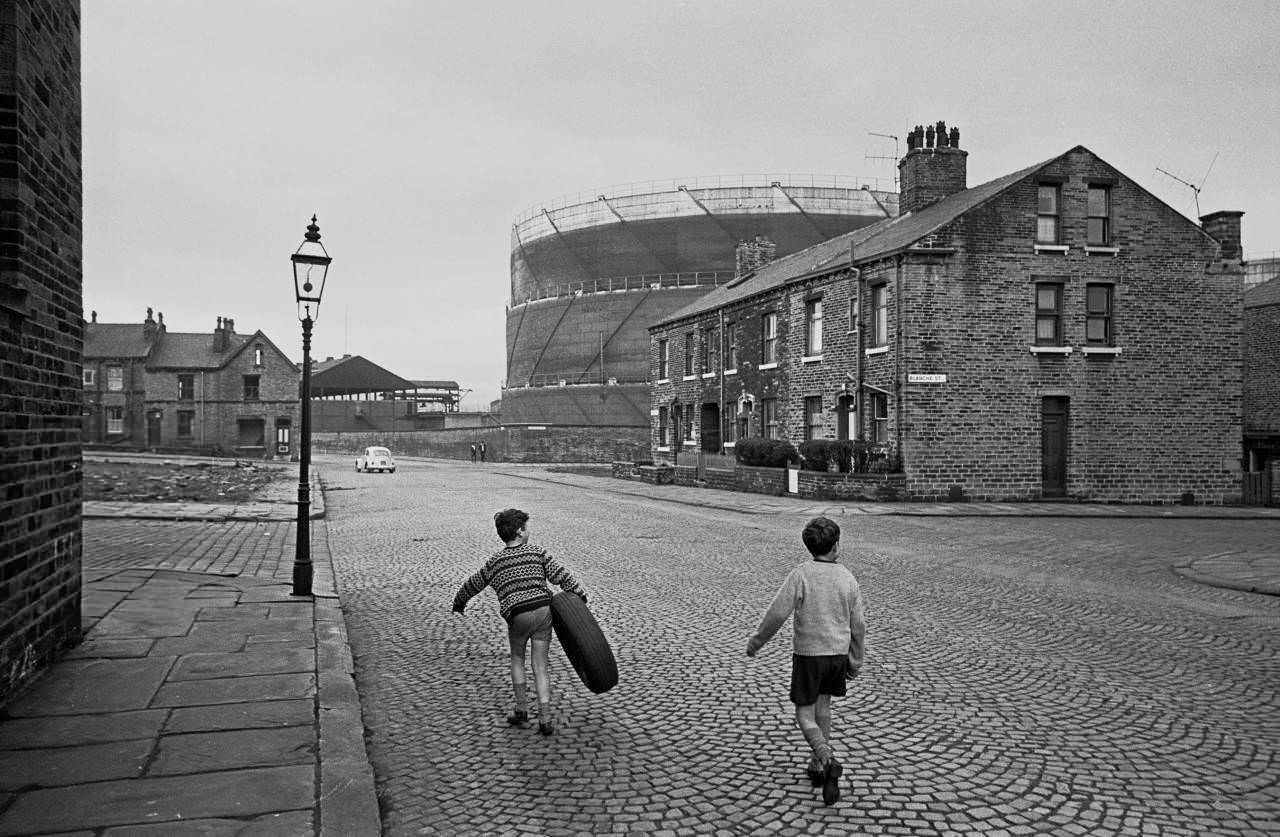
Street games carried their own rituals and rewards. A photograph showing a trophy for a street game captures the structured competitions children organized among themselves. Bradford’s hilly topography gave the streets their own character — bicycles on steep cobbled hills, children running between terraces that dropped sharply away toward the valley floor. These were the conditions that shaped a generation of Bradford childhoods in the late 1960s.
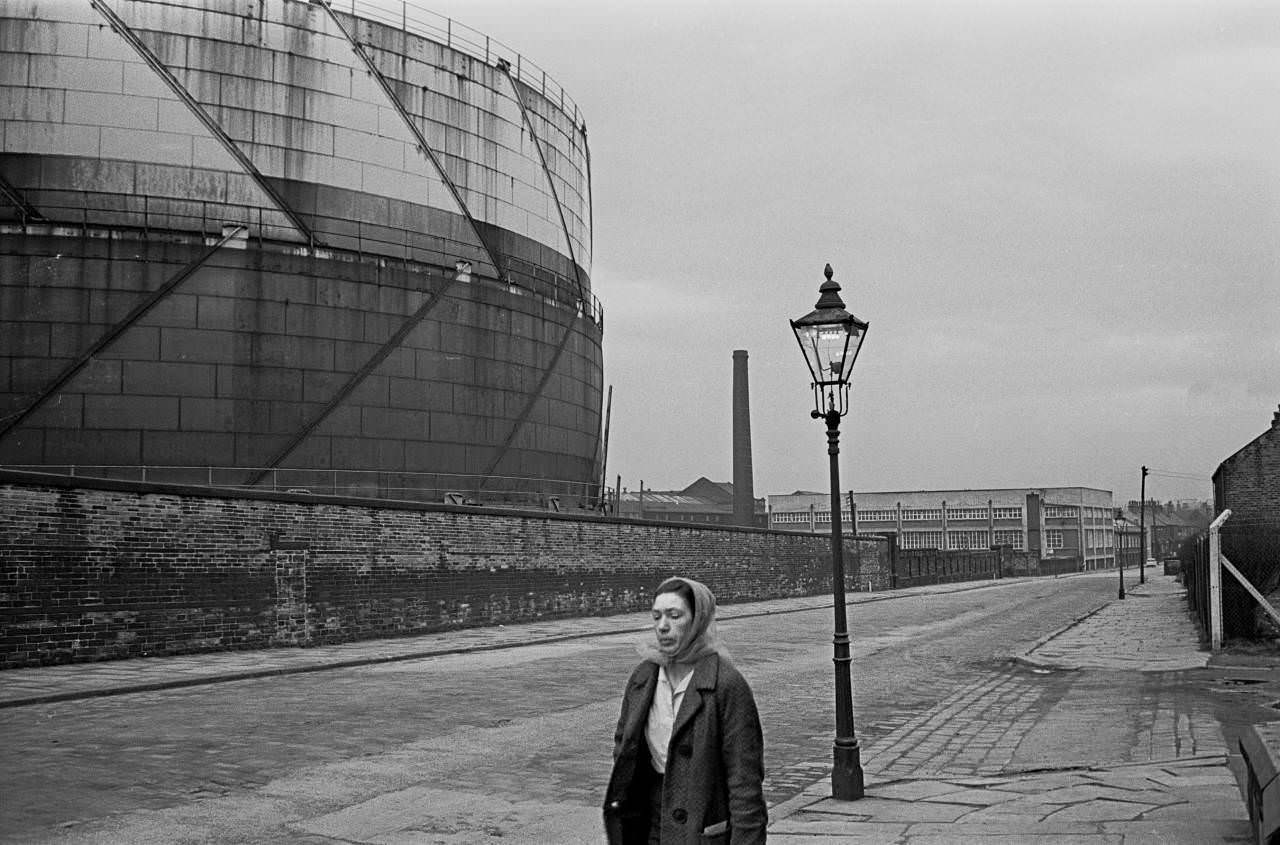
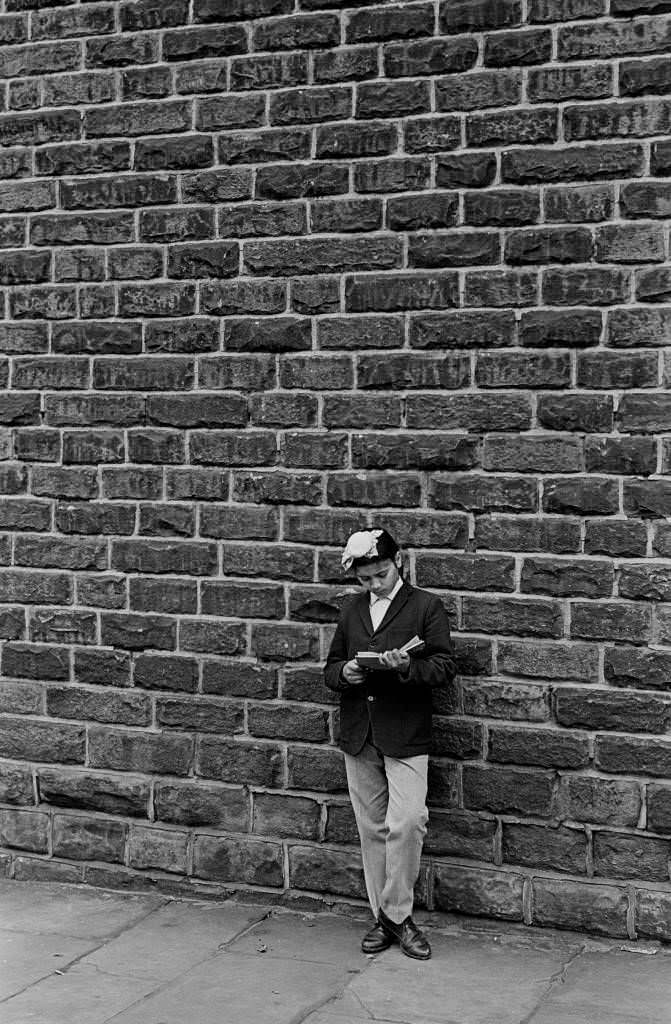
Bradford’s industrial infrastructure — gasworks, power stations, mills — formed the backdrop to residential life in ways that would be considered entirely unacceptable today. Housing sat directly adjacent to heavy industry. The smell, noise, and pollution from these facilities were part of daily existence for residents who had no choice about where they lived. Hedges placed people within these industrial landscapes deliberately, making the proximity undeniable.
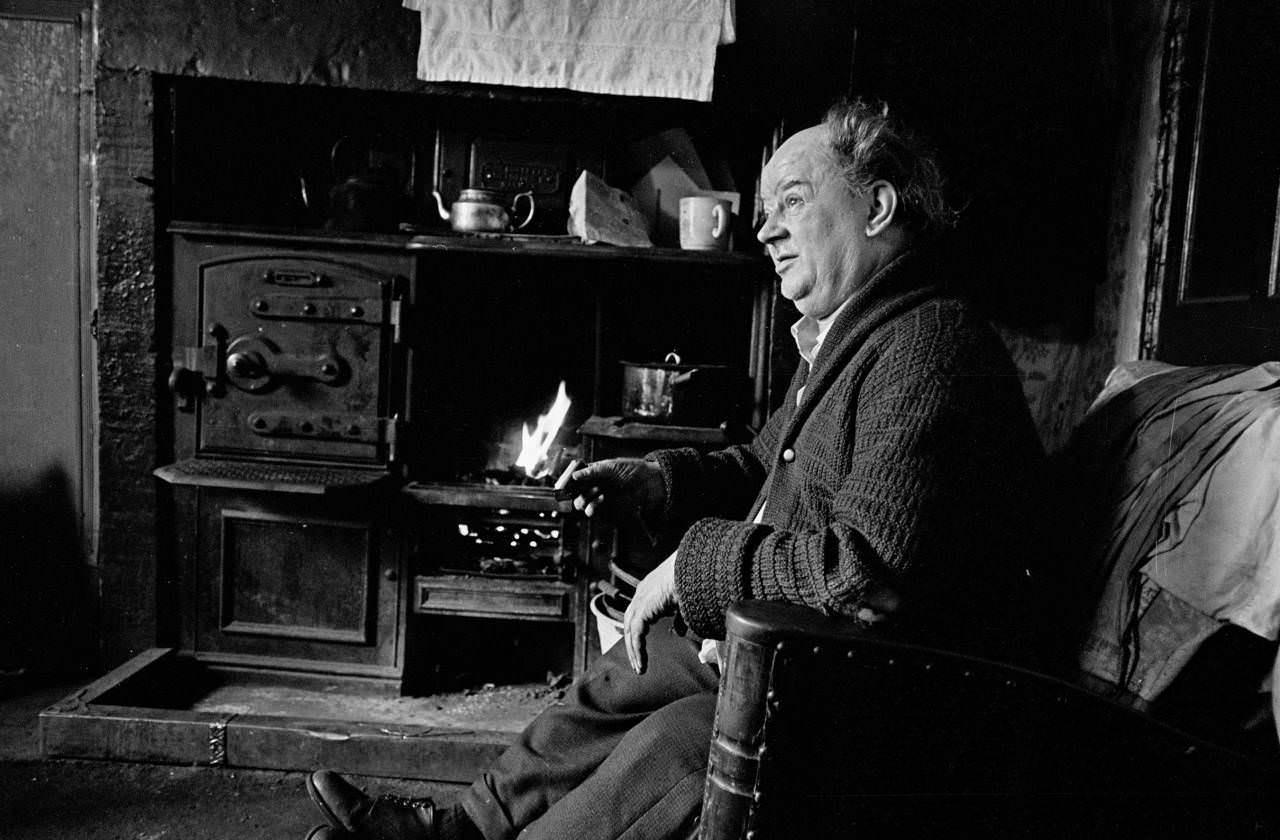
Older residents appear throughout Hedges’ Bradford work as well. An elderly man photographed by his hearth in 1969 represents the generation that had lived in these terraces the longest — people for whom the deterioration of their neighborhood had been a slow, continuous process rather than a sudden decline. For them, the hearth was still the center of the home, even as the walls around it crumbled.
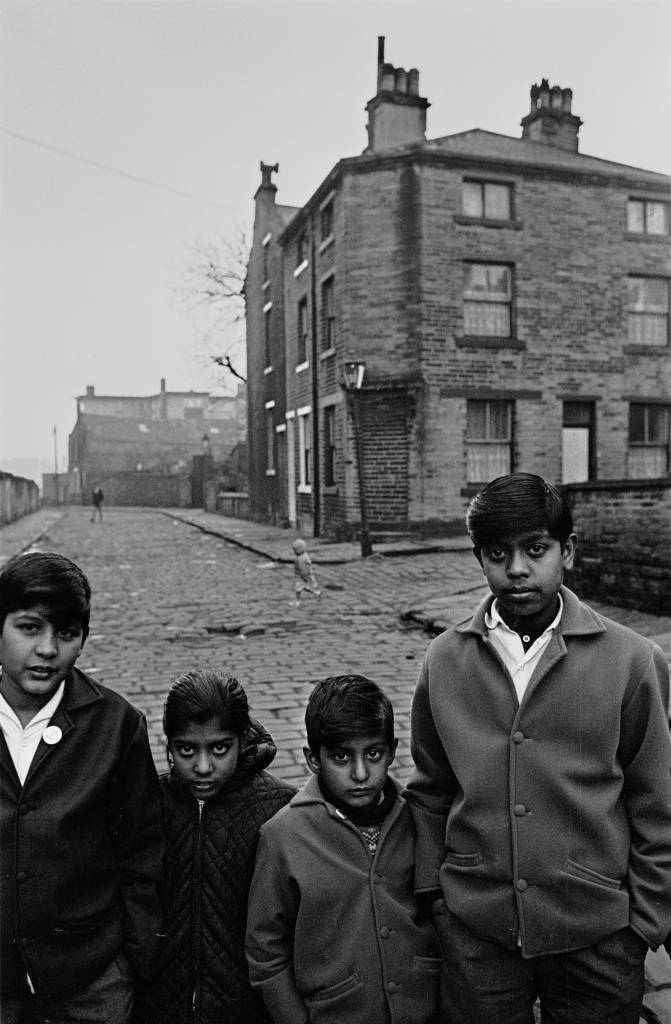
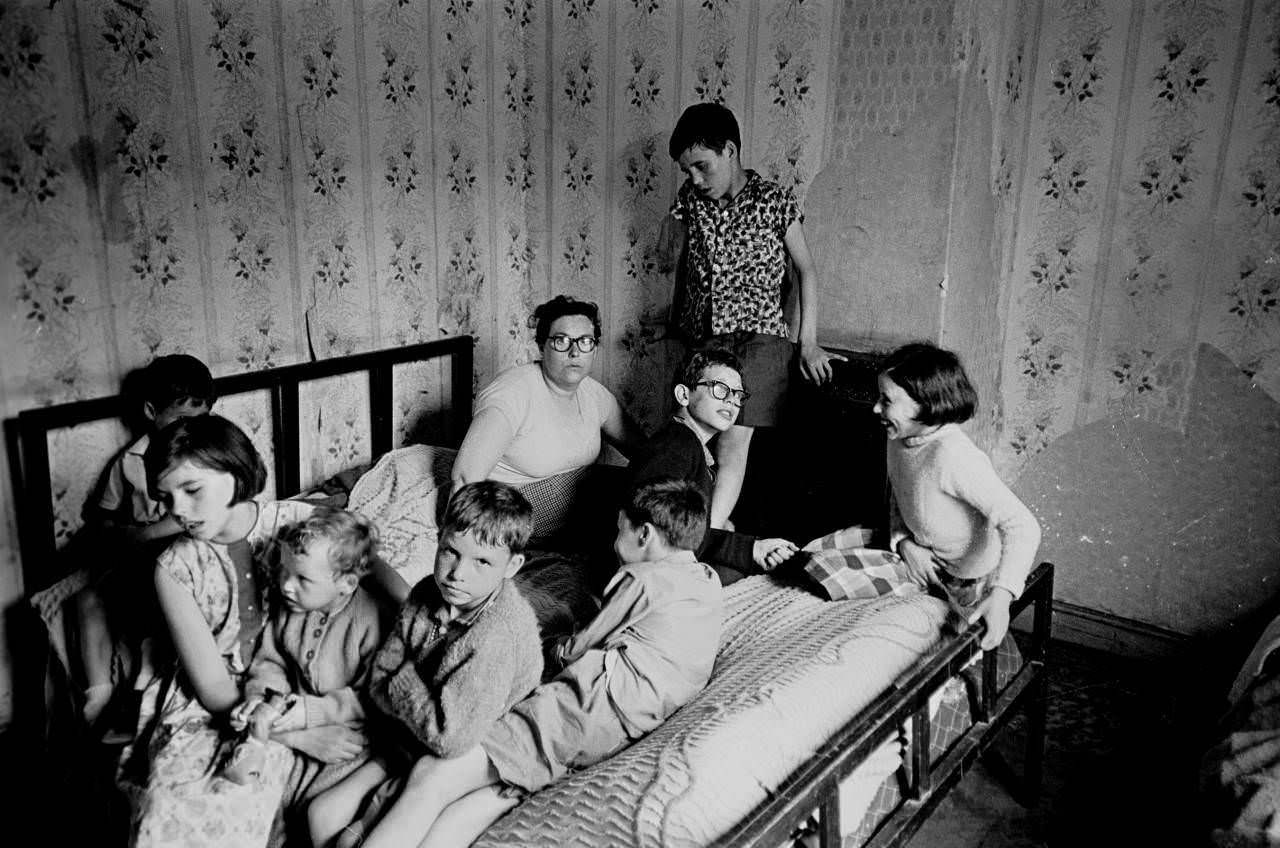
By 1970, Bradford’s housing crisis was well documented — but documentation did not translate immediately into relief for the families living in these conditions. Overcrowded households continued to be photographed by Hedges into the early 1970s, showing that the problems Shelter had commissioned him to record were persistent. Children continued walking home through streets lined with condemned or near-condemned properties, their daily routes unchanged by whatever debates were happening in council chambers and government offices.