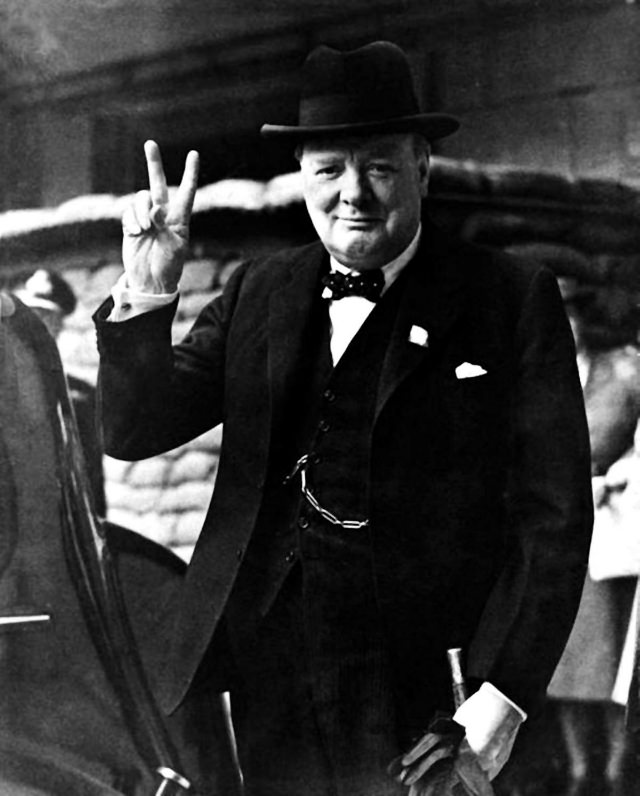
World War II pushed nations to their breaking point. Governments fell, cities burned, and millions of people lived under occupation. In the middle of this crisis, Britain needed a leader who could hold the line — and Winston Churchill did exactly that. He became Prime Minister in May 1940, just as Germany was sweeping through Western Europe. His speeches were famous for their fire and precision, but it was a simple hand gesture that gave the public something they could carry with them every day.
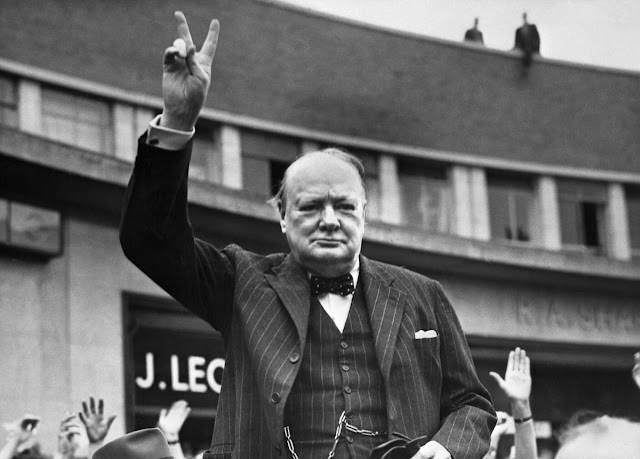
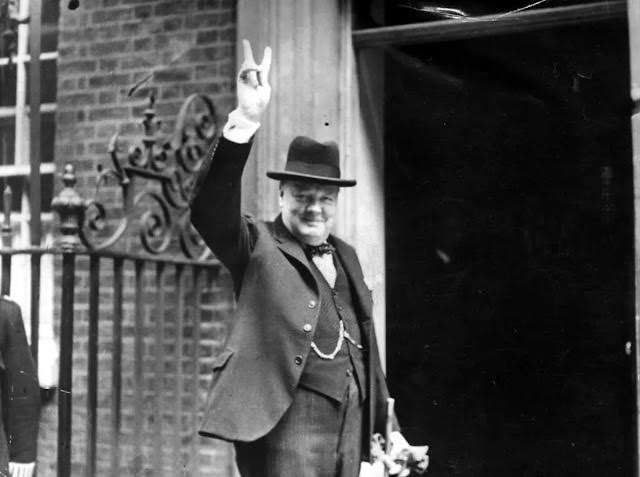
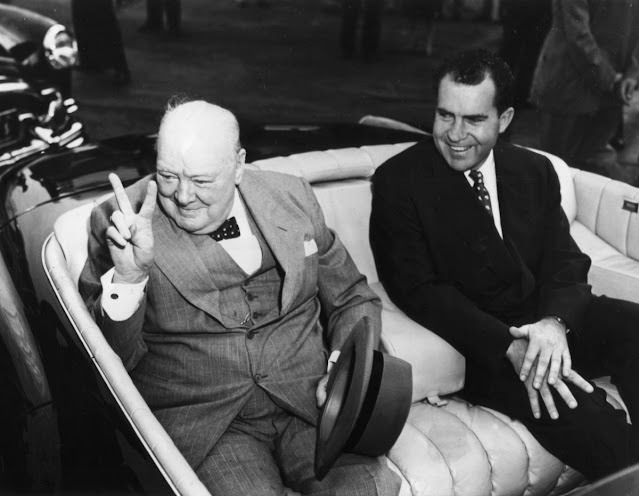
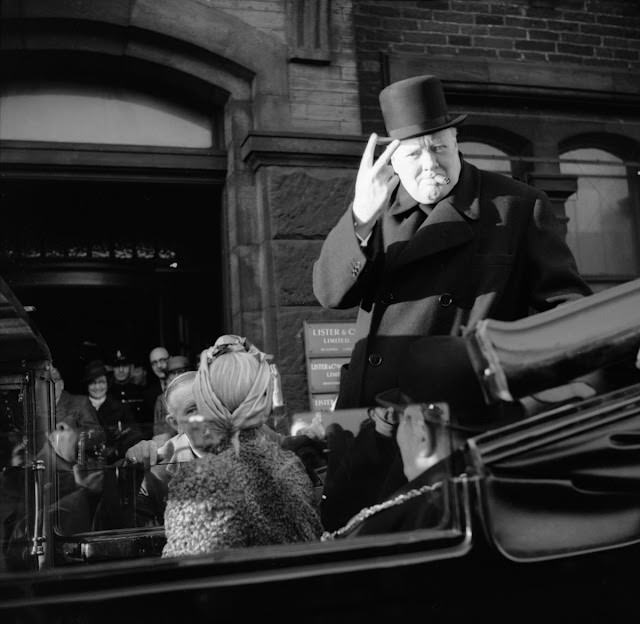
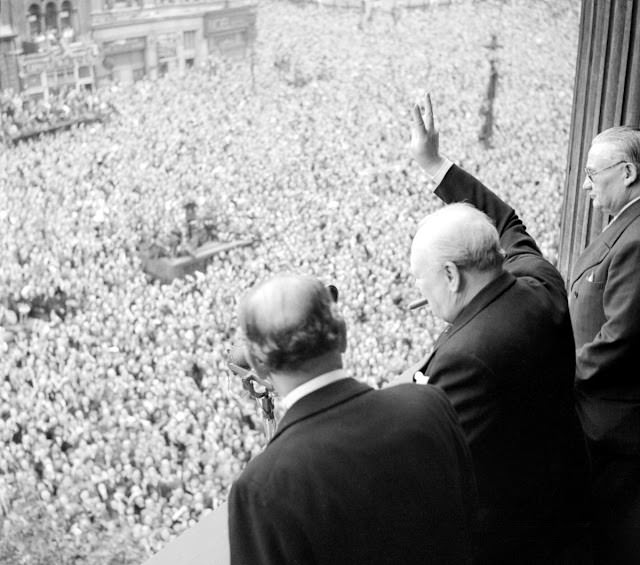
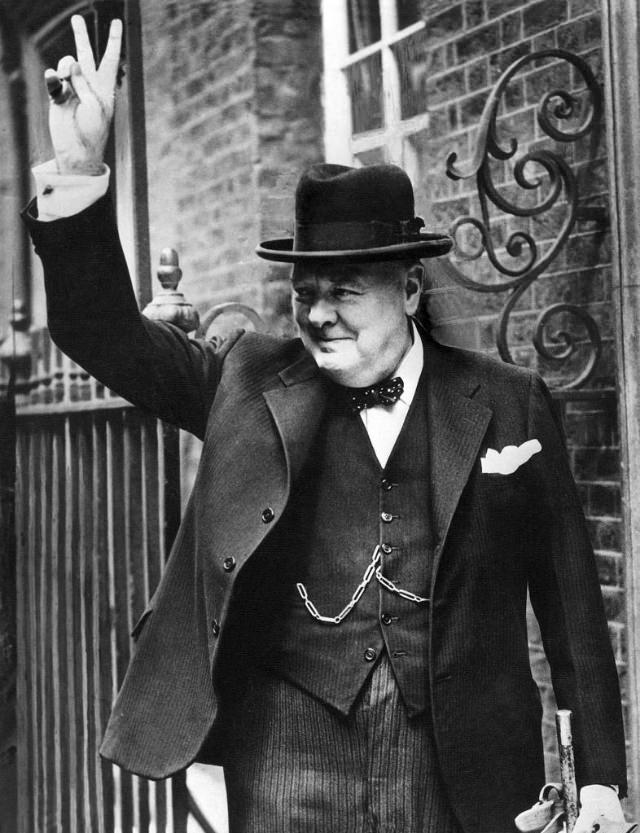
Churchill began using the “V for Victory” sign in 1941. The gesture itself is straightforward: raise the index and middle fingers into a V shape, keep the remaining fingers closed, and turn the palm outward. Simple to make, easy to recognize, and impossible to confuse. Churchill flashed it at rallies, from car windows, and outside 10 Downing Street. The British public picked it up almost immediately.
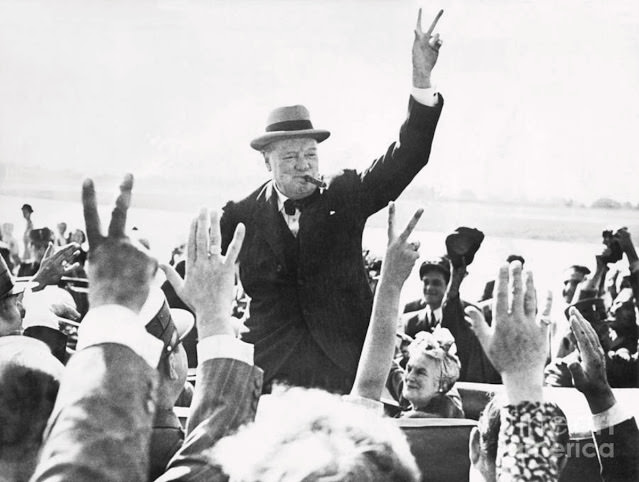
The gesture was designed as a morale booster. Britain had endured the Blitz — months of German bombing that killed tens of thousands of civilians and destroyed large parts of London and other cities. Morale was a real military concern, not just an afterthought. Churchill understood that people fighting a war needed to believe they could win it. The V sign gave them a shared, visible way to express that belief.
The sign also worked as a direct counter to Axis symbolism. The swastika dominated occupied Europe — stamped on flags, uniforms, and buildings. The V sign offered a competing image that ordinary people could use without any special materials or permission. It showed up in graffiti on walls across occupied countries, scrawled as a quiet act of defiance. It stood for freedom and justice at a time when both were under serious threat.
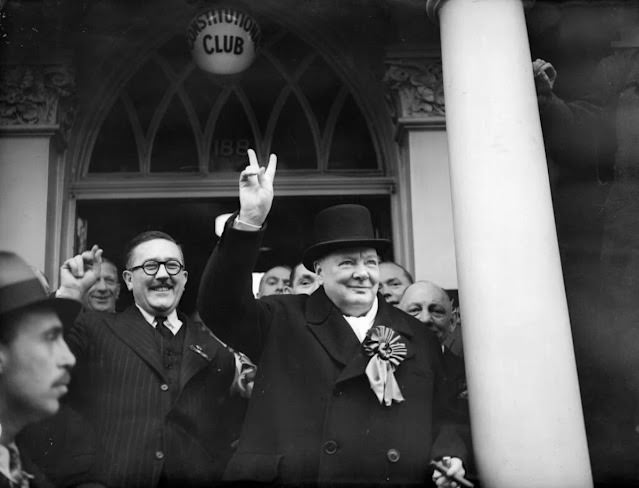
Propaganda posters across Britain and Allied nations featured the gesture prominently. Soldiers used it in photographs. Factory workers raised it in newsreels. The sign crossed social classes and national borders with no translation needed — a rare quality for any symbol in a war fought across multiple continents and languages.
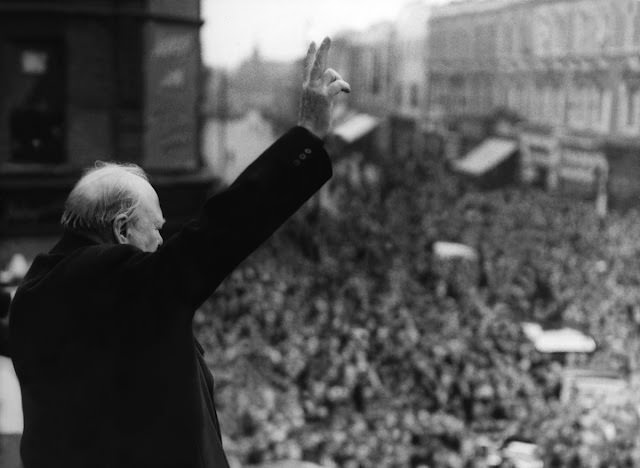
The BBC played a key role in spreading the symbol beyond Britain. Its radio broadcasts reached occupied European countries where people listened in secret, risking serious punishment. The BBC used the opening four notes of Beethoven’s Symphony No. 5 as a signature ahead of these broadcasts. Those notes — three short, one long — happen to match the Morse code pattern for the letter V. The connection between the musical signal and the V sign was not lost on listeners.
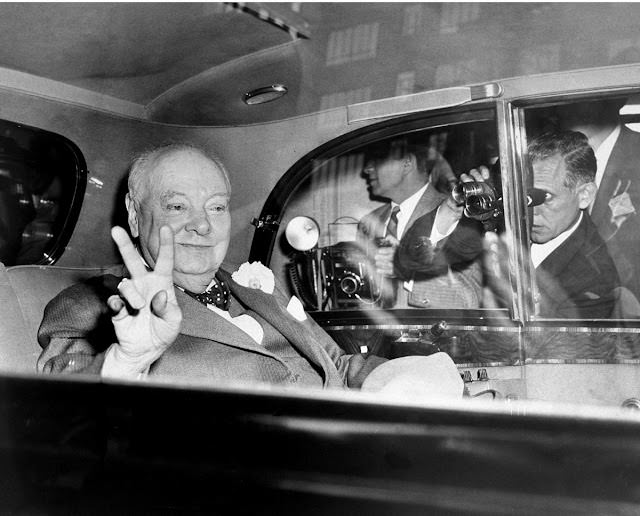
That Morse code detail carried real weight. Resistance fighters and underground networks used Morse code as a communication tool. The letter V tapped out in Morse — dot dot dot dash — became a coded way to signal solidarity. People tapped it on tables, knocked it on walls, and honked it from car horns in occupied territories.
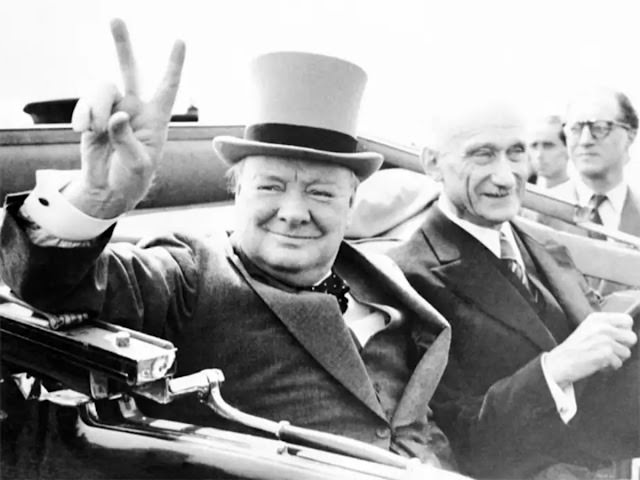
Churchill’s own use of the sign was consistent and deliberate. He rarely appeared in public without it during the war years. Photographers captured him flashing the V at every major public appearance — outside Parliament, during tours of bombed neighborhoods, and at Allied meetings. His stocky build, cigar, and raised fingers became one of the most recognizable images of the entire war.
It is worth noting that Churchill occasionally made the sign with his palm facing inward rather than outward. In British culture, the inward-facing version carries a rude meaning — the reverse V sign. Whether Churchill knew this and did it deliberately or simply made an error in the heat of a public moment remains a discussed point among historians. Either way, photographs show both versions throughout the war years.
The gesture was not limited to the United Kingdom. Allied soldiers and civilians across North America, Australia, and Western Europe adopted it. French resistance members used it. Norwegian civilians used it under German occupation. It became a common visual language across countries that had little else in common beyond their opposition to the Axis powers.
Children learned to flash the sign. Street vendors sold V-shaped pins and badges. The letter V appeared on shop windows and mailboxes. This kind of grassroots adoption was unusual for a symbol introduced by a political leader. Most government-issued symbols during wartime required active promotion to gain public traction. The V sign spread largely on its own once Churchill put it into circulation.
Radio broadcasts did more than just use the Morse code signal. BBC announcers actively encouraged listeners in occupied countries to display the V wherever they could — written on paper, scratched into surfaces, drawn in the condensation on a window. The gesture was accessible to anyone. It required no equipment, no money, and no formal organization to carry out.
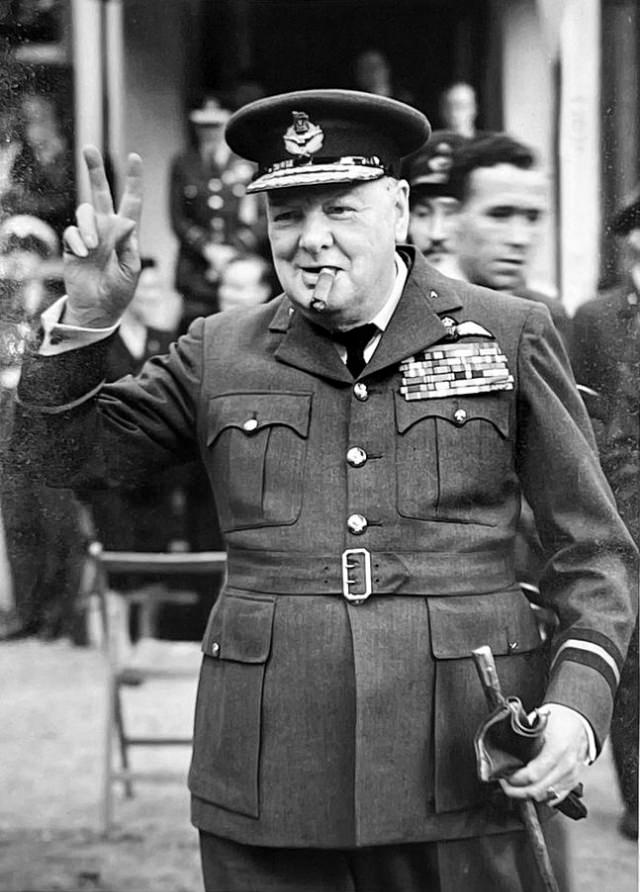
Churchill introduced the sign at a time when Allied fortunes were far from certain. The United States had not yet entered the war in 1941 when he began using it. The Soviet Union was under a massive German invasion. North Africa remained contested. The V sign was not a celebration — it was a statement of intent in the face of real uncertainty.
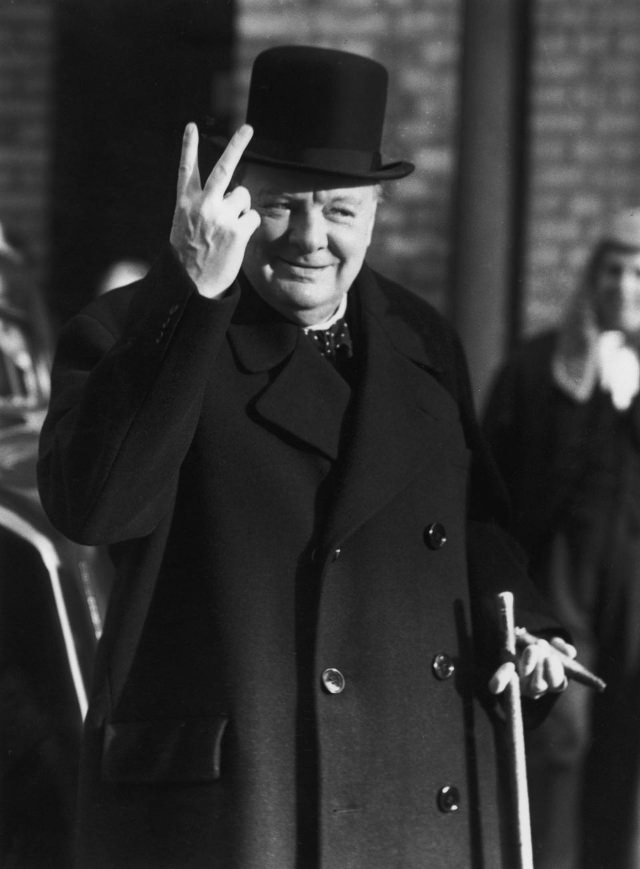
The sign also served a practical political purpose. Churchill needed to hold together a coalition of nations with different governments, militaries, and war aims. A visual symbol that transcended language helped create a sense of shared identity among the Allies. It suggested unity even when coordination was difficult and communication was slow.
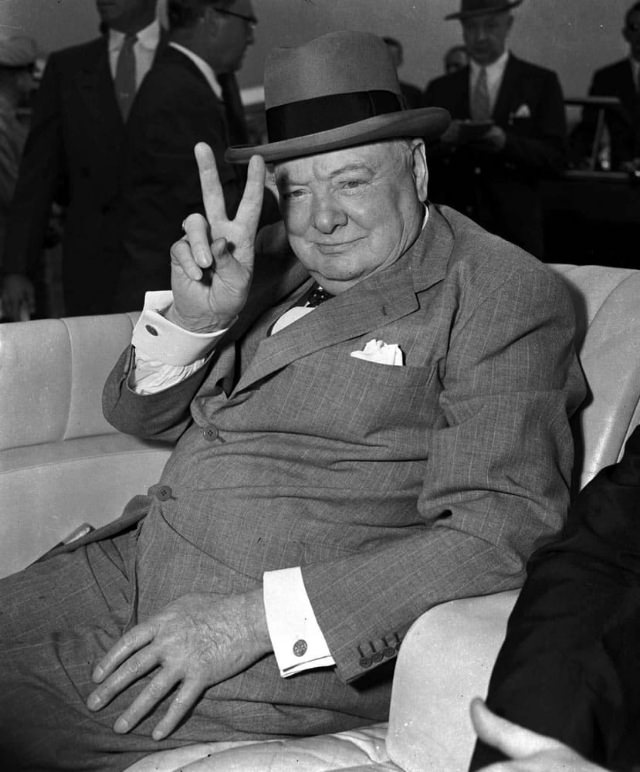
By 1944 and 1945, as Allied forces made significant advances in Europe and the Pacific, the V sign shifted in meaning. It still stood for victory, but the victory it represented was becoming more concrete. Soldiers raised it in liberated cities. Civilians in France, Belgium, and the Netherlands flashed it at Allied troops as they arrived. What had started as a statement of hope became a marker of actual military progress.
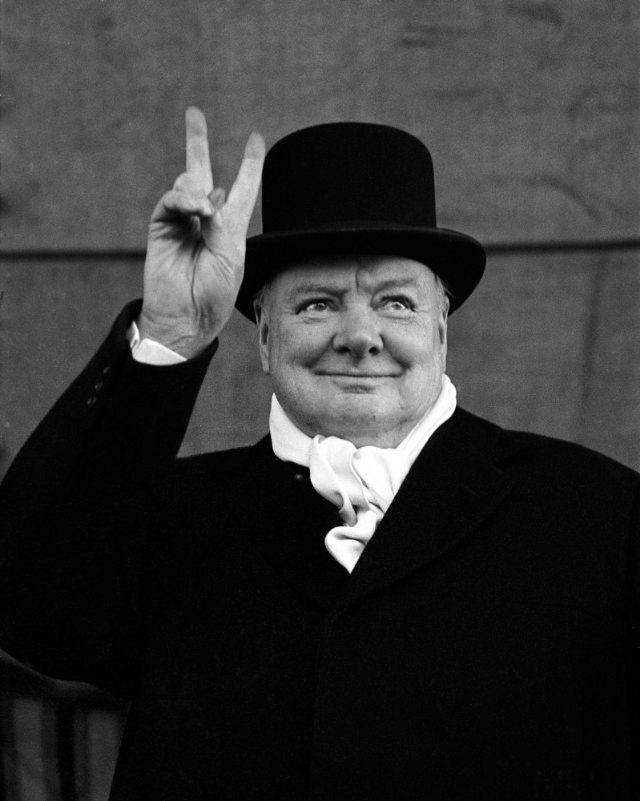
The gesture’s reach was also shaped by the global nature of the war itself. This was not a regional conflict. Fighting took place across Europe, North Africa, Southeast Asia, the Pacific Islands, and beyond. A symbol that could communicate across all of those theaters, without translation or explanation, had genuine practical value for Allied propaganda efforts.
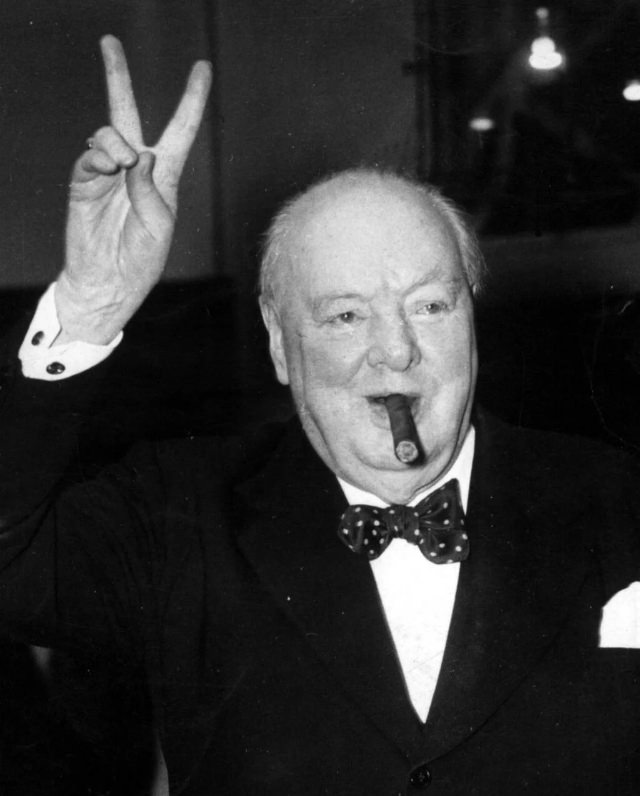
Churchill’s V sign succeeded because it was personal, direct, and repeatable. It came from a real person, visible in photographs and newsreels, at a specific moment in history. People could replicate it with nothing more than two fingers. In a war defined by massive industrial machinery, complex logistics, and enormous casualties, that simplicity made it stand out.