
By 1970, the Volkswagen factory in Wolfsburg was one of the largest and most productive car plants in the world. Spread across 6.5 square kilometers in the heart of West Germany, it was a central engine of the country’s postwar economic recovery. Thousands of workers arrived each day to keep its assembly lines moving around the clock. The factory did not just build cars — it built Wolfsburg itself, a city that grew up almost entirely around the plant.
The Beetle was the dominant product on the floor, but it was not the only vehicle rolling through. Volkswagen was also producing the VW 411, a larger family saloon that struggled to find its audience, and a civilian version of the wartime Kübelwagen — a rugged, utilitarian vehicle with clear military roots.
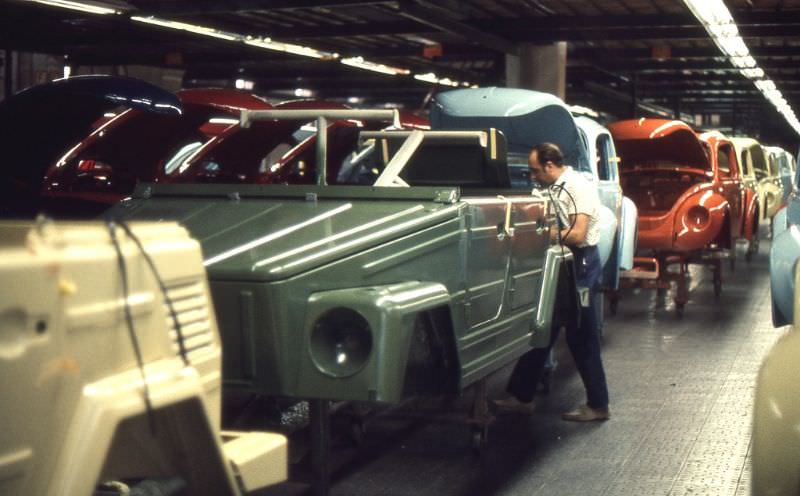
The Kübelwagen had first been built for the German military during World War II, and its boxy, functional design carried over into the 1970 civilian model. While not a bestseller, it occupied its own section of the production line alongside the more commercially successful models.
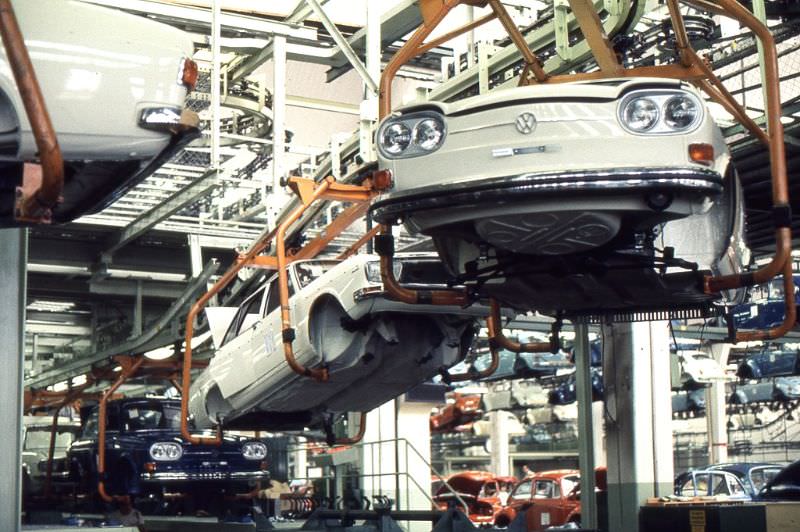
The assembly process itself was a carefully staged operation. Beetle body shells started their journey as bare metal, moving through paint booths before being loaded onto overhead conveyor systems. From above, the factory floor looked like a slow river of steel, with shells gliding from one station to the next.
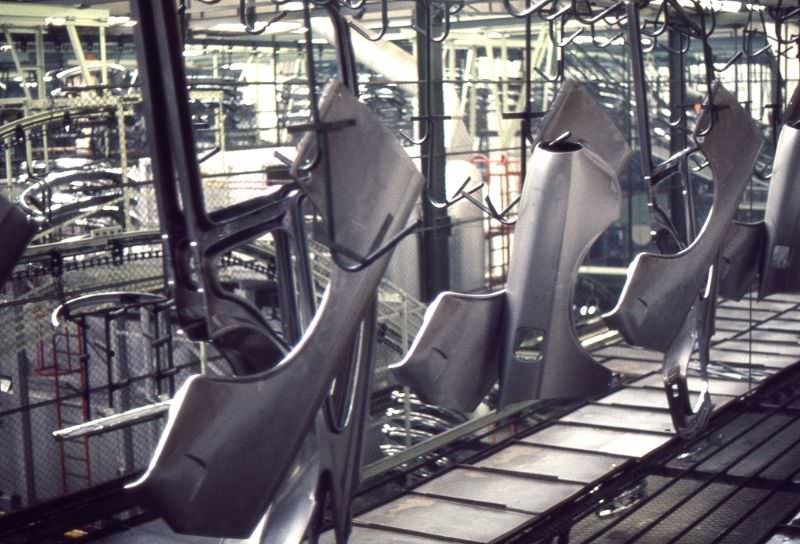
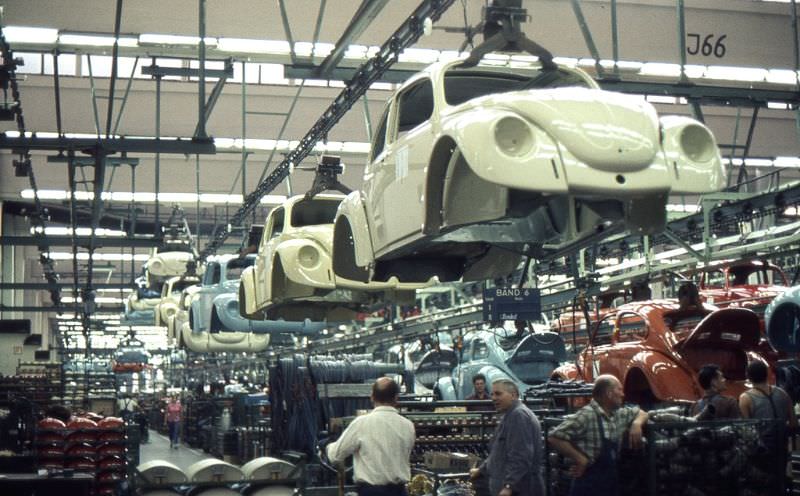
Once painted and dried, the shells descended toward the factory floor where workers were ready to begin fitting components. The color range on display was striking — rows of mudguards in red, white, blue, and yellow sat waiting to be matched to their shells.
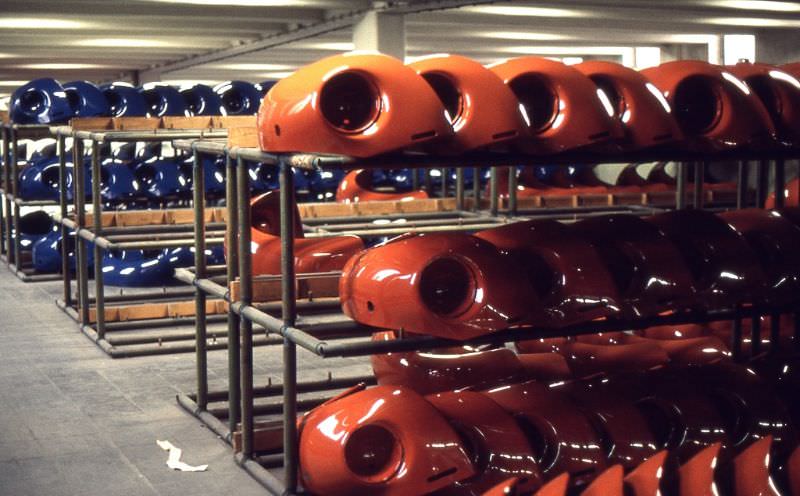
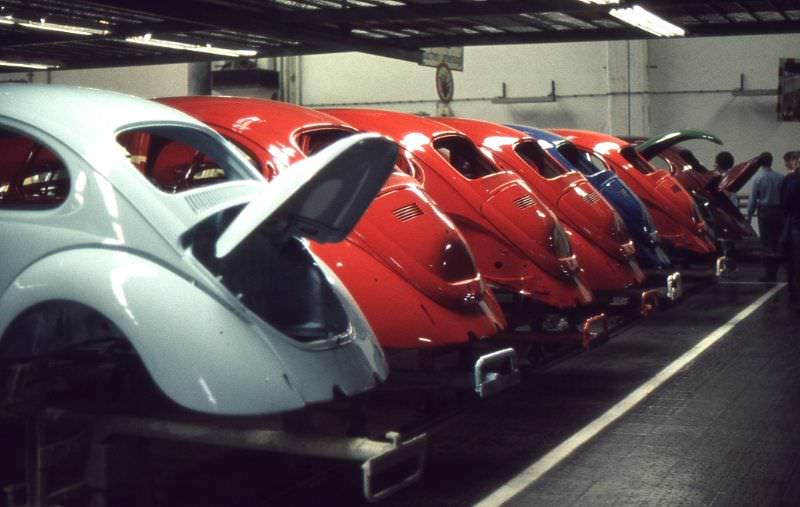
Meanwhile, on the floor below, floor pans were being prepared with engines and suspension systems already fitted. These rolling chassis waited to be united with the upper body shells in one of the most recognizable steps of Beetle production.
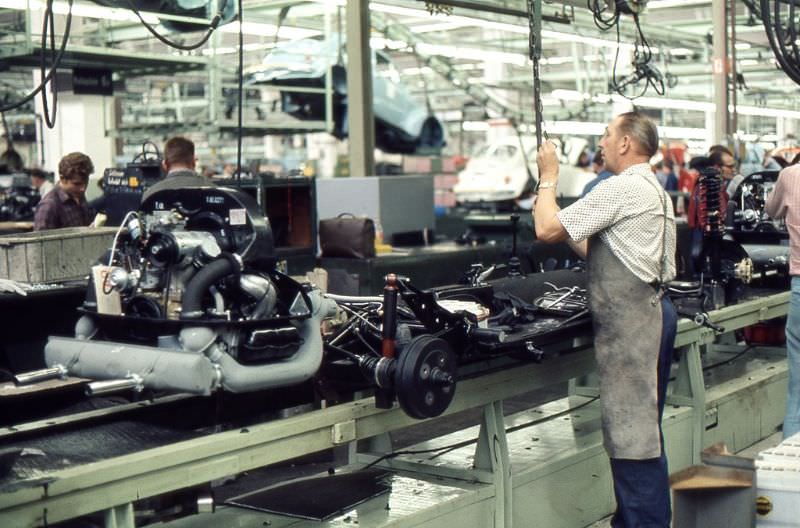
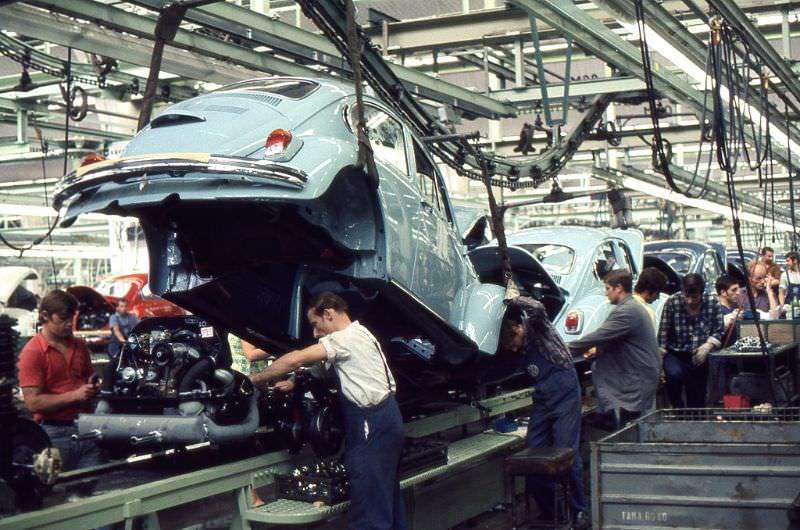
Smaller components lined shelves and bins across the factory. Tail lights, hubcaps, and trim pieces were sorted and staged close to the line so workers could reach them without breaking pace.
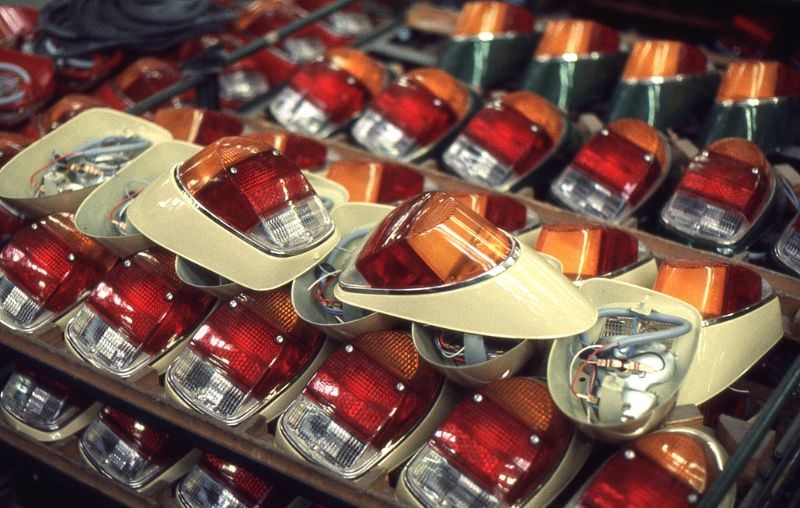
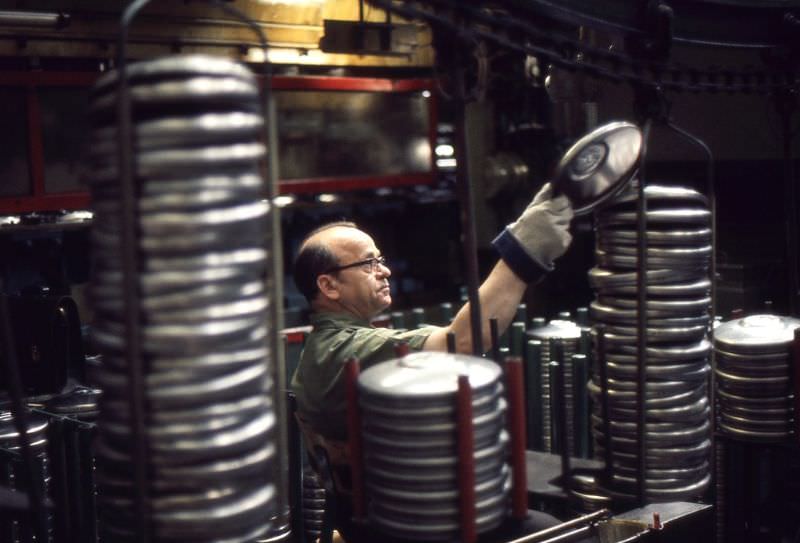
Not every step was automated. The headlining — the fabric fitted to the inside roof of each car — was installed by hand. Workers carefully pressed and secured the material into place, a task that required both speed and precision to keep up with the moving line.
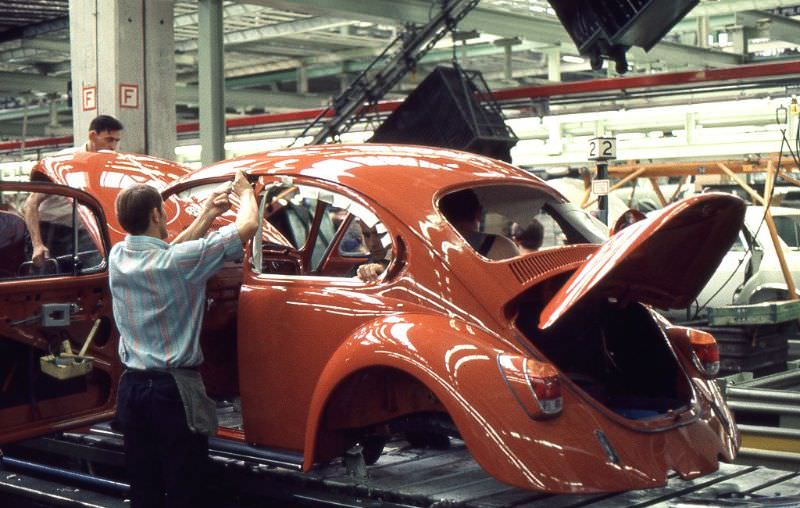
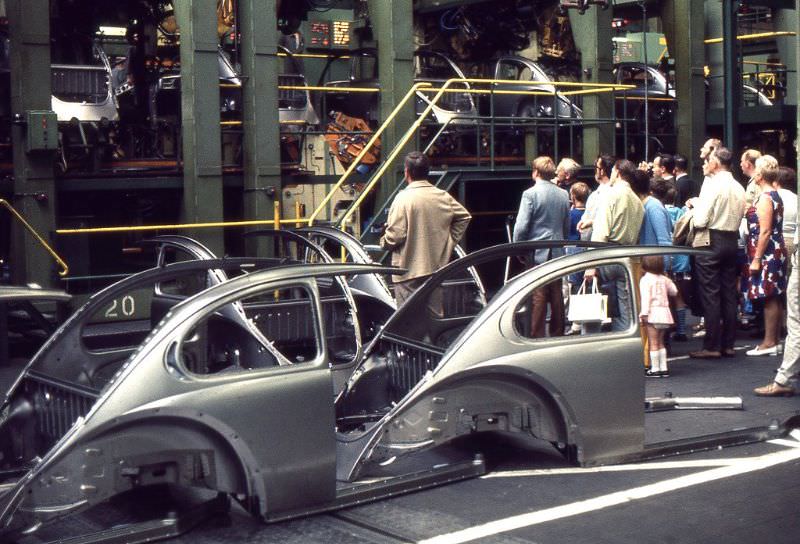
As shells neared the end of the line, they passed through final fitting stations where the last panels and trim were added. Workers checked gaps, alignment, and surface finish before the cars moved on.
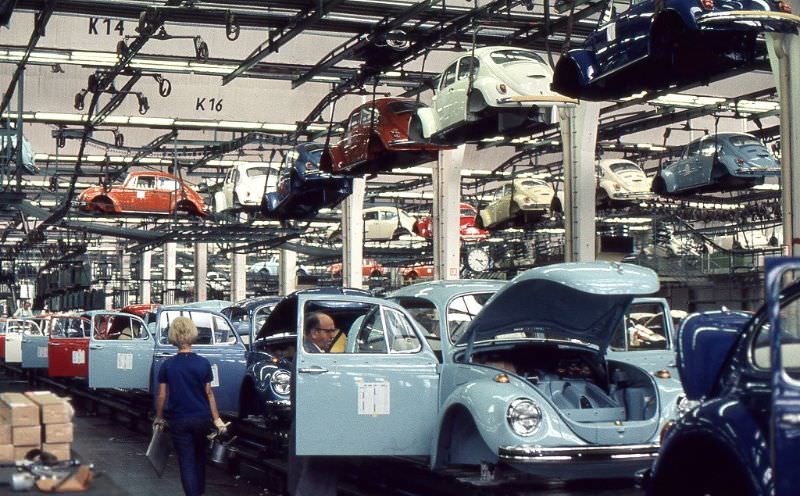
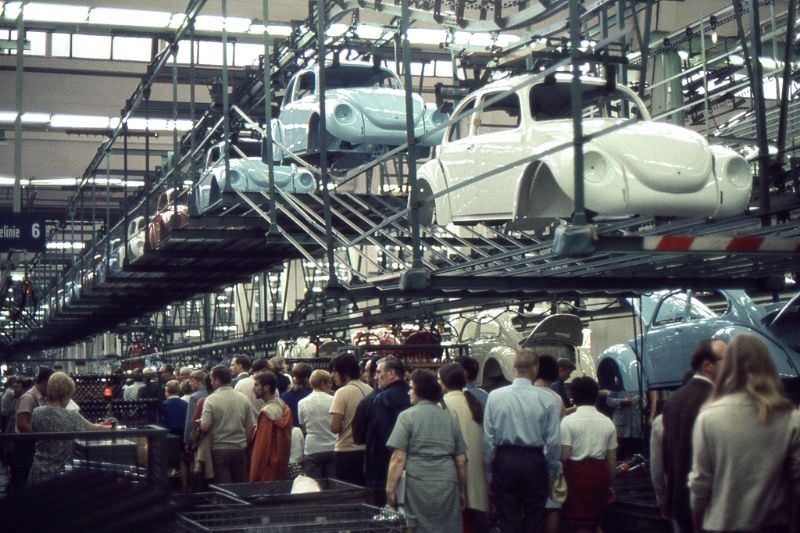
At the very end of the process, completed cars received a thorough inspection. Every finished vehicle was checked before it was cleared to leave the factory floor — a final quality gate on a line that produced hundreds of cars every single day.
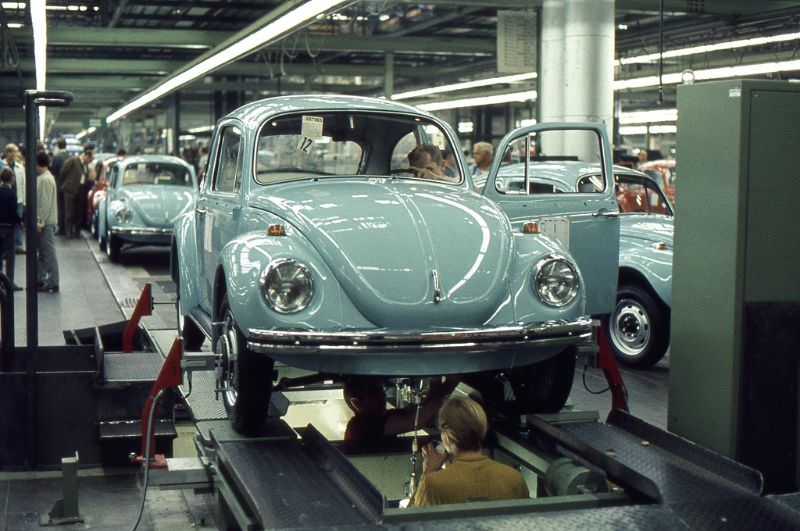

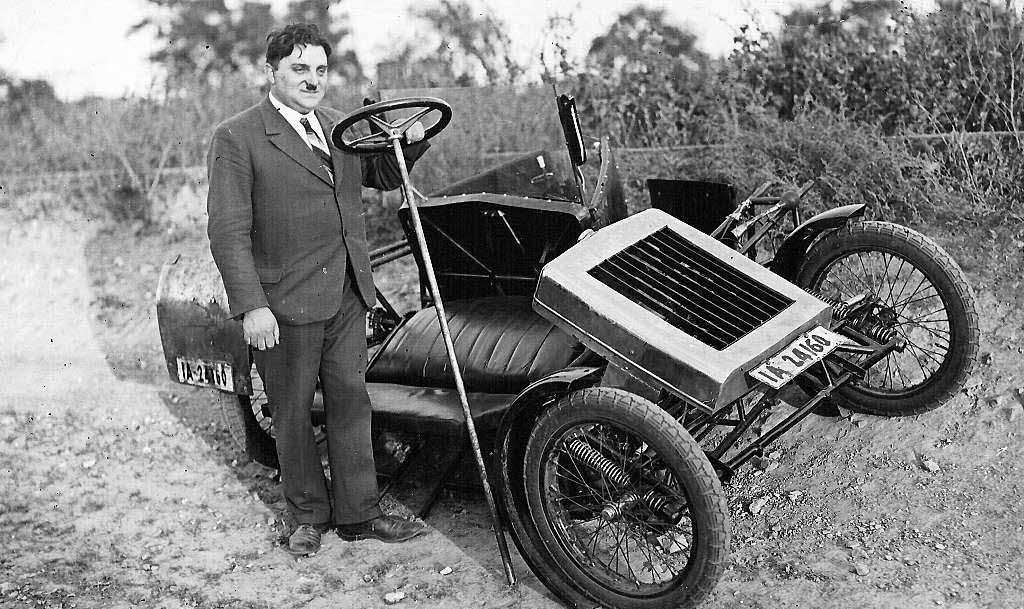
A fine set of colour photos but credit should be given to the photographer Bruce Thomas from Australia. He took these pictures on 11 August 1970 at the start of the 1971 model year and the very first examples of the 1302 ‘Super Beetle’ can be seen on the production lines.
Australian photographer Bruce Thomas recorded these superb colour images of the production lines at Volkswagenwerk Wolfsburg on 11 August 1970, the start of the 1971 Model Year.
Models shown in the photos he took are the brand new 1302 Super Beetle (possibly week 2 of series production) plus the VW 411, VW Type 181 and even a Audi 100.
Some of the 16 photos he took are missing from this article. To see the full set, see this link to a post I put up on Facebook some time ago – https://www.facebook.com/media/set/?set=oa.821210122885174&type=3