Los Angeles in the 1940s was a city pulled in two directions at once. Its factories ran around the clock producing aircraft and war supplies, while Hollywood kept the glamour alive. Movie studios were at full speed, and nightclubs along Hollywood Boulevard drew crowds every weekend. Neon signs lit up the sidewalks, jazz poured out of open doors, and the city’s identity as an entertainment capital was fully locked in.
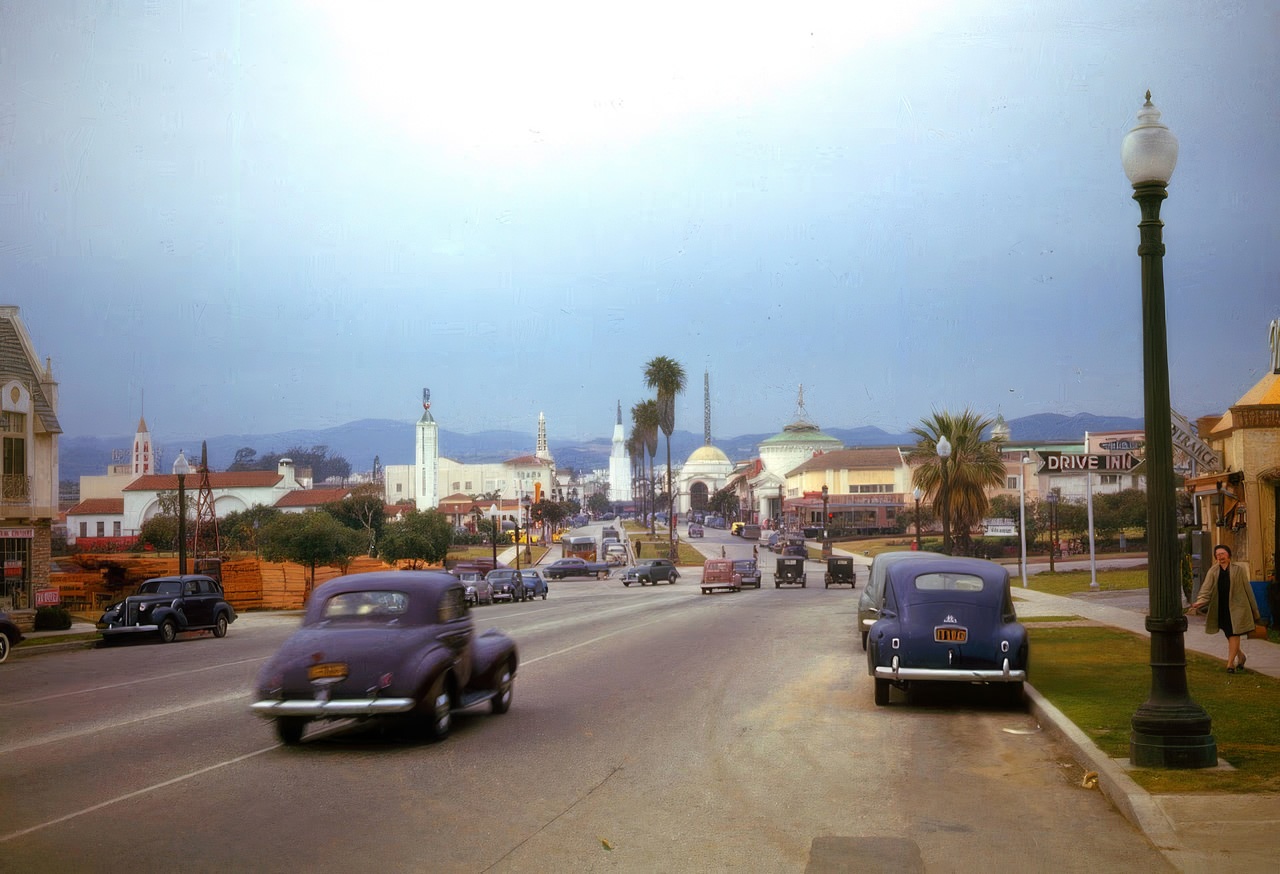
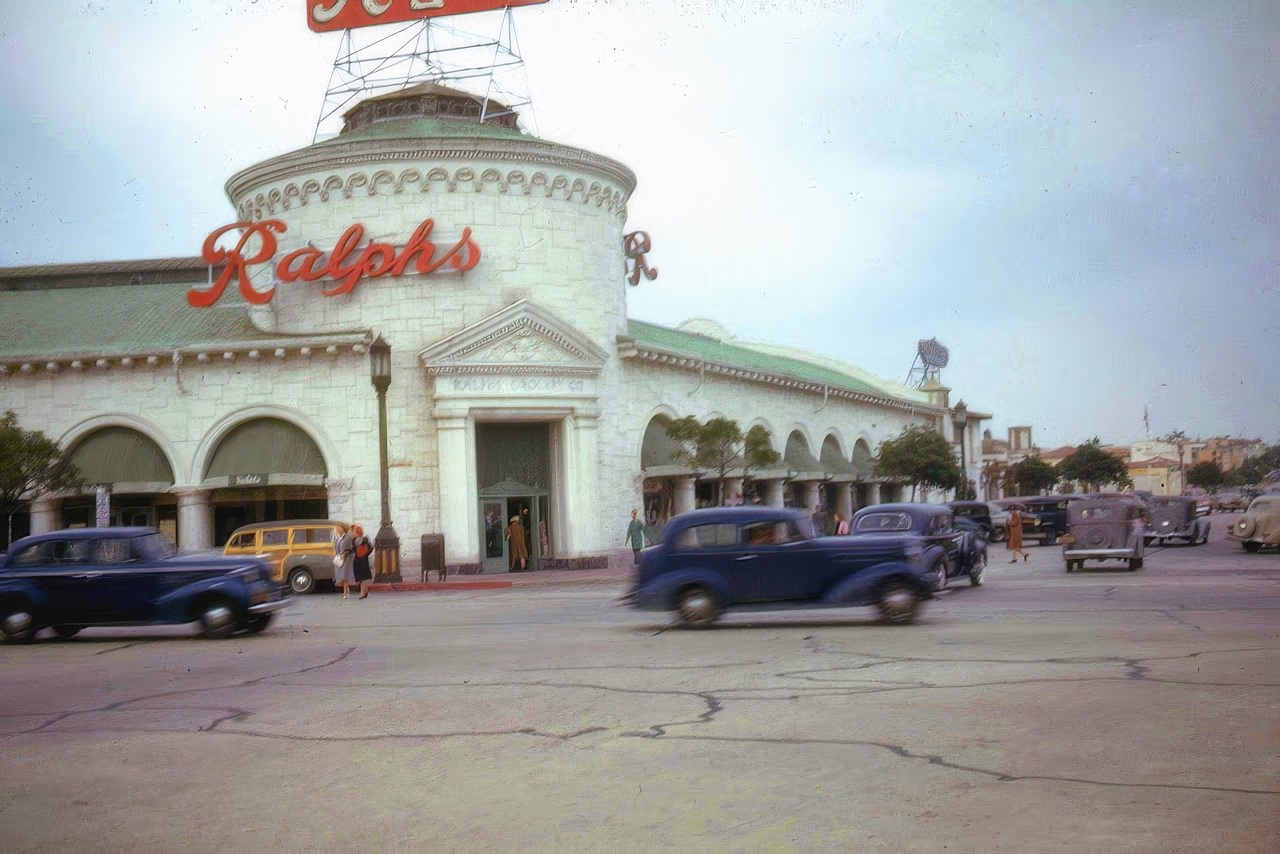
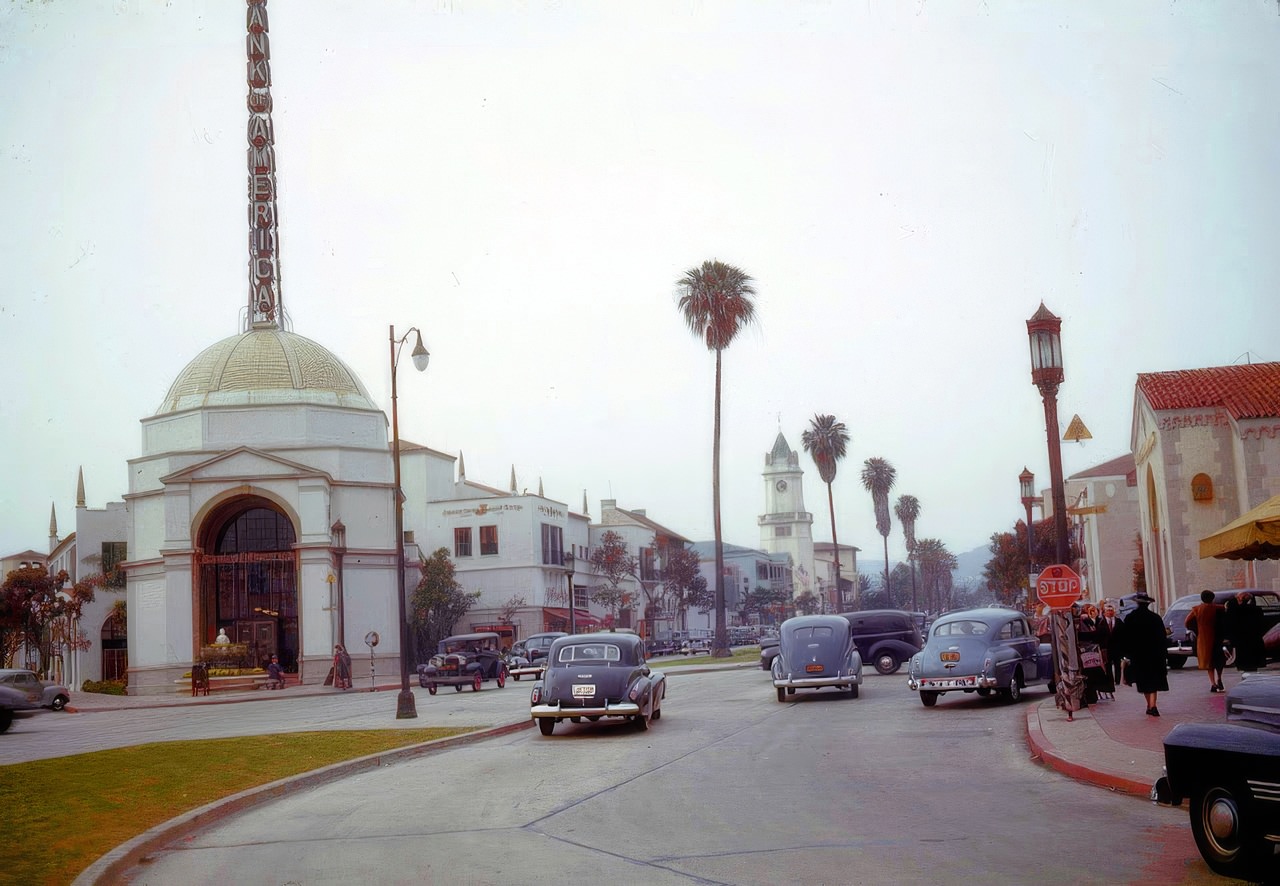
Westwood Village in 1941 showed a quieter, more neighborhood-scaled side of the city — wide streets, clean storefronts, and a pace that felt a world away from the bustle of Hollywood. Ralph’s Grocery Store, a fixture of everyday Los Angeles life, captured that same working-class routine that ran alongside the city’s glittering reputation.
The 1950s reshaped the physical city. New suburbs pushed outward in every direction, and freshly paved freeways stitched the sprawl together. Car culture took over — drive-in theaters, roadside diners, and gleaming car dealerships became as much a part of Los Angeles as the palm trees. Wilshire Boulevard, lined with hotels, businesses, and neon signs, became one of the defining corridors of this era.
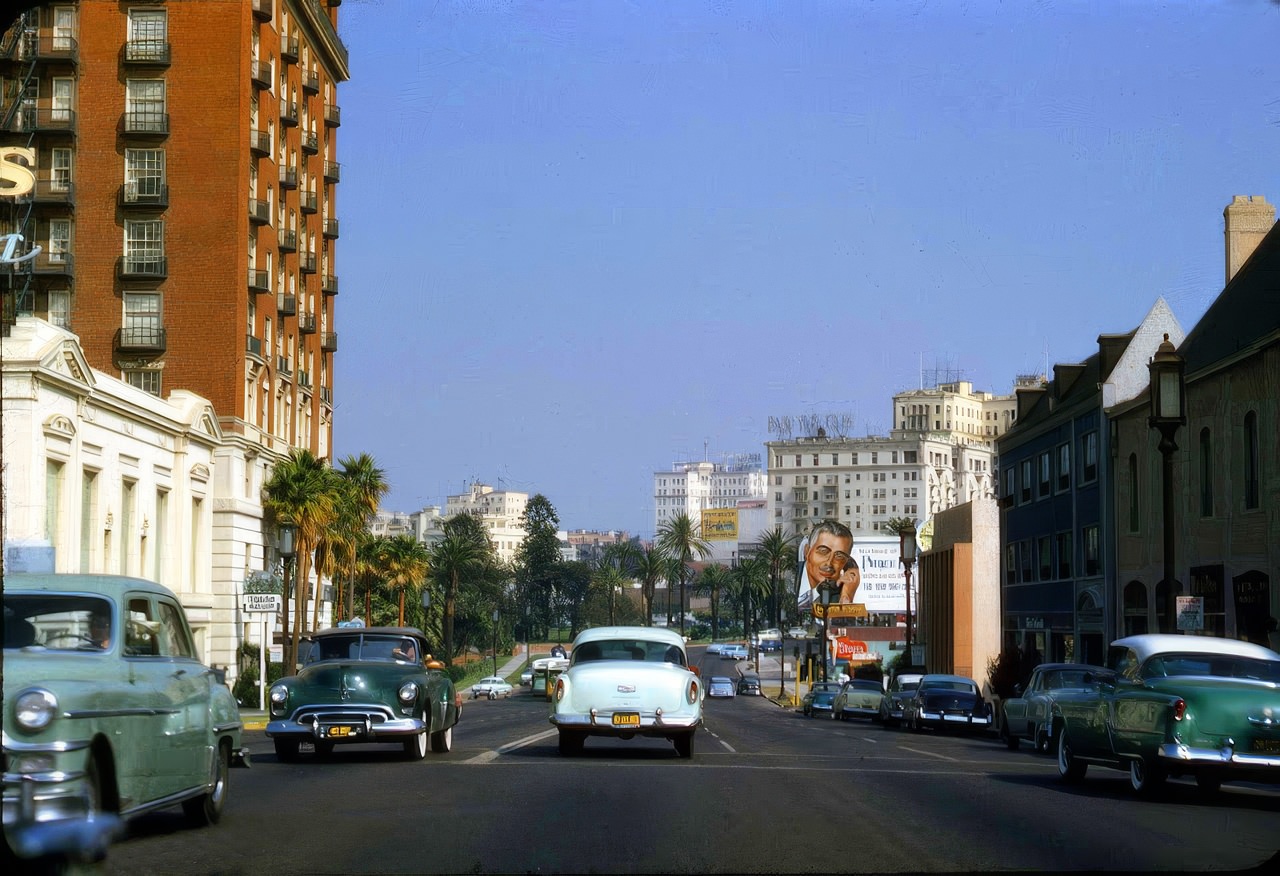
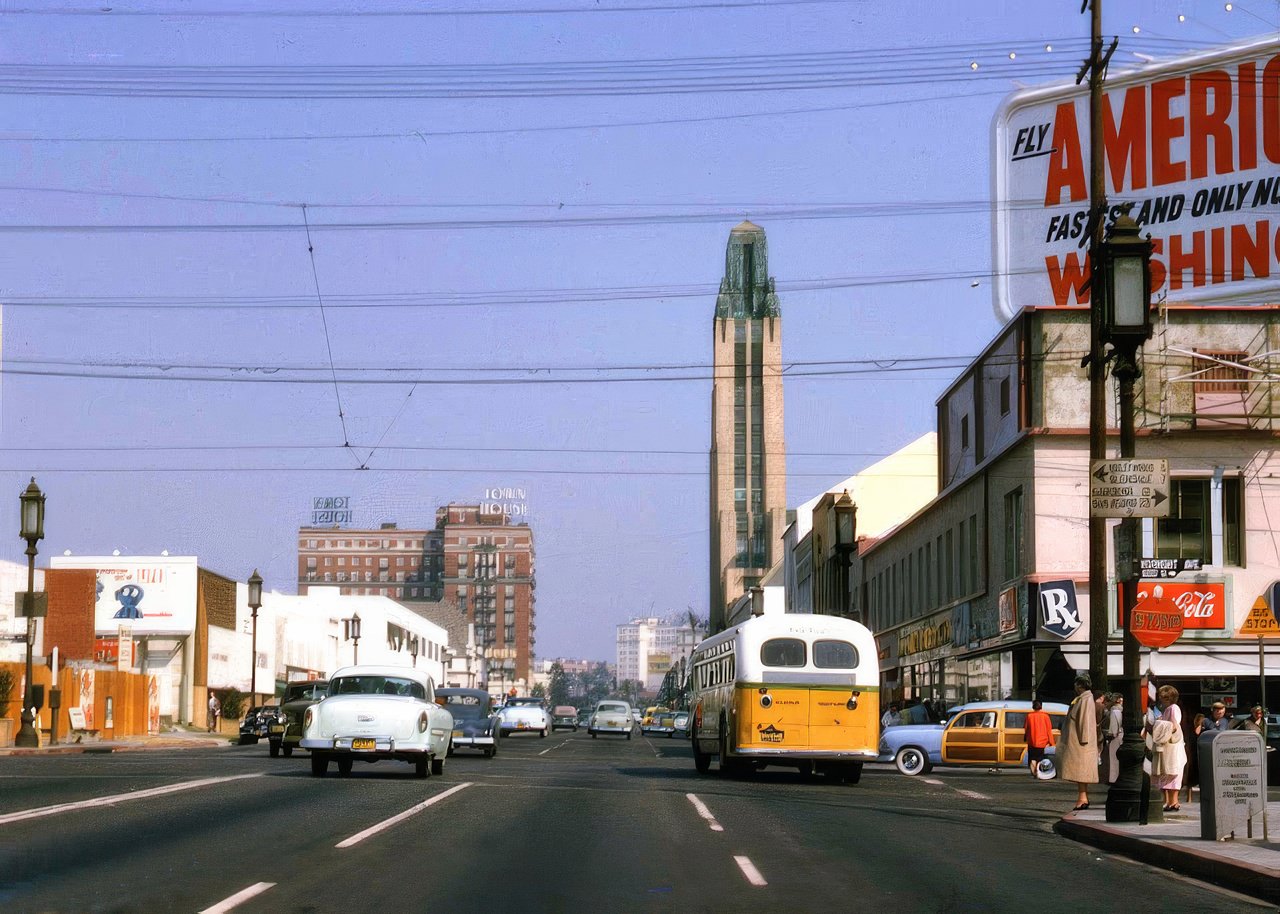
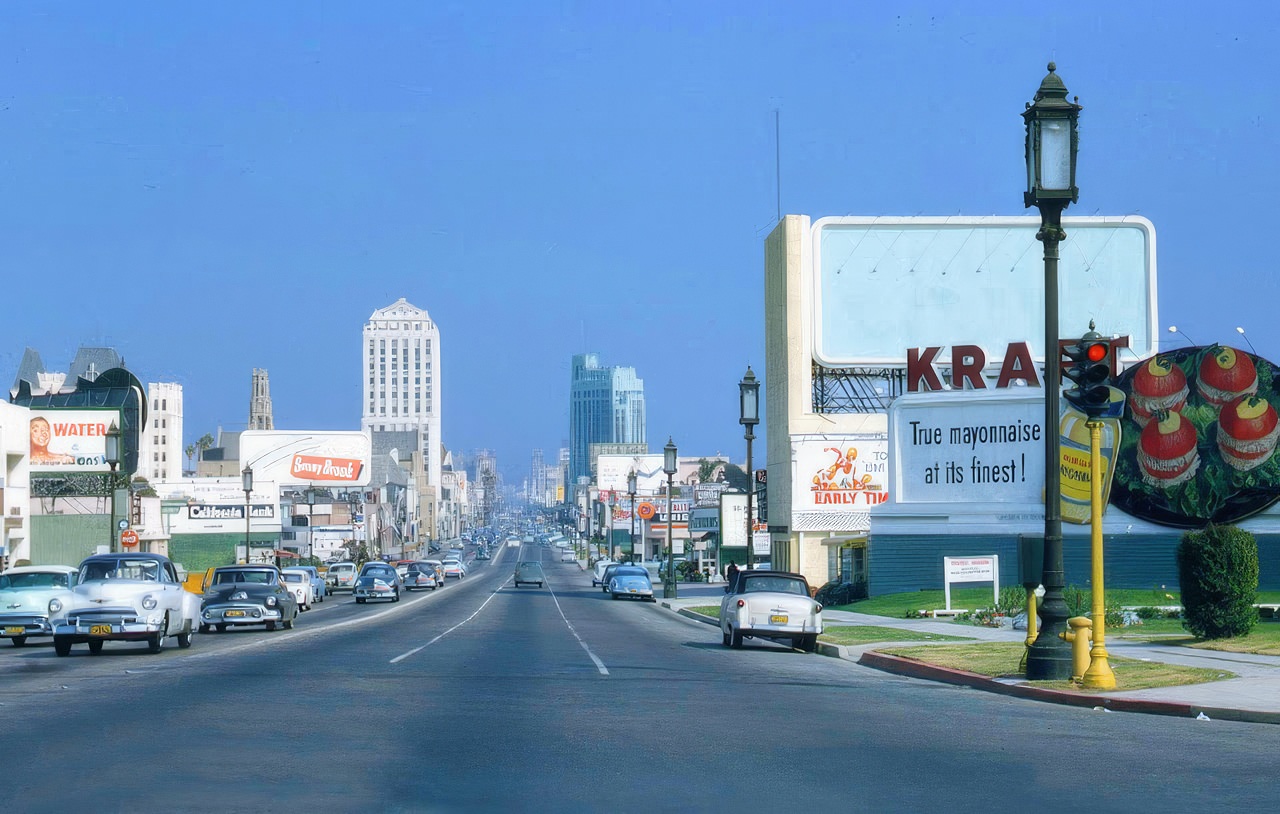
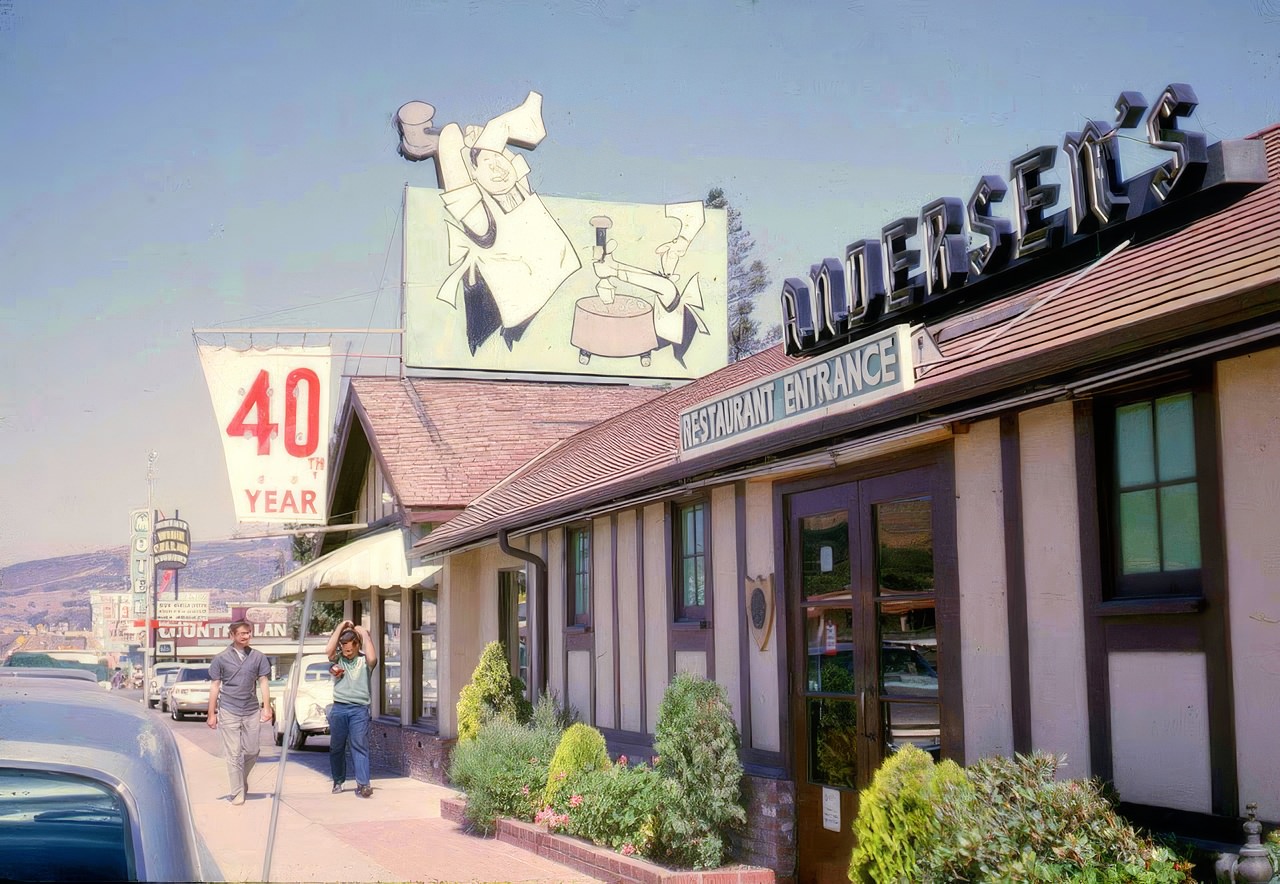
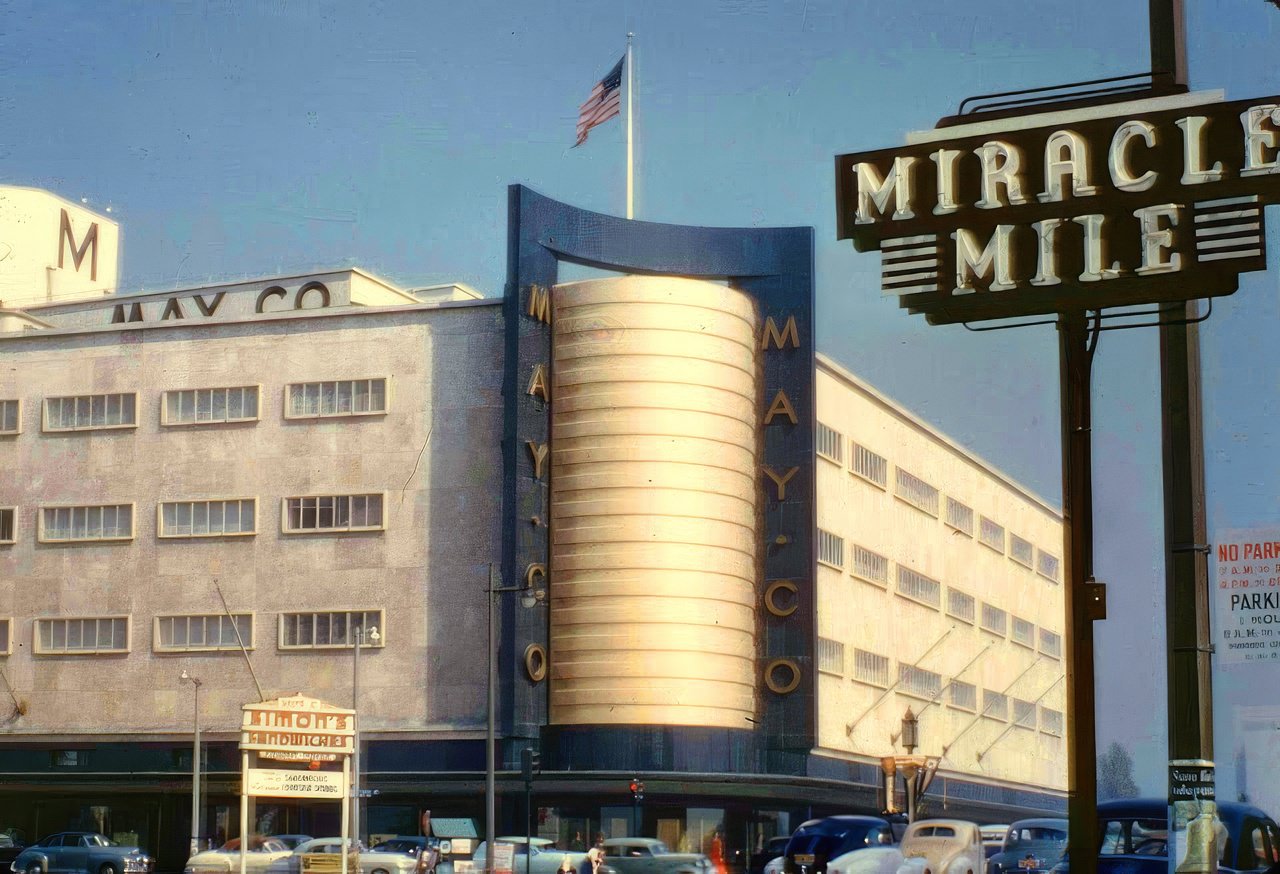
Along the commercial strips, storefronts packed in side by side — drugstores, insurers, restaurants, and department chains all competing for foot traffic. The Miracle Mile stretch drew shoppers, while spots like Andersen’s Restaurant and The Brown Derby fed the city’s appetite for dining out in style.



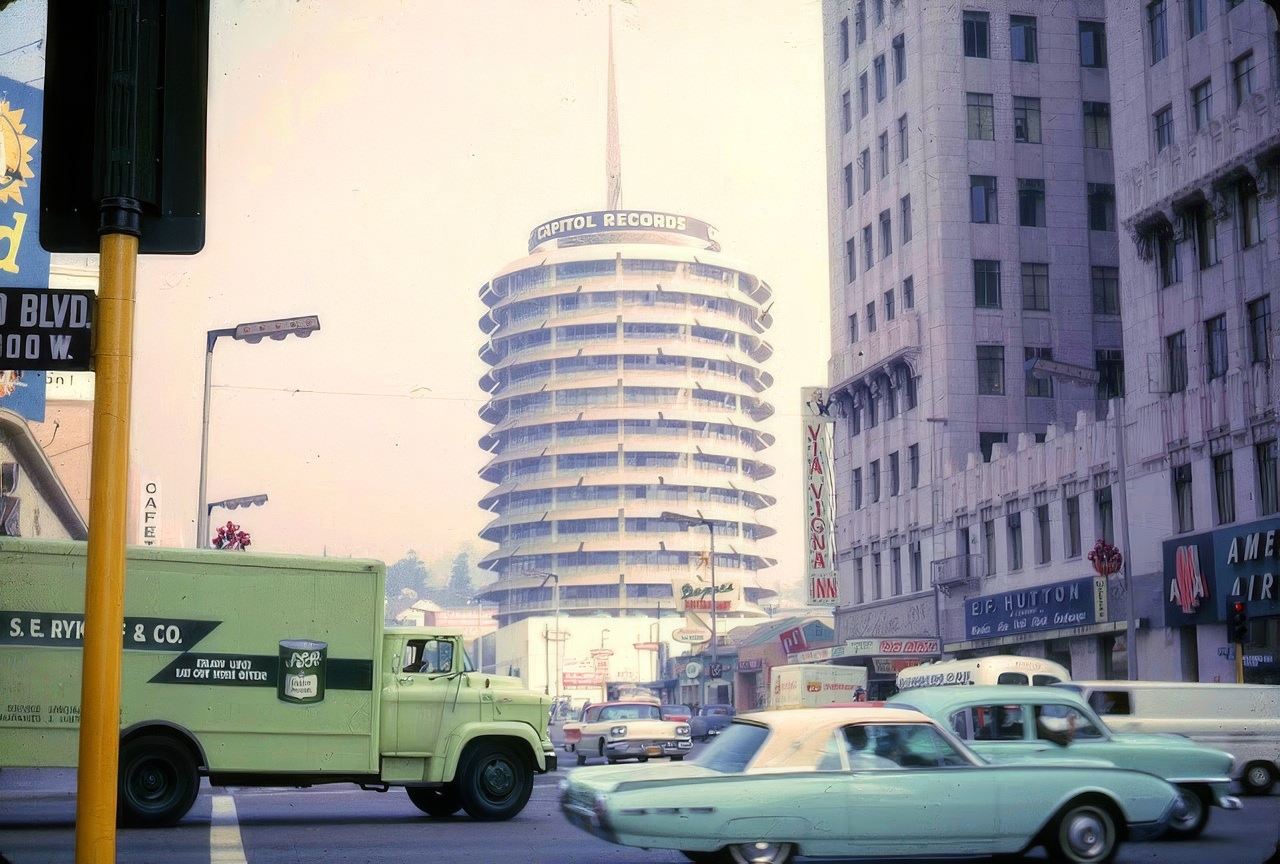
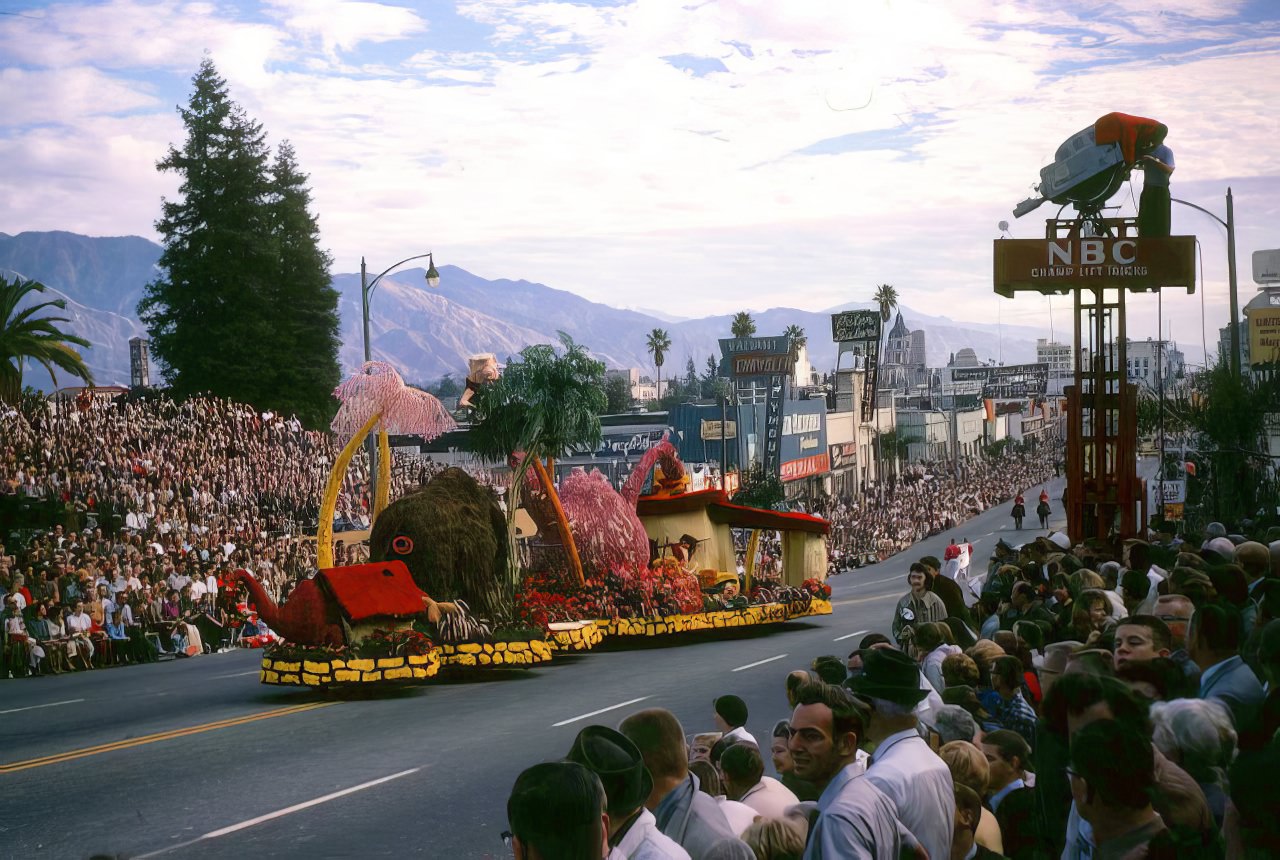
By the early 1960s, the city’s architectural landmarks were turning heads. The Capitol Records Building at Hollywood and Vine — completed in 1956 but firmly embedded in the city’s 1960s identity — stood as one of the most recognizable structures in America. The Rose Parade in Pasadena drew massive crowds each January, a burst of color and tradition that felt distinctly Californian.
Hollywood Boulevard in 1965 was loud, crowded, and commercially charged. Grauman’s Chinese Theatre anchored the strip, while nearby businesses — from drug stores at Hollywood and Vine to restaurants and theaters — kept the sidewalks full. The Pantages Theater added architectural weight to the boulevard with its bold Art Deco façade.
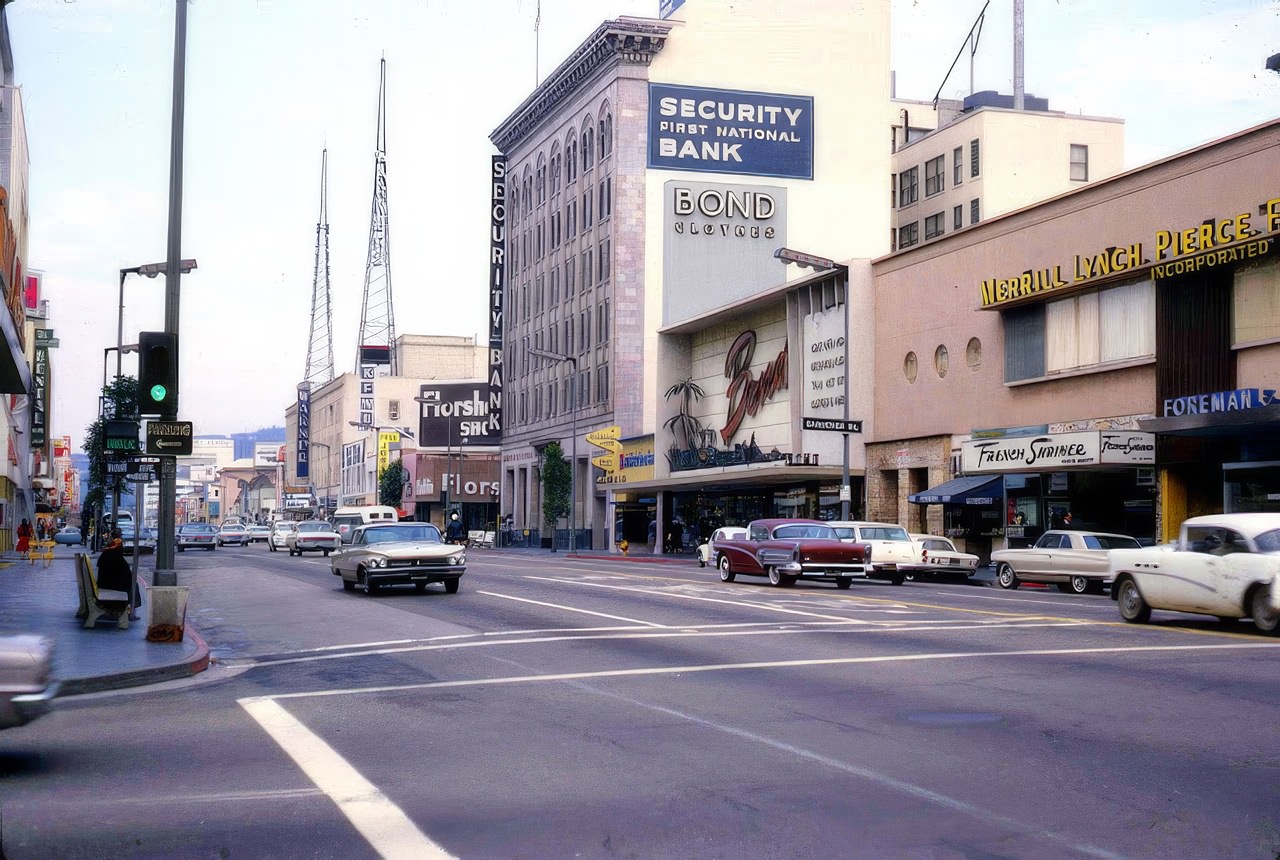
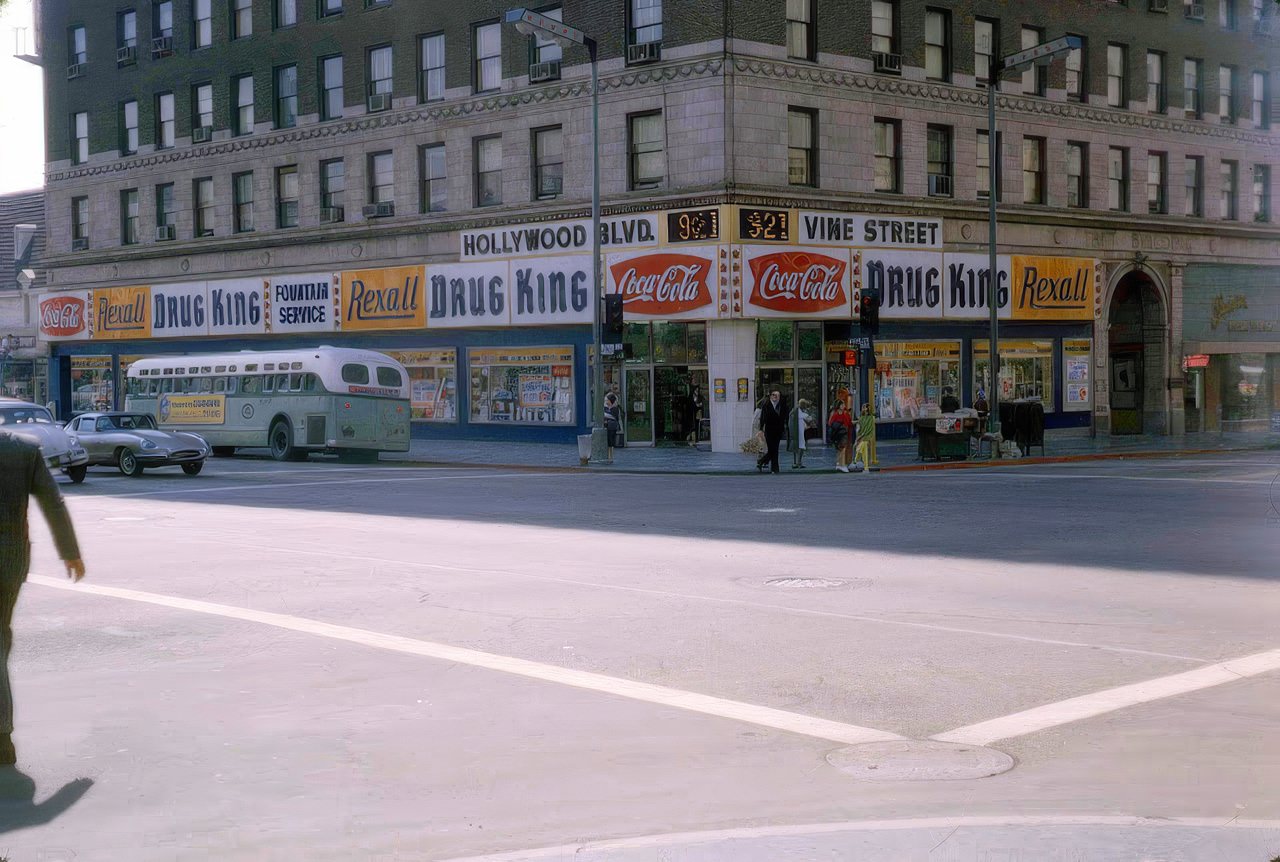
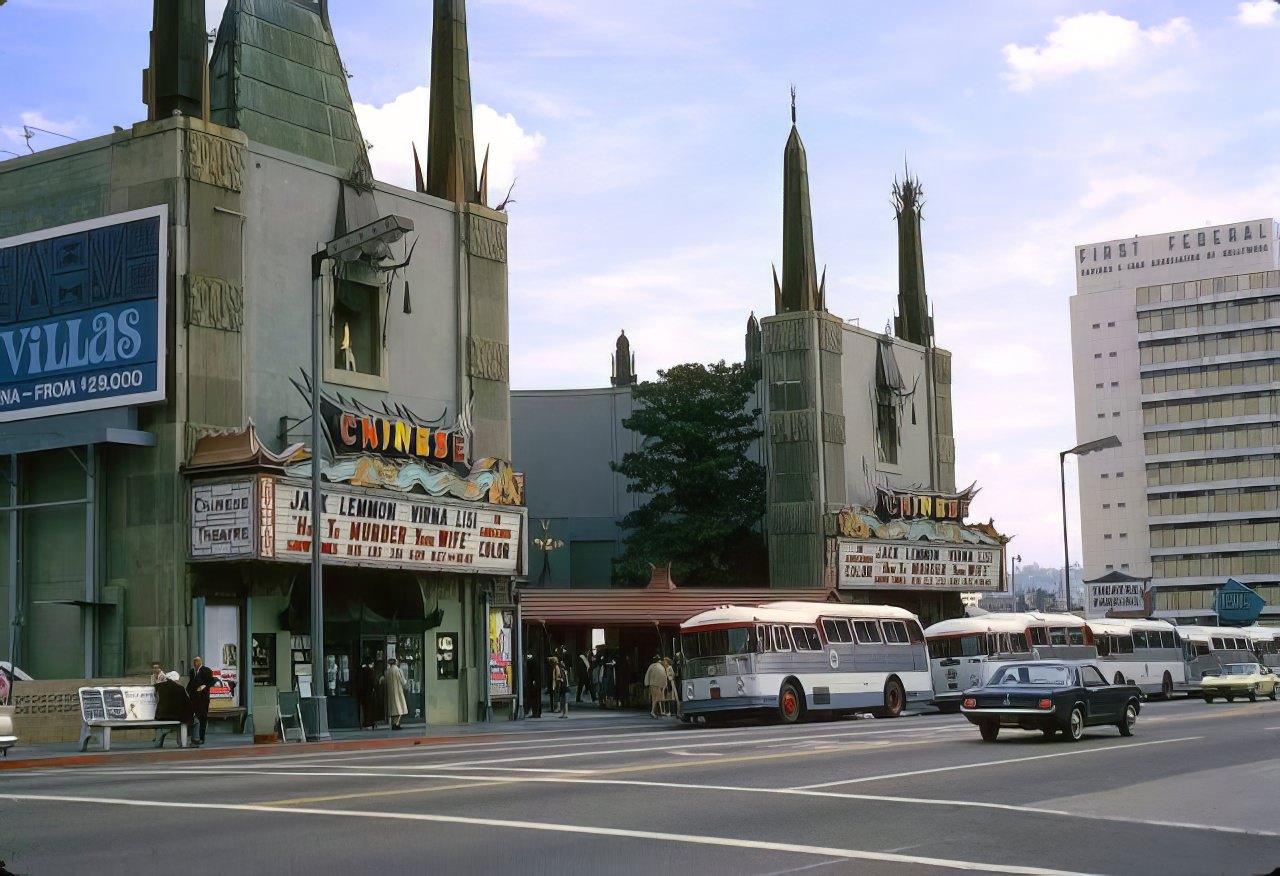
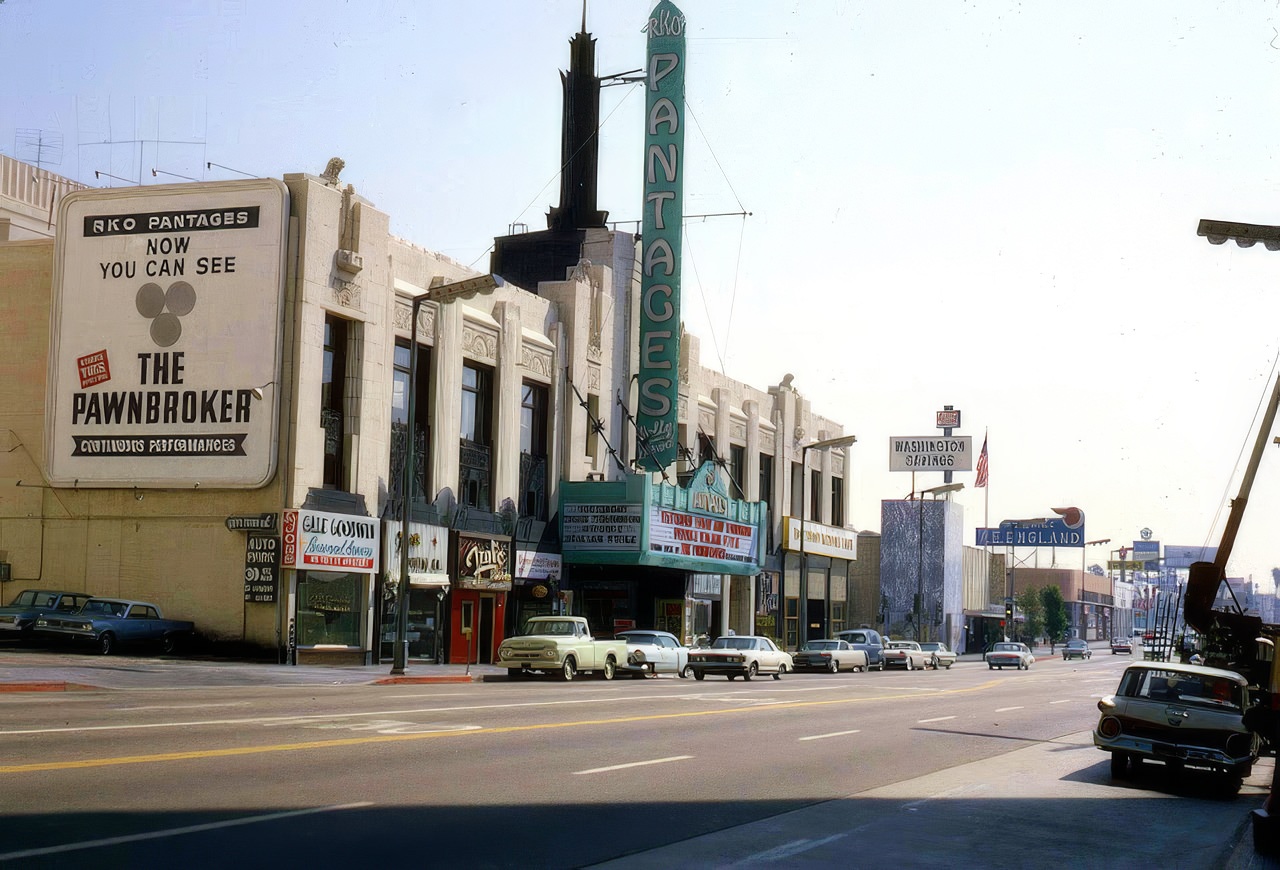
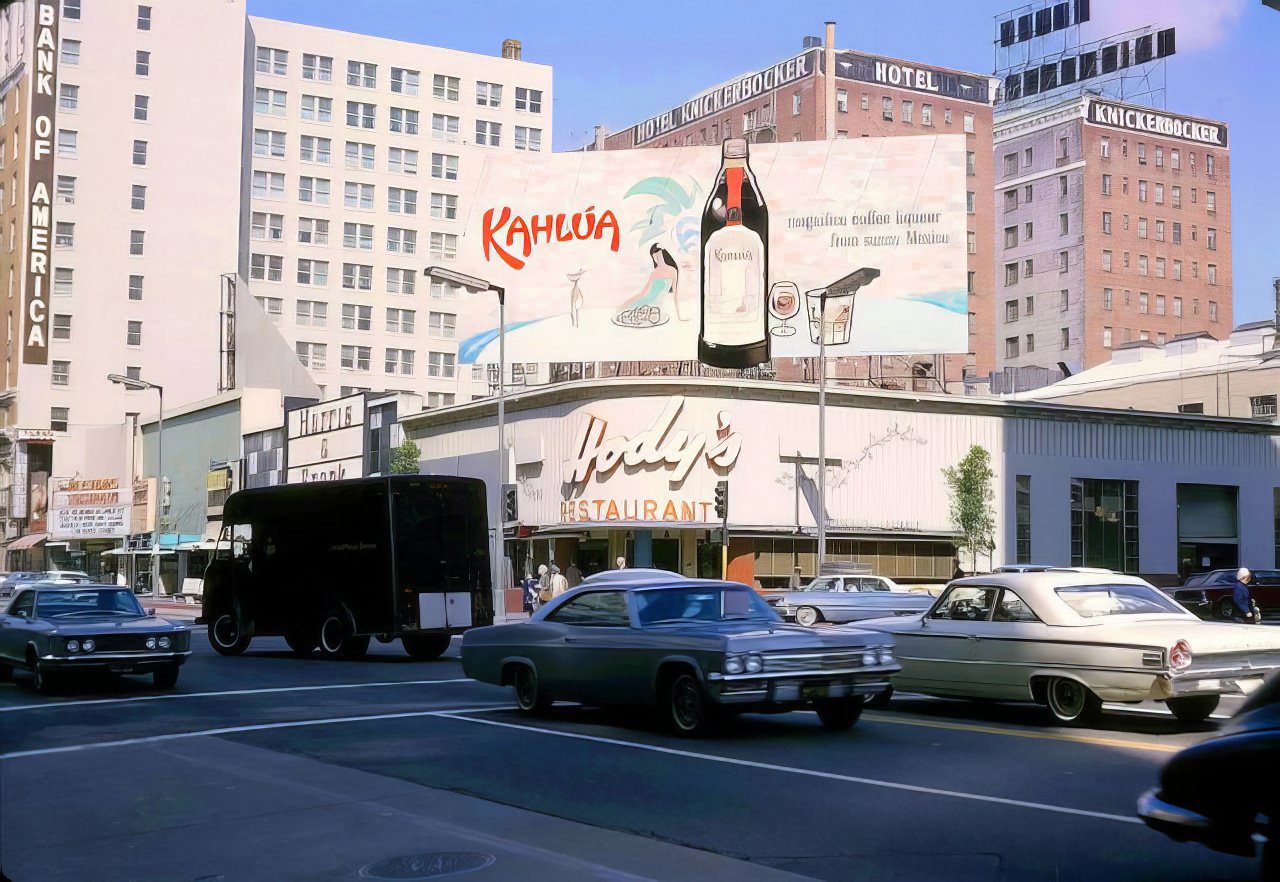
Sunset Boulevard and Santa Monica Boulevard ran parallel lives through the mid-1960s. Sunset was flashier — home to music venues, clubs, and the growing counterculture scene on the Sunset Strip. Santa Monica Blvd offered a more everyday cross-section of the city, with its mix of businesses and through-traffic. Pershing Square, once the social heart of downtown, remained a gathering point even as downtown’s character was shifting.
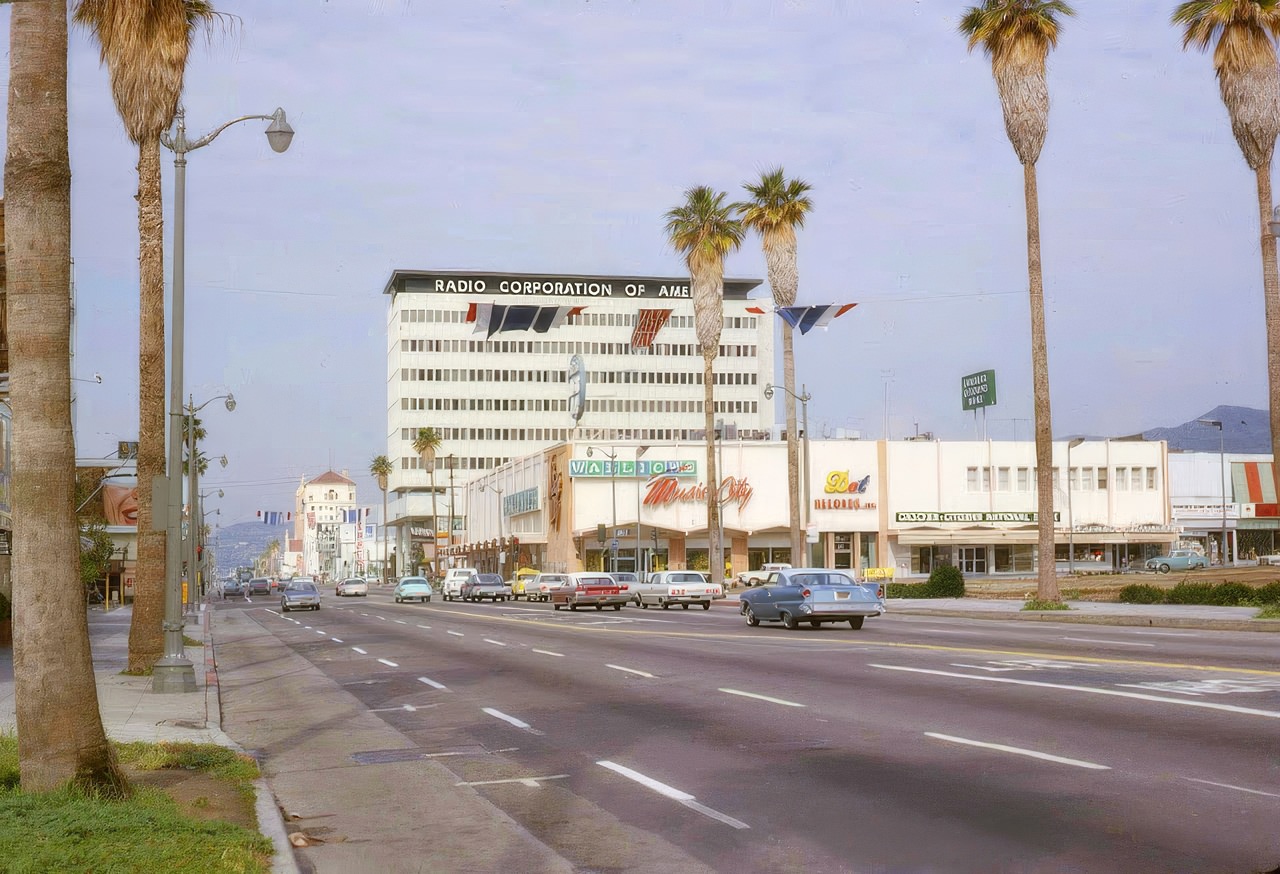
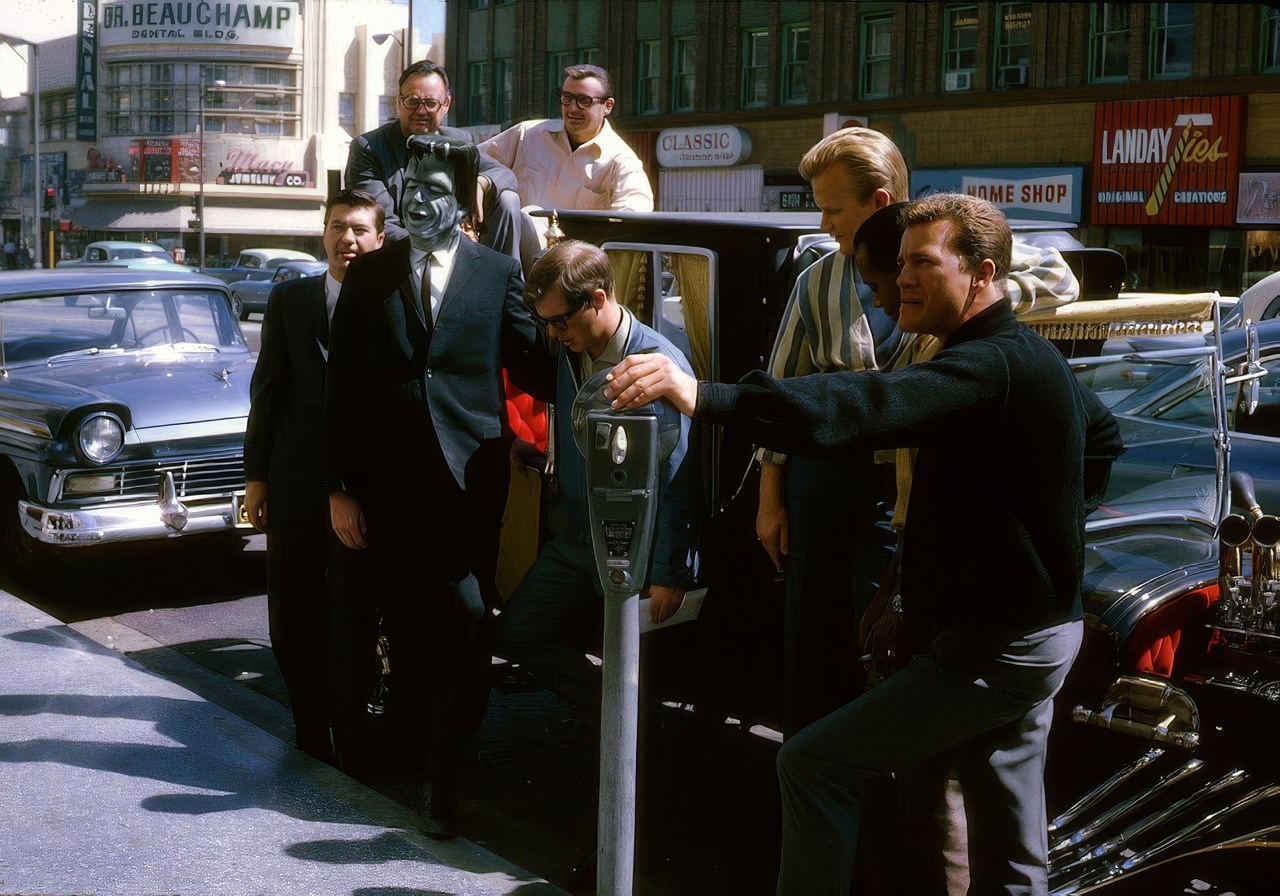
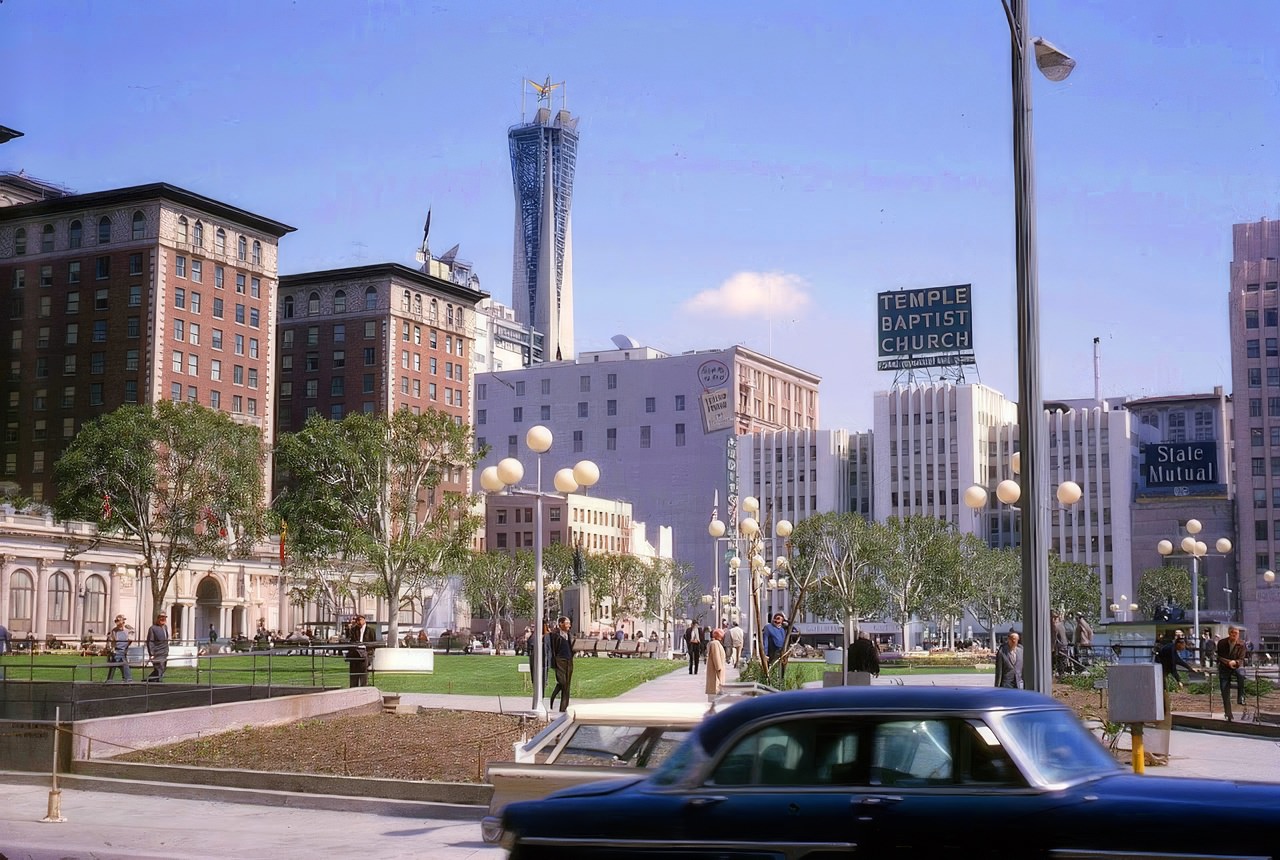
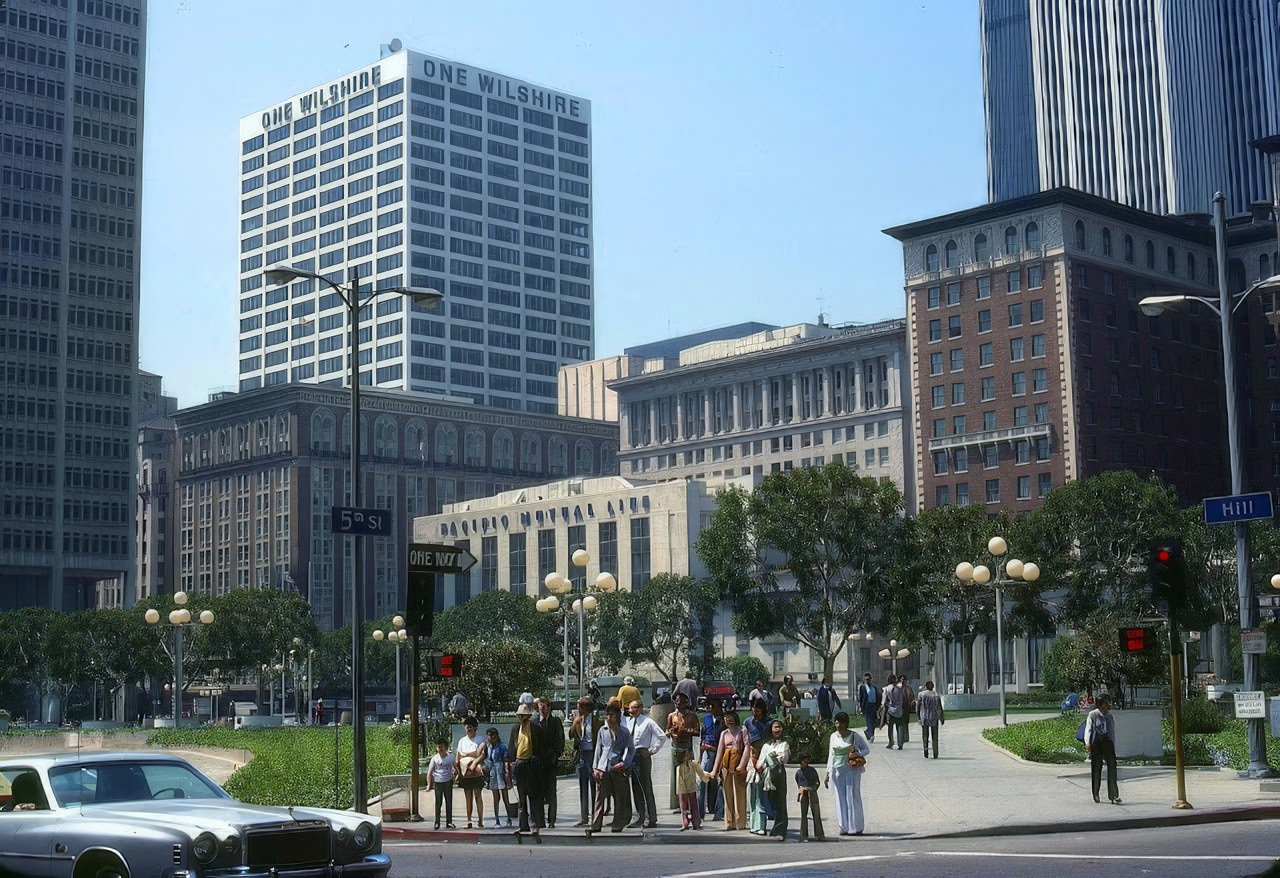
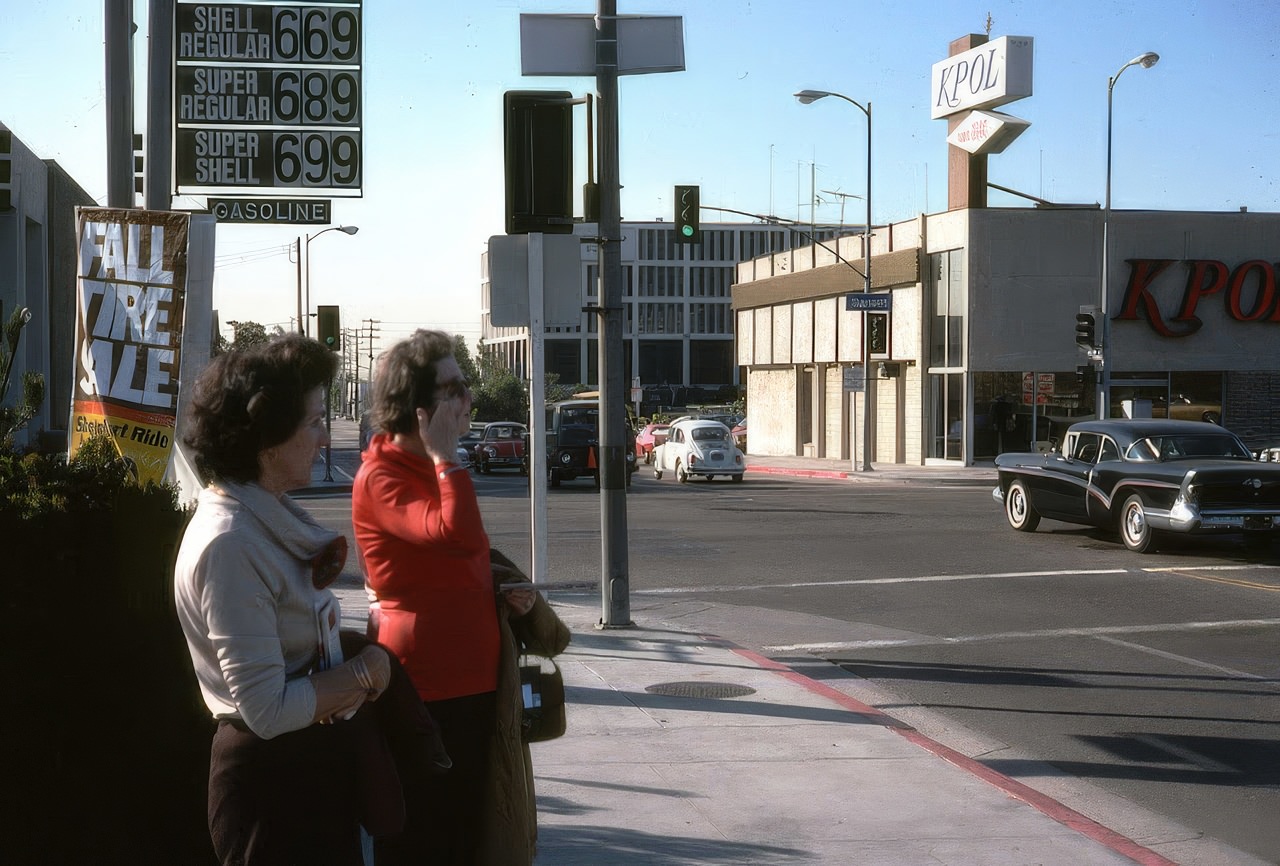
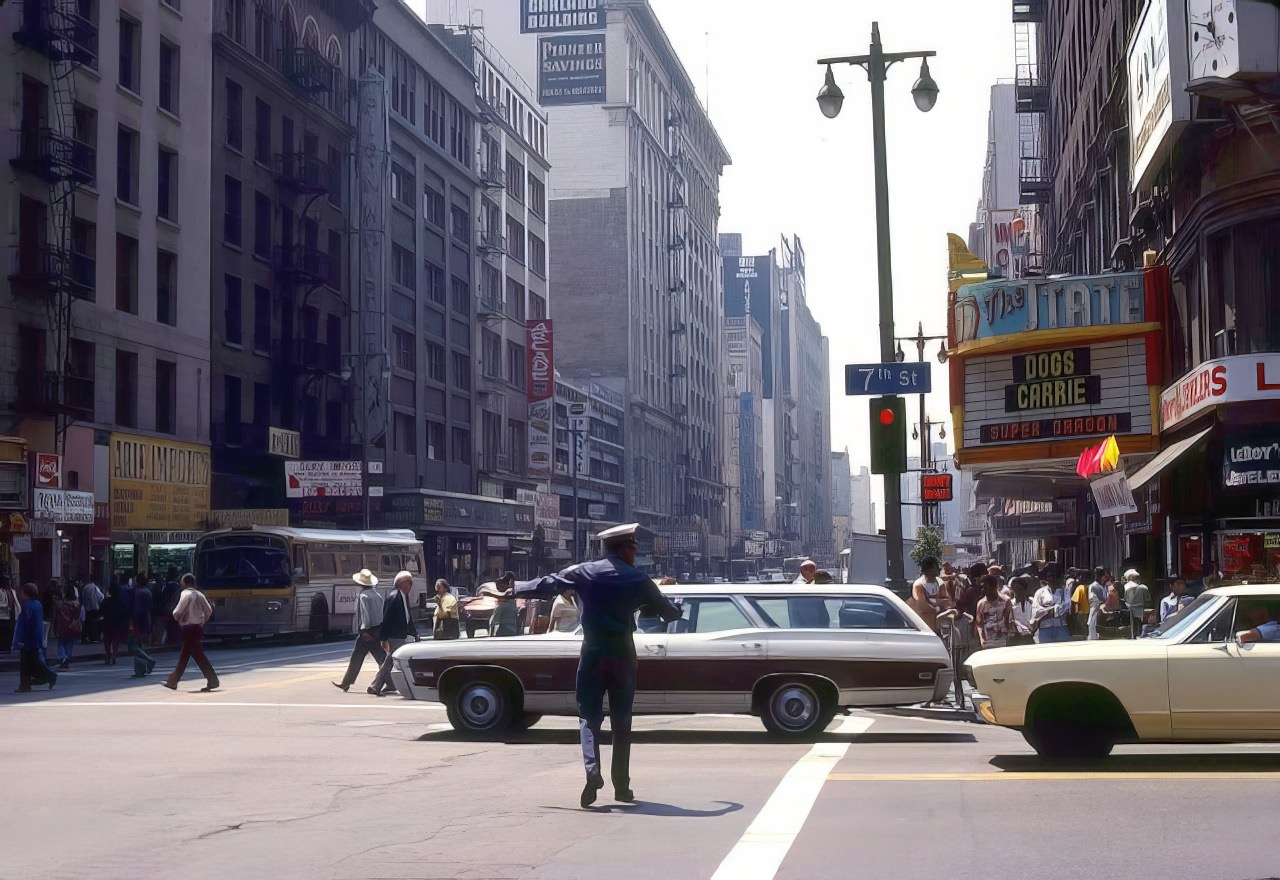
The 1970s brought a looser, more experimental energy to the city’s streets. Radio stations like KPOL on Sunset Blvd kept the airwaves filled with the sounds of the decade, while corners like Broadway and 7th Street downtown showed a city in transition — busier, grittier, and more diverse than the postwar vision that had shaped it just decades before.