Vikki Dougan did not become a Hollywood name through blockbuster roles or hit records. She became famous because of what she wore — or more precisely, what her dress left uncovered. In the 1950s, Dougan carved out a unique place in pop culture by making the backless dress her signature look, earning herself the nickname “The Back.”
Dougan started modeling at the age of eleven, showing an early connection to the fashion and entertainment world. She married William Symons at sixteen and had a daughter with him. Her entry into Hollywood came through a small, uncredited role as a showgirl in the film Back from Eternity — a modest start that gave little hint of what was to come.

The backless dress was not Dougan’s own invention. It was the brainchild of publicity man Milton Weiss, who saw it as a way to keep Dougan’s name in the press. The strategy worked better than anyone expected. Dougan wore the plunging-back gowns to parties and public appearances throughout the 1950s, and the reaction was immediate and intense.

At some events, her dress drew so much attention that she was actually turned away at the door. Hosts banned her from certain parties because the gowns were considered too distracting and too bold for the crowd. Each incident generated its own wave of press coverage, which only added to her growing fame.


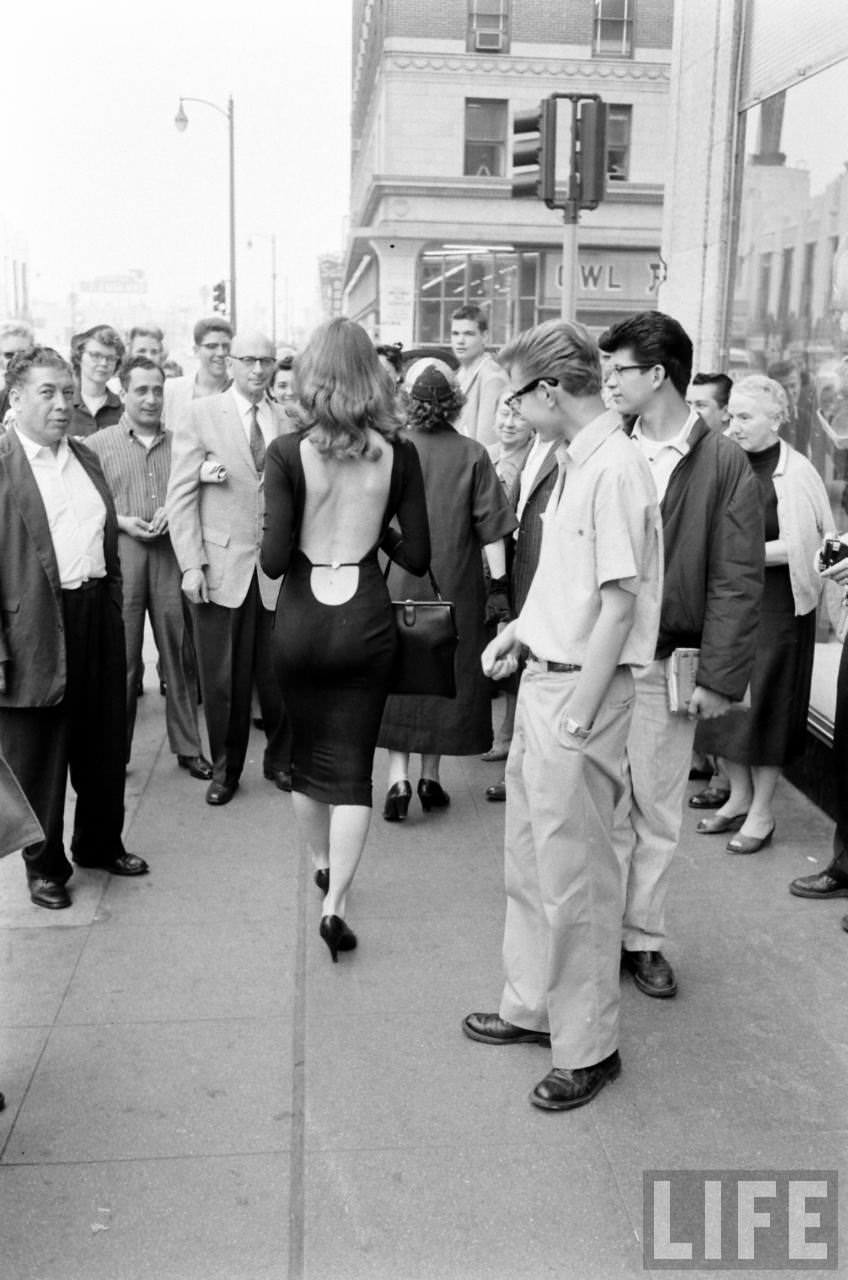
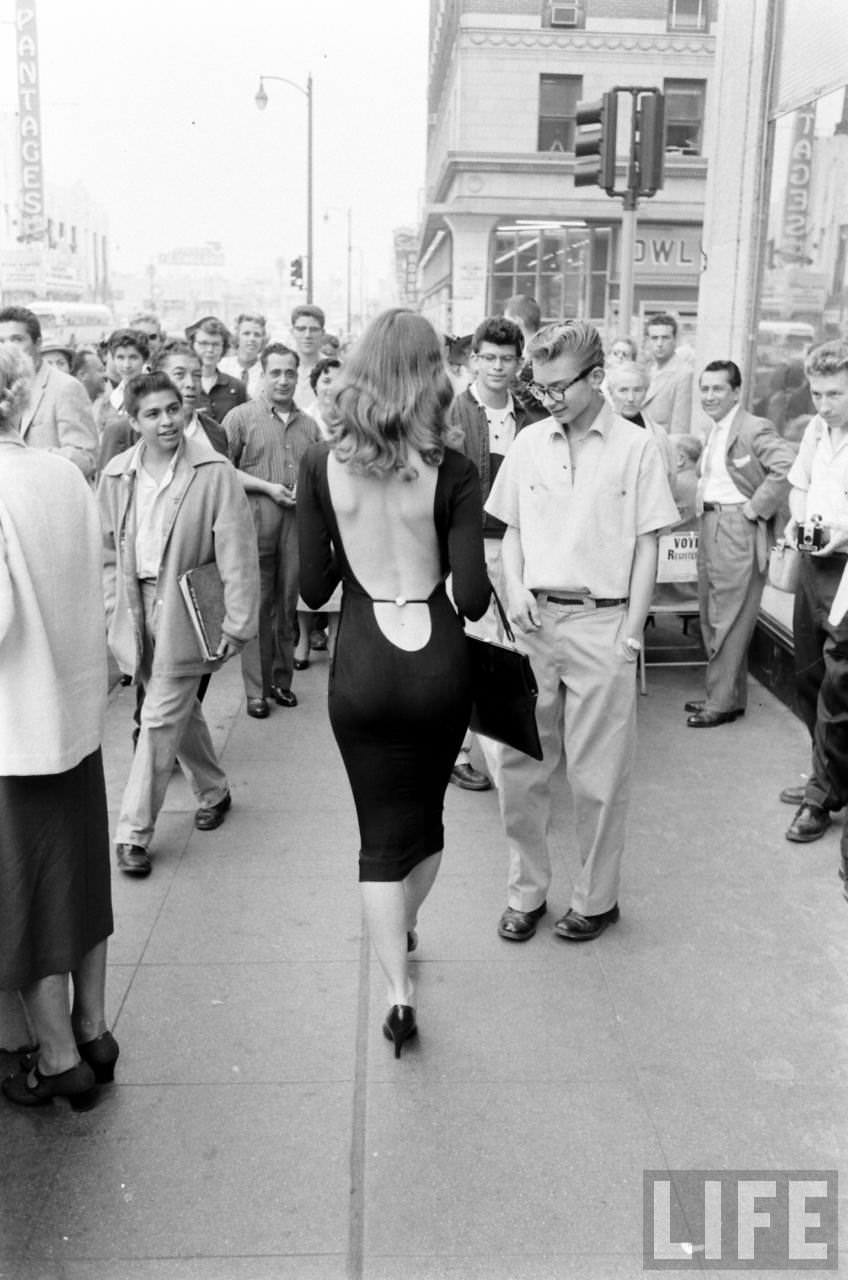
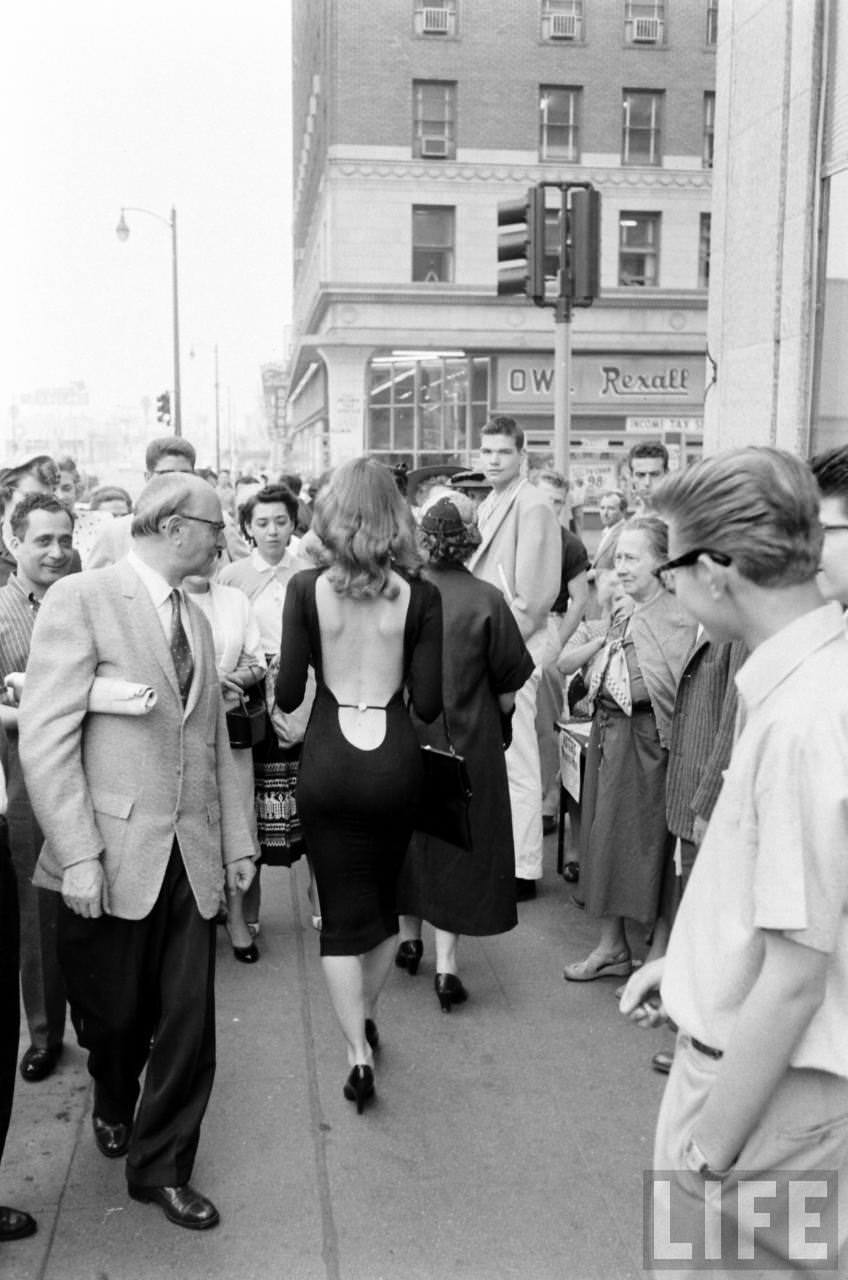
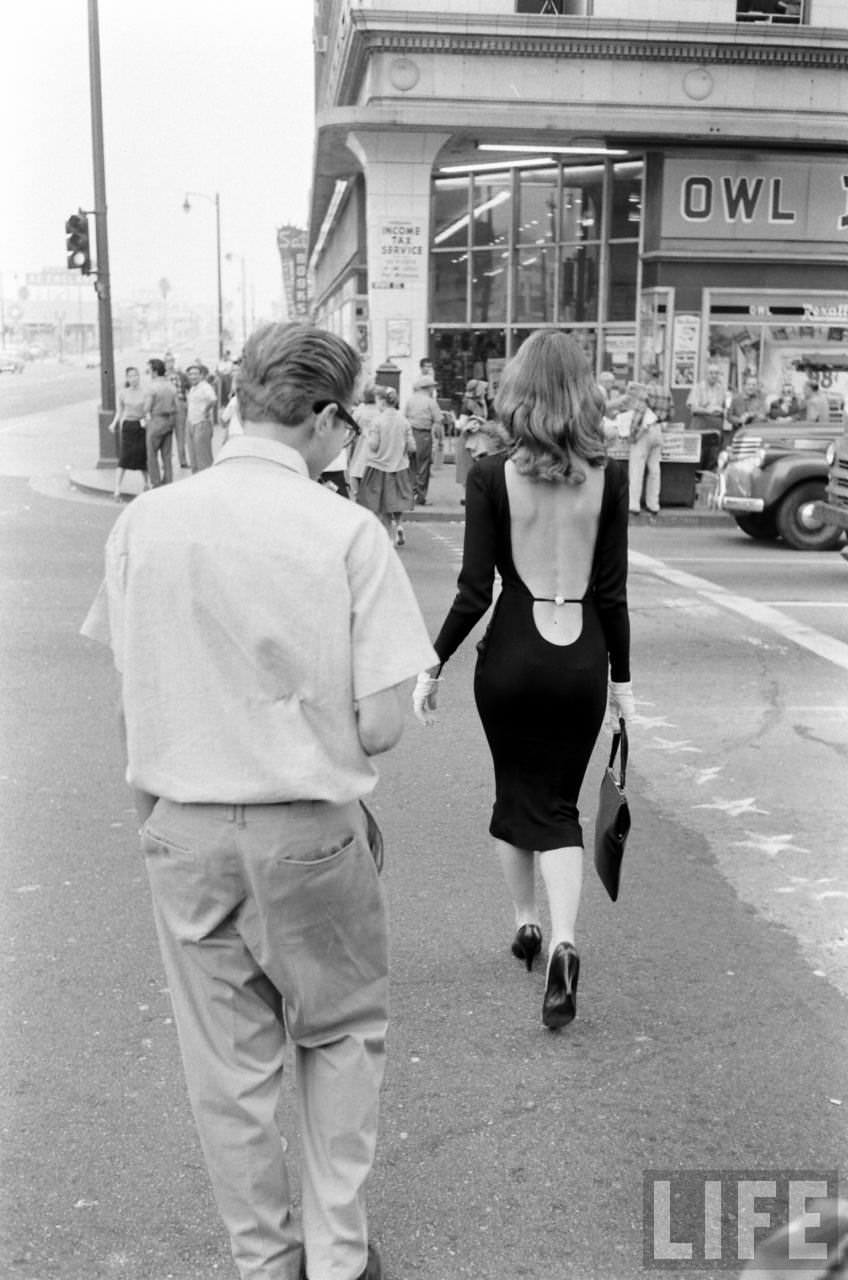
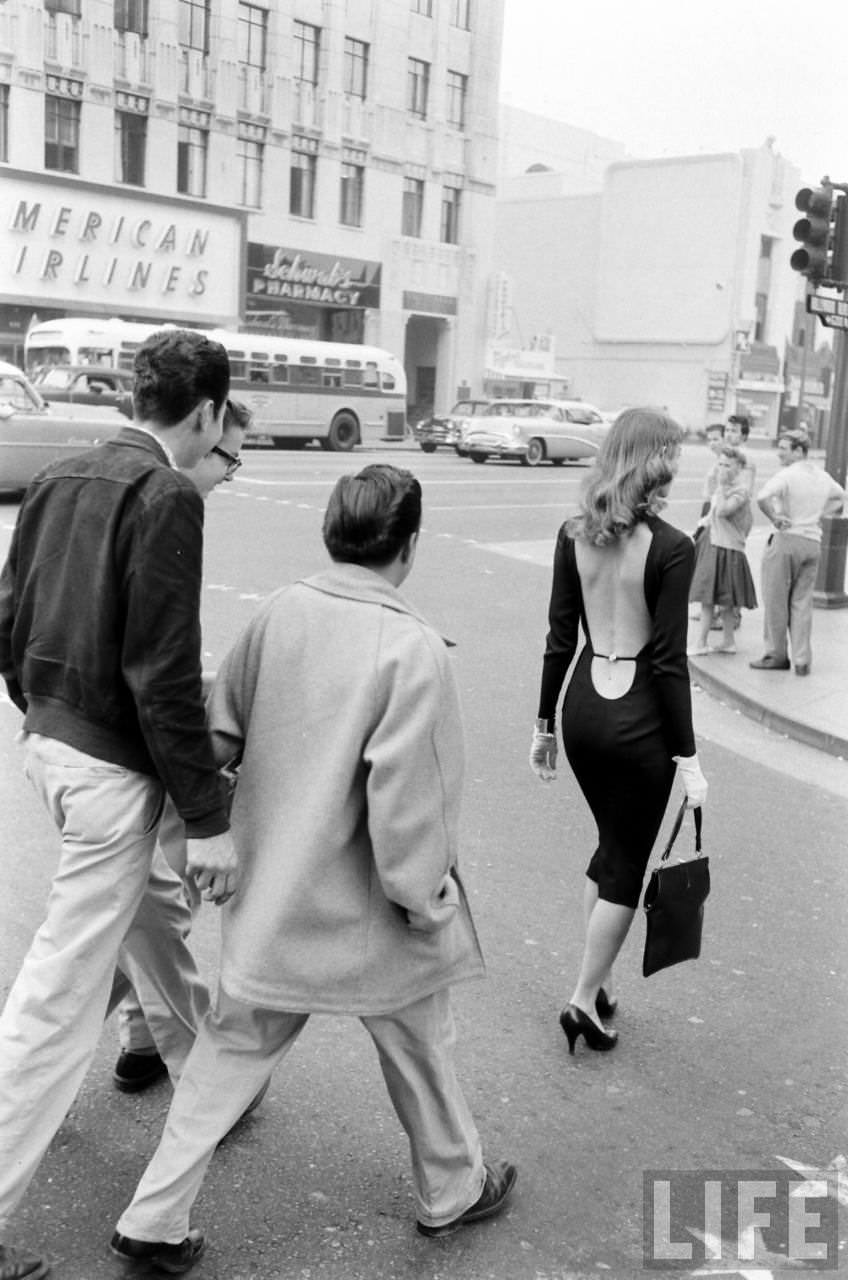
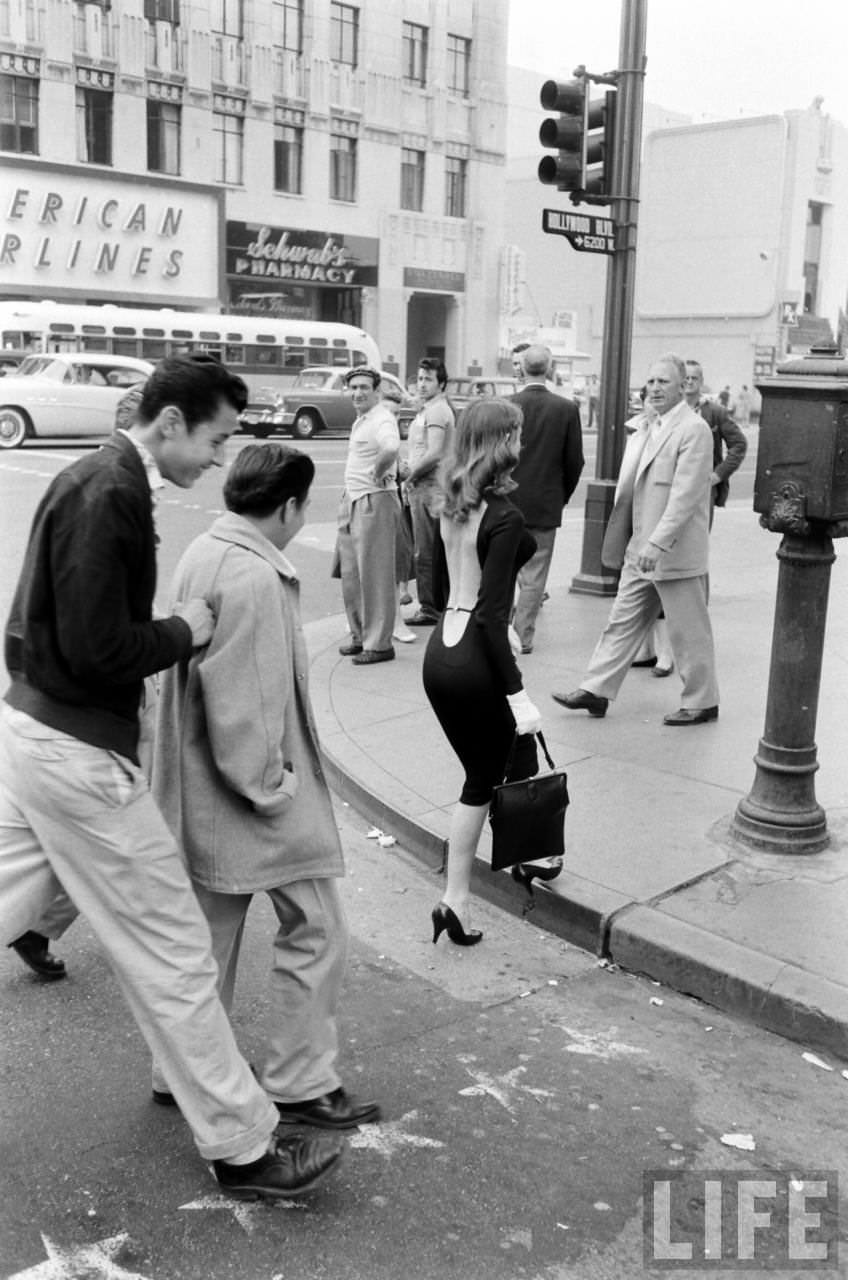
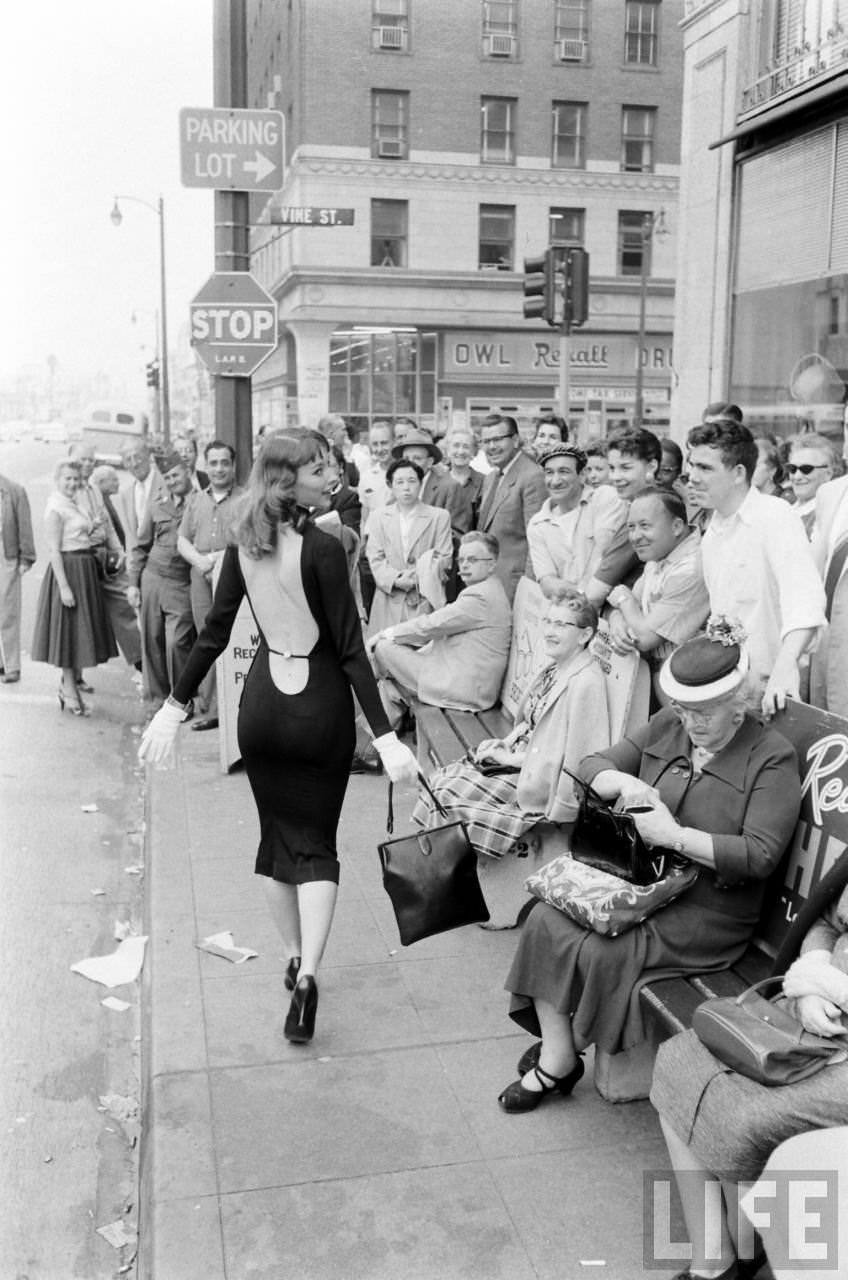
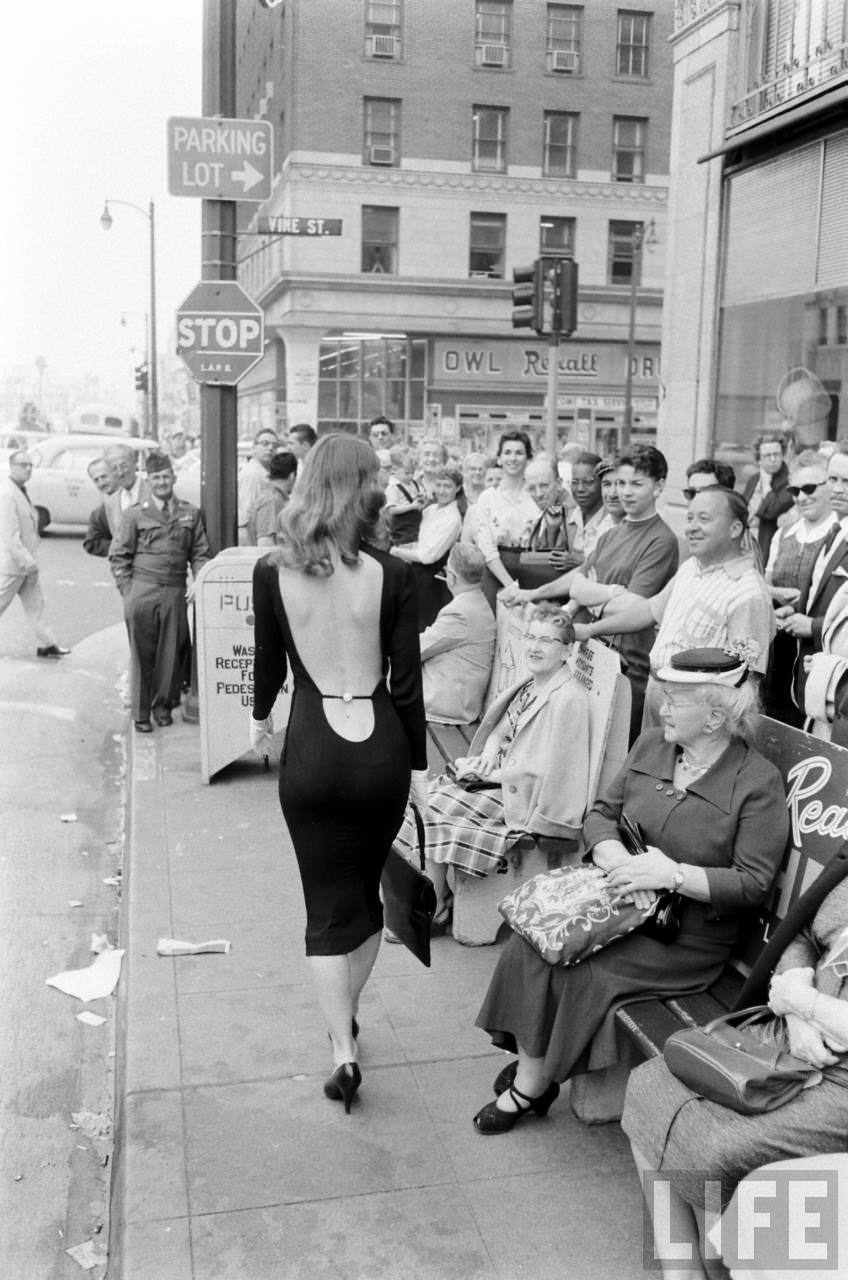
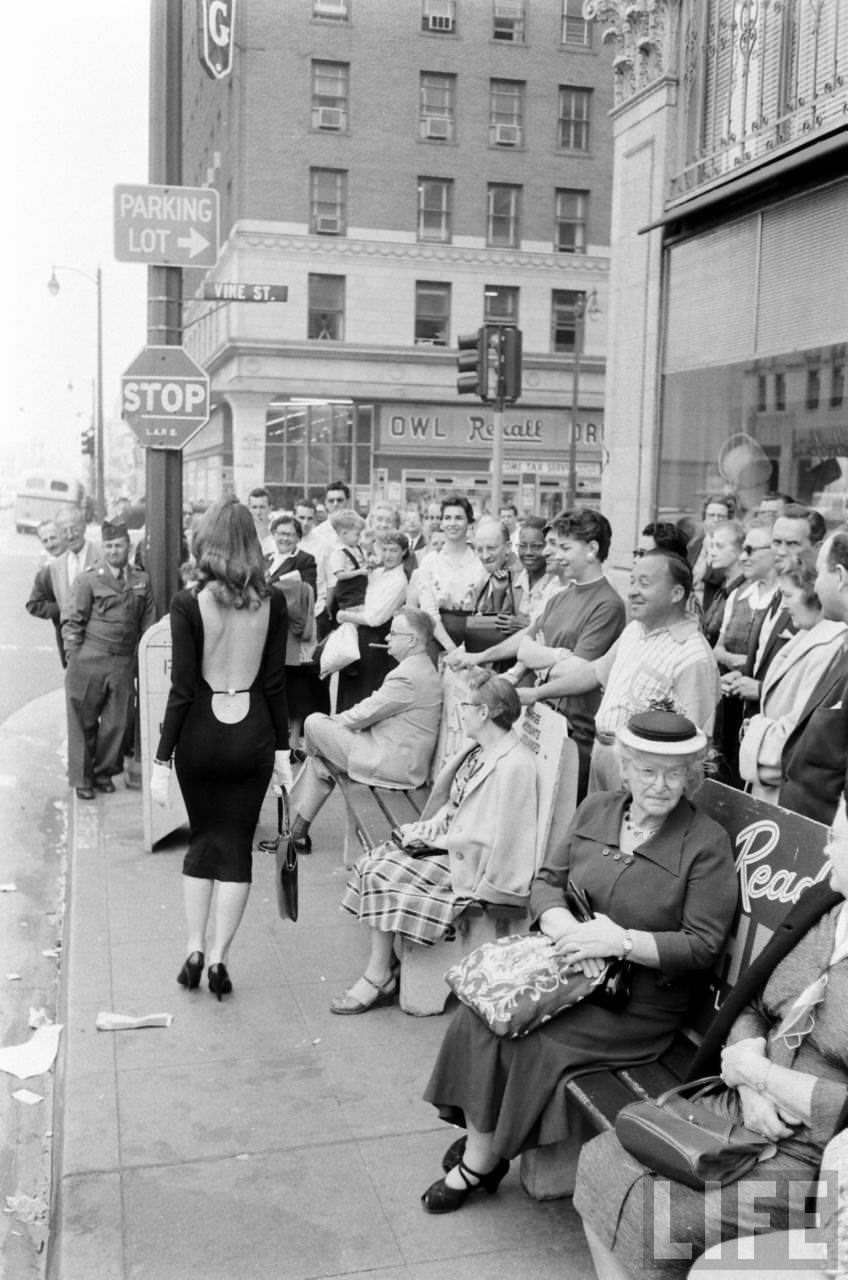
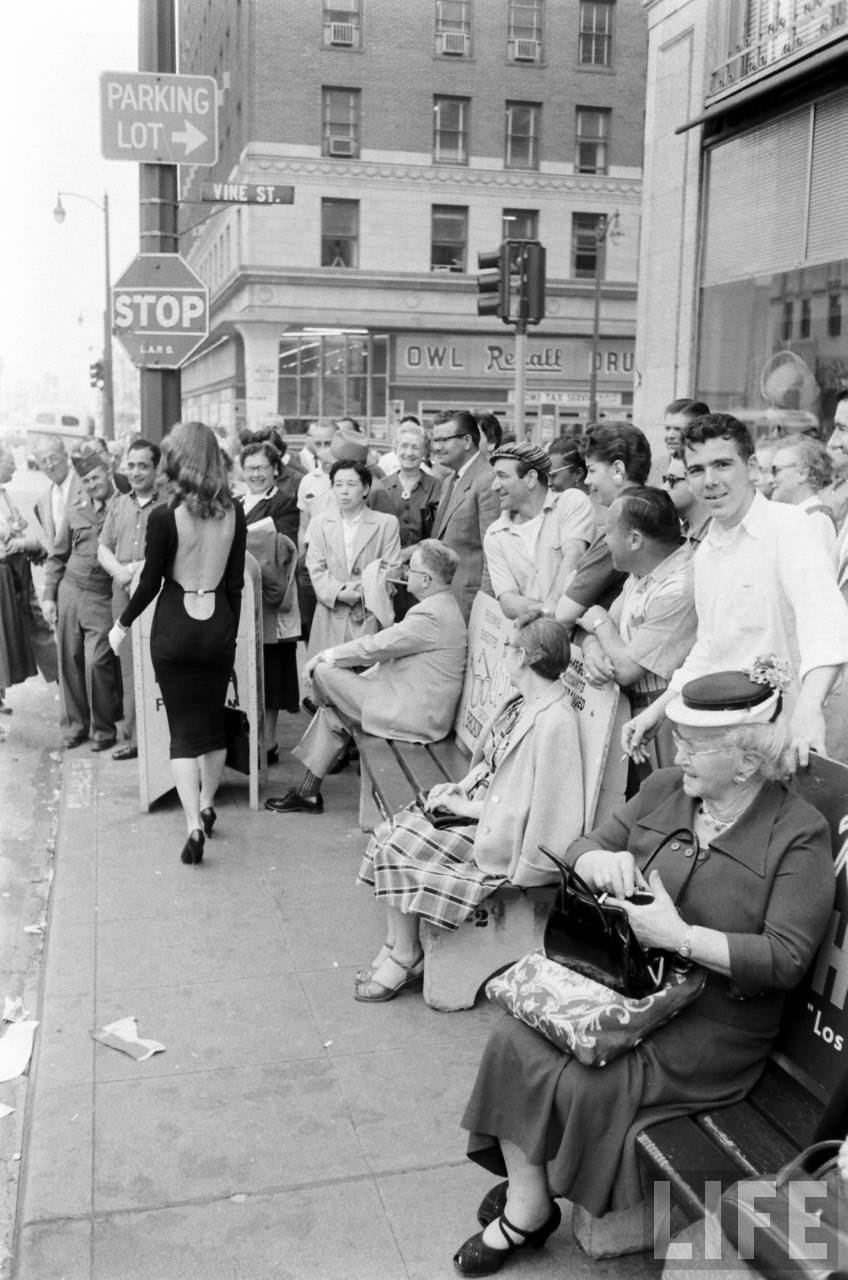
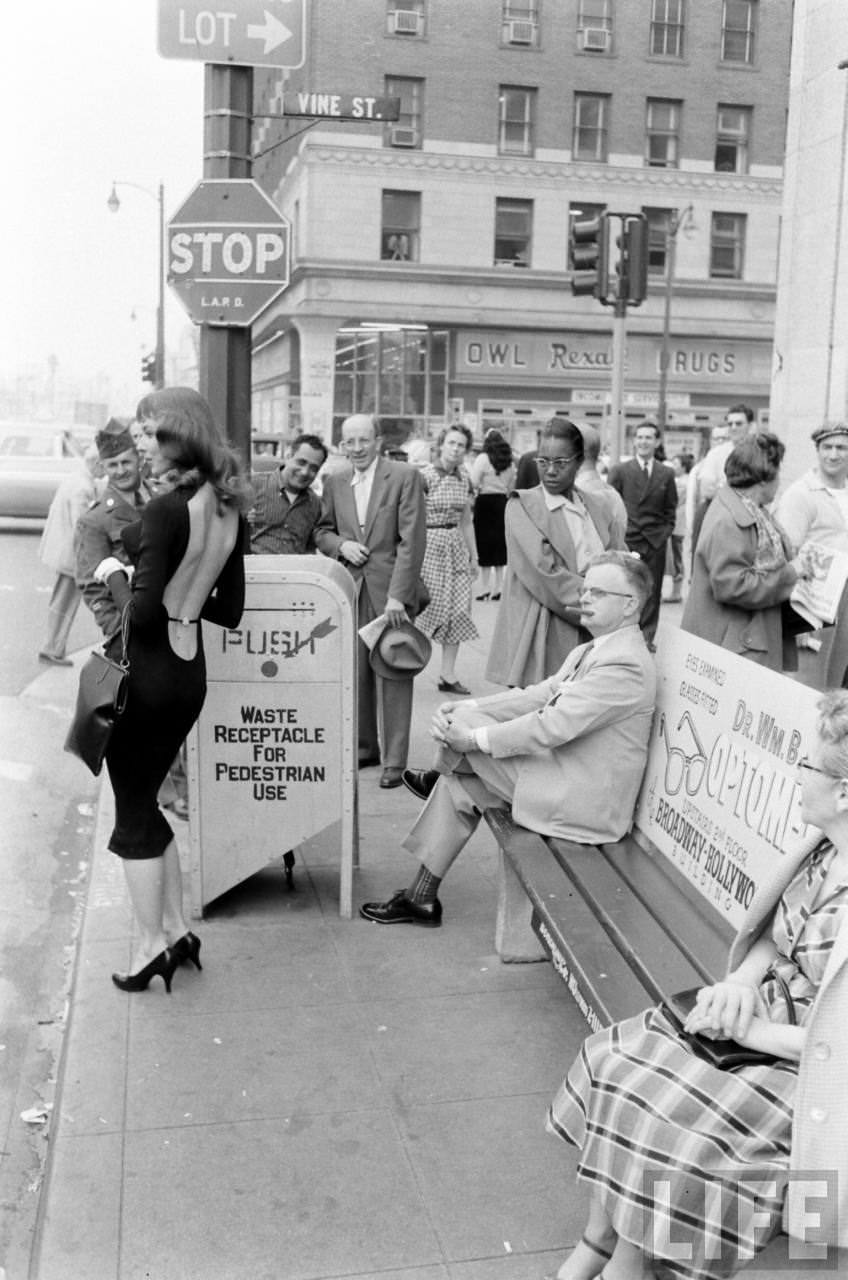
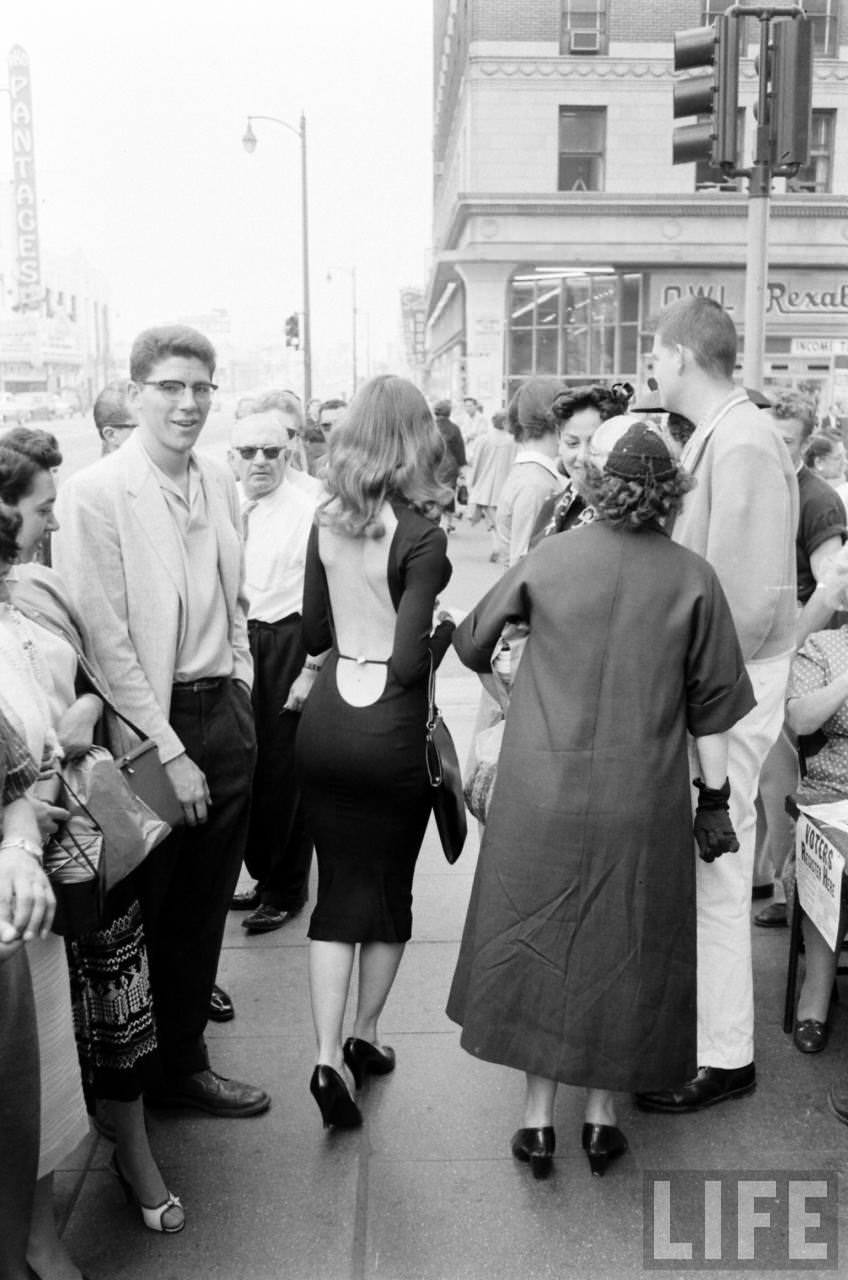
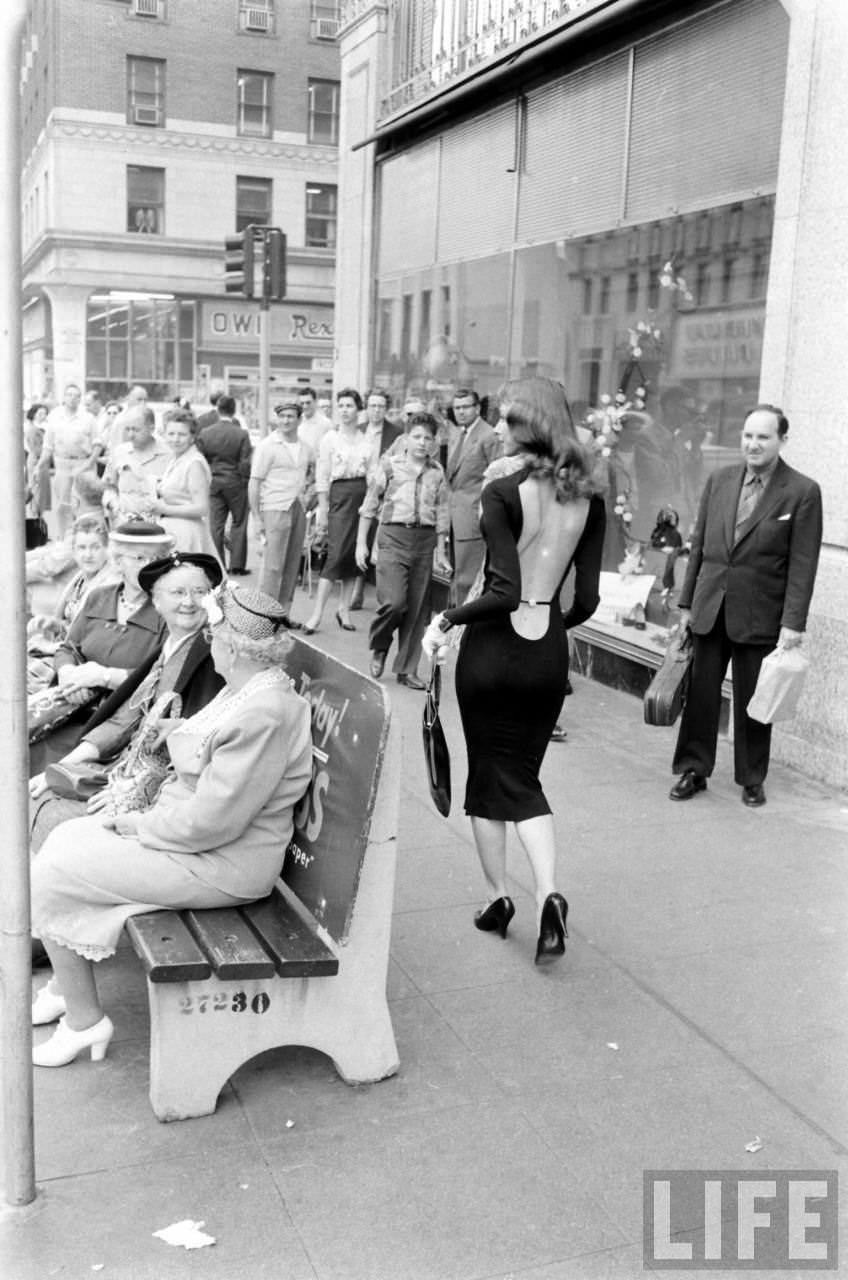
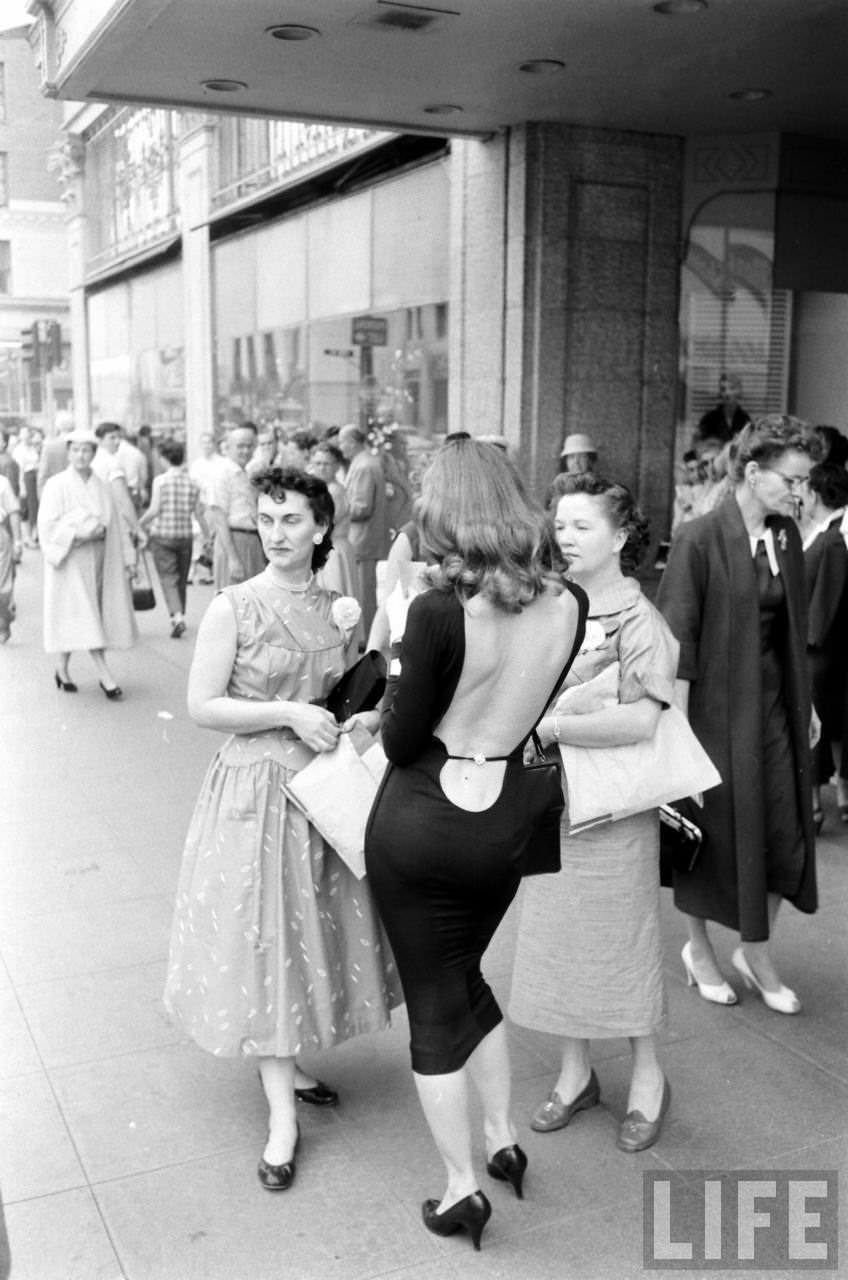
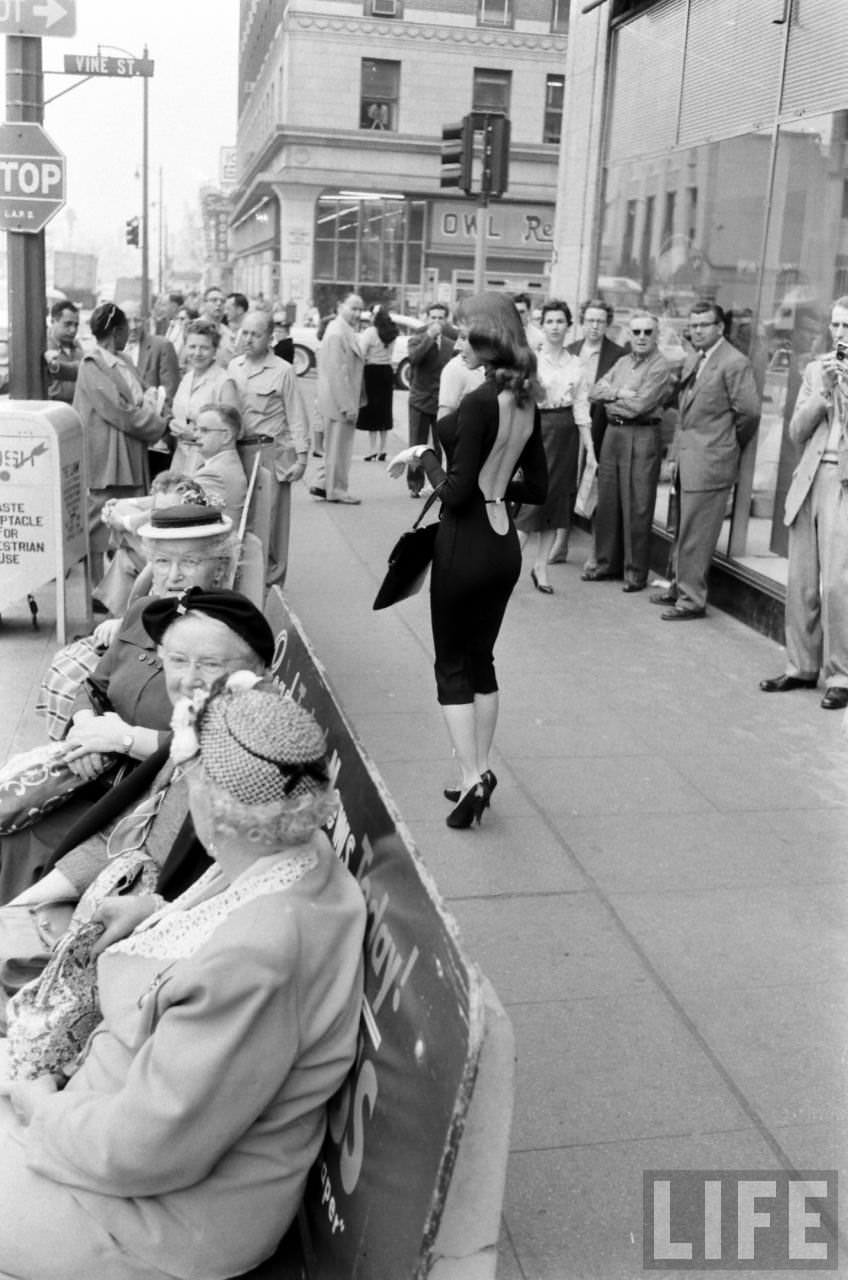
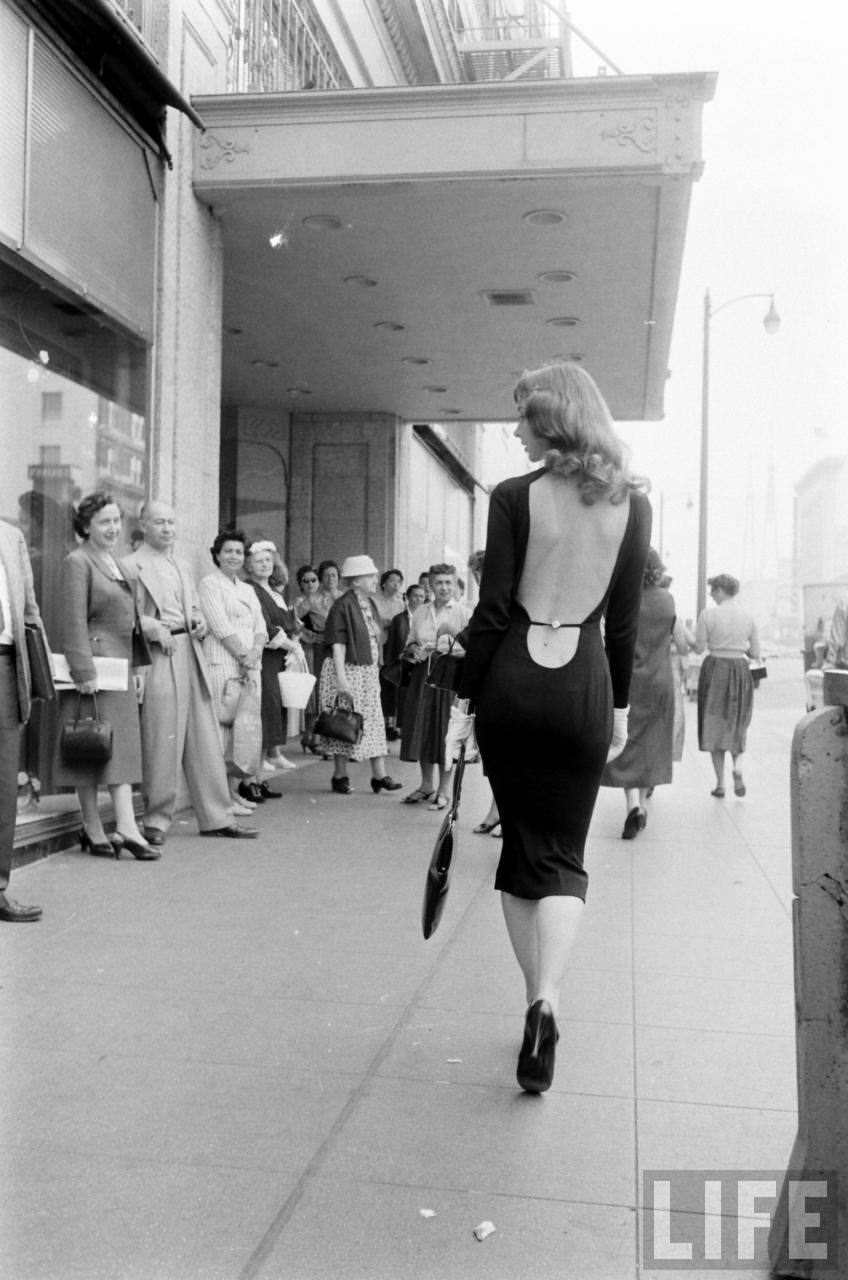
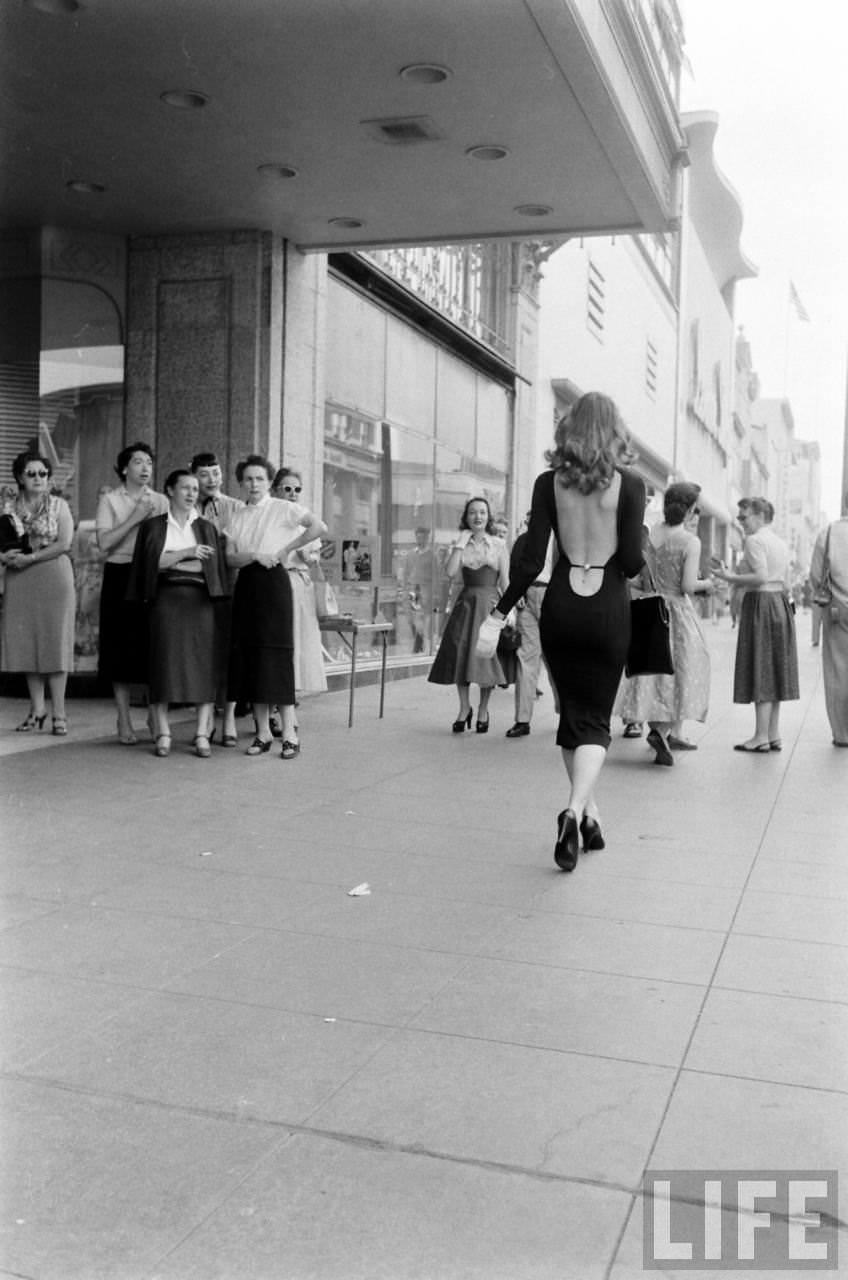
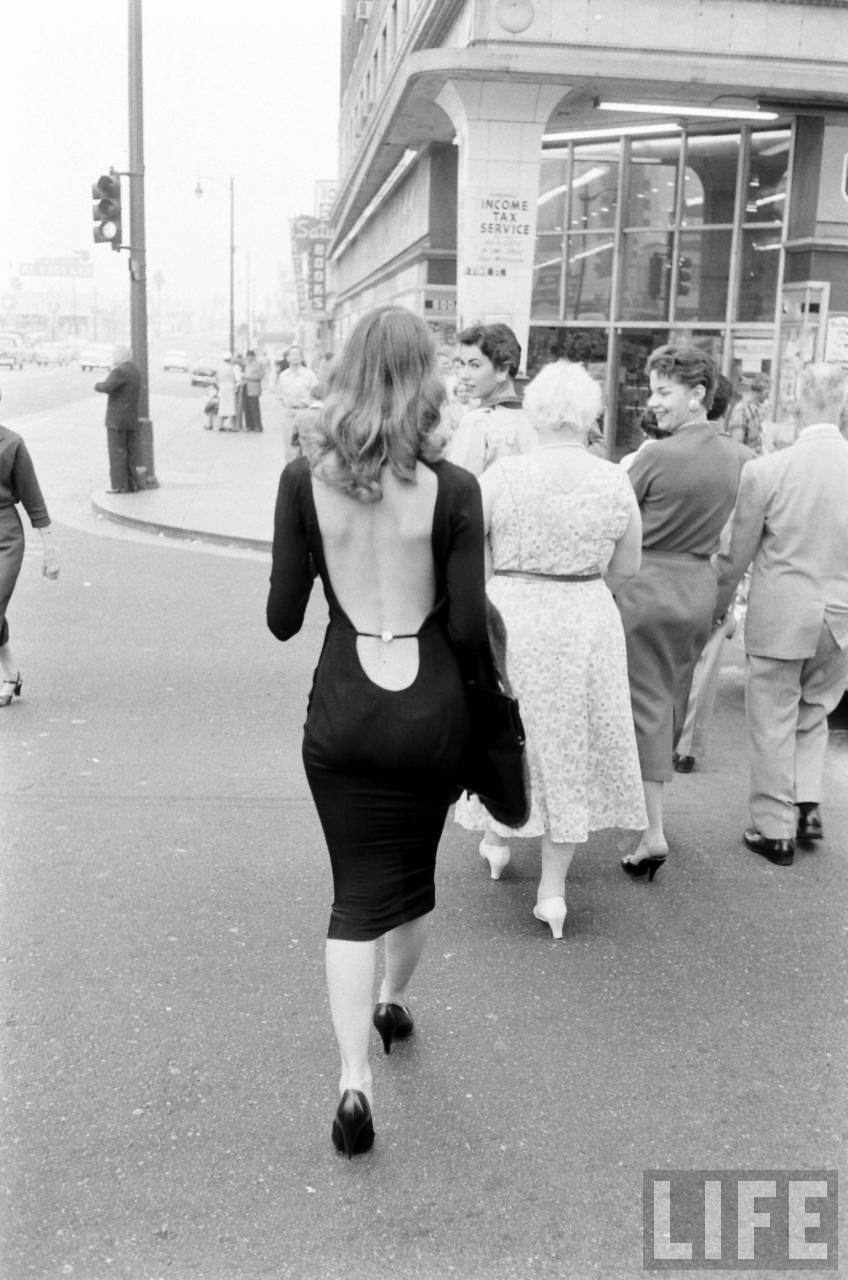
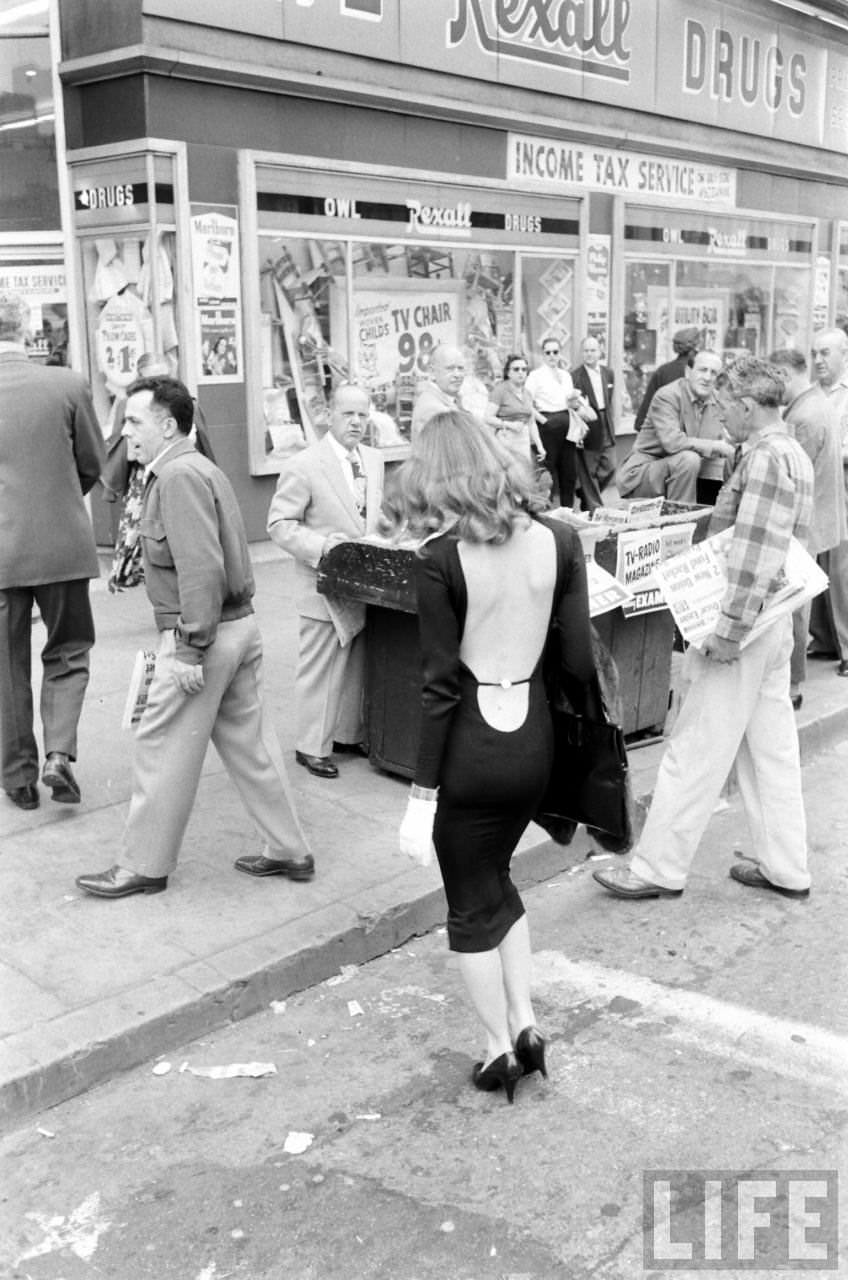
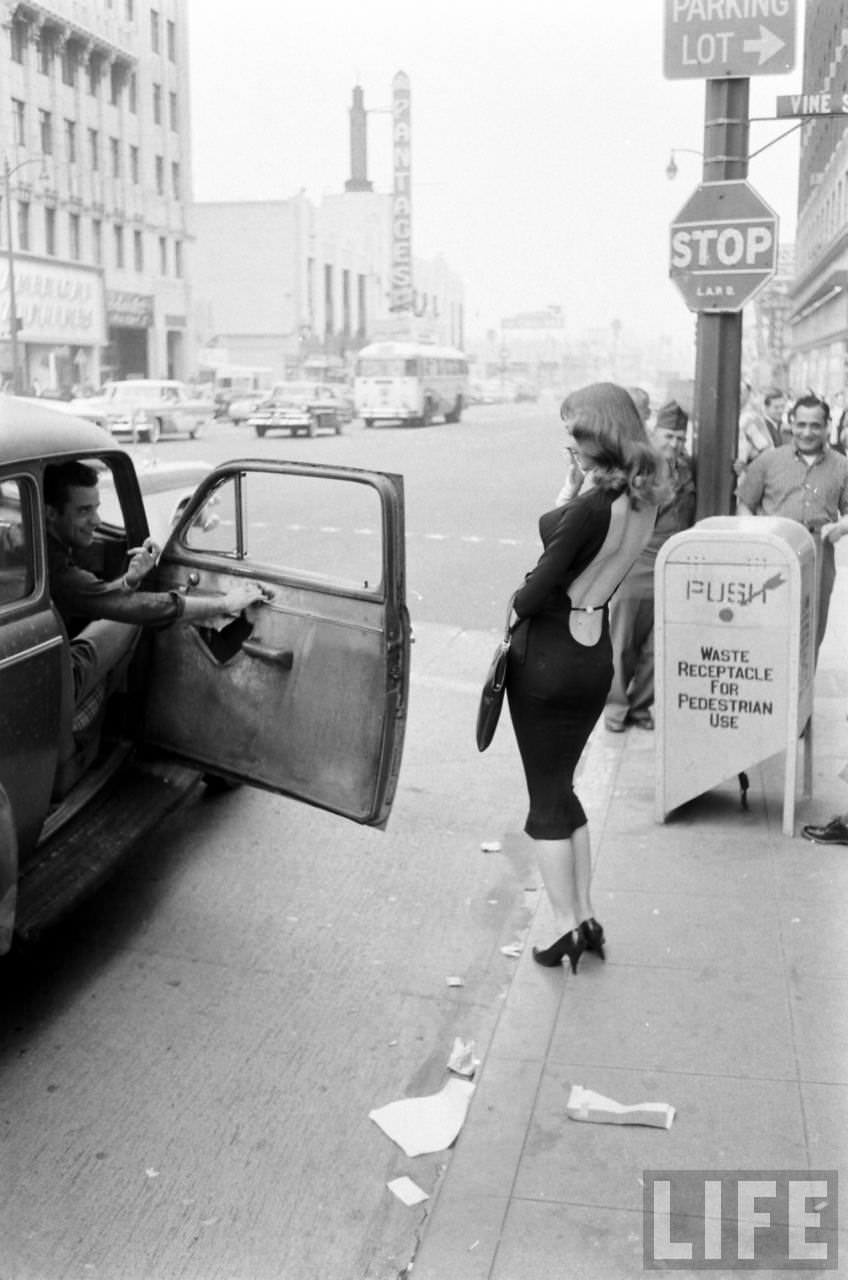
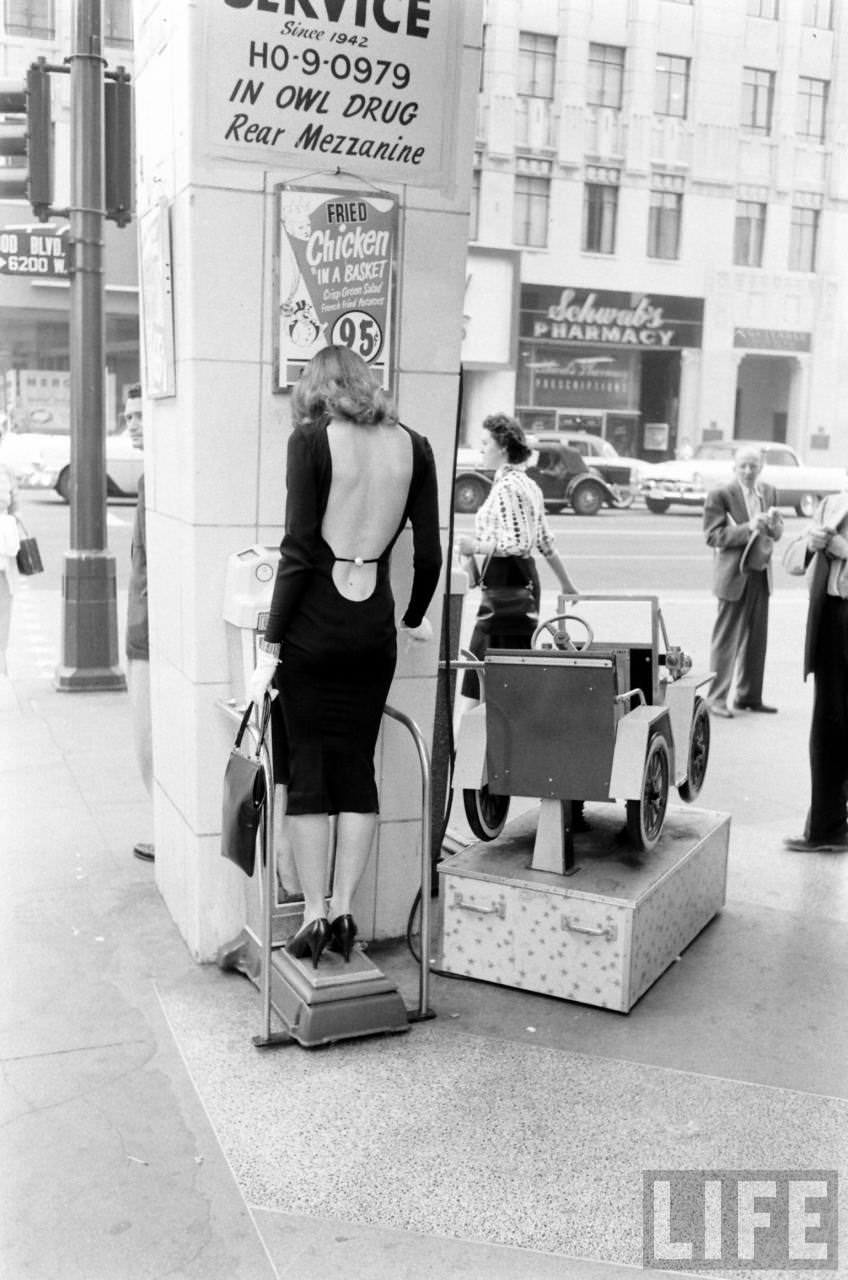
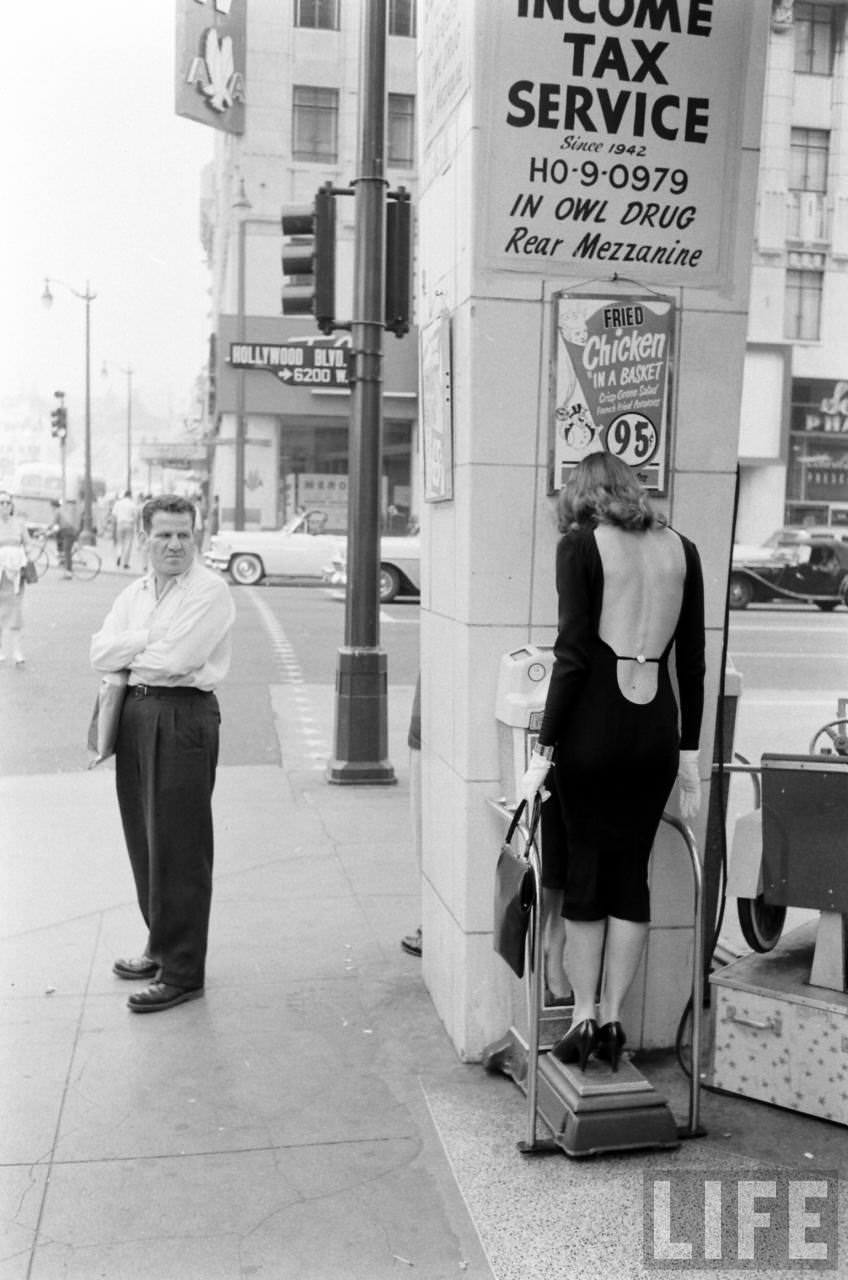
By 1957, Dougan was well known enough that Life Magazine took notice. The publication sent photographer Ralph Crane to document her on the streets of Hollywood, Los Angeles. The assignment captured something simple but striking: a woman walking through an ordinary public space while nearly everyone around her stopped to look.


Crane’s photographs show the candid reactions of everyday people — men, women, and passersby — all caught mid-stare as Dougan walked past. The images are as much a document of 1950s public life and social norms as they are a portrait of Dougan herself. Her confidence in front of the camera and on the street is clear in every frame.


The Hollywood streets served as a kind of open-air stage. There were no velvet ropes, no event backdrop, and no controlled environment — just Dougan, her dress, and the public. The unscripted nature of the shoot made the resulting photographs all the more compelling.


What made Dougan’s look so attention-grabbing in the 1950s was its deliberate contrast with the fashion norms of the era. Most women’s formal wear at the time covered the back entirely. A deeply cut backless gown was a direct challenge to those conventions, and Dougan wore it without hesitation.


Weiss understood that in the entertainment industry, visibility was everything. A rising actress with limited screen credits needed another way to stay in the public eye. The backless dress gave Dougan a visual identity that was impossible to ignore and easy to photograph — two qualities that kept her name circulating in the gossip columns and fashion pages.


Crane’s Life Magazine shoot captured Dougan at the height of her public notoriety. The photographs show her walking with ease past storefronts, drawing double-takes from strangers mid-conversation and men pausing in their tracks. The reactions are unposed and genuine, making each shot a small time capsule of the moment.


Few fashion choices from the 1950s are as immediately recognizable or as closely tied to a single person as the backless gown is to Vikki Dougan. The nickname “The Back” followed her through the decade, and these 1957 photographs by Ralph Crane remain some of the most vivid evidence of why that name stuck.