
Courtship in the Victorian era was a serious business — governed by strict rules, watched over by chaperones, and shaped by the social expectations of the time. Among the upper classes especially, every step of romantic life followed a well-worn script. Queen Victoria and her family set the tone for what proper courtship looked like, and society followed closely. Meeting a potential husband or wife happened almost exclusively at balls and organized dances, where introductions were formal and behavior was carefully observed.
Women faced the tightest restrictions. A lady could not meet a gentleman alone under any circumstances — an older chaperone was always present. She could not receive a man at her home if no one else was there. She could not even walk alongside a man without supervision. These rules were not suggestions. Breaking them carried real social consequences. Yet within these tight boundaries, romance still found a way to bloom — and sometimes, to be laughed at.
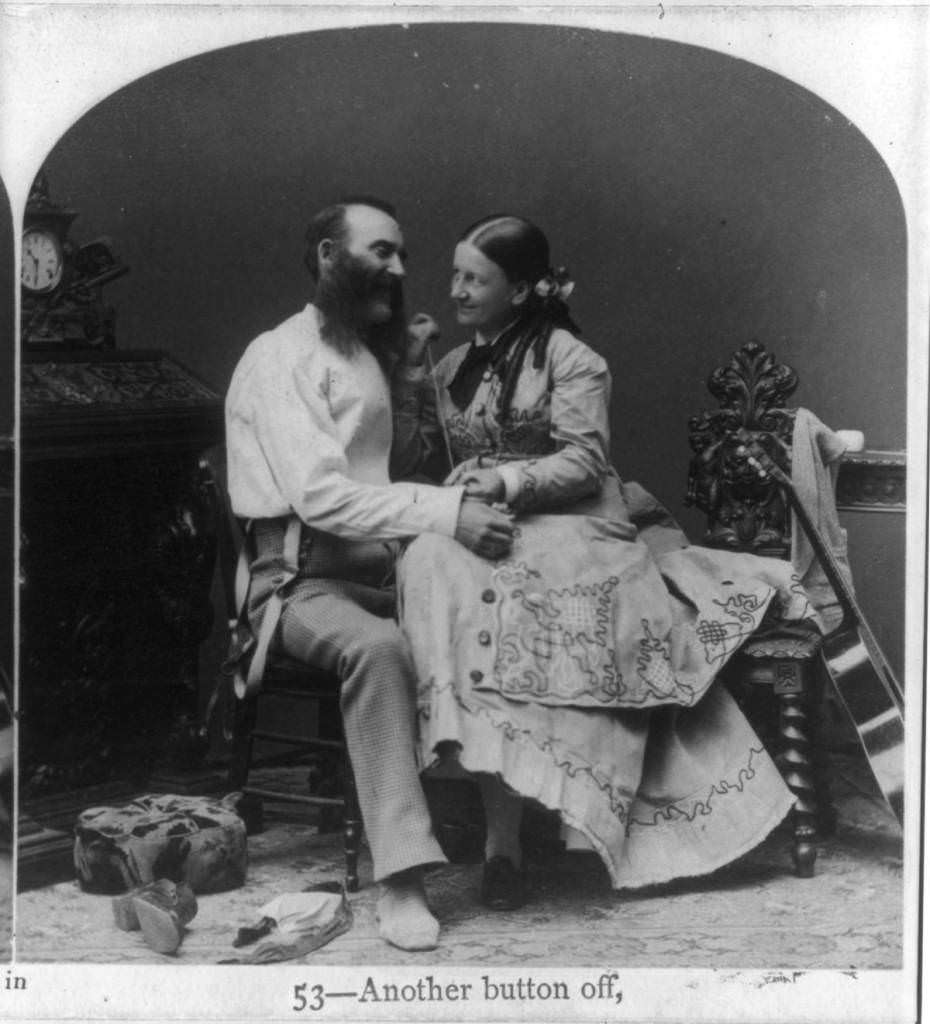
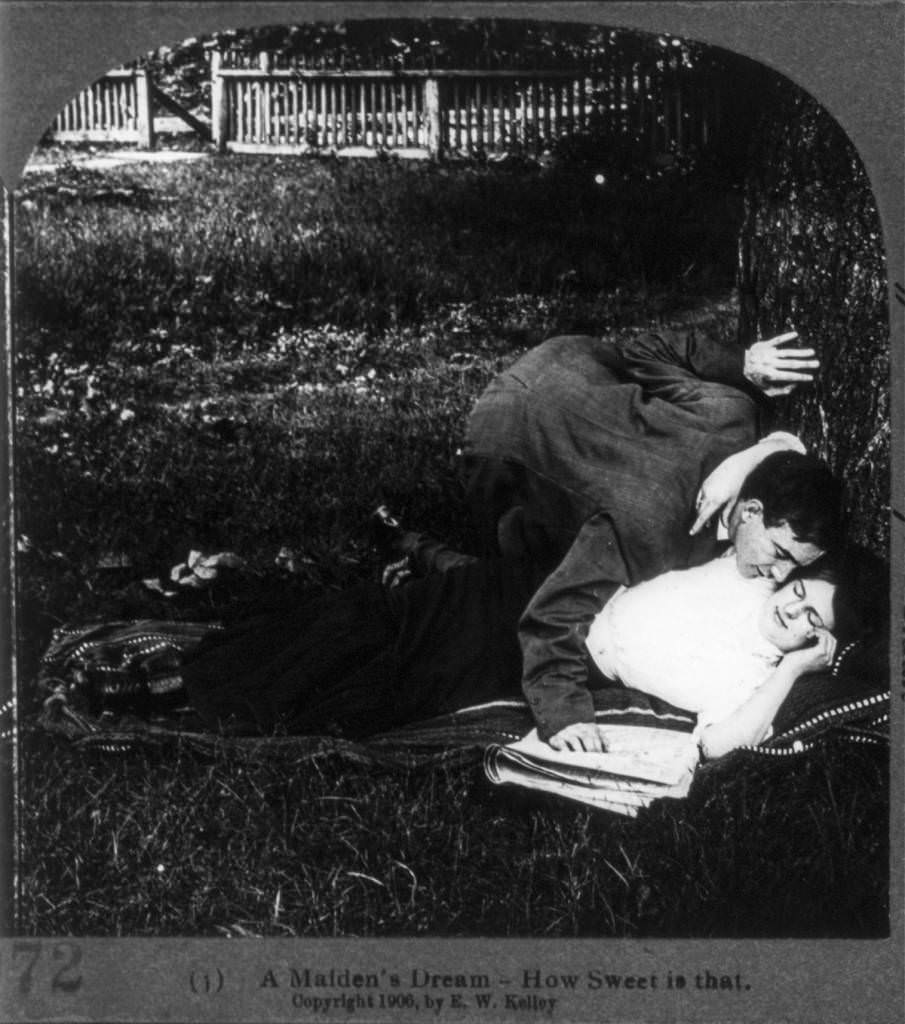
The stereo cards collected here offer a window into that world — with a wink. Produced between the late 1870s and the early 1900s, these images were made for the stereoscope, a popular home entertainment device that gave flat photographs the illusion of depth. Families would sit together and flip through card after card, taking in scenes from around the world or, as seen here, scenes from everyday romantic life. Based on the clothing, copyright names, and visual details, these cards were produced in the United States.
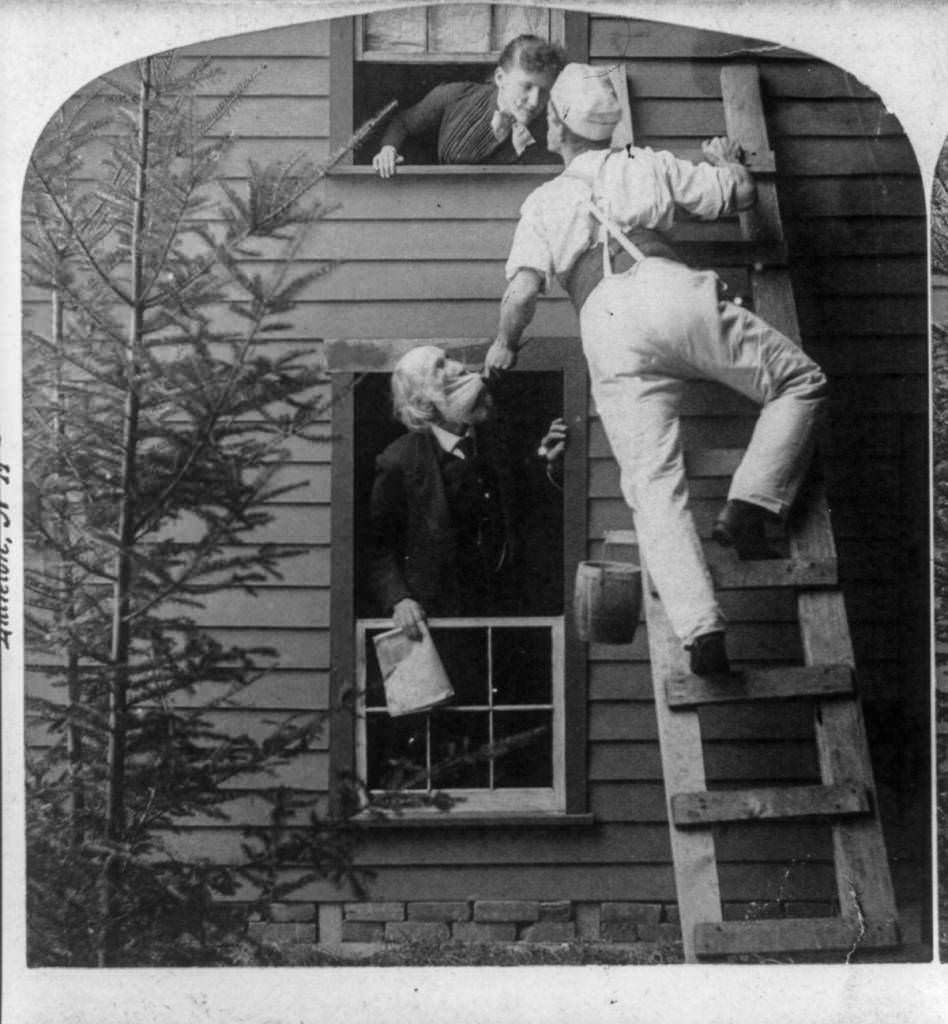
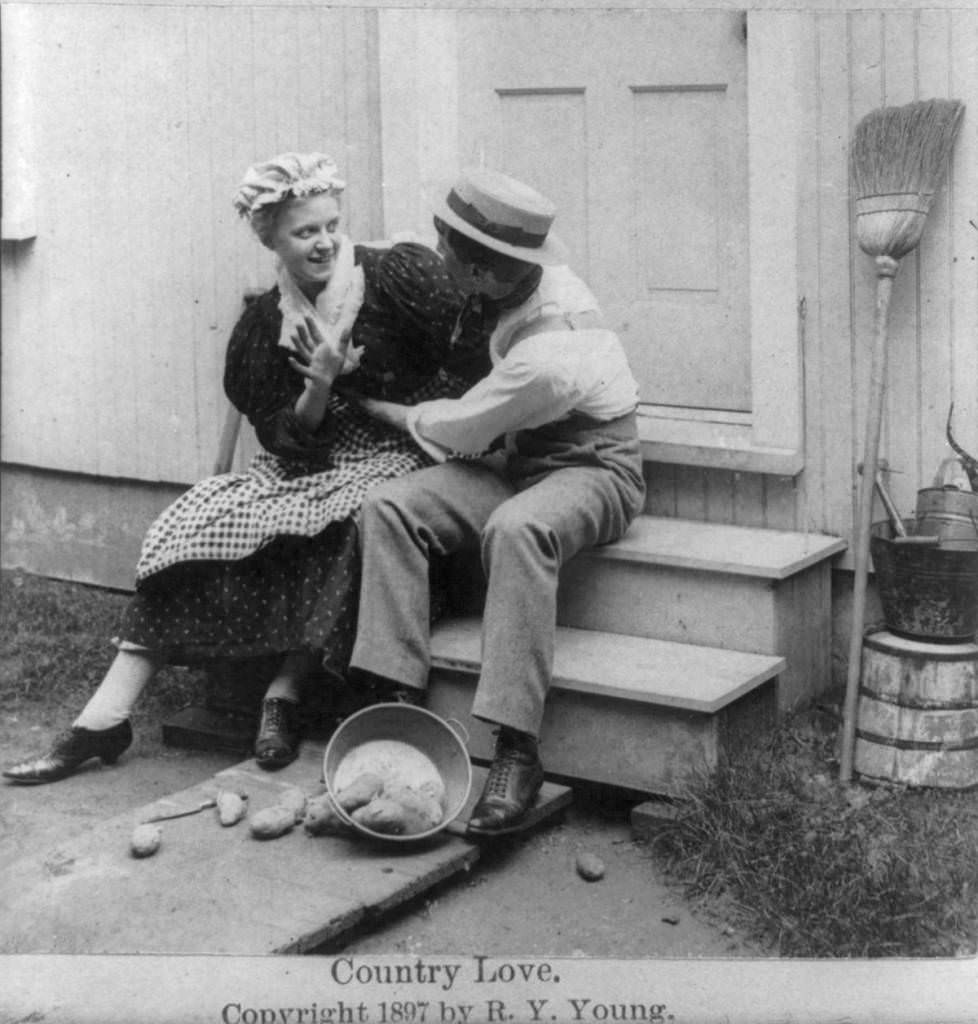
What makes these cards remarkable is their humor. They were not meant to document courtship in a dry, academic way. They were staged, comedic scenes — the equivalent of a comic strip brought to life through photography. The couples in them flirt, scheme, get caught, and fumble their way through romance. The humor is broad and accessible, aimed at a general audience that recognized these situations from their own lives.
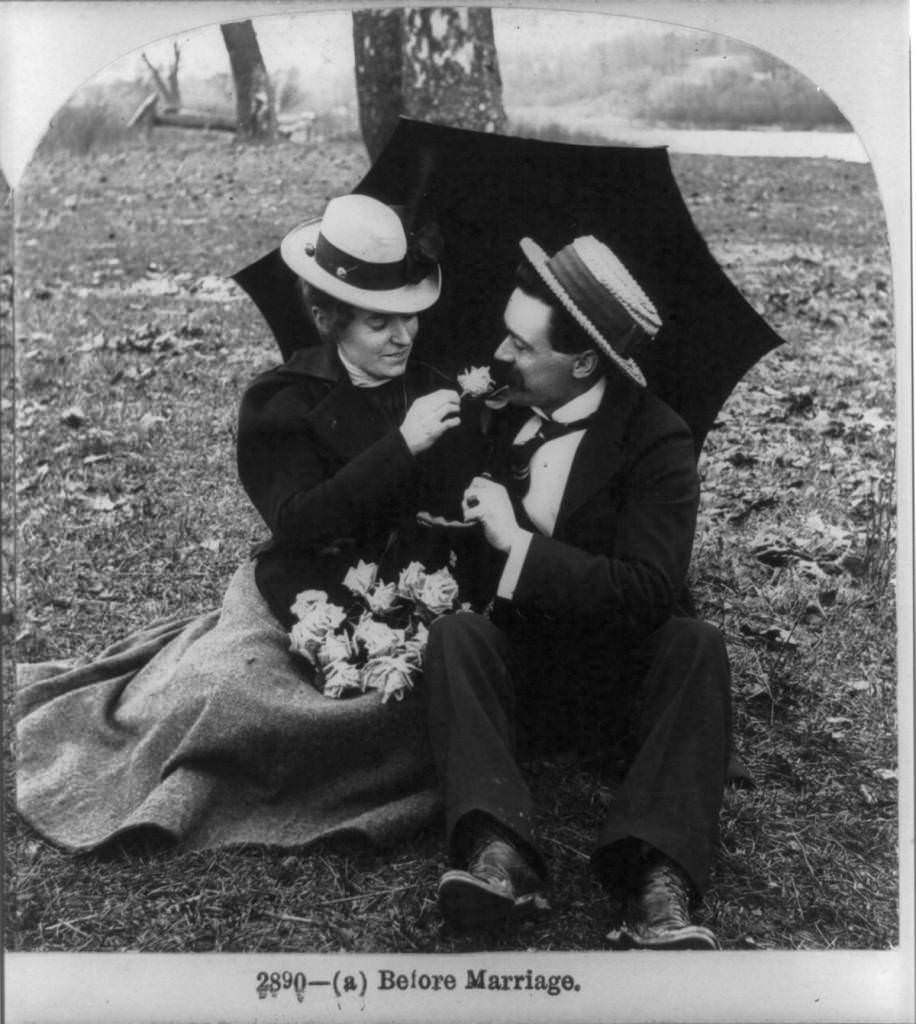
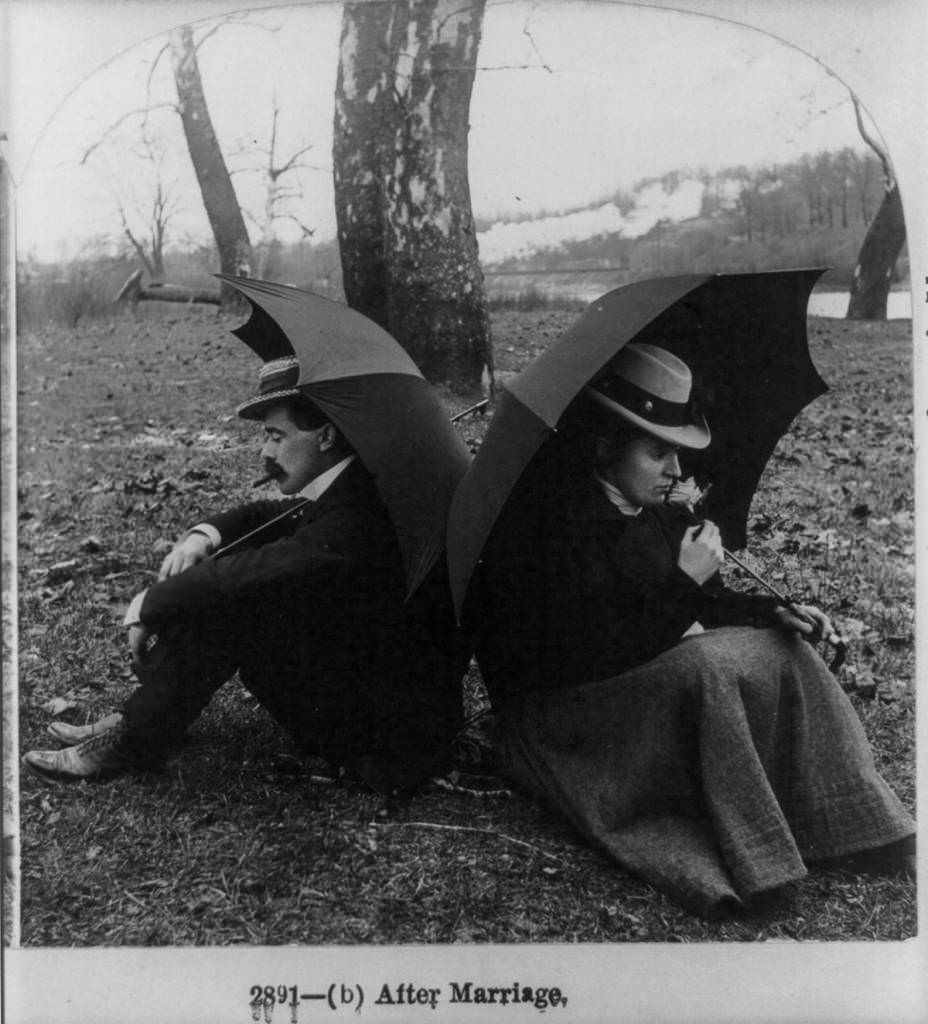
Several cards play directly with the contrast between courtship and married life. The paired 1900 cards titled “Before Marriage” and “After Marriage” make this joke explicit — showing the honeymoon glow of a couple before vows and the blunt domestic reality that follows. This was a well-worn comedic trope of the era, and audiences ate it up.
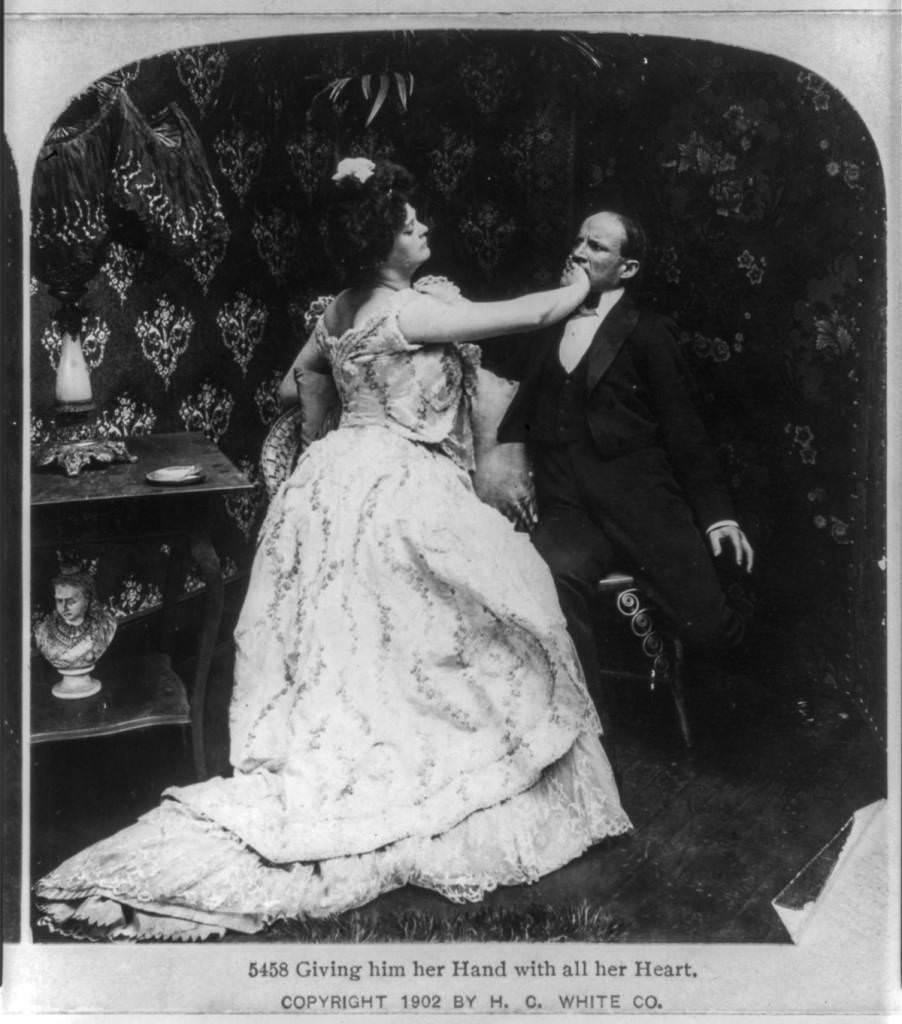
By 1902, the cards were leaning into wordplay as much as visual comedy. “Giving Him Her Hand With All Her Heart” was a standard romantic phrase — but in a staged stereo card, the literal interpretation always threatened to undercut the sentiment. Cards like these worked because Victorian audiences were deeply familiar with the language of courtship. They knew the phrases, the gestures, and the rituals well enough to find the jokes funny.
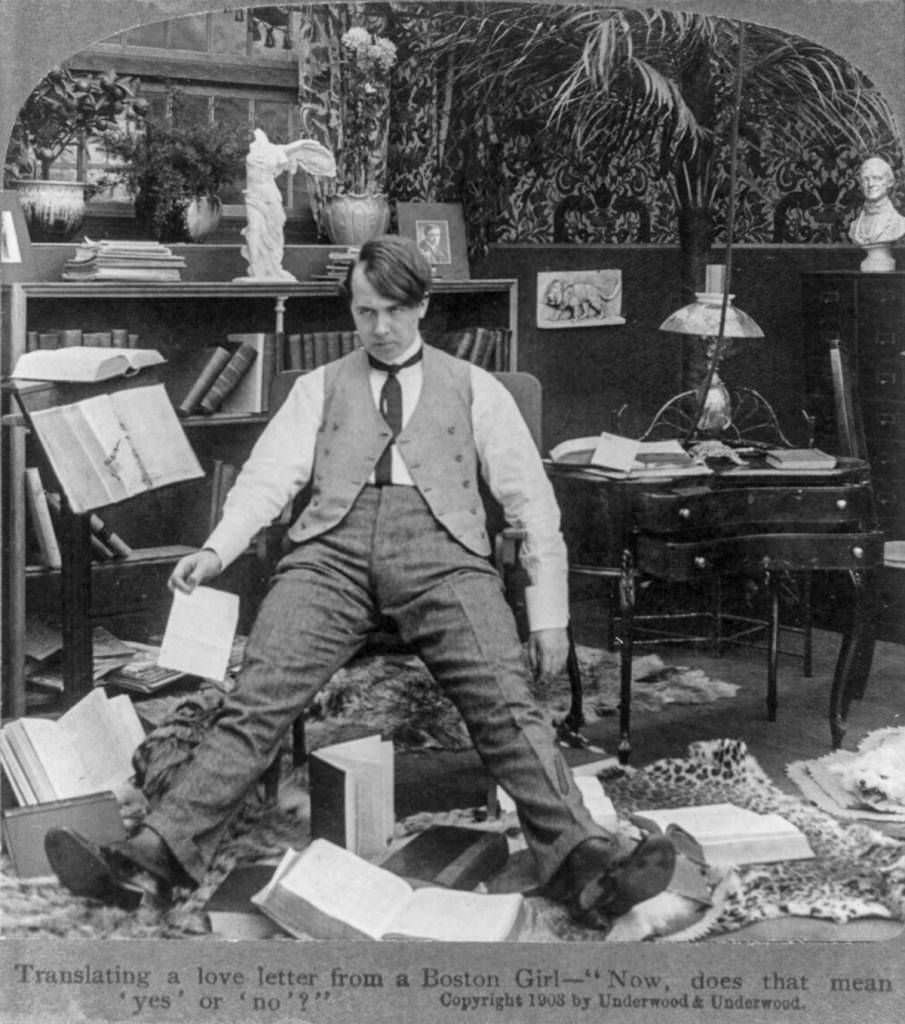
The 1903 card about decoding a love letter captures one of the genuine anxieties of Victorian romance — ambiguity. Women were expected to be demure, and their written responses to suitors often walked a careful line between encouragement and refusal. A man left squinting at a letter, wondering whether the answer was yes or no, was a figure many male viewers recognized immediately.
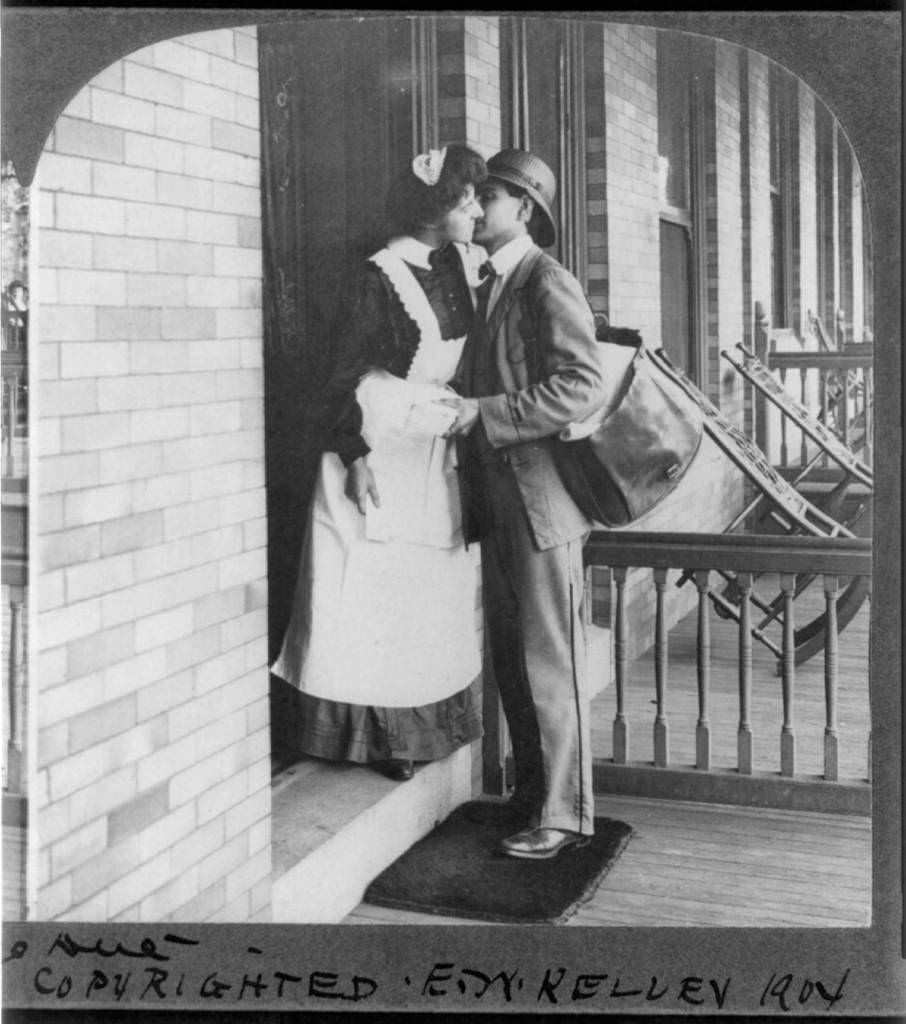
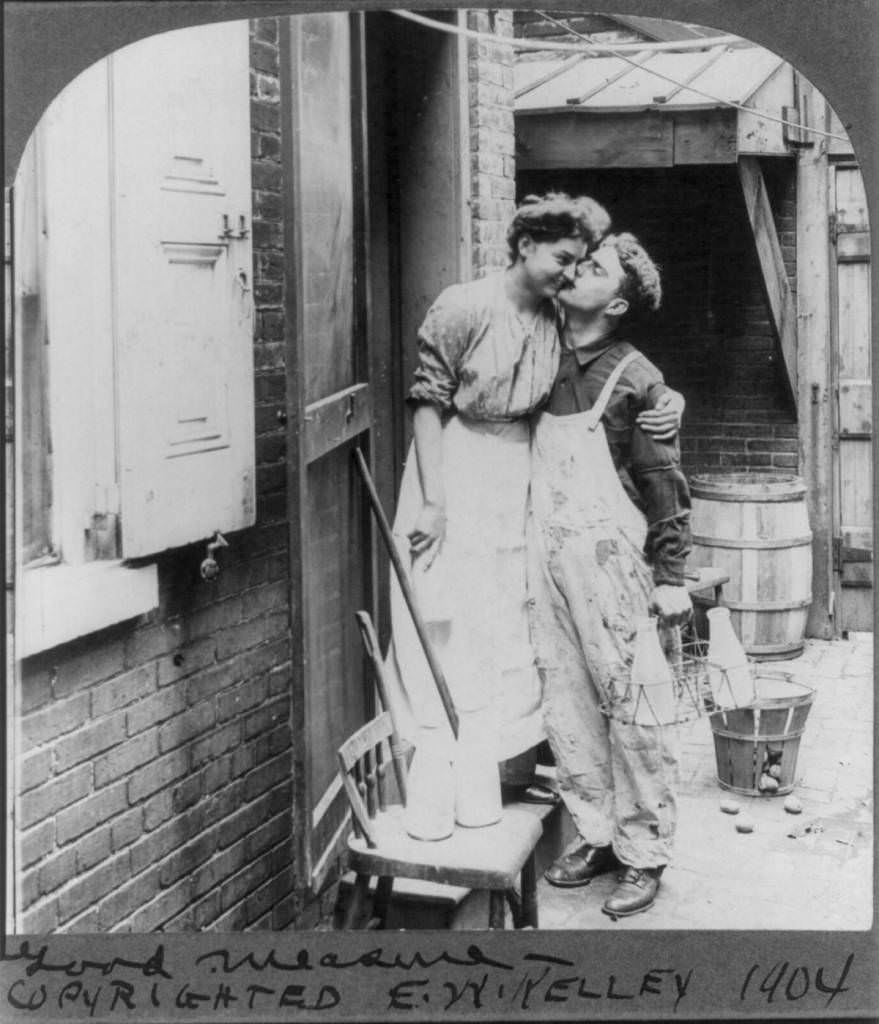
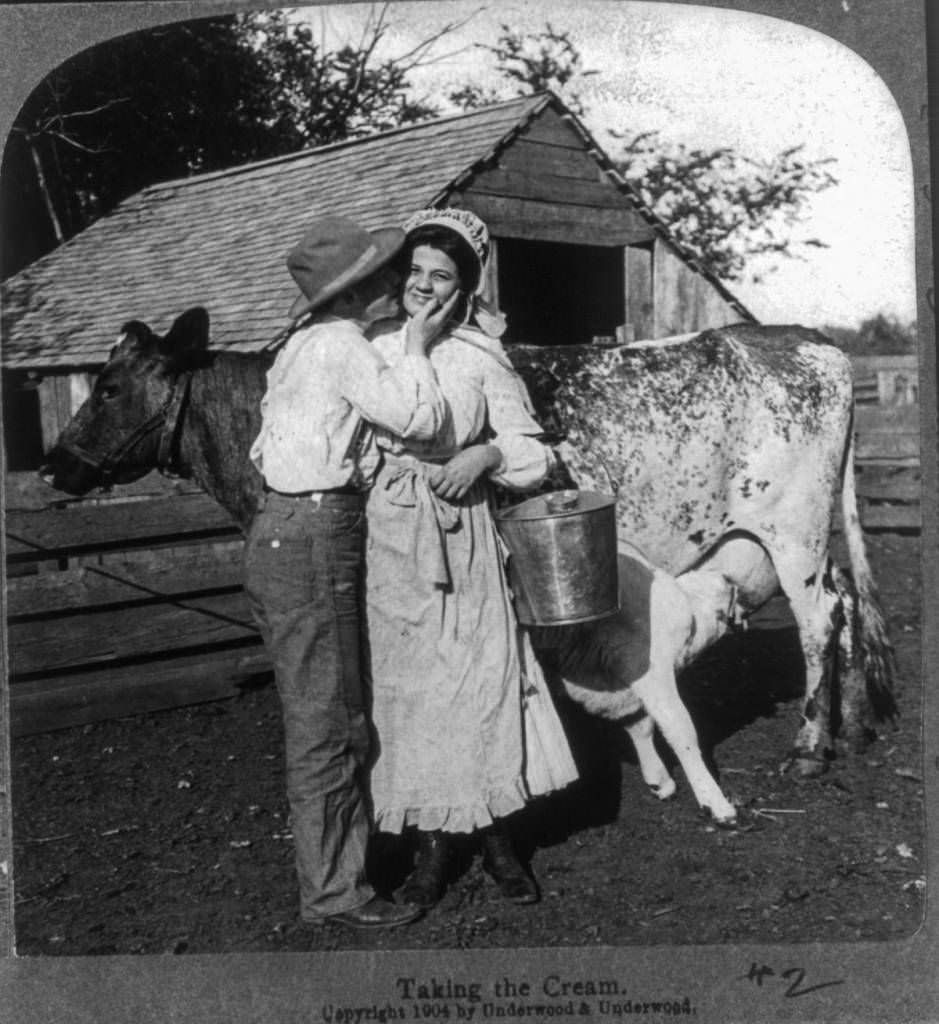
The milkman appears twice in 1904 — a recurring character across Victorian-era humor who served as a stock figure of flirtation and domestic mischief. His daily presence in the household gave him access that most men outside the family didn’t have, which made him a natural source of comedic tension. These two cards show different angles of the same joke, a common stereo card technique.
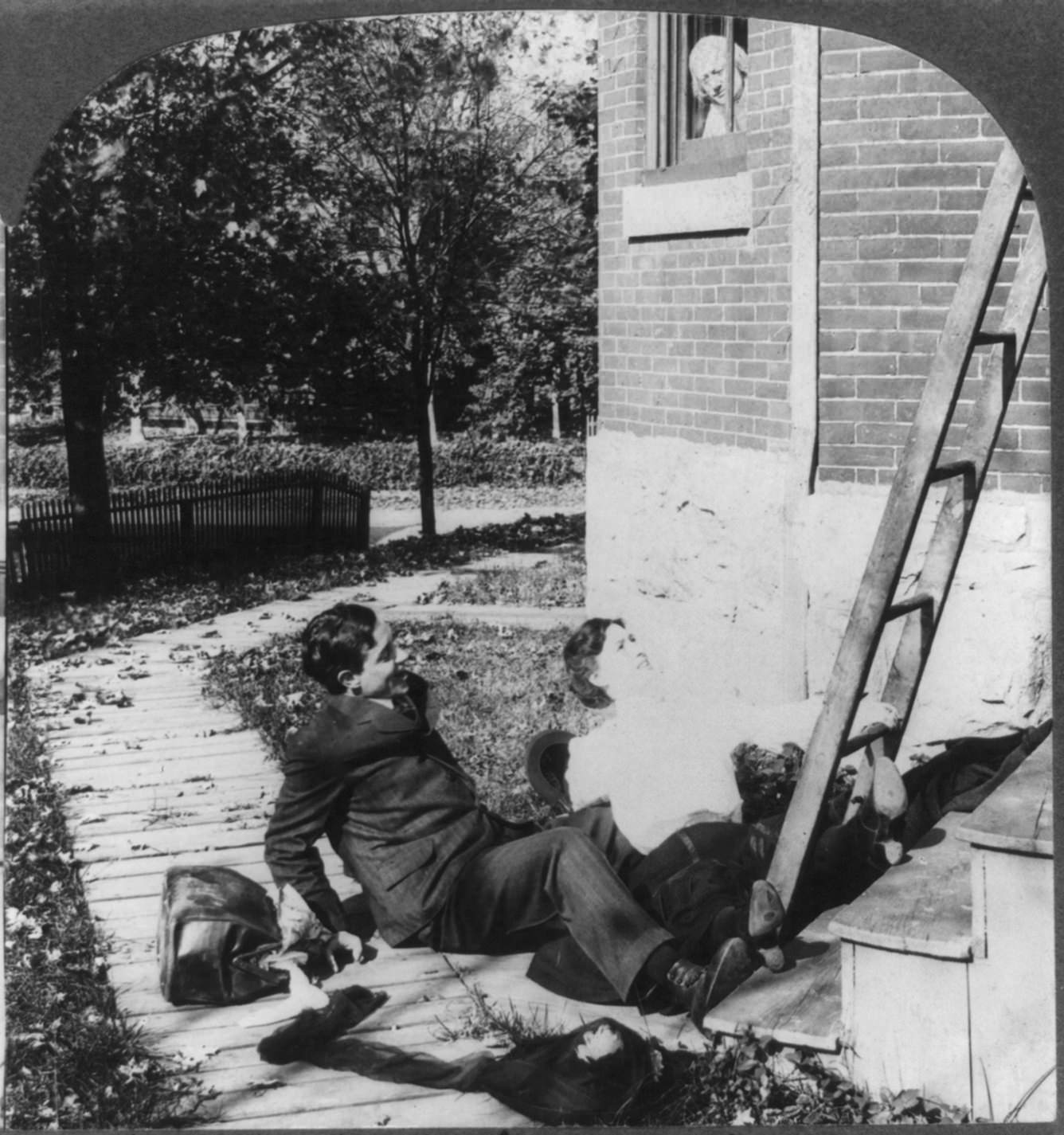
Elopement — running away to marry without parental consent — was both a real occurrence and a dramatic staple of the era. The 1904 card depicting “a hasty descent” plays the moment for laughs, capturing the scramble and chaos of two people trying to escape through a window or down a ladder. The stakes were real in actual elopements, since parental approval was tied directly to inheritance and social standing. Here, the moment is played purely for comedy.
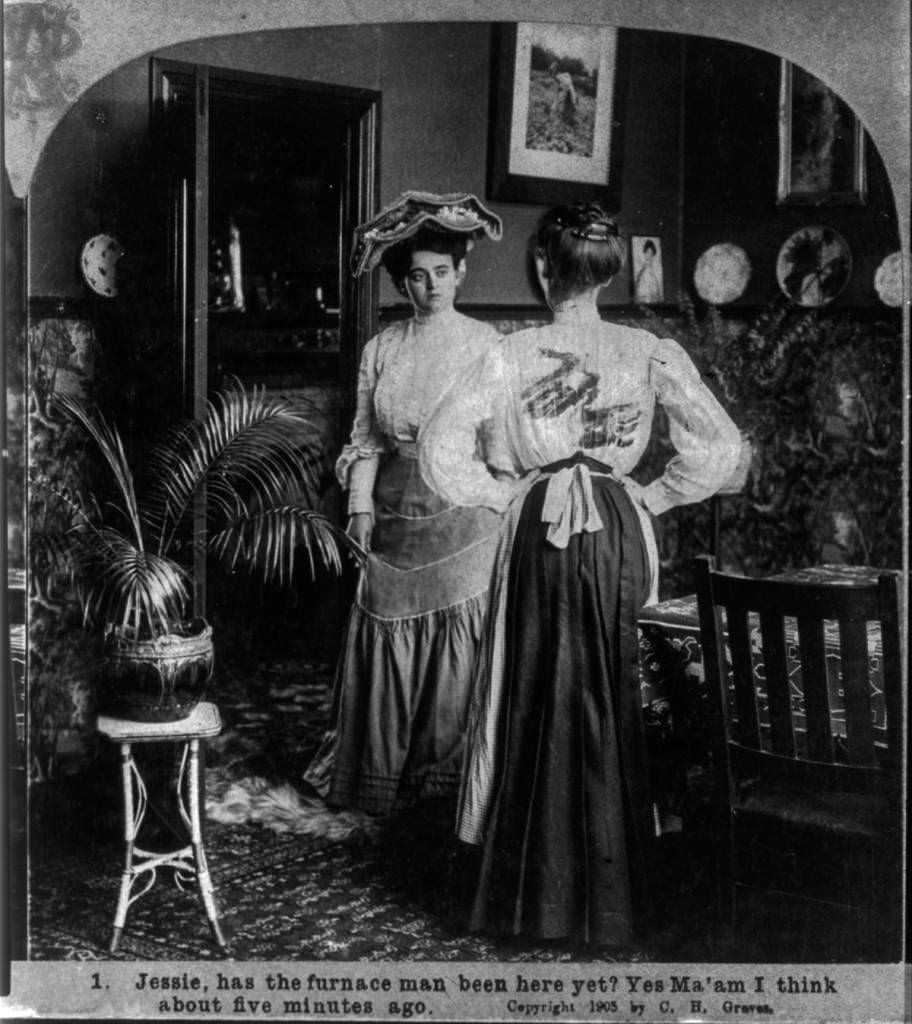
The 1905 card featuring the furnace man works on the same level as the milkman cards. Working-class tradesmen who entered the home were comic vehicles for depicting hidden flirtations and the chaos that ensued when a wife or daughter was caught. The long, specific titles of these cards functioned almost like punchlines printed directly beneath the image.
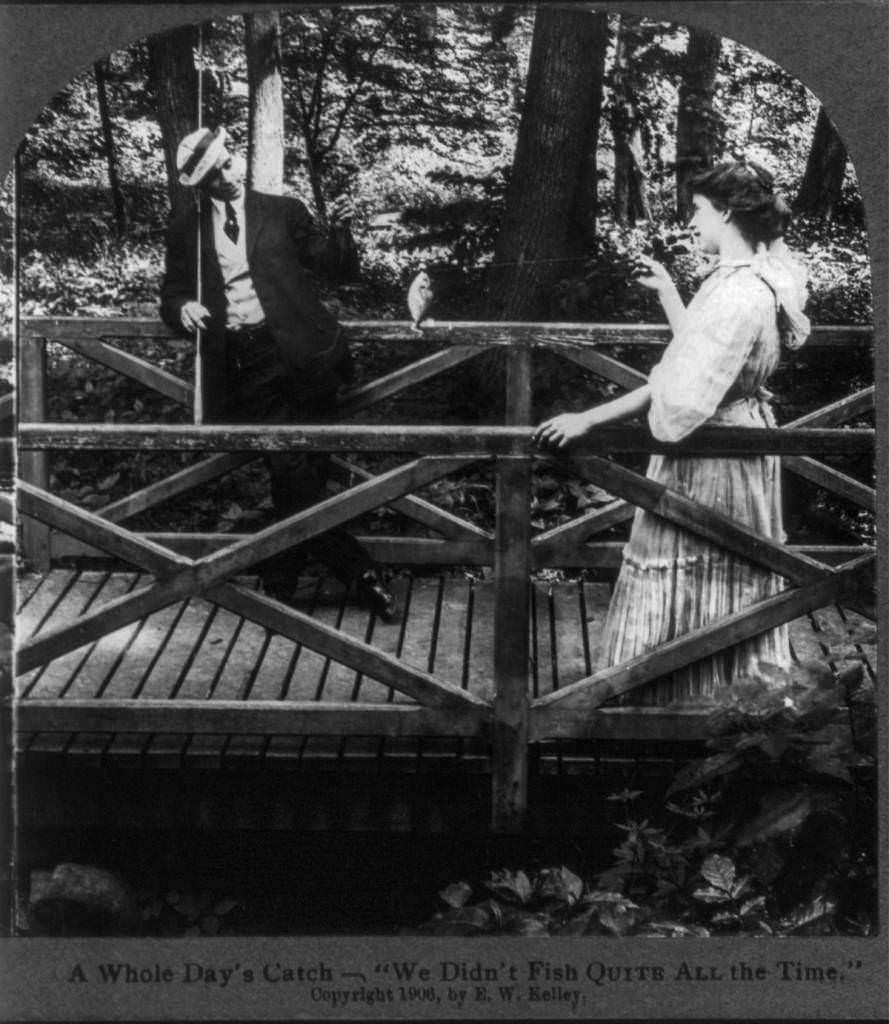
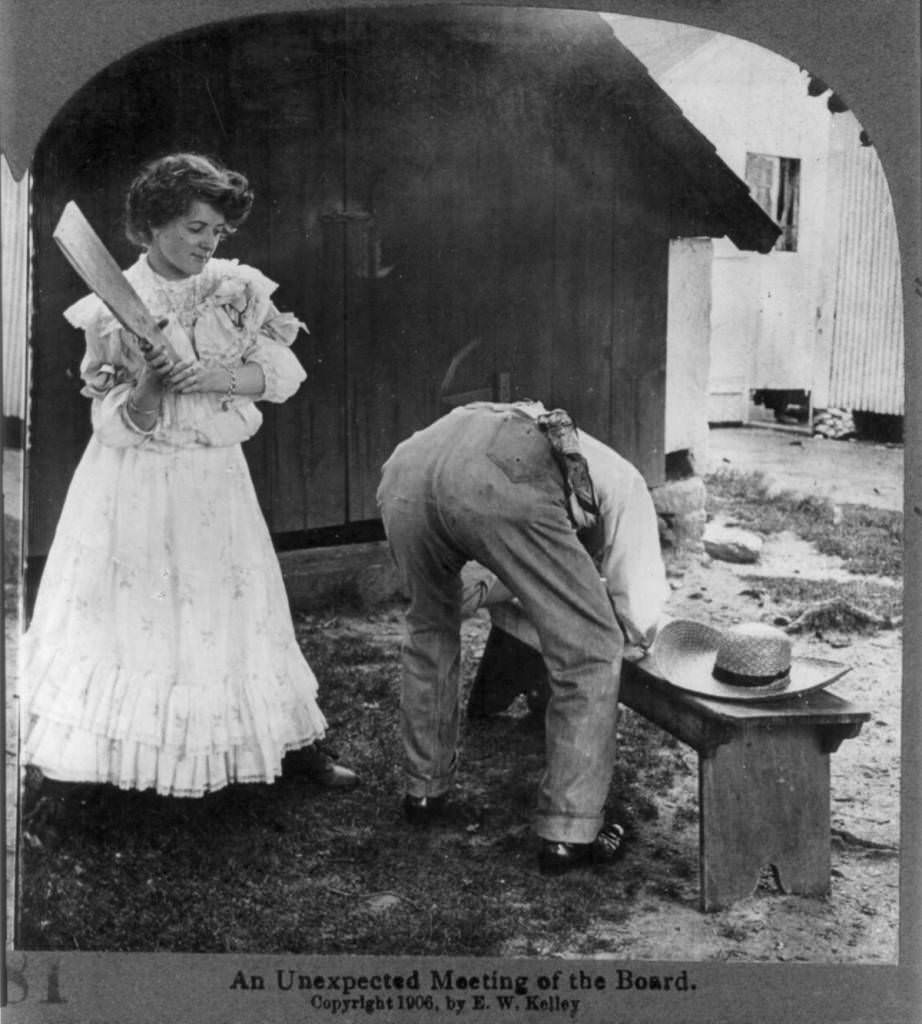
The year 1906 produced a remarkable cluster of these cards. “A Whole Day’s Catch” uses fishing as a metaphor for the results of courtship — a joke that needed no explanation for audiences who used hunting-and-fishing language to talk about romance casually. “An Unexpected Meeting of the Board” takes the language of business and drops it into a domestic situation, likely depicting a husband catching his wife in an embarrassing encounter.
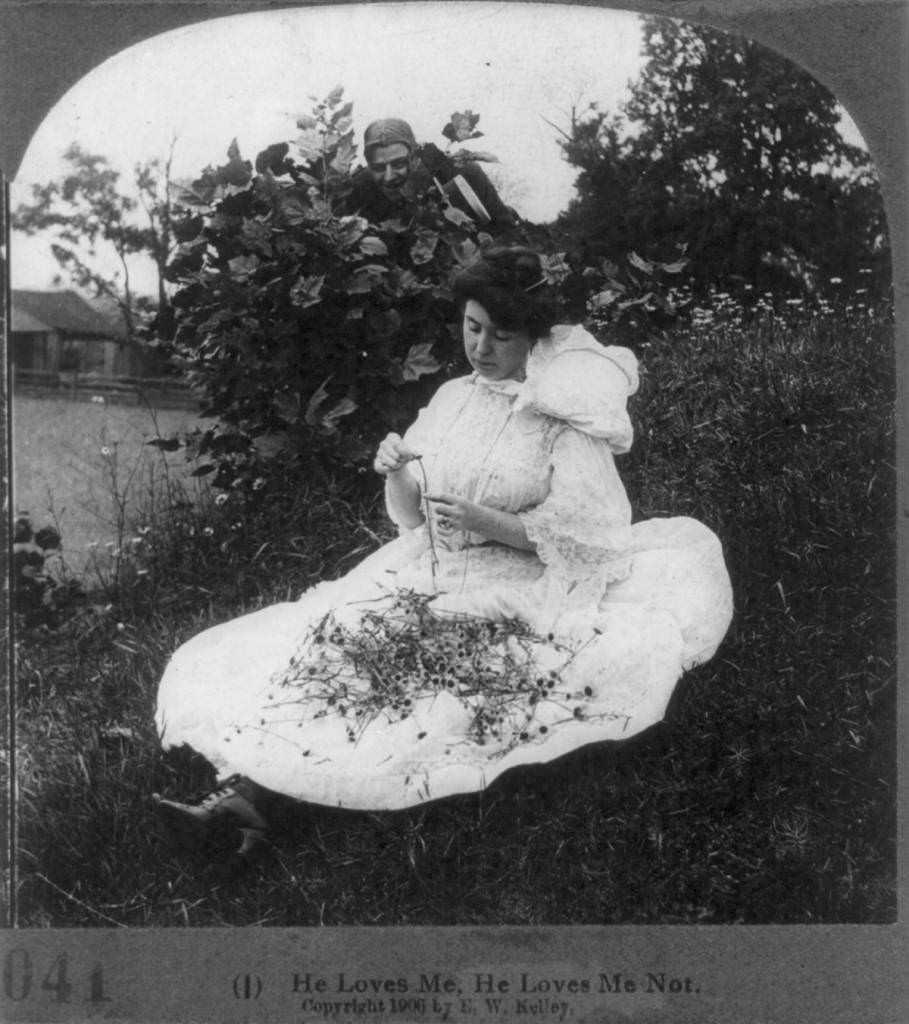
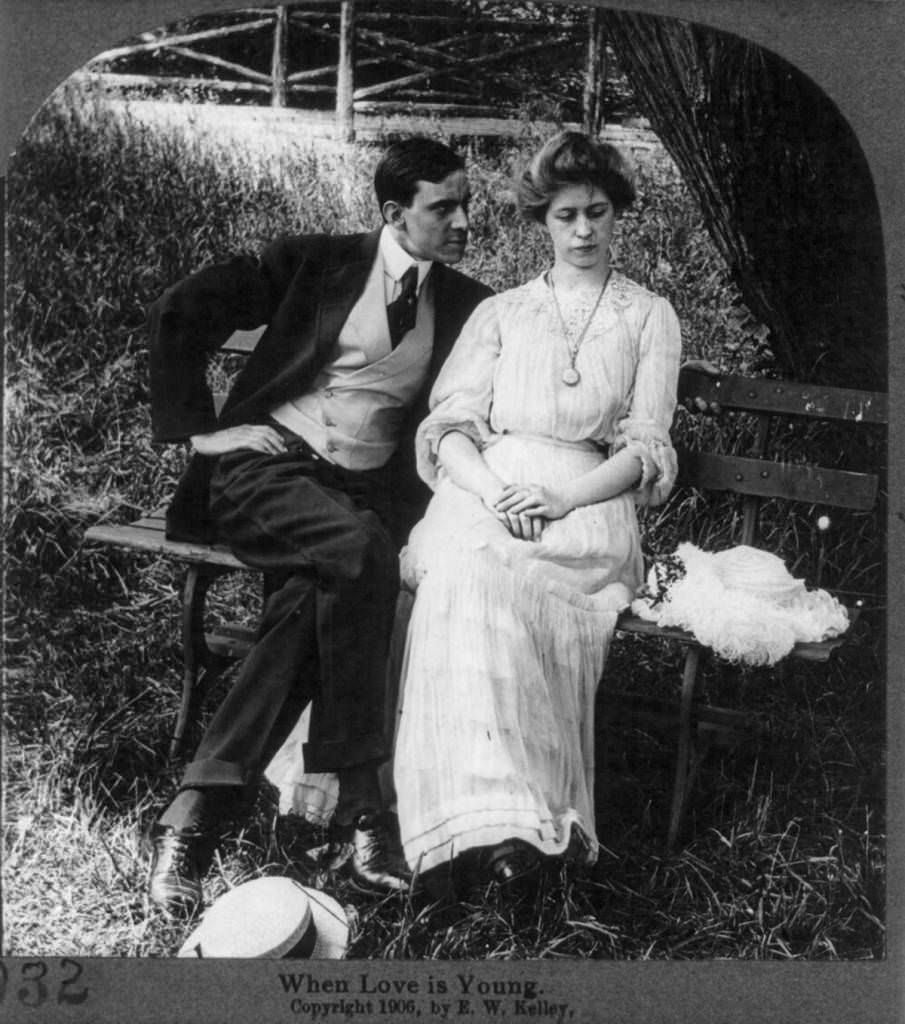
Pulling petals from a flower to determine a lover’s feelings was a well-known pastime long before the Victorian era, but it was especially popular during this period. The 1906 card “He Loves Me, He Loves Me Not” depicts a scene any viewer would recognize instantly. Paired with “When Love is Young,” it reinforces that the cards were designed as a set — a visual journey through the stages and emotions of romantic life.
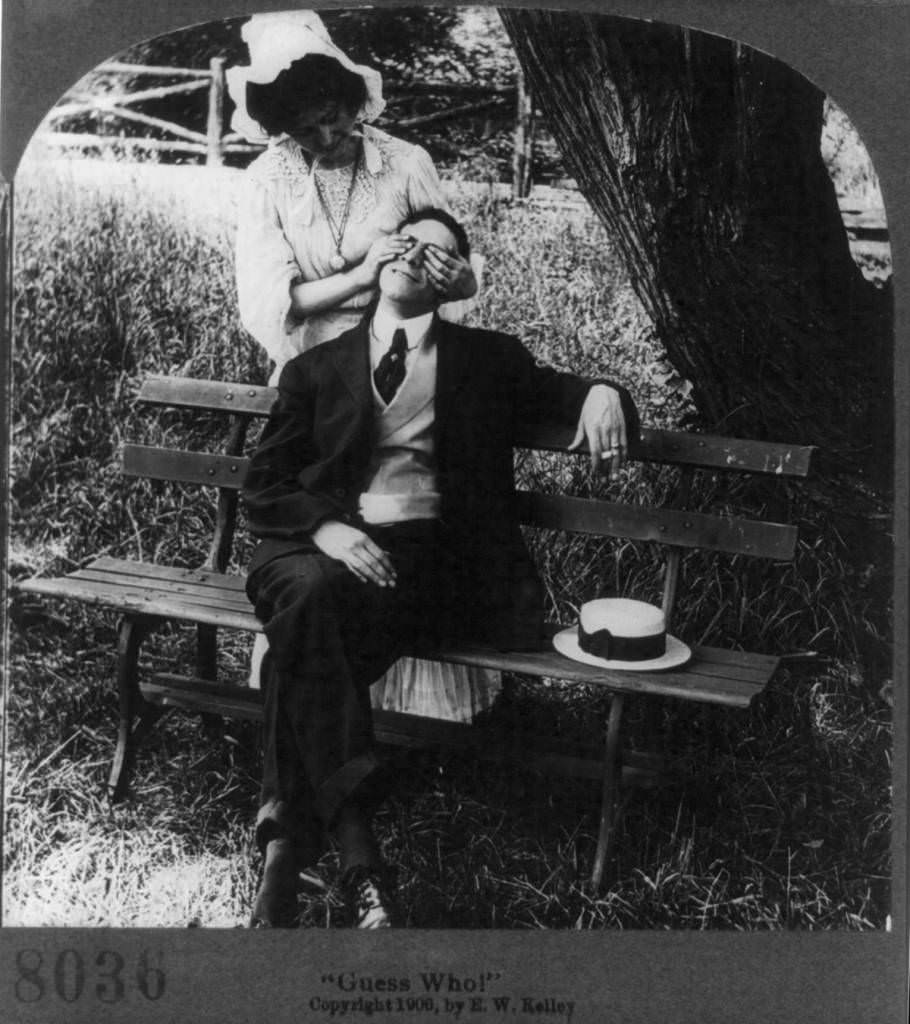
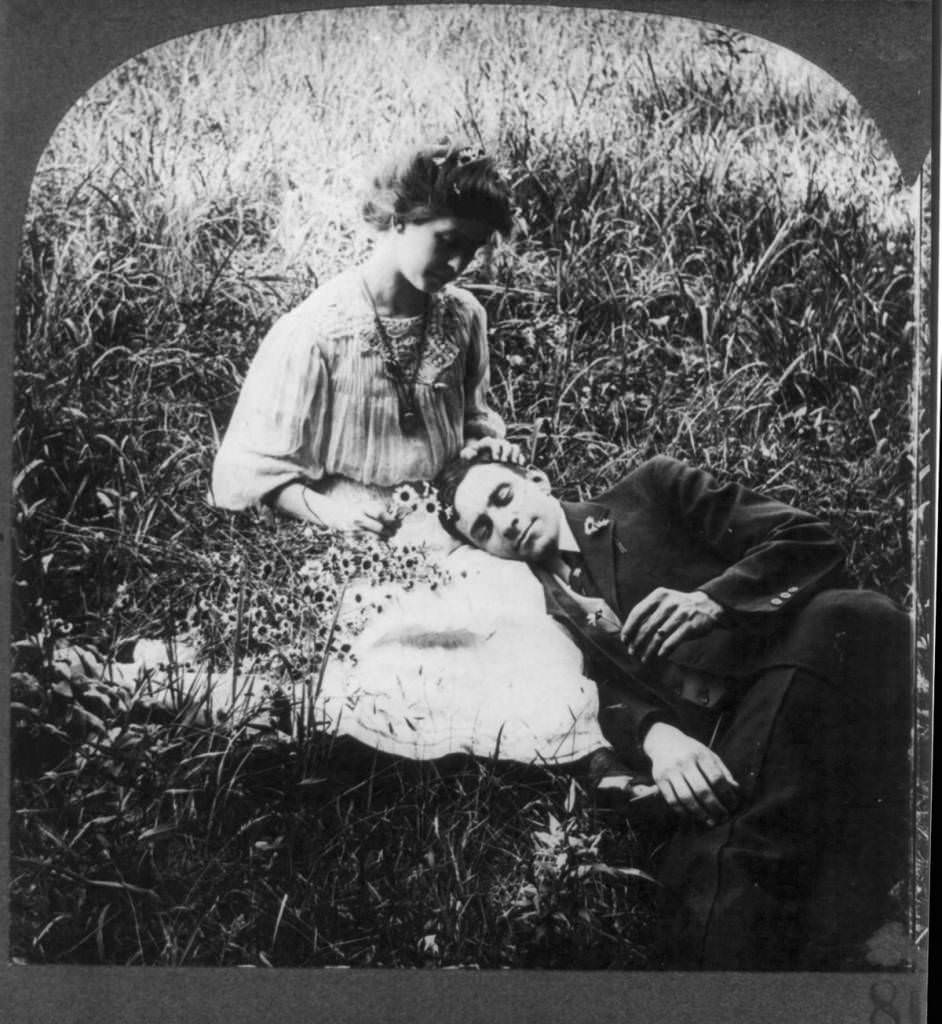
Some of the 1906 cards take a grander tone. “Sovereigns of Love’s Domain” positions a couple as rulers of their own romantic world — a playful nod to the Victorian idealization of domesticity and the home as its own kingdom. The language echoes the era’s tendency to elevate ordinary romantic life into something noble and grand, even when the image itself deflated that idea.
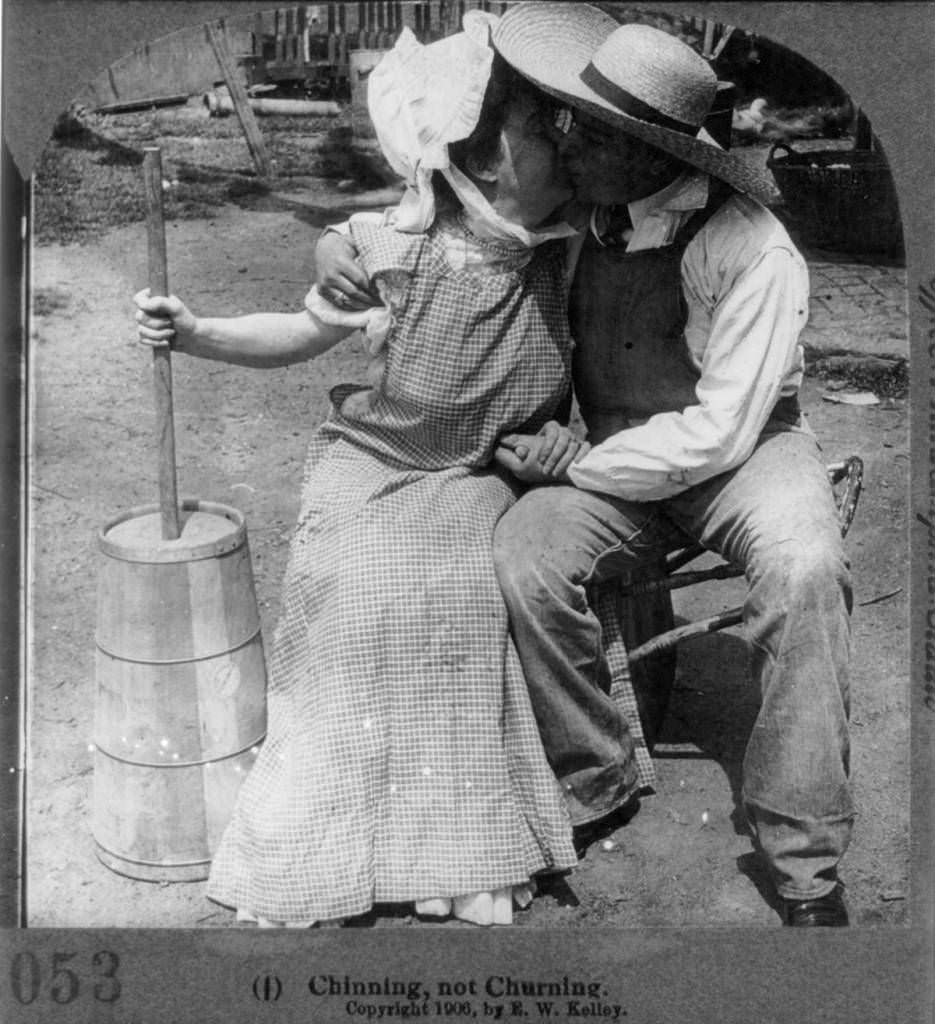
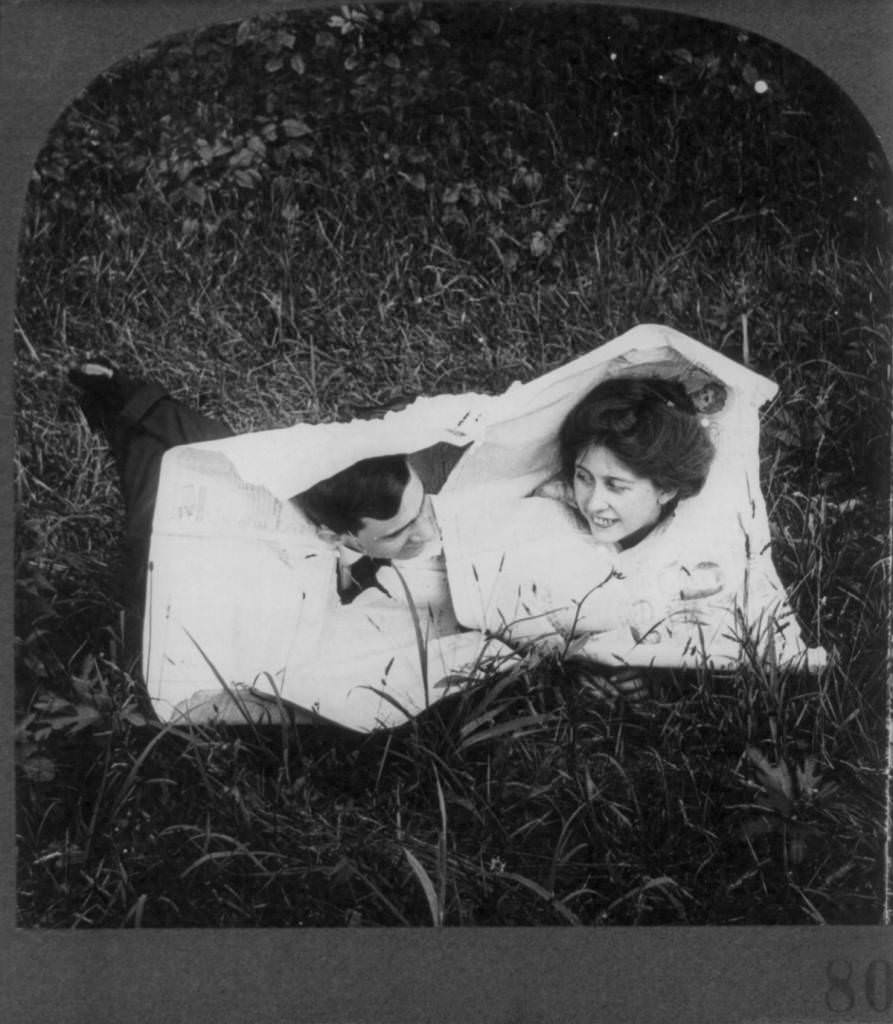
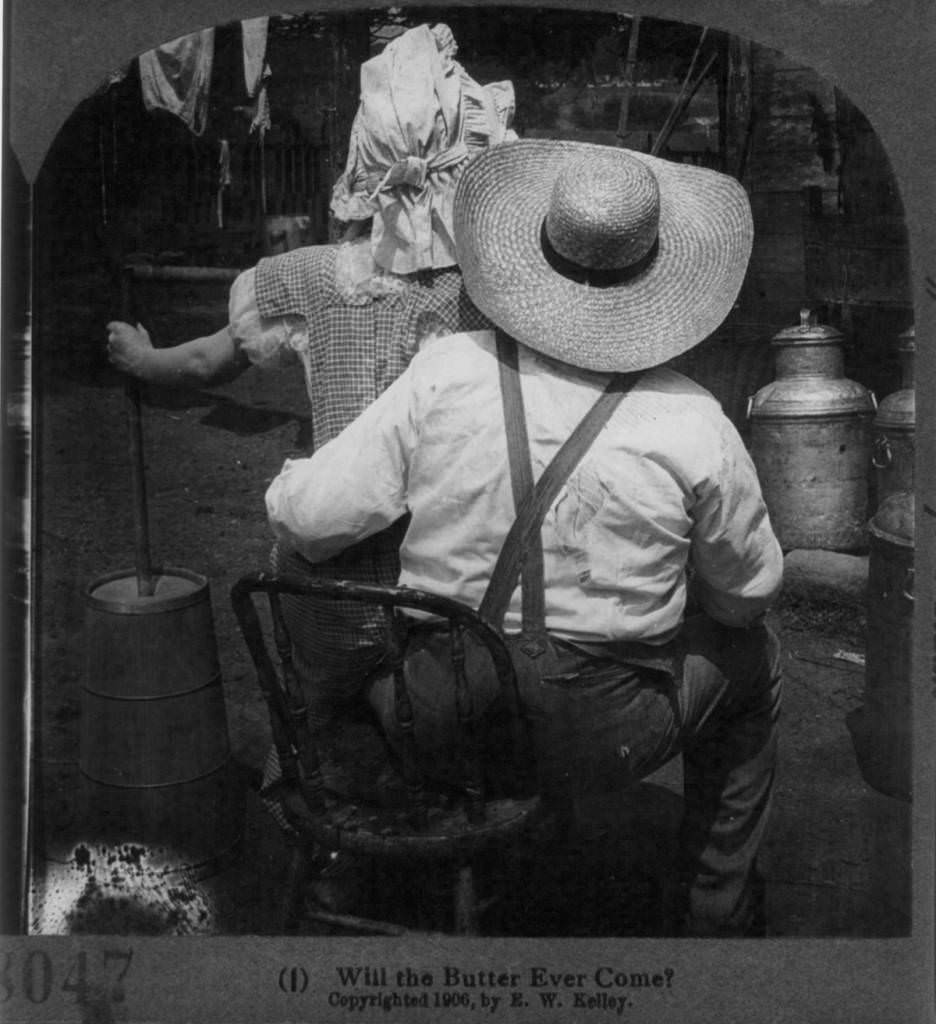
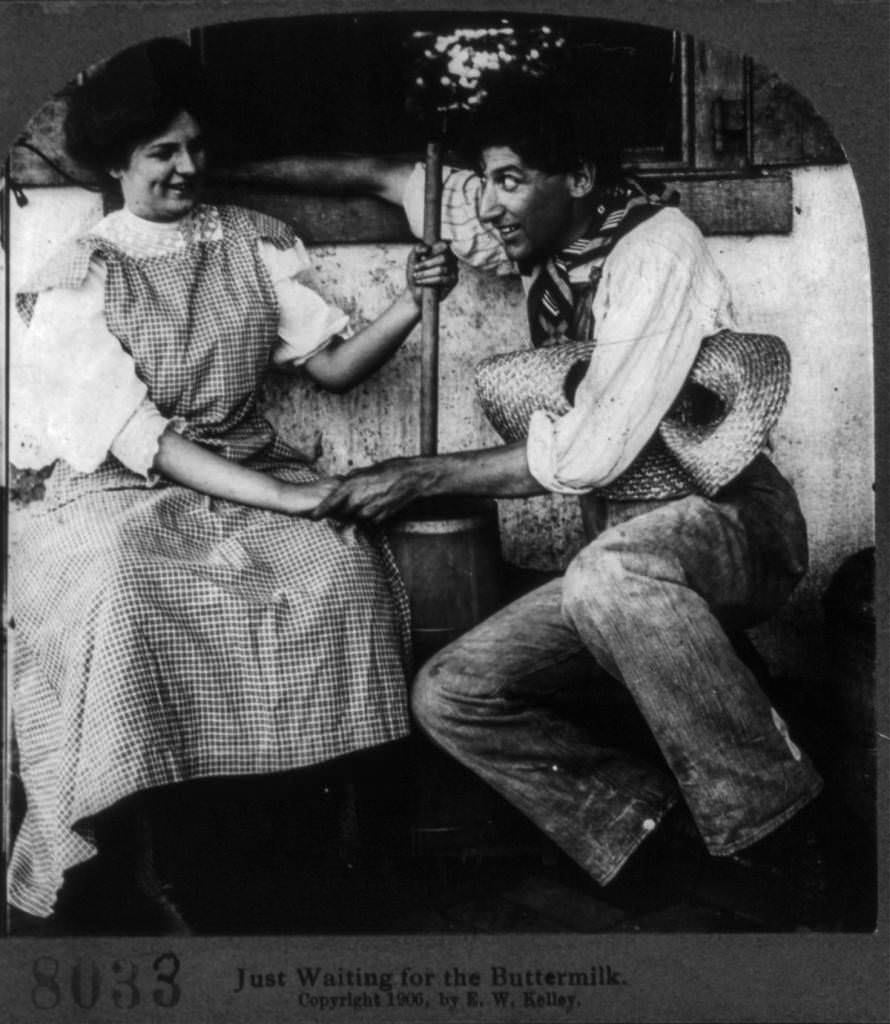
Several of the 1906 cards center on the butter churn, a piece of farm equipment that became an unlikely prop for romantic comedy. “Chinning, Not Churning” and “Will the Butter Ever Come?” both feature couples who are far more interested in each other than in completing their chores. The churn handle, requiring steady back-and-forth motion, lent itself easily to visual innuendo that Victorian audiences recognized without the joke needing to be made explicit.
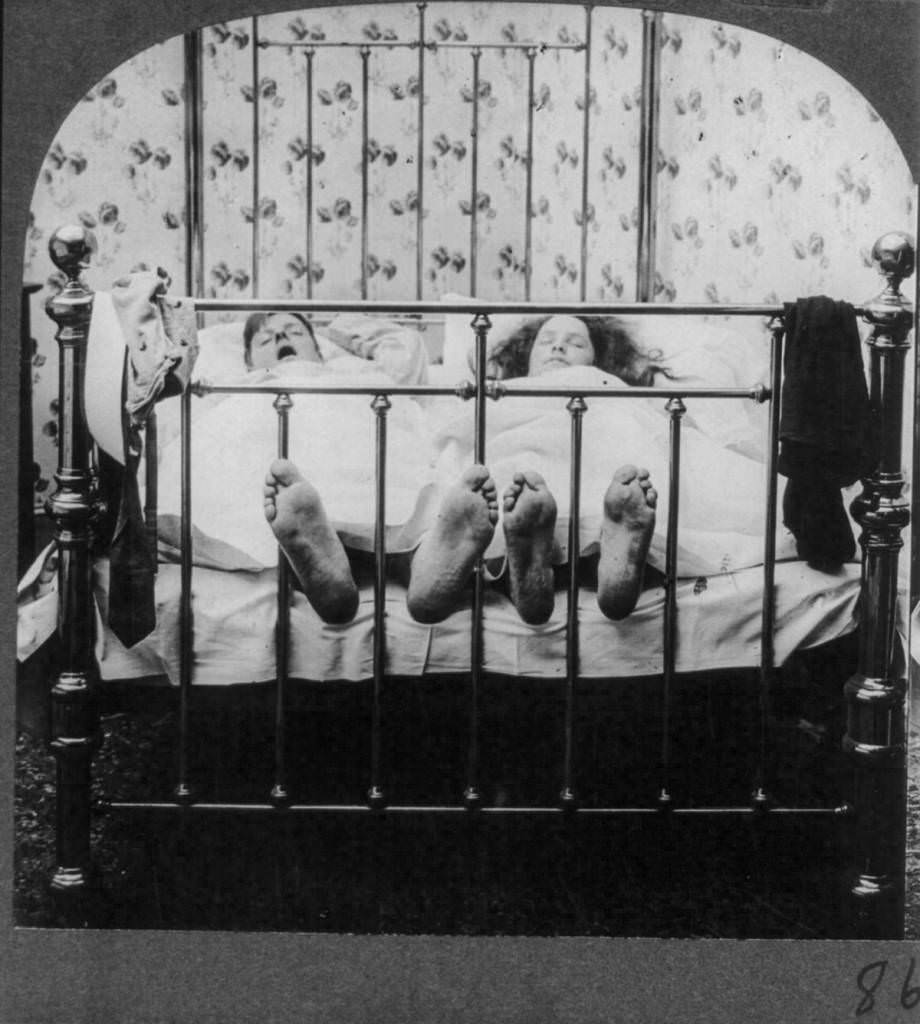
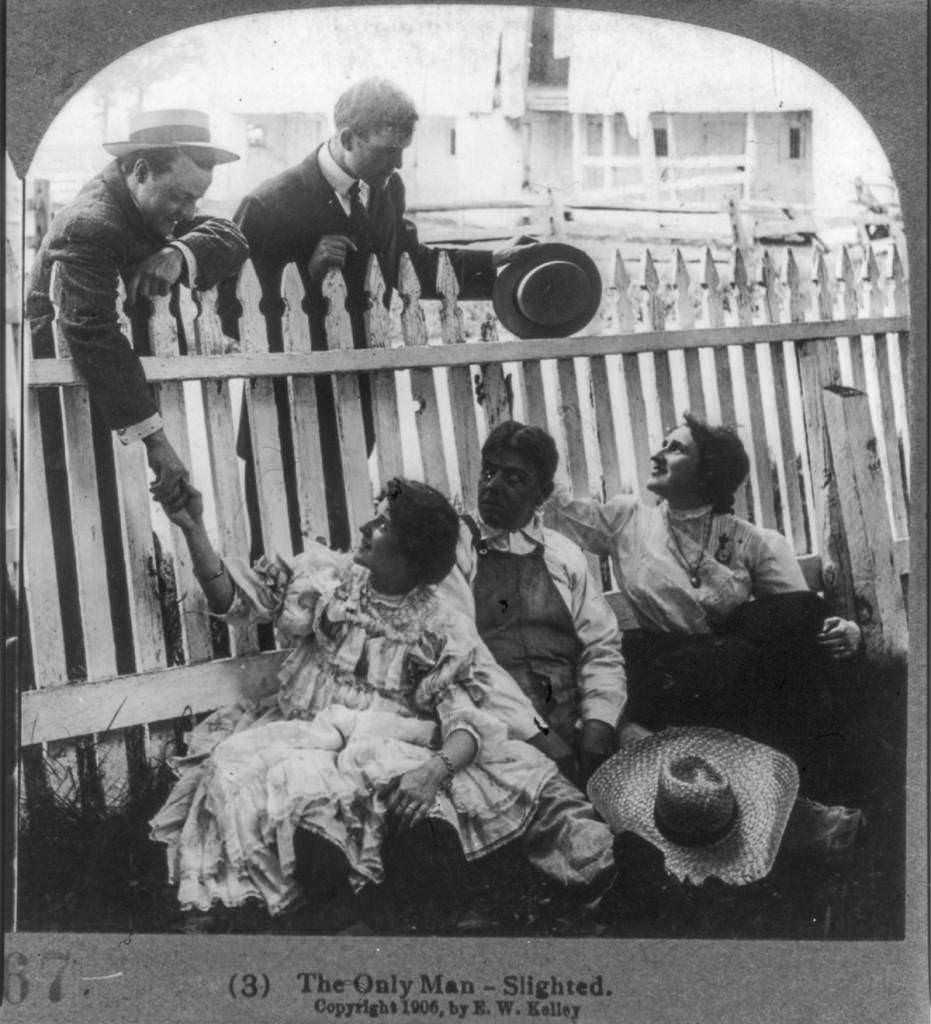
Late-night meetings were strictly forbidden for unmarried couples, which made midnight the most romantically charged hour of the Victorian day. “At the Hour of Midnight” leans into the forbidden nature of the encounter. Similarly, “The Only Man – Slighted” depicts the wounded pride of a suitor who has been dismissed — a scene that carried real social weight in a world where rejection was a public and carefully noted event.
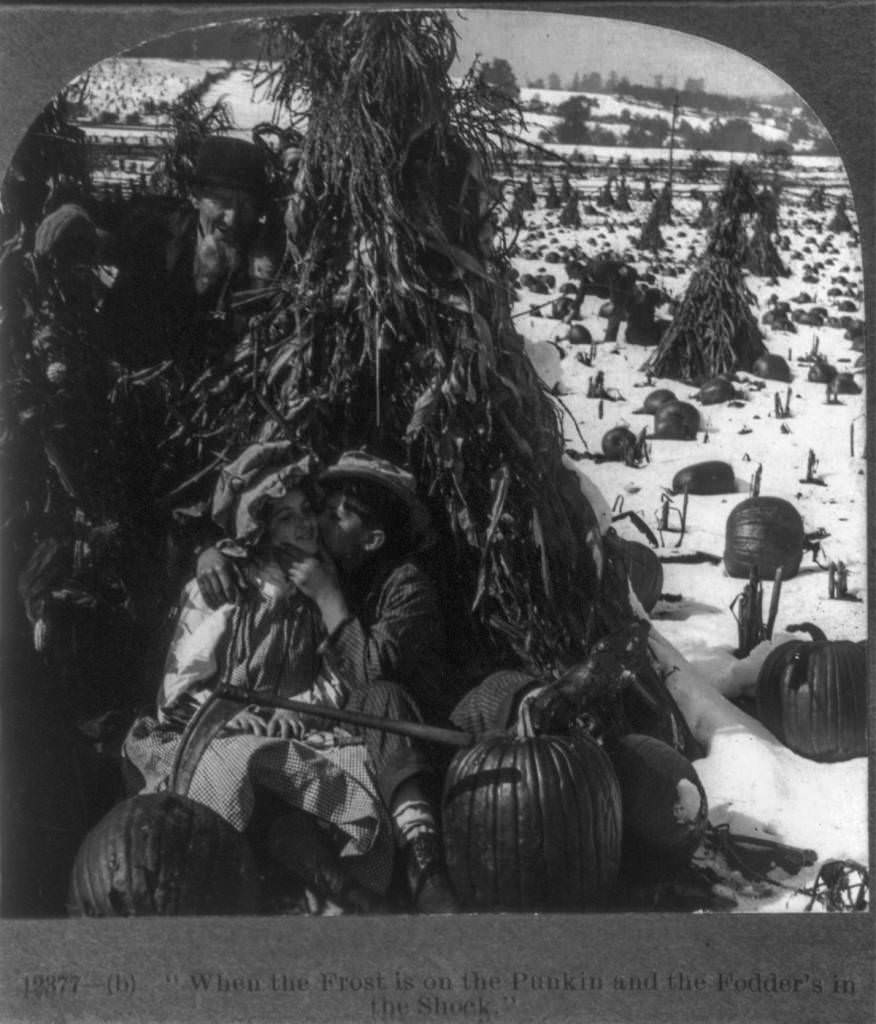
The title of the 1906 harvest card is drawn from a James Whitcomb Riley poem published in 1882, one of the most popular American poems of the era. Using it as a stereo card title placed the romantic scene firmly in a rural, seasonal setting — autumn courtship among farm folk, wholesome and warm. Rural courtship had its own set of customs distinct from the upper-class ballroom version, and these cards captured both worlds.
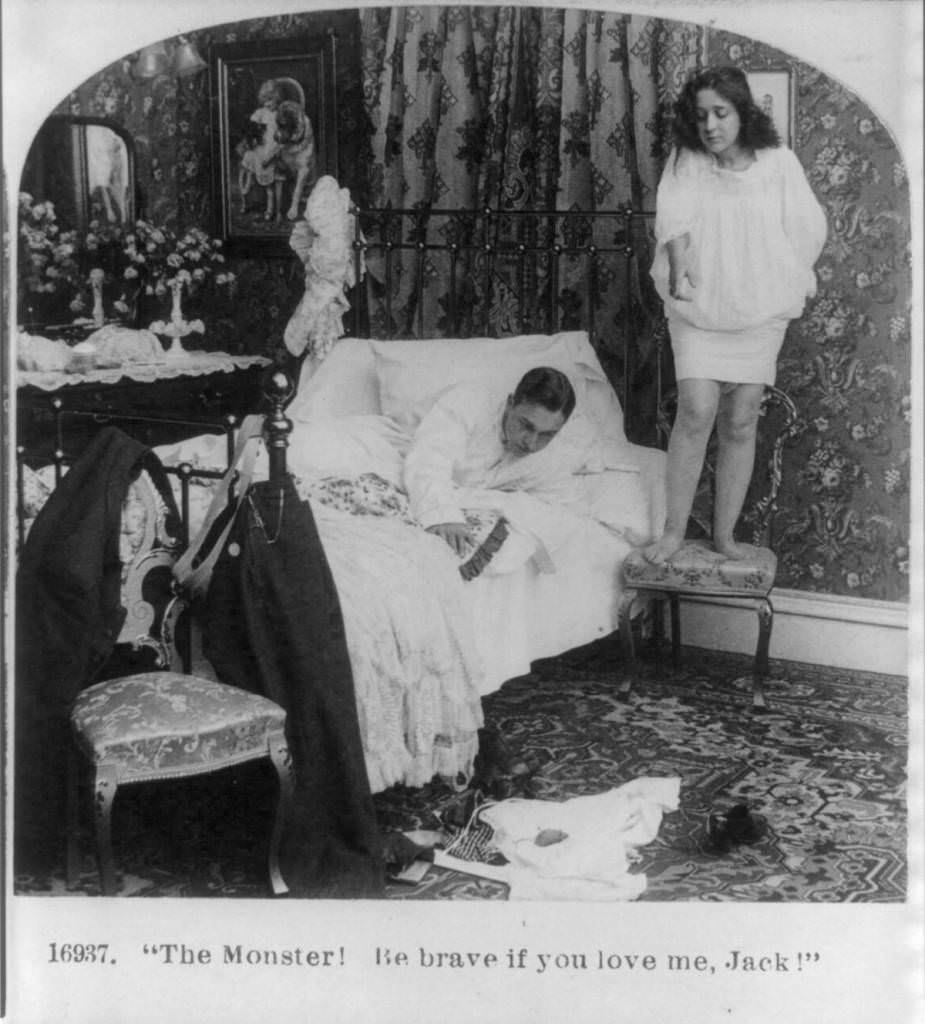
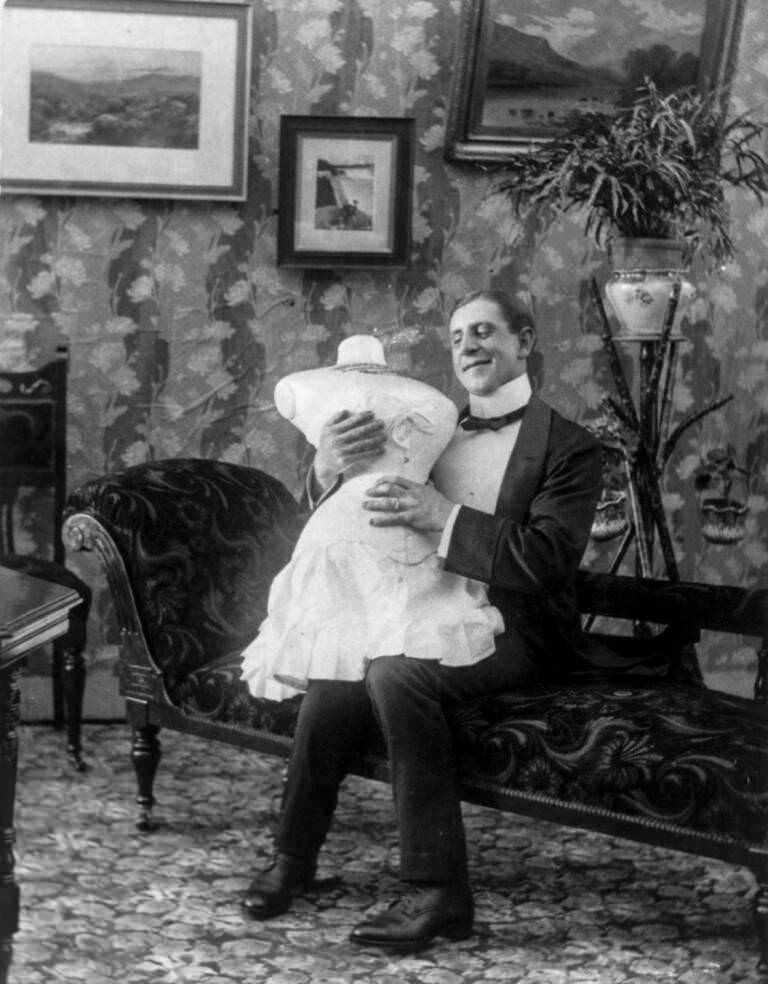
The 1907 cards close the series on a dramatic note. “The Monster! Be Brave If You Love Me, Jack!” stages a moment of mock-peril — a woman calling on her suitor to prove his courage against some unseen threat. Whether it was a spider, a mouse, or something larger, the scene flipped the Victorian gender script just enough to get a laugh. The final card, “The Best I Can Do at Present,” ends the collection on a note of cheerful resignation — a suitor offering what he has, limited as it may be.

It’s a pity they don’t display both photos to see them in stereo.
That’s so cute. I love old photos that show people from long ago having fun.