
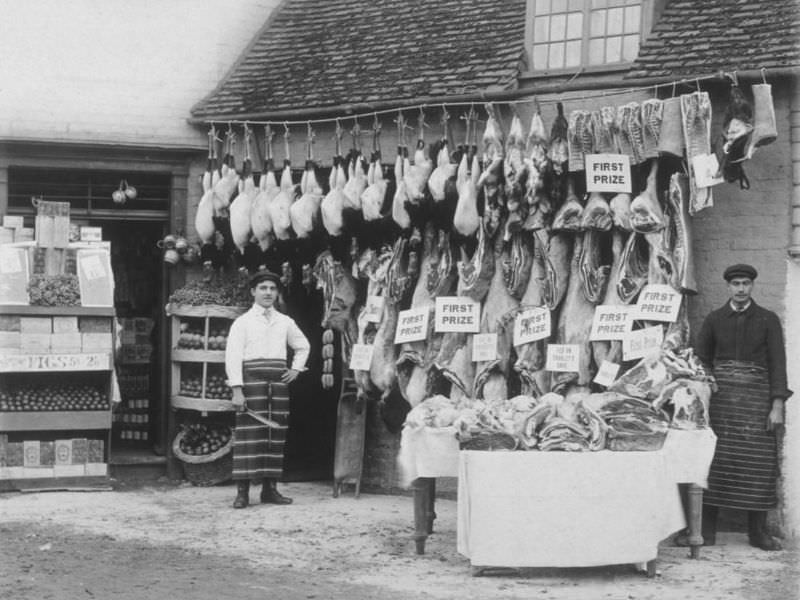
Walk down any busy street in a Victorian city and the butcher shop was impossible to miss. Rows of carcasses hung from iron hooks outside the storefront — cattle, pigs, sheep, rabbits, and game birds arranged by size and type for all to see. This was not considered unusual. It was simply how meat was sold, and meat was central to life in the 19th century. Rich or poor, almost everyone in Victorian Britain ate it in some form every day.
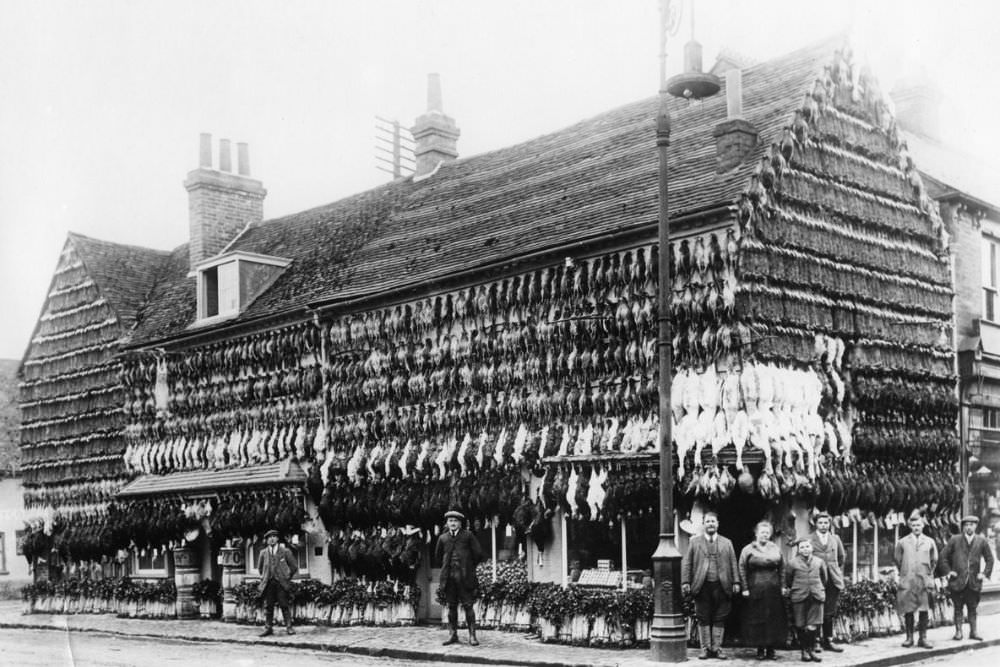
Meat in Victorian society was carefully divided by class. Wealthy households bought large, fresh joints — prime cuts used for grand roasts and formal dinners. Bones were purchased separately to flavor soups and broths. Poorer families received the less tender cuts, fatty scraps, and salted pieces that kept slightly longer without refrigeration. Salted fat was a common purchase for working-class families, providing cheap calories when little else was affordable. Every part of the animal found a buyer.
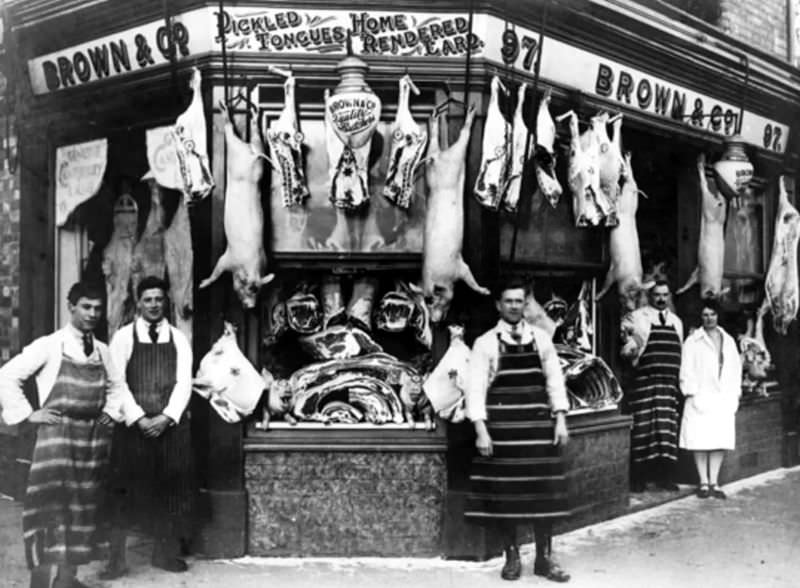
One of the more striking practices of the era involved blood. Butchers sold animal blood by the pint, and many people drank it. The belief at the time was that fresh blood helped fight Tuberculosis, a disease that killed enormous numbers of people throughout the 19th century. Whether the remedy worked was beside the point — demand was real, and butchers met it without hesitation.
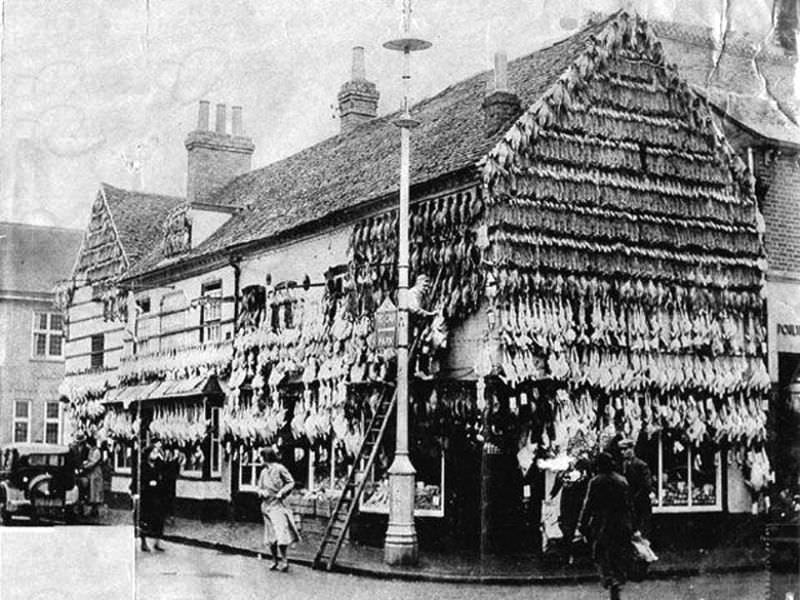
Refrigeration did not exist for most of the Victorian period, which shaped how people shopped entirely. Buying meat was a daily errand, not a weekly one. Customers visited the butcher each morning to get that day’s supply. Letting meat sit was not an option in the warmer months — spoilage happened fast. To extend shelf life, some butchers rubbed cuts with salt, which slowed bacterial growth and allowed the meat to stay fresher for a little longer.
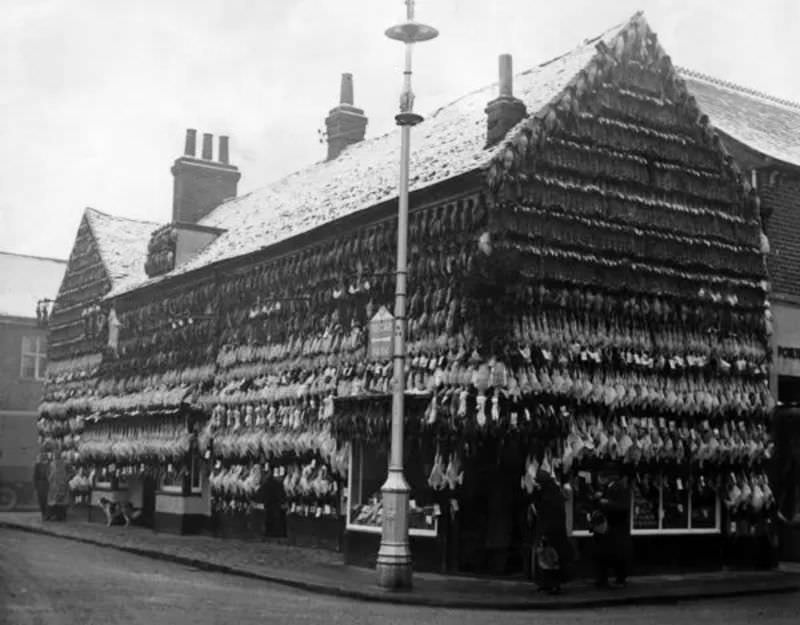
By the end of the 19th century, ice became a practical solution. Large blocks were cut during winter, stored in insulated ice houses, and then delivered to butchers and households throughout the warmer months via horse-drawn carts. Daily ice deliveries became a reliable part of urban life and allowed meat to be kept for longer periods than salt alone could manage. It was one of the first real steps toward modern food preservation.
The animals themselves came from the countryside. Farmers drove livestock — cattle, sheep, pigs — along roads and into city markets, sometimes traveling great distances on foot. Once in the city, the animals were slaughtered on the spot. There were no distant processing plants. The killing happened in yards behind the shops or in dedicated market areas, and the carcasses moved directly to the storefront display.
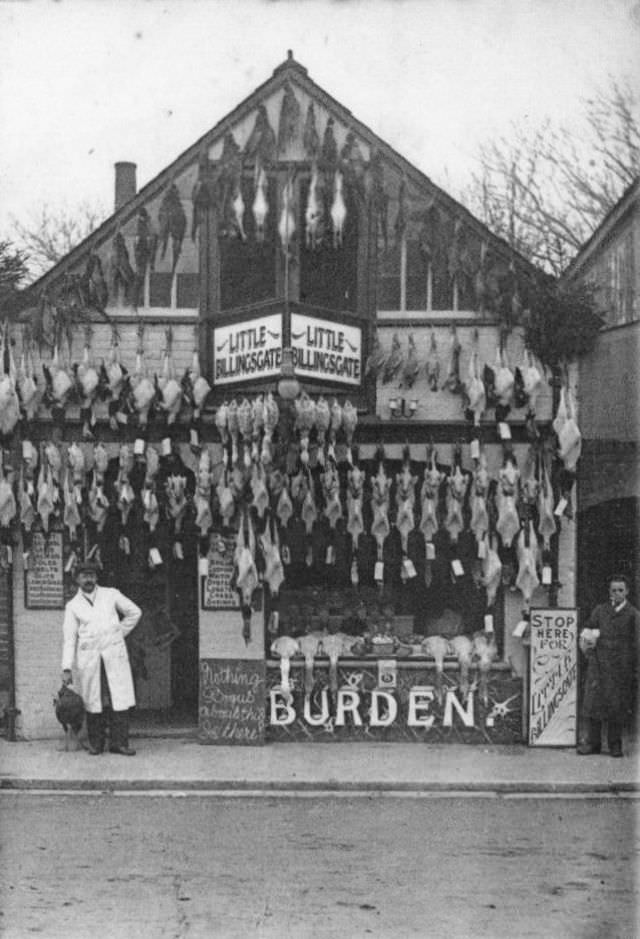
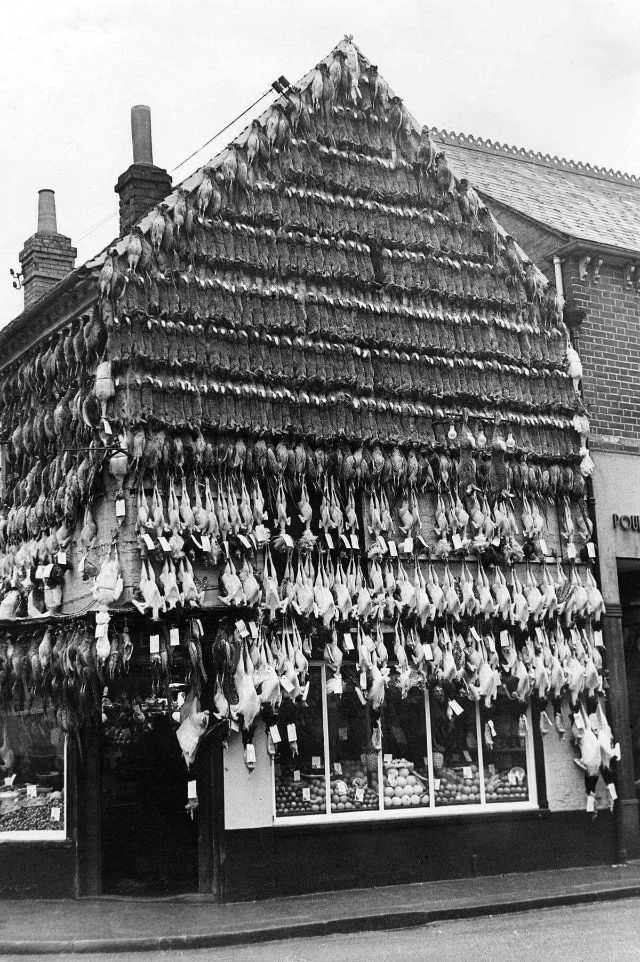
The outdoor display was both practical and promotional. Hanging carcasses outside kept them cool in the open air and showed customers exactly what was available. A well-stocked shop front — dense with hanging meat — was a sign of a successful butcher. Some butchers displayed hundreds of animals at once, particularly around major holidays like Christmas, when the spectacle of a fully loaded shopfront drew crowds and press photographers alike.
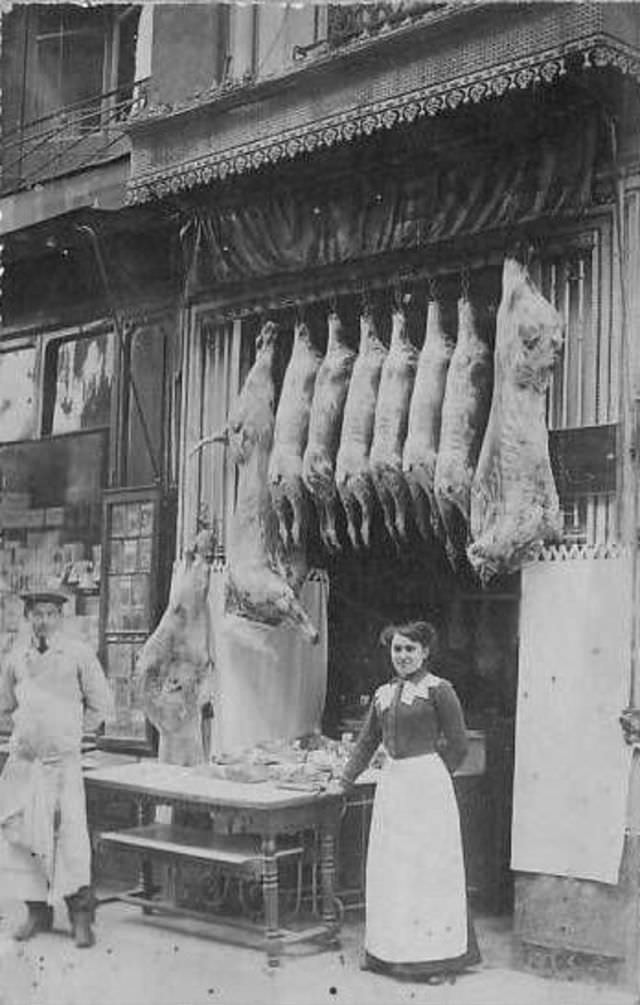
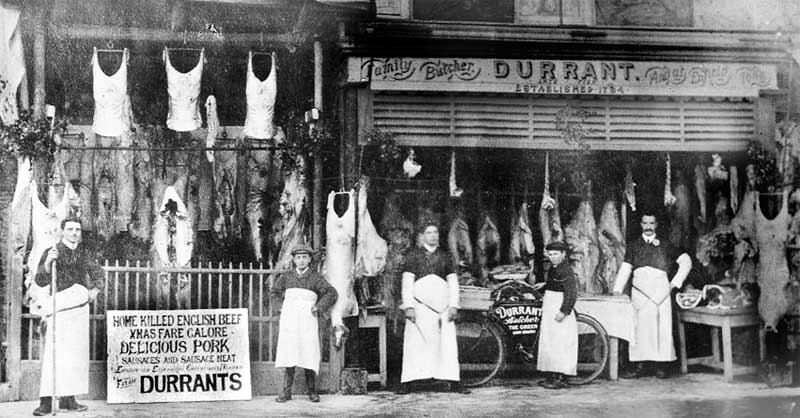
Animals and birds were arranged with care. Butchers grouped them by category and size — beef carcasses on one section of hooks, poultry on another, game hanging in clusters. The organization was deliberate. Customers expected to browse and compare, and the layout made that easy. Pheasants, hares, geese, and ducks were common sights strung up alongside larger livestock.
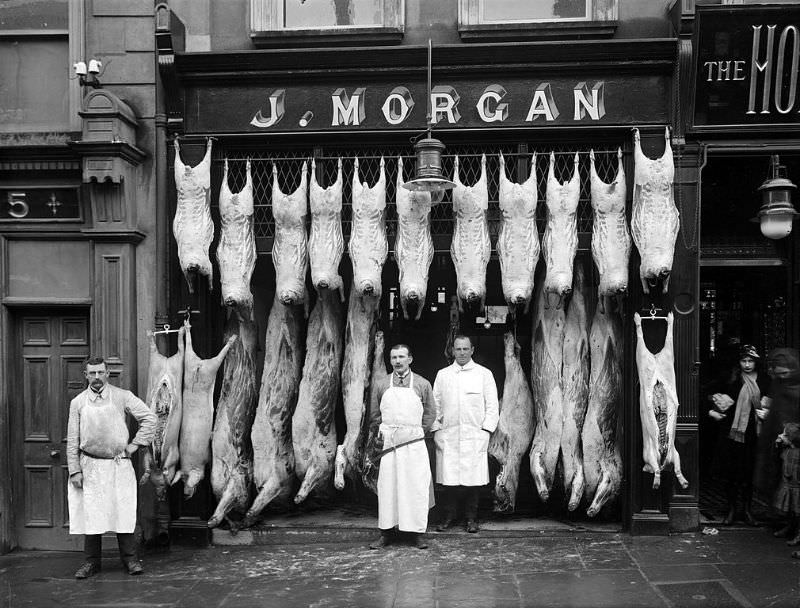
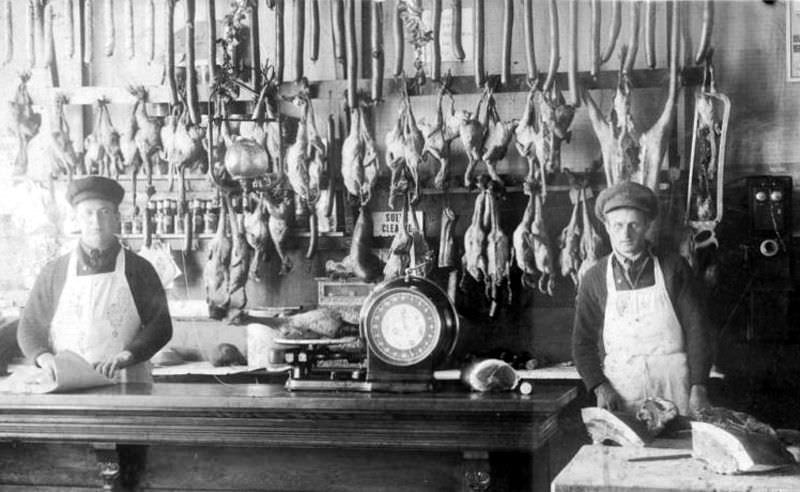
The scale of some Victorian butcher operations was remarkable. Photographs from the period show storefronts nearly obscured by the sheer number of hanging carcasses. Hundreds of animals displayed at once was not rare for a large urban butcher, especially in the weeks before Christmas. Some operations slaughtered and displayed thousands of animals for the holiday season alone, treating the display itself as a form of advertising that no sign could match.
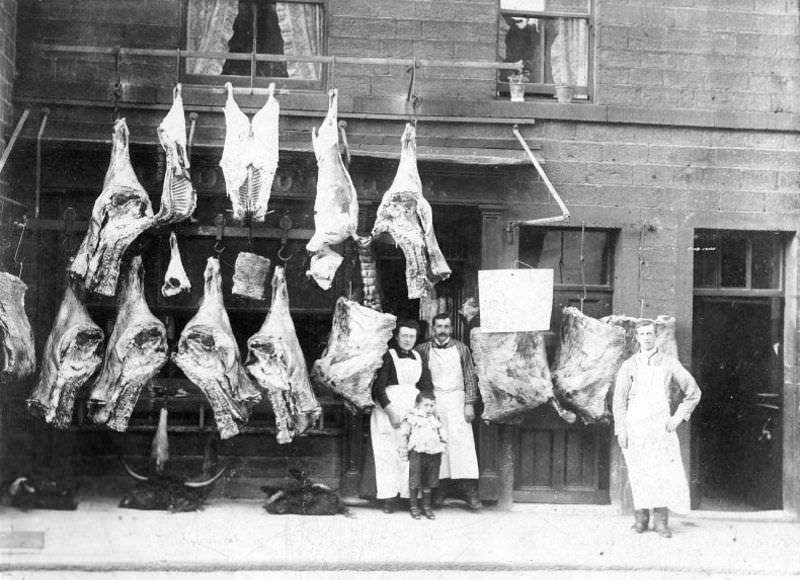
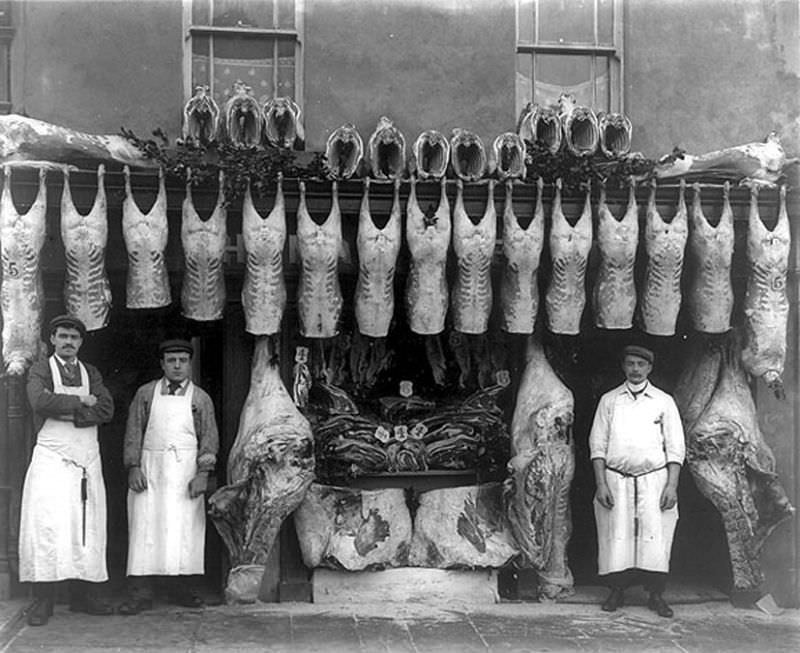
Victorian butcher shops were also deeply community spaces. The butcher knew his regular customers by name and understood their budgets and preferences. A wealthy household’s cook would arrive early for the best cuts. A factory worker’s wife might come at the end of the day, when the butcher sold off remaining stock at reduced prices rather than let it go to waste. Nothing was thrown away — offal, trotters, heads, and organ meat all had buyers.
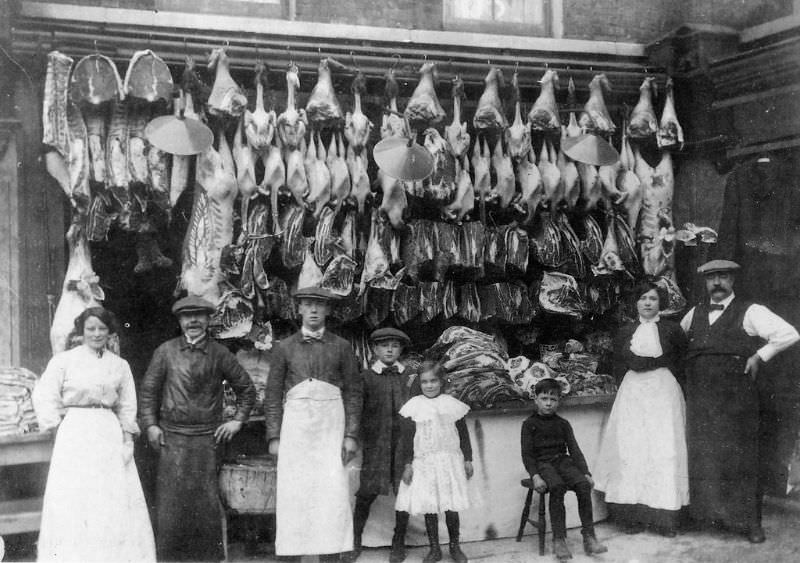
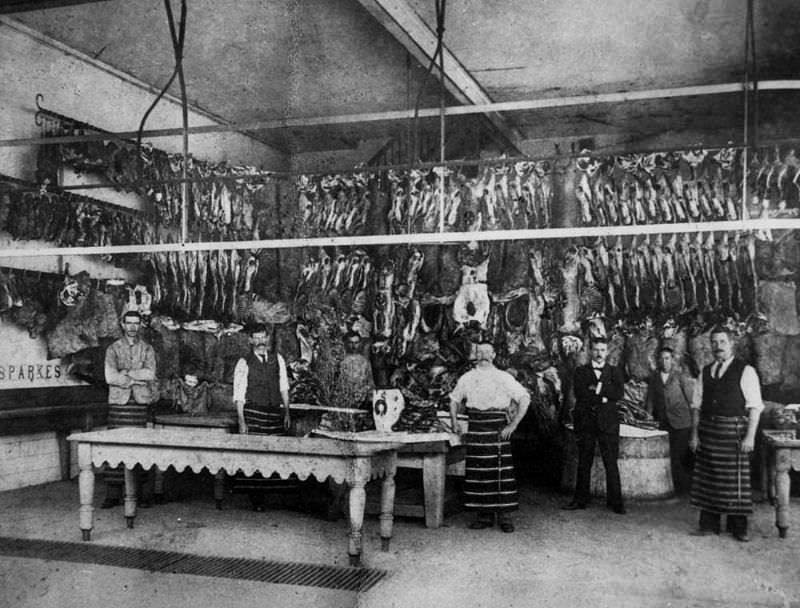
The photographs that survive from Victorian butcher shops tell an unfiltered story. They show men in aprons standing proudly in front of walls of hanging meat. The carcasses are dressed and displayed without any attempt to soften the reality of what they are. To the Victorians, this was not disturbing — it was commerce, skill, and abundance all on display at once. The butcher’s ability to fill his shop front was a direct measure of his trade.
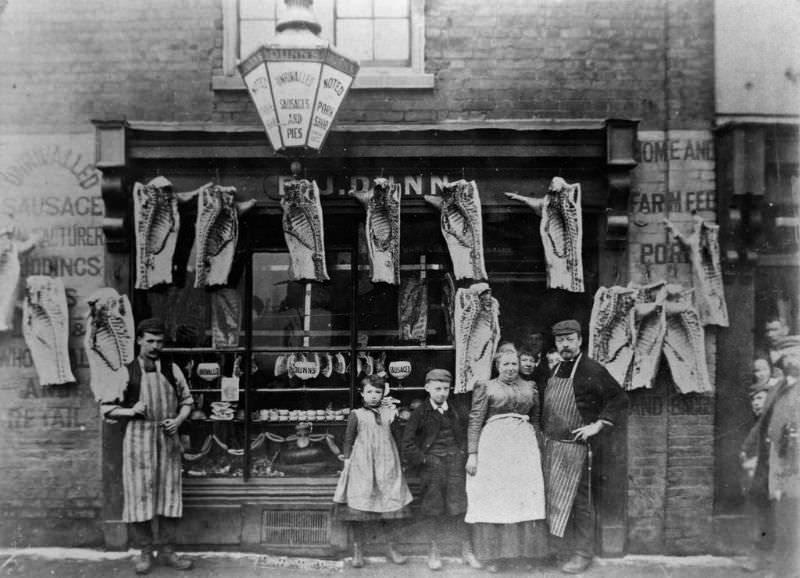
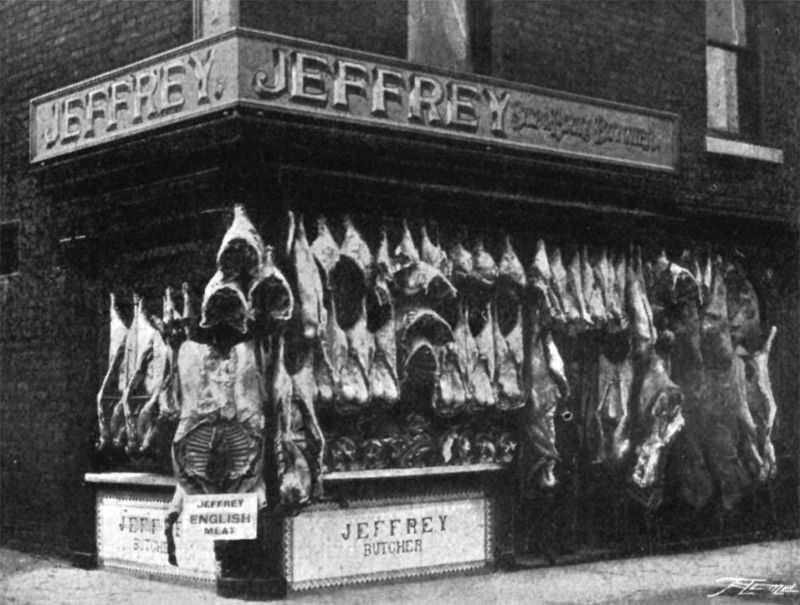
These images capture a world where the distance between a living animal and a meal on the table was very short, and nobody pretended otherwise. The butcher shop was a transparent part of the food chain, visible from the street and woven into the daily rhythm of Victorian life.

My local butcher still has the rails in place to do this. They can be seen in this photo. Also, in the picture notice the use of scumble paint. The world’s only two coloured paint. It his painted upon a surface then combs are used to imitate woodgrain.
I have never heard of scumble paint! I worked on set crews a lot and did a ton of painting fake wood grain. Thank you for the learning tid bit!
Delicious
Is this wintertime? How are there not a jillion flies eating everything in sight?
Oh trust me there was.
For sure. Winters were reliable for refrigeration (especially when you’re lacking modern refrigeration techniques) and would’ve been taken advantage of instead of having to use a cool cellar.
I mean, you’re not meant to but it still happens today. you really think your dry hung turkey’s been sat in your tiny butcher’s tiny fridge with 150 other Turkey boxes AND everything else they’ve got in the shop when you collect it on the 24th? Each night they’ll play Tetris to get it in there but if it’s below 5 degrees that shit is coming out the next day and it won’t go back into a fridge until it’s in the customer’s home.
This is where Boar’s Head meats gets their name.
The butcher used to literally put the boar’s head in the window of their shop so that you would be able to see how fresh their product was.
In 1998 the wife and I took a trip to Merida, Mexico. Had a great time. At the end we took a bus to Cancun for a company thing. We stopped at a small village. Someone had put up a wood frame,very similar to this but on a much smaller scale and was drying meat. It occurred to me that my great-grandparents in Oklahoma hadn’t done it much differently.
Can anyone please share the recipe for pickled tongues?
Yeah they were weird with dead bodies and photo’s, also human like
I’ll take the carcasses that were not on display or not in direct sunlight, please.
Do you pay extra for dry aged
I prefer mine not sun-aged!
My local butchers shop has a rail, attached to the ceiling, that extends into the street. It was used to display sides of bacon etc.
Read: ” The Jungle” ( am pretty sure was written by Upton Sinclair)
Ok, the photo doesn’t look like the Victorian era to me…look at the women’s dress length.
Exactly.
I see hosiery, shoes with a heel that aren’t tall boots, “long” dresses that don’t cover the hosiery to almost ground level… and what looks like a wrap dress that shows the wearers legs from just below the knee down.
Also shorter, not pinned up hair on the woman wearing the below the knees wrap dress.
While this practice of showing sellers’ wares on the side of the building would have been a holdover from Victorian and earlier times, this photo I am going to guess is from around the 1930s or late 1920s. Before WWII.
You are prob right. I should have specified just photo 1 seems to be later. Thank you!
Iwould say certainly several of the photos in the collection are Victorian.
Still used to be done with game in covered markets till the ‘80s!
So what. It’s still like that in the Grainger Market in Newcastle.
In the Smithfield meat market in London in the 19th century, and probably earlier, they penned and slaughtered sheep in the cellars and dumped the blood and offal in alleys for dogs and rats.
Sanitation health was a bit
It’s still done in Chinatown in San Francisco, Chicago, and New York and I’m sure other locations.