
Amsterdam’s tram network has been a defining feature of the city for well over a century. The first horse-drawn tramway opened in 1875, connecting Plantage to the Leidseplein. It was operated by the AOM (Amsterdamsche Omnibus Maatschappij), a company founded in 1872 by Karel Herman Schadd and others. Those early trams ran through the city’s crowded streets, linking neighborhoods along the Singel with Dam Square and pushing into newly built districts on the edges of the city.
On January 1, 1900, the city of Amsterdam took over the AOM entirely. The company was renamed Gemeentetram Amsterdam (GTA), and the takeover included 242 tram cars, 758 horses, and 15 buildings. Electrification followed slowly. Only one line was converted between 1900 and 1906, and the AOM’s non-standard track gauge of 1,422 mm was converted to the international standard of 1,435 mm in 1916. That same year, the last horse-drawn tram line in Amsterdam was electrified.
The network grew steadily. By 1931, Amsterdam had 25 tram lines reaching every district in the city. Between 1900 and 1930, the fleet expanded to 445 motorized trams and roughly 350 trailers, all built with twin axles and wooden bodies. The Great Depression of the 1930s forced service reductions. Then came World War II. A coal shortage caused multiple lines to be suspended, and full tram service ceased in October 1944. A large number of trams were shipped east during the occupation. Service only resumed in June 1945, starting with limited routes before gradually rebuilding.
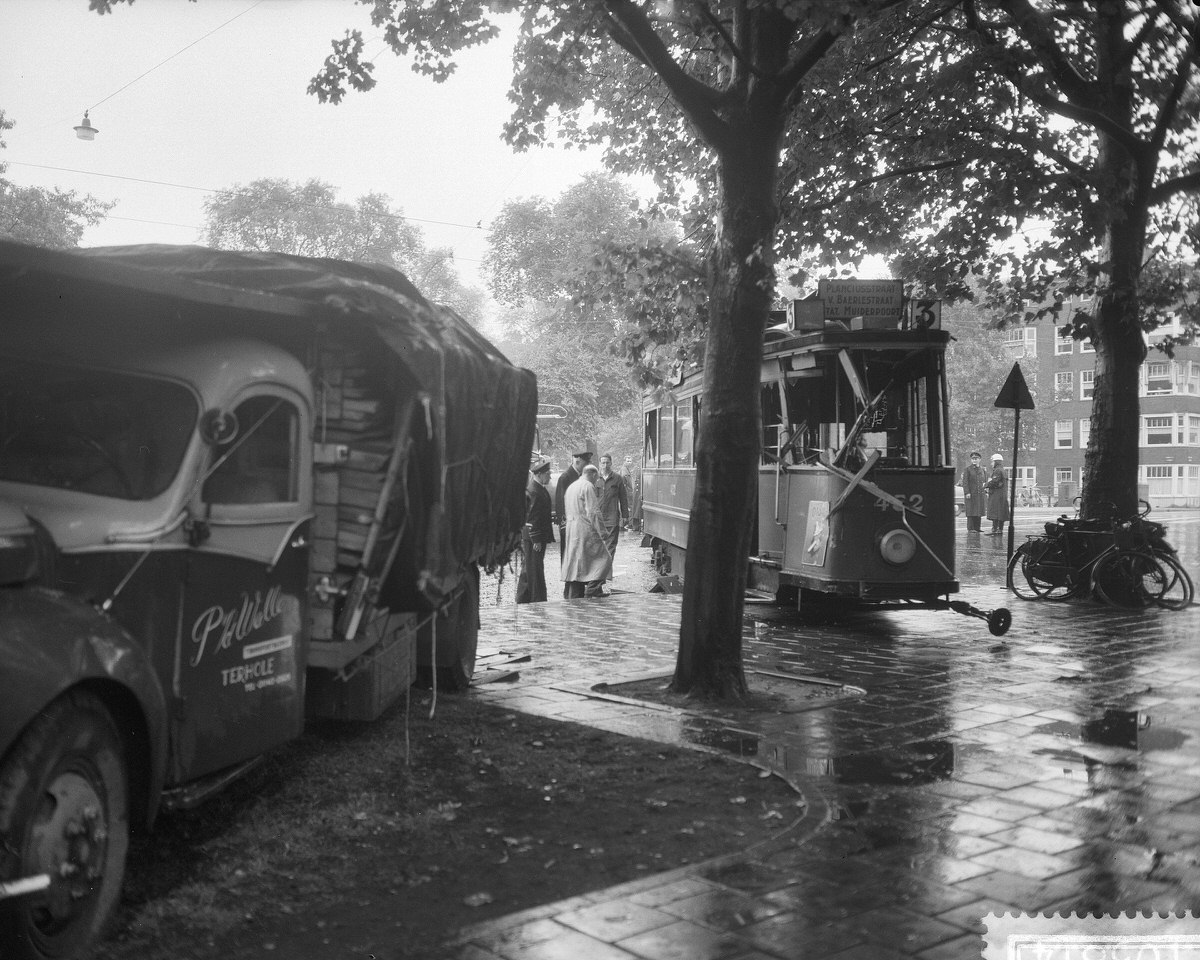
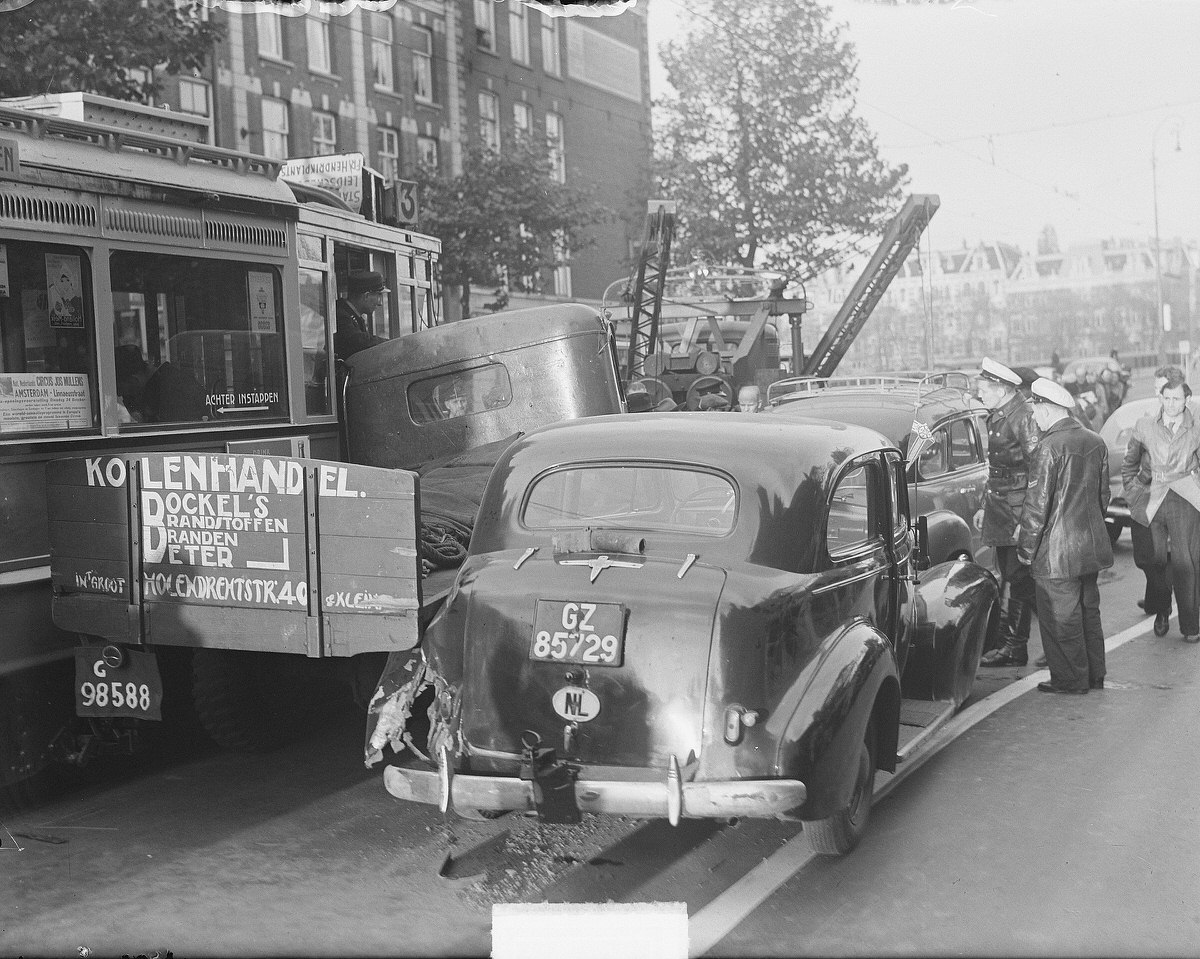
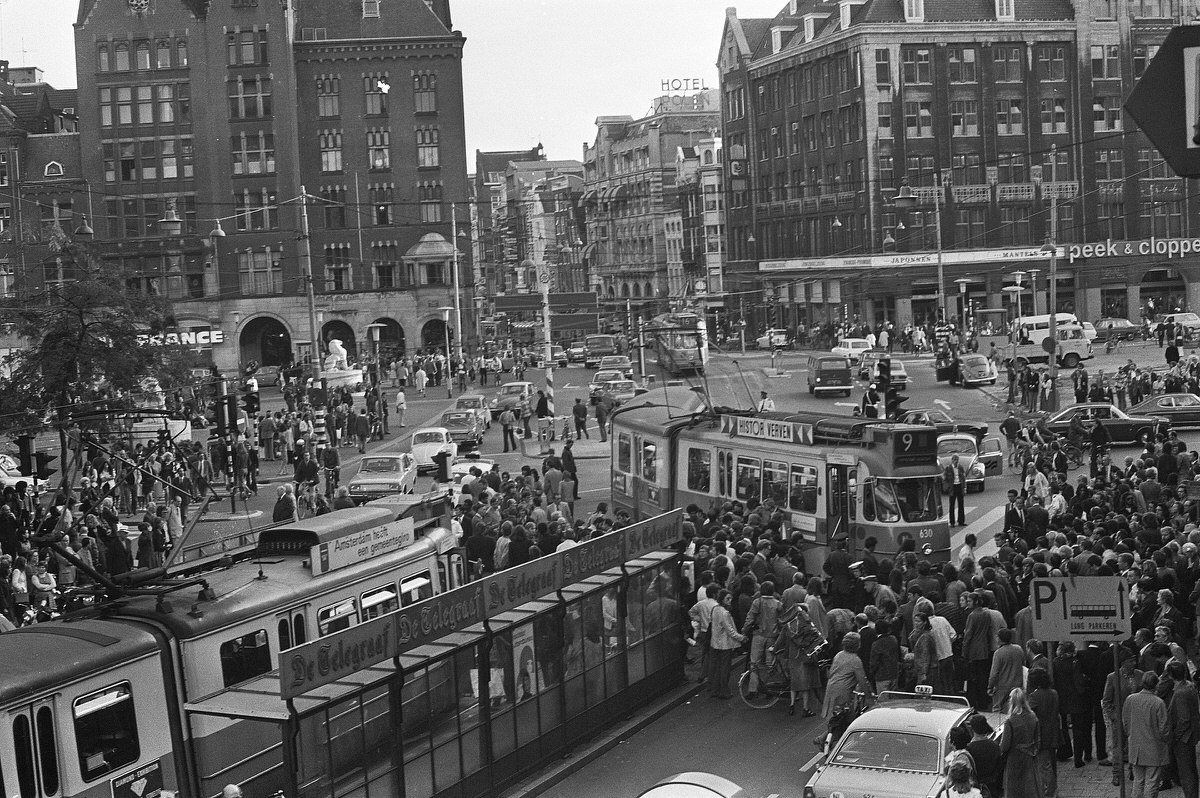
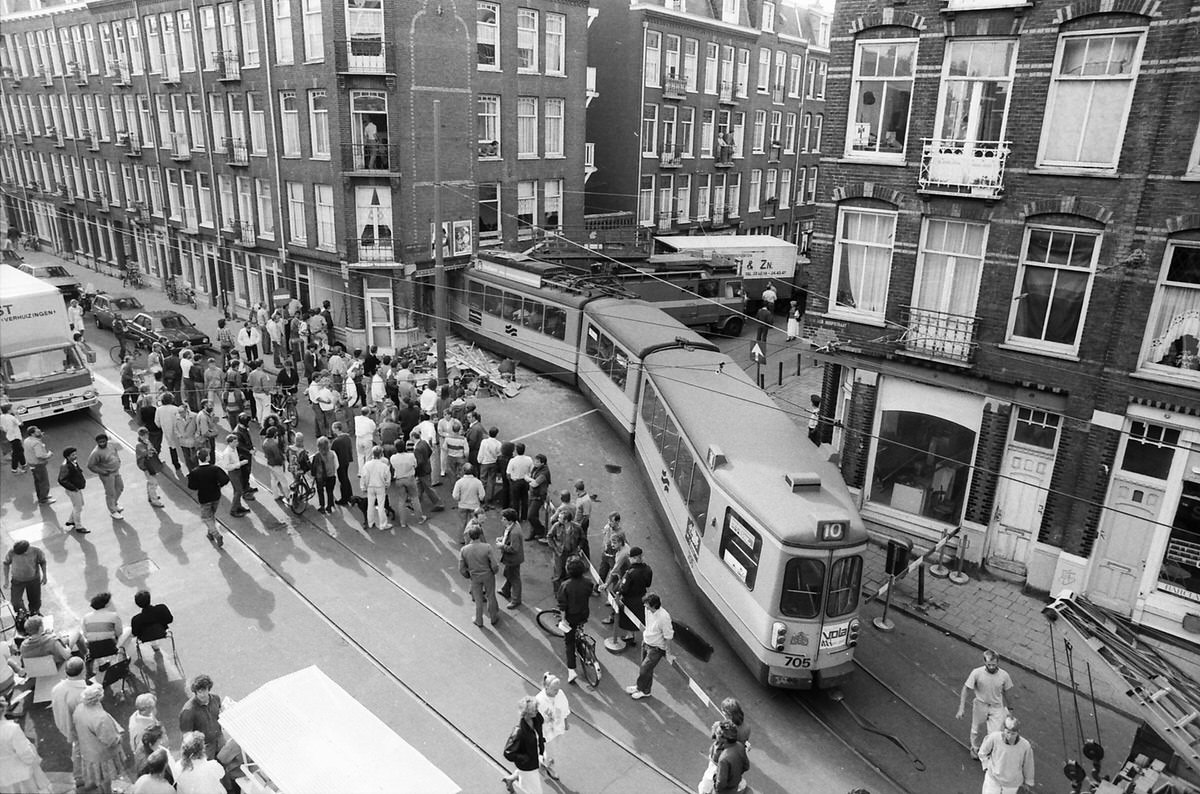
As the network expanded and traffic in Amsterdam grew busier through the mid-20th century, accidents became a recurring part of the tram’s history. Collisions with trucks, cars, buses, and even delivery vans were documented across the city’s streets. Derailments happened on bends, at intersections, and even on major thoroughfares. The photos below are rare archival images that record these incidents in striking detail, spanning from the early post-war years through the 1980s.
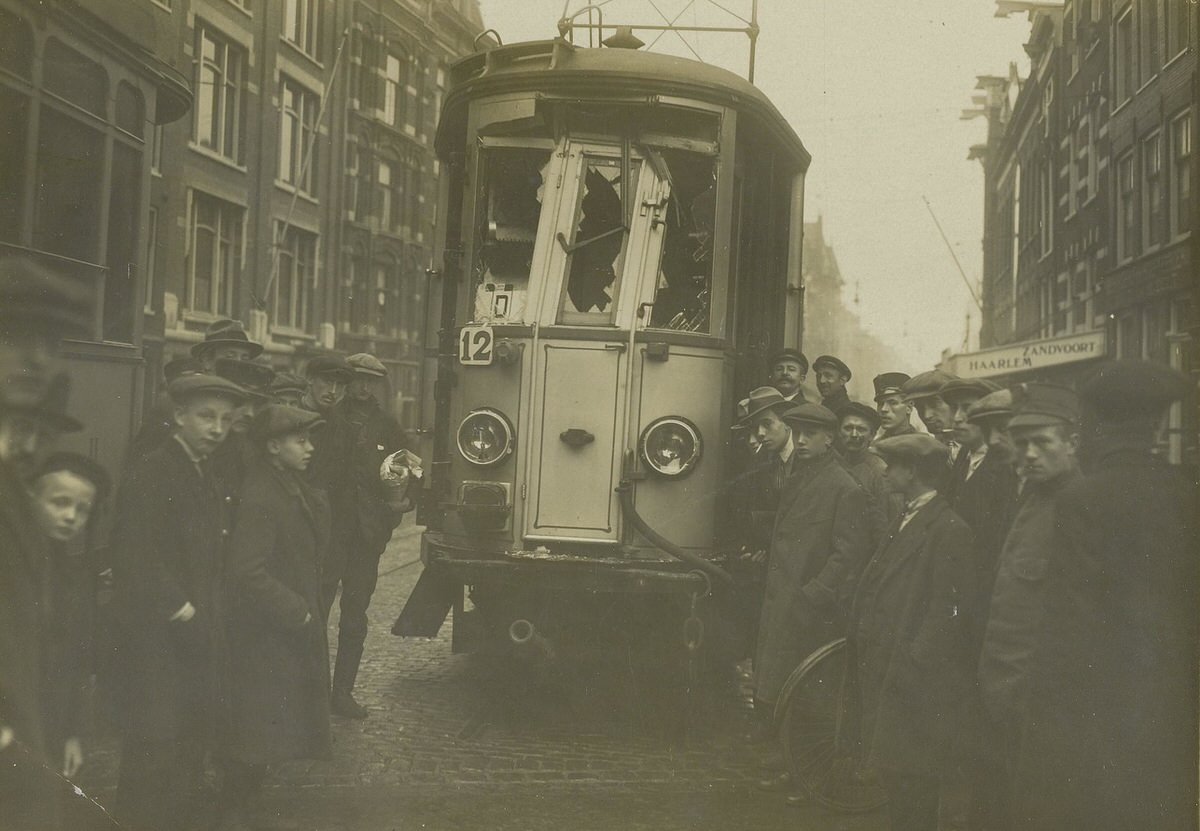
One of the earliest accident images in this collection dates to 1918, showing a damaged tram on the Amsterdam-Haarlem-Zandvoort line during World War One. Even in those early years, the trams were operating under strain. The narrow gauge line connecting Amsterdam’s Spui to Haarlem was a separate and distinct service from the city trams, and it had its own share of serious incidents in the decades that followed.
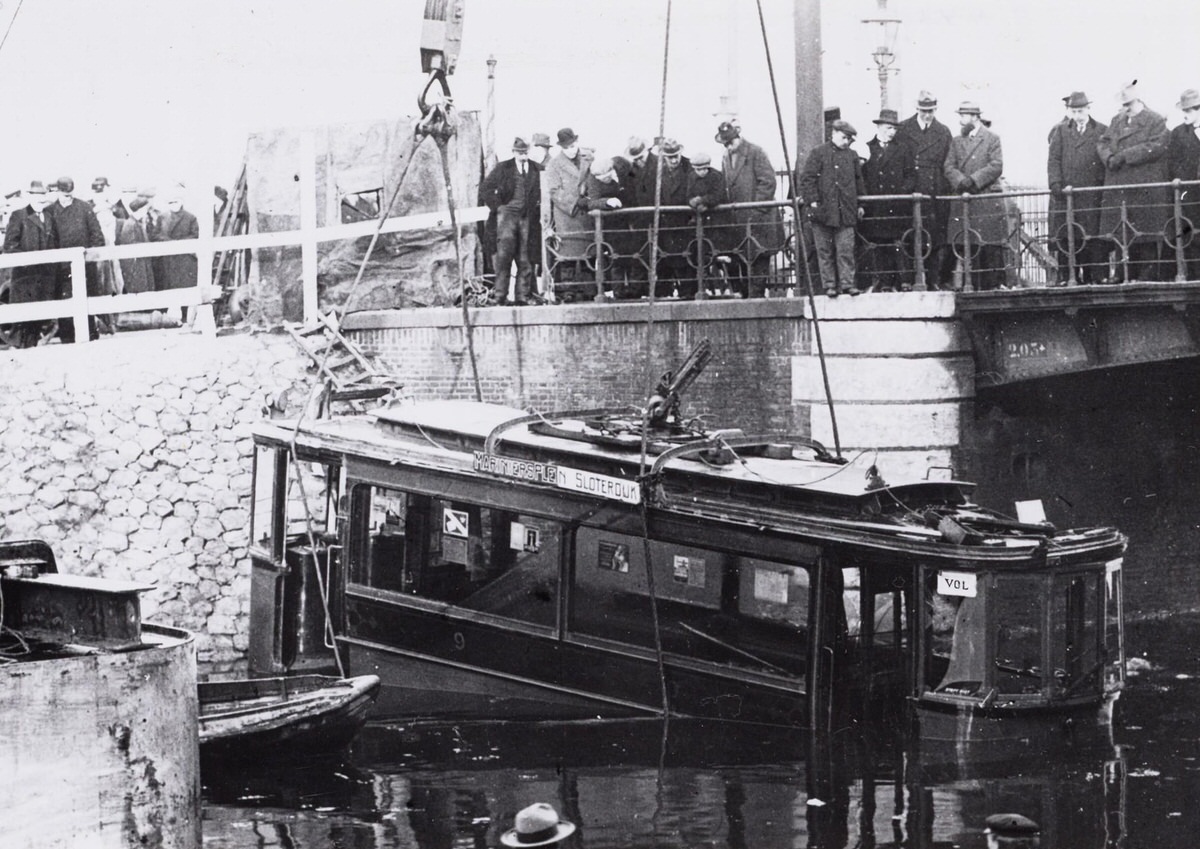
Just six years later, on January 2, 1924, motor car 9 of tram line 18 derailed at Singelgracht near Nassauplein after striking a lump of snow on the tracks. The tram left the rails and hit the water. It was an early example of how weather conditions could turn a normal tram run into a disaster. The post-war period brought even more incidents as traffic volumes increased and the streets became more congested with trucks, buses, and private vehicles.
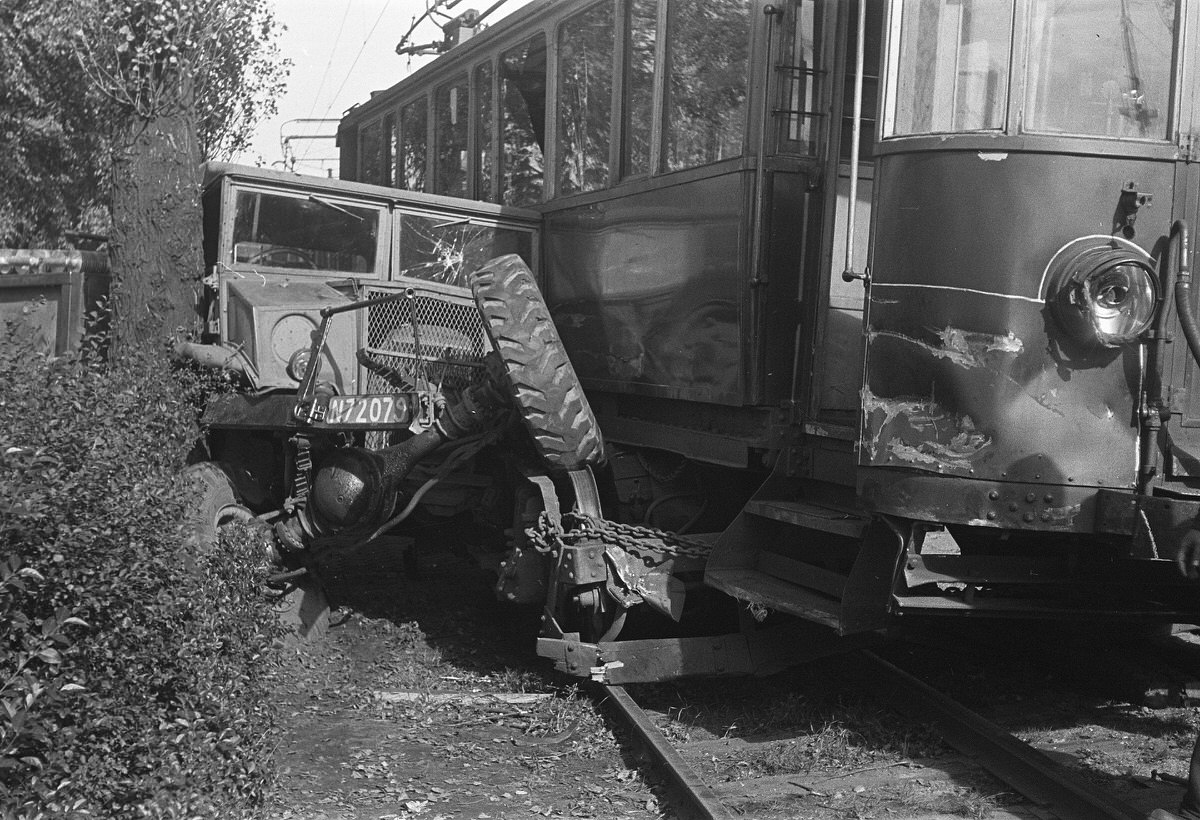
In the immediate post-war years, Amsterdam’s roads were busy with reconstruction traffic, and heavy trucks posed a constant danger to trams. On September 26, 1946, an NZH tram derailed after colliding with a truck on Meeuwenlaan near the old dry dock. Just weeks earlier, in October, the Haarlem tram was hit in the side by a truck at Admiraal de Ruyterweg, and a second collision was documented at the same intersection on the same date.
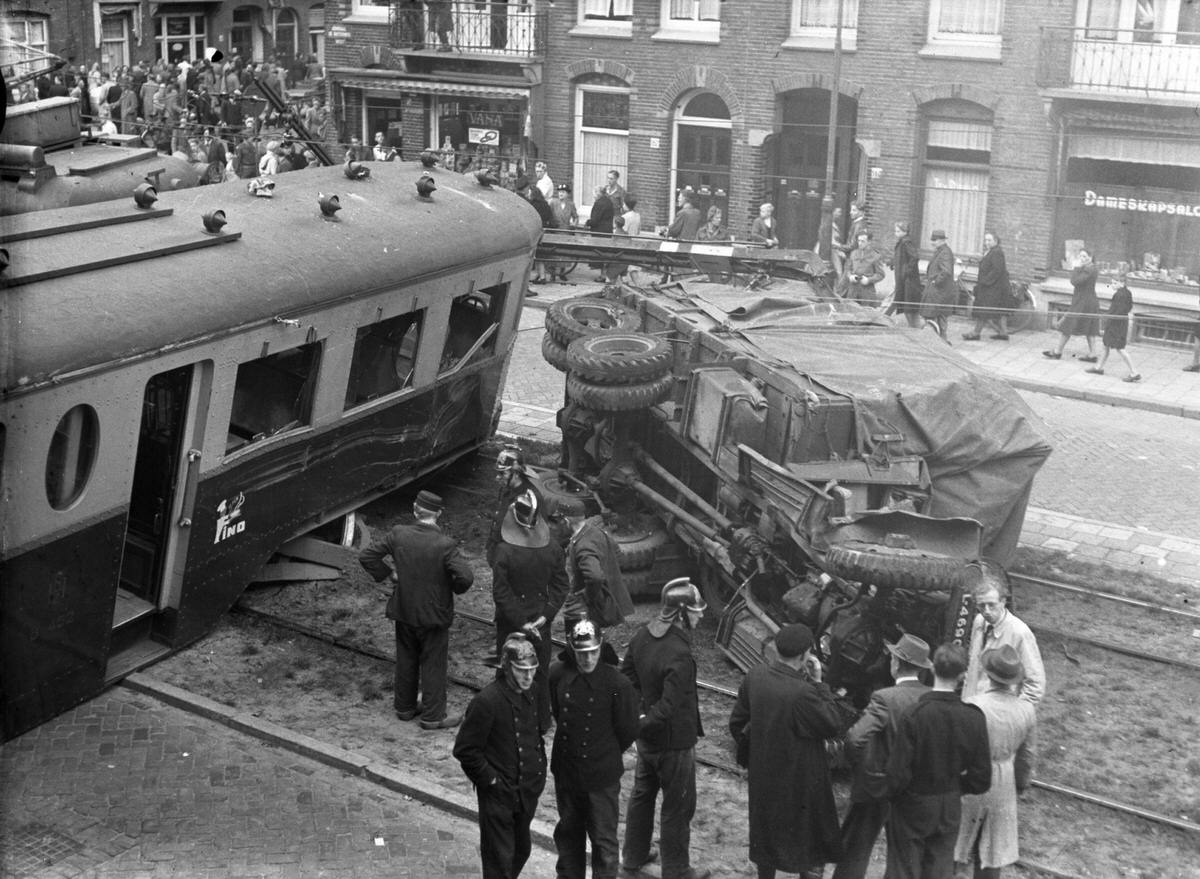
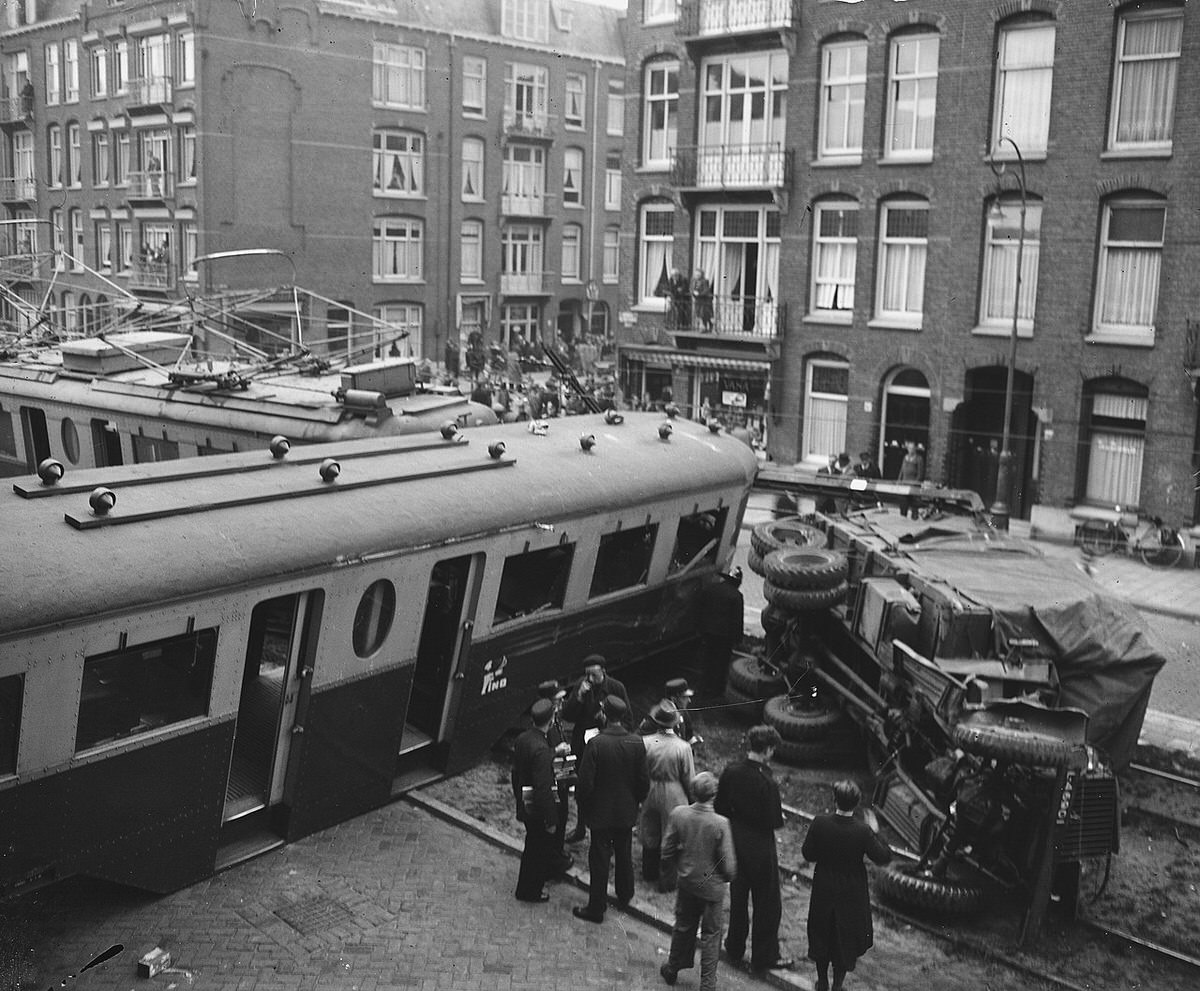
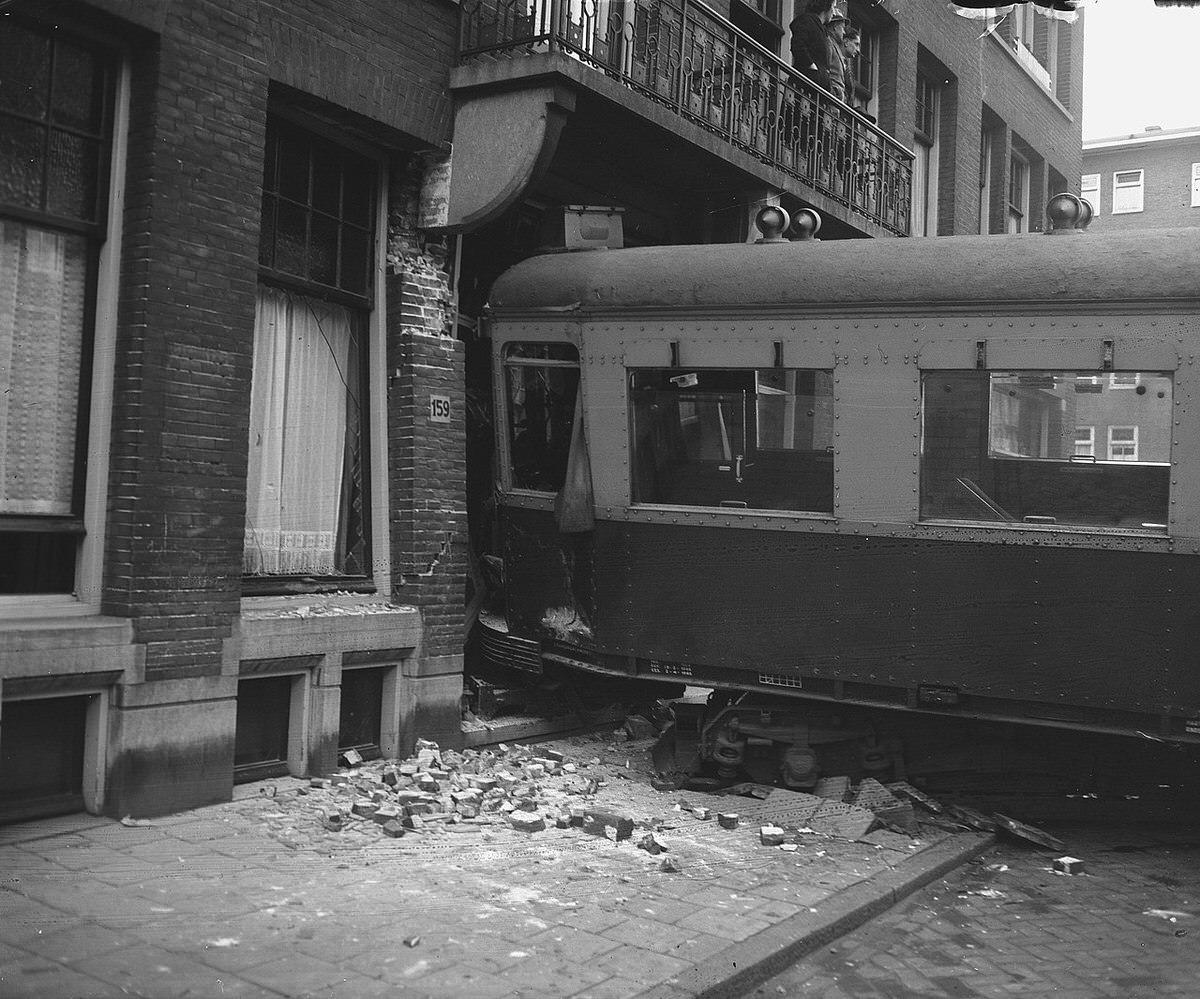
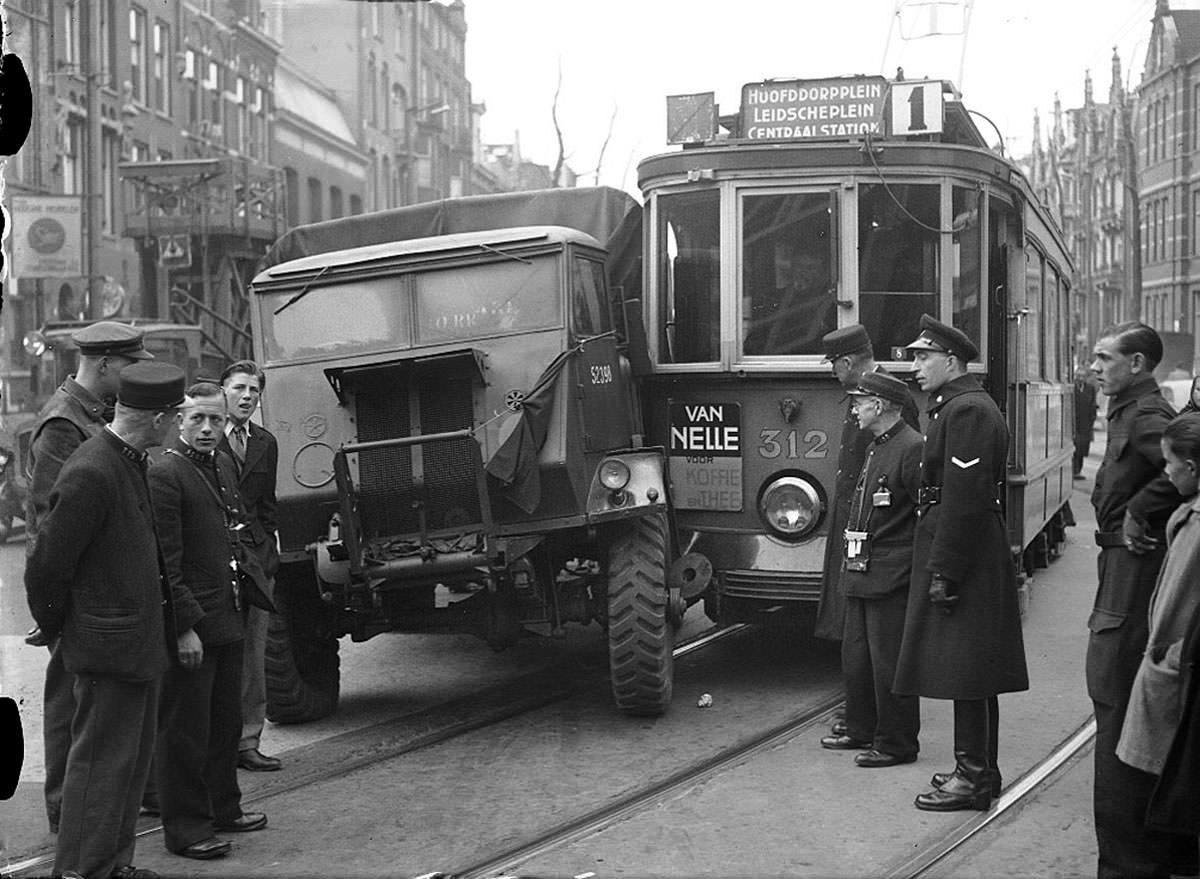
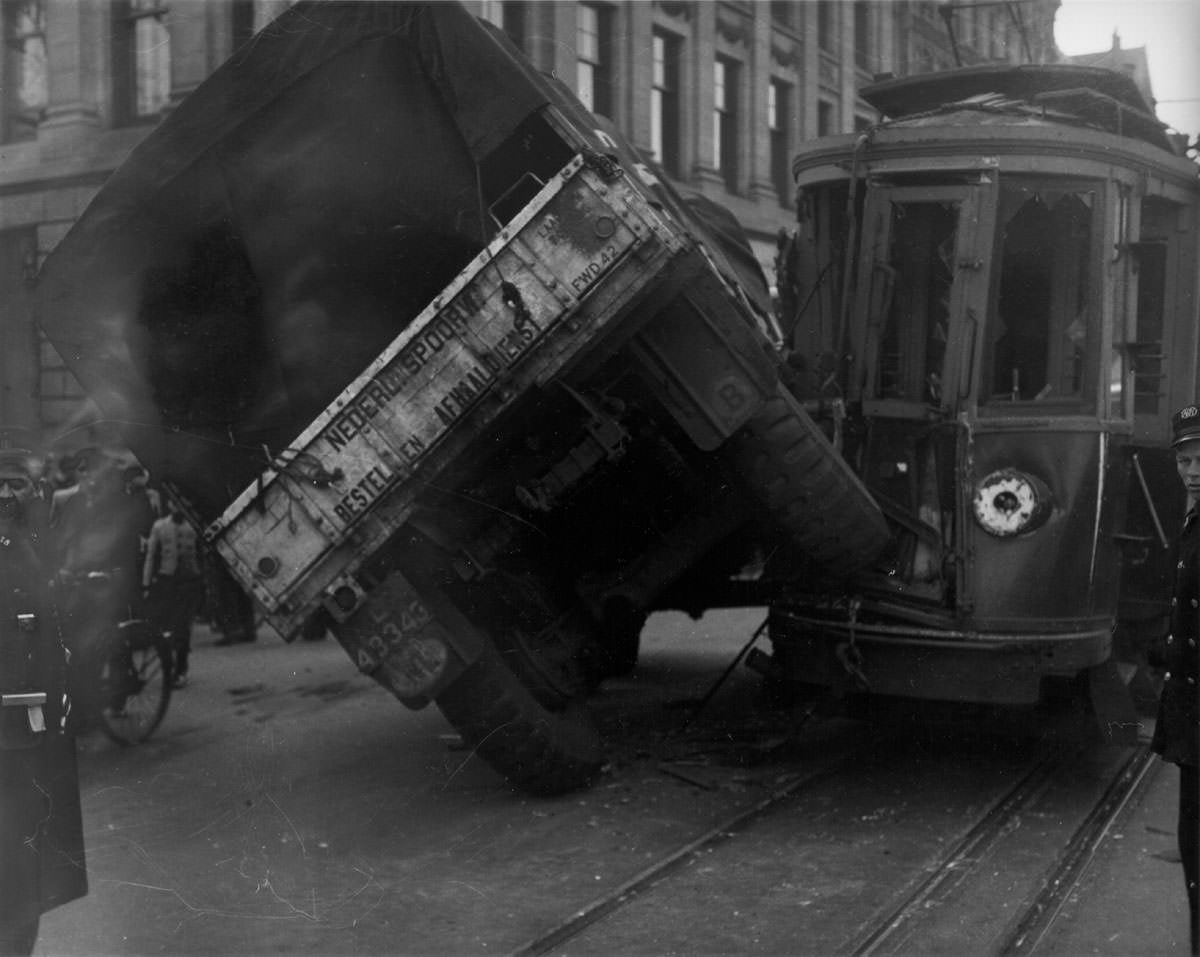
April 1946 brought another notable incident. Tram line 1 collided with a British-made Fordson truck at the corner of Overtoom and Nassaukade. The Fordson was a common vehicle in post-war Europe, and collisions between these heavy trucks and trams were frequent during this period. A year later, a truck belonging to Dutch Railways struck a tram and left it tilted half on its side.
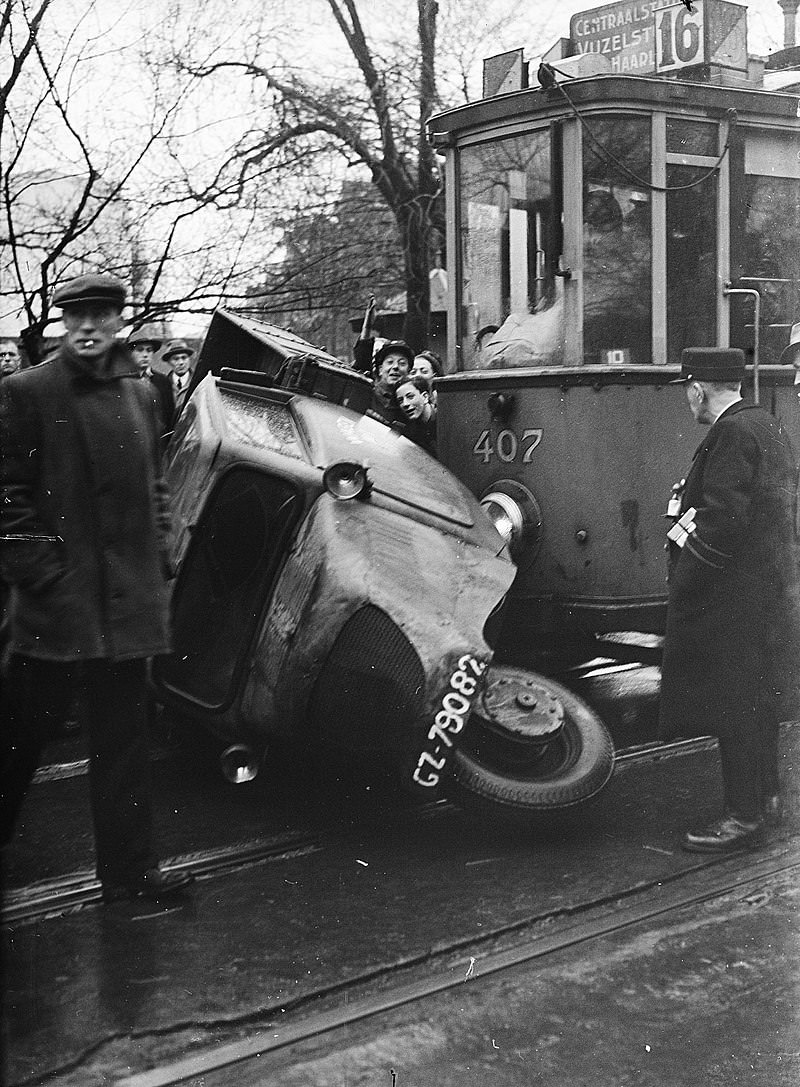
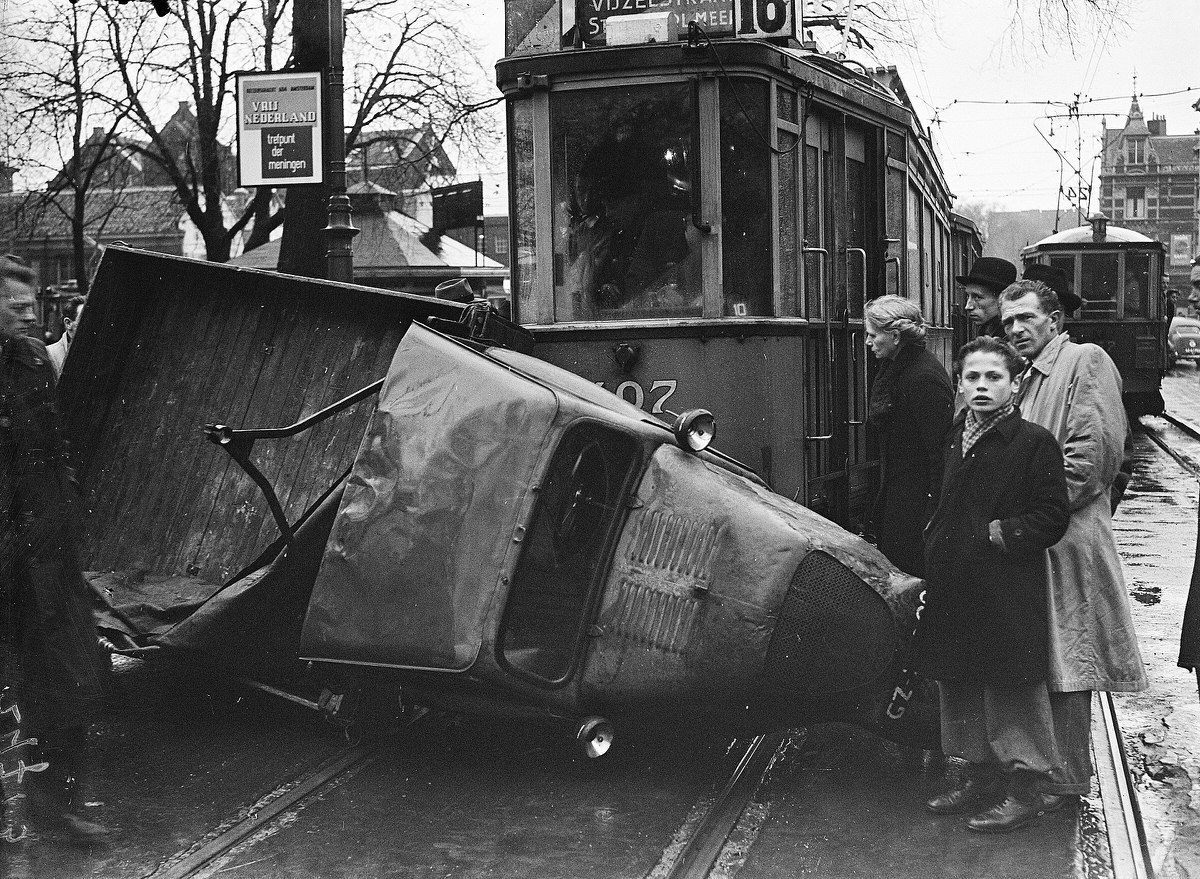
November 1947 produced a dramatic scene at Weteringplantsoen, where a car ended up wedged under a tram on line 16. Two photographs of this incident survive, capturing the scene from slightly different angles. Photographs like these were often taken by press photographers who arrived quickly after accidents to document the damage for Amsterdam’s newspapers.
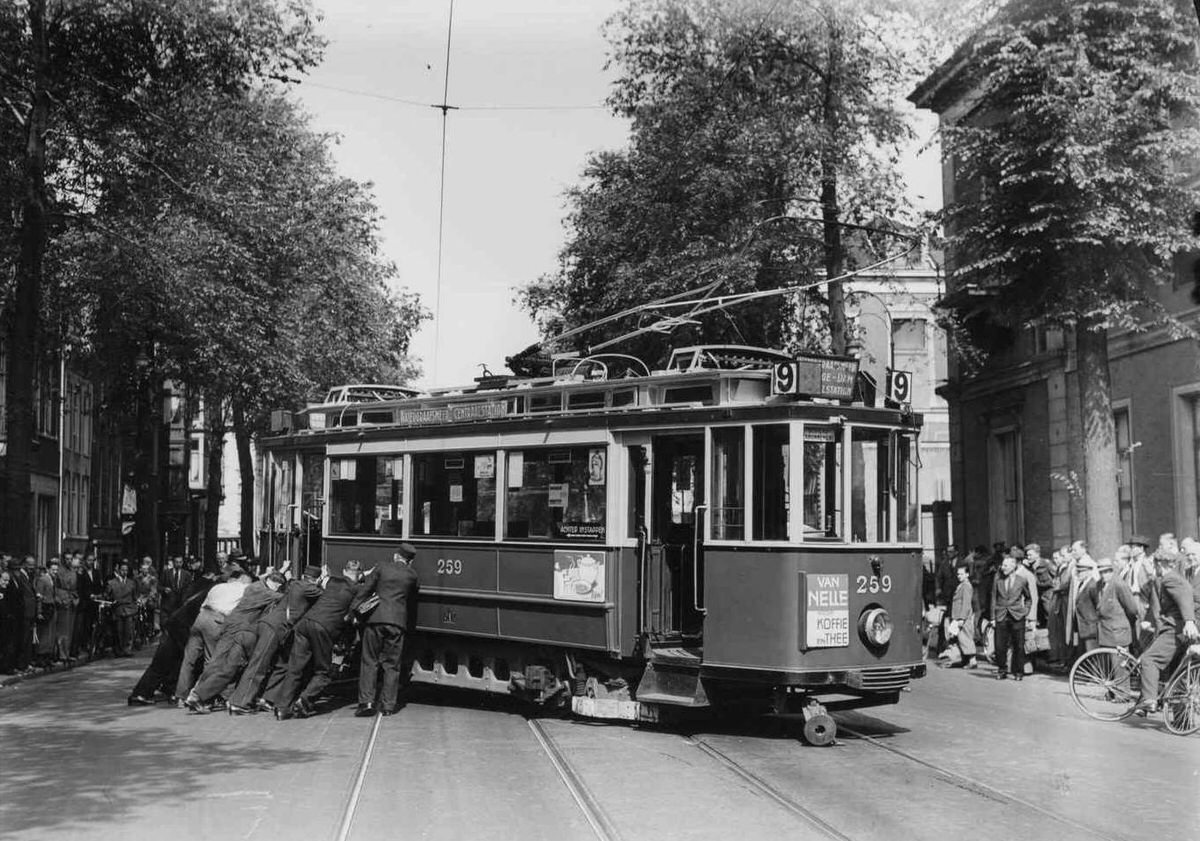
On June 25, 1948, tram 9 collided with a municipal garbage truck on Plantage Middenlaan. The tram was knocked off its rails and had to be lifted back onto the tracks by a combined crew effort. The following year, on November 1, 1949, the Haarlem tram came off the rails at the corner of Raadhuisstraat and Spuistraat, drawing a crowd of press photographers to the scene.
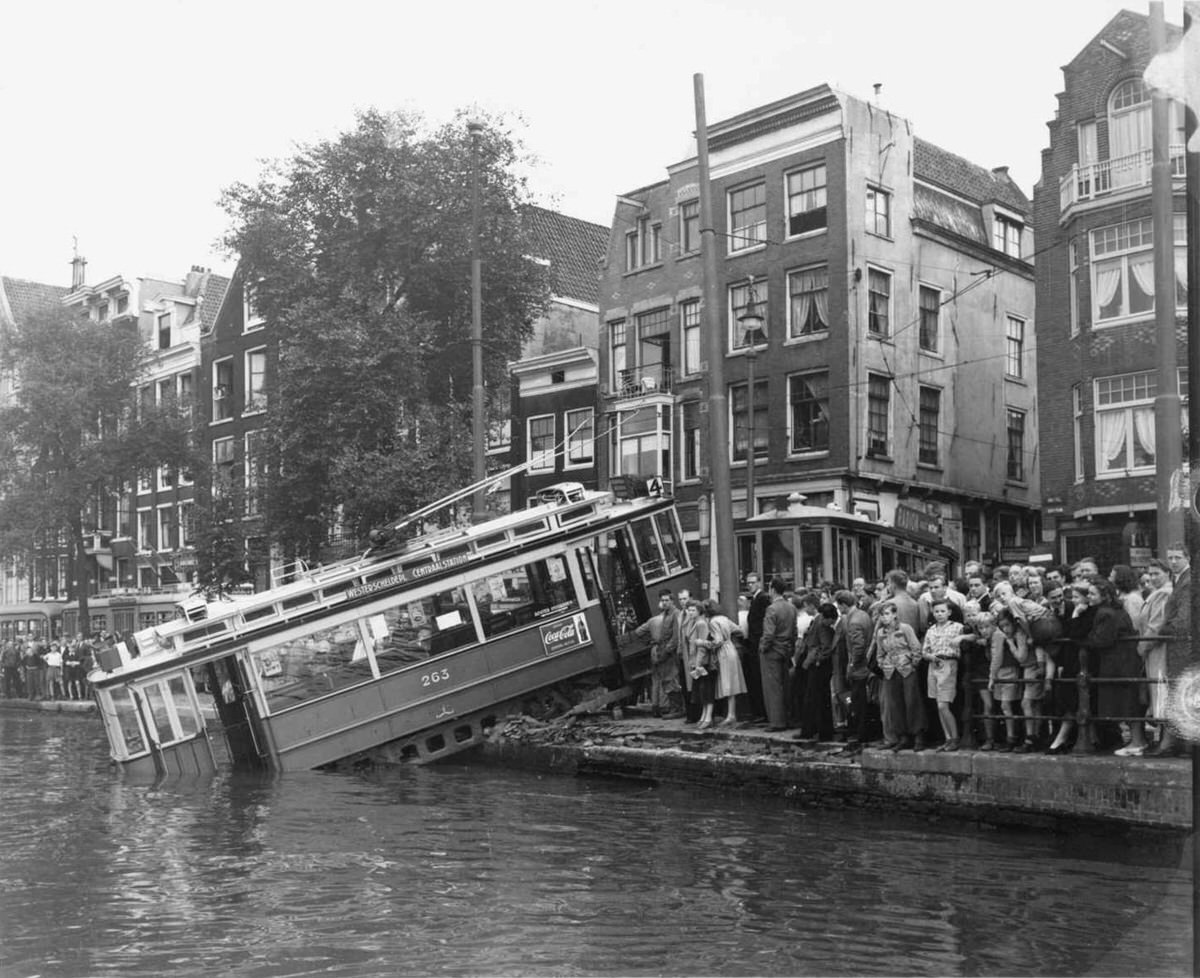
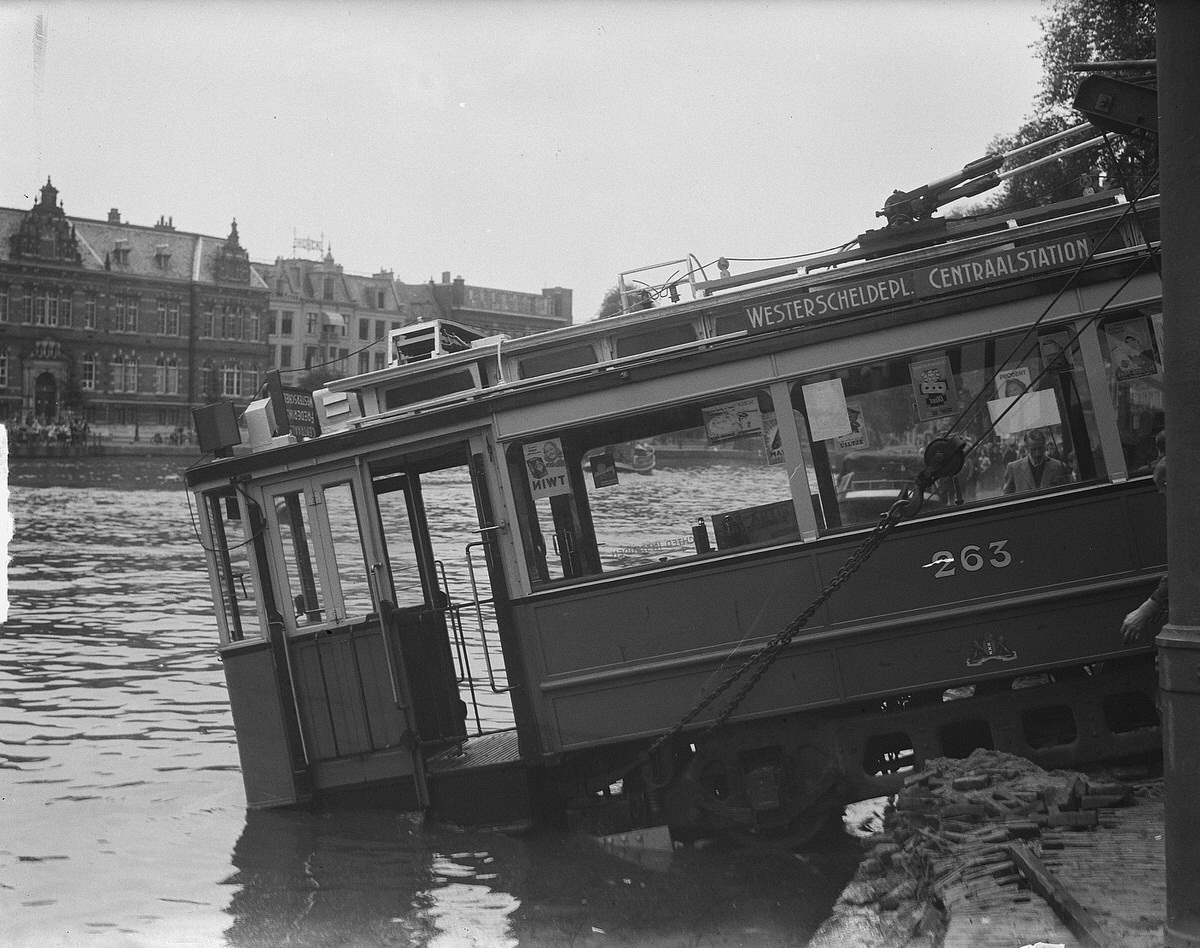
One of the most striking incidents of 1950 occurred on September 5 and 6, when tram line 4 missed a bend at Bakkersstraat and plunged into the Amstel River. Multiple photographs document both the moment after the tram entered the water and the recovery effort the following day. The Haarlem tram also had a serious incident in February 1950, colliding with a truck and trailer on Admiraal de Ruyterweg and derailing.
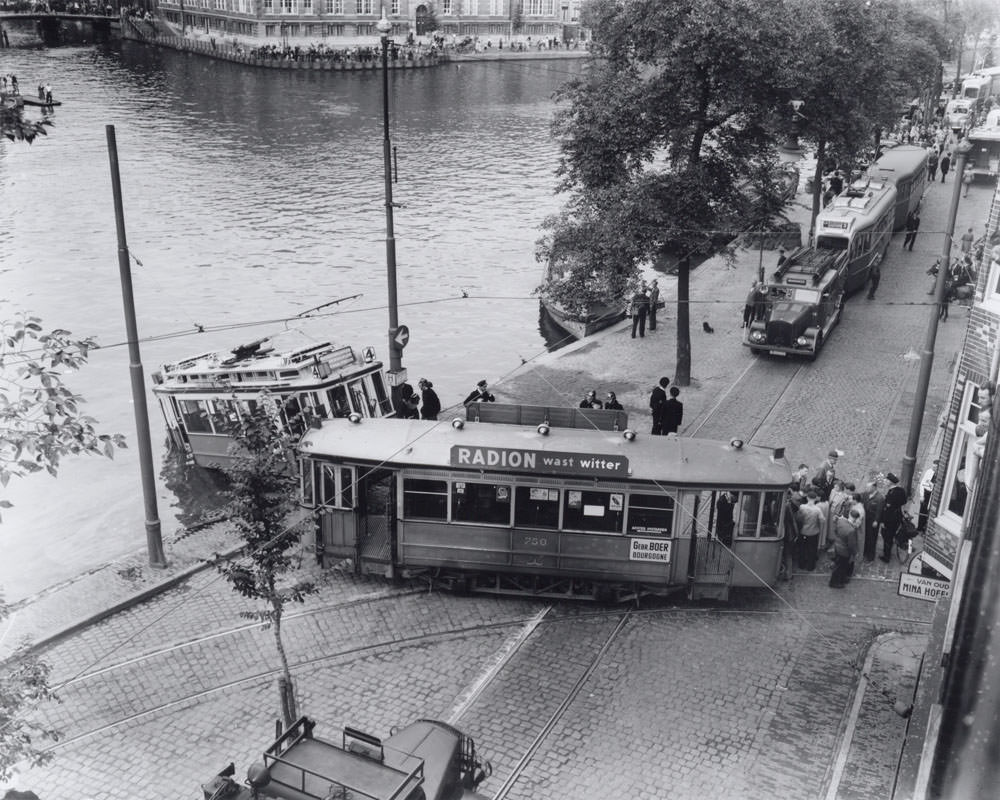
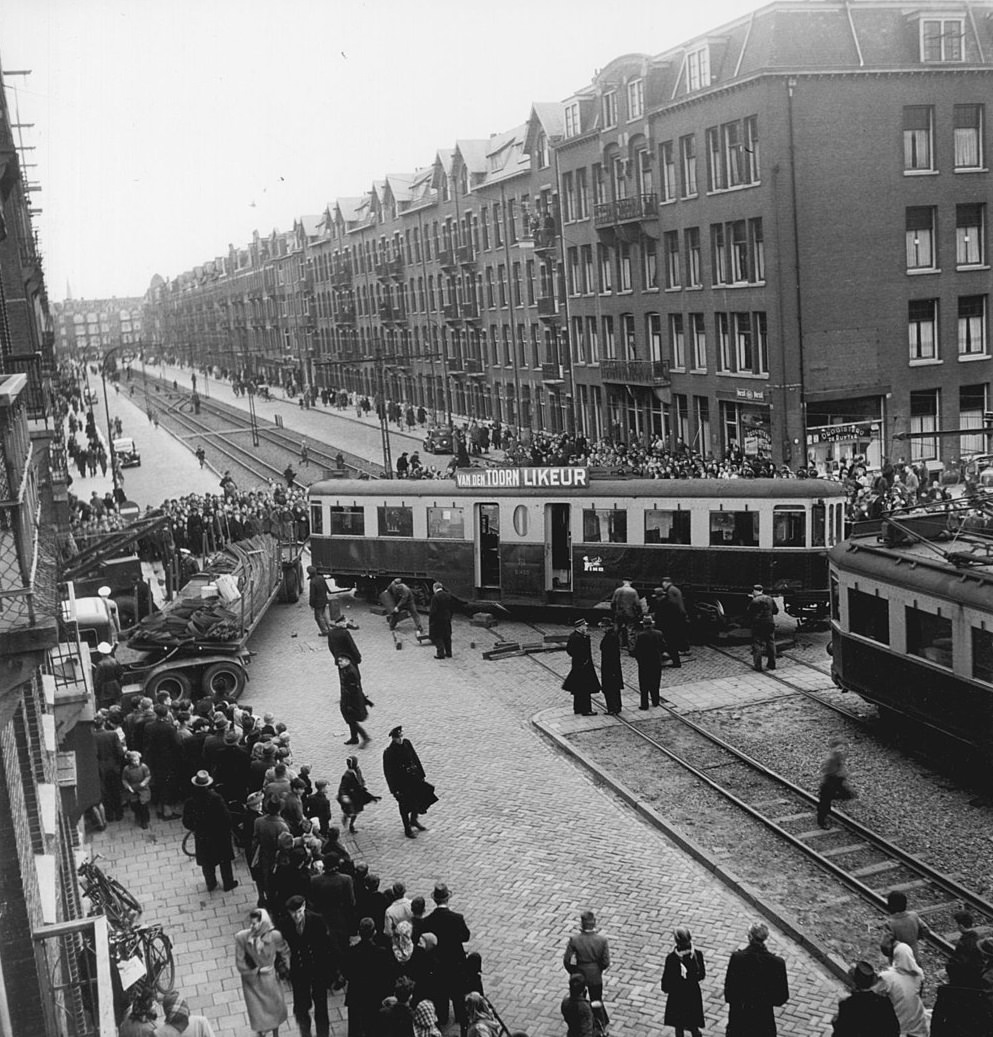
February 7, 1951 was a particularly grim day. Tram 9 derailed near the Physiological Laboratory on Rapenburgerstraat 136. Under the overturned trailer, at the edge of the sidewalk, was the spot where a postman had been struck. On the same date, a traffic officer was photographed at Jonas Daniel Meijerplein directing traffic in the aftermath of another tram accident.
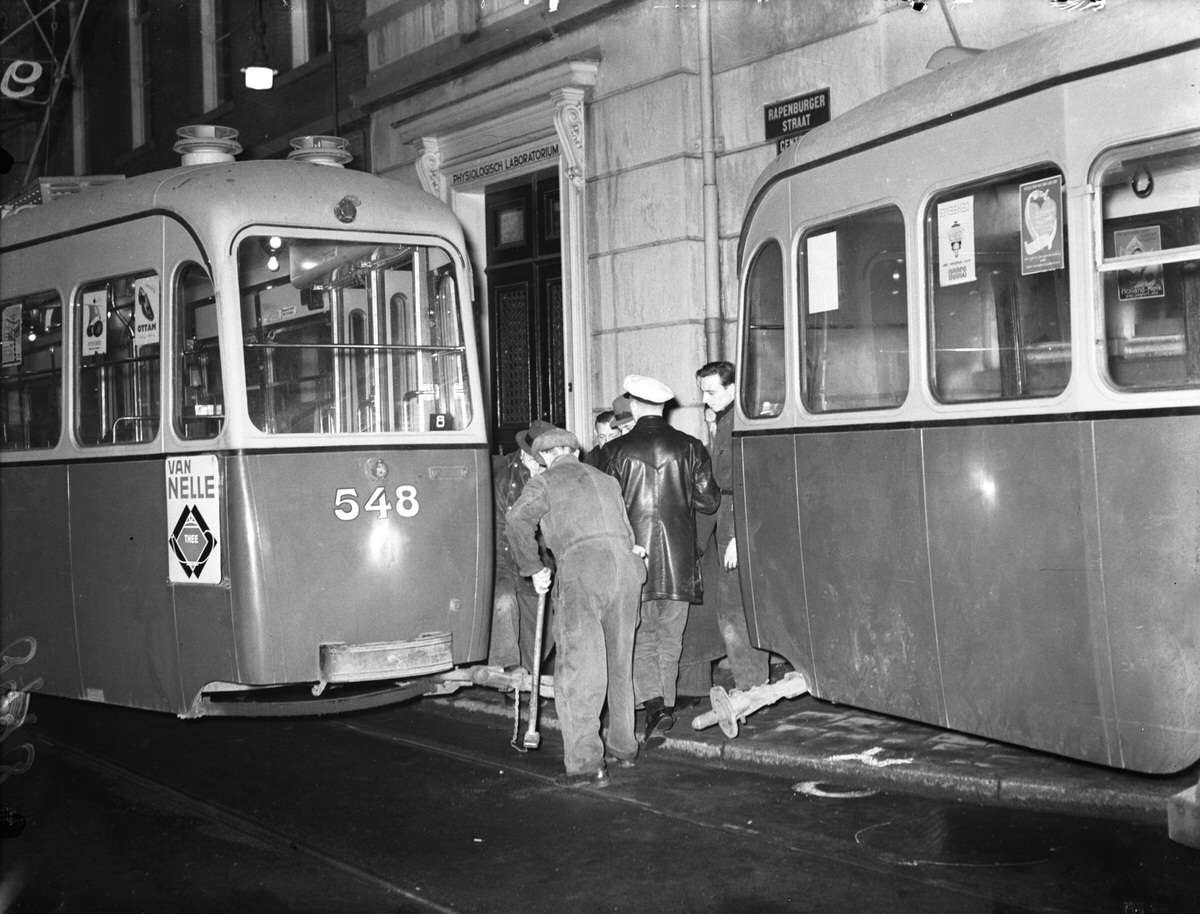
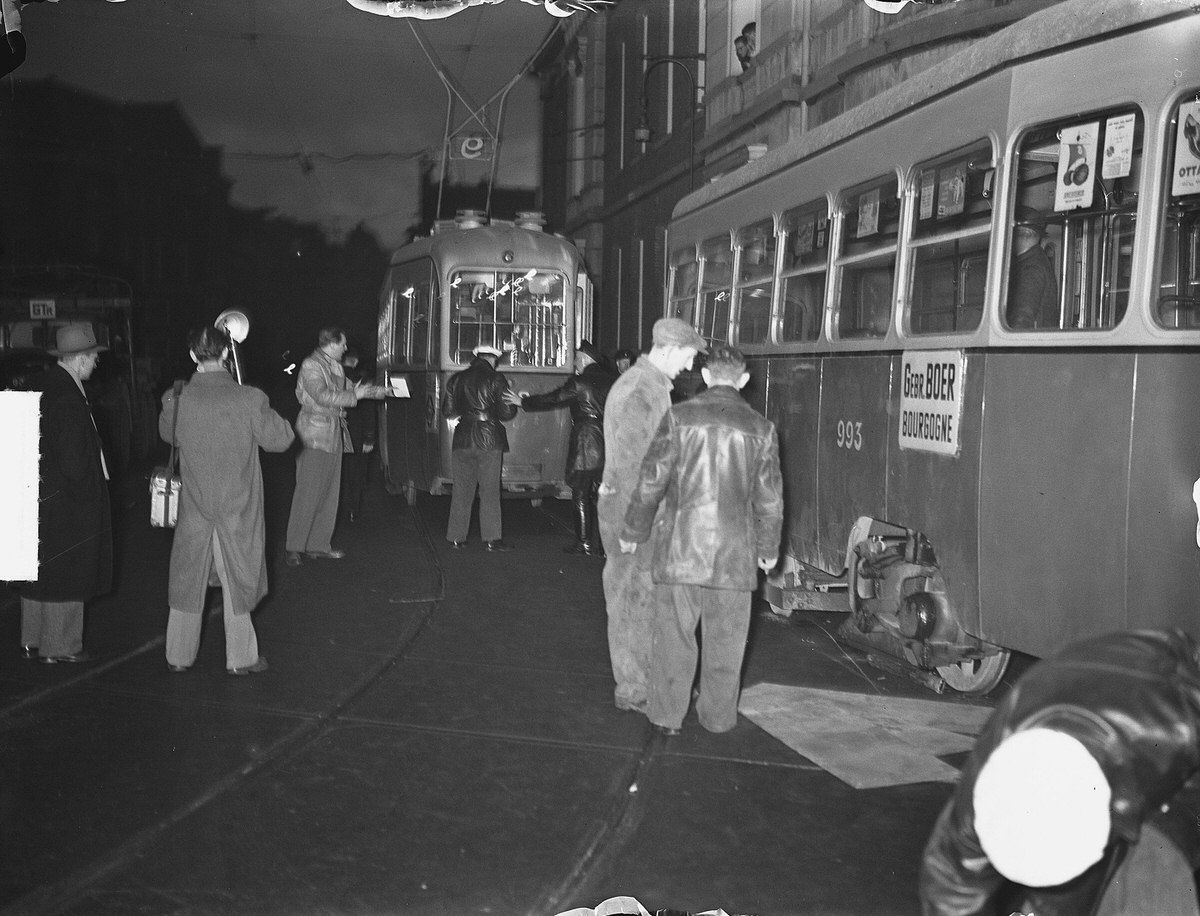
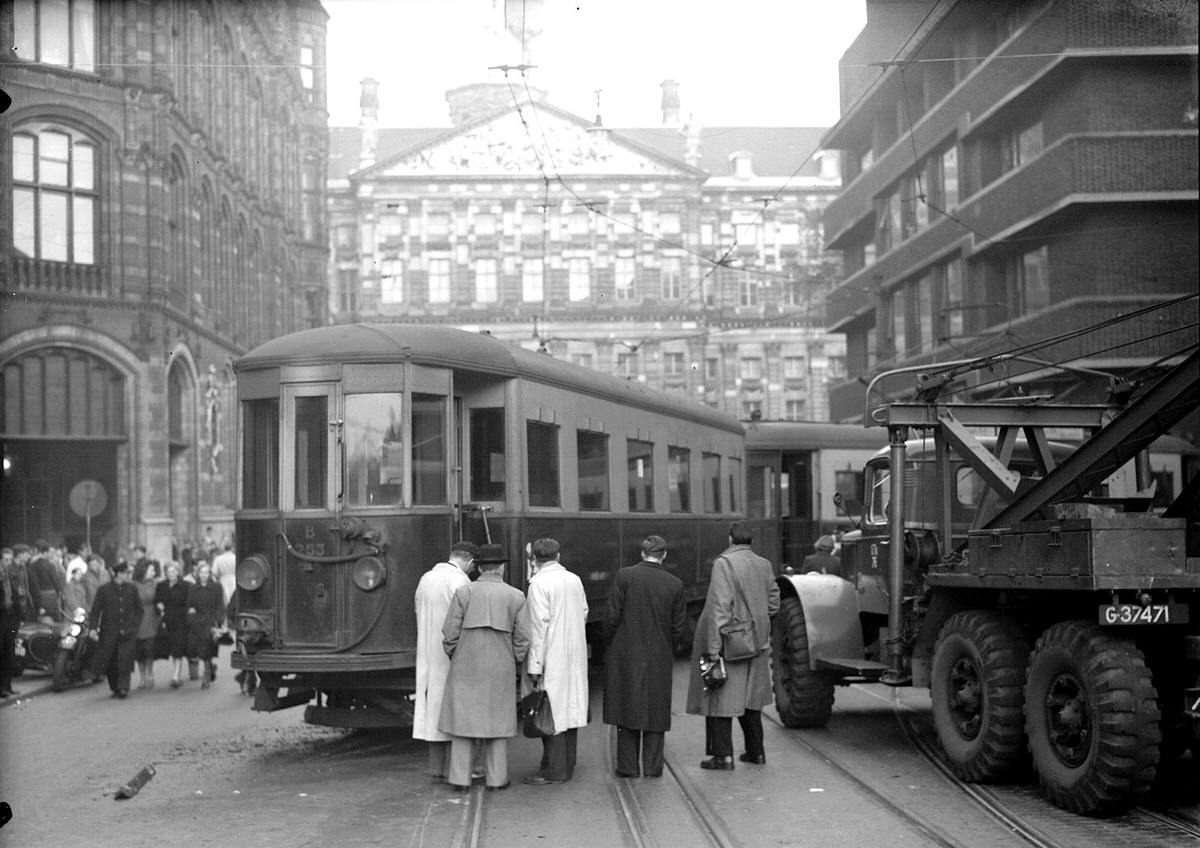
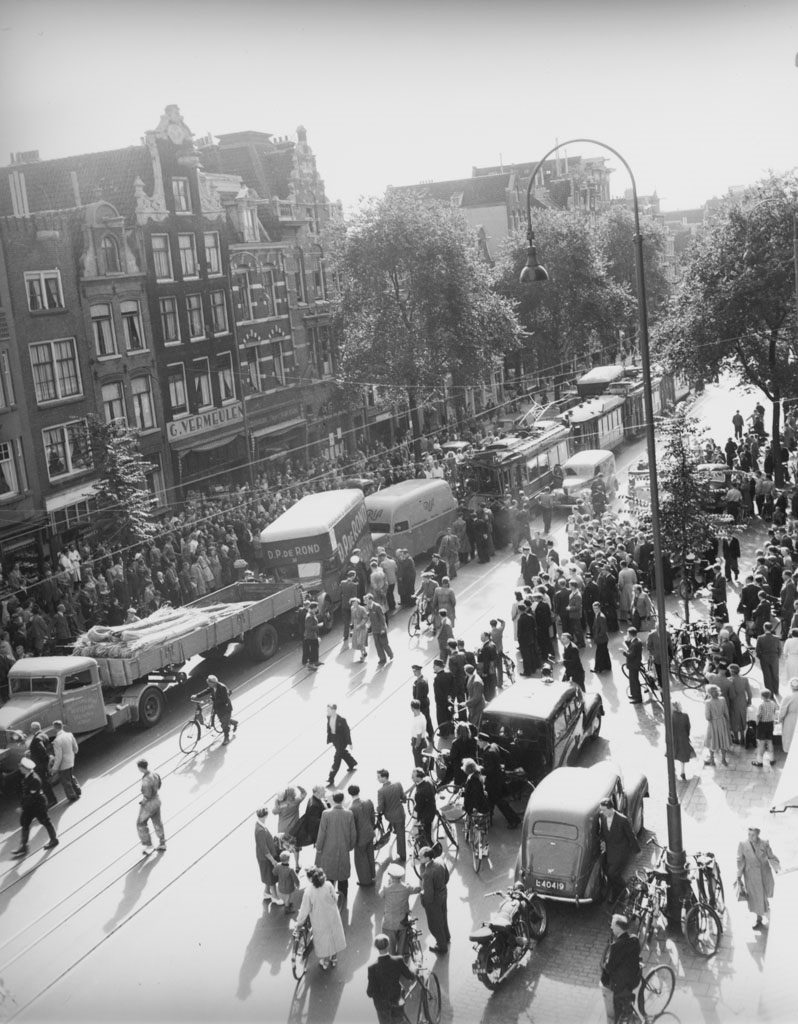
The autumn of 1951 was especially accident-heavy. On September 14, a pile-up of cars and trams blocked the Rozengracht. Just four days later, on September 18, a chain collision of trams on Damrak was photographed from the roof of the Beurs van Berlage, giving a rare overhead view of the wreckage. December 1951 brought yet another incident when tram 1 was involved in a traffic accident on Nieuwezijds Voorburgwal near the Nieuwe Kerk.
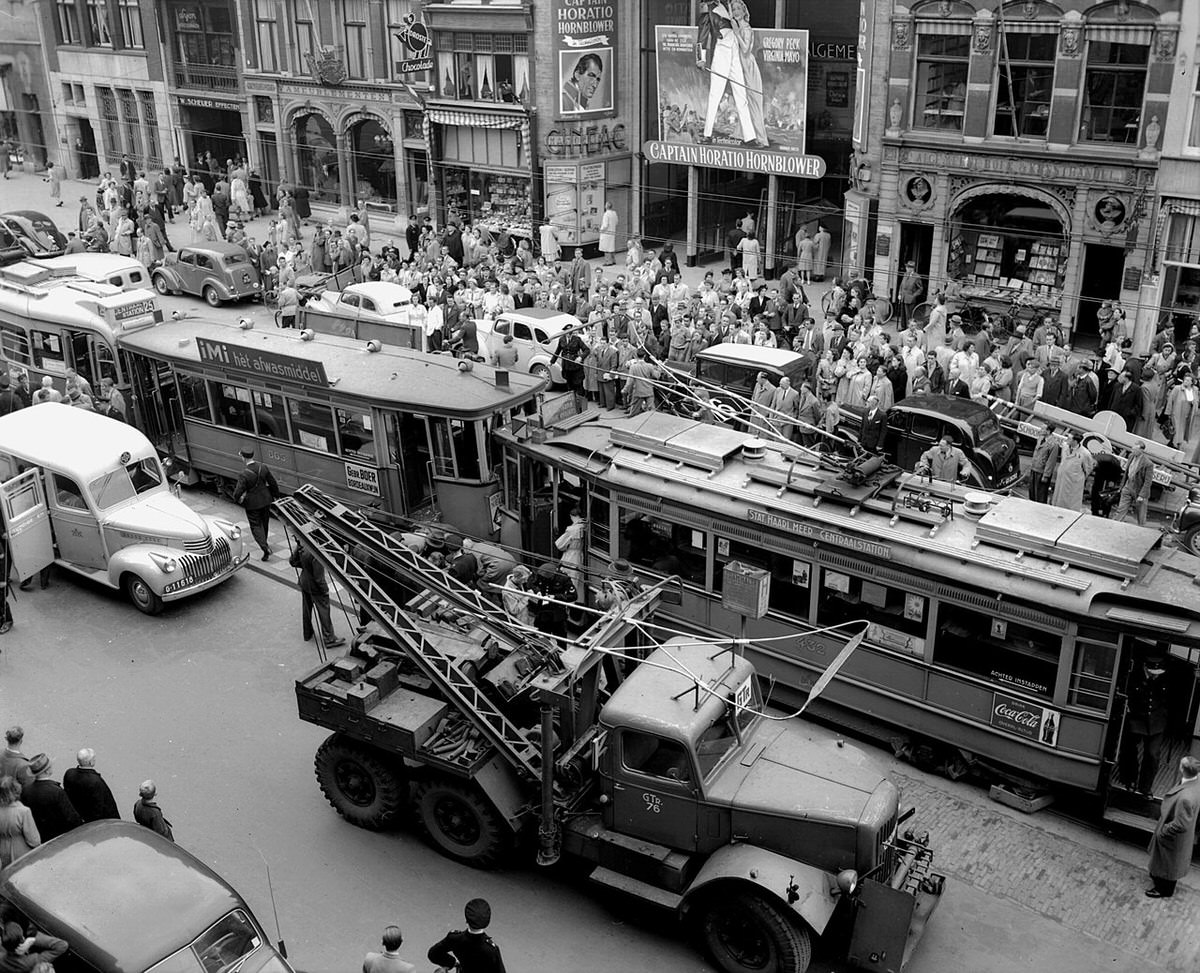
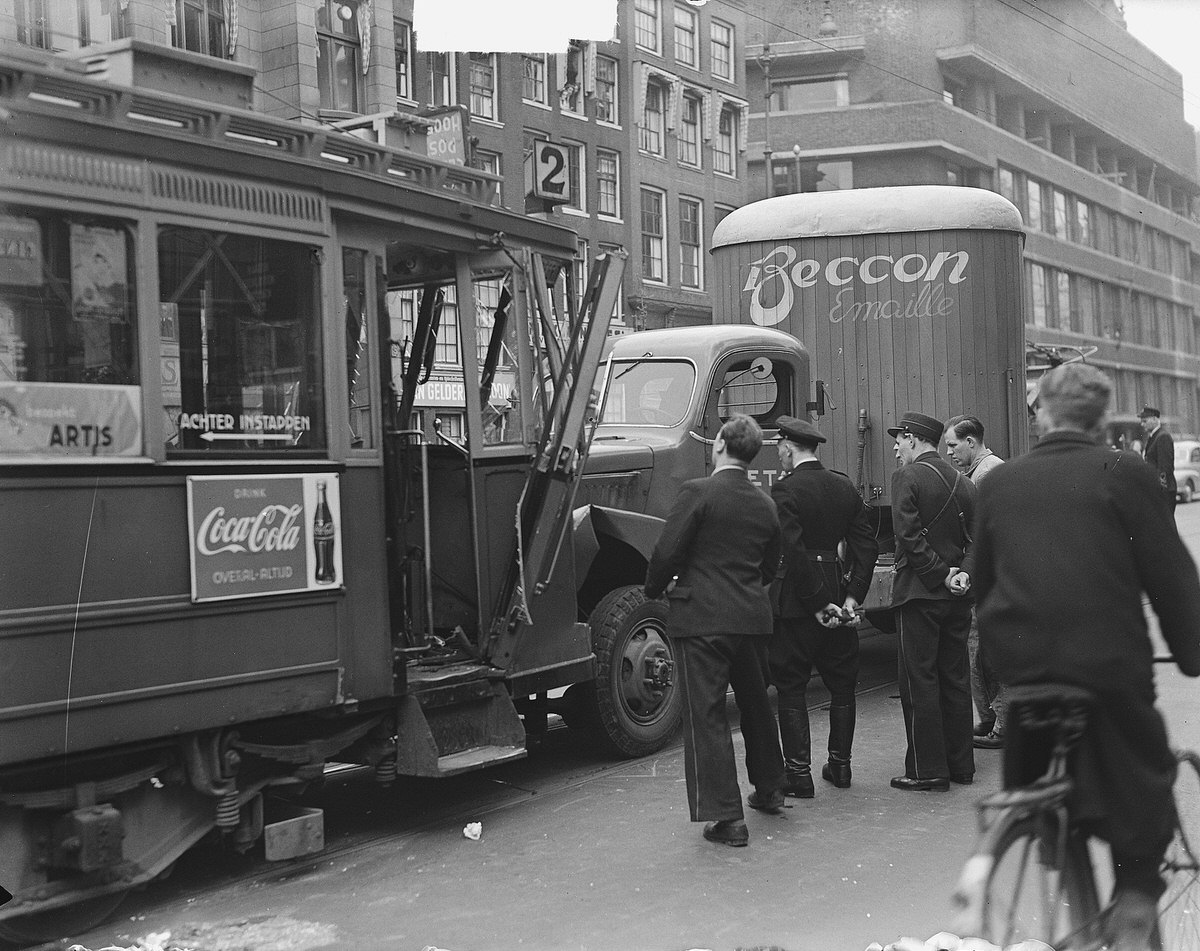
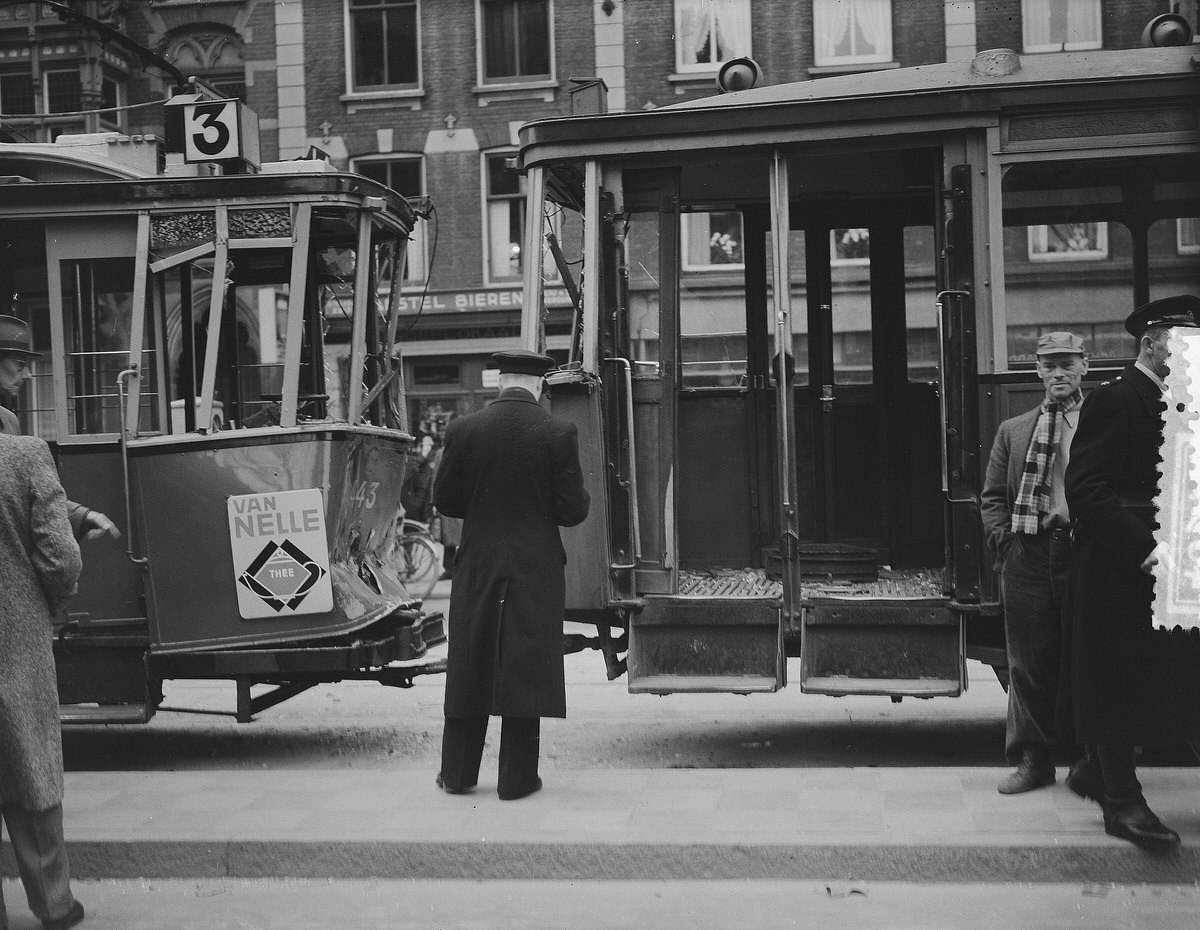
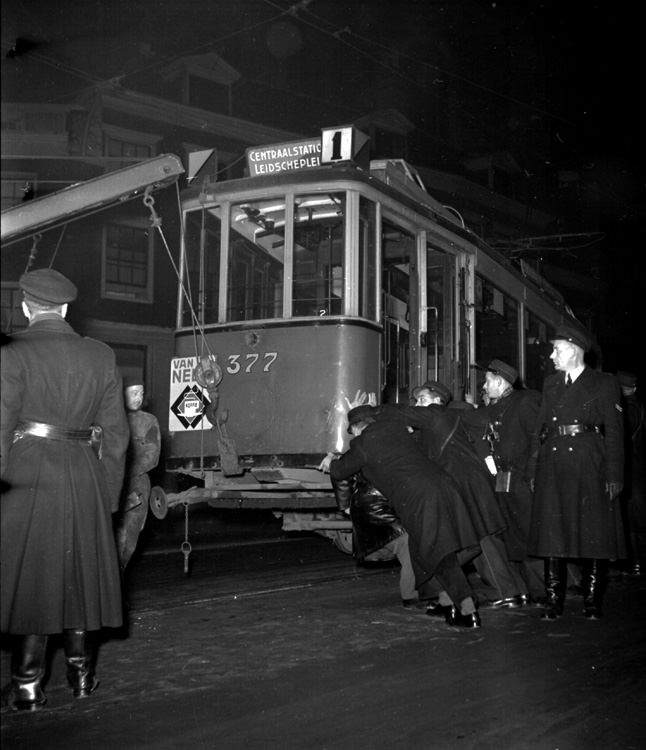
Tram line 24 collided with a fire truck on Ferdinand Bolstraat in September 1953, and the same year saw a derailment at Leidseplein in October. In 1952, the Haarlem tram derailed again, this time at the corner of Spuistraat and Paleisstraat in February. These incidents show that derailments were not isolated events but a recurring challenge across the entire network.
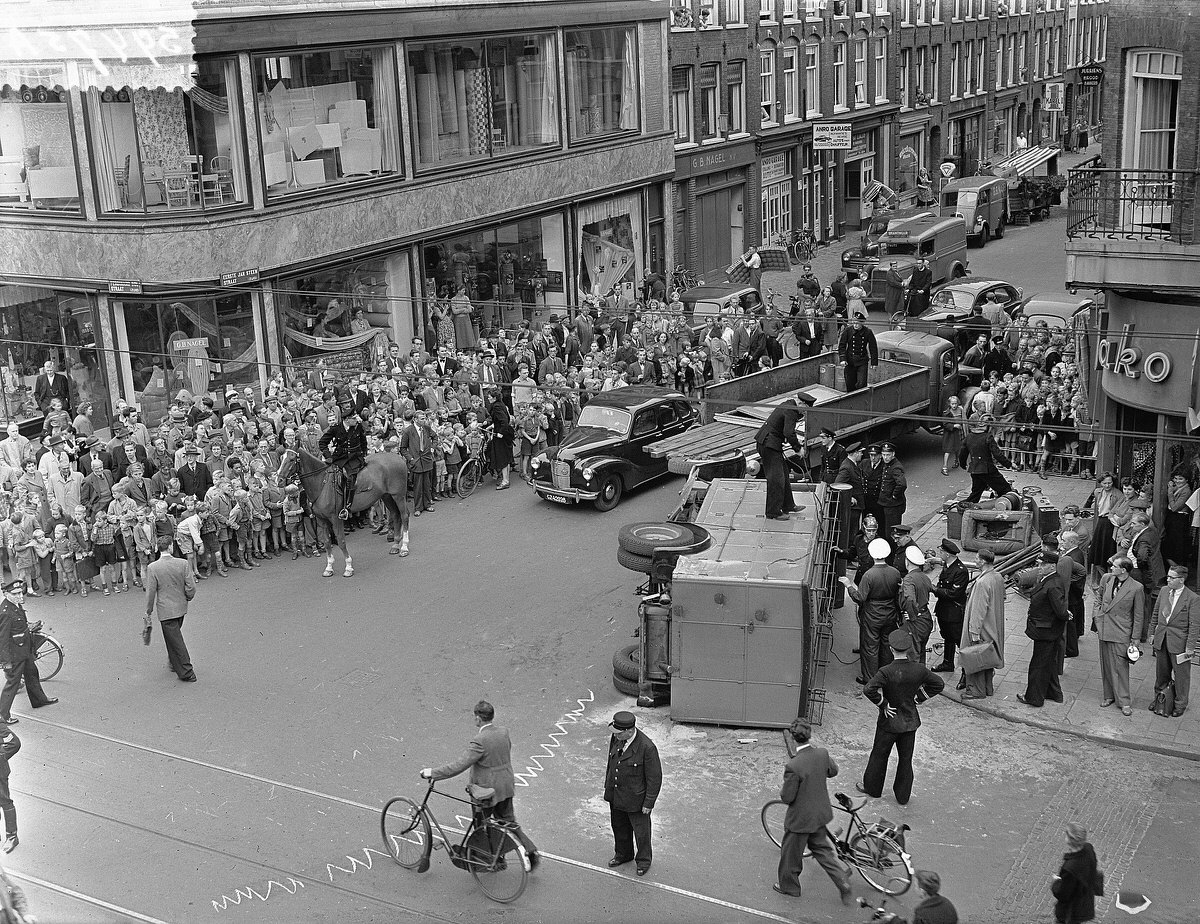
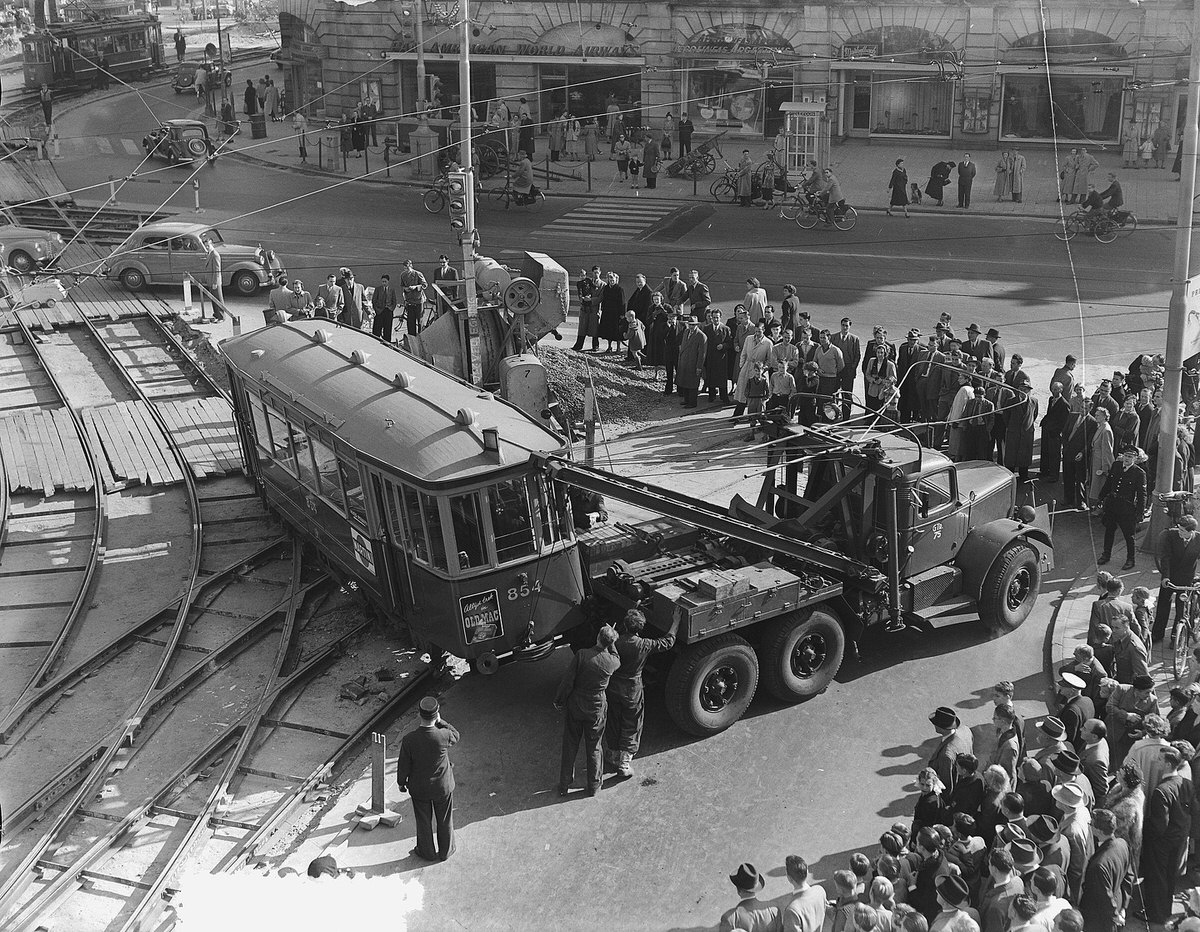
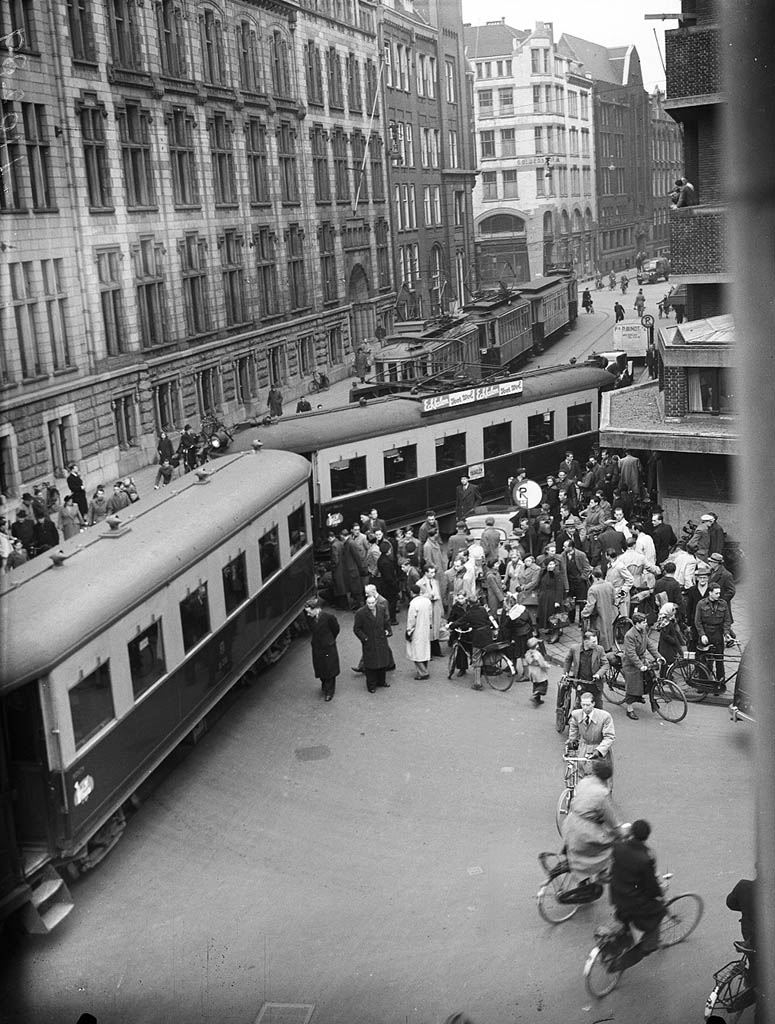
The mid-1950s saw a string of collisions involving trucks and lorries. In August 1956, a tram collided with a lorry belonging to Koeneman & Sons of Sappermeer. That same year, line 4 ended up in the Amstel again in September, and a tram derailed on Damrak in October. Tram collisions in 1955 included a crash at the Nassaukade-Kinkerstraat intersection in November and a car collision with tram 7 in December 1955 on Witte de Withstraat.
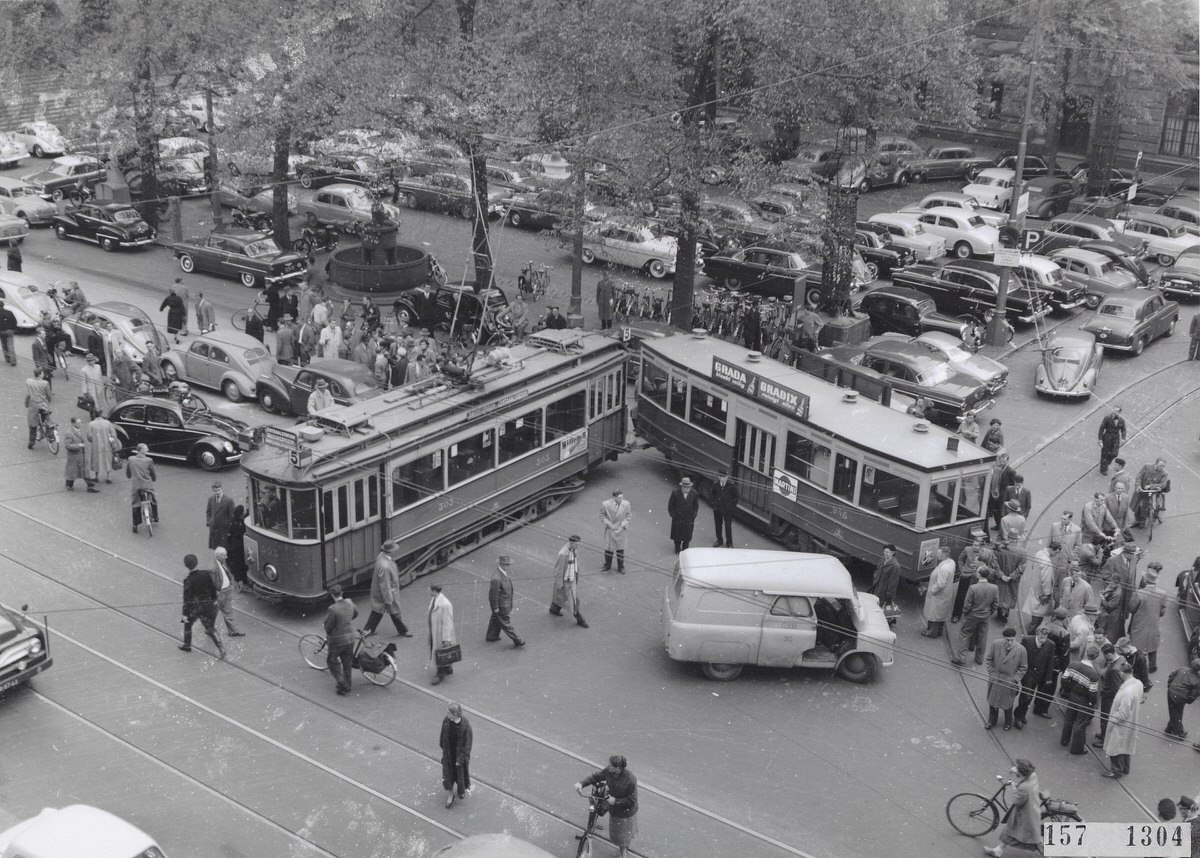
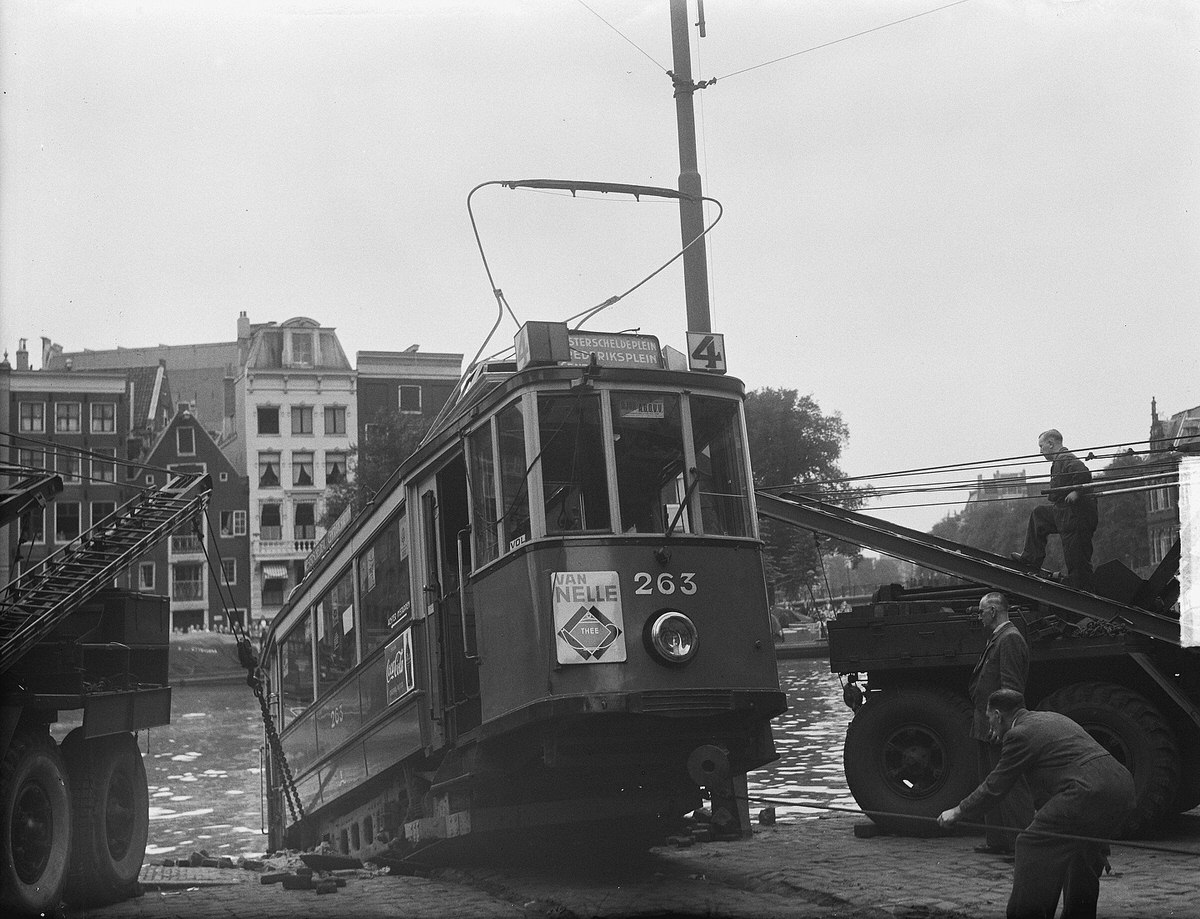
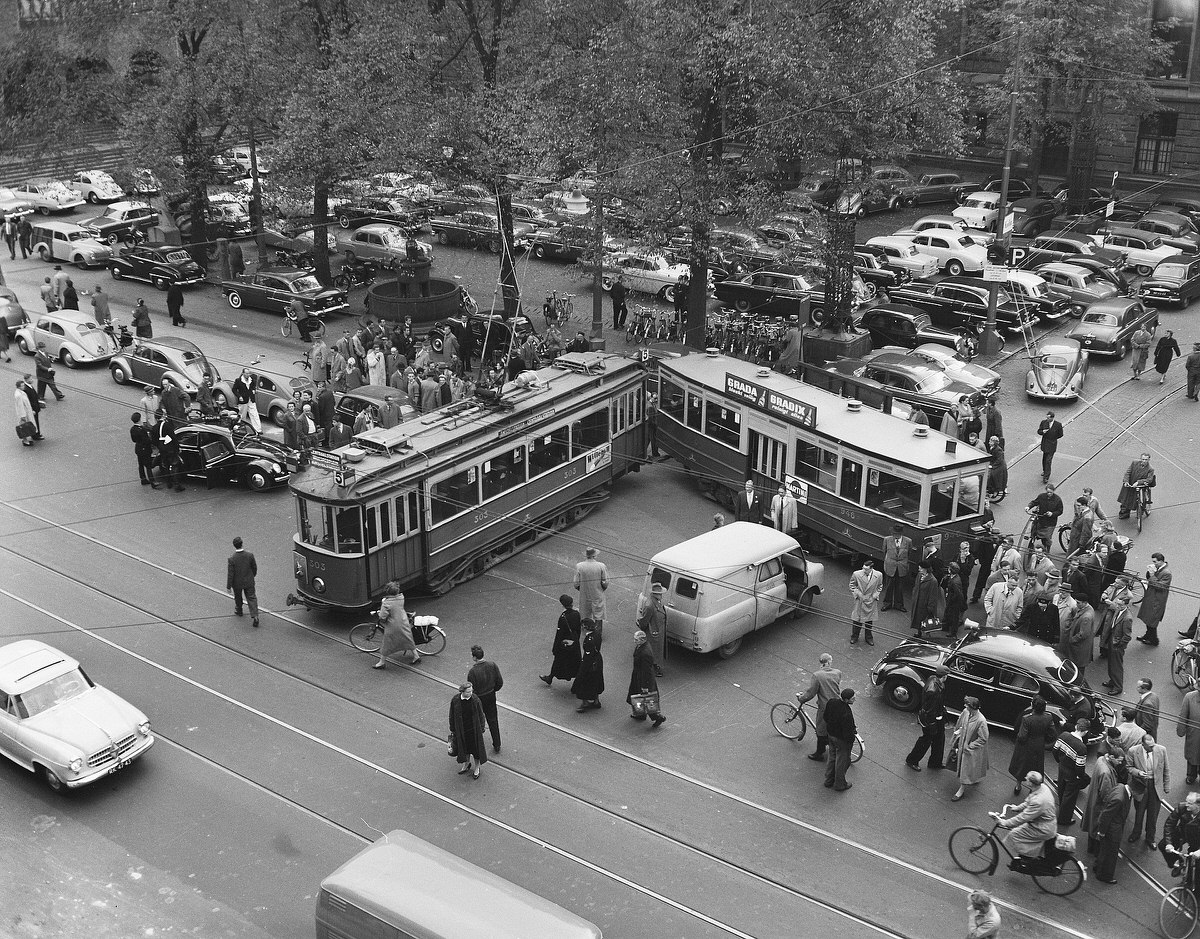
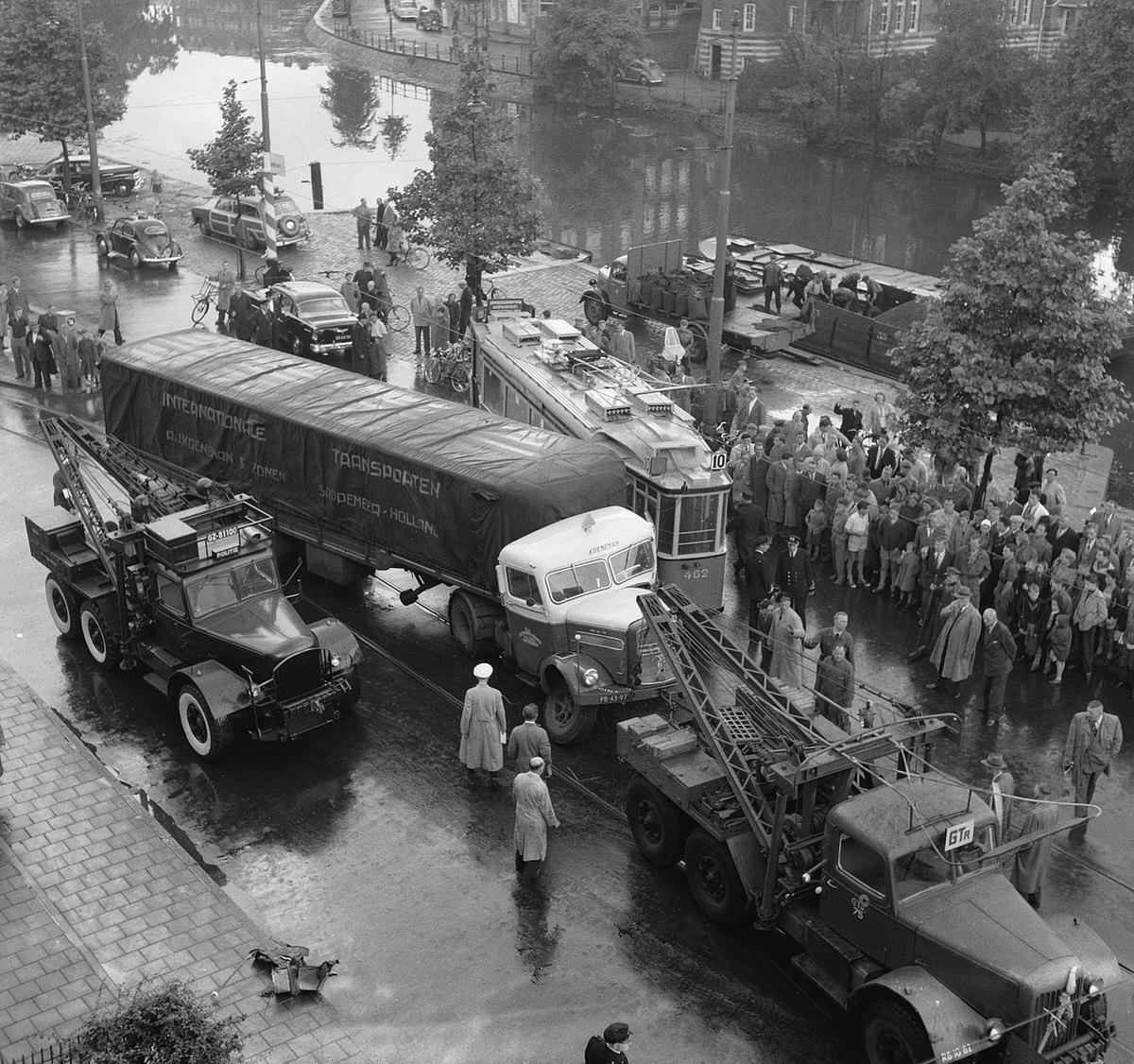
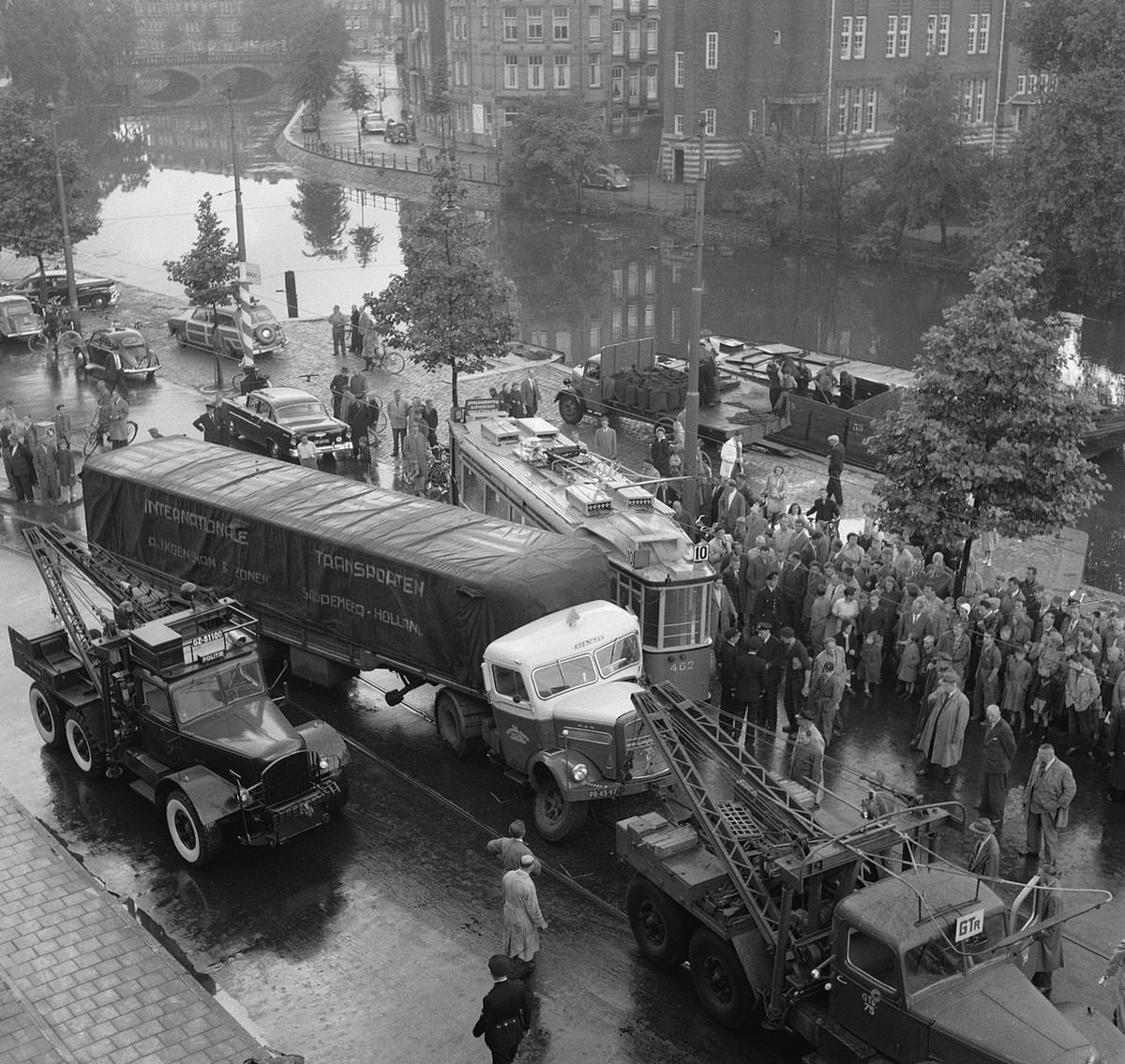
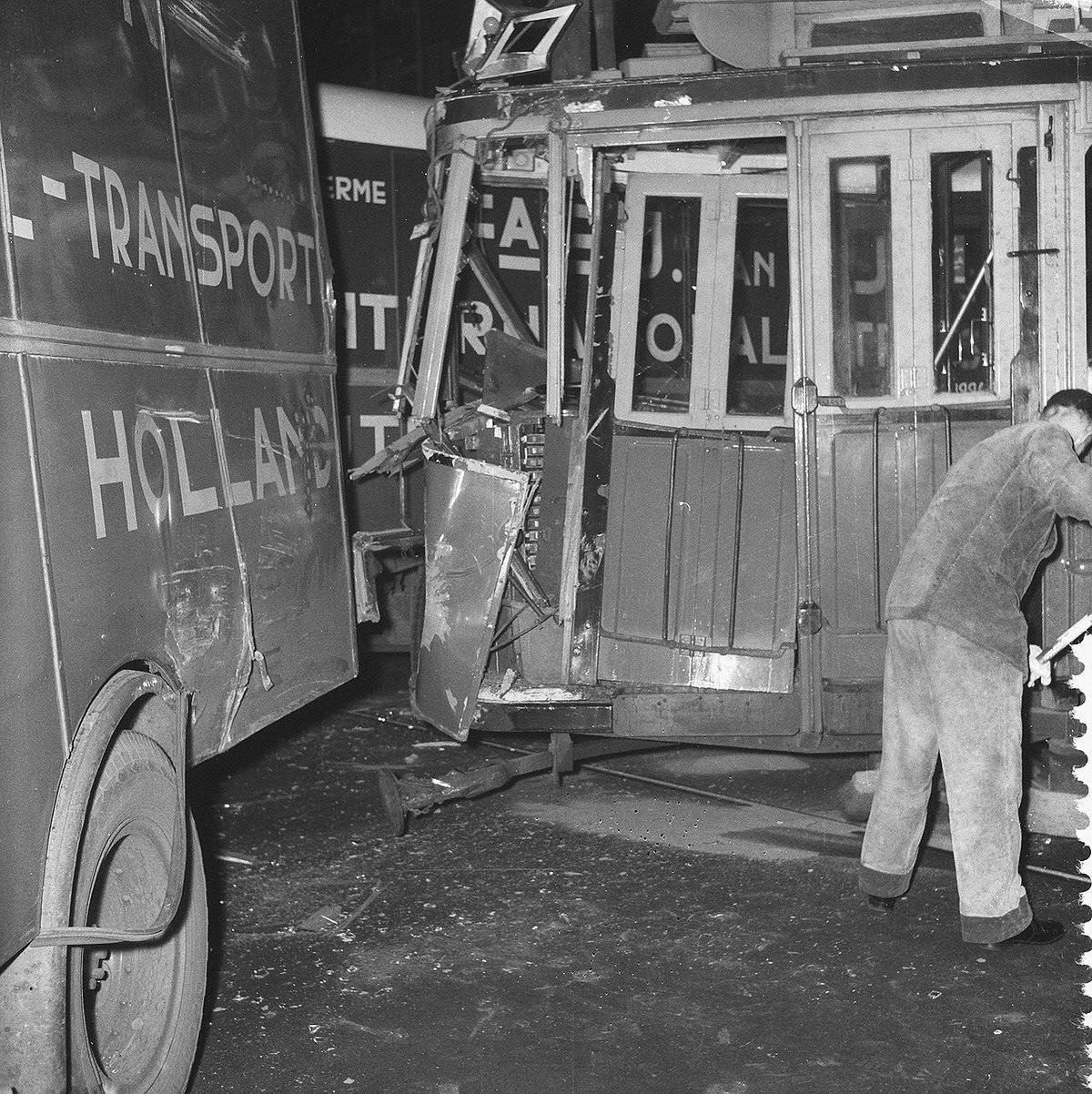
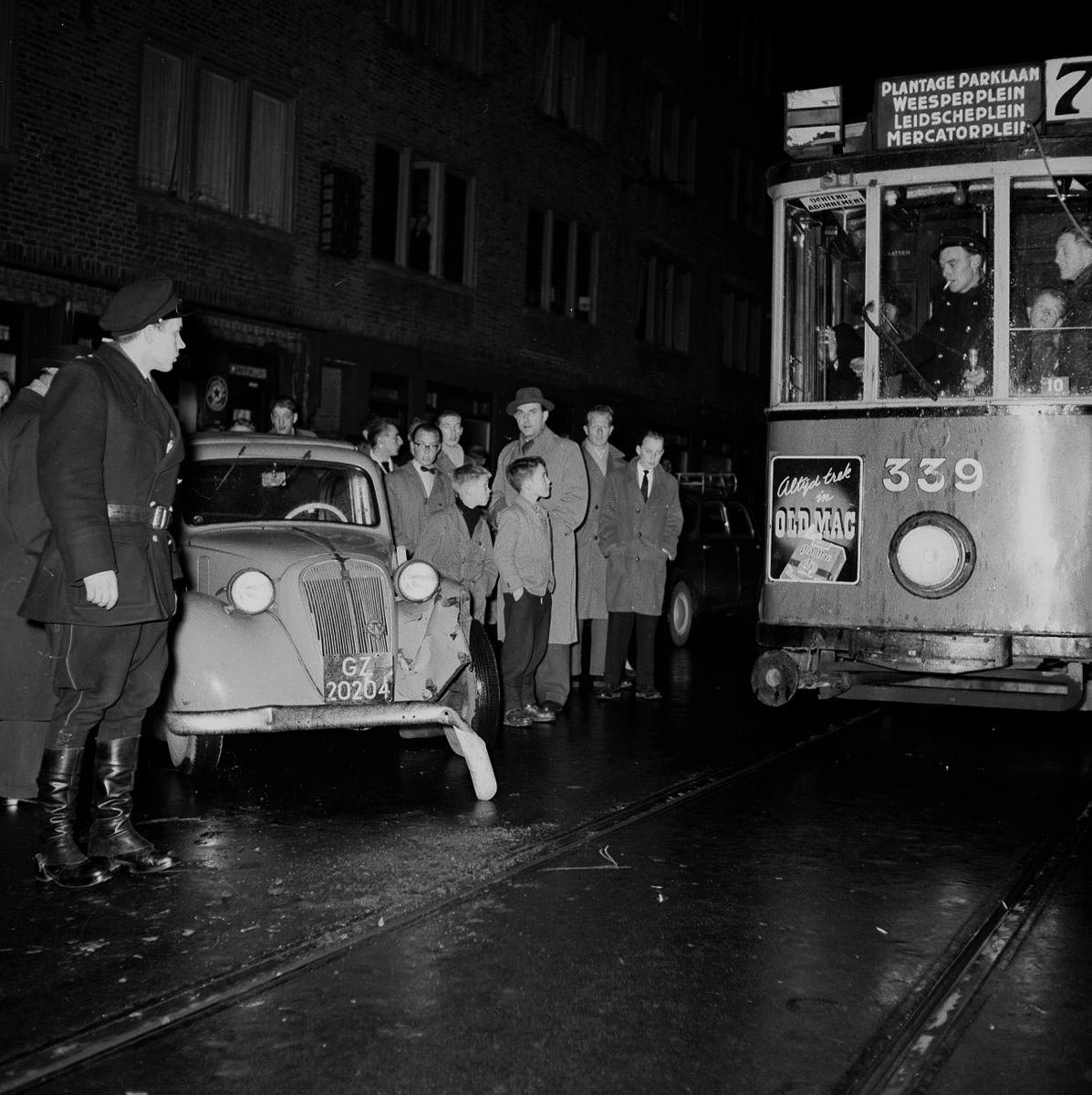
1956 also brought a truck collision with line 7 on Plantage Kerklaan in December, and tram 5 colliding with a collision involving tram 3 on Frederik Hendrikplantsoen in April of that year. The delivery van collision at Frederiksplein and the Van der Hoopstraat collision of March 1957 were two more incidents that added to the tally.
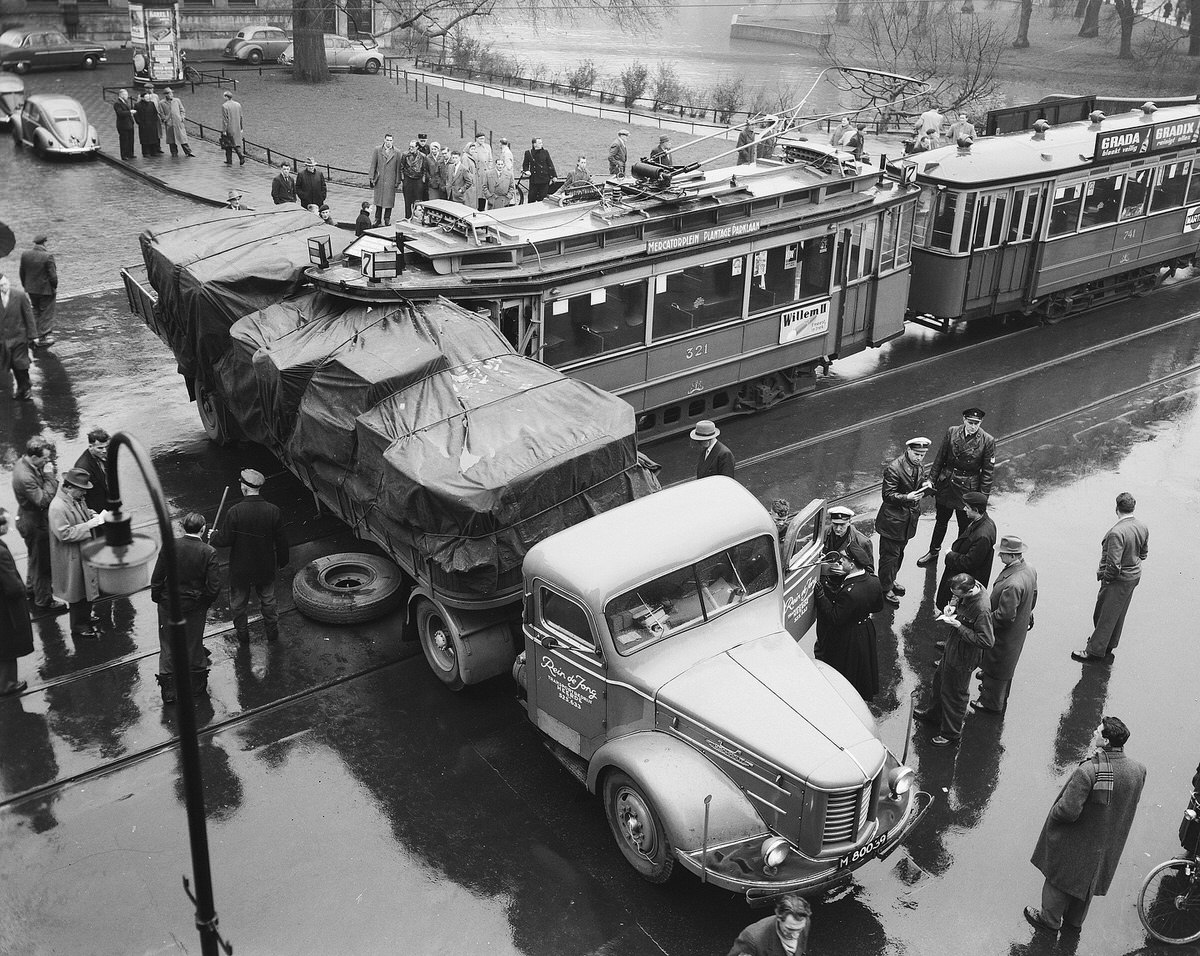
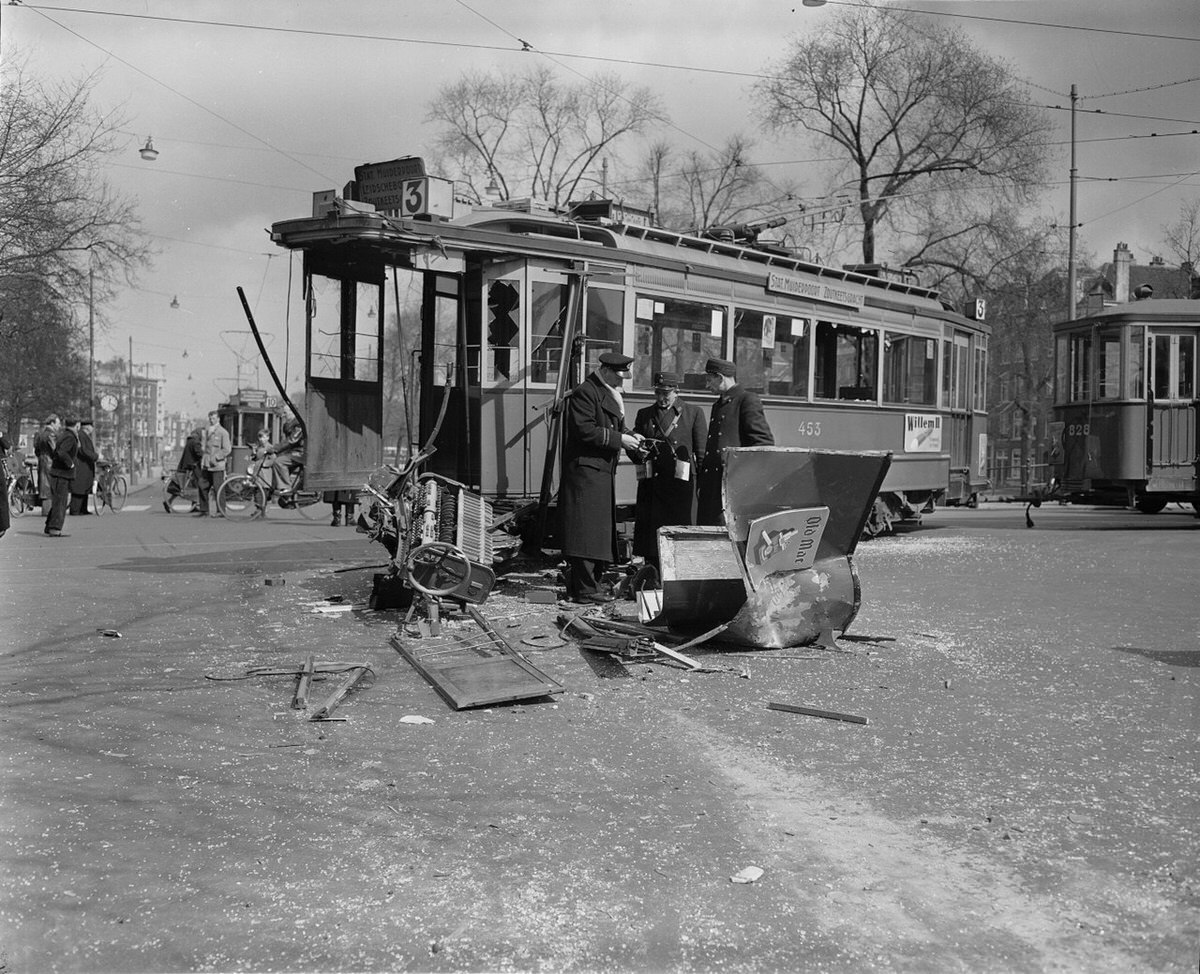
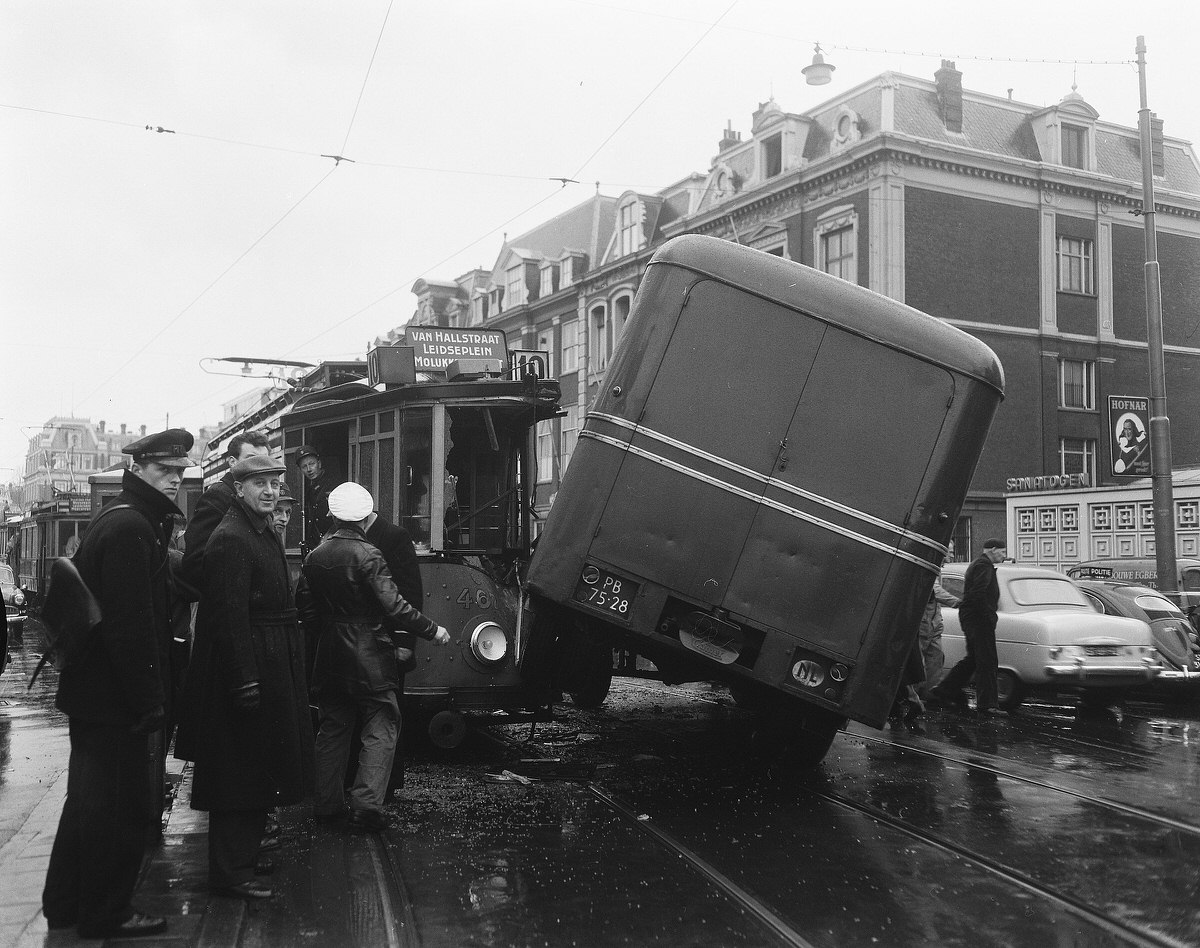
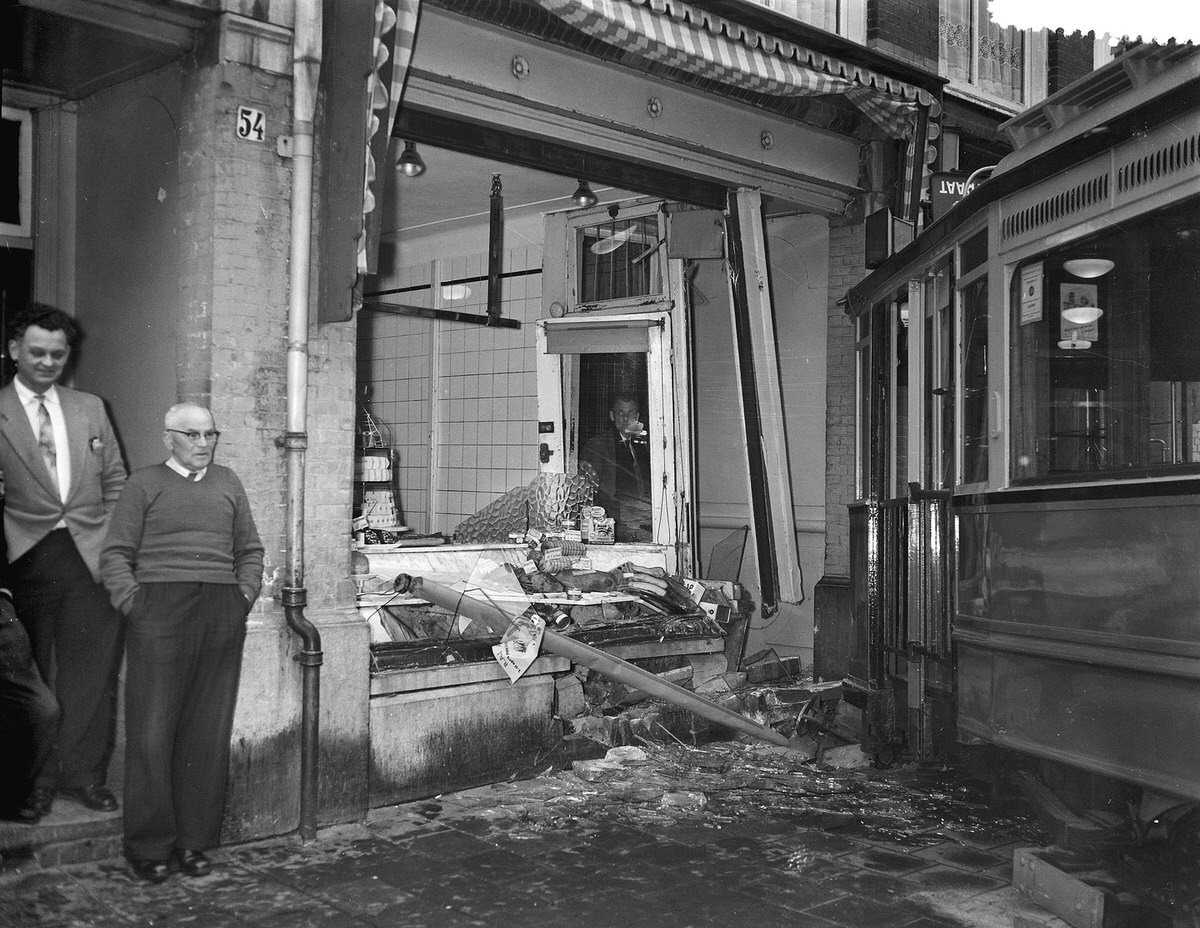
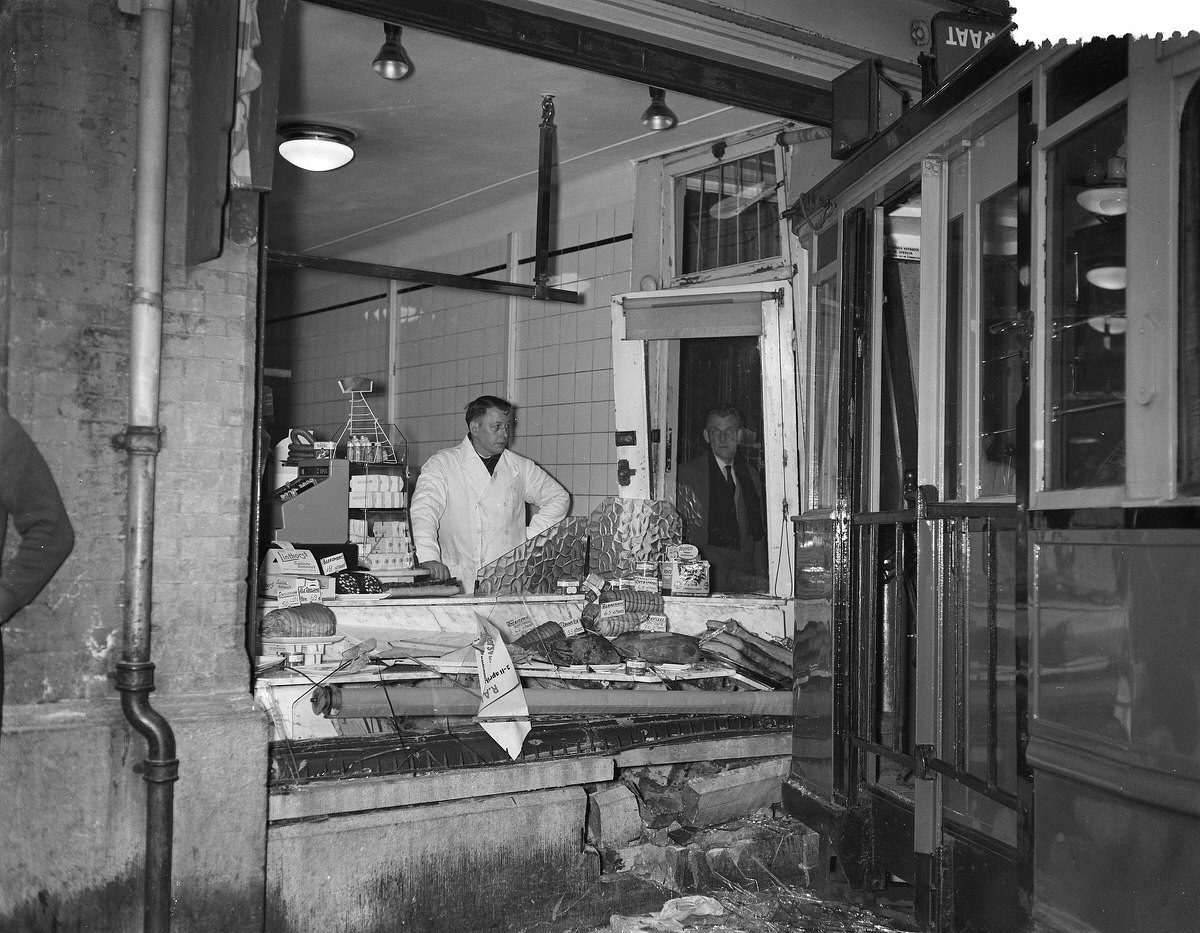
A bolt lodged in the rails caused a derailment on August 23, 1961, at the corner of Roeterstraat and Sarphatistraat. The tram left the tracks and struck trees along Sarphatistraat. Two years earlier, in September 1959, a collision in Sarphatistraat had completely destroyed the railcar of line 7. Incidents like these, triggered by road debris or foreign objects on the tracks, were among the harder ones to prevent.
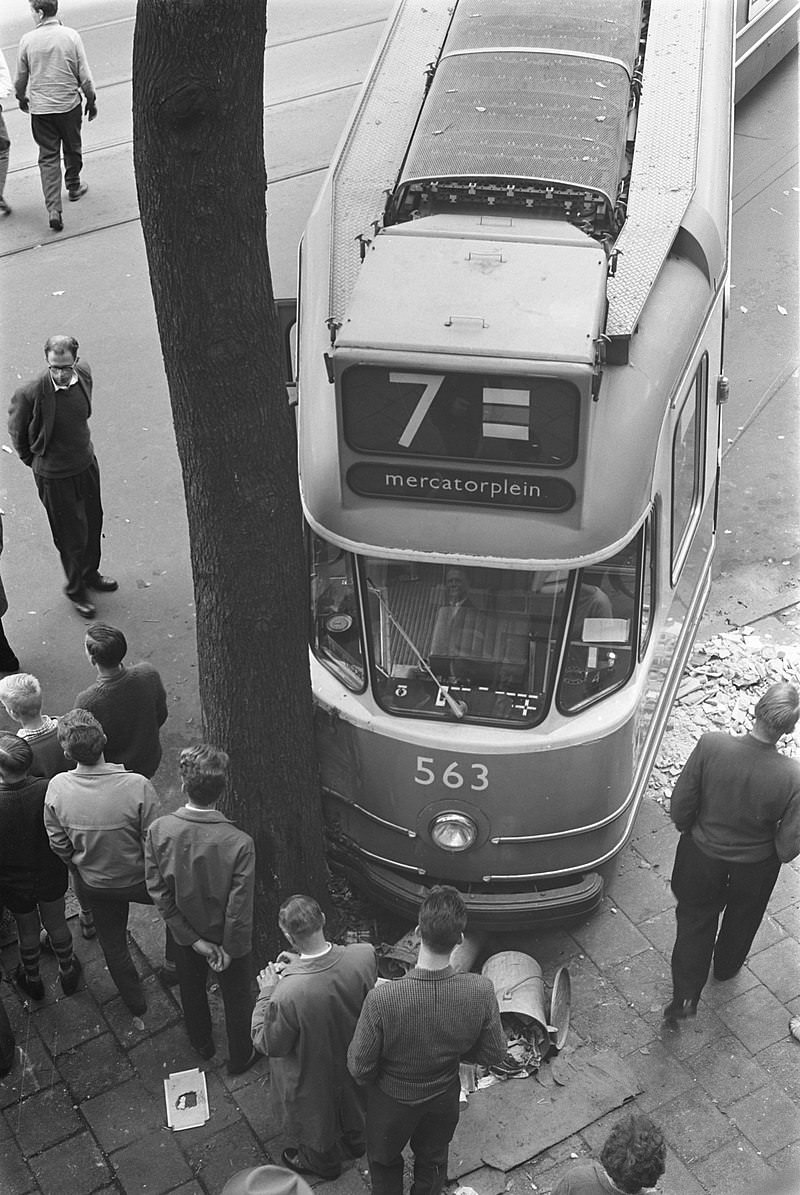
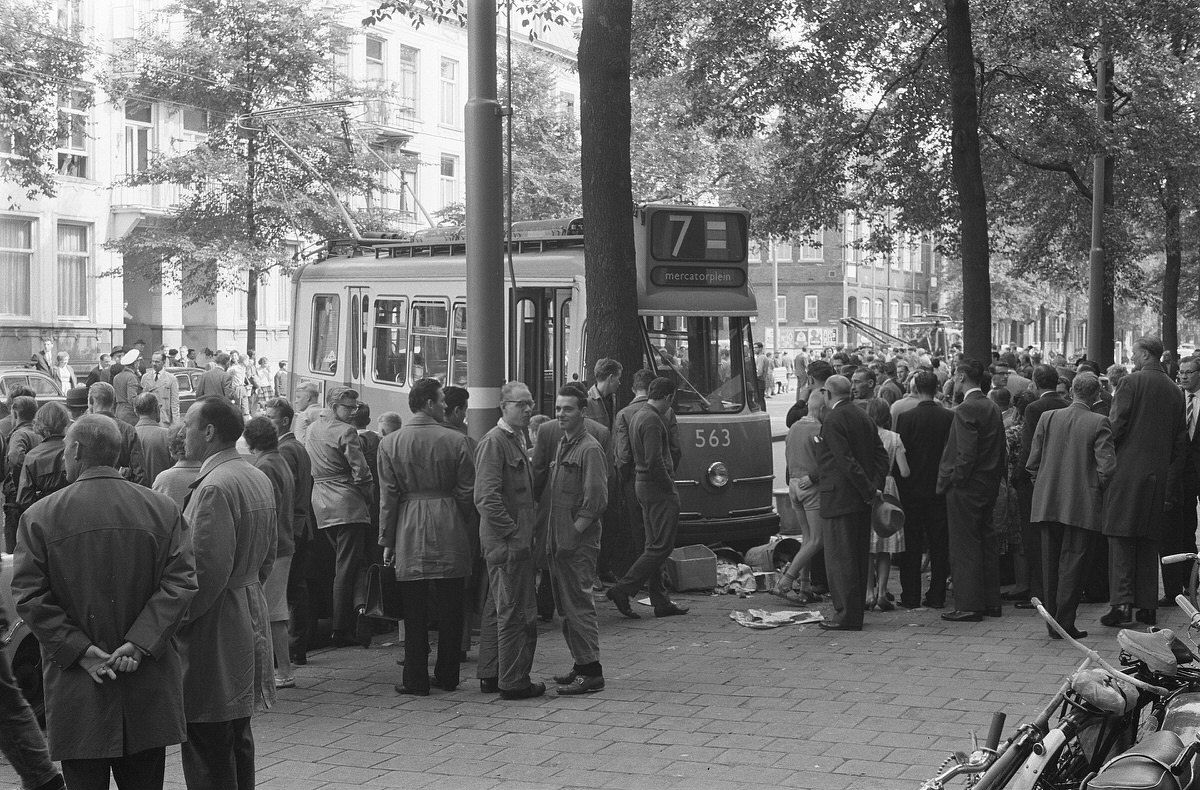
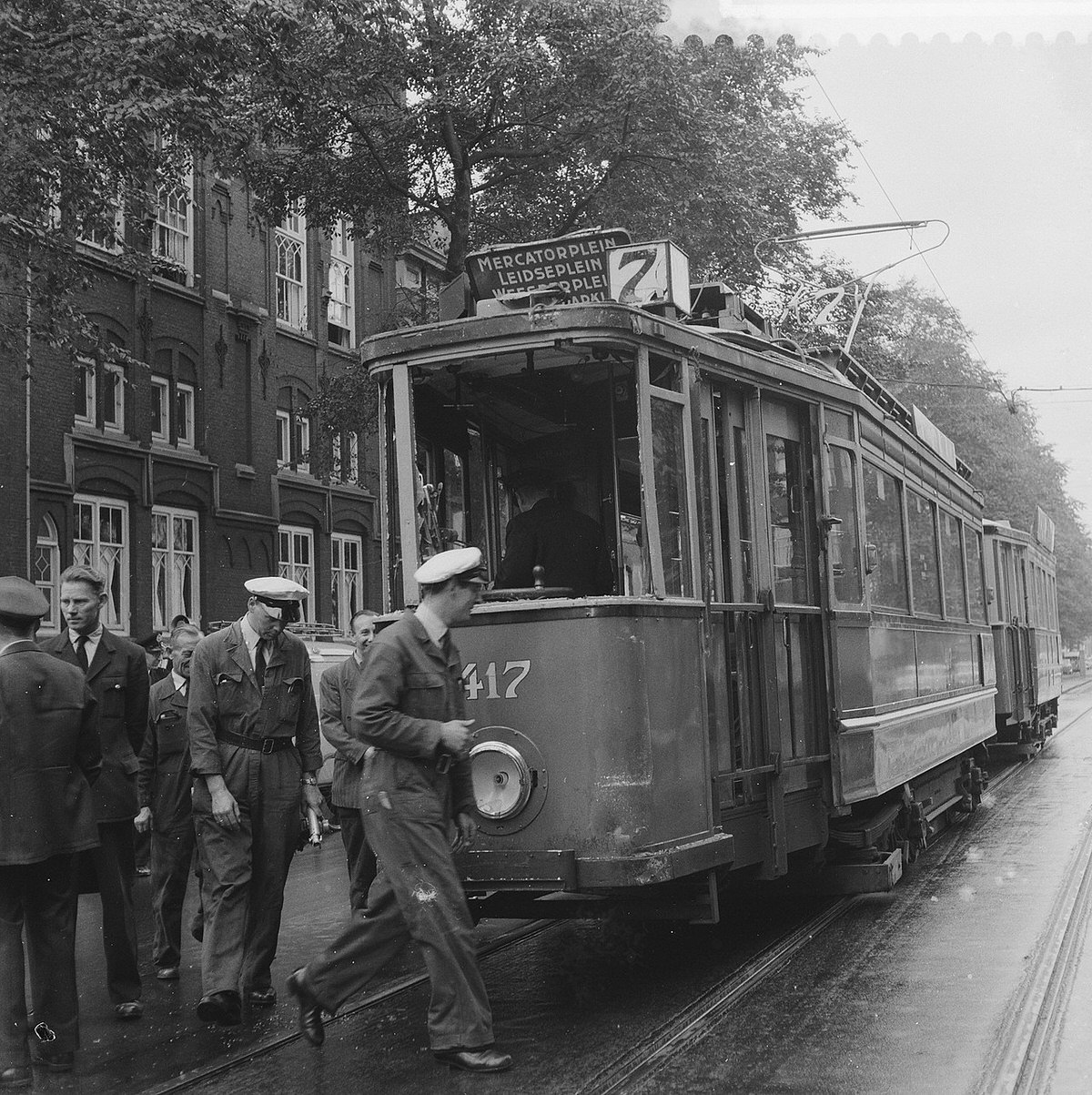
Line 3 collided head-on with another line 3 tram on the Insulindeweg in October 1960. The following year, in June 1961, a tram and trailer collided at Bos en Lommerplein. Line 13 struck a truck in Jan Evertsenstraat in March 1961, and line 7 derailed in Jan Evertsenstraat in September 1960. These repeated incidents on some of the same streets point to specific intersections and stretches of track that were consistently dangerous.
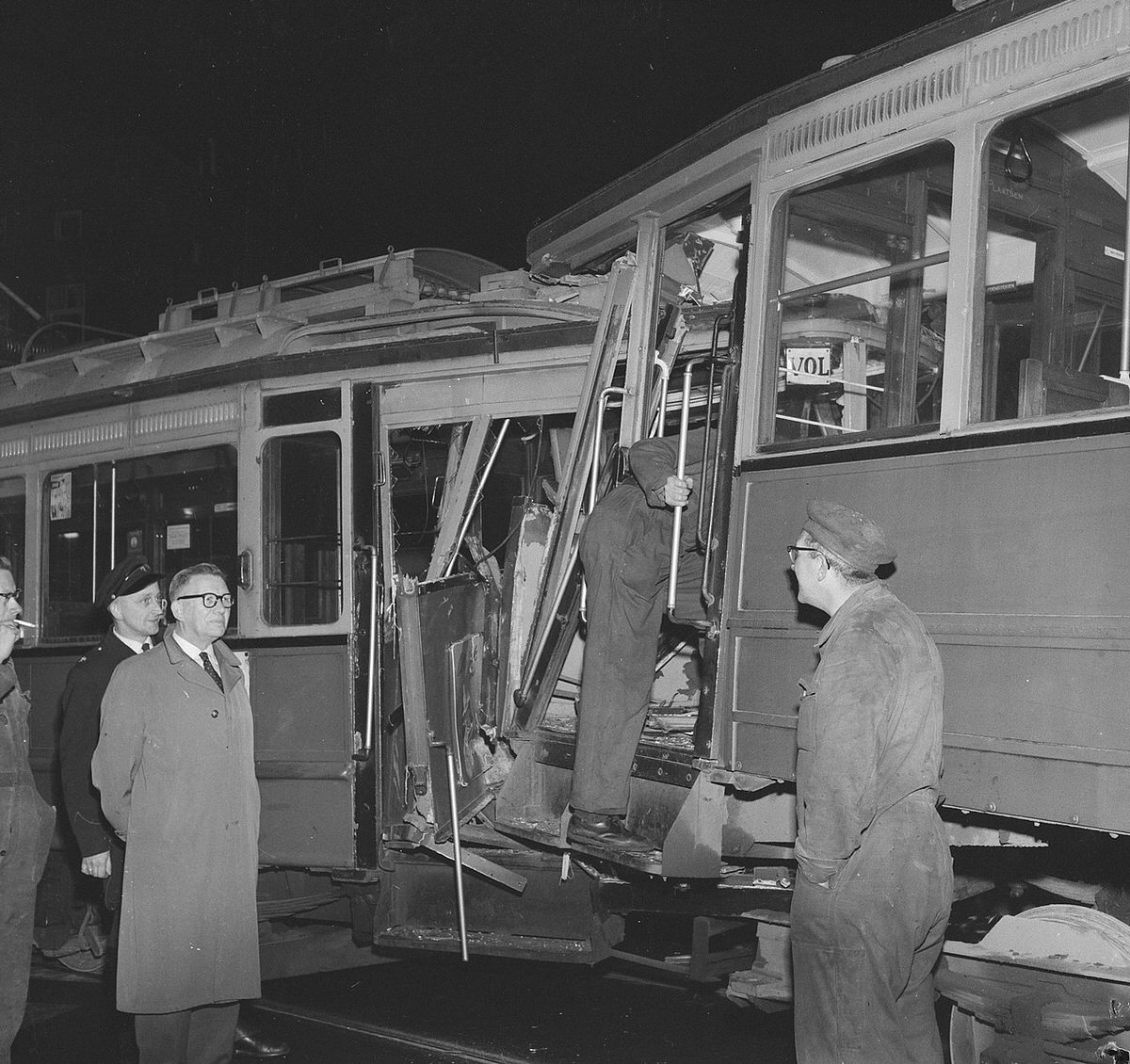
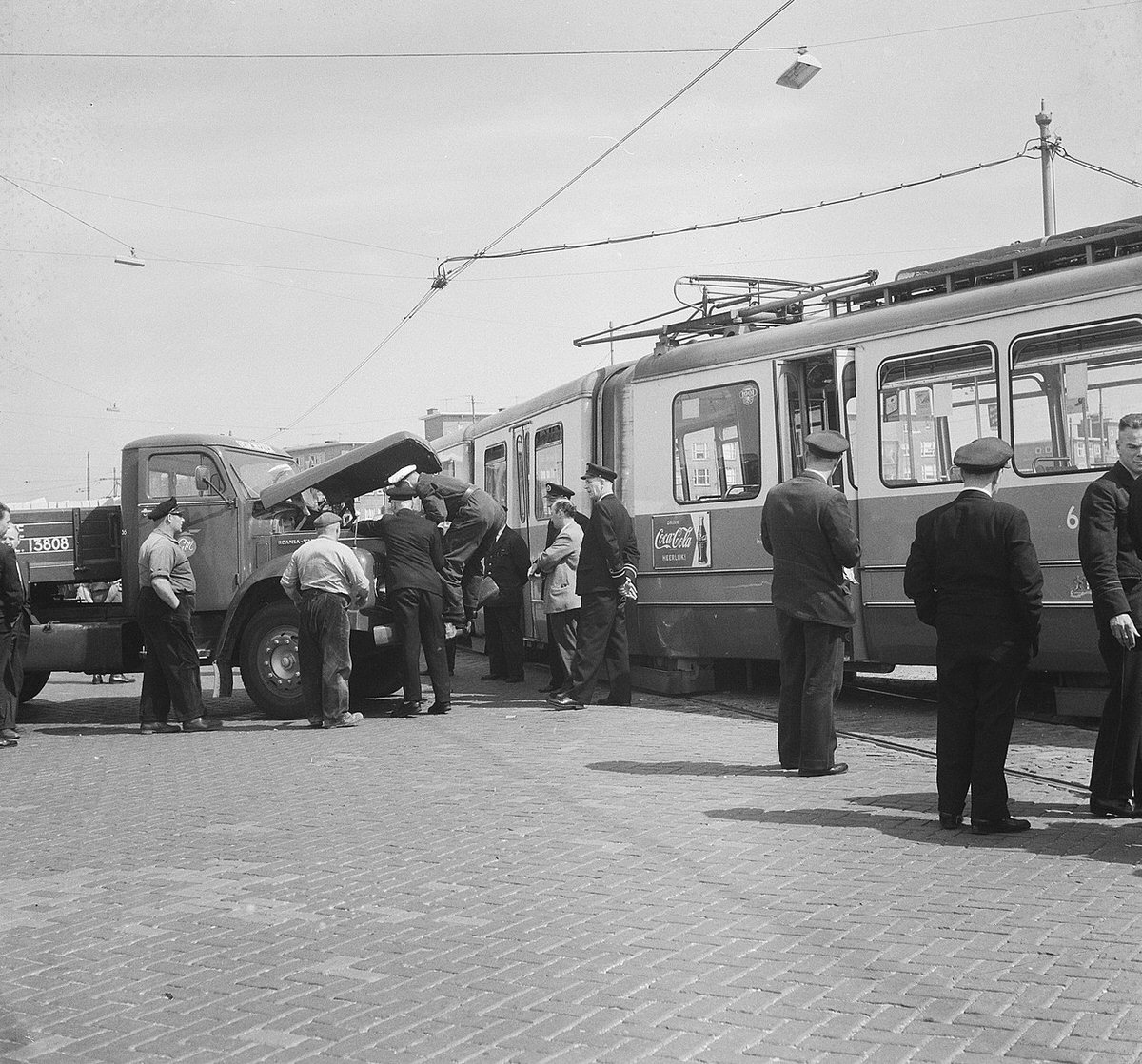
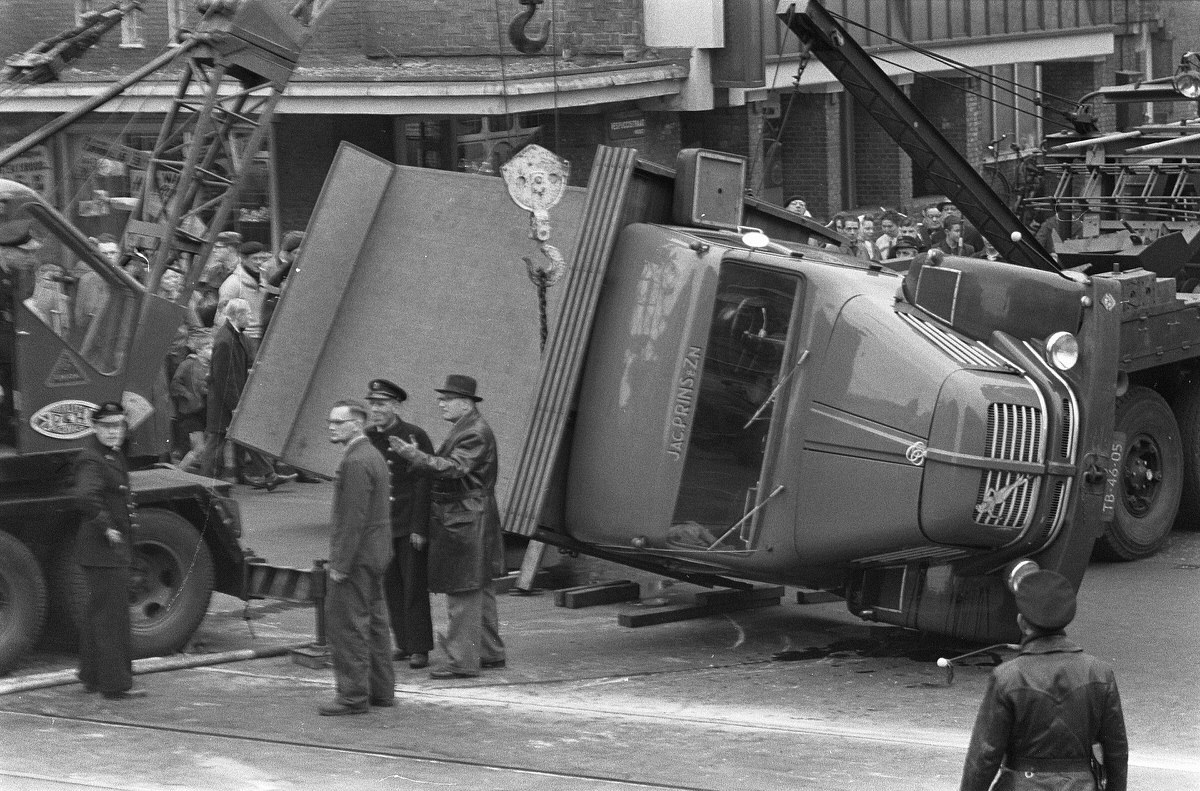
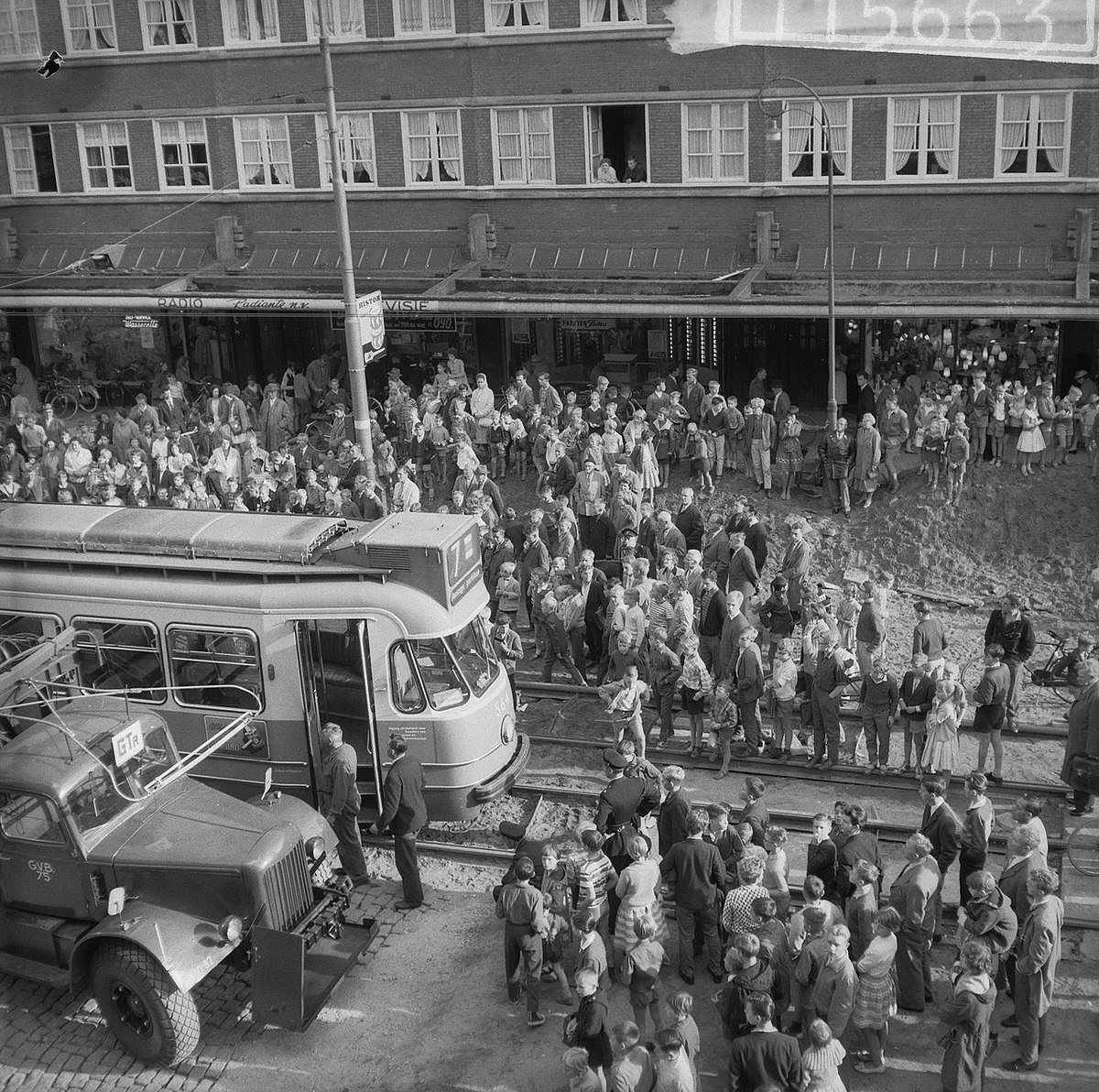
January 8, 1964 was among the deadliest single days captured in this collection. Tram line 17 collided with a passenger car at Surinameplein on Haarlemmermeerstraat, killing one person. Two photographs document this accident. Later that year, in April and August, line 1 collided with cars on Amstelveenseweg, with one of those crashes being fatal — the car was completely destroyed.
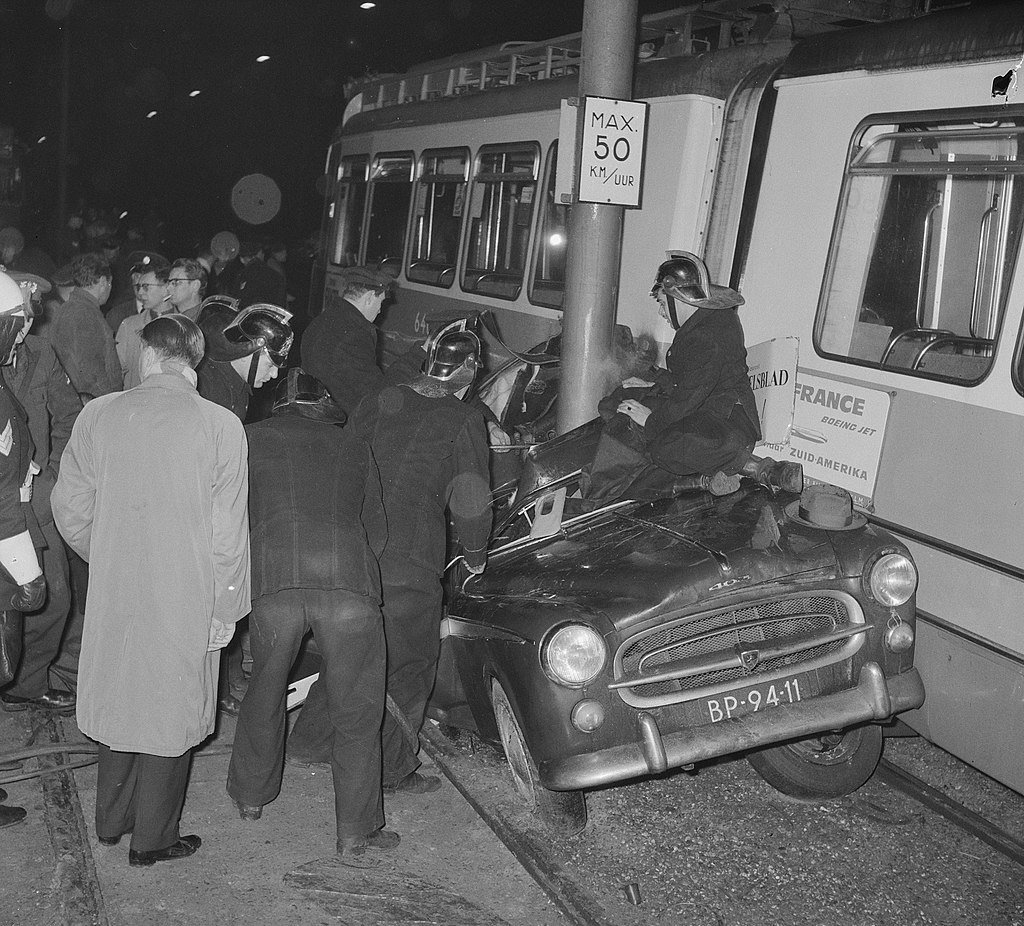
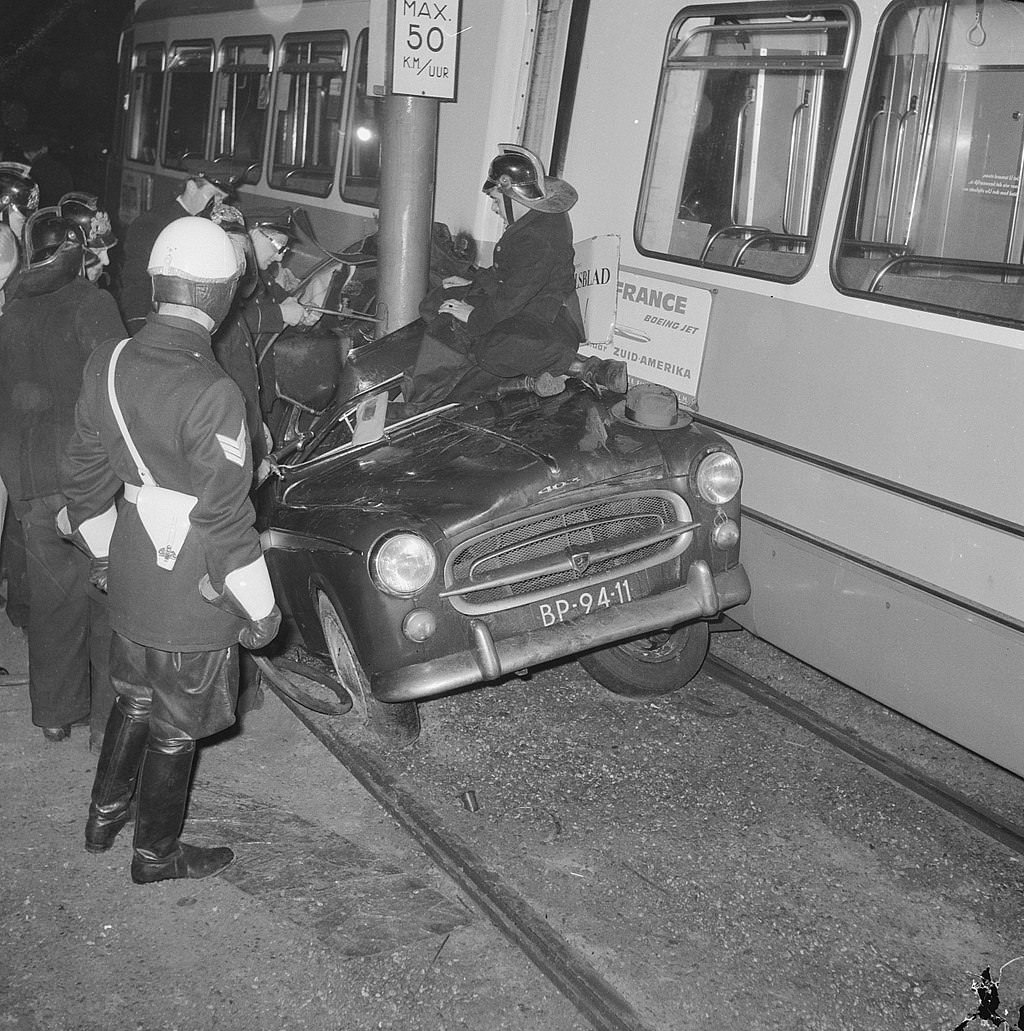
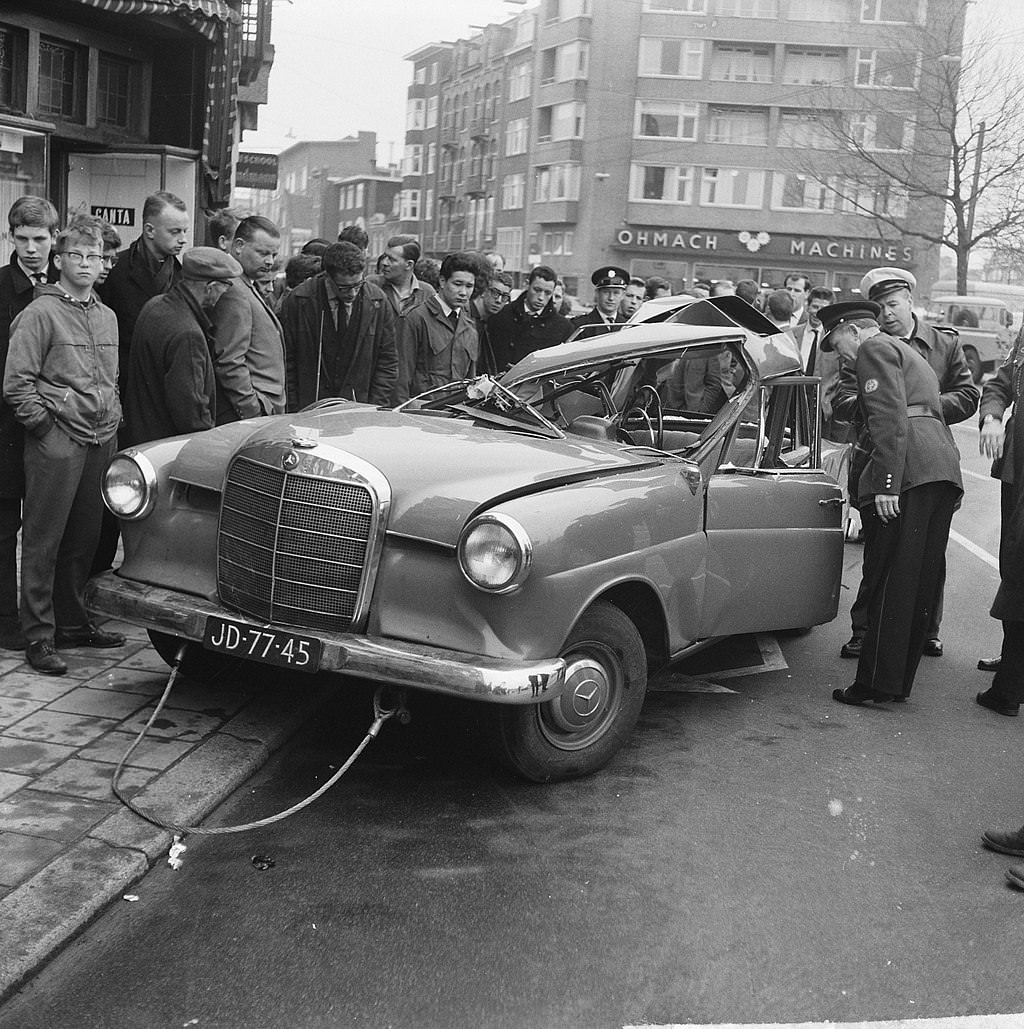
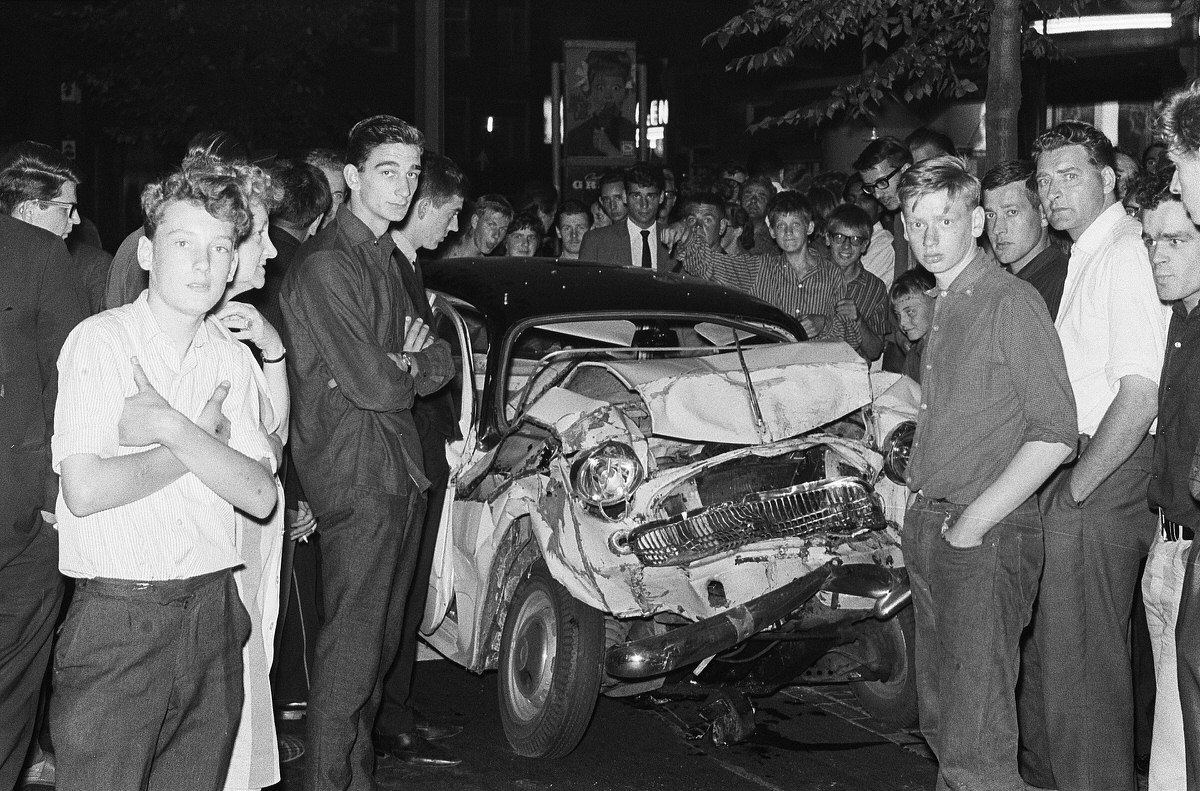
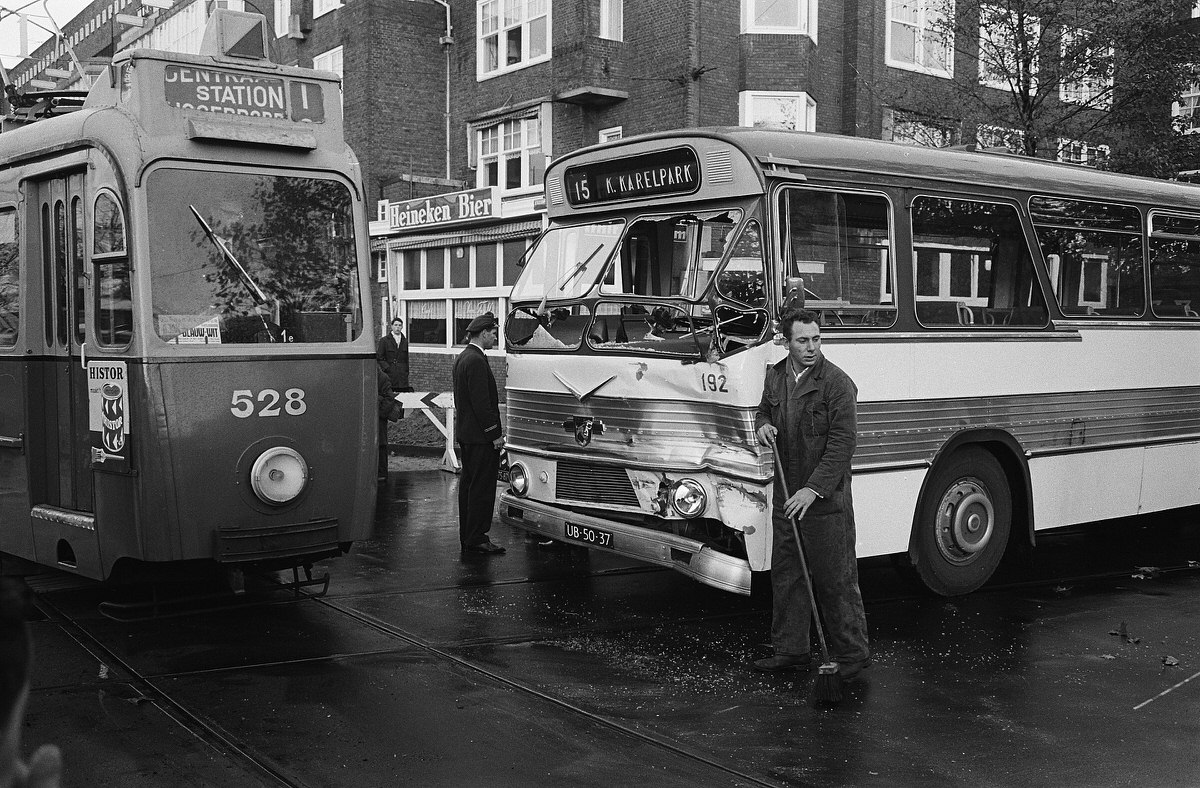
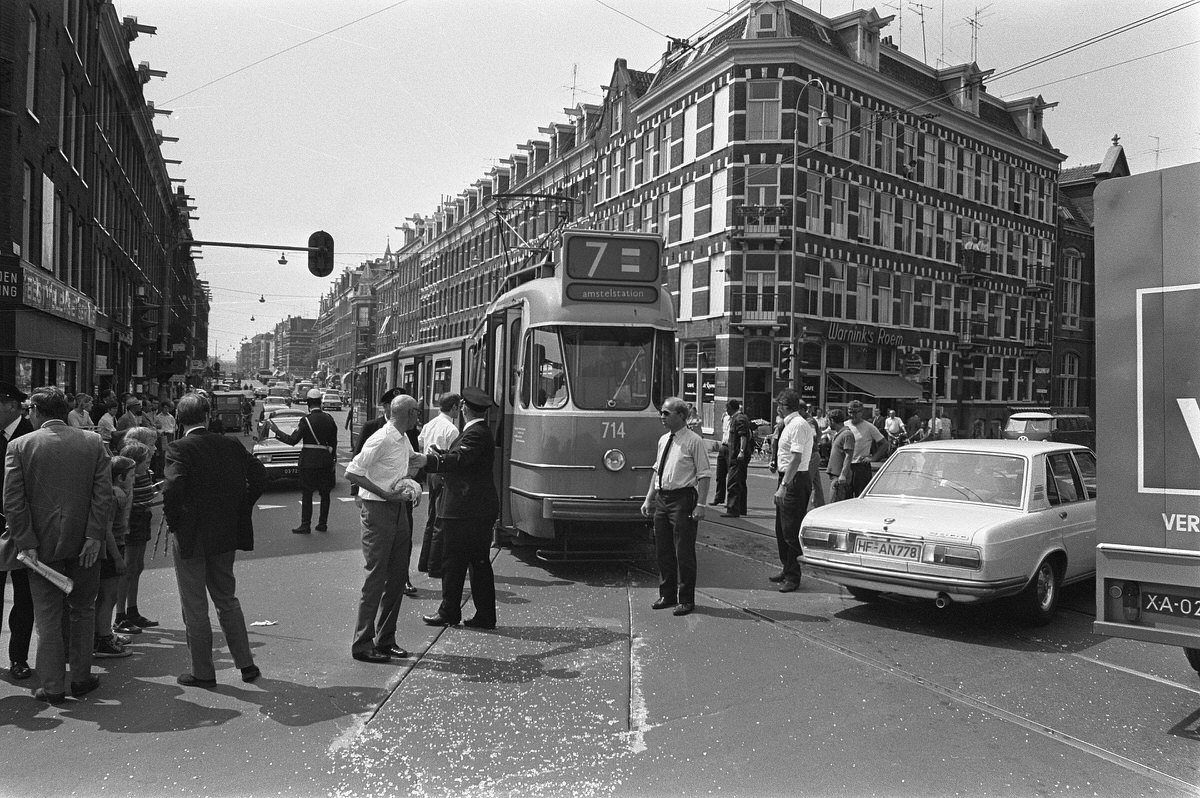
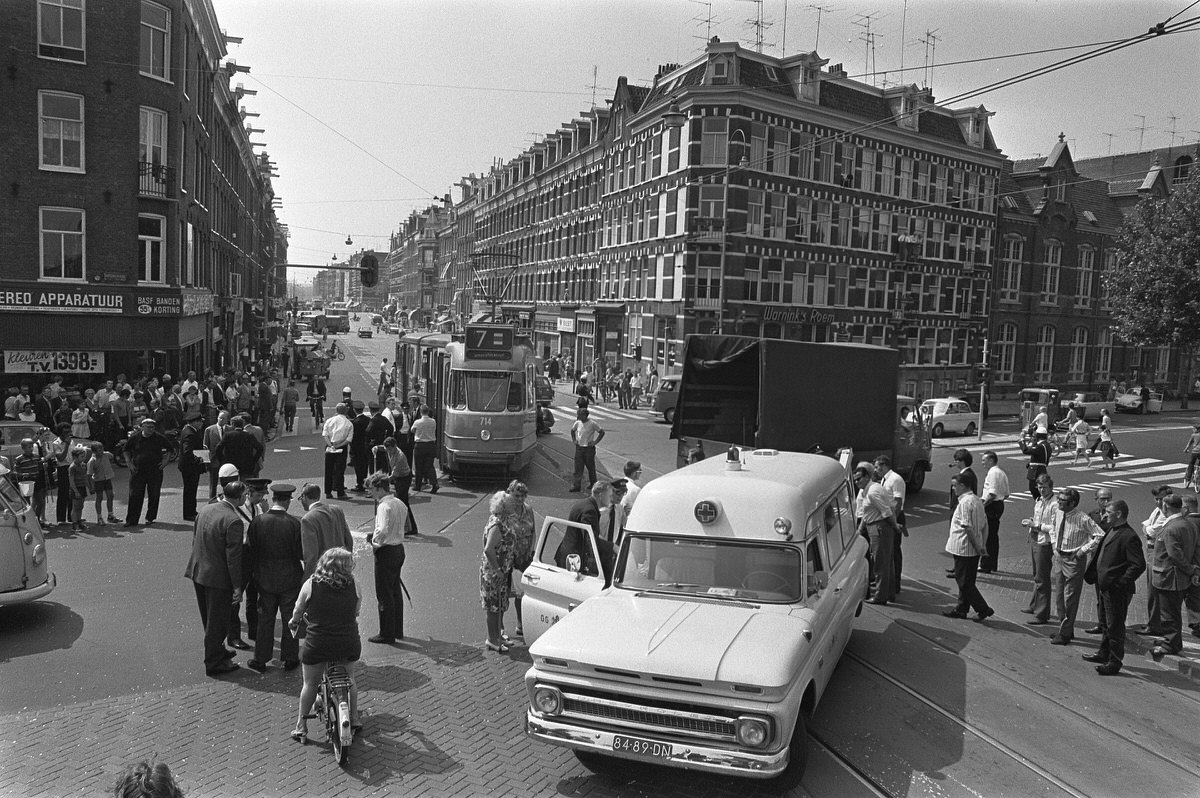
In November 1963, a bus belonging to NZH collided with tram line 3 at the corner of Wibautstraat and Ruysstraat. Bus-tram collisions were a growing problem as Amsterdam’s bus network expanded through the 1960s, placing more large vehicles on the same congested streets. An October 1962 photograph shows a bus striking a tram at Stadionweg-Amstelveenseweg, and August 1970 produced two separate documented incidents of trams colliding with buses — one at Elandsgracht-Nassaukade and another at Nassaukade corner Kinkerstraat, the second of which was photographed with an ambulance on the scene.

Several incidents from the late 1950s and early 1960s show the wide variety of vehicles that clashed with Amsterdam’s trams. An Italian truck rammed into line 3 in January 1960. A tanker hit line 10 in February 1967. In September 1959, tram line 7 collided with a beer delivery vehicle at the corner of Plantage Muidergracht and Roeterstraat. Line 38 collided with a truck in March 1958, and in February 1959, line 10 was struck by a passenger car at Van Limburg Stirumstraat.
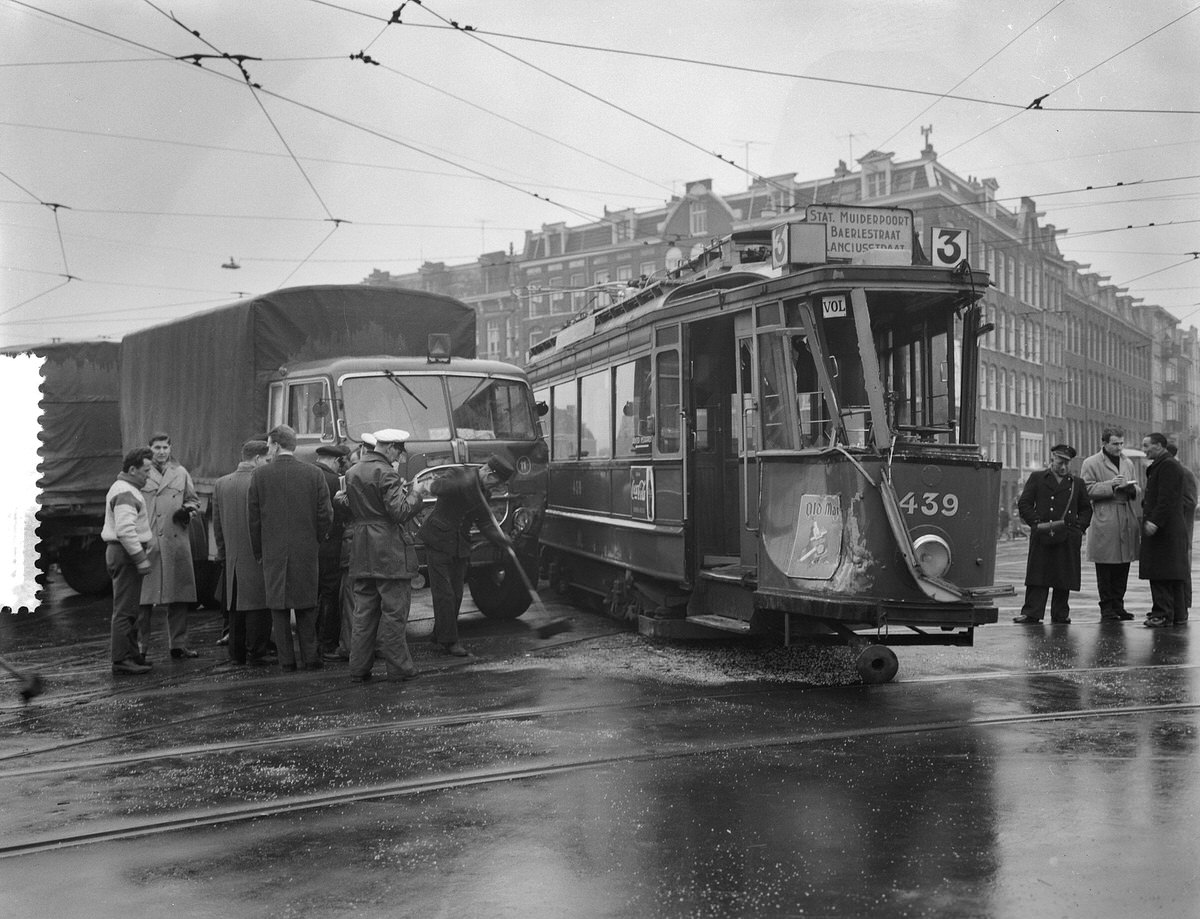

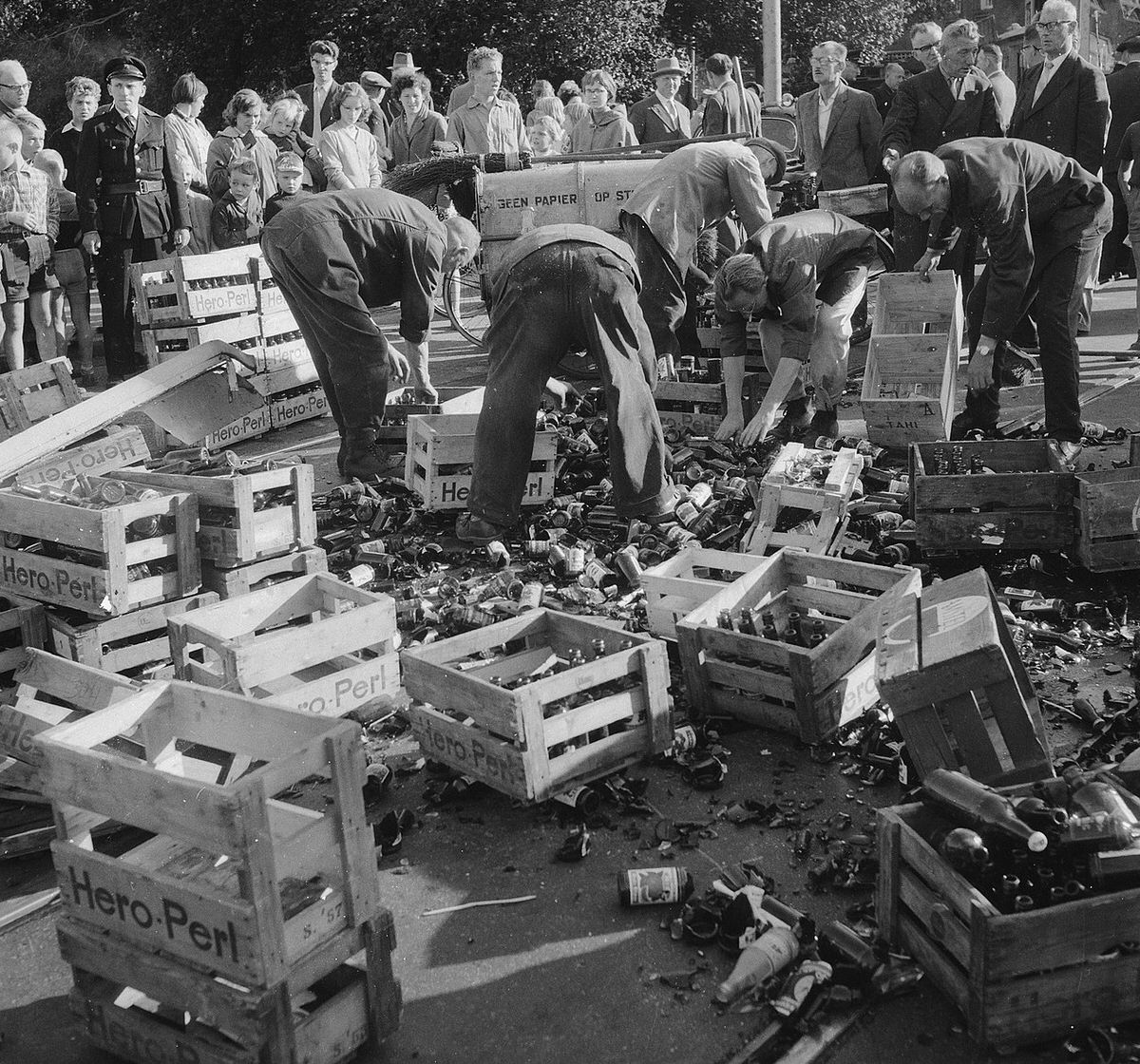
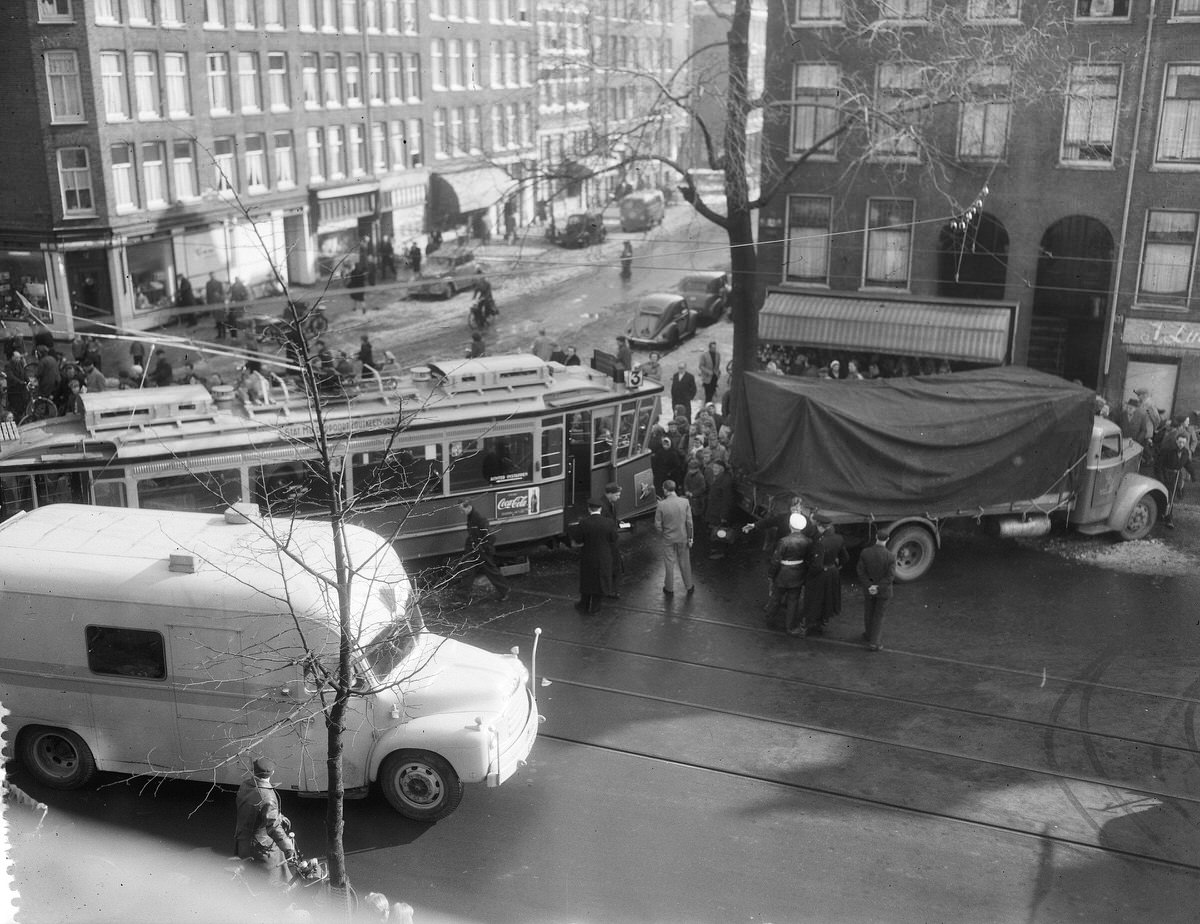
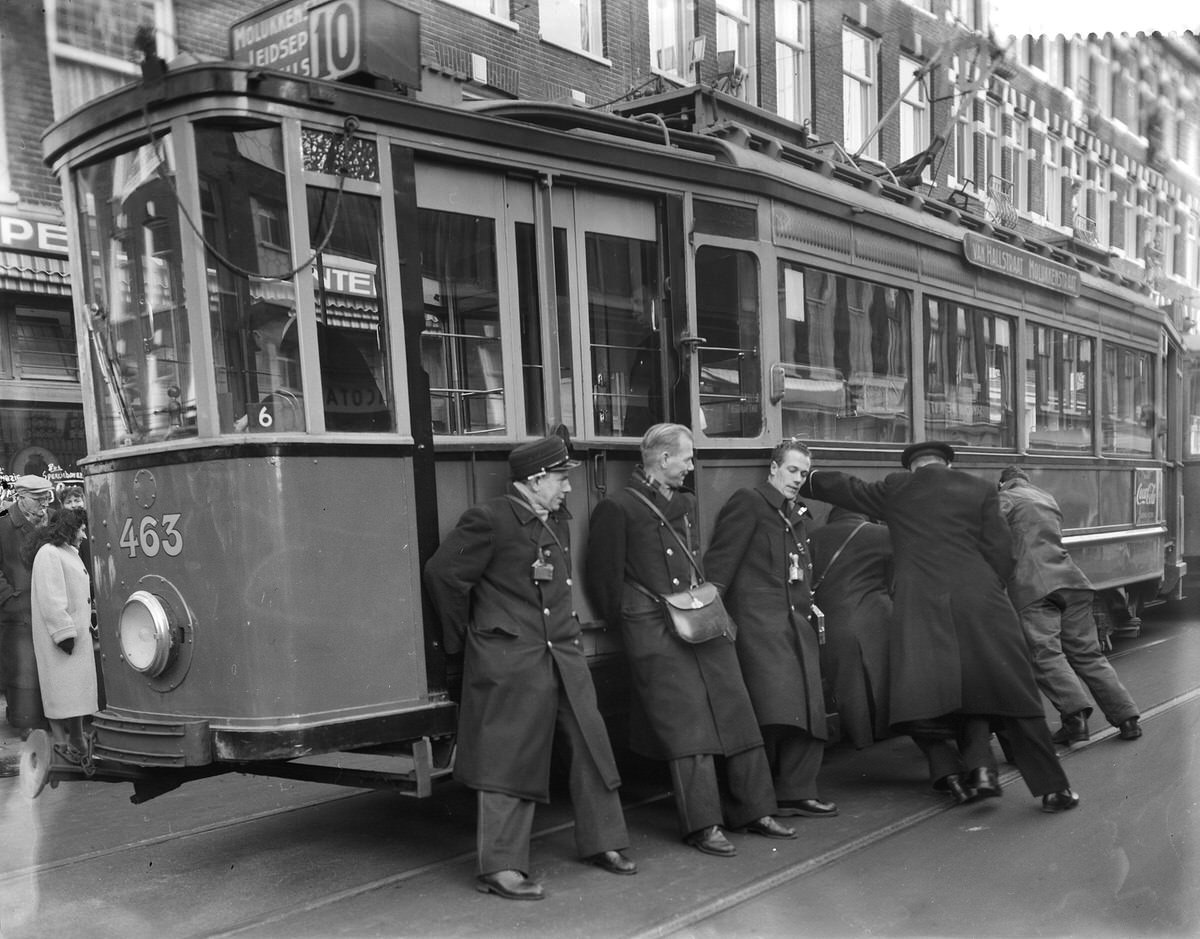
The Weteringschans and surrounding circuit were the site of multiple serious derailments. Tram line 16 derailed at the Weteringcircuit on December 30, 1980, captured in two separate photographs. An earlier derailment at the same circuit was recorded in January 1966. A May 1972 collision on the Weteringschans left the front of one of the trams badly damaged, also documented from two angles. A police van colliding with a tram on Martelaarsgracht in August 1978 added to the post-1970 incident record.
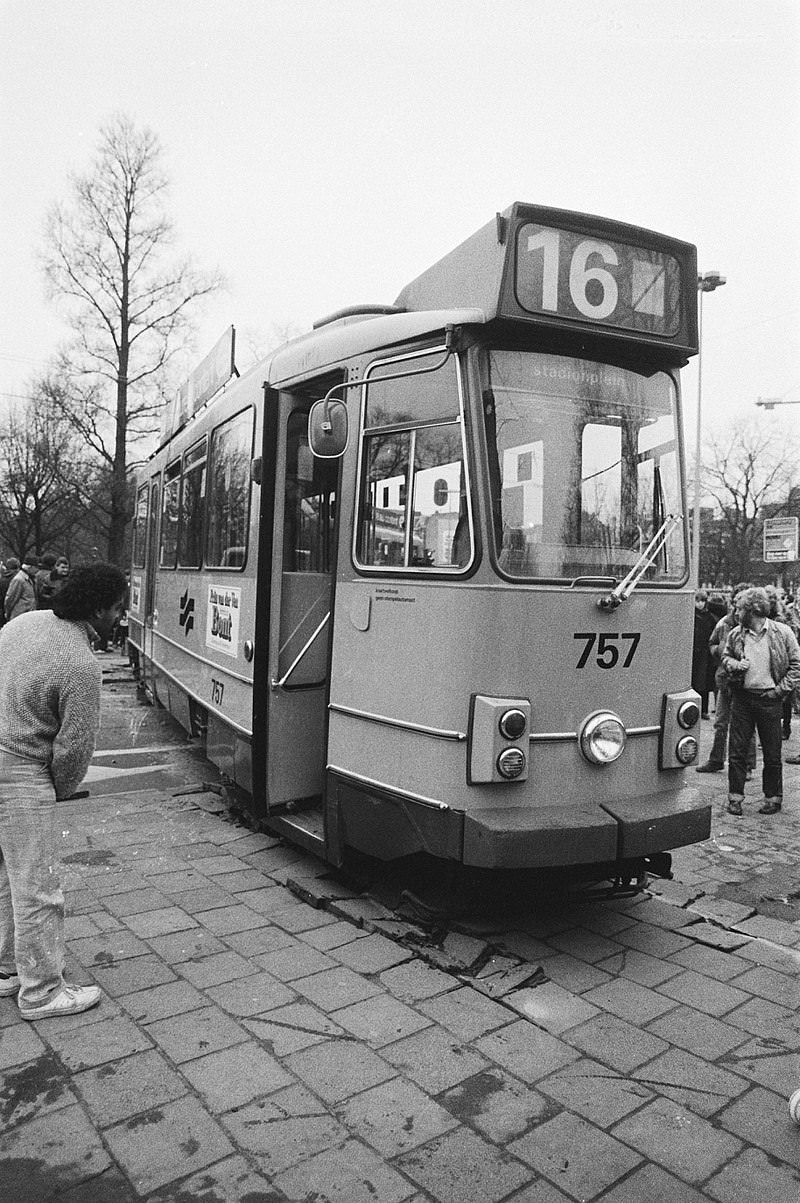
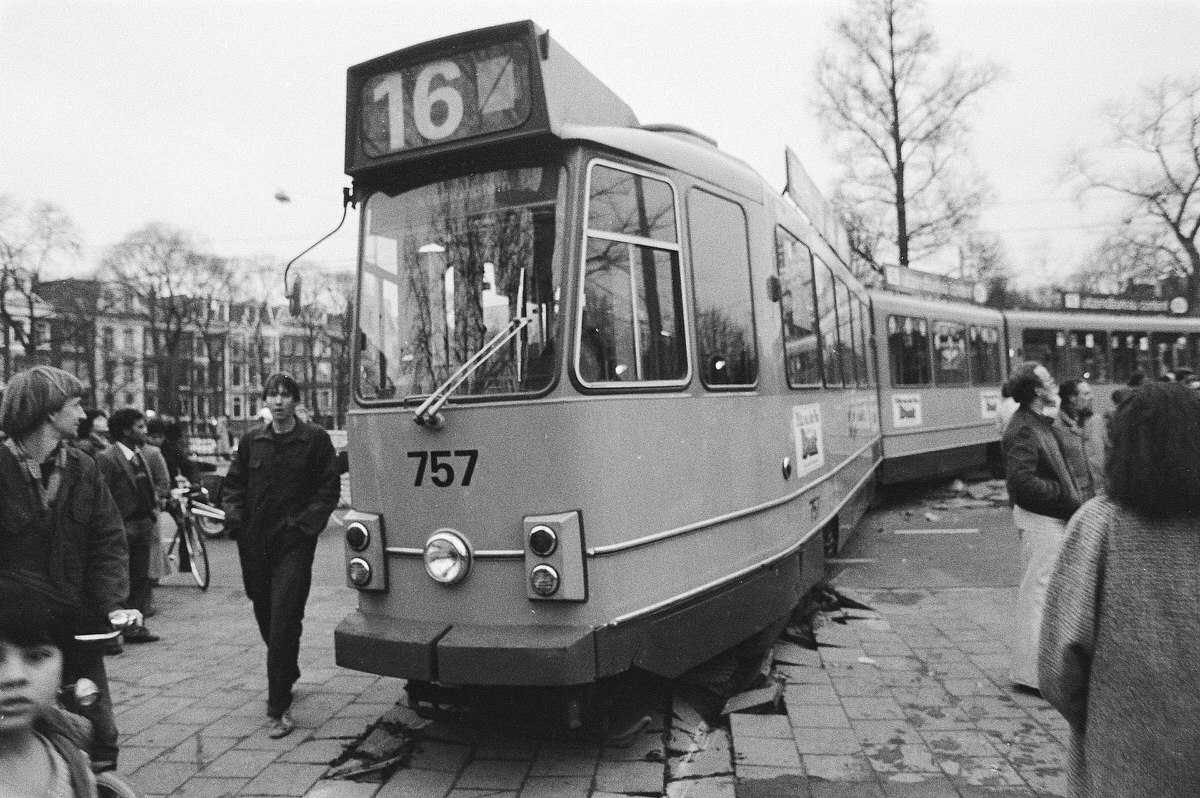
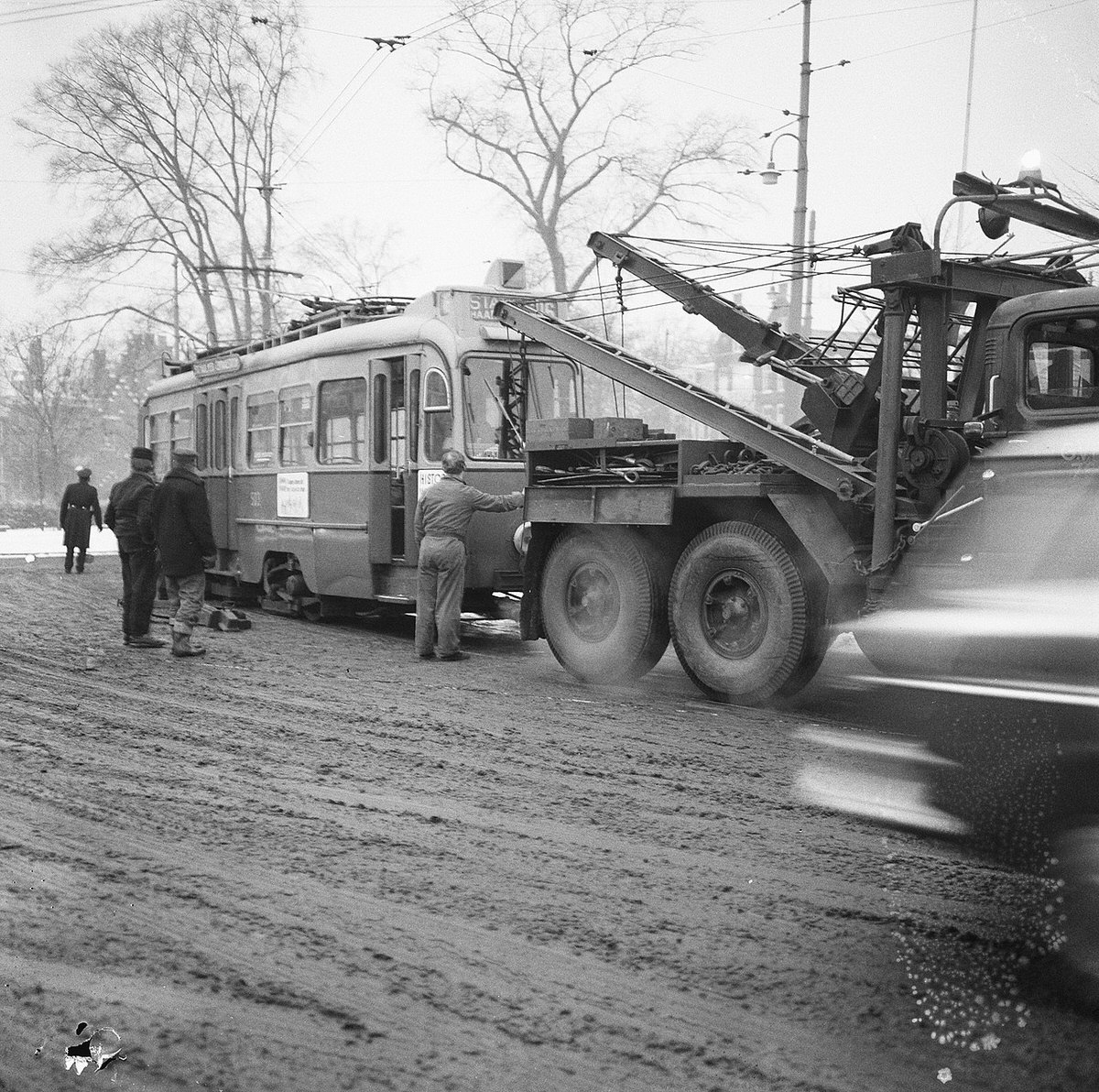
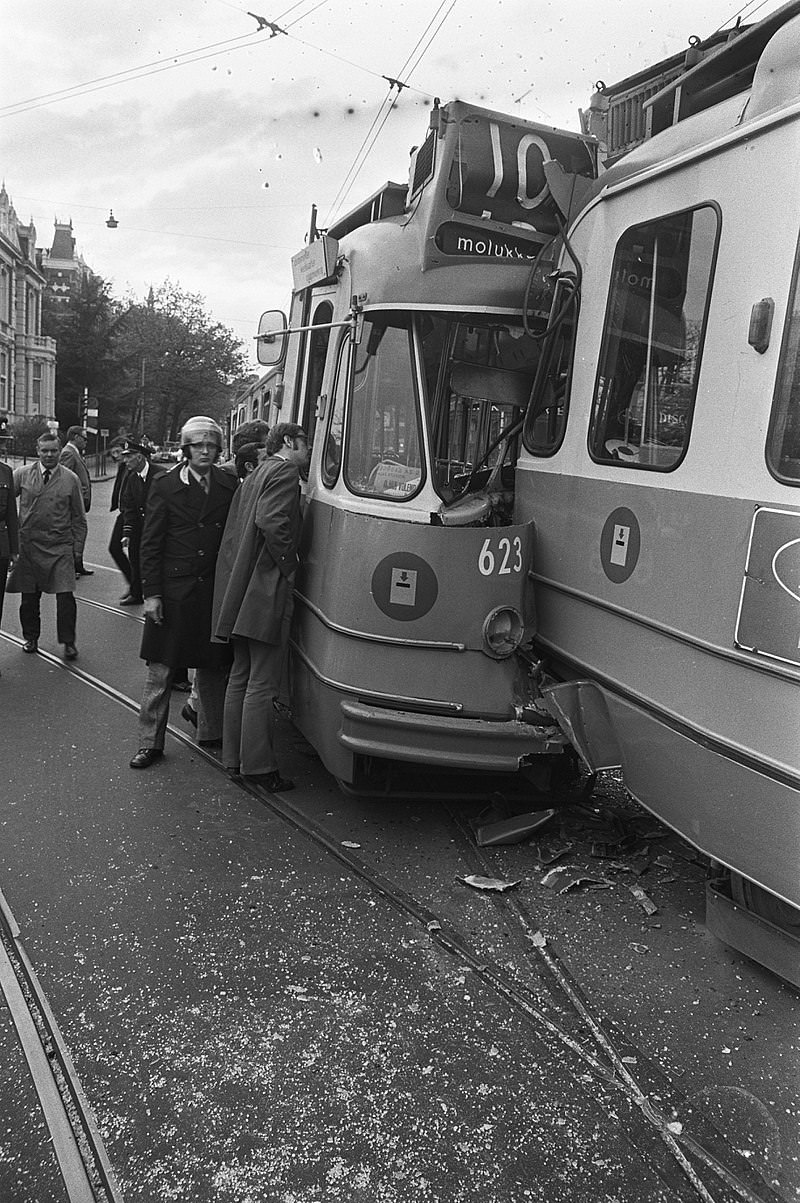
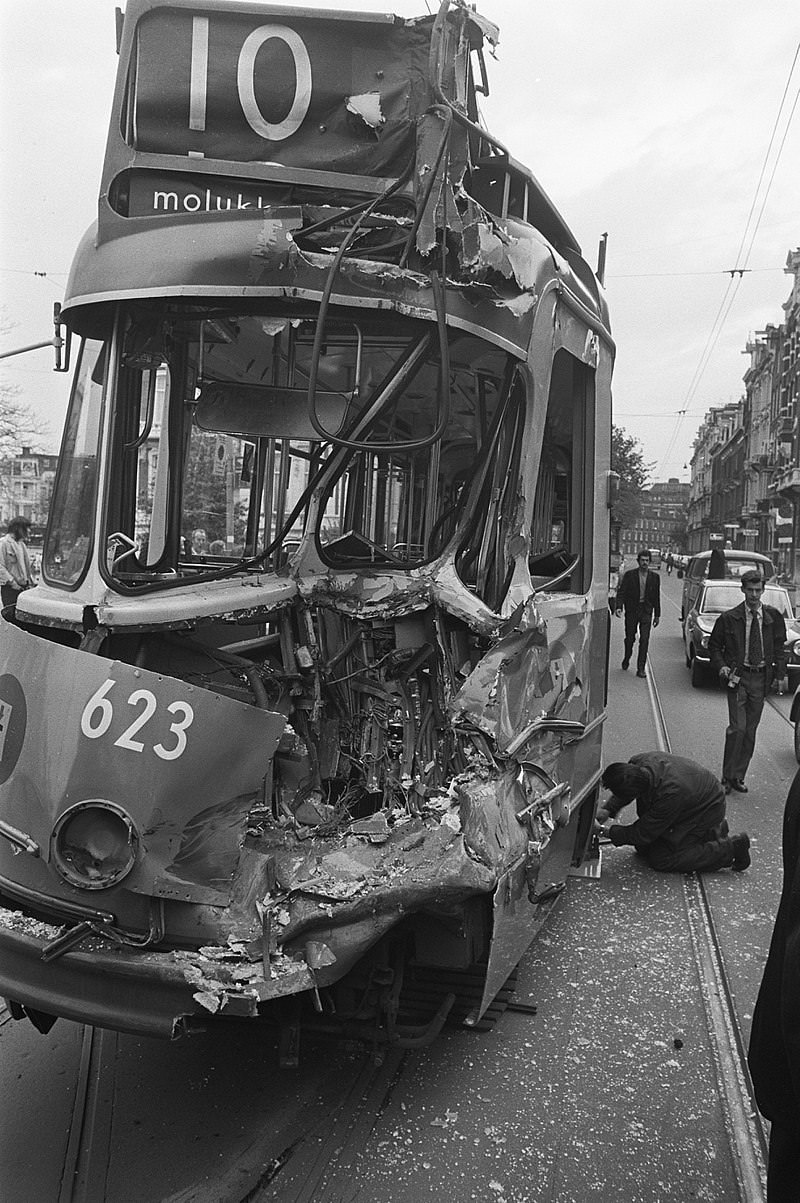
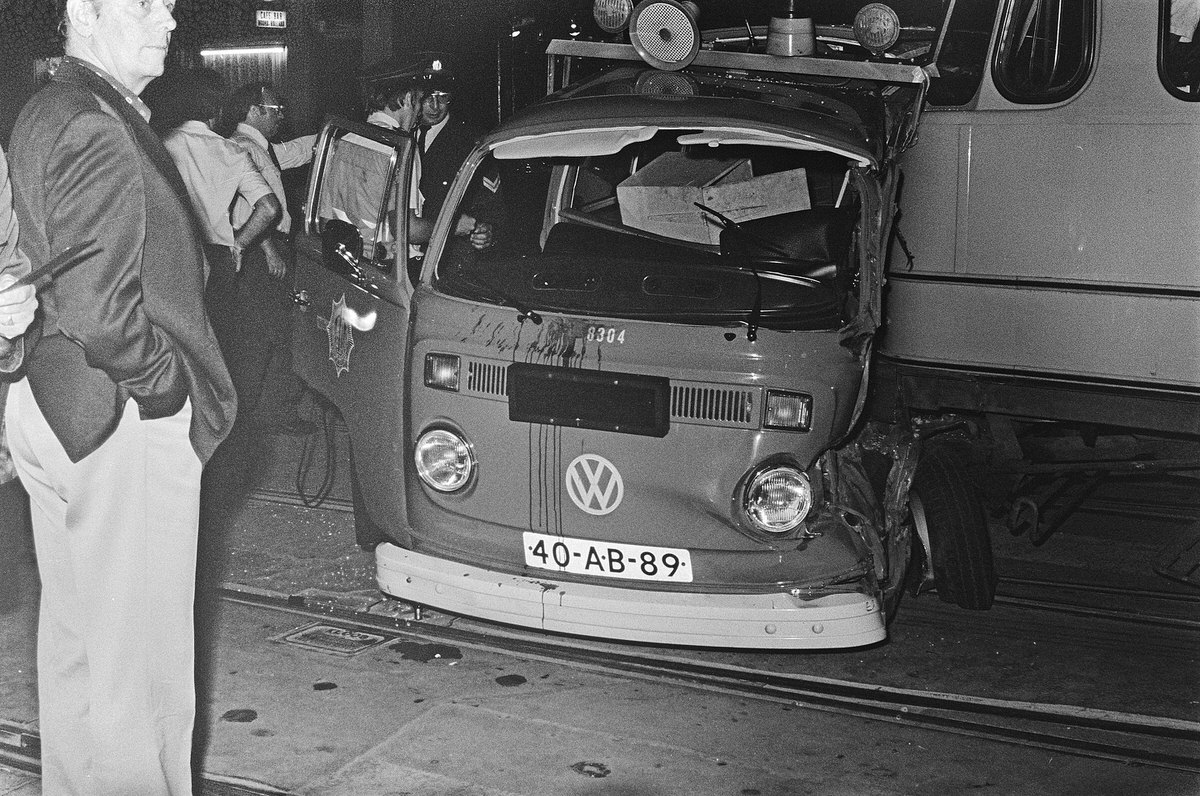
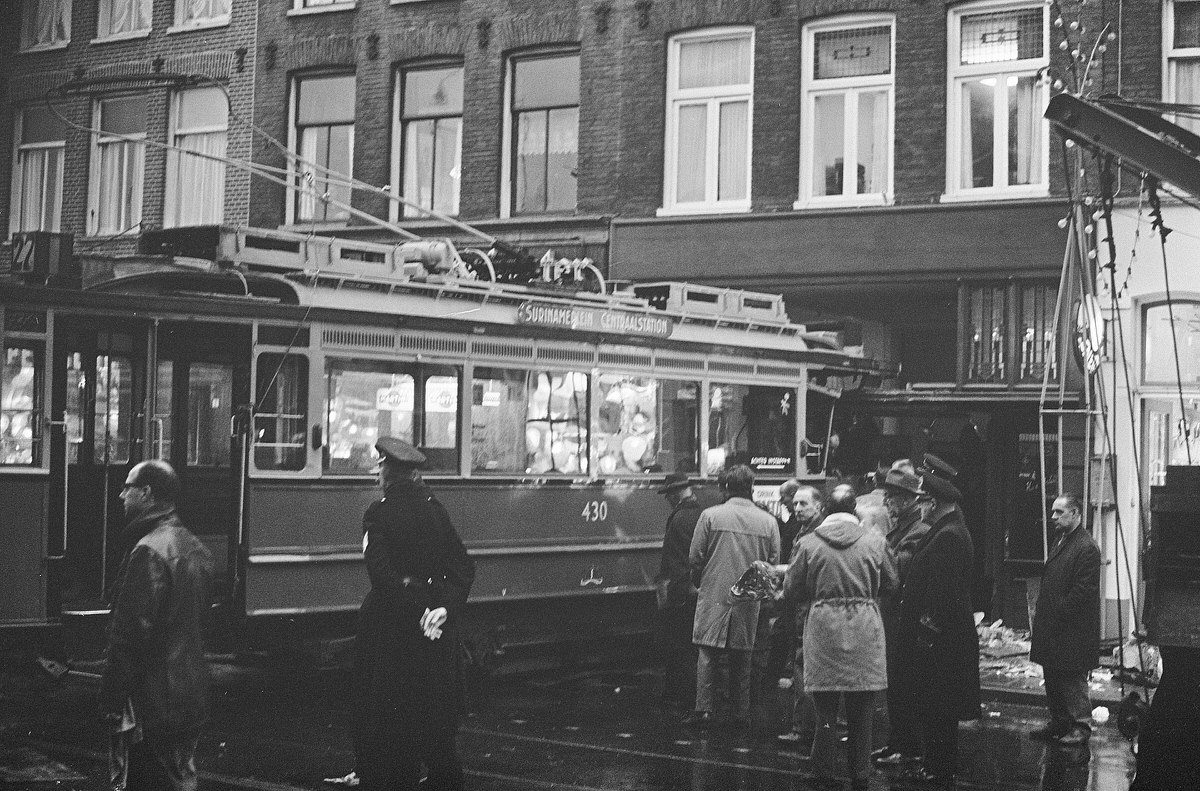
Other notable accidents from the 1960s include tram 27 running into a shop at the corner of Kinkerstraat and Nassaukade in December 1964, line 24 going off the rails on Stadionweg in November 1966, line 13 derailing at Slotermeerlaan in November 1968, line 7 coming off the rails at Frederiksplein in August 1968, and a tram flying out of a bend and colliding with a building in July 1986. The corner of Weesperzijde and Ruyschstraat also saw a tram leave the bend in October 1970.
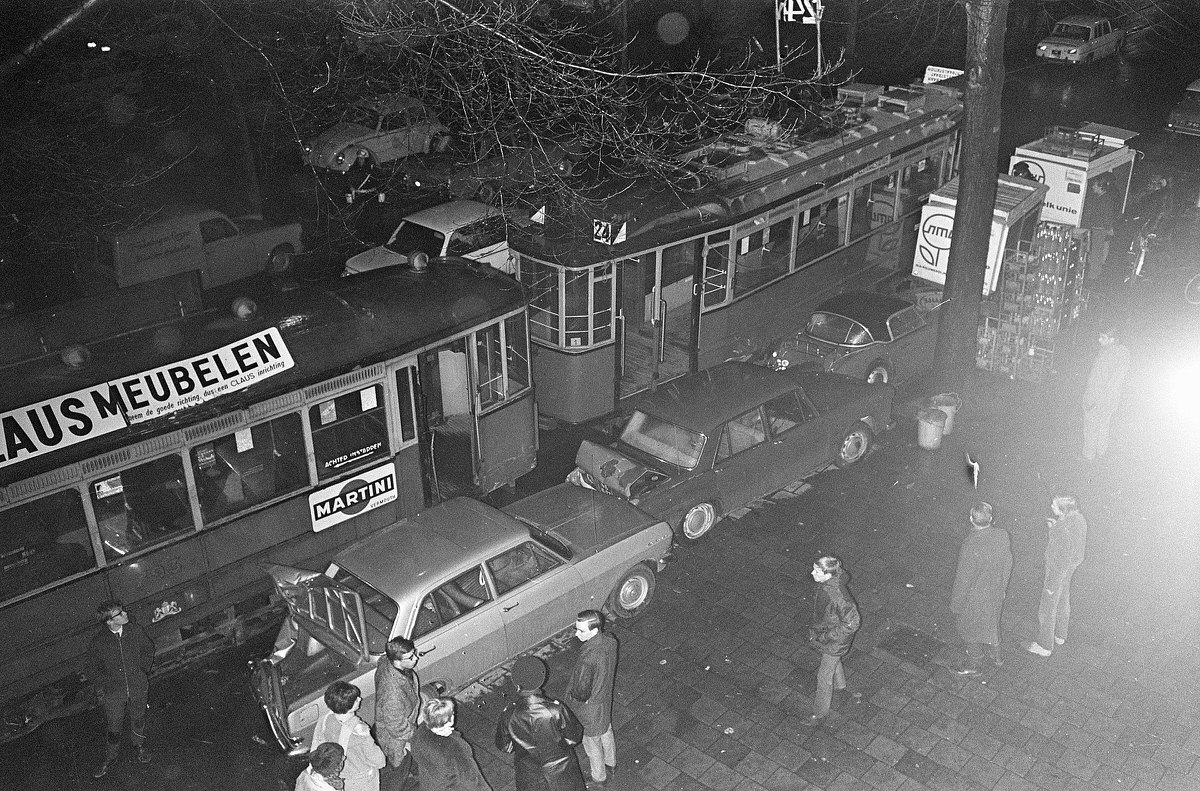
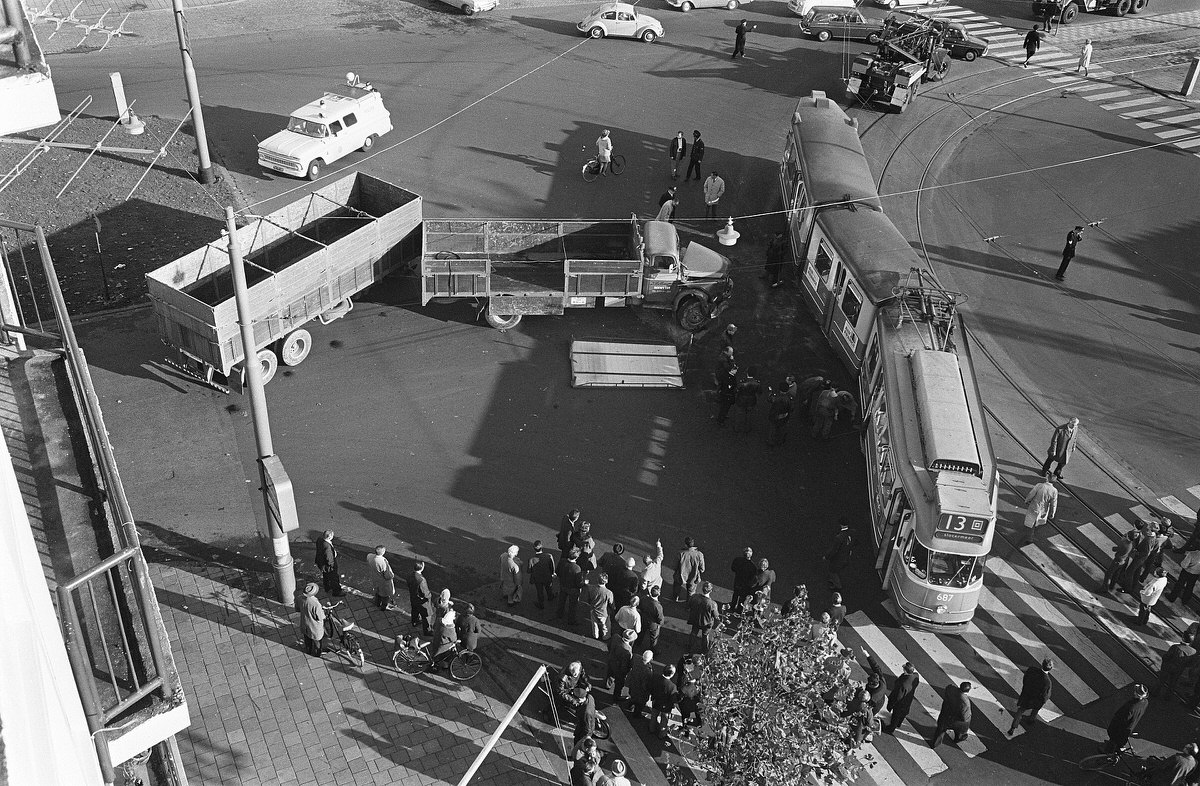
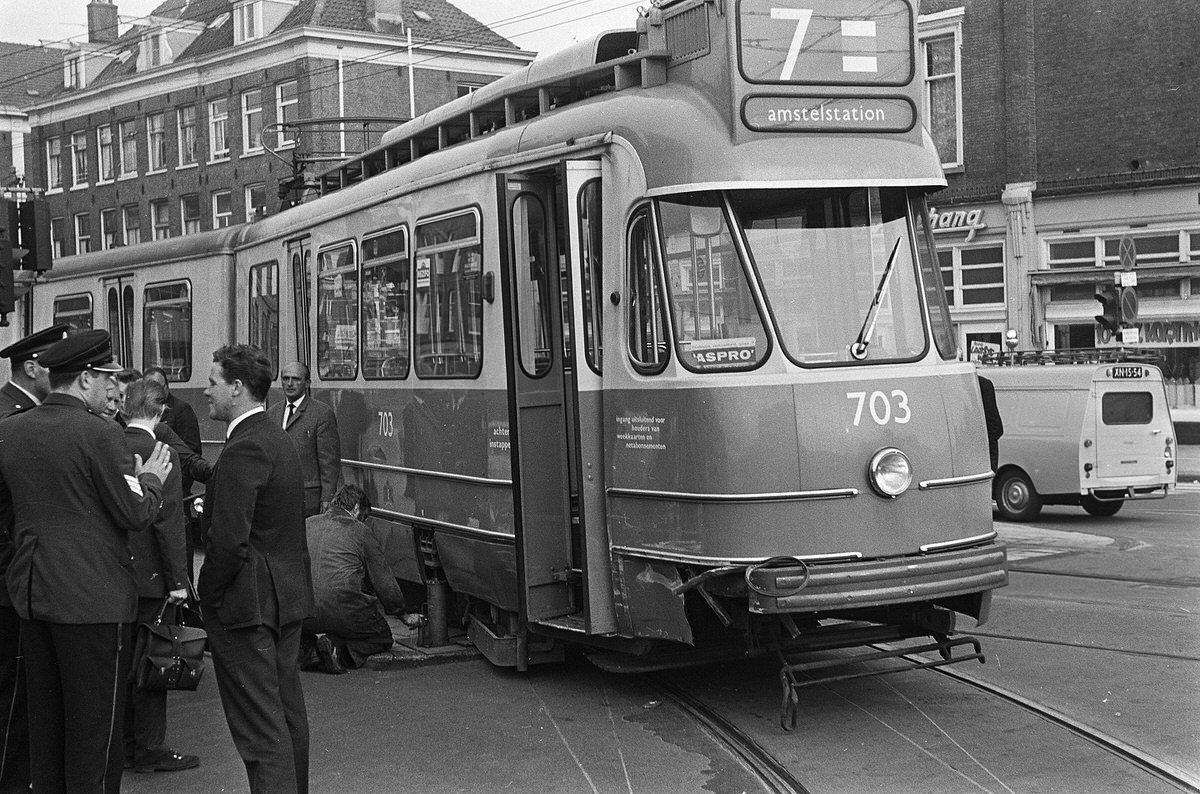
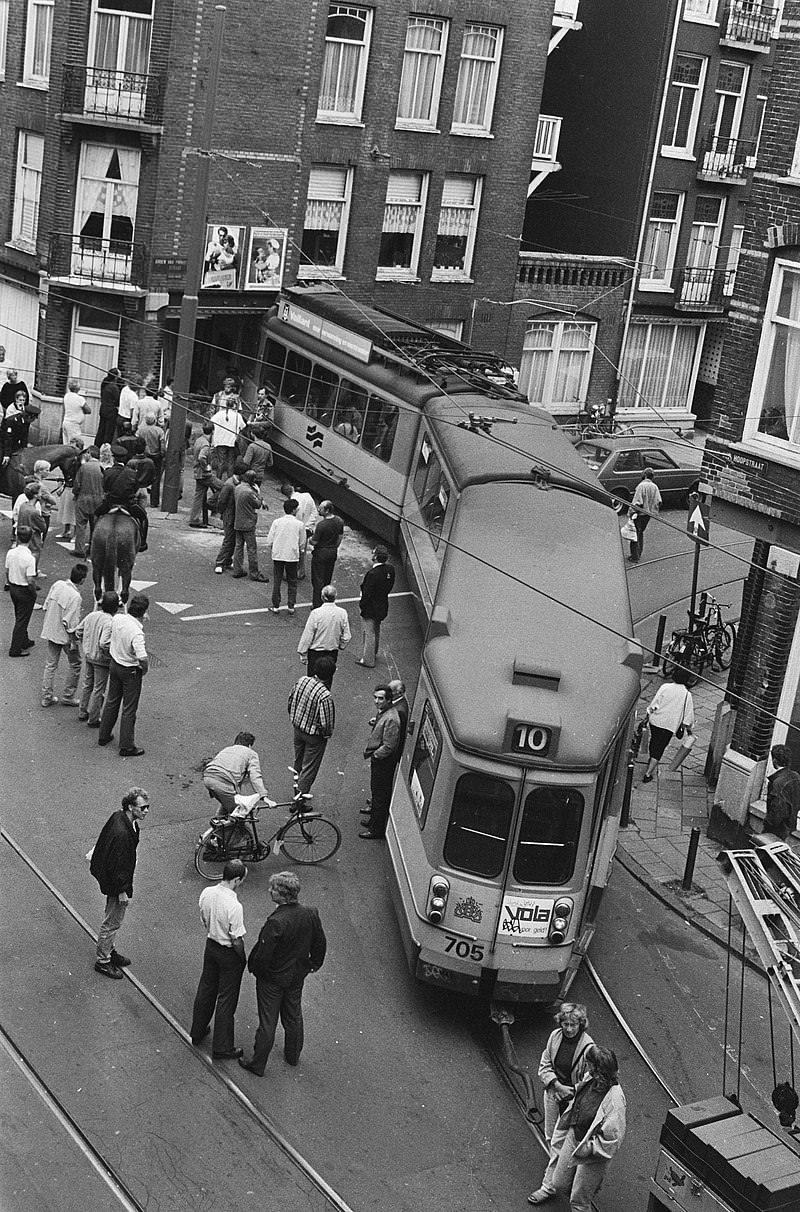
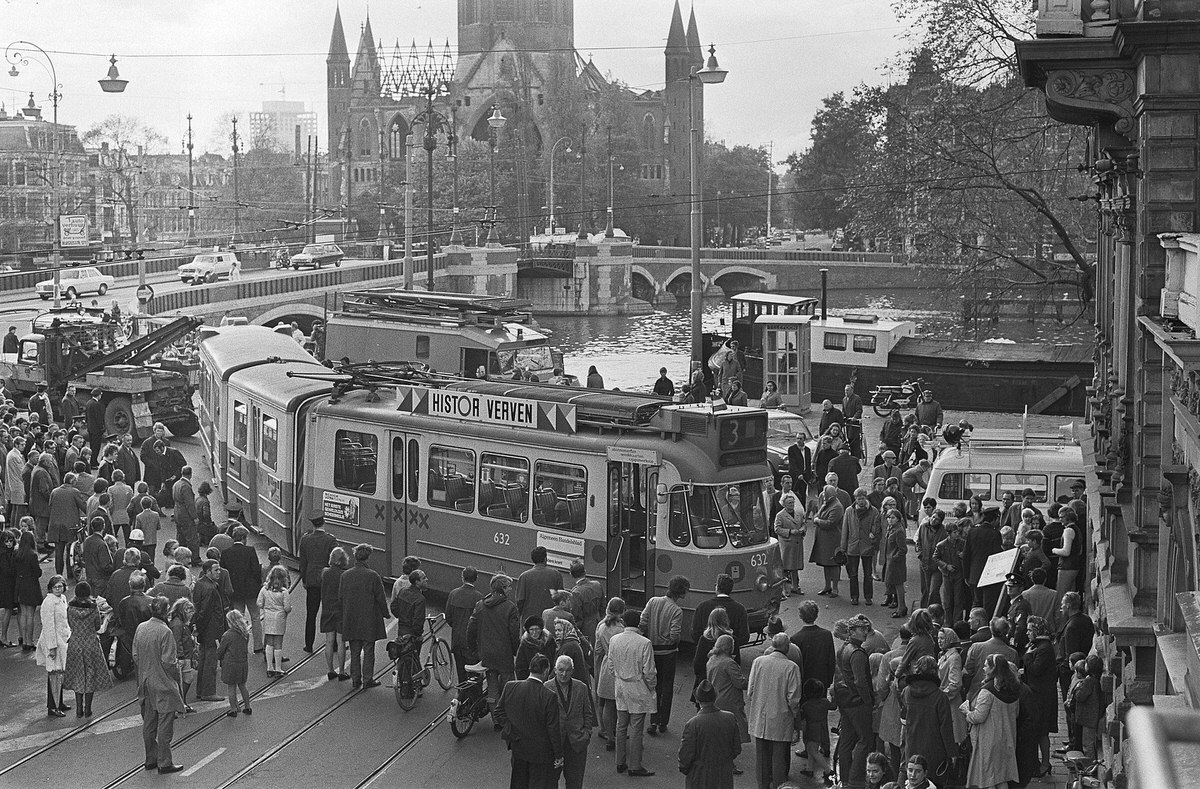
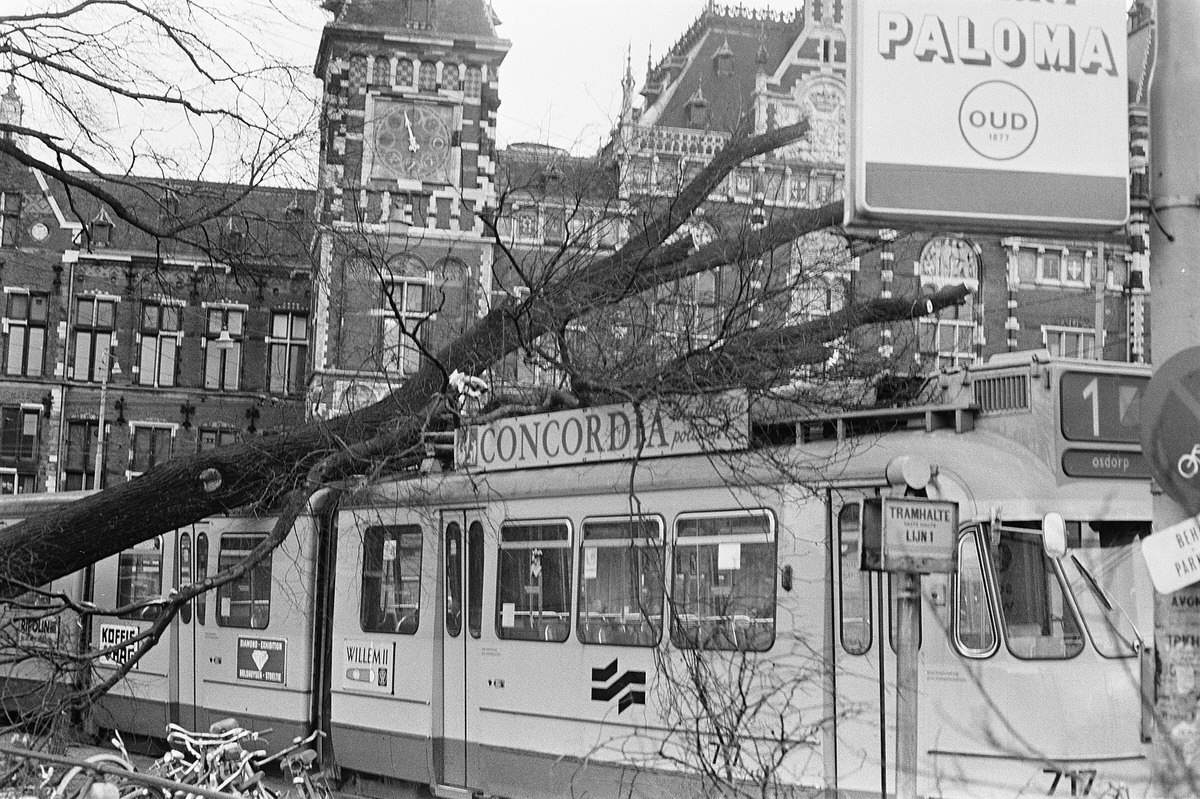
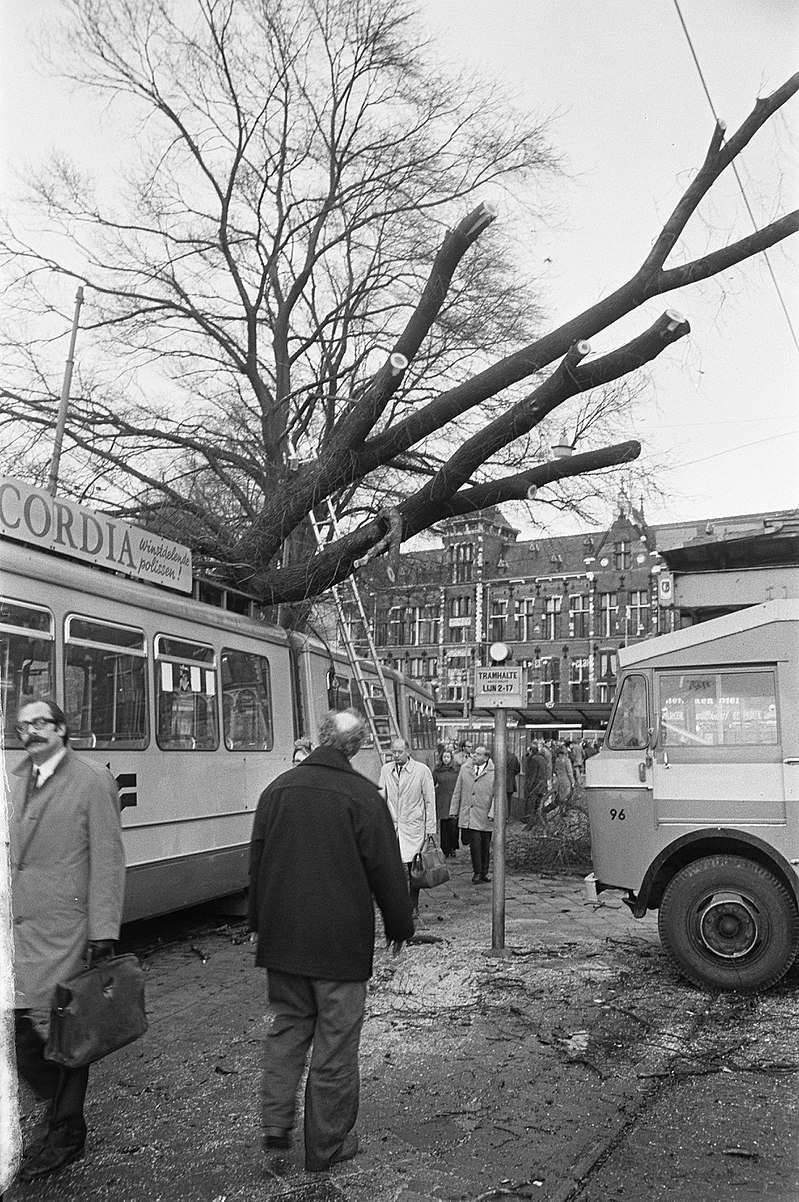
A storm in November 1972 brought a different kind of accident — a large tree fell directly onto a tram at Amsterdam Central Station, crushing part of the vehicle. Two photographs document the scene, showing the scale of the damage caused by the falling tree. Natural hazards like storms, ice, and snow created dangers for the tram network that were just as real as collisions with road vehicles.
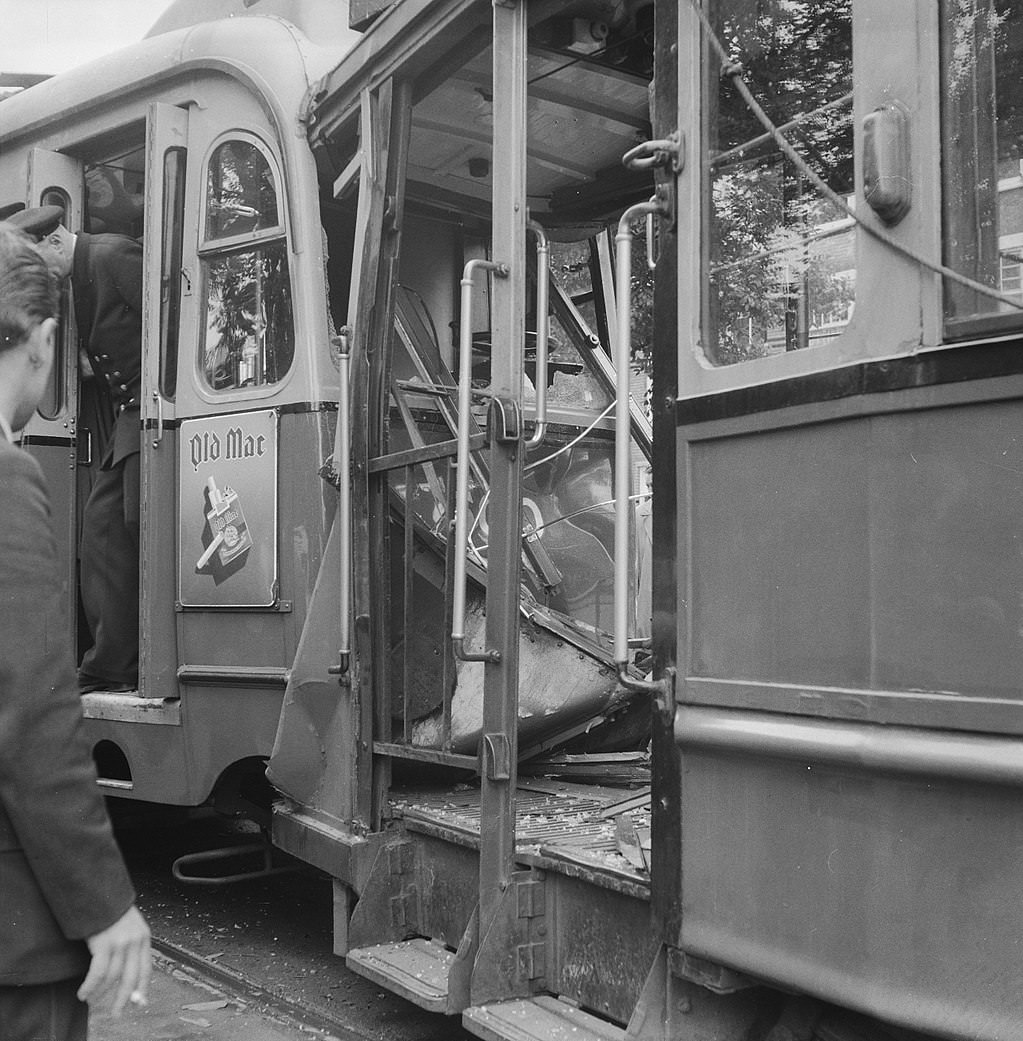
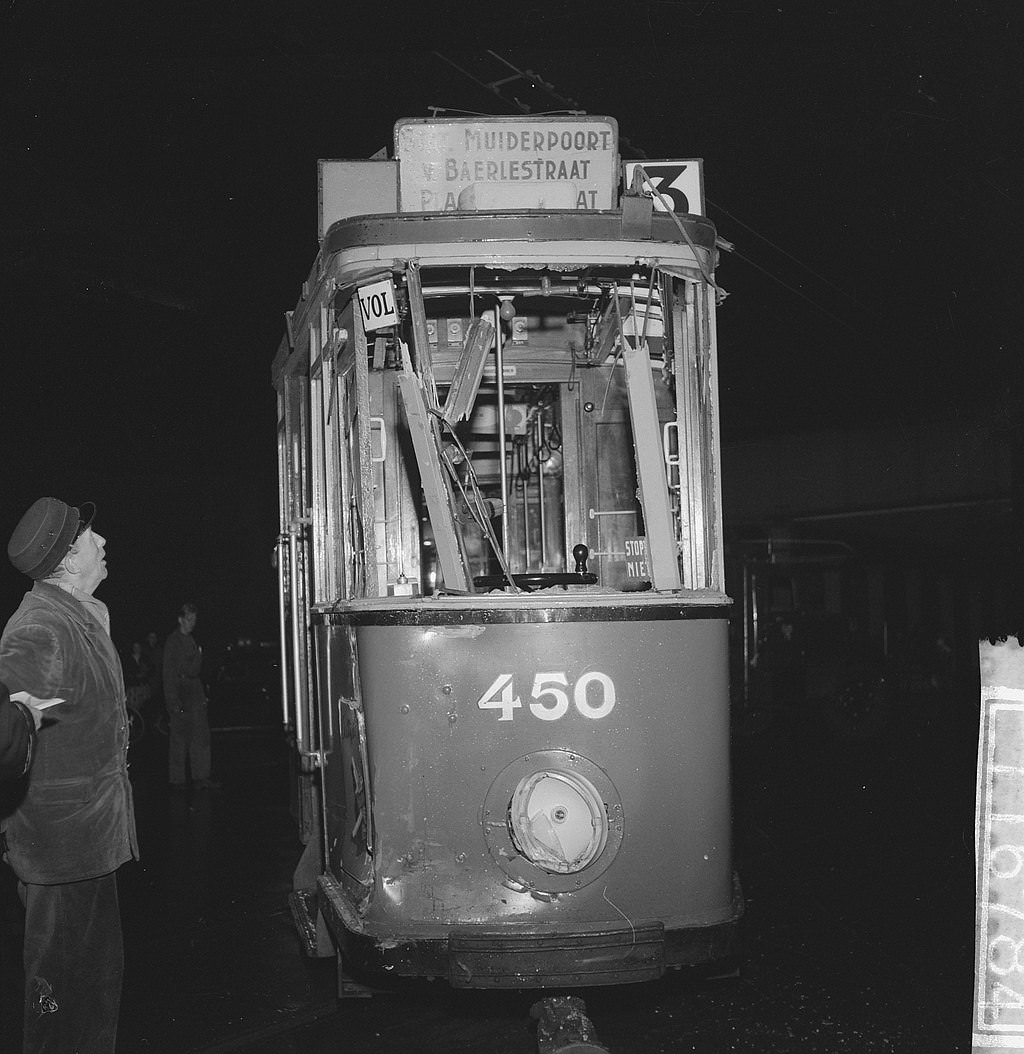
Other photographs in the collection capture scenes that don’t fit neatly into a single category — multi-car pile-ups, rear-end collisions between trams on the same line, and several incidents where the exact cause is not recorded but the damage speaks for itself. Tram line 37 collided with the rear of an instruction car on the Middenweg in July 1960. Line 3 derailed in the Wijttenbachstraat in October 1960. Tram 74 collided with lorries on the Nassaukade in August 1959, and tram 62 was involved in a collision with four cars on the Amsteldijk in October 1950.

This doesn’t look particularly “rare”. Trams in Amsterdam crash and kill people all the time. And their railsystem is really dangerous for cyclists on top of it.
especially pedestrians…Trams are silent, tracks are hidden