
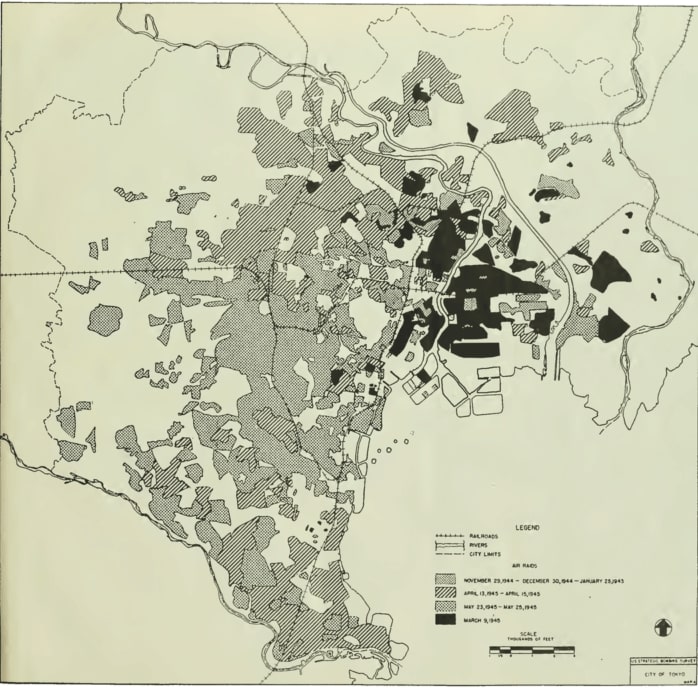
On the night of March 9–10, 1945, the United States Army Air Forces launched the single most destructive bombing raid in human history. The target was Tokyo, Japan’s capital and its most densely populated city. In less than three hours, an estimated 100,000 civilians were killed, 15.8 square miles of the city were reduced to ash and rubble, and over one million people lost their homes. The attack was codenamed Operation Meetinghouse by the U.S. military and is remembered in Japan as the Great Tokyo Air Raid.
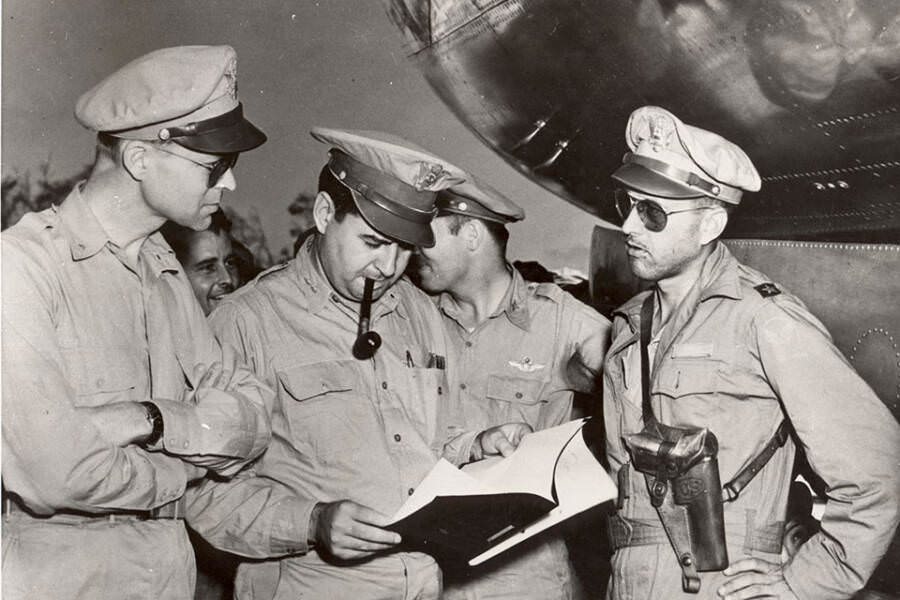
The man most responsible for planning the raid was General Curtis LeMay, who commanded the U.S. Strategic Air Forces in the Pacific. LeMay had concluded that high-altitude precision bombing of Japanese industrial targets was not working effectively enough. He shifted strategy dramatically, ordering low-altitude nighttime raids using incendiary weapons over civilian-dense areas. Years later, LeMay stated plainly that he had no problem killing innocent Japanese people at the time. He was decorated and celebrated as a war hero in the United States.
U.S. intelligence had been assessing the feasibility of firebombing Tokyo and other Japanese cities for two full years before Operation Meetinghouse. Several test raids were conducted against smaller Japanese cities to gauge how effectively incendiary weapons could destroy them. The results confirmed what military planners had suspected: Tokyo’s dense clusters of wooden buildings were highly vulnerable to fire. The city was, in effect, a tinderbox.
The raid was carried out by more than 300 Boeing B-29 Superfortress bombers. These aircraft were capable of flying above 18,000 feet, placing them out of range of most Japanese anti-aircraft guns. For Operation Meetinghouse, LeMay ordered the planes to fly at lower altitudes—between 5,000 and 9,000 feet—to improve bombing accuracy in the dark. The B-29s flew in without fighter escorts and with their defensive guns removed to allow for heavier bomb loads.
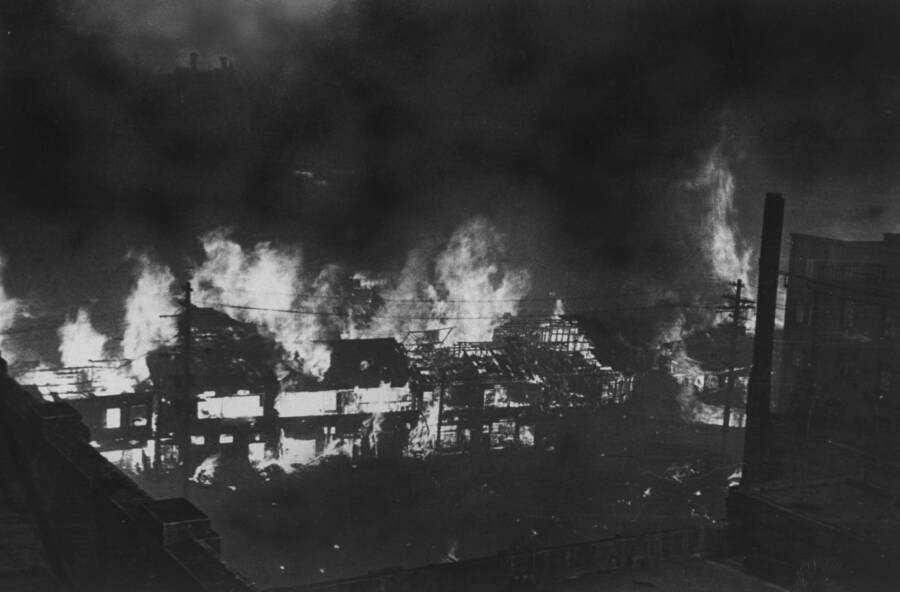
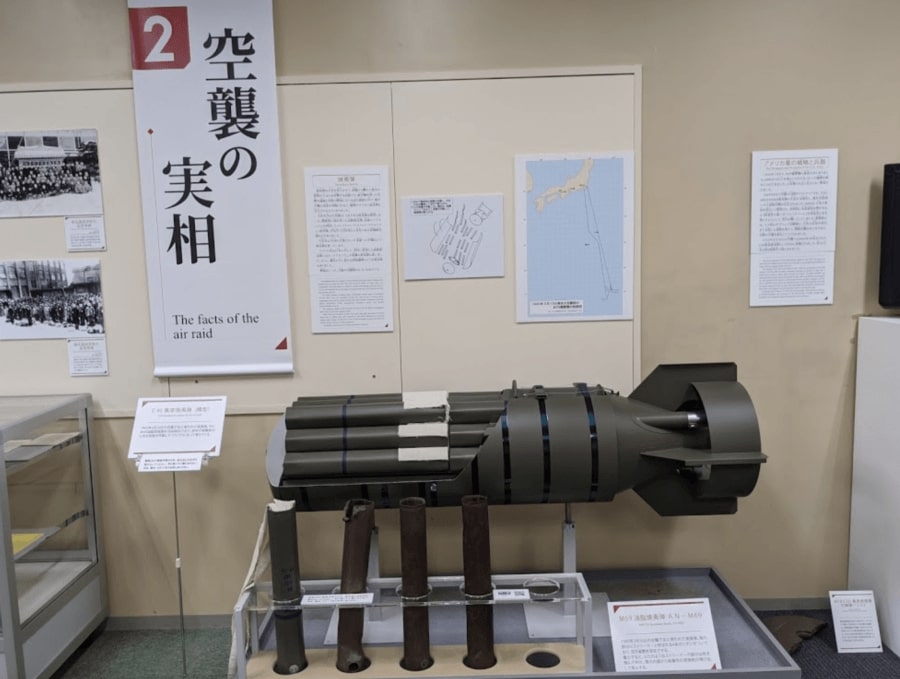
The planes dropped roughly 500,000 M-69 incendiary bombs in total, delivering an estimated 1,500 to 1,733 tons of napalm over Tokyo. The M-69 was a six-pound device clustered into groups of 38, which separated and spread during descent. On impact, each canister spewed burning napalm gel that clung to surfaces and ignited everything it touched—wood, paper, fabric, and flesh. The fires spread so fast and burned so hot that people were asphyxiated by the lack of oxygen before the flames even reached them.
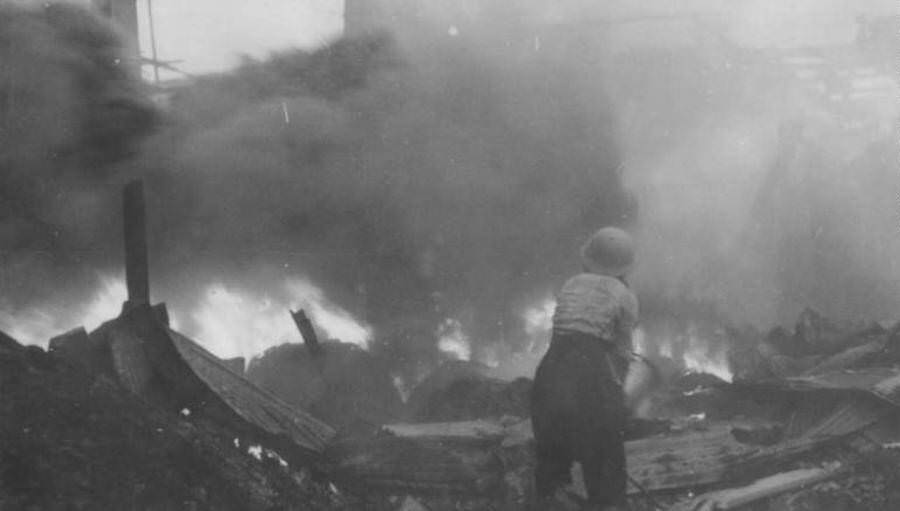
The fires created a massive firestorm—a self-sustaining blaze so intense it generated its own wind currents, pulling oxygen inward and spreading the flames in every direction. Residents who fled to rivers and canals for safety found the water superheated from the surrounding fires. Those who sheltered in place in buildings or underground were burned alive or suffocated. By sunrise on March 10, the scale of the destruction was staggering.
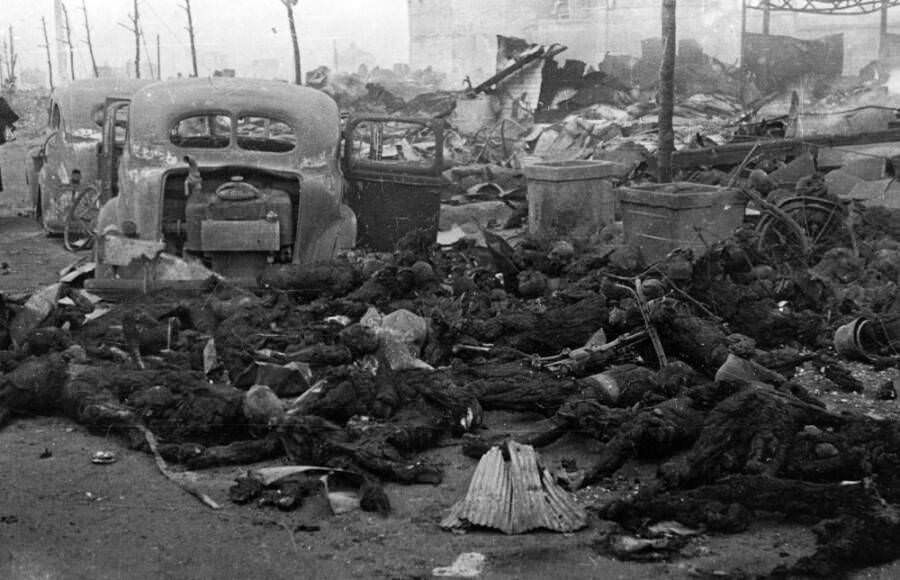
The initial wave of B-29s marked the target zones by dropping bombs in a pattern that outlined the areas to be hit. Subsequent waves then concentrated their payloads on those burning markers, saturating entire districts with napalm. The result was systematic incineration across some of Tokyo’s most densely populated neighborhoods, which were filled not with factories or military installations, but with civilian homes.
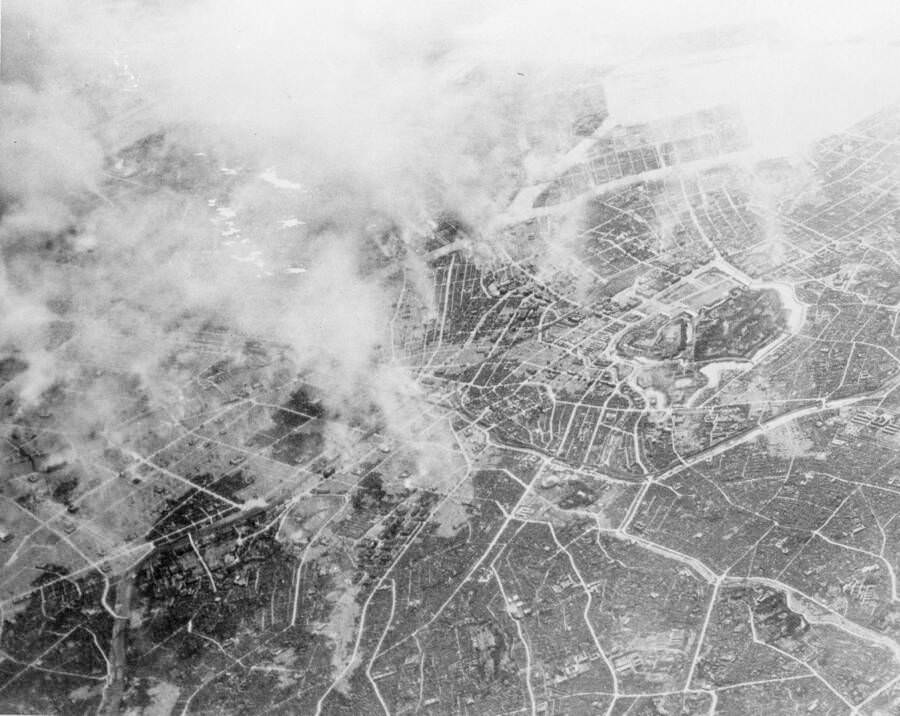
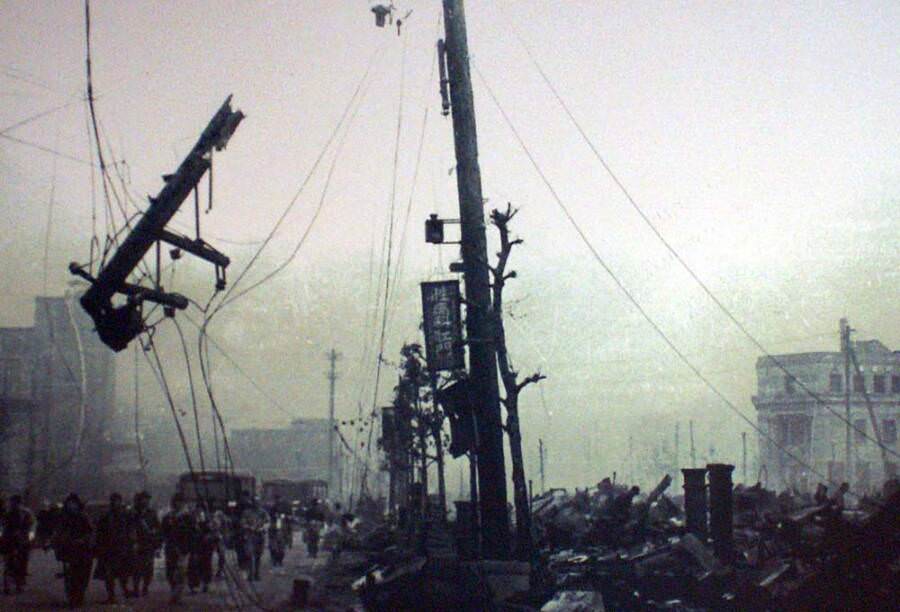
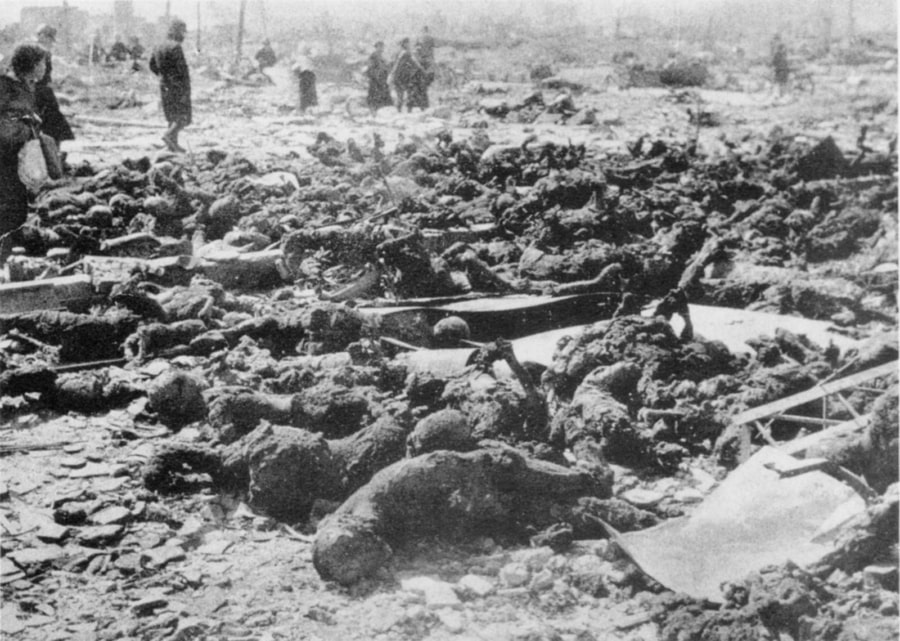
The human cost of that single night is almost impossible to fully grasp. Conservative estimates place the death toll at 80,000 to 100,000 people. Some Japanese sources put the number higher. Entire families were wiped out. Bodies were found in streets, rivers, canals, and collapsed shelters. One of the most haunting images to emerge from the aftermath shows the charred remains of a mother still carrying her child on her back—both killed by the inferno.
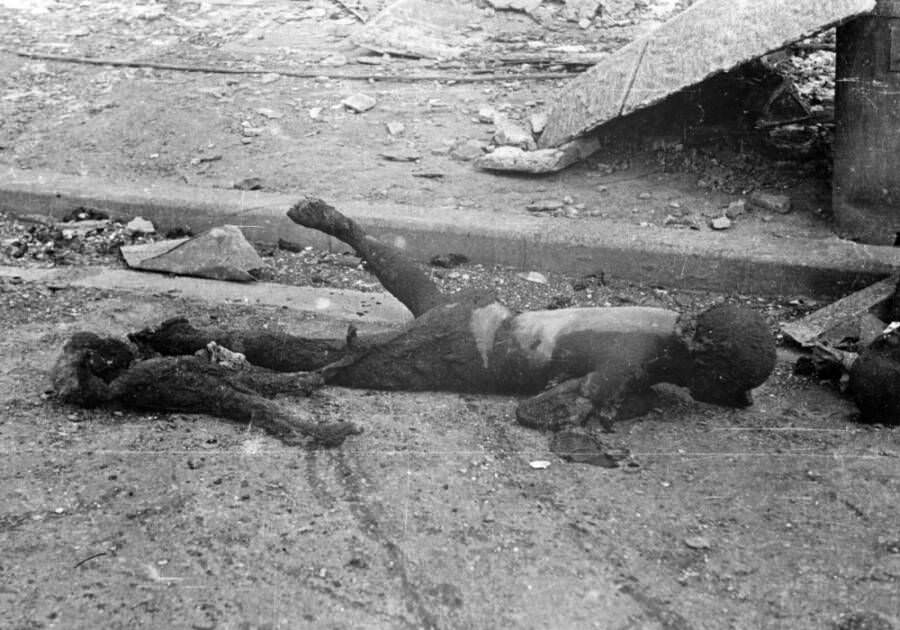
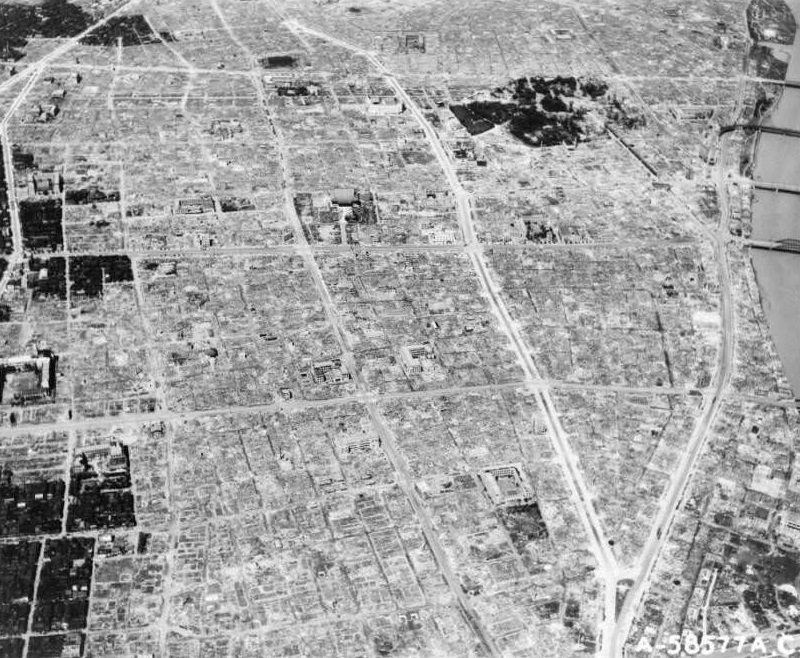
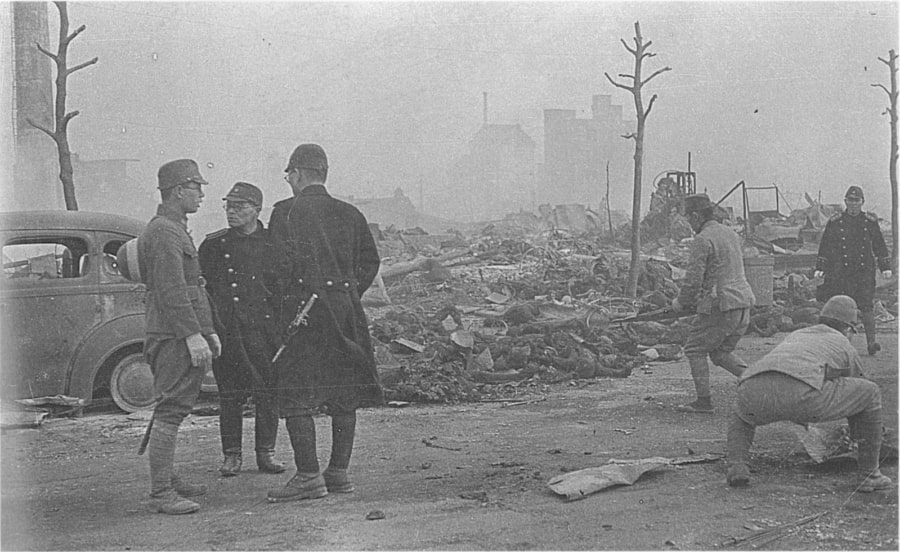
When Japanese police and soldiers moved through the streets after the raid, they faced a city that was barely recognizable. Roads were blocked with rubble and bodies. Entire blocks had been leveled. Officers walked through scenes of mass death, surrounded by the burned-out skeletons of homes, businesses, and temples that had stood for generations.

The Japanese air defense was overwhelmed and largely ineffective. Only 14 American aircraft were lost during the raid—a remarkably low number given the size of the operation. Japan’s air forces failed to mount a meaningful defense of the city, leaving its citizens entirely exposed. The lack of serious resistance confirmed for U.S. planners that further incendiary raids on Japanese cities were viable.
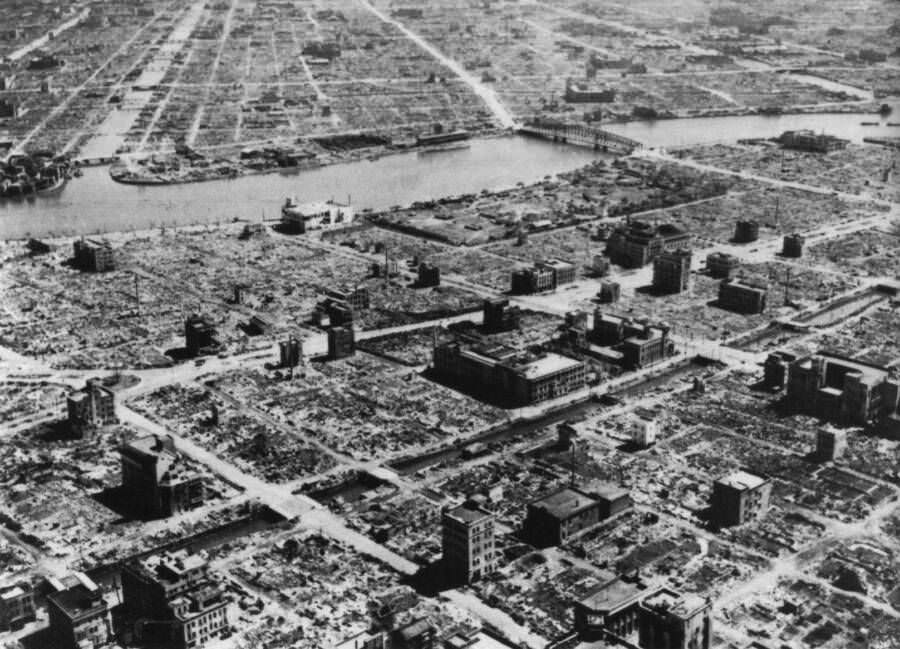
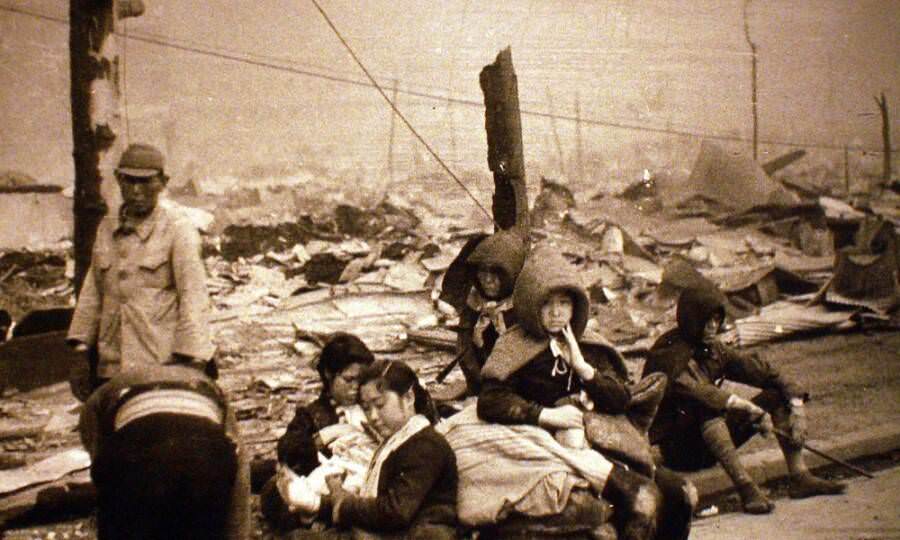
In the days and weeks following the raid, Tokyo struggled to function. Remarkably, some infrastructure survived. Trains continued to operate on certain lines, threading through a city half-consumed by destruction. Survivors picked through the ruins of their neighborhoods, searching for belongings, family members, or any place to take shelter.
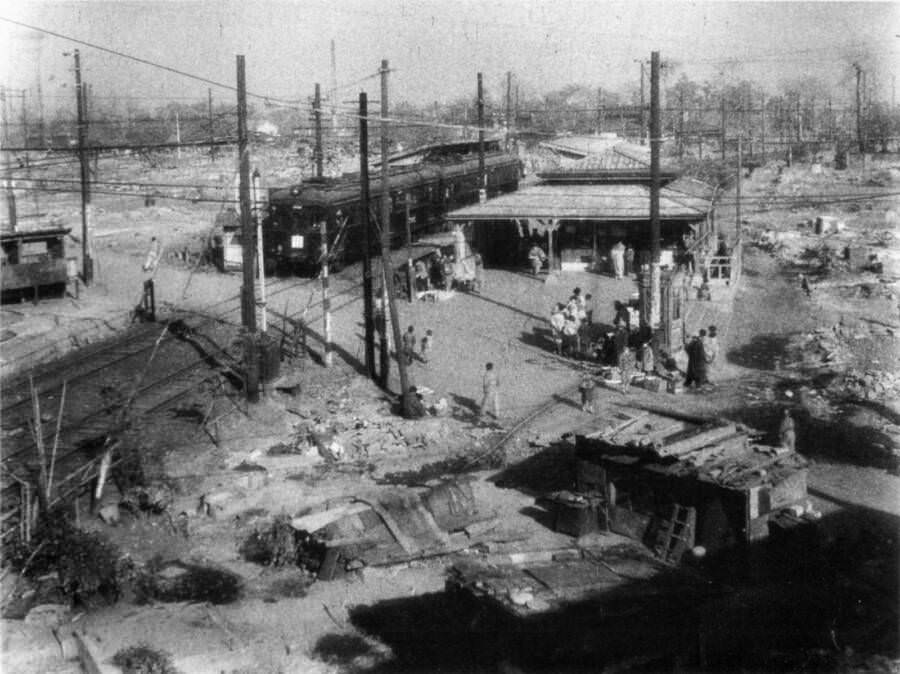
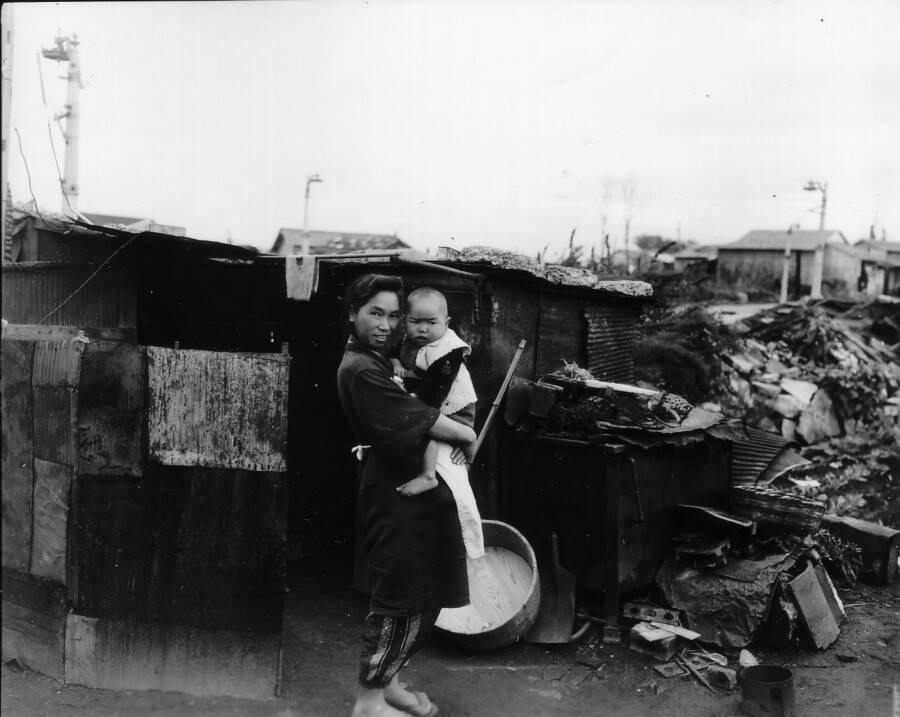
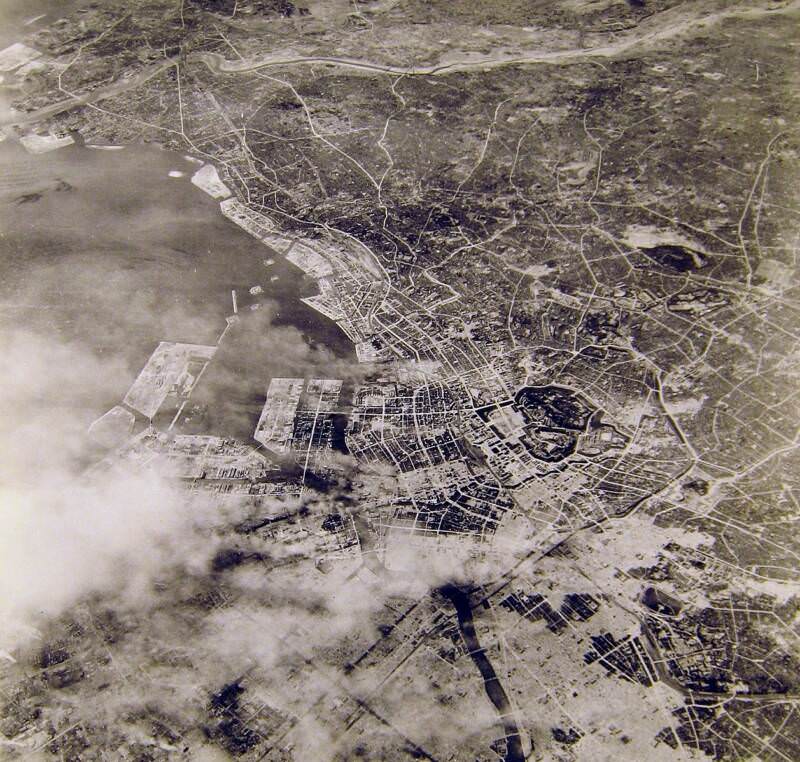
Tokyo in 1945 was a city built predominantly of wood. Houses, shops, and temples were constructed with timber and paper, materials that burned fast and completely under napalm. LeMay understood this and deliberately chose incendiary weapons over high-explosive bombs to ensure the fire would spread from building to building across entire districts. Weeks after the March raid, much of the city remained a flat, gray landscape of ash.
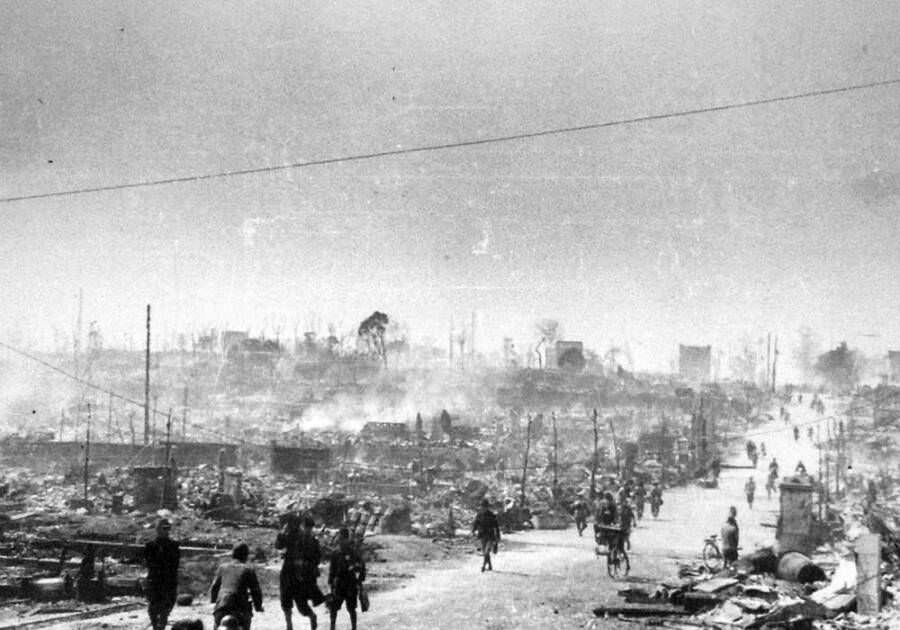
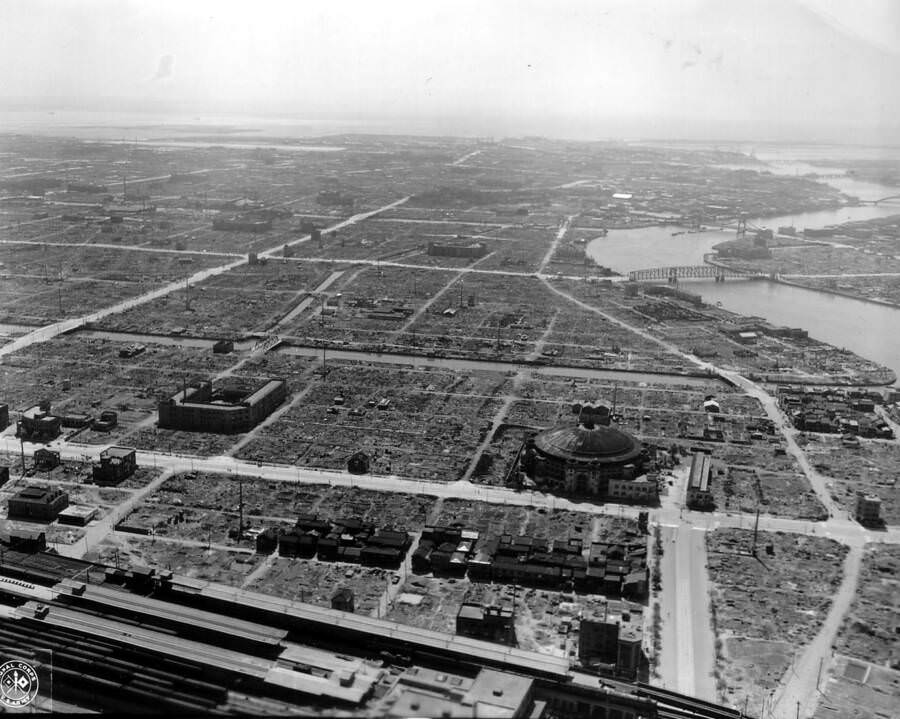
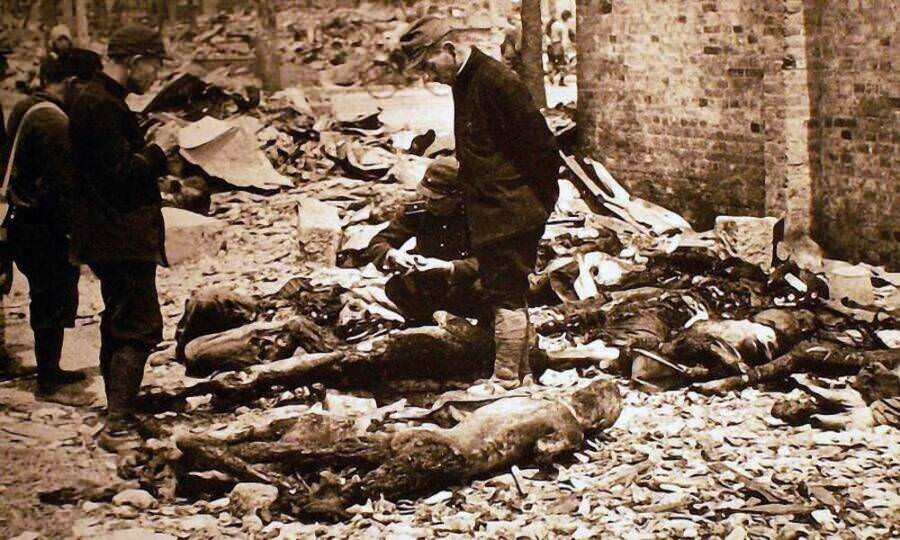
Recovery teams spent days collecting the dead. Soldiers and police officers worked together to gather and identify charred remains from streets, riverbanks, and ruins. The bodies were in devastating condition—burned beyond recognition, hair gone, features indistinguishable. The scale of the task was so enormous that much of the work fell to ordinary civilians.
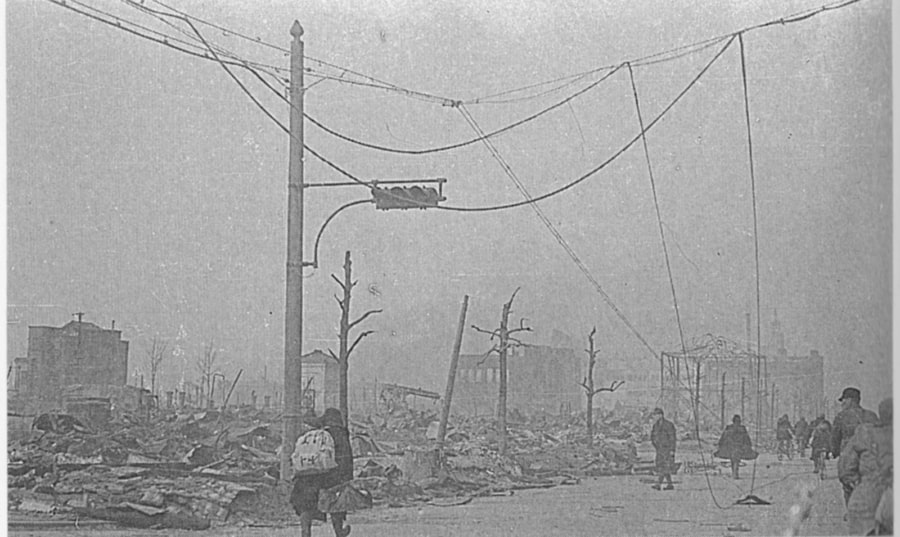
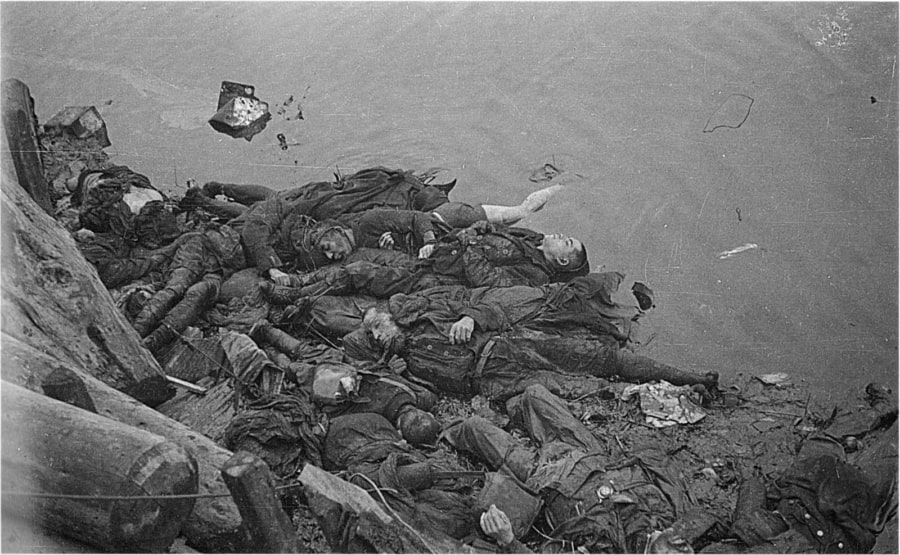
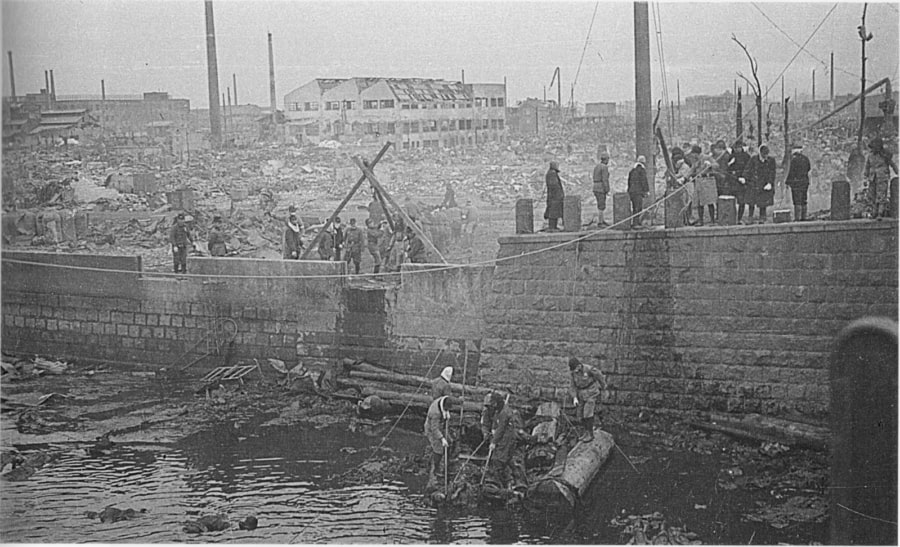
Photographs taken in the days after the raid document piles of corpses in the streets and along the riverbanks of Tokyo. Eyes were sealed shut with ash, hair was burned away, and some bodies had crumbled apart. The Sumida River and surrounding waterways, which many residents had fled to for safety, became the sites of mass graves. Bodies were pulled from the water at locations like the Kikukawa Bridge in the Honjo exchange district.
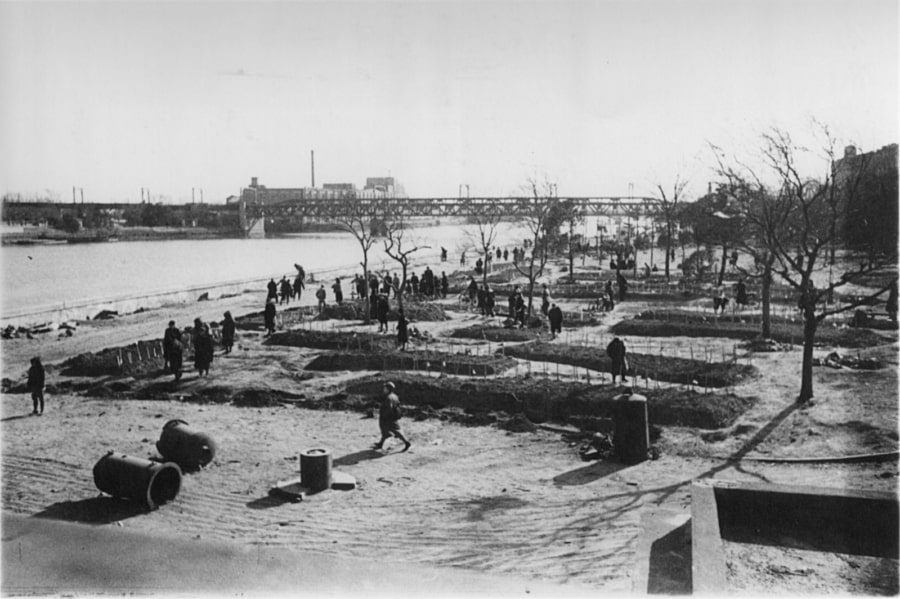
In some areas, isolated buildings survived almost by chance—surrounded by complete devastation, yet structurally intact. The Asakusa Matsuya Department Store was one such structure. Photographs taken from its roof on March 19, 1945 reveal the total obliteration of the surrounding neighborhood. The street leading to the famous Sensō-ji temple—a cultural landmark of the Asakusa district—was flattened entirely.
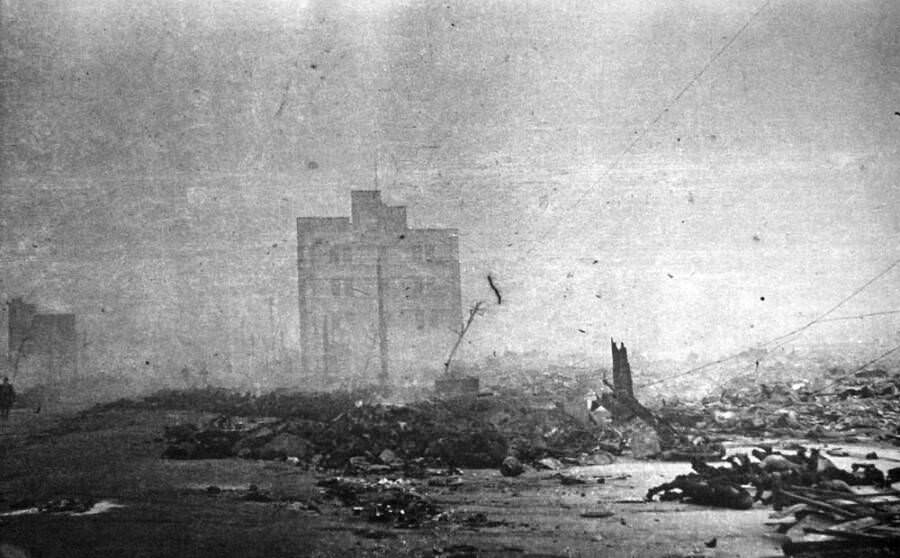
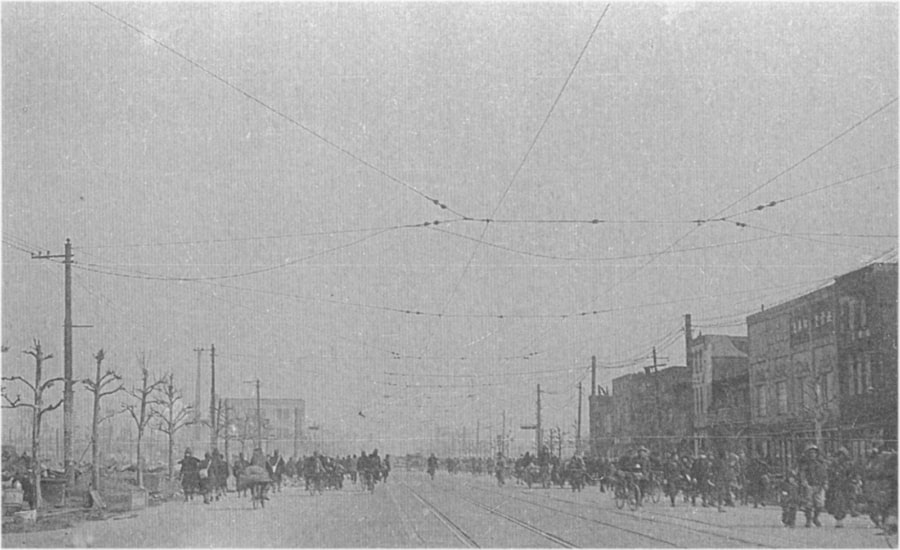
By mid-March, Japanese authorities had organized efforts to count and formally identify the dead. Bodies transported from the Shimoya and Asakusa districts were laid out in Ueno Park for identification. The scale of the task reflected the magnitude of the catastrophe—thousands of unidentified corpses lined up across one of Tokyo’s most well-known public spaces.
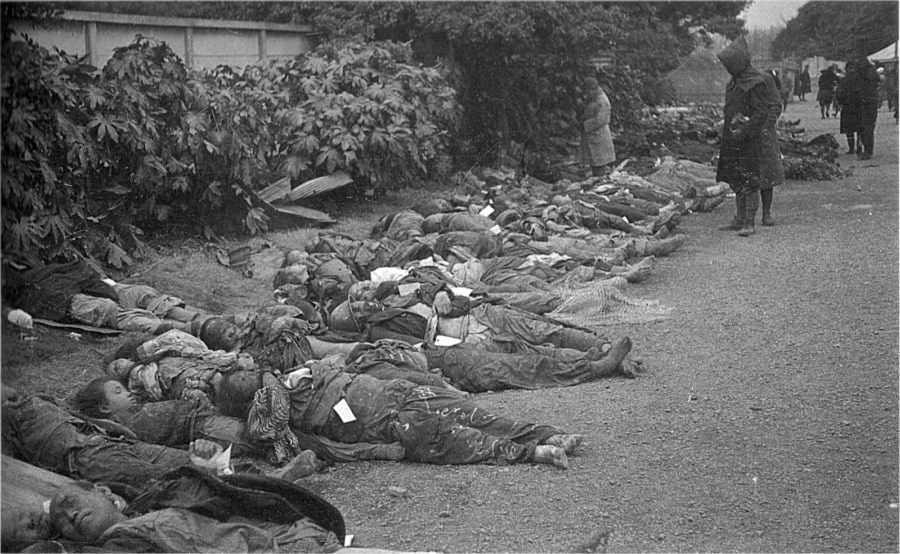
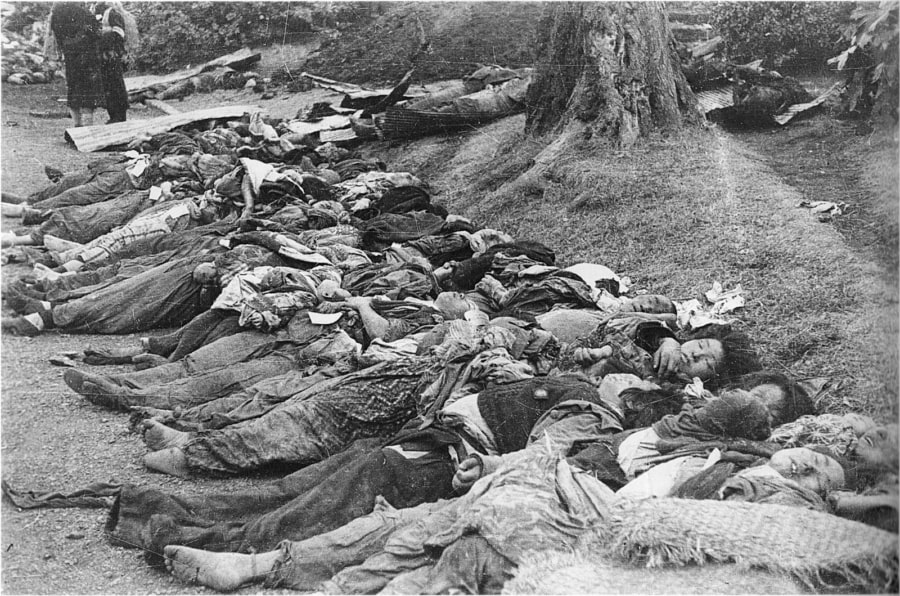
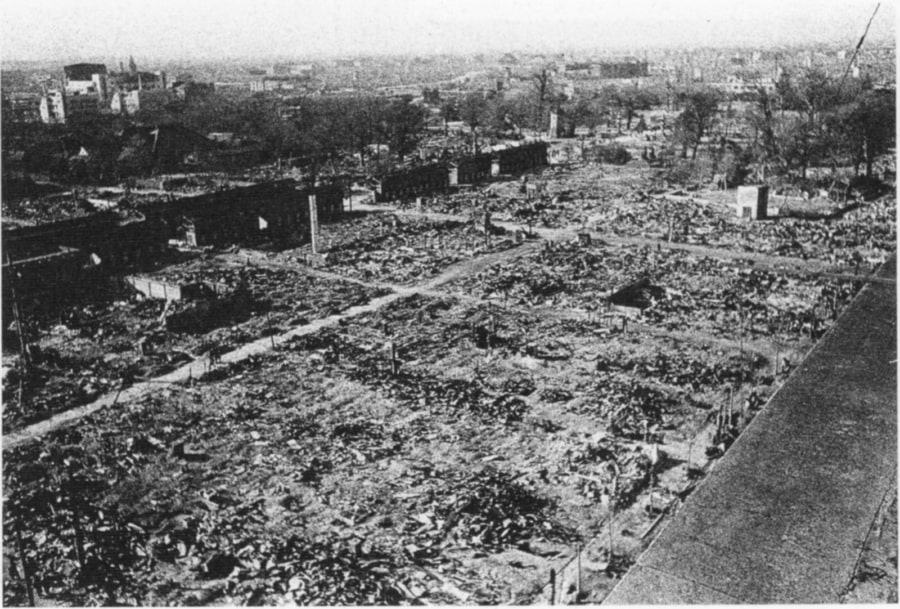
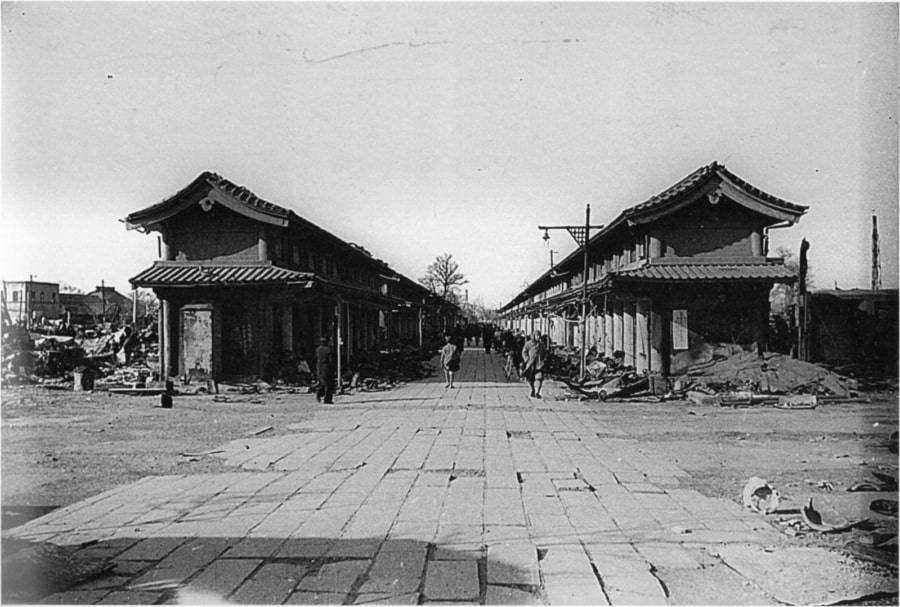
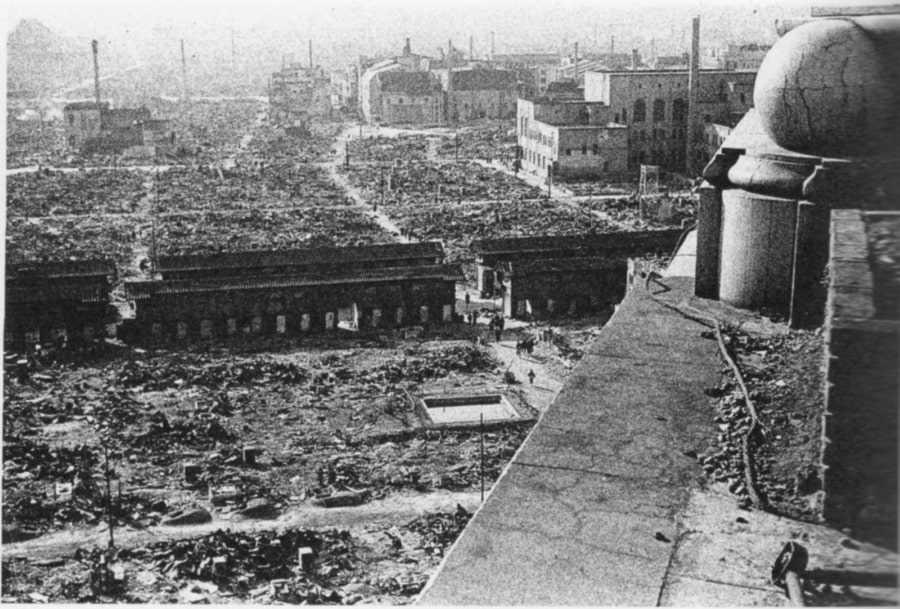
The rivers running through Tokyo became sites of mass death. Many residents had jumped into the water to escape the flames, only to drown or succumb to burns. At the Kikukawa Bridge, bodies piled up along the banks and in the water. Rescue workers and civilians waded in to pull out the dead and, in some cases, those barely alive. The scenes recorded there in mid-March represent some of the most graphic documentation of the raid’s toll.
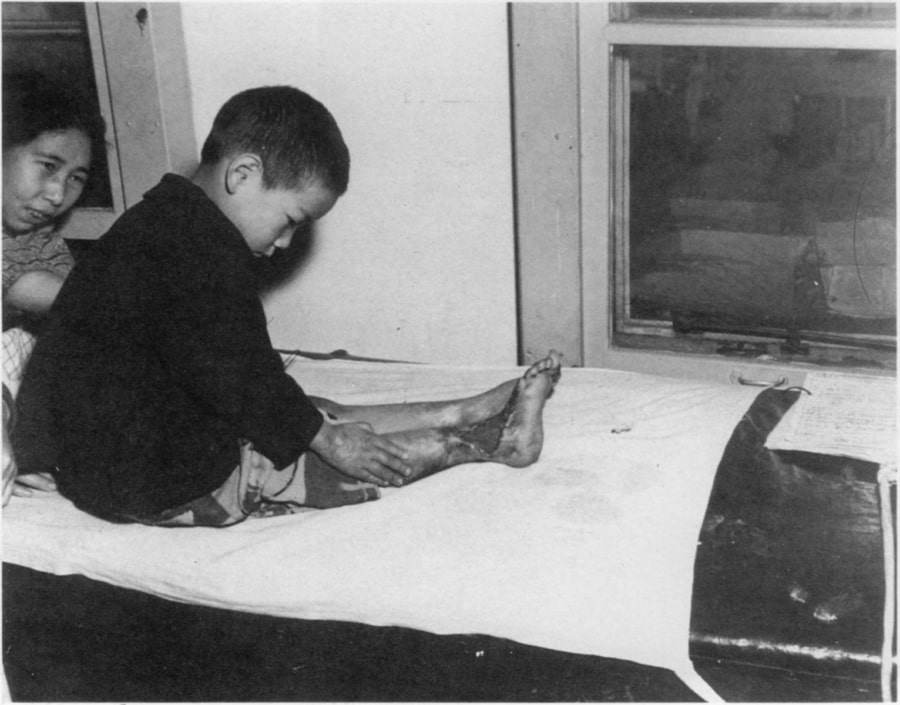
Operation Meetinghouse was not the last firebombing raid on Tokyo. Subsequent strikes followed in the months after March 1945. By May, Germany had surrendered, but Japan continued fighting. American forces carried out additional incendiary raids on Tokyo and other Japanese cities throughout the summer. Civilians—including children—continued to suffer the consequences. A photograph taken after one of these later raids shows a three-year-old boy with severe napalm burns, one of countless non-combatants caught in the ongoing campaign.
The memory of the Great Tokyo Air Raid is preserved today at the Center of the Tokyo Raids and War Damage, located in the city’s Koto ward. The museum holds photographs, artifacts, testimonies, and records documenting the events of March 10, 1945 and the wider U.S. bombing campaign against Japan. It stands as a permanent record of what civilian populations endured during one of the most destructive nights of the Second World War.



It is unfortunate what humans can do to each other. It is truly tragic.
You should watch Grave of the Fireflies if you haven’t already. I highly recommend it.
In context, the Grave of the fireflies takes place during the firebombing of Kobe. It was considerably more destructive and intense in Tokyo.
In a way, it’s fascinating to see how the various factions of the fascist government did not care about the civilian population.
There wasn’t a civilian population in Japan.
Pearl Harbor was at least a battle between soldiers. But this was just a massacre of civilians.
In war, there are no rules. There are dire consequences for Japan if it doesn’t cooperate with the US.