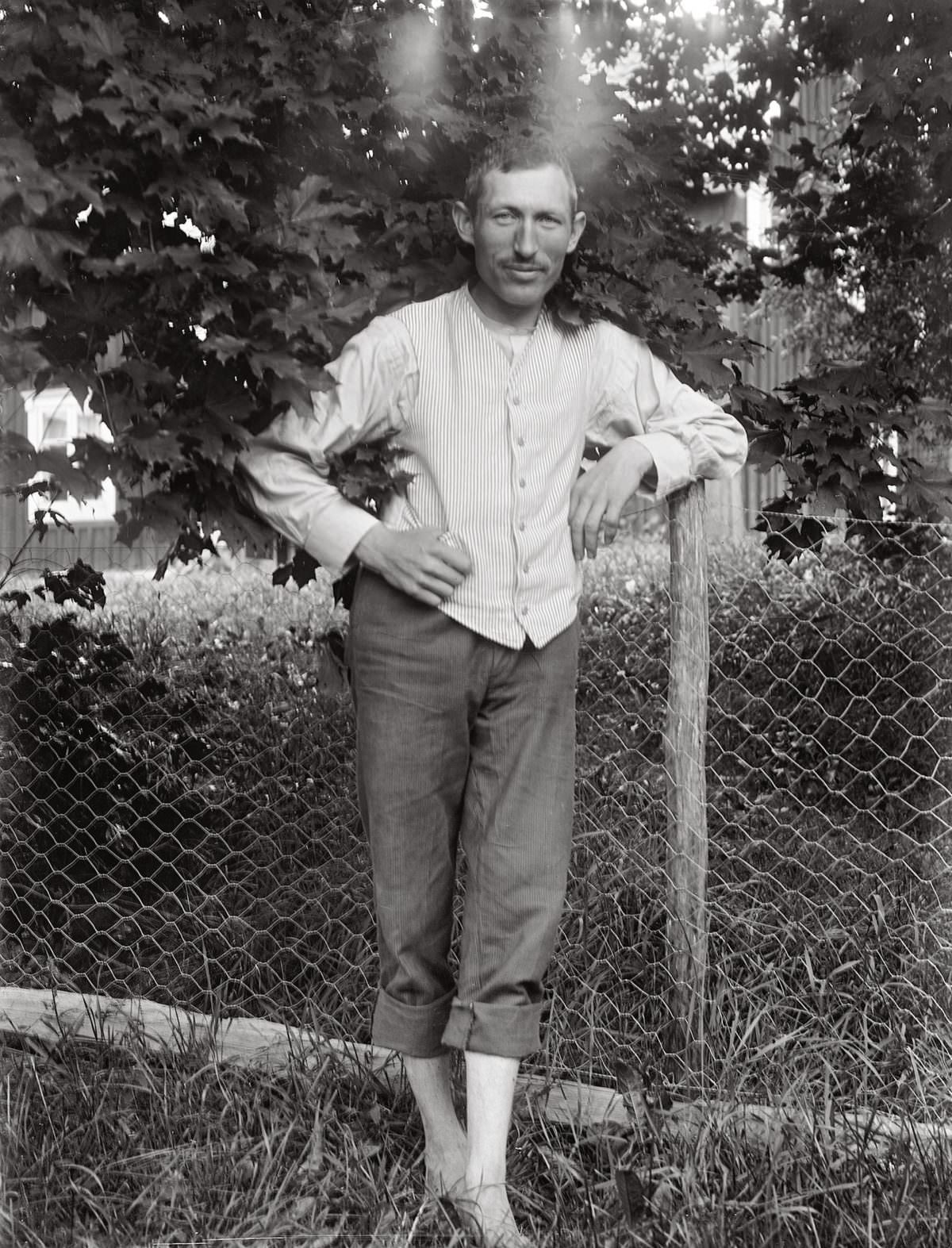
John Alinder never left his birth village of Sävasta, a small farming community in Uppland, an eastern-central province of Sweden. He was born there, lived his entire life there, and died there in 1957. But through his camera, Alinder gave the world a vivid record of rural Swedish life spanning three decades — the 1910s, 1920s, and 1930s. His photographs show neighbors, families, local workers, and everyday moments that would otherwise have been lost to time.
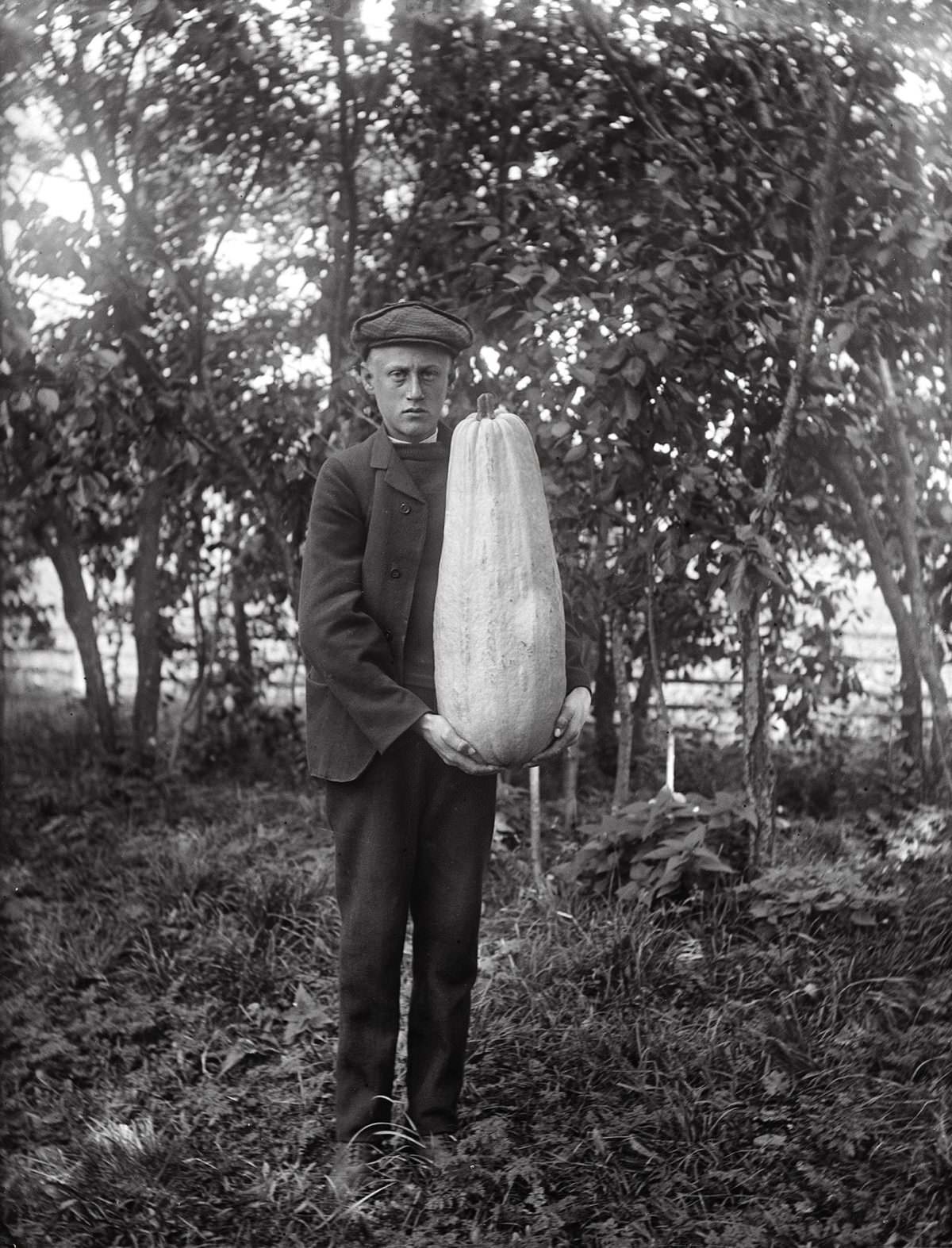
Alinder’s method was hands-on and deeply personal. He developed his photographs himself in a darkroom, using special photographic paper held in a frame under glass. He then exposed the negatives to natural sunlight to produce the final prints. The results were sharp, detailed images that carried a striking quality — his subjects often look directly into the lens with an expression of genuine awareness, as if they knew their image would one day reach people far beyond their village.
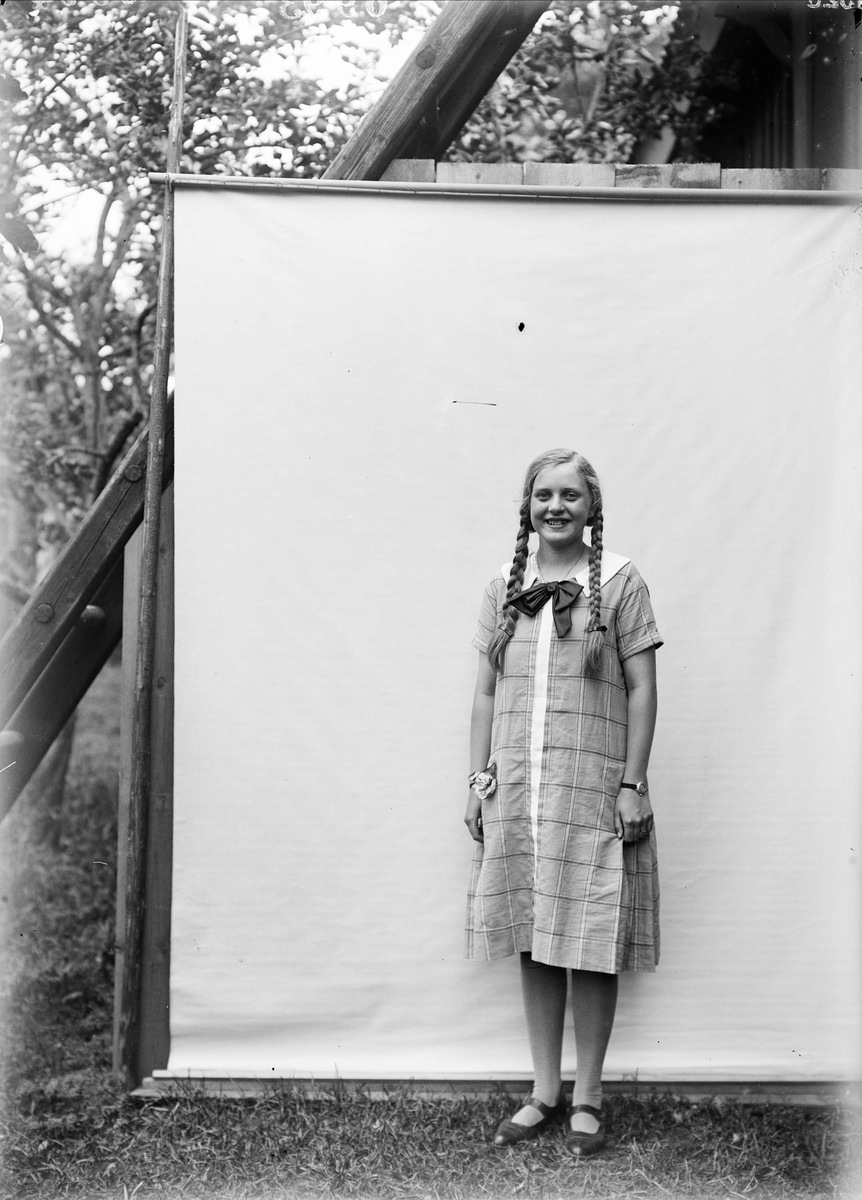
Life in Sävasta was rooted in agriculture. Alinder’s own family were farmers, and most of his neighbors shared that way of life. His photographs reflect this world — outdoor settings, plain working clothes, wooden buildings, and the open landscapes of Uppland. These were not staged studio portraits. They were taken in gardens, churchyards, doorways, and fields.
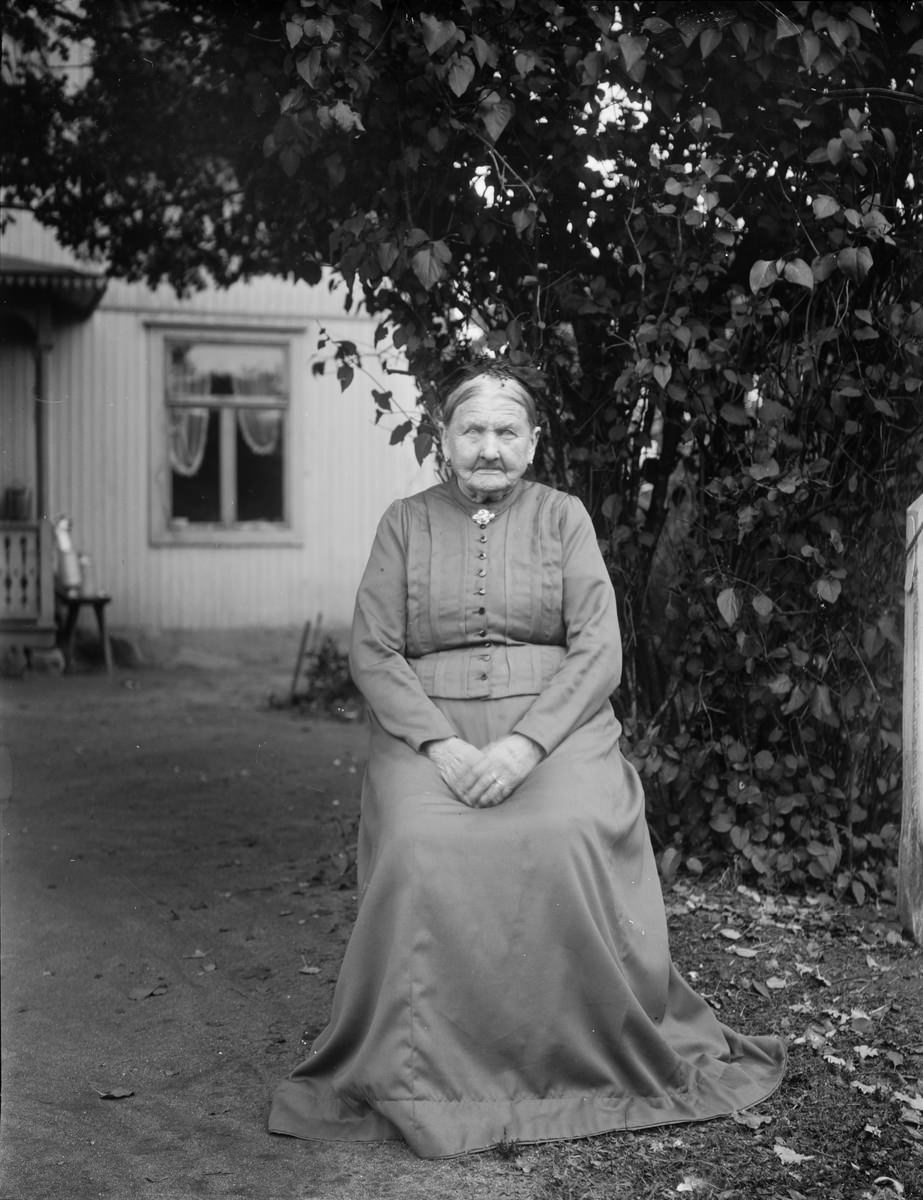
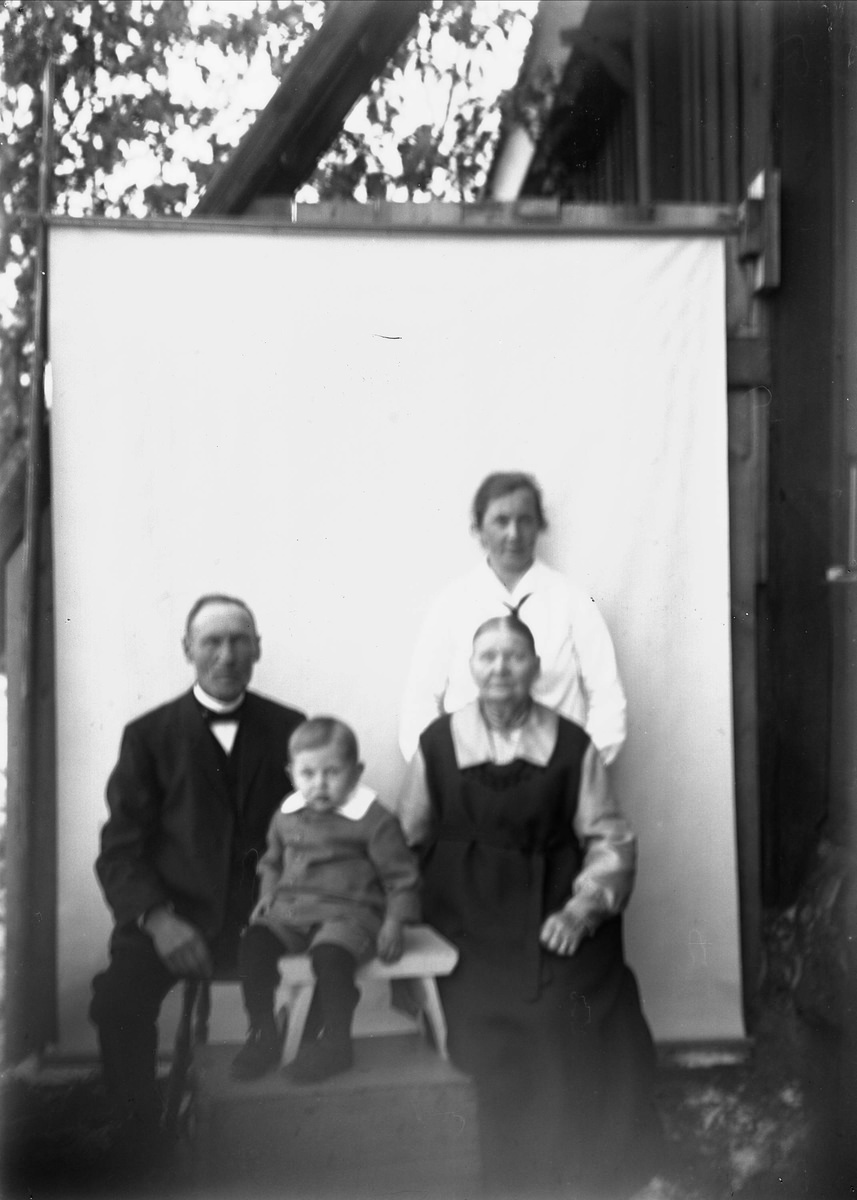
Alinder photographed families together as naturally as he photographed individuals alone. In 1926, he captured his own family — Tora, August, Tore, and Karolina Alinder — in what stands as one of the more personal images in his collection. Family photographs like this one reveal the tight social bonds of a small rural parish, where nearly everyone knew one another across generations.
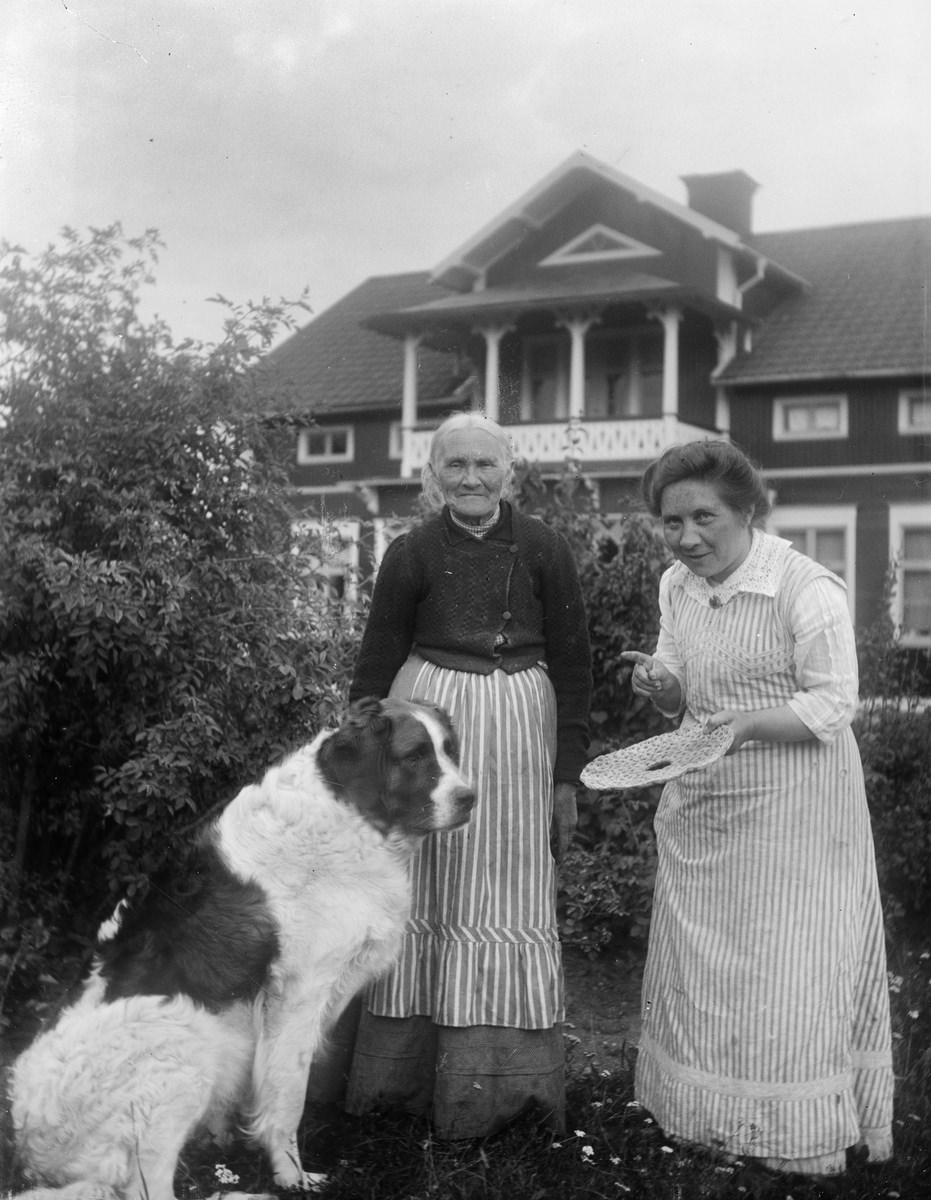
Some of his earliest surviving images date back even further. A photograph from 1908 shows Teres Karlinder holding a bread cake in front of a dog in Drävle — a moment that feels spontaneous, even playful. These candid qualities appear throughout his work and set his photography apart from the formal, stiff portraits common in commercial studios of the era.
Alinder moved through multiple occupations during his lifetime. He sold music, ran a small shop out of his home, and at some point operated an illegal bar. Photography wove through all of it — a side pursuit that produced thousands of negatives over the decades. He was not a professional photographer in any commercial sense, which may be exactly why his images feel so unguarded and honest.
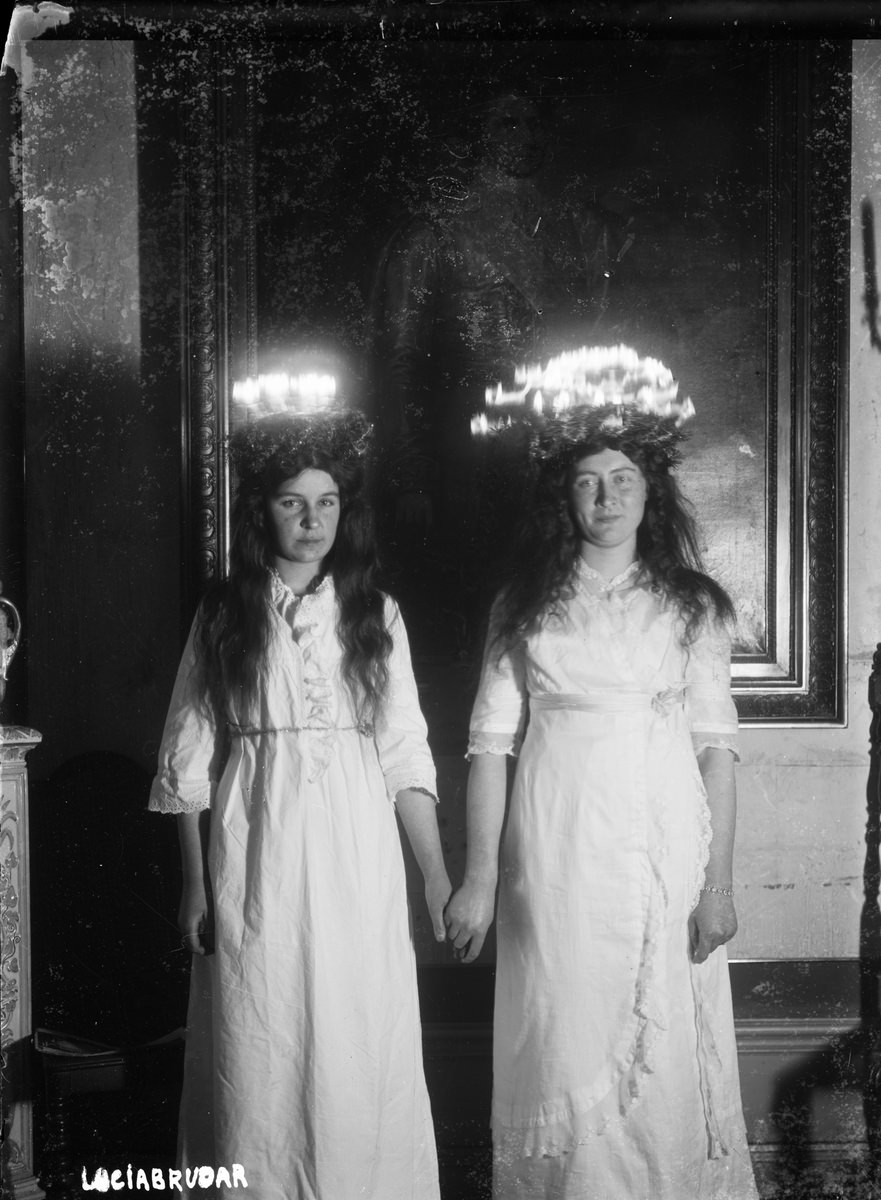
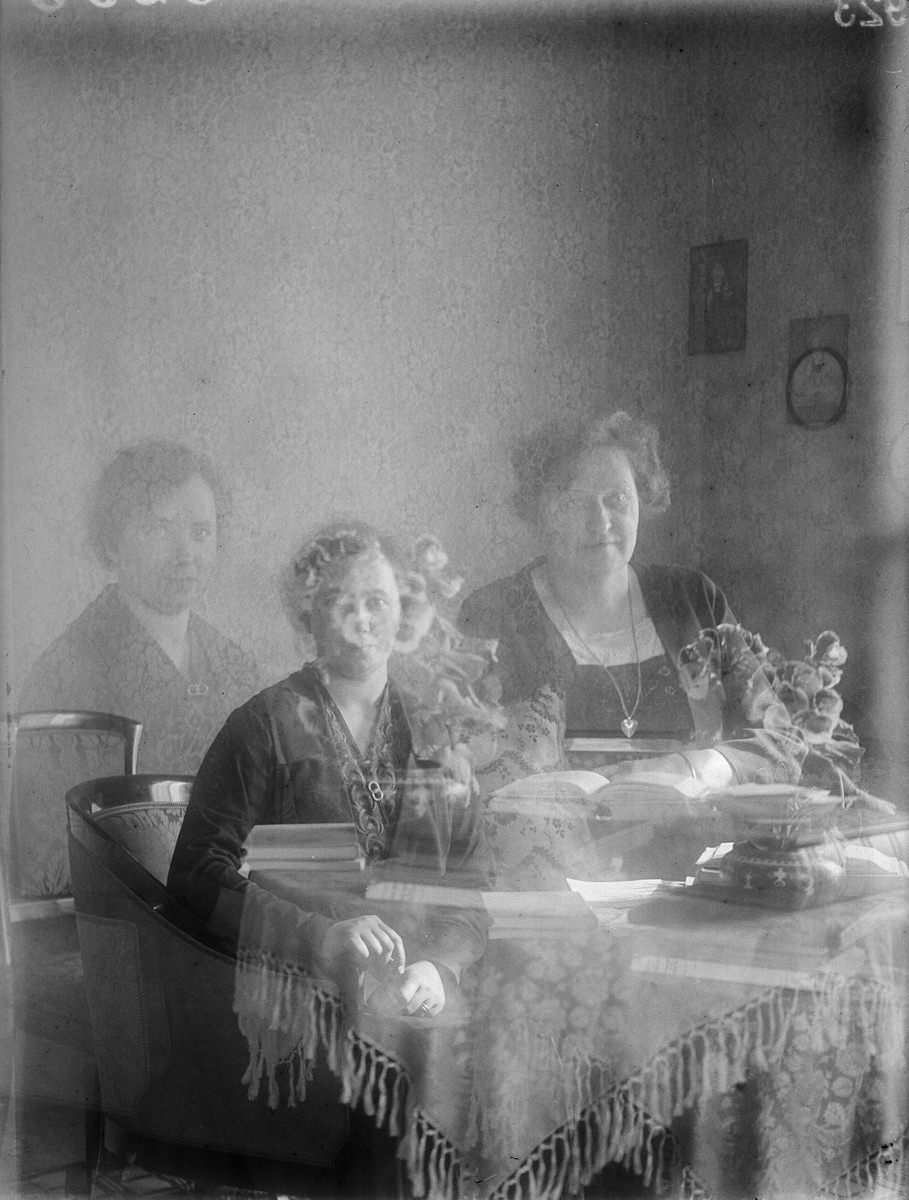
Some images captured people in more formal moments. In 1923, Karin Arnell and Tora Alinder were photographed together using a double plate technique in the atrium of Mälby in Frösthult parish. The double plate method allowed two separate exposures on a single glass plate, creating a layered or paired image — a technically deliberate choice that shows Alinder experimenting with what his equipment could do.
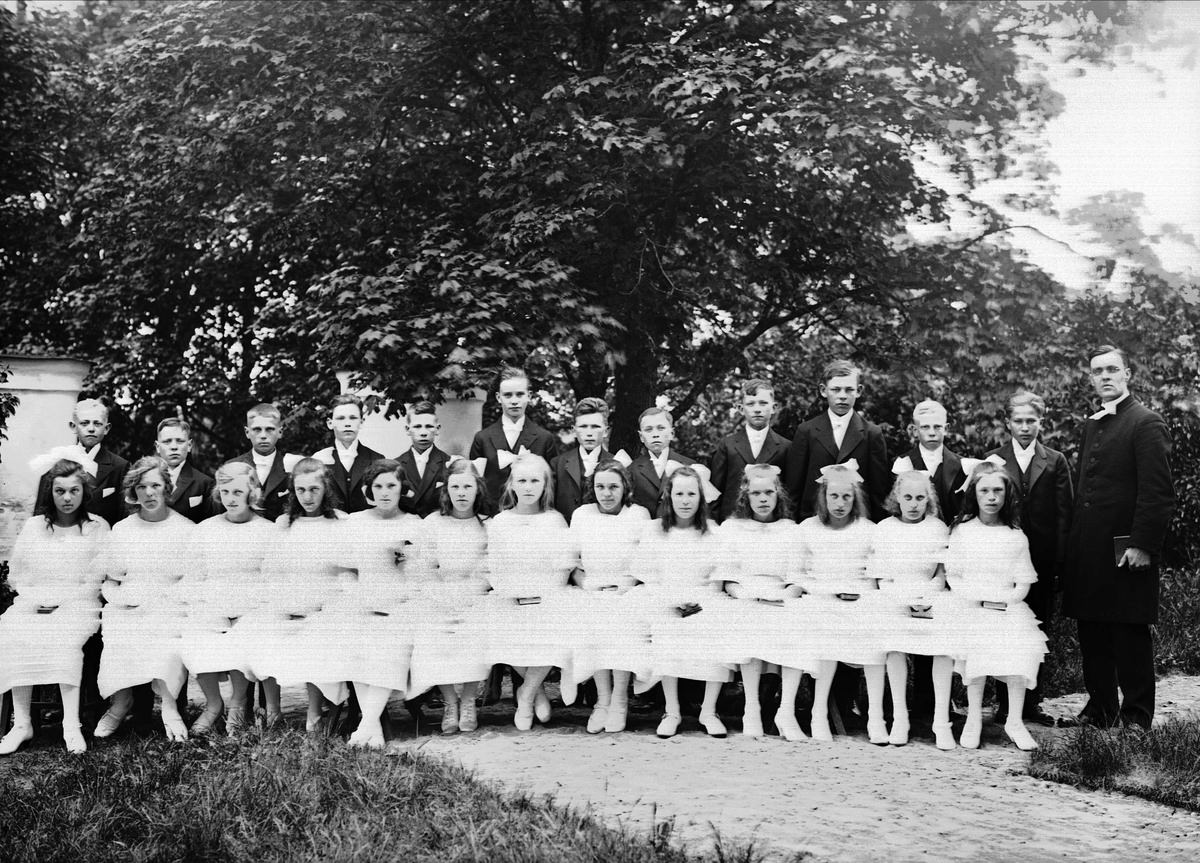
Religion played a visible role in the community Alinder documented. In 1925, he photographed Pastor Magnusson standing outside Altuna church with a group of young confirmands. Confirmation was a major milestone in Swedish Lutheran life, marking a young person’s full entry into the church community. The image captures the occasion with solemnity but without stiffness.
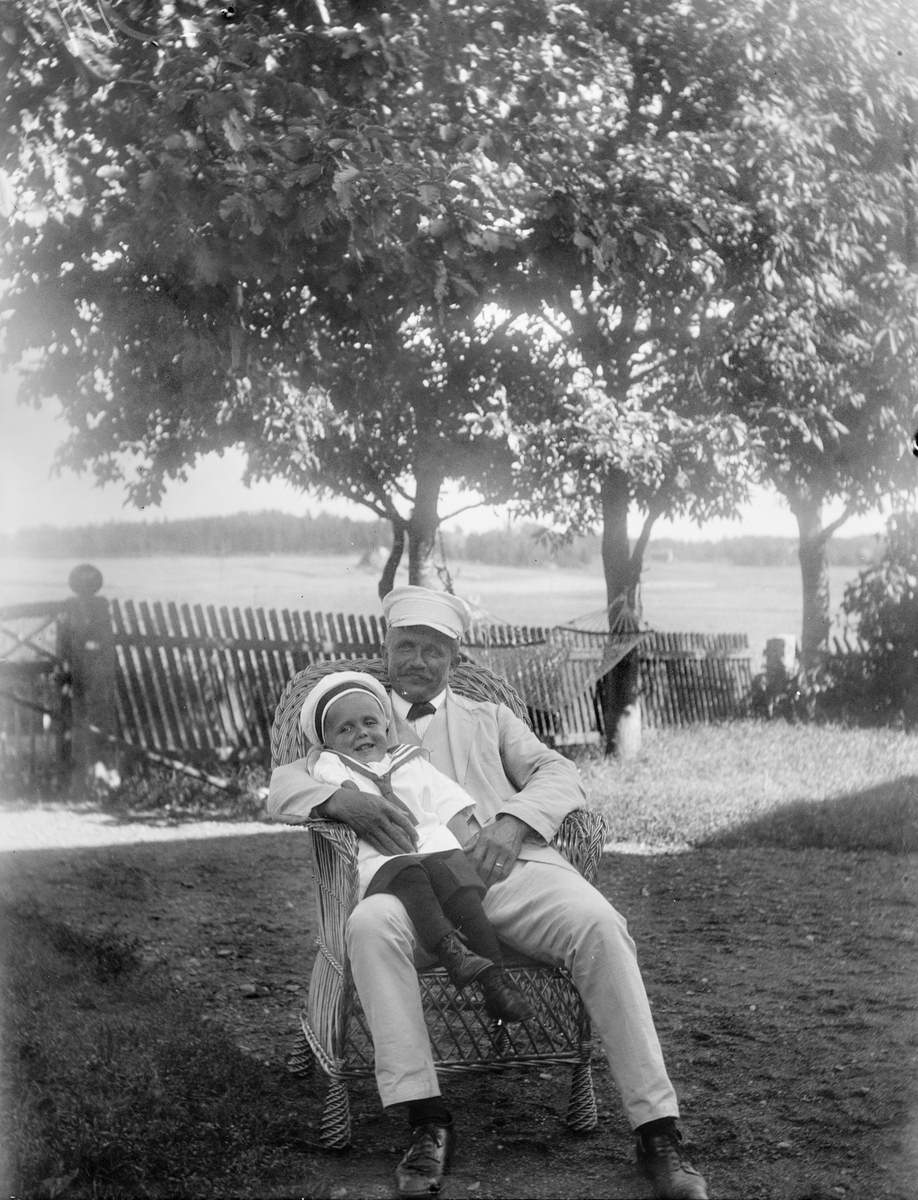
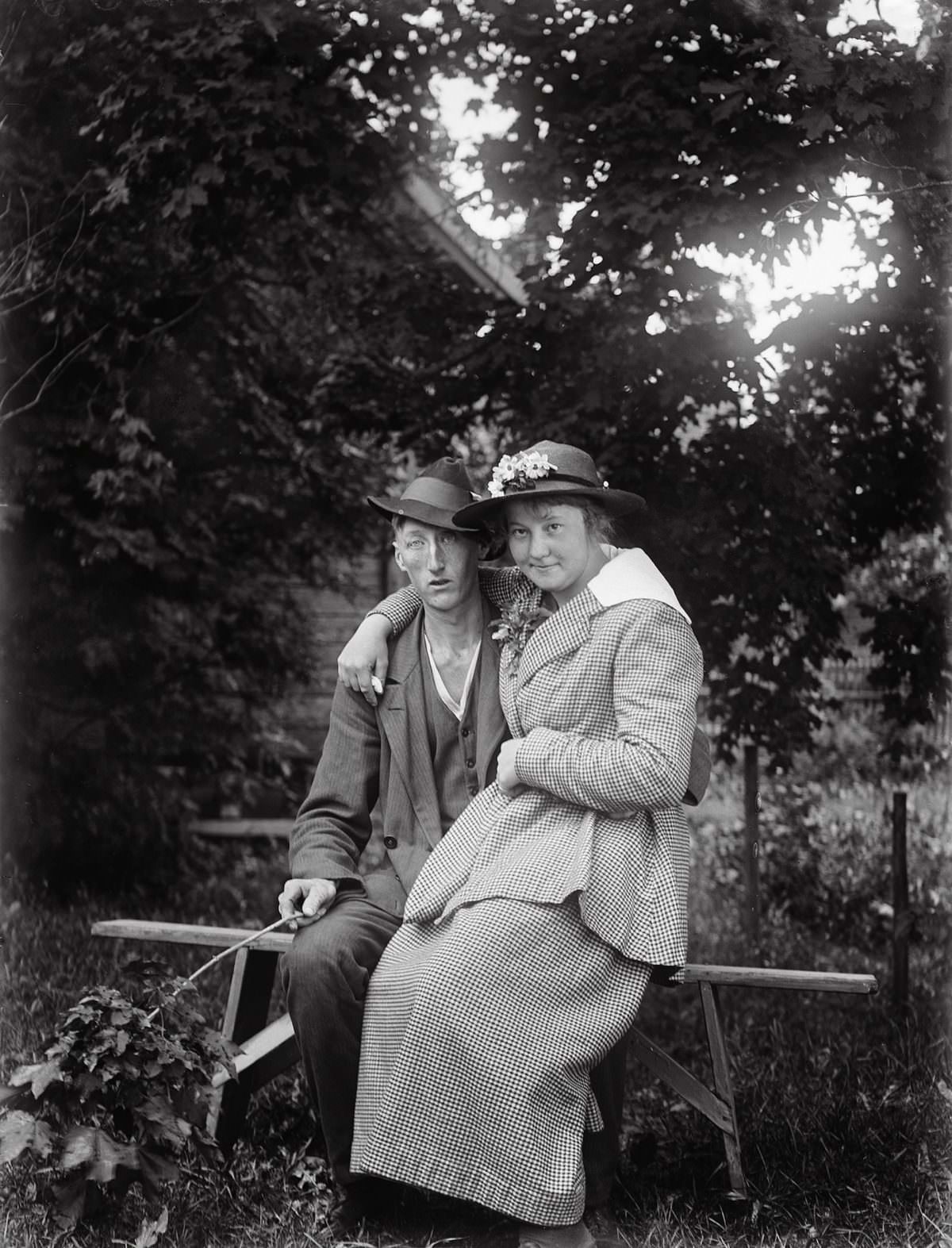
Alinder also photographed men at leisure. Edvin Pettersson and Olle Torsmark were caught relaxing together in a garden in Nibble, Torstuna parish — a quiet scene that speaks to the slower pace of rural life between the wars. These types of images are among the most natural in the collection, free of any formal occasion.
The village of Sävasta itself appears in multiple photographs across different years. These images document how the physical landscape of the parish looked during the 1910s and 1920s — buildings, roads, and open land that formed the backdrop of daily life for everyone Alinder knew.
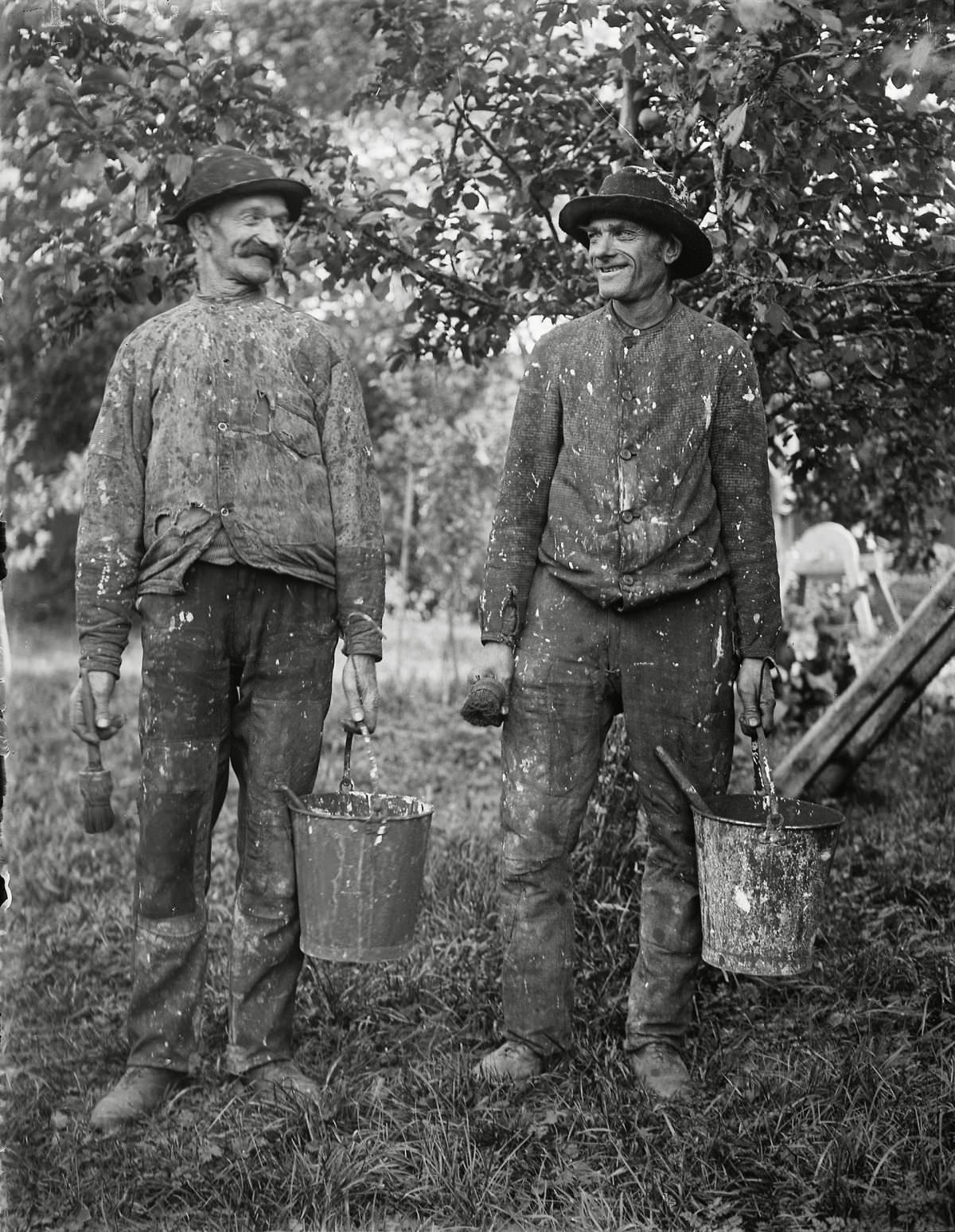
Local workers and tradespeople also appear in his photographs. In 1919, he photographed two painters, Lindgren and Torell, in Sävasta — men whose names would have been entirely forgotten without the image. That same year he photographed Miss Linnea Ekenberg and Emil Johanson in Tibble Torstunaby, preserving two more faces from the parish record.
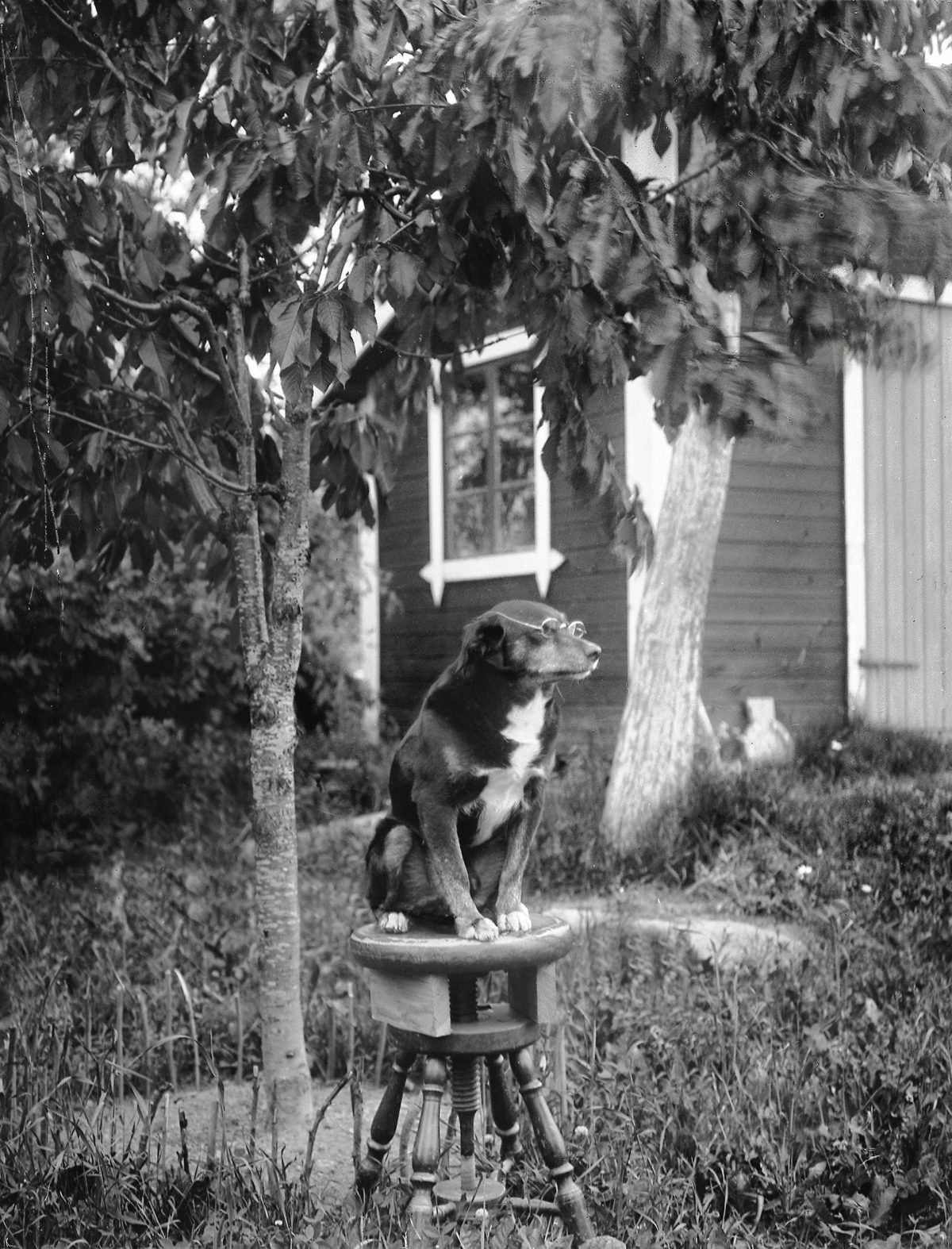
Not every subject was human. In 1922, Alinder photographed Ströle’s dog sitting upright wearing eyeglasses in Kaby, Simtuna parish. The image is deliberate and composed — someone placed those glasses on the dog and arranged the shot. It stands as a lighthearted moment in an otherwise documentary body of work.
Confirmation portraits were a recurring subject. In 1931, Alinder photographed Siri Johanson of Kotte, Altuna parish, dressed in her confirmation attire. The clothing is formal and carefully worn, reflecting the weight the occasion carried in Swedish Lutheran culture. The photograph is a record of both a personal milestone and a community ritual.
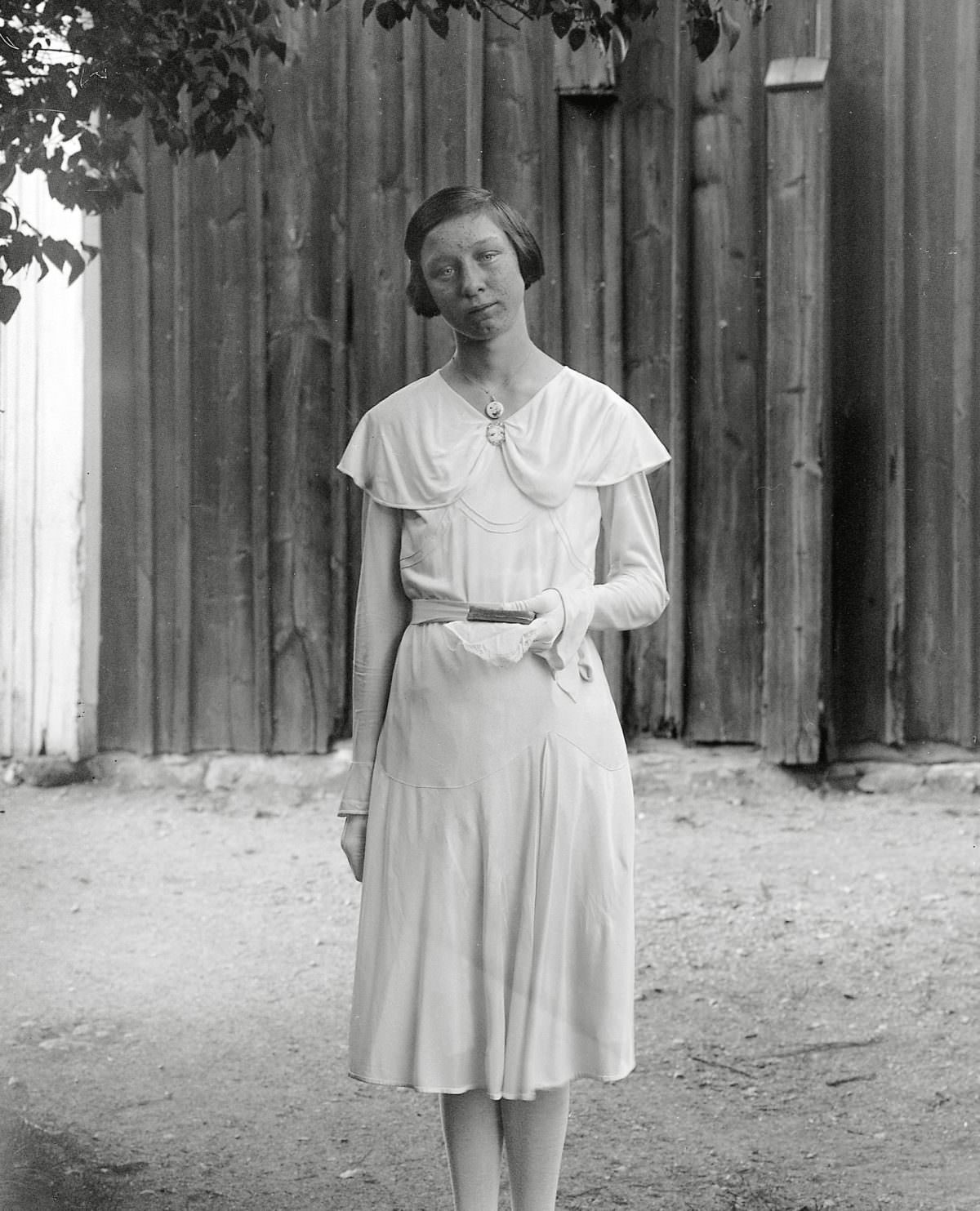
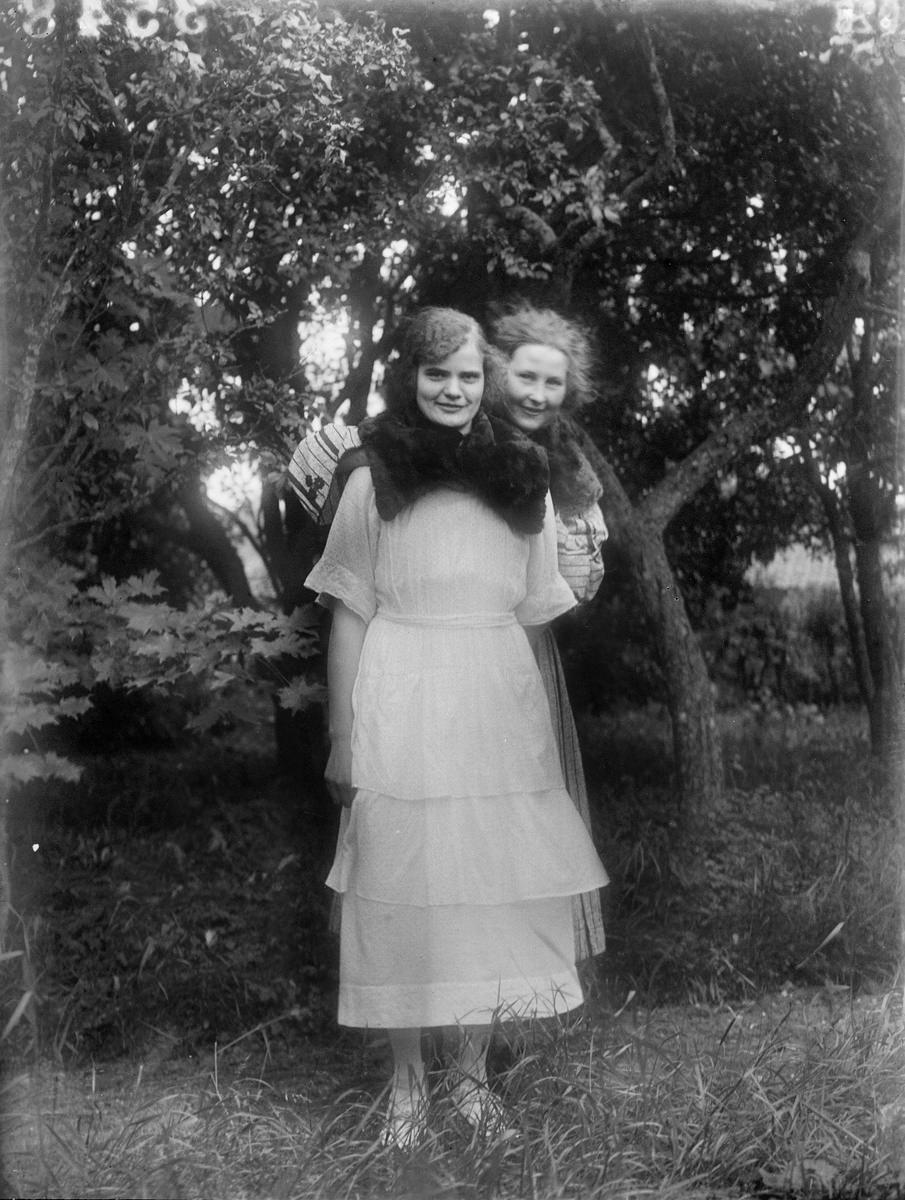
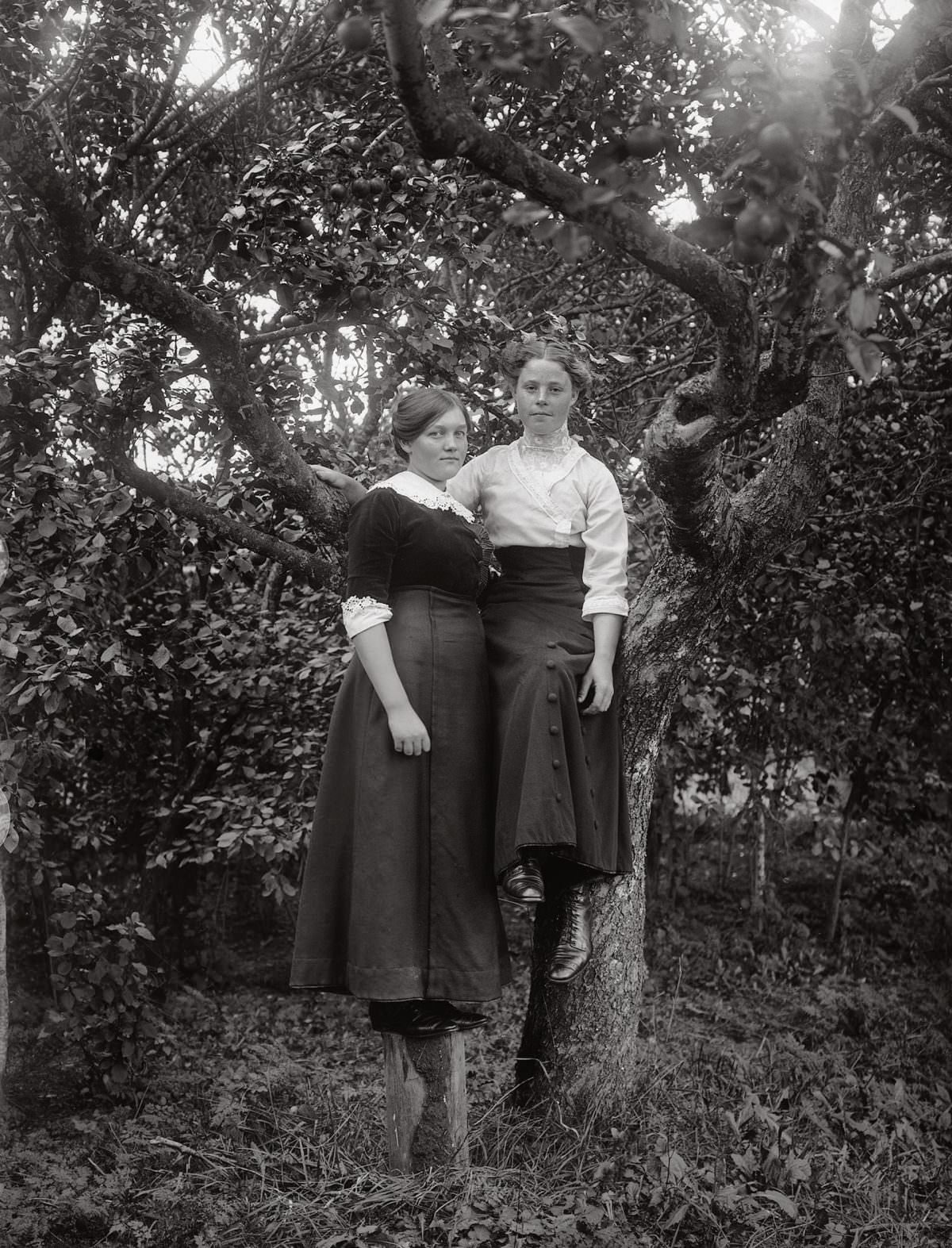
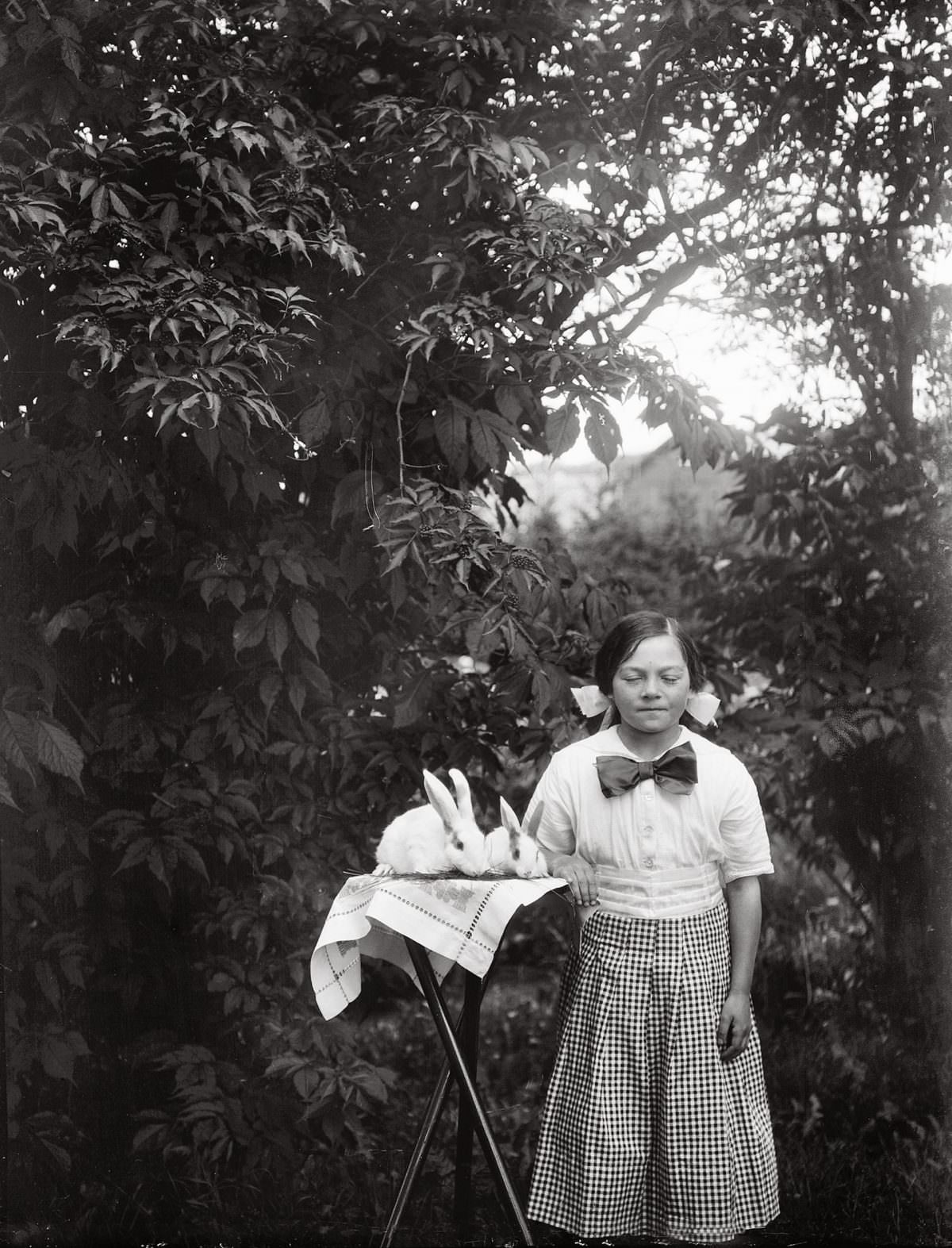
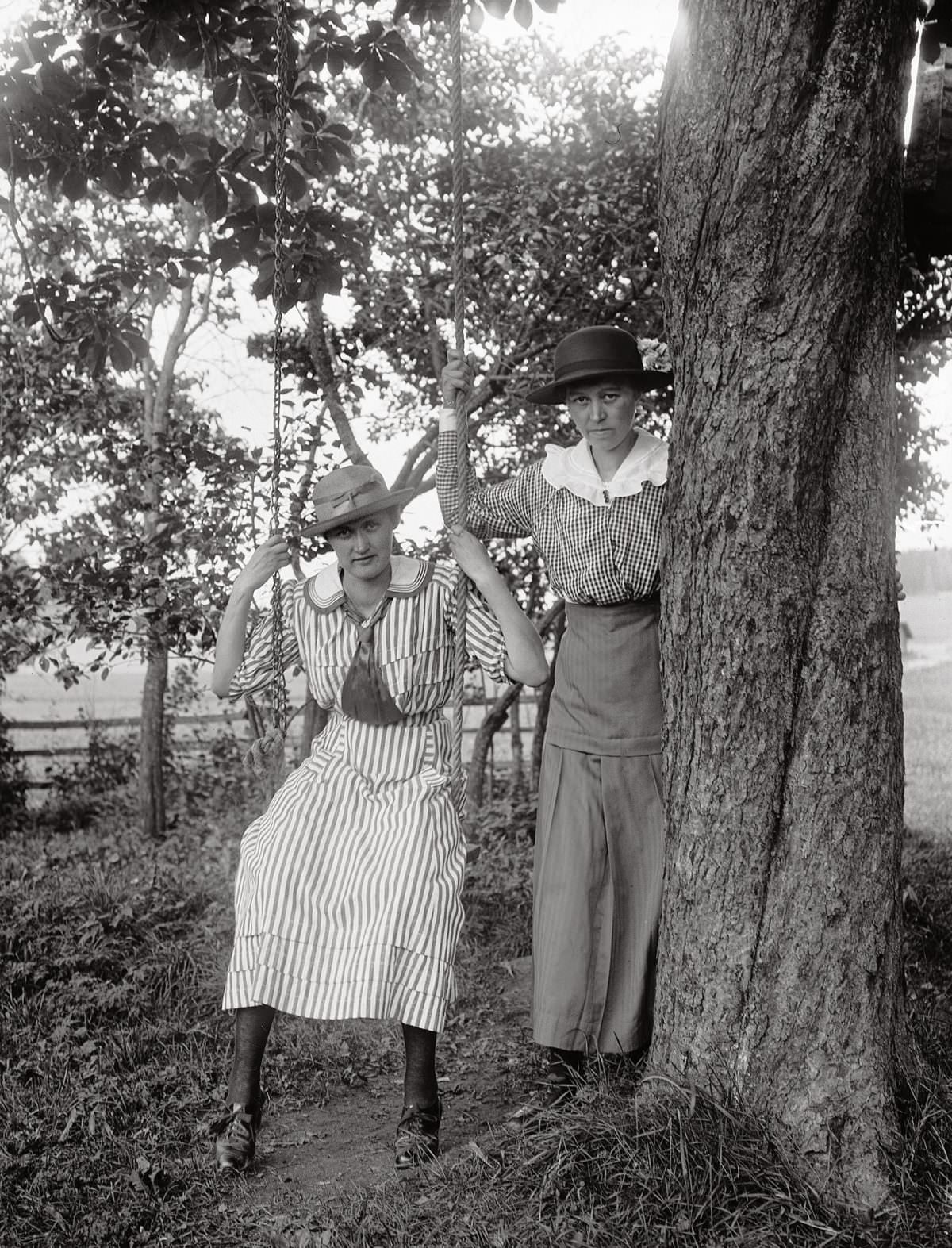
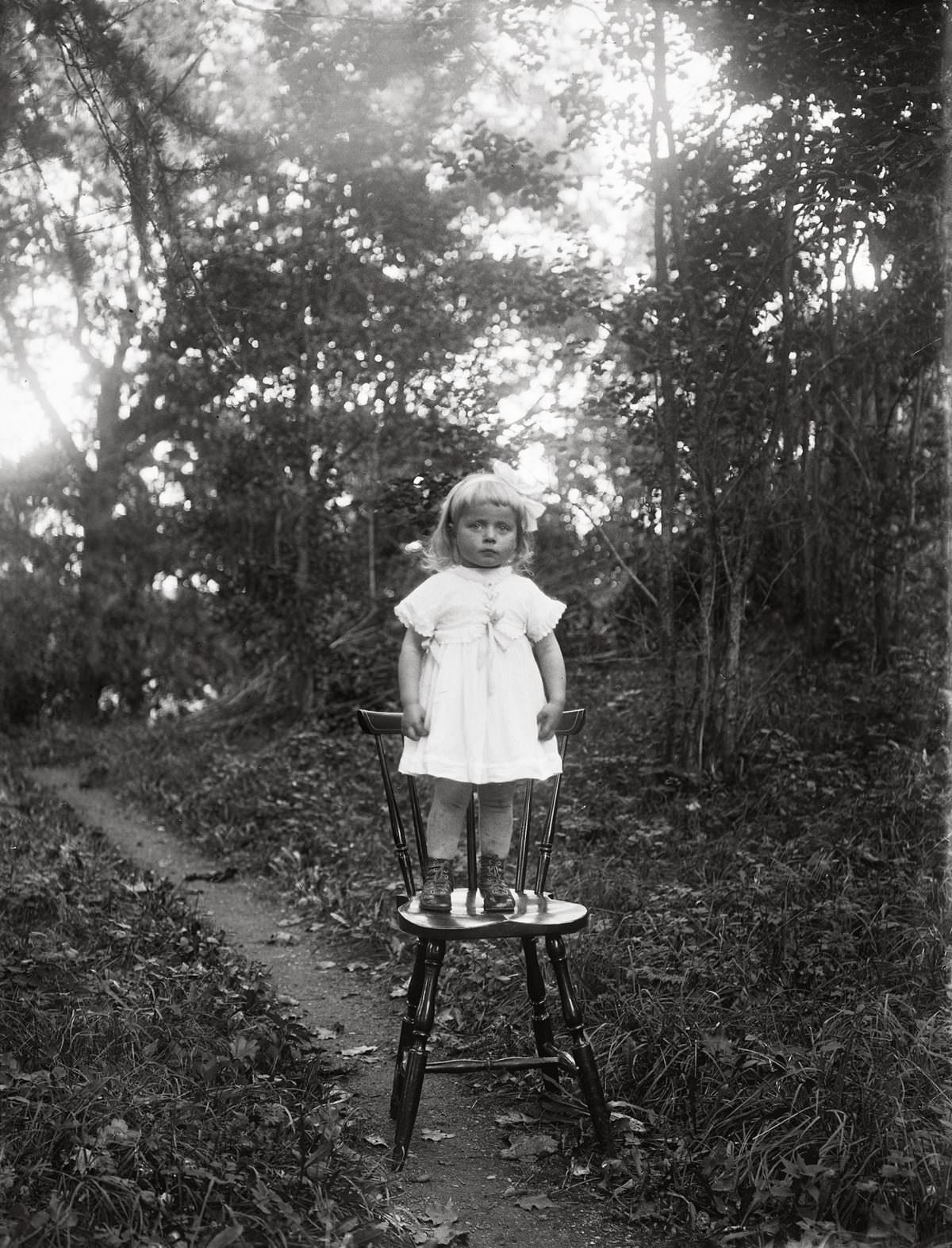
Women appear throughout Alinder’s collection in a wide range of settings — standing together as friends, posing alone, or captured mid-activity. Agnes Johansson and a friend were photographed in Sävasta sometime between 1910 and 1920, their expressions open and direct. Ljung’s daughter was photographed standing alone on a chair in Torstunaby in 1920 — a small child framed against an open space, looking entirely at ease in front of the camera.
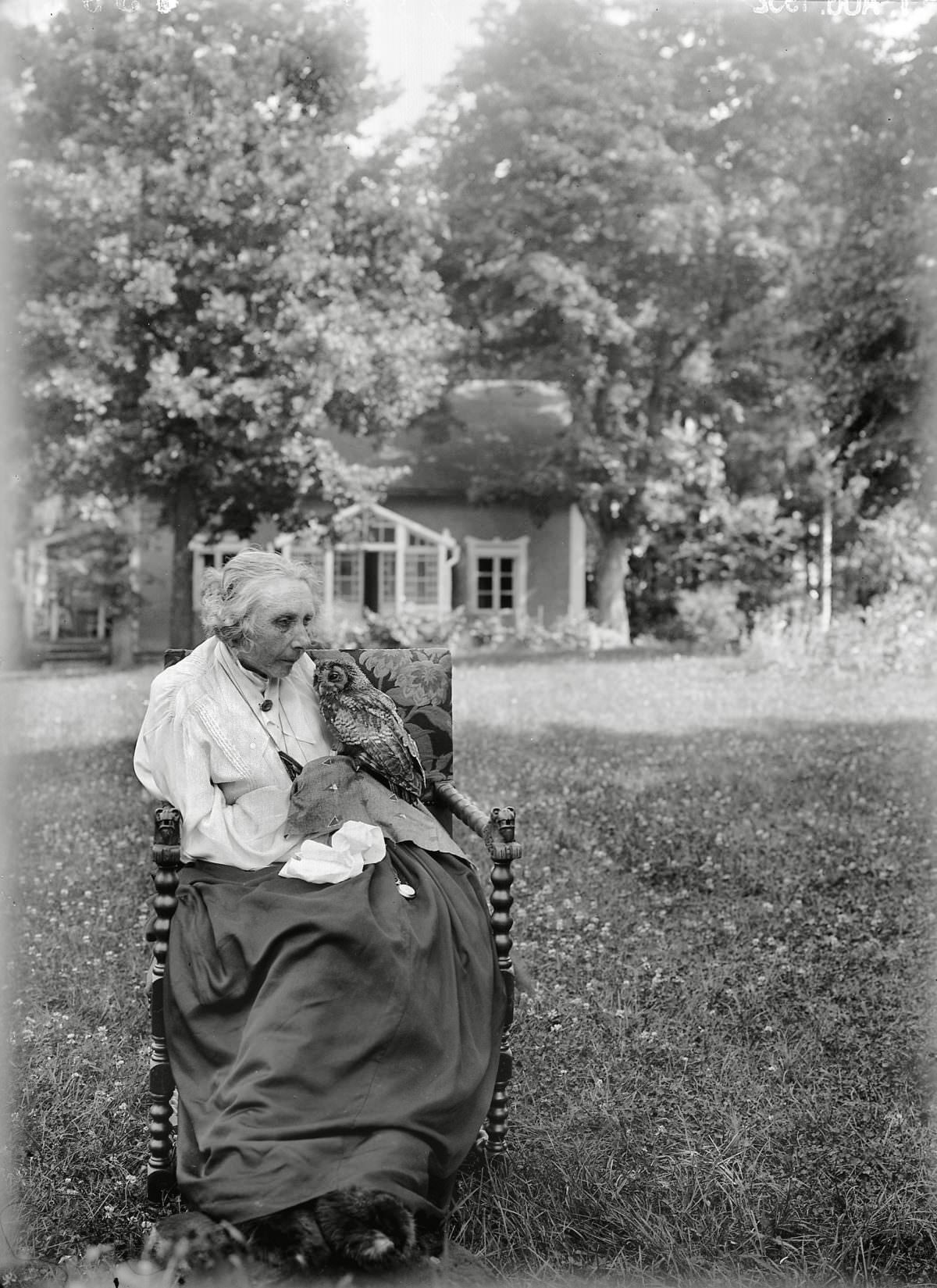
In 1932, Alinder photographed Major Alström’s wife at Göksbo in Altuna parish, holding or standing with an owl. The image is unusual and striking — an owl was an uncommon subject, and its presence alongside the woman gives the photograph a particular character that stands apart from the collection’s more routine portraits.
The village scenes Alinder returned to again and again in Sävasta show a community that changed slowly. Buildings remained. Faces aged. New children appeared. The photographs from the 1910s and 1920s, taken across multiple visits to the same locations, document this passage of time without ever trying to make a point of it.
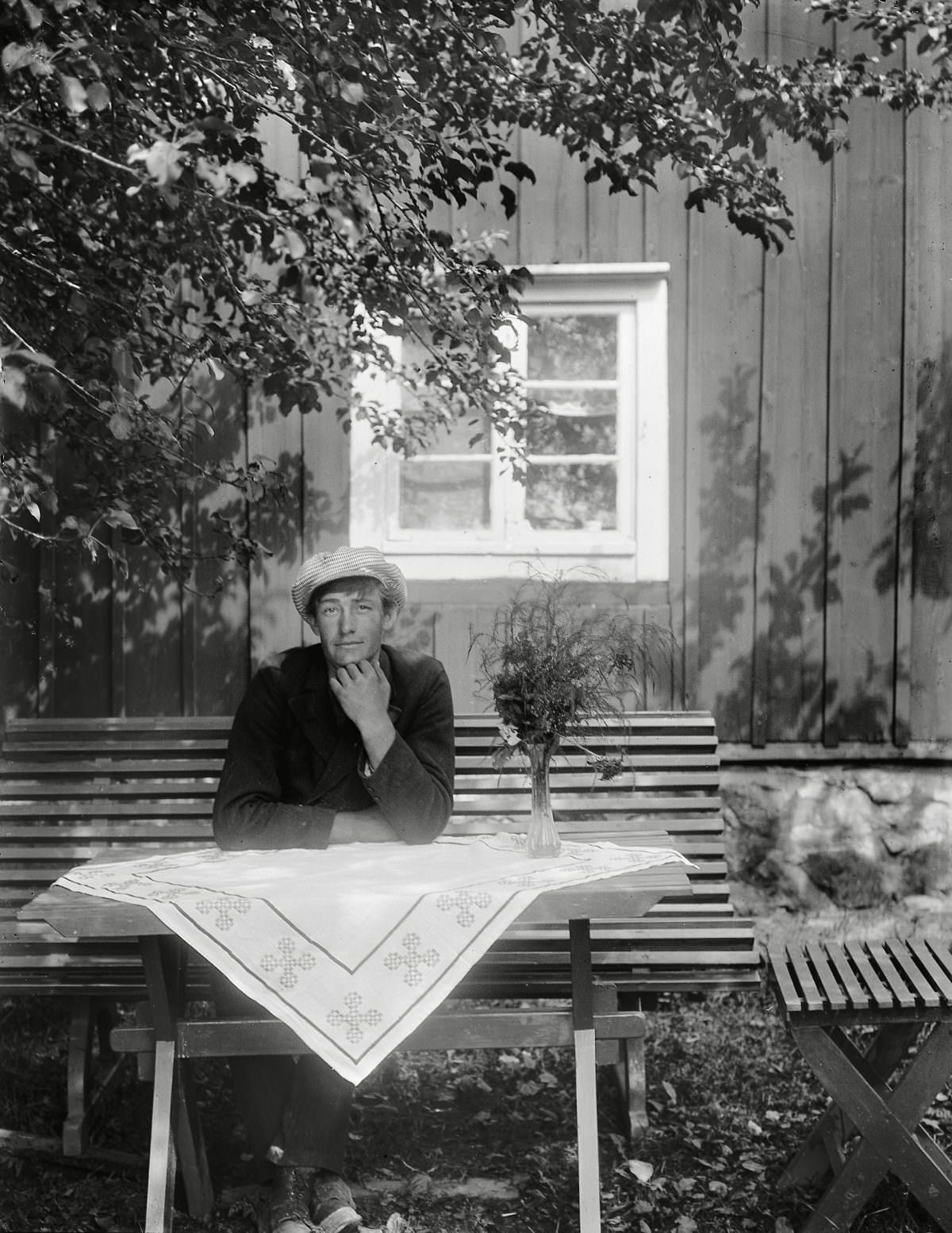
Alinder turned the camera on himself at least once — a self-portrait taken in his own garden sometime between 1910 and 1920. The man behind thousands of images of his neighbors and community finally appears in frame himself, standing in the same outdoor world he spent decades recording. He developed thousands of prints in his darkroom over the course of his life, never moving from the village where he was born, and never stopping.