
Edward Linley Sambourne was one of the most recognized cartoonists of the 19th and 20th centuries. For more than forty years, he worked as a cartoonist, illustrator, and photographer for the British satirical magazine Punch — a position that shaped his entire career. His interest in art began early. While attending Chester Training College, he discovered a passion for drawing and sketching. At sixteen, he secured admission to the South Kensington School of Art, though he attended for only a few months before his career took a different turn.
Sambourne’s work at Punch was distinctive. He used photographs as references for his sketches, a practice that set him apart from other illustrators of the time. His output earned recognition from the Royal Academy of Arts, which showcased his drawings across a span of twenty years at the Academy’s exhibitions. Alongside his magazine work, he also earned income illustrating books, drawing for private clients, and producing artwork for advertisements.
In 1906, Sambourne traveled to Holland with his wife, Marion. During this trip, he carried his camera through the streets of several Dutch cities, photographing women as they went about their daily lives. One of the tools he used was a right-angle camera, a device that allowed him to photograph subjects without them realizing they were being captured. The resulting images offer an unusually candid look at women in public spaces across the Netherlands. What he found in The Hague, Amsterdam, Haarlem, Utrecht, and beyond was a country where traditional and modern dress existed side by side on the same streets.
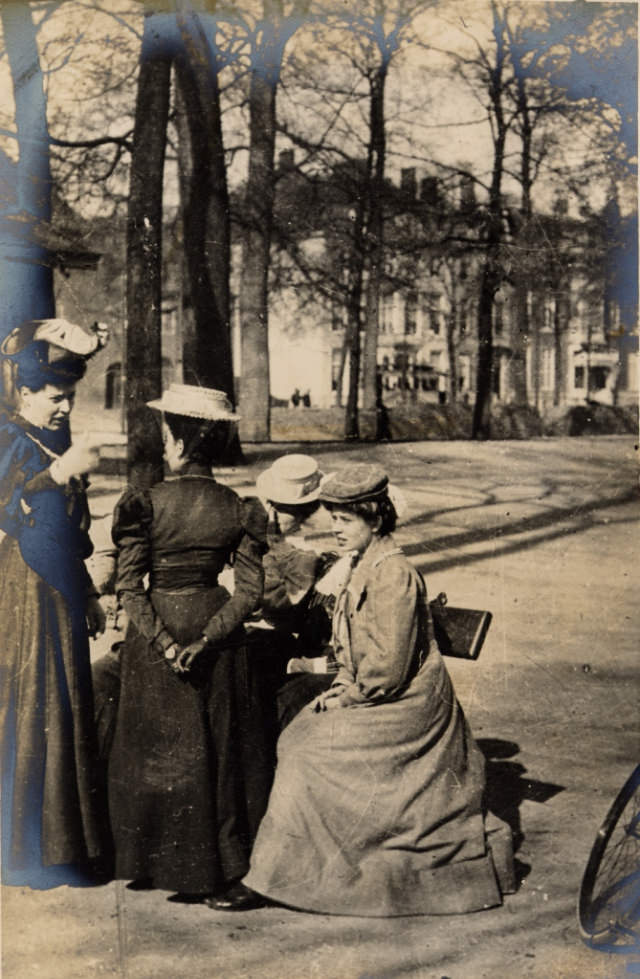
The right-angle camera explained some of the awkward framing in his Dutch photographs. Because he was not pointing the lens directly at his subjects, the composition often suffered — but the authenticity of the images gained. People were caught in natural moments rather than posed stiffly for a portrait. In The Hague, he found women dressed in the same kind of middle-class daywear he had photographed on the streets of London and Paris. The similarities across European cities in 1906 were striking.
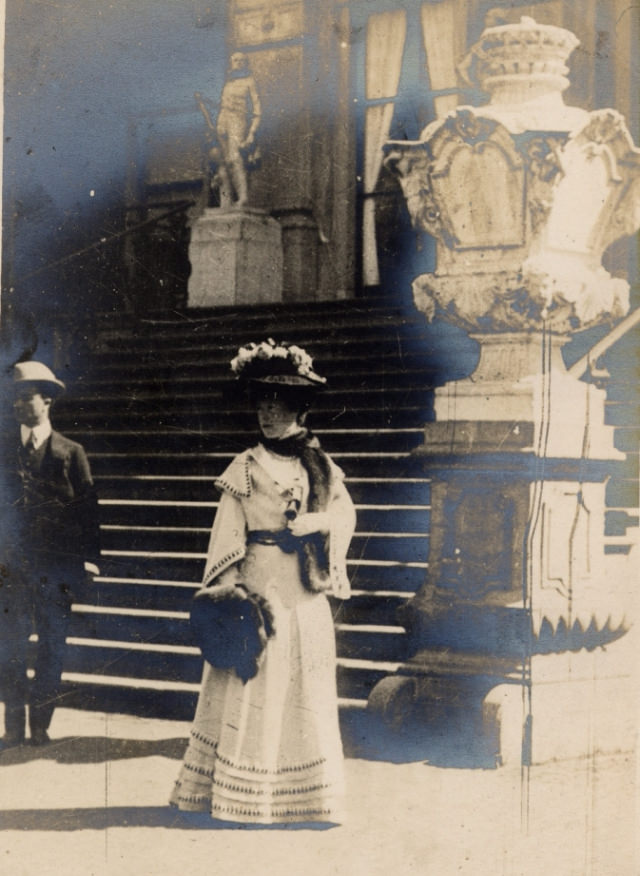
Not all of The Hague looked the same. Scheveningen, one of its districts, sits along the North Sea coast and had a character entirely its own. It was a working-class seaside area, and the women Sambourne photographed there dressed very differently from those in the city center. Traditional working-class costume was still common in Scheveningen, and Sambourne made sure to document it.
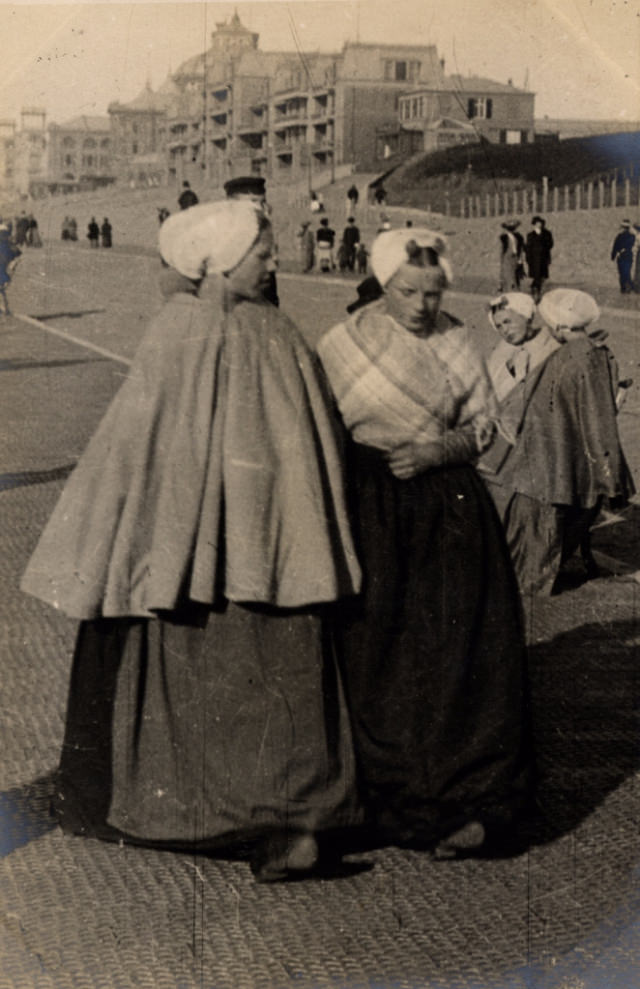
Not everyone was comfortable being photographed. Some subjects noticed Sambourne despite his discreet methods, and their reactions showed it.
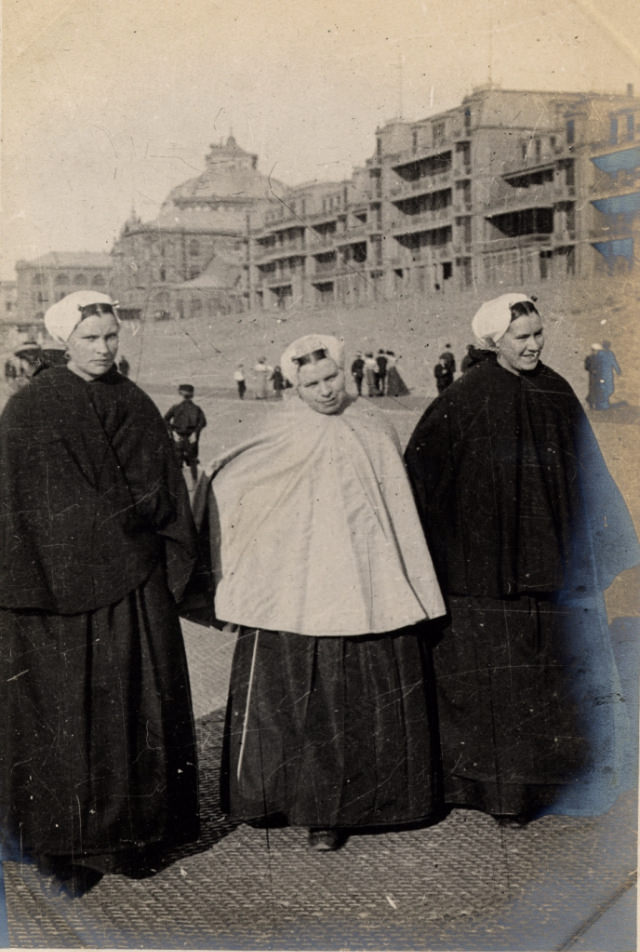
Others were far more willing. With the pier stretching behind them, some of the women at Scheveningen were happy to stop and pose.
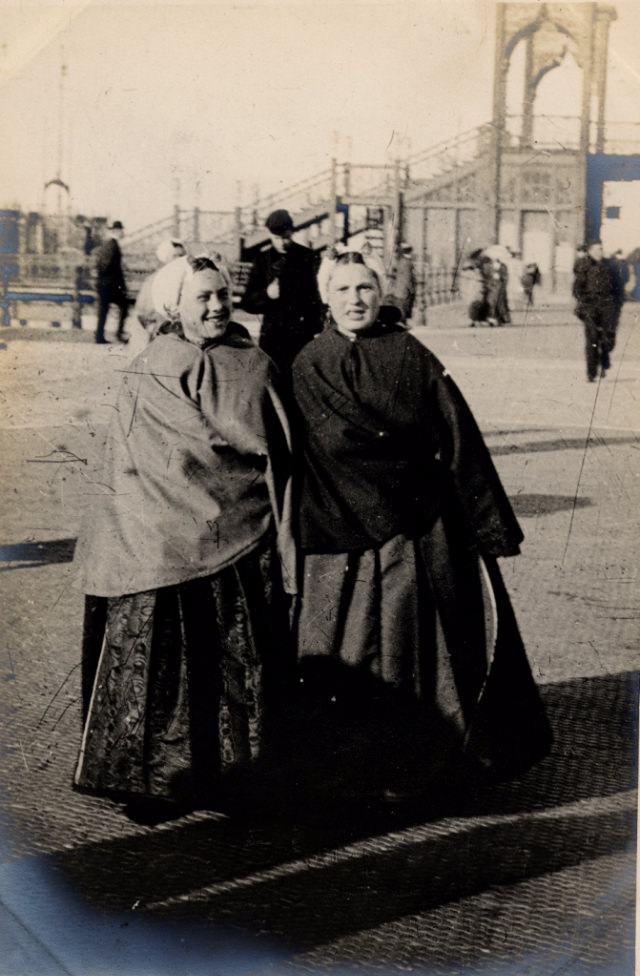
From the coast, the journey moved back through the city. The canals of The Hague provided another kind of scene — one of everyday movement across water, with women navigating the bridges that connected the city’s neighborhoods.
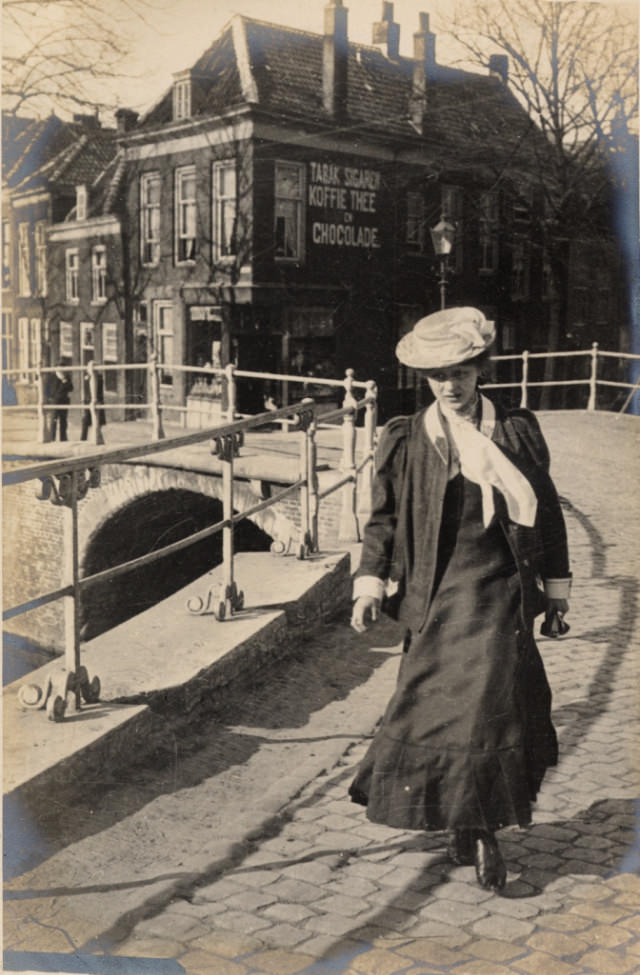
The tall, narrow windows typical of Dutch architecture appeared frequently in Sambourne’s photographs as backdrops. Along with the buildings, the traditional dress and the sideways glances of passersby gave the images a texture that pure portraiture would have missed.
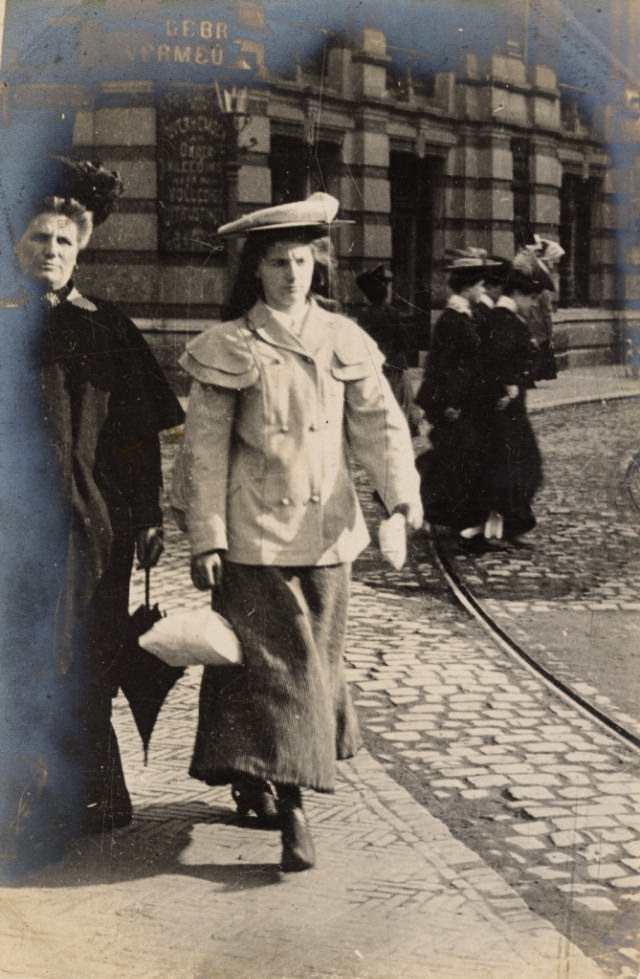
The next city on the trip was Haarlem, located just west of Amsterdam. Here, the accidental nature of Sambourne’s photography worked in history’s favor. A tram line cuts through one of his shots, with a group of women carefully picking their way across the tracks. His intended subjects — two women in the foreground — are only part of what makes the image valuable.
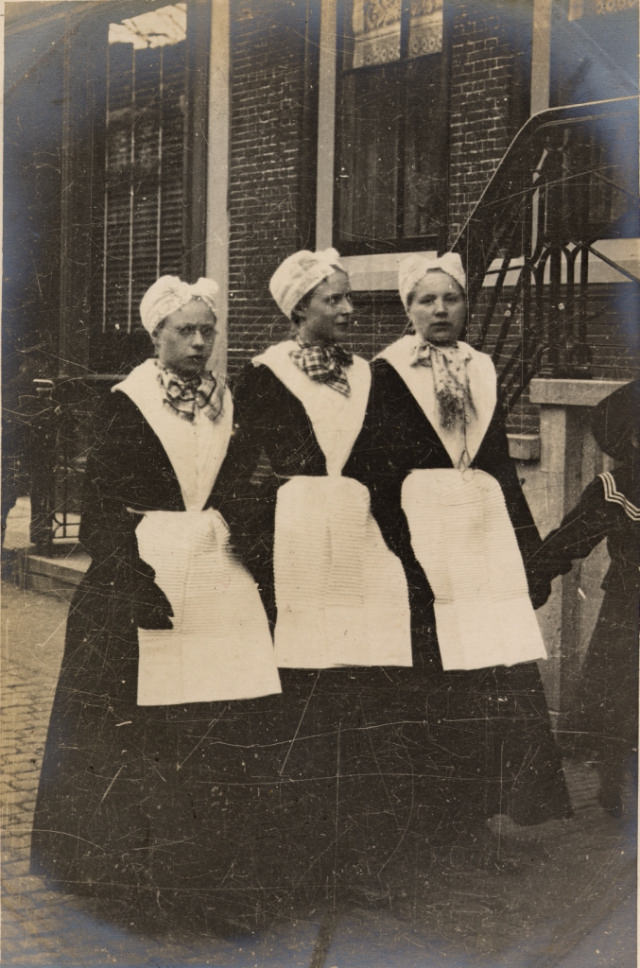
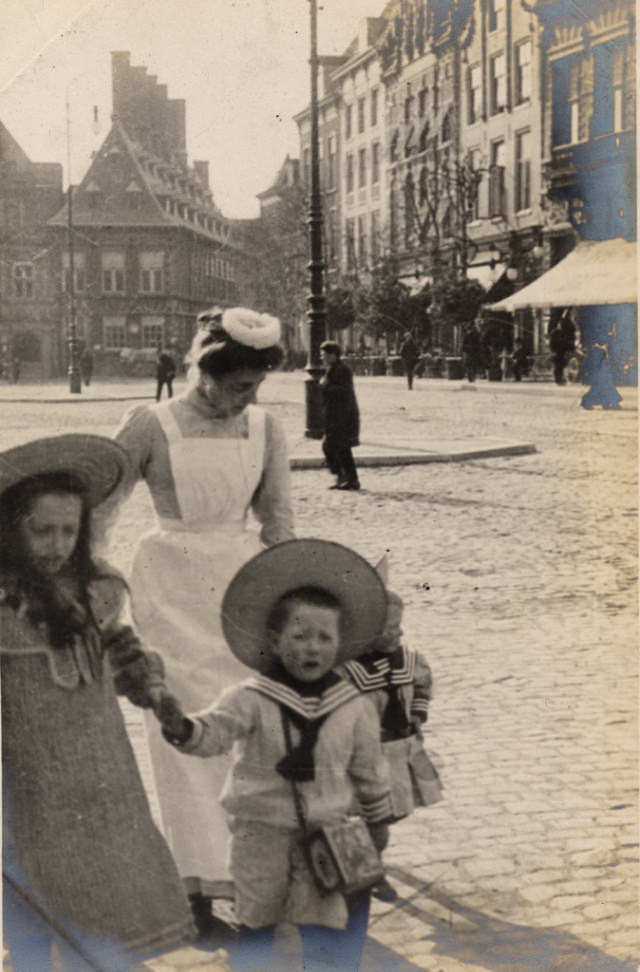
Sambourne’s eye for costume extended to working roles as well. A nursery maid in uniform caught his attention in Haarlem, and in the background, the characteristic stepped gables and brick facades of Dutch buildings fill the frame.
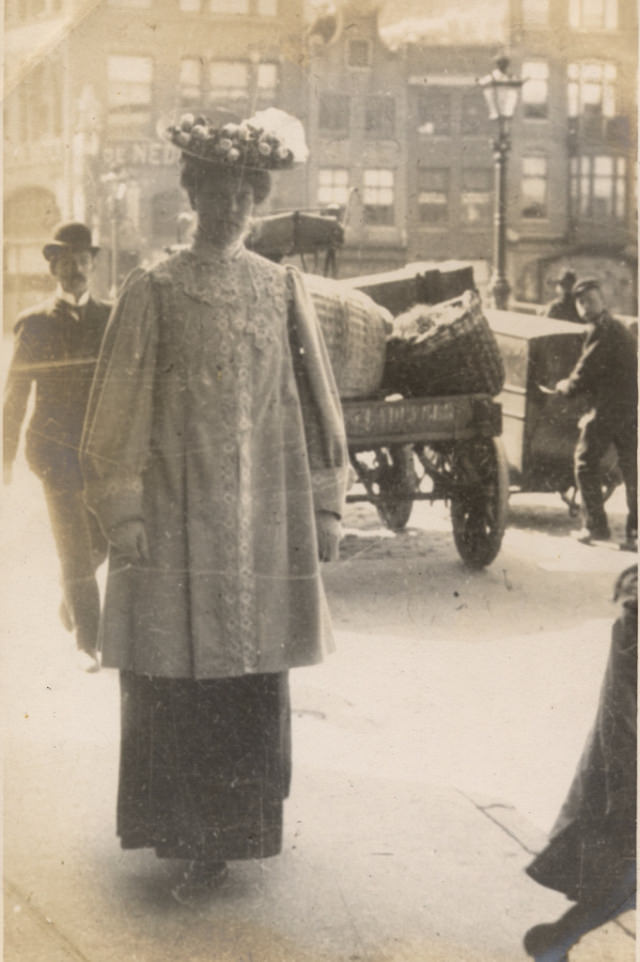
Amsterdam offered its own set of scenes. One photograph from the city, though faded with age, remains a strong street image. In the background, a man is so distracted that he is not watching where he is walking — a small, human detail that survived more than a century.
A second photograph taken the same day in Amsterdam shows a similarly busy scene, with background activity that gives a sense of how lively the city’s streets were in 1906.
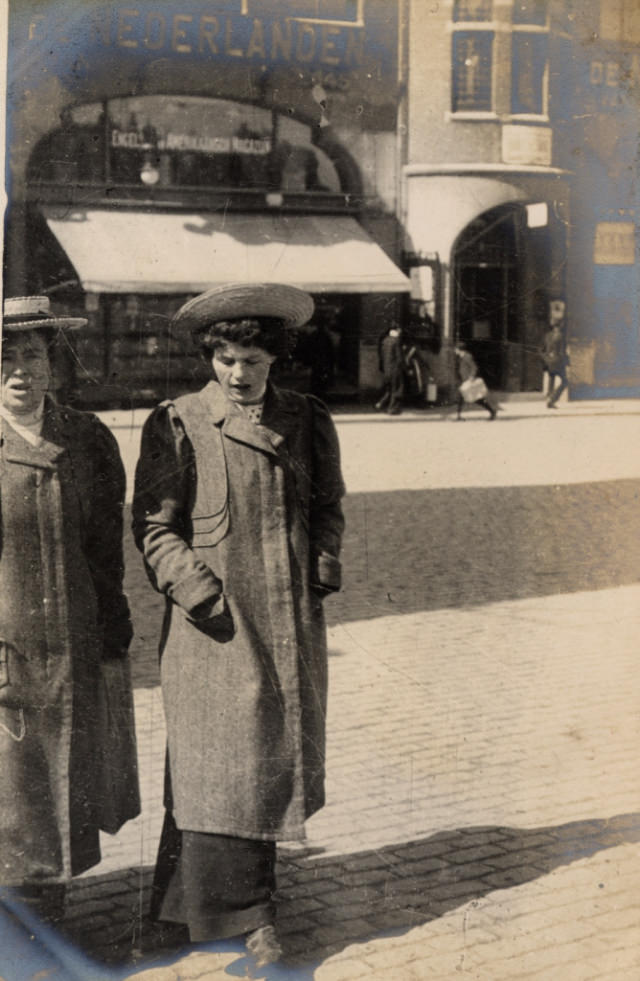
From Amsterdam, Sambourne and his wife traveled south to Utrecht. Three women there stopped long enough to be photographed, adding another city’s face to the collection.
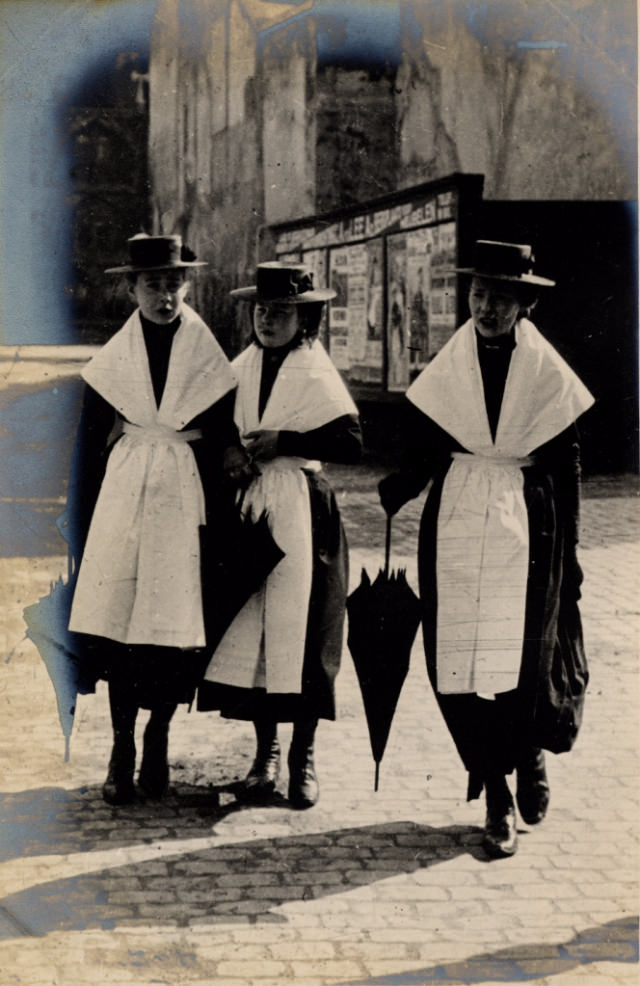
Utrecht appears to have been a brief detour rather than an extended stay. The same day, the party made their way back toward Amsterdam, passing through Muiden — a small district along a river or canal — where Sambourne stopped to photograph once more.
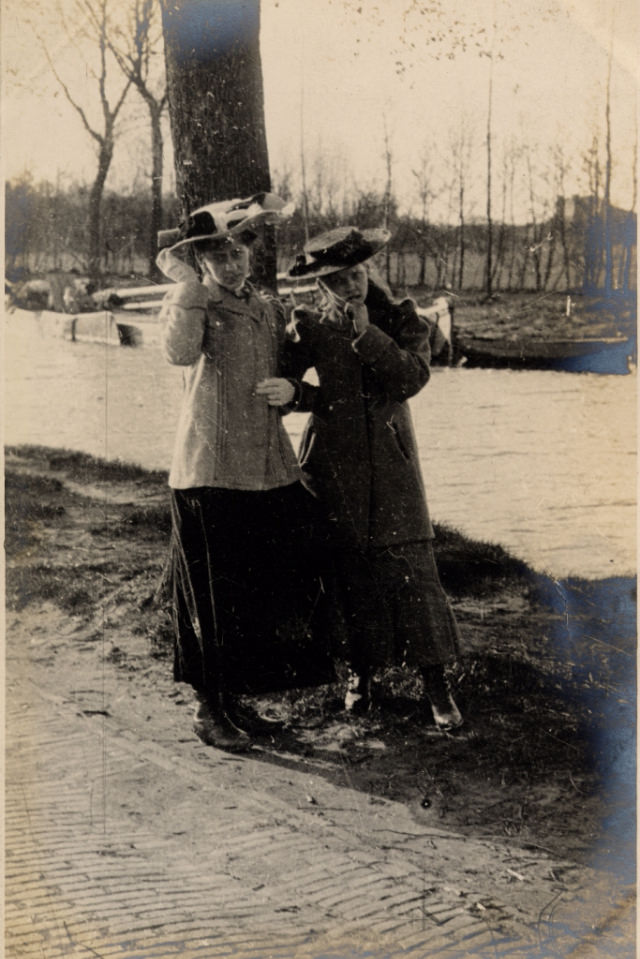
Near Amsterdam, the wind along the open waterways made itself known. One photograph captures a woman struggling against it, her clothing pulled by the gusts — a candid moment that no staged portrait session would have produced.
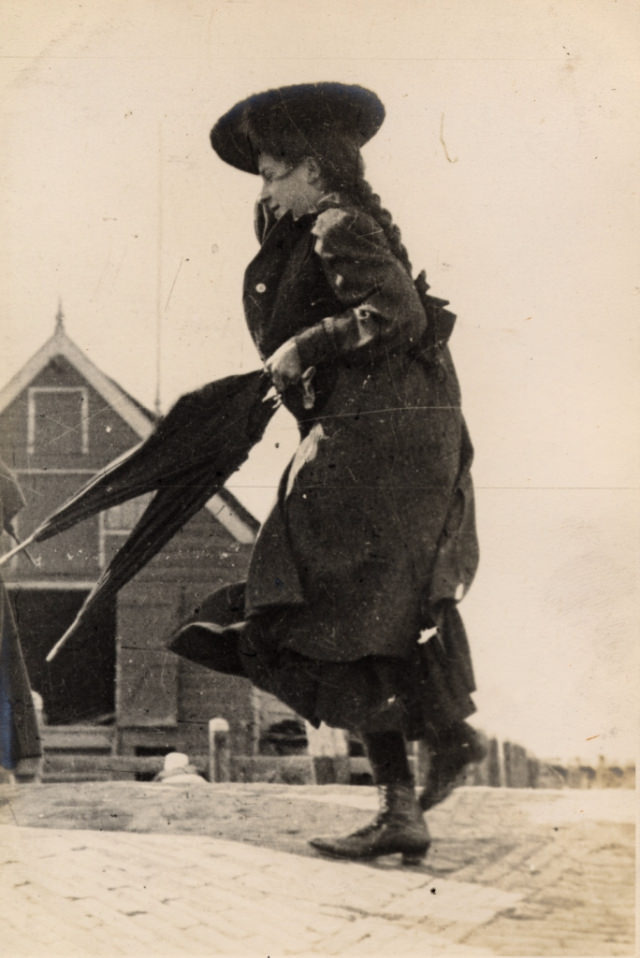
After returning toward Amsterdam, the party turned south again and arrived in Middelburg, the capital of the Zeeland province. The traditional costume Sambourne found there differed from what he had seen further north, reflecting the regional variety that still existed across the Netherlands in the early 1900s.
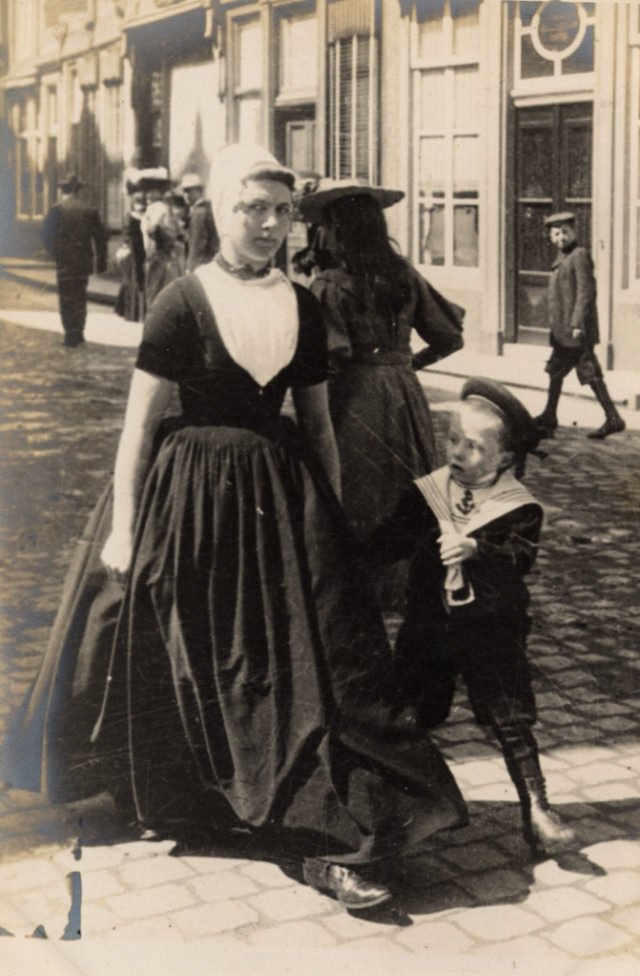
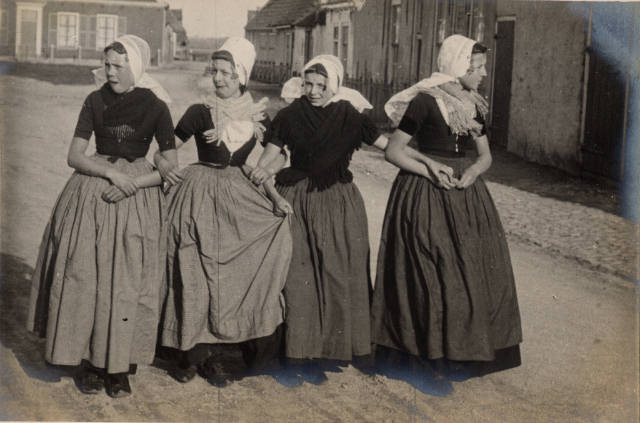
A short distance from Middelburg, Sambourne visited Westkapelle — a small city sitting on a peninsula surrounded on three sides by water. The women photographed there carried the same serious expressions seen in many of his Dutch photographs.
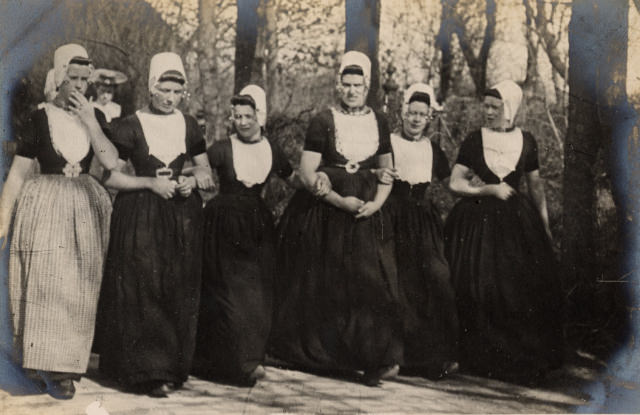
The final photograph from the Dutch trip captures a group of teenagers, their attention pulled somewhere off-frame. Three of them stare in the same direction while a fourth looks away entirely. Whatever drew their gaze in that moment in 1906 is lost to time, but the image itself — like all of Sambourne’s Dutch photographs — remains as a direct window into everyday life in the Netherlands over a century ago.





The pictures are excellent, but the commentary beneath them is terrible.