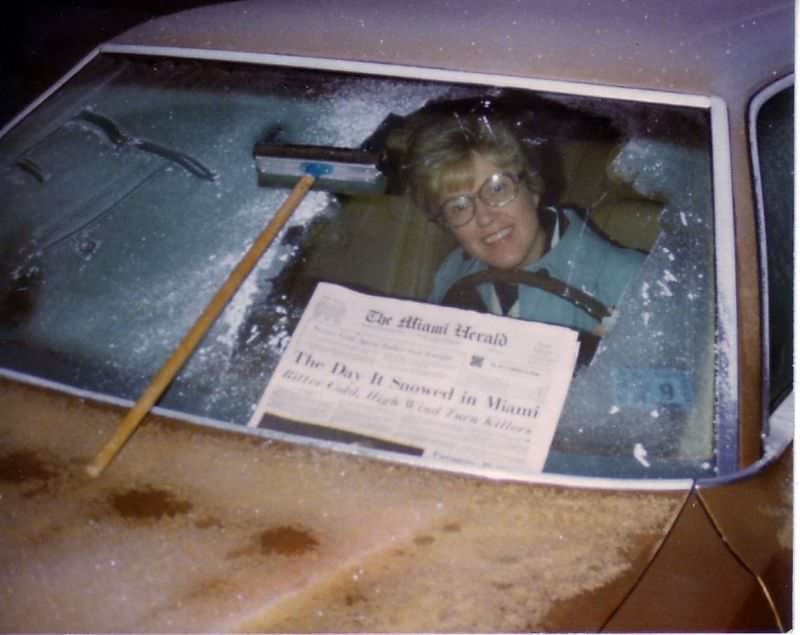
Miami is a city built on sunshine. Its identity — the palm trees, the beaches, the year-round heat — is tied directly to its tropical climate. So when snowflakes began falling over South Florida on the morning of January 19, 1977, people stopped in their tracks. They looked up. They looked at each other. Some held out their hands just to make sure what they were seeing was real.
It was real. January 19, 1977 stands as the only day in recorded history that snow fell in Miami. No date before it and no date since has matched it. For a city that measures cold weather in the mid-60s, what happened that Wednesday morning was nothing short of extraordinary.
The snowfall was the result of two cold fronts that collided over South Florida in rapid succession. The first front moved through the region on January 16, dropping temperatures well below normal. Before residents had a chance to recover, a second, faster-moving arctic front swept down the Florida coast in the middle of the night on January 18 into the early hours of January 19. That second surge was the one that brought the snow.
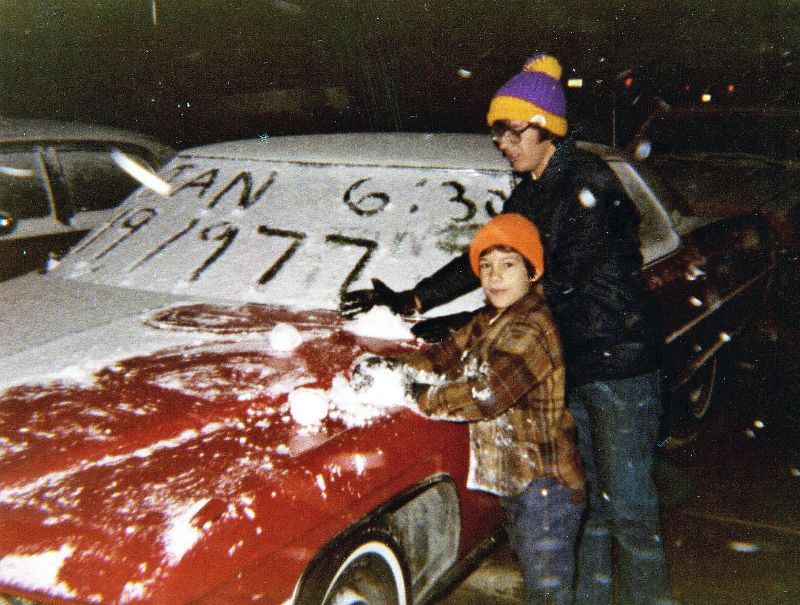
Flurries began falling over Broward and Miami-Dade counties somewhere between 8:00 a.m. and 9:30 a.m. on January 19. The snow was widespread enough that flakes reached as far south as Homestead, near the northern edge of the Everglades. For most areas, the snow melted the moment it touched the ground — the pavement and soil were simply too warm to let it accumulate. But it fell. That was enough.
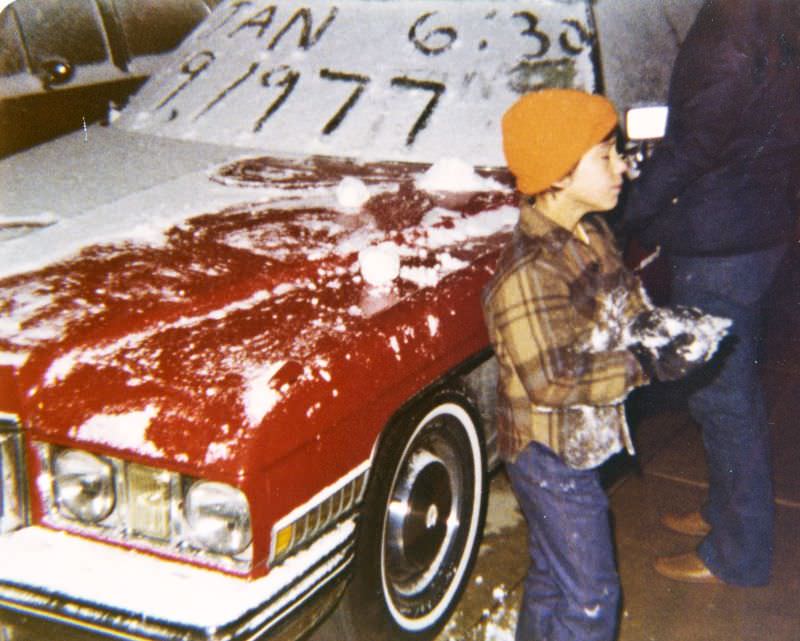
Temperatures across Miami-Dade that day dipped into the 30s, with a high of just 47 degrees Fahrenheit. For context, Miami’s average January high sits around 75 degrees. The gap between a typical January day and January 19, 1977 was nearly 30 degrees — a staggering difference for a tropical city.
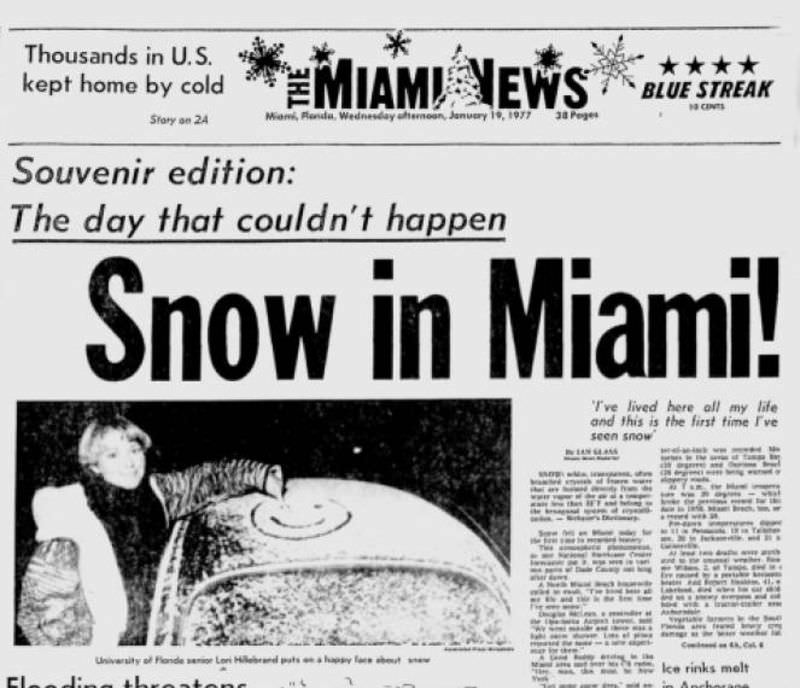
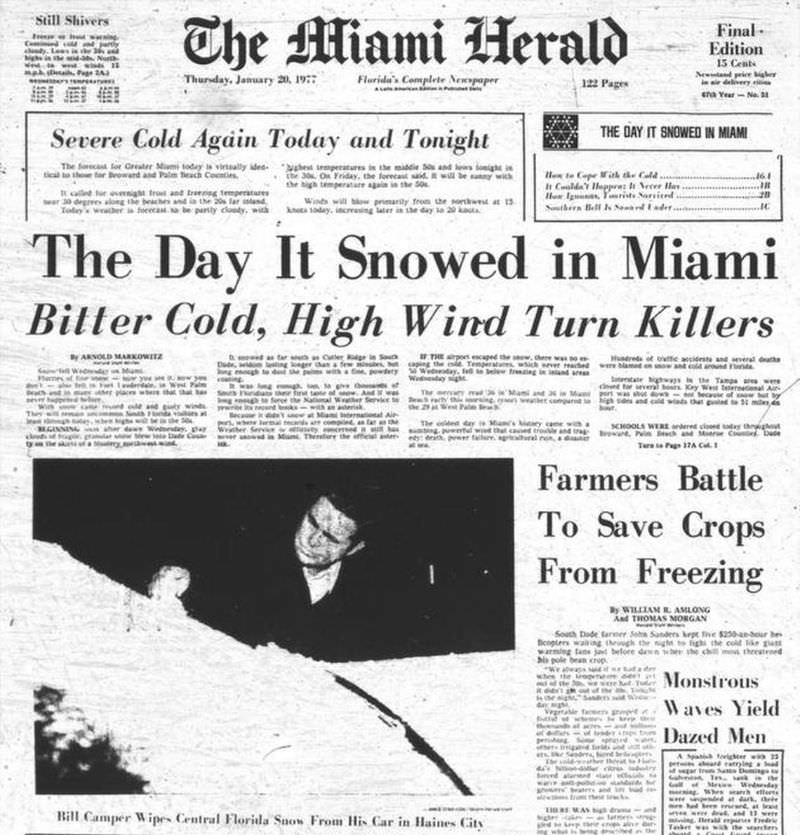
The local press did not hold back. That afternoon, The Miami News ran a front-page headline that simply read: “Snow in Miami!” The next morning, The Miami Herald followed with: “The Day It Snowed in Miami.” Both papers understood they were documenting something that no living person in South Florida had ever seen before — and that most never expected to see.

The last time anything resembling snow had been observed in South Florida before 1977 was in 1899 — and even then, it didn’t reach Miami. That earlier event only made it as far south as Fort Pierce, roughly 120 miles up the coast. The 1977 snowfall pushed past every previous record, making it the southernmost verified snowfall in Florida’s documented weather history.
The 1977 event was part of a much larger weather disaster now known as the Great Blizzard of 1977. While Miami experienced its historic flurries, states across the eastern United States were buried under massive snowfall. Buffalo, New York was hit especially hard, with drifts reaching rooftops and the National Guard deployed to rescue stranded residents. Miami’s snow was a footnote to a national crisis, but locally, it was the headline.
South Florida’s agriculture took a severe hit from the cold snap that accompanied the snowfall. The extreme temperatures caused more than $300 million in crop damage across the region. Fruits, vegetables, and other warm-weather crops that farmers depended on were destroyed by the freeze. The financial toll on South Florida’s farming communities was enormous.
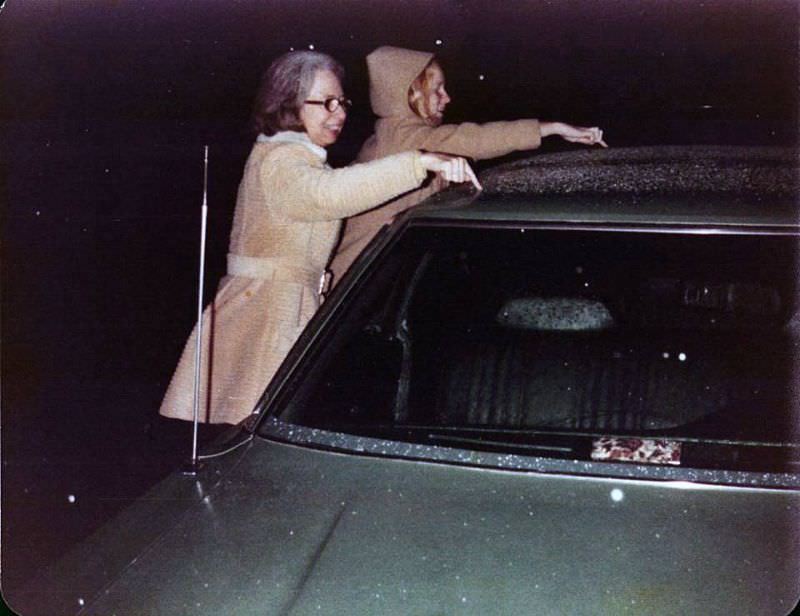
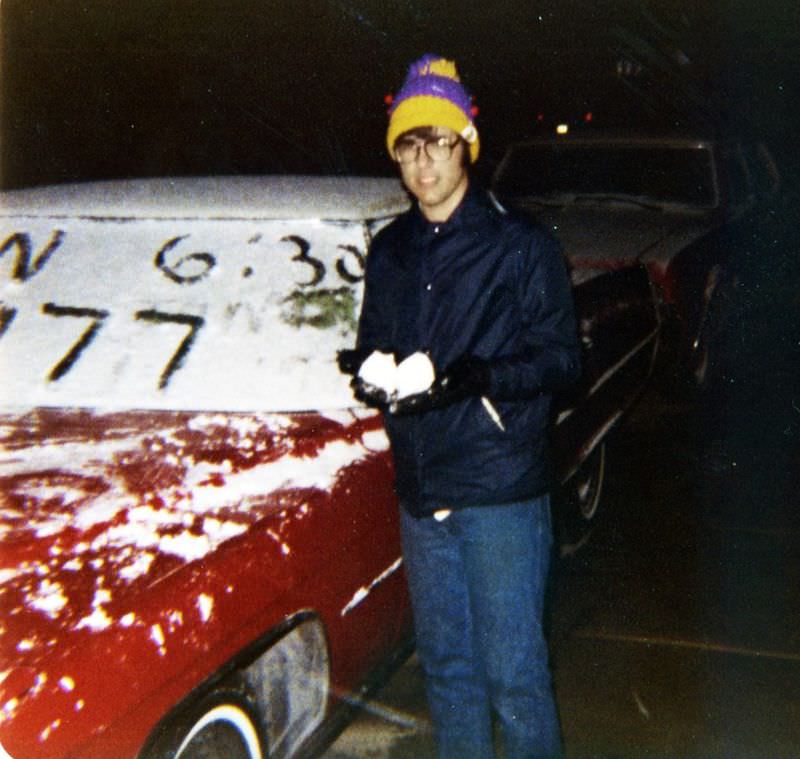
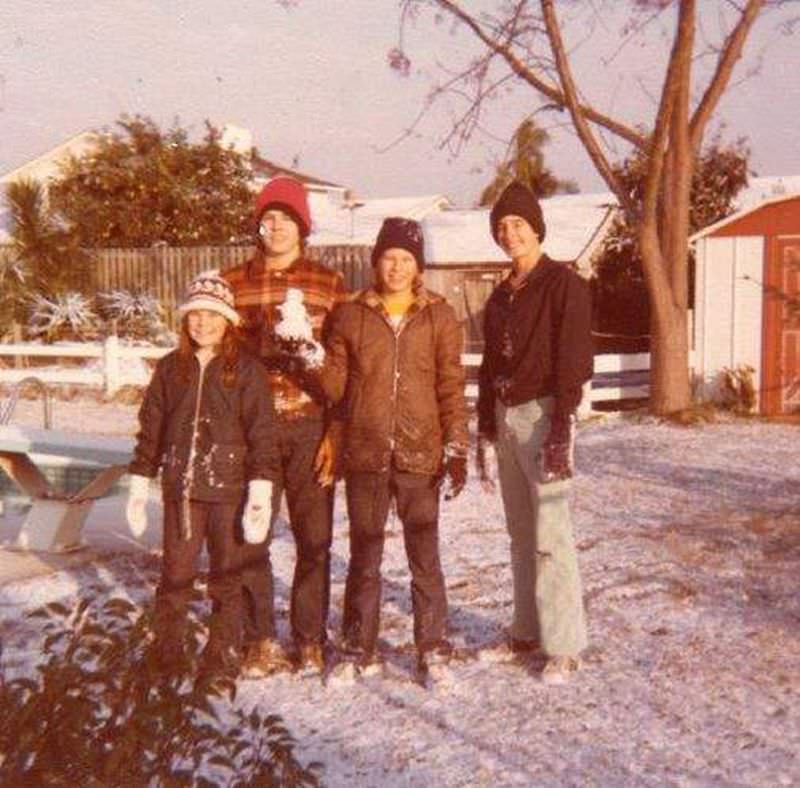
For the people who saw the snow fall that morning, the memory stuck permanently. South Floridians who grew up without ever needing a winter coat suddenly found themselves watching snowflakes drift past palm trees and land on car hoods. Children who had only seen snow on television ran outside. Adults called their neighbors. Some drove toward where the flurries were heaviest just to get a better look.
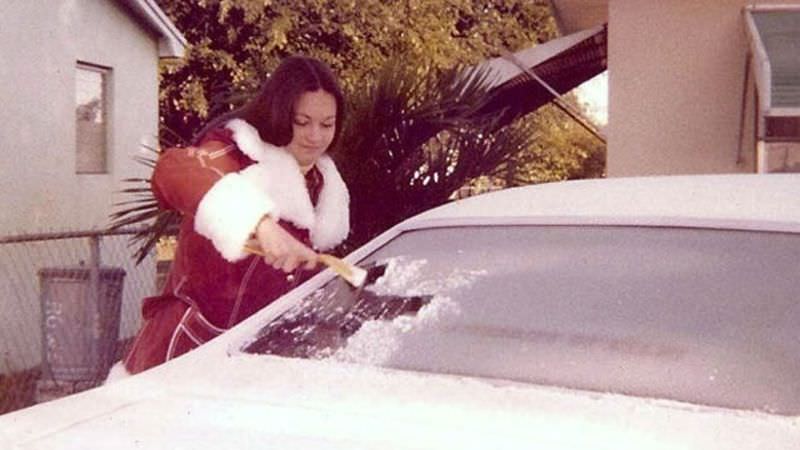
There is no official snow measurement recorded for Miami on that day. The flakes fell, but they didn’t pile up. No ruler was pressed into a snowbank, no official depth was logged. The National Weather Service confirmed the snowfall, but without measurable accumulation, it exists in the records as an observed event rather than a measured one. That distinction matters to meteorologists, but to everyone who stood outside and felt snowflakes on their faces that morning, it didn’t matter at all.

The event put into sharp focus just how rarely the right conditions align over South Florida. For snow to fall in Miami, the atmosphere needs to be cold enough at multiple levels simultaneously — ground temperatures, mid-level temperatures, and upper-level temperatures all have to cooperate. Miami’s proximity to warm Atlantic and Gulf waters normally prevents this from happening. On January 19, 1977, those defenses failed completely.
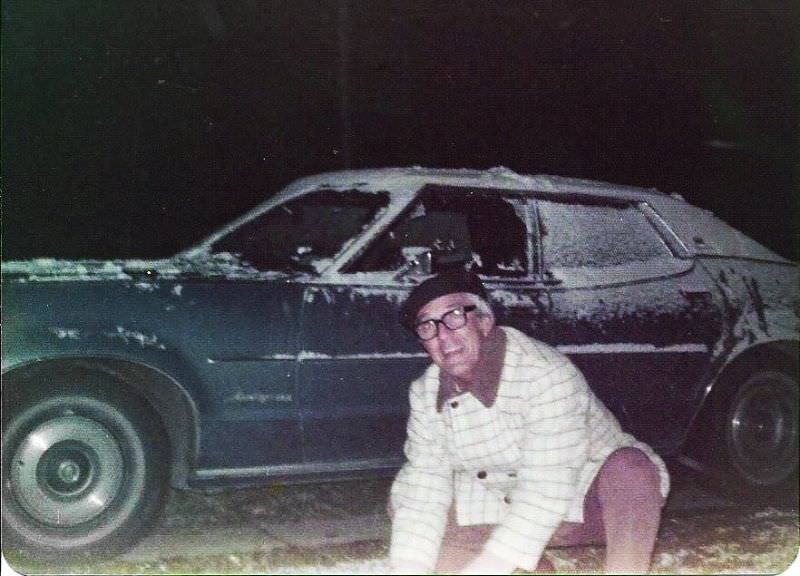
Weather historians point to the double-front setup as the key ingredient. A single cold front passing through might have brought a hard freeze, but it took the back-to-back punch of two fronts — the second arriving fast and cold in the dead of night — to push temperatures low enough in the upper atmosphere to produce actual snowflakes before they could melt on the way down.
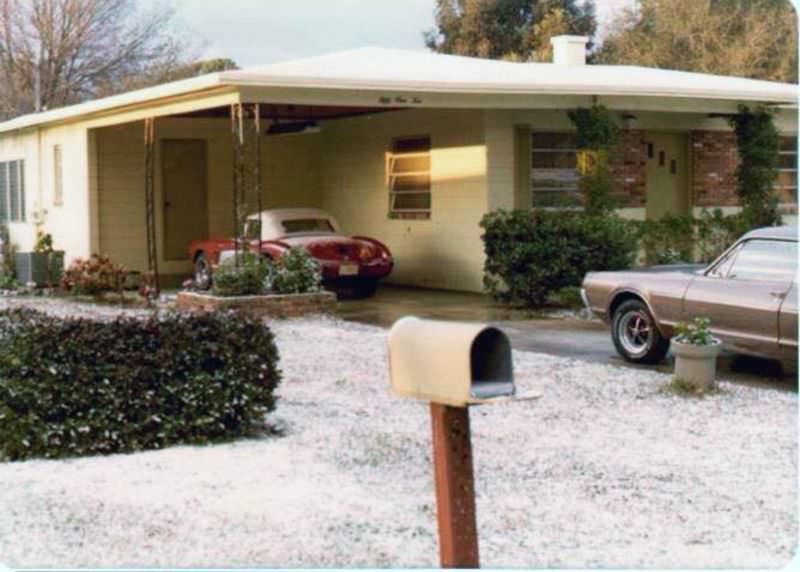
Miami’s snow lasted only for that brief window in the morning. By midday, the flurries had stopped, and the clouds were already beginning to give way. The temperature remained cold by Miami standards, but the moment was over. The city returned to being itself — warm, humid, tropical — just hours after defying everything that defined it.
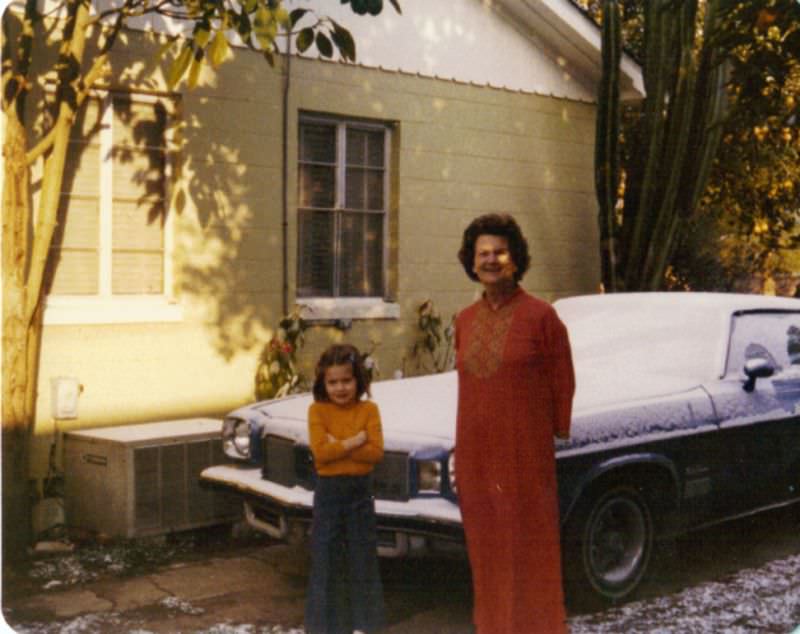
The 1977 snowfall is often compared to Miami’s hurricanes in one specific way: people date their lives around it. “That was before the snow” or “after the snow” became real reference points for longtime South Florida residents. Hurricanes visit South Florida more than once in a lifetime. Snow in Miami has visited exactly once.
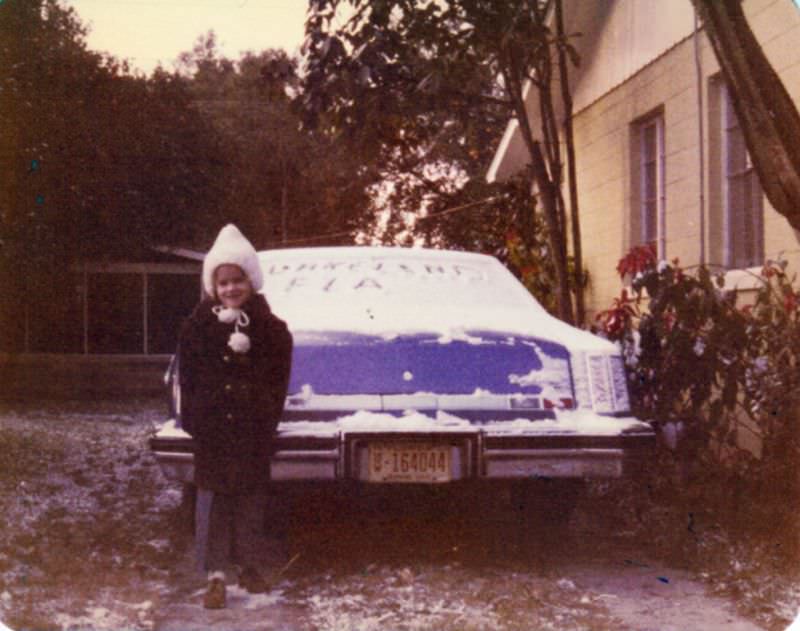
January 19, 1977 remains unchallenged as the singular day snow fell on Miami. Every year that passes without a repeat only adds to the weight of what happened that morning — a Wednesday in January when the weather forgot where it was and delivered something no one in South Florida had any right to expect.