Slavery is one of the oldest institutions in human history. It existed across ancient Egypt, China, Assyria, Babylonia, Greece, and dozens of other civilizations. But the form of chattel slavery that took root in colonial America — where human beings were bought, sold, and legally classified as property — was a defining and devastating chapter of American history. From the 17th century onward, millions of people from the African continent were forcibly transported to American colonies and sold at auction to the highest bidder.
These were not fringe transactions. They were public, commercial, and heavily advertised. Newspapers ran slave sale notices the same way they advertised livestock or farm equipment. Posters were nailed to walls and distributed through towns. The language used in these ads was deliberately dehumanizing — people were described by their physical fitness, their skills, and their estimated market value, nothing more. The Industrial Revolution increased demand for enslaved labor, which drove prices higher and made the trade even more profitable for those who ran it.
Chattel slavery tore families apart. Buyers at auction were interested in the strongest and most able-bodied individuals. A husband could be sold to one buyer, a wife to another, and children to a third — all in a single afternoon. The ads below, drawn from real newspapers and printed broadsides of the era, document this system in its own words. Some of the earliest examples date to the colonial period, when slave ships arrived directly from Africa carrying their human cargo.
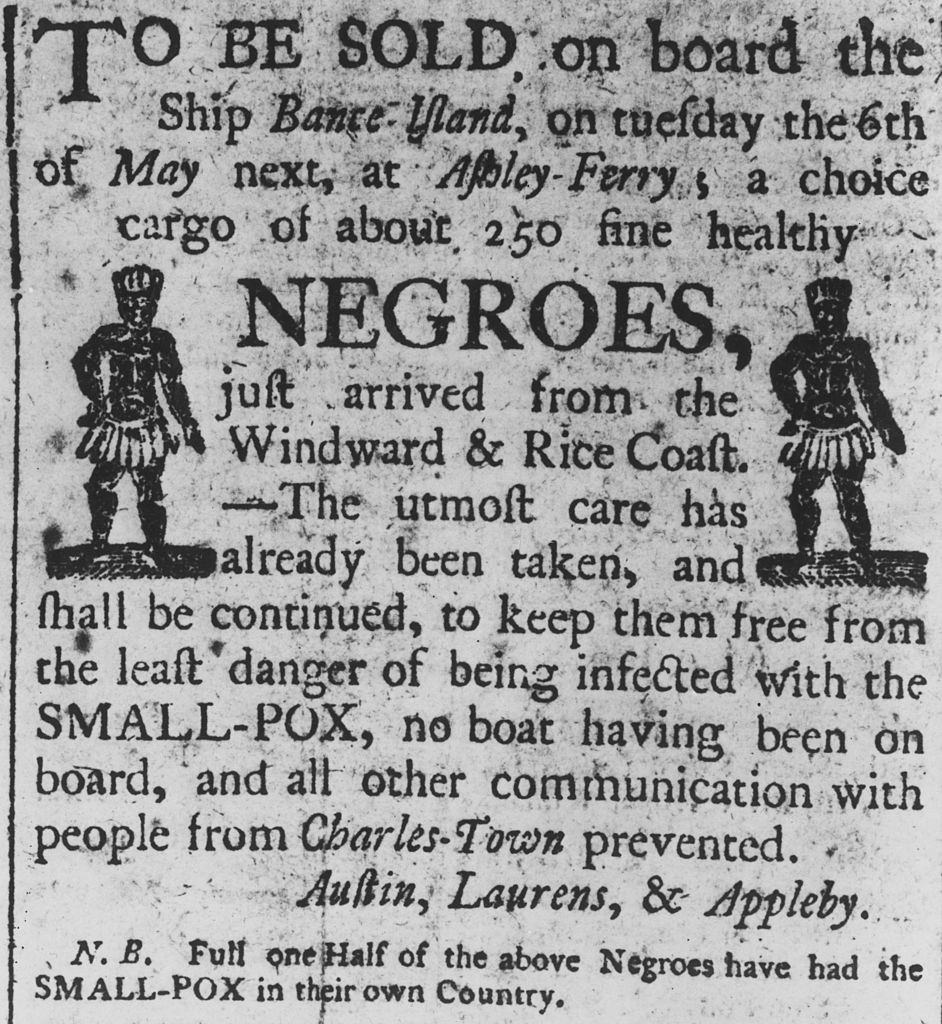
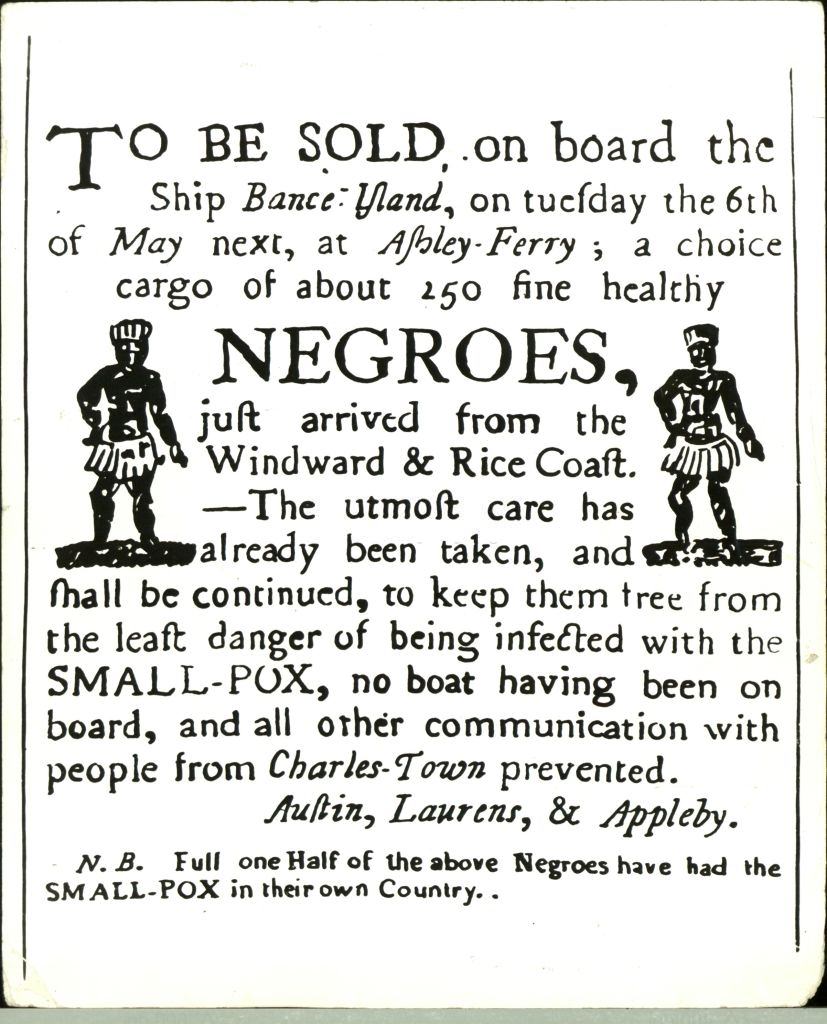
This Boston advertisement promoted a shipment of approximately 250 enslaved people just arrived from Africa aboard the slave ship Bante Island. The ad specifically noted that the enslaved people were free of smallpox, having been held in quarantine on the ship — a selling point designed to reassure buyers about the health of the “cargo.”
Opposition to slavery existed even during its peak years in America. Abolitionists in the North worked to expose the brutal reality of the trade, publishing pamphlets, organizing meetings, and pushing for legal change. These efforts existed in direct contrast to the commercial infrastructure that treated human beings as tradable goods.
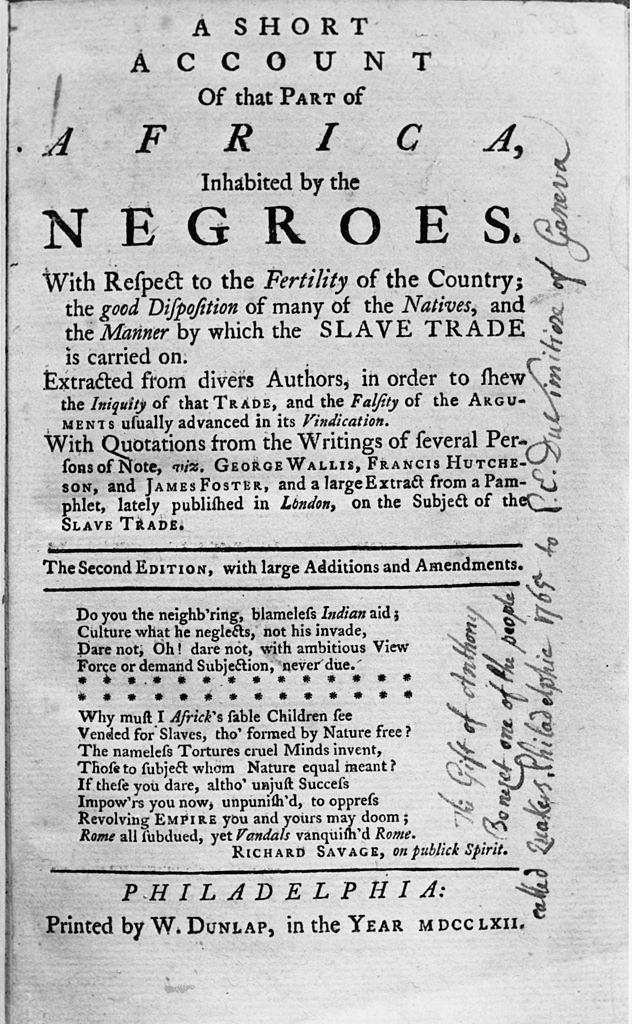
Colonial-era newspapers regularly carried multiple slave-related notices in the same edition. A single broadside might advertise an incoming shipment of newly arrived Africans alongside a separate listing for enslaved people who had already been living and working in the colonies — often described by their specific skills and trades.
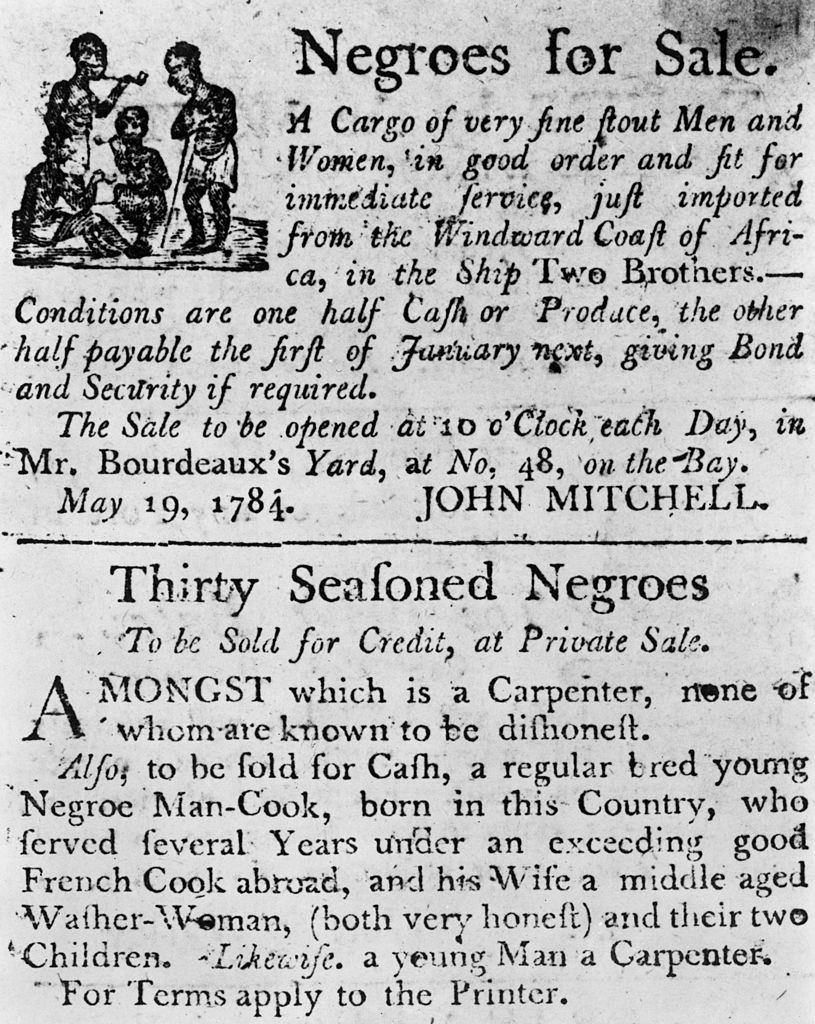
This broadside carries two separate ads side by side: one for a fresh shipment of enslaved people imported from Africa aboard the ship Two Brothers, and another offering “Thirty Seasoned Negroes” — including a carpenter, a cook, and the cook’s family. The word “seasoned” meant they had already been broken into enslaved life in the colonies.
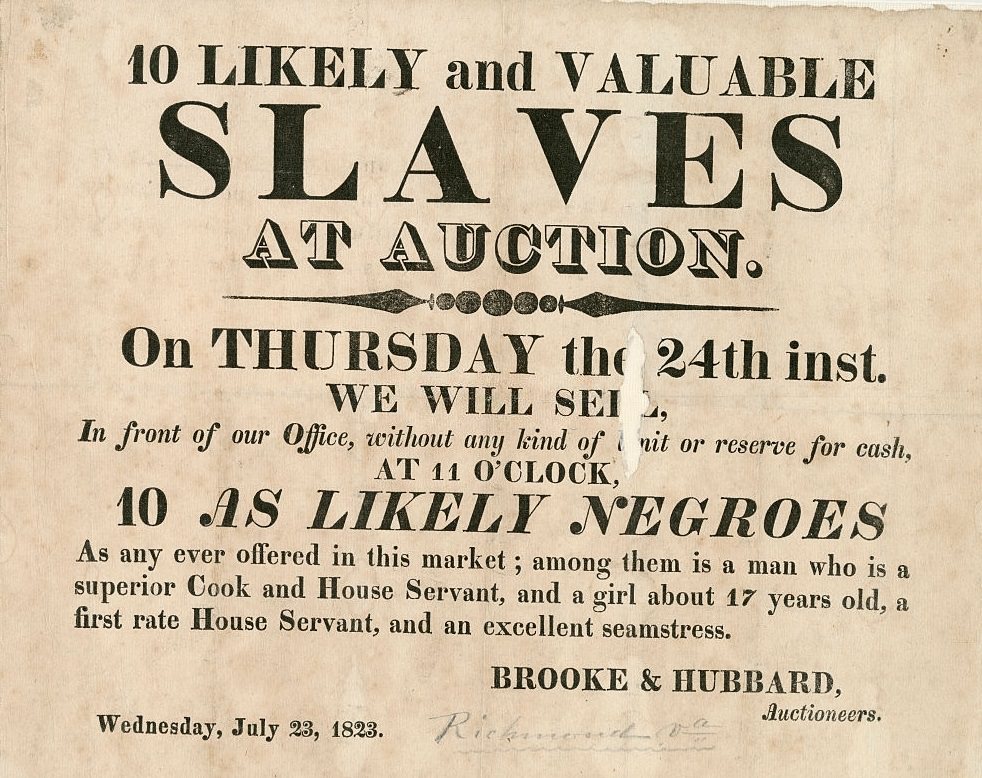
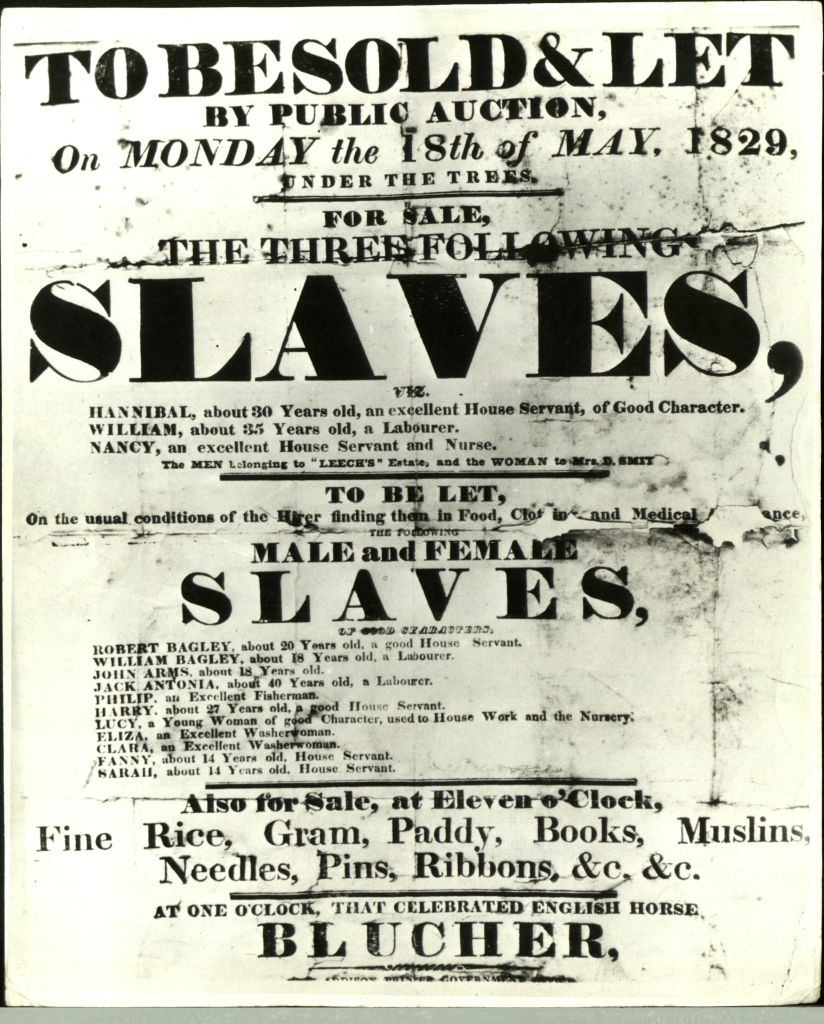
By 1800, slave auctions were a structured and routine part of commerce in the American South. Printed posters announced upcoming sales with specific dates, locations, and details about the people being sold. These documents survive today as direct evidence of how the system operated.
In Virginia, one of the largest slave-trading states, auction houses operated openly in city centers. Richmond in particular was home to major auctioneers who ran regular sales. Broadsides were posted publicly to draw in potential buyers from the surrounding region.
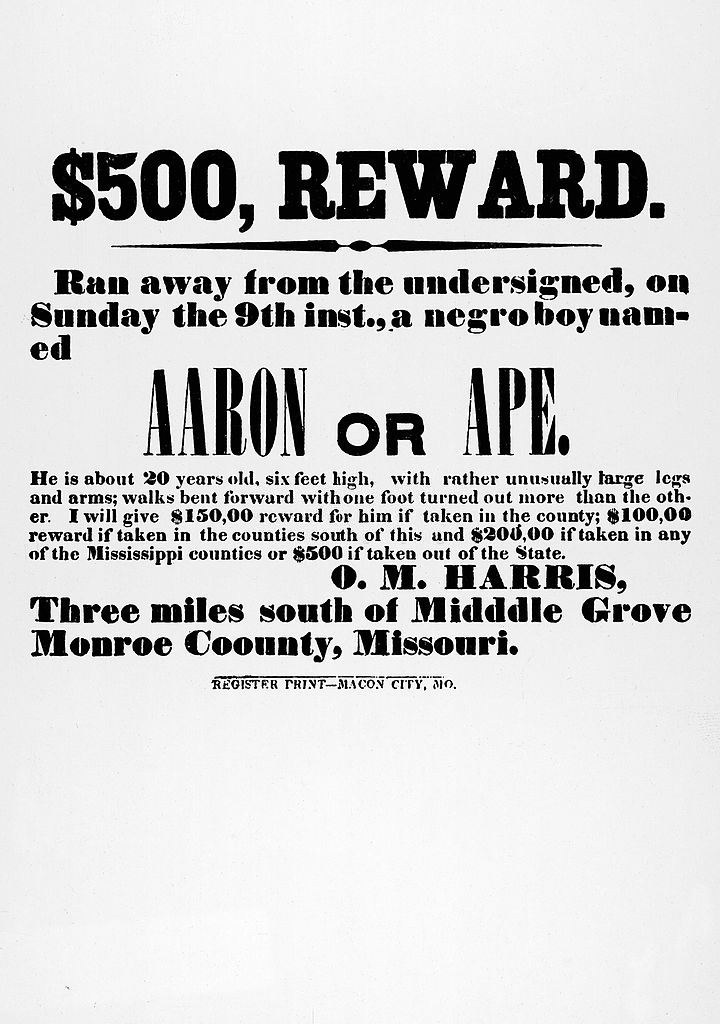
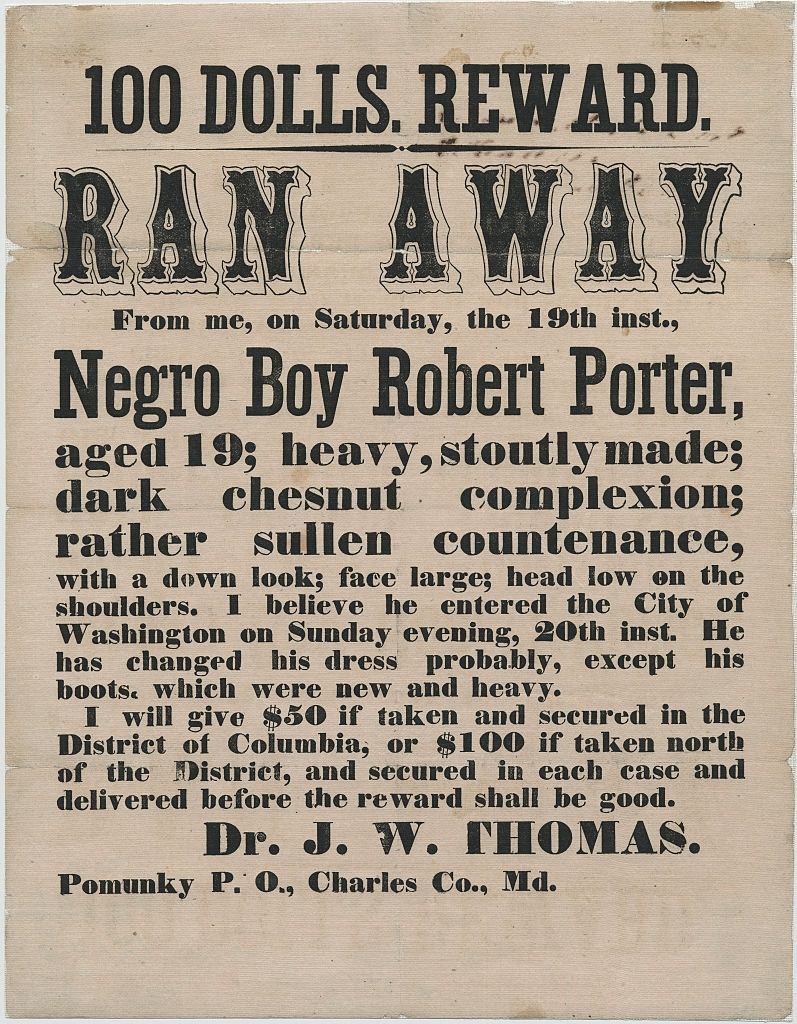
Enslaved people who escaped faced organized systems designed to bring them back. Slaveholders posted reward notices in newspapers and on public boards, describing runaways in physical detail — height, build, skin tone, scars — the same way one might describe a lost animal. These notices spanned decades and appeared throughout both Southern and border states.
The demand for enslaved labor was not limited to plantations. Buyers across Kentucky, Virginia, and other states actively sought enslaved people with specific skills — carpenters, blacksmiths, cooks, and field workers. Print advertisements targeting sellers became a common tool for slave traders who operated buying depots, known as slave pens, in major towns.
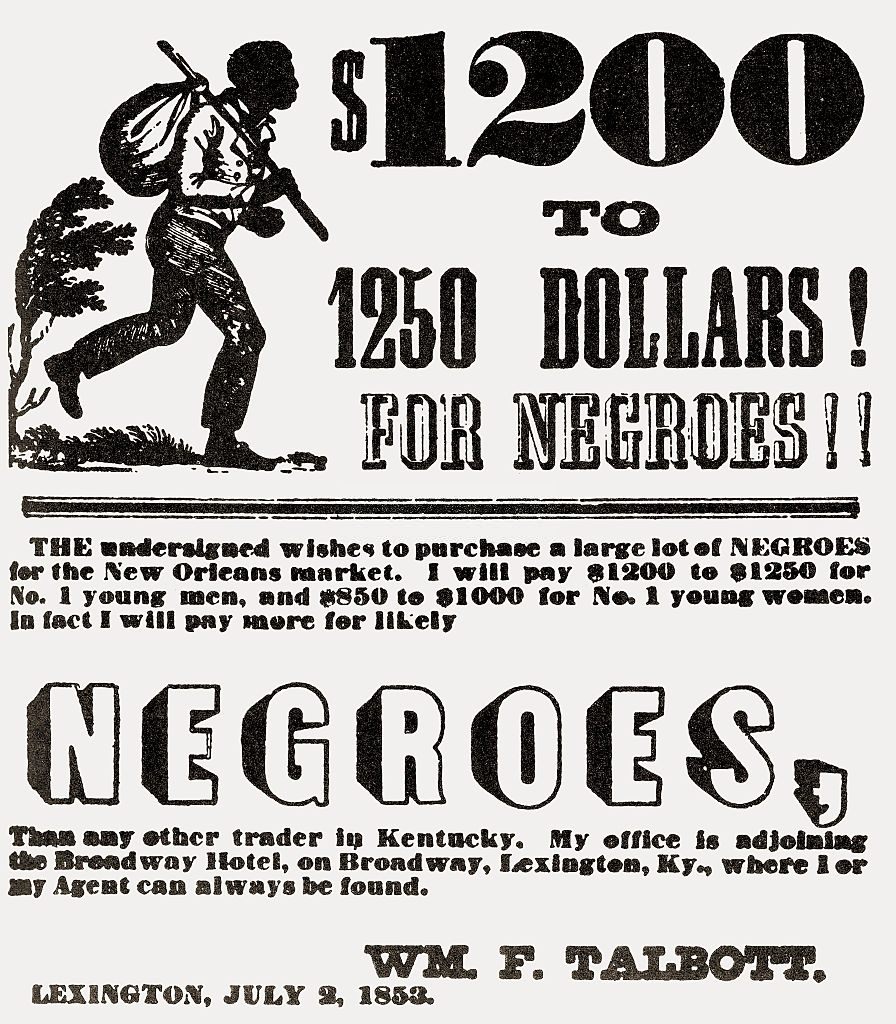
Women and children were sold at auction just as men were. Sales were often structured with credit terms, allowing buyers to take possession immediately and pay over time with interest — a financial arrangement that made purchasing enslaved people accessible to a wider range of buyers.
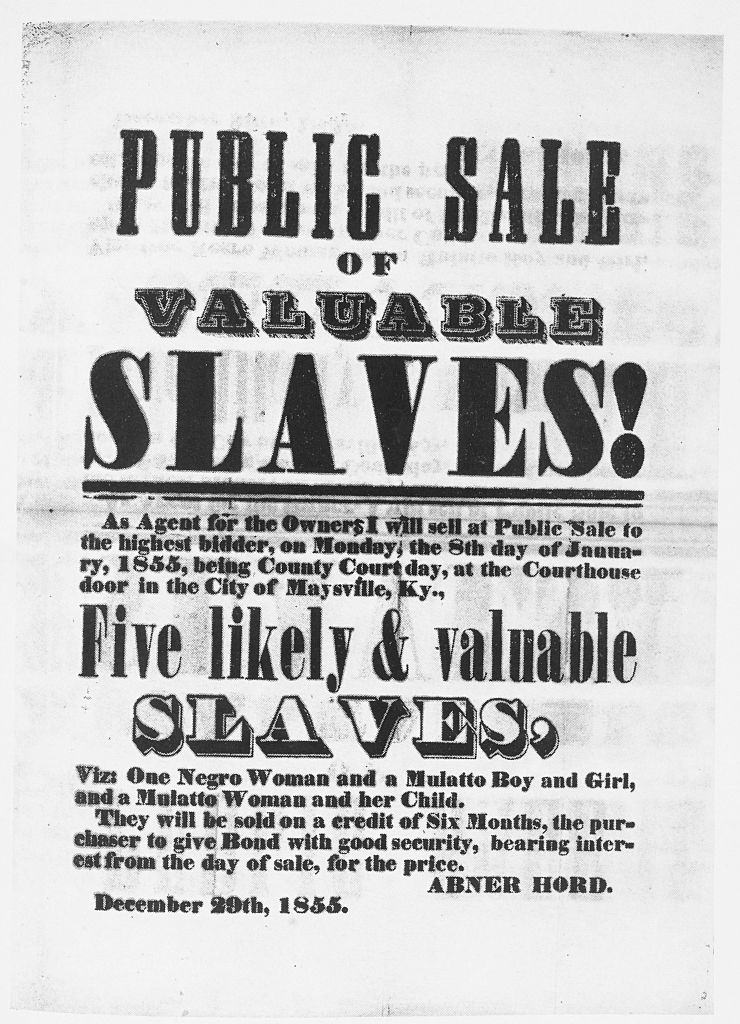
This poster lists two women and three children for sale at auction. They were offered on six-month credit terms with interest and were to be sold to the highest bidder by Abner Hord, acting as an agent on behalf of their owner.
In Kentucky, Lexington’s Cheapside district was the largest slave-trading location in the state. Slave trading businesses there competed openly for sellers, advertising that they would pay the highest market prices. These operations maintained physical holding facilities — slave pens — where enslaved people were kept before being resold.
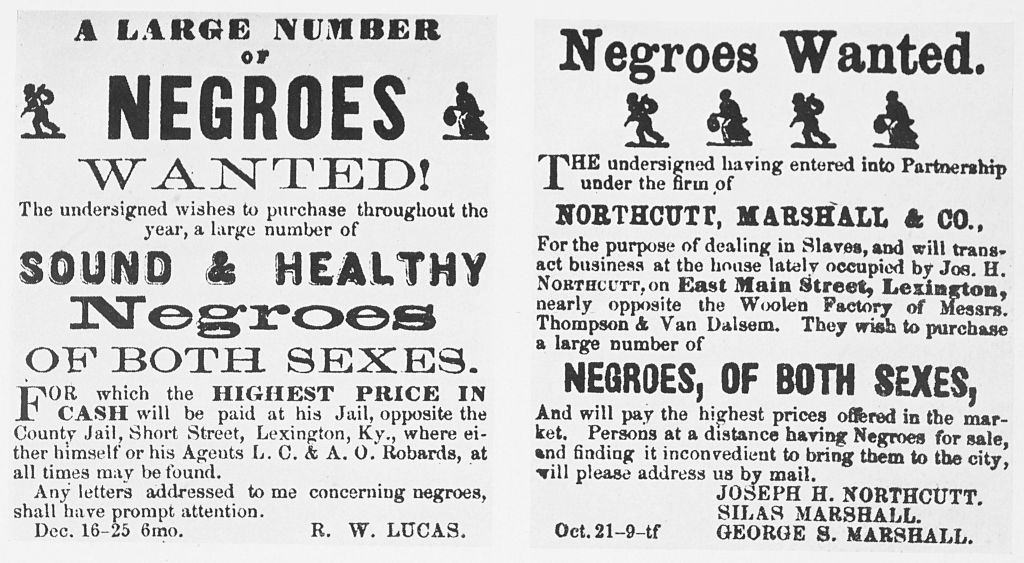
Two separate posters from Lexington, Kentucky in 1859, each advertising a slave-trading business. Both claim to pay the highest market prices for enslaved people of both sexes brought to their facilities. Each poster lists the location of the trader’s slave pen and the names of the men running the operation.
Slave sales were sometimes ordered by courts as part of settling estates. When a slaveholder died and disputes arose among heirs or creditors, enslaved people were treated as assets to be liquidated — no different from land, livestock, or furniture.
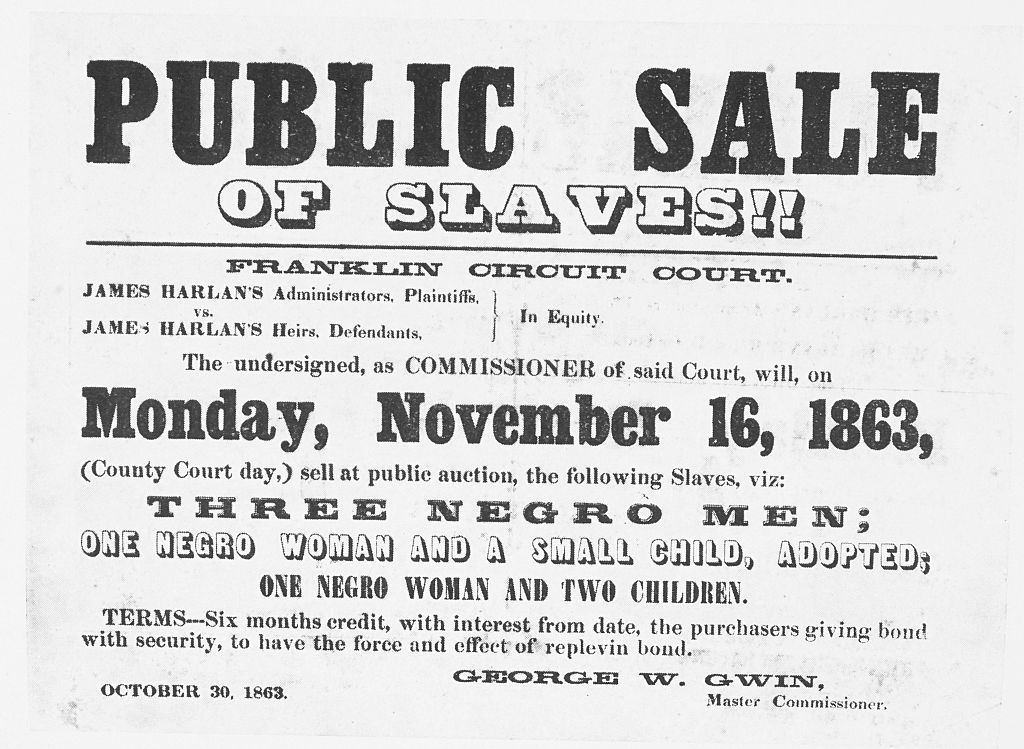
This 1863 poster from Frankfort, Kentucky was issued by George W. Gwin, listed as Master Commissioner. The sale was ordered to settle an equity dispute between the administrator of James Harlen’s estate and his heirs. Three men, two women, and three children were listed for sale, with six-month credit terms offered on purchases.
The 1855 poster below is notable for a specific reason: the slaveholder, John Carter, was selling his enslaved people because he was relocating to Indiana — a free state where slavery was illegal. Rather than free them, he chose to sell them. The listing includes men and women of various ages, their occupations, and a six-month-old child being sold alongside one of the women.
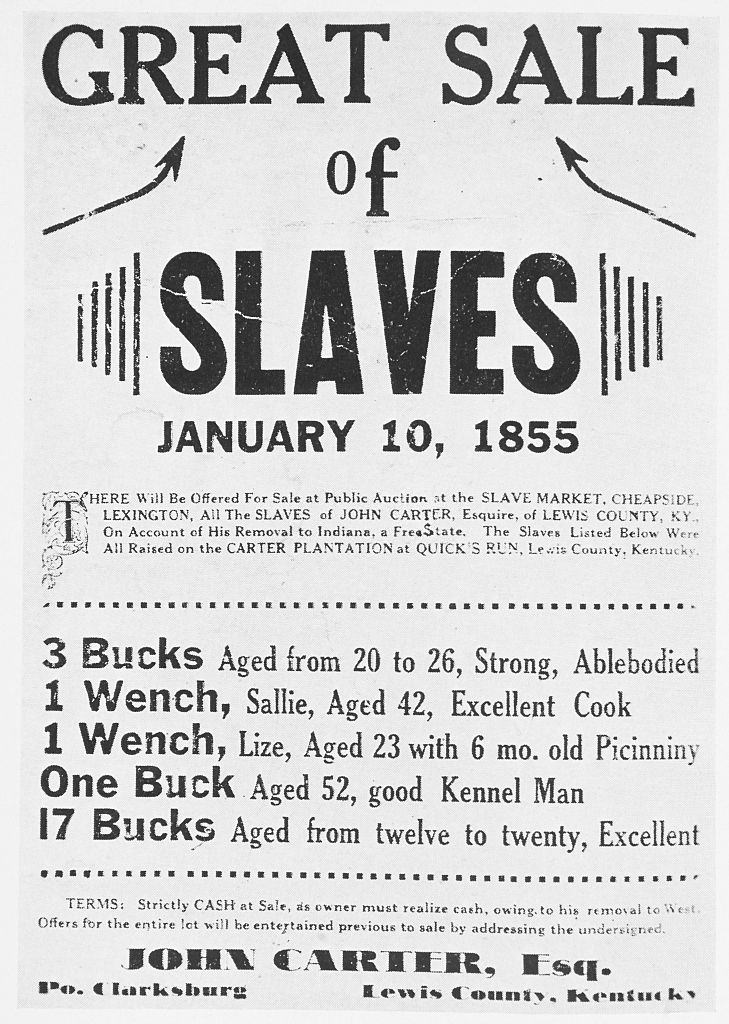
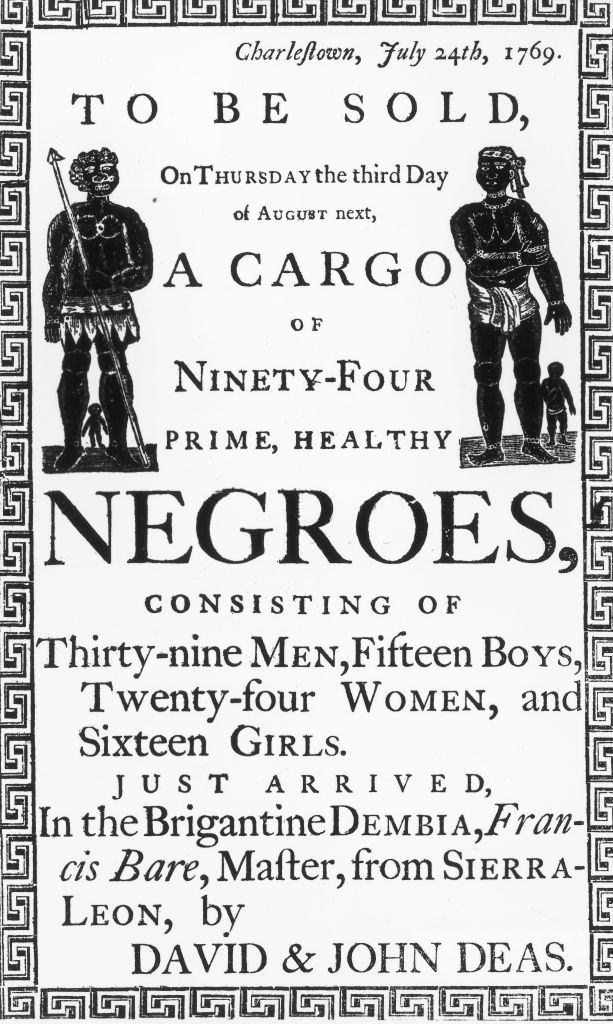
Some advertisements reveal the hierarchy of value that slaveholders placed on different forms of property. In certain notices, the listing order itself tells the story — land, animals, and equipment appearing before any mention of the human beings also being sold.
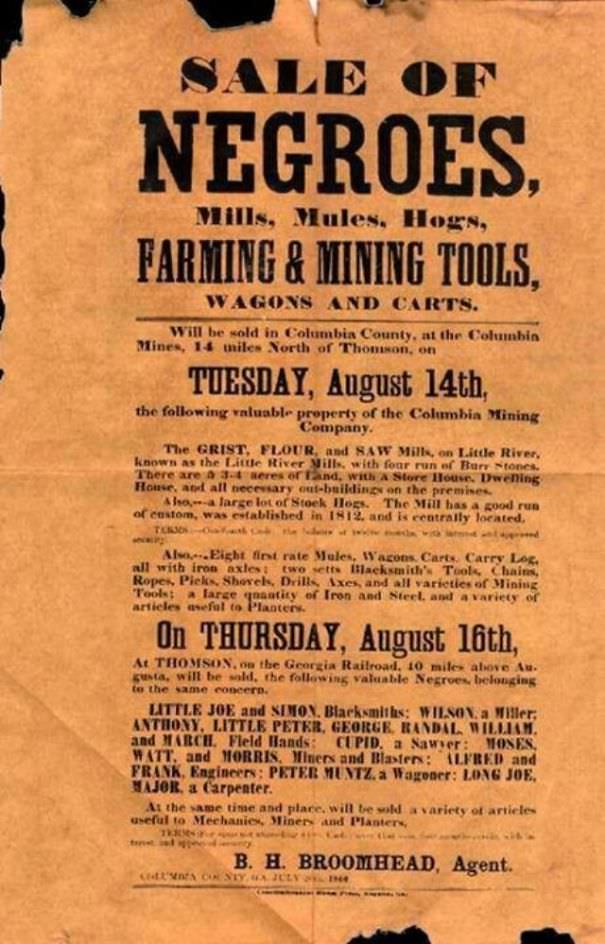
In this advertisement, the property, animals, and equipment are listed before the enslaved men — mules placed above human beings in the order of priority.
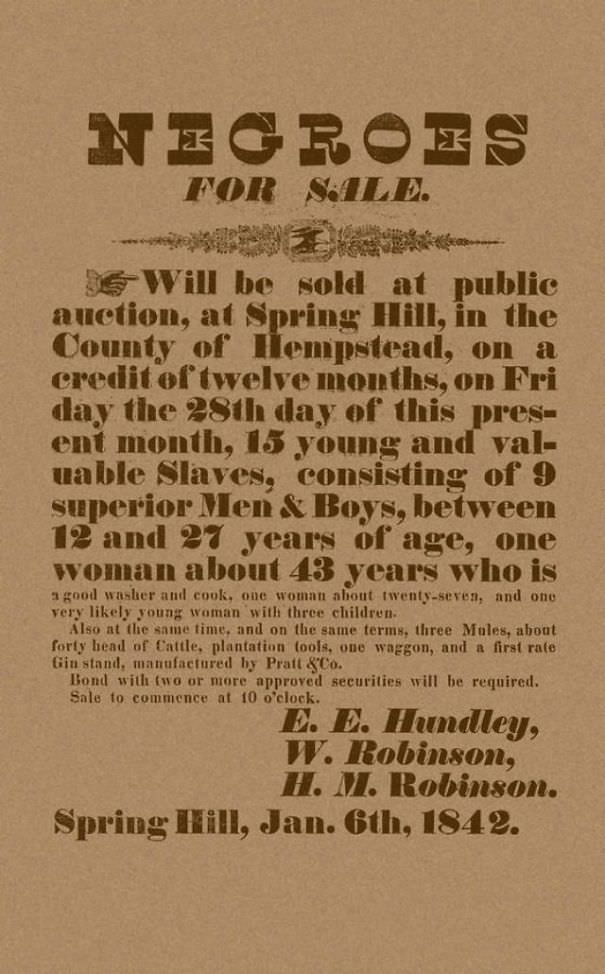
Plantation records and sale documents sometimes listed enslaved people in structured inventories, grouped by their labor roles. Rice plantations in particular kept detailed records of their workforce, tracking individuals by name, age, and the tasks they performed.
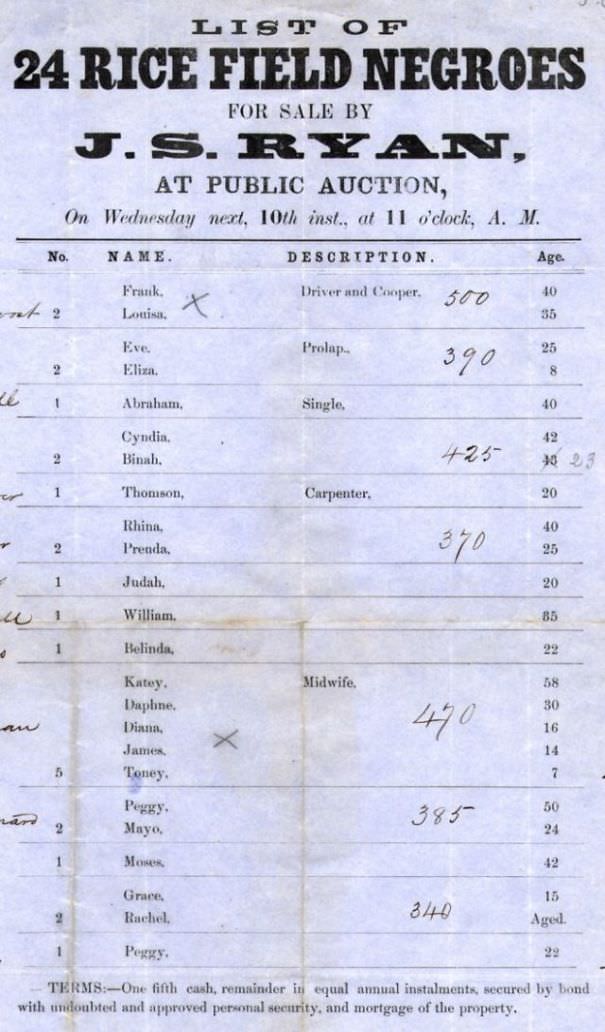
Labor classification systems were built into the economics of slavery. An enslaved person designated a “full hand” was considered a full-time, fully productive worker. Younger children were assigned fractional designations — a “3/4 hand” or “1/2 hand” — based on how much labor they were deemed capable of producing. These labels stripped individuals down to their perceived economic output.
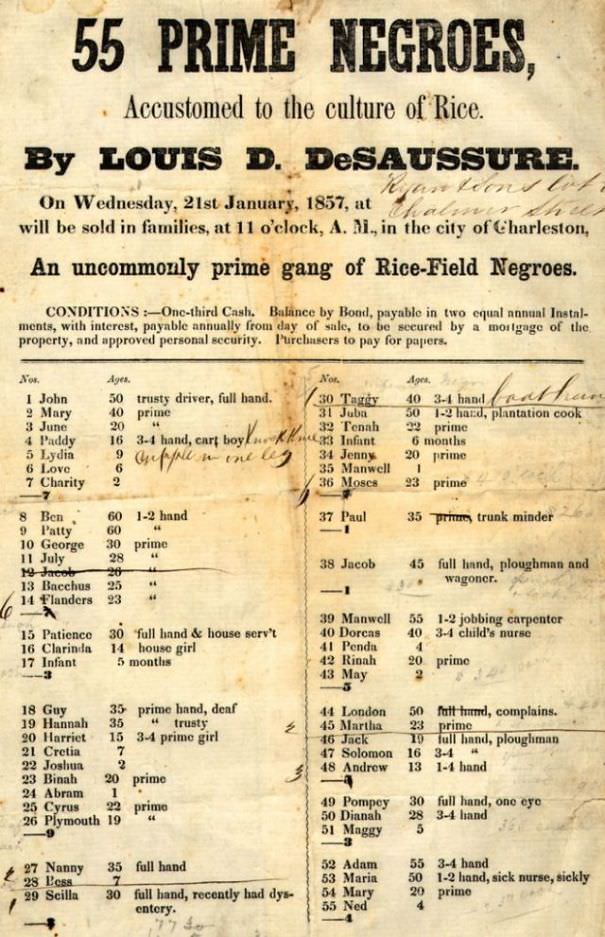
“Full hand” referred to a full-time adult worker. A “3/4 hand” or “1/2 hand” designation was applied to younger children, male or female, reflecting how much labor they were expected to contribute.
The 13th Amendment, ratified on December 18, 1865, formally abolished slavery in the United States. These advertisements — printed openly in newspapers and posted in public squares — stand as a direct record of what the institution looked like in practice. They document a legal, commercial system that reduced millions of human beings to line items in a transaction.