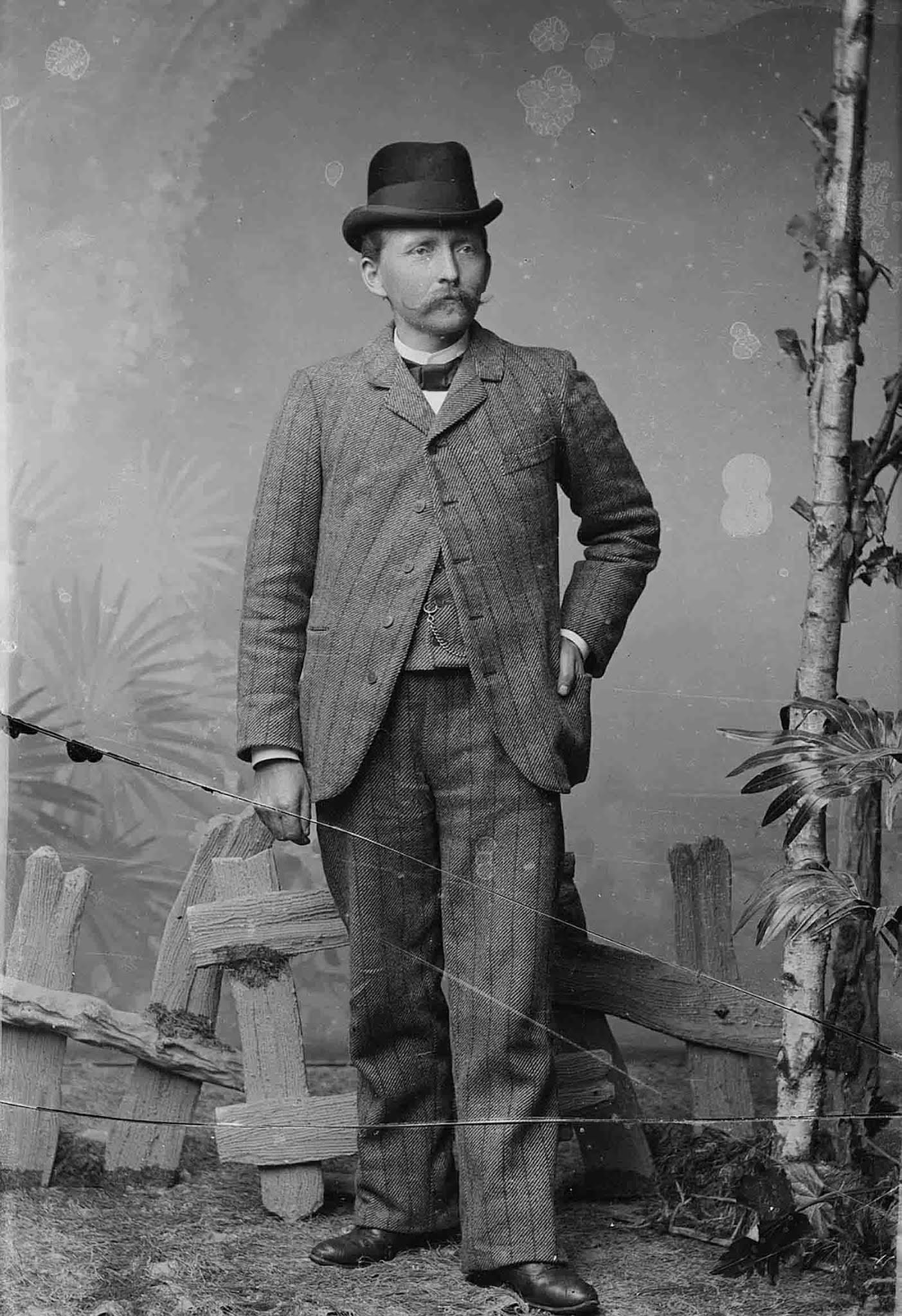
In the closing years of the 19th century, a photographer named Nils Olsson Reppen returned to his homeland in western Norway and began documenting a world that few outsiders ever saw. Armed with a large-format stereoscopic camera, he walked the valleys and shorelines of the Sognefjord region, photographing farmers, families, mountain pastures, and village life. What he left behind is one of the most detailed visual records of rural Norwegian life around 1900.
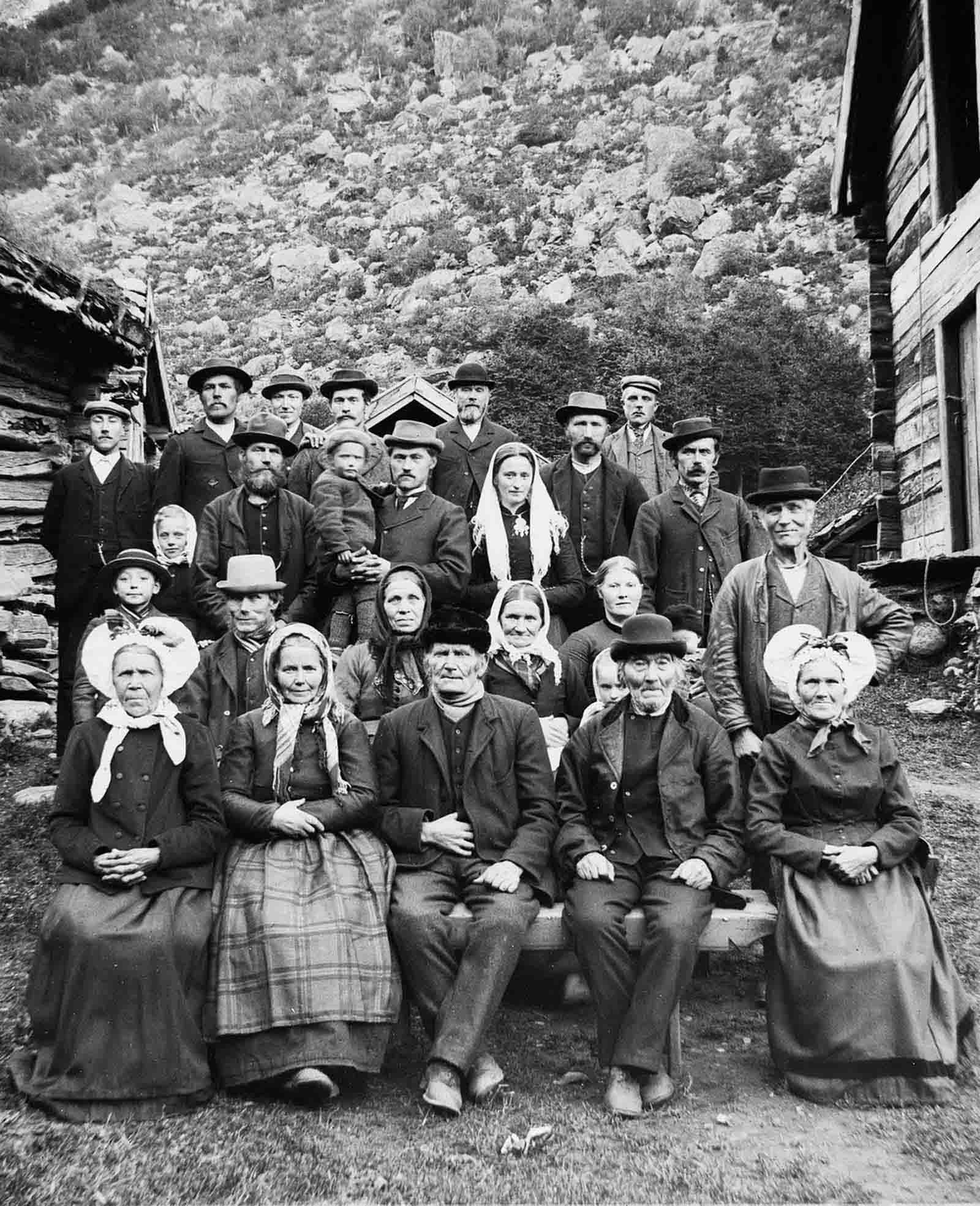
Reppen was born in 1856 on the farm Reppen in Sogndal, a village nestled along the shores of the Sognefjord — Norway’s longest and deepest fjord. At 26, he emigrated to the United States and built a career as a photographer in Browns Valley and Morris, Minnesota. He spent roughly 15 years working in America before returning to Sogndal in the late 1890s, where he resumed his craft in the very landscape that had shaped him as a child.
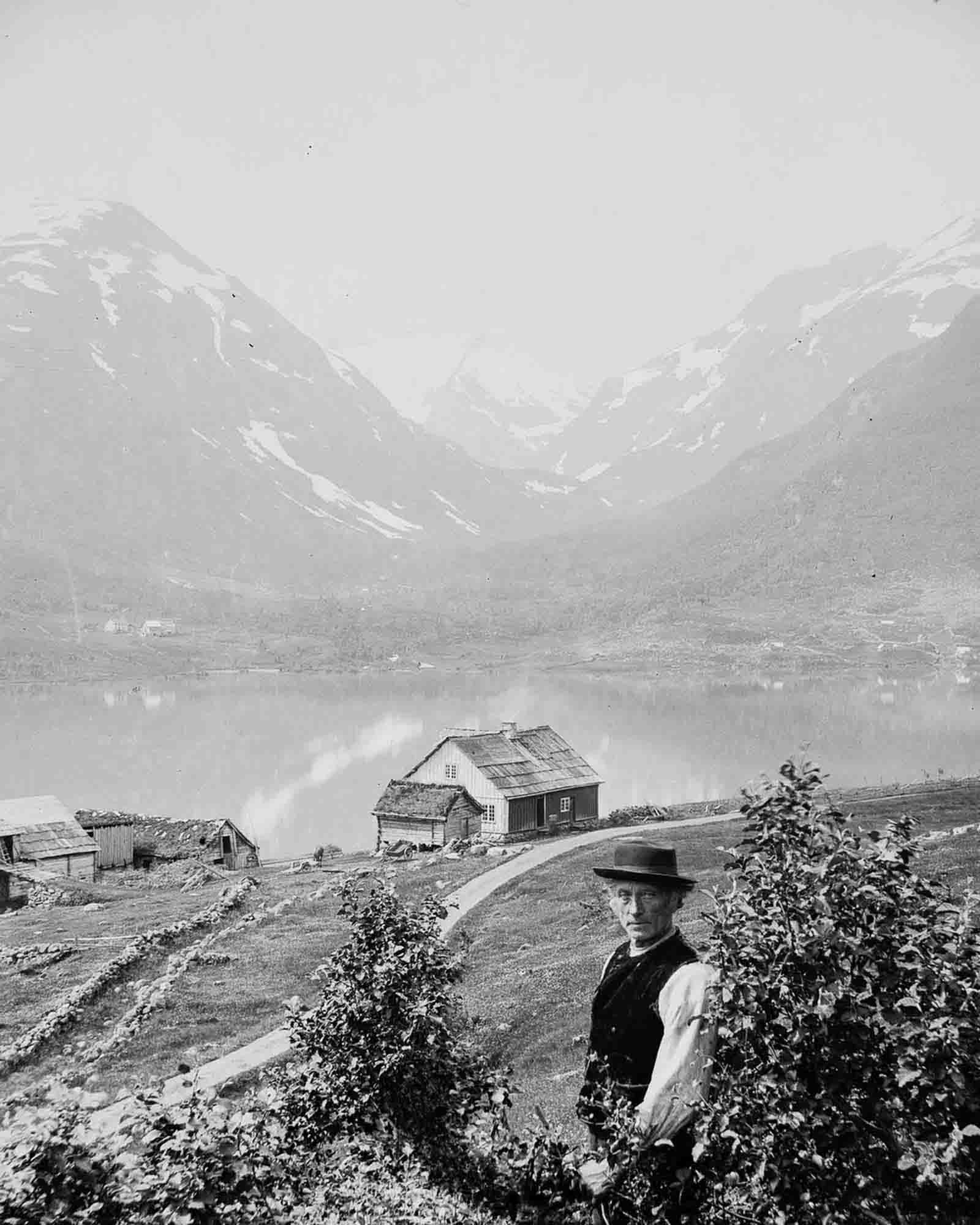
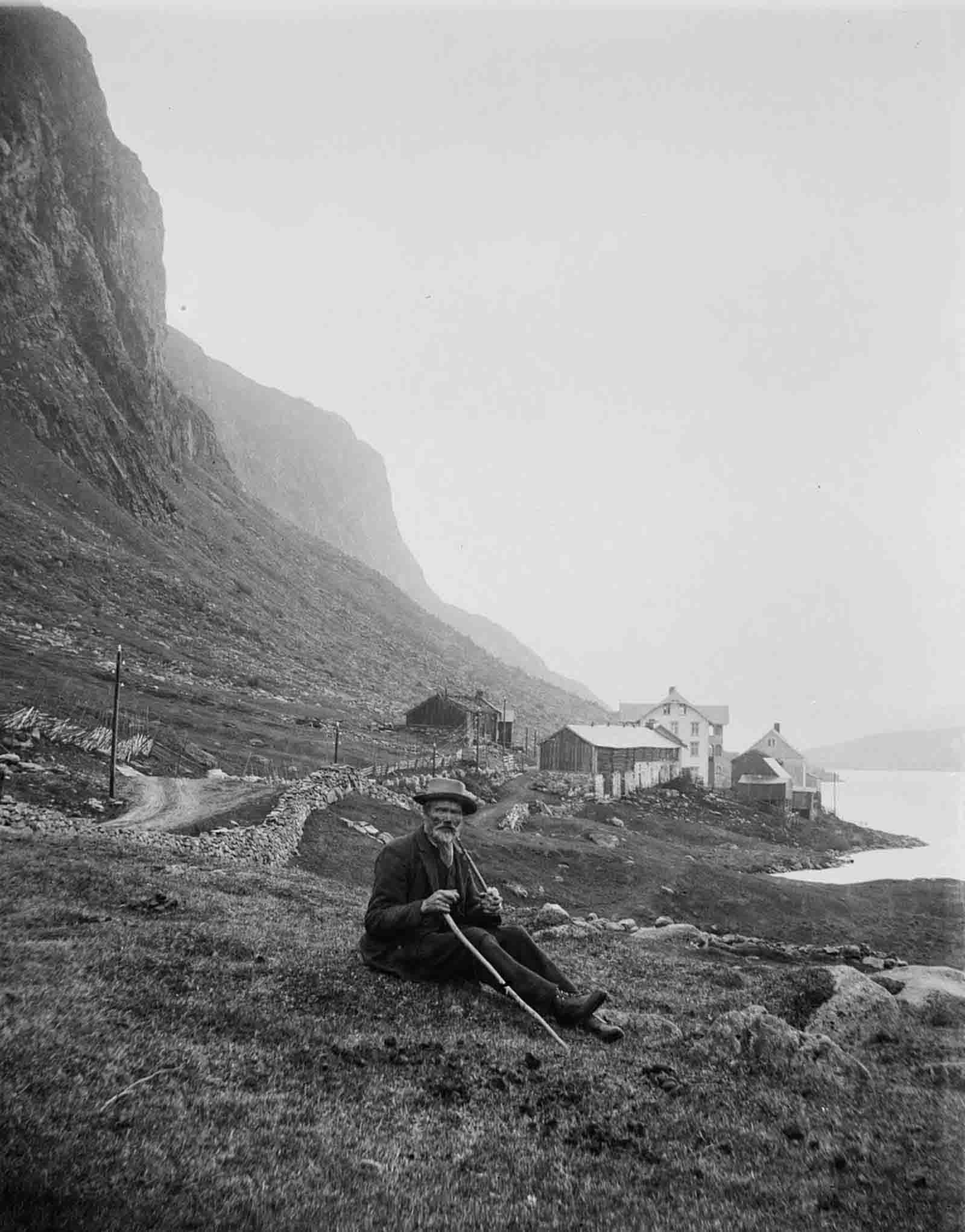
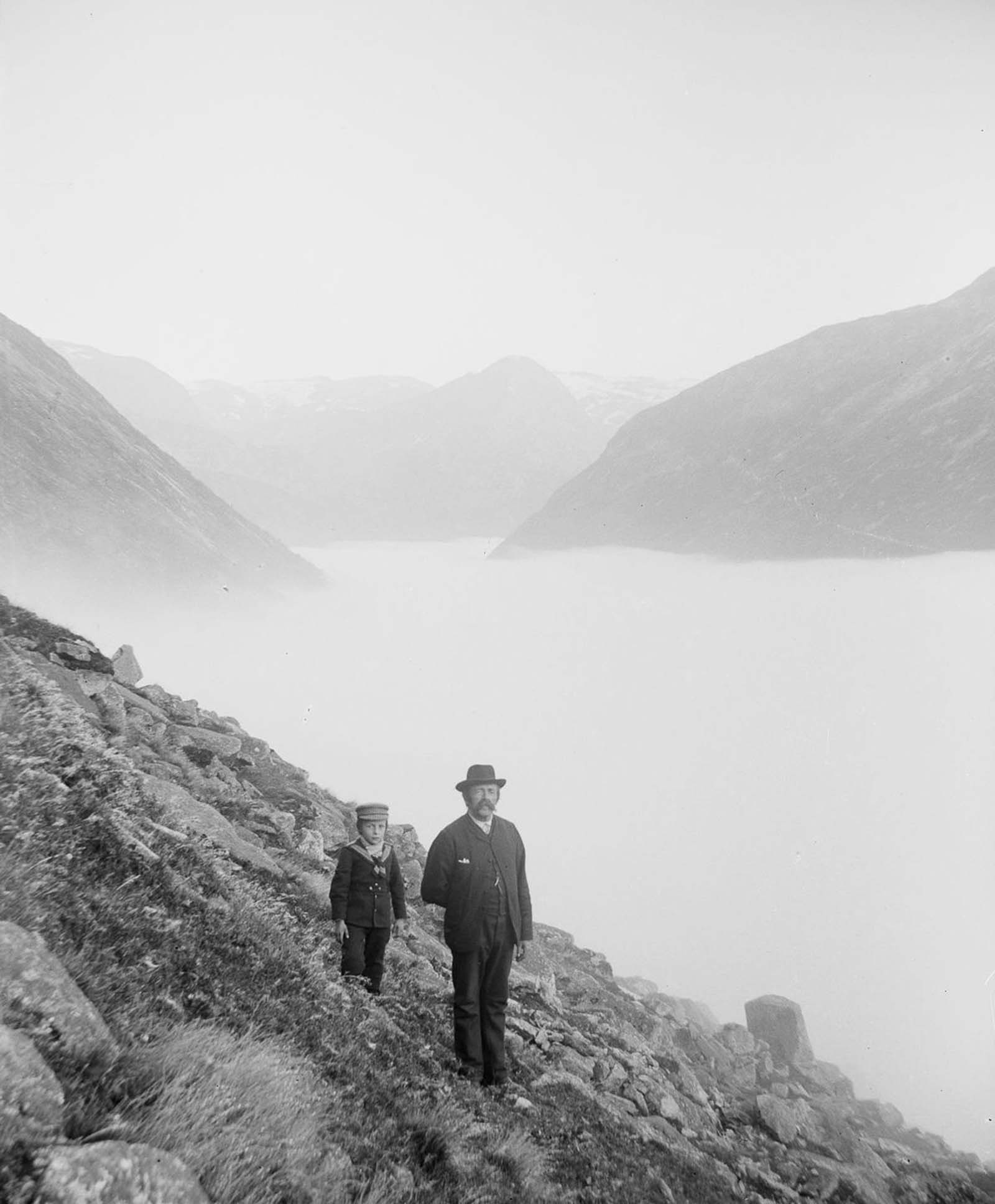
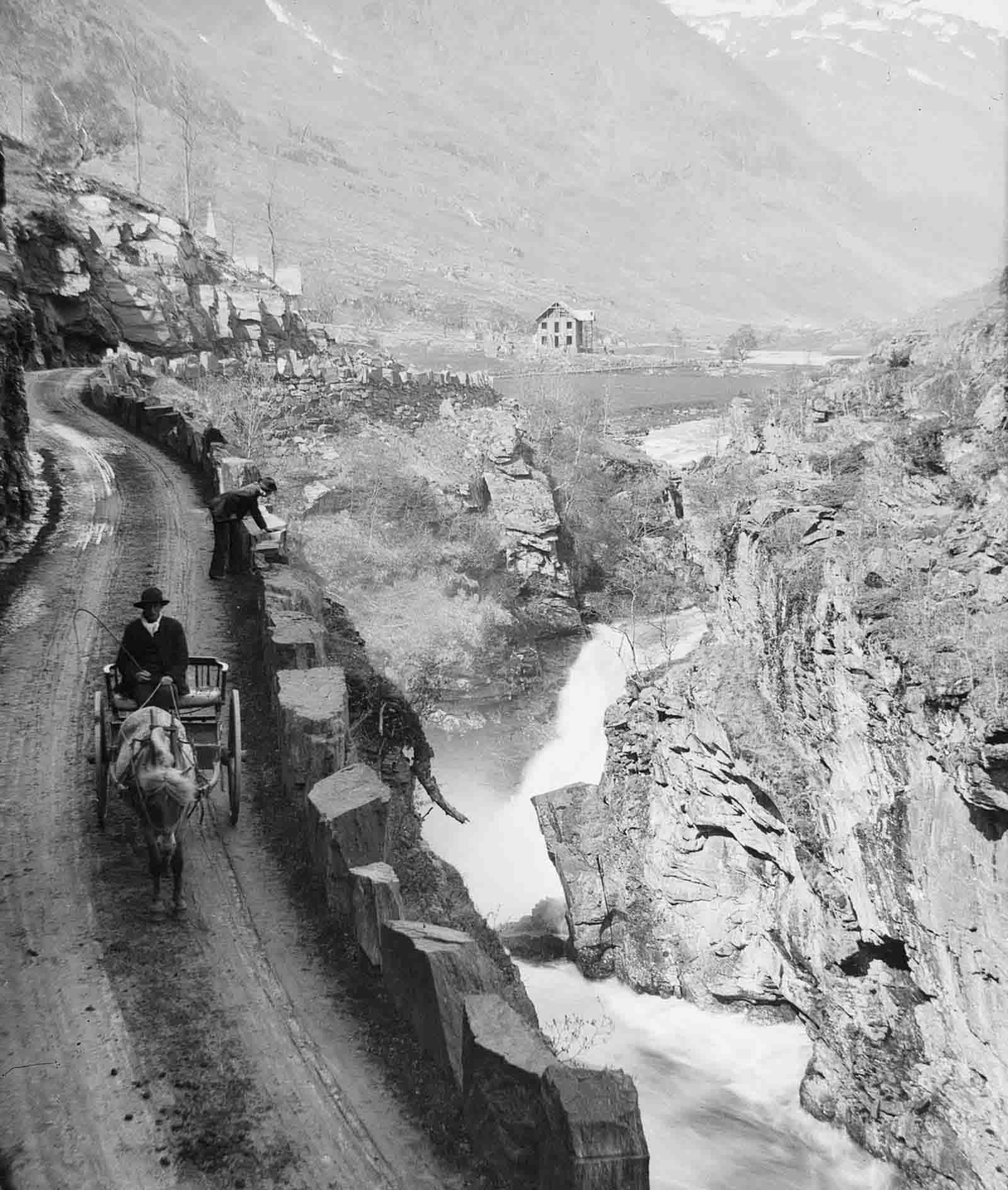
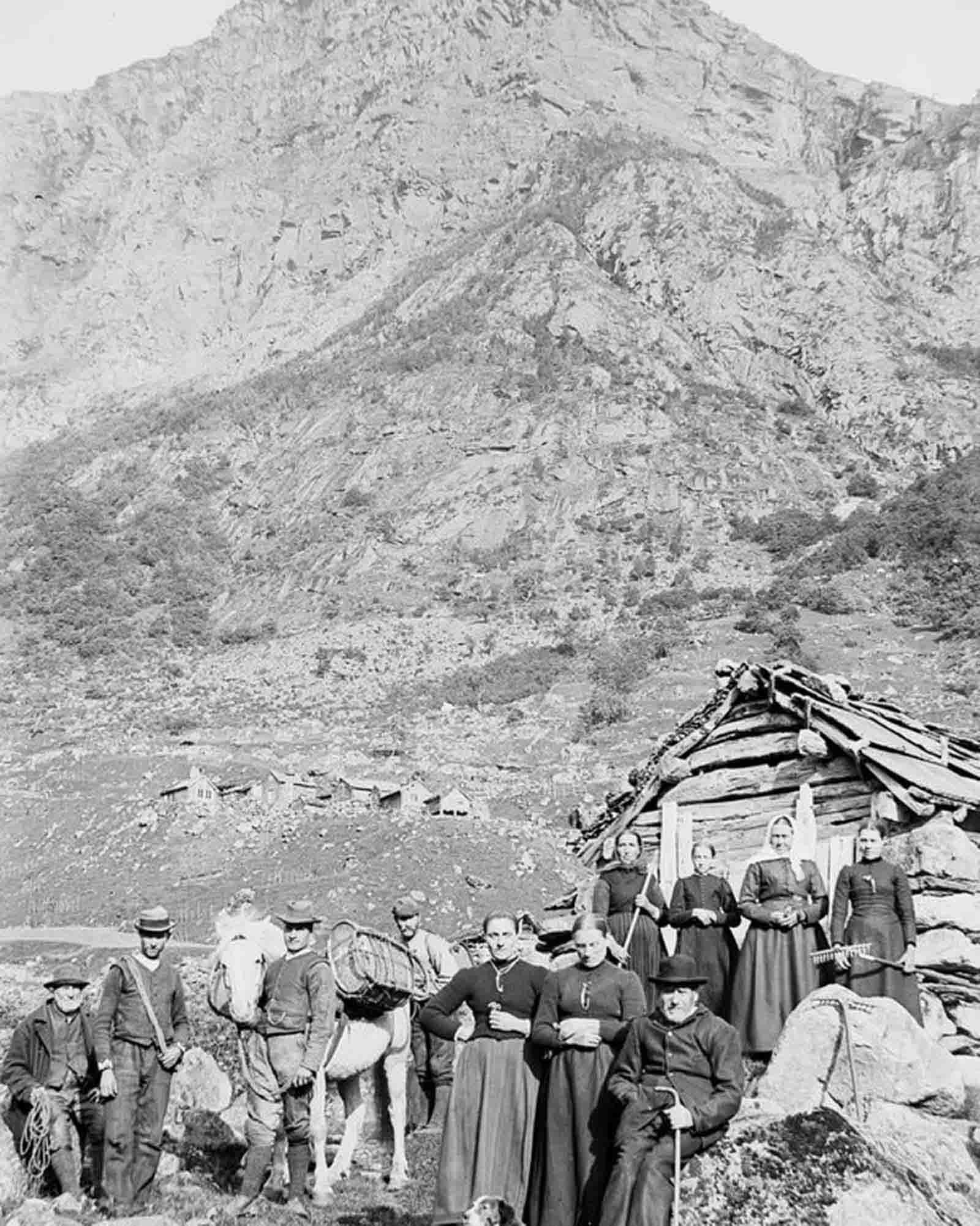
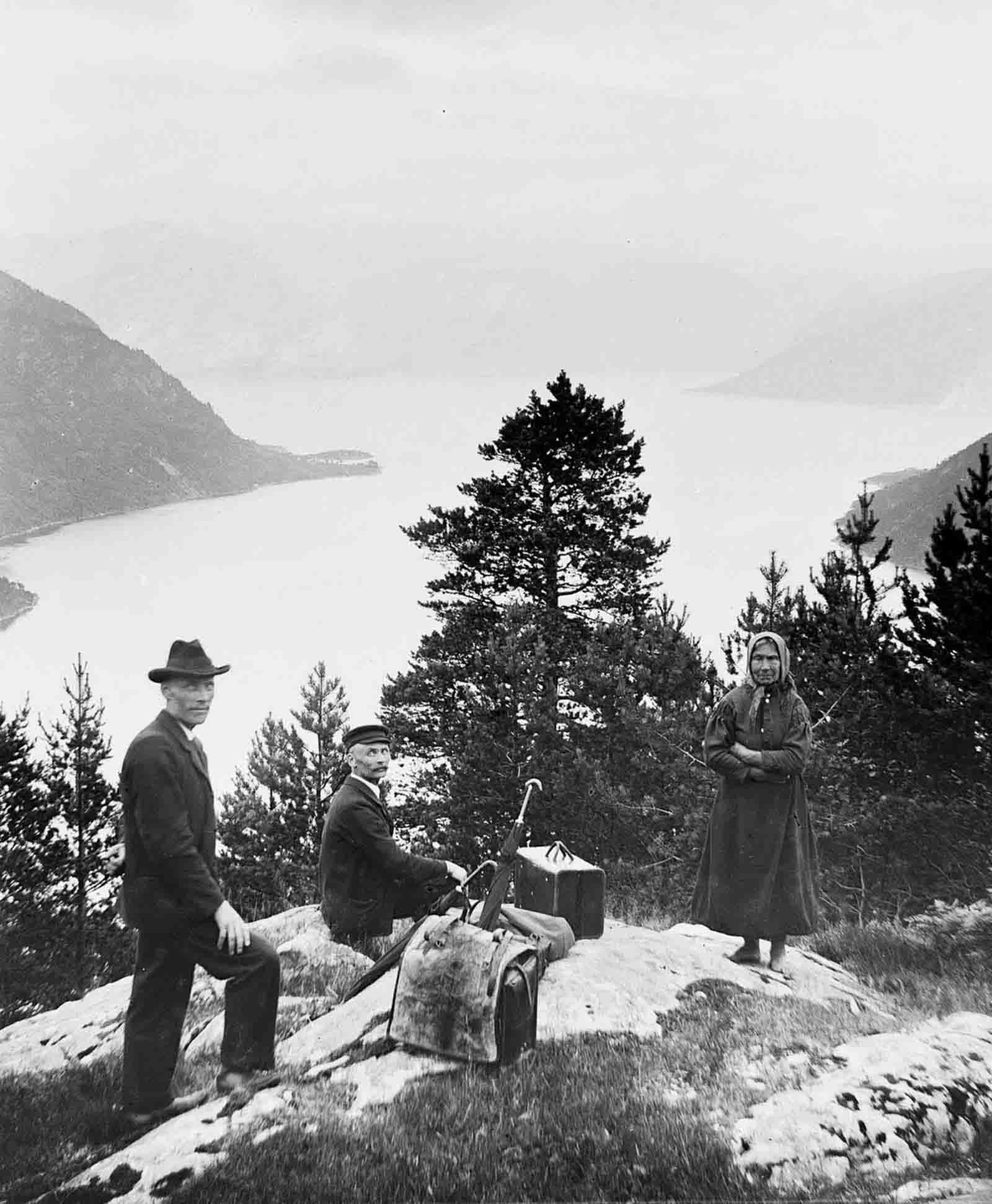
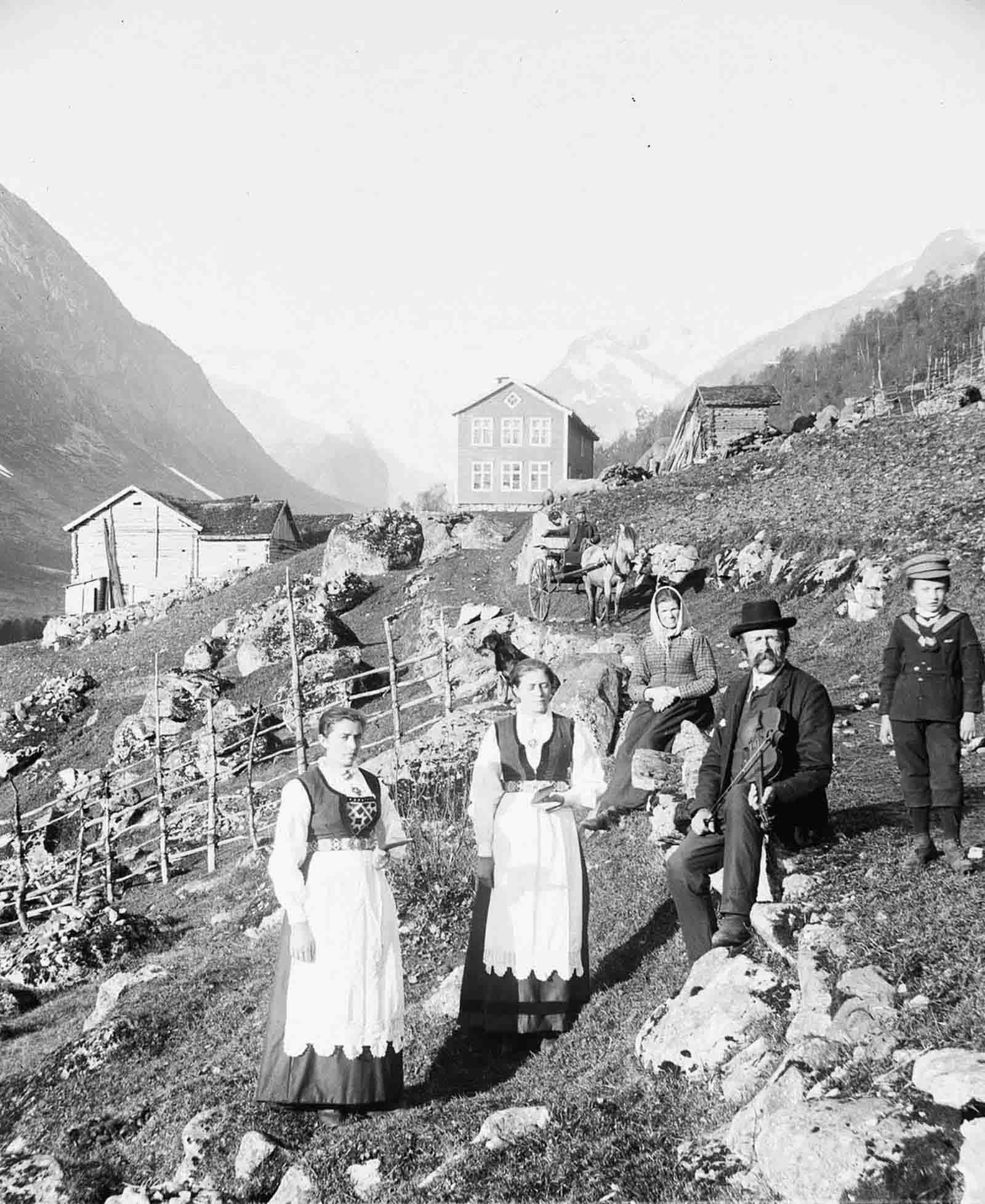
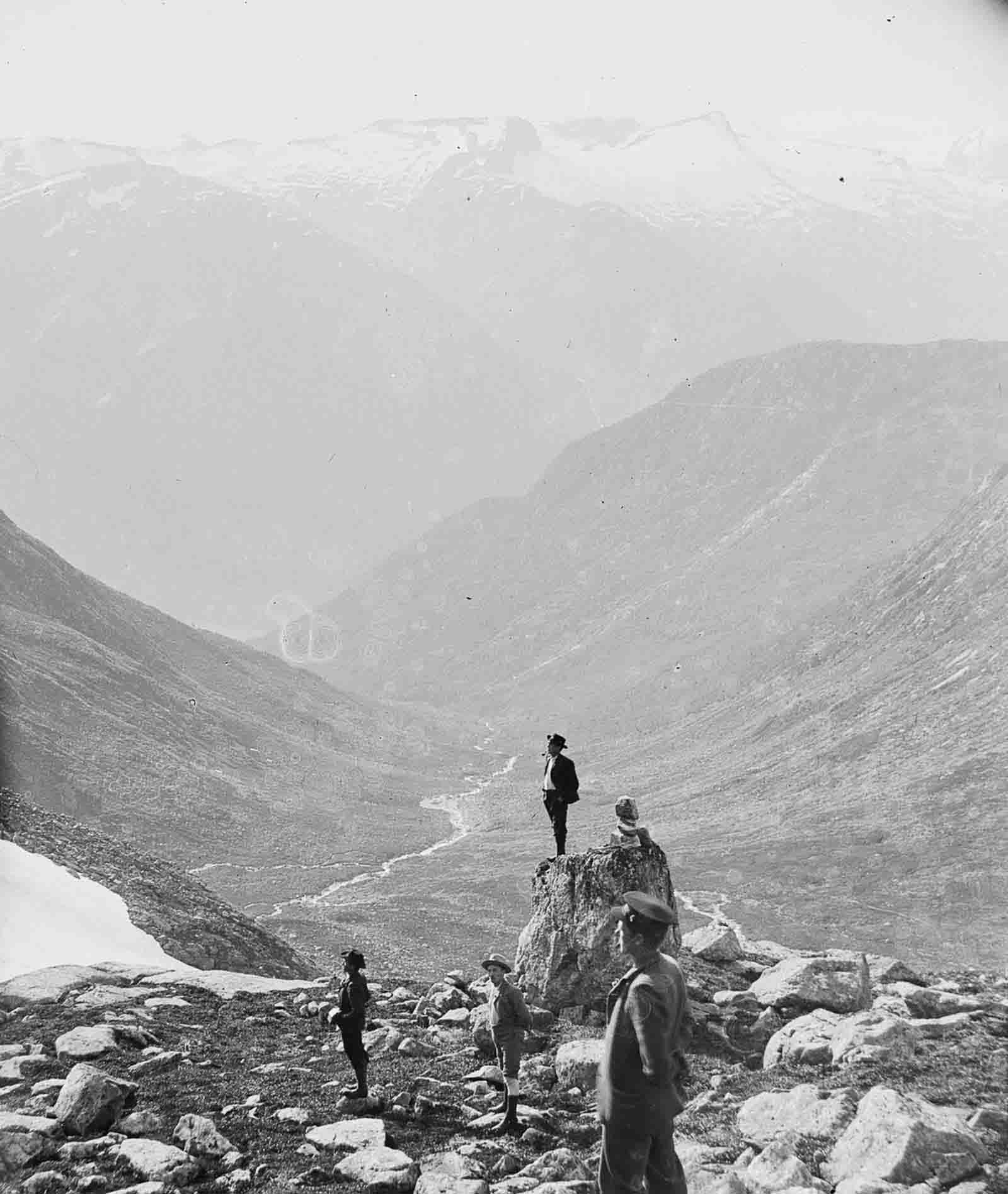
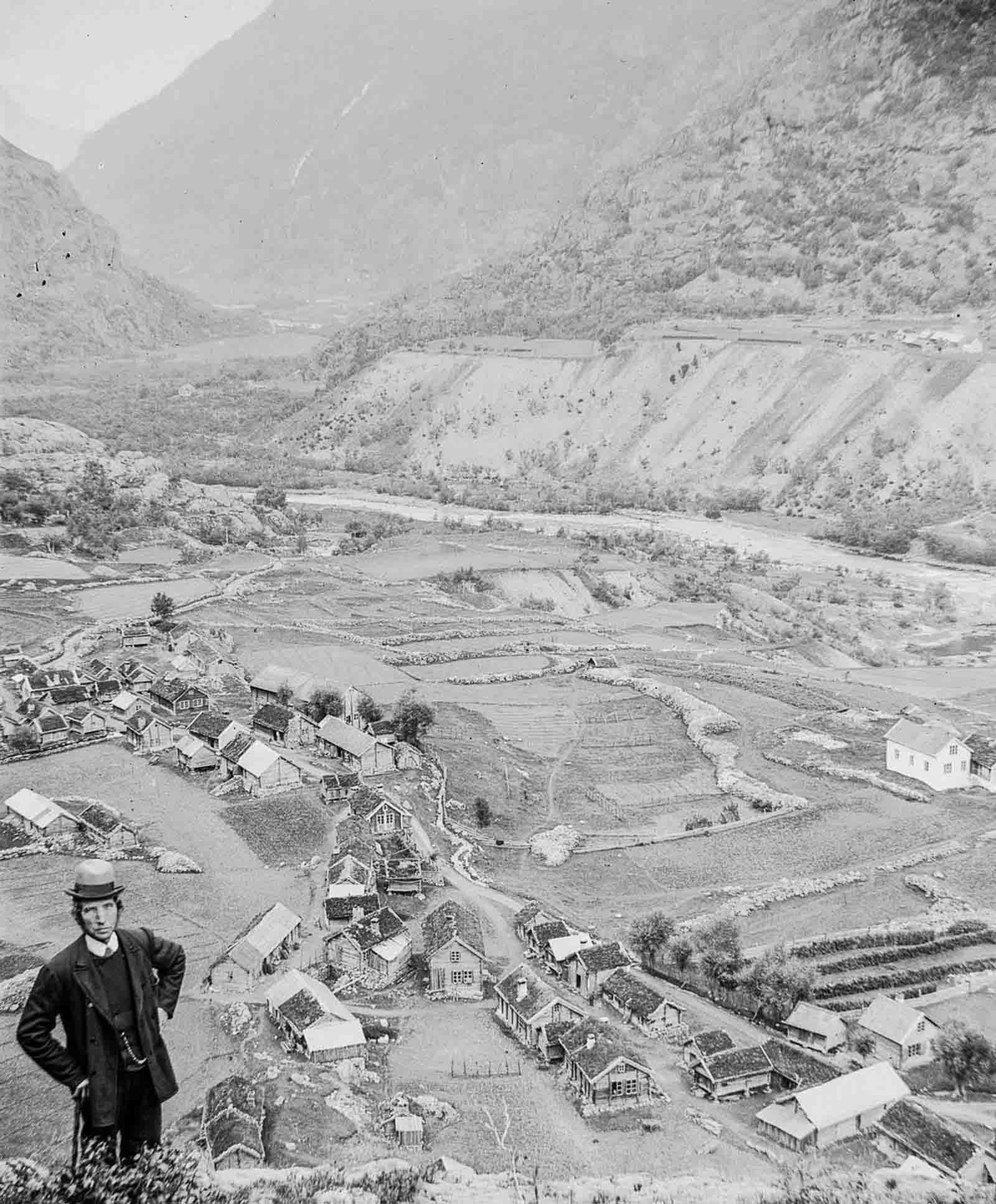
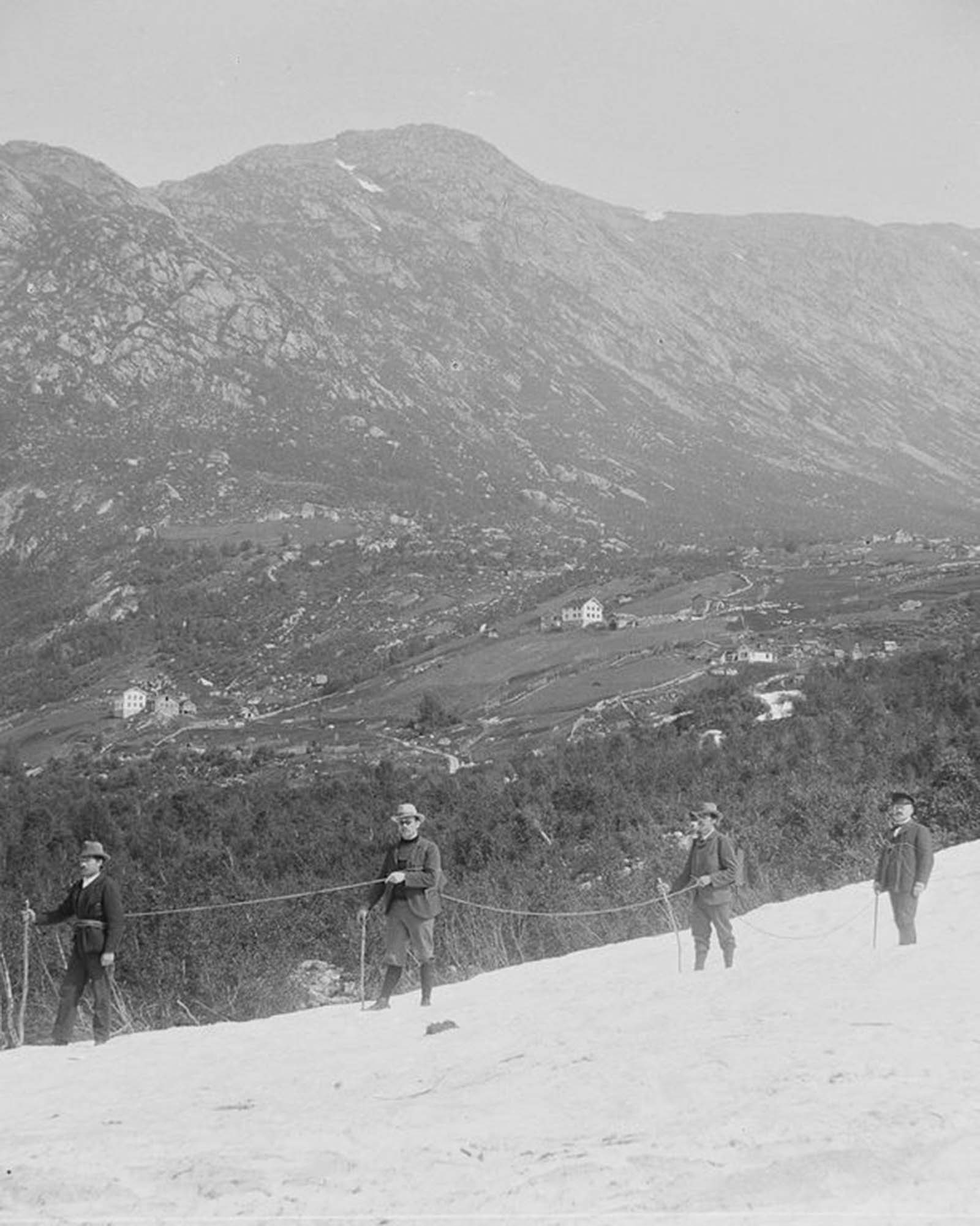
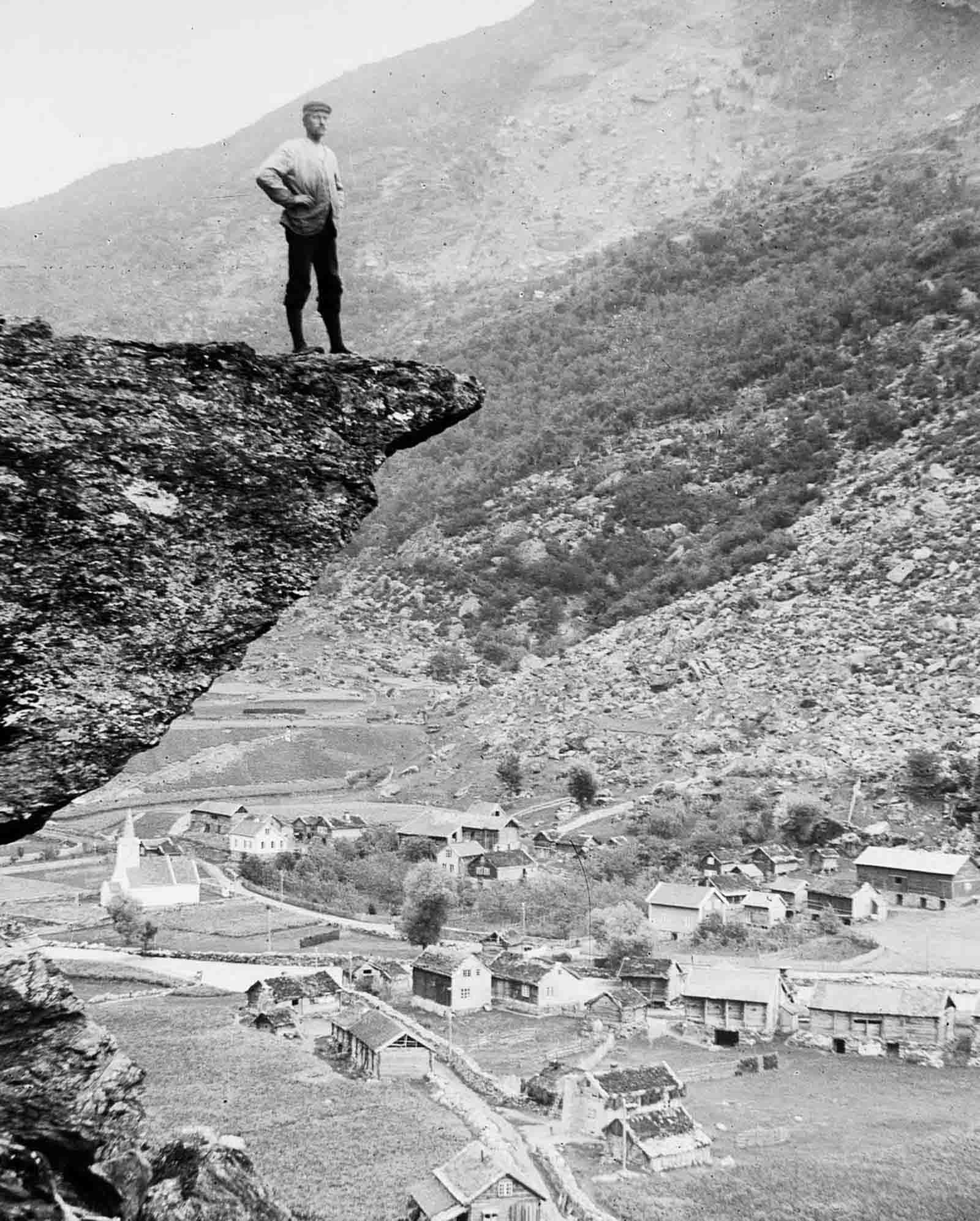
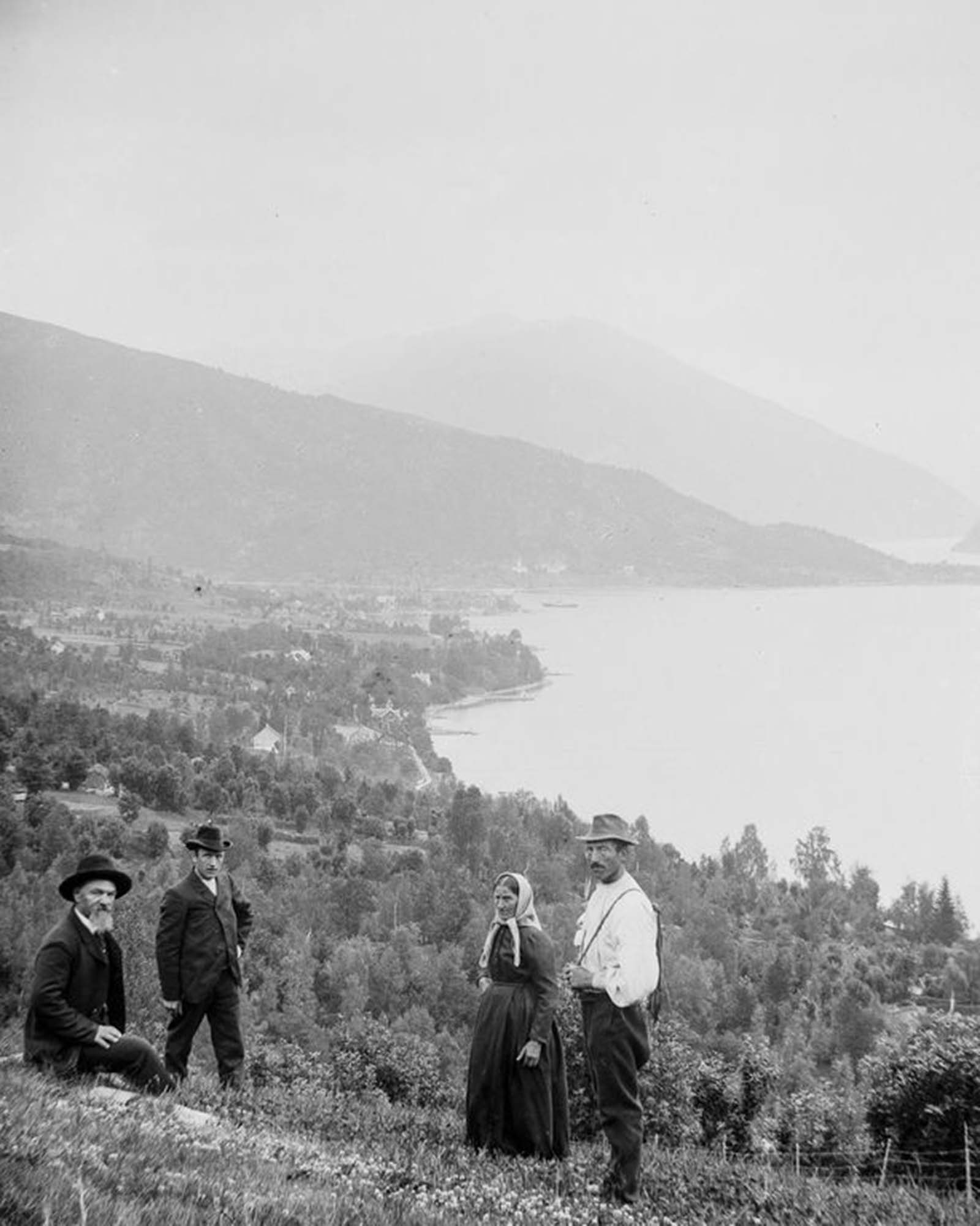
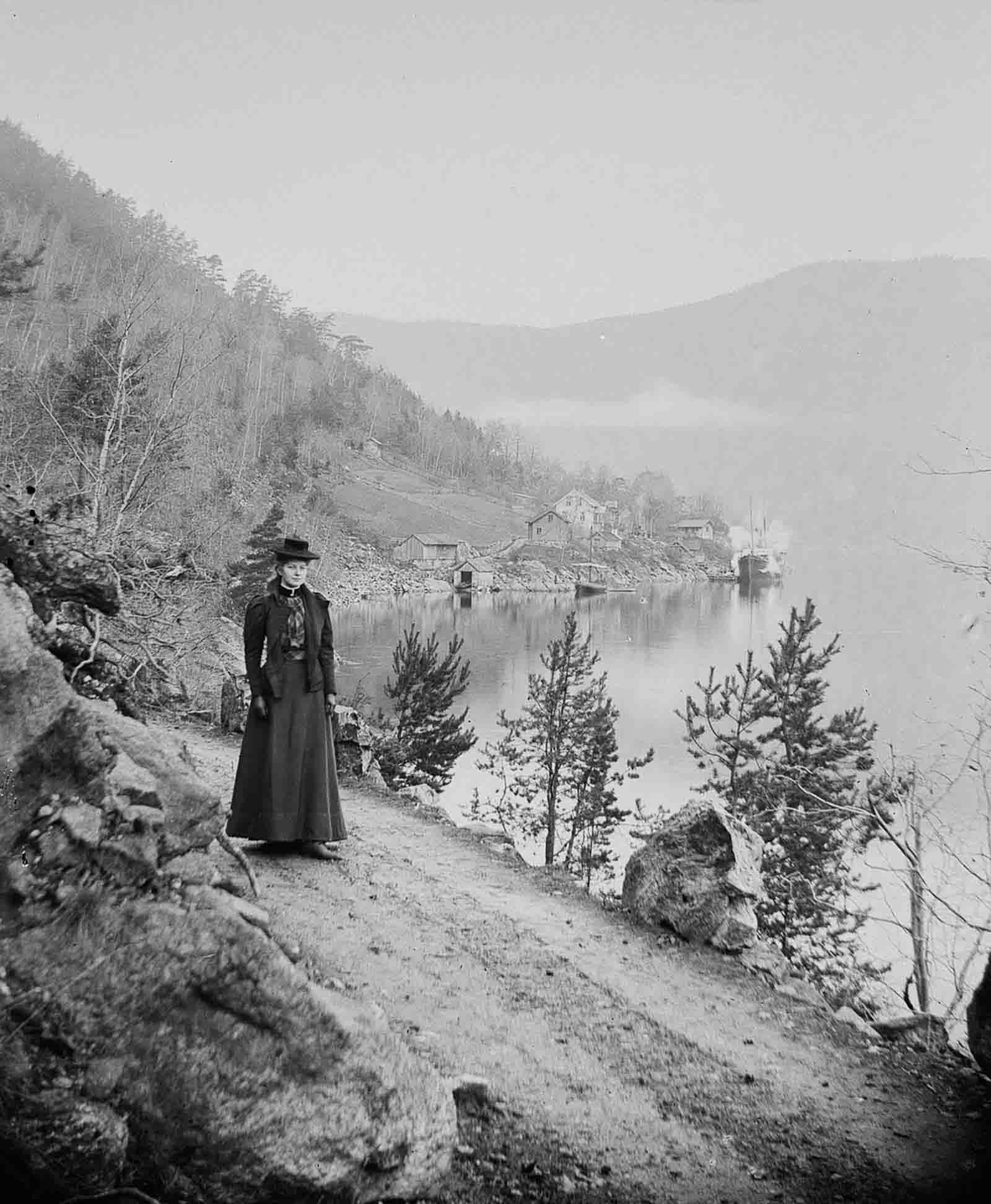
Reppen’s approach to photography was distinctive. He consistently placed his subjects at the bottom of the frame or far in the distance, letting the surrounding landscape fill the rest. Mountains rose above farmers. Glaciers loomed behind hikers. The fjord stretched wide behind travelers. His compositions made clear that people were part of something much larger than themselves — participants in a landscape that dwarfed human scale.
The Sogndal area Reppen photographed was a community in steady growth. The seaside settlement of Sogndalsfjøra, the commercial center of Sogndal, had been inhabited since the 17th century. By 1701, the settlement had 60 to 70 permanent residents, most of them day laborers without land or property. Within a hundred years, that number climbed to 222. By 1900 — the same period Reppen was actively photographing — 422 people called Sogndalsfjøra home.
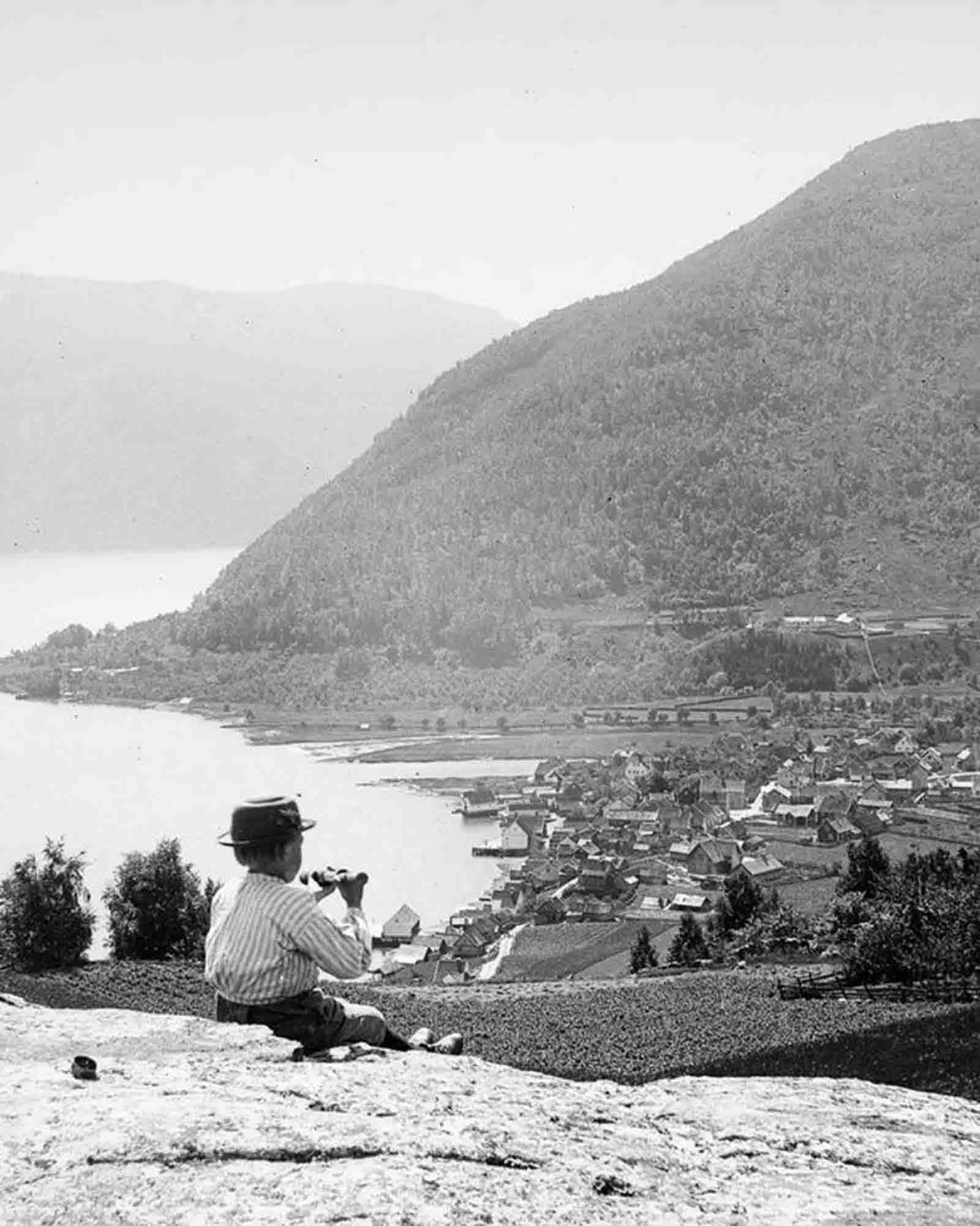
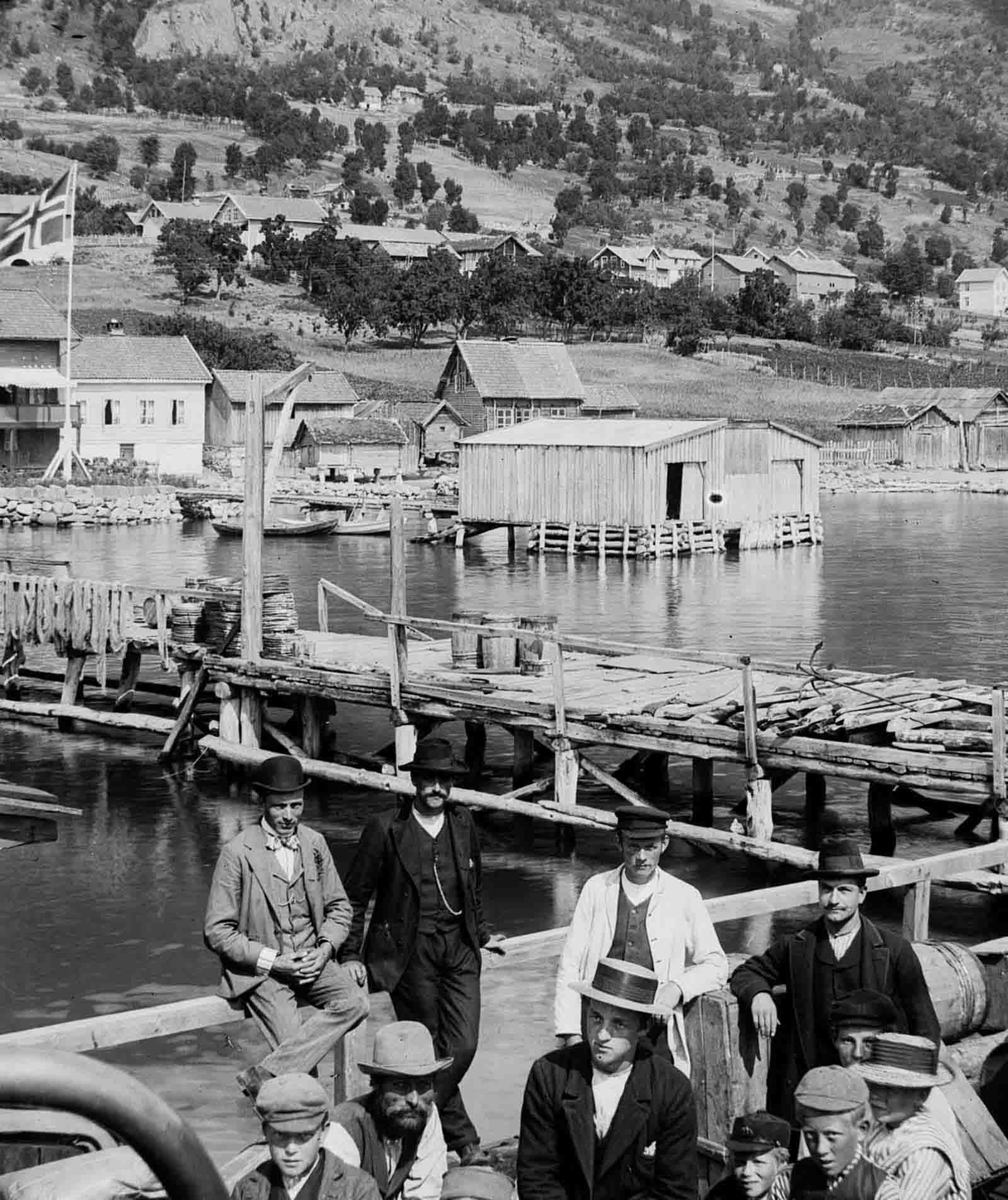
The economy of Sogndalsfjøra had diversified considerably by the time Reppen arrived back. General stores and bakeries had served the parish for centuries, but by 1881 the town supported house painters, a goldsmith, saddlers, carpenters, shoemakers, watchmakers, tinkers, and butchers. Boat landings served farmers who traveled the fjord, military functions took place in the settlement, and house owners rented rooms to students attending the newly established folk high school. A legal assembly convened at Hofslund, while the vicar and church at Stedje served the surrounding community.
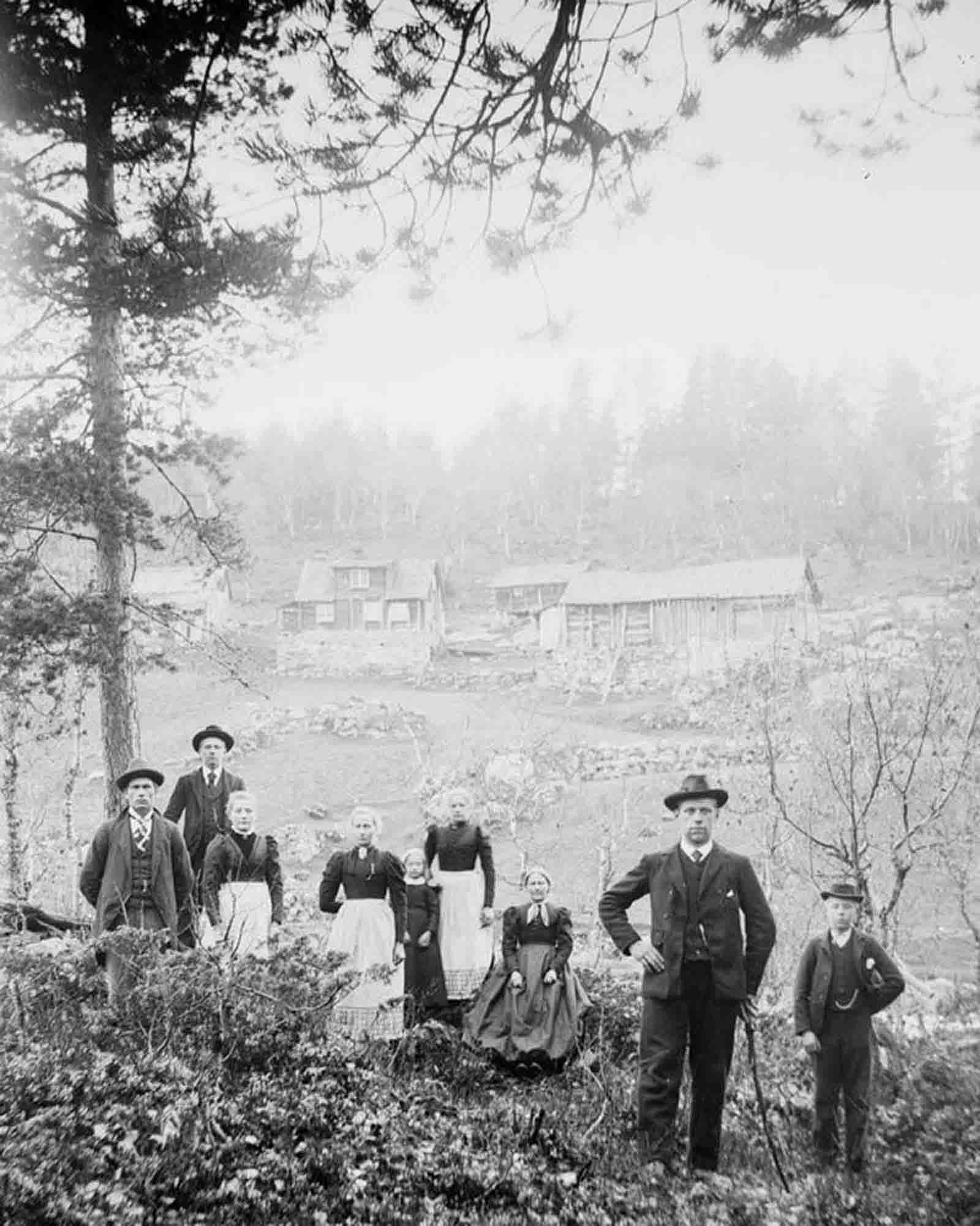
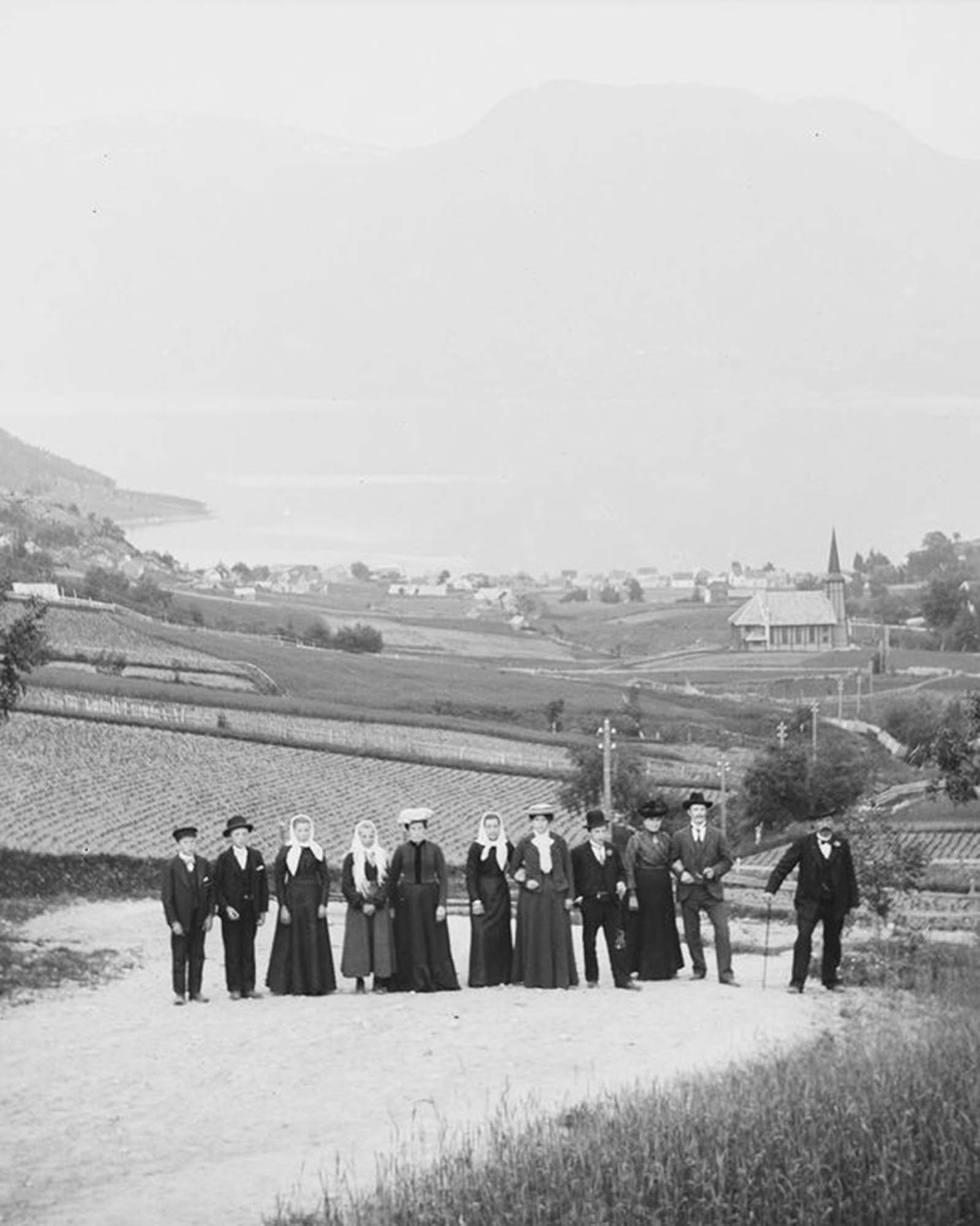
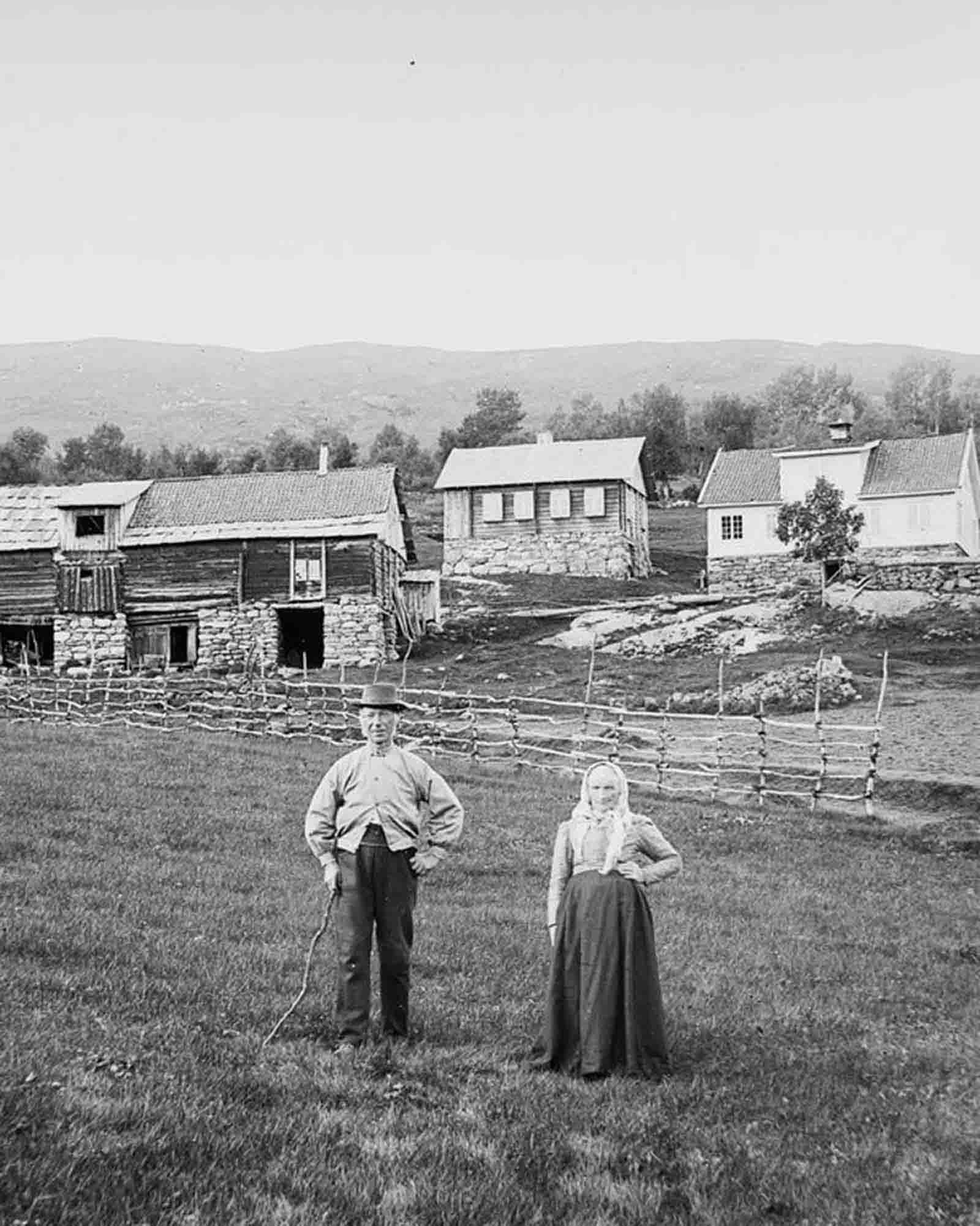
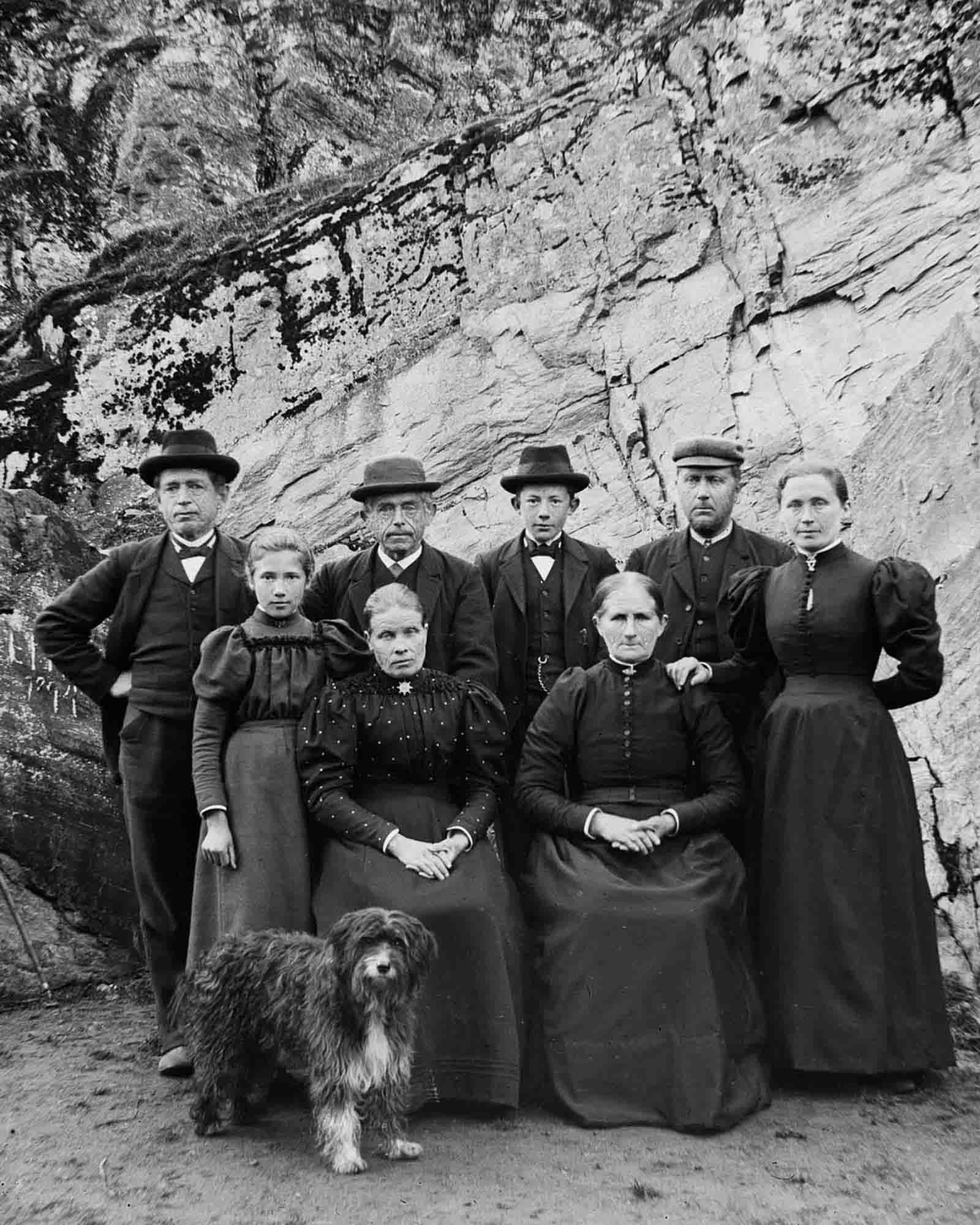
Reppen moved through all of this. He photographed individual farmers standing in front of their homesteads, groups gathered in valleys, and travelers pausing along fjord paths. His subjects rarely posed in formal indoor settings. They stood in fields, leaned on fences, or gathered on hillsides, dressed in their everyday clothes with the Norwegian countryside behind them.
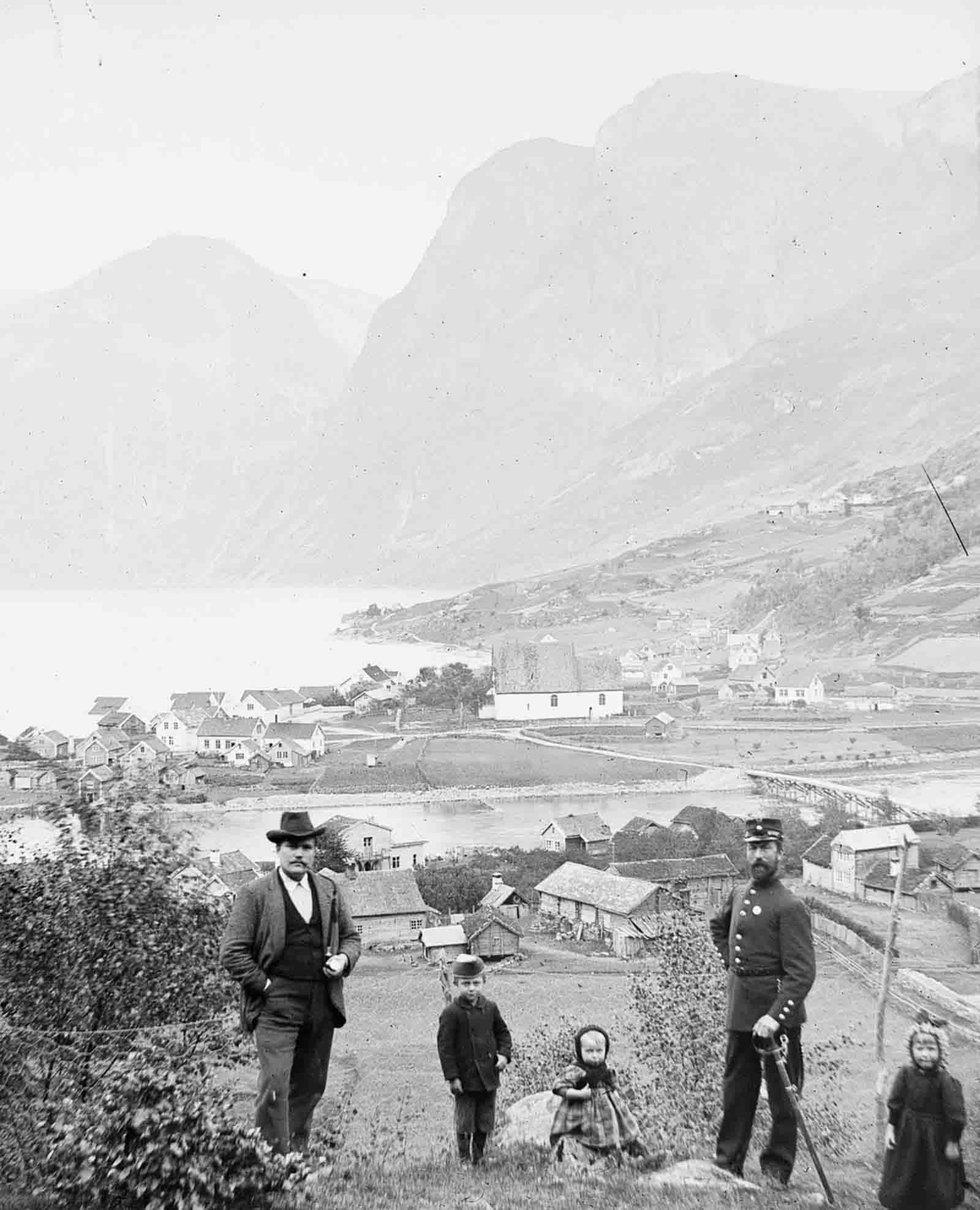
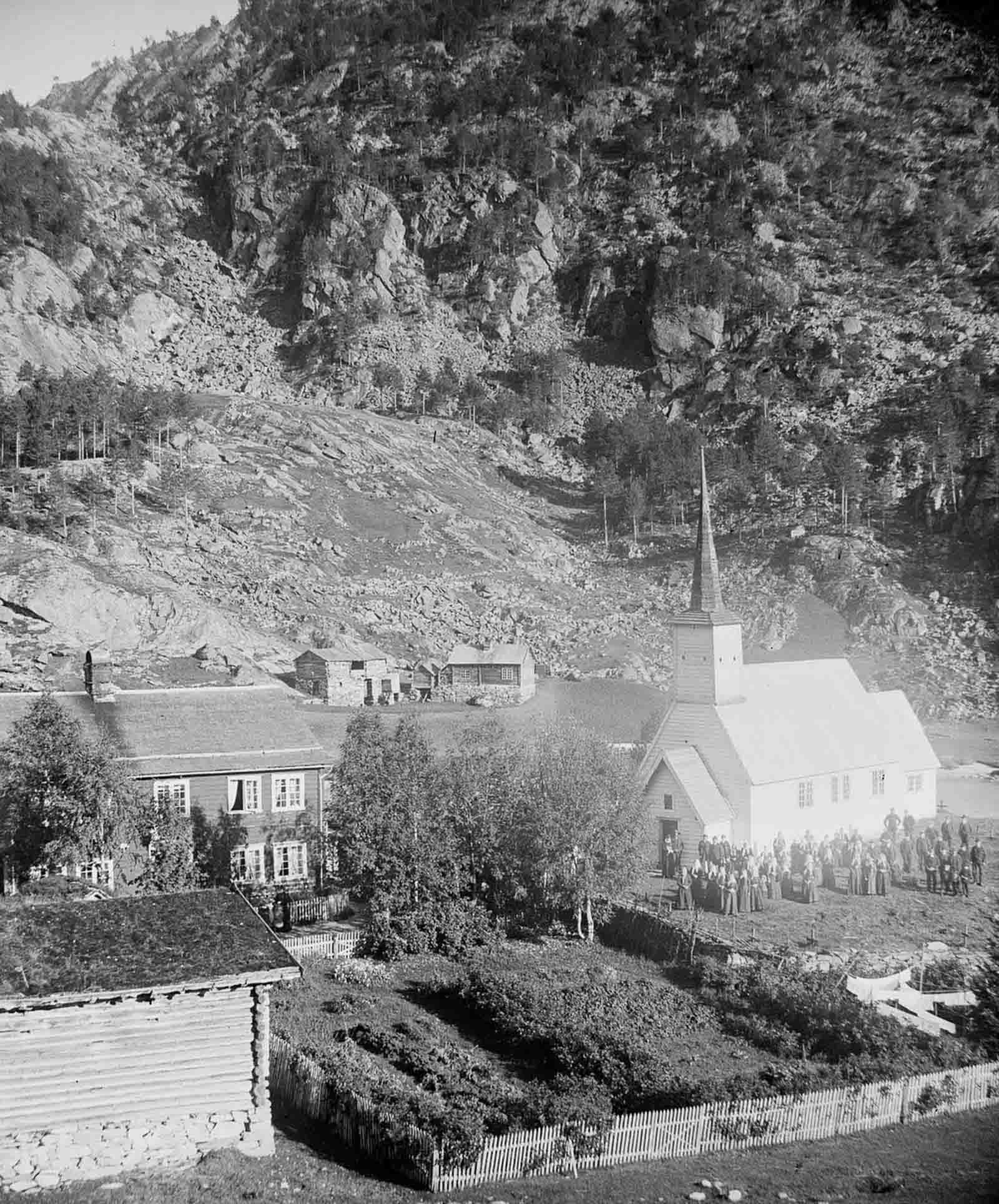
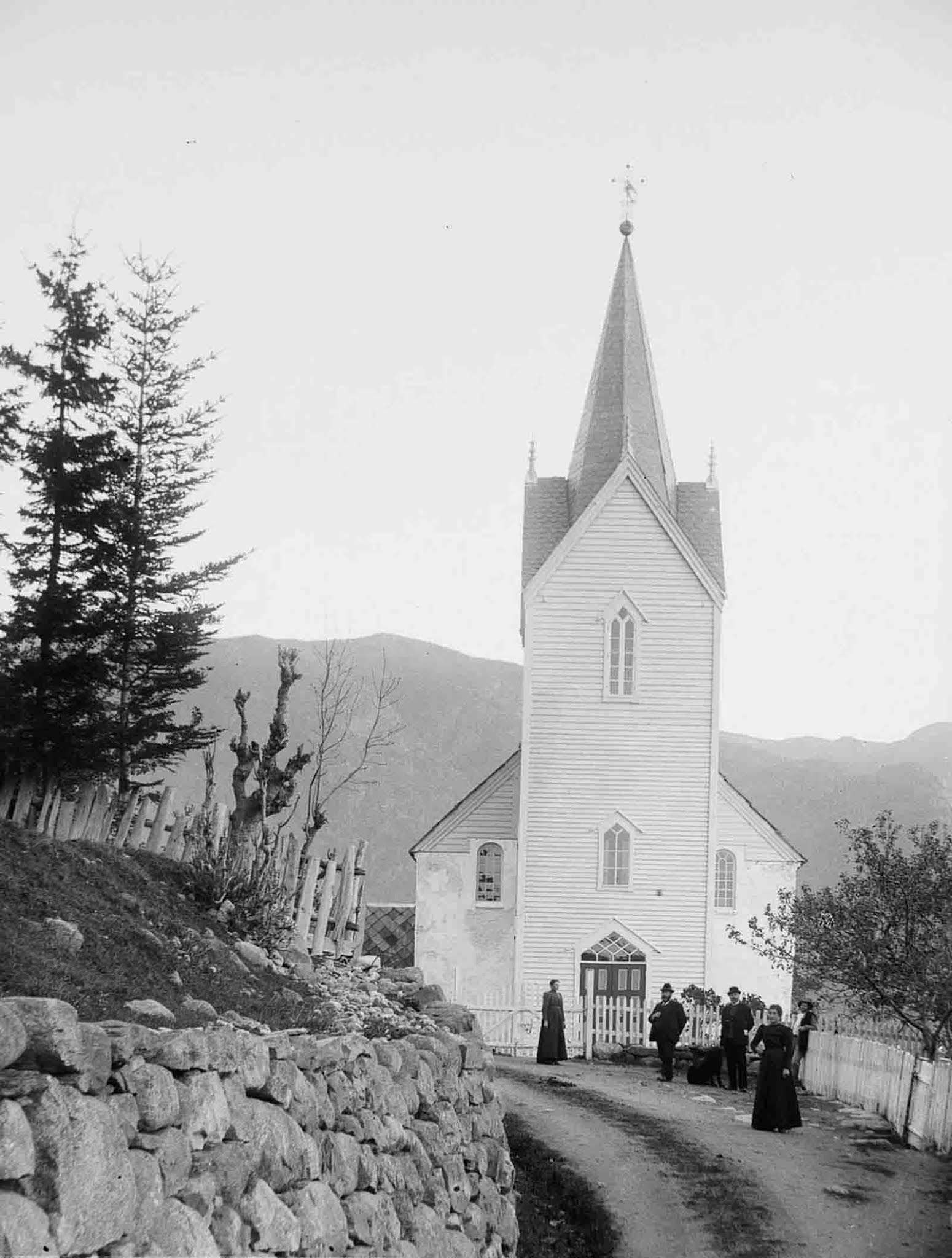
Churches and community buildings appear throughout his collection. The church was a central institution in rural Norwegian life, serving not just as a place of worship but as the site of baptisms, weddings, funerals, and public gatherings. Reppen documented these moments directly, from formal church exteriors to the people who passed through them during the most important events of their lives.
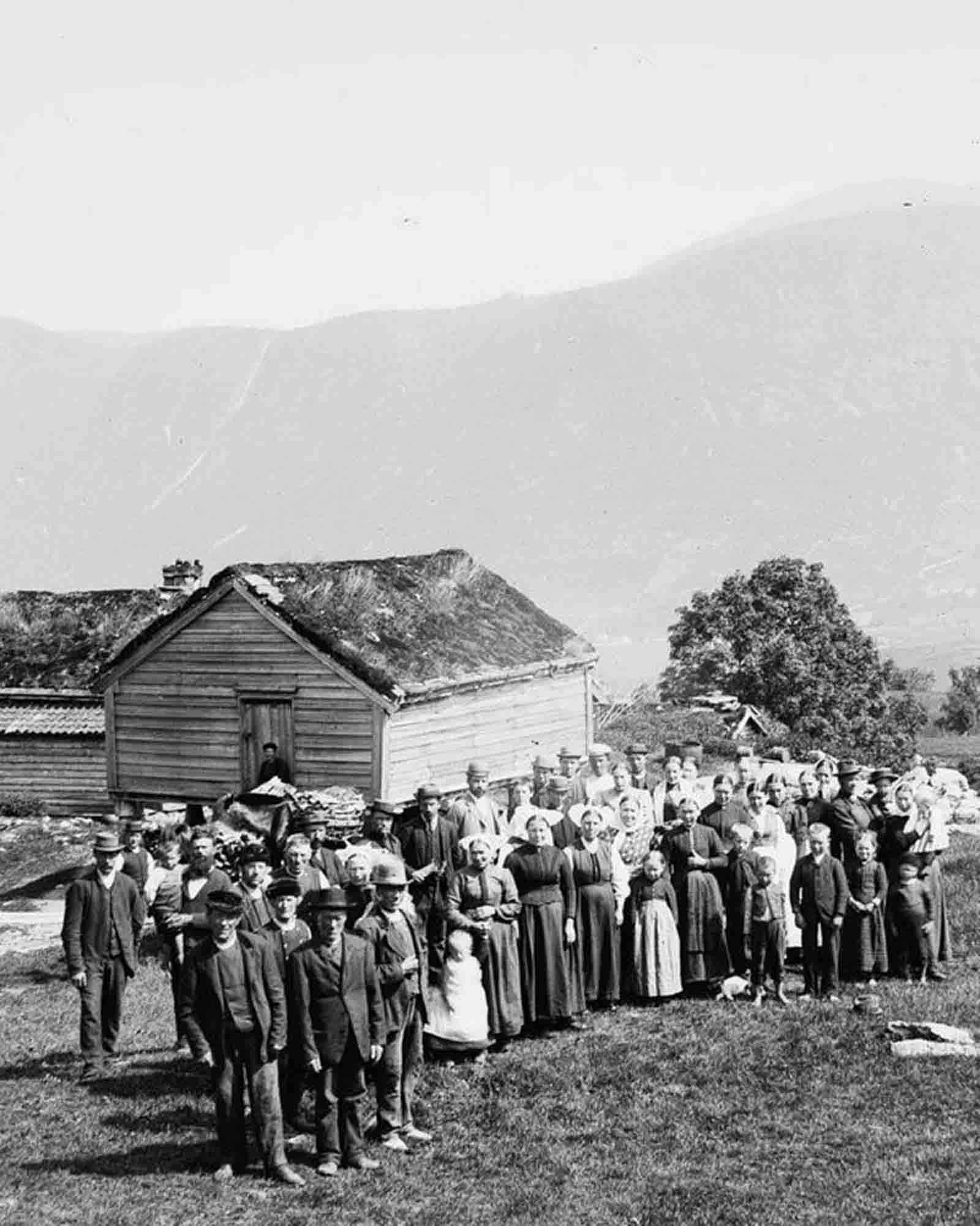
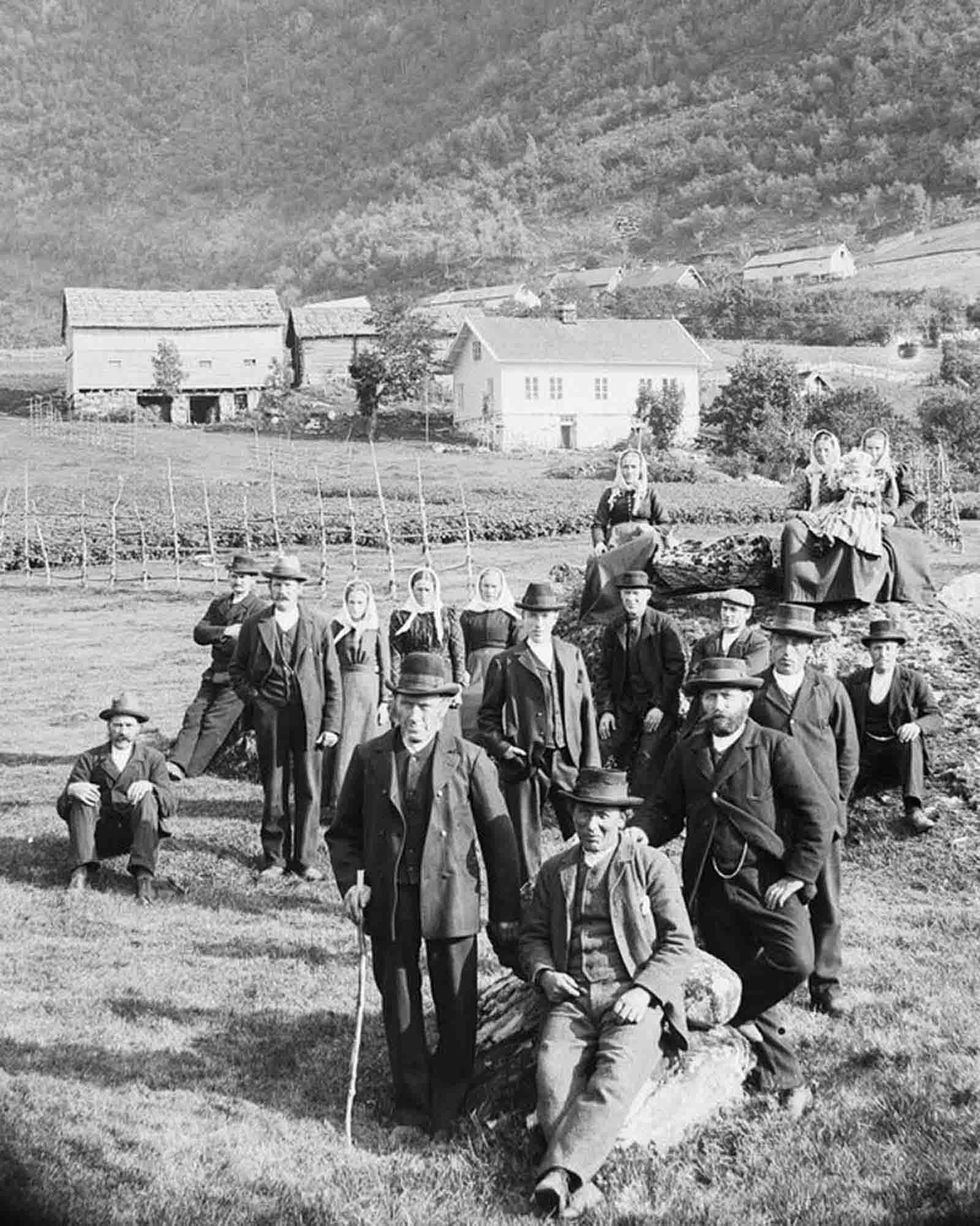
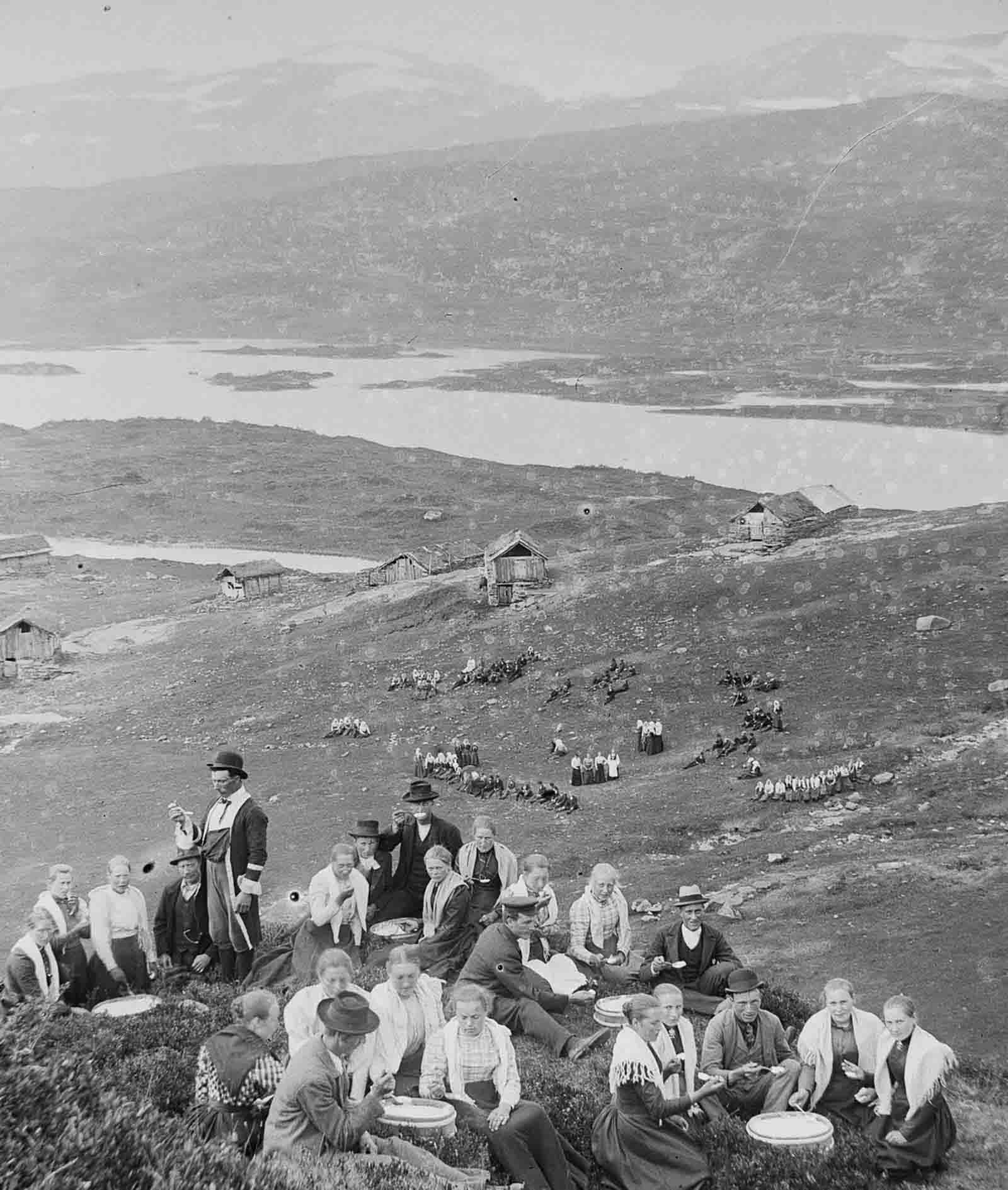
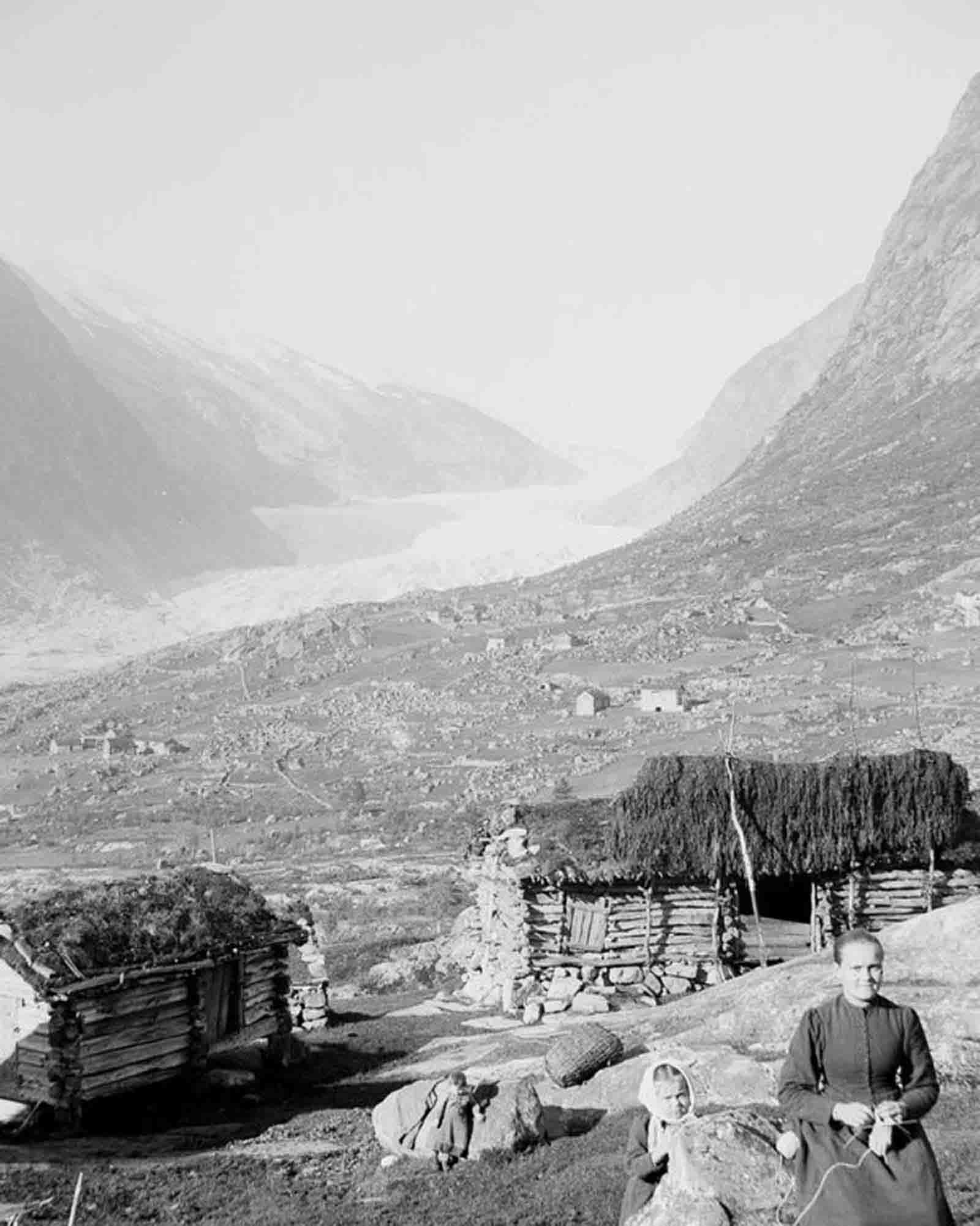
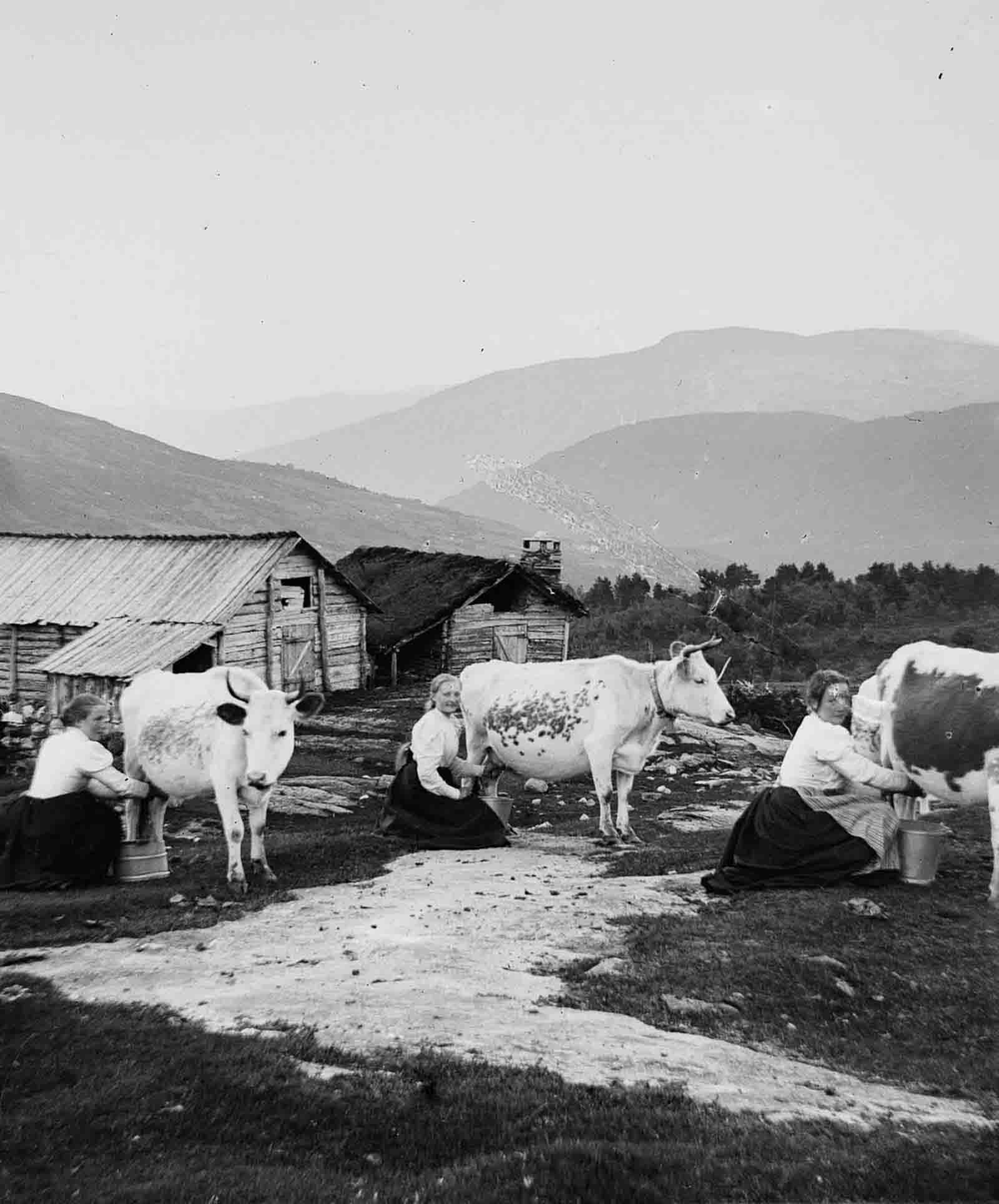
Mountain farming was a central feature of rural life in the Sognefjord region. During summer months, farmers moved their livestock up to high-altitude pastures called mountain farms, where grass was abundant and lowland fields could rest. Reppen captured these remote farmsteads with the same careful framing he applied everywhere — structures that looked small against the ridgelines behind them, the scale of the mountains making the human effort all the more visible.
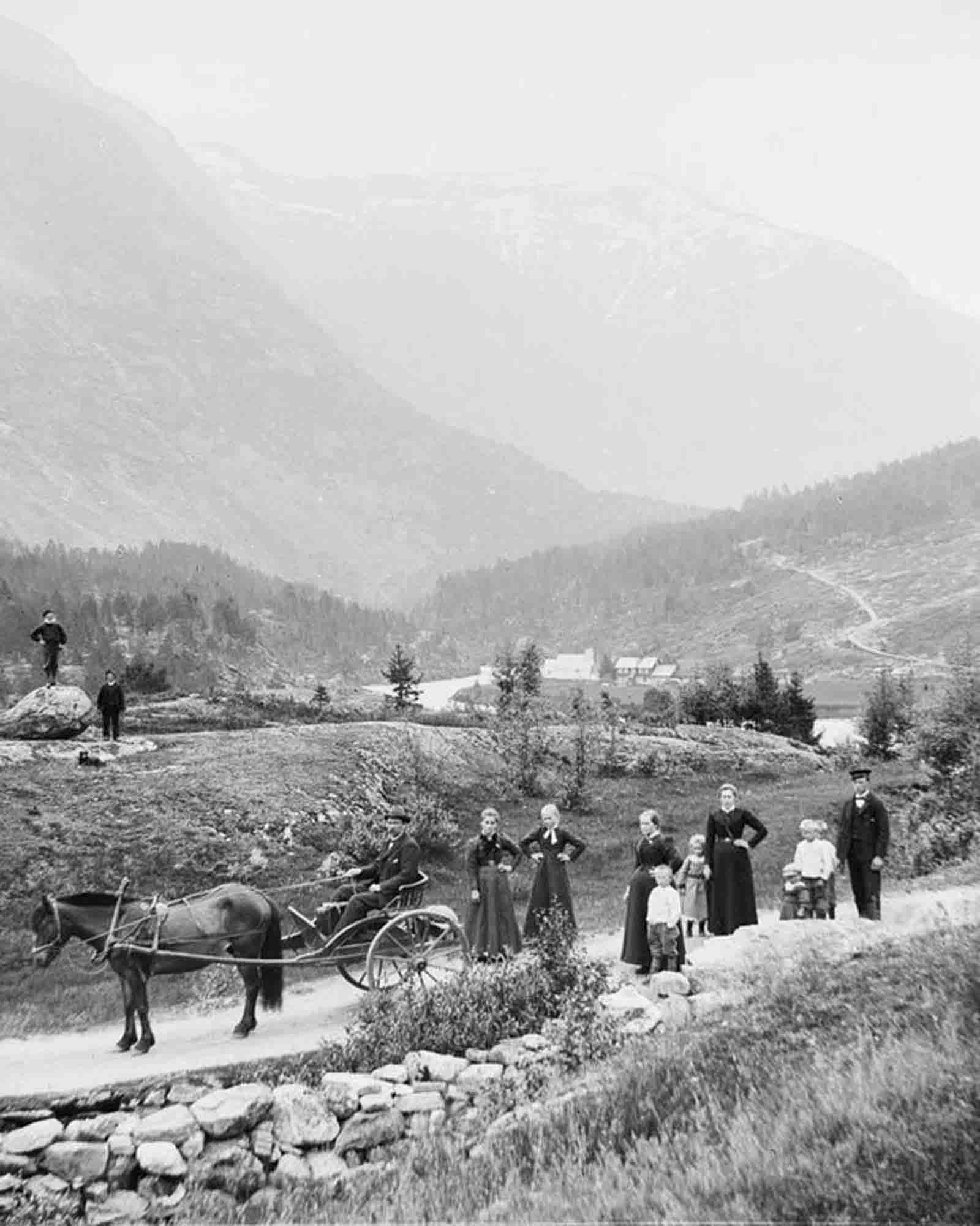
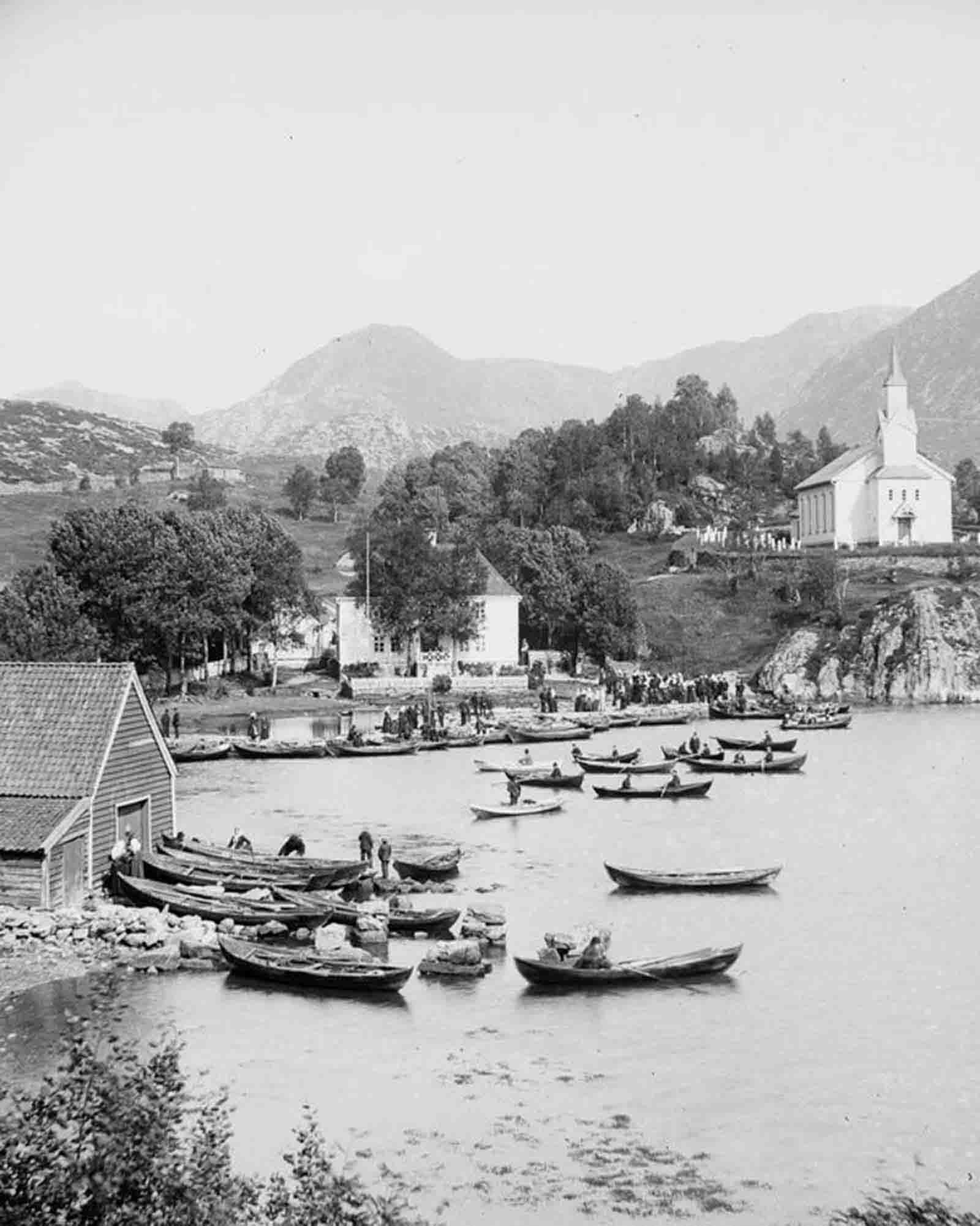
Reppen also documented the natural landmarks of the region. Jostedalen, one of the valleys he frequently photographed, is home to arms of the Jostedalsbreen glacier — the largest glacier in continental Europe. Hikers and local residents appear in some frames near the glacier’s edge, giving a direct sense of how close this dramatic terrain was to everyday Norwegian life. The glacier was not a distant spectacle; it was a neighbor.
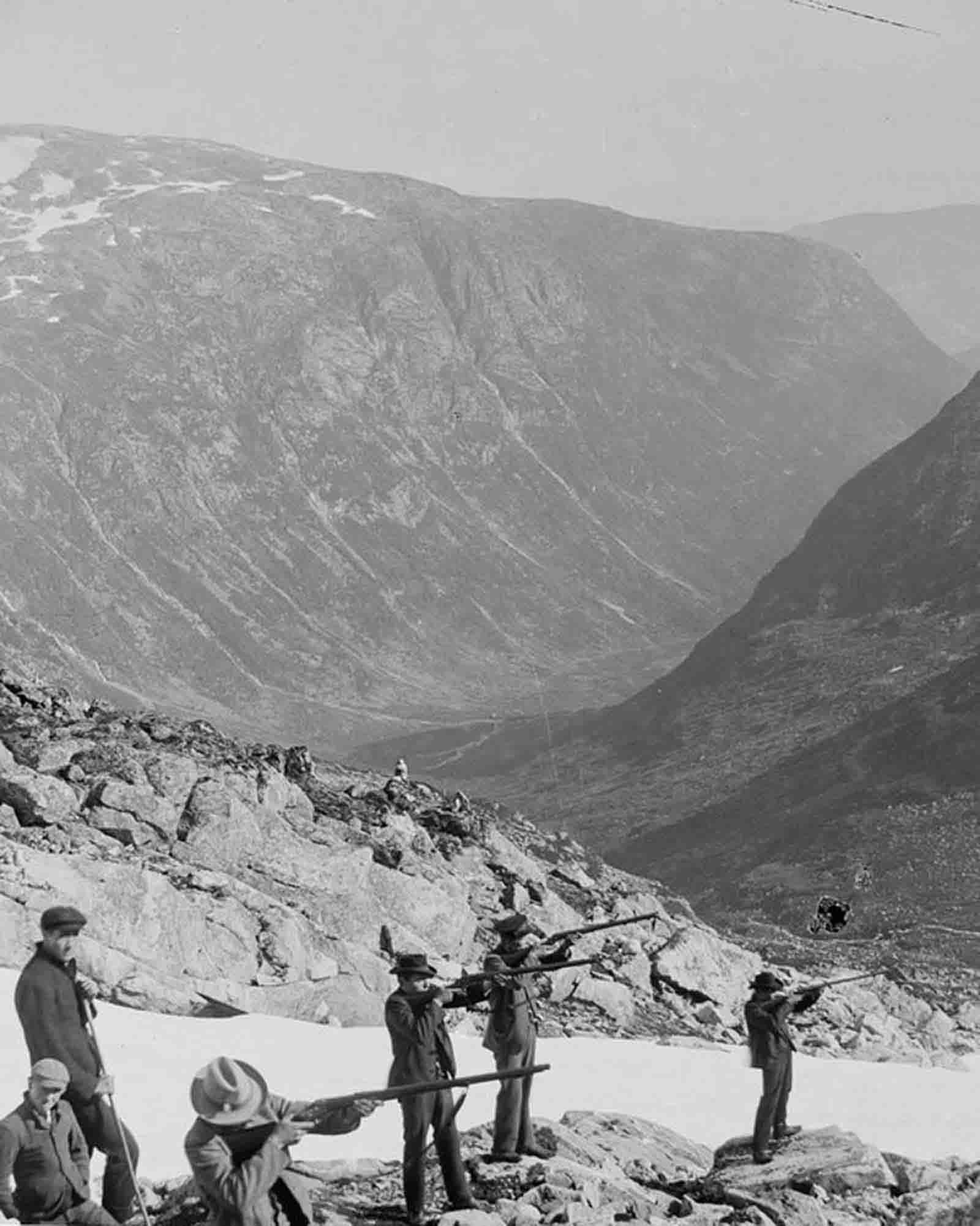
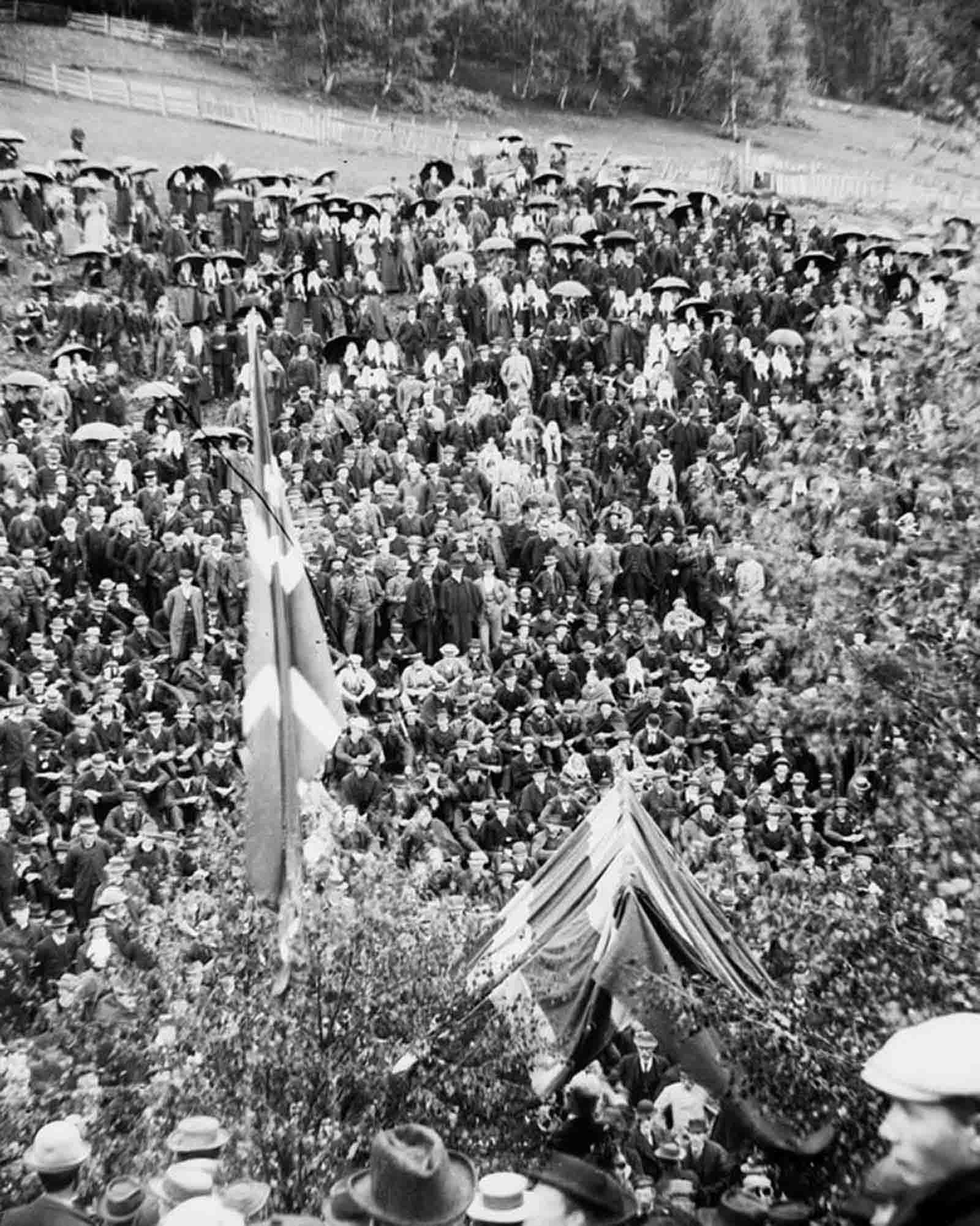
Public life also made its way in front of Reppen’s camera. One of his photographs shows marksmen gathered in Langedalen, and another captures a remarkable scene: six thousand people assembled in Prestadalen, Sogndal, to hear a speech by the Norwegian writer Bjørnstjerne Bjørnson, who would go on to win the Nobel Prize in Literature in 1903. The image gives a vivid sense of how significant public gatherings were in rural communities where such events were rare.
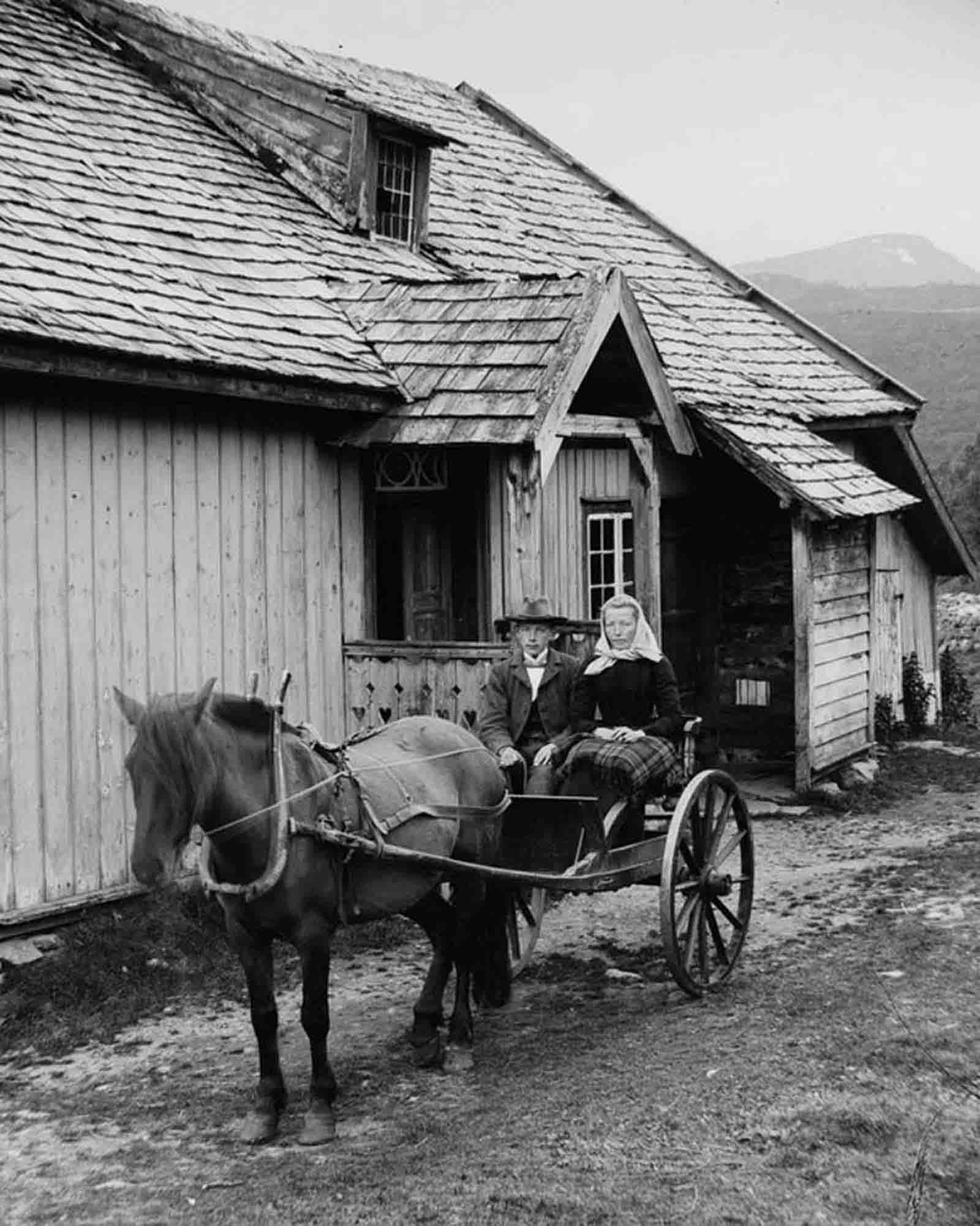
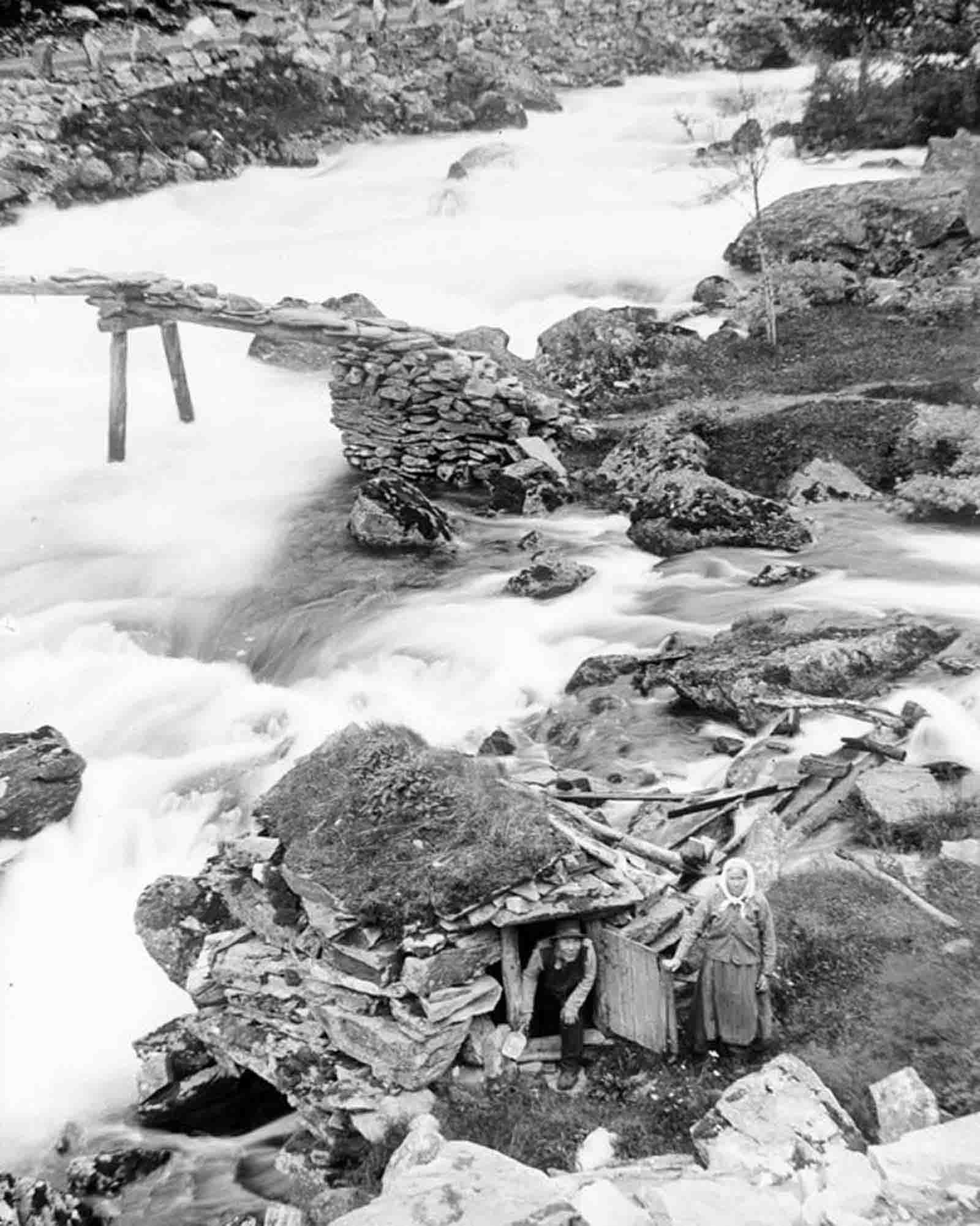
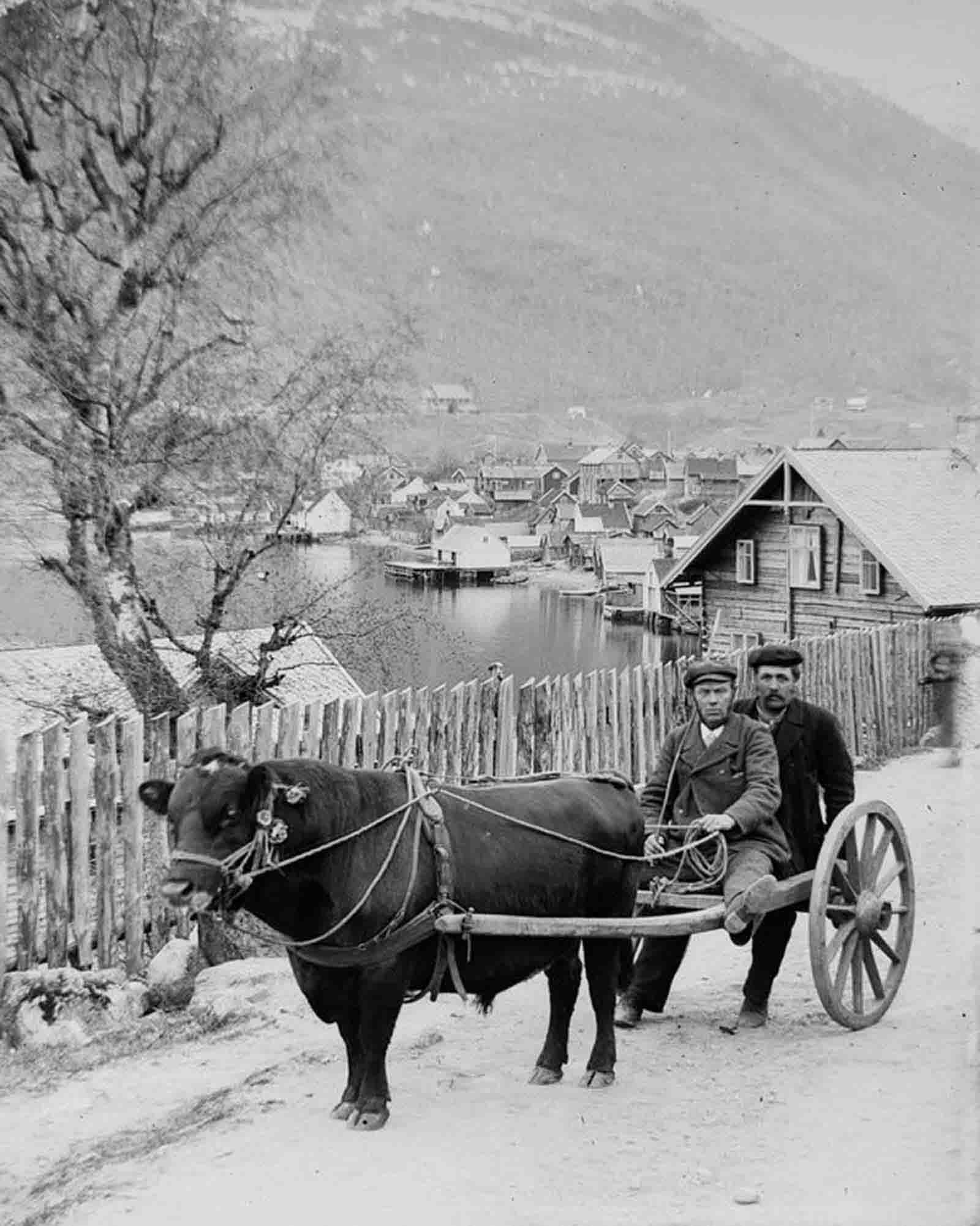
Everyday transportation and labor appear in Reppen’s work as well. His photograph of Nils Hove and Ingebrigt Nes riding a bull cart through Sogndal is a straightforward document of how people and goods moved across the land. River mills, also captured by Reppen, were essential to rural communities — used to grind grain and process timber, they were often built along fast-moving streams and formed the backbone of local food production.
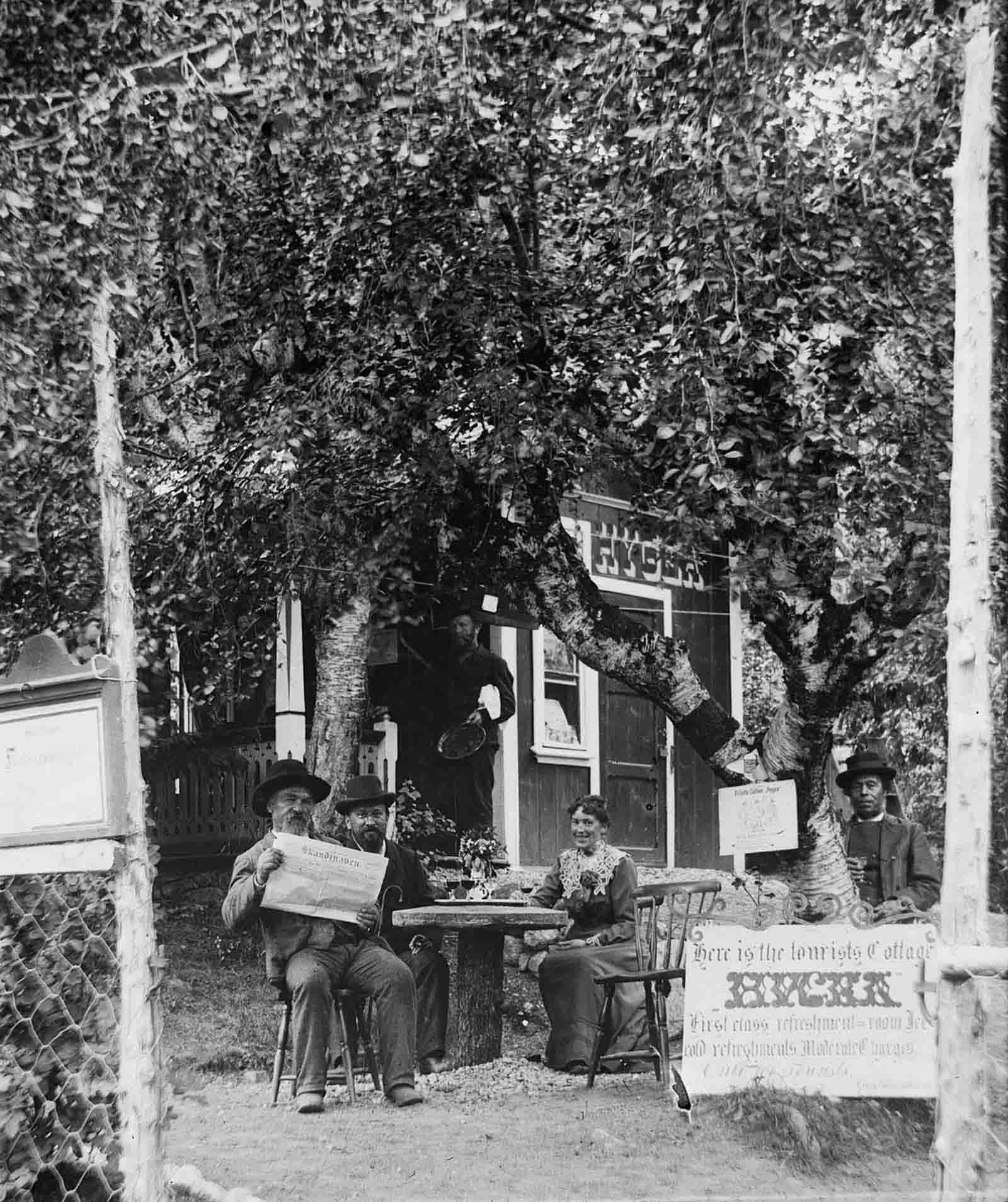
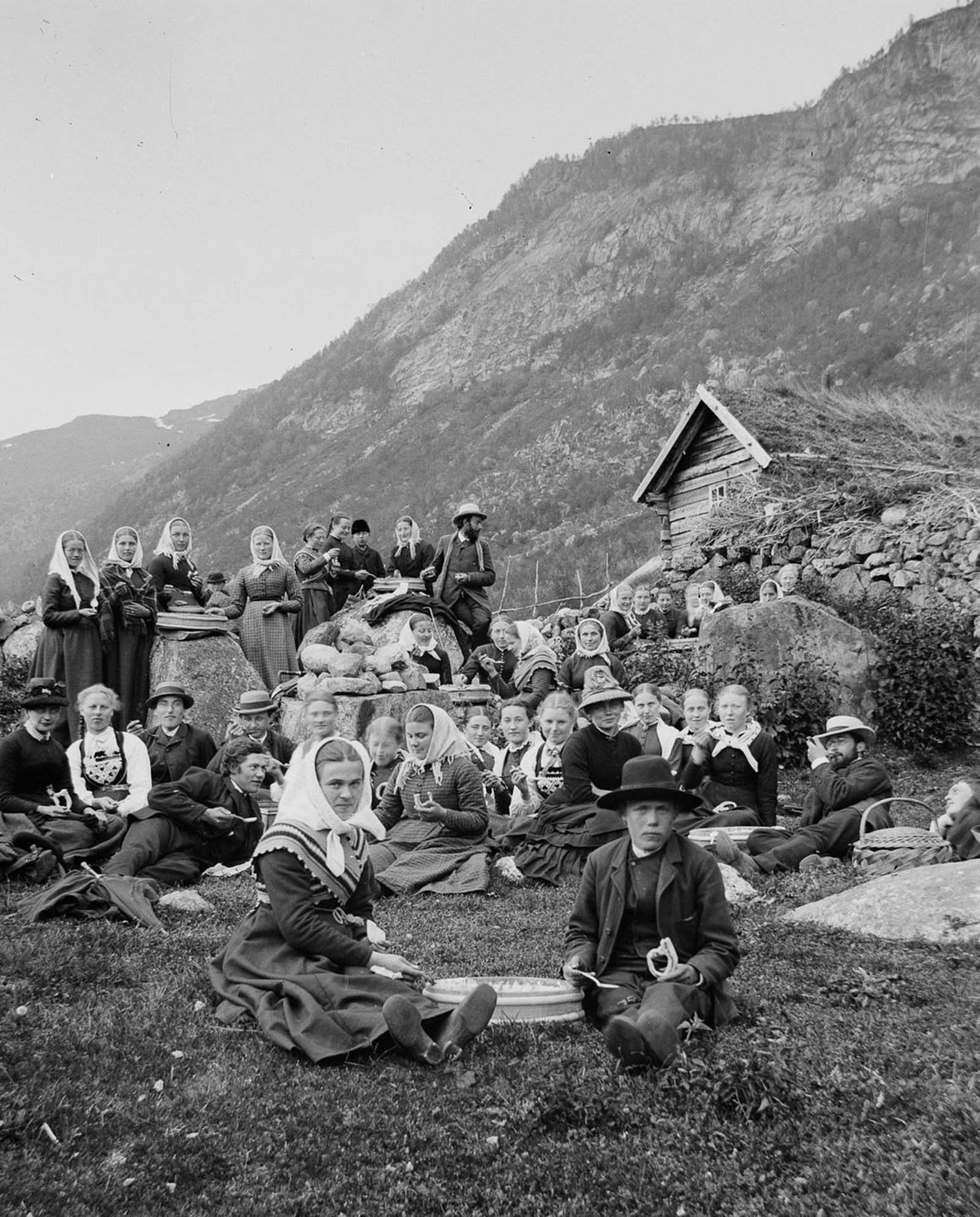
Social life in the region was not entirely austere. The Hygea Café in Balestrand featured a miniature boat on a suspended cable that carried orders of wine from the kitchen to guests — a detail that suggests both ingenuity and a lightness of spirit in community life. Reppen photographed weddings, picnics at mountain farms, and group portraits that show communities not just surviving but actively living.
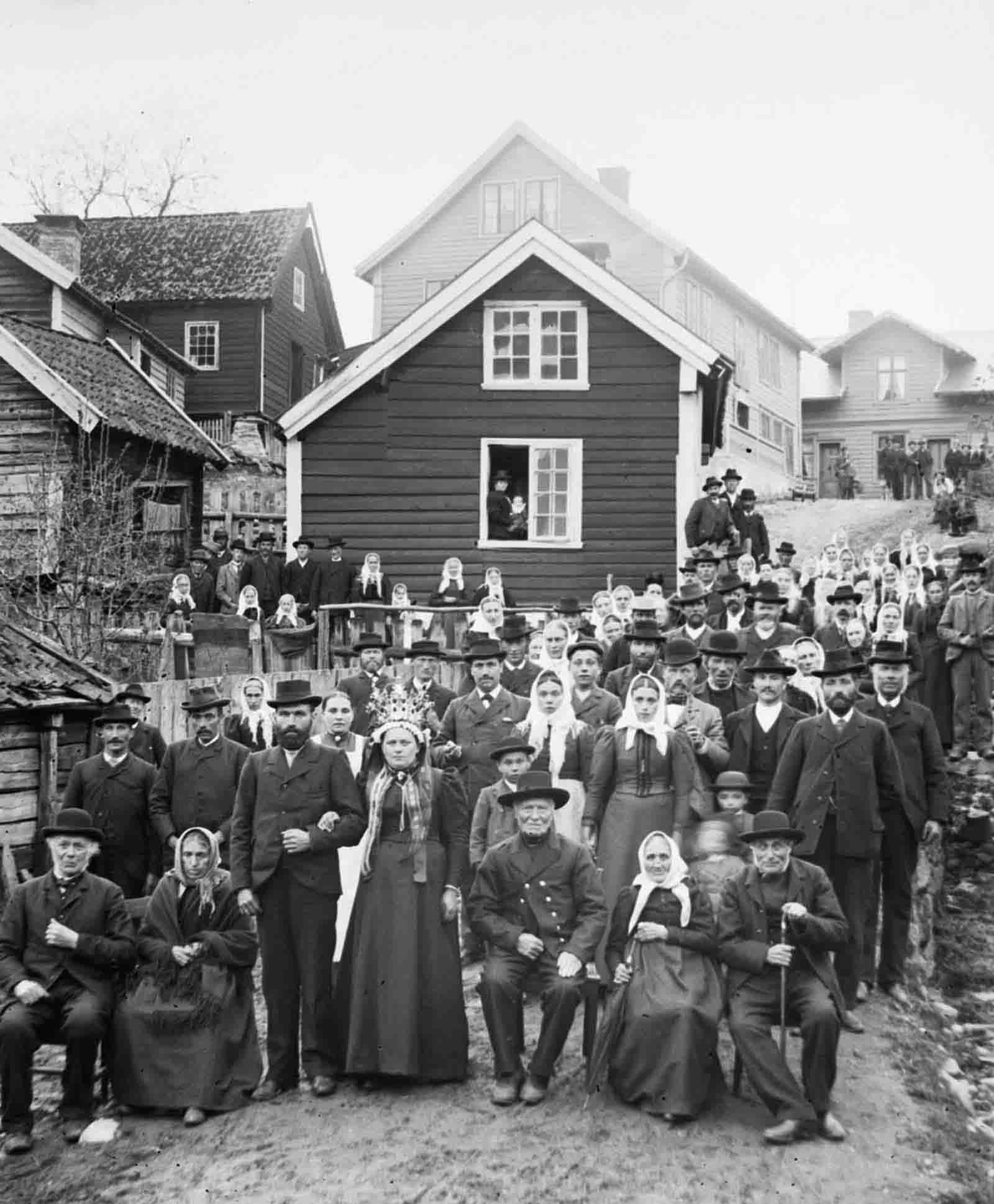
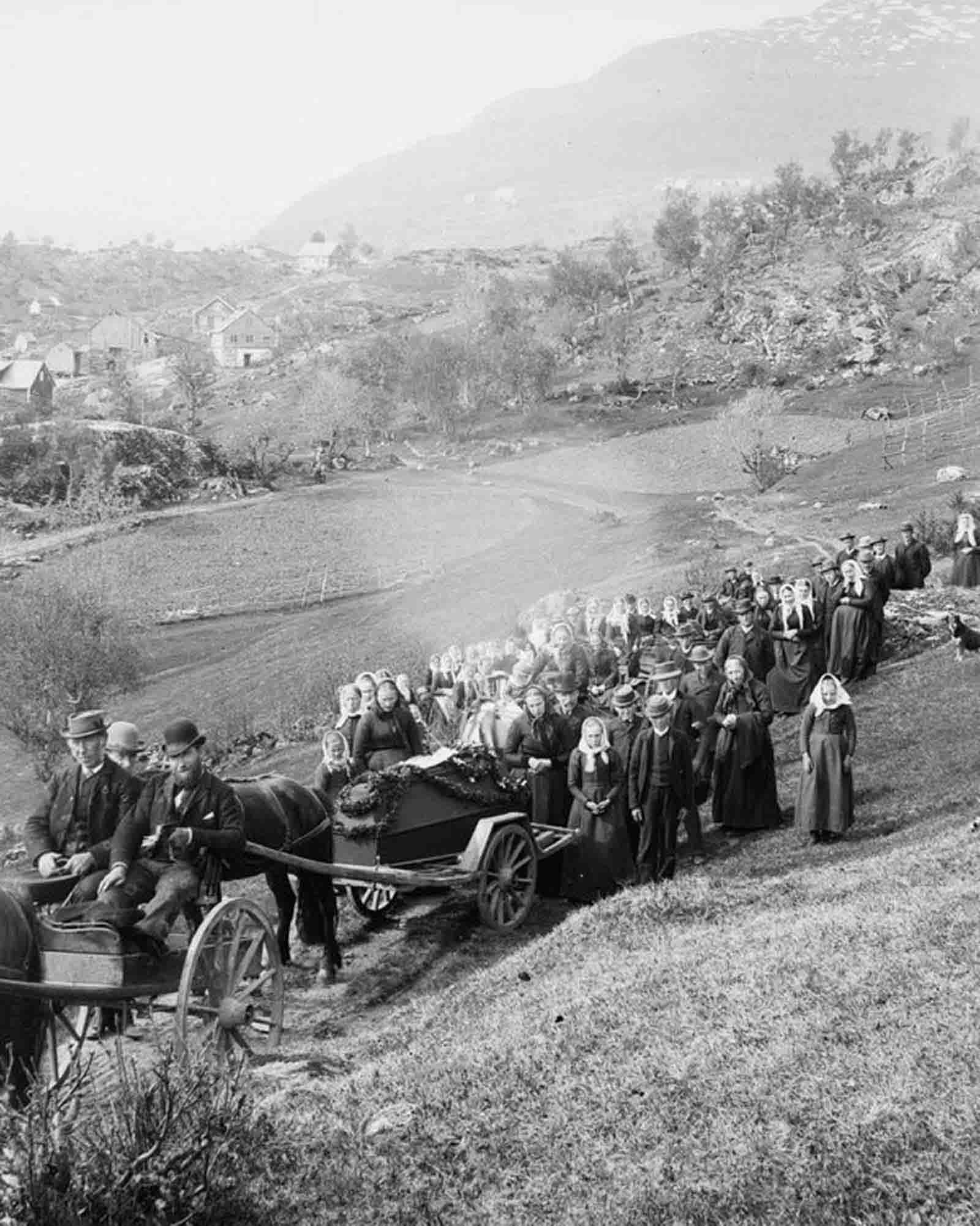
Death, too, is part of Reppen’s record. His photograph of the funeral of Ola Lasseson Uglum in Sogndalsdalen documents one of the most solemn rituals of rural Norwegian life. These images of mourners gathered outside in a valley setting serve as a reminder that Reppen’s work was not curated for sentiment — it was a full account of life as it was actually lived, from celebrations to burials.
Across farms, valleys, glacier edges, and village squares, Reppen built a visual archive spanning the full texture of life in one of Norway’s most remote and beautiful regions. His photographs of named individuals — farmers, families, workers, and travelers — give specific human faces to what could otherwise be an abstract historical period.
In 1965, a fire destroyed a large portion of Reppen’s glass plate negatives. The loss was irreplaceable — decades of documentation gone in a single event. What survived amounts to approximately 424 negatives. Each one that remains carries the weight of everything that didn’t make it through.
The photographs that remain show a man who understood both the people he photographed and the landscape they inhabited. Reppen died in 1925, but not before leaving behind a body of work that captures the Sognefjord region at a specific and unrepeatable moment — when rural life still ran on the rhythms of fjords, mountain pastures, river mills, and the slow turning of the seasons.