When most people think of Royal London, they picture Buckingham Palace, the Changing of the Guard, and the grand parks of Westminster. Photographer Peter Marshall had a different idea. Through the 1980s, he worked his way across the city documenting a London that shared royal names but none of the fanfare—streets, pubs, docks, canals, and corner shops that carried the language of monarchy without any of its glamour. His photographs form a detailed street-level record of a city in the middle of deep, sometimes painful change.
Marshall began some of his days at Joe Edwards Snack Bar on Shad Thames in Bermondsey, a working breakfast spot near the river. From there, he could head south into Southwark, east into the docklands, or north across the Thames. The geography of his project was deliberately wide. He was not interested in the obvious landmarks. He was looking for the word “royal” wherever it had stuck to the city—on a pub sign, a road name, a factory gate, a hospital wall.
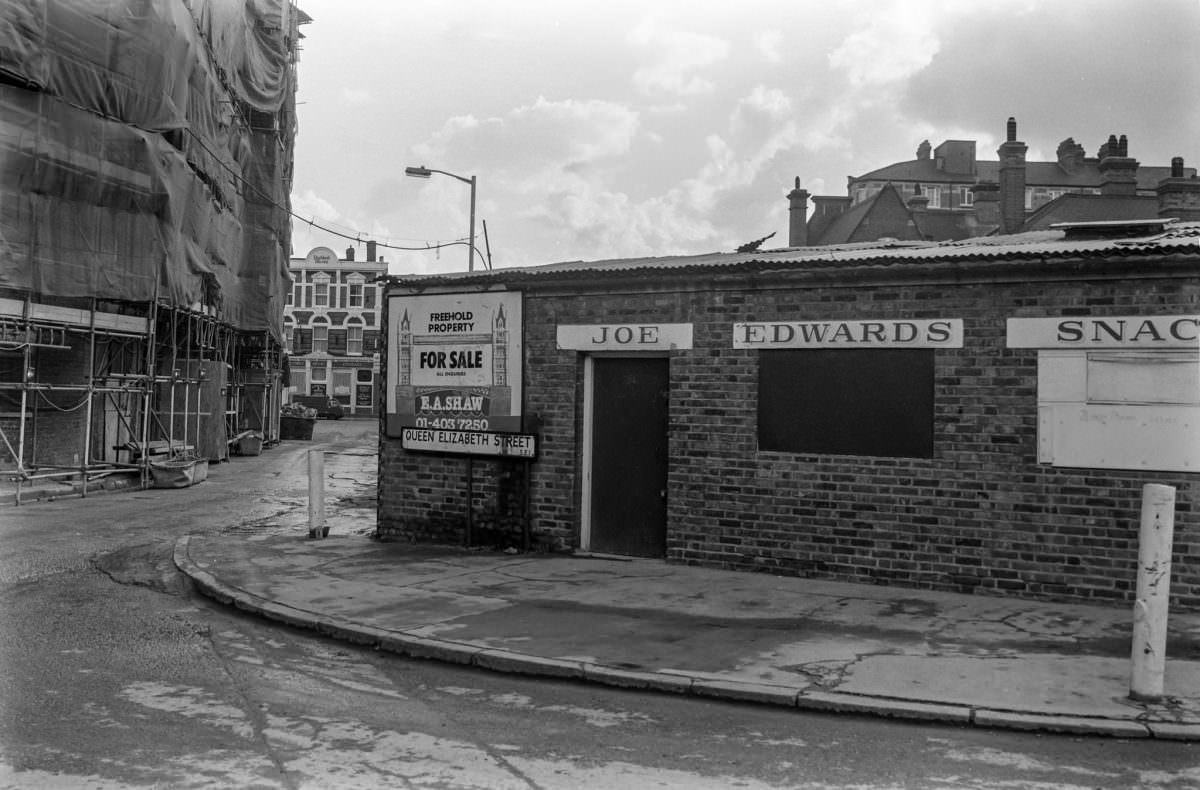
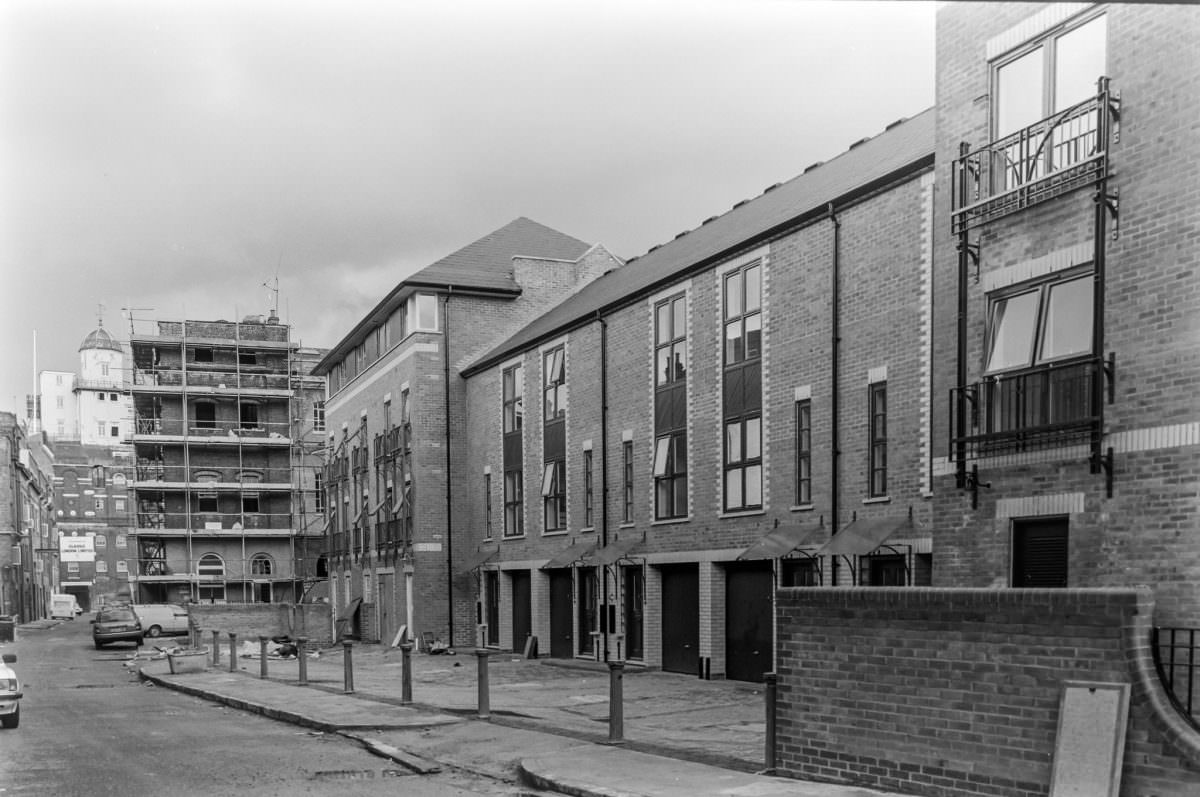
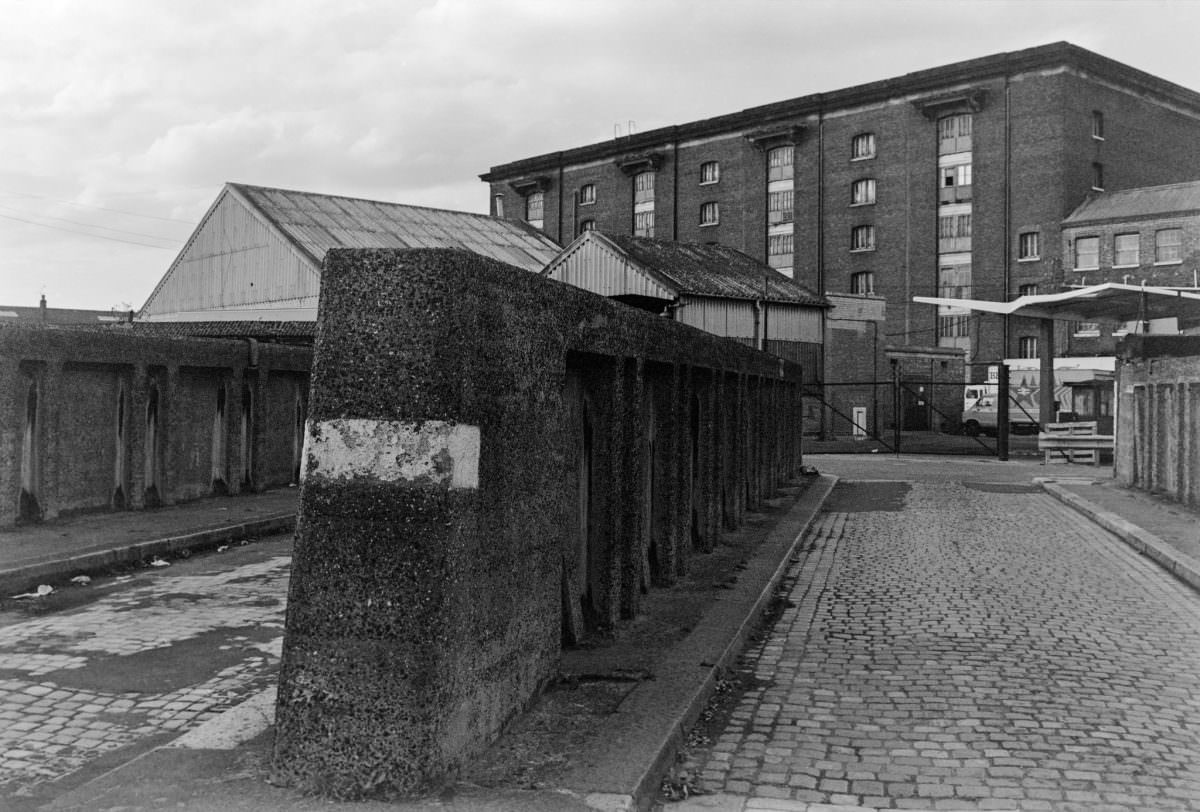
Queen Elizabeth Street in Bermondsey sat close to the old warehouses of Shad Thames, a narrow canyon of brick buildings that still smelled of spices and tea in the early 1980s. Horsleydown Lane, nearby, gave Marshall another angle on the same area—cobbled, compressed, and carrying the residue of Victorian trade.
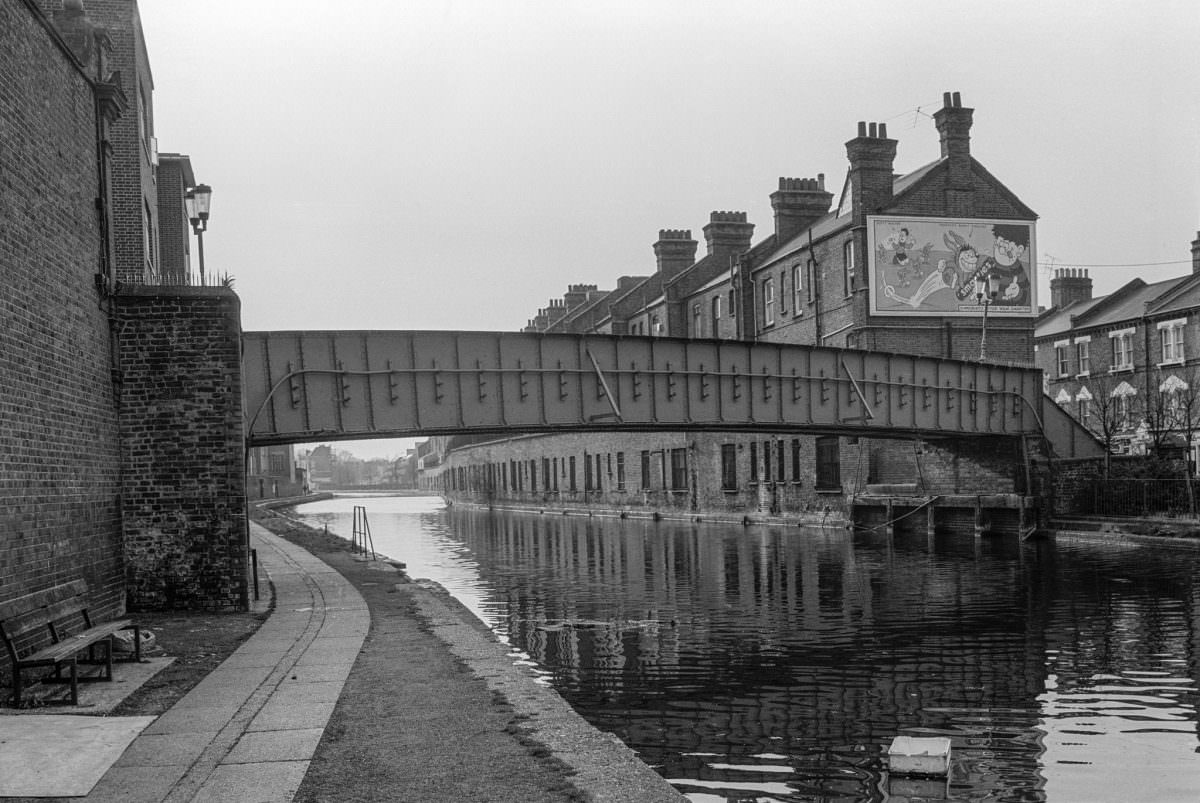
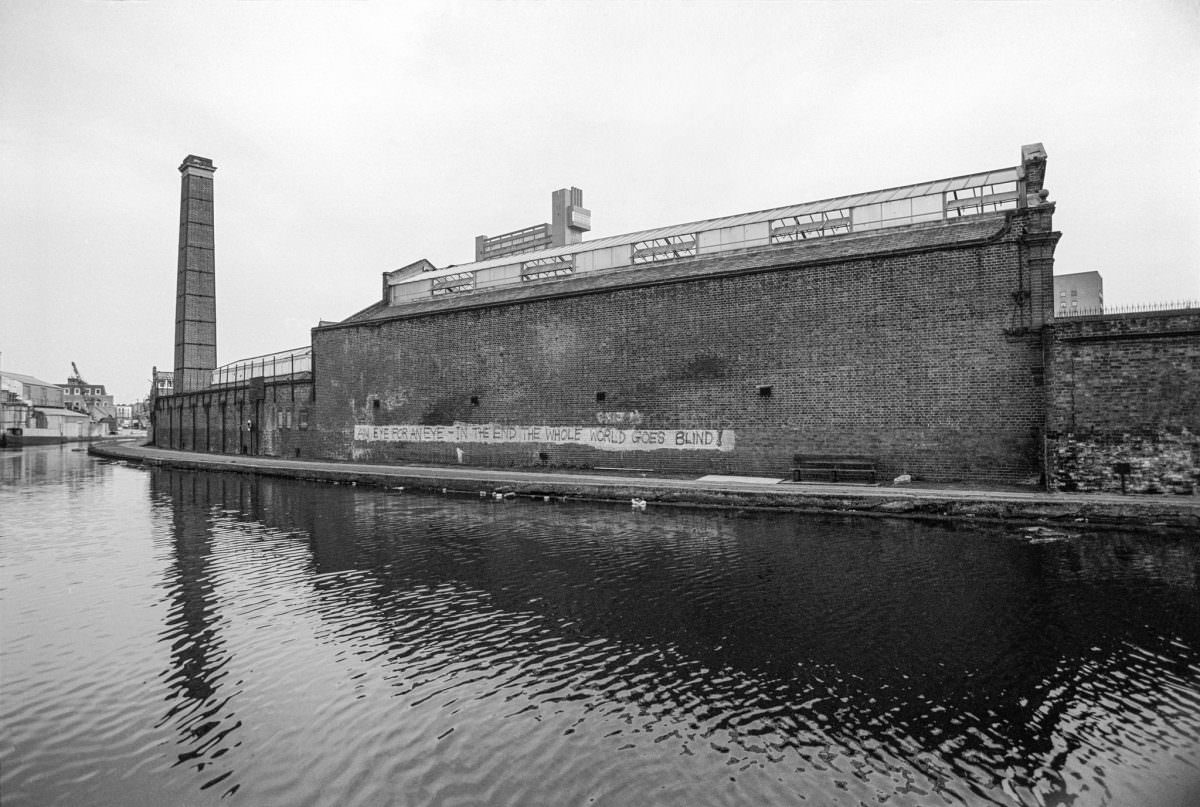
Queen’s Park in the London Borough of Brent gave Marshall two very different images. The Grand Union Canal ran through the area, and along its banks he found both quiet residential bridges and walls covered in graffiti. These two photographs, taken in the same year, sit in sharp contrast to each other—one showing the orderly geometry of a footbridge and housing, the other the raw energy of spray paint on a canal wall.
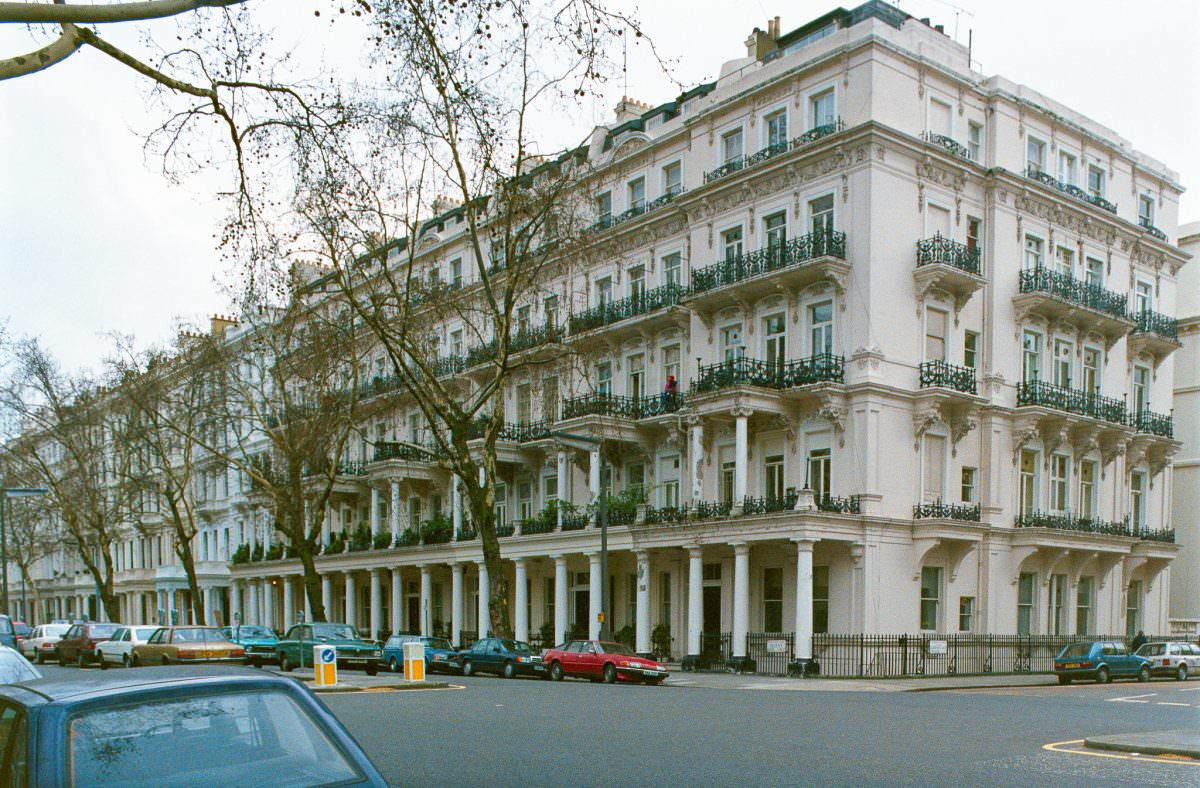
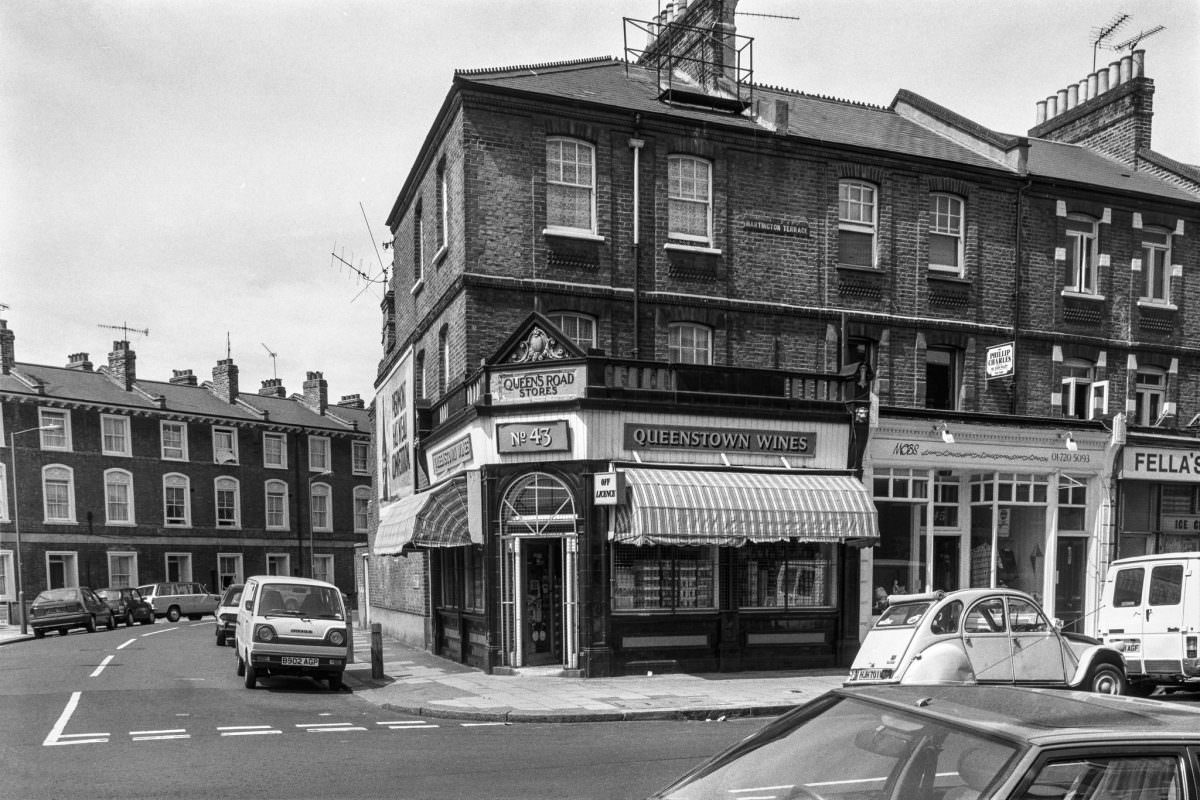
In Kensington and Chelsea, Marshall photographed the well-maintained architecture of Queen’s Gate and Queen’s Gate Gardens. These were among the more affluent locations in his project—wide, tree-lined streets with stucco terraces and iron railings. They stood in obvious contrast to the Queen’s Road Stores he photographed in Clapham, a small corner shop pressed into a terrace in Wandsworth, carrying the royal name with considerably less ceremony.
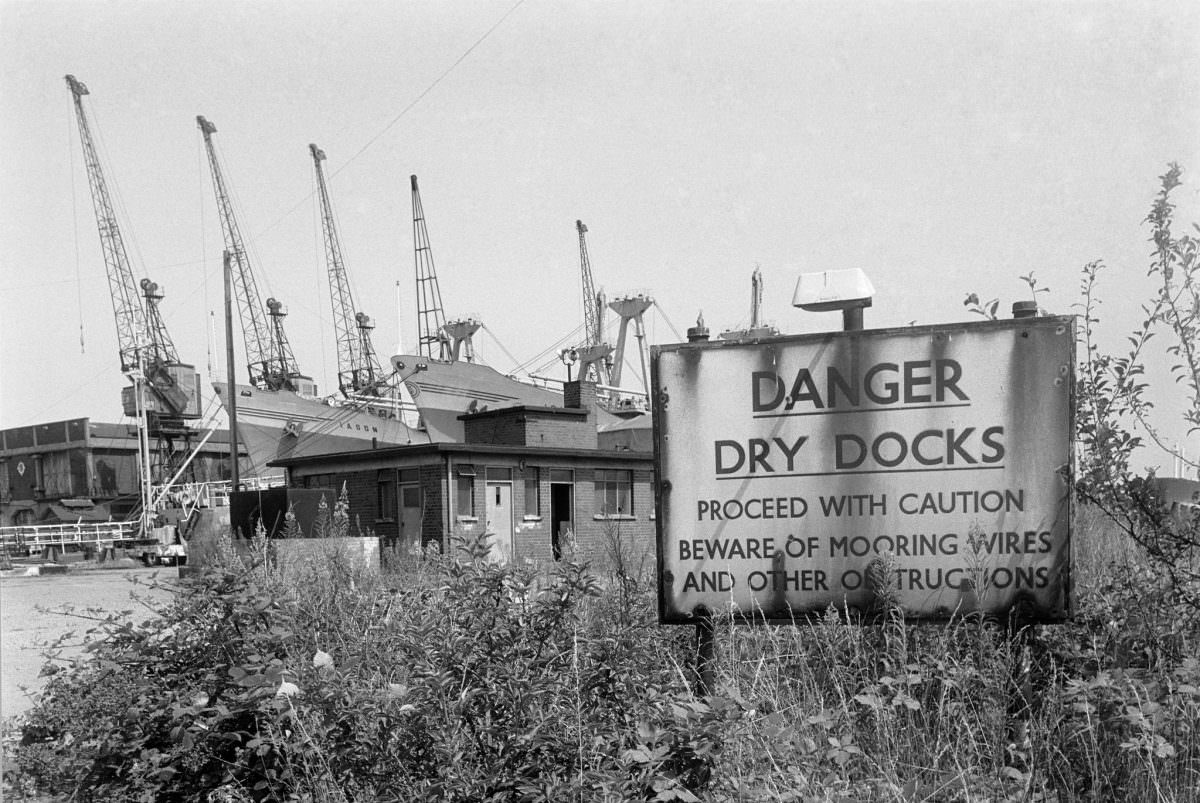
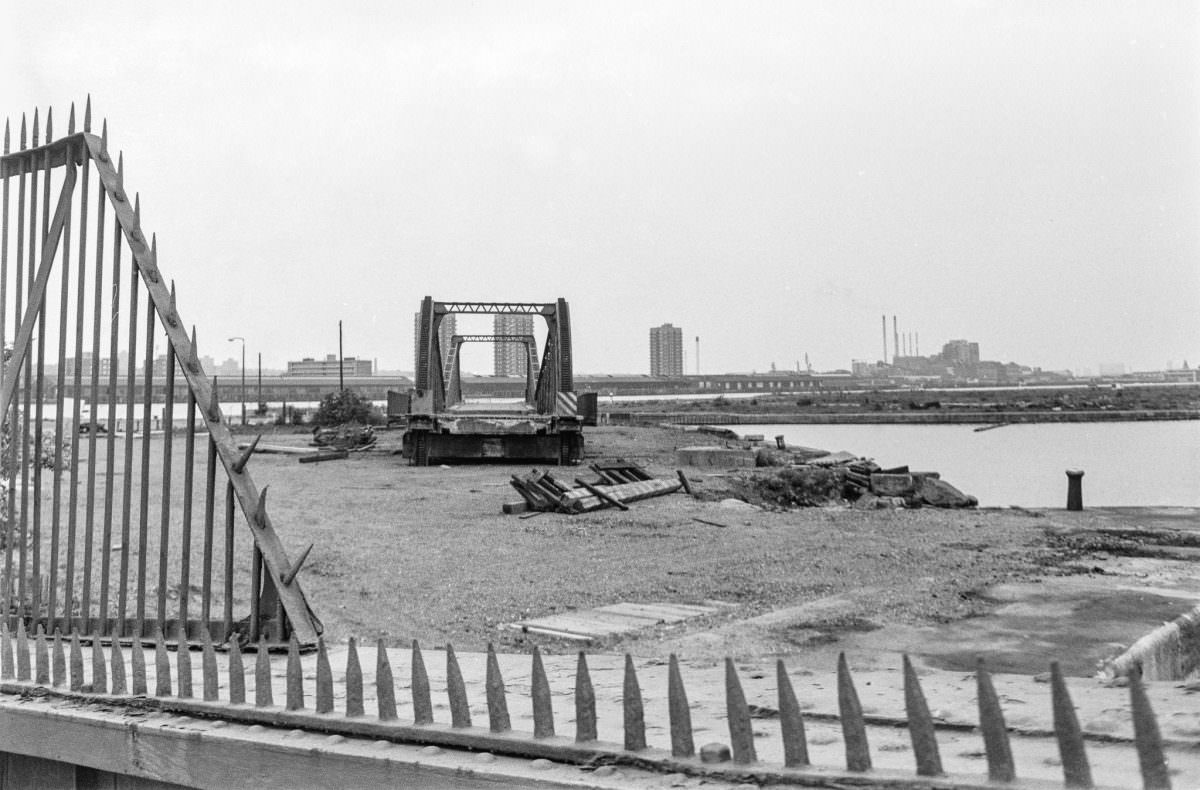
The Royal Docks in Newham were among the most dramatic locations Marshall visited. By the early 1980s, the docks had largely closed to commercial shipping, and the vast infrastructure left behind—entrance locks, quays, warehouses, and grain mills—was slowly falling into disuse. King George V Dock appeared in several of Marshall’s frames: danger signs on dry dock walls, wide empty quays, the entrance lock at Woolwich Manor Way, and the flat water of the dock stretching toward Royal Albert Dock.
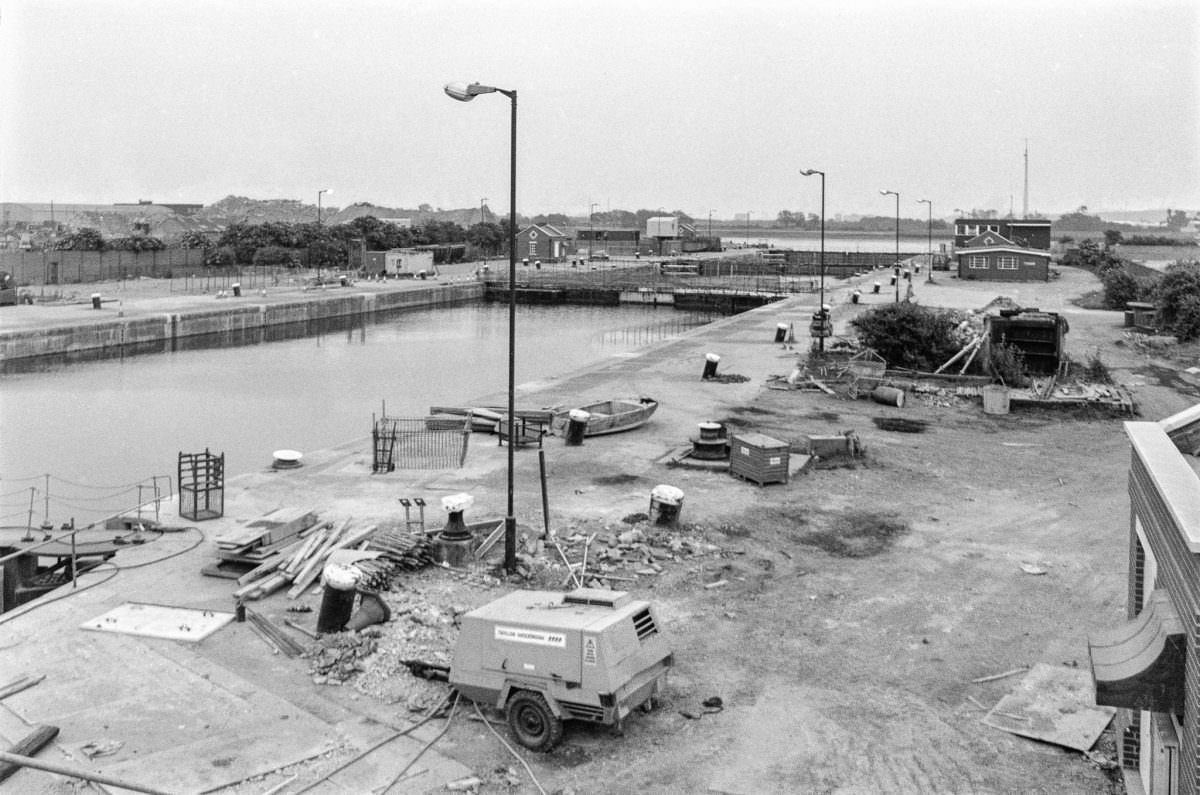
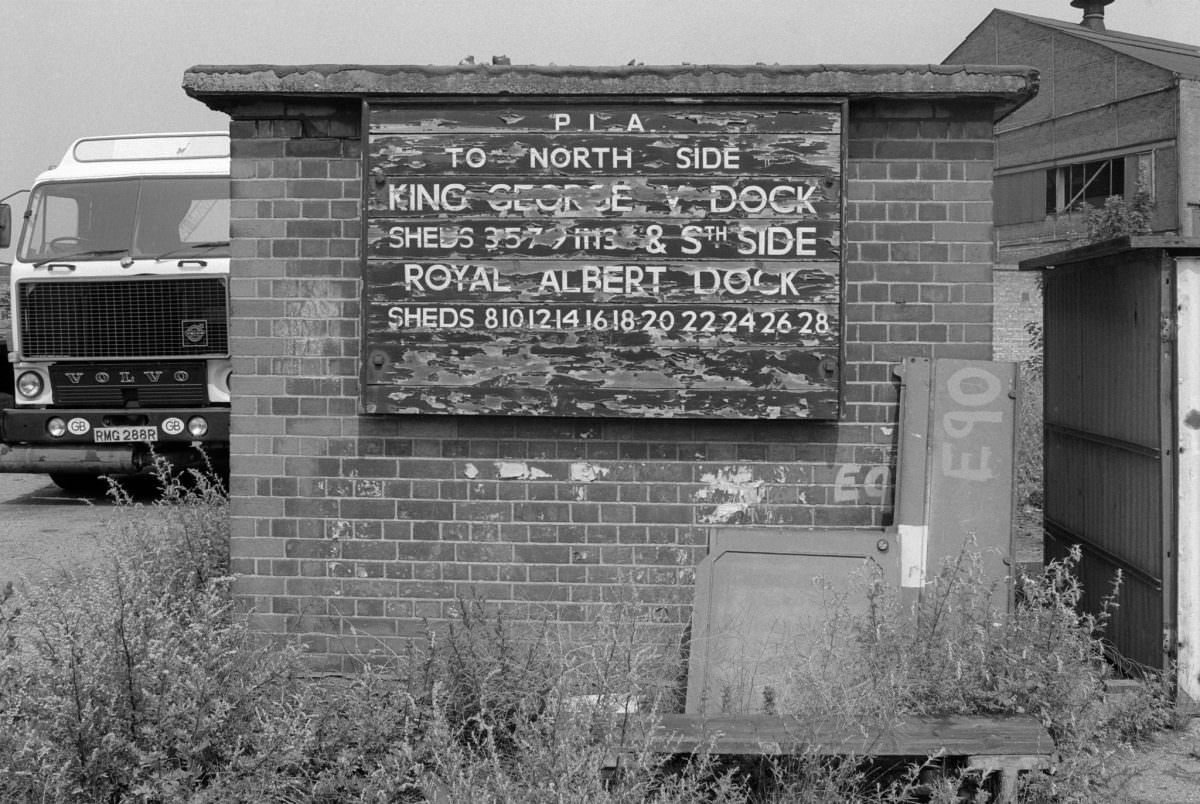
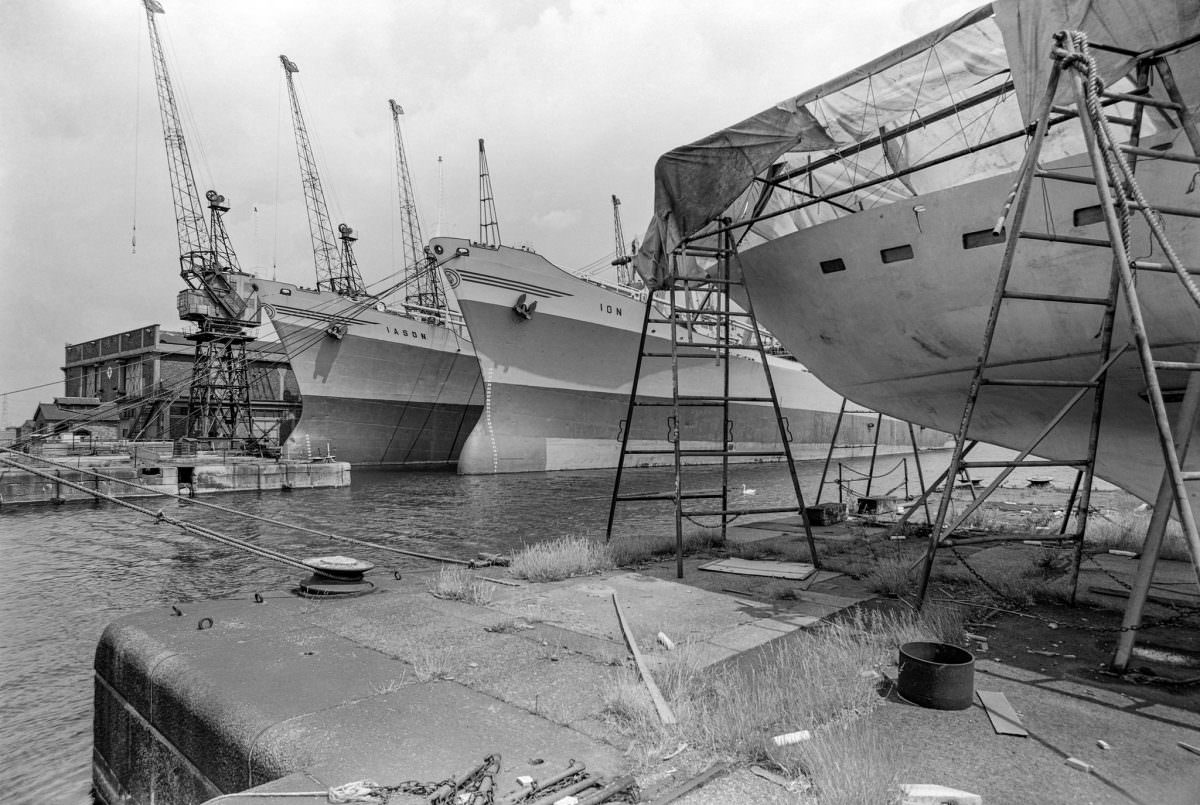
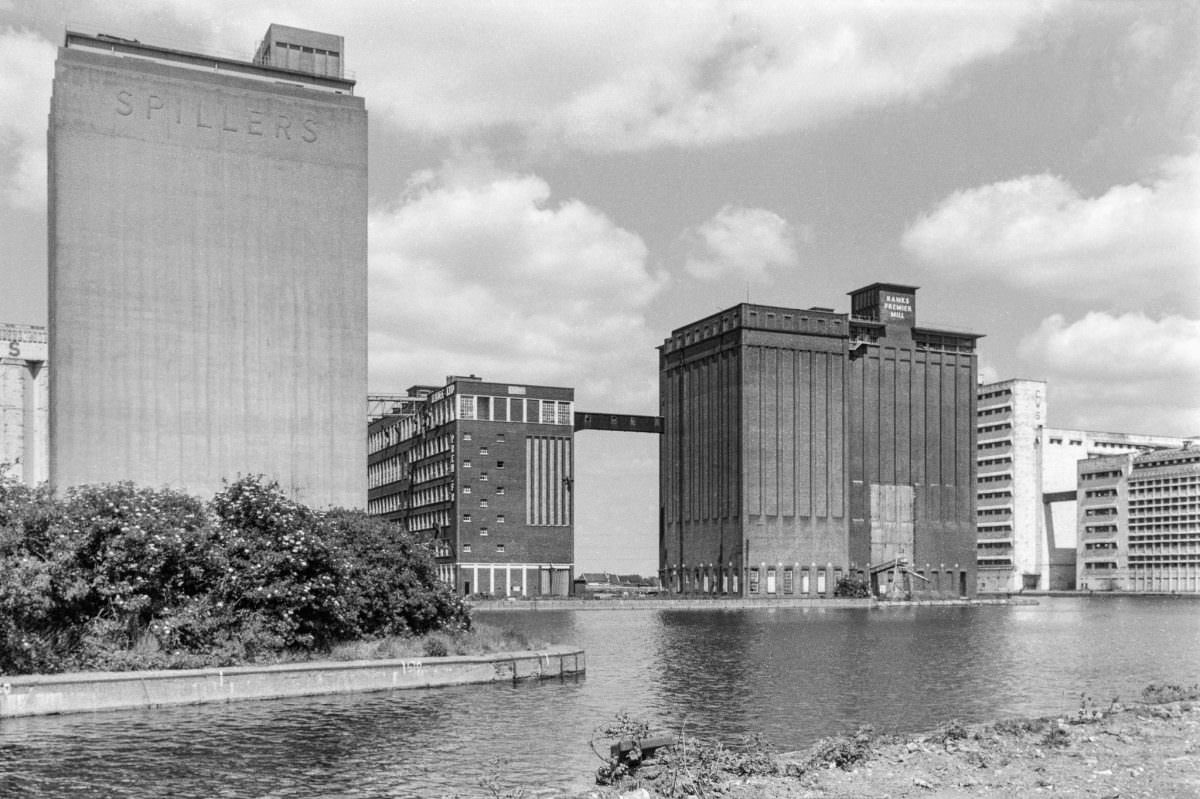
Royal Victoria Dock at Silvertown told a similar story. Pontoon docks sat empty. Grain mills operated by Spillers, Ranks, and the Co-operative Wholesale Society still stood along the waterfront in 1990, but barely. A warehouse at West Silvertown spoke to the dock’s earlier life as one of the busiest cargo terminals in the world. The North Woolwich area, captured in 1981, showed the Royal Victoria Gardens before much of the surrounding redevelopment had begun.
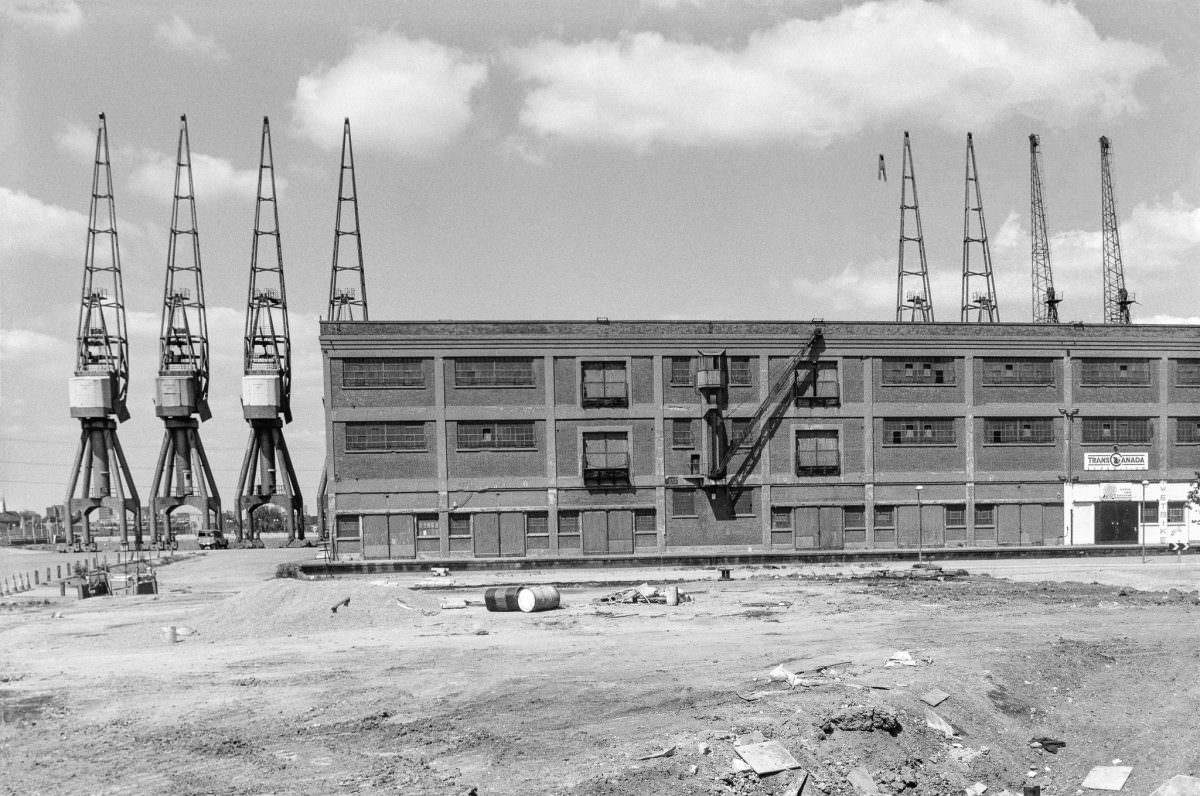
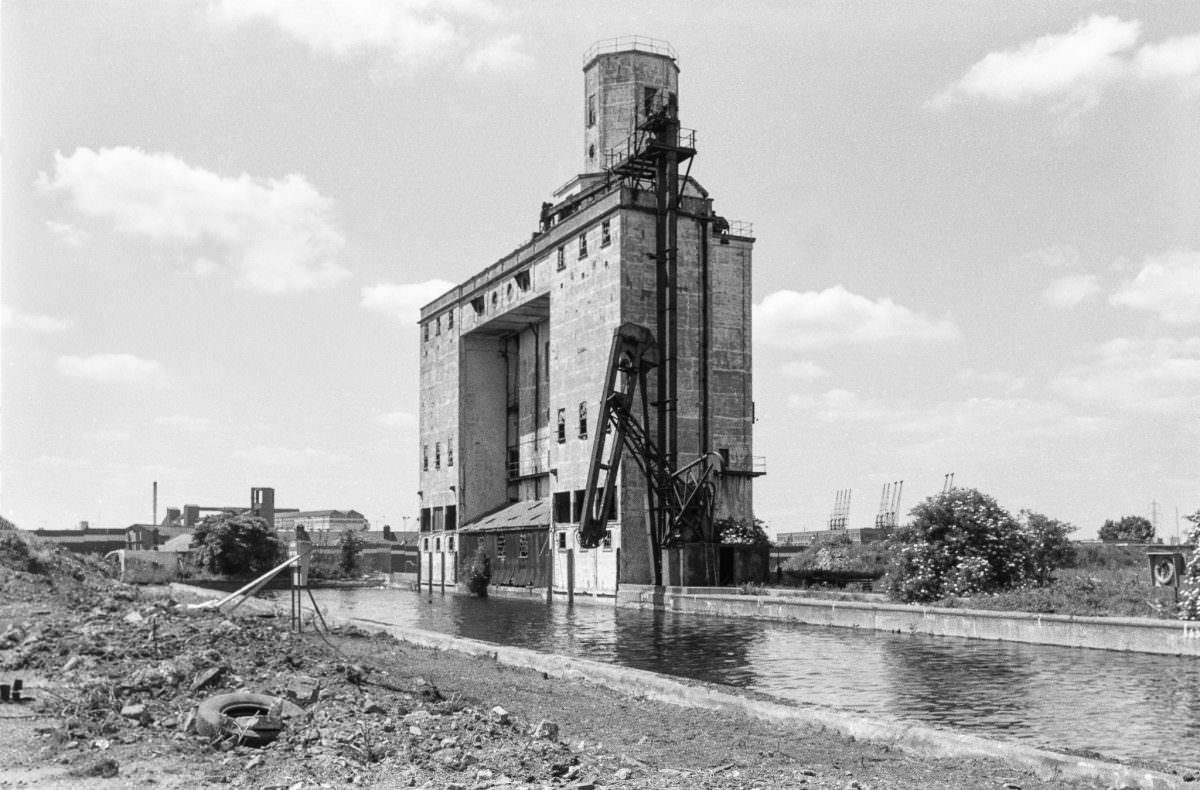
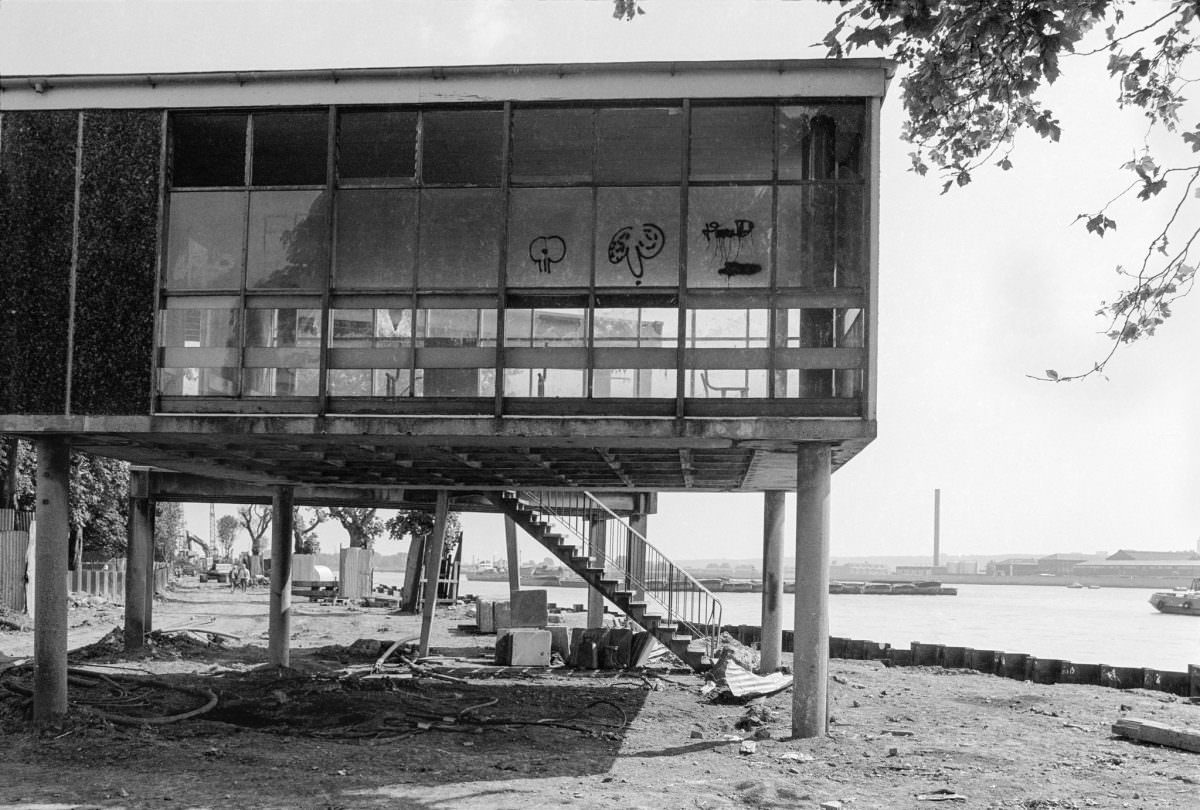
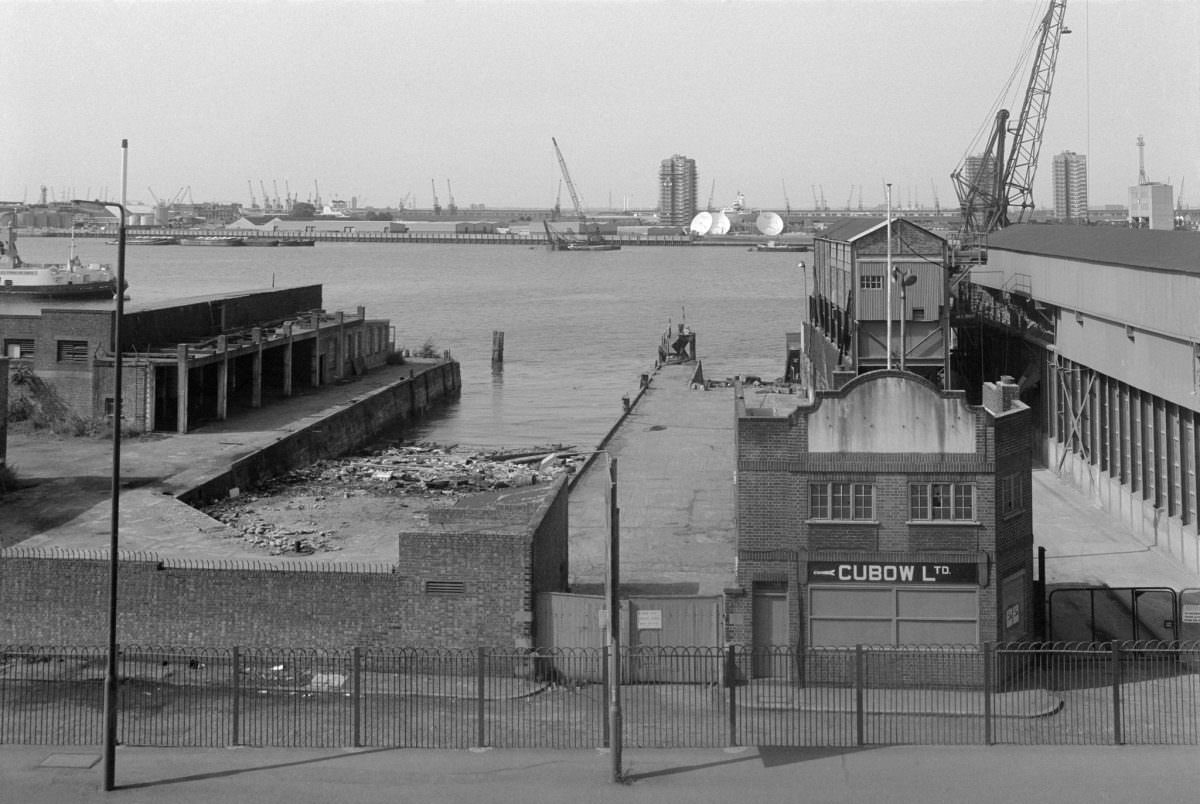
At Woolwich, Marshall photographed Mast Pond Wharf looking out over the Thames toward the Greenwich Royal Dockyard, and the combined Royal Albert and King George V Docks from Woolwich Manor Way. These sites had been at the heart of British naval and commercial power for centuries. By the time Marshall arrived, they were defined more by silence and rust than by activity.
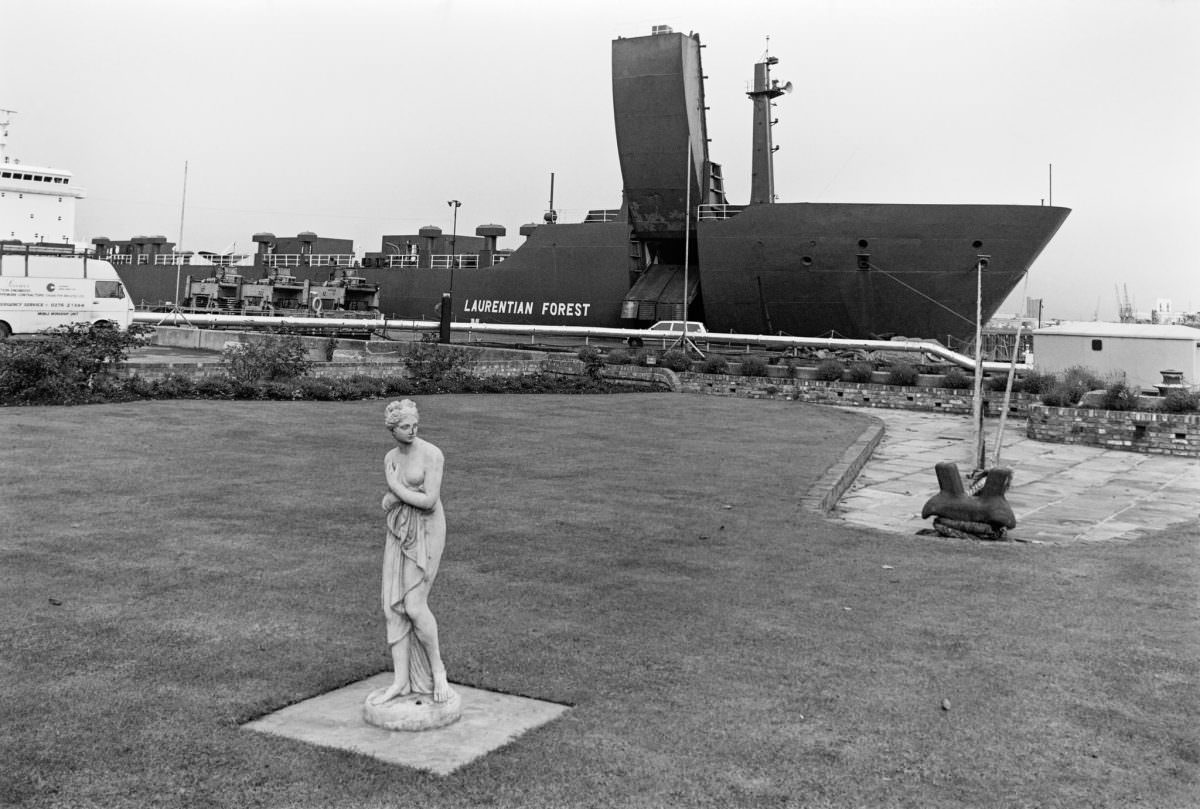
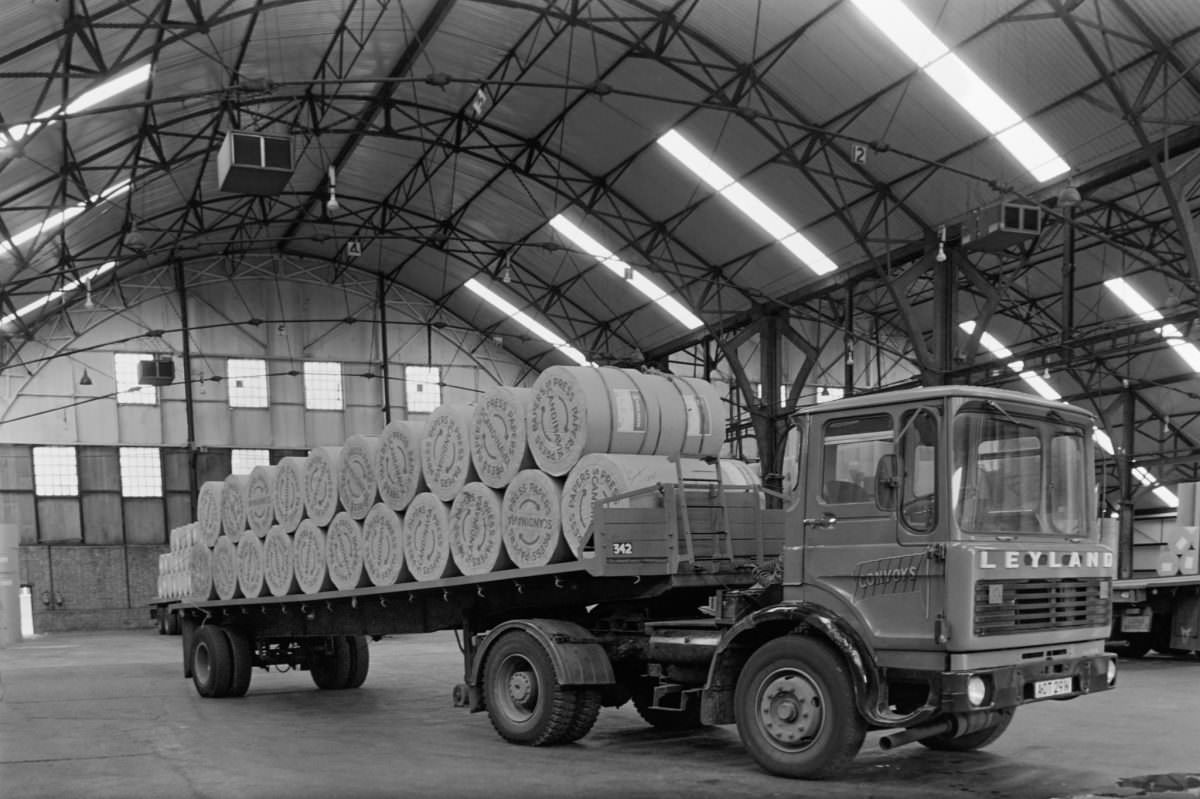
Deptford in Lewisham gave Marshall two very different subjects. At Convoy’s Wharf, the Shipwrights’ Palace—a historic timber-framed building on the former royal dockyard site—housed a sculpture called Laurentian Forest, a striking subject set against the industrial backdrop of the wharf. The Olympia Warehouse on Prince Street, also at Convoy’s Wharf, still functioned as a newsprint storage facility in 1985, with large lorries parked inside.
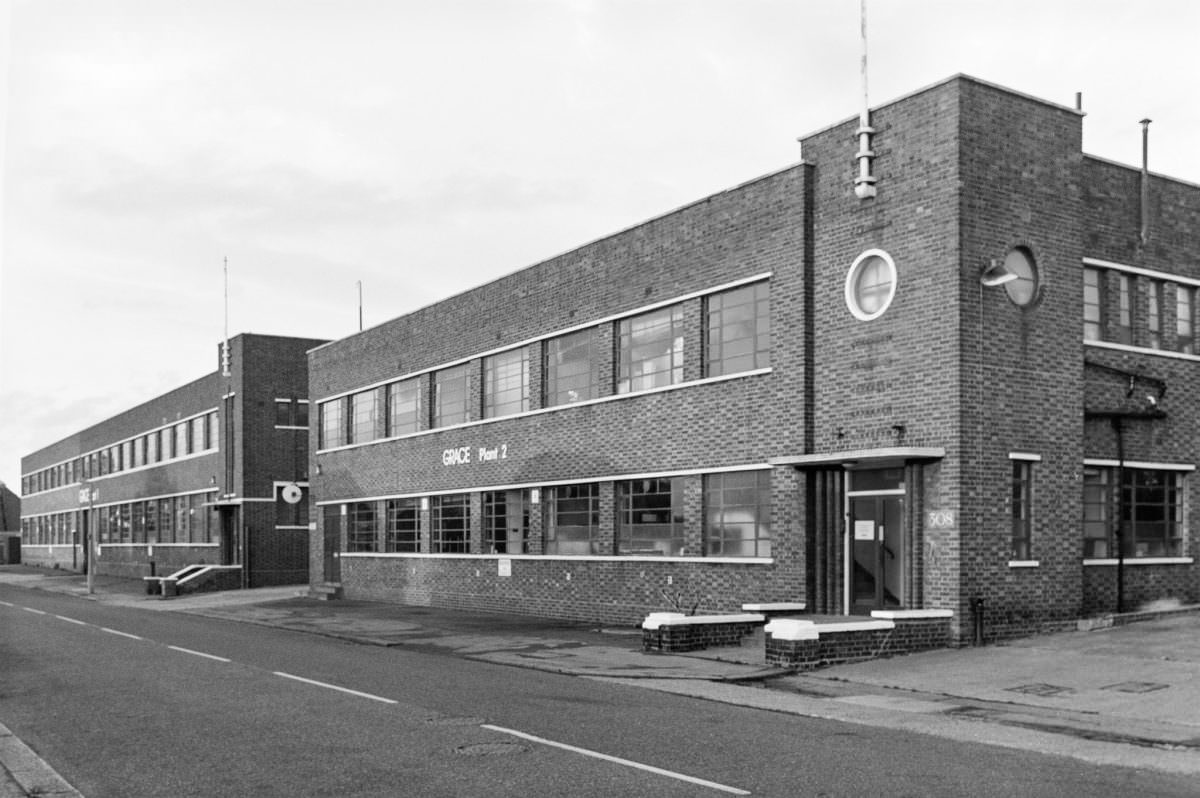
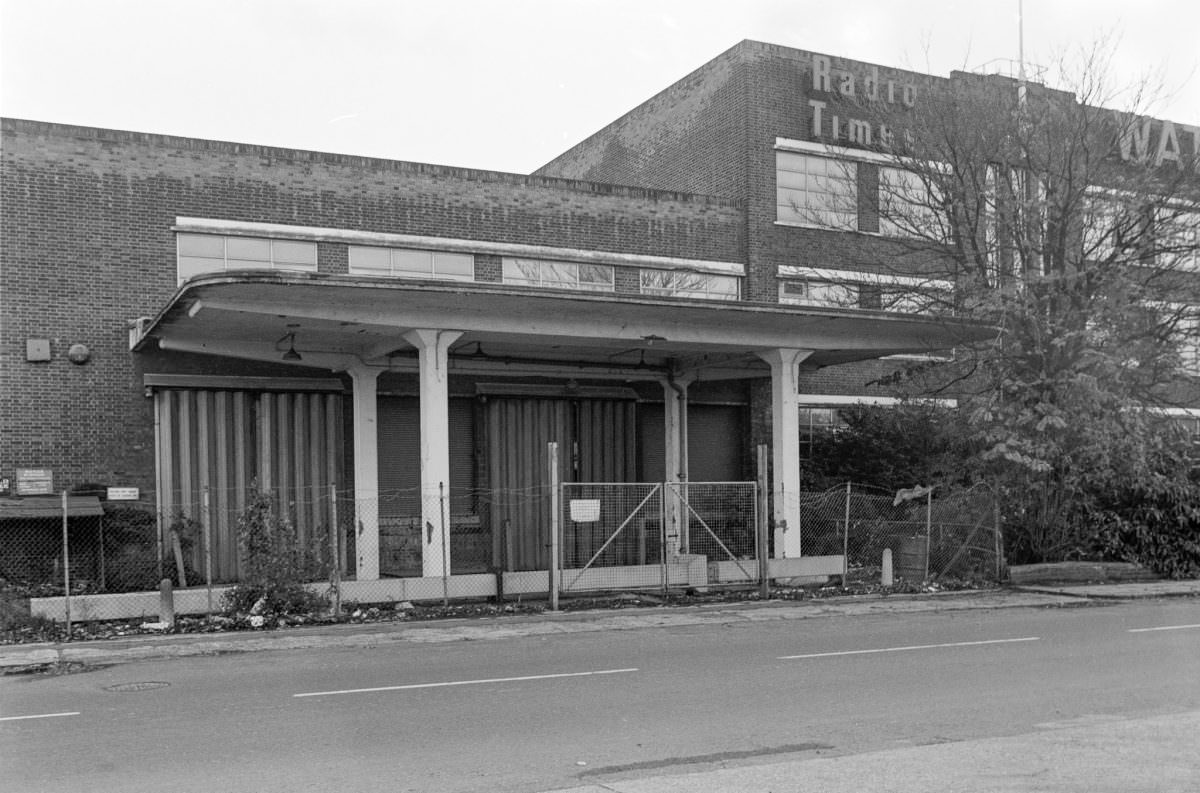
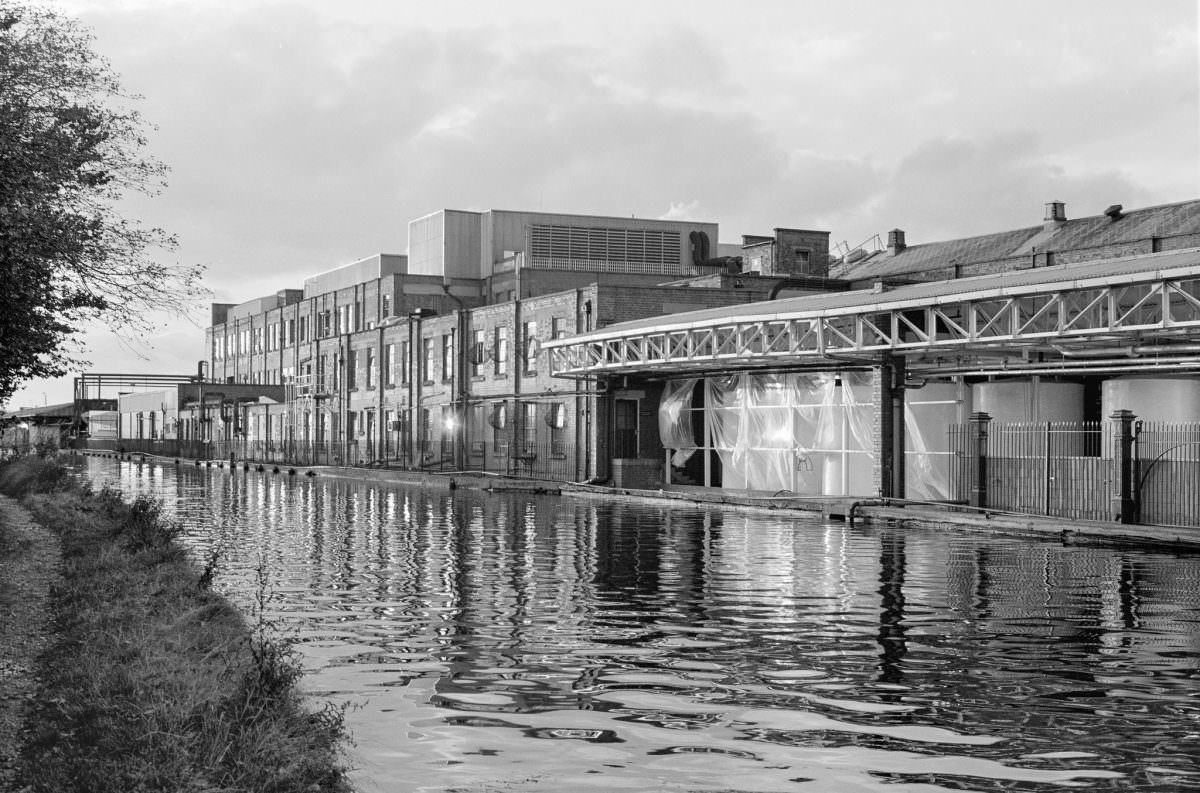
Park Royal in Ealing was an industrial district built largely in the early twentieth century. By the 1980s it held a dense cluster of factories and warehouses. Marshall photographed a Grace factory on Eleveden Road, a plant for Waterlow and Sons—printers of the Radio Times—on Twyford Abbey Road, and a factory beside the Grand Union Canal. These were functional, unglamorous buildings, but they were still operating and employing people.
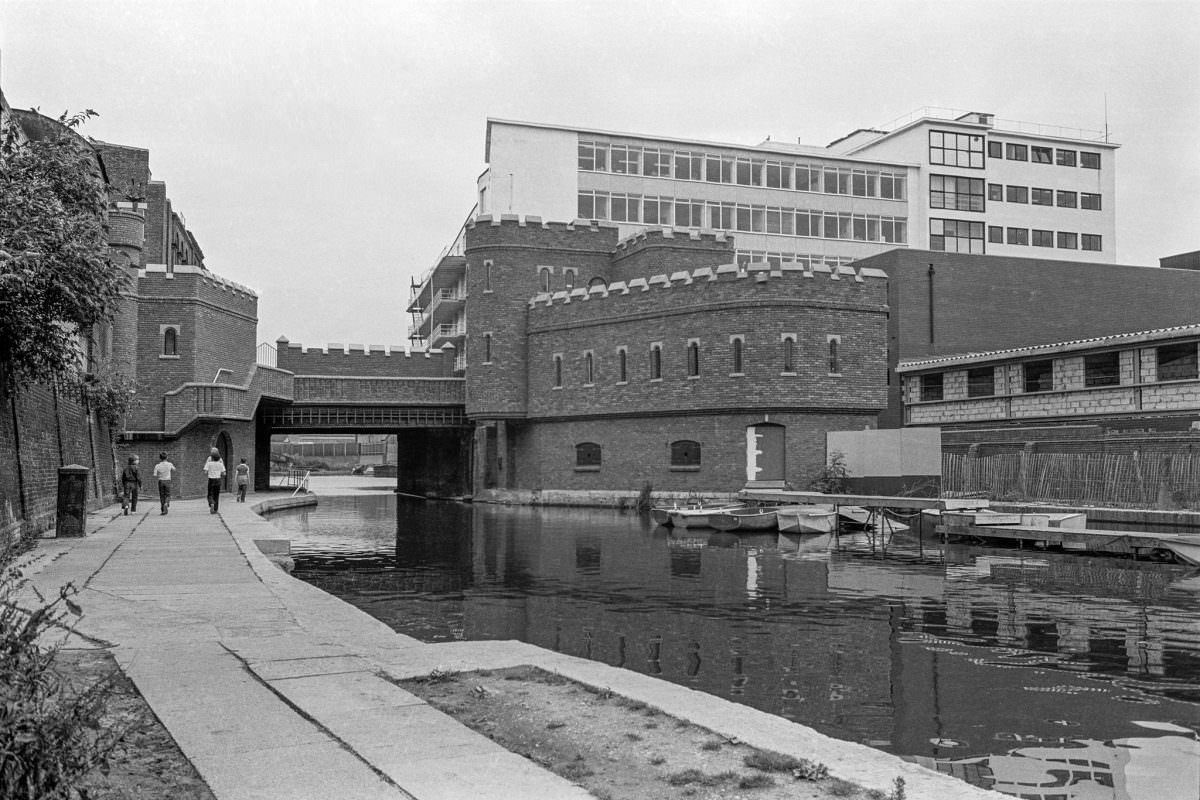
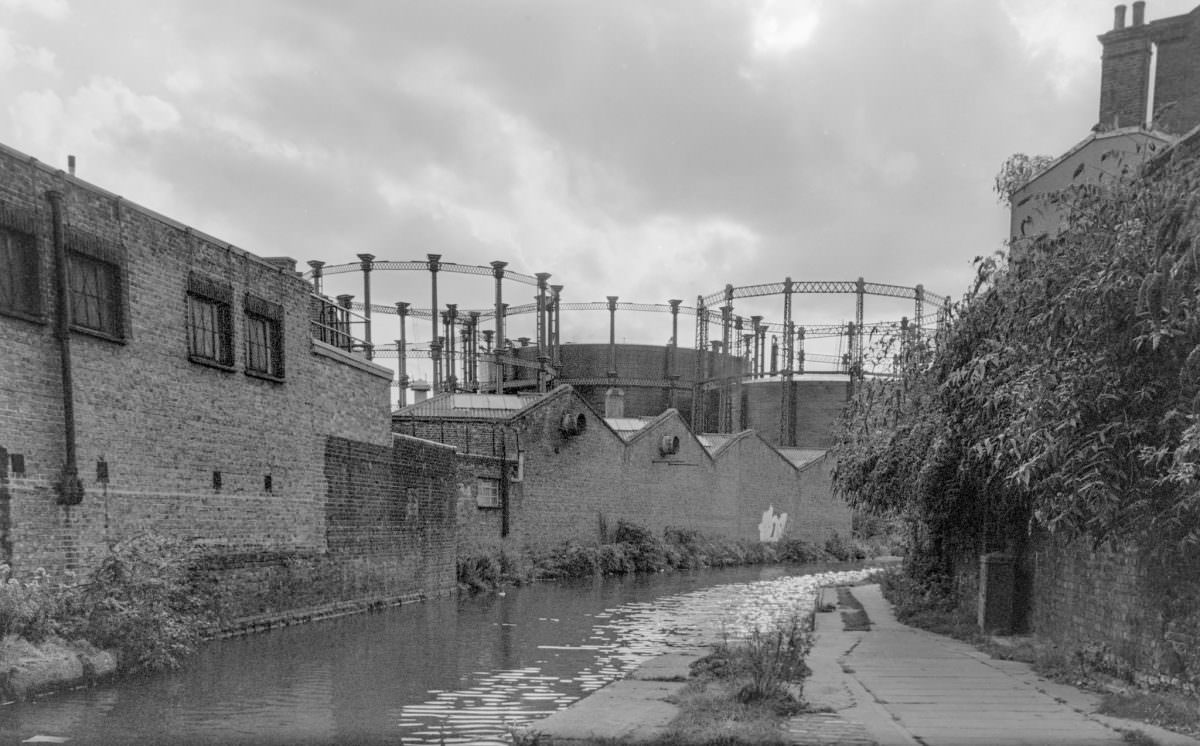
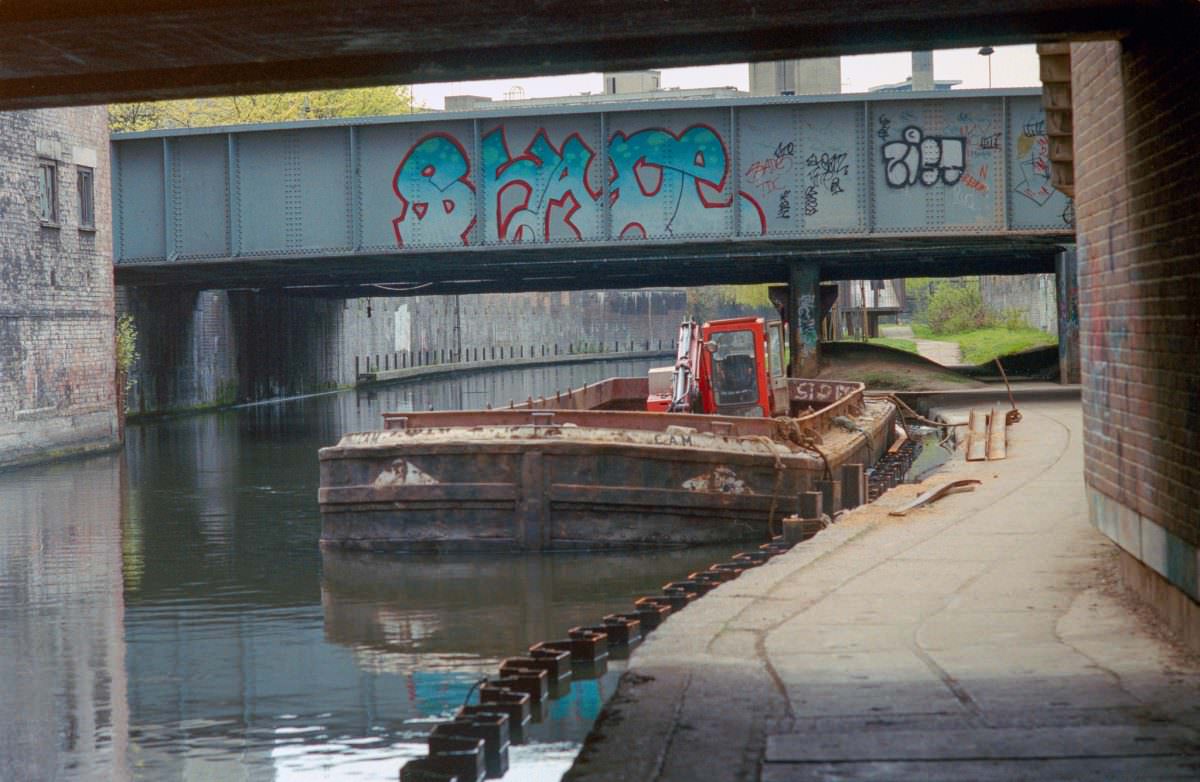
The Regent’s Canal ran through several of Marshall’s photographs. From the Pirate Castle at Camden in 1981 to the gas holders at King’s Cross and Bethnal Green, the canal appeared as a thread connecting very different parts of the city. At Camden Market in 1990, buskers played along the towpath. By 1992, the Docklands Light Railway was under construction over the Regent’s Canal Dock at Limehouse Basin, and Marshall was there to photograph both the lock and the building work at Canary Wharf.
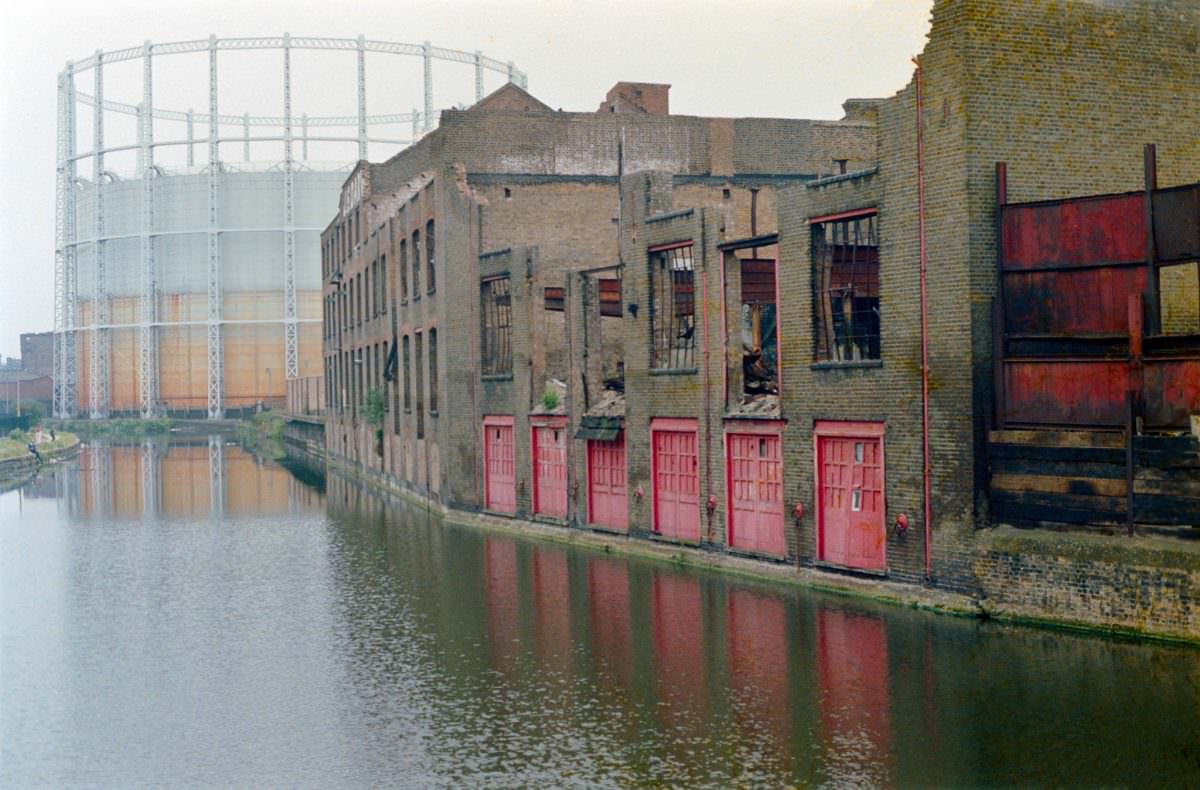
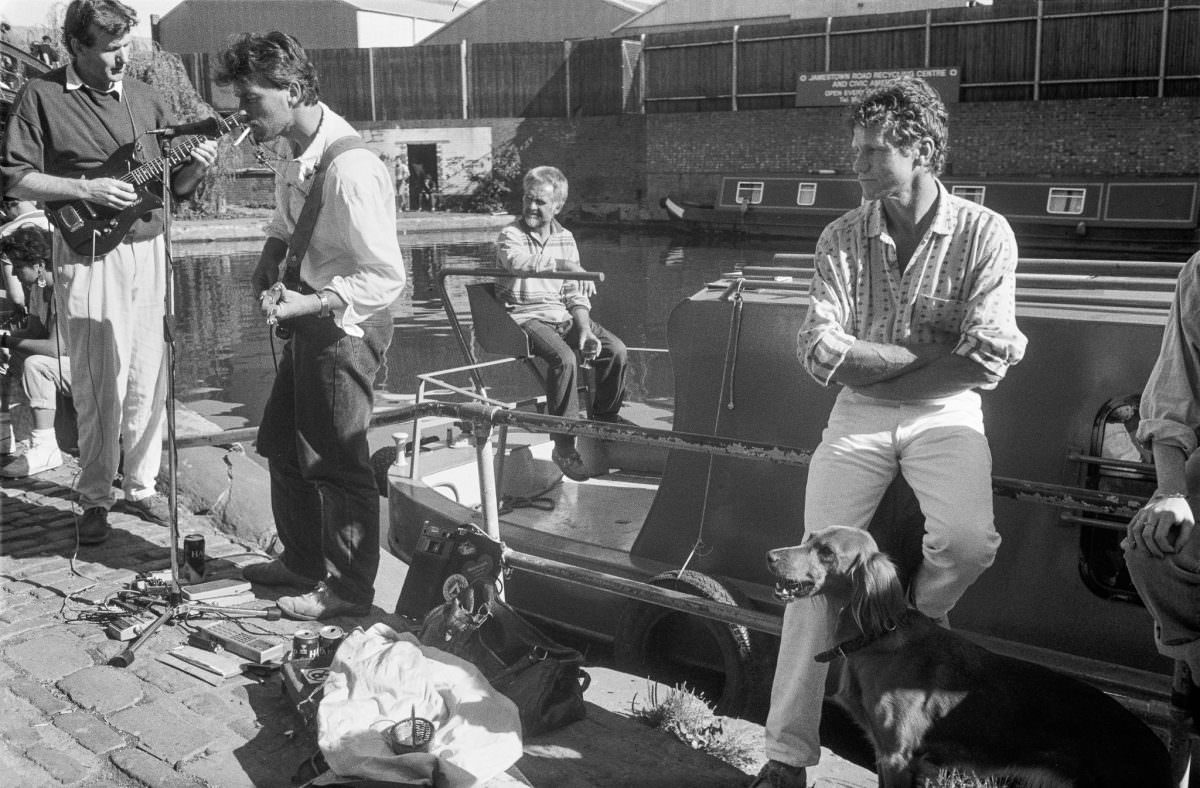
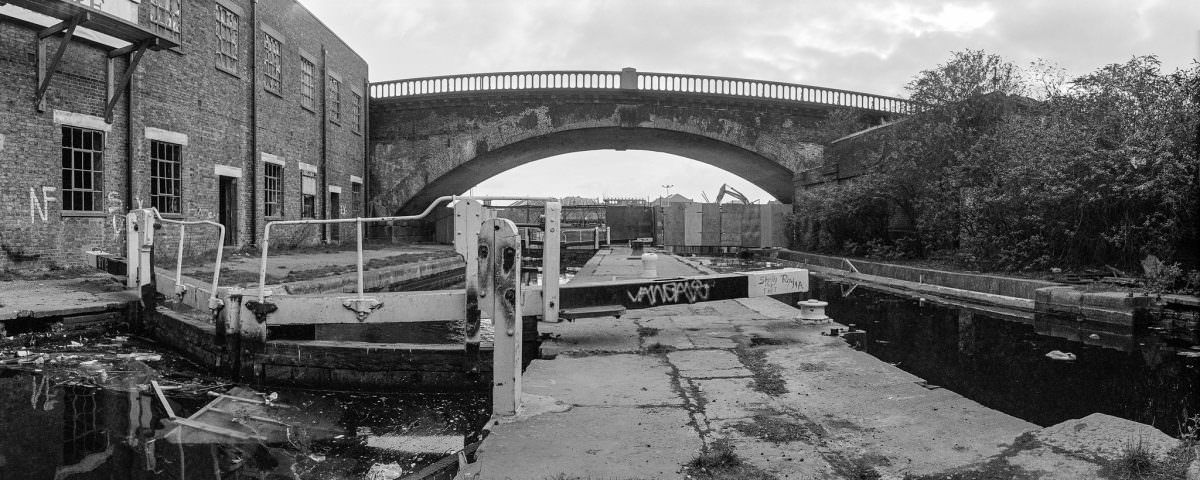
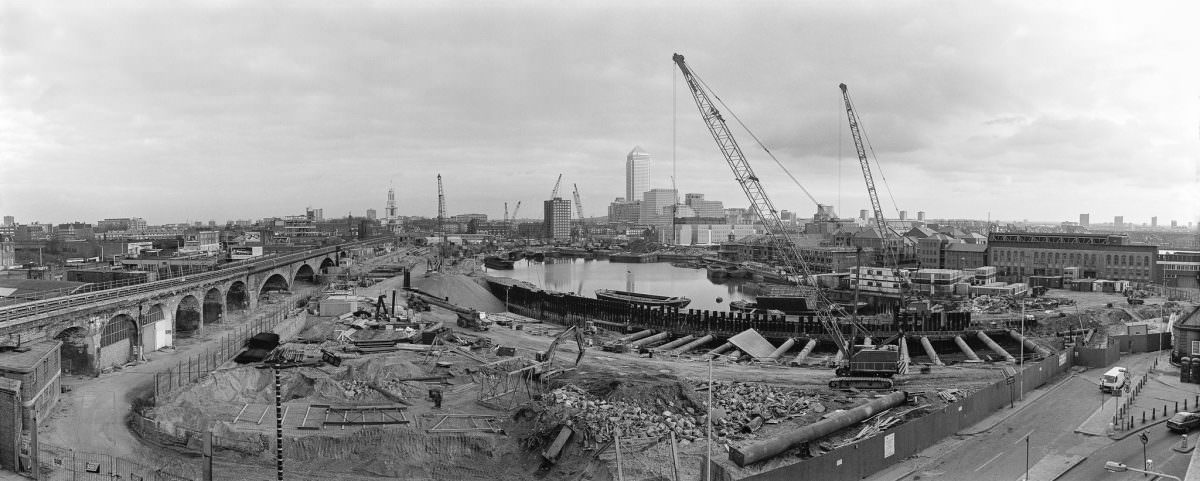
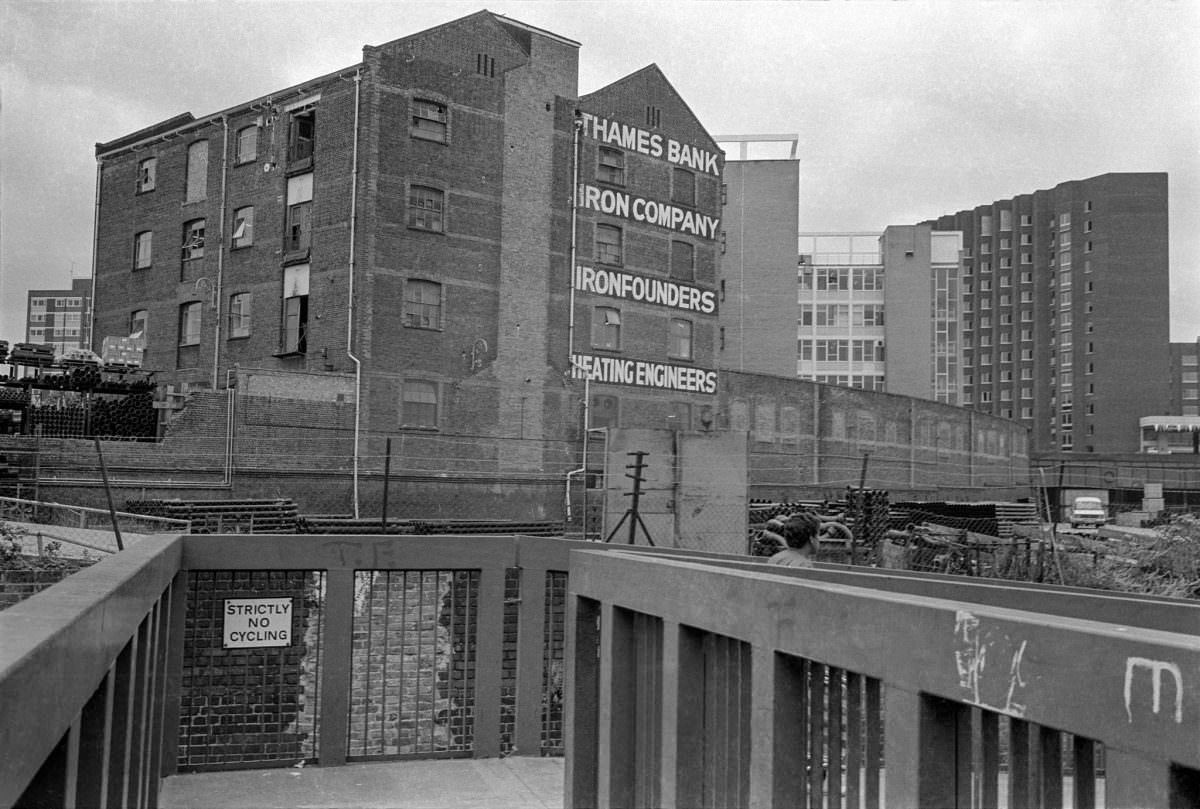
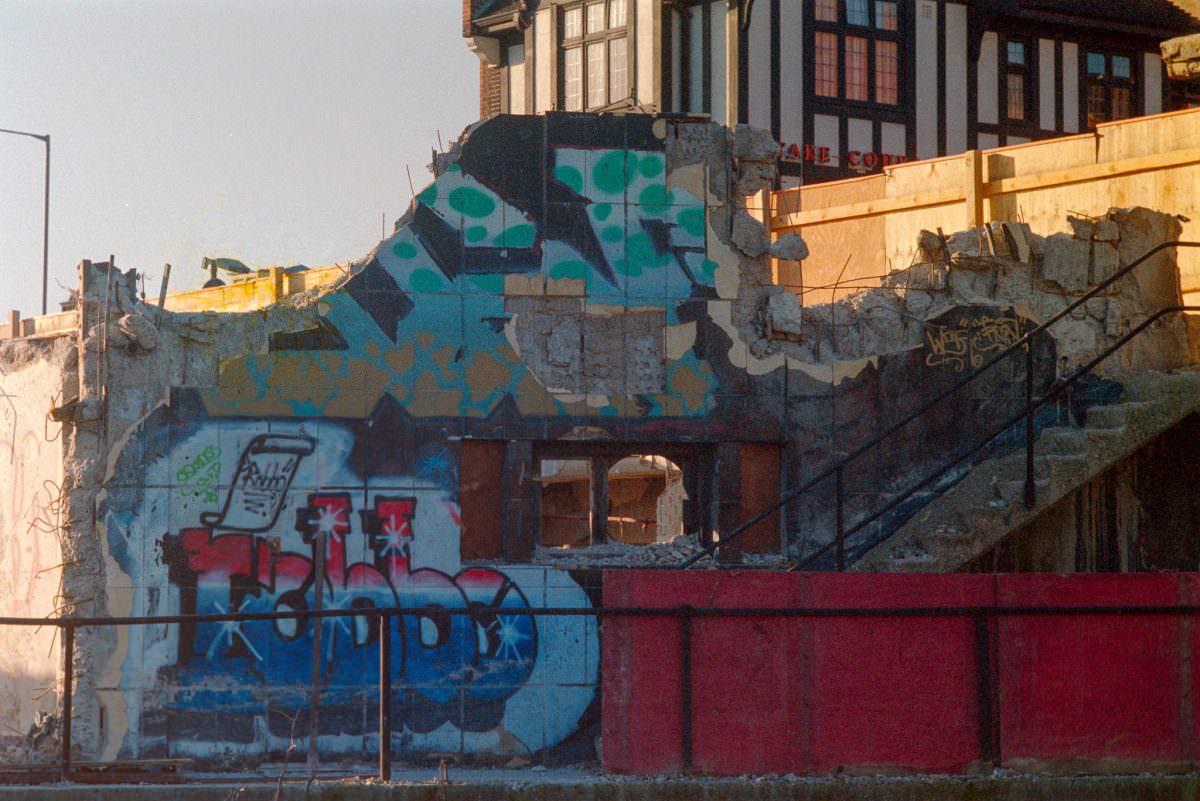
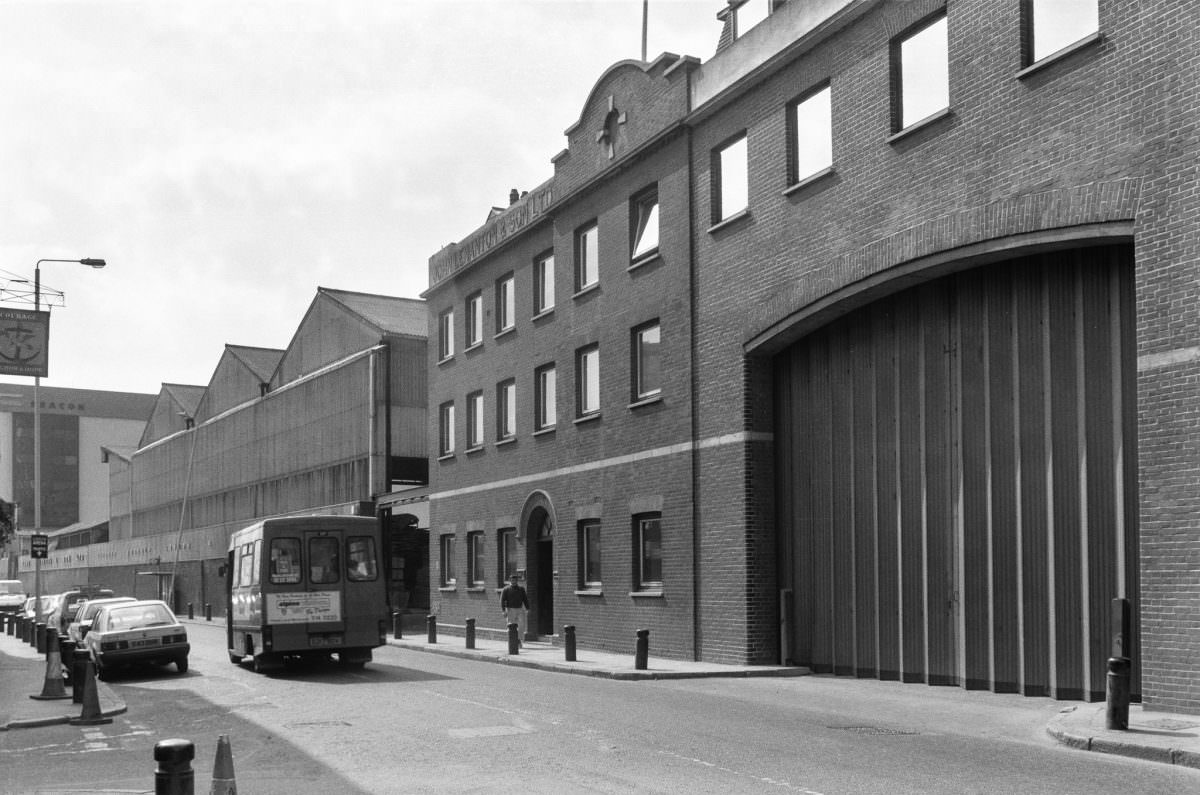
Other canal photographs showed the Thames Bank Iron Company beside the Regent’s Canal in Westminster in 1981, a granary bridge at King’s Cross in 1985, bridges at Marylebone in 1987, a demolition site beside the Devonshire Arms in Kentish Town in 1986, and John Lemanton and Son at Regent’s Wharf in Millwall in 1990. The canal acted as a kind of spine for Marshall’s project—always there, always changing its surroundings.
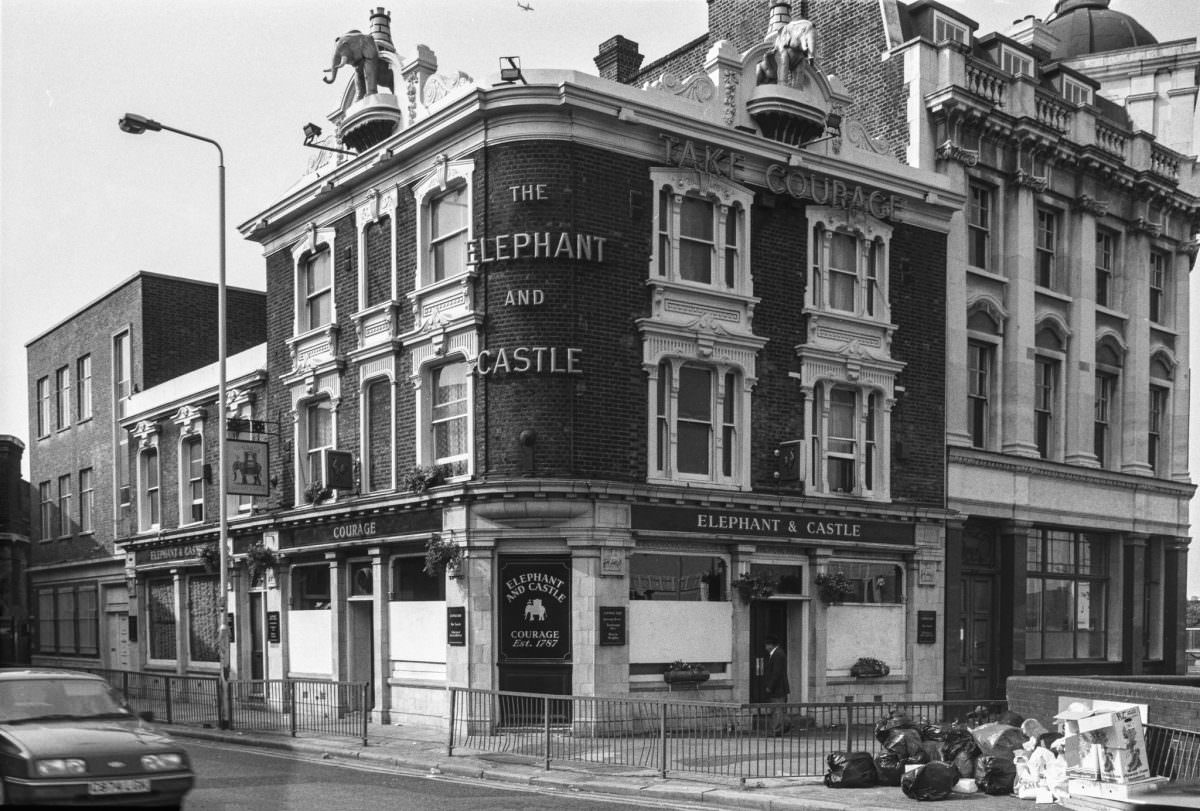
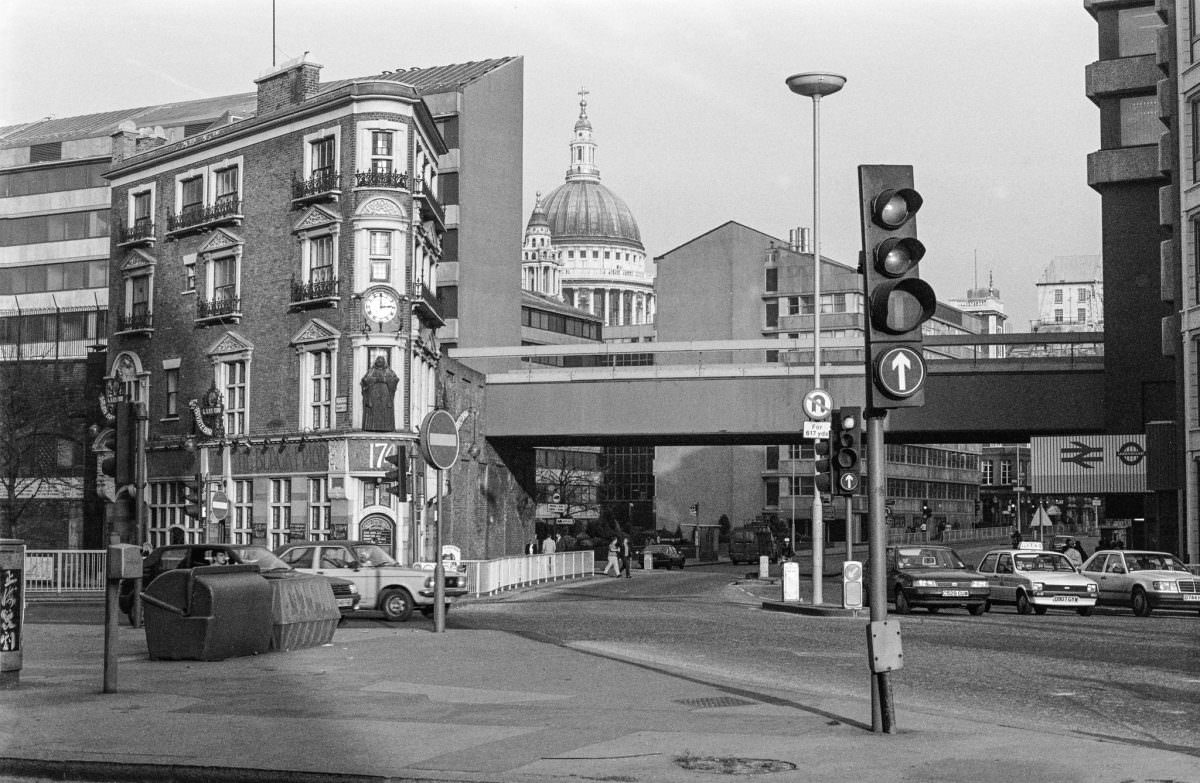
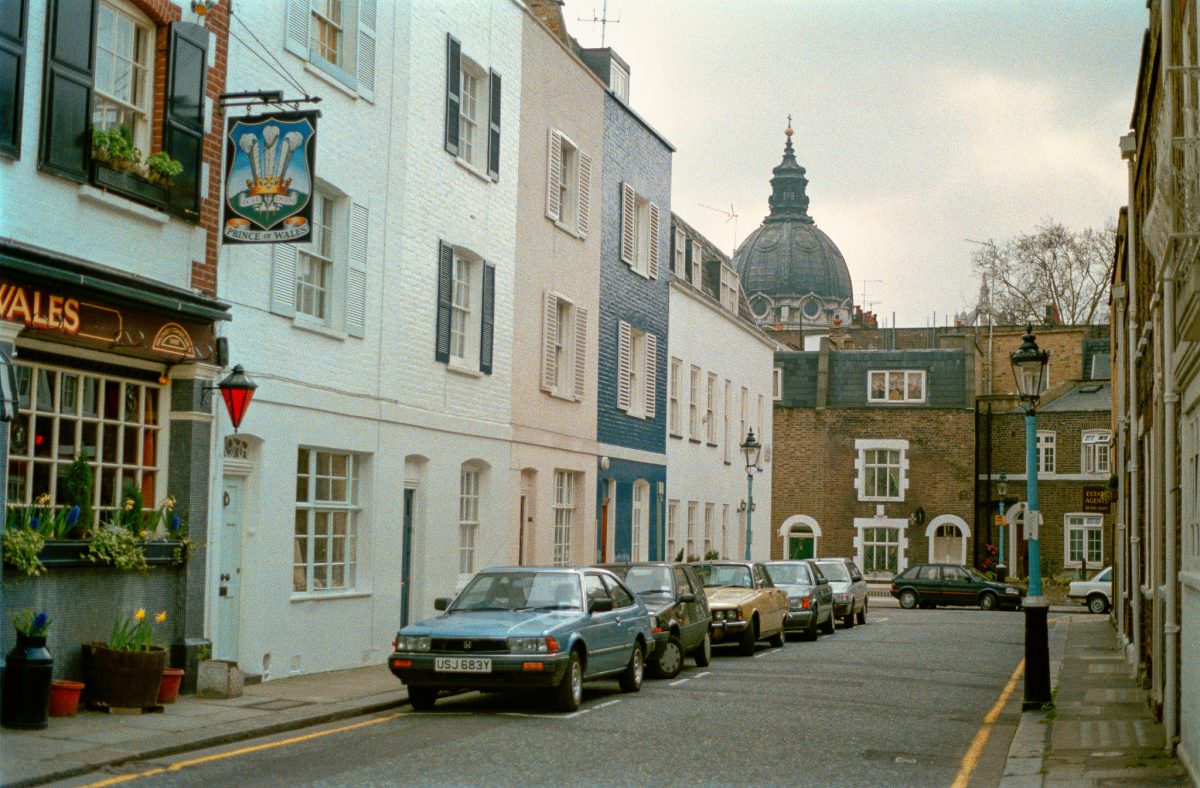
Pubs carrying royal names appeared throughout Marshall’s work. The Elephant and Castle in Vauxhall, The Blackfriar on New Bridge Street in the City, the Prince of Wales in Knightsbridge, the London and Brighton in Peckham, the George IV on Pentonville Road, the Markham Arms on King’s Road in Chelsea, the Princess of Wales in Hoxton, the Princess of Prussia near Whitechapel, the Duchess of Kent in Southwark, and the Prince of Wales again in Hoxton—each one a small, specific piece of a much larger picture.
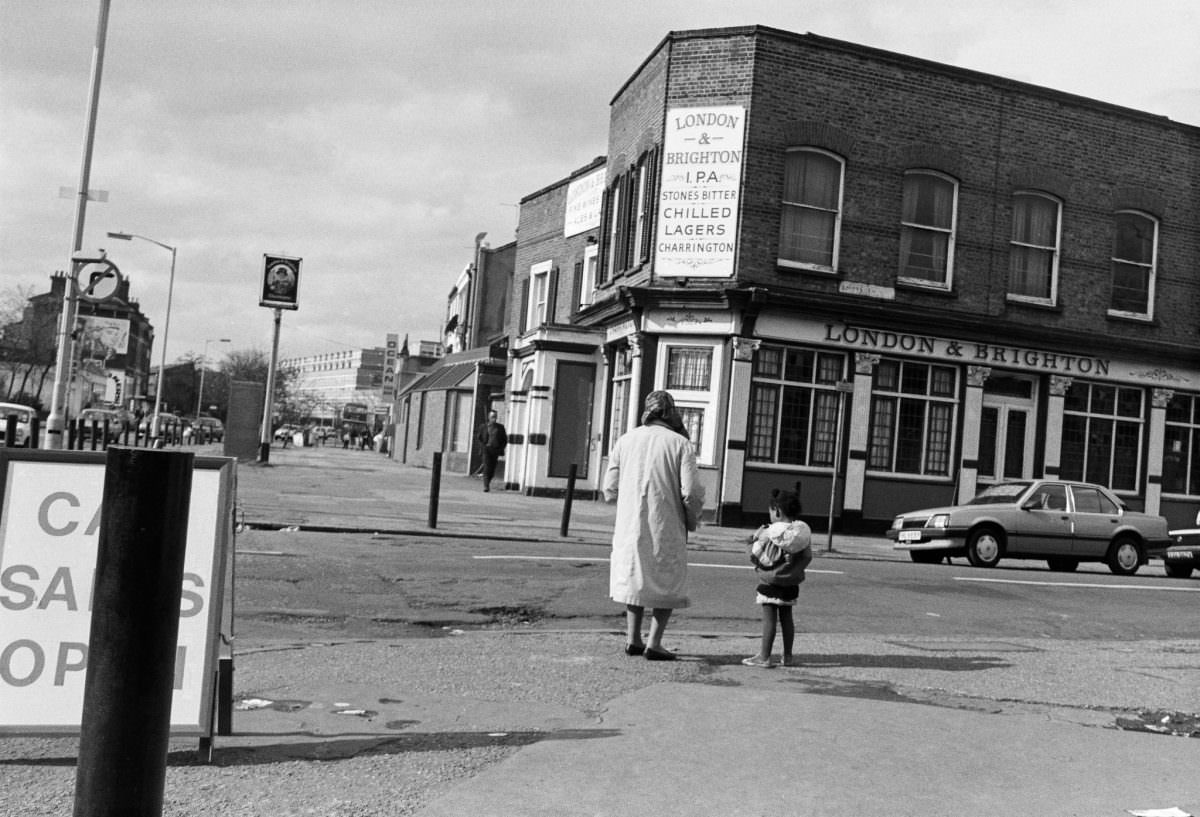
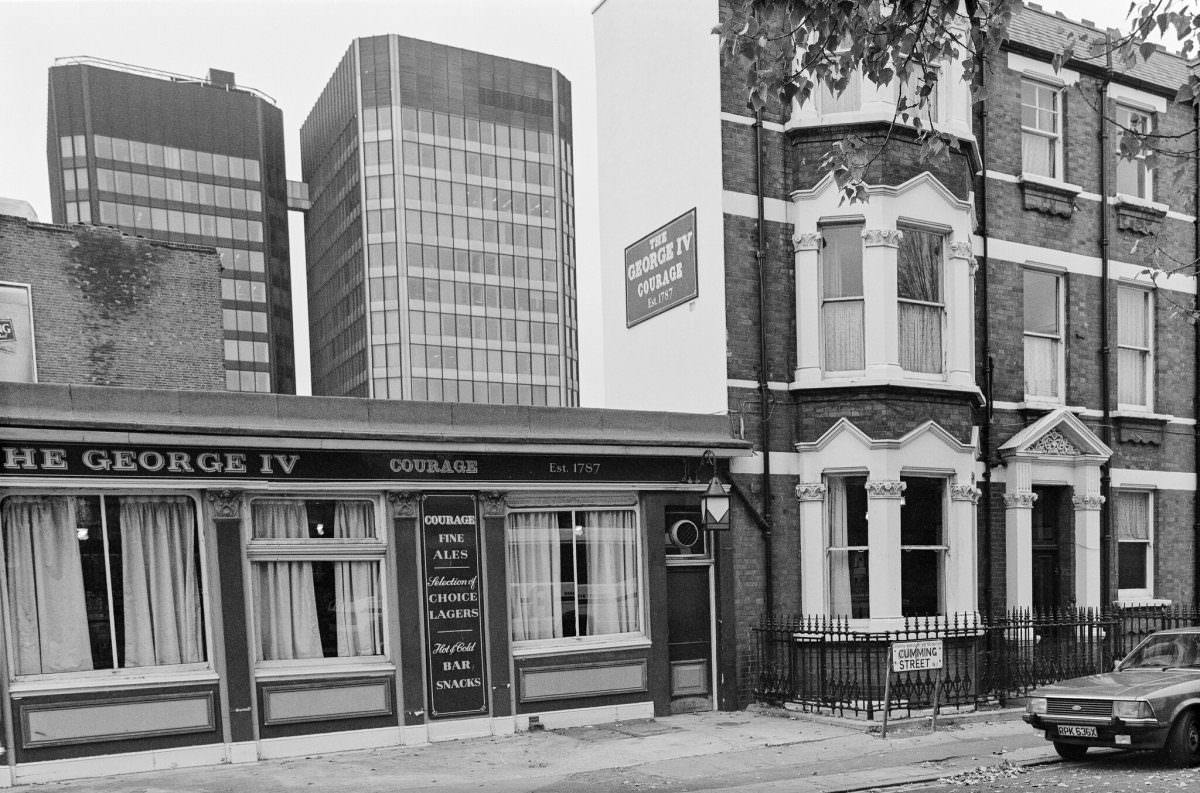
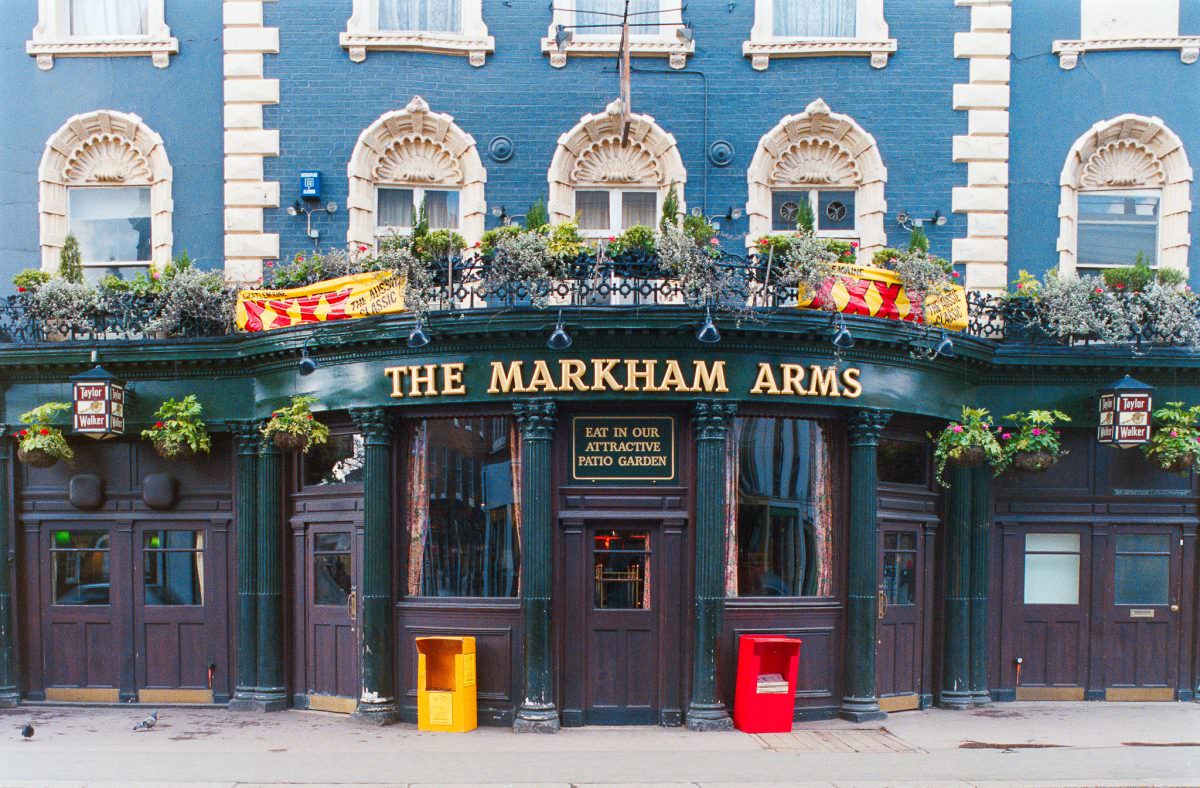
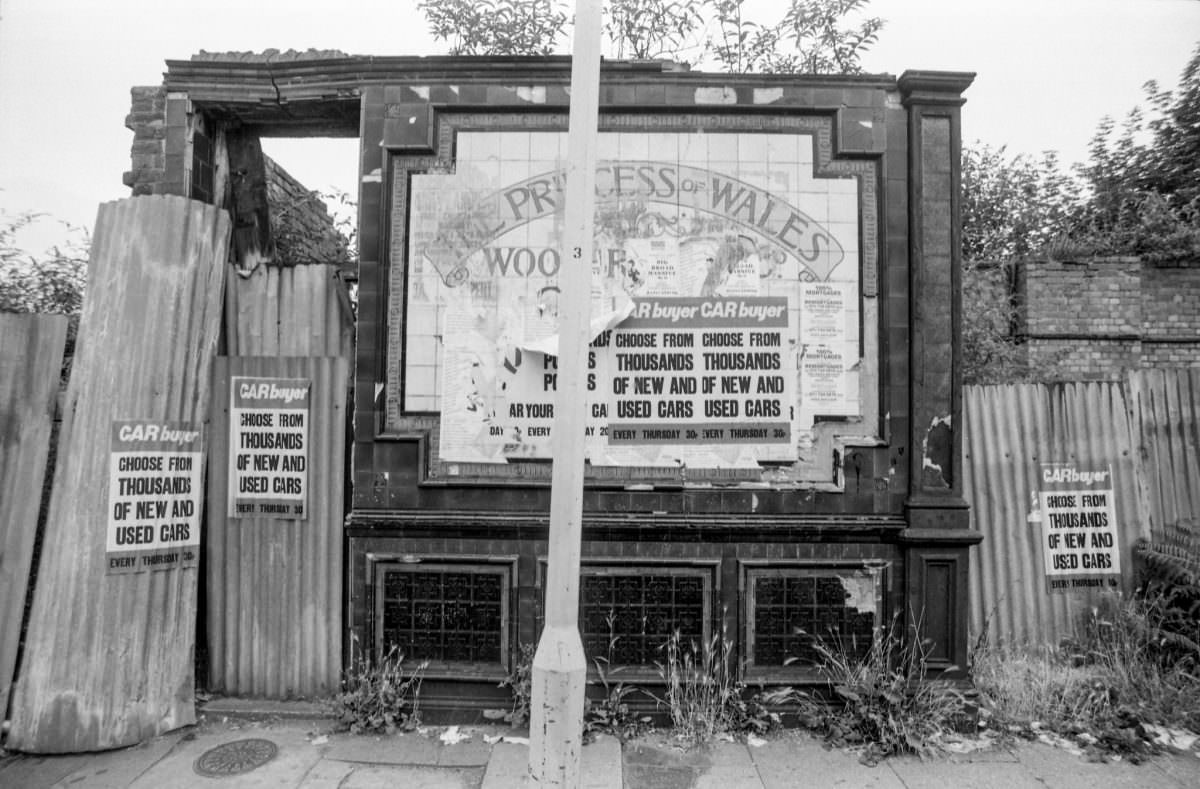
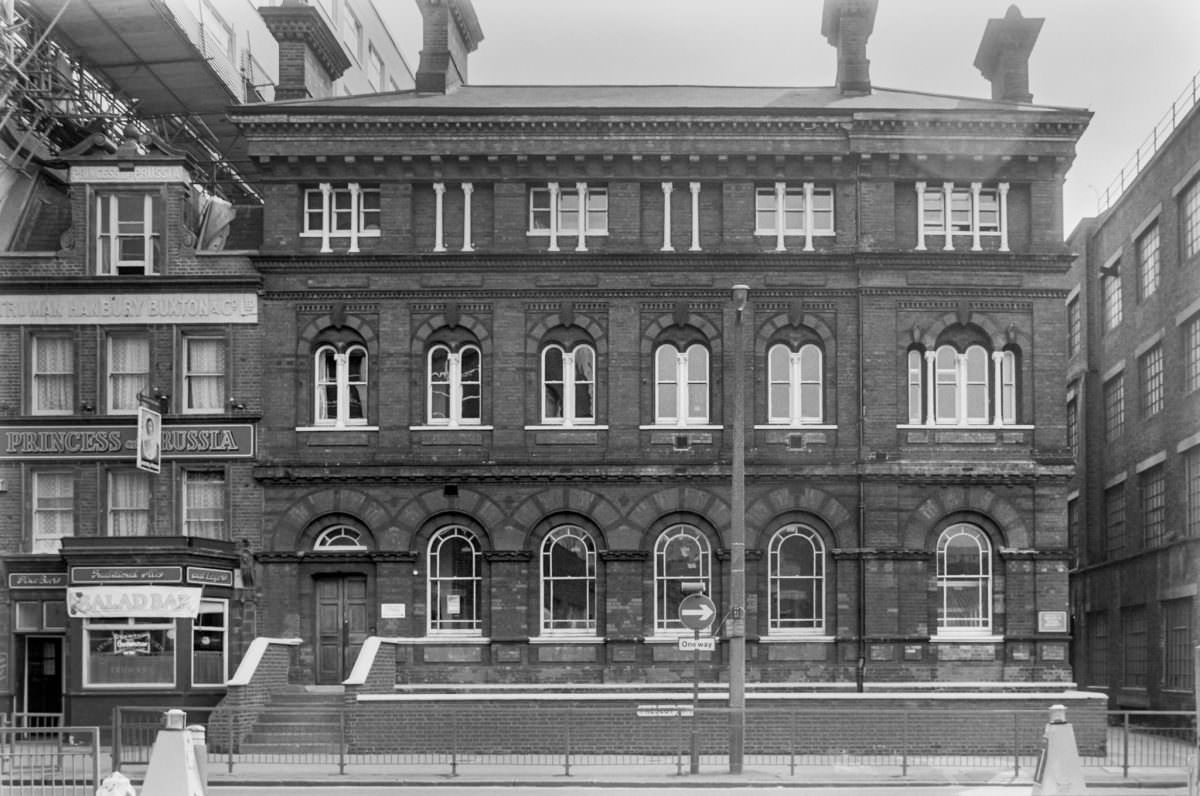
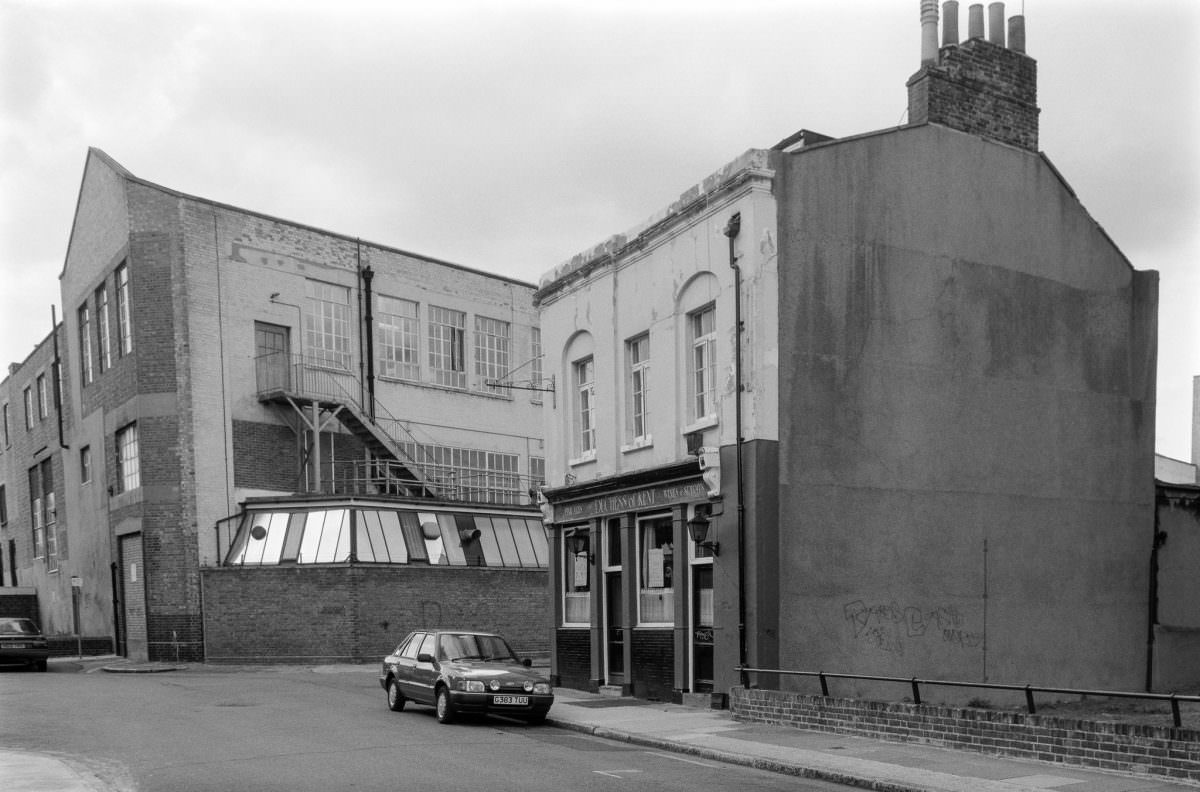
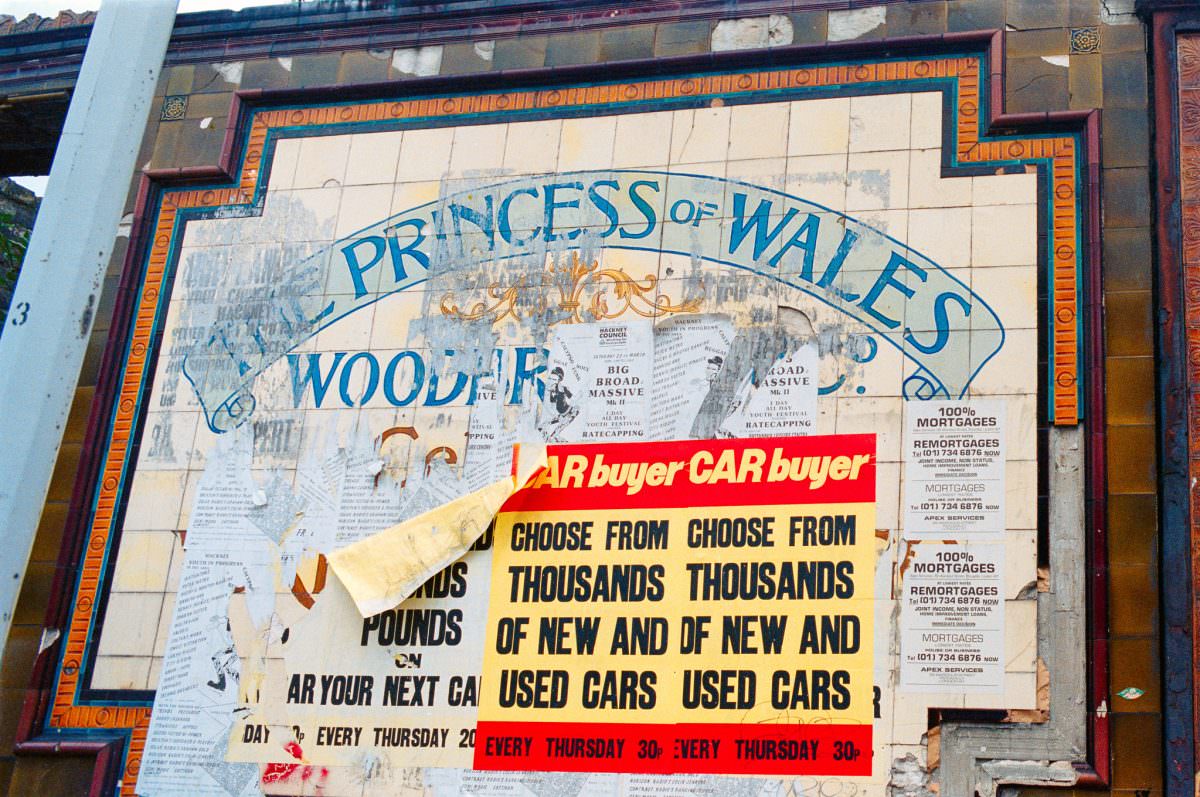
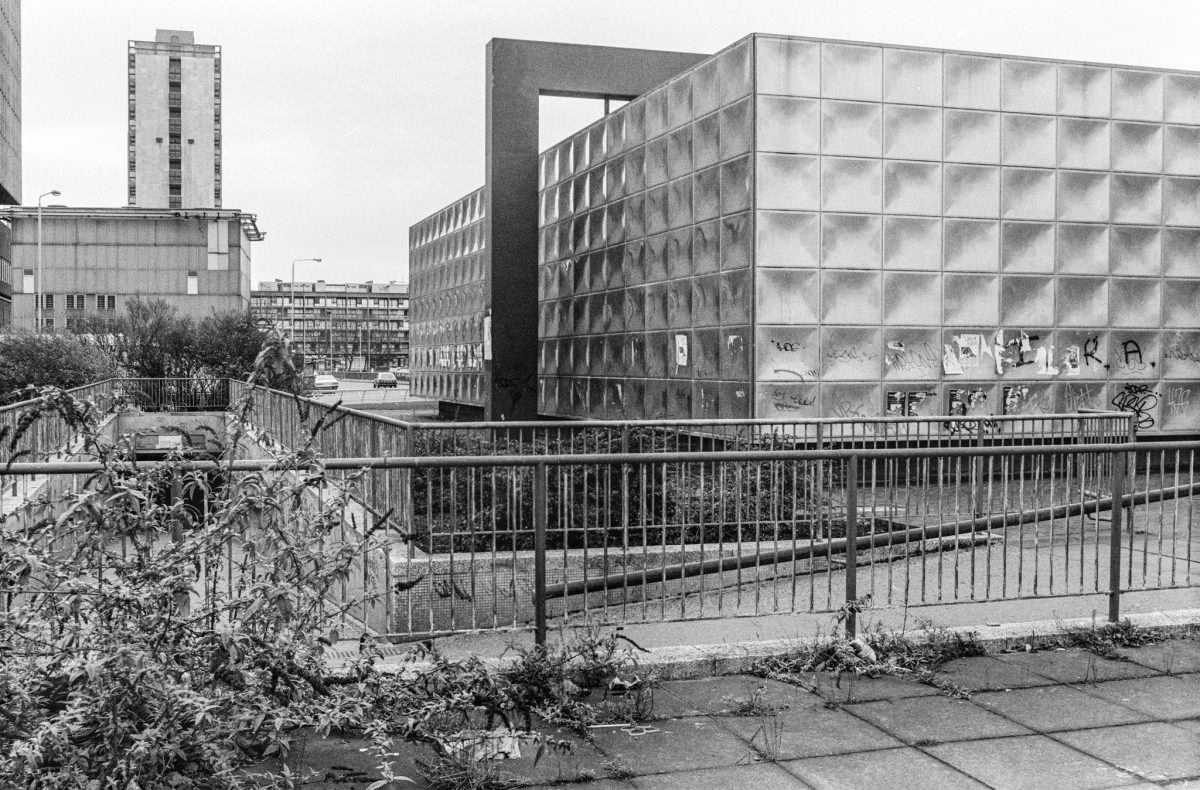
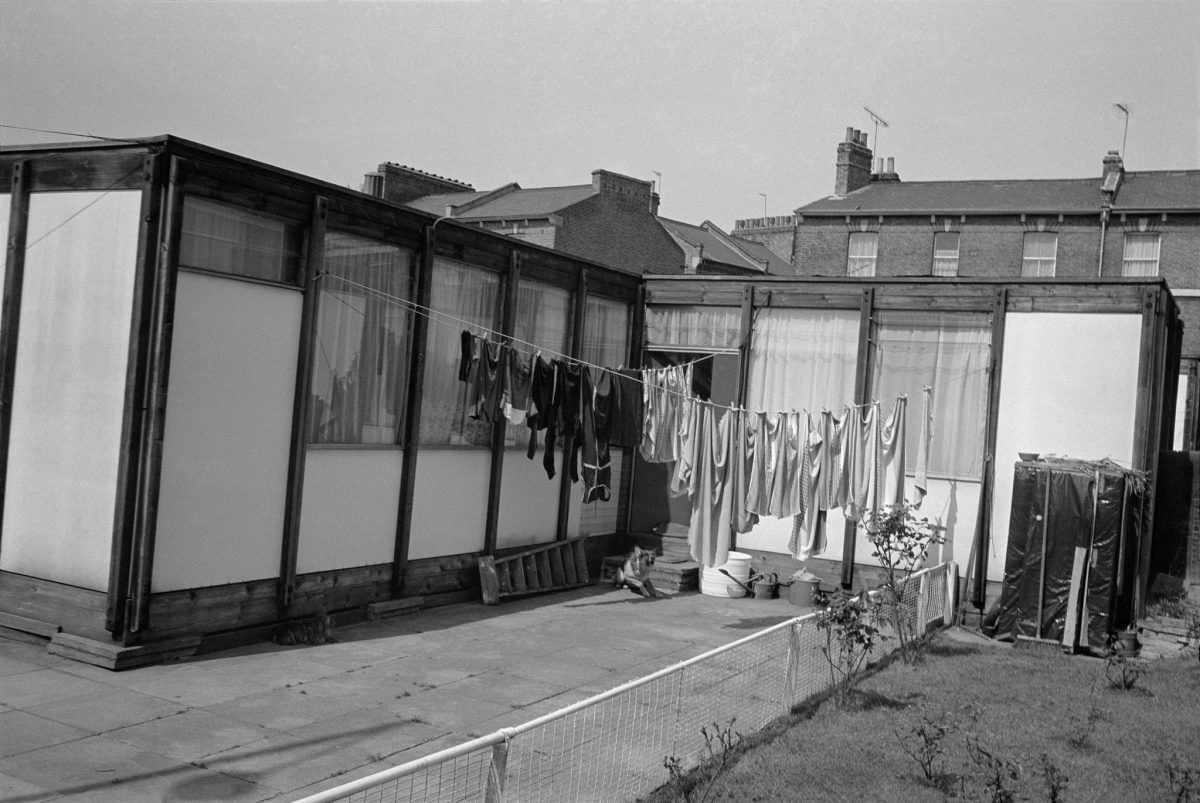
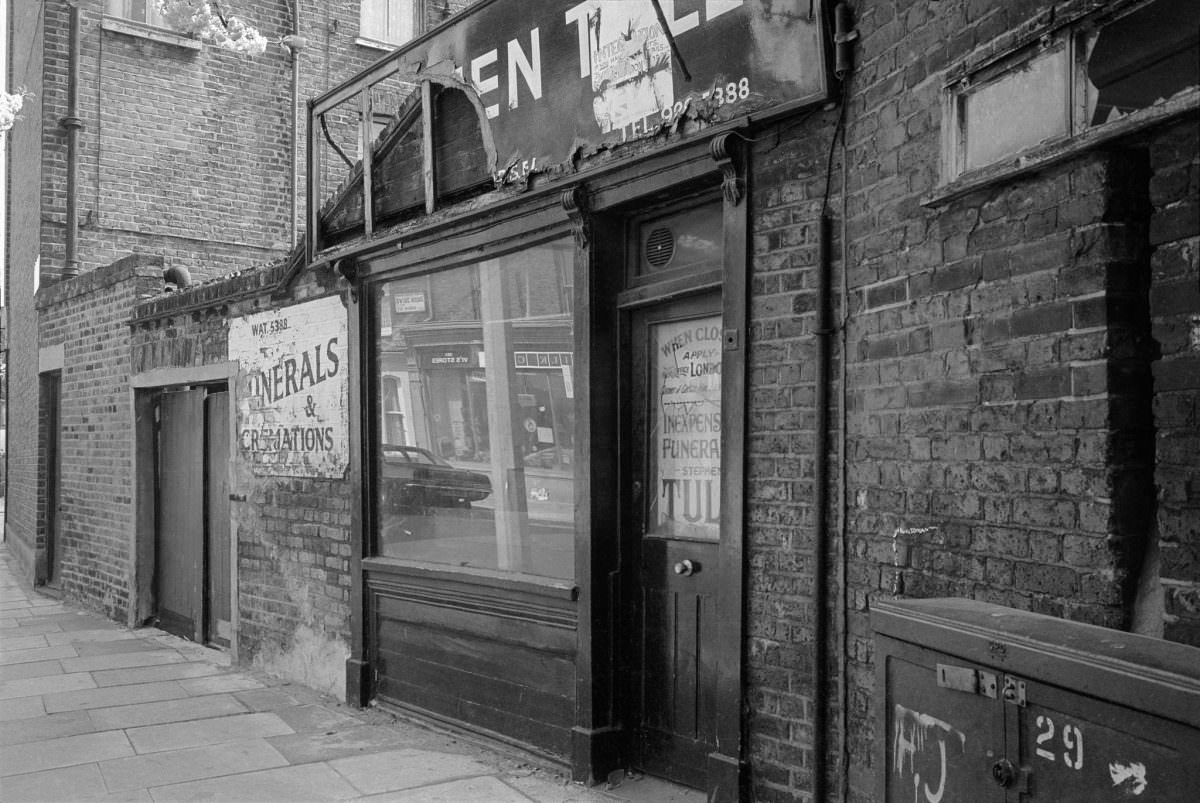
Elephant and Castle in Southwark appeared in several photographs beyond its pub. Marshall documented the shopping centre in 1991—one of Britain’s first covered shopping malls, already looking tired by that point. The Faraday Memorial, a stainless steel box-shaped monument at the Elephant and Castle roundabout, appeared in 1989. Prefabs on Dante Road, photographed in 1982, showed temporary housing that had been standing since the post-war years. An undertaker’s on Brook Drive completed the set—a matter-of-fact reminder that ordinary life, and death, continued around the landmark.
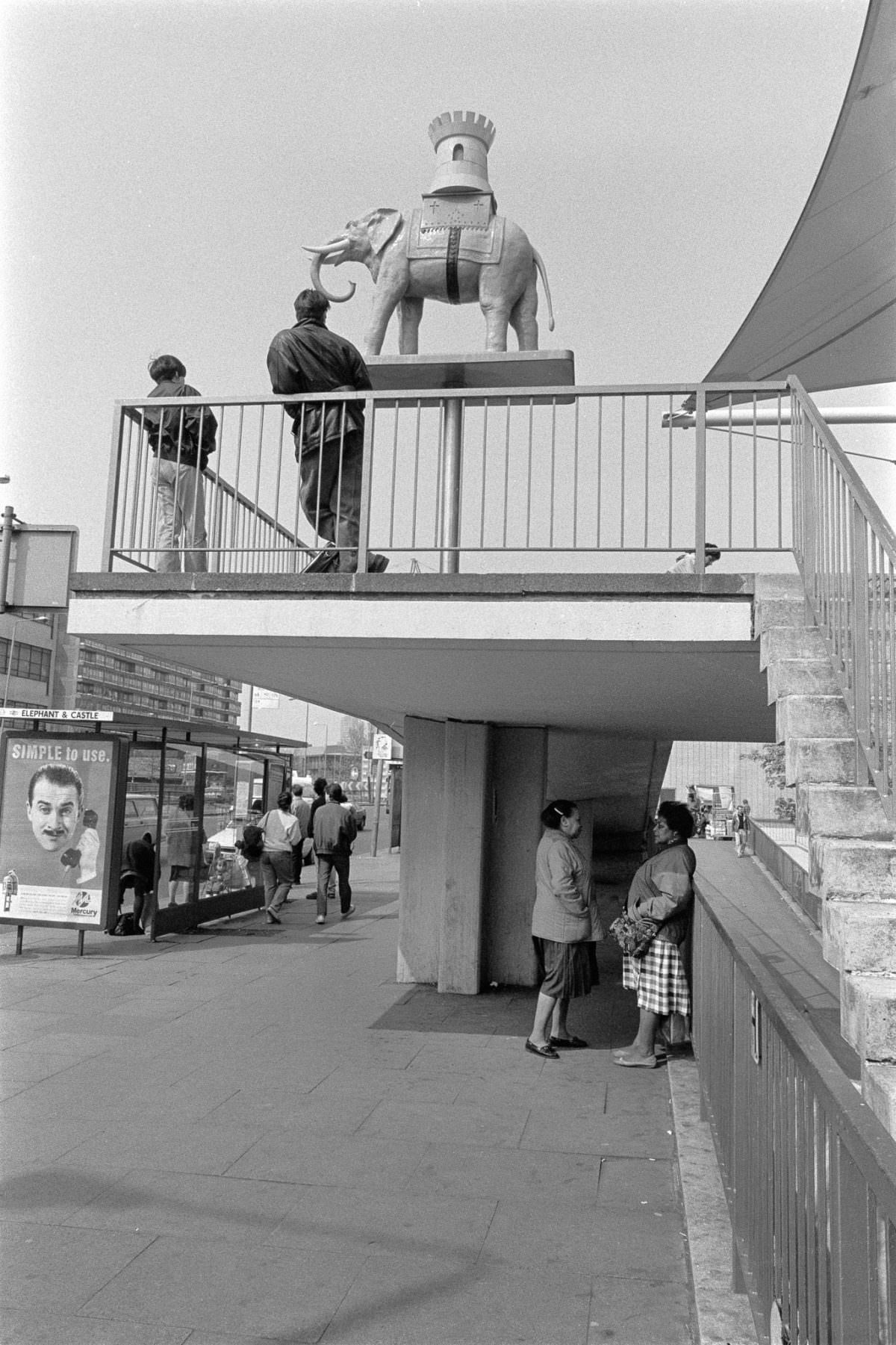
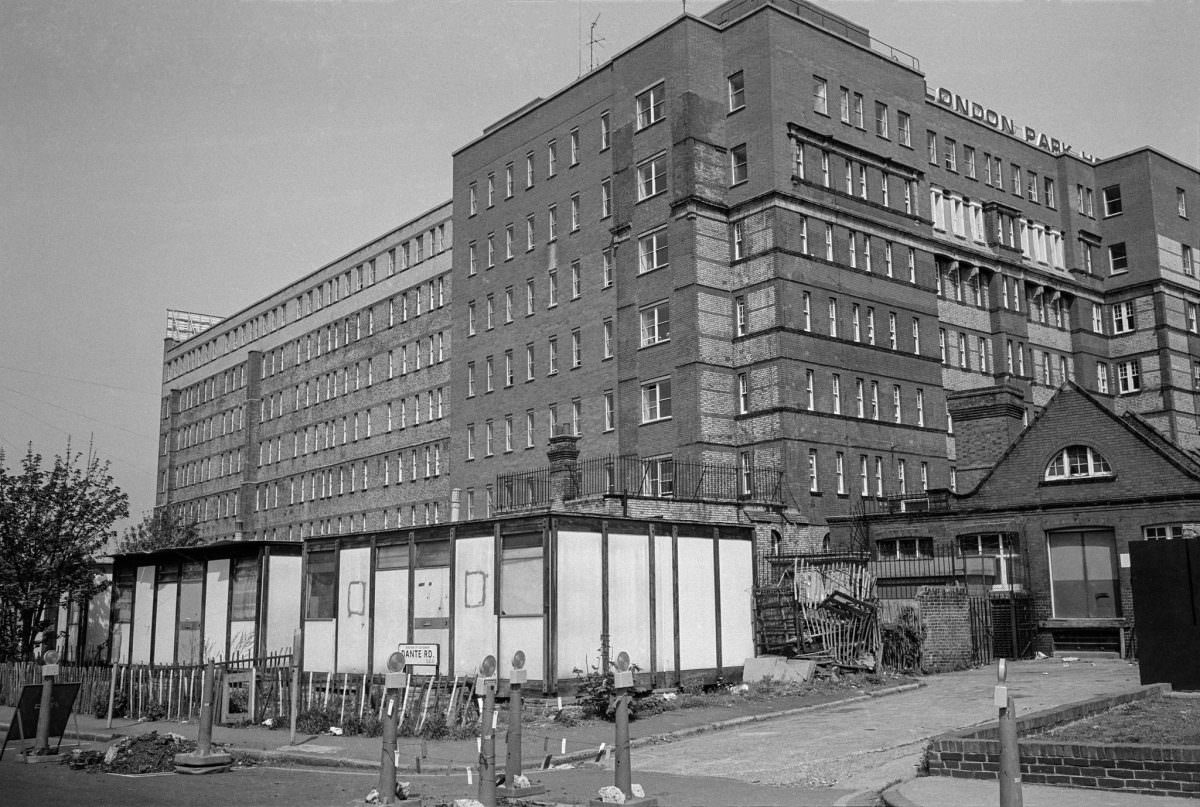
Scattered across the rest of Marshall’s project were places that simply carried a royal word in their name without any other obvious connection to the crown. King and Queen Street in Walworth. King’s Cross gas holders. The King of Lee Motors on Lewisham High Street. Young’s Corner on King Street at Stamford Brook. The Royal Northern Hospital in Holloway. The former Royal Doulton Pottery on Lambeth High Street. SCS Car Sales on Royal College Street in Camden. An Elizabeth Industrial Estate in New Cross.
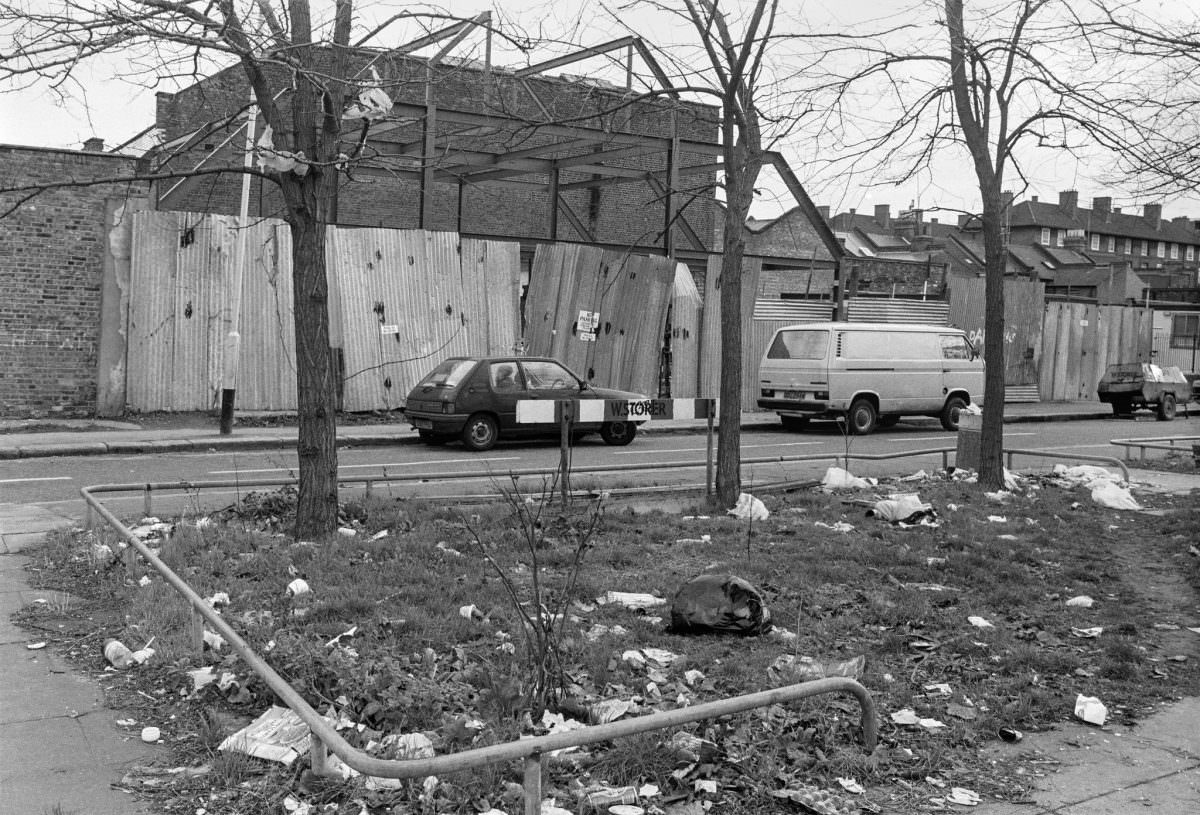
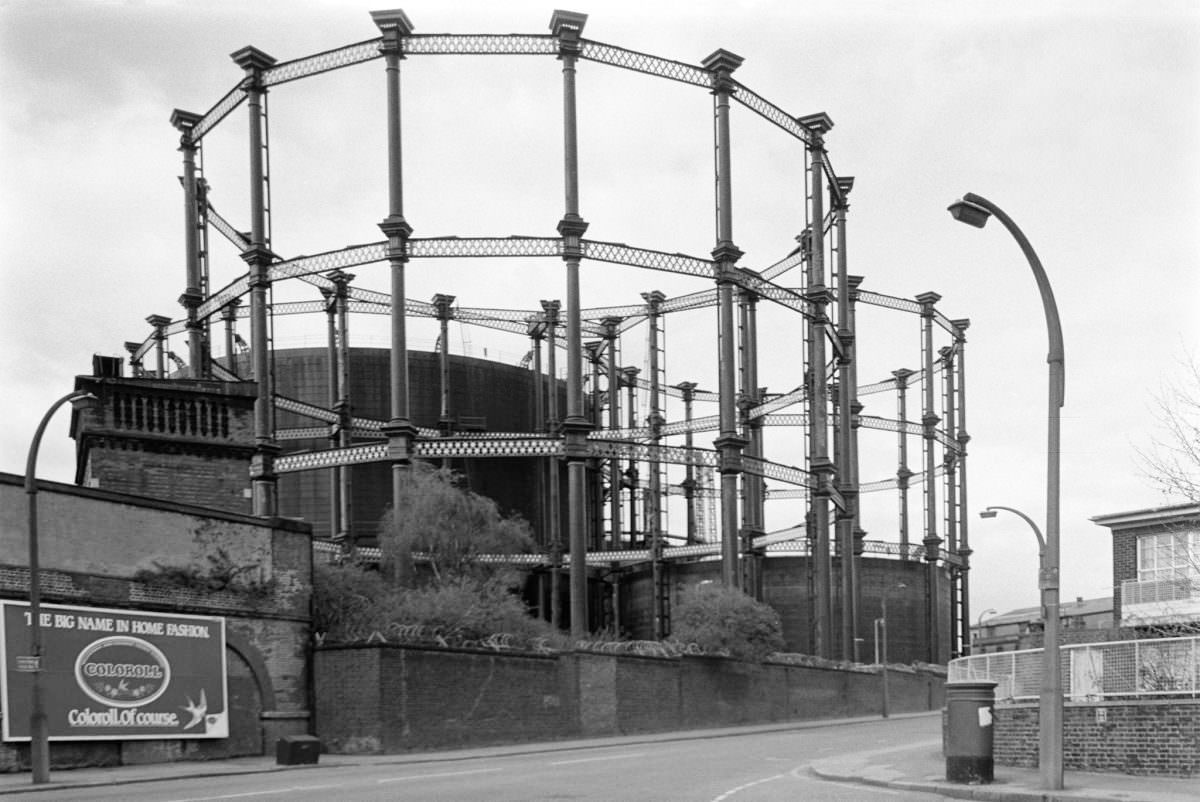
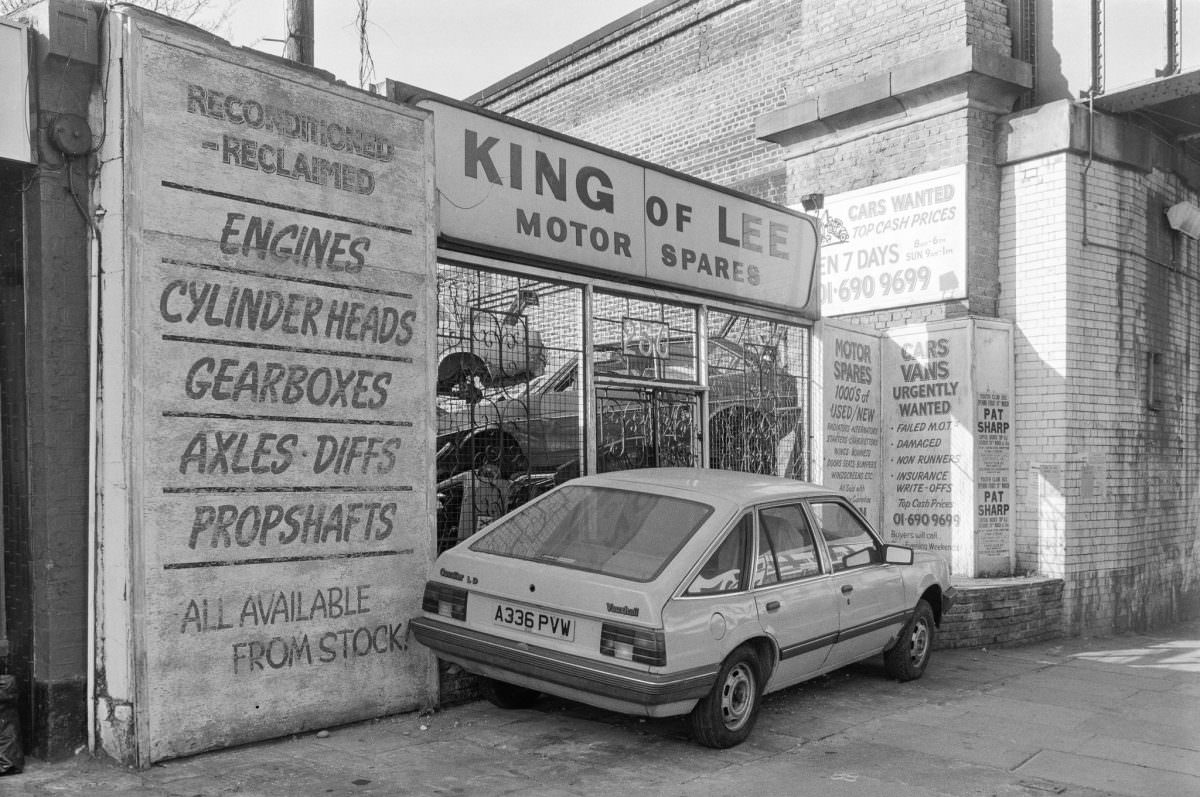
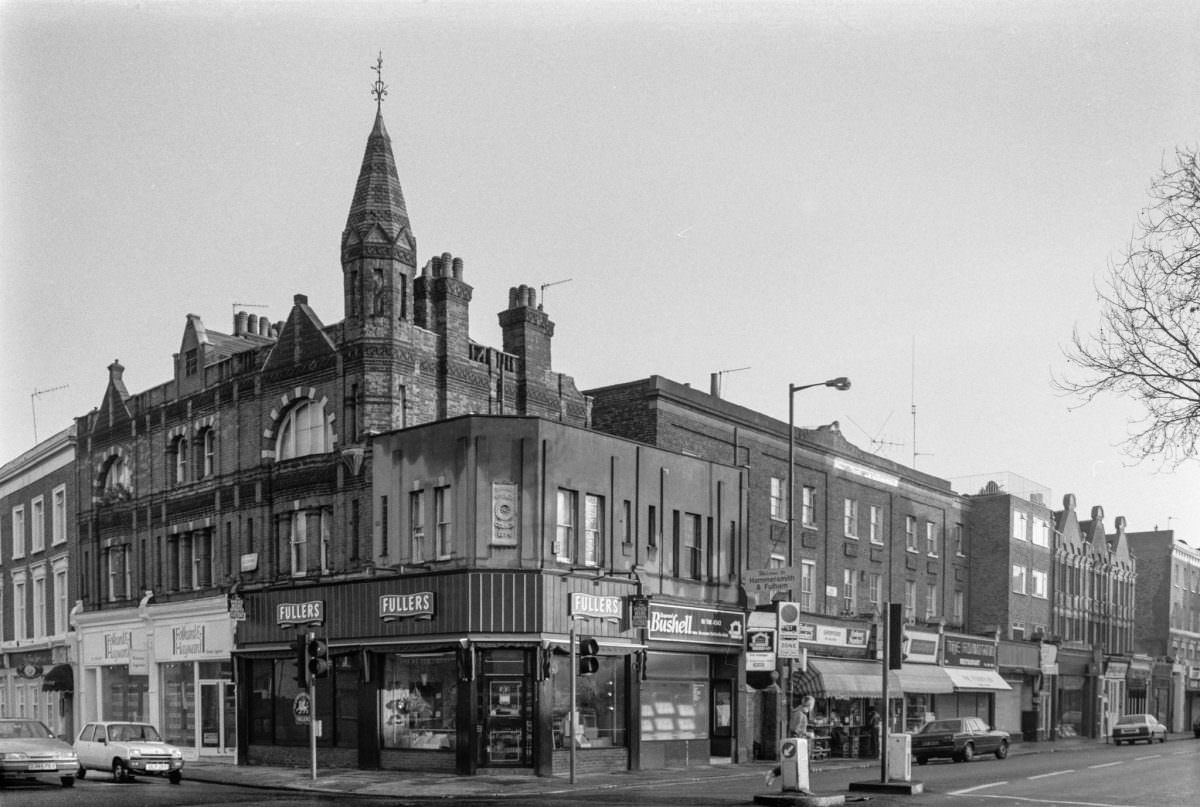
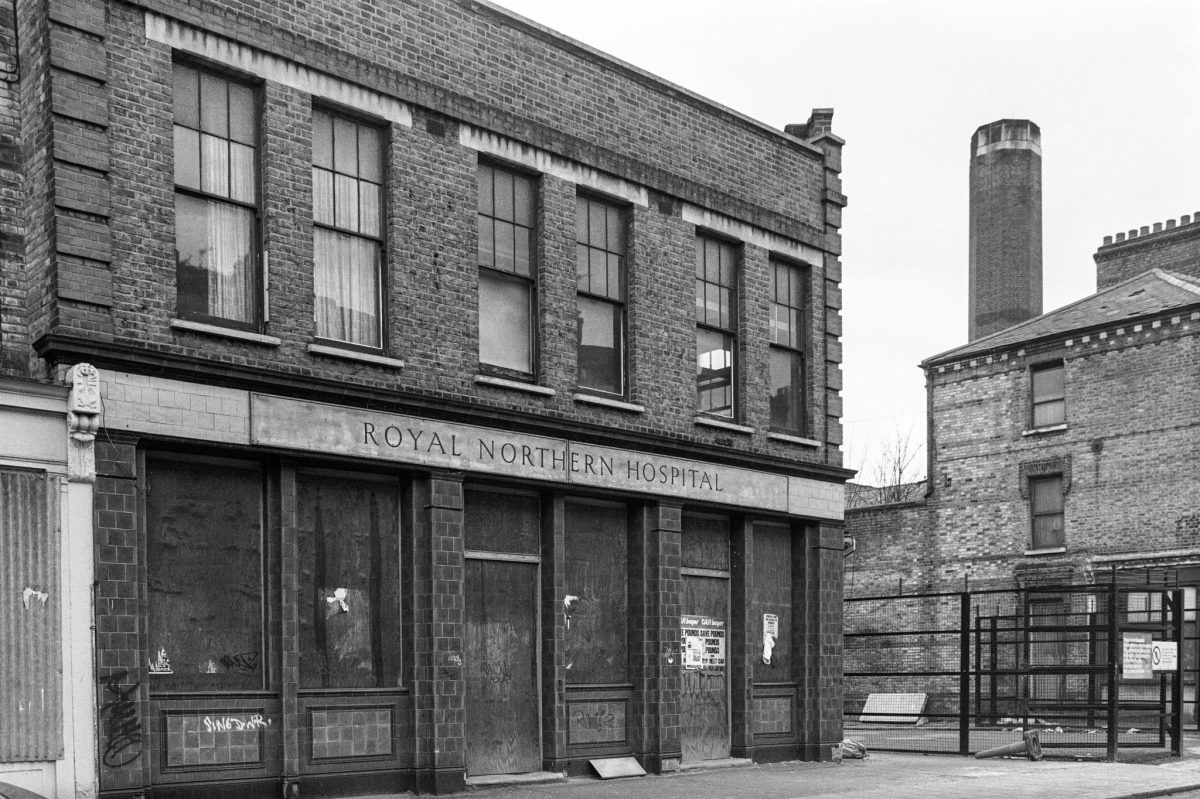
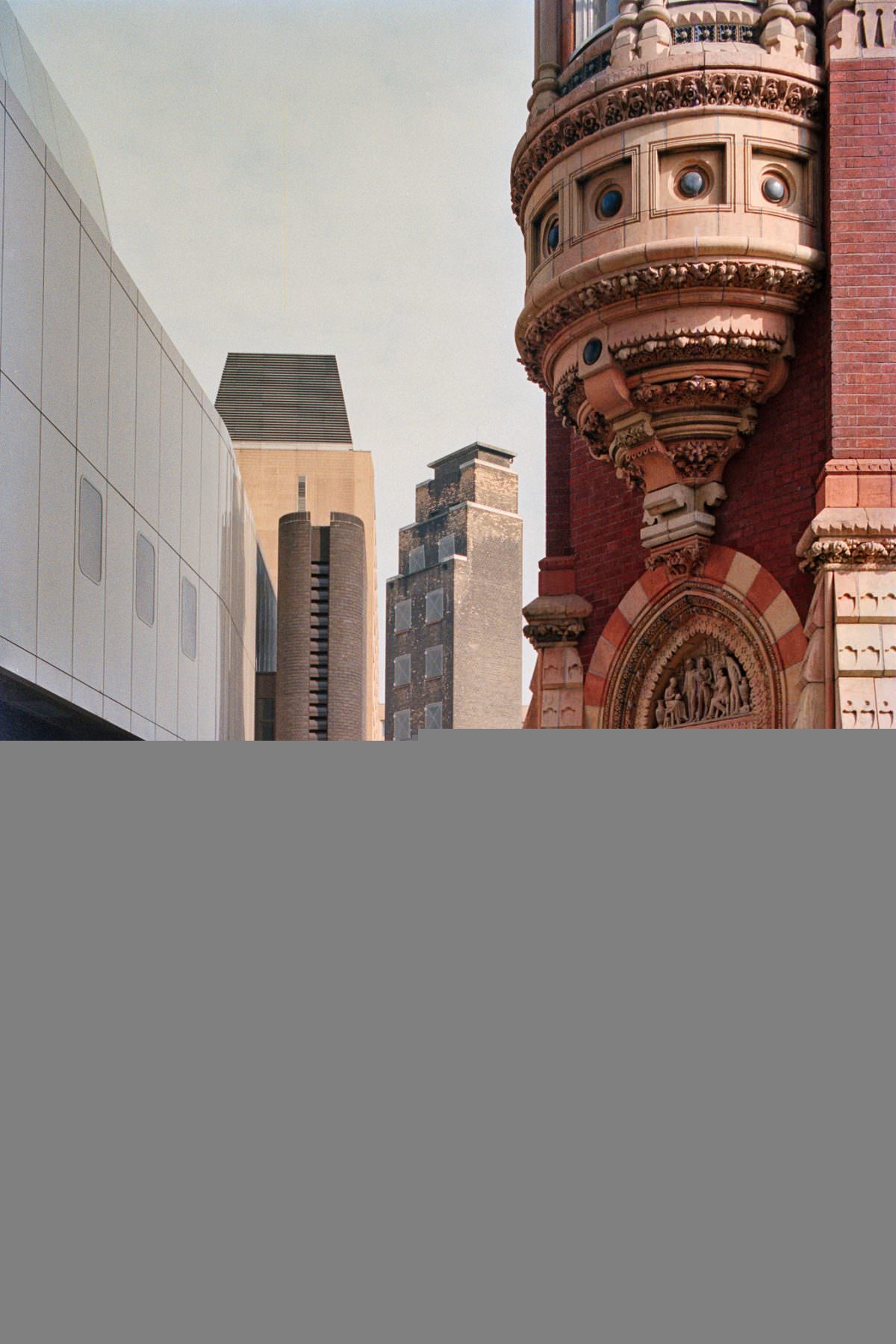
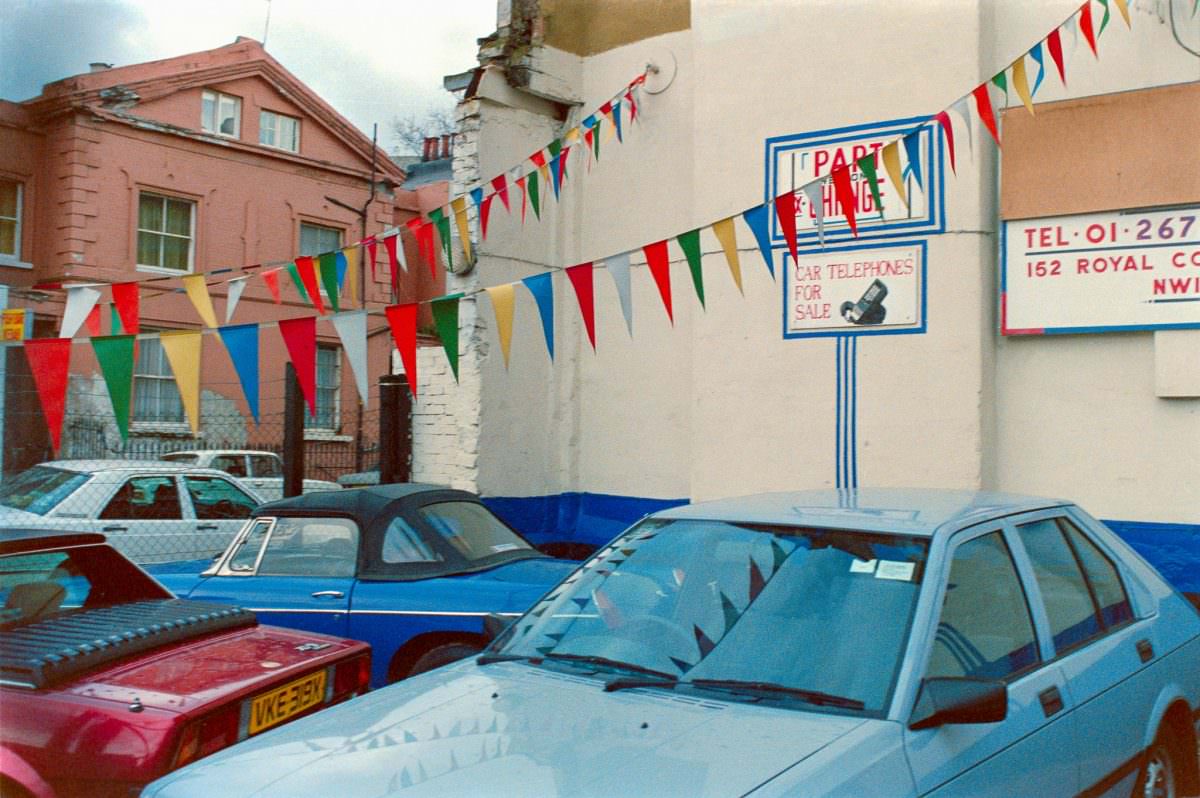
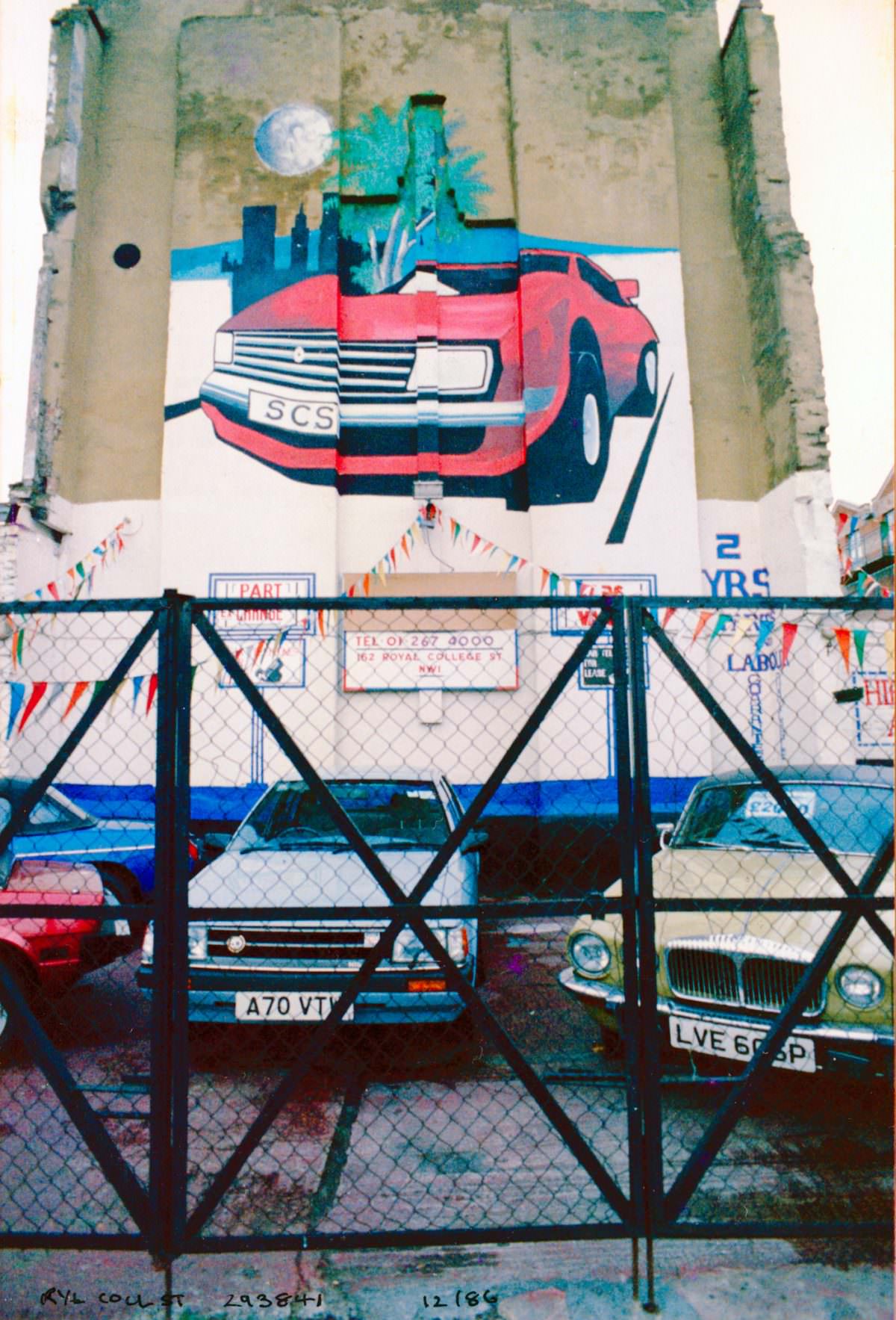
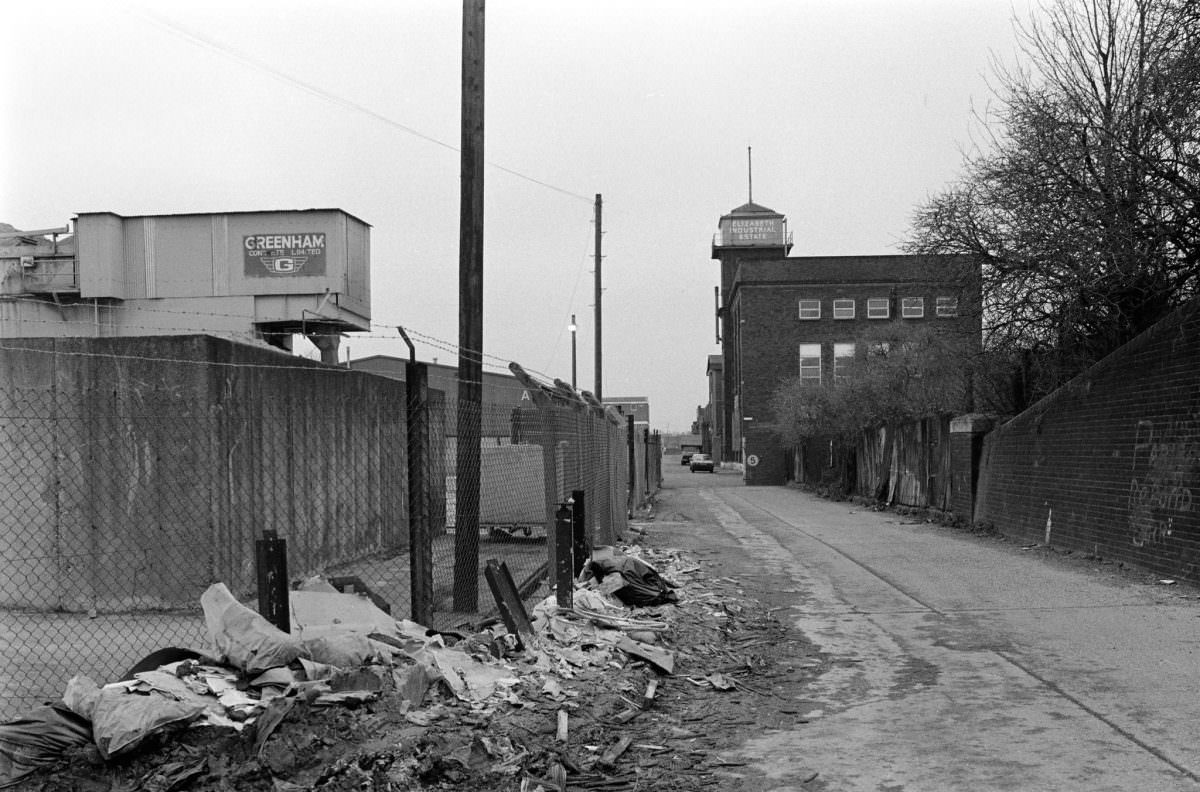
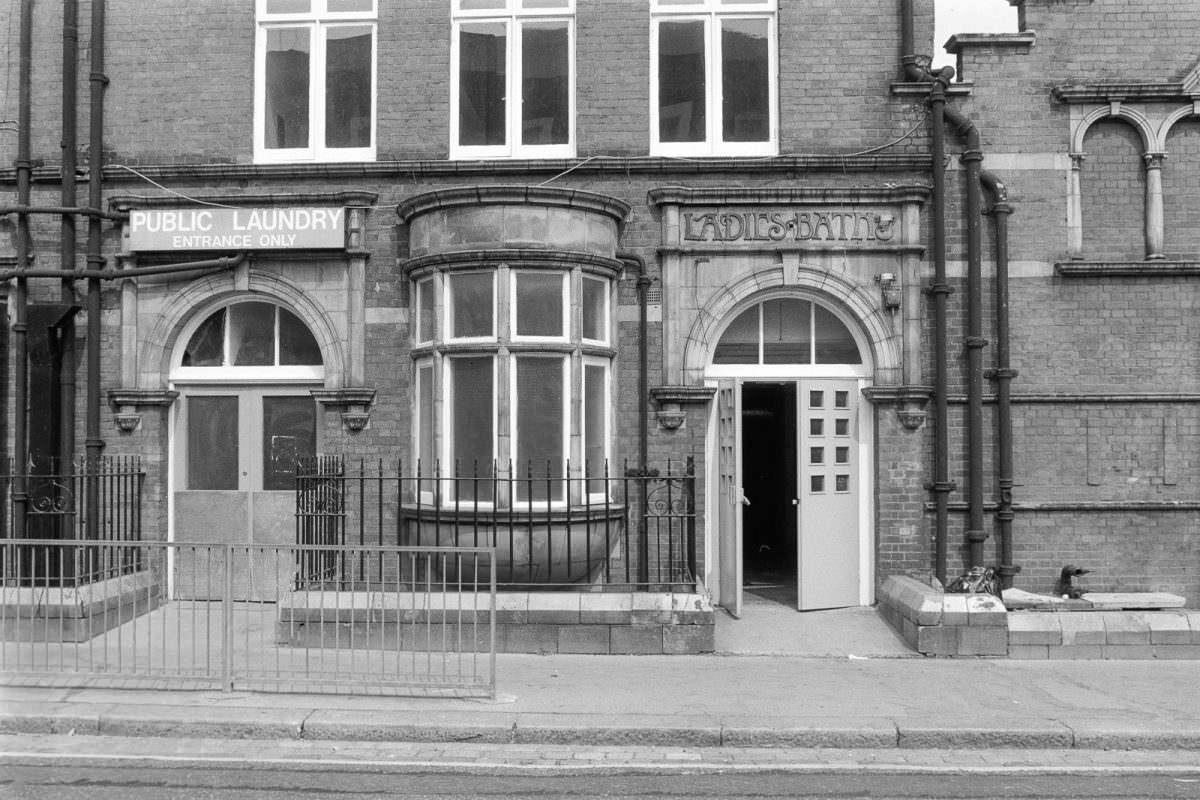
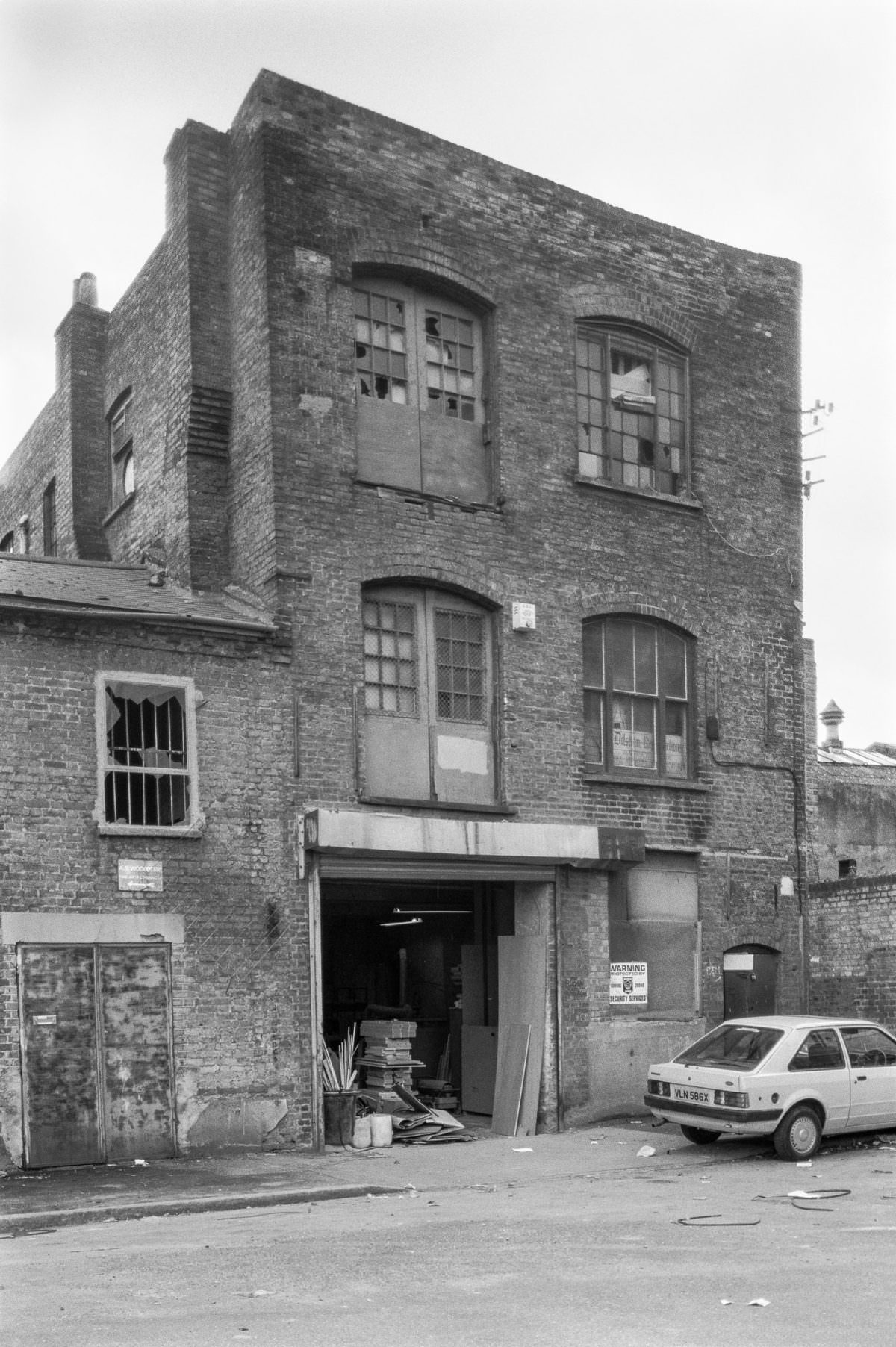
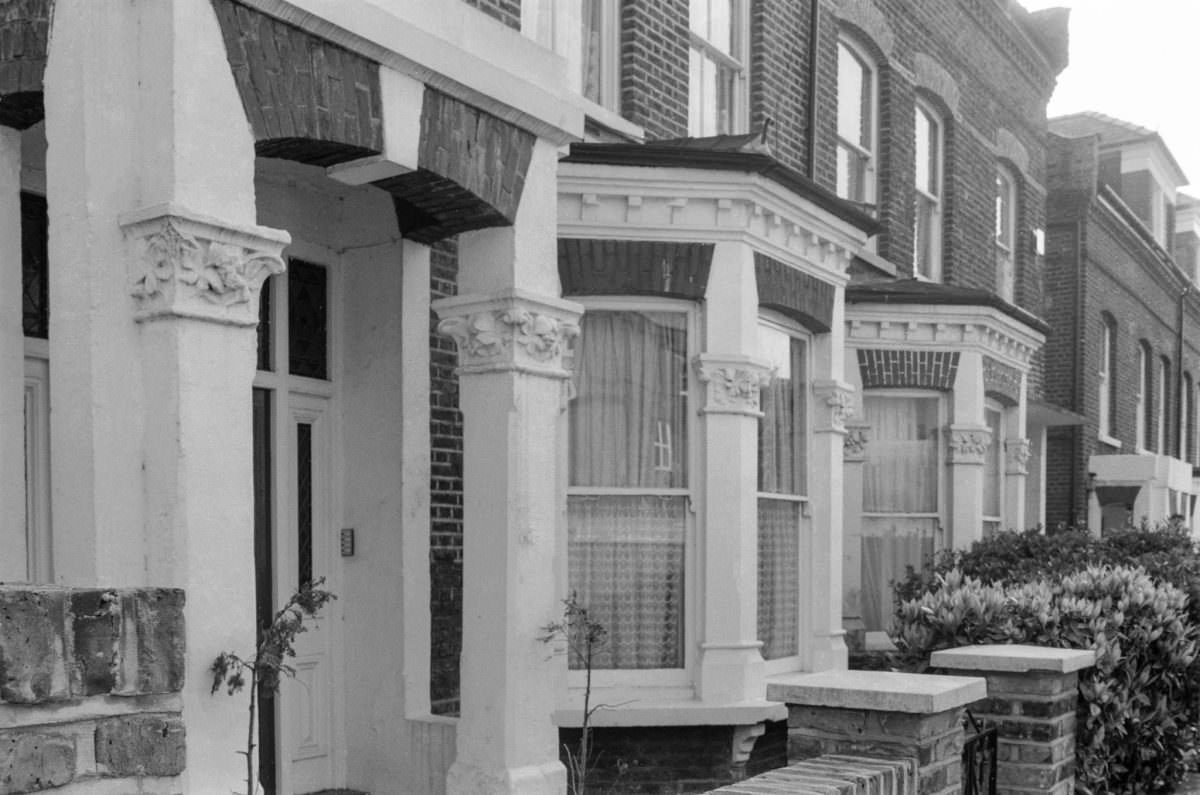
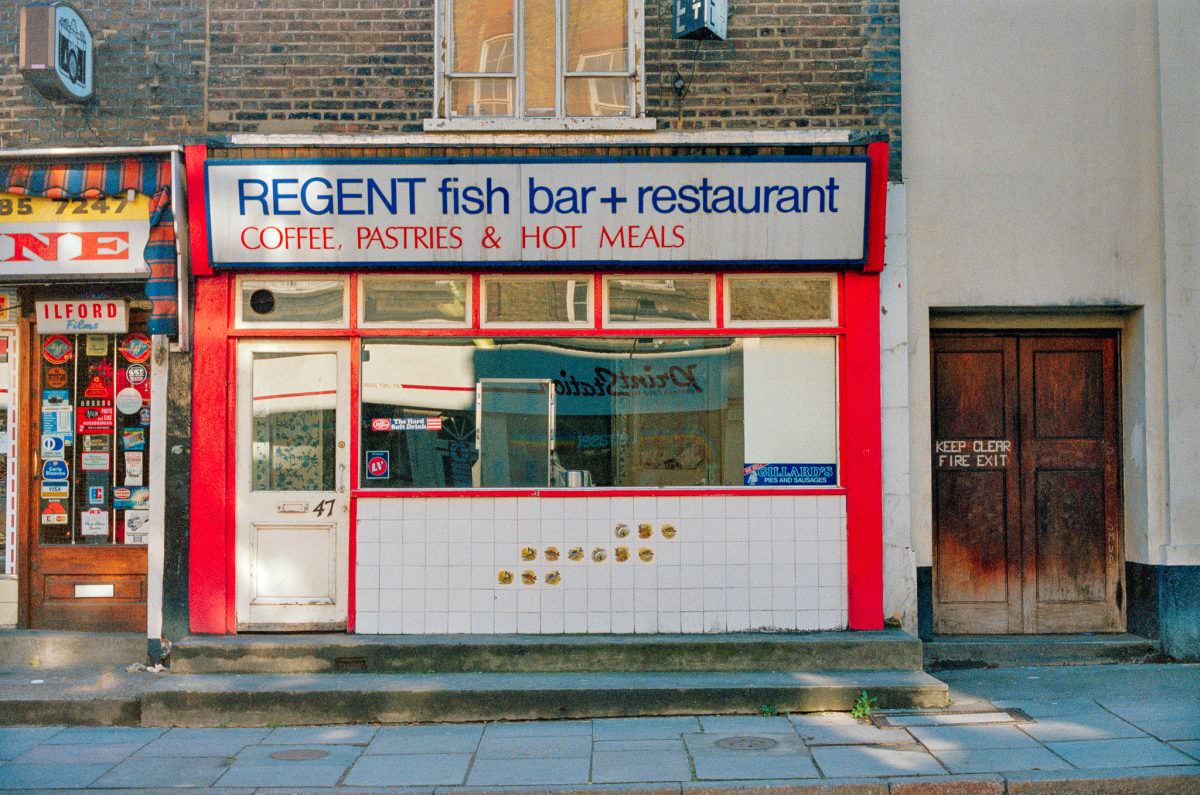
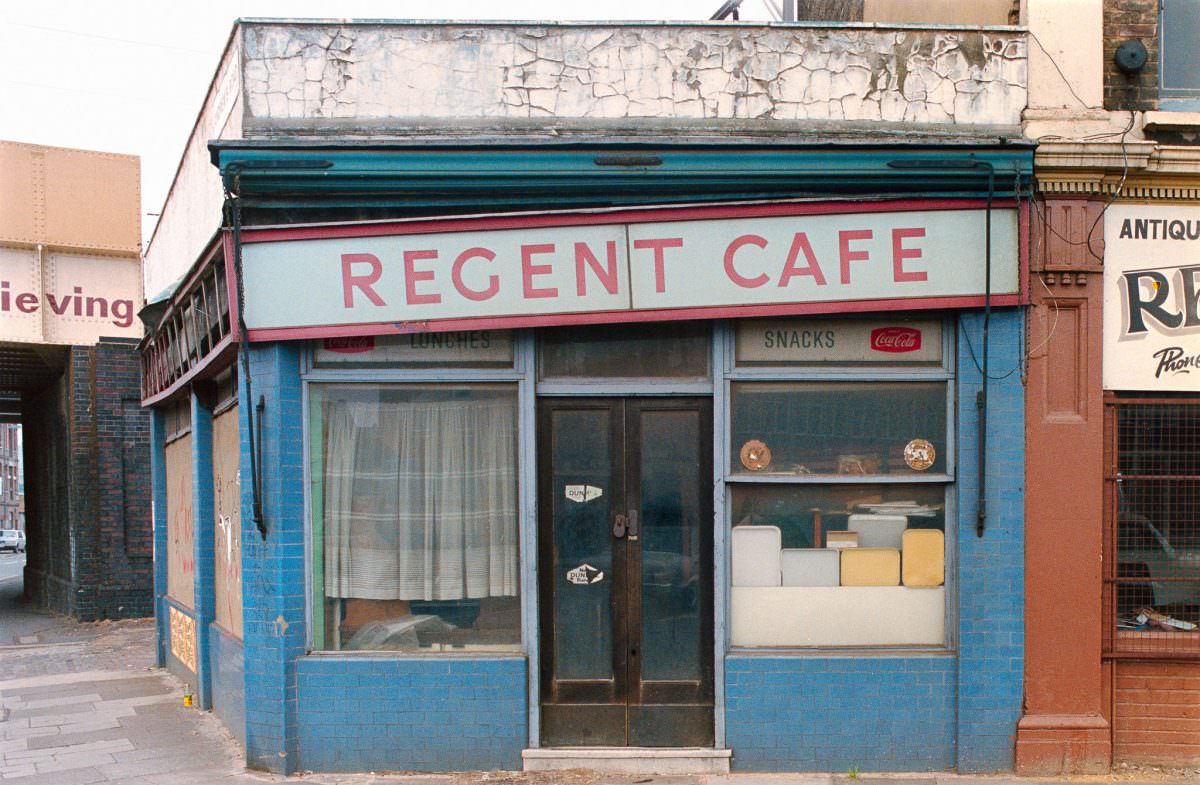
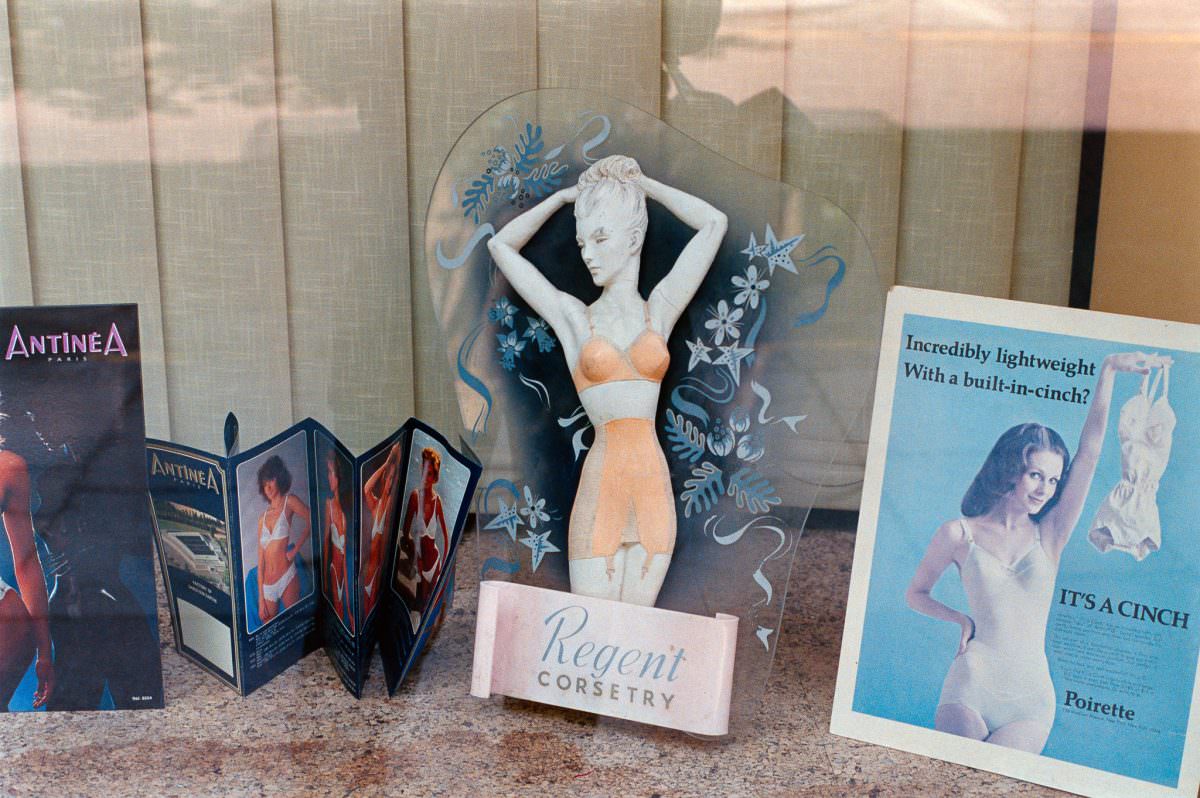
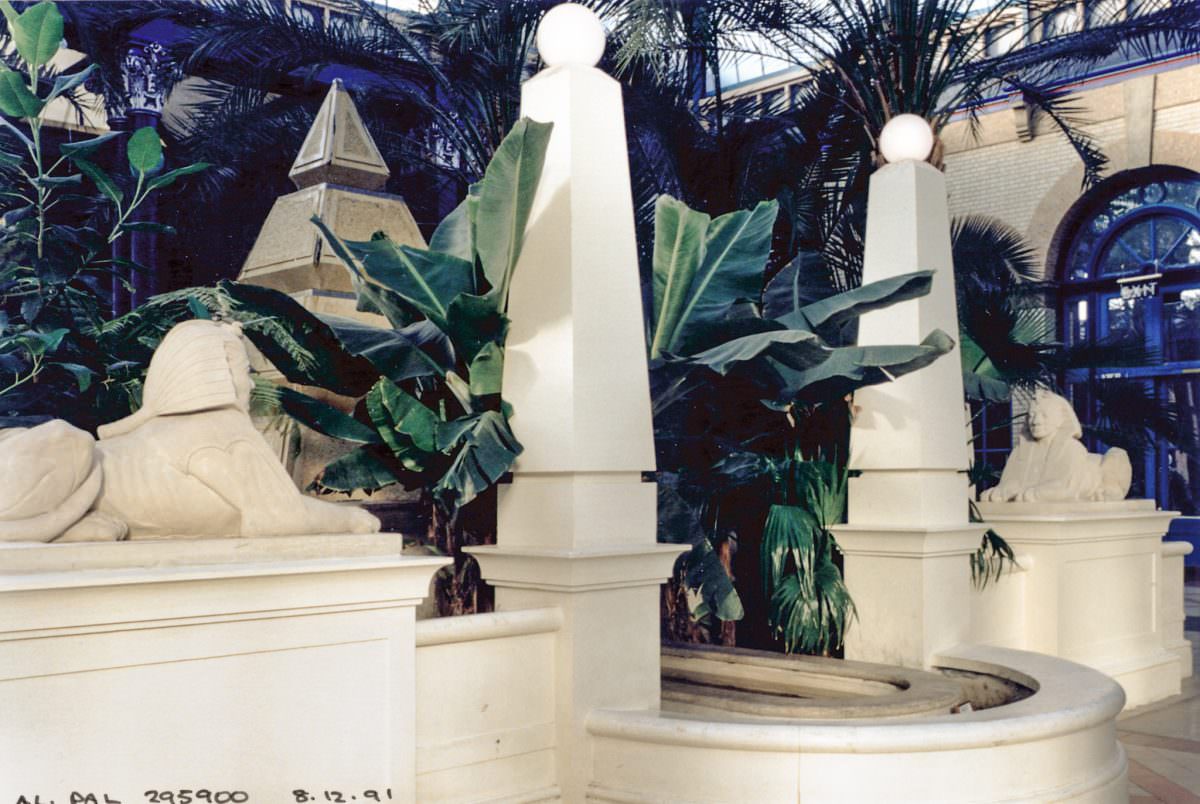
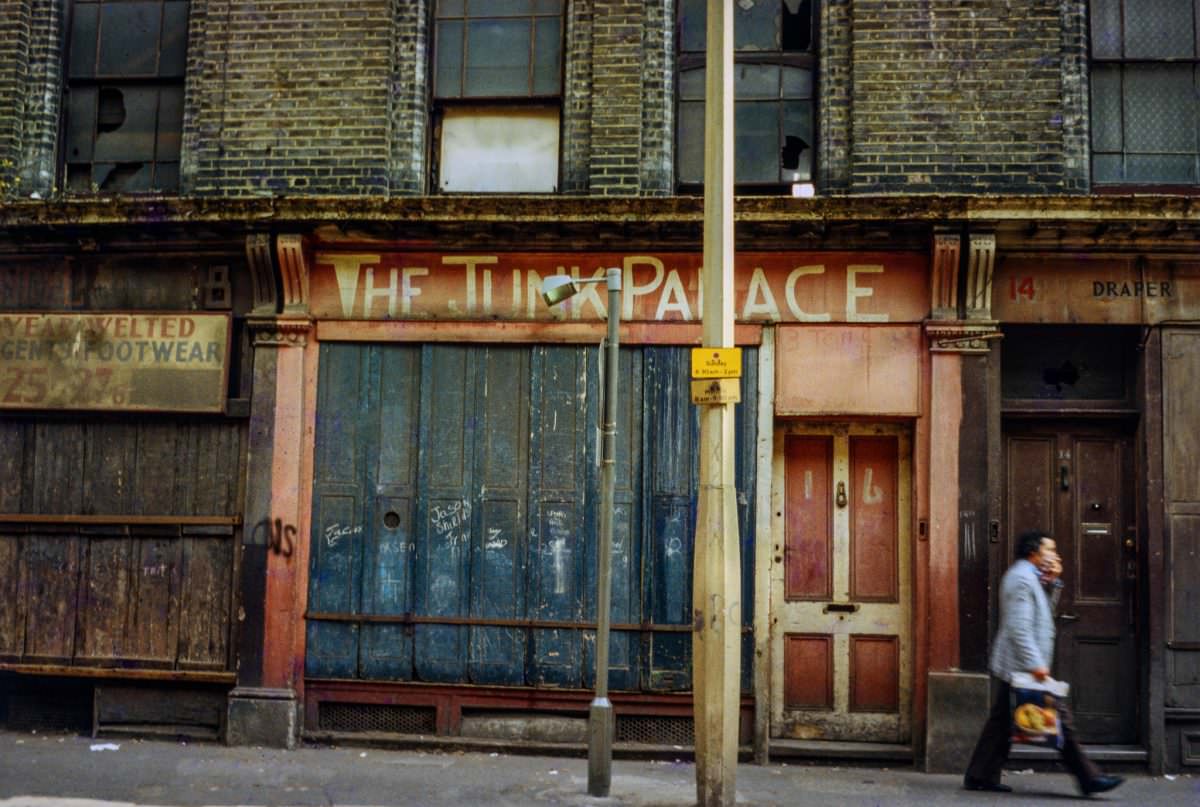
Other photographs filled in the edges of the project. A public laundry and ladies’ baths on Prince of Wales Road in Kentish Town. Works on Prince Edward Road in Hackney Wick. Houses on Princess Crescent in Finsbury Park. The Regent Fish Bar on Parkway in Camden. The Regent Café in Bethnal Green. Regent Corsetry on Store Street in Holborn. Alexandra Palace in Muswell Hill in 1991. The Junk Palace on Cheshire Street near Brick Lane in 1980. Each image landed in a specific place at a specific time, and together they built a map of a city that wore its royal history lightly—in the names of its streets, its shops, its pubs, and its waterways, whether anyone noticed or not.