

Everyone needs a passport to travel internationally — and that includes the most famous people in history. No stylist, no stage lighting, no carefully managed image. Just a small photo, a signature, and a few lines of handwritten personal details. These old travel documents strip away the glamour and show icons as they appeared to border officials: ordinary people filling out paperwork like everyone else. Vintage passports were remarkably simple. They had none of the digital security features found in modern versions. A black-and-white photo, a name, a birthdate, and maybe a physical description were all that separated one person’s document from another’s. That simplicity is exactly what makes them so fascinating today.
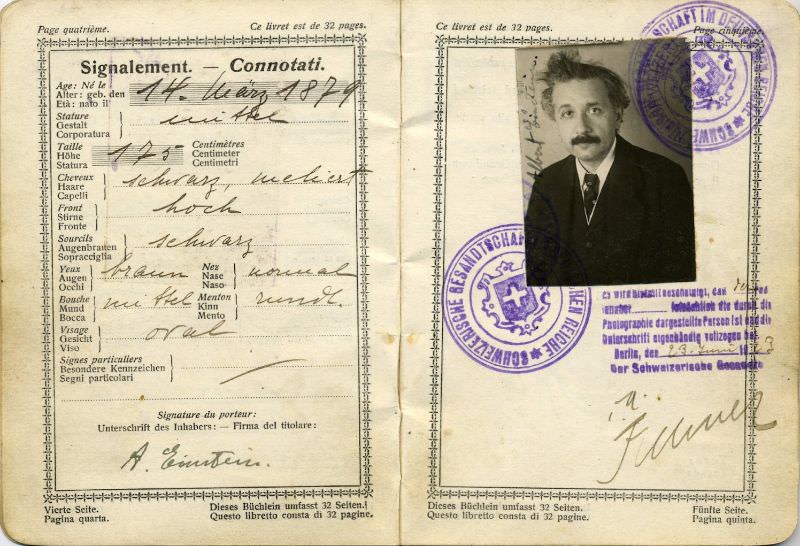
Albert Einstein, whose name became a synonym for genius, looks remarkably understated in his passport photo. He fled Nazi Germany in 1933 and renounced his German citizenship, eventually becoming a U.S. citizen in 1940. His passport captured a man navigating real-world bureaucracy at one of history’s most turbulent moments.
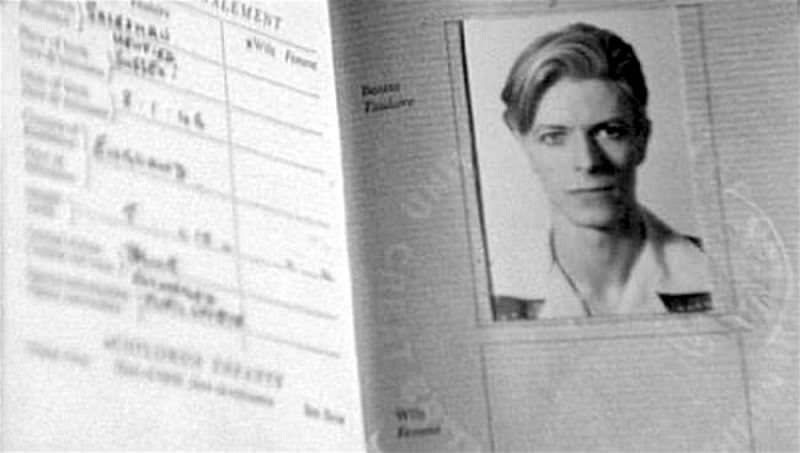
David Bowie reinvented himself constantly on stage, but a passport photo allows for no reinvention. His document shows the man behind the many personas — just David Jones from Brixton, holding a travel document like any other British citizen.
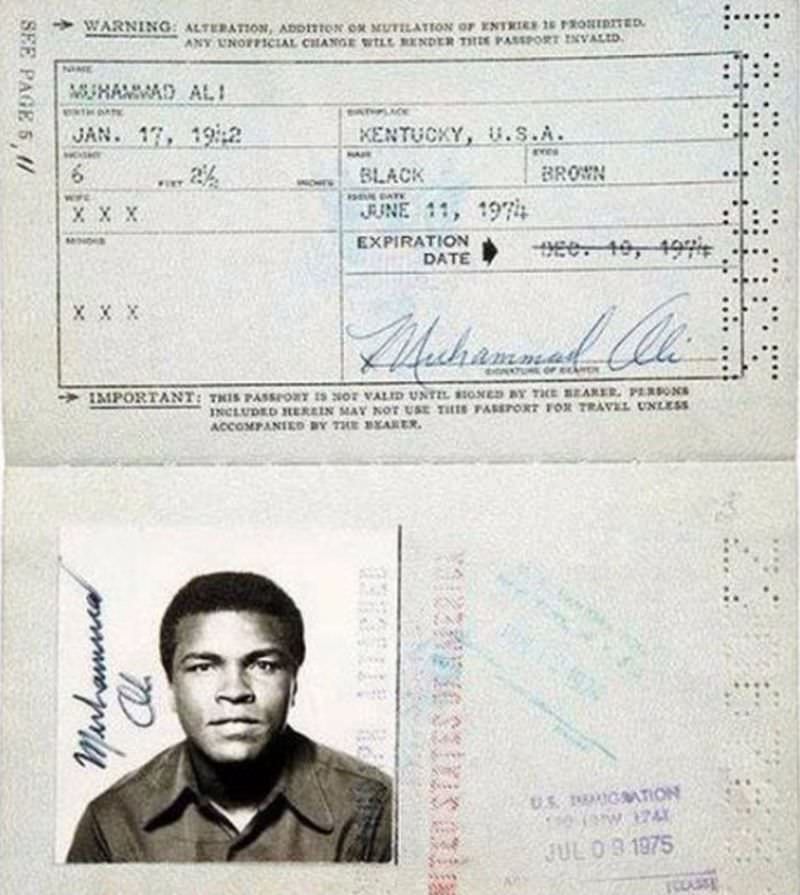
Muhammad Ali traveled the world for some of the most-watched boxing matches in history, including his famous bouts in Zaire and the Philippines. His passport was a well-used document, and his photo carries the same direct, unwavering gaze he brought into the ring.
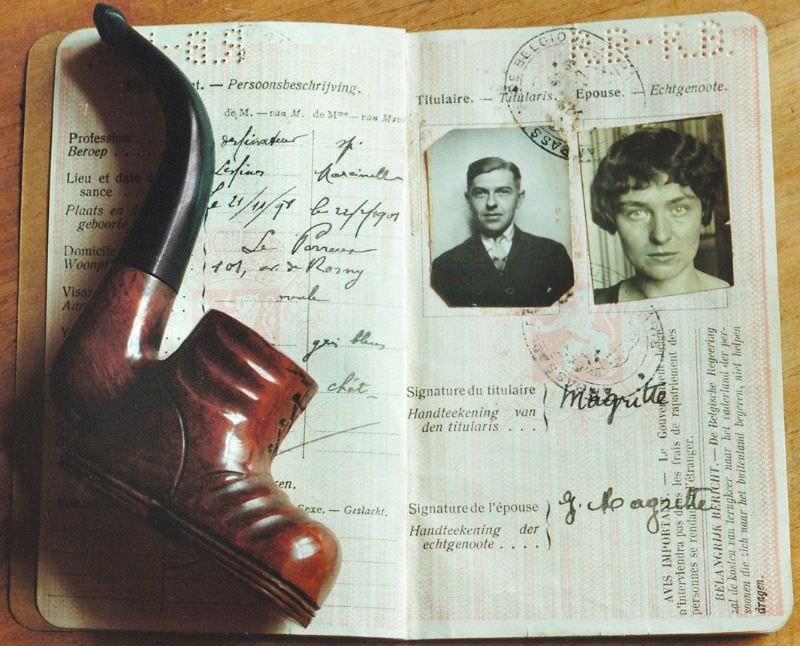
Belgian surrealist painter René Magritte built a career on images that challenged what people accepted as reality. His passport photo, by contrast, is entirely straightforward — a formally dressed man with no bowler hat obscuring his face, as in his famous paintings.
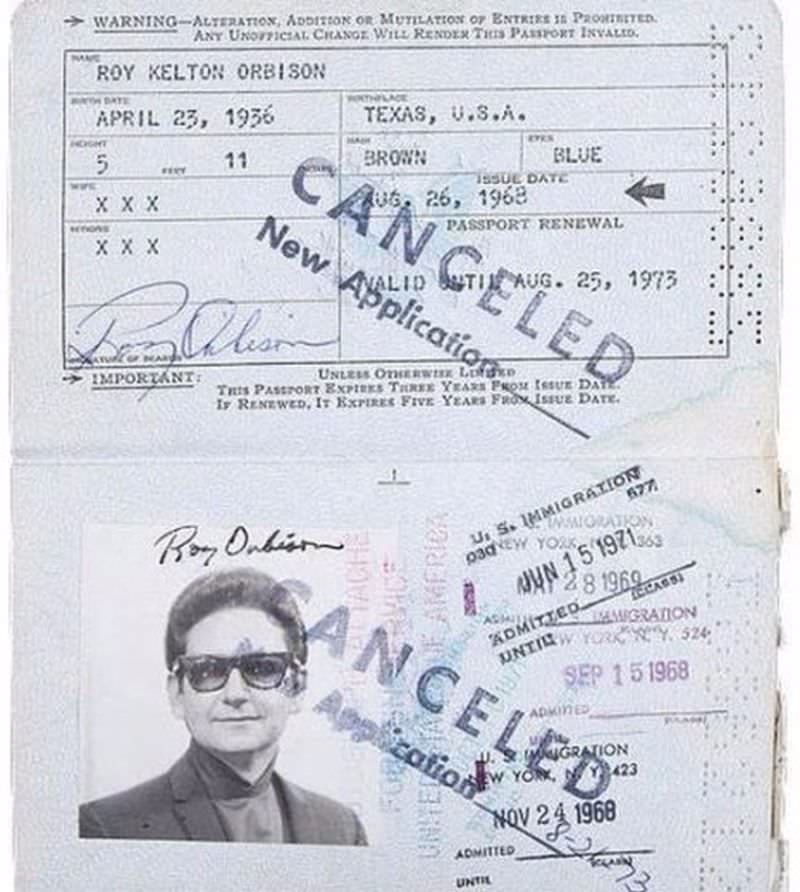
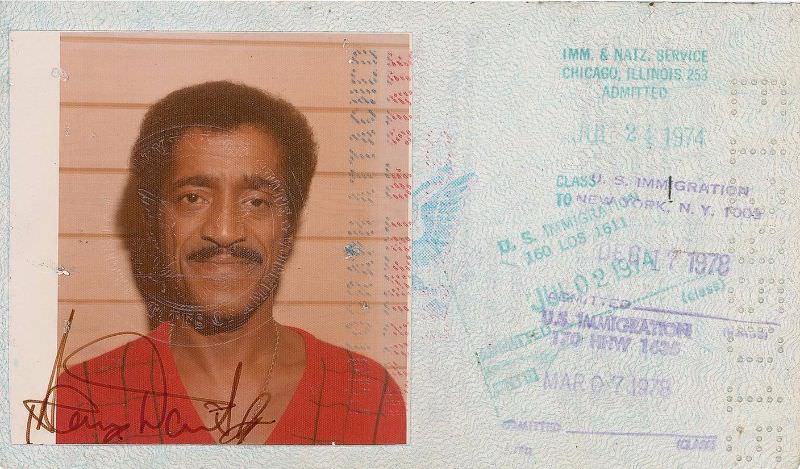
Roy Orbison was known for his dark sunglasses and powerful vocal range. Sammy Davis Jr. was a Rat Pack entertainer who had performed for presidents. Both men appear in their passport photos without the gloss of showbusiness — two working musicians who needed their papers in order to keep touring.
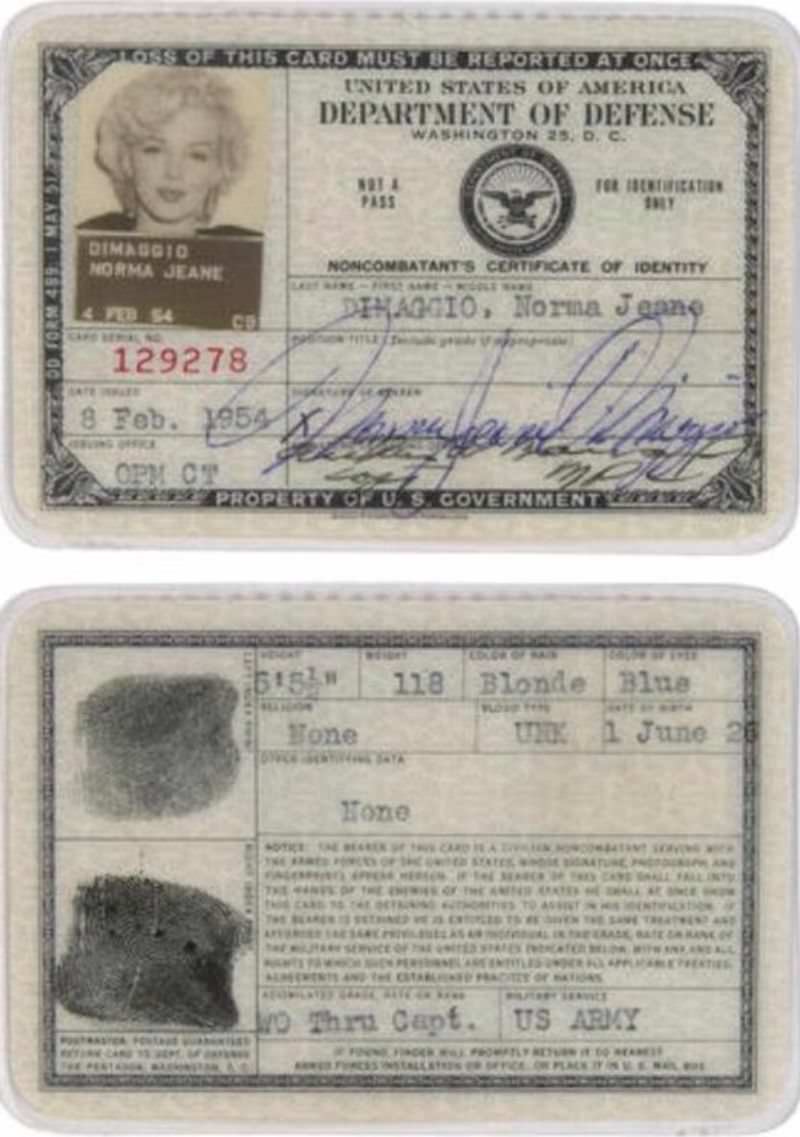
Marilyn Monroe’s passport photo is one of the most striking in this collection. Even in a simple, unstaged portrait, her presence is undeniable. She applied for her passport during the height of her fame, and the document lists her legal name: Norma Jeane Mortenson.
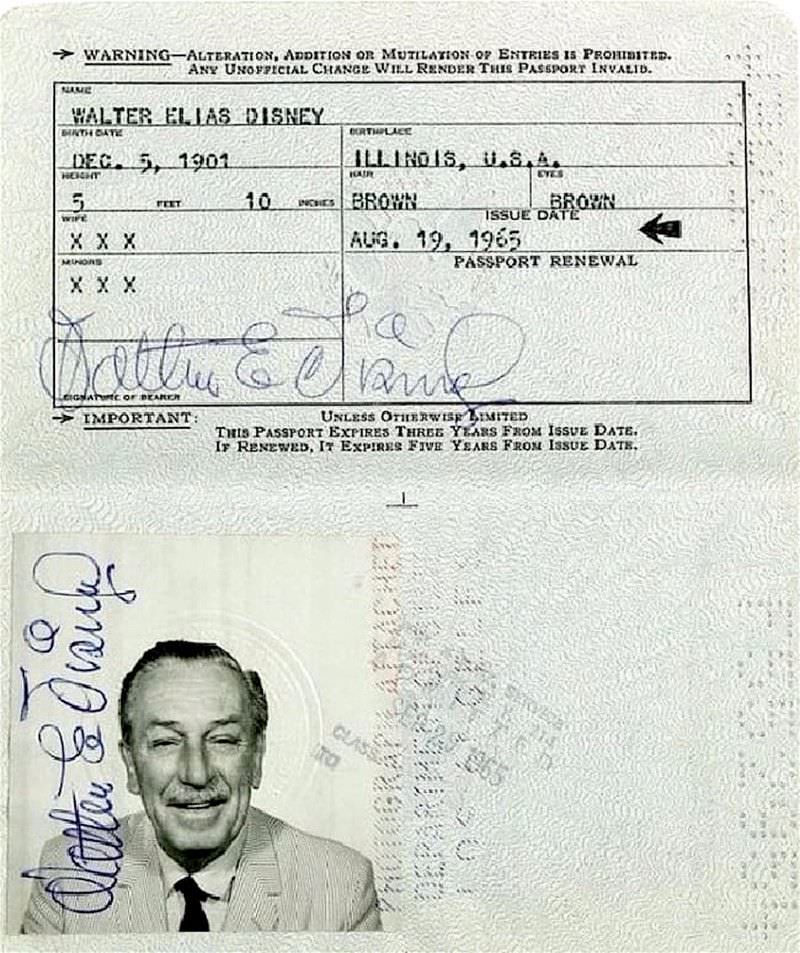
Walt Disney traveled extensively, particularly to Europe, as he built his entertainment empire and scouted locations for his theme park ambitions. His passport photo shows a composed, businesslike man — far removed from the magical worlds he constructed for audiences around the world.
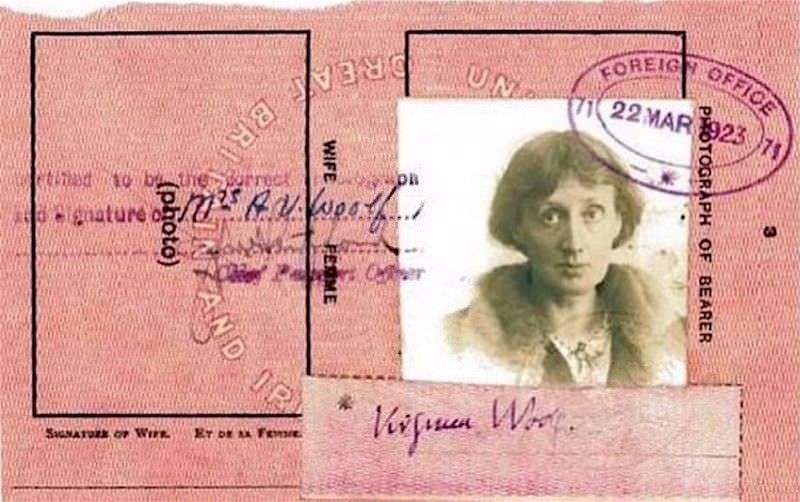
Virginia Woolf and her husband Leonard traveled regularly through Europe during the 1920s and 1930s. Her passport photo shows a serious, contemplative expression — fitting for one of the most intellectually rigorous writers of the 20th century.
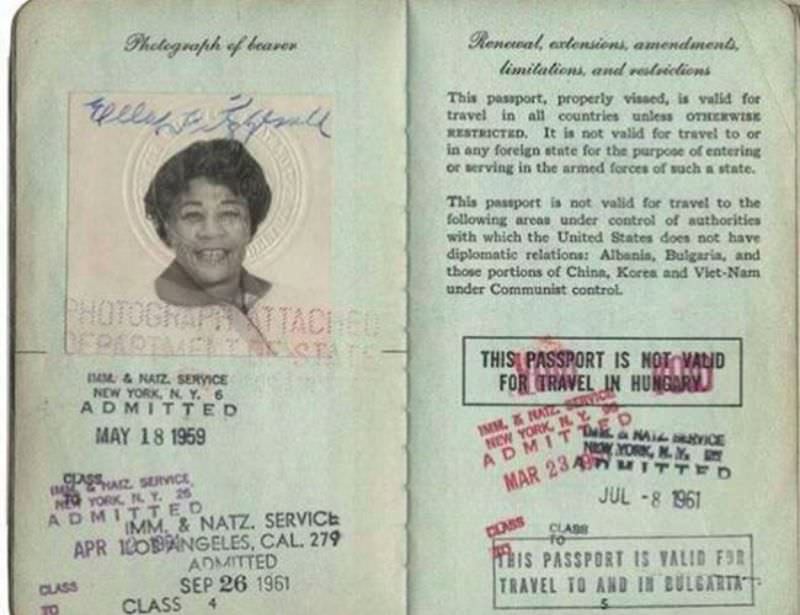
Ella Fitzgerald toured internationally throughout her career, but traveling as a Black American in the mid-20th century came with serious obstacles. In 1954, her manager Norman Granz had to intervene when she was refused service at a Dallas airport. Her passport was a document she relied on constantly, crossing borders to perform for audiences across Europe, Asia, and beyond.
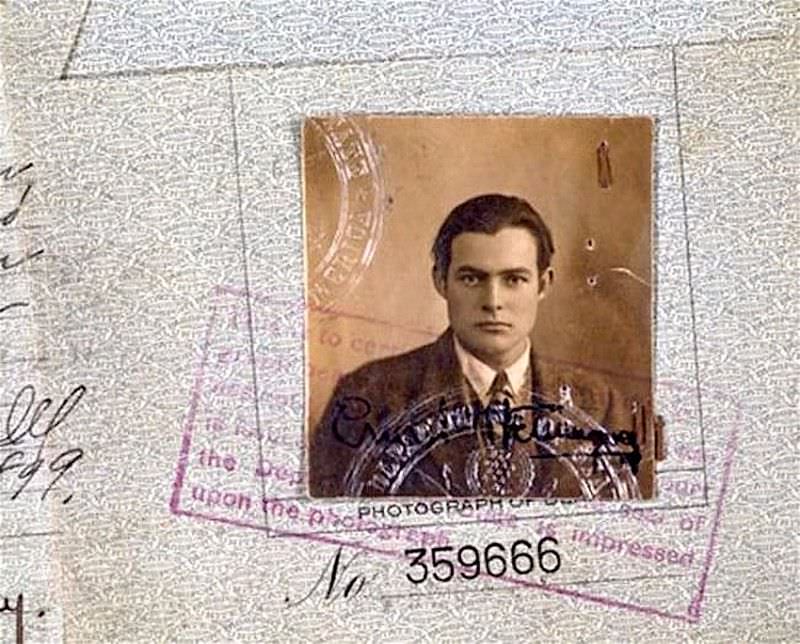
Ernest Hemingway lived as much of his life abroad as he did in the United States. He spent years in Paris, Cuba, Spain, and Africa. His passport was among the most used of any American writer of his era, and his photo reflects a man who was most at home somewhere other than where he started.
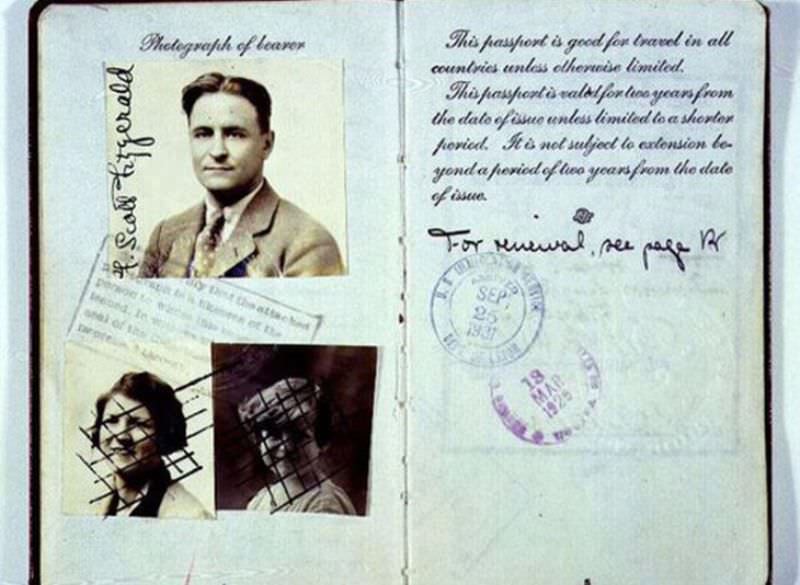
F. Scott Fitzgerald and his wife Zelda were fixtures of the American expatriate scene in 1920s Paris and the French Riviera. His passport connected him to that restless, transatlantic life he later chronicled in his fiction.
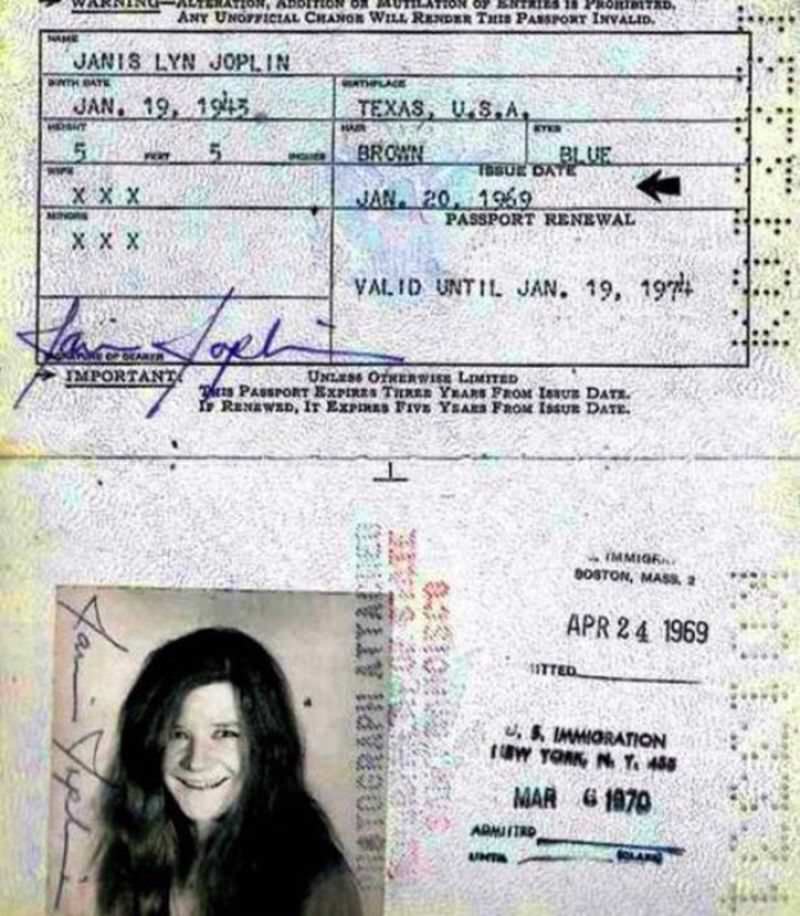
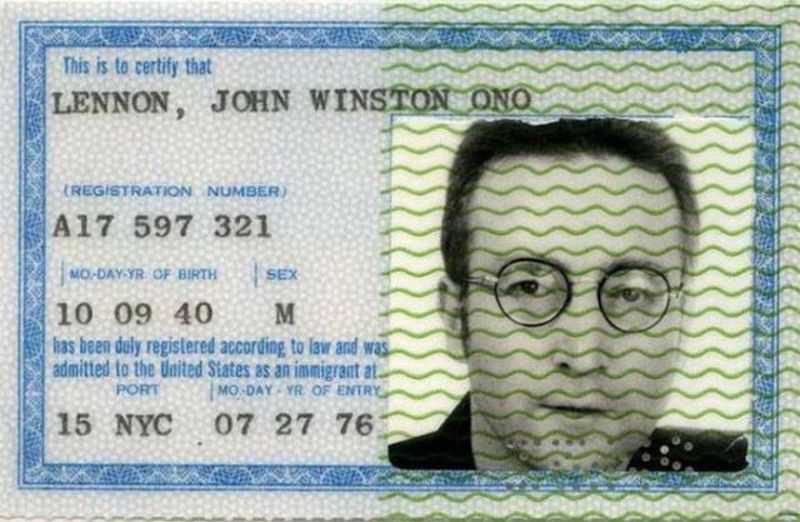
Janis Joplin and John Lennon were two of the defining voices of the late 1960s counterculture. Joplin died in October 1970 at age 27. Lennon was shot and killed in New York City in December 1980. Their passport photos freeze them at specific moments in lives cut short — candid frames that existed purely for legal, not artistic, purposes.
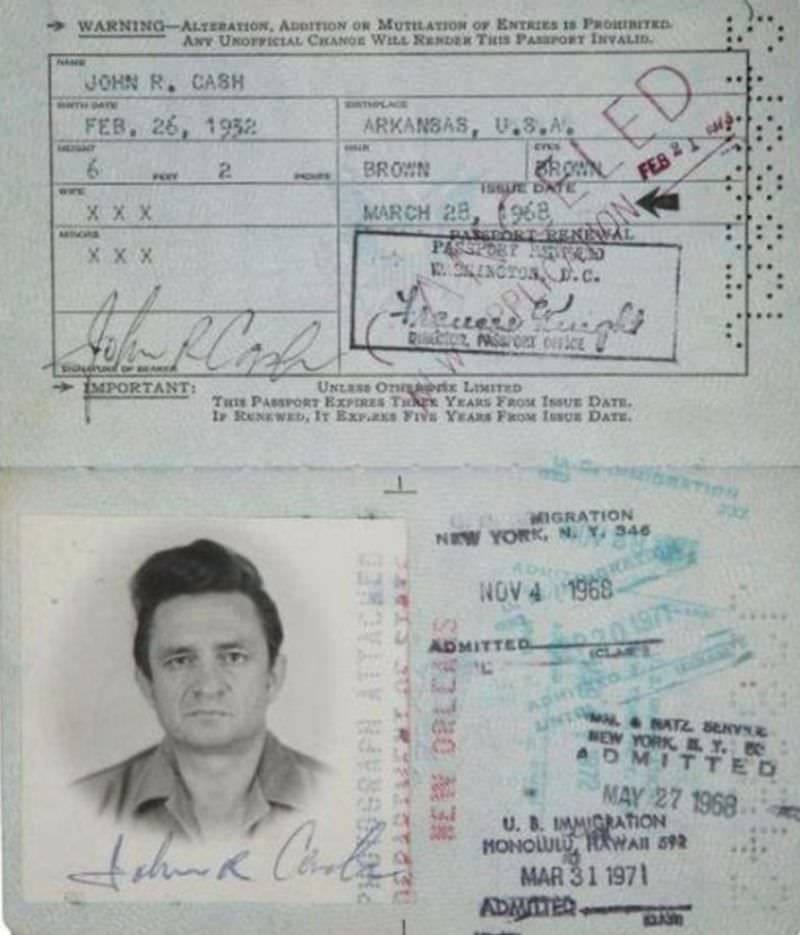
Johnny Cash toured relentlessly across decades, performing everywhere from small American towns to international stages. His passport photo carries the same weathered, no-nonsense quality that defined his public persona — a man who looked exactly the same whether he was on stage or standing in a government office.
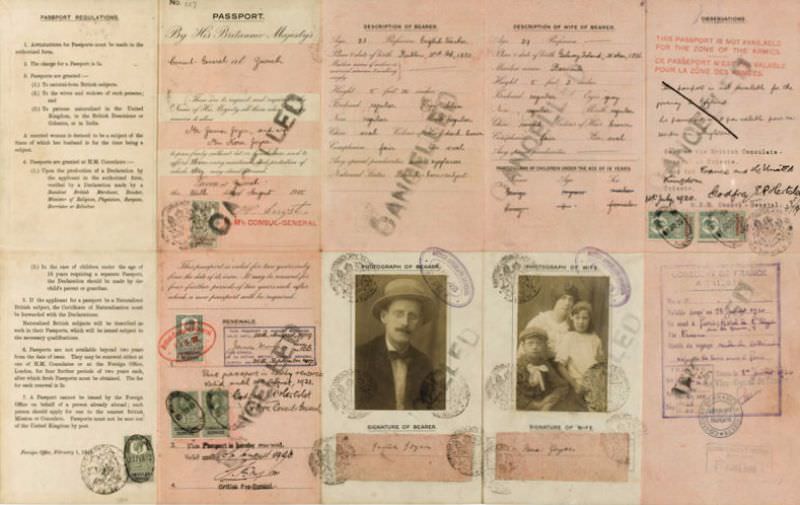
James Joyce spent most of his adult life outside Ireland, living in Trieste, Zurich, and Paris. His passport was essential to a life lived almost entirely in voluntary exile. The document places him firmly in the practical world — a contrast to the dense, labyrinthine prose he was producing at the same time.
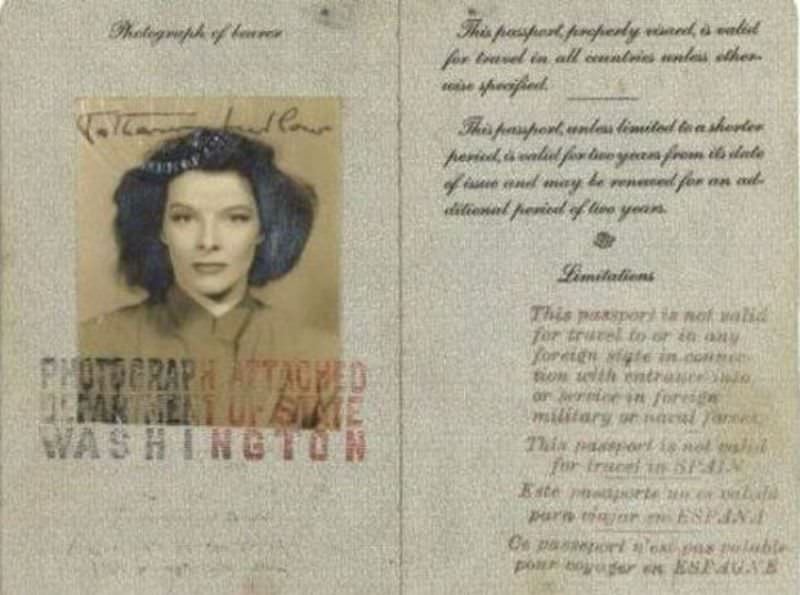
Katharine Hepburn won four Academy Awards — more than any other actor in history. She traveled for film productions and personal trips throughout a career that spanned six decades. Her passport photo is direct and unadorned, matching the no-nonsense reputation she maintained throughout her life in Hollywood.