
By the end of the 1970s, Olympia, Washington had earned a reputation as one of the fastest-growing cities in the entire country. That growth didn’t happen overnight, and it didn’t look the way most people expected. Instead of a booming downtown core, much of the expansion spread outward into the suburbs. Shopping malls pulled commerce away from the city center, while industries like agriculture and oyster farming kept the regional economy moving. The photos below offer a rare, ground-level look at what Olympia was during that decade — its buildings, its people, and its tensions.
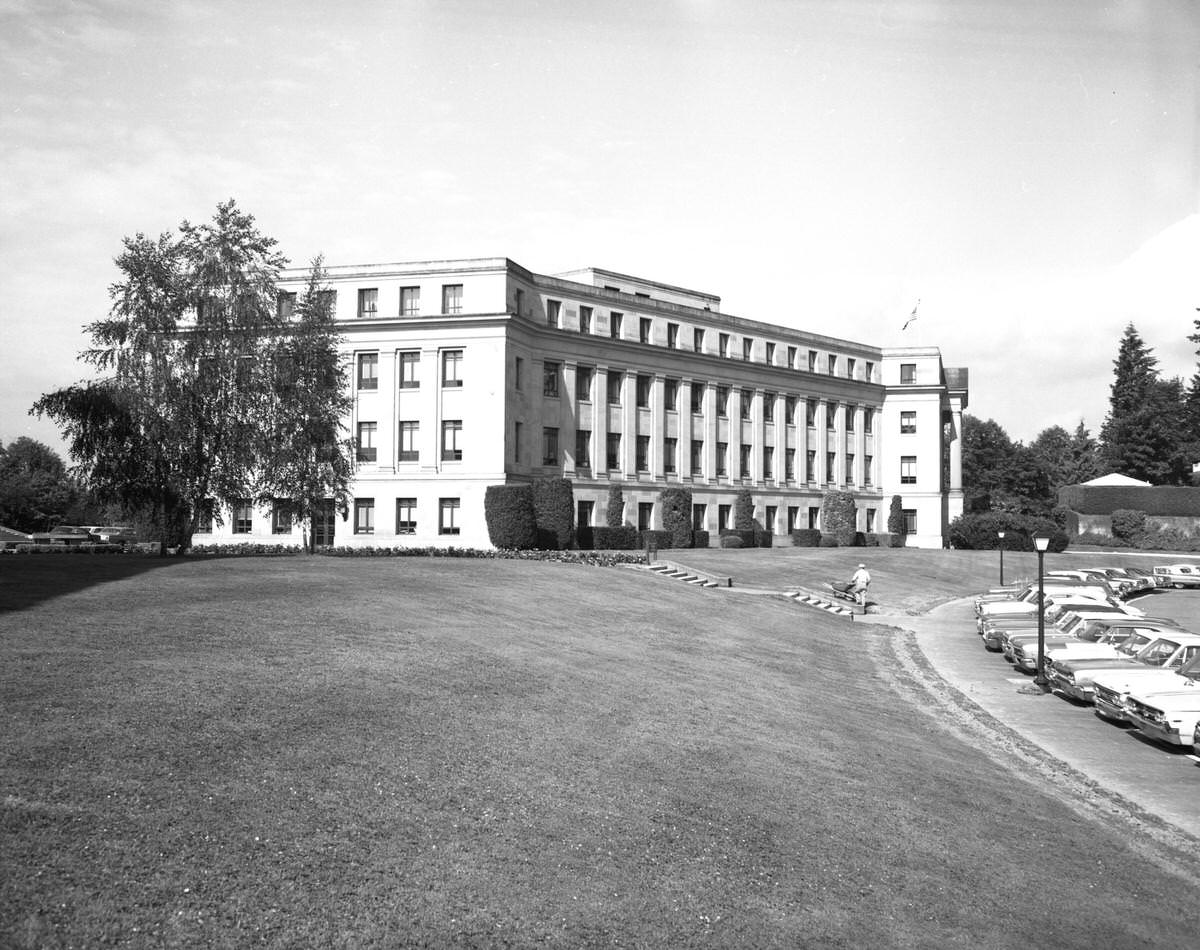
The O’Brien Building was completed in 1940 and designed by architect Joseph Wohleb, one of the most prominent figures in Olympia’s architectural history. By the 1970s, buildings like this one stood as anchors in a downtown that was quietly losing foot traffic to the suburbs.
Long before the 1970s boom, Olympia’s identity was tied to its most prominent families and political figures. The Percival Mansion is a window into that earlier era.
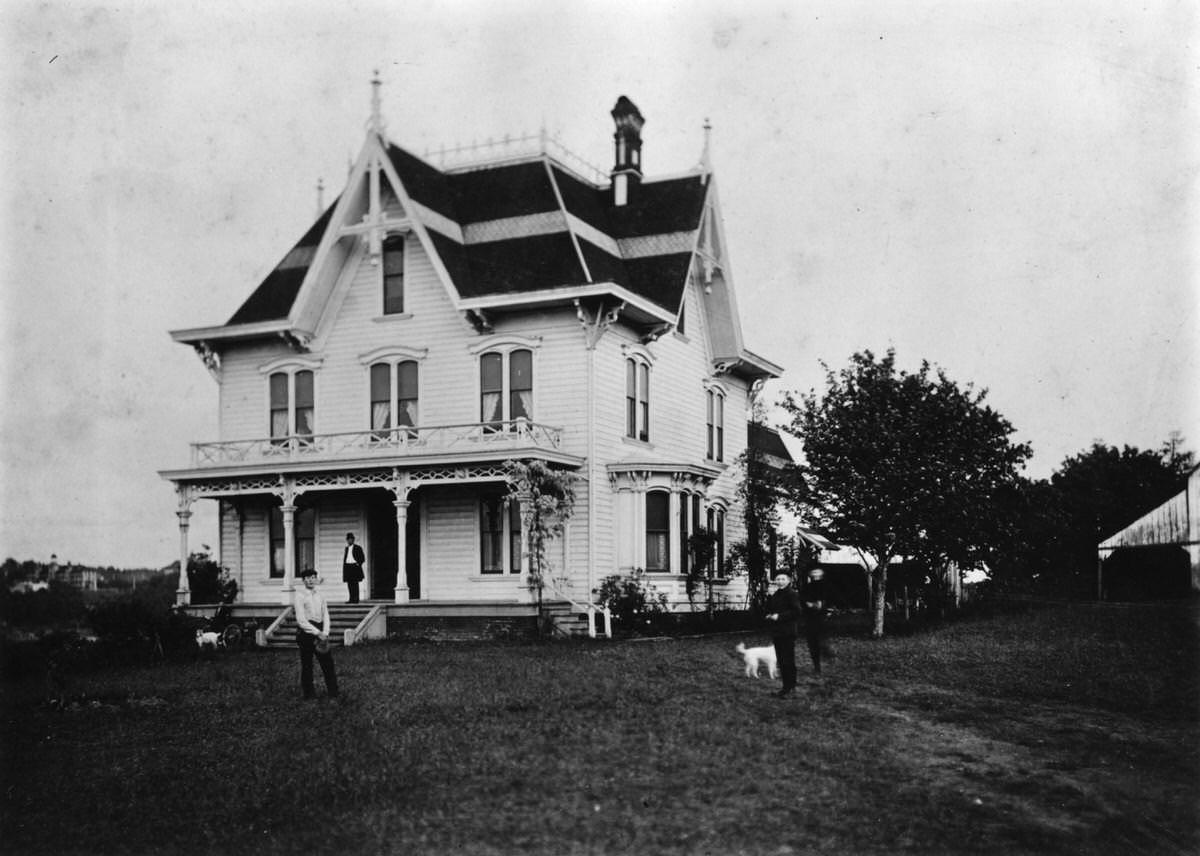
This 1905 photograph captures Governor Mead on the porch of the Percival Mansion, with family members Rollie, Wendell, and William Damon Mead on the lawn — and a dog visible nearby. The image reflects the tight connection between Olympia’s prominent families and the seat of state government.
Government wasn’t just conducted in grand mansions and capitol buildings. Behind the scenes, institutions like the Washington State Archives quietly preserved the documentary record of the state. By 1979, the Archives research room was a working hub for historians, researchers, and officials alike.
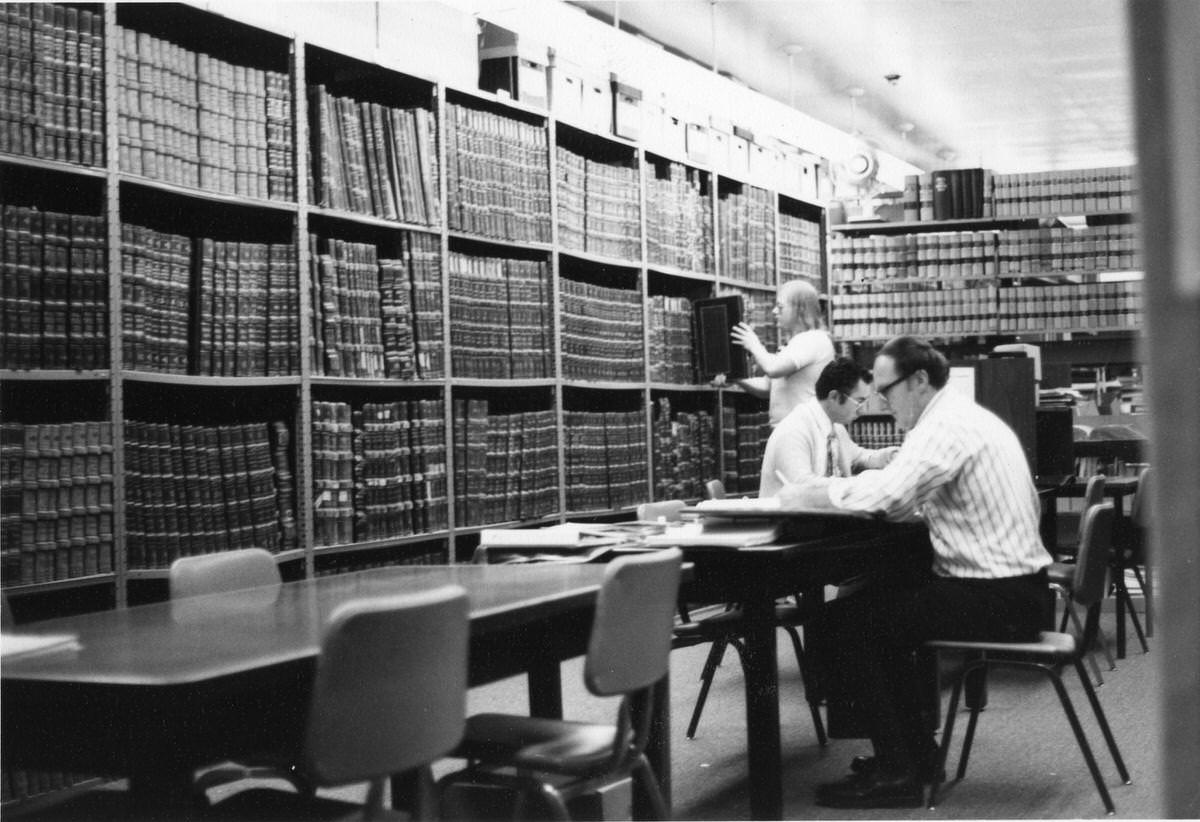
State Archivist Sid McAlpin is seated at left, and Deputy State Archivist David Owens is seated at right. The room captures the meticulous, unglamorous work of maintaining public records — work that made historical research possible for generations to come.
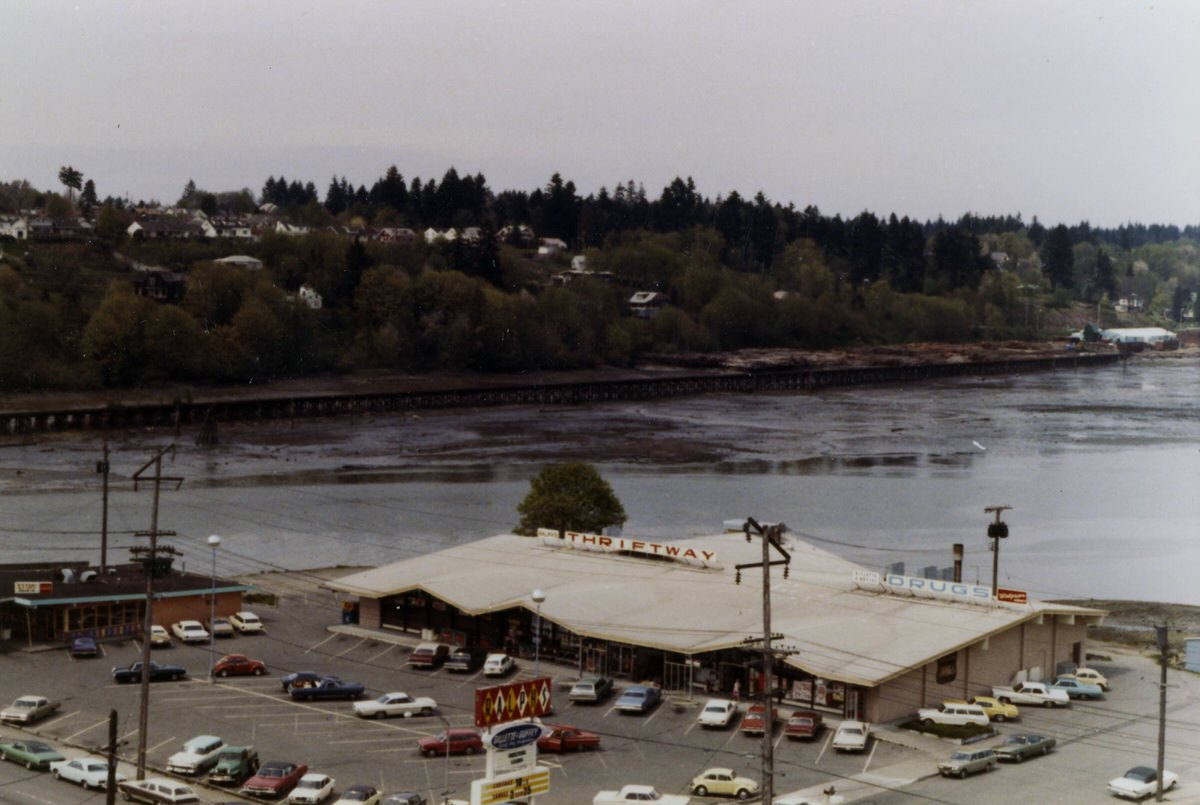
Everyday commercial life in 1970s Olympia had its own rhythm. Grocery stores, local shops, and neighborhood businesses served a population that was growing faster than city planners could keep up with.
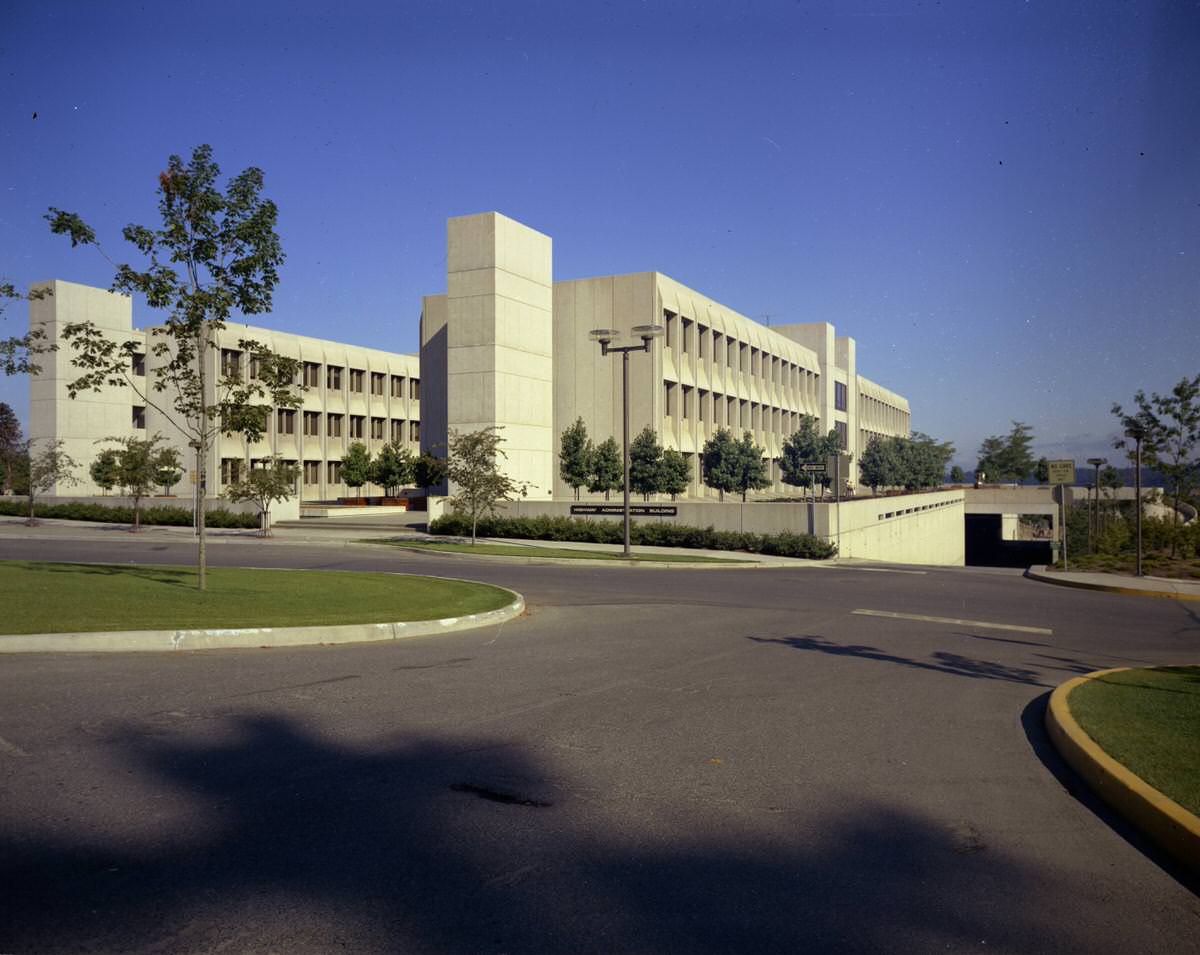
State government buildings were a constant presence in the city’s landscape. The Transportation Building on Maple Park Avenue SE was one of the functional pillars of Olympia’s administrative infrastructure during this period.
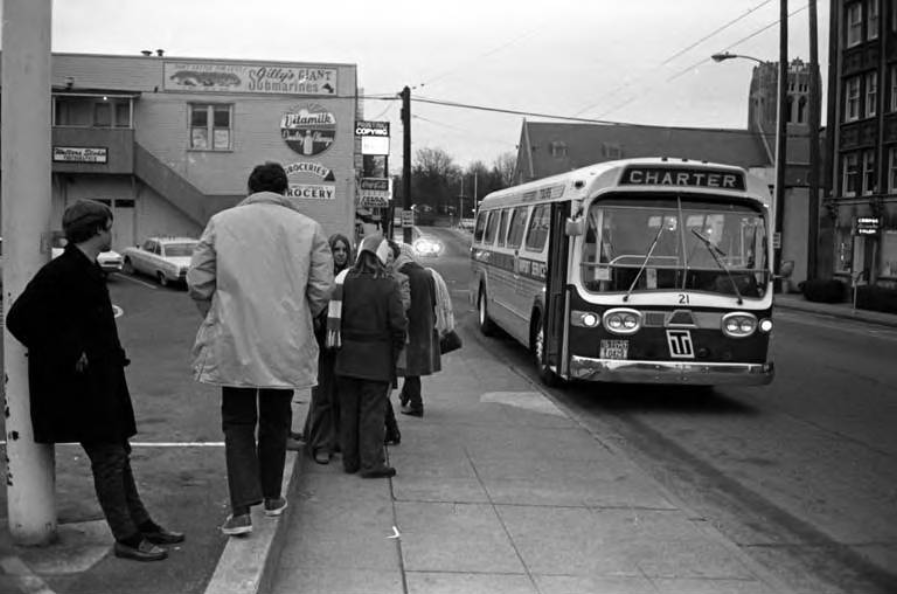
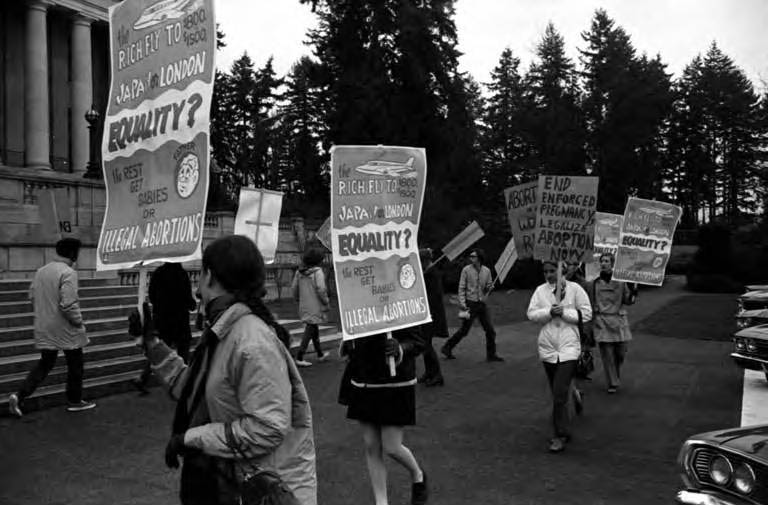
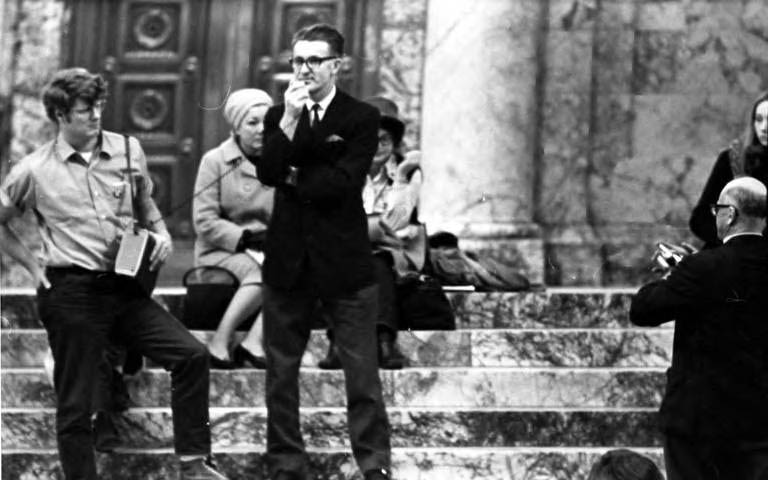
Olympia was also a stage for political activism in the early 1970s. In 1970, abortion rights advocates organized a rally at the state capitol, drawing demonstrators from across the region. Activists boarded chartered buses in Seattle’s University District to make the trip south to Olympia.
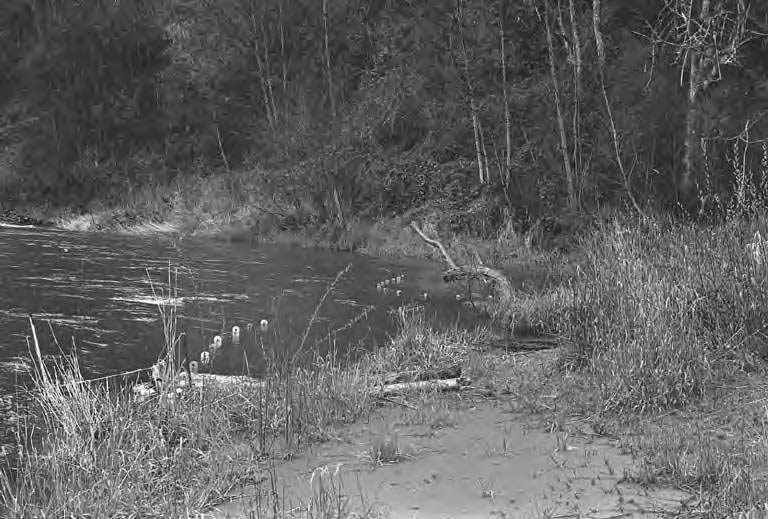
That same year, Indigenous fishing rights were at the forefront of conflict along the Nisqually River. The use of drift nets at Frank’s Landing was a direct assertion of treaty rights — a flashpoint in a broader legal and cultural battle that had been building for decades.
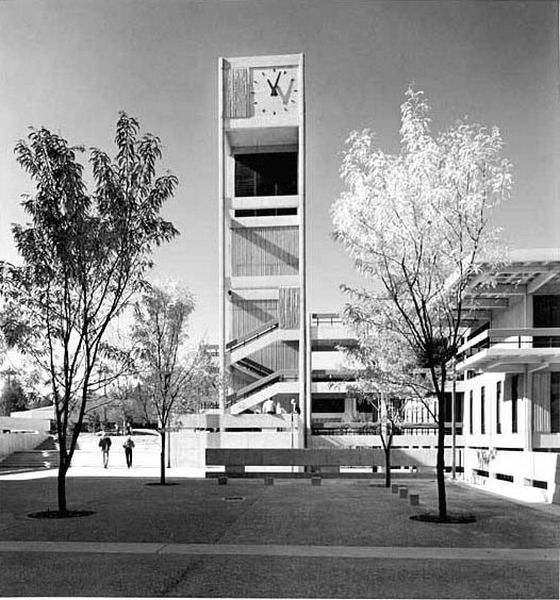
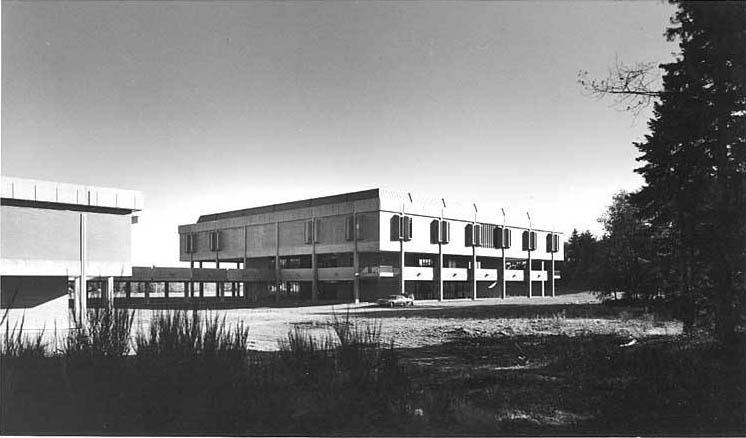
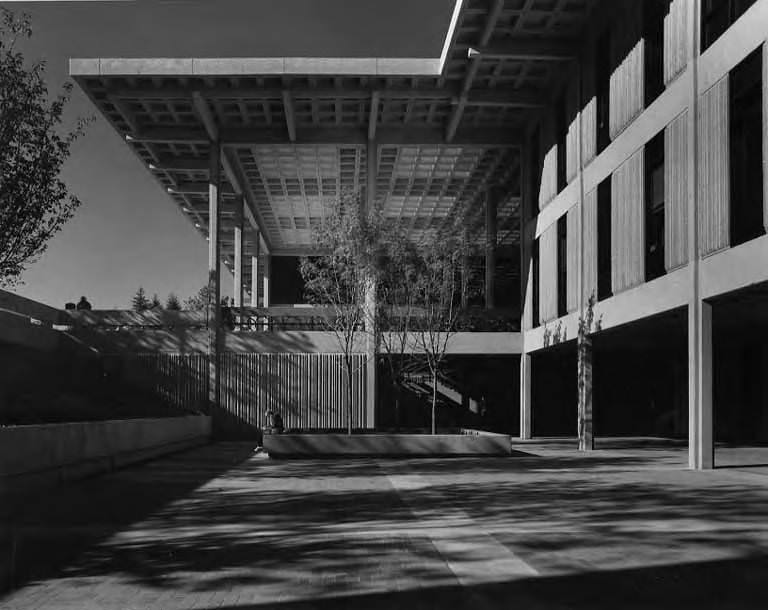
One of the most significant developments of the early 1970s was the opening of Evergreen State College in April 1972. Built on 1,000 acres at Cooper Point, the college was designed with unconventional architecture and a teaching model that broke from traditional academic structures. It quickly became one of Olympia’s most distinctive institutions.
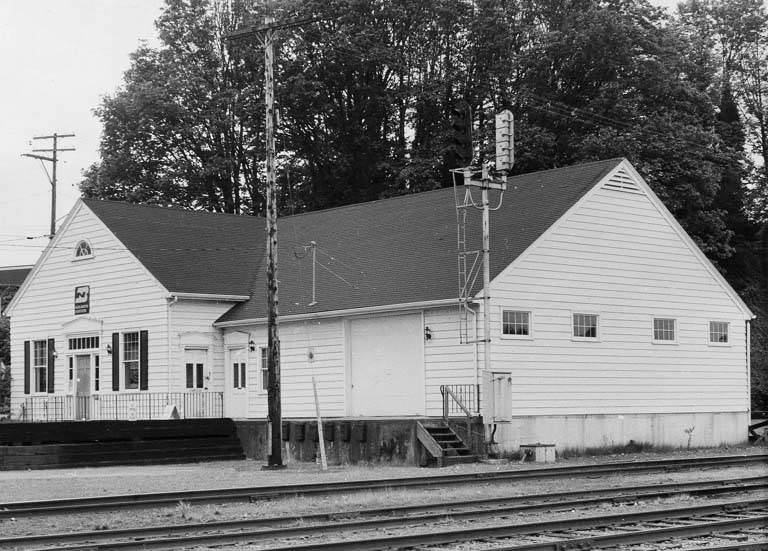
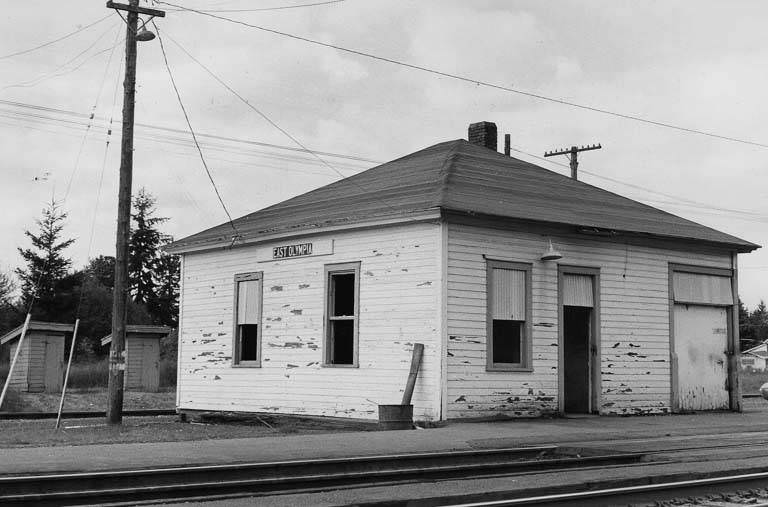
Rail transport still played a role in connecting Olympia to the wider region during the 1970s. Both the Northern Pacific Burlington Northern station in the city proper and the East Olympia station served the area’s freight and passenger needs.
Community events gave Olympia residents a reason to gather in shared public spaces. On May 18, 1975, the State Capital Museum hosted Fair Day — an outdoor event that brought art and activity to the museum grounds.
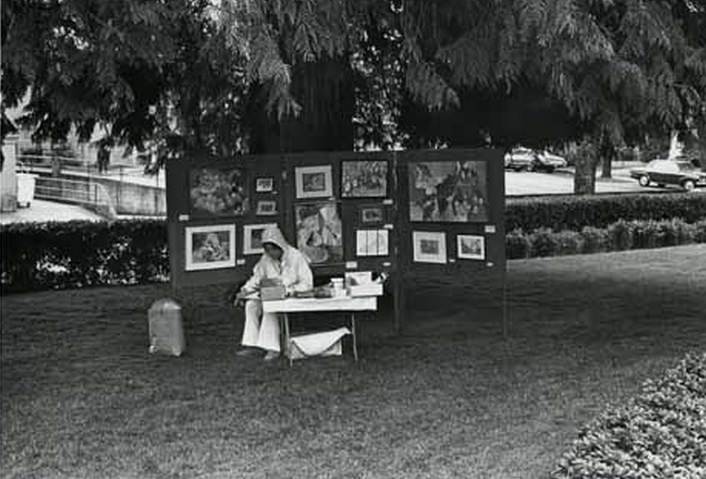
An outdoor art display table was set up on portable folding stands at the State Capital Museum in Thurston County. A woman dressed in a white parka and white slacks sat at the table, with the museum’s back entrance and a large cedar tree visible in the background. It was a modest but lively snapshot of community life in mid-decade Olympia.




