
By the early 1970s, New Zealand’s population had just crossed three million people. The country’s economy was growing, but it carried real problems underneath. Inflation was climbing, unemployment was rising, and thousands of New Zealanders packed up and moved to Australia in search of better opportunities. Then came 1973, and two blows hit at once: the global oil crisis rattled the economy, and Britain’s entry into the European Economic Community cut deeply into New Zealand’s export trade. The government responded by borrowing heavily from overseas, piling up large budget deficits that would shape the country’s finances for years.
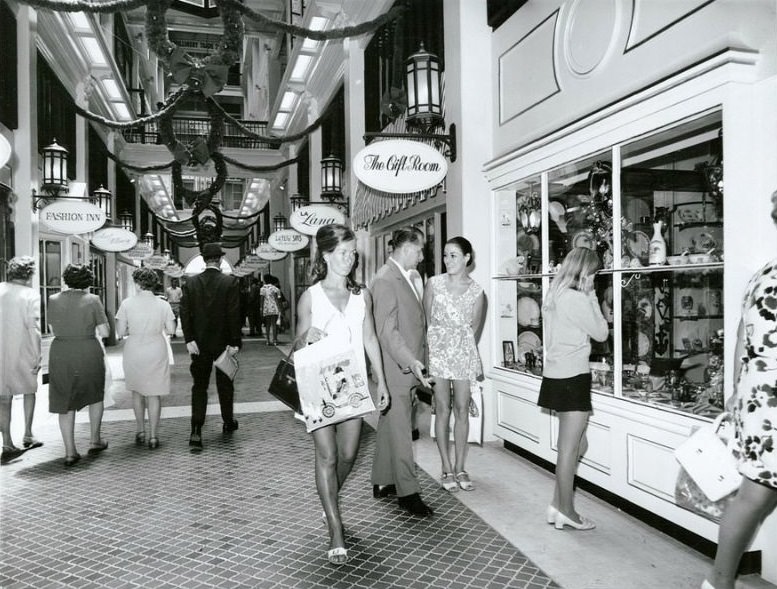
Despite these pressures, daily life carried on with a rhythm that these photographs capture beautifully. Auckland’s covered shopping arcades were busy at the end of 1970, their storefronts neat and well-kept, drawing in shoppers looking for everyday goods. The city’s commercial heart was active and growing, even as national challenges mounted.
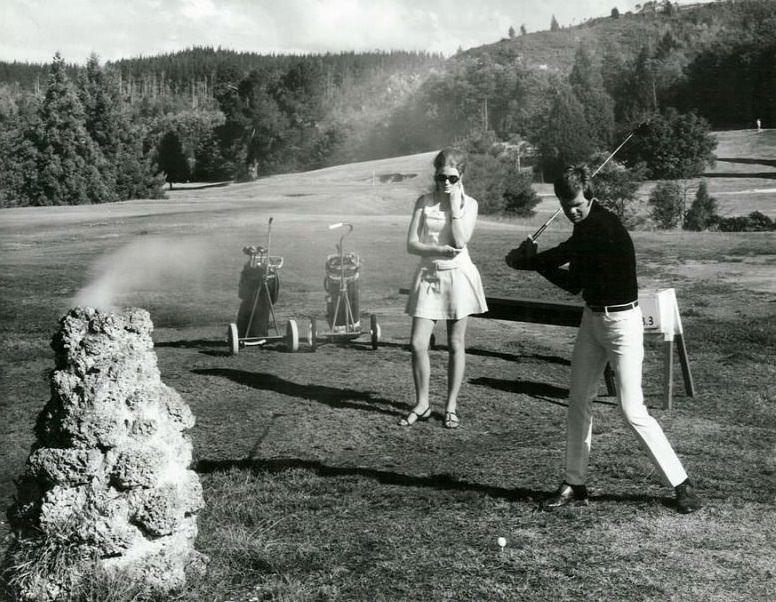
Leisure time in New Zealand was closely tied to the outdoors. Golf courses like Arikikapakapa in Rotorua offered wide green fairways set against striking volcanic landscapes, drawing players from across the region. Equally popular were the country’s mountain slopes.
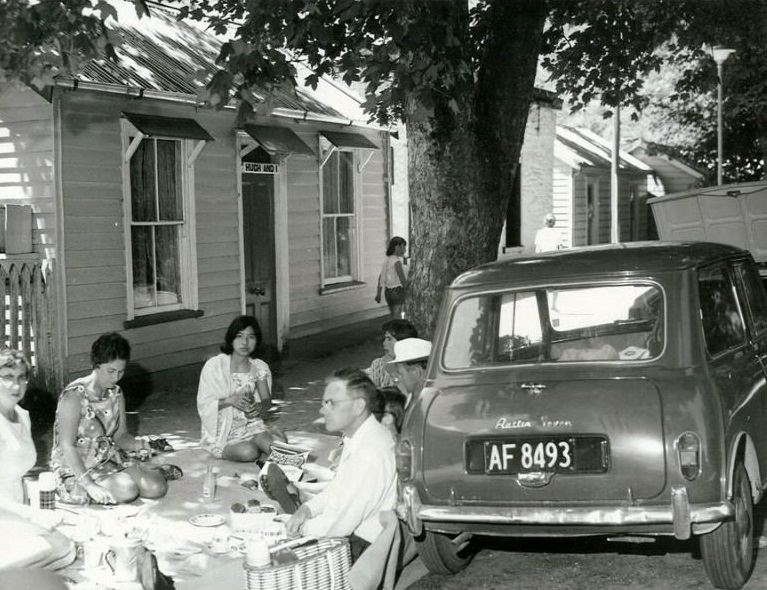
In Otago, the gold-rush town of Arrowtown retained much of its nineteenth-century character along High Street. Stone buildings and timber shopfronts lined the road, a quiet contrast to the busier urban centers further north. Small towns like this one gave the country much of its distinctive character.
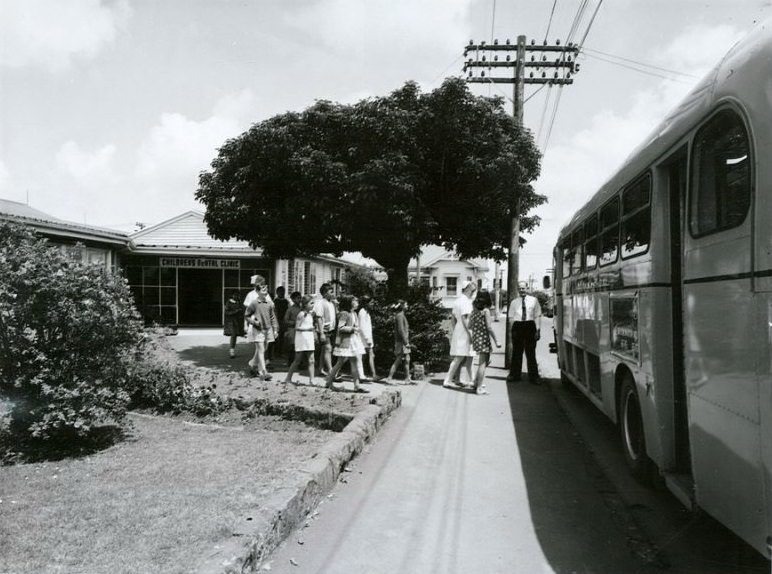
New Zealand’s health system in this era relied heavily on trained dental nurses who worked directly in schools, treating children across the country. The Auckland School for Dental Nurses at Mt Eden was one of the institutions producing that workforce. As the decade advanced, the women’s movement pushed for greater recognition of women in professional roles, and the changes were visible across fields from healthcare to law.
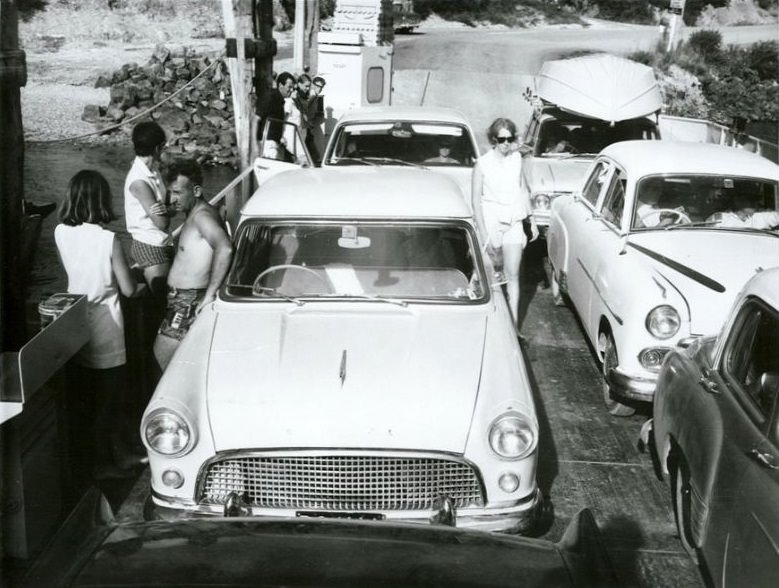
Getting around New Zealand often meant relying on ferries, particularly in the coastal north. The car ferry Opua connected Opua and Russell across the Bay of Islands, carrying vehicles and passengers across the water as it had done for decades. Road and rail were vital too — the country’s rail network was a lifeline for both passengers and freight.
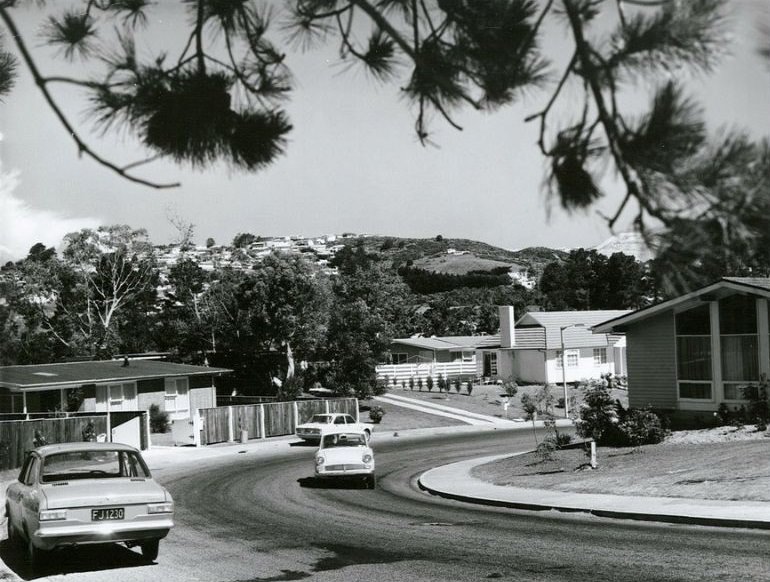
New housing developments were spreading outward from city centers. Churton Park, on Wellington’s northern fringe, was being subdivided into neat residential sections by late 1970. New homes were going up quickly to meet demand, and suburbs like this one were soon filling with young families.
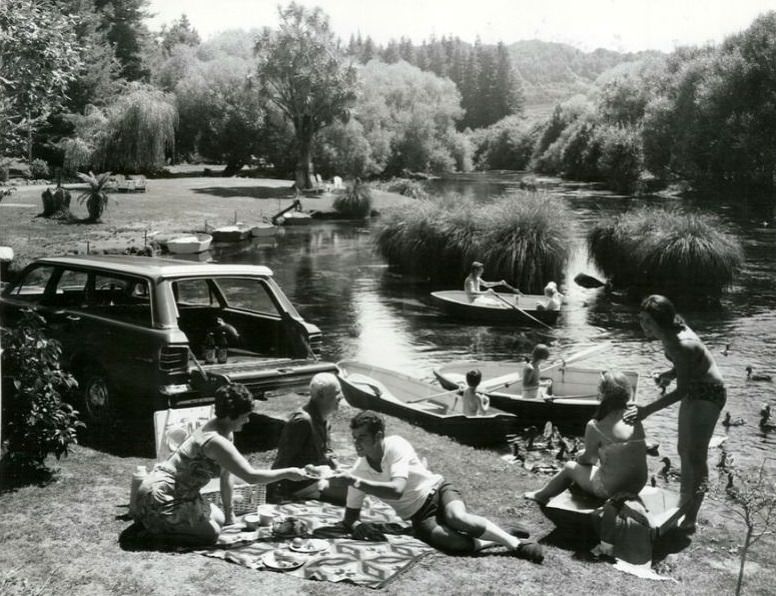
Summer picnics were a staple of New Zealand family life. Hamurana, on the northern shore of Lake Rotorua, was a well-loved spot with clear spring-fed streams and tall redwood trees. Families spread out on the grass, children ran free, and the heat of a New Zealand January made the cool shade especially welcome.
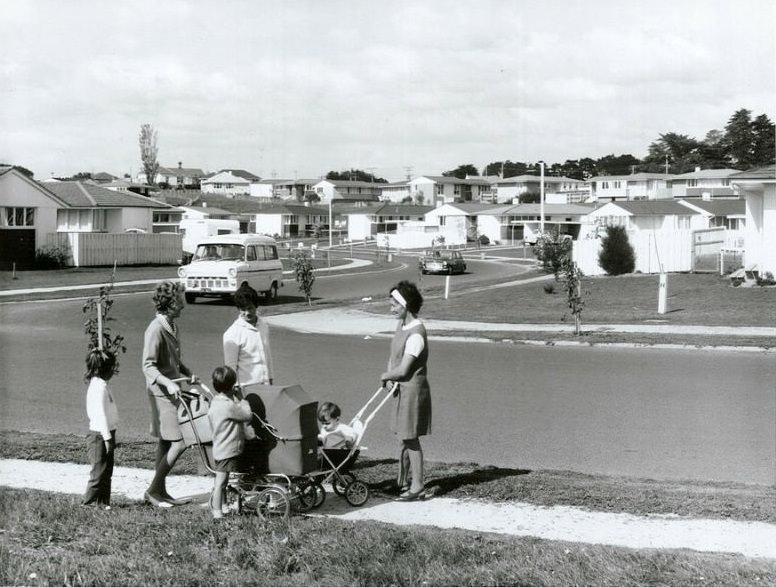
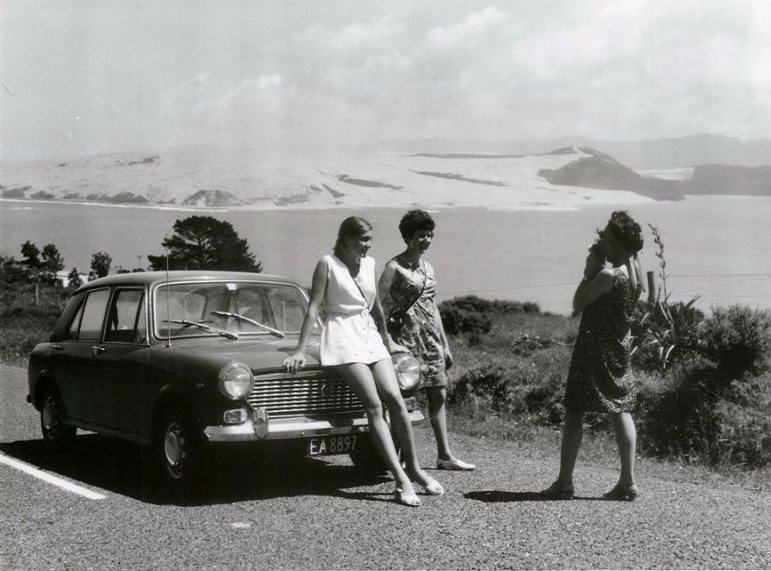
Travel within New Zealand was an adventure even for locals. Rental cars opened up the more remote parts of the country, and Hokianga Harbour in Northland was the kind of destination that rewarded the journey. The harbour’s vast tidal expanse and the towering sand dunes on its northern head made it one of the most dramatic views in the country.
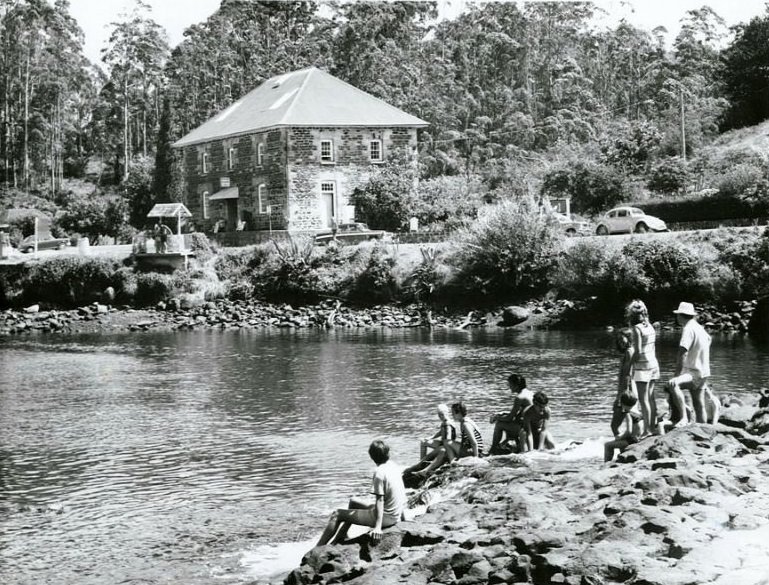
Historical landmarks were part of everyday New Zealand life, not just tourist stops. The Kerikeri Stone Store, built in the 1830s, was one of the oldest stone buildings in the country. By 1970 it stood as a preserved reminder of the early colonial period, drawing visitors curious about the nation’s past.
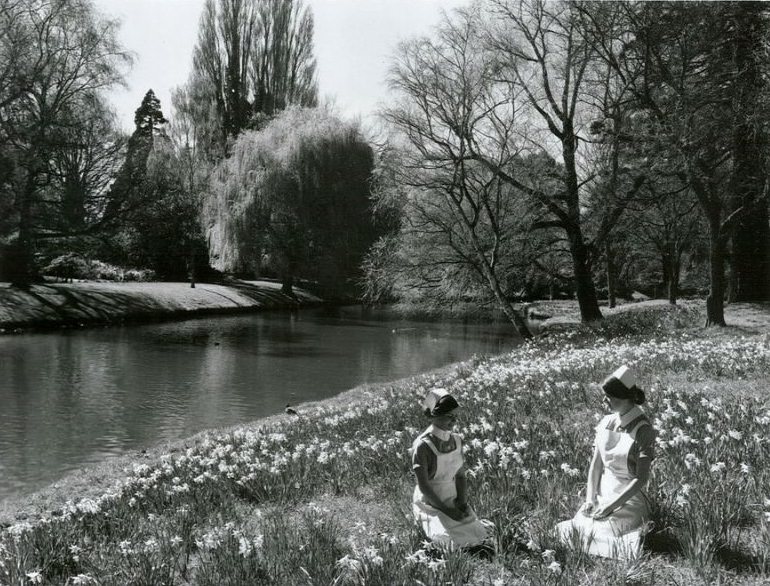
Hagley Park in Christchurch was a favorite escape for city workers. Nurses from the nearby hospitals could be found along the Avon River on their breaks, sitting in the sun on a spring afternoon. The park’s wide lawns and tree-lined river banks made it a natural refuge in the middle of the city.
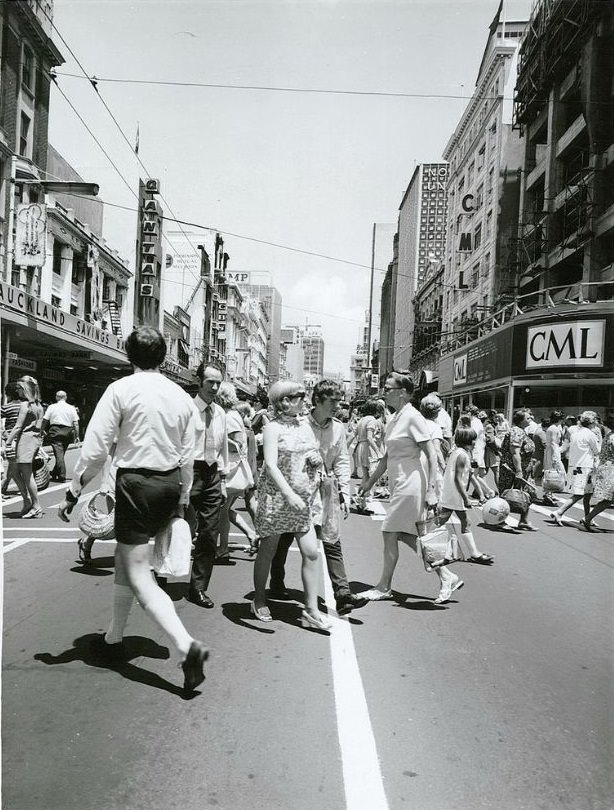
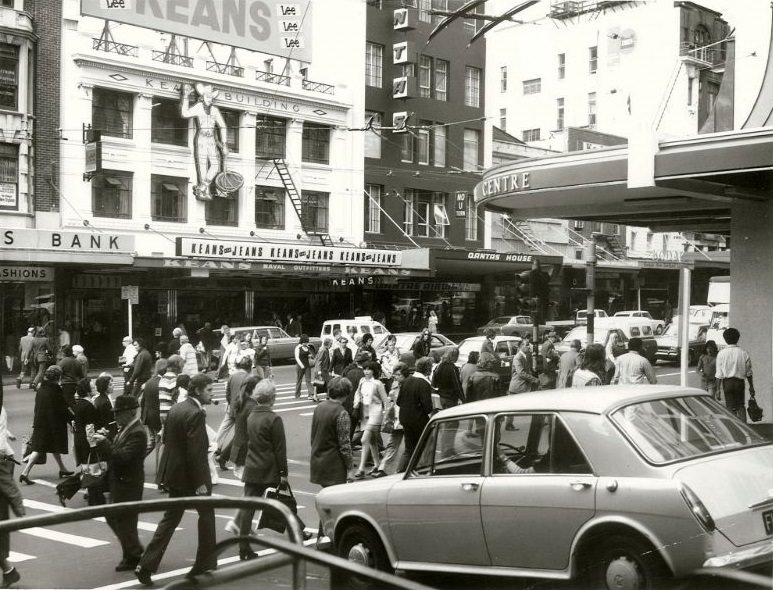
Queen Street was Auckland’s main commercial artery, and in December 1970 it was in full summer swing. Shoppers moved along the wide footpaths past department stores and smaller shops, cars filled the road, and the city had the busy energy of a place growing into itself. Queen Street would appear again and again through the decade as Auckland expanded.
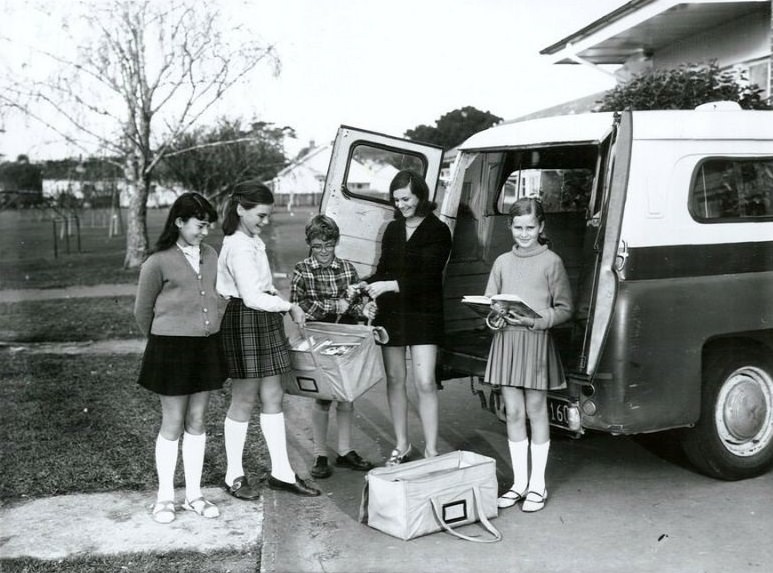
Education was a major priority. New Zealand’s school library service brought books directly into primary schools, and photos like this one from Waterview show children gathered around shelves and tables, engaged with reading in a way that reflected a national commitment to literacy. Television was still limited in 1970 — there was only one state-run channel — so reading held a central place in children’s lives.
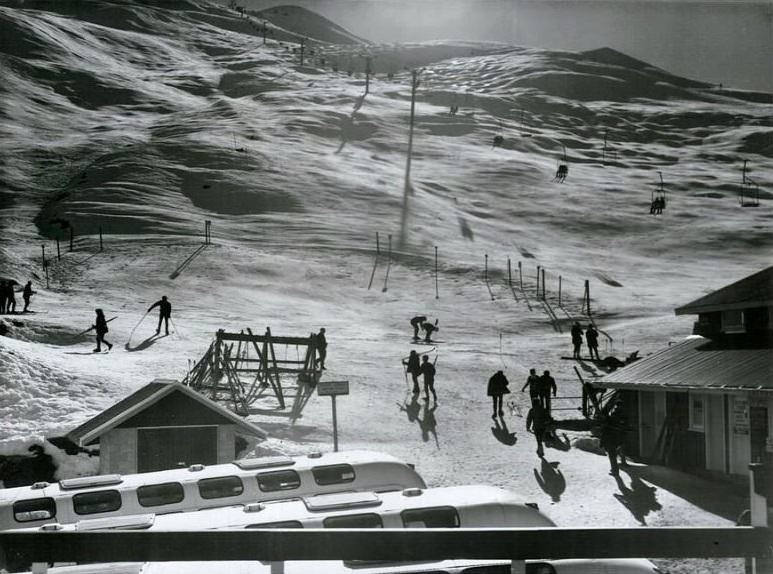
Coronet Peak above Queenstown was already one of New Zealand’s premier ski fields by 1970. The mountain offered reliable snow and wide open runs, and getting there was becoming easier as infrastructure improved. Queenstown itself was growing as a tourist town, though it was far smaller and quieter than it would later become.
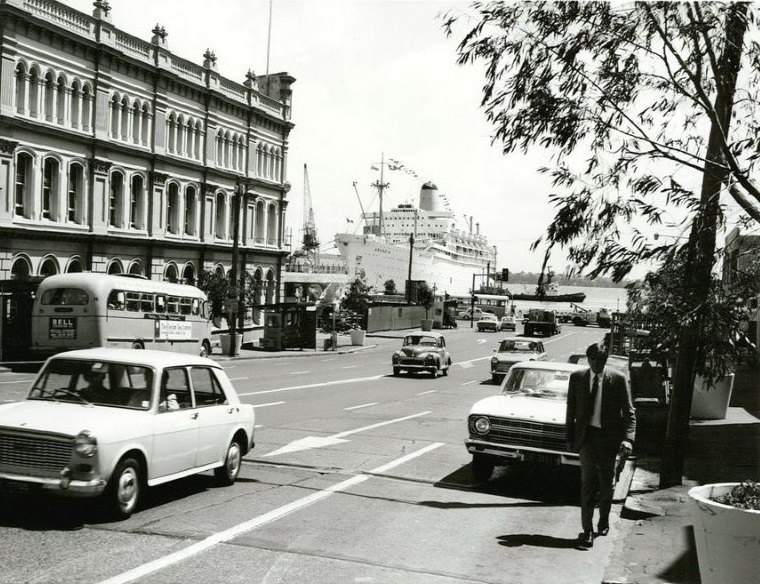
Auckland’s waterfront in 1971 was a working port as much as a public space. Princes Wharf handled shipping traffic, and the streets running down to the harbor — like Lower Albert Street — mixed commercial buildings with the comings and goings of a busy port city. The Arcadia, visible at the wharf, was among the vessels moving through one of the country’s most active harbors.
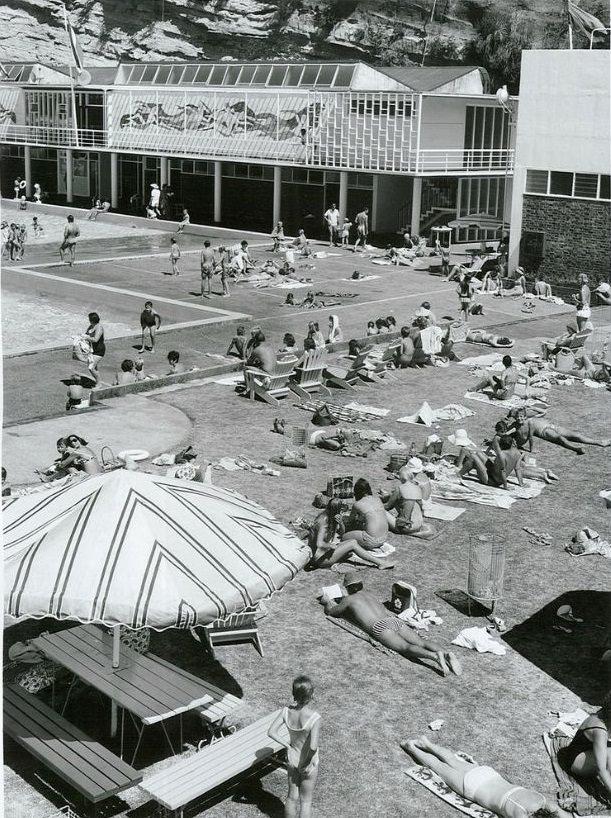
Public swimming was a major part of New Zealand summers. The Parnell Baths in Auckland, an open-air saltwater pool, packed in swimmers during January. Children leaped from boards, families claimed spots along the edge, and the pool hummed with the noise of a hot summer afternoon. Color television had not yet arrived — that came in 1973 — and outdoor recreation was still the main way New Zealanders spent their leisure time.
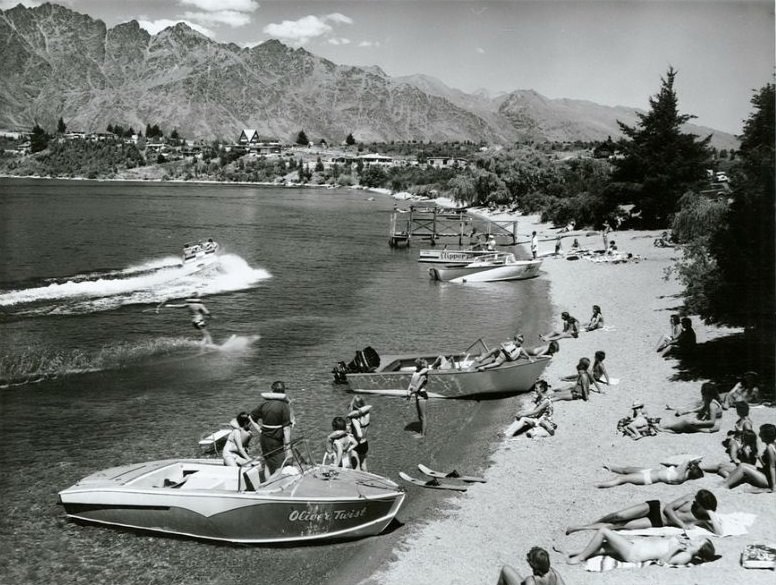
Lake Wakatipu in Otago offered a different kind of summer experience — freshwater swimming and boating against a backdrop of the Remarkables mountain range. The Frankton Arm was calm and sheltered, and families who couldn’t afford a trip to the coast headed here instead for their January holidays.
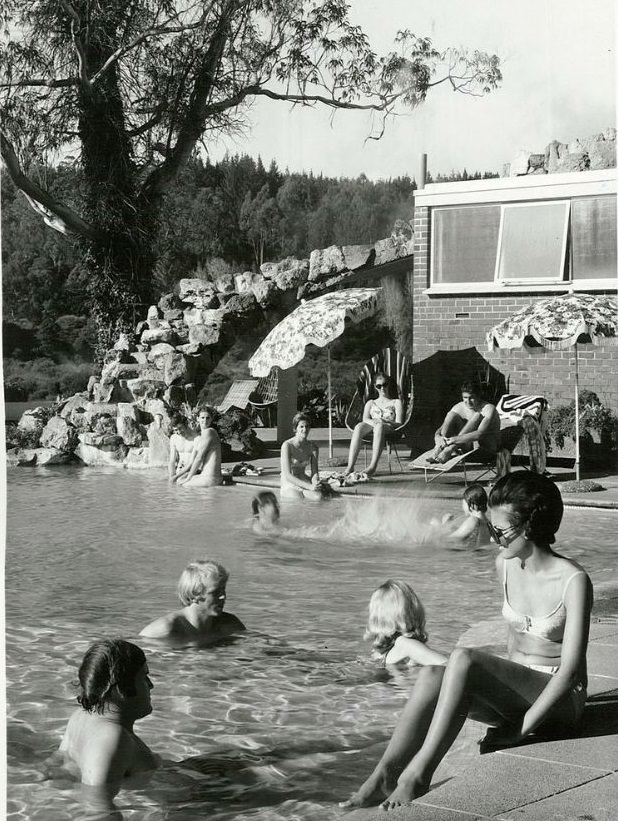
Rotorua was already a well-established tourist destination by 1971. The International Hotel’s pool represented the higher end of New Zealand’s growing hospitality industry, catering to visitors drawn by the region’s geothermal attractions. Tourism was one of the sectors the government was keen to develop, even as broader economic pressures mounted.
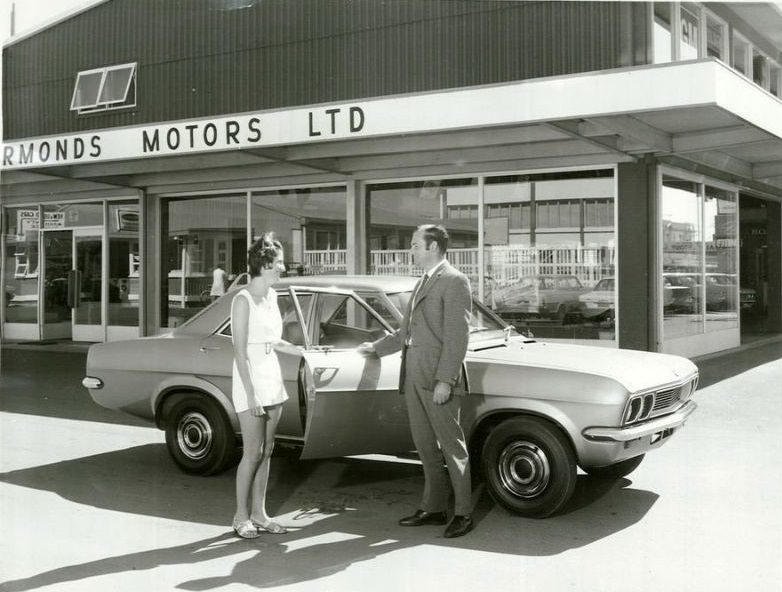
Car ownership was expanding steadily. Dealerships like Ormond’s Motors in Gisborne were selling British-made Vauxhalls to buyers who were becoming increasingly car-dependent. Within two years, the 1973 oil crisis would send fuel prices sharply upward, making the cost of running a car a much more pressing concern for ordinary households.
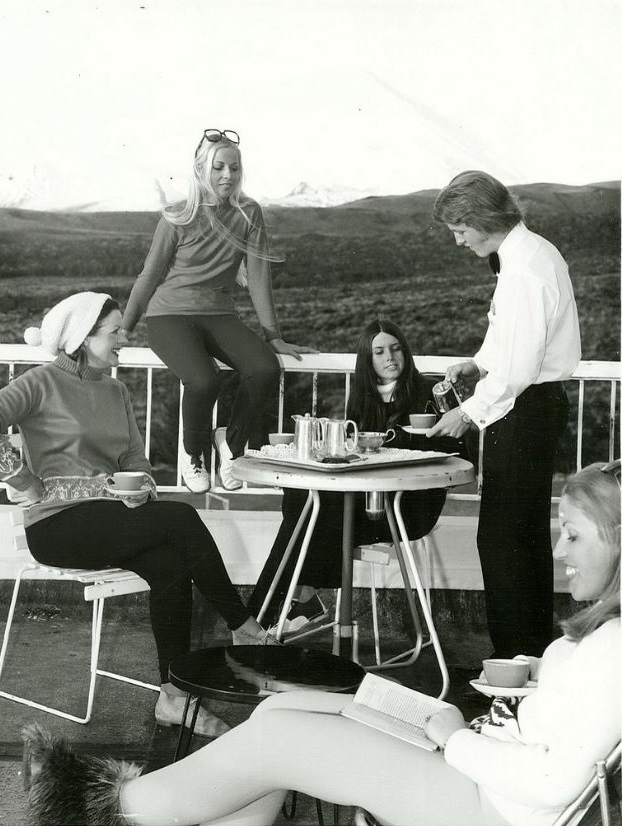
The tradition of afternoon tea was alive and well in 1970s New Zealand. Here, in the shadow of Mount Ngauruhoe in Tongariro National Park, walkers and visitors paused for tea with one of the country’s most iconic volcanic peaks rising behind them. The national park drew visitors year-round, particularly those who wanted to tackle the Tongariro crossing.
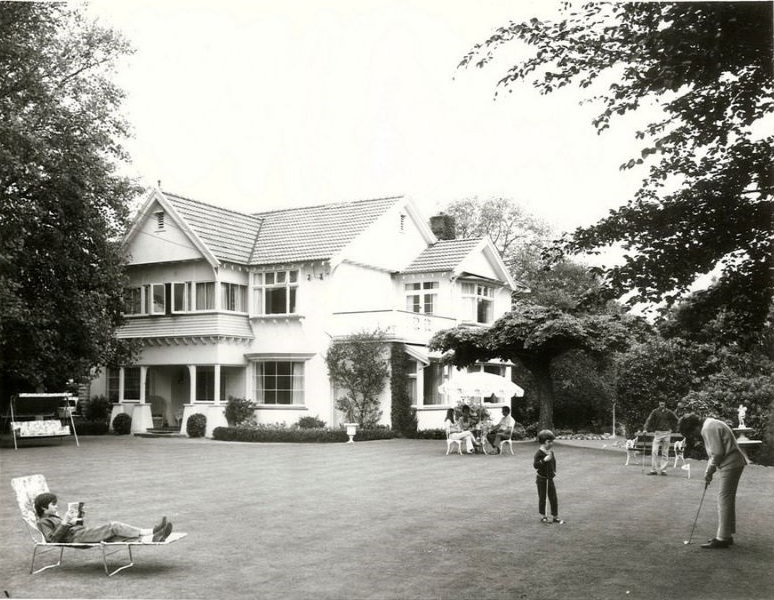
Fendalton was one of Christchurch’s established, well-to-do suburbs, with wide tree-lined streets and spacious homes. By November 1972, spring had brought the gardens into full bloom. Streets like Glendover Road showed what the more prosperous end of New Zealand suburban life looked like — quiet, green, and well-maintained.
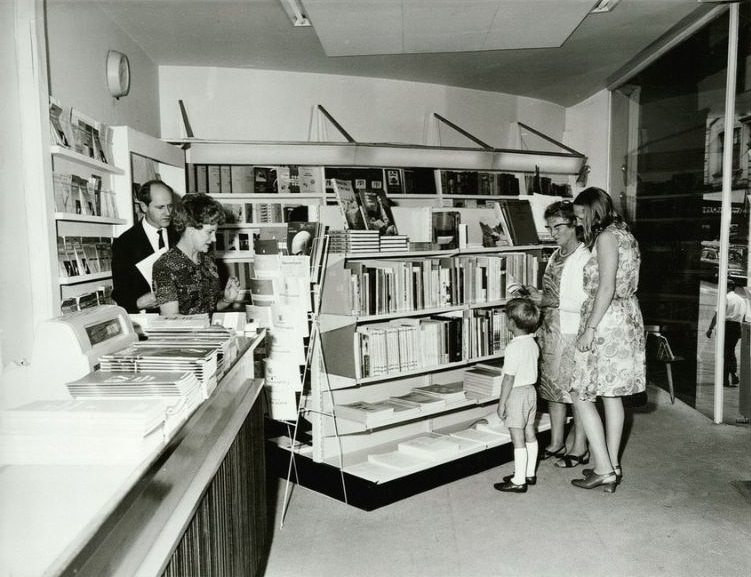
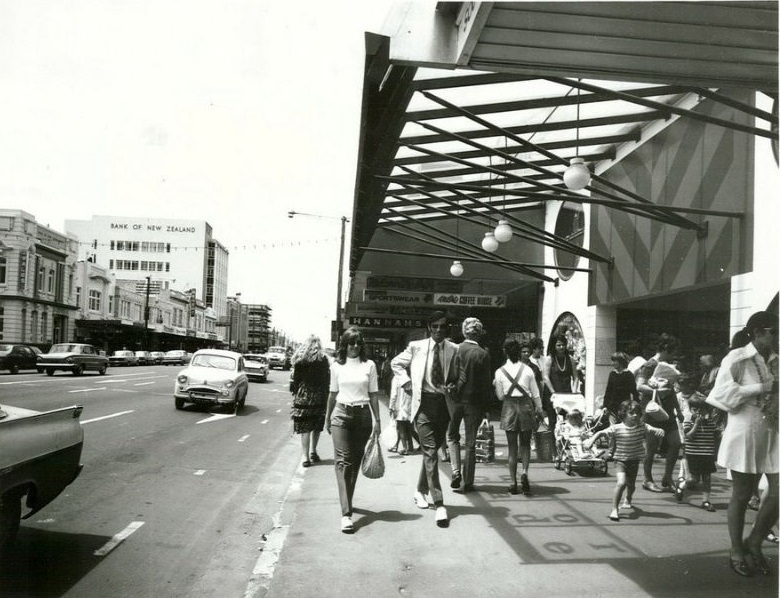
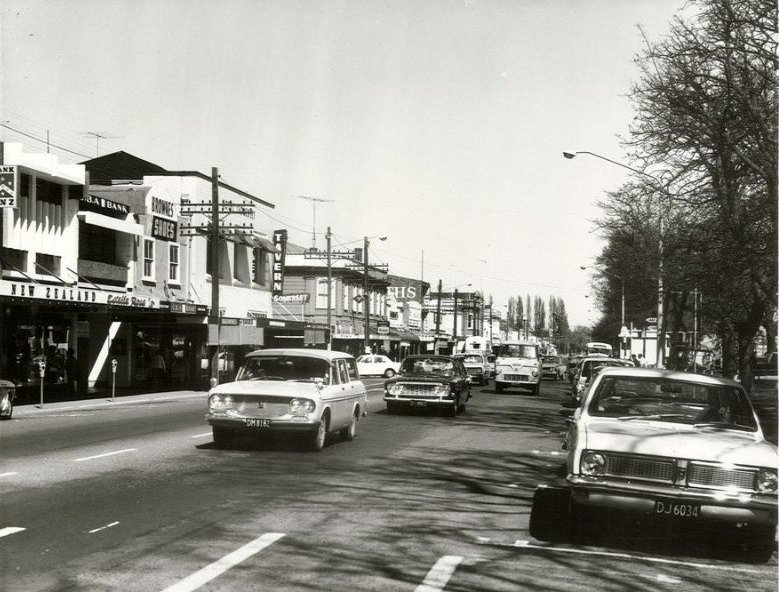
Hamilton’s Victoria Street was the city’s main shopping destination, known locally as the ‘Golden Mile.’ By September 1972 it was lined with clothing stores, banks, and general retailers serving the Waikato region’s growing population. Hamilton was expanding fast in the early 1970s, and Victoria Street was its commercial center.
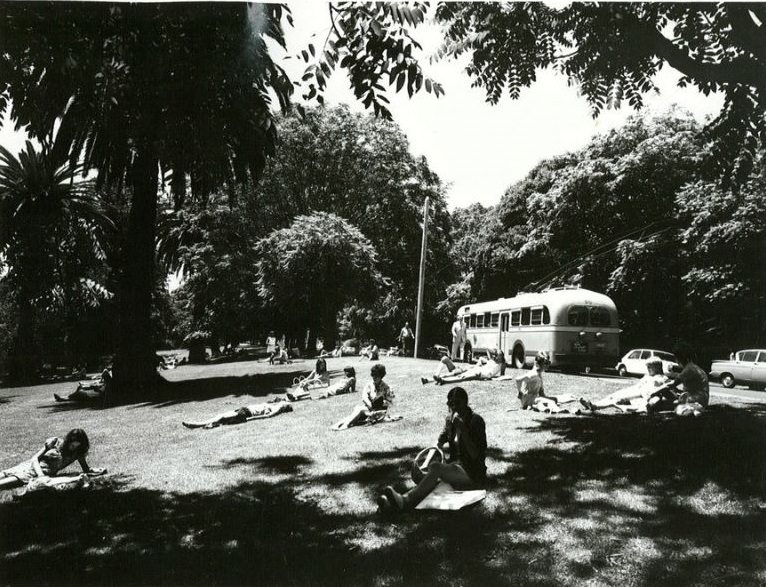
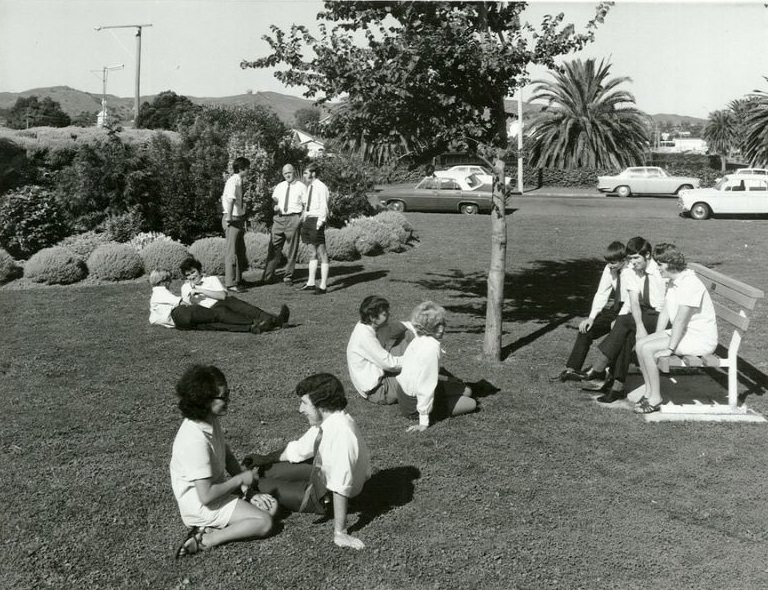
Albert Park in central Auckland was a lunchtime destination for office workers and students from the nearby university. In November, with summer approaching and the days warming up, the park benches and lawns filled up quickly at midday. It was one of those small but reliable pleasures of city life.
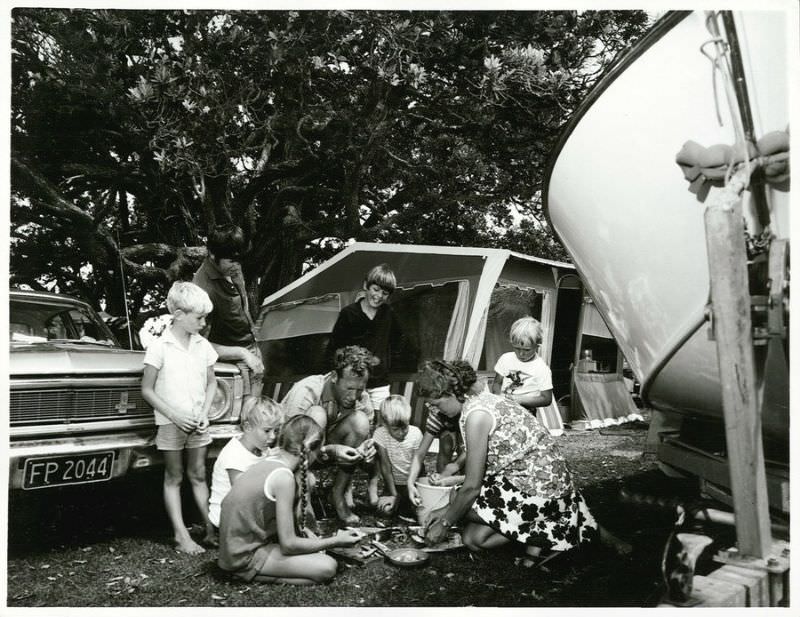
Motor camps were the affordable backbone of New Zealand family holidays. Coopers Beach in Northland was a popular summer destination, and by January the camp was full of tents, caravans, and families making the most of the long school break. The camps provided basic facilities — toilets, showers, a communal kitchen — and the rest was up to the holidaymakers.
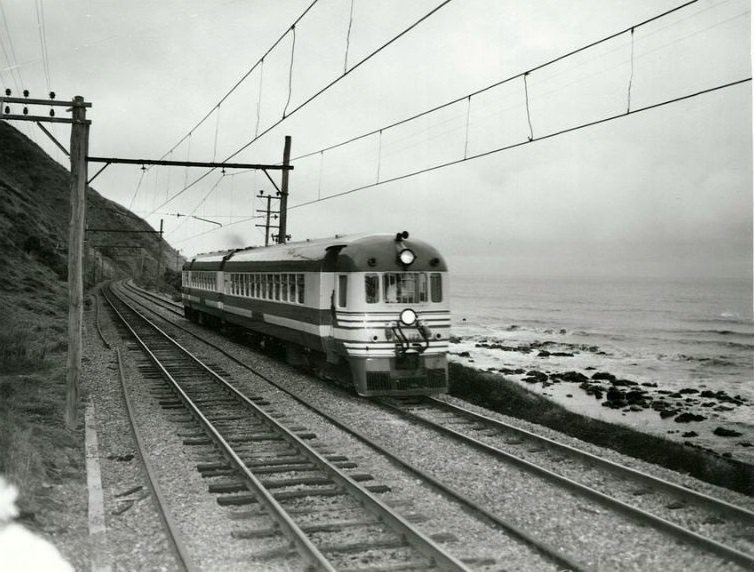
Rail travel remained important across New Zealand through the 1970s. The Blue Streak rail cars on the main trunk line carried passengers between Wellington and Auckland, running along the dramatic Kapiti Coast section between Pukerua Bay and Paekakariki where the track hugged the hillside above the sea. Rail was a practical choice for long-distance travel before domestic air travel became widely affordable.
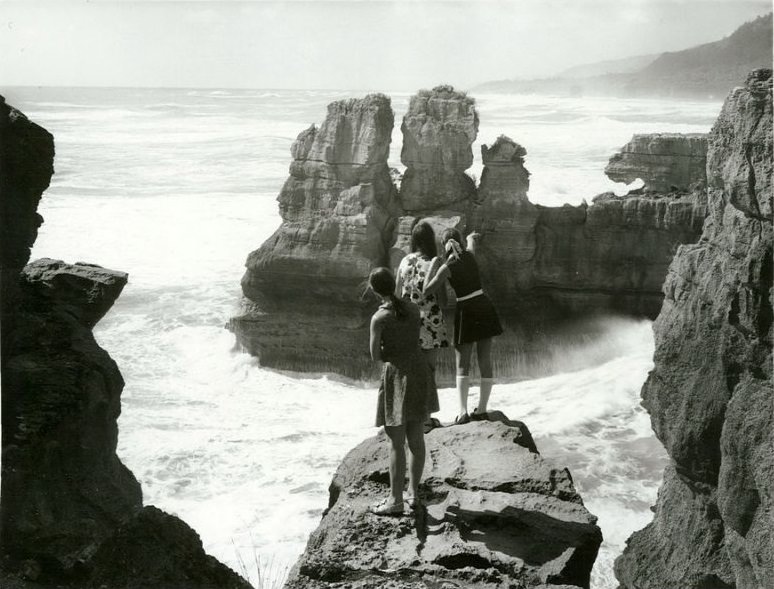
The Pancake Rocks at Punakaiki on the West Coast were already drawing visitors to their extraordinary layered limestone formations. Standing high above the Tasman Sea, the rocks offered a dramatic vantage point. The West Coast was remote and sparsely populated, but its wild scenery made it worth the journey.
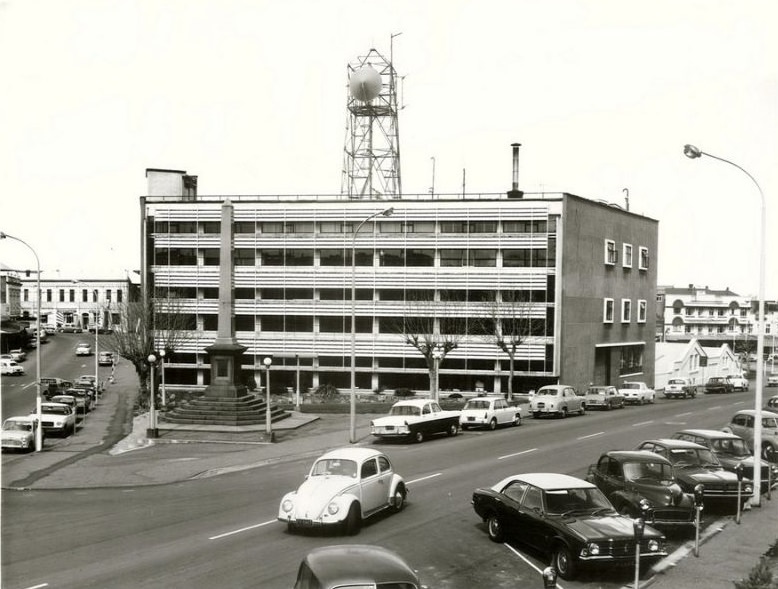
Infrastructure like telephone exchanges was a visible part of town life in the early 1970s. Timaru’s exchange building served the Canterbury Province’s communications network at a time when telephone connections were entirely routed through manual and then automatic exchanges. The technology was advancing, but slowly.
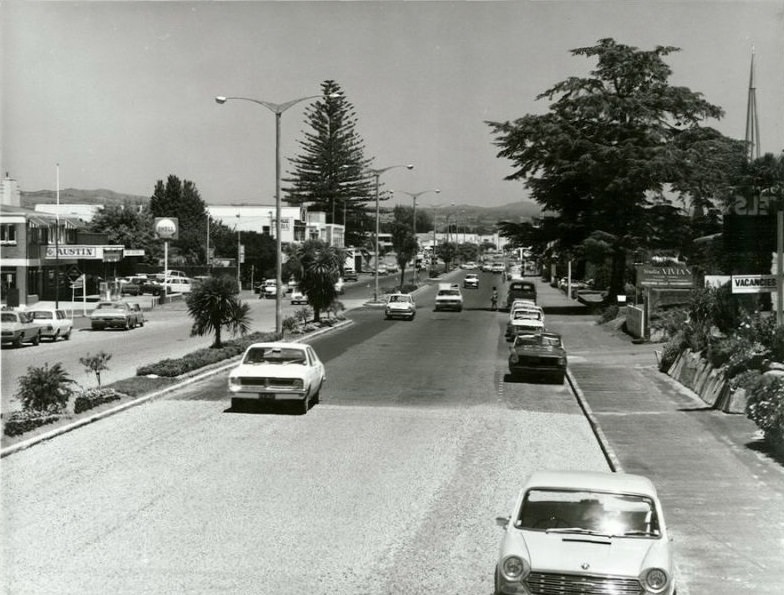
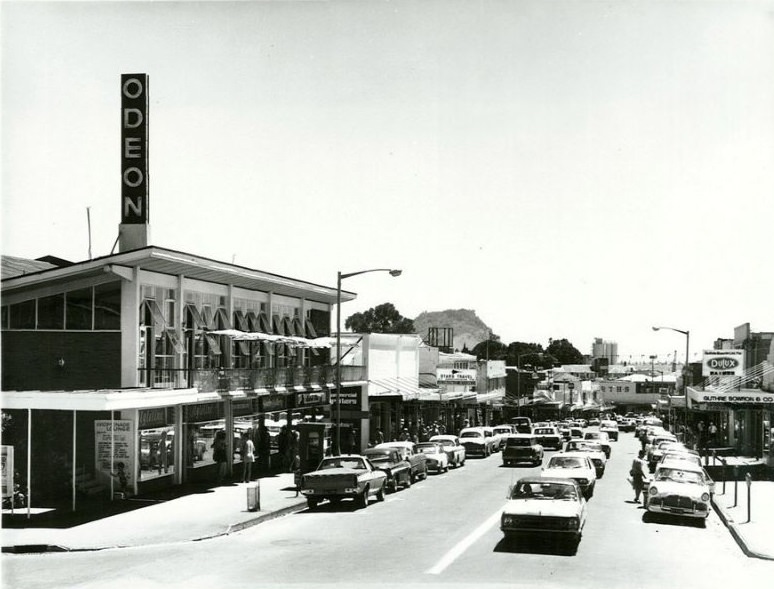
Tauranga was growing quickly by 1973. Cameron Road and Devonport Road were both active shopping streets, and the city’s port was one of New Zealand’s busiest, handling large volumes of timber and agricultural exports. The global oil shock hit later that year, but in January Tauranga’s streets still had the look of a town on the rise.
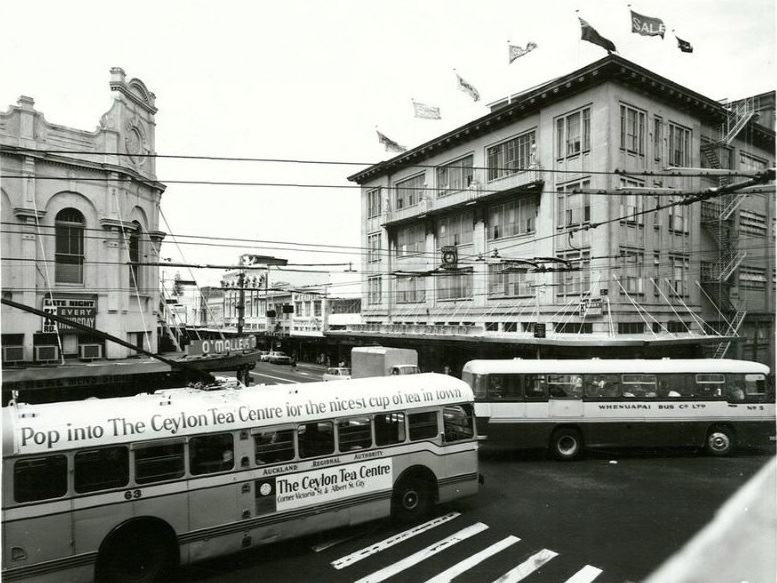
Karangahape Road — known to Aucklanders simply as K Road — was a dense, diverse shopping strip running along a ridge above the city center. In March 1973 it was lined with fabric shops, second-hand stores, and small businesses serving the working-class and migrant communities who lived nearby. It had a rougher, more eclectic character than Queen Street, and that made it a distinct part of Auckland’s identity.
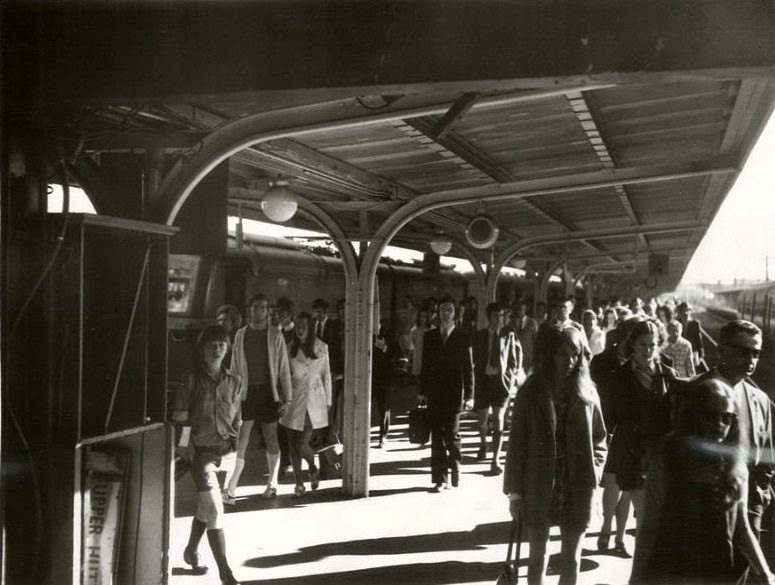
Wellington’s commuter rail network was well-used. Early morning trains brought workers in from the Hutt Valley and the Kapiti Coast, and by the time they poured out of the station in February 1973, the city’s working day was already beginning. The commute by train was a fixed part of Wellington life for thousands of workers each weekday.
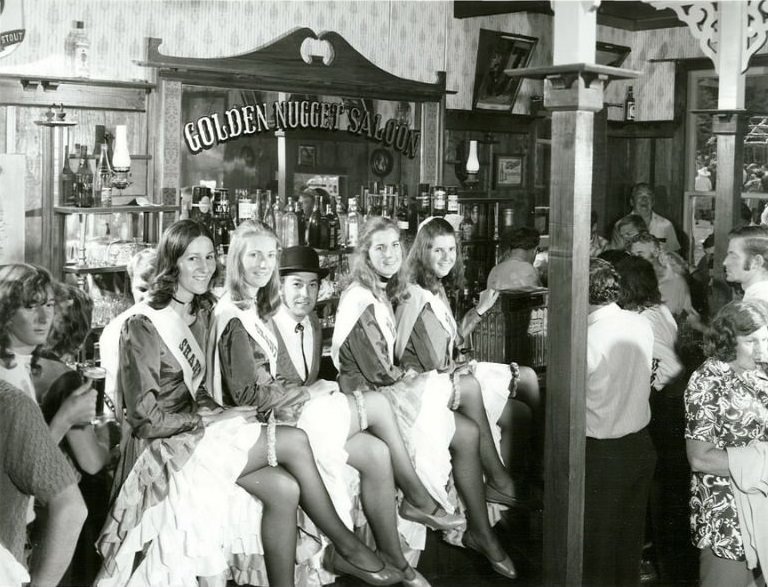
Shantytown near Greymouth on the West Coast was a recreated gold-rush settlement that gave visitors a living picture of nineteenth-century colonial life. On Gala Day in January 1973, performers in period costume, including can-can dancers at the Gold Nugget Hotel bar, entertained the crowds. It was popular family entertainment and a nod to the region’s gold-mining heritage.
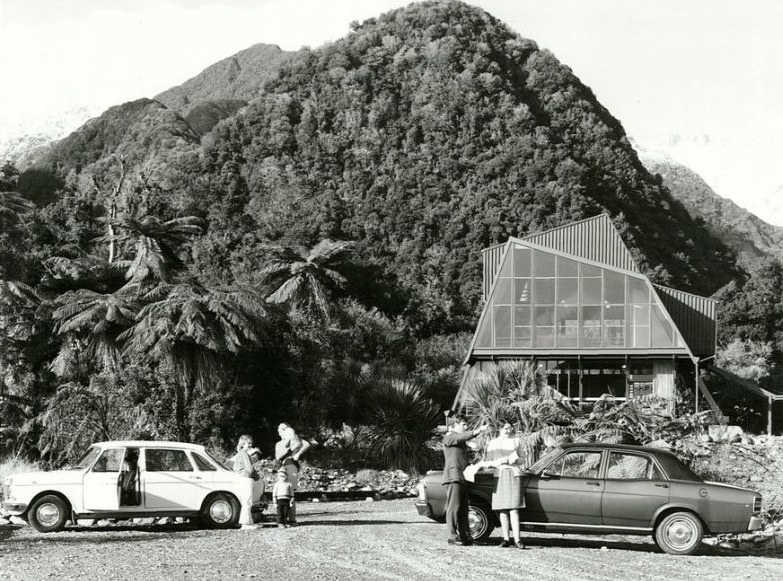
New Zealand’s national parks were well-supported with visitor facilities by the early 1970s. The Westland National Park Visitor Centre, photographed in August 1973, provided information to the hikers, climbers, and tourists who came to see the Fox and Franz Josef glaciers. The park was one of the most visited in the country.
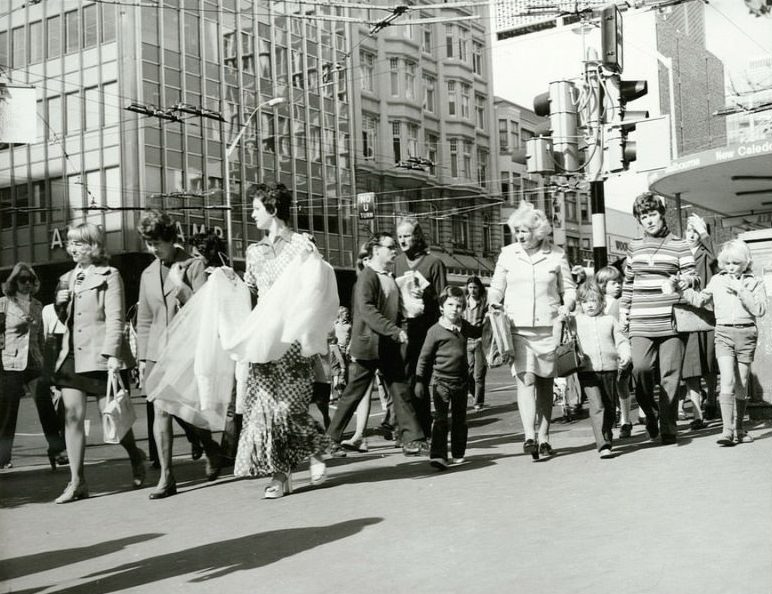
By mid-decade, Queen Street in Auckland was even busier. School holidays in August 1974 brought extra foot traffic to the city center, and the street’s mix of cinemas, department stores, and smaller retailers gave families plenty to do. Color television had arrived in New Zealand the previous year, and the consumer landscape was beginning to shift with it.
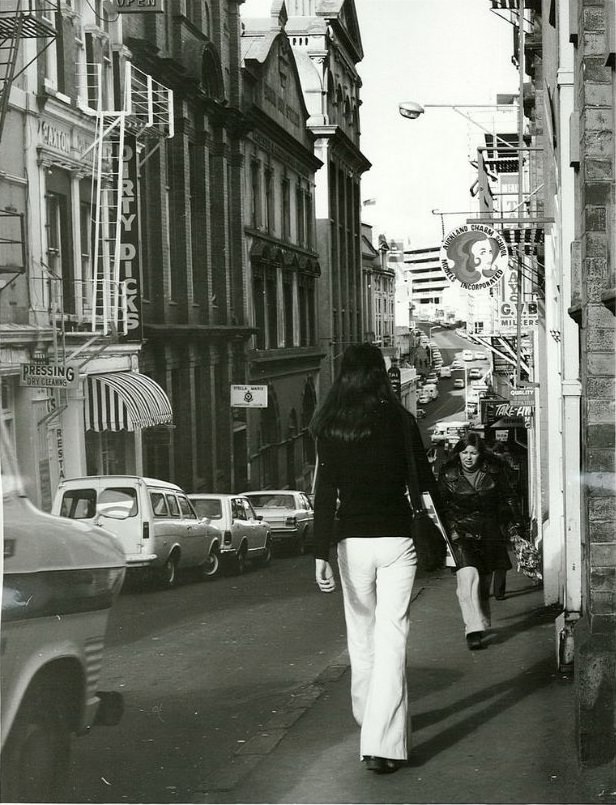
Auckland’s central streets were a mix of older buildings and newer commercial developments in 1974. Swanson Street, looking toward Shortland Street in September, showed the city’s layered architecture — some buildings dating back decades sitting alongside newer concrete and glass structures. The city was changing fast, and not everyone was happy about what was being lost in the process.
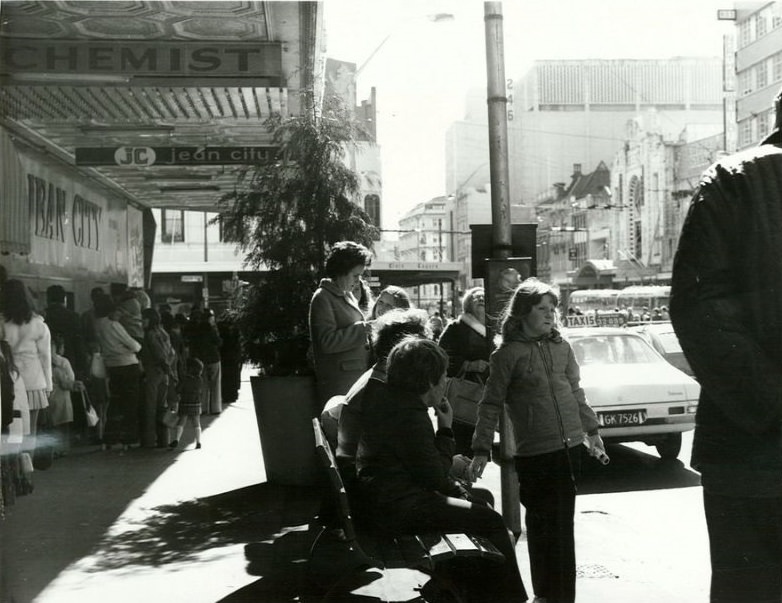
Public buses were the main form of transport for many Aucklanders who couldn’t afford cars or who simply chose not to drive in the city. The bus stop on Upper Queen Street in August 1974 shows the ordinary workday reality for thousands of commuters — waiting on the footpath, bundled against the winter cold.
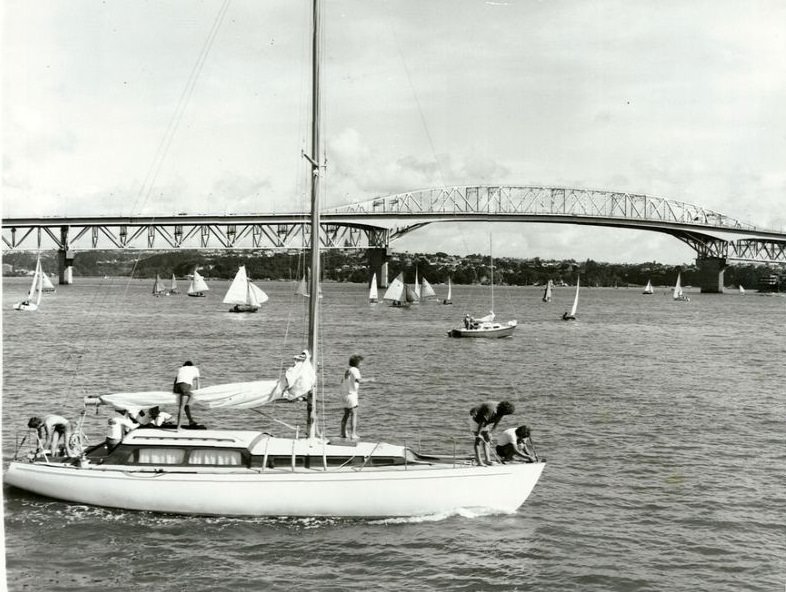
The Auckland Harbour Bridge, opened in 1959, had become one of the city’s defining landmarks. By January 1975, yachts dotted the harbour below it — a fitting image for a city that called itself the City of Sails. Recreational sailing was a serious pastime here, and the summer months filled the Waitemata Harbour with boats of every size.
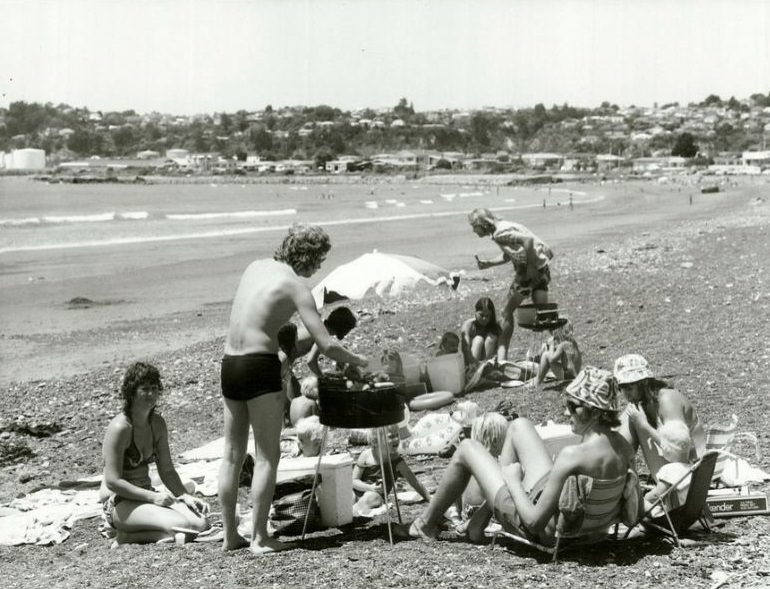
Beach barbecues were a New Zealand summer institution. At Westshore Beach in Napier, families set up grills on the shingle and cooked in the open air with the sea right in front of them. Napier’s long, flat coastline made it a natural gathering spot, and Hawke’s Bay summers were reliably warm and dry.
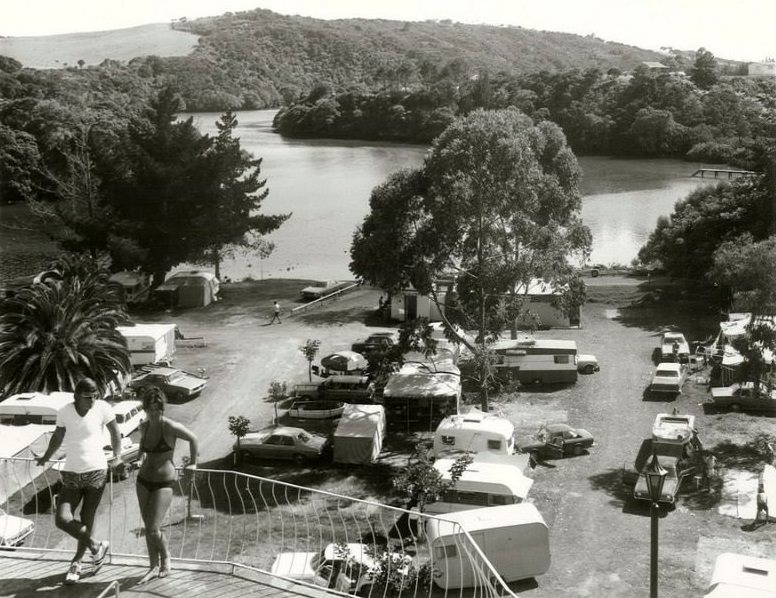
Waitangi in the Bay of Islands held deep significance in New Zealand history as the site where the Treaty of Waitangi was signed in 1840. By January 1975, it was also a popular camping destination. The convergence of historical importance and everyday recreational use said something about how New Zealanders related to their own past — it was present, but not always formally observed.
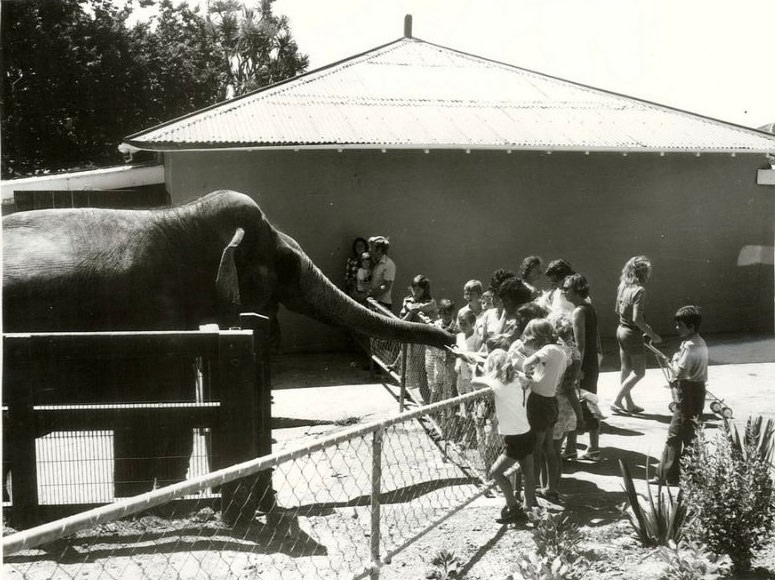
Wellington Zoo, set in the hills above the suburb of Newtown, was a well-established attraction by 1975. Families came to see the animals up close, and feeding the elephant was a highlight for children. The zoo had been operating since 1906 and remained one of Wellington’s most popular family destinations through the 1970s.
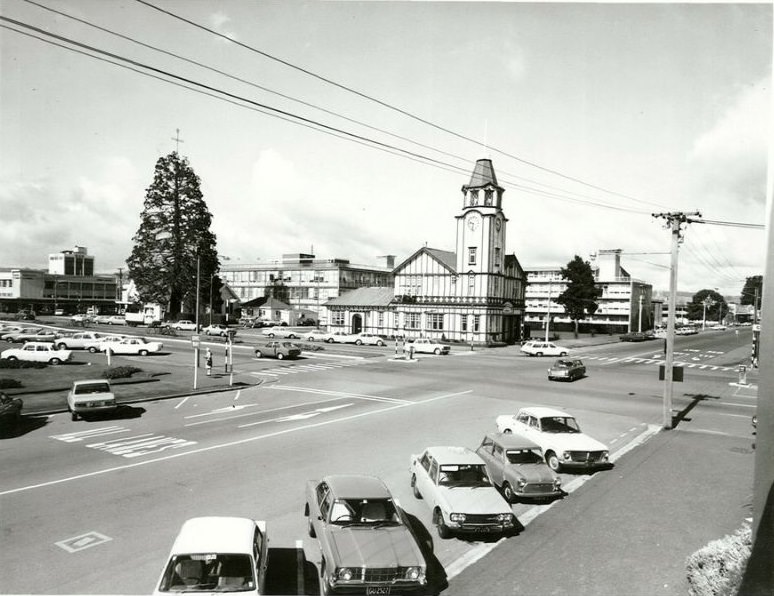
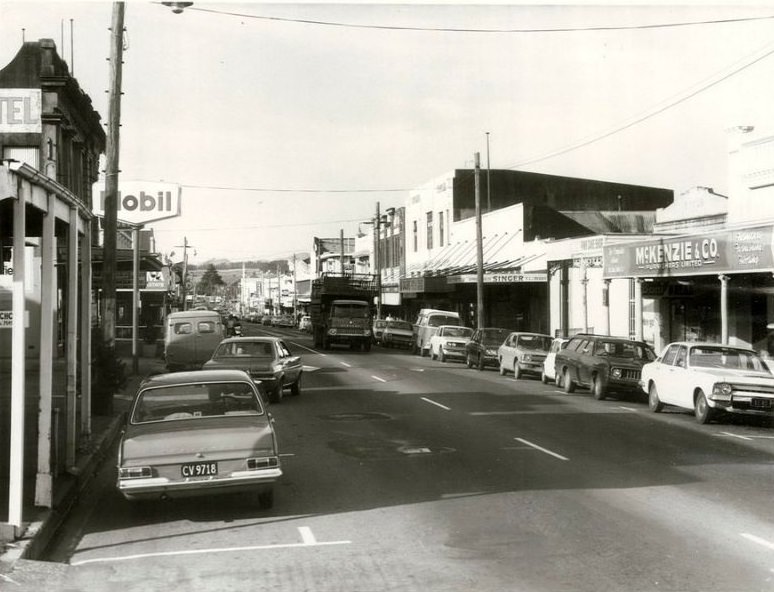
Smaller provincial towns like Dannevirke in Hawke’s Bay had their own steady rhythm. High Street served the surrounding farming district, its shops stocking everything from hardware to groceries. The town had a strong Scandinavian heritage, founded by Danish and Norwegian settlers in the 1870s, and that history was embedded in its street names and community identity.
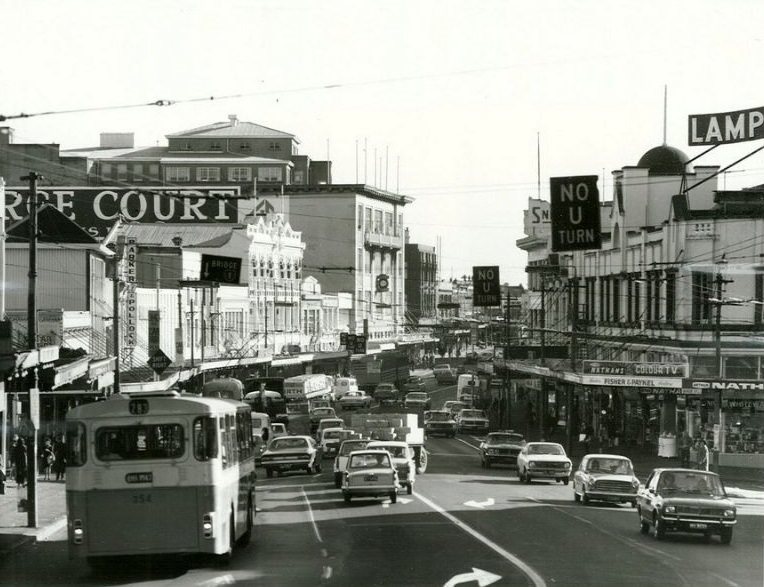
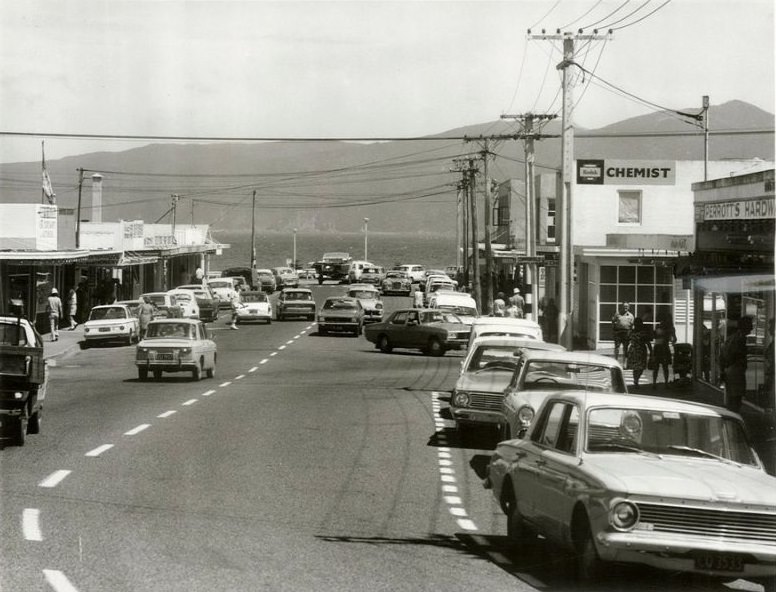
Paraparaumu Beach on the Kapiti Coast was both a seaside holiday spot and a growing commuter town for Wellington workers. Its main shopping area in January 1975 served both the permanent population and the summer visitors who filled the beach campgrounds and holiday homes each year.
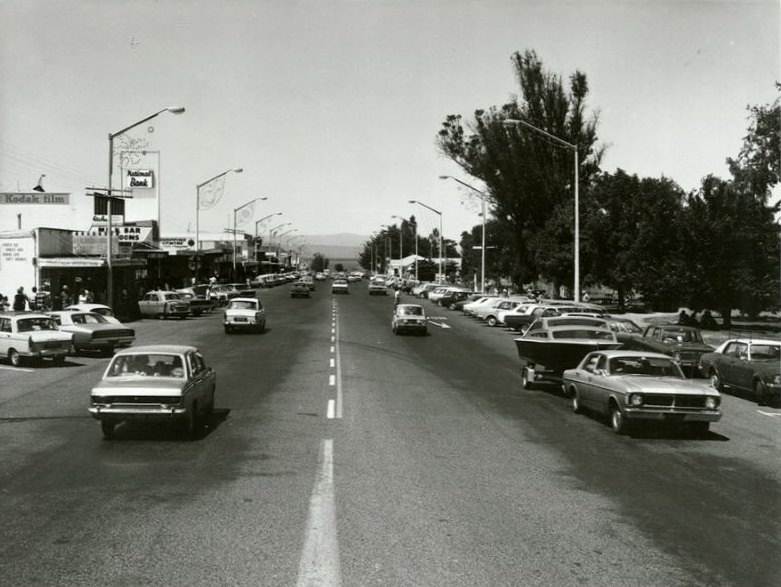
Taupo sat on the northern shore of New Zealand’s largest lake and had developed into a solid tourist and service town by the mid-1970s. Its main shopping street in January 1975 was busy with summer visitors heading to the lake, the Waikato River, or the geothermal areas nearby. The town’s economy depended heavily on the summer tourist season.
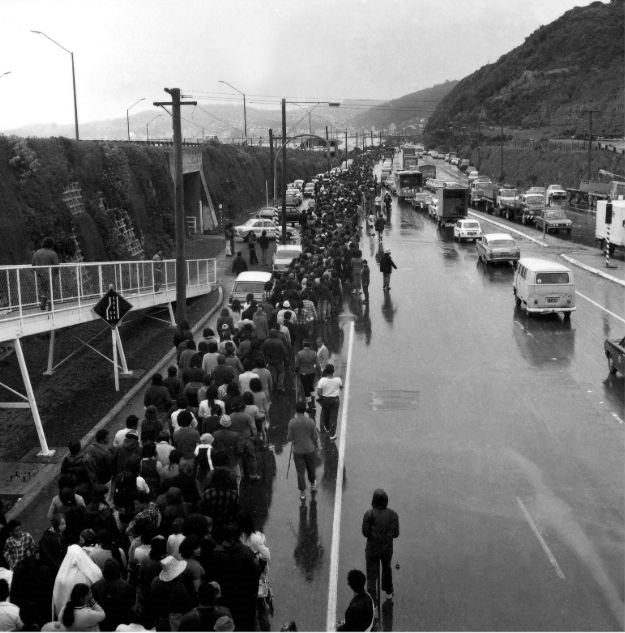
On 13 October 1975, thousands of marchers arrived in Wellington at the end of a nine-day hikoi that had traveled the length of the North Island. Led by Whina Cooper, the Māori Land March was a direct protest against the continued loss of Māori land. Marchers demanded that the government stop alienating what remained of Māori-owned land. The image of this march arriving in the capital became one of the most significant photographs of the decade, marking a turning point in Māori political activism.
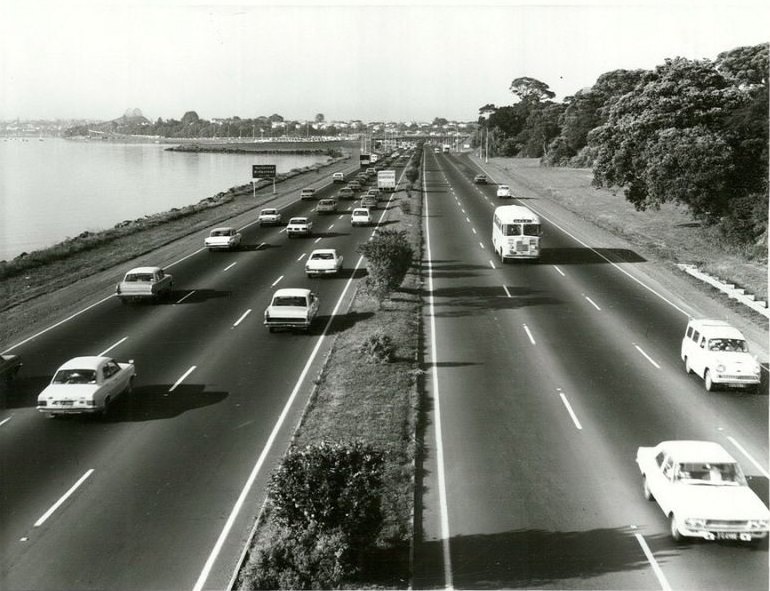
Auckland’s motorway network was expanding through the 1970s to keep pace with a population that was spreading further into the suburbs. Morning rush-hour traffic on the northern motorway in December 1975 showed how car-dependent the city had become. The oil crisis two years earlier had pushed fuel costs up sharply, but New Zealanders had not abandoned their cars.
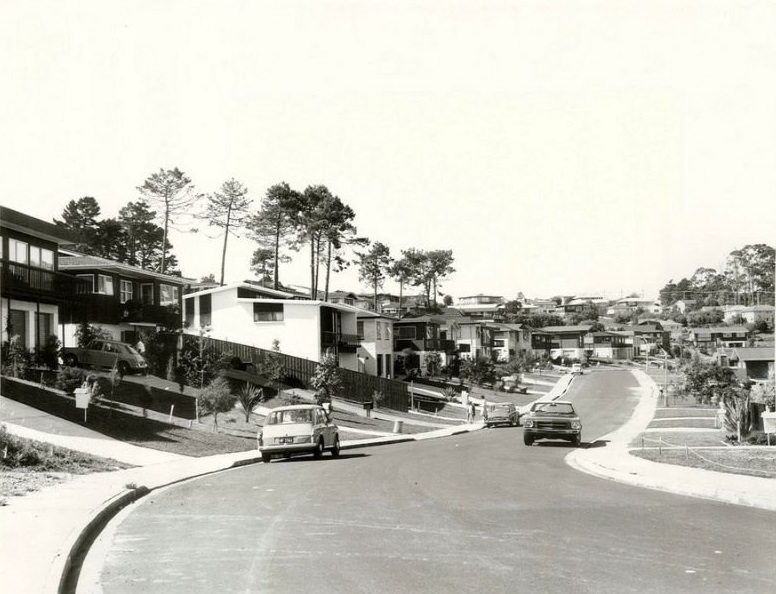
Forrest Hill on Auckland’s North Shore was one of many new residential areas developing across the harbour from the city center. Fresh subdivisions carved into the hillside showed rows of new homes in November 1975, their lawns still young and their gardens freshly planted. The Auckland Harbour Bridge made commuting from the North Shore practical, and these suburbs were filling up fast.
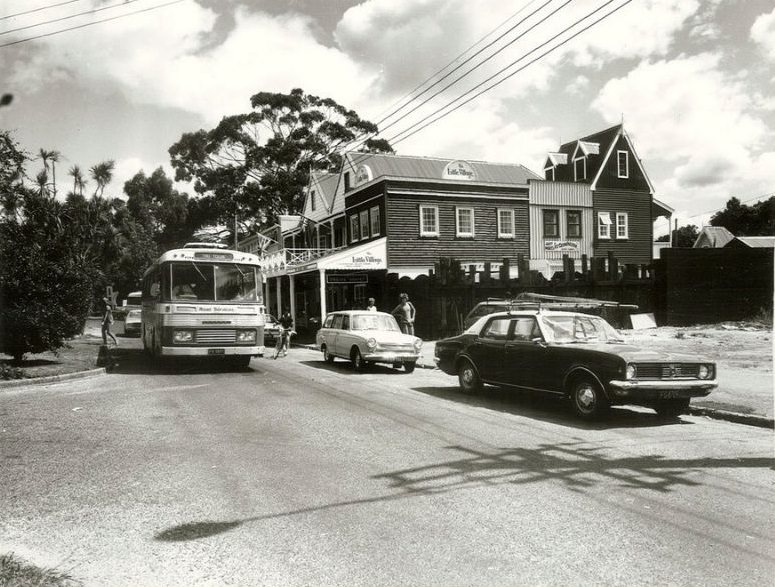
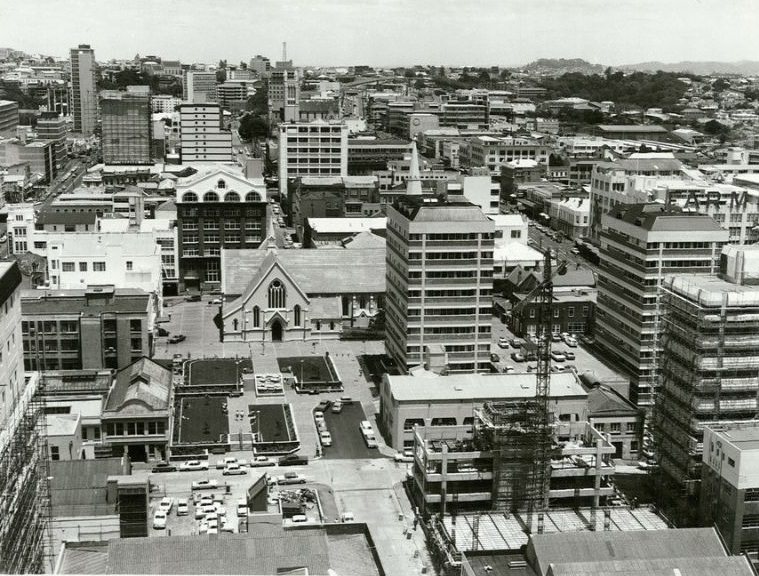
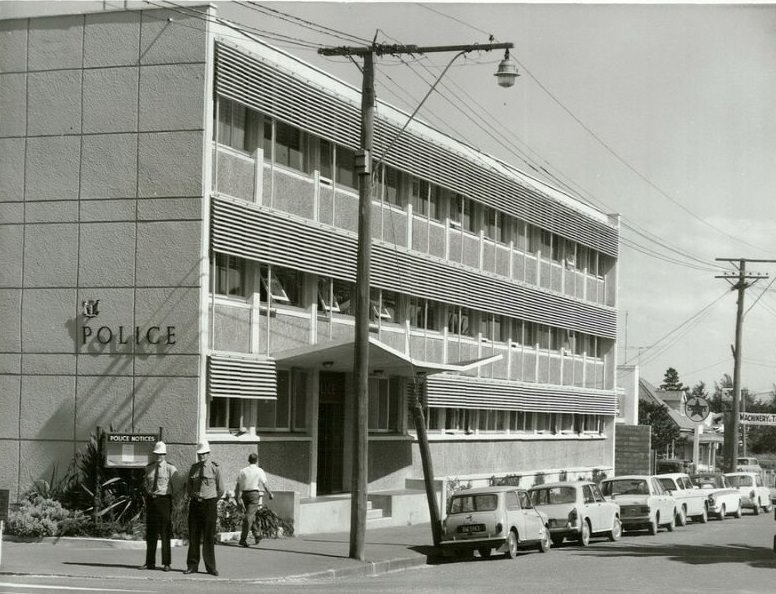
Looking down Custom Street West toward Auckland’s central police station in December 1975, the city showed its mix of civic and commercial buildings. St. Patrick’s Cathedral stood in the foreground, its Gothic stonework contrasting with the more utilitarian structures around it. Auckland’s skyline was changing, but its older buildings still defined the view from street level.
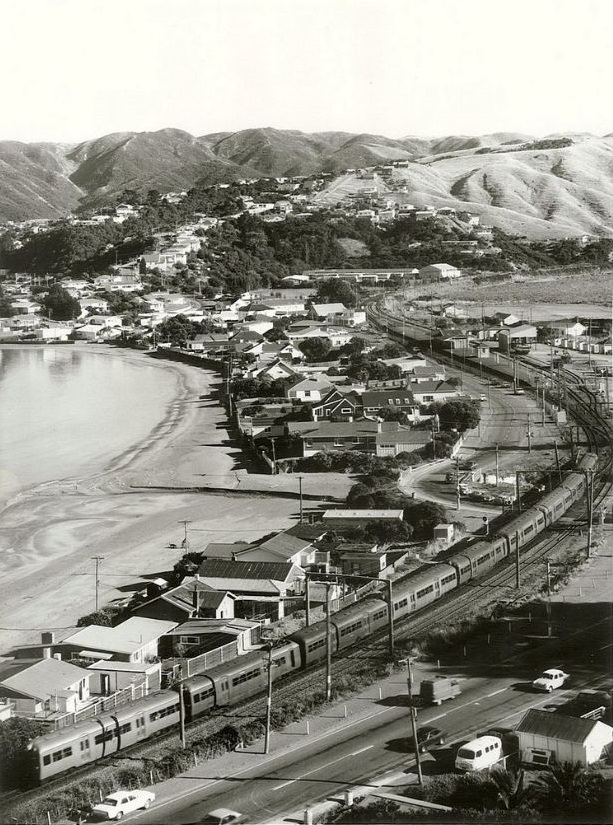
The electric rail units that ran the Wellington commuter network were a familiar sight along the Kapiti Coast. At Plimmerton, the line ran close to the sea, and in January the contrast between the electric train and the summer holiday atmosphere of the beach community was striking. The line was one of the busiest commuter routes in the country.
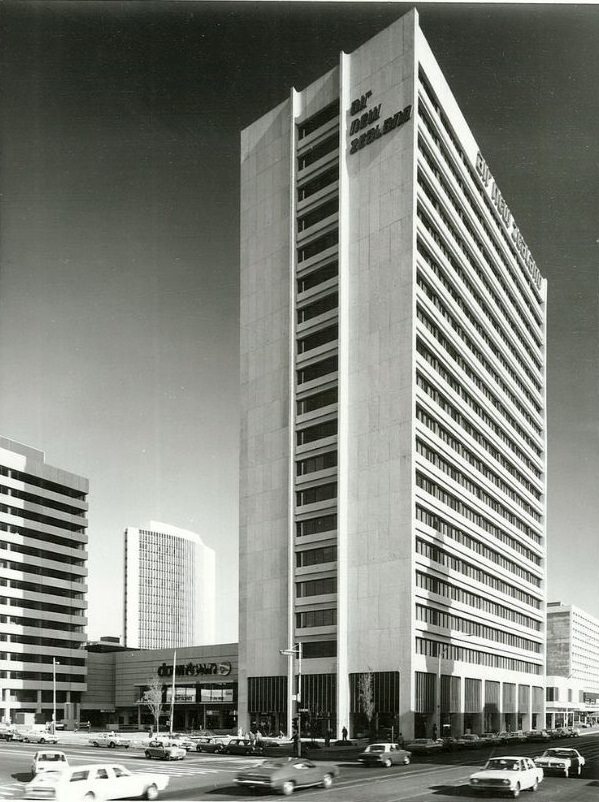
The junction of Queen Street and Quay Street at Auckland’s waterfront was a major development zone through the 1970s. Air New Zealand House was among the new commercial buildings reshaping the downtown skyline. As the national carrier, Air New Zealand was a symbol of the country’s ambitions, even as the economy struggled with its twin burdens of debt and inflation.
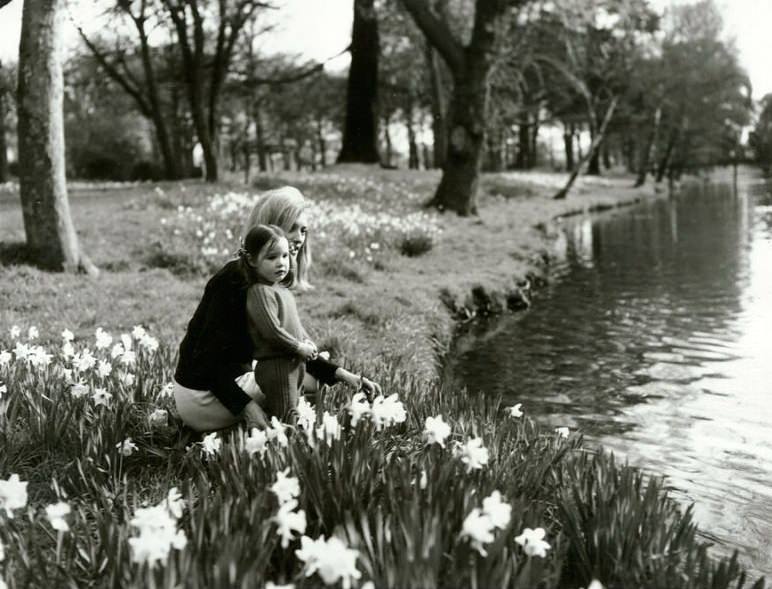
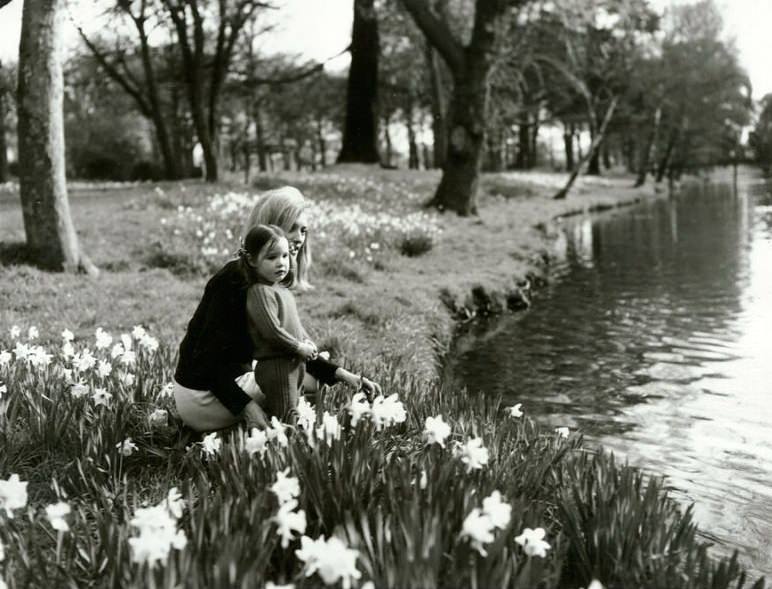
Hagley Park in Christchurch showed a different face in spring. Daffodils lined the banks of the Avon River in September 1971, and a mother walked with her child through the color. It was a simple scene, but one that captured the quieter pleasures of everyday New Zealand life that ran beneath the decade’s bigger economic and political dramas.
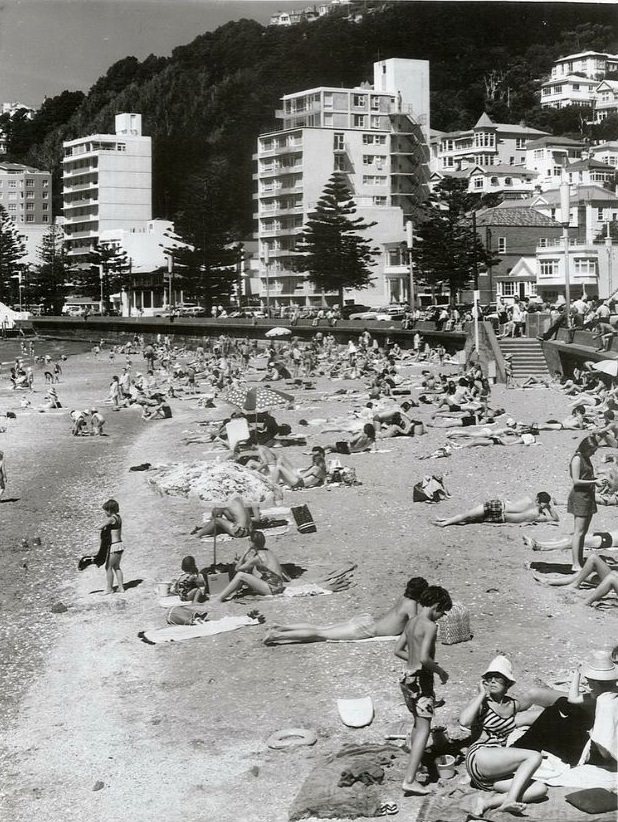
Oriental Bay was Wellington’s most popular urban beach, a crescent of sand curving around the harbor just east of the city center. On a January afternoon in 1971, swimmers took to the water and sunbathers spread across the sand while the city’s hillside suburbs rose steeply behind them. It was a reminder that even in a decade of real economic and social difficulty, New Zealand remained a place of striking natural beauty that its people used and enjoyed every single day.





Wow, what a journey.
Super cool, just sent this to a fellow newzi and he is thrilling…
As for that Waiuku (it’s Hamilton Drive looking upon Rata Street, for those playing along at home) photo, only the trees have grown a bit and there are a few more fences.
Matai St intersection, it seems
We had relatives who lived in Hamilton Estate until the late 1970s. We moved to Waiuku ourselves (in another area, though) in October 1978.
Although a boy from Sydney, I lived in New Zealand from October 1974 to March 1976 … and loved every minute of it.
The first whole summer was in Russell Bay of Islands (working as a hopelessly under-skilled chef), and then a year plus near Wellington (Papakowhai out on the coast near Paremata) – and working at TV-ONE in their flash studios in Lower Hutt. Great days indeed.
I remember especially the Soviet Era “dairies”, where you get a pint of milk or a half-pound of butter for about 5c – everything was so subsidised that it was essentially free. I also loved all the Pommie cars – the country was awash with Morris, Vauxhall, Hillman, Austin, and much else, with a smattering of MG, Healey, and Triumph.
The worst thing for my time there was the destruction of the Rowling Labour Government, and the ascension of the execrable Piggy Muldoon. There was also the Dismissal of Gough Whitlam back in Canberra in November 1975, but that seemed far away.
I went very close to staying there permanently.
Love older photos of NZ thanks. Cars were mint
Must be a long time ago…… picture of two nurses relaxing!
Vintage? 1970s? Yea make me feel old…
That was excellent, thanks for sharing
23 Parnell Baths is awesome. Baths get built, no hydro slides. Hydro slides eventually get built, then removed. Picture today would kinda look like this picture.
I think there are several photos there that are pretty similar to what it looks like today. Very cool!!
We’ve definitely got fatter since then.