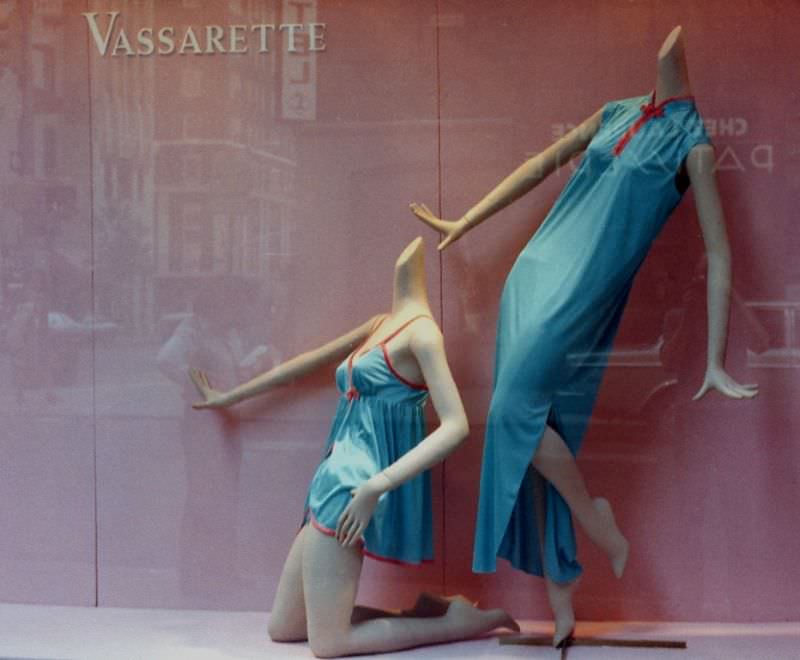
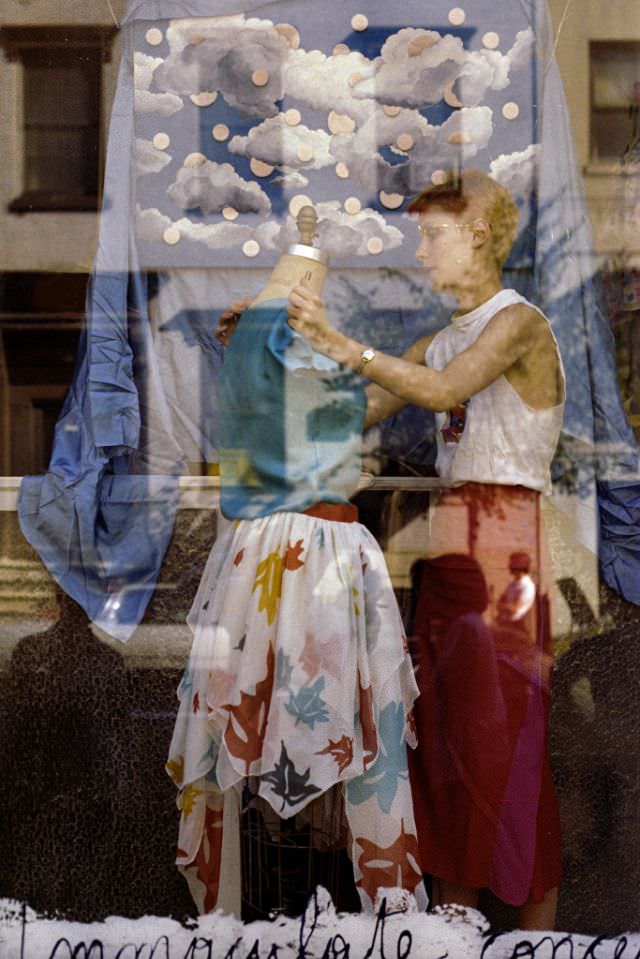
Before social media and digital advertising, the storefront window was a fashion brand’s most powerful tool. In New York City during the late 1970s and 1980s, these displays were elaborate, theatrical, and intensely competitive. Retailers on Fifth Avenue and throughout Manhattan spent enormous resources turning their windows into street-level spectacles. Photographer Emanuel Antsis documented these displays with a sharp eye, capturing a side of the era’s fashion culture that most people simply walked past without stopping to study.
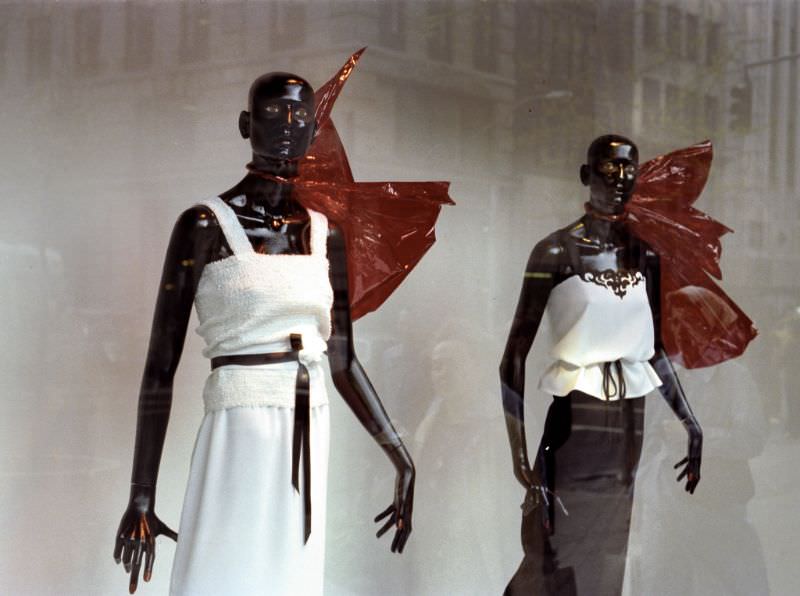
The late 1970s in New York were a turning point for fashion retail. Stores were experimenting with bolder visual identities, using their windows to reflect the city’s energy. Mannequins were styled with increasing drama, and props ranged from the classical to the surreal. Antsis was already capturing this shift in 1979, when the city’s fashion scene was transitioning from the disco-soaked mid-decade into something sharper and more self-aware.
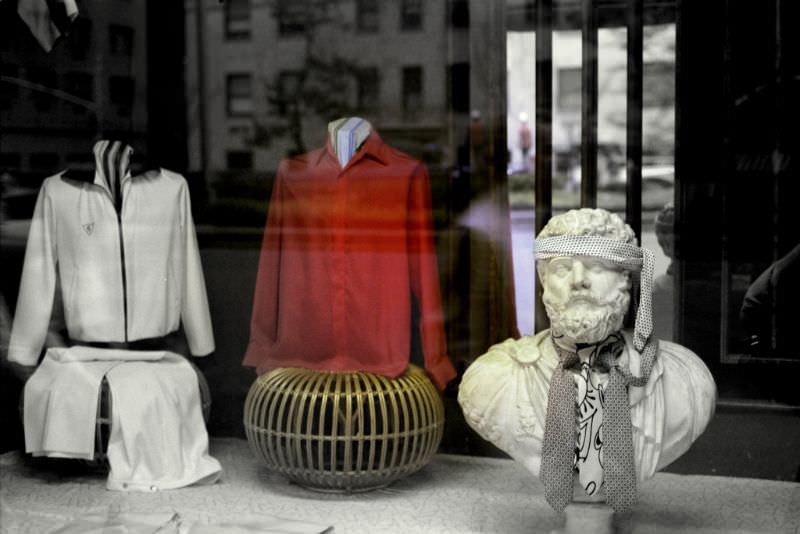
By 1980, the aesthetic had fully arrived. Bold silhouettes, strong colors, and an appetite for theatrical staging defined both the clothes and the windows that showed them off. Power dressing was not just a workplace trend — it was a full visual language, and store displays spoke it loudly. Oversized blazers, strong shoulders, and vivid hues appeared in window after window across the city’s commercial corridors.
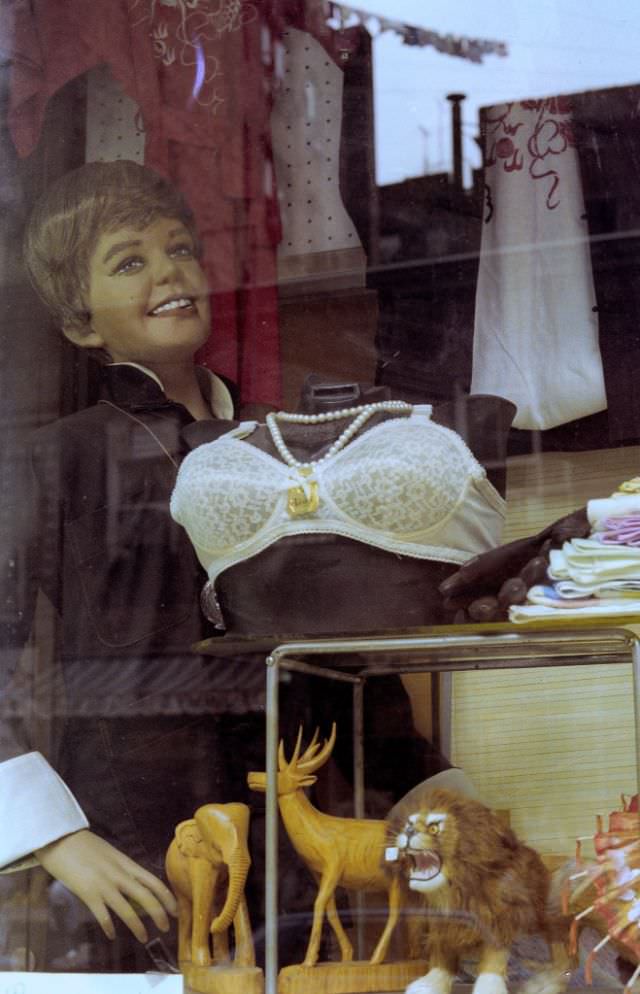
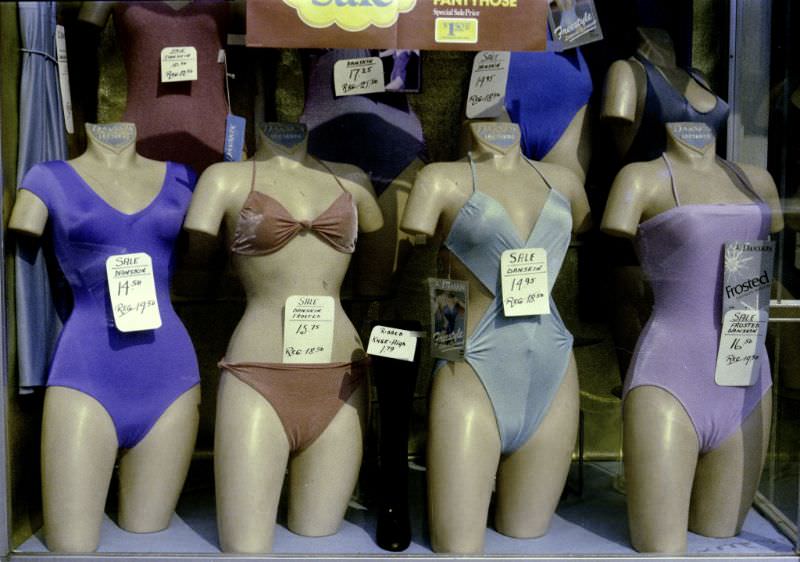
Not every window was a luxury production. Some displays were raw and direct — a single mannequin, a hand-lettered sale sign, a well-lit garment against a plain backdrop. These simpler windows told their own story about New York retail: a city where high fashion and everyday commerce existed side by side on the same block. Antsis photographed both ends of the spectrum without favoring one over the other.

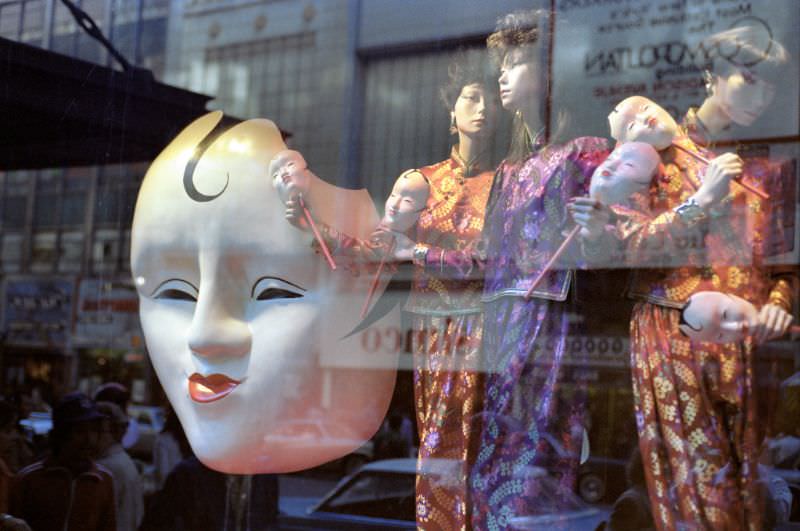
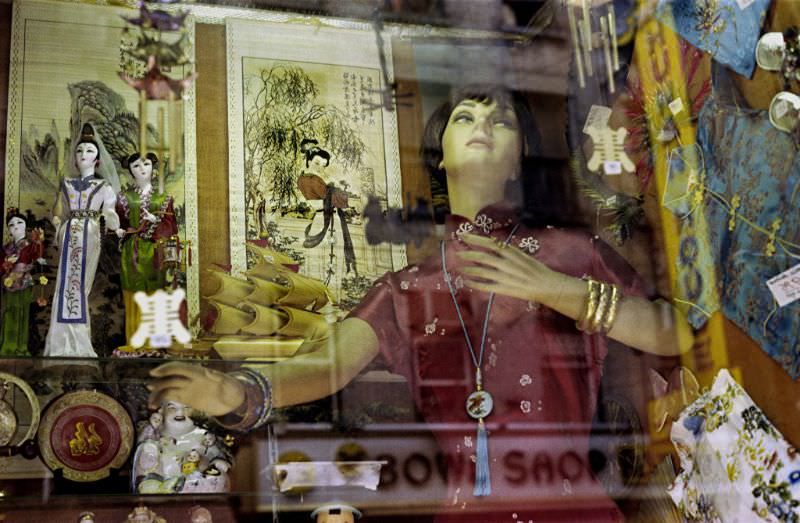
Chinatown and other neighborhood retail districts had their own distinct display styles, shaped by the communities they served. These windows often mixed garment presentation with cultural signifiers that set them apart from Midtown’s polished storefronts. Antsis recognized that New York’s fashion geography was not uniform — each neighborhood had its own visual rhythm.
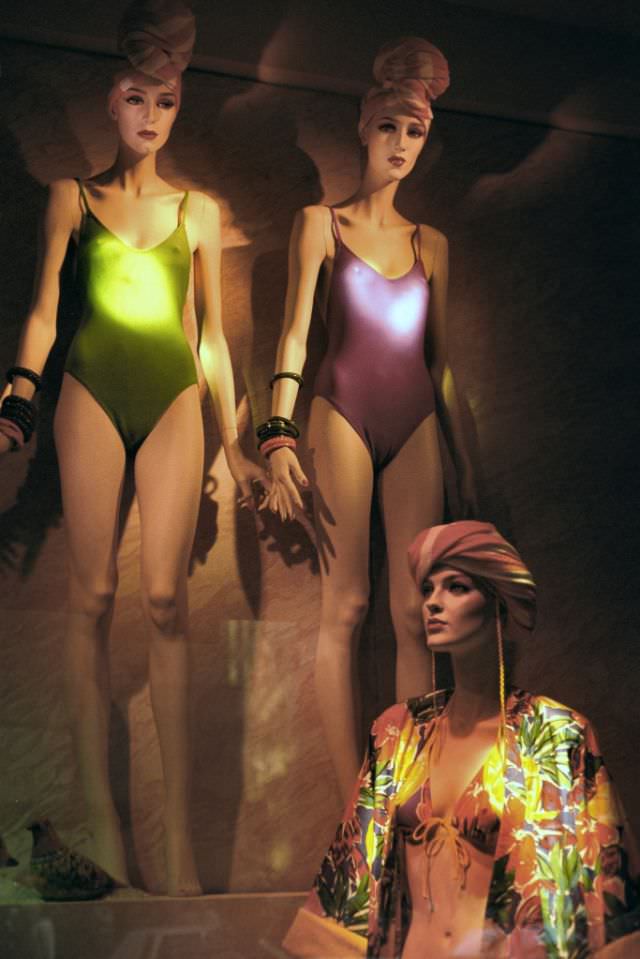
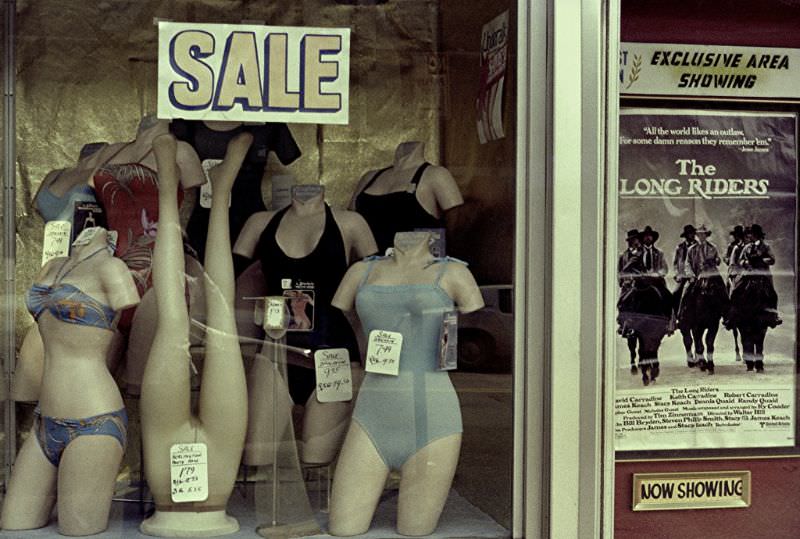
Some windows went further than simple merchandising. Live or semi-theatrical window performances — where the line between display and event blurred — drew crowds on busy sidewalks. These installations treated the storefront glass as a stage, with the passing pedestrian as an unplanned audience member.
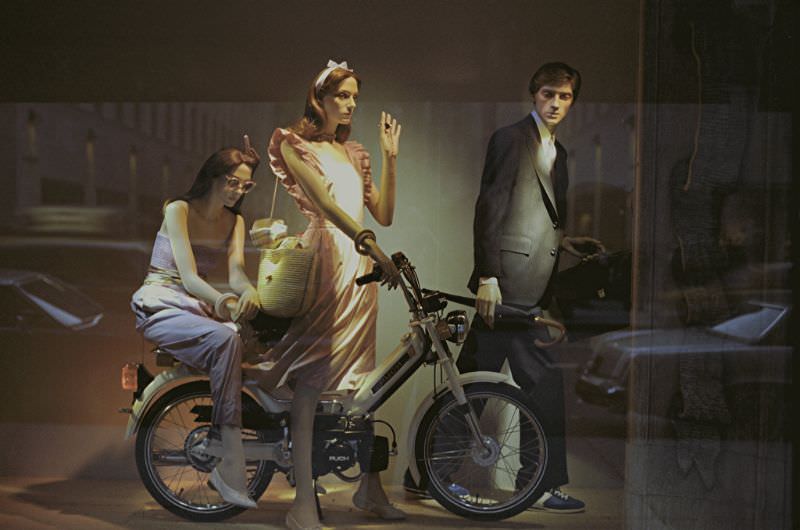
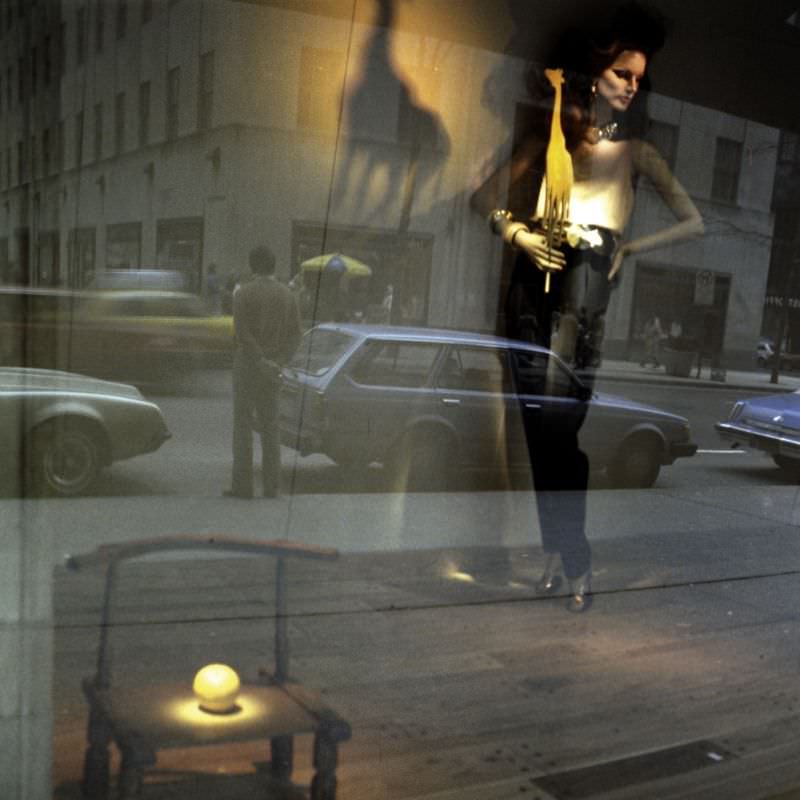
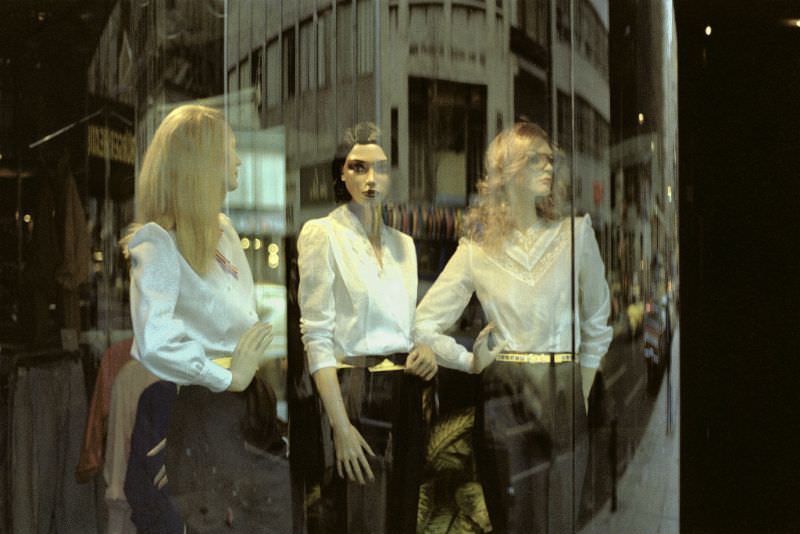
By 1982, mannequin design itself had evolved. Figures were posed with greater personality — arranged in groups, given expressive stances, or placed in deliberately isolated settings. The mannequin was no longer just a clothes hanger with a face. Retailers used them to project mood, attitude, and aspiration in a single frozen gesture.
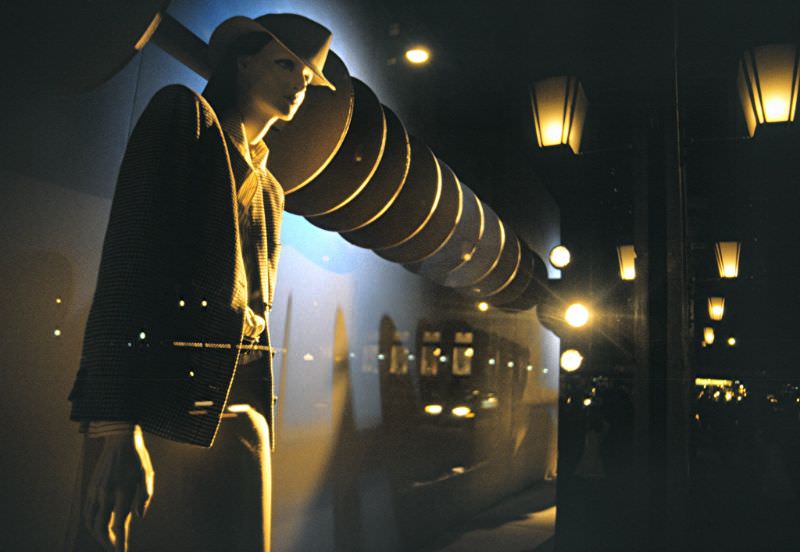
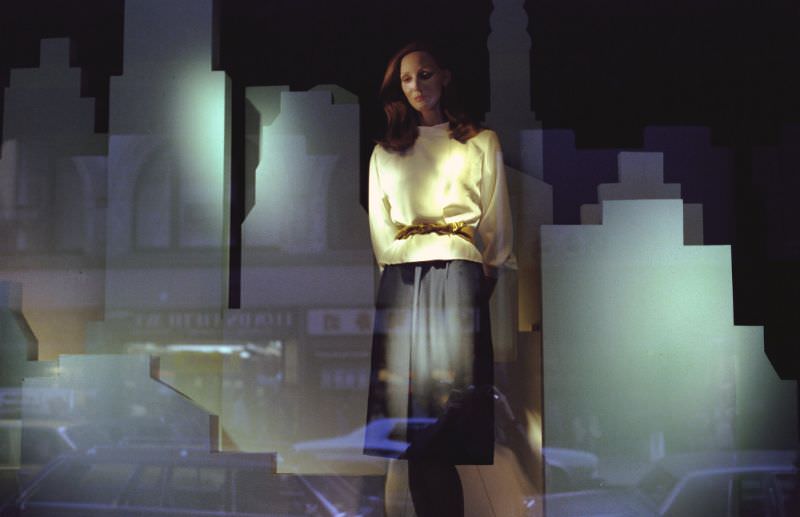
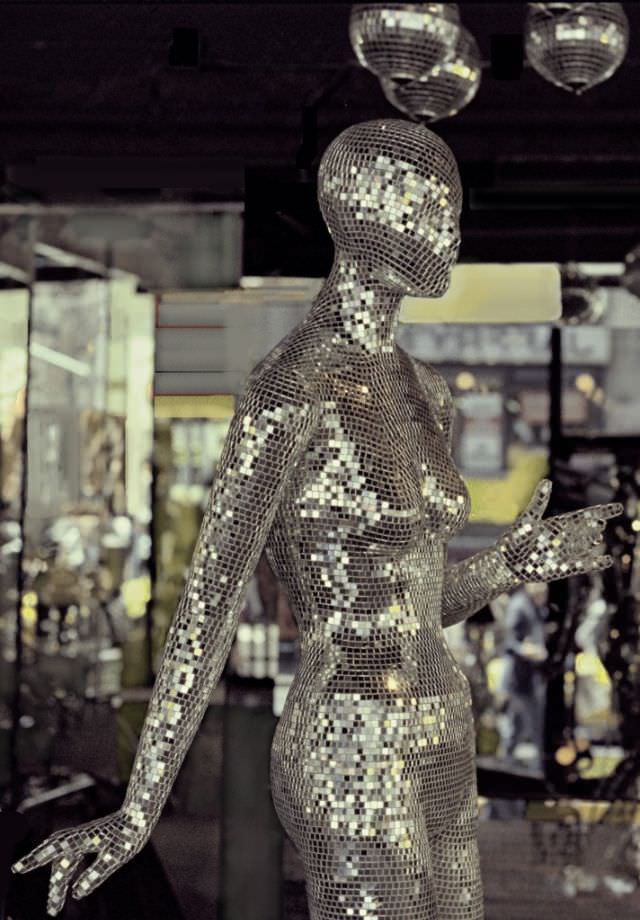
As the decade continued, the visual language of these windows grew increasingly stylized. Metallic finishes, dramatic lighting, and abstract compositions replaced some of the more straightforward displays of the late 1970s. Manhattan’s storefront culture was in a constant state of one-upmanship, and Antsis’s camera was there to record every round of it.