Hey There! Before You Go. 😧
Get the best vintage content straight into your inbox!

Don't worry, we don't spam

What the Netherlands looked like in the 1950s

The Netherlands entered the 1950s still carrying the wounds of World War II. Cities had been bombed, infrastructure was broken, and thousands of homes were gone. The Dutch government launched large-scale reconstruction programs to rebuild what had been lost — funding new housing estates, roads, bridges, and public buildings. This rebuilding effort did more than restore what was destroyed. It modernized the country from the ground up, laying the foundations for a new era of growth.
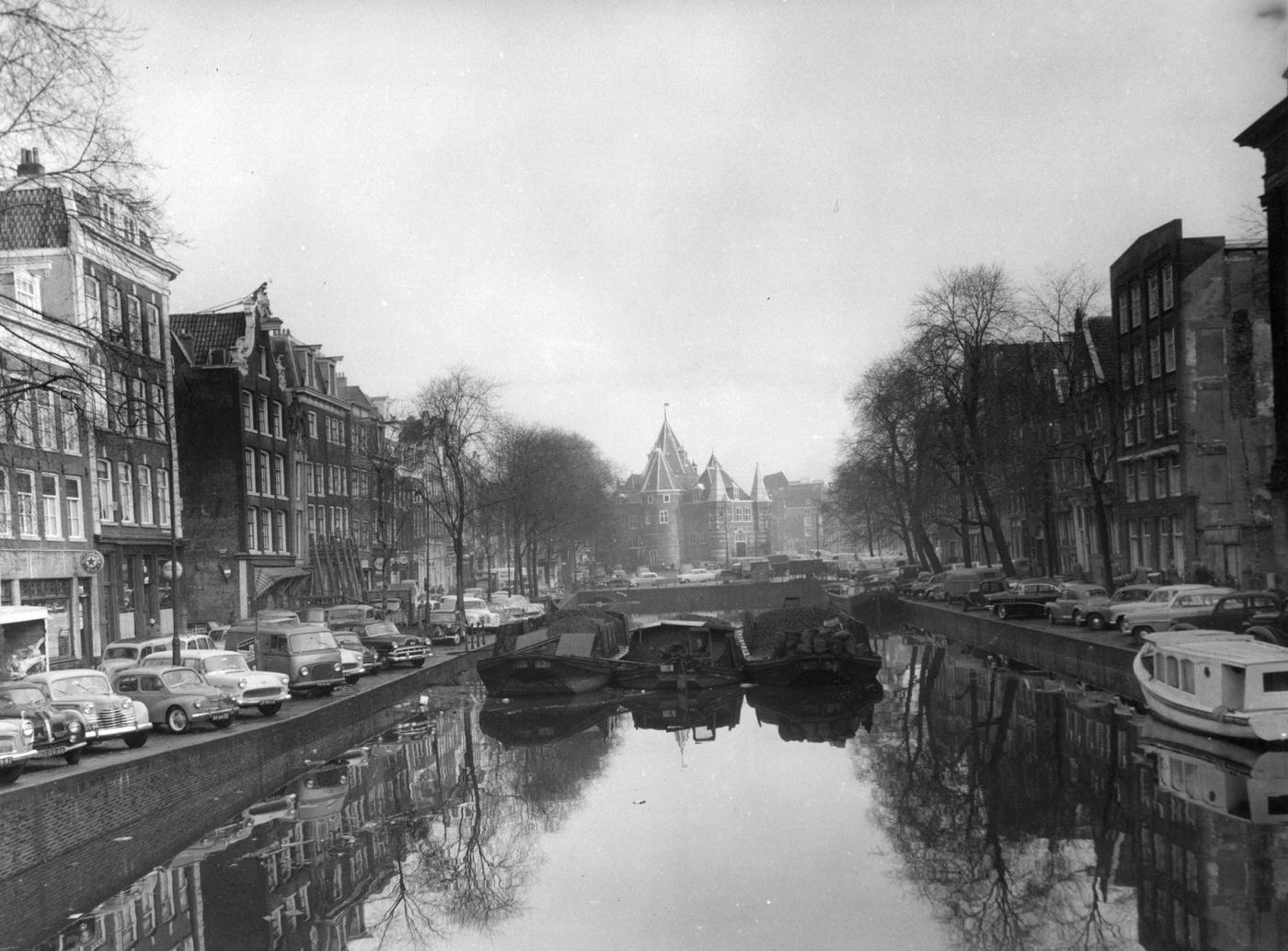
A canal at Amsterdam, 1950

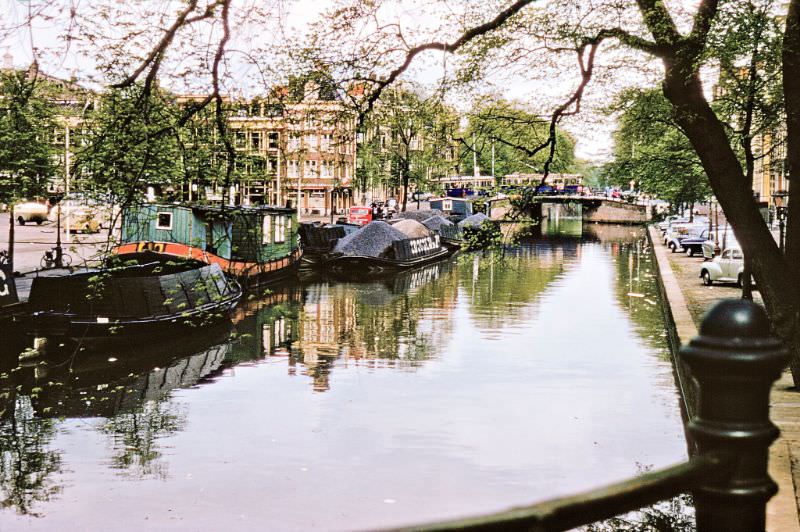
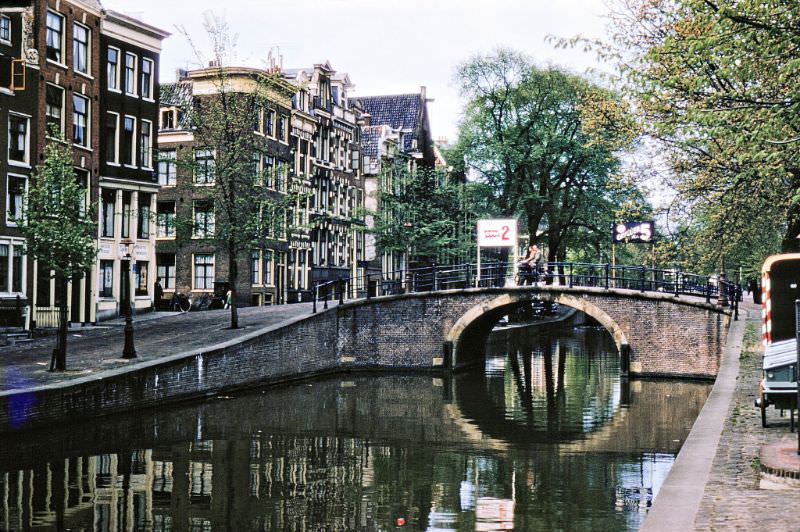
Amsterdam remained the beating heart of the Netherlands throughout the decade. Its famous canals lined with tall narrow houses were a constant in daily life, even as the city changed rapidly around them. Barges moved cargo through the waterways while children played on the banks. The city’s markets, coffee houses, and alleyways were filled with everyday activity that told the real story of postwar Dutch life.
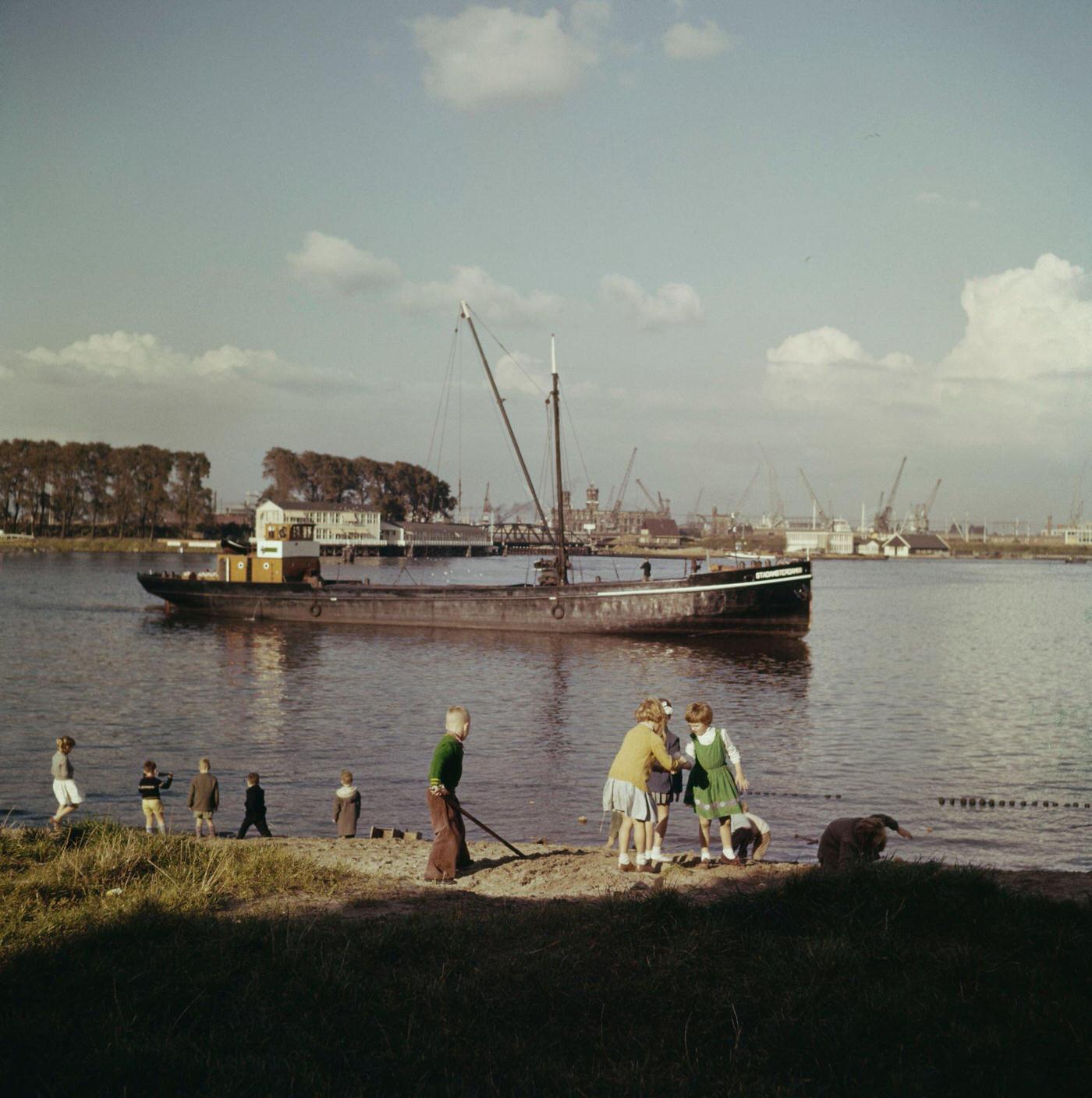
A barge passes children playing on a canal bank in a suburb of Amsterdam, capital city of the Netherlands, 1950.
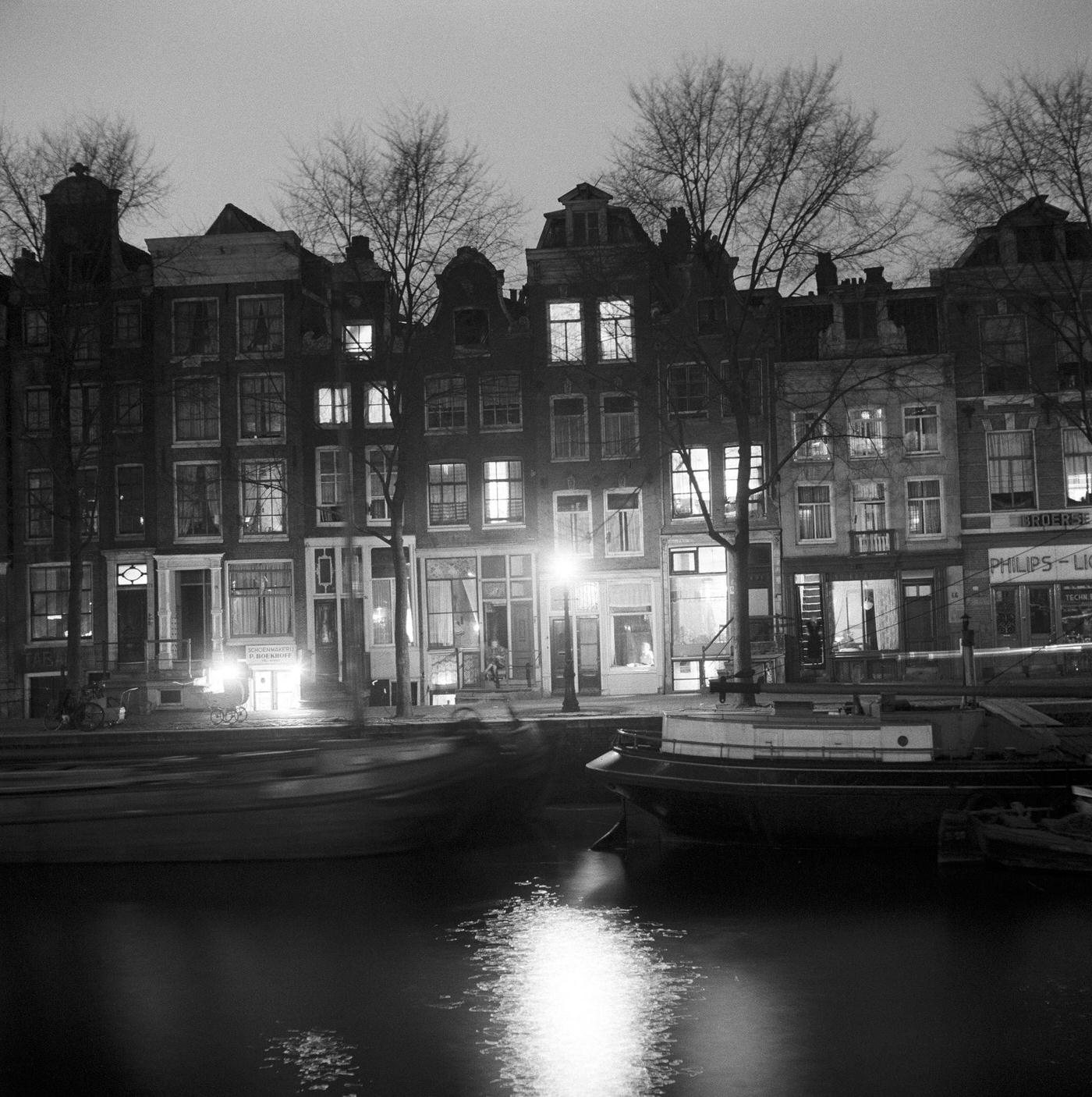
Lights switching on in typical canal houses in Amsterdam, the Netherlands, 1954.

The Dutch economy grew steadily through the 1950s, driven by a mix of industry, trade, and agriculture. The Netherlands had always been a trading nation, and its position at the center of Europe — with Rotterdam’s massive port and well-developed road networks — made it a key hub for moving goods across the continent. New industries in electronics, chemicals, and oil refining created jobs and pulled workers into cities. Meanwhile, farming was being modernized, with new machinery and methods boosting production to feed a growing population.
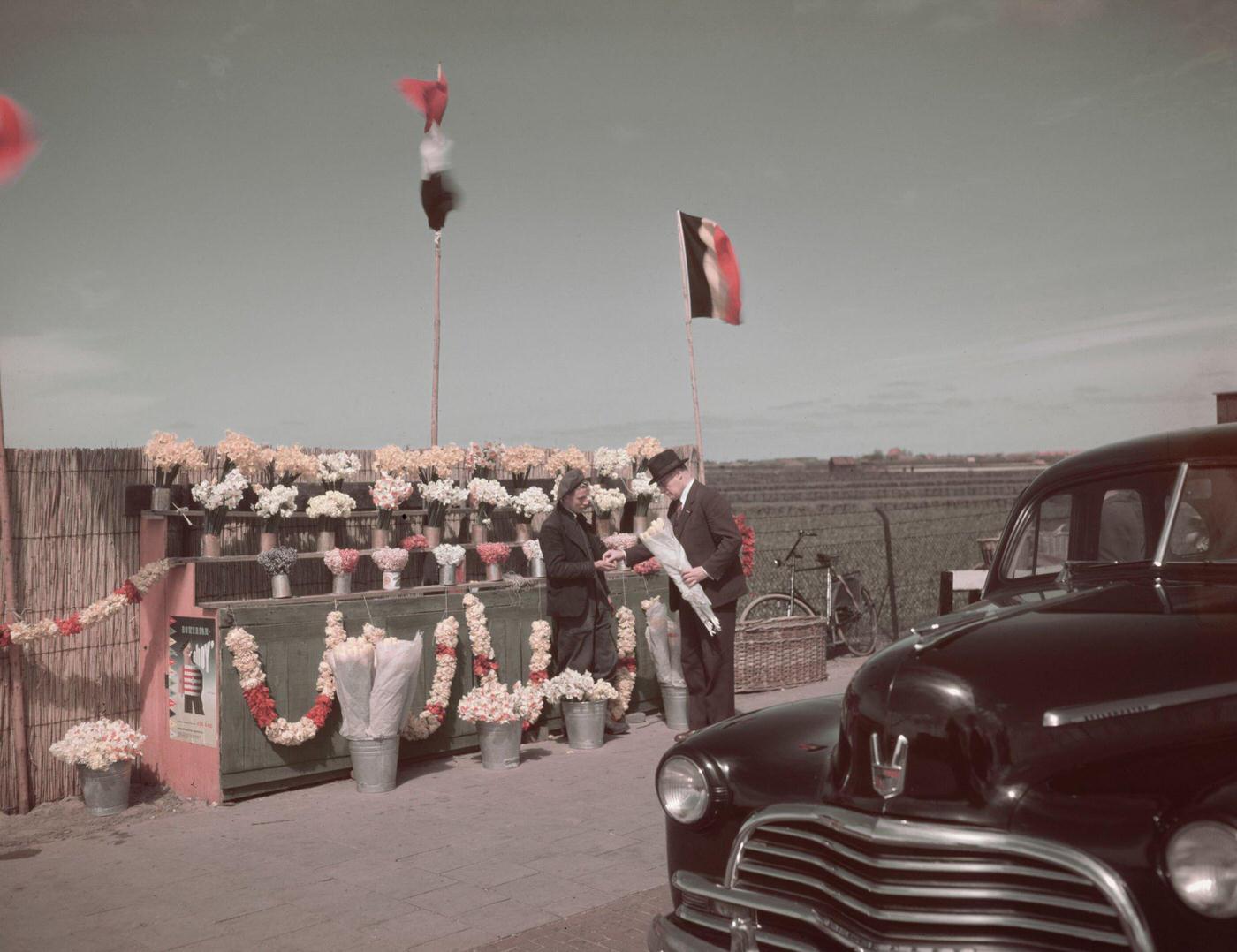
A roadside flower vendor sells a bunch of tulips to a male customer beside a field of tulip bulbs near Lisse in the Netherlands in June 1950.
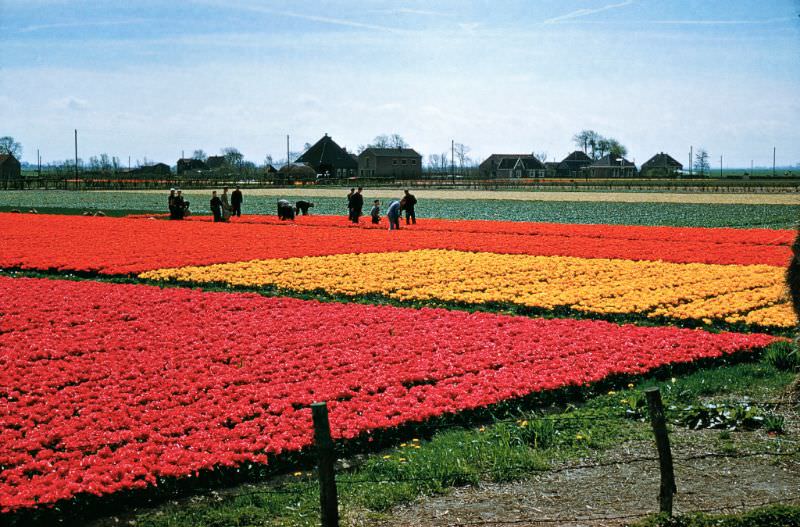
Tulip fields.
Tulip fields.

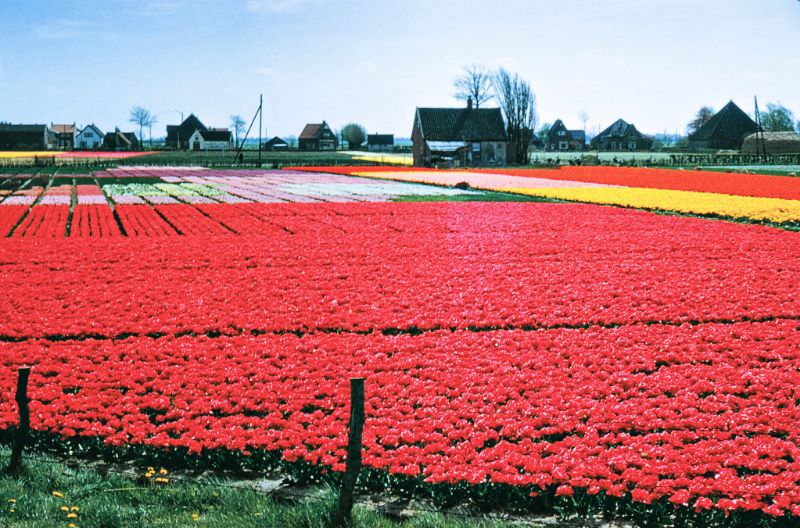
Tulips were far more than a symbol — they were a serious export crop. The bulb-growing region of South Holland produced flowers in enormous quantities for markets across Europe. Each spring, the Bloemencorso procession wound through towns like Hillegom, Lisse, and Sassenheim, with floats decorated entirely in fresh blooms drawing crowds from across the country.
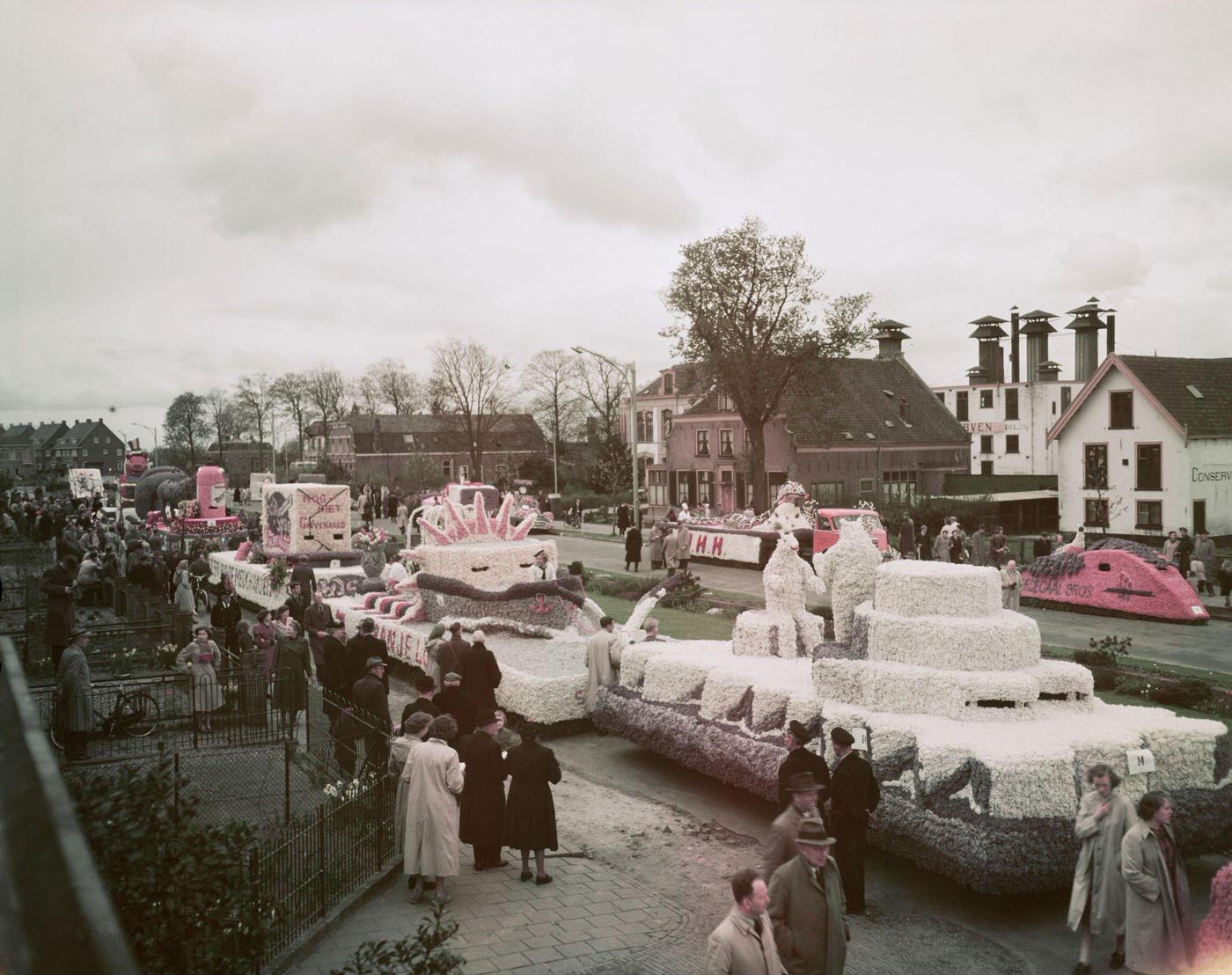
Annual Bloemencorso Bollenstreek flower procession through the streets of Hillegom, Lisse, and Sassenheim in the province of South Holland, Netherlands, in April 1951.
Tulip fields.
Tulip fields.

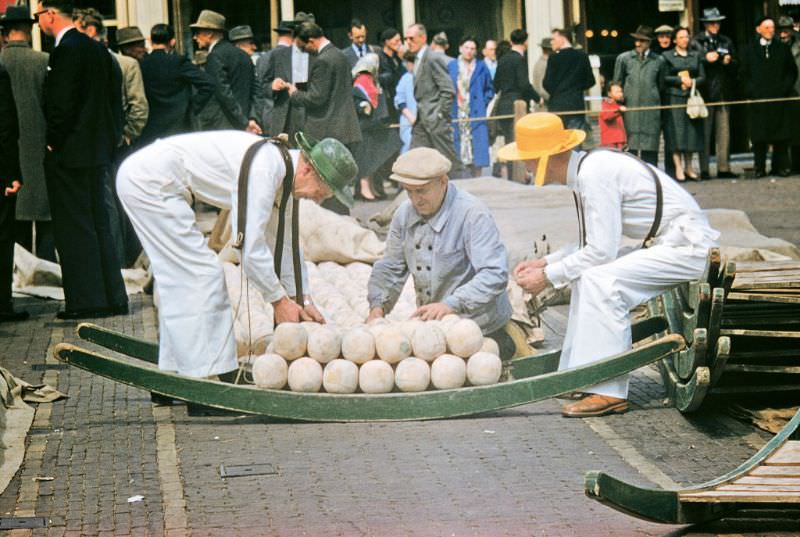
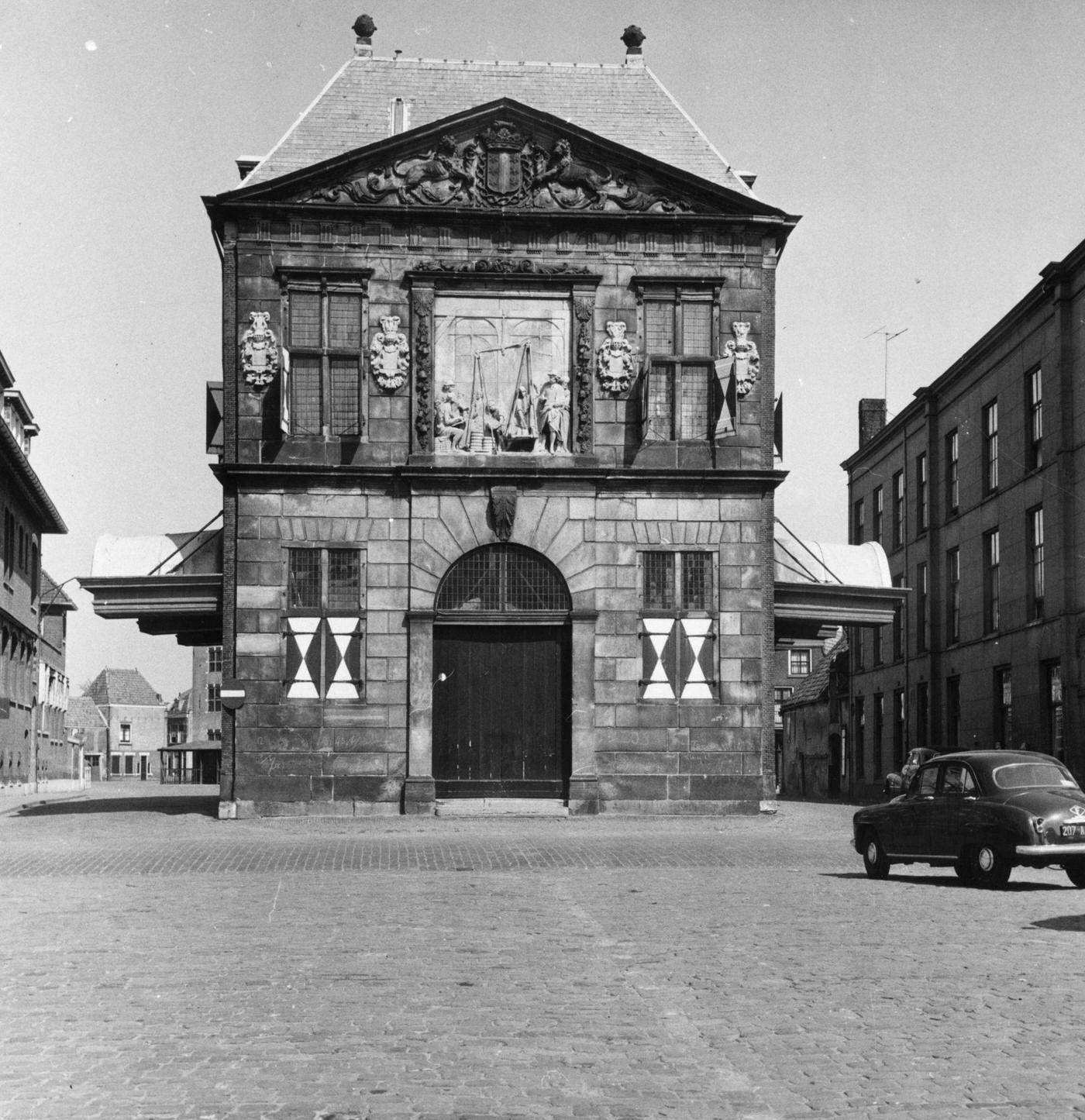
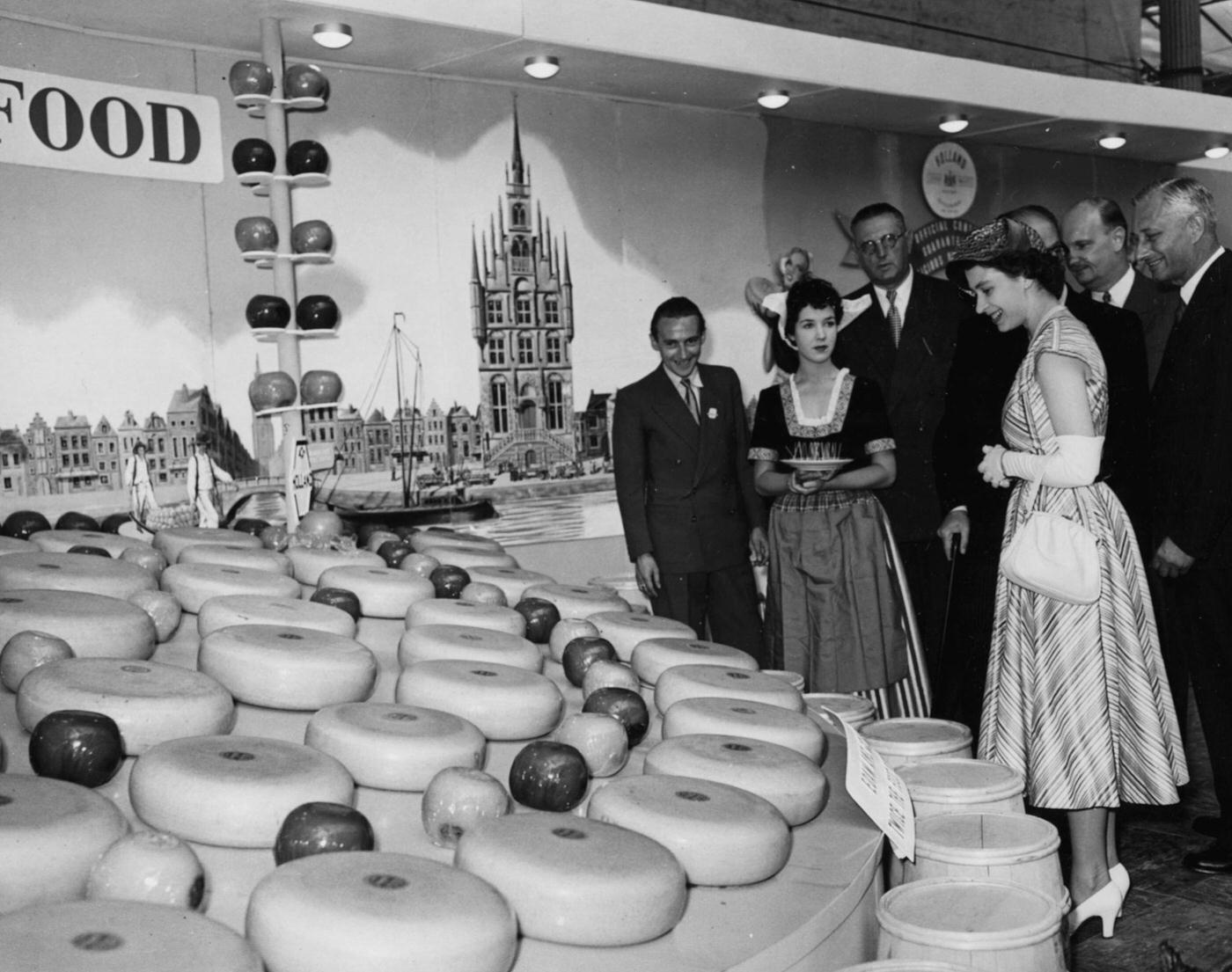
Cheese was another cornerstone of the Dutch economy. The market at Alkmaar was one of the most well-known in the country, where workers in white uniforms and colored hats carried enormous rounds of cheese across the square on wooden sledges. Towns like Gouda and Edam gave their names to cheeses sold across the world. In 1952, Queen Elizabeth II — then still a princess — visited the British Food Fair in London and stopped to admire a display of Dutch cheese wheels at the Netherlands exhibit, a small but telling sign of how well-regarded Dutch exports were abroad.
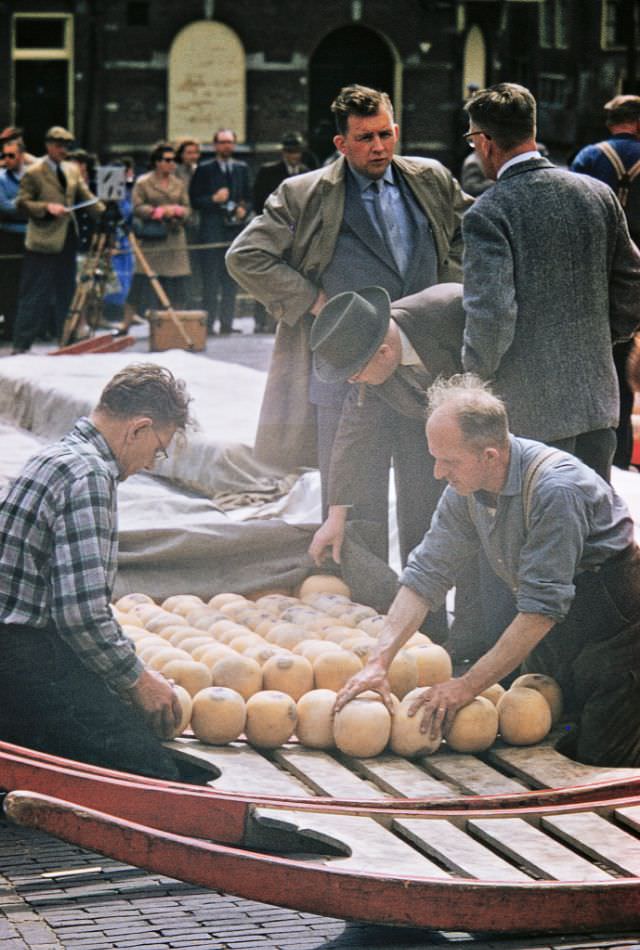
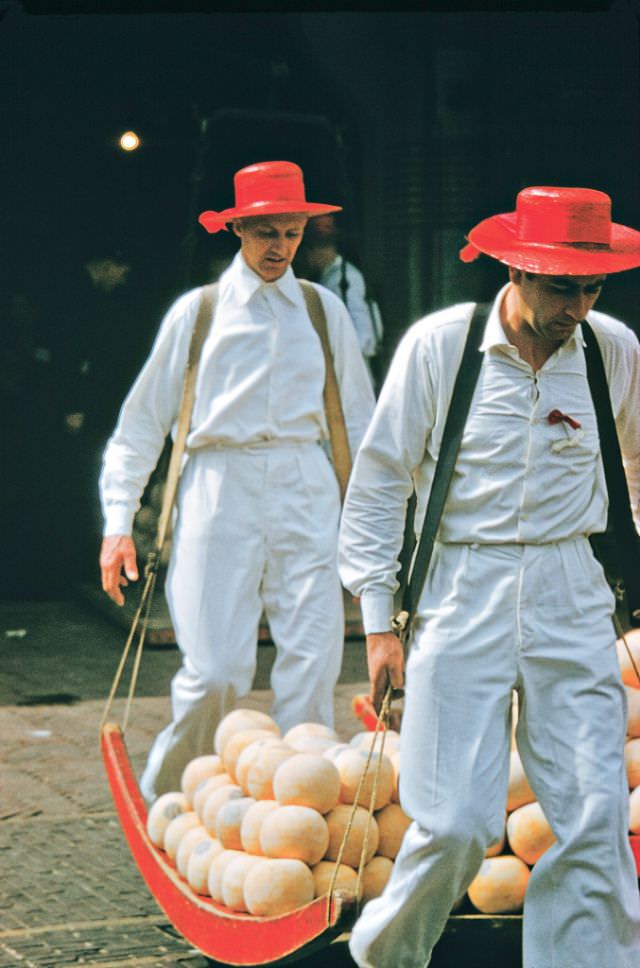
Alkmaar Cheese Market.
A weighing house for cheese in the Dutch town of Gouda, 1952
Queen Elizabeth II admires a display of Dutch cheese wheels on the Netherlands exhibit at the British Food Fair at Olympia in London, 1952.

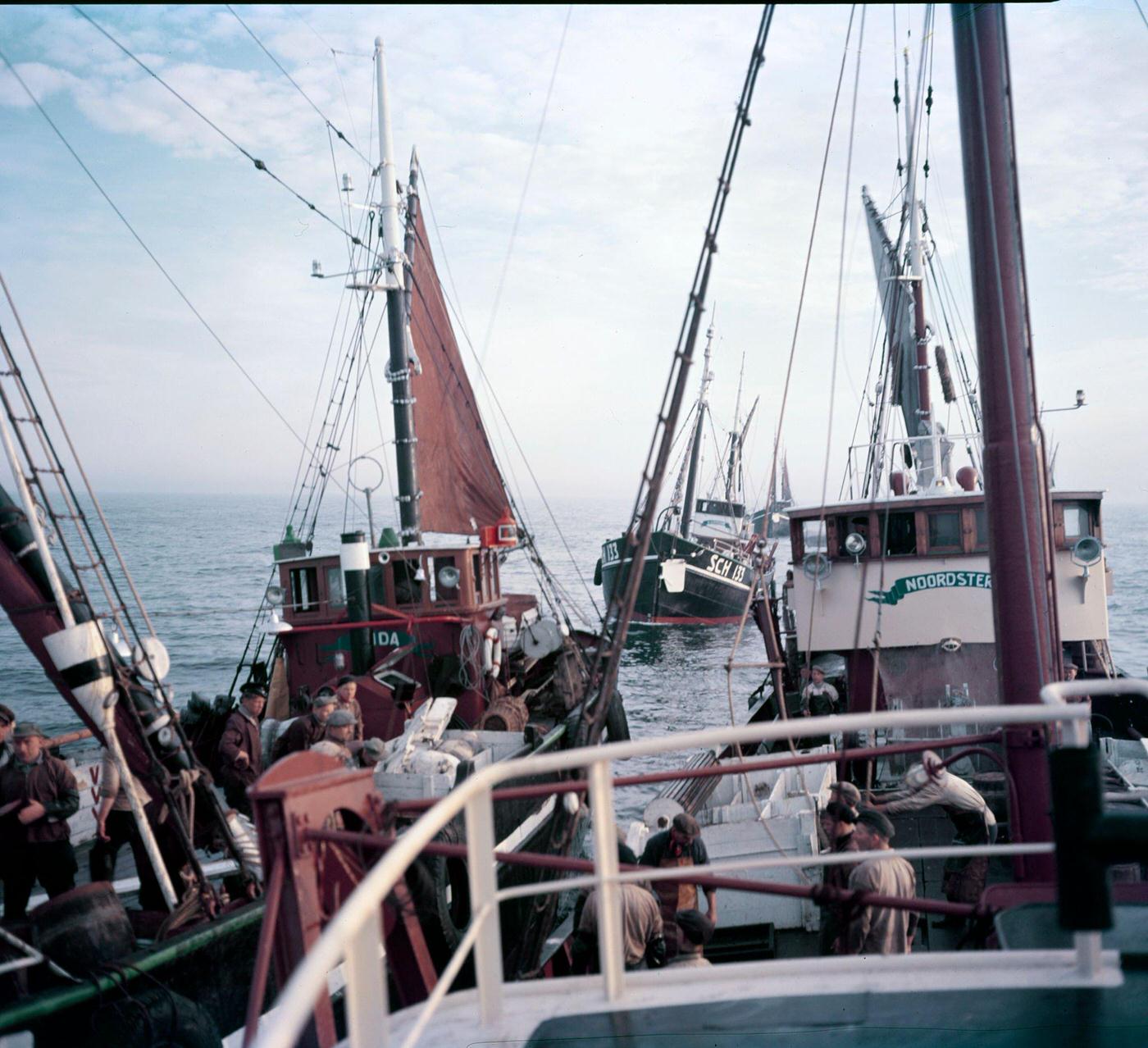
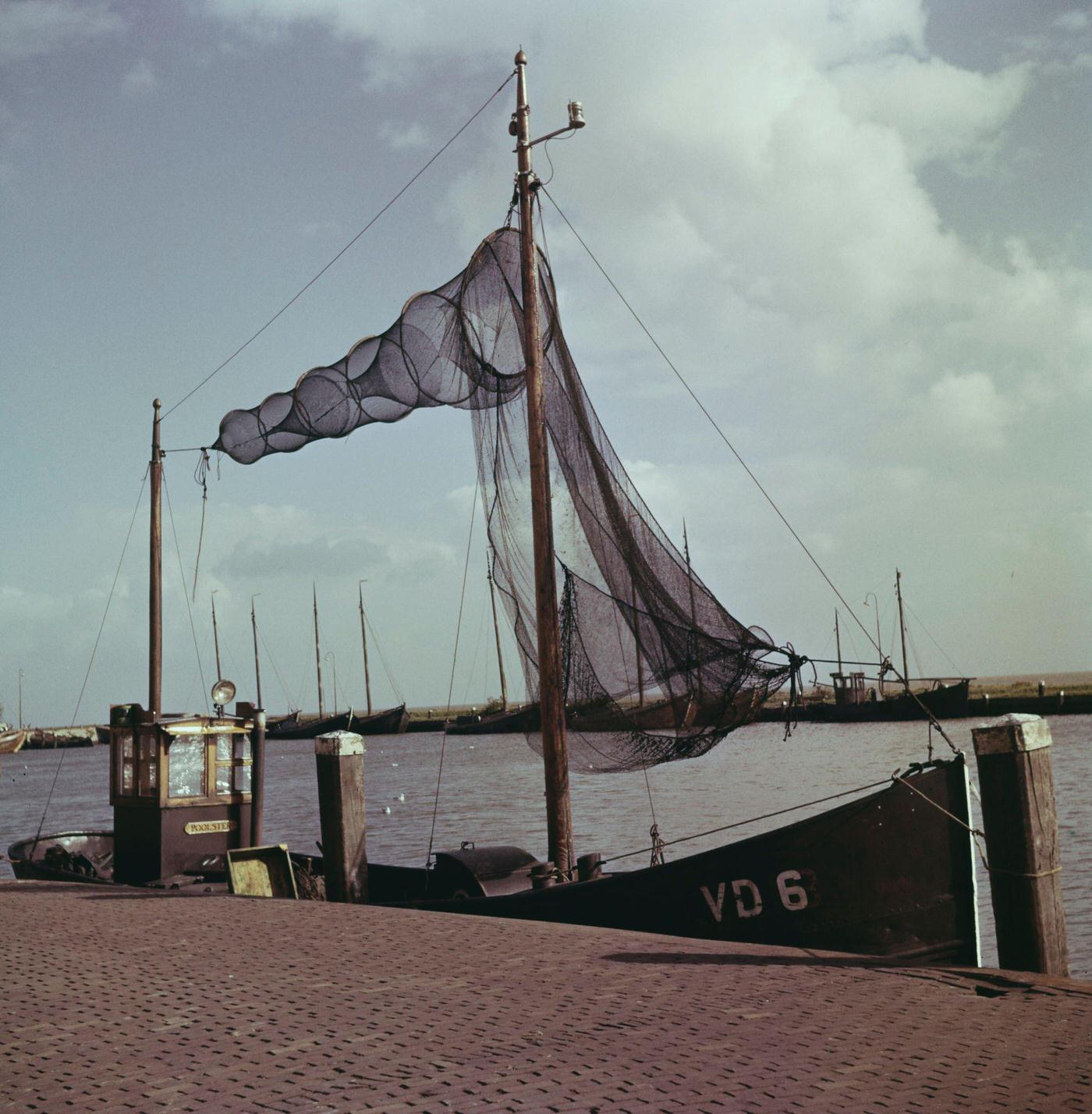
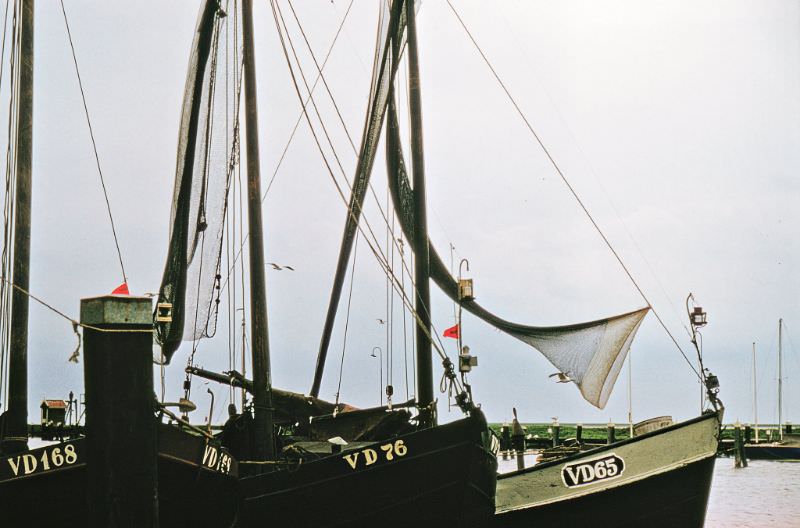
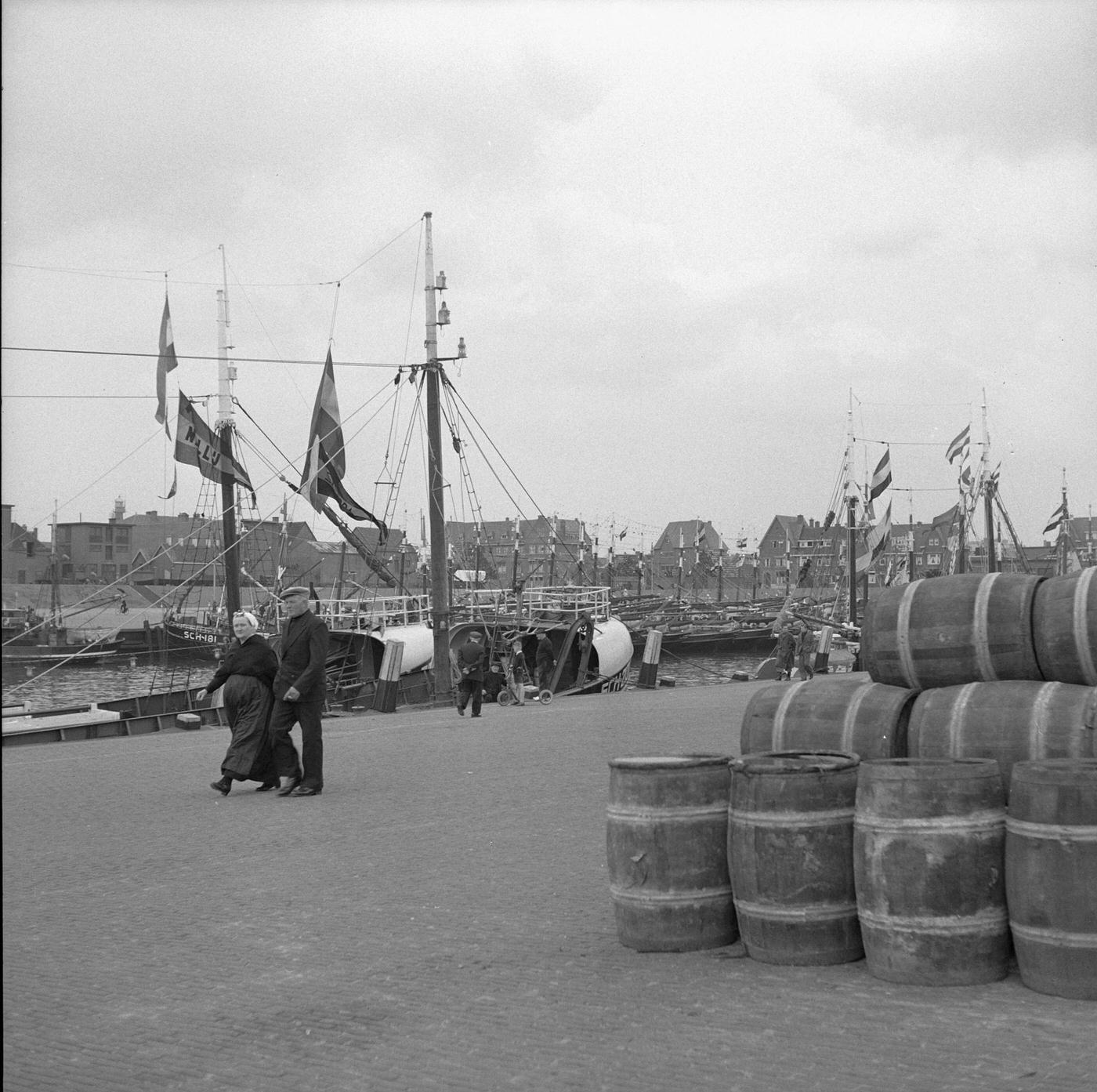
Fishing remained a vital industry along the Dutch coast. The harbor at Scheveningen was one of the busiest fishing ports in the country, with fleets of trawlers heading out into the North Sea to haul in herring. The catch was processed quickly and sold fresh, smoked, or salted across the Netherlands. Volendam, on the Markermeer lake, was another important fishing village. Men there still wore traditional baggy trousers and women hung trawling nets from boat masts to dry after long days at sea.
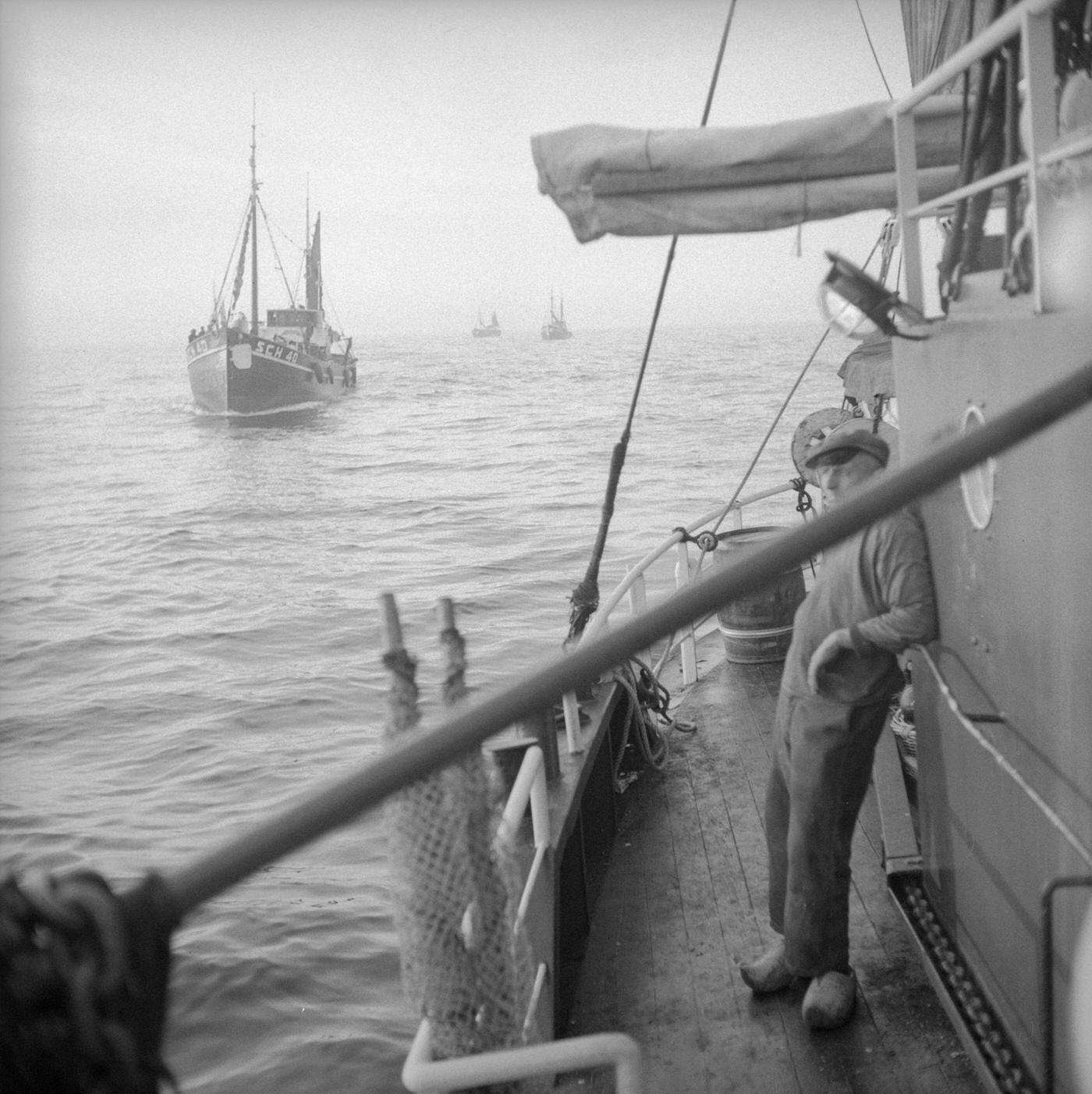
Dutch herring fishermen on the North Sea, 1954.
Fishing harbor of Scheveningen, the Netherlands, 1954.
Herring fishing in the North Sea near Scheveningen, the Netherlands, 1954.
A conical trawling net is hung up to dry from the mast of a fishing boat moored in the harbor at Volendam on the Markermeer lake in the Netherlands, 1950.
Fishing boats, Volendam.

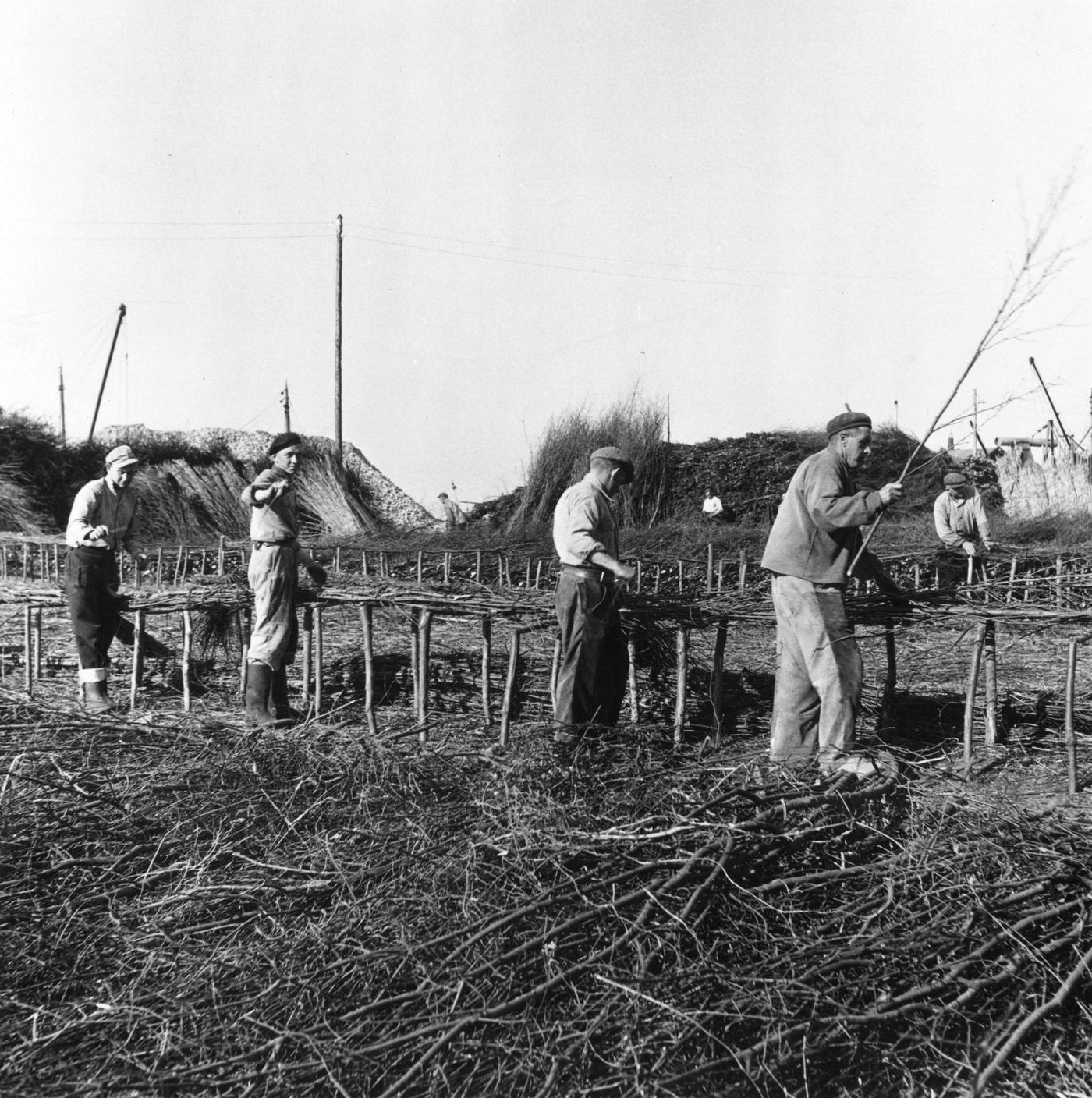
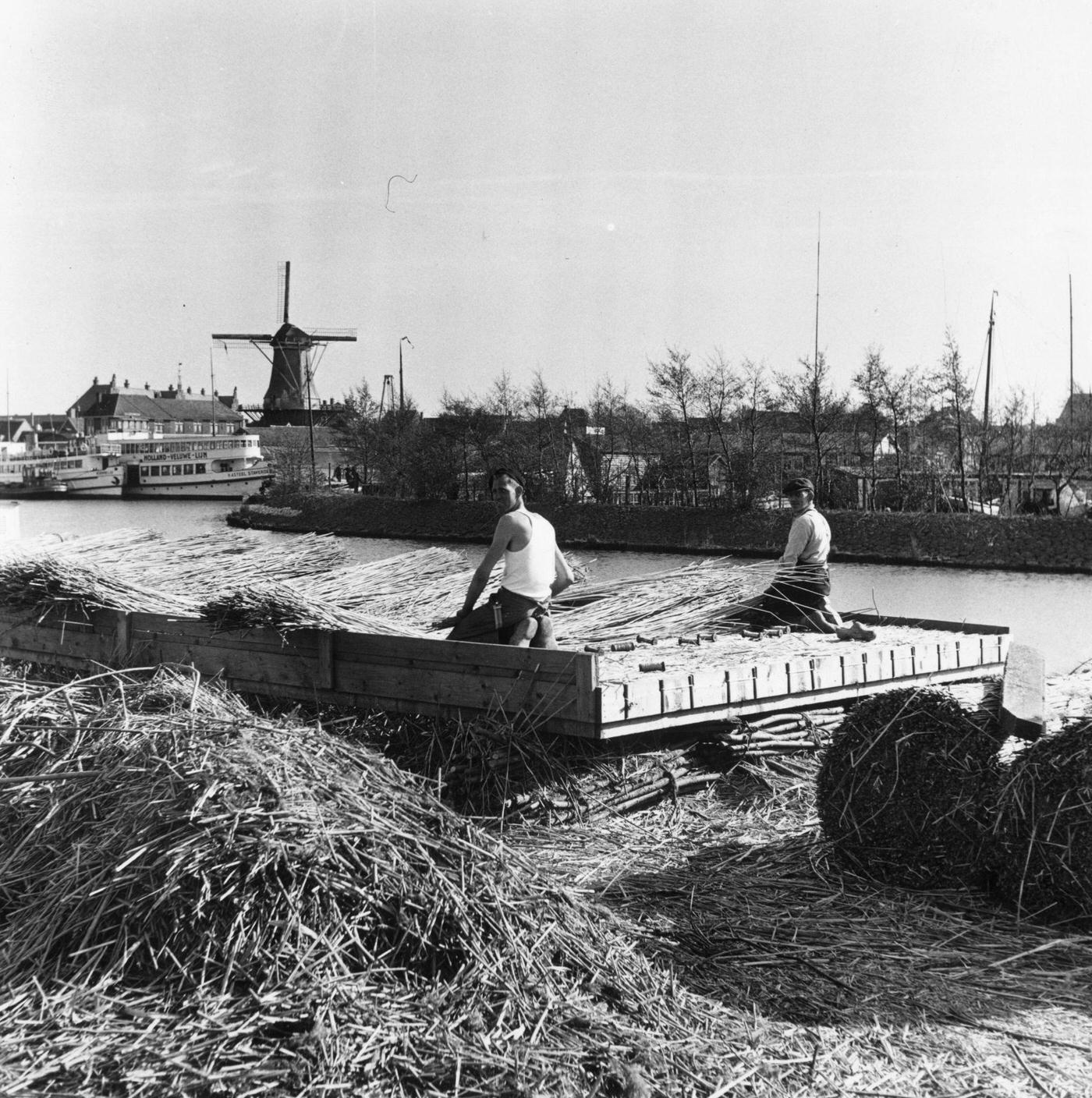
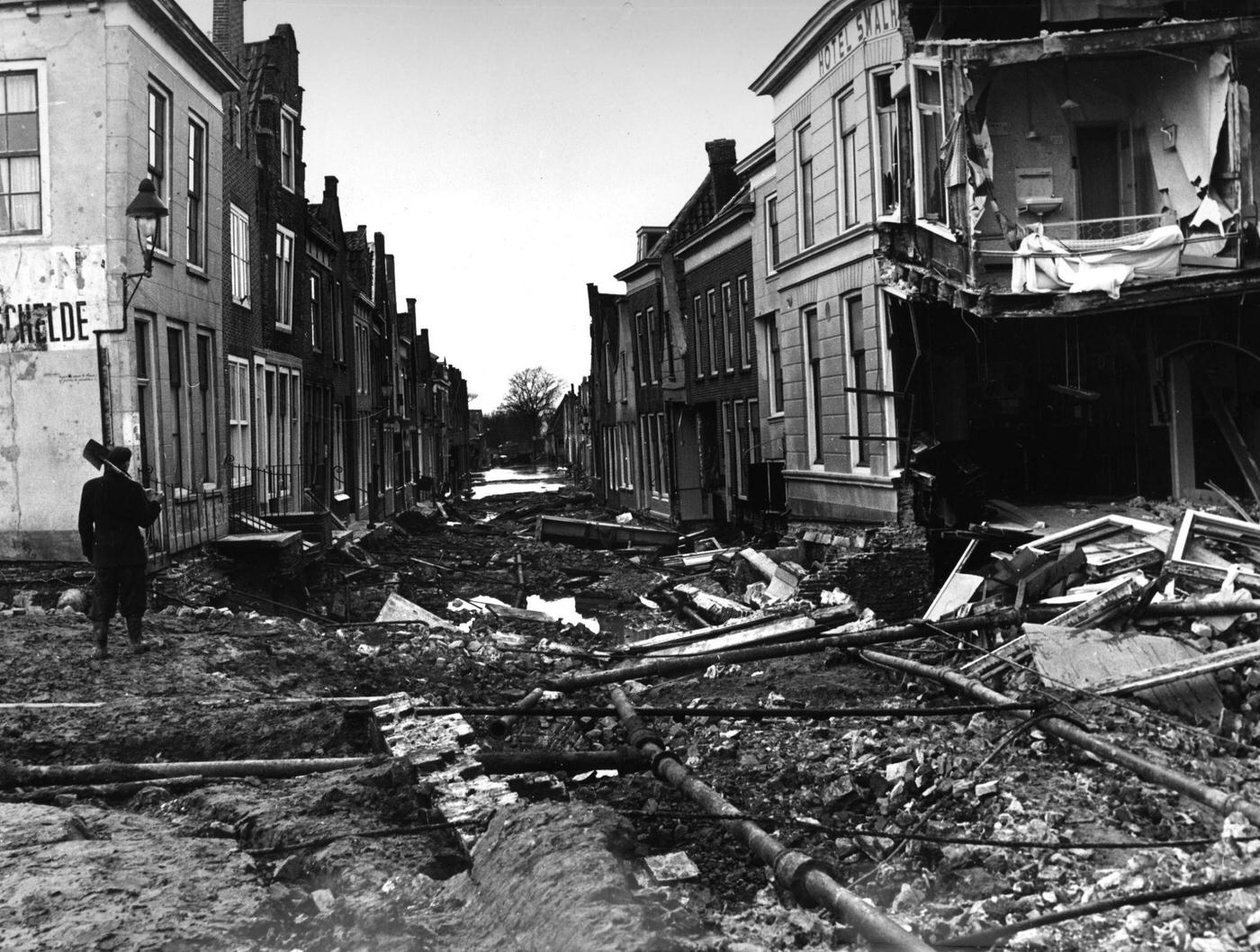
In February 1953, a catastrophic storm surge swept in from the North Sea and broke through the Netherlands’ network of dykes. The floodwaters swallowed entire towns in the southwestern provinces, killing nearly 1,800 people and displacing tens of thousands more. Farmhouses disappeared under water, and whole communities were left in ruins. The disaster accelerated construction of the massive Delta Works flood defense system and put a sharp focus on the importance of dyke maintenance. Workers in Harderwyk were photographed making wicker rafts used as foundations for dyke repairs — a centuries-old technique still in use.
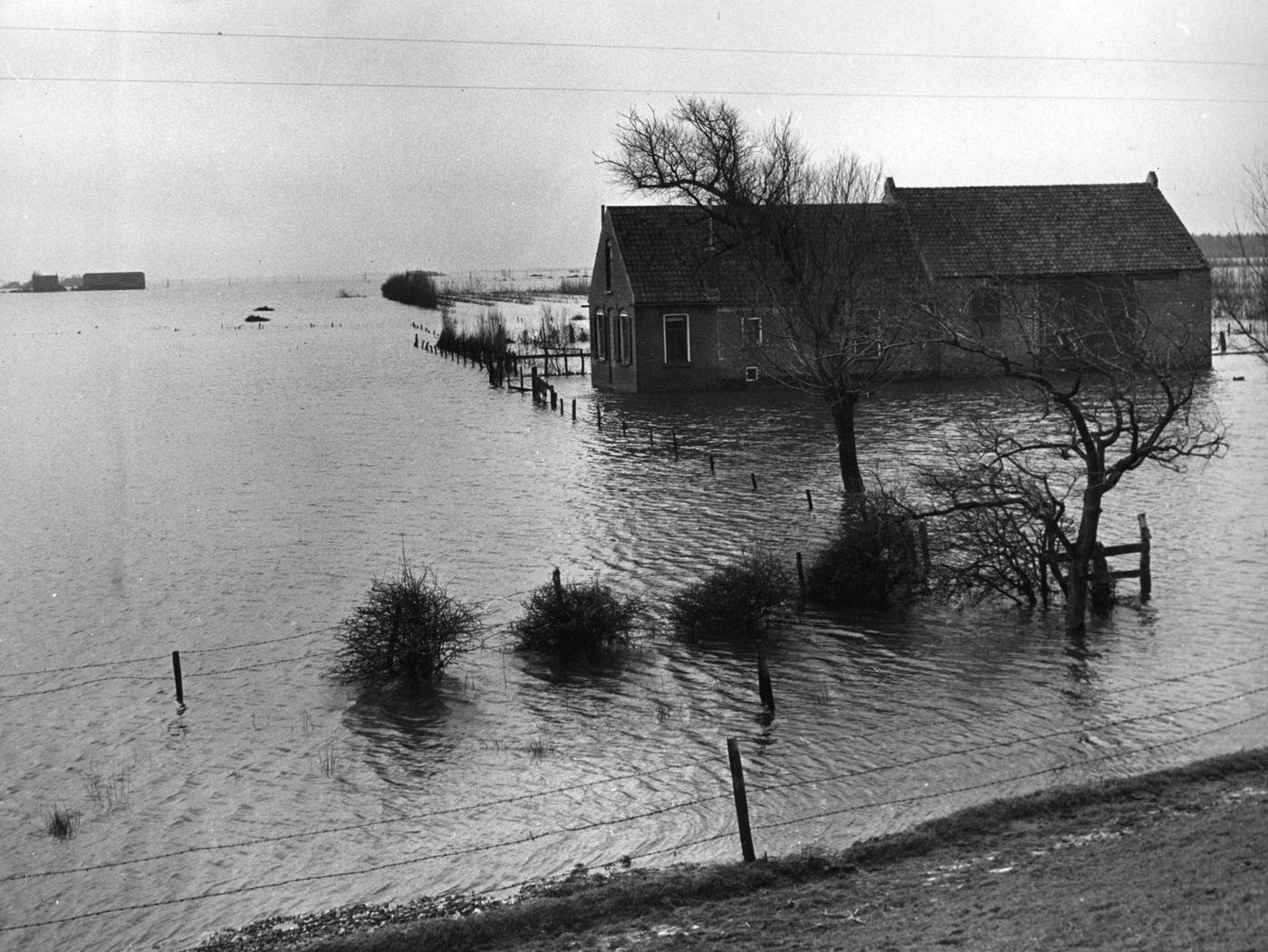
A Dutch farmhouse flooded by water, Netherlands, February 1953.
A town destroyed by a flood in the Netherlands, February 1953.
Workers in the Dutch town of Harderwyk making wicker rafts for dyke foundations, 1952

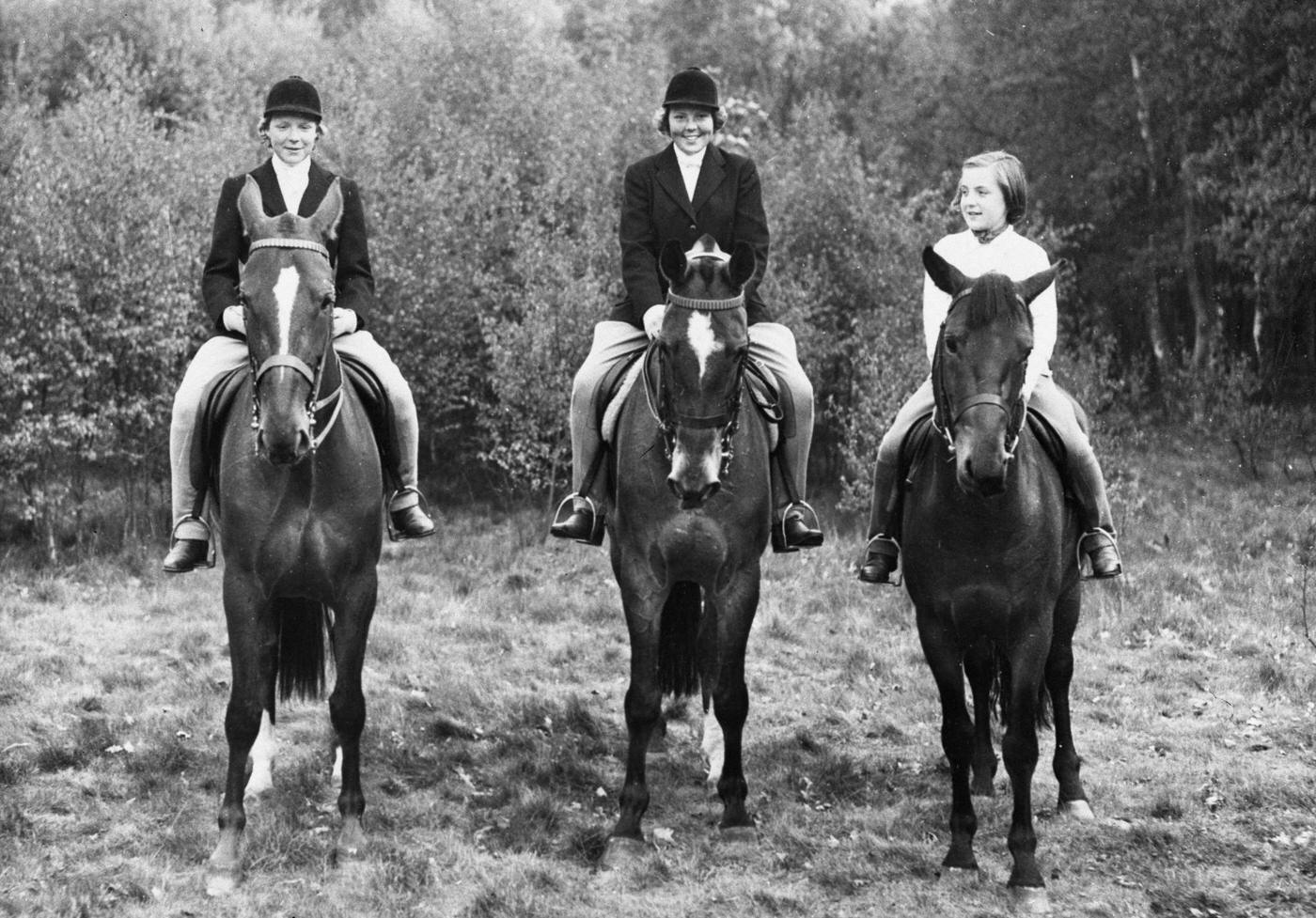
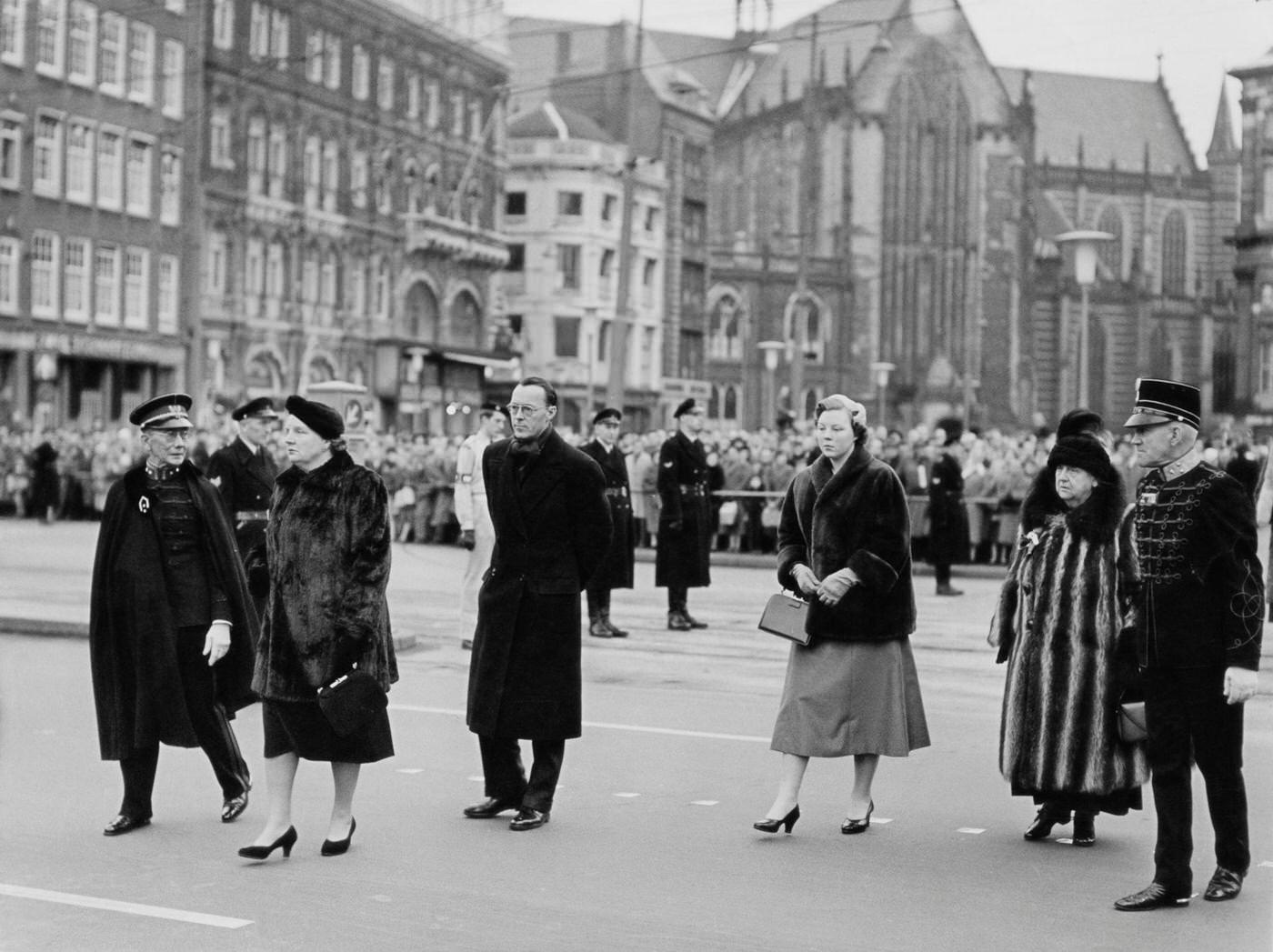
The Dutch Royal Family was a constant presence in public life throughout the decade. Queen Juliana, who was inaugurated in 1950, represented a country still finding its footing after the war. In 1956, Hungarian revolutionaries presented their flag to Queen Juliana at a ceremony in Amsterdam — a gesture of solidarity at a time when the Hungarian uprising against Soviet rule had captured global attention. That same year, Princess Beatrix turned 18, and her younger sisters Irene and Margriet were photographed riding horses at Grebbeberg.
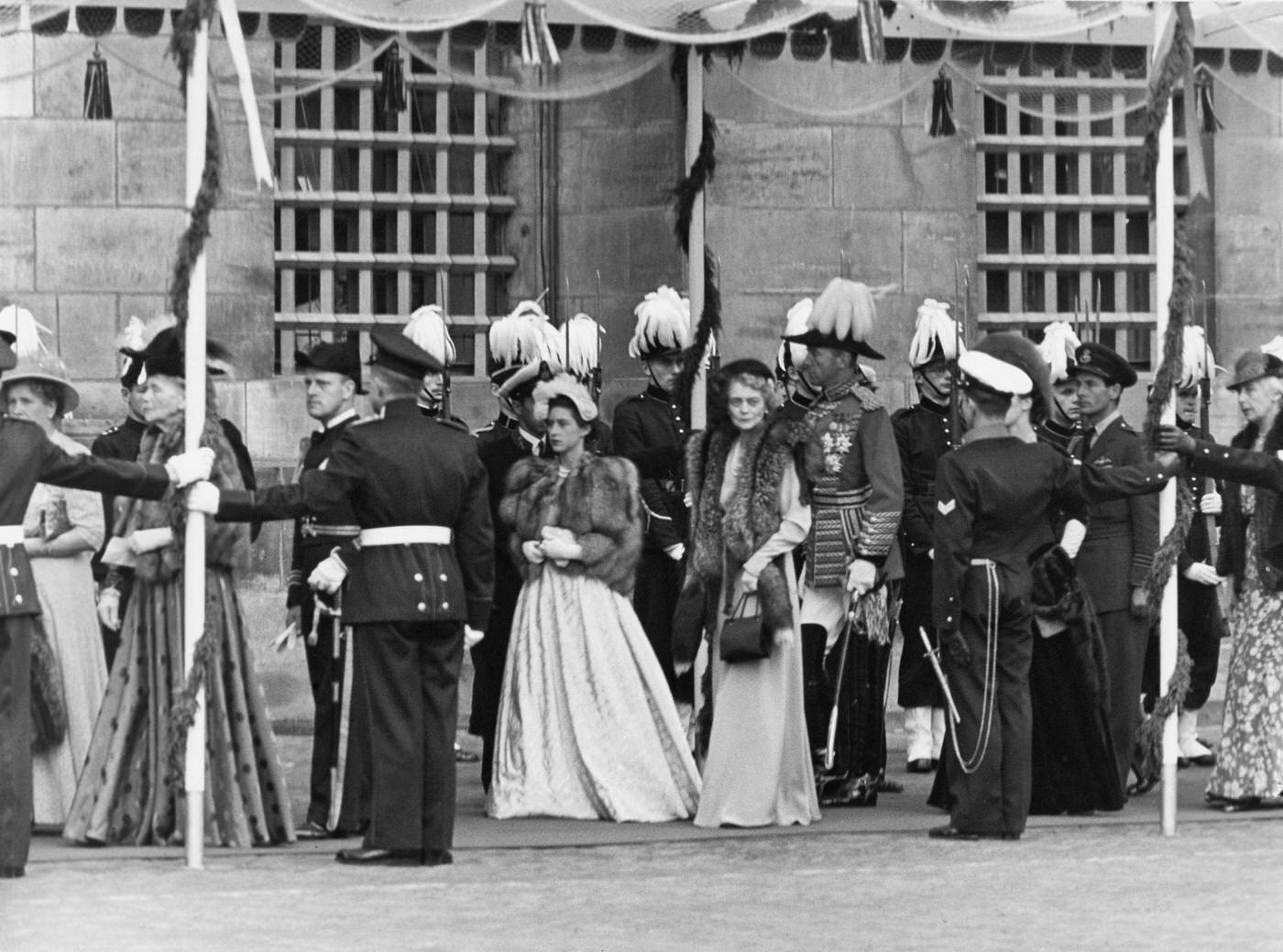
Princess Margaret at the New Church for the inauguration of Queen Juliana, Amsterdam, Netherlands,1950
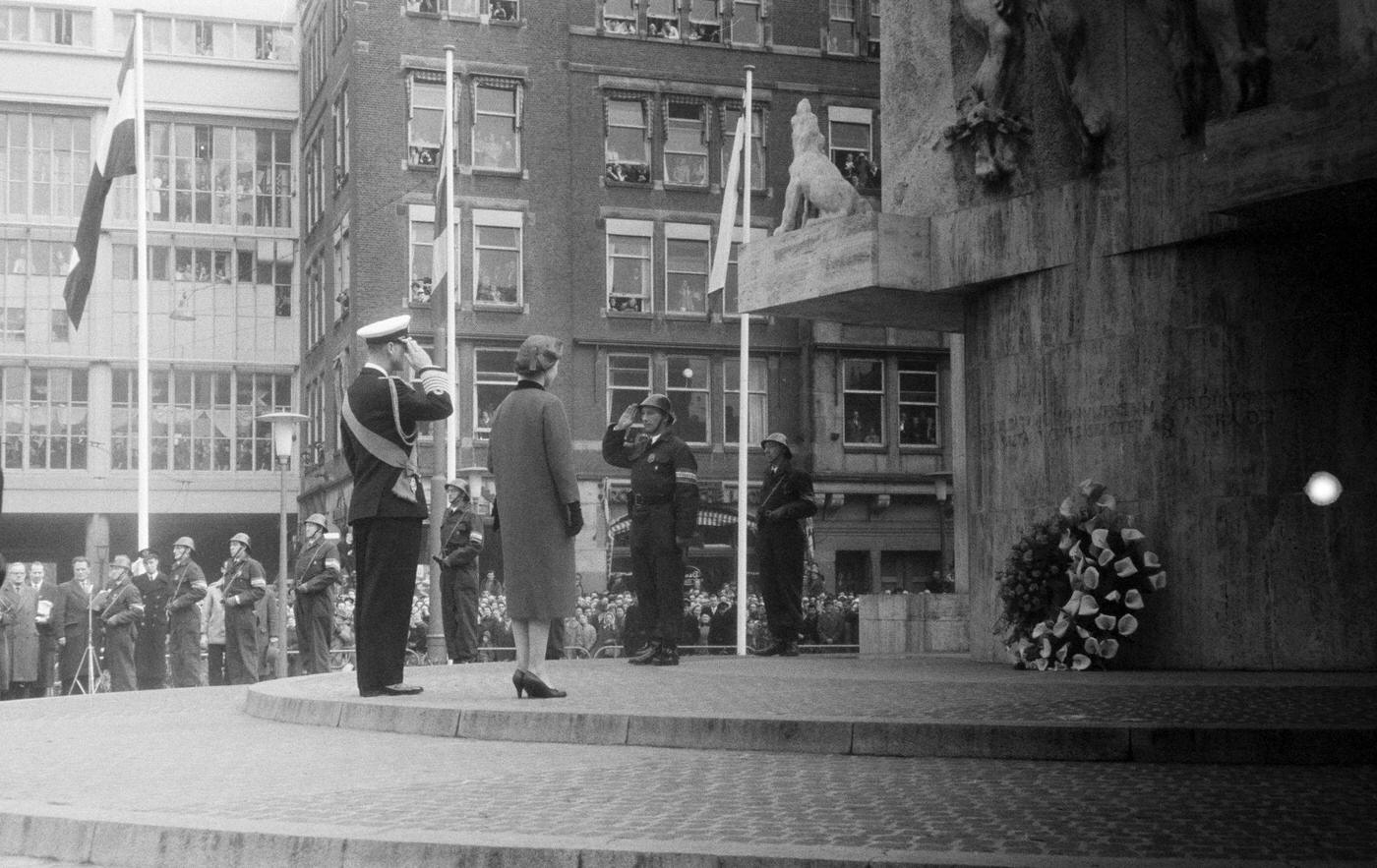
Dutch Royal Family at a ceremony in which Hungarian revolutionaries presented their flag to Queen Juliana, Amsterdam, 1956.
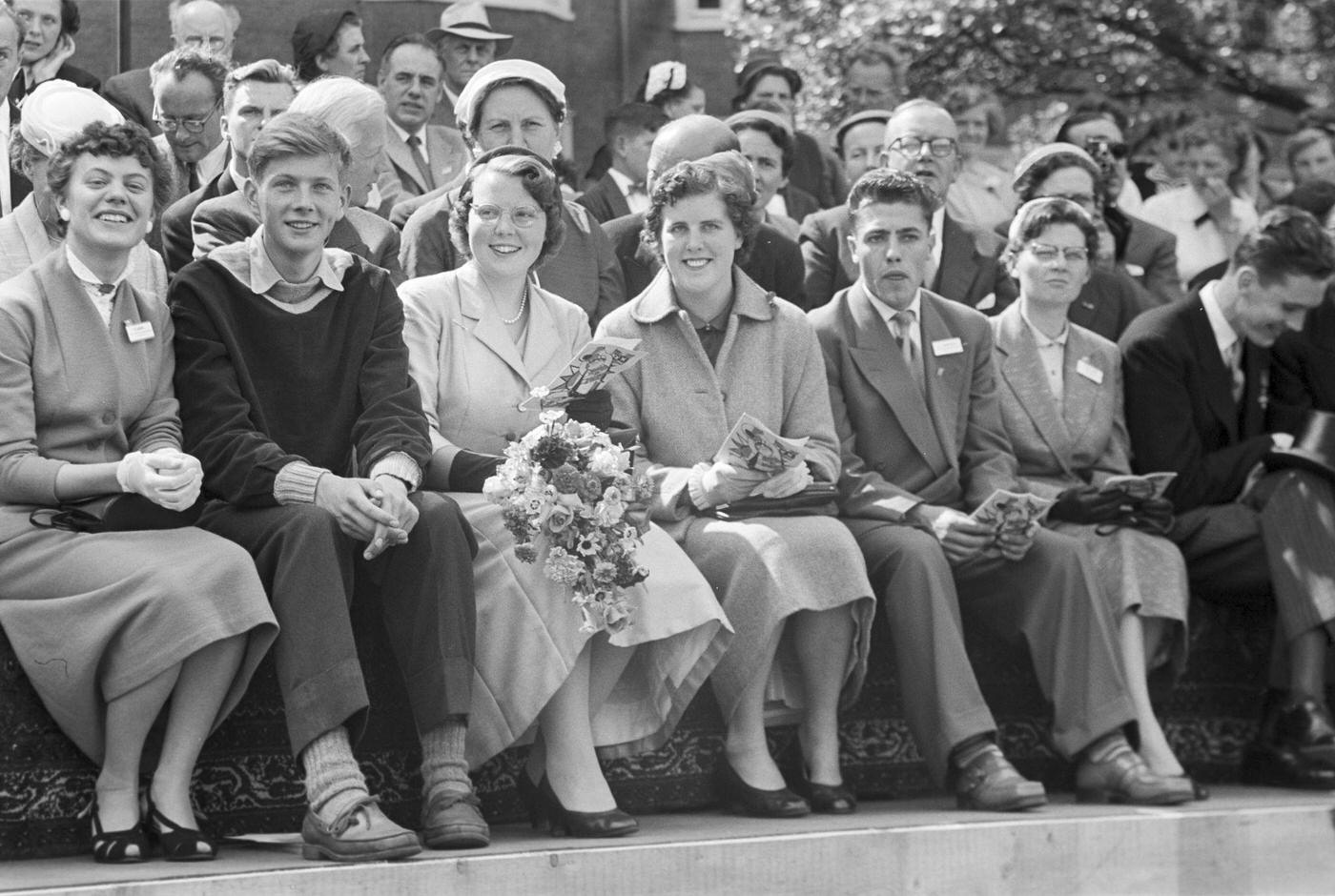
Dutch Royal Family: The 18th Birthday of Beatrix of the Netherlands in 1956.
Dutch Royal Family: Princess Irene (14), Princess Beatrix (16), and Princess Margriet (11) ride horses at Grebbeberg, the Netherlands, daughters of Queen Juliana and Prince Bernhard of the Netherlands.

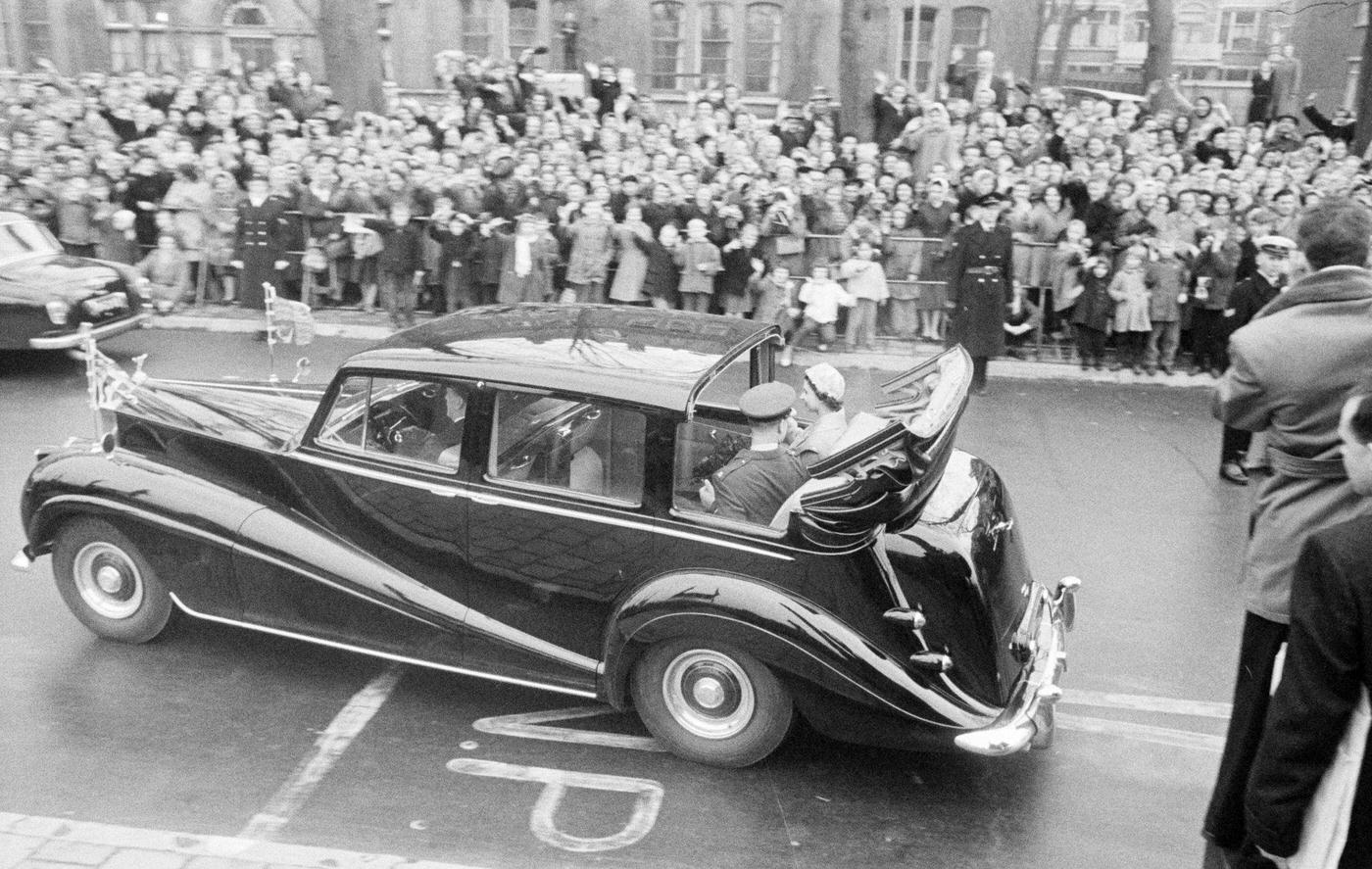
Foreign dignitaries made regular visits to the Netherlands during the 1950s. French President René Coty arrived in March 1955, accompanied by his wife. In 1958, Queen Elizabeth II of England made a three-day state visit to the country. These visits were high-profile affairs that reflected the Netherlands’ growing role in postwar European diplomacy. In 1952, the country had become a founding member of the European Coal and Steel Community, an early step toward what would eventually become the European Union.
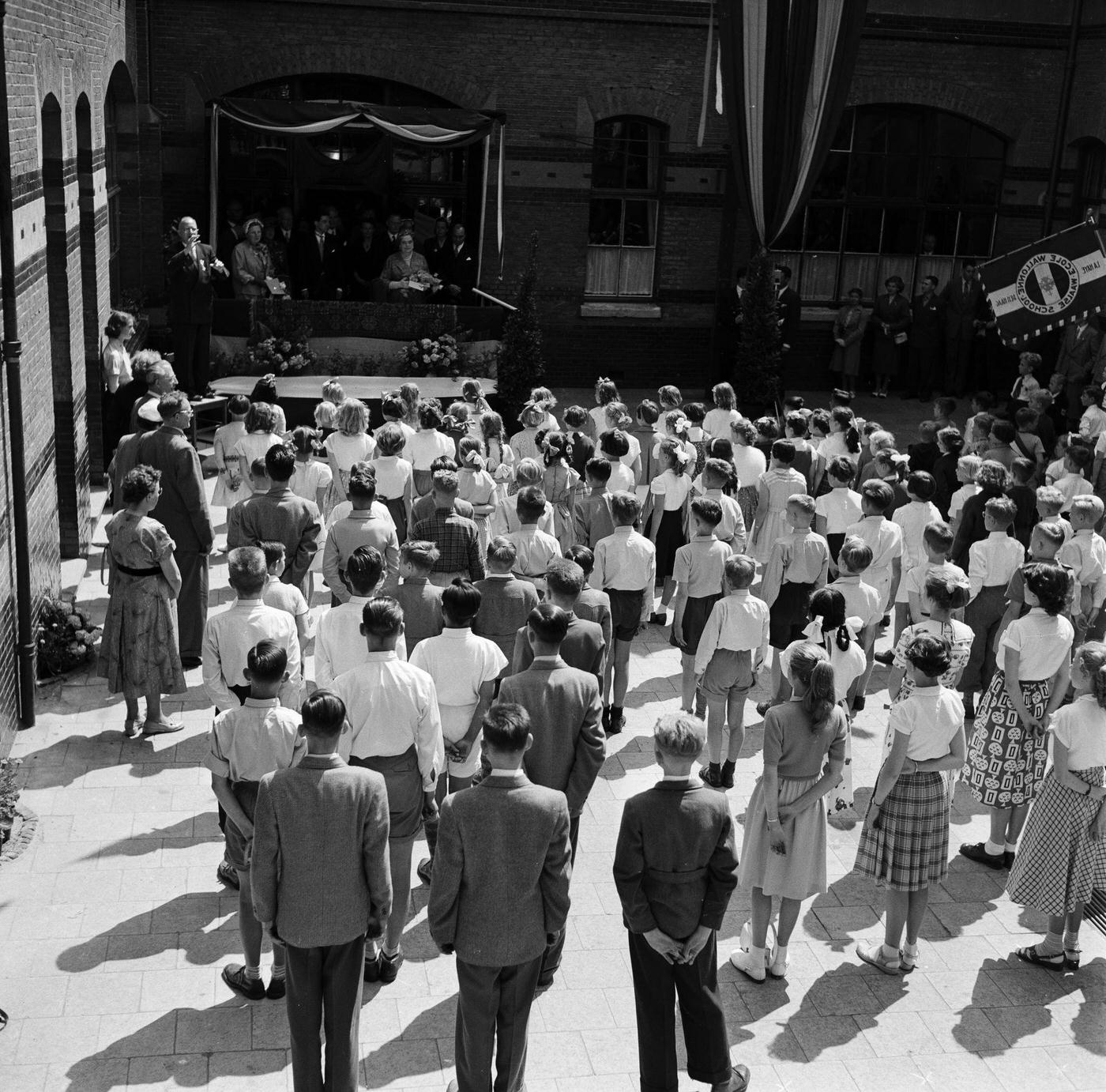
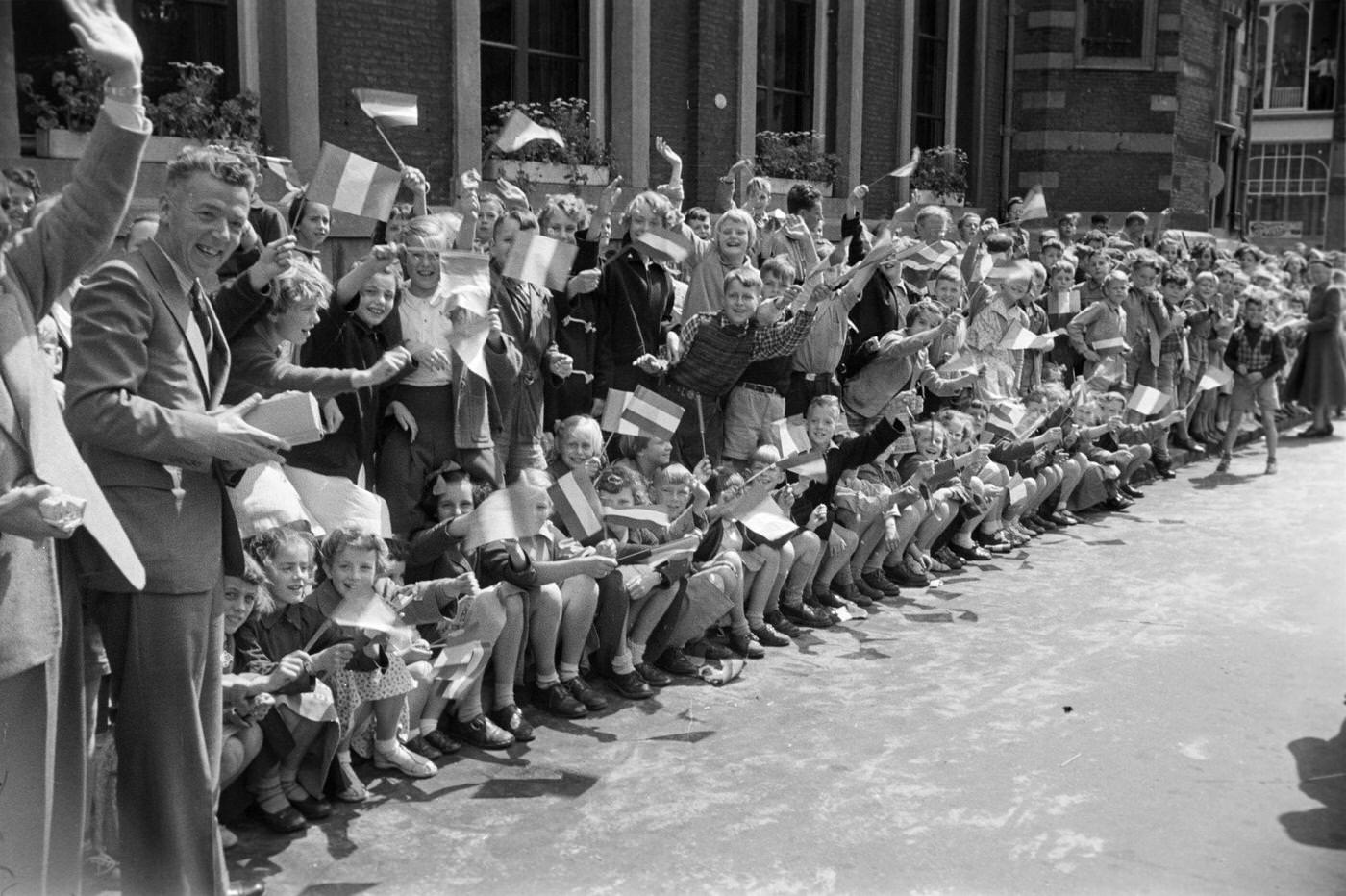
René Coty in Holland, 3rd March 1955. The President of the French Republic, René Coty and his wife, on a visit to Holland. Mrs Coty is seen on a balcony in front of children lined up in a courtyard.
René Coty in Holland, 3rd March 1955.
Queen Elizabeth II of England on a three-day state visit to the Netherlands, 1958.

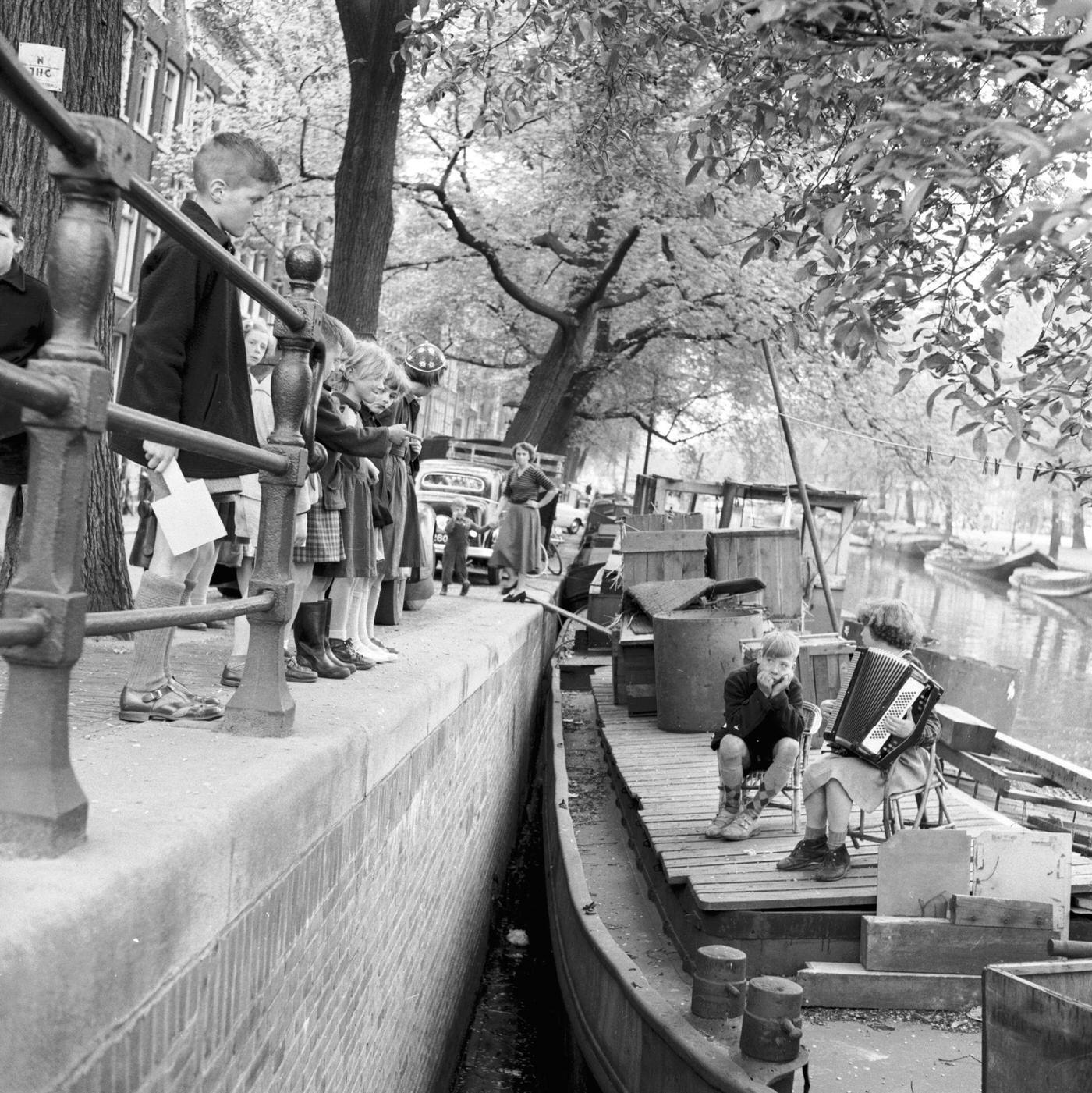
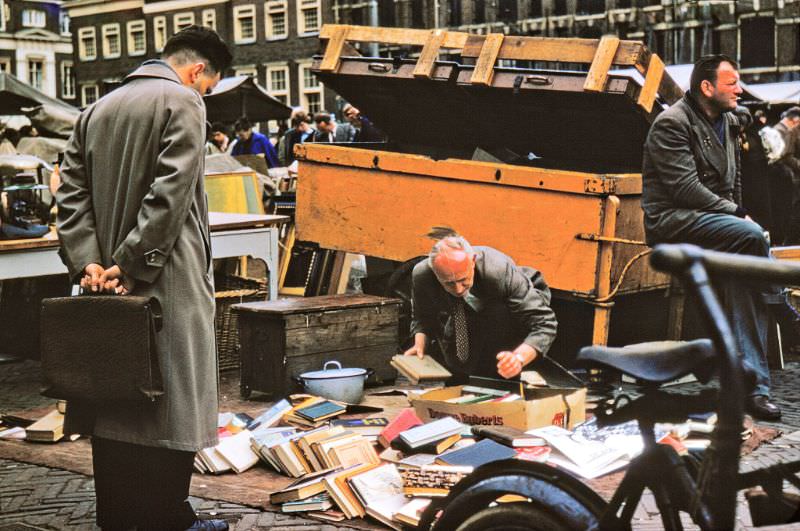
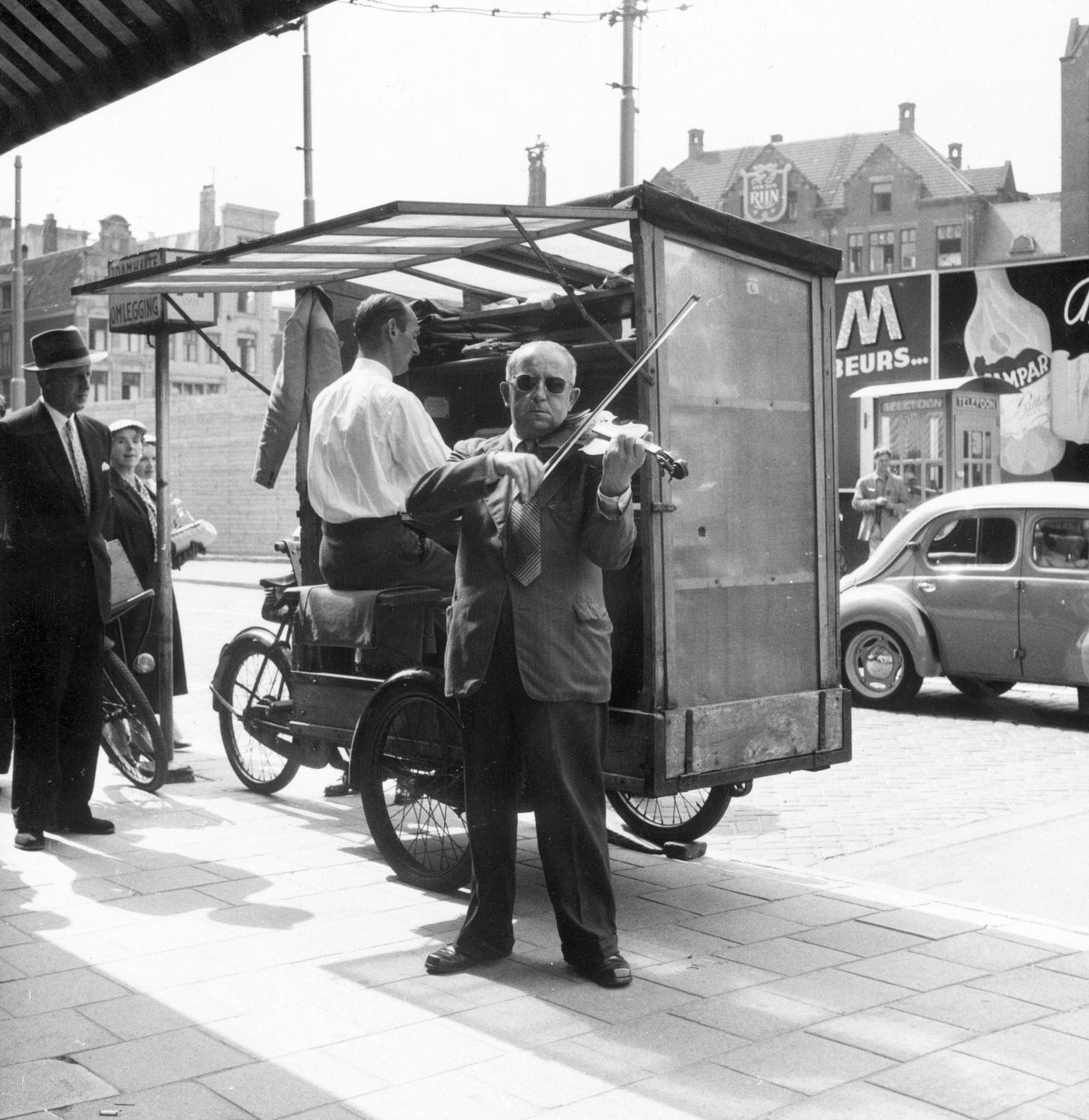
Street life in Dutch cities and villages was vivid and layered. In Amsterdam, only three organ-grinders were licensed to take their instruments onto the main streets by 1955 — down from around fifty before the war. Musicians still performed in town squares, and the Waterlooplein flea market drew buyers and browsers through its crowded stalls. On the canals, houseboat residents were part of ordinary city life. Eleven-year-old Sjoerttje van der Geest played accordion from the deck of her family’s houseboat on the Amstel in November 1955, entertaining passersby along the canal bank.
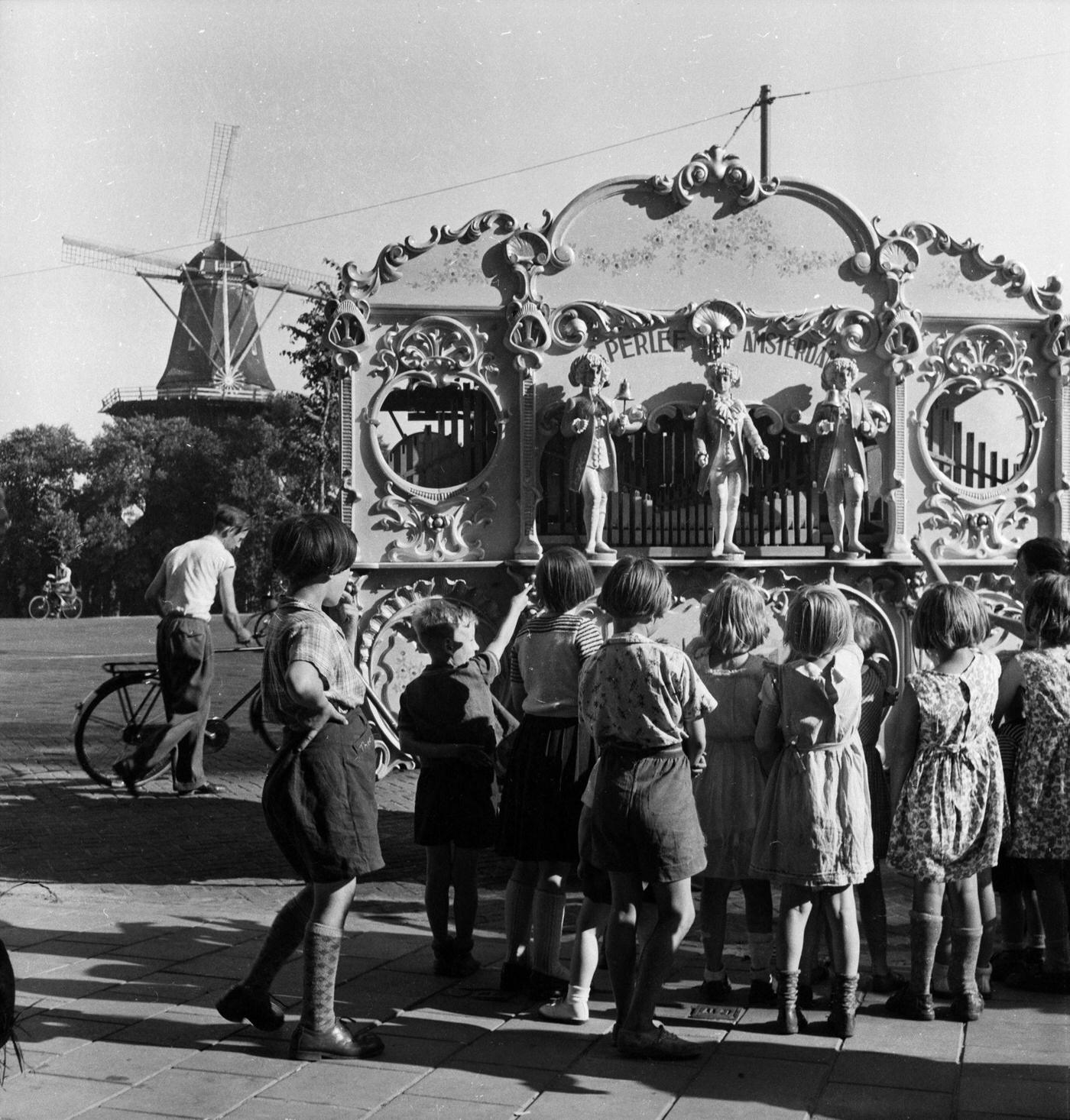
Only three organ-grinders licensed to take an organ into the main streets of Amsterdam, compared to about fifty before the war, 1955.
Two musicians, one playing an organ and the other a violin, performing in a street in the Netherlands, 1955.
Sjoerttje van der Geest plays an accordion for the benefit of everybody along the canal from the deck of her parent's houseboat 'Diepwijk' in Amstel, Amsterdam, 12th November 1955.
Sjoerttje van der Geest plays an accordion for the benefit of everybody along the canal from the deck of her parent’s houseboat ‘Diepwijk’ in Amstel, Amsterdam, 12th November 1955.
Waterlooplein Flea Market, Amsterdam.

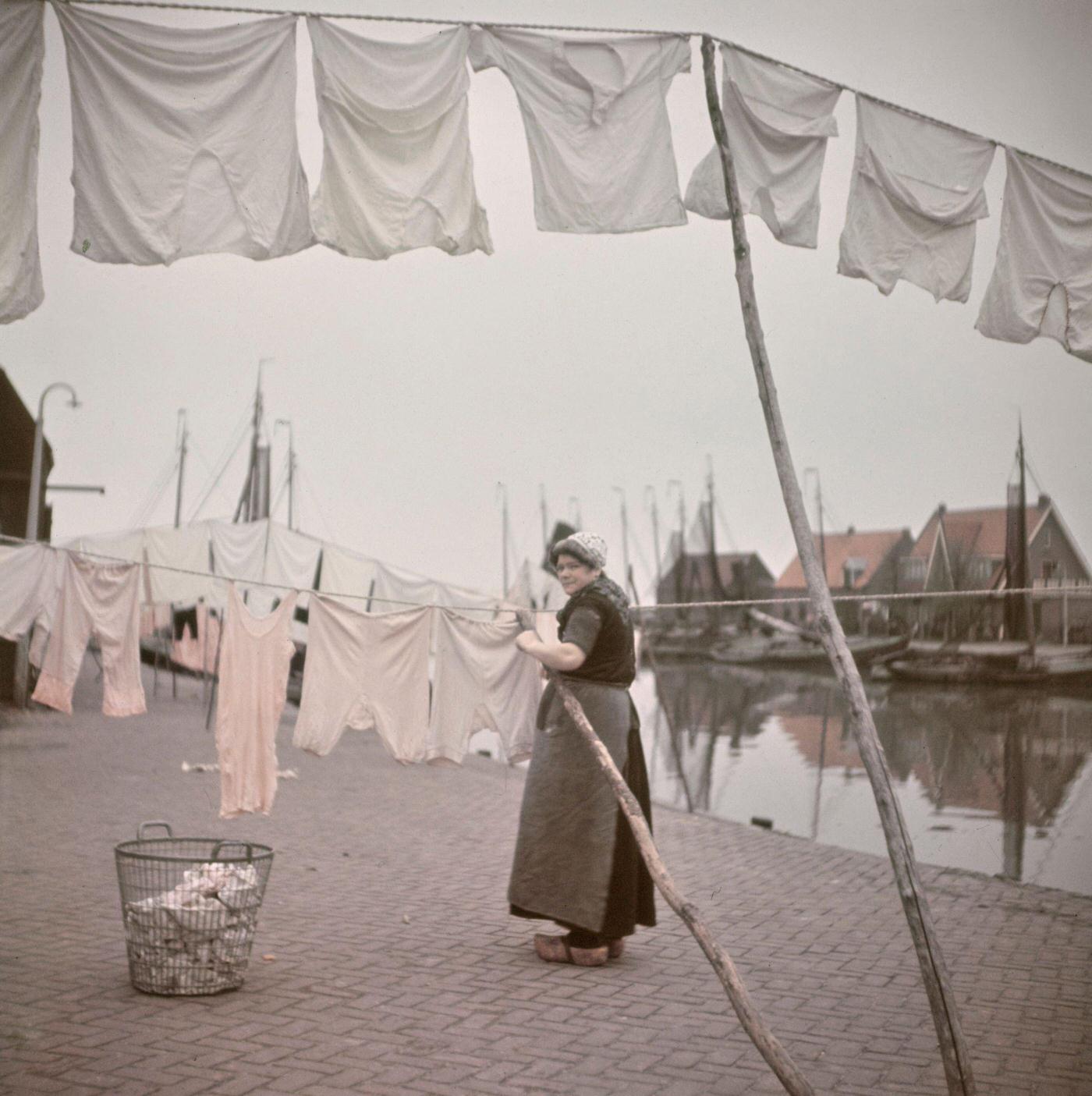
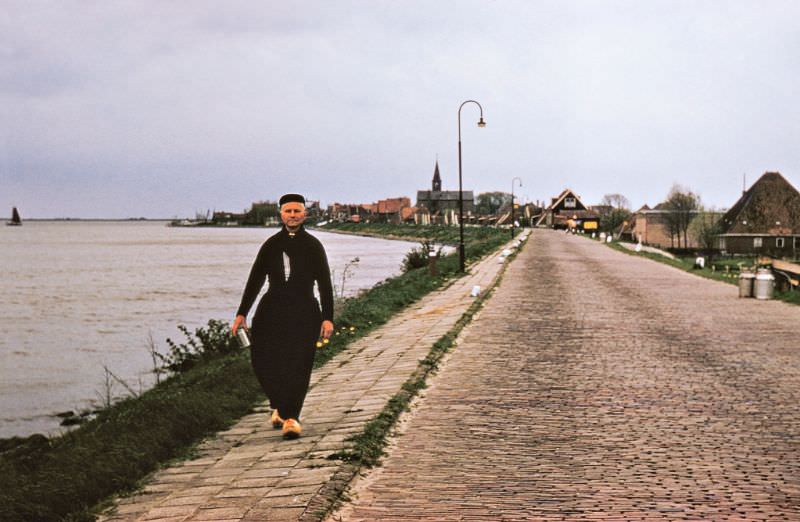
Traditional clothing survived in pockets of the Netherlands throughout the decade. In Volendam, men wore the region’s distinctive baggy trousers and golden earrings that had been worn for generations. Women in Spakenburg still wore wooden clogs — klompen — as they hung out washing near the harbor. These traditions coexisted alongside the rapid changes sweeping through cities, where consumer goods like televisions, cars, and refrigerators were becoming common for the first time.
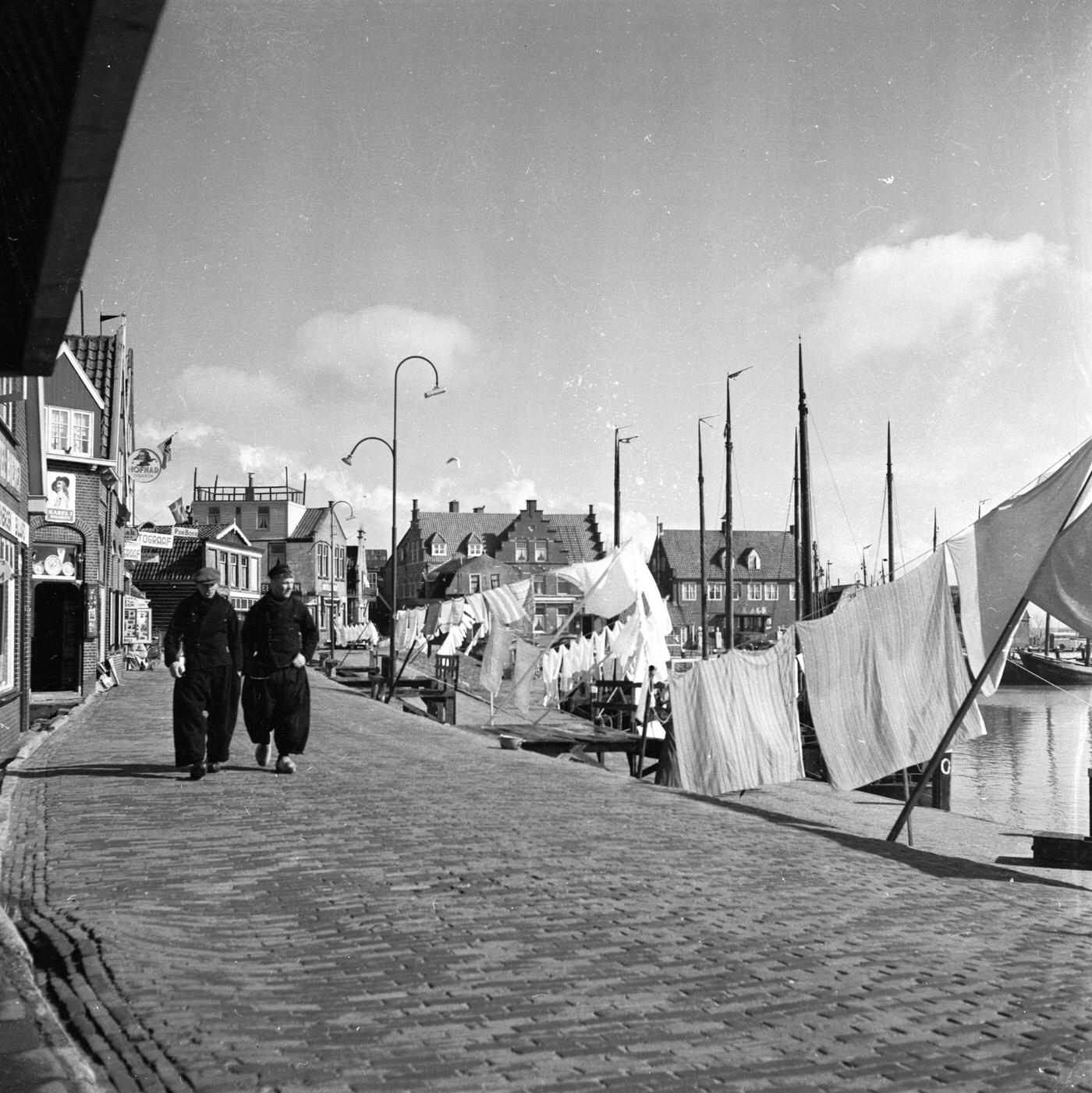
Two men in traditional baggy trousers walking through Volendam harbour in the western Netherlands, 1955.
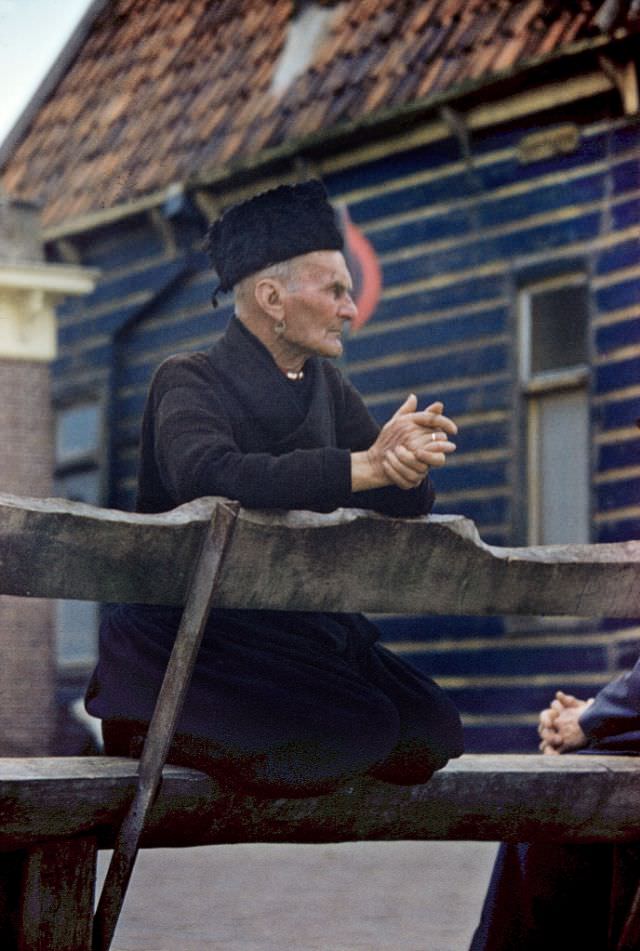
Man in traditional clothing, Noordeinde, Volendam.
Man in traditional clothing and with a golden earring, Volendam.
A woman wearing traditional clogs (klompen) hangs out washing to dry on lines on the quayside beside fishing boats moored in the harbour of the village of Spakenburg in the province of Utrecht, Netherlands, 1950.
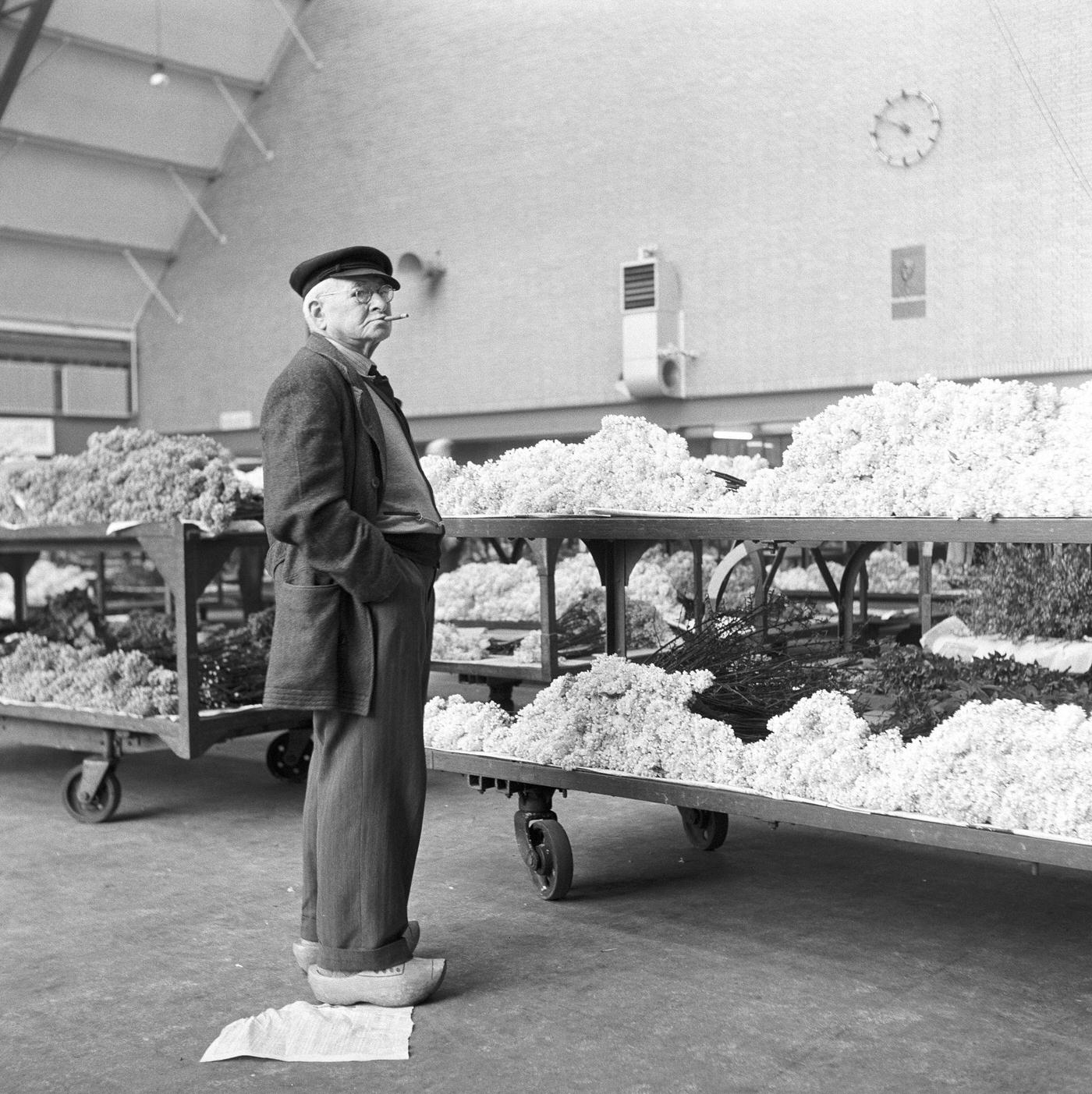
A man wearing traditional Dutch clogs with flower carts in the background, Amsterdam, the Netherlands, 1954.

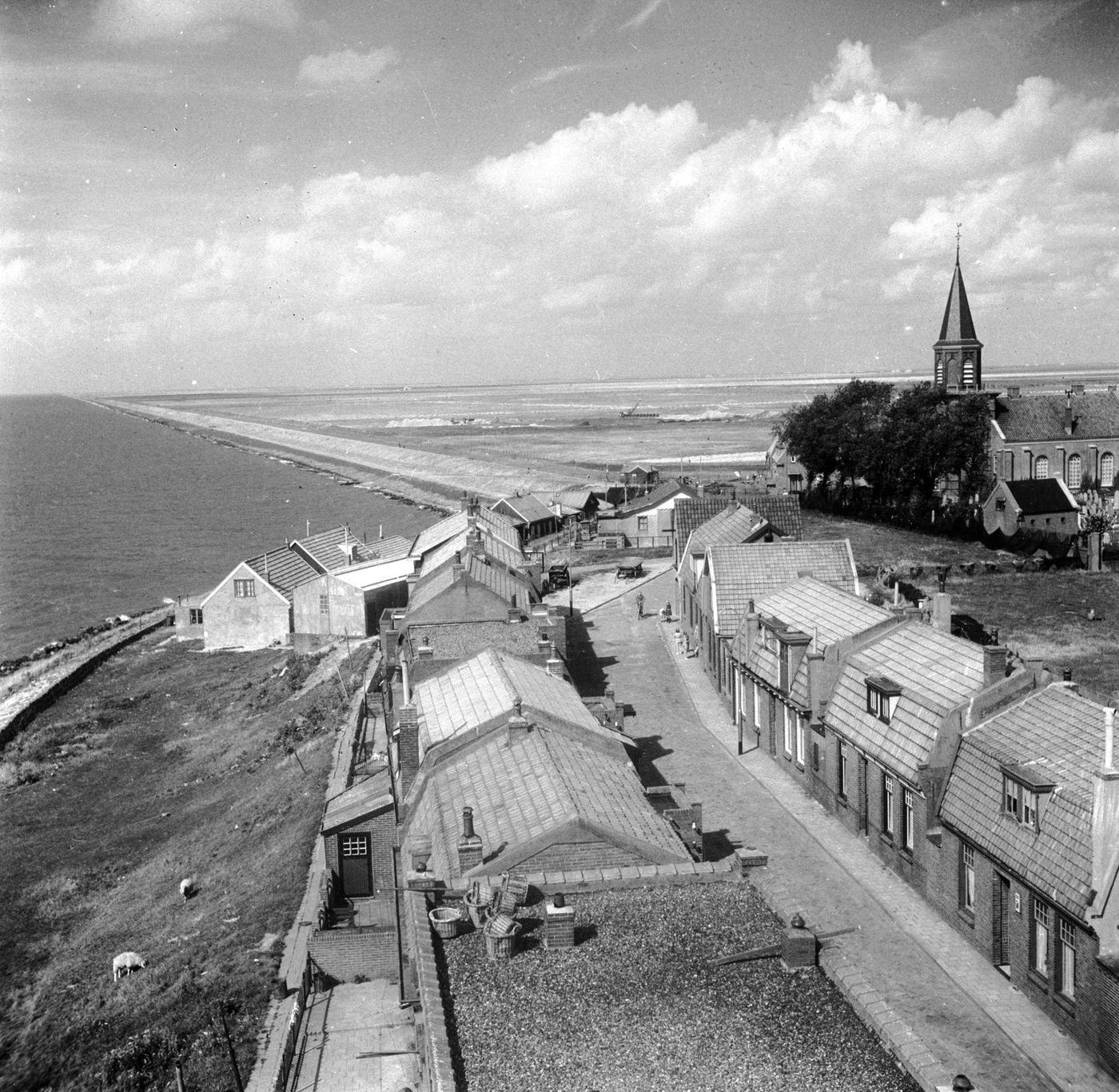
Rotterdam, which had been almost entirely flattened by German bombing in 1940, was still rebuilding well into the 1950s. The reconstruction of St. Laurens Church — the only surviving medieval structure in the city center — became a symbol of that effort. Workers carefully restored the Gothic building stone by stone while the modern city rose up around it. Elsewhere in the country, the reclaimed land around the Afsluitdijk causeway showed what the Dutch were capable of when it came to reshaping geography itself. The former Zuiderzee, once a vast inland sea, had been drained and transformed into the fertile Flevoland plain.
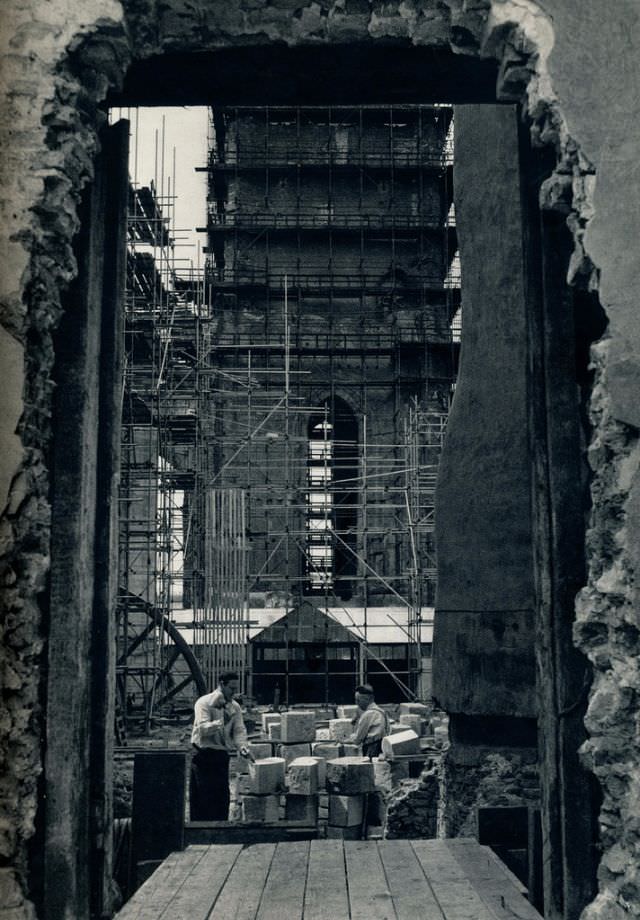
Rebuilding St Lauren church, Rotterdam, 1957
Land stretching to the south of the Afsluitdijk, one of Holland's busiest roads. The land, the Zuider Zee, was once a vast freshwater lake, now a fertile plain.
Land stretching to the south of the Afsluitdijk, one of Holland’s busiest roads. The land, the Zuider Zee, was once a vast freshwater lake, now a fertile plain.

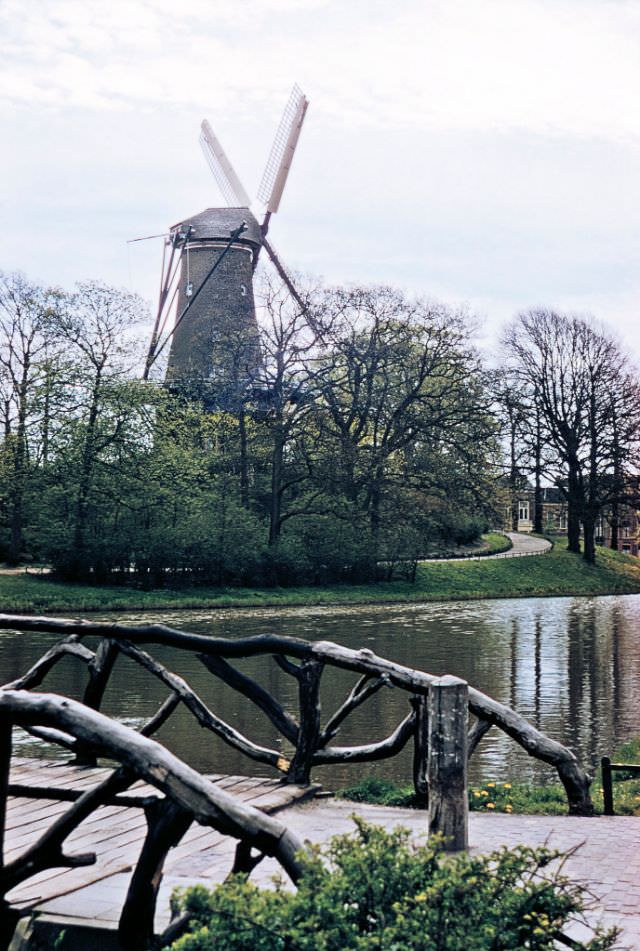
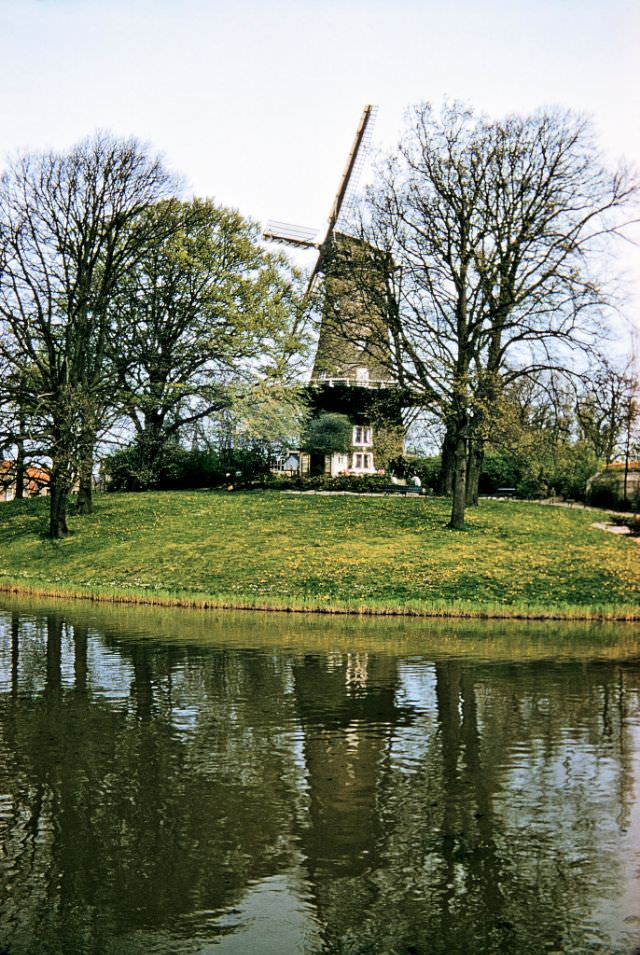
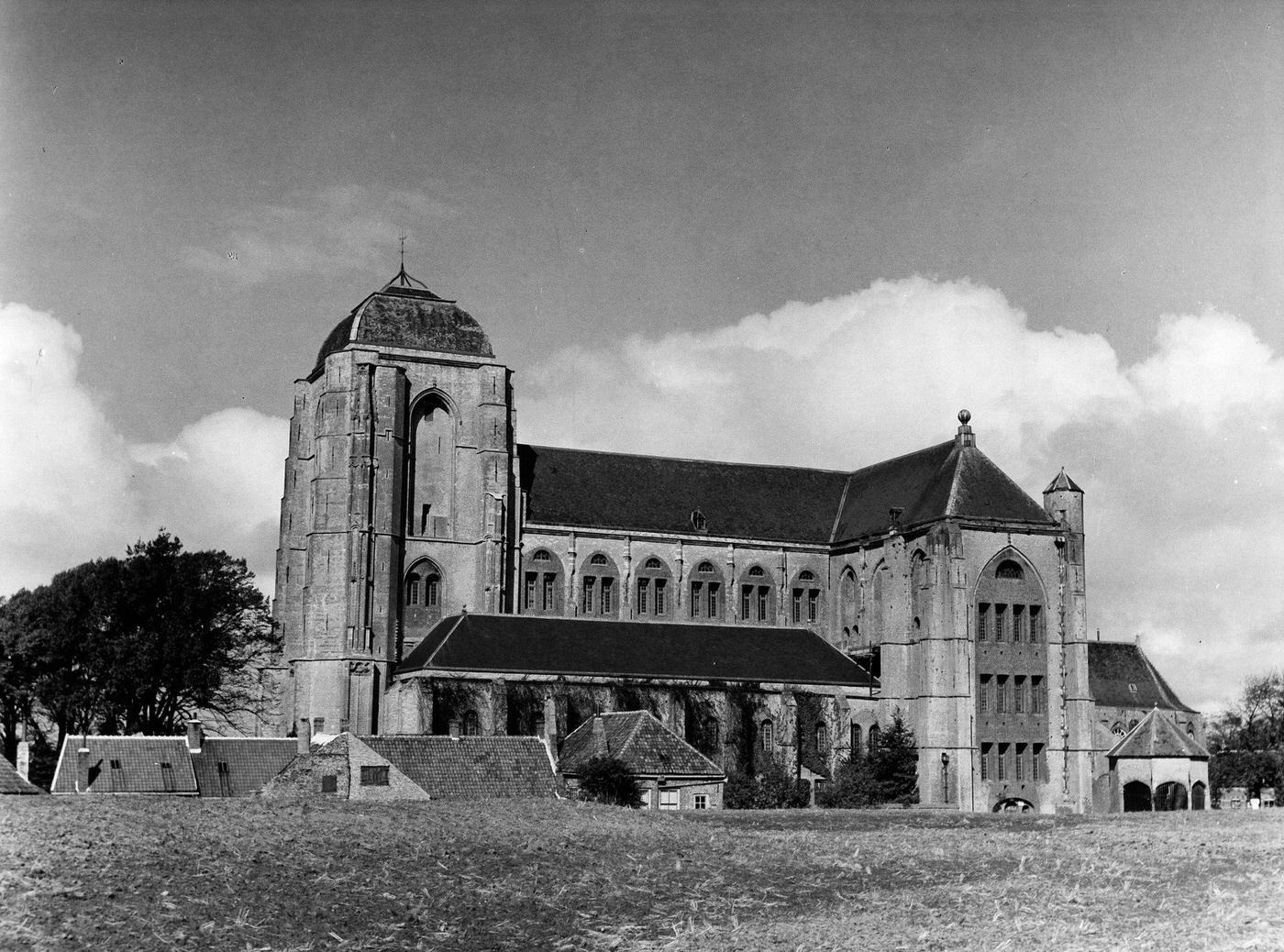
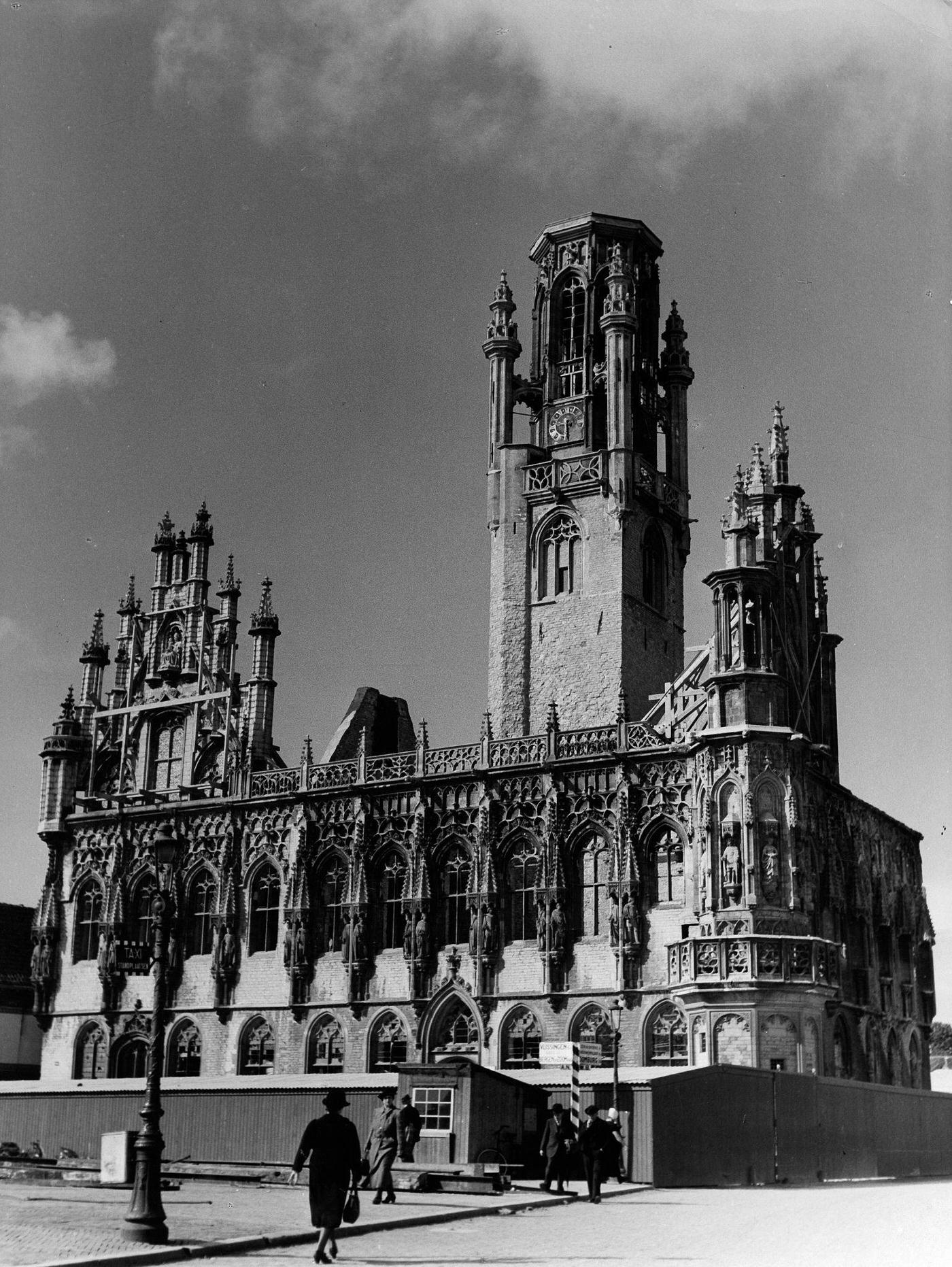
Windmills still stood across the Dutch countryside in the 1950s, though their practical role had long since been replaced by modern pumping equipment. In Zeeland, along the Singelgracht Canal in Alkmaar, and in the village of Veere, they remained a working part of the landscape as much as a historic one. The Gothic Town Hall in Middelburg and the Onze-Lieve-Vrouwekerk church in Veere were among the many historic structures that gave the smaller Dutch towns their distinct character.
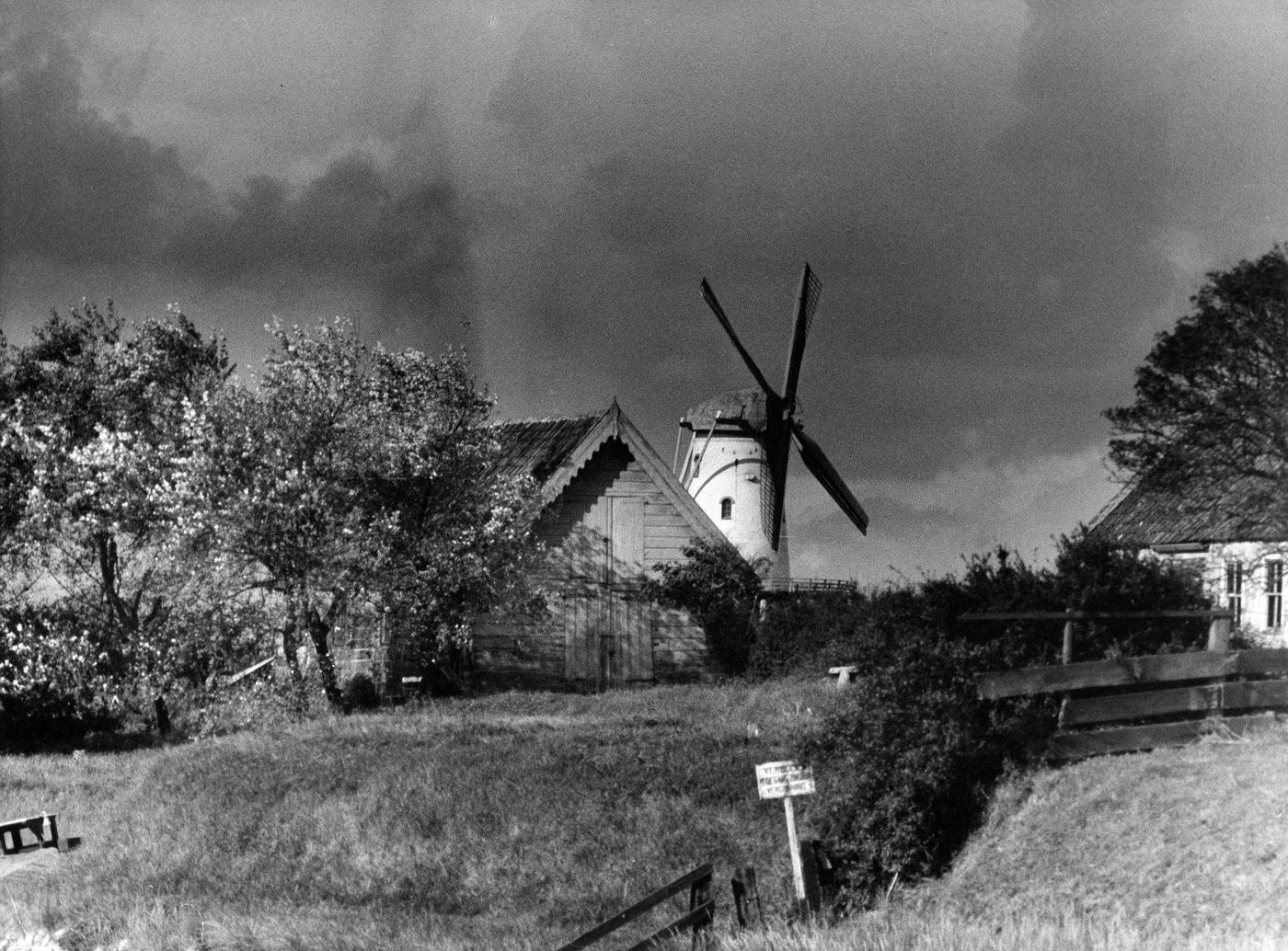
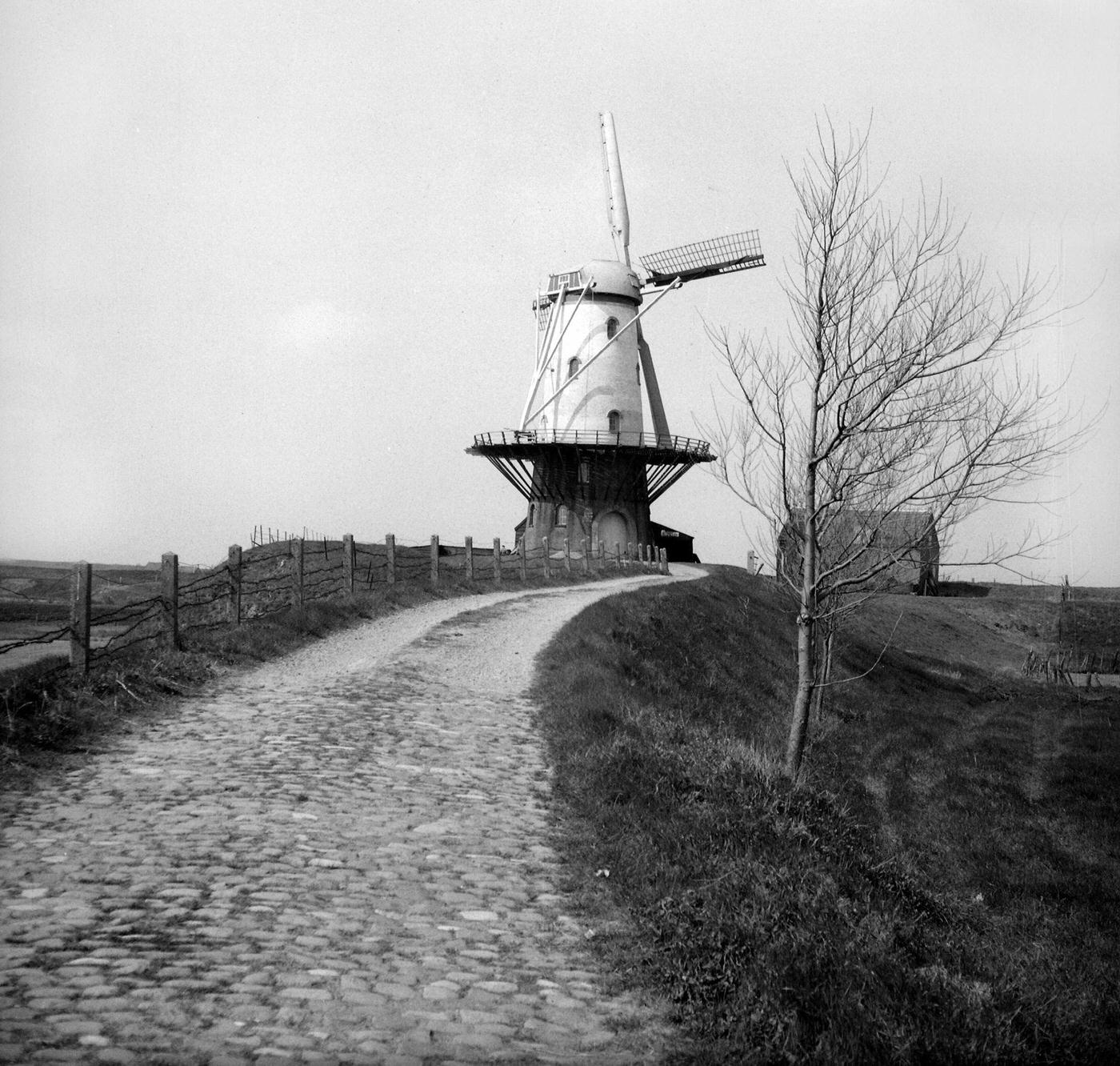
Traditional windmill on Zeeland, Netherlands, 1955.
Windmill in Veere, Netherlands, circa 1955.
Windmill, De Groot of de Molen van Piet, Singelgracht Canal, Alkmaar.
Views of Onze-Lieve-Vrouwekerk church in Veere, Netherlands, vintage property of ullstein bild.
Gothic Town Hall in Middelburg, Netherlands, vintage property of ullstein bild.

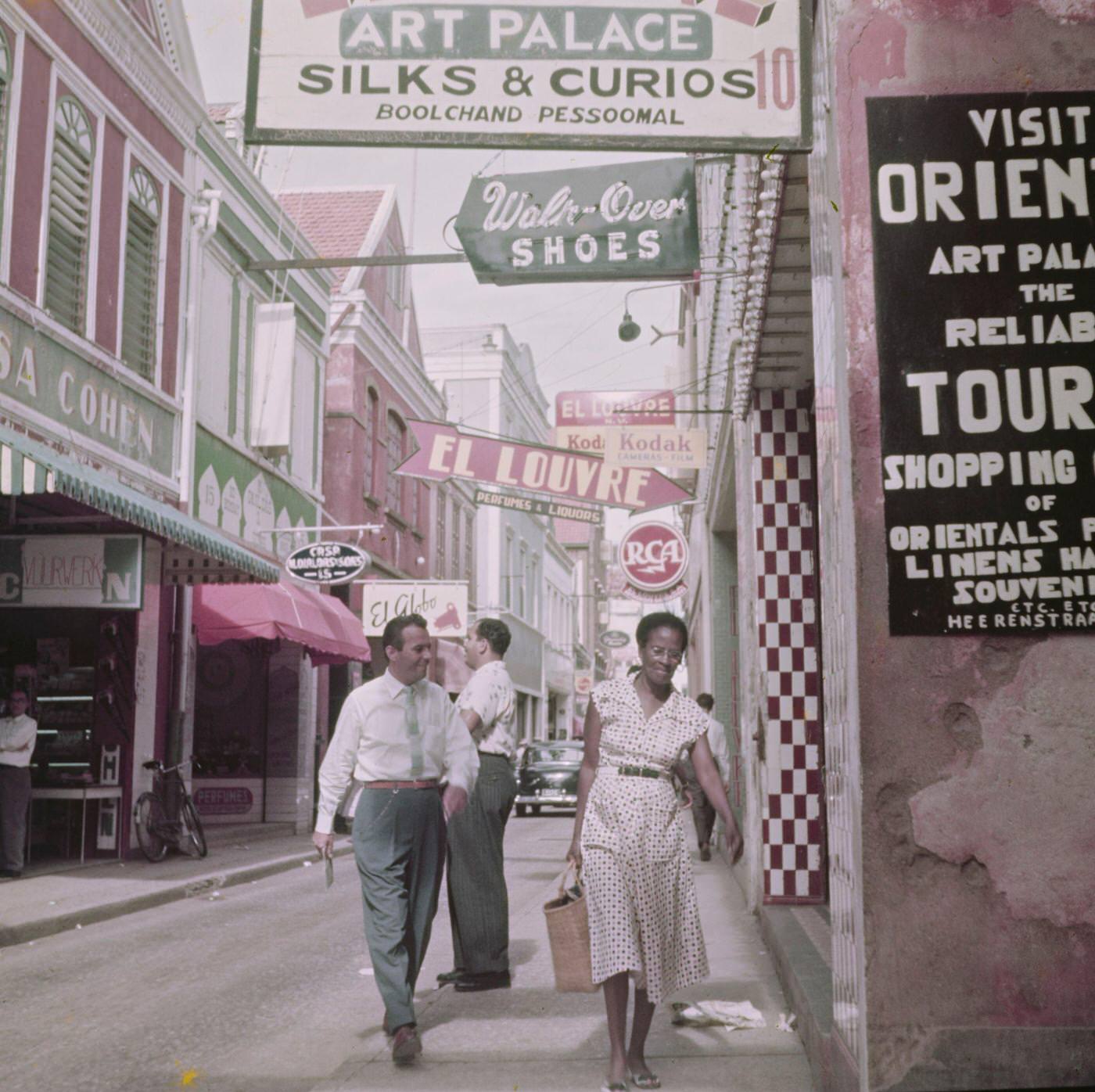
The Kingdom of the Netherlands extended far beyond Europe. Curaçao, a Caribbean island in the southern Caribbean Sea, was part of the kingdom throughout the 1950s. Its capital, Willemstad, had a distinct colonial architecture with brightly colored Dutch-style facades lining its streets. Cars parked outside grand colonial buildings, and residents walked the shopping streets in a warm climate worlds away from the Amsterdam canals.
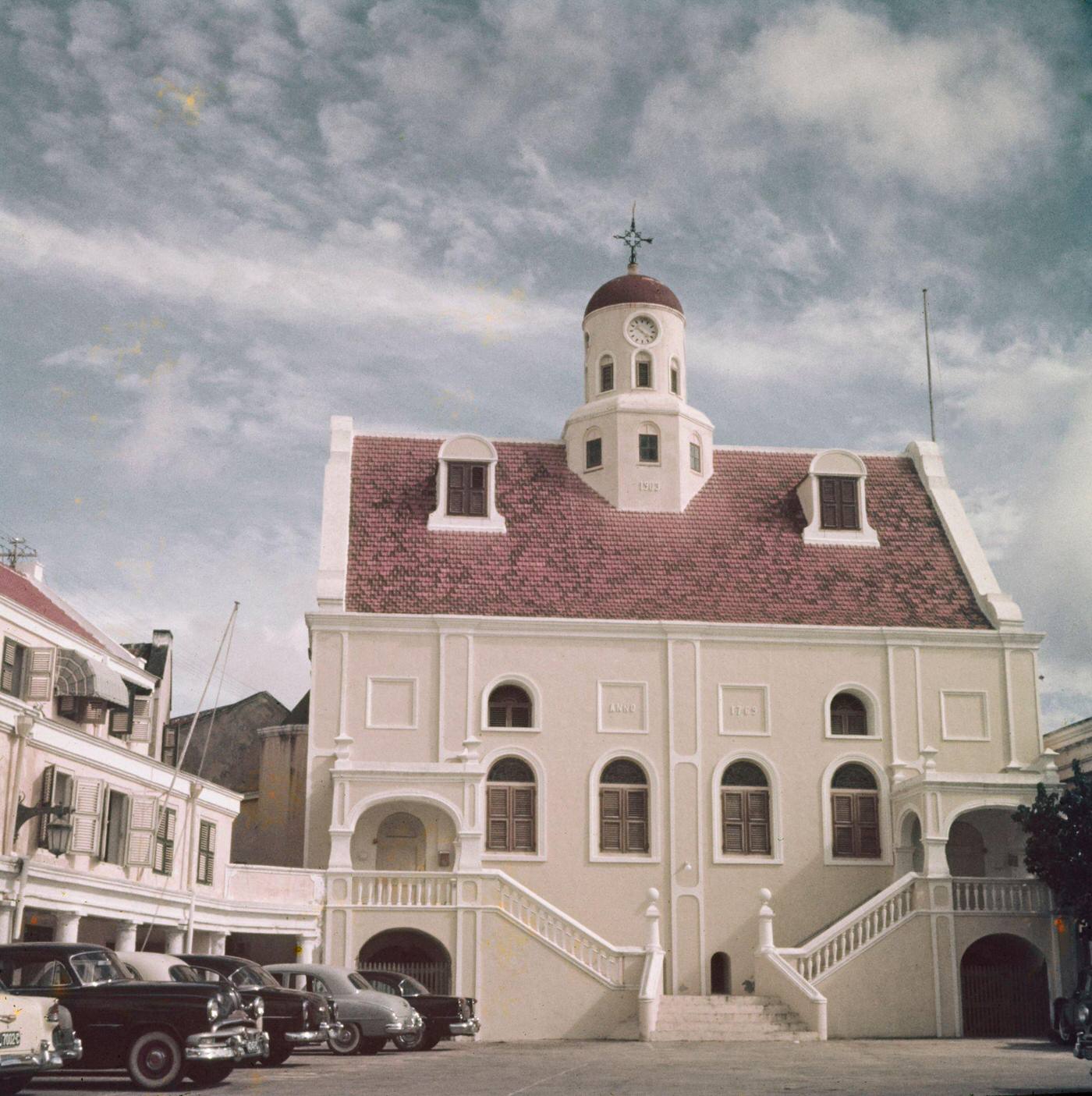
Cars parked outside a Dutch colonial building in Willemstad, capital city of the island of Curaçao, part of the Kingdom of the Netherlands in the southern Caribbean Sea, 1955.
Pedestrians and residents walking along a shopping street in Willemstad, capital city of the island of Curaçao, part of the Kingdom of the Netherlands in the southern Caribbean Sea, 1955.

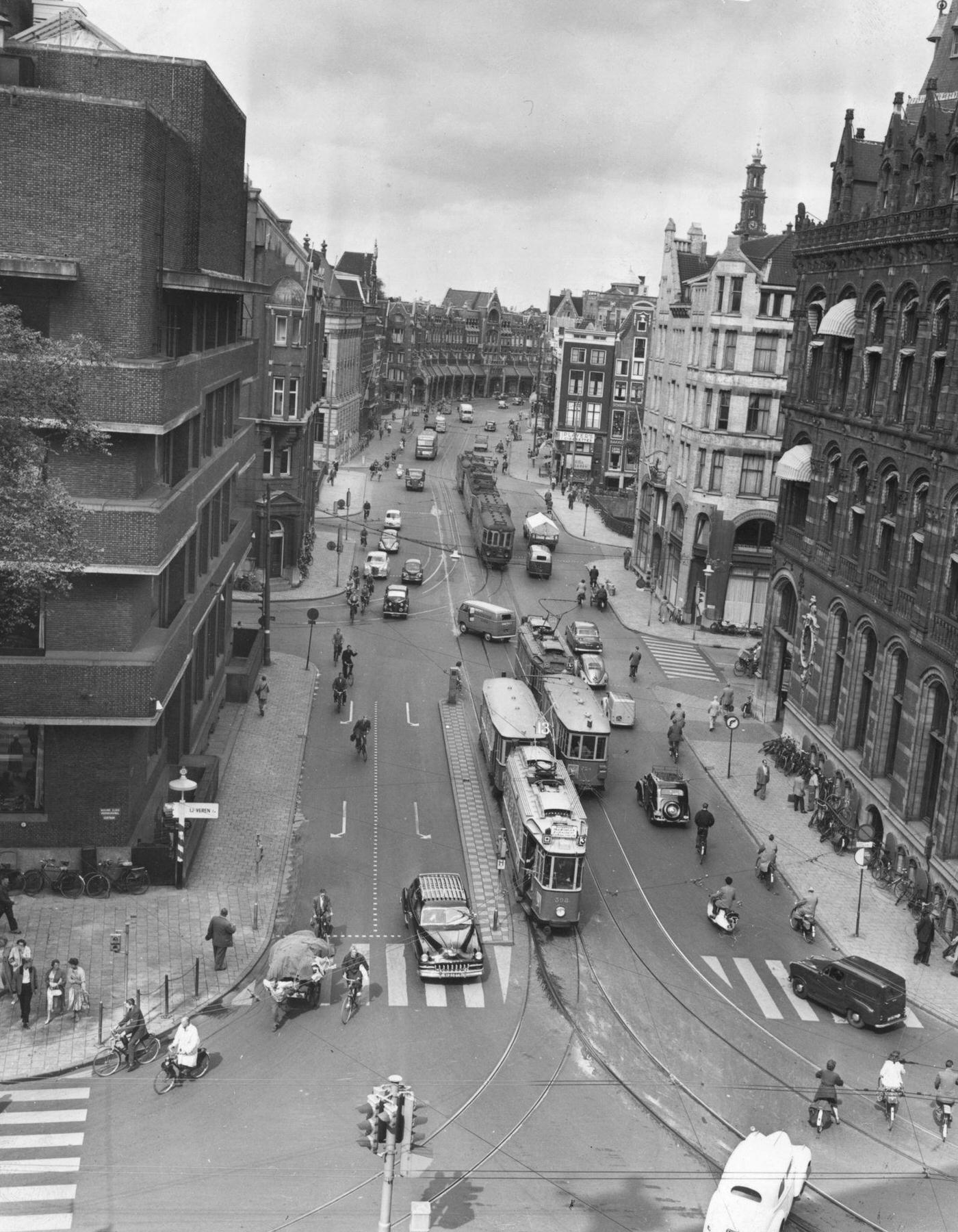
Across the Netherlands, bicycles were everywhere. Families cycled together along canal roads, children rode through town squares, and workers pedaled to and from factories. The bicycle wasn’t just transport — it was woven into the rhythm of Dutch daily life in a way that set the country apart from its neighbors. By the late 1950s, Amsterdam’s streets showed a city in motion: new cars sharing roads with cyclists, trams threading through busy intersections, and children playing in the shadow of centuries-old architecture.
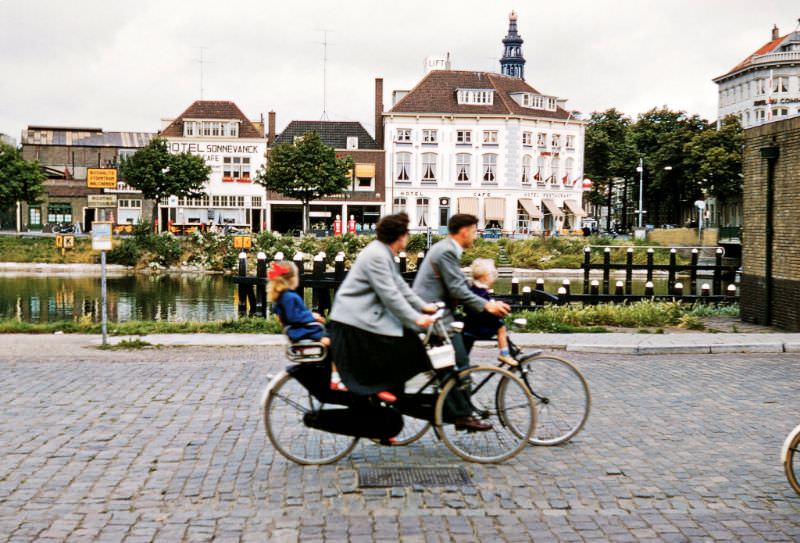
A family on bicycles on Kanaalweg, Middelburg, Netherlands.
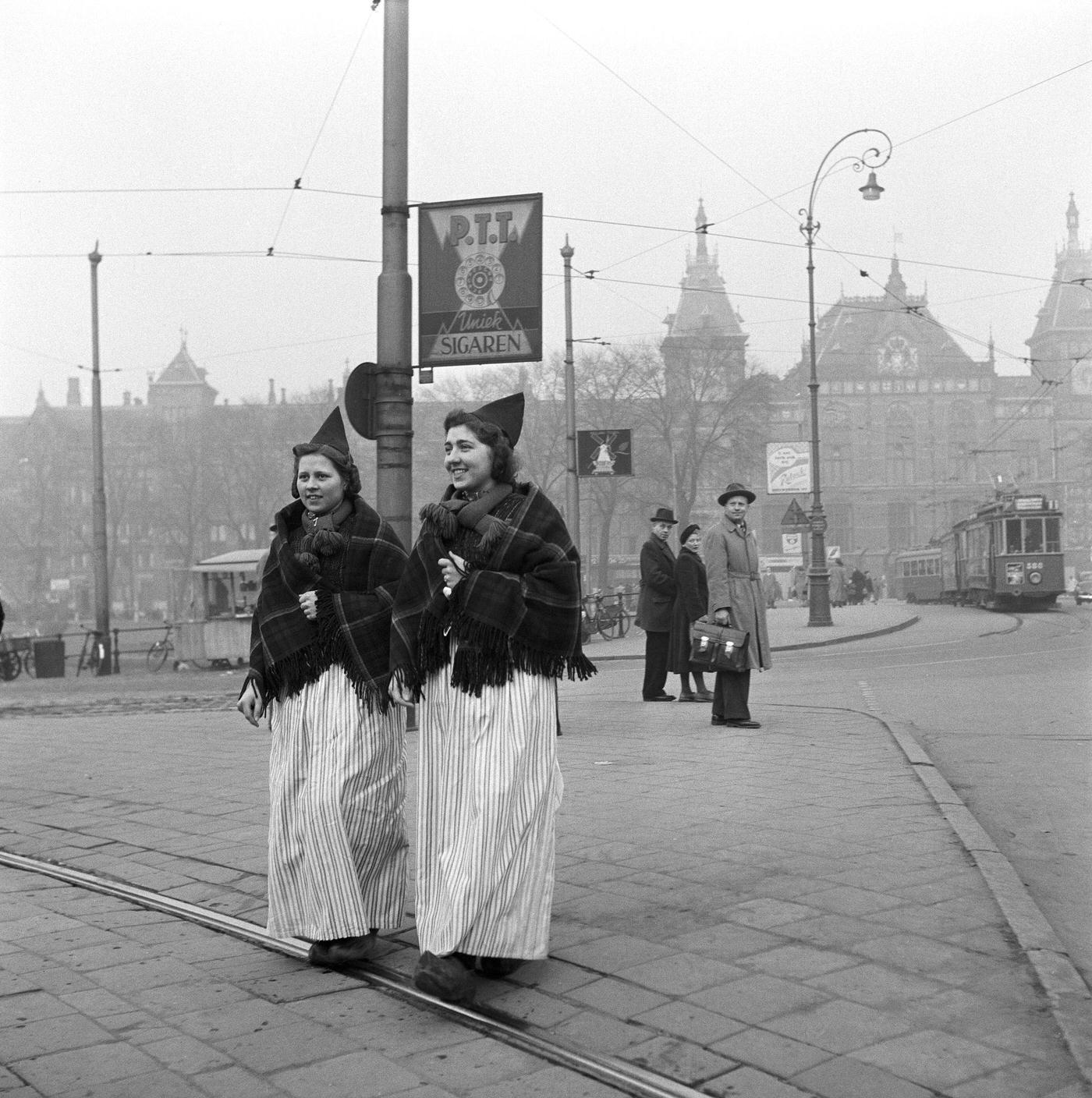
Two young Dutch women walking near the central station, Amsterdam, the Netherlands, 1954.
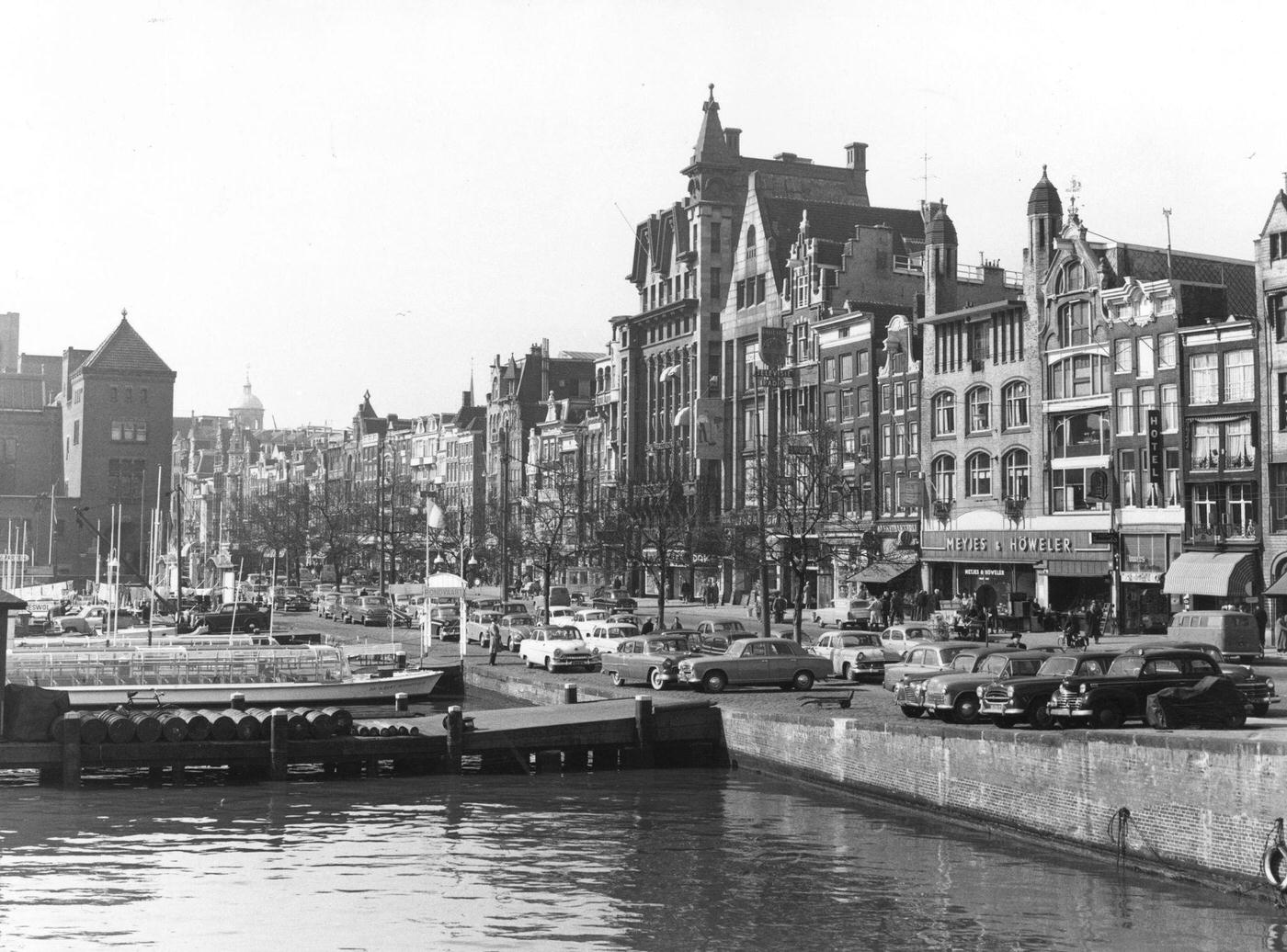
Damrak Central, Amsterdam, Netherlands, 1958.
Raadhuisstraat, Amsterdam, Netherlands, 1958.
Street in Amsterdam, 1957
Street in Jordaan, Amsterdam, 1957
Amsterdam, 1957
Amsterdam, 1957
Amsterdam.
Amsterdam.
Amsterdam.
Amsterdam.
Nieuwmarkt, Amsterdam, 1957
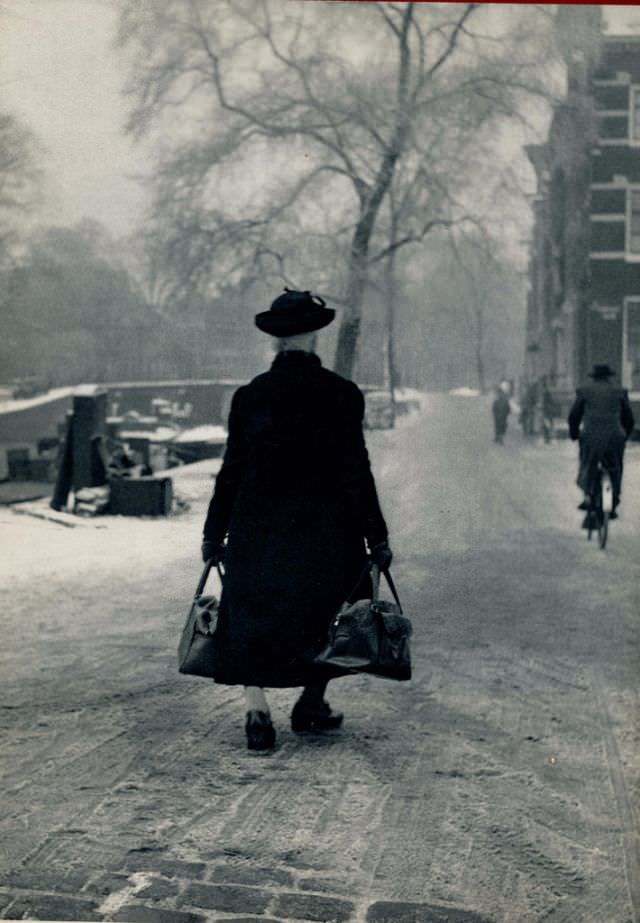
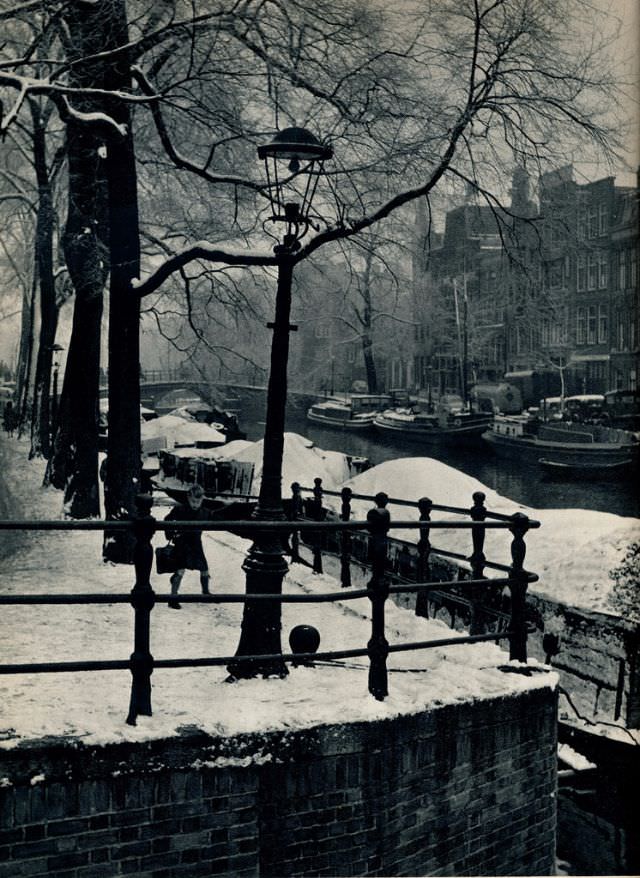
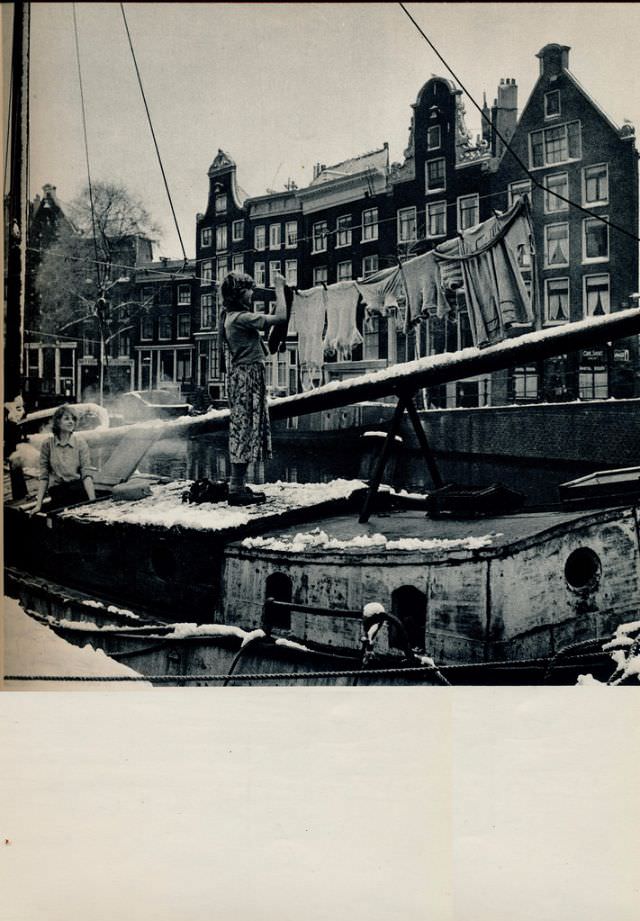
Canal in winter, Amsterdam, 1957
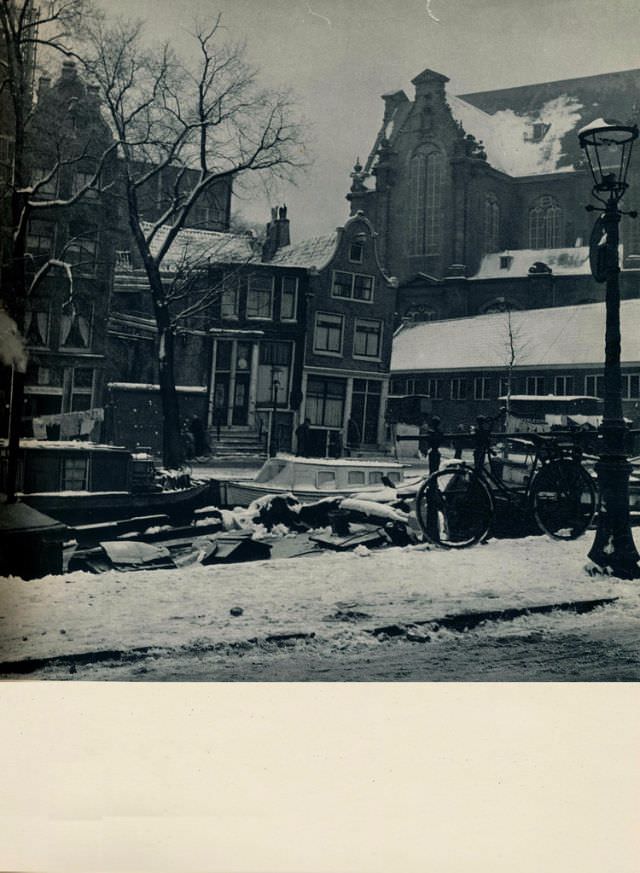
Prinsengracht in winter, Amsterdam, 1957
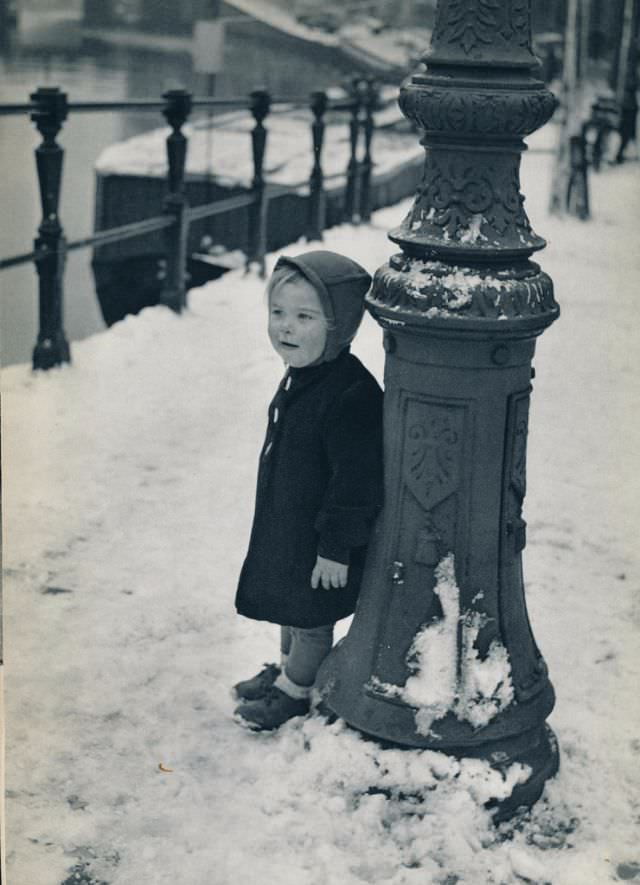
Child in snow, Amsterdam, 1957
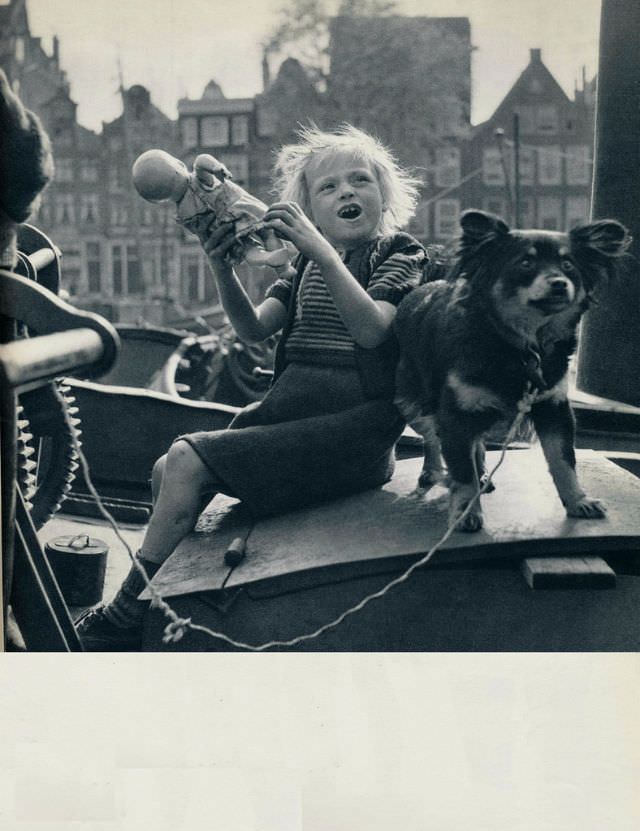
Child on houseboat, Amsterdam, 1957
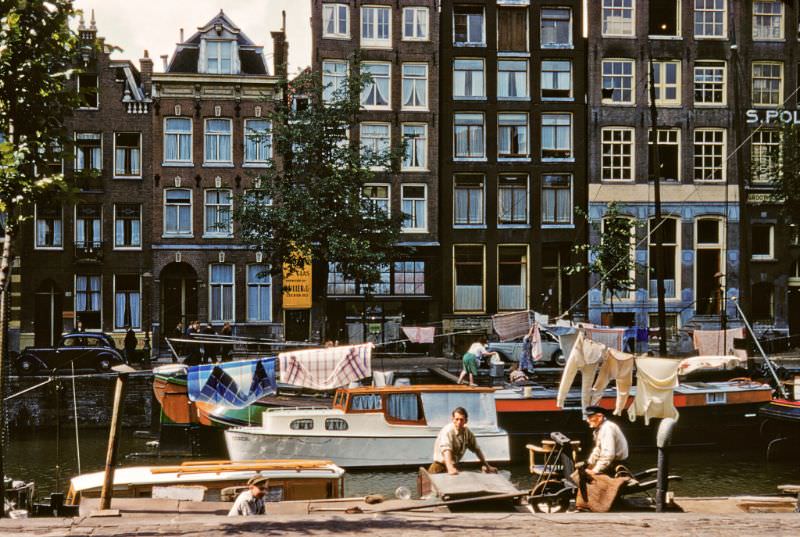
Hanging clothes, Prinsengracht,  Amsterdam, 1957
Hanging clothes, Prinsengracht, Amsterdam, 1957
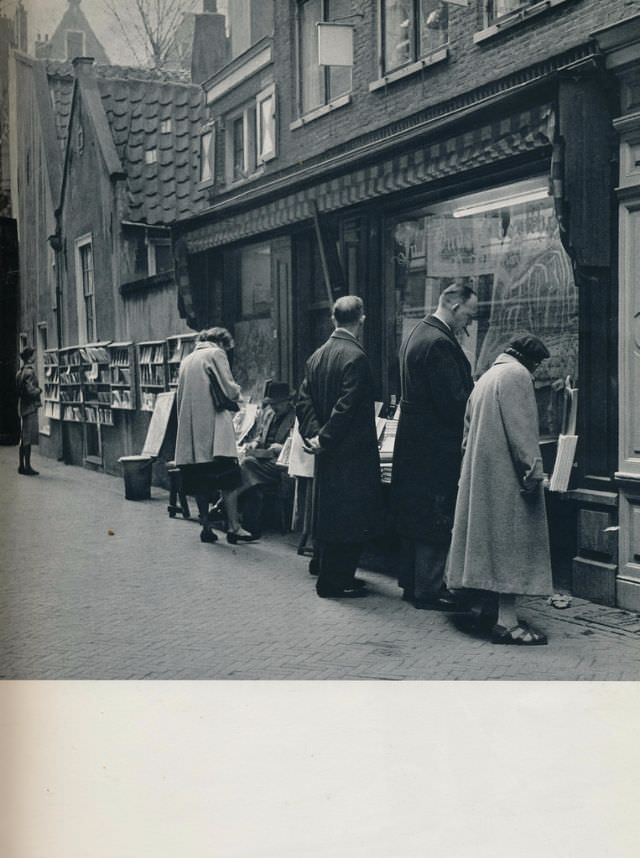
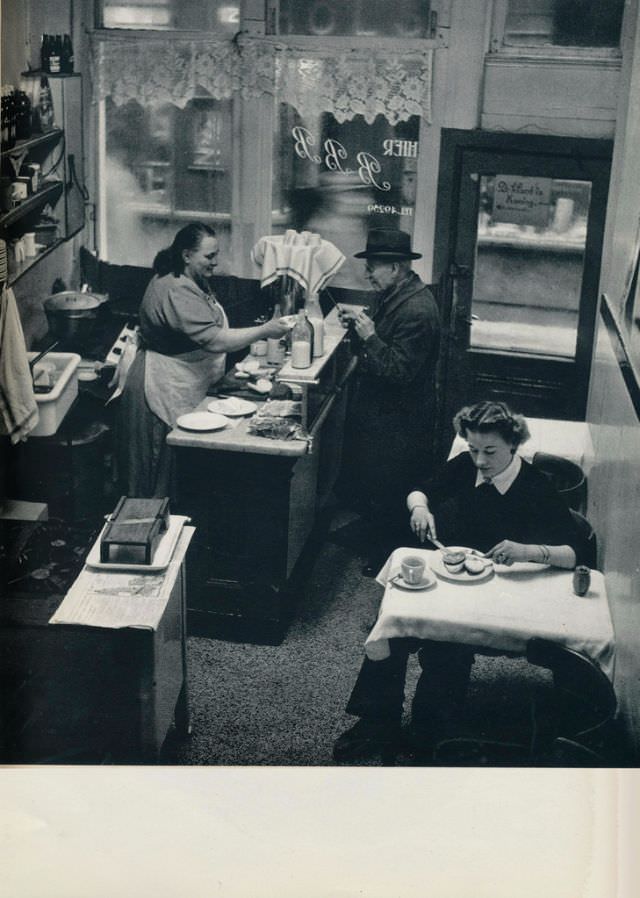
Coffee house, Amsterdam, 1957
Carpet mender on Geldersekade Canal, Amsterdam, Netherlands.
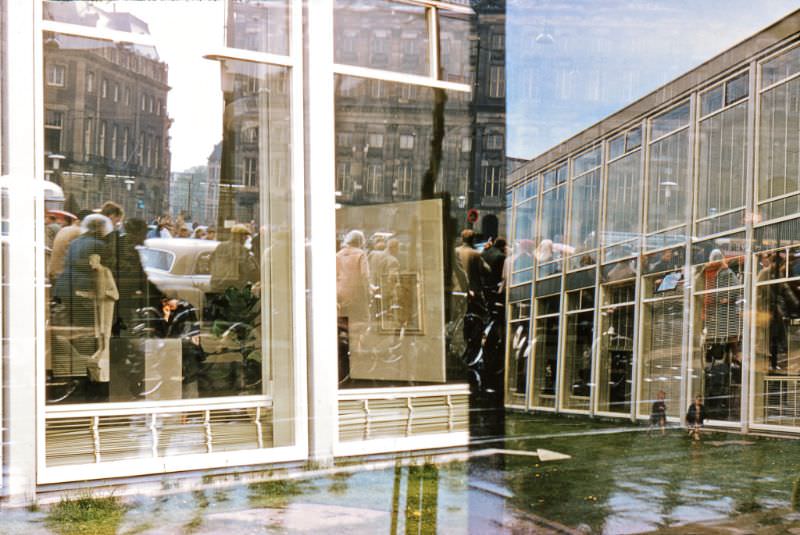
Royal Palace at Dam Square and the facade of the Stedelijk Museum.
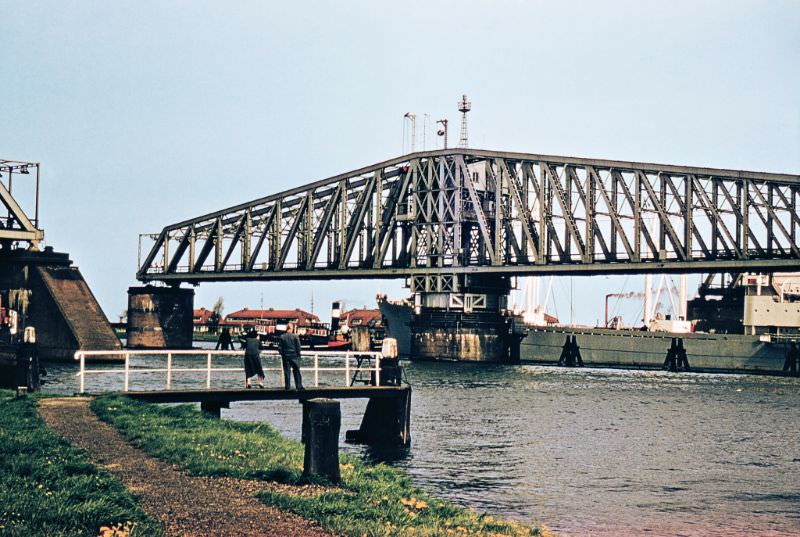
Hembrug, North Sea Canal near Amsterdam.

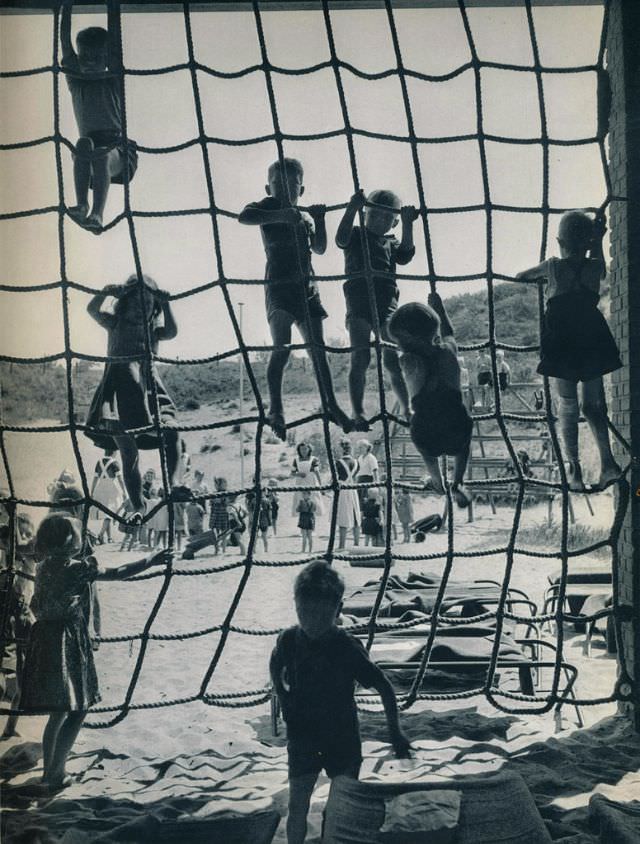
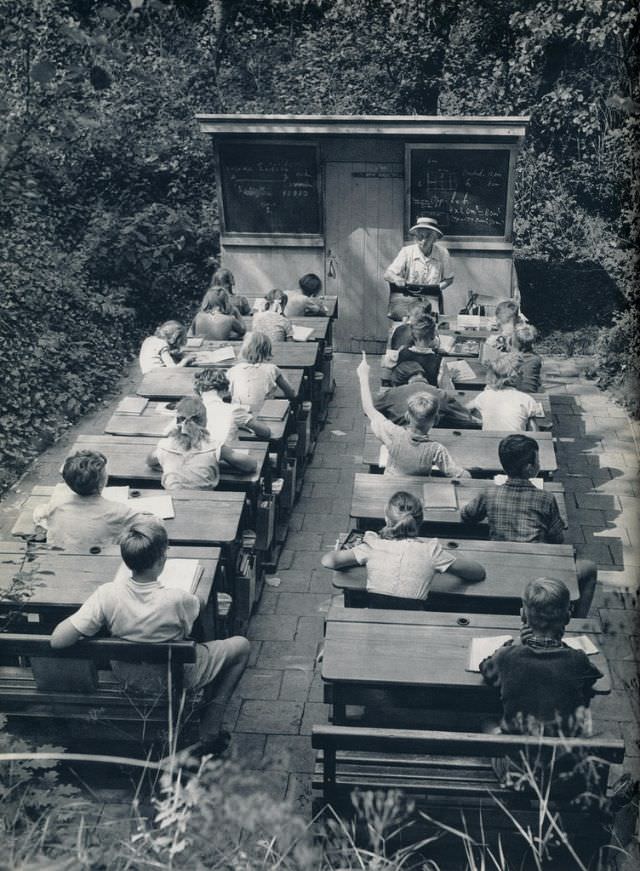
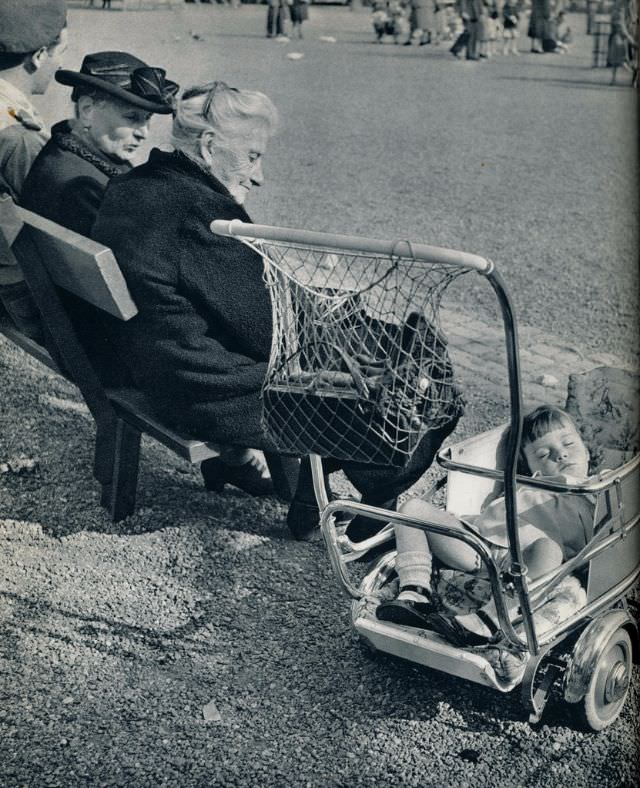
Children were visible everywhere in the decade’s photographs — playing in Rotterdam’s rebuilding neighborhoods, watching the street from doorways in Doesburg, sleeping in prams in The Hague, and attending outdoor schools in Scheveningen. Their presence in so many images reflected a broader reality: the Netherlands was experiencing a postwar baby boom, and cities and towns were adjusting to meet the needs of a growing young population.
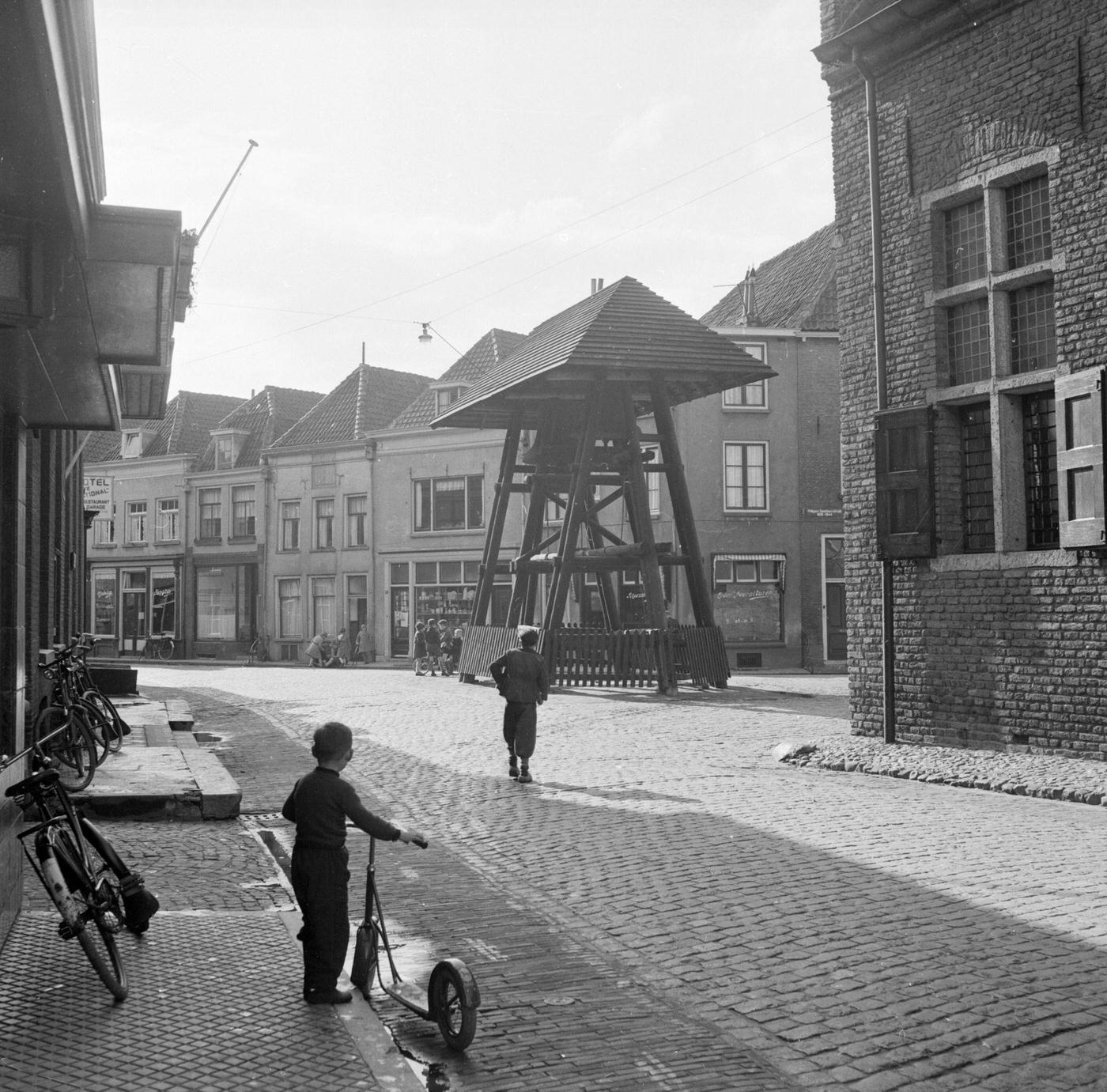
Child of the Haanapel family holds his scooter and watches the street in Doesburg, Netherlands, 16th May 1953.
Kids playing, Rotterdam, 1957
Children's playground, Scheveningse, 1957
Children’s playground, Scheveningse, 1957
Outdoor school, Scheveningse, Den Haag, 1957
Sleeping child, Den Haag, 1957

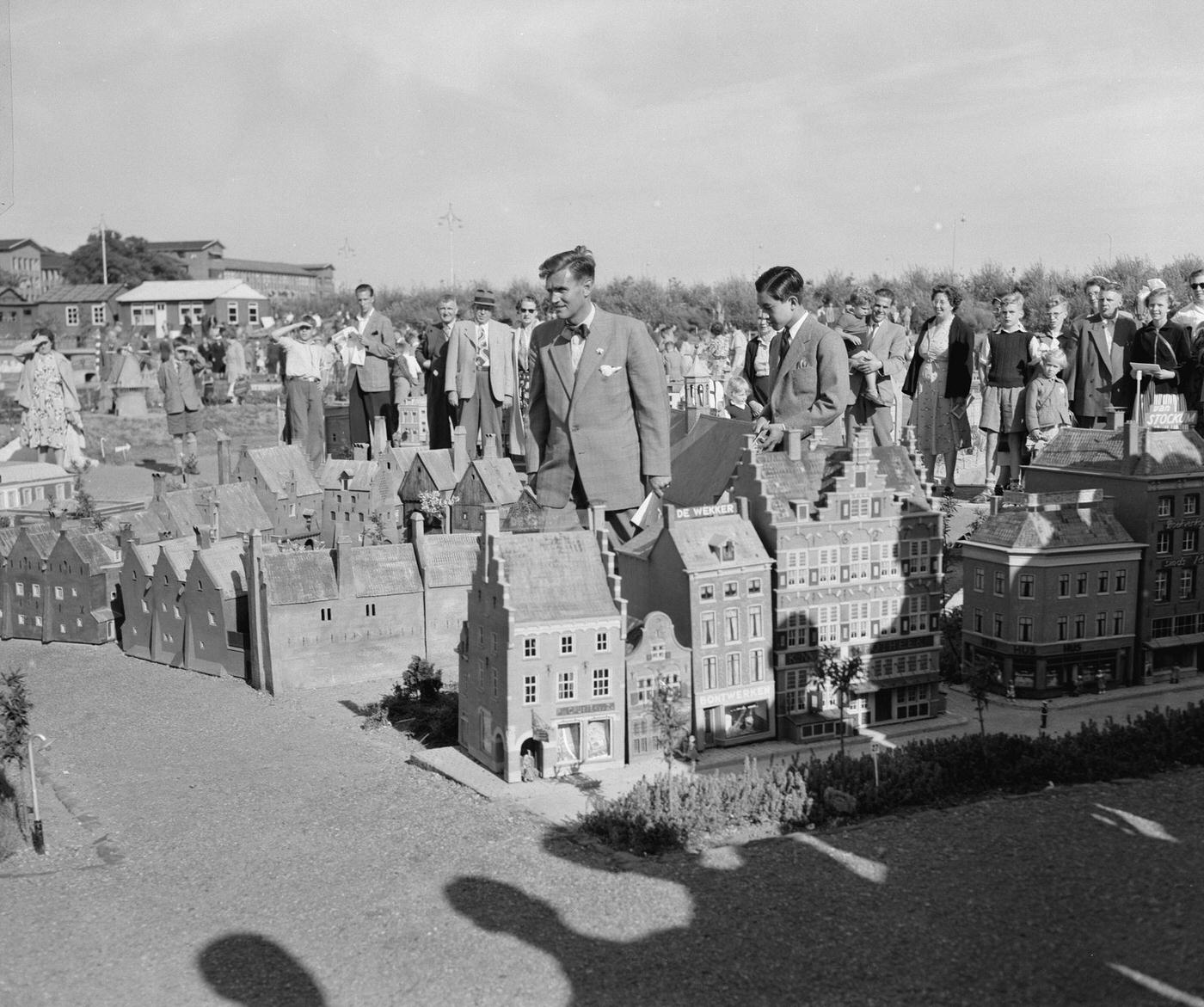
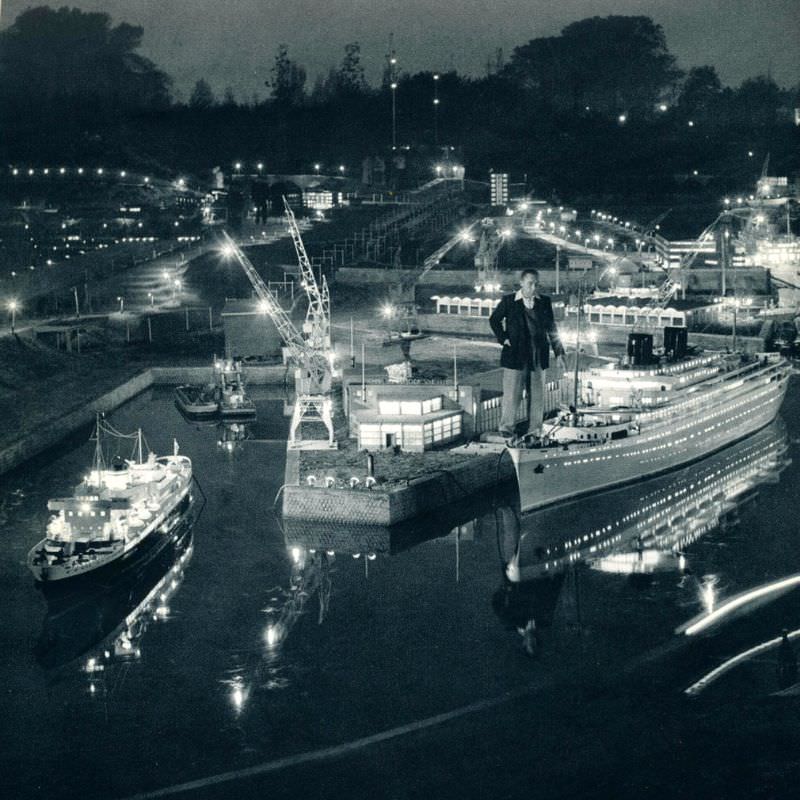
The Hague served as the seat of government and a center of diplomatic activity. Madurodam, the miniature city park that opened in 1952, quickly became a popular attraction. Japan’s Crown Prince Akihito visited in July 1953, touring the scale-model replica of the Netherlands that had been built in tribute to a young Dutch soldier killed in World War II. The park captured the country’s pride in its own cities, architecture, and heritage at a time when much of the real thing was still being rebuilt.
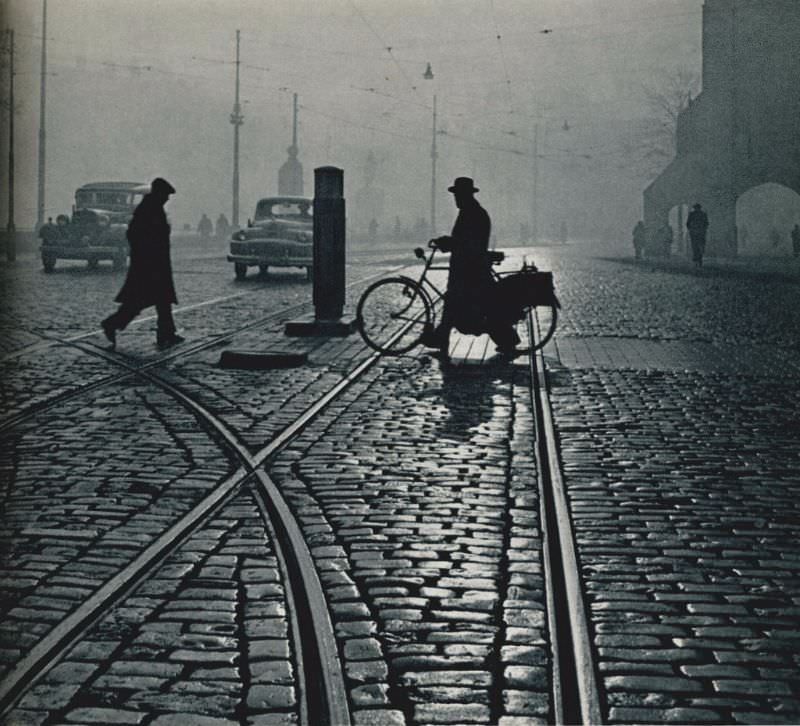
Kneuterdijk, Den Haag, 1957
Madurodam in Den Haag, 1957
Crown Prince Akihito visits Madurodam Miniature City, The Hague, Netherlands, 28th July 1953.
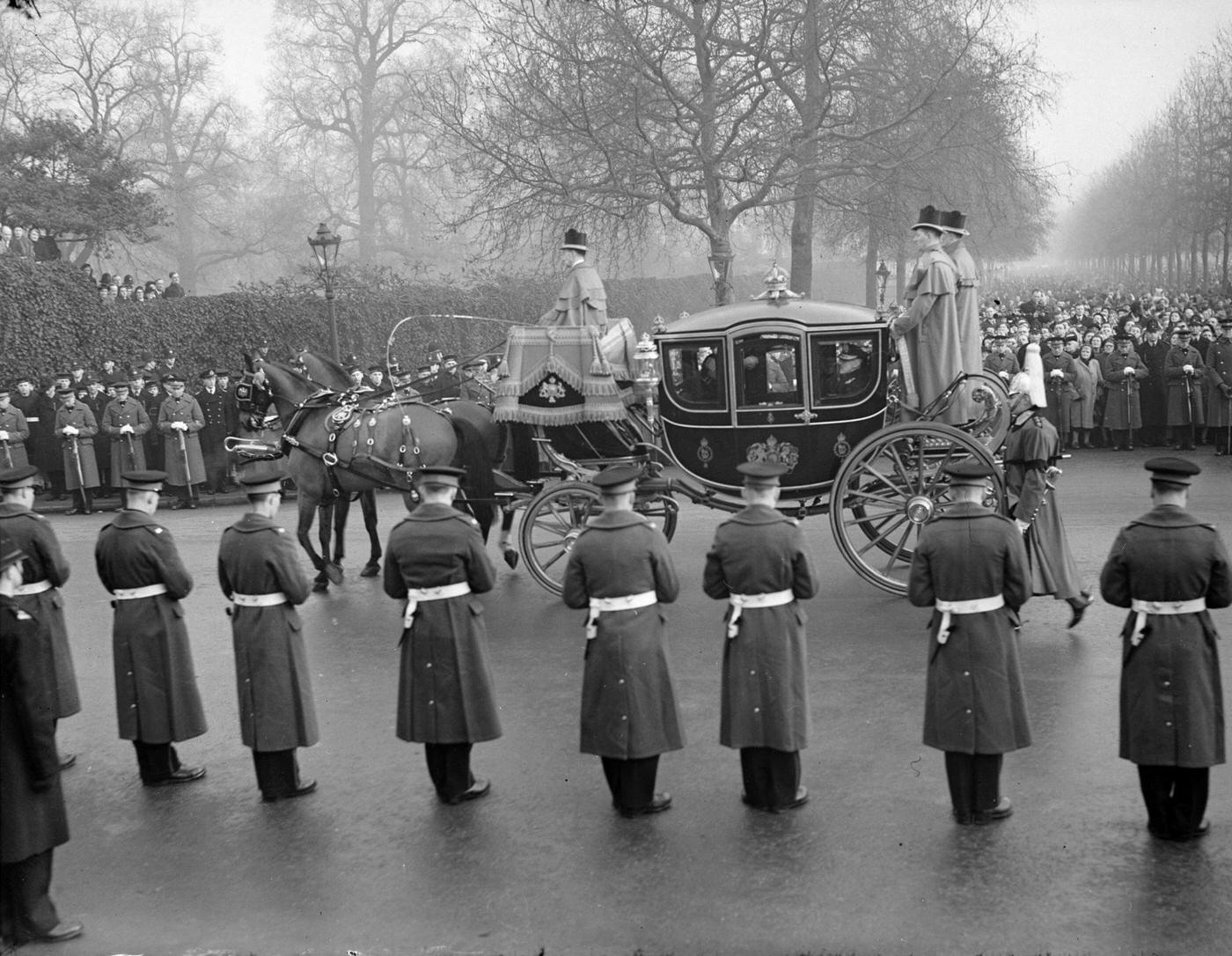
The carriage carrying Haakon VII, King of Norway, Queen Juliana of the Netherlands, the Duchess of Gloucester and the Duchess of Kent in the funeral procession of King George VI in the Mall.
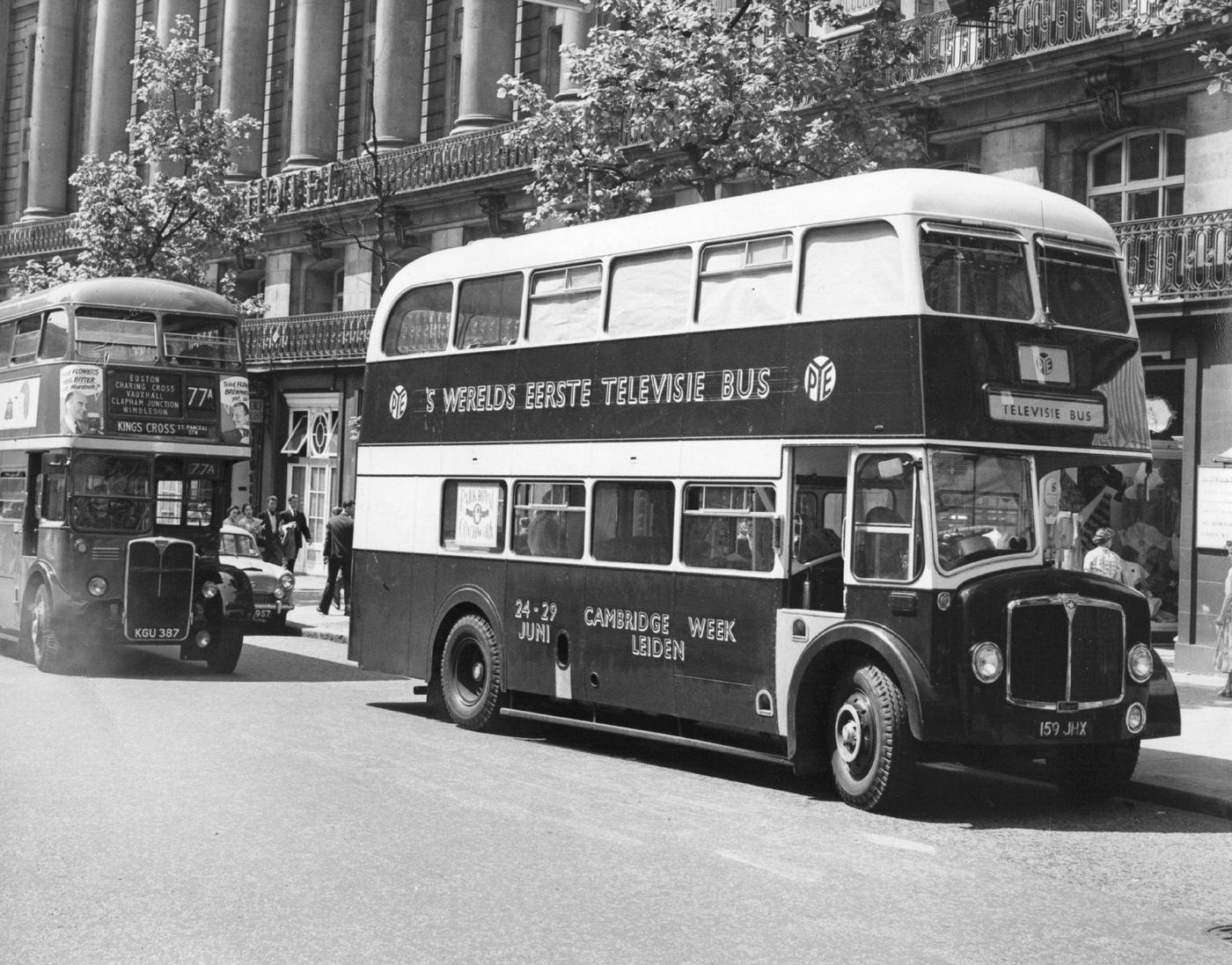
TV Bus travels through Aldwych, London, on its way to Leiden, Netherlands for the Cambridge Week festivities,1957.
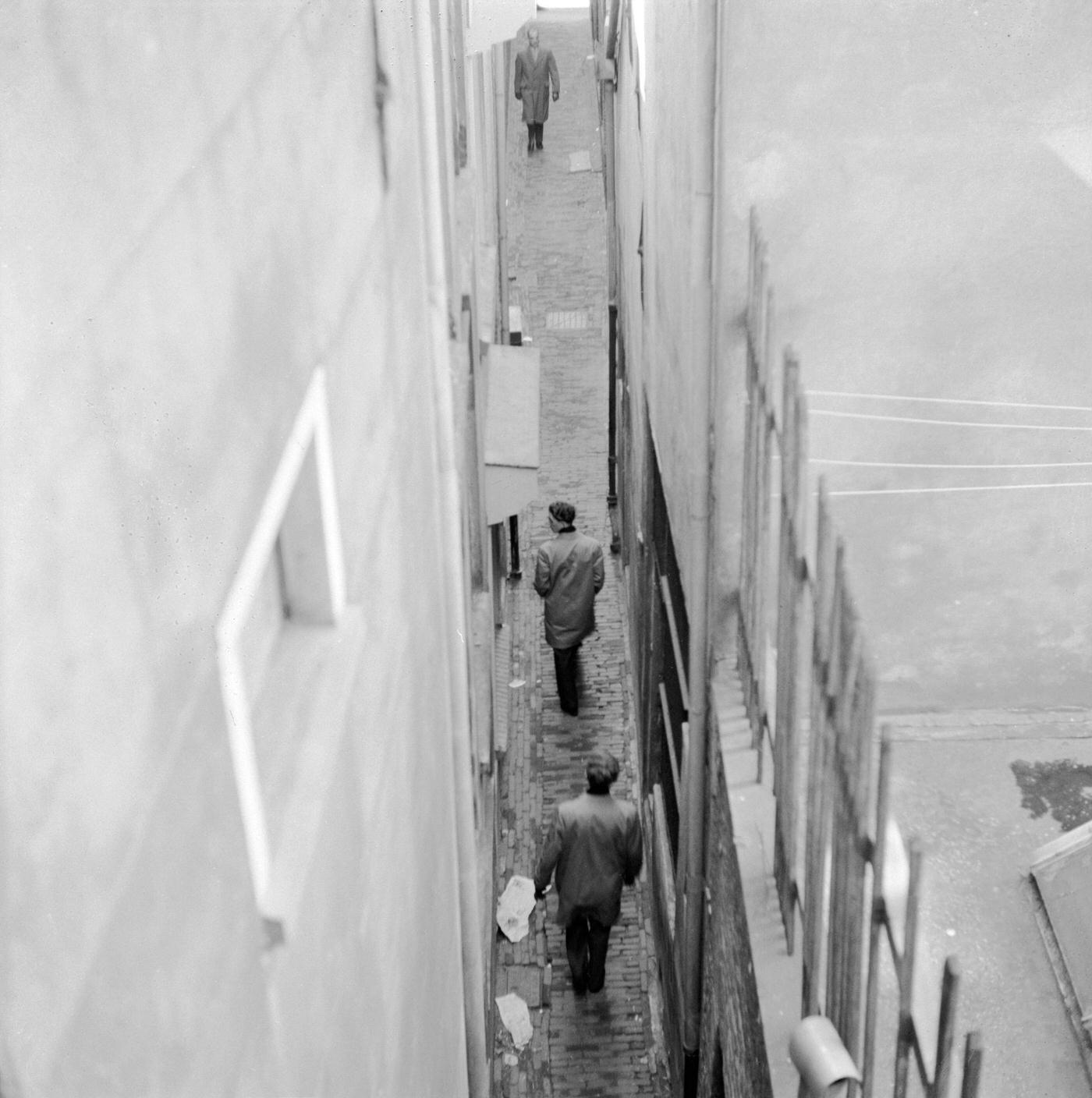
Men walking down a narrow alley in the Netherlands, circa 1956.
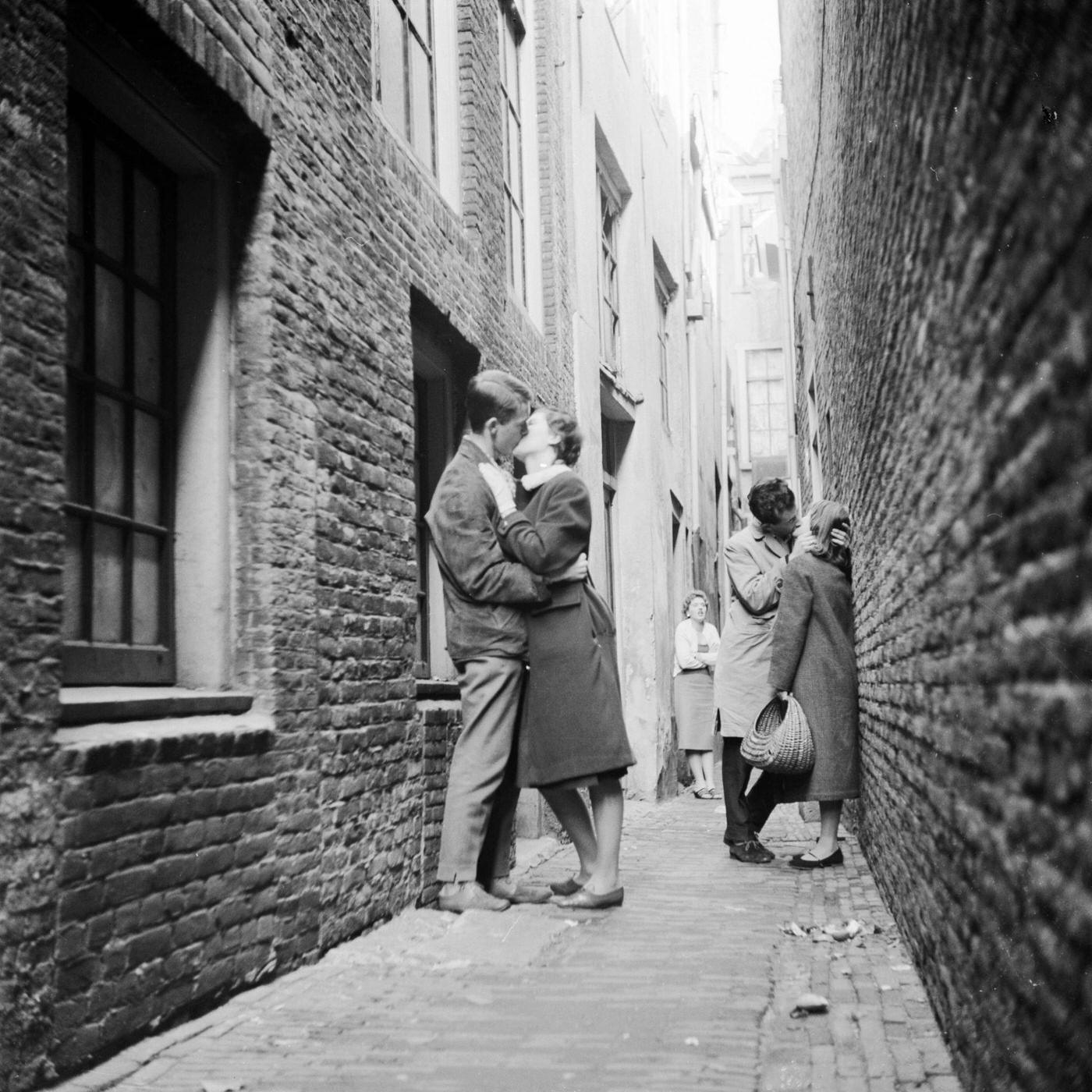
Couples kissing in a narrow alley in the Netherlands, circa 1956.
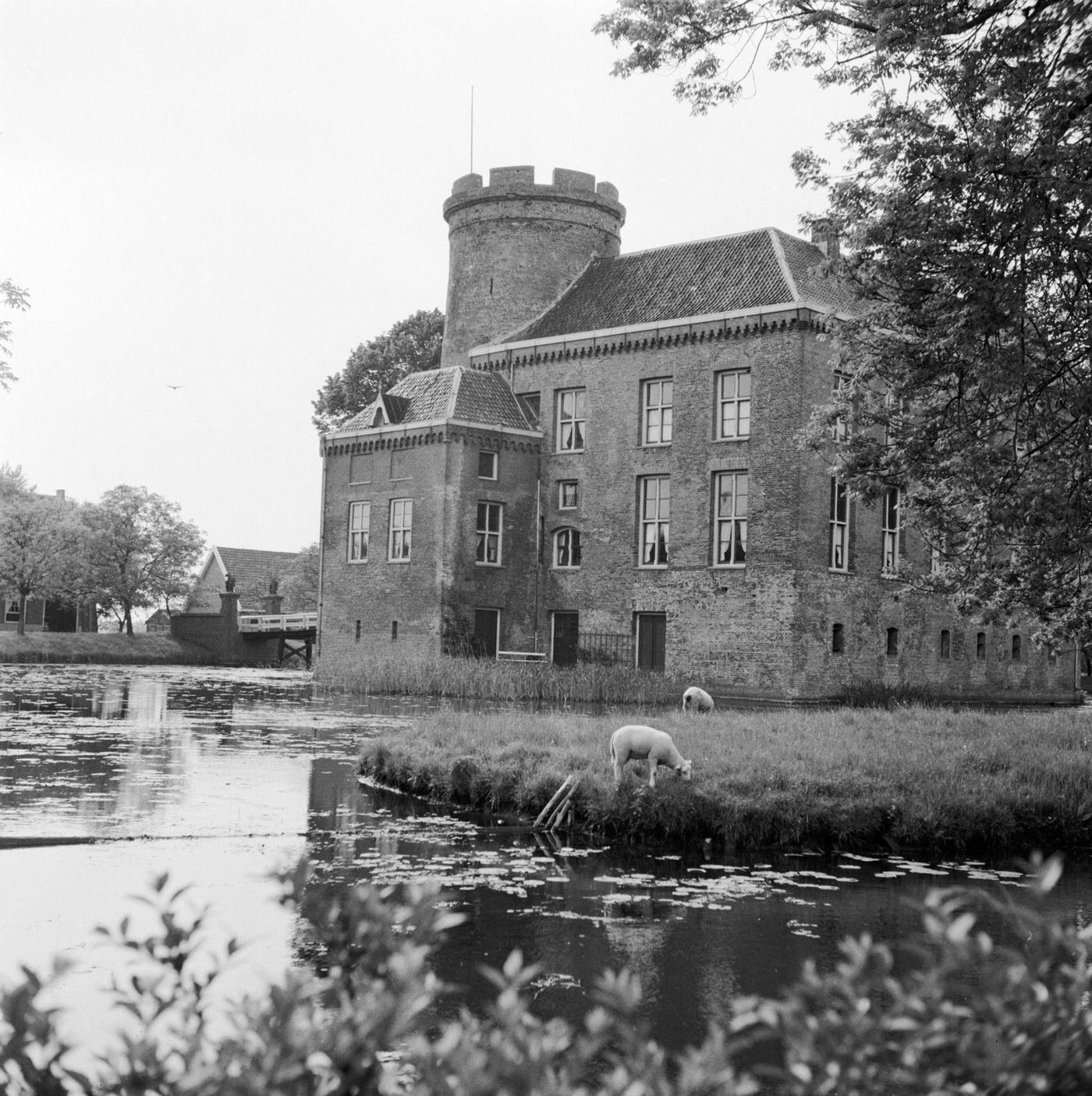
A picturesque castle built on a small island with sheep grazing on the surrounding grass, 1955.
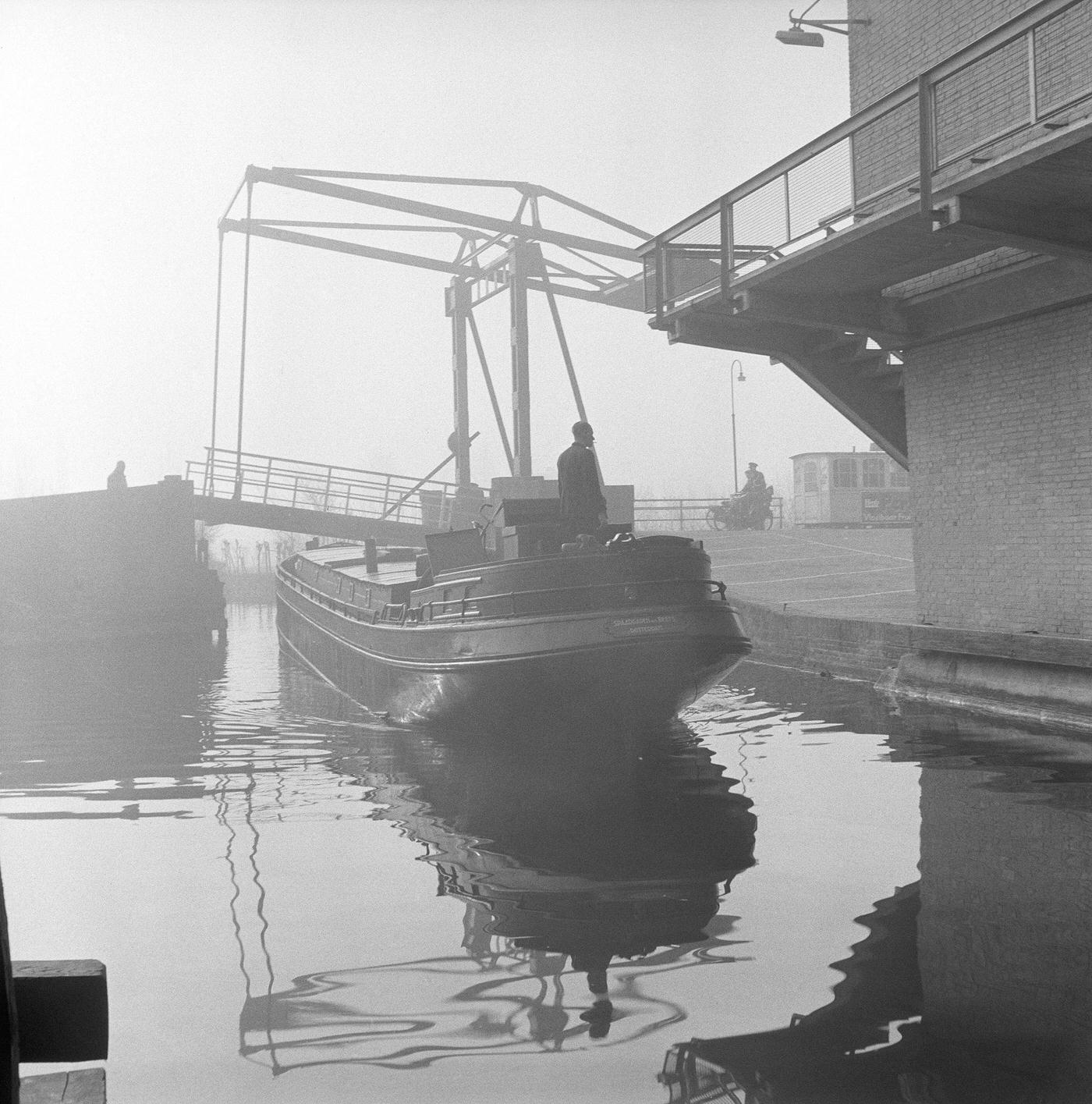
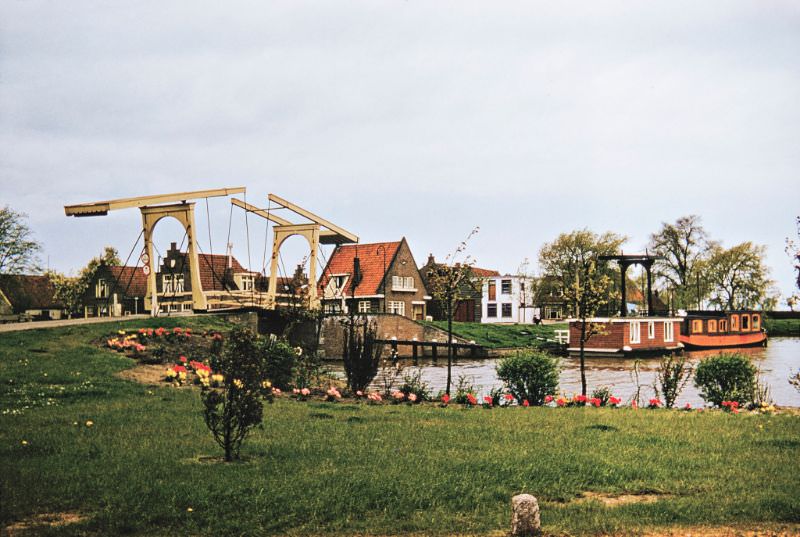
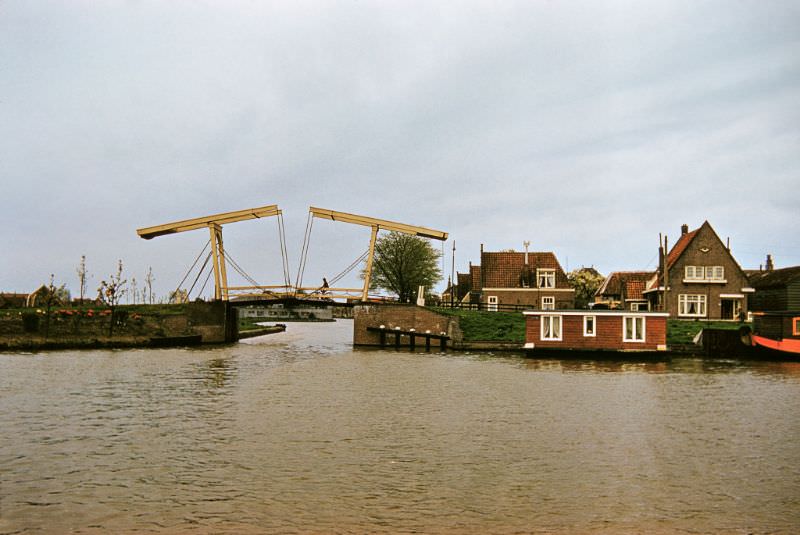
A boat passing under a drawbridge in the Netherlands, 1954.
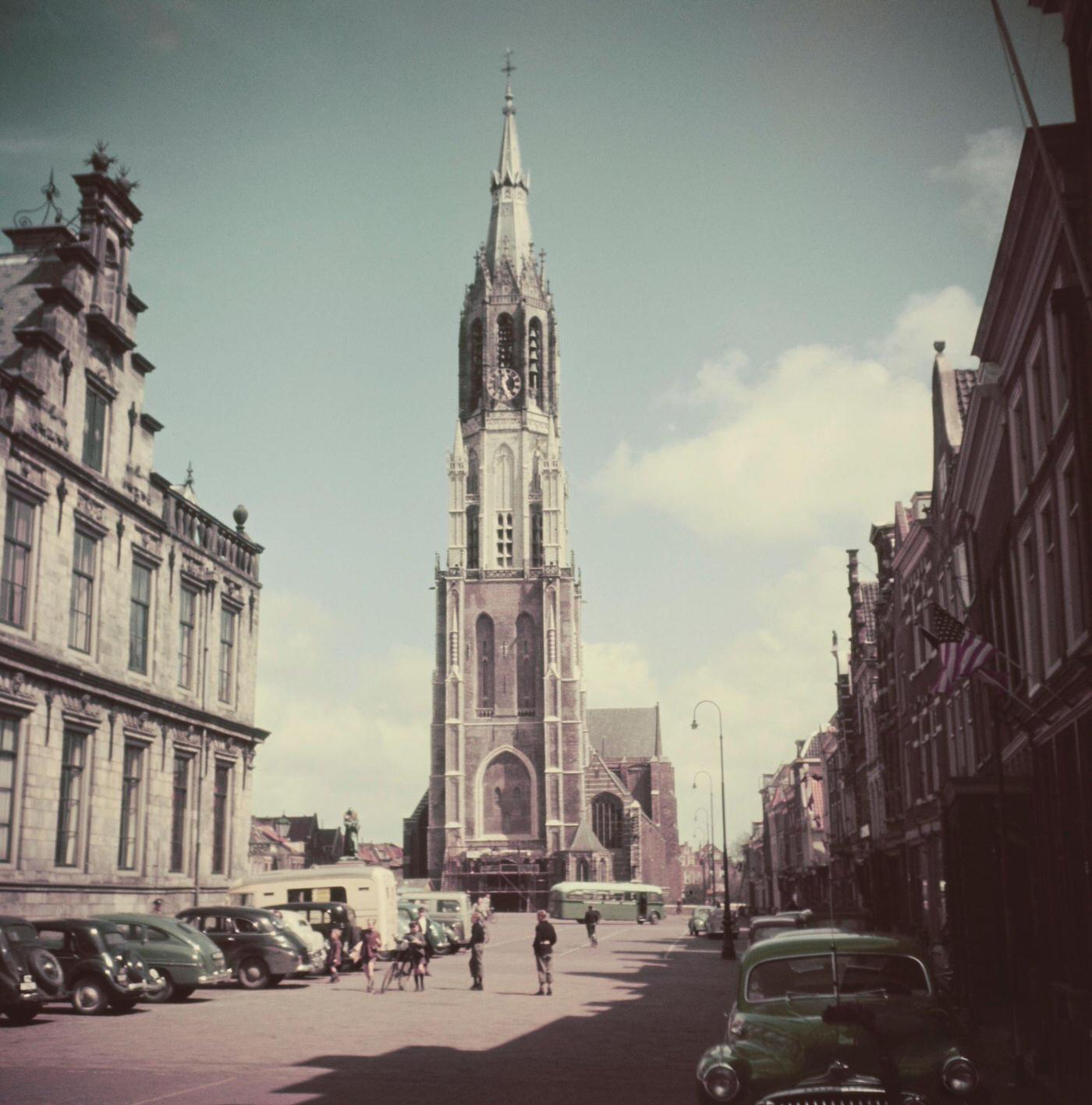
Pedestrians pass cars parked beside City Hall on Markt Square in front of Nieuwe Kerk Protestant church in the center of the city of Delft in the province of South Holland in the Netherlands  1950.
Pedestrians pass cars parked beside City Hall on Markt Square in front of Nieuwe Kerk Protestant church in the center of the city of Delft in the province of South Holland in the Netherlands 1950.
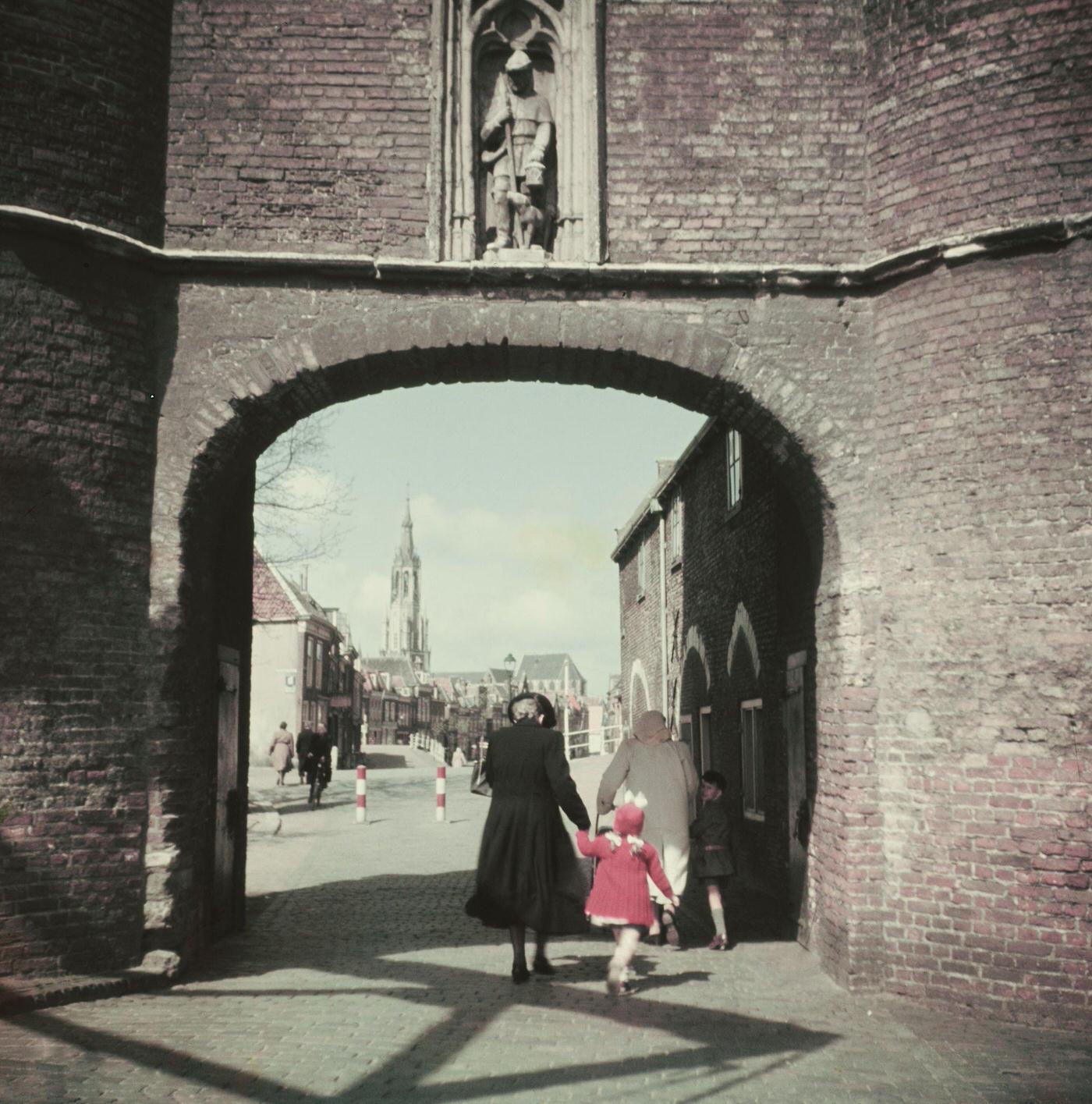
Pedestrians walk through an archway in the center of the city of Delft in the province of South Holland in the Netherlands, 1950.
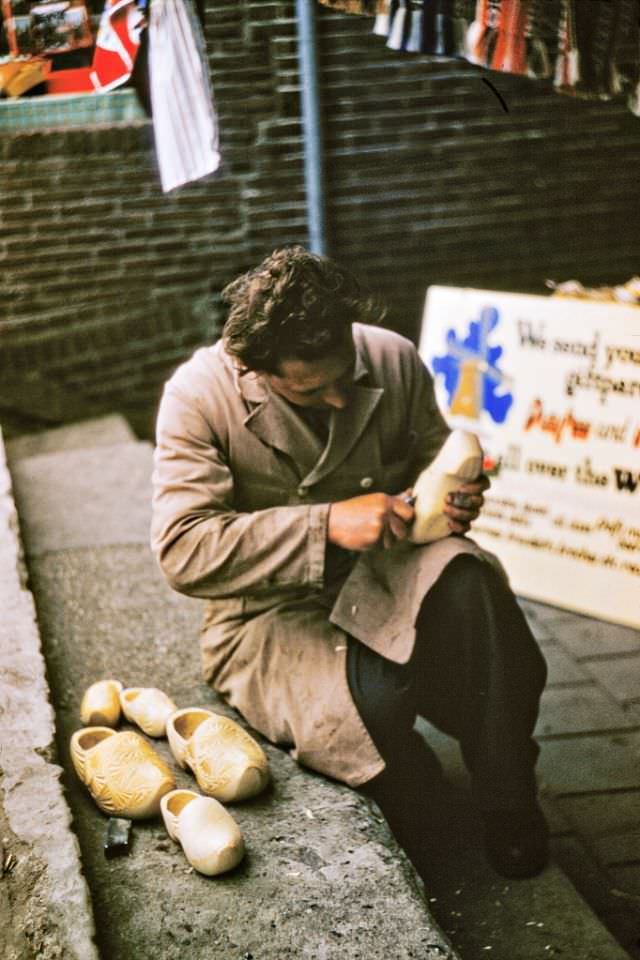
Wood carving.
Wood carving.
Canal, Edam.
Canal, Edam.
Chain-Bridge, Oosterkade, Edam.
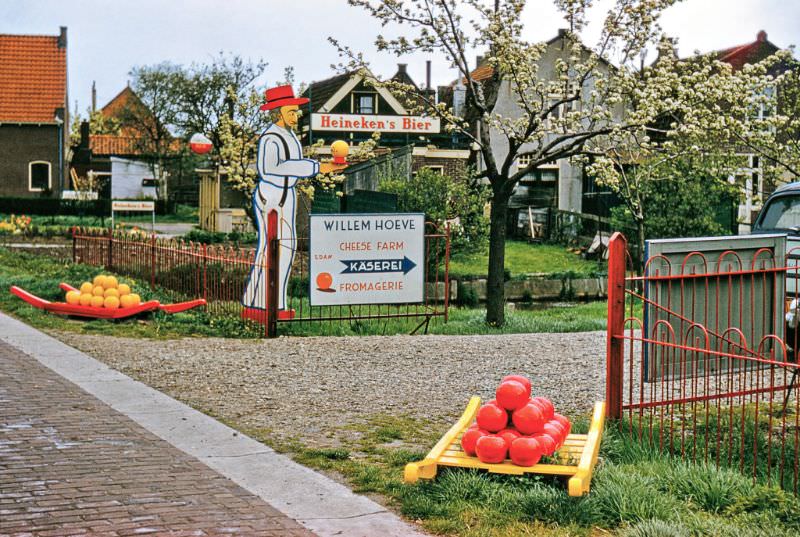
Willem Hoeve Cheese Farm Entrance, Edam.
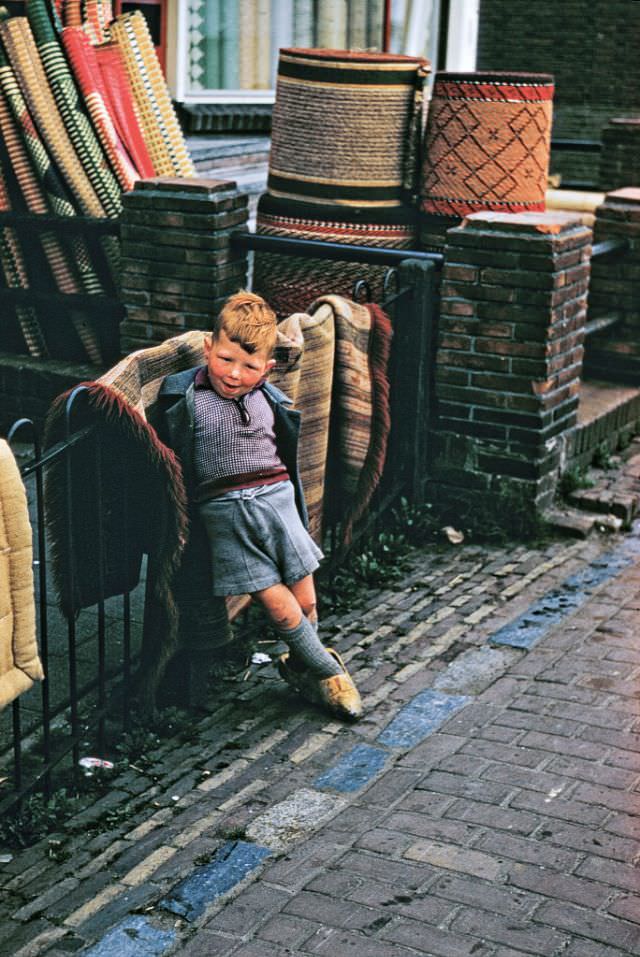
A young boy outside carpet shop, Volendam.
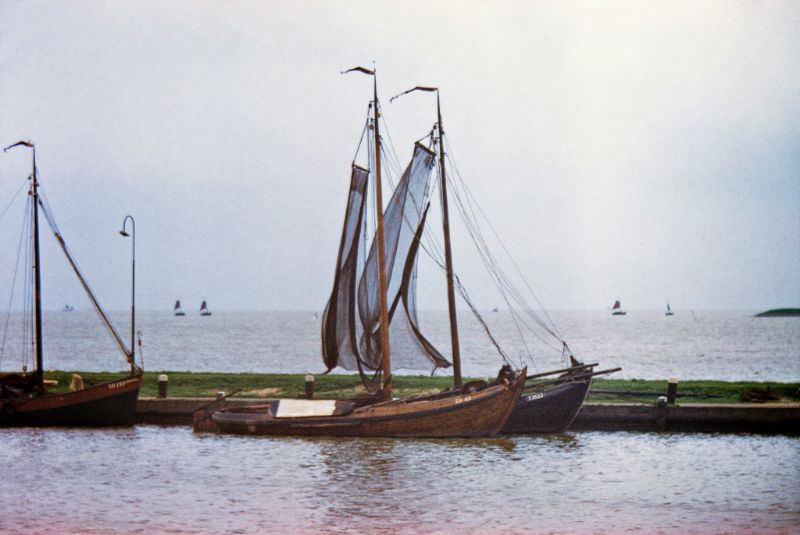
Fishing boats, Volendam.
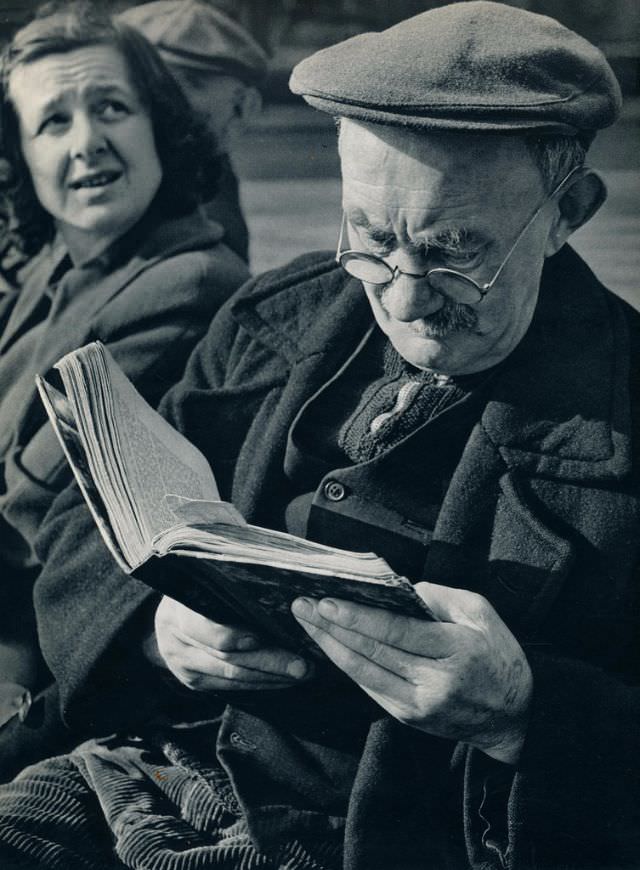
Man reading, 1957
Man reading, 1957
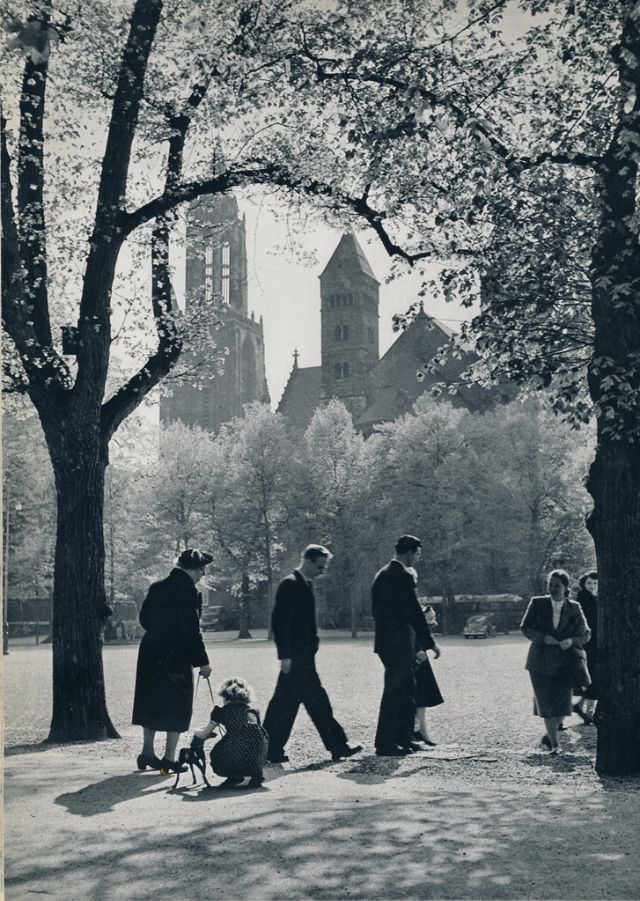
Vrijthof, Maastricht, 1957
At the beach in Rockanje, 1957
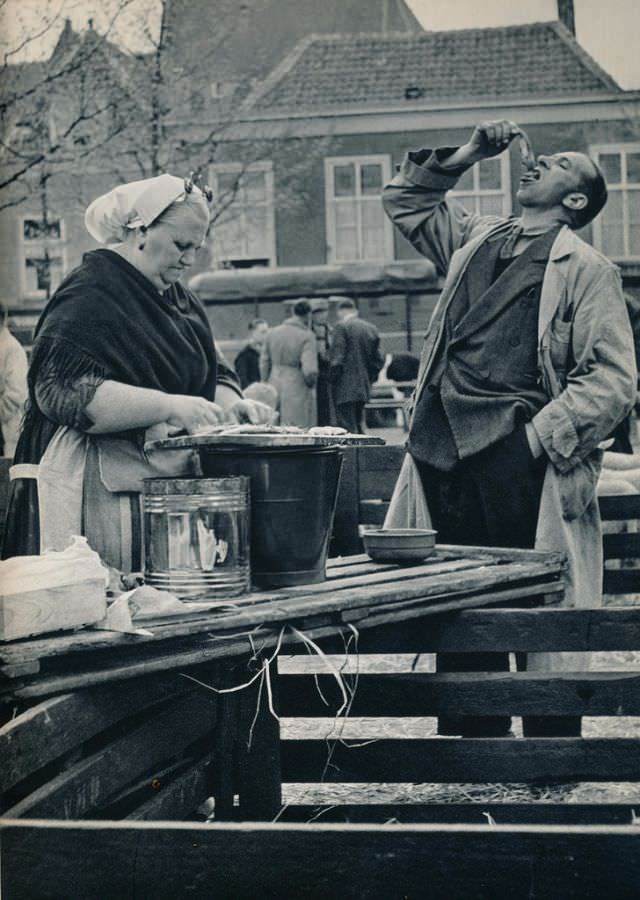
Fish salesman in Scheveningse, Den Haag, 1957
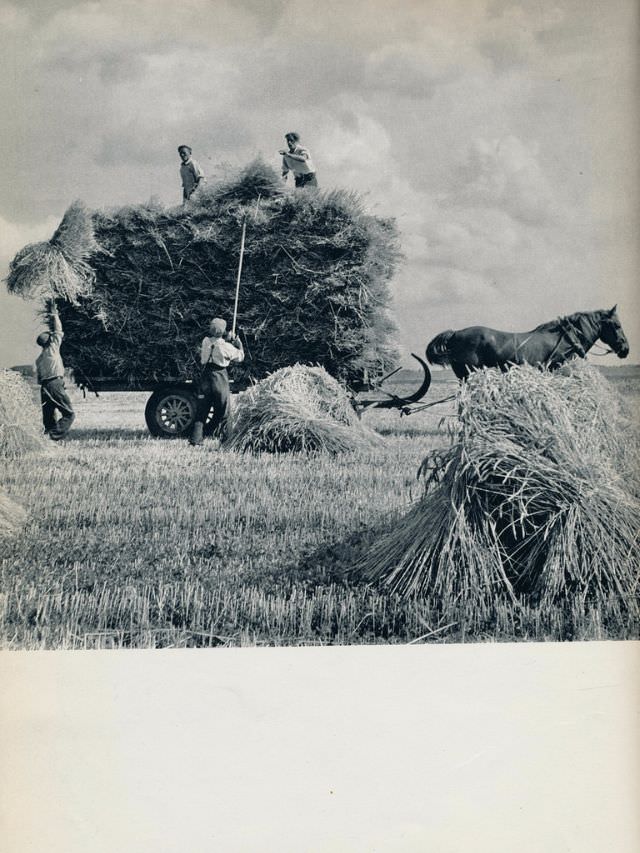
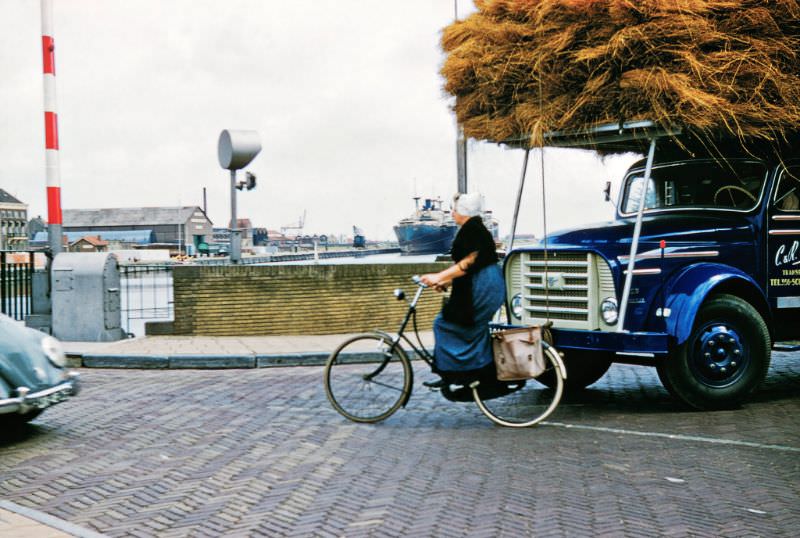
Hay wagon, Haarlemmermeer, 1957
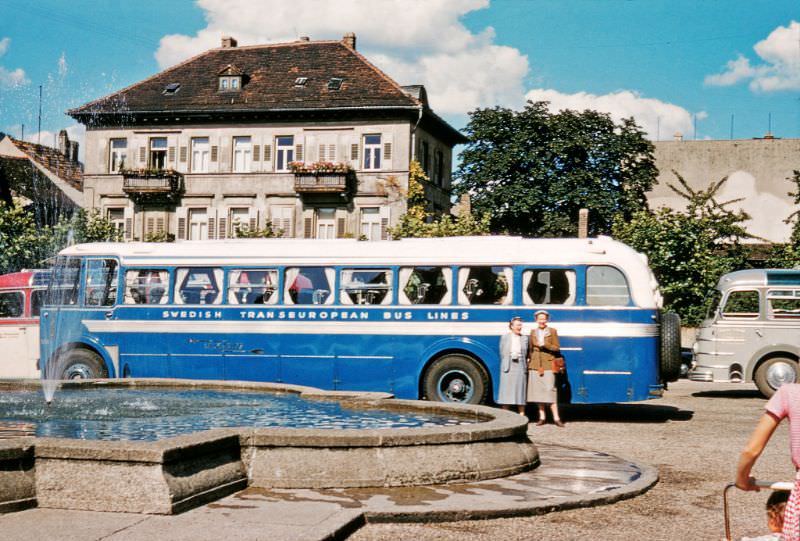
Linje Buss in Holland, Netherlands.
Near Middelburg, Netherlands.
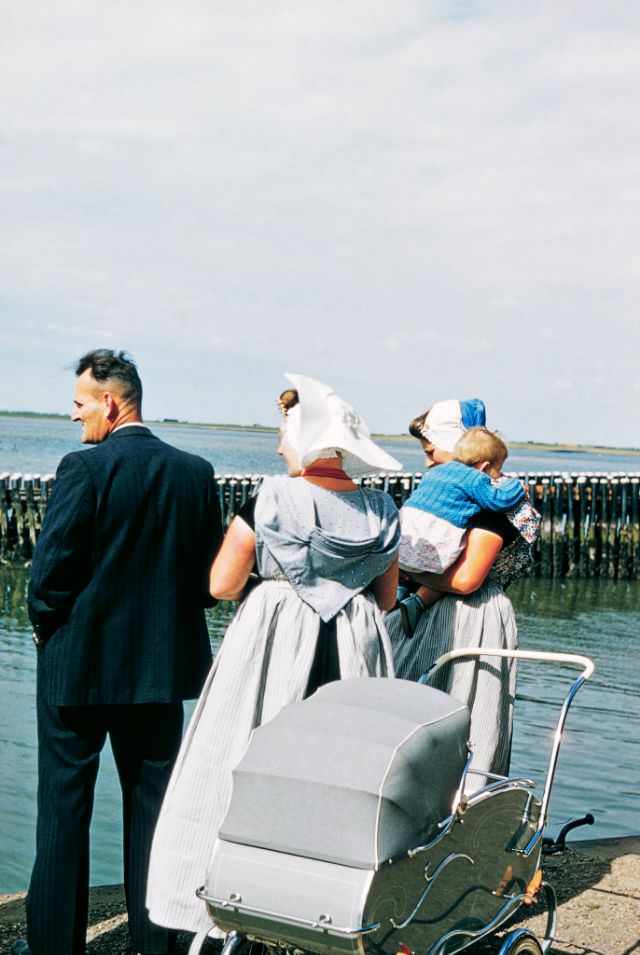
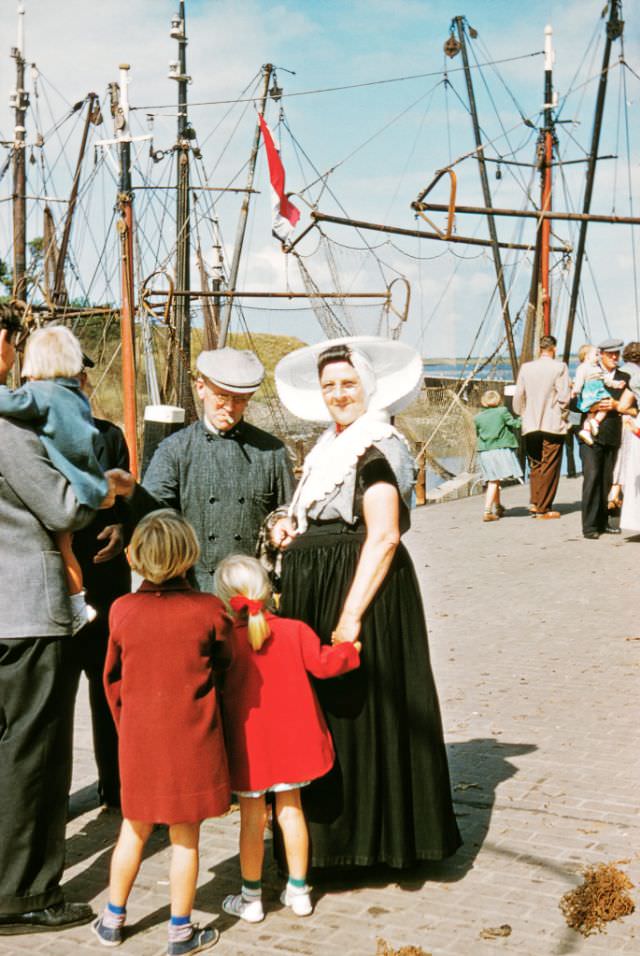
A Dutch family awaiting a ferry, Veere, Netherlands.
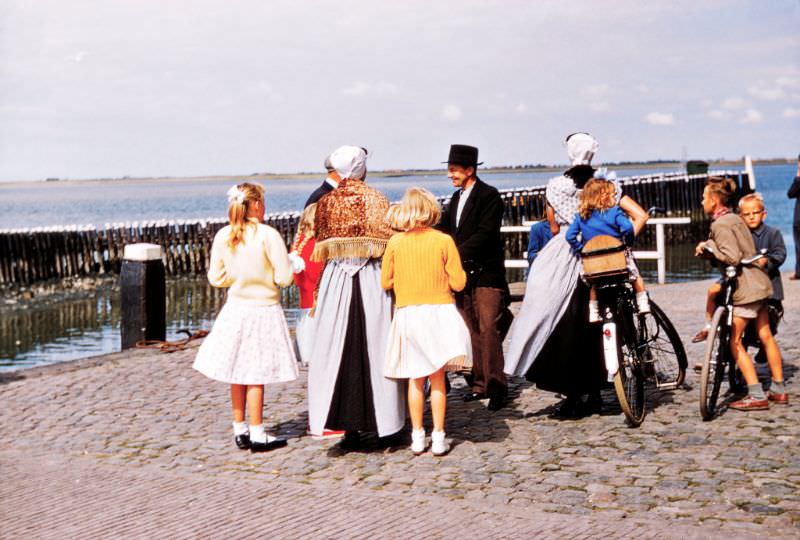
Dutch families awaiting a ferry, Veere, Netherlands.
On the quay with the fishing boats, Veere, Netherlands.
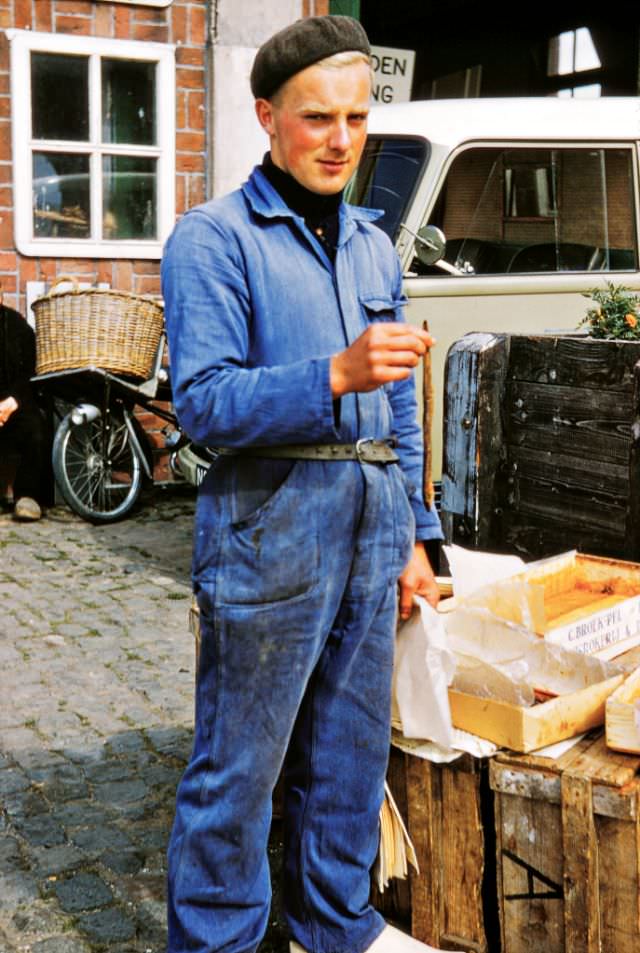
A fishery worker on a break holding a smoked eel, Veere Netherlands.
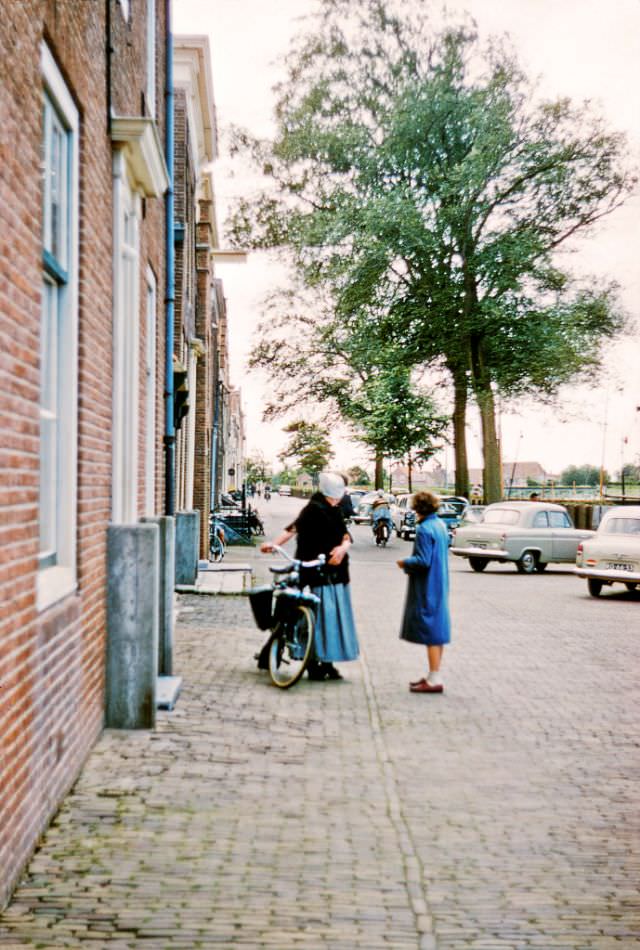
Kaai, Veere, Netherlands.
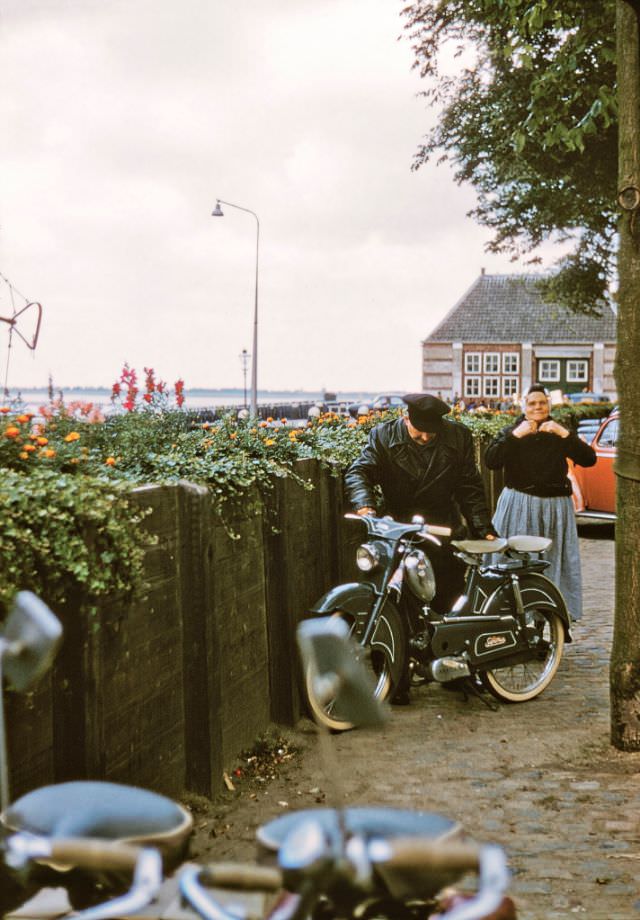
Dutch bikies, Veere, Netherlands.
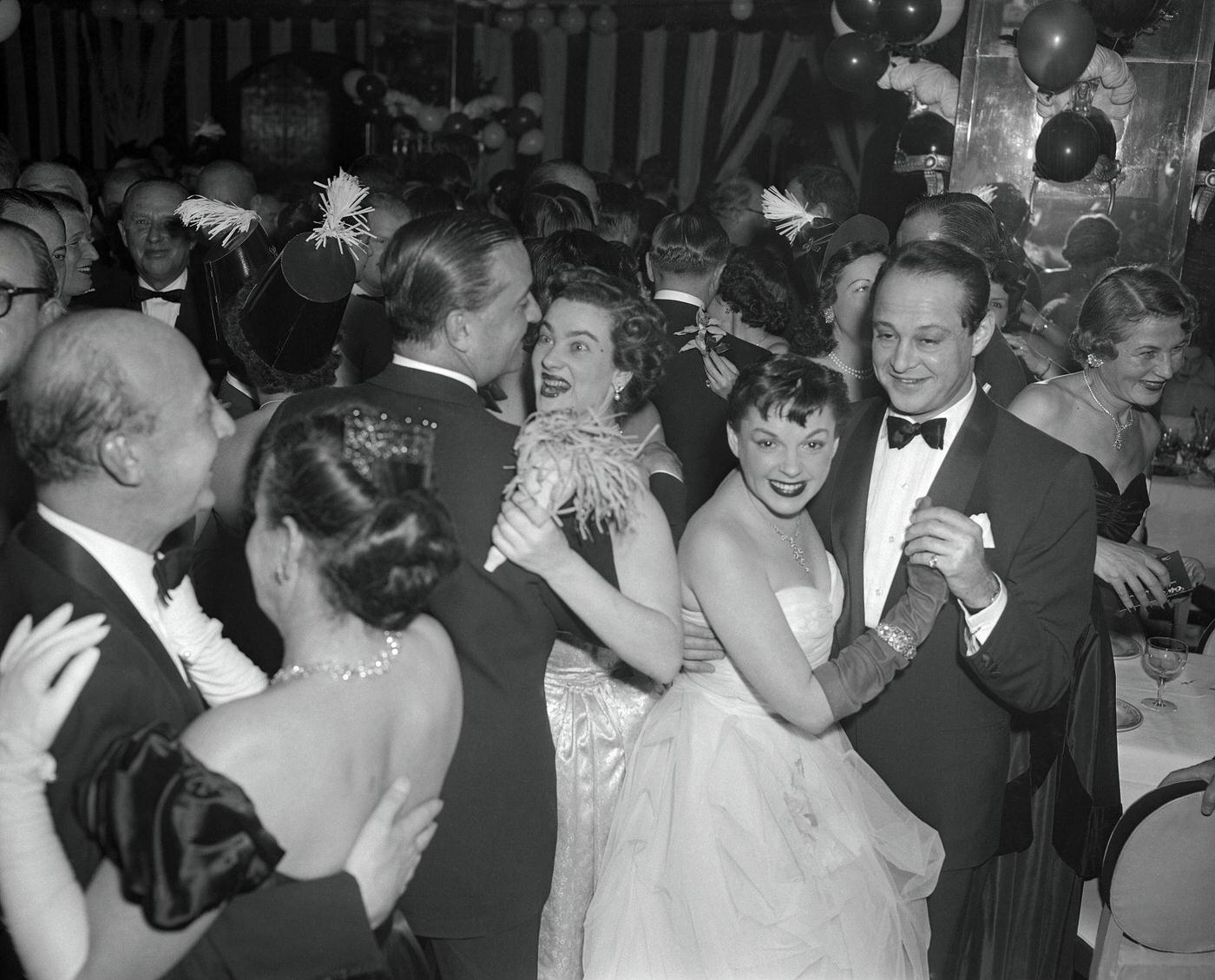
Judy Garland is shown here dancing with Sidney Luft at the Sherry Netherlands Hotel.
Enjoyed this post? Get new ones in your inbox.

Leave a Comment

Your email address will not be published. Required fields are marked *

Share this Post 🥺

Please take a moment to share this content. Your support is greatly appreciated! 🙌🙏

Share this Post 🥺

Please take a moment to share this content. Your support is greatly appreciated! 🙌🙏
Scroll to Top
 
Hey Friend, Before You Go.. Please like & follow for more interesting content