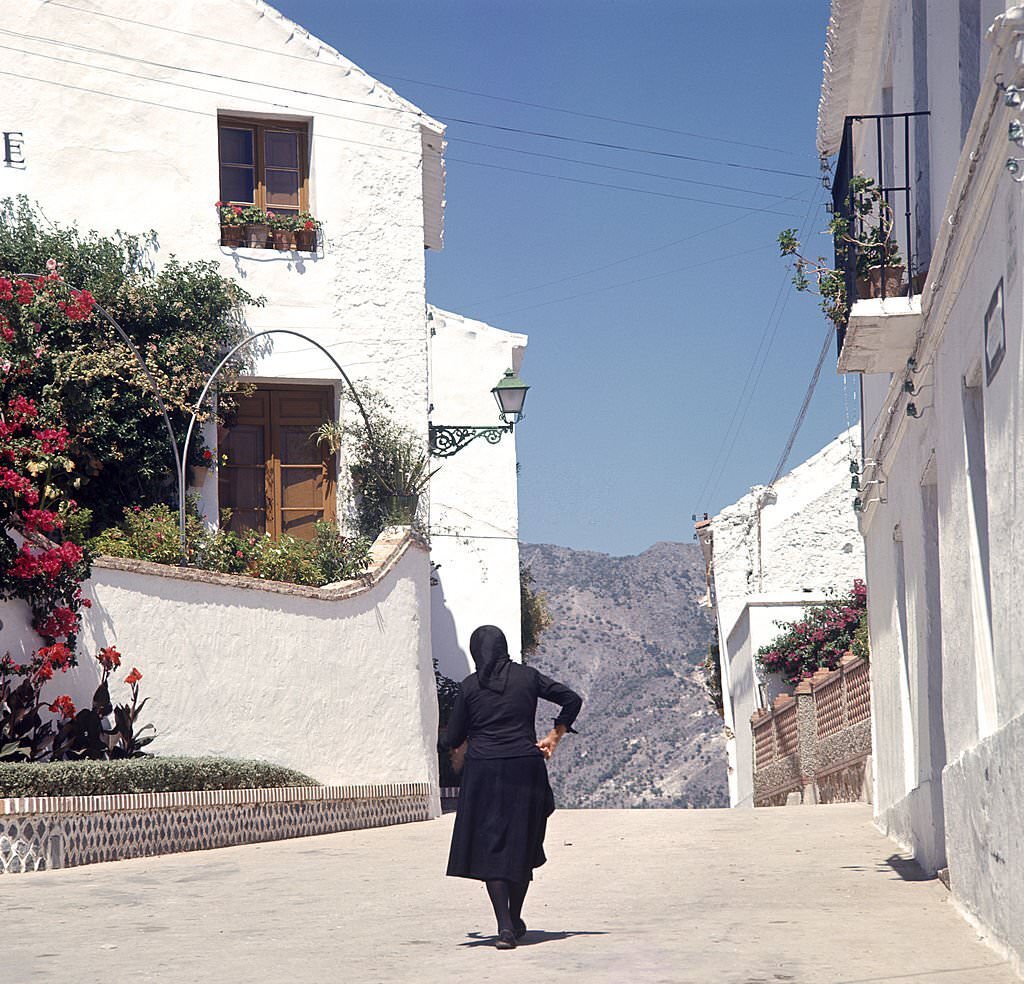
Perched above the Costa del Sol in the Province of Málaga, Mijas is one of Andalusia’s most striking whitewashed villages. Its roots stretch back to prehistoric times, when the Tartessians first settled the area. For most of its history, the village was defined by hard physical labor — agriculture, fishing, some farming, and mineral extraction kept people alive, but barely. The post-war period brought hunger and widespread unemployment. The only reliable work was collecting esparto grass, and even that dried up during droughts. There was no telephone service until 1953, most buildings were little more than shacks, and the majority of residents lived scattered across small countryside farms.
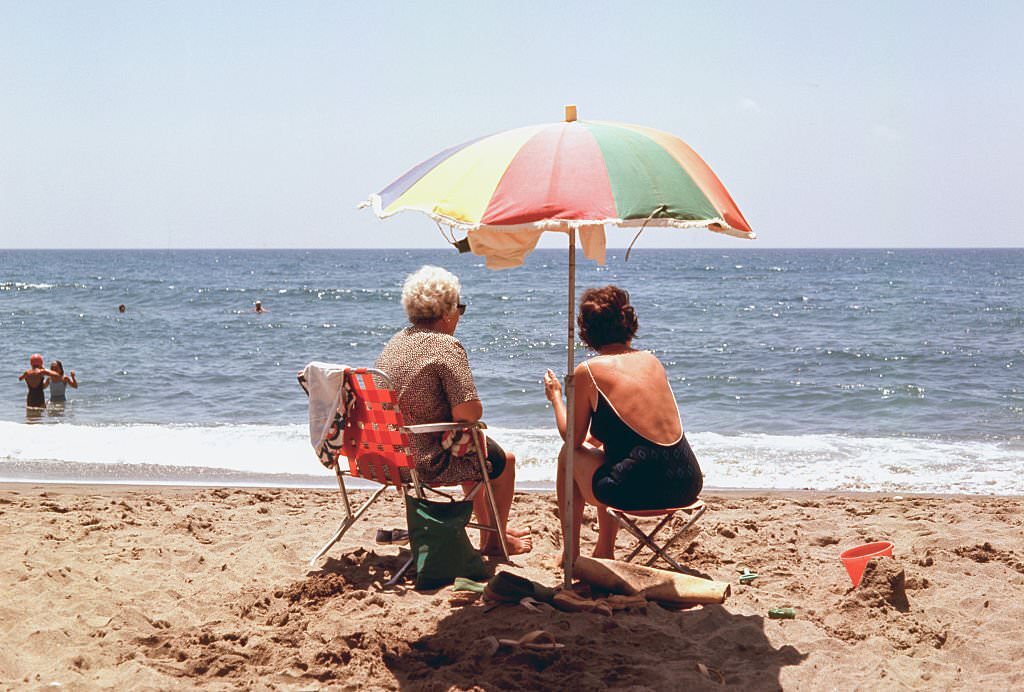
The village had been cut off from the wider world for a long time. Mijas and the nearby coastal town of Fuengirola were finally linked by road in 1873, ending a physical separation that had existed since 1841. Still, true connection to the outside remained limited. The arrival of the Second Republic brought the area’s first newspaper, marking one of the few early windows to the broader country. Industry had briefly flourished in the mid-1800s when paper-makers from Valencia and carpenters from Alcoy arrived, introducing new trades and tools that created fresh links between local manufacturers. But those days of small industrial promise faded, and the village returned to its quiet, isolated rhythm.
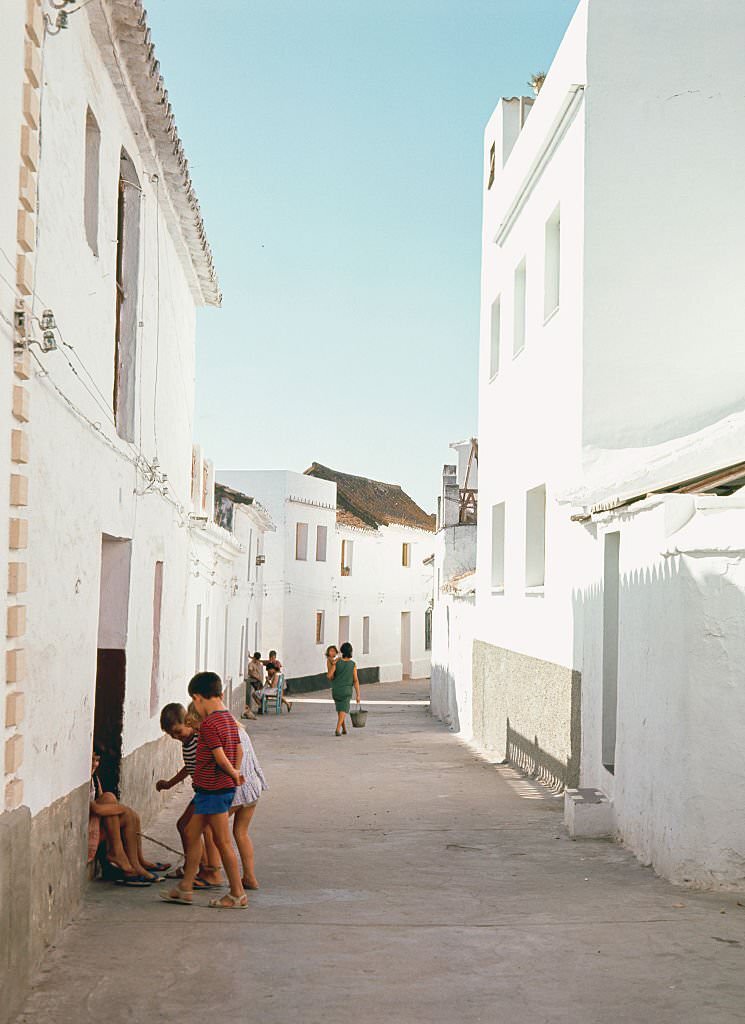
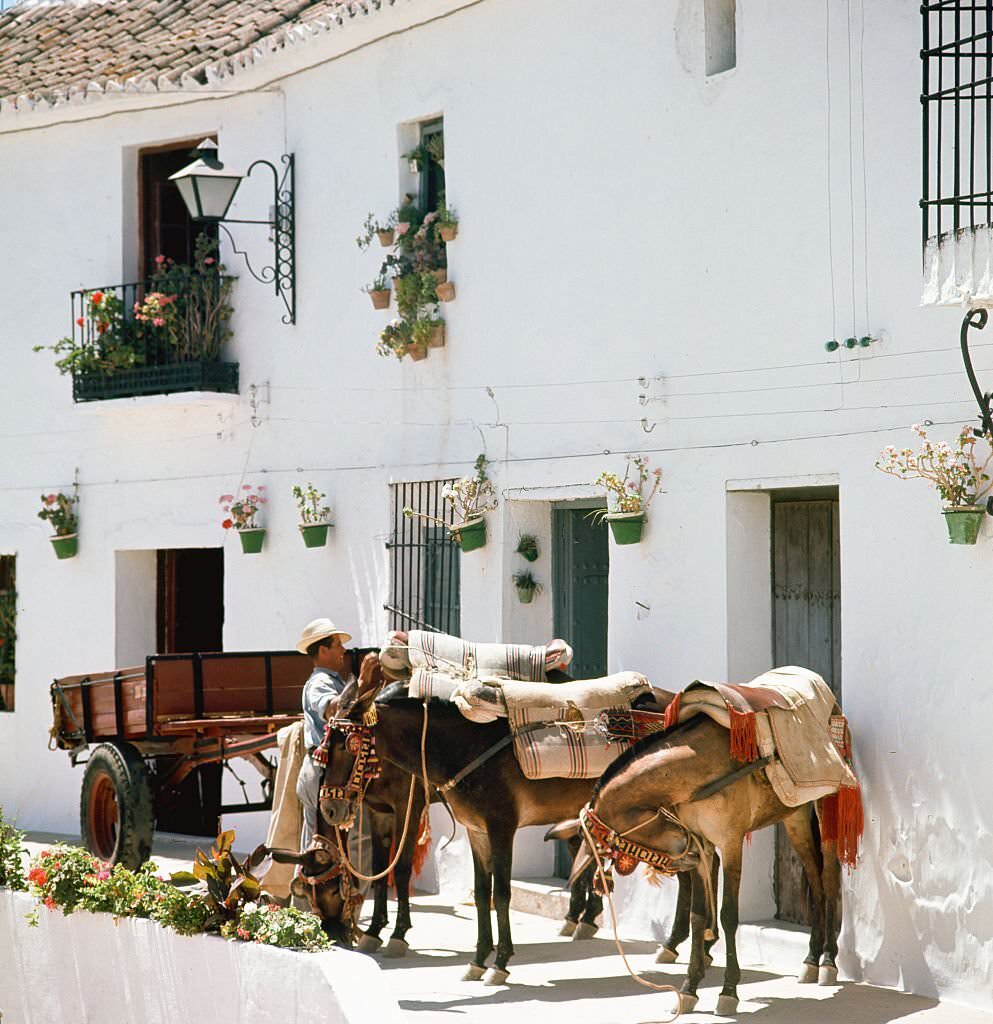
By the 1970s, Mijas was undergoing a dramatic transformation. Tourism had begun reshaping the economy entirely. The Costa del Sol was drawing visitors from across Europe, and Mijas — with its steep cobblestone streets, dazzling white walls, and mountain views — became one of the region’s most photographed destinations. The photos from this decade capture that pivotal moment: a village still rooted in its traditional character but opening itself up to the outside world at a rapid pace.
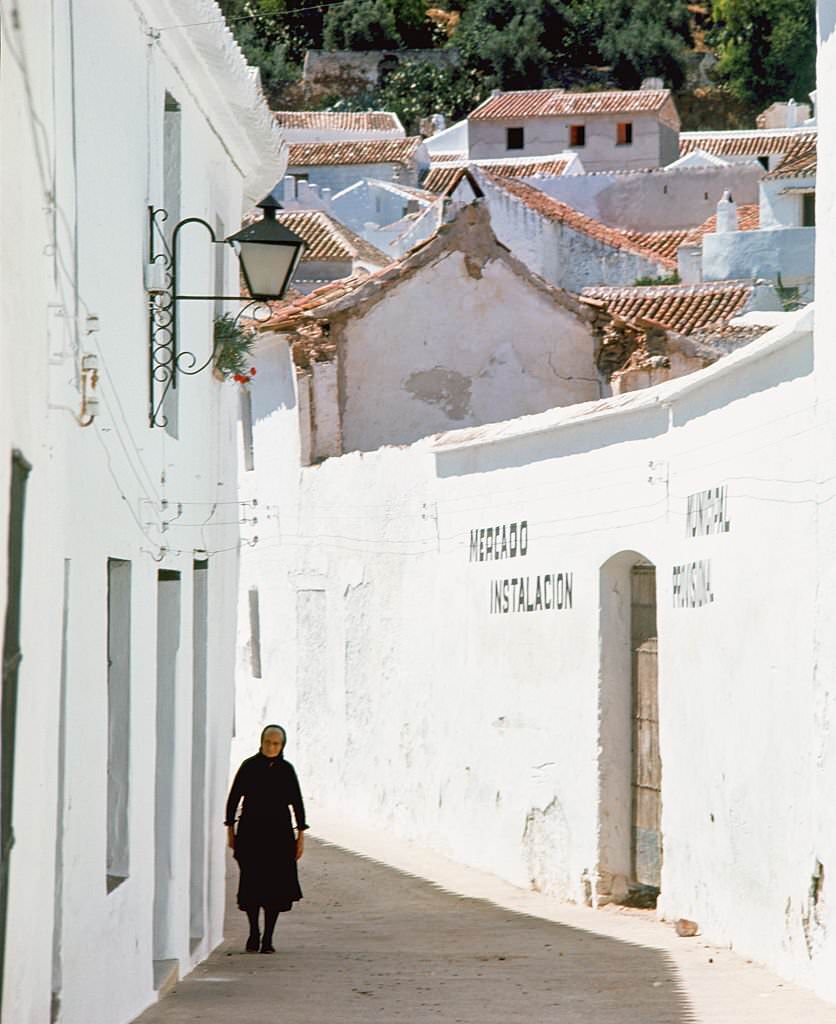
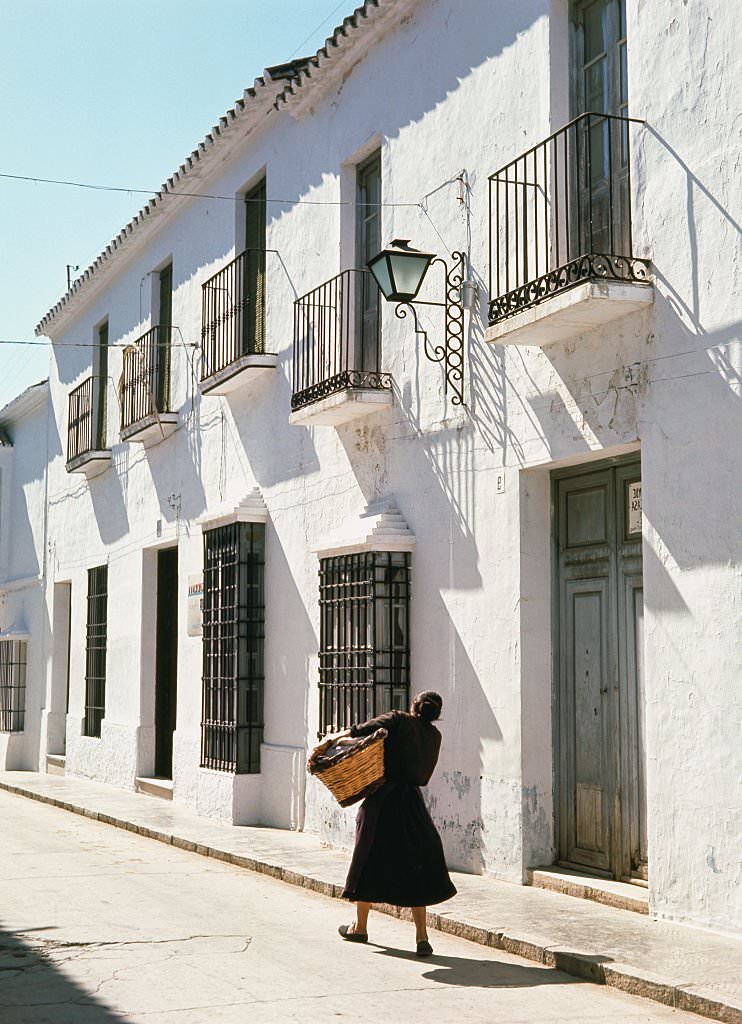
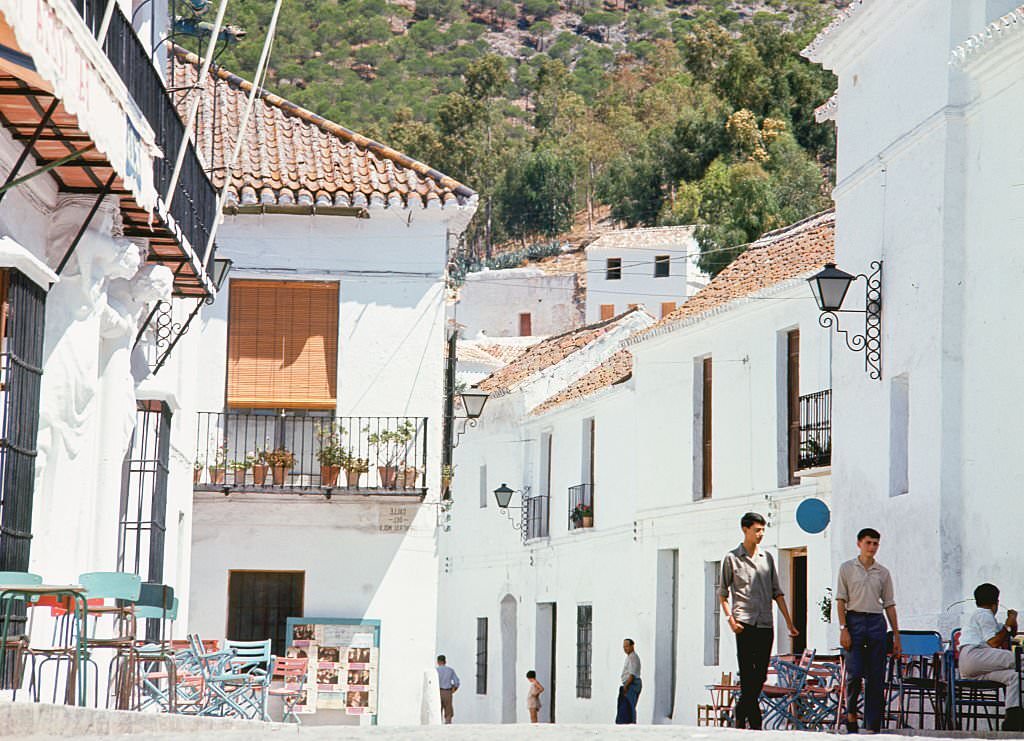
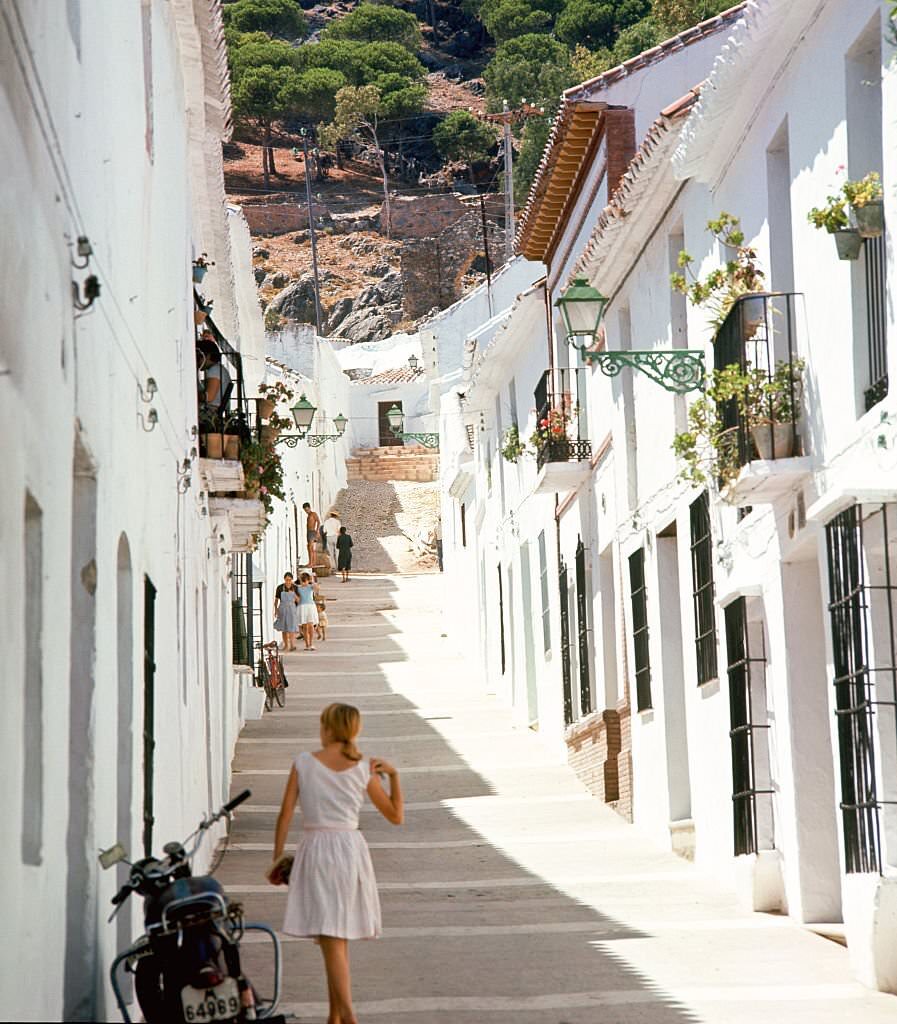
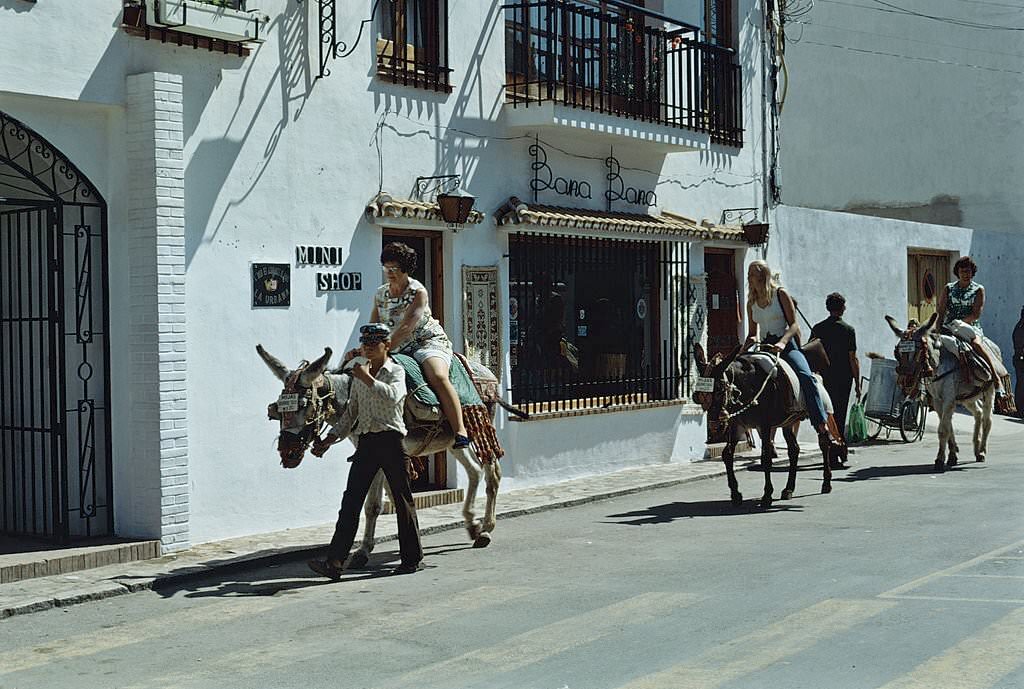
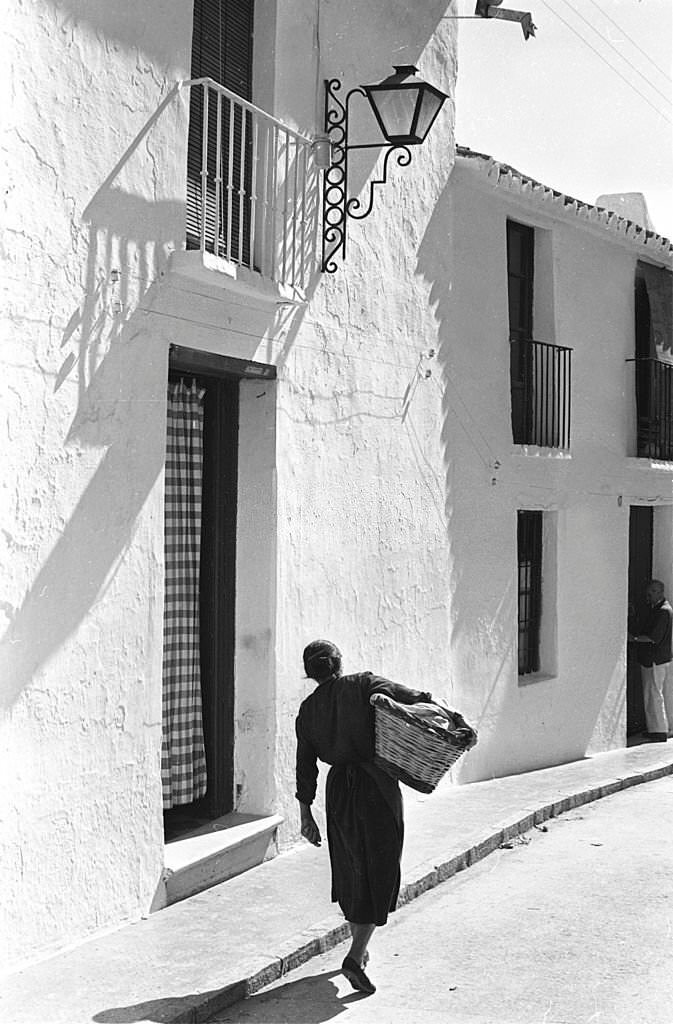
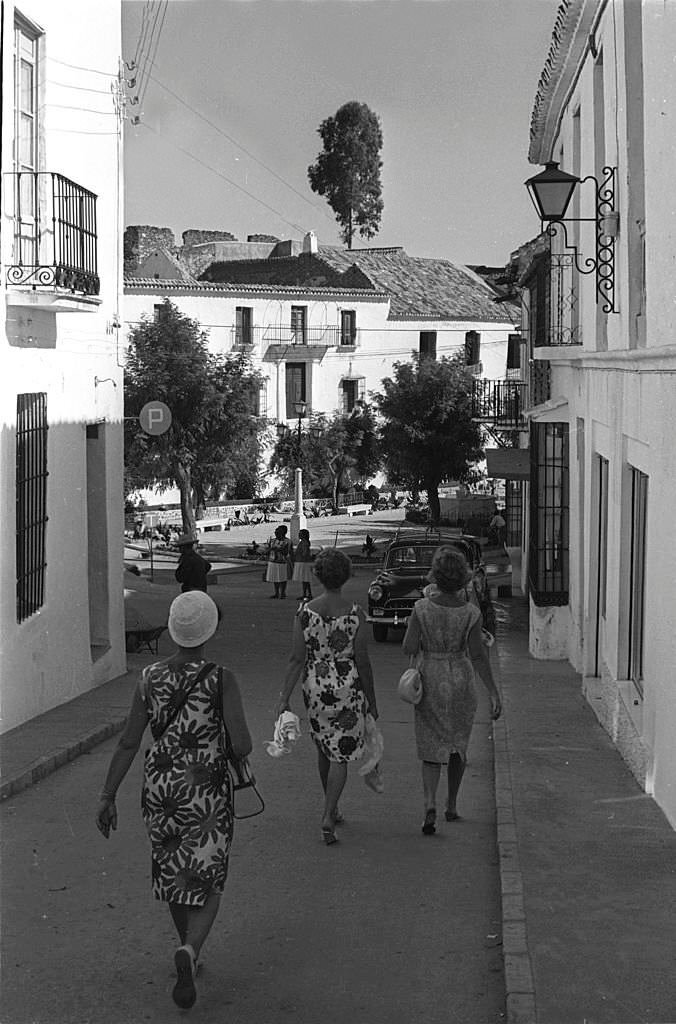
The streets of Mijas Pueblo — the hilltop village center — were narrow and lined with independent shops selling handcrafted local goods. Locals and tourists moved through the same whitewashed lanes, creating an unusual blend of everyday Andalusian life and foreign curiosity. Women carried baskets through the streets just as they had for generations, while visitors from Germany, Britain, and Scandinavia wandered past, cameras in hand.
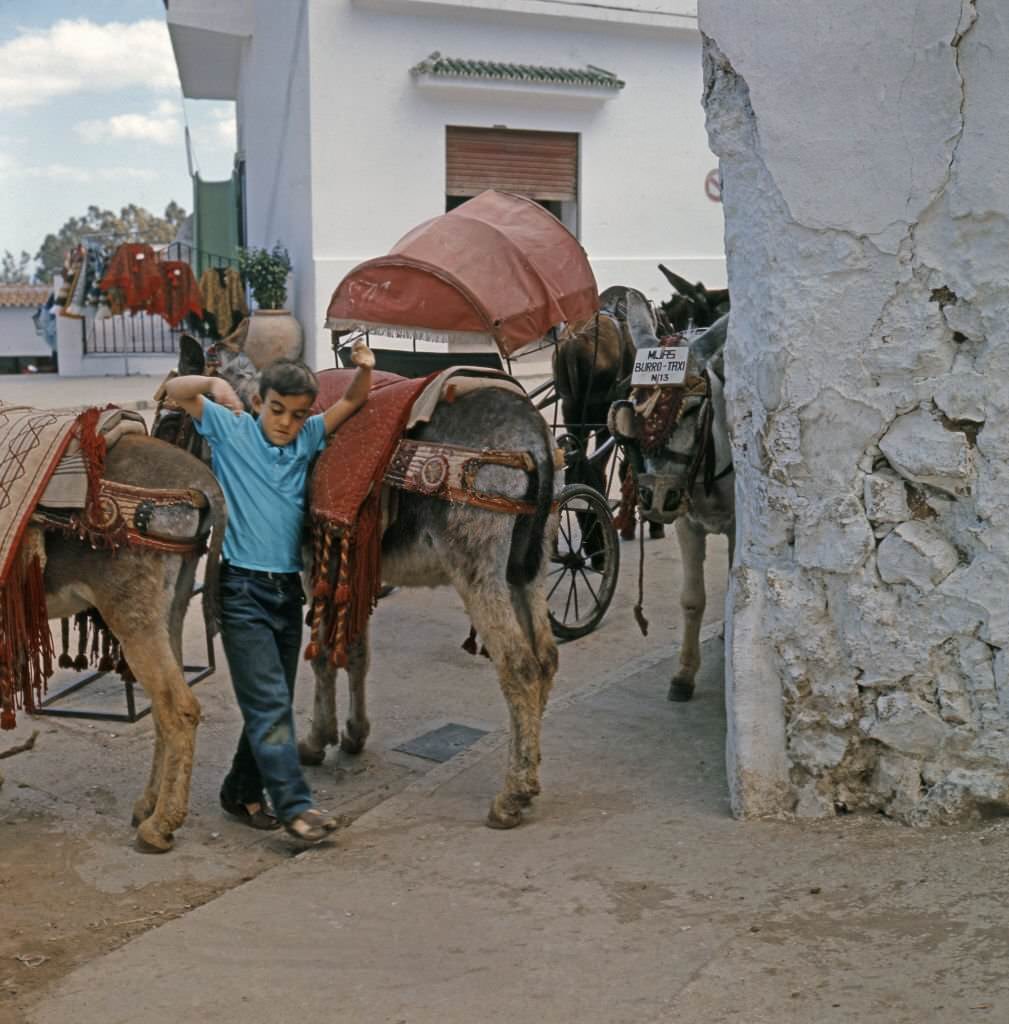
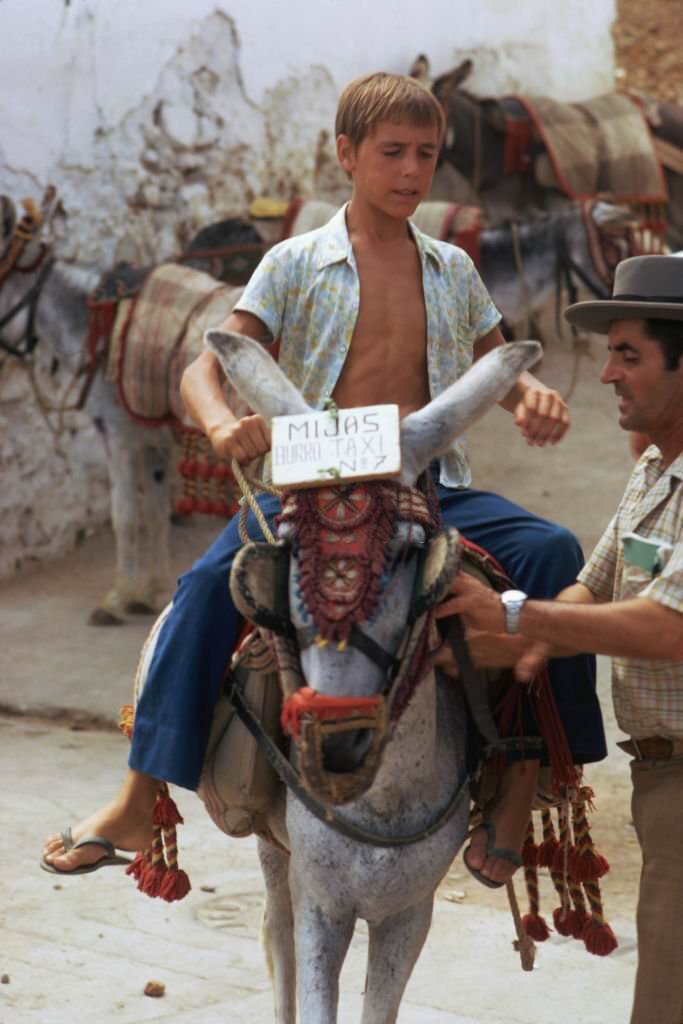
One of the most distinctive features of 1970s Mijas was its famous donkey taxi service. Burros — small donkeys — were offered to tourists as a charming and practical way to navigate the village’s steep terrain. The service became one of the most iconic symbols of the town during this era, drawing attention from visitors and photographers alike.
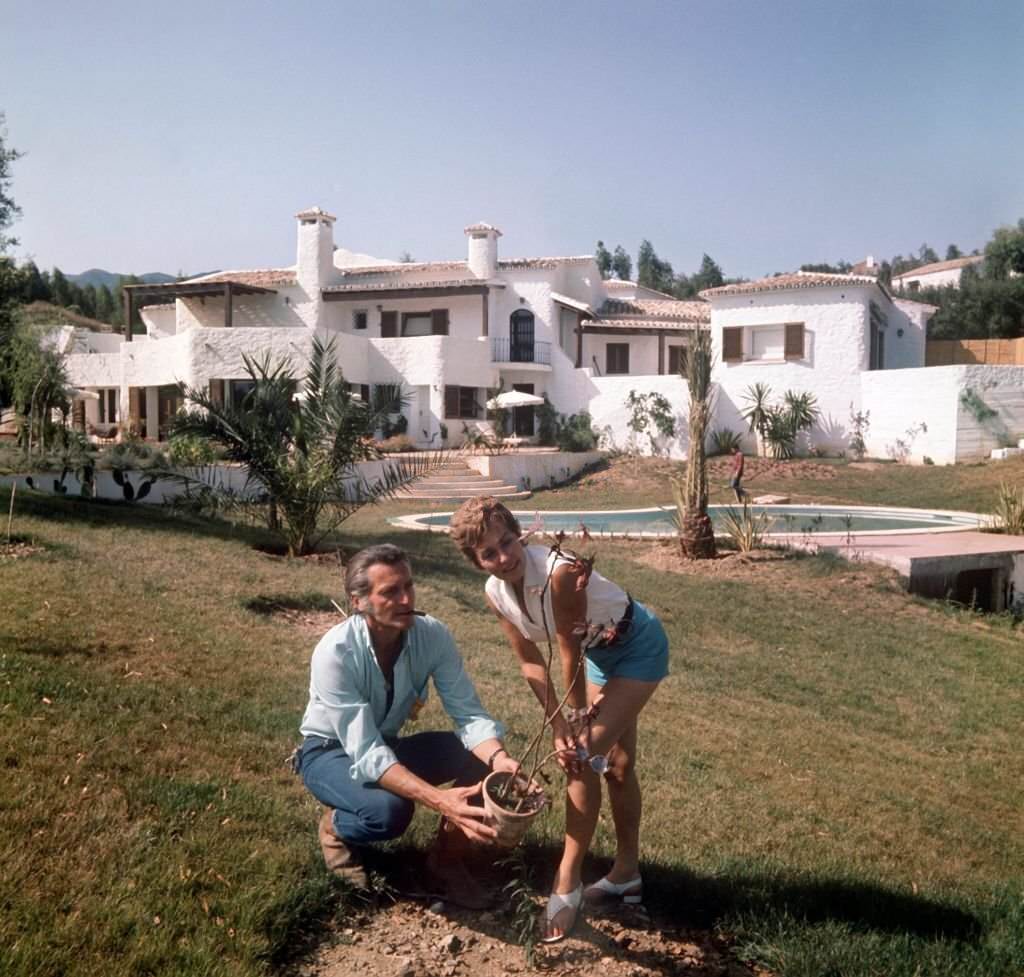
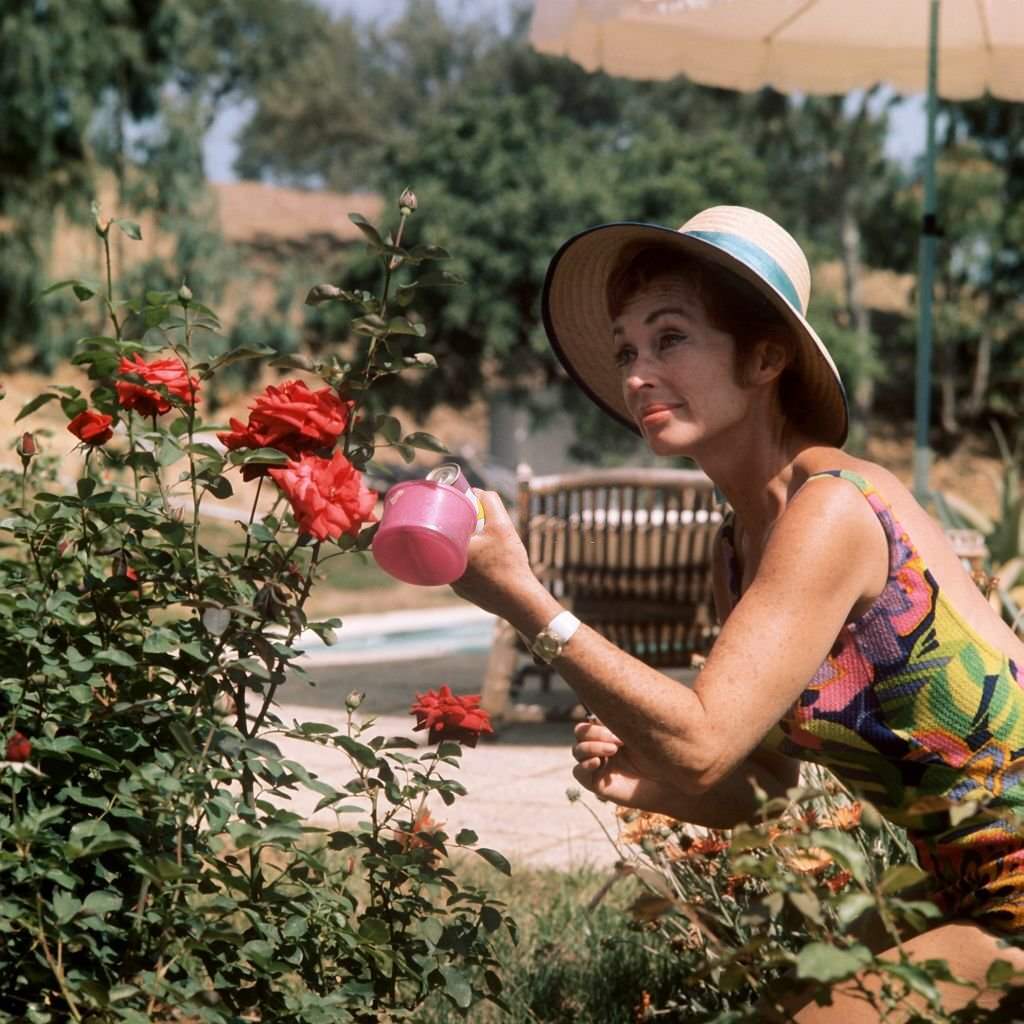
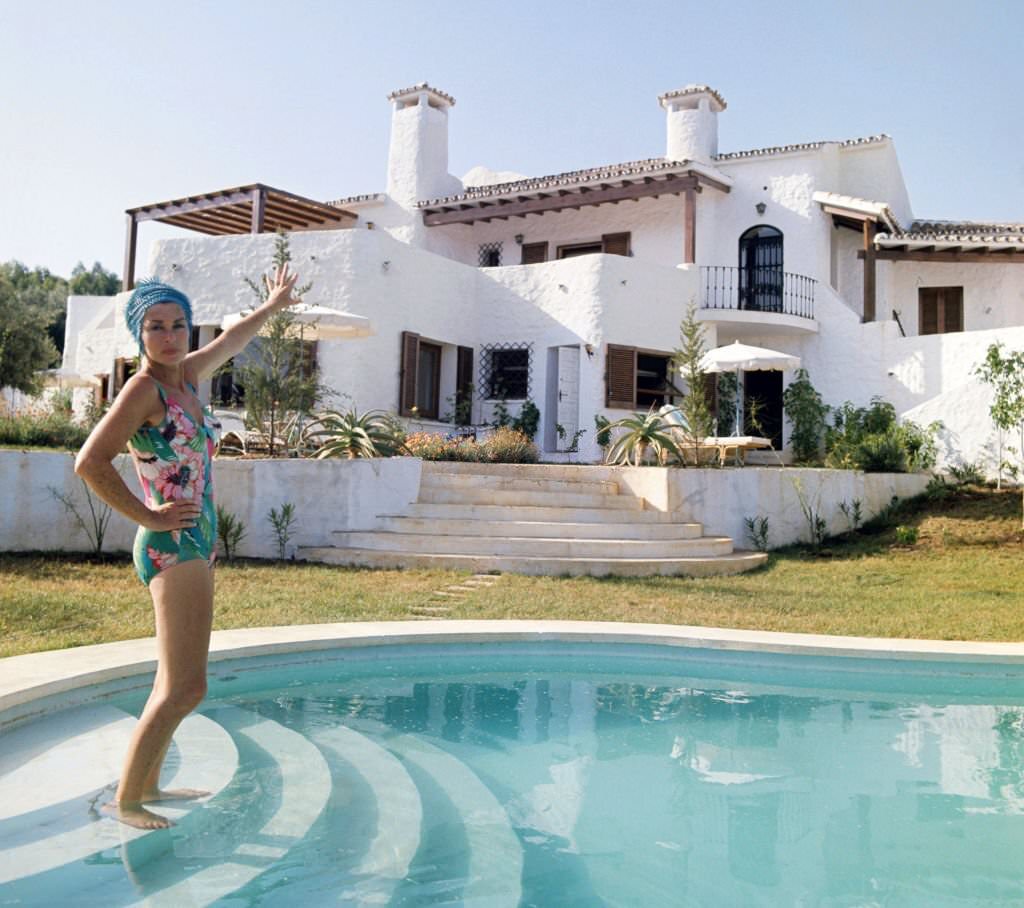
Mijas also attracted a number of European celebrities during this period, drawn by the sunshine, the privacy, and the beauty of the surrounding landscape. Among the most notable residents was German actress Lilli Palmer, who owned a property in Campo Mijas with her husband, Argentine actor Carlos Thompson. Palmer had a distinguished career in European and Hollywood film, and she spent significant time at her Mijas estate during the early 1970s. Photos from 1970 show her tending to the garden, relaxing by the swimming pool, and going about daily life at her hillside home — a glimpse into the quieter, private side of Mijas that tourists rarely saw.

Beyond the celebrity visitors and tourist trade, everyday life in Mijas carried on with a pace and texture that these photographs preserve beautifully. An elderly resident resting against a sun-warmed wall, a woman moving purposefully through a narrow lane with a basket on her arm, the rough texture of ancient stonework — these details tell the story of a community that had survived centuries of hardship and was now navigating a very different kind of change.
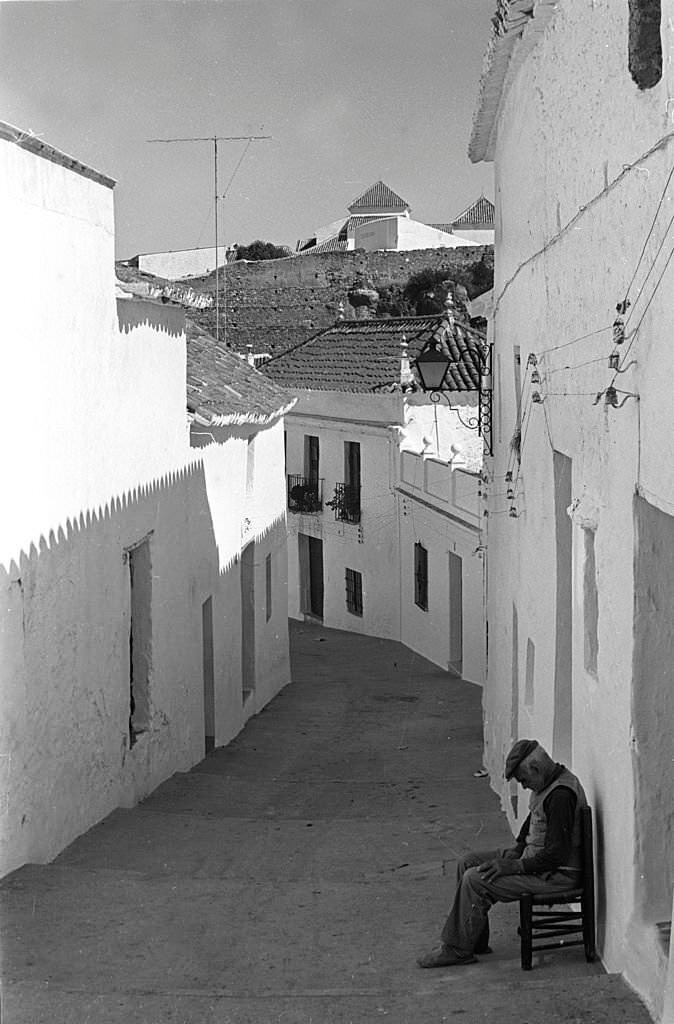
The old walls of Mijas, photographed in 1974, show just how layered the village’s history truly is. Stone and whitewash, built up over generations, formed the backdrop for a community that had endured isolation, poverty, and political turmoil — including its role as a site of anti-Franco military operations, a fact that speaks to the deep tensions that marked mid-20th century Spain. These walls witnessed all of it.
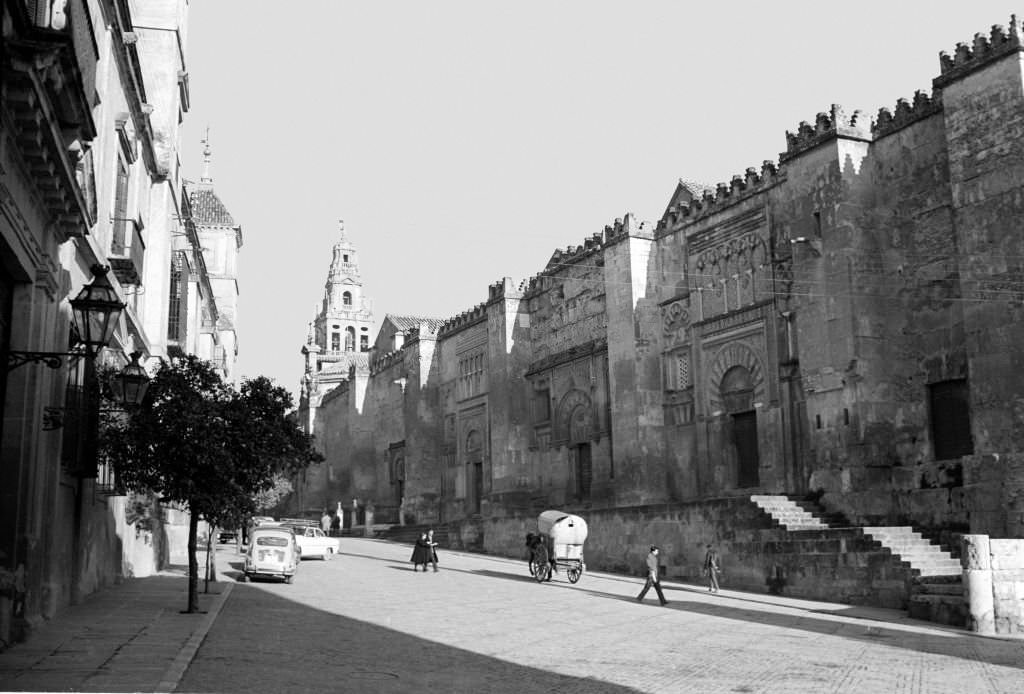
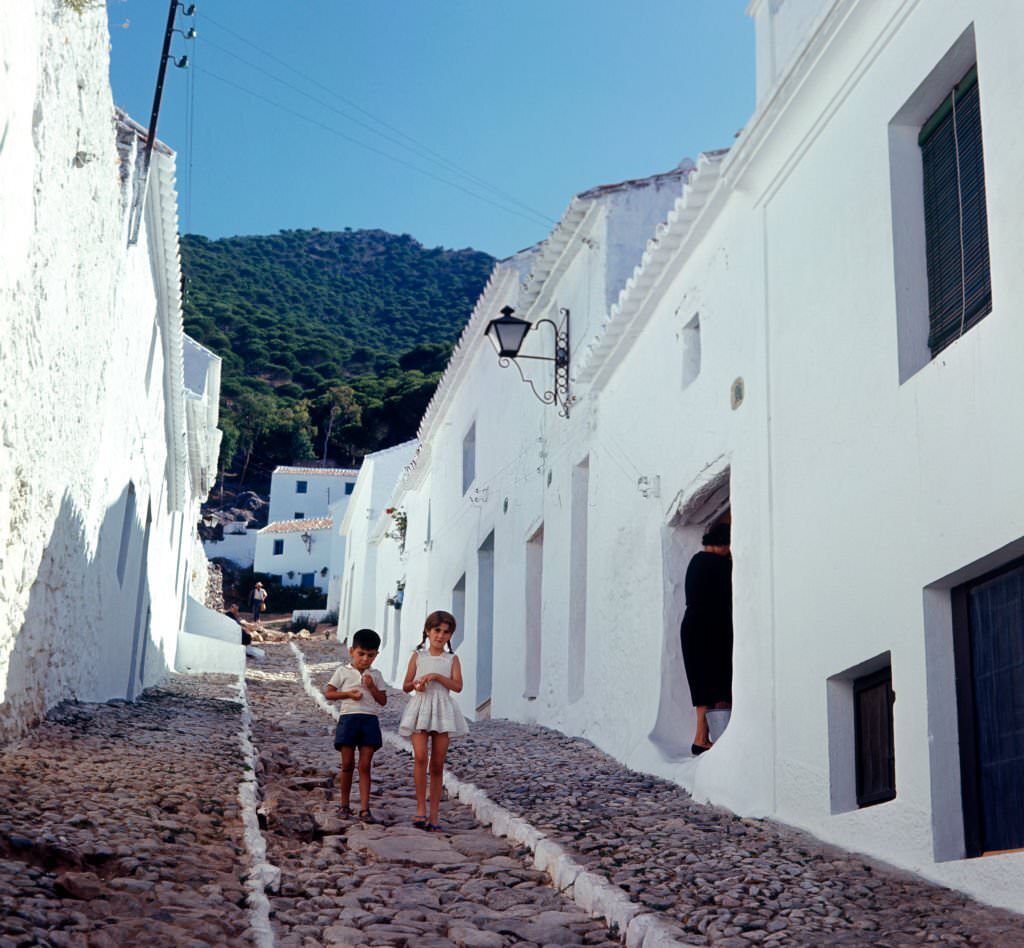
The sweeping views of Mijas from above reveal why the village captivated so many visitors during the 1970s. Clustered white buildings cascade down the hillside toward the Mediterranean coast, with the Sierra de Mijas rising behind. Agriculture still played a role — potatoes, cereals, and avocados grew in the surrounding land — but the village’s identity was clearly shifting. These vintage photographs freeze a specific and fleeting moment in that transition, when Mijas was still recognizably ancient but unmistakably on its way to becoming something new.