In 1952, journalist and photographer Earl Leaf traveled through Mexico with a camera and a sharp eye for everyday life. What he captured was a country full of color, tradition, and movement — from the textile-rich streets of Tehuantepec to the busy sidewalks of Mexico City. The 25 photographs he brought back offer a rare, ground-level look at Mexican culture at a specific moment in time.
Earl Leaf was born in Seattle in 1905 and lived one of the more unusual lives in American journalism. Before he ever picked up a camera professionally, he had already worked as a cowboy, sailor, prospector, dude rancher, actor, bookkeeper, and Salvation Army cadet. After World War II, he committed fully to photography and journalism, first working in New York where he shot the city and photographed artists. His wide-ranging background gave him an ability to connect with people from all walks of life — a quality that shows clearly in these images.
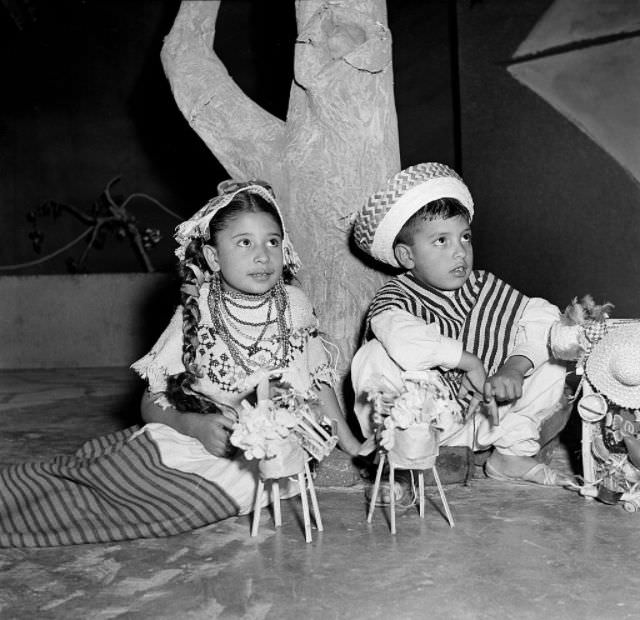
Leaf’s trip took him to several distinct regions of Mexico. He started in Tehuantepec, a city in the state of Oaxaca known for its strong matriarchal culture and distinctive traditional dress. The women of Tehuantepec have long been recognized for wearing elaborately embroidered blouses and long skirts — clothing that carries deep cultural meaning.
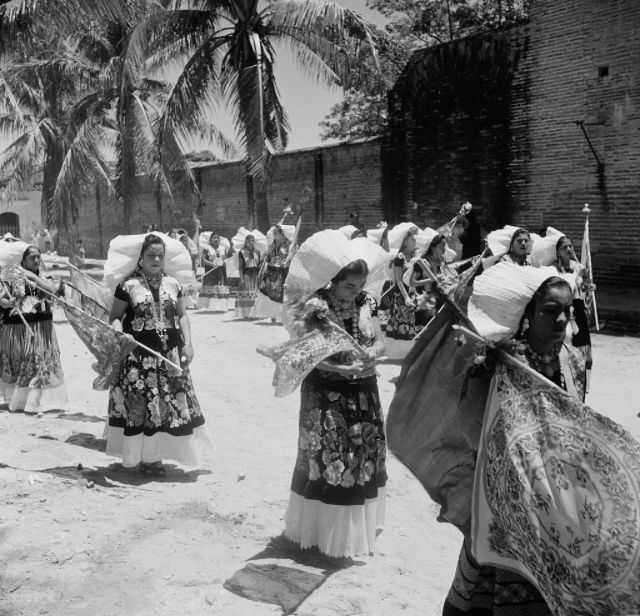
Traditional dress in Tehuantepec wasn’t just for ceremony — it was everyday wear. Leaf photographed women going about ordinary tasks in their full native clothing, which made the images both culturally rich and visually striking. The region’s traditions were alive and active, not confined to festivals or performances.
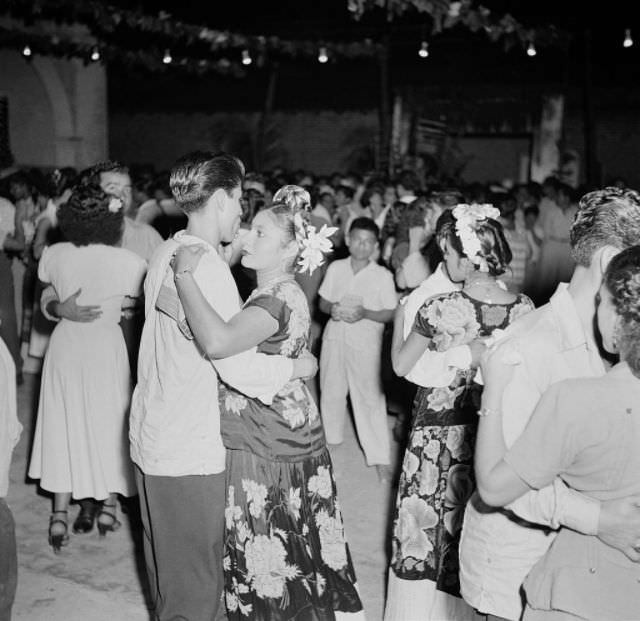
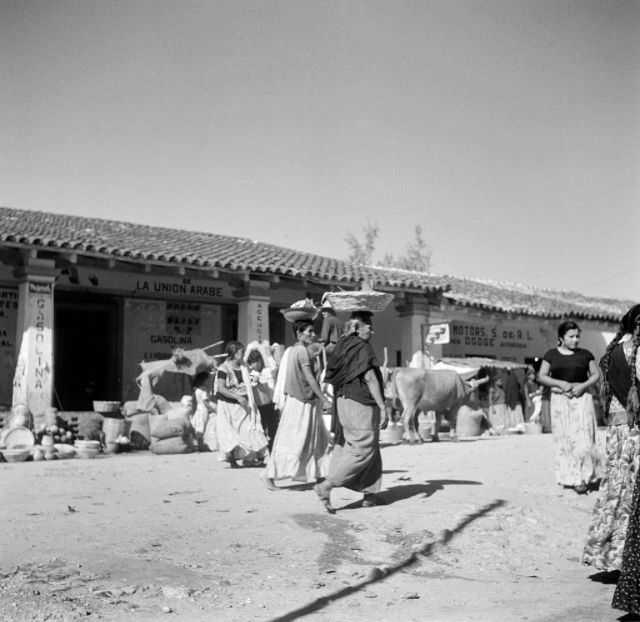
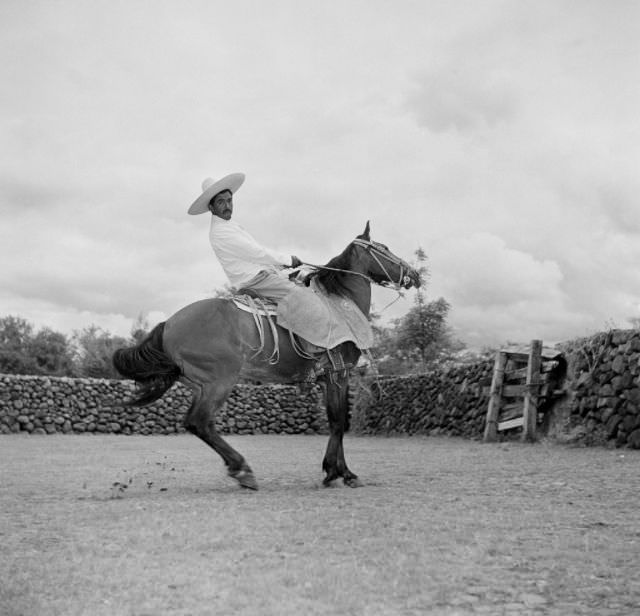
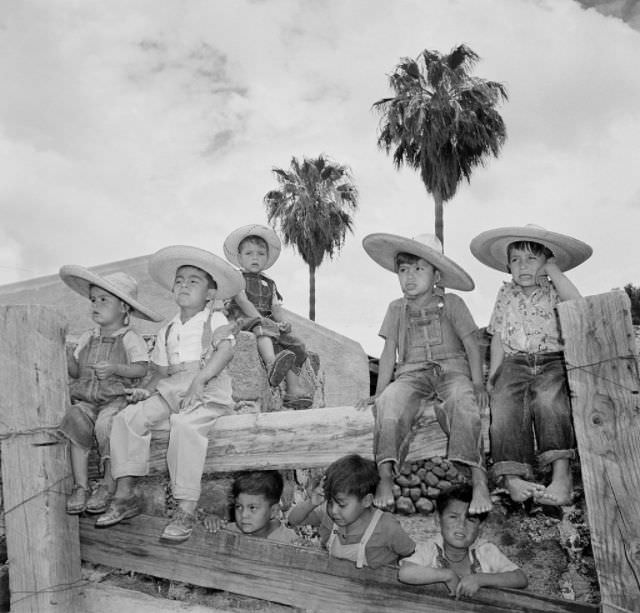
From Tehuantepec, Leaf moved north and west into Michoacán, a state known for its ranching culture and scenic highlands. The ranches there were working operations, and Leaf photographed both the adults who ran them and the children who grew up on them.
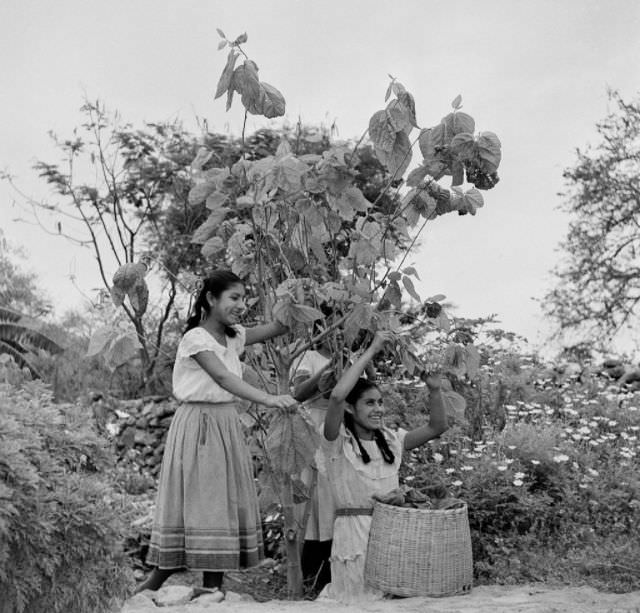
In the state of Jalisco, Leaf visited a silk farm — a less commonly documented part of Mexican rural industry. Silk farming in Mexico dates back to the colonial period, introduced by the Spanish in the 16th century. By 1952, it had become a small but specialized industry in certain regions.
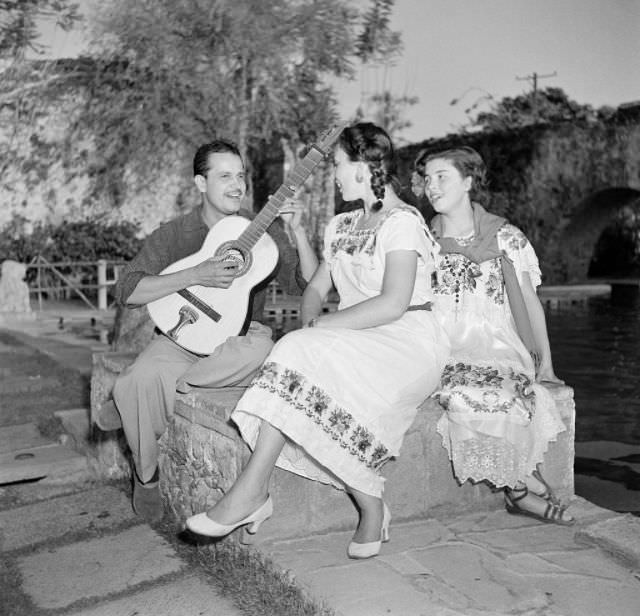
Music was a constant presence throughout Leaf’s journey. At the Hacienda Vista Hermosa Hotel in Tequesquitengo — a converted 16th-century sugar hacienda — he caught a quiet moment of a man serenading two women. Serenading had deep roots in Mexican social life, and scenes like this played out regularly in hotels, plazas, and on street corners.
San Miguel de Allende, a colonial city in the state of Guanajuato, gave Leaf another opportunity to photograph local performance and street culture. The city had already begun attracting foreign artists and writers by the 1950s, but its streets still belonged firmly to local life.
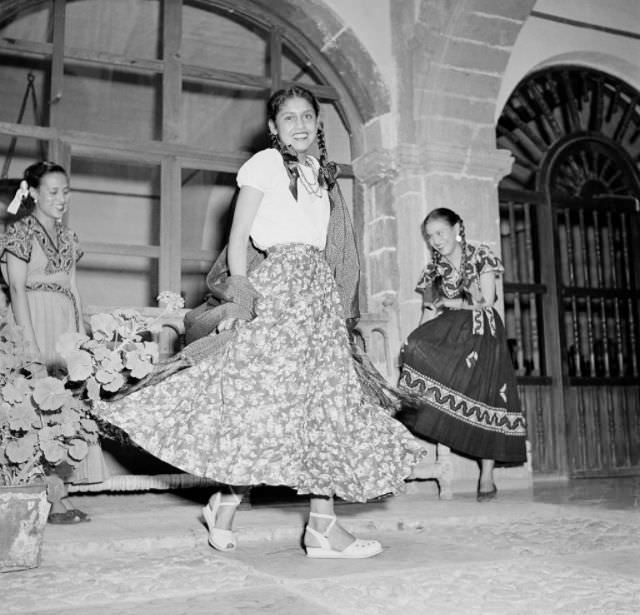
In Uruapan, located in the avocado-growing highlands of Michoacán, Leaf documented one of the most fundamental aspects of Mexican daily life: the making of tortillas. Tortilla-making was — and remains — a labor-intensive process done by hand, and in 1952 it was central to nearly every Mexican household.
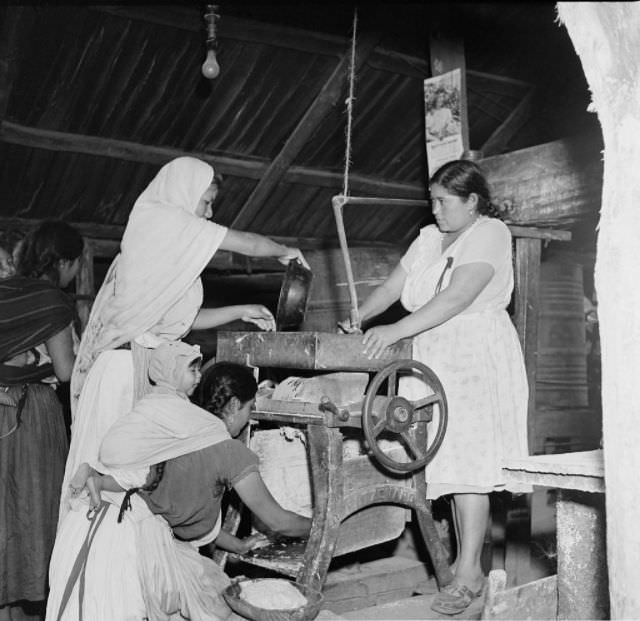
Not far away, in the lakeside city of Pátzcuaro, Leaf photographed local boys serenading a woman with a guitar. Pátzcuaro is one of the best-preserved colonial cities in Mexico and sits on the shores of Lake Pátzcuaro, historically home to the Purépecha people.
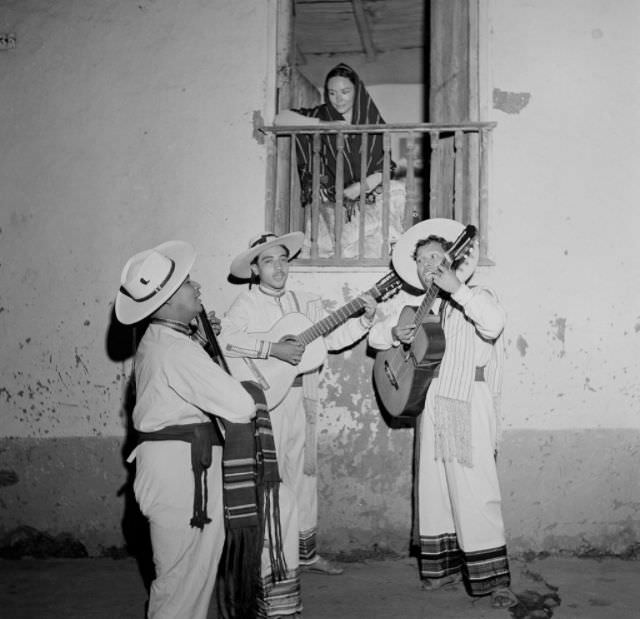
Leaf also traveled to Chichén Itzá, the ancient Maya city on the Yucatán Peninsula. By 1952, the ruins were already a well-known archaeological site, though far less commercialized than they are today. Chichén Itzá was one of the largest cities of the Terminal Classic period, and its structures — including the famous El Castillo pyramid — had stood for over a thousand years by the time Leaf arrived.
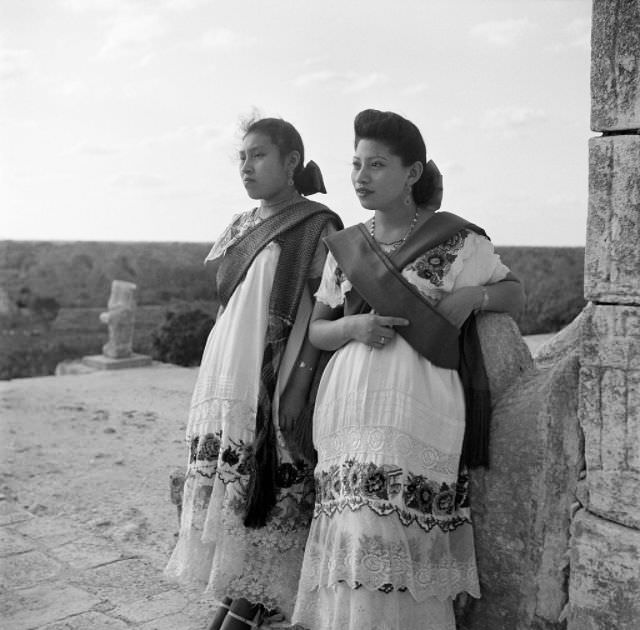
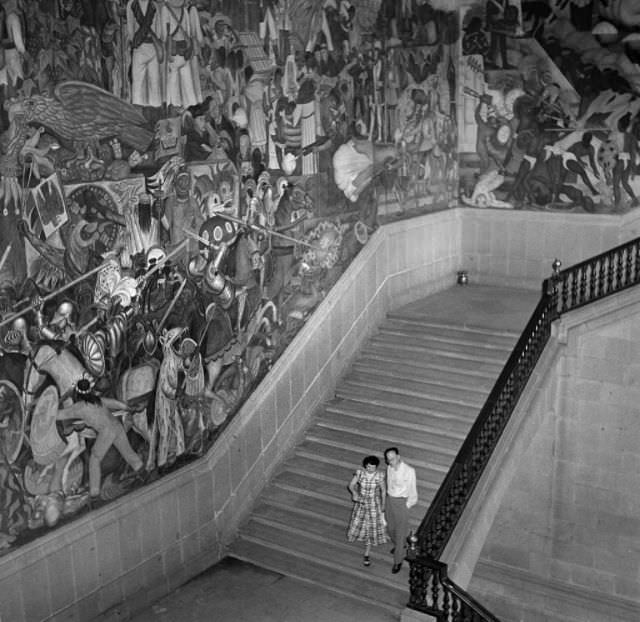
Mexico City was a major stop on Leaf’s journey and gave him his widest variety of subjects. In 1952, the city was in the middle of a rapid modernization period under President Miguel Alemán. Skyscrapers were going up alongside colonial buildings, and the population was growing fast. But at street level, daily life had its own pace.
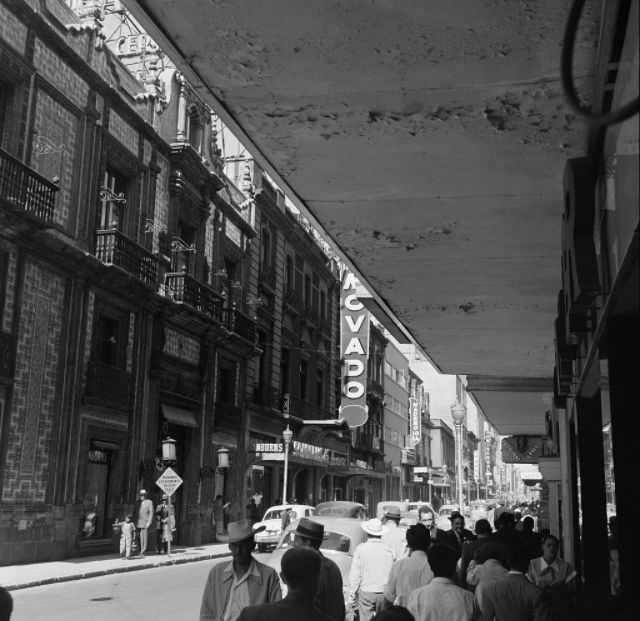
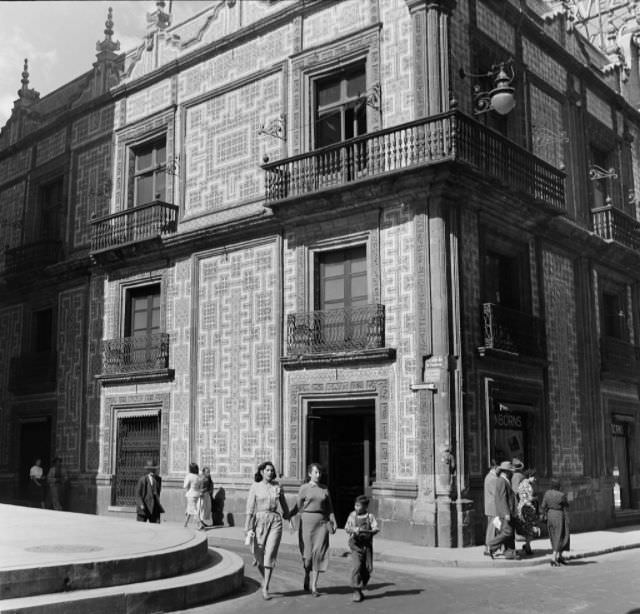
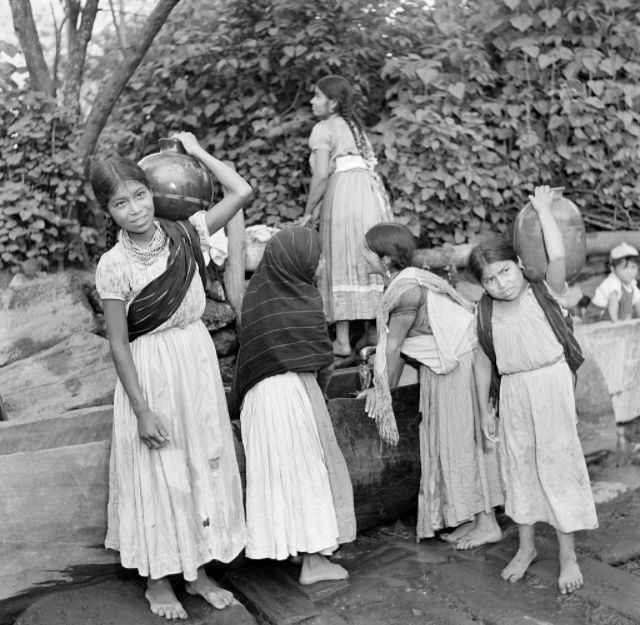
Access to clean running water was not universal in Mexico City in 1952. In many neighborhoods, residents collected water by hand and transported it in large ceramic or clay jugs. This was a daily task, often carried out by children and women.
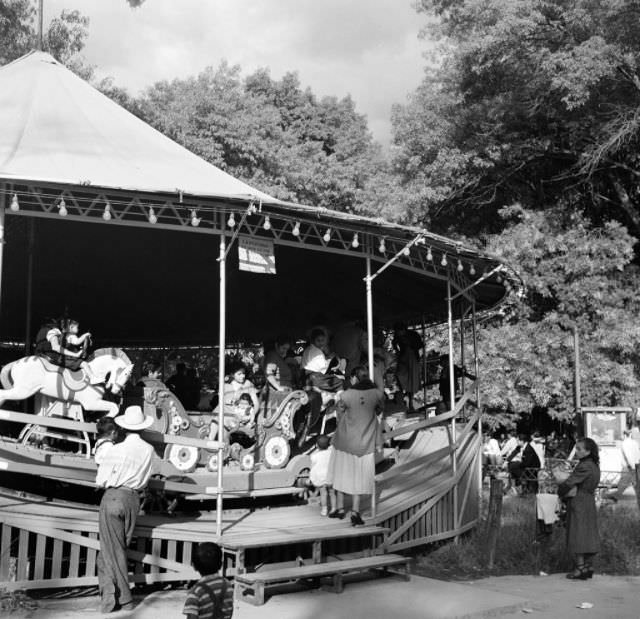
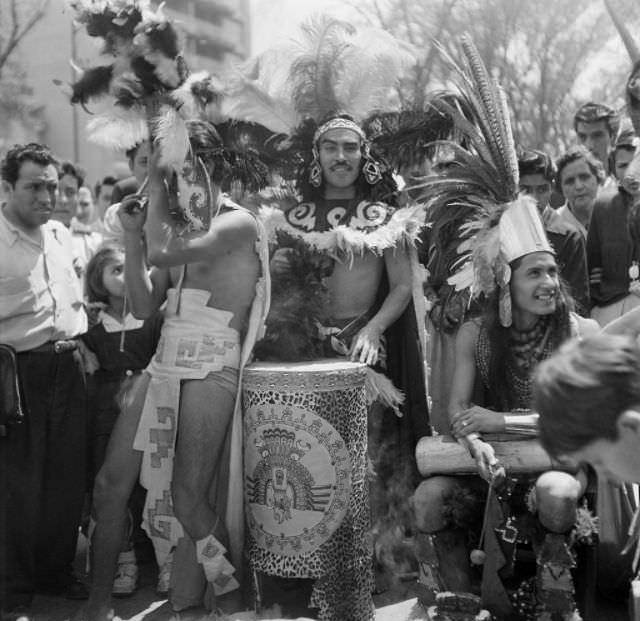
Public parks and plazas served as social gathering points for Mexico City residents. Leaf captured both the playful and the ceremonial sides of city life — from locals enjoying a merry-go-round to performers dressed in detailed Aztec costumes, keeping indigenous heritage visible in the heart of the capital.
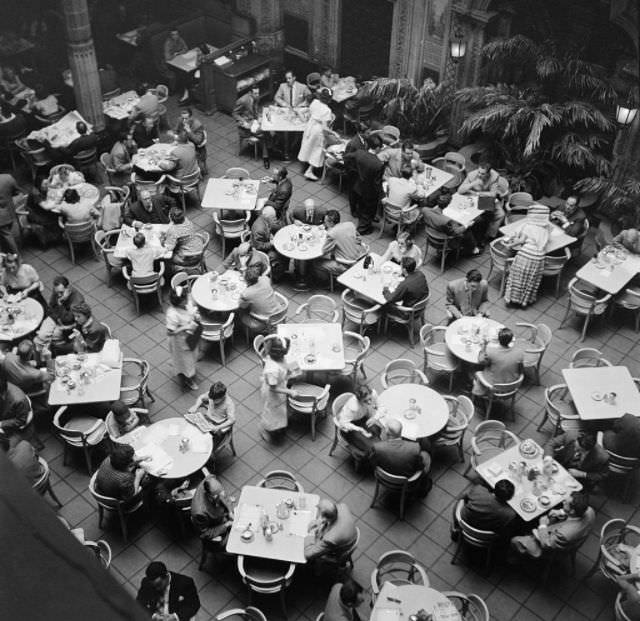
Eating culture in Mexico City in 1952 was communal and open-air. Restaurants and fondas frequently featured open courtyards where diners ate under the sky. It was a practical design for the city’s mild climate and reflected a broader cultural preference for shared, social meals.
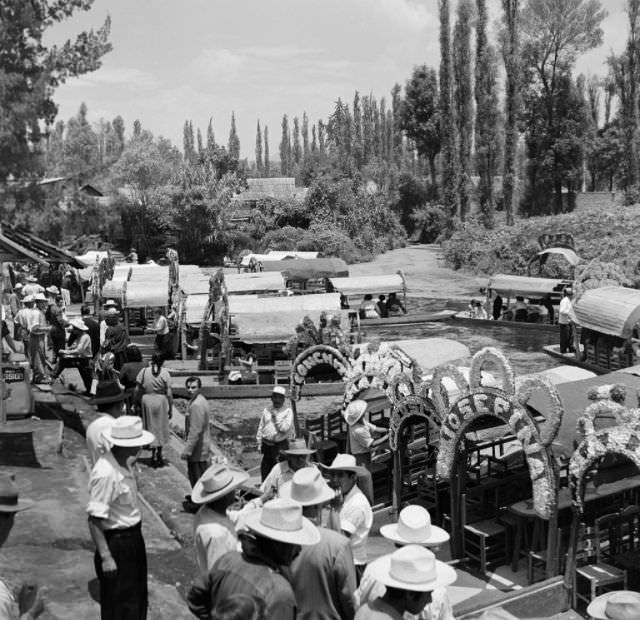
Mexico City’s canal system — a remnant of the ancient Aztec city of Tenochtitlan — was still partially active in 1952. Trajinera boats, decorated with flowers and painted in bright colors, carried tourists along the remaining waterways in areas like Xochimilco.
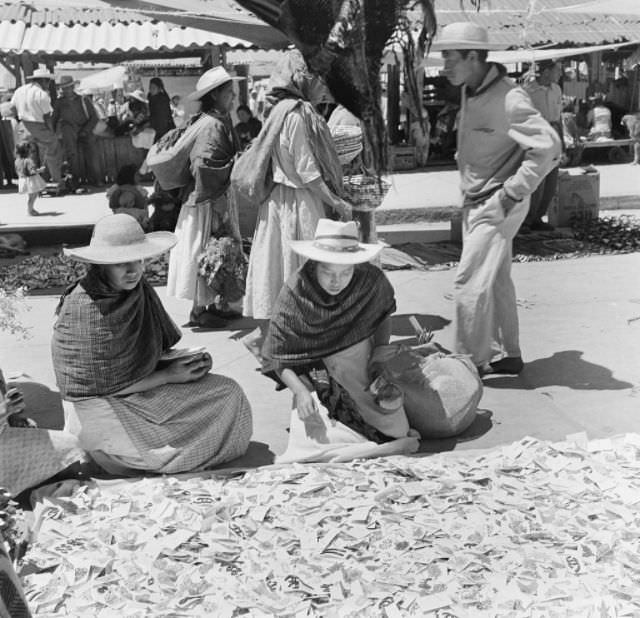
Markets were the economic backbone of daily life. Mexico City’s open-air markets drew hundreds of vendors and thousands of shoppers every day. Farmers brought produce directly from surrounding regions, and the market floors were packed with everything from vegetables to handmade goods.
Street commerce didn’t stop when the sun went down. Children worked alongside adults selling goods at night on city streets — a common sight in Mexican cities of the era, where family income often depended on every member contributing.
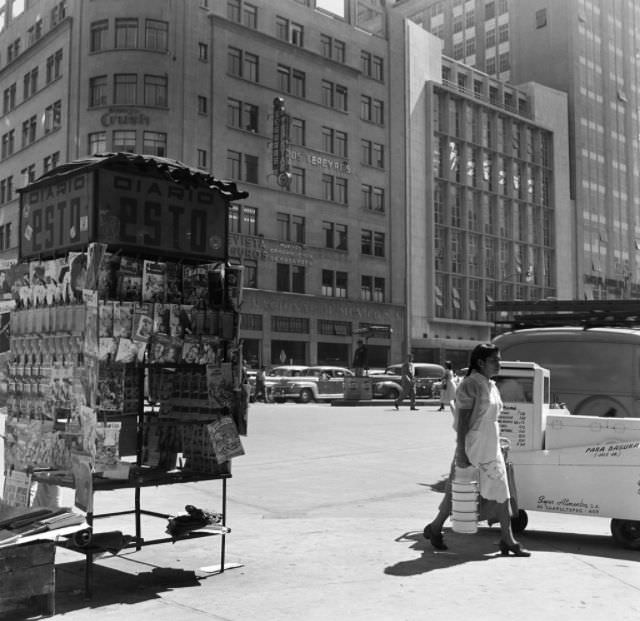
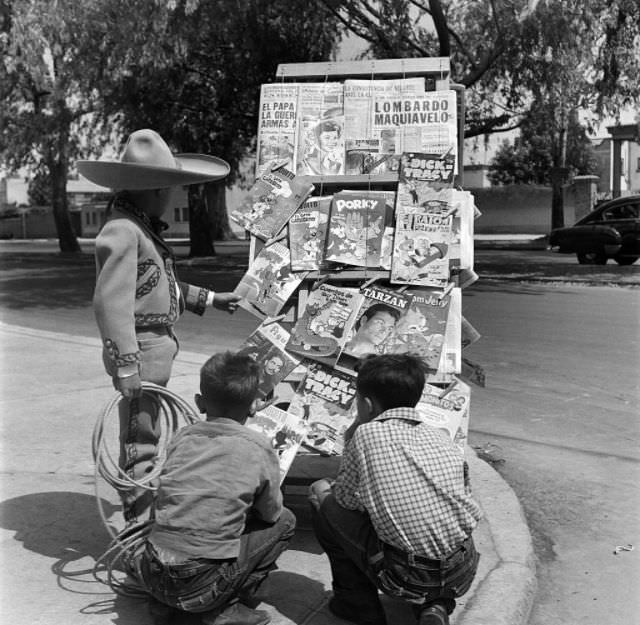
Newsstands in Mexico City stocked a wide range of print material, including comic books — known locally as historietas — which were enormously popular in mid-20th-century Mexico. By the 1950s, Mexican comic books had millions of readers across all age groups, and children gathered at newsstands just to browse them.
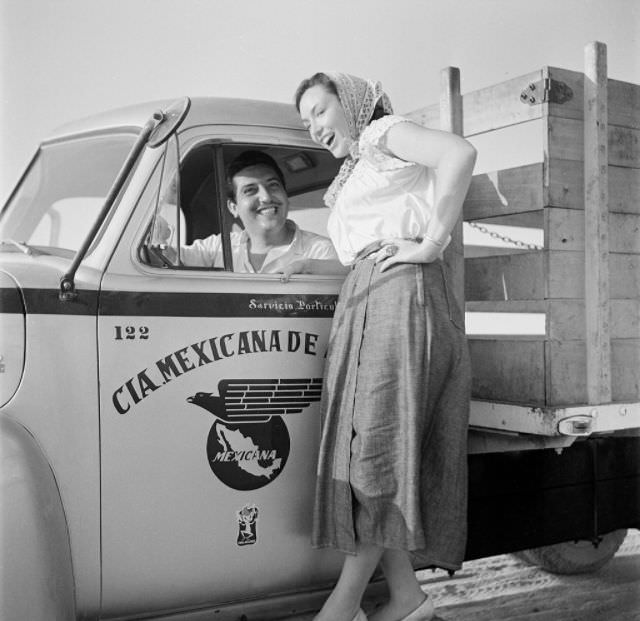
Even the working vehicles of Mexico City made it into Leaf’s lens. His photograph of a woman riding the sideboard of a CIA Mexicana service truck is a small but telling detail — a glimpse of how city workers and ordinary people moved through the urban landscape in ways that look nothing like today.