In 1983, most people bought software the same way they bought a book — they walked into a store, picked a box off a shelf, and paid for a physical copy. Nolan Bushnell thought that was the wrong way to do it. The founder of Atari believed software could be sold the same way a convenience store sold a can of soda: through a vending machine. He called it the MetaWriter, and it was one of the most unconventional ideas in the early history of personal computing.
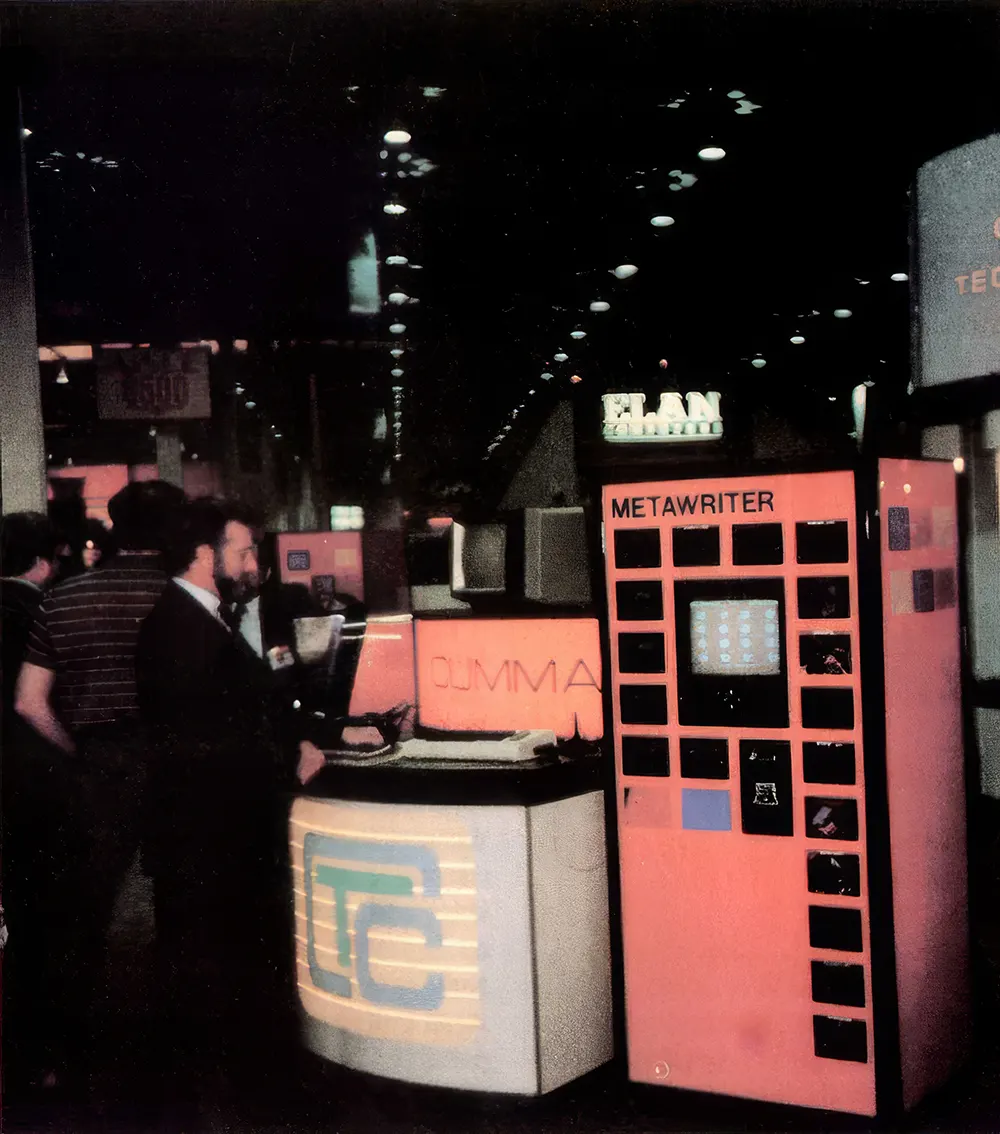
Bushnell had already changed the tech world once before. He co-founded Atari in 1972, and the company’s arcade game Pong became a cultural phenomenon, helping launch the entire video game industry. In 1976, Bushnell sold Atari to Warner Communications. The sale came with contractual restrictions that kept him from launching competing products for a set period of time. Once those restrictions expired, he got back to work.
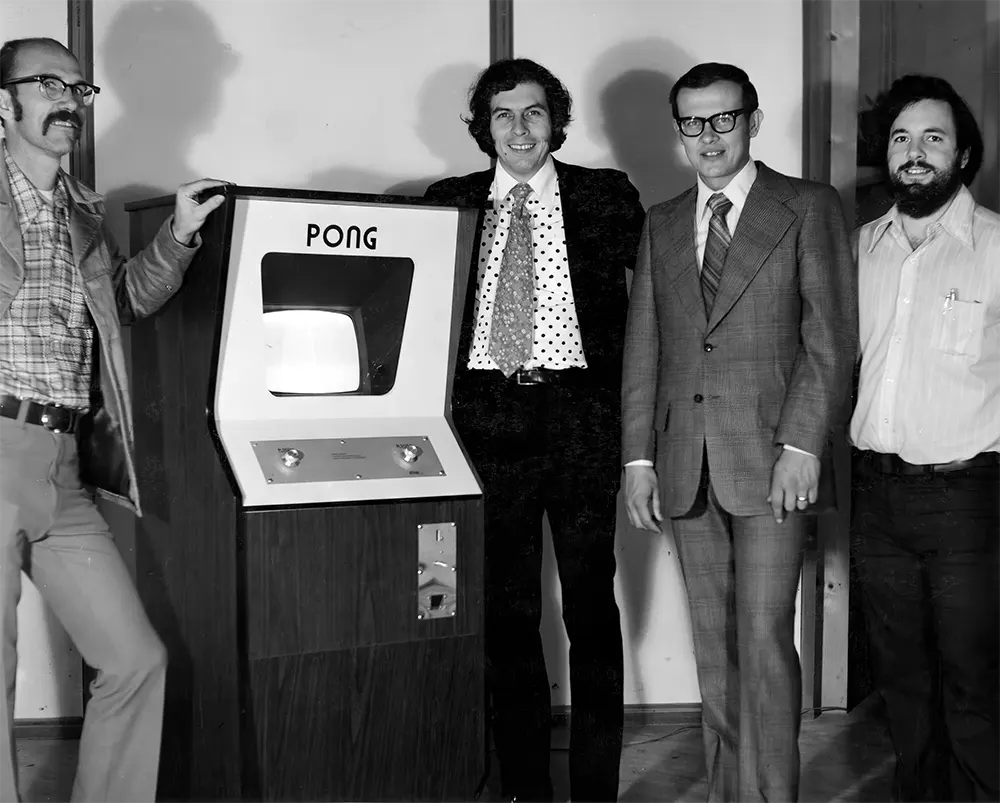
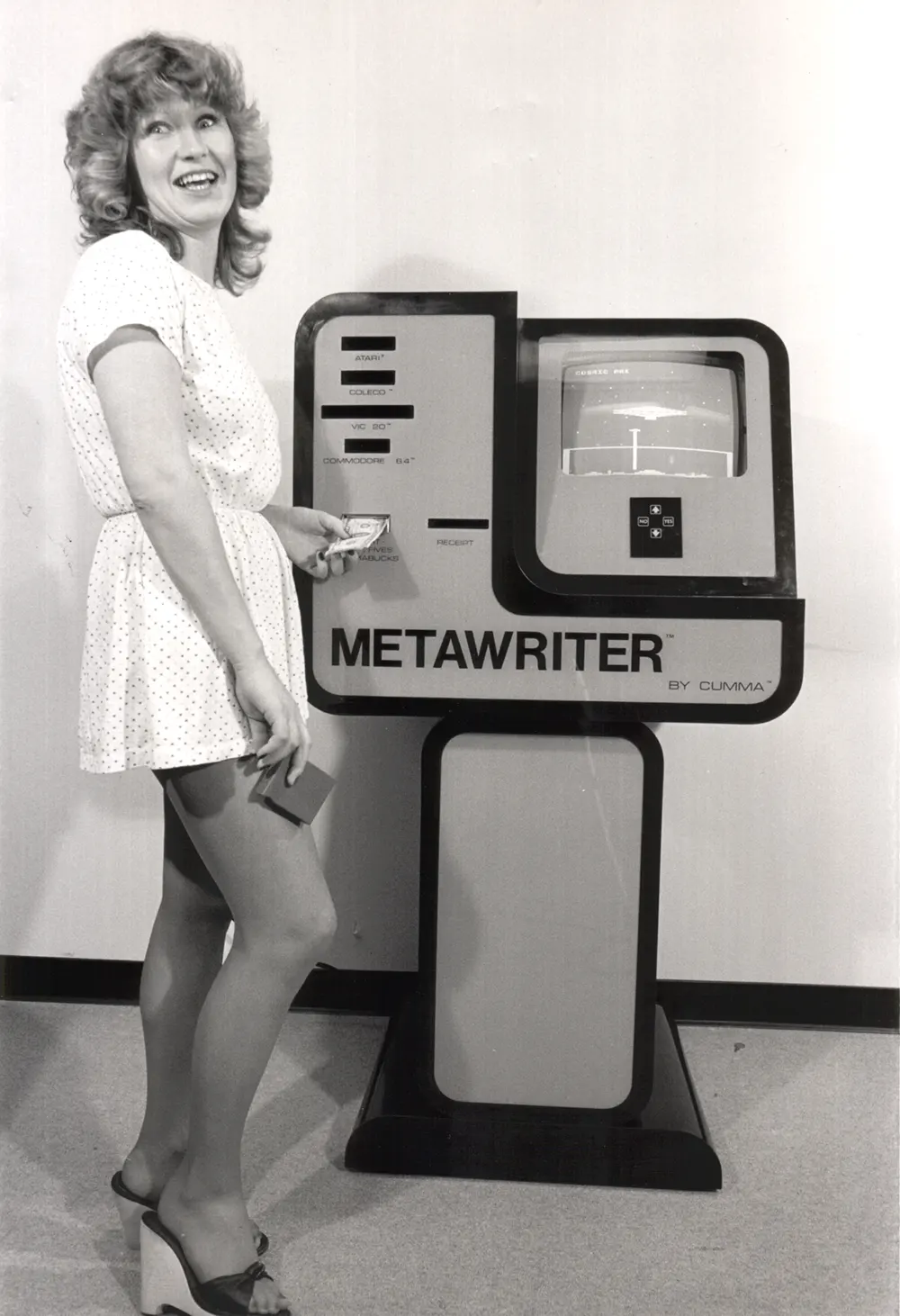
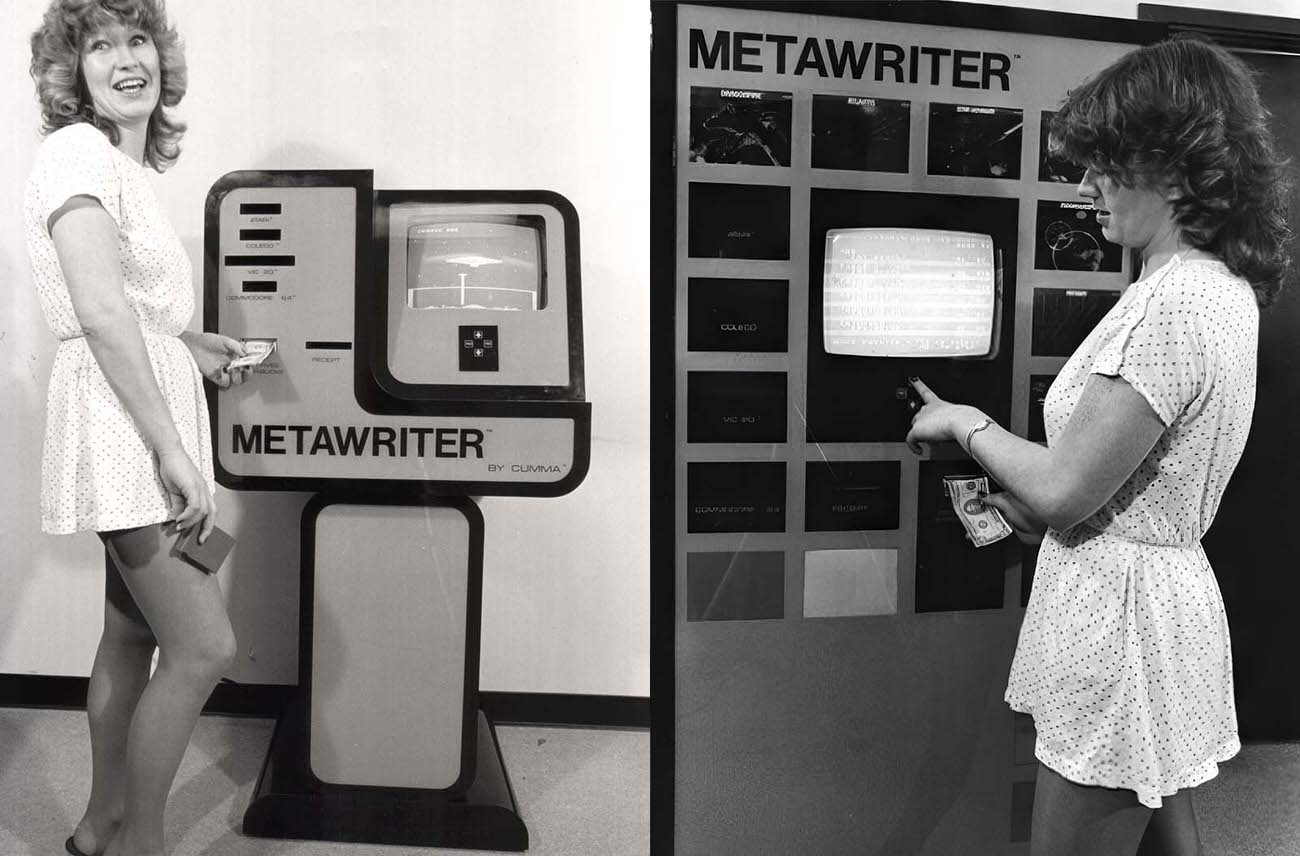
In 1983, Bushnell launched the Cumma MetaWriter through his new company, Cumma Corporation. The machine looked like a standard retail kiosk and came in two design styles — a traditional boxy shape and a more futuristic model — so it could fit into different retail environments. The plan was to place these machines in convenience stores, drugstores, and department stores. Each unit required nothing more than a standard electrical outlet, which made installation simple and low-cost. Store owners received the machines for free and earned a commission on every sale.

Using the MetaWriter was straightforward. A customer brought their own reusable RAM cartridge to the machine, inserted it into the designated slot, and browsed a list of available software titles on the screen. After selecting a program and paying, the machine copied the software directly onto the cartridge. The entire transfer took less than a second. Software titles were priced between $7 and $9 — well below what most boxed software cost at retail. The MetaWriter was specifically aimed at everyday consumers, including teenagers looking for affordable computer games.
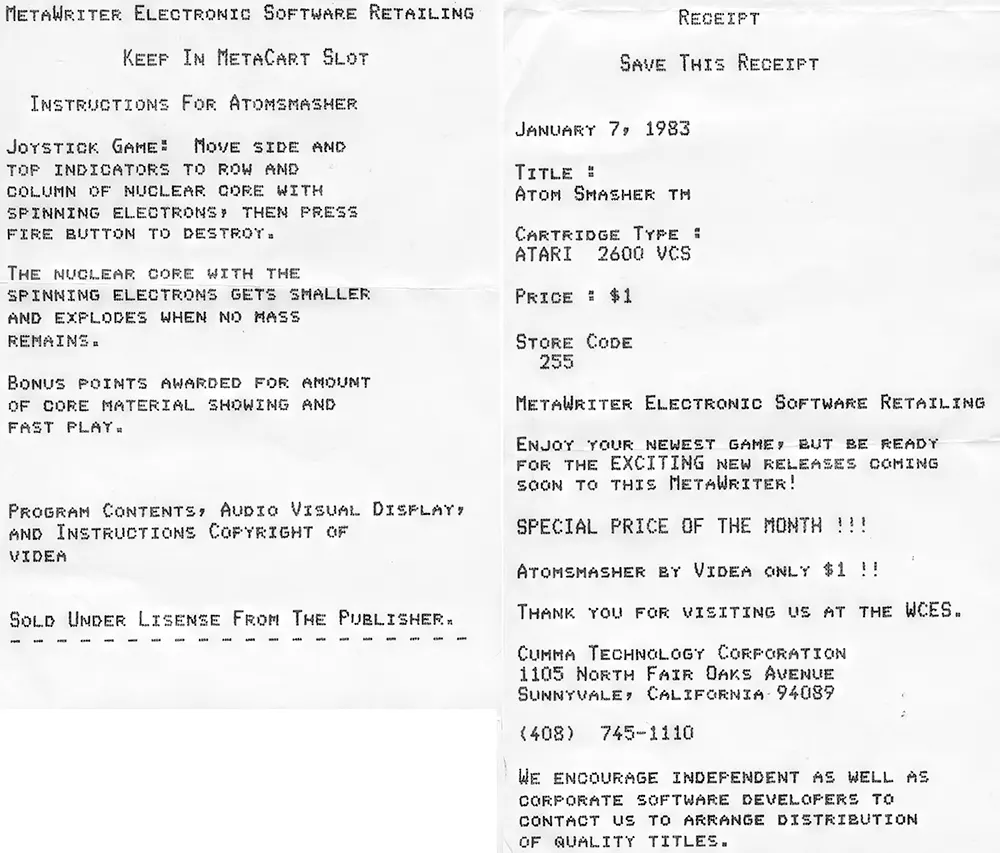
Once the download was complete, the machine printed out a receipt along with instructions for the software and promotional material about upcoming titles. No store clerk was needed at any point. The cartridges used to store the software were powered by batteries with a lifespan of roughly five years. Cumma Corporation planned to eventually replace these battery-powered cartridges with nonvolatile versions that would store data permanently without needing a power source.
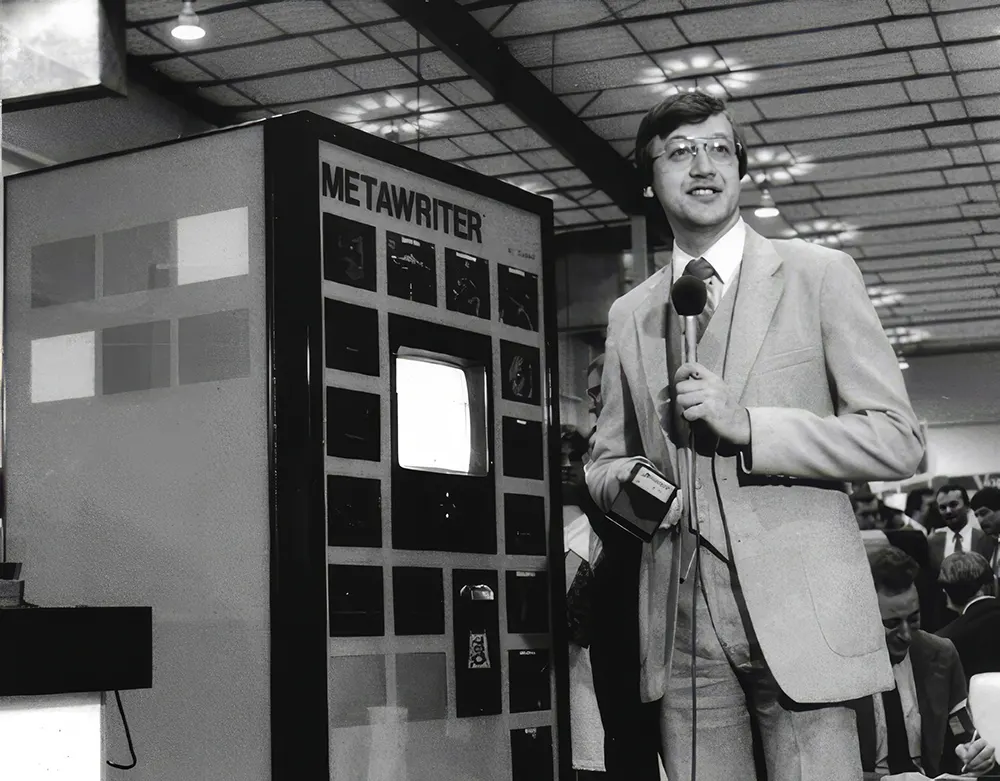
The MetaWriter made its public debut at the Consumer Electronics Show in Las Vegas in early 1984, where InfoWorld magazine covered its introduction. Cumma Corporation announced plans to test the machines in around 50 locations across northern California, with a goal of reaching 1,000 installed units nationwide by year’s end. The response at the show was mixed. Some in the industry saw genuine potential in the concept, particularly given how quickly personal computers were entering American homes.
But plenty of people were not impressed. Several software developers expressed outrage at the concept, arguing it would damage the perceived value of their products. James Morgan, who was president of Atari at the time, raised concerns about losing control over product quality and presentation. The traditional software industry operated on a model where publishers carefully packaged, marketed, and distributed their titles. A vending machine bypassed all of that, and many developers worried that put their products at a disadvantage.
There were also broader concerns about quality control. Critics argued that making software available through an unattended machine, without any retail oversight or curation, could result in consumers getting subpar products. These were not frivolous complaints — the software market in the early 1980s was already struggling with a flood of low-quality titles, particularly in the home video game sector. The Atari game crash of 1983 was fresh in everyone’s mind.
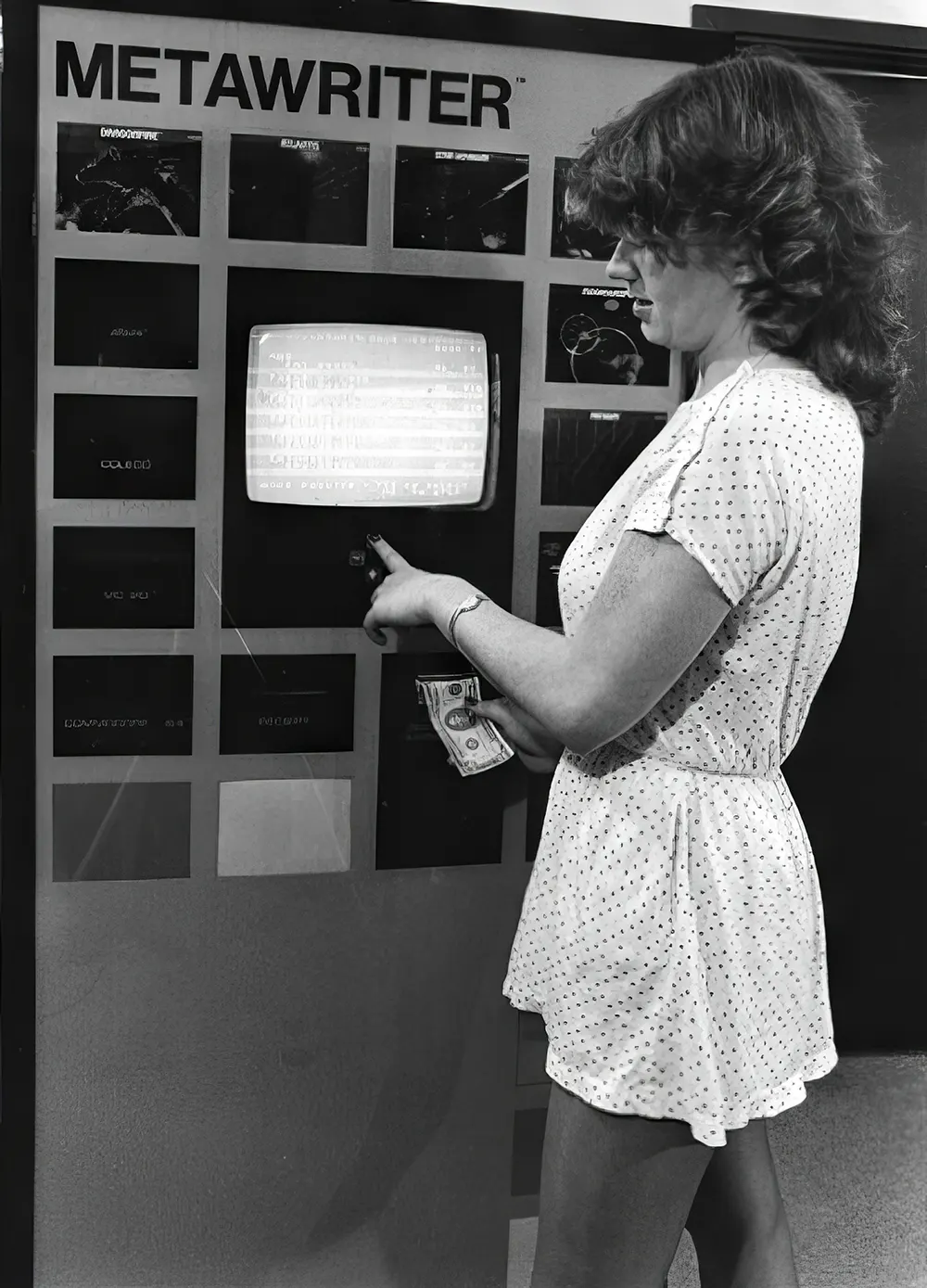
Bushnell’s counterargument was largely economic. By eliminating physical packaging, warehousing, and unsold inventory, the MetaWriter model cut overhead costs significantly. Publishers would only produce copies of a program when a customer actually paid for one. Bushnell argued this efficiency would allow for lower prices across the board, making software accessible to more people. For consumers, the appeal was clear: no trip to a specialty store, no large upfront cost, and no waiting. The program was ready in under a second, loaded directly onto a cartridge the user already owned.
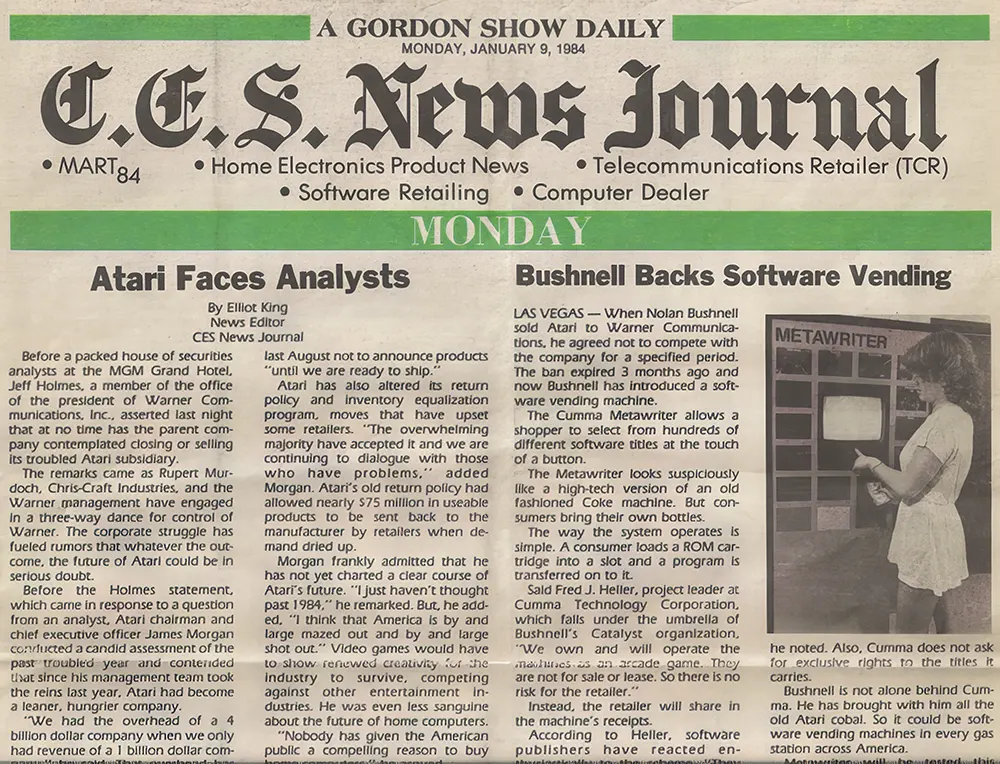
The MetaWriter existed at a genuine crossroads in computing history. Personal computers were moving from hobbyist tools into mainstream homes, and the question of how to get software to those homes at scale was still wide open. Bushnell’s answer was a machine that put hundreds of software titles in one spot, available to anyone with a cartridge and a few dollars. Whether the industry was ready for that answer was another matter entirely.