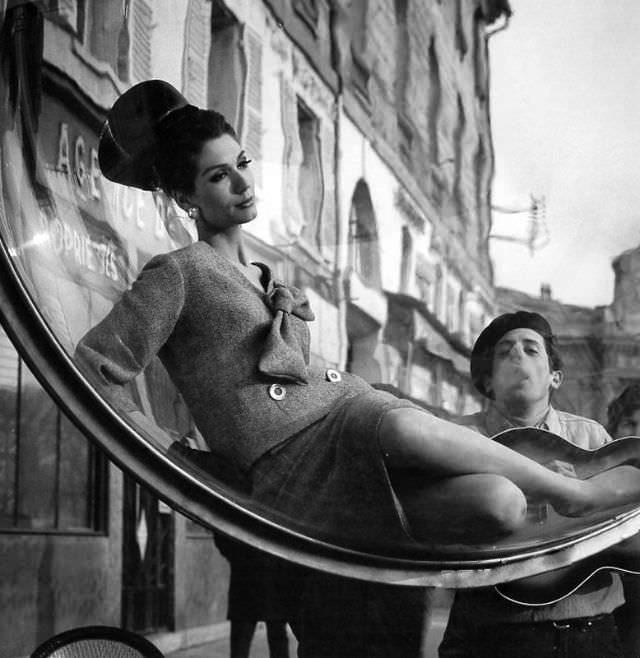
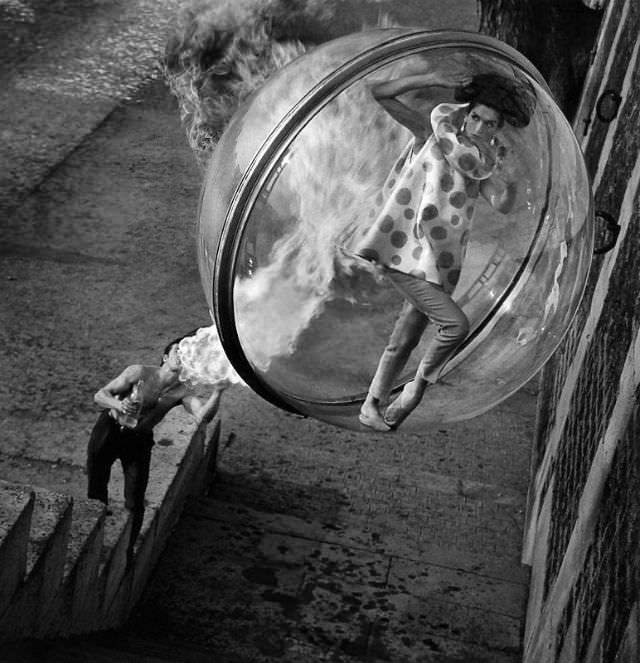
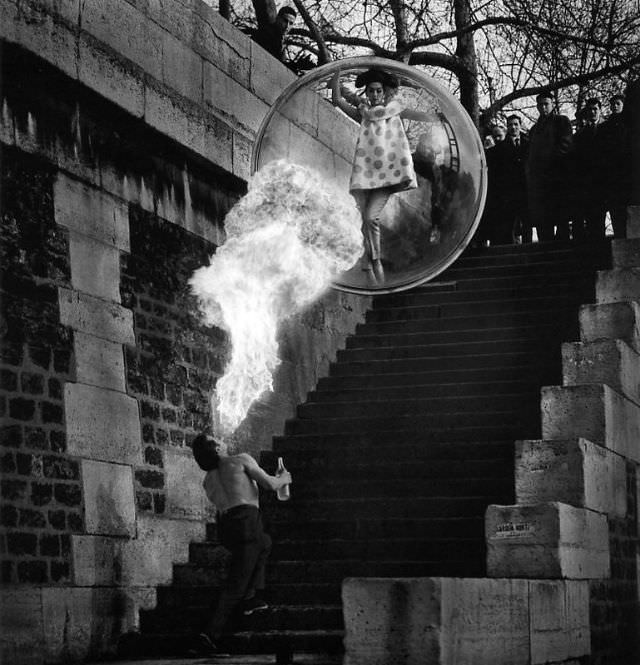
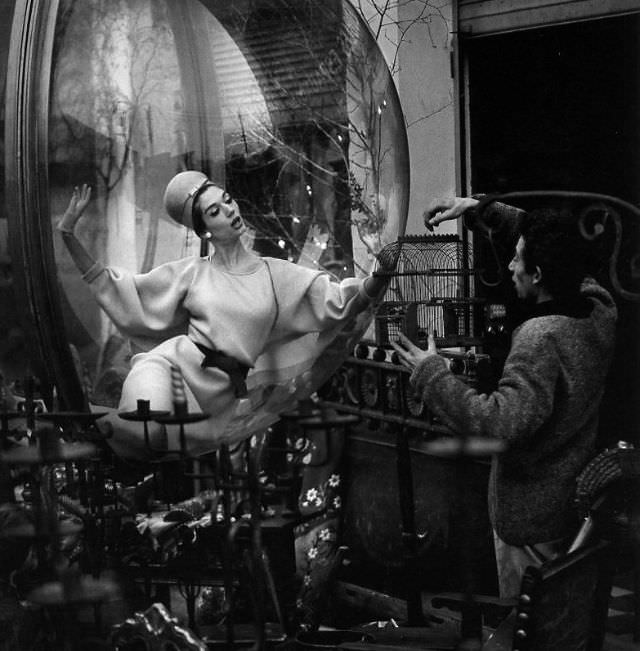
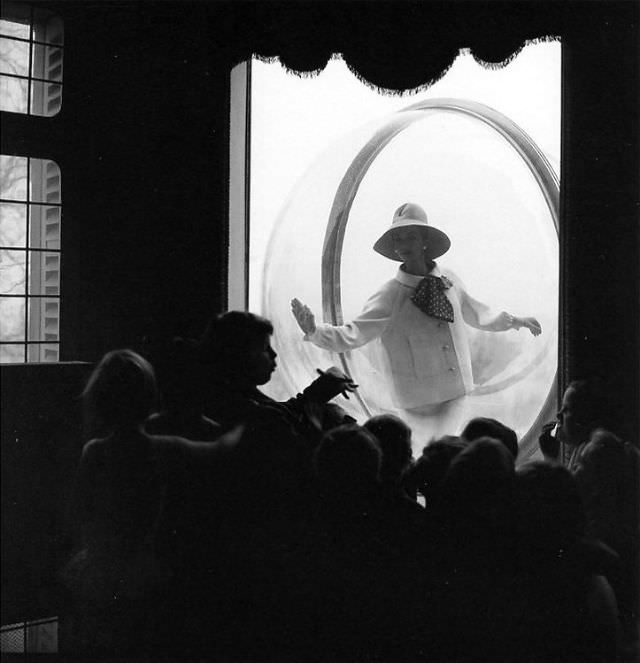
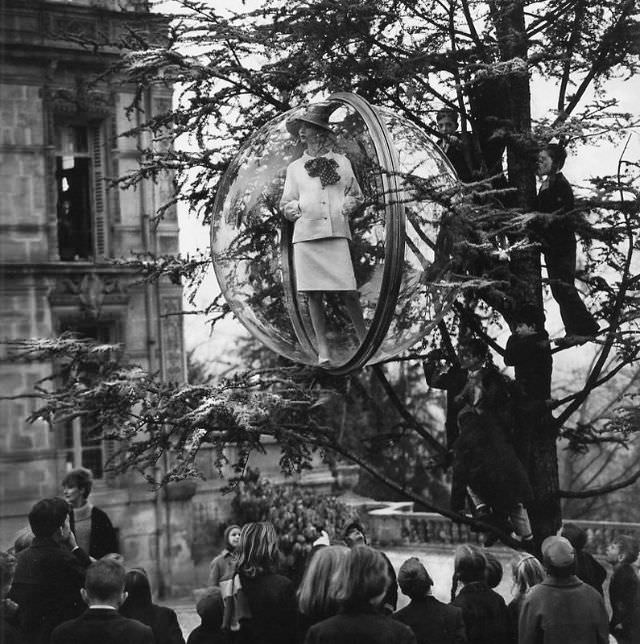
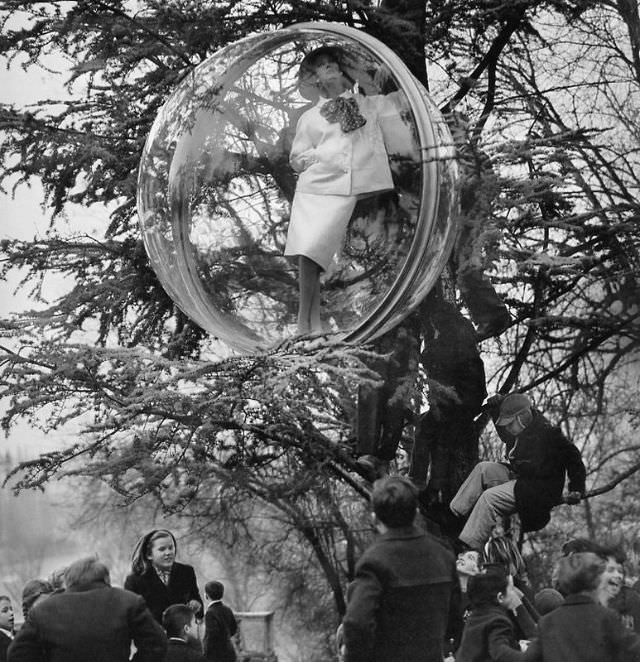
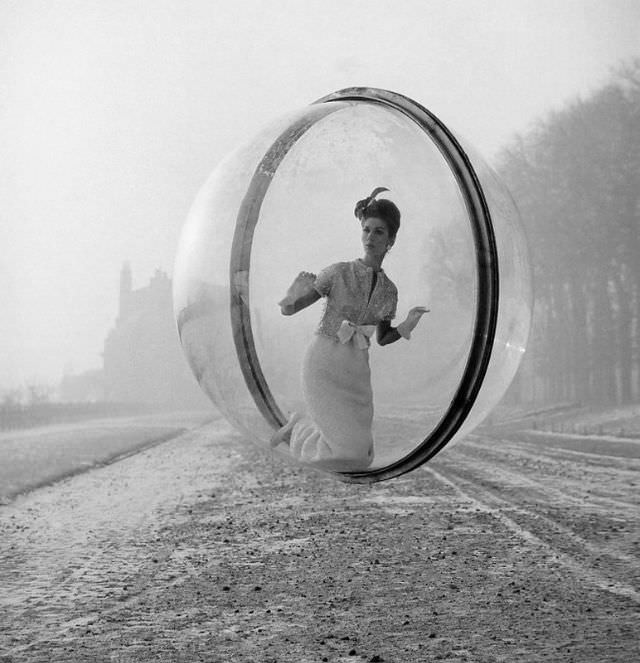
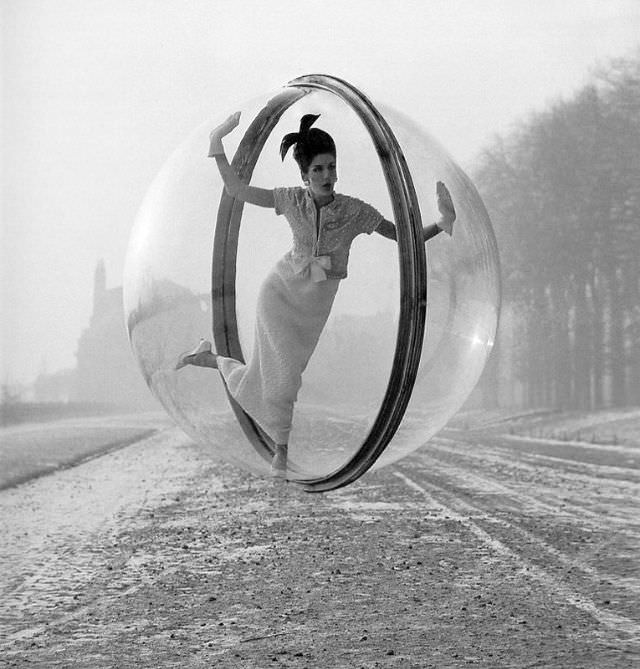
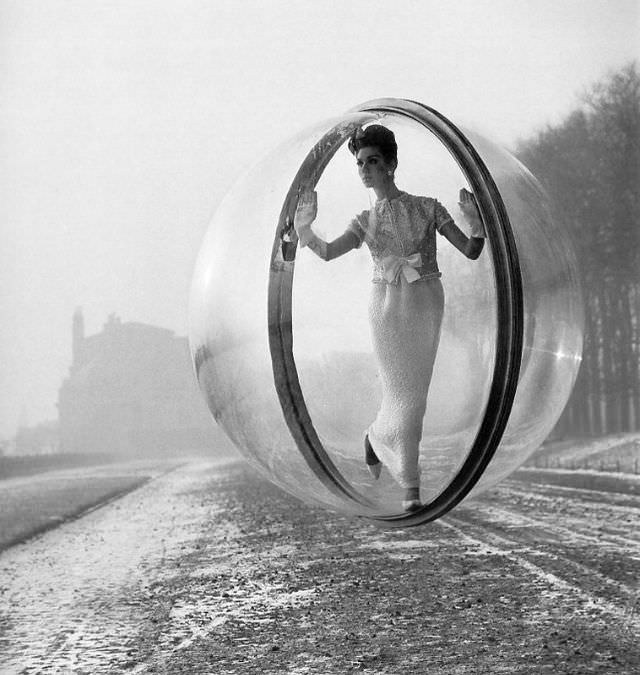
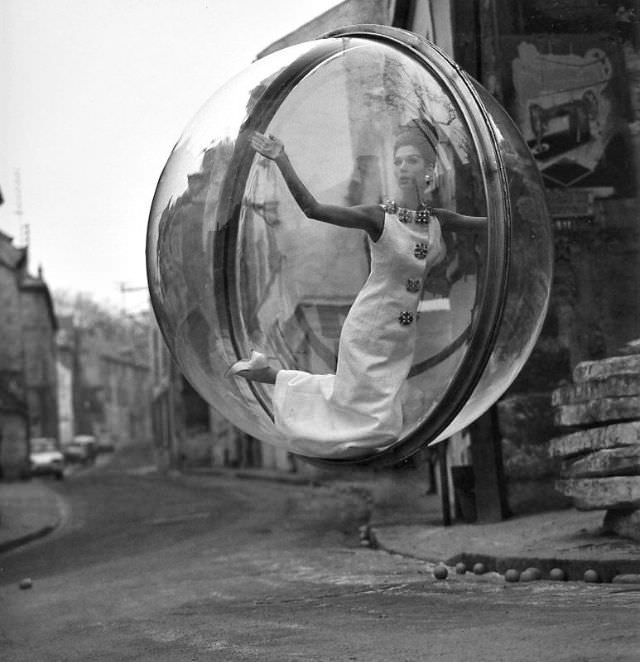
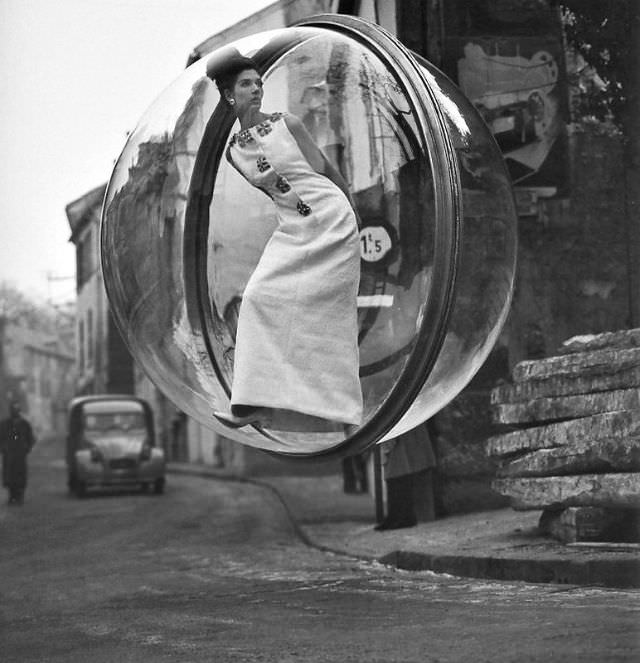
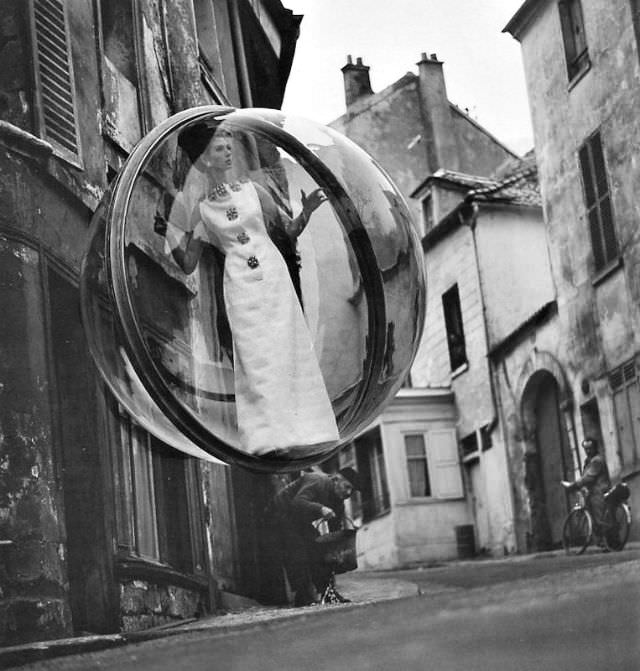
In 1963, photographer Melvin Sokolsky dreamed up one of the most original concepts in fashion photography history. He wanted to place models inside giant transparent plastic spheres and float them above the River Seine in Paris. The idea sounded impossible. He built it anyway.
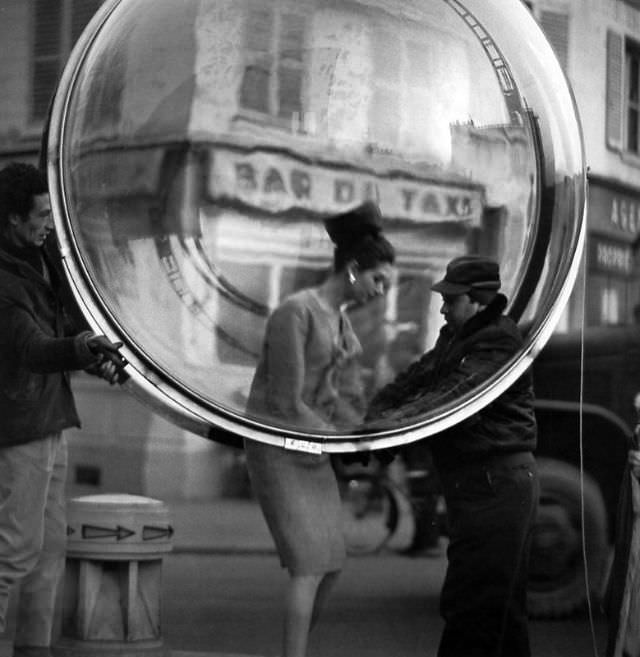
Each bubble was constructed from a material called Plastiview, formed from two separate hemispheres joined together. A slim gap of just 1/8 of an inch ran along the seam — enough to let the model inside breathe. The bubbles hung from a steel cable thin enough to disappear in photographs, yet strong enough to support the weight of a Cadillac.
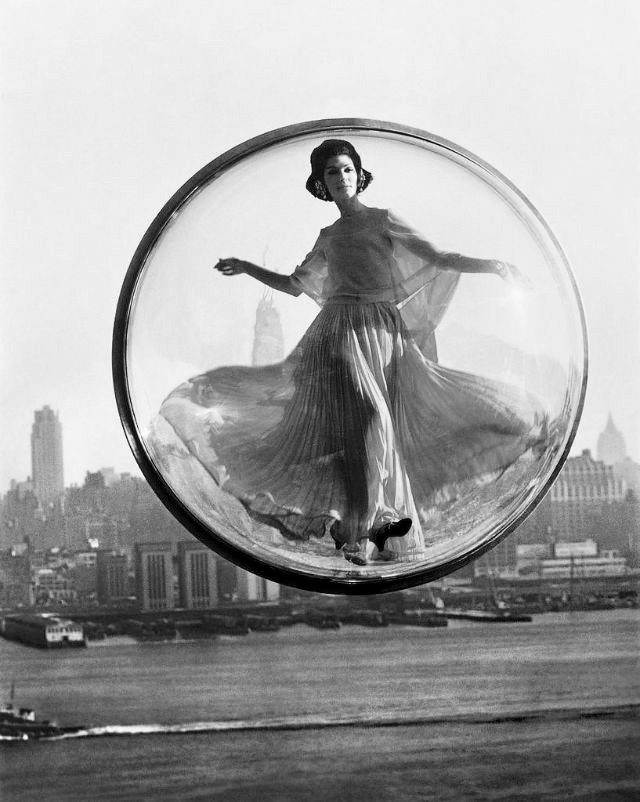
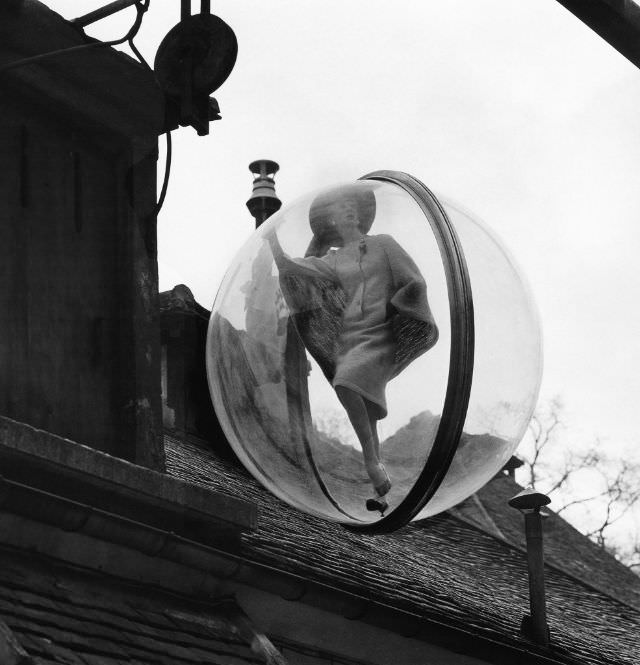
Before taking the project to Paris, Sokolsky ran trials in New York City. Model Tilly Tizzani stepped inside the bubble for the test shoots, helping the crew work out the mechanics of suspension and positioning on city streets.
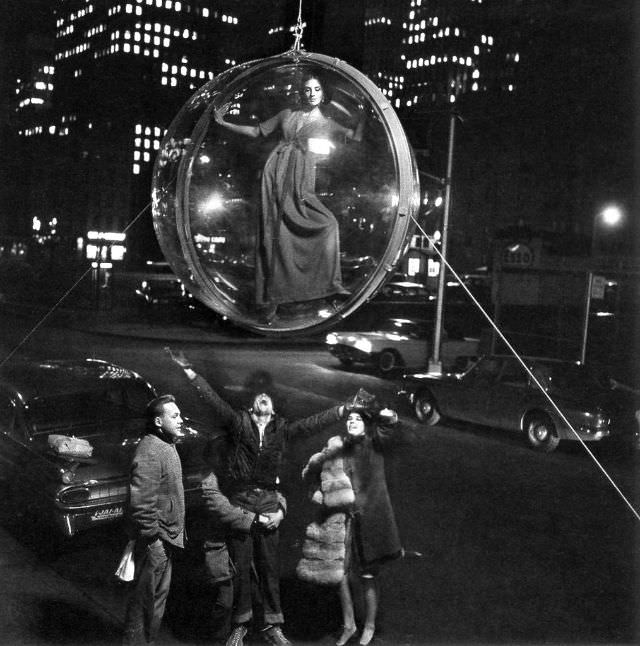
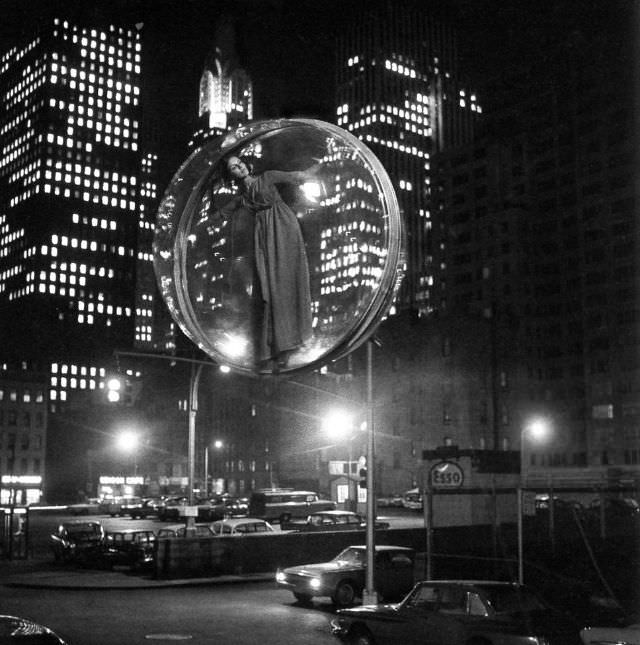
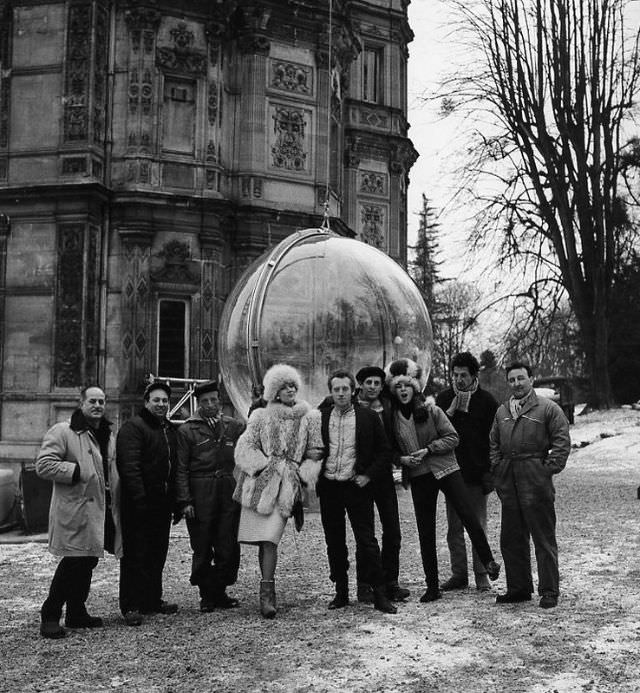
Once the setup moved to Paris, Sokolsky and his team floated the bubbles over the Seine, capturing models drifting mid-air against the city’s rooftops and riverbanks. Because the model was sealed inside, there were no interruptions for hair touch-ups or makeup adjustments. The shots were clean and unbroken.
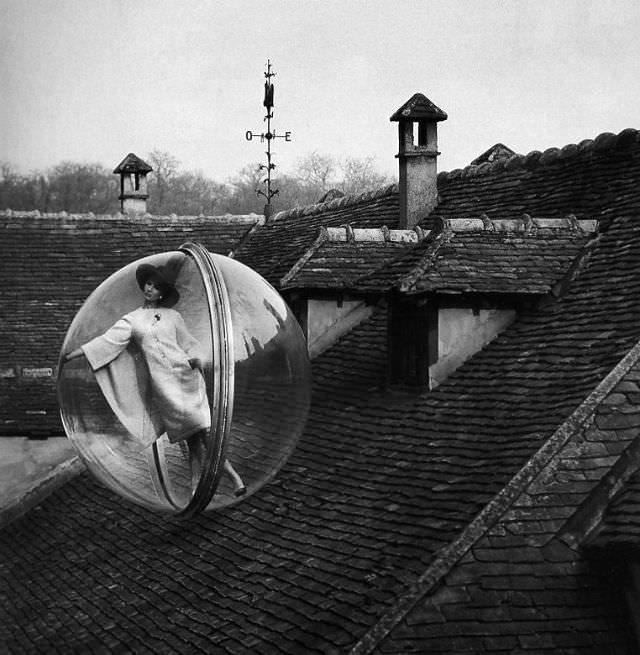
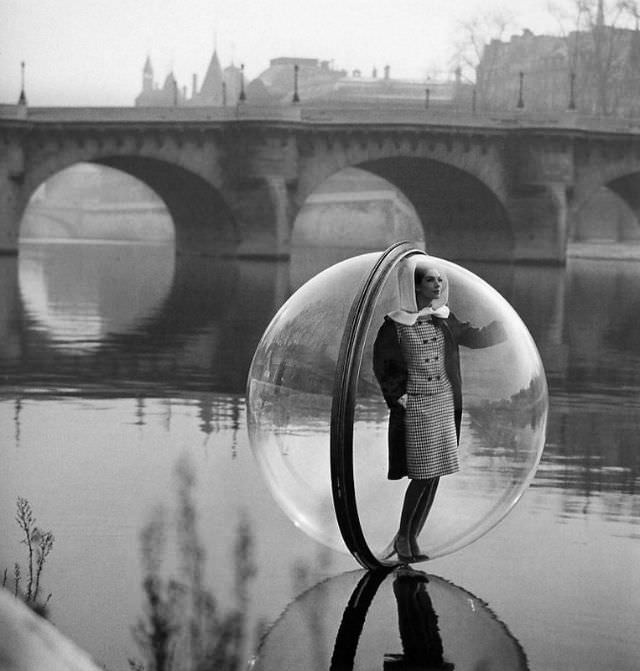
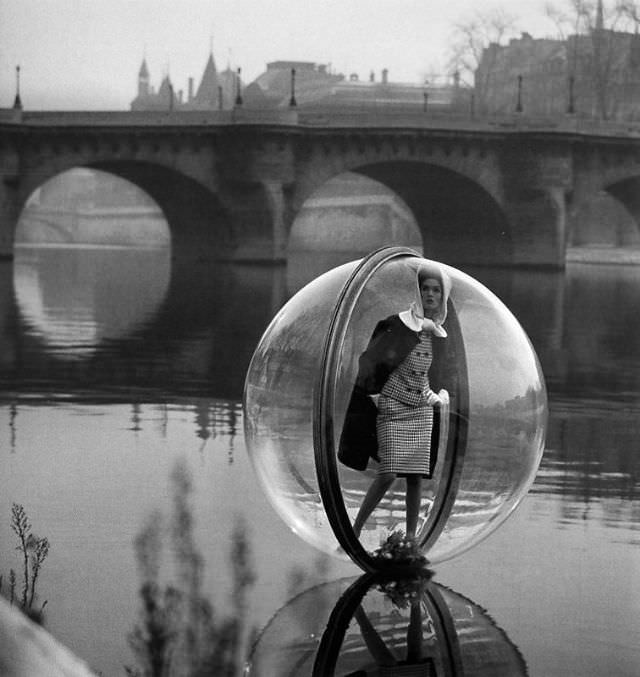
The series featured high fashion from designers including Pierre Cardin and Pierre Balmain. The bubble acted as both frame and stage — isolating the model completely while drawing every eye directly to the garment and the person wearing it.
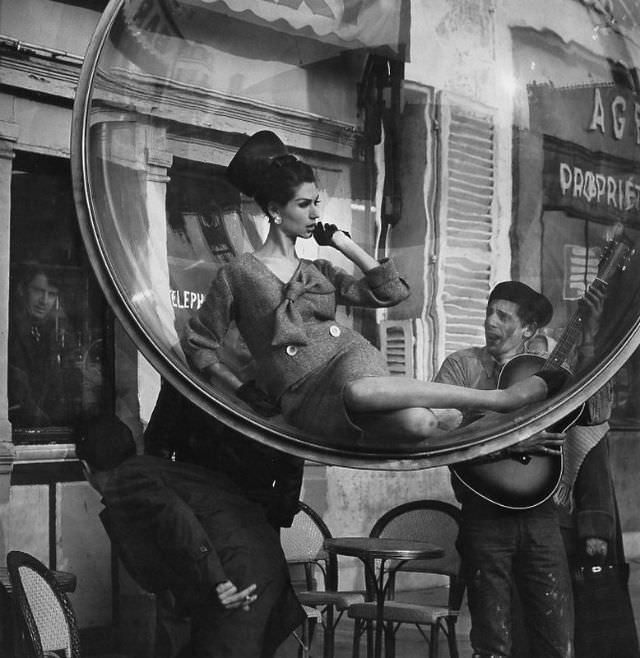
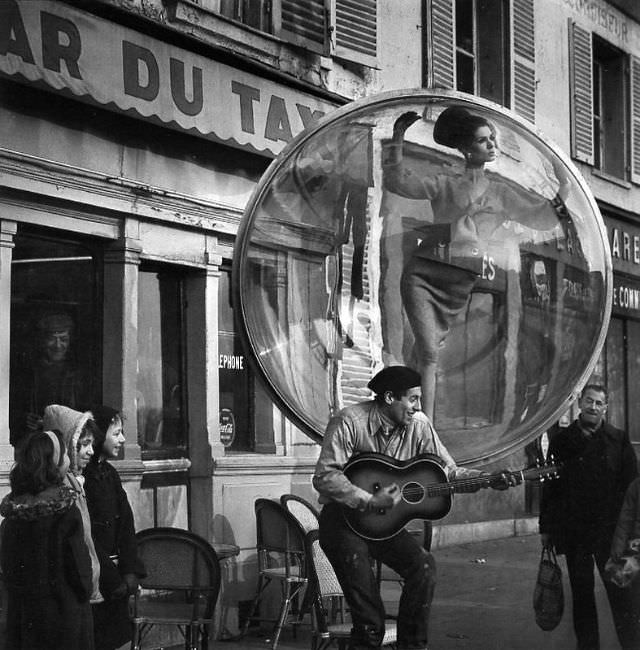
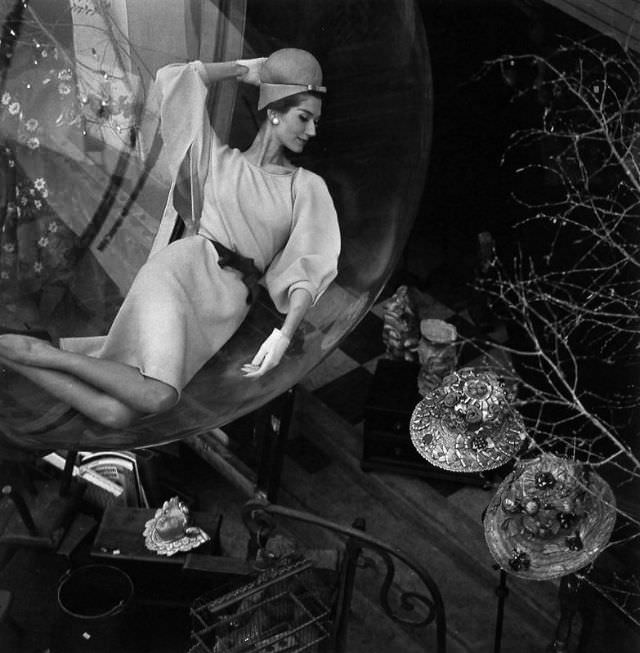
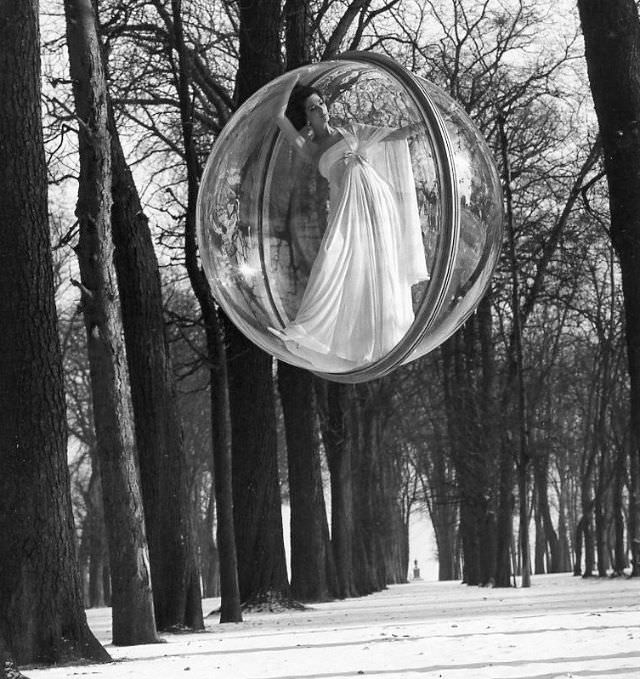
Not all of Sokolsky’s work from this period was suspended in mid-air. His broader 1960s photography brought the same sharp visual intelligence to Paris street scenes, quiet schoolyards, and surrealist-inspired tableaux referencing the painter Paul Delvaux.
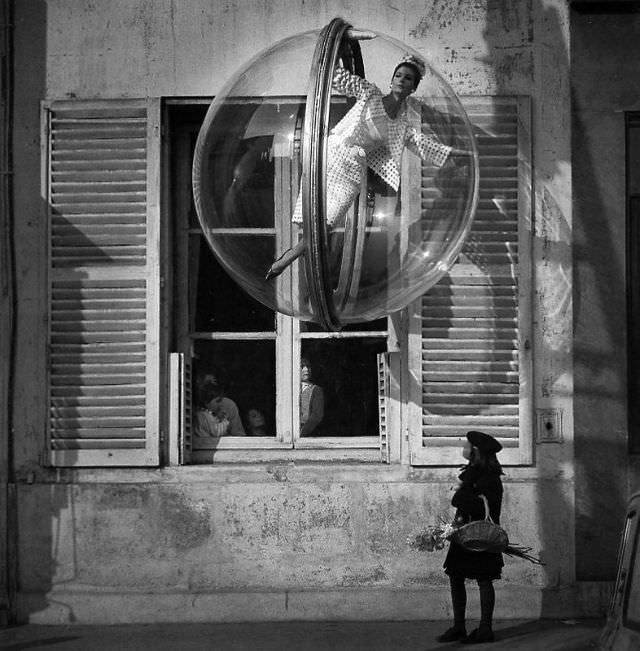
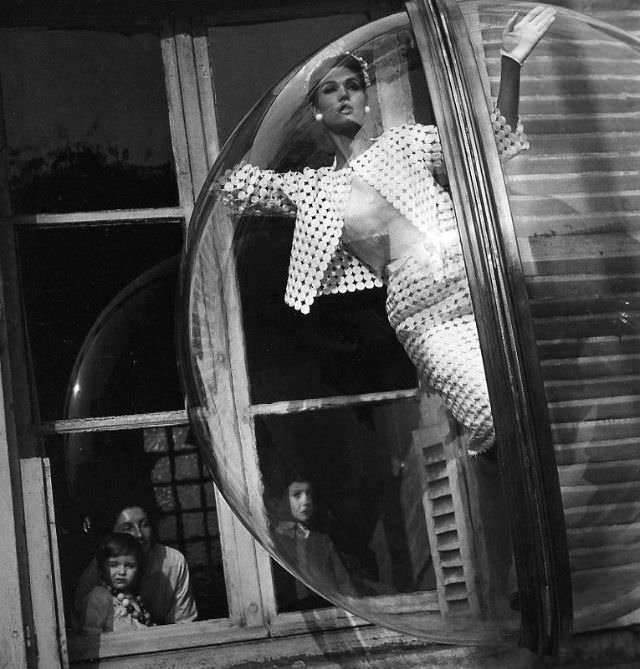
Sokolsky’s body of work extended well beyond editorial fashion. Three-quarters of his print output was advertising work — a field that rarely attached a photographer’s name to the final image. From the late 1960s onward, he moved into directing commercials, carrying the same distinctive visual style into a new medium.