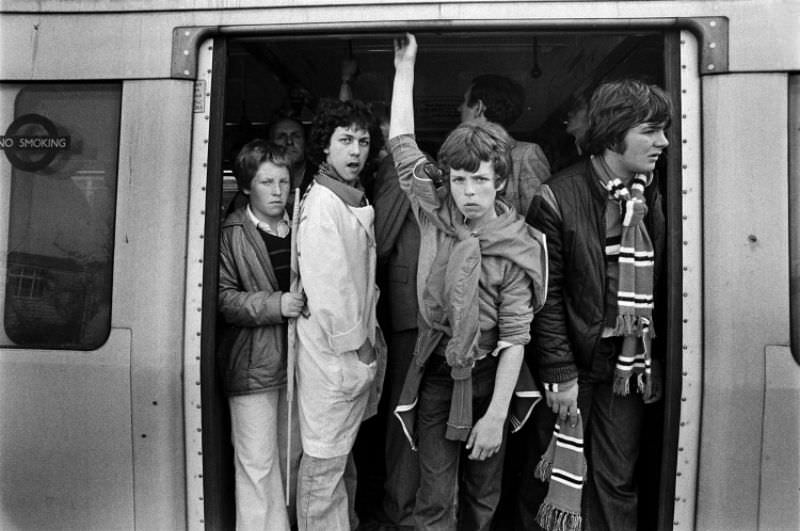
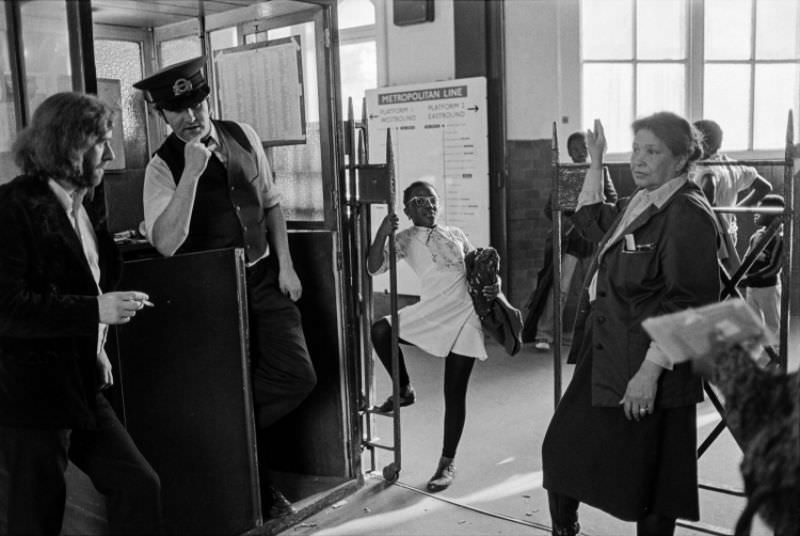
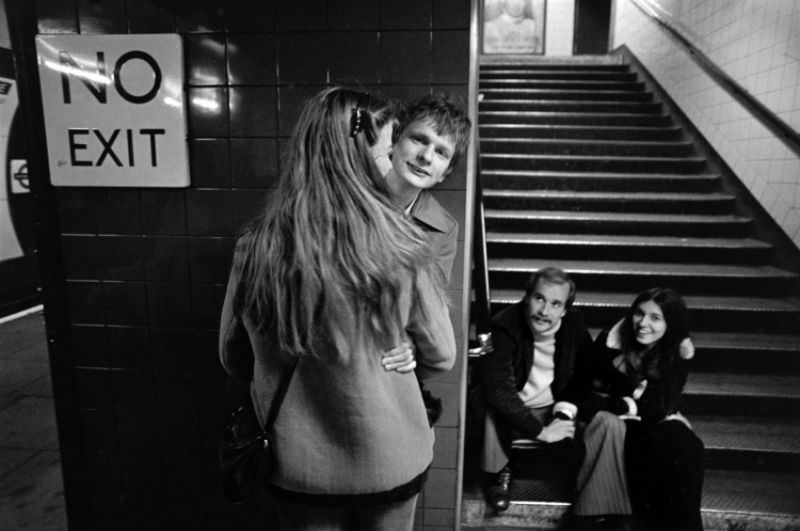
In the 1970s, the London Underground was a world of its own. Smoking was permitted on platforms and in carriages. Couples kissed without a second thought. Strangers were pressed shoulder-to-shoulder during the morning rush, then left nearly alone in the same tunnels an hour later. It was this constant push and pull between crowding and emptiness that drew young photographer Mike Goldwater down into the network with his camera.
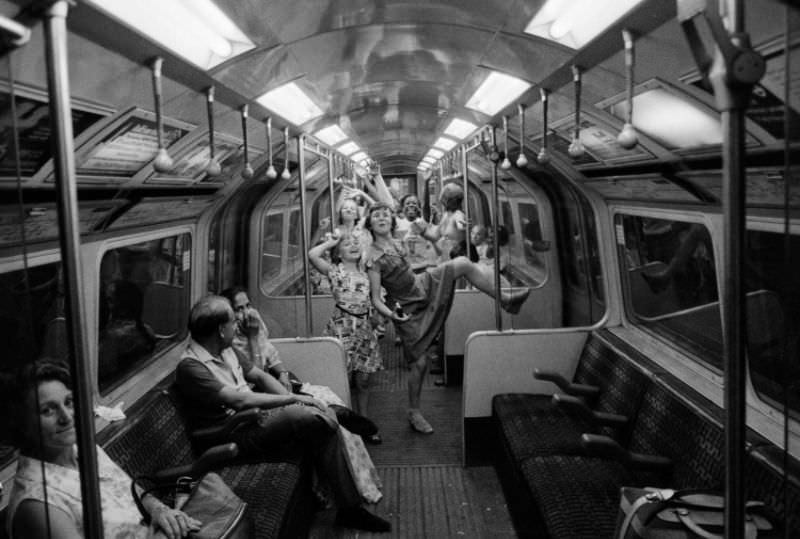
Goldwater was still early in his career when he began roaming the Underground’s stations and carriages. He wasn’t documenting a crisis or a political moment — he was watching how ordinary people behaved in an unusual space. The Tube forced intimacy on its passengers. During rush hour, personal space simply didn’t exist. Goldwater saw that tension as rich ground for photography.
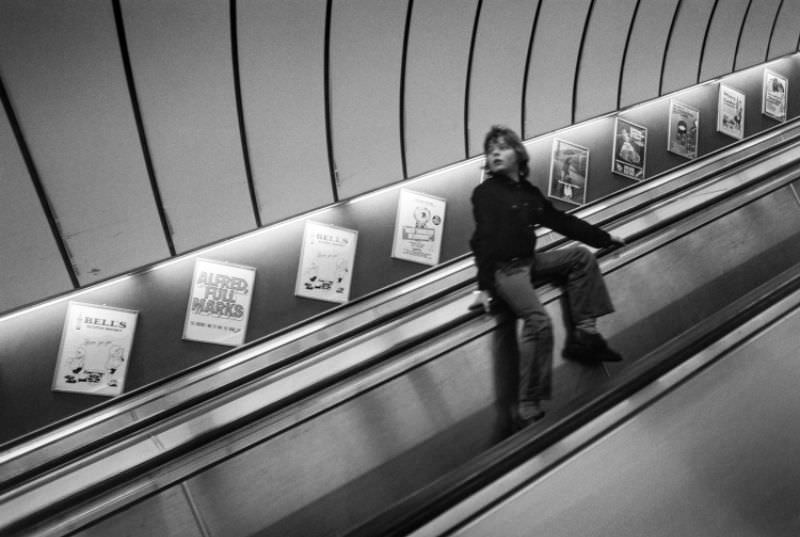
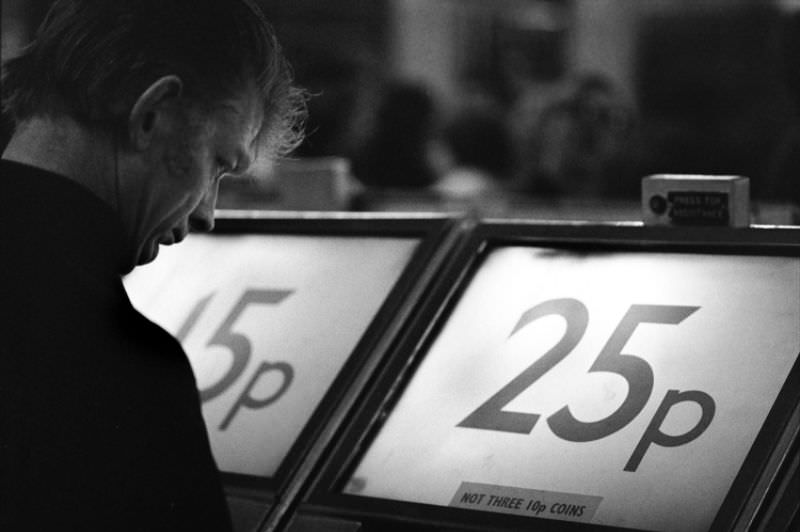
His photos range from quiet and tender to openly funny. Some passengers stare blankly into the middle distance, sealed off from everyone around them. Others interact, laugh, or lean into one another. The Underground, despite its grime and noise, became a stage for very human moments.
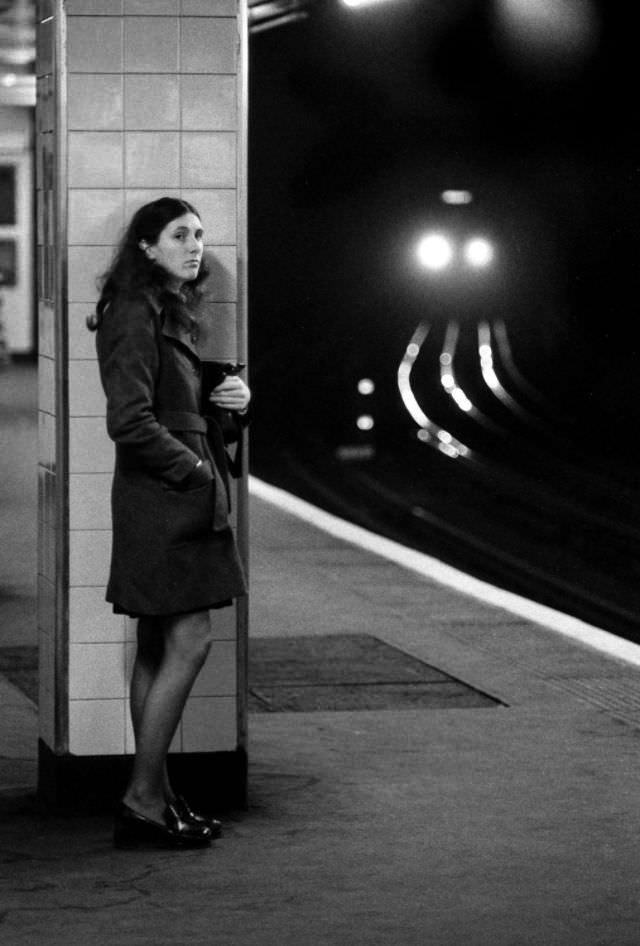
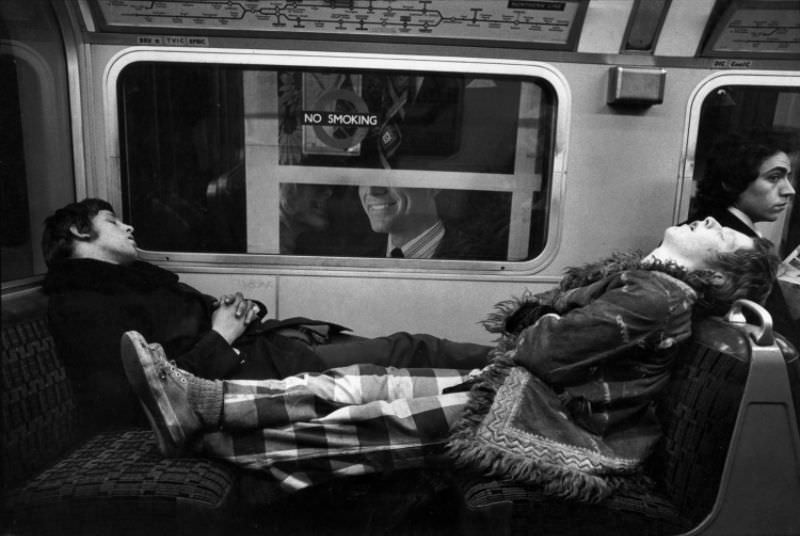
What makes these images so striking today is how much has changed. The cigarette smoke that once hung in the air of carriages and platforms is long gone — smoking on the Underground was banned in 1987 after the King’s Cross fire killed 31 people. The unguarded, candid quality of the scenes Goldwater captured reflects a pre-surveillance era, when a man with a camera could move through a public space almost invisibly.
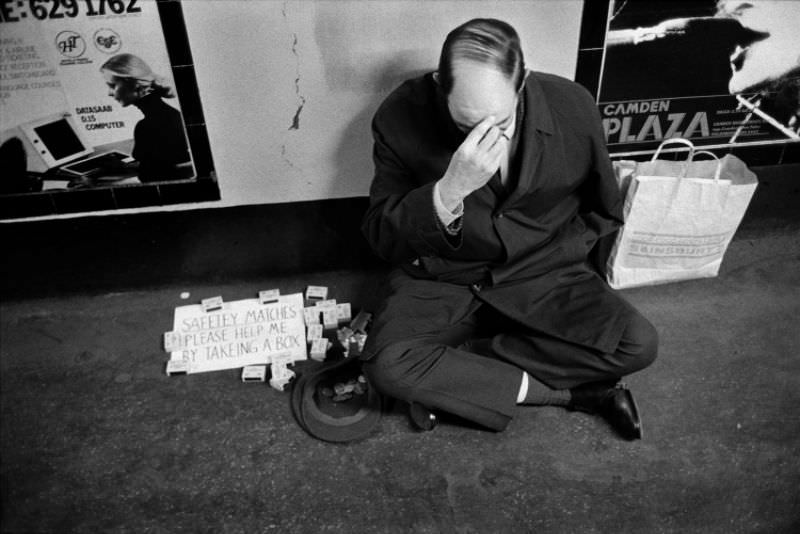
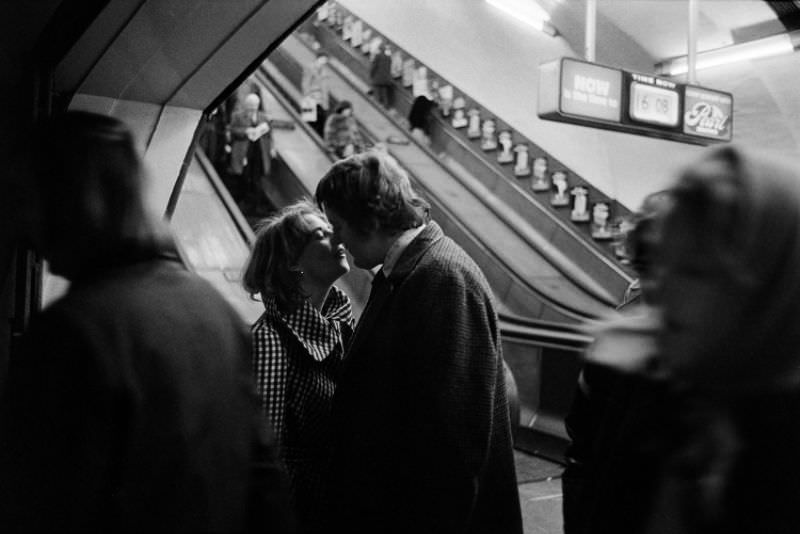
The stations themselves are instantly recognizable — Baker Street, Oxford Circus, Piccadilly Circus — yet they feel like a different city. The signage, the clothing, the body language all anchor the photos firmly in their decade. Goldwater moved across the network systematically, returning to certain lines and stations at different times of day to see how the mood shifted.
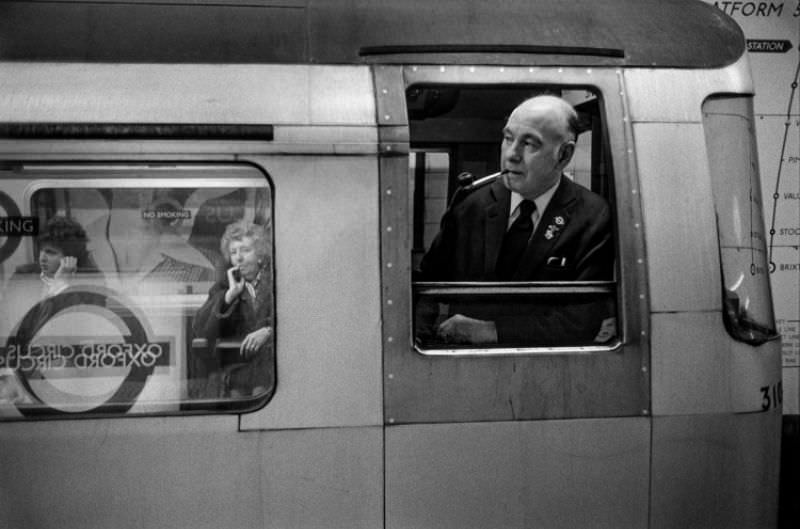
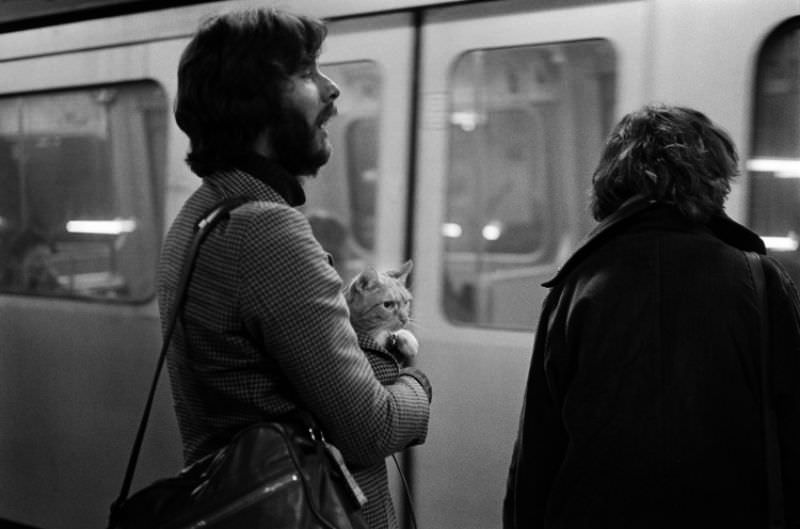
Quiet hours on the Underground offered a different kind of photograph entirely. A near-empty carriage late in the day gave Goldwater isolation, geometry, and the occasional lone figure whose presence carried far more weight than it would in a packed rush-hour train.
Hoxton Mini Press later collected a selection of Goldwater’s Underground work in the book London Underground 1970–1980, bringing the full decade of images together in print. The collection spans stations from King’s Cross in the north to Westbourne Park in the west, covering the network’s social geography as much as its physical one.