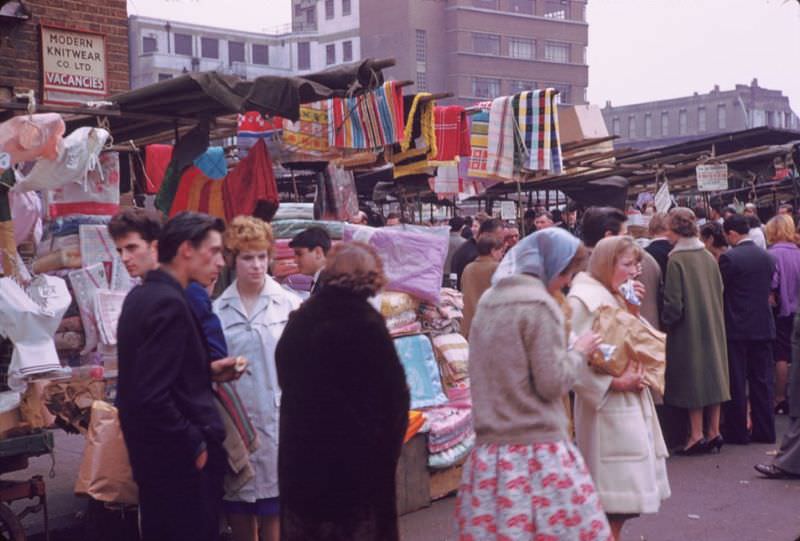
In 1961, American photographer Charles Weever Cushman visited London with his wife on holiday. Armed with a color camera at a time when most photographers still shot in black and white, Cushman documented the city’s streets with a sharp, observant eye. The result is a vivid collection of images that show London not as a monument-filled postcard, but as a living, working city full of noise, trade, and everyday people.
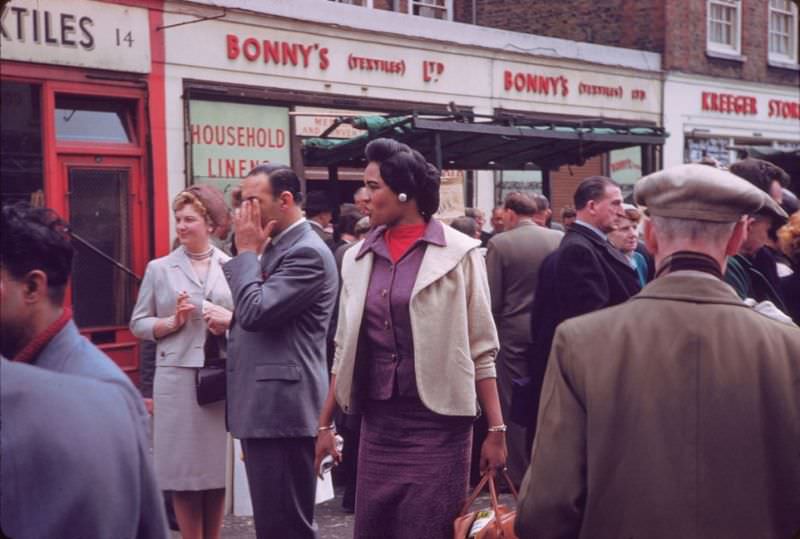
Cushman’s lens moved freely across London’s many neighborhoods. He photographed tucked-away market streets, grand public spaces, and everything in between. Mayfair’s Shepherd Market, a small pedestrian village of shops and pubs squeezed between the district’s Georgian townhouses, captured the quieter, more intimate side of the city.
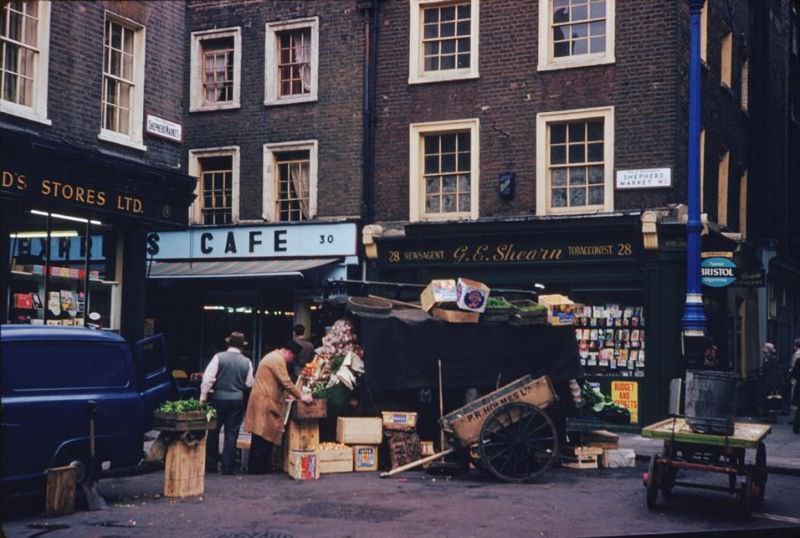
Ceremonial London also made an appearance. At St. James’s Palace, one of the oldest working royal palaces in Britain, guardsmen stood their posts in full dress uniform — a ritual that had been repeated for centuries and continued without interruption through the busy foot traffic of a modern city.
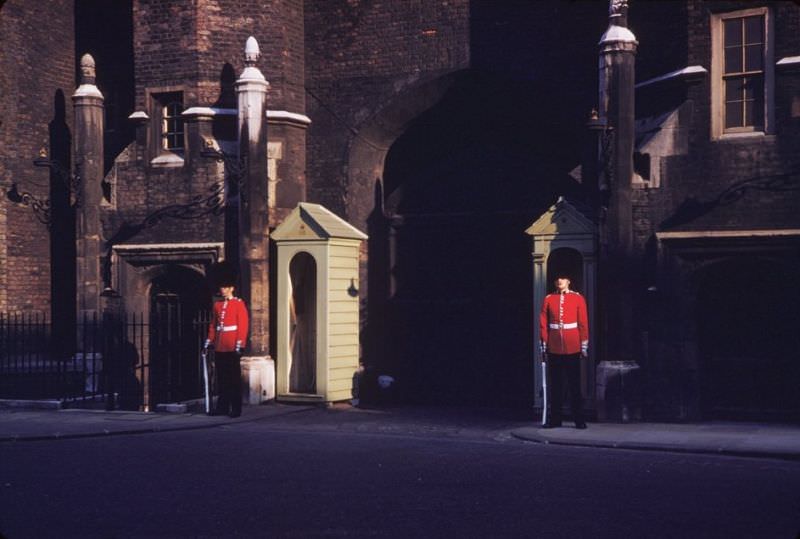
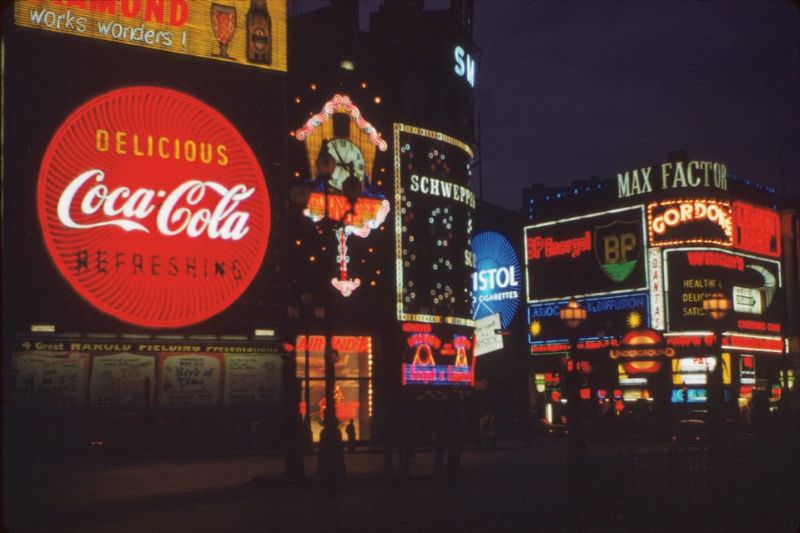
When night fell, Cushman turned his camera toward Piccadilly Circus. The junction glowed with electric signs and streaking headlights, crowded with theatergoers, tourists, and late-night workers. It was one of the busiest intersections in Europe, and in color, its energy comes through clearly even six decades later.
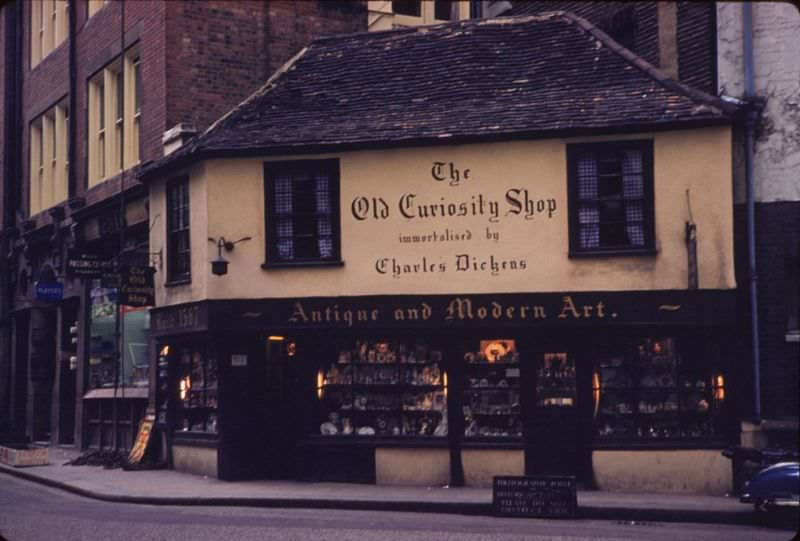
Cushman also visited one of London’s most famous curiosities — the Old Curiosity Shop on Portsmouth Street. Built around 1567, it is widely believed to be one of the oldest retail shops in London and is linked to the Charles Dickens novel of the same name. In 1961 it was still standing, still trading, and still drawing visitors.
Away from the tourist landmarks, streets like New Gouldston Street in the East End reflected a grittier, more working-class London. The area had long been home to immigrant communities and street traders, and its character in 1961 still carried the marks of that history.
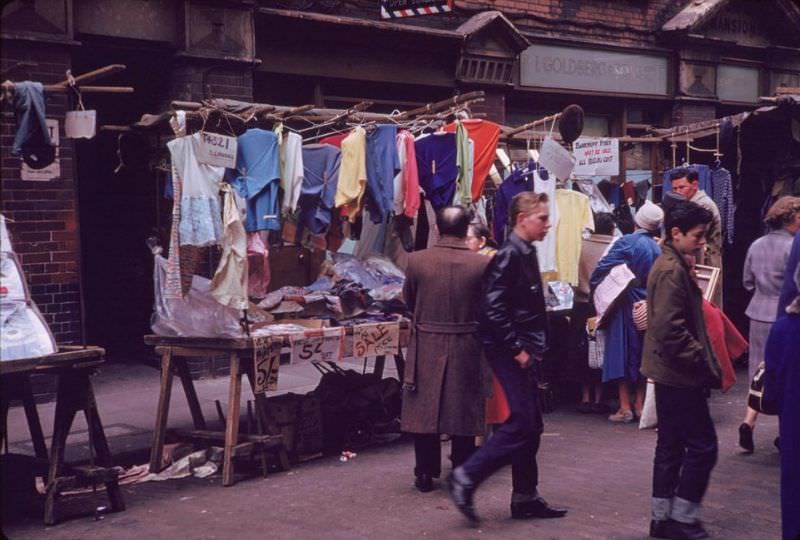
Leather Lane in Holborn was another street with deep trading roots. By day it hosted an open-air market selling everything from household goods to food, drawing workers from nearby offices and residents from the surrounding streets. Cushman photographed it at its busiest.
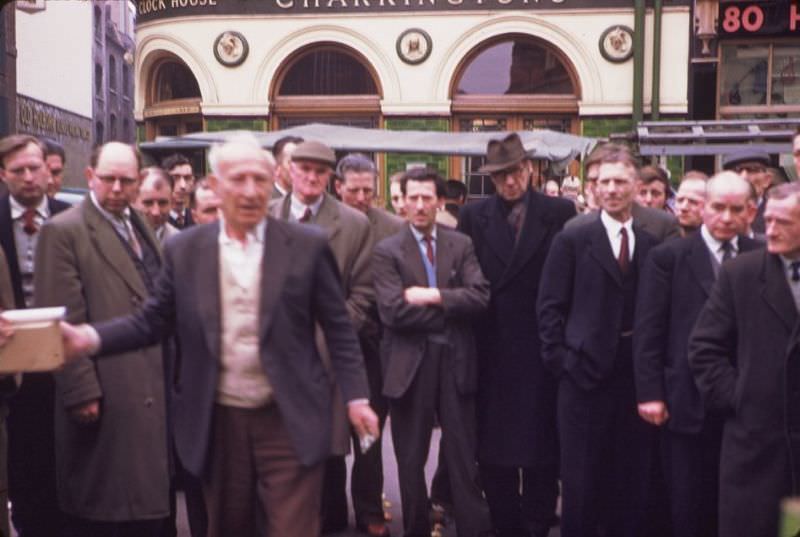
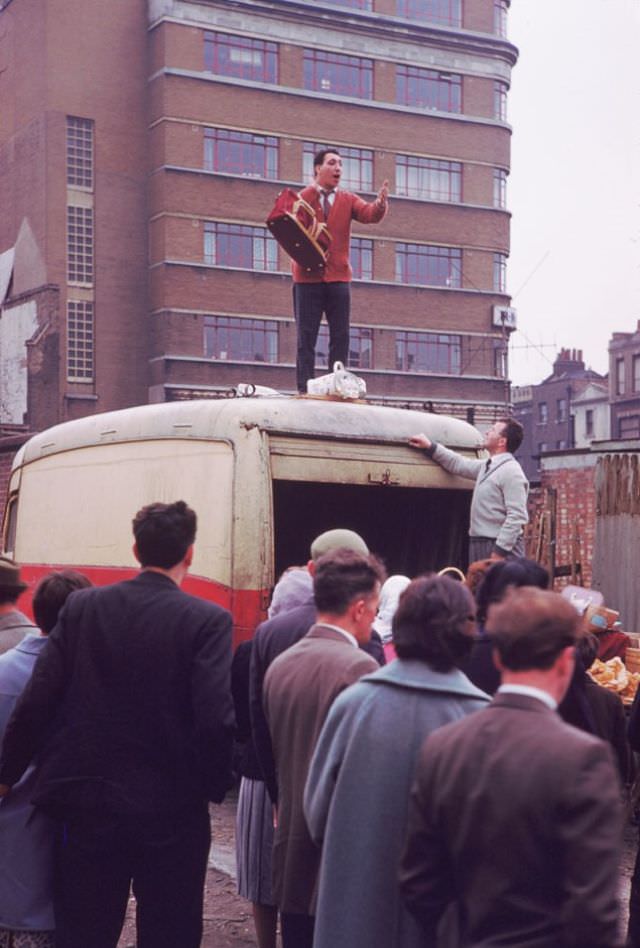
At Aldgate, a street seller drew a crowd with practiced showmanship. These hucksters were a familiar feature of East London street markets — men who sold goods through rapid patter and theatrical demonstrations, holding passersby in place through sheer force of personality.
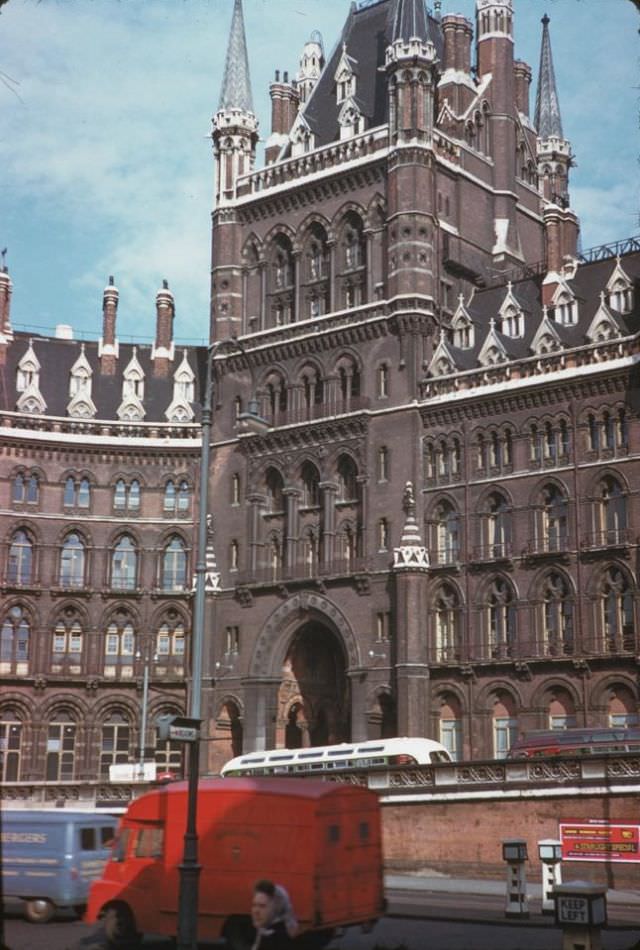
Cushman also documented London’s great transport hub, St. Pancras station. Opened in 1868, the station’s Gothic red-brick facade was a defining feature of the Euston Road. In 1961 it was a fully operational rail terminus handling thousands of passengers daily, though its future was uncertain — serious proposals to demolish it emerged just a few years later.
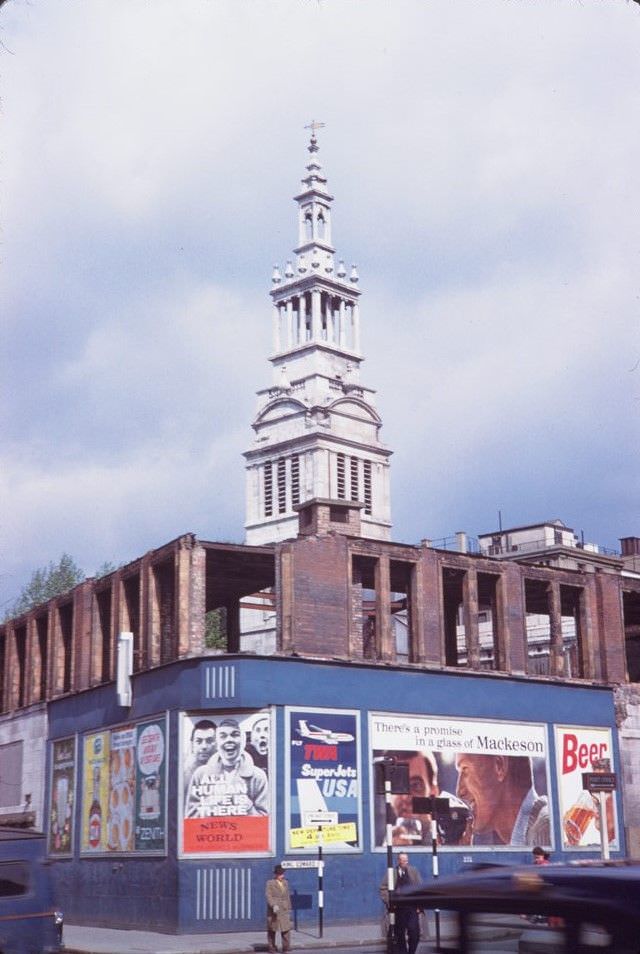
Grey Friars Church, officially known as the Church of Christ Church Greyfriars, stood in the City of London as a reminder of medieval religious life. The church was largely gutted during the Blitz in 1940, and in 1961 its roofless shell was still a prominent, sobering sight.
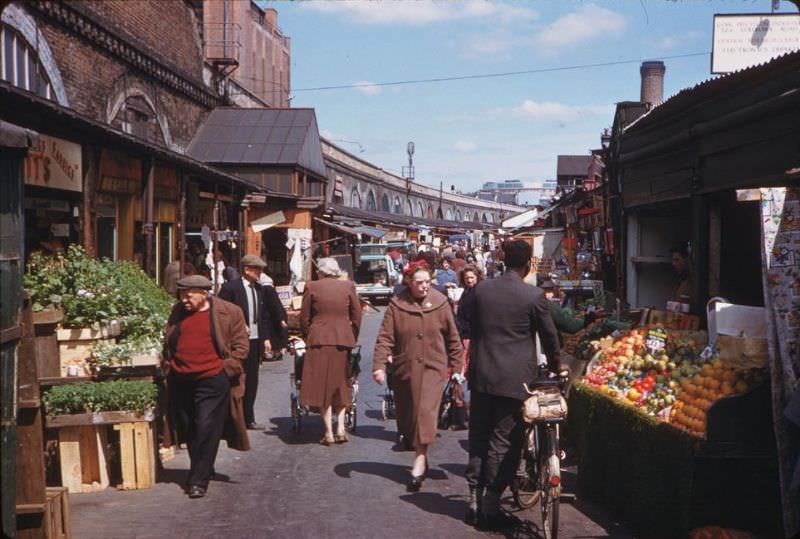
West London’s Shepherd’s Bush Market offered a different commercial atmosphere. Opened in 1914 alongside the railway viaduct, the market sold clothing, food, and household items to a diverse local community. By 1961, it had grown into a bustling daily market with a strong Caribbean and West African customer base.
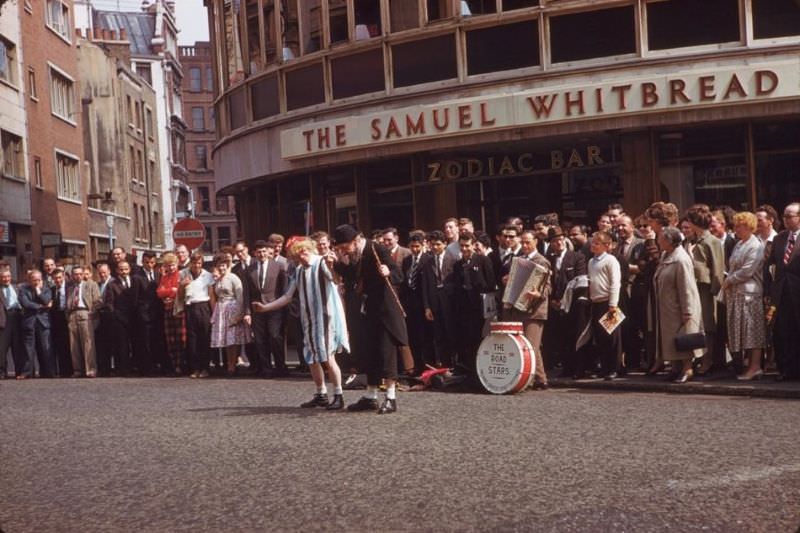
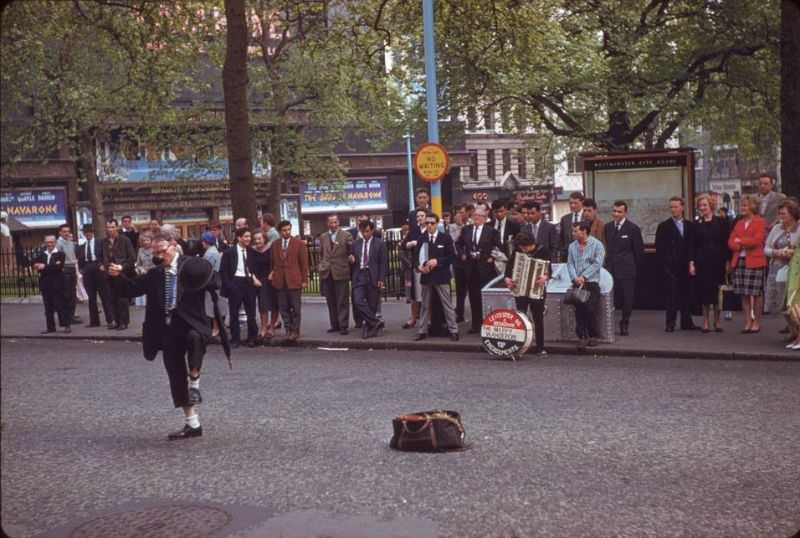
Near Leicester Square, street entertainers known as buskers performed for passing crowds. London’s busking culture was well established by this point, with musicians, comedians, and variety acts competing for space and attention on the pavements around the West End.
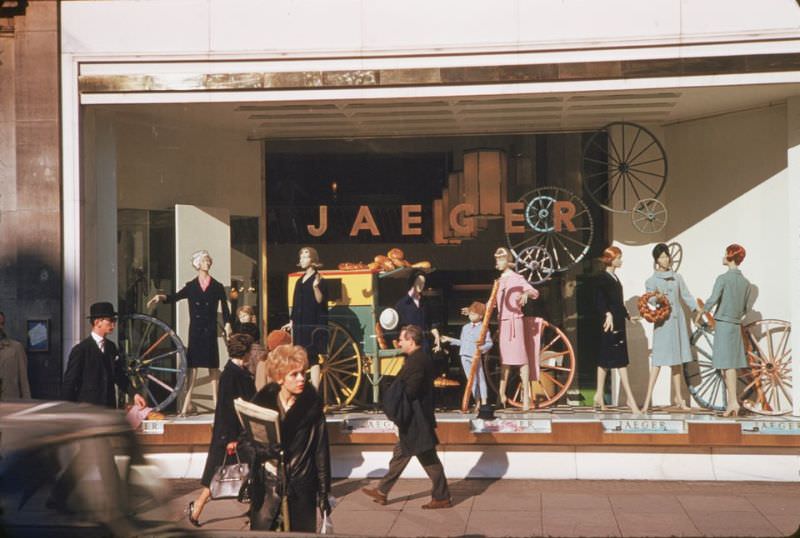
Regent Street, one of London’s premier shopping thoroughfares, gave Cushman a chance to photograph the city’s commercial display culture. Shop window dressing was a serious trade in 1961, and the window displays along Regent Street were designed to stop pedestrians in their tracks.
Back near Leicester Square, more performers worked the pavement. Street performance in central London at this time ranged from one-man bands to acrobats, and the area around the Square was one of the most concentrated spots for this kind of entertainment in the entire city.
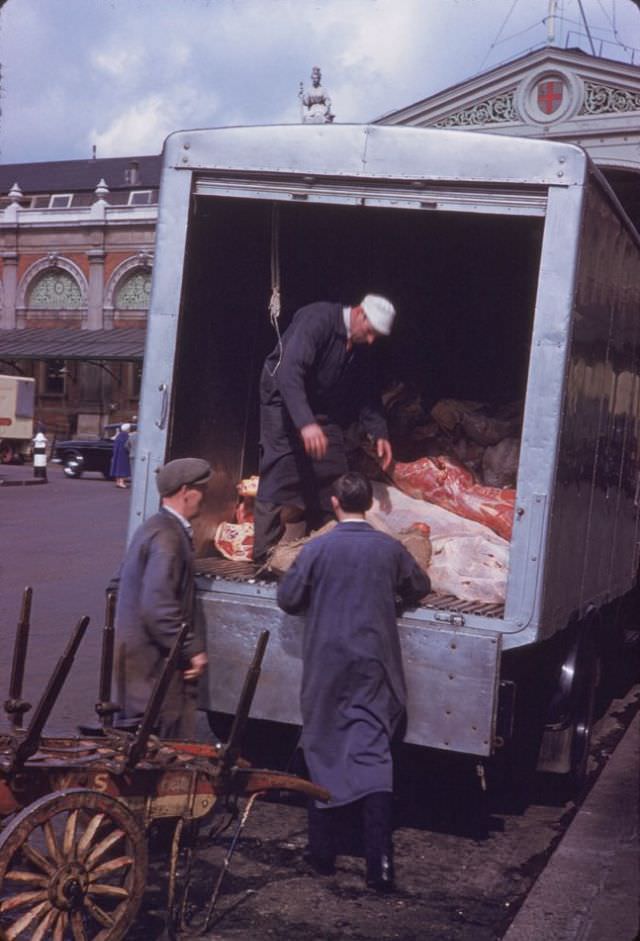
Smithfield Market, London’s wholesale meat market operating since the 10th century, appeared in Cushman’s collection with carcasses of New Zealand lamb on display. Smithfield was — and remains — the largest wholesale meat market in the United Kingdom, and in 1961 it operated around the clock with hundreds of porters and traders working through the night.
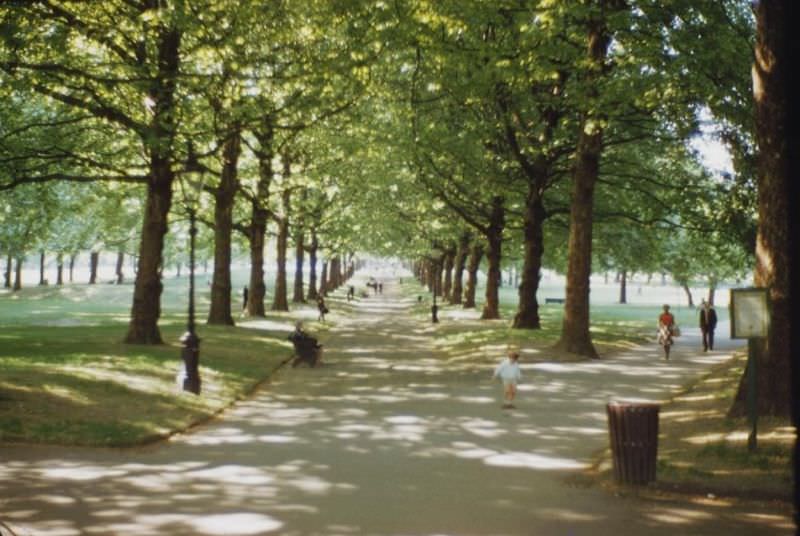
Green Park, one of the Royal Parks, offered a sharp contrast to the noise of the markets and streets. Its tree-lined walks were a popular midday escape for office workers and visitors. Unlike the more elaborate nearby parks, Green Park had no flower beds — just open grass and shaded paths.
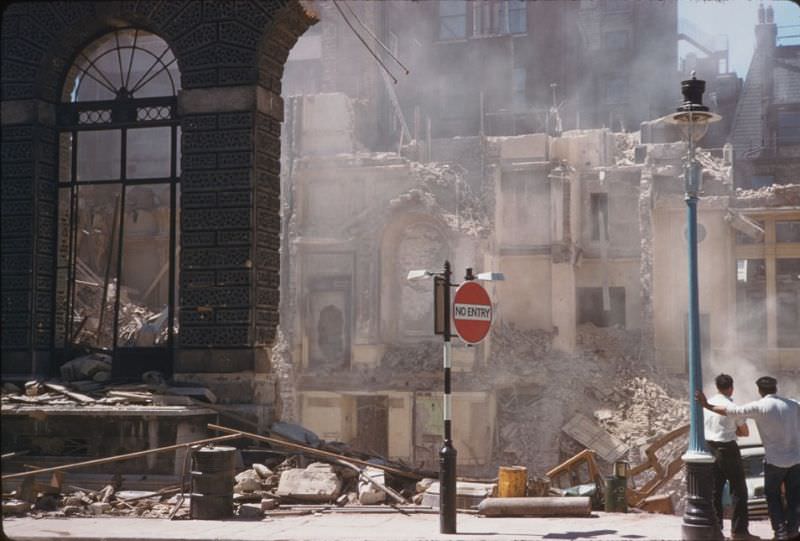
On St. James’s Square, Cushman photographed the Army and Navy Club building in the process of being demolished. The club, a prestigious institution founded in 1837 and known as ‘The Rag,’ was undergoing a major redevelopment at this time, with its older structure cleared to make way for a rebuilt premises.
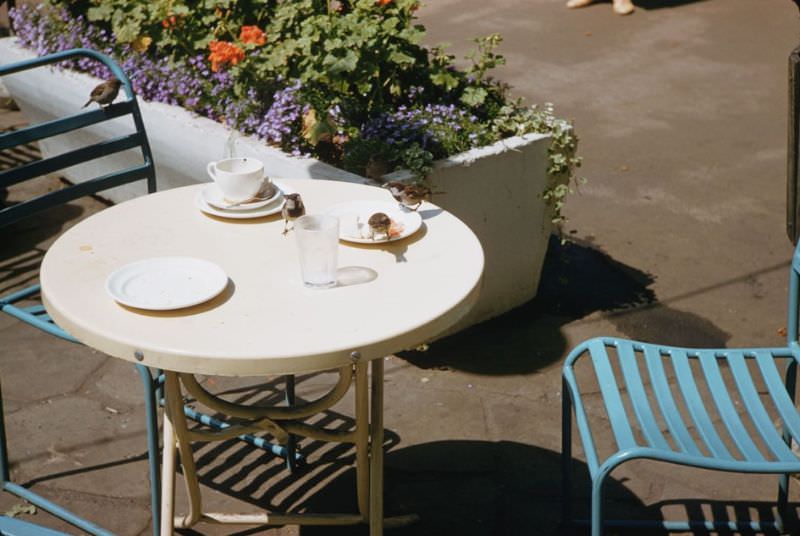
Victoria Embankment Gardens, running along the north bank of the Thames, gave Cushman a quieter, more leisurely subject. Visitors fed sparrows directly from the outdoor café tables — a small, unhurried moment that stood apart from the commercial energy found elsewhere in his photographs.
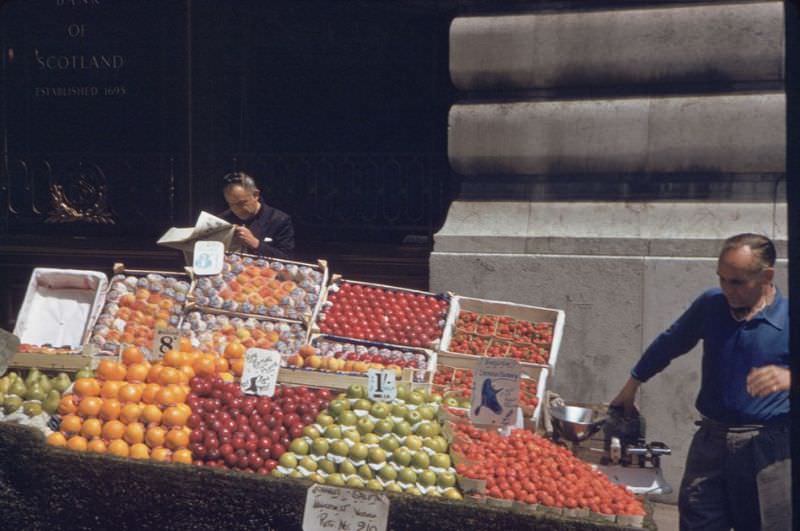
Just off Piccadilly, Air Street hosted a fruit stand near the grand Piccadilly Hotel. Street food and produce vendors occupied many of the narrow side streets feeding into London’s major thoroughfares, serving both pedestrians and hotel staff looking for fresh stock.
Aldgate Market rounded out Cushman’s tour of East London trading spots. The area around Aldgate had been a hub for street commerce for generations, shaped by waves of Jewish, Irish, and South Asian immigration. In 1961, the market was a noisy, tightly packed gathering of stalls that spilled across the surrounding streets.