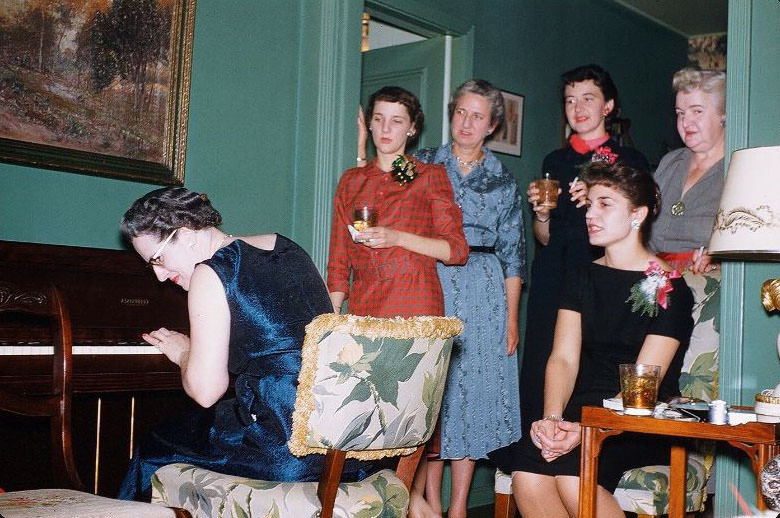
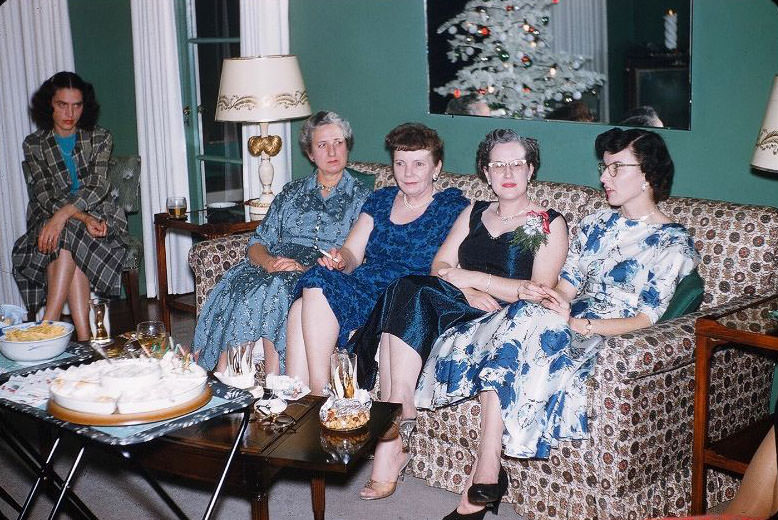
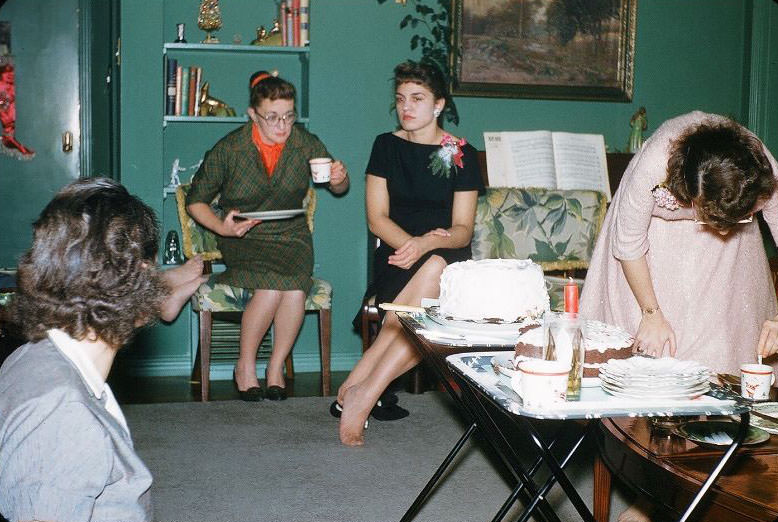
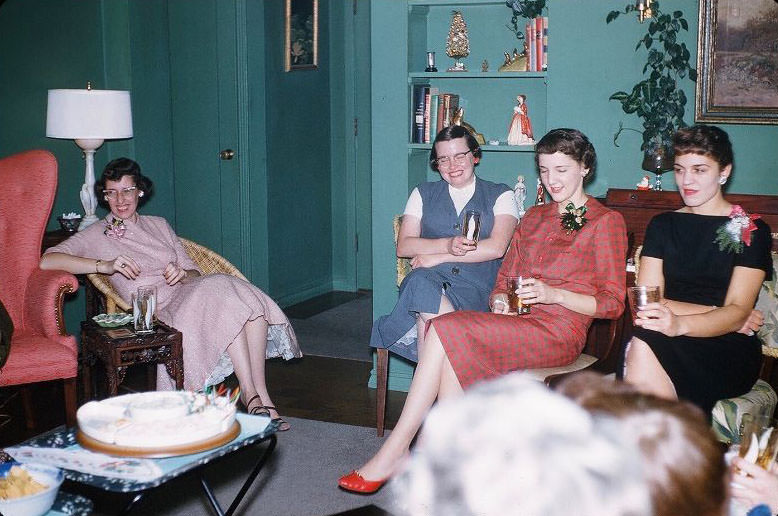
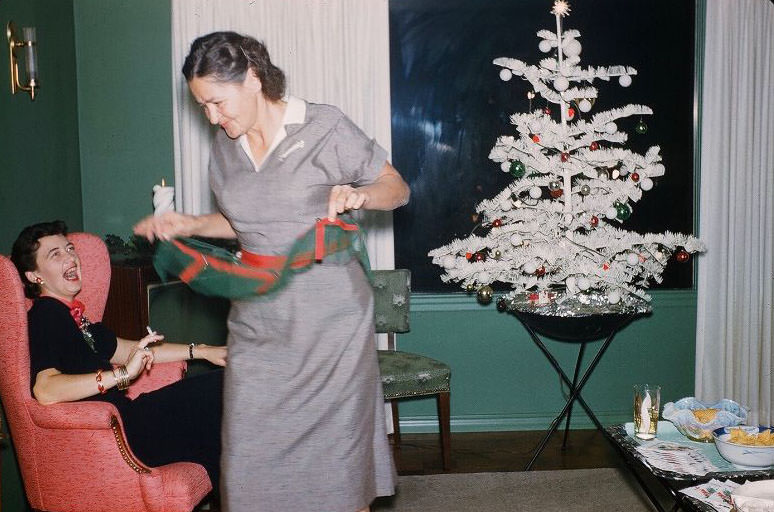
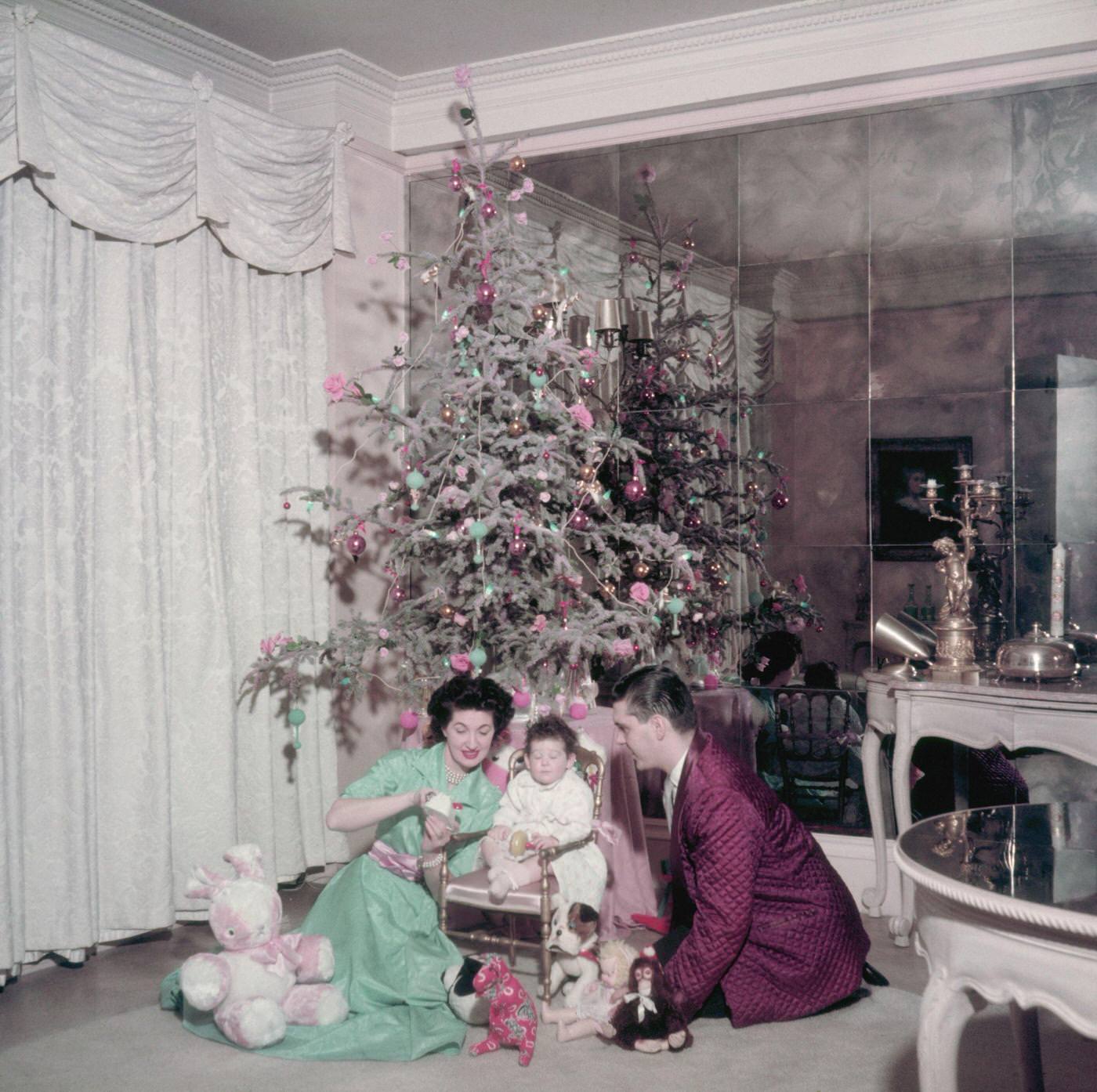
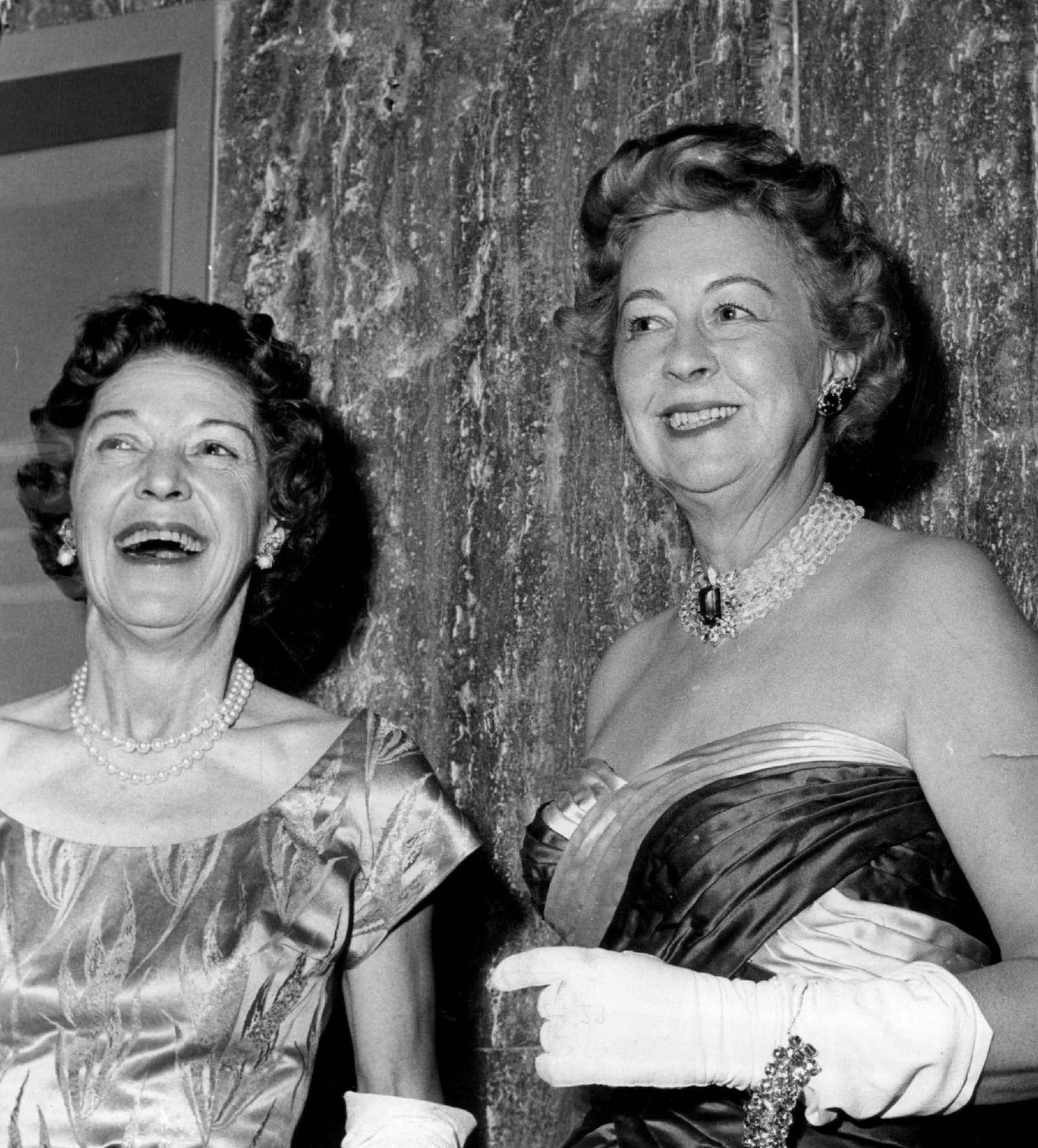
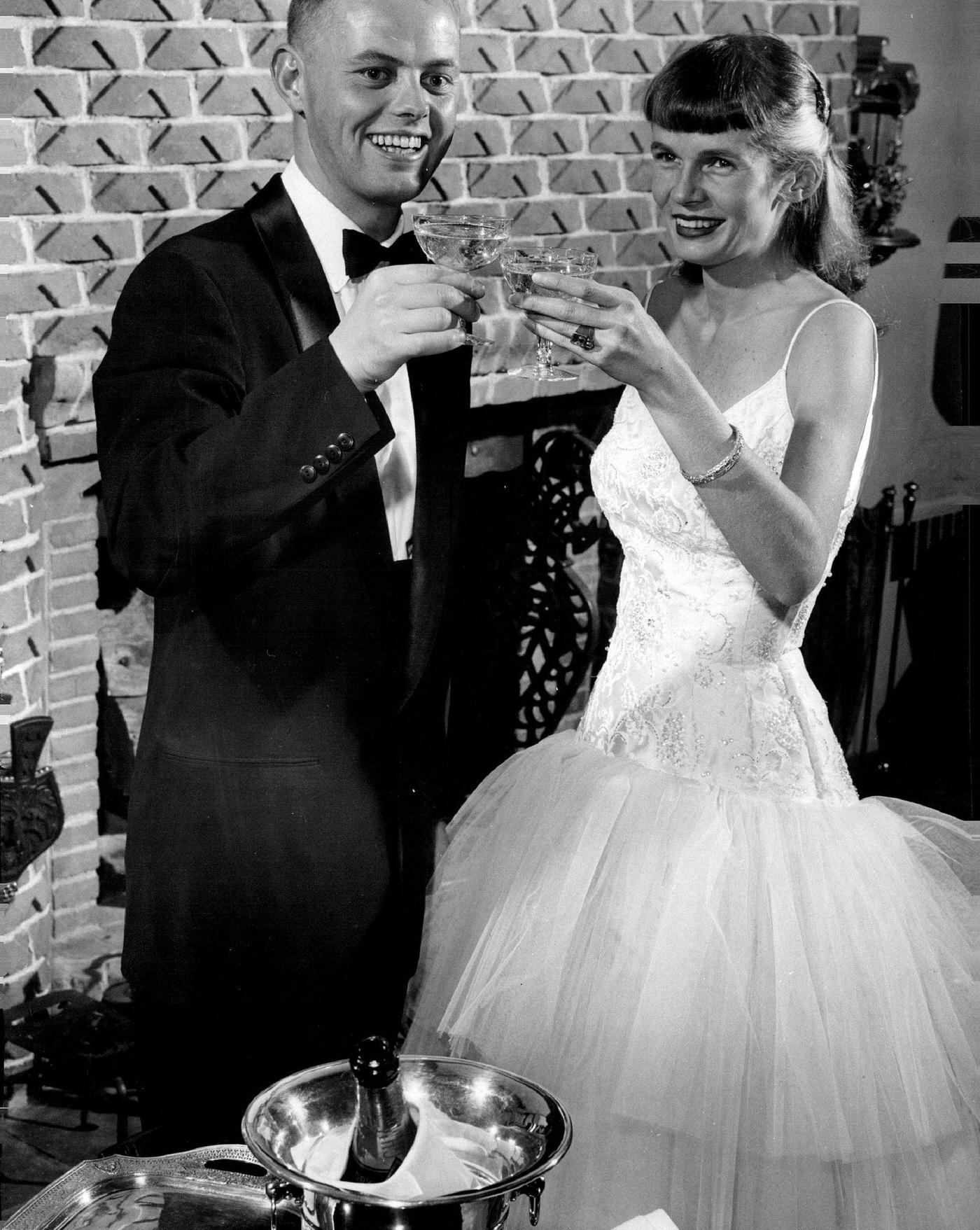
Christmas parties in the 1950s were a far cry from the casual get-togethers we know today. Women dressed in their finest gowns, men wore suits and ties, and hosts went all out on decorations — tinsel draped from every surface, string lights glowing warm, and holiday centerpieces anchoring each table. These were formal events, and everyone dressed the part.

Music set the entire mood. Big band and jazz were the sounds of the era, and a good party meant either a live band or a jukebox stacked with the latest hits. Women danced in their elegant dresses, stepping away only to socialize and catch up with friends before heading back to the floor.

Food was a serious centerpiece of any 1950s Christmas gathering. Hostesses spent days planning and preparing menus built around ham, turkey, and mashed potatoes. Seasonal staples like eggnog and fruitcake filled out the spread, which was displayed on a large table for guests to admire and enjoy throughout the night.

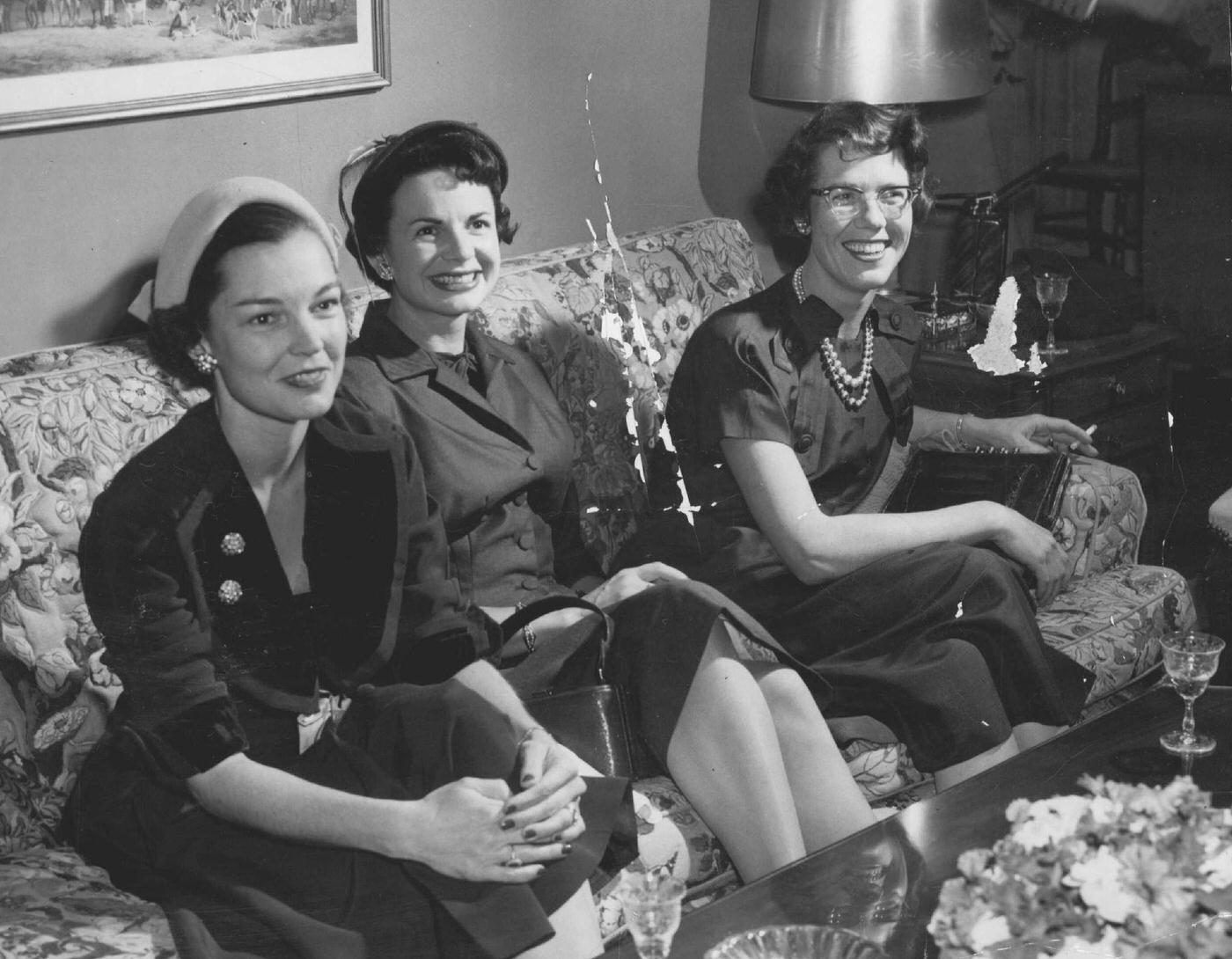
As the night wore on, the formality loosened. Conversations flowed freely among guests, and the social aspect of these parties was just as important as the food or music. Women caught up with friends, swapped stories, and enjoyed the rare chance to simply relax and celebrate together.


Gift-giving added another layer of warmth to these parties. Women exchanged small, thoughtful presents with one another — scented soaps, fancy gloves, or a new piece of jewelry were common choices. Men gave gifts to their wives or partners, often a clothing item or something the recipient had been wanting for a while.

Christmas celebrations extended well beyond private homes. Organized events like charity balls and symphony galas drew elegantly dressed crowds. Ticket committees formed months in advance, and these events carried a sense of civic pride alongside the holiday spirit.


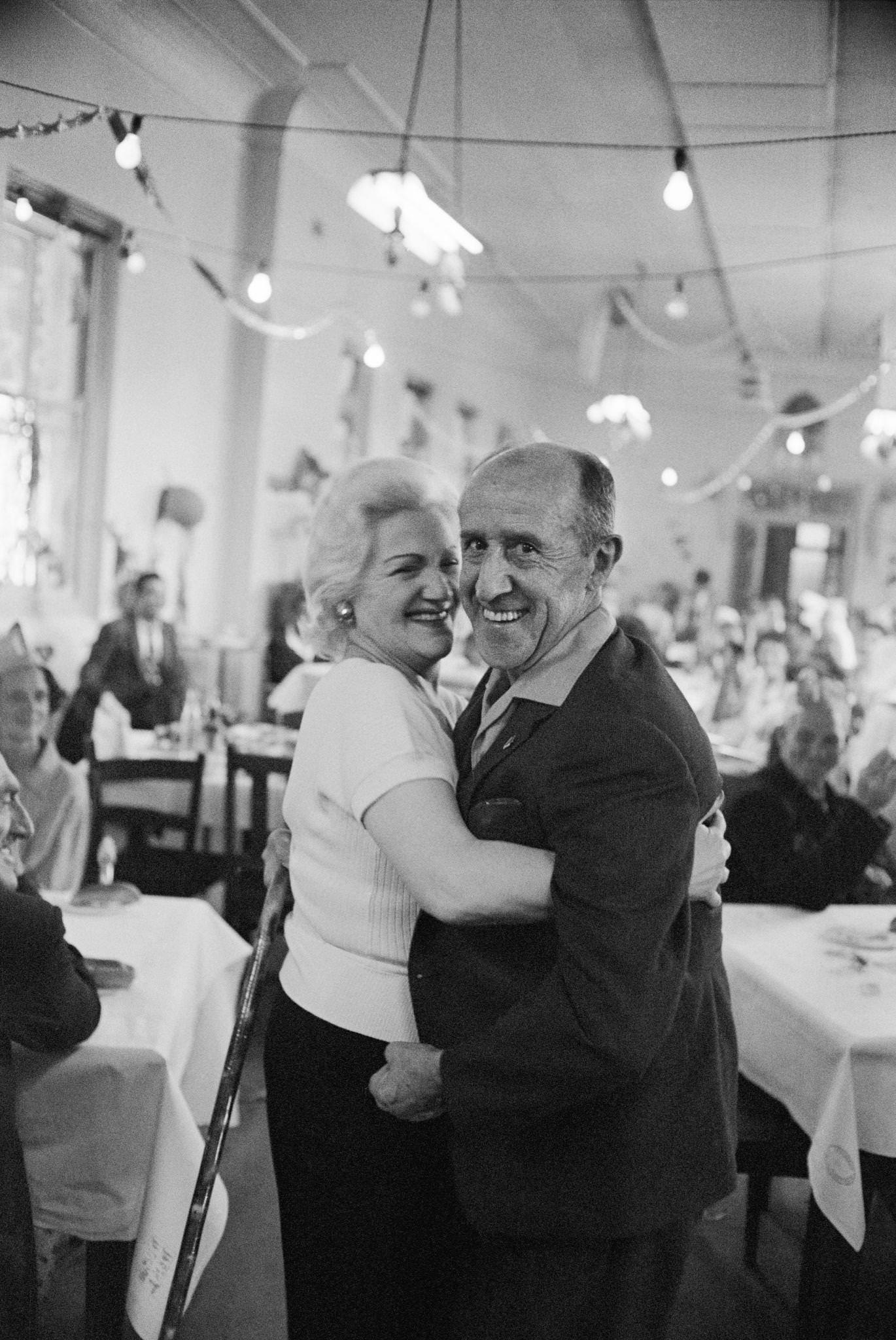
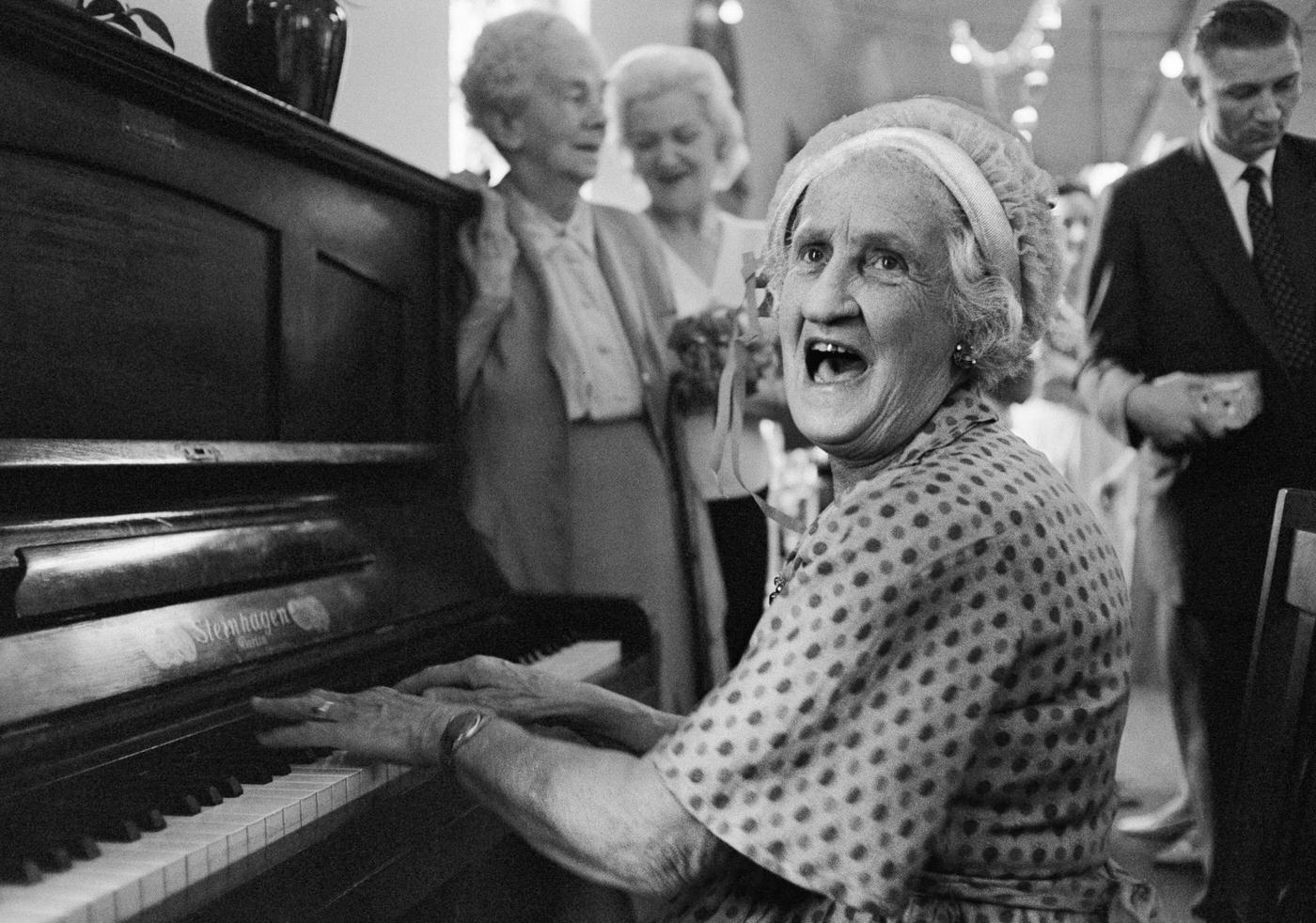
Christmas parties weren’t limited to one country or social circle. In South Africa, retirement homes hosted their own festive celebrations, bringing residents together for holiday cheer that mirrored the season’s warmth felt around the world.


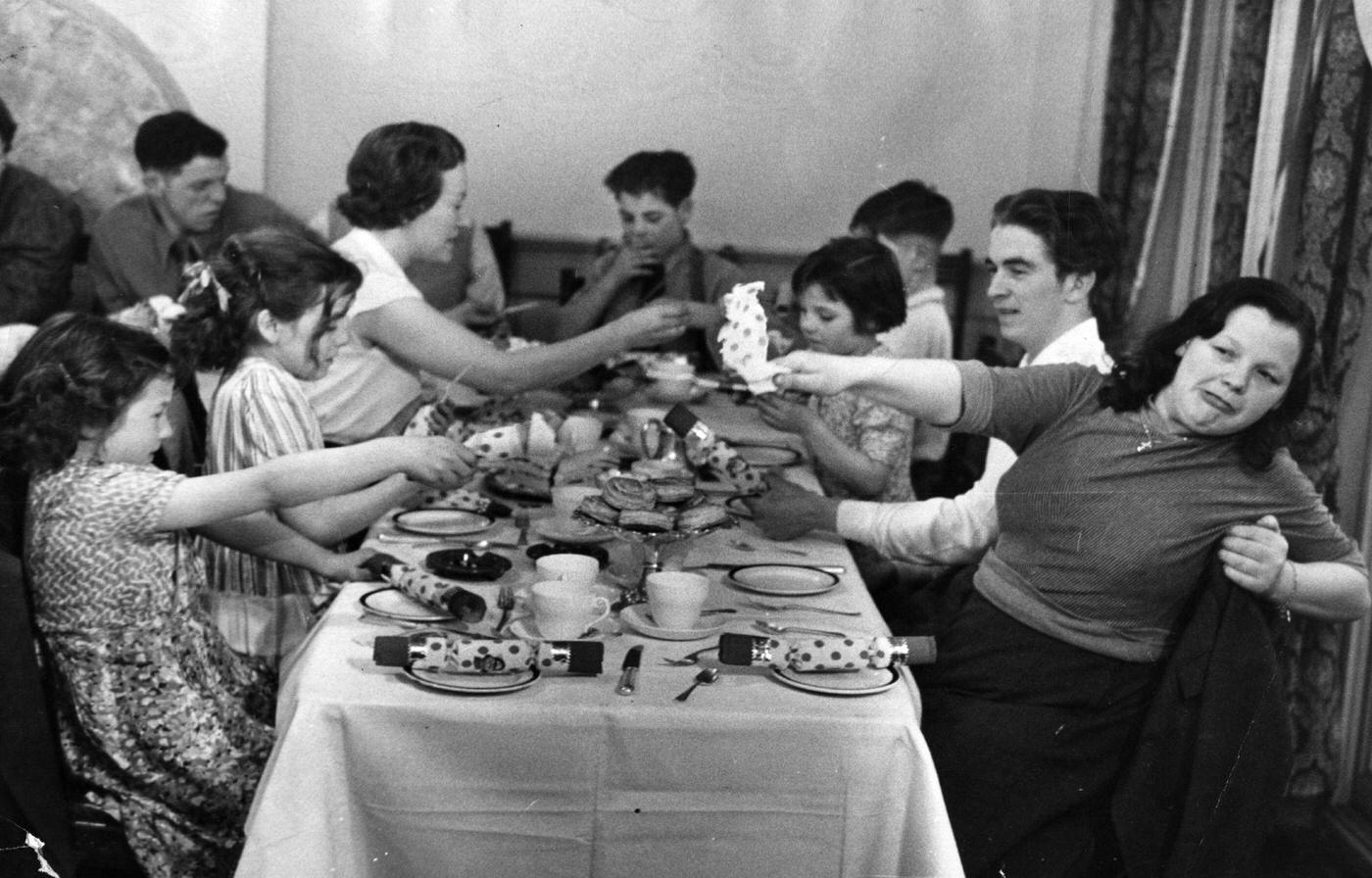
In London, department stores like Selfridges turned the holiday season into an event for the whole family. In 1953, some of the Hudson family’s twenty children sat down for a Christmas lunch inside the iconic store — a snapshot of how the era blended commerce and celebration.


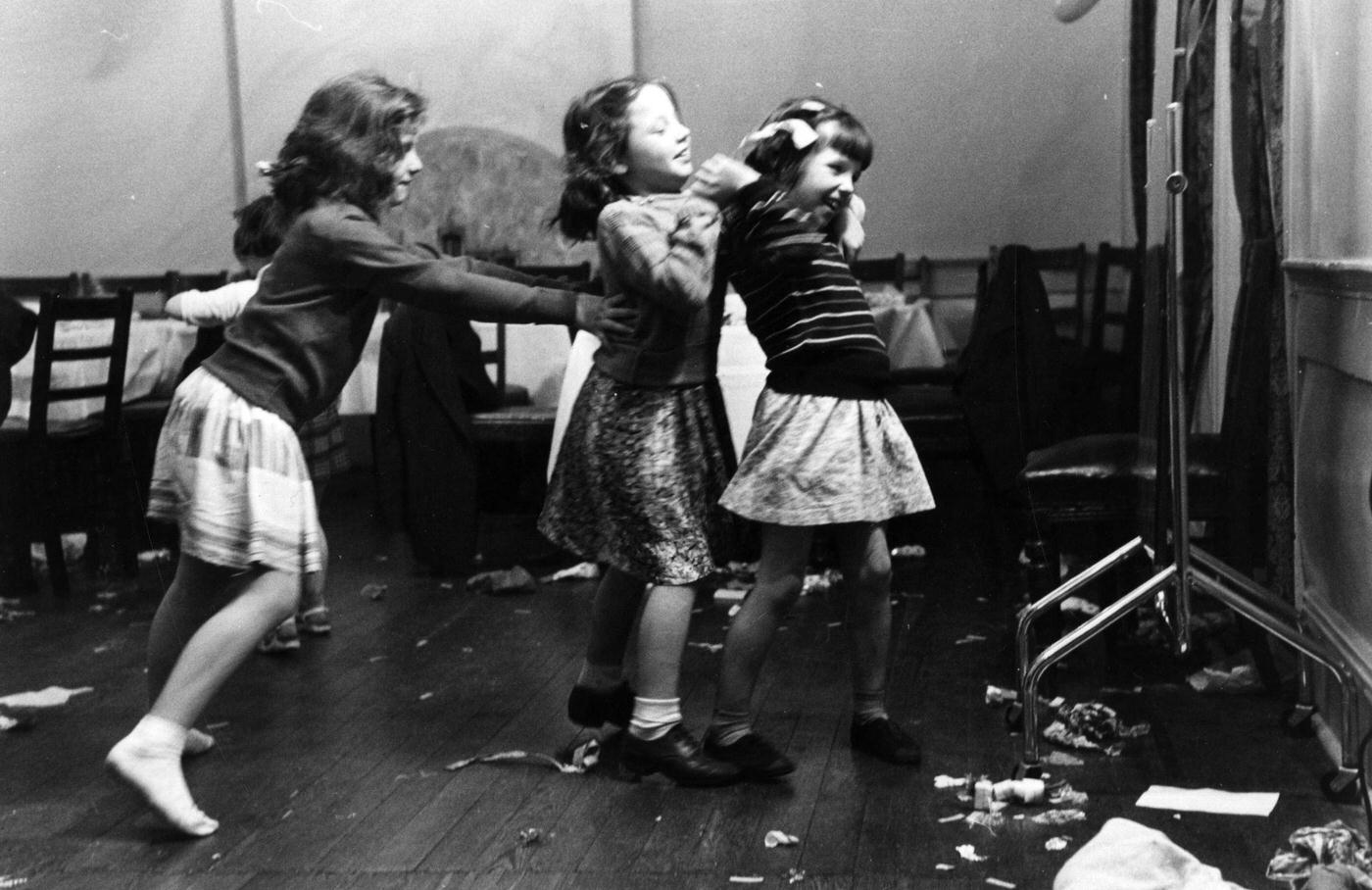
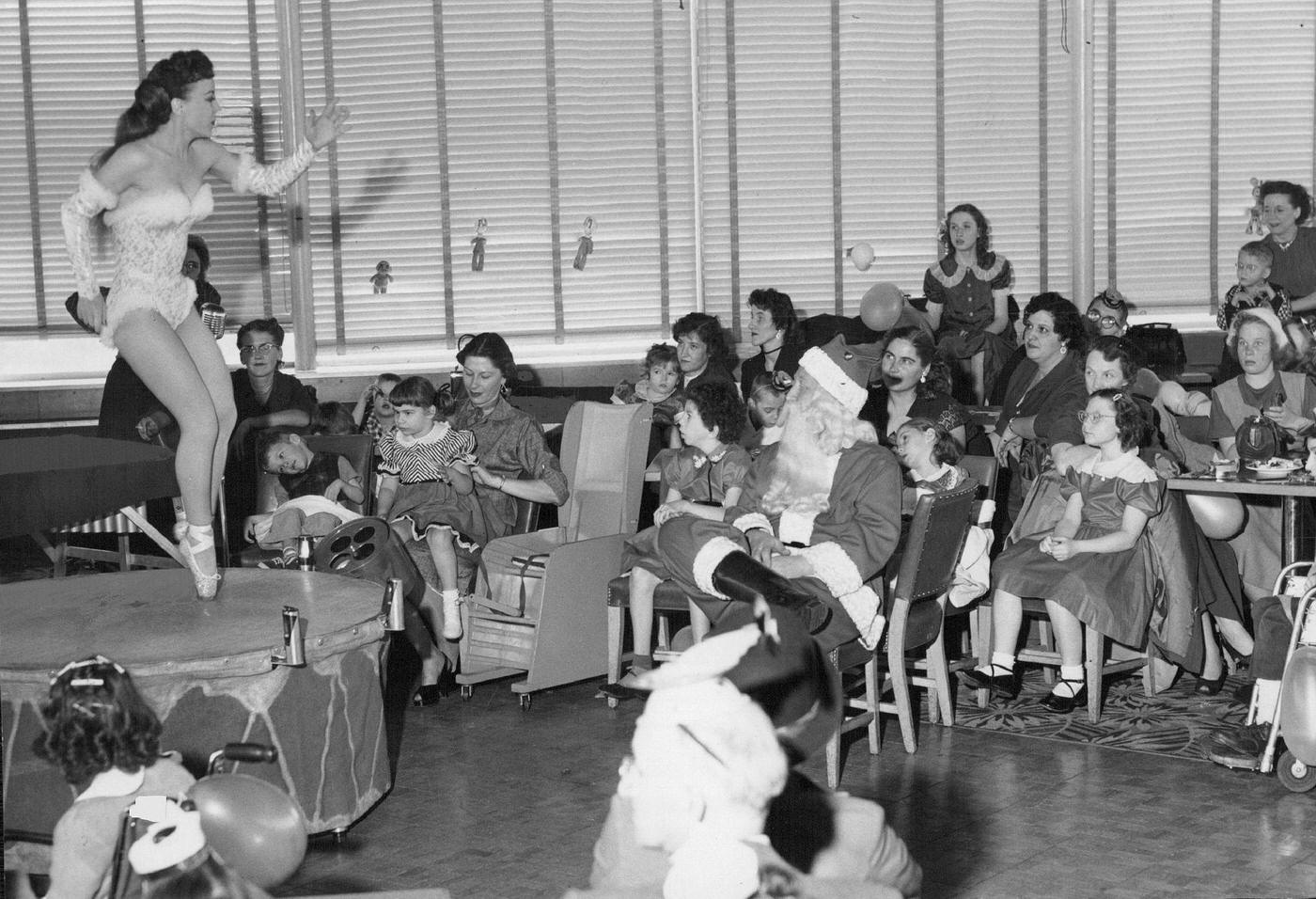
Children’s Christmas parties had their own special energy. Performers like Regina Day tap-danced on a drum to entertain rooms full of young guests, while other events gave children access to food and fun that post-war rationing often made scarce in everyday life.


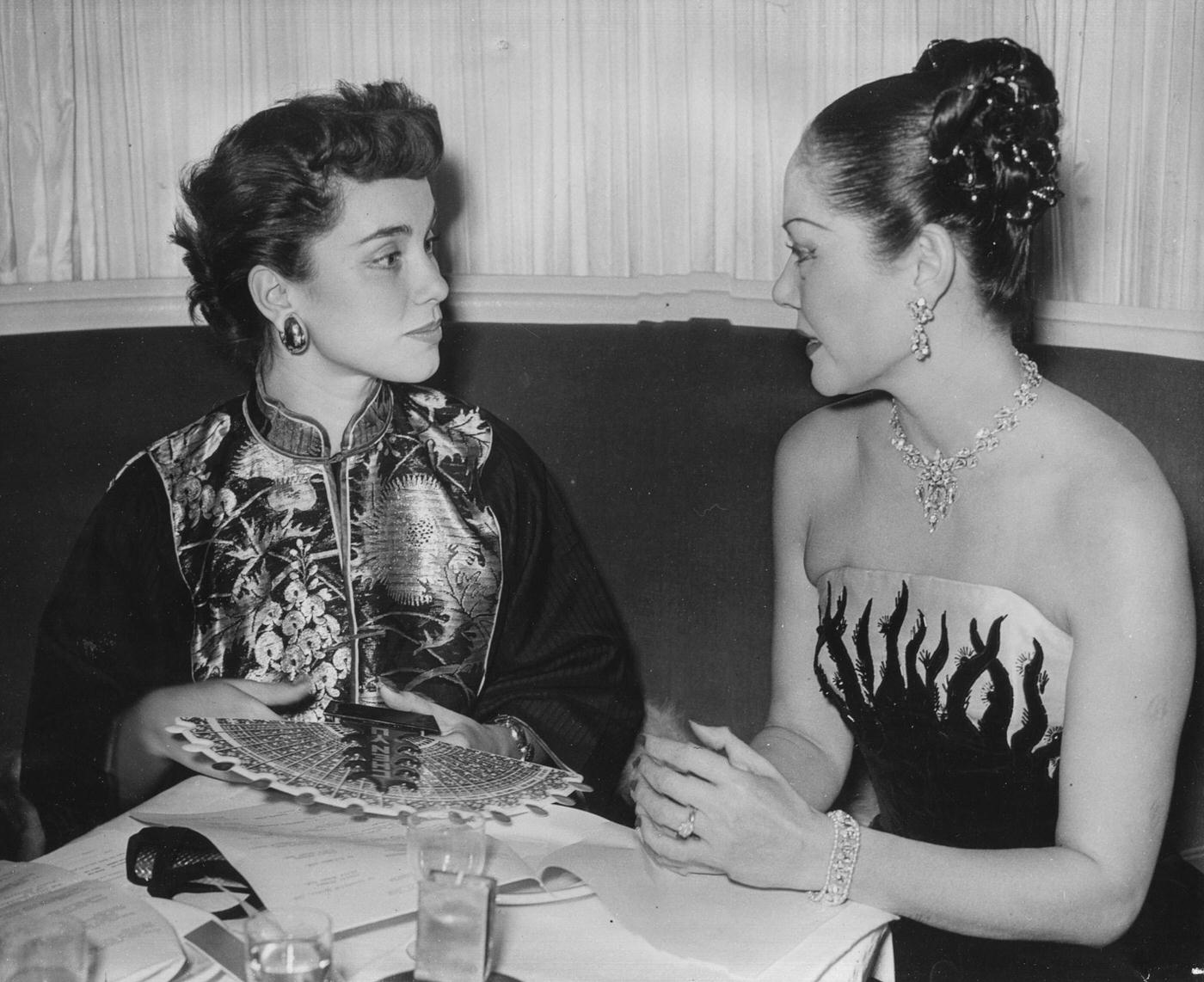
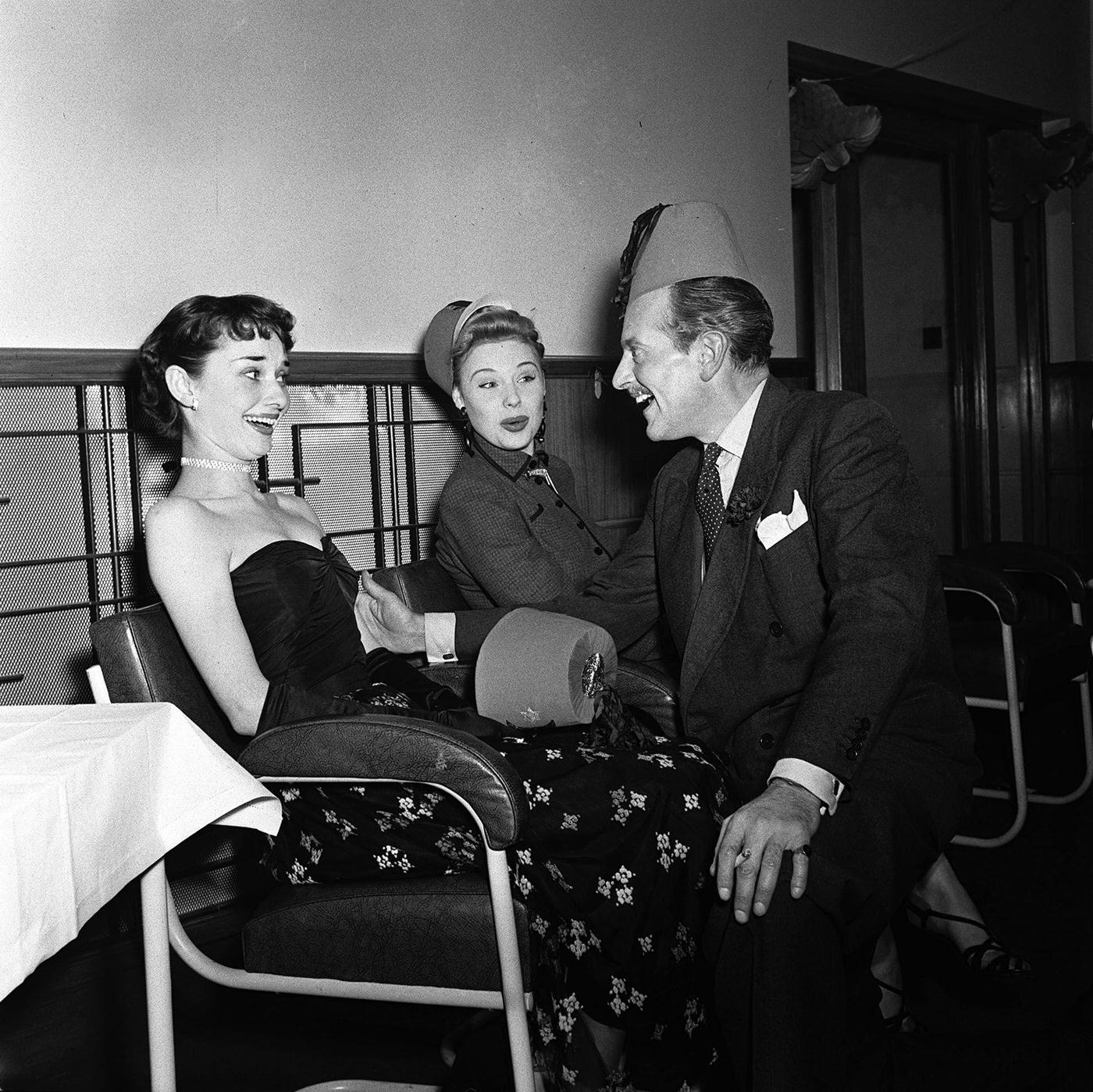
Celebrities and socialites brought their own flair to the season. Actress Linda Christian turned heads at a 1950 London Christmas party hosted by Chen Yu nail lacquers at the Embassy Club, wearing a traditional Chinese jacket. Meanwhile, British stars like Audrey Hepburn and Sandra Dorne were spotted enjoying the festivities alongside actor Guy Middleton — proof that the glamour of 1950s Christmas parties reached Hollywood and beyond.