
Kyiv in the 1970s was a city shaped by Soviet industrial ambition, political control, and rapid physical growth. Machine-building and metalworking had become the backbone of the city’s economy, alongside chemical and mechanical engineering. The Soviet state poured resources into Kyiv’s industrial base while simultaneously tightening its grip on Ukrainian political life. Any challenge to Soviet rule — whether tied to democratic aspirations, Ukrainian self-governance, or ethnic and religious identity — was swiftly and brutally suppressed. These photos capture what daily life looked like beneath that reality: the streets, the seasons, the people, and the landmarks of a city living under a powerful and unrelenting system.
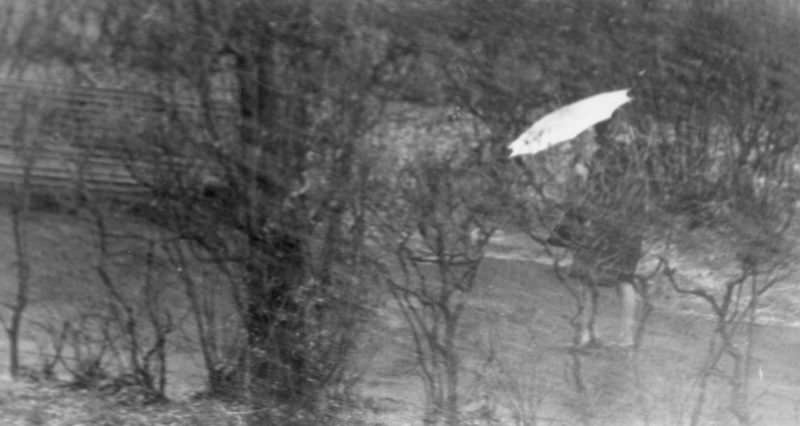
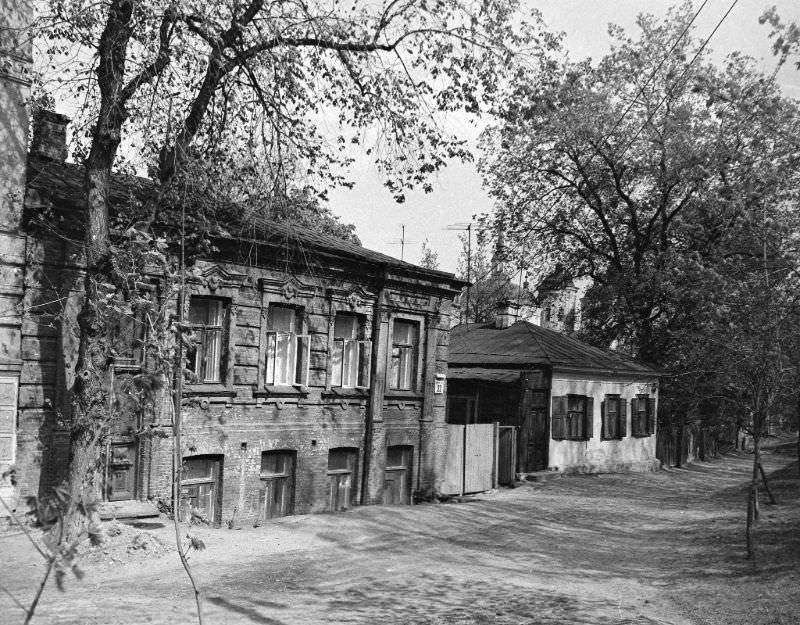
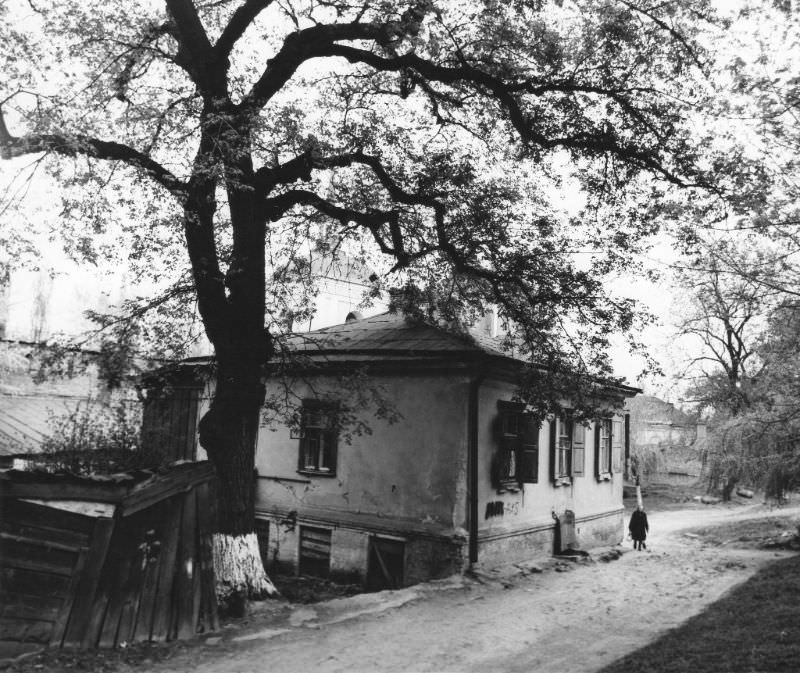
The early part of the decade still carried the visual character of old Kyiv — quiet streets, worn facades, and residents going about their routines. The city’s older neighborhoods retained their pre-Soviet texture, with narrow roads, stone buildings, and the kind of everyday stillness that made a gust of wind or a rainstorm feel like an event worth photographing.
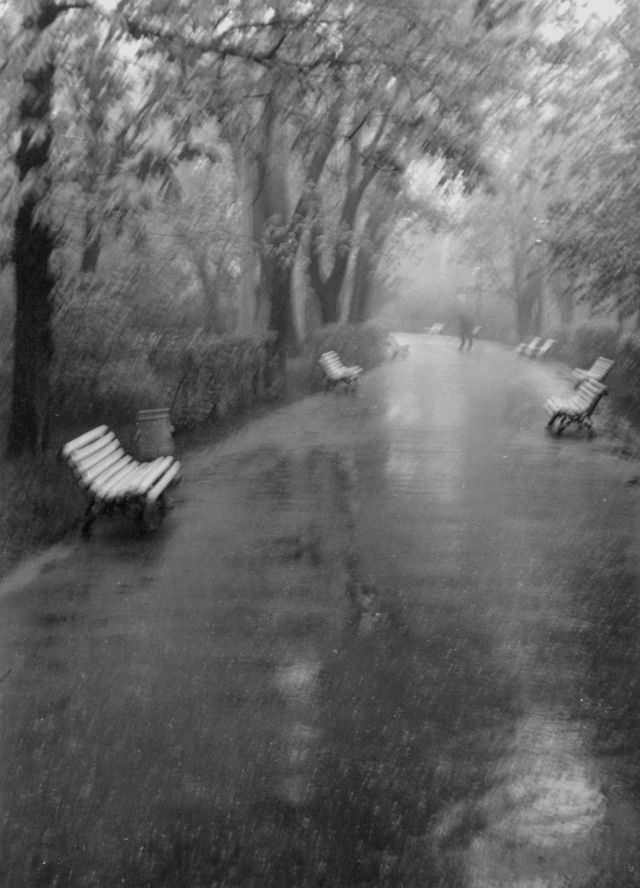
Shevchenko Park, named after Ukraine’s most celebrated poet Taras Shevchenko, was one of the city’s most visited green spaces. Even on rainy days it drew people. The park sat near the heart of the city, close to the university that bore Shevchenko’s name, and it served as a gathering point for students, families, and anyone looking for a break from the urban rhythm around them.
Each year, Soviet citizens across the USSR marked the anniversary of the October Revolution with organized public celebrations. In Kyiv, these events were large, structured affairs — parades, banners, and crowds assembled to demonstrate loyalty to the Soviet state. The 1972 celebrations were no different. Images from those days show the streets filled with people and the visual language of Soviet political life on full display.
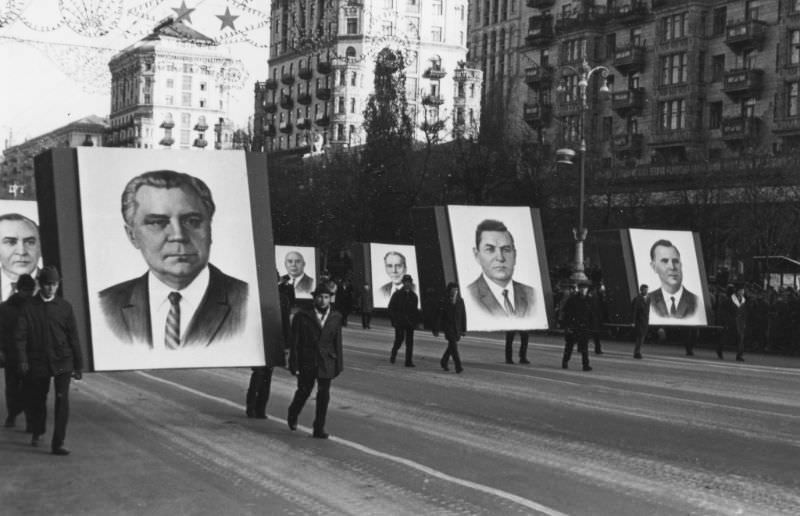
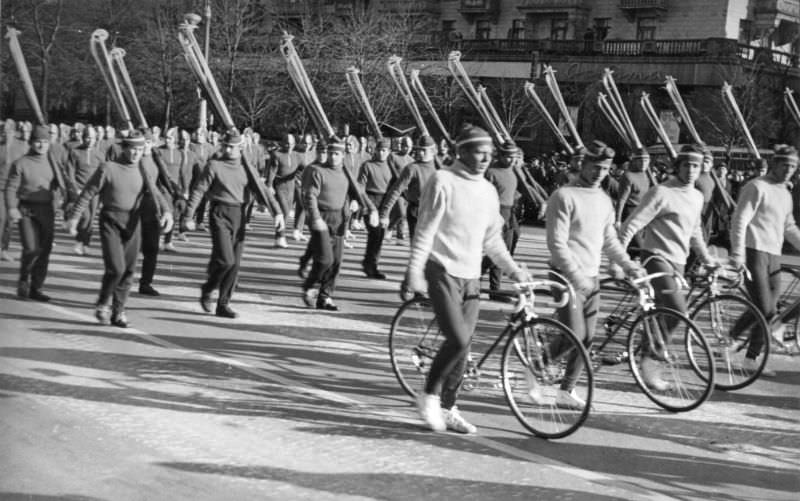
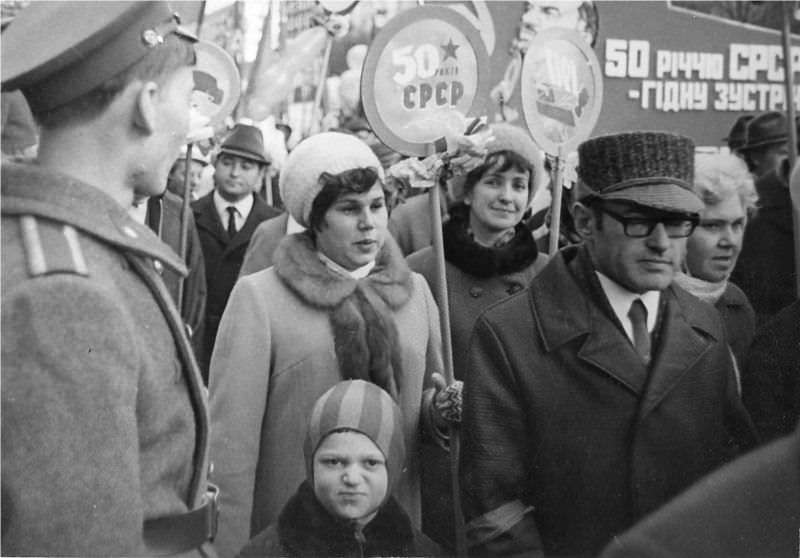
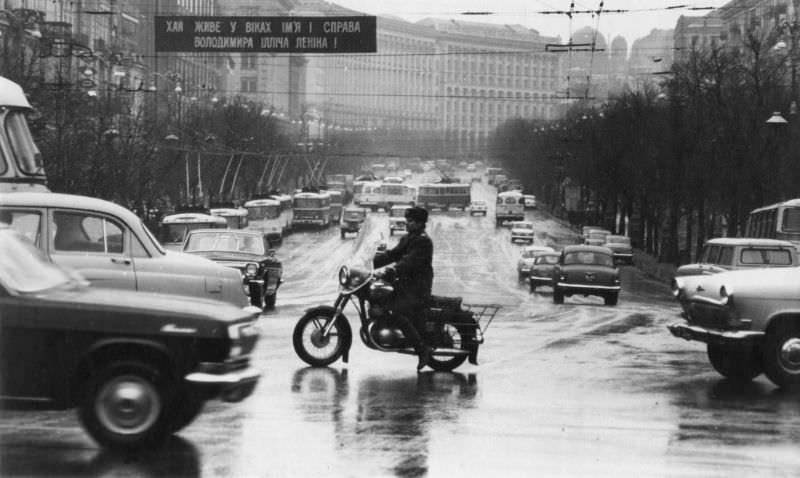
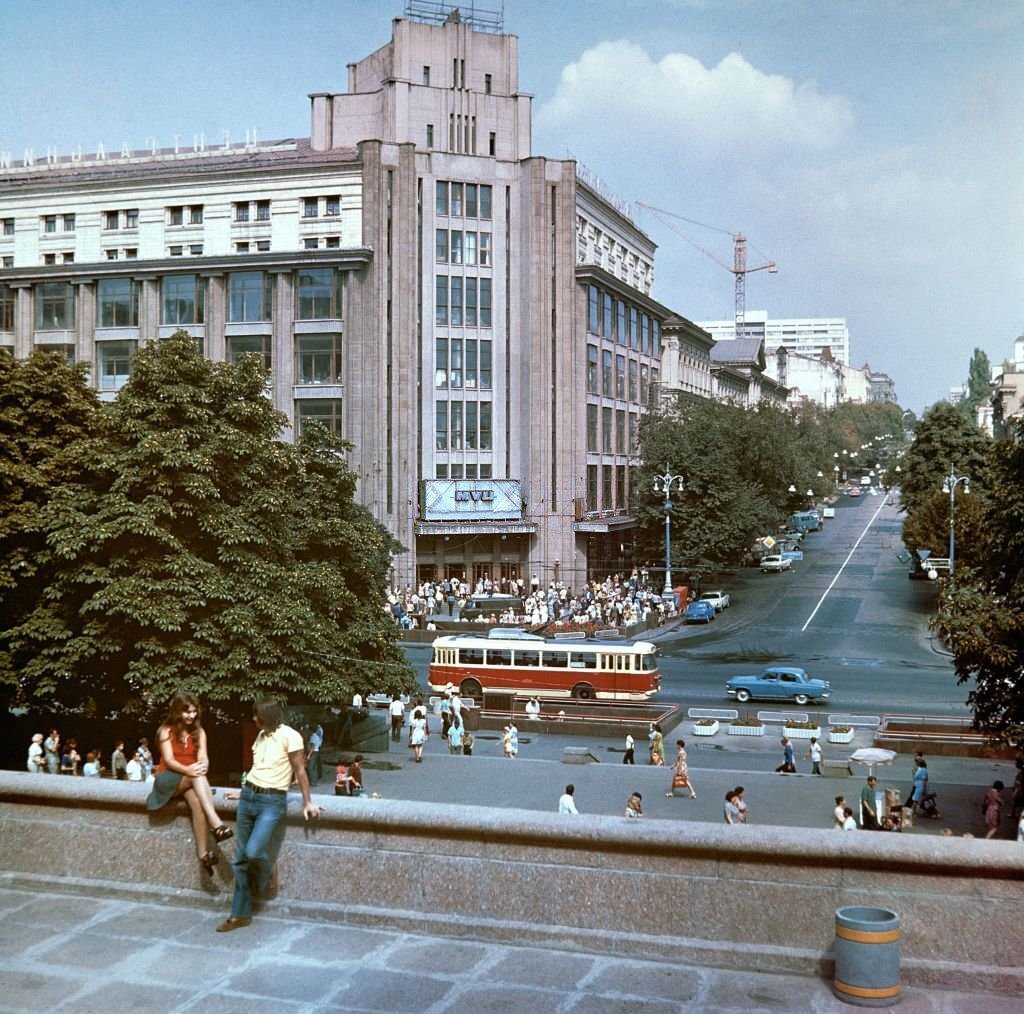
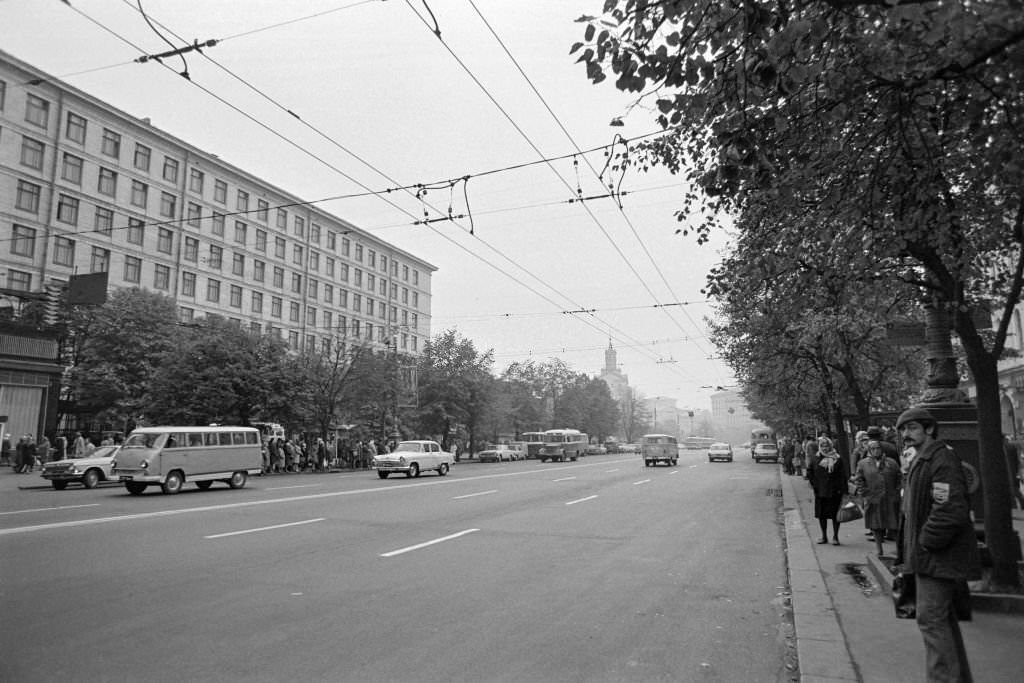
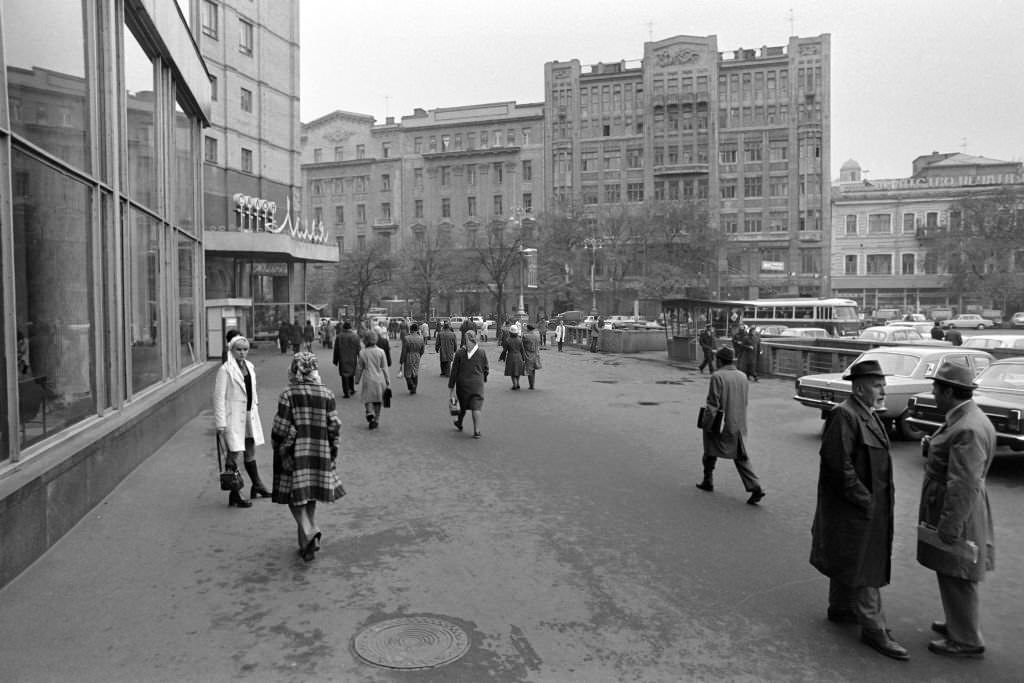
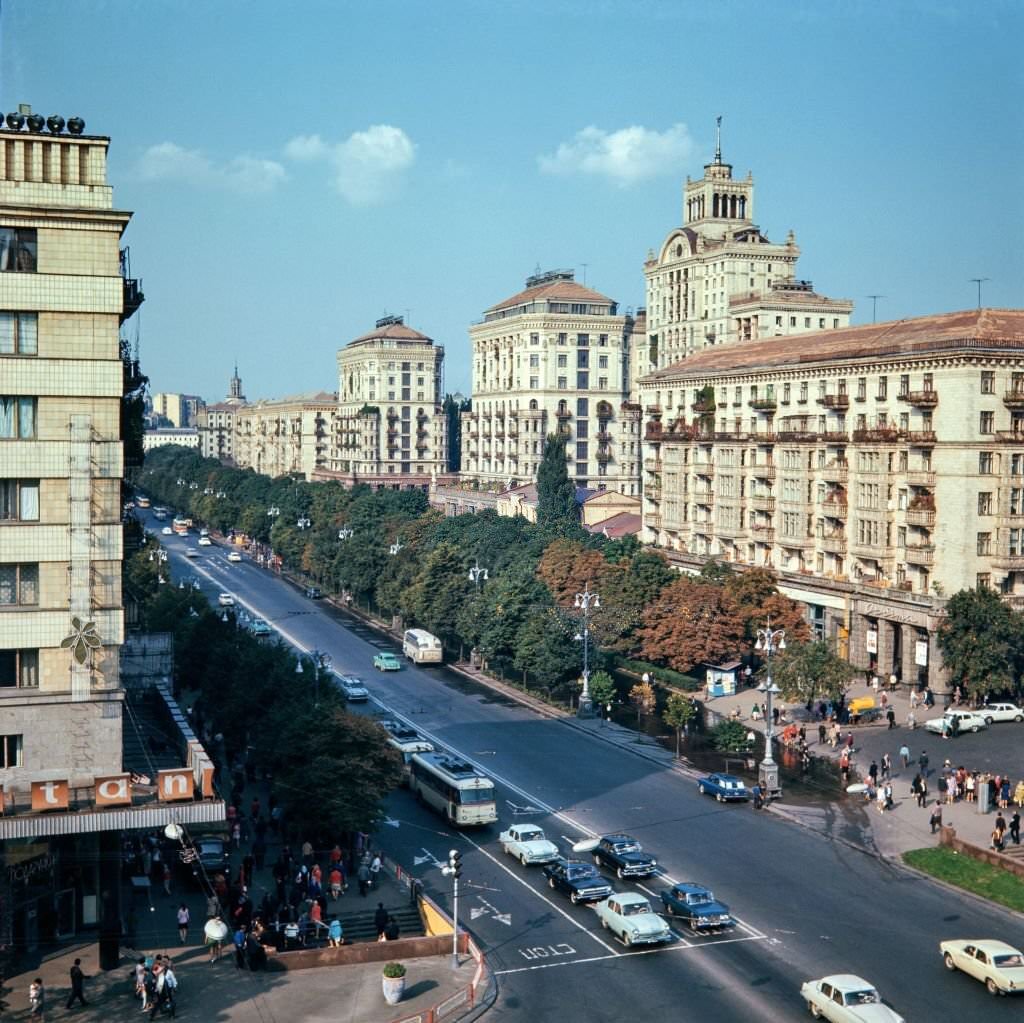
Khreshchatyk Street was the central artery of the city. Wide, tree-lined, and flanked by large Soviet-era buildings, it was where public life played out most visibly. The street hosted parades, served as a shopping destination, and gave the city its most recognizable urban face. By 1972, it was already well-established as the spine of modern Kyiv.
By the mid-1970s, Kyiv’s total housing fund had grown dramatically. In 1950, the city had 6.74 million square meters of housing. By 1981, that number would reach 33.6 million square meters. Much of this growth happened on the city’s outskirts, where villages to the west, east, and north were absorbed and replaced by large apartment complexes. These new suburbs defined the lived experience of thousands of Kyiv residents throughout the decade.
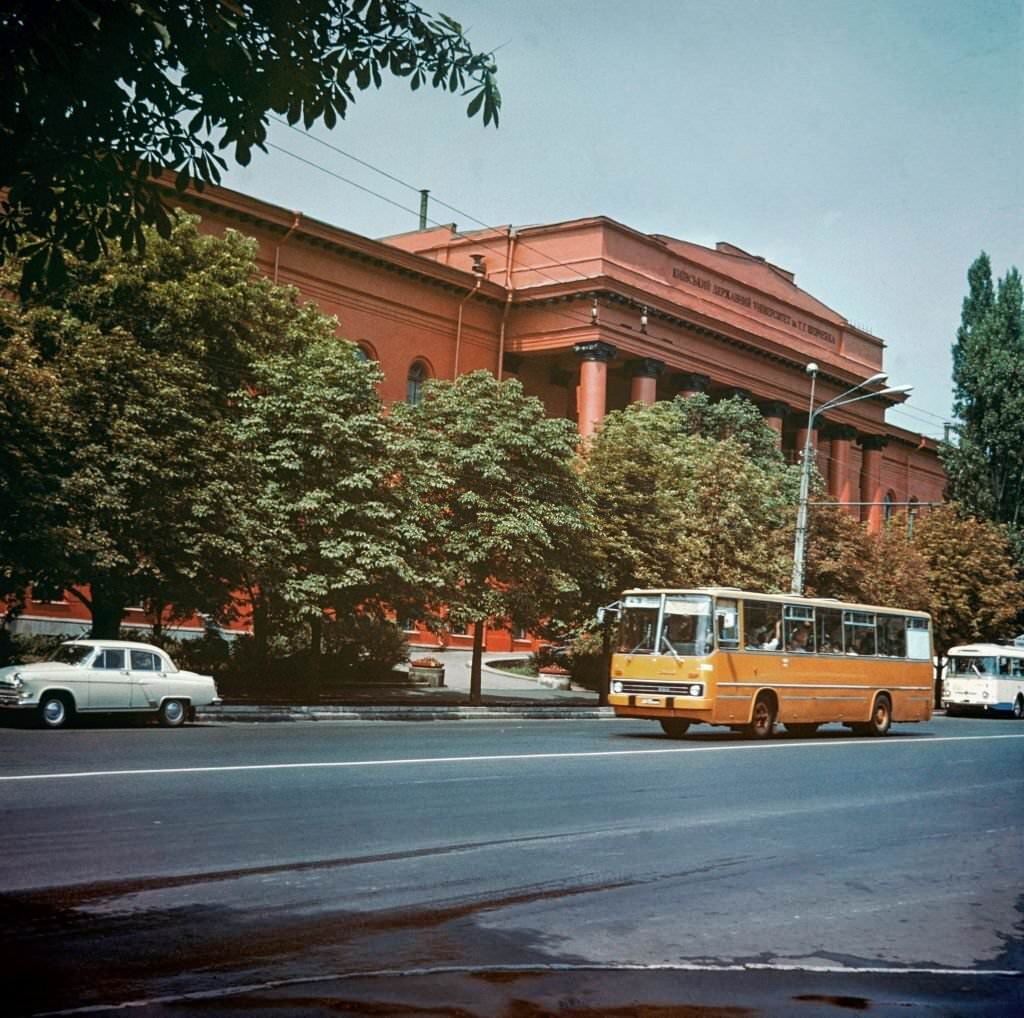
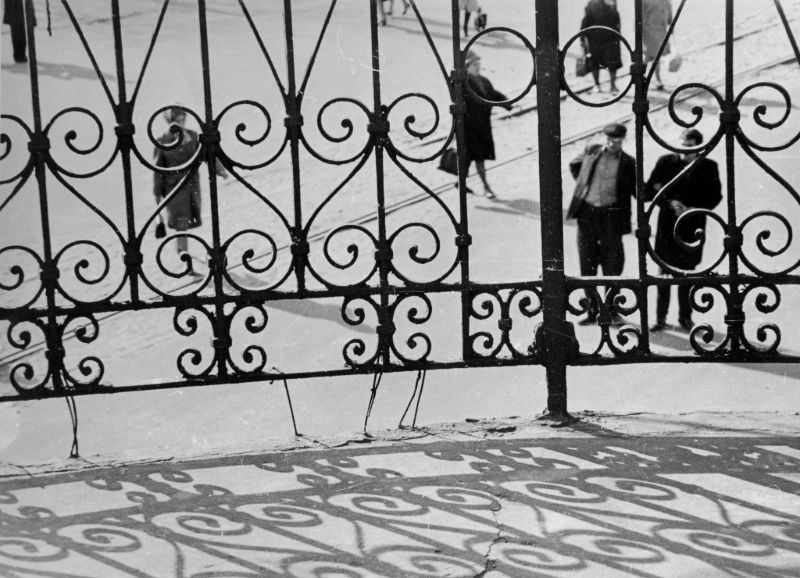
Taras Shevchenko National University stood as one of the most recognizable institutions in the city. Its red main building, set back behind an iron fence and fronted by a statue of Shevchenko himself, was a landmark of both education and Ukrainian cultural identity — even within a Soviet system that worked hard to suppress that identity. The university trained engineers, scientists, teachers, and lawyers who went on to serve the Soviet state, often whether they wanted to or not.
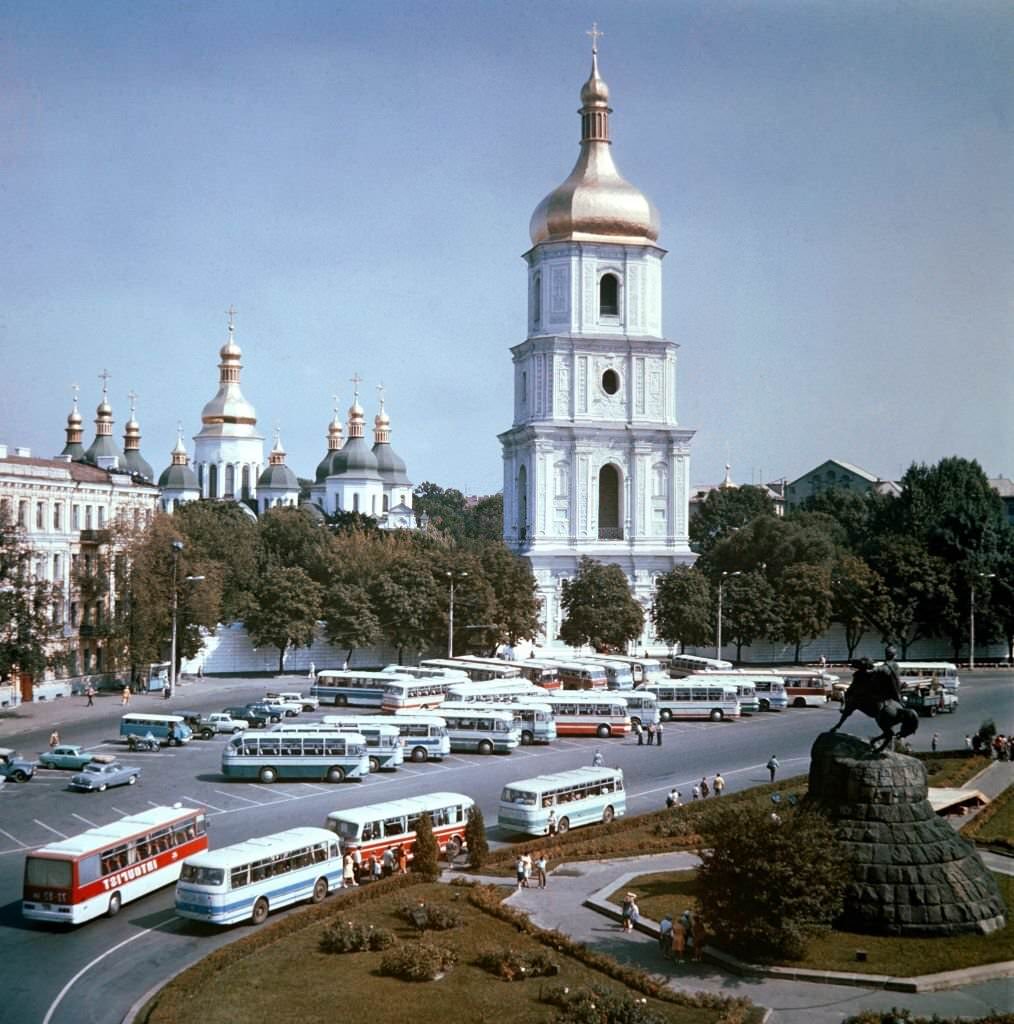
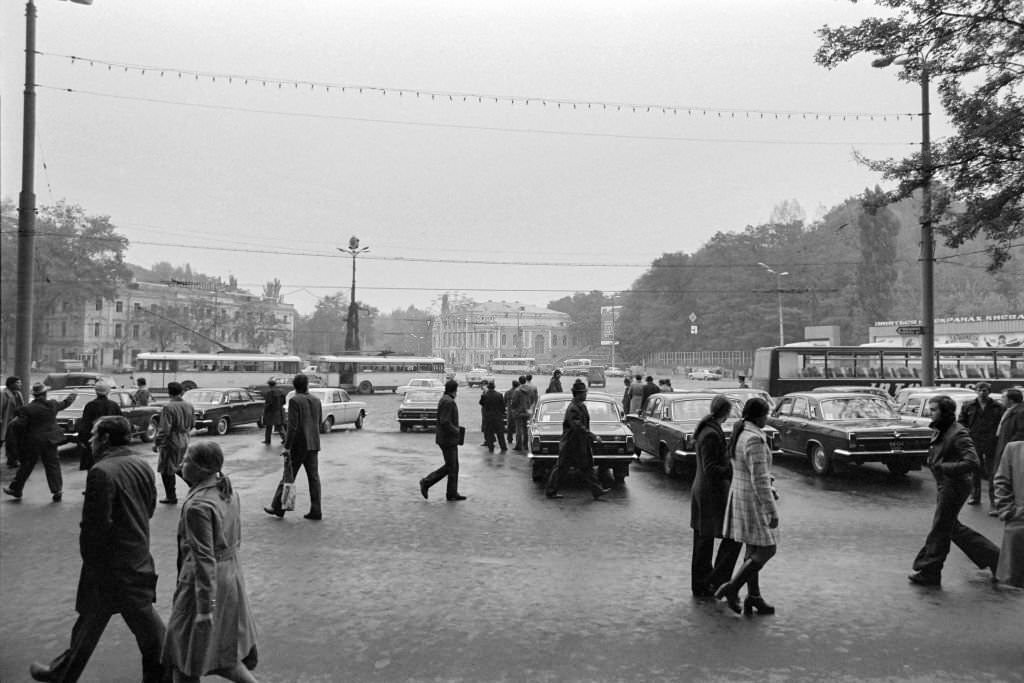
The monument to Bohdan Khmelnytsky stood in the center of Sophia Square, directly in front of the Saint Sophia Cathedral. Khmelnytsky was the 17th-century Cossack Hetman who led Ukrainian forces in a major uprising against Polish rule. The Soviet state kept his statue prominent, in part because of the political narrative it served — his 1654 agreement with Russia was framed as a voluntary union of Ukrainian and Russian peoples. For many Ukrainians, the truth of that history was far more complicated.
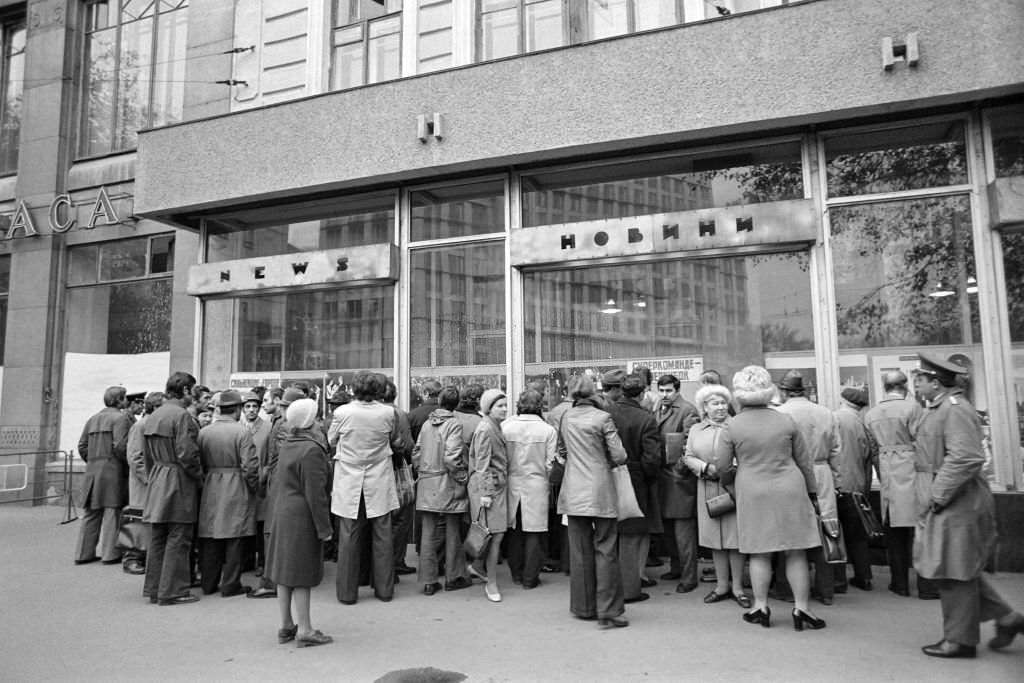
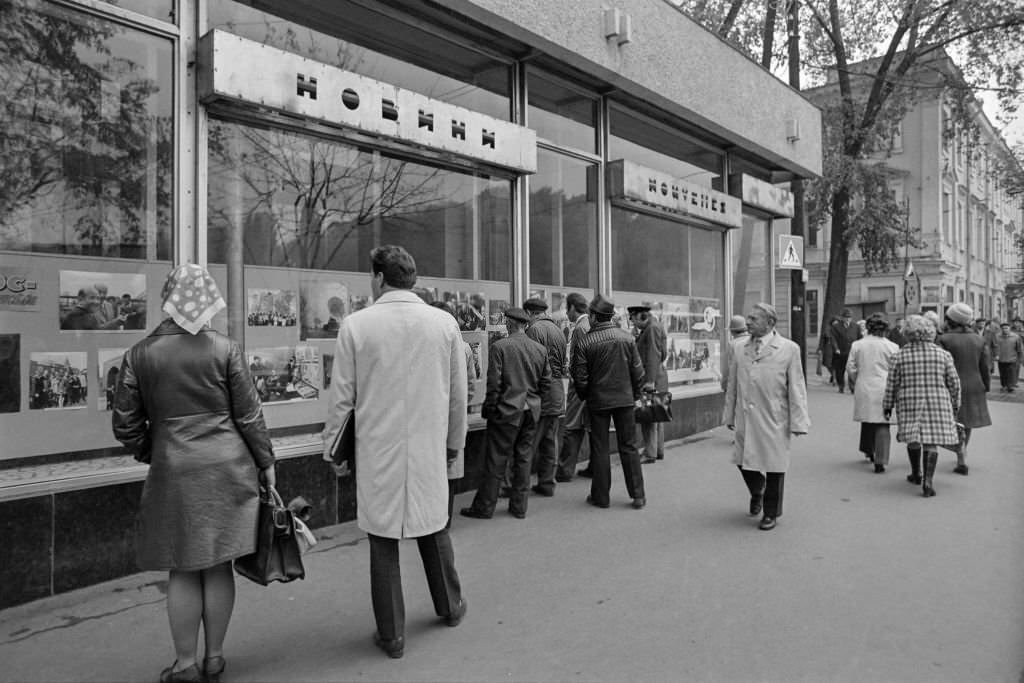
On October 18, 1975, crowds gathered along Khreshchatyk Street to read news posted in shop windows. This was a common practice in Soviet cities — news displays mounted behind glass served as public information boards, drawing groups of people who stopped to read together on their way to work or home. The scene repeated daily, a small ritual of Soviet urban life.
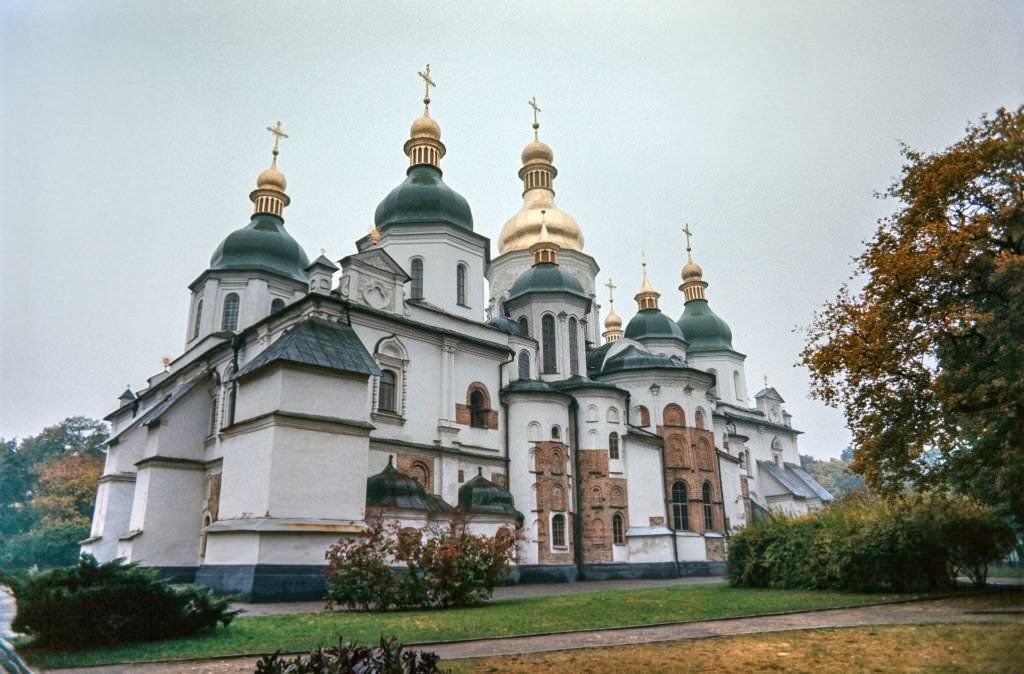
Saint Sophia Cathedral was one of the oldest and most important religious and architectural sites in Kyiv. Built in the 11th century, it survived both the Mongol invasion and World War II, and by the Soviet era it had been converted into a museum and architectural reserve. Religion itself was suppressed under Soviet policy, but the cathedral’s cultural and historical value kept it standing and maintained.
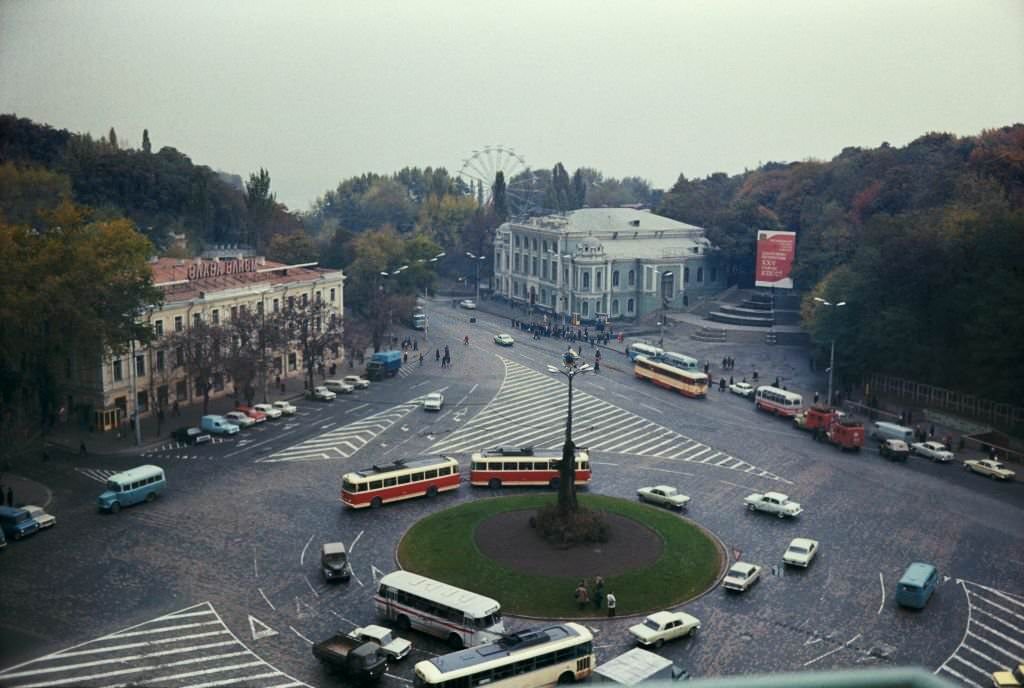
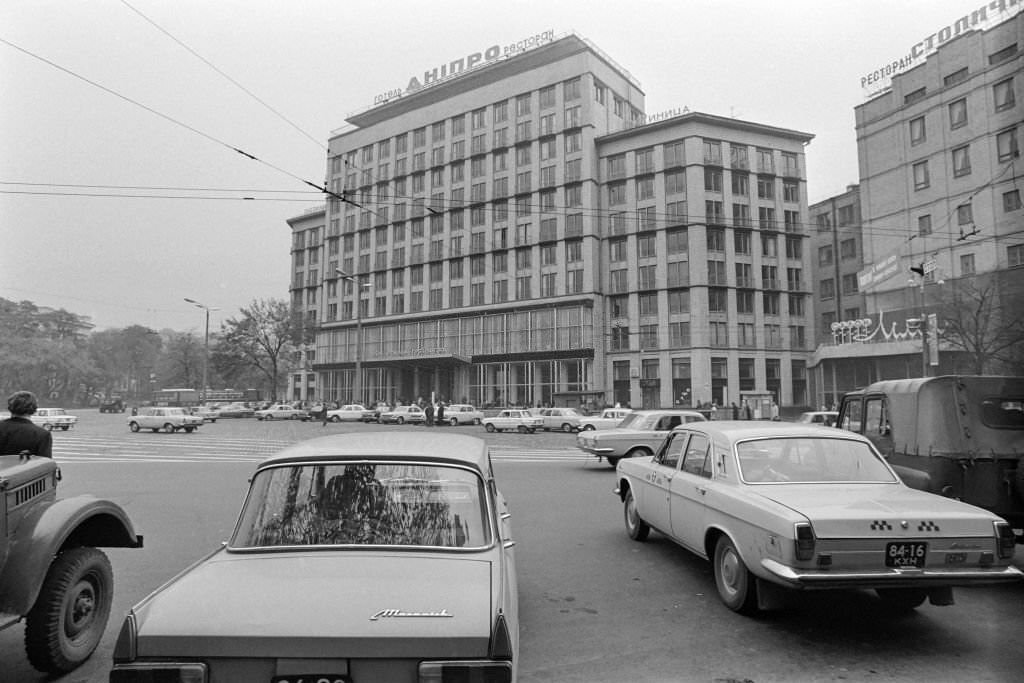
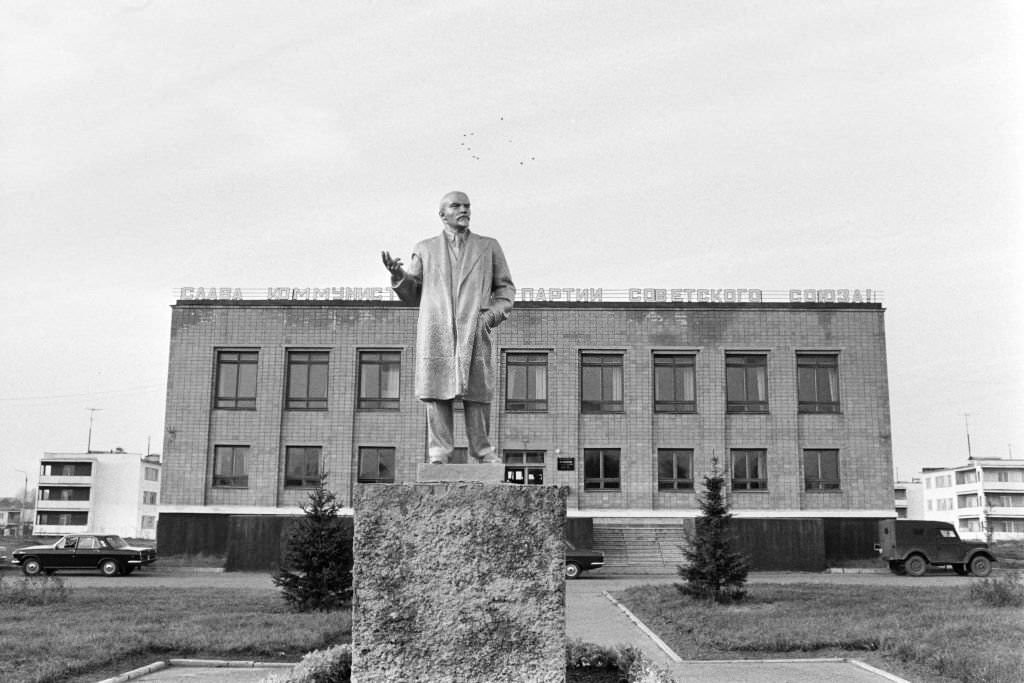
The Hotel Dnipro, located near the intersection of Khreshchatyk Street and the park above the Dnieper River, was one of the city’s most prominent hotels. It hosted foreign visitors, journalists, and delegates traveling through Soviet Kyiv. Its position near Khreshchatyi Park gave it a commanding view over the river valley below. Alongside the Lenin statue standing guard in front of a Communist Party building nearby, these landmarks defined what the Soviet version of Kyiv looked like to the outside world.
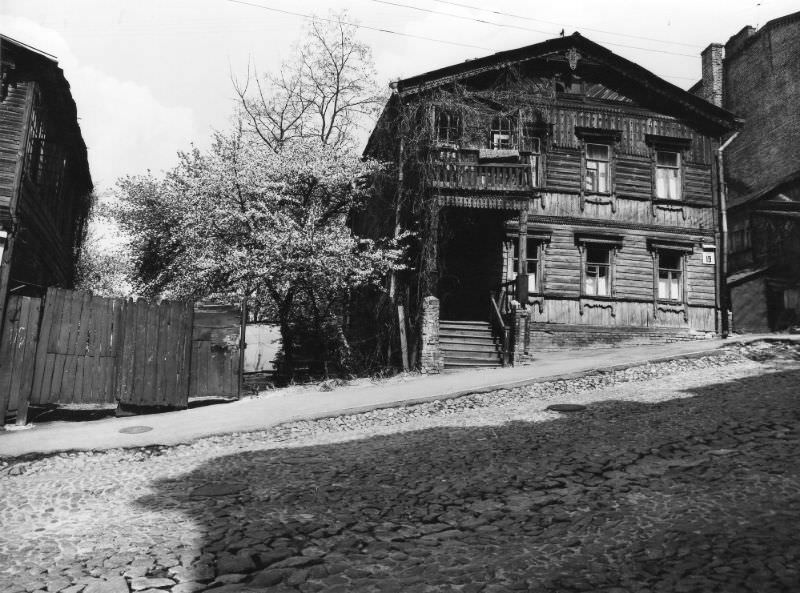
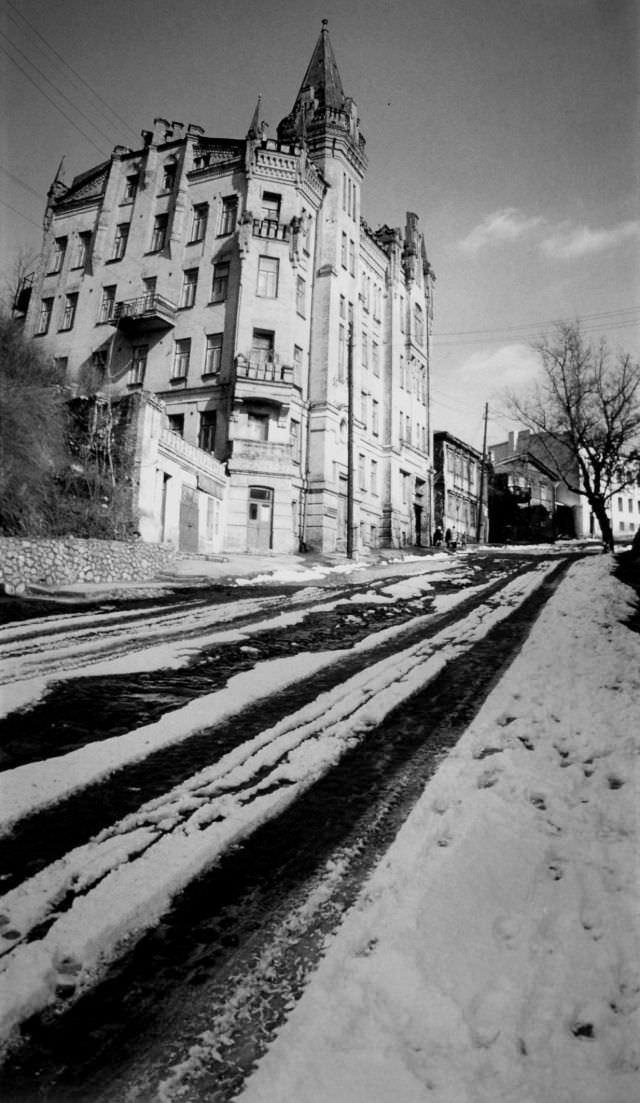
Away from the main boulevards, Kyiv’s older districts offered a very different atmosphere. Andriyivskyy Descent — known in these photos as Andreev Slope — was one of the most historic streets in the city. Winding downhill from the old upper city toward Podil, the lower district near the river, it was lined with old buildings, small shops, and artists’ studios. The street was associated with the writer Mikhail Bulgakov, who spent part of his youth in a house along its route.
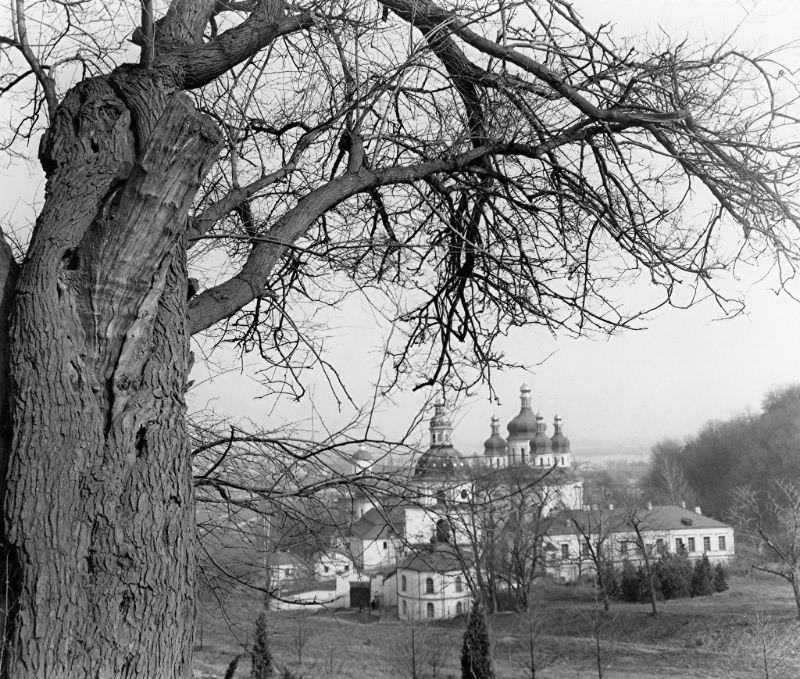
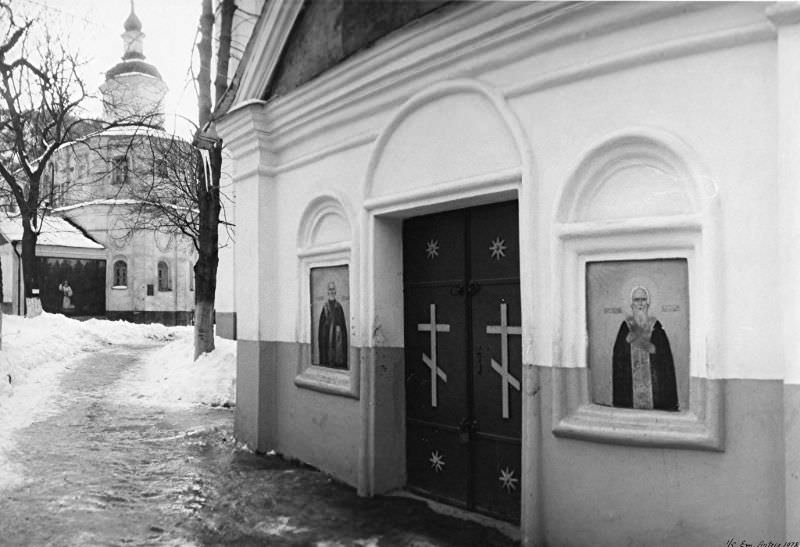
The Vydubychi Monastery, sometimes referred to in period sources as the Georgeev Monastery, was one of the oldest monastic complexes in the city. Situated along the eastern bank of the Dnieper, it had stood since the 11th century. Like Saint Sophia, it was maintained as a cultural and architectural site rather than an active place of worship under Soviet administration.
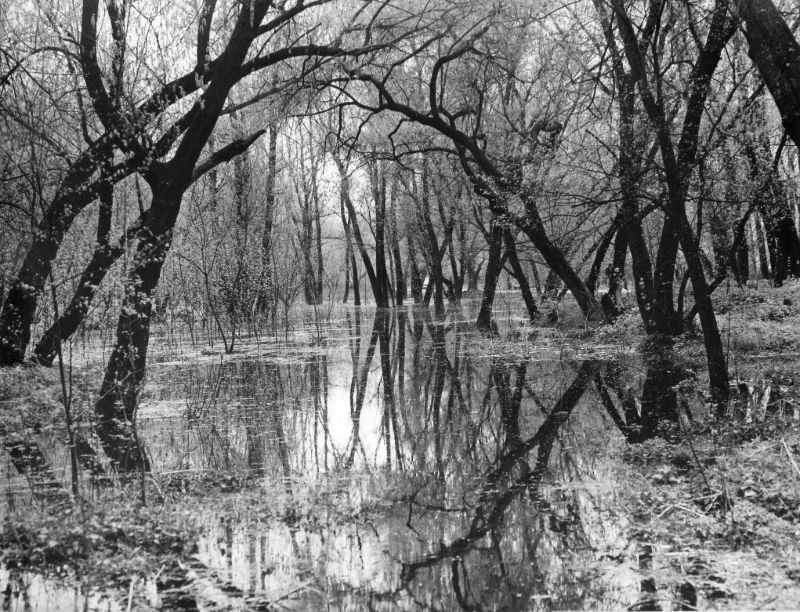
The Golden Gates were among the most significant archaeological remains in the city. Originally built in the 11th century under Yaroslav the Wise, they served as the main entrance to medieval Kyiv. By the 1970s, what remained were partial ruins — stone and brick foundations that archaeologists and historians had studied for decades. A protective structure was later built over and around them to preserve what survived.
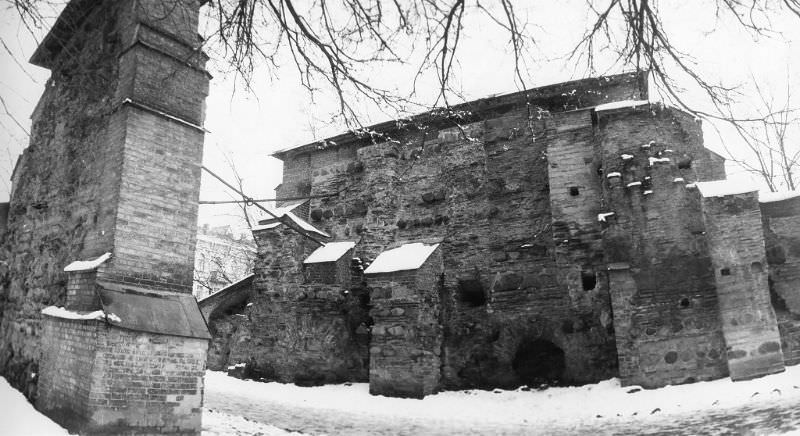
Kyiv’s football club, Dynamo Kyiv, was one of the most successful sides in Soviet football throughout the 1970s. The club competed at the highest levels of European competition and faced top clubs like Borussia Mönchengladbach in the UEFA Cup. Matches like these brought the city’s name to a continental audience well beyond the reach of Soviet media.
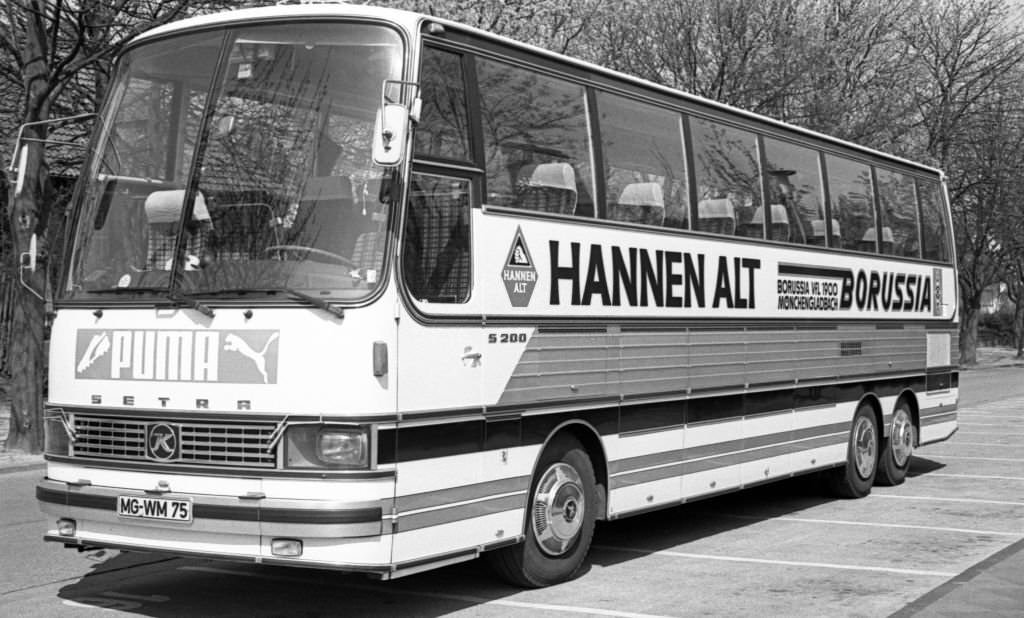
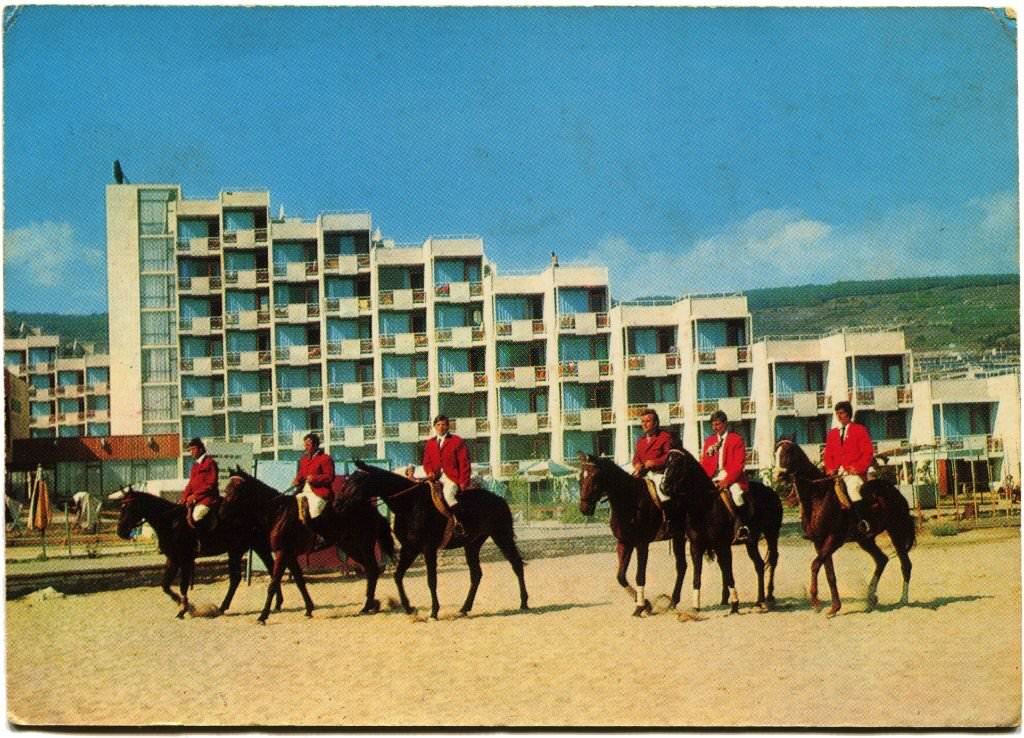
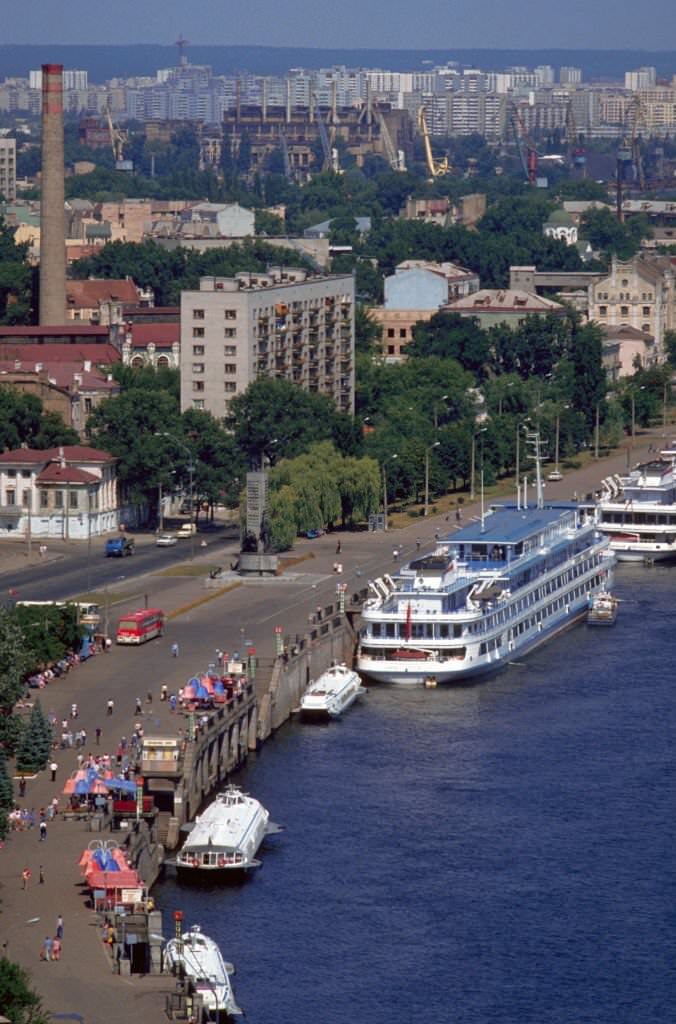
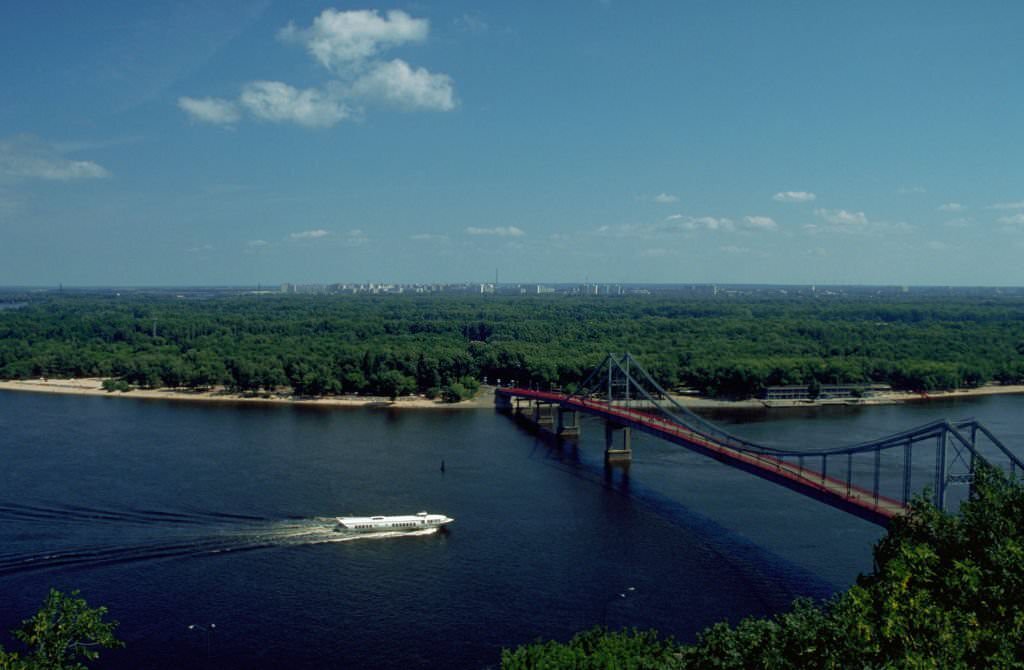
The Dnieper River ran through the heart of Kyiv, and its banks were a constant part of everyday life. Boats and barges moved along the water, which served both commercial and recreational purposes. Upstream and downstream from the city, the river wound through stretches of forest and wetland, giving the region a natural landscape that stood in sharp contrast to the Soviet concrete spreading across the city’s newer neighborhoods.





Who holds the copyright to these photos?