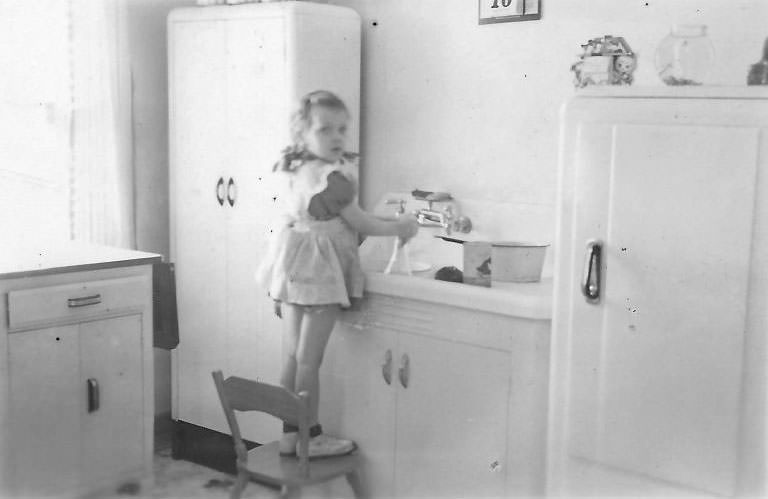
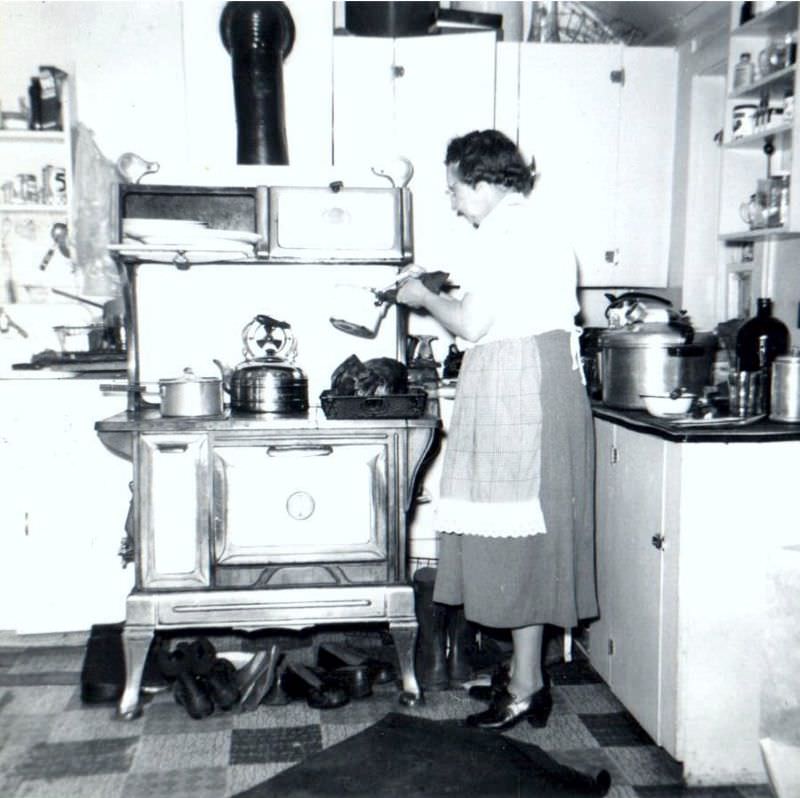
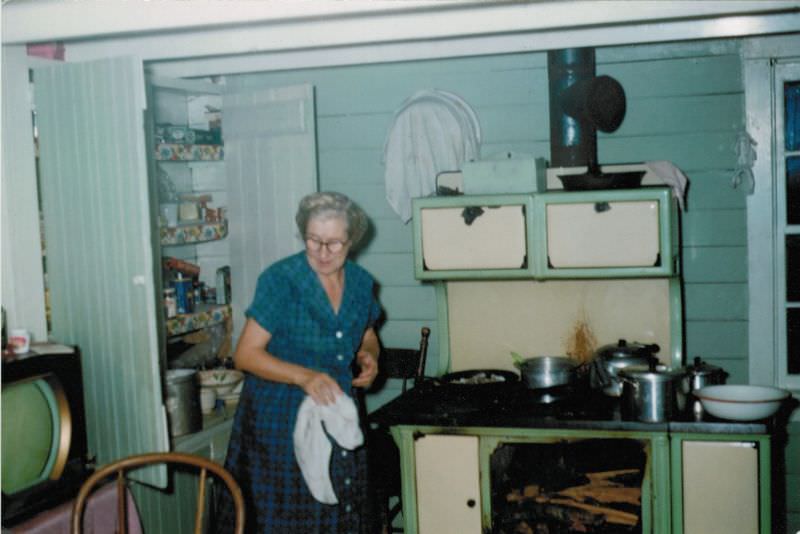
When World War II ended, American life shifted fast. Soldiers came home, and families turned their attention to building comfortable lives. Suburbs expanded at a record pace, with new homes going up block after block. At the center of each one was the kitchen — the most-used room in the house and the one families invested in most.
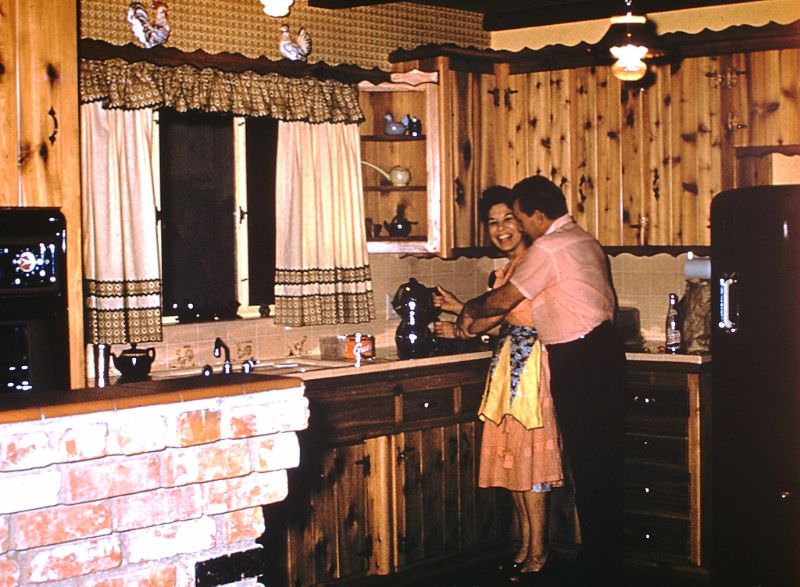
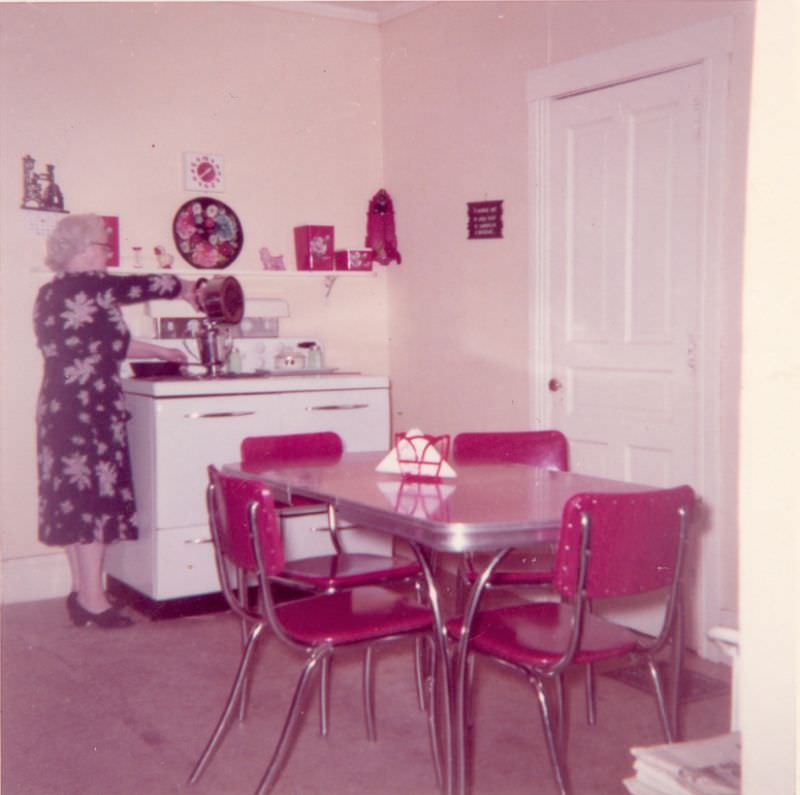
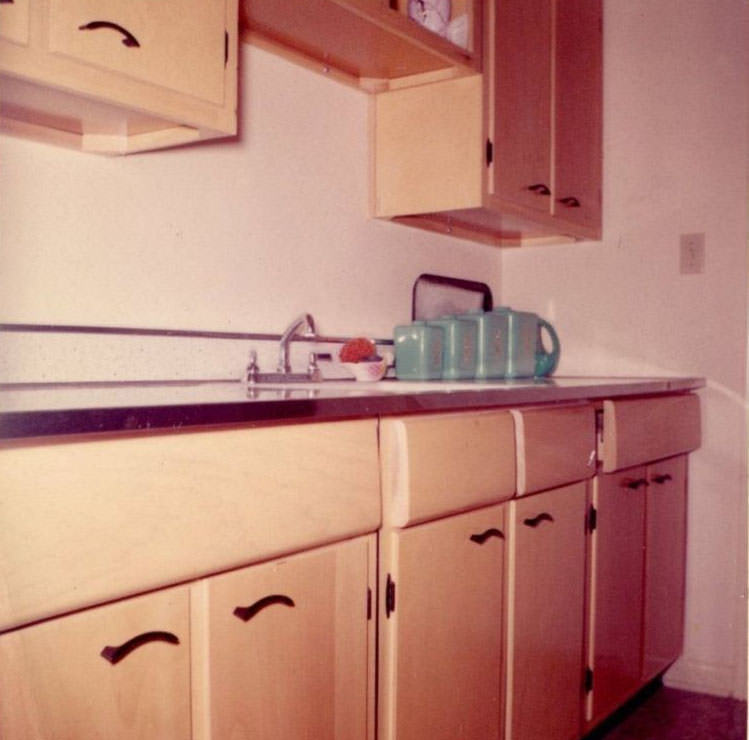
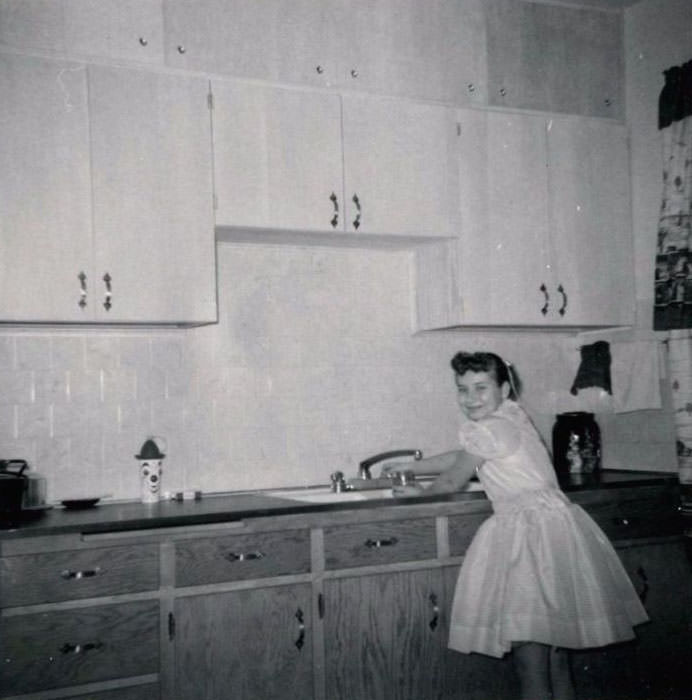
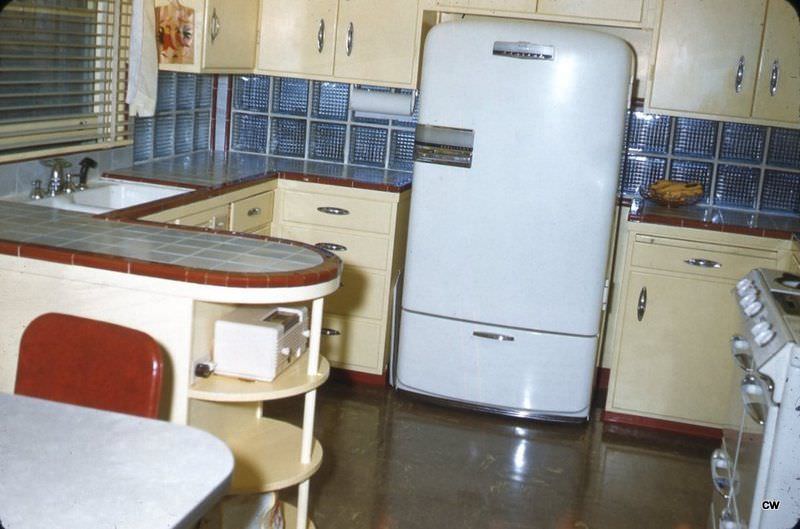
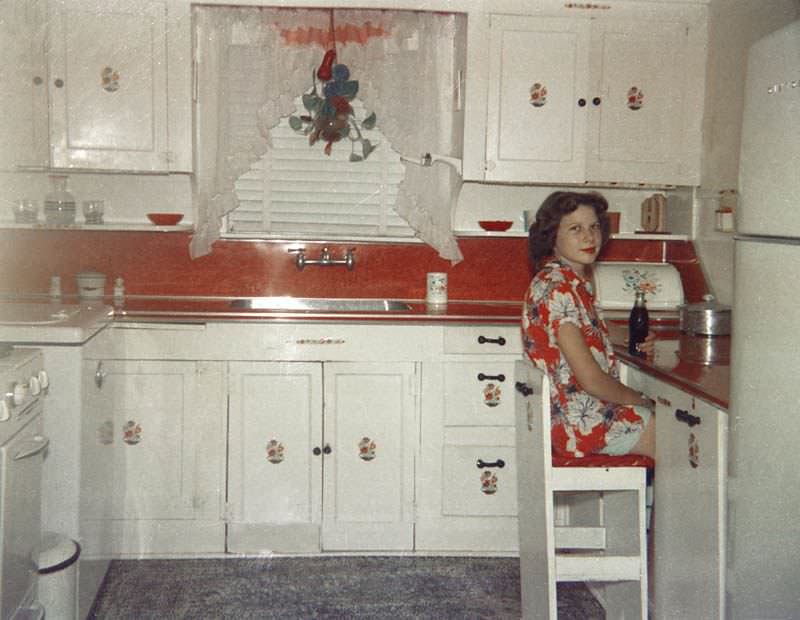
One of the biggest material shifts in postwar kitchens was the rise of steel cabinets. During the war, American factories had been running around the clock producing weapons and military equipment. Once the war ended, those same manufacturers redirected their steel production toward home goods. Steel kitchen cabinets became a practical symbol of that transition — durable, easy to clean, and modern-looking.

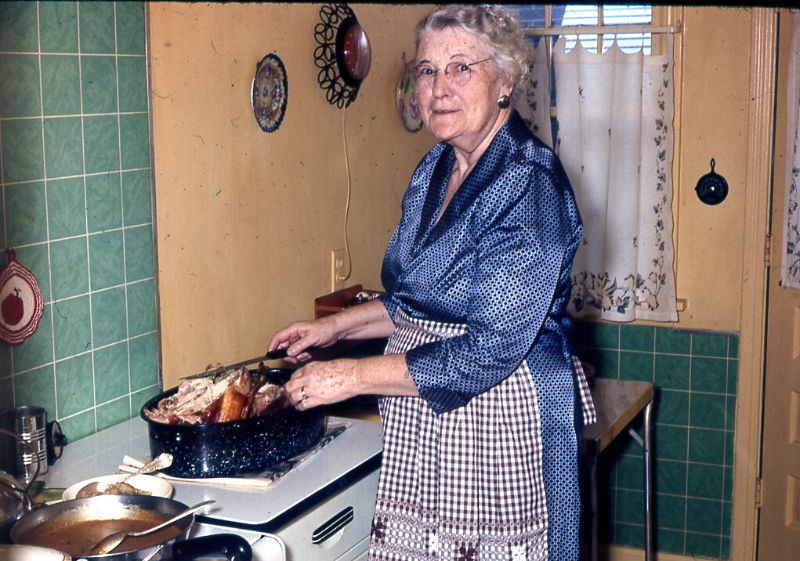
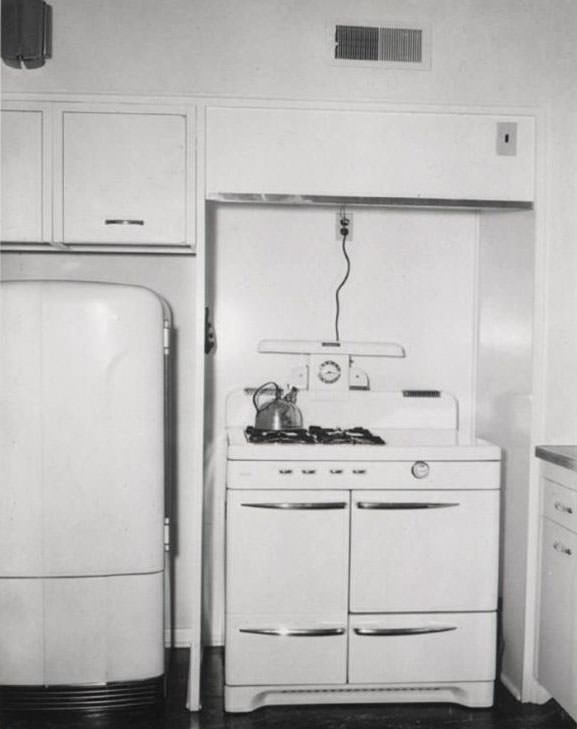
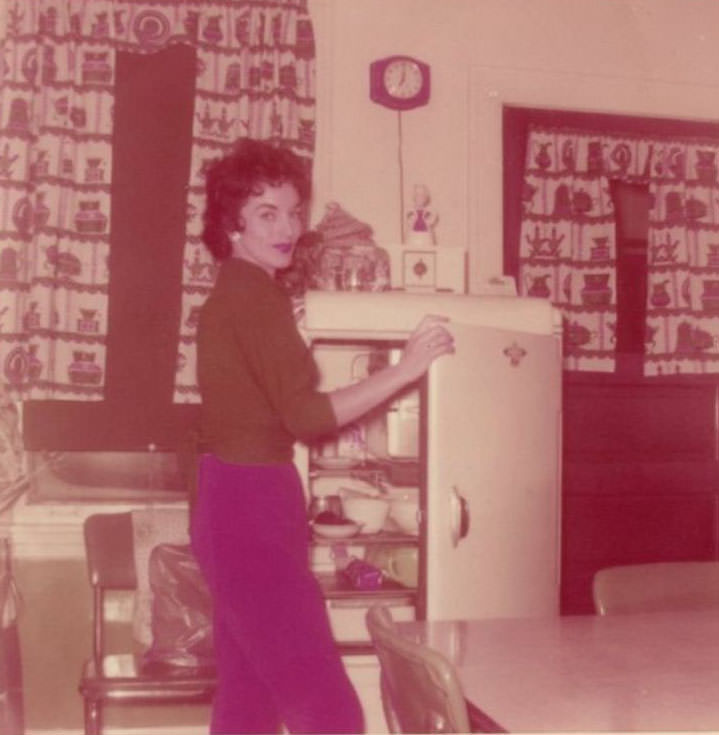
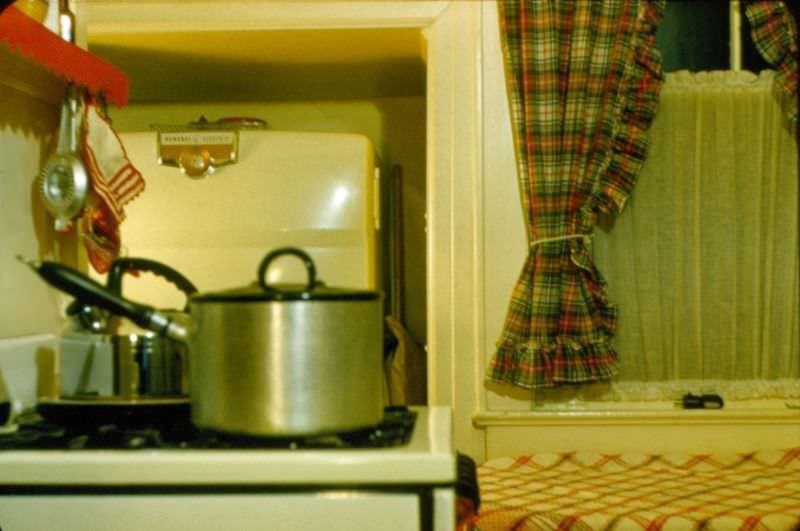
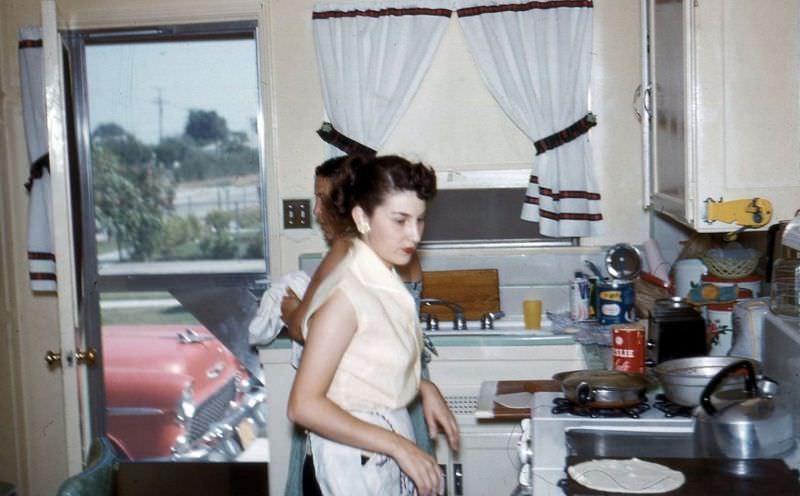
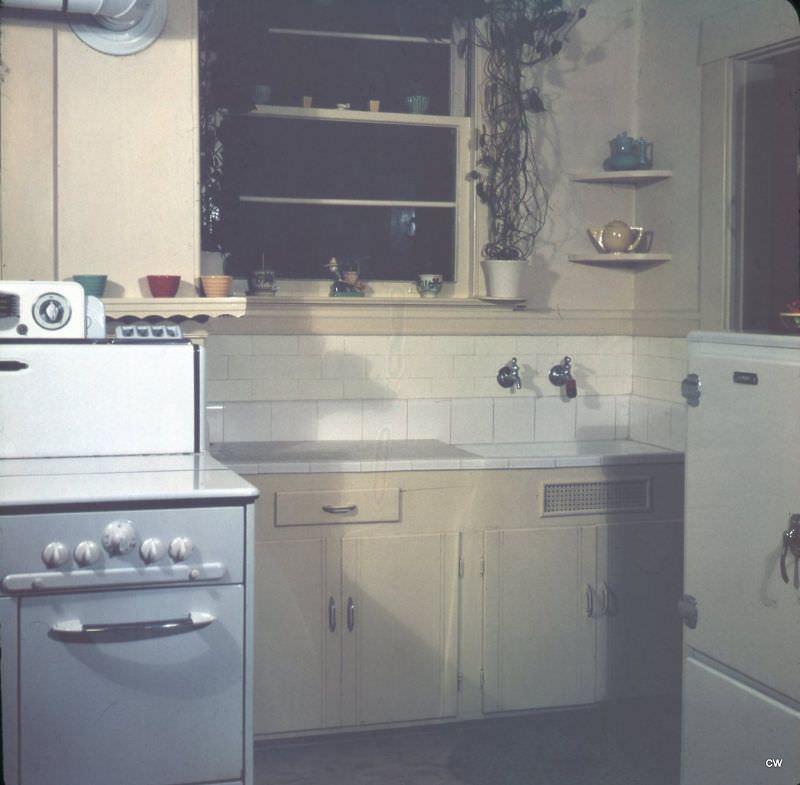
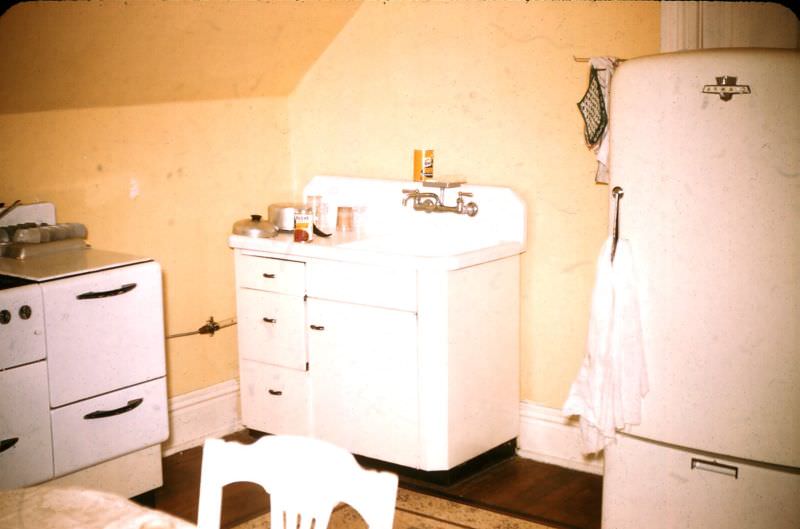
Color was a major part of the 1950s kitchen identity. Earlier decades had leaned on bold, saturated tones, but the ’50s moved in a different direction. Soft shades took over — pale pink, powder blue, and light yellow became the go-to choices for cabinets, appliances, and wall tiles. Matching sets were popular, where the refrigerator, stove, and cabinets all shared the same pastel shade.

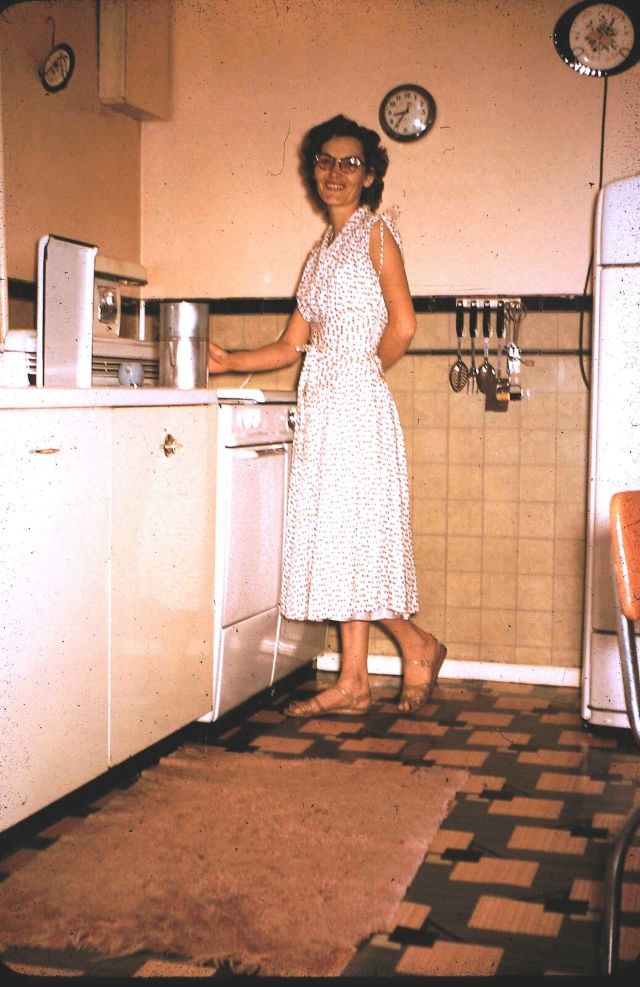
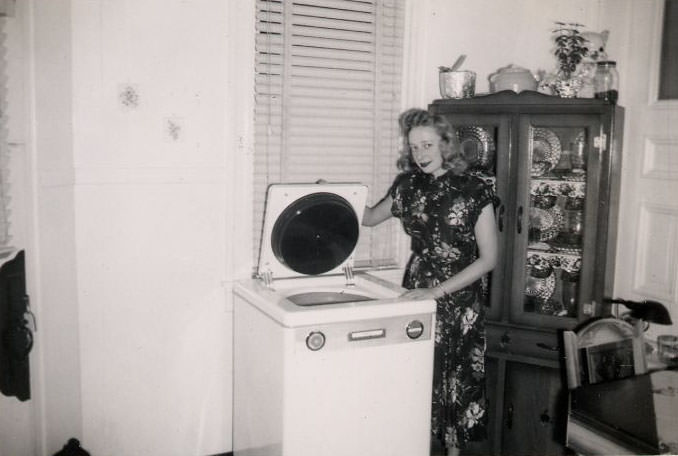
The dishwasher made its way into American kitchens during this decade. For many families, it was the first time they owned one. Appliance companies marketed these machines heavily, positioning them as a symbol of modern living. Owning a dishwasher meant your kitchen was up-to-date — and that mattered deeply to postwar homeowners who wanted the best for their families.
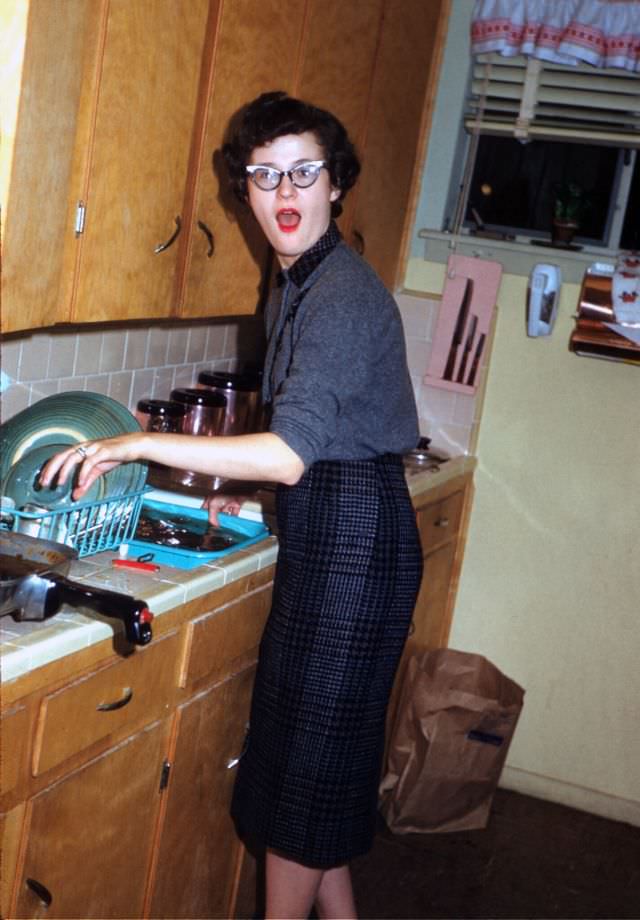
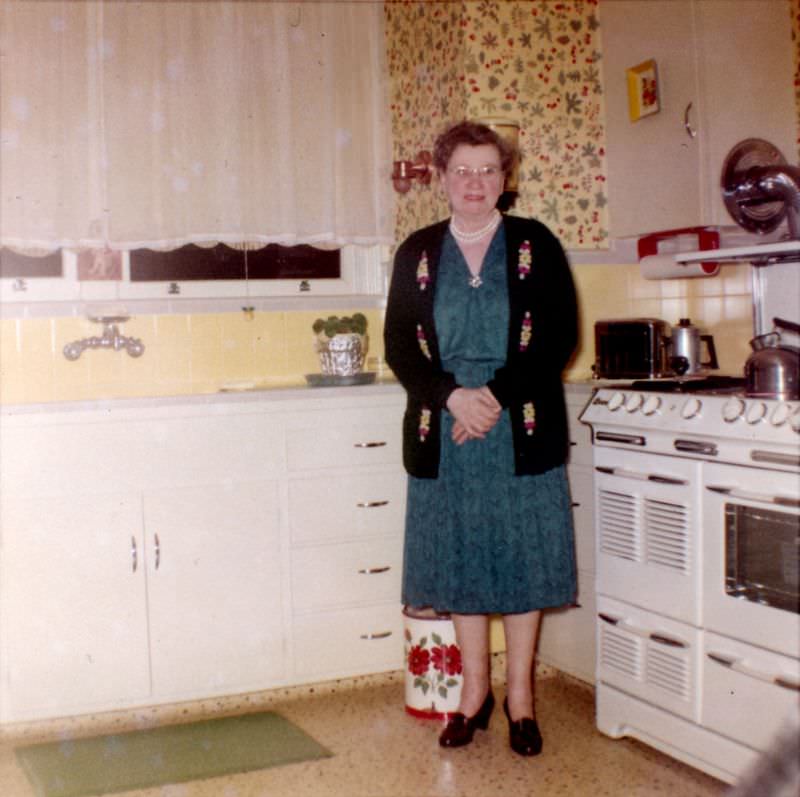

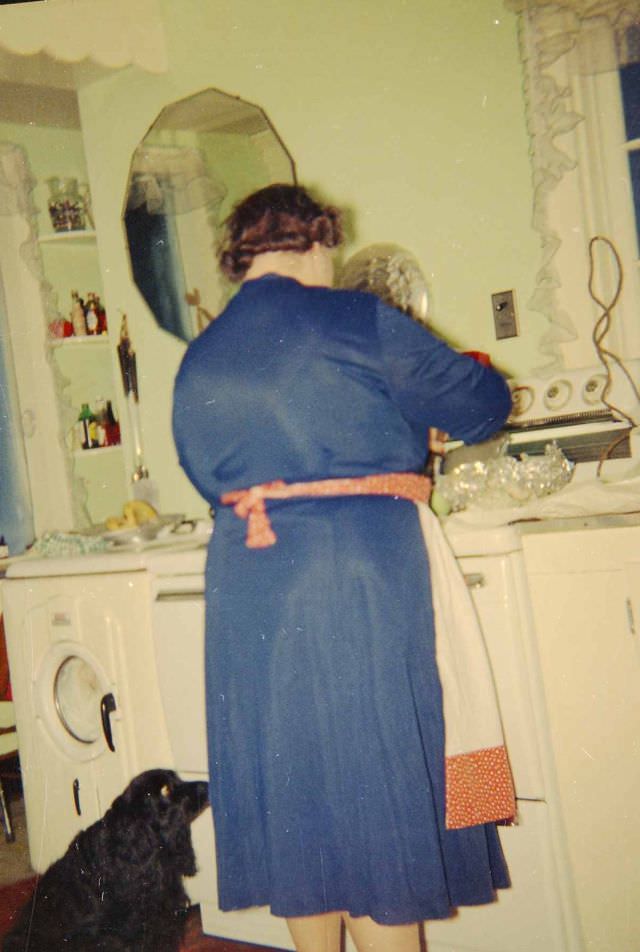
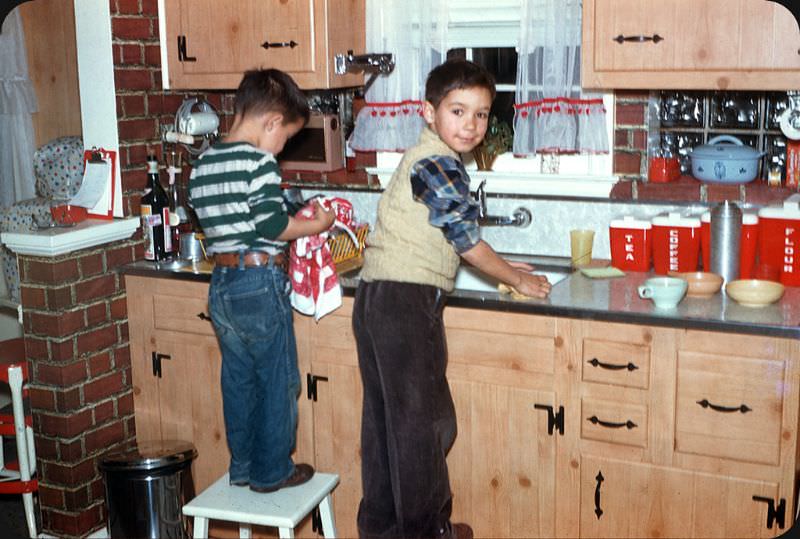
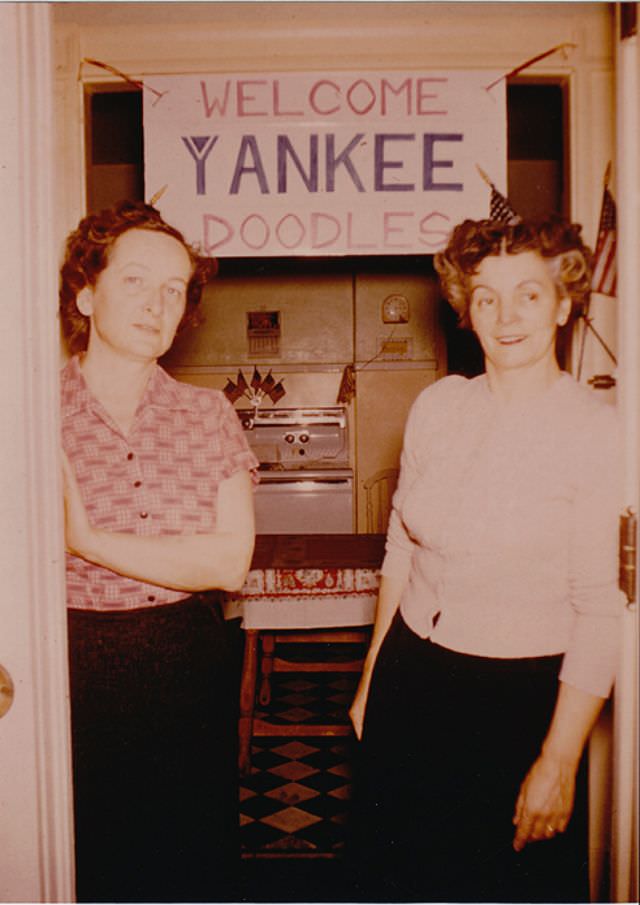
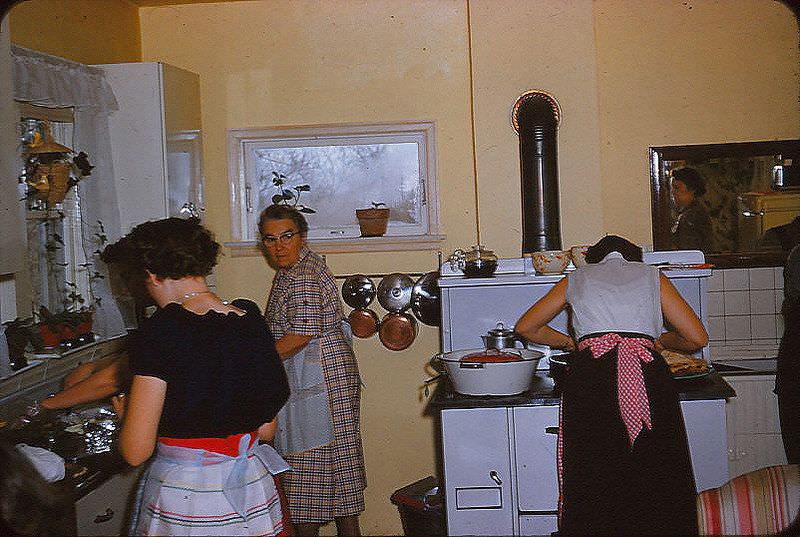
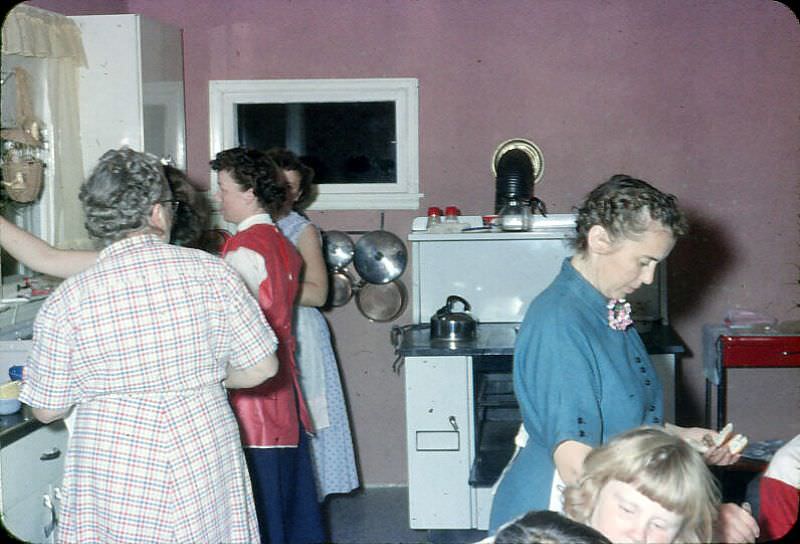
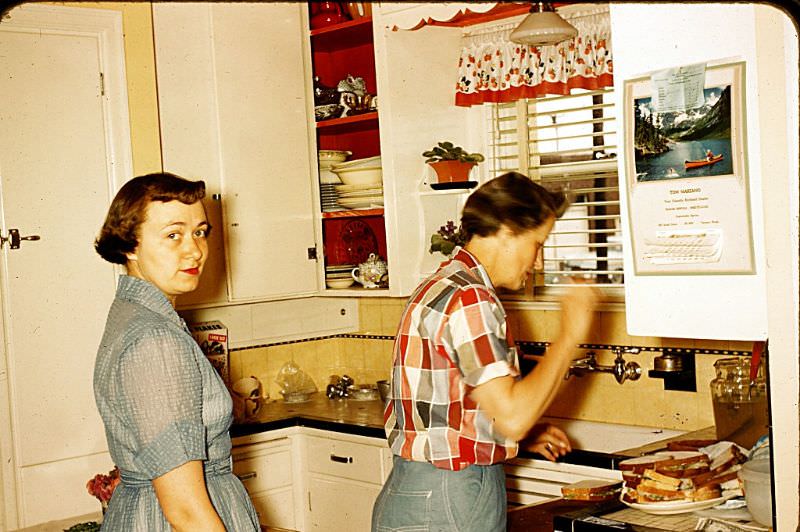
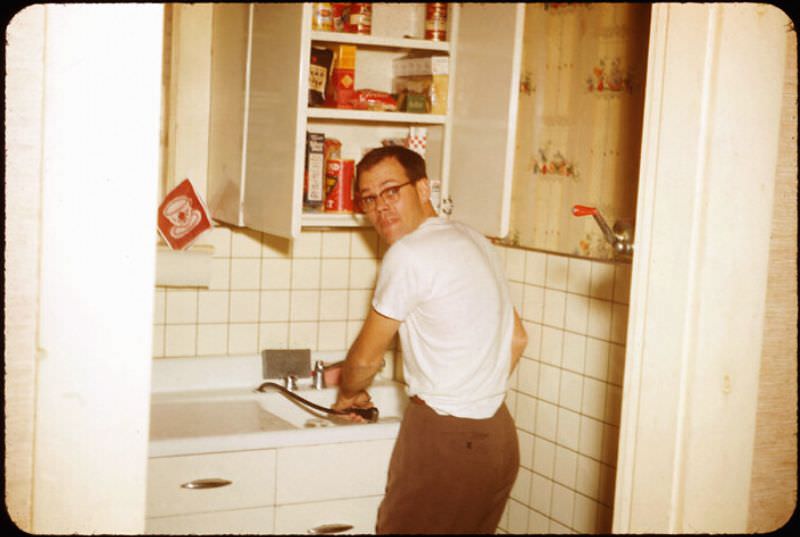
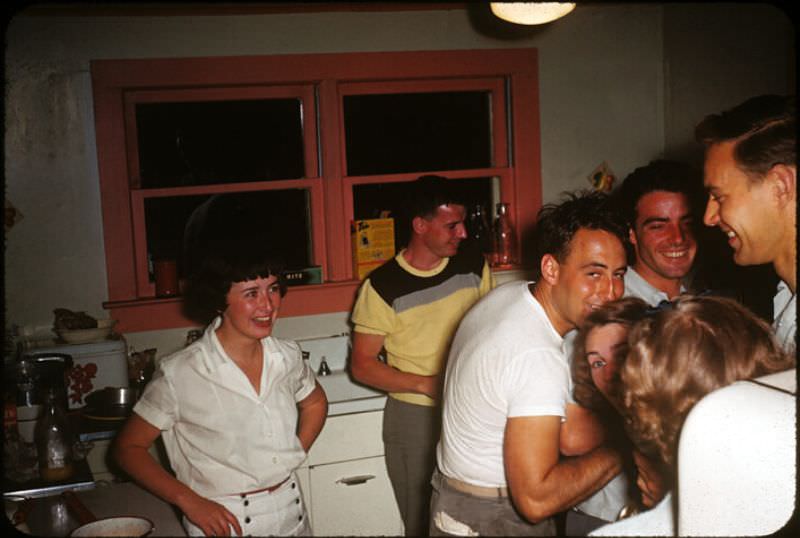
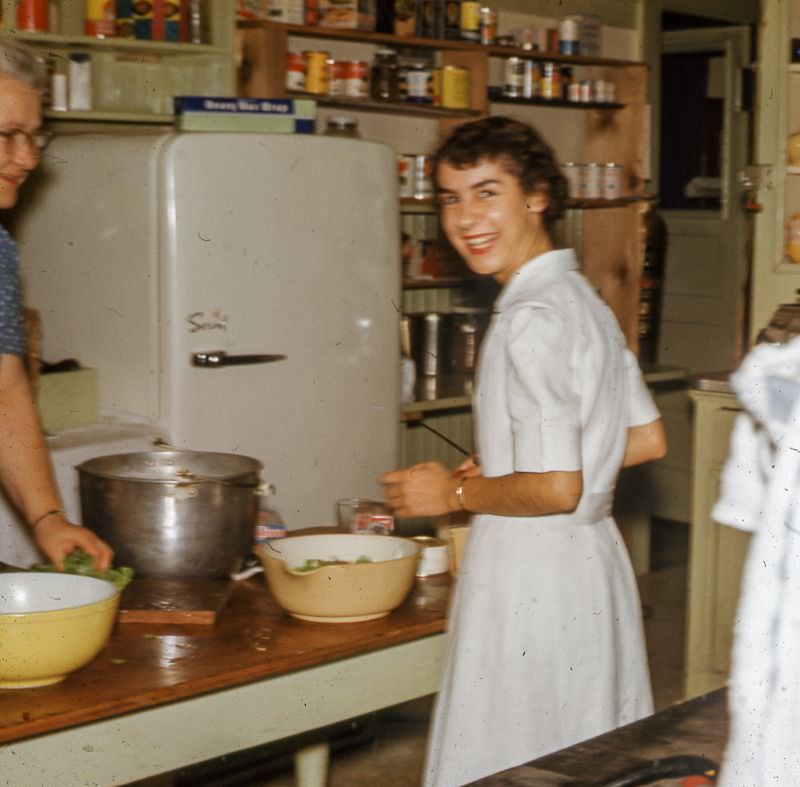
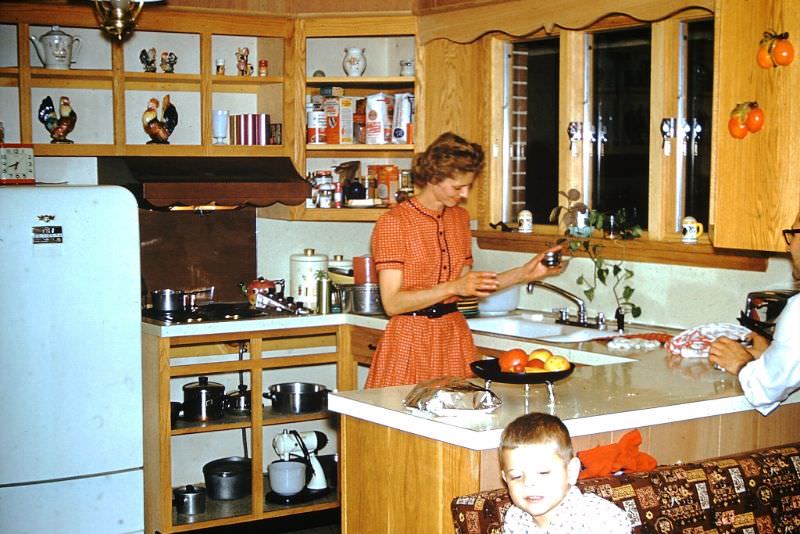
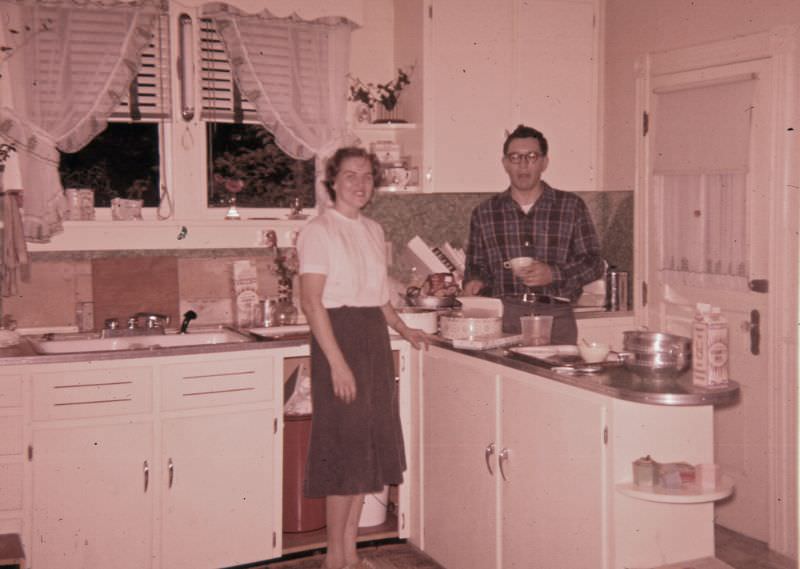
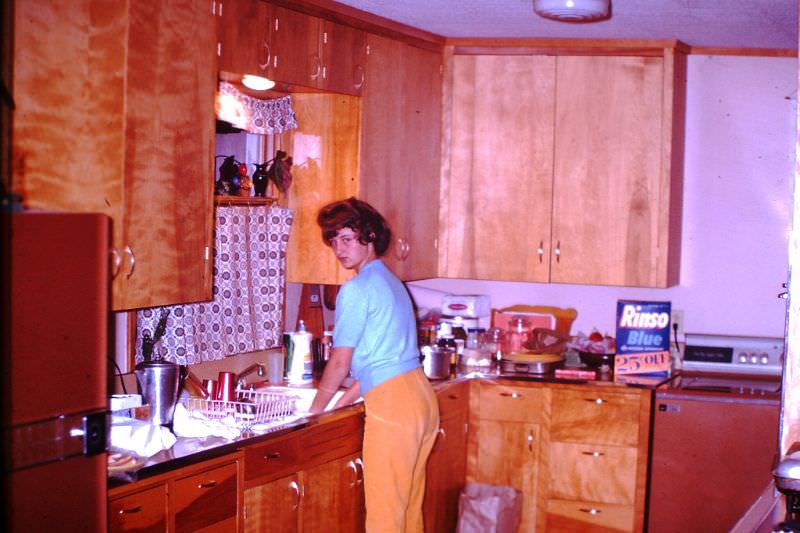
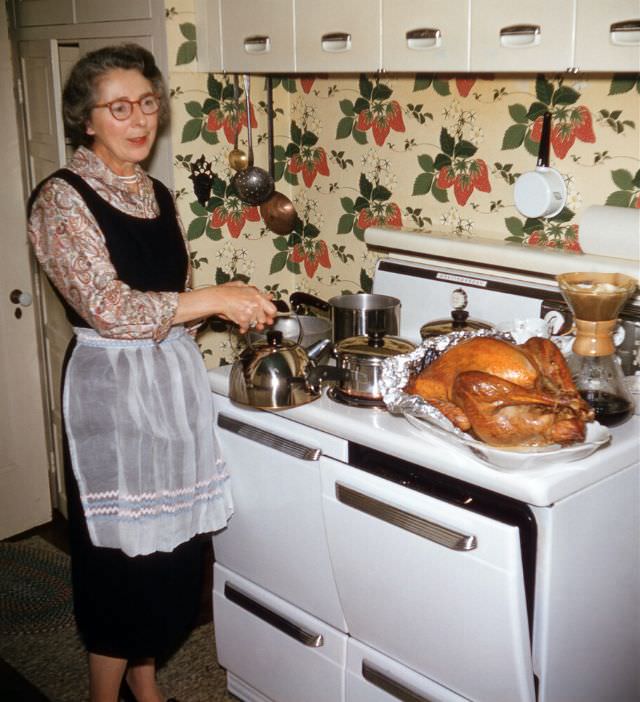
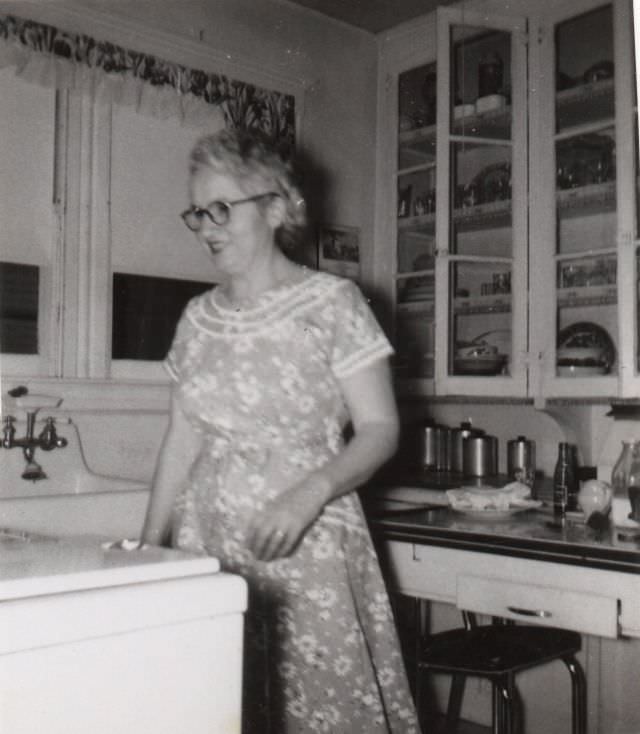
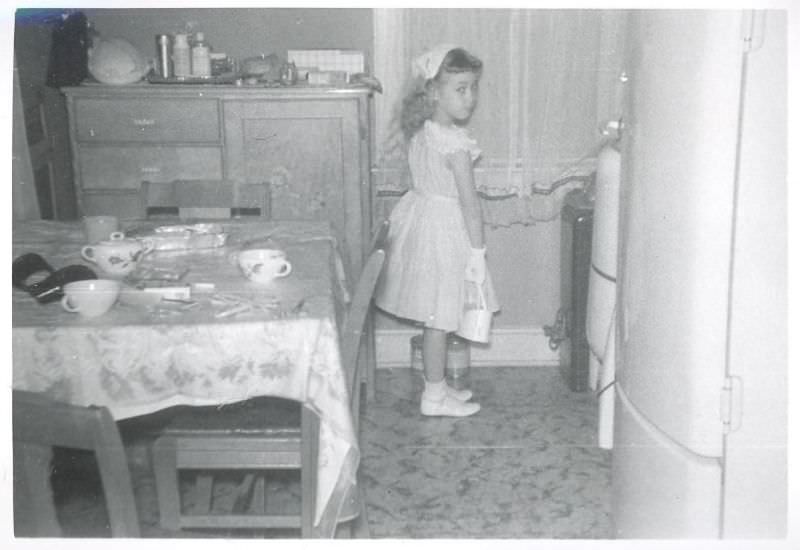
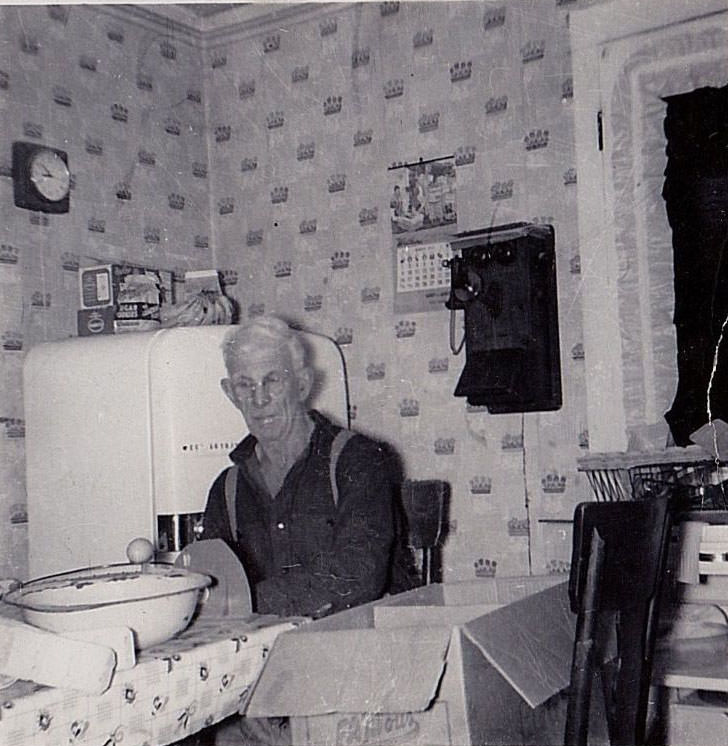
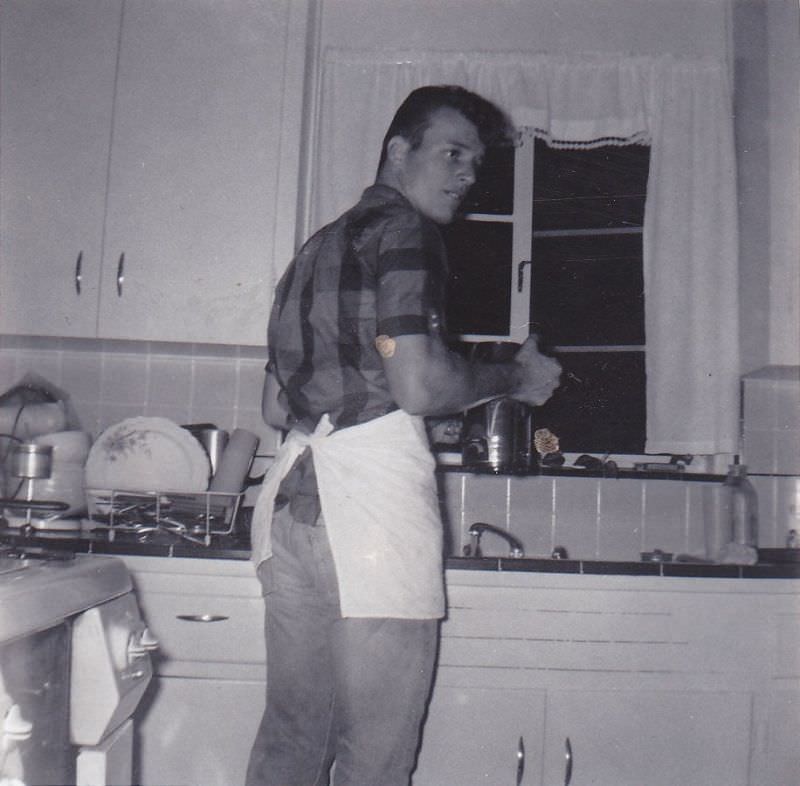
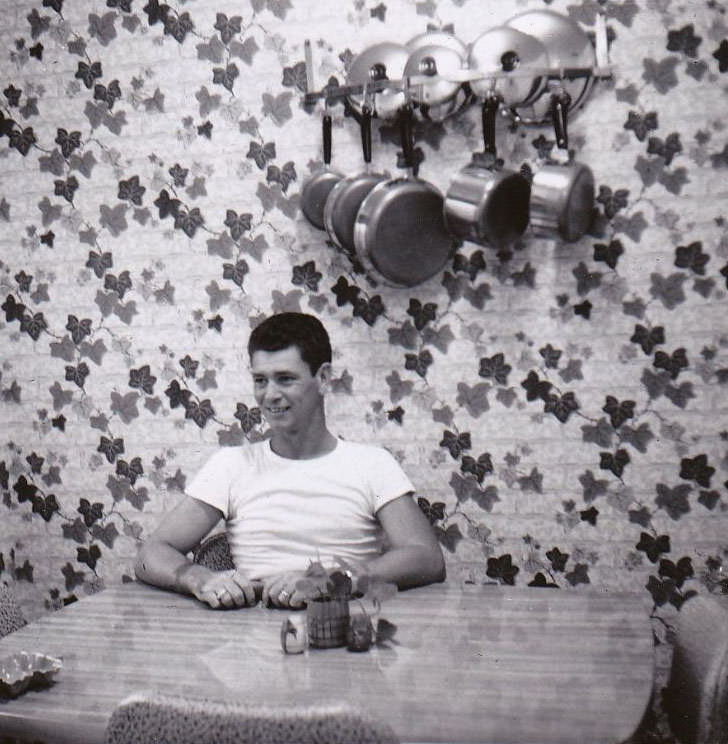
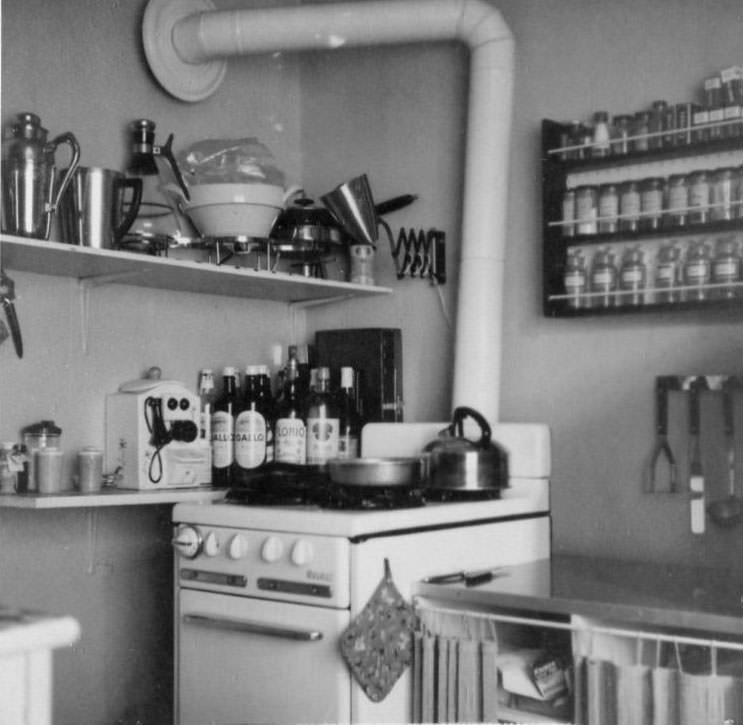
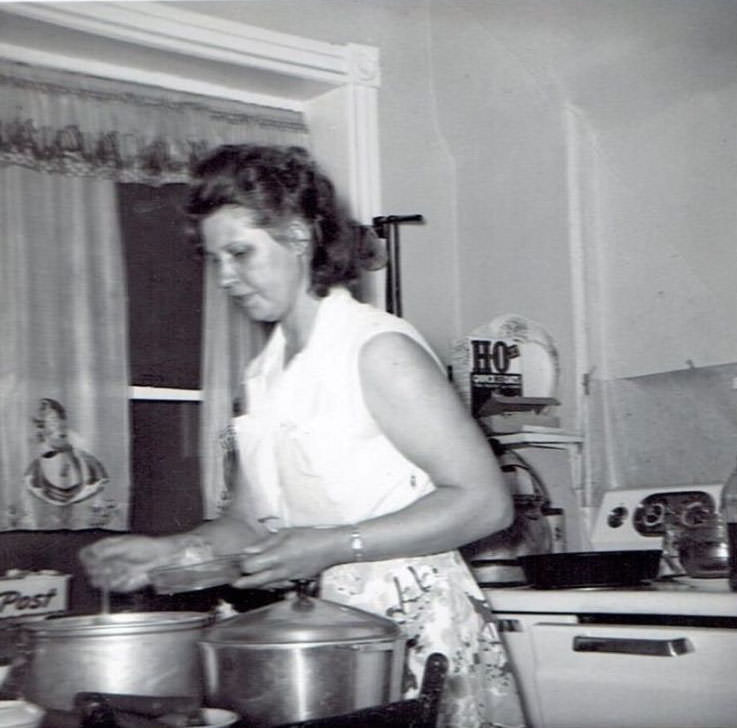
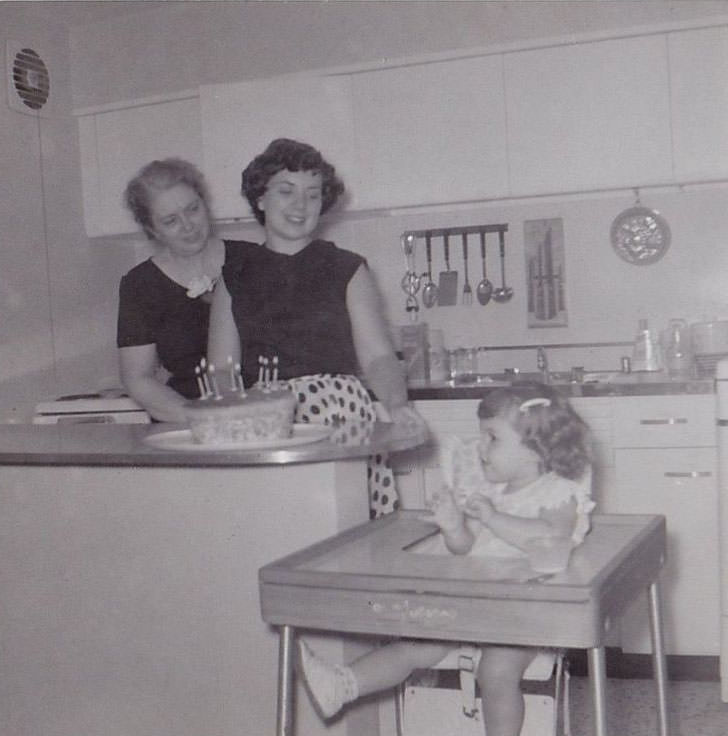
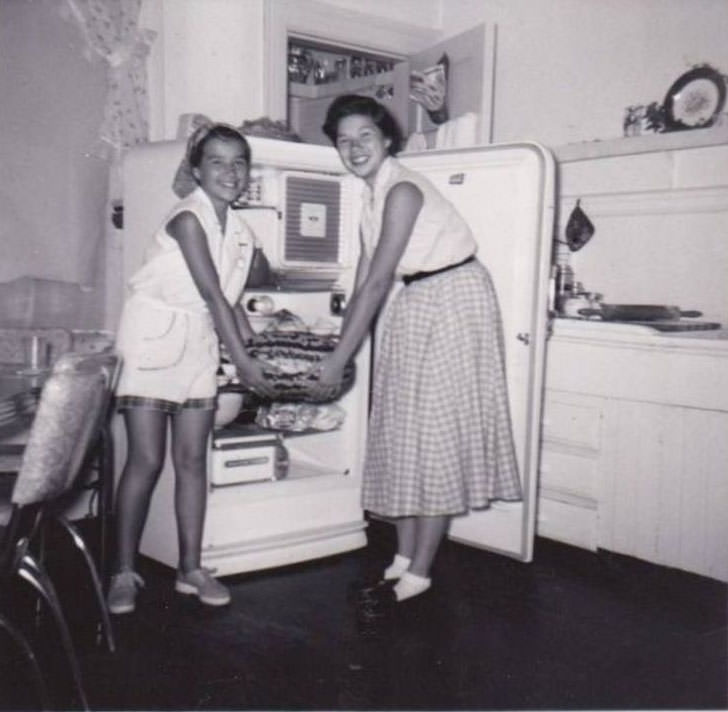
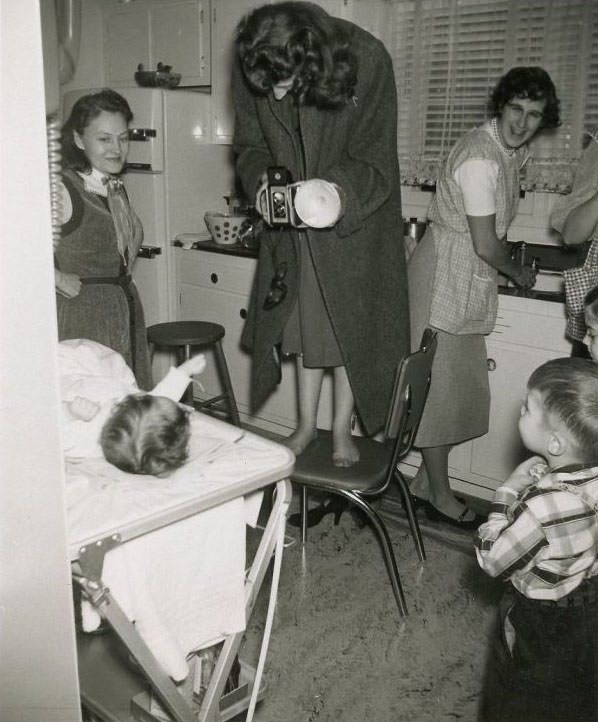
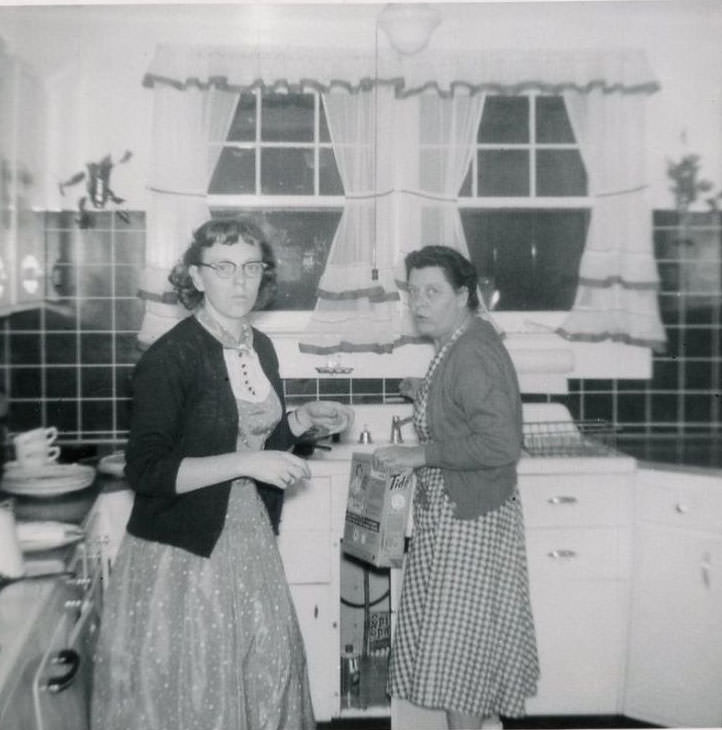
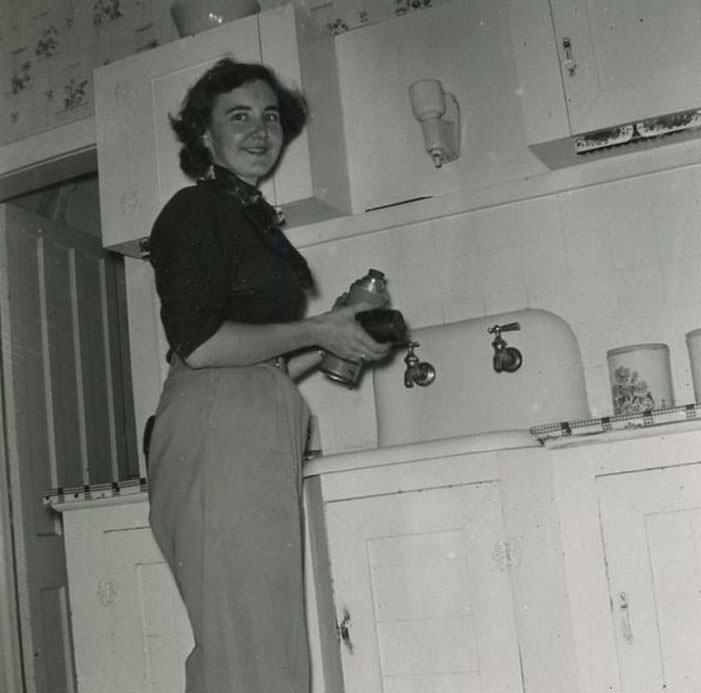
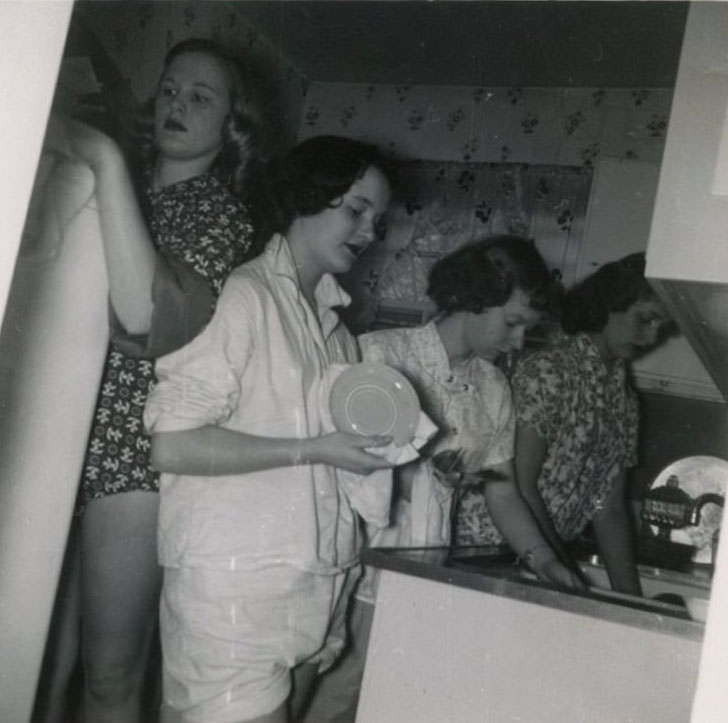
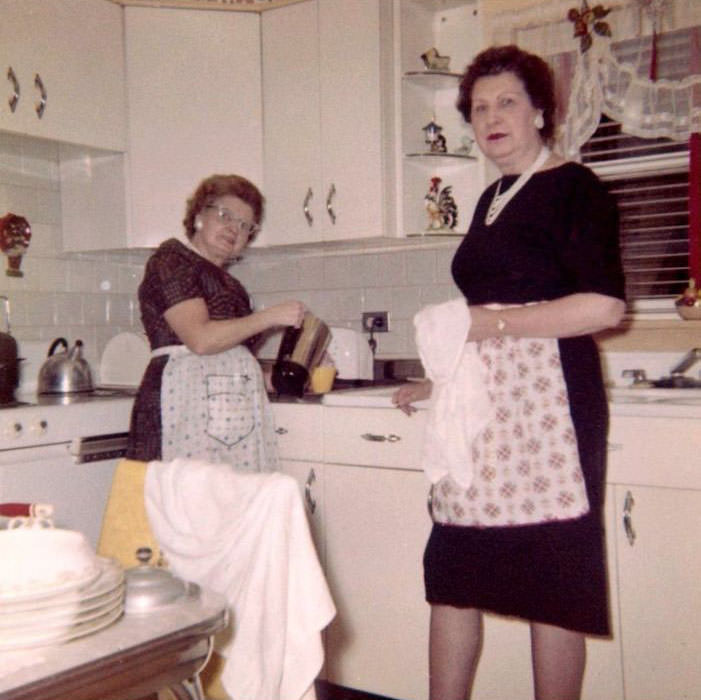
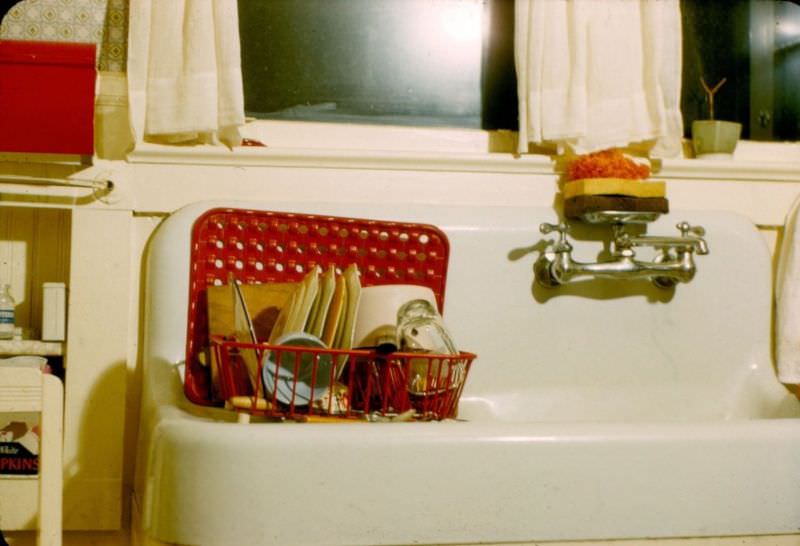
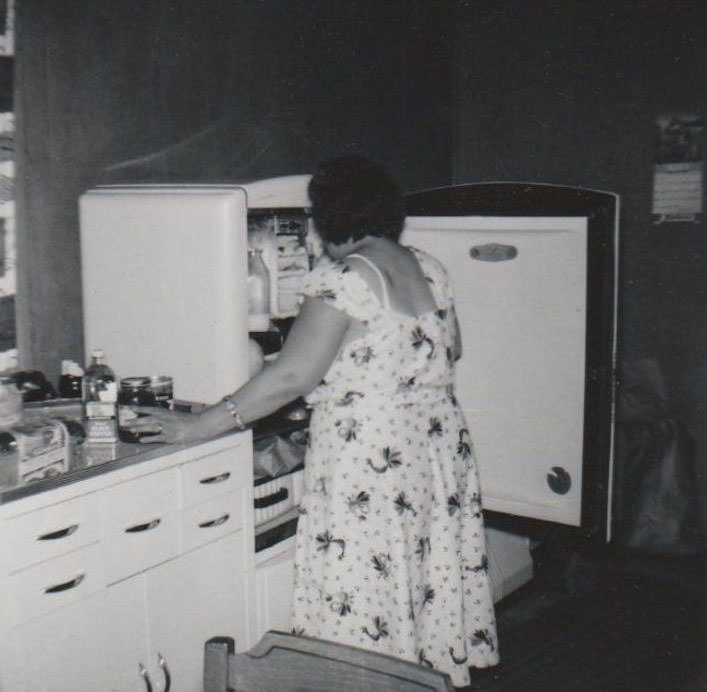
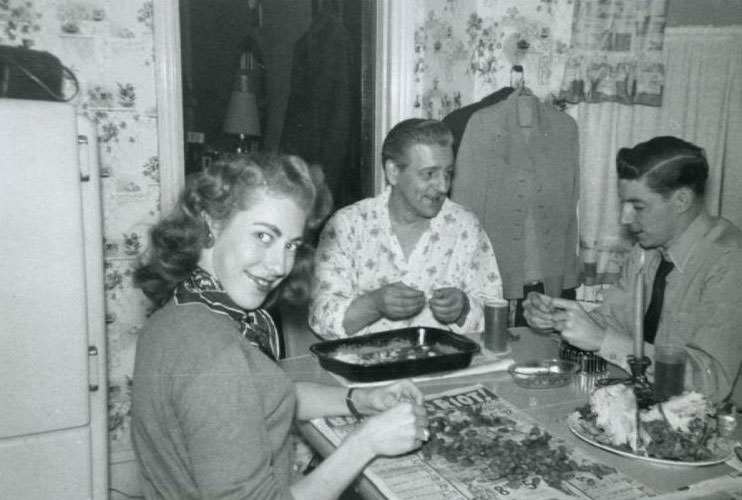
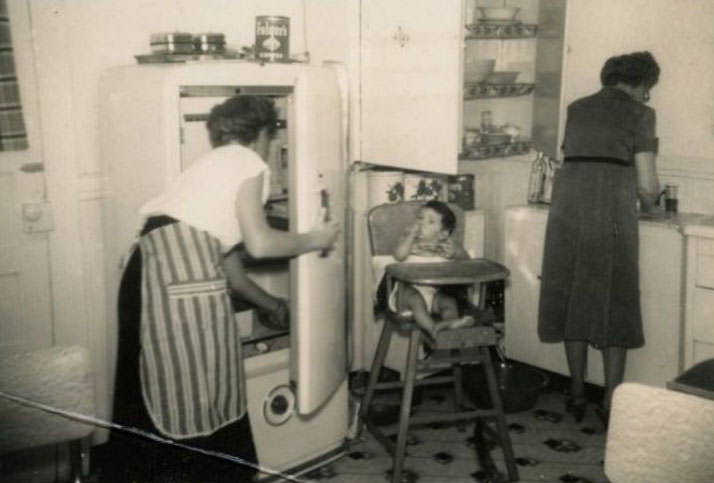
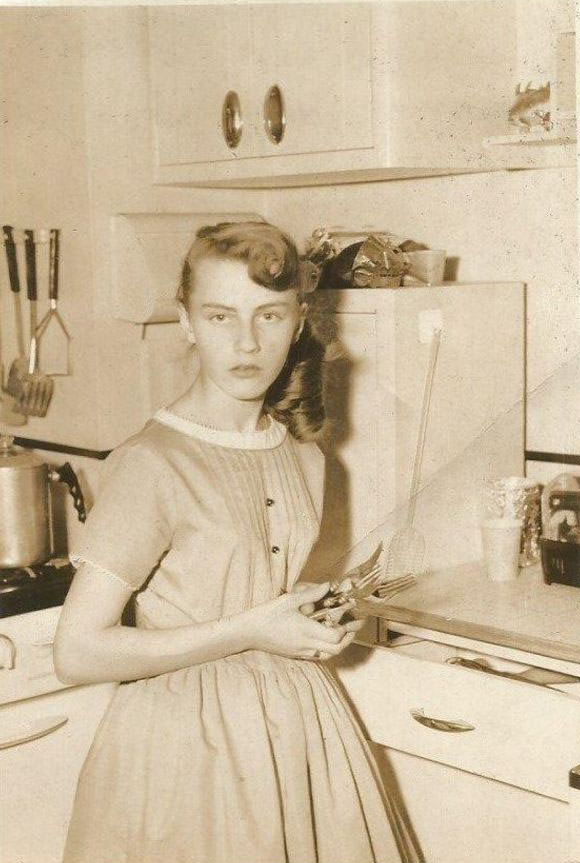
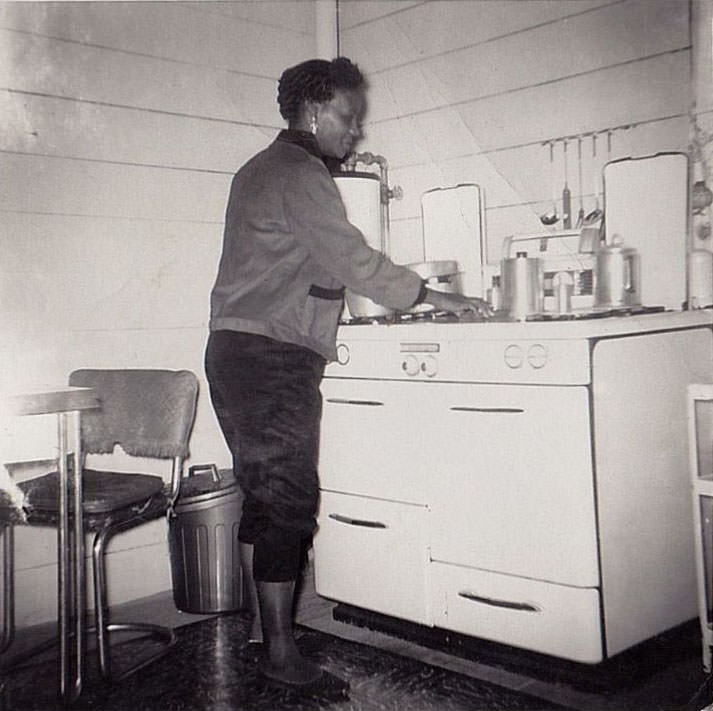
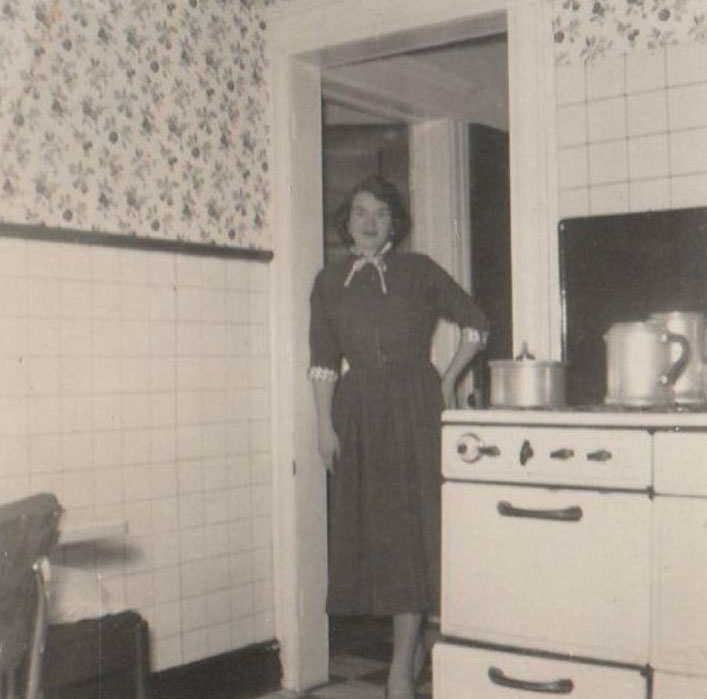
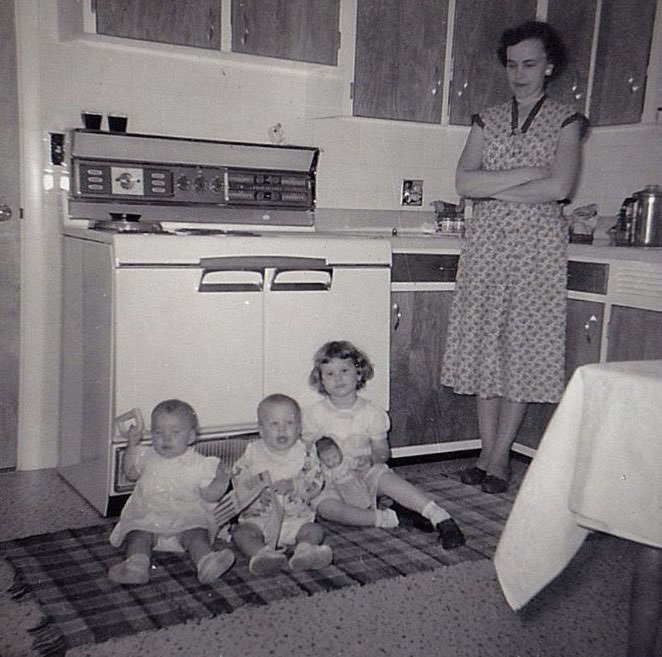
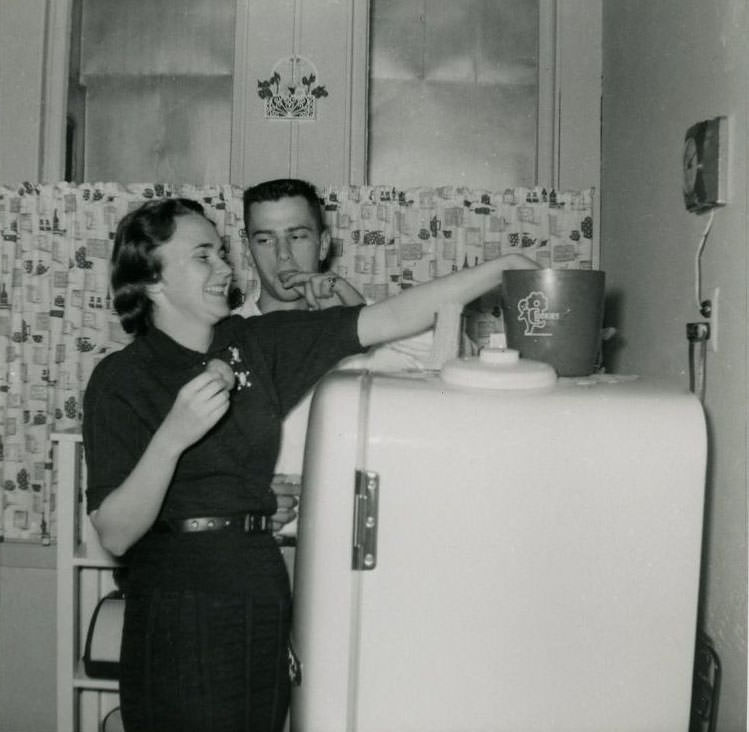
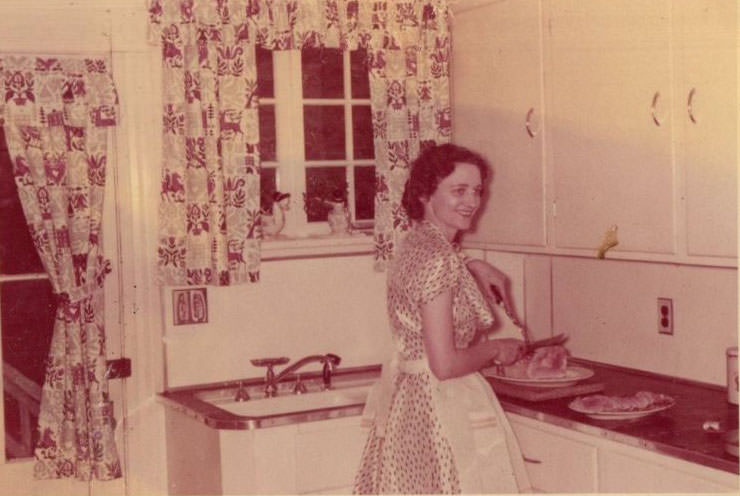
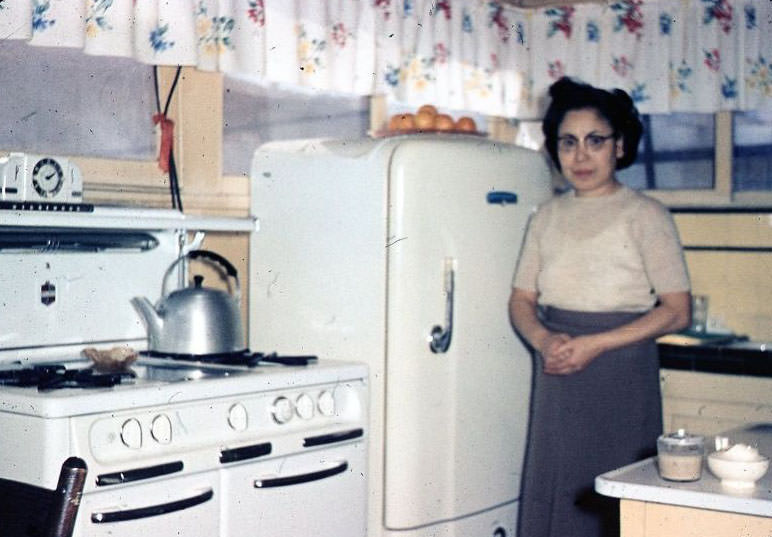
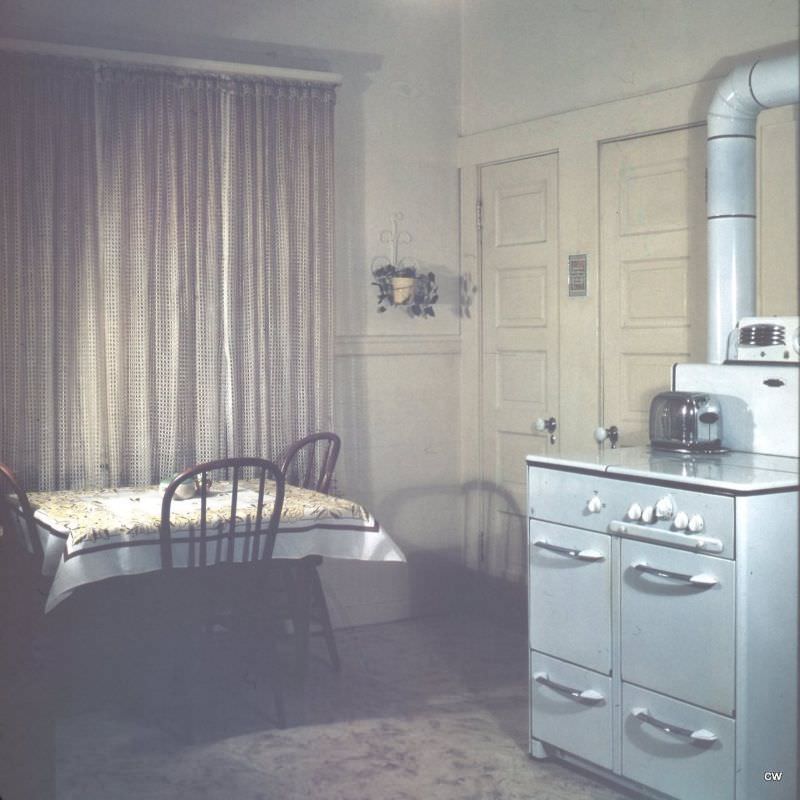
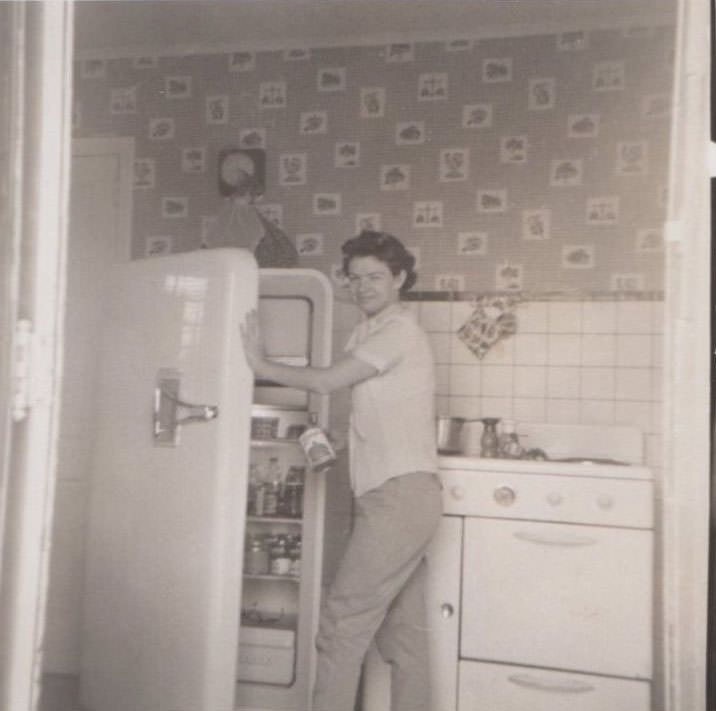
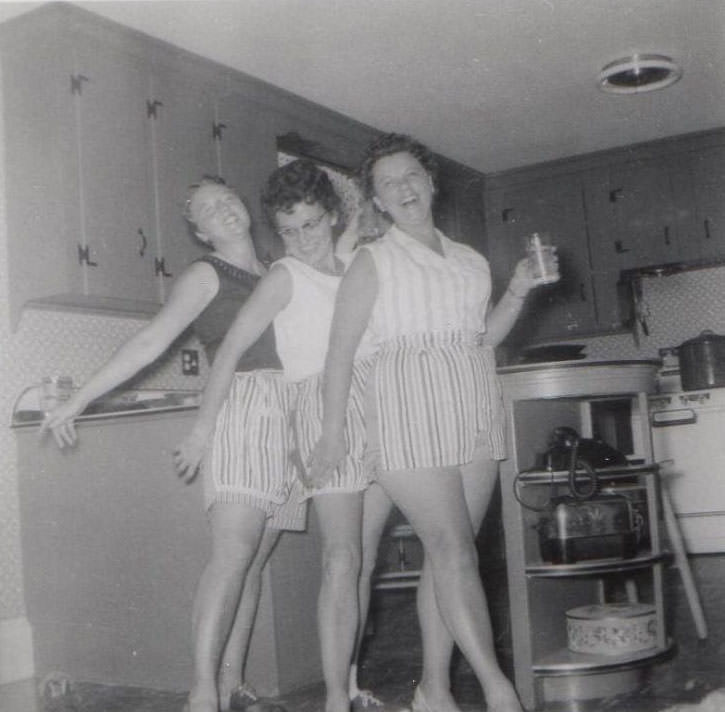
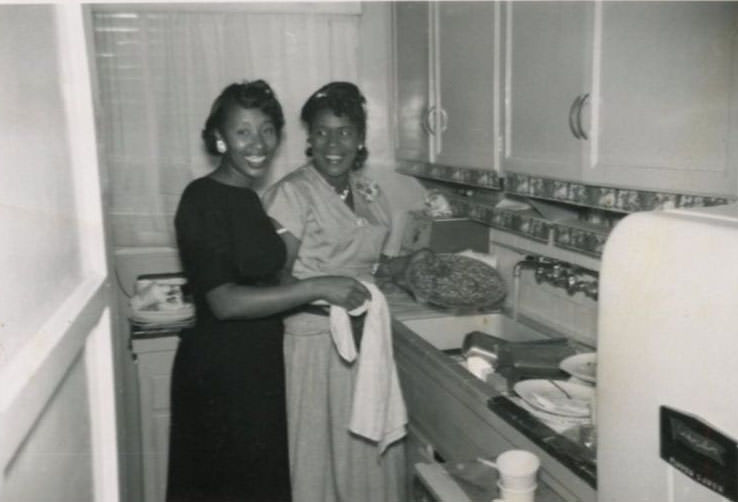
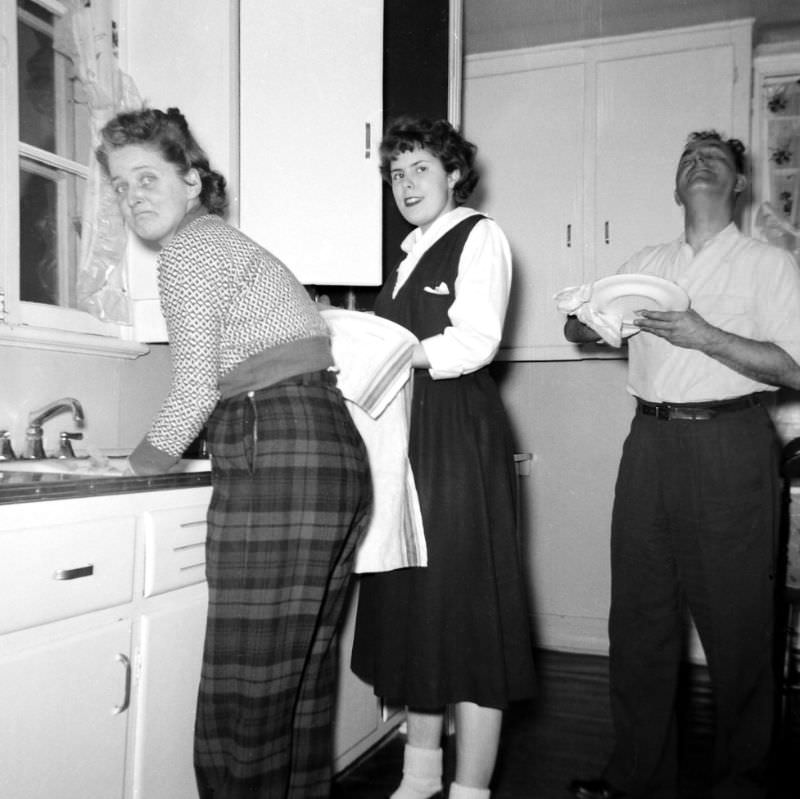
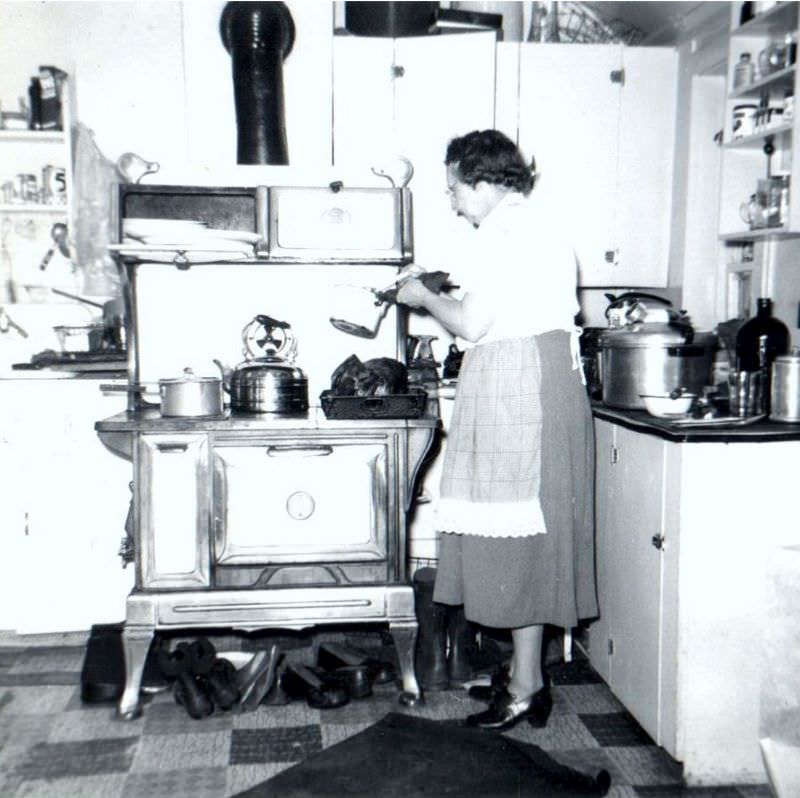
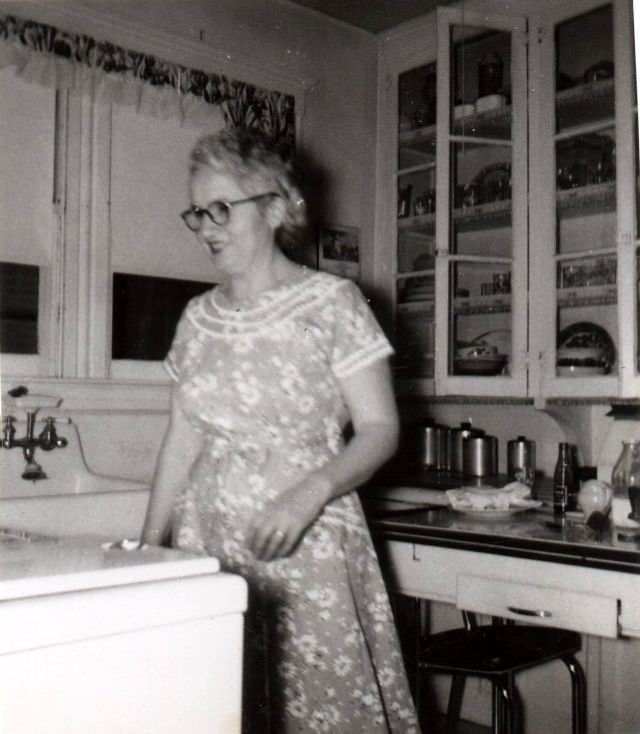
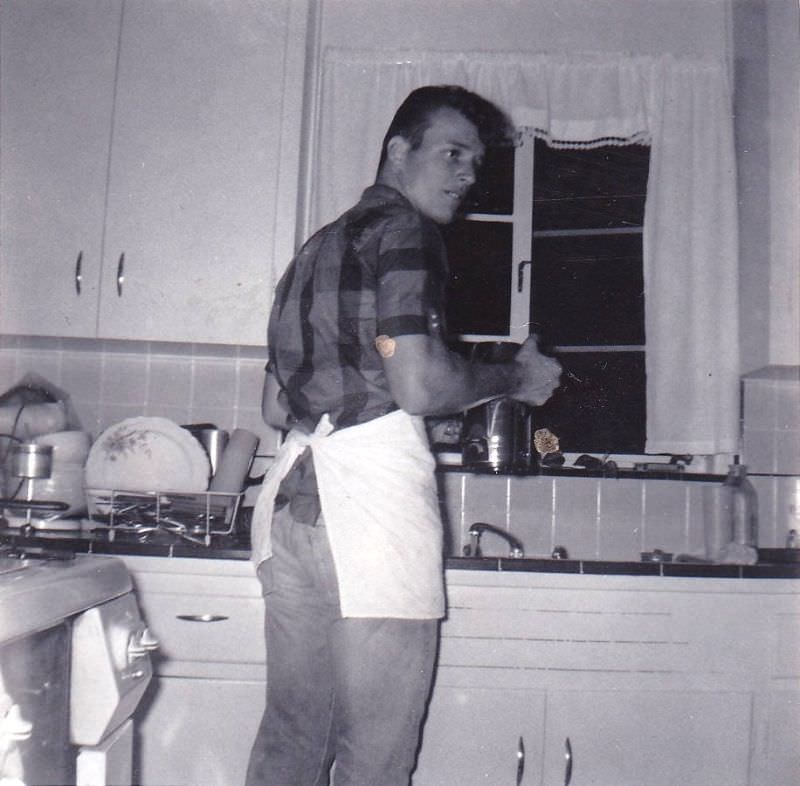
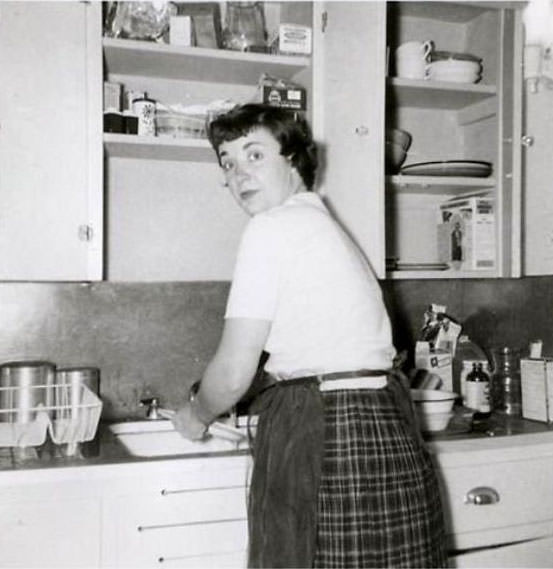
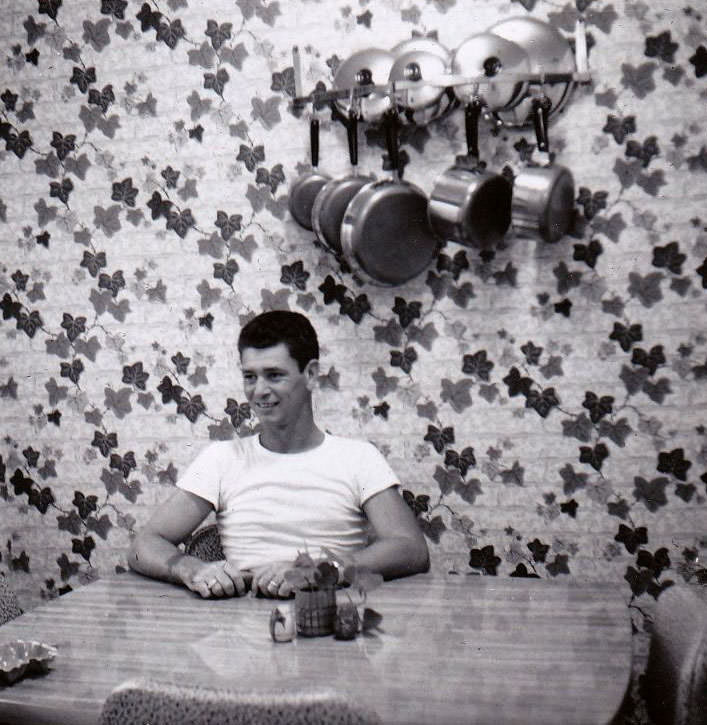
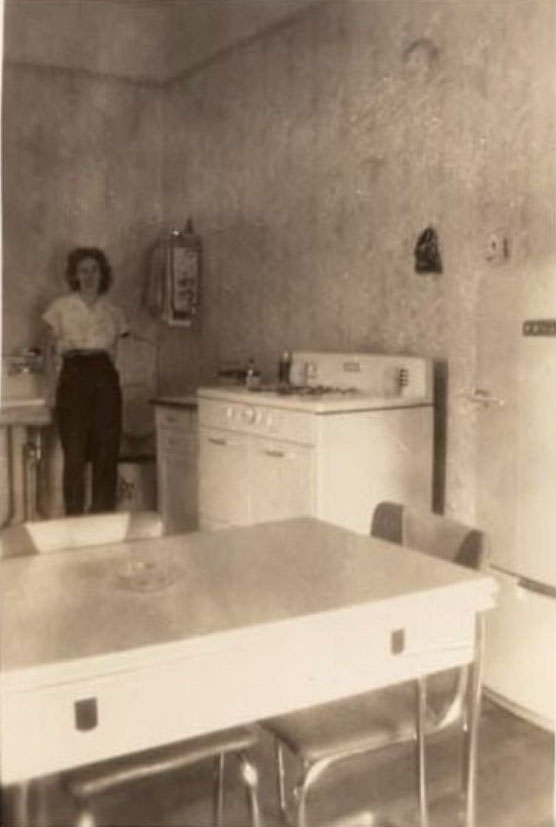
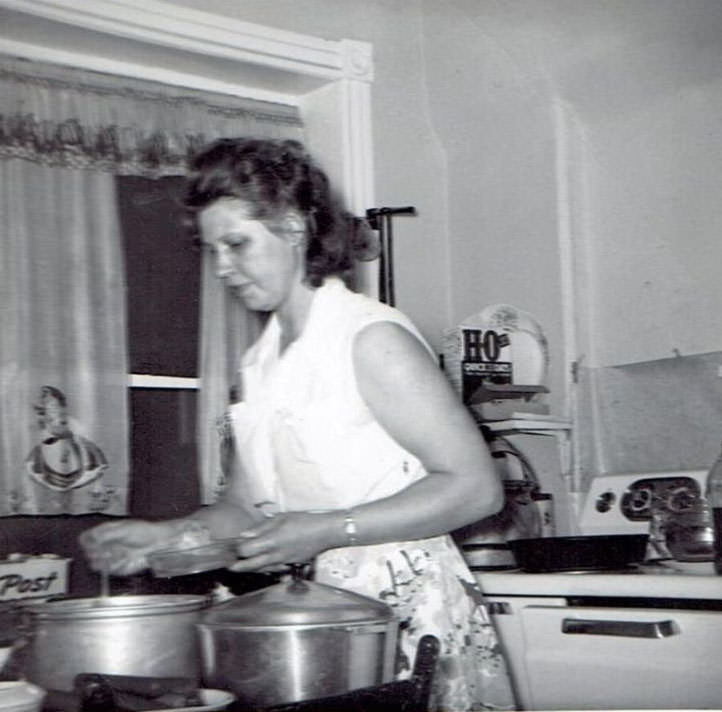
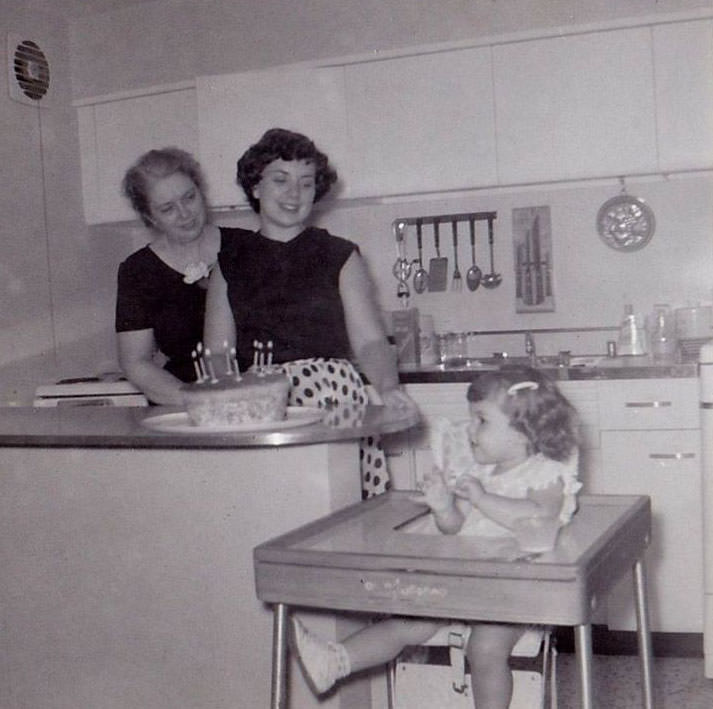
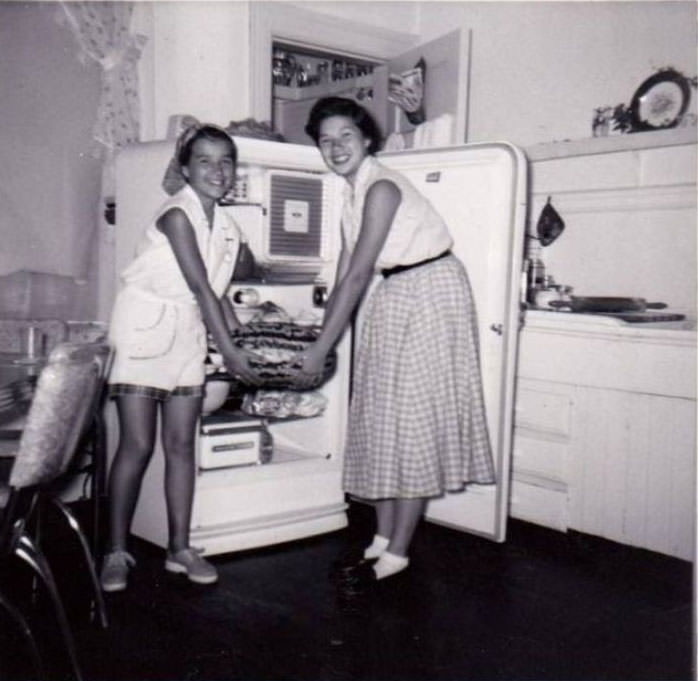
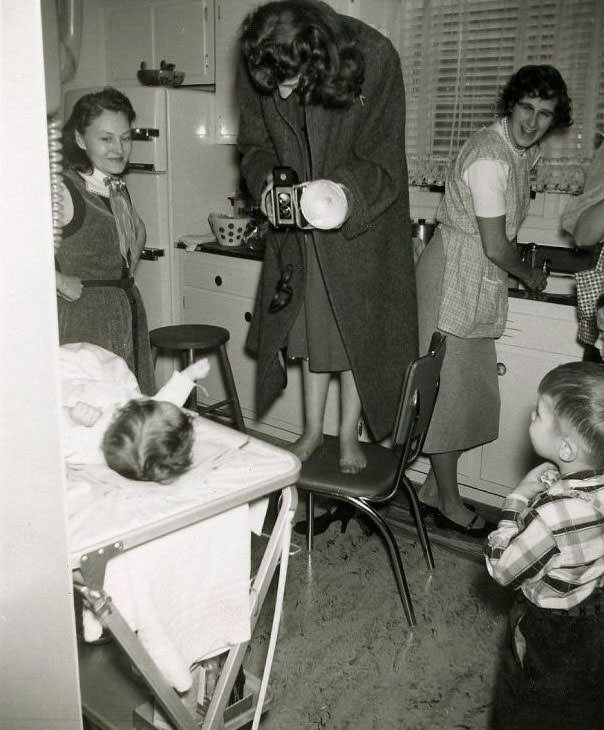
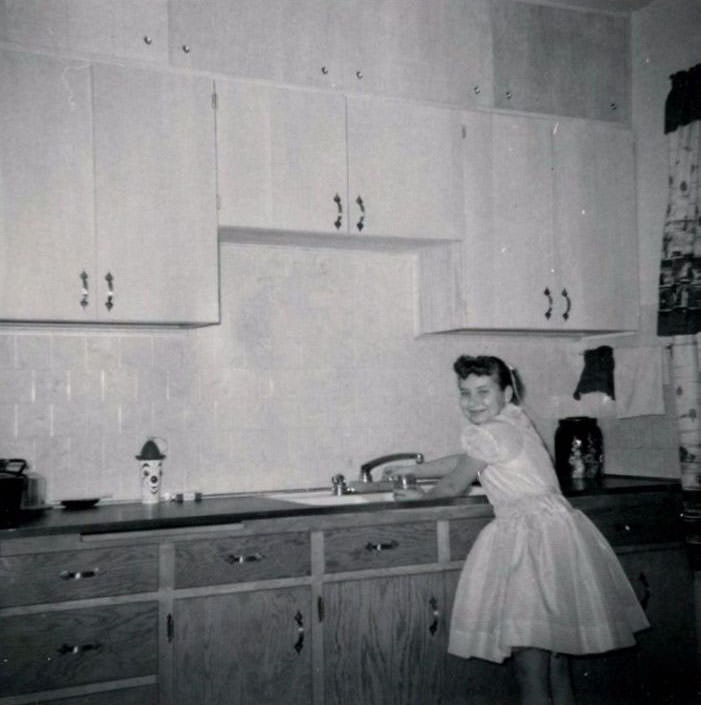
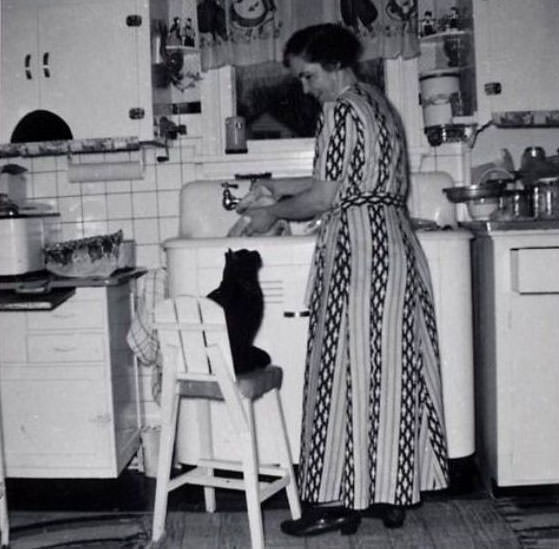
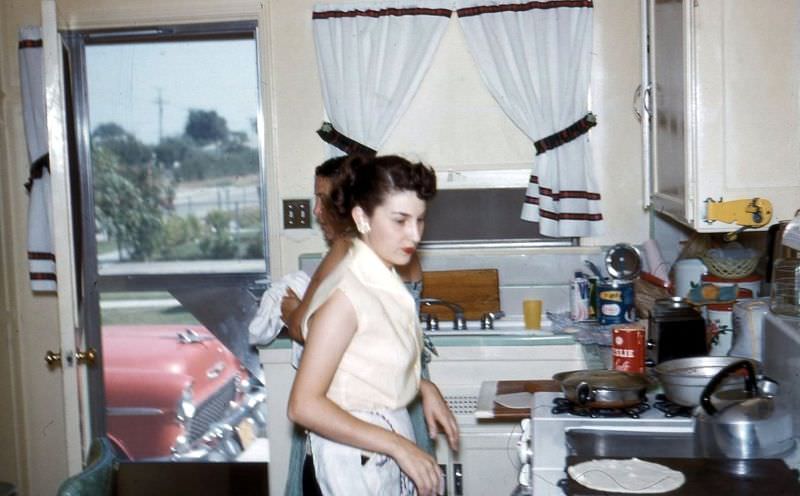
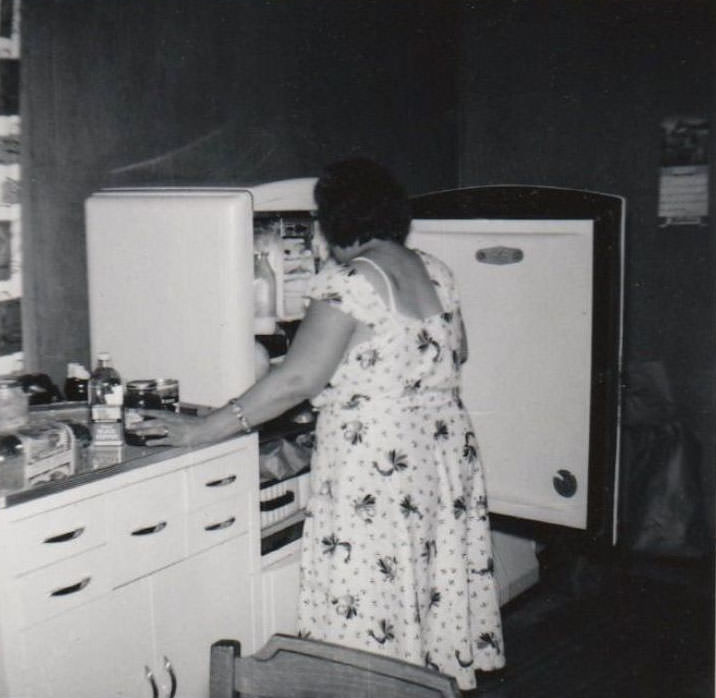
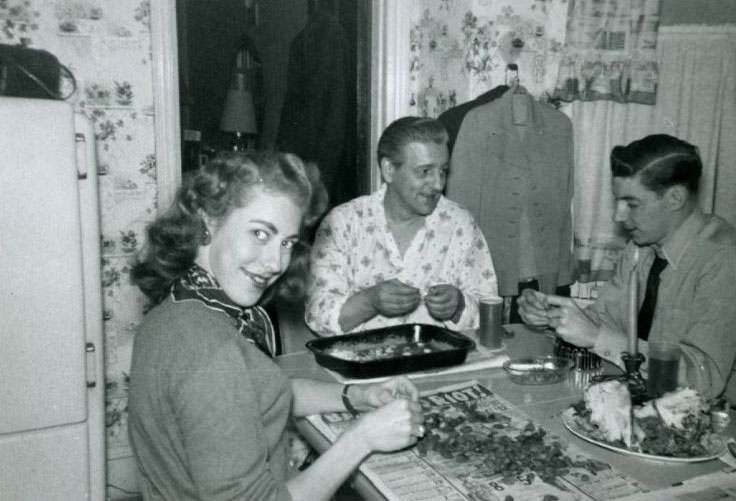
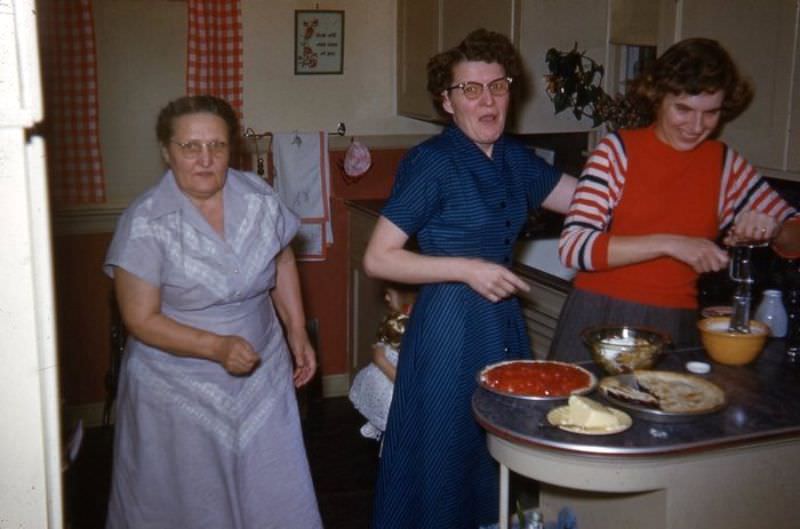
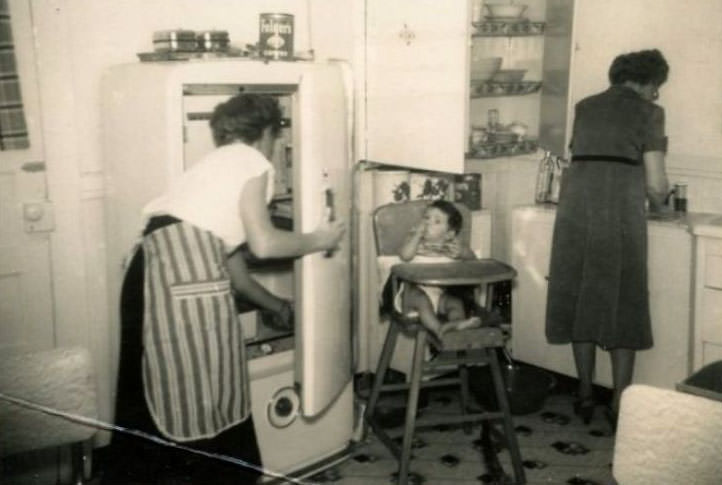
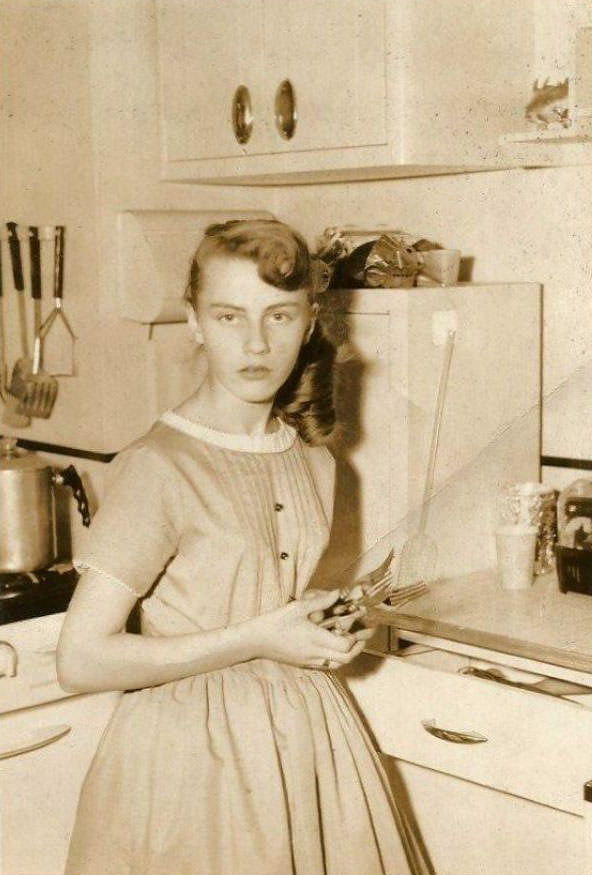
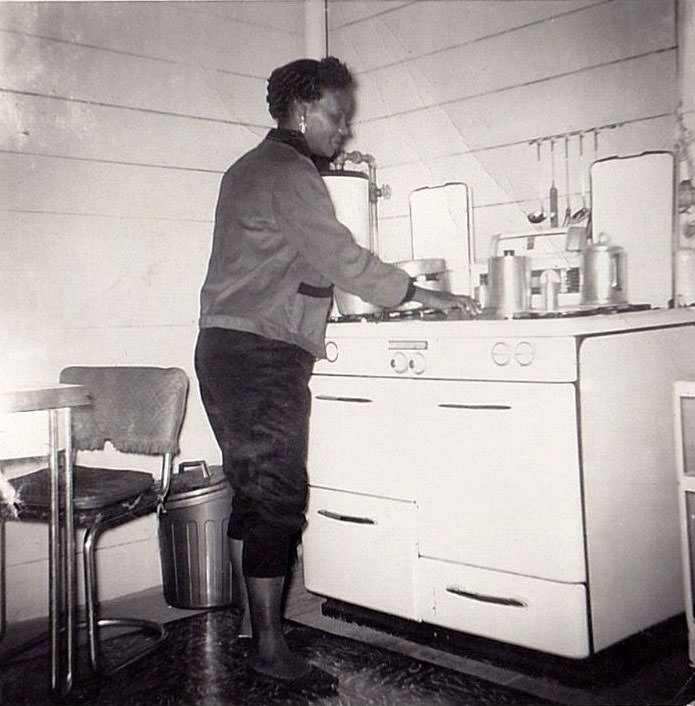
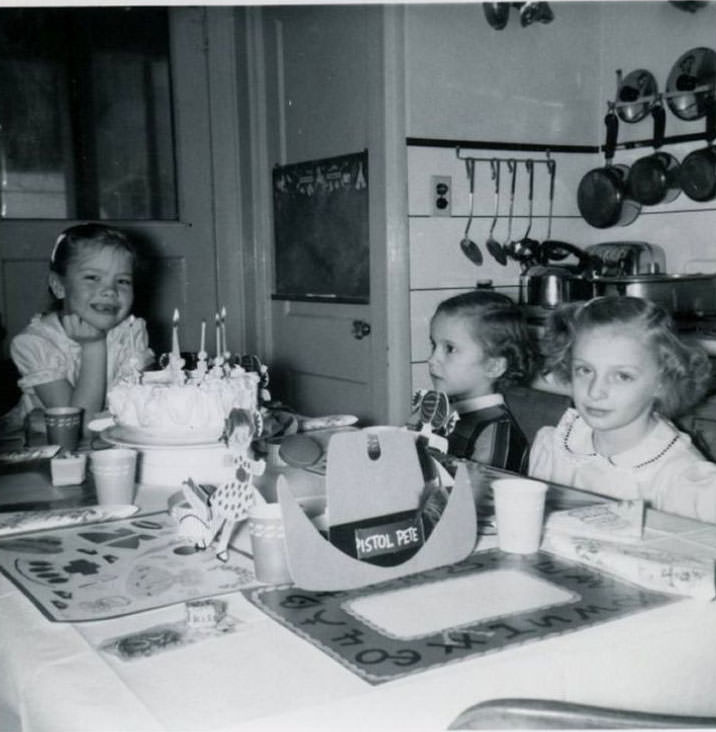
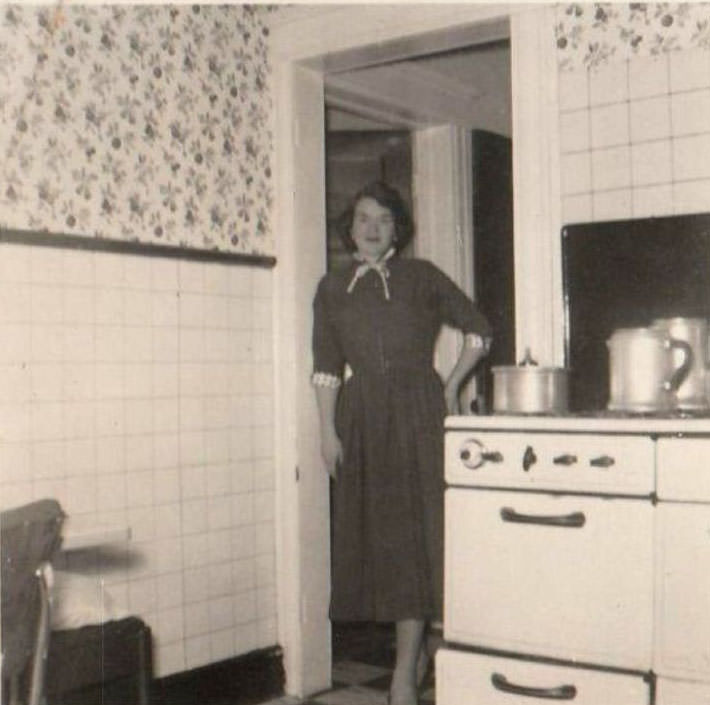
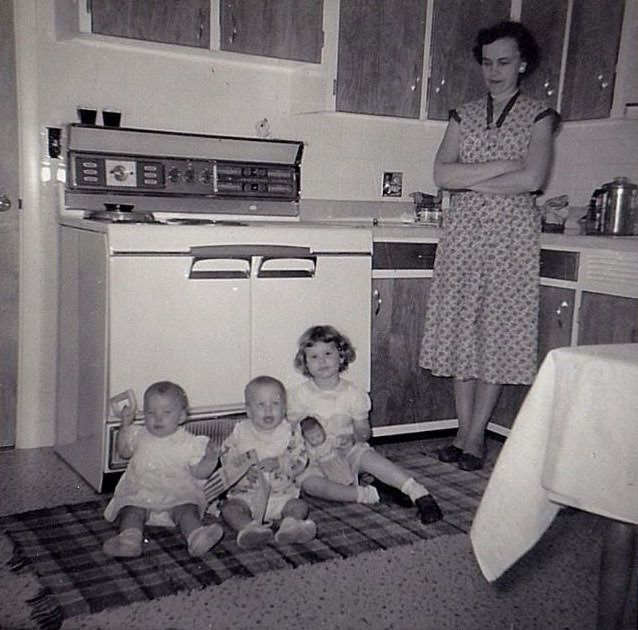
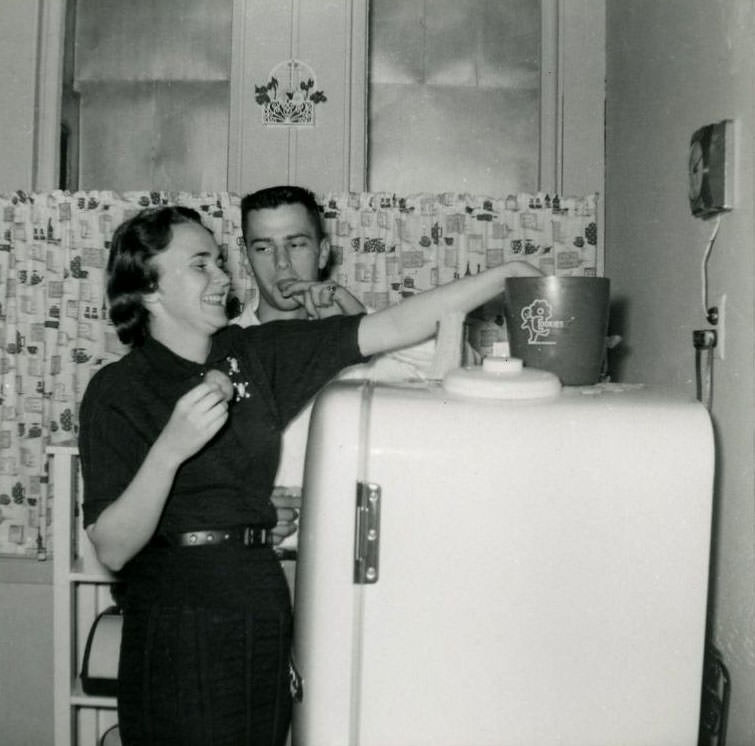
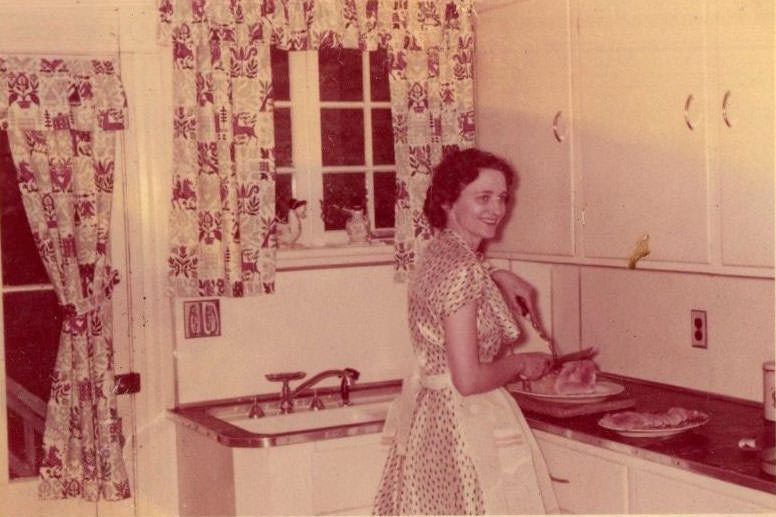
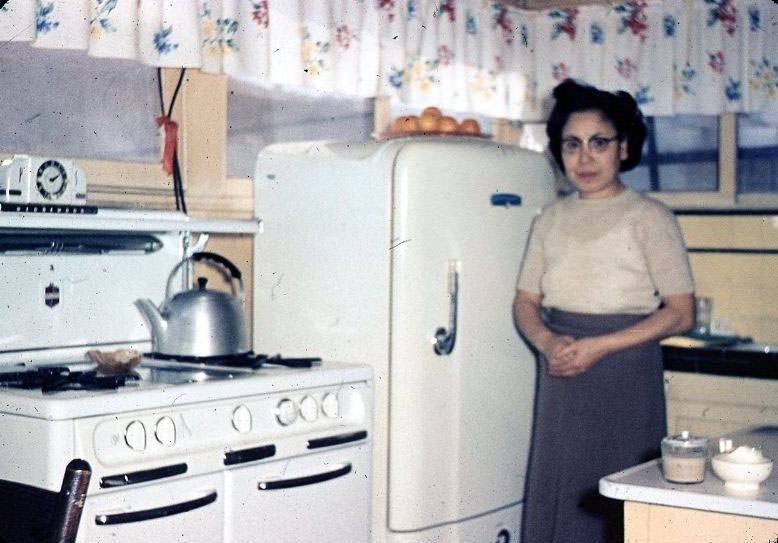
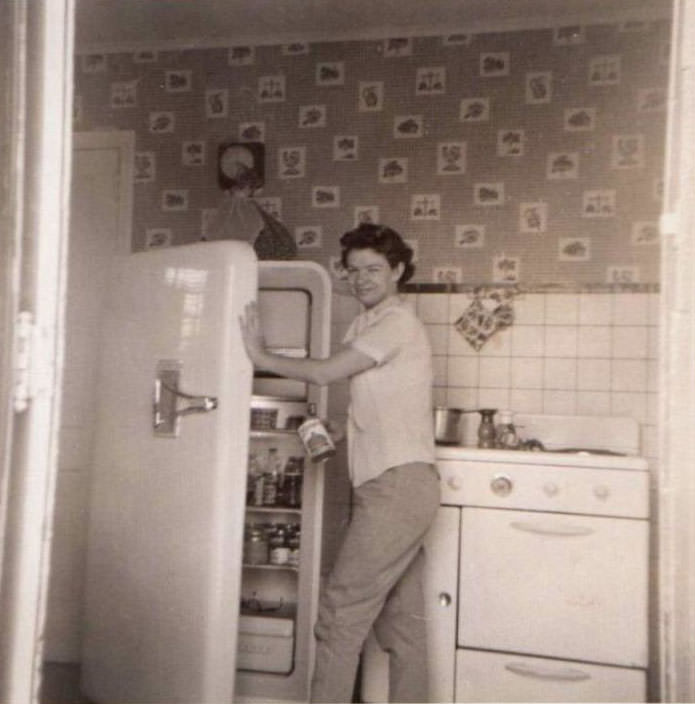
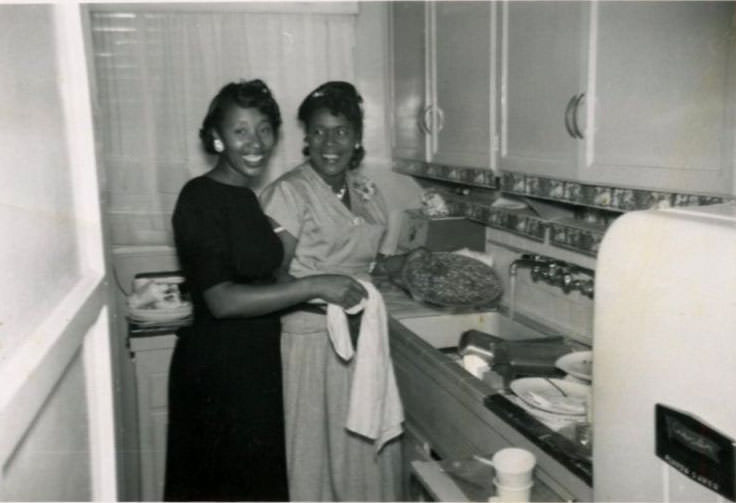
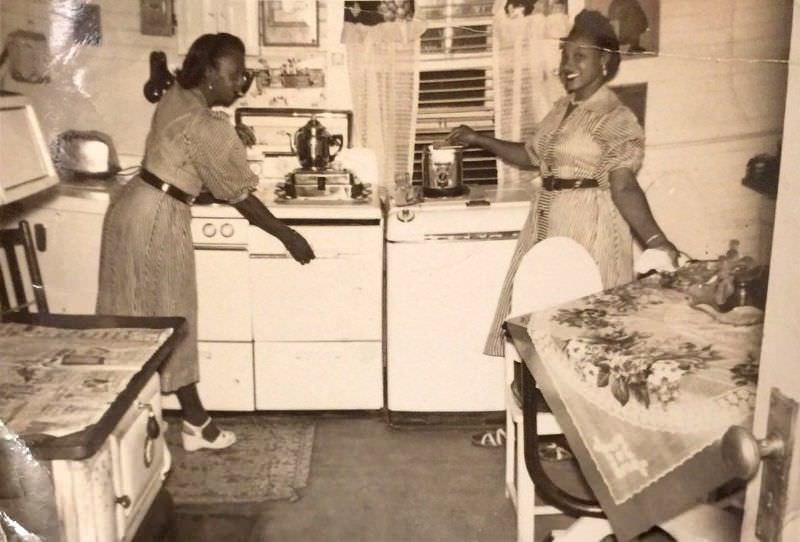
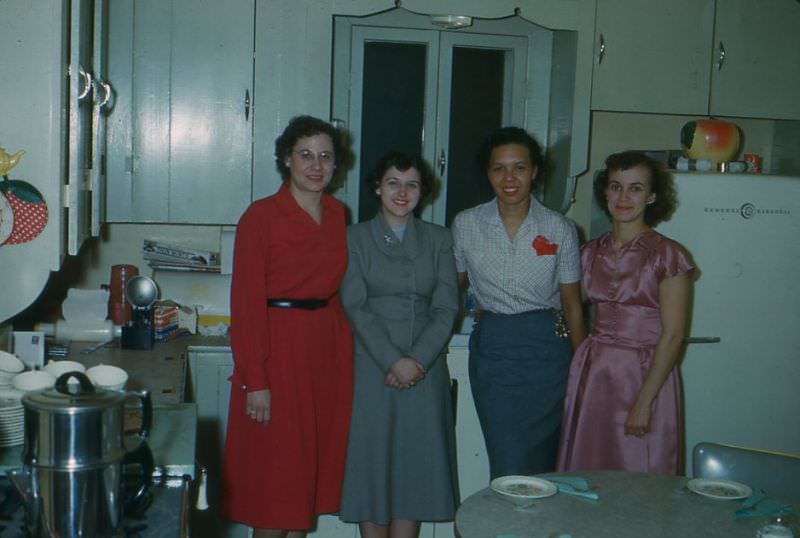
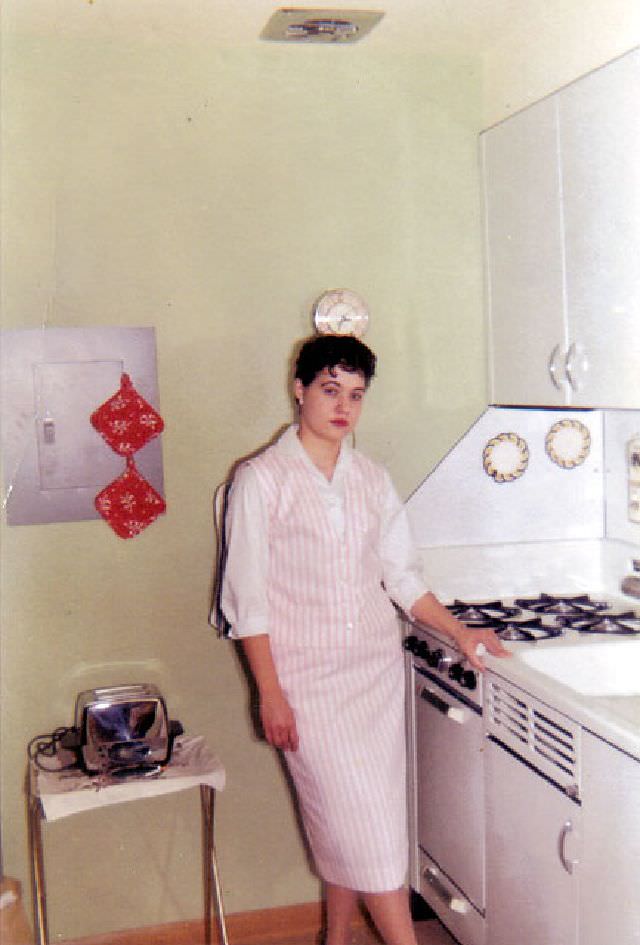
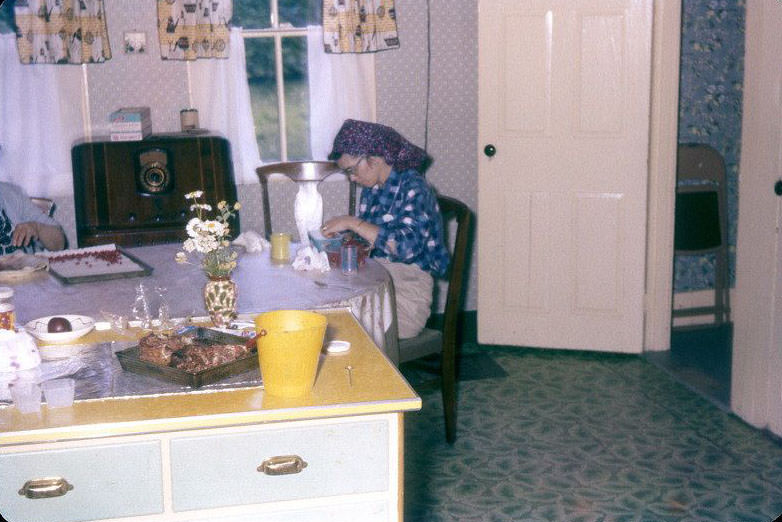
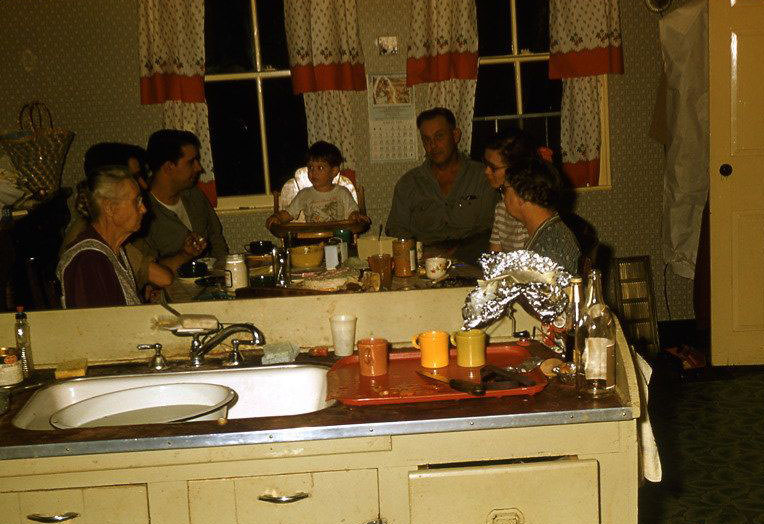
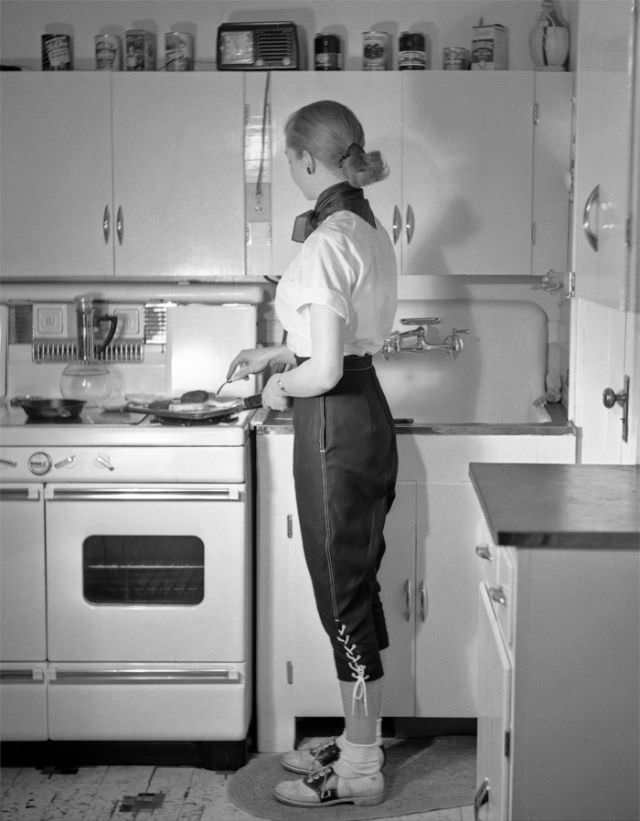
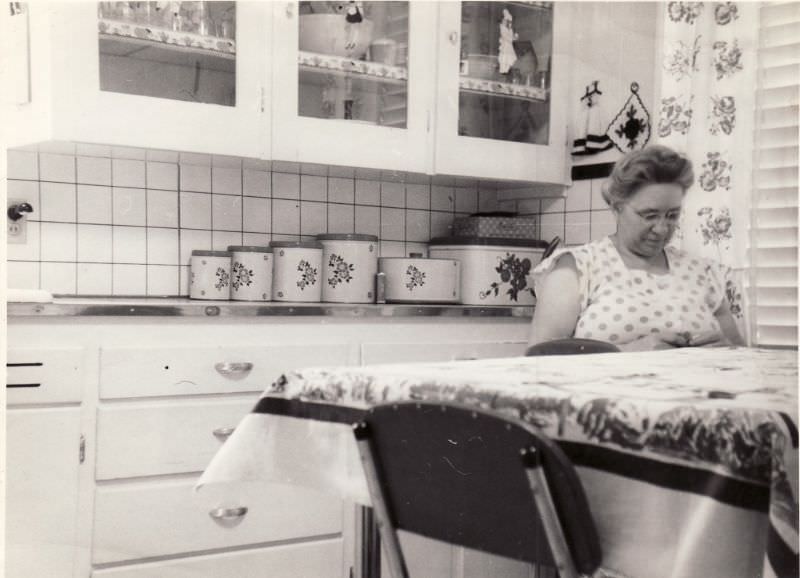
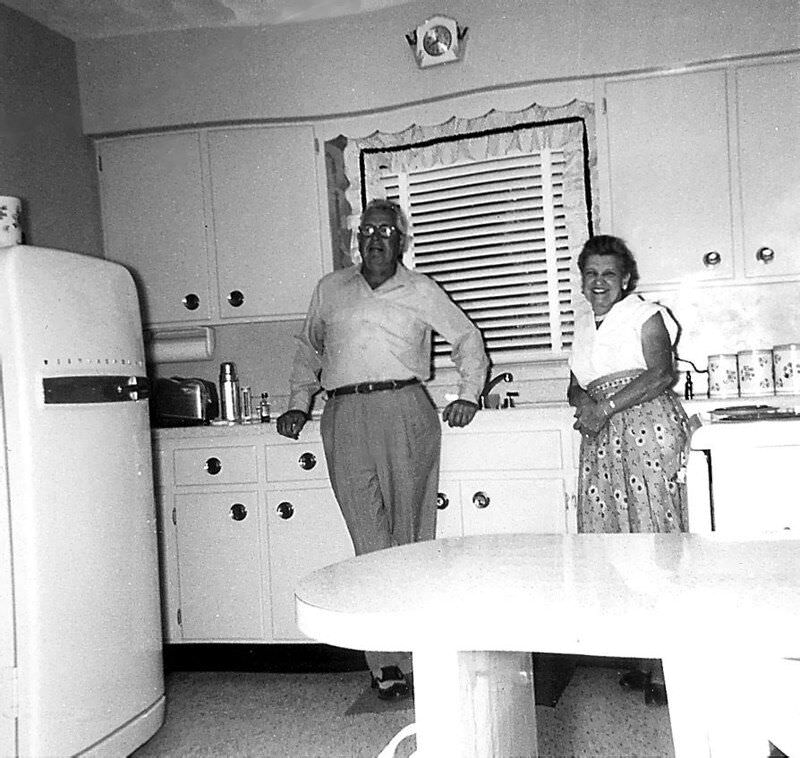
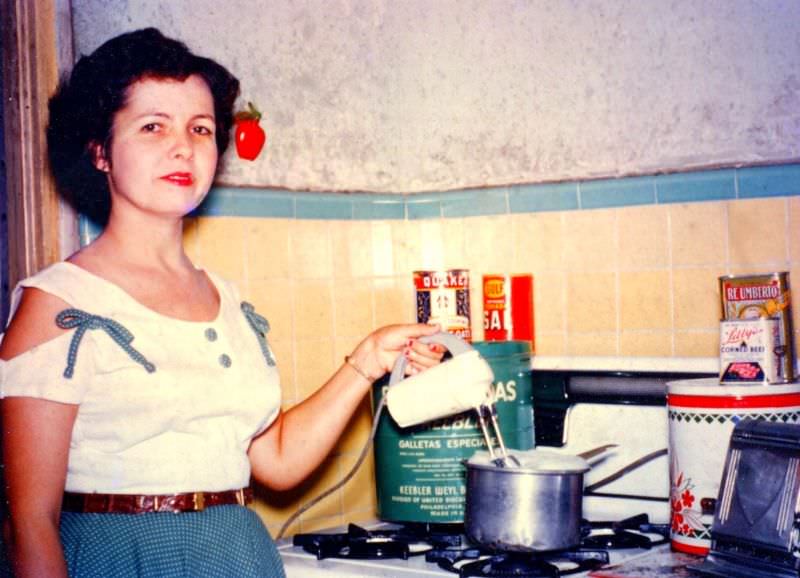
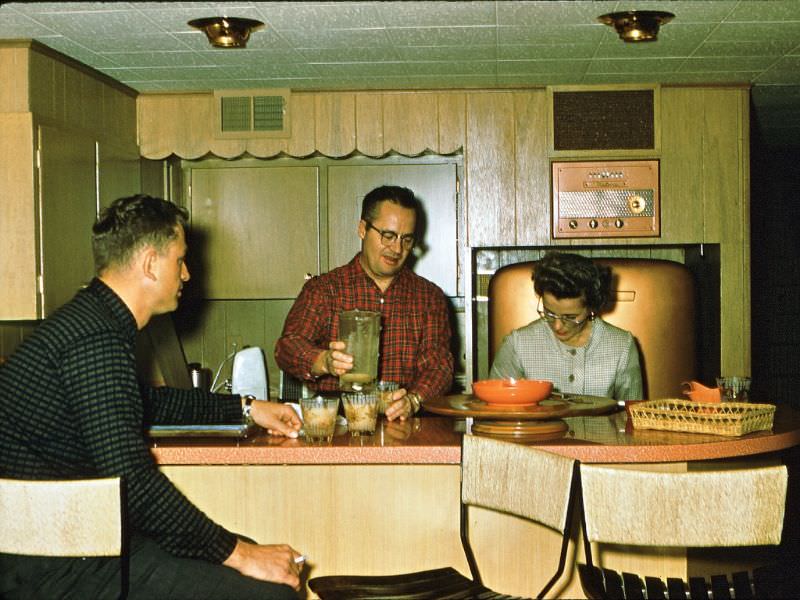
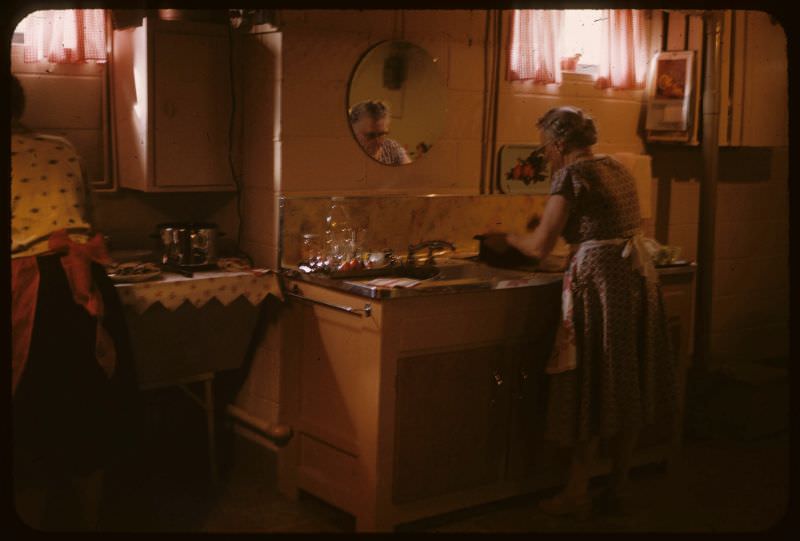
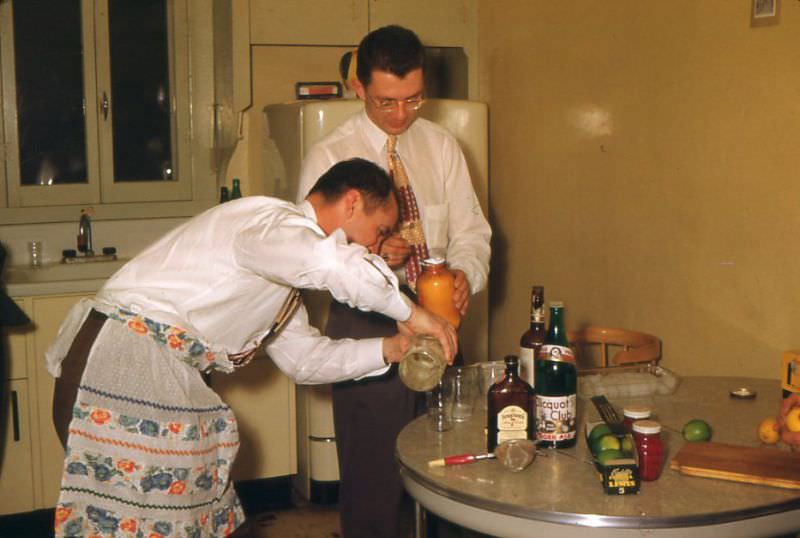
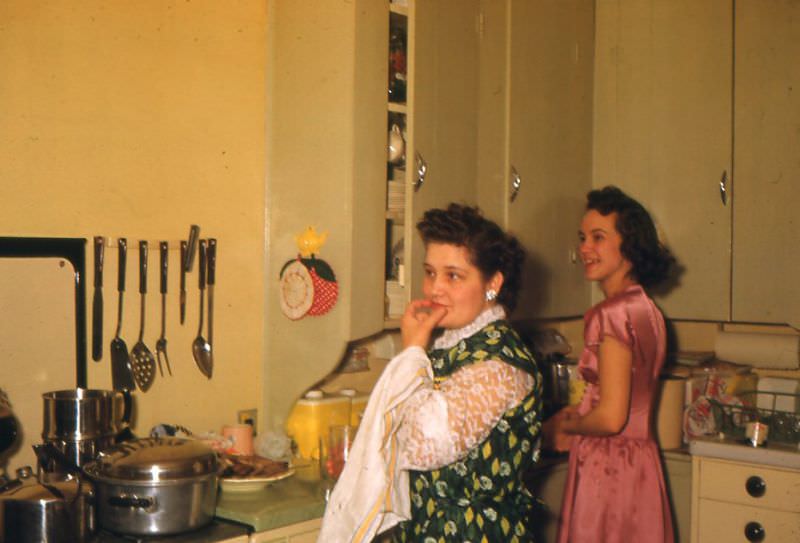
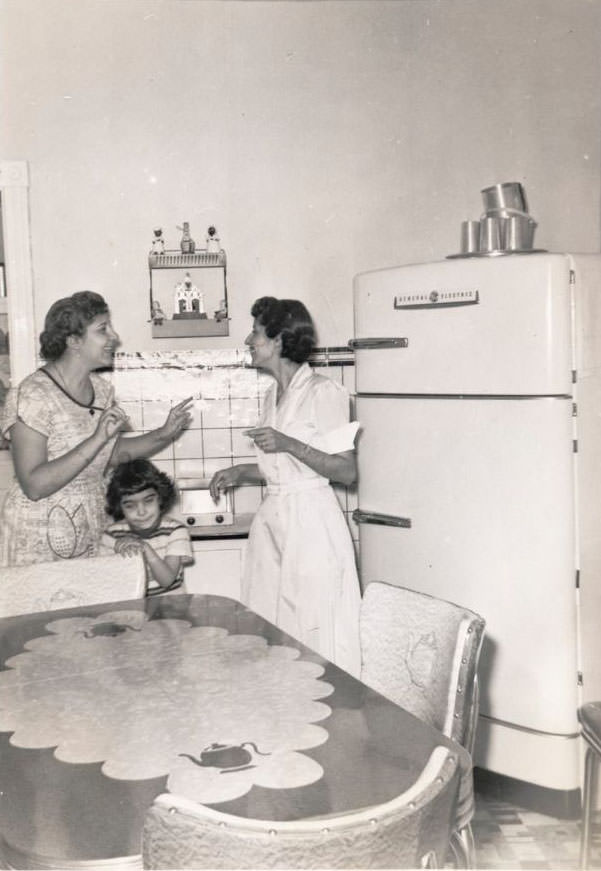
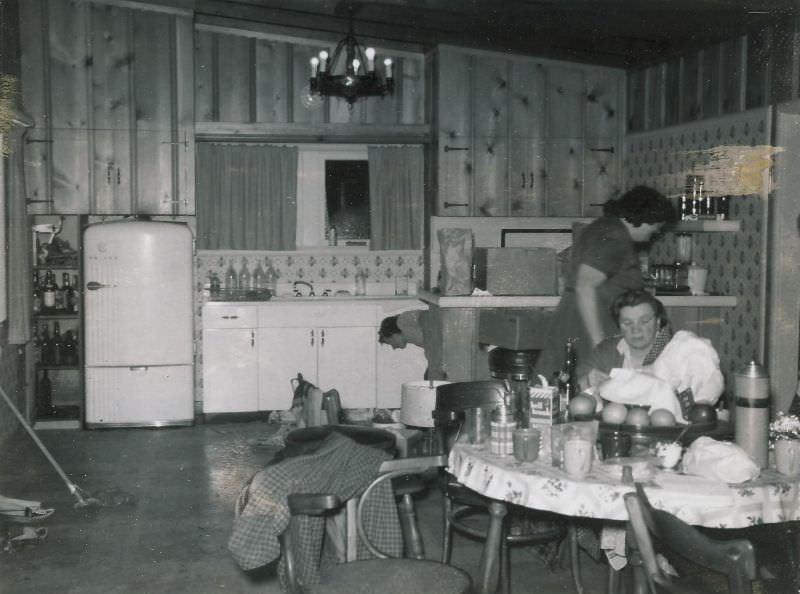
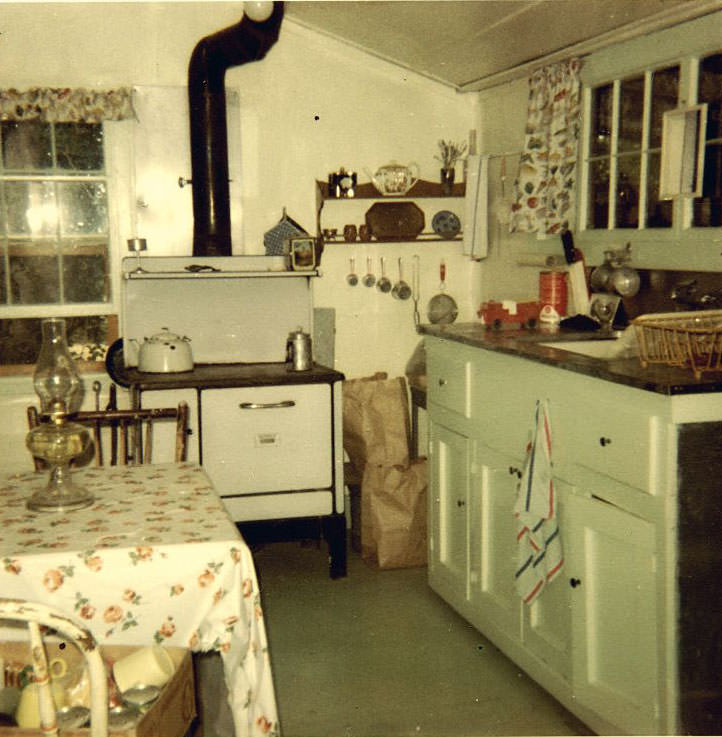
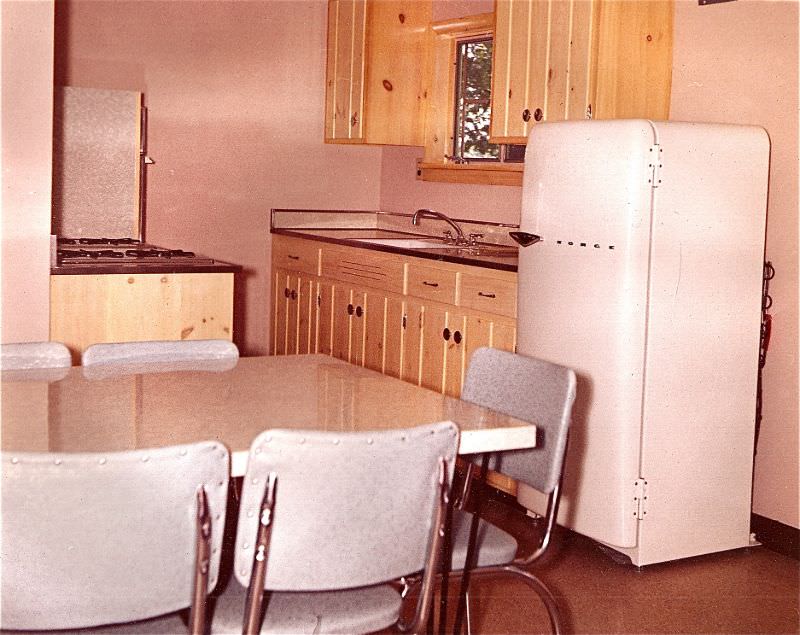
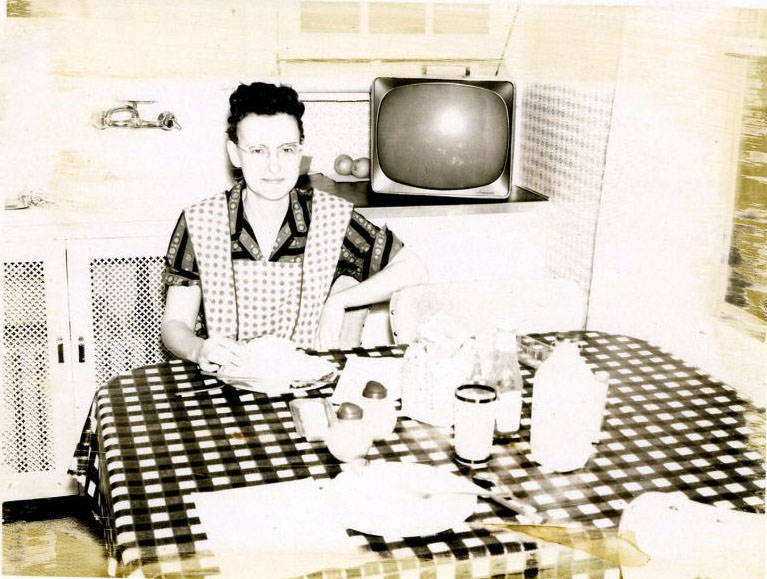
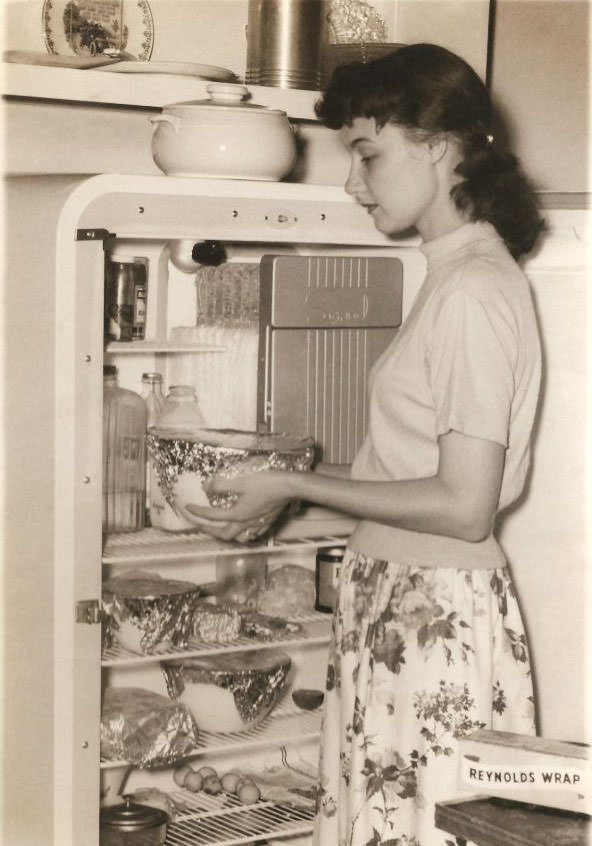
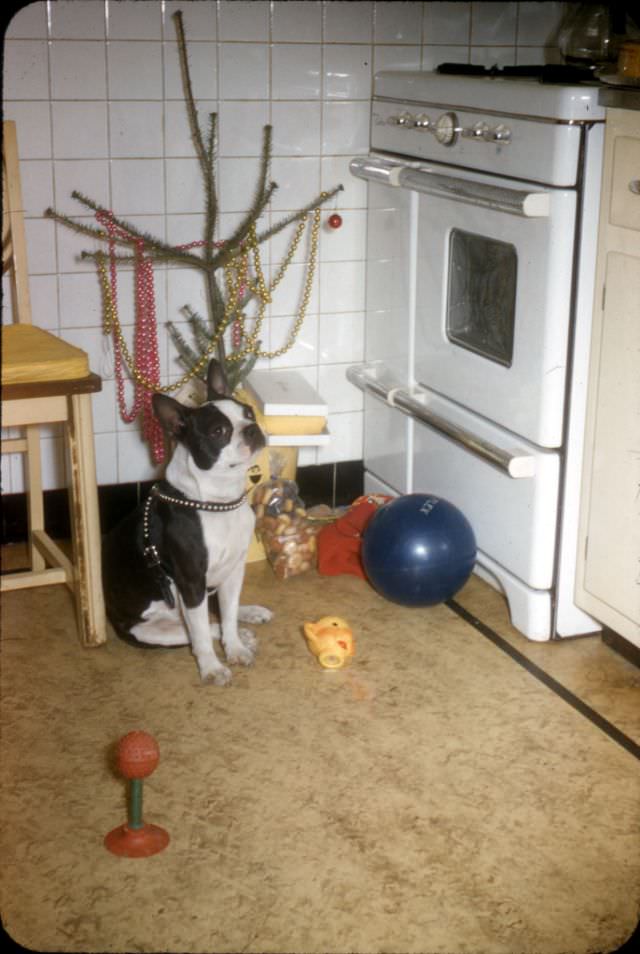
The photos in this collection capture kitchens from across the decade. Some are sleek and minimal, with clean countertops and streamlined appliances. Others are full of personality — patterned curtains, ceramic canisters lined up on shelves, and checkered floor tiles. Each one reflects the same core idea: the kitchen was a space worth designing carefully.
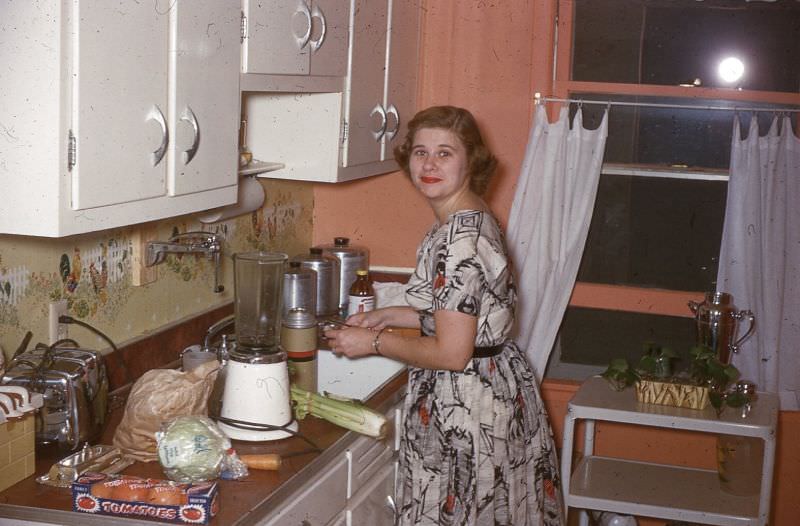
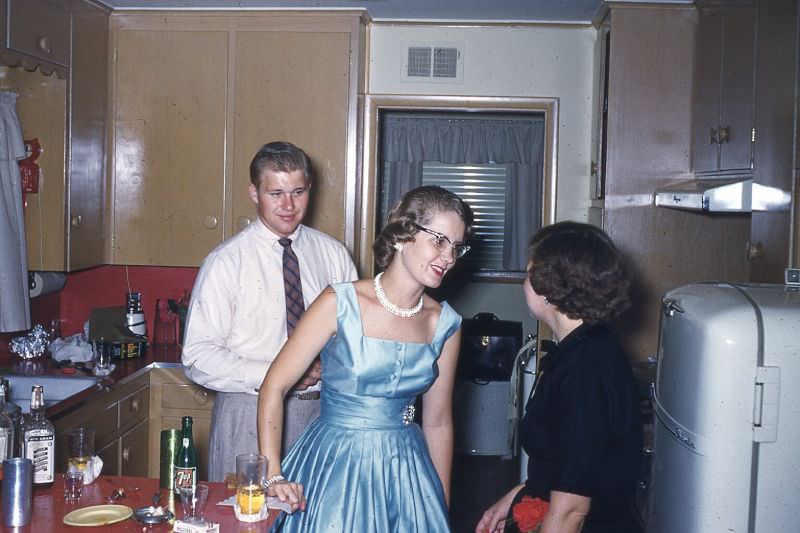

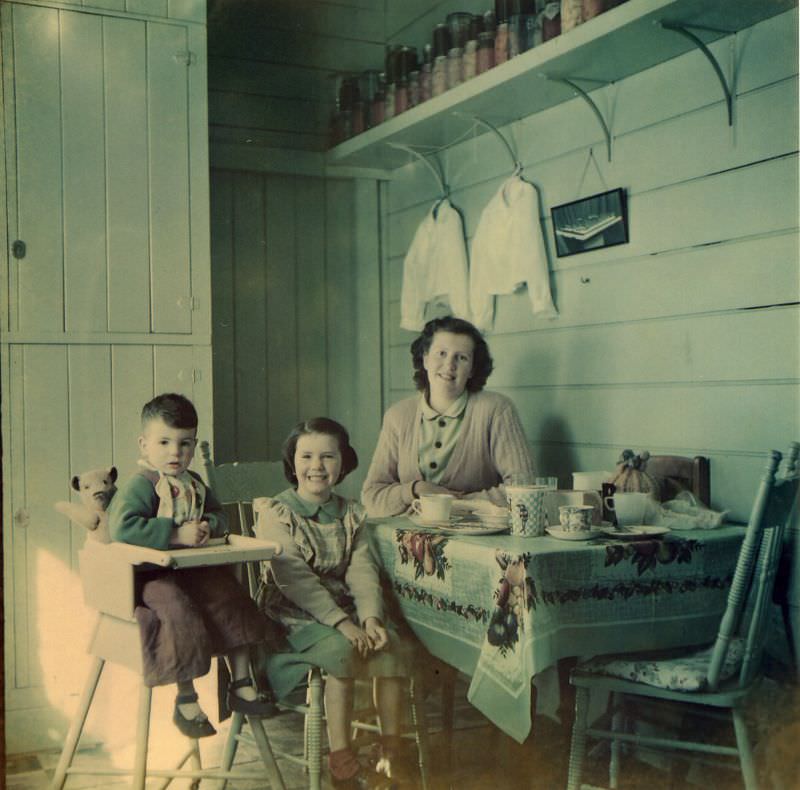
Prosperity drove design choices in ways that hadn’t been possible before. During the Depression and the war years, families made do with what they had. By the 1950s, there was money to spend and a growing consumer market eager to sell new products. Kitchen manufacturers competed for attention, and homeowners had more options than ever.