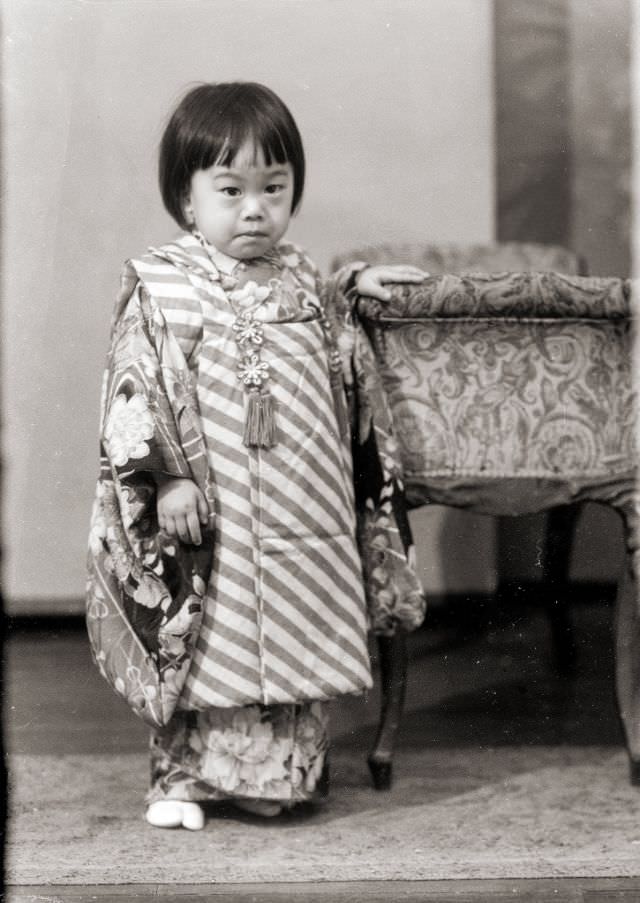
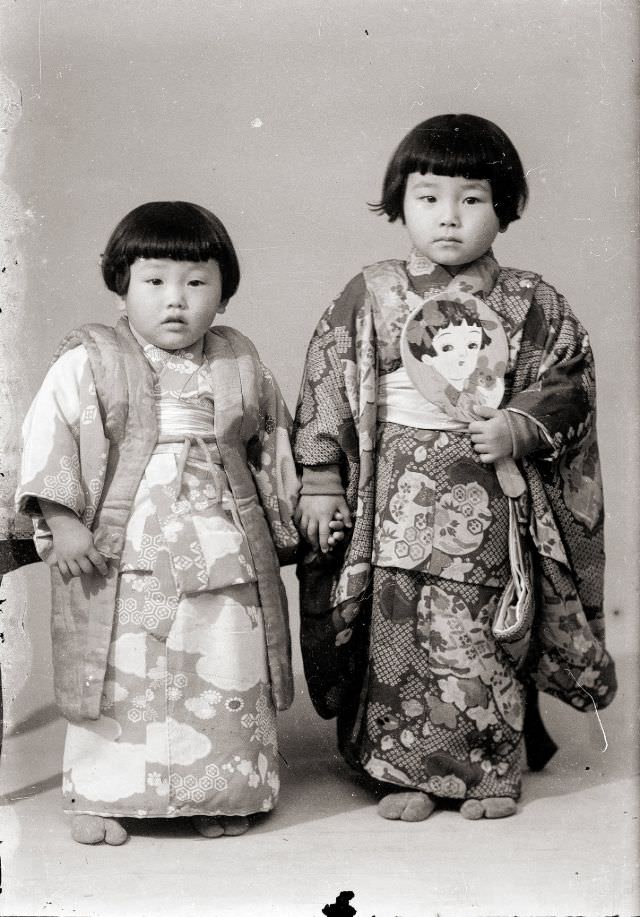
A large wooden box held a quiet treasure — a collection of film negatives taken by a Japanese portrait photographer sometime around the early 1950s. One roll of film in the box carried an expiration date of 1951, placing these images squarely in postwar Japan. The photographs show children dressed for formal portraits, some in Western-style clothing and others in traditional Japanese dress. Together, they offer a rare, close-up look at childhood in Japan during a period of significant change.
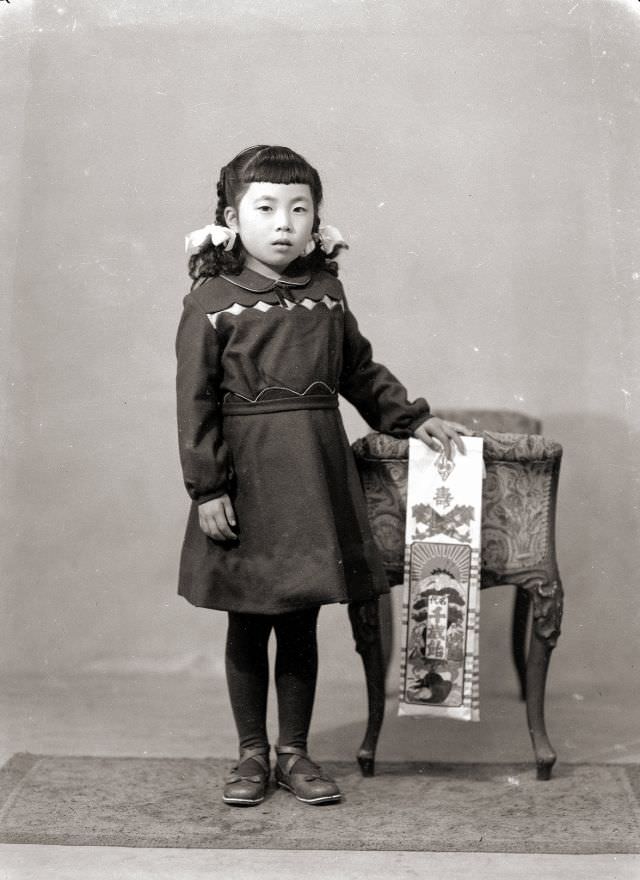
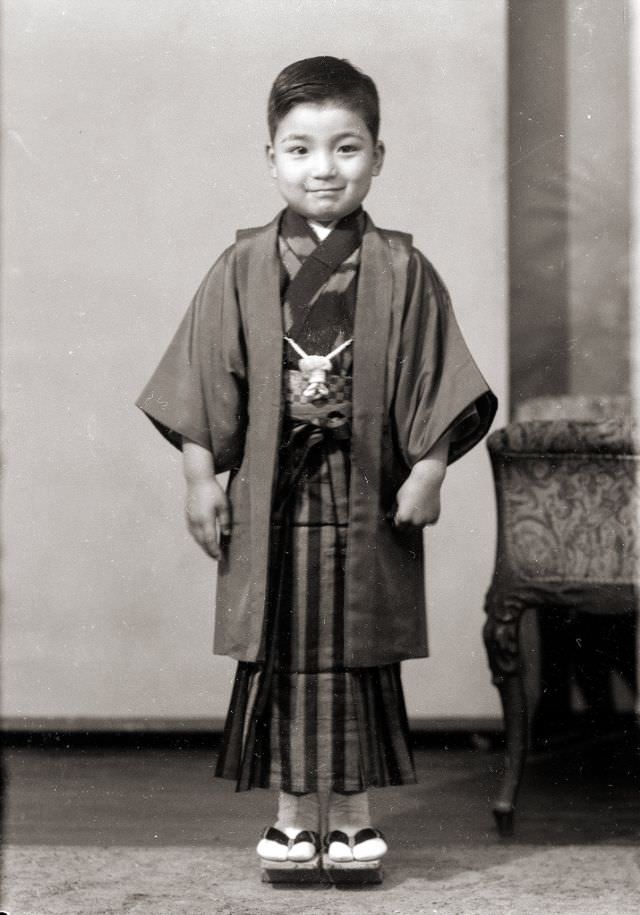
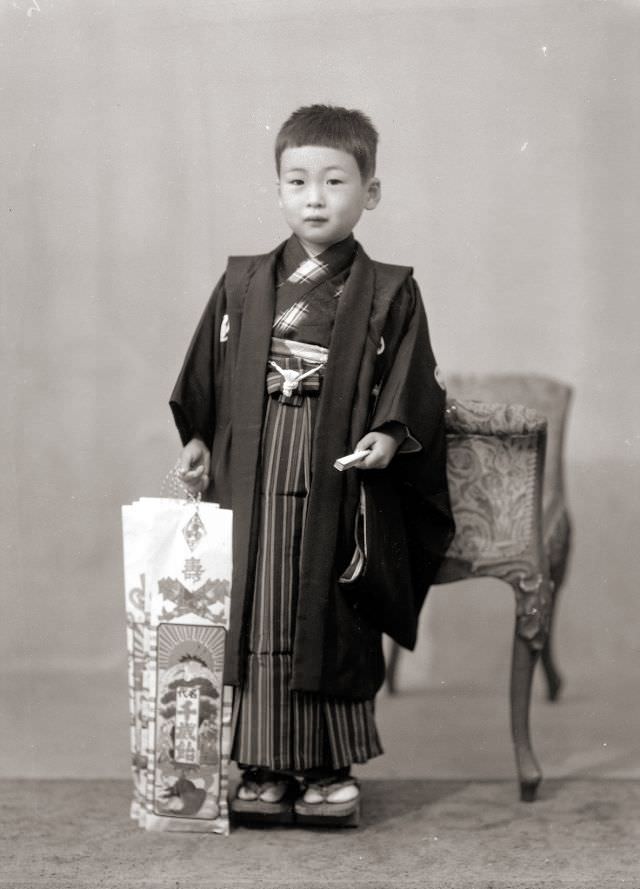
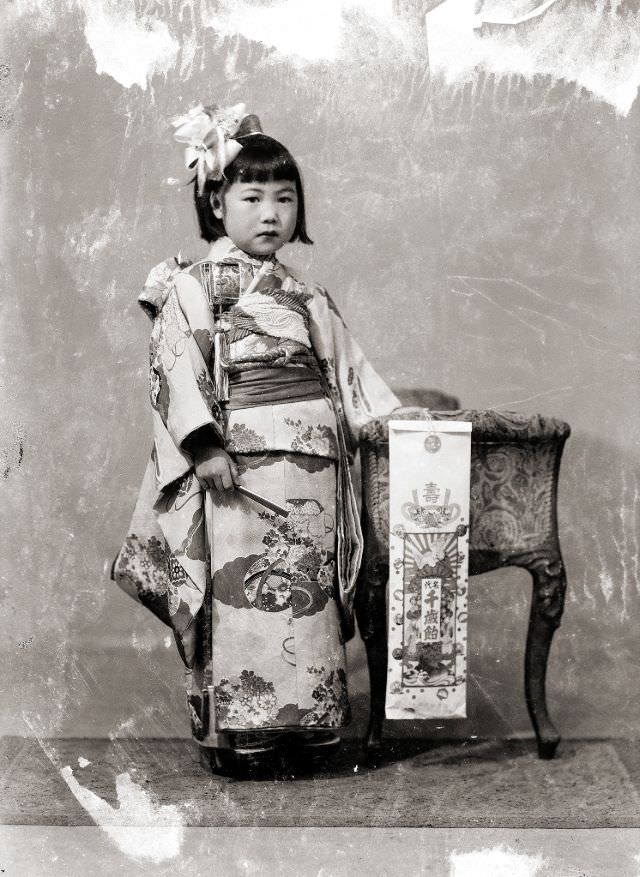
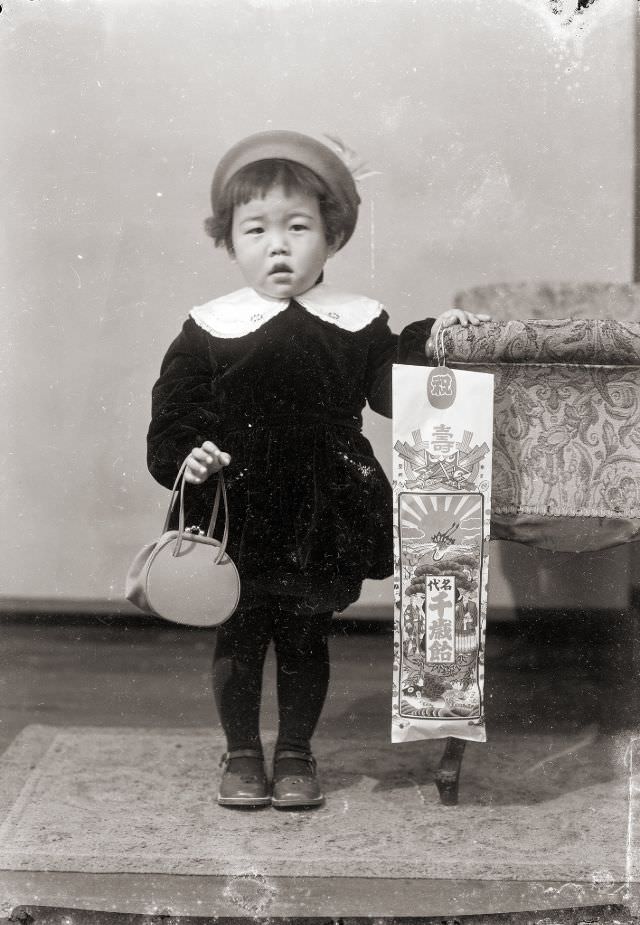
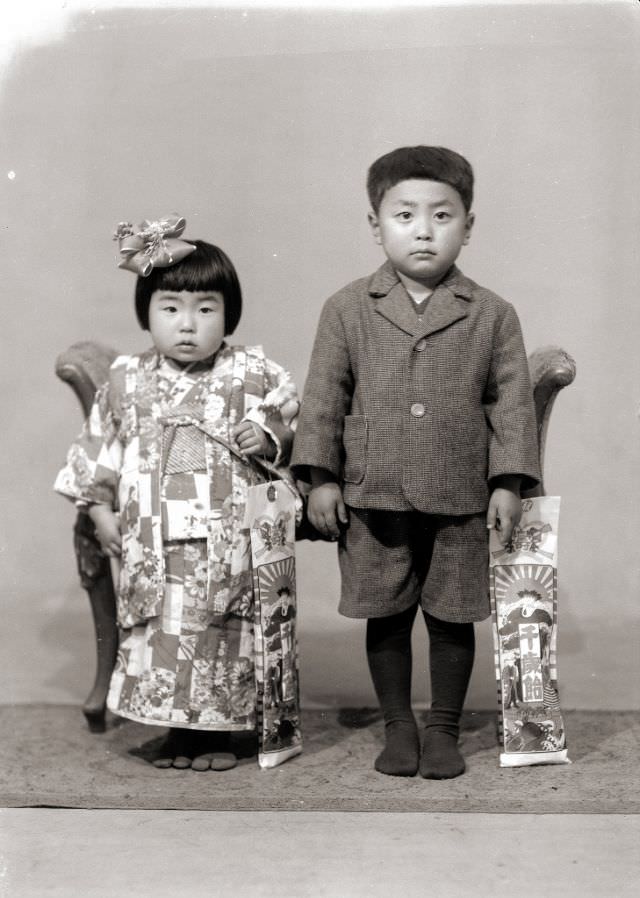
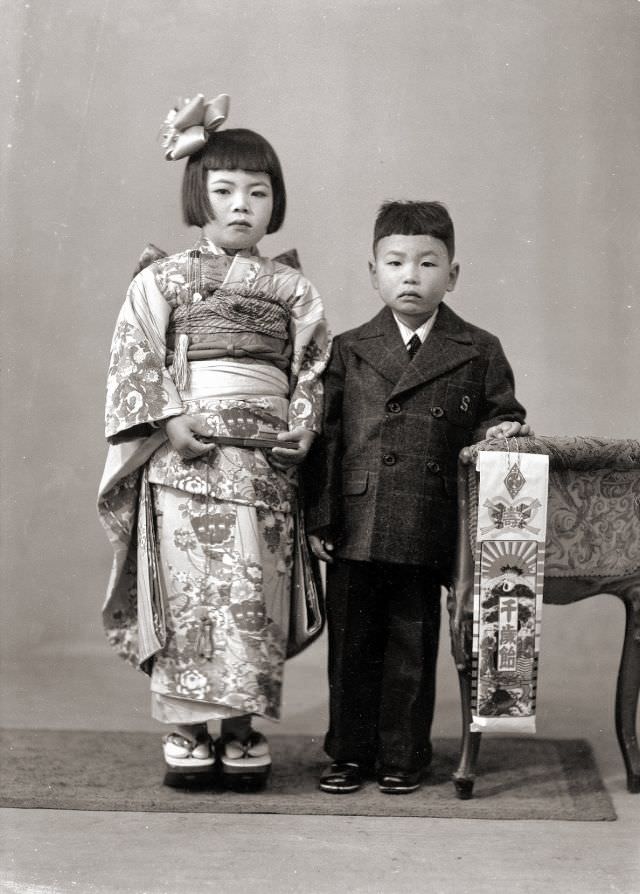
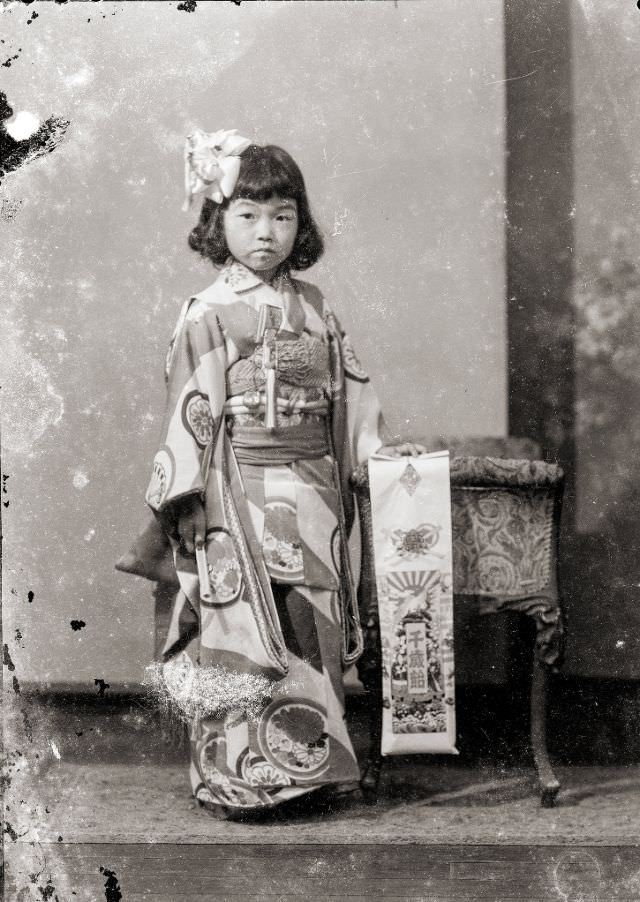
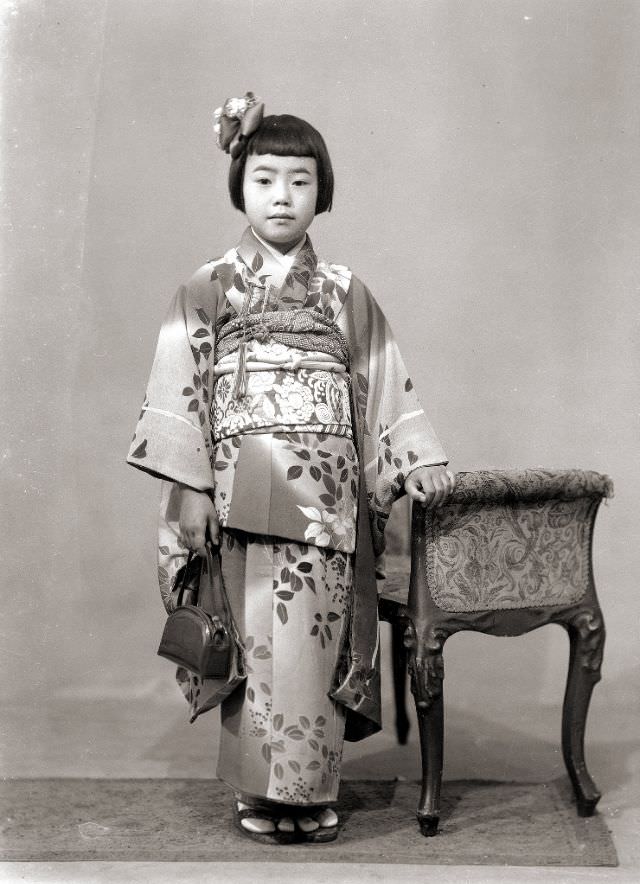
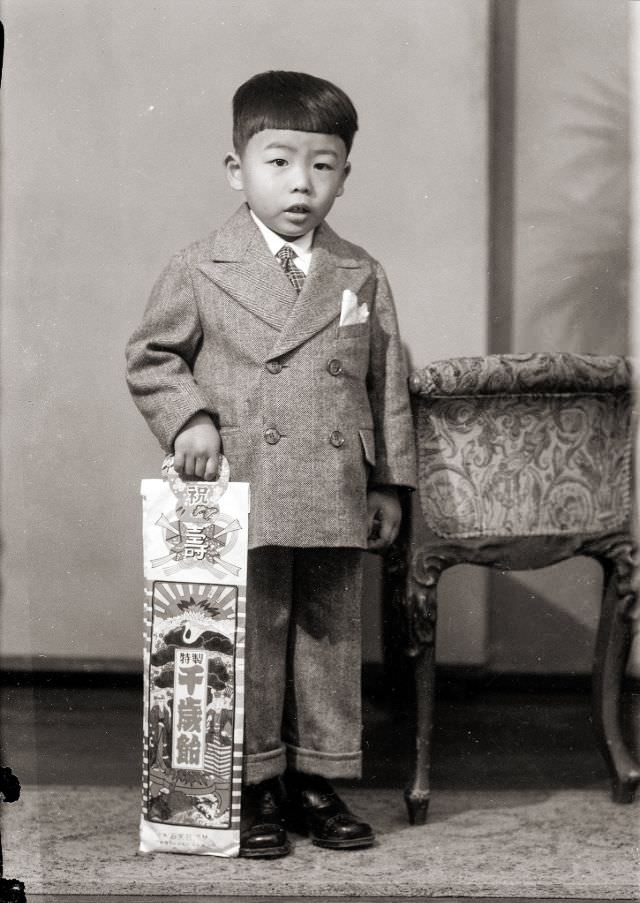
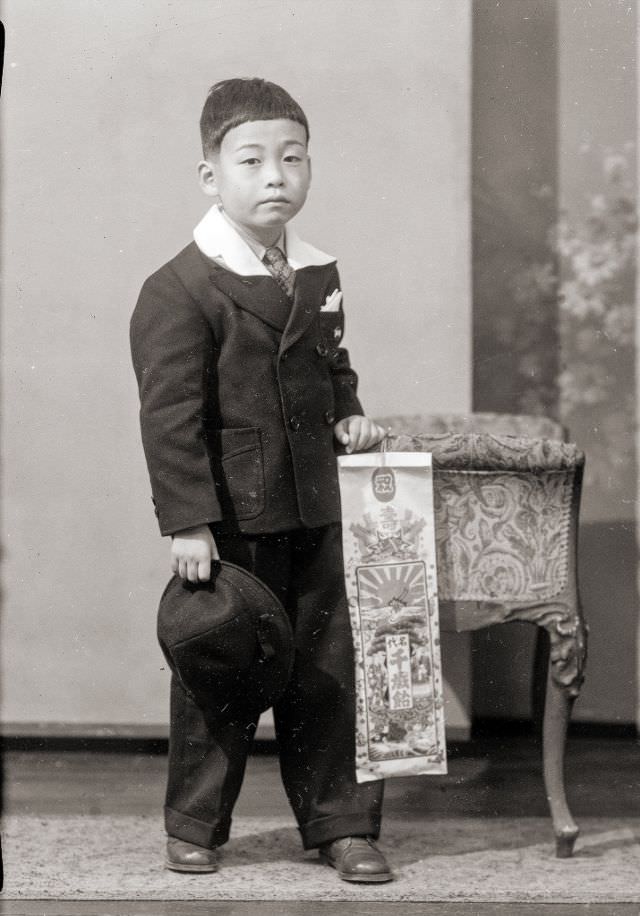
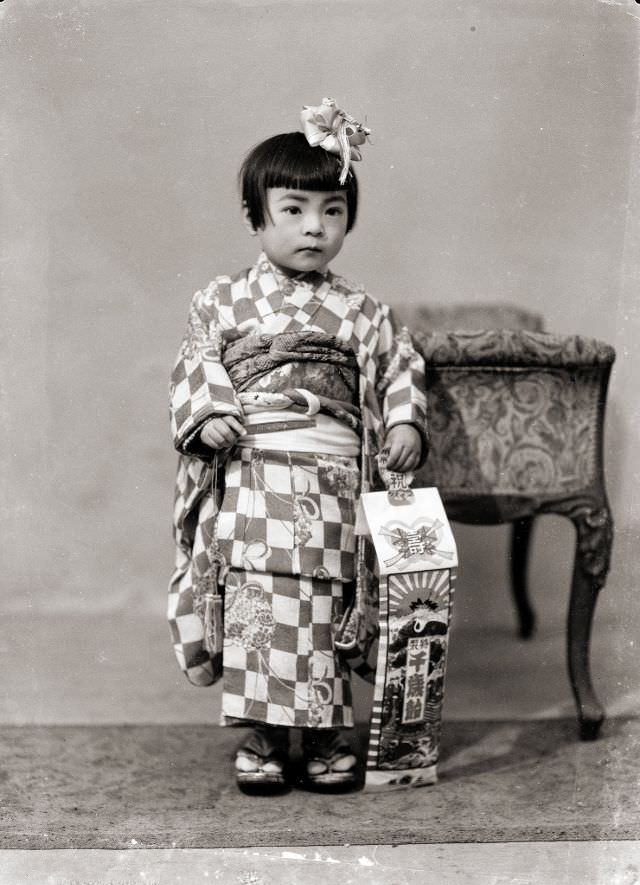
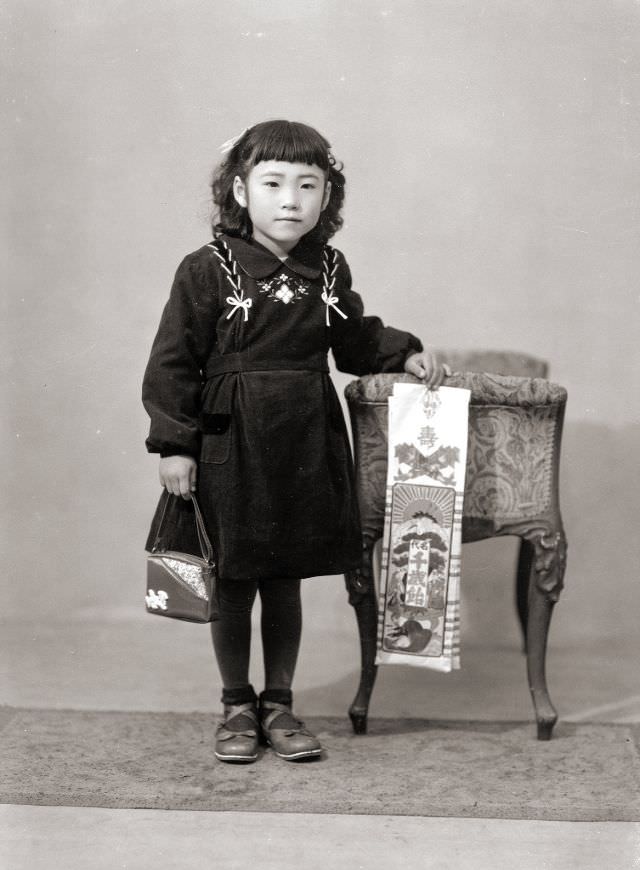
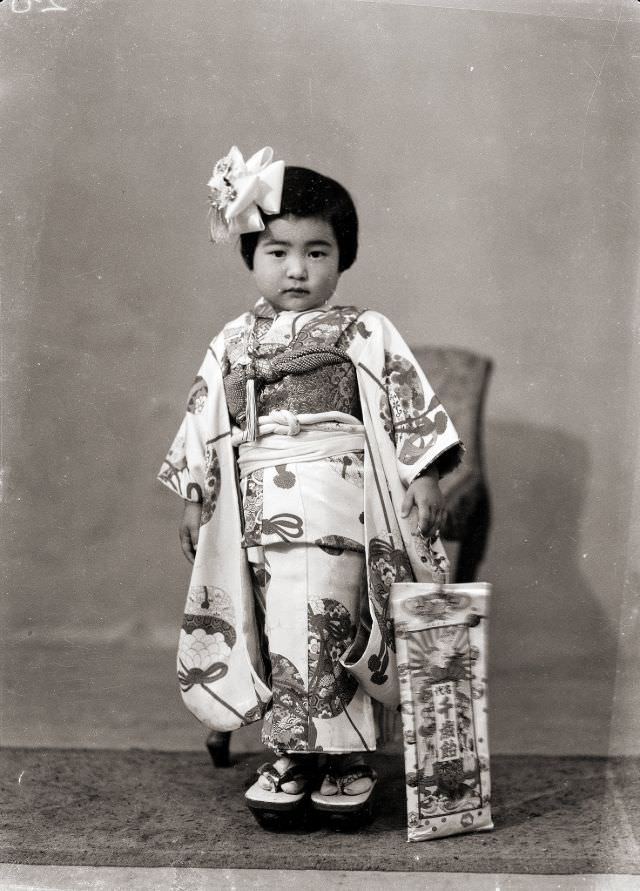
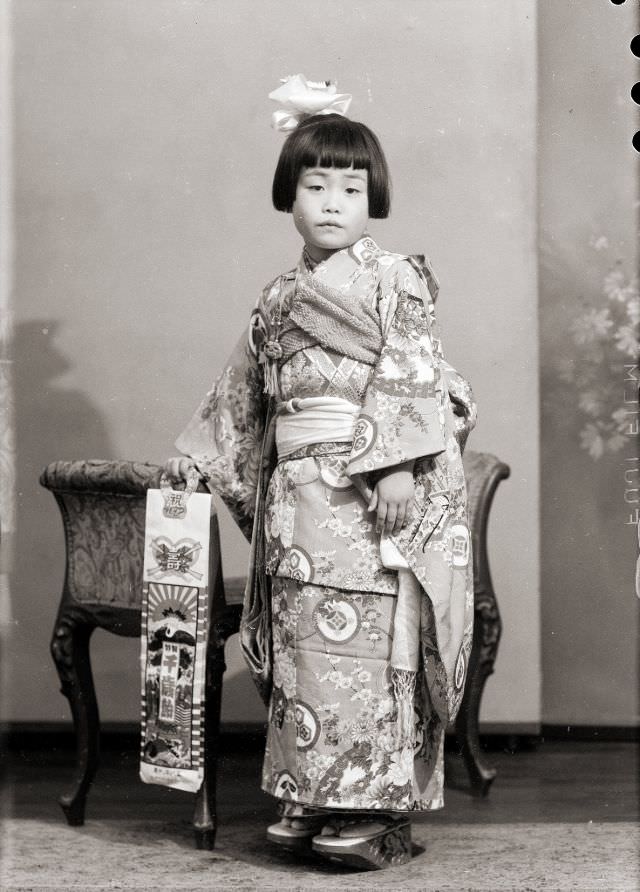
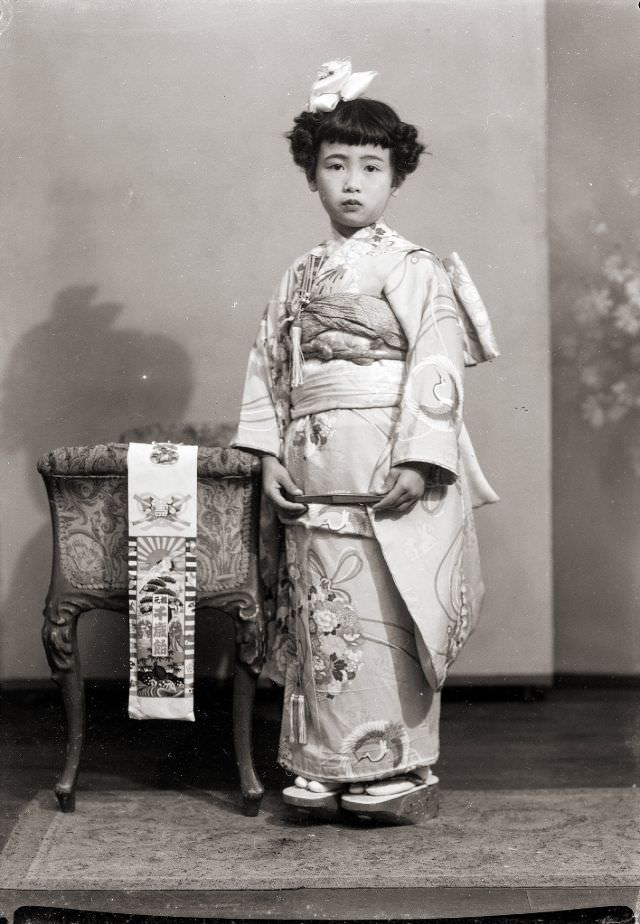
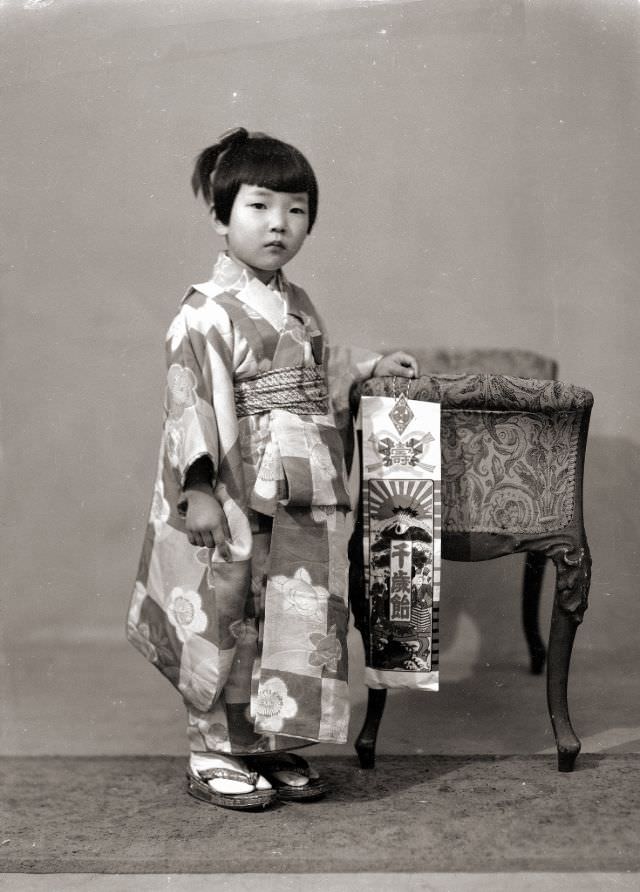
Many of the portraits were taken to mark Shichi-Go-San, a traditional Japanese holiday celebrated on November 15th each year. The name translates to “seven-five-three,” referring to the ages of the children honored — girls at ages three and seven, boys at ages three and five. Families dress their children in their finest clothes and visit a Shinto shrine to pray for the child’s health and long life. A key part of the celebration is Chitose Ame, which means “thousand year candy.” It comes in long, thin sticks and is carried in a decorated paper bag. Many of the children in these portraits are holding exactly that.
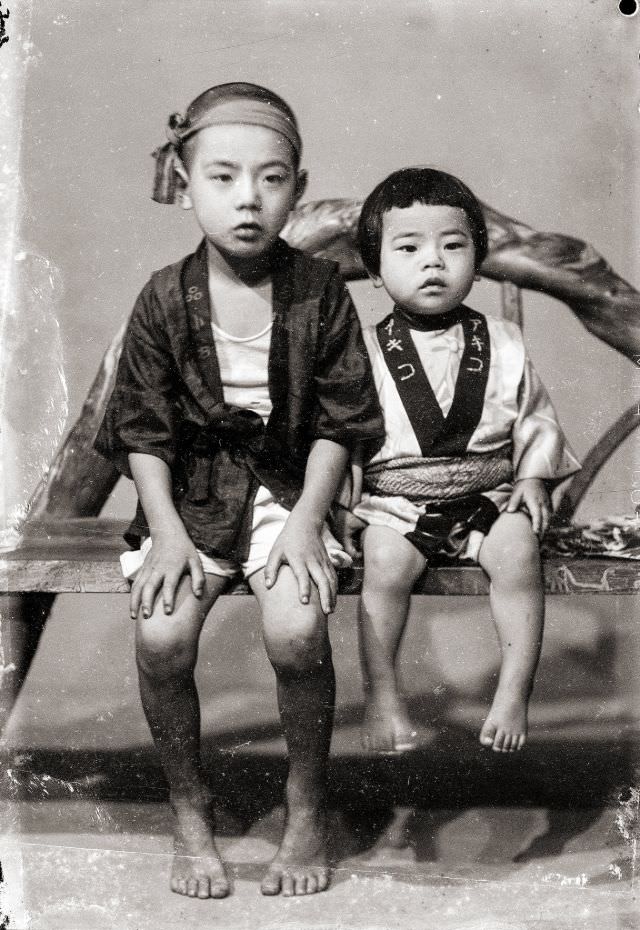
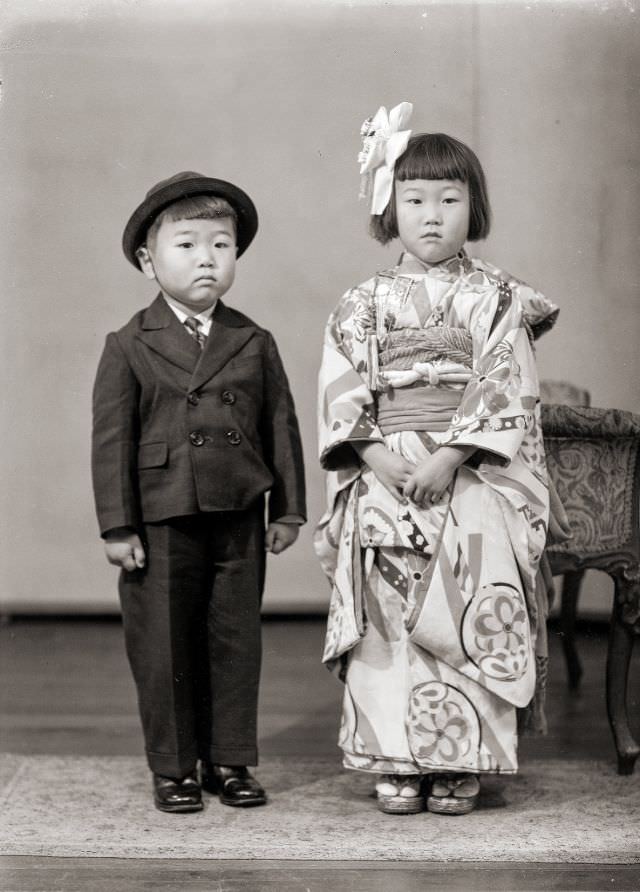
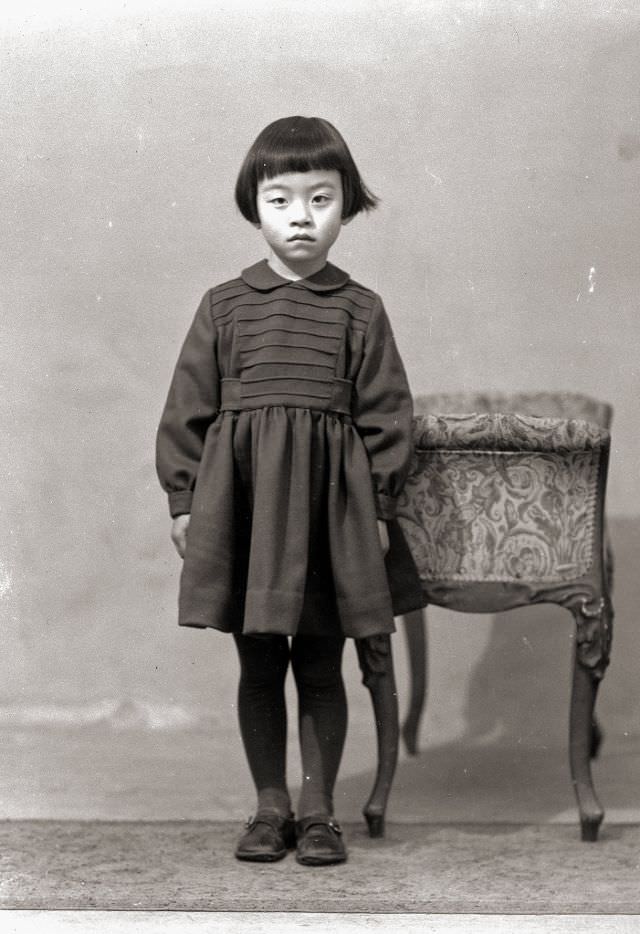
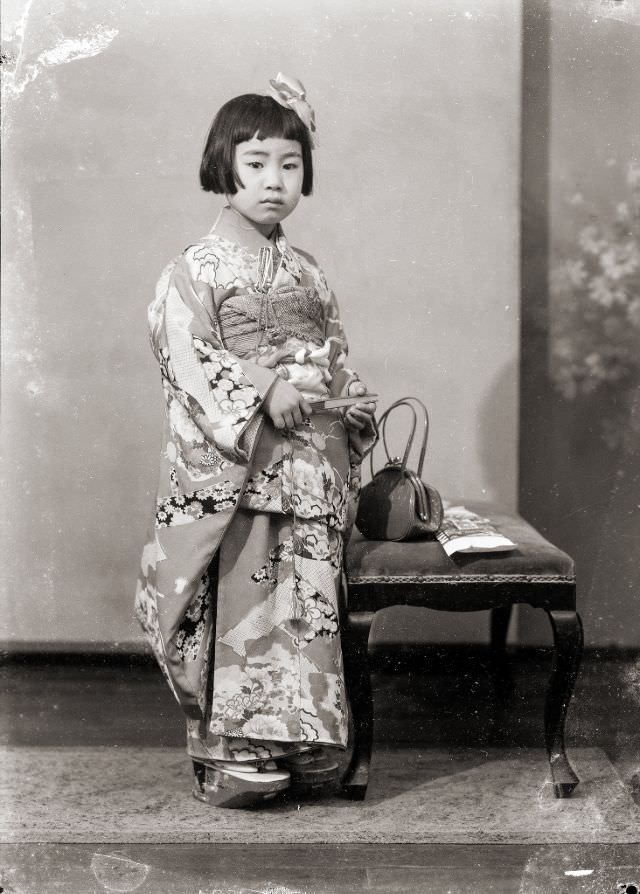
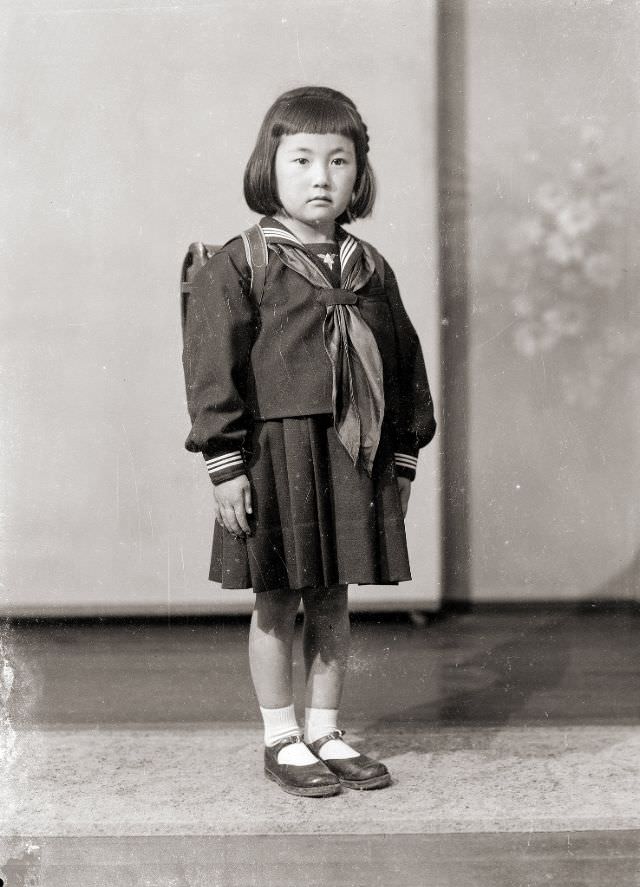
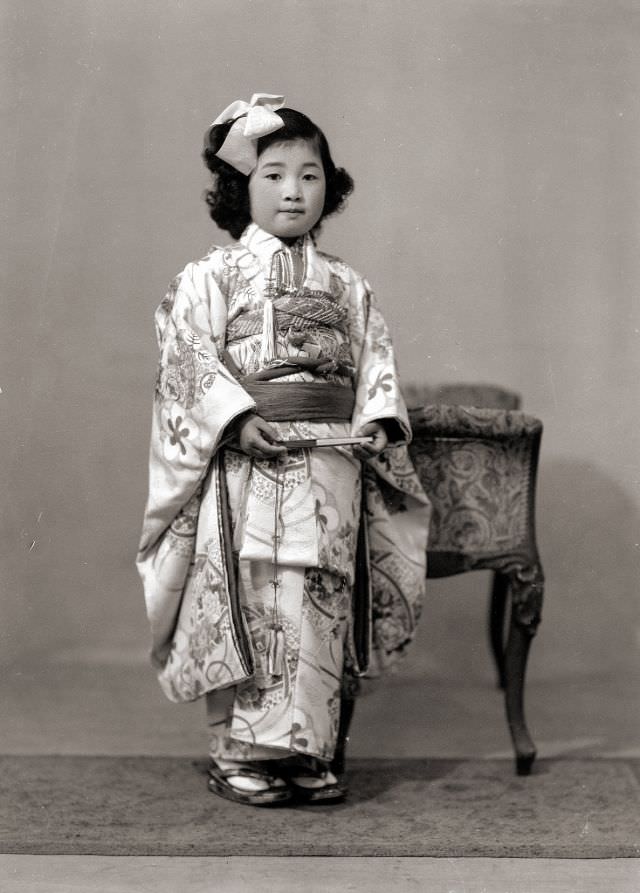
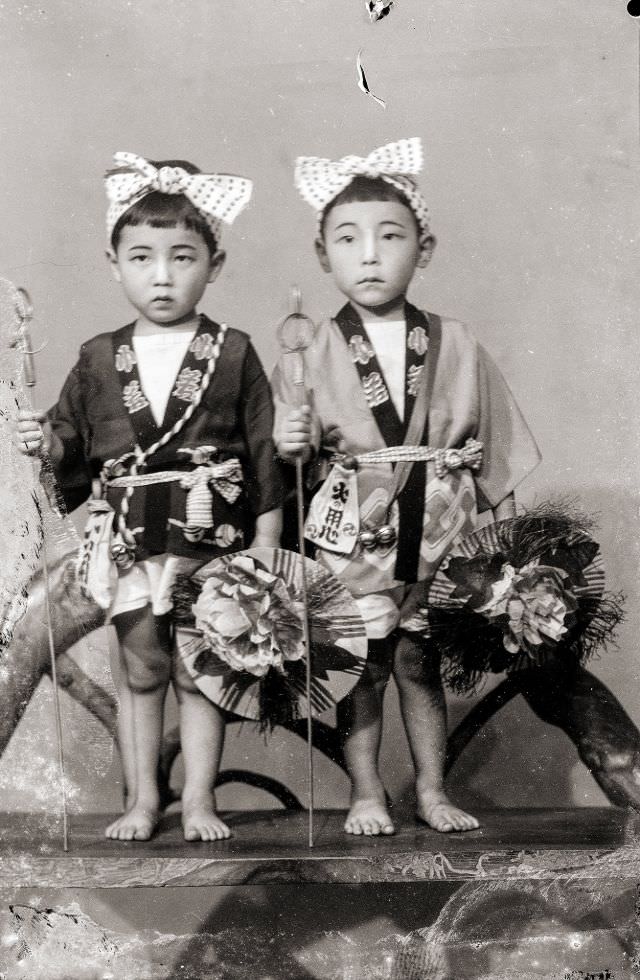
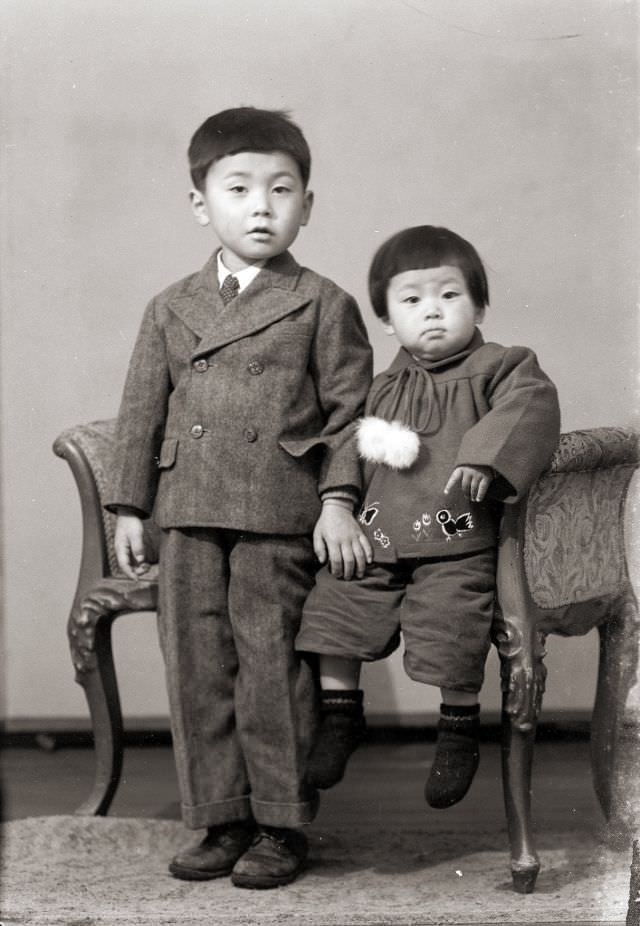
The clothing in these portraits reflects a Japan that was absorbing Western fashion while still holding firmly to its own traditions. Some children appear in tailored suits and dresses with leather flats. Others wear kimonos, hakamas, and happi coats — traditional garments that had been worn for centuries. Hair bows, wooden geta sandals, folded fans, and decorative handbags all appear throughout the collection. The mix of old and new in a single frame captures exactly where Japan stood in the early 1950s.
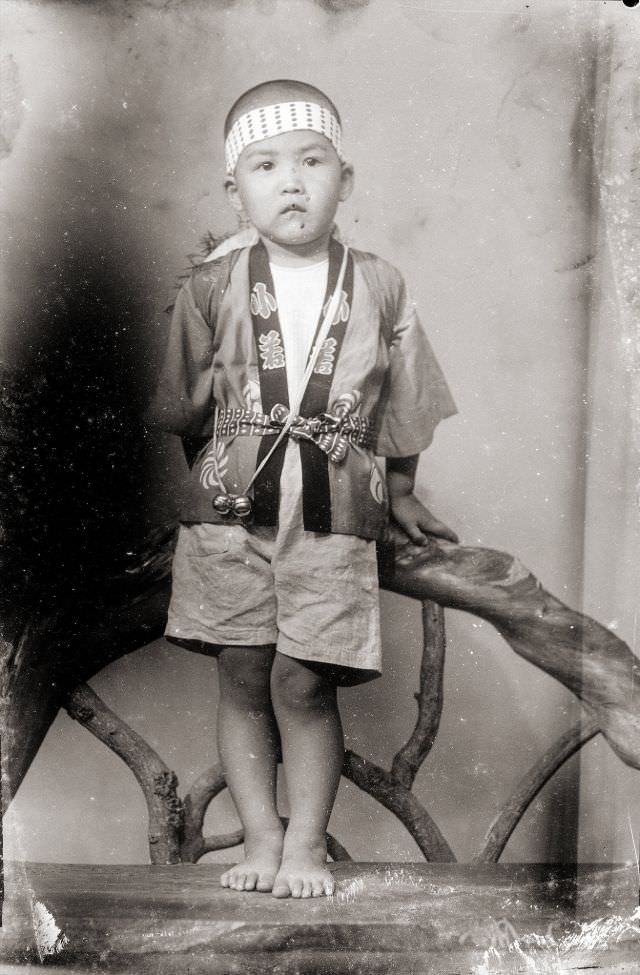
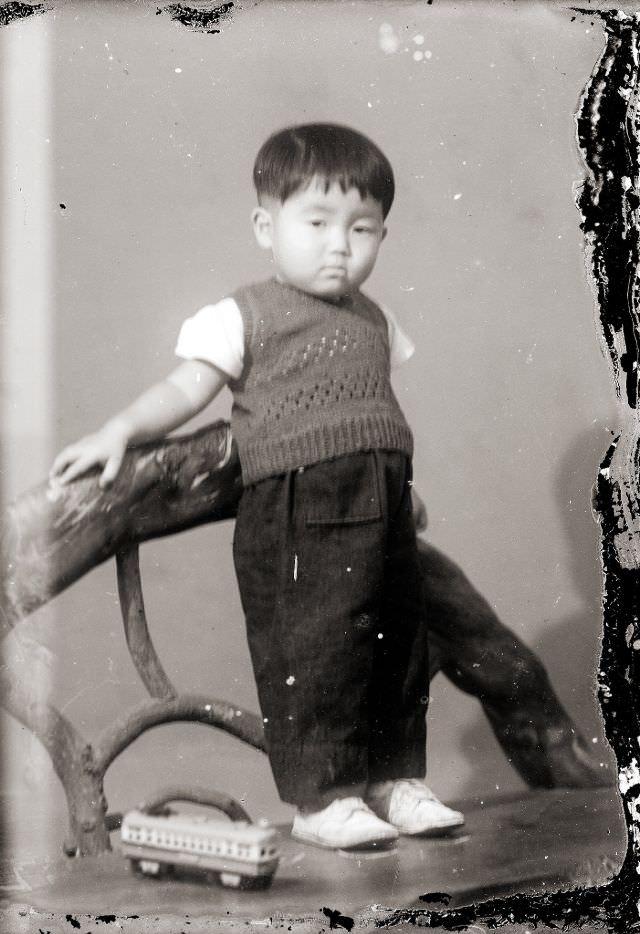
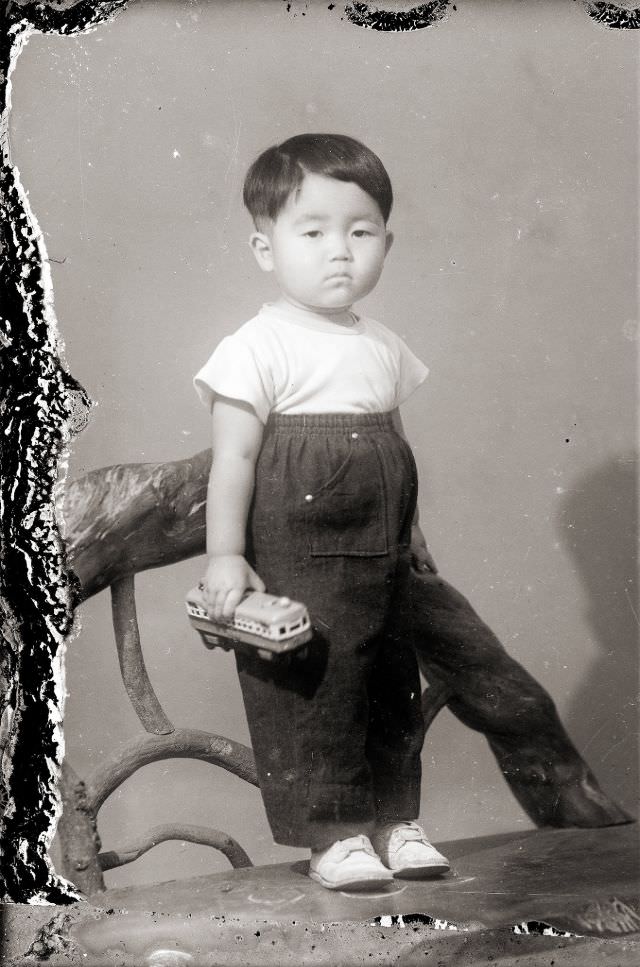
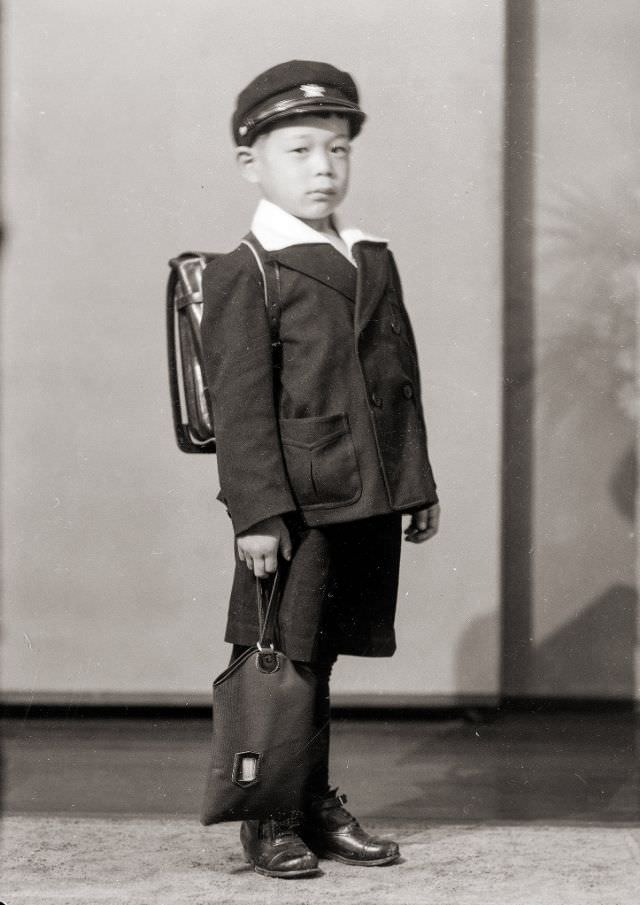
Boys appear throughout the collection in a range of looks. One poses in a happi coat, headband, and bells — dressed for a festival. Another stands confidently in very high-waist pants while gripping a toy train. A school-age boy wears his full uniform: jacket, hat, and backpack, ready for another day of classes. These weren’t casual snapshots. Each child was posed deliberately by a professional photographer, suggesting the portraits were family keepsakes meant to last.
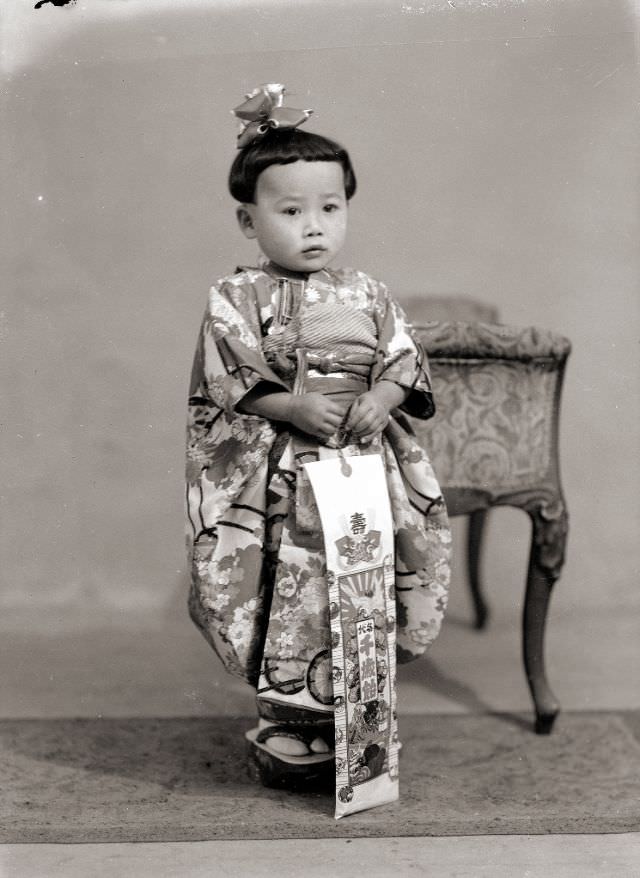
The girls’ portraits are especially detailed. Several wear kimonos in checkered, floral, or richly patterned fabrics. Accessories were carefully chosen — a folded fan here, a rounded hagoita-style paddle there, a small handbag carried just so. One girl in a velvet blouse and hat holds her Chitose Ame candy with both hands. Another in a sailor school uniform with a tie and backpack looks ready for a school photo. Each portrait has its own personality, shaped by the child’s expression and the clothing chosen for that specific day.
Several portraits feature siblings photographed together. A boy and girl in happi coats stand side by side. Two boys in matching happi coats and headbands pose together. A girl in a kimono and a boy in a shorts suit each hold a stick of Chitose Ame. These paired portraits were almost certainly commissioned by parents who wanted to document their children at these milestone ages before the moment passed.
Not all of the portraits are tied to Shichi-Go-San. Some children appear simply dressed — a boy in a sweater vest, a girl in a plain dress and flats — posing for what looks like an everyday studio visit. These quieter images are just as compelling. They show children who were just children, photographed with the same care and attention as those dressed for a major celebration.