In February 1942, the United States government ordered the forced removal of over 120,000 Japanese Americans from their homes. Fueled by racial prejudice and fear of espionage following the attack on Pearl Harbor, the order swept up men, women, and children alike — the majority of them American citizens. Families on the West Coast were given little warning. Many sold their belongings at steep losses. Some managed to rent their properties to neighbors. Others simply walked away from everything they owned, with no certainty about where they were going or when — or if — they would return.
Each family was assigned an identification number. They were loaded onto cars, buses, trucks, and trains, carrying only what they could hold. Military guards escorted them to 17 temporary assembly centers set up at racetracks, fairgrounds, and similar sites across Washington, Oregon, California, and Arizona. From there, they were transferred to one of ten permanent relocation camps. One of these was Manzanar.
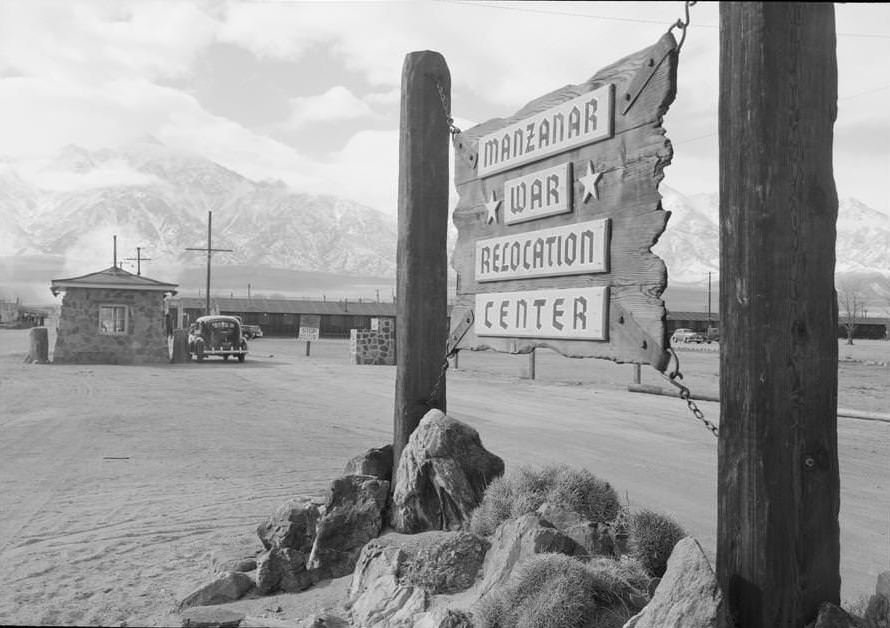
Wooden sign at entrance to the Manzanar War Relocation Center with a car at the gatehouse in the background.
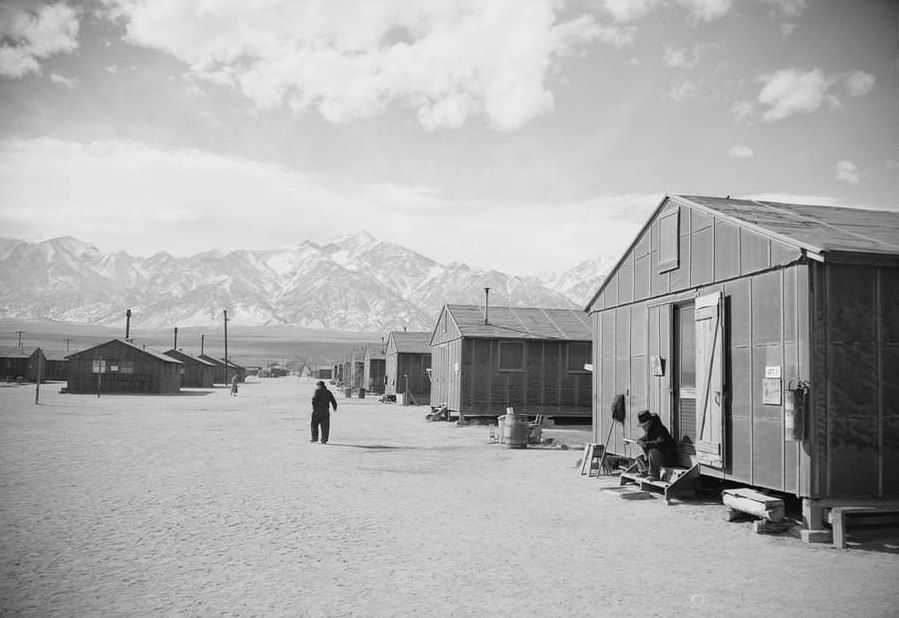
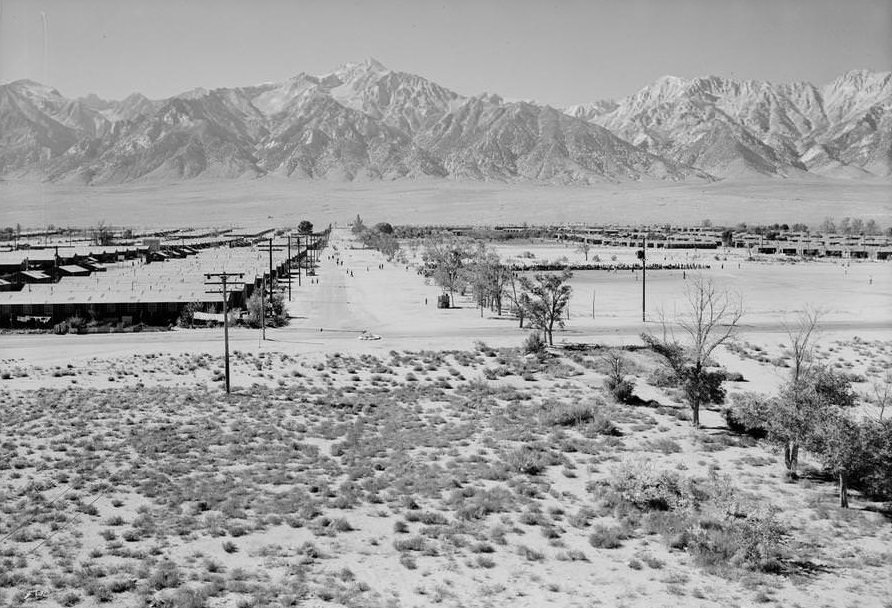
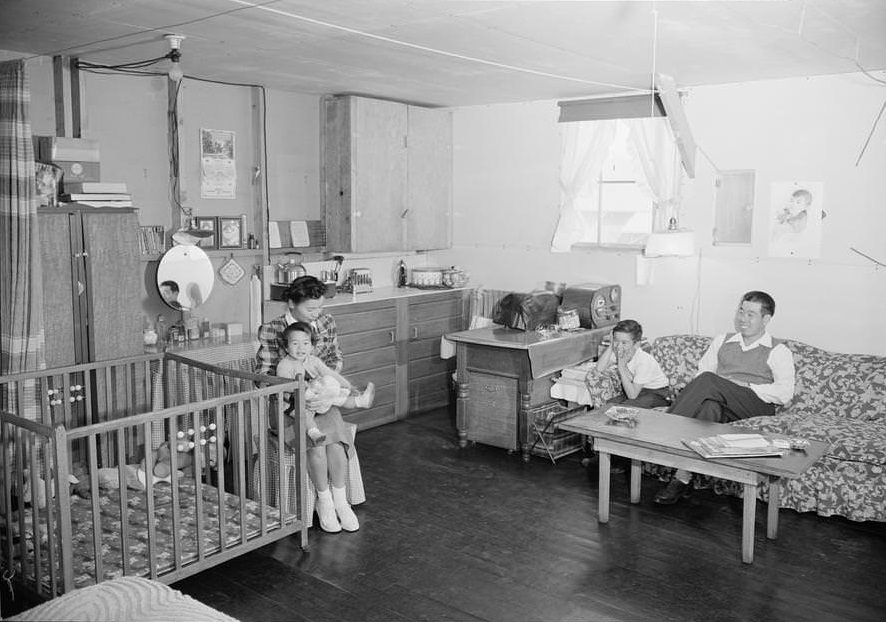
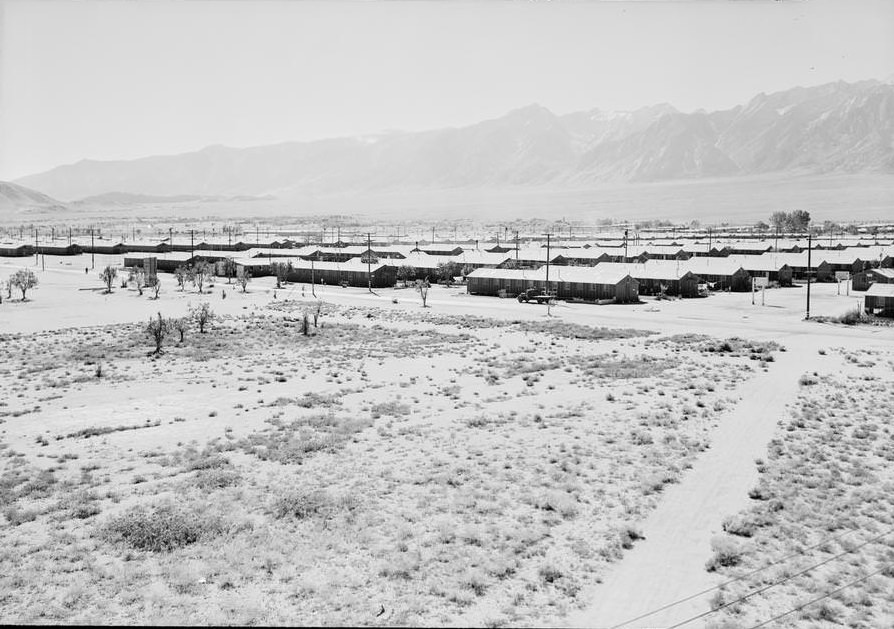
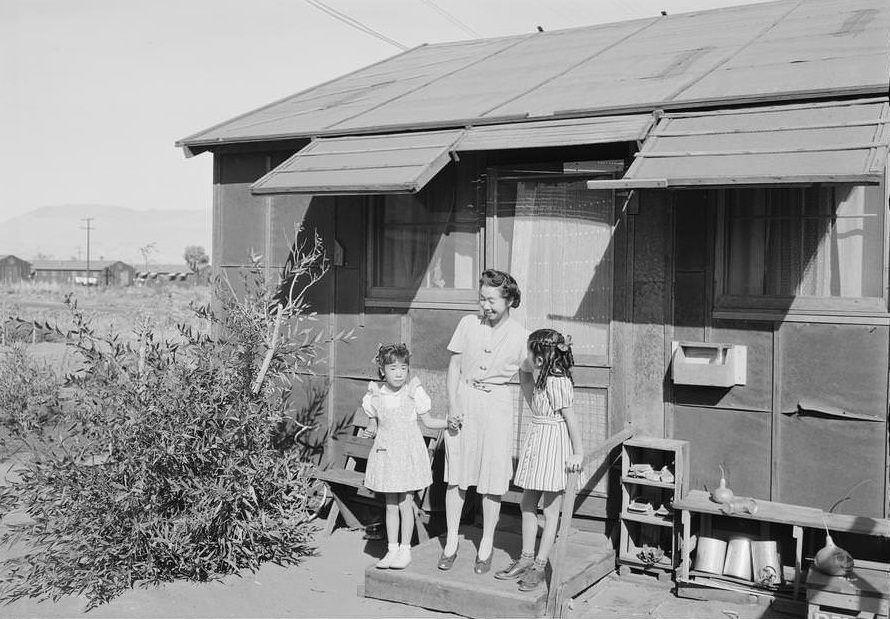
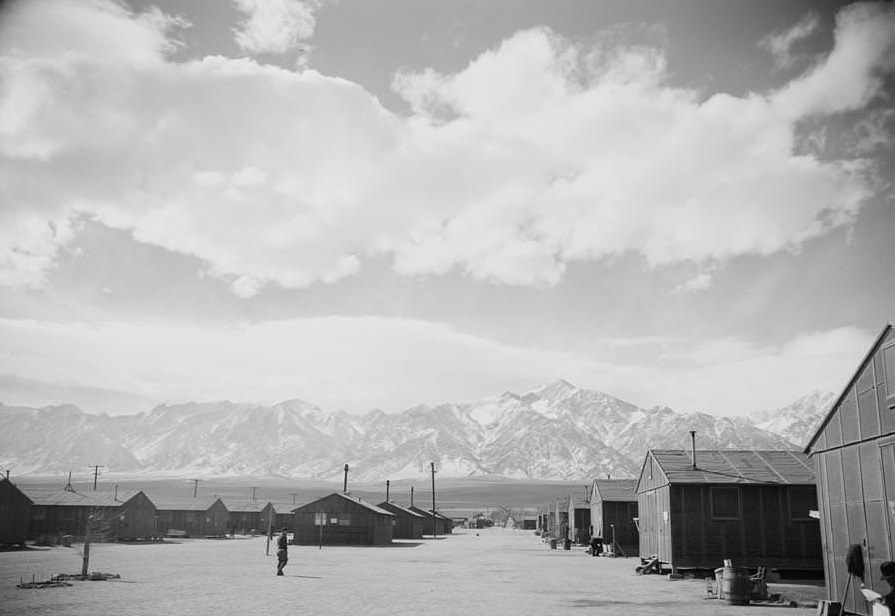
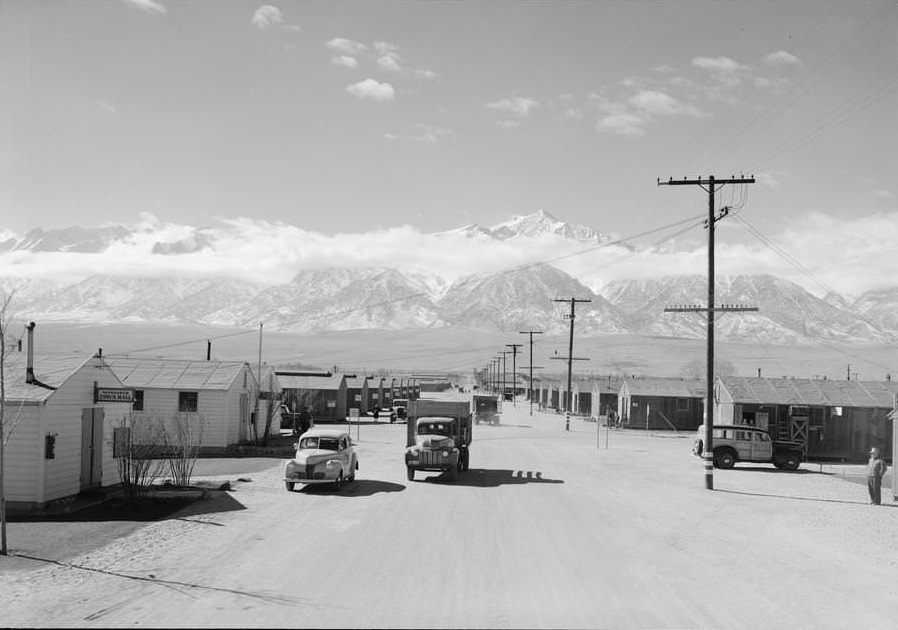
Manzanar sat in the Owens Valley of California, hemmed in by the Sierra Nevada to the west and the Inyo Mountains to the east. It was one of the larger camps and held roughly 10,000 people at its peak. The housing consisted of tar-papered barracks divided into small units, shared by entire families. Winters brought bitter cold off the mountains; summers were brutally hot and dry. Dust storms tore through the valley without warning, forcing residents inside and coating everything in grit.
Rows of camp housing, covered on the outside with tarpaper, snow-covered mountains in the distance.Bird’s-eye view of center grounds showing buildings, roads and mountains in background.
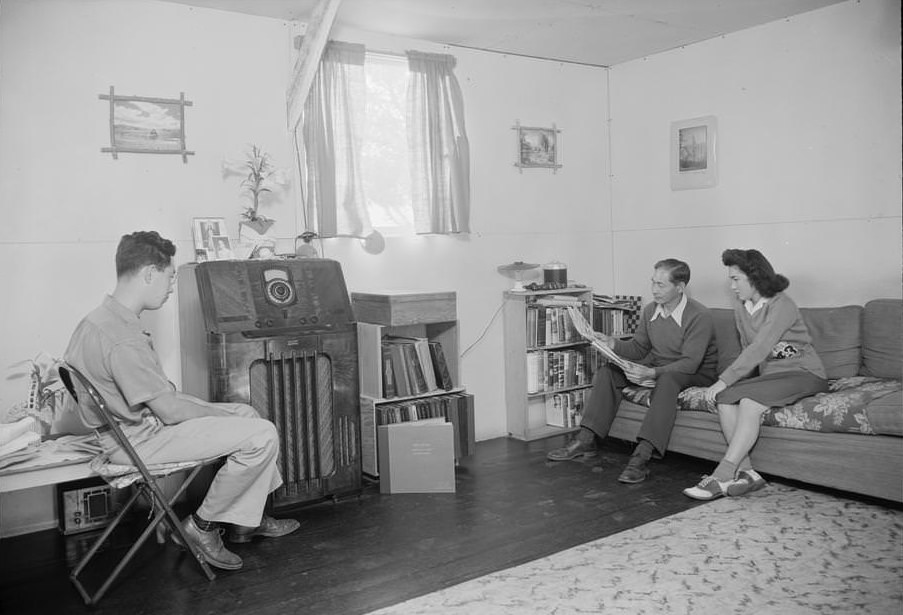
In 1943, photographer Ansel Adams — already well known for his images of the American West — visited Manzanar and produced a detailed documentary record of the camp. Adams wanted to show the humanity of the people confined there. His photographs captured families in their barracks, workers tending fields, children attending school, and residents going about the rhythms of daily life within the wire fences.
Members of the Yonemitsu family in their living room.Family seated in combined living room and kitchen area with playpen.
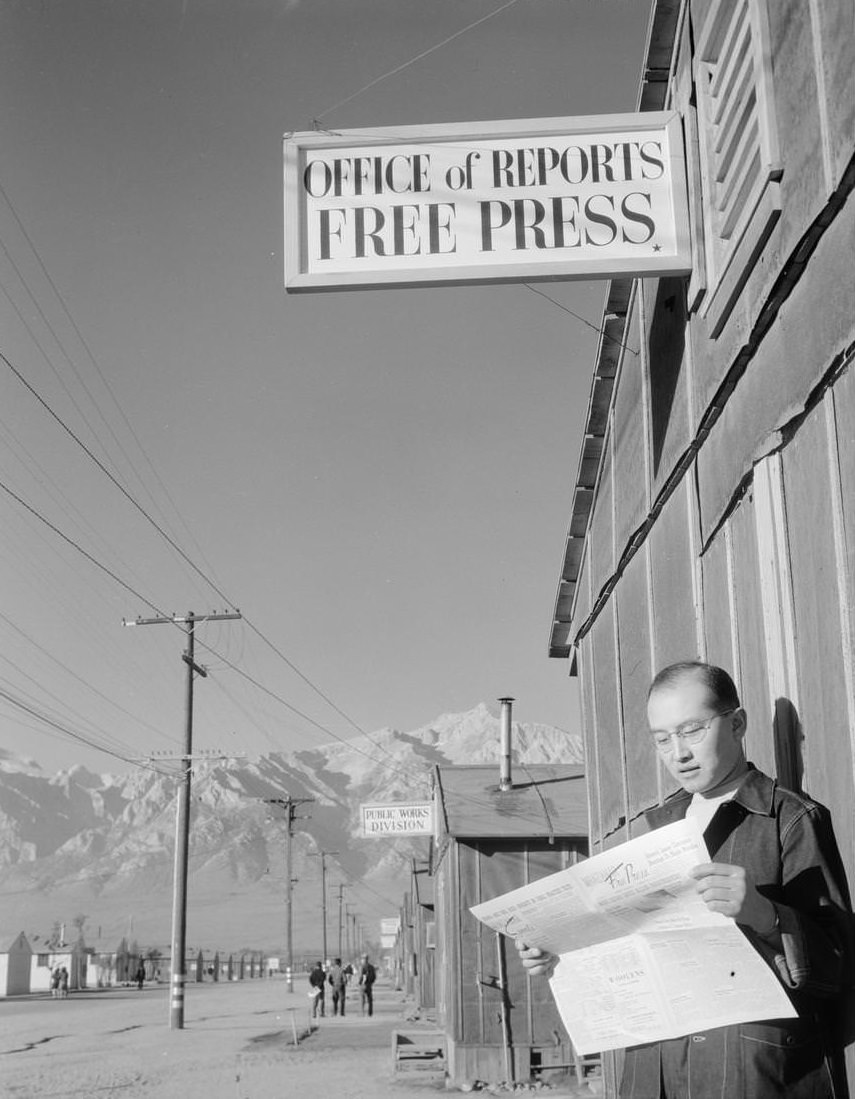
Despite the conditions, residents built a functioning community inside Manzanar. The camp had its own newspaper, the Manzanar Free Press, edited by Roy Takeno. It ran a postal service, schools, a hospital, and various religious congregations. A YMCA building served as a social gathering point. Residents organized sports leagues, choir groups, and Sunday school classes — maintaining as much normal life as the circumstances allowed.
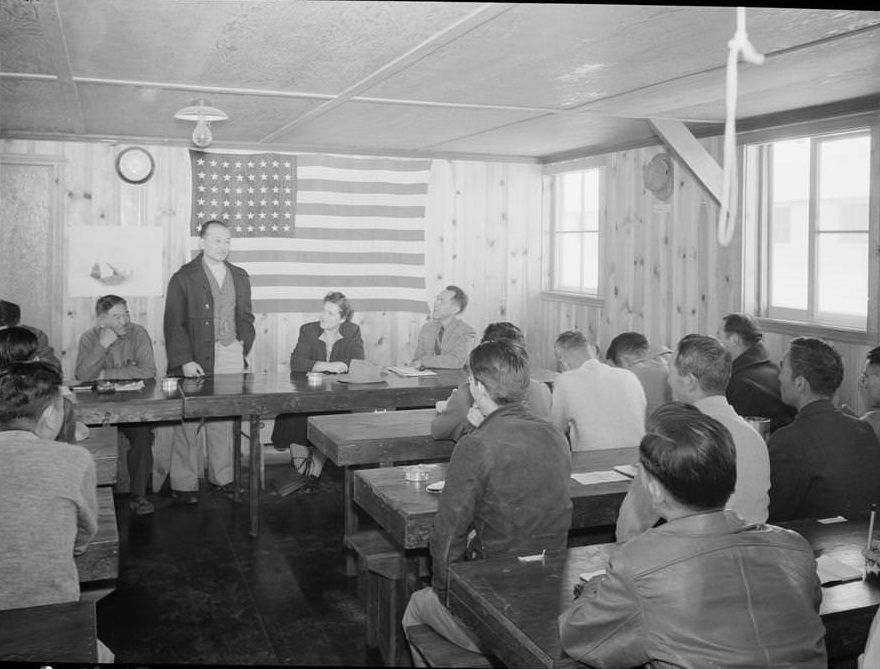
Photo shows editor Roy Takeno reading a copy of the Manzanar Free Press in front of the newspaper office at the Manzanar War Relocation Center; with mountains in the background.Roy Takeno, full-length portrait, standing behind a table, addressing a group with an American flag on the wall behind him.
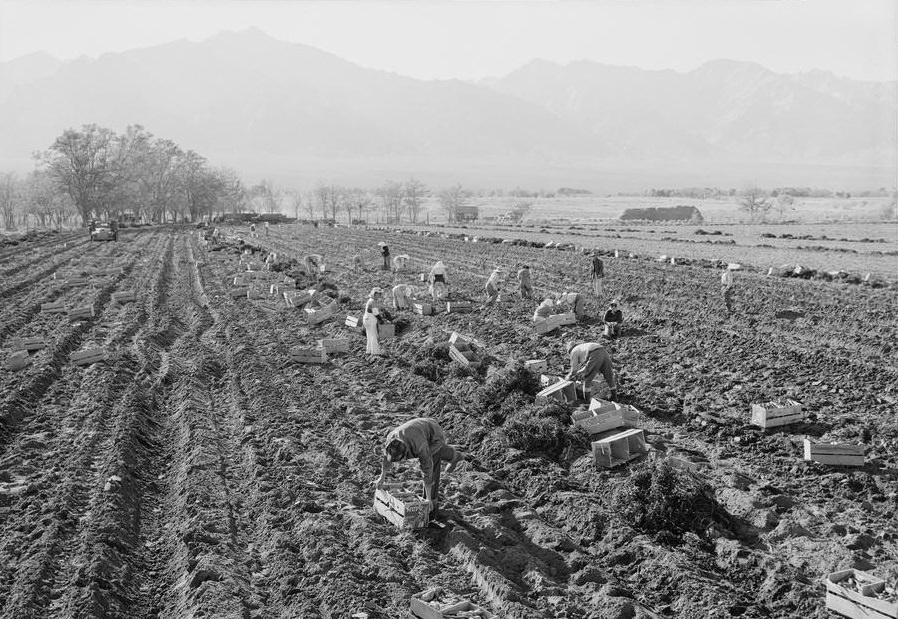
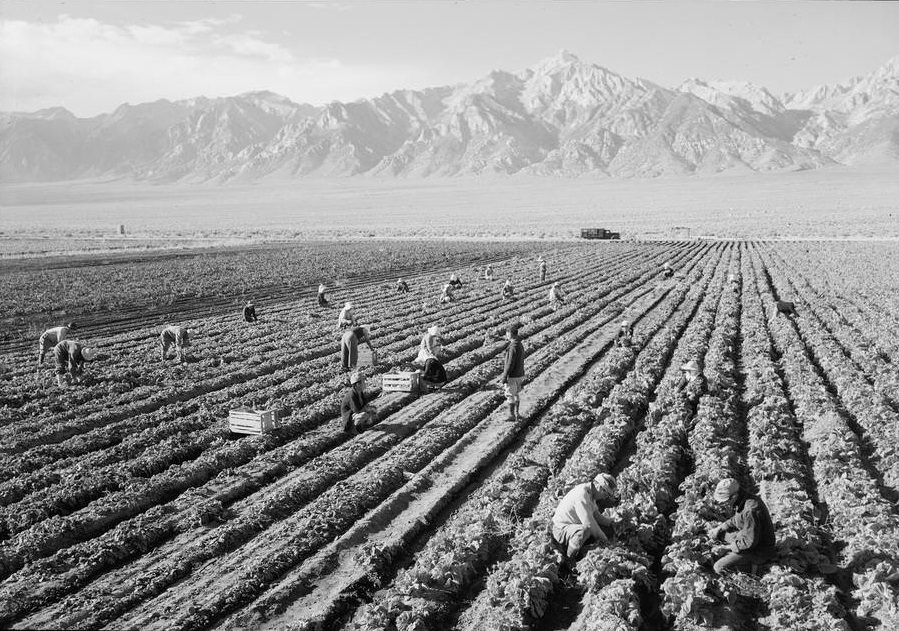
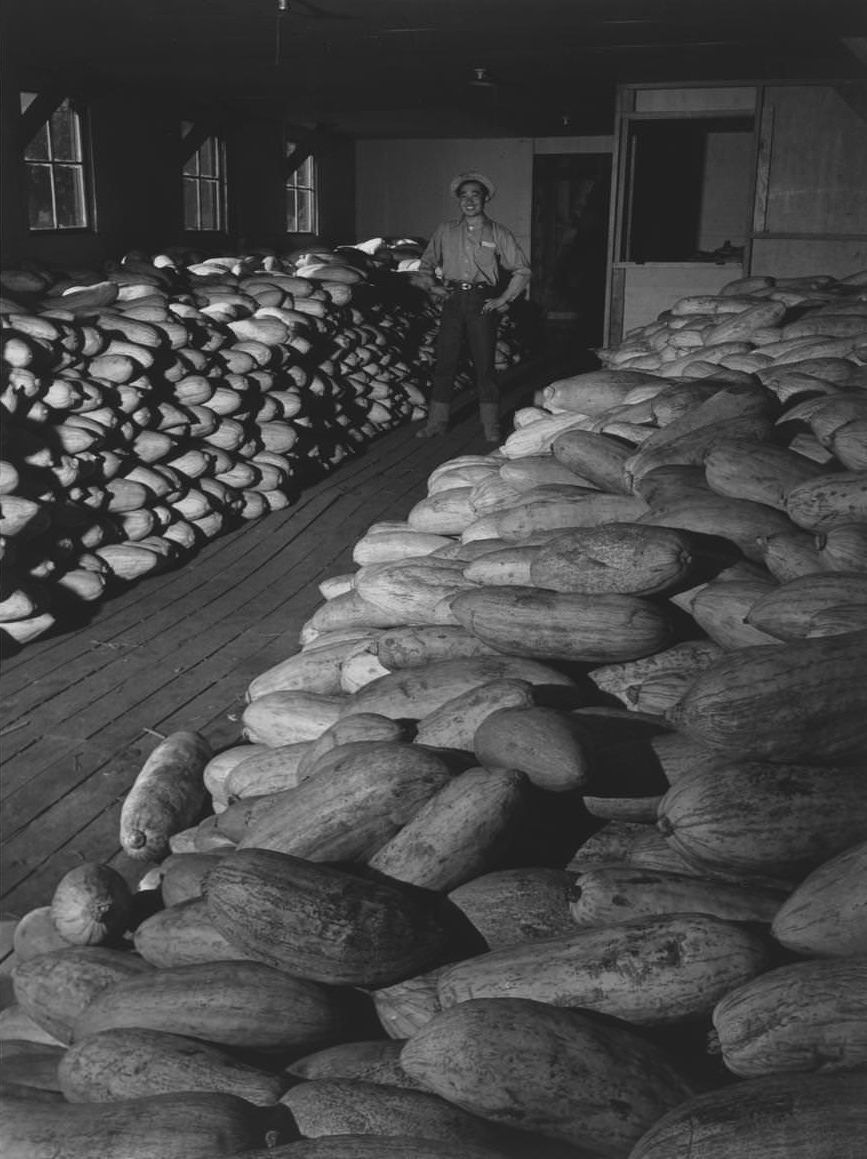
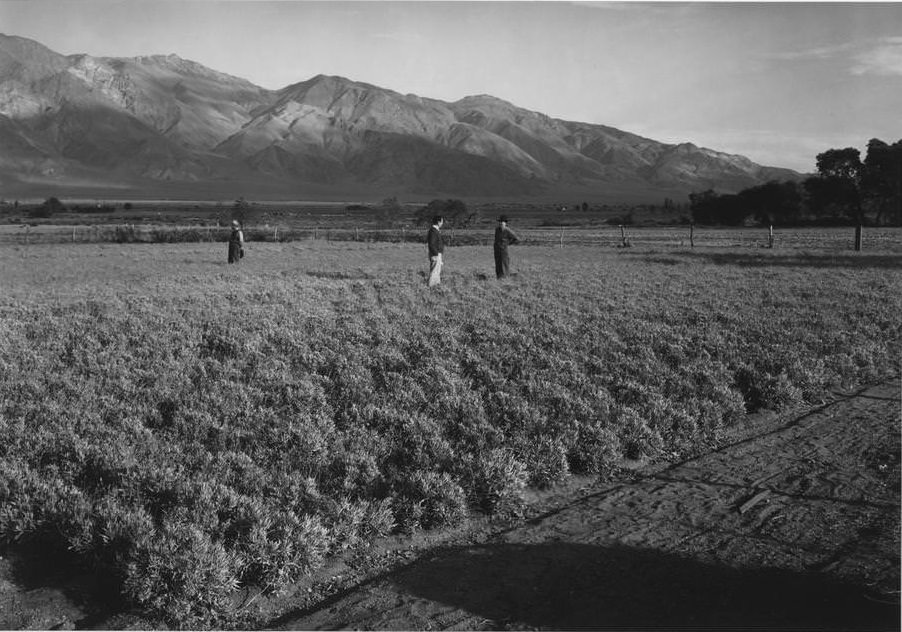
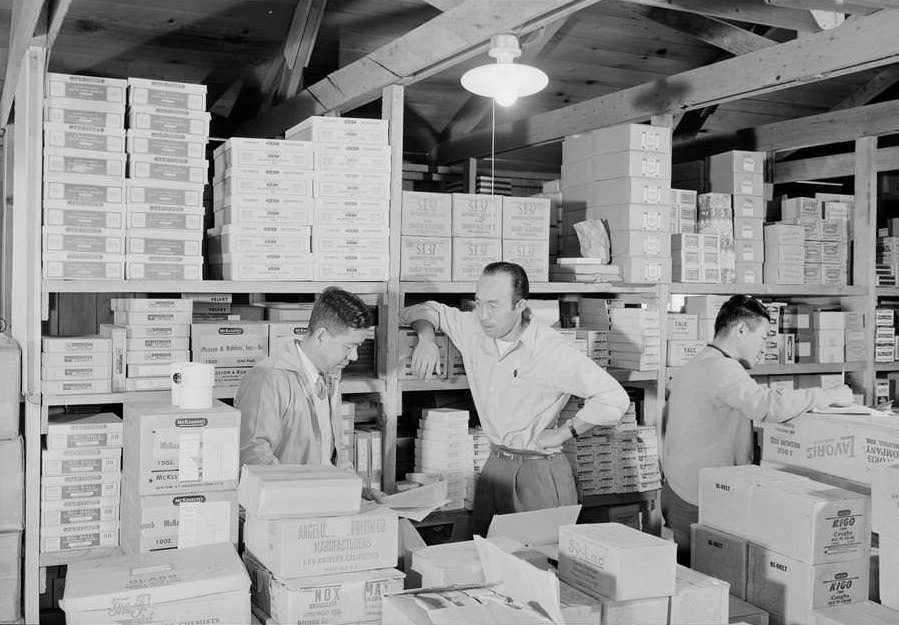
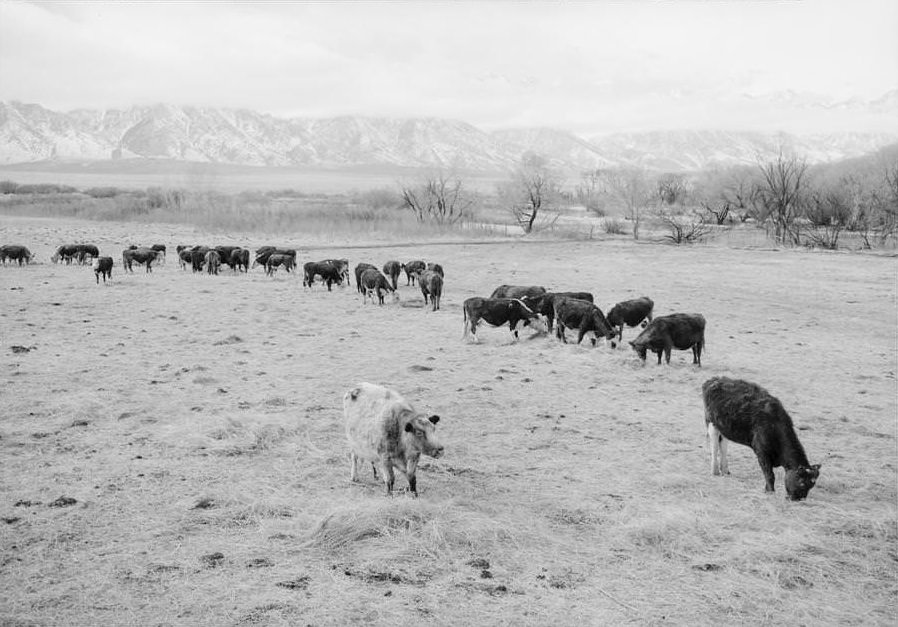
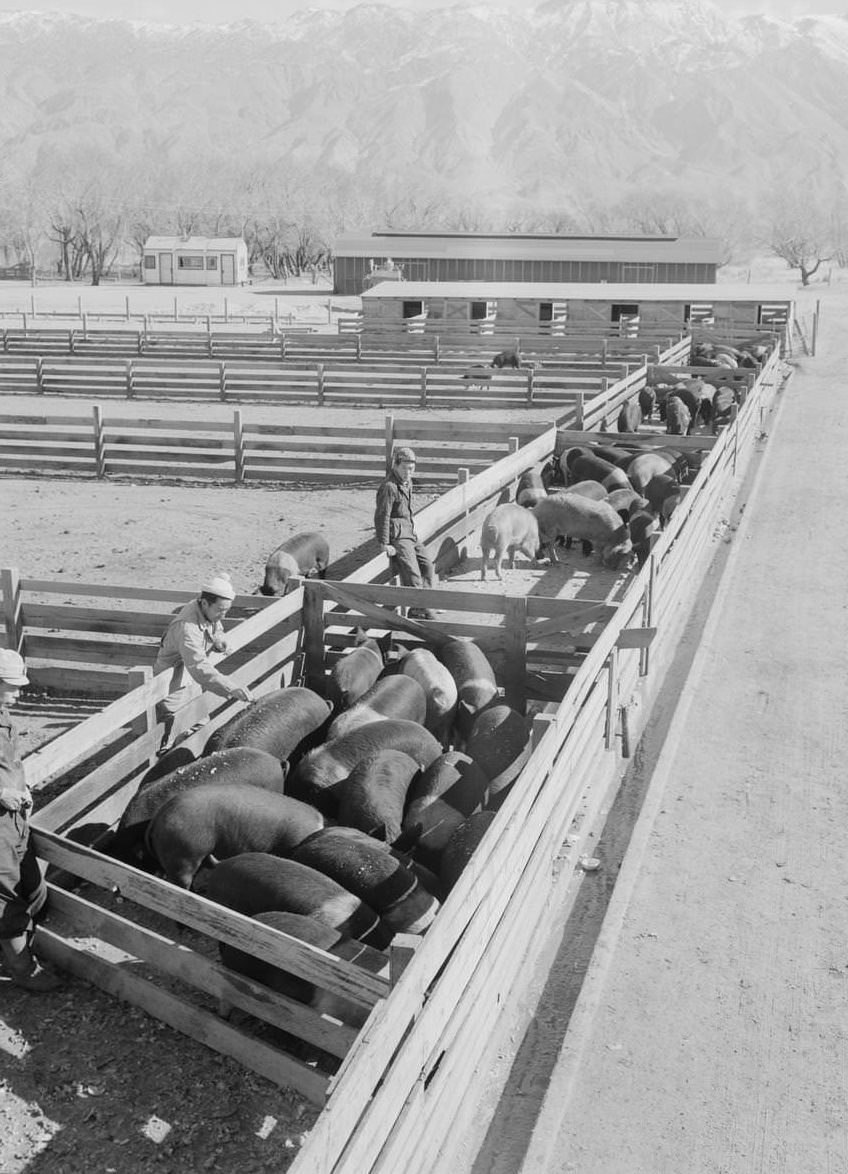
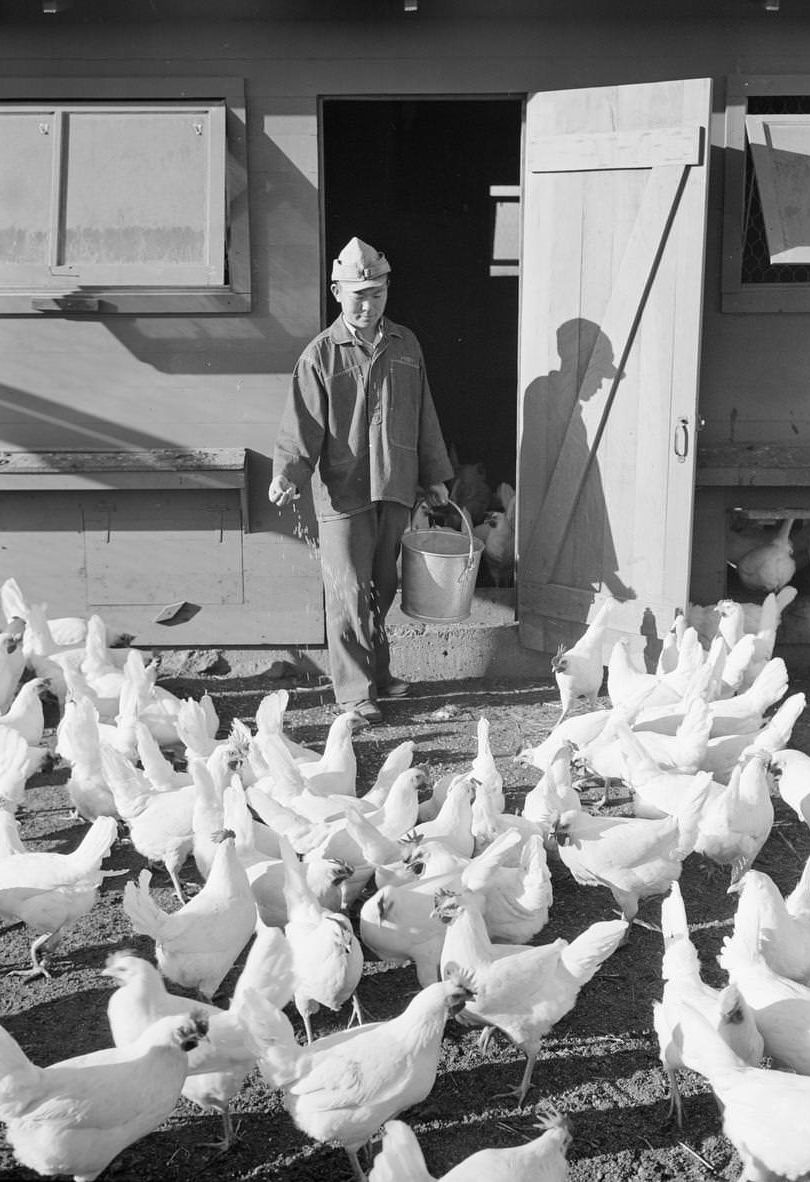
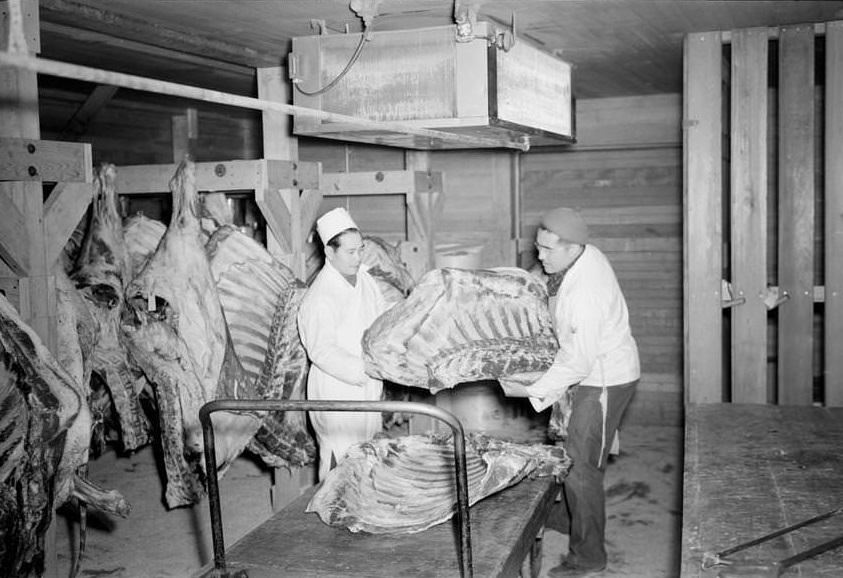
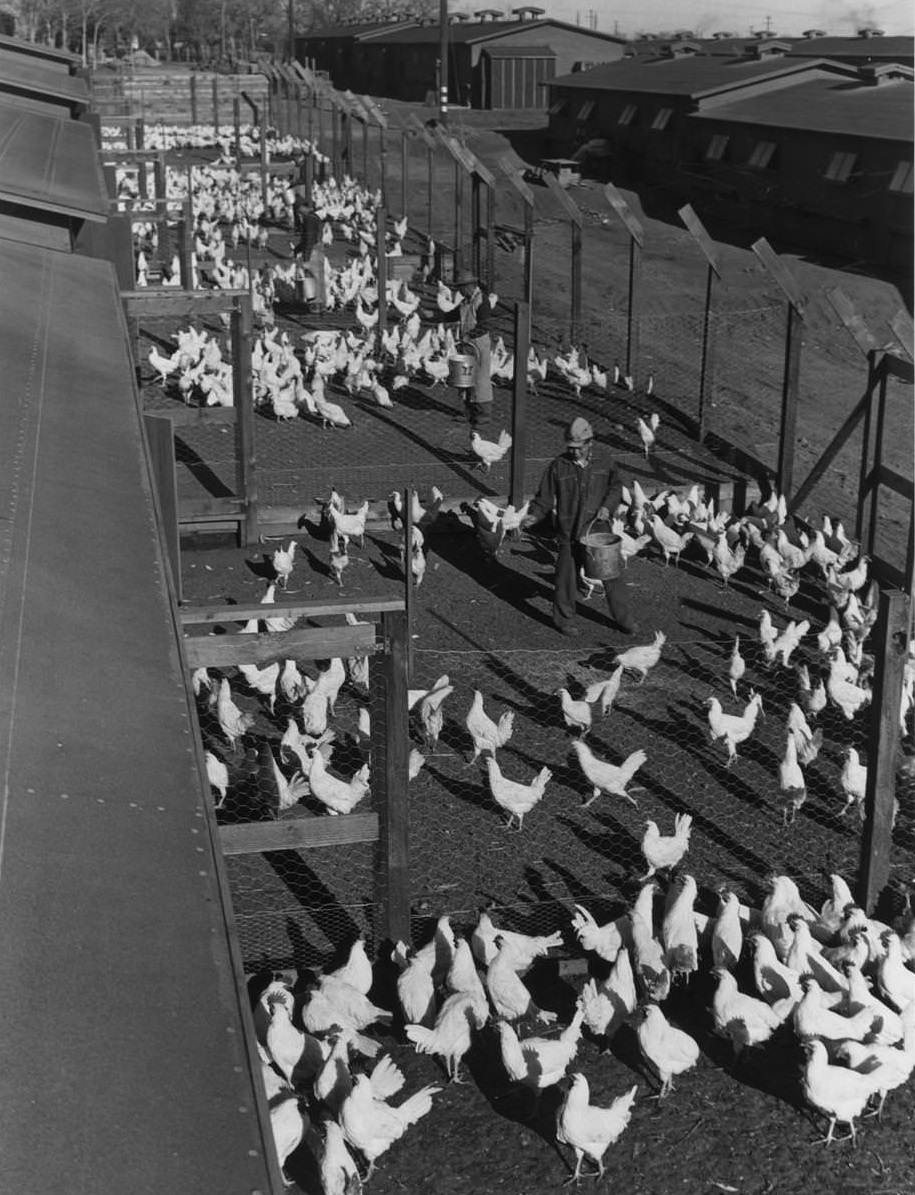
The camp operated its own farms across hundreds of acres. Residents grew vegetables, raised hogs and cattle, tended chickens, and harvested crops that fed the population. Work crews also maintained the camp’s infrastructure — repairing electrical lines, operating warehouses, and running a butcher shop. The Guayule Project, a wartime rubber research effort, was also conducted at Manzanar, with internees participating in the agricultural trials.
Workers pick potatoes and pack them into crates, mountains in the distance.Farm workers harvesting crops in field, mountains in the background.Farmer Benji Iguchi, full-length portrait, standing in a storage shed between two large stacks of squashes.Three men standing in field, mountains in background. According to the caption on the negative sleeve: “The Guayule Project was an important part of the Manzanar enterprise.
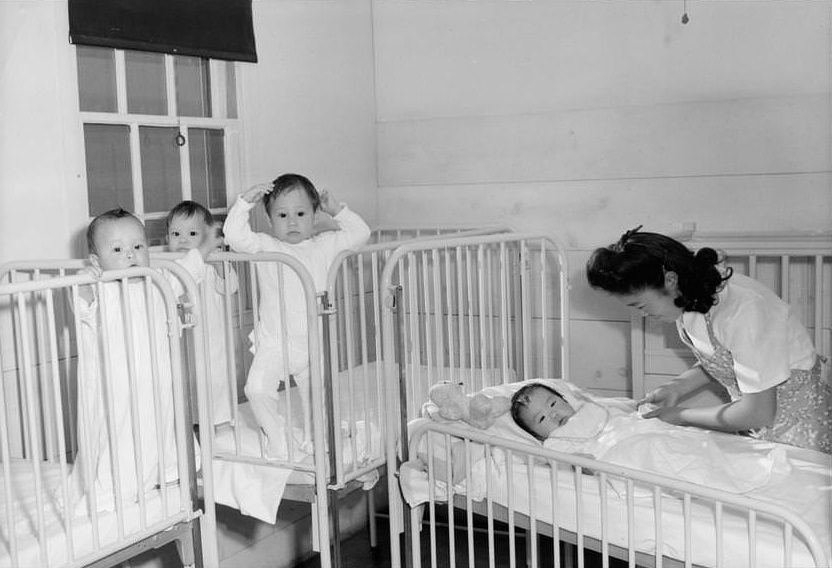
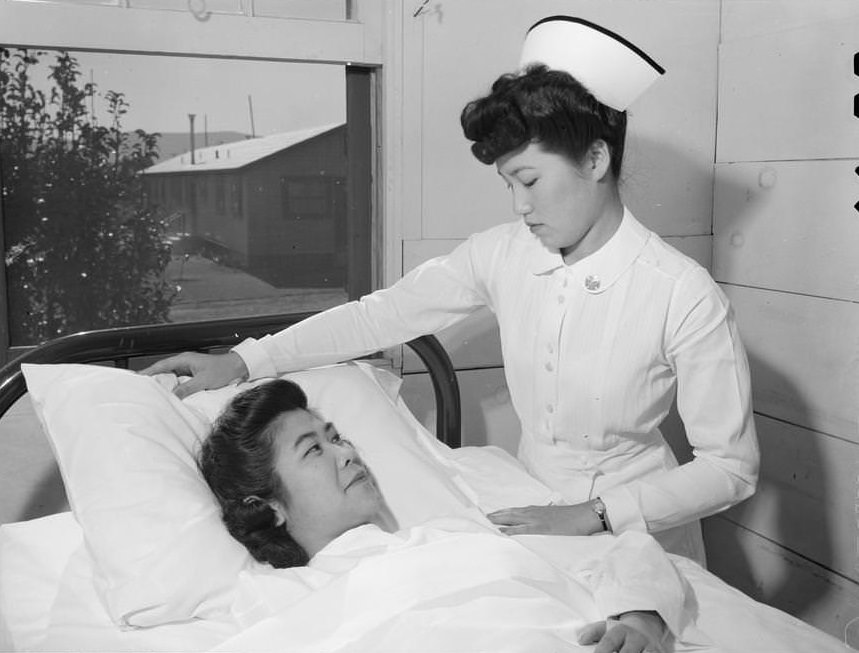
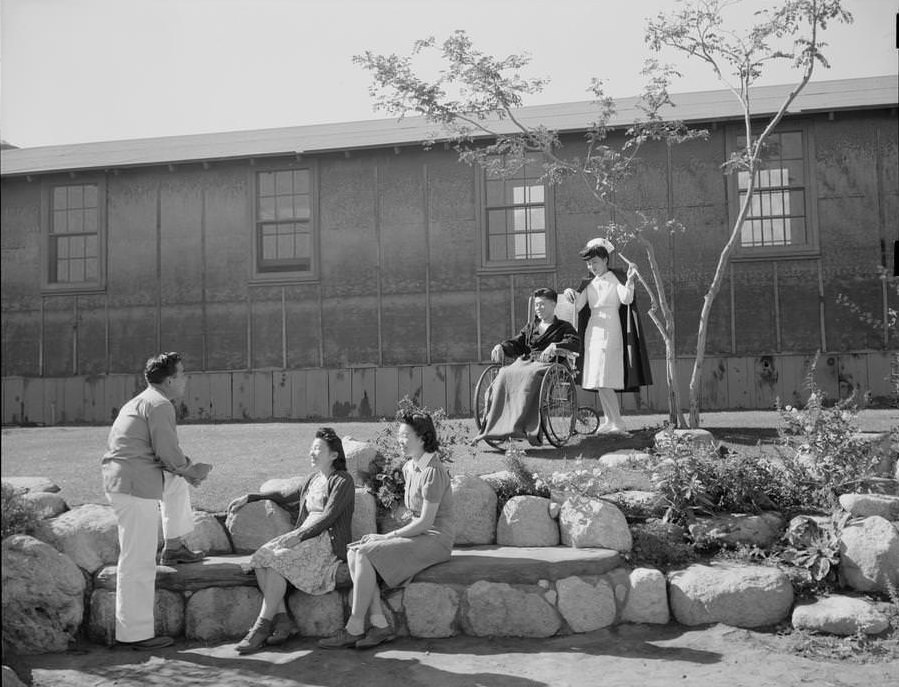
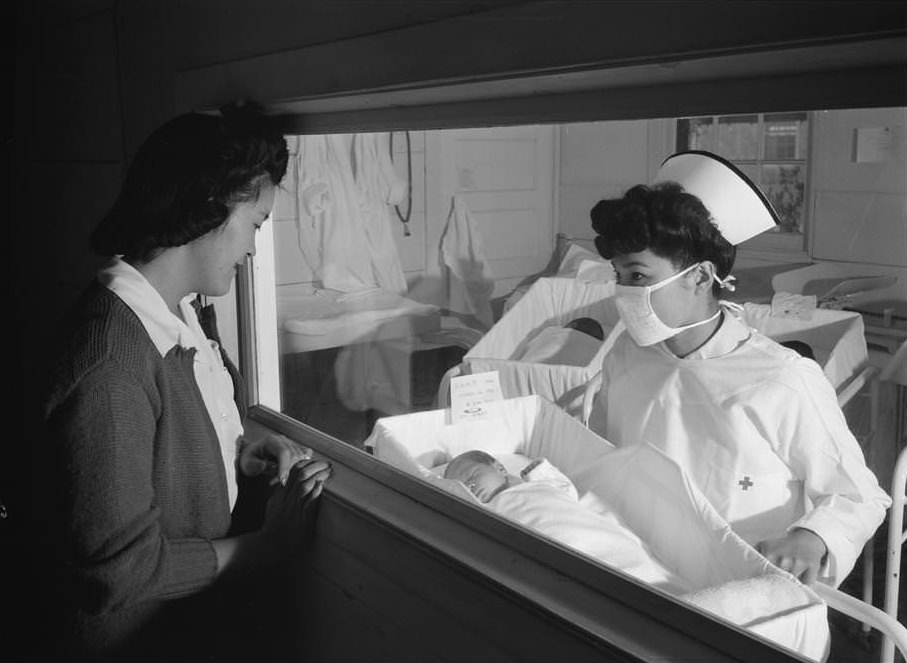
Medical care was provided inside the camp as well. The hospital handled births, illnesses, and injuries. Nurses staffed wards that served people of all ages, from newborns in the maternity ward to elderly patients in recovery. The camp’s medical staff worked under significant resource constraints but kept the facility operational throughout the war years.
Nurse tending four infants in cribs.Nurse adjusting pillow for female patient.
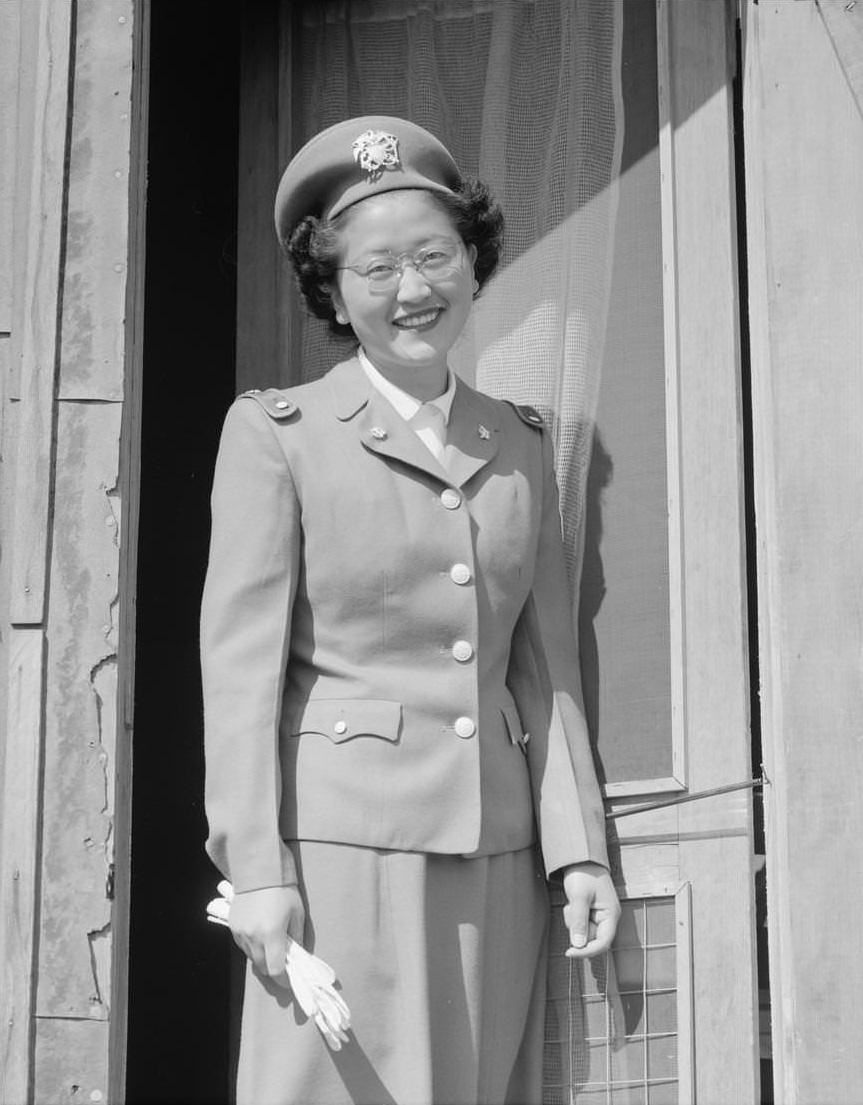
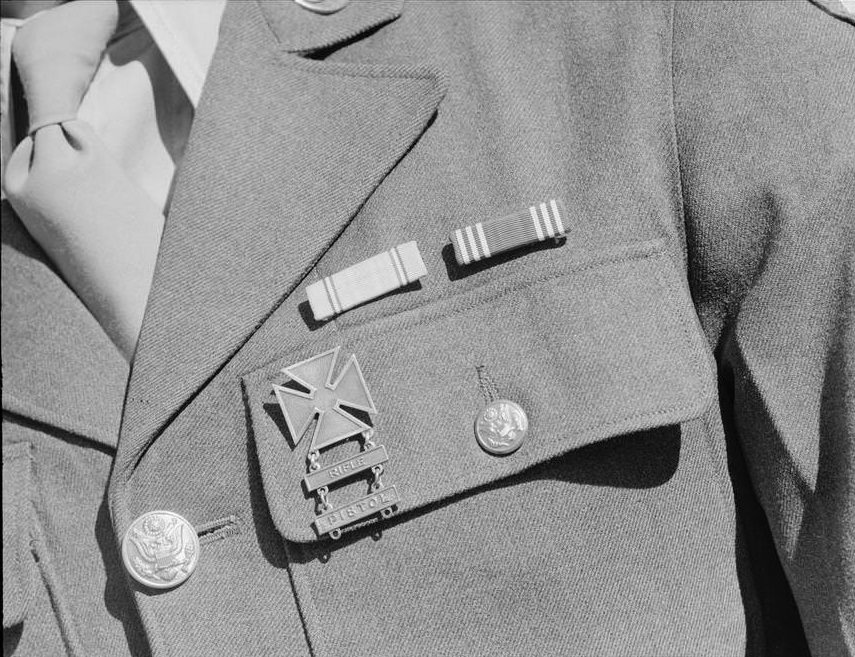
Some Japanese American men left the camp to serve in the U.S. military. Even while their own families were held behind fences, these soldiers enlisted and fought in some of the most decorated units of the war. Their service ribbons and uniforms stood in sharp contrast to the treatment their families endured at home.
Kay Fukuda, three-quarter length portrait, standing, facing front, in military uniform.Service ribbons and qualification badge above pocket of military uniform worn by Corporal Jimmie Shohara.
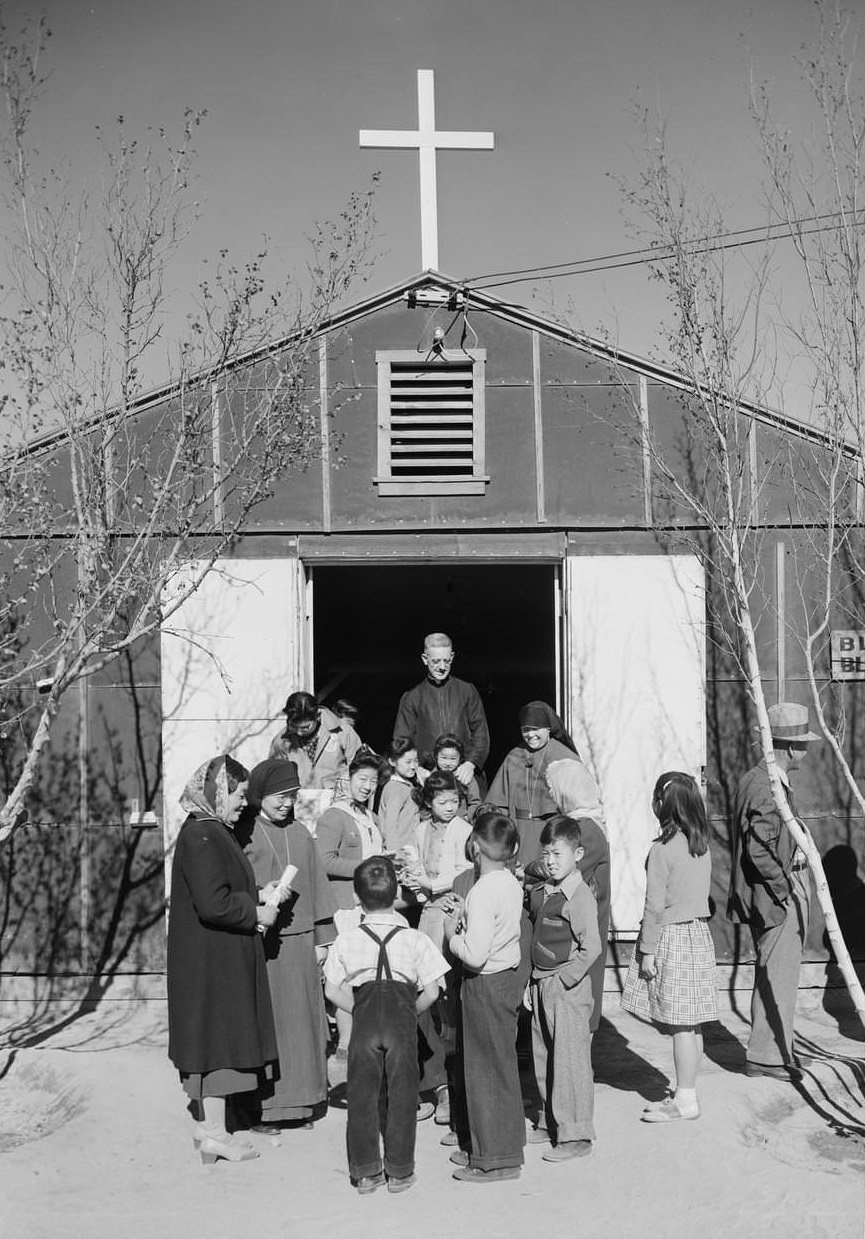
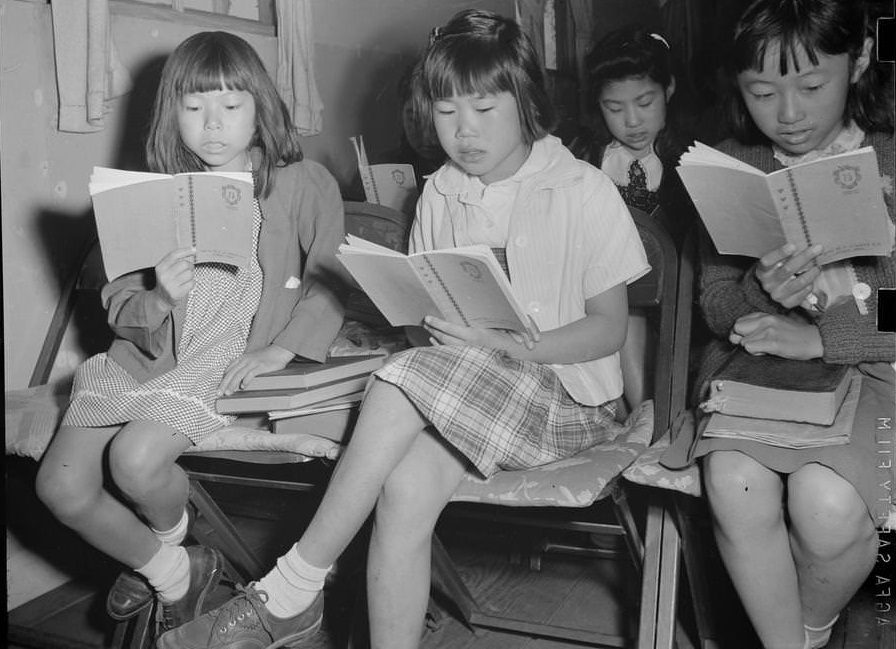
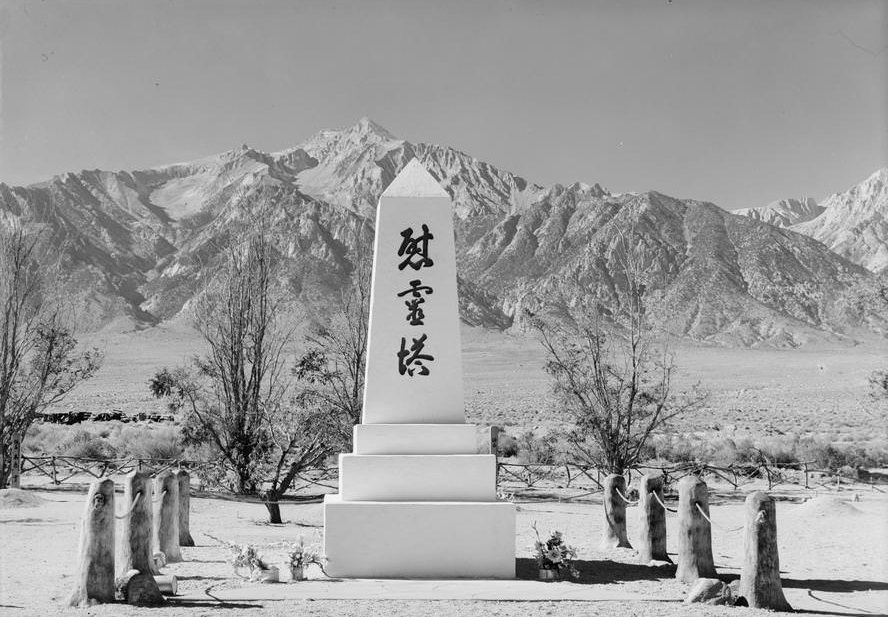
Religion and community gatherings remained central to life at Manzanar. Churches held services, choirs rehearsed, and Sunday schools ran classes for children. A marble monument inside the camp bore the inscription “Monument for the Pacification of Spirits,” marking the graves of those who died at Manzanar during the years of internment.
Group of people gathered outside the front of a building with a cross on the roof.Four girls reading in a Sunday school class.Marble monument with inscription that reads, “Monument for the Pacification of Spirits,” with mountains in the background, including Mt. Williamson.
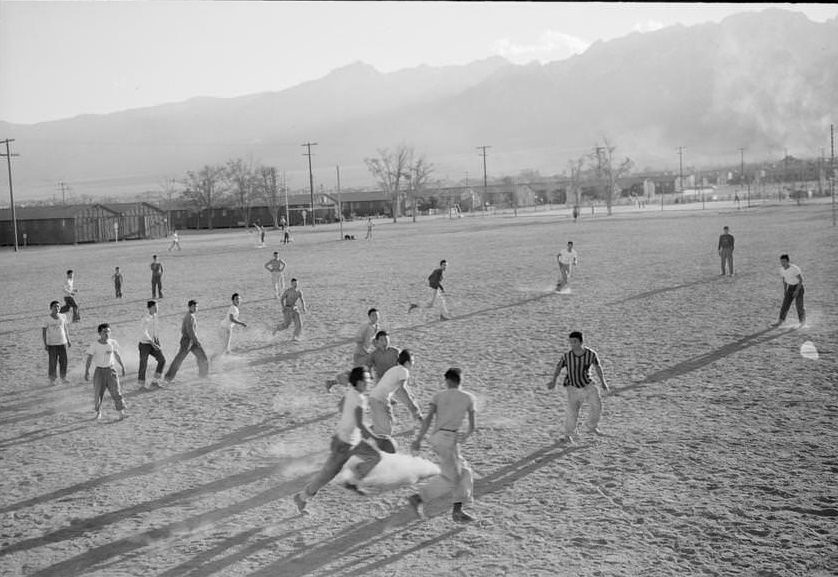
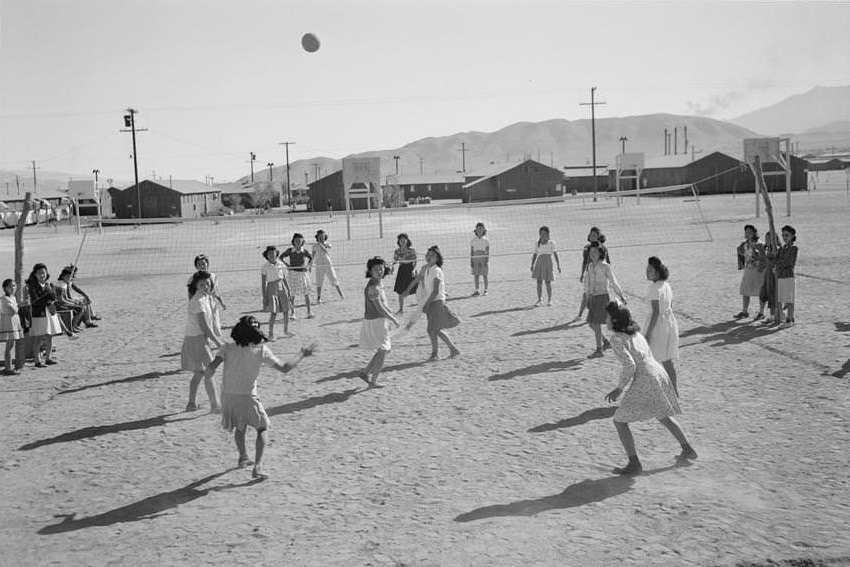
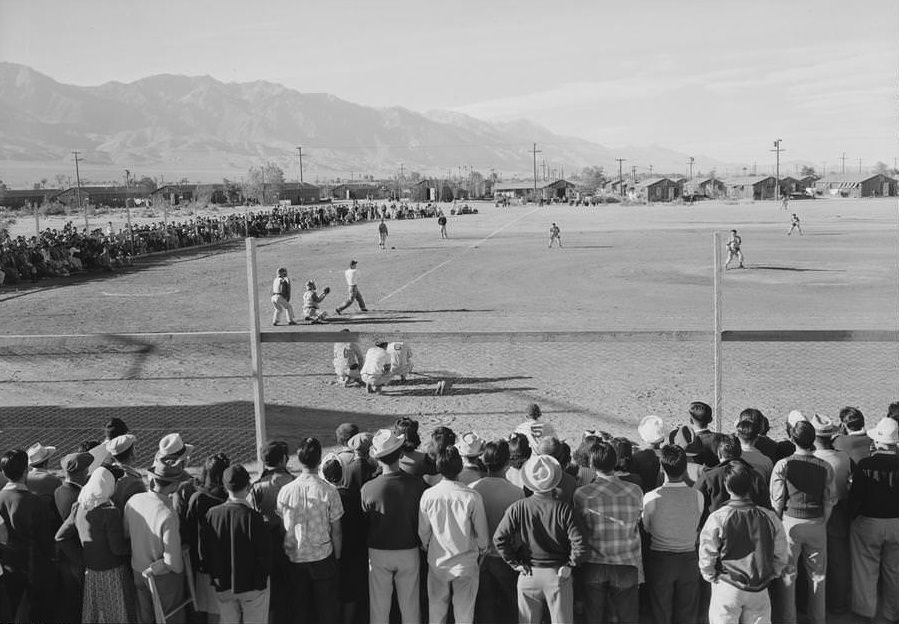
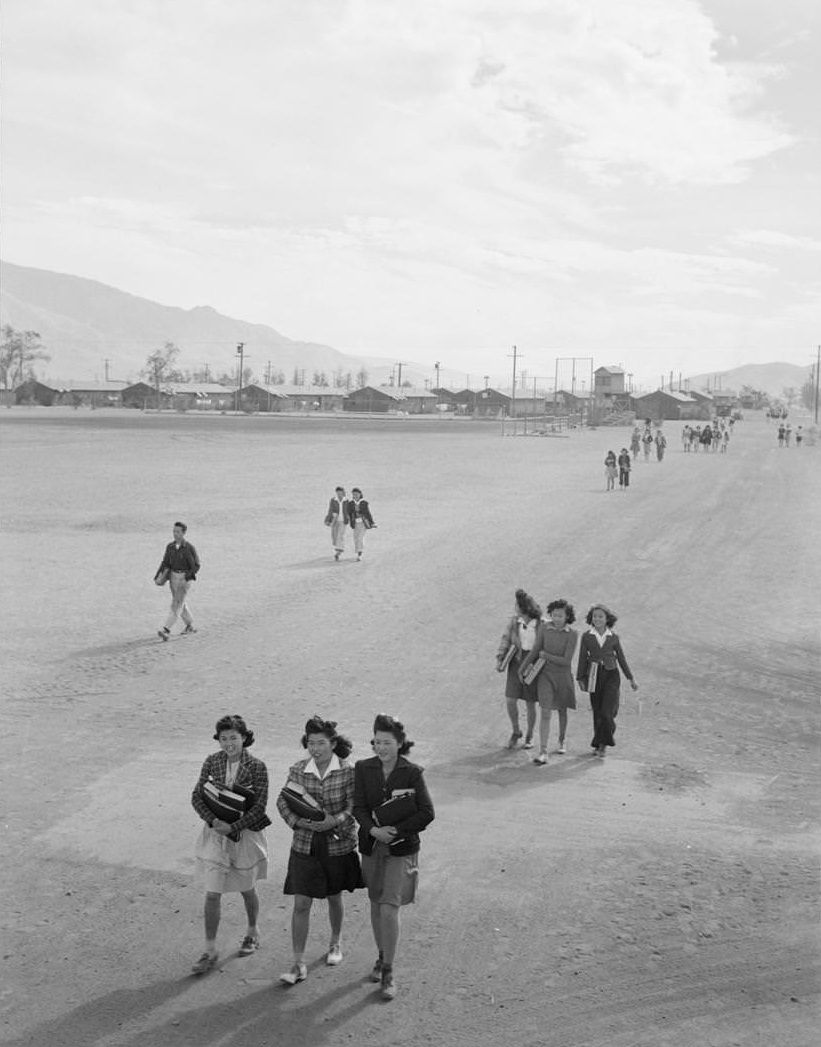
Recreation was a constant presence. Residents played baseball and football on dusty fields. Women organized volleyball games. Teenagers walked through the camp carrying books, heading to and from the schools that had been set up within the barracks. These moments of normalcy existed alongside the barbed wire and guard towers that defined the boundaries of daily life.
Players involved in a football game on a dusty field, buildings and mountains in the distance.Japanese American women playing volleyball, one-story buildings and mountains in the background.Japanese Americans observe an amateur baseball game in progress; one-story buildings and mountains in the background.
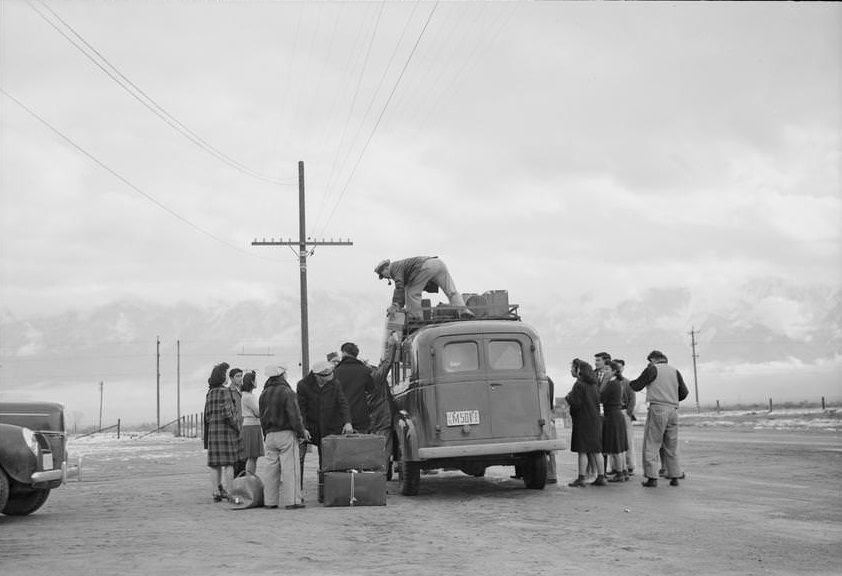
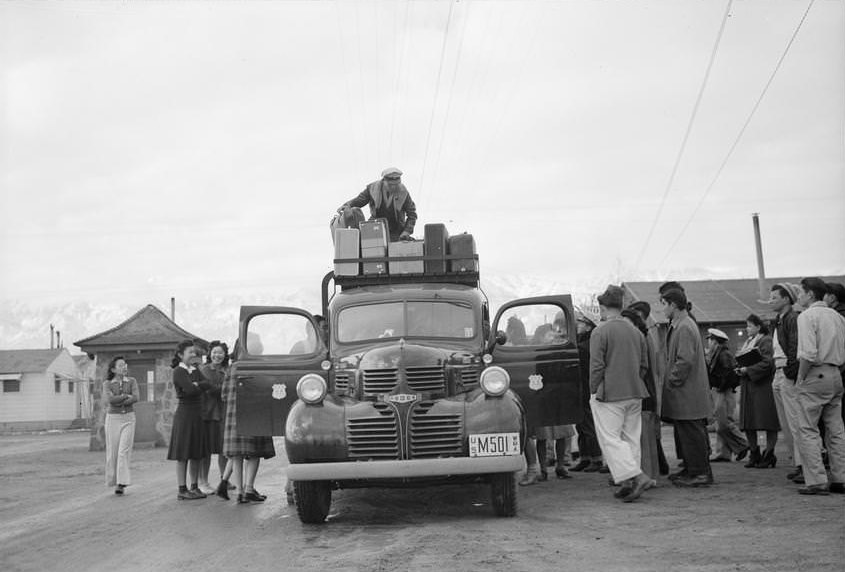
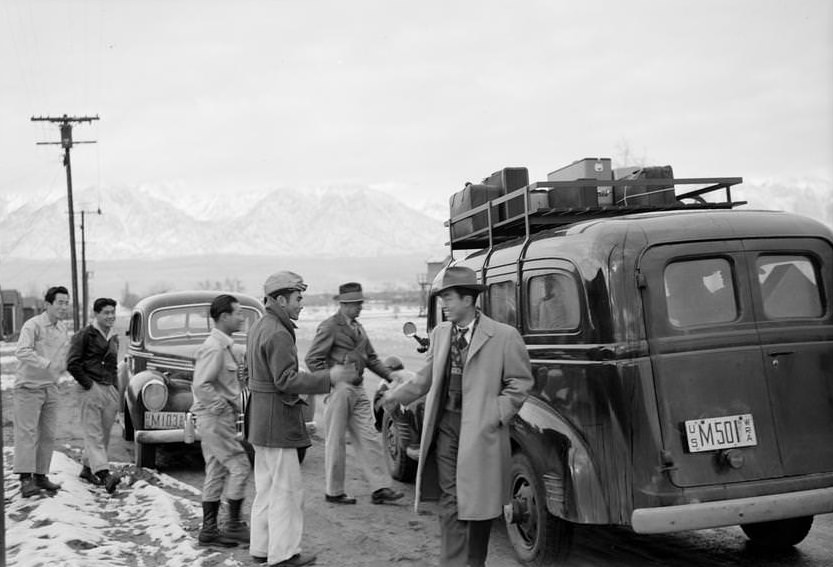
Throughout the war, buses continued to arrive and depart from Manzanar. Some arrivals brought new families; departures marked releases or transfers. Those leaving said their goodbyes in the shadow of the gatehouse, luggage loaded onto roof racks, the Sierra Nevada rising behind them. For many, the journey out was as uncertain as the one that had brought them there.
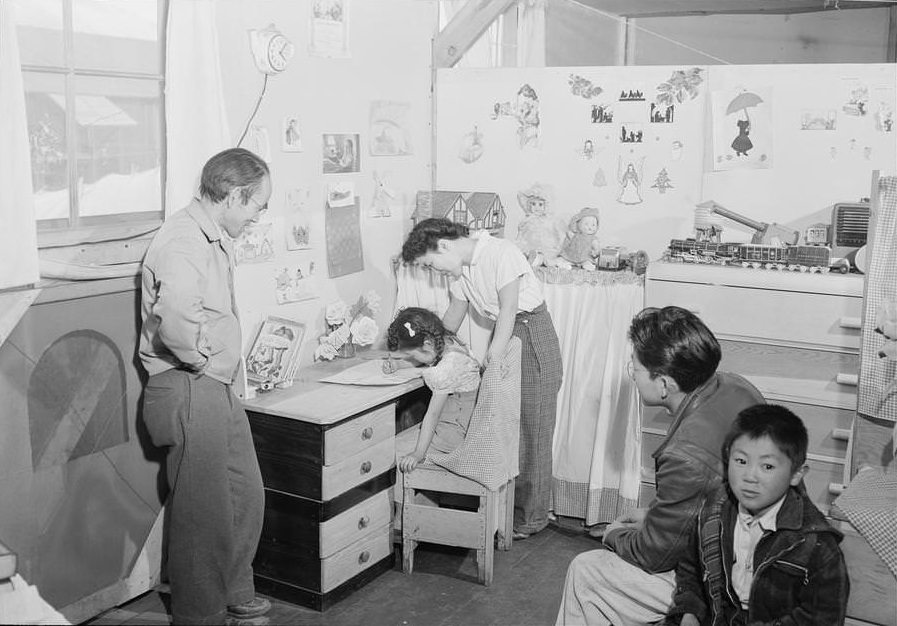
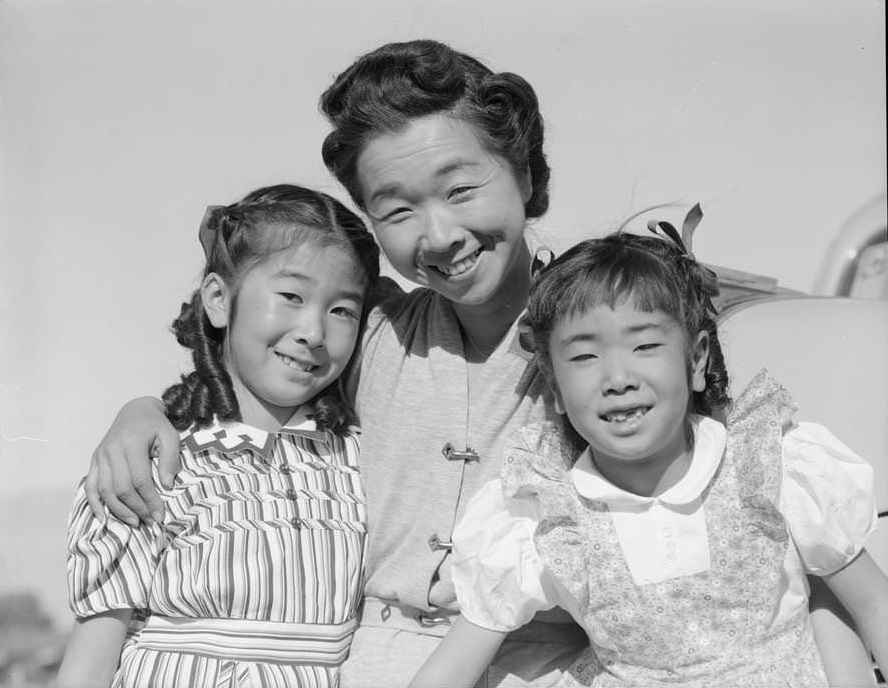
Man with pipe stands on top of bus loading luggage into rack, while others gather around.Man stands on top of bus loading luggage while a group of people gather to say farewell, guardhouse in the background.Group of men gathered around a bus packed with passengers and luggage say farewell, snow on the ground.Buildings and connecting roadways, mountain range in background.M. Ogi, S. Sugimoto, and Bunkichi Hayashi standing among shelves with boxes in warehouse.Standing on the step at the entrance of a dwelling, left to right: Louise Tami Nakamura, holding the hand of Mrs. Naguchi, and Joyce Yuki Nakamura.Rows of camp houses at the base of mountains.Two way traffic in the camp, and camp buildings.Cattle in south farm, Manzanar Relocation Center, California.Toyo Miyatake, full-length portrait, standing in his children’s bedroom looking at his young daughter seated at a desk, drawing, while her mother stands behind her.Nurse standing behind man in wheelchair with young man talking to two young women in foreground.Mrs. Nakamura and her two daughters, Joyce Yuki (r) and Louise Tami (l), half-length portrait, facing front.
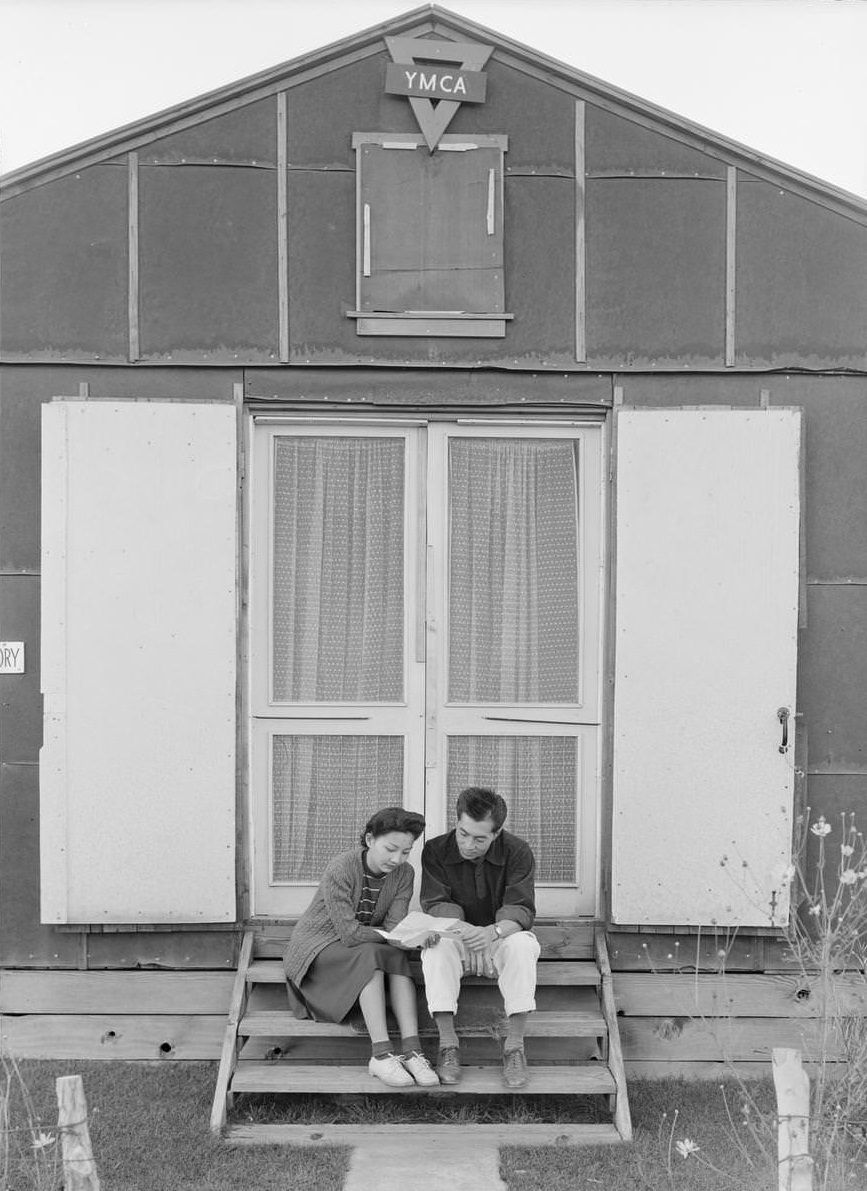
Man and woman reading letter while sitting on wooden stairs in front of YMCA building.
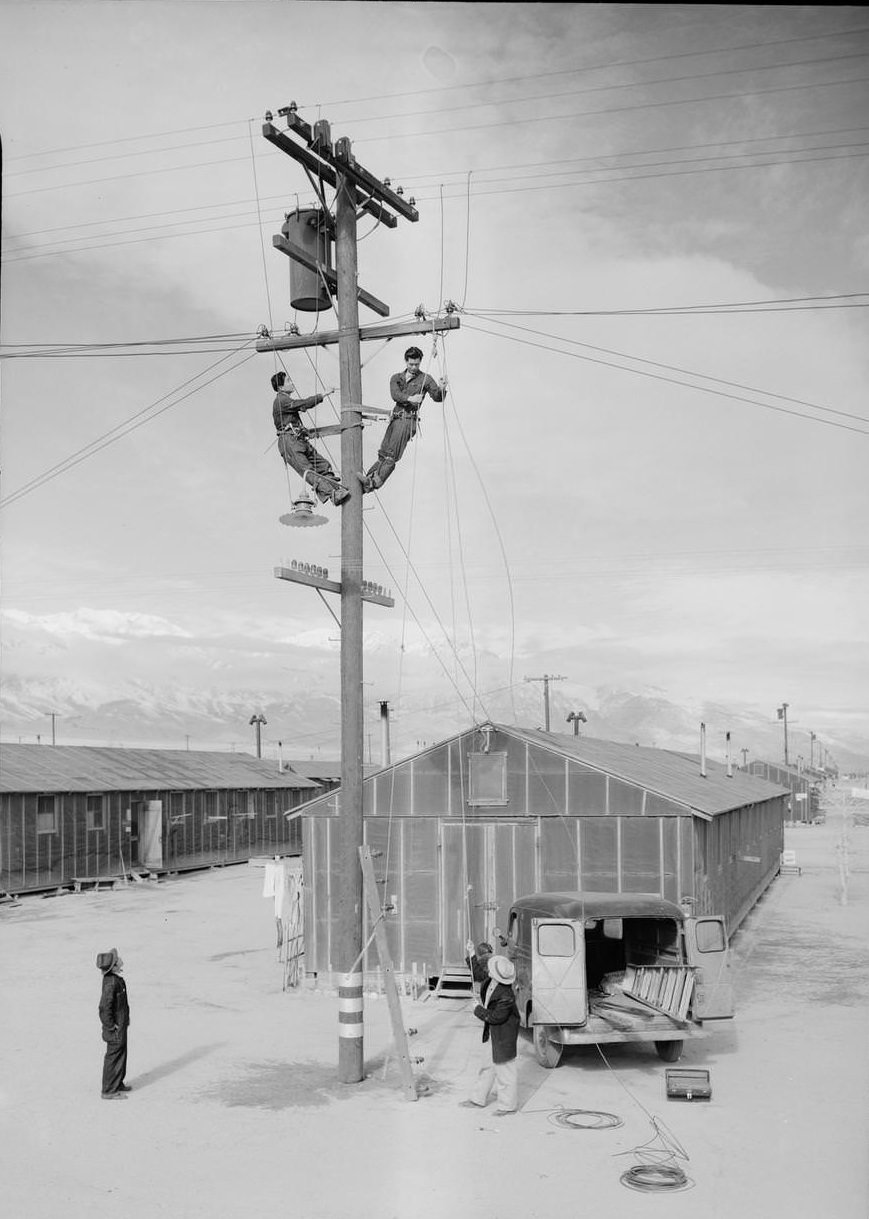
Electric line repair crew at work on electric pole next to building.
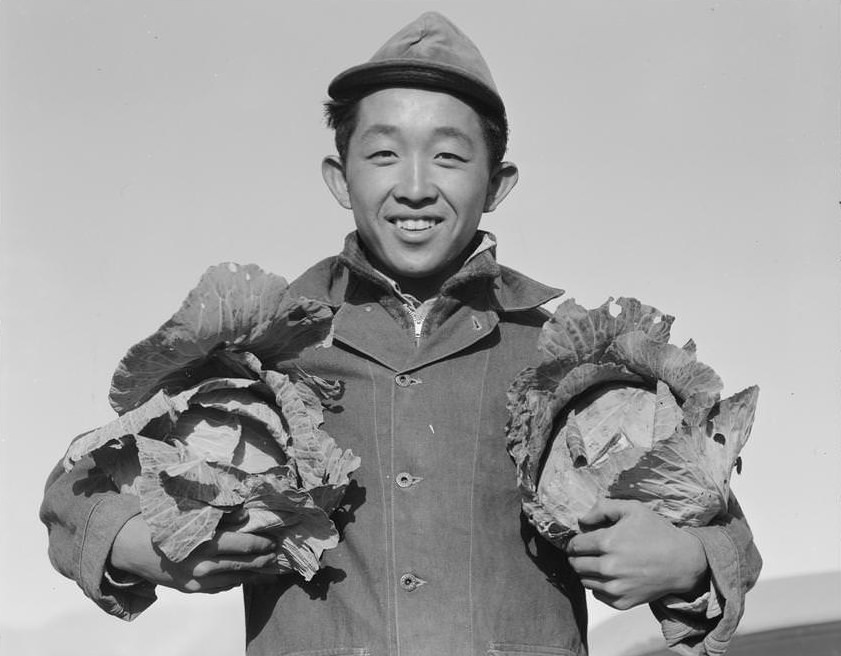
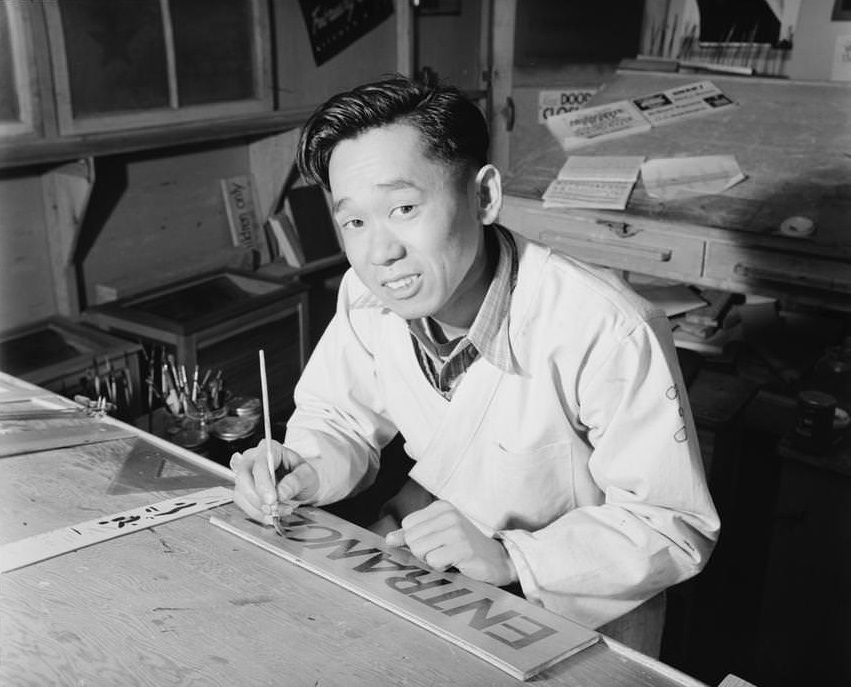
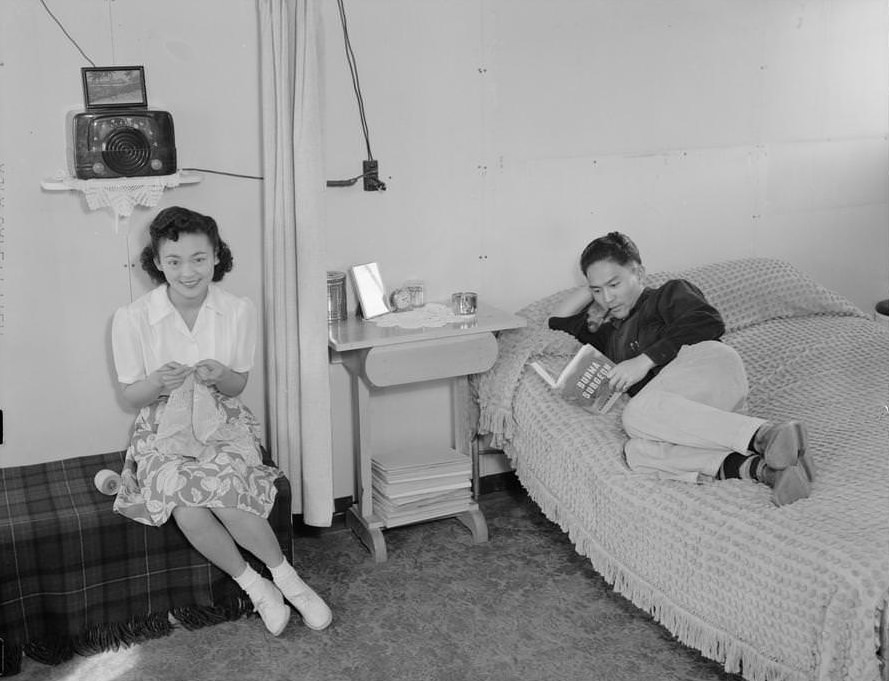
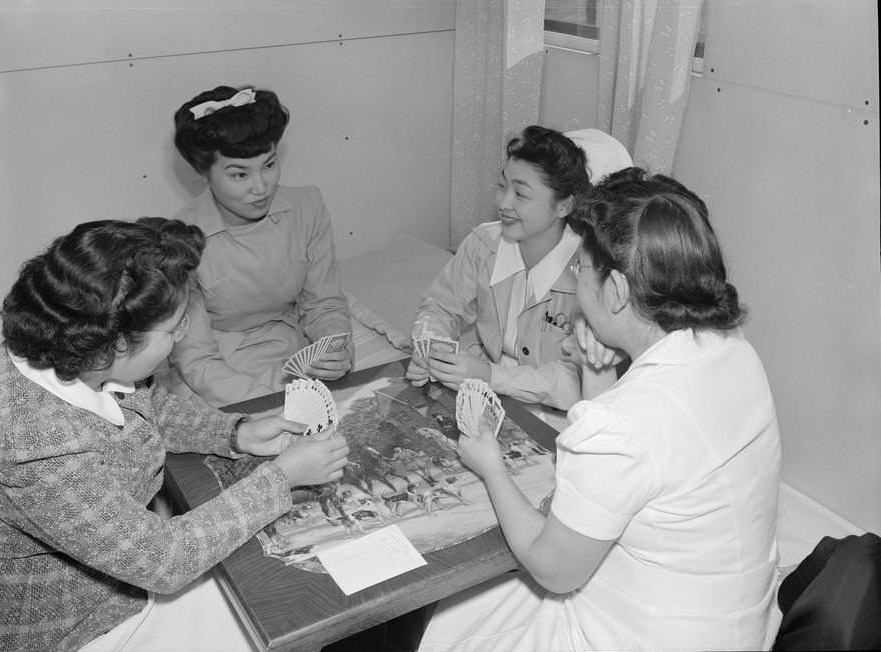
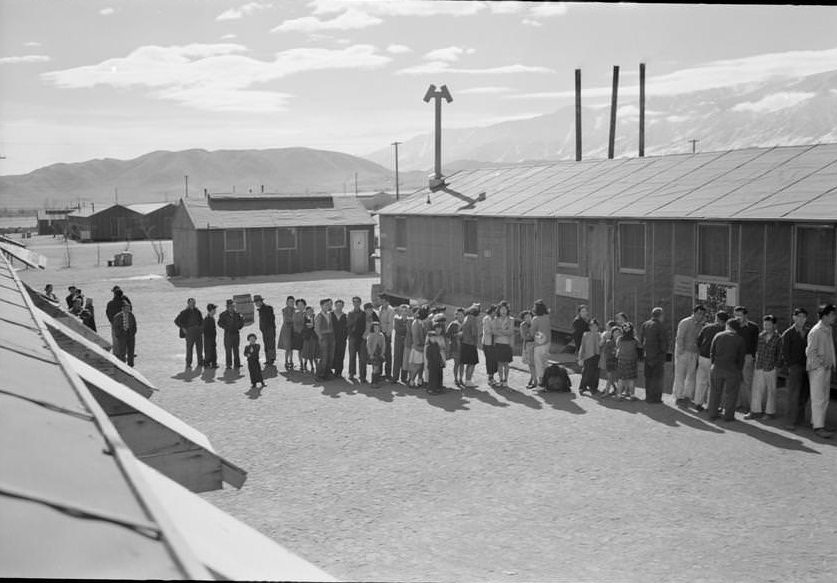
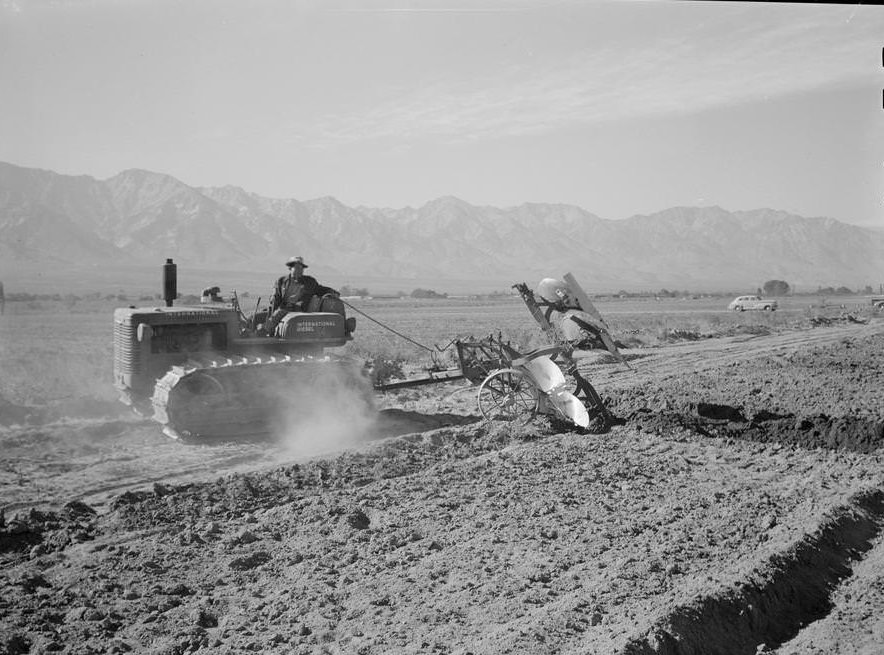
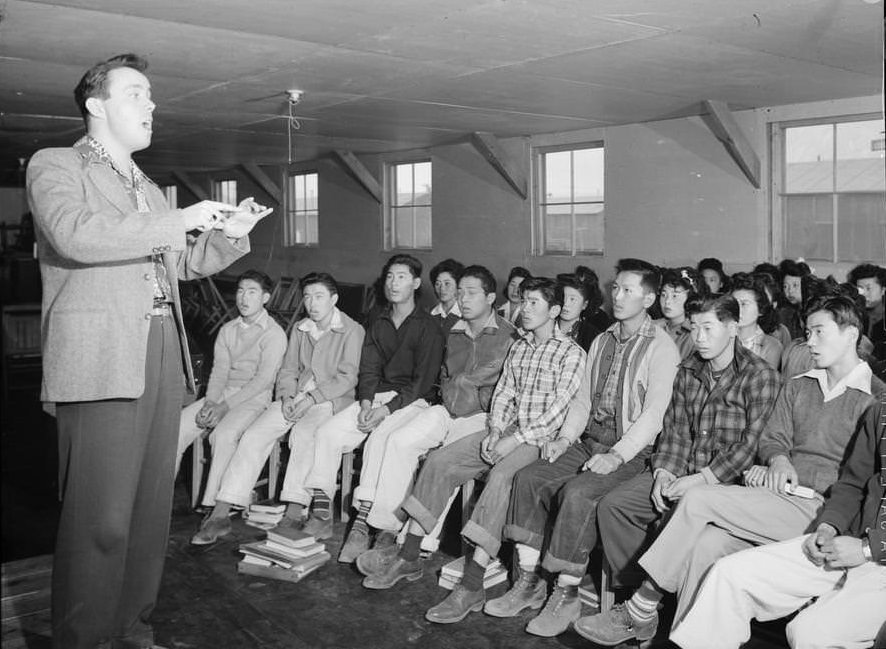
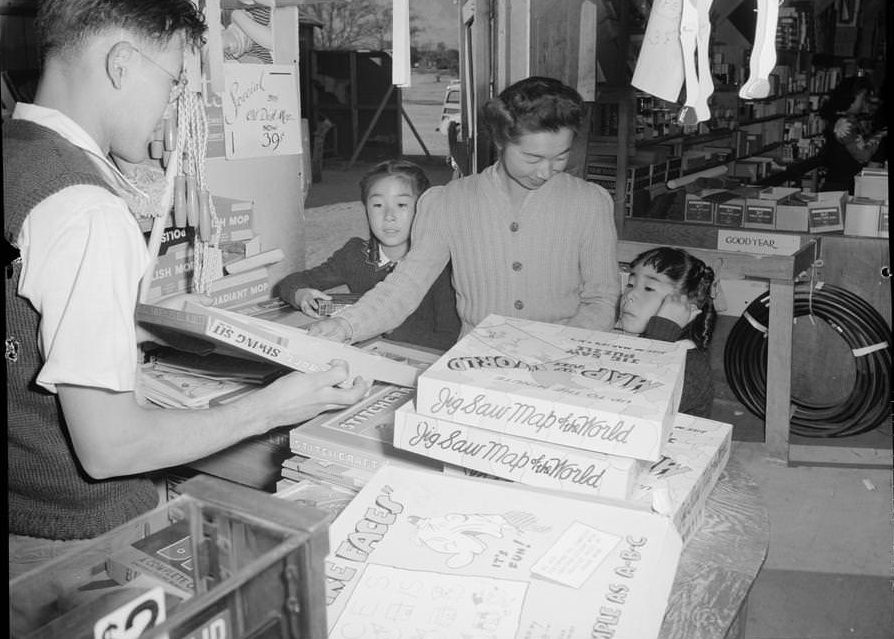
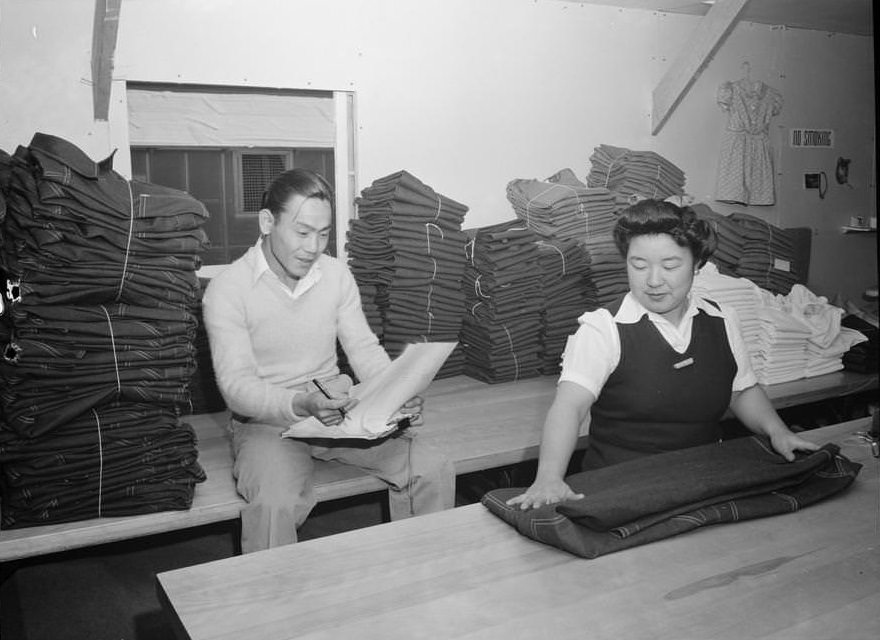
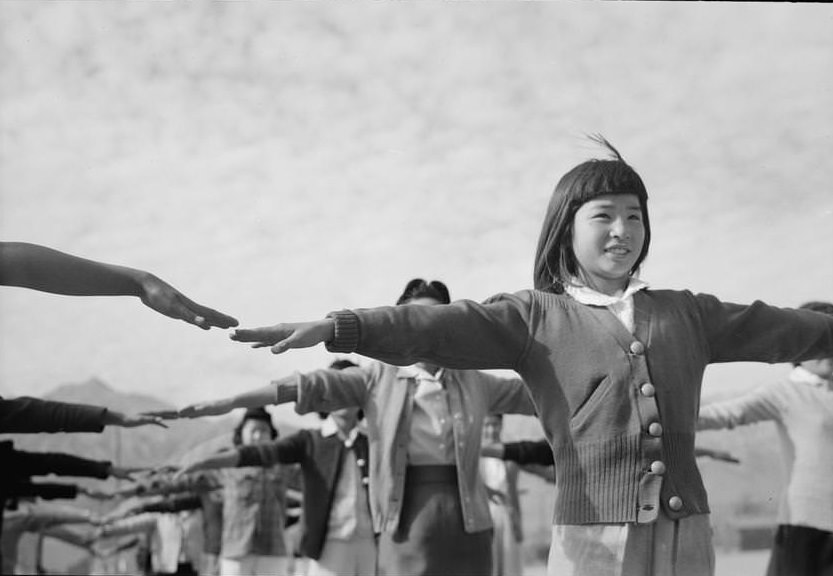
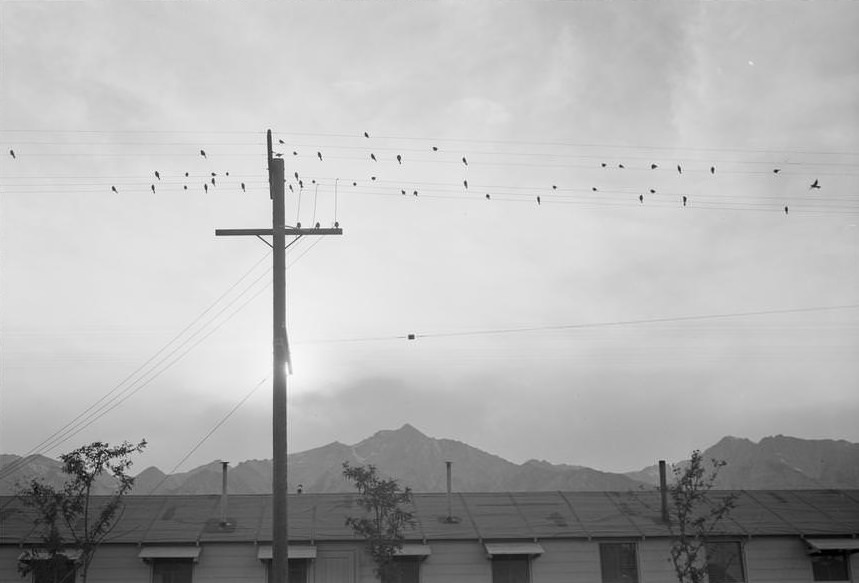
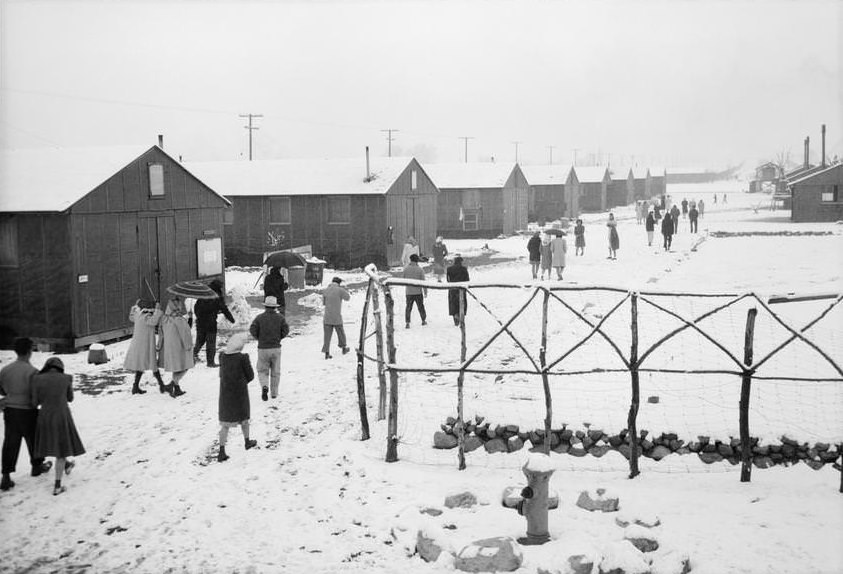
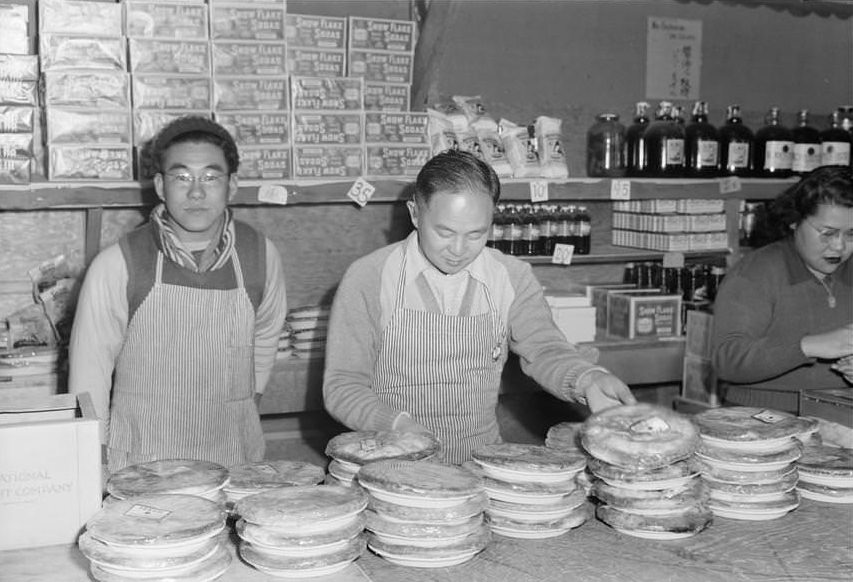
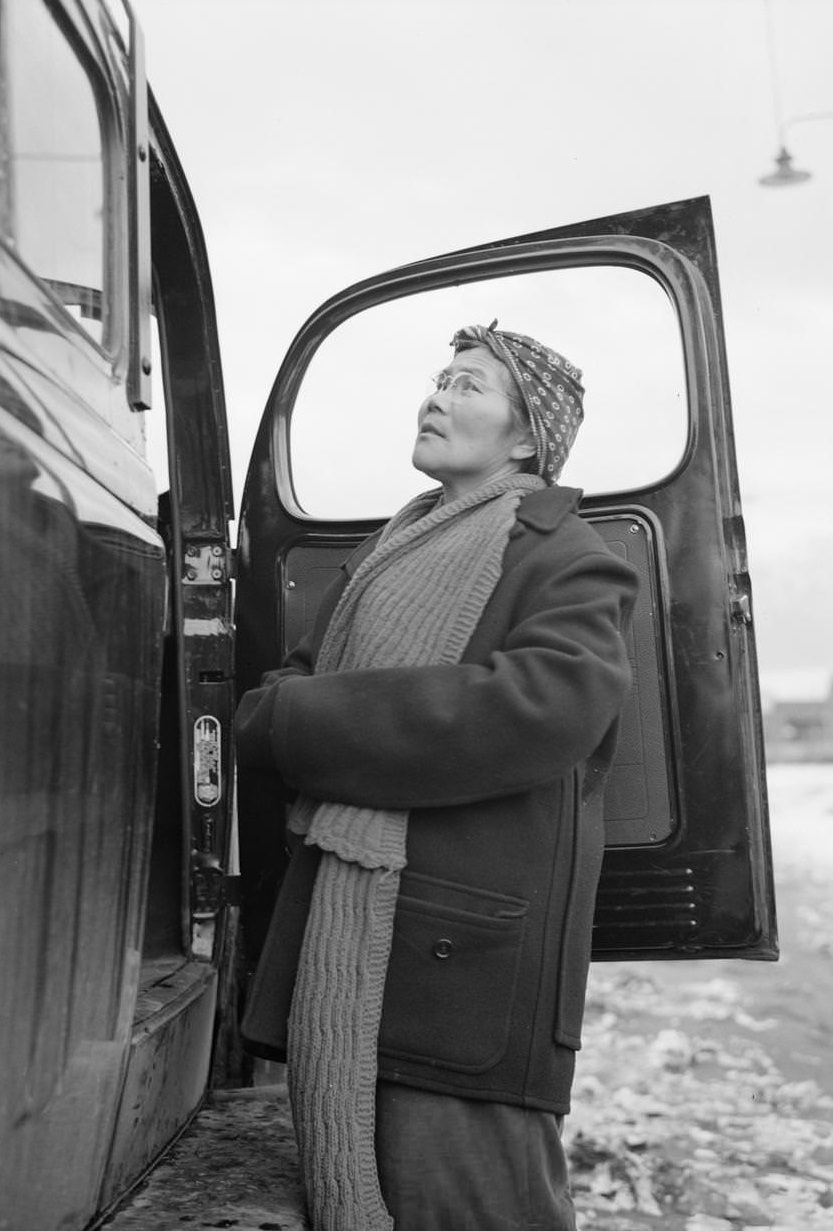
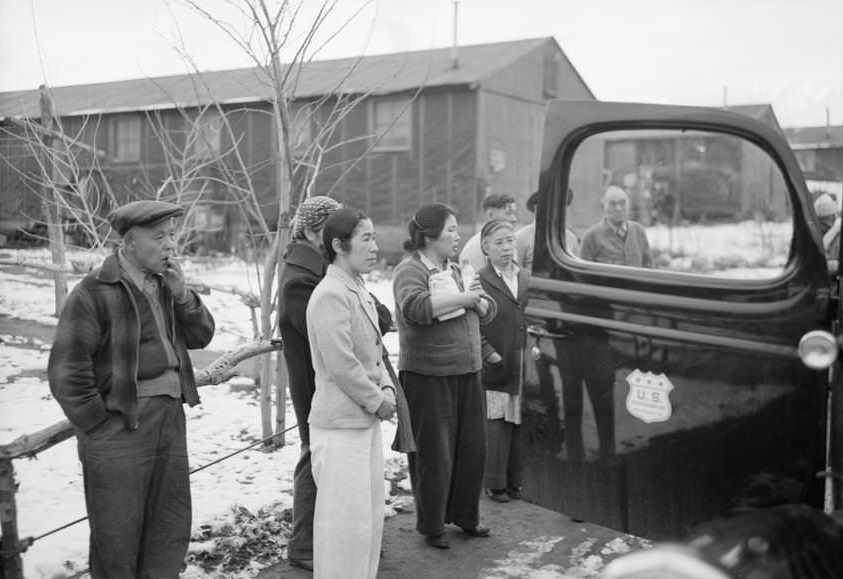
Richard Kobayashi, half-length portrait, standing, facing front, holding a head of cabbage in each hand.Akio Matsumoto, half-length portrait, seated at desk, facing front, painting sign.Mrs. Shimizu seated on couch with lacework, and Mr. Shimizu lying on bed, reading.Nurse Aiko Hamaguchi and friends seated around a table playing bridge.Hogs in pens being tended by a group of men, barn and mountains in the distance.People of all ages wait in a line in front of a building at midday.A tractor pulls a plow through a field, mountains in the background.Choir director, Louie Frizell, three-quarter length portrait, standing, facing right, directing choir.Mrs. Yaeko Nakamura looks at puzzles with her daughters, Louise Tami Nakamura and Joyce Yuki Nakamura in a store with assistance from clerk, Fred Moriguchi.Bert K. Miura, seated on table with bundles of clothing, holding paper and pencil, with Toshiko Kadonada, folding clothing in front of him.Teenagers walking along street, most carrying books.Group of girls standing in line formation, each one reaching both of her arms straight out to the side.Birds sit on power lines above buildings, mountains and setting sun in the background.People walking through relocation center in snow past hand made wood fence.Two men and a woman standing behind store counter with display of pies.Mrs. Otsuno Nakaji, three-quarter length portrait, standing against the open door of an automobile, facing left.Group of people standing, facing right, near the open door of an automobile, buildings in the background.
Mori Nakashima, full-length portrait, standing, facing front, scattering chicken feed from a pail in front of a chicken coop.
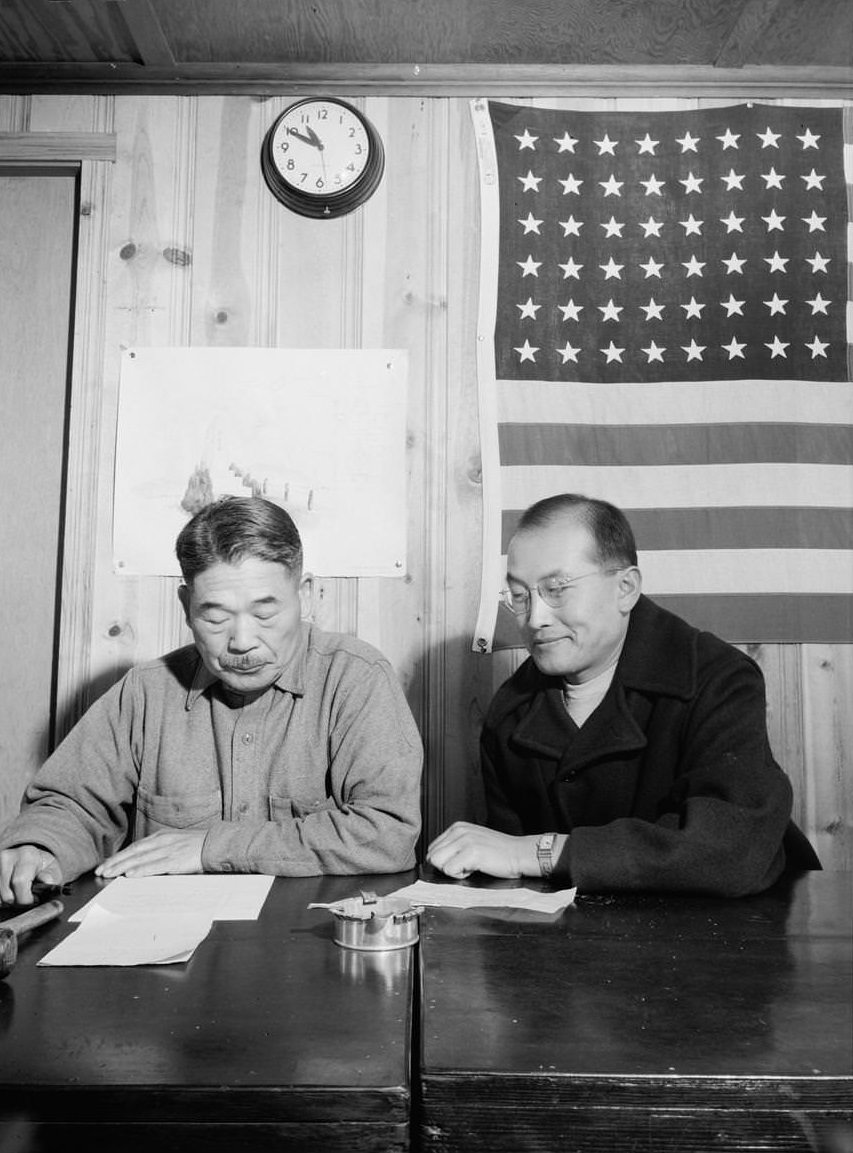
Roy Takeno (right), half-length portrait, seated at a table, next to the mayor who is reading papers, an American flag hangs on the wall behind them.
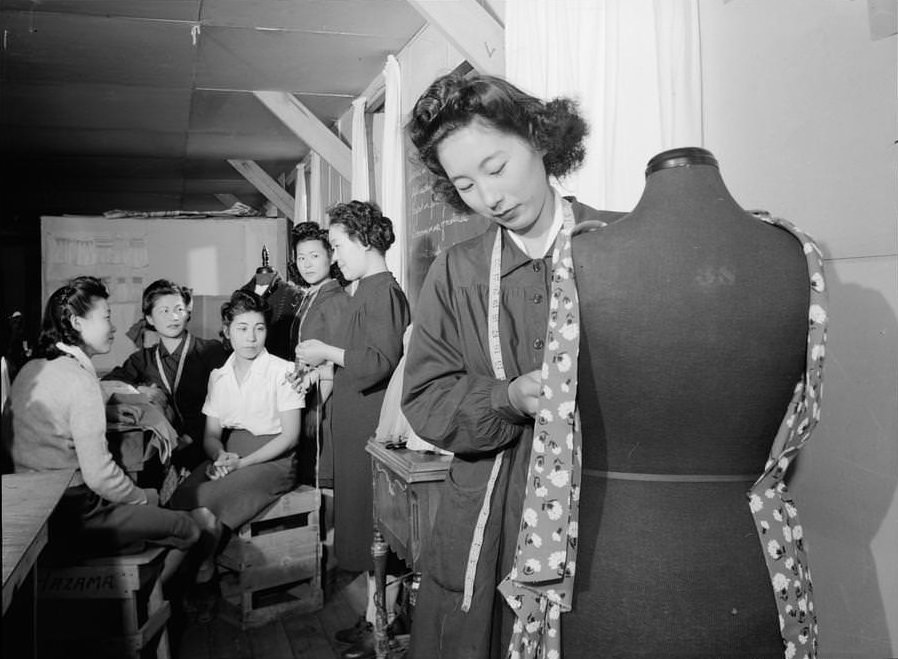
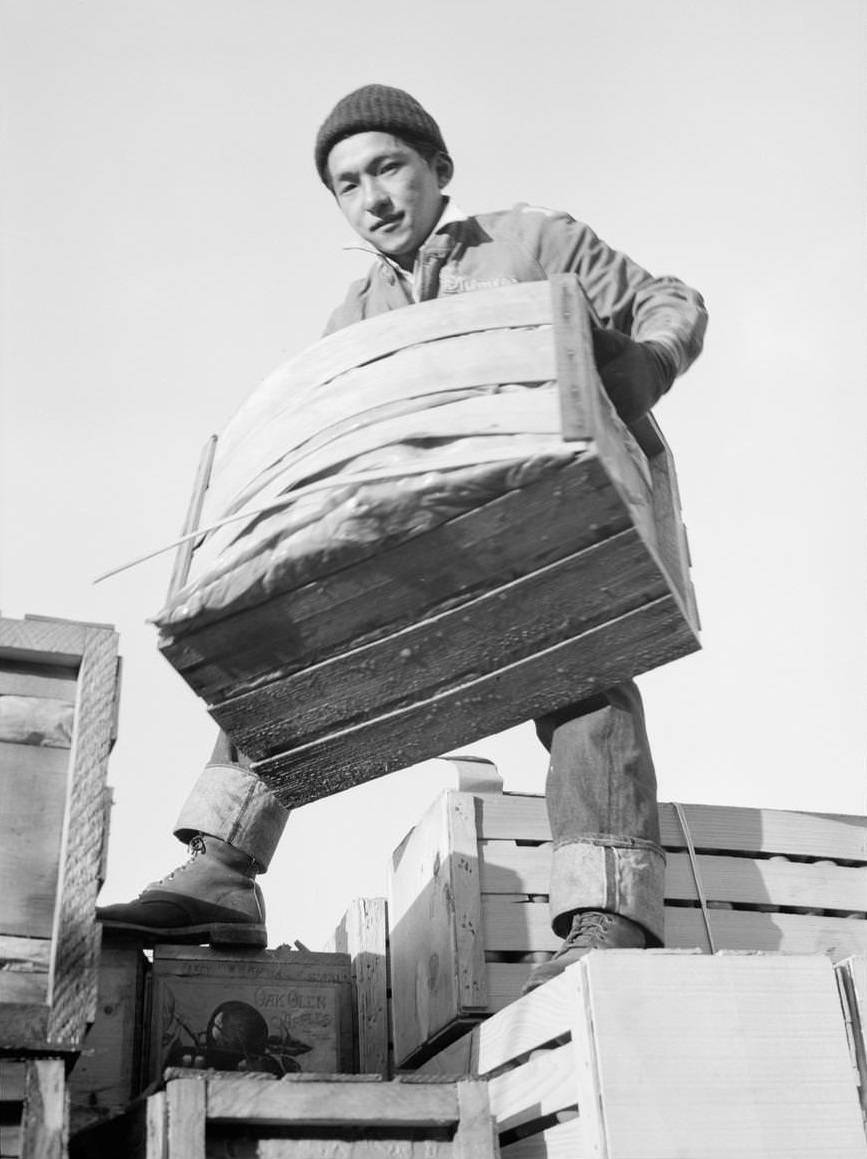
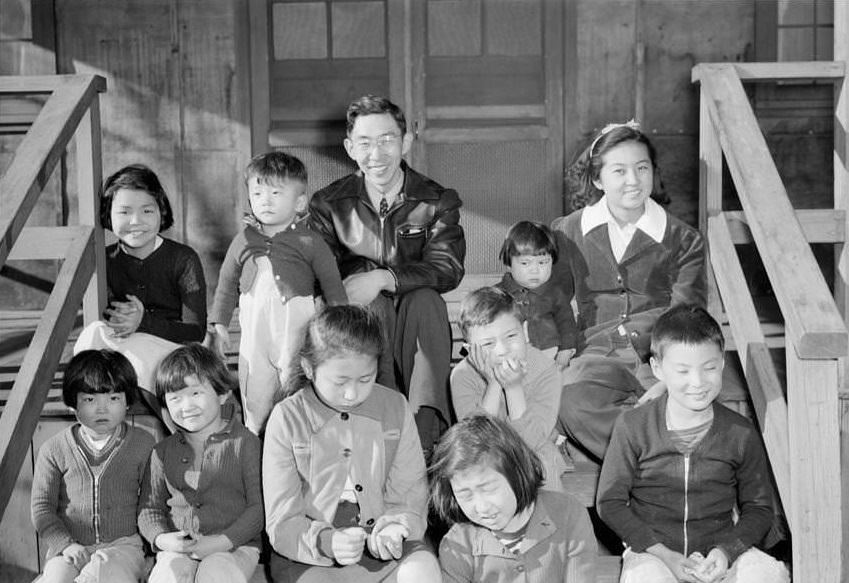
Mrs. Ryie Yoshizawa, instructor, standing in front of class of women students, one woman in foreground with dressmaker’s dummy.Two men handling beef carcasses in butcher shop.Tsutomu Fuhunago lifts a produce crate while standing on top of a load of crates.Man and woman seated on wooden steps with nine children.Aerial view of Mori Nakashima scattering chicken feed from a pail in a chicken pen.Woman looking through window at baby being held by nurse in maternity ward.