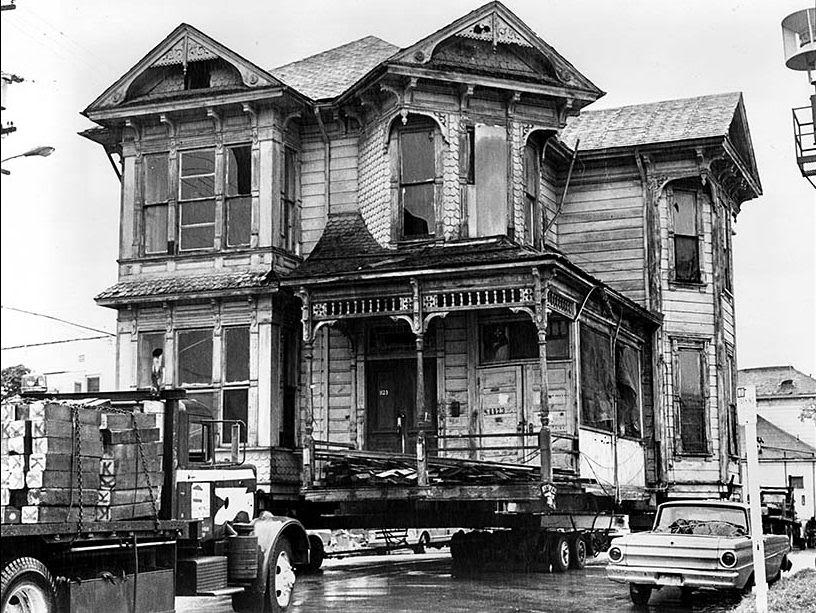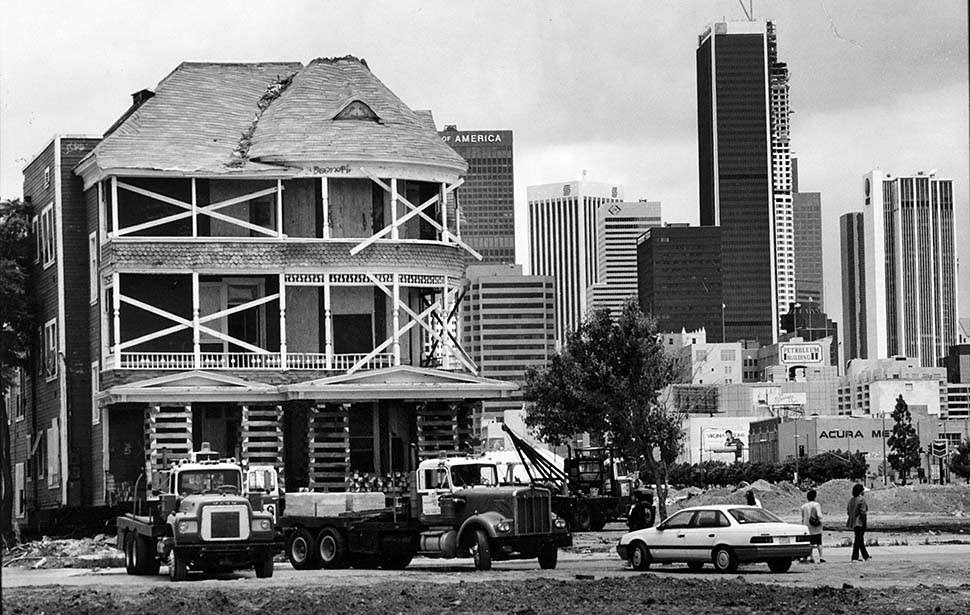
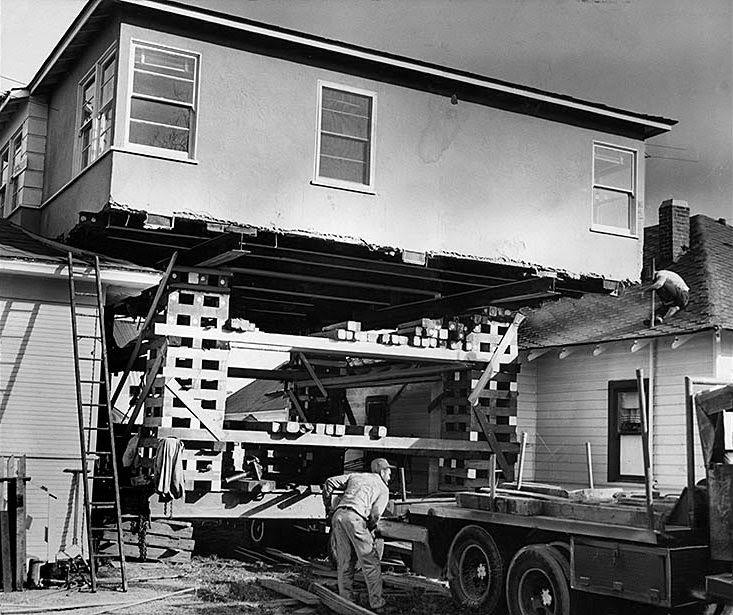
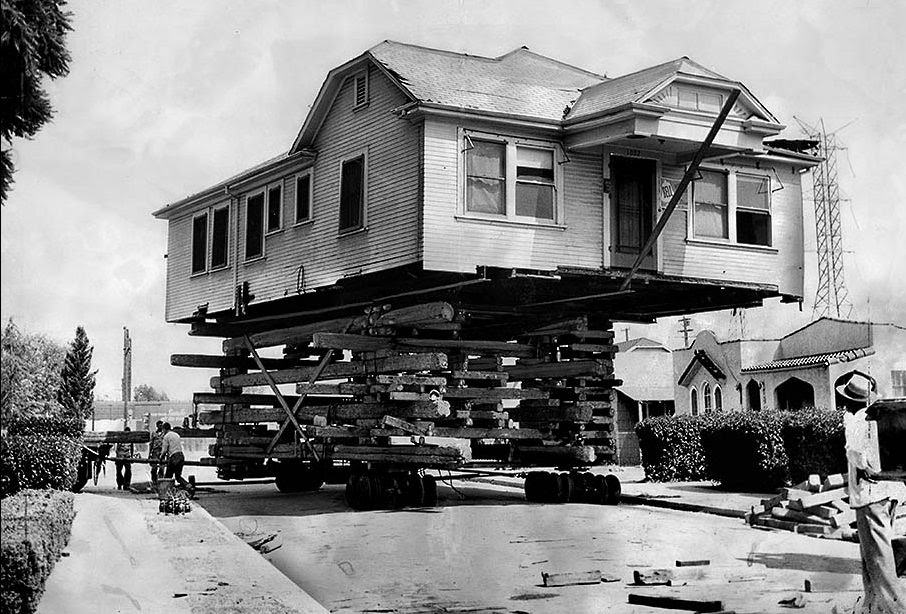
Long before Accessory Dwelling Units became a buzzword in city planning, Los Angeles had already mastered the art of moving entire houses down its streets. Roughly one thousand homes are relocated in the Los Angeles area every single year. The reasons vary — shopping centers, apartment buildings, parking lots, churches, gas stations, and road projects all regularly force structures off their original lots. Rather than tear them down, contractors lift them, load them onto trucks, and drive them somewhere new.
All across Southern California, houses have been available for purchase specifically because they stood in the path of development. The photos below document some of the most remarkable house moves captured on camera in and around Los Angeles from the late 1940s through the 1980s. Some moves went smoothly. Others did not.
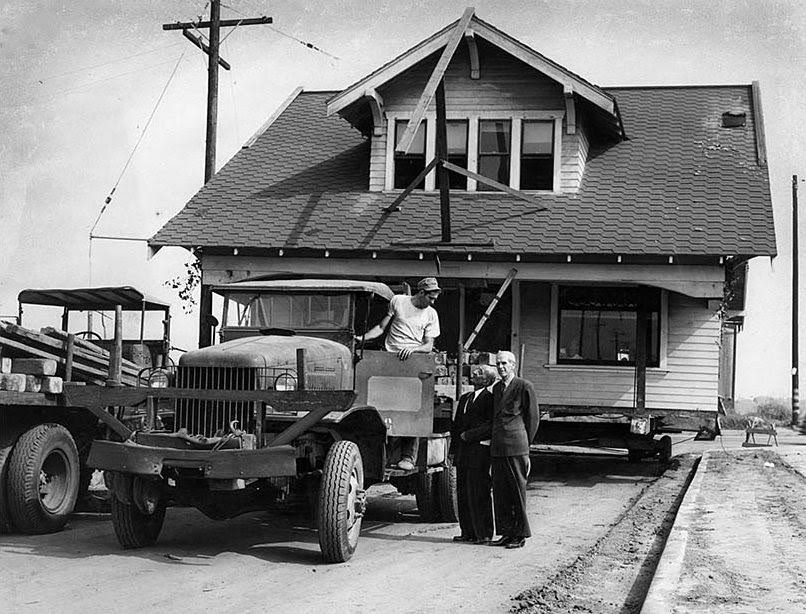
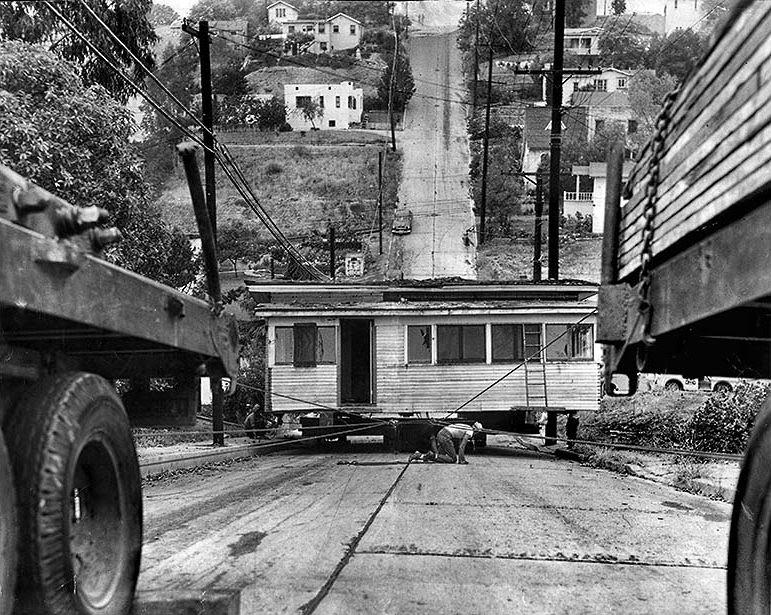
One of the earlier documented moves shows a church parsonage being transferred from Inglewood’s First Methodist Church to Grace Methodist Church in Lennox in October 1950. The foreman, Ed French, is pictured on-site with Reverend M.K. Stone. Just months later, in July 1951, a far more dramatic move took place in Silver Lake, where workers used cables to haul a six-room, 20-ton house up one of the steepest streets in the city.
Street logistics made some moves far more complicated than the actual lifting. In June 1952, a two-story house being relocated from Doheny Drive near Sunset Boulevard to Santa Monica was blocked mid-route by parked cars. The house sat on the road, waiting, until the path was cleared.
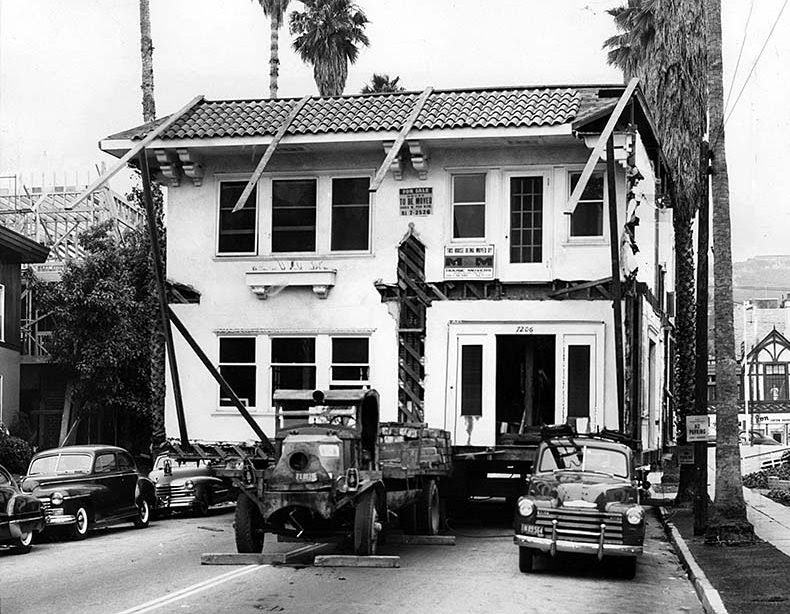
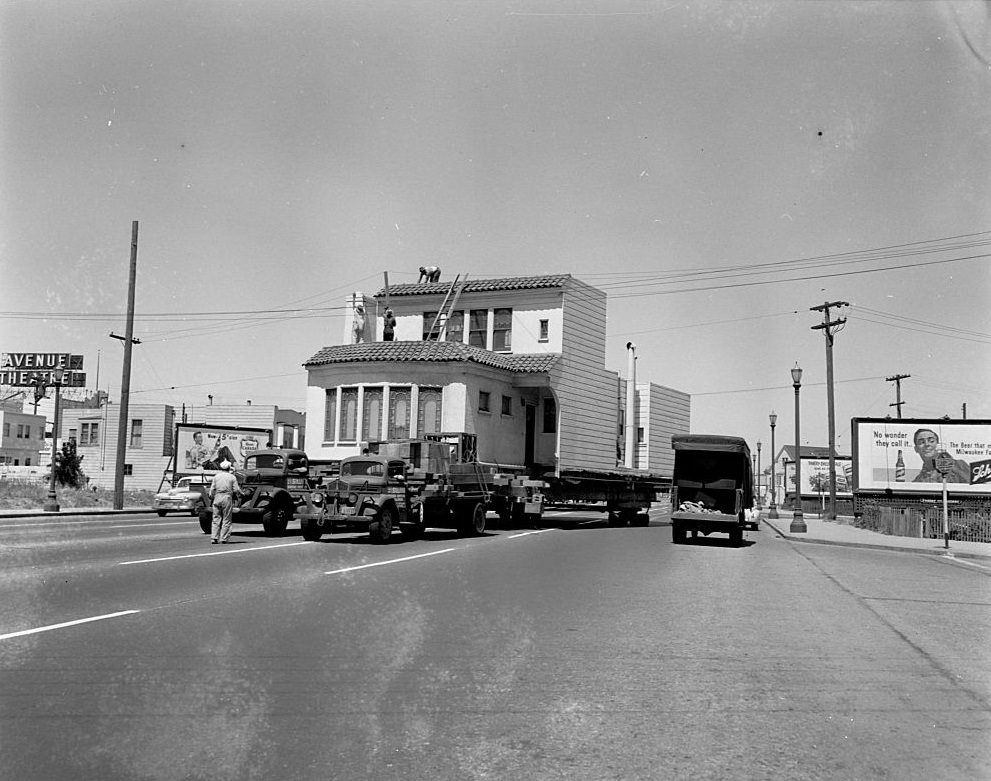
By the mid-1950s, house moving had become a regular sight on Los Angeles streets. The 1100 block of West 96th Street saw a full relocation in July 1955, and three years later in August 1958, a house moved from Hollywood had to be elevated high enough to clear the roofline of its new neighbor on East 90th Street.
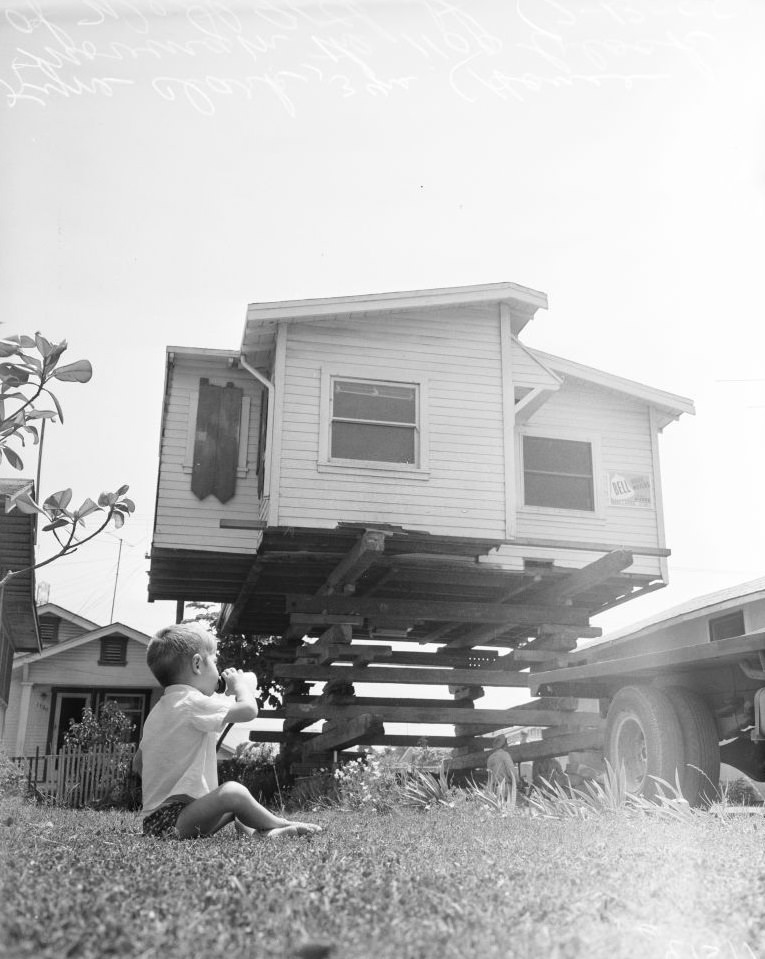
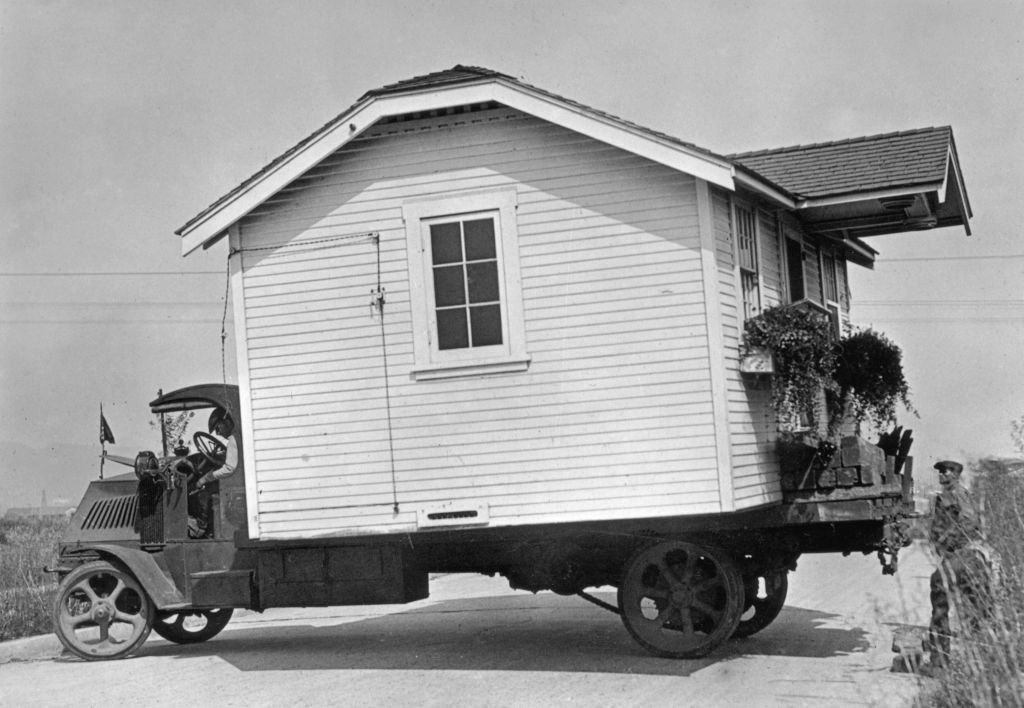
In January 1959, a structure moved from 94th Street and El Manor Avenue was raised 25 feet in the air to settle into its new spot on West 43rd Street — a feat that required precision lifting equipment and careful coordination with utility lines above.
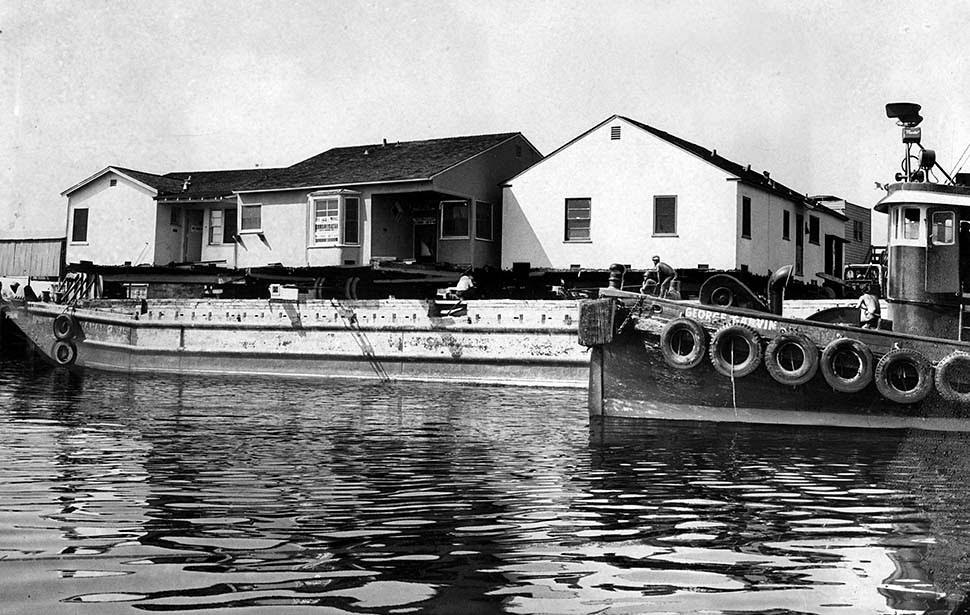
Not all relocations happened on land. In August 1960, a barge loaded with two houses left Los Angeles Harbor, bound for Port Hueneme in Ventura County — a move by sea that was arguably smoother than many of the street-based moves attempted across the city.
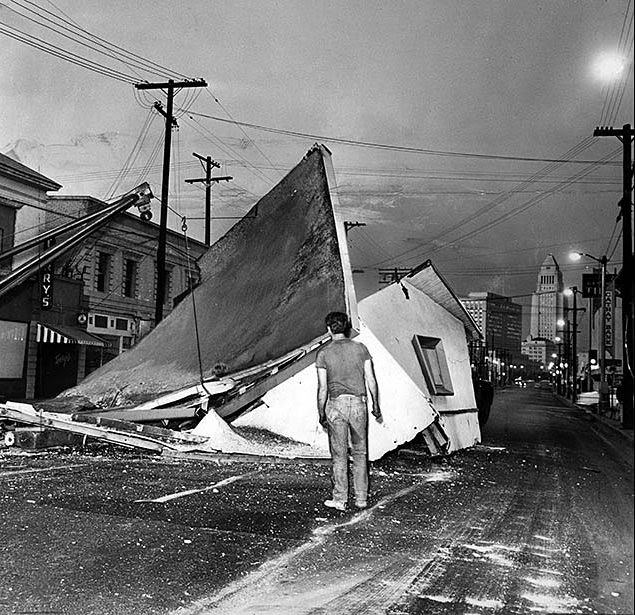
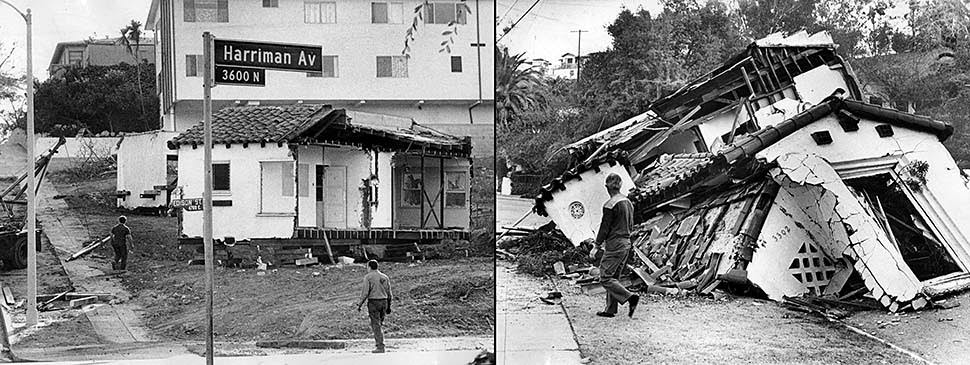
Some moves ended in disaster. In July 1968, a garage being transported from La Cañada to Hollywood slipped off its truck on Broadway near Alpine at around 5 a.m. Wreckers had to tear the structure apart entirely to clear the road before the morning rush hour began. An even costlier failure occurred when a house being moved from Glendale to Harriman Avenue in Los Angeles partially collapsed after hitting a dip just half a block from its destination. Both sections of the structure had to be demolished.
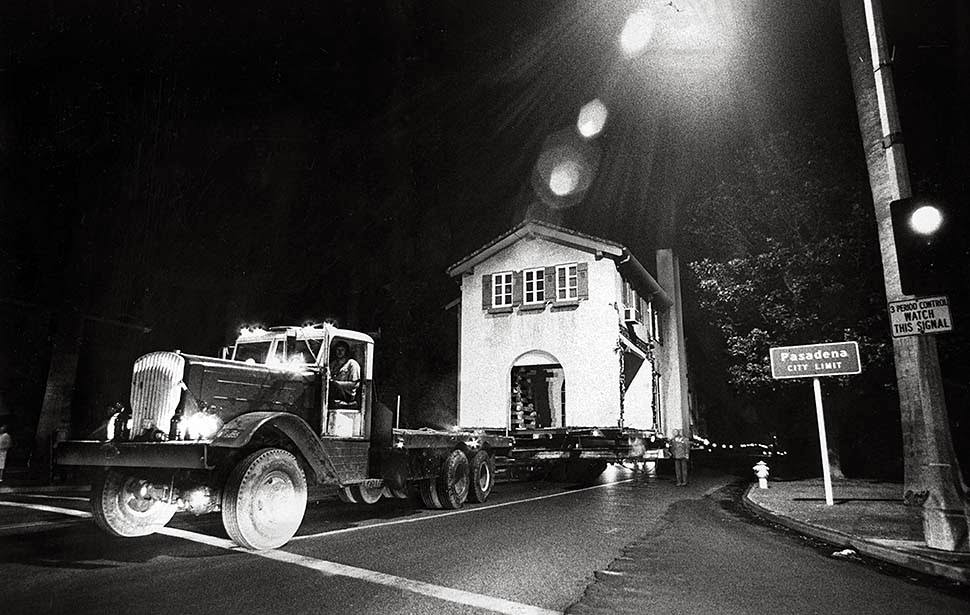
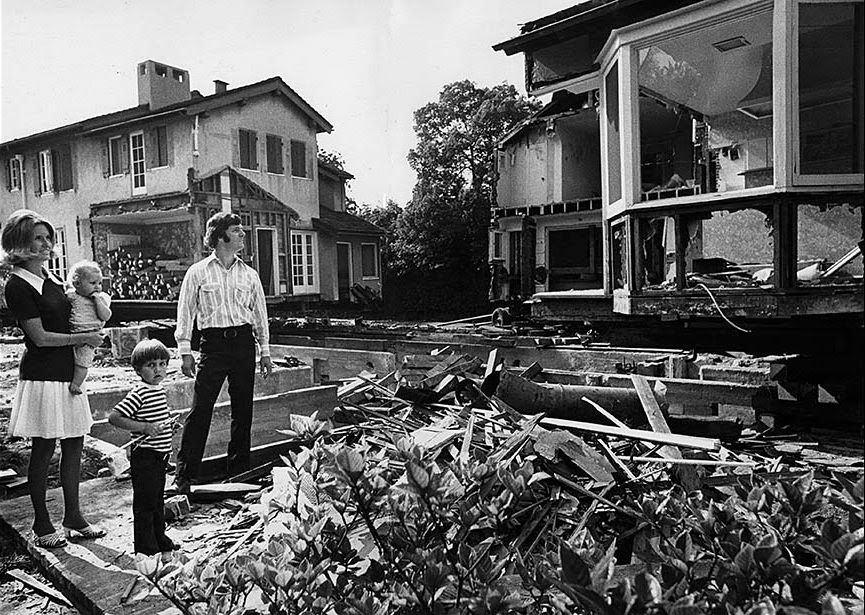
In August 1973, Pasadena residents John and Cheryl Fremdling made headlines when they chose to move their 349-ton home rather than watch it be demolished. The couple was photographed inspecting the structure after it arrived safely at its new location.
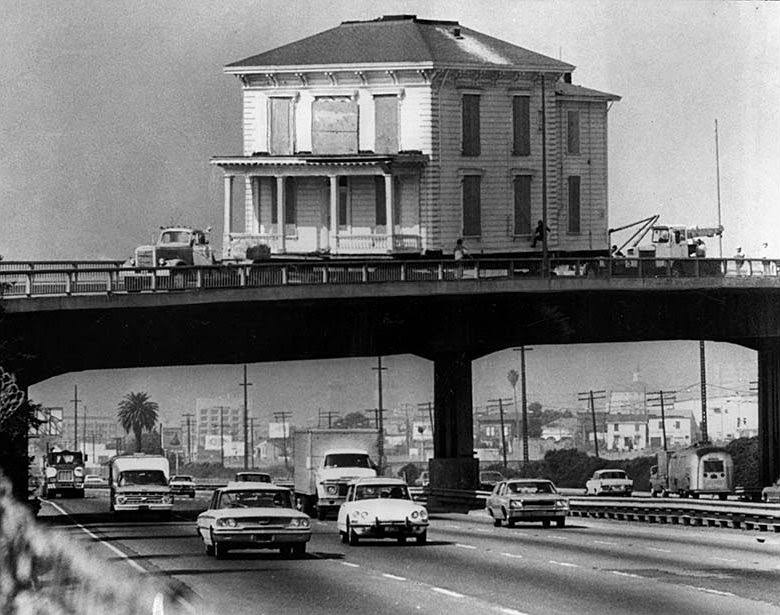
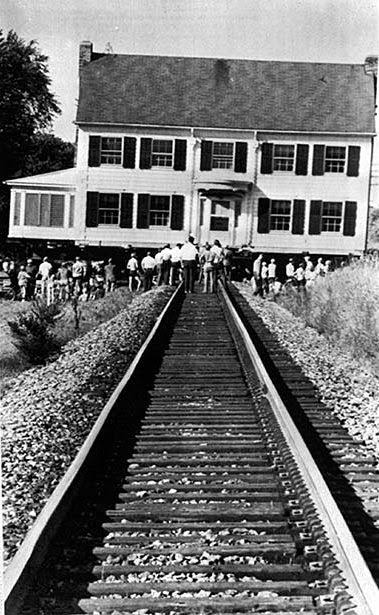
That same month, an early 1900s house crossing the Nimitz Freeway in Oakland had to stop mid-transit while workers freed its eaves from a tangled light pole. The following year, in September 1974, a house being moved in La Crosse, Wisconsin stalled directly on a railroad track. Workers managed to free it before a train arrived.
Preservation motivated many of the most significant moves. In March 1978, two Victorian houses designated as Los Angeles historical-cultural monuments were relocated from Court Street, just west of downtown, to 1300 Carroll Avenue — a distance of seven blocks. Eleven years later, in May 1989, the Edward Strong mansion was lifted from its site on West 15th Street, where it had stood for 102 years, to make room for an expansion of the Los Angeles Convention Center.