
At the start of the 1910s, Hamburg was one of the most important port cities in the world. Sitting on the Elbe River in northern Germany, it was a city of enormous energy — busy docks, crowded streets, grand civic buildings, and a population that had grown rapidly over the previous decades. The decade that followed, however, would test Hamburg in ways few could have anticipated. War, economic disruption, and cultural upheaval would all reshape the city before the decade was out.
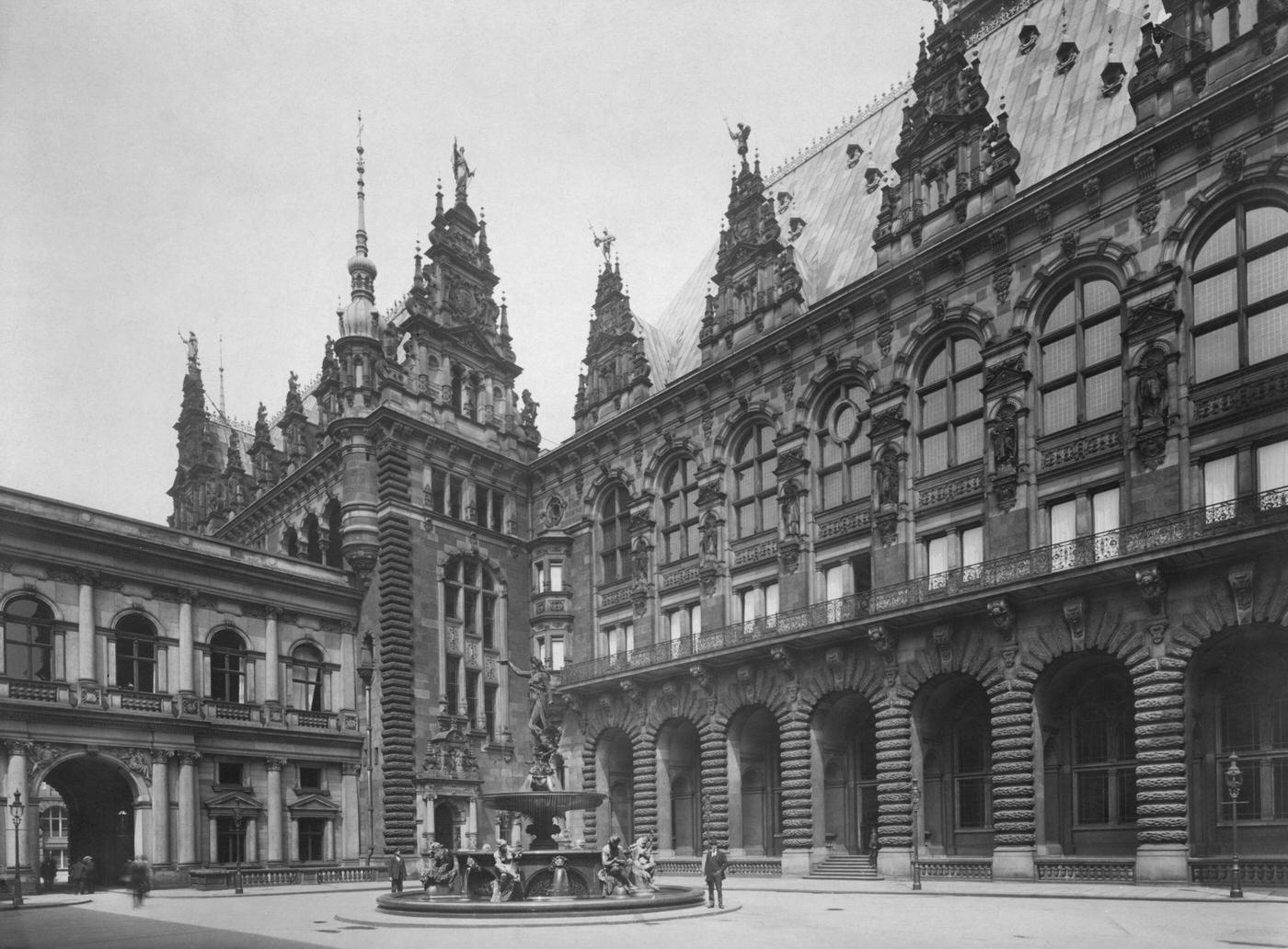
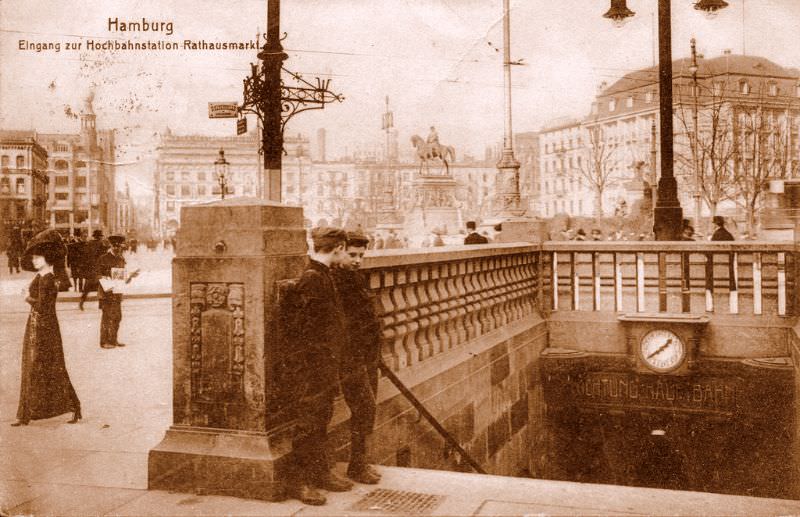
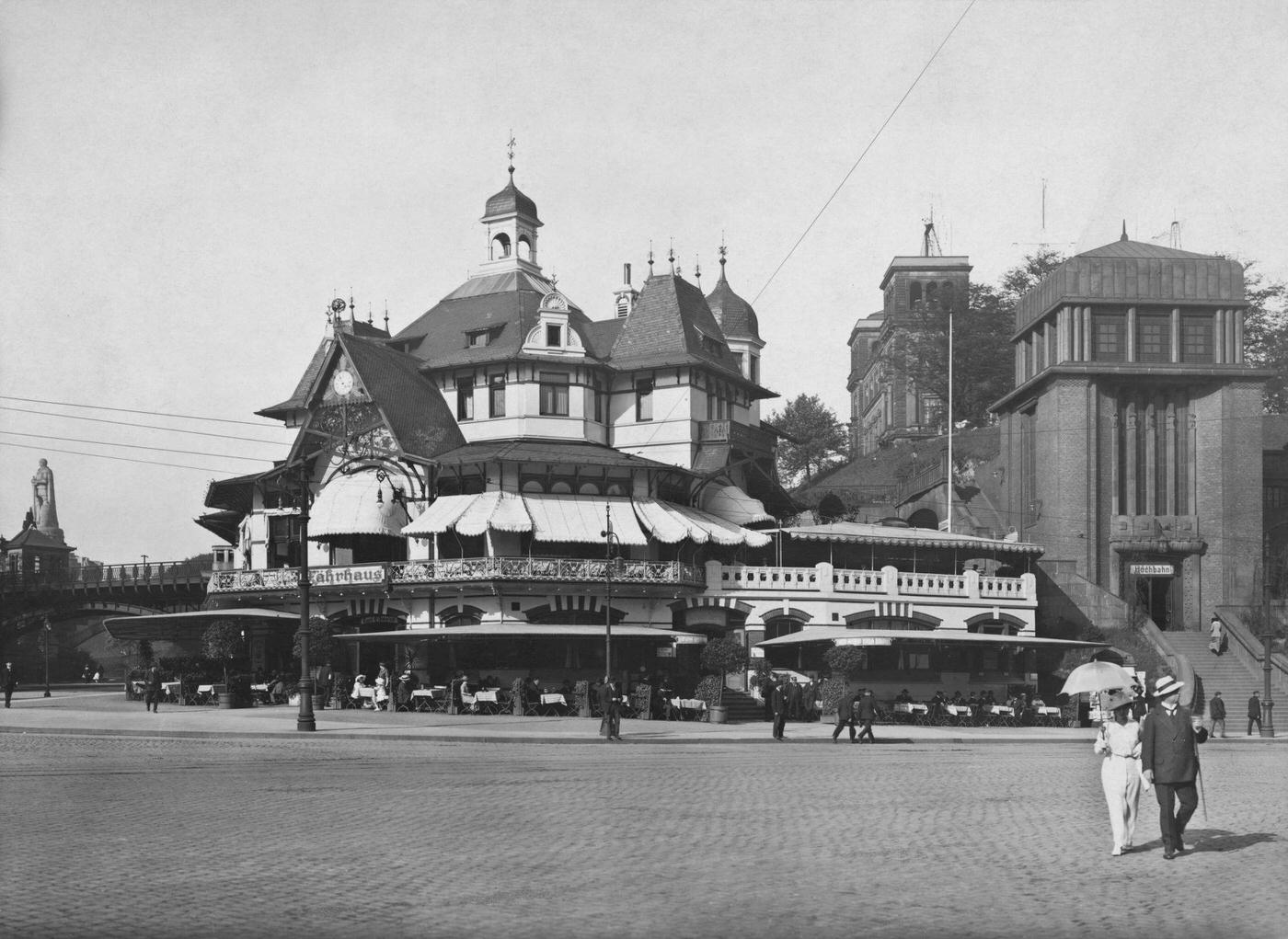
Hamburg’s Rathaus — its city hall — stood as the centerpiece of civic life. Built in the late 19th century in a Neo-Renaissance style, the building was a statement of the city’s ambition and wealth. The Rathausmarkt, the square in front of it, was a gathering place for citizens and a hub of daily activity. Beneath it ran one of Germany’s early urban rail systems, giving Hamburg a modern edge that matched its status as a global trading port.
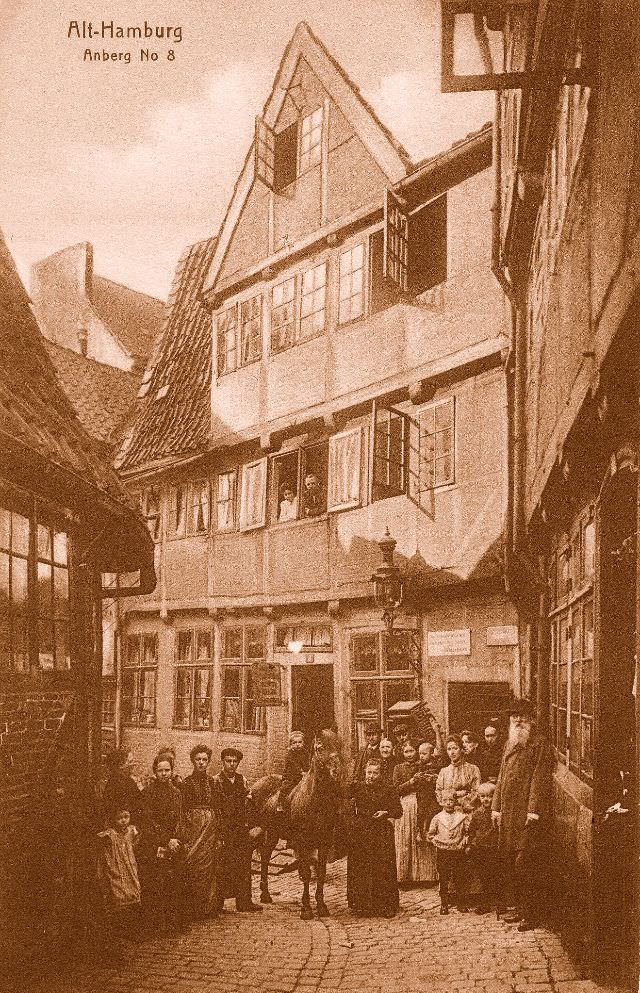
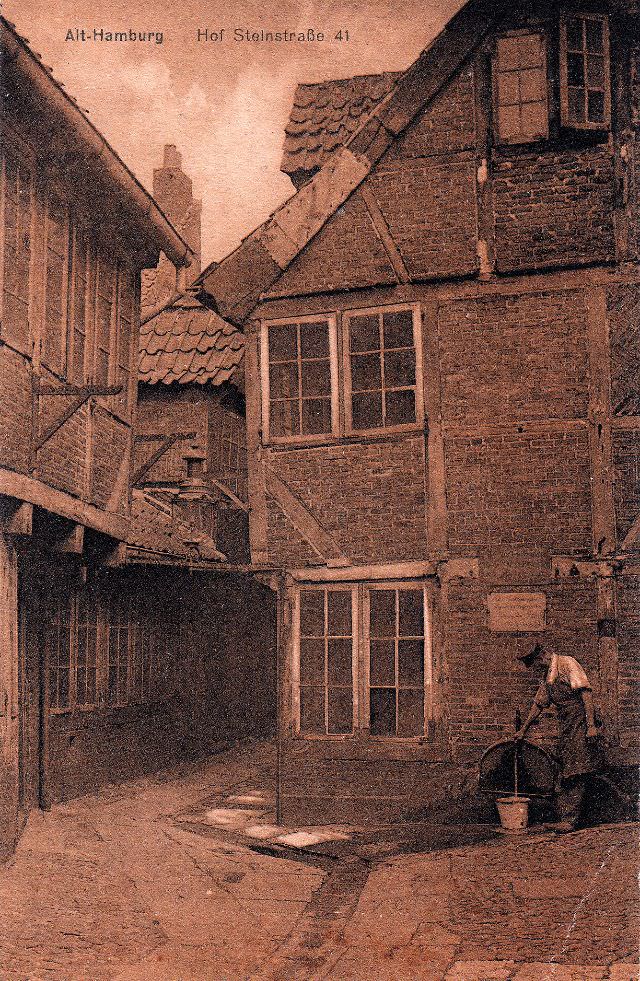
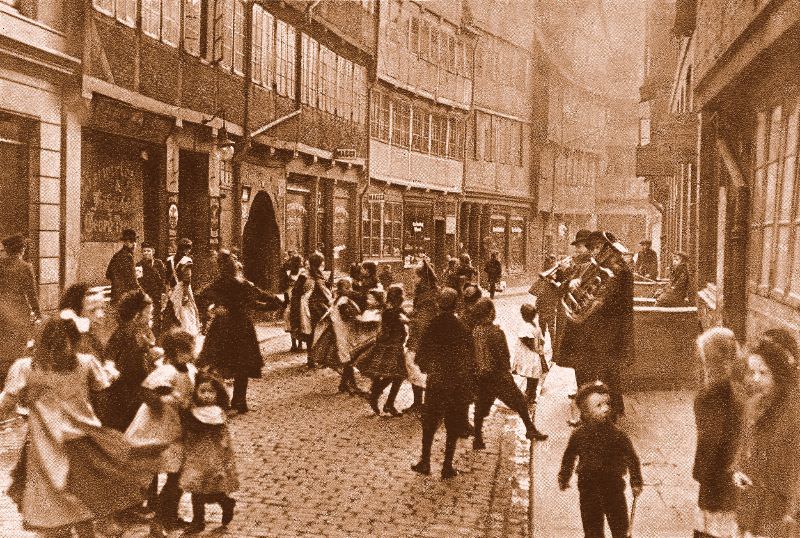
The streets surrounding the city center told a different story. Narrow alleys, dense courtyards, and tightly packed buildings made up the older residential and commercial quarters. These were working-class spaces — practical, lived-in, and far removed from the grandeur of the Rathaus or the waterfront. Places like the Breiter Gang and Steinstraße were packed with residents, small trades, and the sounds of everyday life.
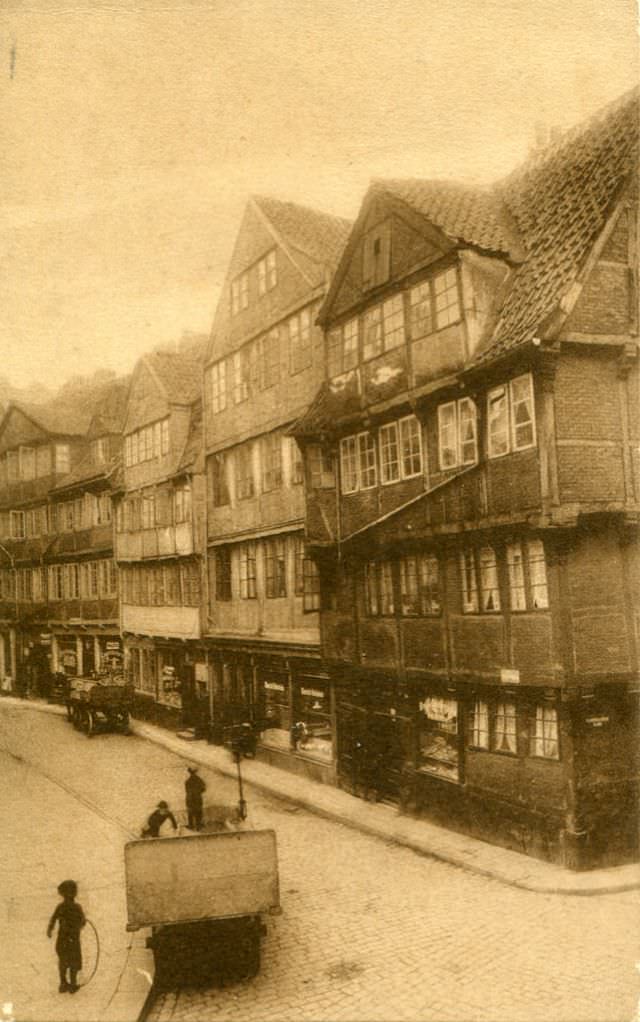
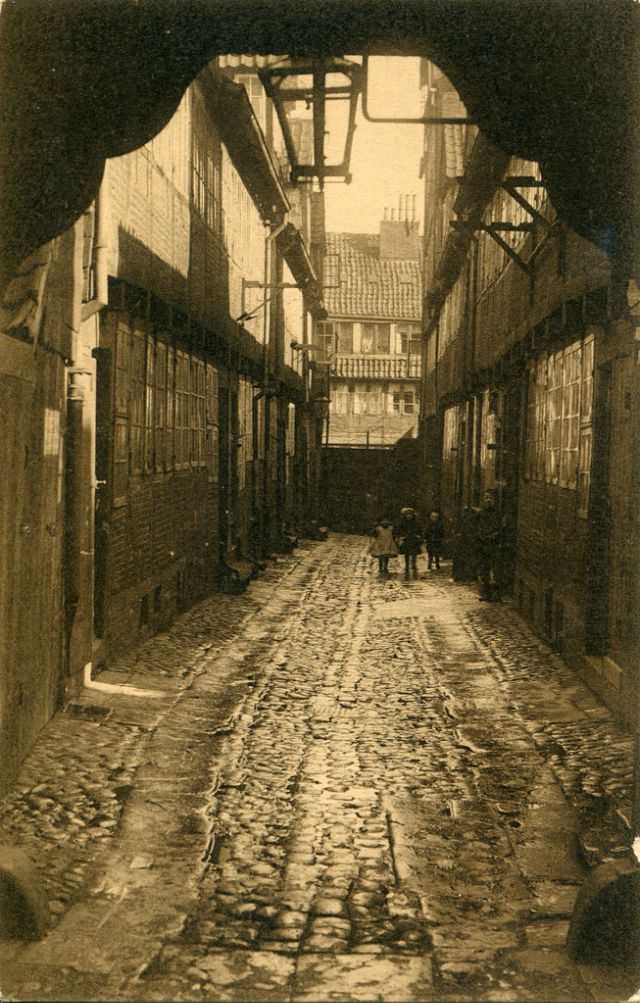
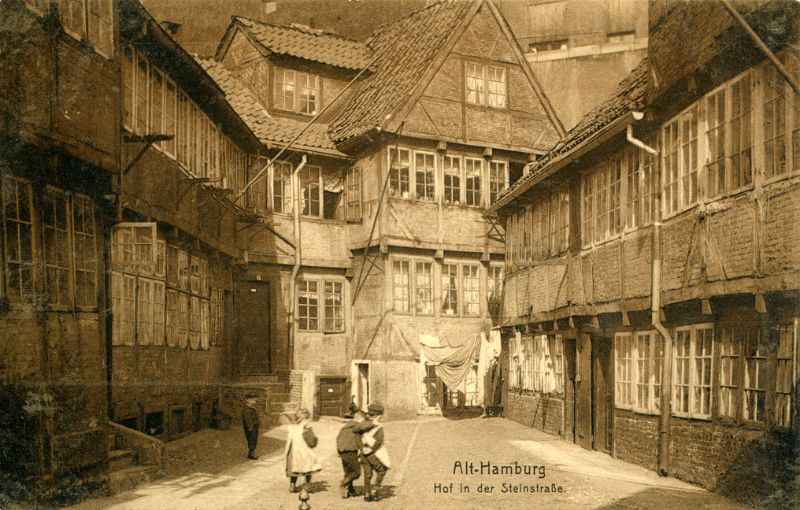
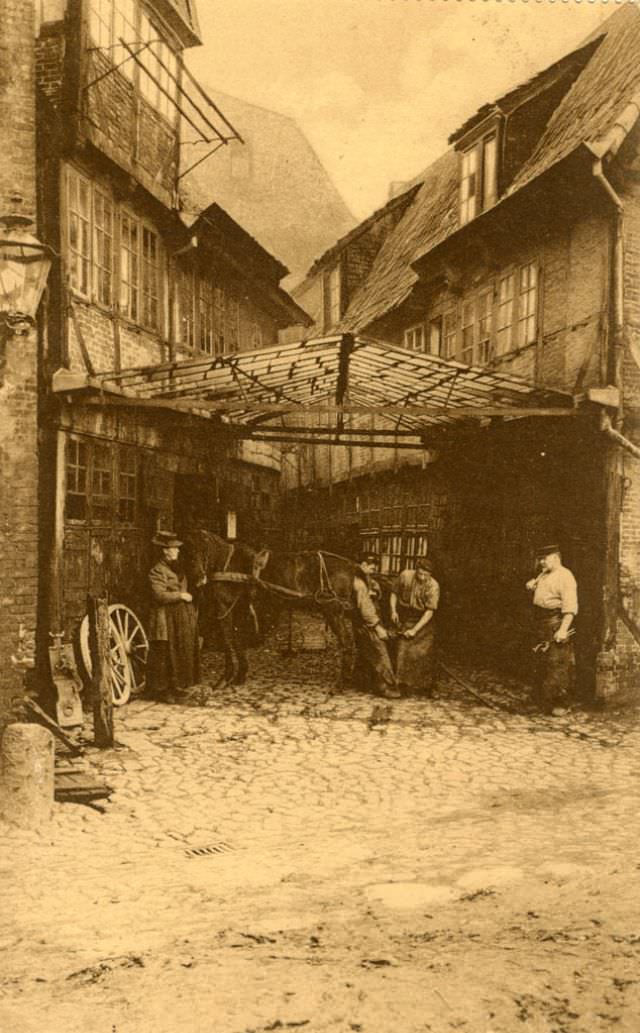
Many of these inner-city courtyards were home to craftsmen and tradespeople who ran their businesses from ground-floor workshops. A forge on Kurze Mühren, for example, was the kind of small-scale operation that kept the city’s older economy running alongside the massive port trade. Blacksmiths, bakers, and merchants worked within walking distance of one another in a city that was still very much organized around its historic core.
Hamburg’s port was the engine of everything. It was one of the busiest in Europe, handling goods flowing between the continent and the rest of the world. Sailing vessels still shared the harbor with newer steamships, and the docklands buzzed with labor. The scene at the Sandtor Quay in the Free Harbour captured the scale of this activity — warehouses, cranes, and vessels lined the water in a display of industrial power.
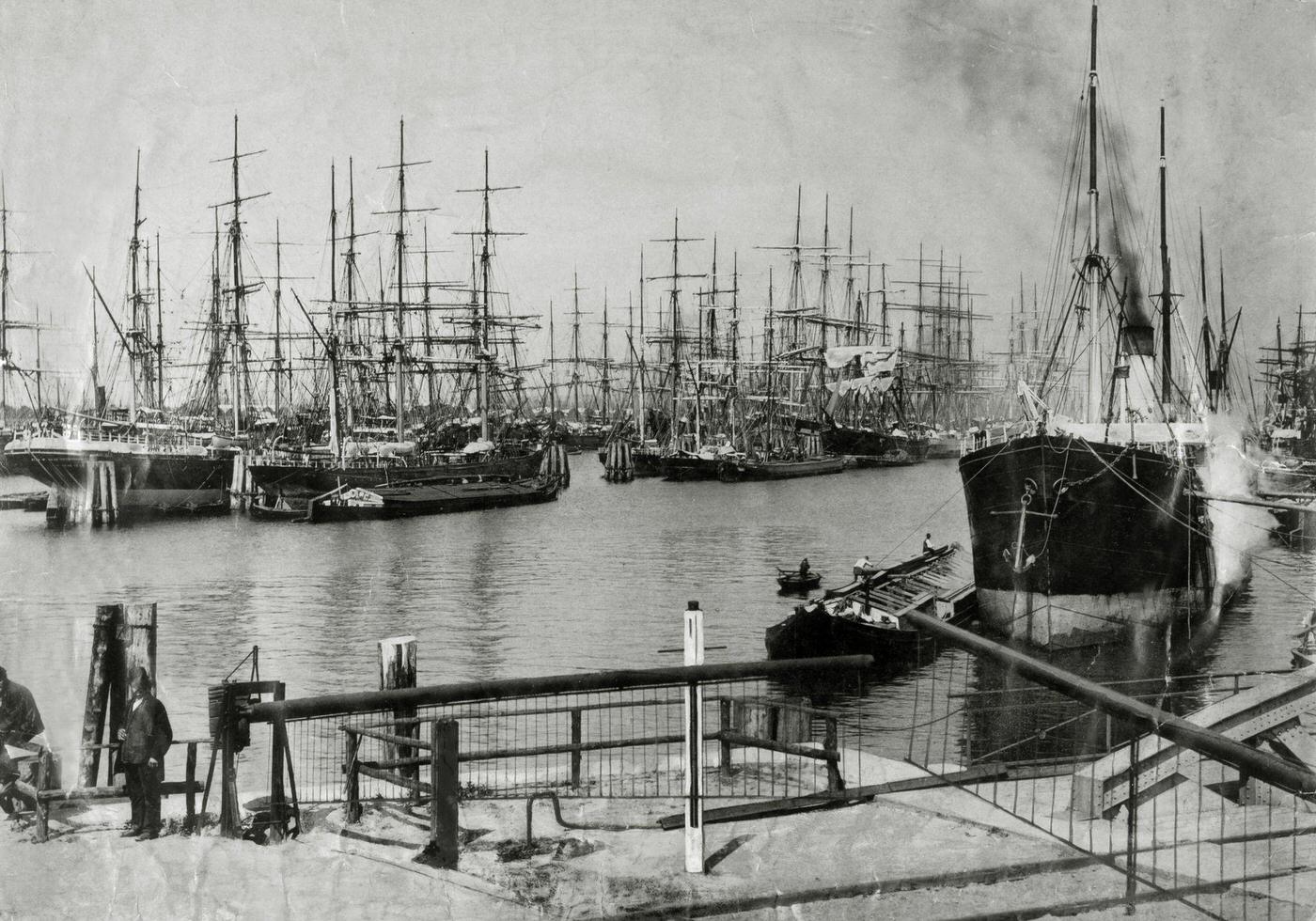
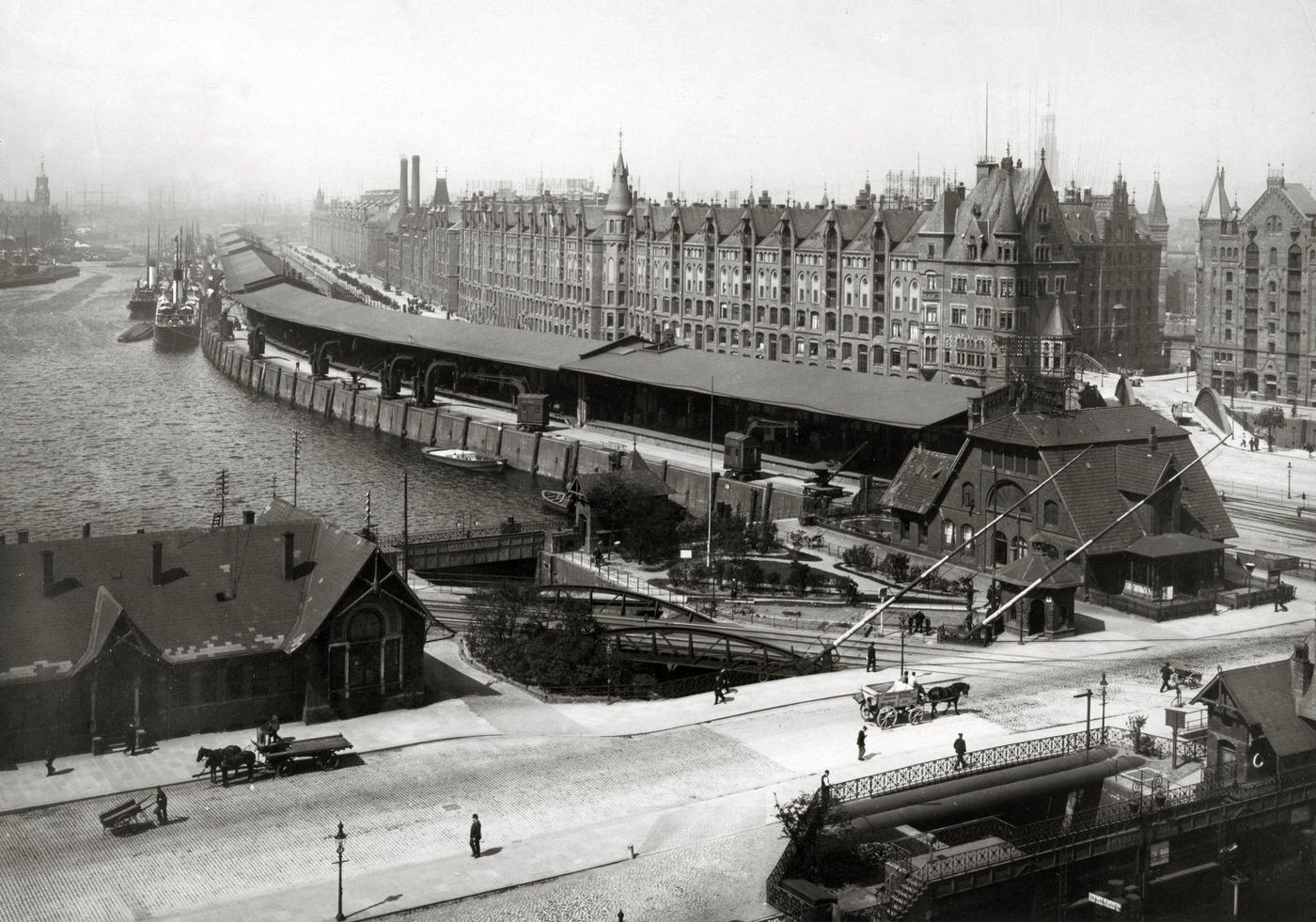
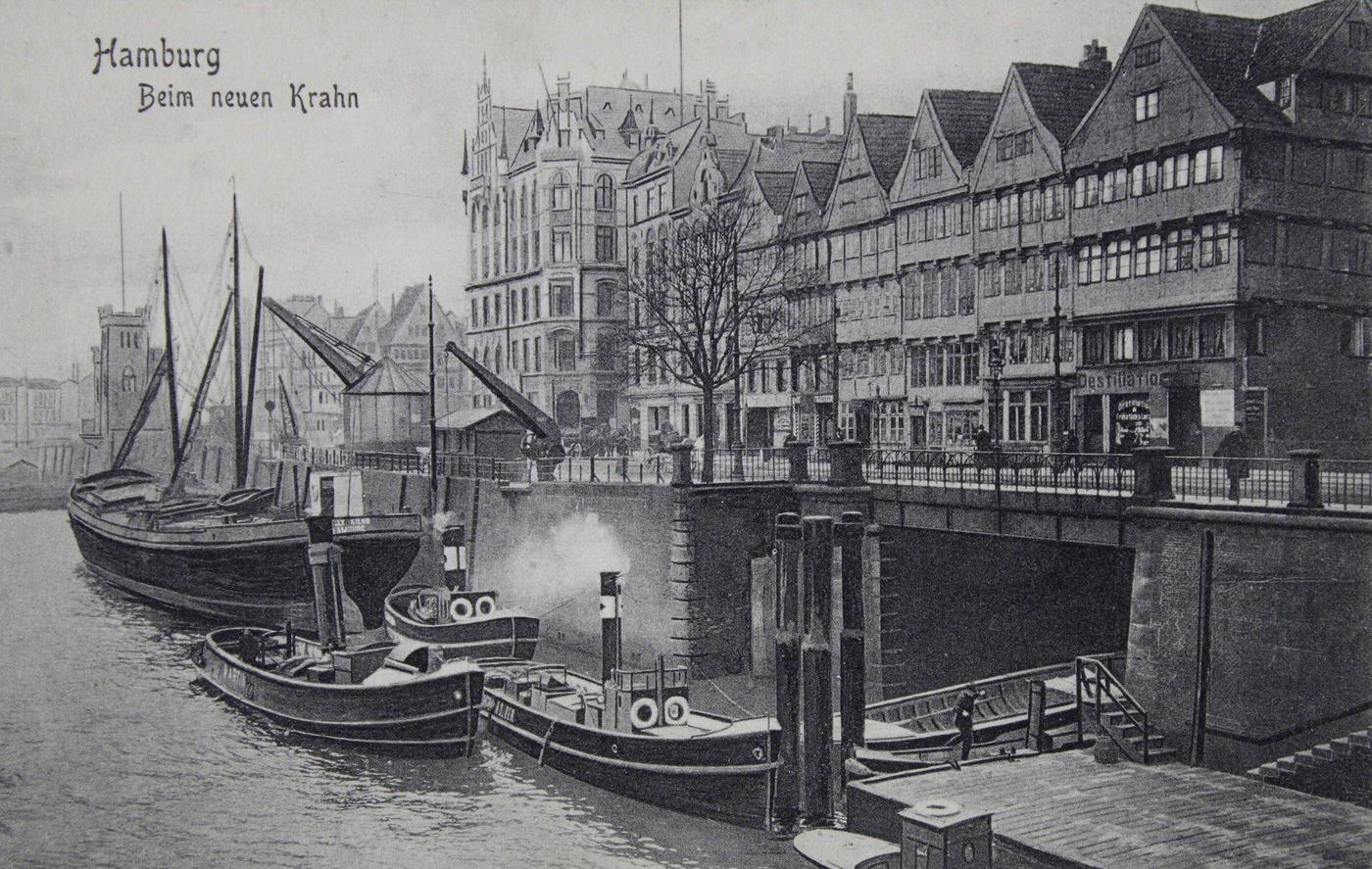
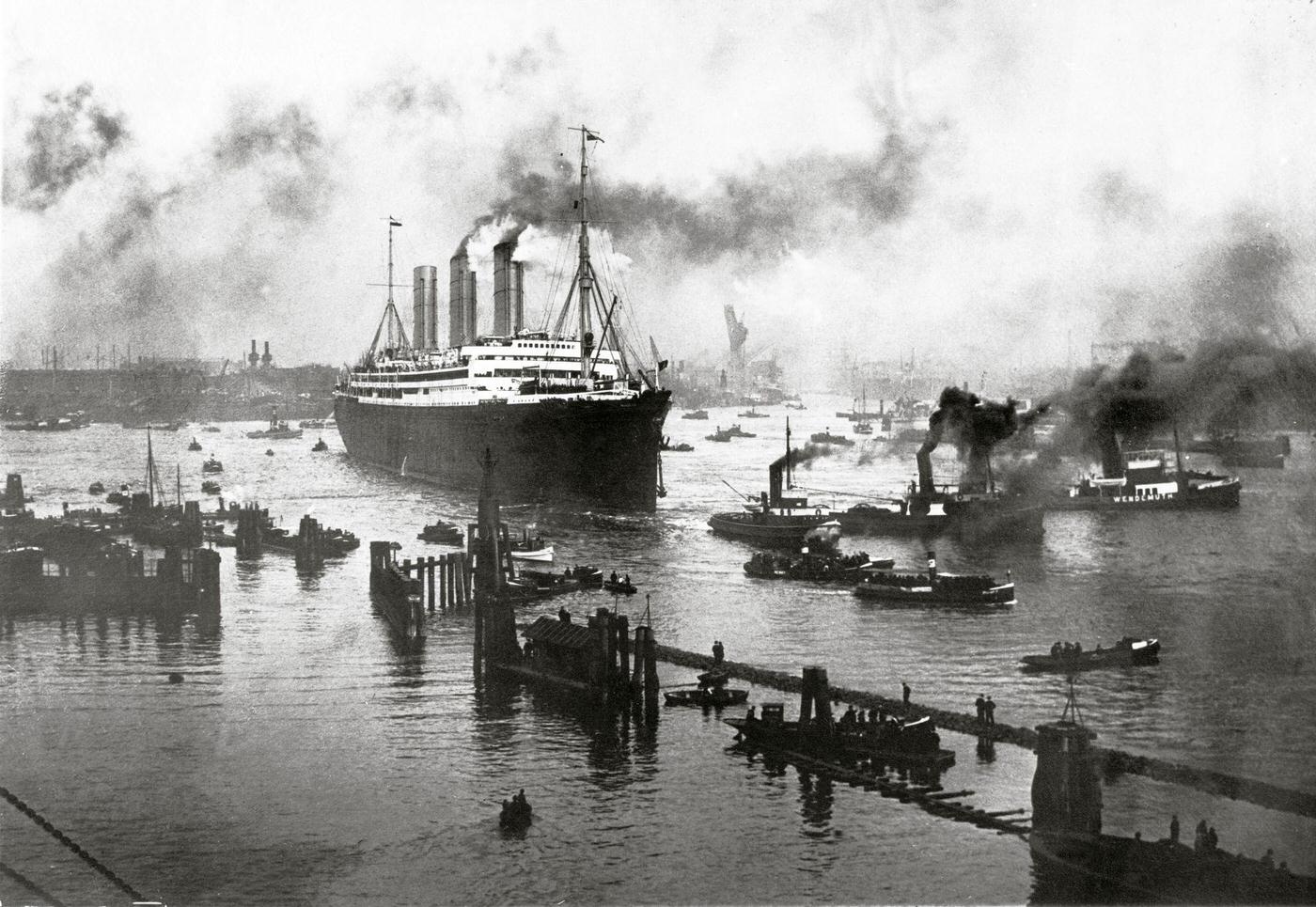
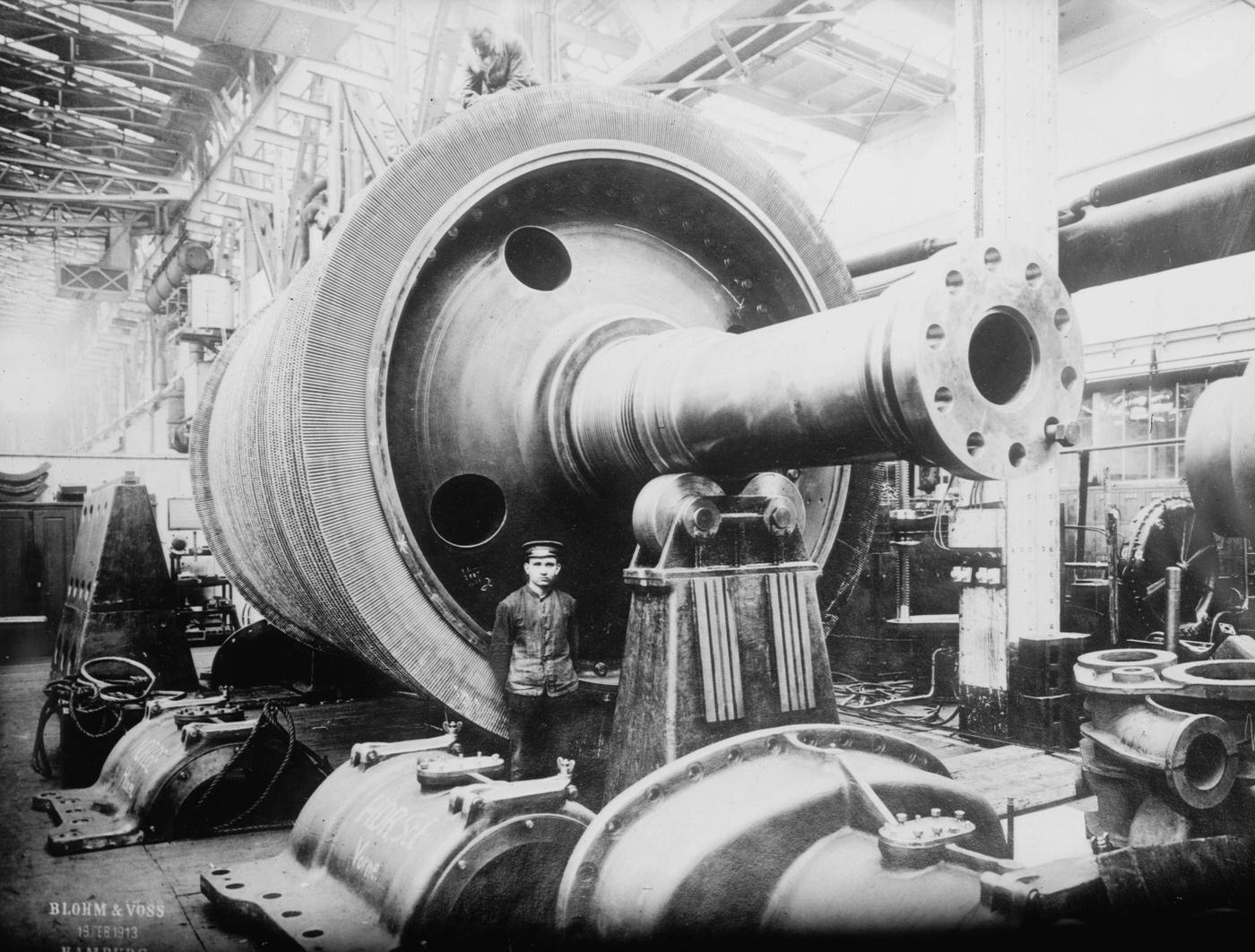
The Hamburg-Amerika Linie — known in English as the Hamburg America Line — was the dominant shipping company of the era and a source of enormous civic pride. Its general director, Albert Ballin, was one of the most powerful businessmen in Germany. Under his leadership, the company launched some of the largest ships ever built. In 1913, the SS Imperator set sail on its maiden voyage from Hamburg’s harbor, briefly holding the title of the world’s largest ship. The turbines powering its sister ship, the Vaterland, were assembled the previous year — engineering feats that drew international attention.
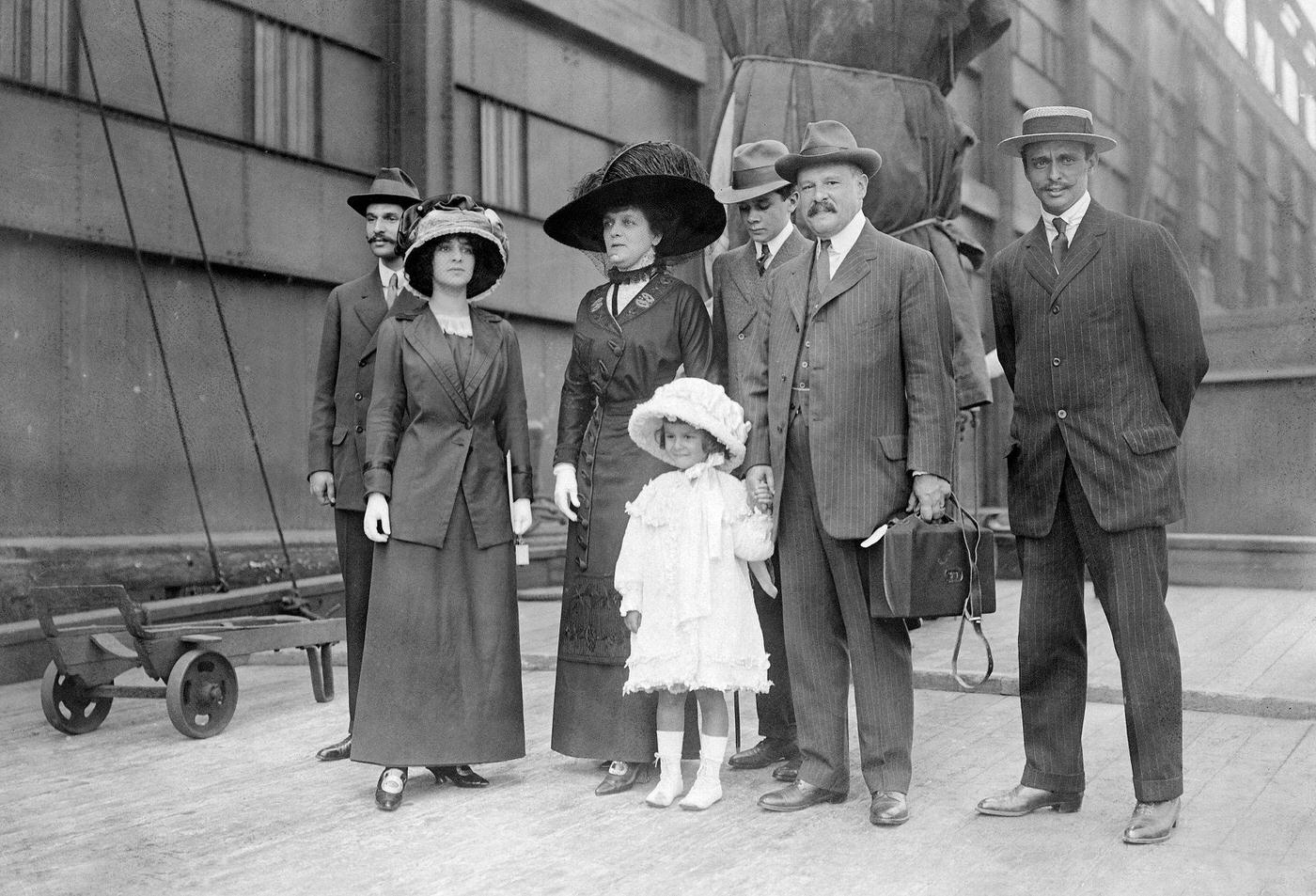
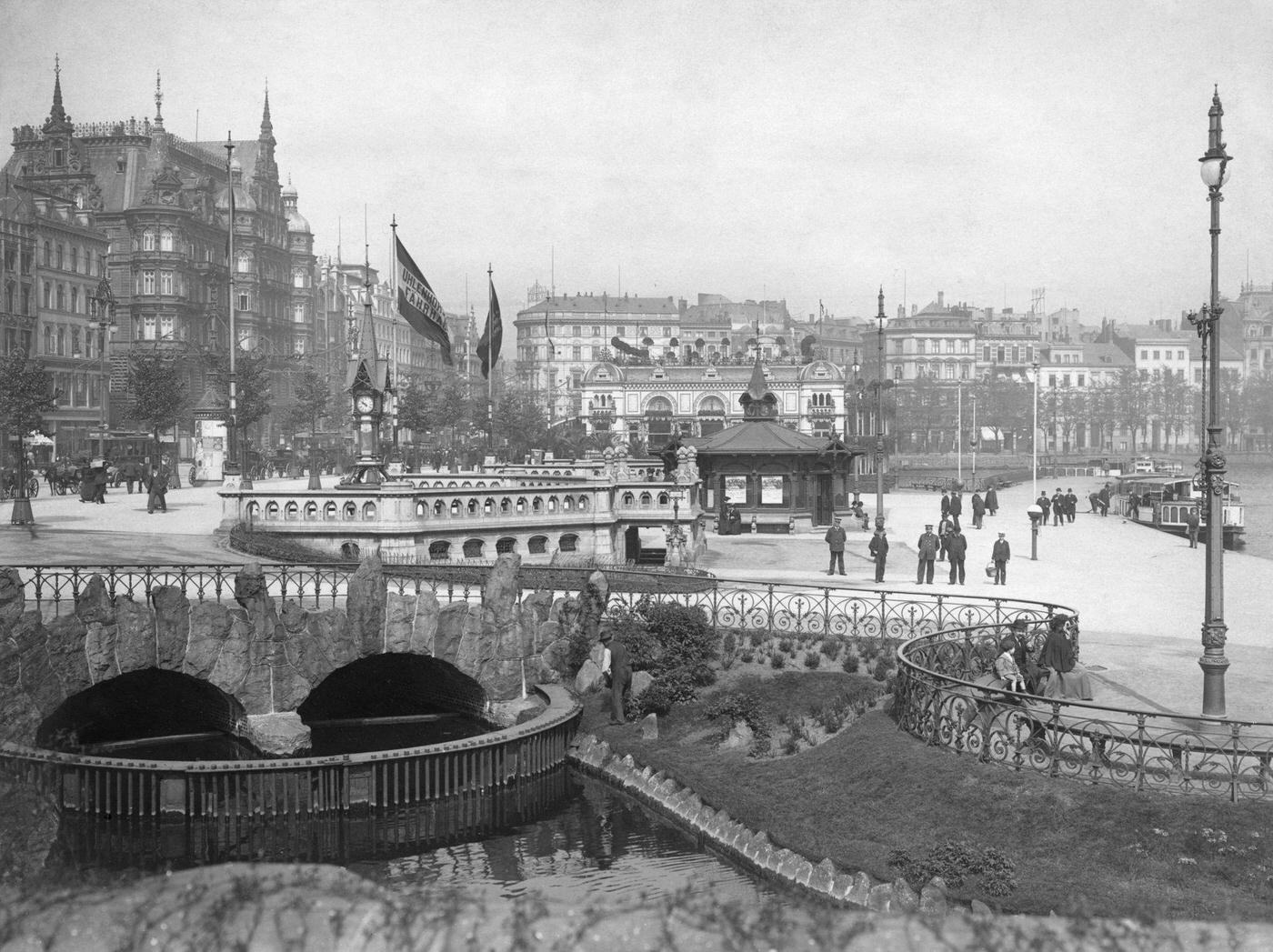
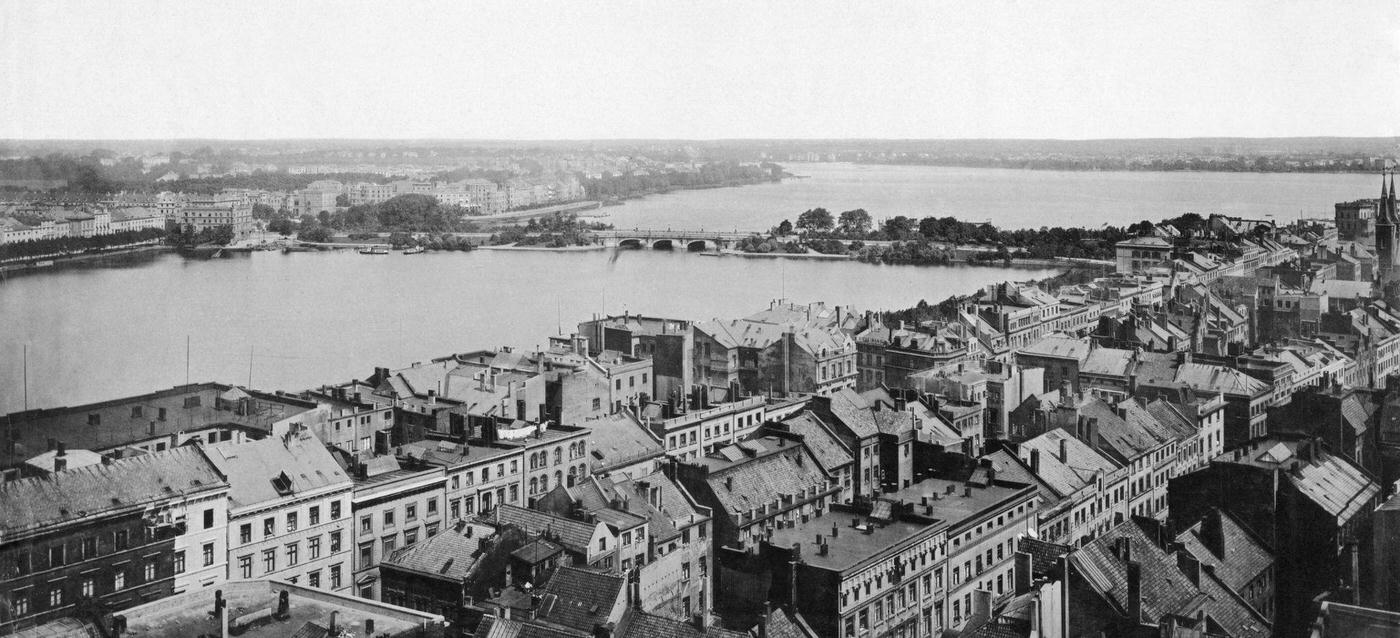
Hamburg also attracted wealthy international visitors. American financier and railroad executive George Jay Gould arrived with his family in 1912, one of many prominent foreigners drawn to the city for business or leisure. The port’s ferry terminals, promenades, and elegant waterfront made Hamburg a city of arrival — a gateway to continental Europe for those crossing the Atlantic. The Jungfernstieg promenade along the River Alster was one of the city’s most fashionable addresses, lined with cafés and overlooking a stretch of calm water in the heart of the city.
Kaiser Wilhelm II paid several visits to Hamburg during this period, underscoring the city’s national significance. In 1911, he appeared at the entrance to the new Hamburg Elbe Tunnel — a remarkable engineering achievement that ran beneath the river and connected the city to its southern docklands. That same year, Empress Auguste Viktoria arrived in Hamburg-Altona. The Kaiser also visited Carl Hagenbeck’s famous Tierpark in Stellingen, a zoo that was internationally recognized for its naturalistic animal enclosures.
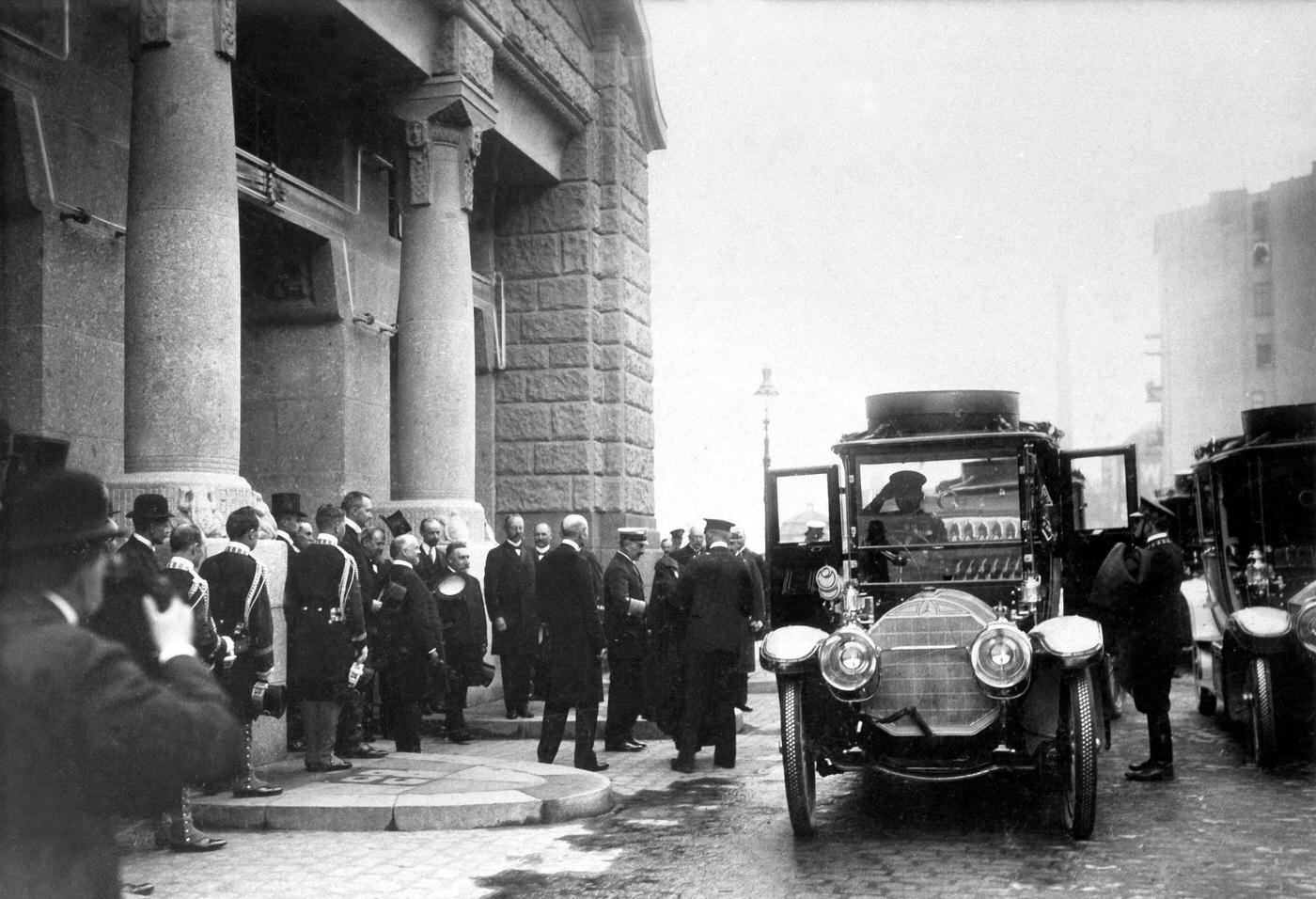
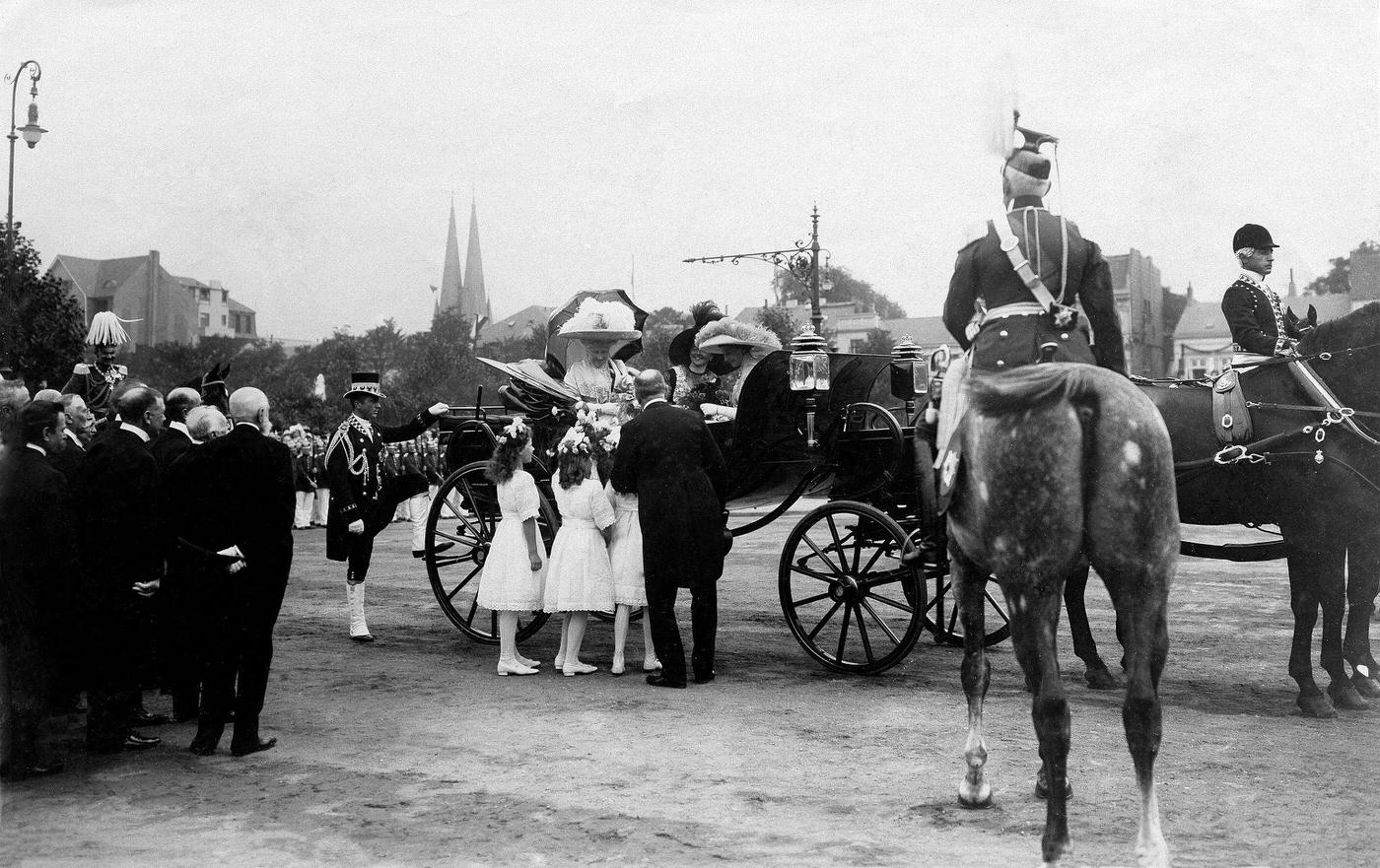
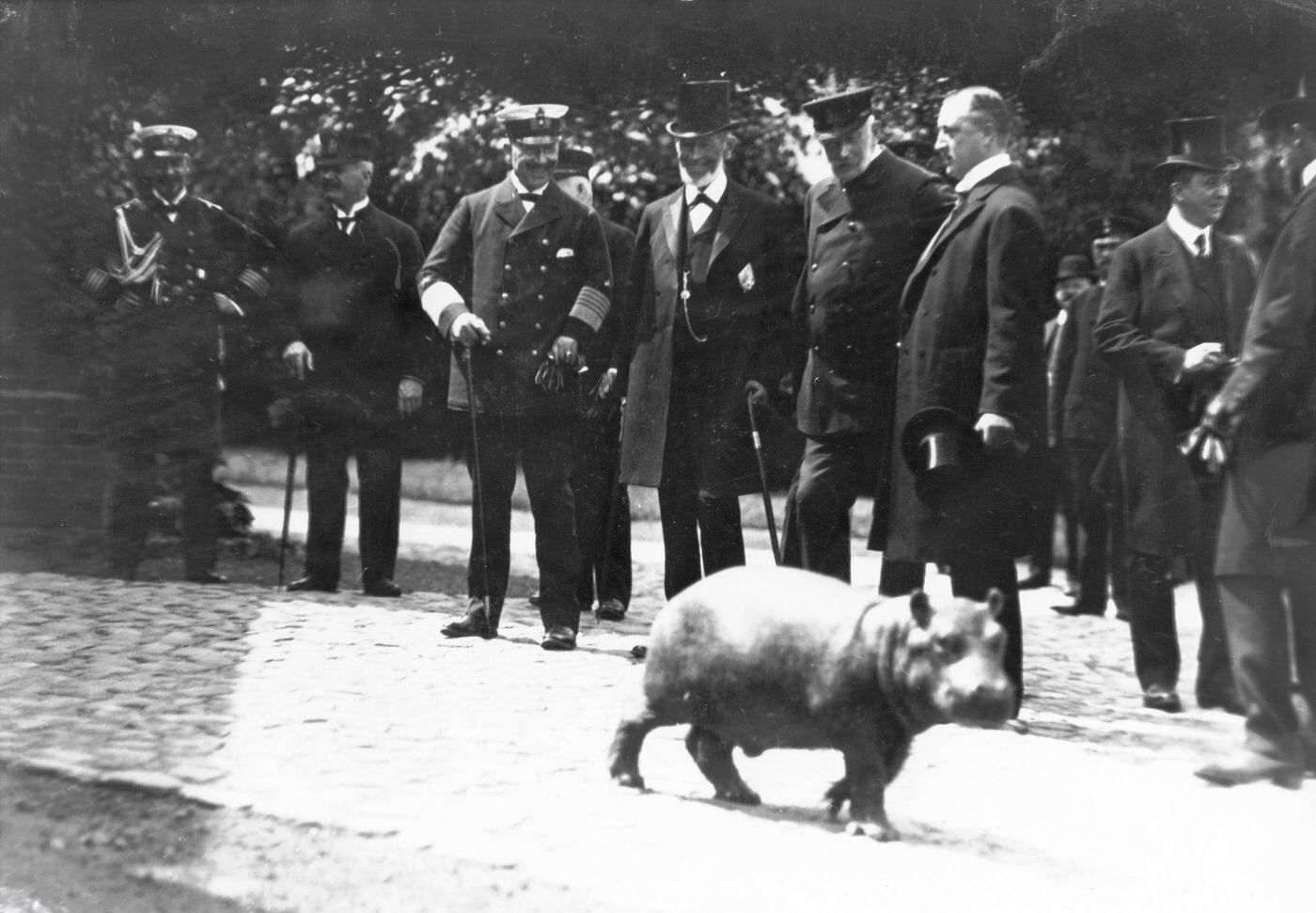
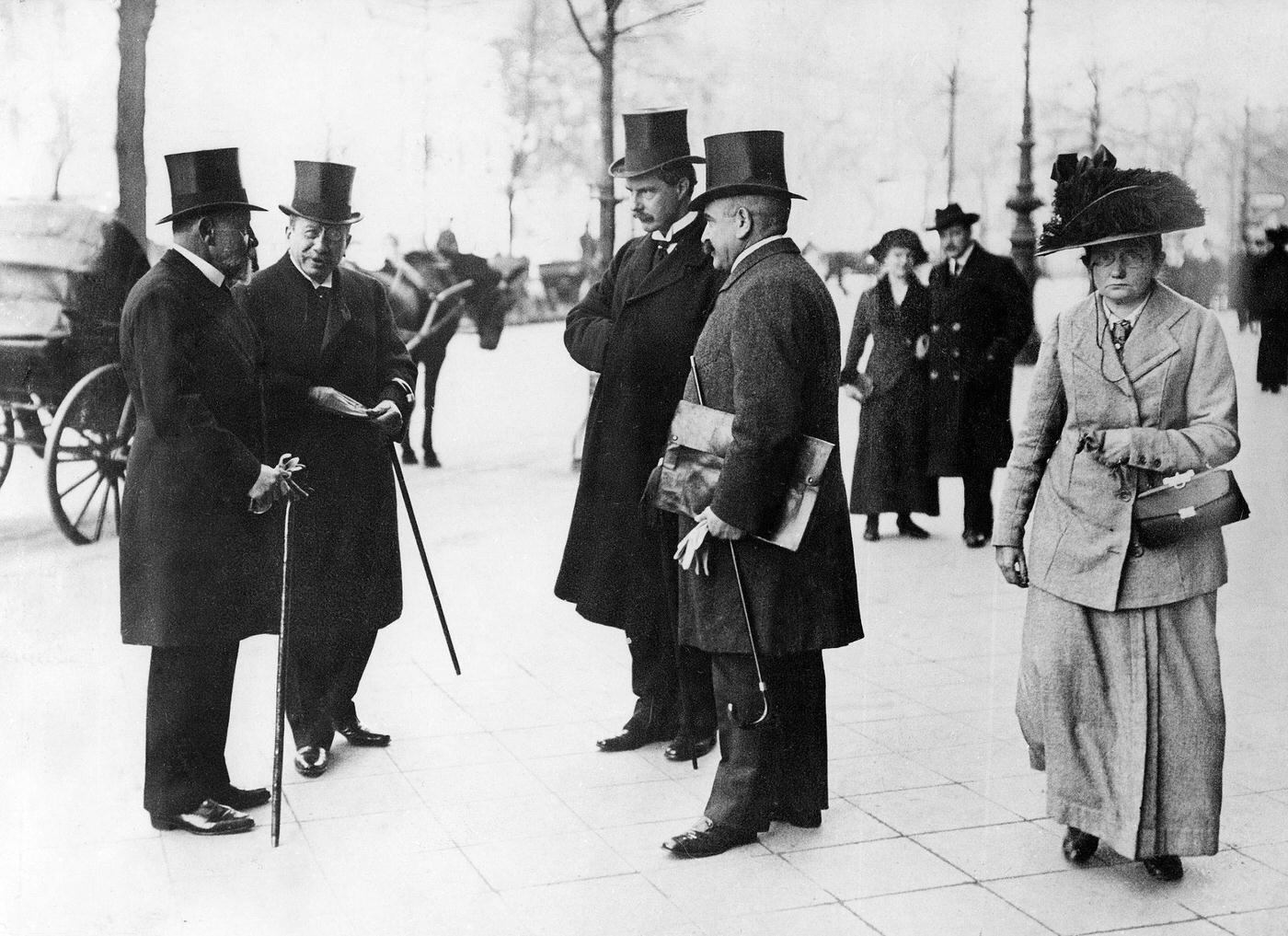
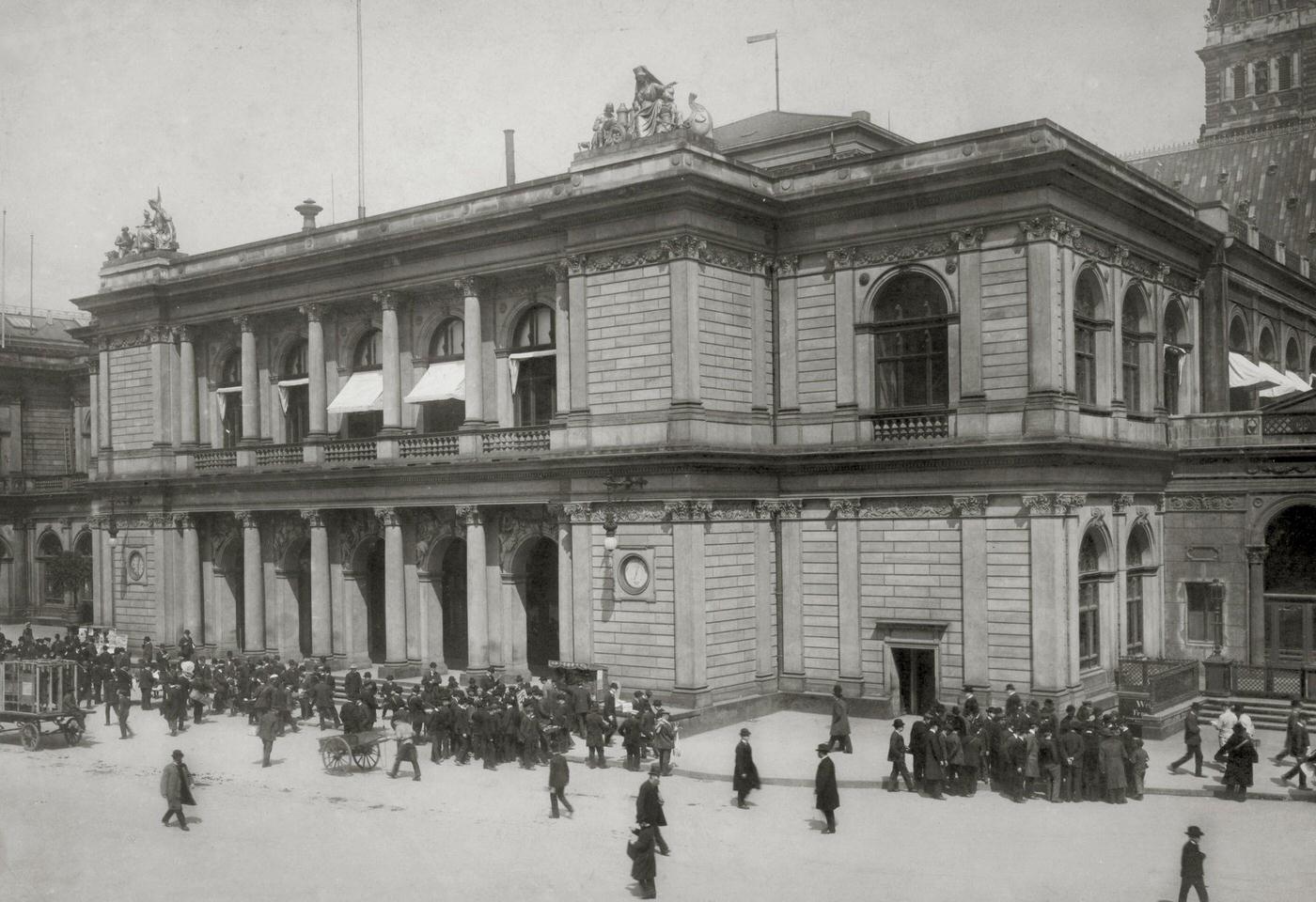
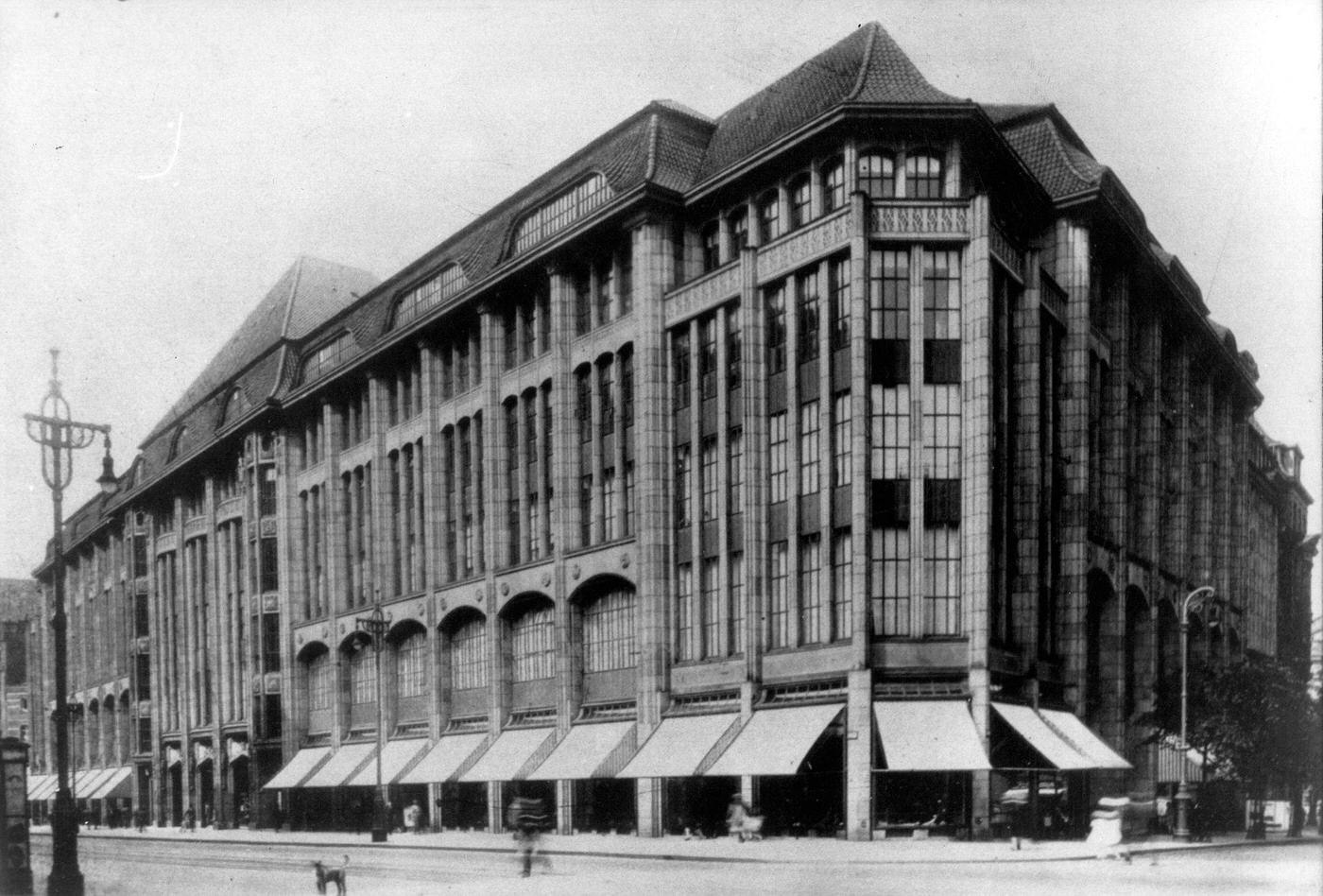
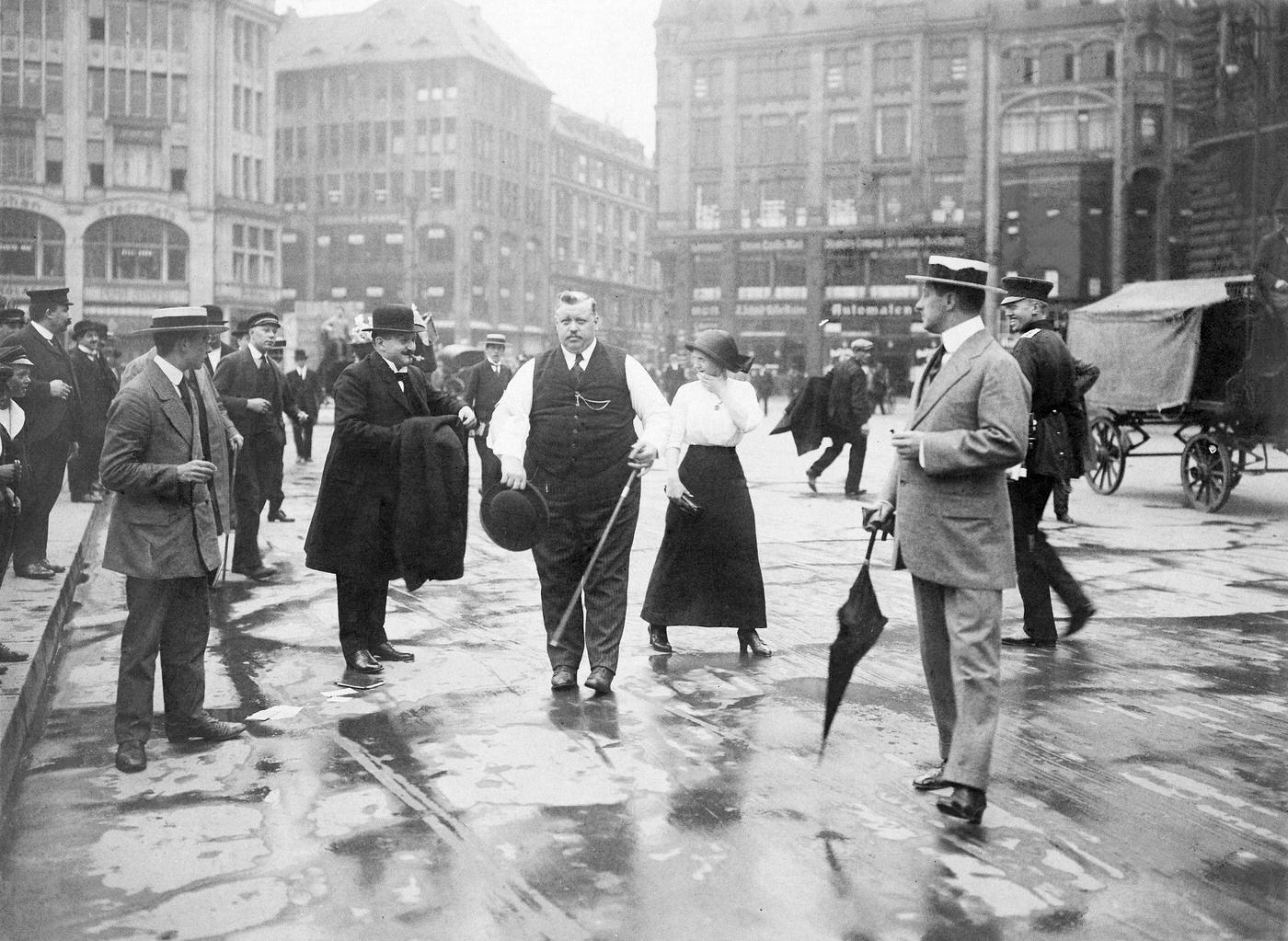
Beyond the docks and the halls of power, Hamburg had a rich street-level culture. Musicians performed outdoors, festivals drew crowds of children and families, and the Bourse — the city’s stock exchange — attracted brokers who gathered on the street outside to trade. The city’s markets and commercial streets were lively spaces. The Karstadt department store on Mönckebergstraße, photographed around 1912, represented the newer face of Hamburg’s retail economy — modern, large-scale, and aimed at a growing urban consumer class.
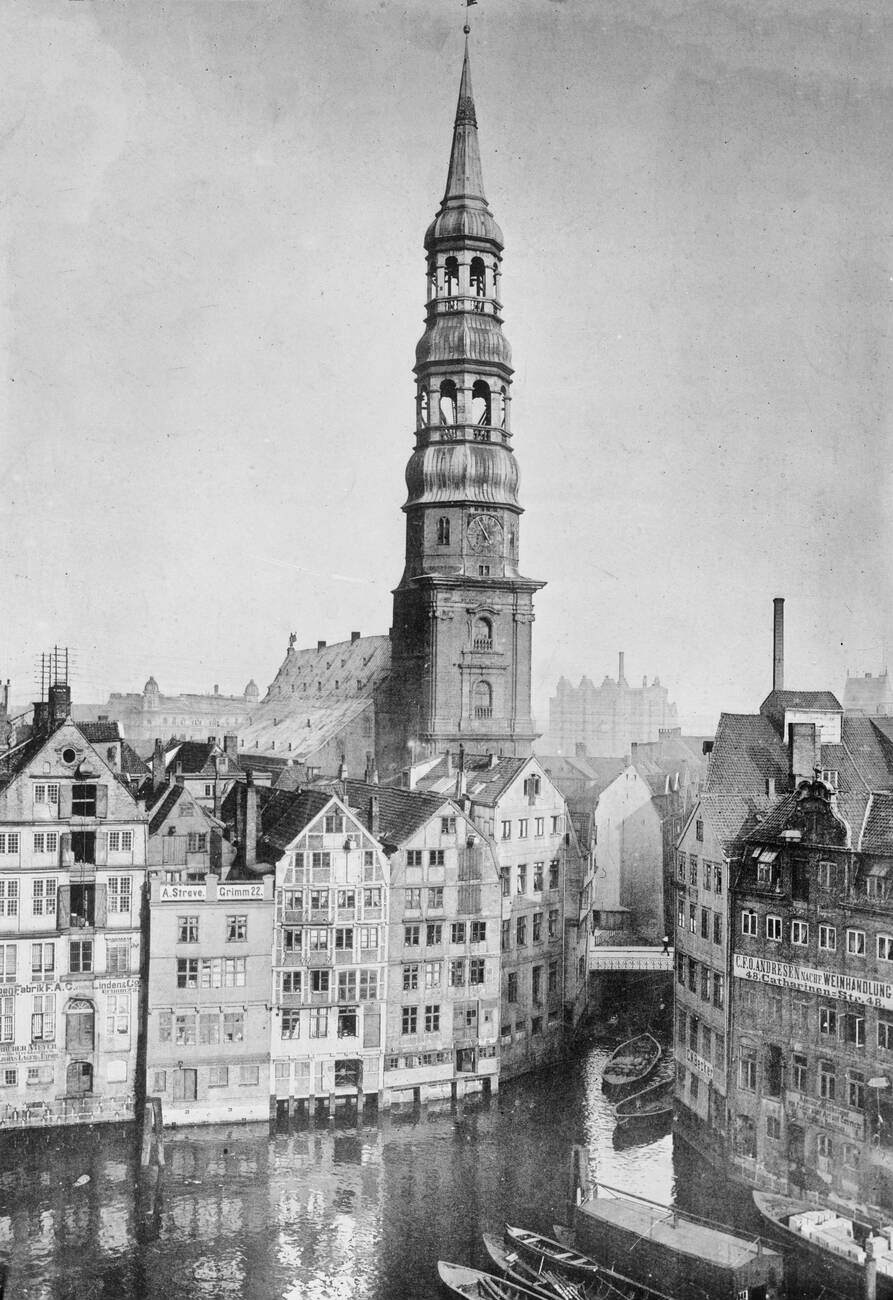
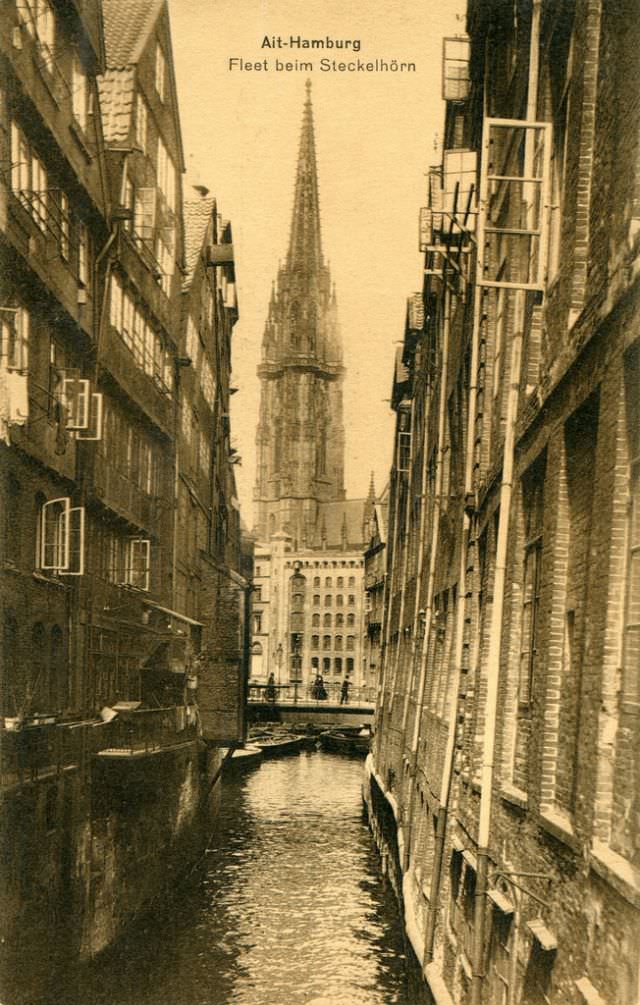
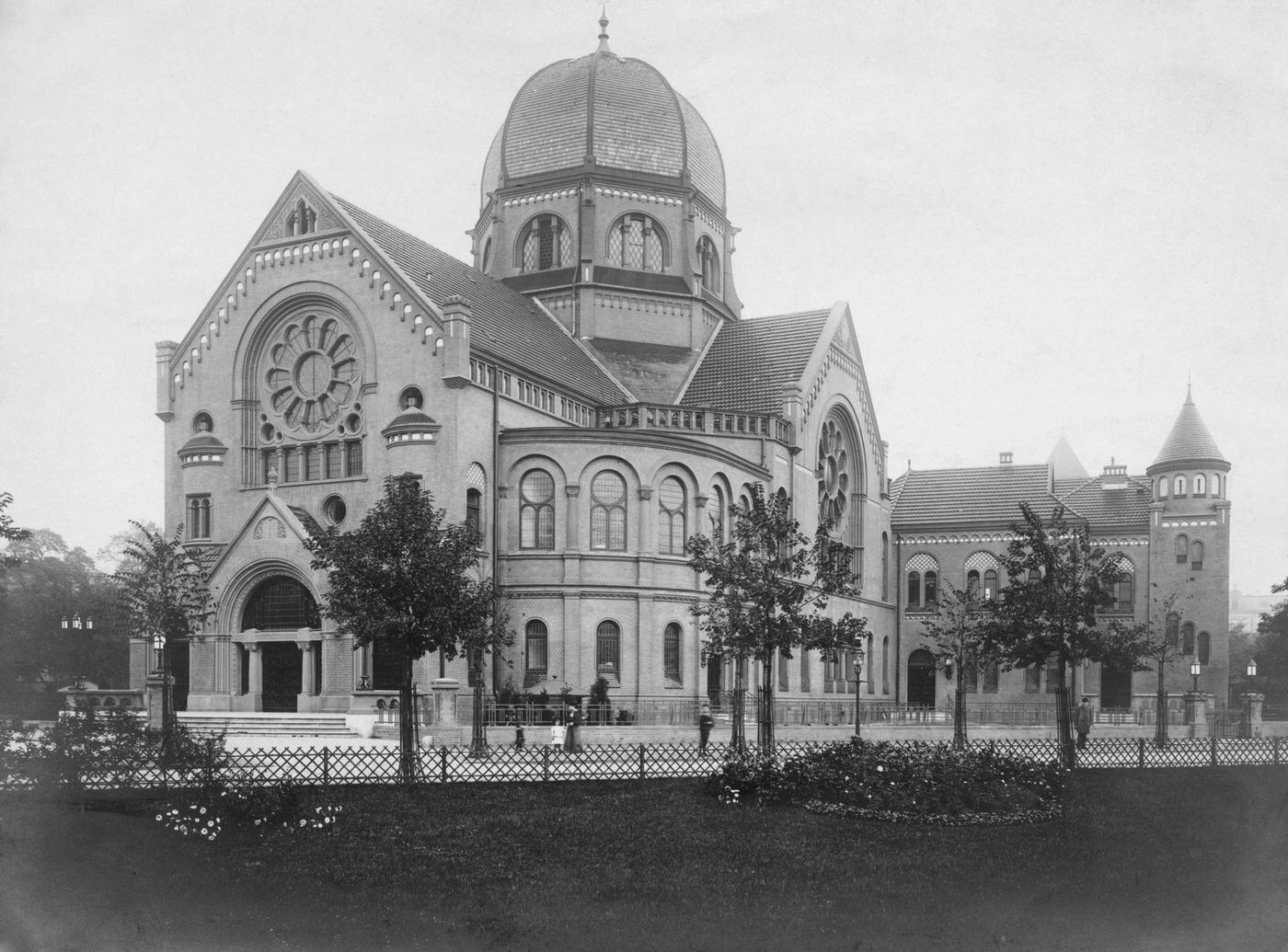
The city’s religious and cultural architecture was equally prominent. St. Catherine’s Church and the Church of St. Nikolai were fixtures of the Hamburg skyline. The New Central Synagogue at Bornplatz, photographed in 1910, was a grand structure that reflected the size and prosperity of Hamburg’s Jewish community, which played a significant role in the city’s commerce and intellectual life — including figures like Albert Ballin himself.
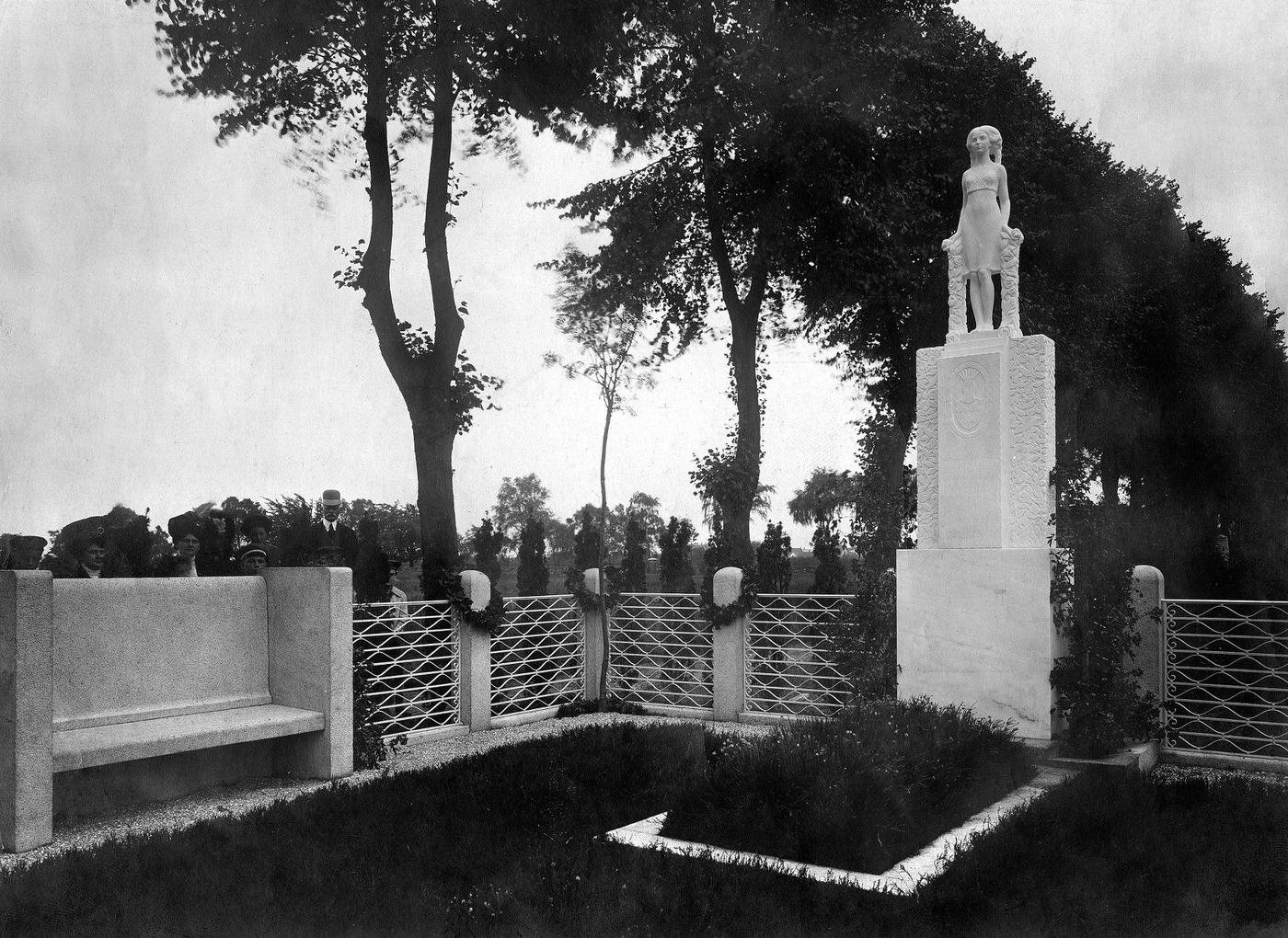
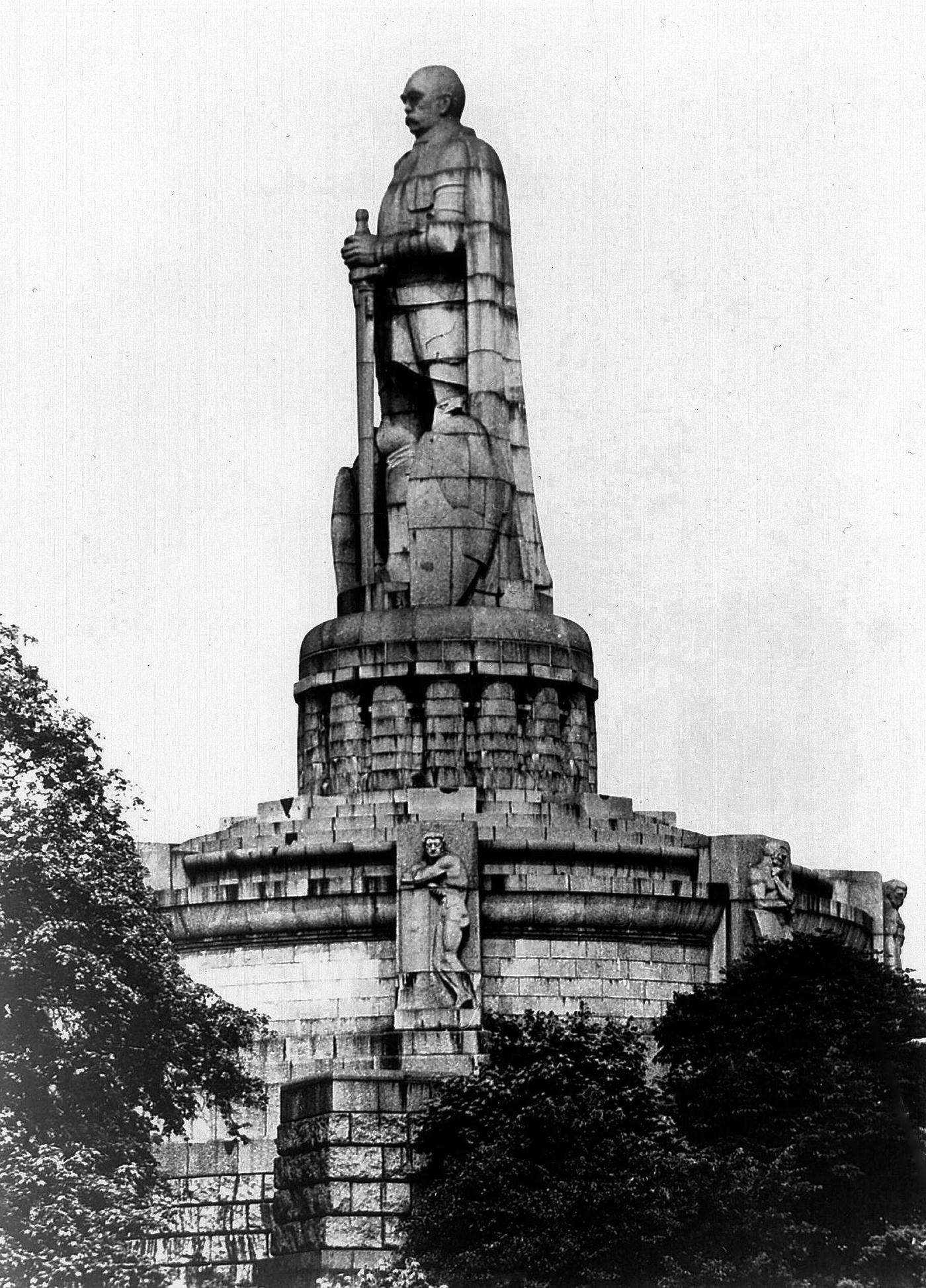
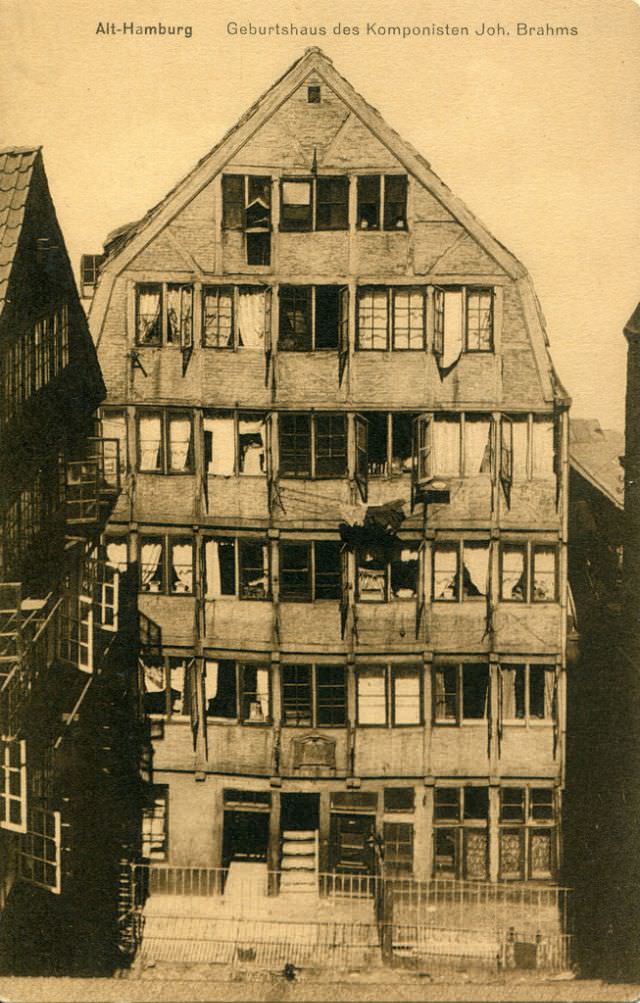
Hamburg honored its cultural figures with monuments and memorials scattered throughout the city. The funerary monument to poet Detlev von Liliencron stood in Hamburg-Rahlstedt. A statue of Otto von Bismarck — the Iron Chancellor who had unified Germany — was erected at Millerntor. And in one of the city’s older neighborhoods, the birthplace of composer Johannes Brahms was preserved as a point of civic pride, a reminder that Hamburg had produced one of the 19th century’s greatest musical minds.
When World War I broke out in 1914, Hamburg’s port was immediately transformed. Shipyards that had been building ocean liners switched to producing military vessels and equipment. Civilian food supplies tightened as the British naval blockade cut off imports. The city’s population — already strained by rapid growth — faced mounting shortages. Refugees and wounded soldiers arrived in increasing numbers, putting pressure on housing and public services that had never been designed to handle wartime demands.
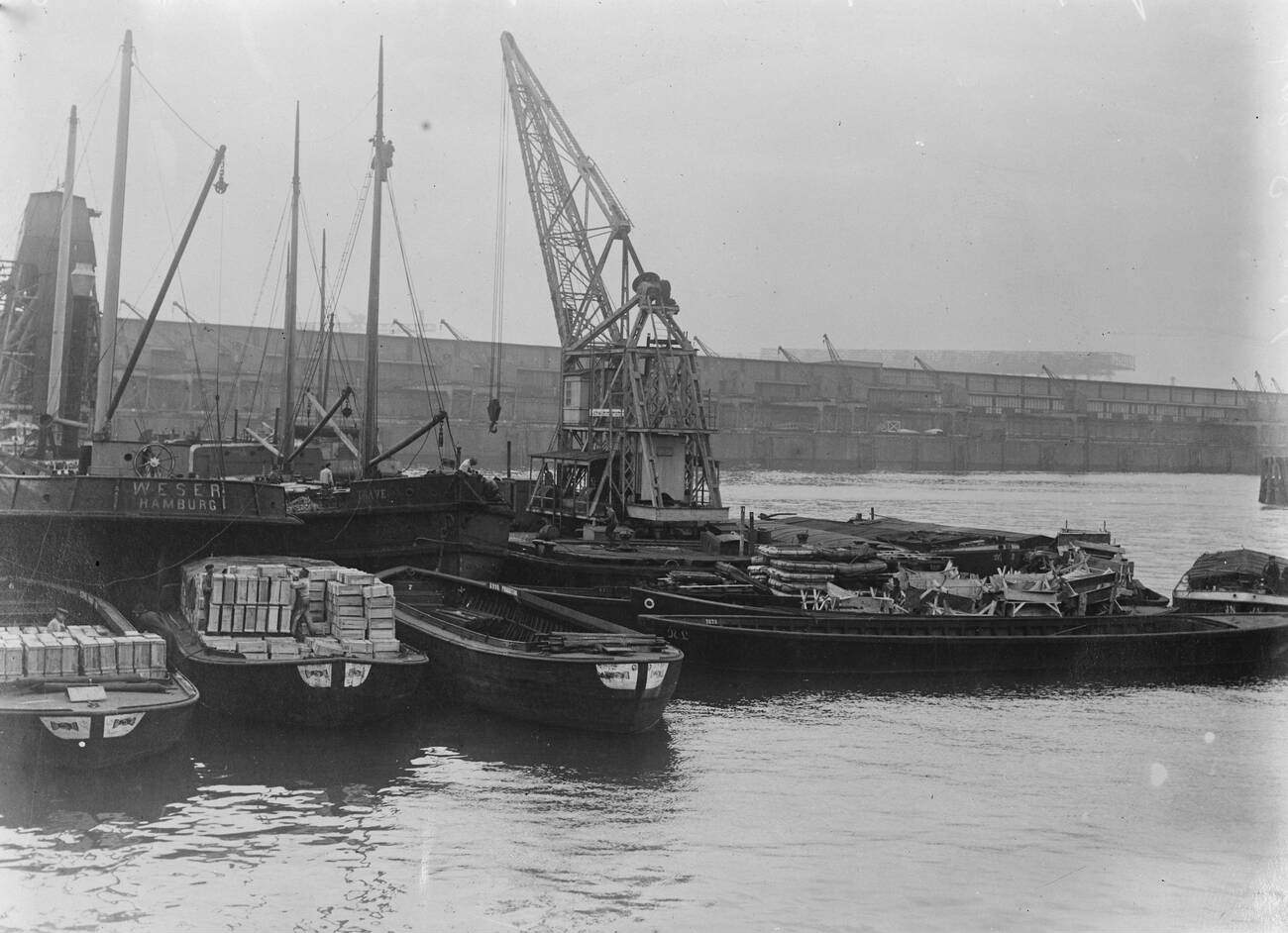
By the end of the decade, the costs of the war were visible in concrete terms. In December 1919, cranes at the Hamburg port were photographed being handed over to Allied forces as compensation following the scuttling of the German fleet at Scapa Flow. The handover was a public symbol of defeat — industrial equipment stripped from a city that had built its identity on maritime trade, now transferred to former enemies as part of the terms imposed by the Treaty of Versailles.
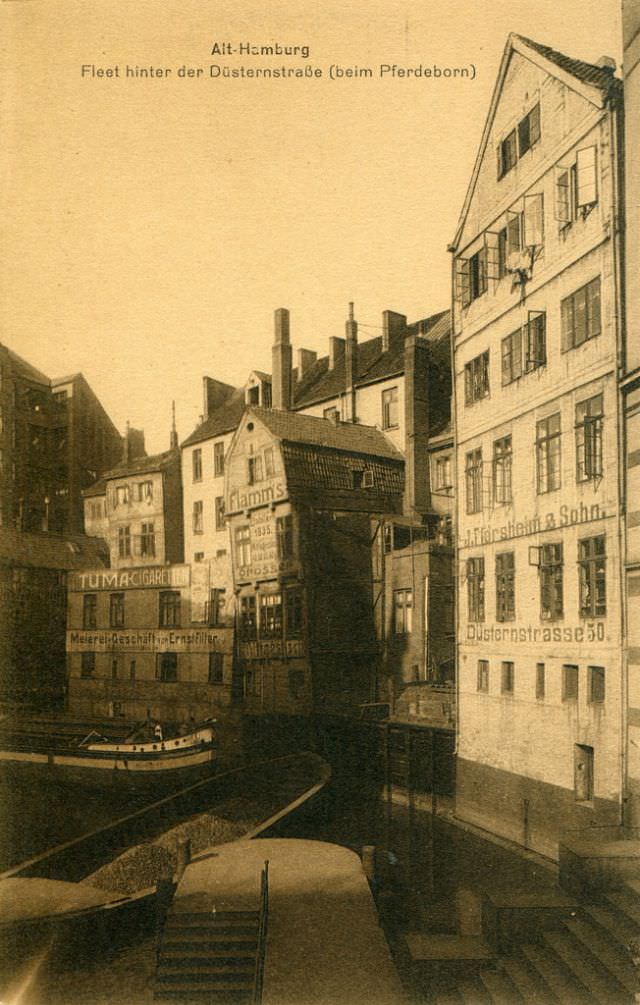
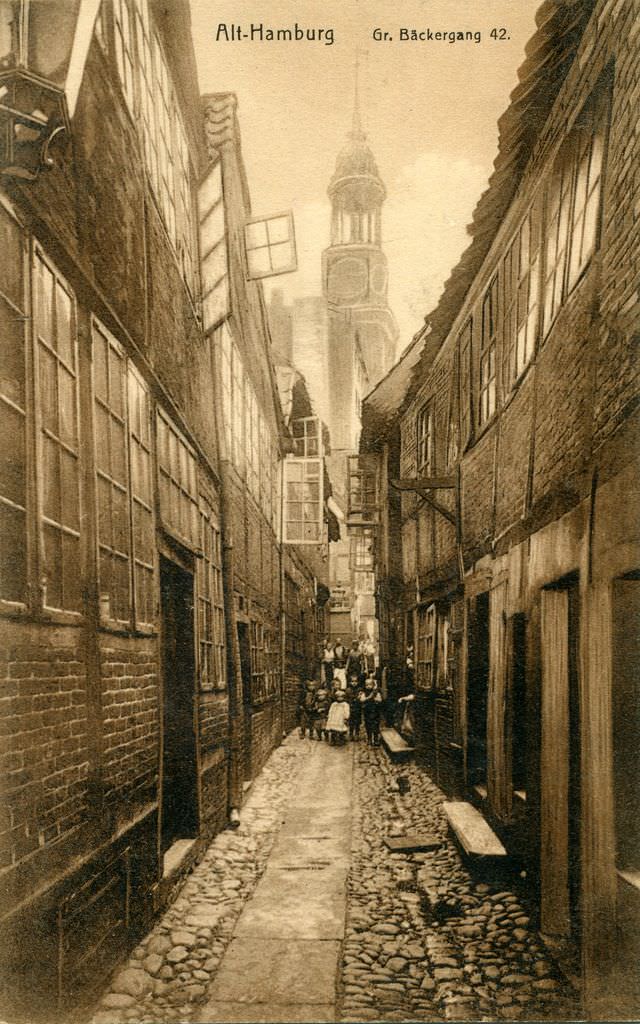
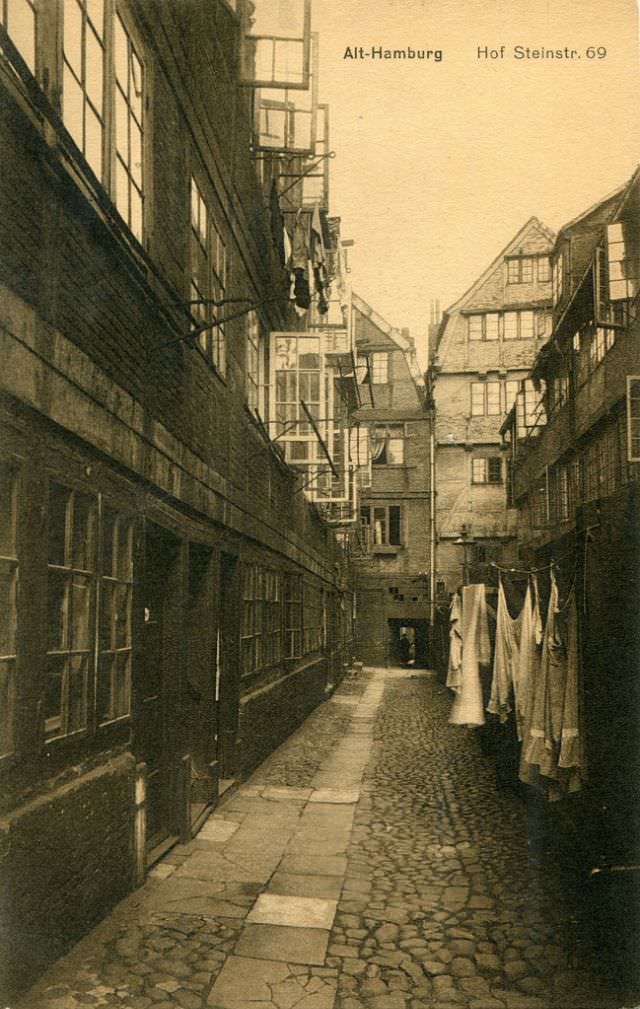
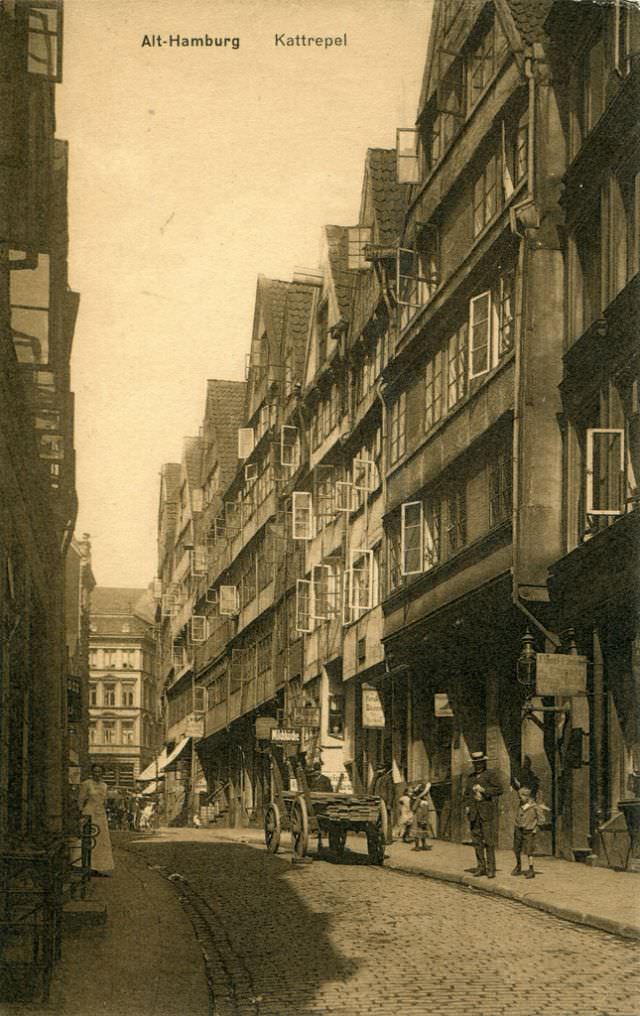
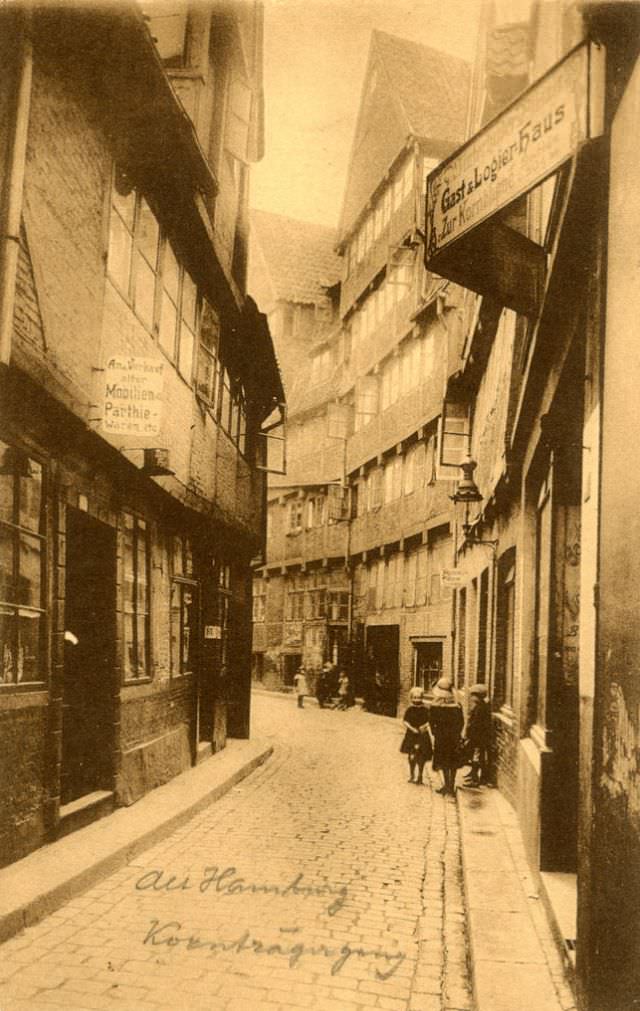
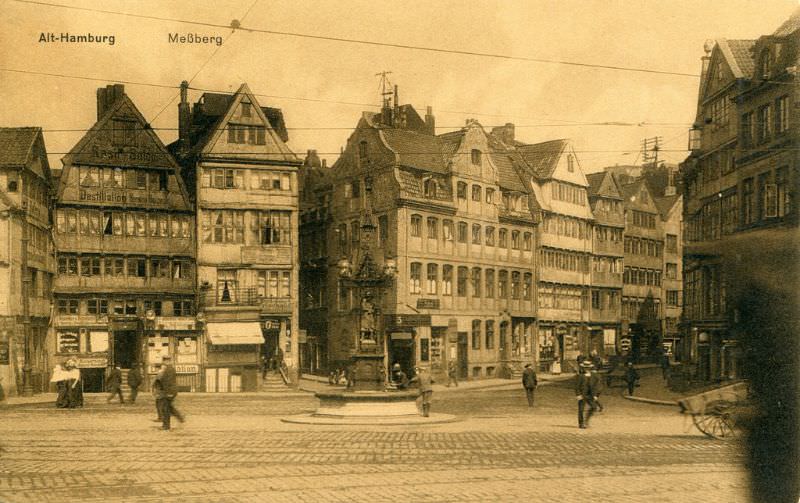
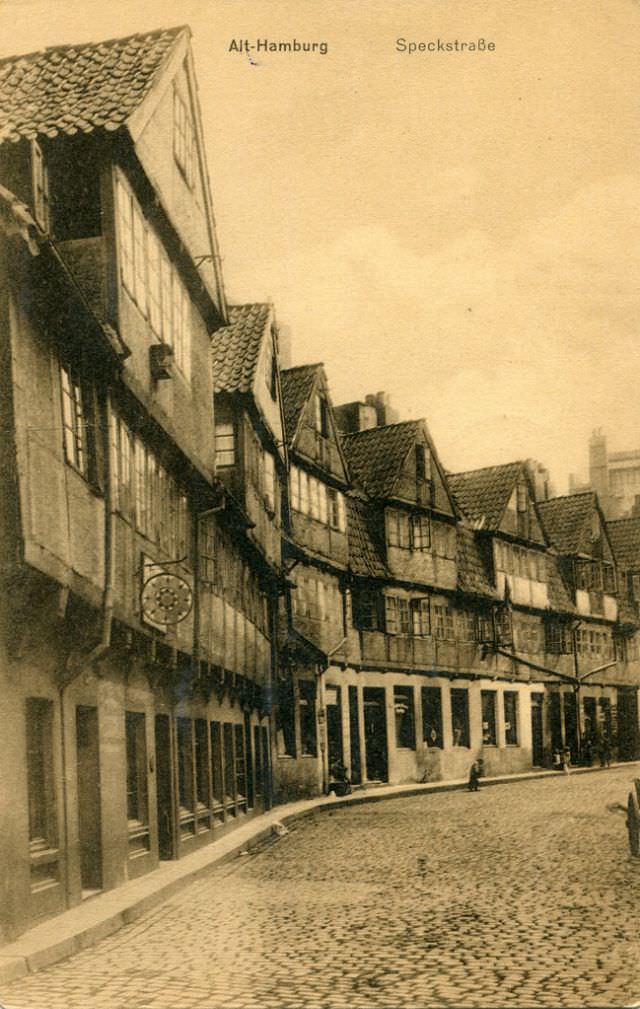
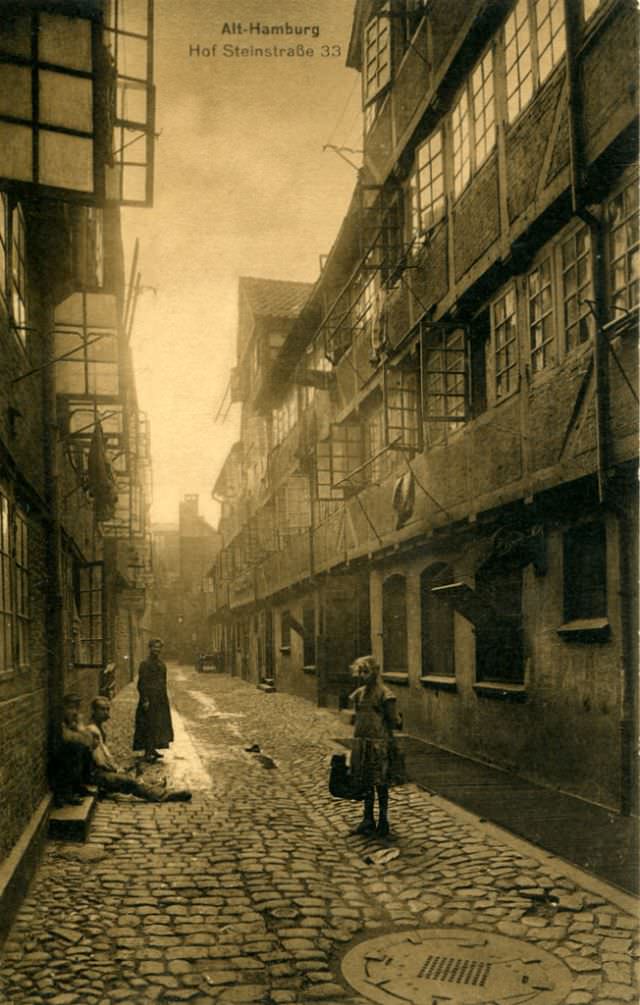
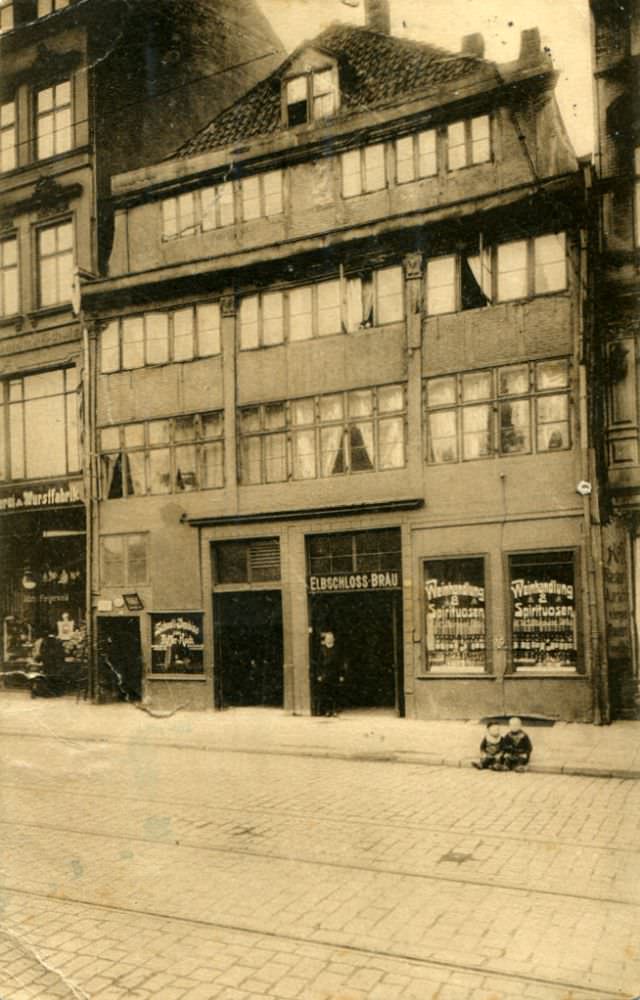
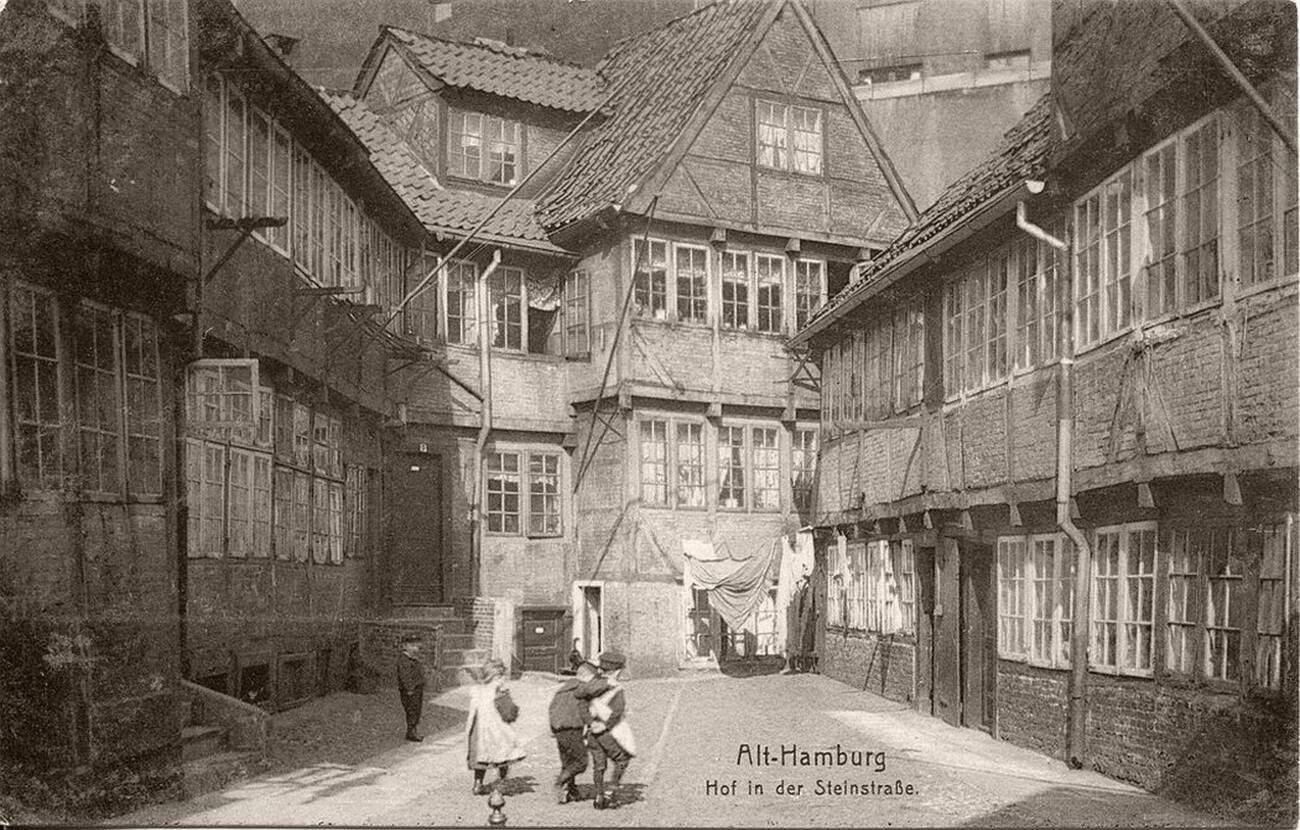
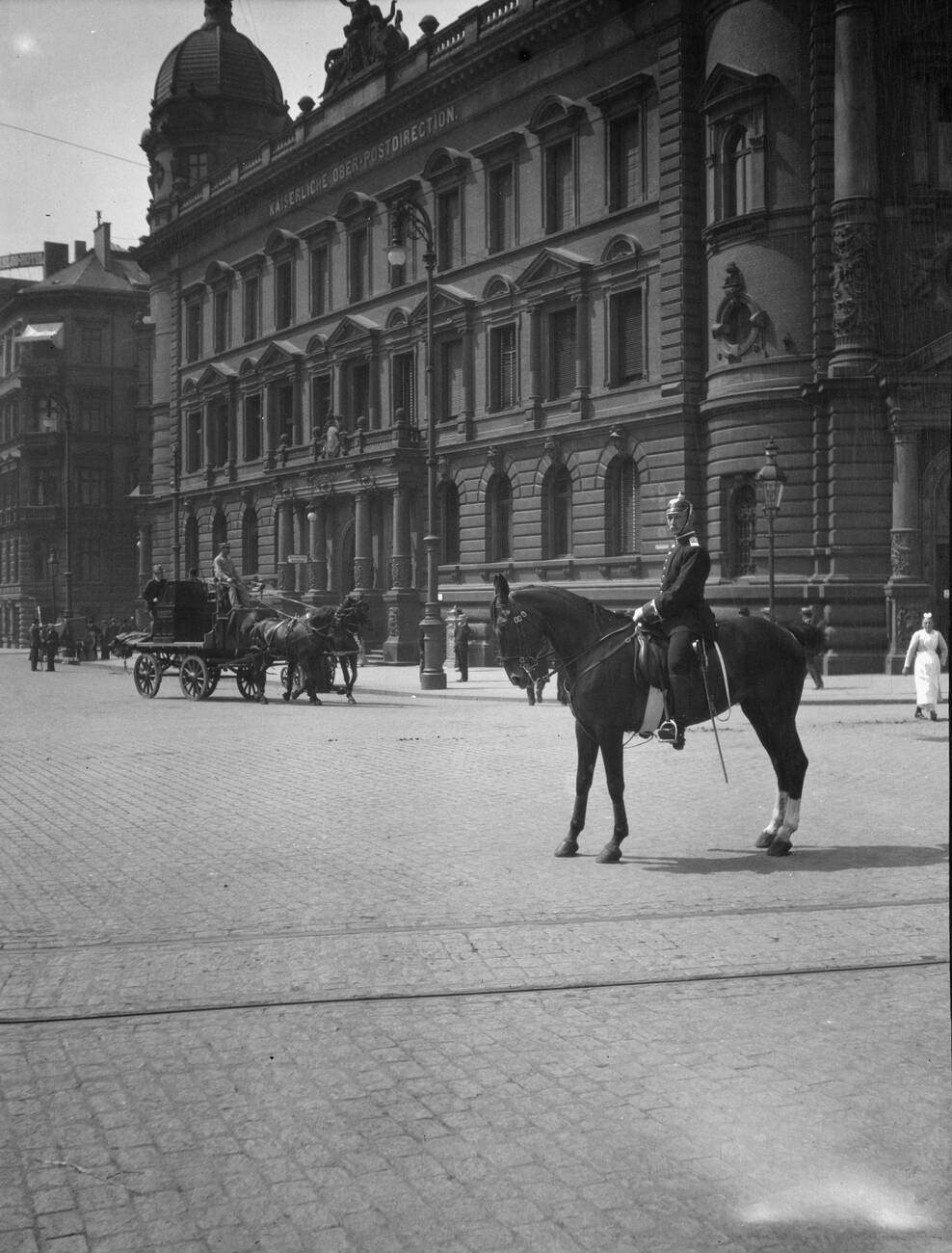
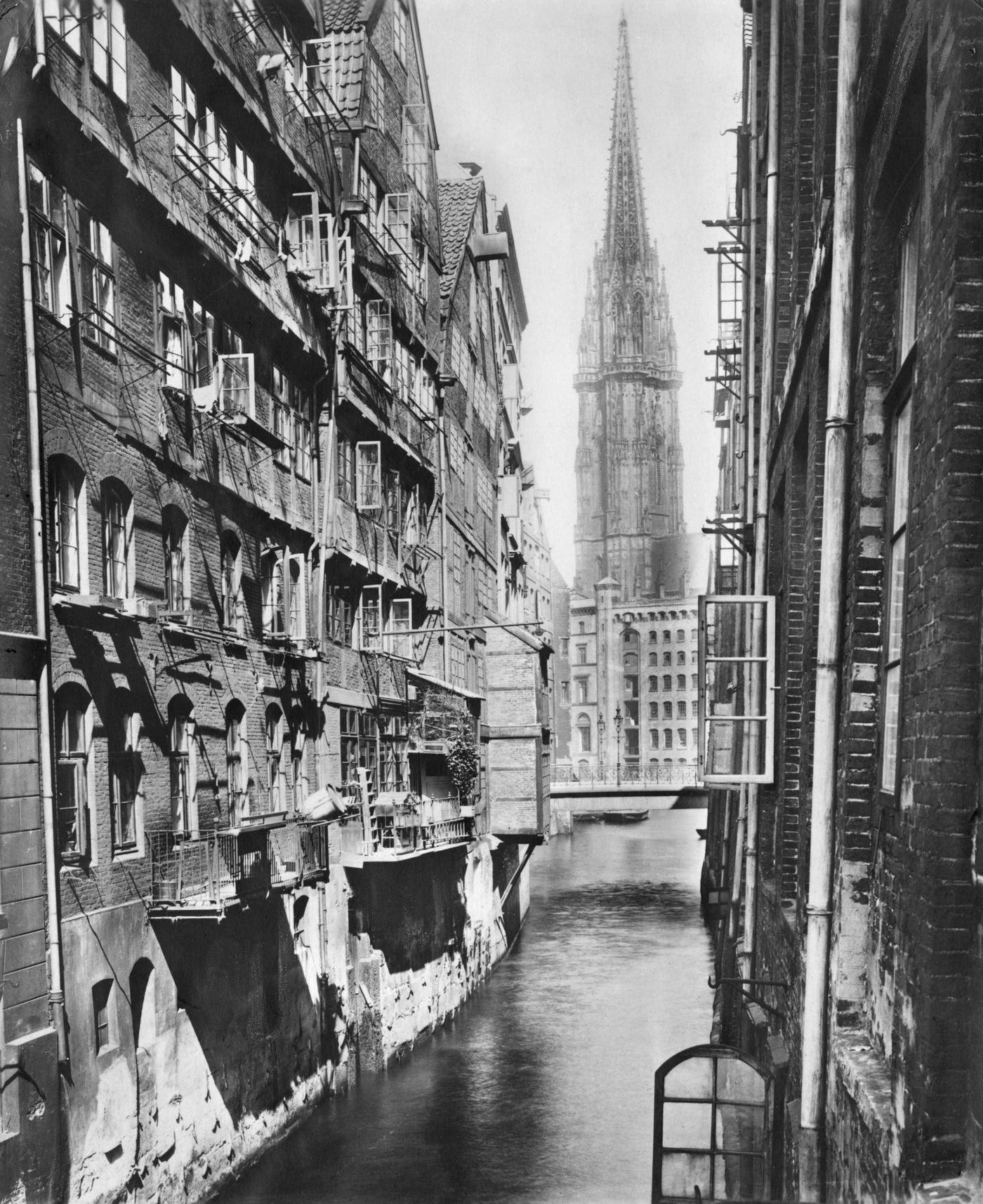
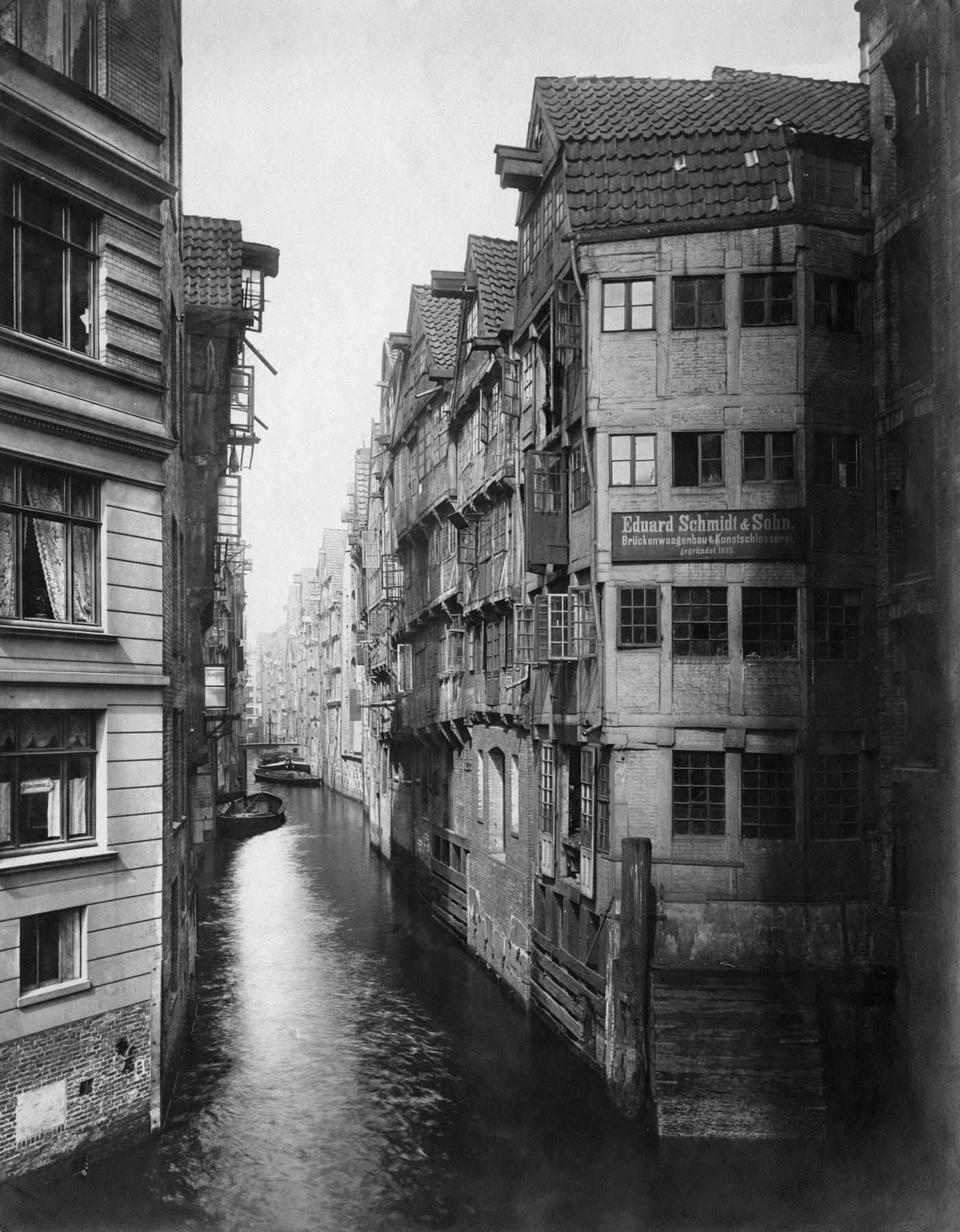





It was typical for its time, today’s Steinstraße is also typical for Hamburg’s city today. Office and commercial blocks, dead concrete.
Funny, I still see a lot of brick with residential buildings and restaurants on Steinstrasse…
Not sure what you are talking about. There is the giant, pretty tax office on one side and the other has a few brick buildings. I don’t see commerical or office blocks there. Just some stores and cafés.
At the end of the street, there are more old brick buildings and a church.
It then merges into another street with… more brick buildings and another church.
very cool pictures! I wonder whether Steinstrasse is represented so often because it is particularly typical or because it is the least typical. After all, it’s supposed to be Hamburg’s oldest street and perhaps the buildings there are correspondingly outdated?
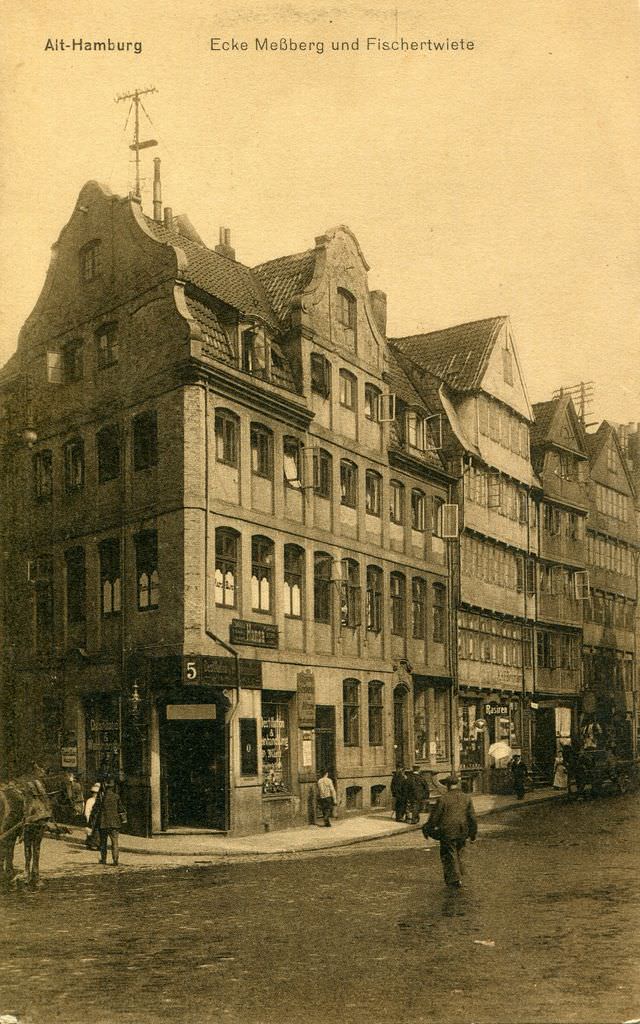
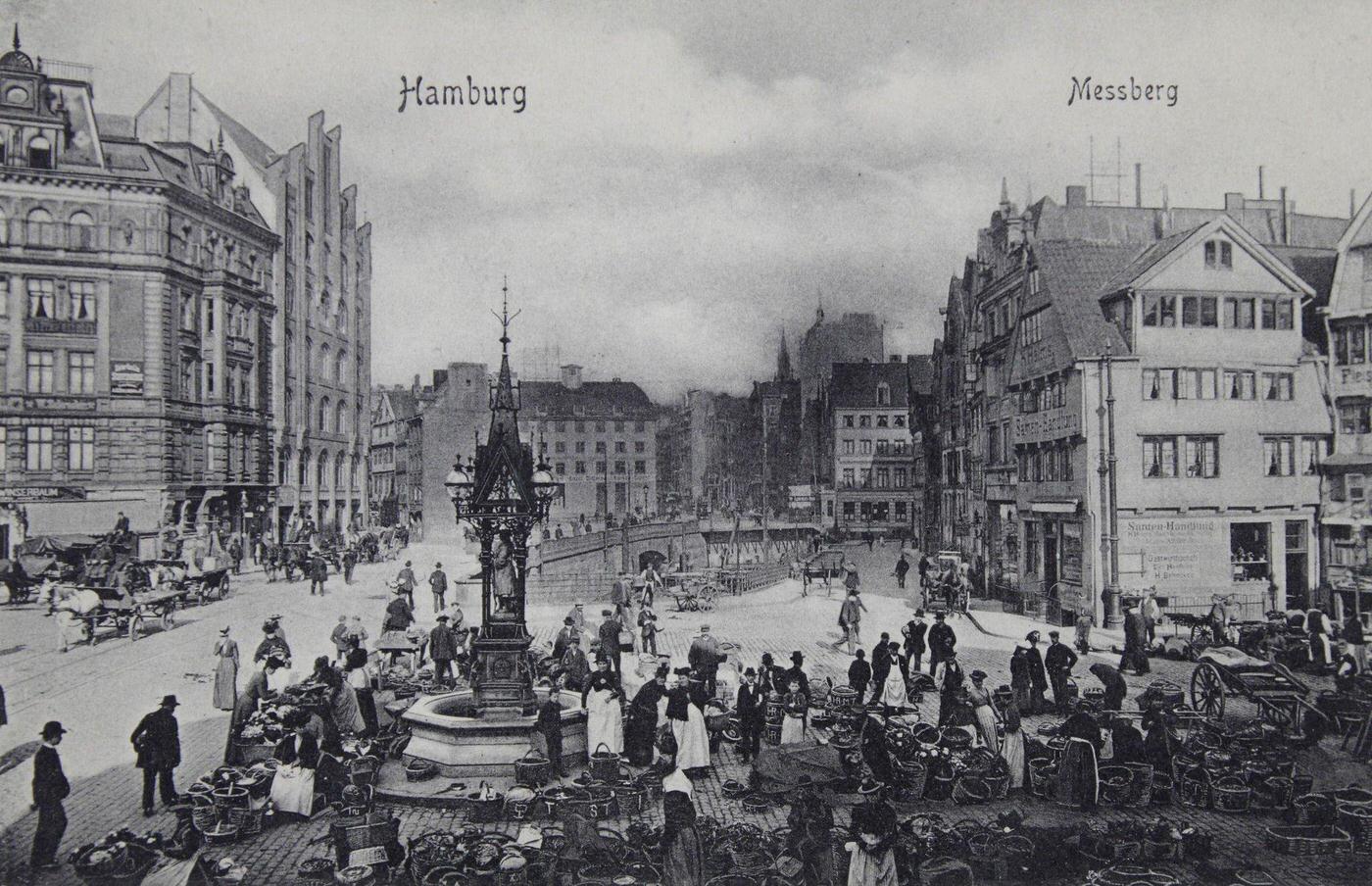
What is so special about the picture of Meßberg?
Well, wouldn’t we then have to adapt every street and every district that still has an archaic spelling? For example, Rothenburgsort from your flair – that’s doubly wrong because historically it should actually have been called Rodenburgsort.
Yes, why not? I don’t care =D
Either according to historical spelling:
Meßberg, Rodenburgsort, Billwärder, Barmbeck
Or according to modern spelling:
Messberg, Rotenburgsort, Billwerder, Barmbek
I find this mishmash annoying and in Messberg’s case this confusion about a short e in front of nem ß is unnecessary
But in doing so you’re also opening a barrel that you can’t close so quickly – why can the Grasbrook still be called Grasbrook and not Grasbruch? Do we need to remove the stretching D (or the T, to accommodate the pronunciation?) from districts like Rahlstedt and Billstedt? Can Borgfelde continue to be called Borgfelde or will it become Burgfeld? Is Altona already enough of a proper name? And and and…
Is not so bad. If in doubt, you can vote on it or something
Ich bin wegen beruflicher Gründe ganz oft mit solchen alten Fotos beschäftigt und es fasziniert mich jedes Mal zu sehen wie anders die Innenstadt damals aussah. Vor 140 Jahren (also vor der Choleraepiemie) war Hamburg praktisch eine völlig andere Stadt. Danke fürs Teilen.
Super interessante Fotos, danke fürs Posten 🙂
Ach, diese alten Kutschen, sehe ich hier hinter dem Opel Rekord 1900 (Lenkradschaltung, yeah) einen Kapitän?
Viele Ford Taunus, sogar 12M, Papa selig erstes Auto.