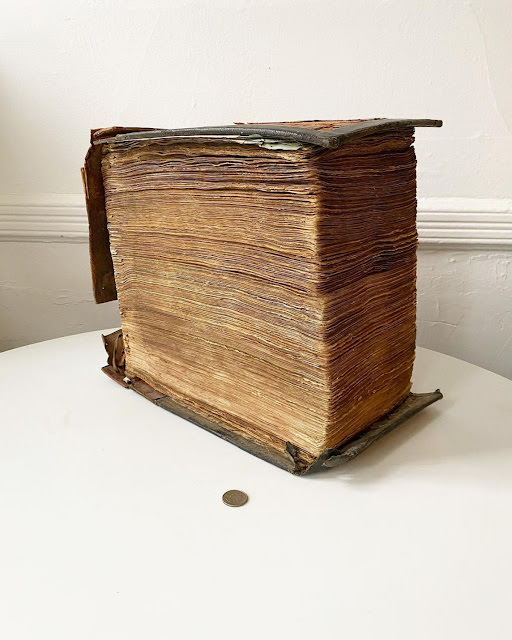
Fredonia, Kansas is a small town that most people have never heard of. But inside a barbershop called the “Bungalow,” something quietly remarkable was happening starting in 1928. The shop’s owner, a barber named Persinger, was building a scrapbook. Not a thin, personal keepsake — a 35-pound, decade-long record of American life during one of the country’s hardest stretches of history.
The scrapbook started simply enough. Persinger wanted something to hold his customers’ attention between haircuts and shaves. He settled on Roy Crane’s comic strip “Wash Tubbs,” which ran in newspapers across the country and was known for its punchy adventure stories and sharp humor. Persinger clipped the strips and pasted them into an album, two strips per page. Customers liked it. They read it. And then they started writing in it.
“Wash Tubbs” followed the escapades of a scrappy, adventurous young man named Washington Tubbs II. The strip launched in 1924 and became one of the more widely read comics of its day. Crane had a gift for blending action with comedy, and the strip’s tone matched the mood Persinger was going for — light enough to make people laugh, engaging enough to keep them coming back. For a barbershop crowd dealing with unemployment, drought, and economic uncertainty, that kind of reading material mattered.
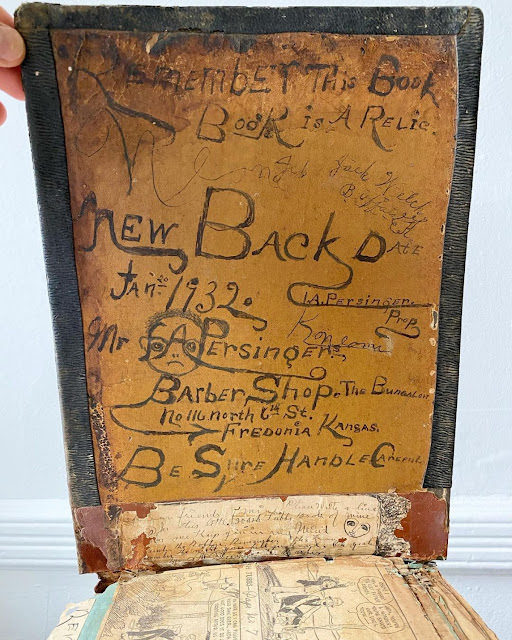
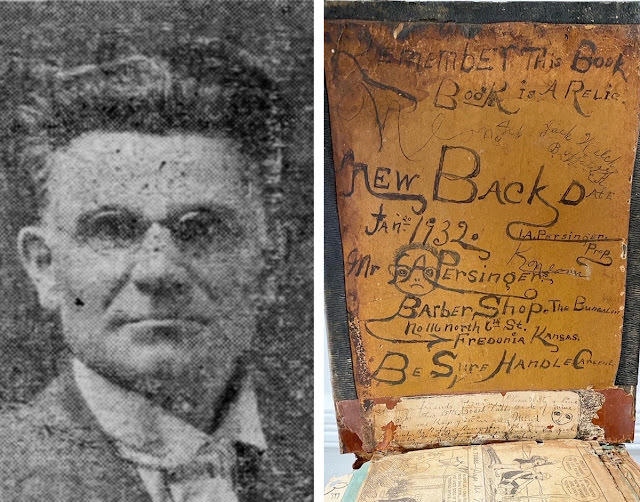
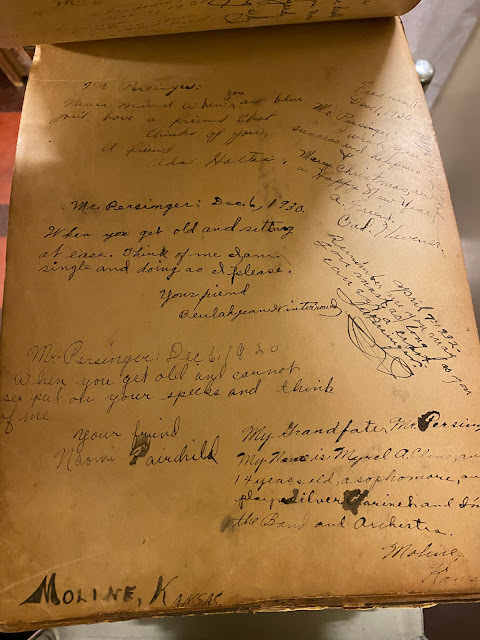
Persinger, photographed in 1918, ran the Bungalow with an open-door attitude toward the scrapbook. He invited customers to handle it, read it, and write in it — provided they treated it carefully. The scrapbook was not locked away or kept behind glass. It sat in the shop, accessible, worn from use, and growing heavier with each passing year. That openness is exactly what made it so valuable as a historical document. The voices that filled its margins were not Persinger’s alone.
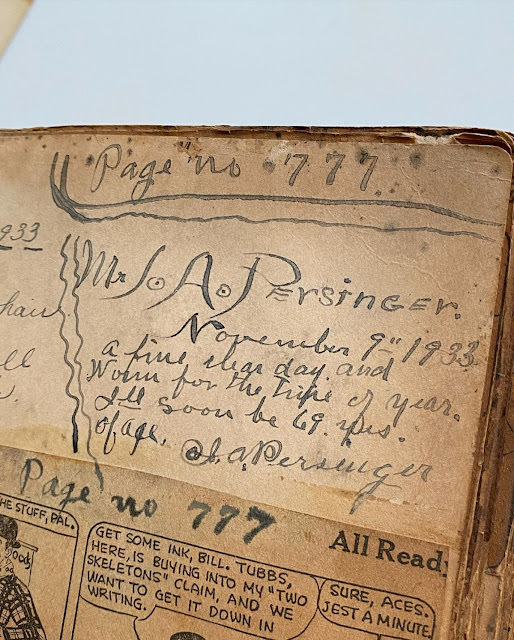
By the early 1930s, the scrapbook had outgrown its original purpose. Persinger patched torn pages, reformatted sections, and kept adding to it. The margins around the comic strips filled with handwritten notes — comments on the Depression’s length, observations about daily life, and small personal stories from people who had little else to offer but their words. It functioned the way a guest book does in a bar or a museum, except the entries here were shaped by real hardship. People wrote what they were living through.
Persinger himself called the scrapbook a “relic.” He used that word deliberately. He knew what he had — a fragile, irreplaceable thing — and he was careful about its preservation even as he kept it in active use. His own notes in the book carried a tone that mixed dry wit with clear-eyed honesty. One of his recorded observations cut straight to the point: “Only silliness seems to keep things going.” That line says a lot about how people in Fredonia, and across the country, were coping. Humor was not a luxury. It was a survival tool.
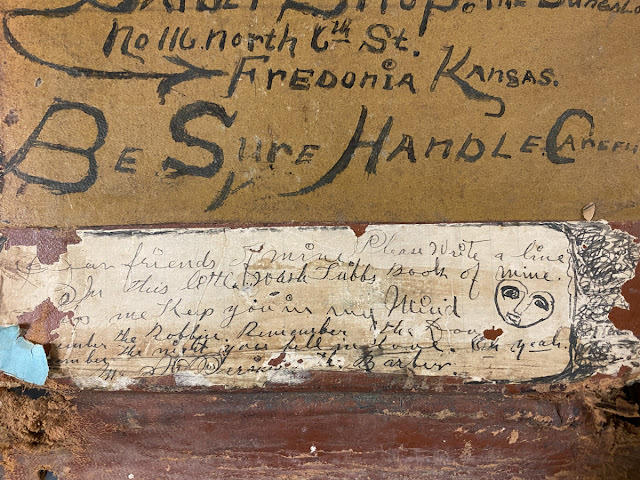
The scrapbook continued growing until 1939 — eleven years of clippings, commentary, and firsthand testimony. What began as a stack of newspaper comics became something closer to a community journal. The Depression reshaped nearly every aspect of American life, and the Bungalow’s scrapbook caught those changes in real time, page by page, in the handwriting of people who had no idea history was watching. Farmers, tradespeople, travelers passing through — anyone who sat in Persinger’s chair had the chance to leave something behind. Many did. Their entries, layered alongside Wash Tubbs’ fictional adventures, turned the scrapbook into a side-by-side record of the imagined and the real, the comedic and the desperate, the trivial and the deeply human.