
Willy Rizzo picked up a camera at the age of twelve and never really put it down. Born in Italy, he built a career that took him to the center of 20th-century celebrity culture, photographing some of the most recognized faces in film, fashion, and music. By the 1960s, he was operating out of his own studio in Paris, where his lens caught everyone from Marilyn Monroe to Milla Jovovich. But some of the most striking work he produced during that decade had nothing to do with glamour or polished poses. Instead, Rizzo captured his famous subjects in their most unguarded, ridiculous, and deliberately grotesque moments — pulling faces, contorting expressions, and abandoning every ounce of screen-star dignity.
The results are a rare window into what these icons were actually like when the formal portrait session gave way to something looser and more honest. These weren’t candid snapshots stolen from a distance. Rizzo’s subjects knew exactly what they were doing — and they committed. The faces they made range from playfully goofy to genuinely unsettling, which makes the collection all the more fascinating. Among those who sat for him was American actress Yvette Mimieux, known for her roles in Hollywood films of the early 1960s.
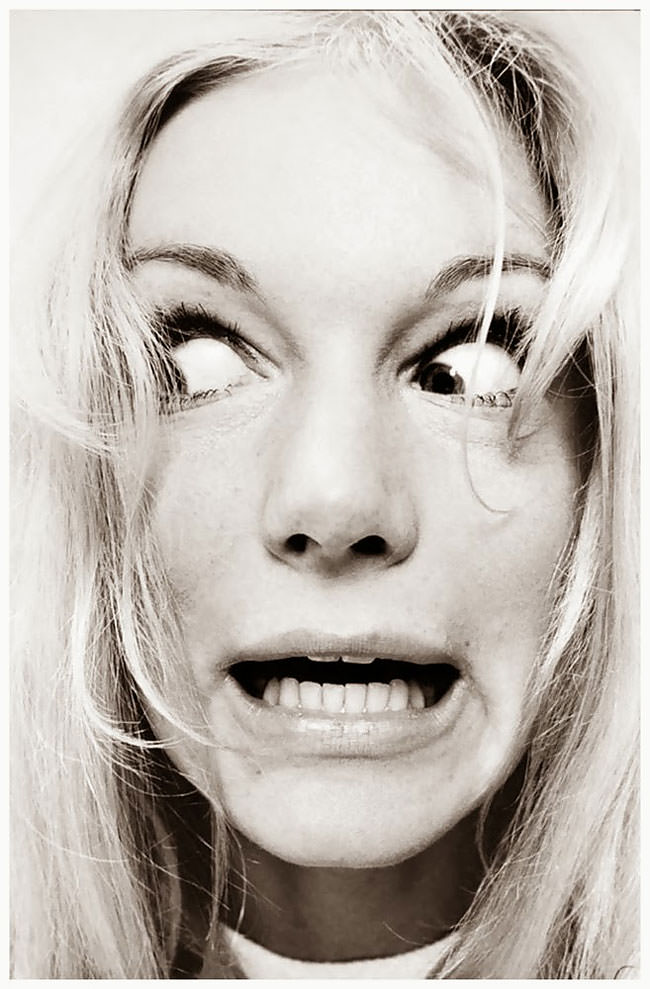
French-Bulgarian singer and pop star Sylvie Vartan was another subject. Vartan was already a household name in France by the mid-1960s, and her willingness to drop the pop-idol polish for Rizzo’s camera says something about the relaxed creative atmosphere he cultivated in his Paris studio.
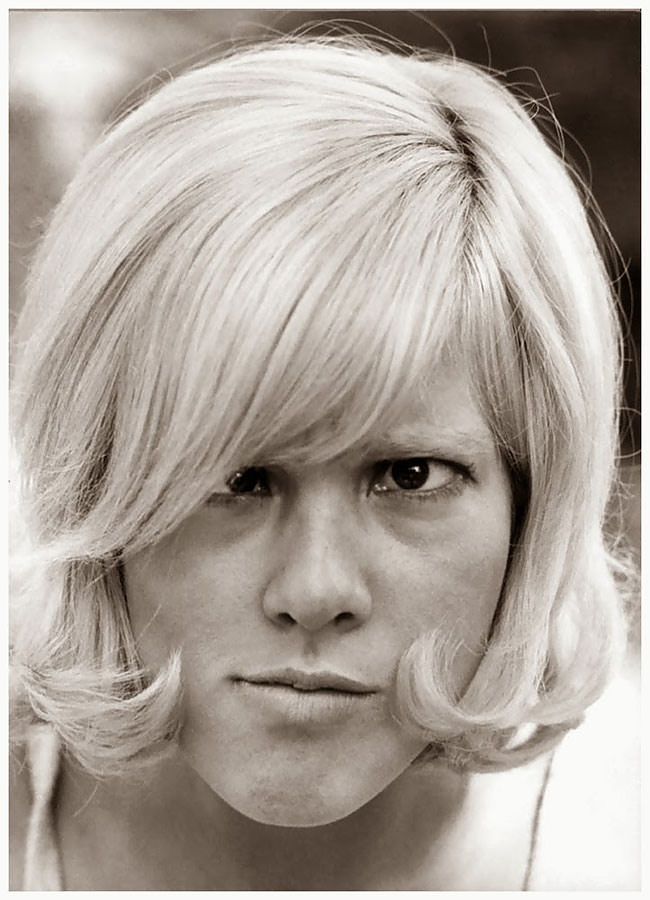
Italian actress Virna Lisi, one of the most sought-after stars in European cinema at the time, also made an appearance in Rizzo’s collection of deliberately absurd portraits.
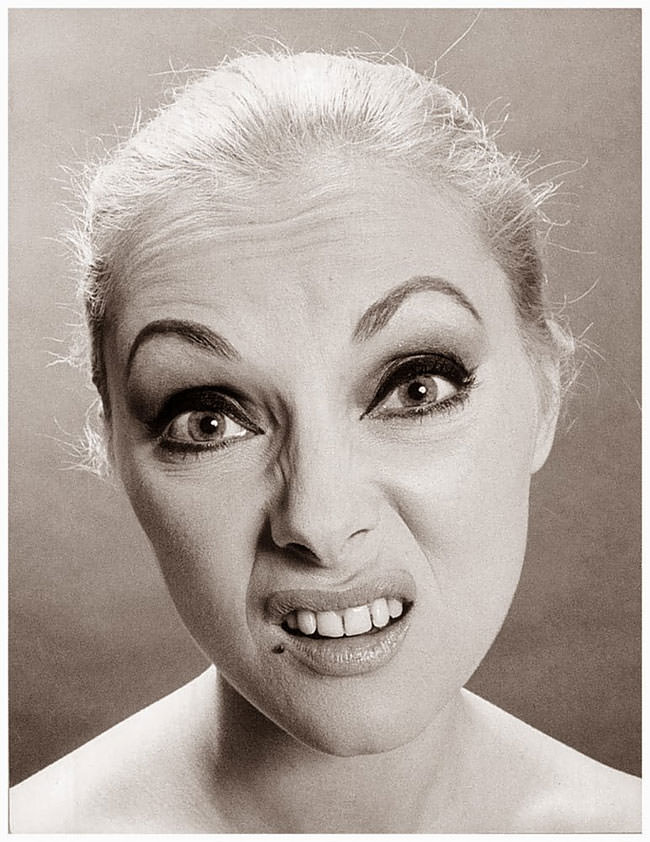
Perhaps no name in the collection carries more weight than Sophia Loren. The Italian actress was one of the biggest film stars on the planet during the 1960s, having won the Academy Award for Best Actress in 1962. Seeing her abandon that monumental screen presence for a ridiculous expression in front of Rizzo’s camera is something worth pausing on.
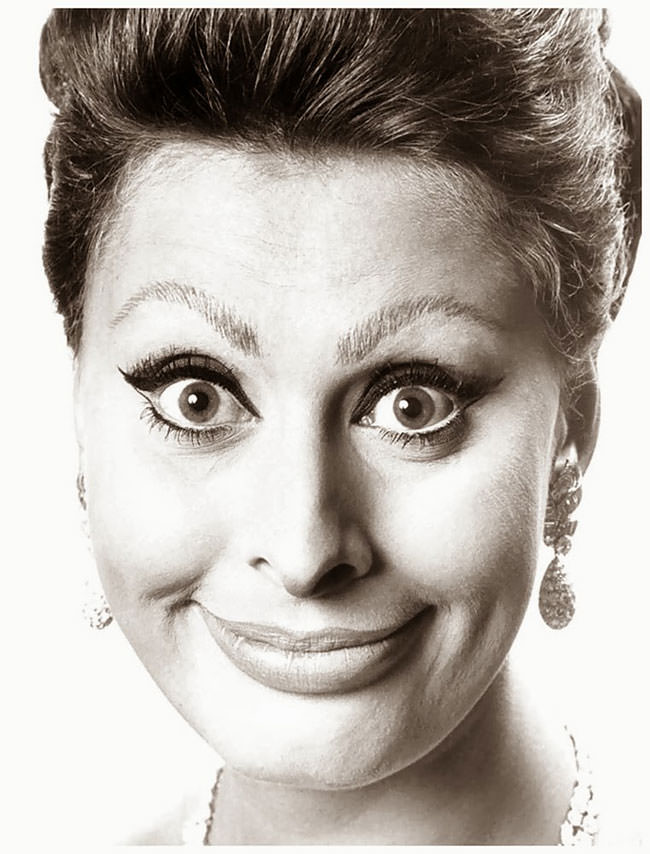
French model and actress Nicole de Lamargé also features in the series. She was a prominent figure in the Paris fashion world, and her image here fits right into the playful spirit Rizzo drew out of each of his subjects.
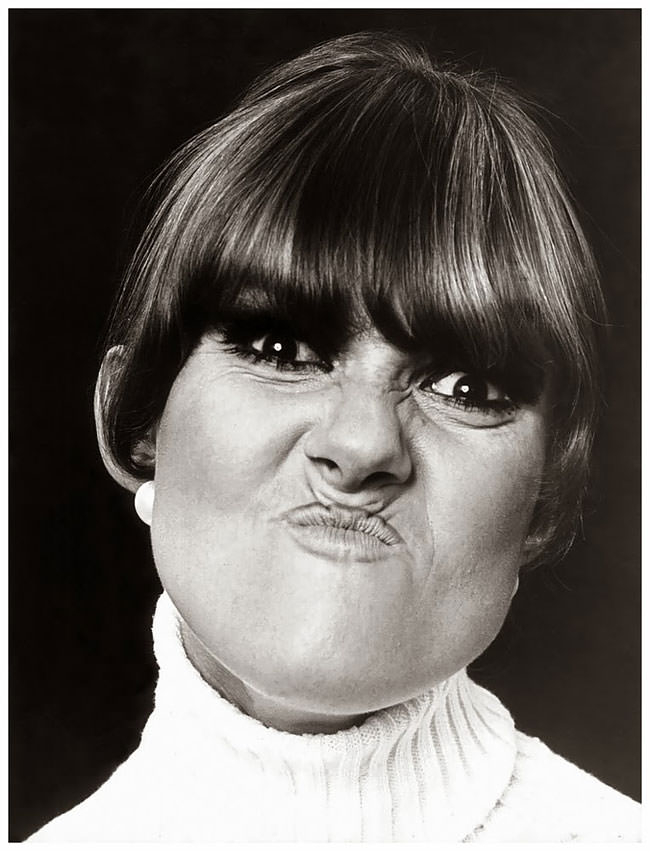
Singer and actress Marie Laforêt, beloved for her distinctive eyes and her hits in French pop music, contributed her own version of a hideous face to the collection.
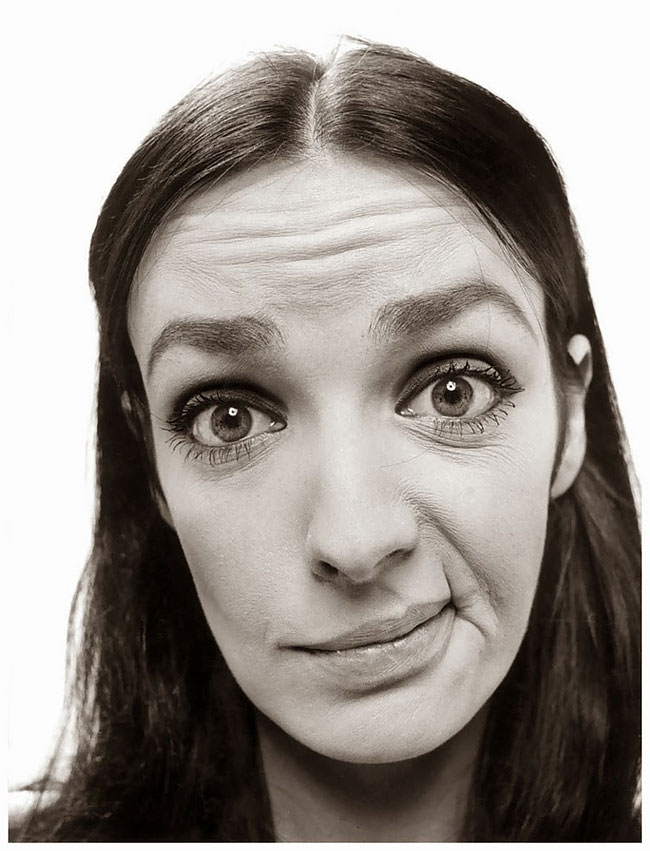
French artist Martial Raysse, a key figure in the New Realism art movement of the 1960s, was also photographed by Rizzo. Raysse was no stranger to bold, provocative imagery in his own work, which makes his inclusion in this series feel entirely fitting.
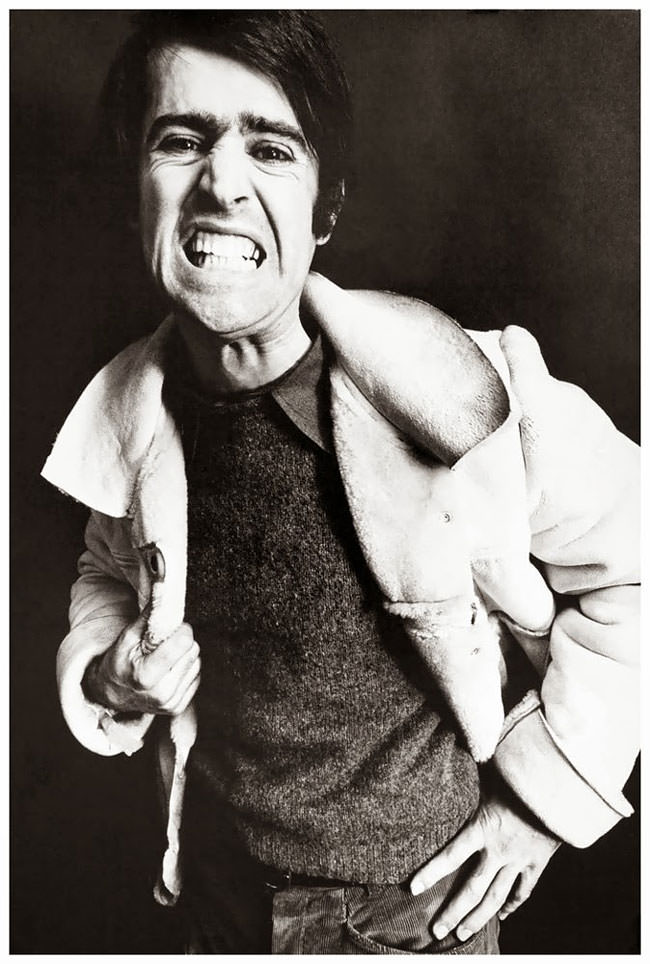
Not every subject in the collection was a major celebrity. One image from inside Rizzo’s own Paris workspace features a mannequin — a nod to the studio setting itself and the broader world of fashion and artifice that surrounded much of his work.
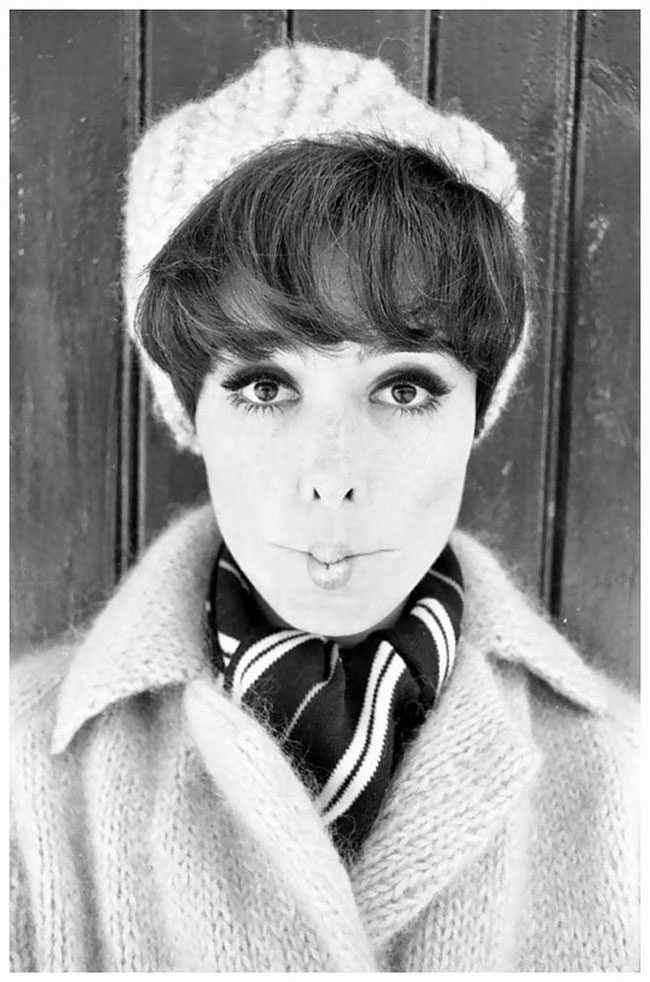
Kim d’Estainville, a French socialite and figure in Parisian high society, features among the subjects. Her presence alongside working actresses and musicians underlines how wide Rizzo’s social circle extended during this period.
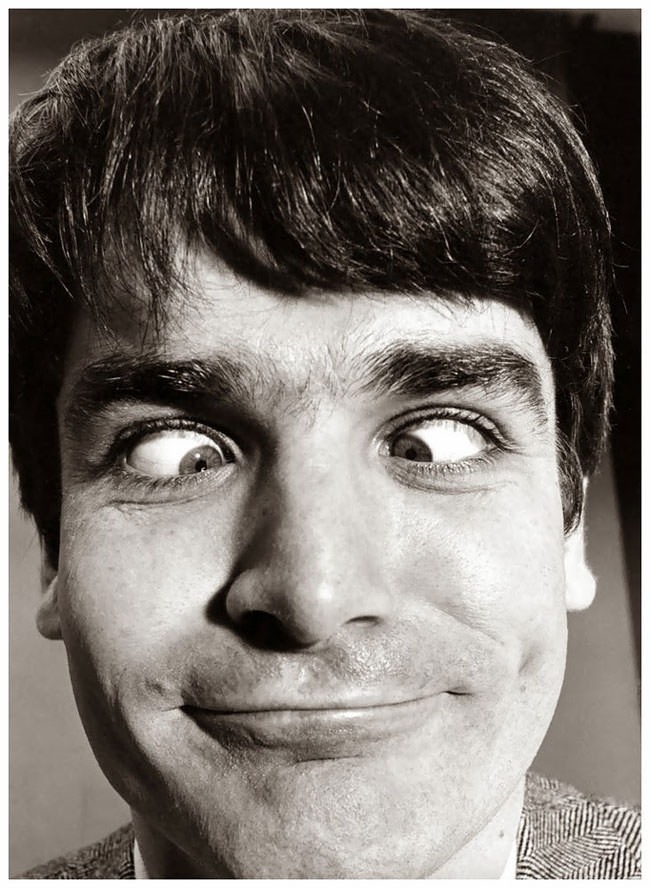
July Égérie de WR — identified by her connection to Rizzo’s studio world — also appears in the series, representing one of the more intimate portraits in the collection.
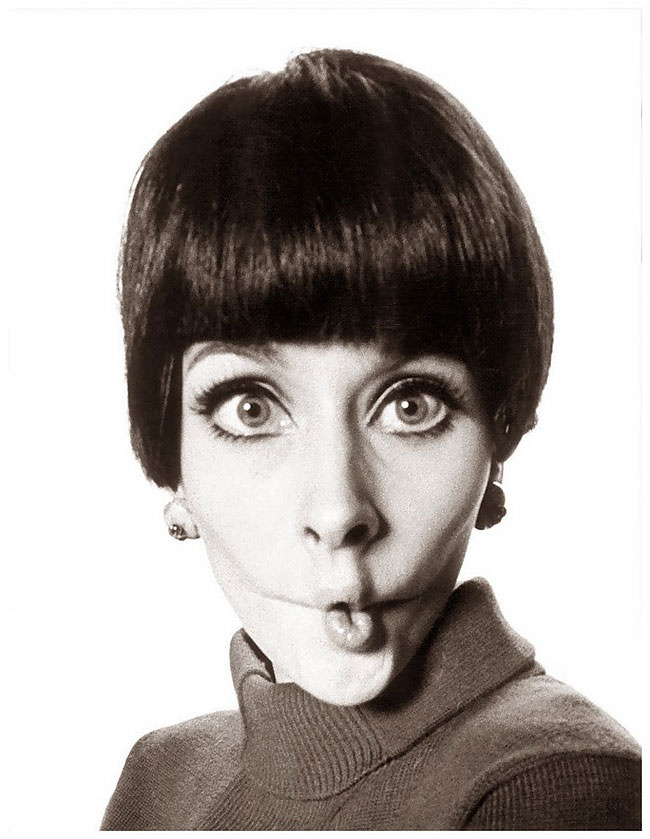
One of the most dynamic images in the set features actress Johanna Shimkus alongside July Égérie de WR. Shimkus, a Canadian-American actress who appeared in several European productions during the late 1960s, shares the frame in what becomes one of the more energetic double portraits in the collection.
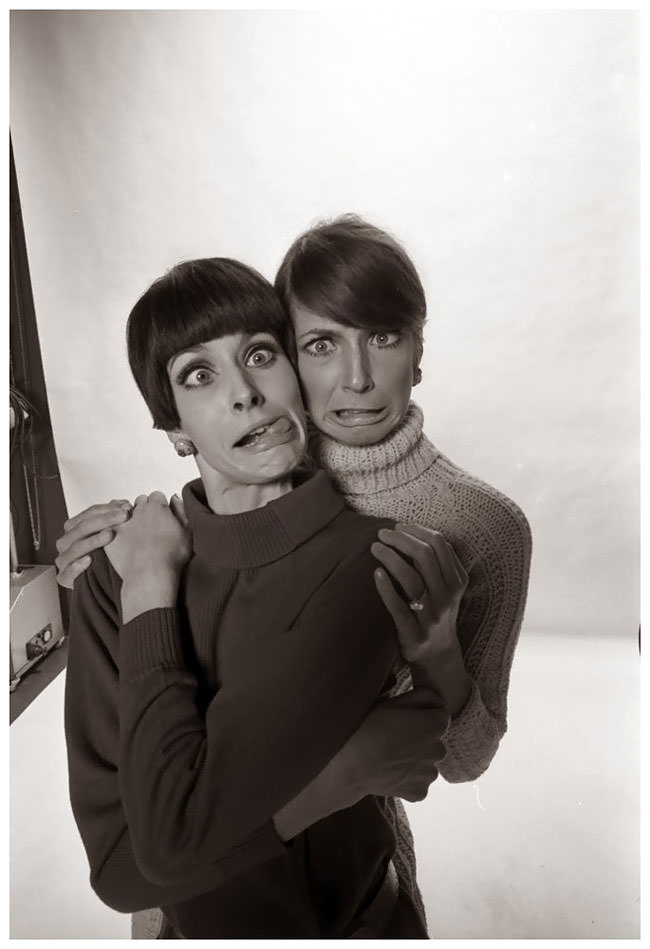
Jean-Paul Belmondo, the French actor who became the face of the New Wave cinema movement after starring in Jean-Luc Godard’s Breathless in 1960, brought his natural physical charisma to Rizzo’s camera. Belmondo was never particularly precious about his image, and this photograph shows that plainly.
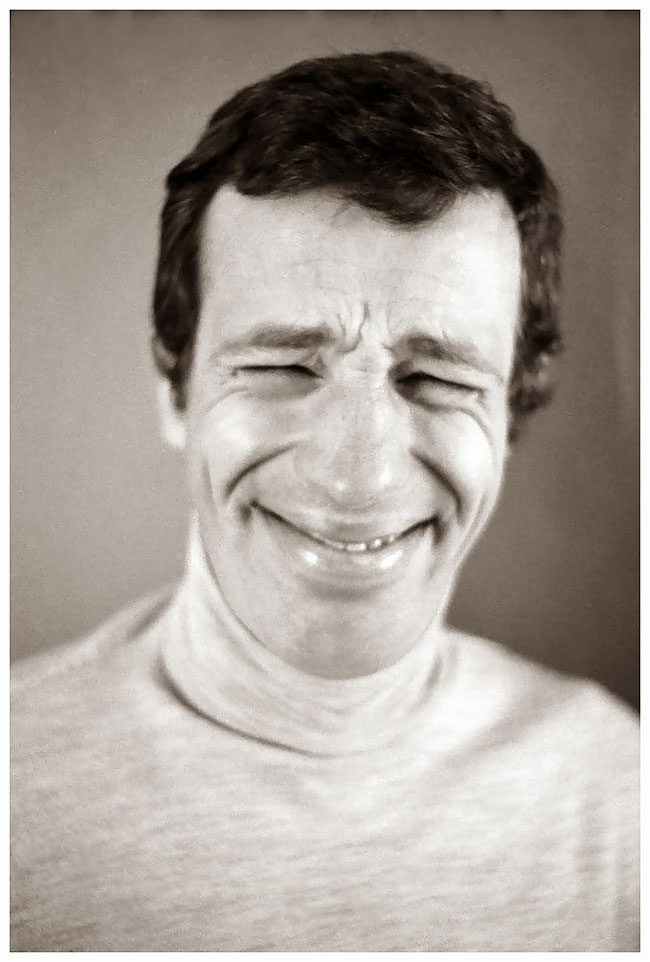
Brazilian model Géorgia Quental also sat for Rizzo during this period. Her international career brought her to Europe, and her appearance here adds a transatlantic dimension to what is otherwise a largely Franco-Italian series.
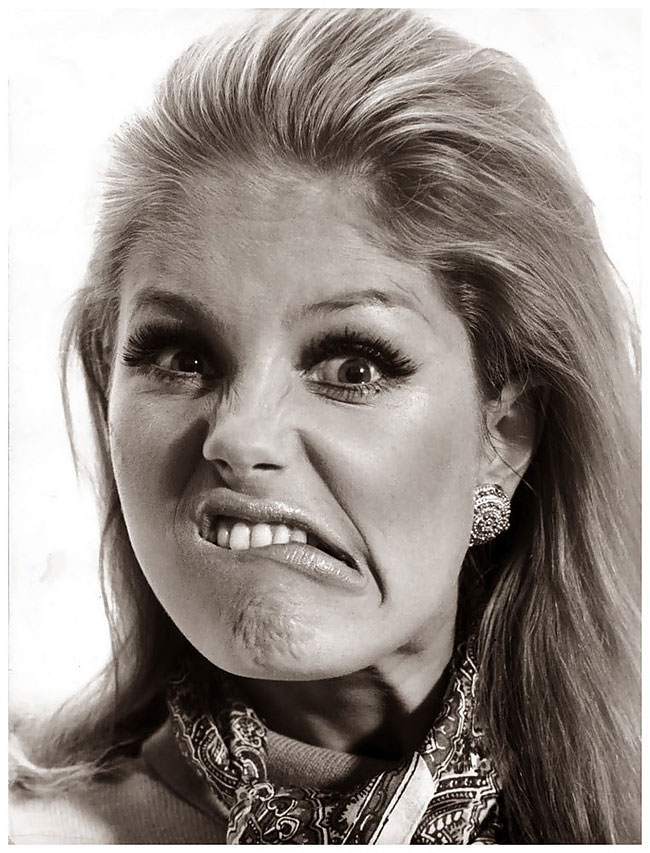
Italian actress and model Elsa Martinelli, who had worked with some of Hollywood’s biggest directors including Howard Hawks, features in the collection as well. By the 1960s she was a fixture in European cinema and an established face in international fashion.
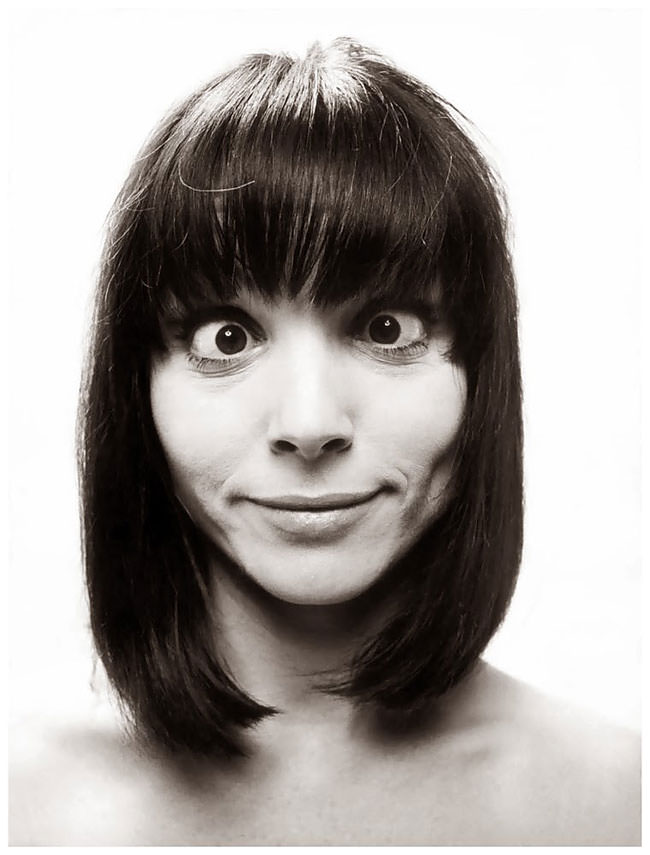
French painter and filmmaker Charles Matton, who moved fluidly between visual art and cinema throughout his career, also appears in Rizzo’s series.
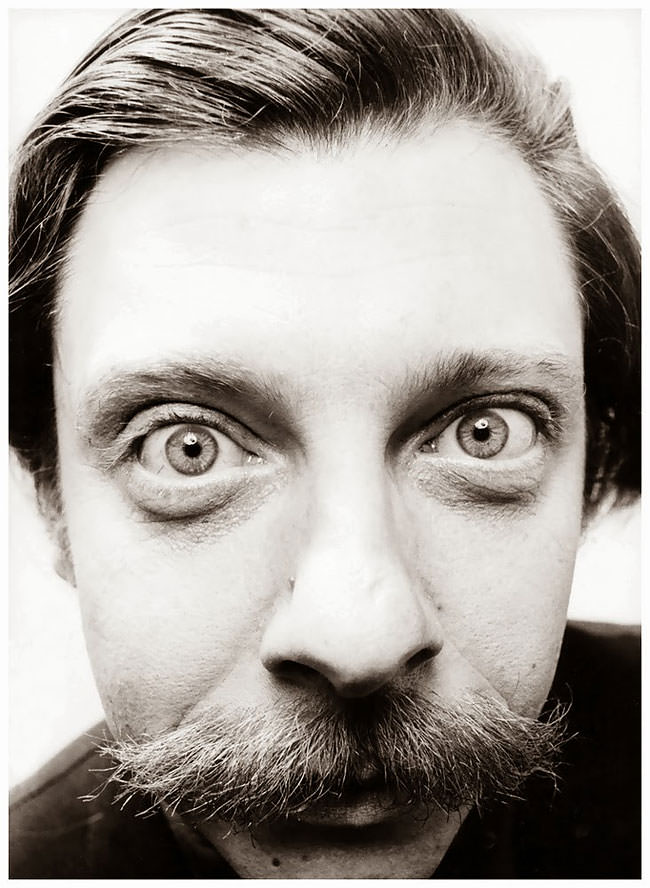
French actress Claudine Auger, who is best remembered for her role as Domino in the James Bond film Thunderball (1965), was photographed by Rizzo around the height of her fame. Seeing Bond’s leading lady abandon all poise for a grotesque expression is one of the more surprising contrasts in the entire collection.
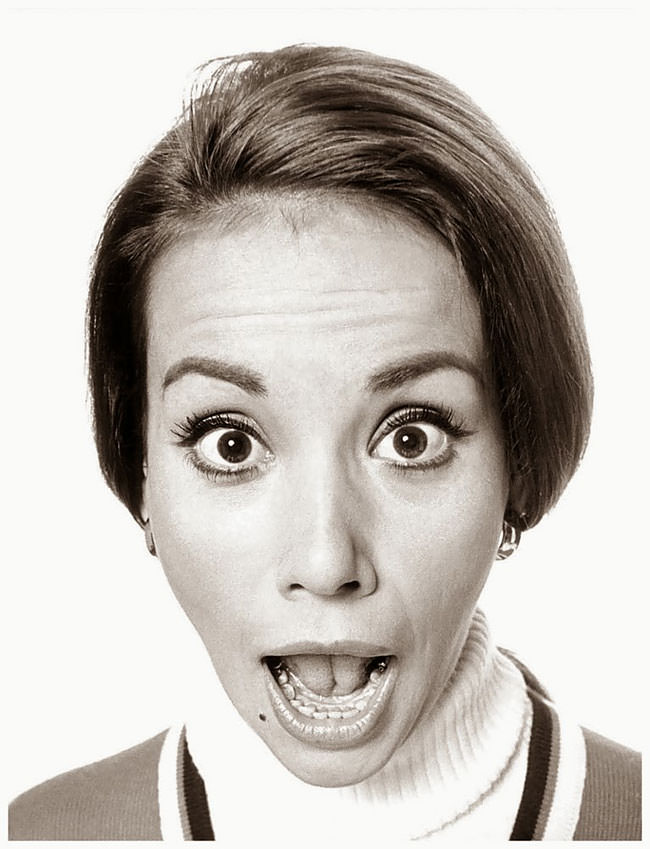
Catherine Deneuve, who by the mid-1960s was well on her way to becoming the defining face of French cinema, also appears in Rizzo’s series. Deneuve was known for her composed, almost icy elegance on screen. Whatever face she offered Rizzo’s camera stands in direct contrast to that persona.
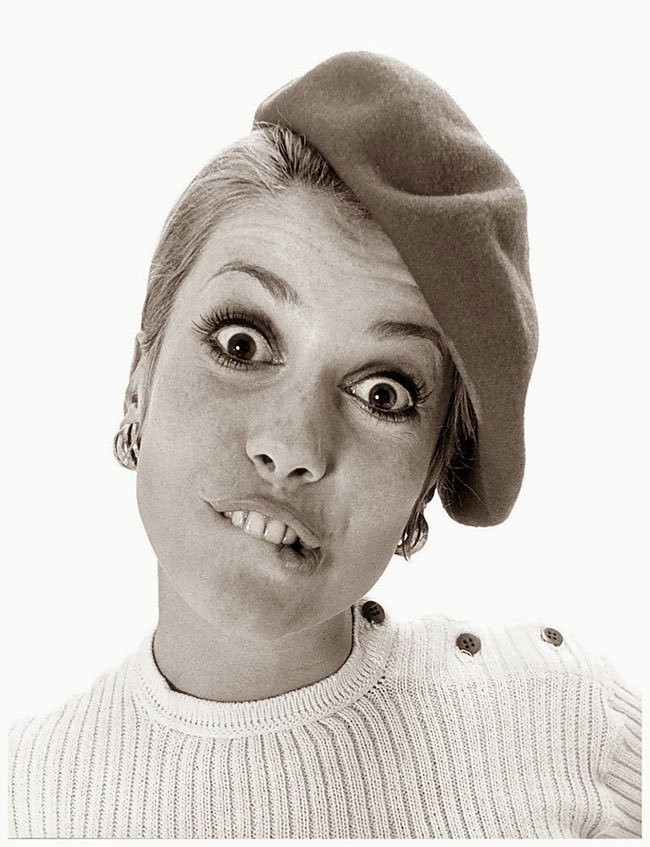
Danish-French actress Anna Karina, the muse and former wife of Jean-Luc Godard, was one of the most photographed women in French cinema during the 1960s. Her portrait in this series captures a side of her that the formal film stills never did.
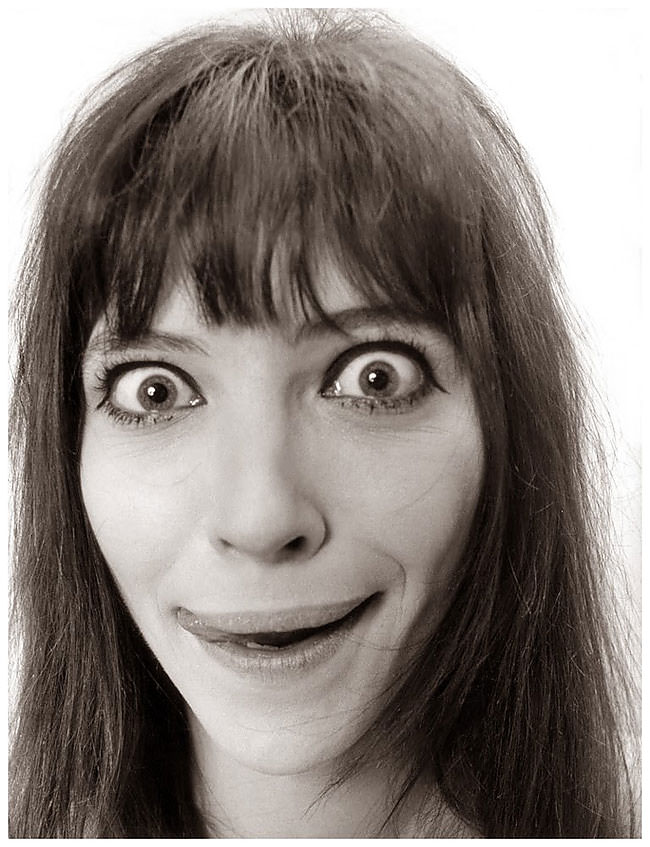
British model Jean Shrimpton — nicknamed ‘The Shrimp’ — was considered the world’s first supermodel and one of the defining faces of 1960s fashion. Her work with photographers like David Bailey had already made her an icon by the time Rizzo photographed her, which gives her inclusion in this irreverent series an extra layer of irony.
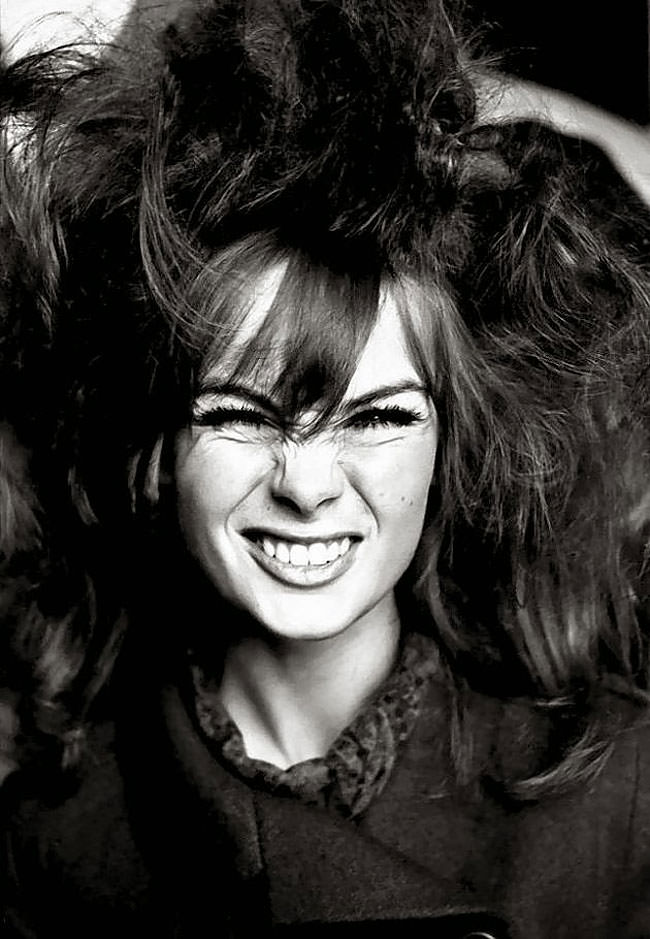
The series closes with Jane Fonda, the American actress who was building her film career throughout the 1960s. Fonda was one of Rizzo’s recurring subjects over the years, and the ease she displays in front of his camera reflects the familiarity between them. Her portrait here — like all the others — strips away the careful image management that defined celebrity in that era and replaces it with something far more human.


Well-done!