France in 1953 was a country in motion. The year opened with the end of Operation Bretagne, a military campaign that had kept the country’s attention fixed on its overseas affairs. In March, Paul Couturier died — a French Catholic priest who had spent decades pushing for Christian unity across denominations. On the world stage, France agreed to grant Cambodia provisional independence, a step that led to Cambodia’s full independence on November 9, 1953. Back home, four million workers walked off the job to protest government austerity measures. The strike held for 12 days before it ended. Amid all of this, daily life in France continued — on the beaches of Nice, in the vineyards of Avignon, and along the grand boulevards of Paris.
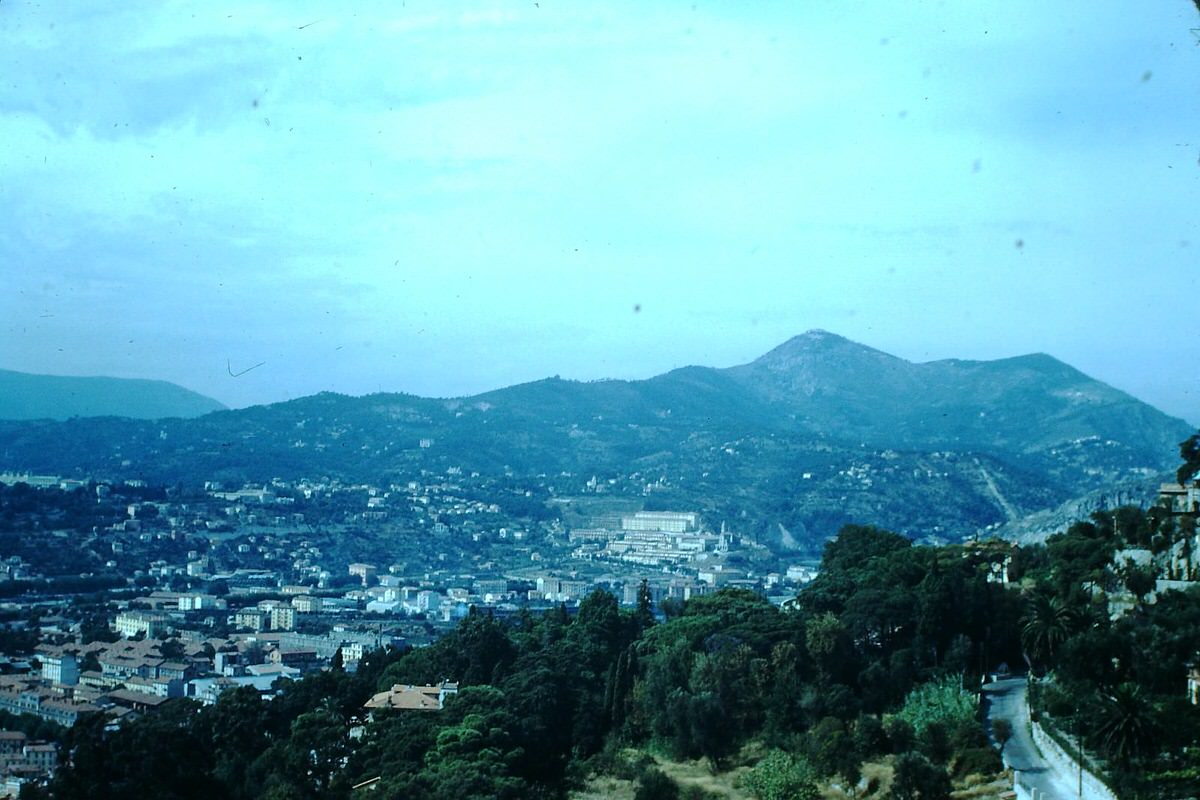
The French Riviera was one of the most photographed stretches of the country. Nice, with its curved coastline and elegant architecture, drew visitors and photographers alike. The Pasteur Hospital sat within a wider city panorama that showed a mix of old buildings and sea views.
The Hôtel Negresco stood — and still stands — as one of the most recognizable buildings on the Promenade des Anglais. Built in 1913, it became a symbol of Riviera luxury. Its ornate facade and distinctive pink dome made it impossible to miss.
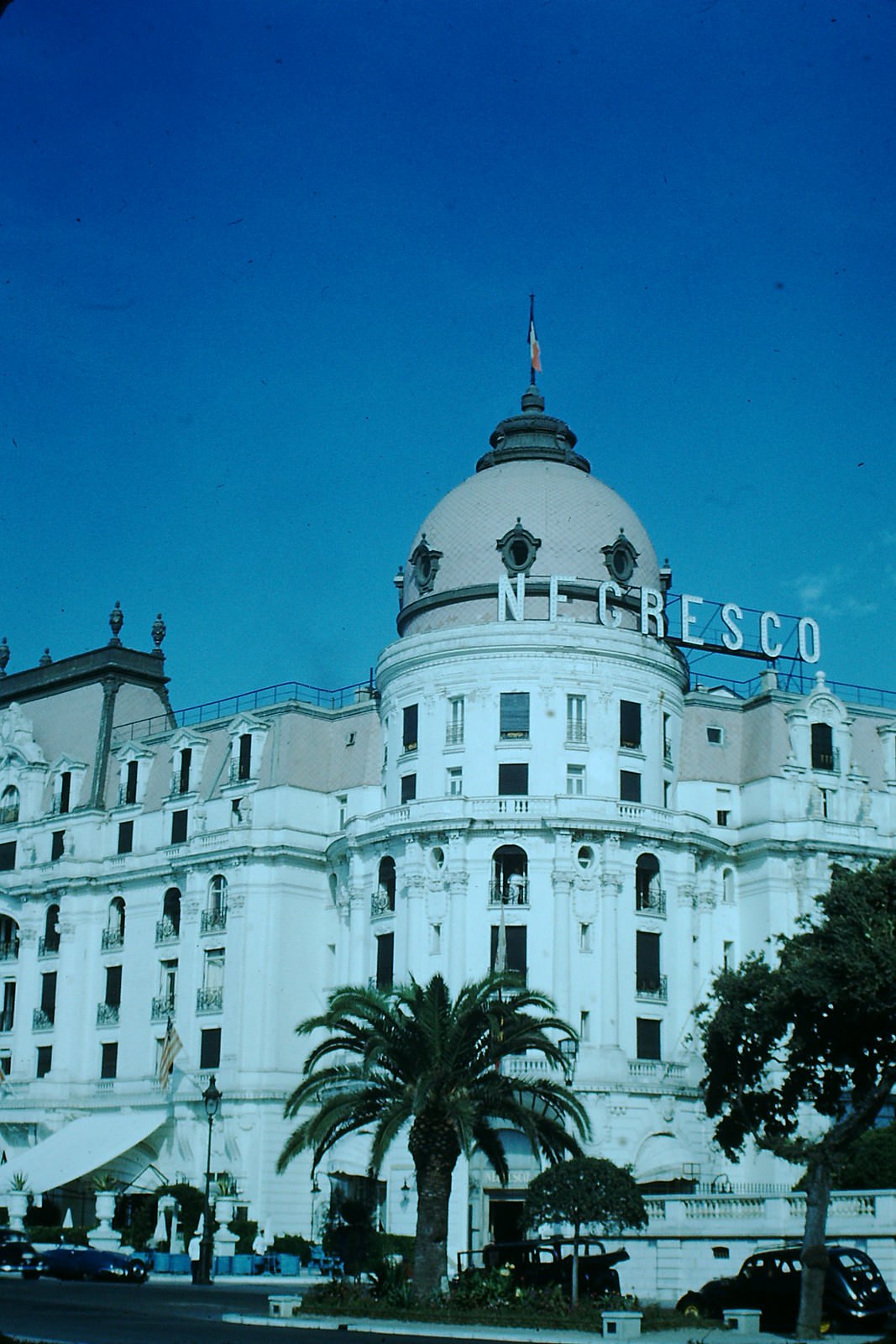
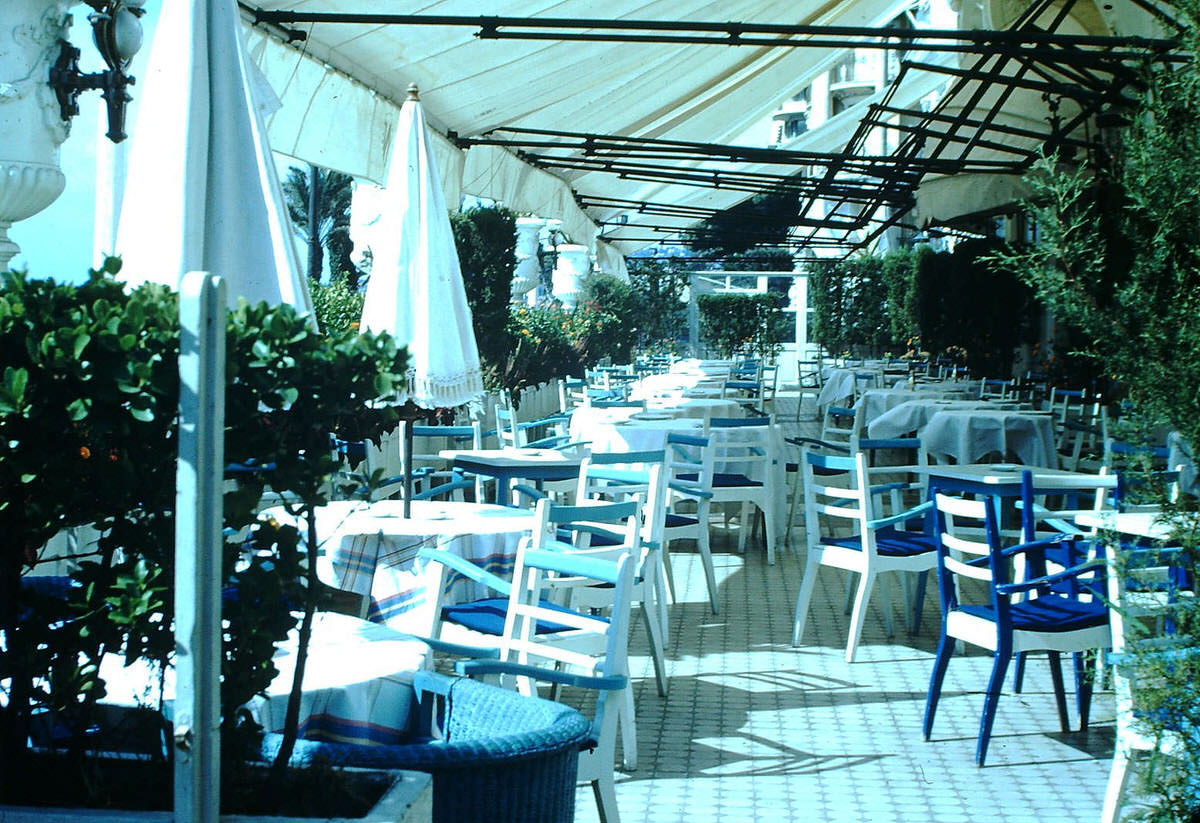
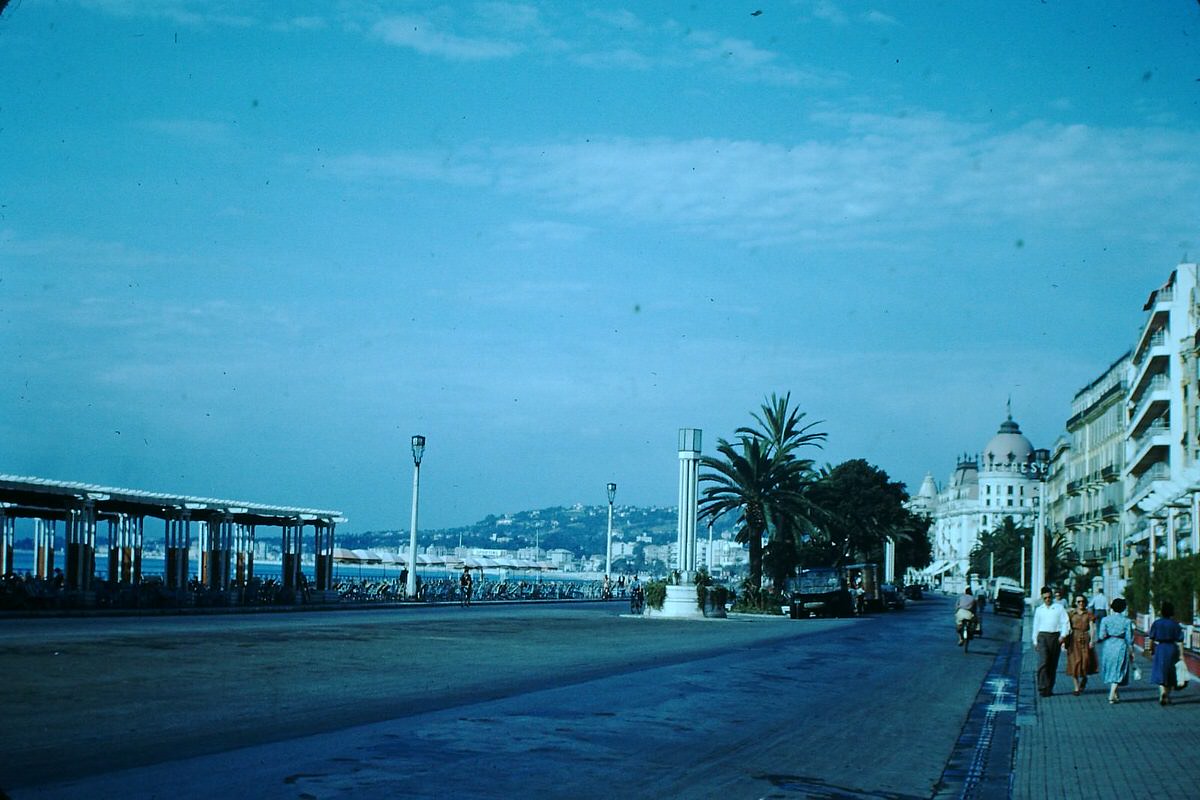
The Promenade des Anglais ran along the seafront, lined with palm trees and grand hotels. It was the main artery of leisure life in Nice, where locals and tourists strolled side by side in 1953.
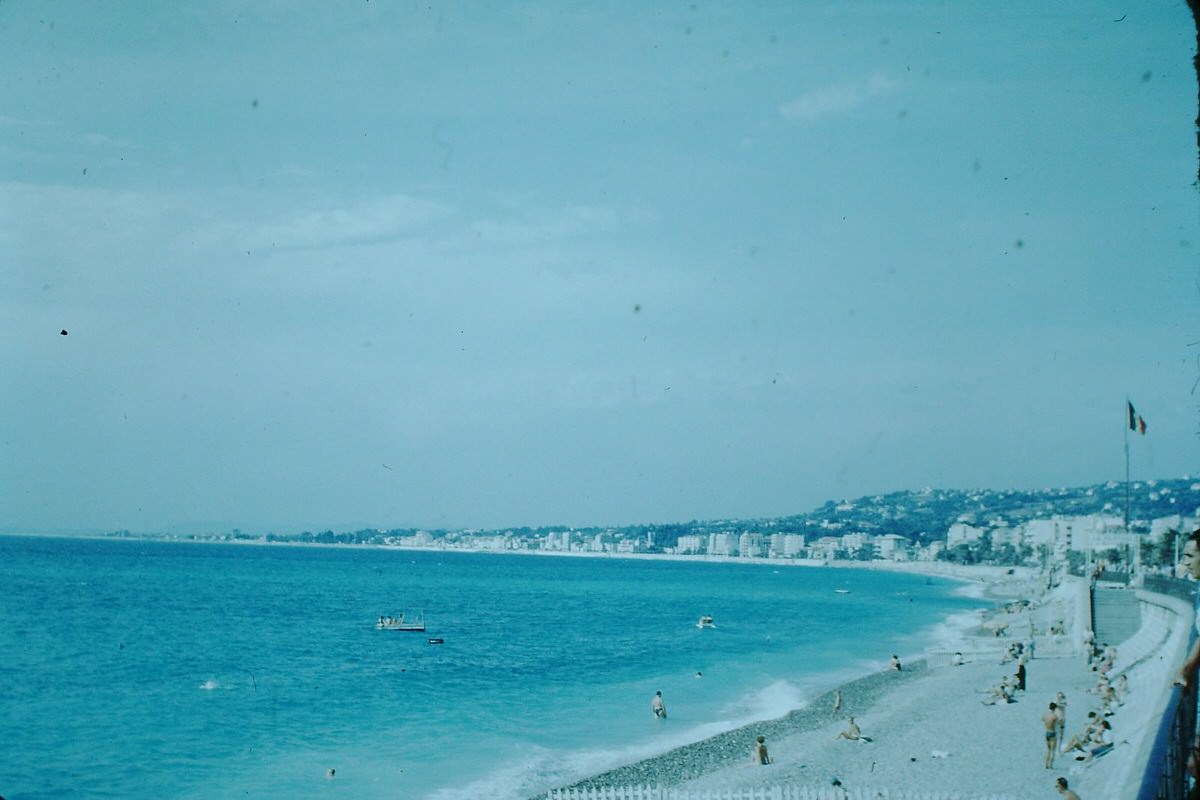
The beach at Nice was a hub of summer activity. Unlike the sandy beaches further west, Nice’s shore was covered in smooth pebbles — a defining feature of the city’s coastline.
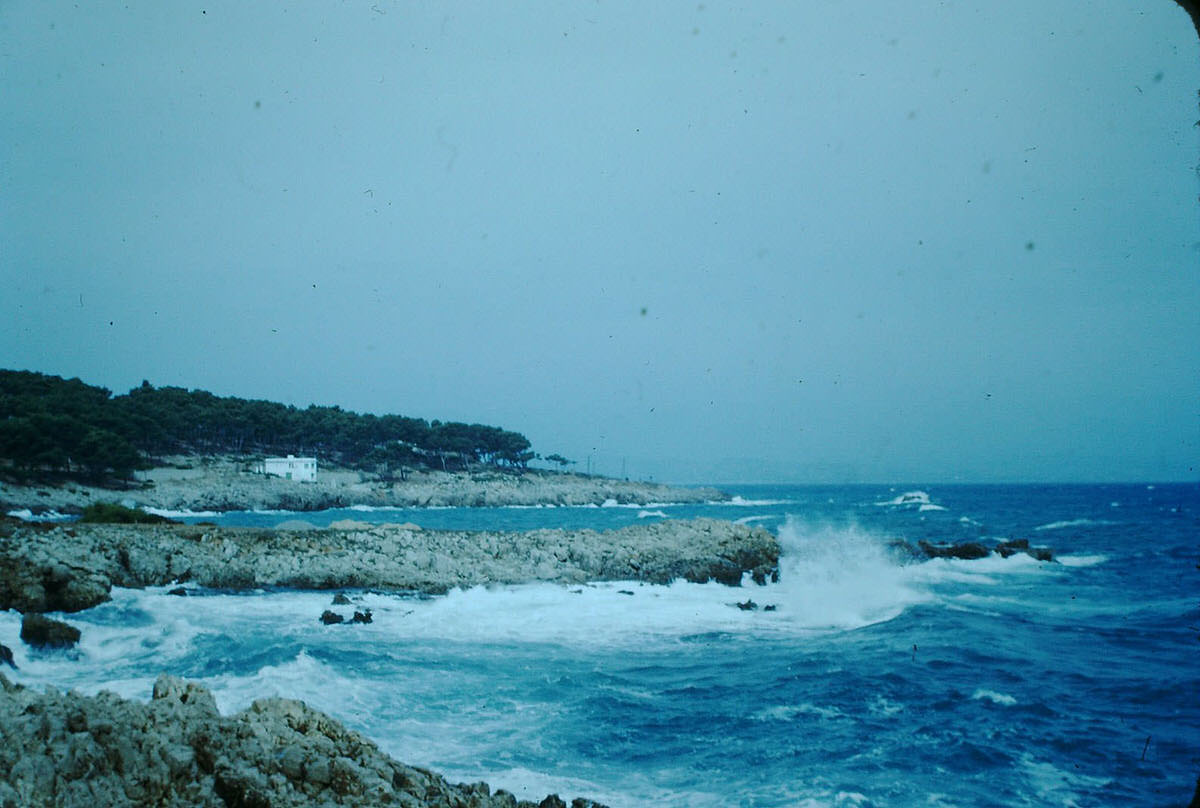
Just along the coast near Cap d’Antibes, the Mistral — a strong, cold wind that blows in from the northwest — was captured whipping across the water. This wind is a defining feature of the Mediterranean coast, strong enough to reshape the look of the sea in minutes.
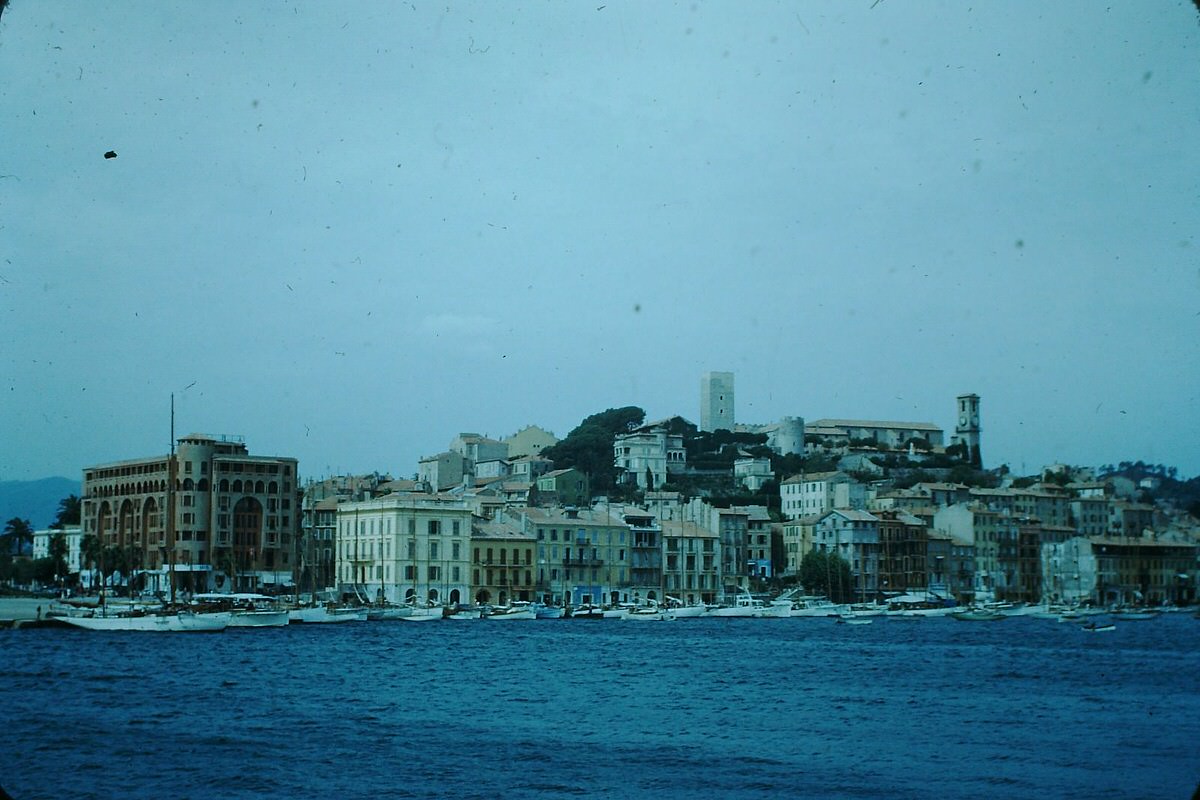
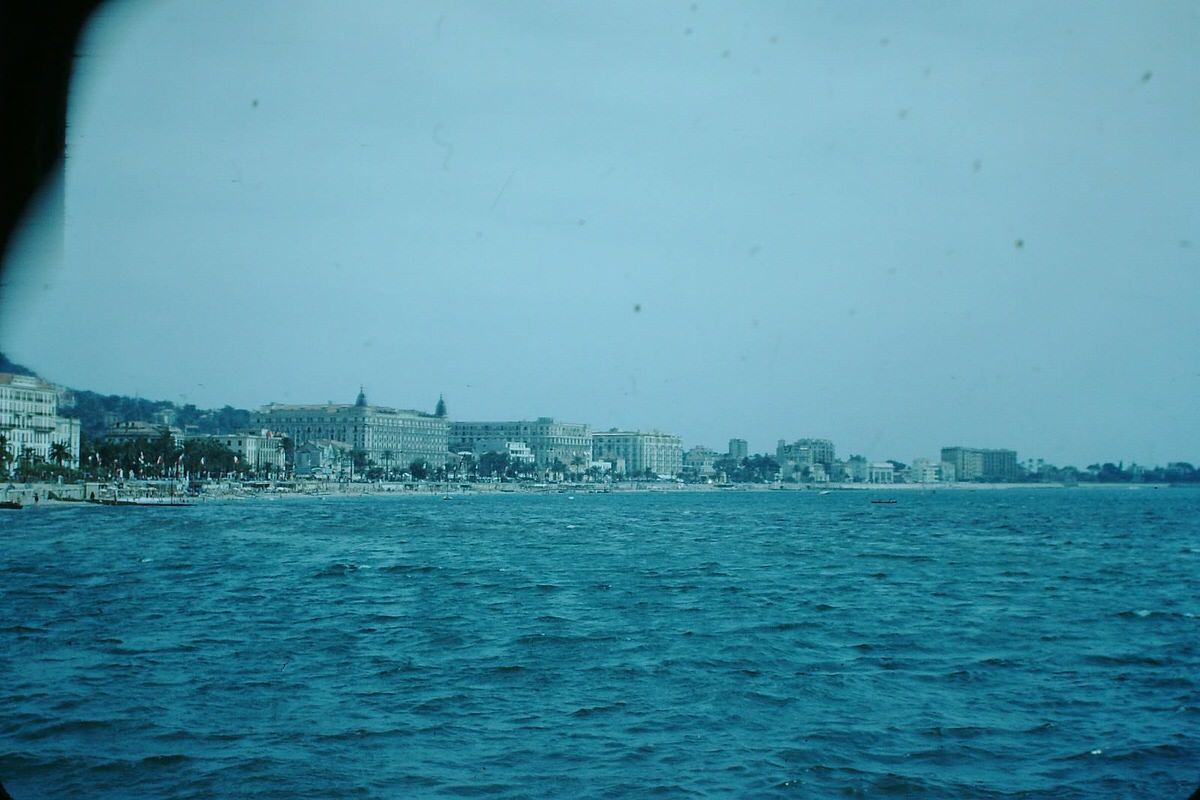
Cannes, a short drive from Nice, was already internationally famous by 1953. Its annual film festival had been running since 1946, and the harbor was a regular mooring spot for expensive yachts.
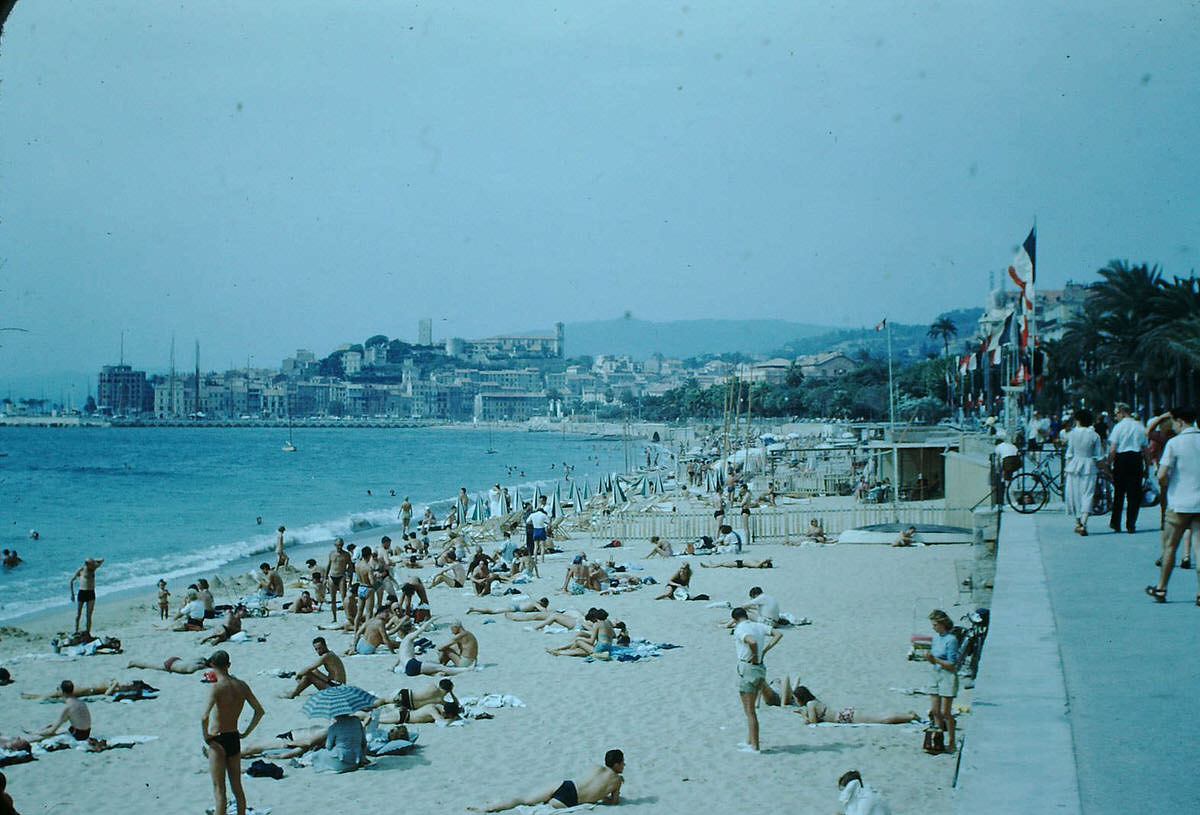
The beach at Cannes offered a different feel from Nice — broader, with fine golden sand. These photos capture the easy rhythm of beach life along the Riviera in the early 1950s.
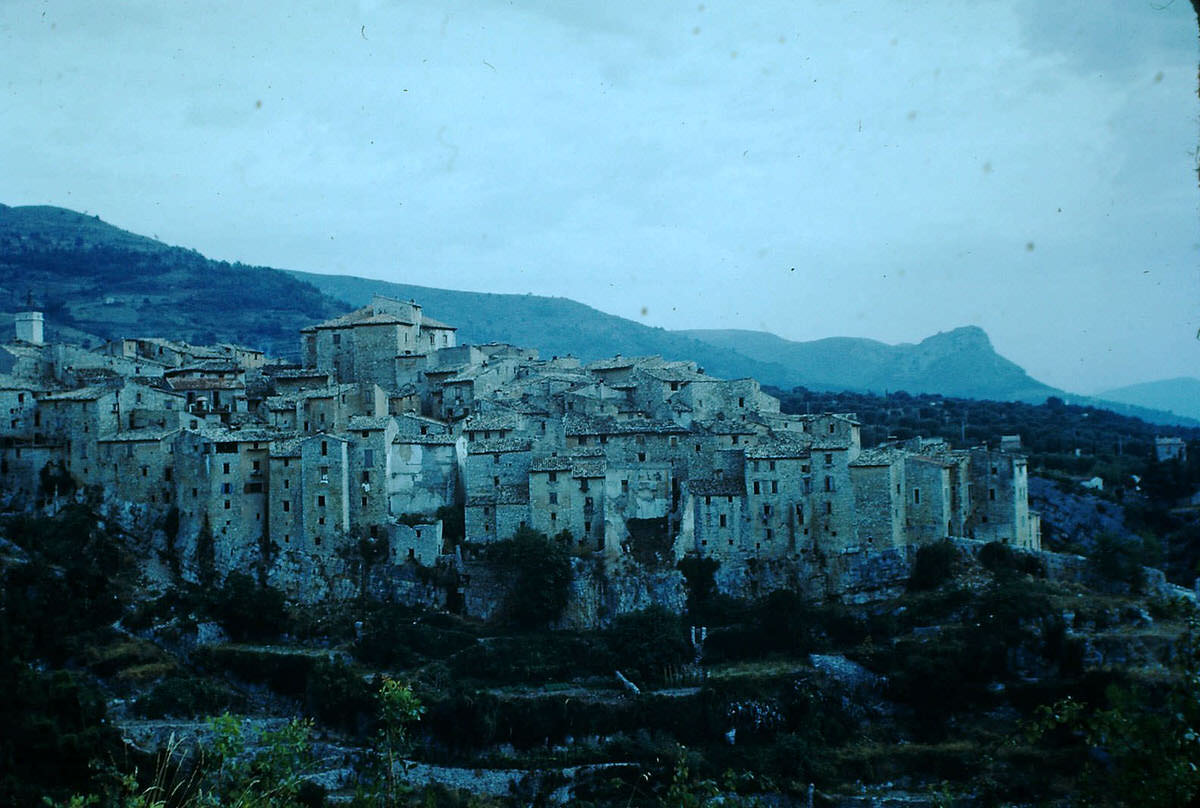
Inland from the coast, the Gorges du Loup offered a completely different landscape. Carved by the River Loup over thousands of years, the gorge cuts through steep limestone cliffs in the hills above the Riviera. Perched villages like Tourette, dating back to the 15th century, clung to the ridgelines above it.
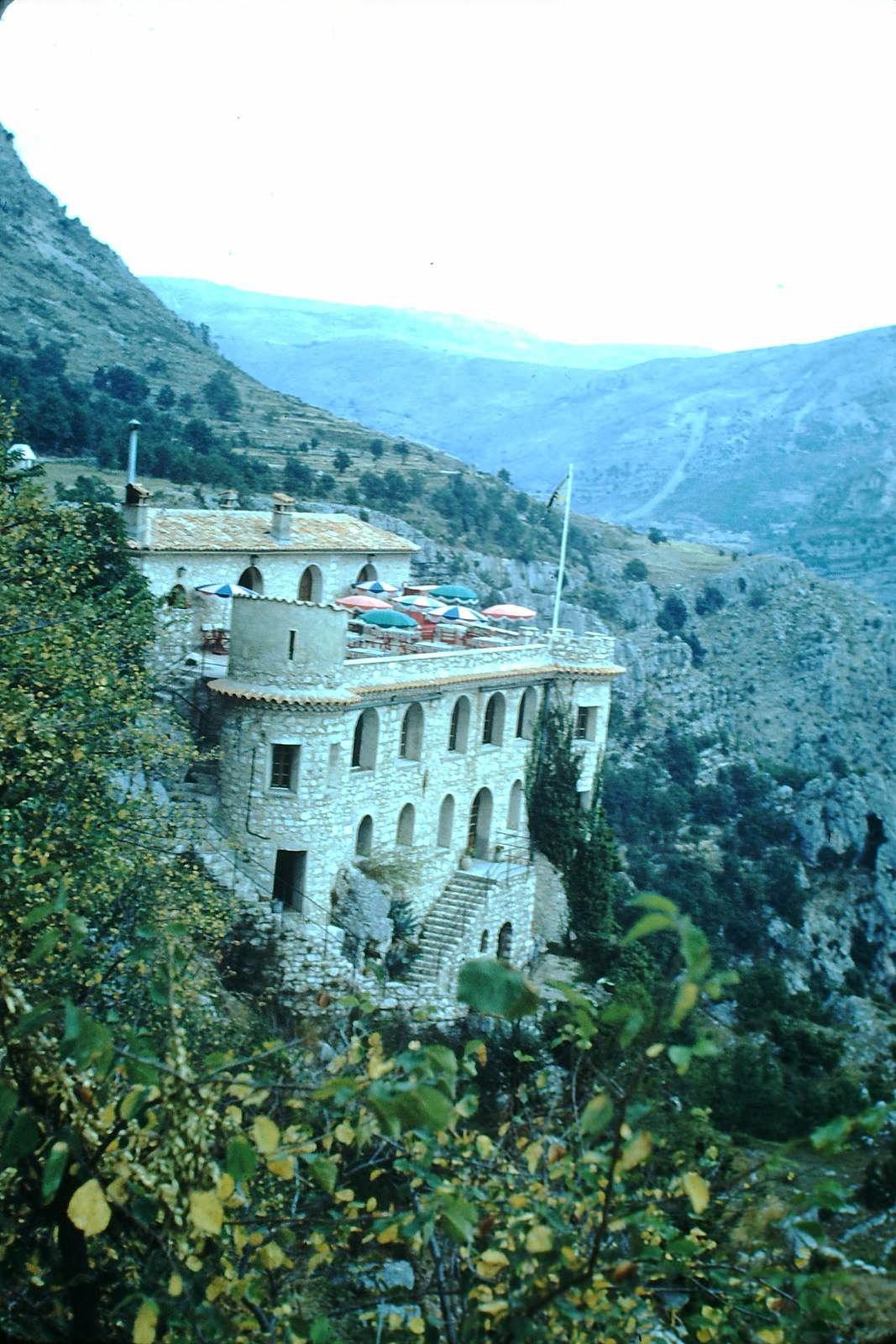
The village of Gourdon, set high above the gorge, had a restaurant that served visitors making the winding drive up from the coast. Below, the gorge itself opened up into dramatic rock formations and river pools.
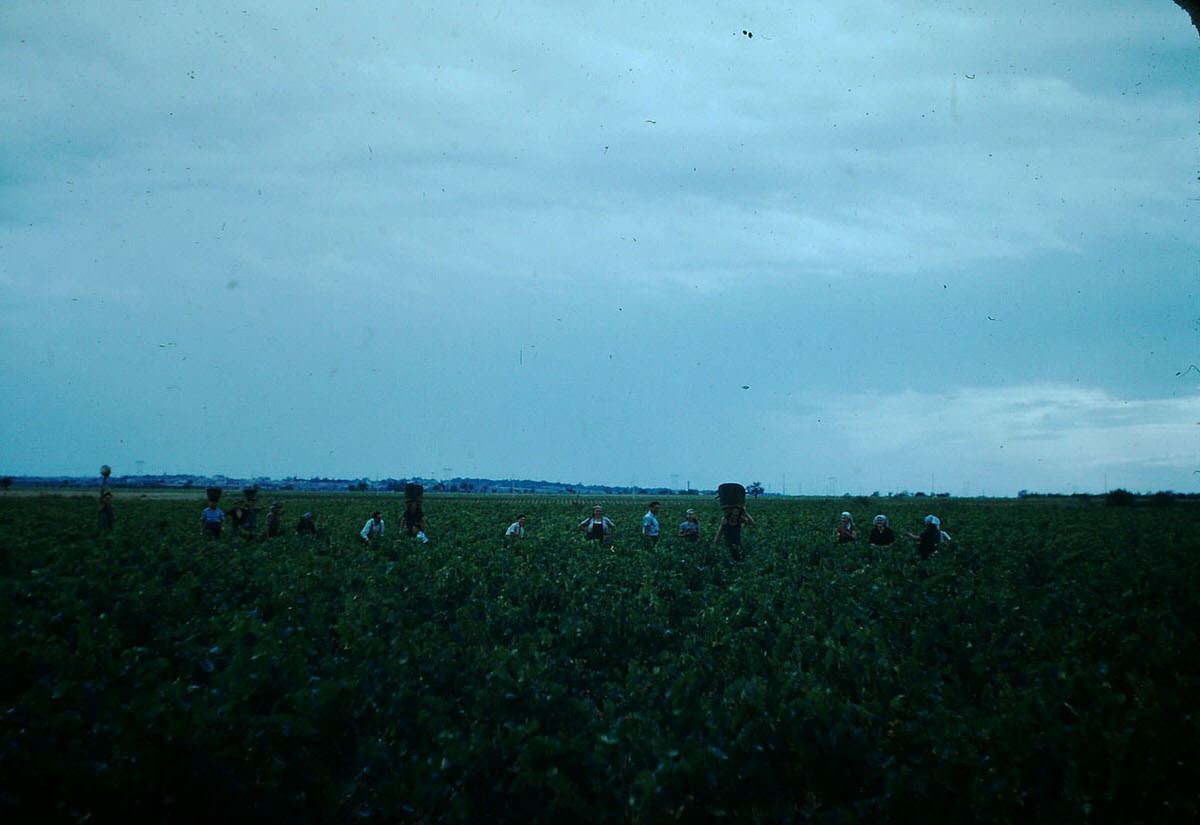
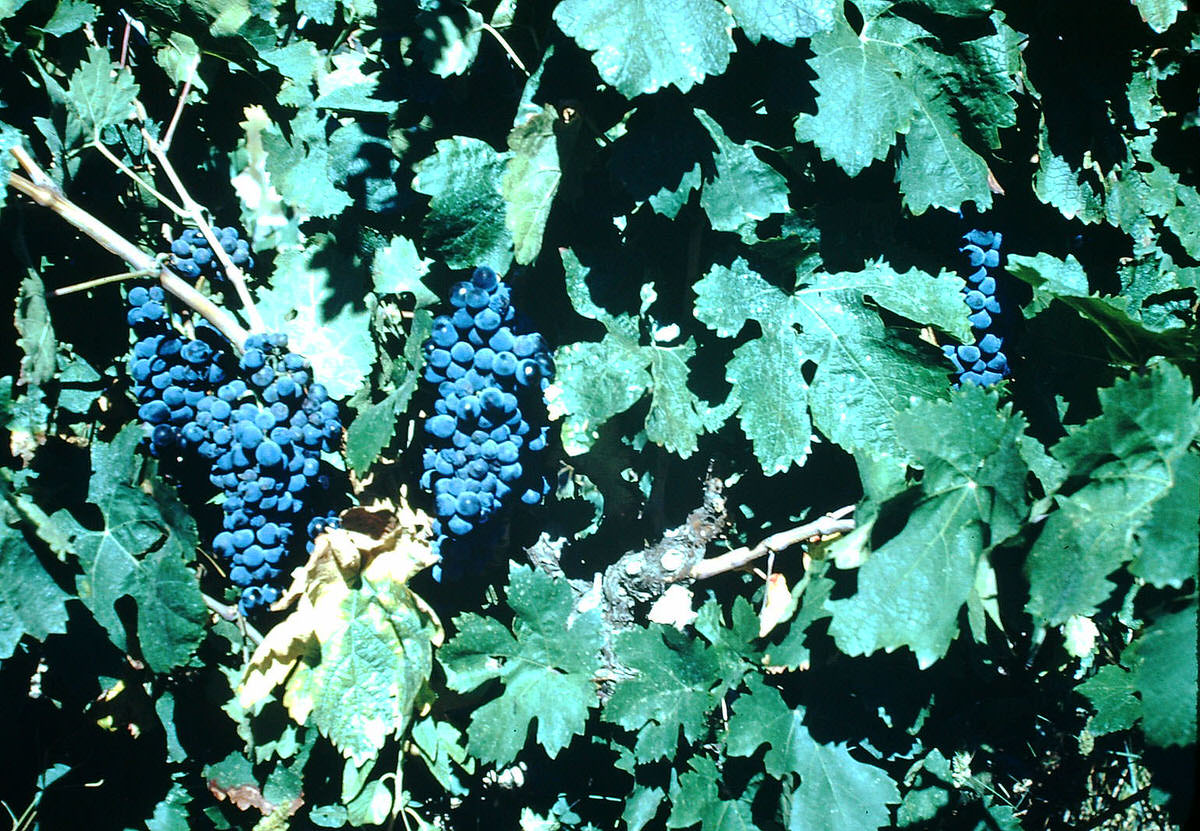
Further north in the Rhône Valley, Avignon was grape-harvesting country. In 1953, vineyard workers brought in the harvest by hand, cutting bunches from the vines and loading them into wooden crates. The Avignon region has produced wine for centuries.
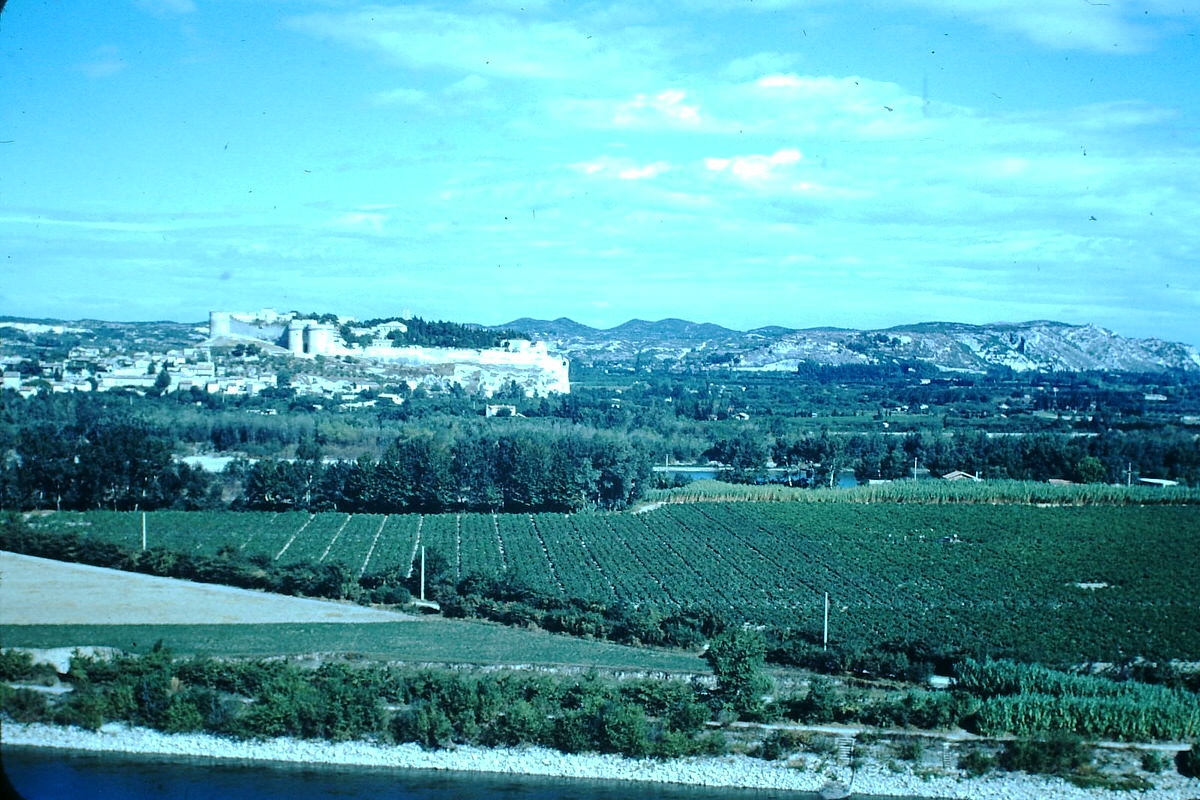
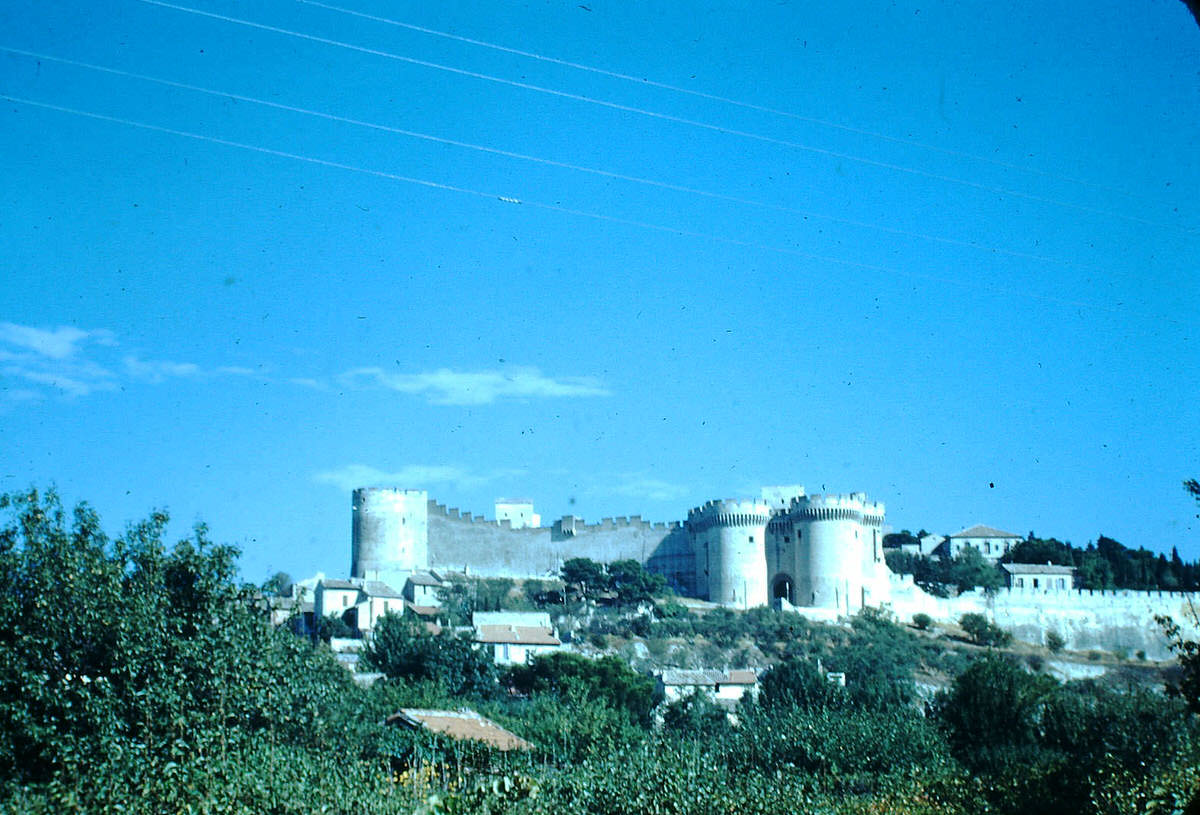
Across the Rhône from Avignon sat Villeneuve-lès-Avignon, a separate town with its own medieval towers and fortifications. The two towns faced each other across the river, connected by history and trade.
Avignon’s most famous landmarks were its cathedral and the Palais des Papes — the Palace of the Popes — which served as the seat of the Catholic Church during the 14th century when the papacy temporarily moved from Rome. The towering Gothic palace dominated the city skyline.
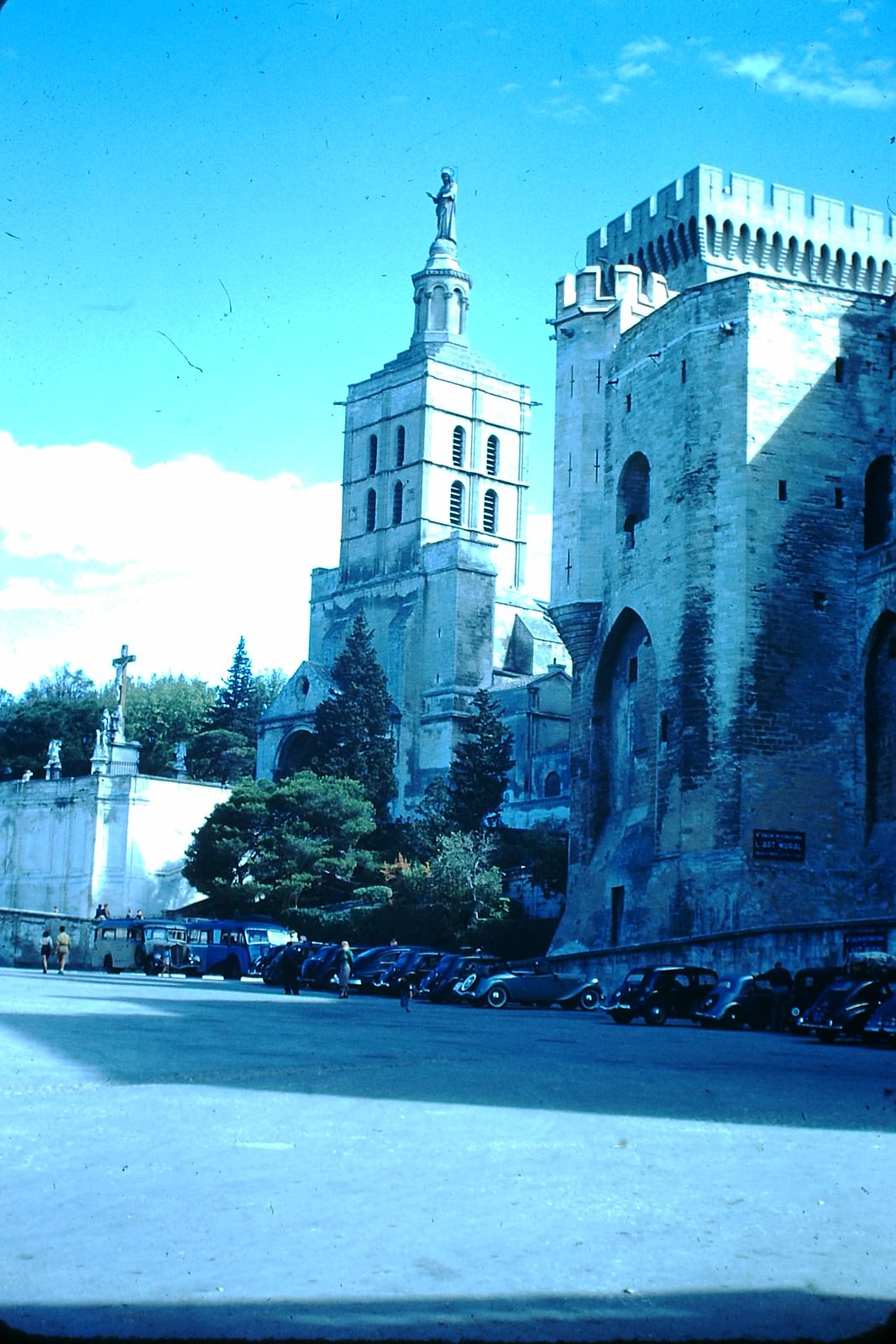
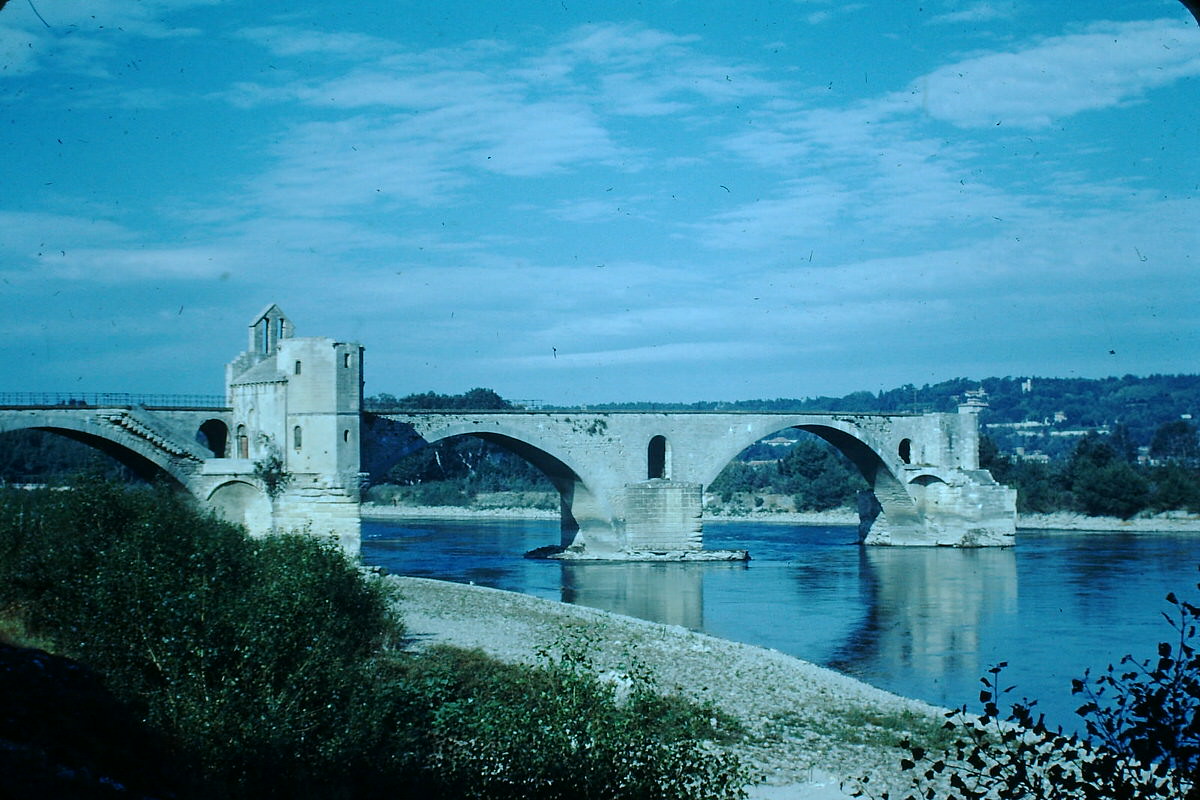
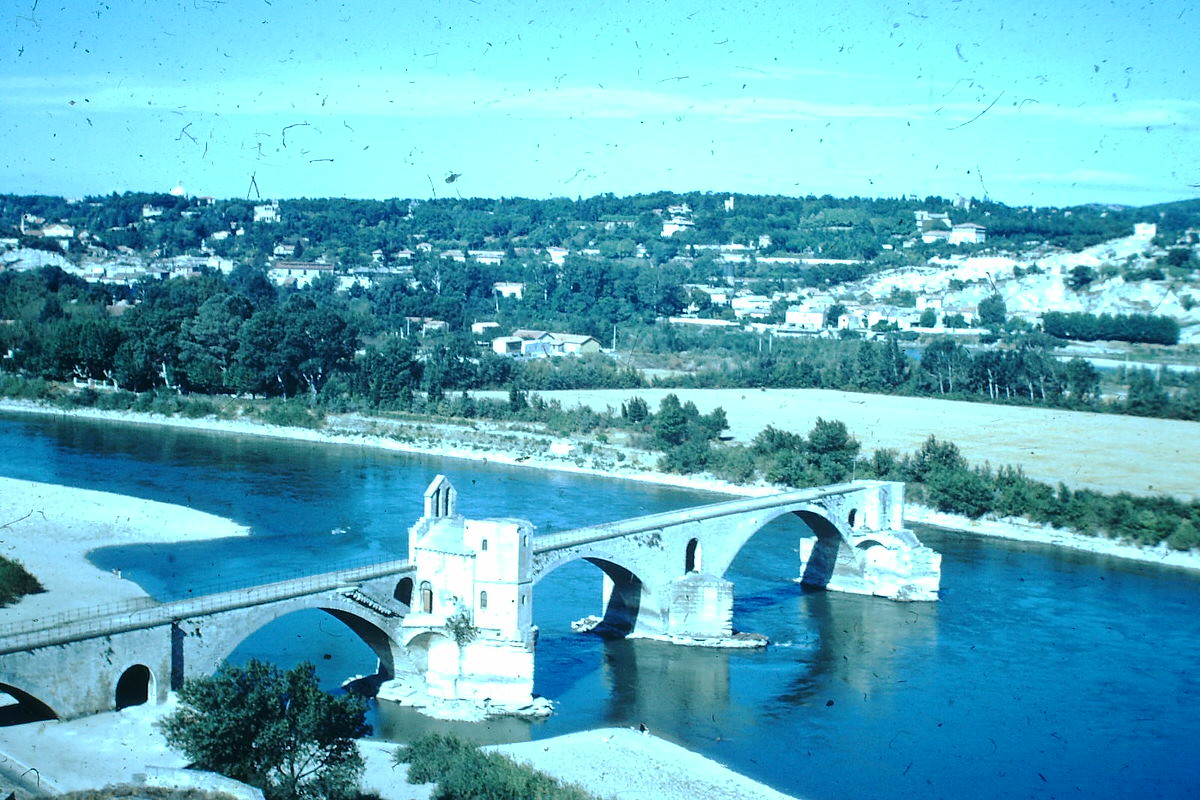
The Pont d’Avignon — formally called the Pont Saint-Bénézet — is one of the most recognized bridges in France, made famous by the French folk song that bears its name. By 1953, only four of its original 22 arches remained standing, the rest having been swept away by the Rhône over the centuries.
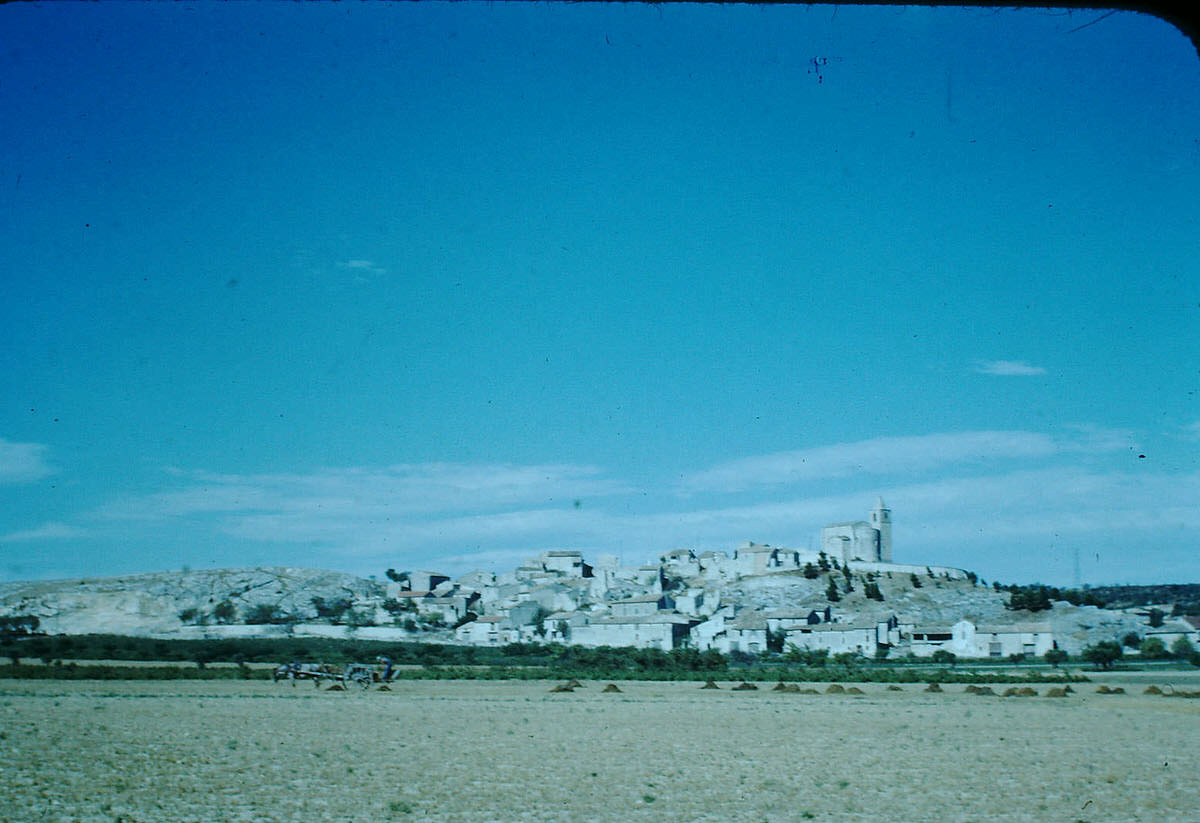
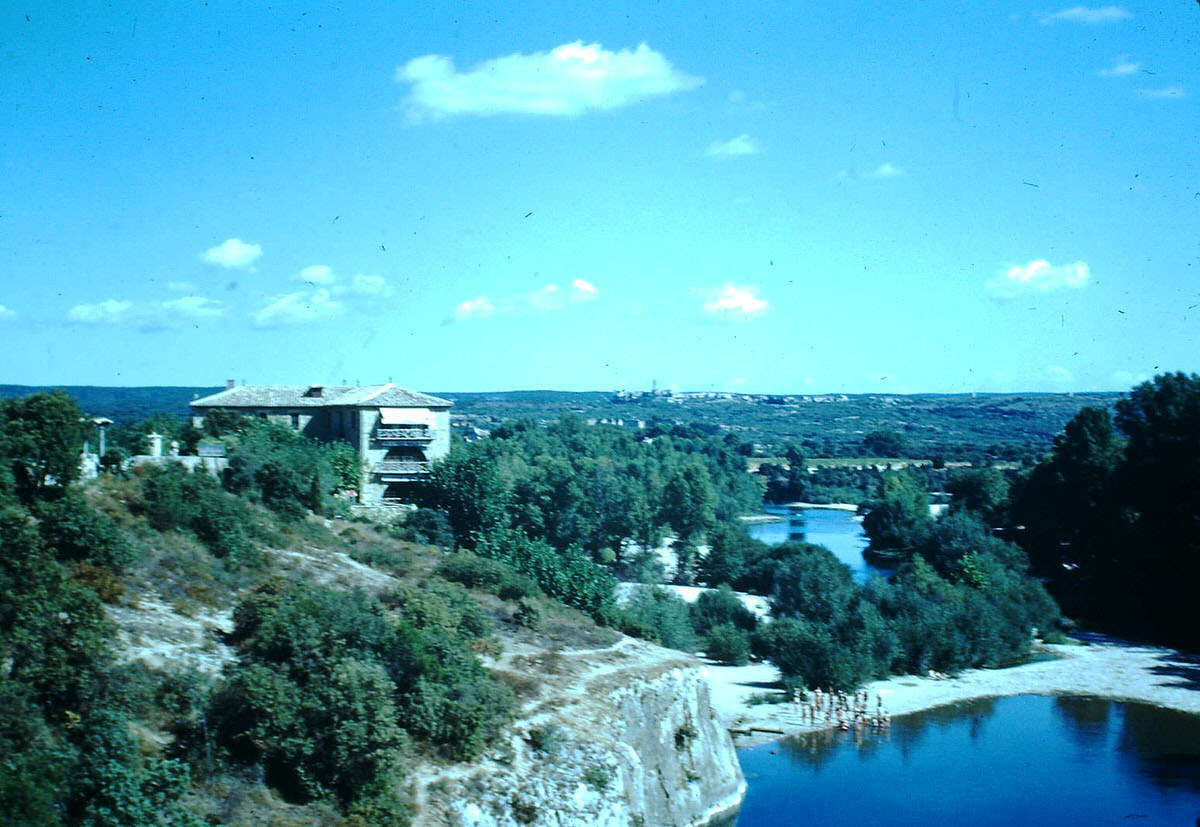
Moving through Provence, the small commune of Rochefort-du-Gard sat quietly in the landscape, typical of the stone-built villages scattered across the region. Nearby, one of the ancient world’s most impressive engineering feats remained fully intact.
The Pont du Gard is a Roman aqueduct bridge built in the first century AD. It carried water more than 50 kilometers to the Roman city of Nîmes. Standing three tiers high at roughly 49 meters, it is the tallest surviving Roman aqueduct and is built without mortar — only precisely cut stone.
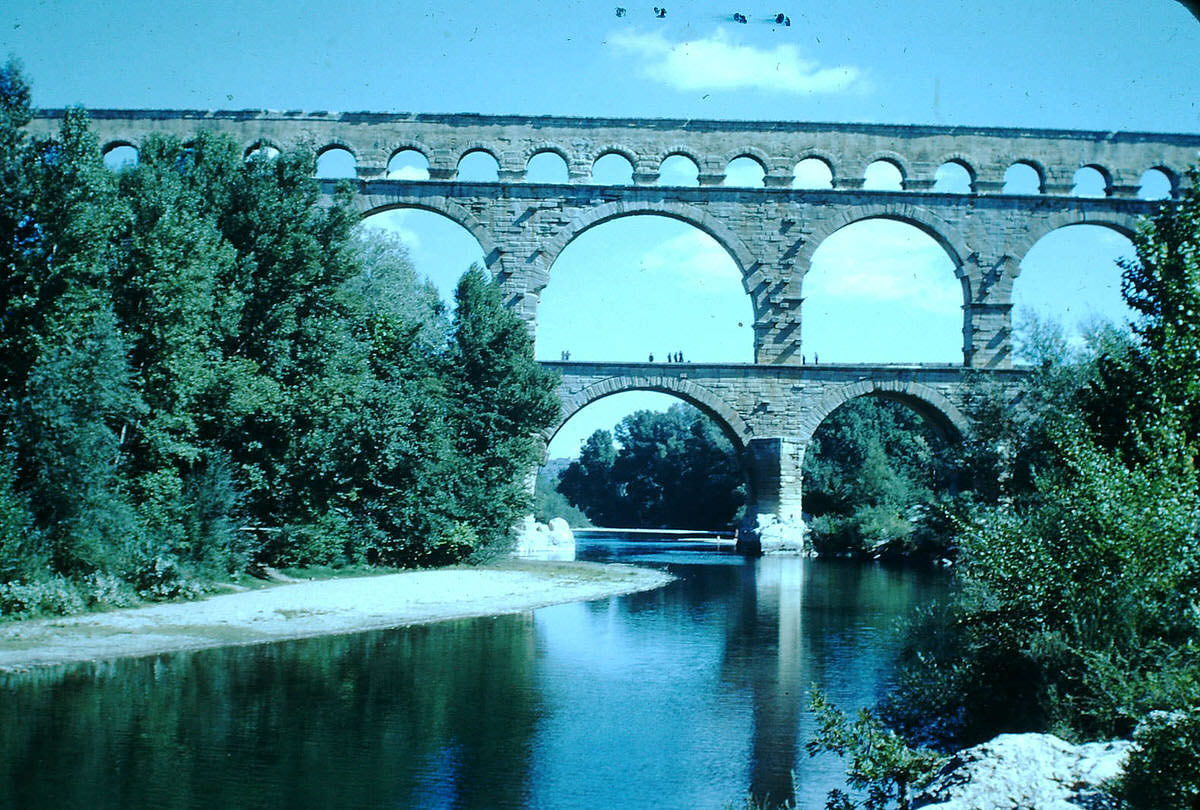
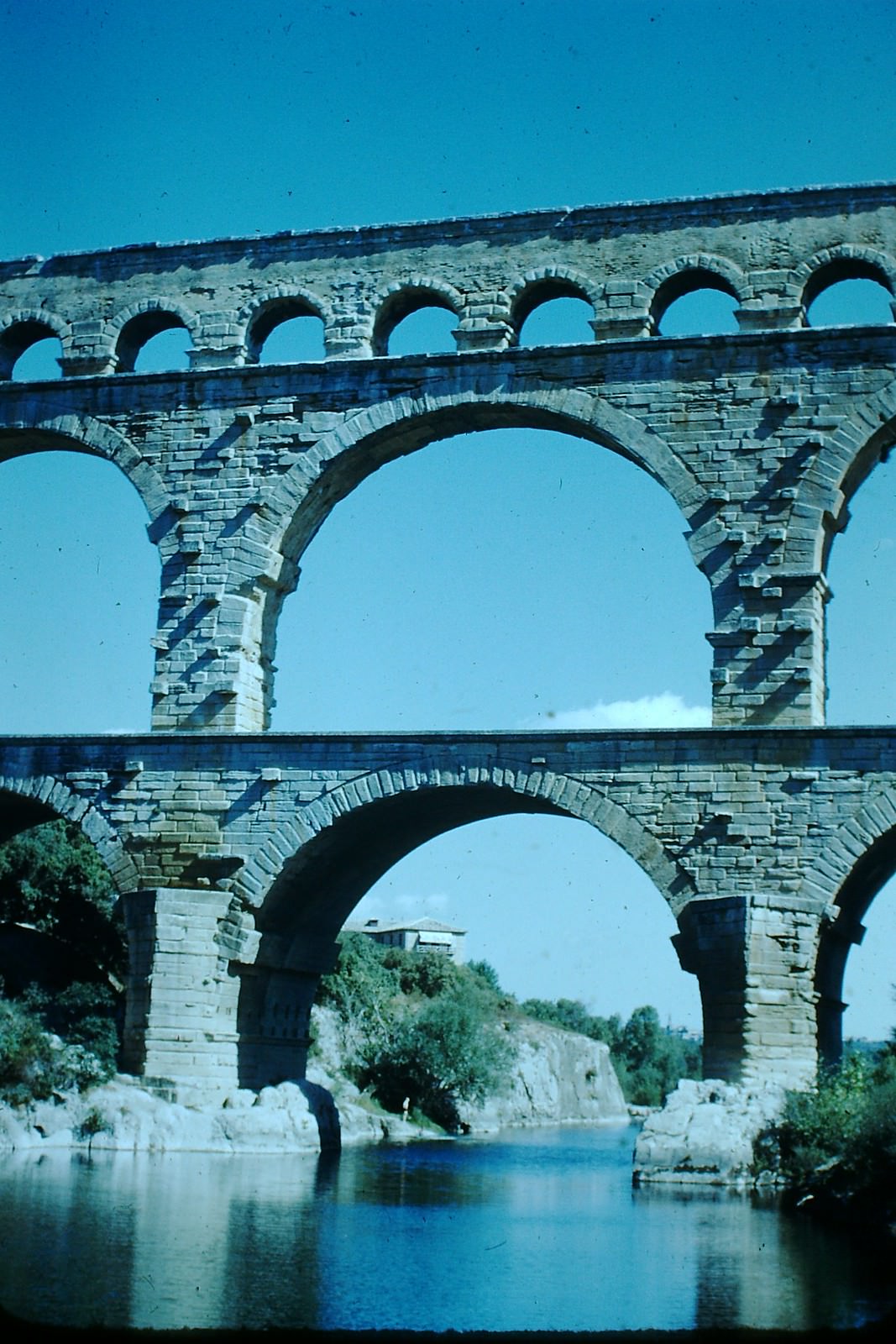
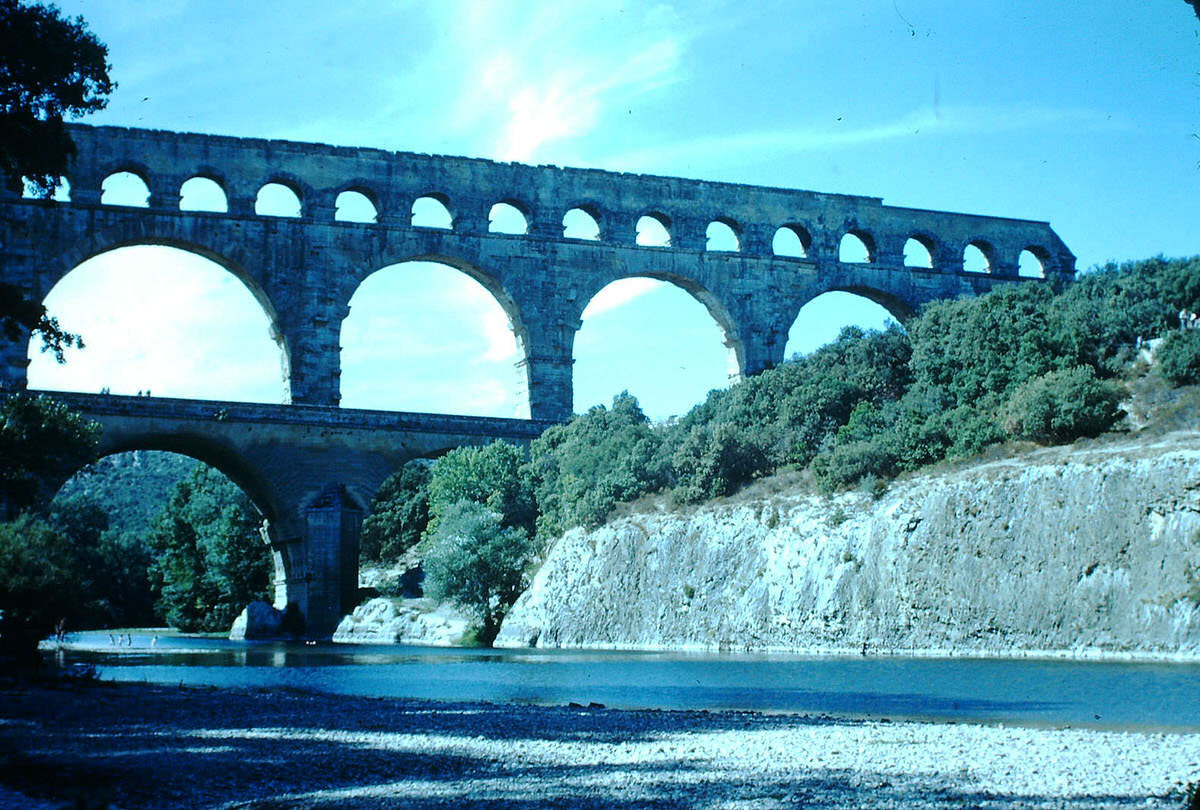
Below the aqueduct, the River Gardon provided a natural bathing spot for locals and visitors. The combination of ancient stone overhead and cool river water below made it a popular destination in the summer months.
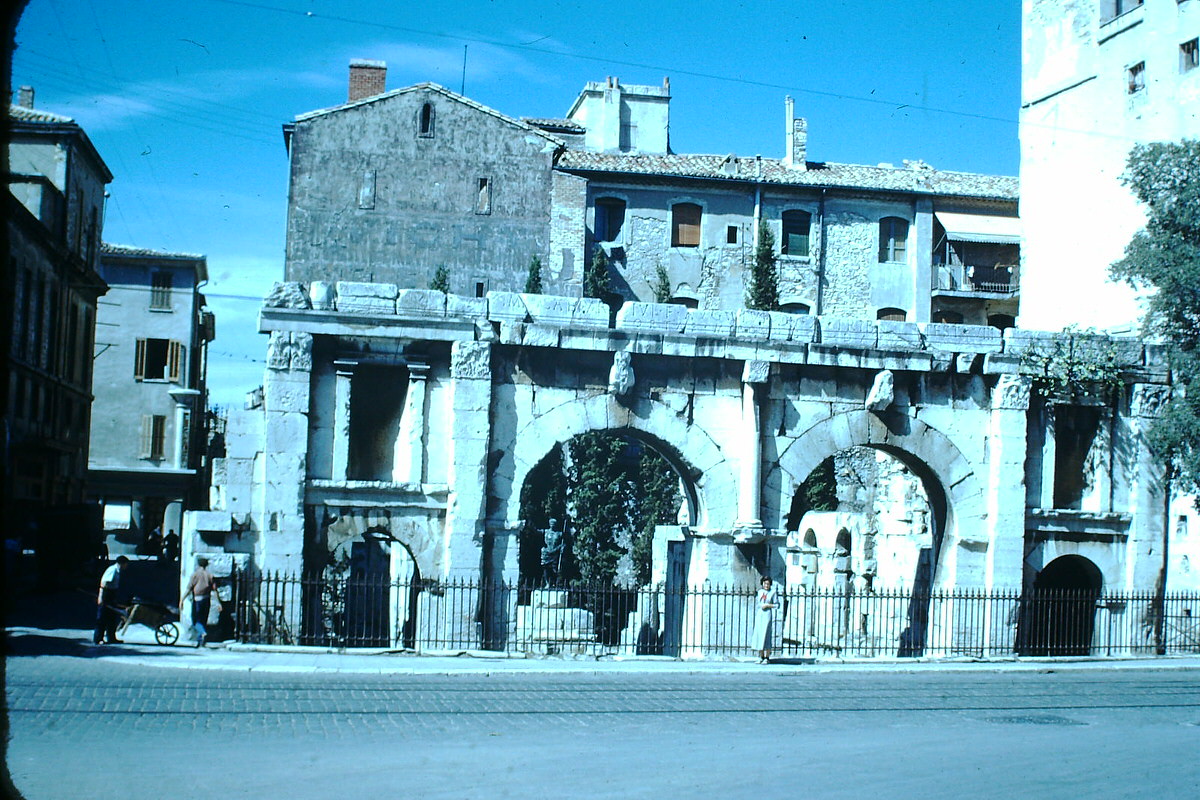
The city of Nîmes was a Roman capital in its own right. The Augustus Arch, part of the original city wall, still stood at the entrance to the old town — a direct link to the Roman colonization of southern France over two thousand years ago.
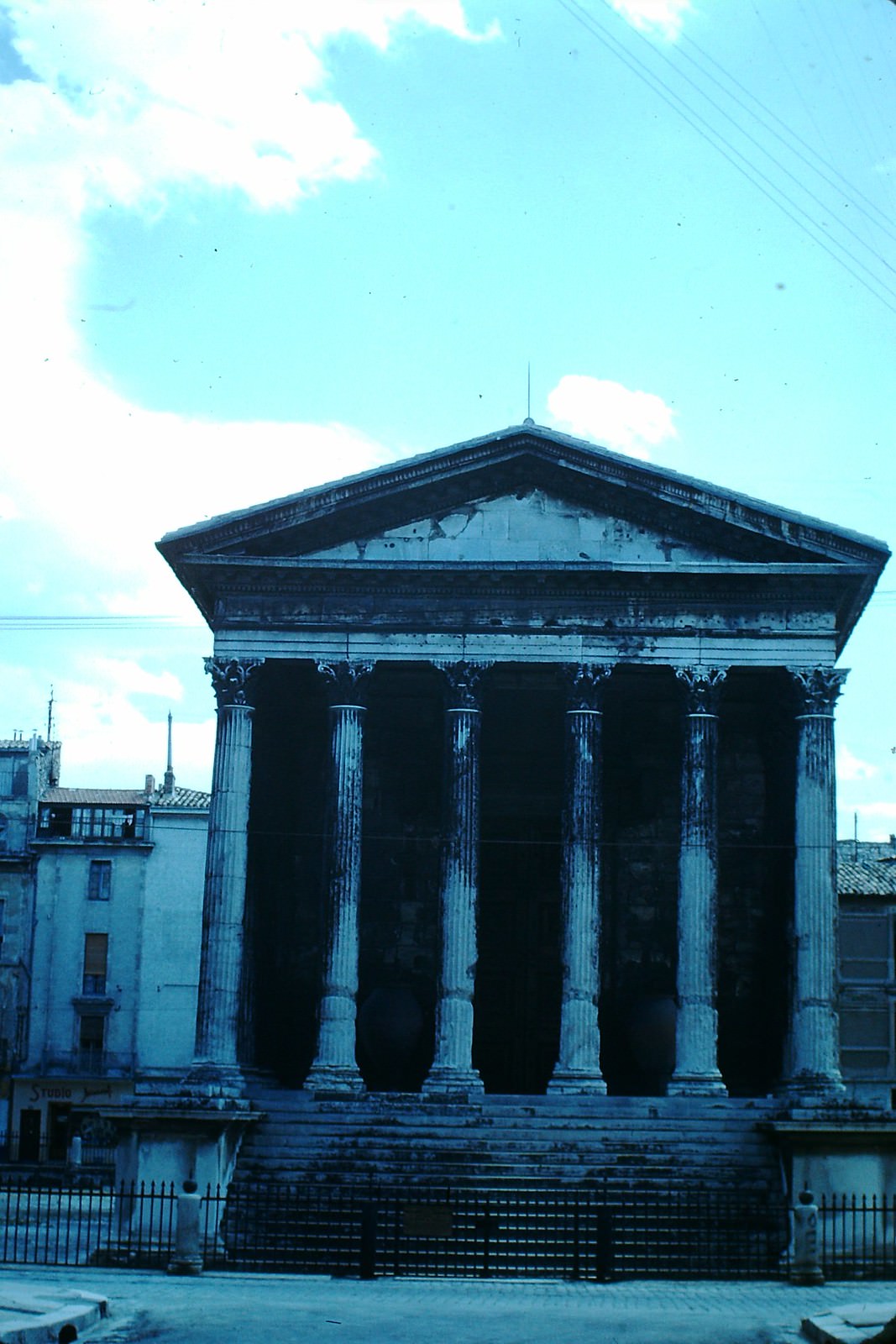
The Maison Carrée in Nîmes is one of the best-preserved Roman temples anywhere in the world. Built around 4 AD and dedicated to the grandsons of Emperor Augustus, it stood in 1953 exactly as it had for nearly two millennia.
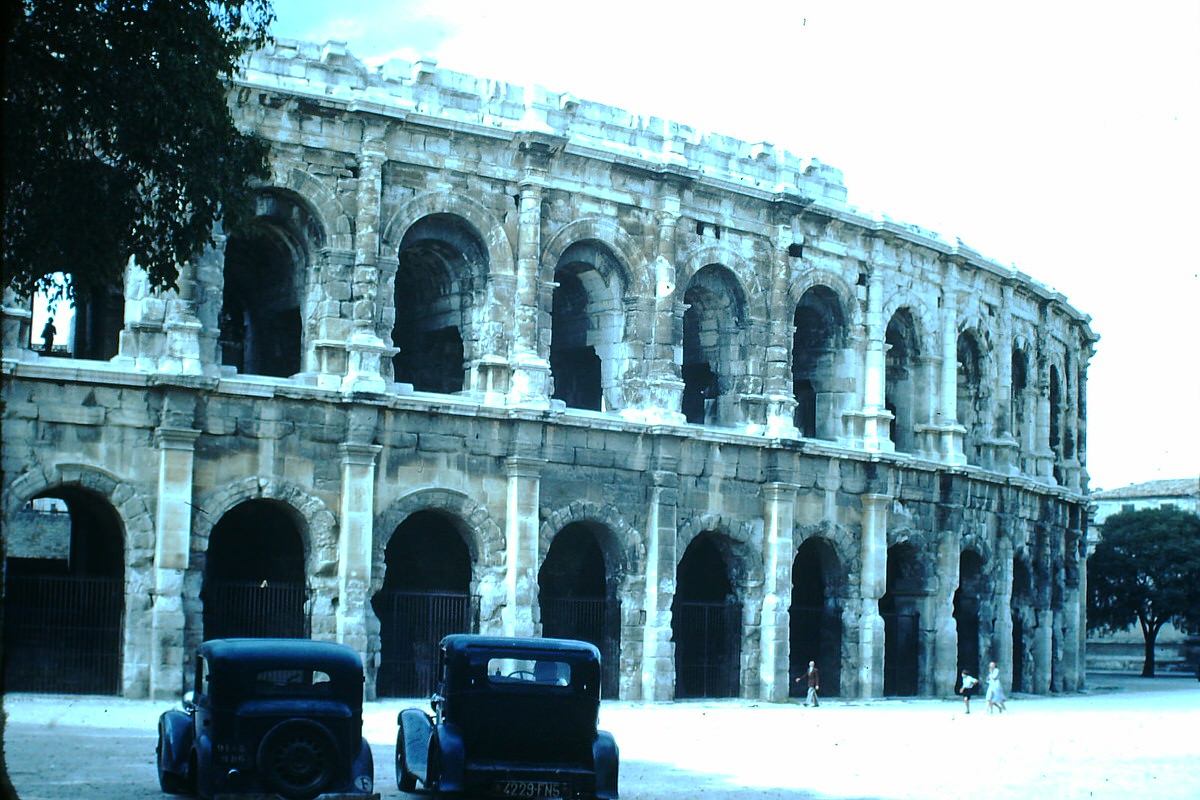
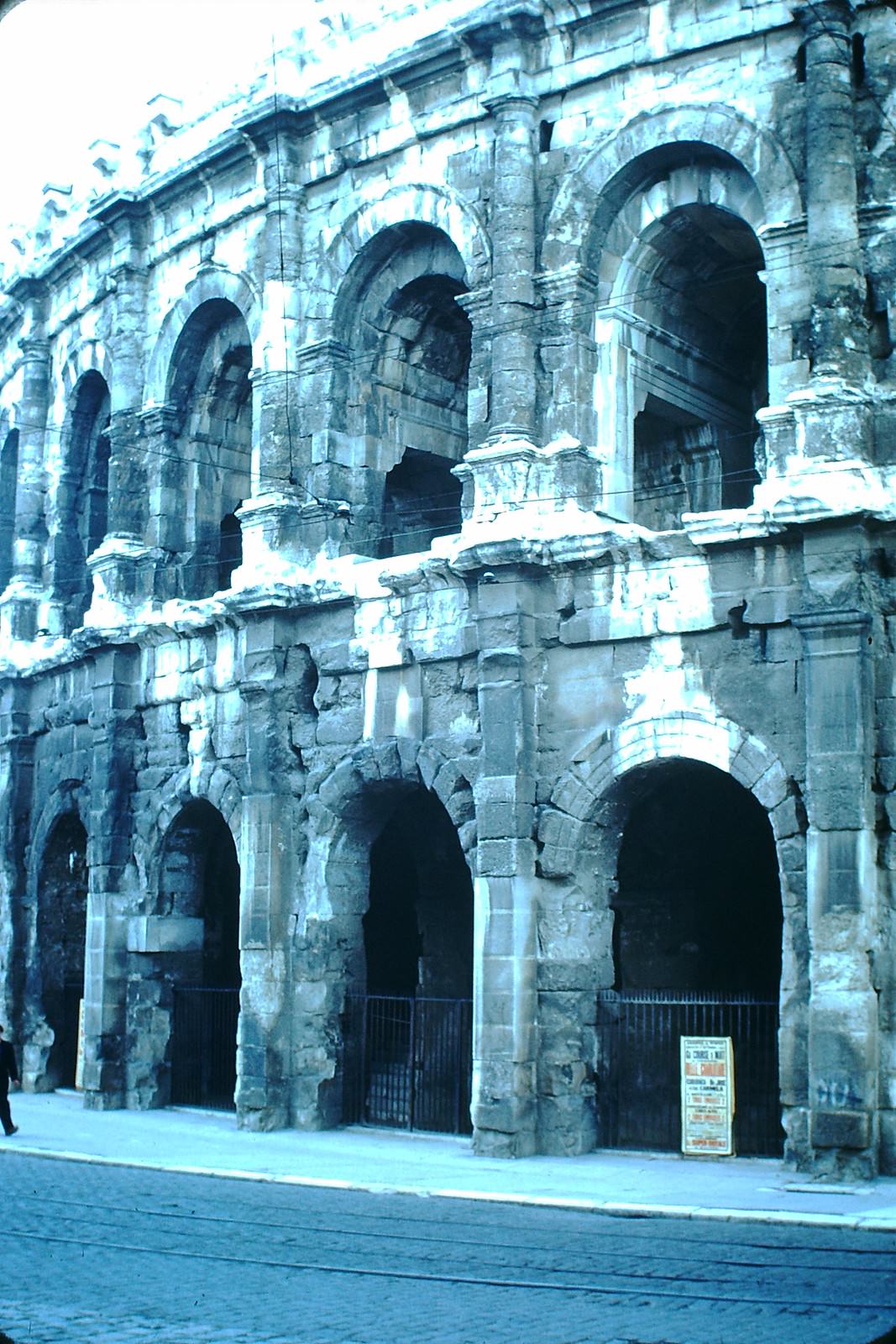
Les Arènes de Nîmes is a Roman amphitheater built around 70 AD, slightly predating the Colosseum in Rome. It seated around 24,000 spectators and hosted gladiator fights in antiquity. By 1953, it was still used for bullfights and public events.
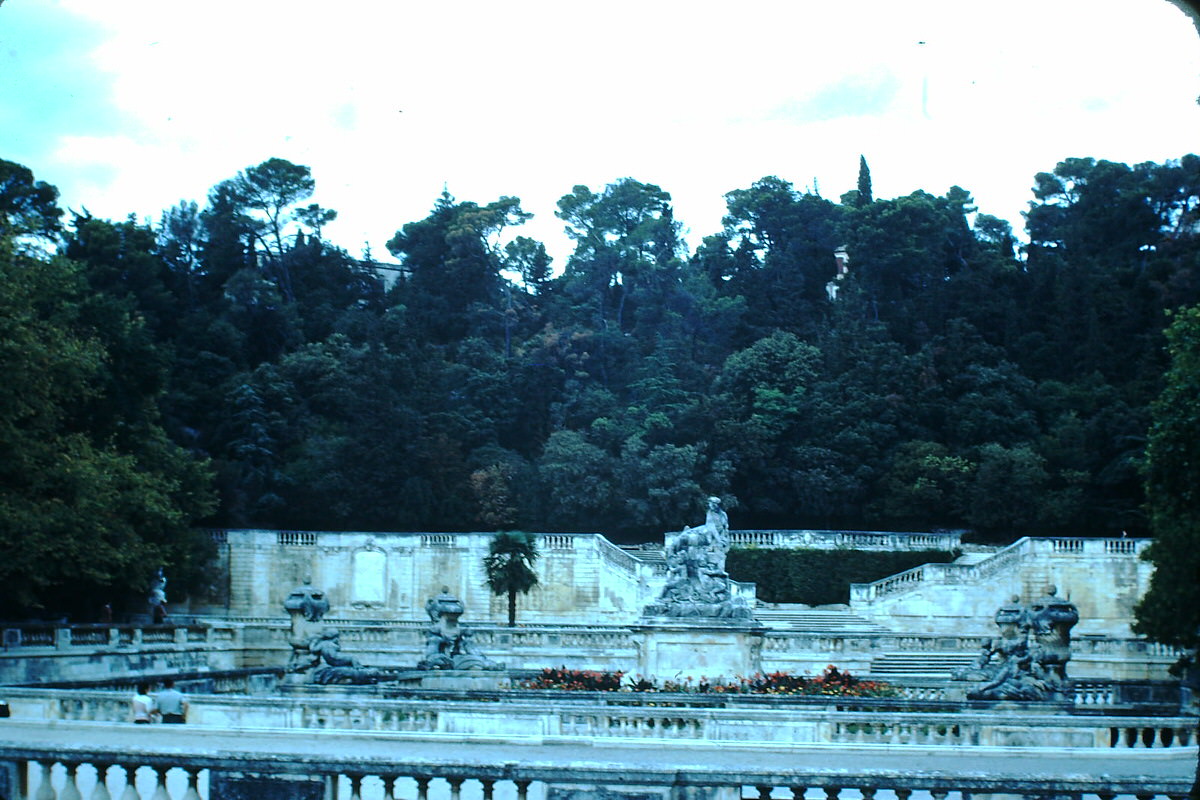
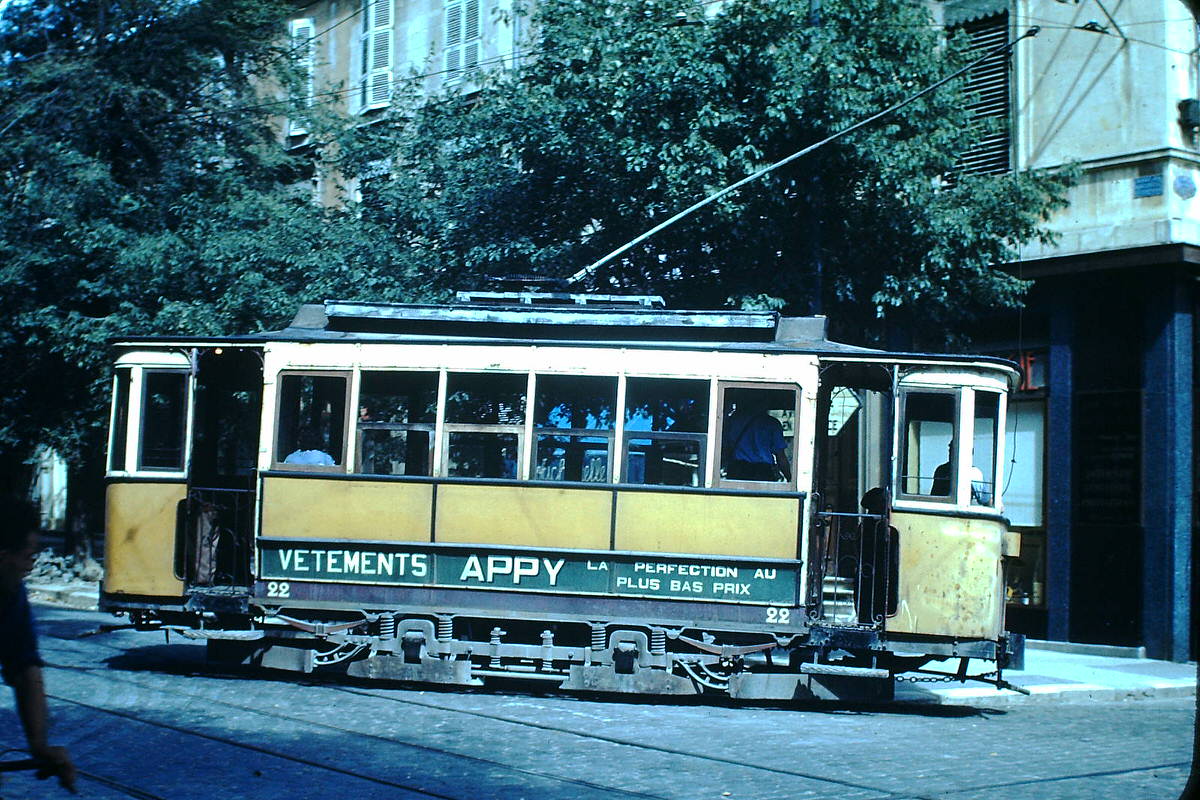
Where Roman baths once stood in Nîmes, a public park had been laid out by 1953. The Jardins de la Fontaine, built over the ancient site, preserved the ruins within a formal French garden. Nearby, a streetcar still ran through the city streets.
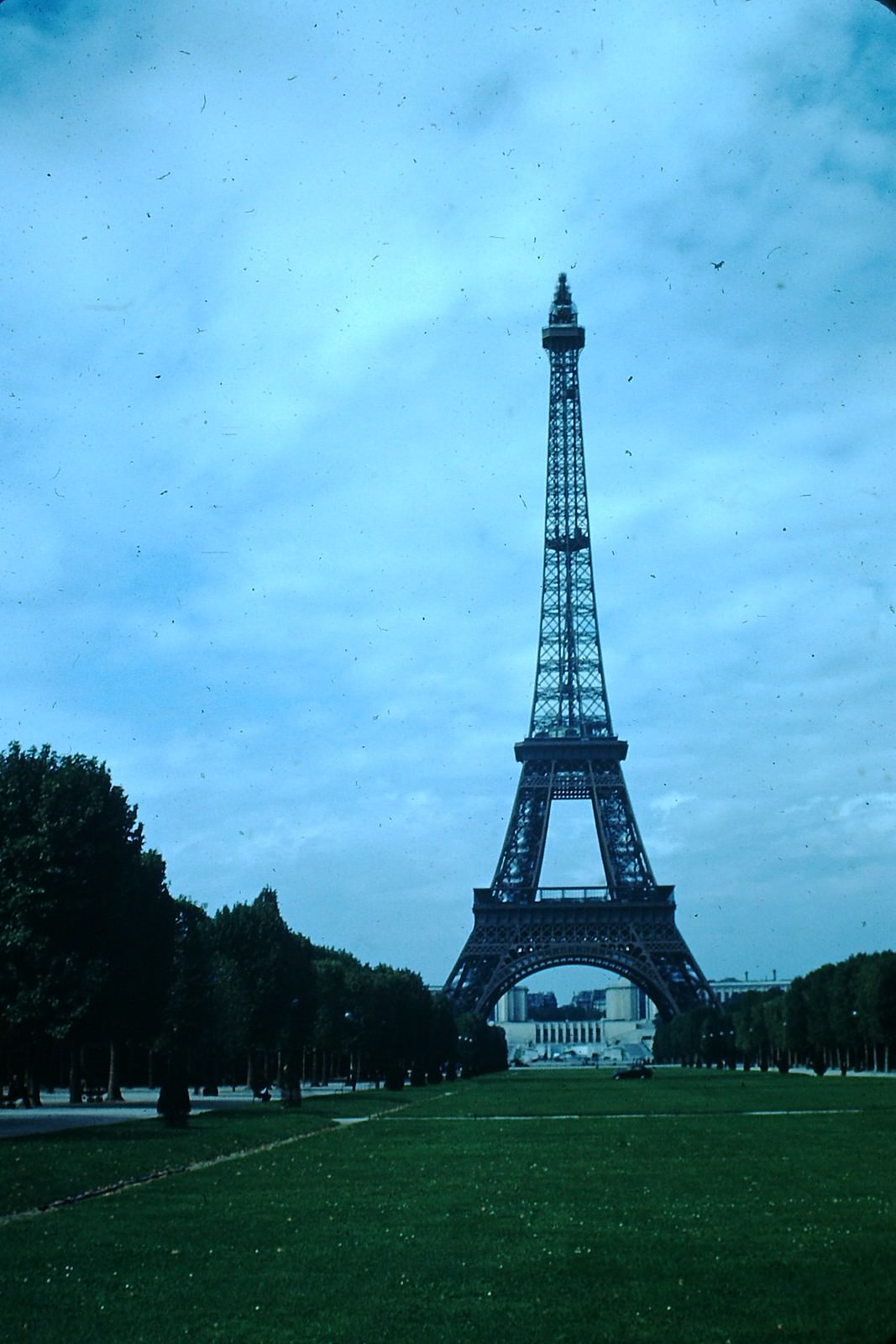
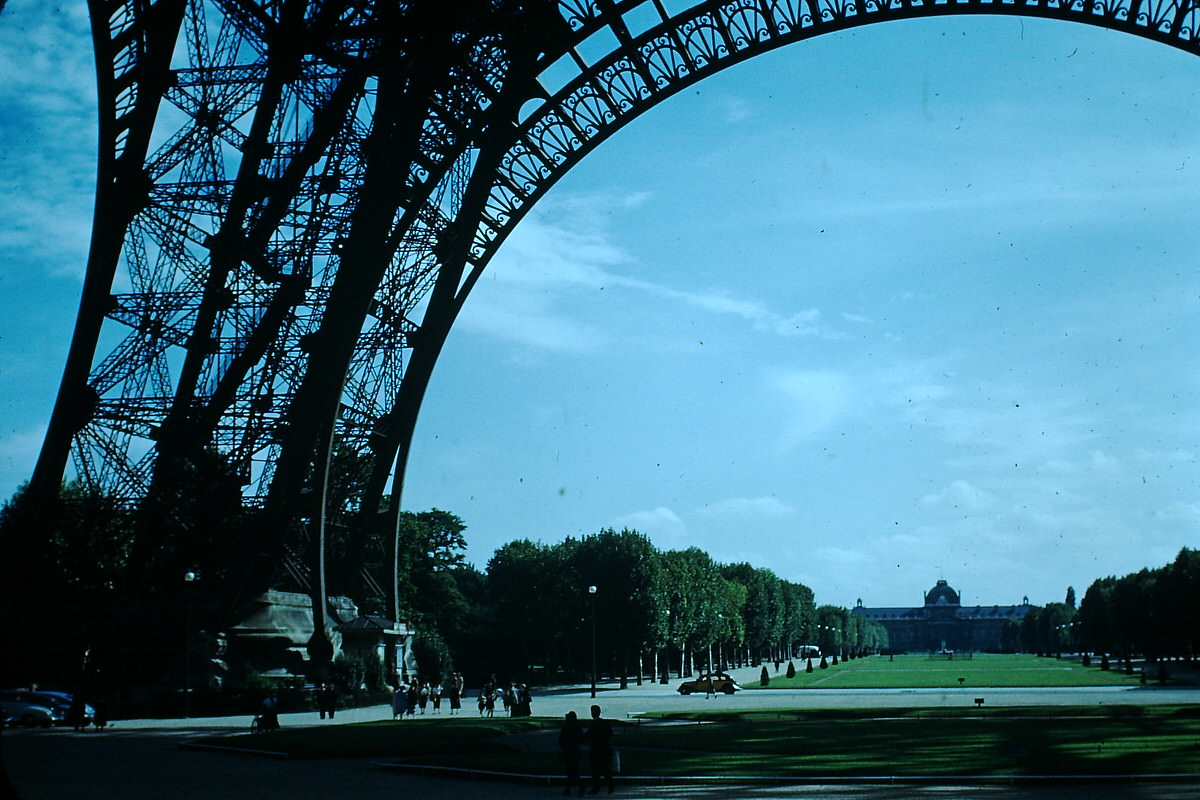
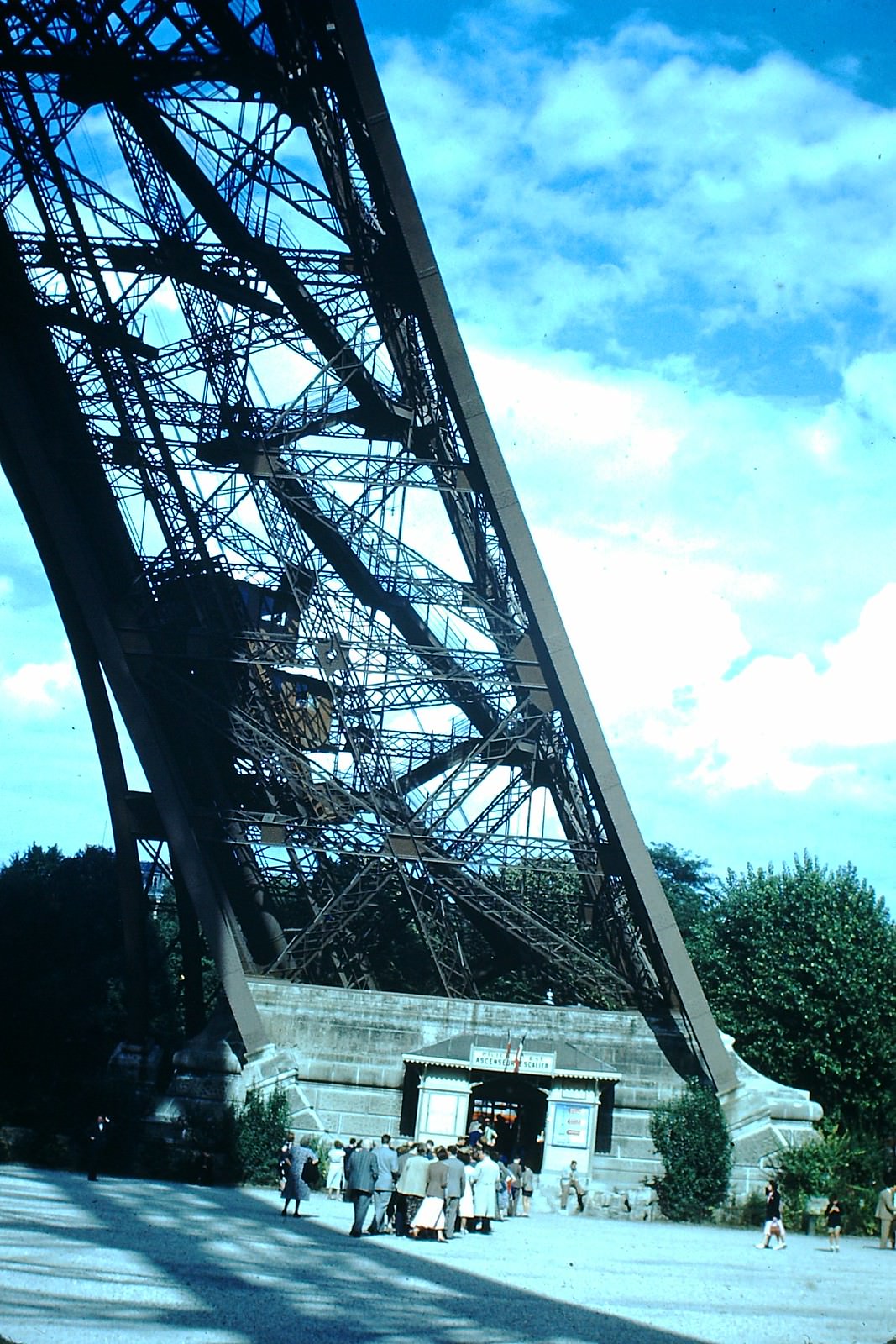
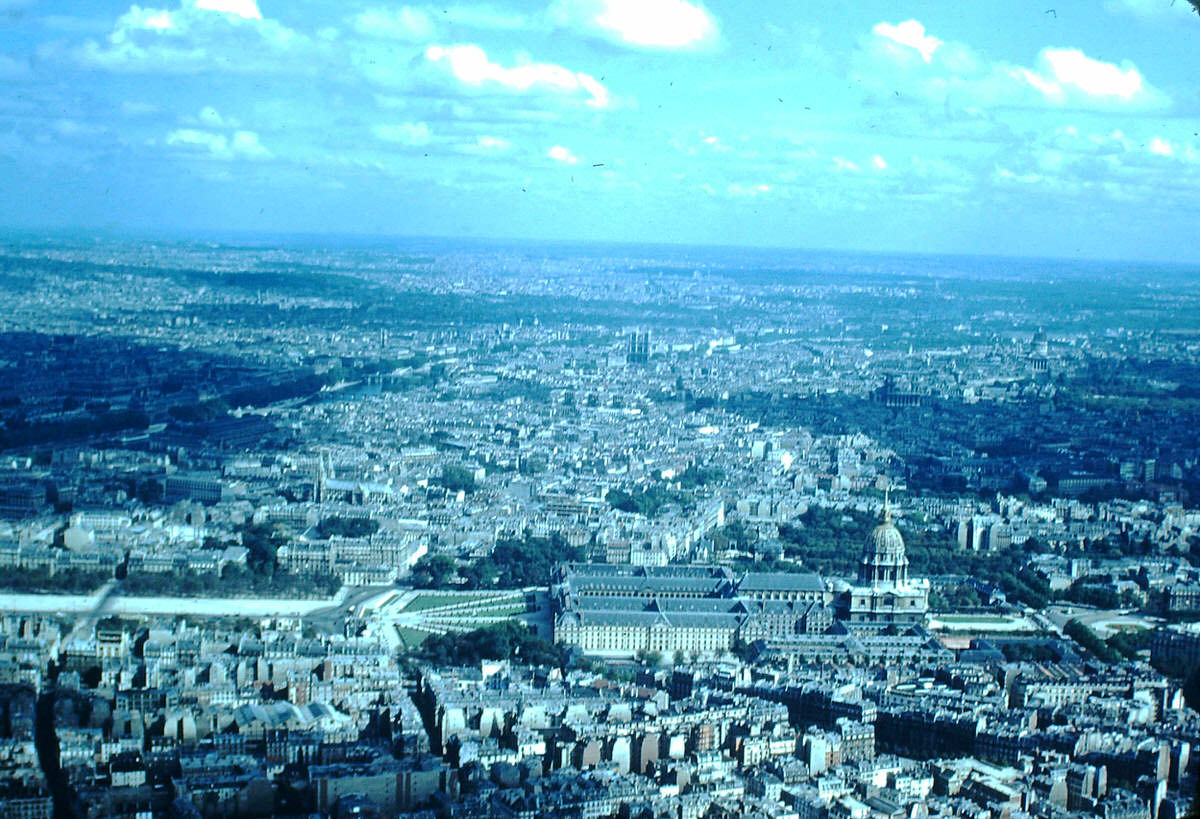
Paris anchored the country’s identity in 1953, just as it always had. The Eiffel Tower, built for the 1889 World’s Fair, remained the city’s most photographed structure. From its base, the Palais de Chaillot was visible on the opposite bank of the Seine, and the École Militaire stood to the south.
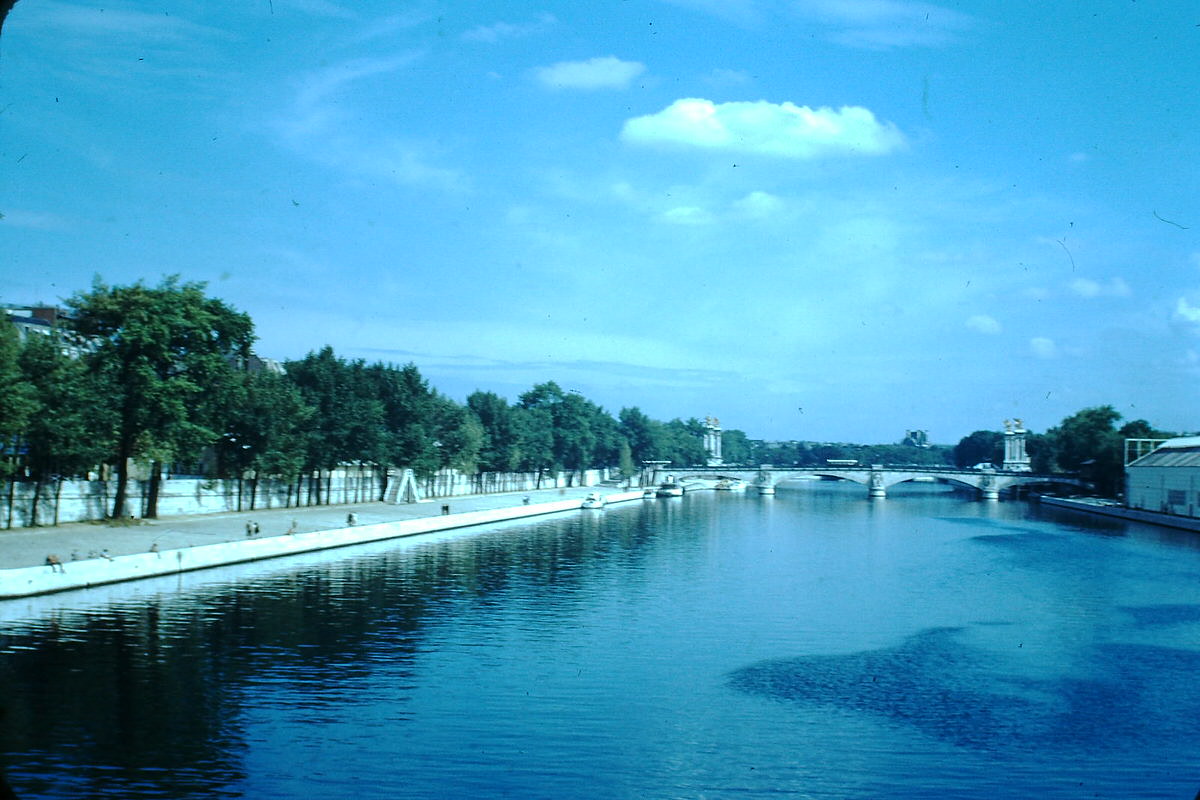
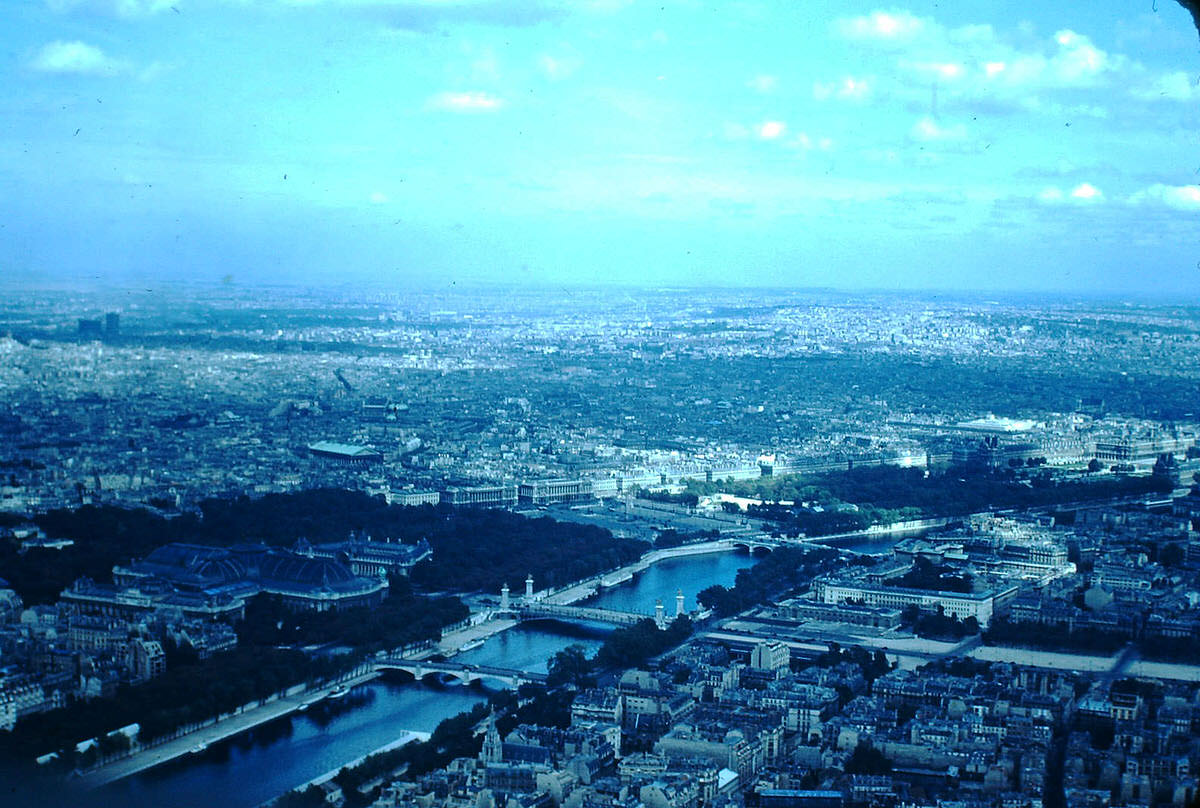
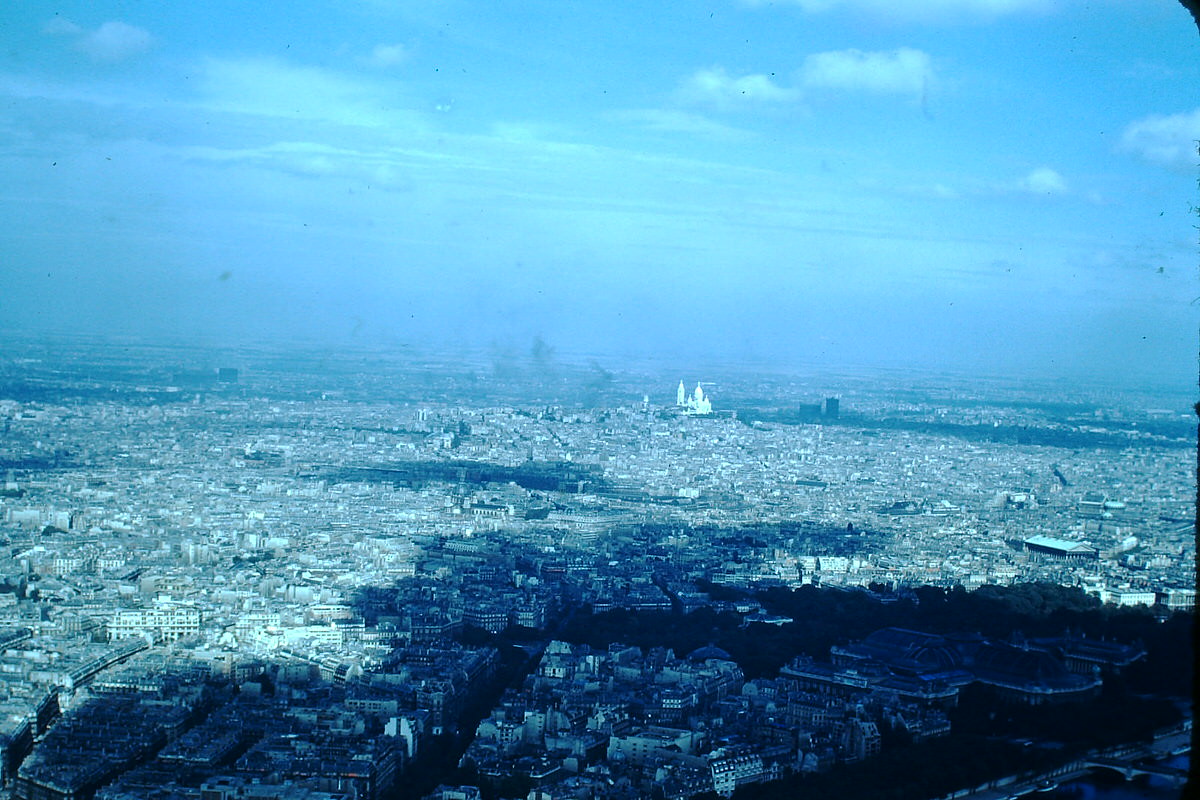
From the upper platforms of the Eiffel Tower, the view stretched across Paris in every direction. The Seine snaked through the city below, with the Alexandre III Bridge — one of the most ornate bridges in Paris — clearly visible along its banks.
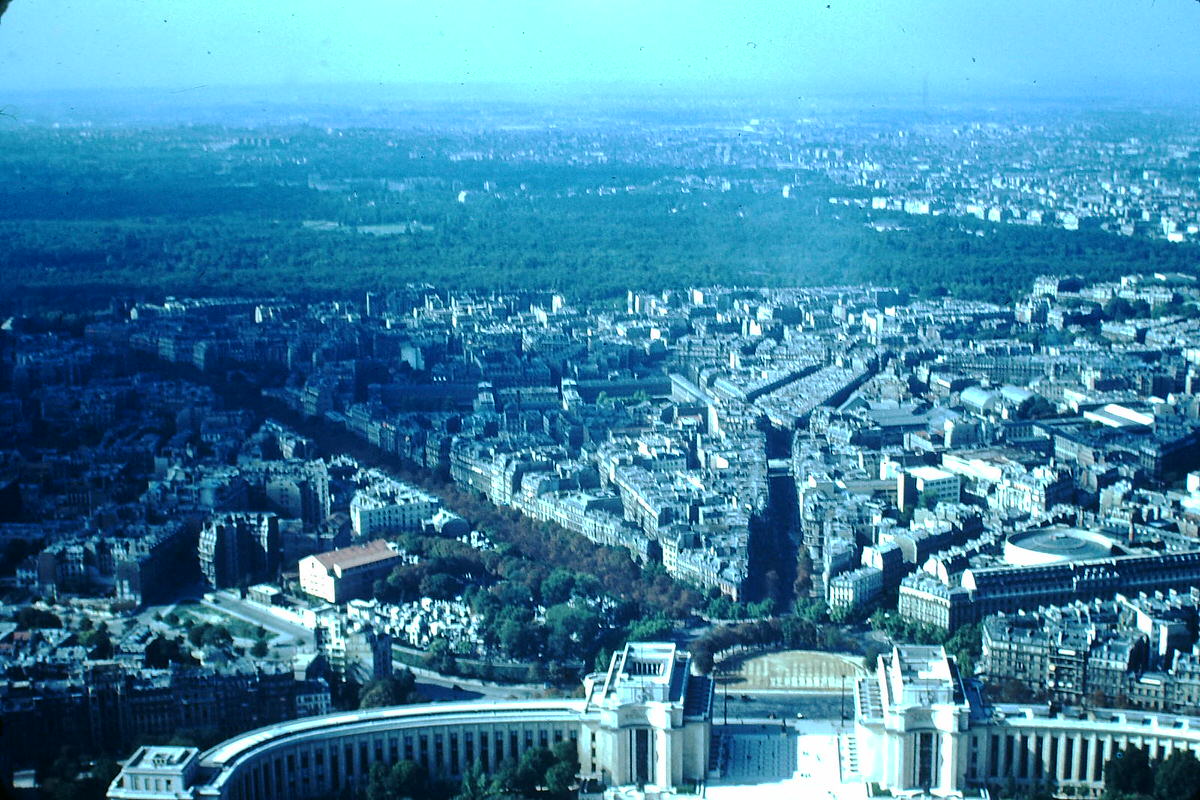
The Arc de Triomphe rose at the center of twelve radiating avenues, commissioned by Napoleon in 1806 to honor his armies. It had long since become a national monument, housing the Tomb of the Unknown Soldier beneath its arch.
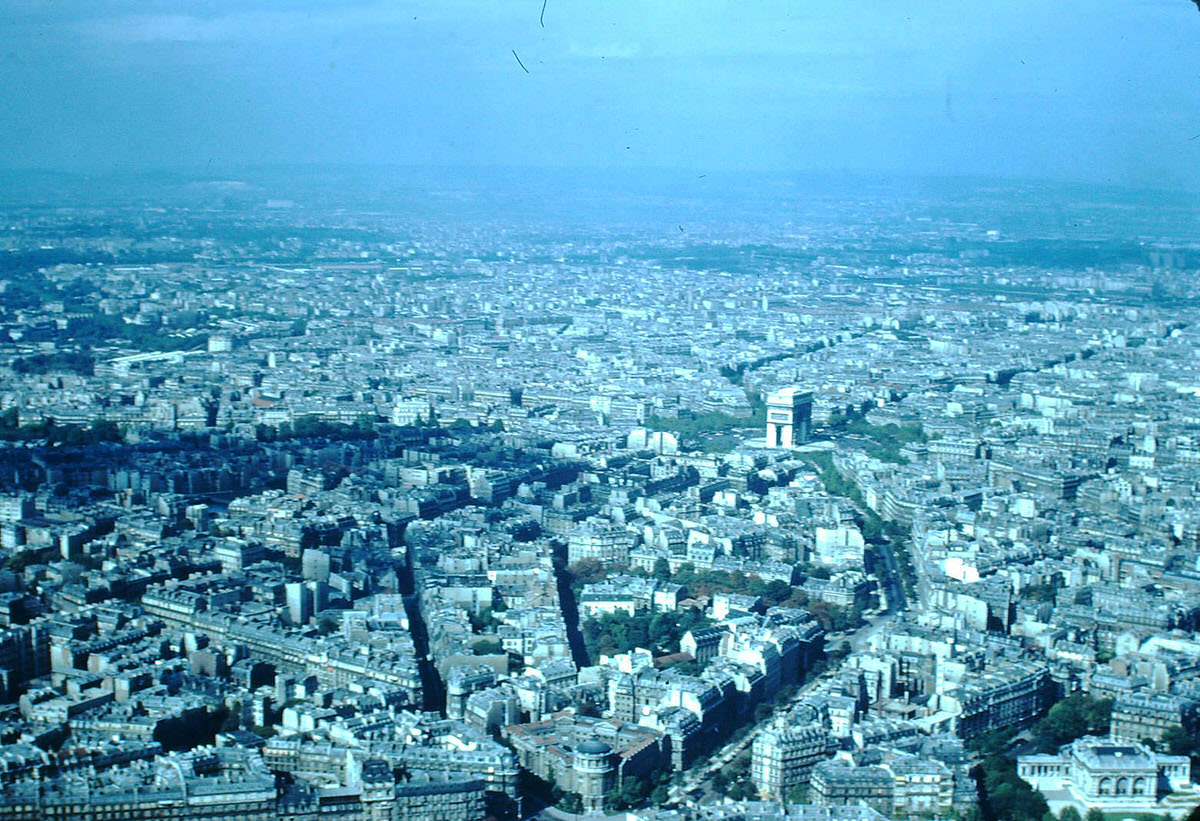
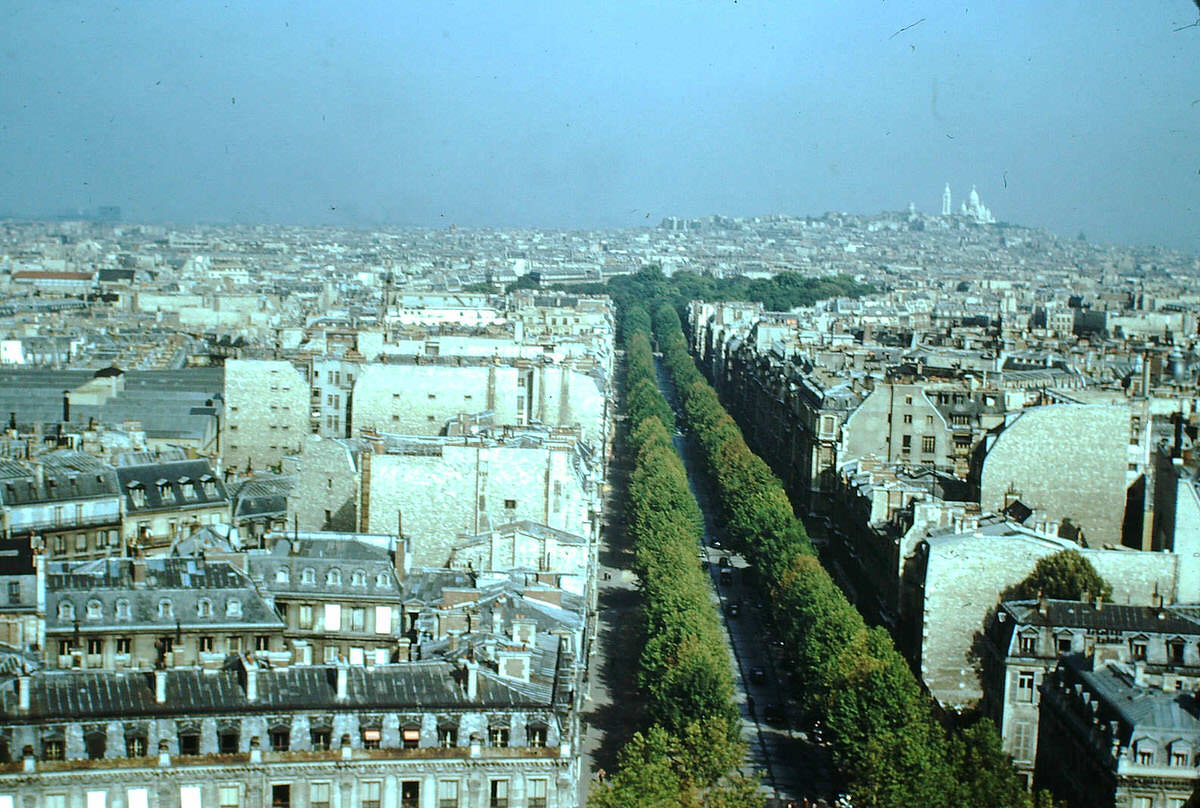
Views from the top of the Arc de Triomphe gave a clear picture of mid-century Paris. The city’s rooftops spread out in every direction, with the domes of Sacré-Cœur and the Madeleine visible against the skyline.
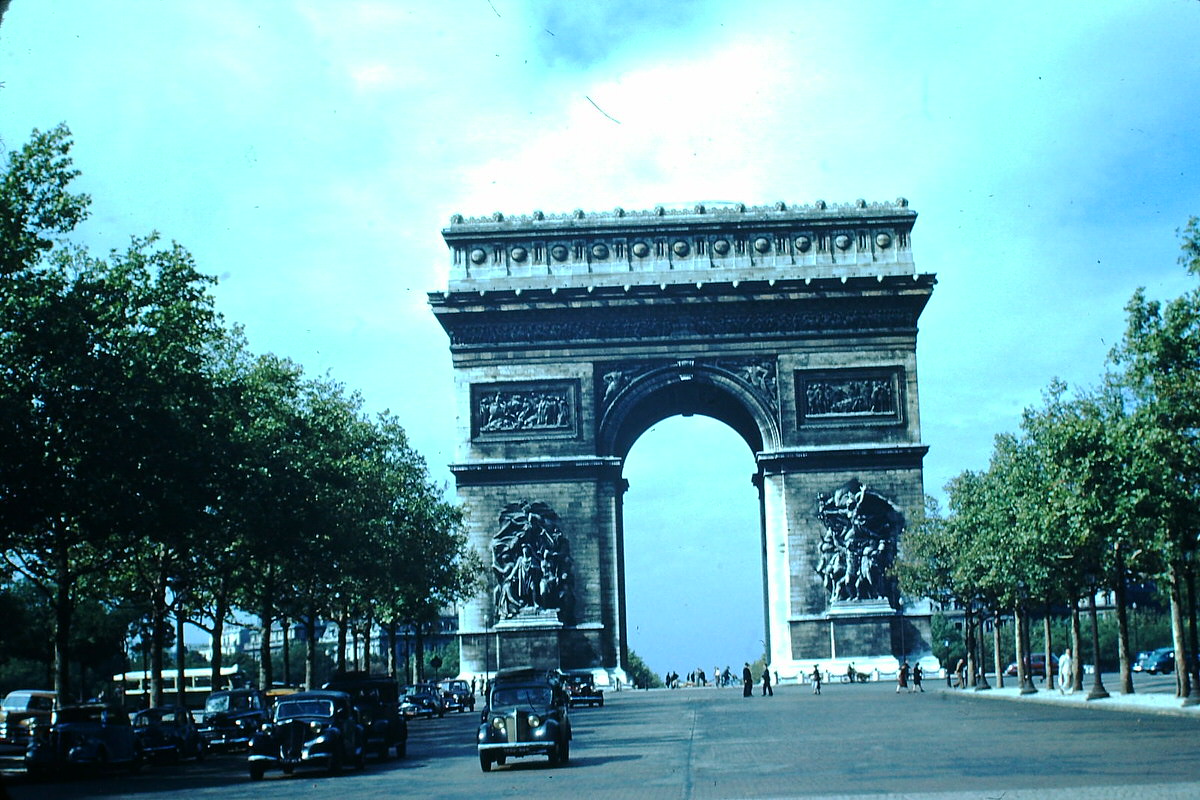
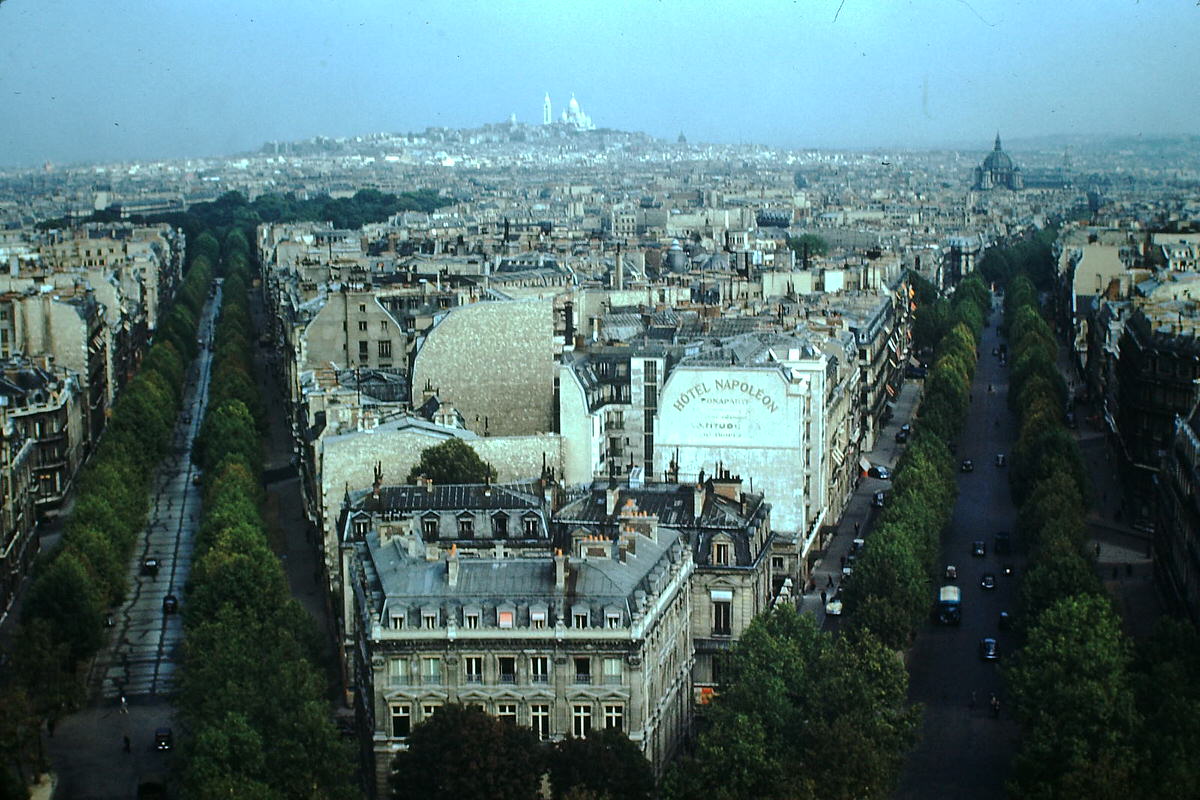
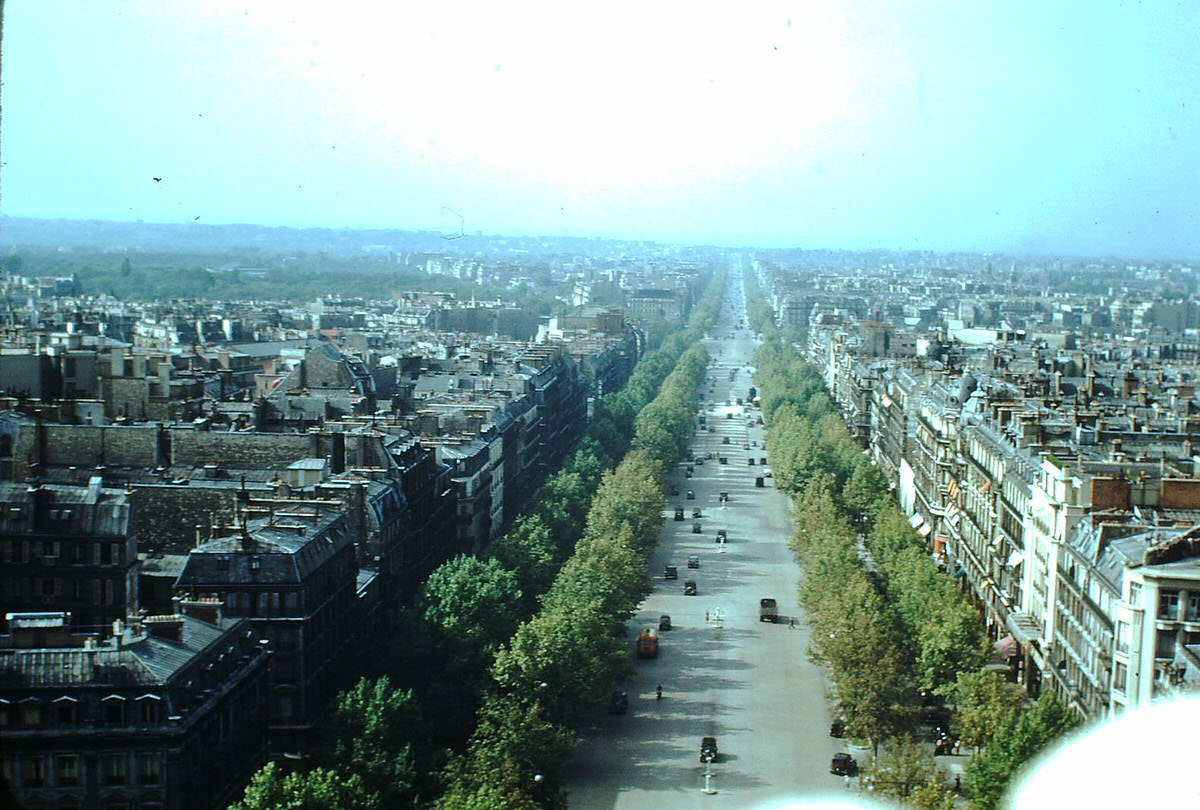
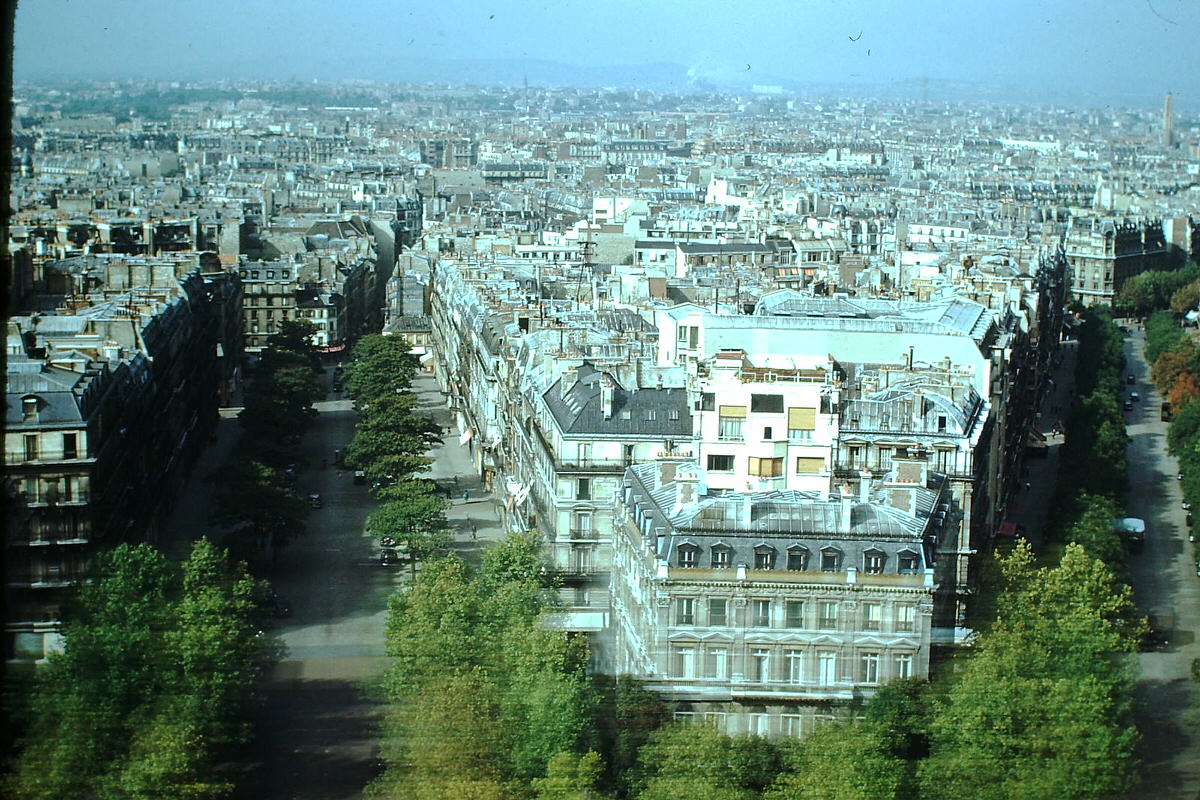
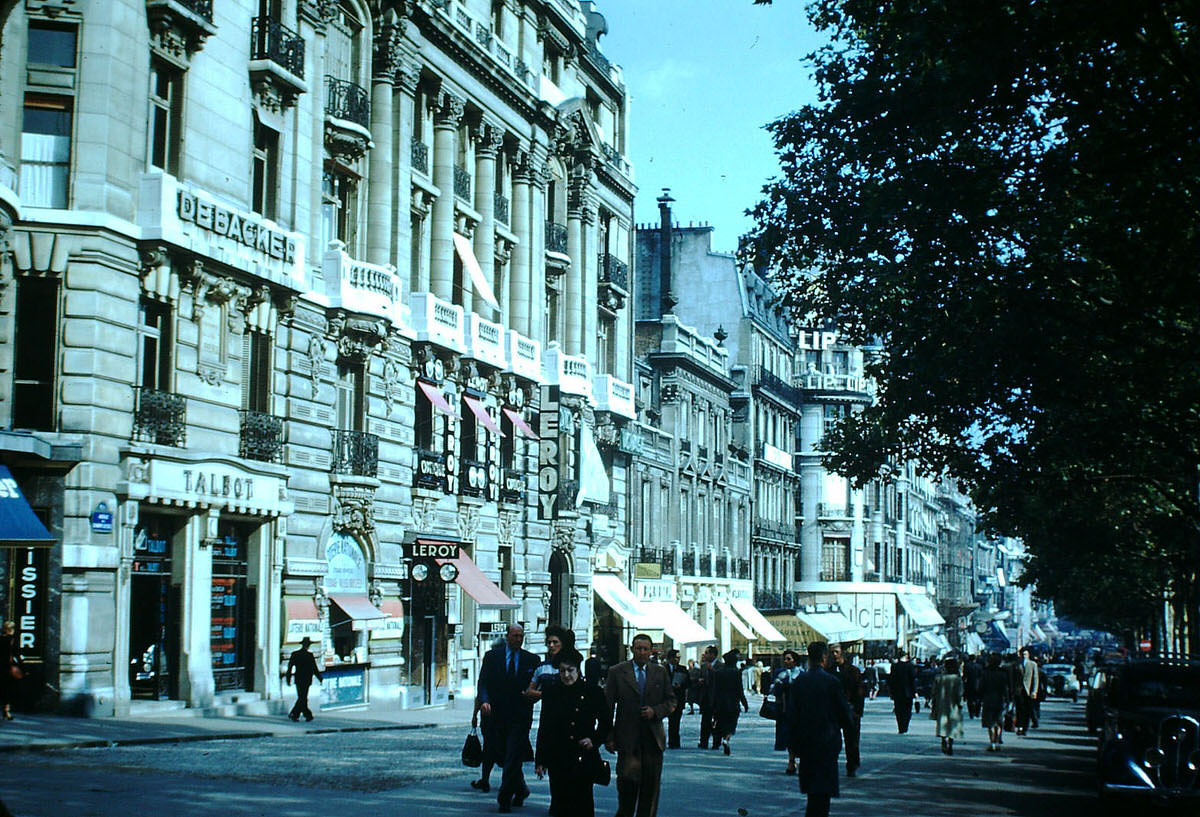
The Champs-Élysées ran straight from the Arc de Triomphe down to the Place de la Concorde — about 1.9 kilometers of wide boulevard flanked by trees, cafes, and shops. In 1953, it was both a commercial street and a place for Parisians to walk and be seen.
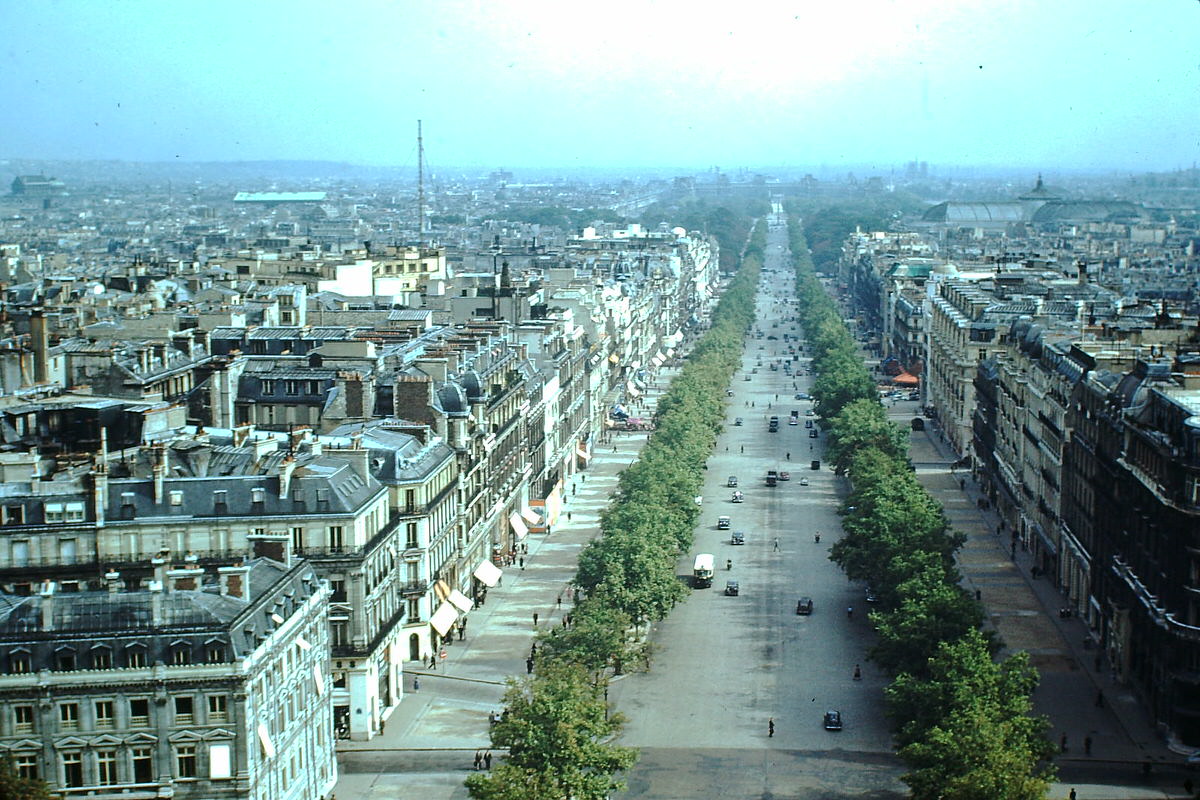
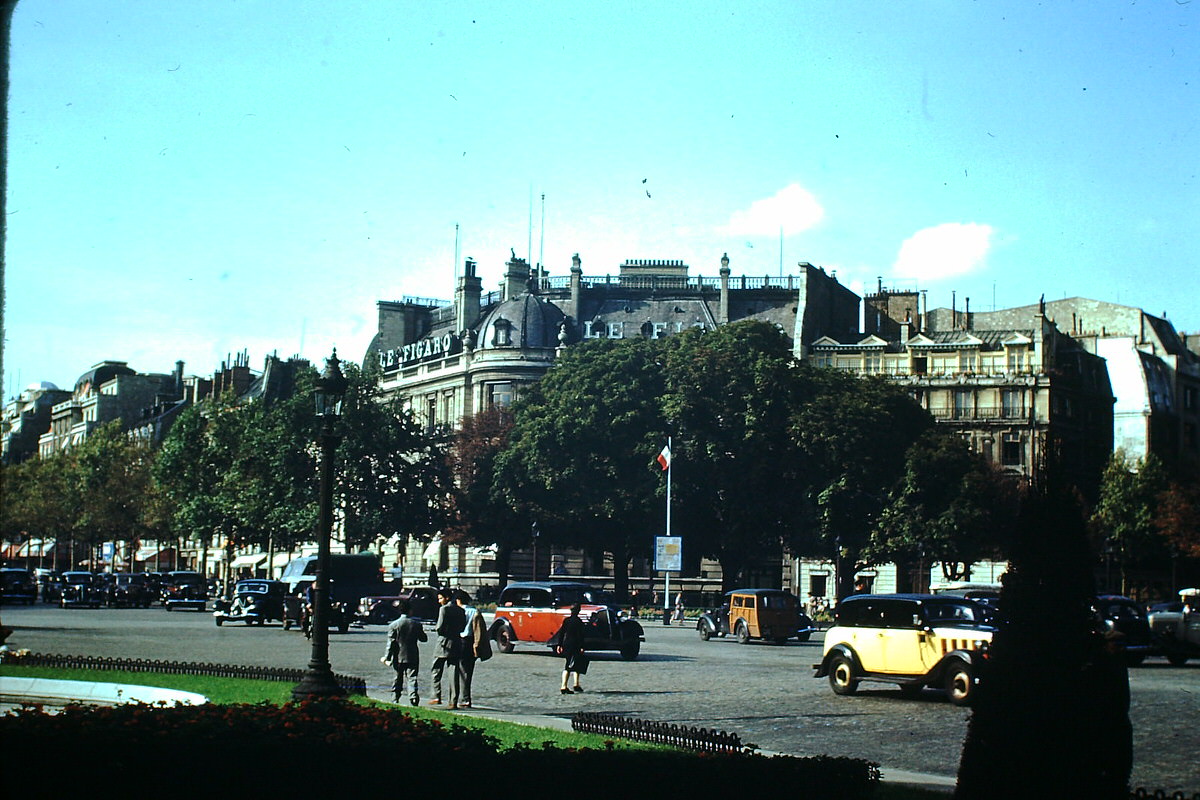
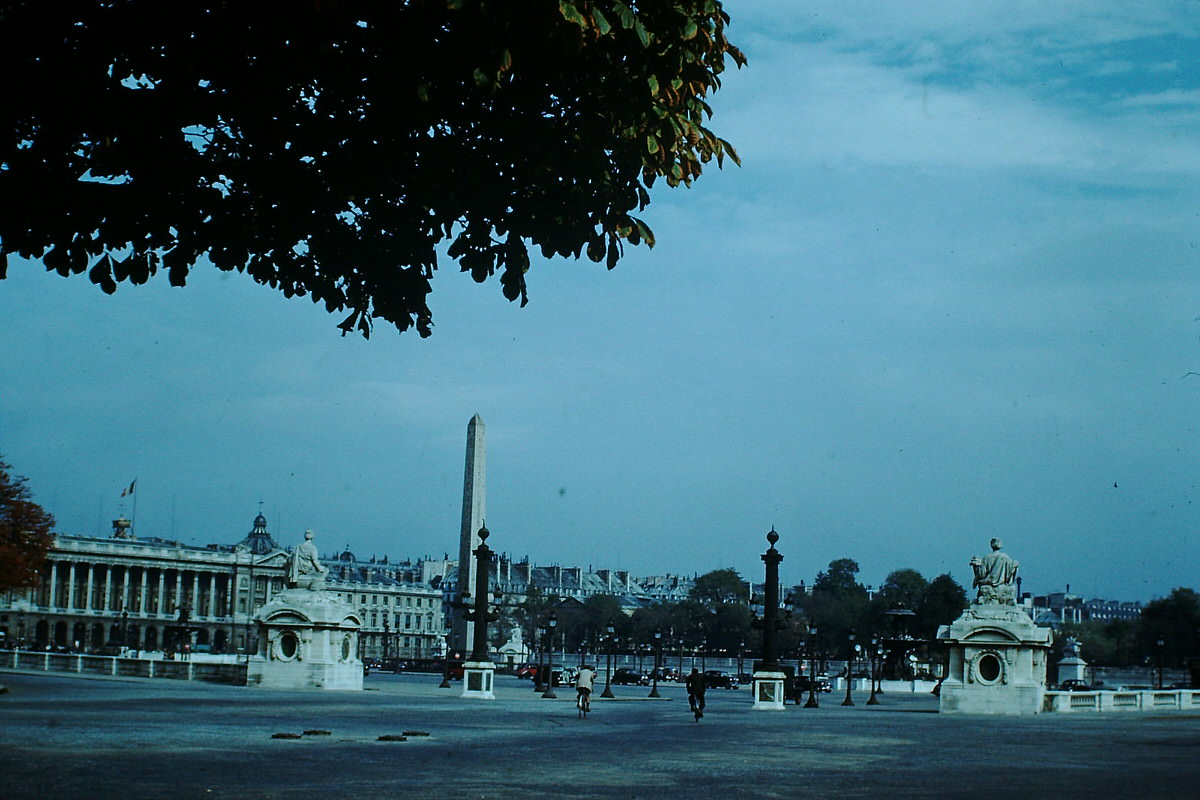
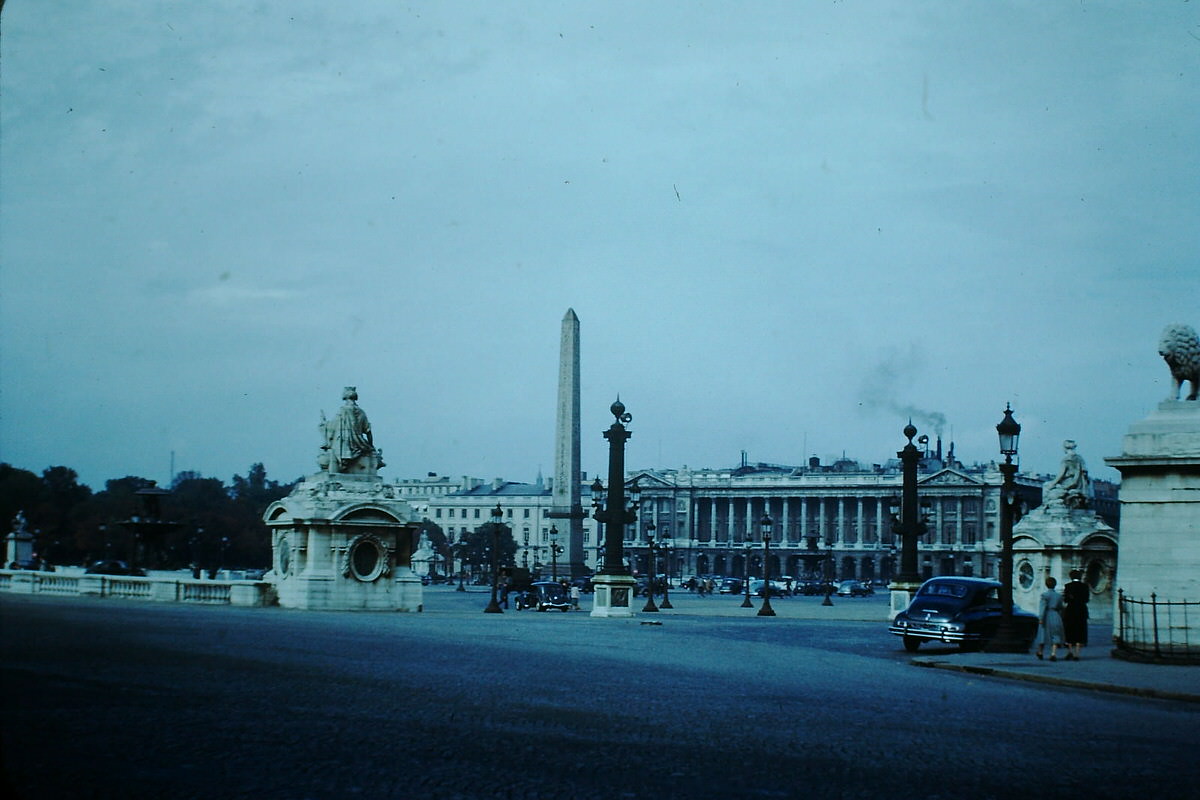
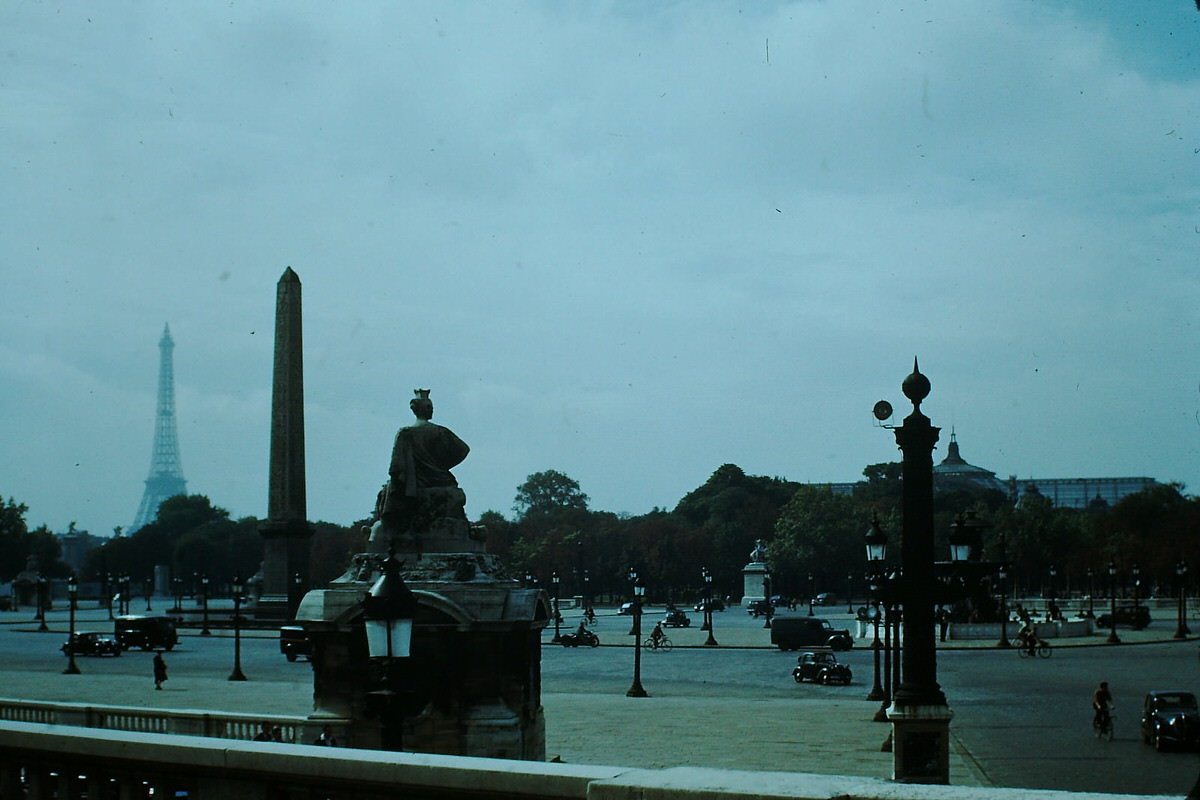
The Place de la Concorde sat at the eastern end of the Champs-Élysées. It is Paris’s largest public square and holds a dark history — it was the site of thousands of guillotine executions during the French Revolution, including King Louis XVI and Marie Antoinette. By 1953, its Egyptian obelisk and ornamental fountains made it one of the city’s most photographed open spaces.
The Louvre, originally a royal palace, had been France’s national museum since the Revolution. Its long wings and central courtyard made up one of the largest art museums in the world. In 1953, visitors walked its halls to see collections ranging from ancient Egyptian artifacts to Renaissance paintings.
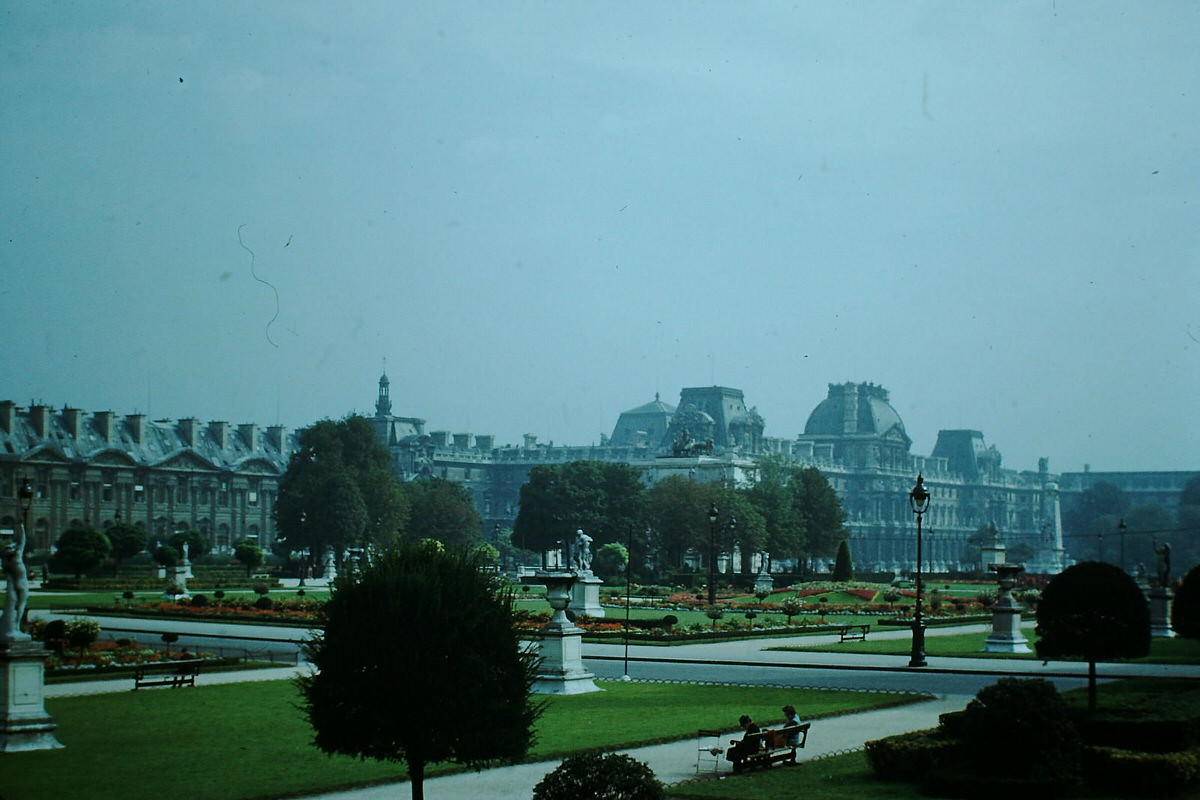
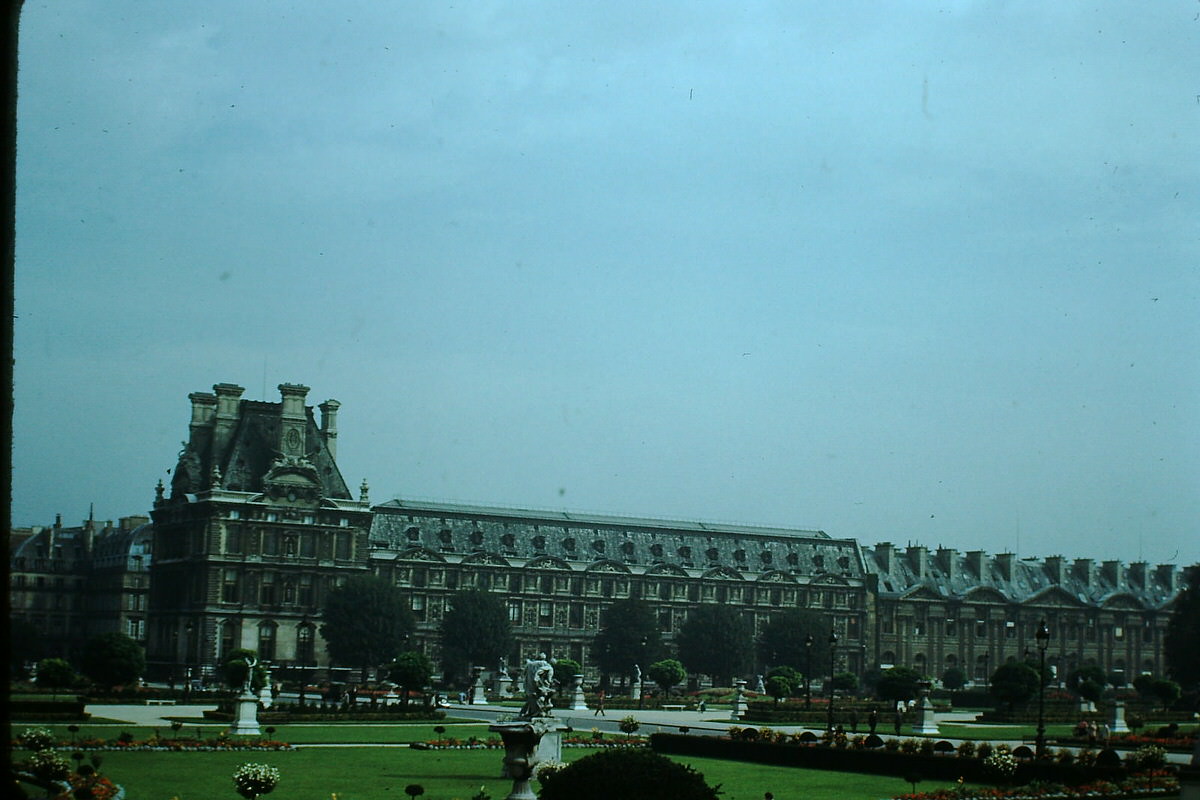
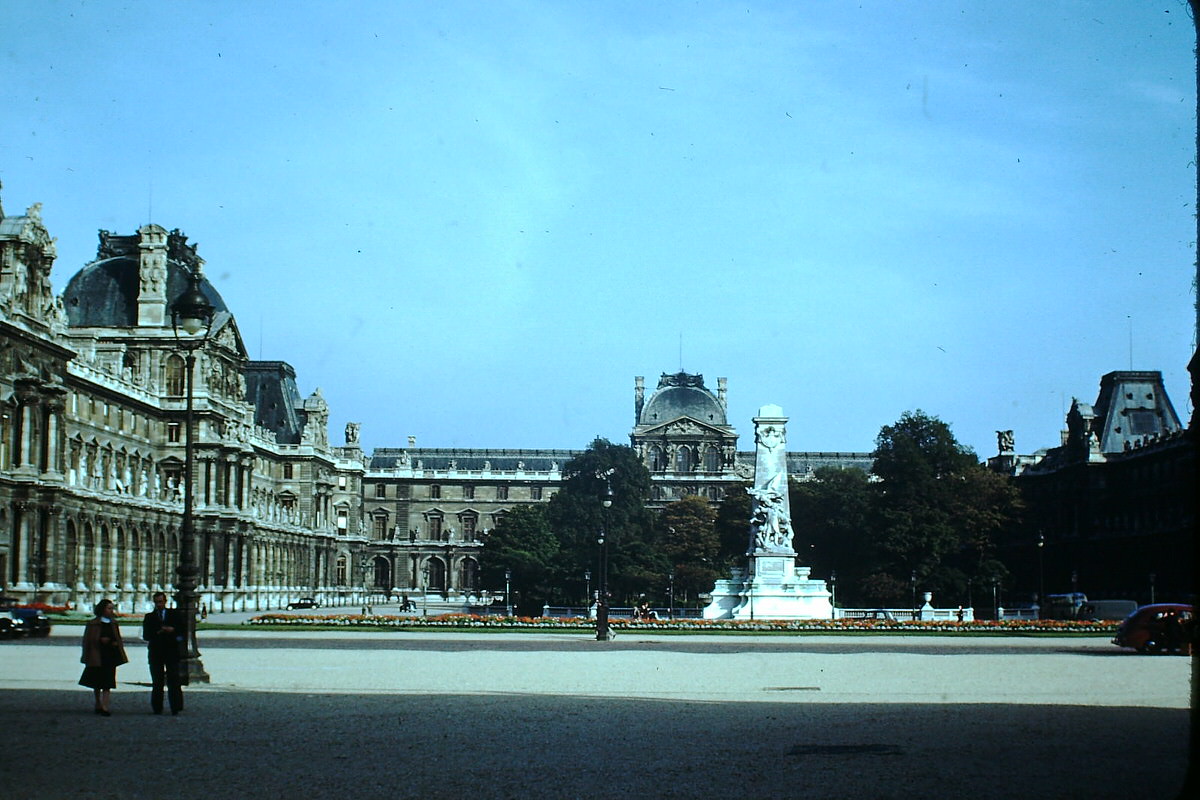
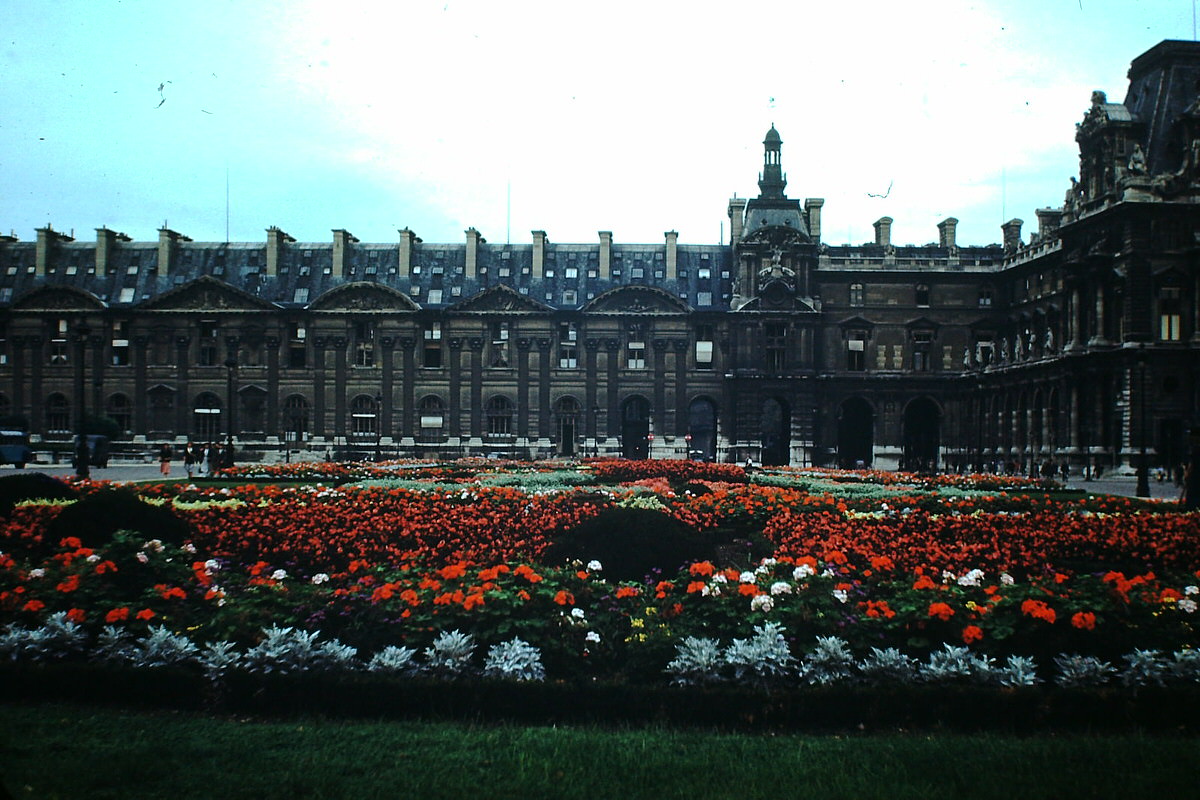
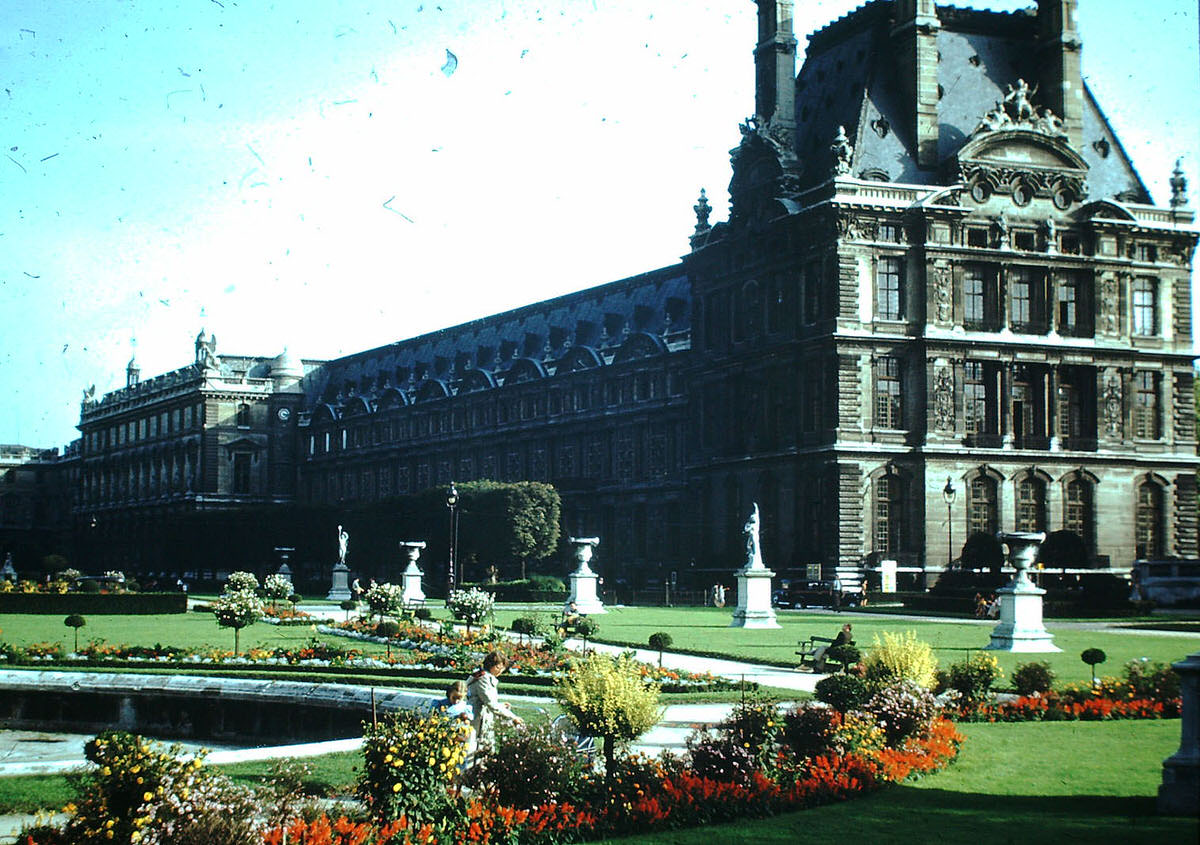
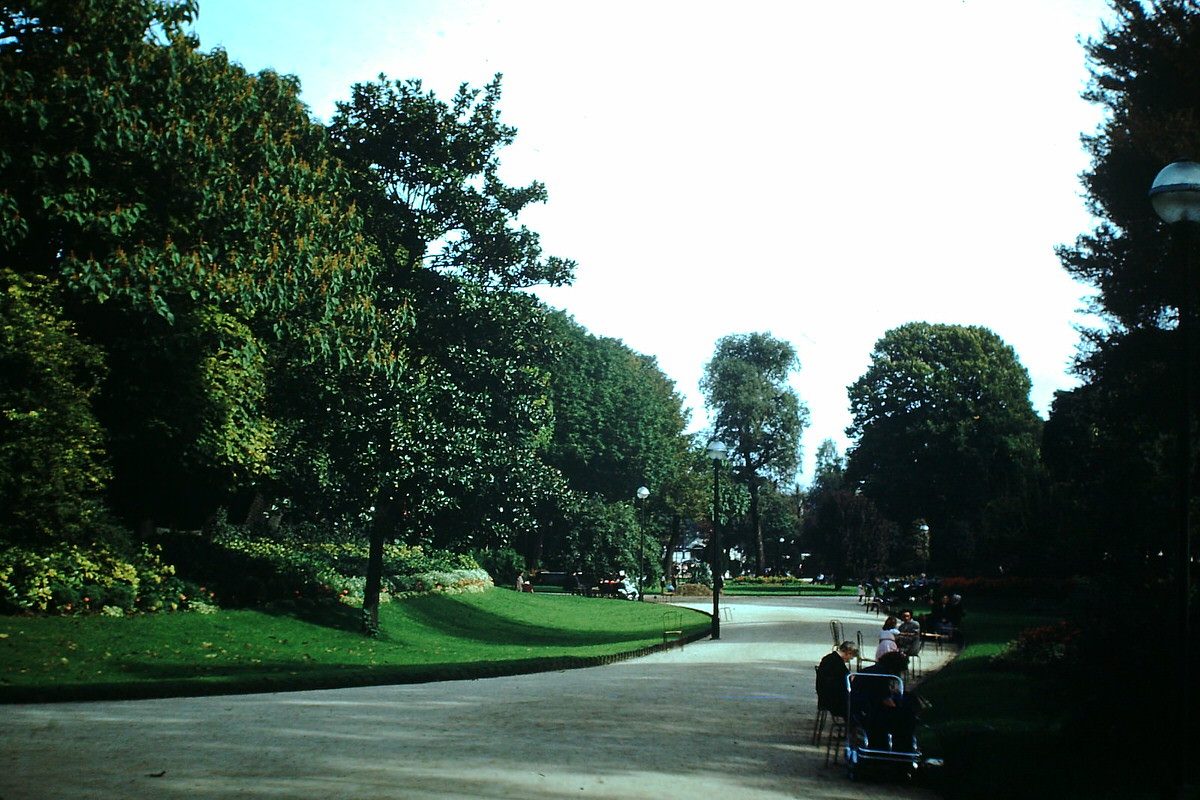
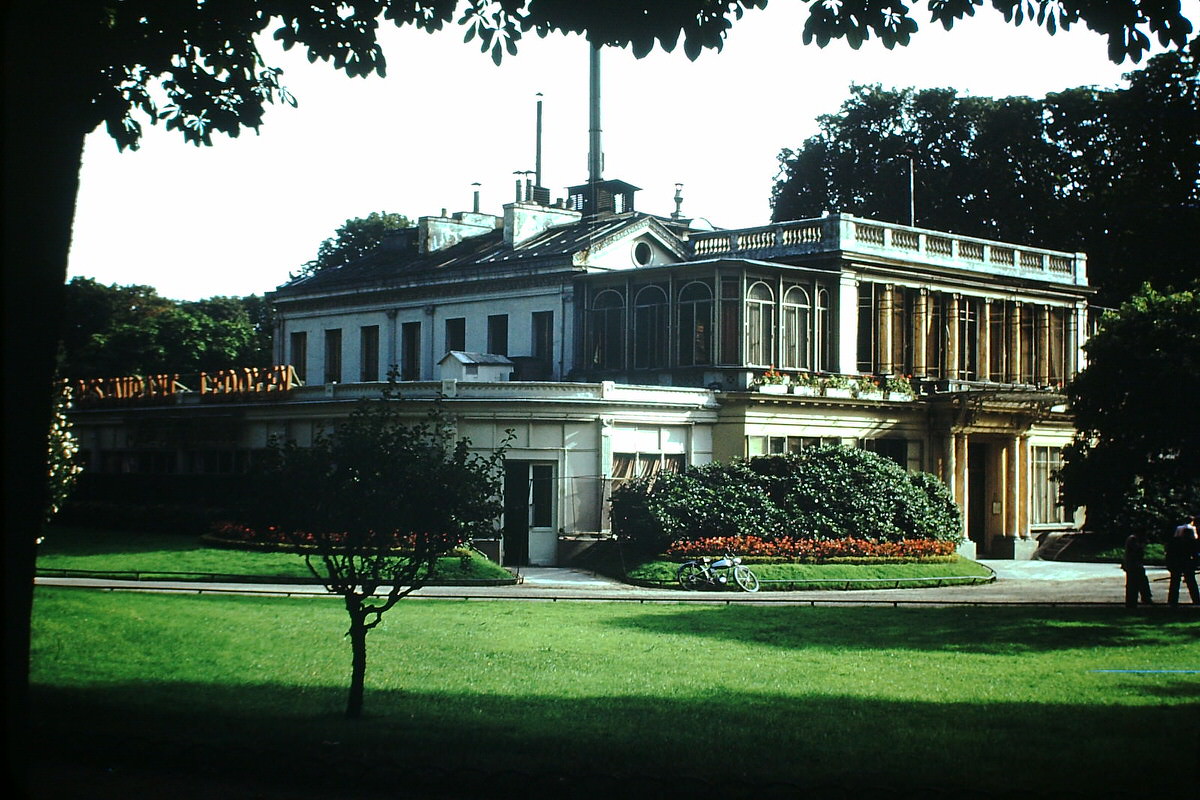
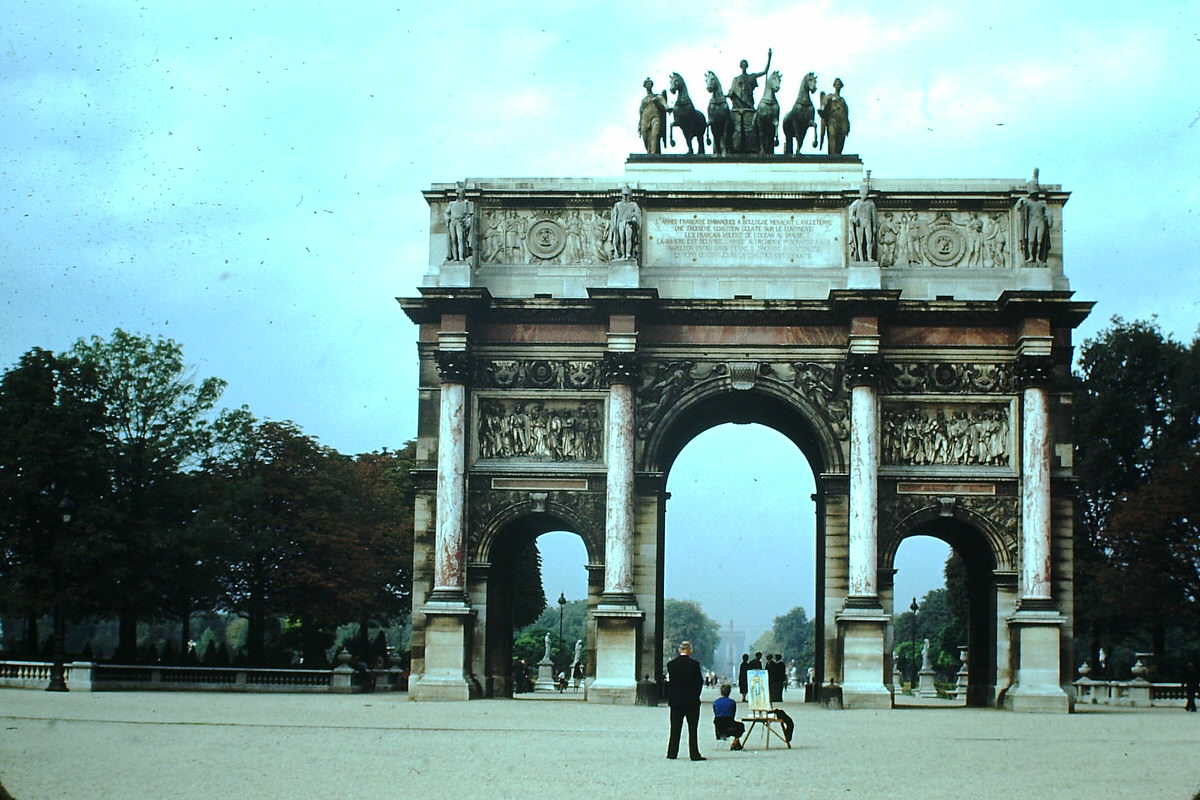
Adjacent to the Louvre, the Tuileries Garden stretched west toward the Place de la Concorde. Laid out in the 16th century, it was one of Paris’s oldest public parks, with tree-lined paths, sculptures, and open lawns where Parisians gathered in every season.
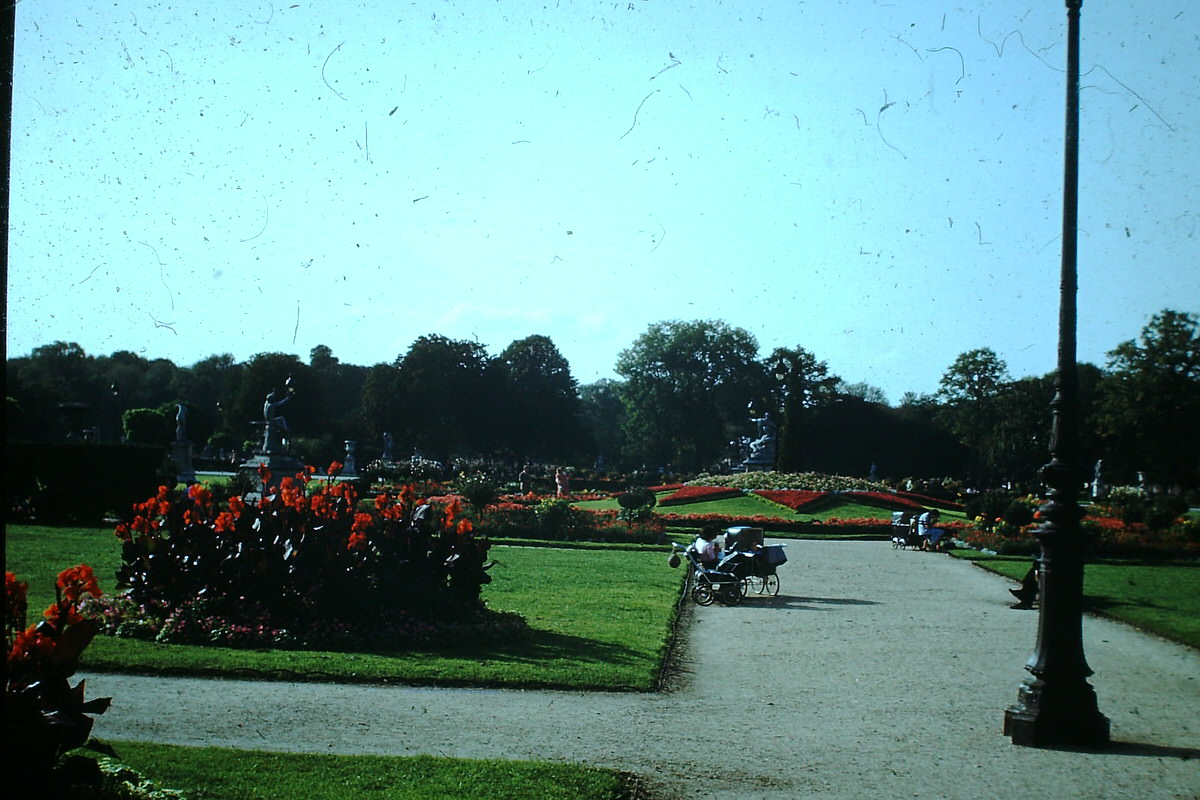
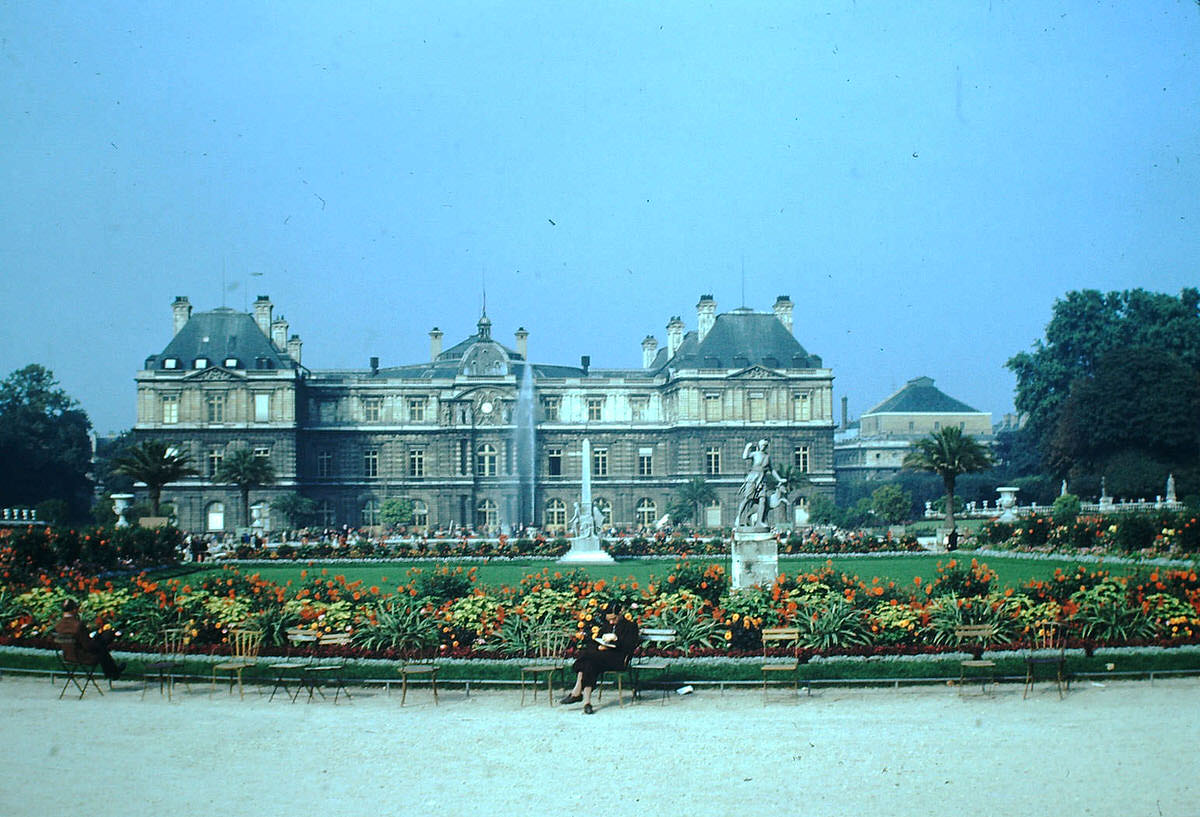
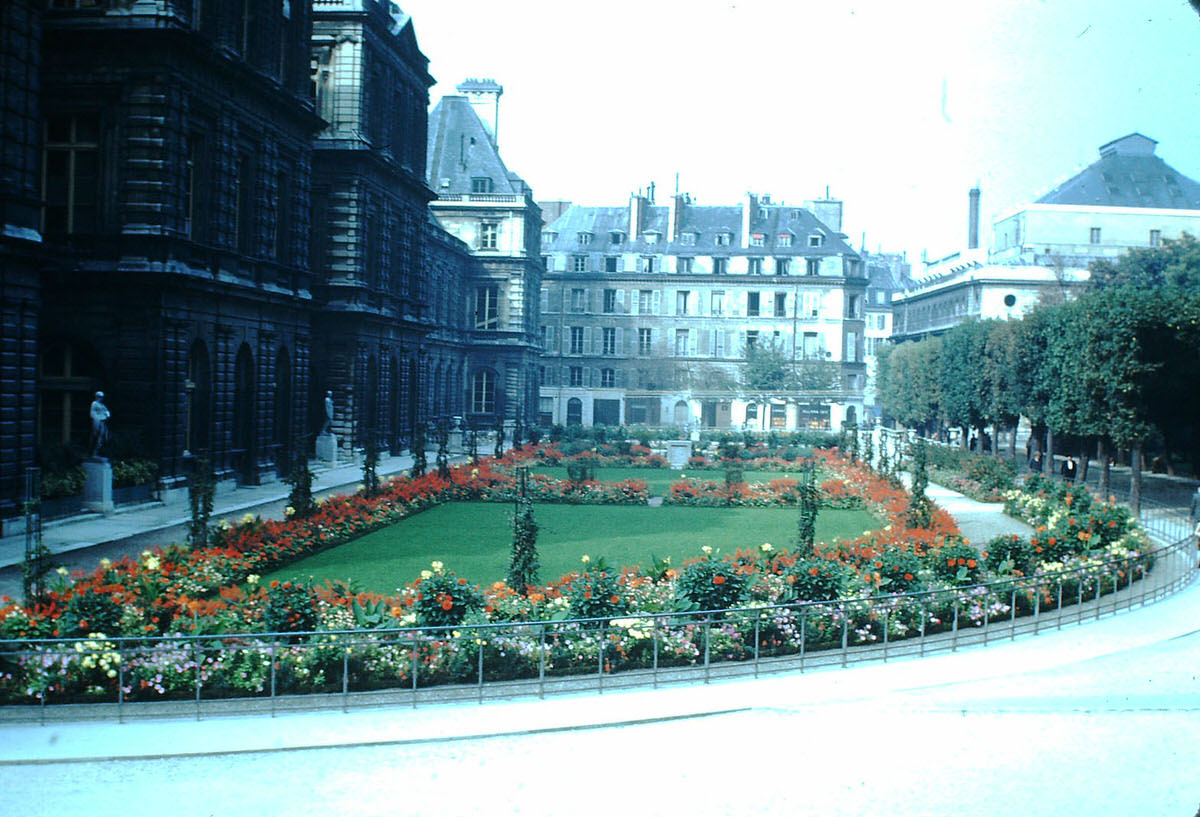
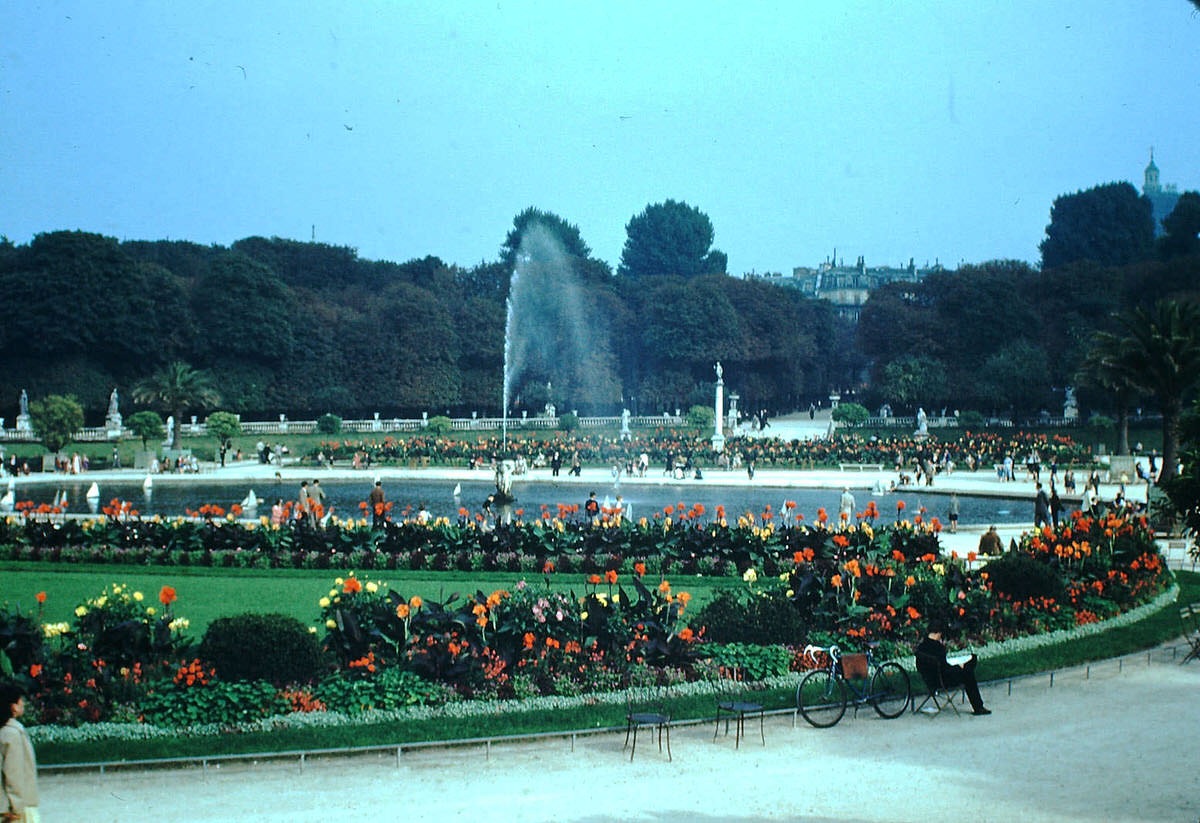
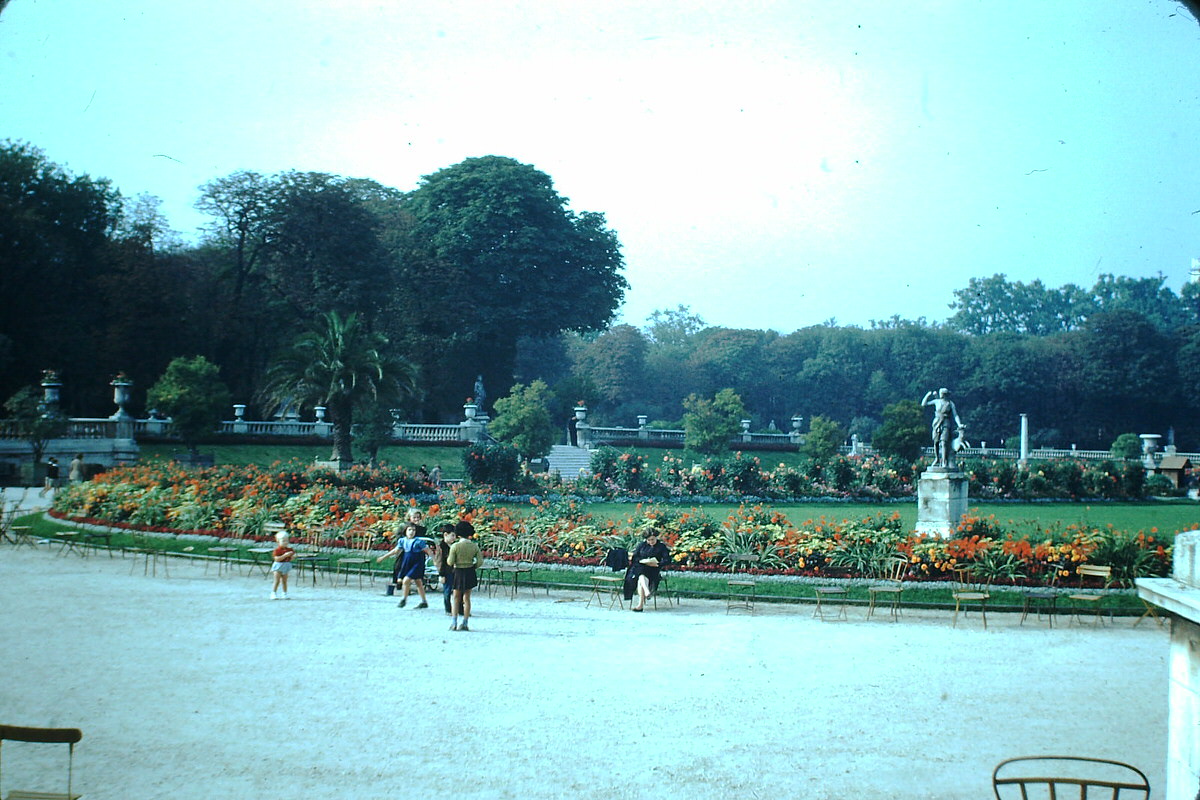
The Luxembourg Palace and its surrounding gardens were among the most popular spots on the Left Bank of Paris. Built in the early 17th century for Marie de’ Medici, the palace housed the French Senate by 1953. Its gardens were open to the public year-round.
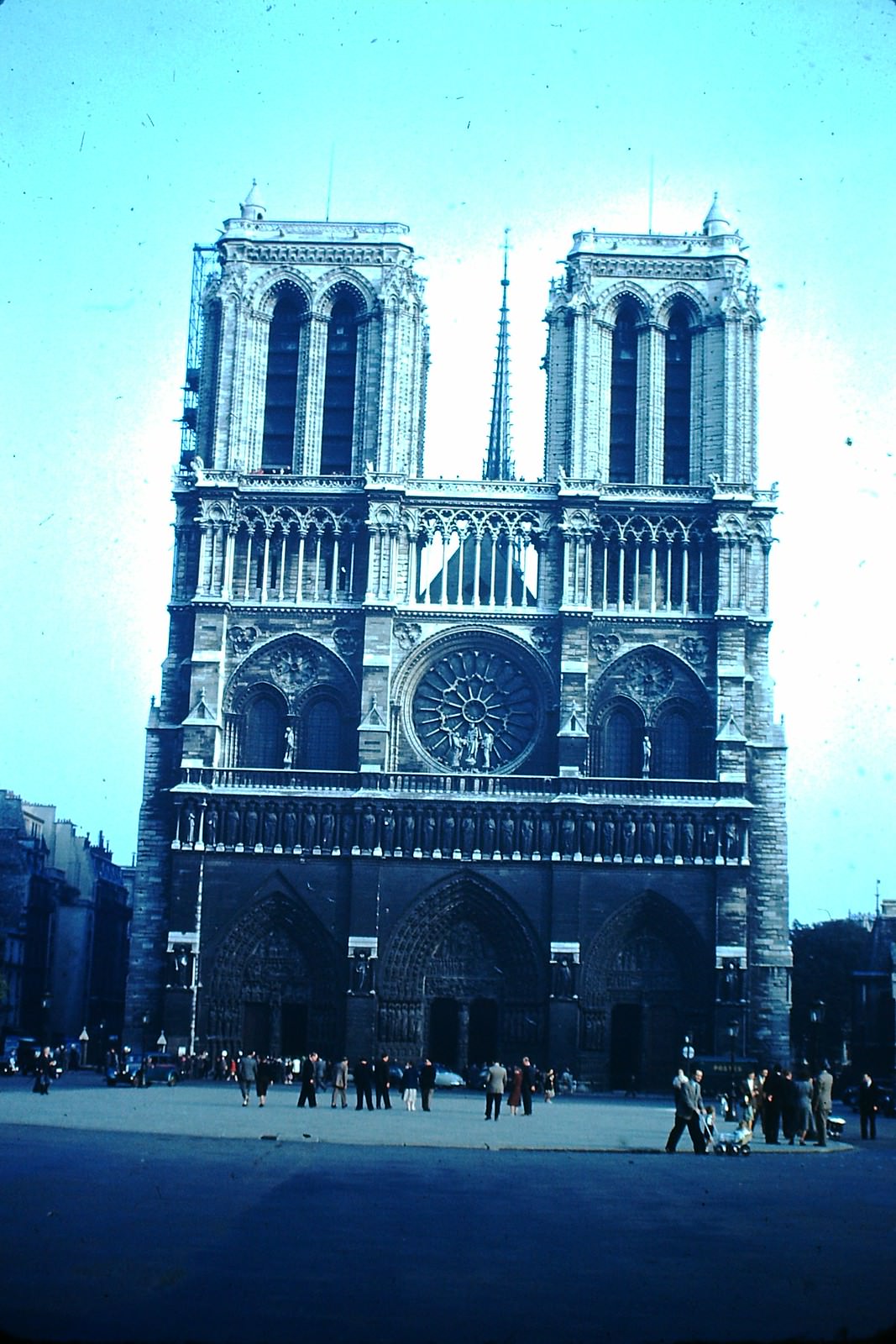
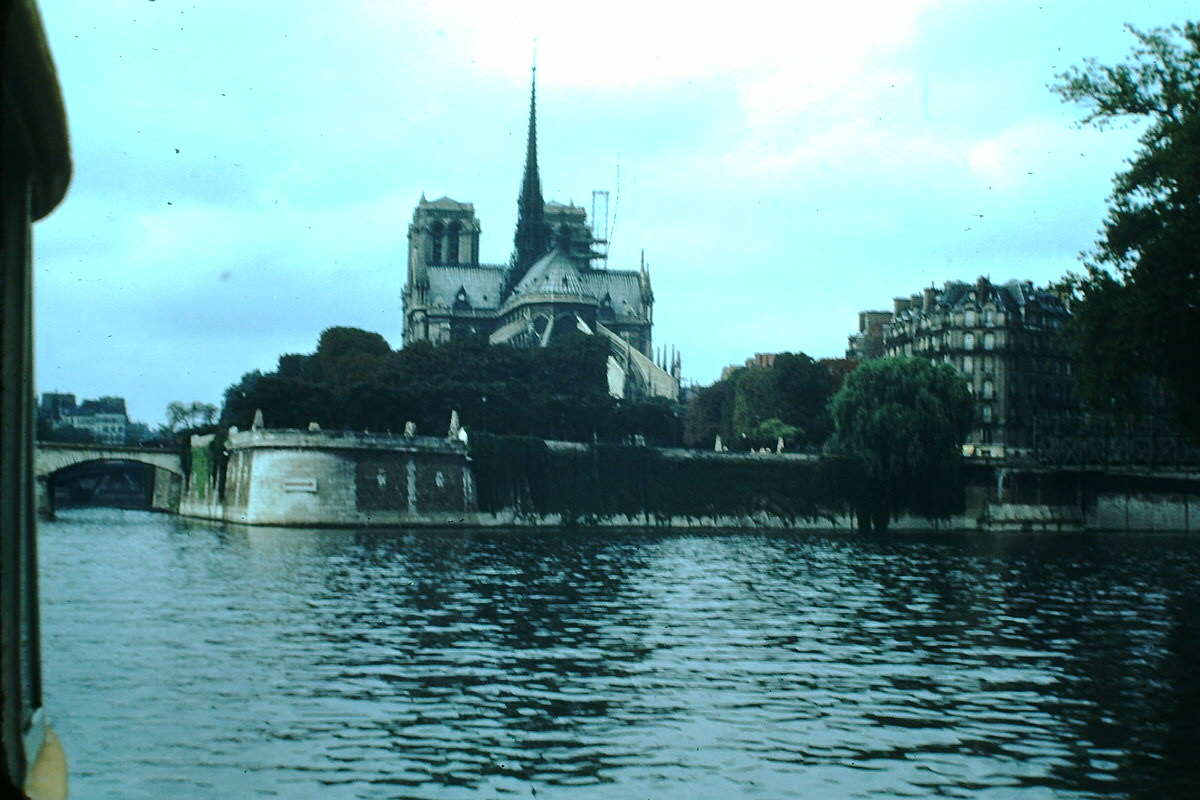
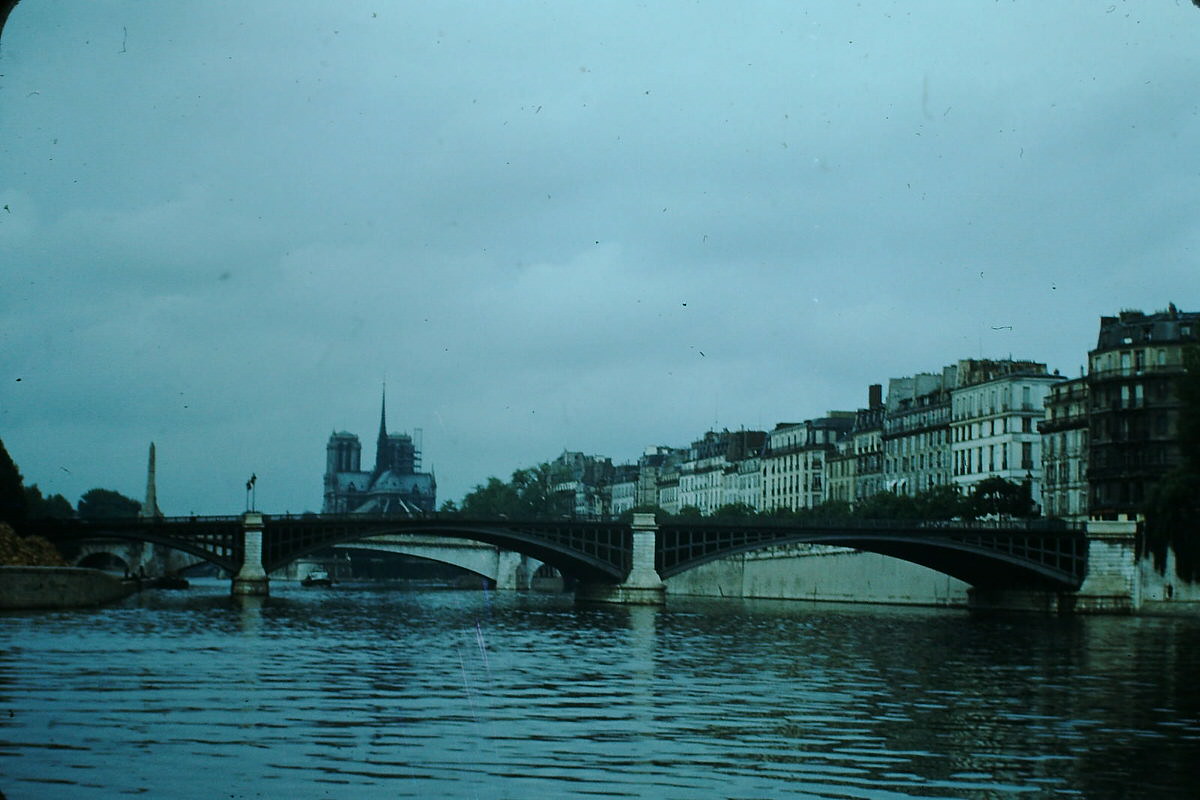
Notre-Dame Cathedral sat on the Île de la Cité in the middle of the Seine. Construction had begun in 1163 and took nearly 200 years to complete. By 1953, the cathedral had survived wars, revolutions, and occupation — its twin towers and rose windows intact.
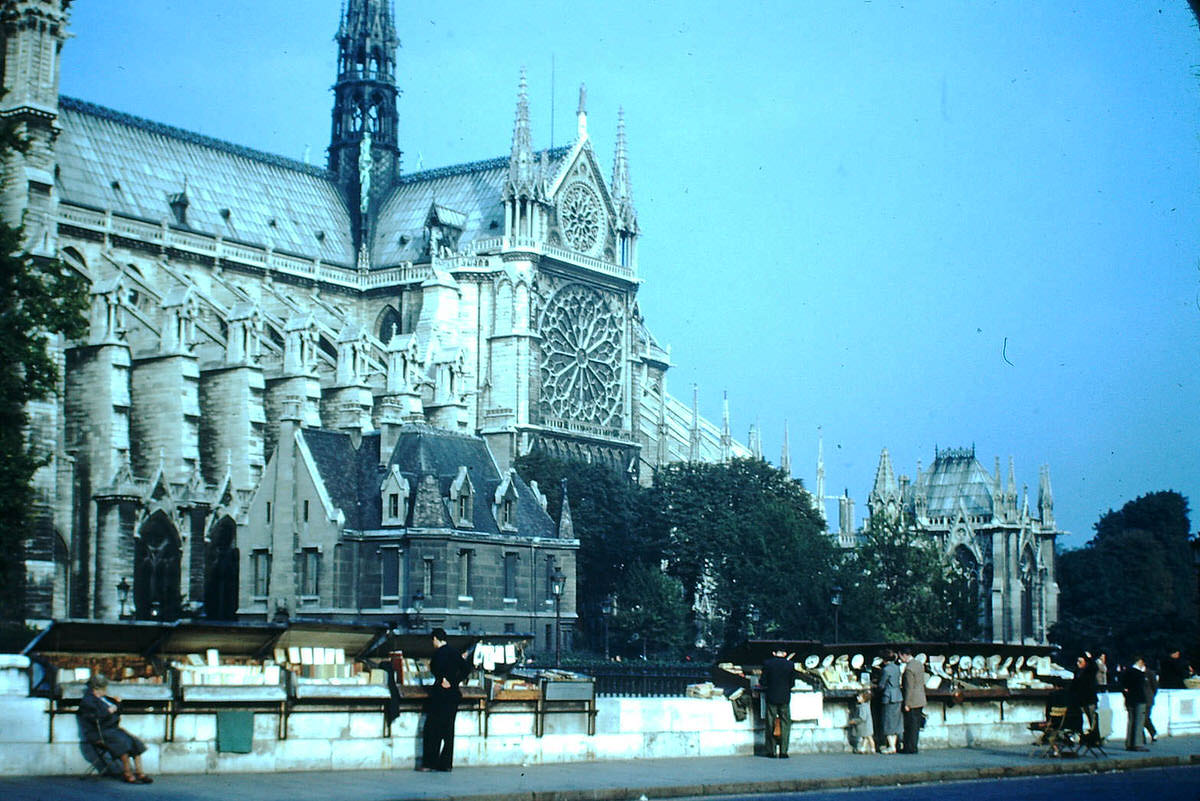
Along the banks of the Seine near Notre-Dame, the famous bouquinistes set up their green book stalls, selling used books, old prints, and postcards. This tradition dated back to the 16th century and continued uninterrupted through 1953.
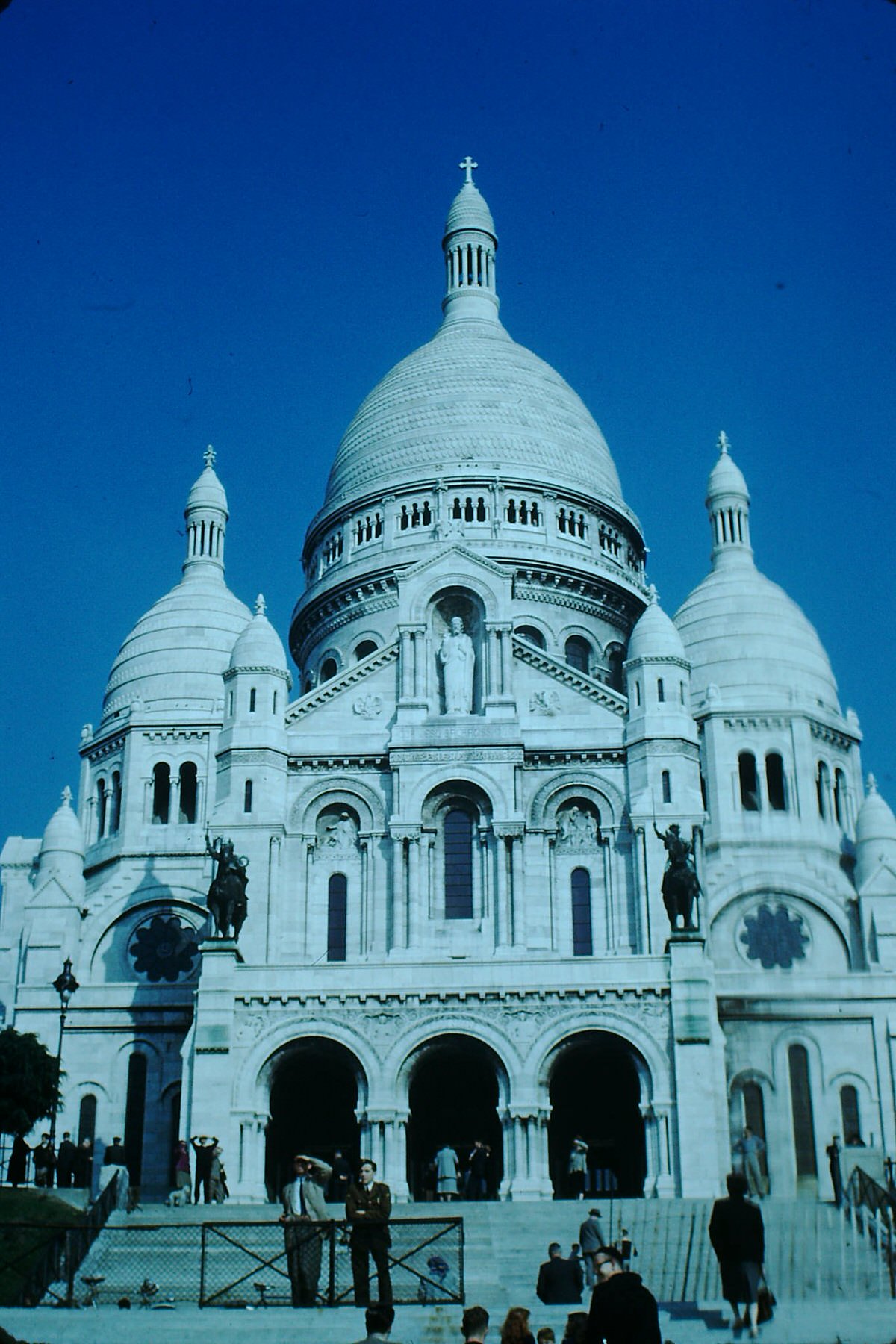
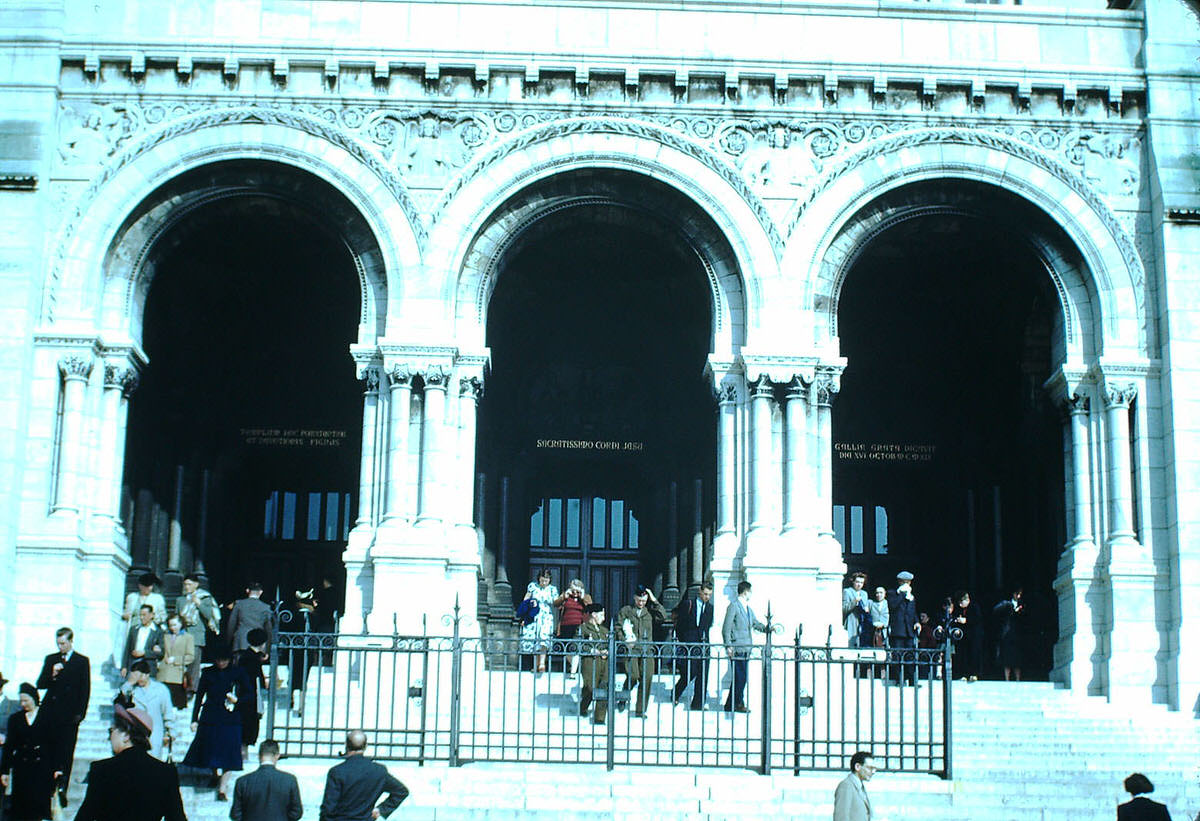
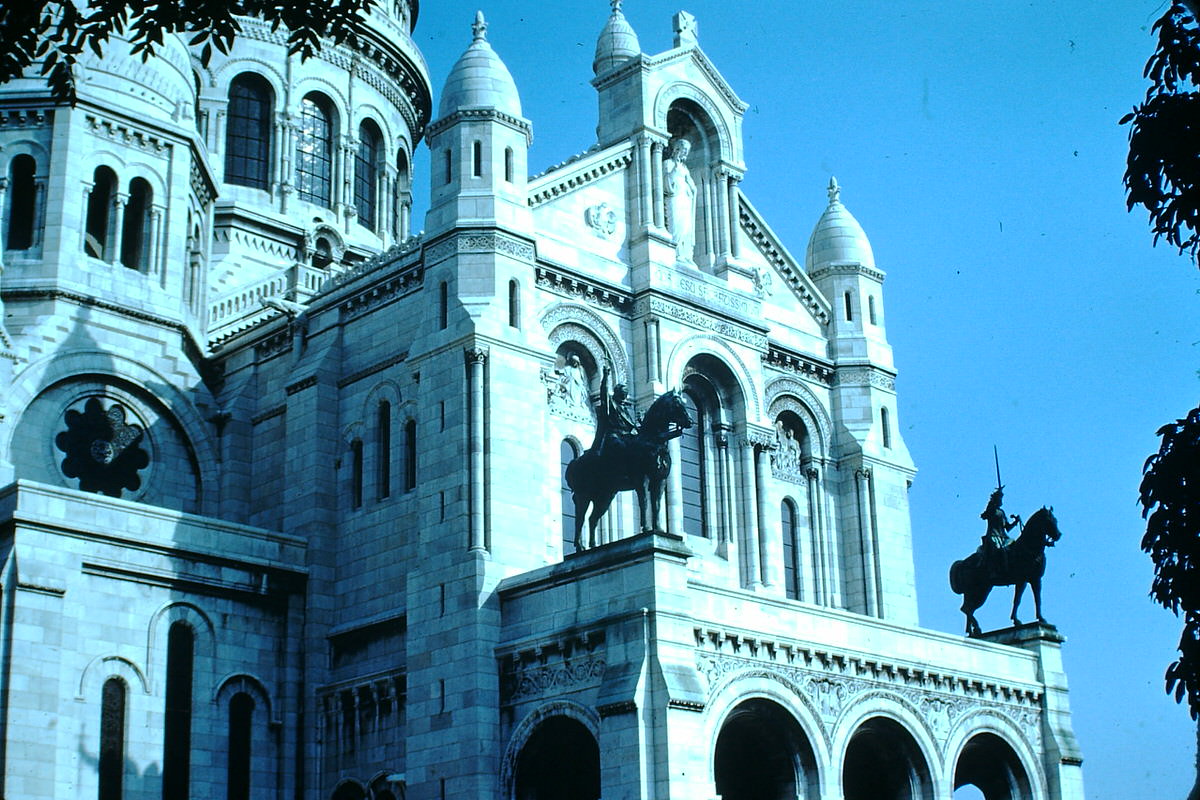
High above the city on the hill of Montmartre stood Sacré-Cœur Basilica, completed in 1914. Its white Romano-Byzantine dome was visible from many parts of Paris. The neighborhood below it — also called Montmartre — was historically a gathering place for artists.
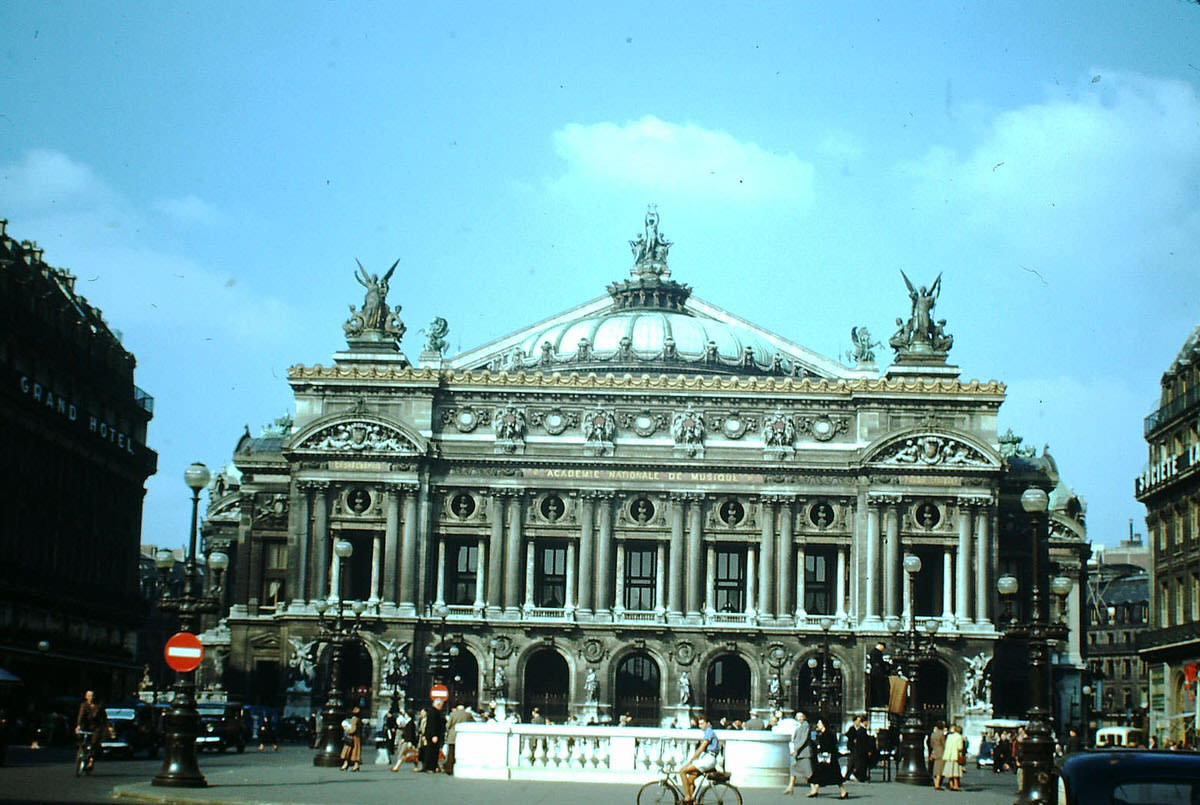
The Paris Opéra — officially the Palais Garnier — opened in 1875 and remained the city’s premier opera venue in 1953. Its grand staircase and ornate facade made it one of the most elaborate buildings in Paris.
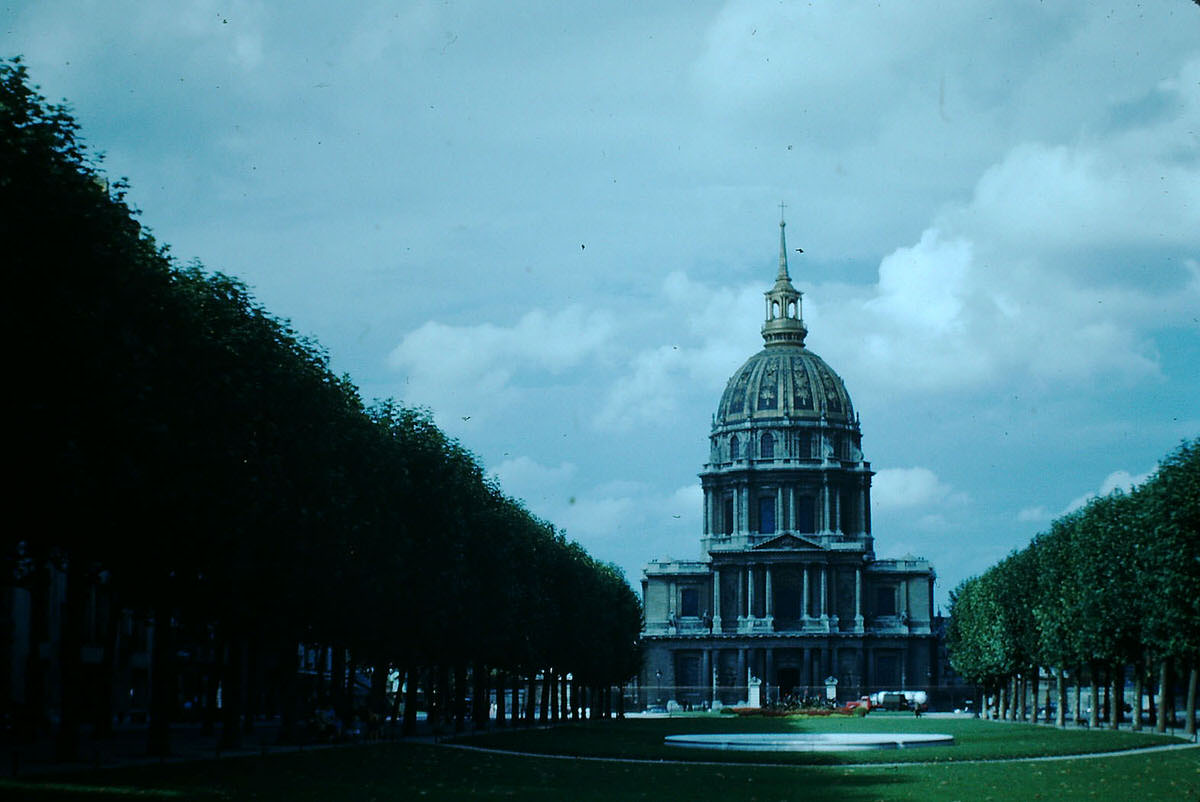
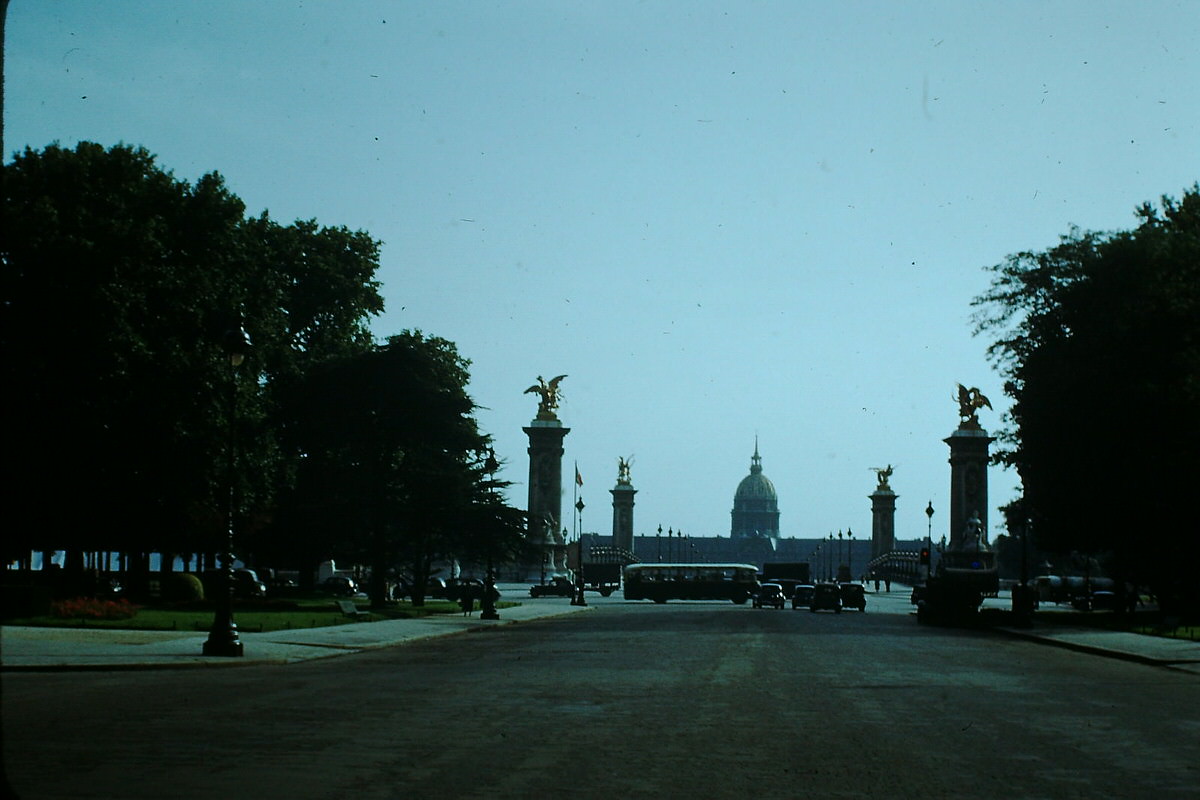
Les Invalides was built in the 17th century as a hospital and home for war veterans. It also held Napoleon Bonaparte’s tomb, which drew steady streams of visitors. The golden dome above the tomb chapel was one of the most recognized rooftops in Paris.
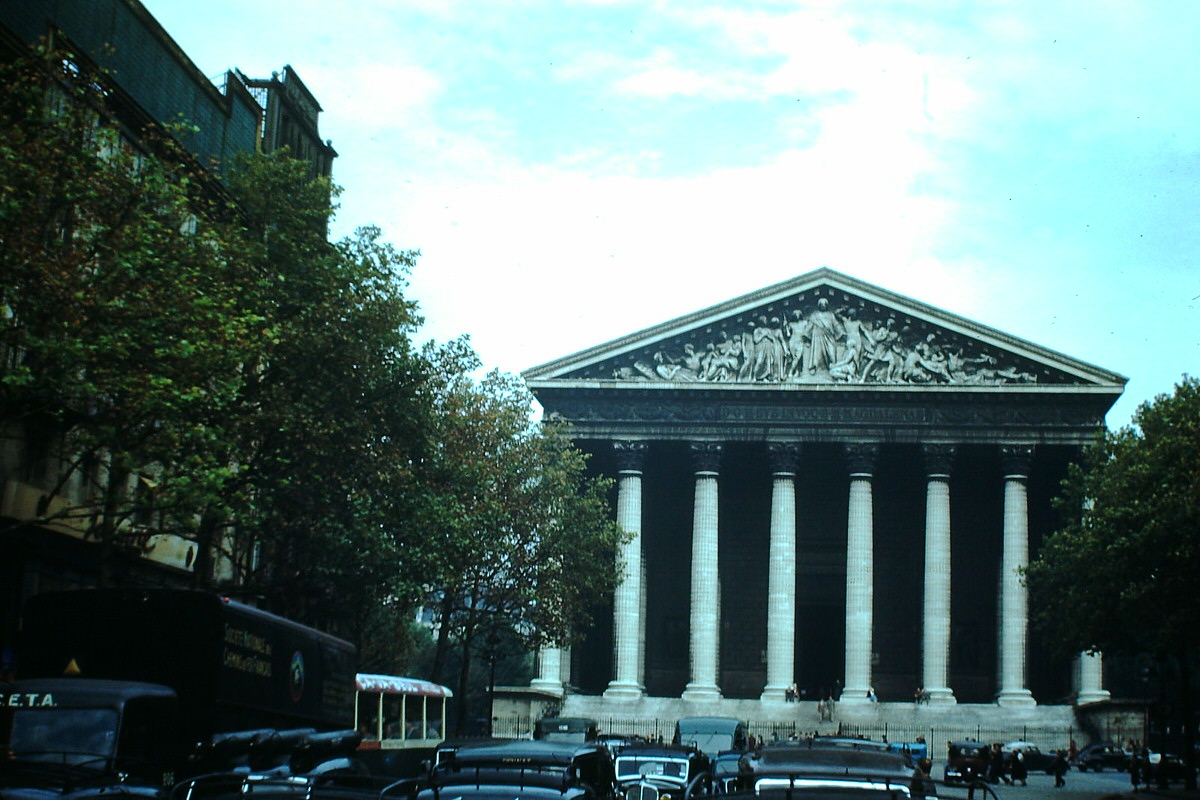
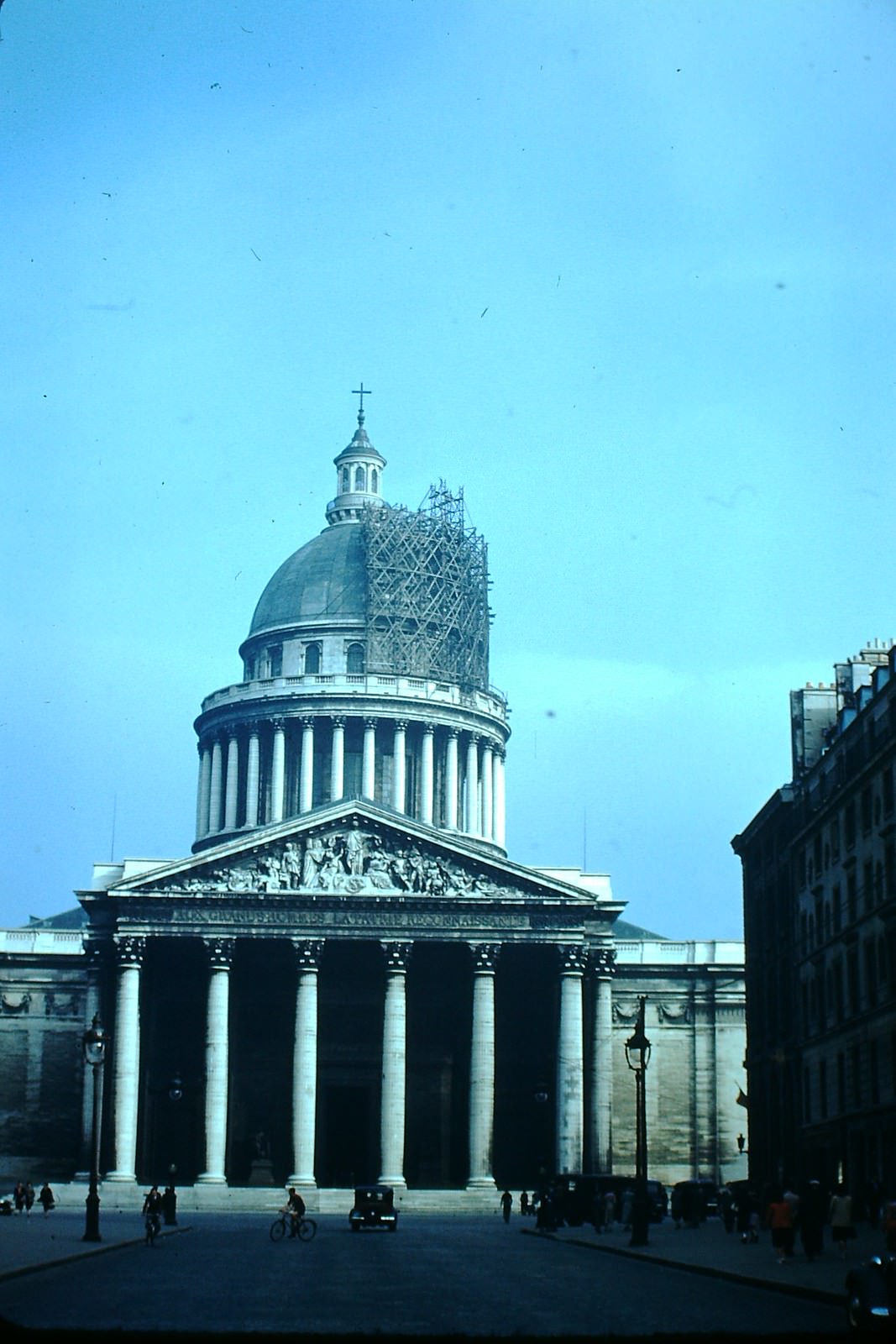
The Madeleine church, designed to look like a Greek temple, stood at the north end of the Place de la Concorde axis. Construction had started in 1763 and went through several redesigns before the church was finally completed in 1842. The Panthéon, on the Left Bank, served as the final resting place for distinguished French citizens — including Voltaire, Rousseau, and Victor Hugo.
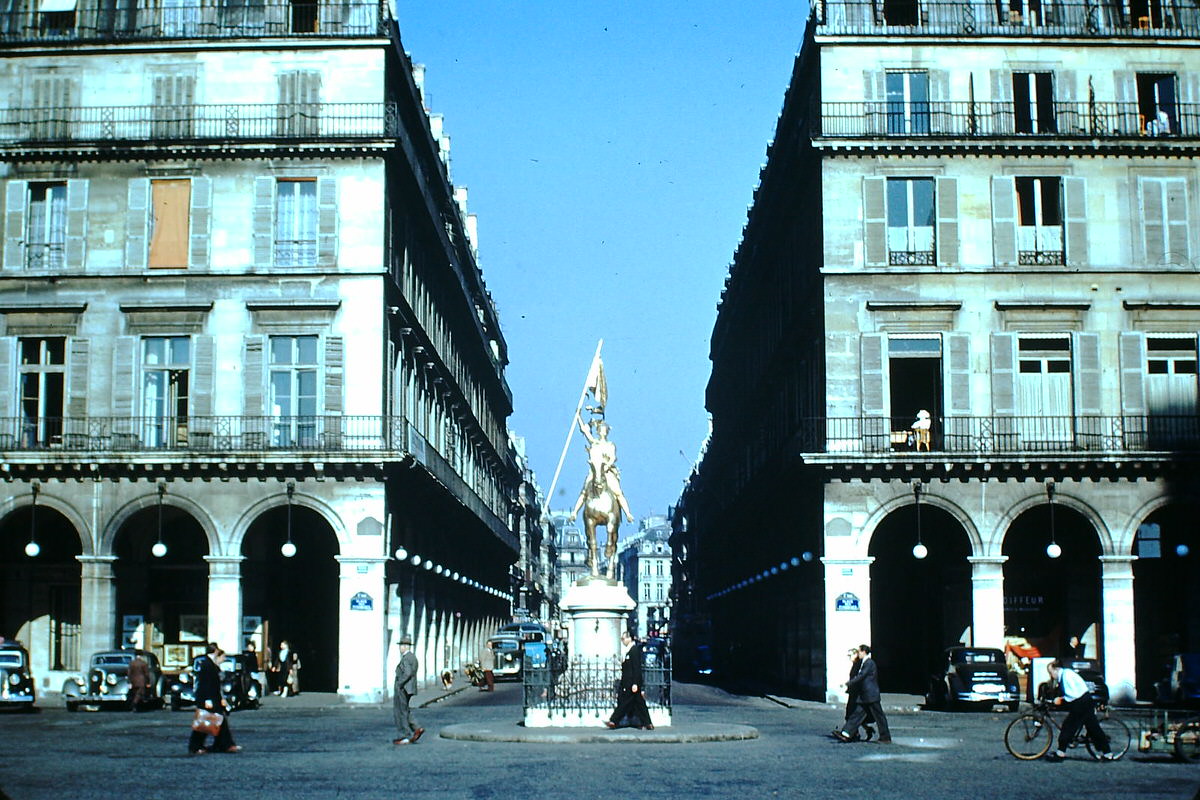
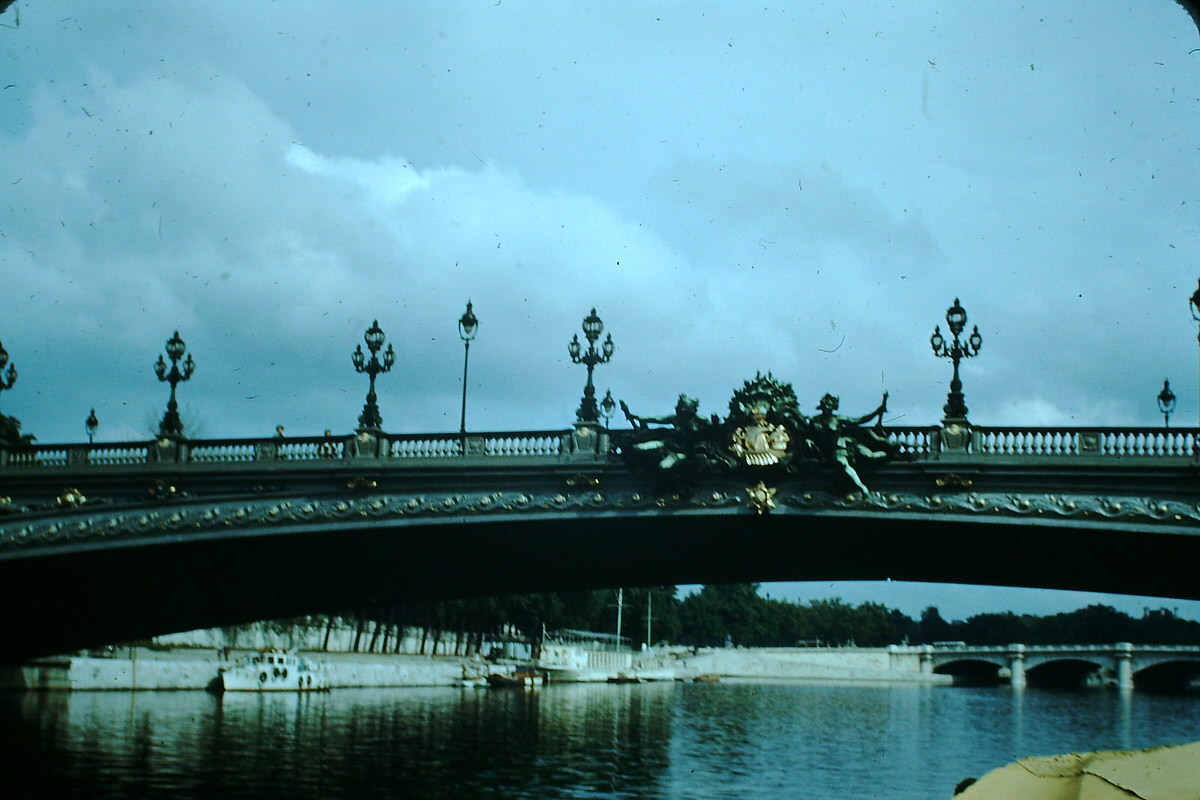
The Pont Alexandre III crossed the Seine in a single steel arch span, decorated with gilded sculptures, nymphs, and ornate lampposts. Built for the 1900 World’s Fair, it connected Les Invalides on the Left Bank to the Grand Palais on the Right. A statue of Joan of Arc stood not far away, a permanent fixture in the Parisian streetscape.
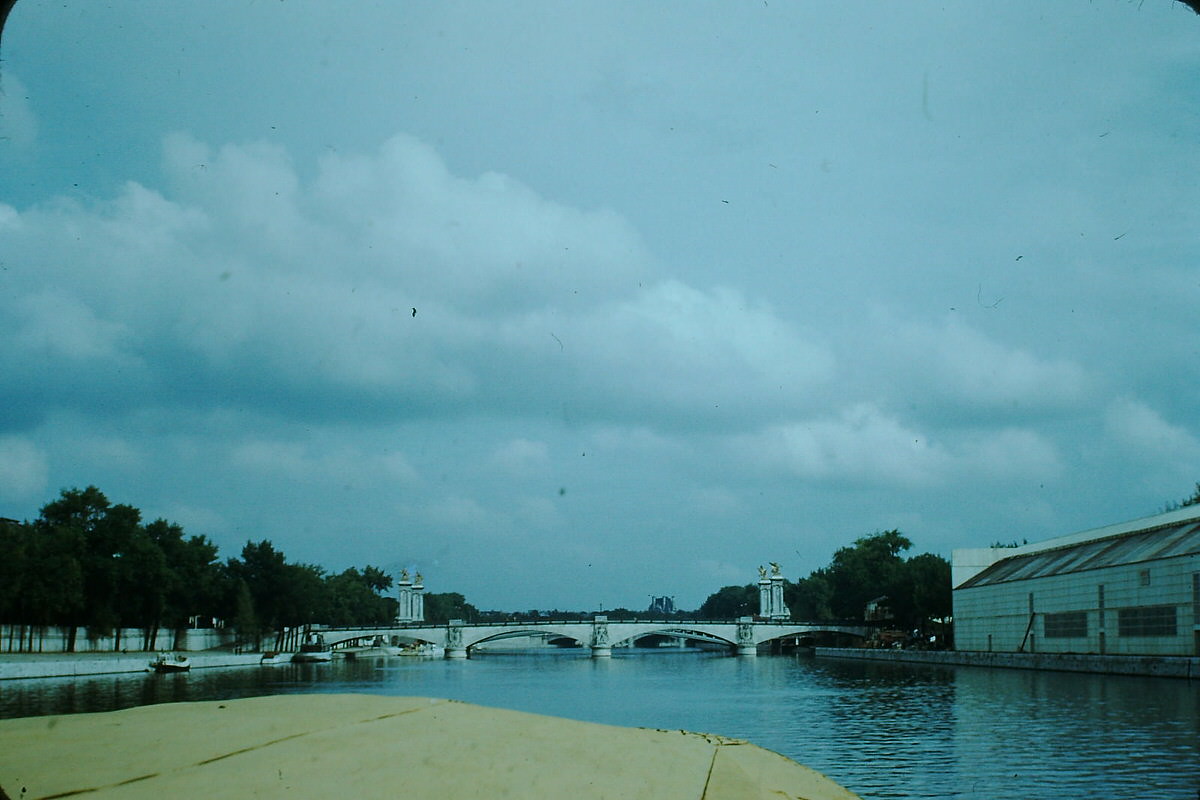
The view of the Place de la Concorde from the Seine captured the heart of Paris in a single frame — the obelisk, the fountains, and the open sky above the city. These photographs, taken across France in 1953, preserve a specific moment in time: a country navigating political tension, international change, and labor unrest, while its landscapes, coastlines, and monuments stood exactly as they had for generations.