
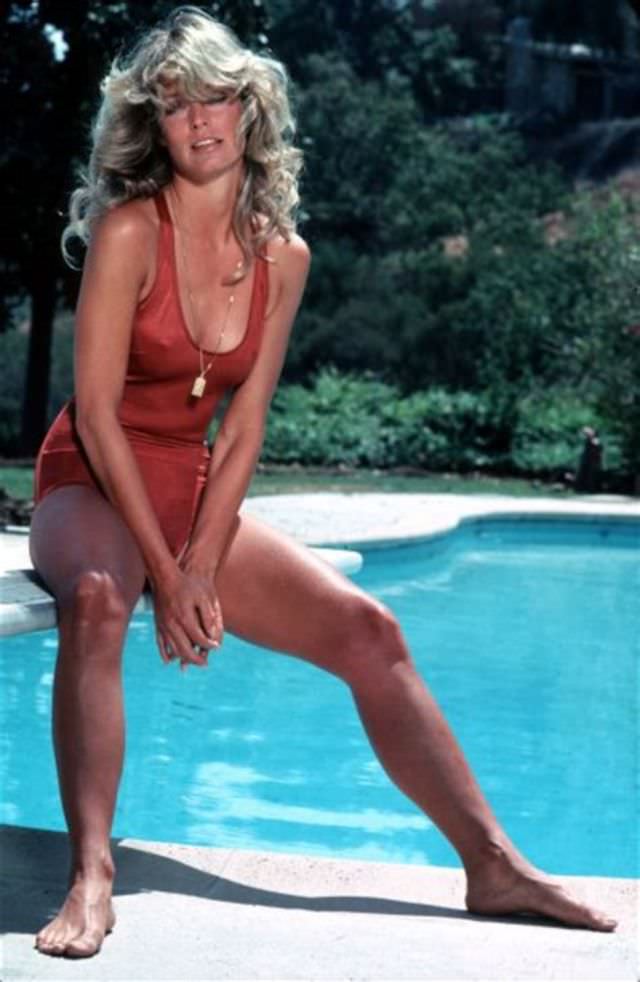
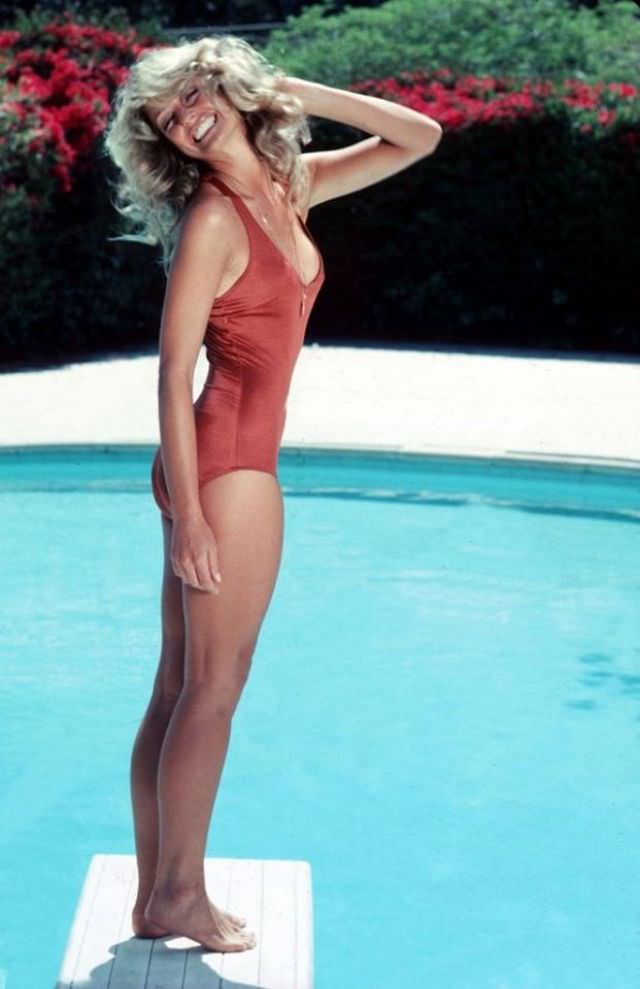
In 1976, a single photograph taken at a private home on a hot summer day became the best-selling poster of all time. Over 12 million copies sold. The woman in the image was Farrah Fawcett, sitting in a red swimsuit with tousled golden hair and a wide, radiant smile. What most people don’t know is that none of it was planned.

The shoot was arranged by Pro Arts Inc., a poster manufacturing company that approached Fawcett for a promotional image. Their original idea called for something alluring and provocative — a bikini shoot was the direction they had in mind. The problem was that no one could agree on exactly what she should wear. That question was still unresolved when the crew arrived at Fawcett’s own home to shoot.

When it came time to get dressed, Fawcett didn’t have a bikini at the house. The photographer, Bruce McBroom, made a simple suggestion: let her choose what to wear herself. She walked out in a one-piece red swimsuit. No stylist dressed her. No creative director approved the look. She also did her own hair and makeup on the spot. McBroom later recalled her as a natural and genuinely easy person to work with — someone who brought her own energy to the set without any direction.

The red swimsuit was not particularly revealing by design, but the photograph captured something the bikini idea never would have. The fabric clung to her figure, and her nipples were visibly outlined through the red material. Combined with her gleaming white teeth, her sun-kissed skin, and that famous smile, the image carried a warmth and confidence that felt unscripted — because it was.

McBroom took multiple shots during the session, giving the team at Pro Arts a range of options to work with. When they sat down to select the final image, they let Fawcett weigh in. She marked her favorite frame. The team went with her pick, and that decision proved to be exactly right.

The poster hit the market and the public response was immediate and overwhelming. It became a fixture in dorm rooms, bedrooms, and living spaces across the country throughout the late 1970s. The image tapped into something that went beyond sex appeal — it projected joy, confidence, and a kind of effortless American beauty that resonated with millions of people.

Fawcett earned $400,000 in royalties from the poster’s sales. For a photograph taken without a formal wardrobe plan, shot at her own home, with the subject doing her own hair and makeup, the numbers were staggering. The 12 million copies sold placed it firmly above any other poster released during that era.
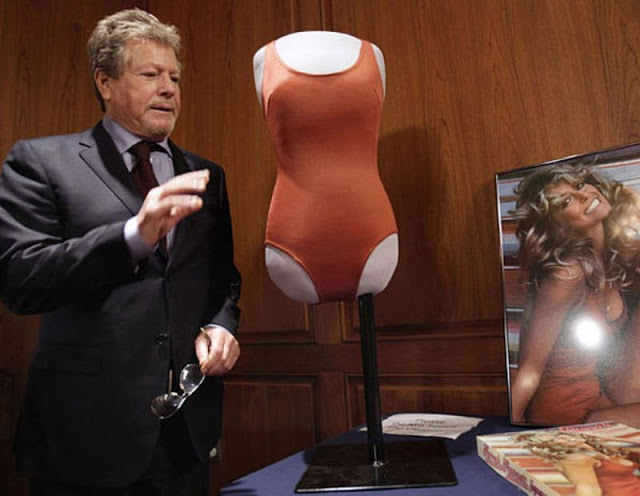
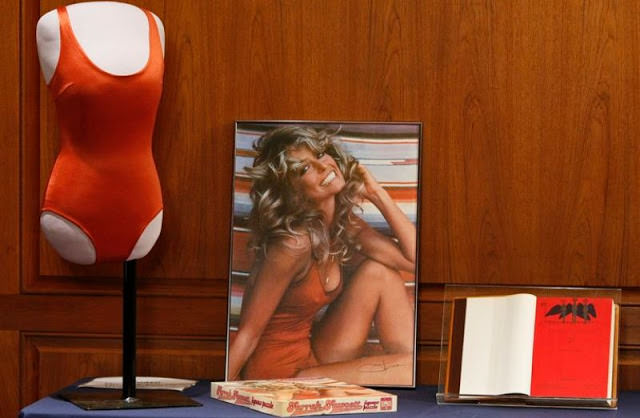
The red swimsuit itself went on to have a life beyond the photograph. After Fawcett passed away in 2009, the swimsuit and a copy of the poster were preserved as cultural artifacts. Ryan O’Neal, her longtime partner, brought the items to Washington to ensure they would be kept for the public record.

She looks like the crypt keeper.
Before Photoshop, standards of beauty were very different.
I agree, you can’t trust photos anymore.
Magazine editors may think anorexic Barbie dolls are attractive, but that doesn’t mean all men do.
Blonde with medium breasts and a skinny body? Today’s standard of beauty in America. There were no implants yet. In the past, people considered tans to be healthy.
There are laugh lines on her face, and her skin is more than one color. All of that would be brushed away.
As a teen boy in the 70s, you had to have that poster hanging in your bedroom.
She is answering in heaven for all the spilt seed.
Michael Jackson died around the same time as her and his death seemed to overshadow hers.
At the same time the swimsuit and poster were donated to the Smithsonian, the Michael Jackson estate also donated Michael’s leather jacket from Beat It and Thriller, as well as all his original recordings.