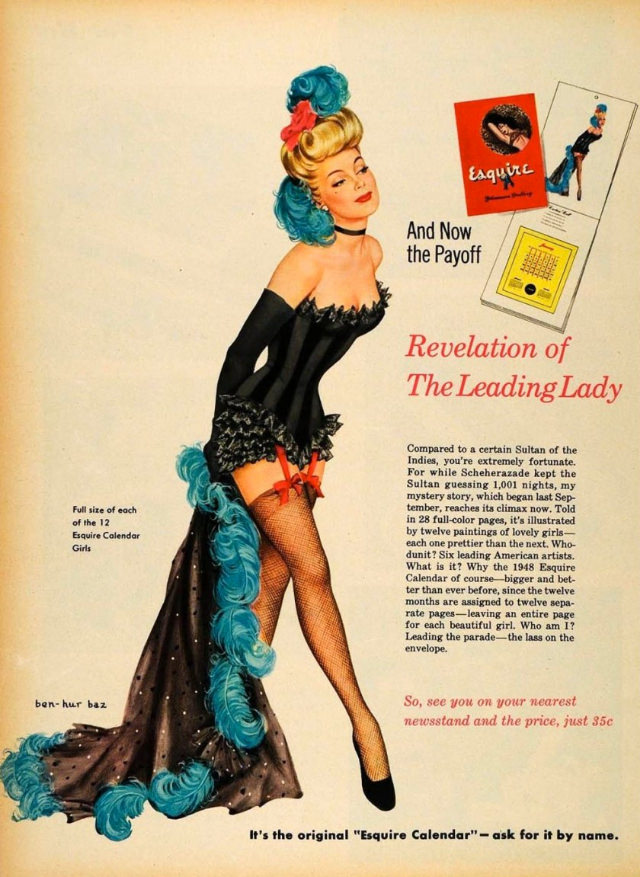
By 1948, the Esquire Glamour Girl Calendar had become a fixture in American homes and offices. Esquire magazine had been publishing these pin-up calendars since the early 1940s, riding the massive popularity of the “Vargas Girl” — a signature illustration style created by artist Alberto Vargas. When Vargas parted ways with Esquire before 1948, a new group of illustrators stepped in to carry on the tradition.
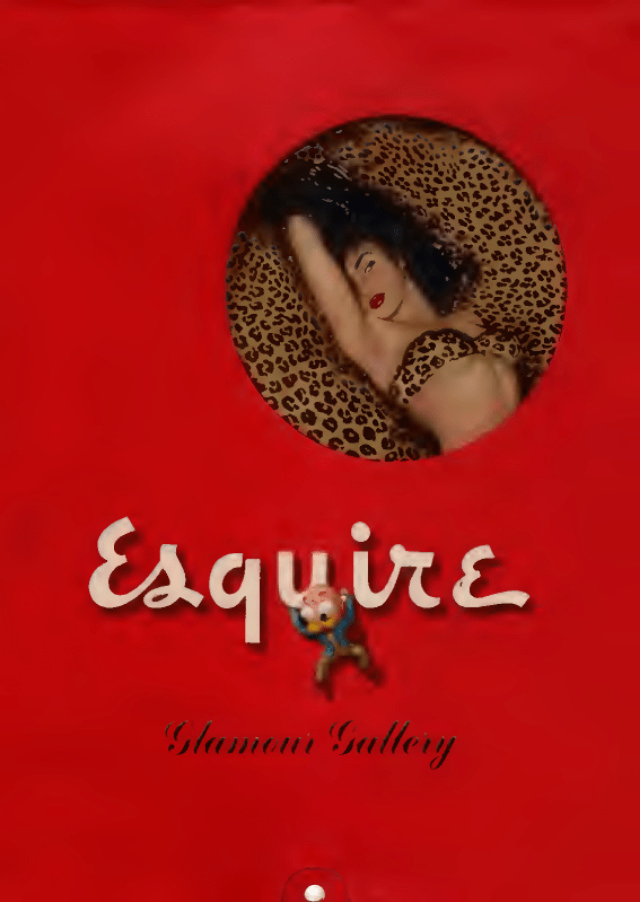
The 1948 edition featured work from Ben-Hur Baz, Joe De Mers, Fritz Willis, J. Frederick Smith, and Ren Wicks. Each artist brought a slightly different hand to the work, but all followed the visual language Vargas had established: women with exaggerated curves, flowing hair, and playful expressions. The images were suggestive rather than explicit, relying on mood and composition.
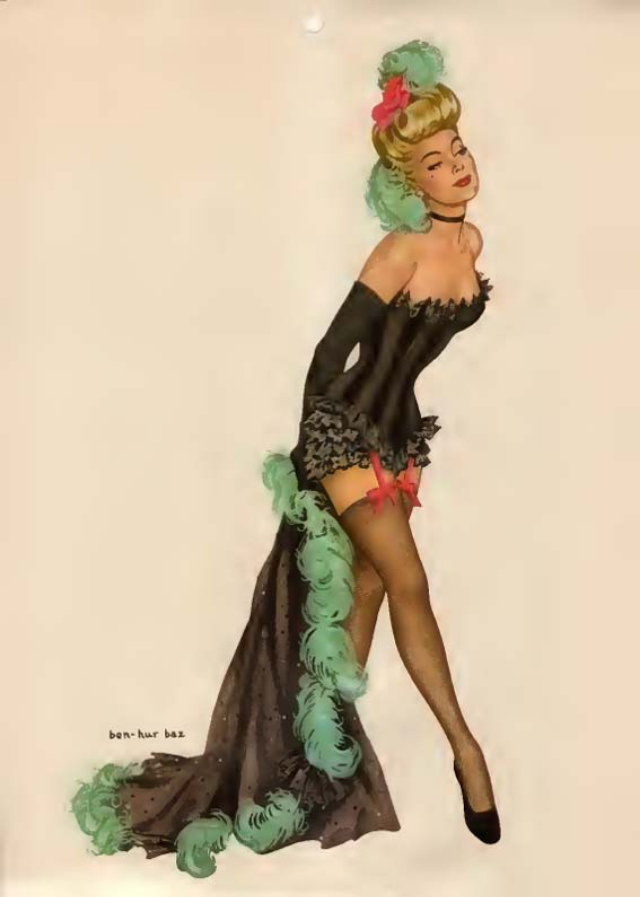
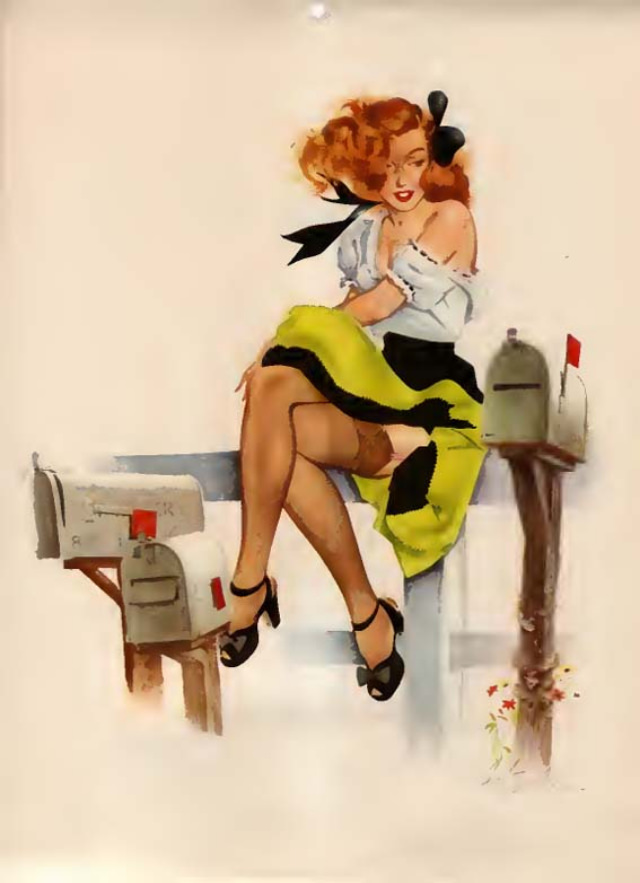
Each month’s illustration carried its own title, giving each piece a distinct personality. Ben-Hur Baz opened the year with “Curtain Call” in January, followed by Fritz Willis’s rural-themed “RFD” in February.
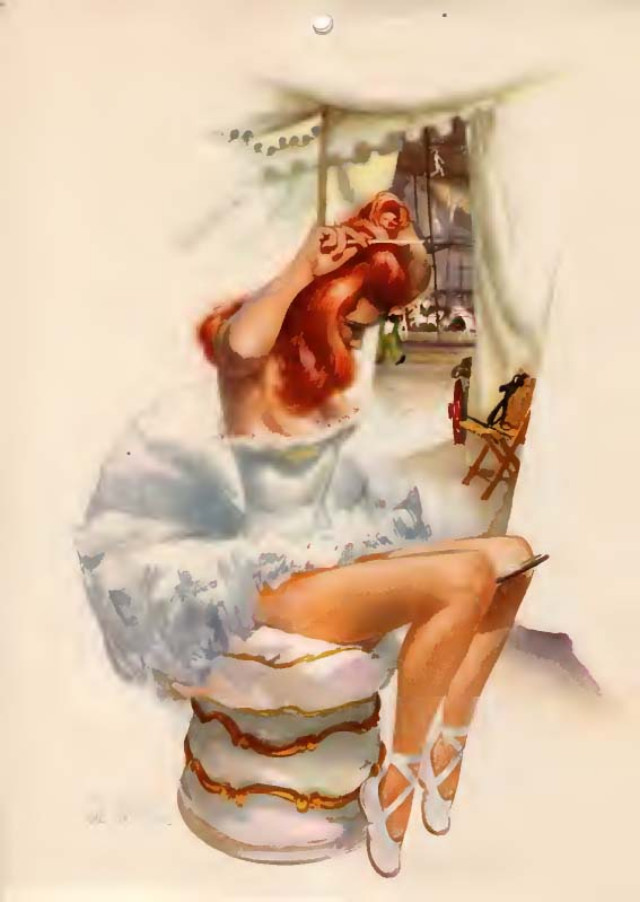
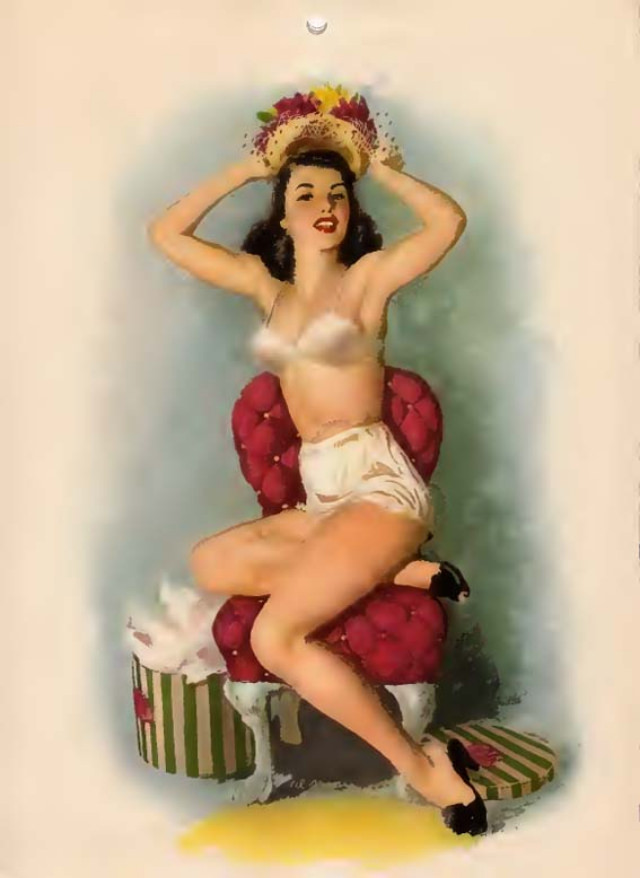
Joe De Mers contributed “Objection” for March, while April’s entry, “Bedtime Story,” was left uncredited. The calendar ran through the year with a consistent tone — light, flirtatious, and carefully polished.
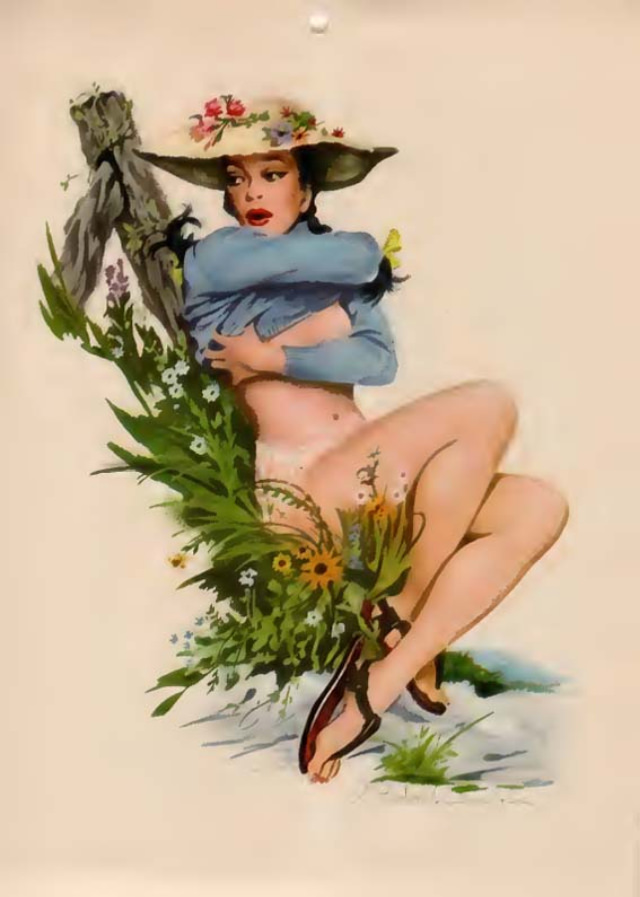
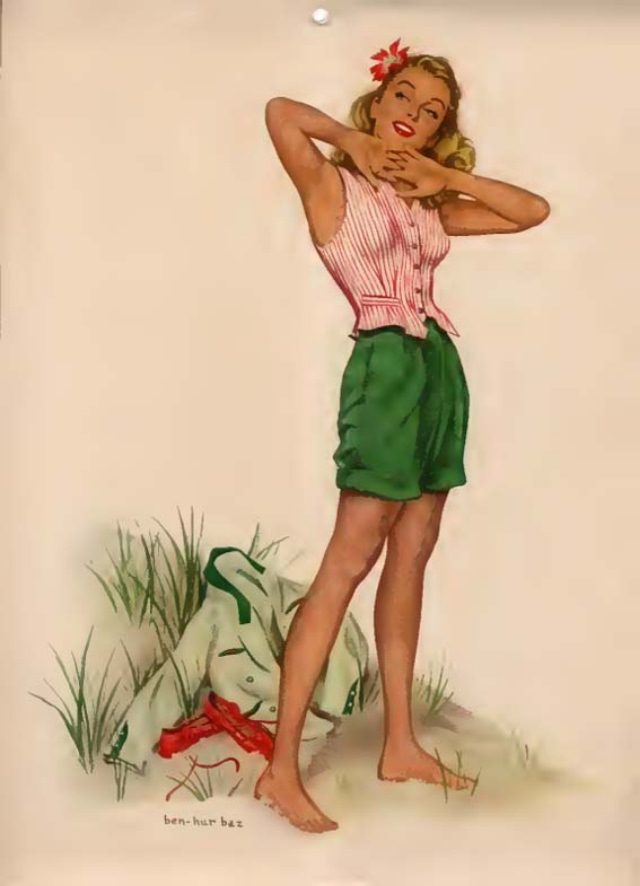
J. Frederick Smith took May with “Predicament,” and Ben-Hur Baz returned in June with “Meadow Lark.” These mid-year pieces reflected the breezy, optimistic mood that defined post-war American consumer culture.
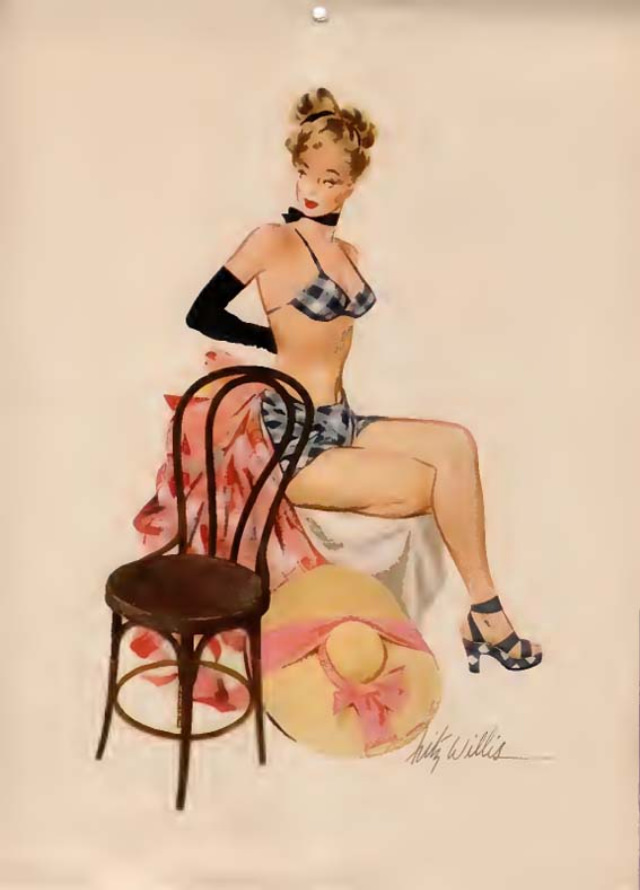
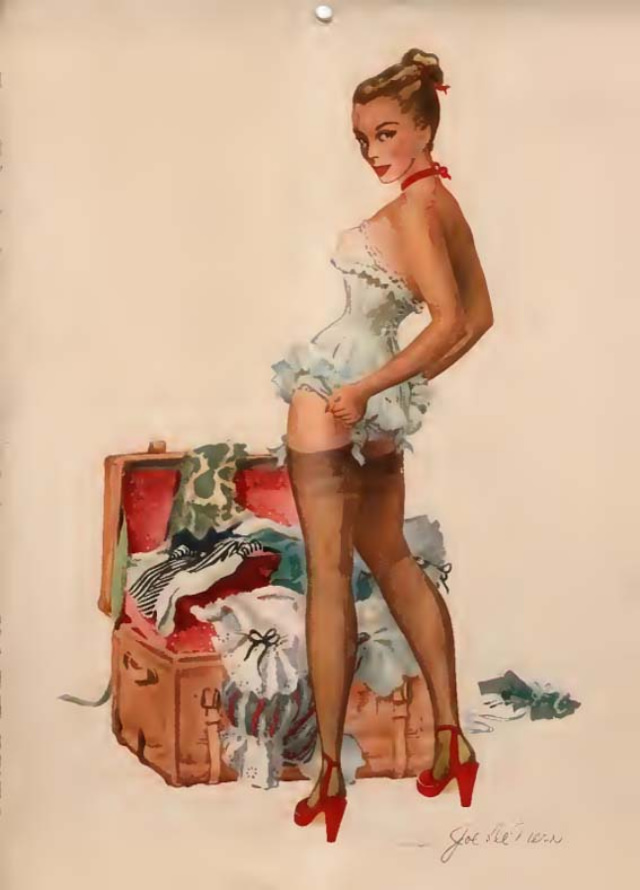
Fritz Willis delivered “Endorsed” in July, and Joe De Mers followed with “Maid to Measure” in August. The calendar appealed to men returning from the war, offering idealized imagery far removed from the realities of military service and economic readjustment.
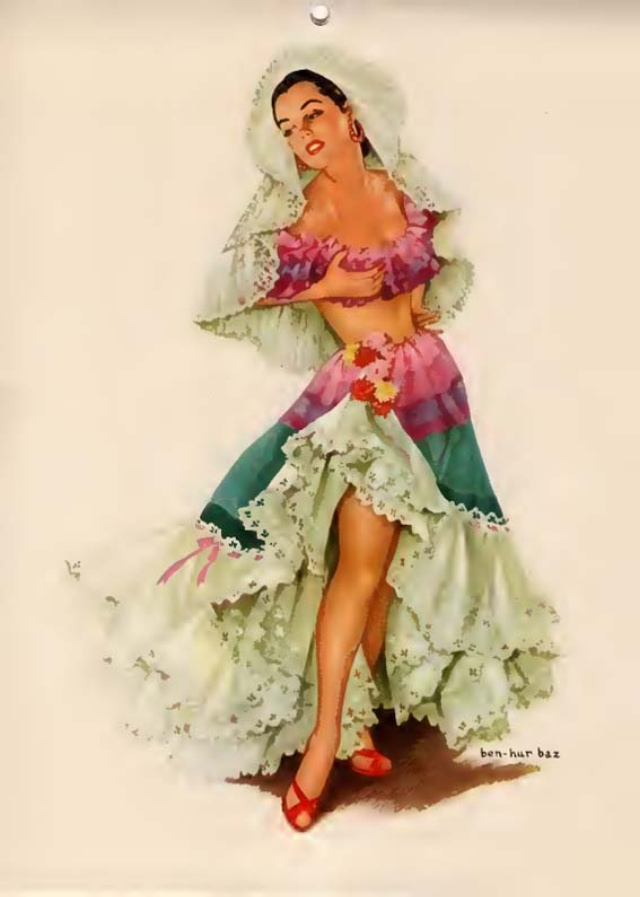
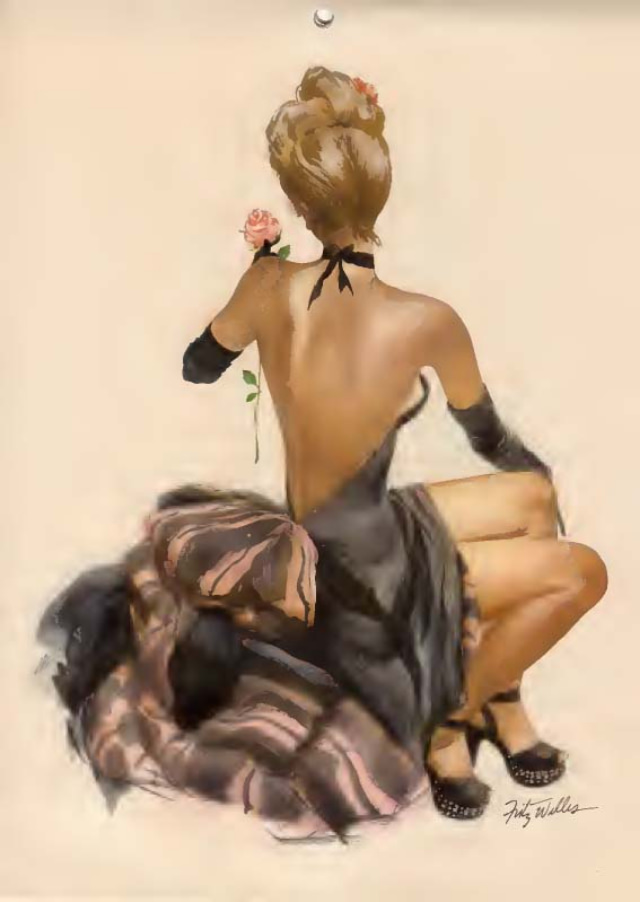
Ben-Hur Baz contributed the playfully titled “Si, Si” for September, while Fritz Willis offered “Floral Offering” in October. The calendar also mirrored a broader cultural push encouraging women to return to domestic and feminine roles after their wartime labor contributions.
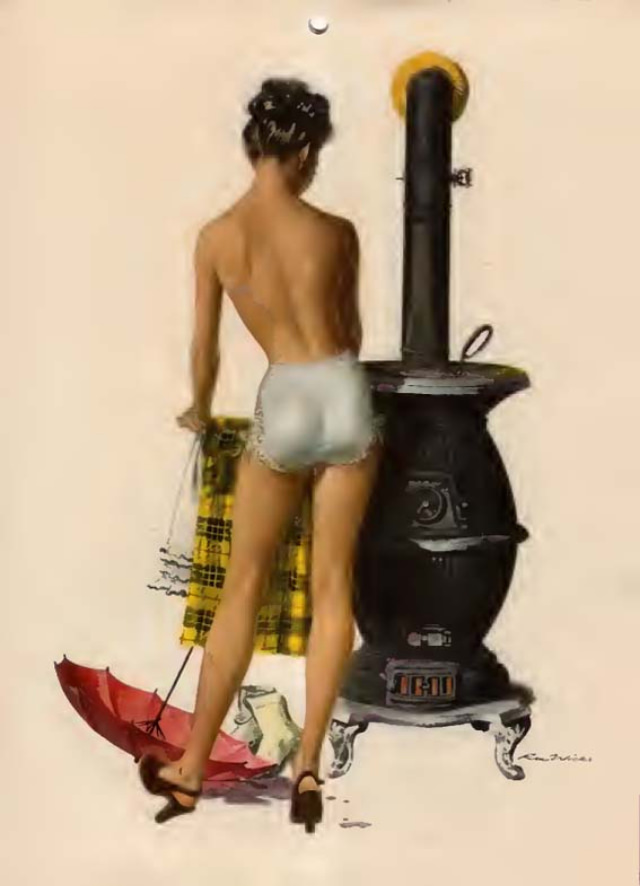
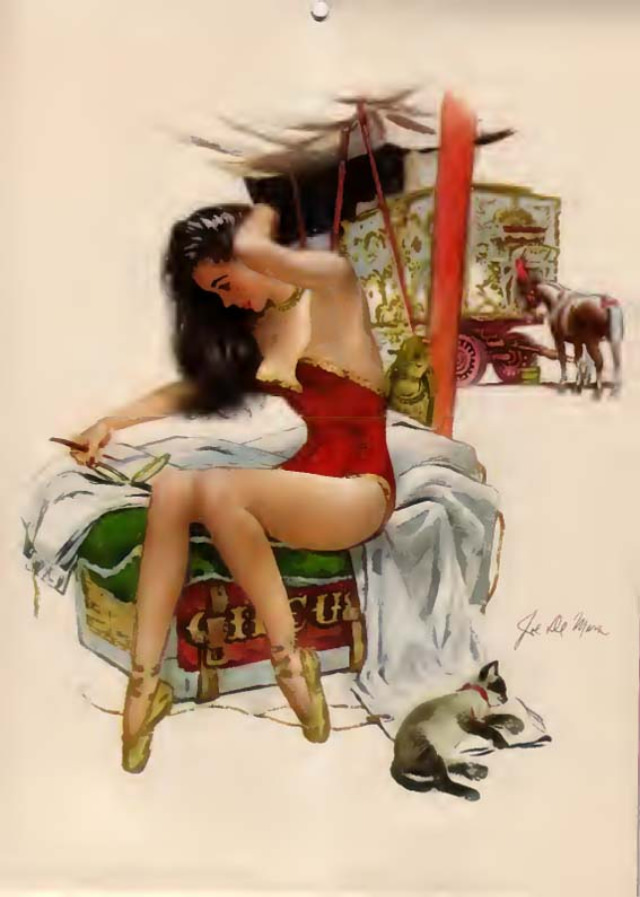
Ren Wicks closed out the autumn with “Exposure” in November, and Joe De Mers wrapped the year with “Sawdust to Stardust” in December. The calendar drew both admiration and criticism — some saw it as harmless art, while others argued it reduced women to decorative ideals.