Hey There! Before You Go. 😧
Get the best vintage content straight into your inbox!

Don't worry, we don't spam

Life of Egypt in the 1920s Through These Fascinating Historical Photos

In the 1920s, two photographers — Gervais Courtellemont and W. Robert Moore, both working for National Geographic — traveled through Egypt and captured daily life in vivid autochrome photographs. Autochromes were an early form of color photography, and the images they produced had a warm, painterly quality that made scenes feel alive. Their work documented merchants, women, children, laborers, landmarks, and street life across a country in the middle of significant change.
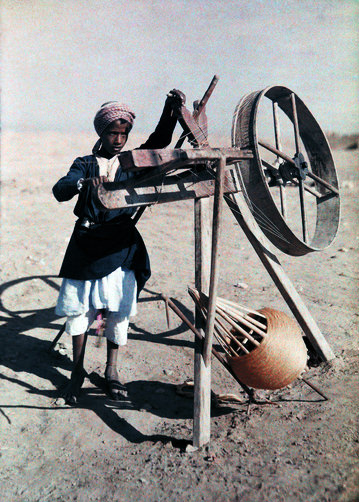
Boy reels silk in a desert near Cairo.

Egypt’s modern history is generally traced back to 1805, when Muhammad Ali came to power and launched a major modernization program. He built a new military, expanded Egypt’s reach into parts of North Africa and the Middle East, and challenged the Ottoman Empire through a series of military campaigns. His dynasty continued to rule Egypt long after his death — from 1922 until 1952, following Egypt’s time as a British protectorate starting in 1915. After 1882, Egypt had been pulled into the British sphere of influence, a situation that sat uneasily alongside its technical status as a vassal state of the Ottoman Empire.
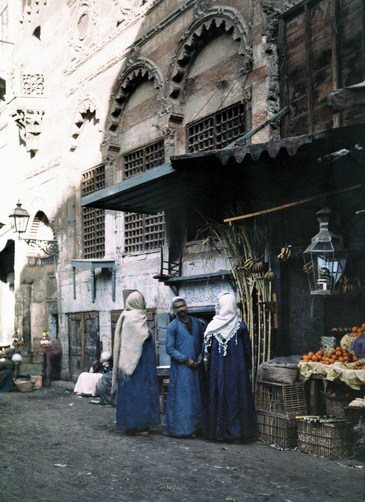
Man and two women stand at his homegrown fruit booth in Cairo.
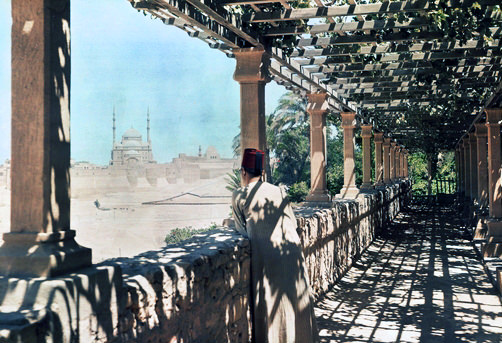
Man peers out from a latticework covered balcony.

By the 1920s, large numbers of Europeans had settled in Egypt, and their presence had reshaped the country’s economy and its cities. The Greek community, Italians, British, and French made up the most prominent foreign groups. These communities did not simply live alongside Egyptian society — they dominated finance, industry, and government. European settlers took over the modern districts of Cairo, filling them with European-style shops and exclusive private clubs.
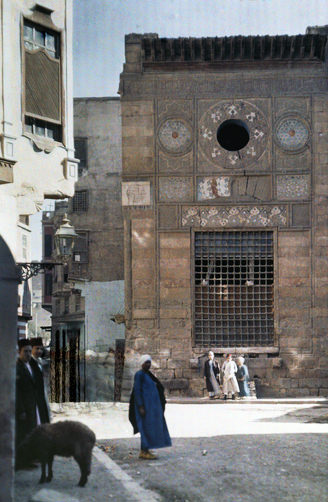
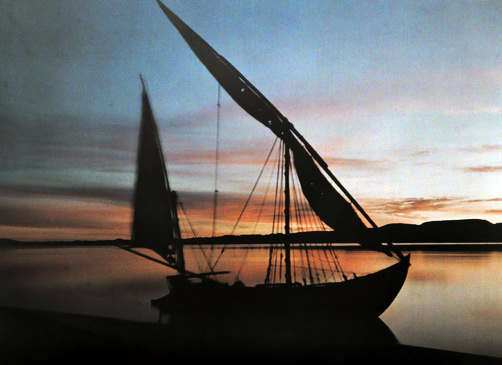
Beautiful building sits untouched in the streets of old Cairo.
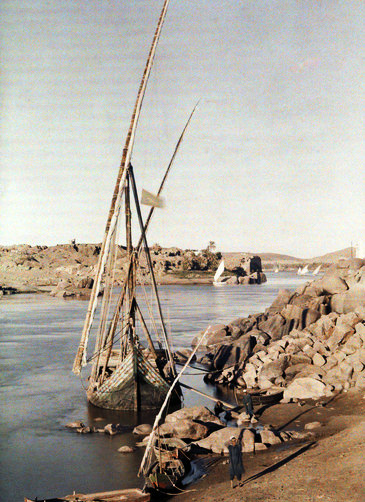
Boat sitting still in the water at sunrise.

New residential quarters were developed to accommodate the growing European population. During the 1910s, two major districts were built on the outskirts of Cairo: Maadi to the south and Heliopolis to the northeast. Both areas had running water, electricity, and modern infrastructure. A tramway connected Heliopolis directly to central Cairo, making it easy for residents to move between the new and old parts of the city. In sharp contrast, the older sections of Cairo were left largely untouched by modernization, continuing to operate much as they had for generations.
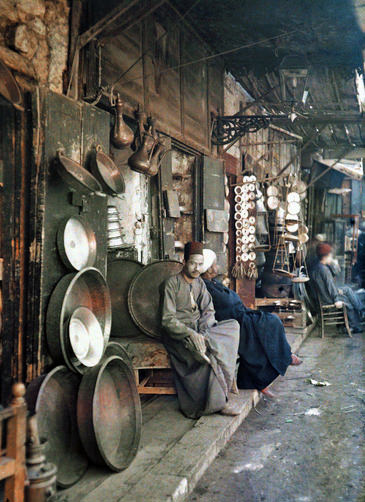
Man sitting next to his store for the Egyptian version of a washtub.
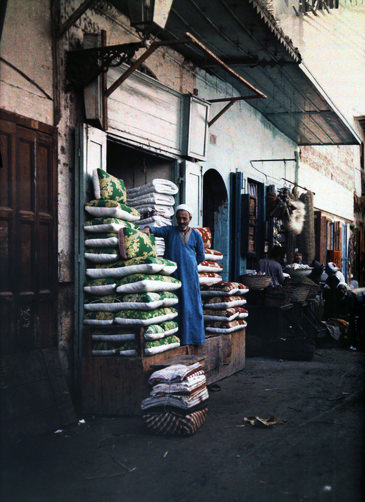
Man standing outside of his quilt and cushion shop in old Cairo.
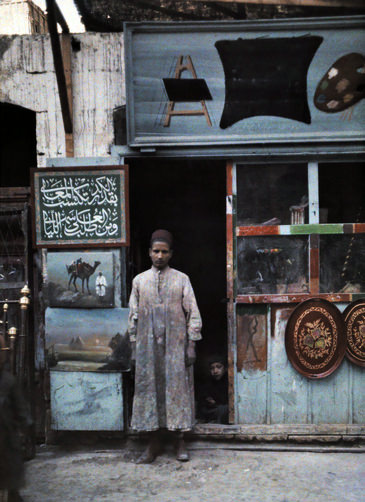
Painter standing in the doorway of his shop.

The photographs show how much of daily commercial life in Egypt played out directly on the street. Vendors sold fruits, hats, silk, sugarcane, and souvenirs. Craftsmen worked in open doorways. Children took on labor roles. The bazaars were busy, social places where transactions and conversation happened side by side. These scenes existed just blocks away from the new apartment buildings and European-owned establishments that were rapidly changing the face of modern Cairo.
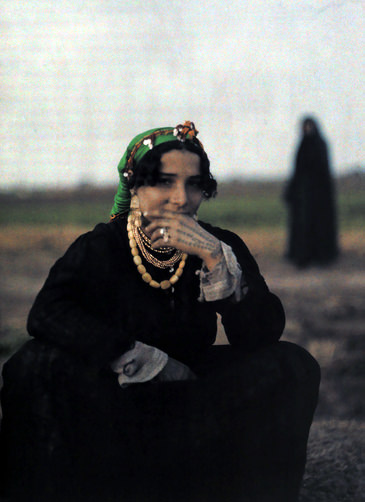
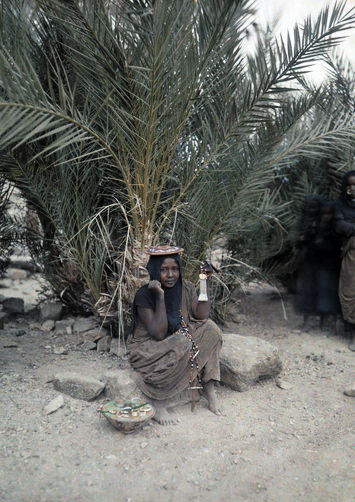
Peasant singer poses in a seated position.
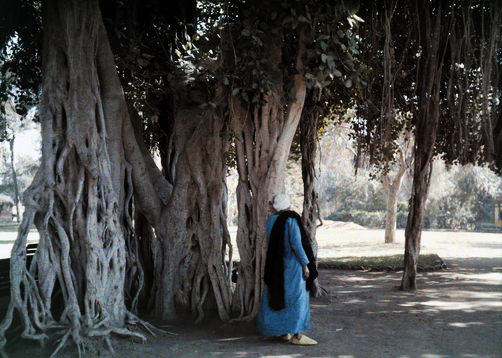
Person leans against a Ficus tree in the garden of Esbekieh.
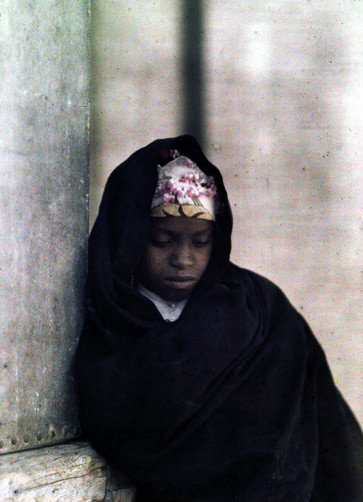
Portrait of a young Nubian girl.
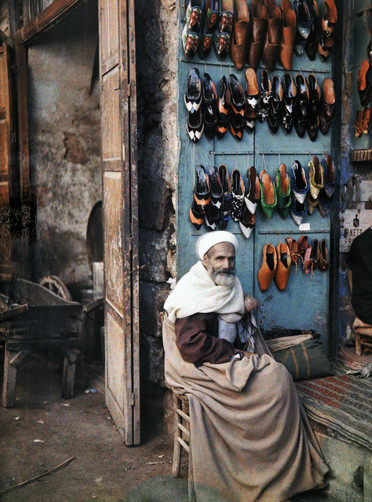
Shoe vendor sits next to his store.
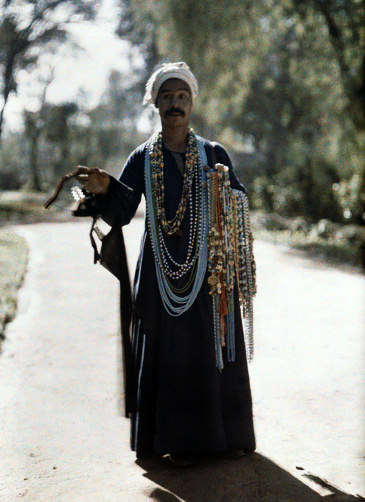
Souvenir merchant walks carrying beads and necklaces.

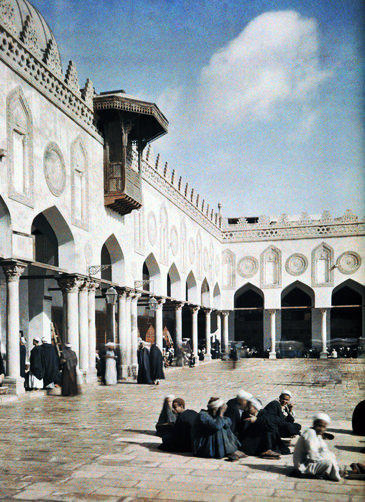
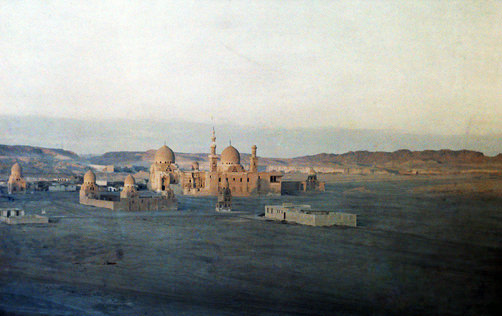
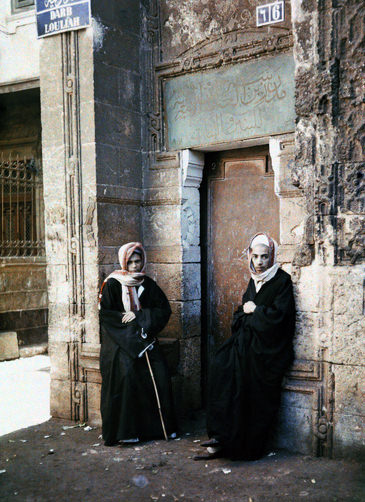
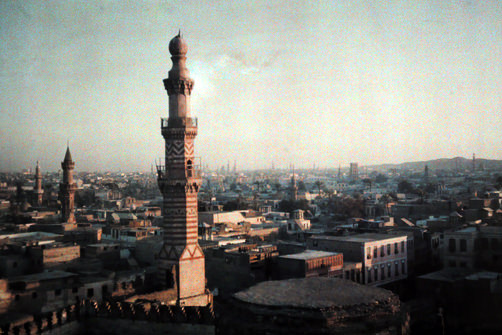
Cairo’s architectural landscape was a study in contrasts. Ornate mosques with tiled walls stood near old stone buildings that had seen centuries pass. The Mosque of el-Azhar, one of the oldest and most respected centers of Islamic learning in the world, still drew students from across the Muslim world. The Tomb of the Caliphs stood near the edge of the city. Meanwhile, the European districts rose with tall apartment blocks and modern storefronts built in styles that would not have looked out of place in Paris or Athens.
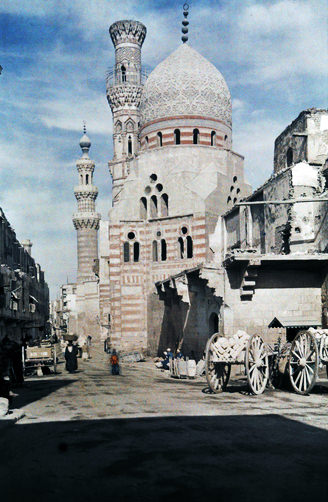
Street view of a mosque with a wall covered in blue tiles.
View of a tower in Cairo.
View of fishermen docking on Philae Island.

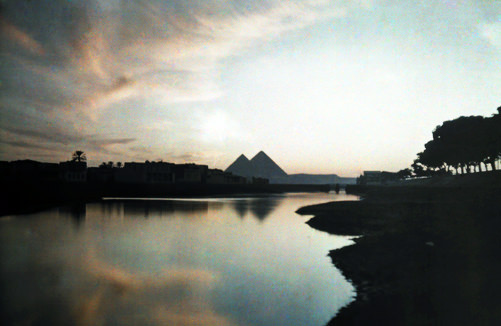
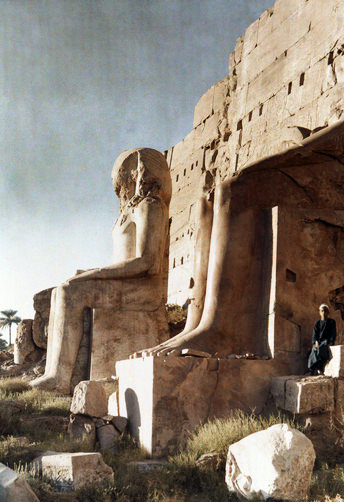
Beyond Cairo, the photographers traveled to ancient sites that stretched along the Nile and into the desert. The Pyramids of Giza, the Great Sphinx, Abu Simbel, the Temple of Edfu, the Temple of Horus, the Colossi of Memnon, the Hall of the Temple of Ammon, and the Monastery of Saint Catherine all appear in their work. These were not simply tourist stops — they were functioning landmarks within a living country, often photographed with local people present.
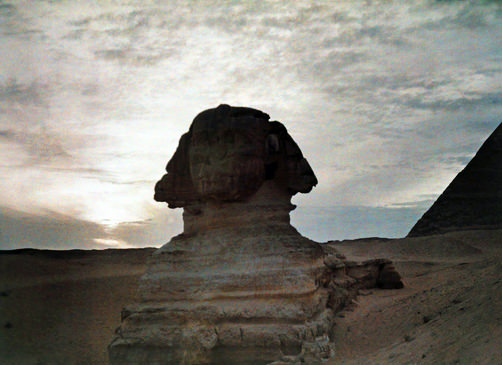
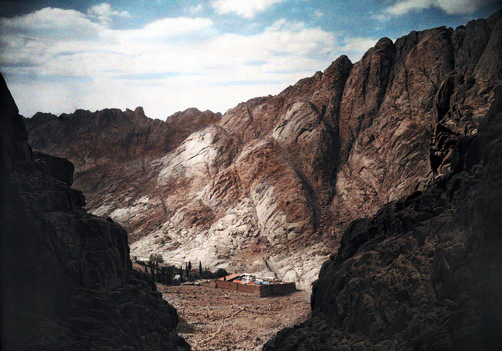
View of the Great Sphinx at sunset.
View of the Monastery of Saint Catherine amid granite peaks.
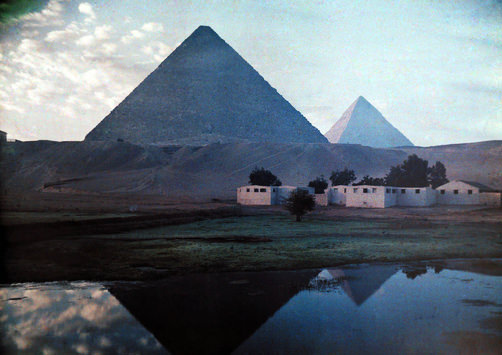
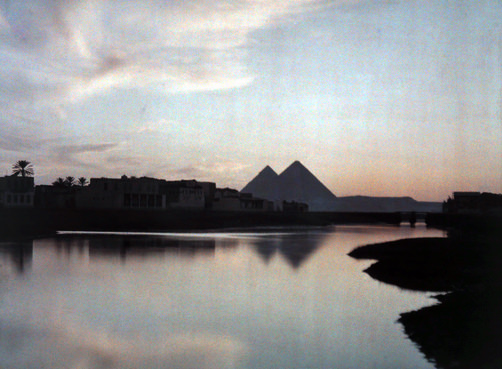
View of the Pyramids of Giza.
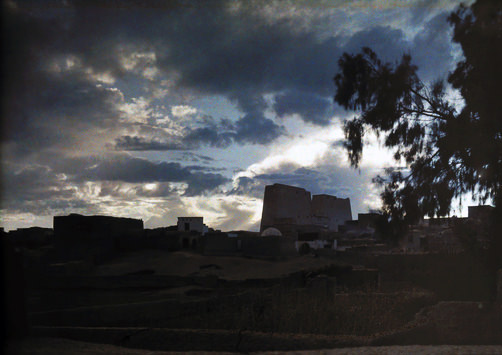
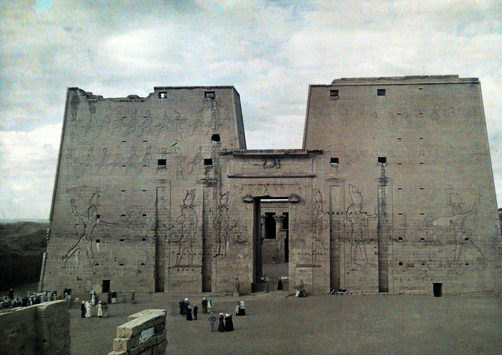
View of the Temple of Edfu at sunset.
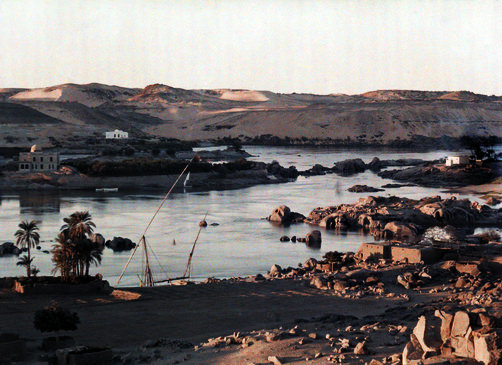
View of the first Nile cataract at Aswan.
View of the pyramids at sunset.
View of the ruins of the Hall of the Temple of Ammon.

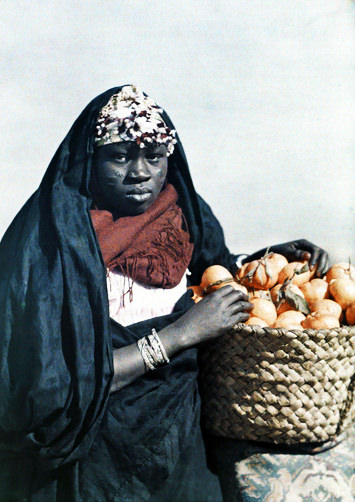
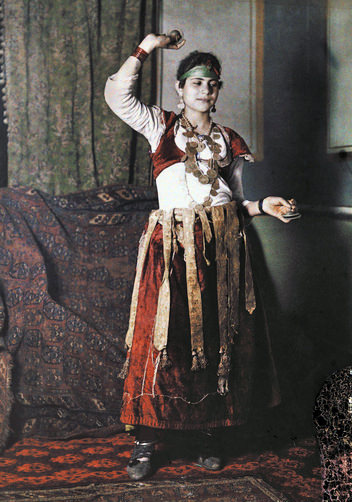
The photographs of Egyptian women offer a range of portrayals. Some women appear in traditional dress, including Muslim headdresses. Others are shown working — selling fruit, carrying baskets of mandarins, or seated beside goods laid out for sale. A young cabaret dancer was photographed in traditional clothing, and a woman posed with jewelry beside her. These images represent Egyptian women not as a single type but as individuals with distinct roles and identities.
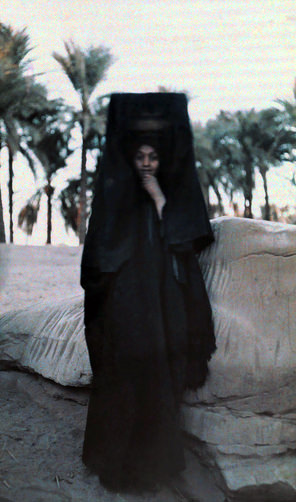
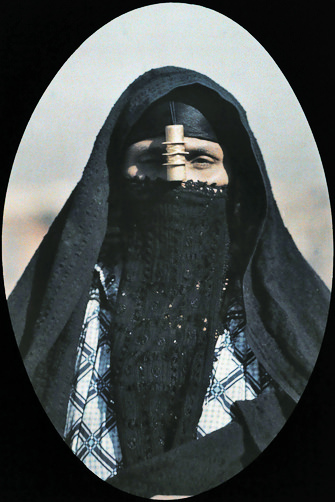
Woman in black attire posing.
Woman wearing a Muslim headdress.
Woman posing with a basket of mandarins or tangerines.
Woman sitting on a rock with jewelry beside her.
View of the pyramids with buildings in between.
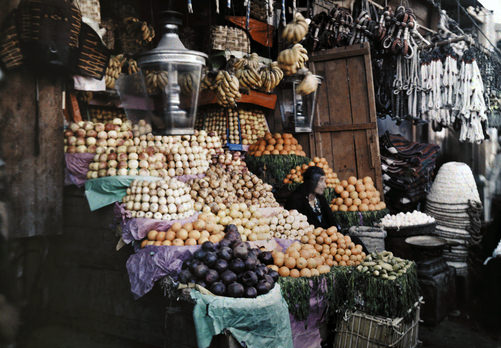
Woman sitting with her fruits for sale.
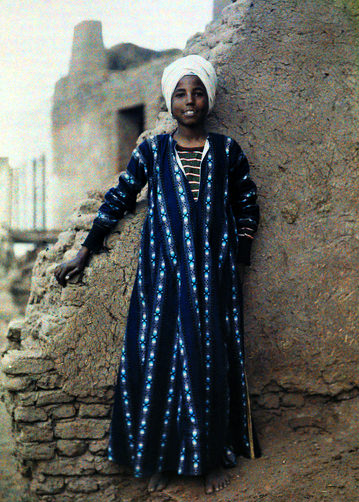
Young boy who journeys on donkeys leans against a stone wall.
Young cabaret dancer posing for a photograph in traditional clothing.

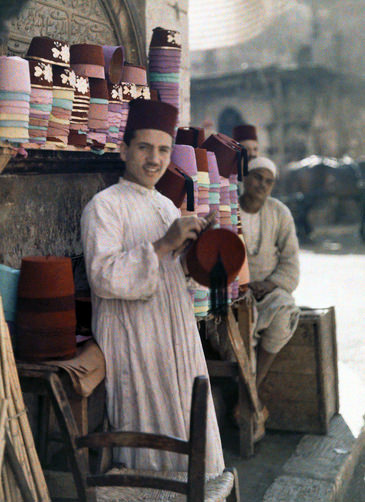
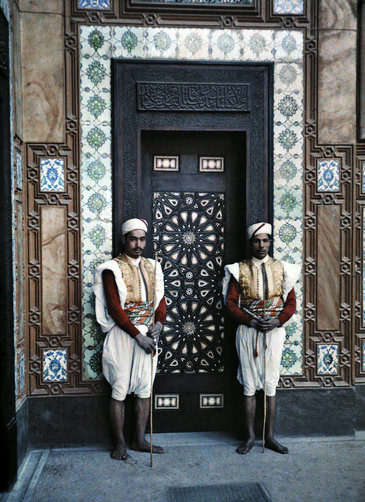
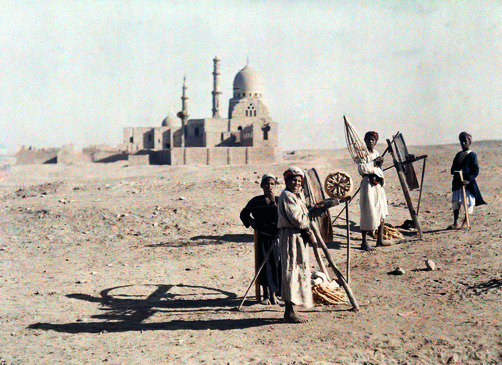
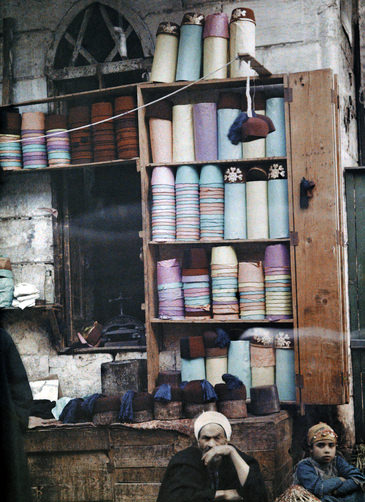
Trade and craft dominated street-level activity throughout the country. Silk winders worked near the Tombs of the Caliphs. Men produced glass and sewed tents. Boys cooked meat at open-air shops. Tarboosh vendors — selling the traditional red felt cap — operated booths in Cairo’s streets. Two sais, Egyptian footmen who traditionally ran ahead of carriages, stood guard at the entrance to the French Legation, a direct image of how European institutions had embedded themselves into Egyptian civic life.
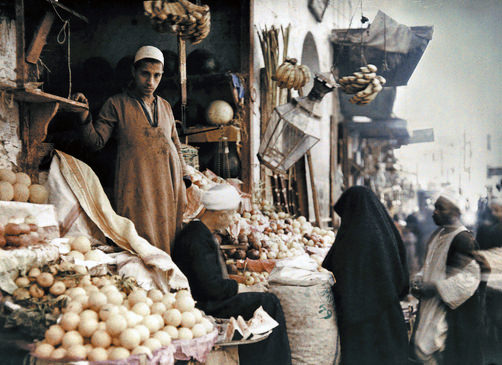
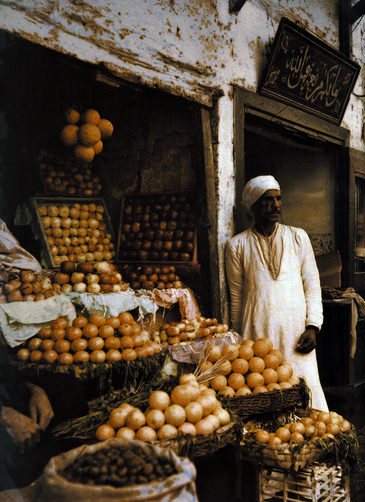
Egyptian street merchant sells fruits.
Egyptian street merchant sells hats.
Orange merchant awaits customers.
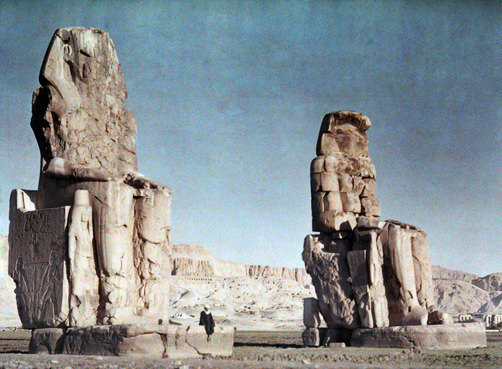
Colossi of Memnon once guarded entrance to Temple of Amenophis.
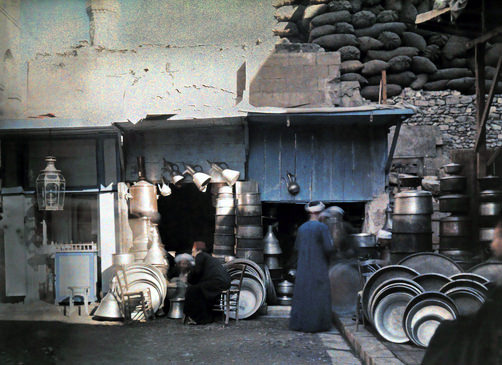
Men sitting at a shop at a bazaar.
People standing outside the Temple of Horus.
Students sitting in the courtyard of the Mosque of el Azhar.
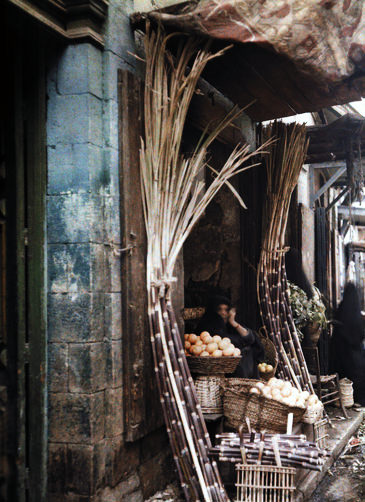
Sugarcane vendors waiting for customers.
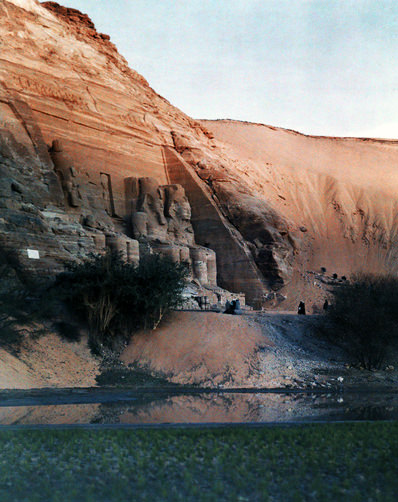
The image of Rameses II carved into the rock at Abu Simbel.
The mosque-like Tomb of Caliphs near Cairo holds Luxor and Arab heroes.
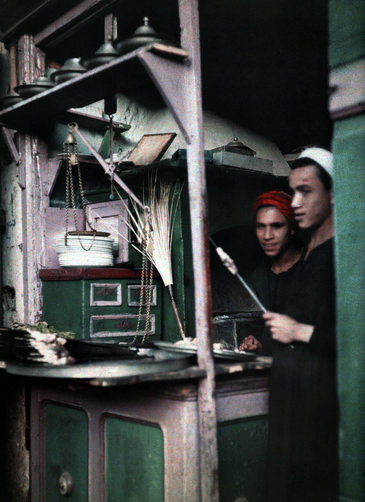
Two boys cooking meat at a meat shop in Egypt.
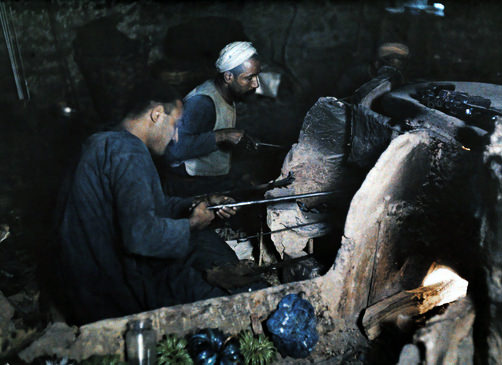
Two men making glass.
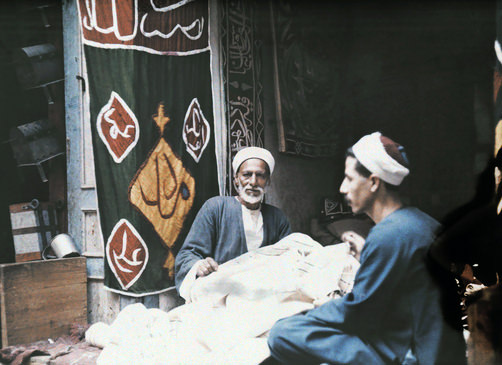
Two men making tents.
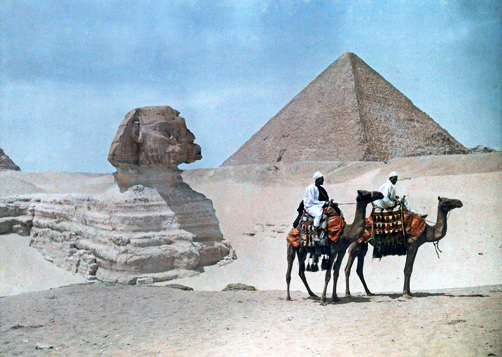
Two men on camel-back ride past the Sphinx and Great Pyramid.
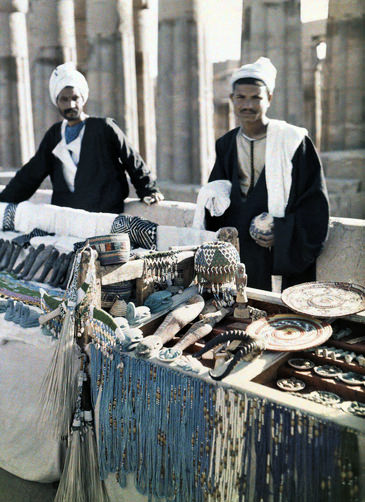
Two men stand in front of souvenir booths in the street of Cairo.
Two men work at a tarboosh booth in Cairo.
Two sais stand in front of the entrance to the French Legation.
Two students of Mecca stand at the Mosque of el Azhar.
Winders of silk at the Tombs of the Caliphs.
Enjoyed this post? Get new ones in your inbox.

Leave a Comment

Your email address will not be published. Required fields are marked *

Share this Post 🥺

Please take a moment to share this content. Your support is greatly appreciated! 🙌🙏

Share this Post 🥺

Please take a moment to share this content. Your support is greatly appreciated! 🙌🙏
Scroll to Top
 
Hey Friend, Before You Go.. Please like & follow for more interesting content