By 1980, East Germany was a country held together by surveillance, central planning, and rigid political control. The Socialist Unity Party, known by its German initials SED, ruled every corner of public and private life. Behind that rule stood the Stasi — the state security service — which ran one of the most extensive spy networks in history. Neighbors reported on neighbors. Ordinary citizens were recruited as informants. The goal was simple: eliminate any opposition before it could take root.
The streets of East German cities in 1980 told this story quietly. Life went on — trams ran, markets opened, people walked to work — but it all unfolded under a system that decided what you could buy, where you could travel, and what you were allowed to say. The photos in this collection were taken across several cities that year, offering a rare ground-level look at daily life inside the German Democratic Republic (GDR).
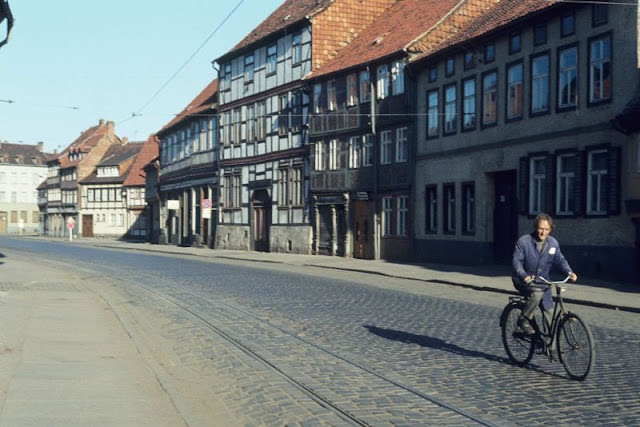
Halberstadt, a mid-sized city in the Harz region, shows up early in these images. Its main street in the early morning hours carries the quiet, unhurried feel typical of East German urban life — wide roads with little traffic, storefronts without the commercial clutter common in the West.
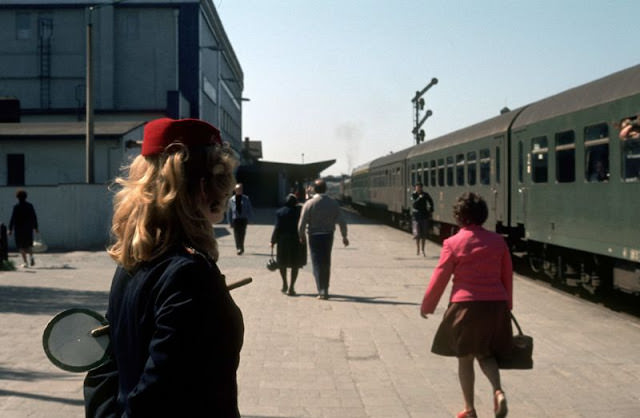
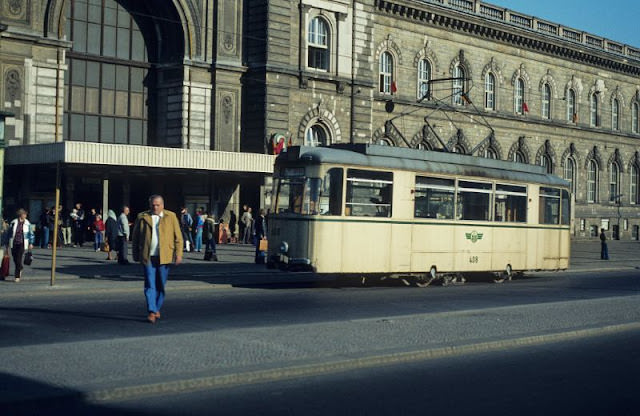
The Deutsche Reichsbahn — East Germany’s national railway — was one of the most visible symbols of the state. It connected cities across the GDR and served as a lifeline for workers, goods, and the occasional traveler allowed to move between regions. Halberstadt’s station was a regular stop on that network.
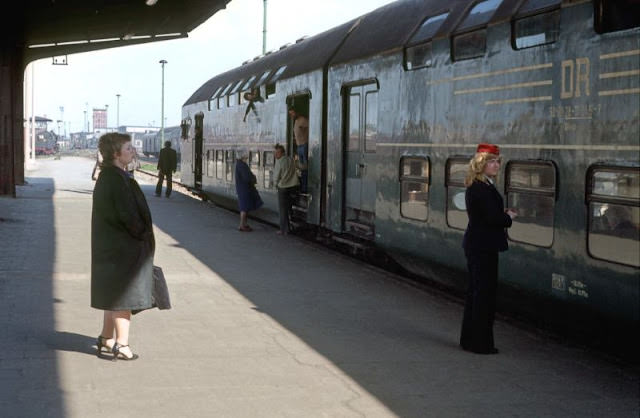
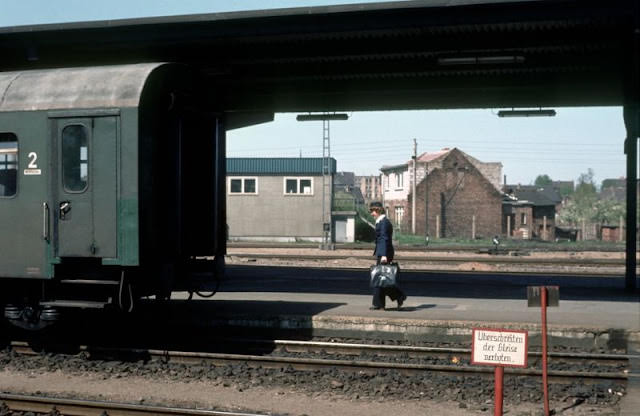
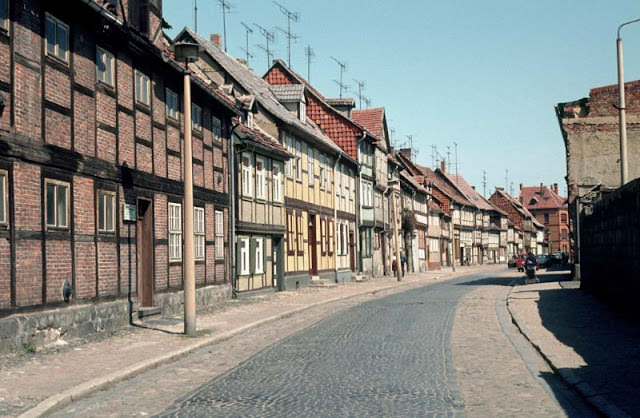
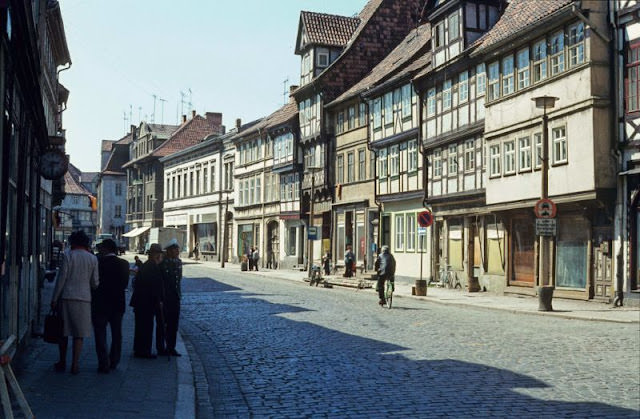
Away from the station, Halberstadt’s streets reflected the contradictions of life under socialism. Buildings showed signs of deferred maintenance — a common sight across the GDR, where state resources were directed toward industry and military spending rather than housing upkeep or urban renewal. Yet people filled these streets, going about their routines with a normalcy that was itself a form of resilience.
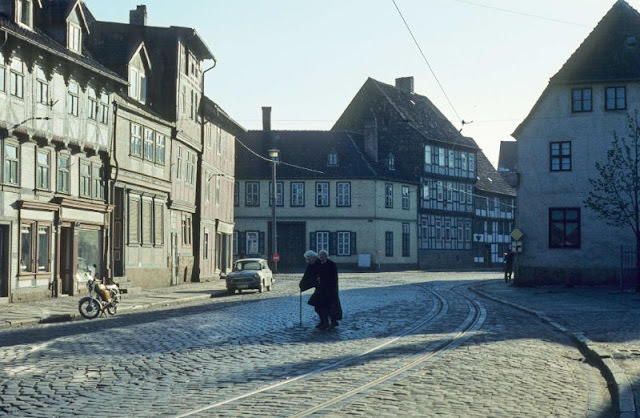
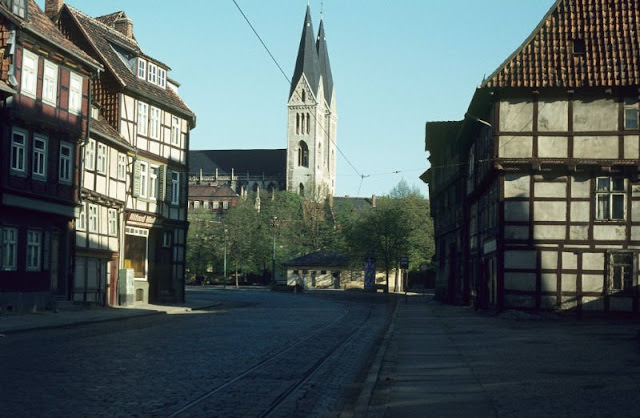
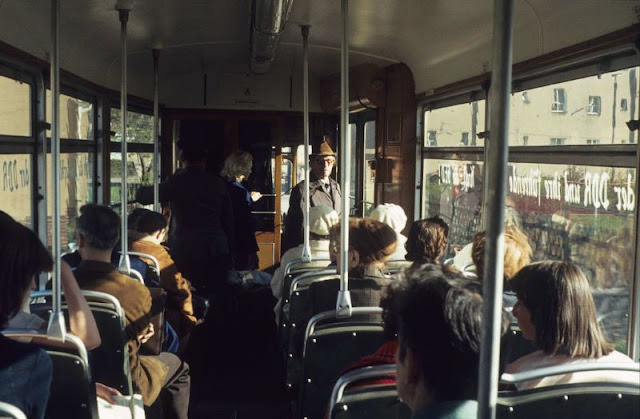
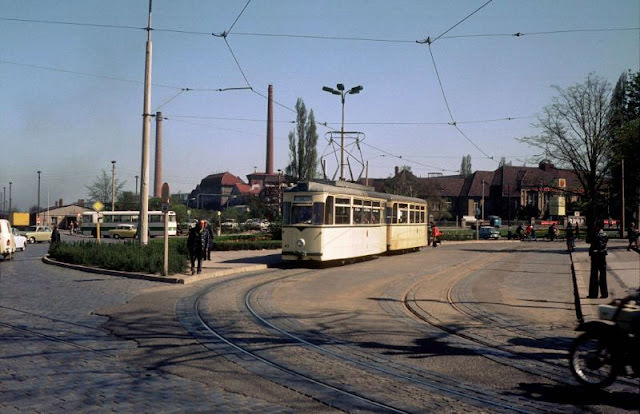
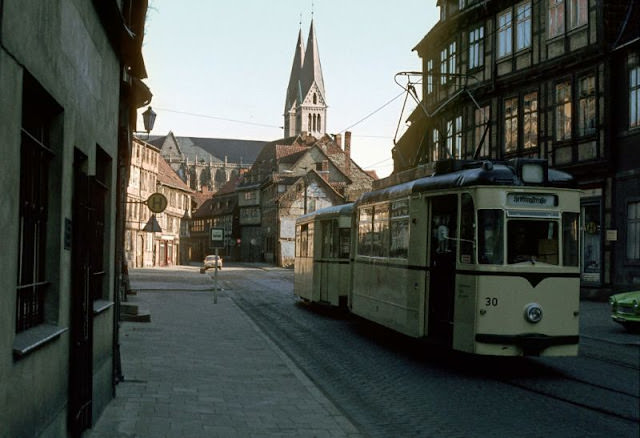
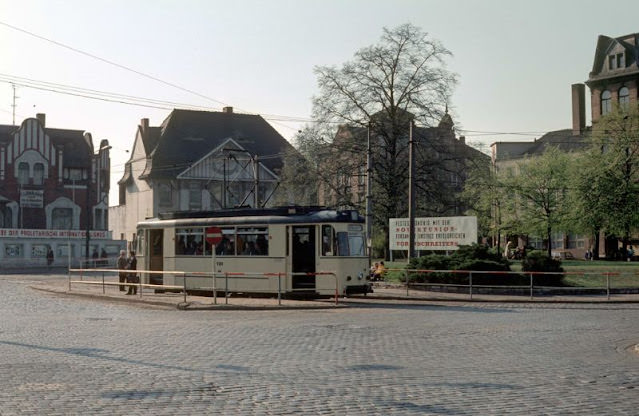
Halberstadt’s tram system — the Straßenbahn — was central to how residents moved through the city. Trams were cheap, state-run, and reliable enough to form the backbone of public transit across many East German towns. These images capture the vehicles and the passengers who depended on them every day.
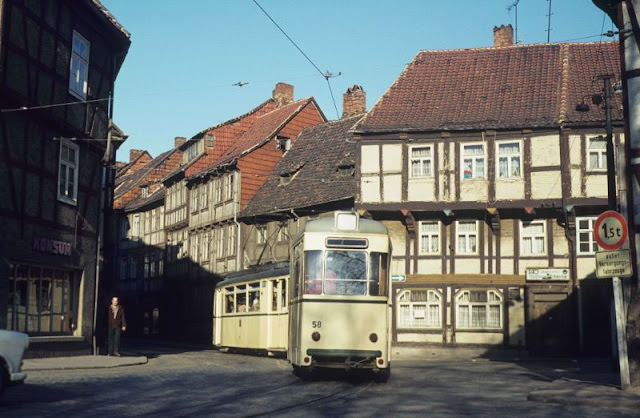
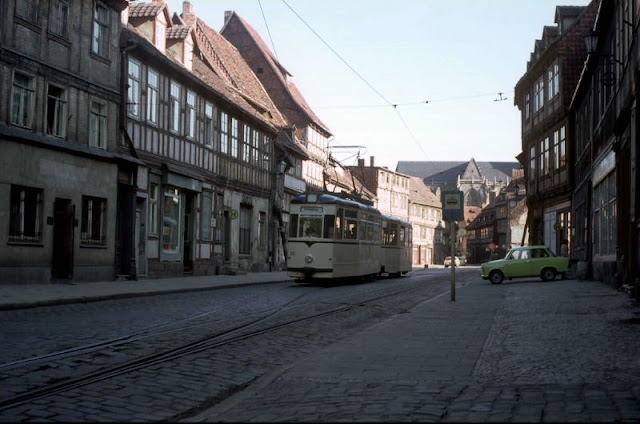
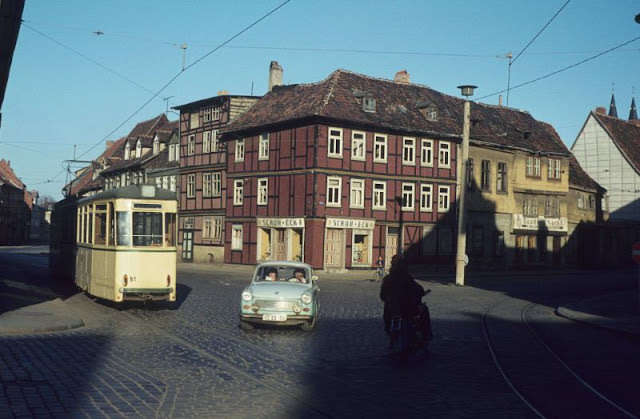
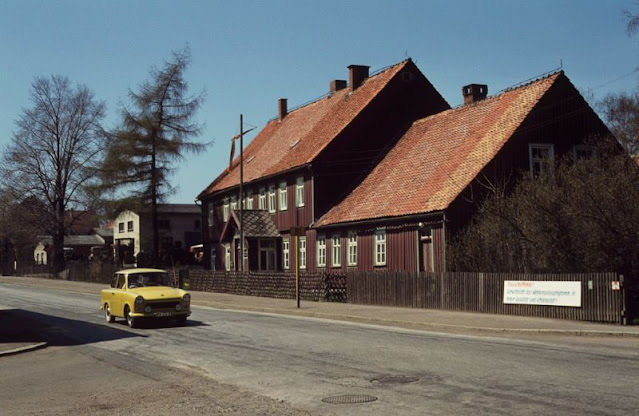
No image of East German street life is complete without the Trabant — better known as the Trabi. This small, two-stroke car was the standard personal vehicle for East Germans, produced by the state and often requiring years on a waiting list to obtain. Seeing one share the road with a tram captures the everyday texture of GDR transportation perfectly.
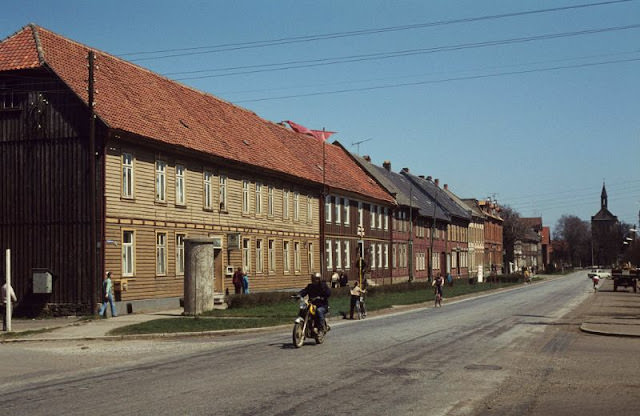
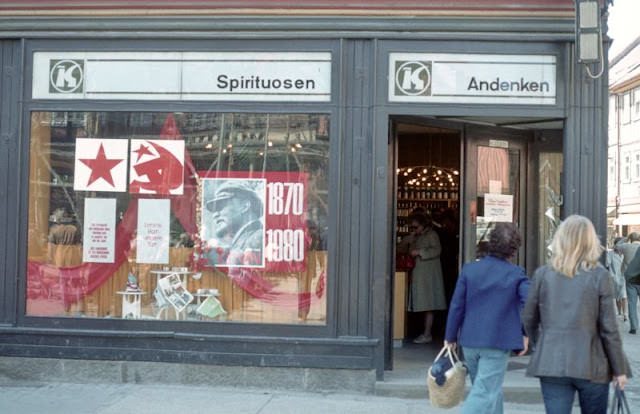
The small town of Hasselfelde, tucked into the Harz mountains, presents a different pace. Quieter and more rural than Halberstadt or Magdeburg, its streets in 1980 show how the GDR’s uniform political system played out even in its smallest communities — the same state shops, the same architectural style, the same absence of advertising.
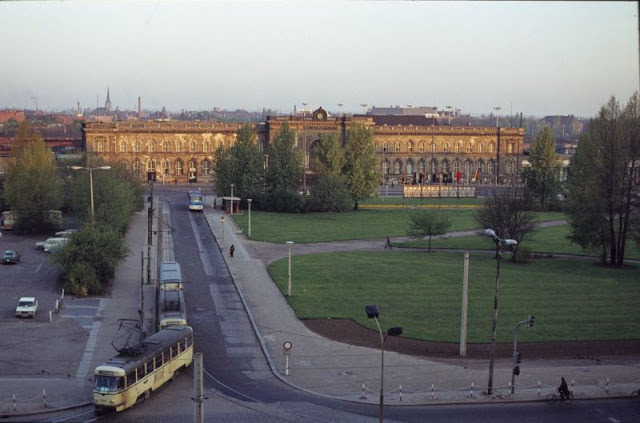
Magdeburg, one of East Germany’s largest cities and an industrial hub on the Elbe River, makes up the largest portion of this collection. Its Hauptbahnhof — the main railway station — was a major transit point for the region, and the plaza around it served as a gathering point for city life.
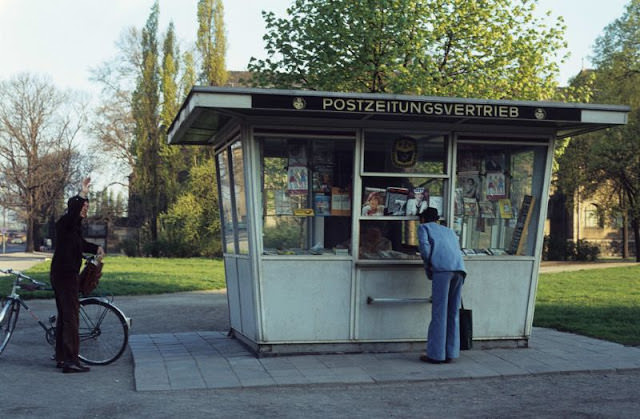
The economy in 1980 was already showing cracks that the government refused to acknowledge publicly. Shortages of consumer goods were routine. Basic items required long queues, and a black market filled the gaps the state couldn’t. Despite official propaganda portraying economic strength, East Germany lagged behind West Germany and even some of its Eastern Bloc neighbors in living standards and technology.
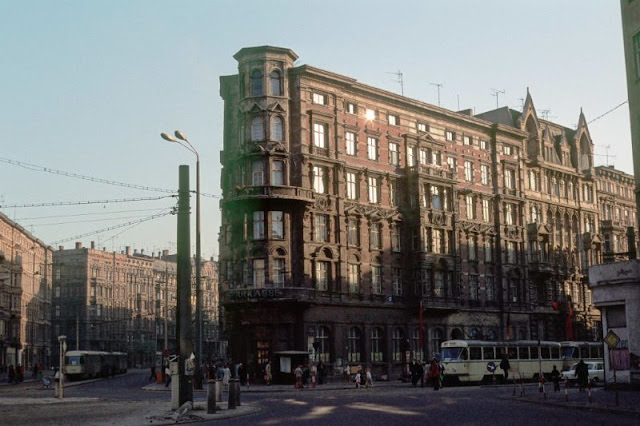
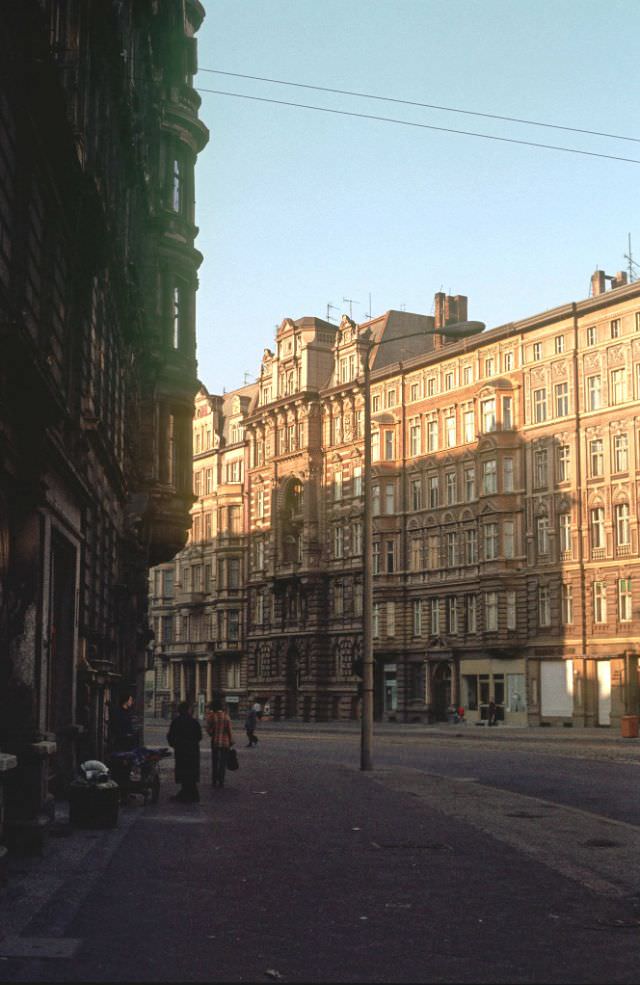
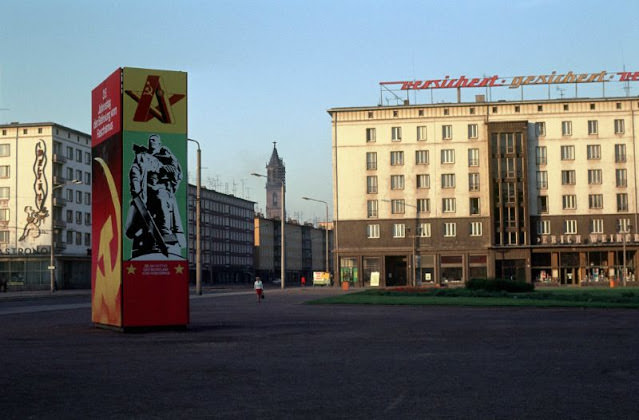
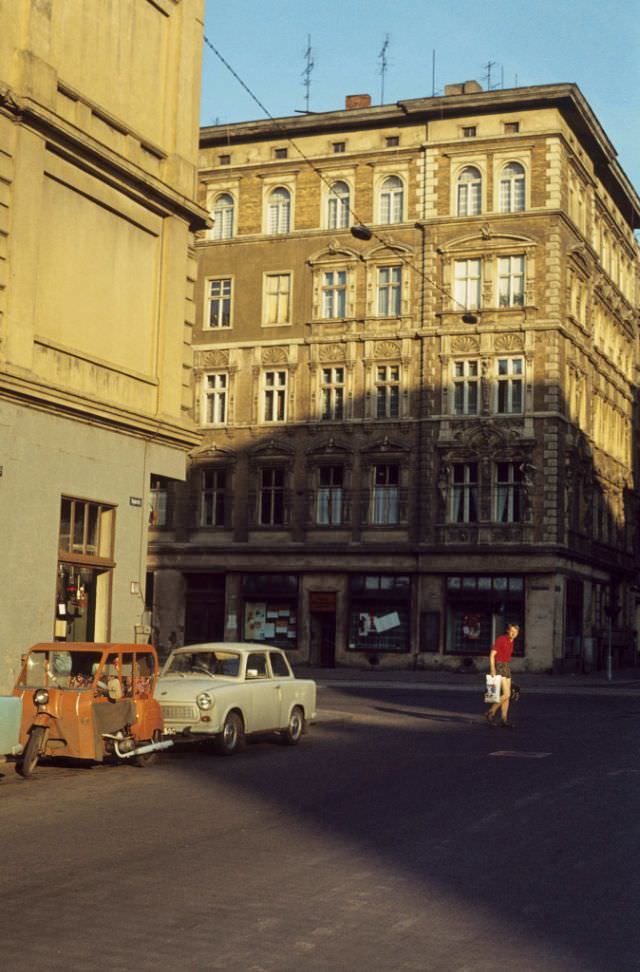
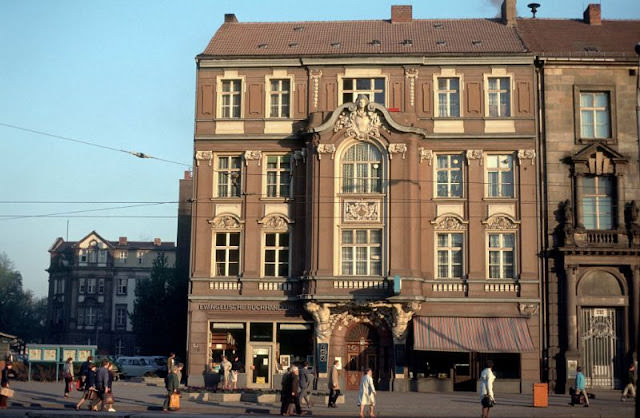
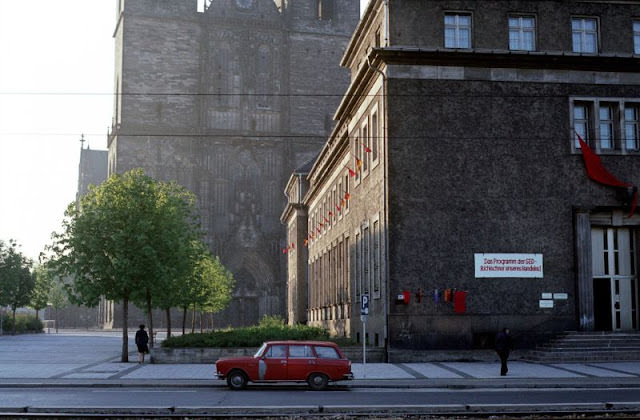
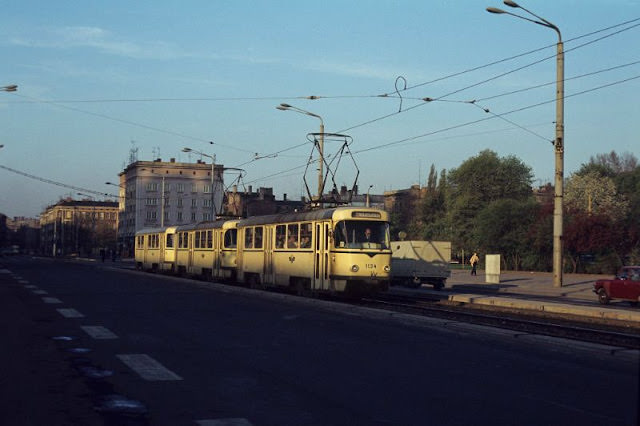
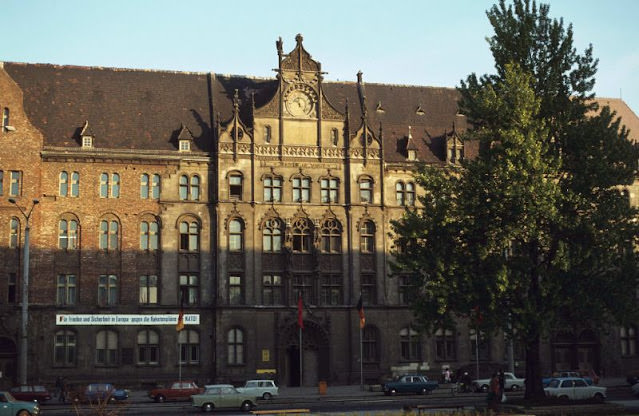
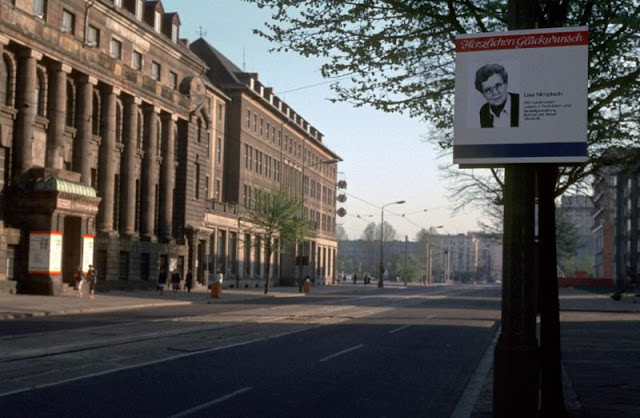
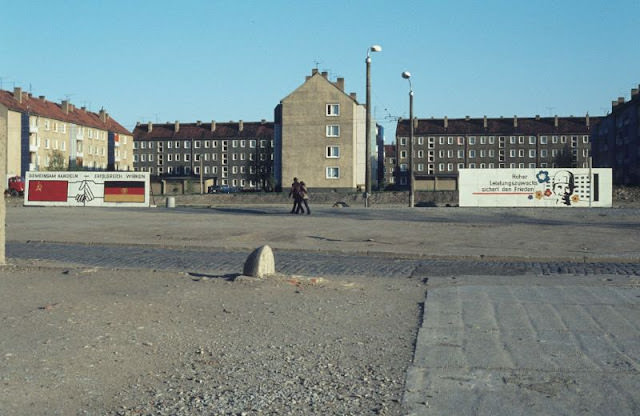
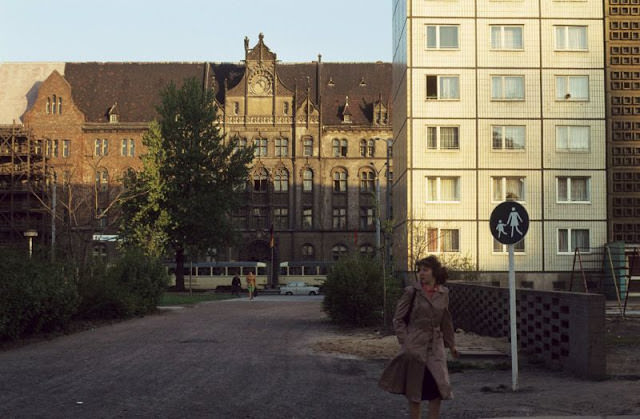
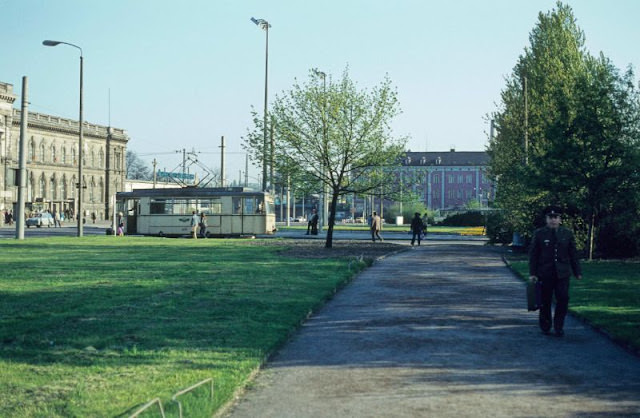
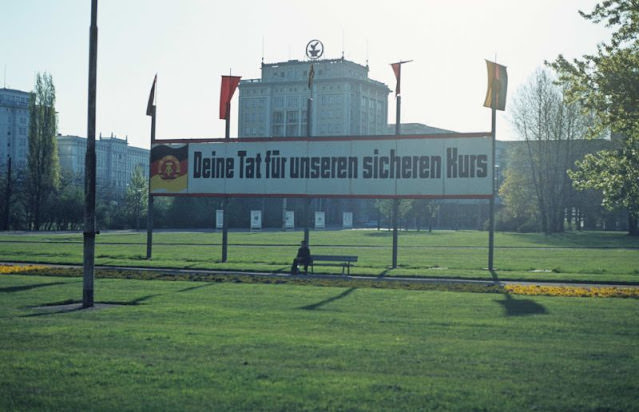
Wider shots of Magdeburg show the city’s Soviet-influenced urban planning — broad avenues, prefabricated apartment blocks, and public squares designed for state gatherings. The Bahnhofplatz, photographed in the early morning quiet, reveals how these grand civic spaces looked when stripped of crowds and ceremony.
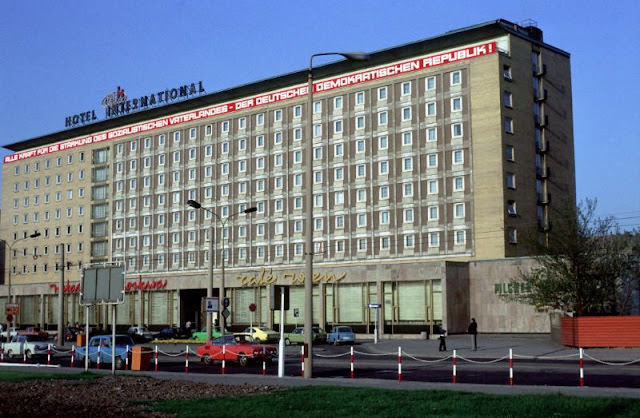
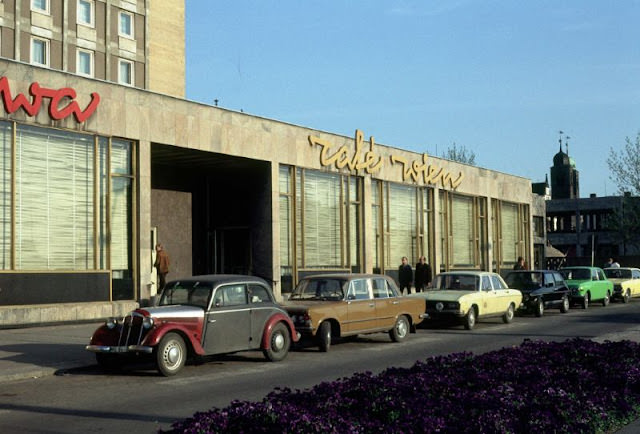
Hotel International stood as one of Magdeburg’s more prominent modern buildings — the kind of state-approved showcase architecture meant to project socialist progress. Hotels of this type were often reserved primarily for foreign visitors and approved travelers, not ordinary East German citizens.
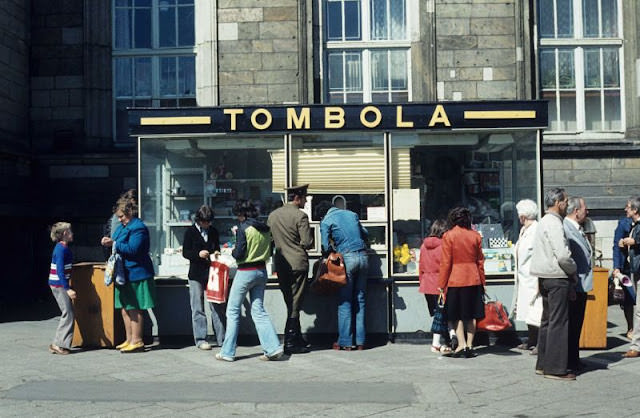
A raffle held in front of Magdeburg’s main station points to one of the few forms of sanctioned public entertainment available to East Germans. State-run lotteries and raffles were common — one of the limited ways citizens could win goods that were otherwise scarce or simply unavailable in regular shops.
Nordhausen, near the southern edge of the Harz region, had its own railway connection that tied it into the broader GDR network. Its station in 1980 reflects the same functional, state-run aesthetic found across the country’s rail infrastructure.
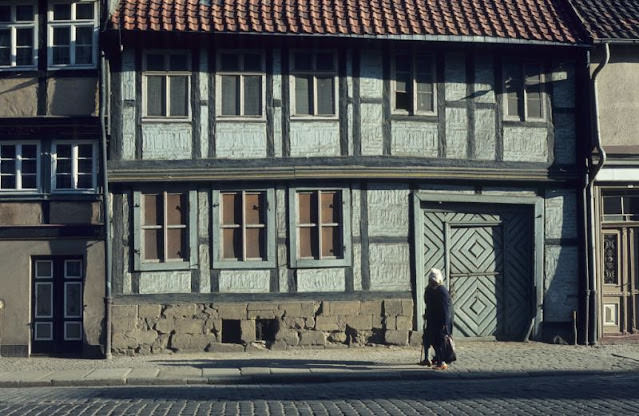
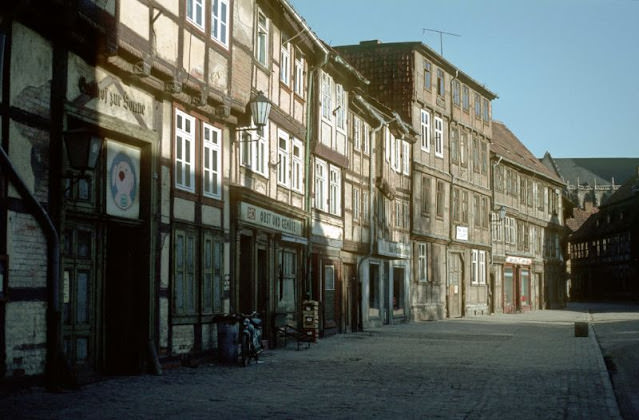
Quedlinburg, a historic town with roots stretching back to the tenth century, retained much of its medieval street layout even under GDR rule. The state preserved certain historic sites for cultural and tourism purposes, though the town’s older architecture also simply survived because the funds for modernization were never available.
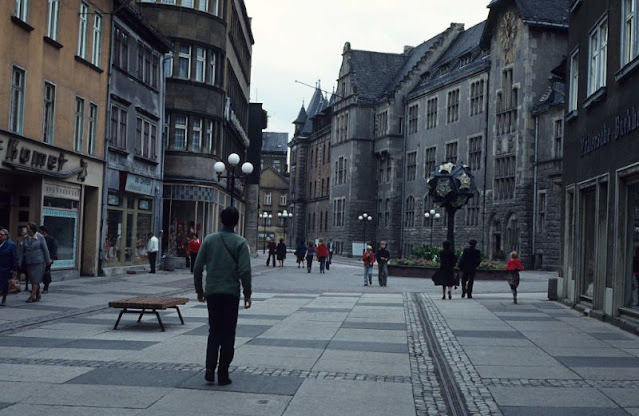
Rudolstadt, a smaller city in Thuringia, shows the GDR’s city centers as functional rather than decorative spaces. State-run shops, public transport stops, and pedestrians on foot defined the rhythm of places like this — private cars were still rare enough that walking and trams dominated daily movement.
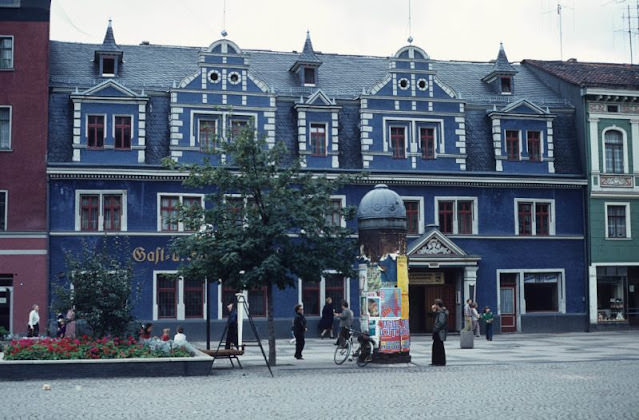
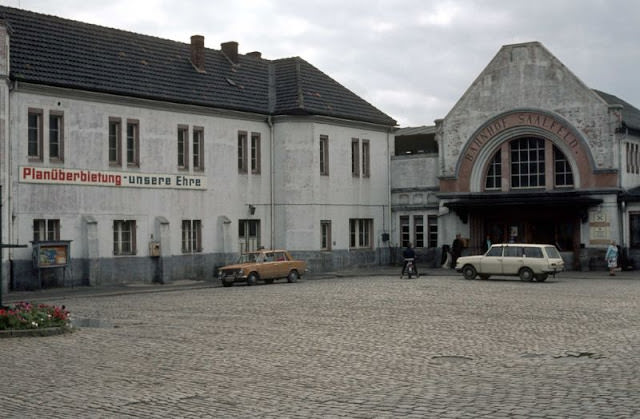
Saalfeld’s railway station rounds out the collection’s coverage of the GDR’s rail network. The Deutsche Reichsbahn connected cities large and small, and stations like this one served as the main point of arrival and departure for entire communities.
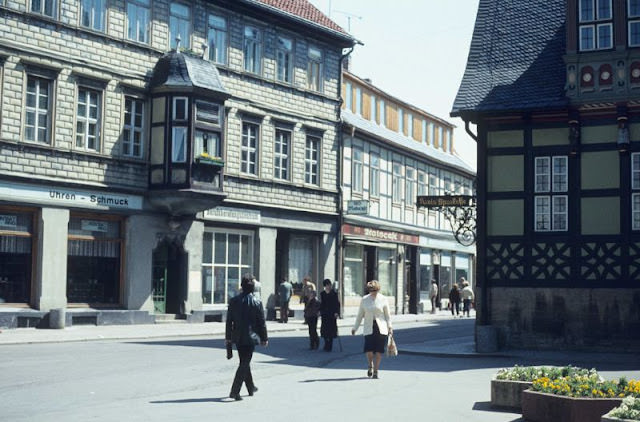
Wernigerode, a picturesque town at the foot of the Harz mountains, closes out this collection. Known for its well-preserved half-timbered buildings, Wernigerode was one of the GDR’s more visually distinctive towns — a place where the medieval past and the socialist present existed side by side on the same streets.
Taken together, these 43 photographs document a specific moment in time — East Germany at the start of a decade that would end with the fall of the Berlin Wall on November 9, 1989. The Wall had divided East and West Berlin since 1961, and its opening came after months of mass protests that the government was unable to stop. Less than a year later, on October 3, 1990, Germany reunified. But in 1980, none of that was yet visible in these streets. What was visible was ordinary life, playing out under extraordinary constraints.