Hey There! Before You Go. 😧
Get the best vintage content straight into your inbox!

Don't worry, we don't spam

Fascinating Photos Show Everyday Life of Dublin in the 1960s

Dublin in the 1960s was a city in motion. After decades of economic stagnation, Ireland began opening its doors to foreign investment and international trade. Jobs multiplied, new housing estates spread across the suburbs, and the population grew steadily. It was a decade that reshaped the city’s streets, institutions, and daily routines in ways that are still visible today.

One of the biggest cultural shifts came on New Year’s Eve 1961, when RTÉ television broadcast for the very first time. For most Irish families, it was their first glimpse of television in their own homes. Around the same time, censorship laws that had kept books and films tightly restricted began to loosen. Free post-primary education was introduced, opening secondary schooling to working-class children who had previously been locked out of it.

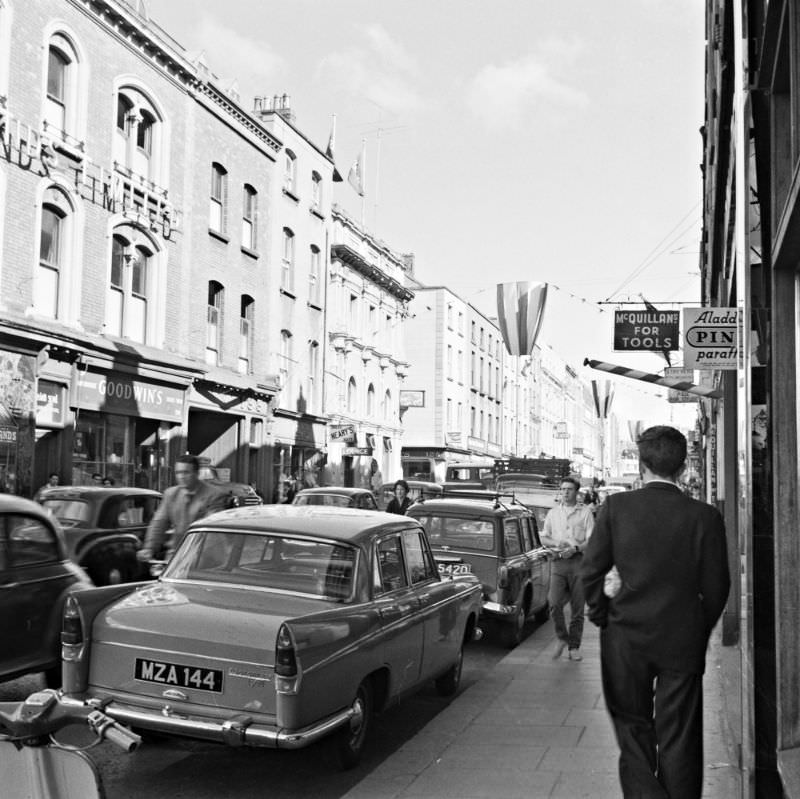
Capel Street, Dublin, June 28, 1960

The streets of Dublin reflected this shift. Capel Street, one of the city’s oldest commercial thoroughfares, buzzed with traders, pedestrians, and delivery vehicles. The mix of Georgian architecture and modest shopfronts gave the street a timeless, working-class energy that defined much of inner-city Dublin at the start of the decade.

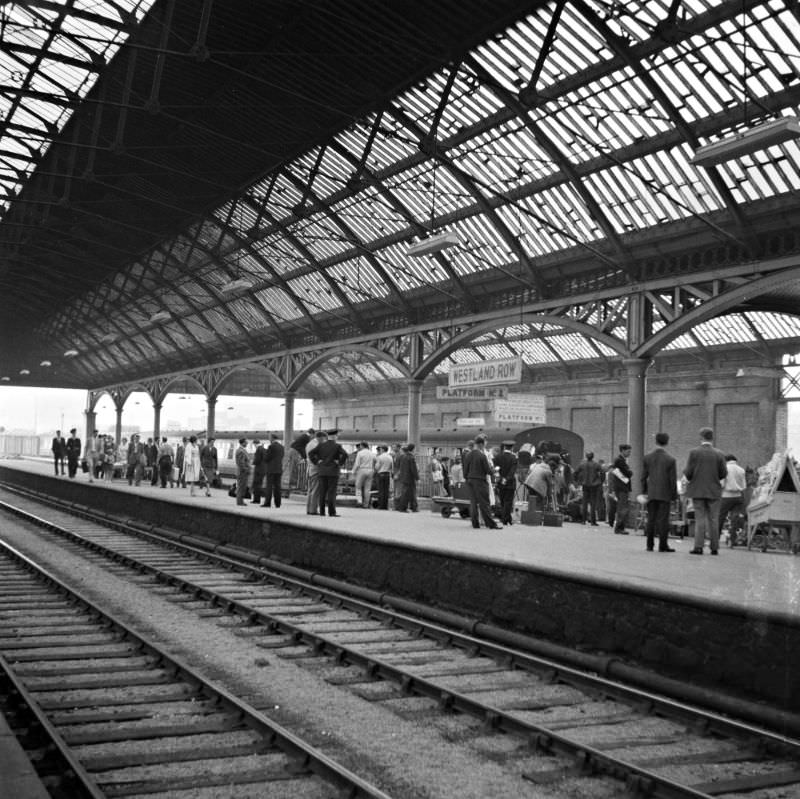
Filming at Westland Row Station, now Pearse Station, in Dublin, June 24, 1960

Dublin’s rail stations were themselves becoming backdrops for the new media age. In June 1960, a film crew set up at Westland Row Station — today known as Pearse Station — capturing scenes that would have been unimaginable a generation earlier. The arrival of film and television production in the city was part of a broader cultural awakening.

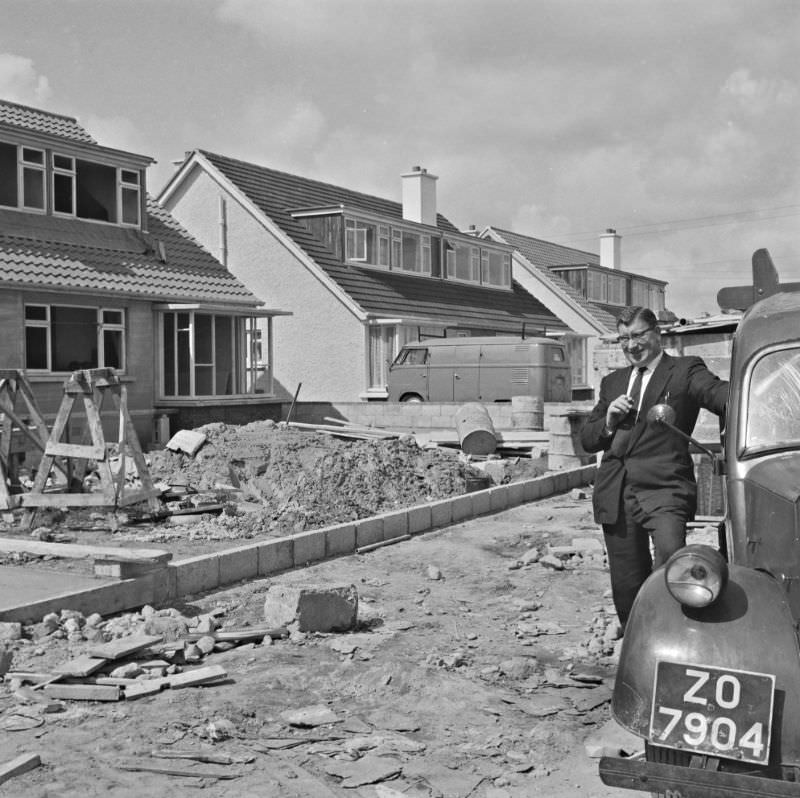
New houses being constructed, Templeogue, Co. Dublin, 1961

Housing construction accelerated rapidly in the early 1960s. In suburbs like Templeogue, rows of new semi-detached homes were going up to accommodate families moving out of the overcrowded inner city. Tenement buildings in the old city centre had long been a source of poverty and squalor, and the suburban push was meant to offer a better standard of living — though it came with its own complications.

Store Street, Dublin, September 1961
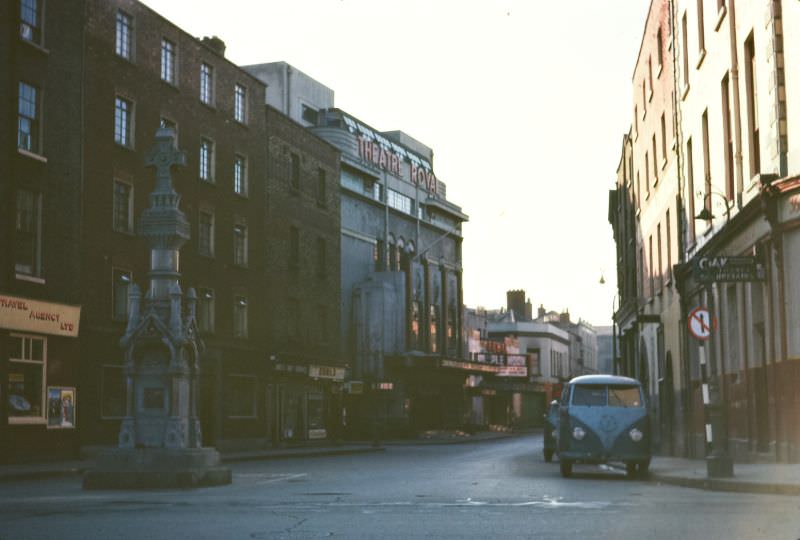
The late lamented Theatre Royal on Hawkins Street in Dublin, April 1, 1962

Not every part of Dublin’s old character survived the decade. The Theatre Royal on Hawkins Street, a grand entertainment venue that had hosted variety shows and films for decades, was demolished in 1962. It was one of several historic buildings lost to redevelopment during a period when the city prioritised growth over preservation.

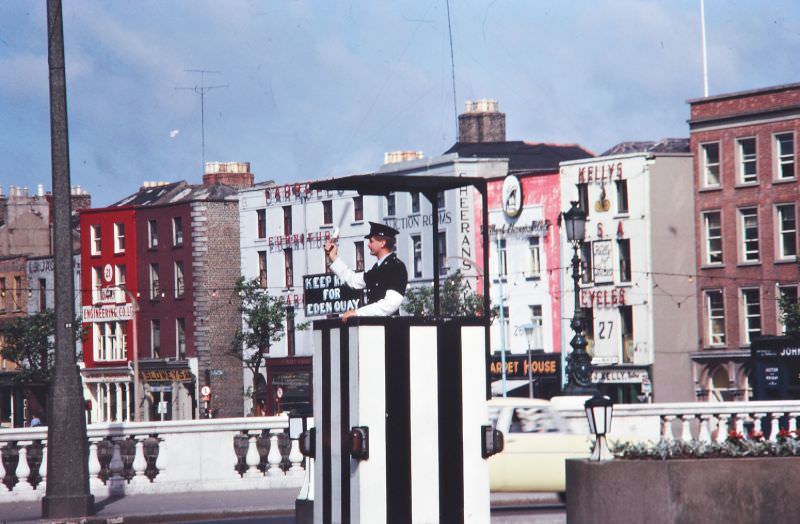
Garda directing traffic, O'Connell Bridge, Dublin, 1963
Garda directing traffic, O’Connell Bridge, Dublin, 1963

By 1963, traffic on Dublin’s main arteries was thick enough to require hands-on management. A Garda officer stationed at O’Connell Bridge directed the flow of cars, buses, and cyclists with practiced authority. The volume of vehicles on the city’s streets was growing year on year, a sign of rising incomes and the increasing availability of private cars.

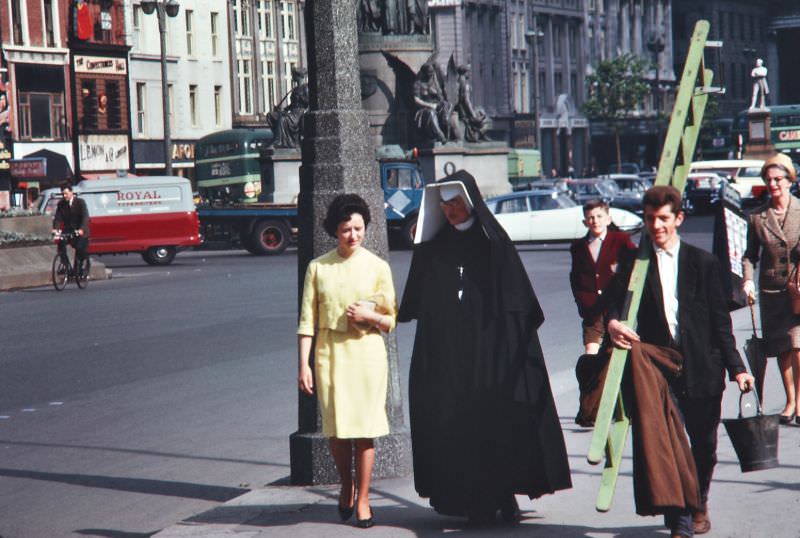
O'Connell Street, Dublin, June 1963
O’Connell Street, Dublin, June 1963
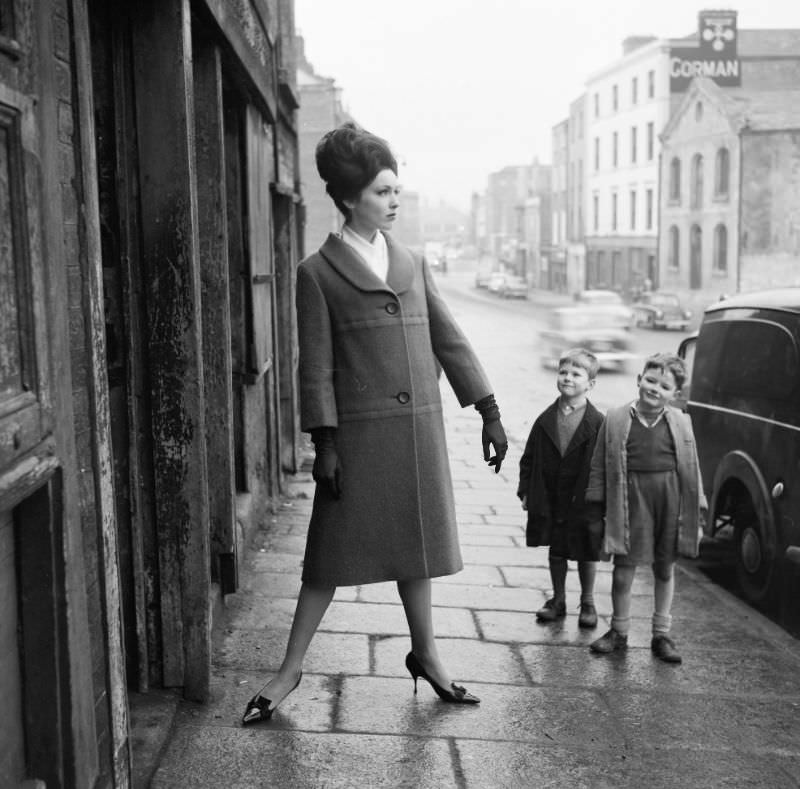
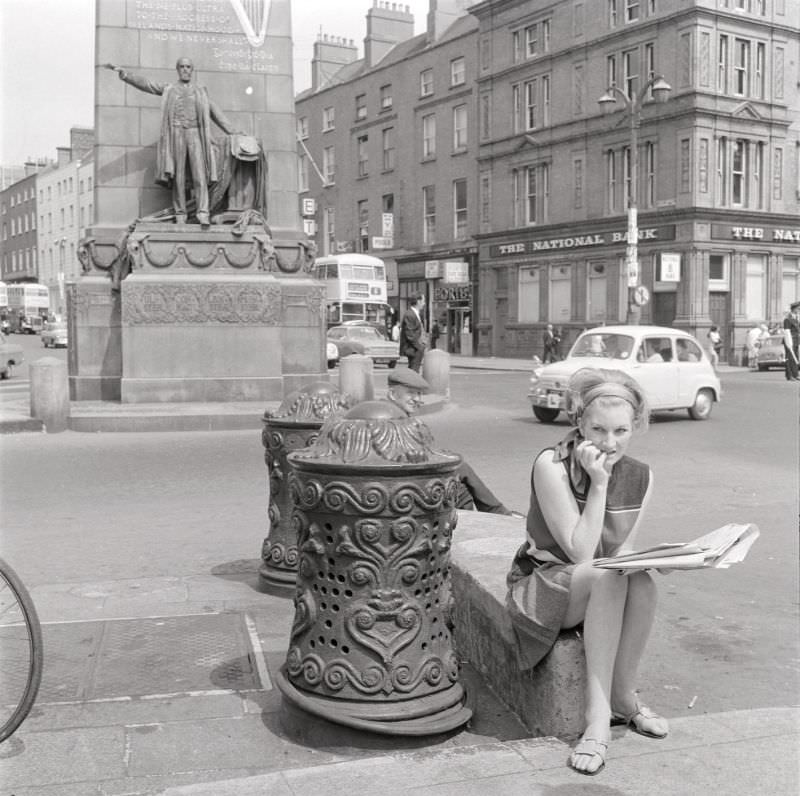
This is American model Linda Ward (later O'Reilly) posing, Dublin, circa 1963
This is American model Linda Ward (later O’Reilly) posing, Dublin, circa 1963

Fashion and modernity were making their way into Dublin in ways that would have seemed out of place just a decade before. American model Linda Ward, photographed in Dublin around 1963, embodied the transatlantic influences beginning to filter into Irish culture — through magazines, television, and the slow but steady loosening of social conservatism.

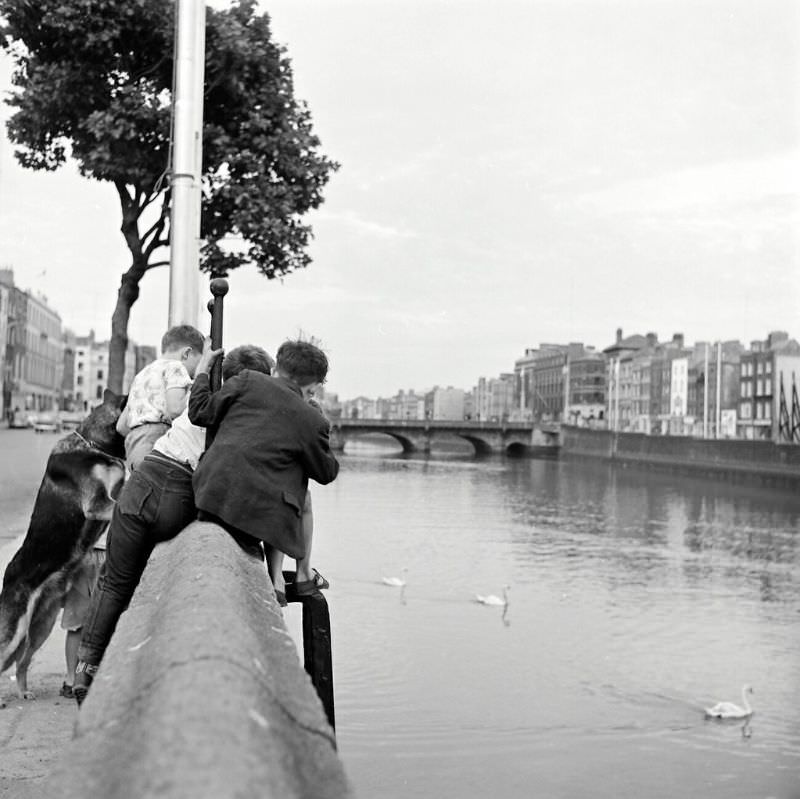
A bunch of fascinated boys, and their equally engaged alsatian dog study something in the River Liffey at Upper Ormond Quay, Dublin, 1964

Away from the big political and cultural changes, the rhythms of childhood in Dublin remained largely unchanged. At Upper Ormond Quay in 1964, a group of boys and their dog peered intently into the River Liffey — whatever held their attention was compelling enough to stop them in their tracks. Scenes like this were ordinary and unremarkable at the time, which is exactly what makes them worth preserving.

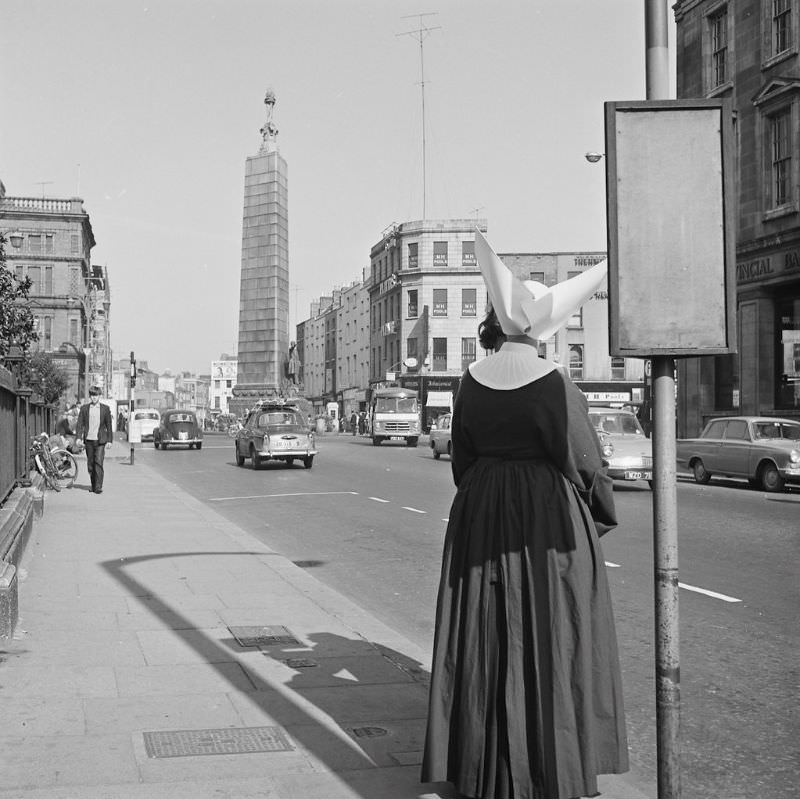
A nun with a most remarkable (and slightly dangerous-looking) veil/head dress waiting for a bus outside the Rotunda Hospital on Parnell Street, Dublin, 1964

The Catholic Church remained a dominant presence in Irish public life throughout the 1960s. Nuns in full religious habit were a common sight on Dublin’s streets, at bus stops, in hospitals, and in schools. Outside the Rotunda Hospital on Parnell Street — one of the oldest maternity hospitals in the world — a nun in a striking veil waited for a bus in 1964, her headdress drawing the eye of anyone nearby.
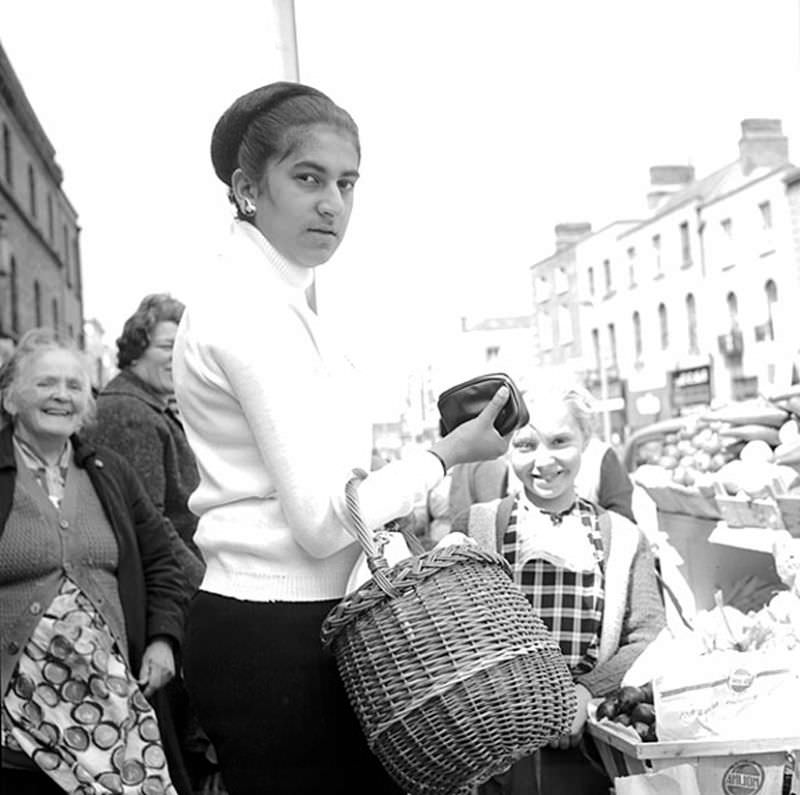
A very direct stare from a woman shopping on Moore Street, Dublin, 1964
Mystery shoppers in Moore Street, Dublin, 1964

Moore Street was — and still is — one of Dublin’s most recognisable open-air markets. In 1964, the street stalls were run almost exclusively by women traders who called out their prices to passers-by. These women were a fixture of daily life for generations of Dubliners, and photographs from the time capture both their determination and the informal, cash-in-hand economy they operated within.

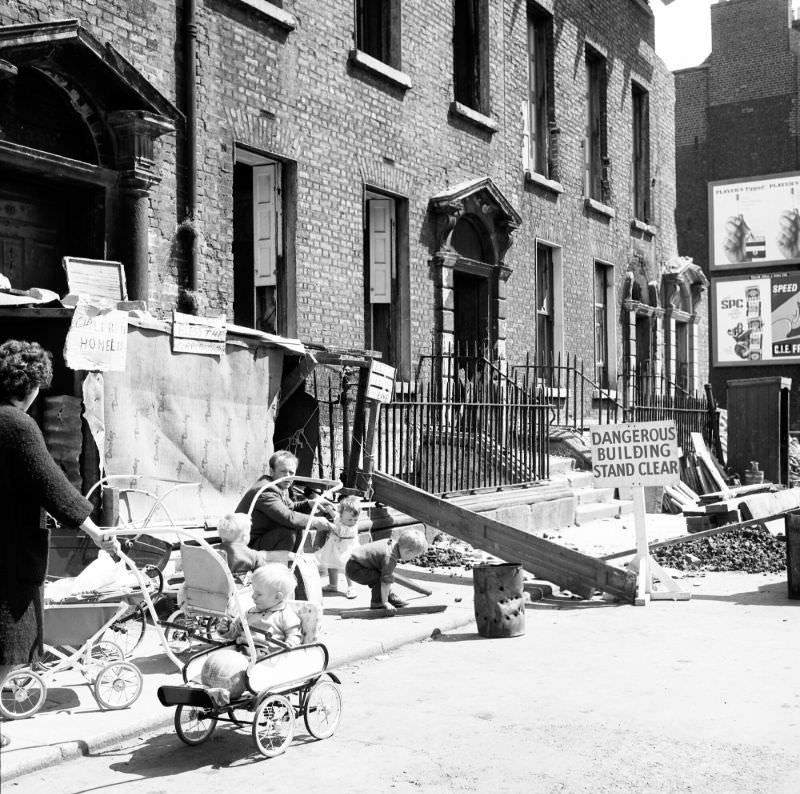
Protest against evictions from tenement buildings on York Street in Dublin, 1964

Not everyone benefited from Dublin’s modernisation. In 1964, residents of tenement buildings on York Street took to the streets to protest against their forced evictions. Families who had lived in these old Georgian buildings for generations were being displaced to make way for redevelopment. The protest was a visible reminder that economic progress carried a human cost for Dublin’s poorest communities.

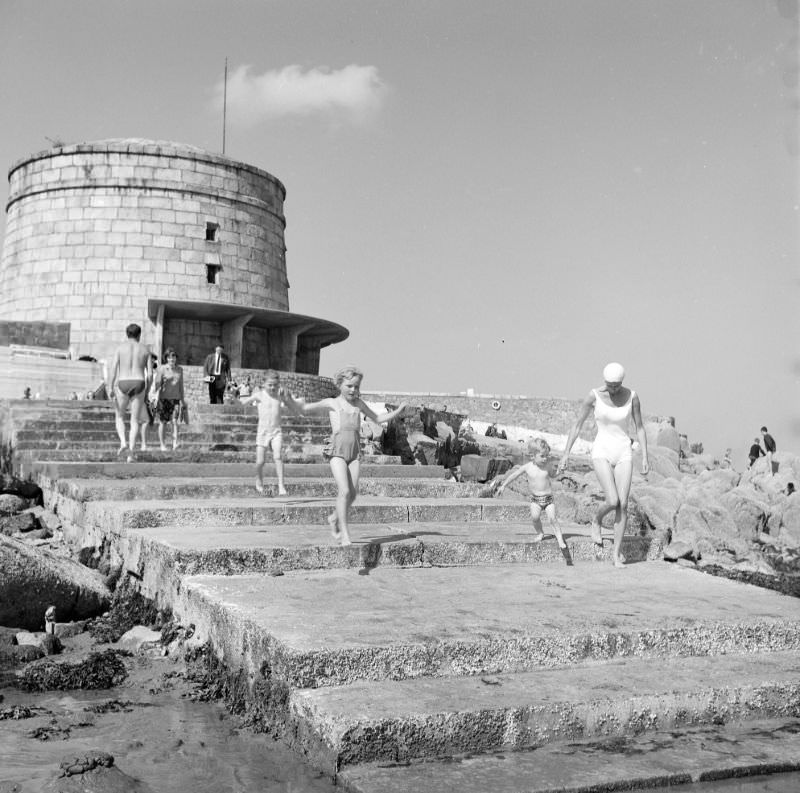
The Martello Tower in Seapoint with the children in fine fettle, 1964
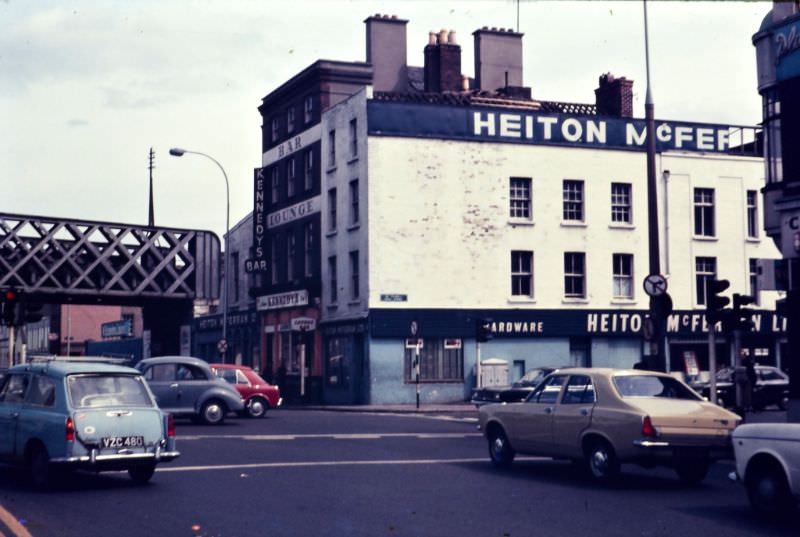
The Heiton McFerran shop on the corner of Tara Street, circa 1965

Dublin’s commercial streetscape in the mid-1960s was still dominated by independently owned shops and specialist traders. The Heiton McFerran store on the corner of Tara Street was one such business — a hardware and building supplies firm that served both tradespeople and households in an era long before large chain retailers arrived in Ireland.

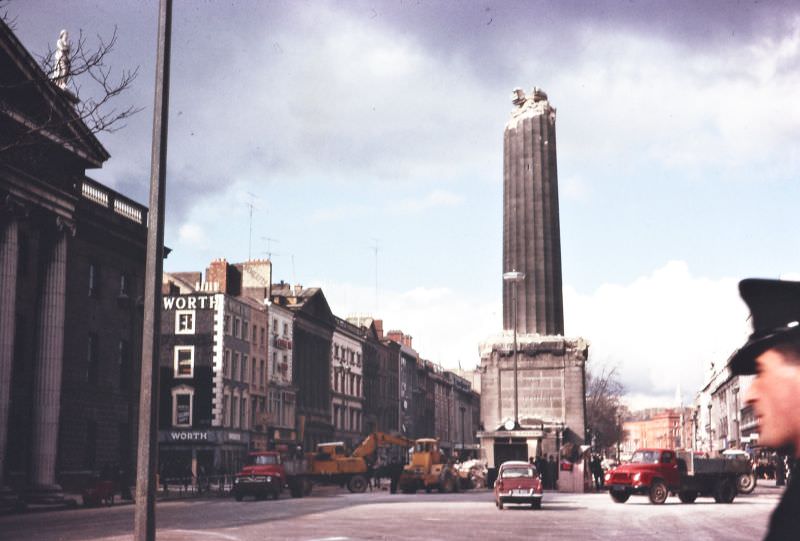
A half-demolished Nelson's Pillar on O'Connell Street, Dublin, March 8, 1966
A half-demolished Nelson’s Pillar on O’Connell Street, Dublin, March 8, 1966

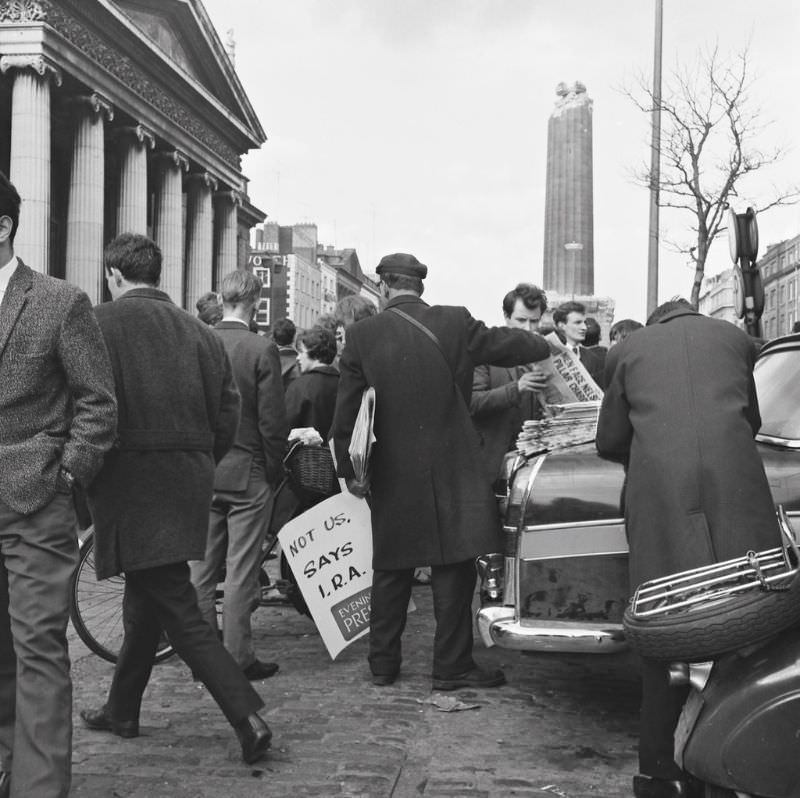
One of the most dramatic moments of the decade came on the night of March 7–8, 1966, when a bomb blew off the top of Nelson’s Pillar on O’Connell Street. The 40-metre column, which had stood since 1809, was a contested symbol of British rule in the heart of the Irish capital. The explosion left a jagged stump in the middle of the street, and the Irish Army demolished the remainder days later. The event drew enormous public attention and became one of the defining images of 1960s Dublin.

An Evening Press newspaper seller does a brisk trade on O'Connell Street, Dublin on the day after Nelson's Pillar was blown up, March 9, 1966
An Evening Press newspaper seller does a brisk trade on O’Connell Street, Dublin on the day after Nelson’s Pillar was blown up, March 9, 1966
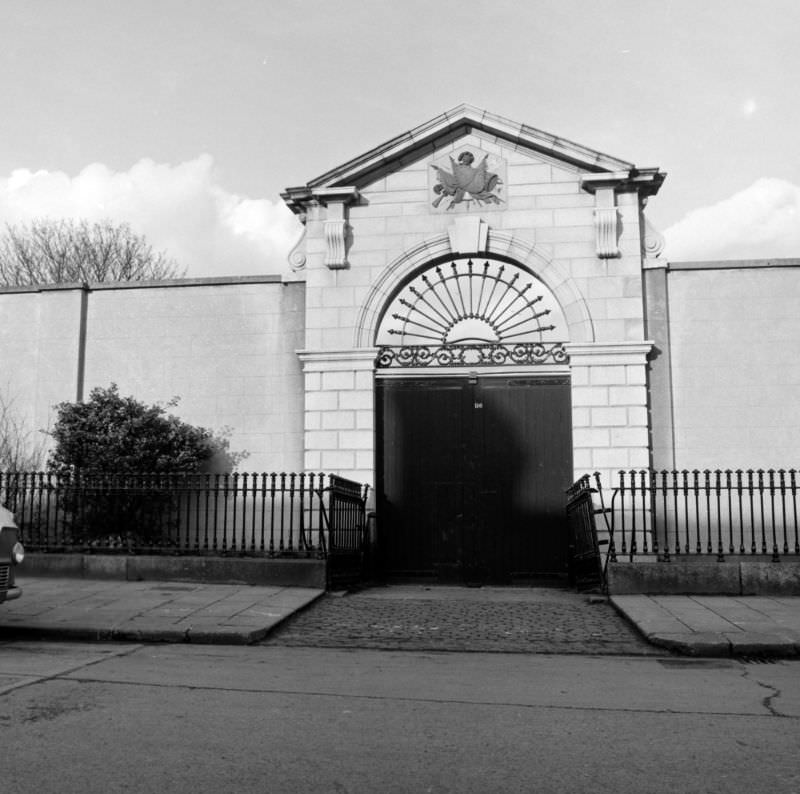
Ornate arch and gateway, Charlemont House, Parnell Square North at 116 St James's Street, Dublin, 1966
Ornate arch and gateway, Charlemont House, Parnell Square North at 116 St James’s Street, Dublin, 1966

While some of Dublin’s landmarks were being destroyed, others were being documented and admired. The ornate arch and gateway at Charlemont House on Parnell Square North stood as a reminder of the city’s Georgian architectural heritage — a heritage that was under increasing threat from the pace of development sweeping across the city in the late 1960s.

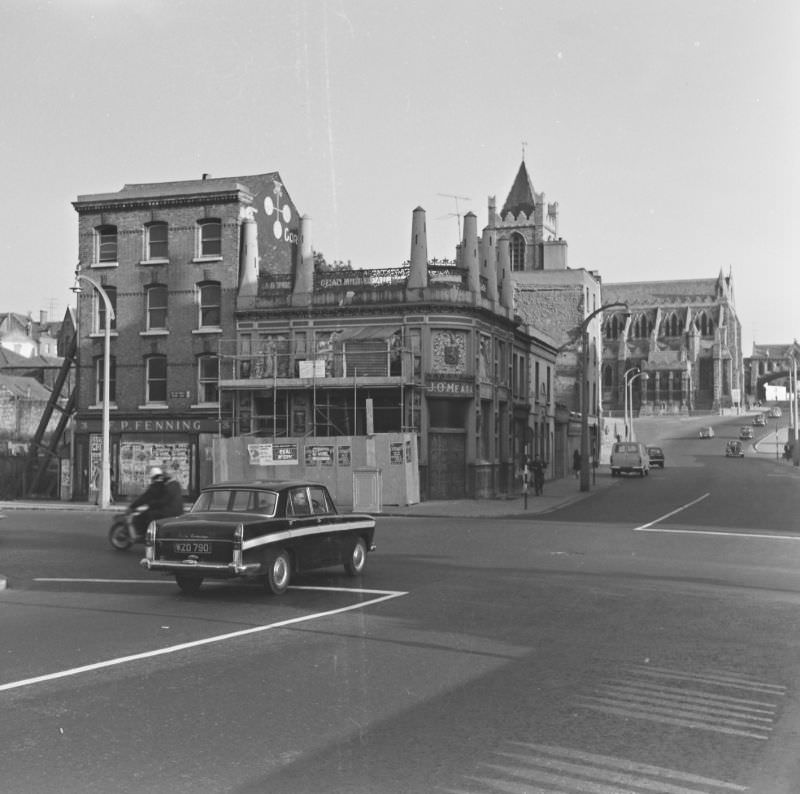
The Irish House", Winetavern Street, Dublin City, Co. Dublin, 1968
The Irish House”, Winetavern Street, Dublin City, Co. Dublin, 1968
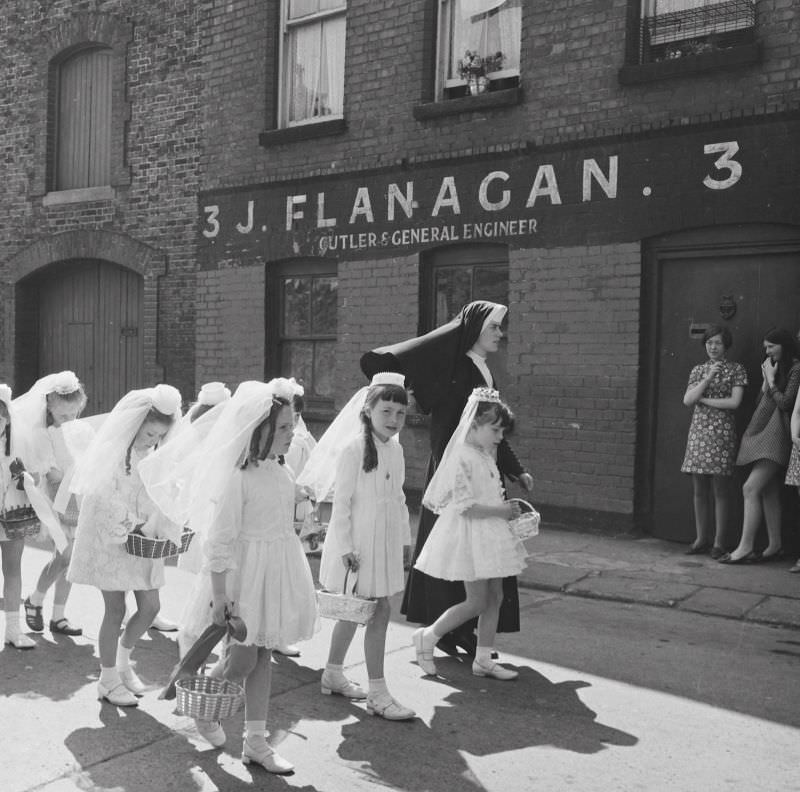
A young nun walking Holy Communion girls past no. 3, Halston Street, Dublin on the feast of Corpus Christi, June 5, 1969

Religious observances shaped the public calendar in Dublin throughout the decade. On the feast of Corpus Christi in June 1969, a young nun walked a line of Holy Communion girls along Halston Street. These processions were annual events in Catholic parishes across the city, and for many children they were among the most vivid memories of their early years.

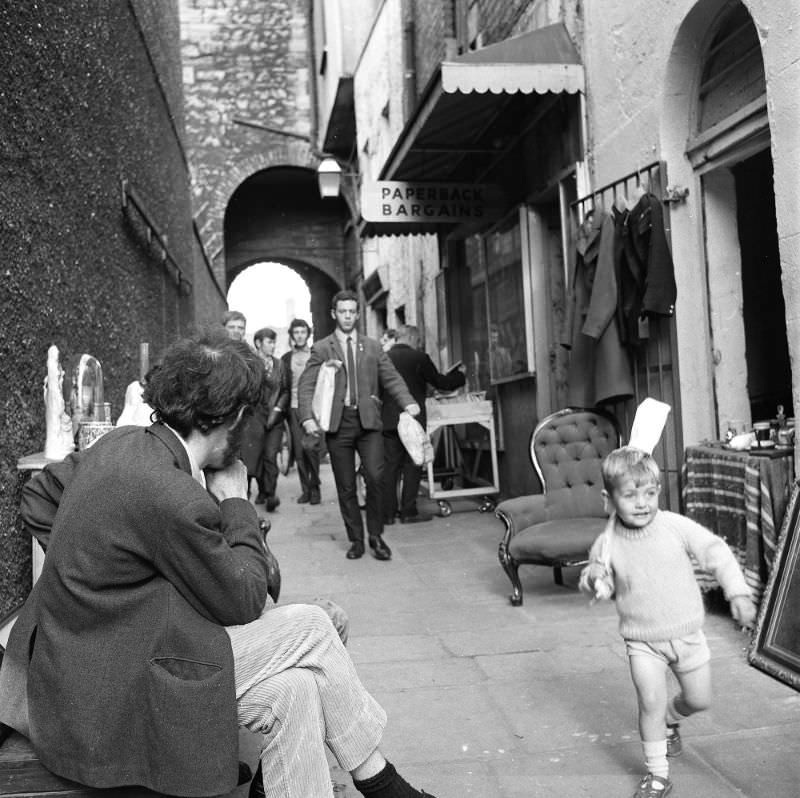
Busiest boy in Dublin, 1969
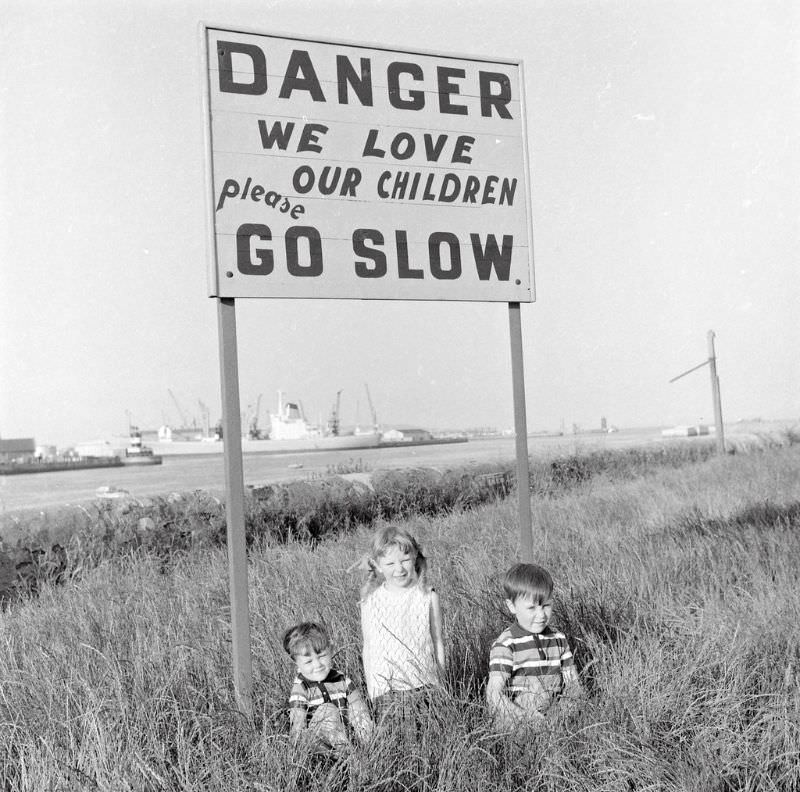
Children under a sign designed to protect them on the Pigeon House Road, Ringsend, Dublin, 1969

Children in working-class Dublin neighbourhoods like Ringsend spent a great deal of time outdoors, in the streets and along the quays. Road safety was a growing concern as traffic increased, and signs warning drivers to watch for children appeared in residential and industrial areas alike. Life in Ringsend, close to the docks and the Pigeon House power station, had a distinctly industrial texture.

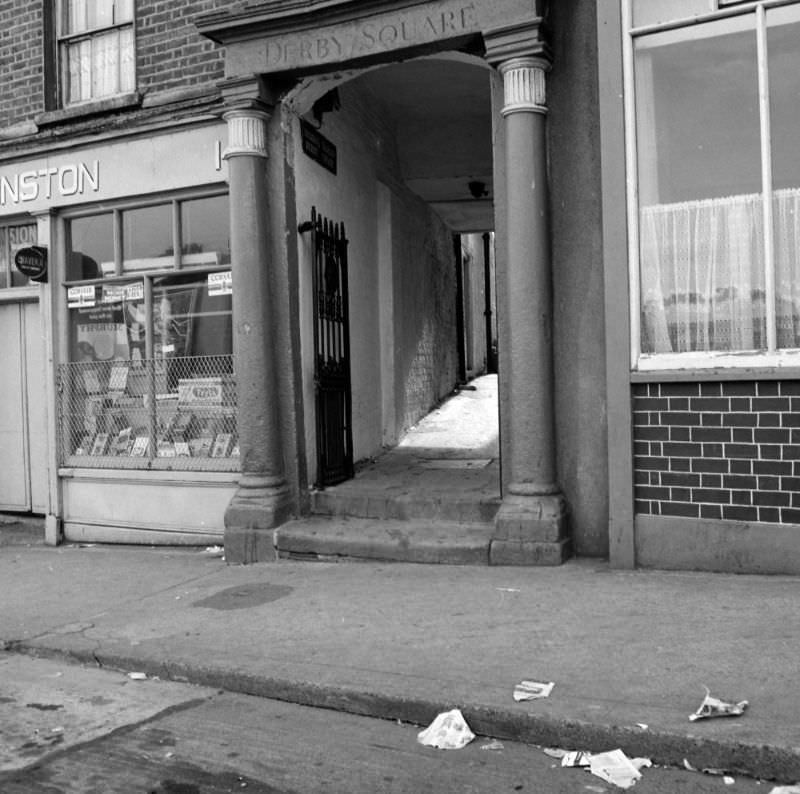
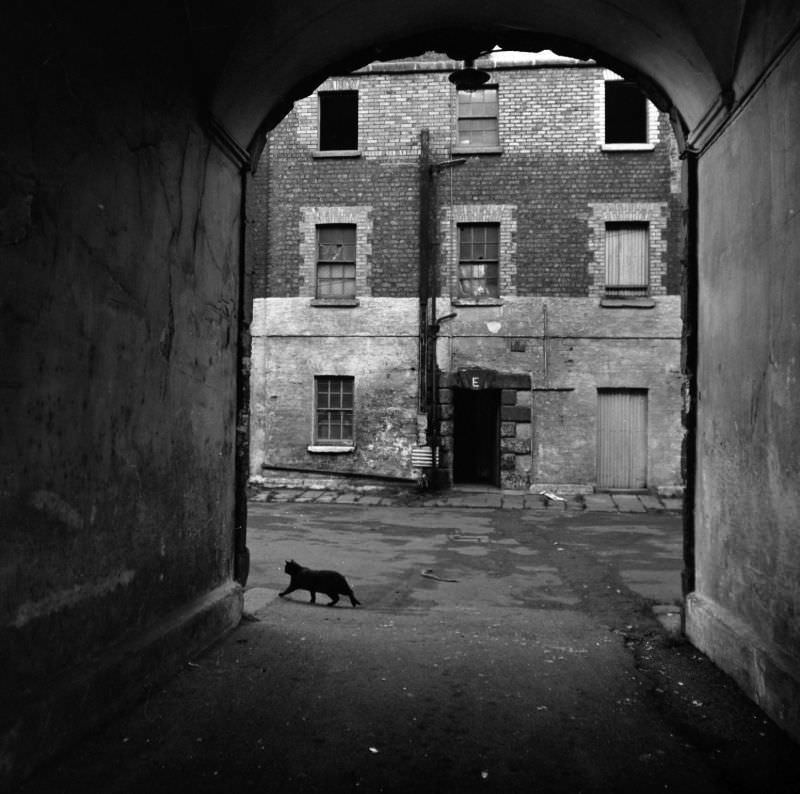
Derby Square in Werburgh St. facing the old labour exchange Jurys car park built on it now, 1969
Dublin's Marshalsea Barracks, 1969
Dublin’s Marshalsea Barracks, 1969

Dublin’s Marshalsea Barracks, photographed in 1969, carried centuries of history within its walls. Originally used as a debtors’ prison before becoming a military barracks, the building stood as one of many structures across the city whose stories were at risk of being erased as the decade drew to a close.

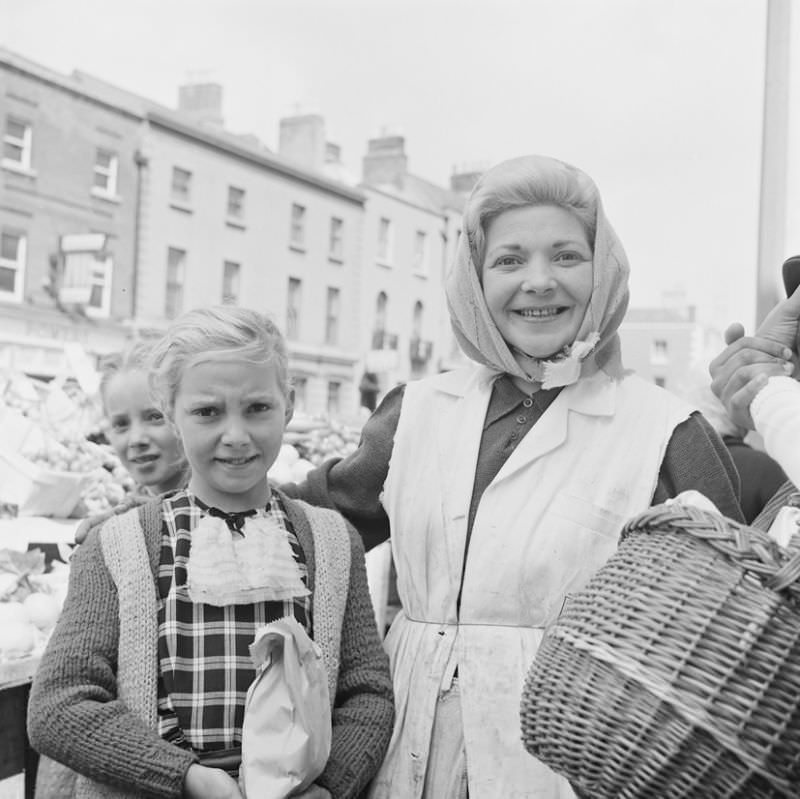
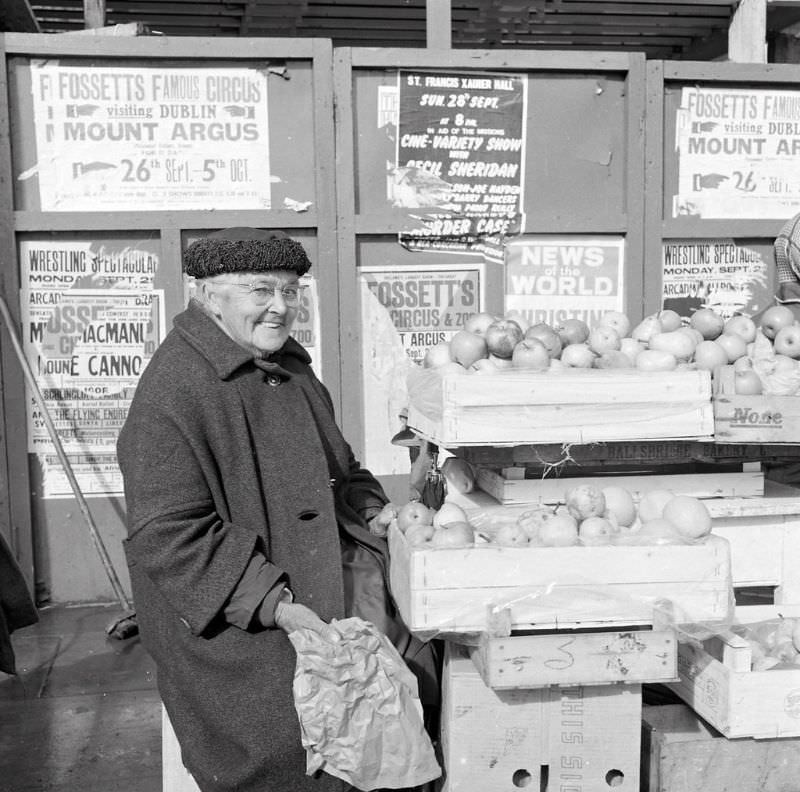
Fruit seller with a very cheeky grin, Dublin, September 1969
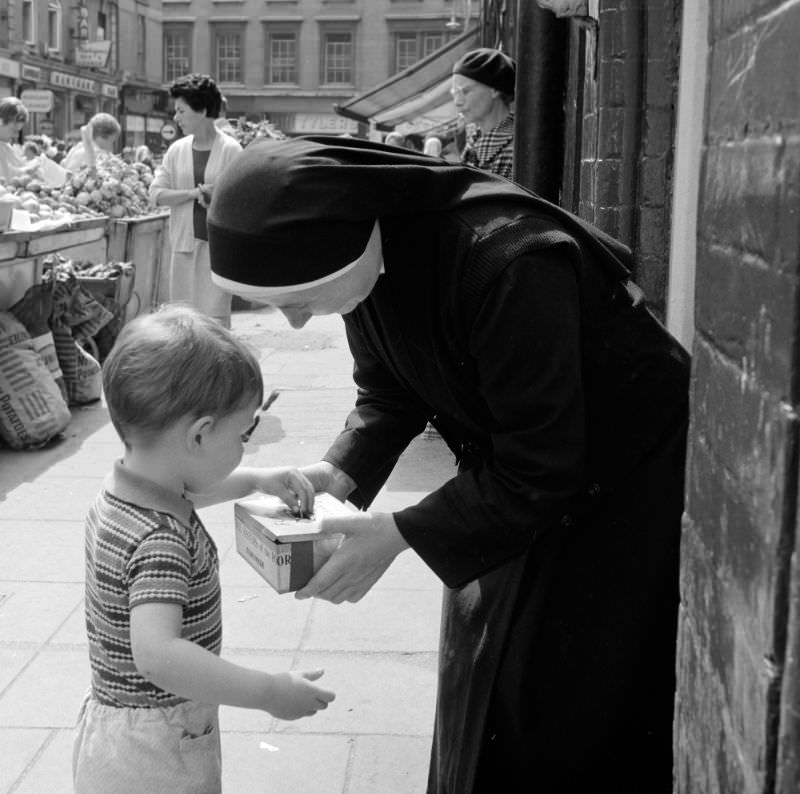
Little boy putting money in nun's collection tray, Dublin, 1969
Little boy putting money in nun’s collection tray, Dublin, 1969

Street traders and religious collectors alike relied on the goodwill of ordinary Dubliners. A fruit seller photographed in September 1969 wore a broad, easy grin that suggested confidence and good humour in equal measure. A few streets away, a small boy dropped coins into a nun’s collection tray — a scene that captured the everyday intersection of commerce, charity, and faith that defined life in the city.

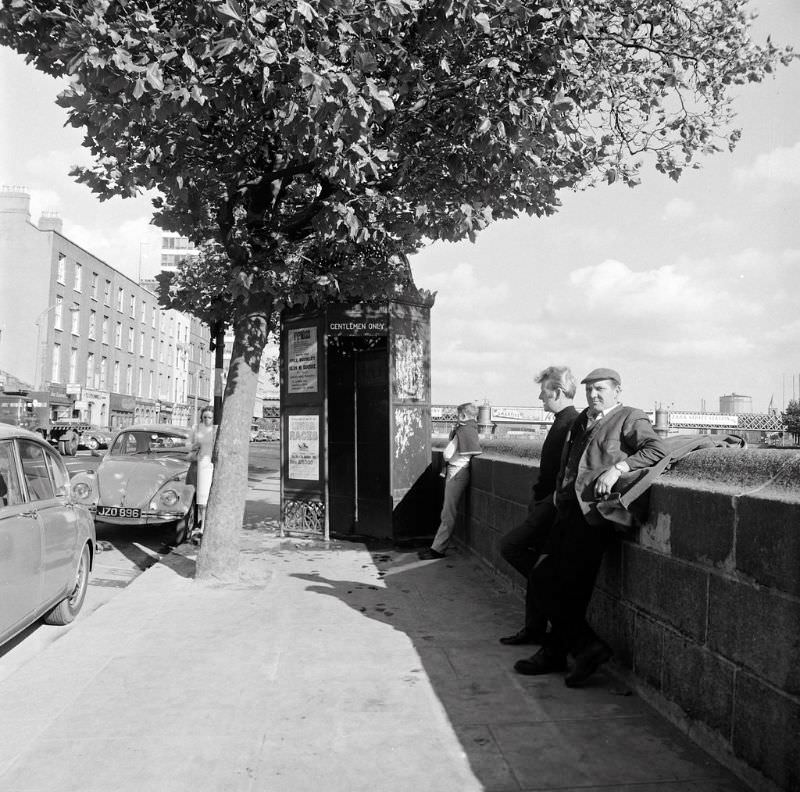
Returning to Dublin's 1932 urinals today. This one was on Eden Quay, Dublin, and you can just catch a glimpse of Liberty Hall behind the tree, September 1969
Returning to Dublin’s 1932 urinals today. This one was on Eden Quay, Dublin, and you can just catch a glimpse of Liberty Hall behind the tree, September 1969
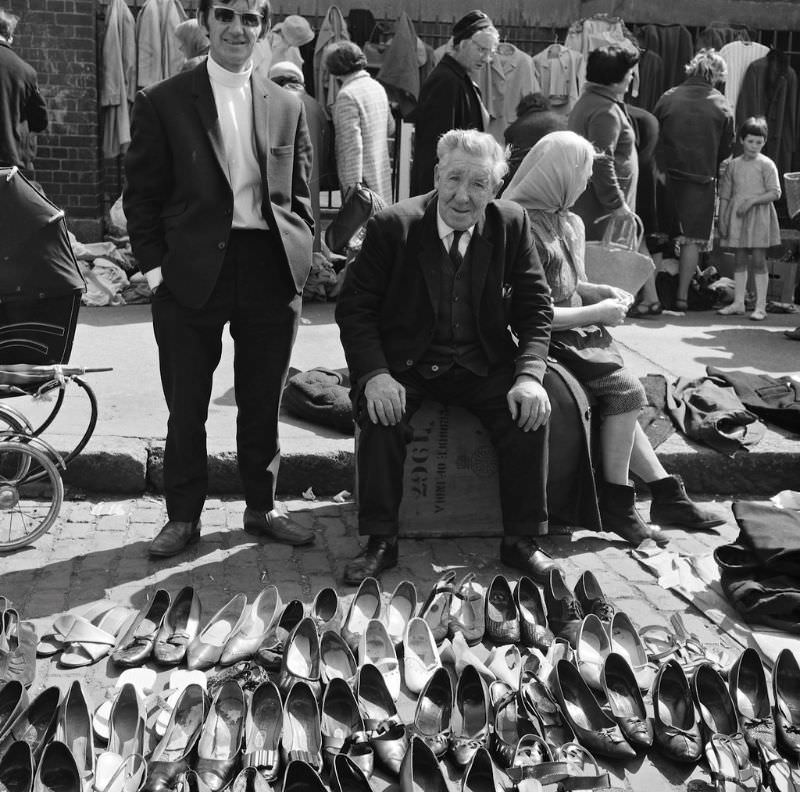
Secondhand (pre-owned!) shoe stall at Cumberland Street Market in Dublin, 1969

The Cumberland Street Market was a lifeline for low-income families in Dublin’s south inner city. Secondhand shoes, clothing, and household goods changed hands there on a weekly basis. For many working-class families in the 1960s, markets like this one were not a curiosity — they were a necessity.

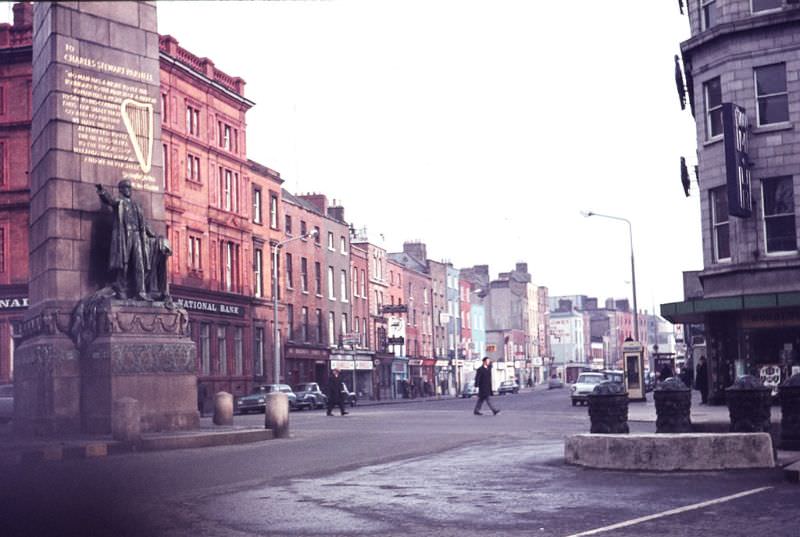
The Parnell Monument at the junction of Upper O'Connell Street, Parnell Street and Cavendish Row, Dublin, 1969
The Parnell Monument at the junction of Upper O’Connell Street, Parnell Street and Cavendish Row, Dublin, 1969
The Parnell Monument, Dublin, July 1969

The Parnell Monument at the top of O’Connell Street marked the northern end of Dublin’s main boulevard. Erected in honour of Charles Stewart Parnell, the 19th-century Irish nationalist leader, it stood as a counterpoint to the now-destroyed Nelson’s Pillar further down the street. With Nelson gone, Parnell’s monument took on even greater prominence as a landmark of Irish identity.

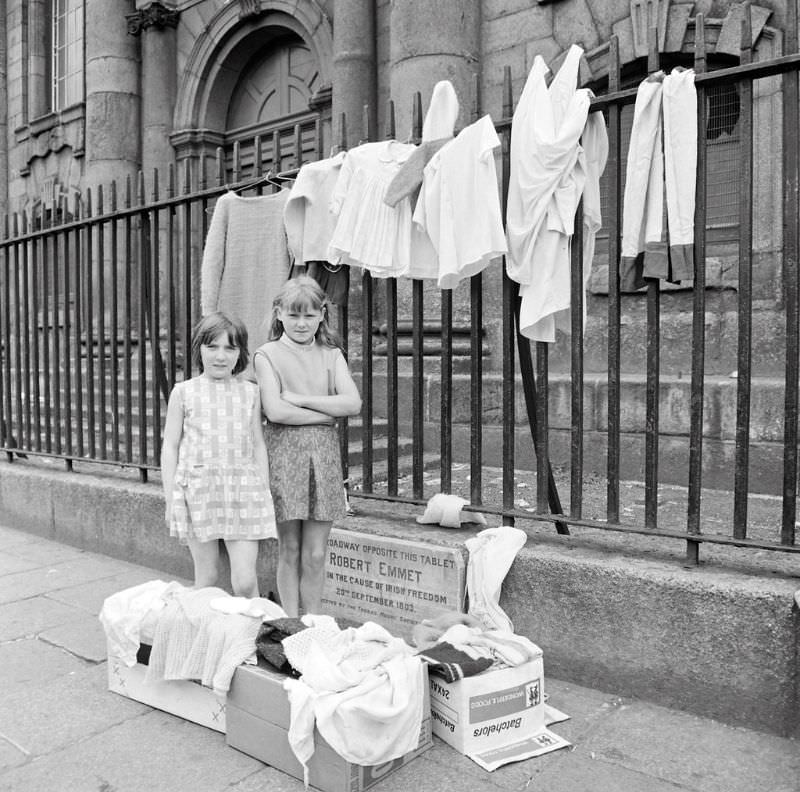
These two young entrepreneurs had set out their "stall" in front of St. Catherine's Church on Thomas Street in Dublin,1969
These two young entrepreneurs had set out their “stall” in front of St. Catherine’s Church on Thomas Street in Dublin,1969

On Thomas Street in 1969, two young boys set up a makeshift stall in front of St. Catherine’s Church — the same church outside which the nationalist Robert Emmet was executed in 1803. Their small enterprise, whatever it sold, captured something essential about Dublin in the 1960s: initiative, resilience, and a city where street life was woven into the fabric of every day.

Enjoyed this post? Get new ones in your inbox.

Leave a Comment

Your email address will not be published. Required fields are marked *

Share this Post 🥺

Please take a moment to share this content. Your support is greatly appreciated! 🙌🙏

Share this Post 🥺

Please take a moment to share this content. Your support is greatly appreciated! 🙌🙏
Scroll to Top
 
Hey Friend, Before You Go.. Please like & follow for more interesting content