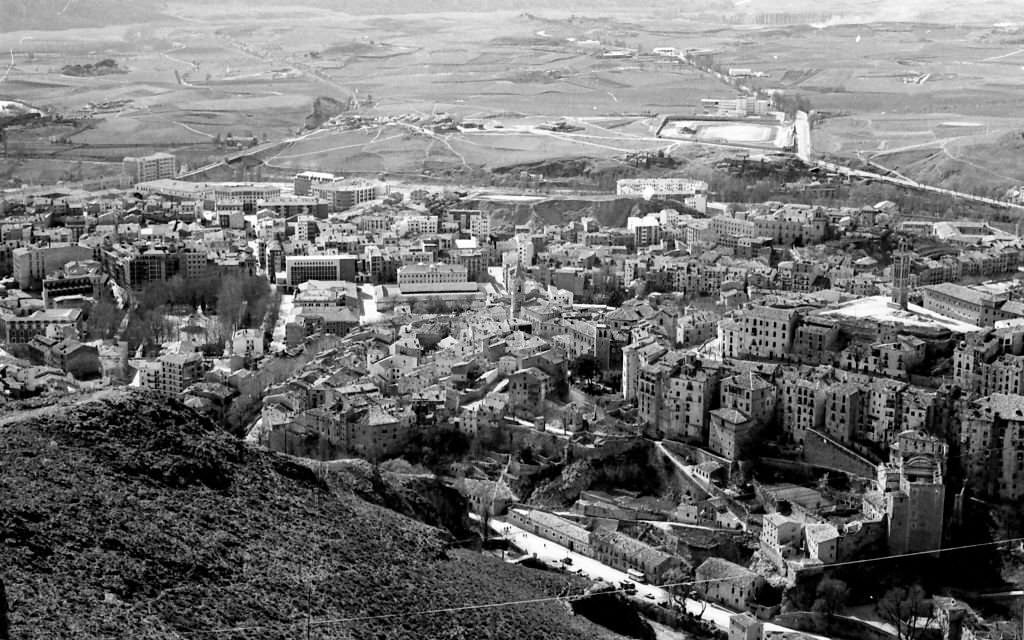
Cuenca sits in the heart of Spain’s Castilla-La Mancha region and serves as the capital of its own province. The city has a dual identity — a medieval upper town perched on dramatic rocky cliffs, and a modern lower city that grew up alongside the railway line connecting it to Madrid. That split personality made Cuenca unlike almost anywhere else in Spain, and by the 1960s, photographers were drawn there to capture both its ancient bones and its everyday rhythms.
The city’s history goes back centuries. During the Middle Ages, it was a major center for culture and textile production. By the early 20th century, it had already survived serious architectural setbacks — the tower of the Giraldo Cathedral collapsed in 1902, damaging the façade as well. Spanish architect Vicente Lámparez stepped in and rebuilt it with two new twin towers, though they were left without their upper sections. That incomplete silhouette became part of Cuenca’s character.
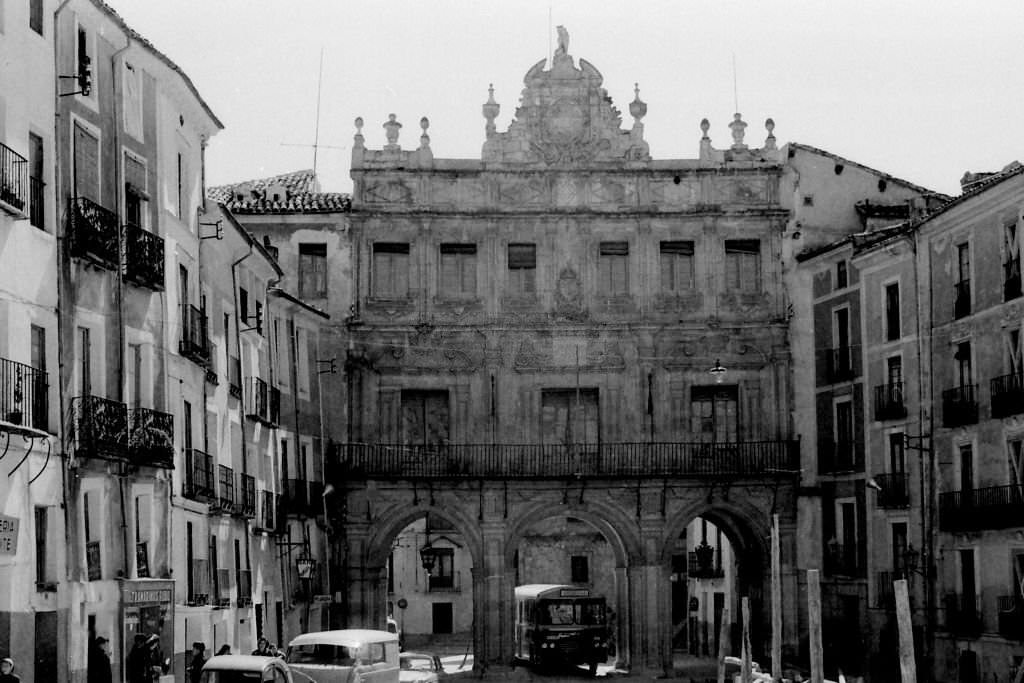
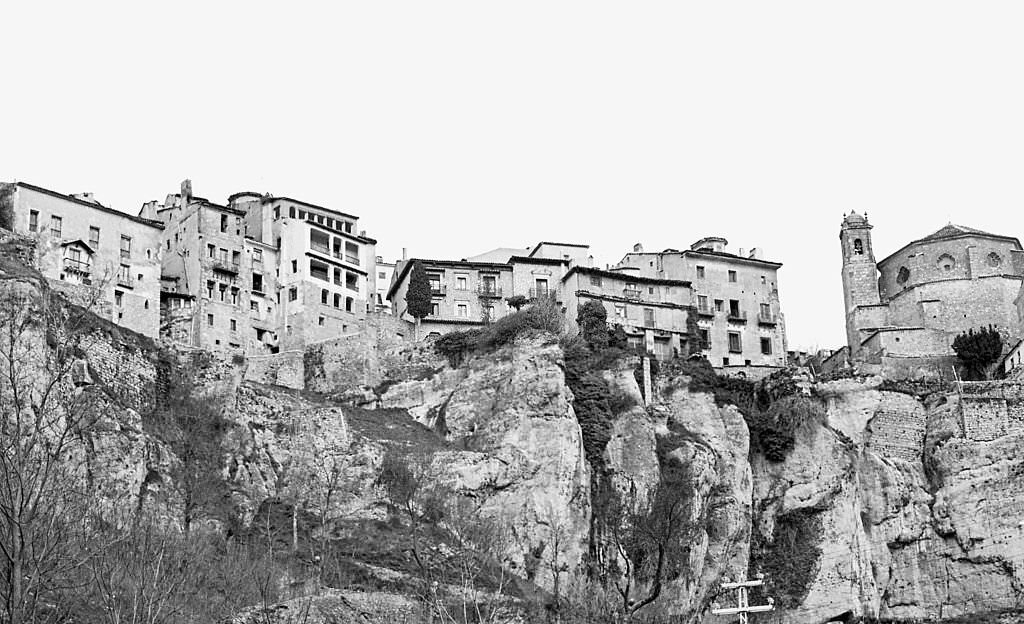
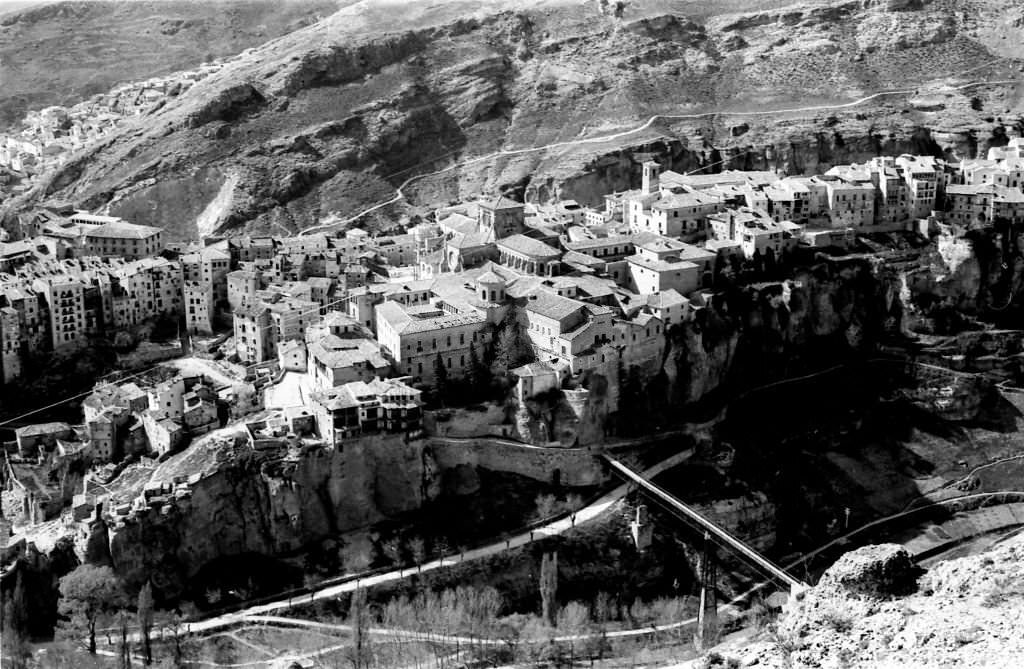
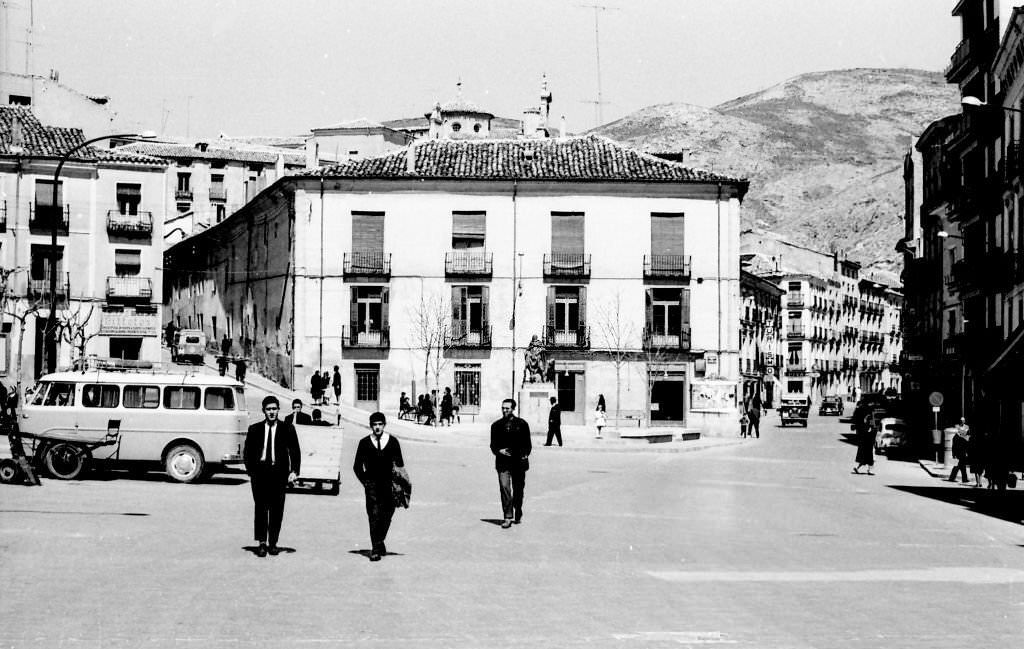
From street level, the old city rises above the Júcar and Huécar rivers in a way that feels almost unreal. Narrow streets climb steeply through layers of stone buildings, many of them centuries old. The Plaza Mayor anchors the heart of the upper city, flanked by the cathedral and the town hall. In 1965, photographers captured that square exactly as residents used it — not yet a tourist showpiece, but a living center of local government and daily life.
Among Cuenca’s most photographed landmarks are its famous hanging houses — the Casas Colgadas. Built along the edge of a cliff above the Huécar gorge, these medieval structures appear to dangle in mid-air. Their wooden balconies jut out over the ravine, and from below, they look almost impossible. By the 1960s, one of the houses had been converted into the Museum of Abstract Art, bringing modern culture into a medieval setting.
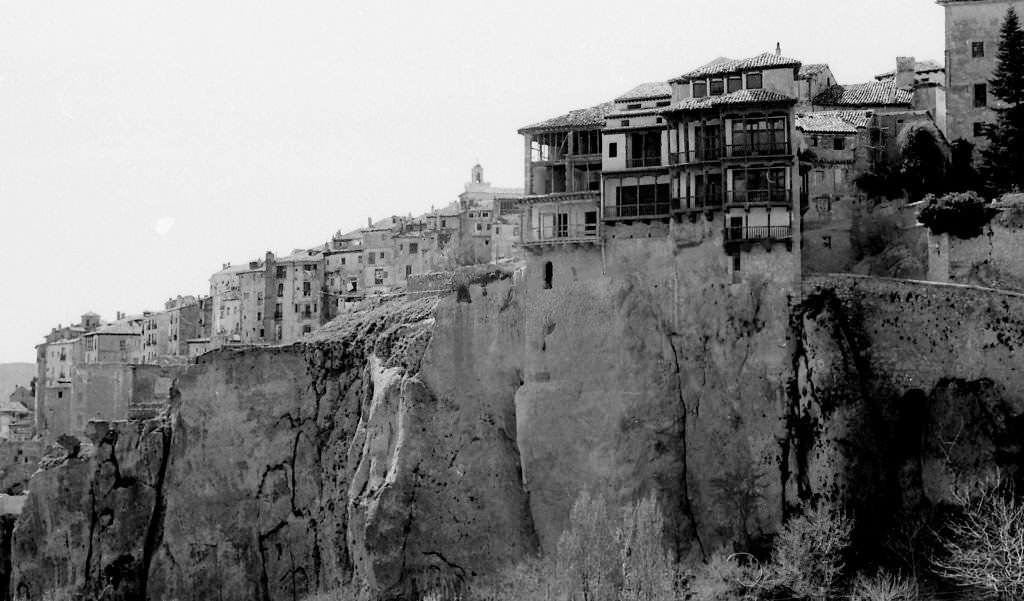
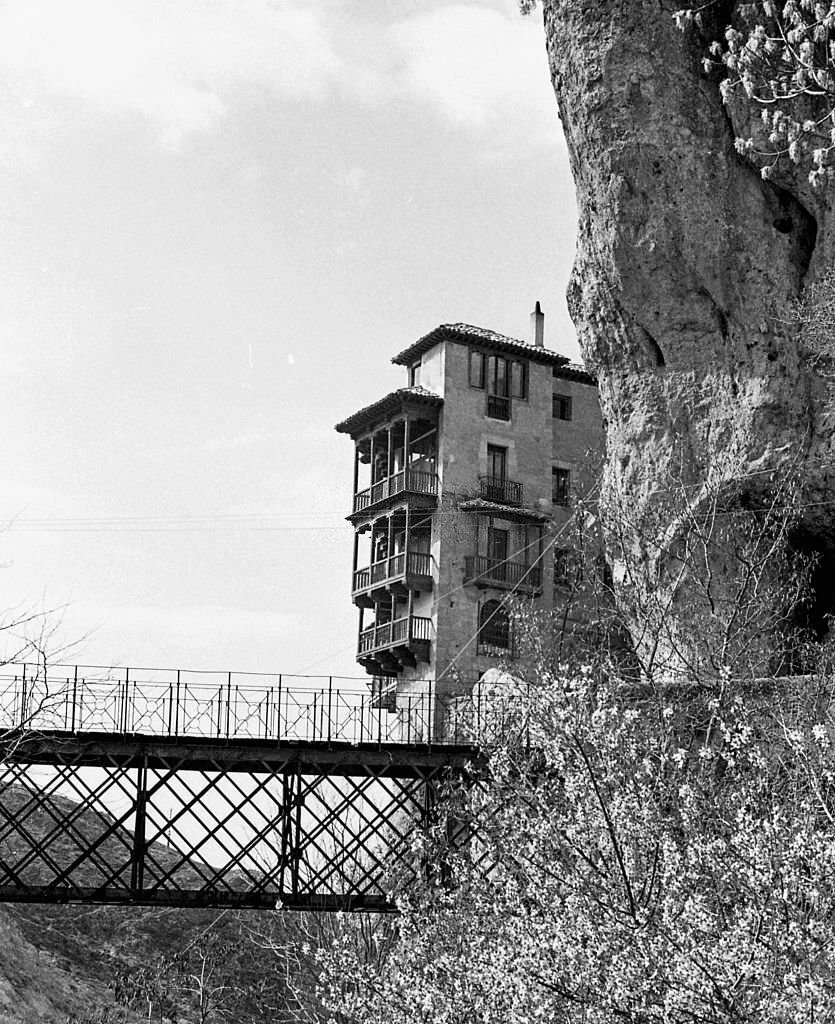
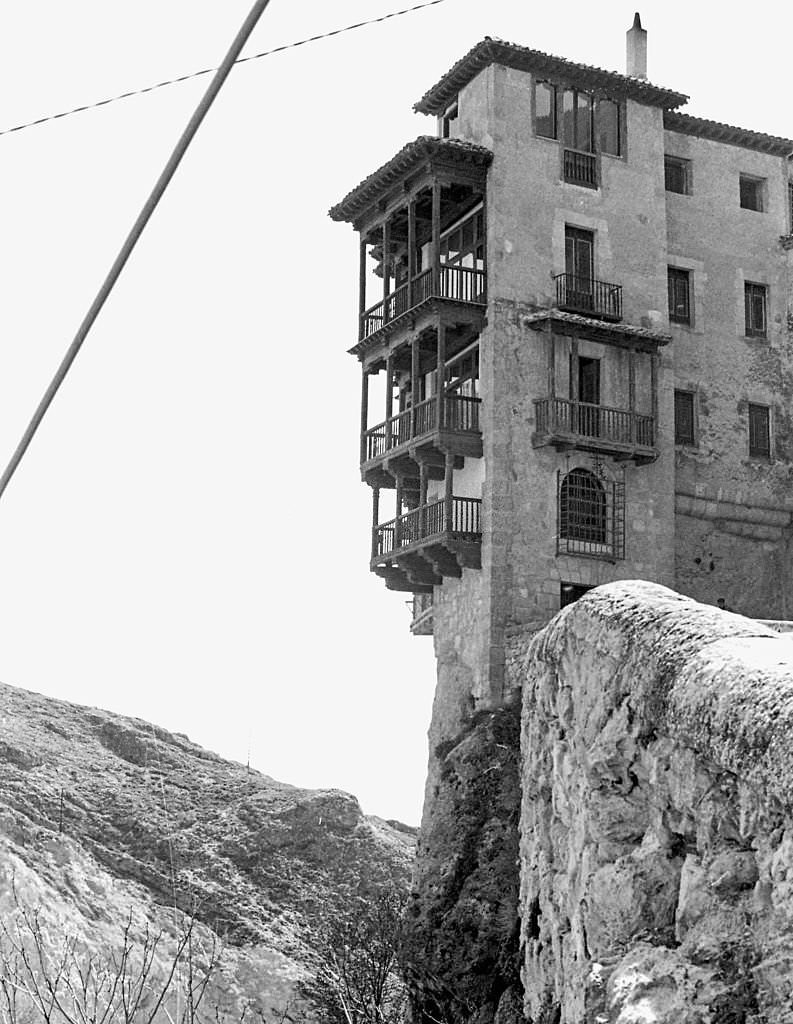
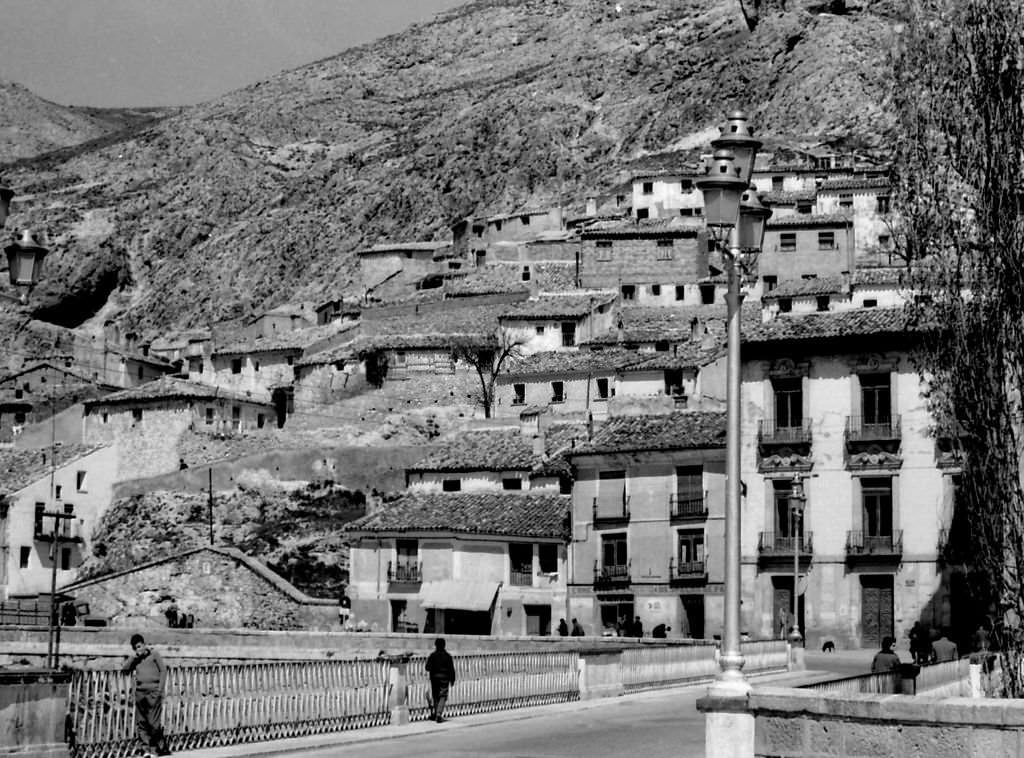
The bridge over the Júcar river offered another iconic view of the hanging houses from across the gorge. It was a spot that tied the city’s natural landscape to its built one — the river below, the cliffs rising up, and the old houses clinging to the edge above.
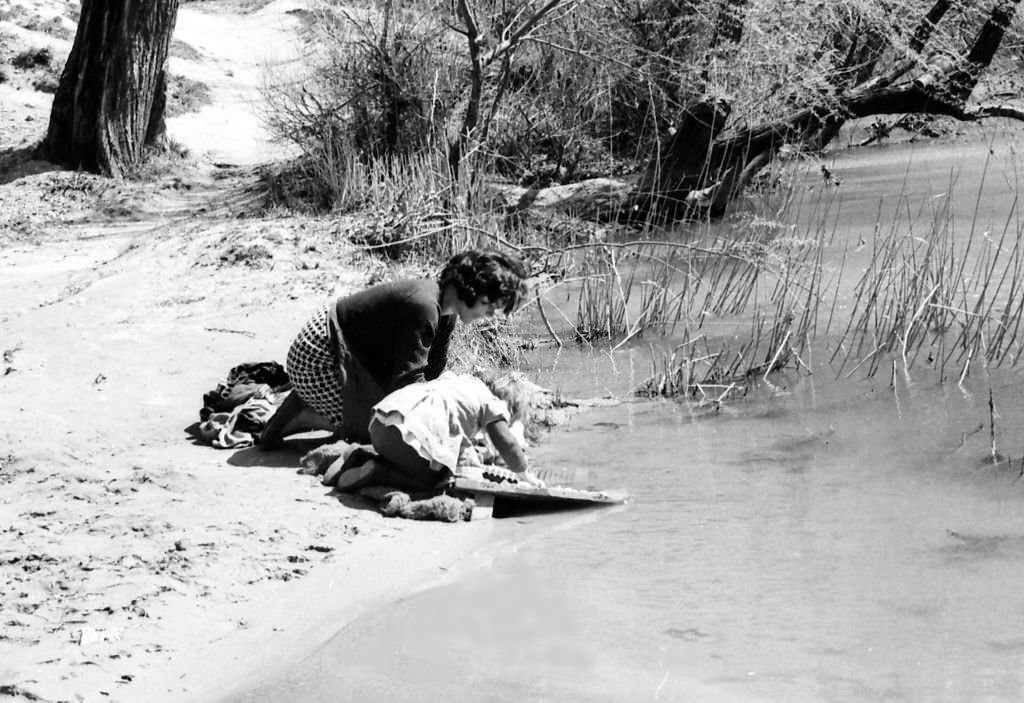
The Júcar river was also a working part of daily life. In 1965, laundresses still washed clothes along its banks — a scene that had changed little over generations. Women knelt at the water’s edge, scrubbing linens by hand. It was ordinary work, but the photographs from that period show how directly residents depended on the river for basic tasks.
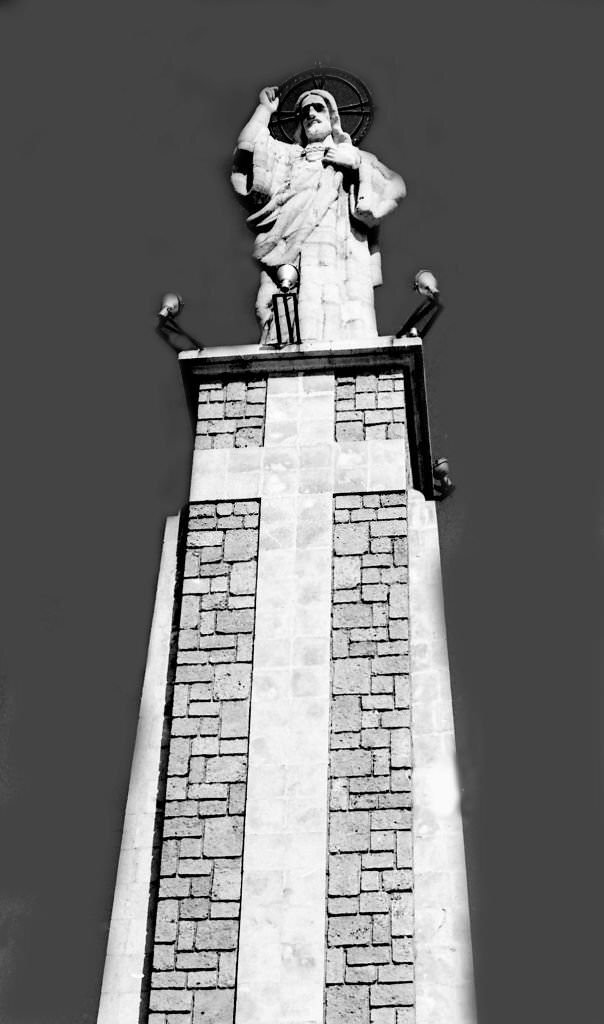
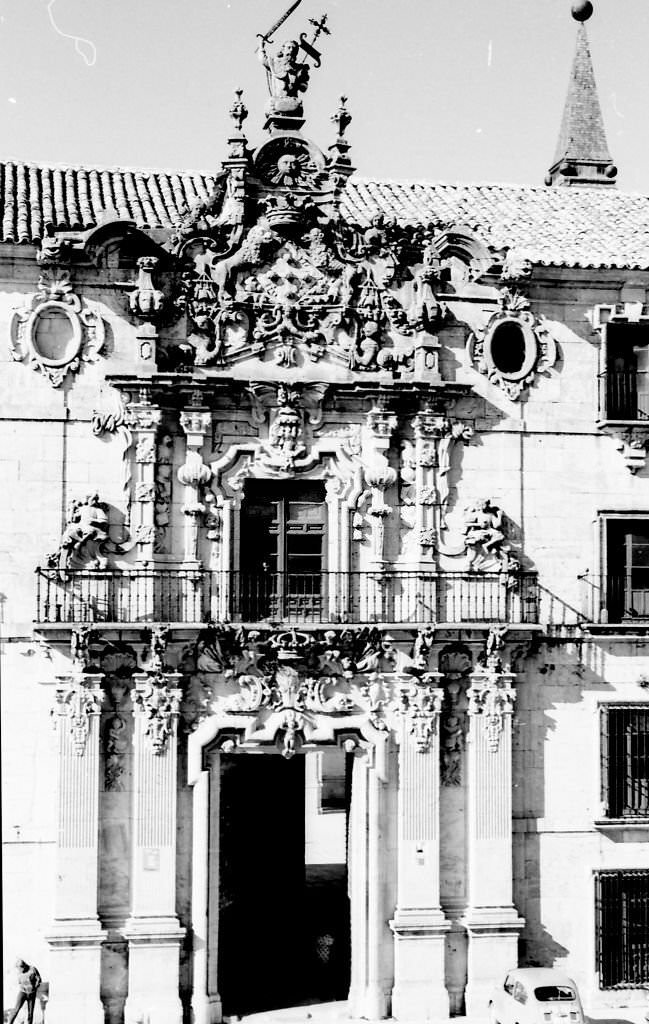
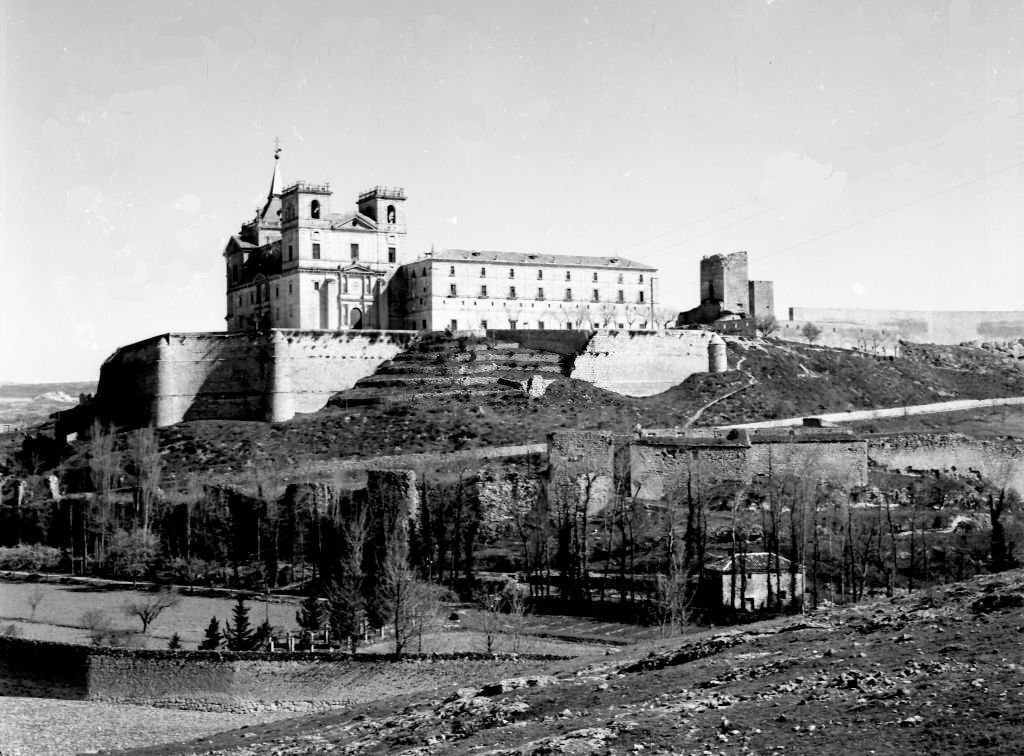
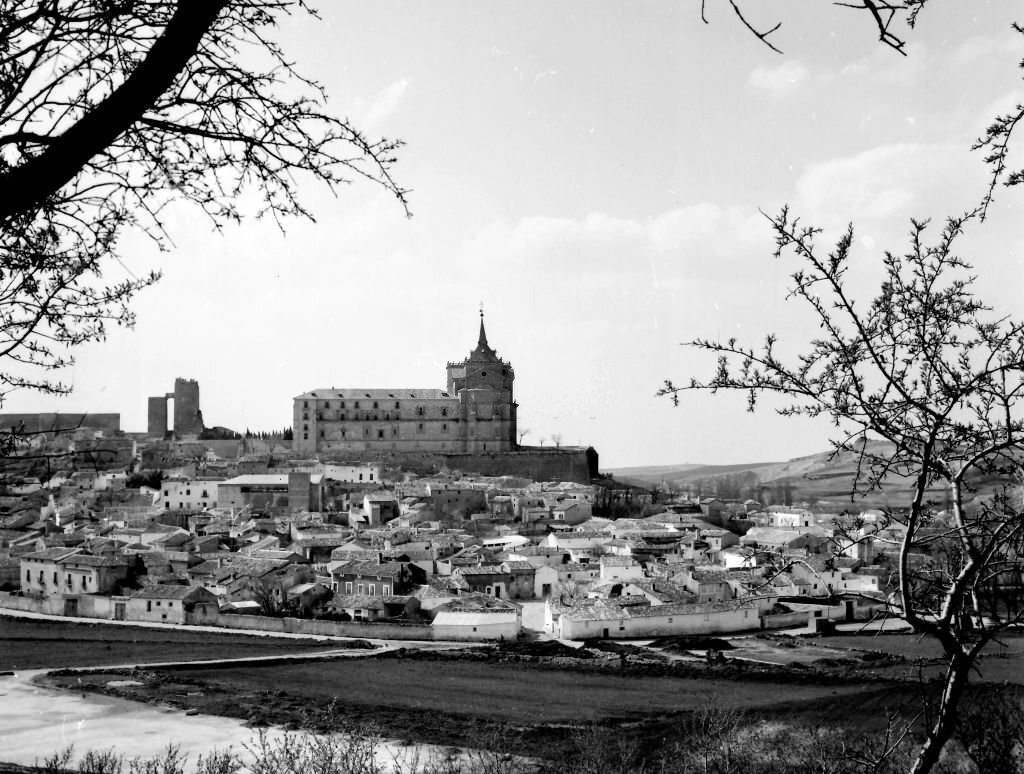
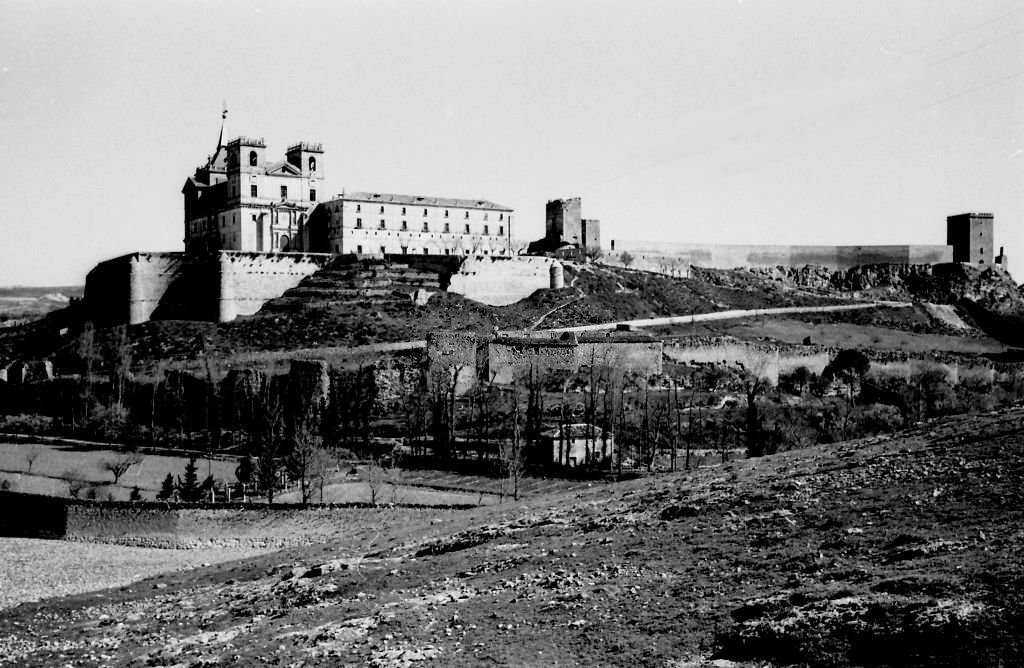
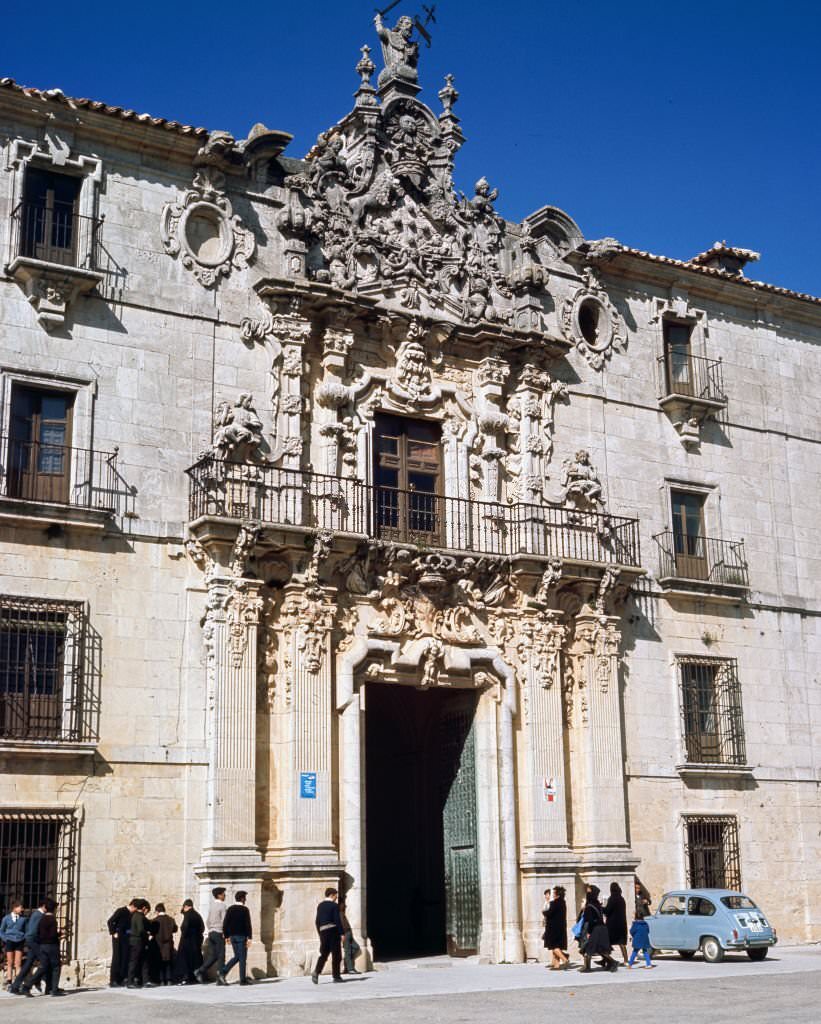
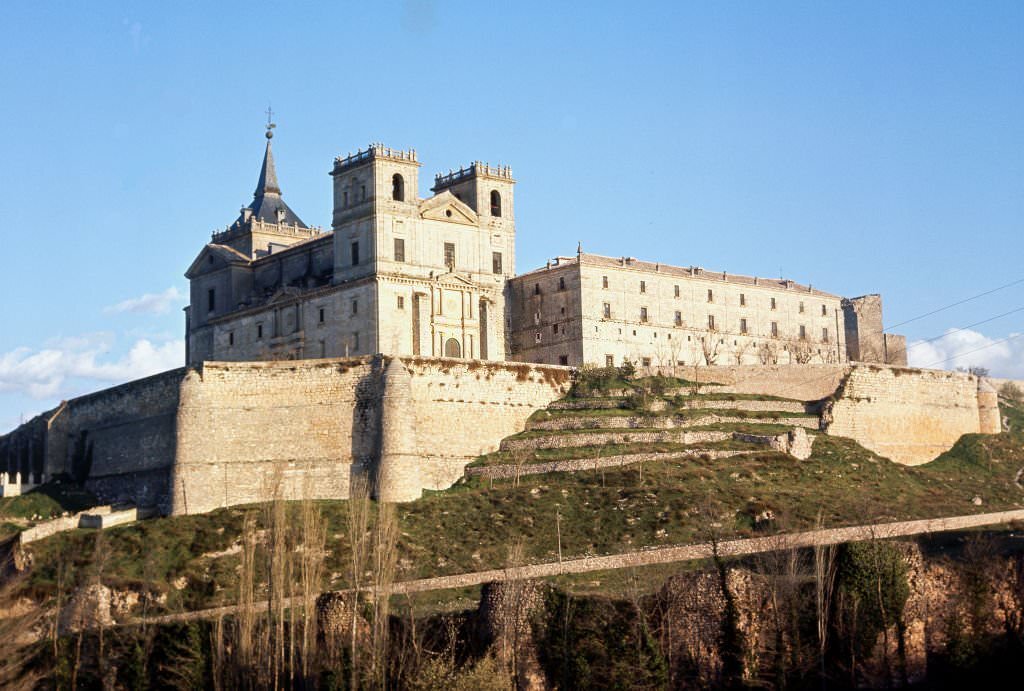
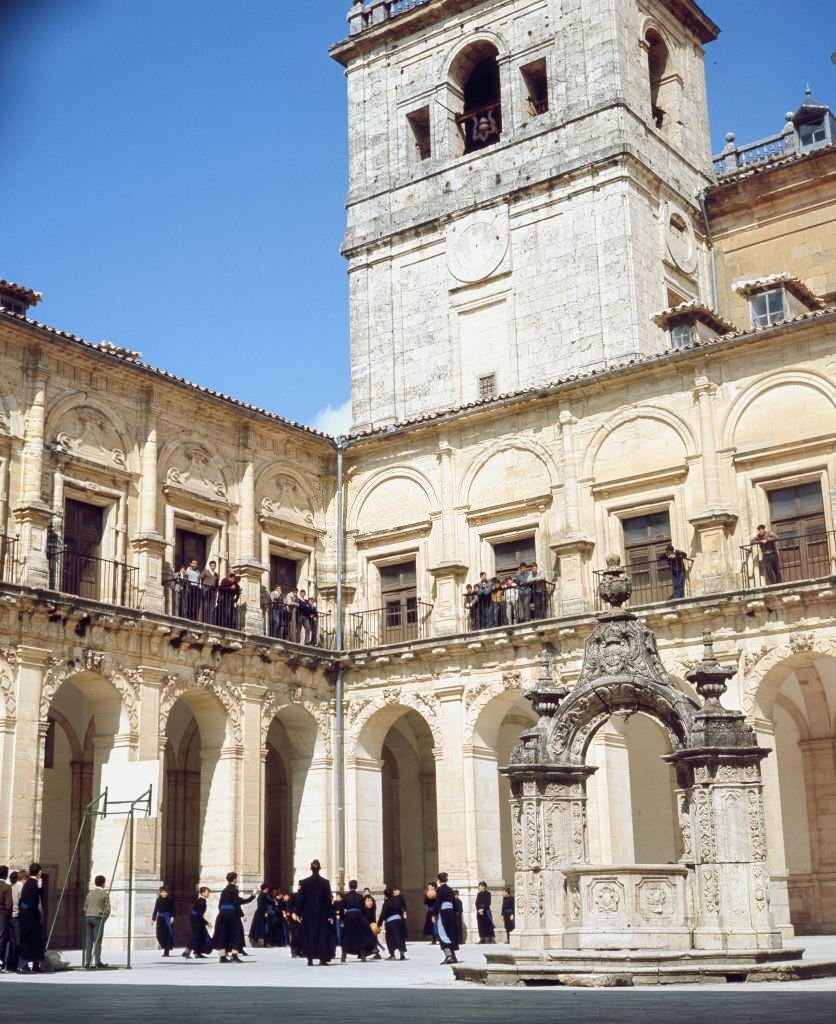
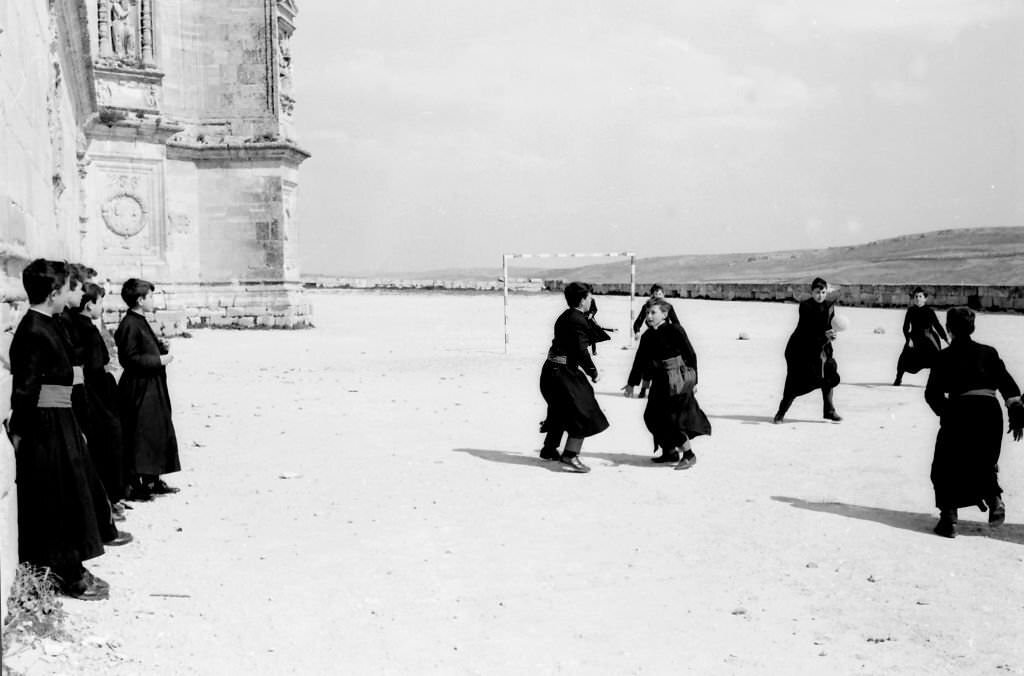
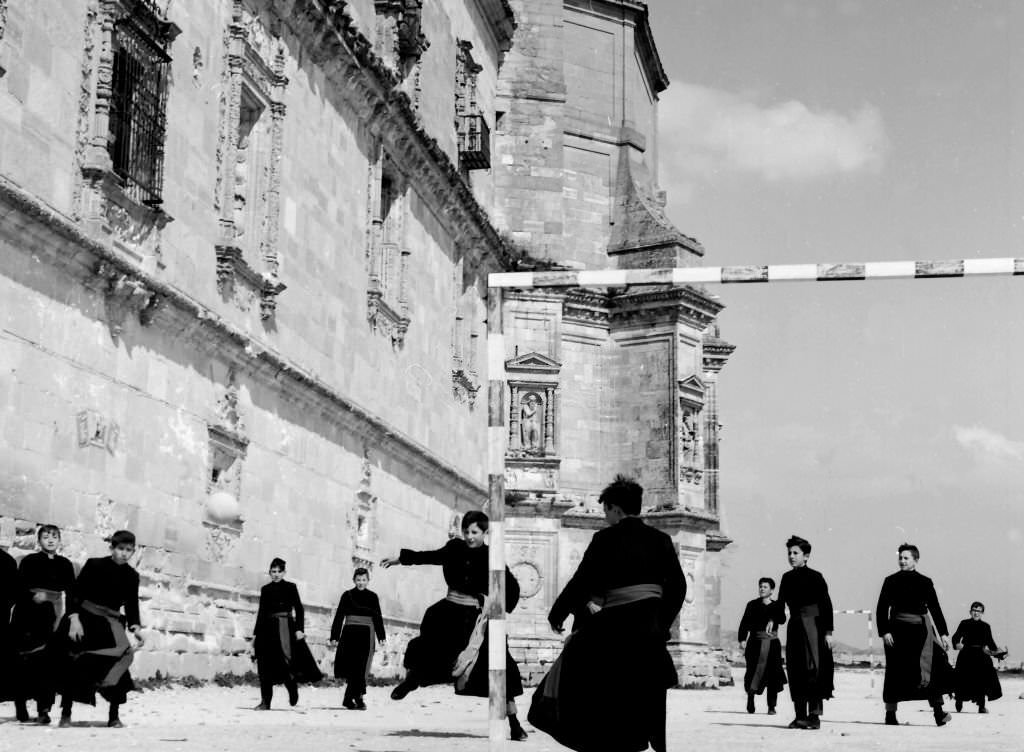
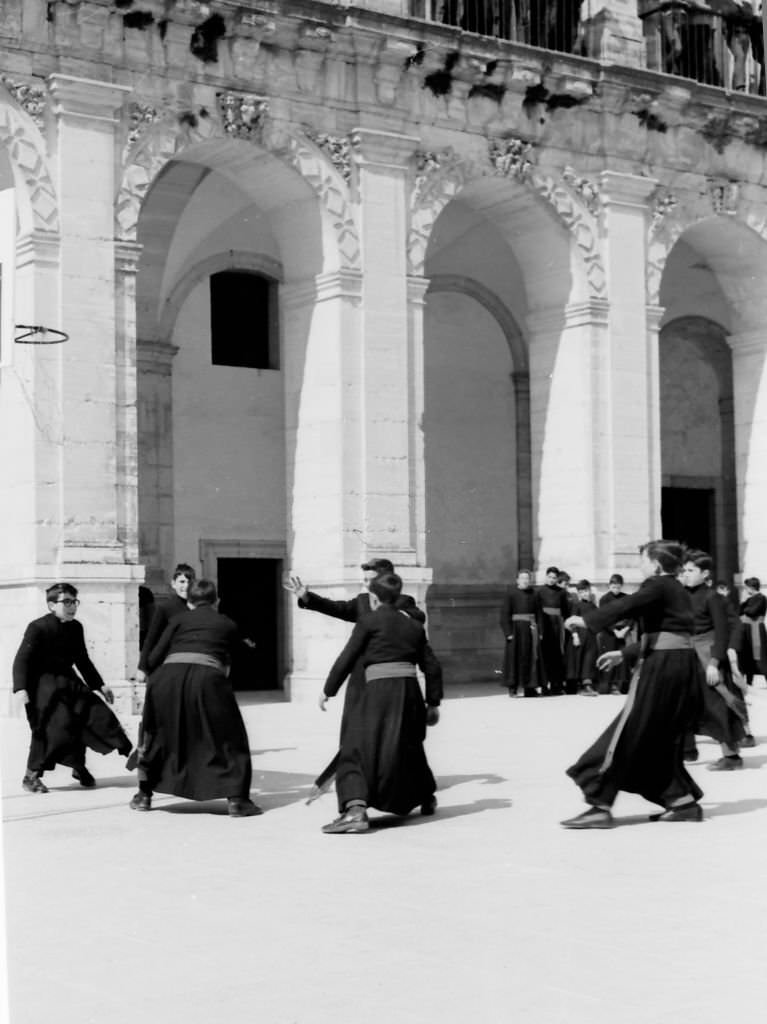
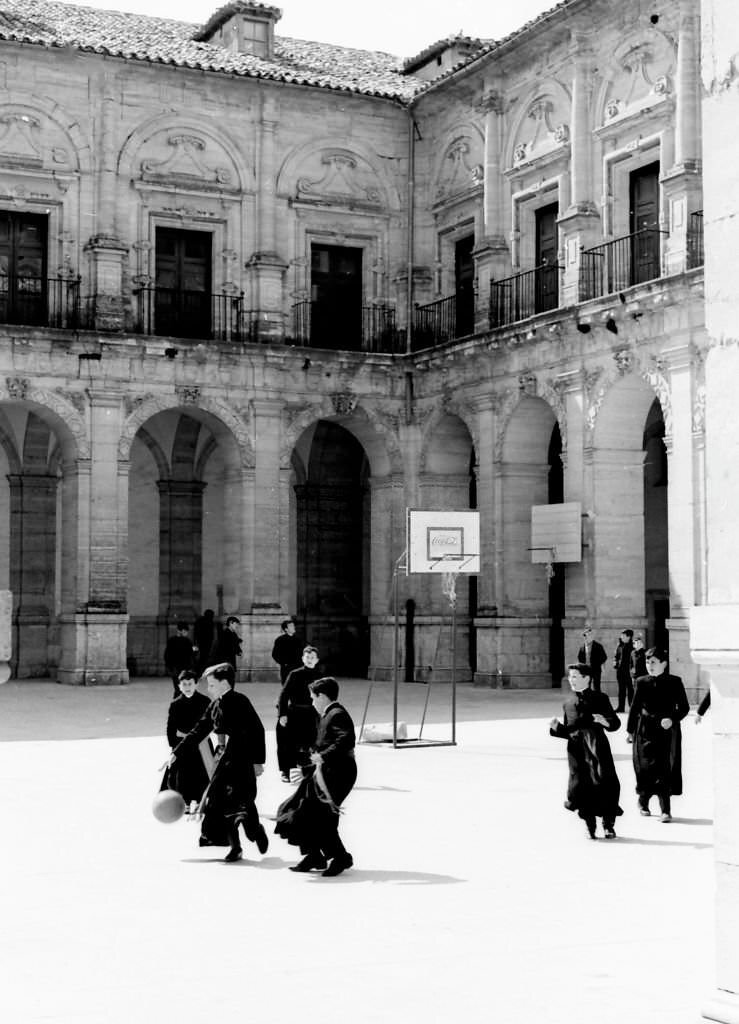
Religious life was deeply woven into the fabric of Cuenca province. The Monument to the Sacred Heart of Jesus stood prominently in the city, while just outside it, the Monastery of Uclés dominated the landscape of the surrounding plains. That monastery, sometimes called the “El Escorial of La Mancha” for its grand scale, also functioned as a seminary. Photos from 1965 caught seminarians playing soccer in its grounds — young men in dark cassocks kicking a ball around the monastic courtyard.
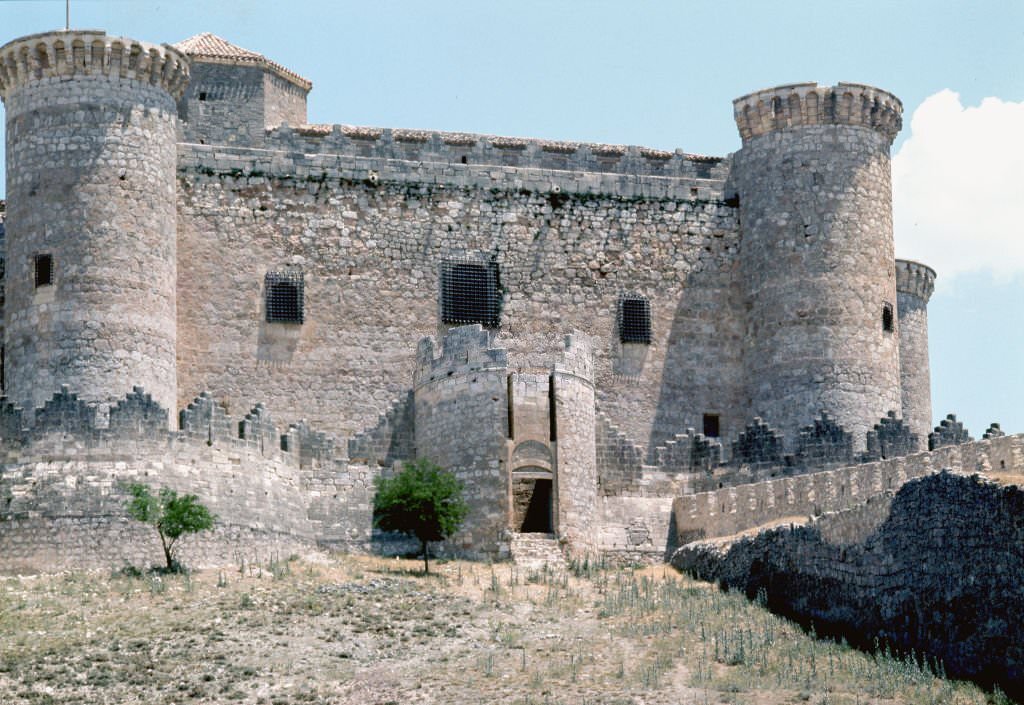
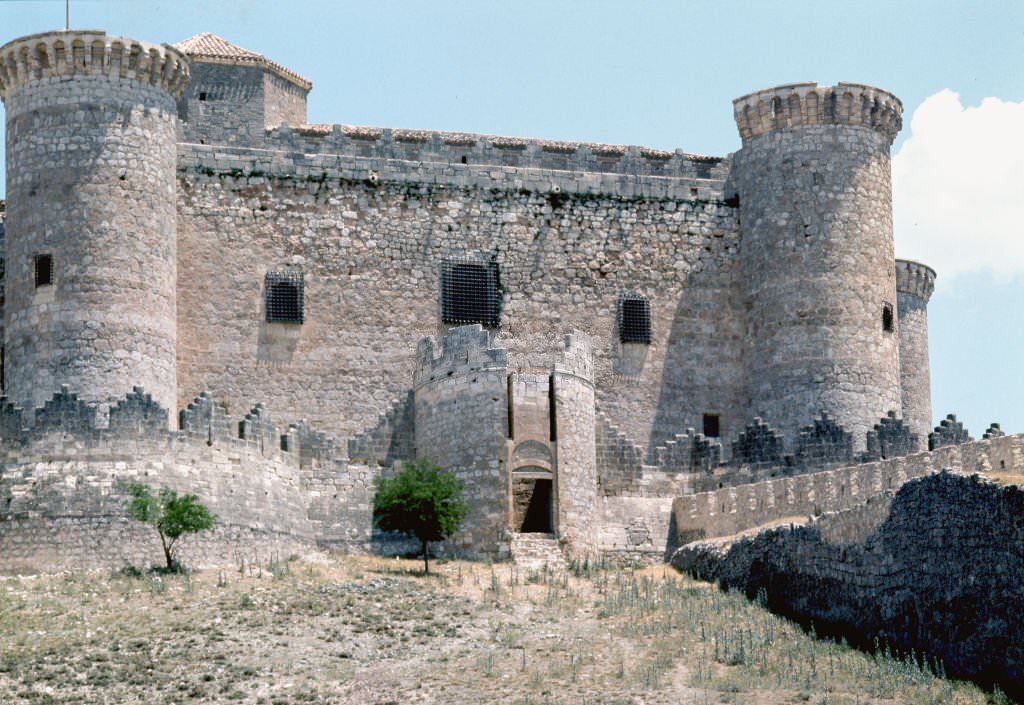
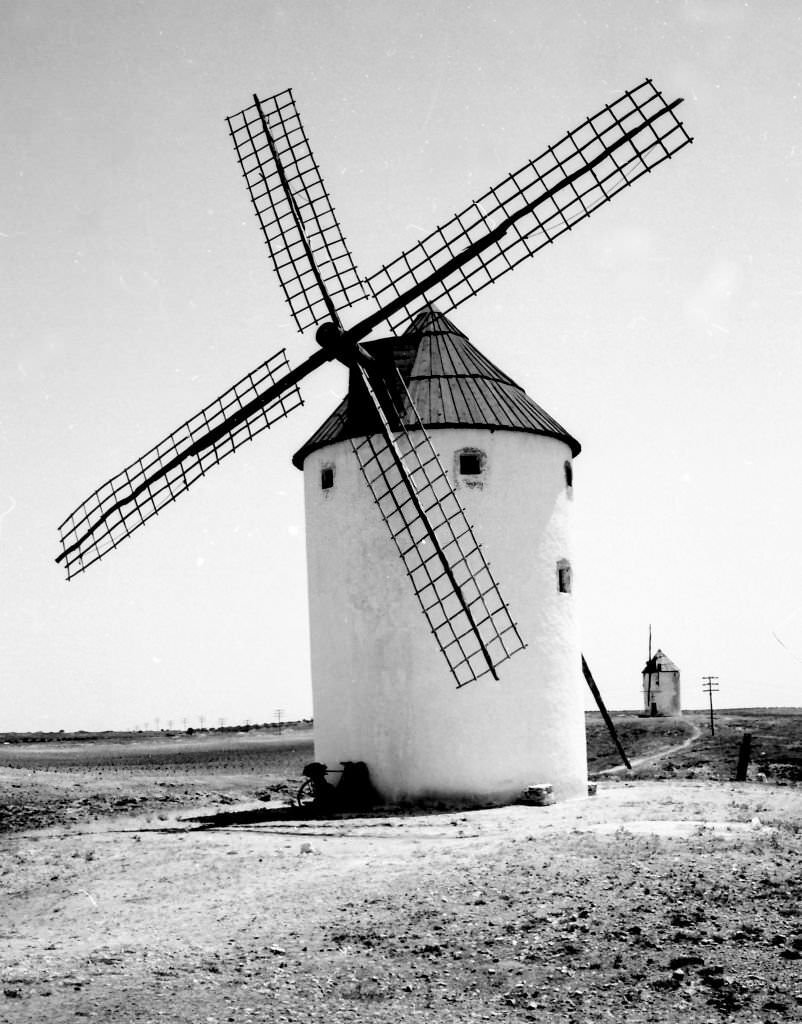
Beyond the city itself, the wider province held landmarks that drew visitors from across Spain. The Castle of Belmonte, a 15th-century fortress in near-perfect condition, rose above the flat plains of La Mancha. In the town of Mota del Cuervo, whitewashed windmills lined the hilltops — the same kind that defined the landscape of Don Quixote’s fictional travels through this region.
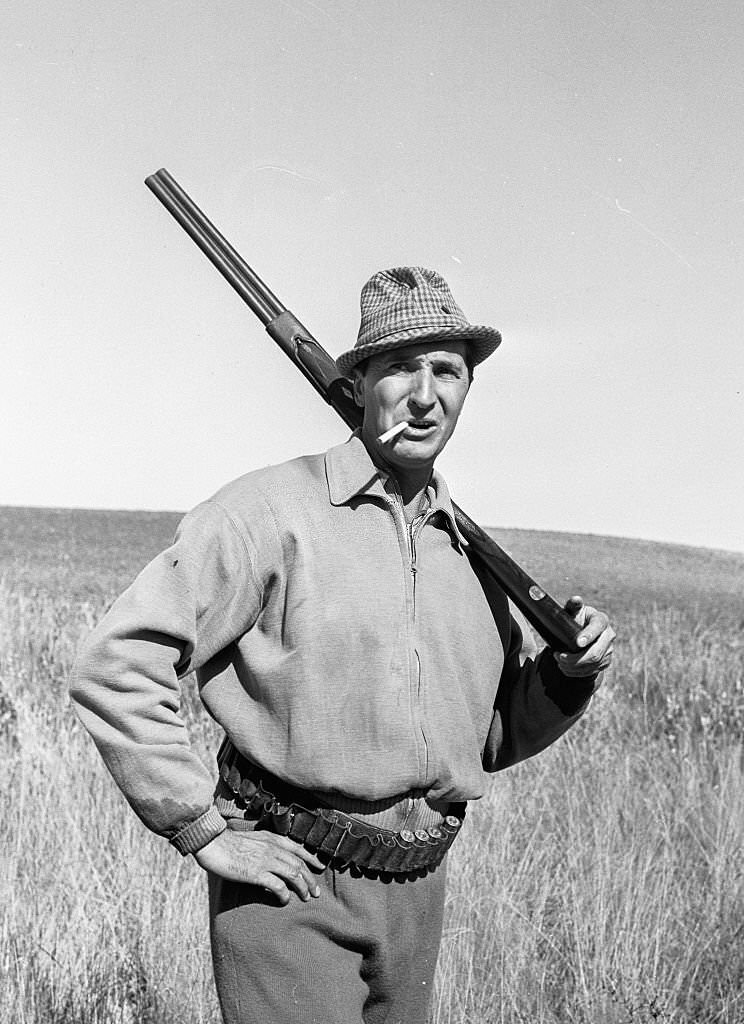
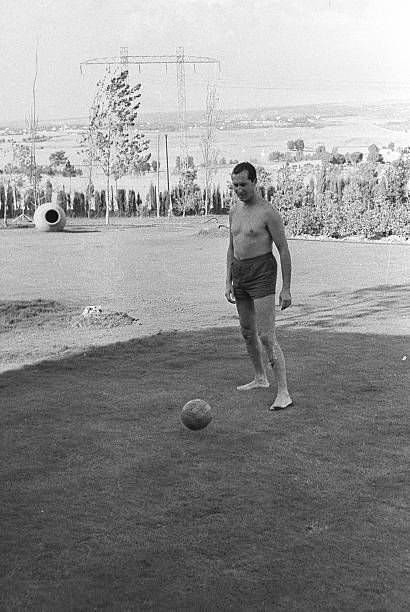
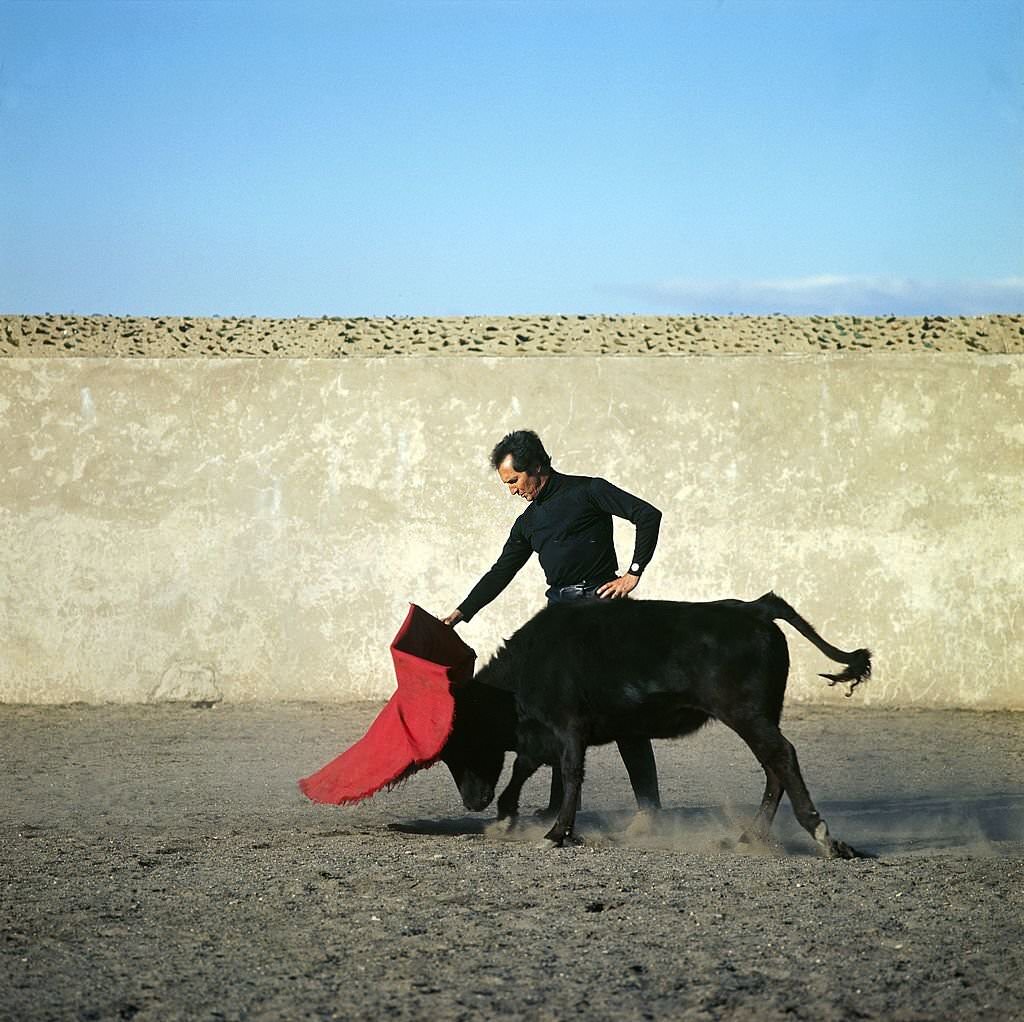
No account of Cuenca in the 1960s would be complete without Luis Miguel Dominguín. Spain’s most celebrated bullfighter owned the Villa Paz farm in Saelices, a town within Cuenca province. Dominguín had retired from the ring after nearly dying in a 1959 goring, but his name still carried enormous weight across Spain and beyond. His farm became a gathering point for artists, actors, and international celebrities throughout the decade. In 1963, he was photographed on the grounds — hunting, playing soccer, and working with bulls.
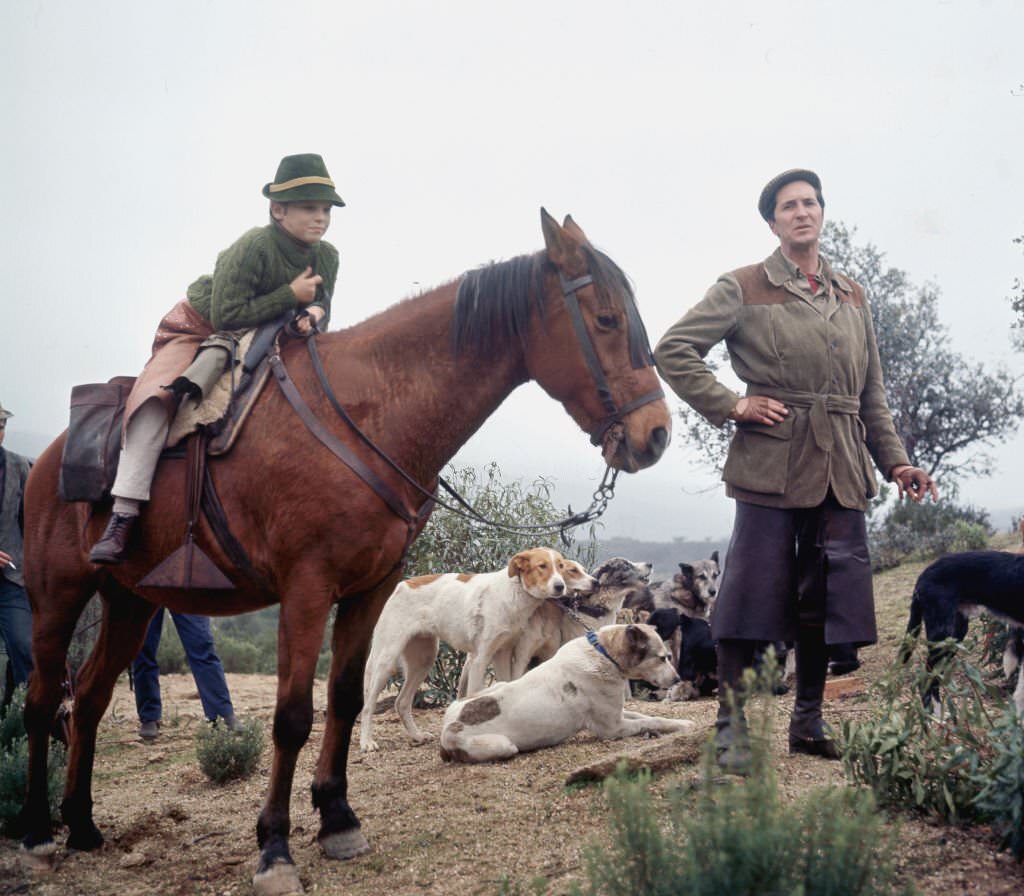
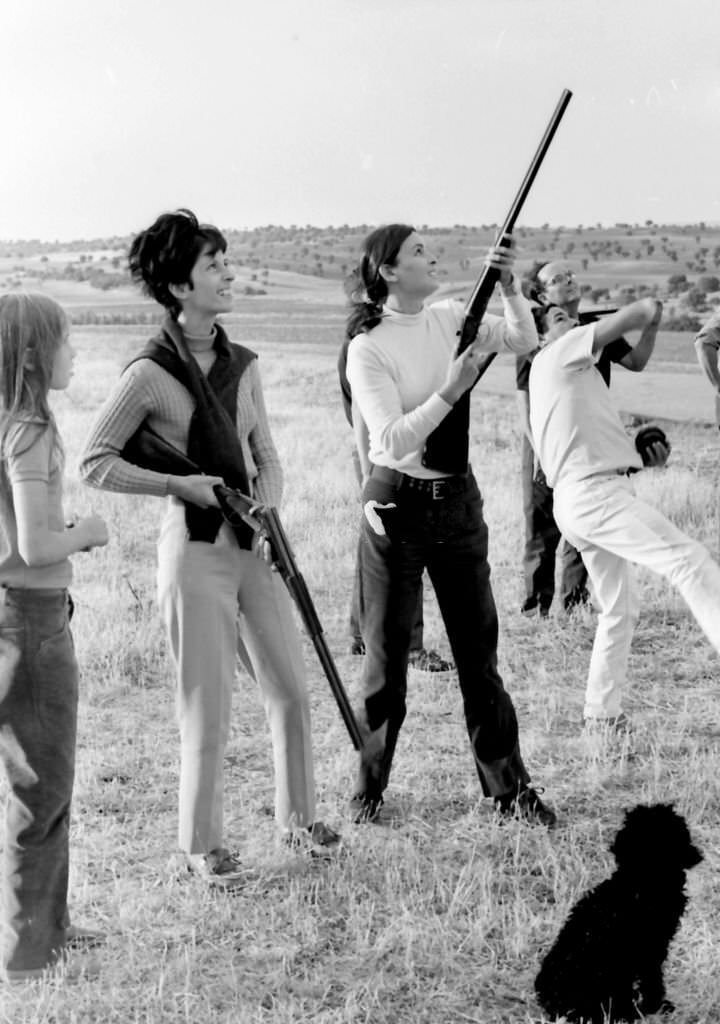
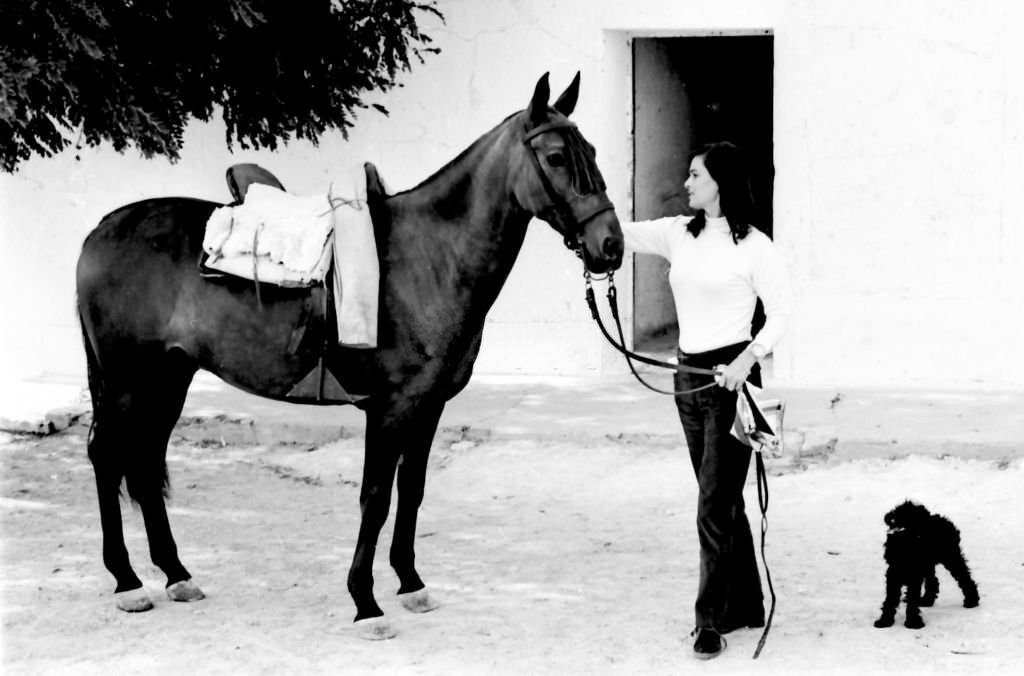
Dominguín’s wife was Italian actress Lucía Bosé, who had won the Miss Italy title in 1947 before becoming one of Europe’s most recognized film actresses. By the mid-1960s, she had largely stepped away from acting to raise their children — Miguel, Lucía, and Paola — at Villa Paz. Photographers captured her riding horses, practicing skeet shooting, sharing family dinners, and spending time with her children on the estate. The farm was not just a retreat; it was the center of the family’s daily life.
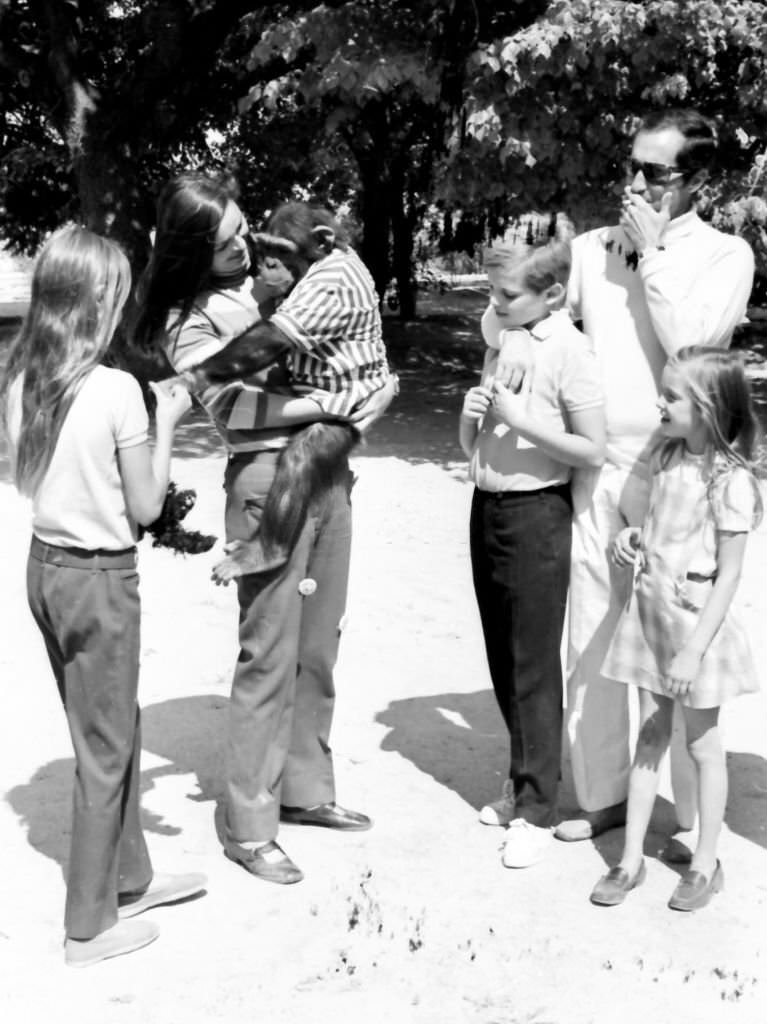
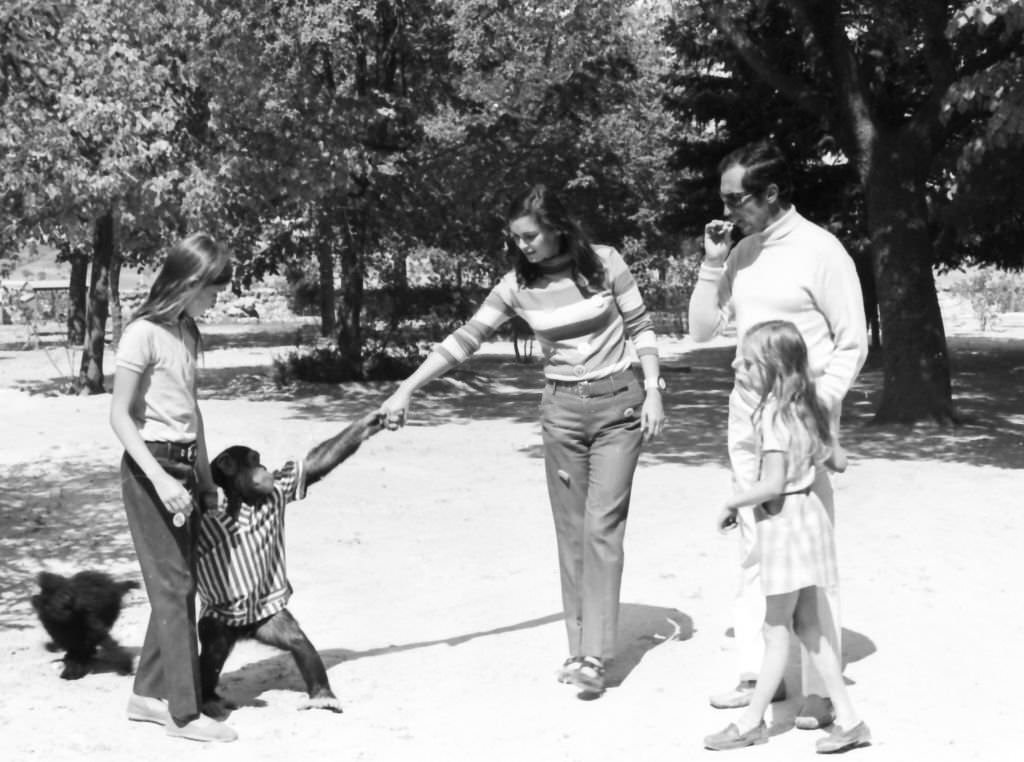
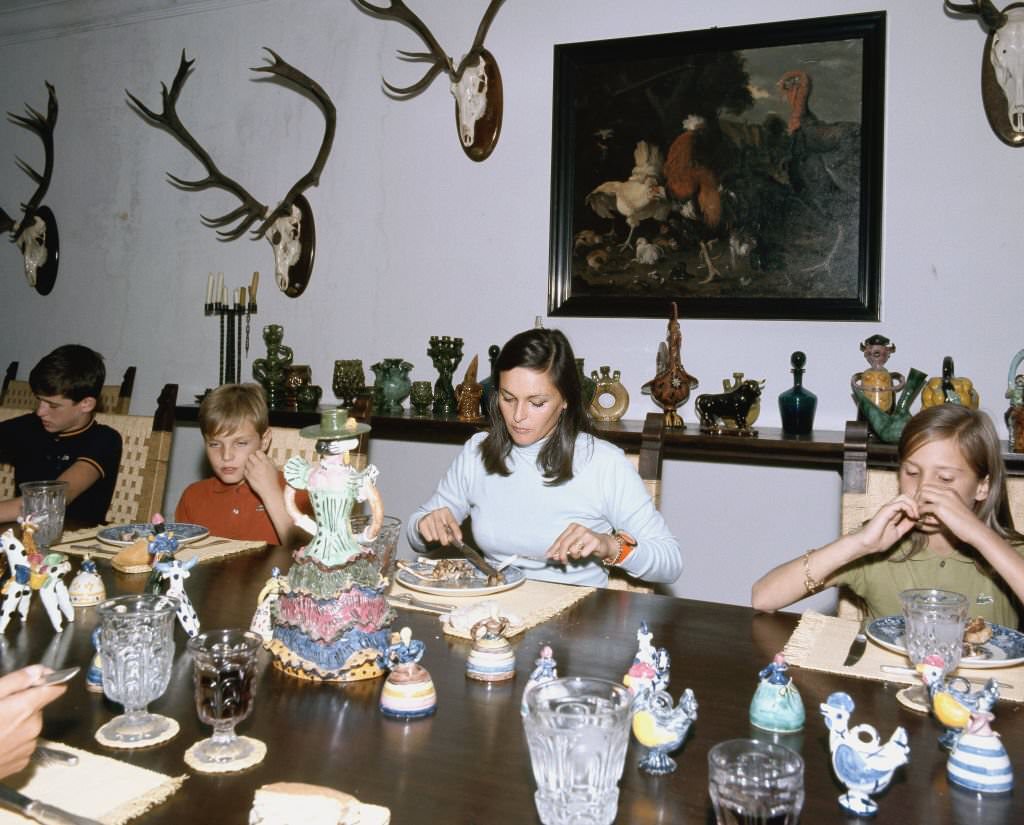
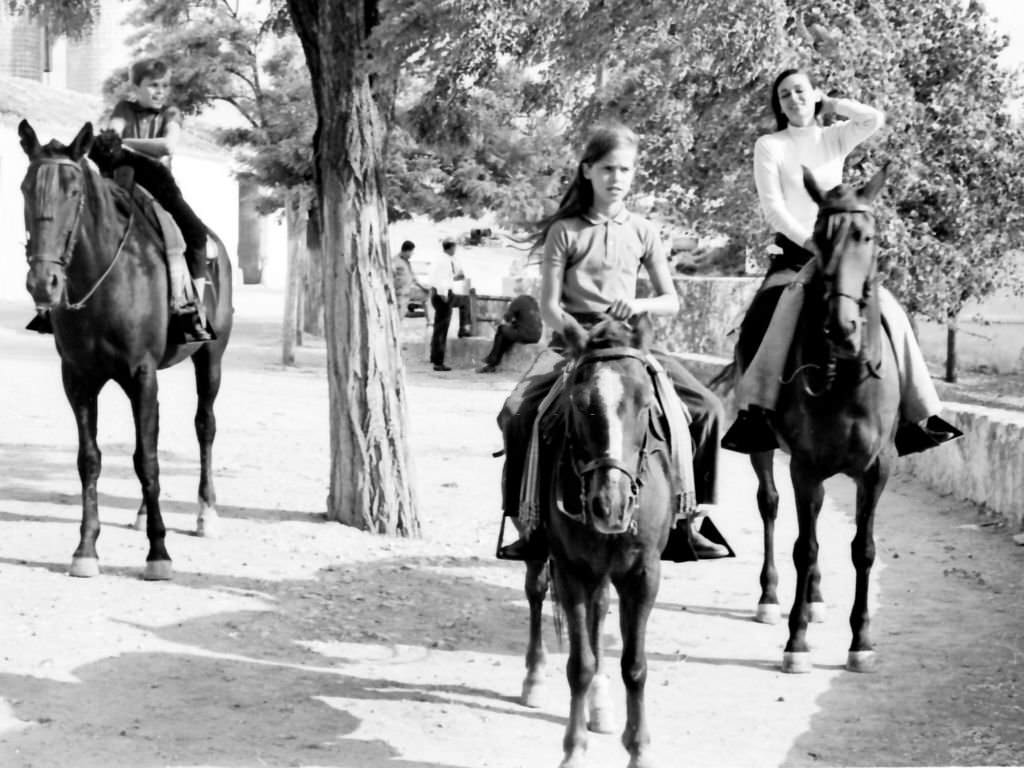
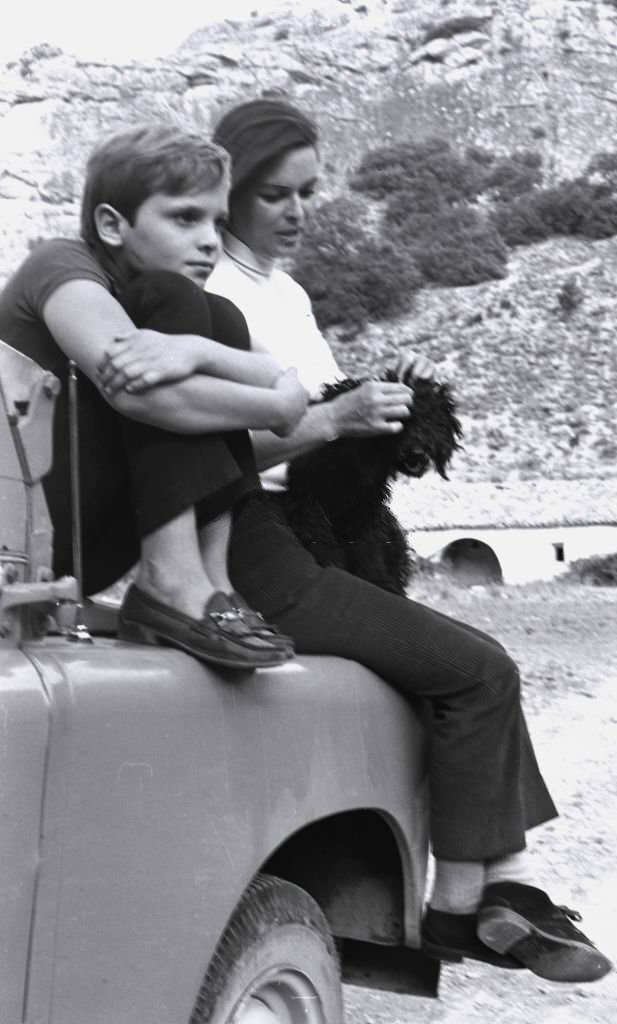
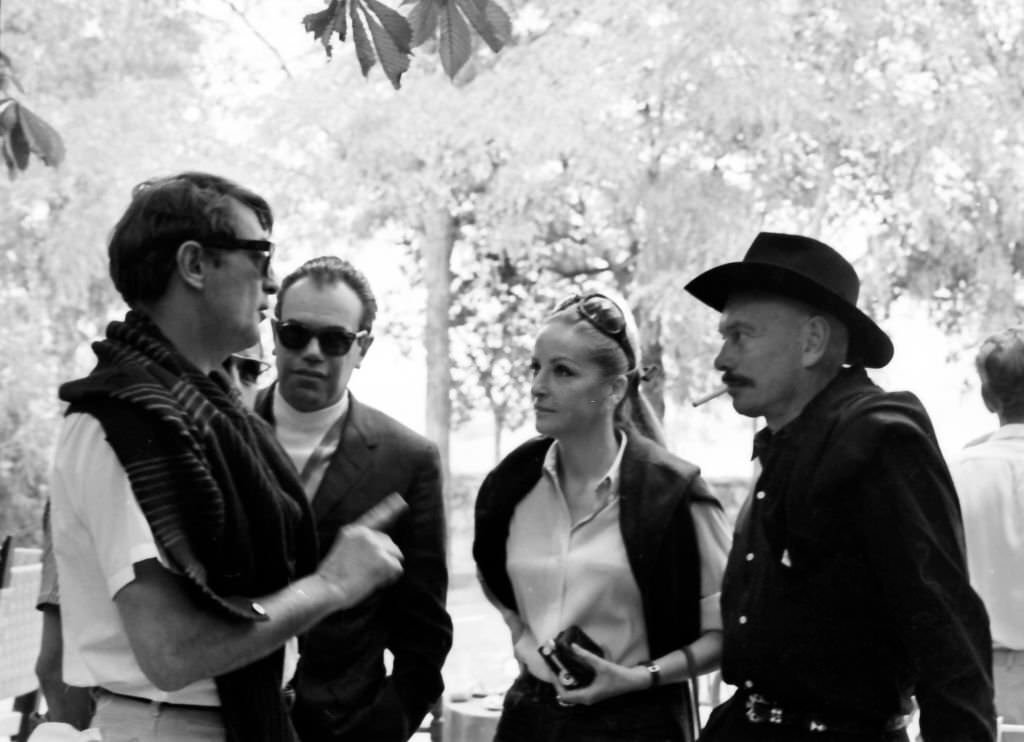
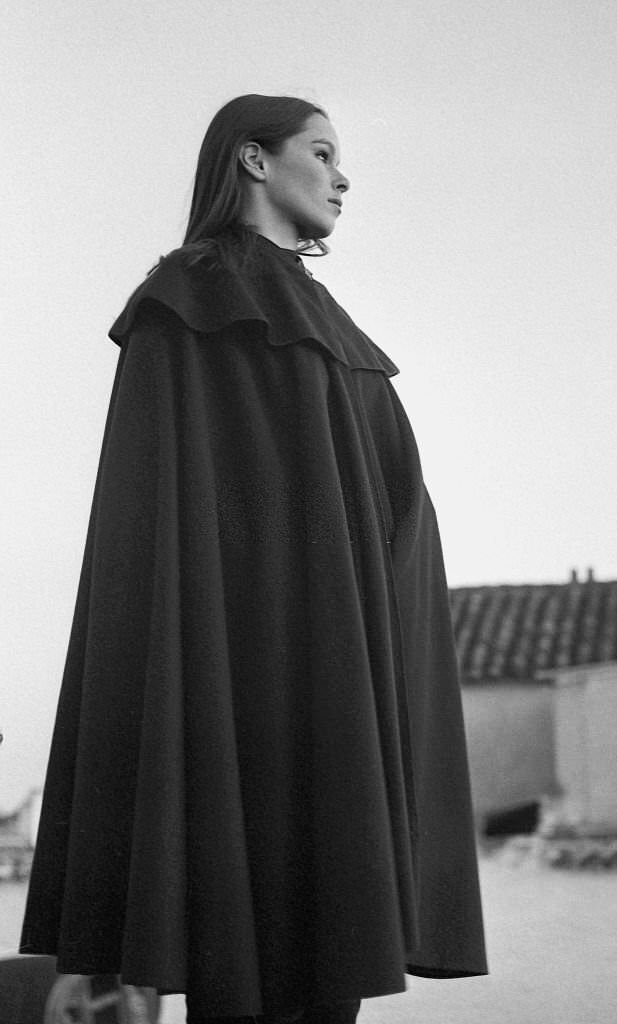
Villa Paz also attracted high-profile guests. In 1967, American actors Robert Mitchum and Yul Brynner visited the farm along with Brynner’s wife Doris Kleiner. The presence of two of Hollywood’s biggest stars at a farm in rural Cuenca province said a great deal about the kind of social orbit Dominguín and Bosé occupied. That same year, actress Geraldine Chaplin — daughter of Charlie Chaplin — appeared in Cuenca for the filming of the television program “Doble Imagen.”
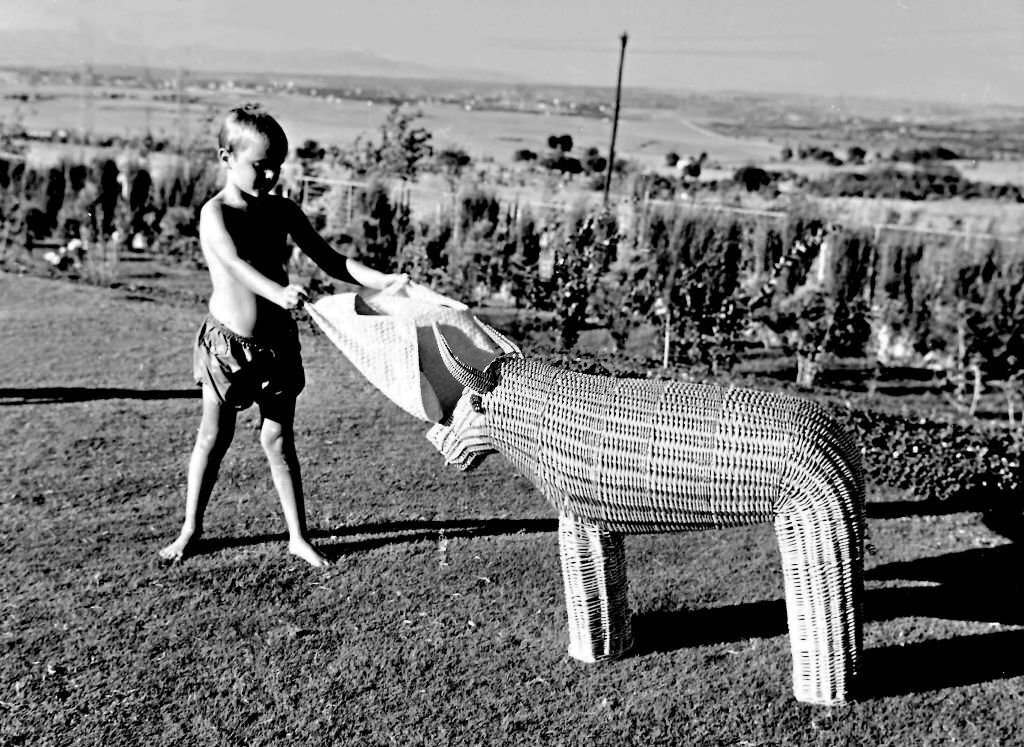
The Dominguín and Bosé children grew up at the center of this world. Miguel Bosé, born in 1956, would go on to become one of Spain’s most successful pop musicians. As a child, he was already being photographed in the Cuenca countryside — including a 1965 shot of him posing with a mock bull, echoing his father’s profession in a playful way.
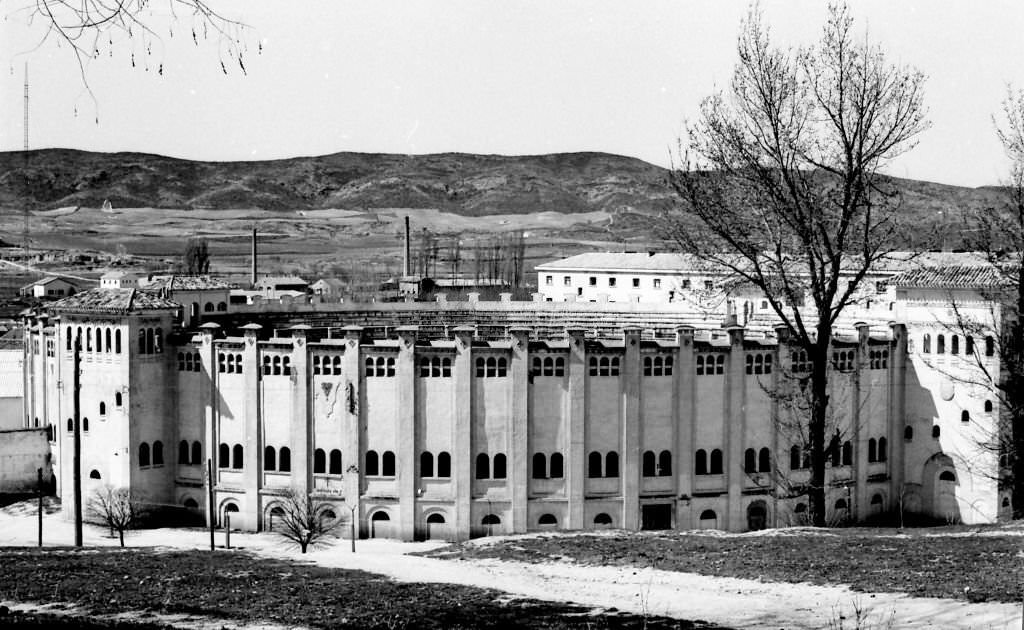
Cuenca’s bullring was another fixed point in the city’s identity. Bullfighting was not just entertainment in 1960s Spain — it was a cultural institution, and Cuenca’s ring sat at the edge of the old city as a permanent reminder of that tradition. The building itself, photographed in 1965, was as much a part of the urban landscape as the cathedral or the hanging houses.