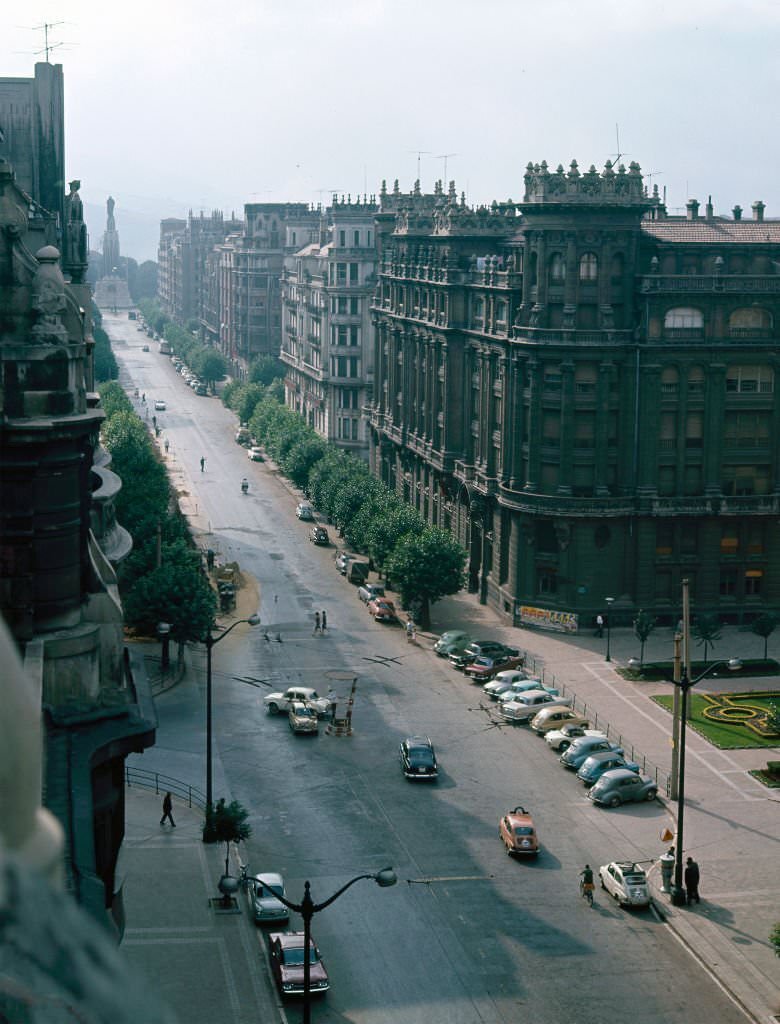
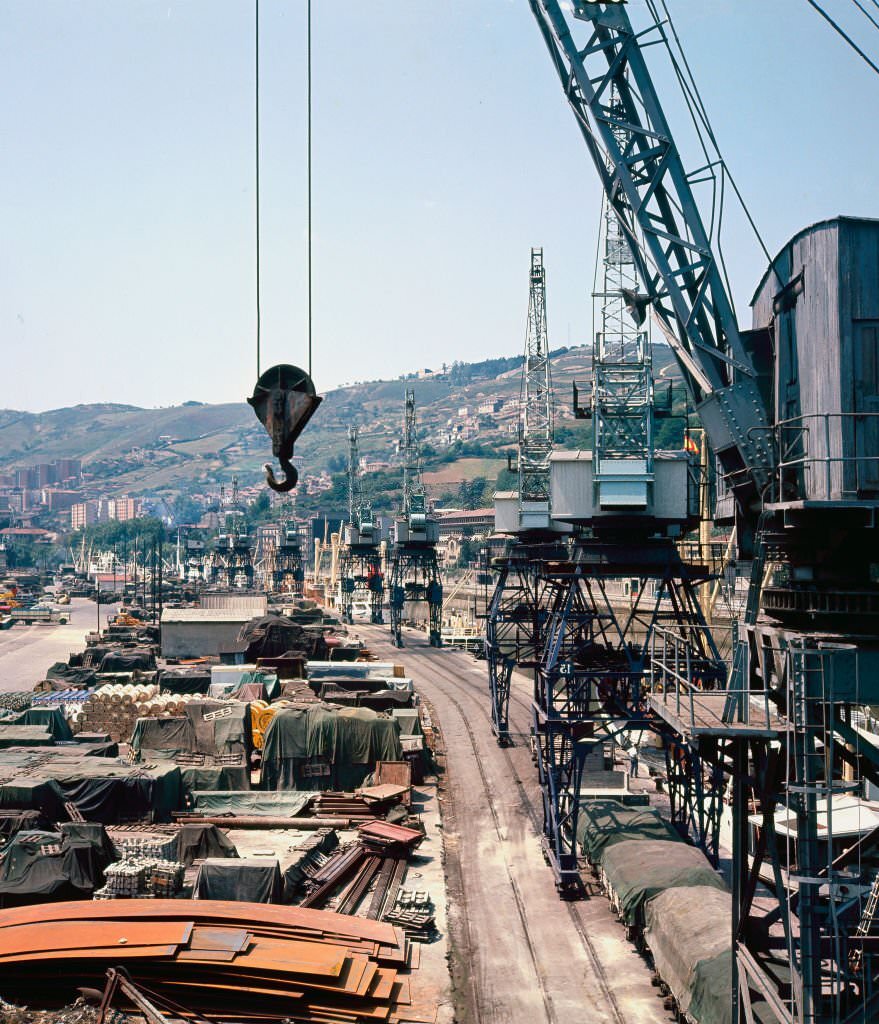
Bilbao is the largest city in the province of Biscay, in the Basque Country of northern Spain. Its story as a modern city is rooted in industry. Back in the 1870s, rich deposits of iron ore in the surrounding hills set off a wave of rapid industrialization. Iron and steel production, along with shipbuilding, transformed Bilbao into one of Spain’s most economically powerful cities. Workers flooded in from other parts of the country, drawn by the promise of steady employment. That influx of outsiders stirred a strong sense of Basque identity among the local population, fueling the early growth of Basque nationalism.
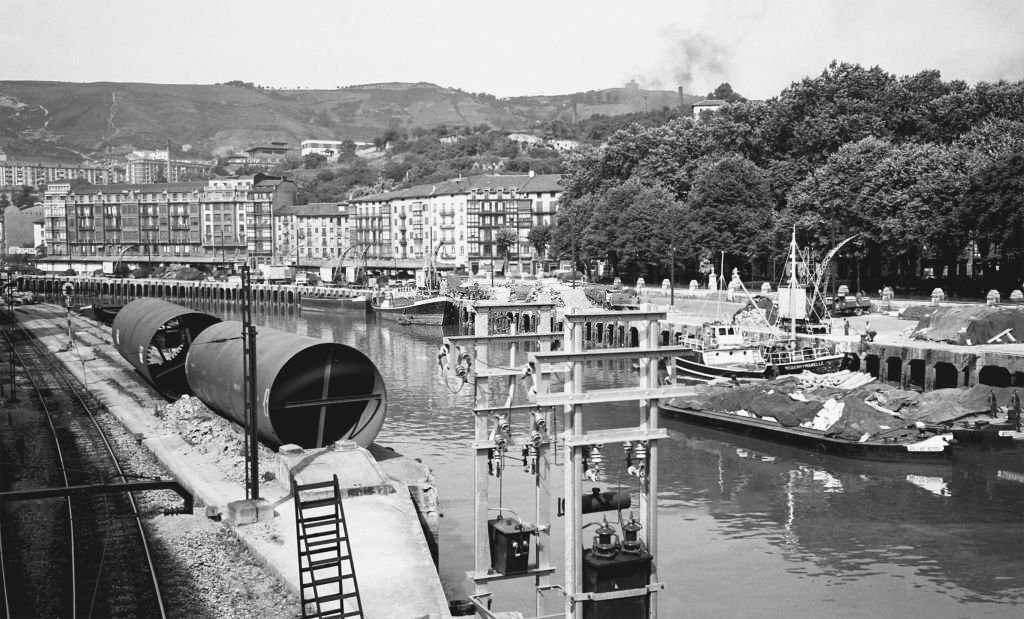
The Nervión River runs straight through the heart of Bilbao and has always been central to the city’s character. In the industrial era, its banks were lined with factories, foundries, and shipyards. By the 1960s, the steel and shipbuilding industries were already beginning to decline, but the river remained a defining feature of everyday life in the city.
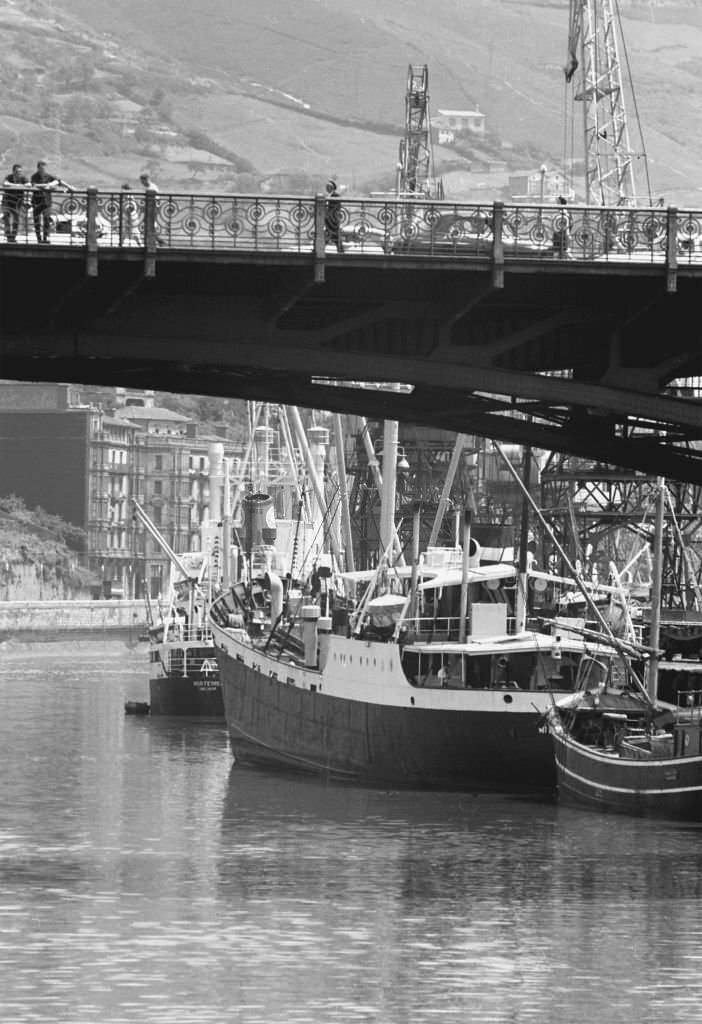
Even as heavy industry slowed, Bilbao pressed ahead with major urban development throughout the 1960s. New residential neighborhoods were built to house the city’s growing population. Otxarkoaga was one of the most significant of these, developed to provide modern housing on the outskirts of the city. A new motorway connecting Bilbao to the French border was also constructed during this period, opening up greater trade and movement across the Pyrenees.
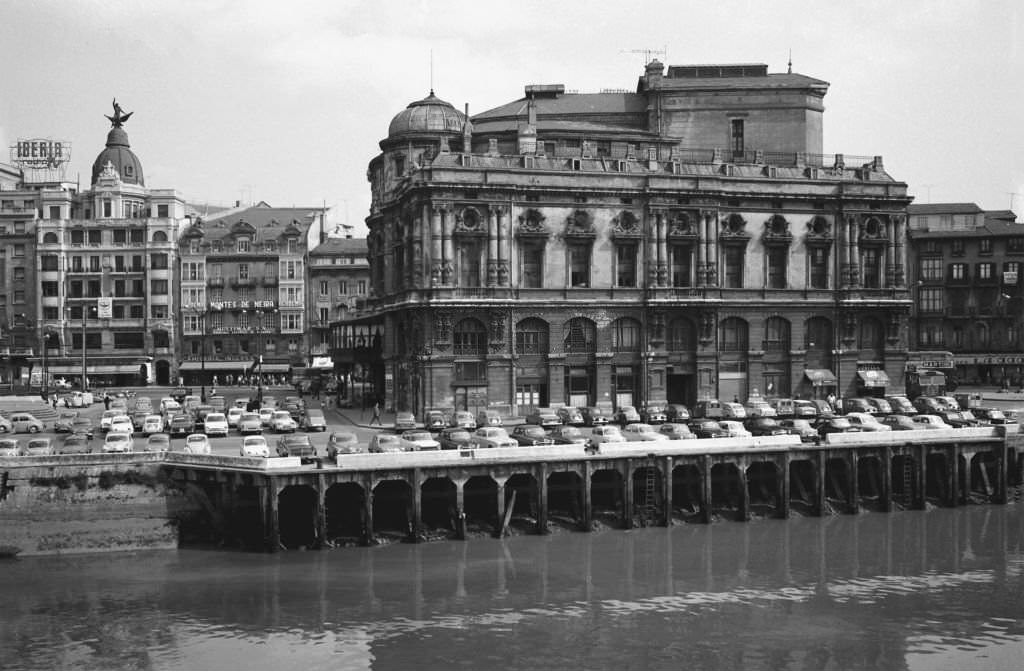
The Teatro Arriaga stands as one of Bilbao’s most beloved landmarks. Named after the Bilbao-born composer Juan Crisóstomo de Arriaga, the theater anchors the old part of the city near the Nervión. Its ornate facade made it one of the most photographed buildings in 1960s Bilbao.
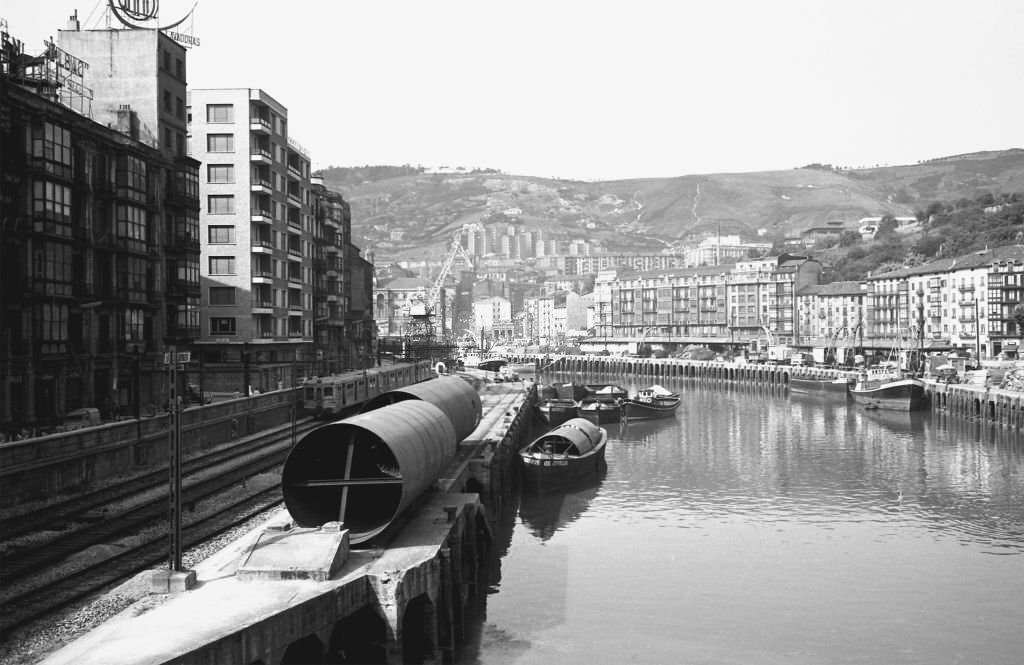
The city’s skyline in 1967 reflected its layered history — older stone buildings and church towers sat alongside mid-century apartment blocks that had gone up to meet demand from decades of worker migration. The urban fabric was dense and active, with commerce, religion, and civic life tightly packed together.
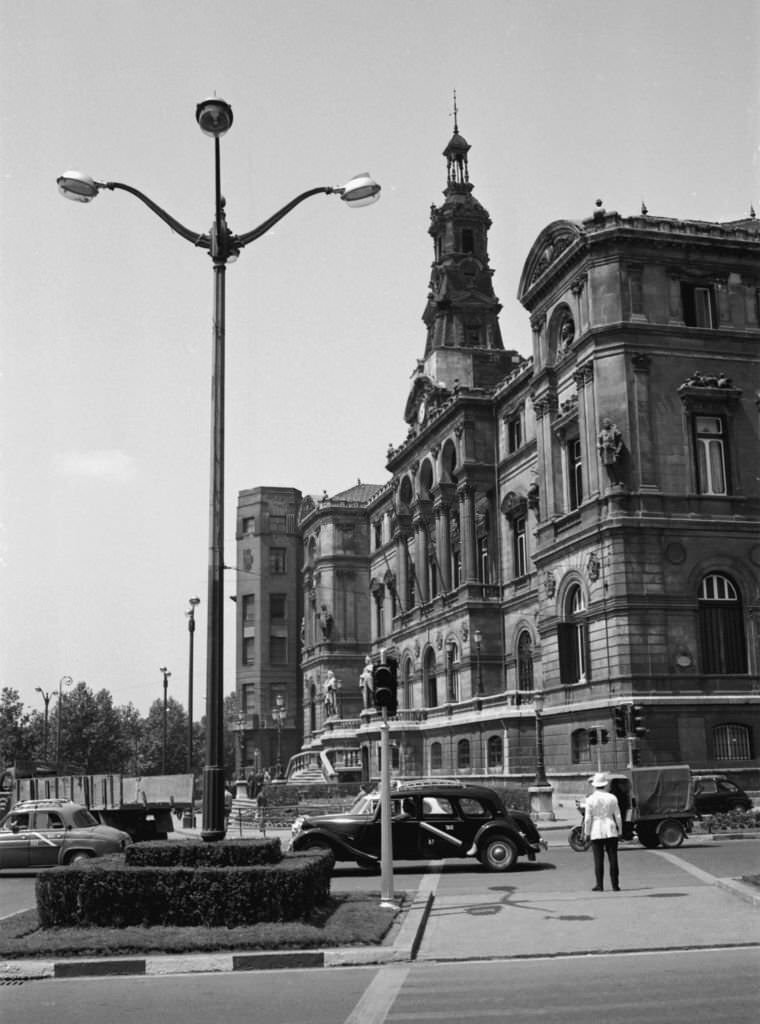
Bilbao’s Town Hall sits on the banks of the Nervión and serves as the seat of the city’s municipal government. The building’s classical architecture reflected the civic ambitions of the city during its industrial peak, and by the 1960s it remained a symbol of official Bilbao.
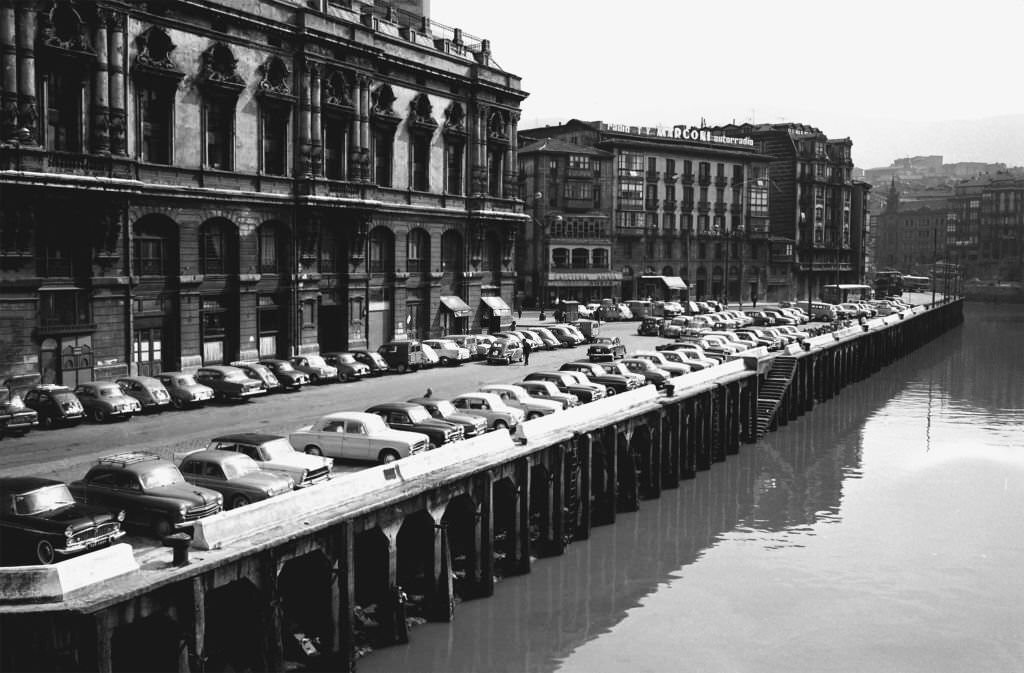
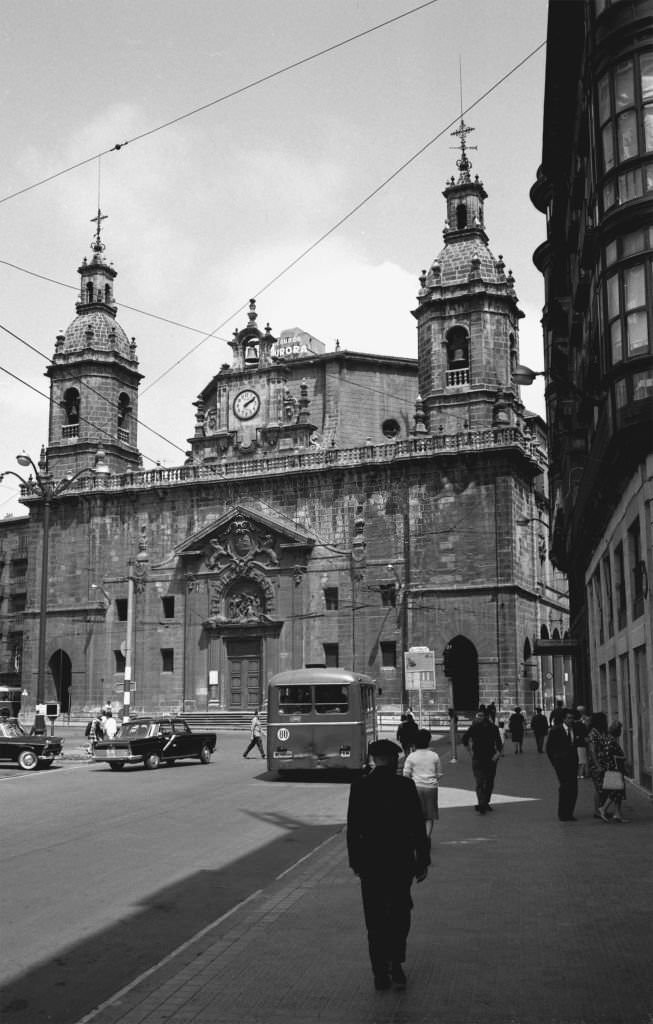
The Church of San Nicolás de Bari is one of Bilbao’s oldest churches, sitting near the riverbank in the old quarter. Its twin towers have long been a familiar sight along the Nervión. In the 1960s, the church continued to serve as an active parish in the heart of the city.
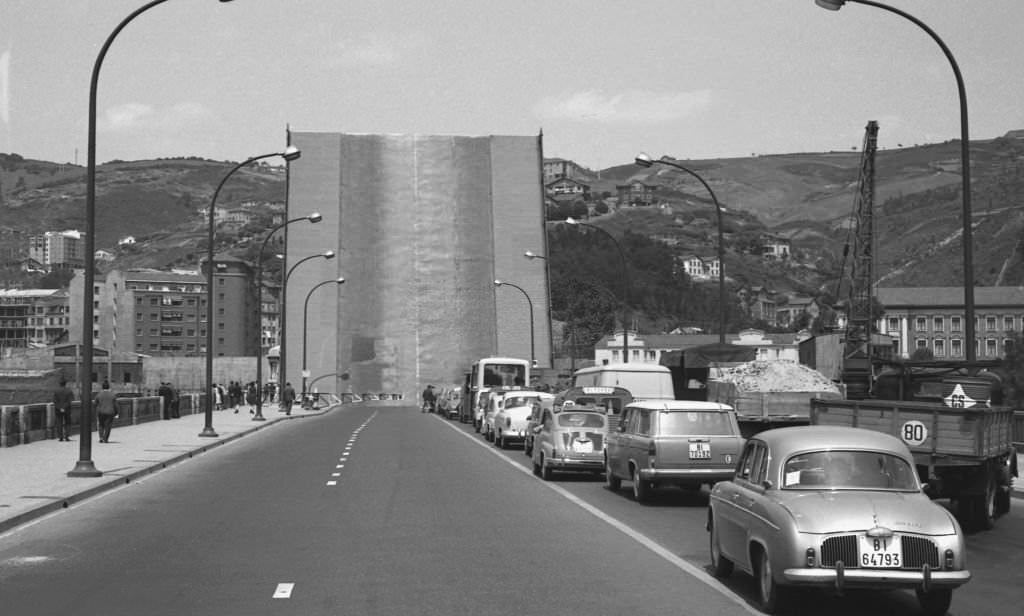
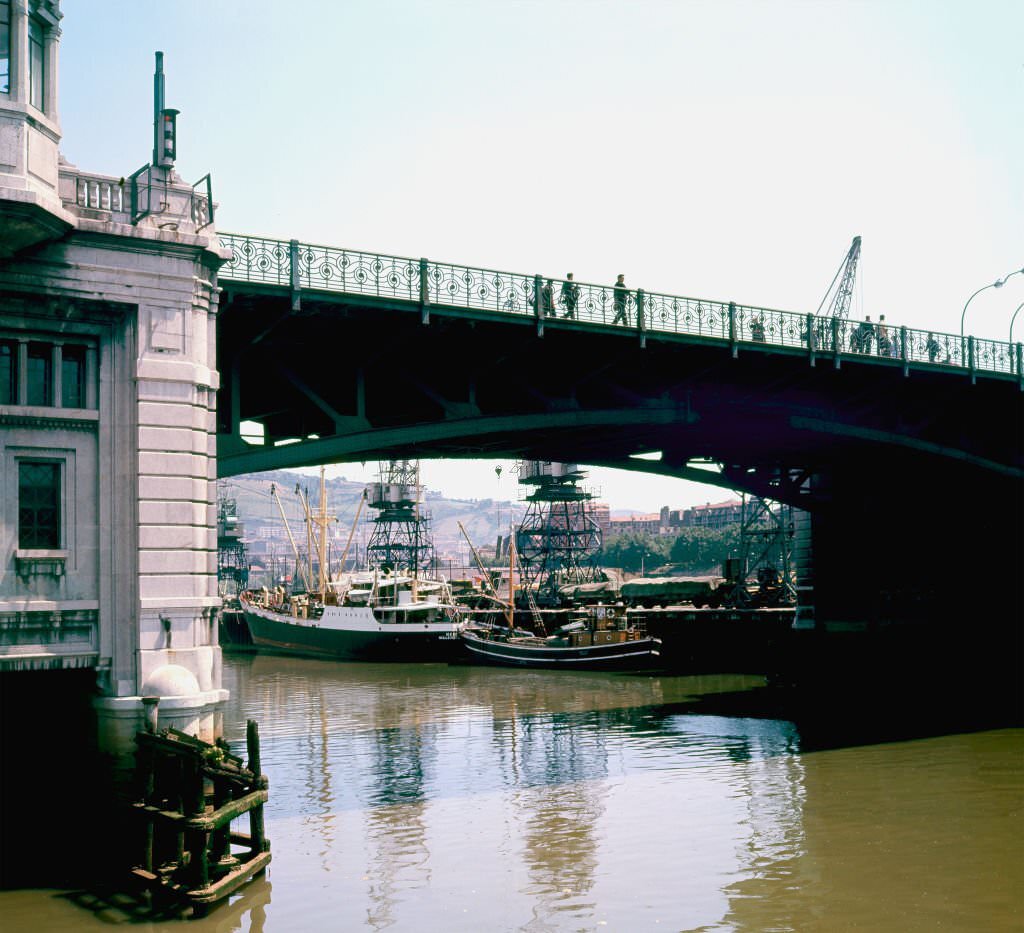
Several bridges cross the Nervión within the city, connecting the older neighborhoods on one bank with the newer commercial districts on the other. The Bridge of El Generalísimo was one of the key crossings in 1960s Bilbao, carrying heavy foot and vehicle traffic daily.
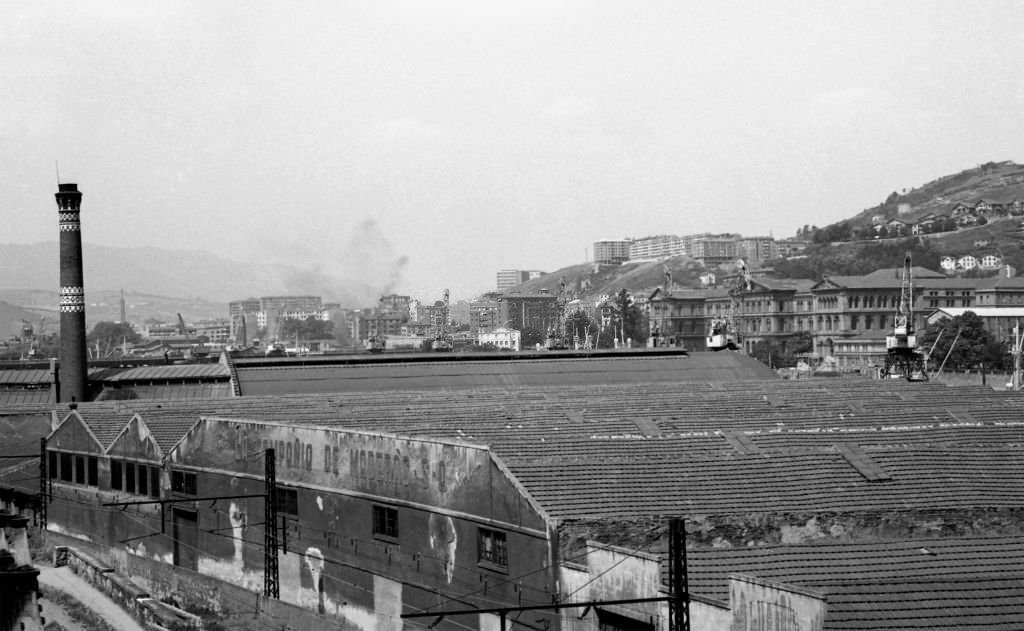
Alameda Street offered a more relaxed side of urban Bilbao — a tree-lined boulevard where residents could walk, shop, and socialize. Streets like this one played an important role in daily life, providing a break from the industrial character that dominated much of the city’s identity.
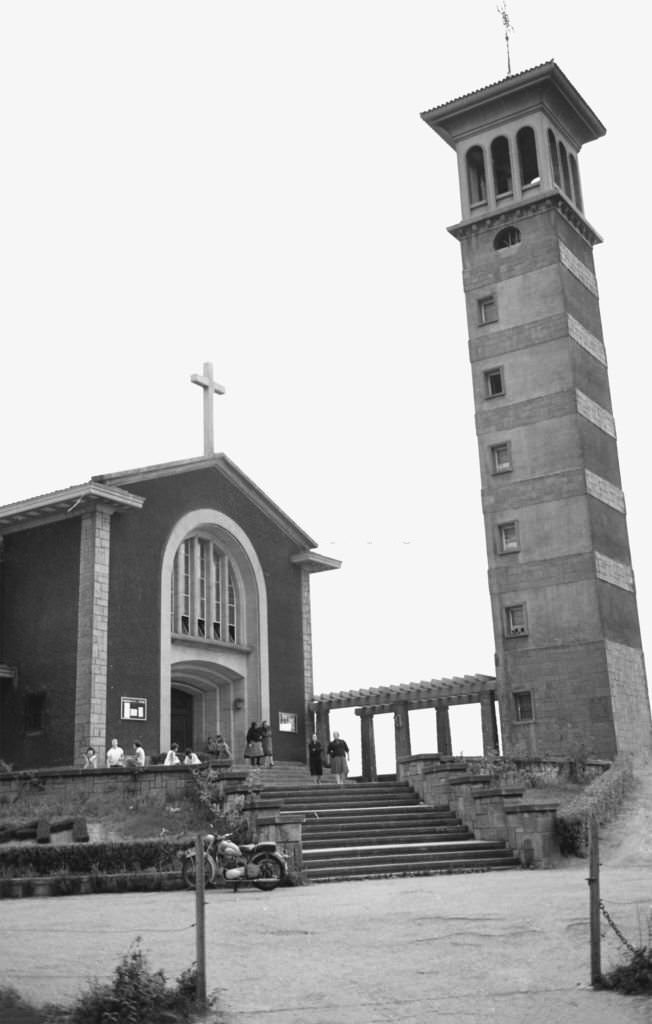
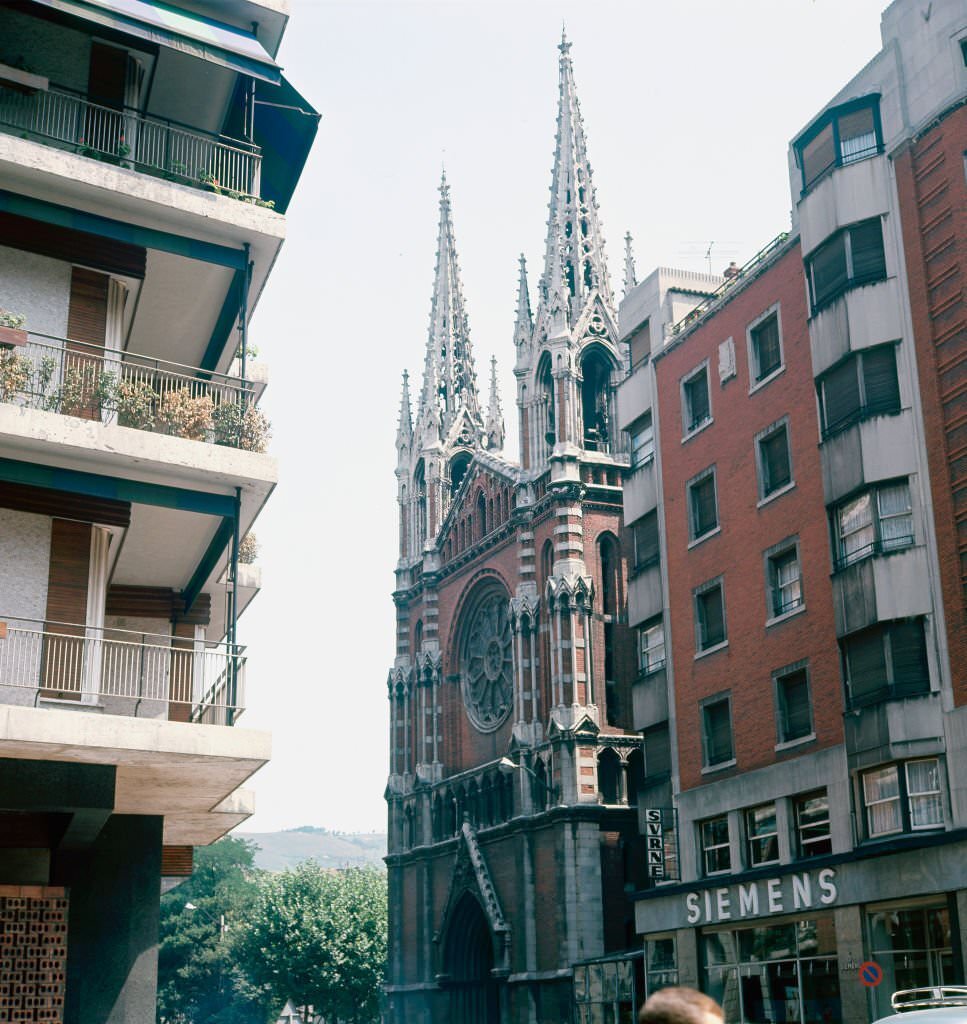
Religion was woven deeply into Bilbao’s public and private life. The Sanctuary of Nuestra Señora de Fátima was one of many places of worship in the city. The strong Catholic presence across Bilbao’s architecture — from grand theaters to quiet street-corner chapels — told the story of a city where faith and civic identity overlapped.
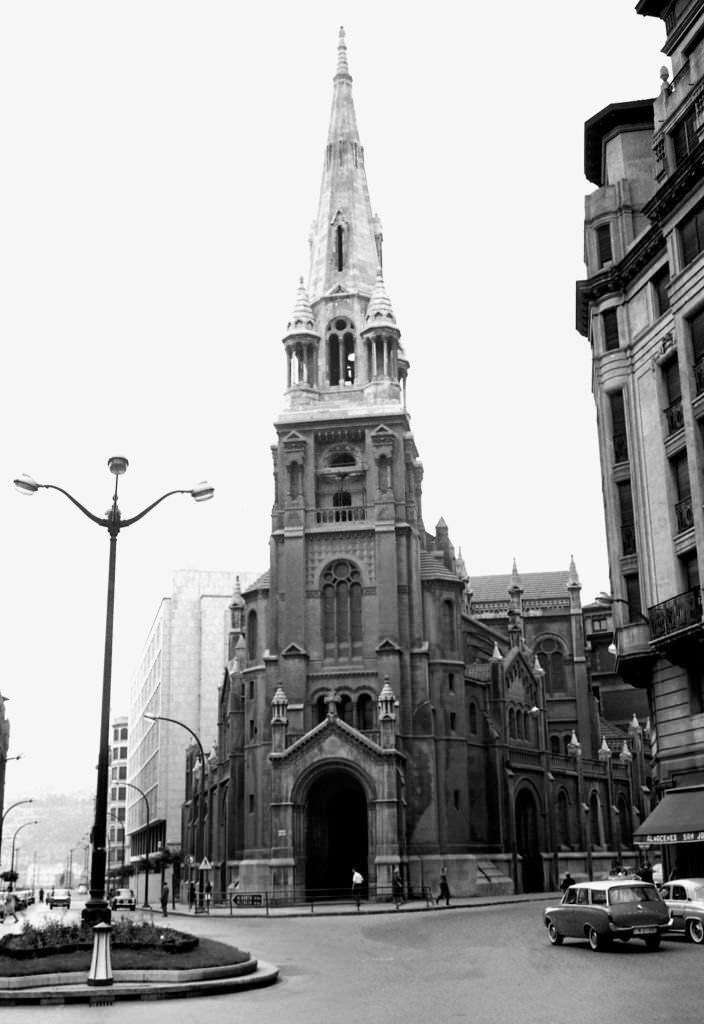
The Church of the Augustinian Fathers was another fixture in Bilbao’s religious landscape. Various religious orders maintained a visible presence throughout the city, operating churches, schools, and community centers that served both the long-established Basque population and the waves of migrants who had arrived from other Spanish regions.
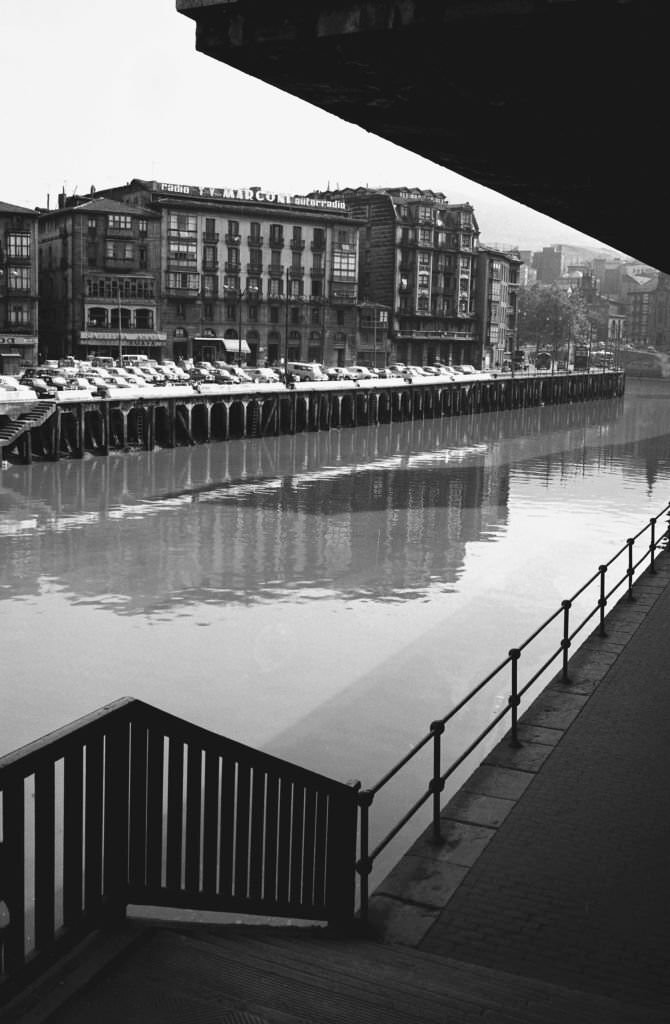
Bilbao’s bridges were not just practical crossings — they were landmarks in their own right. The Bridge of Vitoria connected neighborhoods on either side of the Nervión and, like most of the city’s river crossings, saw constant use from workers, shoppers, and commuters moving through the city each day.
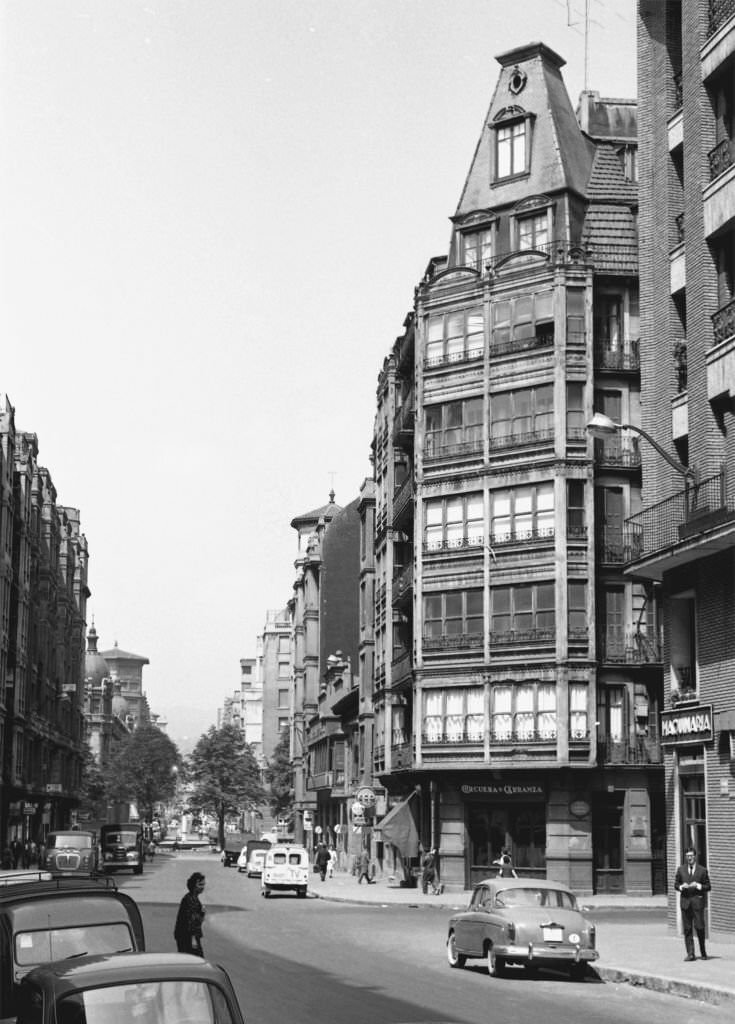
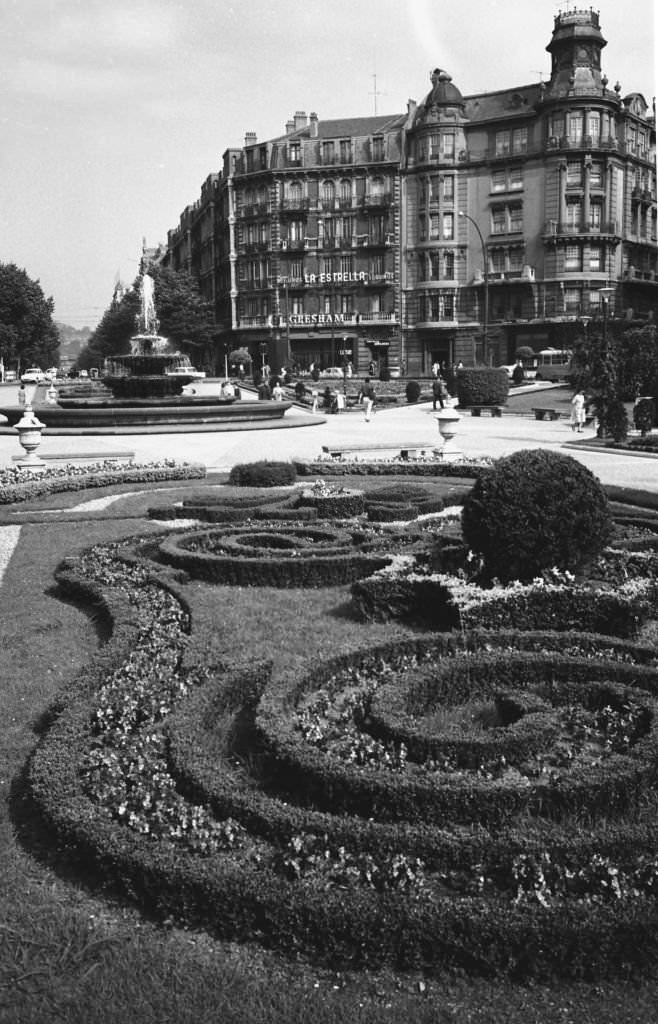
Alameda Urquijo was one of the main arteries running through the Ensanche, Bilbao’s planned expansion district built in the late 19th and early 20th centuries. Wide, well-organized, and lined with substantial buildings, it represented the prosperous face of industrial-era Bilbao — still very much intact in the 1960s.
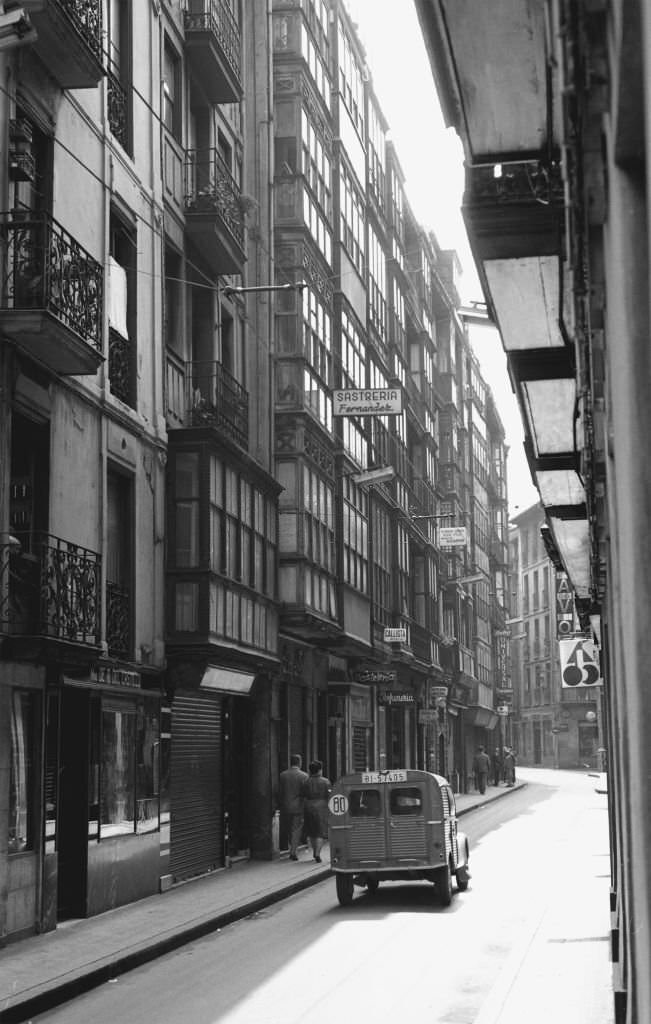
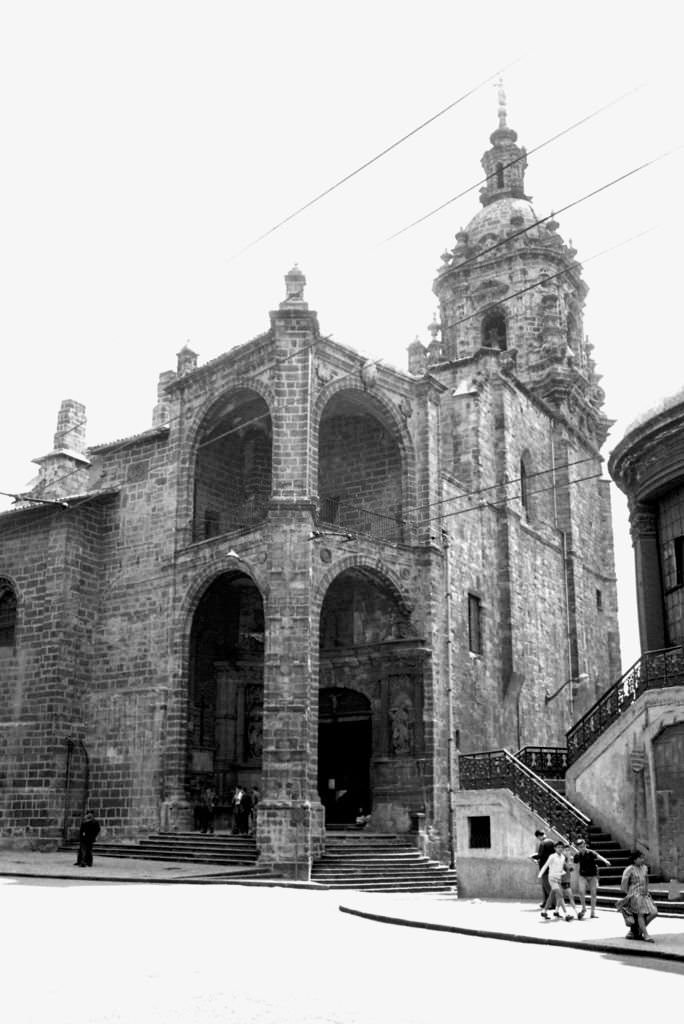
The Church of San Antón is one of the most iconic images of Bilbao. It rises directly above the Nervión River and appears in countless photographs of the city. By the 1960s, the church had stood on its riverbank site for centuries, watching the city grow from a small medieval settlement into an industrial powerhouse.
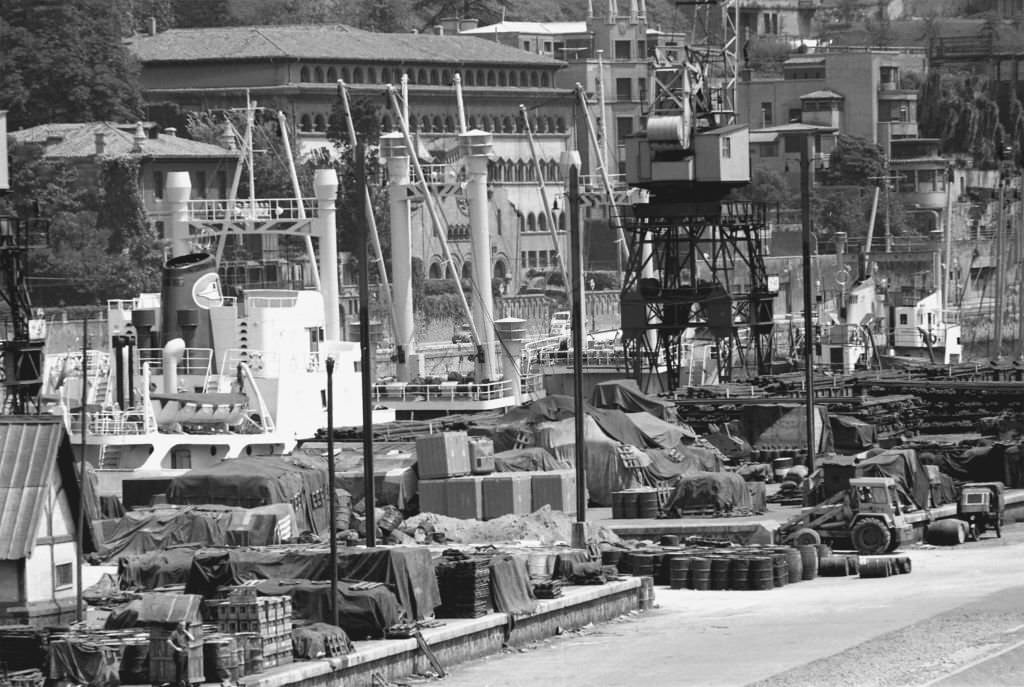
The Port of Bilbao was the engine of the city’s economy for generations. Iron ore, steel products, and manufactured goods moved through it in enormous quantities. By 1967, while the heaviest days of industrial output were behind it, the port remained a significant commercial hub and a constant source of activity along the estuary.
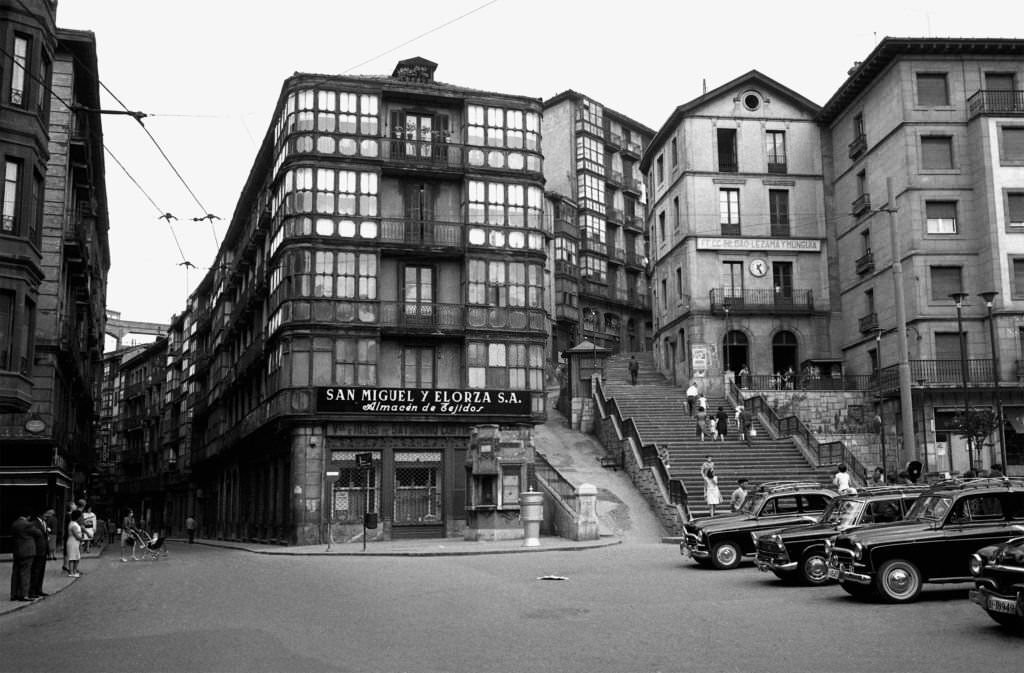
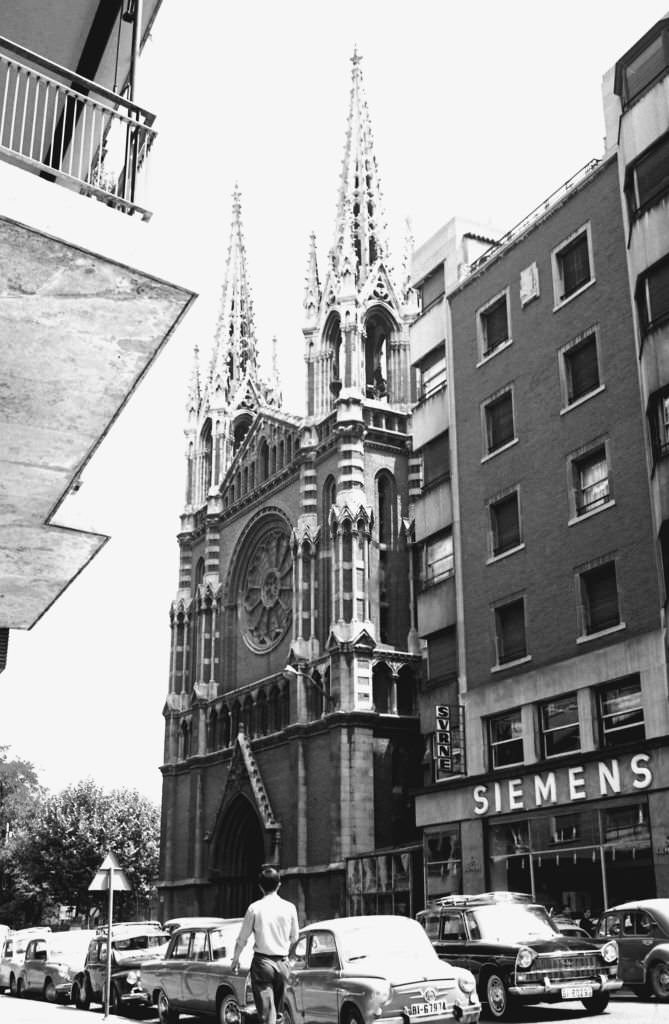
The Jesuit church in Bilbao was a prominent landmark in the city’s religious and architectural scene. The Jesuits maintained an active role in education and community life throughout the Basque Country, and their church in Bilbao was one of the more impressive buildings in the city.
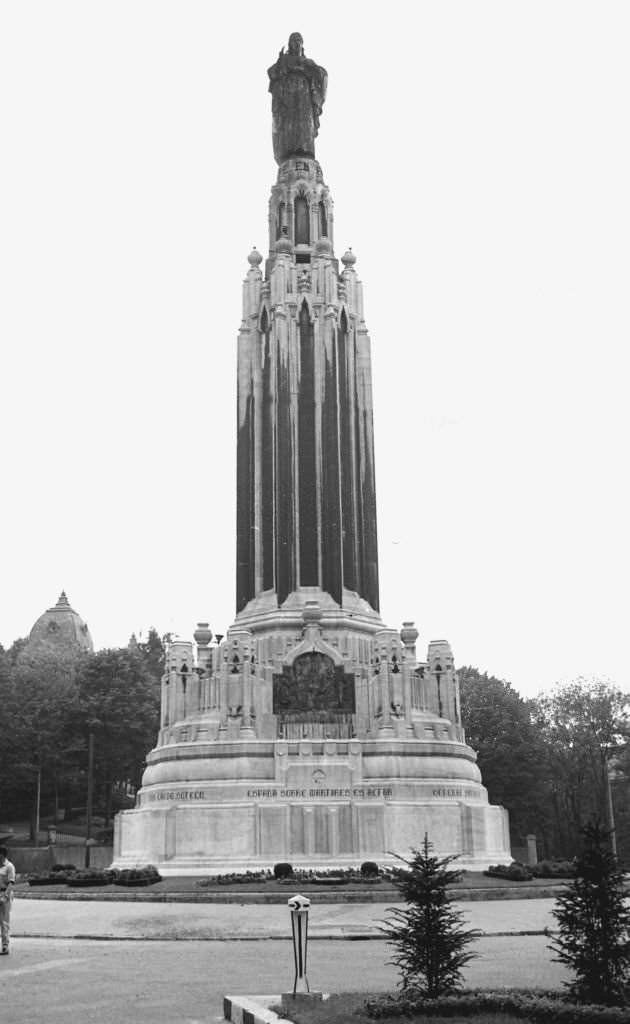
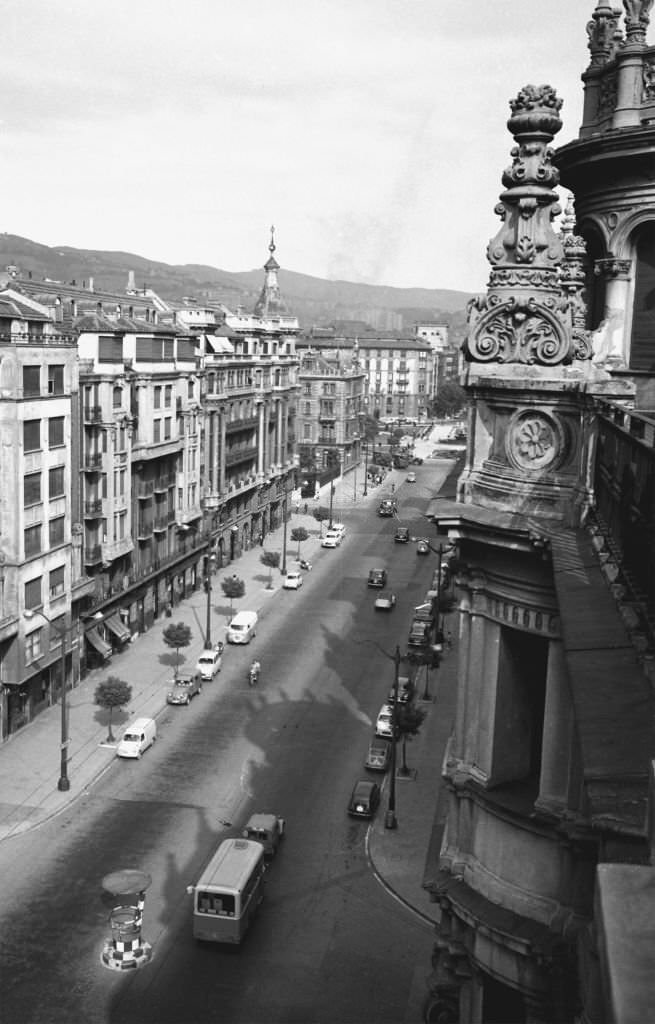
The Gran Vía de Don Diego López de Haro was the central boulevard of the Ensanche and the commercial backbone of modern Bilbao. Named after the city’s medieval founder, it ran from the old town toward the newer residential districts. In the 1960s, the Gran Vía was packed with shops, banks, offices, and cafés, making it the busiest and most recognizable street in the city.
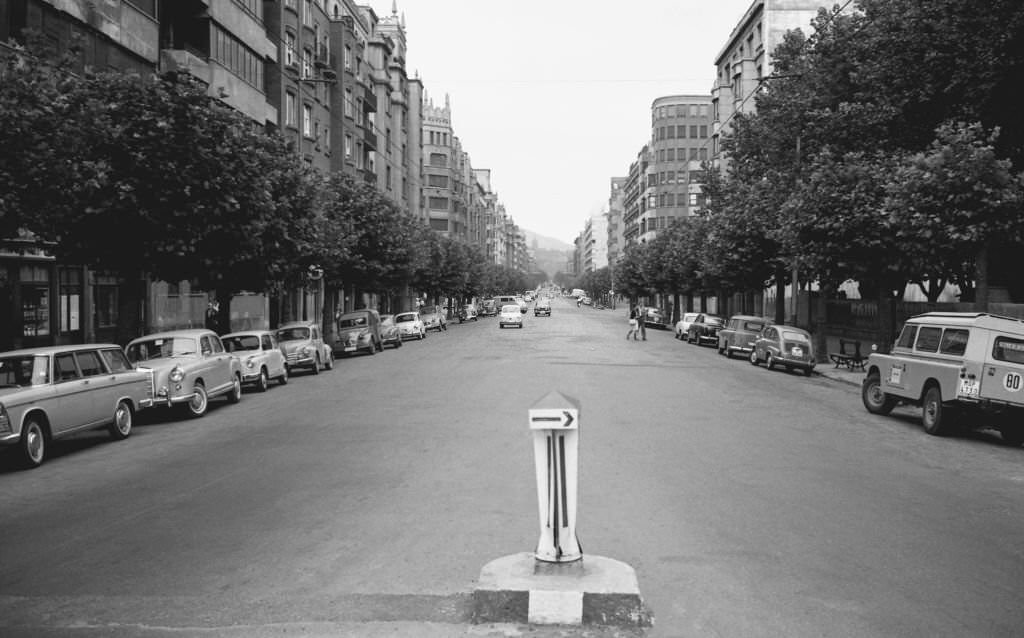
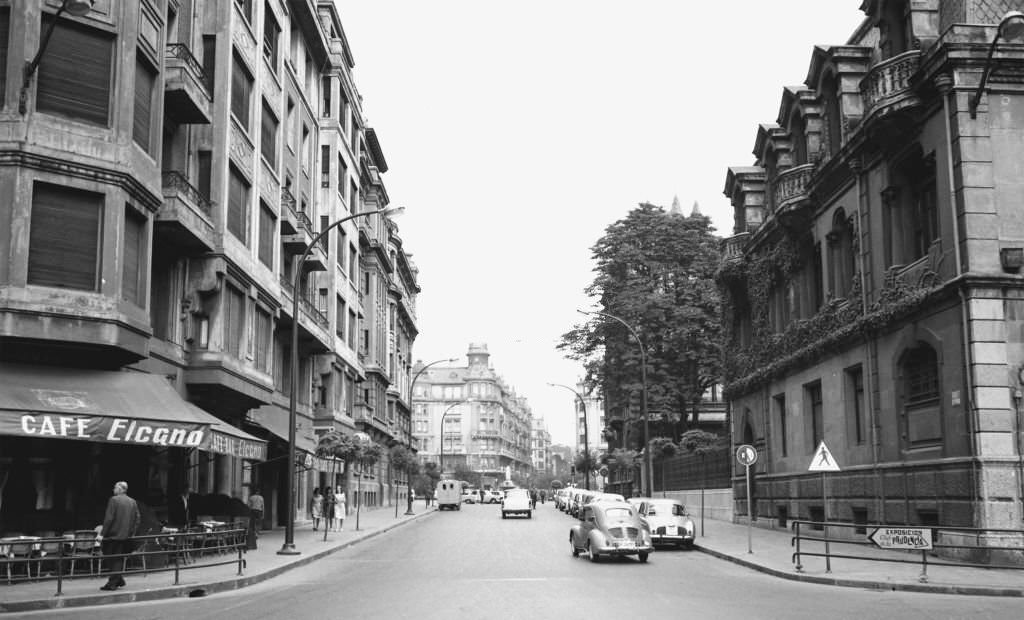
Cars and pedestrians shared the Gran Vía in the 1960s, with the boulevard carrying the rhythm of a city that was adapting to the modern age. Motorcars were becoming more common on Spanish streets during this decade, and Bilbao’s wide central avenue accommodated the shift while still maintaining its character as a place for people to gather.
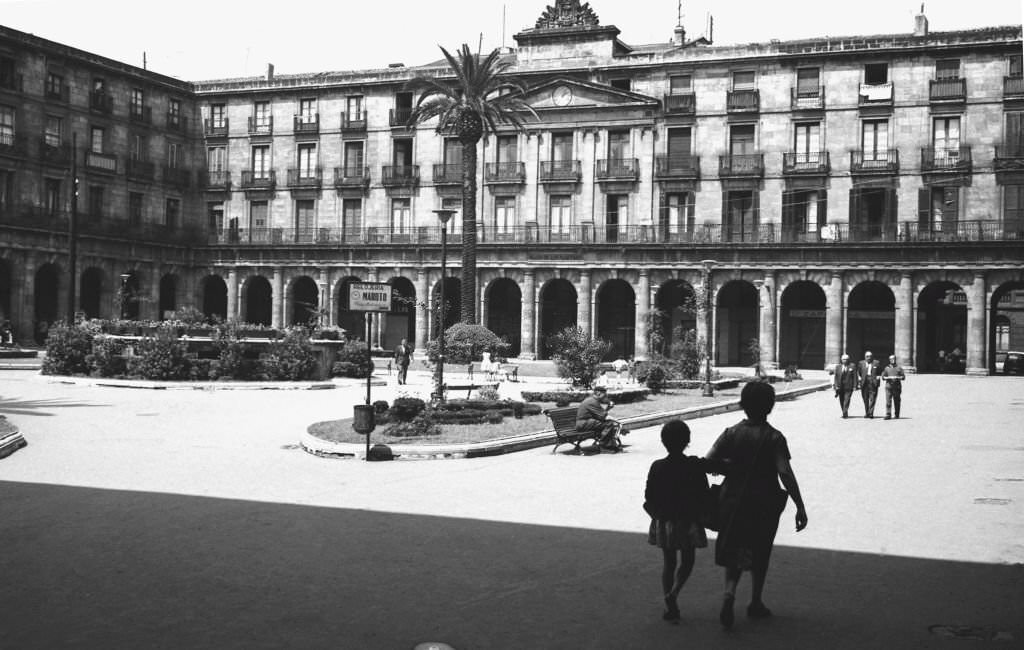
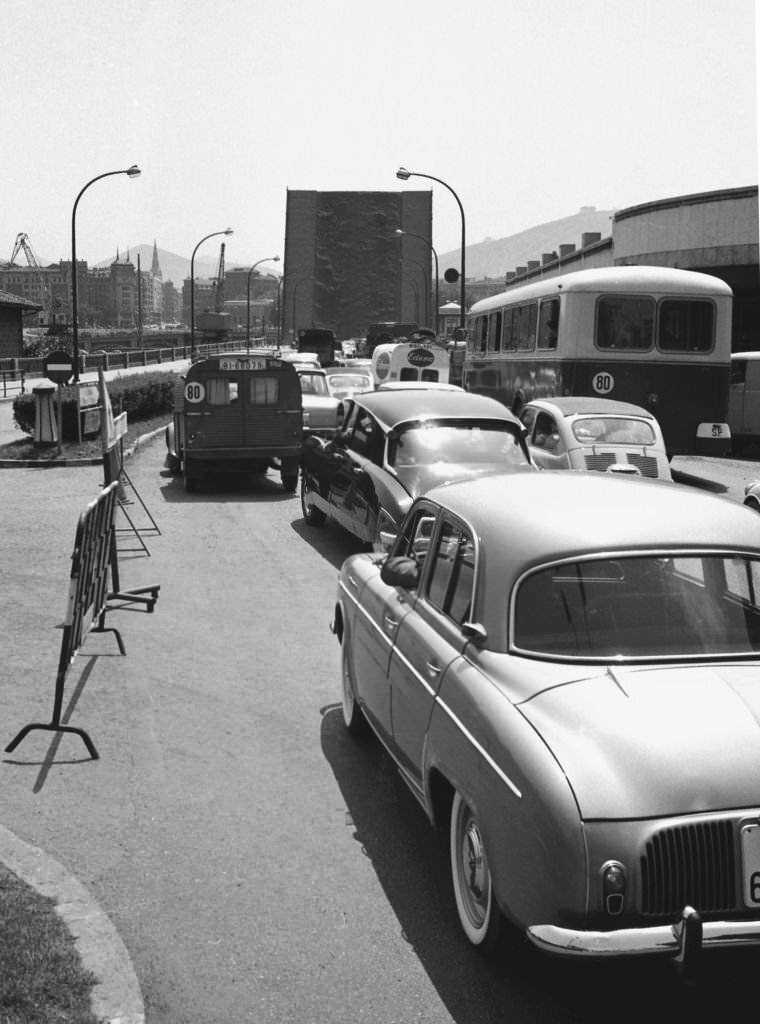
The Ría del Nervión — the river’s tidal estuary — stretched from Bilbao down to the Bay of Biscay. Along its banks, industry and urban life ran side by side. Shipyards, warehouses, and working docks lined the water, while bridges connected the communities on both sides of the waterway.
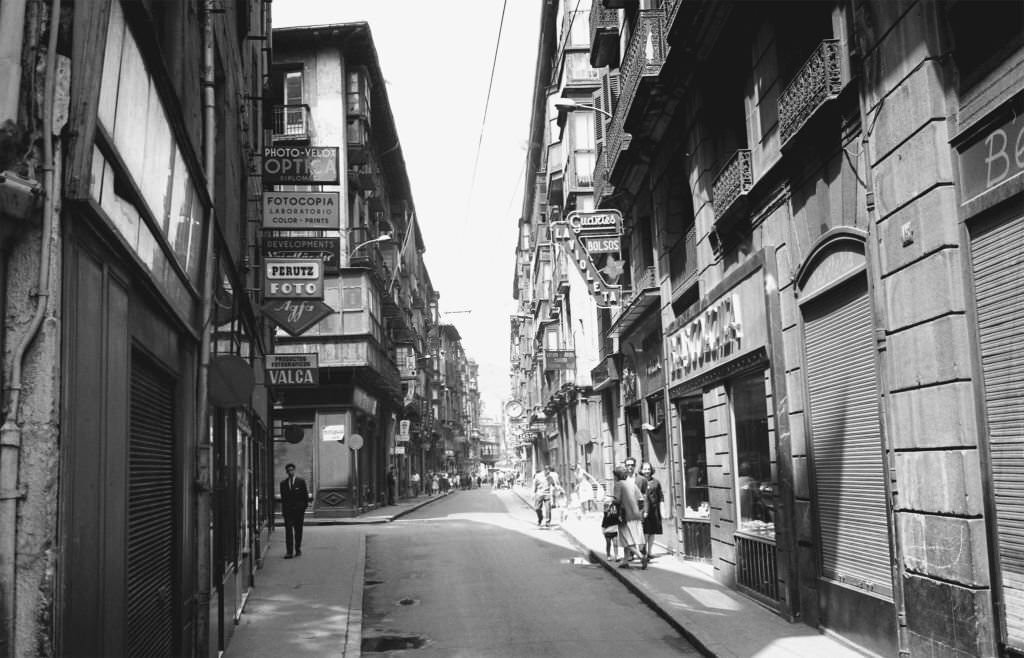
Bidebarrieta Street sits in the old quarter of Bilbao, close to the Nervión. It was home to the city’s main library and formed part of the historic urban core that dated back to Bilbao’s earliest days as a settlement. In the 1960s, this street retained much of its traditional character while the rest of the city modernized around it.
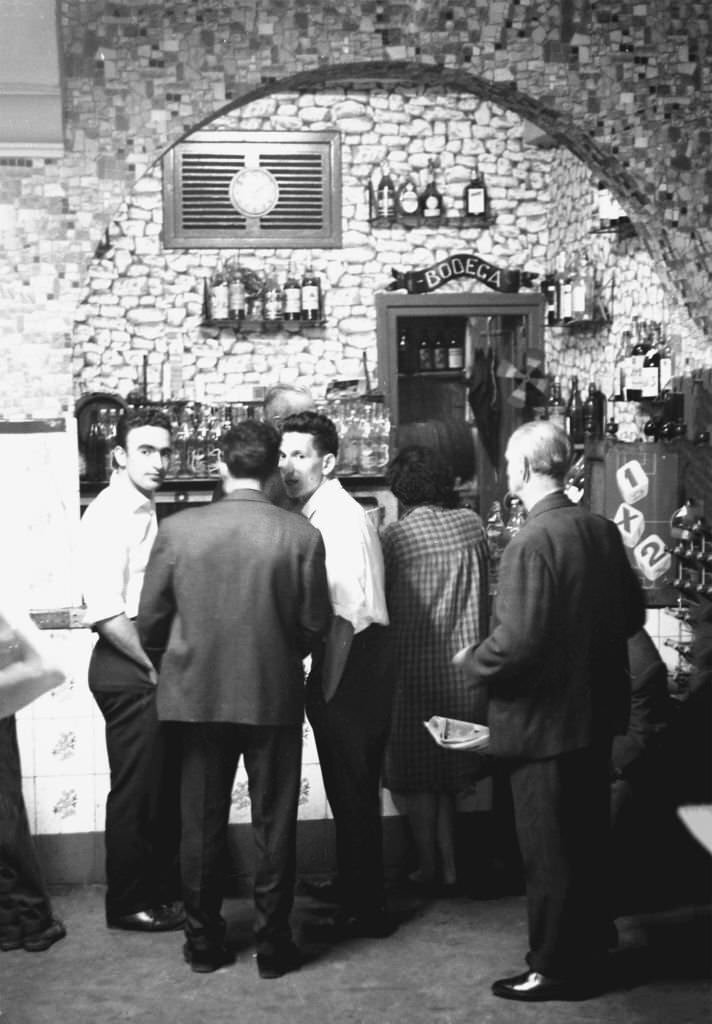
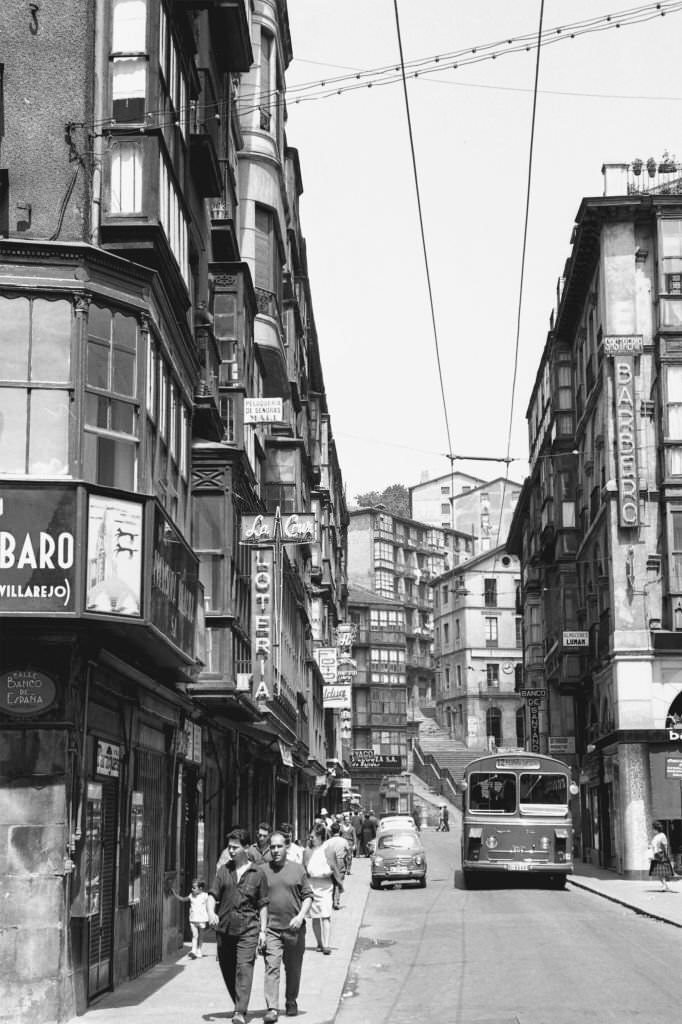
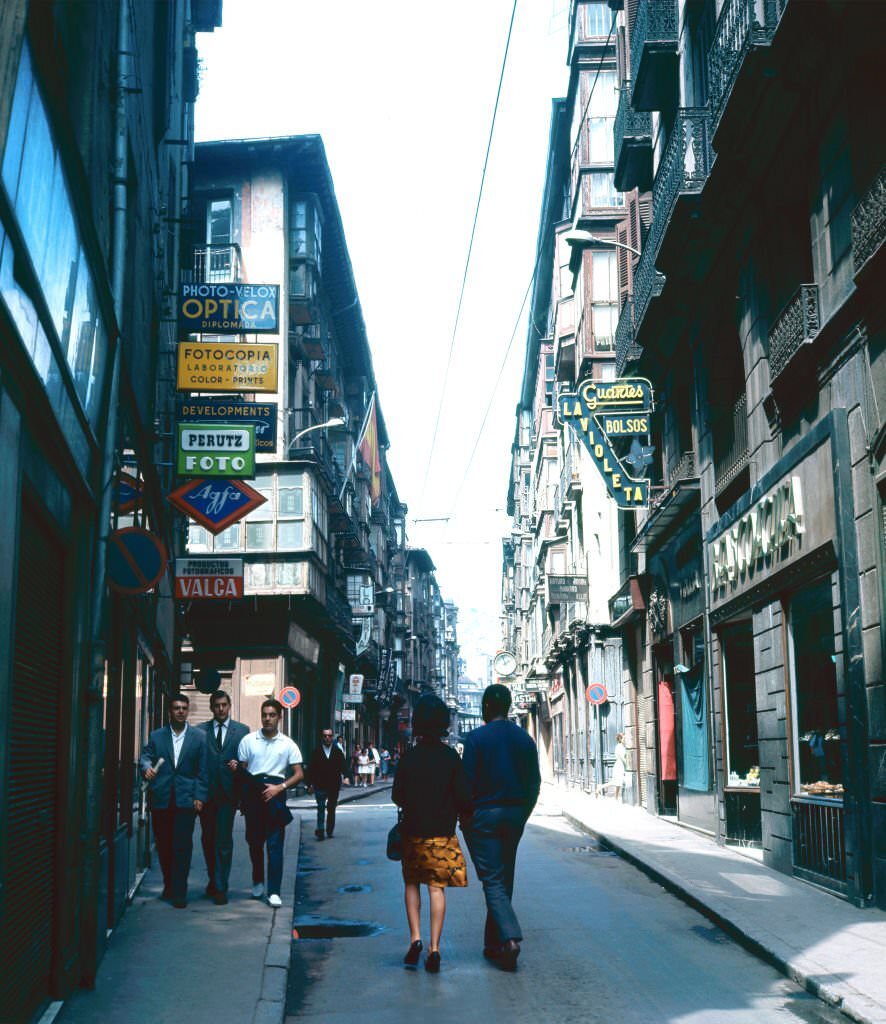
The Siete Calles — the Seven Streets — form the original medieval grid at the heart of Bilbao’s old town. The area was the birthplace of the city and remained a lively neighborhood well into the 20th century. Taverns, small shops, and social clubs filled the narrow streets, making the Casco Viejo one of the most social parts of the city.
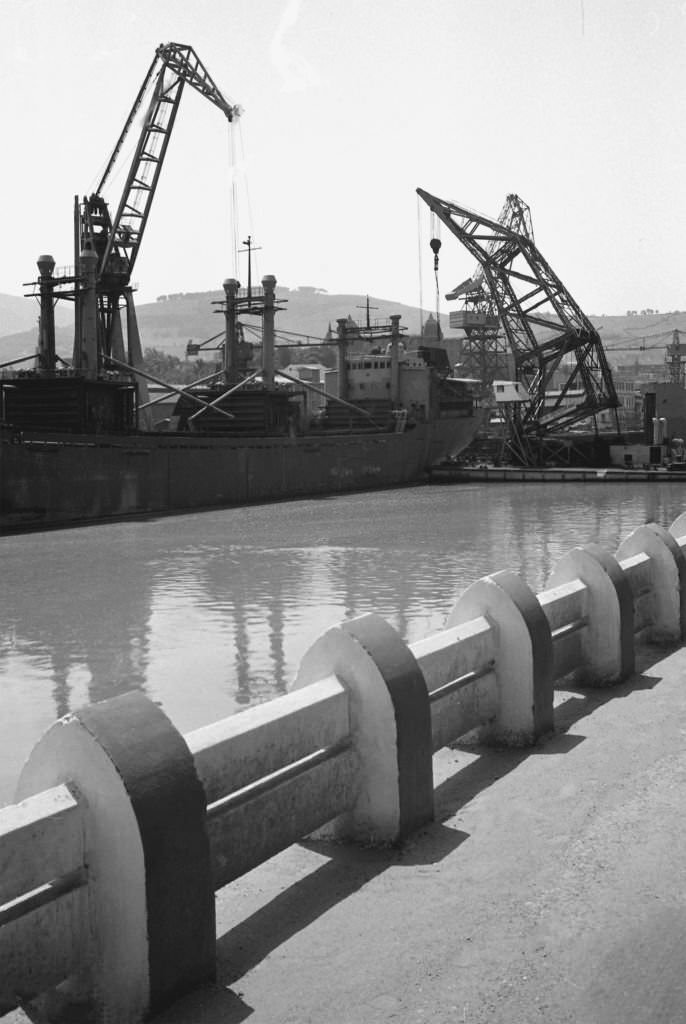
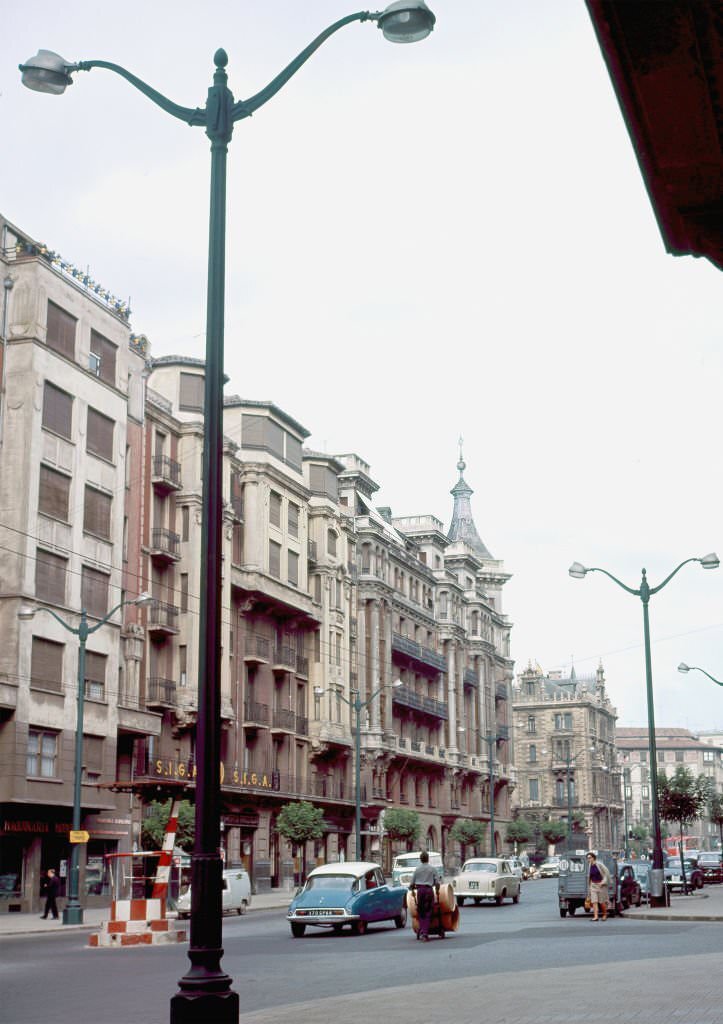
Earlier in the decade, the Gran Vía looked largely the same as it would in 1967 — a well-established commercial street with a settled, confident urban feel. The consistency of the streetscape across the mid-1960s reflected the stability of Bilbao’s built environment even as the economic ground beneath it was shifting.
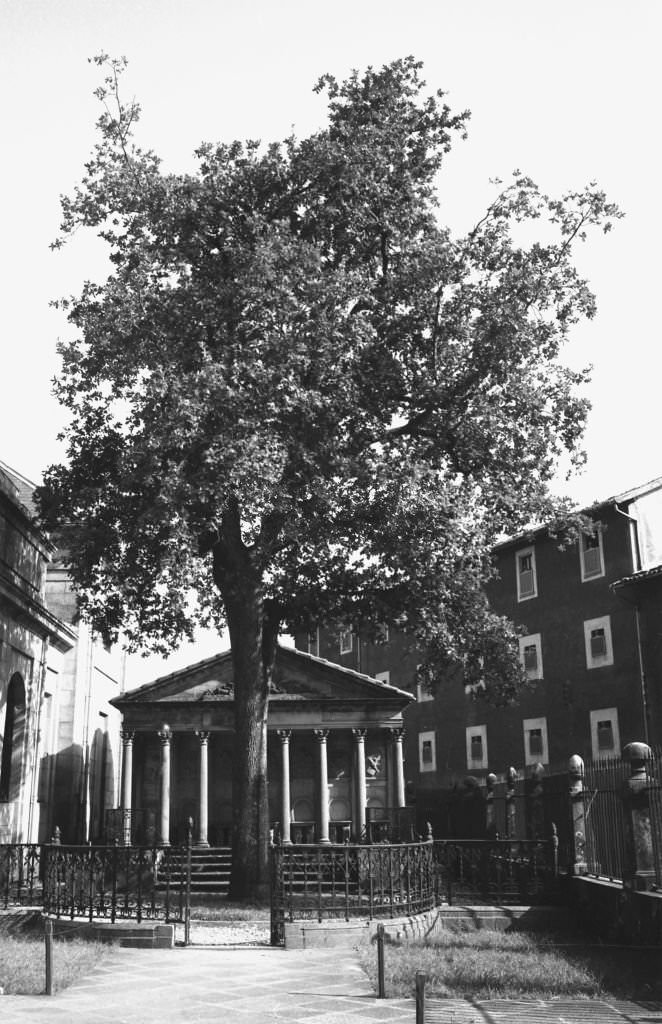
The Tree of Guernica holds deep symbolic meaning for the Basque people. For centuries, it has represented Basque freedoms and self-governance. The 1965 photograph of the new tree at Guernica captures a moment of cultural significance — the replanting of this symbol in the town made famous both by Basque tradition and by Pablo Picasso’s painting of its bombing during the Spanish Civil War.
In June 1968, the University of Bilbao was formally founded, marking a major step in the city’s intellectual life. It later became part of the University of the Basque Country, one of Spain’s largest public universities. The founding of the university reflected a broader shift in Bilbao’s priorities — from purely industrial output toward education, services, and long-term urban development.